“How Can They Write About Anything But Pain?”

We’ve asked some of our favorite international authors to write about literary communities and cultures around the globe. We’re bringing you their essays in an Electric Literature series: The Writing Life Around the World. This month’s installment is by Fazilhaq Hashimi, an emerging writer from Afghanistan.

Here is a page from my elementary school math book from the Afghan civil war era (1992–2001). At the bottom of the page, the teacher’s guide notes that the instructor “must ask about the names, usage, and quantity of the above items.” The word “quantity is the only math-related term. It is mentioned at the end of the series. The names and usages of the ammunitions are given pride of place. In language classes, while “A” was for “Allah”, the rest of the Dari or Pashtu alphabets included war-related components such as T” for “Toopak” (gun), “Sh” for “Shamsheer” (sword), “J” for “Jihad,” “M” for “Mujahid,” and “Ta” for “Talib.” Every book promoted war, violence, and guns. Math problems were asked as, “A group of Mujahideen are on the frontline. Three of them are on duty at the checkpoint. Each has a box that consists of sixty bullets. In the fight against the infidels, the first Mujahid fired 24 bullets, the second 40, and the third 16. Write the total number of bullets fired and the numbers that are remaining.” Sometimes such questions were even expanded, “If a total of 19 infidels were killed with a single shot by the brave Mujahideen, how many bullets missed?”

That’s how Afghan children were taught in the refugee camps in Pakistan. The students who were left in Afghanistan were only taught religious subjects. All the scientific, extra-curricular, and art classes were erased from the curriculum. Literature and poetry, however, were not completely forgotten. Each morning, the students were lined up to read aloud a patriotic poem and to recite a religious Taraana (song). I remember the Taraana that was once sung by a student on the loudspeaker. Everyone praised him for his gifted talent as his soft voice echoed in the school,

“Oh, my Mujahid brother, I’m a Muslim,

Lying injured at the infidels’ prison.”

Though known as the “graveyard of empires,” lab mouse for various regimes, safe haven for terrorist groups and opium, Afghanistan is also the land of poetry, story-telling, fables, folktales, and proverbs. It’s the birthplace of Rumi, motherland of Avicenna, realm of Gul Pacha Ulfat, love-land of Rabia-e-Balkhi, empire of Mahmood Ghaznawi, and the land of Ahmad Shah Abdali, the founder of Afghanistan and a poet himself.

Until the early 19th century, many of the former rulers shared an intense interest in poetry. King Amanullah’s father-in-law, Mahmud Tarzi is known as the “Father of Afghan Journalism.” In October 1911, Tarzi founded Seraj-al-Akhbar, the first ever newspaper in Afghanistan, which published biweekly until January 1919. Tarzi and King Amanullah were modern thinkers who opposed religious extremism and worked for reforms and secularization until the government was overthrown by a coup in 1929. Tarzi fled to Turkey and resided there until he died in 1933. However, poetry still lives in and nourishes this country, much like its beautiful year-round perennial flowers. The Narinj Gul, or Orange Blossom, Poetry Festival in Jalalabad has been celebrated for more than 60 years now. In Kandahar, there is the Anar Gul, or Pomegranate Blossom, Poetry Festival. These annual traditions provide opportunities for writers and poets to recite their work in front of thousands of people from across Afghanistan. The writings reflect on love, peace, solidarity, youth, corruption, illiteracy, causalities, incompetent government, destruction and wiping out the seeds of hatred, discord, and disunity.

Afghan portraits
clockwise from far left: Mahmood Ghaznawi, Rabia-e-Balkhi, Gul Pacha Ulfat,
Avicenna, Ahmad Shah Abdali, Mahmud Tarzi, Rumi

Afghanistan’s literary foundation has been built on “oral literature,” except for the works of a few legendary writers. I come from a family where fables, proverbs, and stories were quoted regularly to convey messages. Now, my brother is a published Pashtu language poet and my younger sister writes in Dari. On the other hand, I write short stories in English. I believe we inherited the stimulus from our mother. She was uneducated — she could not write nor read with the exception of the Holy Quran and some other Duas (Islamic prayers) — but she was blessed with a miraculous art of storytelling. “It reminds me of this story…” was a familiar expression of hers. In 2010, when I was twenty years old, we lost her to cancer, but in all those years I don’t recall her repeating the same story or proverb except to emphasize the message or to bring out new meaning in a different context. She was raised with folktales too. Her mother told us of women using Tappa or Landay (two-line poems) to express anger, pain, and affection, young-lovers narrating a Naara to express a crush, grandmas telling Naakal or Qessa to put children to sleep, clergies delivering Moonajat to express devotion.

This still is the culture in many of the remote villages. Such stories have been transferred from generation to generation by word-of-mouth. Luckily, some writers and publishers, like Operation Mercy Afghanistan, Danish Publications Afghanistan, and Aksos Bookstore are now giving this oral literature a new life in print.

In Afghanistan, we do not write for fun, passion, or money but to express the immeasurable pain inside. Maybe that’s how the actual writing is. There must be something discomforting to be disclosed. At least, that’s how we see it. Rabia-e-Balkhi, probably one of the first female poets, was in love with a slave. Her brother, Hares did not approve of this. In the process of expressing her unbearable longing for Baktash, she started writing. She is said to have written her last poems with her blood in the bathroom she was locked in. A friend of mine is a writer and a social activist; he produces his best work after he has witnessed injustice, discrimination, or wrongdoing. It seems to be a common incentive among the contemporary Afghan writers — recent writings are filled with the pain, agony, and suffering of the Afghan people. That’s how my writing journey started too. My first story depicted the reality of a forced marriage. I write to portray cultural practices that are based on superstitions, norms, and traditions. When I re-read my own work, I find it melodramatic, more a Greek tragedy than a work of the 21st century. It can’t be helped. I feel like there is an inner voice reaching out to me, dragging me to write. The writing receives its inspiration from true stories around me. I hear the characters’ dialogues, find them haggling with salesmen, cursing the government, or striving to prevent a mischief. There are nights when I can’t fall asleep unless I first put my thoughts on paper. By the time I’m done with the story, some pages are wet-dried.

In a country where people are born and killed in wars and social disorders, how can they write about anything but pain?

Perhaps the last several decades of wars, the rise and fall of regimes, the shootings, and the lack of peace have killed our creativity. A friend of mine finds it hilarious to anonymously play a loud AK-47 shooting ringtone during the crowded Juma prayers or to shoot a glass building with a rocket launcher to see how the glass will shatter. One of my friend’s uncles, an elderly man, still keeps extra food and sacks of wheat in his basement out of fear that a fight may break out and for days no one will be able to go out. Our minds are distracted with the disturbances of wars. Afghans in the remote provinces still build their walls thick to prevent casualties in case of a rocket strike. In a country where people are born and killed in wars and social disorders, how can they write about anything but pain?

Since the beginning of the 19th century, over twenty different flags have been flown over Afghanistan by rulers, monarchs, kings, Emirs, and presidents. This also means that over twenty dissimilar political and social ideologies have been practiced. Each ruler exercised his own restrictions on the ways people lived, including freedom of speech and writing. The reason many rulers held strong interests in poetry was that poets were paid to flatter them and to praise their empires, castles, and armies. Anyone writing against the state was hanged, murdered, or exiled.

Self-censorship has ancient roots in Afghan history, though writers seem always to find a way to speak up. In the fables that our grandmother told us, the lion could be personified as the “cruel king”; the fox as the flattering clerk; the wolf as the wise minister; sheep, goats, and cows as the inhabitants. This can’t be done in the 21st century. Therefore, writers disguise themselves through pen names. It reminds me of this proverb, “As long as there’s a head, many hats can be worn.” It refers to the legend of a man who was threatened to death if he refused to give his beloved hat to the thief. He hesitated initially and then handed the hat to him and whispered, “If there’s life in my head, there will be many hats.”

Social activism and writing go hand-in-hand in Afghanistan.

There’s a saying, “Anything is possible in Afghanistan.” Journalists are regularly beaten, novelists can’t write freely, and newspapers are warned. Even though the eras of religious and communist extremism are gone, artists are commonly ill-treated and excoriated. According to the Afghanistan Journalists Center, 47 journalists, writers, and media workers have been killed or murdered since 1994; thirteen have been abducted and fifteen jailed. They are mostly Afghans. A few are expat journalists. The current Unity Government of Afghanistan is made up of both open- and closed-minded individuals. That’s probably another characteristic of post-conflict societies and ongoing war zones where the warlords are empowered to restore a temporary peace. Writing, reporting, or even posting against a single political figure, current or deceased, might put your life at risk. Such fears limit the writing capabilities of authors inside the country.

The high demand for writing about Afghanistan in the recent years has given birth to Afghan writers in exile or the so called foreign “experts on Afghanistan” that have too little understanding of the actual country and its culture. In addition, it is quite astonishing how the recent regimes self-censored themselves and the inhabitants. Communists strictly prohibited religious Islamic books and executed intellectuals who were considered threats to the government; following that, the Taliban regularly burned stacks of “non-Islamic” books in public places all over the country. The current government also seems to act blindly toward the accomplishments of many artists and sometimes even tries to censor them. Recently, the social activist and writer Masood Farzan was warned by a government official that his intentions, evident in Facebook posts and comments, were hostile to and aimed at overthrowing the current government. Masood responded, “If the government is that weak that it can be overthrown by my Facebook posts, let it be overthrown!”

Although Pashtu and Dari are the languages of love, poetry, literature, and proverbs, they are also the languages of wars, criminals, warlords, and human rights violators. Afghans are constantly the victims of their own languages and words. For instance, hundreds of Pashtuns were killed after they were unable to pronounce, “Qo-root,” a type of dried Afghan whey. They were asked to pronounce the word in order to differentiate them from other ethnicities, and when they could only say, “Koo-raat,” they were killed by having nails hammered into their heads. I learned how to say both words exactly the way they should be pronounced; many parents taught their children the same.

Language is a symbol of power in this part of the world.

Now, there are two other present-day words that have divided the country, including the Parliament, ministries, courts, and even academic institutions: Pohantoon and Danishgah. They both mean “university,” except the latter has a more Iranian root and emergence. Parliamentarians have fought over these words, undergraduate students have stabbed each other with knives, friends have become enemies, neighbors have turned into strangers, and classmates have grown into foes for opposing use of one of the other. Language is a symbol of power in this part of the world. When I tell my friends that my brother is a published Pashtu poet, some ask, “why not a Dari one?” I respond, “My sister writes in Dari.” To provide further justification, I add, “And I write in English. And I hope that one day; one of my siblings will become an Uzbek writer.”

I feel so relaxed writing in English. I do not think of ending up with a word that would conflict with the other national language of Afghanistan, nor will I anger my close friends. I was driven into writing when I started reading. I read my first English language book, For One More Day, by Mitch Albom, several times during the year I stayed with an American host family in Highlands Ranch, Colorado. I spent numerous hours in the Douglas County Library. Not having standard libraries in my own country, I was inclined to read as much as I could. Thus, libraries hosted me as much as my host family did.

It is very easy for writers to be labeled, “racist” or Kafir (infidel) in Afghanistan. Some of the most well-known current writers and social activists are Barry Salaam, Emal Pasarlay, Musa Zafar, Majeed Qarar, Masood Farzan, Lina Rozbeh, Shaista Sadat Lameh, Wais Barekzai, and Fahim Tokhi. Depending on their writings and statuses, they are branded as linguistic, ethnic, or tribalistic bigots; fascists, nationalists, xenophobes, xenophiles, atheists, or self-loathing Afghans.

It is hard to believe but there are still good writers who strongly support the harsh former regimes of the country, including the Taliban, the communists, and the interventionists from neighboring countries, but just like the residents of the country, the writers, too, are divided. They are as political as the government officials.

This leads to the question whether a writer is neutral or not. Maybe my mother was right when she quoted, “One’s own flaw is between the shoulders.” You can’t see it. The writers are probably blind to their flaws. Or maybe writing in Afghanistan is inherently biased. Even if you are an individual who does not take sides, your ethnicity, tribe, language, and peers will make you prejudiced. For instance, if one of the above writers regularly writes in one of the two national languages other than his/her own native language, the followers accuse him/her of not valuing the language.

Writing or reporting against a political figure might put your life at risk. Such fears limit the writing capabilities of authors inside the country.

Social activism and writing go hand-in-hand in Afghanistan. Afghan writers tend to circulate their works in bits and pieces over Facebook. Only a small number of writers have books of their own. This could be due to the lack of readership and publishing opportunities. When my brother and I were assessing various publishing companies for reprinting his collection of poems, we came across a number of bookstores that volunteered to sell newly printed books only if the writers provided the books to them free of cost. In a war-torn country like Afghanistan, there is little demand for books; people prefer to read short (at times biased and discriminatory) Facebook statuses and Twitter posts instead.

I have traveled a long path (of wars, poverty, and illiteracy) to writing, and so did many of my fellow Afghan writers. We will cling to it and do our best not to lose the opportunities we have. The culture of expressing our own point of view is nourishing. The number of both male and female writers is increasing. There’s also an active community of female writers, including the members of the Afghan Women’s Writing Project. Unfortunately, there are other groups of writers and social activists on the rise. When I read their work, I think of the schoolbooks from the civil war era. And yet their work is perhaps even more destructive and dangerous. The citizens of this country are provoked against each other by young writers who inject poisonous and prejudiced feelings into the minds of their own ethnic groups. They use their creativity in publishing discriminatory writing, posting racist videos, creating Facebook pages and closed groups slandering other ethnicities. At least, the civil war books asked for unity against a foreign force. These writers and social activists are dividing the country into pieces.

Maybe these writers are the products of those civil war books and education?

Or, are they producing another generation with far more destructive ideologies than their own?

About the Author

Fazilhaq Hashimi is an Afghan author writing in English. His work, including the short story, “If I Heard Her Right,” has been featured in The Gifts of the State, New Writing from Afghanistan (Dzanc Books) and Electric Literature. He studied at the American University of Afghanistan and recently relocated, along with his wife, to Colorado, where he is working on several new stories.

You can find all the essays from The Writing Life Around the World at Electric Literature.

Writing Life Around the World

Drum Circles, Sexual Temples, and Skinny Dipping in Hawaii — An Essay by Emily Meg Weinstein

ESSAY: UNSAFE SPACES, BY EMILY MEG WEINSTEIN

To a New Yorker, California is far out, or so I believed when I moved there. But when I arrived, all the real adventurers had set their sights not on the edge of the country, but on the states that weren’t even attached.

My friend and fellow East Coast refugee, Jeff*, had done me one better and moved to Hawai’i. Like me, Jeff was from Long Island and had gone to a fancy college, but he found those experiences lacking. His search for something more had taken him first to the far north coast of California, and then, when he tired of the soap-opera politics of small-town dope-growing, into the Pacific itself. He picked me up at the airport on the sunny Kona side of the Big Island, drove us to the rainy Puna side and announced, “This is what’s left of the town of Kalapana.“

What was left of the town of Kalapana was a drive-thru salmon-burger joint and a combination outdoor concert venue, picnic area, and bar that doubled as a church on Sundays. Some people, Jeff said, passed out drinking on Saturday night and woke up in attendance at the Sunday morning service.

We walked on the hardened lava that had destroyed what wasn’t left of Kalapana, drank some kava, and enjoyed the high caliber of reggae only beach towns can attract. Then we went to Jeff’s hobo camp, a small plot of land he had recently purchased in a dense rainforest outside Pahoa, a place described in theBig Island Revealed guidebook as “a town of outlaws and wackjobs.”

Jeff had hacked his way to a space big enough for him to erect his Burning Man shade structure over a sleeping pad, some plastic storage bins, and a bucket he used for a toilet, creating a makeshift shelter he planned to live in until he built his cabana.

Jeff only lived at the hobo camp part-time. He had been attending a series of workshops at what he described as an “intentional communal sustainable holistic living experiment.” The experiment was run by a permaculturist and polyamory advocate named Pono, and the workshops included free camping.

The next morning at the farmer’s market, we visited Pono’s booth. Pono supported his intentional community by climbing untended coconut trees, shaking down coconuts, and selling them at the famer’s market.

While Jeff and Pono discussed DIY sewage options, I perused Pono’s personal collection of poetry, music, and mission statements, which were on display next to the coconuts. These documents were neatly organized in plastic sleeves in three-ring binders, and included such titles as “I Party Naked,” and “Spirit Re-Quest.” I leafed through the mission statements on tantric sexuality, instinctive eating, and mindful co-parenting, but slammed the binder shut when I saw the words “nonviolent communication.”

What was it about the words nonviolent communication that made me feel so…violent? And then, immediately, guilty about this reaction? Nonviolent communication could probably help me cope with these feelings, but I had only ever had nonviolent communication advocated to me by a certain kind of man, the kind of man just now explaining how humidity affected excrement composting times. This was a man with both a graying ponytail and a receding hairline, whose sexuality was just a little too close to the surface for my comfort.

It wasn’t just the presence of this type of man’s sexuality, it was that his sexuality had been workshopped into its current prominence. His workshopped sexuality was wrapped in layers of acceptance and celebration that had been workshopped there, too. These workshops, which were conducted in “safe spaces,” had created too safe a space, a space safe for something that, paradoxically, made me feel less so.

There was something about the way men like this used words like “nonviolent” that was similar to the way the Bush administration used words like “freedom” or “democracy.” The very deployment of these words instantly implied their opposite. When he labeled his communication as explicitly nonviolent, the ponytailed man with the openly displayed chest hair made me think that without extreme efforts to the contrary, he would, in fact, be violent. His constant insistence that we were in a “safe space” hinted at danger.

At Pono’s polyamory workshop, Jeff told me, a sixty-something woman had invited him to the sacred sexual temple with her. (Like me, Jeff was in his mid-thirties.)

“I didn’t end up going,” said Jeff, “but it would have been a good opportunity to confront my ageism.”

I looked down at my deeply tanned cleavage, wondering whether, if I attended the right workshop, I could one day convince a much younger man that I had created a safe space for him to resolve his Oedipal issues.

When I snapped back to the present, Pono was emphasizing the importance of making sure one’s homemade toilet not only encouraged, but demanded, a squatting position. “Are you familiar with the benefits of squatting?” he murmured gravely.

Our tour continued to a clothing-optional beach down a short, steep, lava trail, where I became preoccupied with finding the right level of nudity. Options ranged from fully fig-leaved to totally naked, to totally naked and painted. In the drum circle, women were mostly bare-breasted, though heavily accessorized. When I asked if this were some kind of festival, Jeff told me that it was just the weekly Sunday morning drum circle, held following ecstatic dance.

On the beach, people were drumming, gyrating, smoking, nursing beers, nursing babies, and sitting in small circles, doing what Jeff said was “processing.” Given the popularity of polyamory on the Big Island, processing was a Sunday morning activity as common as drumming or ecstatic dancing. Processing, as far as I could tell, meant that everyone talked about every feeling they had about everyone having sex with everyone else. I had the sense that a certain kind of eye contact was involved in “processing,” perhaps a type of listening preceded by an adjective, like “active,” or “patient,” or “radically empathetic.”

Hardly anyone was swimming, but I’ll choose pretty much any activity over processing, active listening, or a drum circle. I decided to take advantage of this safe space to swim like a man, in just my board shorts, while maintaining some kind of shield to indicate that I would be celebrating my own sexuality as a party of one.

We waded into the thundering surf and swam past the breakers. It was only when we were just far enough out to make getting back a project that I realized the ocean was a not a safe space. A strong current pushed toward a jagged promontory. The shoreline sloped steeply, and you had to scale a forty-five degree ramp to get clear of the waves before an insistent undertow sucked you back out.

I watched an older man eating it in the breakers over and over, getting tossed and slammed like a rag doll, trying to crawl ashore. When some other naked beachgoers finally pulled him out, his nose was bloody. I had never seen waves hurt anyone before.

“I want to go back in now,” I said, in a voice alien to my own ears.

“Then you better pick a better wave,” came an equally otherworldly voice. Jeff was nowhere to be seen, but a bearded, naked sage was floating belly-up nearby, as if we were in a calm lake.

He wasn’t afraid. I had only just started rock climbing then, but the glint in this man’s eye and the sinew on his limbs reminded me of the guys who had gotten me started. I trusted this old sea turtle like I trusted those old desert rats. These were the men of any age I found attractive. Not the ones who preached about nonviolent communication and created safe spaces into which their celebrated sexuality could ooze, but the ones who knew how to stay safe in spaces that really weren’t.

“This is a good one,” nodded the naked old man, blithely stroking further out to sea. I swam into the swell. It lifted me up and hurled me shoreward, forcing me headfirst into a gravel trench. I stabbed a foot in front of me, clawed my way up the sand and outran the Pacific’s frothing jaws.

Once clear of the waves, I hunched over, gasping and choking, then straightened up, wiped my nose, and shucked my shorts. I no longer cared if Jeff, or any of these Hawaiian hippies, saw me wholly naked. I was alive, in that way you can only be when you apprehend, even for a moment, how easily you could not be.

A storm rolled in. Without breaking rhythm, the drum circle migrated into the rain shadow of a cliff. I bought a beer and lit a smoke and let the raindrops fall on me, feeling like I had gotten away with something that I needed to preserve by pickling and smoking it into my cells for deep storage.

The next day we went up the volcano and watched its crater smoke. There was a visitor center with scientific exhibits and stacks of an emphatic pamphlet: “Lava Viewing: COMMON SENSE IS NOT ENOUGH.” It turned out there was another entity on this island that thought safe spaces were a joke — the molten mother earth herself.

It was then when a spiritual experience found me on the Big Island, not at ecstatic dance but in the volcano visitor center. Next to the brochures was a painting of Pele, the goddess of this volcano. She lived, the placard said, in its crater.

The painting represented her as if she were the volcano. Her long hair, curly like my own, formed the fire rivulets that ran beneath, and sometimes broke, the earth’s surface. She sat in the lotus position, meditating with a Mona Lisa smile before a subterranean lava lake, holding a flame in her hands. The goddess looked like me to me, but not as worried.

It was the first time I saw an image of a deity and wanted to worship. The pamphlet was right — common sense was not enough. The waves were so big, the volcano so unpredictable, the islands so isolated, the lava so sharp, that to live here, a person would need more than common sense. They would need more than Pono’s pamphlets. They would need deities.

The volcano did not care whether it communicated violently or nonviolently. After its outbursts, nothing was processed. No workshop could make its space safe. Gods and goddesses couldn’t help us or save us, but they could give us someone to beg, or to blame.

*Names have been changed.

The Stories in Cities I’ve Never Lived In Are High-Cost and Gentle

“I didn’t want another period of instability,” Sara Majka writes in the title story to her spectacular debut Cities I’ve Never Lived In. “I felt the suspension you feel when you’re fine, but you’re worried it won’t last, and there’s nothing you can do to make it stay.”

In the story, being “fine” is traveling by bus across the United States on an assignment to report on soup kitchens. The project had seemed structured and achievable to the narrator at home, but she finds it to be much more elusive in practice, in part because she’s almost as broke as the people she meets. After picking up her first dinner from a truck in Detroit, she reflects, “Holding the bags changed how I felt about myself. It made me feel more vulnerable… For a number of years I had been struggling to hold myself together, though I had worked to disguise this, and now carrying the thin bags made this visible.”

The narrator who frames each of these fourteen stories is vulnerable — she’s caught up in the tumult of an ended marriage, and the poverty of an artist without a back-up plan — and her vulnerability resonates across the desolate landscapes she stops in. In “Boston,” for example, the narrator stays the winter in the empty beach town of Provincetown, Massachusetts. She goes clamming while she’s there, “at first out of curiosity, and then because [she] loved it, and then after that, when the wind became bitter, the clams scarce, the ice on the jetty treacherous, simply because [she] didn’t know what else to do.”

The narration in the stories maintains an anchored and distinct sense of loss, and — in part because of occasional biographical overlaps — it often seems to engage with memoir. The ex-husband Richard feels vivid and continuous each time he appears, as does the runaway father, as does the craving for a baby before it’s too late. But, it’s unclear where or when Majka switches between fiction and nonfiction. Her stories seem to resist those genres.

In a recent essay for Catapult, Majka wrote, “Not long ago, I realized that whenever I picked out books to teach my freshman composition students, I often picked ones where the narrator could be confused with the writer …I would guess my attraction to those books has something to do with an alleviation of loneliness that comes from that proximity to a real person, though that may not be it. It’s hard to say why this work means so much to me. You sense the cost of it.”

The stories in Cities I’ve Never Lived In are high-cost, and also necessarily gentle. In addition to the narrator reporting on her own life, she also tells the stories of the people she meets.

Take, for example, “Settlers,” in which she remembers an impoverished painter she knew, who told her about how he was abandoned by his wife in northern Maine. Everyone in his rural town was very poor, and almost all of them ate in the church hall soup kitchen, where no one would talk to him about his wife leaving. Majka writes, “[He] had to remind himself they thought they were doing him a favor.”

Later in his story, the father walks through the Maine countryside at night, and goes to the house of his daughter’s daycare provider. She’s single, too, and seems to like him, and he asks if she’ll come have dinner sometime. She tells him she wants to invite him in and she wants to come have dinner, too, but she knows she’ll just be lonelier when it’s over, and, “this — how she was now — was as lonely as she could handle.”

Every character is lonely in these stories, and none of them how to fix it. Life on this social and geographic periphery is savage. In one story, a young woman drowns in the ocean at night; in another a child gets abducted from her school. In “Travelers”, the narrator’s therapist — a “gentle woman” whom the narrator loves to talk to — dies unexpectedly of a brain hemorrhage. “I ended up calling a crisis hotline,” Majka writes. “It was the first time I had ever done that. I called not because life had become unendurable, but because I wanted to know what to do in case it became unendurable.”

One of the most prevailing desires in the book is the narrator’s craving for a child. She is single, poor, and her fertility is fading. In the final story, she sits on the floor of her mom’s tiny bedroom and says she doesn’t think her waitress job will last —

“That it had been [her] plan to save thirty thousand dollars to have a baby, but now there weren’t enough customers.”

Her mom says, “Thirty thousand dollars wouldn’t have paid for a baby.”

The narrator says, “I know.”

But Majka’s biography says that she now lives with her son in Queens. So maybe it’s all just fiction. Or maybe some things really do work out.

10 Great Novels of the Rural: A Reading List by Michelle Hoover, Author of Bottomland

by Michelle Hoover

Soon after the publication of my first novel, I met Manuel de Lope, the Spanish writer, who had just released his gorgeous epic, The Wrong Blood. After reading my work, he told me, “Your characters, it is as if they live beneath the land.” He patted at the air to ease my translation. I took his words as a compliment. I tend to work with emotionally repressed personalities. I find their lack of communication fascinating. But repressed emotion needs its outlet, and so my landscapes not only mirror my character’s psyches but bear the displaced weight of the emotion itself.

I later discovered a similar kind of mirror in Willa Cather. I knew Cather’s books intimately. But it wasn’t until reading Douglas Bauer’s “Cather’s World and the Future of Narrative,” that I realized what I’d taken for granted — in her writing as well as my own. In describing his seminar about her work, Bauer writes:

…what impressed the students most were Cather’s matchless descriptions of the physical world, the way she often treats the landscape and the light… as characters themselves, giving them the same qualities of mood and motive, the same temperaments of ambitious display and daunting indifference that she often gives her human characters. (Writers’ Chronicle, March/April 2012)

Though I usually duck comparisons to Cather, I felt as a child would, having witnessed an unarticulated part of herself echoed in the larger world.

Michelle Hoover

In my second novel, Bottomland (Grove Press, 2016) landscape would remain paramount — whether it be the flooded Iowa fields or the bricked-in topography of Chicago’s “back of the yards.” Still I cling more to the rural. Even in my travels, in the States and abroad, the real places and people seem to lie along the hard-to-get-to pastures, in towns and homesteads connected by unpaved roads. It shouldn’t come as a surprise that the kind of characters who live in such settings capture my imagination most.

So here are a few of my favorite rural novels. Consider Cather’s My Antonia the great-grandmother of this tribe, Maxwell’s So Long, See You Tomorrow and Gass’ In the Heart of the Heart of the Country its contrary uncles, Morrison’s Beloved its aunt, and Proulx’s Postcards its cool older cousin. I’m leaving out plenty of kin — rural families run large. To further whittle the list down, I’ve set some uncomfortable parameters: that the novels take place on American soil and be published in this brief 21st century.

1. Falling to Earth, Kate Southwood

Though Southwood lives in Norway, her first novel reaches back to her roots in Illinois where a deadly 1925 tornado razes a rural town only to leave its survivors to turn against themselves. Southwood’s spare, pitch-perfect prose quietly echoes the empty landscape and its devastated lives.

2. Gilead, Marilynne Robinson

Few books surpass Robinson’s Housekeeping, but Gilead comes close. The novel has little structure and less incident, but its power lies in the voice of John Ames, a dying preacher on the Iowa plains whose need to tell his story makes this an unusually poignant tour-de-force.

3. In the House Upon the Dirt Between the Lake and the Woods, Matt Bell

Both strange and captivating, Bell’s debut is a mythic tale about the dissolution of a marriage in an isolated house in a nameless place. The novel is as much an exploration of the wilds of the mind as it is of this in-between land.

4. The Known World, Edward P. Jones

On the eve of his master’s death, Jones’s Moses lifts a harness from his shoulders after a fourteen-hour day, reaches into the dirt and drops a pinch into his mouth. In this sweeping novel about black slave owners before the Civil War, the possessed becomes the possessor, and ownership is about more than fields and fences.

5. The Long Man, Amy Greene

The impending flood from a newly-constructed federal dam looms over Greene’s impoverished Appalachian setting, keeping this second novel permanently on edge. We mourn the end of this ancient-seeming place as much as Greene’s brimming final pages.

6. The Orchardist, Amanda Coplin

In this other first novel, Coplin’s William Talmadge is a man nearing old age on his isolated orchards in 1900 Washington state. When two pregnant teenagers turn up at his door — rabid, starved, and obviously abused — Talmadge’s life irrevocably changes. Coplin’s prose is meaty and soaring, with both beauty and violence fighting for central stage.

7. Plainsong, Kent Haruf

A cheat, as this book was published in 1999, but our recent loss of Haruf makes this choice necessary. The prose in Plainsong stays true to its title, though it simmers in its depiction of ordinary lives gone astray. Try to forget the old McPheron brothers and their neighbors in this small ranching town on the western plains.

8. Salvage the Bones, Jesmyn Ward

A testament to the scenery and spirit of rural Mississippi, Ward’s National Book Award-winning novel takes place in a coastal town only days before Hurricane Katrina. Esch, her poor and pregnant teenage narrator, is our truth-teller, caught in the crosshairs of catastrophe while she blooms all the same.

9. An Unseemly Wife, E.B. Moore

Moore is a poet and visual artist, and both talents show in the muscular perfection of her portrait of Amish life. In 1867, Ruth Holtz is forced by an idealistic husband to leave the community she loves for land in the west — with deadly yet life-affirming consequences.

10. Winter’s Bone, Daniel Woodrell

Set in the impoverished, drug-infested Ozarks, Woodrell’s eighth novel finds its heart with sixteen-year-old Ree, a fierce protagonist vying to protect her own. The novel captures the greatest threat to our rural communities, not simply poverty and isolation but the desperate attempt for something greater at whatever cost.

Tension of the Frame: How Point of View Can Heighten Drama in Fiction and Film

Any time you tell a story, you make choices about what to include and what to leave out. It’s like taking a picture; you look through the viewfinder and see which composition best conveys the impression you want to give of the landscape, the fish tacos, or the new haircut. But sometimes it can be useful to make the edge of that composition, the frame of the camera, a point of tension by reminding the viewer of what they aren’t seeing.

Take the opening shot of Denis Villeneuve’s Sicario. The camera looks down on a quiet housing development from a grassy overlook in Chandler, Arizona. It appears to be a typical establishing shot, inert like a still image, until a SWAT team silently enters from the corner of the frame and the camera pans revealing a sniper set up on the hillside. Without a single cut, our first impression of the scene changes and this seemingly neutral landscape becomes charged. The implication is clear: don’t trust the frame of the camera because you don’t know what is lurking just beyond its borders.

The implication is clear: don’t trust the frame of the camera because you don’t know what is lurking just beyond its borders.

In fact, the entire opening scene plays out this way. A SWAT vehicle bursts through a living room wall, disrupting an otherwise peaceful scene. As Kate Macer (Emily Blunt) moves from room to room, we know that danger lurks behind every door. The seconds before she turns a corner are excruciating because we can’t see what will come next. We long for the camera to switch to a different perspective so that we aren’t limited to the borders of the frame. Even once the house is cleared and the characters begin to relax the danger isn’t over. The horror they discover behind the walls and the unexpected scene ending both reinforce the lesson of the opening shot. What we can’t see is just as important as what we can.

This opening makes the viewer anxious about the frame, worried about what dangers lurk just out of sight. Not only does it add tension, it also resonates thematically with the story. In the film, Mexican cartels move drugs across the border into the US, and a shadowy government task force crosses legal and moral lines in attempting to bring them down. Frames, lines, and borders are all sources of conflict in the movie. By challenging our tacit acceptance of the camera’s frame, Villeneuve suggests we interrogate those boundaries and look beyond the limited scope of any single point of view.

Frames, lines, and borders are all sources of conflict in the movie.

Sicario may be a well-crafted thriller but no film in recent memory uses the tension of the frame to greater effect than It Follows. In the movie, Jay (Maika Monroe) becomes infected or cursed (however you want to think of it) after sleeping with her boyfriend and spends the rest of the film being followed by a creature that can take the form of a friend or stranger. The creature will walk slowly toward her, no matter where she is, until she either passes the sexually transmitted infection/curse on to someone else or dies.

Horror movies always make us wary of what we can’t see, but we typically have a good gage for when a jump scare might be coming. It Follows is so effective because the creature could approach at any time and it could take any form. As a result, every shot is loaded with apprehension. No matter what is happening on screen we’re always searching the corners of the screen for someone walking in Jay’s direction.

There are some showy camera moves that use the tension of the frame to play on our emotions — one especially horrifying 360-degree rotating shot comes to mind — but director David Robert Mitchell knows that simple techniques will work just as well. For instance, when the camera pushes in for a close up during a discussion with a friend the tension increases because our field of vision is even more limited. In this way even normal conversations shot with conventional over-the-shoulder framing become excruciating to watch. We are always worried by what we can’t see.

…even normal conversations shot with conventional over-the-shoulder framing become excruciating to watch. We are always worried by what we can’t see.

It’s tempting to read into the technique, as many have, and claim the movie is making some statement about sexual promiscuity and unforeseen consequences. But It Follows resists simple interpretations. Instead, from a craft perspective it shows that the tension of the frame can drive an entire narrative and make conventional techniques feel new again. Most of the time we don’t even notice what we aren’t seeing. It Follows not only reminds us of what lies outside our field of vision, the film weaponizes it.

Several books this past year have also gone out of their way to remind us about what typically stays outside the frame of a story. In Fates and Furies, Lauren Groff uses the tension of the frame to breathe new life into the old idea that every marriage has two sides. The first half of the novel tells the life story of Lotto, an over-confident young actor who marries the beautiful Mathilde and becomes a world-famous playwright. The second half switches to Mathilde’s point of view and methodically undermines everything we learned in Lotto’s story. The limitation of their perspectives becomes the engine of the novel.

Lauren Groff uses the tension of the frame to breathe new life into the old idea that every marriage has two sides.

It seems like such a simple structure, but it works in complex ways. During the first half of the book, we want to know what is missing from Lotto’s point of view. Whenever he looks at Mathilde we wonder what she is thinking. That not-knowing provides slow-burn underlying tension that keeps us reading. During the second half of the book we have a deeper understanding of the marriage than Mathilde because we’ve seen what she can’t see — Lotto’s point of view. Dramatic irony is always tinged with a kind of sadness — it was key to O’Henry’s famously melancholy stories — and it works well here to remind us of our own limited perspective on the world, of the power stories have to help us transcend that limitation. As one passage in the book puts it, “The lives of others come together in fragments. A light shining off a separate story can illuminate what had remained dark. Brains are miraculous; humans storytelling creatures. The shards draw themselves together and make something whole.”

But more importantly, Groff uses Lotto and Mathilde’s dual points of view to show that no perspective is neutral. Lotto’s life as an actor and famous playwright seems fated because he can’t see how being a privileged white man makes his life so easy. Mathilde’s point of view illuminates the ways she is limited just by being a woman in a world that is still patriarchic and sexist. This is the genius of Fates and Furies. The tension of the frame takes on political power. It implicates Lotto and by extension the reader who identifies with his naïve perspective. Groff shows us we’re not just limited by how we see the world; we’re limited by how the world sees us.

Groff shows us we’re not just limited by how we see the world; we’re limited by how the world sees us.

Finally, The Story of My Teeth, written by Valeria Luiselli and translated by Christina MacSweeney, teaches a similar lesson about perspective and storytelling. But rather than just showing one perspective and then the another, Louiselli and MacSweeney take the unraveling of those points of view, the unraveling of the process of storytelling, as their subject.

The book is narrated by Gustavo “Highway” Sánchez Sánchez, a security guard who works at an art gallery run by a Mexican juice factory. Highway tells the story of his “dental autobiography,” how he quit his job, trained to become an auctioneer, won Marilyn Monroe’s teeth in a bidding contest, and eventually had them transplanted into his own mouth.

This would be a fascinating story on its own but it’s not the story Luiselli wants to tell. As the book progresses we come to learn the narrator isn’t actually Highway. Highway is dictating the story of his teeth to Jacobo de Voragine, a local writer and tour guide. Voragine then retells Highway’s story from his own perspective, revealing places where Highway lied or stretched the truth. Like Fates and Furies, the book makes us aware of the limitations of a single point of view. As Highway is told at one point, “Don’t you realize…the schism between the perception you have of yourself and the perception other people have of you is irreconcilable?”

Finally, in an afterward, Valeria Luisella explains that the entire novel was written in collaboration with the workers of a juice factory outside Mexico City.

But then the book starts to unravel further. In the next chapter pictures of real-life locations in Mexico are combined with quotes from famous writers and thinkers. The following chapter, written by the translator of the book, Christina MacSweeney, consists of a timeline combining real historic events alongside the fictional events of the novel. Finally, in an afterward, Valeria Luisella explains that the entire novel was written in collaboration with the workers of a juice factory outside Mexico City.

Each section pulls back another layer, revealing what wasn’t in the frame before. We’re used to thinking of a book as a product of a single author but The Story of My Teeth challenges that assumption. The lines that separate character and narrator and author become sources of tension and blur the boundary between truth and fiction until that binary distinction is shown to be meaningless. The novel is less the story of Gustavo “Highway” Sánchez Sánchez and more the story of how stories are told, what gets left out, and who does the telling. As Voragine says, “When Highway first began to recount his stories to me, I thought he was a compulsive liar. But then, living with him, I realized that it had less to do with lying than surpassing the truth.”

As writers and storytellers we’re often taught the many ways conflict can be created within a narrative by focusing the obstacles that push back against a character’s desires. But every story also contains hidden conflict between what is and isn’t shown, between who is allowed to tell the story and who is not. By revealing the frame as a source of tension and making the viewer or reader aware of what they can’t see, we can not only make our stories more thrilling, we can expose the many dangers inherent in our default setting: the belief that I am the center of the world, that my perspective is the only one that matters.

TED WILSON REVIEWS THE WORLD: ANTONIN SCALIA

★★★☆☆

Hello, and welcome to my week-by-week review of the world. Today I am reviewing Antonin Scalia.

Although he looked a lot like an Italian pizza chef (not to be racist, but he probably still made a pretty decent pizza), Antonin Scalia was actually one of America’s most famous judges. Not Judge Judy-level famous, but pretty high up there. He was a member of the very exclusive Supreme Court.

There’s a very popular hobby in America where if someone has a different opinion than yours, you summon as much hatred as you possibly can and direct it at that person. That person might favor a different sports team, religion, or politician. Scalia’s opinions have always been quite polarizing and caused people to spend a lot of time yelling at him instead of spending that time with their families or learning a new skill.

Recently Scalia passed away while on vacation. That seems like one of the best ways to die. Either vacation, or while eating jellybeans. If I choked to death on a jellybean I would be thinking, “I wish someone was here to give me the Heimlich, but at least this is a delicious way to go.”

The internet said Scalia was found with a pillow over his face. Some suspect murder, but I wonder if he wasn’t screaming into the pillow out of frustration over all the means things people were saying about him, and then he just accidentally smothered himself to death. The only people who know the truth is Scalia and his murderer. And if anyone was watching through the window, that person too.

Now that Scalia has left a vacant seat in the Supreme Court, President Obama is to appoint a new judge. The Republicans are upset because they are worried Obama will appoint someone with an opinion different from theirs, so they have angrily announced that they will not consider any nominee at all.

If Obama pulled a funny prank and was somehow able to resurrect Scalia and nominate him, he would be calling the Republican’s bluff and make them look like hypocrites. If they still refused to accept Scalia’s nomination, it would really hurt his feelings.

Obama’s ability to resurrect Scalia would also have profound implications for man’s existence and the nature of death.

BEST FEATURE: His cheeks. Scalia had puffy, rosy cheeks like an angry cherub!
WORST FEATURE: His butt. Not to be mean but it wasn’t that great.

Please join me next week when I’ll be reviewing Hawaii.

With Margaret the First, Danielle Dutton Offers Readers a Fascinating and Unique Portrait

The problem with the “contemporary novel set in the past” is that it often encourages us to judge the past according to the standards of the present. This is fine if the novel is nothing but a contemporary one in historical clothing, but if it biographically treats a historical figure whose behavior was, for all her idiosyncrasies, a product of her time, then it runs the risk of unfairly comparing her against modern-day expectations, mores, and conventions. To a certain extent, this is what happens to the Duchess of Newcastle in Danielle Dutton’s second novel, Margaret the First. Painting the life of Margaret Cavendish as she grows from the daughter of prominent Civil-War-era Royalists to the first ever woman in England to write published works, it frames her as a social pioneer of sorts. Yet even though she emerges as a figure who demonstrates that women were much more capable than Stuart England ever gave them credit for, her overall detachment and passivity mean she falls far short of qualifying as a proto-feminist, of being someone who displayed the kind of social engagement and activism we expect from our contemporaneous crusaders for equal rights.

In other words, even though Catapult have described Margaret the First as a “contemporary novel set in the past,” Margaret Cavendish was certainly not a ‘contemporary feminist’ lost in 17th Century Britain. Still, the novel and its acute prose illustrate why the Duchess was such a fascinating and unique figure, seaming lucid realism and surreal fantasy into a portrait of a woman who transcended the stiff conformity of Ye Olde England largely because her dreamy lightness had never inhabited it in the first place.

Dutton brings this out subtly yet affectingly in the early years she reimagines for Margaret. Her father dying when she was only two years old, the majority of her family perishing in quick installments after the outbreak of the English Civil War, she finds herself without a strong male influence during her infancy, and then without a family influence as she settles into adulthood. As Dutton appears to hint, it’s this removal of roots that enables her rootless self and equally rootless thought to develop, to nurture the possibility that the “world was not so easily explained by a tutor’s reason.” Without strong familial presences to shape her life, she begins reading and daydreaming a great deal, plunging into such childhood reveries as that of “an invisible world” housed in “river-foam bubbles,” where the “Bubble-children grew up and bore children of their own.”

In many ways, the novel softly backlights her whimsical character as an escape from the stresses and anxieties of being prematurely bereaved from a parent. For example, when she’s sent at the age of nine to visit her older sister Mary in London, she dispels the exaggerated fear that her mother might die while she’s away by entertaining herself with the pleasant image of “a floating dinner on a barge upon the Thames.” Yet at the same time, her flights of fancy are also an escape from the political situation that’s erupting around her as the novel opens, this situation being the overthrow of the monarchy by a certain Oliver Cromwell and his Roundheads. As she’s forced to flee England’s turmoil and sail to Paris, she uses Twelfth Night as a springboard to envision her new situation: “washed ashore in a strange new world and dressed like a man.”

This quote is key, because it underlines the complexity with which the Duchess is invested in Margaret the First. Not only do the strains and traumas of her unsettled existence activate her escapist, blue sky thinking, but they end up providing her with the material and inspiration for a new identity of her own, one that doesn’t simply defer to family and to men. Slightly earlier in the novel, she pictures herself “married to a celebrated general, but that days after the wedding my husband would fall in battle, so that I […] would have no choice but to rally his troops and lead them onto the field.” Here, the pain of her father’s demise returns to her in the figure of a fallen general, yet at the same time it points her towards a nobler, more glorious life, in which she can pursue the independence that’s already been foisted on her by fate.

And she does eventually accede to this nobler existence, coming to marry the then-Marquess of Newcastle (William Cavendish) in 1645 and writing the first of her books in 1653. The latter was called Poems & Fancies, a collection of poetic and prosaic musings on natural philosophy, love, honor, death, and other worlds. As Dutton humorously envisages in a two-page chapter, its publication in London generates a “tidal wave of gossip” among the general English public, partly because it addressed odd themes like “vacuums and war,” partly because Margaret’s odd “spelling did astonish,” and partly because it was just downright odd that “a lady had published at all.” Yet it nonetheless comes to the attention of such luminaries as the Dutch mathematician and astronomer Christiaan Huygens, thereby providing Margaret with enough motivation to dive further into her newfound career.

From here the novel becomes more layered and engrossing, delicately implying that as her public reputation balloons and she publishes more “various and extravagant” tomes like The World’s Olio, Margaret becomes more disconnected from the everyday world around her. Unable to bear children for her “ceaseless, sleepless” husband, who’s occasionally so busy he appears “to her a stranger dressed in her husband’s skin,” she loses many of her links to mundanity and her worldly future within it. She falls “asleep by day, the bed as dark as night,” and when she wakes, Dutton brusquely suggests that “her dreaming filled the chamber.” These abstracted tendencies are partly the fallout from her unstable circumstances, which see her shipped from London to Paris to Antwerp and then to the secluded Welbeck Abbey in Nottinghamshire, where “[e]ach hour that passed with no ink from her quill was a quiet affliction, a void.” Even so, she takes very little interest in people when she has the chance to meet them, save for ‘devotees’ like the poet Richard Flecknoe who “knew her work and praised it to her face.”

It’s because of this self-absorption and mild vainglory that the force and resonance of the book is diluted somewhat. Because of her distanced vanity, the reader can’t help but suspect that her writing is not so much something she employs to address the world and change its prejudices for the better, but simply another route she uses to absent herself from it. Even if she was writing “all-female plays for an all-female troupe,” she “never meant them to be staged,” and neither does she really speak to another person about the role of women in English society nor encourage any of the women she encounters to think or act for themselves like she does. It’s because of these failures that sympathy for her is often lost, irrespective of Dutton’s artful ability to invest her character with plenty of intriguing nuance and dimensionality (e.g. the “she felt a certain stirring” line that appears in the account of her plays insinuates that she may have harbored lesbian tendencies).

Of course, it may be rejoindered that Cavendish was alive at a time when even aristocratic women would have been laughed out of the room if they’d argued directly that the sexes should be accorded equal rights. However, given that the book is “very much a contemporary novel,” it’s hard to avoid holding her up to the standards of today and feeling for her (or not) accordingly. In some respects, Dutton may indeed be prodding us toward a recognition of Cavendish’s faults, what with all the references to the Duchesses’s obliviousness and disconnection she inserts throughout the life-spanning text. At one point, the following two sentences are placed above and below each other, emphasizing Margaret’s remoteness from the very life of her country in the most succinct and staccato two paragraphs imaginable:

Cromwell was dead.
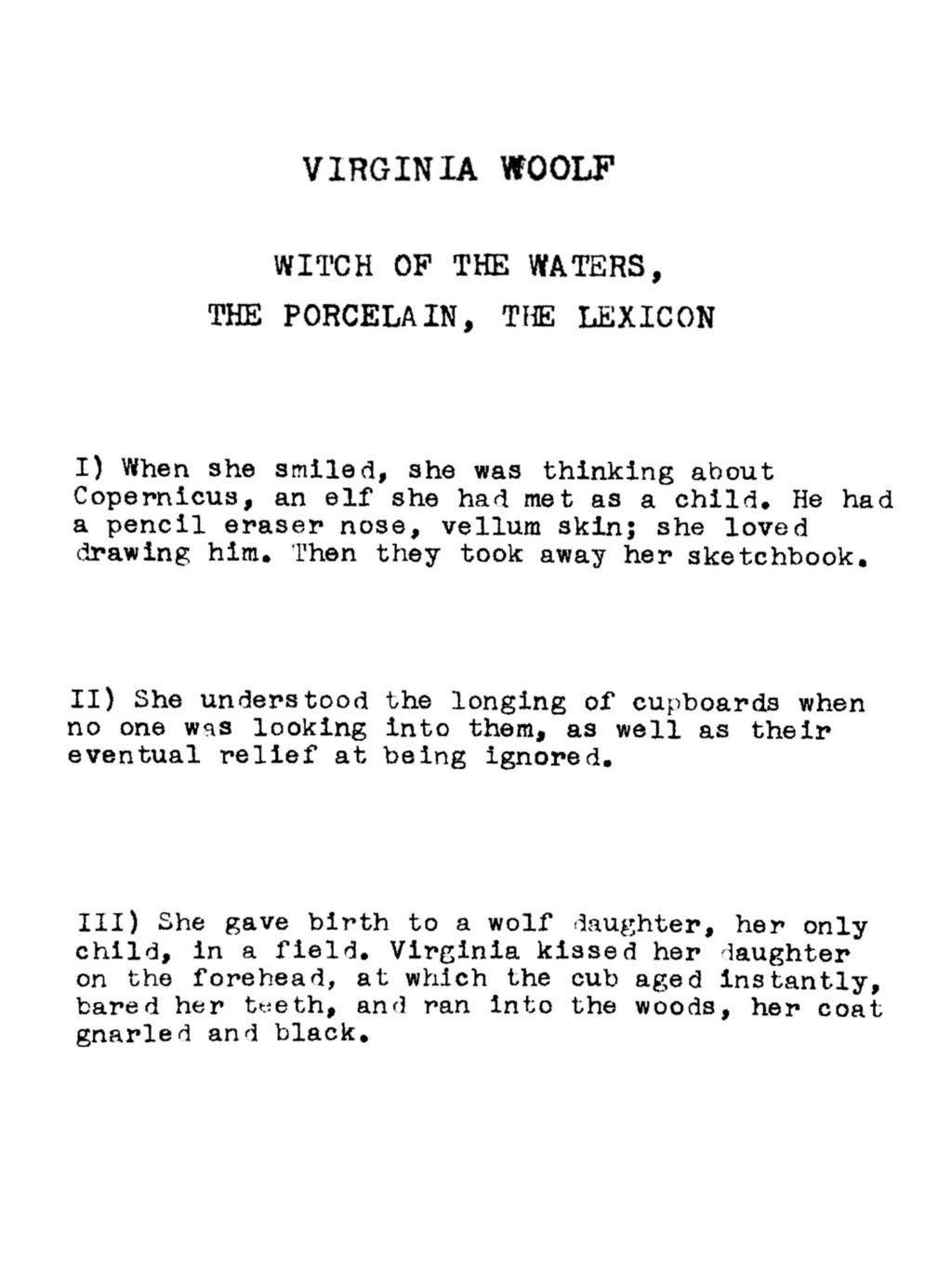
I was at my desk.

Later, she attends one of her husband’s plays in a topless dress, without seemingly realizing that the sight of her naked breasts in a theater would have caused a tizzy. But even without such examples of her maladroit ignorance of and indifference to society, her divorce from reality is highlighted by her attitude to science, which as Dutton vibrantly depicts was still fledgling at the time. She completely disdains it, calling “microscopy a brittle art,” despite the suspicion that she’s uncomfortable with it simply because its matter-of-fact coldness and brute reductionism threatens the fantastical world she’s built around her. In fact, it’s via science that Dutton presents the most abiding image of her incapability or unwillingness to translate the alleged progressivism of her writing into actual debate or discourse. She becomes the first women to visit the Royal Society near the very end of the novel, but rather than comment intelligently on what was presented to her or criticize “their artificial delusions,” she “said nothing!”

With this nothing, she ends up identifying herself as someone whose interest resides mainly in her eccentricity, and not in any attempts she could have made to contribute substantially to national conversations. As the novel concludes, she’s neither a progressive nor a feminist, but rather a titled aristocrat who was simply able to take advantage of her privileged status to indulge her taste for colorful literature, without ever seeking to extend this privilege to other members of her sex. However, rather than confirming her as the “Mad Madge” of the (newborn) newspapers, Dutton’s profile constructs her as a fully formed, complicated human being, as a woman whose interests and inclinations stem from a complex personal history. It’s this profile that’s the star of the novel as much as its subject, since it deftly weaves together primary and secondary sources to form a wholly integrated, believable and gripping account of a woman who didn’t belong to the times in which she was born, not least because these times were too volatile for her to ever plant herself in them.

Yes, she may not have effected any radical change during her own life, but this same account does movingly relate that she was buried in Westminster Abbey, where her dedication reads, “This Duchess was a wise, witty and learned lady, which her many books do well testify.” This reveals that she managed to win over at least some admirers before her death, and that Stuart England immortalized her as an example and a role model to the generations of female writers that followed her. Thanks to Margaret the First and Danielle Dutton’s elegance with words, this may continue for many more generations to come.

Midweek Links: Literary Links from Around the Web (February 24th)

Looking for some interesting reading to get you through the week? Here are some literary links from around the web to check out:

Emily St. John Mandel and Laura van den Berg discuss the apocalypse and the end of genre labels

A tour of David Foster Wallace’s Boston

Someone is publishing an X-Files YA novel

A look at some great writers that “nobody reads”

Jonathan Lethem explains how to arrange short story collections

The Paris Review gives some advice on naming characters

Amazon pulls a self-published memoir by a convicted serial killer

A tribute to horror writer Richard Matheson

A defense of conflict in literature

Kelly Link and Keith Lee Morris discuss unruly characters

Dorthe Nors & Jarett Kobek Discuss Literary Breakthroughs & Tech Industry Assaults on San Francisco

by Jarett Kobek

In the Summer of 2013, when I met Dorthe Nors in her native Denmark, she was about to have a major international breakthrough. Word had just come in that The New Yorker had accepted her short story “The Heron.” Its appearance would be followed by Karate Chop a rapturously received collection of short stories released by Graywolf. The resulting press would transform Dorthe’s status at home and abroad.
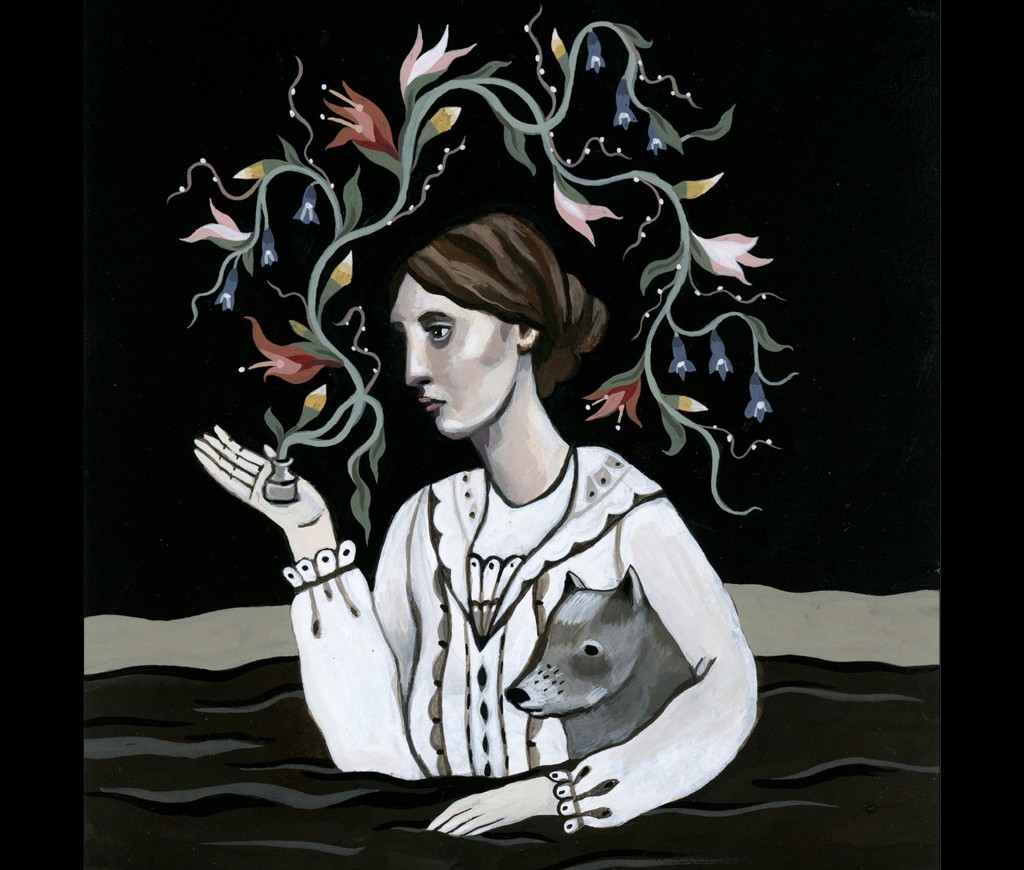
Since then, Dorthe has been a steadfast champion of my own writing, including my book I Hate the Internet, which she hyped several months ago on Swedish television. When Electric Literature asked if I’d have a conversation with her, I jumped at the chance. We spoke by telephone about her international renown, the misery of post-gentrification San Francisco, writing in Denmark, I Hate the Internet and her own new novel just published in Danish.

Dorthe Nors: Hello? Hi Jarett.

Jarett Kobek: Hey Dorthe, how are you?

DN: I’m fine, how are you? There was this computer that just said something to me.

JK: It said the call’s being recorded. I tested this by calling my dad right before I called you. He got freaked out by the computer voice.

DN: I’m more calm now but there was a moment there where I thought, “Oh my God, the CIA or FBI is on to me.”

JK: That’s what I said to him. I told him that the CIA is recording every call he makes.

DN: He’s scared enough as it is. It’s really nice hearing your voice again.

JK: It’s incredibly pleasant talking again. I was just thinking, we haven’t spoken outside of email in about two years.

DN: In exactly two years. The last time we saw each other was in February 2014. And things have been happening since then. It’s going really good with the novel, isn’t it?

JK: With mine?

DN: Yes. Isn’t it?

JK: It seems to be. It’s early.

DN: You don’t know where it’s heading really but something’s happening.

JK: It’s been getting press and people have been buying it. But there’s always that moment when the book goes out. You can do as much press as you want but that doesn’t mean that the people who buy it will like it. And there’s a delay between people buying it and reading it. If they like it and they start recommending it, then you’re in a good place. People have been very nice in terms of the reviews. So it looks pretty good. But publication was only five days ago.

DN: I thought it was in the beginning of February!

JK: No, February 10th was the official publication date.

DN: I noticed the San Francisco Chronicle thing and the Largehearted Boy thing and now there’s this Electric Literature thing. It’s like something is happening.

JK: People always respond, for better or worse, to outrage.

DN: [laughing] Like Trump and you?

JK: I’ve thought about how the political moment in the US has primed people for my novel. Everyone is now accustomed to having stupid men yell at them and now there’s a book by a stupid man yelling about the Internet.

DN: Every time I see Trump on television, I’m thinking about you and what you write about in that book. That assholes will rule the world. No matter what you do, it’s the dumbest ass that’s going to take over, right?

JK: The thing about Trump that’s a little reassuring is that he says these things and then forgets them ten seconds later. So he’ll make a fascistic pronouncement and everyone will freak out but a minute later, he’s forgotten. He has the attention span of an earthworm, so while we’re worried about the first one, he’ll be making another fascistic pronouncement.

DN: Because it works, right?

All of it is Trump saying that my father won’t be let back into the country. So that’s led to interesting phone calls.

JK: He was talking about Muslims and in particular how he didn’t want to let Muslims into the country and how he didn’t want American Muslims to come back into the US after being abroad. Which is an exact description of my father. So he’s been watching this on television. He has three different systems of television input. He’s got cable. He’s got satellite. And something else. All of it is Trump saying that my father won’t be let back into the country. So that’s led to interesting phone calls.

DN: And what his son then does is he makes a phone call from a computer that says, “This conversation is being recorded.” [laughs] So he’s in a loop now. Oh you’re a sweet kid to that man, you really are. Just to keep him occupied down in Izmir, right?

JK: He’s gotta think about something. Otherwise he’ll spend his time harassing the neighbors.

DN: [laughing] Oh Lord. I was thinking about what you wrote in I Hate the Internet about Bush being the worst president ever and every time I see Trump on television, and we’re getting more and more scared over here that you’re actually going to elect him, I go, “Well, Bush looks like a kindergarten teacher compared to him.”

JK: He has a good chance of getting the Republican nomination. I genuinely do not think that in the general election, unless something goes horribly wrong with the Democrats, that he can win.

DN: That is what is in our prayers every Sunday. Please don’t let Trump win. I think the other Republican candidate said that if we don’t stop him now, he’s going to nuke Denmark. [laughing] So we’re scared shitless, I tell you. We’re hardly getting any sleep over here.

JK: We should probably move on to something literary.

DN: I’m leaving it up to you because you’ve got the assignment.

JK: I was thinking we could talk about what I liked to term “The Dorthe Nors Phenomenon.”

DN: [laughing] The Syndrome. The Syndrome sounds a little better, right?

JK: For me it’s been inspiring to be slightly adjacent to the Syndrome. One of the things I don’t fully understand is what your status as a writer was before the Syndrome occurred. You’d published a few books in Denmark. But were you particularly well regarded? Were people reading you heavily? What was it like in that moment before all of this?

So for six years I had the stories published in different American magazines, just for the fun of it. I never ever imagined that I was going to have a breakthrough.

DN: Well, I was acknowledged. I had a very good publisher in Denmark. Back in the ’90s, my editor was known as the best editor in Denmark and I got picked by him, so things were happening. It was not like I was out in the dark. But I didn’t have readers, I was not part of any literary community that could do anything for me, so I was sort of a lone wolf with a career going nowhere. I got good reviews. The Karate Chop collection got really good reviews but that’s where it ended. My publisher didn’t want to spend money on highlighting me in the newspapers. The newspapers couldn’t care less. It just ended there. So for six years I had the stories published in different American magazines, just for the fun of it. I never ever imagined that I was going to have a breakthrough. I was fighting to get into the Danish literary community and the smaller, powerful circles in Copenhagen and having absolutely no success. You could say that I was acknowledged but nothing was happening with that acknowledgement. No readers, no media or anything.

JK: In Demark, there’s two literary schools?

DN: There’s one school. And then the rest of us pick it up.

JK: And you’re not from that school.

DN: No, I’m not from that school. It’s a writing academy, it allows in six students every year. The teachers are acclaimed writers who went to the school themselves. It’s like a hamster wheel. These kids, they’re pretty young when they get accepted, they go there for two years and they’re very talented. You can’t get into that school unless you’re a good writer to begin with. But it’s a very strong community, it’s almost like a religious community. There’s something uniform about the way they treat each other. And you know, I went to university and studied art and I was 29 when I wrote my first novel. I never contemplated getting into that school. I was so sick of school when I was done with university. There was no way in Hell I was going to apply to that school. So in Denmark there are two routes into writing. Writing academy or you go to university and pick up on writing otherwise, in the more classical way, the more old fashioned way. I belong to group number two!

JK: Is the academy state funded?

DN: Yes, it is. It wasn’t to begin with but they get funding now.

JK: The welfare state in action.

DN: They treat it as if it was an art academy. The art academy gets funding from the cultural ministry and so does this school.

JK: The moment in which everything changed for you is when your book ended up in the hands of Brigid Hughes, the editor at A Public Space, and it turned out that they have a publishing agreement with Graywolf?

DN: In the beginning, when I worked with A Public Space, they did not have that agreement with Graywolf. I was just publishing stories in A Public Space and then when I had around twelve stories published, I asked Brigid, “Should I try to have all the stories collected in America?” and she says wait a minute, and it turns out they have this agreement with Graywolf, where Graywolf would publish two books every year chosen by Brigid. And that’s how I ended up there.

JK: And from there you ended up with a short story in The New Yorker.

DN: There were three stories left from Karate Chop that had not been published in American magazines. So they sent these three stories to The New Yorker without telling me, and then I got an email right around the time I met you, like a month before, I got this email that said, “The New Yorker wants to print ‘The Heron’, isn’t that great?” and I knew it was big because I started crying but I had no idea how far out it was.

JK: I remember you didn’t even know you that were going to get paid.

DN: I cracked my American friends up that Summer. Because there were so many things that I didn’t know. For instance that some Americans are willing to kill to get into The New Yorker. I knew it was big, but come on, homicide?

JK: Literally, there are some people who would kill.

DN: But I didn’t know!

JK: Publication in The New Yorker is the beginning of the Dorthe Nors Syndrome. Is that a fair assessment?

DN: I would say that it’s the relationship to A Public Space, Graywolf Press and The New Yorker. Graywolf has a wonderful network and a wonderful sense of literature and they’ve done it for years and years, but the whole New Yorker thing made it easier. When people refer to the breakthrough in America now, they don’t refer to all the other shit that happened, it’s always The New Yorker. And in Denmark it’s the same. In Denmark they didn’t care what I was doing in America but the moment The New Yorker thing happened, the Danish media woke up because that they knew.

JK: So then a strange thing happened, which watching from the sidelines I can’t even begin to comprehend. You started showing up on television.

DN: Where, in America?

JK: No, in Denmark and elsewhere in Europe. From an American perspective it’s unfathomable for a writer. I think no matter how well a literary writer was doing, the chances of getting that sort of media coverage is zero. Unless they killed someone. Maybe to get in The New Yorker.

DN: It has made a world of change to be published in The New Yorker. It’s a very big turning point, but at least in Denmark the interest in what I’m actually writing is pretty small. I would say that in America there is a larger interest in the material that I deliver.

JK: There’s a greater willingness here to read challenging writers in translation than there is to read Americans. That might be because most Americans aren’t challenging. Maybe the literary writing coming out of America is so tepid that is a revealed preference in the market. If your choice is between an American novel and a novel in translation, at least with the second, you know that people cared enough to commission a translation. The Syndrome happened at a moment that was very fortuitous for foreign writers.

DN: I also think it’s because of Knausgaard. Do you remember when we walked from bookstore to bookstore on Lower Manhattan? And in The Strand I was completely pathetic, taking pictures of The New Yorker magnets, and looking through The New Yorker, going like, “Do you notice me?” And in that magazine which was about two or three months old, like six months after “The Heron” was in there, there was an excerpt of Knausgaard from My Struggle. And I was like, look, there’s a Norwegian in here. It’s an entire Scandinavian wave. And then you said, “Yeah, well, you’re inside that wave.” [laughing] It was so hilarious because Knausgaard is huge in New York right now, and I’m so not that. From what I hear, he’s stardom.

JK: He is out of control.

DN: Well, he looks like Jesus. He’s way ahead of me in that department.

JK: He might think he’s Jesus, too.

DN: He might. He might be Jesus. He takes all the sins of the universe on him. He does.

JK: If he’s Jesus, I can’t imagine what Heaven looks like.

DN: It would look a little bit Norwegian. Like a Norwegian suburb.

JK: And now you’re getting translated everywhere else, right?

DN: Karate Chop has been sold to ten countries. The interesting thing when you get a breakthrough in America, you get a breakthrough in Great Britain, because these two countries are strongly connected, and this is so powerful to a literary career. It’s sort of a contradiction that Americans don’t love their own literature but it’s still a very, very powerful continent when it comes to being acknowledged.

JK: How is Karate Chop being received in other territories?

In Denmark, I’m constantly referred to as, “Dorthe Nors, the first Dane ever published in the New Yorker.” Journalists are starting to vomit when they see it. It’s because I beat Karen Blixen to it.

DN: In the UK, they really loved it. Great reviews in The Guardian, The Financial Times and so forth and an interview in The Indepenedent. And I did cool jobs for the BBC and other places. Great Britain has been great. Sweden really took to it also. And then it’s been published in places where I don’t really know how it’s turned out. It was published in Norway, the homeland of Knausgaard and I have no idea how it went. I’m not in touch with the publisher in any way. My feeling is that it was just dropped on the market and now it’s in a pile of books that were never really wanted. Otherwise, it’s been a short story party. In Denmark, I’m constantly referred to as, “Dorthe Nors, the first Dane ever published in the New Yorker.” Journalists are starting to vomit when they see it. It’s because I beat Karen Blixen to it.

JK: Watch out for Karen Blixen.

DN: Watch out. She’s one feisty ghost, I can assure you.

JK: In the UK, Karate Chop was published in a single volume with another book that you wrote, Minna Needs Rehearsal Space.

DN: Yes.

JK: Sometimes when you meet writers, and when they’re the nicest people in the world and you really like them, you dread reading their work.

DN: I know that.

JK: You’re worried it’s going to be horrible. When I read Karate Chop, I thought, “Thank God, it’s good!”

DN: We can stay friends then.

JK: “Thank God, I don’t have to lie.” [laughs] When you sent me the UK edition and I read Minna Needs Rehearsal Space. I was blown away. I really liked Karate Chop but Minna strikes me as a work of genius. That’s a phenomenal book. Everything about that book is good.

DN: Could you please review in in The New York Times or something?

JK: If they’re letting me review books, something has either gone very well…

DN: Or very wrong.

JK: You’ve described it as a novel written in headlines. Every paragraph is one sentence. It’s a wonderful effect. I read it after writing I Hate the Internet, and I had the sensation that you’d managed to do what I was attempting, which was figure out how to have the most stripped down, least literary language and still have depth. But it wasn’t going to be on the surface. There wasn’t going to be hugely intricate writing. I’m not sure I have a question.

DN: I’m silent because I completely agree with you that there is a degree of deconstructing the novel as a form in both our books. And that the Internet and the way that the Internet works and the way we connect to that universe forces us to deconstruct in order to write truthfully about now. But it’s two very different ways that we do it.

JK: That’s very true. [laughs]

DN: No, no, you know I love I Hate the Internet. I think it’s a groundbreaking book in form and content and it’s so hilarious. And then you master one of the things I remember from you in life, the Live Jarett, who’s incredibly good at starting one and then just…I won’t say ramble, because this is smart rambling, but you have a way of associating your way through material where it stays alert and smart, and you got that in the book. It loops in and out. It’s very good. But it’s two different ways of deconstructing the novel.

JK: How so?

If you want to be understood on a deeper level, you have to be incredibly good at writing headlines.

DN: The idea of writing in headlines comes from what Facebook looked liked at the start, where your name would be in the beginning, and all you had to add was what you were doing. In the first form of Facebook, it would say “Dorthe” no matter what I did. I could not express myself in any other way than with my own boring name. So it would be, “Dorthe goes to the kitchen. Dorthe takes the bus.” And so on. It was interesting to make all kinds of things the actors of the sentence and also the restriction of that, that limited the way we could express ourselves, and then there’s the headline in itself. We have to write shorter and shorter on the Internet in order to be read and have a communication with other people. If you want to be understood on a deeper level, you have to be incredibly good at writing headlines.

JK: Apparently, there’s a plan in the works at Twitter to remove the 140 character length on tweets. In the US, because our journalism is bankrupt, anytime anything happens — like someone drops a bottle on Market Street in San Francisco — there’ll be a news article, and what the article will consist of, entirely, is tweets that a journalist found of people commenting on the bottle. In one way you understand why this is appealing — it certainly makes their job easier and it gives the illusion of a multifaceted point of view, but lately I’ve been wondering about what it means that all of this commentary is limited to 140 characters.

DN: It does a lot to our language and the way we need to express ourselves to be heard.

JK: It’s the idea that every complex issue can be reduced to 140 characters. I don’t think that’s how life works.

DN: It’s definitely not how life works. And it’s not how politics and journalism should work. I was thinking what you were just saying, that the journalists have multiple voices because they’re picking them from Twitter, and this is the whole Minna Needs Rehearsal Space idea, that everything and nothing has this ability to spew out headlines constantly. Even the coffee cups and the trees and the cat. Everything is spewing headlines.

JK: The old forms of literature, of writing, no longer seem adequate to address the moment of the now.

DN: Exactly.

JK: A lot of people have tried to write about the Internet and technologies, but they do it in this strange way, where you take whatever the dominant mode of writing is in that moment and then you plug-in proper nouns. That writing becomes enormously embarrassing. Almost immediately it starts to date. One of the things in I Hate the Internet, which is a technique I stole from a not very good Vonnegut novel called Breakfast of Champions, is that I define almost every noun. The definitions in the book are not necessarily the most accurate or the most fair, but my thought was that this might work as a bridge for readers. Realistically speaking, who knows if Twitter will be in business in five years? And if it’s not, what happens to the 15 year old who picks that book up in 2021, and tries to understand what’s going on, and it’s all dependent on proper nouns about companies that no longer exist and of which the reader has no memory?

DN: That’s Science Fiction, Jarett.

JK: Yeah. [laughs] It is. It’s strange to try and write about anything contemporary with any relationship to how people are living and not have it be terrible. These preexisting forms of writing are not good at adapting to new realities.

DN: And it’s also about finding the right combination. I don’t know if you’ve had this in America, but we’ve had people writing Twitter and text message novels.

JK: Oh, fuck, yes.

DN: And I’m really sorry to say, but they’re not good. It becomes too instrumental.

JK: It’s a gimmick.

DN: It’s like an app. It’s like a literature app. I can’t imagine anything more horrible. If you try to describe this change in communication and connection — or lack of connection — between people in a classical literary form, it stinks. Then you also have to find the balance. You still have to communicate with people in a form that is somehow relatable. It’s tricky. But I think we nailed it!

JK: [laughing]

DN: “We Nailed It.” [laughing] That’s the headline on this interview.

JK: I think maybe the headline should be, “Two Writers Congratulate Each Other.”

DN: [laughing] “On Their Genius!” Intercontinental back-patting. No, we shouldn’t do that. The other story which you haven’t read yet, which is going to be in So Much for that Winter, which is the new American title for the book that contains the story about Minna … but in So Much for that Winter is another novella that I wrote. It was written directly on the Internet. So this is another way of using this new thing. I wrote a list every night directly to a blog, back seven years ago, and then that turned into a story.

JK: When people are reading the books, do they understand the intellectual component of what you’re doing?

DN: In Minna Needs Rehearsal Space or in general?

One of the things I like to think about is what would happen if I were a woman who wrote word-for-word the same books that I’m writing as a man.

JK: In general. One of the things I like to think about is what would happen if I were a woman who wrote word-for-word the same books that I’m writing as a man. I feel like I would get the exact opposite reaction that I receive. With I Hate the Internet so far, people are responding to issues raised in the book but not talking about it as if it’s a novel. Partly that’s because it’s a bad novel. It says that in the book! The character development goes nowhere. No one learns anything. But there’s a functional novel in there. It’s not a bad reception to be having, but I think it’s very based on my gender. A better example might be ATTA. If a woman had written that book, I don’t think she could have gotten it published. In some of the reviews of your work — and they’ve all been good — I’m not sure I’ve seen much discussion of the underlying intellectualism of it. Am I just imagining this?

DN: When you said that about a woman writing I Hate the Internet and ATTA, I felt in my stomach that you were right. If I Hate the Internet was written by a woman it would be filed as, “She’s not really getting it.” She would be mansplained to Hell. Accused of being a whiner or hysterical. Stuff like that. ATTA, it’s hard for me to say, it’s written in a very American context and it addresses a very American wound and I don’t know what Americans feel about women talking about that.

JK: If that had been written by a woman, it would have never been published.

DN: It might have been in Denmark, but that’s because it’s a different country. The reviews that I got in America had a very strong sensibility of the form and how it was technically written, and then because I was exotic and from another country and all, I might not have been judged under the same law. I don’t know. But I experience it in Denmark. I recently published a novel about two weeks ago and it has had raving reviews. Men love this book. Which is completely surprising to me because it’s about female autonomy. There has been one woman who went completely sexist berserk on it. Which is really interesting. So it’s not like we don’t get it here. The interesting part is that it was a woman turning on me. I do think you’re right that there’s a huge bias here.

JK: I’m curious about Denmark. When I was there, by and large all the women writers were very nice people, all very interesting and professional people. All of the male writers, with the exception of Ole Tornberg, were kind of horrible.

It’s an era where women are doing something in literature. So maybe that’s why the male writers feel left behind.

DN: I can’t explain it. I don’t know why it is. I know male writers. One of my best friends here is a Danish writer, and he’s a man, but he lives in London. So maybe it’s just hanging around Denmark. I see your point even though it’s hard to see those things in your own culture. Right now in Denmark, female writers are ahead of things. Women who write in Denmark are sketching out new ways of writing, they’re breaking ground, they’re making new traditions. It’s an era where women are doing something in literature. So maybe that’s why the male writers feel left behind.

JK: Huh.

DN: But I do agree. I can’t even imagine I Hate the Internet being written by a woman and not getting a lot of hate.

JK: It would be exactly what you said. “Shrill, whiny, she doesn’t get it.” And the thing that’s funny is that I think all of those are fair critiques.

DN: [laughs]

JK: It is a really shrill and whiny book.

DN: Which I love.

JK: It’s a very petty book. You know what’s funny is that I’m in San Francisco right now. I’m doing a couple of events. I’m recording this in the office of a Google employee.

DN: [laughs] And this conversation is being recorded on many levels. Check out the plants on the table. Check out the lamp over your head. What is it like being back in San Francisco?

The unfettered venture capitalism tech bubble has run rampant for the last five years. There’s been structural damage, environment damage, there’s a profound homeless problem.

JK: I came back in December over Christmas and it was the first time. It’s incredibly fucked up. But with San Francisco, no matter what happens to it, unless they raise every building, it’s still astonishingly beautiful. When you’re visiting, it can be very seductive. You can blind yourself to what’s happening. But, no, it’s a weird moment. The unfettered venture capitalism tech bubble has run rampant for the last five years. There’s been structural damage, environment damage, there’s a profound homeless problem. You can see the tech workers wandering around in places you would never have seen them before. I’m in the Castro, which is historically gay and there’s a huge debate because the neighborhood is getting less gay and more tech. And by and large the tech guys are straight. They might not have a lot of sex. But they’re straight. Long standing communities are changing.

DN: Yeah.

JK: But the world economy seems like it’s teetering. And the economy here is very vulnerable. A lot of companies in San Francisco have never made any money.

DN: How the hell are they able to be there?

JK: Because of the way that venture capital works and because of low interest rates. Some people will read this and think that the economics of this are pathetic, but in my understanding, traditionally if you had money, then you could stick it in treasury securities or any low risk places and the interest would be enough to see some kind of return. That’s the principle of capitalism. Trying to make from other money. Because the interest rates have been so low for years, if you have that money and you want to make money off of that money, you can’t put it in a low risk situation, because there’s no interest. What people do is find companies without any interest in whether or not the business can be profitable. You want to get in on the ground floor and generate buzz. You invest $10,000,000 in someone’s imaginary start-up. That company never has to make money, it just has to get to the point where your original investment pays off, which happens in a variety of ways unrelated to its functionality as a business. The economic planning of the government incentivizes risk and can create worlds where the rules of business don’t apply.

DN: That scares me shitless.

JK: And that is the economy of San Francisco.

DN: Which means it’s like a helium balloon.

JK: There are three companies that make money. Google, Apple and Facebook. Some others, too, but they’re not so Internet-y. But then there are huge companies that don’t make money. There’s this company called Salesforce which has tens of thousands of employees, which has never made a profit, and no one has any idea what it does.

DN: Jesus.

JK: Before I go, I wanted to ask what’s your new novel about?

DN: It’s already sold to Great Britain, German, Norway, Holland and Sweden. So it’s going great.

JK: The Dorthe Nors Syndrome. The saga continues.

DN: It’s about a woman in her forties who decides to get a driver’s license. And if you think it has any resemblance to me, you’re wrong.

JK: [laughs]

DN: She decides to get a driver’s license in order to move out of Copenhagen. It’s about getting control of the vehicle, which is hilarious, but it’s also about finding another direction in your life. Ant it’s about choosing the landscape over the urban. We’re all taught to move into cities all over the world. There’s a huge and massive political centralization going on. It’s not only that people want to, it’s that they have to. Because the rural areas are closing down. This woman doesn’t even know if there’s a place to return to. She wants to leave the city, but is there a countryside, is there a nation beyond the city that she can move into? It’s I think the most political book I’ve written. It’s also very funny and heartbreaking. As you know I try to have my books balance on a thin edge between tragedy and comedy.

JK: That’s the biggest issue. The urbanization of the last thirty years.

DN: For an artist or just for somebody who doesn’t make a lot of money, it’s an insane struggle to live in the urban centers of a nation. You told me this about San Francisco, that the prices and the gentrification make it almost impossible to live there.

JK: And it gave me a nervous breakdown. And it was the consequence of what you describe. Having to be in the urban center. It’s not necessarily the best place to be if you’re an artist. But how do you do anything without social access?

You get an education and you move into the biggest city you can find and that will mean you’re doing good. But the problem is that there’s a lot of people who are trapped in big cities who don’t thrive there.

DN: This is what’s really puzzling me. I was struggling and I saw all my friends who were not making a lot of money really struggling to live in fancy apartments and on stupid addresses. They were pouring all their creative energy into something that was completely pointless. But then again, every time the question came up, where was I going to go? The other option if you prefer the urban way of living in Denmark would be Aarhus, but that’s the same phenomenon. The prices of apartments were going haywire. We’re told that if you’re moving to the city, you have a social status. This is how we’re brought up. You get an education and you move into the biggest city you can find and that will mean you’re doing good. But the problem is that there’s a lot of people who are trapped in big cities who don’t thrive there.

JK: It’s true.

DN: When I’m in New York and I drive in a taxi, the dude behind the wheel goes, “I’m teaching math in a high school and I’m driving here at night because I need to make money,” and the one thing that goes through my head is, “Why the Hell don’t you live in Minneapolis? Why are you living here?”

JK: Living in New York is synonymous with mental illness. It’s so crazy.

DN: It’s so raw.

I think people are more willing to tolerate the eccentric that they know in person.

JK: On the other hand, one of the worst decisions I’ve made, career-wise, was to leave New York. I couldn’t have become a writer if I hadn’t moved to California. It didn’t click before I was in California. But not being in New York has been bad in some ways. In terms of professional success. I think people are more willing to tolerate the eccentric that they know in person. If you’re sending in a manuscript like I Hate the Internet and no one knows who you are, then it’s just mysterious. No one will deal with you.

DN: I remember I told you that what you were doing in that novel resembled some of the things that the literary subcultures in Denmark are trying to do, which is why it’s not completely strange to me.

JK: Like I said, when I read Minna Needs Rehearsal Space, I was surprised by the resemblance. And you did it much better than I did. In terms of distilling it down to that kind of language, you succeed in a way that’s very impressive.

DN: Before we hang up, I wanted to say one thing about literary communities. Moving out of New York is of course moving away from those powerful literary cultures. Which is what I moved away from when I moved out of Copenhagen. I come from a really remote place in the world and I write in America. You don’t have to be where you write. I live almost in Scotland now. And I was just in Copenhagen for two weeks for the launch of my new novel. After six days, there was not a fiber in my body that didn’t want to leave the whole shebang. I love Copenhagen but I’m not meant to live in it.

JK: One of the good things about exiling yourself is that it does give you the chance to develop in private.

DN: Yes. Exactly. That makes all the sense in the universe. I’ve heard about other American writers who’ve done it. For instance Daniel Woodrell, he lives in Missouri. He’s the dude who wrote Winter’s Bone. He never made it in New York as far as I know. I was asked recently which writers I appreciate the most. They’re almost always writers who live away from a powerful cultural center. Because it allows them to develop on their own. But you’re right that it might be harder to get in touch with the power structures.

JK: Okay, I have to run! We’ve been doing this for an hour and five minutes!

DN: Run, Jarett, run!