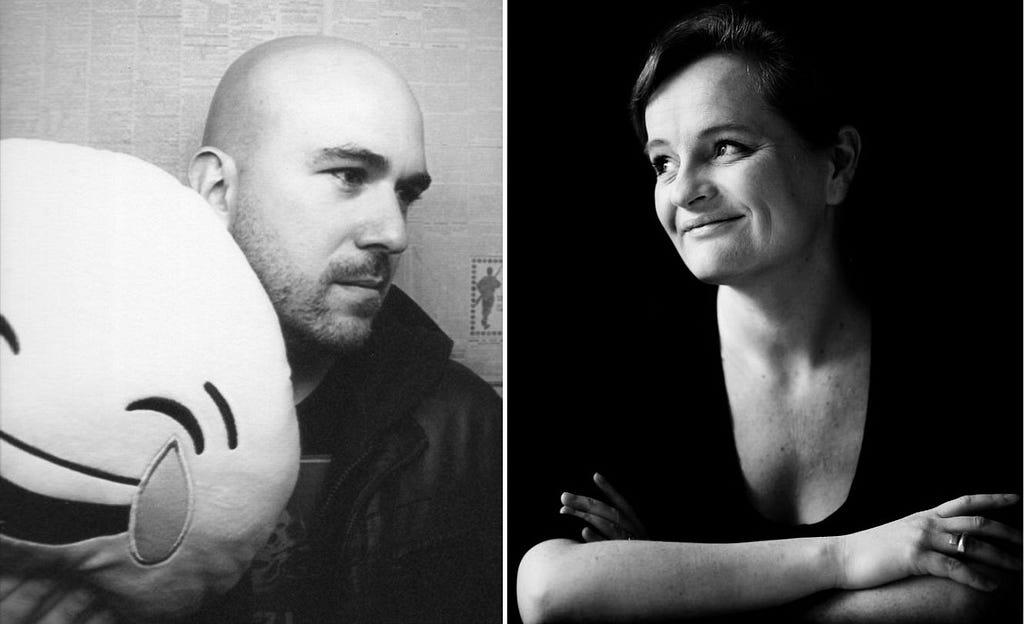
In the Summer of 2013, when I met Dorthe Nors in her native Denmark, she was about to have a major international breakthrough. Word had just come in that The New Yorker had accepted her short story “The Heron.” Its appearance would be followed by Karate Chop a rapturously received collection of short stories released by Graywolf. The resulting press would transform Dorthe’s status at home and abroad.
Since then, Dorthe has been a steadfast champion of my own writing, including my book I Hate the Internet, which she hyped several months ago on Swedish television. When Electric Literature asked if I’d have a conversation with her, I jumped at the chance. We spoke by telephone about her international renown, the misery of post-gentrification San Francisco, writing in Denmark, I Hate the Internet and her own new novel just published in Danish.
Dorthe Nors: Hello? Hi Jarett.
Jarett Kobek: Hey Dorthe, how are you?
DN: I’m fine, how are you? There was this computer that just said something to me.
JK: It said the call’s being recorded. I tested this by calling my dad right before I called you. He got freaked out by the computer voice.
DN: I’m more calm now but there was a moment there where I thought, “Oh my God, the CIA or FBI is on to me.”
JK: That’s what I said to him. I told him that the CIA is recording every call he makes.
DN: He’s scared enough as it is. It’s really nice hearing your voice again.
JK: It’s incredibly pleasant talking again. I was just thinking, we haven’t spoken outside of email in about two years.
DN: In exactly two years. The last time we saw each other was in February 2014. And things have been happening since then. It’s going really good with the novel, isn’t it?
JK: With mine?
DN: Yes. Isn’t it?
JK: It seems to be. It’s early.
DN: You don’t know where it’s heading really but something’s happening.
JK: It’s been getting press and people have been buying it. But there’s always that moment when the book goes out. You can do as much press as you want but that doesn’t mean that the people who buy it will like it. And there’s a delay between people buying it and reading it. If they like it and they start recommending it, then you’re in a good place. People have been very nice in terms of the reviews. So it looks pretty good. But publication was only five days ago.
DN: I thought it was in the beginning of February!
JK: No, February 10th was the official publication date.
JK: People always respond, for better or worse, to outrage.
DN: [laughing] Like Trump and you?
JK: I’ve thought about how the political moment in the US has primed people for my novel. Everyone is now accustomed to having stupid men yell at them and now there’s a book by a stupid man yelling about the Internet.
DN: Every time I see Trump on television, I’m thinking about you and what you write about in that book. That assholes will rule the world. No matter what you do, it’s the dumbest ass that’s going to take over, right?
JK: The thing about Trump that’s a little reassuring is that he says these things and then forgets them ten seconds later. So he’ll make a fascistic pronouncement and everyone will freak out but a minute later, he’s forgotten. He has the attention span of an earthworm, so while we’re worried about the first one, he’ll be making another fascistic pronouncement.
DN: Because it works, right?
All of it is Trump saying that my father won’t be let back into the country. So that’s led to interesting phone calls.
JK: He was talking about Muslims and in particular how he didn’t want to let Muslims into the country and how he didn’t want American Muslims to come back into the US after being abroad. Which is an exact description of my father. So he’s been watching this on television. He has three different systems of television input. He’s got cable. He’s got satellite. And something else. All of it is Trump saying that my father won’t be let back into the country. So that’s led to interesting phone calls.
DN: And what his son then does is he makes a phone call from a computer that says, “This conversation is being recorded.” [laughs] So he’s in a loop now. Oh you’re a sweet kid to that man, you really are. Just to keep him occupied down in Izmir, right?
JK: He’s gotta think about something. Otherwise he’ll spend his time harassing the neighbors.
DN: [laughing] Oh Lord. I was thinking about what you wrote in I Hate the Internet about Bush being the worst president ever and every time I see Trump on television, and we’re getting more and more scared over here that you’re actually going to elect him, I go, “Well, Bush looks like a kindergarten teacher compared to him.”
JK: He has a good chance of getting the Republican nomination. I genuinely do not think that in the general election, unless something goes horribly wrong with the Democrats, that he can win.
DN: That is what is in our prayers every Sunday. Please don’t let Trump win. I think the other Republican candidate said that if we don’t stop him now, he’s going to nuke Denmark. [laughing] So we’re scared shitless, I tell you. We’re hardly getting any sleep over here.
JK: We should probably move on to something literary.
DN: I’m leaving it up to you because you’ve got the assignment.
JK: I was thinking we could talk about what I liked to term “The Dorthe Nors Phenomenon.”
DN: [laughing] The Syndrome. The Syndrome sounds a little better, right?
JK: For me it’s been inspiring to be slightly adjacent to the Syndrome. One of the things I don’t fully understand is what your status as a writer was before the Syndrome occurred. You’d published a few books in Denmark. But were you particularly well regarded? Were people reading you heavily? What was it like in that moment before all of this?
So for six years I had the stories published in different American magazines, just for the fun of it. I never ever imagined that I was going to have a breakthrough.
DN: Well, I was acknowledged. I had a very good publisher in Denmark. Back in the ’90s, my editor was known as the best editor in Denmark and I got picked by him, so things were happening. It was not like I was out in the dark. But I didn’t have readers, I was not part of any literary community that could do anything for me, so I was sort of a lone wolf with a career going nowhere. I got good reviews. The Karate Chop collection got really good reviews but that’s where it ended. My publisher didn’t want to spend money on highlighting me in the newspapers. The newspapers couldn’t care less. It just ended there. So for six years I had the stories published in different American magazines, just for the fun of it. I never ever imagined that I was going to have a breakthrough. I was fighting to get into the Danish literary community and the smaller, powerful circles in Copenhagen and having absolutely no success. You could say that I was acknowledged but nothing was happening with that acknowledgement. No readers, no media or anything.
JK: In Demark, there’s two literary schools?
DN: There’s one school. And then the rest of us pick it up.
JK: And you’re not from that school.
DN: No, I’m not from that school. It’s a writing academy, it allows in six students every year. The teachers are acclaimed writers who went to the school themselves. It’s like a hamster wheel. These kids, they’re pretty young when they get accepted, they go there for two years and they’re very talented. You can’t get into that school unless you’re a good writer to begin with. But it’s a very strong community, it’s almost like a religious community. There’s something uniform about the way they treat each other. And you know, I went to university and studied art and I was 29 when I wrote my first novel. I never contemplated getting into that school. I was so sick of school when I was done with university. There was no way in Hell I was going to apply to that school. So in Denmark there are two routes into writing. Writing academy or you go to university and pick up on writing otherwise, in the more classical way, the more old fashioned way. I belong to group number two!
JK: Is the academy state funded?
DN: Yes, it is. It wasn’t to begin with but they get funding now.
JK: The welfare state in action.
DN: They treat it as if it was an art academy. The art academy gets funding from the cultural ministry and so does this school.
JK: The moment in which everything changed for you is when your book ended up in the hands of Brigid Hughes, the editor at A Public Space, and it turned out that they have a publishing agreement with Graywolf?
DN: In the beginning, when I worked with A Public Space, they did not have that agreement with Graywolf. I was just publishing stories in A Public Space and then when I had around twelve stories published, I asked Brigid, “Should I try to have all the stories collected in America?” and she says wait a minute, and it turns out they have this agreement with Graywolf, where Graywolf would publish two books every year chosen by Brigid. And that’s how I ended up there.
JK: And from there you ended up with a short story in The New Yorker.
DN: There were three stories left from Karate Chop that had not been published in American magazines. So they sent these three stories to The New Yorker without telling me, and then I got an email right around the time I met you, like a month before, I got this email that said, “The New Yorker wants to print ‘The Heron’, isn’t that great?” and I knew it was big because I started crying but I had no idea how far out it was.
JK: I remember you didn’t even know you that were going to get paid.
DN: I cracked my American friends up that Summer. Because there were so many things that I didn’t know. For instance that some Americans are willing to kill to get into The New Yorker. I knew it was big, but come on, homicide?
JK: Literally, there are some people who would kill.
DN: But I didn’t know!
JK: Publication in The New Yorker is the beginning of the Dorthe Nors Syndrome. Is that a fair assessment?
DN: I would say that it’s the relationship to A Public Space, Graywolf Press and The New Yorker. Graywolf has a wonderful network and a wonderful sense of literature and they’ve done it for years and years, but the whole New Yorker thing made it easier. When people refer to the breakthrough in America now, they don’t refer to all the other shit that happened, it’s always The New Yorker. And in Denmark it’s the same. In Denmark they didn’t care what I was doing in America but the moment The New Yorker thing happened, the Danish media woke up because that they knew.
JK: So then a strange thing happened, which watching from the sidelines I can’t even begin to comprehend. You started showing up on television.
DN: Where, in America?
JK: No, in Denmark and elsewhere in Europe. From an American perspective it’s unfathomable for a writer. I think no matter how well a literary writer was doing, the chances of getting that sort of media coverage is zero. Unless they killed someone. Maybe to get in The New Yorker.
DN: It has made a world of change to be published in The New Yorker. It’s a very big turning point, but at least in Denmark the interest in what I’m actually writing is pretty small. I would say that in America there is a larger interest in the material that I deliver.
JK: There’s a greater willingness here to read challenging writers in translation than there is to read Americans. That might be because most Americans aren’t challenging. Maybe the literary writing coming out of America is so tepid that is a revealed preference in the market. If your choice is between an American novel and a novel in translation, at least with the second, you know that people cared enough to commission a translation. The Syndrome happened at a moment that was very fortuitous for foreign writers.
DN: I also think it’s because of Knausgaard. Do you remember when we walked from bookstore to bookstore on Lower Manhattan? And in The Strand I was completely pathetic, taking pictures of The New Yorker magnets, and looking through TheNew Yorker, going like, “Do you notice me?” And in that magazine which was about two or three months old, like six months after “The Heron” was in there, there was an excerpt of Knausgaard from My Struggle. And I was like, look, there’s a Norwegian in here. It’s an entire Scandinavian wave. And then you said, “Yeah, well, you’re inside that wave.” [laughing] It was so hilarious because Knausgaard is huge in New York right now, and I’m so not that. From what I hear, he’s stardom.
JK: He is out of control.
DN: Well, he looks like Jesus. He’s way ahead of me in that department.
JK: He might think he’s Jesus, too.
DN: He might. He might be Jesus. He takes all the sins of the universe on him. He does.
JK: If he’s Jesus, I can’t imagine what Heaven looks like.
DN: It would look a little bit Norwegian. Like a Norwegian suburb.
JK: And now you’re getting translated everywhere else, right?
DN:Karate Chop has been sold to ten countries. The interesting thing when you get a breakthrough in America, you get a breakthrough in Great Britain, because these two countries are strongly connected, and this is so powerful to a literary career. It’s sort of a contradiction that Americans don’t love their own literature but it’s still a very, very powerful continent when it comes to being acknowledged.
JK: How is Karate Chop being received in other territories?
In Denmark, I’m constantly referred to as, “Dorthe Nors, the first Dane ever published in the New Yorker.” Journalists are starting to vomit when they see it. It’s because I beat Karen Blixen to it.
DN: In the UK, they really loved it. Great reviews in The Guardian, The Financial Times and so forth and an interview in The Indepenedent. And I did cool jobs for the BBC and other places. Great Britain has been great. Sweden really took to it also. And then it’s been published in places where I don’t really know how it’s turned out. It was published in Norway, the homeland of Knausgaard and I have no idea how it went. I’m not in touch with the publisher in any way. My feeling is that it was just dropped on the market and now it’s in a pile of books that were never really wanted. Otherwise, it’s been a short story party. In Denmark, I’m constantly referred to as, “Dorthe Nors, the first Dane ever published in the New Yorker.” Journalists are starting to vomit when they see it. It’s because I beat Karen Blixen to it.
JK: Watch out for Karen Blixen.
DN: Watch out. She’s one feisty ghost, I can assure you.
JK: In the UK, Karate Chop was published in a single volume with another book that you wrote, Minna Needs Rehearsal Space.
DN: Yes.
JK: Sometimes when you meet writers, and when they’re the nicest people in the world and you really like them, you dread reading their work.
DN: I know that.
JK: You’re worried it’s going to be horrible. When I read Karate Chop, I thought, “Thank God, it’s good!”
DN: We can stay friends then.
JK: “Thank God, I don’t have to lie.” [laughs] When you sent me the UK edition and I read Minna Needs Rehearsal Space. I was blown away. I really liked Karate Chop but Minna strikes me as a work of genius. That’s a phenomenal book. Everything about that book is good.
DN: Could you please review in in TheNew York Times or something?
JK: If they’re letting me review books, something has either gone very well…
DN: Or very wrong.
JK: You’ve described it as a novel written in headlines. Every paragraph is one sentence. It’s a wonderful effect. I read it after writing I Hate the Internet, and I had the sensation that you’d managed to do what I was attempting, which was figure out how to have the most stripped down, least literary language and still have depth. But it wasn’t going to be on the surface. There wasn’t going to be hugely intricate writing. I’m not sure I have a question.
DN: I’m silent because I completely agree with you that there is a degree of deconstructing the novel as a form in both our books. And that the Internet and the way that the Internet works and the way we connect to that universe forces us to deconstruct in order to write truthfully about now. But it’s two very different ways that we do it.
JK: That’s very true. [laughs]
DN: No, no, you know I love I Hate the Internet. I think it’s a groundbreaking book in form and content and it’s so hilarious. And then you master one of the things I remember from you in life, the Live Jarett, who’s incredibly good at starting one and then just…I won’t say ramble, because this is smart rambling, but you have a way of associating your way through material where it stays alert and smart, and you got that in the book. It loops in and out. It’s very good. But it’s two different ways of deconstructing the novel.
JK: How so?
If you want to be understood on a deeper level, you have to be incredibly good at writing headlines.
DN: The idea of writing in headlines comes from what Facebook looked liked at the start, where your name would be in the beginning, and all you had to add was what you were doing. In the first form of Facebook, it would say “Dorthe” no matter what I did. I could not express myself in any other way than with my own boring name. So it would be, “Dorthe goes to the kitchen. Dorthe takes the bus.” And so on. It was interesting to make all kinds of things the actors of the sentence and also the restriction of that, that limited the way we could express ourselves, and then there’s the headline in itself. We have to write shorter and shorter on the Internet in order to be read and have a communication with other people. If you want to be understood on a deeper level, you have to be incredibly good at writing headlines.
JK: Apparently, there’s a plan in the works at Twitter to remove the 140 character length on tweets. In the US, because our journalism is bankrupt, anytime anything happens — like someone drops a bottle on Market Street in San Francisco — there’ll be a news article, and what the article will consist of, entirely, is tweets that a journalist found of people commenting on the bottle. In one way you understand why this is appealing — it certainly makes their job easier and it gives the illusion of a multifaceted point of view, but lately I’ve been wondering about what it means that all of this commentary is limited to 140 characters.
DN: It does a lot to our language and the way we need to express ourselves to be heard.
JK: It’s the idea that every complex issue can be reduced to 140 characters. I don’t think that’s how life works.
DN: It’s definitely not how life works. And it’s not how politics and journalism should work. I was thinking what you were just saying, that the journalists have multiple voices because they’re picking them from Twitter, and this is the whole Minna Needs Rehearsal Space idea, that everything and nothing has this ability to spew out headlines constantly. Even the coffee cups and the trees and the cat. Everything is spewing headlines.
JK: The old forms of literature, of writing, no longer seem adequate to address the moment of the now.
DN: Exactly.
JK: A lot of people have tried to write about the Internet and technologies, but they do it in this strange way, where you take whatever the dominant mode of writing is in that moment and then you plug-in proper nouns. That writing becomes enormously embarrassing. Almost immediately it starts to date. One of the things in I Hate the Internet, which is a technique I stole from a not very good Vonnegut novel called Breakfast of Champions, is that I define almost every noun. The definitions in the book are not necessarily the most accurate or the most fair, but my thought was that this might work as a bridge for readers. Realistically speaking, who knows if Twitter will be in business in five years? And if it’s not, what happens to the 15 year old who picks that book up in 2021, and tries to understand what’s going on, and it’s all dependent on proper nouns about companies that no longer exist and of which the reader has no memory?
DN: That’s Science Fiction, Jarett.
JK: Yeah. [laughs] It is. It’s strange to try and write about anything contemporary with any relationship to how people are living and not have it be terrible. These preexisting forms of writing are not good at adapting to new realities.
DN: And it’s also about finding the right combination. I don’t know if you’ve had this in America, but we’ve had people writing Twitter and text message novels.
JK: Oh, fuck, yes.
DN: And I’m really sorry to say, but they’re not good. It becomes too instrumental.
JK: It’s a gimmick.
DN: It’s like an app. It’s like a literature app. I can’t imagine anything more horrible. If you try to describe this change in communication and connection — or lack of connection — between people in a classical literary form, it stinks. Then you also have to find the balance. You still have to communicate with people in a form that is somehow relatable. It’s tricky. But I think we nailed it!
JK: [laughing]
DN: “We Nailed It.” [laughing] That’s the headline on this interview.
JK: I think maybe the headline should be, “Two Writers Congratulate Each Other.”
DN: [laughing] “On Their Genius!” Intercontinental back-patting. No, we shouldn’t do that. The other story which you haven’t read yet, which is going to be in So Much for that Winter, which is the new American title for the book that contains the story about Minna … but in So Much for that Winter is another novella that I wrote. It was written directly on the Internet. So this is another way of using this new thing. I wrote a list every night directly to a blog, back seven years ago, and then that turned into a story.
JK: When people are reading the books, do they understand the intellectual component of what you’re doing?
DN: In Minna Needs Rehearsal Space or in general?
One of the things I like to think about is what would happen if I were a woman who wrote word-for-word the same books that I’m writing as a man.
JK: In general. One of the things I like to think about is what would happen if I were a woman who wrote word-for-word the same books that I’m writing as a man. I feel like I would get the exact opposite reaction that I receive. With I Hate the Internet so far, people are responding to issues raised in the book but not talking about it as if it’s a novel. Partly that’s because it’s a bad novel. It says that in the book! The character development goes nowhere. No one learns anything. But there’s a functional novel in there. It’s not a bad reception to be having, but I think it’s very based on my gender. A better example might be ATTA. If a woman had written that book, I don’t think she could have gotten it published. In some of the reviews of your work — and they’ve all been good — I’m not sure I’ve seen much discussion of the underlying intellectualism of it. Am I just imagining this?
DN: When you said that about a woman writing I Hate the Internet and ATTA, I felt in my stomach that you were right. If I Hate the Internet was written by a woman it would be filed as, “She’s not really getting it.” She would be mansplained to Hell. Accused of being a whiner or hysterical. Stuff like that. ATTA, it’s hard for me to say, it’s written in a very American context and it addresses a very American wound and I don’t know what Americans feel about women talking about that.
JK: If that had been written by a woman, it would have never been published.
DN: It might have been in Denmark, but that’s because it’s a different country. The reviews that I got in America had a very strong sensibility of the form and how it was technically written, and then because I was exotic and from another country and all, I might not have been judged under the same law. I don’t know. But I experience it in Denmark. I recently published a novel about two weeks ago and it has had raving reviews. Men love this book. Which is completely surprising to me because it’s about female autonomy. There has been one woman who went completely sexist berserk on it. Which is really interesting. So it’s not like we don’t get it here. The interesting part is that it was a woman turning on me. I do think you’re right that there’s a huge bias here.
JK: I’m curious about Denmark. When I was there, by and large all the women writers were very nice people, all very interesting and professional people. All of the male writers, with the exception of Ole Tornberg, were kind of horrible.
It’s an era where women are doing something in literature. So maybe that’s why the male writers feel left behind.
DN: I can’t explain it. I don’t know why it is. I know male writers. One of my best friends here is a Danish writer, and he’s a man, but he lives in London. So maybe it’s just hanging around Denmark. I see your point even though it’s hard to see those things in your own culture. Right now in Denmark, female writers are ahead of things. Women who write in Denmark are sketching out new ways of writing, they’re breaking ground, they’re making new traditions. It’s an era where women are doing something in literature. So maybe that’s why the male writers feel left behind.
JK: Huh.
DN: But I do agree. I can’t even imagine I Hate the Internet being written by a woman and not getting a lot of hate.
JK: It would be exactly what you said. “Shrill, whiny, she doesn’t get it.” And the thing that’s funny is that I think all of those are fair critiques.
DN: [laughs]
JK: It is a really shrill and whiny book.
DN: Which I love.
JK: It’s a very petty book. You know what’s funny is that I’m in San Francisco right now. I’m doing a couple of events. I’m recording this in the office of a Google employee.
DN: [laughs] And this conversation is being recorded on many levels. Check out the plants on the table. Check out the lamp over your head. What is it like being back in San Francisco?
The unfettered venture capitalism tech bubble has run rampant for the last five years. There’s been structural damage, environment damage, there’s a profound homeless problem.
JK: I came back in December over Christmas and it was the first time. It’s incredibly fucked up. But with San Francisco, no matter what happens to it, unless they raise every building, it’s still astonishingly beautiful. When you’re visiting, it can be very seductive. You can blind yourself to what’s happening. But, no, it’s a weird moment. The unfettered venture capitalism tech bubble has run rampant for the last five years. There’s been structural damage, environment damage, there’s a profound homeless problem. You can see the tech workers wandering around in places you would never have seen them before. I’m in the Castro, which is historically gay and there’s a huge debate because the neighborhood is getting less gay and more tech. And by and large the tech guys are straight. They might not have a lot of sex. But they’re straight. Long standing communities are changing.
DN: Yeah.
JK: But the world economy seems like it’s teetering. And the economy here is very vulnerable. A lot of companies in San Francisco have never made any money.
DN: How the hell are they able to be there?
JK: Because of the way that venture capital works and because of low interest rates. Some people will read this and think that the economics of this are pathetic, but in my understanding, traditionally if you had money, then you could stick it in treasury securities or any low risk places and the interest would be enough to see some kind of return. That’s the principle of capitalism. Trying to make from other money. Because the interest rates have been so low for years, if you have that money and you want to make money off of that money, you can’t put it in a low risk situation, because there’s no interest. What people do is find companies without any interest in whether or not the business can be profitable. You want to get in on the ground floor and generate buzz. You invest $10,000,000 in someone’s imaginary start-up. That company never has to make money, it just has to get to the point where your original investment pays off, which happens in a variety of ways unrelated to its functionality as a business. The economic planning of the government incentivizes risk and can create worlds where the rules of business don’t apply.
DN: That scares me shitless.
JK: And that is the economy of San Francisco.
DN: Which means it’s like a helium balloon.
JK: There are three companies that make money. Google, Apple and Facebook. Some others, too, but they’re not so Internet-y. But then there are huge companies that don’t make money. There’s this company called Salesforce which has tens of thousands of employees, which has never made a profit, and no one has any idea what it does.
DN: Jesus.
JK: Before I go, I wanted to ask what’s your new novel about?
DN: It’s already sold to Great Britain, German, Norway, Holland and Sweden. So it’s going great.
JK: The Dorthe Nors Syndrome. The saga continues.
DN: It’s about a woman in her forties who decides to get a driver’s license. And if you think it has any resemblance to me, you’re wrong.
JK: [laughs]
DN: She decides to get a driver’s license in order to move out of Copenhagen. It’s about getting control of the vehicle, which is hilarious, but it’s also about finding another direction in your life. Ant it’s about choosing the landscape over the urban. We’re all taught to move into cities all over the world. There’s a huge and massive political centralization going on. It’s not only that people want to, it’s that they have to. Because the rural areas are closing down. This woman doesn’t even know if there’s a place to return to. She wants to leave the city, but is there a countryside, is there a nation beyond the city that she can move into? It’s I think the most political book I’ve written. It’s also very funny and heartbreaking. As you know I try to have my books balance on a thin edge between tragedy and comedy.
JK: That’s the biggest issue. The urbanization of the last thirty years.
DN: For an artist or just for somebody who doesn’t make a lot of money, it’s an insane struggle to live in the urban centers of a nation. You told me this about San Francisco, that the prices and the gentrification make it almost impossible to live there.
JK: And it gave me a nervous breakdown. And it was the consequence of what you describe. Having to be in the urban center. It’s not necessarily the best place to be if you’re an artist. But how do you do anything without social access?
You get an education and you move into the biggest city you can find and that will mean you’re doing good. But the problem is that there’s a lot of people who are trapped in big cities who don’t thrive there.
DN: This is what’s really puzzling me. I was struggling and I saw all my friends who were not making a lot of money really struggling to live in fancy apartments and on stupid addresses. They were pouring all their creative energy into something that was completely pointless. But then again, every time the question came up, where was I going to go? The other option if you prefer the urban way of living in Denmark would be Aarhus, but that’s the same phenomenon. The prices of apartments were going haywire. We’re told that if you’re moving to the city, you have a social status. This is how we’re brought up. You get an education and you move into the biggest city you can find and that will mean you’re doing good. But the problem is that there’s a lot of people who are trapped in big cities who don’t thrive there.
JK: It’s true.
DN: When I’m in New York and I drive in a taxi, the dude behind the wheel goes, “I’m teaching math in a high school and I’m driving here at night because I need to make money,” and the one thing that goes through my head is, “Why the Hell don’t you live in Minneapolis? Why are you living here?”
JK: Living in New York is synonymous with mental illness. It’s so crazy.
DN: It’s so raw.
I think people are more willing to tolerate the eccentric that they know in person.
JK: On the other hand, one of the worst decisions I’ve made, career-wise, was to leave New York. I couldn’t have become a writer if I hadn’t moved to California. It didn’t click before I was in California. But not being in New York has been bad in some ways. In terms of professional success. I think people are more willing to tolerate the eccentric that they know in person. If you’re sending in a manuscript like I Hate the Internet and no one knows who you are, then it’s just mysterious. No one will deal with you.
DN: I remember I told you that what you were doing in that novel resembled some of the things that the literary subcultures in Denmark are trying to do, which is why it’s not completely strange to me.
JK: Like I said, when I read Minna Needs Rehearsal Space, I was surprised by the resemblance. And you did it much better than I did. In terms of distilling it down to that kind of language, you succeed in a way that’s very impressive.
DN: Before we hang up, I wanted to say one thing about literary communities. Moving out of New York is of course moving away from those powerful literary cultures. Which is what I moved away from when I moved out of Copenhagen. I come from a really remote place in the world and I write in America. You don’t have to be where you write. I live almost in Scotland now. And I was just in Copenhagen for two weeks for the launch of my new novel. After six days, there was not a fiber in my body that didn’t want to leave the whole shebang. I love Copenhagen but I’m not meant to live in it.
JK: One of the good things about exiling yourself is that it does give you the chance to develop in private.
DN: Yes. Exactly. That makes all the sense in the universe. I’ve heard about other American writers who’ve done it. For instance Daniel Woodrell, he lives in Missouri. He’s the dude who wrote Winter’s Bone. He never made it in New York as far as I know. I was asked recently which writers I appreciate the most. They’re almost always writers who live away from a powerful cultural center. Because it allows them to develop on their own. But you’re right that it might be harder to get in touch with the power structures.
JK: Okay, I have to run! We’ve been doing this for an hour and five minutes!
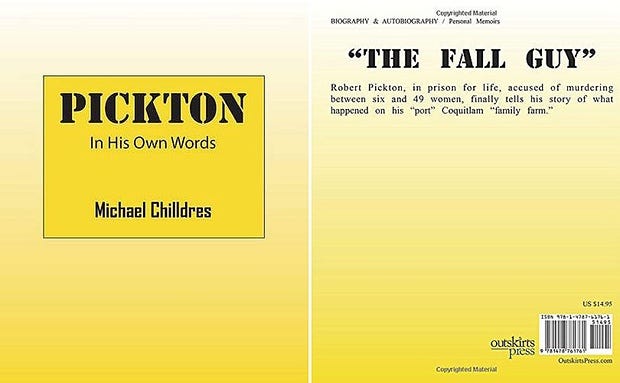
Amazon has just removed a self-published memoir from Robert Pickton, a man convicted of killing six women and charged in the deaths of 20 others. The memoir, Pickton: In His Own Words, was apparently smuggled out of his jail cell by another inmate. In the ebook memoir, Pickton proclaims his innocence, which caused pleas from the victims family not to read. The Vancouver Sun reported:
That was the reaction from family members of the victims of Robert Pickton to news the serial killer has just released a book. A police officer involved in bringing the murderer to justice had the same message for any would-be readers. [..] Ernie Crey, whose sister Dawn Crey’s DNA was found at Pickton’s Port Coquitlam pig farm, said the book is just one more slap in the face to people who lost a family member to Pickton. “I am deeply troubled by it and so are the other families who had a loved one a victim of Robert Pickton.”
The book was published on Amazon Canada through Outskirts Press, a self-publishing service based in the United States. The book was published under the name Michael Chilldres, a man who said he published the book as a “favor” to a friend who had met Pickton in prison. After the outcry, Childres told The National Post, “If I had to do it all over again, I would say ‘no.’ […] I didn’t think this book was going to be as big of a deal as it is; I just thought it would be a little deal.”
Childres said he received the manuscript in the mail and, at the time, didn’t know about Pickton’s crimes. When he googled him, he “looked up his arrest record and stuff, and he was kind of creepy,” but decided to go through with self-publishing the book anyway. He said the self-publishing process cost about $2,500 dollars.
Canadian public safety minister Ralph Goodale said, “We will be examining all those who have assisted in any way in this odious enterprise.”
While the events at Missouri and Yale were unfolding, and just a few days before the attacks in Paris and Beirut occurred, I was tasked with writing a course description for a fiction workshop that I will lead at the Yale Writers’ Conference next summer. It was a simple enough request — tell potential applicants what they would be signing up for if they choose my workshop — but in doing so my thoughts turned to the news, which in turn (as news of tragedy and unrest has a way of doing) sparked a kind of existential thinking about the greater meaning of things, and soon I was on to considering larger questions such as why I choose to do this work particularly and why one should sign up for a fiction workshop at all.
When I considered what we would do in our workshop, the answer was fairly simple: we would gather together around a large table and thoughtfully discuss the work samples that had been submitted with each person taking a turn as both reader/critic and writer/receiver of critique. When I considered why anyone should want to do this and why I should want to facilitate it, I found myself recalling the countless articles, recently published, that argued back and forth about what writing students receive in exchange for their tuition money and whether writing workshops are a worthy investment. I hadn’t weighed in on the conversation previously in any formal way having understood both sides of the argument and keeping in mind the simple fact that there is usually more than one good or correct method of doing things. However, considered within that particular week — a week in which intolerance, unrest, and violence dominated global headlines — the answer to the question of whether or not writing workshops are worthwhile or even necessary seemed obvious: They are — but perhaps not for the reason one might think.
I found myself recalling the countless articles, recently published, that argued back and forth about what writing students receive in exchange for their tuition money and whether writing workshops are a worthy investment.
Though we certainly do our best in workshops to help move each other’s work forward and get it into good form, not everyone who participates in a writing workshop will go on to win an award or write a bestseller. What everyone will do is learn to speak the most important and valuable language that we have — one that allows us to be good writers as well as good and decent humans. Literary discourse, depicted at times as dusty at best and insignificant and unnecessary at worst, is not the dead language its critics would have us believe, but the language of our future because it is the language of confronting that which is foreign to us; looking at what is familiar to us in new ways; thinking deeply and considerately; disagreeing respectfully and graciously. How, I wonder, can one be a good writer — and more importantly, a good and decent human — without knowing how to speak this language?
When I sat down to write the course description and considered what we had accomplished in previous years, I thought as much about what had happened outside the classroom as inside of it. It will be my fifth year teaching at the conference — an intensive summer conference for dedicated writers, both domestic and foreign, of various ages, races, religions etc. — and each year I have witnessed a stunning unity among our population. We often moved from our workshop to lunches together and then gathered at museums or cafes in the free time between scheduled events. Those who had just disagreed (often passionately) in the classroom now shared a meal and exchanged stories or stood shoulder to shoulder looking at a piece of art — and no one seemed any worse for the wear. When it happened this way during the first year of the conference, I wondered if it was a stroke of good luck to have students who got on so well, but then it happened again in the second year, and the third, and even the fourth.
On the final day of the 2015 conference, I sat in a Belgian café in New Haven with writers who ranged in age from teens to elder statesmen. They were of varied race and religion, and they had come from all over the United States as well as some foreign countries. Though everyone had their choice of what to do that afternoon, they chose to spend the time that remained together before people set off to return to their homes. We shared a meal, discussed literature and our time at the conference, and exchanged stories from our own lives. We talked about what would come next when we went back out into the world. We were glad to be together and sad that we would soon be parting. No one would have been able to tell that earlier in the day and throughout the week we had debated and argued and criticized one another’s work — works which represented a long-term investment of each person’s time as well as each writer’s most coveted ideas and beliefs.
Literary discourse…is the language of our future because it is the language of confronting that which is foreign to us; looking at what is familiar to us in new ways; thinking deeply and considerately; disagreeing respectfully and graciously.
Whenever I hear bad news, I think of these gatherings and feel hope.
For many, one’s confrontation with ideas and beliefs that are foreign to them will come via a book. Literary discourse, the active process of carefully considering the words and ideas of others and then speaking thoughtfully and critically about them — let us not confuse the words “critical” and “negative” here — provides a model of thoughtful, considerate, and intelligent action and dialogue that the world needs. For the person on the receiving end, whose most cherished ideas and beliefs may be criticized, literary discourse offers a lesson in how to receive criticism graciously and then go on and how to see and accept how one might improve. The magic of workshops is not, as so many might think, in tricks and tips offered, but in the process of our active engagement with one another. There is incalculable good in this process. At their best, writing workshops teach us how to confront the works and ideas of others with careful consideration, how to be thoughtful in the way we approach the ideas of others, how to find the courage to reassess our own closely held beliefs, how to agree thoughtfully rather than complacently, how to disagree firmly but respectfully, how to receive or otherwise accept criticism — even when it is the criticism of the ideas we hold dearest, how to reject another’s contrary opinions graciously, how to let go of ideas that may have been dear or precious to us but no longer serve us well.
For many, one’s confrontation with ideas and beliefs that are foreign to them will come via a book.
While extremists train soldiers in dogma and weaponry, literary discourse allows us to break down barriers and educate people of all different backgrounds to combat extremism, terrorism, racism, intolerance, and hate by allowing people globally to be part of a process of conversation that calls for us to engage with others and otherness — to disagree with others and allow others to disagree with us and to step out into the world at peace. It is a certainty that those in workshops have written words that have exposed their readers to ideas and viewpoints they might not ever have encountered otherwise. It is certain that if they continue to read and to write that they will be speaking in the most modern language we have. They have broken down the walls of otherness and stretched out a hand. How can anyone throw up their arms and say that they cannot make a difference or that a better world is not possible when this is the case?
I talked to Paul Goldberg on a Sunday afternoon at his house in D.C., right by the National Cathedral. He made me herbal tea in a ‘Write Like A Motherfucker’ mug, indulged me while I played with his Australian Shepherd, and showed me some of his Soviet memorabilia, including a flag that once flew over the Soviet embassy to the United States. He says he bought it for $10 at a yard sale.
Goldberg is the author of The Yid (Picador, 2016), a book in which a bunch of elderly Jews led by a retired clown named Solomon Levinson try to assassinate Stalin on the eve of a massive pogrom. Chunks of the text are written in script rather than prose format, and when there’s prose it’s as much history and philosophy as it is fiction. I’ve never read anything like it. Believe me, neither have you.
LM: I want to start by asking about theater. Were you ever in plays as a kid?
PG: Absolutely not. I have no theatrical skill, talents, or abilities. I love theater and I was obsessed with theater as a tool for the novel, but I’ve never been a theater insider of any sort.
LM:Then how did you become obsessed with theater as a tool for the novel? I’ve never read a novel that has scripted action the way The Yid does.
PG: The scripts come from a specific book, and a specific place in the book. There’s a scene in The Tin Drum [by Günter Grass] where they’re running around the Baltic, along the Nazi fortifications. It totally shook me, because there’s this way of joining these genres, playwriting and the novel — if they were every really separate. But the idea is clearly from this one specific spot in The Tin Drum, which I’ve never even reread.
LM: Did you always know that the climactic scene in The Yid, when Levinson and company attempt to kill Stalin, was going to be both scripted in the plot and written out as a script?
PG: Well, you never know what you know. I always saw this novel as a circus act: Here’s this lunatic — me — on a tightrope, walking across, and the audience is looking up and thinking, When is this idiot going to fall down and break his neck? That’s the whole thing. I knew if I fell and broke my neck, I wouldn’t get to the ending.
When I did get to the ending, the only way I could come up with to do it was to write a play within a play. I had to find a way to not make it distasteful, because you’re talking about regicide, really. Do they commit regicide? Do they fail? Do they commit it and get killed, or rescued? Do they live or do they die? That wasn’t really worked out for me.
But it was also interesting how Shakespeare fits into this thing. I understood from the beginning that I wanted to play with the idea of blood libel. I wanted to claim it in the biggest possible way — which is totally Shakespeare!
LM: Except that you used Lear, not The Merchant of Venice.
PG: I couldn’t get to The Merchant of Venice. It’s interesting that the Moscow Yiddish Theater never staged it, but it was more interesting to consider a play that they had in their plans and never staged because the war got in the way, and that was Richard III. Can you imagine a more anti-Stalinist play than Richard III? It should have been banned!
LM: I imagine it would be intimidating to write Stalin, especially this particular demented, hallucinating Stalin. How did you work up to that?
…I needed the character of Stalin to be strong. He could not be a wimpy Stalin
PG: It was the biggest challenge of this whole book, figuring out how to stage Stalin. Since I put myself into the play format, or at least this book-like-a-play format with the landmarks and metrics of a play, I needed the character of Stalin to be strong. He could not be a wimpy Stalin. I didn’t want to make him up, but I did have the freedom to make him a hallucinating Stalin — which he was! He was whacked out! You’re talking about an old guy who hates Jews, hates doctors, conflates Jews with doctors — which he would have done. I mean, old guys not liking doctors is not unusual. But usually they don’t kill doctors; they sue doctors.
LM: Or just avoid them.
PG: Sometimes they kill doctors, I guess, but it’s rare. So here’s what happened: I had to find ways of figuring out what dementia would accentuate in Stalin, and I found two places that were extraordinarily helpful to me. One was a line out of his daughter Svetlana’s memoir, Twenty Letters to a Friend, where she says, “Stalin, towards the end of his life, displayed photographs cut out of Soviet magazines that depicted the happy childhood of Soviet children.”
So you’d have Young Pioneers running around, playing with model airplanes, doing all those things that I actually did as a Young Pioneer. That was interesting, because here are these children who aren’t real, but are playing some role in Stalin’s mind. She never understood what it was. I really don’t like her explanation, which was that these were substitutes for the grandchildren that he had no relationship with. That’s too Svetlana-centric. I kept the children, but I didn’t keep her explanation.
LM: It’s actually a heartbreaking detail, and her explanation makes it less heartbreaking.
PG: Right. It’s heartbreaking, but it opens up demonic potential. It unlocks it! I was looking for demonic potential. I needed to get into his skull. So that’s where I got Stalin’s visions. The happy children in the illustrations on his walls come alive with the help of his dementia.
LM: So what’s the second place?
PG:Conversations with Stalin by Milovan Djilas, which I think is the best memoir about Stalin. A lot of Djilas’ Stalin is in The Yid. Djilas met Stalin three times, and all three times were important for me, especially the first.
Here’s the story: Djilas comes into the Kremlin at the end of the war, and he has a delicate question for Stalin. The Soviet army’s in Belgrade, and it turns out that Soviet soldiers are raping and murdering Yugoslav women, which is not really conducive to good Soviet-Yugoslav relations. And Comrade Stalin thinks the question is absurd. He explains, “Imagine, a soldier marches across Europe, losing his friends, and now he wants to have a little fun with a woman. Who’s to say no?” The next night at a banquet, Stalin comes up to Djilas’ wife. He kisses her on the mouth, and then he says to Djilas, “You’re not going to claim rape, are you?”
It’s an evil spark, but it’s a spark.
So there’s a lovely description of this diabolical, taunting guy. He plays with his kill. He has no ability to feel compassion, but he can have fun. It’s an evil spark, but it’s a spark. He’s not an automaton. He is someone who taunts.
LM: All right, so that’s how you wrote your villain. How did you write your hero, Levinson?
PG: Levinson is completely made up. The point of contact with him was my apartment in Moscow. When they come to arrest him, he’s in my apartment, so I could imagine it that way. The other point of contact is a Soviet novella about the Red partisans fighting alongside the Trans-Siberian Railroad in the Urals. The commander in that book is called Levinson. His first name and patronymic are different, but here’s this Levinson who’s obviously Jewish, a Civil War commander, who’s somehow important. For me it was huge to come up with my own Levinson who was similar to that Levinson, but not completely the same. I didn’t want them to be twins. It would have been too much. As a shortcut for myself, he’s that Levinson, but my Levinson becomes a dark clown. And I didn’t make that up! After World War One the dark clown was huge in Russia. It’s a way of expressing pain, but my Levinson isn’t expressing pain. His objective is to prevail by force.
LM: He’s kind of superheroic.
…the only question left is whether I, the author, will fall off my tightrope and break my neck. That’s the element of jeopardy. I’m the dark clown here.
PG: He’s out of touch with reality! You look at him and think, Only a man who’s out of touch with reality would do the crazy stuff he’s trying to do, and then you think, Well, maybe he’ll succeed. And then the only question left is whether I, the author, will fall off my tightrope and break my neck. That’s the element of jeopardy. I’m the dark clown here.
LM: But you do have help, because Levinson has a team. He’s not trying to kill Stalin alone. He has co-conspirators.
PG: I made his co-conspirators up. Well, one, Rabinovich, is my grandfather. He was the head of Drugstore No. 12 near where I lived, but I wrote my whole family out of that apartment. So he’s real, but I made him up, too. And then Kima would have been a relative, had she existed. Her father was a made-up first cousin of my grandfather’s. He’s Rabinovich’s cousin, I mean. I made good use of my family.
LM: Could you talk to me about why you did that?
PG: I needed to find ways to relate. My own geography helped. The Moscow of the 1960s and early 1970s isn’t going to look different from the Moscow of 1953, so I knew it — that Moscow that doesn’t exist. That Moscow is dark, snowy, cobblestones and communal flats. So I used that.
And then there’s Shmuel Halkin, the man who translated King Lear into Yiddish. He’s in the novel, but in real life he lived across the street from the dacha where we lived when I was born, and my father brought me across the street to meet him. I can’t possibly claim to have any memory of this, but the idea of there being that kind of intersection on this earth is very interesting to me. I met the man who wrote Kinig Lir, technically. Just because I don’t have any memory of it doesn’t make it any less real, and so it shows how small the world is. That’s what the book’s about, really: The smallness of the world and the polarity of fascism and non-fascism.
I accepted the fact that in 1944 a Jewish woman was arrested for killing somebody, but the blood libel was hard to accept.
Then there’s this one case from which this book really stems. When I was ten, my friend Alyosha and his father and I were walking down the street, and his father pointed to the entryway of an apartment building and said, “See, over there is where in 1944 they arrested this Jewish woman. I saw her being led away for having bled a Russian girl into matzos.” And I was kind of shaken by that story. I later came back to the same gentleman and said, “Can you really tell me that you actually saw this?” And he said yes! He described it in detail, this poor woman being led away during the day, the invalids sitting on the benches with their canes and their crutches, saying, “We fought for the motherland and the Jews are bleeding our children!” To me this was an incredible story. I accepted the fact that in 1944 a Jewish woman was arrested for killing somebody, but the blood libel was hard to accept.
LM: Was there a point when you did believe in the blood libel?
PG: Yes. It would have been about eight minutes, longer if my parents weren’t home. But my mother was a teacher and this happened after school, so it was probably the eight minutes that it took to walk from my friend’s apartment to mine, and then my mother explained it. I came back to school the next day and said, “Your father’s crazy.” But I asked him many years later and he came back with the same story.
The other piece that is really interesting about this is, I was reviewing a book for TheNew York Times by Yakov Rapoport, who was one of the supposed doctor-murderers imprisoned at the time. His daughter told the story she heard, which was that the Jew-doctor from her apartment complex was arrested for taking pus from cancer sufferers and injecting it into people on buses.
LM: Which went straight into The Yid.
PG: Straight into the book. If I had a legend to put in there, I did. Another amazing resource for me was a novella called This Is Moscow Speaking. That’s a terrible translation. It’s the beginning of a radio broadcast: “This is the voice of Moscow. This is Moscow speaking.” The story’s set in the ’50s; this group of friends is hanging around at the dacha, playing volleyball, swimming in the river, and then they hear the radio saying, “This is Moscow speaking,” and the announcer is saying that society has reached a point where it would be possible to hold a day of open murders. You could ‘deaden’ whomever you like, as long as they aren’t government officials in uniform or employees of the transportation system. And then the author describes the day of open murders. He went to prison for this. It’s an absolutely beautiful story, but what it really tells you is that there’s this stratum of the intelligentsia that’s thinking about what this pogrom would have been like. There’s a Jewish character who says, “This is all about the Jews. This is how they’re going to kill the Jews.” That’s an important piece of my book.
LM: It sounds like your writing process was a lot of putting pieces together.
PG: It was. After the leap of fiction, but it was. Actually, the hardest part of the process for me was squeezing out my inner Bulgakov. I was really worried about sounding like Bulgakov. I hope I don’t.
LM: Was there anyone you did want to sound like?
PG: I wanted to sound like no one else. There are a lot of contemporary writers I deliberately did not read because I didn’t want to be in a dialogue with them. I’m looking forward to reading that body of work now, but I didn’t want to be in dialogue. I had no problems reading Singer or Malamud, or Vasily Grossman, who I just love. But how do you write like Vasily Grossman? You don’t.
And Malamud — you can get into a dialogue with Malamud, but his characters are so different. My characters, all of them are intelligentsia, so a simple man, a Jewish worker, just isn’t my character. Mine are all going to be yelling at each other, arguing about obscure points, getting into all kinds of radical, aggressive movements. I mean, imagine Seder at my house, or your house. There are four conversations at once, on eight different topics — I don’t know how they do it, but they do it.
LM: And somehow everyone is arguing between the conversations.
PG: They’re arguing, but there’s no focus! Elijah is the focus, the poor bastard.
LM: I was scared of him when I was a kid.
PG: Oh, everybody was. Well, not me, because when I was a kid we lived in a communal flat with some people who were probably informers, and my grandfather was a Party member, so the last thing he wanted to be seen doing was having a Seder. So my grandmother celebrated the Day of Victory over the Nazis, which was Seder-worthy, with gefilte fish and things like that. It was a secret Seder.
LM: Some real Soviet syncretism there.
PG: It seemed normal. Anything can seem normal.
LM: Not the things in The Yid! A human killing another human with a bite cannot be normal.
PG: No. I made that up. That’s not normal. The idea of bringing someone down as prey — I don’t know if anyone’s done that before. I called some surgeon friends and asked if it was possible. Fortunately, I have enough friends who understand injury, so I said to them, “I really want to do it this way. I’m claiming blood libel, so I might as well have a flying Jew bite through someone’s jugular.” I mean, I’m probably claiming the whole anti-Semitic mythology. I am. Why not?
Raising Caine, Charles E. Gannon (Baen) The Fifth Season, N.K. Jemisin (Orbit US; Orbit UK) Ancillary Mercy, Ann Leckie (Orbit US; Orbit UK) The Grace of Kings, Ken Liu (Saga) Uprooted, Naomi Novik (Del Rey) Barsk: The Elephants’ Graveyard, Lawrence M. Schoen (Tor) Updraft, Fran Wilde (Tor)
Novella
Wings of Sorrow and Bone, Beth Cato (Harper Voyager Impulse) “The Bone Swans of Amandale,” C.S.E. Cooney (Bone Swans) “The New Mother,” Eugene Fischer (Asimov’s 4–5/15) “The Pauper Prince and the Eucalyptus Jinn,” Usman T. Malik (Tor.com 4/22/15) Binti, Nnedi Okorafor (Tor.com) “Waters of Versailles,” Kelly Robson (Tor.com 6/10/15)
Novelette
“Rattlesnakes and Men,” Michael Bishop (Asimov’s 2/15) “And You Shall Know Her by the Trail of Dead,” Brooke Bolander (Lightspeed 2/15) “Grandmother-nai-Leylit’s Cloth of Winds,” Rose Lemberg (Beneath Ceaseless Skies 6/11/15) “The Ladies’ Aquatic Gardening Society,” Henry Lien (Asimov’s 6/15) “The Deepwater Bride,” Tamsyn Muir (F&SF 7–8/15) “Our Lady of the Open Road,” Sarah Pinsker (Asimov’s 6/15)
Short Story
“Madeleine,” Amal El-Mohtar (Lightspeed 6/15) “Cat Pictures Please,” Naomi Kritzer (Clarkesworld 1/15) “Damage,” David D. Levine (Tor.com 1/21/15) “When Your Child Strays From God,” Sam J. Miller (Clarkesworld 7/15) “Today I Am Paul,” Martin L. Shoemaker (Clarkesworld 8/15) “Hungry Daughters of Starving Mothers,” Alyssa Wong (Nightmare 10/15)
Ray Bradbury Award for Outstanding Dramatic Presentation
Ex Machina, Written by Alex Garland Inside Out, Screenplay by Pete Docter, Meg LeFauve, Josh Cooley; Original Story by Pete Docter, Ronnie del Carmen Jessica Jones: AKA Smile, Teleplay by Scott Reynolds & Melissa Rosenberg; Story by Jamie King & Scott Reynolds Mad Max: Fury Road, Written by George Miller, Brendan McCarthy, Nick Lathouris The Martian, Screenplay by Drew Goddard Star Wars: The Force Awakens, Written by Lawrence Kasdan & J.J. Abrams and Michael Arndt
Andre Norton Award for Young Adult Science Fiction and Fantasy
Seriously Wicked, Tina Connolly (Tor Teen) Court of Fives, Kate Elliott (Little, Brown) Cuckoo Song, Frances Hardinge (Macmillan UK 5/14; Amulet) Archivist Wasp, Nicole Kornher-Stace (Big Mouth House) Zeroboxer, Fonda Lee (Flux) Shadowshaper, Daniel José Older (Levine) Bone Gap, Laura Ruby (Balzer + Bray) Nimona, Noelle Stevenson (HarperTeen) Updraft, Fran Wilde (Tor)
February is a peculiar month to have chosen to publish Idra Novey’s steamy debut, Ways to Disappear. Peculiar, because the book has all the trappings of a beach read, complete with a crackling affair, an exotic setting, and a page-turner plot. Even with the unseasonably warm weather around most of the United States this month, it is difficult to remember that there are parts of the world where you can still emerge from baggage claim to the “stink of armpits, car exhaust, and guavas.”
Then again, what is the purpose of literature if not to transport you to a place you are not?
And transport it does: Ways to Disappear finds the American translator Emma hastily booking a ticket to Rio de Janeiro after “her author,” the celebrated Beatriz Yagoda, vanishes without explanation. Left behind in Pittsburgh is Emma’s boring, stick-in-the-mud almost-fiancé Miles, who seems so ill-matched with Emma from the start that there is no question of her staying with him through the end of the novel. No matter: Ways to Disappear is supercharged to the point that Miles quickly becomes forgotten by both the reader and to Emma, replaced by the far more interesting Marcos, one of Beatriz’s children.
It is in staying with Marcos and his sister, Raquel, that Emma uncovers Beatriz’s dangerous gambling habit that has brought the successful author a seemingly insurmountable mountain of debt; indeed, the loan sharks are circling. Then, when Emma finds an unpublished manuscript of Beatriz’s and tracks down Beatriz’s publisher, an exchange of words and money makes it seem almost possible to save Beatriz and put a stop to the threats.
As zany as the story is, there is a blade of darkness to the plot of Ways to Disappear, a particular edge that makes it not quite so summery as it first appears. Novey’s keen word choices (early on she describes a blabbermouth as “detonating”) and a kidnapping (complete with a severed ear) give the novel such a clear-cut black-and-white divide between the good and the bad that it feels woven from the same fabric as a 1940s noir.
But just everything is more dangerous than it at first appears, so too are the stakes in the novel’s purpose raised even higher. Novey herself is a translator, her most recent project being Clarice Lispector’s The Passion According to G.H; while it is always lazy to assume the author’s writing herself into her characters, it would be an error to ignore the clear source of the inspiration of Yagoda in Lispector’s own saintly standing in Brazilian literature and pop culture.
Further, Novey strays into meditations on the act of translating itself, bits and pieces of which are scattered, gem-like, throughout:
With each sentence, she sank further into the words and her voice began to rise. She’s lived with these descriptions for so long, had mulled over them as she drove through the snow and while she brushed her teeth.
And wasn’t the splendor of translation this very thing — to discover sentences this beautiful and then have the chance to make someone else hear their beauty who had yet to hear it? To arrive, at least once, at a moment this intimate and singular, which would not be possible without these words arranged in this order on this page?
And finally, there is the slow-burn of Ways of Disappearing’s ending — so broken down that each chapter is no longer than a page. There is something practically tactile about finishing this novel: A steady march to the end, where one is dragging their feet along without wanting to face where they might be going. It is an experience almost — if you will — like grieving.
In some ways, then, Ways to Disappear is perfectly timed, hitting bookshelves in the deepest part of winter. While it is a spark of warmth in the cold, it is just as easily suited for a brooding winter day when you are trapped inside with only your thoughts and your memories. After all, as any good detective knows, when you go looking for things that have disappeared, you always have to consider they don’t want to be found.
Harper Lee, the author of the classic novel To Kill a Mockingbird, has passed away at age 89. Lee died in the same town she was born in, Monroeville, Alabama.
Lee only published two novels in her life, the Pulitzer Prize winning To Kill a Mockingbird in 1960 and last year’s Go Set a Watchman — a book that is largely considered to be an early draft of Mockingbird. Still, she was easily one of America’s most beloved authors and To Kill a Mockingbird has been a widely-taught classic for decades. Lee was also known for her close friendship with another iconic Southern author, Truman Capote. She helped research his non-fiction novel In Cold Blood.
Lee famously shunned the popularity she received for her debut novel, preferring a quiet life in a small town. In 1964, she said this of her unexpected success:
I never expected any sort of success with Mockingbird. I was hoping for a quick and merciful death at the hands of the reviewers but, at the same time, I sort of hoped someone would like it enough to give me encouragement. Public encouragement. I hoped for a little, as I said, but I got rather a whole lot, and in some ways this was just about as frightening as the quick, merciful death I’d expected.
Lee was awarded high honors by both president George W. Bush and president Barack Obama. She received the Presidential Medal of Freedom for her contributions to American literature in 2007 and the National Medal of Arts in 2010.
In case you hadn’t noticed, pop culture has been soaked with post-apocalyptic fiction for the past few decades, from The Stand to The Walking Dead. But recently, ecologists and writers of speculative fiction alike have begun envisioning the end of the Anthropocene epoch a little differently. Instead of a sudden mass extinction event — nuclear fallout, pandemic, meteor impact, scheduled demolition — we may already be in the middle of a ‘slow apocalypse’ of our own making. The sins of our species may have already caught up with us.
Some writers — futurists like Kim Stanley Robinson, Margaret Atwood, Tobias S. Buckell, and other practitioners of the newly coined ‘climate fiction’ — explore this concept literally. Others take a more indirect approach, grappling with the idea on a thematic level like Jeff VanderMeer’s Southern Reach trilogy.
Perhaps it’s no accident, then, that Age of Blight comes to us from the Philippines, a nation likely to be one of climate change’s first true casualties. Kristine Ong Muslim’s collection of speculative short stories is haunting, fearless, and wildly imaginative. In spare, deceptively simple prose, Muslim writes the kind of unpredictable stories you want to re-read the instant you finish. It’s a difficult book to classify; it is “literary,” “horror,” “science fiction,” but more than anything, Age of Blight acts as a ruthless look in the mirror.
Some stories are drawn from real-life milestones in humanity’s cruelty toward the rest of the animal kingdom. “The Wire Mother” revisits Harry Harlow’s experiments with infant rhesus monkeys from the perspective of a stand-in mother made of wire mesh, watching human psychologists strap her children into literal torture chambers. “The Ghost of Laika Encounters a Satellite” imagines the last moments of one of the first animals in space, an “excruciating death by boiling of internal organs, which was, unfortunately for me, not instantaneous.”
Others stories imagine the world a century deeper into the slow apocalypse, where ravaged landscapes are both otherworldly and familiar. “And if they don’t seem familiar,” Muslim warns us in ‘A Note on the Places in This Book,’ “it is likely you aren’t paying much attention.”
Her most haunting stories invoke Hegel’s notion of the Other, exposing the connection between humankind’s thoughtless violence and our earliest, most primitive fears. In “Jude and the Moonman,” for instance (think The Sandlot as told by David Lynch), a pickup baseball game is interrupted by the arrival of a kid with a face like “a white board cut-out, with eyes made of buttons,” as well as “terrible, hateful spots on his skin, miniature lunar craters.” Naturally, the other kids throw rocks at its skull.
Not every story sings. At times, Muslim veers too close to straight-up allegory, relying on heavy-handed symbolism and ignoring Teju Cole’s advice that a good novel [or story] shouldn’t have a point. “Anyone who does not look and talk like us is the enemy,” says the girl conditioned by future scientists to be violent in “No Little Bobos.” When she expresses indifference toward her victims, the scientists remind her: “Now, when we hurt them, we also need to put our hearts and minds into hurting them. It is very important that you feel anger towards them.” It’s about as subtle as a Rupert Murdoch staff memo.
Similarly, villagers fear a mysterious building containing the Great Beast in “The Quarantine Tank,” until someone touches the surrounding electric fence without getting shocked, sowing doubt as to whether the Great Beast exists at all. On her blog, Muslim states, “This story is really about my views on monotheistic religions, most specifically the three Abrahamic religions, Christianity, Islam, and Judaism. Everything’s buried in symbols, like most science fictions.” While it’s natural for a writer’s opinions to come out in their prose, I’ll invoke Teju Cole once again on the notion of attempting to convey a specific message: “My goal in writing a novel,” he says, “is to leave the reader not knowing what to think” (emphasis added).
Luckily, Muslim’s brilliant, beautiful, provocative stories far outnumber the soap boxes. “Day of the Builders” is one of the best speculative portrayals of modernity’s annihilation of the natural world (and the colonial eradication of indigenous culture) I’ve ever read. And she does it in less than ten pages, one of the longest stories in the book. Most stories are only three-to-five pages, always ending on a psychologically titillating crescendo and leaving you wondering what happens next. By keeping her fiction so brief, Muslim follows Robert Boswell’s maxim from The Half-Known World that “to make something fully known is to make it unreal.”
Kristine Ong Muslim’s stories in Age of Blight are “quarter-known worlds,” at most, thin shards of a broken mirror reflecting a dark, bizarre future. She knows the difference between world-building and world-suggesting. She knows how to open up doors in your mind to rooms you never knew were there, at least not on a conscious level. And she knows to shut those doors before you get a good look.
DON’T MISS OUT
Sign up for our newsletter to get submission announcements and stay on top of our best work.
YOUR INBOX IS LIT
Enjoy strange, diverting work from The Commuter on Mondays, absorbing fiction from Recommended Reading on Wednesdays, and a roundup of our best work of the week on Fridays. Personalize your subscription preferences here.