What Literary Discourse Offers in an Age of Extremism

by Je Banach

While the events at Missouri and Yale were unfolding, and just a few days before the attacks in Paris and Beirut occurred, I was tasked with writing a course description for a fiction workshop that I will lead at the Yale Writers’ Conference next summer. It was a simple enough request — tell potential applicants what they would be signing up for if they choose my workshop — but in doing so my thoughts turned to the news, which in turn (as news of tragedy and unrest has a way of doing) sparked a kind of existential thinking about the greater meaning of things, and soon I was on to considering larger questions such as why I choose to do this work particularly and why one should sign up for a fiction workshop at all.

When I considered what we would do in our workshop, the answer was fairly simple: we would gather together around a large table and thoughtfully discuss the work samples that had been submitted with each person taking a turn as both reader/critic and writer/receiver of critique. When I considered why anyone should want to do this and why I should want to facilitate it, I found myself recalling the countless articles, recently published, that argued back and forth about what writing students receive in exchange for their tuition money and whether writing workshops are a worthy investment. I hadn’t weighed in on the conversation previously in any formal way having understood both sides of the argument and keeping in mind the simple fact that there is usually more than one good or correct method of doing things. However, considered within that particular week — a week in which intolerance, unrest, and violence dominated global headlines — the answer to the question of whether or not writing workshops are worthwhile or even necessary seemed obvious: They are — but perhaps not for the reason one might think.

I found myself recalling the countless articles, recently published, that argued back and forth about what writing students receive in exchange for their tuition money and whether writing workshops are a worthy investment.

Though we certainly do our best in workshops to help move each other’s work forward and get it into good form, not everyone who participates in a writing workshop will go on to win an award or write a bestseller. What everyone will do is learn to speak the most important and valuable language that we have — one that allows us to be good writers as well as good and decent humans. Literary discourse, depicted at times as dusty at best and insignificant and unnecessary at worst, is not the dead language its critics would have us believe, but the language of our future because it is the language of confronting that which is foreign to us; looking at what is familiar to us in new ways; thinking deeply and considerately; disagreeing respectfully and graciously. How, I wonder, can one be a good writer — and more importantly, a good and decent human — without knowing how to speak this language?

When I sat down to write the course description and considered what we had accomplished in previous years, I thought as much about what had happened outside the classroom as inside of it. It will be my fifth year teaching at the conference — an intensive summer conference for dedicated writers, both domestic and foreign, of various ages, races, religions etc. — and each year I have witnessed a stunning unity among our population. We often moved from our workshop to lunches together and then gathered at museums or cafes in the free time between scheduled events. Those who had just disagreed (often passionately) in the classroom now shared a meal and exchanged stories or stood shoulder to shoulder looking at a piece of art — and no one seemed any worse for the wear. When it happened this way during the first year of the conference, I wondered if it was a stroke of good luck to have students who got on so well, but then it happened again in the second year, and the third, and even the fourth.

On the final day of the 2015 conference, I sat in a Belgian café in New Haven with writers who ranged in age from teens to elder statesmen. They were of varied race and religion, and they had come from all over the United States as well as some foreign countries. Though everyone had their choice of what to do that afternoon, they chose to spend the time that remained together before people set off to return to their homes. We shared a meal, discussed literature and our time at the conference, and exchanged stories from our own lives. We talked about what would come next when we went back out into the world. We were glad to be together and sad that we would soon be parting. No one would have been able to tell that earlier in the day and throughout the week we had debated and argued and criticized one another’s work — works which represented a long-term investment of each person’s time as well as each writer’s most coveted ideas and beliefs.

Literary discourse…is the language of our future because it is the language of confronting that which is foreign to us; looking at what is familiar to us in new ways; thinking deeply and considerately; disagreeing respectfully and graciously.

Whenever I hear bad news, I think of these gatherings and feel hope.

For many, one’s confrontation with ideas and beliefs that are foreign to them will come via a book. Literary discourse, the active process of carefully considering the words and ideas of others and then speaking thoughtfully and critically about them — let us not confuse the words “critical” and “negative” here — provides a model of thoughtful, considerate, and intelligent action and dialogue that the world needs. For the person on the receiving end, whose most cherished ideas and beliefs may be criticized, literary discourse offers a lesson in how to receive criticism graciously and then go on and how to see and accept how one might improve. The magic of workshops is not, as so many might think, in tricks and tips offered, but in the process of our active engagement with one another. There is incalculable good in this process. At their best, writing workshops teach us how to confront the works and ideas of others with careful consideration, how to be thoughtful in the way we approach the ideas of others, how to find the courage to reassess our own closely held beliefs, how to agree thoughtfully rather than complacently, how to disagree firmly but respectfully, how to receive or otherwise accept criticism — even when it is the criticism of the ideas we hold dearest, how to reject another’s contrary opinions graciously, how to let go of ideas that may have been dear or precious to us but no longer serve us well.

For many, one’s confrontation with ideas and beliefs that are foreign to them will come via a book.

While extremists train soldiers in dogma and weaponry, literary discourse allows us to break down barriers and educate people of all different backgrounds to combat extremism, terrorism, racism, intolerance, and hate by allowing people globally to be part of a process of conversation that calls for us to engage with others and otherness — to disagree with others and allow others to disagree with us and to step out into the world at peace. It is a certainty that those in workshops have written words that have exposed their readers to ideas and viewpoints they might not ever have encountered otherwise. It is certain that if they continue to read and to write that they will be speaking in the most modern language we have. They have broken down the walls of otherness and stretched out a hand. How can anyone throw up their arms and say that they cannot make a difference or that a better world is not possible when this is the case?

Paul Goldberg, Author of The Yid, Discusses Blood Libel & The Dark Clowns of Stalinist Russia

I talked to Paul Goldberg on a Sunday afternoon at his house in D.C., right by the National Cathedral. He made me herbal tea in a ‘Write Like A Motherfucker’ mug, indulged me while I played with his Australian Shepherd, and showed me some of his Soviet memorabilia, including a flag that once flew over the Soviet embassy to the United States. He says he bought it for $10 at a yard sale.

Goldberg is the author of The Yid (Picador, 2016), a book in which a bunch of elderly Jews led by a retired clown named Solomon Levinson try to assassinate Stalin on the eve of a massive pogrom. Chunks of the text are written in script rather than prose format, and when there’s prose it’s as much history and philosophy as it is fiction. I’ve never read anything like it. Believe me, neither have you.

LM: I want to start by asking about theater. Were you ever in plays as a kid?

PG: Absolutely not. I have no theatrical skill, talents, or abilities. I love theater and I was obsessed with theater as a tool for the novel, but I’ve never been a theater insider of any sort.

LM: Then how did you become obsessed with theater as a tool for the novel? I’ve never read a novel that has scripted action the way The Yid does.

PG: The scripts come from a specific book, and a specific place in the book. There’s a scene in The Tin Drum [by Günter Grass] where they’re running around the Baltic, along the Nazi fortifications. It totally shook me, because there’s this way of joining these genres, playwriting and the novel — if they were every really separate. But the idea is clearly from this one specific spot in The Tin Drum, which I’ve never even reread.

LM: Did you always know that the climactic scene in The Yid, when Levinson and company attempt to kill Stalin, was going to be both scripted in the plot and written out as a script?

PG: Well, you never know what you know. I always saw this novel as a circus act: Here’s this lunatic — me — on a tightrope, walking across, and the audience is looking up and thinking, When is this idiot going to fall down and break his neck? That’s the whole thing. I knew if I fell and broke my neck, I wouldn’t get to the ending.

When I did get to the ending, the only way I could come up with to do it was to write a play within a play. I had to find a way to not make it distasteful, because you’re talking about regicide, really. Do they commit regicide? Do they fail? Do they commit it and get killed, or rescued? Do they live or do they die? That wasn’t really worked out for me.

But it was also interesting how Shakespeare fits into this thing. I understood from the beginning that I wanted to play with the idea of blood libel. I wanted to claim it in the biggest possible way — which is totally Shakespeare!

LM: Except that you used Lear, not The Merchant of Venice.

PG: I couldn’t get to The Merchant of Venice. It’s interesting that the Moscow Yiddish Theater never staged it, but it was more interesting to consider a play that they had in their plans and never staged because the war got in the way, and that was Richard III. Can you imagine a more anti-Stalinist play than Richard III? It should have been banned!

LM: I imagine it would be intimidating to write Stalin, especially this particular demented, hallucinating Stalin. How did you work up to that?

…I needed the character of Stalin to be strong. He could not be a wimpy Stalin

PG: It was the biggest challenge of this whole book, figuring out how to stage Stalin. Since I put myself into the play format, or at least this book-like-a-play format with the landmarks and metrics of a play, I needed the character of Stalin to be strong. He could not be a wimpy Stalin. I didn’t want to make him up, but I did have the freedom to make him a hallucinating Stalin — which he was! He was whacked out! You’re talking about an old guy who hates Jews, hates doctors, conflates Jews with doctors — which he would have done. I mean, old guys not liking doctors is not unusual. But usually they don’t kill doctors; they sue doctors.

LM: Or just avoid them.

PG: Sometimes they kill doctors, I guess, but it’s rare. So here’s what happened: I had to find ways of figuring out what dementia would accentuate in Stalin, and I found two places that were extraordinarily helpful to me. One was a line out of his daughter Svetlana’s memoir, Twenty Letters to a Friend, where she says, “Stalin, towards the end of his life, displayed photographs cut out of Soviet magazines that depicted the happy childhood of Soviet children.”

So you’d have Young Pioneers running around, playing with model airplanes, doing all those things that I actually did as a Young Pioneer. That was interesting, because here are these children who aren’t real, but are playing some role in Stalin’s mind. She never understood what it was. I really don’t like her explanation, which was that these were substitutes for the grandchildren that he had no relationship with. That’s too Svetlana-centric. I kept the children, but I didn’t keep her explanation.

LM: It’s actually a heartbreaking detail, and her explanation makes it less heartbreaking.

PG: Right. It’s heartbreaking, but it opens up demonic potential. It unlocks it! I was looking for demonic potential. I needed to get into his skull. So that’s where I got Stalin’s visions. The happy children in the illustrations on his walls come alive with the help of his dementia.

LM: So what’s the second place?

PG: Conversations with Stalin by Milovan Djilas, which I think is the best memoir about Stalin. A lot of Djilas’ Stalin is in The Yid. Djilas met Stalin three times, and all three times were important for me, especially the first.

Here’s the story: Djilas comes into the Kremlin at the end of the war, and he has a delicate question for Stalin. The Soviet army’s in Belgrade, and it turns out that Soviet soldiers are raping and murdering Yugoslav women, which is not really conducive to good Soviet-Yugoslav relations. And Comrade Stalin thinks the question is absurd. He explains, “Imagine, a soldier marches across Europe, losing his friends, and now he wants to have a little fun with a woman. Who’s to say no?” The next night at a banquet, Stalin comes up to Djilas’ wife. He kisses her on the mouth, and then he says to Djilas, “You’re not going to claim rape, are you?”

It’s an evil spark, but it’s a spark.

So there’s a lovely description of this diabolical, taunting guy. He plays with his kill. He has no ability to feel compassion, but he can have fun. It’s an evil spark, but it’s a spark. He’s not an automaton. He is someone who taunts.

LM: All right, so that’s how you wrote your villain. How did you write your hero, Levinson?

PG: Levinson is completely made up. The point of contact with him was my apartment in Moscow. When they come to arrest him, he’s in my apartment, so I could imagine it that way. The other point of contact is a Soviet novella about the Red partisans fighting alongside the Trans-Siberian Railroad in the Urals. The commander in that book is called Levinson. His first name and patronymic are different, but here’s this Levinson who’s obviously Jewish, a Civil War commander, who’s somehow important. For me it was huge to come up with my own Levinson who was similar to that Levinson, but not completely the same. I didn’t want them to be twins. It would have been too much. As a shortcut for myself, he’s that Levinson, but my Levinson becomes a dark clown. And I didn’t make that up! After World War One the dark clown was huge in Russia. It’s a way of expressing pain, but my Levinson isn’t expressing pain. His objective is to prevail by force.

LM: He’s kind of superheroic.

…the only question left is whether I, the author, will fall off my tightrope and break my neck. That’s the element of jeopardy. I’m the dark clown here.

PG: He’s out of touch with reality! You look at him and think, Only a man who’s out of touch with reality would do the crazy stuff he’s trying to do, and then you think, Well, maybe he’ll succeed. And then the only question left is whether I, the author, will fall off my tightrope and break my neck. That’s the element of jeopardy. I’m the dark clown here.

LM: But you do have help, because Levinson has a team. He’s not trying to kill Stalin alone. He has co-conspirators.

PG: I made his co-conspirators up. Well, one, Rabinovich, is my grandfather. He was the head of Drugstore No. 12 near where I lived, but I wrote my whole family out of that apartment. So he’s real, but I made him up, too. And then Kima would have been a relative, had she existed. Her father was a made-up first cousin of my grandfather’s. He’s Rabinovich’s cousin, I mean. I made good use of my family.

LM: Could you talk to me about why you did that?

PG: I needed to find ways to relate. My own geography helped. The Moscow of the 1960s and early 1970s isn’t going to look different from the Moscow of 1953, so I knew it — that Moscow that doesn’t exist. That Moscow is dark, snowy, cobblestones and communal flats. So I used that.

And then there’s Shmuel Halkin, the man who translated King Lear into Yiddish. He’s in the novel, but in real life he lived across the street from the dacha where we lived when I was born, and my father brought me across the street to meet him. I can’t possibly claim to have any memory of this, but the idea of there being that kind of intersection on this earth is very interesting to me. I met the man who wrote Kinig Lir, technically. Just because I don’t have any memory of it doesn’t make it any less real, and so it shows how small the world is. That’s what the book’s about, really: The smallness of the world and the polarity of fascism and non-fascism.

I accepted the fact that in 1944 a Jewish woman was arrested for killing somebody, but the blood libel was hard to accept.

Then there’s this one case from which this book really stems. When I was ten, my friend Alyosha and his father and I were walking down the street, and his father pointed to the entryway of an apartment building and said, “See, over there is where in 1944 they arrested this Jewish woman. I saw her being led away for having bled a Russian girl into matzos.” And I was kind of shaken by that story. I later came back to the same gentleman and said, “Can you really tell me that you actually saw this?” And he said yes! He described it in detail, this poor woman being led away during the day, the invalids sitting on the benches with their canes and their crutches, saying, “We fought for the motherland and the Jews are bleeding our children!” To me this was an incredible story. I accepted the fact that in 1944 a Jewish woman was arrested for killing somebody, but the blood libel was hard to accept.

LM: Was there a point when you did believe in the blood libel?

PG: Yes. It would have been about eight minutes, longer if my parents weren’t home. But my mother was a teacher and this happened after school, so it was probably the eight minutes that it took to walk from my friend’s apartment to mine, and then my mother explained it. I came back to school the next day and said, “Your father’s crazy.” But I asked him many years later and he came back with the same story.

The other piece that is really interesting about this is, I was reviewing a book for The New York Times by Yakov Rapoport, who was one of the supposed doctor-murderers imprisoned at the time. His daughter told the story she heard, which was that the Jew-doctor from her apartment complex was arrested for taking pus from cancer sufferers and injecting it into people on buses.

LM: Which went straight into The Yid.

PG: Straight into the book. If I had a legend to put in there, I did. Another amazing resource for me was a novella called This Is Moscow Speaking. That’s a terrible translation. It’s the beginning of a radio broadcast: “This is the voice of Moscow. This is Moscow speaking.” The story’s set in the ’50s; this group of friends is hanging around at the dacha, playing volleyball, swimming in the river, and then they hear the radio saying, “This is Moscow speaking,” and the announcer is saying that society has reached a point where it would be possible to hold a day of open murders. You could ‘deaden’ whomever you like, as long as they aren’t government officials in uniform or employees of the transportation system. And then the author describes the day of open murders. He went to prison for this. It’s an absolutely beautiful story, but what it really tells you is that there’s this stratum of the intelligentsia that’s thinking about what this pogrom would have been like. There’s a Jewish character who says, “This is all about the Jews. This is how they’re going to kill the Jews.” That’s an important piece of my book.

LM: It sounds like your writing process was a lot of putting pieces together.

PG: It was. After the leap of fiction, but it was. Actually, the hardest part of the process for me was squeezing out my inner Bulgakov. I was really worried about sounding like Bulgakov. I hope I don’t.

LM: Was there anyone you did want to sound like?

PG: I wanted to sound like no one else. There are a lot of contemporary writers I deliberately did not read because I didn’t want to be in a dialogue with them. I’m looking forward to reading that body of work now, but I didn’t want to be in dialogue. I had no problems reading Singer or Malamud, or Vasily Grossman, who I just love. But how do you write like Vasily Grossman? You don’t.

And Malamud — you can get into a dialogue with Malamud, but his characters are so different. My characters, all of them are intelligentsia, so a simple man, a Jewish worker, just isn’t my character. Mine are all going to be yelling at each other, arguing about obscure points, getting into all kinds of radical, aggressive movements. I mean, imagine Seder at my house, or your house. There are four conversations at once, on eight different topics — I don’t know how they do it, but they do it.

LM: And somehow everyone is arguing between the conversations.

PG: They’re arguing, but there’s no focus! Elijah is the focus, the poor bastard.

LM: I was scared of him when I was a kid.

PG: Oh, everybody was. Well, not me, because when I was a kid we lived in a communal flat with some people who were probably informers, and my grandfather was a Party member, so the last thing he wanted to be seen doing was having a Seder. So my grandmother celebrated the Day of Victory over the Nazis, which was Seder-worthy, with gefilte fish and things like that. It was a secret Seder.

LM: Some real Soviet syncretism there.

PG: It seemed normal. Anything can seem normal.

LM: Not the things in The Yid! A human killing another human with a bite cannot be normal.

PG: No. I made that up. That’s not normal. The idea of bringing someone down as prey — I don’t know if anyone’s done that before. I called some surgeon friends and asked if it was possible. Fortunately, I have enough friends who understand injury, so I said to them, “I really want to do it this way. I’m claiming blood libel, so I might as well have a flying Jew bite through someone’s jugular.” I mean, I’m probably claiming the whole anti-Semitic mythology. I am. Why not?

Here Are the 2015 Nebula Award Nominees

The Science Fiction and Fantasy Writers of America have announced the nominees for science fiction’s prestigious Nebula Awards. Congrats to all the nominees!

Novel

Raising Caine, Charles E. Gannon (Baen)
The Fifth Season, N.K. Jemisin (Orbit US; Orbit UK)
Ancillary Mercy, Ann Leckie (Orbit US; Orbit UK)
The Grace of Kings, Ken Liu (Saga)
Uprooted, Naomi Novik (Del Rey)
Barsk: The Elephants’ Graveyard, Lawrence M. Schoen (Tor)
Updraft, Fran Wilde (Tor)

Novella

Wings of Sorrow and Bone, Beth Cato (Harper Voyager Impulse)
“The Bone Swans of Amandale,” C.S.E. Cooney (Bone Swans)
“The New Mother,” Eugene Fischer (Asimov’s 4–5/15)
“The Pauper Prince and the Eucalyptus Jinn,” Usman T. Malik (Tor.com 4/22/15)
Binti, Nnedi Okorafor (Tor.com)
“Waters of Versailles,” Kelly Robson (Tor.com 6/10/15)

Novelette

“Rattlesnakes and Men,” Michael Bishop (Asimov’s 2/15)
“And You Shall Know Her by the Trail of Dead,” Brooke Bolander (Lightspeed 2/15)
“Grandmother-nai-Leylit’s Cloth of Winds,” Rose Lemberg (Beneath Ceaseless Skies 6/11/15)
“The Ladies’ Aquatic Gardening Society,” Henry Lien (Asimov’s 6/15)
“The Deepwater Bride,” Tamsyn Muir (F&SF 7–8/15)
“Our Lady of the Open Road,” Sarah Pinsker (Asimov’s 6/15)

Short Story

“Madeleine,” Amal El-Mohtar (Lightspeed 6/15)
“Cat Pictures Please,” Naomi Kritzer (Clarkesworld 1/15)
“Damage,” David D. Levine (Tor.com 1/21/15)
“When Your Child Strays From God,” Sam J. Miller (Clarkesworld 7/15)
“Today I Am Paul,” Martin L. Shoemaker (Clarkesworld 8/15)
“Hungry Daughters of Starving Mothers,” Alyssa Wong (Nightmare 10/15)

Ray Bradbury Award for Outstanding Dramatic Presentation

Ex Machina, Written by Alex Garland
Inside Out, Screenplay by Pete Docter, Meg LeFauve, Josh Cooley; Original Story by Pete Docter, Ronnie del Carmen
Jessica Jones: AKA Smile, Teleplay by Scott Reynolds & Melissa Rosenberg; Story by Jamie King & Scott Reynolds
Mad Max: Fury Road, Written by George Miller, Brendan McCarthy, Nick Lathouris
The Martian, Screenplay by Drew Goddard
Star Wars: The Force Awakens, Written by Lawrence Kasdan & J.J. Abrams and Michael Arndt

Andre Norton Award for Young Adult Science Fiction and Fantasy

Seriously Wicked, Tina Connolly (Tor Teen)
Court of Fives, Kate Elliott (Little, Brown)
Cuckoo Song, Frances Hardinge (Macmillan UK 5/14; Amulet)
Archivist Wasp, Nicole Kornher-Stace (Big Mouth House)
Zeroboxer, Fonda Lee (Flux)
Shadowshaper, Daniel José Older (Levine)
Bone Gap, Laura Ruby (Balzer + Bray)
Nimona, Noelle Stevenson (HarperTeen)
Updraft, Fran Wilde (Tor)

Idra Novey’s Ways to Disappear Is a Supercharged and Perfectly-Timed Novel

February is a peculiar month to have chosen to publish Idra Novey’s steamy debut, Ways to Disappear. Peculiar, because the book has all the trappings of a beach read, complete with a crackling affair, an exotic setting, and a page-turner plot. Even with the unseasonably warm weather around most of the United States this month, it is difficult to remember that there are parts of the world where you can still emerge from baggage claim to the “stink of armpits, car exhaust, and guavas.”

Then again, what is the purpose of literature if not to transport you to a place you are not?

And transport it does: Ways to Disappear finds the American translator Emma hastily booking a ticket to Rio de Janeiro after “her author,” the celebrated Beatriz Yagoda, vanishes without explanation. Left behind in Pittsburgh is Emma’s boring, stick-in-the-mud almost-fiancé Miles, who seems so ill-matched with Emma from the start that there is no question of her staying with him through the end of the novel. No matter: Ways to Disappear is supercharged to the point that Miles quickly becomes forgotten by both the reader and to Emma, replaced by the far more interesting Marcos, one of Beatriz’s children.

It is in staying with Marcos and his sister, Raquel, that Emma uncovers Beatriz’s dangerous gambling habit that has brought the successful author a seemingly insurmountable mountain of debt; indeed, the loan sharks are circling. Then, when Emma finds an unpublished manuscript of Beatriz’s and tracks down Beatriz’s publisher, an exchange of words and money makes it seem almost possible to save Beatriz and put a stop to the threats.

As zany as the story is, there is a blade of darkness to the plot of Ways to Disappear, a particular edge that makes it not quite so summery as it first appears. Novey’s keen word choices (early on she describes a blabbermouth as “detonating”) and a kidnapping (complete with a severed ear) give the novel such a clear-cut black-and-white divide between the good and the bad that it feels woven from the same fabric as a 1940s noir.

But just everything is more dangerous than it at first appears, so too are the stakes in the novel’s purpose raised even higher. Novey herself is a translator, her most recent project being Clarice Lispector’s The Passion According to G.H; while it is always lazy to assume the author’s writing herself into her characters, it would be an error to ignore the clear source of the inspiration of Yagoda in Lispector’s own saintly standing in Brazilian literature and pop culture.

Further, Novey strays into meditations on the act of translating itself, bits and pieces of which are scattered, gem-like, throughout:

With each sentence, she sank further into the words and her voice began to rise. She’s lived with these descriptions for so long, had mulled over them as she drove through the snow and while she brushed her teeth.

And wasn’t the splendor of translation this very thing — to discover sentences this beautiful and then have the chance to make someone else hear their beauty who had yet to hear it? To arrive, at least once, at a moment this intimate and singular, which would not be possible without these words arranged in this order on this page?

And finally, there is the slow-burn of Ways of Disappearing’s ending — so broken down that each chapter is no longer than a page. There is something practically tactile about finishing this novel: A steady march to the end, where one is dragging their feet along without wanting to face where they might be going. It is an experience almost — if you will — like grieving.

In some ways, then, Ways to Disappear is perfectly timed, hitting bookshelves in the deepest part of winter. While it is a spark of warmth in the cold, it is just as easily suited for a brooding winter day when you are trapped inside with only your thoughts and your memories. After all, as any good detective knows, when you go looking for things that have disappeared, you always have to consider they don’t want to be found.

Harper Lee Has Passed Away at Age 89

Harper Lee, the author of the classic novel To Kill a Mockingbird, has passed away at age 89. Lee died in the same town she was born in, Monroeville, Alabama.

Lee only published two novels in her life, the Pulitzer Prize winning To Kill a Mockingbird in 1960 and last year’s Go Set a Watchman — a book that is largely considered to be an early draft of Mockingbird. Still, she was easily one of America’s most beloved authors and To Kill a Mockingbird has been a widely-taught classic for decades. Lee was also known for her close friendship with another iconic Southern author, Truman Capote. She helped research his non-fiction novel In Cold Blood.

Lee famously shunned the popularity she received for her debut novel, preferring a quiet life in a small town. In 1964, she said this of her unexpected success:

I never expected any sort of success with Mockingbird. I was hoping for a quick and merciful death at the hands of the reviewers but, at the same time, I sort of hoped someone would like it enough to give me encouragement. Public encouragement. I hoped for a little, as I said, but I got rather a whole lot, and in some ways this was just about as frightening as the quick, merciful death I’d expected.

Lee was awarded high honors by both president George W. Bush and president Barack Obama. She received the Presidential Medal of Freedom for her contributions to American literature in 2007 and the National Medal of Arts in 2010.

You can read the New York Times obituary here.

Thank you for your words, Ms. Lee. You will be missed.

Kristine Ong Muslim’s Stories in Age of Blight Are Shards of a Broken Mirror Reflecting a Bizarre Future

In case you hadn’t noticed, pop culture has been soaked with post-apocalyptic fiction for the past few decades, from The Stand to The Walking Dead. But recently, ecologists and writers of speculative fiction alike have begun envisioning the end of the Anthropocene epoch a little differently. Instead of a sudden mass extinction event — nuclear fallout, pandemic, meteor impact, scheduled demolition — we may already be in the middle of a ‘slow apocalypse’ of our own making. The sins of our species may have already caught up with us.

Some writers — futurists like Kim Stanley Robinson, Margaret Atwood, Tobias S. Buckell, and other practitioners of the newly coined ‘climate fiction’ — explore this concept literally. Others take a more indirect approach, grappling with the idea on a thematic level like Jeff VanderMeer’s Southern Reach trilogy.

Perhaps it’s no accident, then, that Age of Blight comes to us from the Philippines, a nation likely to be one of climate change’s first true casualties. Kristine Ong Muslim’s collection of speculative short stories is haunting, fearless, and wildly imaginative. In spare, deceptively simple prose, Muslim writes the kind of unpredictable stories you want to re-read the instant you finish. It’s a difficult book to classify; it is “literary,” “horror,” “science fiction,” but more than anything, Age of Blight acts as a ruthless look in the mirror.

Some stories are drawn from real-life milestones in humanity’s cruelty toward the rest of the animal kingdom. “The Wire Mother” revisits Harry Harlow’s experiments with infant rhesus monkeys from the perspective of a stand-in mother made of wire mesh, watching human psychologists strap her children into literal torture chambers. “The Ghost of Laika Encounters a Satellite” imagines the last moments of one of the first animals in space, an “excruciating death by boiling of internal organs, which was, unfortunately for me, not instantaneous.”

Others stories imagine the world a century deeper into the slow apocalypse, where ravaged landscapes are both otherworldly and familiar. “And if they don’t seem familiar,” Muslim warns us in ‘A Note on the Places in This Book,’ “it is likely you aren’t paying much attention.”

Her most haunting stories invoke Hegel’s notion of the Other, exposing the connection between humankind’s thoughtless violence and our earliest, most primitive fears. In “Jude and the Moonman,” for instance (think The Sandlot as told by David Lynch), a pickup baseball game is interrupted by the arrival of a kid with a face like “a white board cut-out, with eyes made of buttons,” as well as “terrible, hateful spots on his skin, miniature lunar craters.” Naturally, the other kids throw rocks at its skull.

Not every story sings. At times, Muslim veers too close to straight-up allegory, relying on heavy-handed symbolism and ignoring Teju Cole’s advice that a good novel [or story] shouldn’t have a point. “Anyone who does not look and talk like us is the enemy,” says the girl conditioned by future scientists to be violent in “No Little Bobos.” When she expresses indifference toward her victims, the scientists remind her: “Now, when we hurt them, we also need to put our hearts and minds into hurting them. It is very important that you feel anger towards them.” It’s about as subtle as a Rupert Murdoch staff memo.

Similarly, villagers fear a mysterious building containing the Great Beast in “The Quarantine Tank,” until someone touches the surrounding electric fence without getting shocked, sowing doubt as to whether the Great Beast exists at all. On her blog, Muslim states, “This story is really about my views on monotheistic religions, most specifically the three Abrahamic religions, Christianity, Islam, and Judaism. Everything’s buried in symbols, like most science fictions.” While it’s natural for a writer’s opinions to come out in their prose, I’ll invoke Teju Cole once again on the notion of attempting to convey a specific message: “My goal in writing a novel,” he says, “is to leave the reader not knowing what to think” (emphasis added).

Luckily, Muslim’s brilliant, beautiful, provocative stories far outnumber the soap boxes. “Day of the Builders” is one of the best speculative portrayals of modernity’s annihilation of the natural world (and the colonial eradication of indigenous culture) I’ve ever read. And she does it in less than ten pages, one of the longest stories in the book. Most stories are only three-to-five pages, always ending on a psychologically titillating crescendo and leaving you wondering what happens next. By keeping her fiction so brief, Muslim follows Robert Boswell’s maxim from The Half-Known World that “to make something fully known is to make it unreal.”

Kristine Ong Muslim’s stories in Age of Blight are “quarter-known worlds,” at most, thin shards of a broken mirror reflecting a dark, bizarre future. She knows the difference between world-building and world-suggesting. She knows how to open up doors in your mind to rooms you never knew were there, at least not on a conscious level. And she knows to shut those doors before you get a good look.

We Out Here: A Conversation with Rion Amilcar Scott about Beyoncé, Kendrick Lamar, and Blackness

Flashes of Beyoncé’s “Formation” video appear in my head like subliminal messages spliced into my consciousness. Blue Ivy’s afro. The sinking cop car, Beyoncé splayed atop the roof. Martin’s face next to the headline “More Than A Dreamer.” Beyoncé in all black, her eyes hidden like a mystic conversing with the very ecosystem of the Louisiana bayou; Beyoncé in blood red; Beyoncé powered up, battery charged to one hundred in her spinal column, Beyoncé like a bomb, Beyoncé detonated, Beyoncé fired because triggers can only be tickled for so long before chaos is activated; the big Beyoncé theory. Black creatives are gathering — powerful creatures that are part poet, part wolf: what a time to be alive, indeed.

Black creatives are gathering — powerful creatures that are part poet, part wolf: what a time to be alive, indeed.

My friendship and working relationship with author and satirist Rion Amilcar Scott reminds me how often Black American artistic circles can overlap: one of Scott’s colleagues at Bowie State University in Maryland, where Scott currently teaches, used to be a boss of mine at Karibu Books, a black bookstore with locations throughout Prince George’s County — that enclave, that center of space I called “home” for two years — years before Scott and I would meet for the first time, albeit online, thanks to the generosity of a writer who granted us space to be creative, and ridiculous, and black on the blog of a literary magazine.

Since then, I’ve learned and embraced the value of establishing an actual, true friendship with Rion: not one constructed of flimsy shout-outs on Twitter, or the occasional squad shot on Instagram, but with emails, with sit-downs, with support and acknowledgement of his space and mine, two separate points saying “As black artists, we should on occasion talk with one another, and plot to burn this motherfucker down.”

Before I begin to pander to a white sensibility that has nothing to do with my art, a proper introduction. Rion Amilcar Scott’s writing is subversive in the Ishmael Reed tradition: a brilliant sense of humor with an edge, therefore never dull and hardly comfortable but certainly volatile in that his writing can assassinate from miles away with militaristic precision. And while his essays — a recent meditation on Black Lives Matter for The Literary Hub, for example — are both cerebral and mystical, like a spell of sorts, fiction is the realm where his mind inflicts the most damage, where his imagination creates the most wonder. I knew as much when I published “A Friendly Game” for Specter (and later for Literary Orphans as part of the Black Thought issue I guest edited), and nominated it for a Pushcart — only one of six possible nominations I bothered to submit as editor/curator of Specter. With two story collections scheduled for release in 2016, Rion Amilcar Scott is arriving at a moment when we’ve been called into formation, and blackness — as a cultural and spiritual force of creativity and consciousness engaged with our world, our lives, our loves and flaws — asks us to be out here.

Rion Amilcar Scott has contributed to Crab Orchard Review, PANK, The Rumpus, Fiction International, The Toast, and Confrontation, among others. He was raised in Silver Spring, Maryland and earned an MFA from George Mason University. His collection, Wolf Tickets, is forthcoming from Tiny Hardcore Press, as well as the collection Insurrections from University Press of Kentucky (Fall 2016).


Mensah Demary: So I’ve been thinking about how to start this. A burning question: why U-God? Why is he your favorite Wu Tang member? Or at least, why do you keep bringing him up on Twitter? Explain yourself.

Rion Amilcar Scott: U-God isn’t my favorite Wu-Tang member. It alternates between Ghostface, The GZA, The RZA, and Ol’ Dirty depending on how I feel at the moment. What fascinates me about U-God, and Masta Killa for that matter, is what fascinates me about Phife of A Tribe Called Quest, Sen Dog of Cypress Hill, 5ft of Black Moon, and Flavor Flav — the willingness to play a secondary support role alongside better emcees. Rap suffered when the group disappeared and every mediocre rapper decided to try his or her hand as a soloist. I always thought that a mediocre rapper like Memphis Bleek should have found a better rapper and played sidekick. As support staff, U-God often makes exciting contributions on songs like “Cherchez Le Ghost” from Ghostface’s Supreme Clientele and “Soul Power” from Wu-Tang’s Iron Flag. Most of his solo albums have been pretty weak, though Keynote Speaker is pretty good.

The other thing that excites me about U-God is that he, Ghostface, Cappadonna and Raekwon represent an anarchic approach to language — abstractions, coined phrases, wild syntax, bizarre imagery

The other thing that excites me about U-God is that he, Ghostface, Cappadonna and Raekwon represent an anarchic approach to language — abstractions, coined phrases, wild syntax, bizarre imagery — whereas The GZA, The RZA, Inspectah Deck, Masta Killa and Method Man approach language in a much more orderly fashion. Ghostface’s Supreme Clientele is the pinnacle of that anarchic style. ODB fluctuated between these two poles (maybe owing to the fact that he didn’t write all of his lyrics — though the songs he did write land more on the anarchic side of things). I’m influenced by both approaches as a writer and also the tension between the two styles — this probably excites me most as a Wu fan. I’m probably more influenced and inspired by the Ghostface approach than the more orderly approach.

MD: In his memoir Mo’ Meta Blues, Questlove attributed the end of group acts in hip-hop with the arrival of Kanye West. (I’m riding the Ultralight Beam, loving most of Kanye’s new album The Life of Pablo, by the way.) On one hand, Quest is right…The Roots were probably the last act remaining when West rose. Whatever mix of mainstream and underground love The Roots thought they believed they could attain, Kanye snatched it. On the other hand, I wonder if group acts ended before Kanye. One could argue group acts — like ATCQ — were replaced with “crews” or loose affiliations where any personal or artistic attachment was decoupled from iron-clad business ties. Maybe I’m tripping.

Anyway, what’s good with the literary genius of Kendrick Lamar? When’s the last time you listened to To Pimp a Butterfly?

RAS: I actually listened to TPAB the other day on my way back from Philly. It was the first time in a long time and I wanted to reassess it on the verge of our AWP panel on his work. That album had a deep impact on me when it came out — pretty much all I listened to for a while, but it fell off my radar. I wanted to see if that falling off was because I and everybody else had over-hyped it and heard what we wanted to hear. I’ve definitely done that before, bestowing classic status on what I later realized were mediocre albums.

Don’t you see a man crying on these tracks, laying himself bare? Do you not hear the metaphors, the language, the technique?

TPAB is not a mediocre album, even if it is certainly an uneven and somewhat bloated album, which can be said about every rap album outside of Illmatic. It’s not as entertaining as Good Kid, Maad City, even as it’s clear that Lamar’s skills have grown. There are fewer traditionally structured songs with easily digestible and memorable hooks.

What makes it hard to listen to though is that it’s largely the record of a man opening up his chest and showing you his bloody heart. This is not an album one listens to back to back, day after day, because you have to digest the emotions. It seems like whenever we (as a society) have troubled times there is an album — actually several — that speak to that time. TPAB speaks to our troubles the way Marvin Gaye’s What’s Going On? spoke to those times.

MD: Calling an album “classic” in its immediate wake is so easy now. I get caught up in the Twitter echo chamber when it comes to music, and the chatter around TPAB when it dropped made the album feel more alive, more — I don’t know — prescient, maybe? I listened to it nonstop for weeks, sometimes locking onto a few songs I might’ve skipped, or didn’t give too much love on Twitter. “Mortal Man” for example.

The album made me angry, and that anger seeped into me and my daily life. I couldn’t write the anger away, as if I kept refilling the cauldron every time I played it. Maybe as a counterbalance, or because I’m a Drake stan, I gravitated to Take Care shortly after TPAB. I inadvertently chose an album that added so much more context to TPAB. Kendrick rapping about meeting Drake for the first time on the “Buried Alive Interlude” track is a jarring experience now.

The transformation Kendrick has undergone since then is a radical one, a black one, generated by a closer connection to his home, his soul, his people, you and I. If John Coltrane was transformed by religion/spirituality and, in my opinion, the presence and love and genius of Alice, then Kendrick is experiencing a similar change, precipitated perhaps by fame and its shallow nature.

RAS: It troubled me that people assessed the album the way they would assess a speech from a presidential candidate, rejecting the entire thing on the grounds that Lamar veered close to respectability politics or whatever, as if this album were a musical recitation of Bill Cosby’s “pound cake” speech or something. I wanted to ask those people, “Don’t you see a man crying on these tracks, laying himself bare? Do you not hear the metaphors, the language, the technique? Don’t you see a man struggling with these ideas, showing his work, coming to shaky conclusions and then rejecting those and coming to other conclusions?”

In this way TPAB is less like a work of fiction the way Good Kid felt like a work of fiction, and more like an essay collection that thinks through blackness, violence, depression, fame, and the pains of maturation.

MD: Do you think this same pressure applied to black musicians apply to black writers as well? What connections do you see between Kendrick and black writers?

RAS: There may be pressure for black writers to speak on blackness, but I think we do it largely because it’s on our minds. We’re made to be mindful of our blackness and in many situations not being mindful of it can have horrible consequences. It becomes an existential obsession and those obsessions we have form the basis of our works. I don’t think it makes sense for writers to run from their obsessions, including any of the many obsessions outside of racial identity that form the basis of our personalities and make us human.

We’re made to be mindful of our blackness and in many situations not being mindful of it can have horrible consequences.

You asked me this before Claire Vaye Watkins’s Tin House essay, “On Pandering,” dropped, but reading it gave me a different perspective on this question. That essay, while generally excellent, didn’t completely imagine what “pandering” might look like for people of color. It was interesting that she could go so long without having this “revelation.” People of color are constantly negotiating how to engage gatekeepers who are largely white and may have limited awareness of or respect for othered cultures.

On Twitter, Roxane Gay posited that for women writers or queer writers or writers of color, “pandering” can mean “writing more ethnically, or in a queerer way or in a more gendered way, to meet editor/imagined audience expectations.” I had to really think about this. My work is pretty damn ethnically specific. I questioned whether it was this way as a kind of unconscious bow to reader expectations, but really the decision to write about mostly black worlds is a conscious choice, but it is also one that is guided by the fact that the world I’ve lived in has always been mostly black. That’s the way it is for a lot of black people, I think.

There was so much talk when TPAB came out about whether white audiences would be able to get Kendrick’s album and I think the reason for that is that it makes very few overtures to whiteness and doesn’t attempt to translate the black experience. That was the exciting thing about it for a lot of black listeners.

Which brings me back to Roxane’s idea that we often “pander” by writing our cultures in a way that meets white/straight/male expectations. I think that’s true only, or mostly, when whites have large and defining roles within “ethnic” stories. (I suppose you can substitute “straight people” or “men” within queer and female contexts, though I’m sure the nuances are different.) Extra points when said white person is acting badly.

A monstrous white person on the page perpetuates the myth that racism mostly involves bad actions by evil individuals and the eradication of it mostly involves mean people acting nicer. That’s the world of Kathryn Stockett’s fantasy novel and movie, The Help. Really racism and white supremacy (like sexism and patriarchy) involve a systematic infrastructure that seems to perpetuate itself even in the absence of any overt ill will by individual actors. That’s far more disconcerting and scary and a far more difficult thing to dramatize.

MD: Okay. We were going to end our talk here, but I can’t without asking you for your thoughts on “Formation.”

RAS: I must start this by saying, I am by no means a Beyoncé stan. That’s becoming the classic opening when discussing this song and video; I’ve seen so many people on Twitter and Facebook use that line. Whenever there’s a Beyoncé moment on Twitter, I’m usually on my timeline making fun of it. This time though, I had no jokes, no cynicism. She’s seemed to have united the Beyhive with black folks who were uninterested in her or even disdainful of her music. I can’t stress how important it is for an artist of Beyoncé’s caliber to forcefully assert her blackness at a time of racialized strife and turmoil. The “stop shooting us” iconography. The sinking cop car. The drowning/baptism/rebirth in the floodwaters of Katrina, where so many became politicized (and one of the many preludes to the #blacklivesmatter movement that officially kicked off in Ferguson). The expressions of love for her “negro nose” and her family, mixing the personal with the political. There’s a lot here.

If artists haven’t felt the call to put their art in the service of our liberation, this is a very good and very black bat signal.

Every movement needs art to minister to its spiritual, emotional and intellectual needs. It’s as important as the street protests, more possibly if the art transcends the moment. I’ve heard people question the authenticity of Yoncé’s “Formation” moment. Saying she’s been a superstar for so long and never has been particularly political. Let’s remember though that Marvin Gaye wasn’t a new artist when he made What’s Going On? He was called. I’ve heard people say “Formation” doesn’t come forcefully enough. I can dig that. Though I do think that mixing the personal with the political, the trivial with the profound is very much of our times. But, no, this isn’t exactly What’s Going On? It doesn’t need to be; the title itself, “Formation,” implies a beginning. It leaves room for other black artists to pick up the torch and take it further in their own respective mediums. If artists haven’t felt the call to put their art in the service of our liberation, this is a very good and very black bat signal.

On Not Writing: An Illustrated Guide to My Anxieties

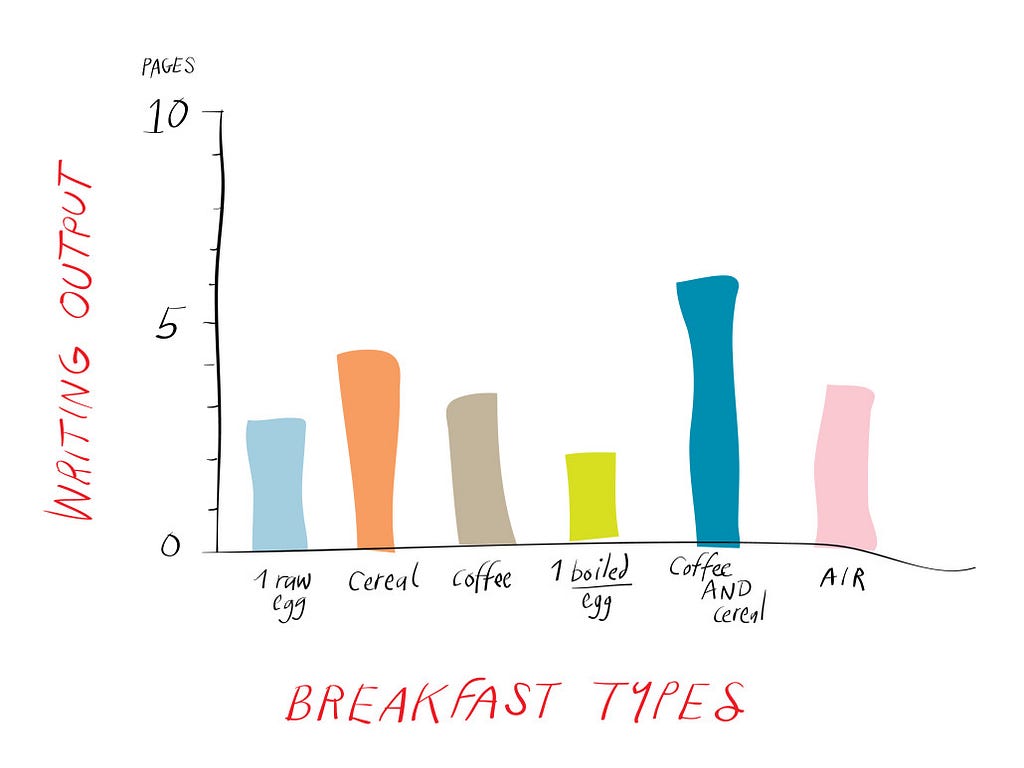
I experimented with food and sleep in order to find out the combination that left my mind and body feeling sharpest. I mustered up schedules in order to fit writing into all manner of work-related circumstances — grant writing days, copyediting days, transcription days, translation days. And for those unicorn days in which I had nothing else to do but write, I made schedules for those days too. I time stamped everything.

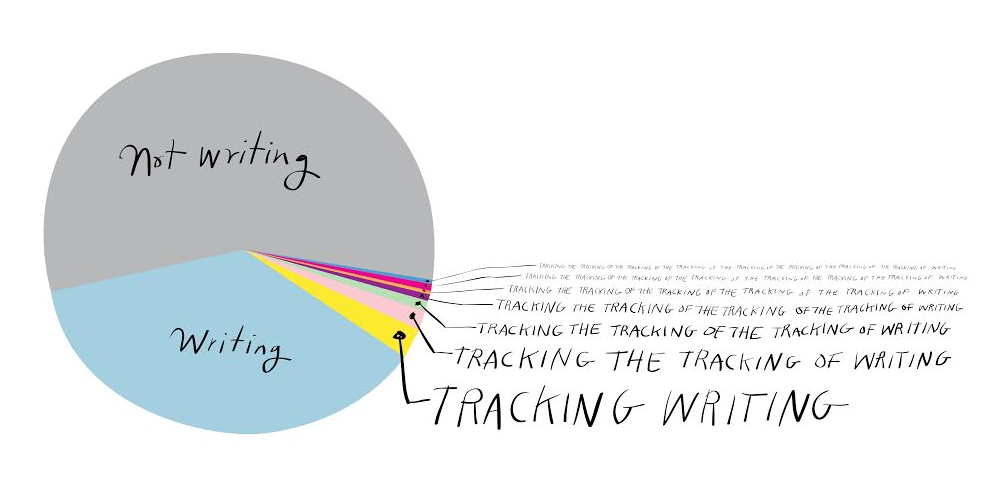
(As a joke to myself, I once started a meta chart, where I tracked the time it took me to track myself, then the time it took me to fill in the meta chart, then the time it took me to fill the slot indicating how long it had taken me to fill in the meta chart.)

The theory was that if I could figure out the science to writing, I would be able to create the right circumstances needed in order to land on my desk at the allotted writing time feeling refreshed, unblocked, and inspired.

Like a horse beginning a sprint at the sound of the starter pistol, I would write word after word, sentence after sentence, in glorious lap after lap of stirring storytelling.

But no amount of tracking, experimenting, and planning that I ever came up with kept me from the black eventuality of sitting down to write and nothing coming out.

There would be my mind a sheer blank, and there would be the white page so silencing.

I would sit in wait for an average of five minutes, fifteen seconds.

Then I’d turn to my journal in order to complain in all manner of metaphors about my lack of inspiration — the well run dry, the block, the free diver run out of air.

Then it occurred to me: What if in all my years of tracking, I had been keeping track of the wrong thing? What if instead of charting those hours that tangibly resulted in the creation of articles, stories, chapters, essays, what if instead it was more accurate to keep track of the types of writing I do that you will never see but are nonetheless necessary to produce the work that you do see? Isn’t that type of writing more important?

Because, see, writing about not writing is also writing.

But what else is writing?

All the hours I spend in the back of my throat, flexing my tongue, agonizing in unwritten sentences — is that writing?

What about the pen poised over the blank page, the fingers suspended above the keys overcast in the jeering electric light of the screen? Is that writing?

Is sheer inertia writing? Is sheer potential writing?

Is signing my name to a check writing?

Is making a list — buy the milk, the cereal, the frozen fruit, the greens — writing?

What about thinking — Oh, I could have written that — is that writing?

Is transcription writing? (Allow me to transcribe here part of that gem of Borges short stories Pierre Menard Author of the Don Quixote as flimsy defense, “[Pierre Menard] did not want to compose another Quixote — which is easy — but the Quixote itself. Needless to say, he never contemplated a mechanical transcription of the original; he did not propose to copy it. His admirable intention was to produce a few pages which would coincide — word for word and line for line — with those of Miguel de Cervantes.”)

And what if one notices a detail, composes a sentence in one’s head, but later forgets to commit it to paper and then the sentence is gone? Is staring at the departed silhouette of that sentence, the blank space in your mind that holds all the dark — is that writing?

So much of not writing is actually writing. A writer at rest may at all times be imperceptibly writing. It’s possible even that the type of writing that we do that you will never see in order to produce the writing that you will see, it’s possible that this type of writing happens at all hours and even in sleep.

The more I look at this line differentiating writing between not writing, the more this line disappears. Maybe there is no such thing as not writing. Maybe there is no such thing as the block. Maybe there is no such thing as an accurate chart that can show the real effort that goes into writing. Maybe the only accurate thing is to just look at the face of a writer — at the haggard lines, at the skin luminous with triumph — you can see the effort there.

Originally published at electricliterature.com on February 19, 2016.

TED WILSON REVIEWS THE WORLD: A WALK IN THE WOODS

★☆☆☆☆

Hello, and welcome to my week-by-week review of the world. Today I am reviewing a walk in the woods.

Normally I like walking in the woods. I enjoy spending time in nature, getting away from the city, and just finding time to be with myself. Unfortunately, this walk was mostly me running from things and getting lost. It was easily the worst walk I’ve ever been on. Worse than the one where I found a dead body, because that time it was the body of a missing person and I got a big reward.

After parking my car on the side of the highway, I entered the woods to pee without being seen. When I came out of the woods, my car was gone. Or so I thought. As I learned later, I had exited to a different stretch of the highway and my car was just around the bend. (It was actually stolen the next day but at this point it was still there.)

I tried hitchhiking, but when no one would stop to pick me up, I realized the reason might be because I had accidentally left my penis hanging out of my pants. For men it’s much easier to pee in public than for women. But it’s also much easier for us to unknowingly flash dozens of cars.

I was so embarrassed I ran back into the woods and hid for a while. When I saw a state trooper drive by, I started running. It only took about ten minutes before I was completely lost. I knew people used stars to navigate, so I started walking toward the sun. Unfortunately the sun wouldn’t stop moving so I ended up back where I began and regretting that I hadn’t brought sunglasses.

I’m a little bit of an expert on outdoor survival, because I’ve watched a lot of TV shows about it. The first trick is to dig for water, but I wasn’t thirsty, and I didn’t want to run the risk of finding oil and becoming so rich that it changed me as a person. The second trick is to eat bugs for protein, but the last time I ate a bug it was by accident and I still have bad associations with that. I was out of tricks.

That’s when the panic set in and I started to get all sweaty. I undressed to cool off and should not have rested my clothes on a nearby rock, because that rock turned out to be a turtle that walked off with my clothes. I could have caught him but he was attacked by an owl and I didn’t want to get in the middle of that.

Obviously I didn’t die out there because I’m writing this now, but I was lost for three days, naked, and hungry. All because Yahoo hasn’t sold any of those self-driving cars yet. If I had one of those it could have zoned in on my GPS signal and found me.

I give this walk one star because I got some exercise.

BEST FEATURE: The turtle dropped one of my socks which I used to keep my good foot warm.
WORST FEATURE: I got poison ivy, somehow only on my face.

Please join me next week when I’ll be reviewing The Oscars.