Clouds Rush By on Silent Bikes — New Fiction by Richard Kostelanetz

FICTION: KOSTI’S RAMON, BY RICHARD KOSTELANETZ

The caterpillar is the smallest railway in the world.

Insolvency is a profession especially enjoyed by Spaniards.

By buttoning is an accordion played, a lover by unbuttoning.

Buried in a piano is a harp lying asleep.

Pajamas buried too deeply under a pillow cannot be found.

A gong is a widowed saucer hung out to mourn.

The letter T is the alphabet’s hammer.

Snakes measure forests.

A hen with her chickens looks like a bottle surrounded by glasses.

In a vest are small pockets in which mementos can be kept.

Beware of maids waxing floors on which their masters might slip and kill themselves.

A pianist touches pedals to warm his feet.

Soldiers parading out of step with music might be deaf.

A hyena carries his own amplifier.

Whenever I consider opening my shutters at night and looking out on the garden, I am afraid of finding an unfamiliar face glued to the window-pane, looking in on me.

Nothing cools hands more than lost gloves.

A freezing night kills all puddles.

Gasoline’s civilization’s incense.

A wasp is the tiger of the insect world.

An electric fan saves heat.

The worst thing about nudists is that they stick to their chairs.

Caterpillars make holes in leaves because they are quality inspectors of vegetables.

Any woman who rolls her husband’s cigarettes has converted his kitchen into a munitions factory.

Wherever lifetime lovers first met they imagine has a plaque.

Don’t let the piano lid fall too heavily because it will sound like a coffin shutting.

An infant with a pacifier looks at a pipe-smoker as a pram companion.

The stray mutt attaching himself to us on the street appeals to our vanity but, not wanting to appear a stray, satisfies his own.

Harmony is written with the letter H to be either the lyre or the slingshot of the alphabet.

The lovely lady who was the death of four husbands took for her fifth a judge who had her hanged.

A scheming king, inviting an historian to dine every day, provided him with the most delicious food and classiest wine in gold-plated service. That accounts for why historians call his epoch “The Golden Age.”

Whenever a wardrobe’s doors open, the whole house yawns.

Stockings are the butterfly nets of women’s legs.

So irritating is a rattle that we had to accept as infants, presented as it was by our parents, who hadn’t the sense to see that in shaking it joylessly we were doing only a favor to them.

In ancient temples Ionic columns look unfurled.

Genius results from undermining impatience with patience.

As strawberries and red wine love each other, sugar consecrates their union.

Though they looked out at each other from the windows of two trains traveling in opposite directions, so great becomes the force of love that suddenly their two trains began to travel in the same direction.

Women go through stockings as serpents slough off their skins.

How strange it is that fresh codfish in a produce market should be dry and shriveled, looking as though it should be sold in a flea market or an antique shop.

Whenever the restaurant service is especially slow, we become impatient xylophonists.

You become more skeptical when you dicover that the word “skeptic” does not include the letter X.

Why is the moon such a fertile subject for fanciful speculation?

Congratulate the expert ploughman who makes the neat ridges in velvet corduroy.

A pillow is always convalescing.

Strolling in public parks we always hope to meet the woman of our dreams, who never appears, making us think our walk a waste our time, as we return home dejected, never becoming wiser about this repeated experience.

Extinguished is snow by water.

Mirrors are coated with the quicksilver of dead eyes.

That Laura who goes to Mass beautiful and young every Sunday vanished with Petrarch.

In order to remain quite alone we’d need first of all to escape from ourselves.

A barometer is a clock that never strikes, responding even to a tempest with silence.

Shearing a sheep is easier than undressing a sleeping child.

Buried in every tomb is an alarm clock set at the hour of the Last Judgment.

Heavy rain reminds us of the time when we were fish.

Fear a bat as the Devil’s holiest ghost.

Taxmen look at writers with schemes for charging a tariff on ideas passing through their heads.

He was such a bad guitarist that his instrument ran off with someone else.

When we peel a banana, it’s sticking its tongue out at us.

Empty windows in a jewelry store make you wonder whether the gems had been stolen permanently or temporarily gone to the opera.

No alchemy is more challenging than transforming a sister-in-law into a wife and then a wife into a sister-in-law.

Foolish seems a journalist speaking of fashion, since fashion is created primarily to mislead journalists.

On certain days clouds rush by on silent bikes.

What worries the mother cat is finding work for each of the six kittens born at the same time.

Why is it that two cigarettes lit simultaneously are never extinguished simultaneously?

Any man still sullen after drinking a cup of coffee isn’t worth the sugar he put in it.

Conversations occur atop a sofa bed and dreams underneath.

Bigger chicks routinely check on smaller chicks.

Anxious is that matchmaker who can provide only six brides for seven brothers.

My novellas should be longer than a micro fiction but shorter than a novel, as is this sentence.

Pins can’t make braids.

Pharmaceutical pills fallen to the floor need not be taken up.

Foreign languages resemble exotic codes.

A dog’s bark scares only as the prelude to a bite.

Top politicians perform as well as rule.

In asparagus is heavy ink turning pee stinky green.

Immortality requires investments.

Many girls, now too young to appraise me, resemble young women known intimately to me decades ago.

A sausage represents the offspring of a hotdog in a mixed marriage.

Portrait photographs usually look more like other photographed faces than anyone met in real life.

Money can vanish as speedily as it appears.

Cat-like dogs like other cats more than humans.

Author’s note:

Having produced appropriate book-art homages to Guillaume Apollinaire (known to his friends as Kostro) and to Nathanael West (commonly called Pep), among others, I’d like to do likewise by another modern writer increasingly sympathetic to me — the Spaniard Ramon Gomez de la Serna (1887–1963), known even to strangers only as Ramon. More than a decade ago, with the assistance of an undergraduate intern named Martin Zotta, I produced Simultaneous Translations (Cornerstone Press, Arnold, MO, 2008), in which Ramon’s famously short, single-sentence texts appear directly above English translations typeset to be identical in horizontal length.

I first learned about Ramon in 1982 over lunch in Boston with Rudolfo Cardona, a BU professor who, after doing his doctorate on Ramon, produced the first book on him in English in 1957. Perhaps a decade later I came across an appreciative essay on Ramon by Miguel Gonzalez-Gerth, a popular professor at the University of Texas at Austin, who had also produced a book of miscellaneous translations into English. What was most striking to me about this essay was my discovery that it inadvertently described my own severely minimal fiction better than anything else known to me.

Not until I read a later book in English about Ramon, Rita Mazzetti Gardiol’s (1974), did I discover this sentence also applicable to me: “Because Ramon did not have the patience for a gradual building up of plot he preferred to write short plays, and even pantomimes, concentrating on the dramatic moment of truth, revelation, or decision that intrigued him.” Bingo. I own a hardback copy of Ramon’s Automoribundia(1948), which I treasure even if I cannot read it unassisted, if only for its title which I translate as “Autodeathography.” I gather that much like my own four-volume Autobiographies (1980, 2004, 2006, 2011), composed independently of my known about his, Automoribundia is not a continuous pseudo-chronological narrative.

Reflecting Ramon’s influence, this book has English imitations of his Greguerías that I gleaned from various sources (including Google’s Gremlins), often rewritten by me without referring to the original Spanish (which I can barely read), here intermixed with texts wholly mine that I think compliment his. Just as Ramon’s greguerías are charmingly fanciful, highly original succinct observations, so might be a few of mine. What is most remarkable about him (and perhaps me) is that, like other great aphorists, he’s never obvious, even about common subjects, which is to say that Ramon gave himself permission to see differently and, once empowered, he didn’t stop. Even while observing formal literary constraints, his mind seems unconstrained.

Sometimes I do what he did; other times, he writes me, especially after I’ve rewritten him to write like me, realizing the title of this book. Considering a multitude of worldly experiences, both Ramon and myself try to be light on our feet and swift with our fingers. When the pantheon of minimalist writers is constructed, may I please have a bust of me next to the one of him now in Madrid (recently visible in the Wikipedia entries on him in both English and Spanish).

— Richard Kostelanetz, FarEast BushWick, NY

Every Avenue of History: The Lost Time Accidents by John Wray

Time is, in a sense, the only subject of The Lost Time Accidents. Scientific progress, obsession, consciousness, betrayal, history, love… John Wray’s fourth novel argues that without the oppressive ticking of life’s clock, none of these things matter.

But the novel — Wray’s most audacious and intelligent, a prospect that’ll thrill those familiar with his oeuvre — also argues that time is humanity’s scapegoat, a nifty excuse for our perpetual refusal to reckon with our failures. Moreover, it’s overflowing with sensory depictions of time passing (or failing to pass). How time feels and how this feeling changes with context are predominant concerns of the book. I found myself reading The Lost Time Accidents with a Milan Kundera quote in mind: “A novel is often, it seems to me, nothing but a long quest for some elusive definitions.” In this novel, Wray presents us with a dialectic that moves toward a definition of time.

If time influences everything, then the novel is the perfect way to explore it; the form allows for as much multivalence as the world, and in the best examples, multivalence exists in tone as well as subject matter. Fortunately, John Wray writes books for those of us who have as little patience for stodginess as we do for frivolity. The Lost Time Accidents is funny and fleet-footed. It can be meditative and thrilling on the same page. It bends your mind as it breaks your heart.

Waldy Tolliver, the book’s narrator, says that “the universe exists to give time something to play with.” He repeatedly suggests that time and space and thought, contrary to our feeble human perception, might not exist as discrete entities. The book presents itself as Waldy Tolliver’s lengthy spurned-lover’s letter to a woman he only ever calls “Mrs. Haven.” He says, “I’m writing to tell you about The Lost Time Accidents.” The Lost Time Accidents are supposedly his great-grandfather’s unheeded alternative to Einstein’s theory of relativity, though Waldy must recount several hundred pages of Tolliver family history before he finally gets to it. “If the past of a given event — let’s call it event X — might be considered as all things that can influence X (as mainstream physicists claim), then the whole of human history can be thought of as the past of our affair.” Such is the principle he’s operating under.

The Lost Time Accidents exists in three planes of time. The first is the recent past, Waldy’s impassioned address to Mrs. Haven, recounting their relationship. Next is the deeper past. Waldy’s family history starts with his great-grandfather, Ottokar Toula, a Czech “amateur physicist, pickler by trade” and discoverer of The Lost Time Accidents. It continues through the life of Ottokar’s nebbishy son Kaspar, who changed the family surname, and on to Kaspar’s own children — creepy twin daughters and a son, Orson Card Tolliver, a famous sci-fi writer, Waldy’s father. Outside of this direct lineage, but orbiting around it, is Waldemar, Ottokar’s younger son, the Black Timekeeper of Auschenwald-Czas. He is the proprietor of a concentration camp and conductor of diabolical time-travel experiments on Holocaust victims. He is also Waldy’s namesake. The Black Timekeeper makes for a chilling but lively villain who embodies the horrors of the 20th century, and his experiments showcase how the cold bureaucracy of the scientific method can dovetail with the cold bureaucracy of genocide. Waldy’s history is both a record of his family and an indictment of them.

The novel’s third temporal plane is 8:47 in the morning, the day Waldy writes this history. He is in his aunts’ Spanish Harlem apartment, and it is 8:47 in the morning, and it stays 8:47 a. m. for far longer than it should.

“I woke up to find myself excused from time,” the book’s first line, is noticeably similar to the opening declaration of Kurt Vonnegut’s Slaughterhouse-Five, another novel that uses an achronological framework to explore the atrocities of the 20th century. Though “excused from time” comes to take on multiple meanings in a way that Vonnegut’s “unstuck in time” never does, Vonnegut’s fingerprints are still on every page of The Lost Time Accidents. The book’s jocularly despairing tone is especially reminiscent of the late satirist, and Wray’s tremendously fun descriptions of pulp sci-fi plots, which could have come as easily from Kilgore Trout as Orson Card Tolliver, feel like an homage.

Another author who left a mark on The Lost Time Accidents seems to be Gabriel Garcia Márquez. A multigenerational saga, protagonists trapped by the past, an author unconstrained by traditional realism… I could be talking about One Hundred Years of Solitude here. Wray also deploys a narrative technique I associate with Gabo: he’ll reveal a major plot point right at the outset, and then circle the story back, give you all the lead-up, and when the event you already knew was coming comes, it still manages to startle you. You know from the first few pages that Mrs. Haven wants nothing more to do with Waldy, but when you reach the point where he finds out for himself, it’s shattering.

Despite a Whiting Award, accolades from Granta, and James Wood’s certified stamp of approval, John Wray remains a gravely underappreciated writer. His prior novels include two works of historical fiction, The Right Hand of Sleep (2001) and Canaan’s Tongue (2005), and another book that’s one part police procedural, one part hallucination. Lowboy (2009) is about a schizophrenic teenager who’s tragically disconnected with what the rest of us conspire to call reality. (In a sense, The Lost Time Accidents is about four generations of Lowboys.) The earlier novel lacks the intellectual heft, architectonic sweep, intricate plot mechanics, and sense of humor that all contribute to make The Lost Time Accidents a better book, but the language of Lowboy operates with acute psychological purpose, and you can’t say that about The Lost Time Accidents. Language does remain important to Wray; his interest in names remains (everyone in his work seems to have multiple monikers, including the author himself — ”John Wray” is a pseudonym), and this book has a notable interest in familial lexicons. Duration, for example, is the Toula/Tolliver family’s synonym for life.

Nevertheless, Wray’s writing here, though nimble and limpid, lacks both the exactitude and the insanity of his older work. In particular, the narrator’s got some rankling tics. Some justify themselves, such as Waldy’s constant use of time markers, stating the date/hour or using phrases like “afterwards” and “long ago,” which work as a reminder of our inability to escape from time’s forward motion. But when it becomes clear that, despite there being several female characters, the novel distinctly lacks femininity, and Waldy says that all the men in his family have a type (“Kaspar had always had a weakness for tomboys — I suppose, Mrs. Haven, that it runs in the family…”), I wonder if he’s making excuses for his author’s imaginative limitations. And when the tenth simile appears in as many pages, too many of them relying on at-hand familiarity, the author’s pen-clenching hand obtrudes into view, looking shaky from exhaustion. In a one-paragraph sex scene, lovers fornicate “like love-struck baboons,” a woman straddles a man “like a cyclist,” and her settee cracks “like the shell of an overboiled egg.” This is all supposed to be very sexy and evocative, but it has the opposite effect.

Some of the book’s other problems are the unfortunate byproducts of success. The Black Timekeeper burns so hot on the page that he sucks the oxygen out of proceeding scenes. Also, Wray clearly delights in storytelling, using subtle hints and surprises that work together with devastating force, like primed explosives in a controlled demolition. But sometimes he tosses in inconsequential little firecrackers, fake twists that amount to nothing.

But The Lost Time Accidents is a big book — bigger than its problems. And a novel is its own kind of journey through time and space and thought. The Lost Time Accidents shows that though time’s the most ineluctable of the three, thought might be the most powerful. “Imagination is a form of time travel, after all, however bumbling and incomplete,” Waldy says. “And every history is an act of subterfuge.”

10 Great Vanishings in Literature

One after­noon I had to be several places at once and even the thought of it was exhausting. It occurred to me that the solution might be to climb into a tree instead, to just pack a book and a sandwich and find some low branch to perch on for a few hours, or maybe even a whole week, until all my responsibilities had passed. In Brazilian Portuguese, there is a handy phrase for taking off this way without explanation. It’s called going “embora.”

Image result for ways to disappear book goodreads

We don’t have a phrase in English as vague and accepted as “emb­ora” is in Brazil, which seemed as good a reason as any to devote the next five years of my life to writing a novel involving several languages and kinds of vanishing.

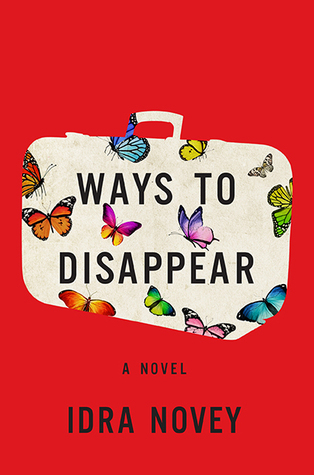
The resulting book, Ways to Disappear begins with a celebrated Brazilian writer who goes com­pletely, arbo­re­ally “embora,” after which her American translator does some vanishing of her own. While writing it, I revisited some of the great disappearances in literature and began to wonder why writing and reading about a disappearance is so alluring. Perhaps the reason is that, as mortals, we are all destined to vanish from our lives eventually. In many of the subversive novels listed below, however, vanishing is also a way to write about how the structures of society can render a woman’s life invisible to the people sitting right next to her, and how it is often only in her absence that she becomes visible.

Here are ten landmark books that revolve around a vanishing:

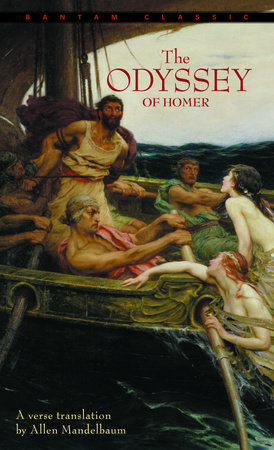
The Odyssey of Homer by Homer

The Odyssey by Homer

This 3,000-year-old epic hinges on the absence of an iPhone. Unable to text her husband and ask where the hell are you, Penelope sits weaving and unweaving for centuries until the Coen Brothers make her a movie and an excellent soundtrack in O Brother, Where Art Thou?

Don Quixote by Miguel de Cervantes

Don Quixote by Cervantes

Readers learn that Sancho Panza’s donkey, Dapple, is a high-strung, jittery creature. And we all know what happens to high-strung jittery creatures. They do odd things like disappear and before long Dapple does.

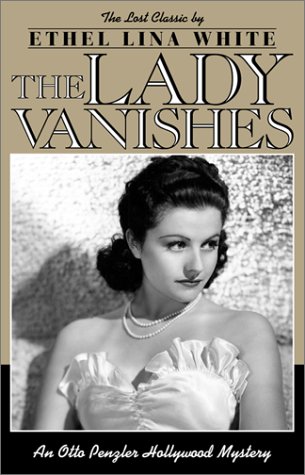
The Wheel Spins by Ethel Lina White

Although this is a roundup of famous works of literature, I had to include one subversive exception from British crime writer Ethel Lina White. Alfred Hitchcock adapted this 1936 novel into the classic film The Lady Vanishes. While traveling, a young socialite on a trip befriends a strange woman who abruptly vanishes and no one else on the journey remembers seeing her. The young socialite is losing her mind, or everyone around her is, along with all of humanity before and since.

The House Without Windows by Barbara Newhall Follett

This book doesn’t quite fit the parameters of this list either, but I’ve never been very good at sticking to set parameters. This novel isn’t about a vanishing but the child prodigy who wrote it disappeared and was never seen again. Barbara Newhall Follett published The House Without Windows with Knopf in 1927 at the tender age of 12 and was declared to be the next great American novelist. Then the Depression hit, she became a secretary, got fed up with her philandering husband, and wrote in a letter “my dreams are going through their death flurries…the whole radiant flock of them.” Soon after, this radiant young writer disappeared.

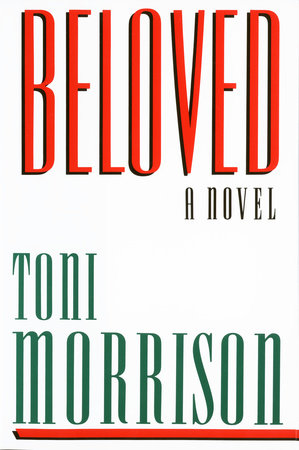
Beloved by Toni Morrison

Beloved by Toni Morrison

Getting back to the canonical masterpieces now: the title character disappears in this life-altering Toni Morrison novel, although Beloved is a ghost to begin with, or maybe only assumed to be a ghost. Morrison masterfully leaves unresolved whether Beloved is just a lonely stranger and not the spectral incarnation of anyone. The uncertainty Morrison creates around Beloved’s vanishing is equally profound and masterful.

Lolita by Vladimir Nabokov

Lolita by Vladimir Nabokov

The eloquent pedophile who narrates this enduring Nabokov novel is trying to track down the vanished teenage stepdaughter he’s been violating for years. Longing to violate her some more, Humbert Humbert looks for clues to her whereabouts and fills the rest of his time writing creepy things like “my little cup brims with tiddles.”

20757622

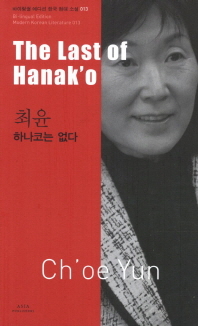
The Last of Hanako by Ch’oi Yun

In this Korean novella, a woman named Hanako disappears. Various men go looking for her but the author Ch’oi Yun never reveals their names — only their initials. With all the novels in the world with unnamed missing women, Ch’oi Yun’s inversion of who gets a name in this story and who doesn’t is revolutionary.

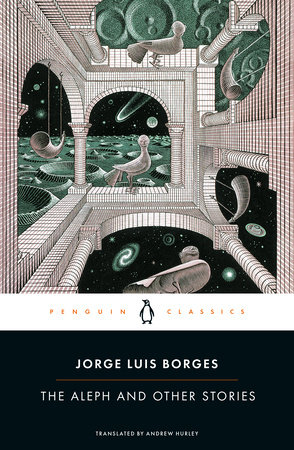
The Aleph and Other Stories by Jorge Luis Borges

The Man on the Threshold” by Jorge Luis Borges

Nothing good comes of meddling colonizers, especially in Jorge Luis Borges stories. Glencairn is a Scottish judge sent to quell unrest in a Muslim area in India. He cuts some unethical deals, turns tyrannical…and you guessed it: no more news of Glencairn.

5742868

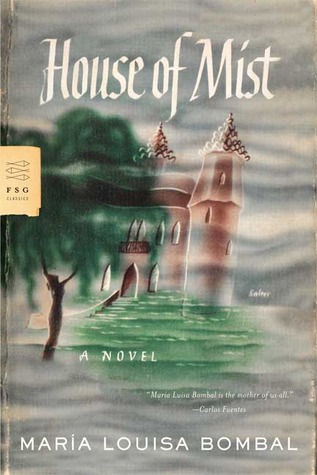
House of Mist by Maria Luisa Bombal

On the opposite side of the Andes Mountains from Borges, Chilean writer Maria Luisa Bombal’s heroine starts questioning the terms of her marriage. Soon after, she has sex with a stranger in a foggy garden. As is the nature of sexy strangers in foggy gardens, this fellow vanishes even more mysteriously than Sancho Panza’s donkey.

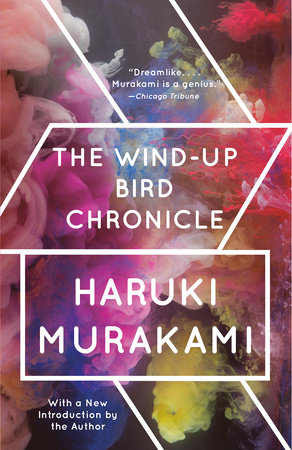
The Wind-Up Bird Chronicle by Haruki Murakami

The Wind-Up Bird Chronicle by Haruki Murakami

At the start of this Haruki Murakami novel, it’s a cat that goes missing. A man’s wife sends him out to find their vanished pet and in his searching, Toru Okaya unlearns everything he’s ever known. Disappearances cause the most curious changes among those left to wait and search and wait some more. Readers, please keep an eye on your lovers and friends and definitely on your pets.

How To Be A Slut

Moscow, 1913: an icy Russian winter, the crystallizing Soviet chill. Gorgeous seventeen-year-old Lara has been secretly sleeping with her mother’s lover, Victor Komarovsky, an older, slimy opportunist — she has just introduced him to Pasha, her idealistic young revolutionary fiancé, whom she is still planning to marry. Now alone with Lara, Komarovsky is unimpressed:

KOMAROVSKY
There are two kinds of men, and only two,
and that young man is one kind. He is
high-minded. He is pure…. There is another
kind. Not high-minded. Not pure. But alive….
For you to marry that boy would be a
disaster. Because there are two kinds of
women, and you, as we well know, are not
the first kind….

Lara gasps, slaps him. He pays no mind:

KOMAROVSKY
You, my dear, are a slut.

LARA
I am not!

she says, horrified; it is clearly the ultimate insult, the worst thing in the world for a woman to be called. “We shall see,” Komorovsky replies, ominously; he then rapes her, in one of those “she struggles, pummeling him with fists until her passion is aroused and she gives herself over to it” scenes, proving, I suppose…his point? Which is…?

I’m not sure. I am nine or ten years old, at a revival showing of David Lean’s epic Dr. Zhivago — my mother’s way of killing a long afternoon with her children while still being cultural. We are forty minutes into a three-and-a-half-hour movie and I am already feeling a little bored until this scene, this charged moment, this epithet spat out in Rod Steiger’s sneery, staccato clip: Slut. I have a vague understanding of the word (bad woman), but it has never grabbed my attention this way. What exactly is he accusing her of? Is it that she has chosen to participate in this loveless sexual relationship because she is getting something out of it — power, money, access to Komarovsy’s worldier world — and is thus a de facto prostitute? Or is it that she is indiscriminately promiscuous — that she actually likes sex, for the sake of sex? And to such a degree that she has chosen to compromise her “purity,” her “high-mindedness,” and therefore risk her reputation and her marriageability?

But I can’t quite puzzle through the logic of this: if the opposite of a “pure” or “high-minded” man is one who is “alive,” then isn’t that what he is accusing her of being? A woman who is, simply, alive? Then why is she so upset? I will soon be distracted from this question by the blood of Revolution, the balalaika music, the widescreen expanses of yellow flowers and snowy steppes, but I’m pretty sure this movie wants me, like Komarovsky, to judge and sexually shame Lara with that word.

If the opposite of a “pure” or “high-minded” man is one who is “alive,” then isn’t that what he is accusing her of being? A woman who is, simply, alive?

Slut.

However…on some subliminal level, I feel that label actually has very little to do with sex — and far more to do with a woman’s choices and priorities. And who gets to determine what those are, or should be.

In my mid-twenties, my friend Helen tells me she is becoming aware of her biological clock revving up; she is feeling an urgency to find the right guy and settle down. She believes the female body, at some point, craves being pregnant, wants to give birth, hence the simmering instinct to date, get married, create a family. I am skeptical. I have zero interest in “settling down,” I try to explain to her, and I’ve never really imagined, for myself, a life of marriage and children — there was no little-girl dress-up as a bride, for me, no play-acted weddings, no couplehood crockery dreams, no pretend mommy-cuddling a pretend baby doll. She smiles indulgently; it is going to happen to me any time now, she assures, that desire, that need, I will hear my anxious eggs and empty uterus begin screaming for attention, and then I will understand. All right, I think. Helen is two years older than I am, so I figure she has the authority on this issue.

She believes the female body, at some point, craves being pregnant, wants to give birth, hence the simmering instinct to date, get married, create a family. I am skeptical.

And the movies back her up, don’t they? All those love stories I’ve spent a lifetime watching and being charmed or tearfully enthralled by are, in fact, so goal-oriented: let’s get this gal a Prince Charming husband, let’s get this guy to realize his dream girl is right in front of him, let’s get these crazy kids together! The romantic comedies, from screwball Howard Hawkes, insightful Preston Sturges, witty Nora Ephron, adolescent-angsty John Hughes, even crudely sweet Judd Apatow, all scramble to keep the bantering, sparring lovers apart for two hours, due to contrived miscommunications or inconvenient logistics or the quirky character flaws of jealously or pride, until all that gets sorted out and apologized for and Harry and Sally are off to the domestic bliss of the Happy Ending, where they will banter and spar as a team forever. The dramatic romances tend to have bigger stakes — a war is in the way, or an illness, issues of honor, profound and problematic values, or large-scale sociopolitical challenges, see: Casablanca, From Here to Eternity, The Way We Were, Out of Africa, Titanic — but the end game is the same: these two meant-to-be-together people must realize their enduring love and create a home and hearth and progeny of their own. It is destiny. Or, if that proves impossible, well, what a tragedy, to deny this fated pair their pairing, what lonely half-lives they are doomed to live, wandering the earth in their existential solitude!

All of which is summed-up in that one famous line:

JERRY MAGUIRE
You…you complete me,

he says to his sort-of-girlfriend, Dorothy — and when gorgeous Tom Cruise says this to normal-pretty Renee Zellweger, we all collectively, dreamily sigh with romantic satisfaction.

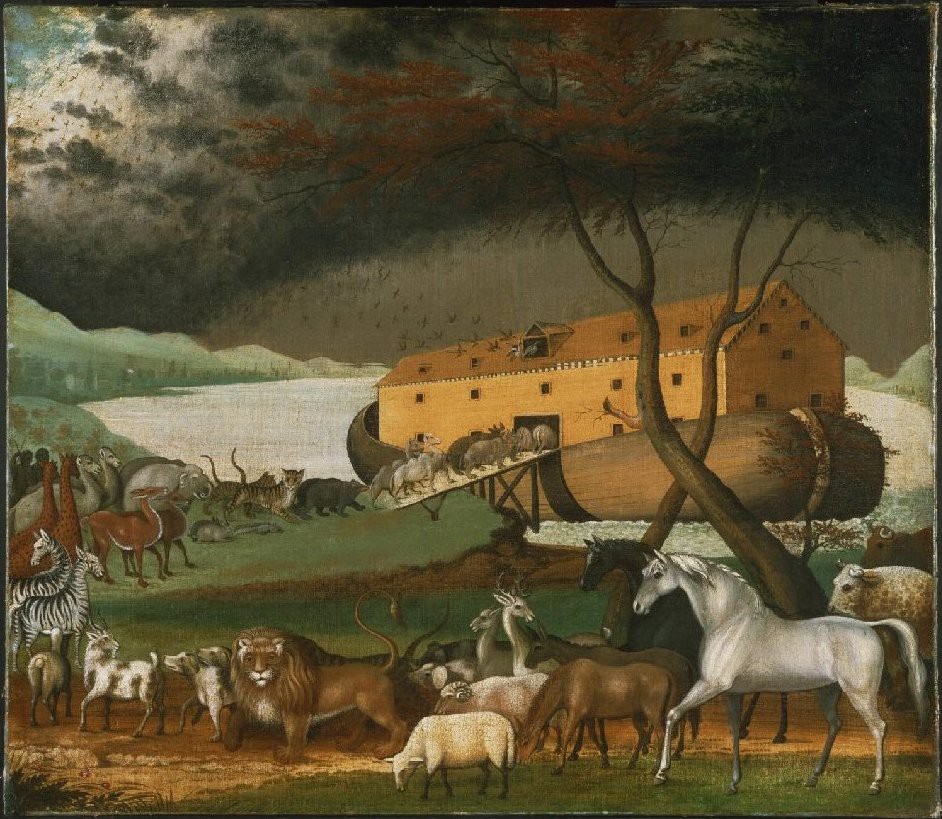
So it is only a matter of time, I suppose, before my own life settles into this narrative construct, or, at least, focuses on achieving it: the happily-ever-after, pairing-up of soul-mates, this Noah’s Ark template of adulthood. All right, then. One day, I will be complete.

The happily-ever-after, pairing-up of soul-mates, this Noah’s Ark template of adulthood.

But meanwhile, I am having a pretty marvelous time. I am having delightful or tortured affairs, thrilling sex, falling in lust all over the place: the English guy on a Greek island, the Italian guy in Paris, the guy I meet on the picket line during the Writers’ Guild strike, the hungry, still-single groomsmen I meet at friends’ destination weddings and invite back to my hotel for the night. All the hip bars and house music clubs, all the bubbling hot-tub parties, all the flirty meet-cutes in supermarkets and bowling alleys that Nora Ephron herself would applaud. I am the star of my own romantic comedy life, my own epic dramas of love: I lose my mind over a guy from high school who has transformed from the sweet nerd I knew in eleventh grade to now-arrogant asshole and breaks my heart; I become insanely infatuated with my best gay friend’s best straight guy friend, who dumps me two nights before I am scheduled to have brain surgery; I fall madly in love with my best girlfriend, and try to learn How To Be A Lesbian by watching a lot of dreadful movies that show lesbians as borderline-psychotics (The Killing of Sister George) or merely going through a developmental rite-of-passage “phase” (Personal Best), or show lesbian sex in the blandest, most boring way possible, as if sex between women has no more sweat or friction than gently brushing each other’s hair or frolicking through a field of daisies (Lianna, Desert Hearts, and yes, despite the hotness of Susan Sarandon and Catherine Deneuve, The Hunger) — thankfully, I go on to sleep with a lot of other women and erase those tepid or faux-lesbian images from my mind forever.

By my late thirties, however, everyone seems to be doing that hand-in-hand walk up the ramp to the Ark except me. I like my sexual adventures, the variety and challenge, the thrill of the chase, the delight of discovery — I am enthusiastically and discriminately promiscuous. But I also like having a boyfriend or a girlfriend; I like love. I like the mutual emotional support, the way sex takes on resonance and layers, the evolution of shared gestures and silly jokes. I like reenacting Annie and Alvy’s escaped-lobster scene from Annie Hall, and the sharing of candlelit intimacies in a bubbly tub scene from, well, every love story movie ever. I have the serial monogamy thing down. But I can never quite make that leap to a shared life, the ultimate commitment and dedication to “togetherness”…and as Alvy says:

ALVY SINGER
A relationship, I think is like a shark.
You know? It has to constantly move forward
or it dies. And I think what we got on our
hands is a dead shark.

And thus I develop a track record — a reputation? — as someone who in her life is racking up quite a number of dead sharks. I look around, I see my friends’ relatively happy marriages and longtime companionships, their bridal-shower gravy boats and their adoration for their vanilla-and vomit-scented babies, and I don’t envy them a moment of their paired-up or family-based lives. What is wrong with me? I worry. Am I really just some impure, low-minded slut? Why aren’t I looking to be completed?

Am I really just some impure, low-minded slut? Why aren’t I looking to be completed?

Maybe it’s that I don’t have a lot of happy formative role models to look to; my own parents’ marriage was hardly a model of positive communication or emotionally-fulfilling contentment, and in the twenty-five years since their divorce, I have witnessed my mother’s absolute terror at being alone lead to desperate and self-destructive decisions. And all those movies about relationships, both comedic and serious, tend to focus on the conflicts of couplehood, of course, the sheer messiness of two people trying to reconcile their independent selfhoods — otherwise there would be no story. This is Screenwriting 101, I get that — keep the happy stuff offscreen, it is increasing conflict that fuels narrative momentum — but still, it doesn’t exactly trigger a desire to emulate these characters’ turbulent romantic lives. Who wants all that drama?

By my early forties, I realize that storied “instinct” to go through life as a team, as one half of a hand-in-hand collaboration or as the nurturing matriarch of my own little clan, has never, in fact, kicked in for me. I like being in a relationship, but I am not looking for a partnership. The thing I tried to explain to my friend Helen twenty years earlier is the simple truth: what I have always ended up craving, ultimately, even when involved with the greatest guy or the most wonderful woman, is to be left alone. With a dog, and my dear friends a phone call away, my smooth-sheeted bed to myself, a quiet, molecule-steady room of my own in which to knit and read and do the work I am passionate about, find every single thing exactly as I have left it, and the gift of absolute and autonomous self-determination. I know a hundred delicious ways to cook one chicken breast; I also love taking me and a book out to a nice dinner. I love traveling to my own circadian rhythms, having an empty seat on either side and the bag of popcorn to myself at a movie. To quote another less-famous line from Jerry Maguire:

DOROTHY
I’ve had three lovers in the past four
years, and they all ran a distant second
to a good book and a warm bath…

and Yes, I think. Not always, but often. And I have never, in my entire life, felt the slightest aging-egg desire or uterine craving to have or raise a child — it is too late now, anyway, I have pretty much reached the biological end point on that one. Yes, I understand I have missed out on what is probably the most profound experience a woman can have. And that is perfectly fine with me.

(The above is an excerpt from the author’s 2015 essay collection, Reeling Through Life: How I Learned to Live, Love, and Die at the Movies.)

TED WILSON REVIEWS THE WORLD: KARAOKE

★★☆☆☆

Hello, and welcome to my week-by-week review of the world. Today I am reviewing karaoke.

My neighbor Brittini invited me to a karaoke party which I agreed to because I thought she said it was a carrot cake party. There was no carrot cake or any cake of any kind. I felt uncomfortable, being the only person who showed up with a fork in hand and a napkin tucked into my collar.

I also felt uncomfortable being the only person in his eighties since everyone else was a teenager. Normally I wouldn’t hang out with so many young people but I agreed to attend in order to ease the tension between us — ever since Brittini accidentally got spraypaint on my car and her parents grounded her.

If you’re unfamiliar with karaoke, it’s a game where everyone stands up one at a time and sings along to music into a microphone. If you don’t know the words, they are provided for you on a TV screen. There are no points awarded in this game and there are no judges. It’s kind of like an amateur version of American Idol except there is no clear winner.

The song selected for me to sing was called “Problem” by a woman named Ariana Grande. For some reason I was also told to dance while I sang even though no one else had to. So I danced the only dance I’m good at — the fox trot.

One of the teenagers filmed me and put the video on U-Tube. I guess I did a pretty good job singing karaoke because the video got over 200k views in one day! If the video had not been removed for copyright infringement, I bet it would have gotten even more. I hope Ariana Grande doesn’t sue me.

Despite my success, I didn’t really care for karaoke. There’s a lot of pressure to do a good job, especially with everyone staring at you. I often crack under pressure. If I had known I was being filmed I probably would have frozen completely. I should have just assumed I was being filmed. Everything is filmed these days. I bet I’m being filmed right now. I better put on some pants and comb my hair.

Another thing I don’t like about karaoke is how there’s no way to pause the song and rewind if you mess up. I didn’t have my glasses with me either, so it was hard to see the words as they zoomed past. I had to mumble my way through a lot of it or just make up my own words. I was pretty happy with a lot of the words I made up but the audience didn’t seem to care for them. Apparently there’s not a lot of room for creativity in karaoke.

BEST FEATURE: I learned some of the words to a new song!
WORST FEATURE: There’s a bouncy ball that goes from word to word. It filled me with anxiety as I tried to keep up, leaving me a sweaty mess.

Please join me next week when I’ll be reviewing a fern.

This Has Been Written in Front of Us: On Helle Helle’s First Novel to be Released in the US

In an age of what some have called High Interiority in literature a la Knausgaard, Ferrante, and the oodles of revelatory memoirs flooding the market, Helle Helle’s intimate novel This Should Be Written in the Present Tense shouldn’t seem out of place. It closely follows Dorte, a university age girl who has just moved out of her parents’ house, and seems poised to embark on a tale of coming into her own. Straightaway she talks about her writing, so we ought to be in for a book that plumbs her contemplative psyche as she makes her way as a burgeoning adult in the world. Instead, it turns out we’re in for something quite different.

The book is written in first person yet we are rarely offered the narrator’s thoughts or emotions. We are more apt to be told how Dorte shoos away her “intrusive thoughts” by saying to them, “Right you are.” There are moments when Dorte shares a thought or two, and she does eventually shed tears (though it seems at such an odd moment), but we aren’t privy to specifically why she’s crying even if we aren’t surprised that at last it has happened. No, Dorte is more apt to tell us what she eats or what she throws in the waste bins than why she does or doesn’t do anything.

I’m oddly reminded of Bartleby, whose “I’d prefer not to” mantra reverberates (as if through a funhouse) in Dorte’s “It didn’t matter.” This isn’t to say that she isn’t affected by her surroundings. In fact, she’s keenly attentive. Noticing her breathing, the red she sees behind closed eyes, or even the lack of visual stimulus in a room–all are cause for comment. This kind of acute focus sets the stage for chewing a gob of gum to be heard as a racket. The hoover falling over is a clattering explosion. Helle dilates our attention through her protagonist so adroitly that the minutest sensations can become plot points.

This is Helle’s first work to be translated into English. In Denmark she is an award winner, bestseller, and often called the country’s most popular novelist. Many writers refer to her work as minimalist, and this certainly has merit. It also seems to me as if it is resplendently indulgent. What luxury to linger in nothing so much as sitting around contemplating words (“I sat at the drop-leaf table thinking about the word bleary.”) or to wander into a store because a girl is noticed crying out front. There are many moments when we might feel, as Dorte does, that we “ought to be doing something” but don’t. Or aren’t.

Dorte is funny, and a liar. She’s aimless and stumbles, literally. If Kerouac was impelled to hit the road, Helle’s Dorte is compelled to rummage through stores for clothes, fabric, and snacks she can’t afford. She drops details so casually into the story that if we were in conversation with her we might say, Wait. Aren’t you running out of money? Won’t this be a problem if you get the expensive pastry? Or the new shoes? Which Dorte does, then she blisters up walking blocks and turning corners. Her other shoes, which could have been perfectly useful, are left behind in the trash. Just what the hell is this girl up to we might wonder?

Any random encounter could merit Dorte’s (Helle’s) attention. If she is angsty about her situation–from the larger savings-draining adrift in young-adult position she’s in to any particular episode with strangers who’ve missed a train–she also seems willing to see it through to whatever end. To take a ride on a moped from a stranger or to run down the road leaving the door to her flat open to blow shut and lock herself out. She gets on trains when she’s not going anywhere. Dorte lives via one default after another.

It’s a small book, in a way. There’s a circularity and referencing back in the narrative. The reading process feels more like having colored gels added on to the filters. Or perhaps it’s like having redacted material revealed. That’s not right either. In fact, as a reader, I felt a bit disoriented at first. I wasn’t entirely sure how many times she’d moved. Are there really two Dorte’s? Also, where did her parents go? That said, Helle is a skilled enough writer to hook her readers at the outset. She had me at the opening sentence: “I wrote too much about that step.” This serves as a salvo to the reader to find out more. Something has already happened, and telling us about it as a confession makes it too curious to pass up.

I was charmed by Dorte’s delightfully droll delivery and this too kept me reading . It’s also wonderfully misleading as her near reportorial tone belies the dramatic undercurrent of the story. Often what isn’t said exerts a sneaky influence on the reader as much as what’s there. The pivots in the book seem to occur infinitesimally or in deep background. An abortion, a nervous breakdown. An affair. There is plenty of pathos to chew on even as Dorte ambles on as if not much is happening. Through a scene with in which Dorte meets with other writers, Helle clues us in that This Should Be Written in the Present Tense is ultimately “talking about fiction.” As a result, we think about every cameo appearance, each abandoned suitcase in light of this revelation. Upon reaching the end, we discover it sheds light on the beginning.

So I re-read the opening, then the end once more. I looked at the cover. I turned it over to contemplate what’s already been said about it. I set the book down on the bench next to me and smiled. Then I began the review in the present tense.

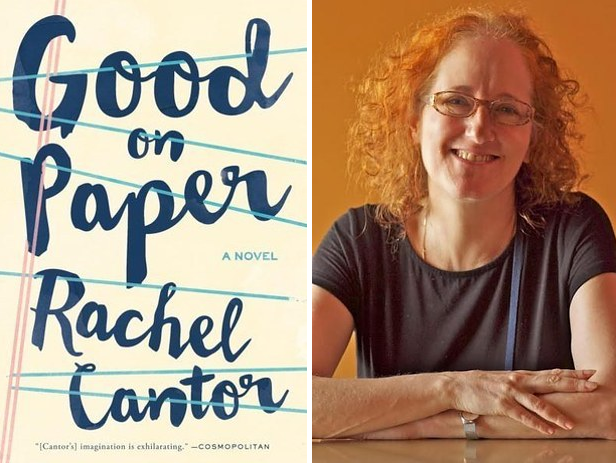
Translation, Intimacy, and Secret Histories: An Interview With Rachel Cantor

Rachel Cantor’s new novel Good on Paper (Melville House, 2016) is a uniquely literary comedy of manners. At the center of the book is Shira Greene, a translator working at a series of surreal temp jobs and caring for her young daughter. A Nobel Prize-winning poet, Romei, reaches out to her about translating his latest work, an offer that upends her life in a variety of ways, expected and otherwise. The novel that follows is intricate in its plotting, often moving, and deft in its handling of a series of characters whose histories with one another are frequently long and complicated. And in the translation-related dilemma that Shira finds herself, Cantor has found the comic in a literary nightmare, a quality that’s reminiscent of Martin Amis’s The Information. I talked with Cantor via a series of emails about the process of writing Good on Paper, its relationship to her previous novel, the metaphysical and dystopian A Highly Unlikely Scenario, and more.

Tobias Carroll: The plot of Good on Paper centers around the process of translation, and touches on the fact that certain phrases and examples of wordplay in one language may be fundamentally untranslatable. What first drew you to this as an idea that could result in a dramatically compelling situation?

Rachel Cantor: My protagonist, Shira Greene, had a life before Good on Paper. In fact, before Good on Paper she wrote a whole collection (unpublished) of (mostly published) stories about herself and her friends. We know, for example, from “Love Drugstore” (Kenyon Review, Summer 2011, Vol. XXXIII, No. 3), that Shira serves the New York branch of the Translators of Note as secretary, assistant to the King of Arms, and Bloomsday charwoman (sic); in the latter capacity, she organizes the pub crawl at which translators read their versions of Ulysses. And it’s not surprising that she’s a translator: she spent time in Italy as a young person, studied Dante et al. in grad school, and was basically a literary sort.

So Shira being a translator was a given. When I started to write the story that was to become the novel Good on Paper, I asked myself, What kind of adventure can a translator possibly get into that challenges everything she believes about herself, her past, and her future? What’s her transformative journey? I already knew quite a lot about Shira’s personality — her limitations as a person, her fears, what motivates her, and also her intelligence, her humor, her fierceness, her loyalty — so that’s where I started (with a character rather than an idea). Then, as I began writing the novel, it became evident that translation — the carrying over of meaning from one language to another — was something Shira would distrust, because she can’t trust intimacy, she doesn’t in her heart of hearts believe that meaningful connection is possible. There’s your conflict, if you’re a writer/person like me; there’s your drama!

TC: Good on Paper makes for a significant change of pace following the metaphysically-infused science fiction scenario of A Highly Unlikely Scenario. Did you set out to write something that would be a significant departure from its predecessor, or do you see the two books as exploring similar ideas?

…I don’t consider Good on Paper a strictly “realist” novel nor, unfortunately, do I find dystopic settings, such as the one in Scenario, to be fully “unreal”…

RC: I actually wrote Good on Paper before I wrote A Highly Unlikely Scenario, so I’ll reverse the question. In my mind, the two books have a lot in common — a concern with language, a fascination with things medieval, bookstore/library settings, a plot that’s activated by a probably wise older man who pushes himself into the story, necessitating radical change, and that hinges on the interpretation of obscure manuscripts, an outsider orphan protagonist with strong family ties, love interests, seven-year-old characters who may or may not steal the show. Both use humor to work with sometimes serious material; both are smart books that ask something of the reader; both are strongly concerned with the question of how to love and live a good life. As I’ve written elsewhere, I don’t consider Good on Paper a strictly “realist” novel nor, unfortunately, do I find dystopic settings, such as the one in Scenario, to be fully “unreal” as they often present what’s real under the surface of our world. But it’s also plainly true that the books are different. I wrote Scenario in part as a response to having spent 15 years writing Shira stories: I wanted to write outside the first person, from the perspective of a male, having as much fun as I could creating a world which, unlike New York, has never been seen.

TC: Almost all of the central characters in Good on Paper have relationships that began before the opening of the novel, especially Shira and Ahmad. How much of that backstory did you need to have figured out before you began writing?

RC: Good question! Because so many stories precede Good on Paper, these characters have a lot of backstory. Stories cover events in 1970 when Shira and Ahmad (and Ahmad’s secret crush Jonah) are fifteen-year-old expatriate high school students (and Shira and Ahmad, already best friends, are first estranged), and again when Shira turns 35, has just left her husband and is looking to reunite with people who “knew her when.” Jonah (spoiler alert) dies in front of them, hit by a car on Fourteenth Street, leading to the second estrangement between Shira and Ahmad. They are finally reconciled when Shira becomes pregnant and asks Ahmad to become her child’s godfather, which leads to the creation of their little family. Obviously, their relationship is volatile, which not surprisingly figures into the plot of Good on Paper. There are also short stories in which Shira, a mother now and living in Ahmad’s apartment, struggles romantically, another theme that plays out in Good on Paper. I often think of the stories as asking the big questions that the novel has to eventually answer. But getting the balance of backstory right was our largest editing challenge: we cut, we added, we cut and added again!

TC: Good on Paper is set in late 1999–what prompted that particular year for the setting? Did you need to go back and research or revisit assorted cultural or technological happenings?

RC: Again, the choice was less deliberate than you (generously) suppose. I started writing the book in 2001, some months before 9/11. I very much did not want this to be a “9/11 book,” nor did I want at the time to write about 9/11 New York. I didn’t want to move the setting closer to the present (though I could have: the book took me 10 years to write!) as that would have meant changing the ages of my characters, and I couldn’t do that: Shira was a flower child when young; Ahmad was a think tank economist who lectured Bush Sr. on the Soviet Union; Romei was a WWII refugee. These facts could not change. So as with Shira’s vocation, I instead found opportunity in what was given: I backtracked a year or two, setting the book in late 1999, with all its chatter about apocalypse. This setting pleased me both for its comedic potential and its quiet echoes of the Christian Day of Judgment and the Jewish End of Days, which come up in Good on Paper. Shira’s clunky slow desktop and non-smart phone and fax machine were all-too-familiar to me from that time, and some of the cultural references naturally arose as I was writing; others, like the life and times of Tinky Winky, I had to research!

TC: Did you have a particular model in mind for Romei, the Nobel Prize-winning poet whose work is at the center of the novel?

RC: Not at all! Everyone in the book, and everything I write, is absolutely and in all ways fictional. Does he remind you of someone?

TC: Your biography mentions that you grew up in both Rome and Connecticut, both locations that loom large in Good on Paper. Did you find yourself revisiting your own memories as you were working on the book?

RC: I’ve been working on Shira stories for at least 15 years, so I’m not sure I know the difference anymore between her Rome memories and mine! She’s older than I am, but to a large extent, she sees the city through my eyes, as did her friends in the stories I wrote about them: she and her friends visit places I often visited (the Janiculum, the Roman Forum, the flea market, Piazza Santa Maria in Trastevere, the English-language movie theater). But little of this is evident in Good on Paper, unless it’s under the surface: the book is set entirely in the U.S. Any reference we may have to Rome is probably via Romei, whom we know from the beginning of the novel to be an unreliable narrator. As for Connecticut, I’m from the city of Hartford whereas the book refers to the bedroom communities of southern Connecticut; for Shira, these represent the suburbs to which Shira never wants to return (and in which I’ve never lived, properly speaking). The distinction may seem slight to someone not from the Nutmeg State, but these really are two entirely different things! Southern Connecticut, for one thing, roots for the Yankees, which is something no self-respecting Hartfordian (Hartfordite?) would ever do. Still, Shira and I are resolutely City People: her fierce wish to remain in her urban home, come what may, is also my own. Just as we were both shaped by our Roman expatriate childhoods, albeit in different ways.

TC: Are there any translations that strike you as particularly memorable–or particularly wrongheaded, in terms of fundamentally altering the original work?

RC: I hope this question means you think I know something about translation, or read any languages well enough to have an (informed) opinion about specific instances thereof! I don’t, in fact. I admire translators passionately because I can’t imagine being as intimate with another language as I am with English. It boggles my mind! Their understanding of tone, nuance, connotation, word echoes, word play, sound, rhythm, and so on has to be so fluent and so precise — I honestly don’t know how they do it. In Good on Paper, Shira asks some of the questions I imagine translators ask, and presents some of their (impossible!) choices: how to translate Dante’s Divine Comedy, for example, with its “sweet style,” so called, while still retaining the poem’s unrelenting terza rima and the echoing meaning of its repeating words? Shira is more interested in precision and word echoes than she is in lovely sound, but I don’t know that I agree with her! She has a professional’s right to passionately held opinions; I much less so!

TC: You mentioned that you had been working on Good on Paper for several years–what caused it to finally click for you?

RC: I wish I could say there was an aha moment! Getting it right was actually the result of endless rewrites. The problem was twofold. First, this was my first novel and I had no idea what I was doing. When I started, I thought I was writing a short story! So I didn’t have a grand structural plan or even a notion that I was “ready” to do the crazy work of novel writing: it just kind of happened, expanding first beyond the confines of a short story, then, to my initial regret, becoming too large even for a novella. In my newbie-ness, I made lots of narrative mistakes, to put it kindly. Second, I was way too ambitious! Initial drafts (more than 600 pages long!) were chock-full of themes and (ugh!) symbols and backstory and competing action and very much more discussion of Dante and literary theory and everything else that struck me as remotely relevant (everything is connected!)! Eventually, revisions that clicked tended to streamline and focus the book — characters cut, scenes dropped to the cutting-room floor (or in some cases turned into additional short stories), subplots abandoned.

TC: When writing a friendship that takes as many twists and turns as Shira and Ahmad’s, how do you balance that quality with making their disputes and positions understandable relative to the reader, if not one another?

RC: What an interesting question! First of all, let me say that I hate it when Shira and Ahmad fight! The scenes in which they fight were for me easily the hardest to write. So much so that earlier versions of the book allowed a third party — Ahmad’s live-in boyfriend — to act as a buffer! He ran interference between them, and his sweet presence tempered everyone’s excesses. It was a very wise reader, Robin Black, who challenged me to let go of Roger, much as I loved him, so the book’s conflicts could develop more naturally. But to answer your question: I believe I know these characters quite well, so, again, I know what they hope for and, more importantly, what they fear. Their actions are emotionally logical to me, and I feel for them: I get why Shira does what she does, why Ahmad does what he does; I know their fault lines, individually and as friends. I hope this allows me to write their actions and words (and, in the case of Shira, thoughts and point of view) in a balanced way.

TC: Do you plan to revisit Shira and her circle of friends and family again in the future?

RC: No chance! I do hope to see the Shira stories in a collection some day (I have the best possible title: Picnic After the Flood — what do you think?), but otherwise I’ll move on. Though I am a little curious about what seven-year-old Andi is up to…(if all’s gone well, and I hope it has, she’s graduated college by now and is preparing for a wonderful life in New York publishing!).

The Perfect Notepads for Traveling Writers

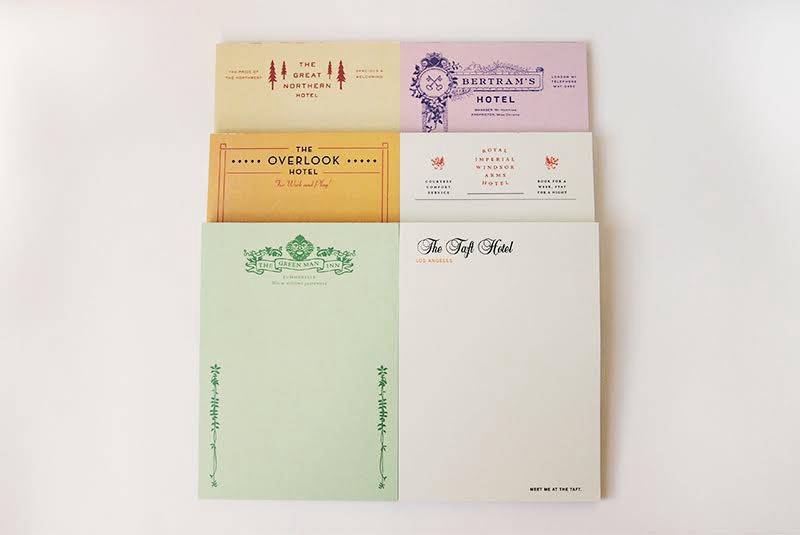
These fictional hotel notepads from Herb Lester is the perfect gift for your traveling writer friend. The notepads come in a set of six, and feature the following hotels:

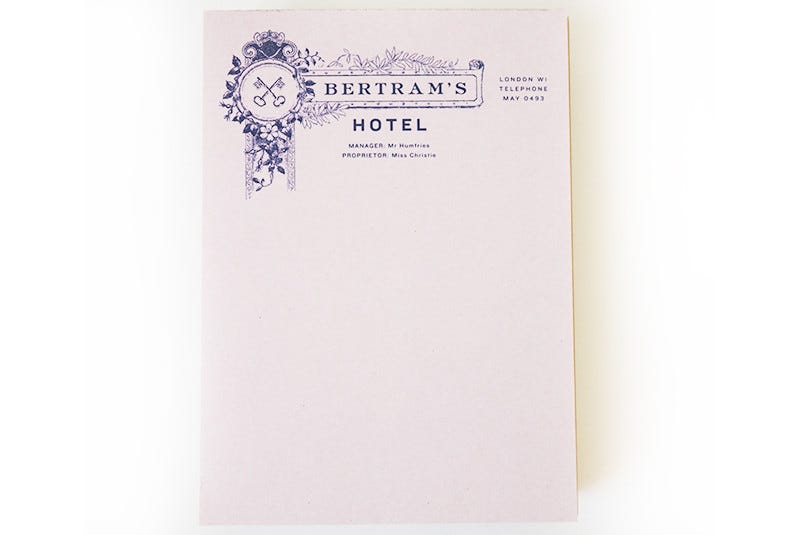
Bertram’s Hotel (At Bertram’s Hotel, Agatha Christie)

bertram fictional hotel

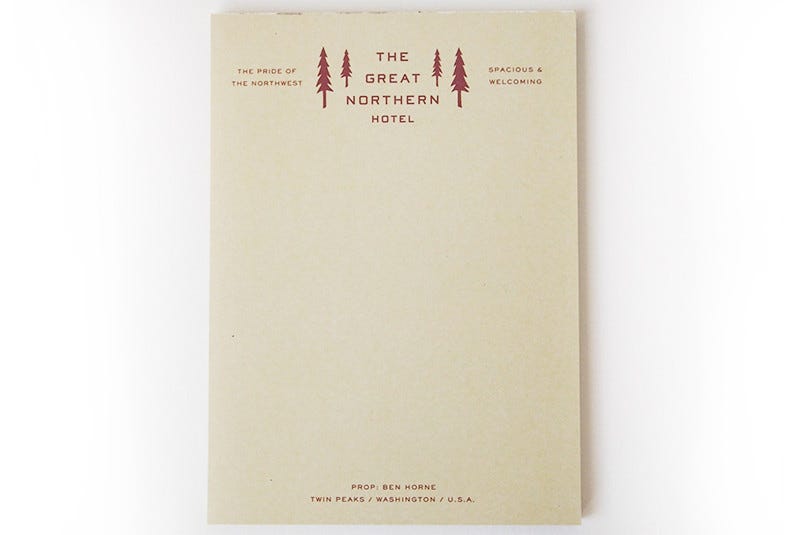
The Great Northern Hotel (Twin Peaks)

Northern fictional hotel

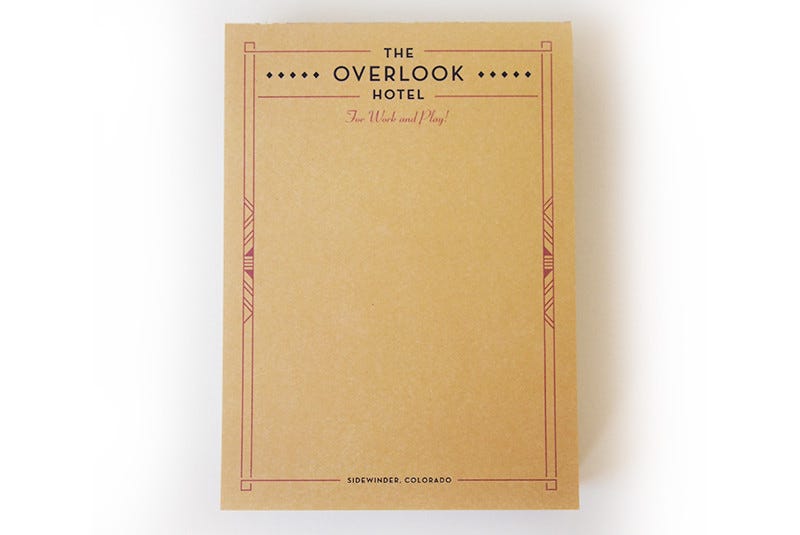
The Overlook Hotel (The Shining)

overlook fictional hotel

Royal Imperial Windsor Arms Hotel (National Lampoon’s European Vacation)

windsor fictional hotel

The Green Man Inn (The Wicker Man)

green man fictional hotel

The Taft Hotel (The Graduate)

taft fictional hotel

To quote Herb Lester, these notepads inspire you to: “Warm your toes (whether you want to or not) at The Green Man Inn, catch up on work at The Overlook, or make friends at The Taft. Tend to a flesh wound at the Royal Imperial Windsor Arms, have sweet dreams at The Great Northern and enjoy the gentle art of murder at Bertram’s Hotel.”

Herb Lester is a company that publishes cleverly designed, well edited travel guides for places such as New York, Tokyo, Portland and (naturally) Outer Space. Their products can be found on their website or at MoMa and the New York Public Library, among other places.

Is Amazon Opening Hundreds of New Bookstores?

Does Amazon have a major brick-and-mortar bookstore expansion in the works? That’s the latest news from The Wall Street Journal and The New York Times, which means either the death of the book industry or its salvation, depending on which think-piece you’re inclined to read/write over the next, say, 24 hours, until this whole thing cools off, and we realize we know almost nothing about the retail giant’s true intentions.

In the meantime, here’s what we do know:

Yesterday, the WSJ reported that the chief executive of the mall operator General Growth Properties Inc., Sandeep Mathrani, was answering questions on an investor call when he casually mentioned that Amazon was planning to open somewhere in the area of 400 new bookstores. 4–0–0. That’s 399 more than Amazon currently operates. (Its first, Amazon Books, in University Village, Seattle, opened last year.)

Okay, we know what you’re thinking about the WSJ’s source. It’s not exactly Bezos. And look, we’re with you, if we believed everything a mall president ever told us, we’d all be walking around in polarized shades from the Sunglass Hut and mouths full of Cinnabon, but the truth is, this Mathrani character might very well have the straight dope. After all, if Amazon were looking to make a brick-and-mortar push, wouldn’t the malls have to be among the first to know? Location, location, location…is a thing retail people used to say, before Amazon crushed them all.

Luckily, we’ve also got The Gray Lady on the case. Following the WSJ story, Nick Wingfield, the NYT man-in-the-know on all things tech & moneyed, contacted “a person briefed on the matter who spoke on the condition of anonymity” and reported that Amazon does plan to expand its bookstore business, but the plans are more “modest” than the 400 number being thrown around on investor calls. (Seriously, though, have you ever listened to one of those calls? They’re not always the most reliable sources of purely accurate information. A legal doctrine had to be invented — puffery — so that businesses could push their snake oil on these things. Not that we’re saying this Amazon stuff is snake oil. It sounds like bona fide oil, in fact. Texas Tea.)

And that’s where Electric Lit comes in. Following up on the WSJNYT reporting, we thought, if General Growth Properties, Inc. is giving its investors the skinny, certainly Amazon is doing the same. So we perused the company’s latest financial reports and guess what we found? Basically, nothing of interest. Except that Amazon has some impressive wind farm operations in Virginia and North Carolina. Were you aware of that? There’s your real think piece, aspiring essayists: “Does Amazon Own The Wind?”

For now, that’s about all there is.

For God’s sake, go buy a book from your local independent bookseller.

Midweek Links: Literary Links from Around the Web (February 3rd)

Looking for some interesting reading to get you through the week? Here are some literary links from around the web to check out:

A week with a new short story from George Saunders is a good week

Does historical fiction differ from serious literature?

A look at parallels between All the Light We Cannot See by Anthony Doerr and City of Blades by Robert Jackson

How Octavia E. Butler predicted her own success

Editor Chris Jackson is building a black literary movement

Did you know Marvel comics had a supervillain named Trump?

A look at the best small press books from last month

And a look at some buzz-worthy books this month

Do you need to be a veteran to write about war?

Lastly, Electric Literature’s intern applications are due this week!