Robert Bolaño’s Epic 2666 Is Now a Five-Hour Play

by Melissa Ragsdale

In a surprising move, Chilean author Robert Bolaño’s mind-bending masterpiece 2666 has been adapted for the stage and will be premiering in Chicago at the Goodman Theater this February. If that’s not enough to ignite your curiosity, the project is being funded entirely by a fund actor Roy Cockrum created after winning $153 million dollars from Powerball.

At a whopping 898 pages, 2666 is a behemoth of a novel, encasing so many dimensions that just summarizing it is a challenge, let alone adapting it into a full play. Any lover of long, difficult literature will empathize with the play’s director, Robert Falls, who became “weirdly obsessed” with the novel years ago. “The process of staging it is part of trying to figure out what it is I personally respond to,” he told The New York Times. “I still don’t quite know.”

Published posthumously in 2004 and then translated to English in 2008, the novel is a resounding exploration of the 20th century, with a narrative that spans nearly 80 years, dipping in and out of internal stories. Centered around the city Santa Teresa, the plot includes academics searching for a reclusive German author, a New York reporter on his first Mexican assignment, and the unsolved murders of 300 women in Juarez.

The play adaptation is (as one would expect) epically long, spanning five hours total, with five distinct parts and three intermissions. A cast of 15 actors play nearly 80 roles. The production also features video projections and even a full-fledged movie, projected on a screen that lowers over the entire stage. Director and playwright Seth Bockley (who’s partnered on the project with Falls) has compared the play to “binge-watching” Bolaño.

“The challenge we took on wasn’t to be confusing and experimental and wild,” said Bockley, “but to ask, how do we do what Bolaño did, only in the time-based, 3-D, actor-driven medium of theater?”

Falls and Bockley narrowed the content down to its essential characters and plot lines, though they do occasionally foray into the stories within stories that make 2666 such an intense read. Each part was designed with its own distinct style, meant to compare to the literary genres Bolaño drew from: fairy tale, hard-boiled crime novel, academic satire, lyrical short story, and “Don Quixote”-style picaresque.

An ambitious project for sure, fans of Bolaño, literature, and theatre have plenty of reasons to be excited about this new way to experience 2666. For me, the project has awakened a hopeful question: if Falls and Bockley can successfully adapt 2666, what can’t we adapt? Infinite Jest? Gravity’s Rainbow? Anything seems to be possible.

A Cabinet of Curiosities: The Unfinished World by Amber Sparks

Amber Sparks’ work in her collection, The Unfinished World, is an imaginative exploration of what-ifs. What if Lancelot was lost in a jungle? What if we could time travel, but we did more harm than good? What if a couple’s romance was linked in some way to a cabinet of curiosities? What if a builder of Leichenhausen, German waiting mortuaries, was trying in some way to bring back his dead wife? Sparks’ work brings together ideas of time travel and dreams with historical oddities: her stories look into the dinosaur “bone wars,” historical atrocities and collections of every kind. The Unfinished World is slightly unbalanced, but offers more than it leaves the reader desiring. What Sparks presents — especially in the first stories of the collection — is a flair for the shorter short story. Sparks understands timing, juxtaposition, and how to create original characters within the confines of a short work.

The Unfinished World excels when it’s about the people behind the scenes, the ones who keep things moving. The first story of the collection is one of these, and one of Sparks’ strongest. In “The Janitor in Space,” a janitor at the space station comes to terms with her criminal past.

The janitor knows that being good is not the same as being clean. She, for instance, is very clean, but she is not very good. She is still traveling on her way toward that. She told her pastor that she was coming up here to be closer to God, but really she just wanted to get away from Earth She was tired of waiting to be recognized, waiting for someone to hear her name and turn, eyes too big, full of questions and dangerous curiosity.

Sparks’ character, who “doesn’t know about metaphors,” is a blue-collar worker in an ethereal world, a shadow who doesn’t want to be seen by the astronauts she’s supporting. But it’s her incredible pain, which comes to light as she’s scrubbing the surfaces of the capsule, that makes “Janitor” such a compelling story. The janitor, as all of Sparks’ characters, “knows that even the smallest human vessel has boundless storage for sorrow.”

Sparks’ short works get to the heart of what motivates character; in “The Cemetery for Lost Faces,” brother and sister taxidermists remake animals into death masks of their parents. “Clarence and Louise are trapping death in amber,” the author says. “They are learning how to make time stop.” “Lost Faces” is also a prime example of Sparks’ pithy observations of character. Tessa, Louise’s romantic rival, “is one of those people who substitute scarves for personality.” While Clarence and Louise’s opposite personalities mean they are suited to different aspects of the taxidermy business, it also means they grieve their parents’ death differently, trying with each animal they create beauty and preserve their bodies in beautiful repose. Sparks writes a different kind of seeker in “Lancelot in the Jungle,” but he is written with the same deep yearning that drives the taxidermist siblings. “There are only the seekers,” the author writes, “and the lost places they drive toward, always just out of reach.”

Sparks’ characters are often ironically close to the thing that hurts them most. In “For These Humans Who Cannot Fly,” a builder of waiting mortuaries obsesses over the beauty of the buildings, when it is his lost wife he mourns. His constant proximity to death only drives home the idea that “[N]o one really comes back from the dead. Even in [his] beautiful, carefully built Leichenhausen. Even when the sun pours from the Kingdom of Heaven through St. Michael’s stained glass robes and shines on the faces of the dead like rubies, like wine, like blood.” His wife is gone, and each beautiful new mortuary underscores his pain.

Another of the brilliant service worker stories is Sparks’ “The Men and Women Like Him,” which details the lives of the people who have to clean up history after the creation of time machines. Illegal time machines are created by would-be agents of time, and people go back to try to stop the big tragedies of history. Those workers who have to right the wrongs are subject to the daily influence of history’s worst events, over and over again. One of the workers “wonders if it would really be so bad, letting people flood into history like a tidal wave, and sweep away the worst of it.” Yet every day they punch the clock, shake off the misery, and go on. Sparks’ ability to celebrate the blue-collar aspects of fantastic and futuristic worlds makes “The Men and Women Like Him” a little reminiscent of stories like Bradbury’s “A Sound of Thunder.” Sparks proves that often what is most compelling in fantasy situations is their normalcy; we can’t out-invent our baser desires, even in fiction.

“Ancient dreams cling like crumbs to the mouths of the sleepers,” Sparks writes in her final story, “The Sleepers.” Though a longer work — almost a novella, not quite a short story — the title story is Sparks’ only misstep. Too much happens in too short a space, or perhaps it is that the author never really finds a foothold because the story isn’t long enough. “The Unfinished World” doesn’t have the same pith as the rest of this strong collection. When Sparks works short, she works best. There are many remarkable stories in The Unfinished World, and Sparks’ career as a short story writer is guaranteed to continue, if this collection is any indication of her talent. The Unfinished World is uneven, yet a delight. It shows how often we obsess over the things we fear; it also makes us consider the people who make it possible for us to live our fabulous, fantastic lives.

Eka Kurniawan on Indonesia and Magical Realism

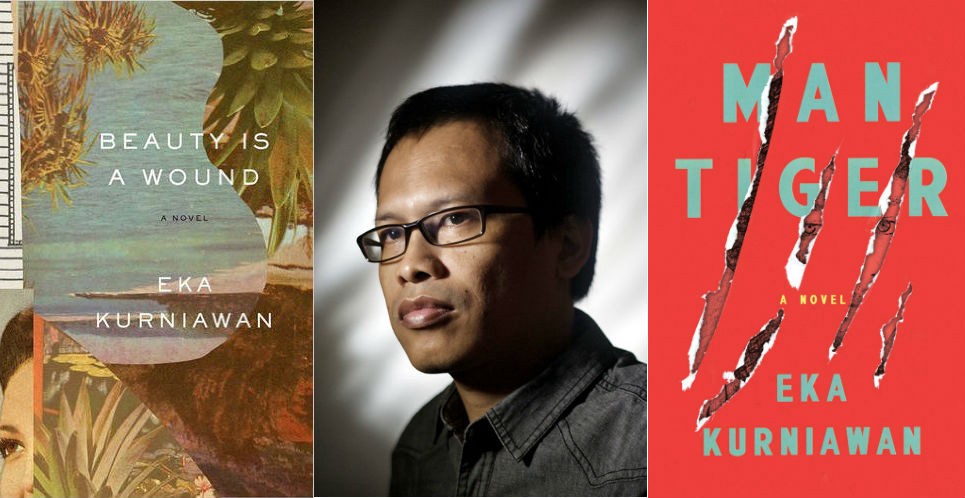
Eka Kurniawan’s debut novel Beauty is a Wound (New Directions, 2015) begins with Dewi Ayu, a stunning Dutch-Indonesian brothel madam, walking out of her grave twenty-one years after her demise. The novel proceeds with a series of “and thens” and macabre twists that rival those concocted by Scheherazade in One Thousand and One Nights. Up to the book’s very end, where Dewi Ayu’s dysfunctional descendants tie up the family’s saga, Kurniawan dazzles with his looping plots, biting humor, and skewering take on Indonesia’s history.

A literary force at home, Kurniawan’s American debut came with Annie Tucker’s translation, which holds intact the song of Kurniawan’s prose, as well as that of the Indonesian language. His reception in the U.S. included, amongst other praise, a spot of the New York Times Notable Books of 2015 list. Man Tiger (Verso) was also published in English in 2015 and his third novel will be published by New Directions in 2017.

In our interview, Kurniawan discusses epic creation, the nature of the“magical realism” label, and his next novel, O, out in Indonesia this year.

J.R. Ramakrishnan: Beauty is a Wound was originally published in 2002 and translated into English in 2015. When did you begin writing it? Would you talk a little bit about how you conceived the idea and its epic scope? How, for example, did Dewi Ayu emerge in your mind?

Eka Kurniawan: I had been thinking of writing a novel since 1999 after I took my degree in philosophy from Gajah Mada University. Previously, I struggled to write a novel and all attempts repeatedly ended in failure. Thus, I tested myself by writing a short(er) fiction. It was a key solution for my problem. For a long time, I desired to learn the art of writing; to find the pulse, flow, and architecture of story.

Those short stories were published in the Sunday papers and magazines. Later they were compiled and printed in my first collection, Corat-coret di Toilet (Graffiti in the Toilet). The publication granted me the confidence to write the novel’s first sentence in 2000.

Beauty Is a Wound exists as plenty of short stories that attach to each other, constructing an epic novel. Dewi Ayu is only one part of the hefty picture. Even in the beginning, she did not appear. When I needed a linkage to unite those stories, Dewi Ayu and her way of life would then emerge.

JRR: The narrative of Beauty is a Wound is intensely tangential. You move us around many plots — past, present, future, and some grounded in the flesh and others in supernatural. Would you say that this is a result of oral storytelling influences in Indonesia? Tell me a little bit about your choice of using multiple plots in Beauty. It seems that your second novel, Man Tiger, is more linear in this respect.

EK: On one measure, it’s a part of oral tradition. I enjoy watching puppet shows and listening to fairytales (narrated by a storyteller from my village and on the radio). On other measure, like I said before, I embarked on writing a massive novel from many stories that connected to each other. It is different with Man Tiger. That novel was completed with one single purpose — to form an intact story. Yet, I still adopted my previous writing style. All forms of stories are inevitably an influential and vigorous mix of content.

JRR: Readers feel the need to place new and foreign work in the context of what they are familiar with in terms of literature. In the case of Beauty is a Wound, the supernatural draws parallels to and is evidence of the influence of Gabriel García Márquez and William Faulkner. But “magical realism” is very much part of Indonesian folklore, and maybe everyday life too. What do you think of this concept of “magical realism” as a description of your work, and as a literary concept in general?

Classifying it as “magic realism” would be easier for people to figure it out.

EK: I don’t mind that people associate my writing with Márquez’ or Faulkner’s. Undoubtedly, they are my favorite writers. I read their books (not just theirs, but Gogol’s, Melville’s, and Cervantes’), and I would able to look around, to have a bit of perception that people I know and history I am familiar with could be narrated in different ways. The society tends to simplify it as “magical realism,” just because of how it shows up, both fantastically and realistically. We rarely identify Kafka as a magical realist writer, despite the fact there are many fantastic elements in his works. And why are the comic characters from DC and Marvel not called magical realism, even though they have plenty of fantastic elements? The magic aspects in my novel are influenced by horror and silat (Indonesian martial art) novels of the 1970s. Beauty Is a Wound is quite tricky, as it’s difficult to put it in one genre. Classifying it as “magic realism” would be easier for people to figure it out.

JRR: In your New York Times “Lives” essay “A Slacker of Jakarta”, you write that your father was an imam. Would you reflect on how different literary, cultural and religious influences have come into your work?

I read The Prophet’s stories but I also read Famous Five, even porn.

EK: Like most people, I am an enigmatic person. I was raised in a religious family, but at the same time, my parents sent me to government schools, which have a quite secular curriculum. They introduced me to pop culture. I read The Prophet’s stories but I also read Famous Five, even porn. My parents asked me to go to mosque, but they took me to movies to watch Hollywood films, too. At home, my father was discussing theology (he self-taught Arabic) to me while I studied Western philosophy in university. This ambiguity would ease me to mock myself. To ridicule my morals. To insult my free thinking.

JRR: What does your family think of your work and your books?

EK: I don’t know. My father passed away many years ago but after Beauty Is a Wound and Man Tiger were published in Indonesia. I think he didn’t read it, albeit the books were at home. His health was declining. He never spoke about it, nor asked. But he was happy I became a writer and delighted when my books were published. Knowing well that a writer’s life was not an easy one, he used to call and ask, “Do you have some money?” The question was not to ask, but to give. If I didn’t have any, he would send some. He encouraged me to live my own path. He gave me support all the time. Even when I was a teen, he borrowed books from the library, bought them when he was out of town, and presented me with a typewriter so I would learn how to write. My mother does not read novels, but Al-Quran. Like my father was, she is fond of me being a writer, although she is not interested in reading my work.

JRR: In America, people are always obsessed with the idea of the “Great American Novel.” Beauty is a Wound seems to be very much a novel of Indonesia. What was the reception to this novel in Indonesia, particularly the critical and satirical elements, when it was published?

EK: Here the feedback is mainly divided between two big groups. The first tends to see it as an unfavorable novel. They take it as a failed literary piece because of its accuracy in history and genre. The other group appreciate and acknowledge it highly. The novel’s form and structure would sustain Indonesian history to be better understood by its people.

JRR: From your blog, it seems that you read an immense amount of global contemporary literature. Do you read these works in English or in translation? What are you reading right now?

EK: Yes, in English translation. I have an urge to learn one or two new languages in the future, and to read books in those languages. I would like to see if I could challenge myself. Like other writers, I read again and found a treasure in old works of Nikolai Leskov, Isaac Babel, Dostoyevsky. I love them, those Russians. Well, some American too. I just finished reading Charles Bukowski. I like to read new and interesting books by emerging writers too. I enjoy reading highly, and can’t help but continue reading as my gratifying pleasure.

JRR: Have you read Man Tiger and Beauty is a Wound in English? If so, what has that experience been like as a reader, as well as the person who wrote them in the another language?

There are parts of us that are disturbing in there. I prefer to leave my book alone.

EK: Certainly, but not as a writer, but an editor. I read the draft to check if the translation is correct and accurate to its original meaning. My translator and I discussed several technical issues. After it was done and published, I didn’t read it again. It is too strenuous to return back to my novel and I think this circumstance is relevant to all the writers. The writer wouldn’t be able to turn themselves into the readers of their own book. There are parts of us that are disturbing in there. I prefer to leave my book alone.

JRR: You have the best titles. Will you translate for the enjoyment of readers who don’t read Indonesian, the name of your short story collection, Perempuan Patah Hati yang Kembali Menemukan Cinta Melalui Mimpi, and also your novel, Seperti Dendam, Rindu Harus Dibayar Tuntas? Do you think they have same depth of meaning in English?

EK: My short story collection’s title could be translated literally as: “A Heartbroken Woman Who Found Love Again Through A Dream.” If you are familiar with Arabian Nights, particularly the Richard Burton translation, you will notice that the title is a tribute to this story: A Ruined Man Who Became Rich Again Through A Dream (Borges rewrote this piece as “The Tale of Two Dreamers”). My third novel is a bit unsettling in translation, as a result of slight differences in the words’ meaning and grammar. But, its sketchy interpretation is “Like A Vengeance, Desire Has to be Fulfilled.” It will be published in English in 2017 by New Directions, but I haven’t settled on the official title yet.

JRR: Why so many toilets? One of the pivotal scenes of the latter part of Beauty is a Wound happens in a school toilet. I grew up in Malaysia and I remember this terrible fear of ghosts and demons in particular toilets at school, for example. So this stuck with me. You reference the toilet in the your first collection’s title. I don’t know the origin of why toilets in Asia are so scary and I am curious to hear your thoughts on this and why they feature in your work.

EK: Well, actually I always feel the toilet is a scary place. Here in Indonesia (maybe in Malaysia too), the toilet usually is in the back part of the house, sometimes separated from the main building. If we want to go to the toilet, we say “ke belakang” (literally: “to the back part”). I think it is the location that makes the toilet so spooky.

JRR: You have a new novel out in 2016, O, will you give us a preview of what it’s about?

EK: Largely, it’s a fable, like Animal Farm, or The Wind in the Willows. It’s a fable in a very traditional way: the talking animals. But indeed, it’s not entirely about that.

Classic Novels by James Joyce and Virginia Woolf Contain Mathematical Mulitfractal Structures

Academics at the Institute of Nuclear Physics in Poland put over 100 famous novels through a detailed statistical analysis and found that an “overwhelming” number of the books had a fractal structure. A fractal is a never-ending pattern that is self-similar across different scales. To determine whether the books had fractal structures, the academics looked at the variation of sentence lengths, finding that each sentence, or fragment, had a structure that resembled the whole of the book.

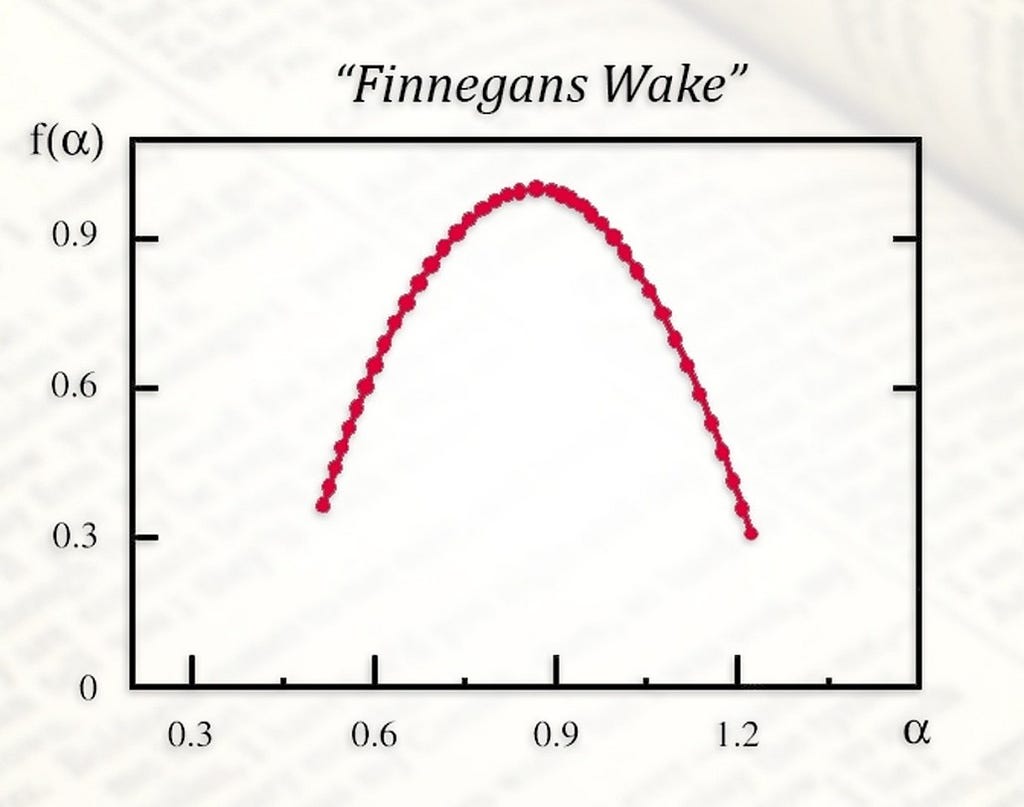
The paper based on the study, recently published in Information Sciences, showed that certain works were more complex than others, specifically the books written in stream-of-consciousness. These could be compared to multi-fractals, according the scientists, who explained that Finnegans Wake by James Joyce had the most complex structure of all. Professor Professor Stanisław Drożdż said: “The results of our analysis of [Finnegans Wake] are virtually indistinguishable from ideal, purely mathematical multifractals.”

finnegans wake

Image via IFJ PAN.
The horizontal axis represents the degree of singularity, while the vertical axis shows the spectrum of singularity.

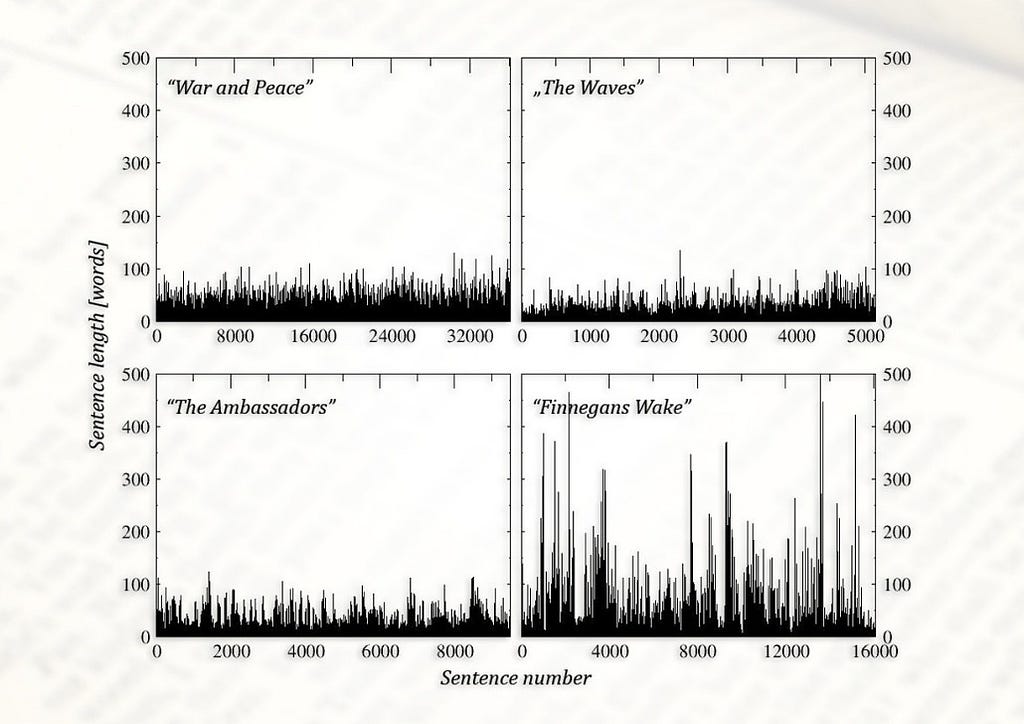
graph fractals in lit

Image via IJF PAN.
Sequences of sentence lengths (as measured by number of words) in four books, representative of various degrees of cascading character.

Other books that had characteristics similar to multifractals include A Heartbreaking Work of Staggering Genius by Dave Eggers, Hopscotch by Julio Cortazar, The USA trilogy by John Dos Passos, The Waves by Virginia Woolf, 2666 by Roberto Bolaño and Joyce’s Ulysses. The paper made sure to note that a literary text will never have the perfect fractality of the world of mathematics, where fractals can be magnified to the infinite, because of the finite nature of a work of literature. There were some surprising works in the stream-of-consciousness genre that did not have fractal characteristics, such as Marcel Proust’s À la recherche du temps perdu and Ayn Rand’s Atlas Shrugged. Drożdż suggested that the scientists’ work may one day help assign books to genres in a “more objective” way.

Professor Drożdż also noted that their findings could mean stream-of-consciousness writers uncovered fractals in nature before scientists, explaining: “Evidently, they had a kind of intuition, as it happens to great artists, that such a narrative mode best reflects ‘how nature works’ and they properly encoded this into their texts. Nature evolves through cascades and thus arranges fractally, and imprints of this we find in the sentence-length variability.”

Straight White Women Run Publishing According to New Survey

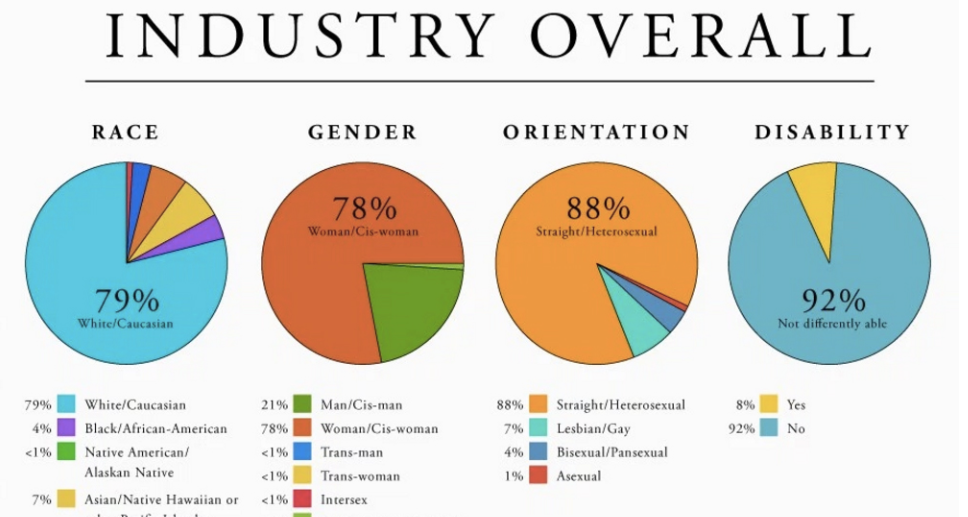
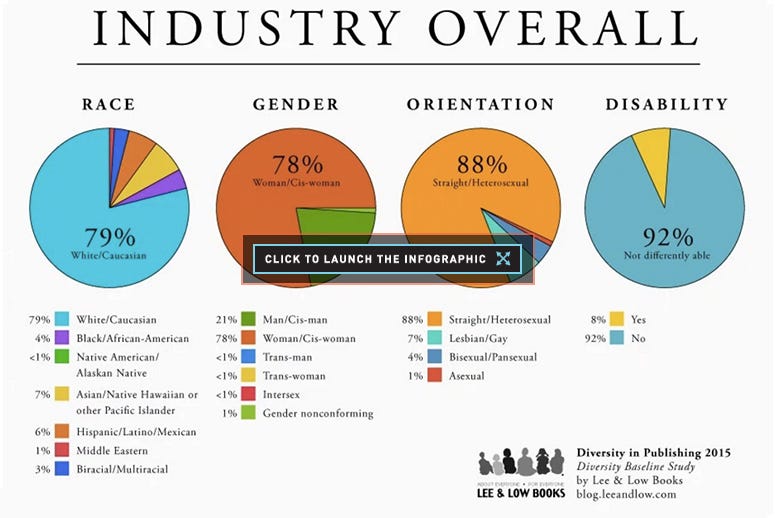
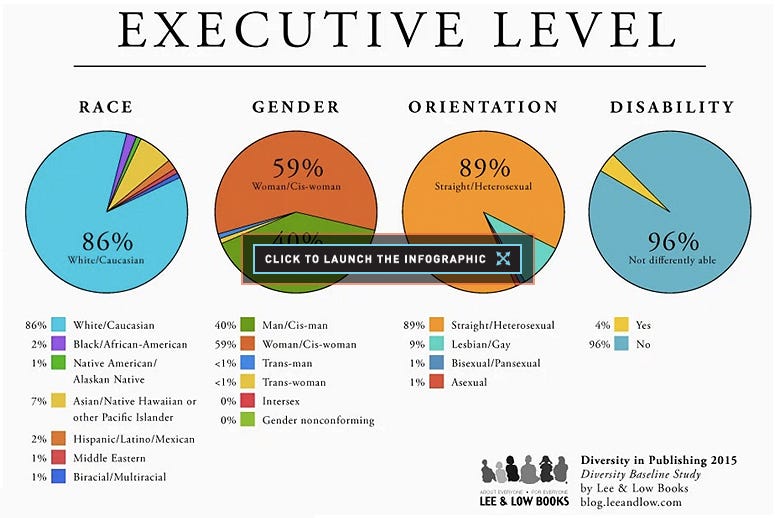
Last year, Booker-winning author Marlon James caused a stir in the literary world when he suggested that writers of color have to pander to white women to get published. Although many other writers of color publicly agreed with James, he was the target of several rebuttals. However, a new survey of the publishing industry by Lee & Low shows James might have been right all along. The survey looked at 70 publishers in the US and Canada, including three of the Big 5 (Hachette, Penguin Random House, and Macmillain) as well as many smaller publishers. The survey revealed that the publishing industry is overall 79% white, 78% women, and 88% straight. Even at the executive level, straight white women accounted for the majority of positions and at the editorial level a huge 84% of desks belong to white women.

Inside The Business of Organics

Via: TakePart.com

Inside The Business of Organics

Via: TakePart.com

The overwhelming whiteness of publishing has been a major subject in the literary world with campaigns such as #WeNeedDiverseBooks seeing to highlight the lack of books by and about people of color.

Hannah Ehrlich at Lee & Low Books noted that “just because you are a woman, that doesn’t make you an expert in the marginalization that people of color face or people with disabilities face. Do not assume that because women are successful or are in positions of power that that means that that success or power will automatically be offered out or shared with other marginalized groups.”

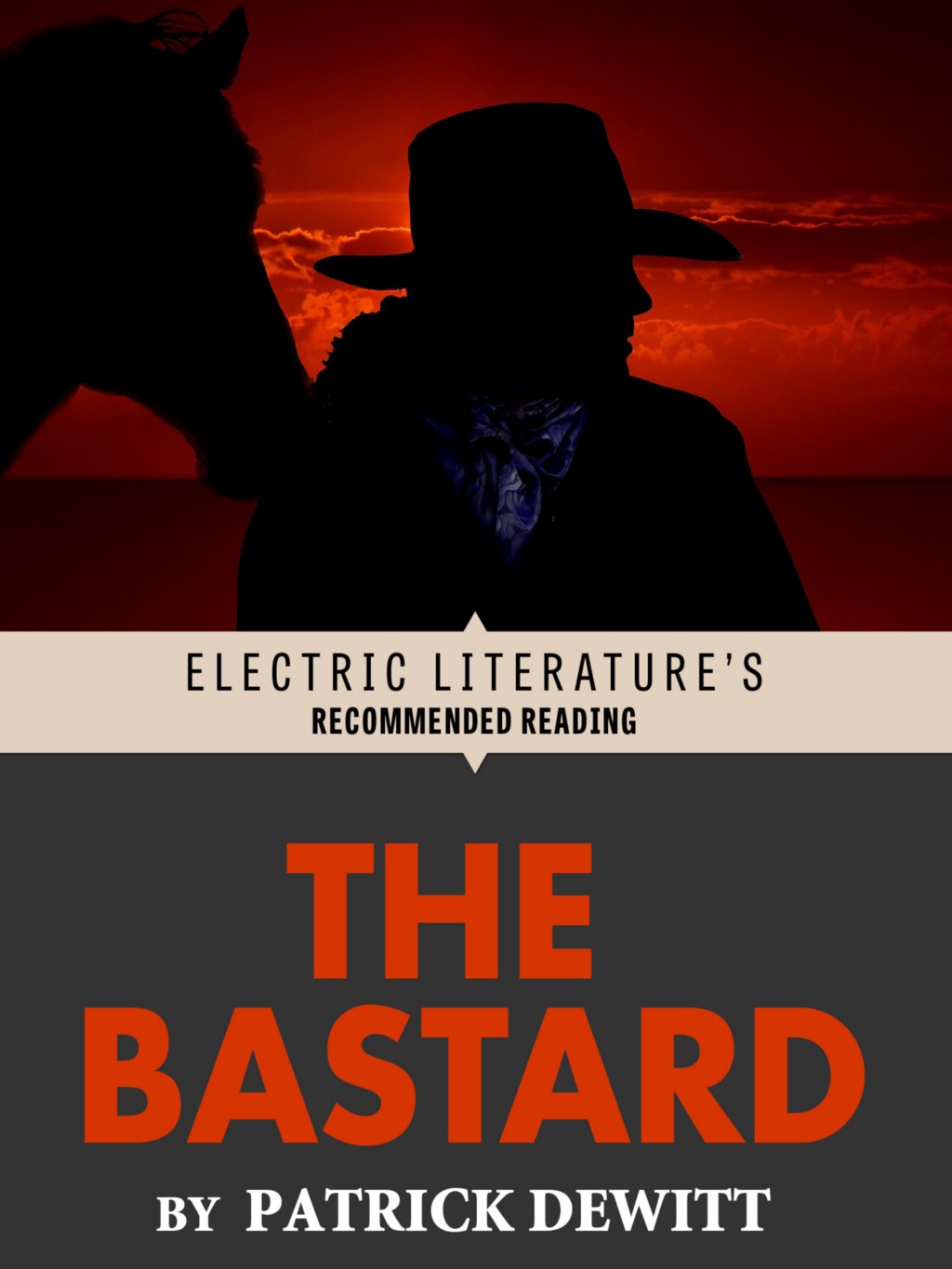
The Bastard

by Patrick DeWitt, Recommended by Electric Literature

The Bastard approached the farmhouse on foot, a leather satchel in one hand and a long stick of pine in the other. The sun had dropped behind the mountains, and the heavy evening cold came hurrying into the valley. He watched the smoke spinning from the stone chimney and felt a passionate loathing for every living thing; he spit a slug of mucous over his shoulder and muttered the third-rudest word he knew. Shaking this feeling away, or secreting it, he stepped up the walk to the front door where he was met by the farmer, red-nosed Wilson, who spoke before the Bastard could open his mouth: “There’s no work for you here, not even half a day.” This was just the opposite of what the Bastard had hoped to hear, and it took no small effort to conceal his disappointment, but his recovery was swift, and without a moment wasted he launched into his performance.

“You misunderstand me, sir. I am merely passing by and was hopeful for a bed of hay to lie down upon. I have my own food to eat, and shall require nothing from your household other than a splash of water in the morning, but then I will be on my way, and you will hear nothing of me for the rest of your days. Of course, I will be sure and make comments to all those I pass on my way out of town regarding the good farmer Wilson’s hospitality, his generosity, his sympathy for those working to make their way in life. Mark my words, they will learn all about it!”

Wilson was caught off guard by the stranger’s speech, and he shifted back and forth in his boots, scratching his eye — the actual eyeball, which itched devilishly and was forever bloodshot. “How’d you know my name?” he asked.

The Bastard blinked in disbelief. “Your name, sir? But doesn’t everyone in this area know your name? Are you not well-thought-of hereabouts? Is it not understood that you are the most hard-working farmer, the most clever and able?” He threw back his head and laughed. “How did I know his name, he asks me! That’s modesty for you.”

At this, the tension gripping the farmer’s body uncoiled itself, and all his mistrust fell away. Now he stood in his doorway, vulnerable as a calf, and the Bastard knew the bed of hay and jug of water were his for the taking. Only he had no plans to settle for this humble victory, and when the farmer acquiesced, pointing his crooked thumb at the barn, the Bastard did not simply bow and step away, but pretended to stumble, and in doing so gave his satchel a tap with the toe of his boot. This brought forth the clink of a bottle, muffled but unmistakable, and he watched the farmer’s expression with all of his concentration. When Wilson shuddered and twitched, the Bastard knew he had the man in his clutches. Look at him, he thought. He wants a drink so badly his pores are yawning open. He imagined each of Wilson’s pores as a tiny mouth, each with a miniature pink tongue sticking greedily out in hopes of catching a splash of whatever the bottle held. This nearly made him laugh, but he collected himself and returned to the role of deferential outsider:

“Before I make my bed down, it would be an honor if I might offer you a short drink of rye whiskey. I’ve got a full and unopened bottle, a gift from a friend, only I don’t care all that much for spirits. Frankly, I find they upset my constitution. But you, sir, look all the more hearty than I. Perhaps you take the rare drink?”

Wilson could scarcely believe his luck. He looked here and there into the expanse, a frightened expression on his face as though he expected some vindictive God or another to swoop from the sky and steal away the magical passerby, rye whiskey and all. Witnessing this reaction, it was all the Bastard could do not to strike the gluttonous farmer to the ground. How he longed to grind his boot-heel into the man’s sickening face! “Please accept,” he implored, “otherwise you will wound me deeply. And really, isn’t it the least I could do, considering the kindness you’ve extended to me?”

So it was that the Bastard was admitted into the house itself. Wilson rushed to fetch two mugs, and lay these on the kitchen table; his hand trembled as he fell to drinking the precious rye with much slurping and heavy breathing. When there came the uncertain rhythm of dainty footsteps at the top of the stairs, the Bastard made his innocent query: “Is that your wife, sir? I would be honored to meet her. What a lucky lady, to spend her days in this grand home, and with such a gentleman as yourself at her side.”

You’re overdoing it, the Bastard told himself. But Wilson was distracted by his rye-guzzling, and his guard was down. “That’s my daughter,” he said. “Wife died seven months ago.”

“Daughter?” said the Bastard. “Is that so? Hmm, yes.”

But of course he knew about the daughter already. Here was the reason he had come to Wilson’s home in the first place. Here was the reason he had stolen the rye from the general store, and why he plied the farmer so generously while he himself abstained. When the daughter, still hidden, began to hum and sing, the Bastard broke character, and a wicked smile spread across his face. Wilson was already quite drunk, but through the haze he saw this smile, and found himself distantly concerned. Pointing at his guest, he slurred, “You, now. Wait a minute.”

“Drink up,” snapped the Bastard, “that’s all you want anyway, isn’t that right?”

Wilson cast his eyes down, impotent, scolded. Ducking his face to the mug, he snuffled like a hound, inhaling the rye’s burning fumes. He was simultaneously very glad and very sad.

Earlier in the day, the Bastard entered a feed store five miles to the east of Wilson’s farm. The clerk’s face was a broad purple depression with eyes and teeth dropped in, and he looked as though he had no bones in his body whatsoever — a gelatinous mass of blubber and grease-slick flesh. As such, the Bastard despised him on sight, for if there was one thing he had no tolerance for, it was the overweight. He greeted the clerk thusly: “Hello, my good man! Shaping up to be a fine day out there.”

“What’ll it be,” the clerk intoned, staring at the floor and chewing lazily. An unfriendly sort, but the Bastard had gone up against many a more formidable foe than this pellet salesman, and he kept his disgust well-buried.

“I wonder, sir,” he said, “if you might help me locate an acquaintance of mine.”

“A what of yours?”

“A friend,” he explained. “Or not quite a friend, but someone I met that I should like to visit with again. It was just outside your store, in the road there. He was a farmer, if I’m not mistaken.”

“Lotta farmers around here. Fact, that’s all there is. What’s his name, did you say?”

“Here now, we’ve arrived at the root of my problem. I never caught his name. But, I was thinking, perhaps if I were to describe him?”

The clerk said nothing. It seemed he was chewing on his own tongue.

“Hmm,” said the Bastard. “Yes, well, he was a working fellow, much like yourself.”

“You saying he looked like me?”

“Not terribly like you, no. But in the general sense, there was some similarity.”

“Mister, did he look like me or not?”

“He had a daughter with him,” said the Bastard. “A young woman.”

“All right. And what’s she look like?”

The delicate Bastard was prepared for just this question. He held his hand out to exhibit the golden wedding band on his ring finger. Speaking lowly, in confidence, he said, “I myself am already engaged to be married, and I fear that, since meeting my beloved, I have a habit of altogether ignoring the fairer sex.”

A customer entered the store and began walking the aisles with a hand truck. Peering over the Bastard’s shoulder, the clerk said, “You saying you saw the daughter or didn’t you?”

“What if you were to describe her? That is, describe some of the farmers’ daughters?”

The clerk groaned in annoyance, and the Bastard sensed he had used up every ounce of the man’s charity. Wordlessly, then, he laid a single bill onto the countertop. The clerk was unsurprised by this; he retrieved the money and stuffed it away, looking all the more accommodating, or at least not quite so hostile as before. “Okay, let’s see. There’s Lund’s girl. She’s about fifteen, ugly as a hedge fence, dog breath.”

“That doesn’t sound right, no.”

“Well, what about Miller’s girl, Sandy? Twelve years old, maybe. Coke-bottle glasses. Got a brace on her leg.”

The Bastard shook his head. “This was a young woman. And though I only glanced at her in passing, I seem to recall, if I may speak frankly — well, she was somewhat fair.”

“Mister,” said the clerk, “there ain’t no fair young women in these parts.”

The words settled in, and the Bastard wondered if there wasn’t some way he might get his money back. But no, the town was a wash — it had happened before — and he stepped back from the counter, automatically thanking the clerk and moving to the exit. Halfway to the door, however, the customer that had entered a moment earlier spoke to the Bastard from the far side of the store. “Could be Wilson’s girl you’re thinking of.”

The Bastard turned slowly. “Wilson,” he said.

The customer nodded. “My sister does their washing? Told me Wilson’s daughter’s shaping up to be a prize beauty. Blonde and fair, just like you mentioned.”

“Wilson hasn’t hardly set foot in town since his wife died,” the clerk said skeptically.

“A widower,” said the Bastard. “Yes, that sounds familiar.”

The customer said, “Sister says old man Wilson won’t let the girl out of the house. On account of how she looks I mean? Don’t seem right to me, but I’m not surprised, the way that man drinks. Well, what can you say about it?”

“Wilson,” said the Bastard. “Yes, it’s all coming back to me now.” Of the clerk, he asked, “Where can I buy a bottle of whiskey?”

“Three down from here,” the clerk answered, pointing.

“And which way is it to Wilson’s farm?”

In the general store he dropped a lit match into a paper-filled trashcan, and while customers and employees swarmed to bat at the flames he made off handily with the rye. He felt joyful as he left the town, forging ahead into the open spaces, the farmland. All or nothing, he thought, decapitating flowers with his stick of pine. Otherwise, what’s the point?

Wilson lay face down on the table, a void where only minutes earlier there was a man, or half a man. The Bastard wrenched the mug from the drunkard’s claw and returned the rye to the bottle. There was enough left to poison the farmer once more, perhaps twice. And after this, then what? I don’t know, and I can’t care, he thought. He had never been one to fret about the future. He stood and stepped further into the room, taking in his new surroundings with his hands behind his back, like a man luxuriating in a museum or rose garden. Each time this crucial maneuver of entering a home was accomplished, he was struck by the image that a house was, after all, much like a human skull.

The furnishings were unremarkable: candles, lace, quilting, and wicker. It had probably been a comfortable enough space before Wilson’s wife had died, but now it was bleak, dark — a sink full of grime-coated dinner plates greeted the Bastard as he stepped into the kitchen. The sight of it reminded him of something the helpful feed store customer had said, that his sister did Wilson’s washing. But why was this so, with the daughter in the house? Why was everything so dingy? This only made him all the more curious about the girl, and his head began to pound as he imagined her alone in her room. He thought, She’s let everything go to hell, while her father savors a slow death. He walked to the base of the stairs and kicked the tread with his heel. “Girl,” he called. “You up there, girl.” There came a gasp from the darkness above him, and the Bastard thought almost fondly of her paper-drumming mouse-heart. He returned to the kitchen and rolled up his sleeves. He had elected to clean the plates and cutlery himself, not to curry favor with his newest acquaintances, but because the very thought of their laziness filled him with an anger whose insistence was frightening to him.

They pulled Wilson up the stairs and installed him in his vinegary, scooped-out bed. The daughter stood panting and looking sadly down at her father. Her dainty hands rested atop the curve of her hips; the Bastard could not help but stare at the yellowing bruises on her otherwise pale and fine forearms and wrists. She noticed his noticing and pulled down the sleeves of her blouse. She was absolutely beautiful, it was true.

“Who are you?” she asked.

“No one, yet. I struck up a conversation with your father and he invited me in.”

She pondered the words. “My father does not strike up conversations.”

“Anyway, we spoke.”

“What did you give him to drink?”

“Rye.”

Her face tightened. “You must never give him any more.”

“Why is that?”

By way of answering, she merely pointed at her father; and it was a thoughtful reply when the Bastard considered the farmer’s sorry state: his inhalations were stilted, his exhalations rasping, a high whine sounding over top of the gurgling lower tones emanating from the back of his throat. It was an unpleasant thing to witness, and the Bastard thought the man could die at any given point. The anger from moments earlier revisited him and he asked the daughter, “But who are you to say what I should and shouldn’t do?”

“Who are you at all?” she asked.

“I’ve just told you I am no one.”

“And yet here you stand, flesh and blood, you’ve kicked my stairs and upset my reading. You’ve poisoned my father and spoiled any chance he’ll lift a finger in the morning. If you are no one, sir, I should never like to meet someone, for what might he bring but utter ruin!”

The Bastard was opening his mouth to call the girl the second-rudest word he knew — it was forming in the basin at the center of his tongue — when suddenly the lone window in the farmer’s room flew open and a gust of cold wind swarmed them, ruffling their clothing and hair. The daughter rushed to close the latch, acting very much put-out, even embarrassed by the wind; the Bastard, on the other hand, was struck with a sudden good humor at the interruption, and by the time the daughter turned back, he was stifling laughter. Just the moment she noticed this, she too began to laugh. It was as though the fresh air and the loud rap of the pane hitting the wall, which had made them both jump, had cleaned away their independent worries, and now they stood together, partnered in a wholesome adventure. She returned to stand over Wilson and asked the Bastard, “Will you help me take his clothes off?”

“No, I won’t!”

They laughed again, and long after the laughter died, a smile clung stubbornly to the daughter’s lips. She found herself stealing glances at the stranger, her blue eyes darting in the candlelight. It is late to mention it, but the Bastard was terrifically, probably unfairly handsome.

“What is your name?” he asked.

“My name is Molly. What is your name?”

“Molly.”

“Your name is Molly?”

Your name is Molly. Molly, Molly.”

“Will you tell me your name or won’t you?”

“Molly,” said the Bastard, dreamily.

Wait now, he did help her disrobe Wilson after all, peeling away the damp socks, the stained pullover, the canvas pants, stiff from dried mud and muck. The farmer’s naked person was bordering on the macabre. It was like an exhibit people might pay a small fee to look over and afterwards feel exhausted by. His penis was tiny and thin, the hood chapped and wrinkled; the Bastard reached out and flicked the tip. Scowling, Molly asked him not to touch her father.

“That, and don’t give him any rye,” he said.

“You think I’m making a joke, but another dose of alcohol might kill him.”

“Here is the most interesting statement I’ve heard in hundreds of hours.”

Molly, cautiously: “Why won’t you tell me your name?”
But the Bastard was distracted by the odors Wilson was now sharing with the room. He hadn’t noticed at first, but all at once it was as though a pair of black-smoke hands had him gripped about the throat. Molly, too, could not ignore the stench. They turned longingly to the window.

“O, fickle wind,” said the Bastard, “will you never push when I wish you to push?”

Molly laughed a third time; the Bastard, not at all. Her gladness dried up at once, and what remained was confusion, also a vague lust — but mainly confusion. Who was this person in her home? What were his plans? And if she found these untoward, what might she do to prevent him from seeing them through? She had not spoken with anyone other than her father in so many days and nights.

“Come away,” she said. “I will see you out.”

Now the Bastard laughed.

They moved downstairs to sit together and drink weak tea. The Bastard said, “I expect your man will be by soon enough, and that he will wish to strike me down for my impertinence and forcefulness.”

“Oh, no,” said Molly.

“He is traveling, is that it?”

“He is not…” She shook her head. “There is no he.”

“He hasn’t died?”

“There is no one,” she answered tiredly. “There is never anyone.”

“Of course,” said the Bastard. “Yes, now I can see that. For if there were a man, you would not have those marks on your wrists and arms. If I were yours, there wouldn’t be.”

Molly watched him. Pointing at the golden band, she asked, “But why do you speak like this, when you are already another woman’s man?”

“What? Oh, this.” He had forgotten he was wearing the ring. He thought back to the man he had stolen it from, how fat he had been, how difficult it had been to remove. He pulled the band from his finger and pushed it across the table. Puzzled, she took it up and studied it politely.

When she pushed it back, he returned it to her.

“What?”

“Put it on.”

“Why?”

“Because I love you.”

A flush of blood to her cheek and breast, and the Bastard became hugely engorged under the table. Later, after the re-opening of the rye, they fell to the floor before the stove and consummated a mutual admiration, which even for the Bastard was part-way genuine. After she had fallen asleep, he stayed awake a long while, looking out the high window at the stars in the sky. His mind was an illuminated scrim with nothing at all behind it.

The next morning, Wilson staggered down the stairs, a dedicated pain clamping his brain and eyes and teeth. As such, he was in a foul mood before he found his daughter and the Bastard wrapped in a naked embrace on the ground. He paced awhile, then removed his shotgun from the wall. The muzzle was cold against the Bastard’s chest; when he gasped, Molly awoke, speaking calmly, sanely: “But Father, you mustn’t. We’re to be married.” She pointed at the field of wheat behind the farmhouse. “There,” she said. The Bastard and Wilson both squinted to look.

The Bastard was happy all that week, and he fell into the wedding preparations with an atypical enthusiasm. Riding Wilson’s horse into town, he introduced himself to the dressmaker and tailor, the baker, the butcher, the priest, the jeweler, and grocer, explaining to all his predicament, which was this: despite his already being engaged to another, he had fallen quite unexpectedly and hopelessly in love with Molly Wilson, and they were to be married that very Sunday, as per her wishes. Of course, as everyone in town knew, Molly’s father had no money to speak of, and his meager crops could not be harvested for many weeks.

But no matter, the Bastard had sent a letter to his bank in N______, with instructions to empty his account and remit the balance just as soon as they were able. He admitted this was no pittance, and that, truth be told, he might pay for ten weddings one after the other and not lose so much as a moment’s sleep worrying about the expense. But, he explained, the bank could not be expected to return him his funds in so short a time, which was why he was now forced to throw himself upon the township’s mercy and request a line of credit. At the start, this went poorly, and he was rejected by all. When he returned the next day with the lovely Molly at his side, however, the vendors found themselves all the more inclined to assist this charming young couple, so clearly enamored of one another, and at last the Bastard’s every wish for the most lavish celebration was granted, and without a single penny paid out in advance.

The times they were not preparing for the wedding and making plans for their future, Molly and the Bastard were consummating. They consummated in every room in the house, including her father’s. They consummated in the barn, in the loft, in the stalls, and even in the wheat fields, hunched over like animals. Molly was an excellent consummator. The Bastard was surprised. You never can tell, he thought. The wedding drew near and there was virtually no chance she was not pregnant, which pleased him. Wilson, for his part, lay immobile most every day. The Bastard had had several cases of ale delivered to keep the old man quiet, which proved a shrewd and effective measure.

The Bastard inspected the stage that had been erected by town carpenters in the field behind the farmhouse. It was Sunday morning, just after dawn, and as he stepped about in the wheat he was struck by how cold it was on the ground, while at the level of his hip, where the sun poured over the top of the wheat, it was pleasingly warm. He climbed the stage staircase and walked along the sturdy boards. Standing in the very center, where he was to be married, he brought down his heel as hard as he might, but there was not a bow, not so much as a creak from the structure. The carpenters had been unhappy about working on credit, but they hadn’t shirked their work, and the Bastard admired them for it. He dragged his toe back and forth across the lumber, enjoying the sound the sawdust made as he ground it down. A wind came along and spun the dust in dizzy circles, then pulled it clear off the lip of the stage, scattering it over the crop. Looking up, he saw Molly standing in the kitchen window, beaming at him. He smiled and waved. He had a stick of wheat in his mouth. He felt jaunty.

Every inhabitant of the town stood before the stage, mingling and shaking hands, passing time with pleasantries and gossip. The weather was suited perfectly to the event and there was not a woman in the crowd that didn’t feel a twinge of envy, for all was picturesque, and the romance of Molly and the Bastard had become legendary:

“Oh, but his manners are so fine.”

“And did you see how pleased she looks?”

“She is positively glowing.”

“But who can blame her?”

“I understand he’s quite rich.”

Molly watched her guests from behind the curtain in her bedroom. The dressmaker was putting the finishing touches to the hem, but there was no rush or worry, and the bride-to-be felt serene and peaceful. There came a knock on the door and Wilson stepped in, hat in his hand. He wore a suit, and his hair was combed down and parted, his beard was trimmed, and he stood humbly, soberly before his daughter. When he spoke, his throat was choked with emotion.

“I want to tell you how pleased I am today, Molly. I know I’ve been a wretch to live with ever since your mother passed, with my drinking and mourning and carrying on. But I swear to you, from this point forward I am born anew. I will go back to being the man I once was, the man that raised you, a decent man, worthy of your love, and the love and respect of your husband and children.” He broke off, and Molly crossed the room to hold him. They were both in tears, as was the dressmaker. Wilson stood back, nodding, wiping his eyes and cheek. As he made his way to the door, he said the priest had arrived, and the guests were becoming restless. Molly asked after her beloved, and Wilson answered he had taken out the horse, to clear his mind he had said, but would be back any moment. He was wearing his new suit of clothes, Wilson told her, and he looked the picture of pride and prosperity.

Taken out the horse? Molly thought. She found this puzzling, troubling even, but then she often found him so. He was a mystery to her, sure enough. How queerly he watched her when they were consummating, for example. And often times he broke into doubled-over laughter for no reason she could understand. When she asked him what was so funny he would say, “Sooner or later, lovely Molly. Sooner or later you’ll know.” Molly had no use for the cryptic. She would straighten him out on that account, first order of business. Scanning the room, then, with its sparse, cheap furnishings, she wondered how much money the Bastard actually had. According to him, anyway, it was quite a lot. But she would get to the bottom of that also; here was the second order of business.

The dressmaker was nearly through with her adjustment when she stuck Molly’s ankle with a pin. Molly reeled and cursed her. A long silence, and neither woman moved.

“I’m sorry,” said Molly finally. “I’m under a good deal of strain lately.”

“I understand it perfectly,” said the dressmaker. “Let’s forget it ever happened.”

But the dressmaker would not forget, and as she took up the hem she thought, The slut screws her way into a fortune no one’s even seen, and already she’s putting on airs? She decided to pad the bill, which made her feel somewhat but not completely better.

At this same moment, the Bastard stood in the center of the empty town, panting. He had broken into every storefront on the main street and stolen all he might carry with him. Several of the businesses kept safes, which he hadn’t the time nor skill to open, and he was frustrated about this, but his satchel was filled with bills and coins and the most dazzling and exquisite jewelry, so he was not too terribly frustrated. He alley-ooped the heavy bag onto the back of Wilson’s horse and tied this to the saddle. He mounted the horse and walked her in a tight circle. Looking out at the town, at the shards of plate glass glittering along the length of the road, he breathed in as deep as he might, then raised his head skyward and said loudly the very rudest word he knew. Who in the world can know why this is, but God in heaven, it feels so good to say it, he thought. Wilson’s horse was all muscle as she ran. The Bastard ripped the tie from his neck and tossed it to the wind. Looking back, under his arm, he watched the ribbon of black silk spinning and dropping into the dusty wake, and this gave him satisfaction.

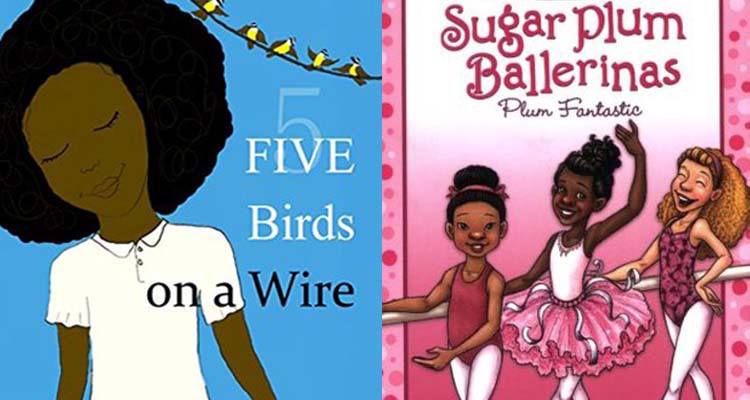
#1000BlackGirlBooks Drive Is Here to Counter Books About White Boys and Dogs

11-year-old Marley Dias from New Jersey has achieved a lot in her decade plus long life, from receiving a Disney Friends for Change Grant to volunteering at an orphanage in Ghana, and now she is tackling the whitewashed publishing industry. Dias was getting fed up with her English class, telling her mom that she was sick of reading books about “white boys and dogs.” Her mom promptly asked her what she intended to do about it, to which Dias said: “I told her I was going to start a book drive, and a specific book drive, where black girls are the main characters and not background characters or minor characters.”

In a statement to the press, Dias explains the purpose behind the project: “My parents have taught me the value of reading and self-love through books that have characters that look like me and talk like me. I want to make sure other Black girls around the world can see and love themselves, too, through these books.”

Dias plans to collect 1000 books by February first, and give these to Retreat Primary and Junior School and Library in St. Mary, Jamaica, where her mother grew up. She is over half way to reaching her goal. To complete the challenge, Dias has teamed up with GrassROOTS Community Foundation, a New Jersey based public health and social action foundation founded by Dias’s mother, Dr. Janice Johnson Dias, and Tariq Trotter from The Roots.

Dr. Johnson Dias said: “For young black girls in the U.S., context is really important for them — to see themselves and have stories that reflect experiences that are closer to what they have or their friends have.”

Dias is encouraging people to use the hashtag #1000BlackGirlBooks to share their favorite books on social media and keep the conversation going. If you want to contribute even more, books and donations may be sent to:

GrassROOTS Community Foundation

59 Main Street, Suite 323, West Orange, NJ 07052

Learn more here.

Amy Tan Has a Leech Named in Her Honor

Scientists at the American Museum of Natural History in New York decided to name a species of leech after author Amy Tan, who mentions jungle leeches many times in her hilarious novel Saving Fish from Drowning. Curator of invertebrate zoology at the museum, Mark Siddall, said that “Tan is a long supporter of the work we do here [and] someone we knew would consider it an honor, not an insult, to have a leech named for her.”

The small Australian leech has been named Chtonobdella tanae and is the first microscopic soft-bodied critter to be described with CT scanning. The work was recently published in Zoologica Scripta, and opens for studying soft-bodied animals, from worms to jelly fish, in a non-invasive way.

Tan said she was thrilled to be immortalized through the leech, and excited about the new possibilities for identifying “legions of tiny organisms that have thus far lived in obscurity.” She added: “ I am now planning my trip to Queensland, Australia, where I hope to take leisurely walks through the jungle, accompanied by a dozen or so of my namesake feeding on my ankles.”

Both Tan and The American Museum of Natural History celebrated the occasion on Twitter.

This is not the first time a species or discovery has been named after an author. There’s the Bagheera kiplingi, a spider named after Rudyard Kipling’s character Bagheera from The Jungle Book, Nabokovia, a butterfly named after the well documented butterfly enthusiast Vladimir Nabokov, Livyatan melvillei, an extinct whale species named after Herman Melville, and even 25924 DouglasAdams, an asteroid named after the author of Hitchhikers Guide to the Galaxy, to name a few.

Sigal Samuel & Ayelet Tsabari Discuss Kabbalah, Montreal and Jewish Arab Identity

Sigal Samuel’s debut novel, The Mystics of Mile End, set in Montreal’s part Hasidic, part hipster neighborhood, tells the story of a dysfunctional Jewish family growing dangerously obsessed with the Kabbalah’s Tree of Life. Samuel — who is a playwright, a journalist, an essayist, an editor for the Forward, and also much too young to be so accomplished — has been compared to Nicole Krauss, Anne Tyler, Myla Goldberg, and even Sholem Aleichem.

The Mystics of Mile End was hailed as a “standout debut” by Publishers Weekly and called “outstanding,” and “heart-stopping,” by The Library Review. It is an ambitious first novel, remarkable not just in its effective use of four distinct and richly drawn voices, or the intricate, expansive plot it weaves, but also because it explores enormous topics first-time authors are likely cautioned against tackling, topics like religion, mysticism, and mental illness.

Sigal and I met at a literary reading in Vancouver a few years ago. In a city where very few Jews looked like me, she stood out. We have followed each other’s careers over the next few years, as I moved to Toronto and Sigal to Brooklyn. We chatted via email while visiting our prospective homes, she in Montreal, and me in Tel Aviv.

Ayelet Tsabari: You were recently back home in Montreal for the holidays. How does it feel to be home? Does Montreal still feel like home?

Sigal Samuel: Montreal always feels like home, even though I left in 2009 to do my MFA in creative writing. I realized recently that I love this city because of its preference for multiplicity over unity. You can’t take two steps without your mind being forced into a kind of split-think, a bifurcated vision, a double consciousness.

You see this most obviously in terms of language. When you’re getting on a bus or walking into a store, you can’t just assume that the bus driver or shopkeeper is going to speak to you in English. Hence Montrealers’ ubiquitous weirdo greeting, “Bonjour-hi,” a linguistic choose-your-own-adventure that you use to suss out whether the other person prefers to continue the conversation in English or French.

I love that destabilization and think it shapes a lot of the cultural products that come out of Montreal. Our writers favor a doubling-up not only in terms of language (sometimes code-switching between English/French in a single sentence) but also in terms of highbrow/lowbrow (Michel Tremblay wrote in joual, working-class French slang, about pretty intellectual stuff), sacred/profane (think Leonard Cohen) and personal/political (Mordecai Richler, Heather O’Neill, Zoe Whittall come to mind).

If a city could have a motto, Montreal’s would be, “Why have one when you can have many?”

If a city could have a motto, Montreal’s would be, “Why have one when you can have many?” and that’s a mentality that always feels homey to me, because it suits my psychological temperament. This city is the best location for a certain kind of person and a certain kind of novel.

AT: Can you tell readers who don’t know a little more about Mile End specifically and what inspired your fascination with it and made you set your story in it?

SS: Maybe more than any other neighbourhood in Montreal, Mile End captures that quality I was just talking about. Its most visible populations are hipsters and Hasidic Jews (picture a grittier version of Brooklyn’s Williamsburg) and on the streets you’ll also hear Italian and Polish and Greek and Portuguese. All these identities and ethnicities overlap and intersect, like an awesomely messy Venn diagram.

In The Mystics of Mile End, all my characters are outsiders who don’t fit snugly into any box, instead perpetually walking (and tripping over) the fine lines between conventional identities. This is as true of the main Meyer family — an atheist professor dad, his devout son, and his daughter swinging dangerously between both poles — as it is of their neighbors, who span the gamut from SETI scientists to Talmud teachers. So it felt natural to locate them and their struggles in Mile End. In fact, that setting did half the work of plot and theme for me.

AT: You grew up Orthodox. Can you talk about that? How Orthodox were you and your family? And what happened? When and how did you become disenchanted with religion?

SS: As a kid, I was the nerdiest Orthodox Jewish girl you could ever hope to meet. “National Bible Quiz Winner” is an actual title that I hold, thank you very much. In my early twenties I wanted to become a rabbi, so I went to study in yeshiva (religious seminary). Then a funny thing happened: the more I engaged in serious study of religion, the more I came to understand that I loved this stuff not as law, but as literature. The Good Book was just that for me, a really good book, and I felt “obligated” by it to the same extent that I felt “obligated” by, say, Brothers Karamazov.

But I never became disenchanted with religion! I am as enchanted as ever with Judaism’s texts and myths, only rather than embracing them as a set of laws I have to live by, I see them as cultural products that I can use to enhance my life (and give depth and dimension to my fiction) how and when I like. Basically, I treat religion like I treat thrift shopping at Goodwill: Here are a bunch of weird and old and cool and interesting things — try them on, take what suits you, leave the rest for someone else who’ll love it better!

AT: What place does this religion or spirituality have in your life today? Or in other words: So many of your characters are seeking meaning. Where do you seek yours?

Fiction is religion to me, and religion is really, really, really good fiction.

SS: In fiction. Both reading it and writing it. Fiction is religion to me, and religion is really, really, really good fiction. That’s not a diss, by the way — it’s the ultimate compliment. When I said a second ago that I feel obligated by the Bible like I feel obligated by a Dostoevsky novel, what I mean to say is: a lot!

Just like millennia-old religious texts, great fiction offers us rich and well-considered points of departure for rethinking our lives. I take those seriously, and I think other devoted fiction readers do, too. Why else would we read?

AT: You wrote before that you were exposed to Kabbalah, the ancient Jewish mystic discipline, as a child, which is unusual. For me, growing up Jewish in Israel, Kabbalah was shrouded in mystery, and even a touch of danger. So I was impressed by your choice to take it on and write an entire novel about it and do it in such a confident way. It is ambitious, courageous, and almost subversive. Did you have any concerns about writing about Kabbalah? How did people react to it? And what part, if any, does Kabbalah play in your life?

SS: My dad was a professor of Kabbalah, and he exposed me to Jewish mystical texts when I was a young girl, so I’m sort of weirdly knowledgeable about this stuff. It didn’t feel courageous to write about it, though it did feel subversive, mostly for gender reasons: Traditionally, women aren’t supposed to study Kabbalah, and the Kabbalistic texts themselves are pretty sexist.

The funniest reactions to my book have come from Orthodox Jewish men who can’t seem to help mansplaining Kabbalah to me. They love to say, “I think you got X detail wrong, did you know that Y?” Yes, dude. Yes, I did know.

For me, the act of writing fiction feels like a Kabbalistic practice.

In terms of what role Kabbalah plays in my life now, this is going to sound weird, but: For me, the act of writing fiction feels like a Kabbalistic practice. The medieval mystics’ meditations, which included letter permutations and automatic writing, were basically techniques for achieving altered states of consciousness. That’s exactly what writing fiction is for me. It’s an altered state in which I let my subconscious take over (and then later, of course, I go back and edit with my conscious mind, which is where the hard work comes in). This is maybe not so surprising when you consider that there’s a long history of artists experimenting with automatic writing and drawing — just look at what the Surrealists were doing from Paris to Montreal in the 1940s.

AT: Around this time last year you went on a trip to India in search of your Jewish Indian family past. What inspired the trip, what did you discover, and are you considering writing about it in fiction?

SS: OK, so here’s the weird thing: I wrote a whole novel about a family of Kabbalists who are all terrible communicators…only to later discover that I come from exactly such a family.

Upon hearing about the novel I’d just finished writing, my grandmother and father said: “It’s so funny that you wrote such a book.” When I asked why, they said, “Didn’t you know that your great-great-grandfather was a famous Kabbalist in Mumbai? That the Jews of the city would come to study mysticism with him? That his home was known as Beit Kabbalah, the House of Kabbalah? That legend has it he died when someone interrupted him in the middle of a dangerous Kabbalistic meditation practice?”

Well, no, I didn’t know — because nobody told me!

I decided to fly to Mumbai to see if I could track down my family’s mystical secret society. After ten days there, I didn’t manage to find any tangible traces of my great-great-grandfather’s House of Kabbalah, but I did find out that my great-grandfather had been a Freemason — and probably also a Theosophist.

They ended up initiating me into their society, calling me “Sister Sigal” and asking me to recite blessings in Hebrew.

The Theosophists are a secret society that blends the mystical traditions of many religions, putting a heavy emphasis on Kabbalah. I crashed one of their meetings and, though they initially tried to shoo me away, they were impressed when they heard about my ancestry. They ended up initiating me into their society, calling me “Sister Sigal” and asking me to recite blessings in Hebrew.

It was the most surreal experience of my life: Writing my novel not only led me to discover my own family’s roots — it also led me on an obsessive Kabbalistic search that eerily resembles the search of my fictional characters.

As for whether I’ll write about Jewish India in my fiction, the truth is, I did come back from that trip with an idea for a novel. But it’s still percolating.

AT: When asked in an interview why, as a Jew of Mizrahi (Sephardic/Arab) background, you chose to depict Ashkenazi (Eastern European) Jewish characters you said you “only recently realized I was even allowed to write about Sephardic Jews.” Why is that? Is that something you are going to do in your next work?

SS: I’m so happy that you asked me this question, Ayelet, because now I get to reveal to you that it was your book that made me realize I could write about Sephardic and Mizrahi Jews! I read and reviewed The Best Place On Earth when it came out in Canada in 2013, and it was a major revelation/liberation for me, because I think it was the first time I’d seen people like me (Arab Jews) represented in English-language fiction.

…I have to acknowledge that I still feel a huge amount of (unspoken, invisible) pressure to cater to the dominant image of what “Jewish” means to most American readers…

Now that I’ve had this writerly political awakening, will my next work reflect it? It’s hard to say, for a couple of reasons. First, if I’m being honest, I have to acknowledge that I still feel a huge amount of (unspoken, invisible) pressure to cater to the dominant image of what “Jewish” means to most American readers: the white, neurotic, bagel-munching, Woody Allen type. To borrow a phrase from Claire Vaye Watkins, it’s tempting to pander to the market by writing toward these readers instead of challenging them.

But the bigger issue is this: I don’t believe in didactic writing. I would never write about Sephardic Jews just to make some political point; I’d only do it if that’s what the story I’m dying to write calls for. In Mystics, I was writing about a place that happens to have a very Eastern European, Yiddish-speaking Jewish pedigree. It wouldn’t really make sense to put Arabic-speaking Moroccan or Iraqi or Indian Jews in Mile End. Whether I’ll depict those characters in a future novel depends entirely on what sort of idea grips me next.

AT: Wow. That’s amazing. I’m honoured! And I totally get what you say about not believing in didactic writing; that’s something I bumped against when I wrote The Best Place on Earth. You actually addressed it yourself in said review, saying, “as any fiction writer will tell you, demanding that an author include certain types of characters in her stories is likely to backfire; if they don’t flow naturally from the author’s interests and experiences, they’re apt to come off the page all wrong.” And like you said, in Mystics, it wouldn’t have worked. I also believe a writer can write about whatever she wants, though there seems to be an expectation from writers of color to write about their heritage and their heritage only.

At the same time, I’d like to challenge the idea that you should only write about Mizrahi Jews because the story calls for it, because so often the depiction of Jews is by default Ashkenazi, regardless of what the story calls for. I think your characters can be Mizrahi because why not? We never question why white or Ashkenazi characters are white and if it serves a purpose. I’m not sure if there’s a question there. I guess I’m just putting it out there.

SS: Yes! So, I actually totally agree, and that’s why I was careful to craft the main characters in Mystics so that they can be read either way. There are little hints in the text that suggest the family is Mizrahi; for example, in the little boy’s list of “Things That Make My Sister Sad,” number five is “How her hair gets frizzy when it’s hot out.” Readers like us will see a line like that and, I hope, immediately recognize ourselves and laugh in sympathy. I also purposely chose a family name — Meyer — that could be either Mizrahi or Ashkenazi (after rejecting other possible surnames for being too definitively Ashkenazi).

…wherever I can build into the text an opportunity for non-white readers to see themselves represented, I’m going to do that rather than force them to read characters as white unnecessarily.

My feeling is that, wherever I can build into the text an opportunity for non-white readers to see themselves represented, I’m going to do that rather than force them to read characters as white unnecessarily. This reminds me of J.K. Rowling’s recent tweet about race in the Harry Potter books. “Canon: brown eyes, frizzy hair and very clever. White skin was never specified. Rowling loves black Hermione.”

AT: As opinion editor at the Forward, you declared 2015 The year of the Arab Jew. Many people are not familiar with this term, and many others are not comfortable with it. You and I have spoken before about identifying as Arab Jews and how heated the discussion around it can get. Why do you think people react so strongly to this term? Why was it important to you to write that column and how do you feel about the year now that it’s concluded?

SS: People love to think of “Jews” and “Arabs” as separate enemy camps. In the context of the Israeli-Palestinian conflict, it serves certain political interests to construct those two groups as Others relative to one another. How inconvenient, then, that there are people who embody both those identities at once!

I think that in 2015, the idea of Arab Jews really picked up steam. Exhibit A: The Jewish Book Council awarded your story collection (pretty much entirely about Arab Jews) the prestigious Sami Rohr prize! Exhibit B: Every month, it seems, a new Jewish band pops up with music that borrows heavily from the Arabic melodies of our grandparents’ generation. People are getting more and more comfortable reclaiming their dual Arab-Jewish heritage.

This resonates really strongly for me because over the past few years I’ve been in the process of shedding a lot of the damaging racial assumptions I grew up with, especially the false equations “Jewish = white” and “Jewish = non-Arab.” It’s important to do that sort of reckoning because it gives us permission to be our more whole, more complex selves — and for us writers, it can also make our art way more honest and interesting, because it means we’re no longer censoring major parts of ourselves. This reckoning is an ongoing process for me.

AT: I’ve been interested these days in the ways in which our identity — the multiplicities of it — shape who we are as writers, not only in terms of content but style as well. For example, as a Jew of Yemeni background, I wonder if my love for narrative summary comes from a tradition of oral storytelling, and as an Israeli, I wonder if my fondness for intensity, conflict, and drama in fiction is a result of growing up a war-torn country. How does your background, your identity, inform your work?

SS: I’ve thought a lot about how my fiction is very, very allusive and how I probably have the ancient rabbis to blame/thank for that. I mean, the Talmud is nothing if not an endless series of callbacks and allusions, a lace of hyperlinks that is endlessly self-referential and infinitely entertaining. The way the Talmudic rabbis take a biblical verse and interpret it, twist it, reimagine it to mean something wildly different or flat-out contradictory to its original meaning — I love that, and because I grew up loving it, I think I do a lot of it in my own writing, both consciously and unconsciously.

A really intricate self-referential web gives me the sense that I’m inhabiting a densely imagined world.

Mystics contains allusions to ancient Jewish texts and also to Leonard Cohen and also to Arcade Fire and also to a million other things, including itself. The novel is told in four different voices, and you won’t understand something in, say, the dad’s section until you get to the daughter’s section and then you’ll have that “Aha!” moment and flip backward, and so on. My favorite TV shows are likewise ones that make me do this sort of mental running-around — “Arrested Development” being the best example. A really intricate self-referential web gives me the sense that I’m inhabiting a densely imagined world. And it gives me the subliminally comforting feeling that I’m living inside a fractal.

AT: Related to that last point, what is Jewish fiction to you and do you feel comfortable being placed in that category?

SS: I feel comfortable with my work being labeled “Jewish fiction” to the same extent I feel comfortable with it being labeled “Montreal fiction” or “LGBT fiction.” It’s all those things at once, and labels are okay insofar as they provide entry points for people of X identity to get excited about your work. But it’s not just any one of those things.

AT: In Mystics you wrote a lot about “what you know.” When did you feel outside your comfort zone and wrote what you didn’t know? What posed a challenge? What made you want to throw the manuscript against a wall?

SS: Funny that you say that, because the most challenging parts were the parts when I was writing “what I (ostensibly) know”! I’m talking about the quarter of the book that’s written in the voice of the daughter, Samara, a twenty-something queer woman — on the surface, the character that most resembles me. I was too close to that voice, too intimate with it, so I struggled a lot with everything from structure to killing my darlings. It was much easier to write the other voices. There’s something liberating about inhabiting bodies and minds that are so unlike your own — you’re more able to let go of How Things Really Are and just let your imagination do its job.

AT: What question do you wish people would ask you?

SS: I wish people would talk to me about the fact that one of my protagonists is a queer woman — and ask what role queer politics plays in a novel that’s largely about religion. I find it telling that the book hasn’t been reviewed in the queer press yet. Our publishing ecosystem is very used to thinking of LGBT books as coming-out stories. But what happens when you have a novel that features a queer protagonist whose main struggle is not about her queerness? I was hungry for more books like that, and so I wrote one. And I would love to talk to people about it.

AT: Would you like to elaborate about it? Please do! I’m asking: what role does queer politics play in a novel that’s largely about religion?

Just because you’re queer doesn’t mean you’re exempt from spiritual hunger…

SS: Ha! Now I actually have to formulate an answer for the first time! I guess I’d say that I think we often assume an allegiance between “queer” and “secular” — but one doesn’t necessarily entail the other. There’s no reason queerness and religiousness need to be antithetical. Just because you’re queer doesn’t mean you’re exempt from spiritual hunger — hell, maybe you’re more attuned to it, because you’re strenuously seeking some form of unconventional intimacy. Maybe part of the reason Samara is more successful than any other character at climbing the Kabbalah’s Tree of Life is that she’s more of an outsider.

In the past month or so, I’ve participated in three book clubs as they discussed Mystics. In two out of three groups, readers flat-out refused to believe that Samara is gay, despite clear evidence in the text (um, basically the entire book). They said to me: “What I don’t understand is, why did Samara have to have that dalliance with that other girl? I mean, we all know she’s going to end up with Alex in the end, right?” The “dalliance” they referred to is the long-term relationship between Samara and her girlfriend, who lives/sleeps/makes out with her on the page. Alex is a male friend.

For a while, I was sort of flabbergasted by this impulse to read against the obvious meaning of the text (a very Talmudic impulse, I guess you could say!). Then I thought: Maybe the reason some readers just can’t believe Samara is gay is because she’s just…so…goddamn…religious. She spends months obsessively trying to become one with God — that’s her main struggle in the book — and for some readers it doesn’t compute that you can have that kind of struggle and also be really, really gay. But I think my character can be all those things and more because, as you said, why not?

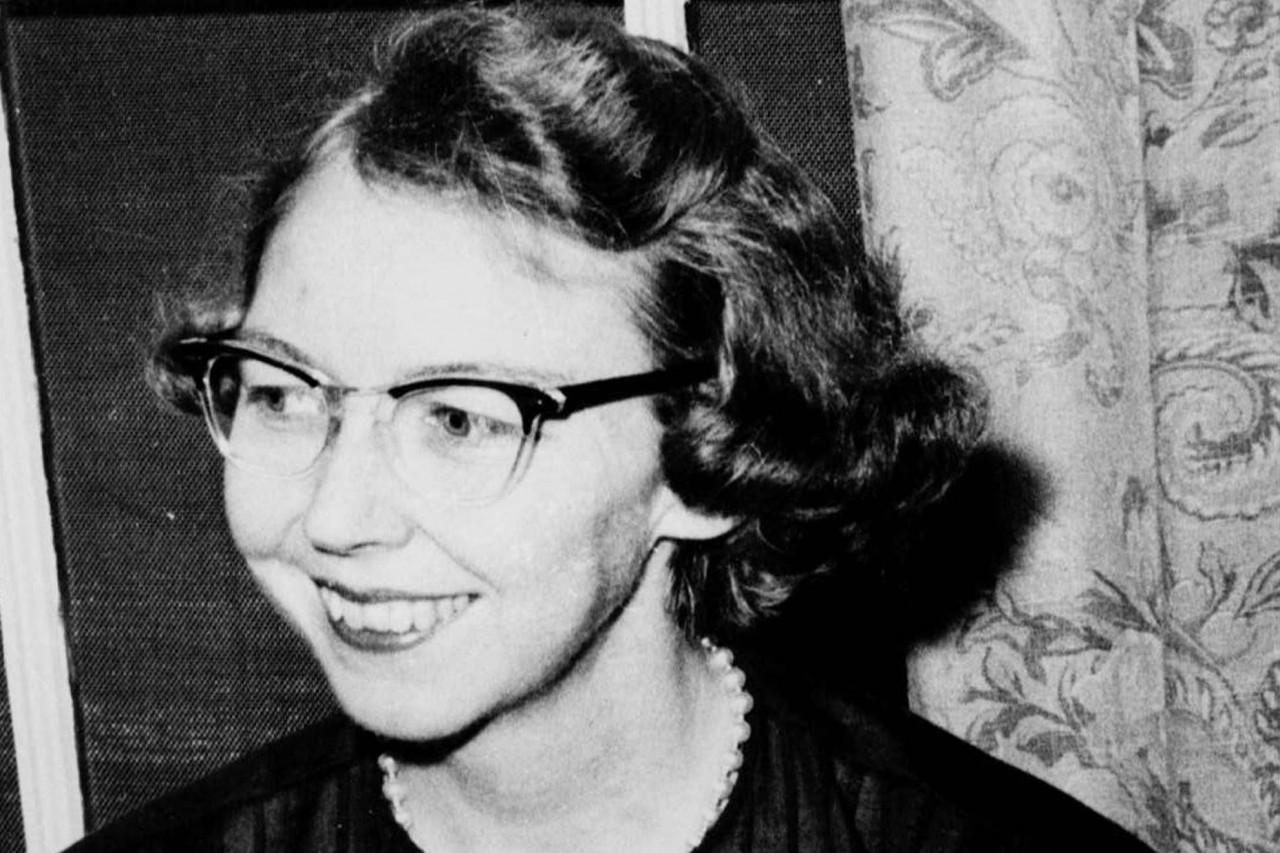
PODCAST: Why Flannery O’Connor’s Fiction Is So Hard to Adapt for Film

Despite being one of the most beloved and respected American writers of 20th century, Flannery O’Connor’s work hasn’t really made the jump from the page to the screen many times save for John Huston’s strange retelling of her first novel, Wise Blood. On this latest episode of Ryder + Flye, Jason Diamond talks with South Towards Home author Margaret Eby about the possible reasons why O’Connor’s work might not be right for movies, being Catholic in the South, 70s cinema, Harry Dean Stanton, and much more.