A Quiet You Can Almost Hear Behind the Buzz — Poems by Jorge Sánchez

POETRY: SIX BY JORGE SÁNCHEZ

The Canoeist Encounters a Black Etched Prominent
How did my eyes fall upon this tiny
caterpillar while John B goes
behind a tree? This same baby moth ­
 — dark, hooded face, almost human eyes,
a forked tail that makes it look like a slug
in reverse­­ — caught my eye at a book sale
for castoffs at a library a decade ago. Now

it sees me, and now it raises its tail: the forks
whip, and the head rises so its arched
body seems all muscle, like tension
itself, all because it fears and wants
to stay alive, to make it to the chrysalis:
anchored, spun, a sac all filled with light.

The Canoeist Drifts Among the Puffballs and Thinks of Home

The perfect summer day is filled by puffs
from trees too light and too sublime to wait
until the later months of the green season,
yielding up some kind of light; here, I
see the same signs of softness, of easing
into the bright clarity of mid-­June, but why
does the sight of these tiny white spheres
send me to some northside avenue? Here,

the water plants’ yellow heads poke
out of the bracken to bloom, the evidence
of the spring below troubles their quiet tendrils’
submarine lilt, their easy float. The water’s
skin so clear the grasses, saugers,
turtles the clockwork of this crystalline
life I skim the mere top of, gliding.

The Canoeist and the Lost Things

Why does every lost thing suggest
the cosmic incompleteness of toads, the frogs’
amphibian lot, their half-­in, half-­
out, as this one, riding along for three
hours, about nine miles, taking him far
from home? Where shall he go from here, what
will he make of this lake or it of him? Soon,

the sun will set, and I will put in.
The frog will then be lost to me, as all
things are, as all things become. To himself,
though, he becomes a darkness again, lost
in this new lake, new home to him,
the cratered crescent moon the only light.

The Canoeist Portages

What of this life is not a portage, two
and twenty rods over a ridge a half
dozen times only to put out
upon the water once more, the rocks
slippery with moss and slime, pine needles
aproning the shallow mouth of a slim lake?

A quiet you can almost hear behind the buzz
of the cicadas, past the lapping of the lake
in the wind. This is how much more it is
than a portage: the weight of the boat
held up by water, the crisp glide of oar
giving way to the void the water hides.

The Canoeist Loses his Oar

With the air so still it seems asleep, what
equation moves the boat upon the water,
heavy as it is with me? The lake takes
nothing it is not given, and so the boat
scuds further from the grassy shore.

The eddies and curls of currents made by fish
and the tilting, spinning earth are the true captains
now, the canoe enslaved to their minute forces.
I lean back and look up. Clouds
like a raincoat. Sky like a message home.

The Canoeist Smokes his Pipe atop a Log

How does the turtle go about its life
needing nothing? It snaps dumbly at hooks
meant for fish, but mainly it delights
in riddles told by spring­fed lakes,
riddles like the ones its father told.

Oh, to lay eggs in June and walk
away for summer, season unswept of moss,
like a pegboard put up to give
the travelers something to do!
The turtle’s blossom life is a riven seam.

Lost in Translation: What Belongs to You by Garth Greenwell

Reading Garth Greenwell’s debut novel, What Belongs to You, abroad — for me, that currently means outside of the United States — is a particularly vivid, and strangely enriching, experience. Partly, this is because the plot is set entirely in Bulgaria, where the narrator is a teacher at the prestigious American College in Sofia. Additionally, since the book deals so much with the foreignness of attitudes and emotions as well as language, reading it in transit and in guest bedrooms feels incredibly apt.

What Belongs to You is a beautiful first book, with a focus on communication, on understanding (or not), often literally, what other people are saying. So convincing is its narrator that it feels autobiographical, though I have avoided asking Greenwell whether he lived and taught in Bulgaria, as it could break the thrilling illusion that reading the book is a voyeuristic invasion of a very real narrator’s private thoughts, actions, memories, and emotions. Like many of the great novels written in the first-person, this one feels directed at someone, but that mysterious person isn’t necessarily us readers. This too contributes to the sense of sifting through an experience already translated through the narrator’s mind, where most of the interactions he has are in another language which he himself is not fluent in.

This narrator is left nameless throughout, because his name is “more or less unpronounceable” in Bulgarian, which is the language he uses when he meets the central figure, Mitko. Though the book is split into three parts, the middle one having ostensibly nothing to do with Mitko, the entire novel is permeated with his being, so clear in the narrator’s mind that it almost emerges from the book like a scent. The nameless narrator is saturated in Mitko’s essence from the moment he first meets the young prostitute. Although Mitko is never explicitly named as such, there is no doubt as to his profession. The first few pages of the book describe how the narrator finds him at a hookup spot for gay men in the restrooms at the National Palace of Culture in Sofia, where Mitko at first ridicules another man there who is there looking for sex. Wanting to be included, especially as he sees Mitko bearing “hypermasculine style and an air of criminality,” the narrator uses a head-waggling gesture that “signifies [in Bulgaria] both agreement and affirmation or a certain wonder at the vagaries of the world.”

From the very beginning, then, the reader and narrator alike are slightly lost in these vagaries of this world — the gesture doesn’t convey what the narrator wants it to — and so begins a spiral of abandoning precise understanding and embracing every moment with which Mitko graces us with his presence.

For Mitko is impossible to put together, to truly understand, and it is him, more than the narrator, who seems to be the focus of What Belongs to You. The narrator understands himself well enough, even when he’s perplexed by his own actions. He knows he cares for Mitko. He knows, during the middle section of the book, that memories of coming out to his father, his father’s disownment of him, will affect his decision to visit this distant personage on his deathbed. He knows, even when he is in a committed relationship, that it doesn’t and will never provide the satisfaction that Mitko does. Mitko is the drama of the narrator’s life, the moving piece that makes his routine exciting, the mystery that he can’t solve and therefore can’t let go. For much of the novel, he is out of the narrator’s and reader’s eyesight, but is in our minds as firmly as a tune stuck in our heads and refusing to leave.

At the very start, in the bathrooms where he’s introduced, Mitko seems menacing, a man both attractive and dangerous; maybe attractive because he is dangerous. But despite first impressions, Mitko often seems childlike to the narrator, especially during their first encounter, when Mitko takes his shirt off and reveals what seems like a much younger man’s chest: “He was thinner than I expected, less defined, and the hair that covered his torso had been shaved to bare stubble, so that for the first time I realized how young he was (I would learn he was twenty-three) as he stood boyish and exposed before me.” This apparent vulnerability in Mitko is confusing to the narrator, at odds with the prostitute’s earlier hypermasculine attitude.

This confusion extends to the narrator’s own life, his very existence in Bulgaria, his teaching career, his relationships with his family, and the dichotomy between his personal and professional lives. Though he doesn’t hide the fact that he’s gay — a fact revealed later in their acquaintanceship — Mitko believes that the narrator is keeping his sexuality a secret, masquerading as a straight man. In fact, it is Mitko who masquerades as straight by defending the narrator from people who call him a fag, even while Mitko’s profession, his livelihood, depends on men giving him money, food, and shelter. But Mitko calls these people priyatel, “friends,” rather than clients, and sees their payment as “help” freely given, as generous “gifts.” Perhaps this is truly how he thinks of them, but for all intents and purposes, Mitko — as the narrator knows well — is a man with a body and charm for hire, for barter, for sale. On a night Mitko spends at the narrator’s apartment, the latter sees this firsthand: Mitko spends hours on the narrator’s computer, talking with countless men of varying ages on Skype. He even introduces the narrator at times, shifting the computer’s camera, and the oddness of this situation is impossible to escape, as Mitko seems to really be introducing one friend to another rather than breaking any confidences or outing anyone, which is essentially what he’s doing.

When Mitko and the narrator have a falling out, the latter believes he is seeing Mitko’s real face for the first time — a violent face, one that is powerful and which belongs to a frightening underworld of crime. After all, he’s seen Mitko full of bruises and cuts before, known that Mitko is involved in various nefarious activities, and suspects he enjoys brawling. The fear that the narrator feels, however, is one of the only moments in the book where his emotion seems outsized, exaggerated; one of us, reader or narrator, is mistranslating Mitko’s threats. To me, they seemed empty, full of Mitko’s bluster, his need to assert control in a life of extreme poverty — he is basically homeless, staying with clients as often as possible during the night — where his only safety net is people like the narrator who treat him well. For all I know, Mitko’s bruises come not from brawling but from client encounters. To the narrator, however, the threats are all too real.

This is the end of the first bout of the narrator’s constant suffering over Mitko. In the novel’s second part, we learn more about the narrator’s childhood, family, and — again — the misunderstandings that came along with his discovery that he was attracted to other boys when he was just a boy himself. There is still a distance from the reader in the writing here, a feeling of the narrator’s exposure of memories being put through the sieve of a grown-up’s perspective on his past. There is something that is reminiscent of Karl Ove Knausgård’s translated My Struggle series in this middle section especially, which is fascinating considering that Knausgård’s books are translated into English whereas Greenwell’s novel isn’t. But Greenwell is able to employ a guardedness to his narrator that feels like the distance of translation. This is showcased when the narrator shows his mother around Bulgaria when she comes to visit: there is a gap between the two of them, due to the past, but also due to his constant need to literally translate everything around them for her. She, like Mitko, is dependent upon the narrator, dependent on his kindness, patience, and generosity.

In the final part of Greenwell’s book, Mitko returns, and while he manages to reassert control over the narrator with a brief bout of groping in a public bathroom, the connection between the two is not what it used to be, and the power dynamic has shifted. Mitko is ill, both with syphilis and with a longstanding liver disease, and for once the narrator cannot actually understand what he’s saying, or why he’s saying it: “men me nyama, men me nyama, I’m gone, it means, or I’m not here, literally there’s no me, an odd construction I can’t quite make work in English.” Again the narrator returns to the unpronouncability of his own name, as Mitko calls him “that syllable […] used to approximate it.” A syllable the reader is never privy to, and part of the privacy that the narrator manages to seal inside the translation of his thoughts and feelings to the page.

**

Mitko and the narrator’s first contact — and contract, for Mitko received money for it — ends in the narrator’s anger, for he wasn’t given what he wanted in their encounter. Nevertheless:

“[M]y pleasure wasn’t lessened by [Mitko’s] absence, […] what was surely a betrayal […] had only refined our encounter, allowing him to become more vividly present to me even as I was left alone on my stained knees, and allowing me, with all the freedom of fantasy, to make of him what I would.”

It is this, Mitko’s unavailability, his inability to be completely understood by the narrator who is never fluent in Bulgarian, that makes him most attractive, since he is then the subject of fantasy. But by the time he is faced with Mitko’s realities, the narrator has found companionship, maybe love, with a man called R.

And so finally Mitko is an open book for the narrator to read, and once he’s read it, discard:

“Love isn’t just a matter of looking at someone, I think now, but also of looking with them, of facing what they face, and sometimes I wonder whether there’s anyone I could stand with and watch what I wouldn’t watch with Mitko, whether with my mother, say, or with R.; it’s a terrible thing to doubt about oneself but I do doubt it.”

This is one of the most honest and open things the narrator states, as is his telling Mitko: “I am an open person, I don’t have these secrets, everyone knows what I am,” meaning gay. But the narrator might as well be speaking about himself in general, and in that sense he is clearly opaque to himself as well, for he is not an open person, he does have secrets, and “everyone” doesn’t include the ones reading his words on the page. Beautiful, vulnerable, the narrator is more thought than action in type, more philosophy than feeling, more objectively descriptive than intimately there, and so while it is impossible not to love him, as it is impossible for him not to love Mitko, the narrator is a mystery, lost in translation to the reader, but better, and more interesting, for it. If we could read him as he reads Mitko in the end, maybe we’d discard him too; Greenwell makes sure this doesn’t happen.

TED WILSON REVIEWS THE WORLD: THE PLAID SHIRT I GOT FOR CHRISTMAS

★★★☆☆☆

Hello, and welcome to my week-by-week review of the world. Today I am reviewing the plaid shirt I got for Christmas.

This past Christmas my cousin gave me a plaid shirt. He had asked me what I wanted and I told him a plaid shirt, so when I began unwrapping it I was understandably excited. But when I held it up in front of me for a better look, I had no emotional response. I felt absolutely nothing.

There was something about the shirt. The way it looked was almost as if it was neither ugly nor attractive. I could barely even tell what color it was. It was as if it occupied some in-between state of existence, not fully there, yet not anywhere else.

While the shirt itself made me feel nothing, it was that void of emotion that terrified me. I felt all at once afraid and alone, adrift in the vastness of the universe for all eternity, unable to ever die. Drowning in a nothingness.

I’ve never had a shirt elicit this type of response before. I said, “thank you.” Then I placed the shirt down and tried not to look at it again. A few days later I picked it up, curious to see if I would feel anything. I did not.

I inspected the shirt and found that it was manufactured in Thailand by the Doug Ferry company. The name didn’t sound Thai to me, but I don’t speak Thai. I wanted to understand how such a shirt could exist. Did the seamstress who made it also feel nothing for it? I went to a department store and asked a clerk about it but he had never heard of that brand.

The deeper I dug, the less I could find out about this Doug Ferry shirt. I began checking the tags of people in front of me on the bus. Nothing. So I wrote a letter to the trademark offices, asking if they could please put me in touch. They never wrote back.

I decided to just sell the shirt and be done with it. Not surprisingly, no one would buy it.

If no one had any feelings about the shirt, would they have any feeling about the person wearing it? I put it on and stepped outside. No one I passed seemed to notice me so I began waving my arms and screaming wildly. It was like people were refusing to look at me. Like I was invisible.

I wasn’t invisible though, as I was caught by a security guard while sneaking into a candy factory to test this theory. I considered the notion that it was my khakis that made me visible, so I cut off the lower half of the shirt and made it into a pair or shorts. There wasn’t a lot of fabric to go around so the shorts ended up being a bit smaller than I was comfortable with.

Apparently the authorities and several witnesses were also uncomfortable with how small my shorts were, because I was given a stern talking to. Burning the shirt seemed to be the only solution. I hope my cousin doesn’t read this. I’d feel awful if he knew what happened.

BEST FEATURE: n/a
WORST FEATURE: n/a

Please join me next week when I’ll be reviewing a head of lettuce.

Philip Pullman Resigns from Oxford Literary Festival Over Lack of Author Payment

by Melissa Ragsdale

Philip Pullman, author of the widely loved His Dark Materials series, announced this week that he will be resigning as patron of the Oxford Literary Festival, due to the Festival’s practice of not paying its authors.

Because of the Oxford Literary Festival’s attitude to paying speakers (they don’t) I can’t remain as a Patron any longer. I’ve resigned.

— Philip Pullman (@PhilipPullman) January 13, 2016

Pullman said that he has long advocated fair payment to authors participating in the festival, to no avail. He told the Guardian: “The principle is very simple: a festival pays the people who supply the marquees, it pays the printers who print the brochure, it pays the rent for the lecture halls and other places, it pays the people who run the administration and the publicity, it pays for the electricity it uses, it pays for the drinks and dinners it lays on: why is it that the authors, the very people at the centre of the whole thing, the only reason customers come along and buy their tickets in the first place, are the only ones who are expected to work for nothing?”

One of the largest literary festivals, The Oxford Literary Festival features over 500 speakers and 250 events each year. This year’s festival (set for April 2–10) will include authors Jacqueline Wilson, A.C. Grayling, and Joan Bakewell, among other prominent voices. The festival is funded by large sponsors as well as revenue from ticket sales, with tickets costing between £6 and £25.

Festival director Sally Dunmore responded that the organization were sad to see Pullman go, but stood by the Festival’s stance on author payment. She categorized the Festival as a charity: “If we were to change our policy, we could not put on a festival as large and diverse as Oxford’s which supports and promotes the work of both bestselling authors and of those at the outset of their writing careers or with a smaller following.”

This move comes just a week after Pullman and The Society of Authors (of which Pullman is president) released an open letter to The Publisher’s Association and the Independent Publishers’ Guild, demanding that authors receive more equitable pay for their work. The letter warned that authors were becoming an “endangered species,” citing that annual income for a writer had fallen to£11,000 ($15854.85), well below the £16,850 ($24,286.75) that the Joshua Browntree Foundation has deemed “necessary for a socially acceptable living standard.”

Among other solutions, the letter requests that authors be paid 50% of e-book sales, as opposed to the current 25%, and proposes best practices to ensure fair treatment of authors in contracts, including clear and transparent royalty statements and adherence to the C.R.E.A.T.O.R. guidelines.

Pullman told the Guardian that in advocating for writers, he’s only seeking a more equitable system: “We don’t want these great powers to disappear altogether: the things they do are often things that need doing. Books are physical objects that need to be manufactured and transported and sold, or digital entities that need to be formatted and made available online. Sometimes there are things we wish they would do a little more of: editorial standards are not what they were. All those things are necessary and should be rewarded — but rewarded fairly. So is our work, and so should we.”

Authors Remember David Bowie

As word of David Bowie’s death spread on January 10, 2016, heartfelt messages of grief and remembrance poured out from around the globe (and from outer space). The impact of the incredible, multi-talented Thin White Duke on so many cannot be denied. Communities of those mourning his loss have been gathering to celebrate his life with dance parties, silent tributes, and grand concerts still in the making.

David Bowie paved countless creative paths, opening doors for generations to follow. Fellow musicians, visual artists, writers, and others have been inspired by his work, often finding the permission in his music to push a little further toward their own unique selves.

We asked several writers to share their thoughts on David Bowie — their memories of favorite songs and albums and moments that helped shape their lives and, in many cases, directly impacted their own writing.

Aleksander Hemon, author of The Making of Zombie Wars, Behind the Glass Wall, and The Lazarus Project, among others

Heroes (1977)

In 1977, I was thirteen and already deeply invested in music and art and everything and anything that would help me understand and formulate my complicated, confusing adolescent feelings. I was about to make a leap in that pursuit from the portentous pretentiousness of bands like Pink Floyd, Yes and Led Zeppelin to the brutal, confrontational simplicity of The Sex Pistols and The Clash. I was about to start wearing a lot of torn denim, assert my right to listen to any music I found interesting (which my harmonious father collectively referred to as struganje — scraping). I was about to confuse rage and rebellion, nihilism and desire for change, complaining and thinking independently.

Bowie

But, in 1977, someone gave me David Bowie’s Heroes for my birthday. It was — and is still — a brilliantly strange record. The black-and-white picture on the cover, Bowie frozen in a gesture that for all its mesmerizing drama could not be interpreted. The tunes based on riffs and patterns played by instruments that could not be fully identified; songs lacking choruses or the clarity needed for radio play time, a few of them nothing but synthetic soundscapes; the lyrics that made no statements, offered no guidance (“Joe the Lion, made of iron/went to the bar/a couple of drinks/and he was a fortune teller”) and were of no help to me in formulating anything about me. And then “Heroes,” the song, which had to do something with love and freedom and the Berlin Wall, devoid of a chorus and strung on Robert Fripp’s guitar wailing with longing for something I could not grasp and have longed for every day of my life.

More importantly, I learned that a great work of art can never be spent, it never stops meaning, retaining a core that outlives the circumstances of its creation, constantly changing while always staying the same.

The greatest thing about Heroes was that I didn’t understand it; I couldn’t enter it to appropriate it. It was never going to be about me. Which is why it never got boring and I’ve never stopped listening to it. It became a presence in my life, a radiant influence. Because of its strangeness, I’m now aware, I started formulating to myself what a great work of art is and could be. I began understanding that Heroes is one of the twentieth century’s masterpieces, and that “Heroes” is the greatest song of all time. More importantly, I learned that a great work of art can never be spent, it never stops meaning, retaining a core that outlives the circumstances of its creation, constantly changing while always staying the same. It took me years to arrive at all that, as I had to finish the urgent business of sorting out the sordid business of being myself. Nearly forty years later I must own up to the fact that what I strive for as an artist is creating something like Heroes — a thing of irreducible beauty and meaning. That might never happen, of course, but in 1977 David Bowie showed me the way and I followed. And I will always love him.

“I can remember/standing by the wall./ And the guards /shot above our heads./ And we kissed/ so nothing could fall.

And the shame was on the other side./Oh we can beat them/Forever and ever/Then we could be heroes/just for one day.”

Porochista Khakpour, author of The Last Illusion and Sons and Other Flammable Objects

“I’m Afraid of Americans” — David Bowie remixed by Nine Inch Nails (1997)

It is impossible for me to pick a favorite David Bowie album but it was probably Diamond Dogs. And I love nearly all his songs (hits and misses, all), but the first music video I saw, in 1983, was his “Let’s Dance” so that remains very cherished. We somehow had illegal cable and much of my English-language skills came from watching MTV or The Twilight Zone. I still believe my often-bizarre fashion sense came from my introduction to American culture: Bowie, Boy George, Pat Benatar, Prince, and Cyndi Lauper.

Bowie

But that’s not on my mind right now, those are not the songs I’m playing. When I was writing my second novel years ago, I kept going back to a song of his I encountered in college: “I’m Afraid of Americans.” It’s the anti-“Young Americans,” that sexy, glam-rock plastic-soul anthem I also love and ended up listening to far more in my lifetime. I don’t know how I first encountered “I’m Afraid of Americans” — it didn’t get as much radio play, as far as I can recall, and I’m just now reading that a rough cut was on the 1995 Showgirls soundtrack! (I remember it as the penultimate track on his 1997 album Earthling, which I loved and which many people I know loved less). Trent Reznor’s remix of the song, which was co-written by Bowie and Brian Eno, is the one I’m thinking of — and of course, the video.

I don’t know the first time, but I do know I heard it many times at certain NYC clubs, not one of those big ones but one of those sorta-lounges and kinda-bars you’d find in the East Village, their real last gasp in the neighborhood. In my head it plays on loop in one of those spots. The production, all industrial and electronic and so very NIN — dangerous and weird as everything felt in those final years of the last millennium, before the world became actually dangerous and weird.

The State of the Union is on livestream as I write this, and in my head I think to this video: the trigger-hands, my god, the trigger-hands.

I saw the video during some break from college, those final years of MTV actually being music television. In it Reznor — an old crush of mine and I think every misfit Nineties youth — is a cab driver named Jonny who is pursuing Bowie on the streets of New York, the streets of New York as I very much remember them in the late 90s — several degrees dirtier and grittier than now (but not as bad as they had been just before, everyone always reminded me). Bowie is running frantically and everywhere he turns there are New Yorkers amid some sort of altercation: couples, friends, strangers, and the one thing they have in common is their hands in finger-gun pose. It’s a chase movie and at the end there is a standoff, and watching this today its paranoia and intensity and anxiety feels so accurate. The State of the Union is on livestream as I write this, and in my head I think to this video: the trigger-hands, my god, the trigger-hands.

We think so often of Bowie as the man who loved everyone and embraced everyone. But we also sometimes mistakenly might think that means no fear, no suspicion, no desire for change. In the 1983 MTV interview with Mark Goodman, where Bowie holds MTV to task for ignoring black musicians, you see discomfort and even rage behind his mostly cool exterior. Nobody’s congeniality could be more intense. His positivity was never cheap, easy, for show. It was proactive and hopeful, it had the imagination to carve out a place if the place wasn’t there. The performative part came from someone who had had a hard life and knew others with hard lives; it came from someone who wanted so much more than this world, that the idea of boundaries, nations, states, seemed ludicrous.

I’m afraid of Americans I’m afraid of the world, belted Bowie, who one could say was always ahead of his time, though more precisely of no time in particular. But in this song, he is in this moment right now, at my side, this very moment of ours. In 1997, I was still four years from becoming an American — and the world still fours years from 9/11 — and back then I would never have dared say I was afraid of Americans. Today, I’m still afraid to say it; today, I’m still afraid of Americans sometimes. The one line I never quite understood, but I’m scared I do understand a bit now is maybe the saddest line in all of Bowie’s discography for me — God is an American, Bowie deadpans toward the end, and again, God is an American.

J. Robert Lennon, editor of Okey-Panky, author of See You in Paradise and Familiar, among others

“Cactus” — David Bowie cover of The Pixies (2002)

Bowie

I love all the Bowies. I was born the year of The Man Who Sold the World, formed my first band the year of Let’s Dance, and in between, rarely a day passed when I didn’t hear his music. I knew all the lyrics to every hit and turned the radio up whenever they came on. And yet I didn’t own a David Bowie record until 2002. In retrospect this seems insane. He was unequivocally one of my favorite recording artists, but I think there was something about his career — its breadth and drama, its explorations in style, gender, and sexuality — that frightened and intimidated me. By the time I got serious about playing rock music, as a fully flannelled and Adidas’ed cisgender indie rocker, Bowie seemed like a quaint nostalgia act.

Bowie wasn’t the past, and the Pixies weren’t the present; we’re all alive together and everybody is listening to everything.

Then I read a review of the then-new one, Heathen, and bought it on impulse. It’s a good record, but the thing that struck me was Bowie’s cover of The Pixies’ “Cactus.” The second I heard him singing it, I thought, “Oh, yeah, the Pixies’ version must be a cover.” Then I looked at the liner notes. Bowie really had recorded and released a cover of a Black Francis song. And suddenly the whole history of rock and roll came into focus for me: Bowie wasn’t the past, and the Pixies weren’t the present; we’re all alive together and everybody is listening to everything. Bowie was covering the Pixies because he loved the Pixies, as I did. And the Pixies, of course, couldn’t have existed without Bowie. “Cactus” is a completely demented song, a weirdly puerile riff on sex and death, and Bowie sings it as though he wrote it: “I miss your soup and I miss your bread / And a letter in your writing doesn’t mean you’re not dead / So spill your breakfast and drip your wine / Just wear that dress when you’re dying.”

This is an embarrassing epiphany for a 32-year-old musician to make: that all good music is in dialogue with other good music, that genre and subgenre are meaningless, and a real professional acknowledges not only his influences, but the accomplishments of his descendents. It’s a revelation that has carried over into my literary life, too: only a fool rejects the pleasures of the world that has arrived to replace him, and only the most cynical old dog declines to learn new tricks.

Ru Freeman, activist and author of On Sal Mal Lane and A Disobedient Girl

Hero

You listen, and though you feel everything has already passed you by, and your head is all tangled up, the singer calls you “love,” and you are not alone.

You don’t care that the music you hear has taken years to reach your country. You are a teenager, lying on the cold cement floor of a room in Colombo, Sri Lanka, listening through borrowed headphones to one of the few bootlegged cassette tapes you own: Top Ten Hits from David Bowie. You come from a culture comfortable with androgyny so you stare up at a poster of the skinny blonde boy that covers the cracks in your walls, and feel your heart melt; you think he can do no wrong while wearing lipstick, bellbottoms, and blue eyeshadow. You listen, and though you feel everything has already passed you by, and your head is all tangled up, the singer calls you “love,” and you are not alone. When the one music-show, “Pops in Germany,” that runs on the TVs the Japanese gifted your country, the one that plays the anti-war anthem, “99 Luftballons,” from the German band, Nena, every single week, adds Bowie and Jagger “Dancing in the Street” on repeat during and after Live Aid, you believe you’ve melded the family gift of understanding the link between capitalism and global poverty before you could walk, with your private satanic heart that loves pop music and all things American. You don’t have enough fabric to stitch yourself a cheetah print jumpsuit but you make do with a mini dress that hugs your boy-girl body as you dance. You listen to “Five Years,” and you believe your poster-boy made room in his head for “all the somebody people,” which means he must have made room for you. You imagine that when he sings about how he “touched the very soul/ of holding each and every life,” at the kind of free festival you have no hope of ever attending, that he was holding you, even though you know that all the joy was imagined, was just a claim you wanted to make the same way he did. You can’t afford the albums, but the tracks find you somehow and when the Berlin Wall comes down, even though your family has made sure you know how to pronounce Gorbachev and Perestroika, you believe much more in the idea of East Berliners gathering on the hard side of a wall to listen to Bowie serenade them. Time passes and different songs claim you, set your history to music. You grow up enough to become familiar with other walls from Arizona to Palestine, to hear guns above your head. And yet. You still believe that walls can be torn down by the strength of sweet voices singing love songs and reciting poetry. You know now that he believed singing to people he could not see moved him deeply and that he did not expect to be able to repeat the experience. You shrug and think that doing one brave and beautiful thing should be enough for any artist. You are sitting in a country far from the place where you were born, wrapped in a blanket and looking out on waters from the Pacific, thinking about compassion and literature, when you hear the news. You close your eyes and turn on “Rock ’N Roll Suicide,” all quiet in the inside of your head. You imagine hands reaching all the way across the world. Gimme your hands, you say, gimme your hands ’cause you’re wonderful.

Tanwi Nandini Islam, author of Bright Lines

“Under Pressure” — David Bowie and Freddie Mercury (1982)

This past year, I heard the a cappella version — a haunting experience — like remembering your past without any illusions.

“Under Pressure” — It’s technically a Queen song, one in which Freddie Mercury and David Bowie blew my heart open as a teenager, when I was discovering their music. Sonically, it’s a bridge between the rock ballads of the 70s and the pop harmonies of the 80s, in one riotous duet. Bowie’s refrain, It’s the terror of knowing what this world is about, watching some good friends screaming “Let me out!” moved me in a way I hadn’t really felt in music outside of the R&B and hip-hop I listened to. His voice grounds Mercury’s operatic yearning and desperation. What was incredible about David Bowie is that he appealed to everyone; our allegiance to our favorite music was broken when it came to him. I’m drawn to tension in music, and “Under Pressure” embodies the discord between Bowie and Mercury. It’s evident throughout the tune — the artists argued over the final mix — but the moments of harmony reveal two sides of the same genius both artists possessed. There is harmony, despite their differences. They bent convention in beautiful contortions, spanning a variety of genre, style, gender presentations, and this song manifests that. This past year, I heard the a cappella version — a haunting experience — like remembering your past without any illusions.

Amber Sparks, author of forthcoming The Unfinished World and Other Stories

Outside (1995)

Even just the name of the album resonated: I was outside, we were all outside, you know?

Outside is not my favorite Bowie album, but it came into my life at exactly the right time — one of those instances of art finding you when you need it most. I was in high school when it came out, and I was just starting to make art the way I wanted to make it, and was getting a lot of pushback for that, for being weird, and dark. Then came Outside. It was menacing, it was extremely dark, it was unsettling, and it was lovely and bizarre and completely new. I knew who David Bowie was, of course, but just his Top 40 stuff, Labyrinth, etc. I went out and bought a bunch of his CDs and I rented The Man Who Fell to Earth and I listened to Outside over and over and over again. And it just all clicked — I felt that HERE was a refuge for me, for people like me. It saved me, that album; saved my impulse to make art. It saved me as an outsider kid. Even just the name of the album resonated: I was outside, we were all outside, you know? I dug my old journals out the other day, in fact, because I remembered writing about Bowie. And yes, during that intense young joyful period of discovering David Bowie, I wrote this: “I think there are two kinds of people: those who like David Bowie and those who don’t get David Bowie. For me, when I listen to his CDs, I feel like there are other people on this planet who also feel like aliens, who feel like we come from somewhere else. I think we see the world differently, and feel apart from it. But I think we also see things that are ugly/beautiful about it. We see how tiny we are and how insignificant and how big and unknowable, and yes, scary, this strange place we’ve landed in truly is. It’s weird because you would think that would make you feel so very much alone. But listening to David Bowie’s albums, and feeling like a beautiful alien, makes me less lonely. I would like to meet more people who feel like beautiful aliens.”

Rob Spillman, editor and co-founder of Tin House, author of forthcoming All Tomorrow’s Parties (Grove Press, April 2016)

Christiane F. — Wir Kinder vom Bahnhof Zoo Original Soundtrack (1981)

Moody, dark, yet hopeful, the record perfectly captures how I feel about Berlin, the city I spent my first ten years in.

The deeply bleak 1981 movie about a teenage junkie in Berlin, based on the nonfiction Wir Kinder vom Bahnhof Zoo (We Children of Bahnhof Zoo), featured a soundtrack by Bowie, and included many of his greatest Berlin recordings with Brian Eno — “Heroes”, “Look Back in Anger”, “Warszawa” — as well as raw, intimate concert footage of Bowie in his Berlin prime. In the movie, no matter how low Christiane goes, she won’t give up her Bowie records, until she finally is so strung out that she sells them, a scene which devastated me like few have since. Moody, dark, yet hopeful, the record perfectly captures how I feel about Berlin, the city I spent my first ten years in. That he would next adopt my home city — New York — further solidified my love and personal connection to Bowie, a love connection held by millions, but which to me felt singular and real.

Marie-Helene Bertino, author of 2 A.M. at the Cat’s Pajamas and Safe as Houses

“Heroes” (1977)

Unlike rock bands who can hide among their number, when David Bowie took the stage, he did so alone. All eyes on him. That he decided to place assumed personas between the audience and him makes sense to those of us who understand wanting to simultaneously shine and hide. Beautiful buffers. It’s no wonder that practitioners of the solitary art of writing palpably worship artists like him, Joni Mitchell, Bob Dylan… It’s no wonder that when one dies we feel like part of us dies. I’m writing this for Bowie because when we lose Bob Dylan you won’t be able to find me.

The farther into the true self you go, the less like everyone else you look.

My husband and I eschewed traditional elements for our wedding last year, but we liked the idea of a first dance. A song that would express important information about our shared vision of the future. We chose David Bowie’s “Heroes,” that mid-tempo, erratic anthem about dolphins, loyalty, and the royal feeling of love. The information: life is weird, fun, fleeting, and sometimes involves marine life. The farther into the true self you go, the less like everyone else you look. David Bowie didn’t look like anyone else. I add my voice to the chorus of eccentric softies who suffer the profound loss of his death. His work gave us permission, elegance, inspiration. We owe him.

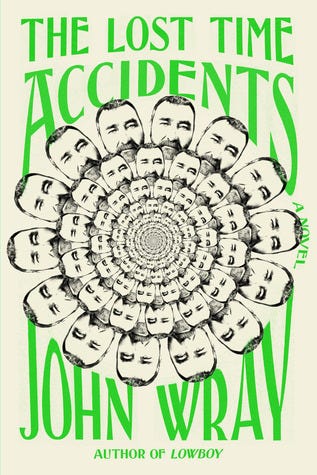
John Wray, author of Lowboy, Canaan’s Tongue, and The Right Hand of Sleep

“Sound & Vision” (1977)

…a kind of Virgil through all the zones of hell and paradise that he himself had ventured through…

Bowie was so many things — practically anything and everything that anyone ever projected onto the gaudy and spectacular and at the same time curiously blank canvas that he presented to the public — but to me he was above all a man who made great art out of his own fascination with the strange and seemingly pointless human enterprise of art-making, and willingly served the rest of us as a kind of Virgil through all the zones of hell and paradise that he himself had ventured through. For this reason and many others he was an elder statesman to everyone who came after him, and even to his contemporaries to some degree, simply by virtue of his virtuosity; but he took great pains to disclose himself to us, time and again — even unto the very last video for the very last album — as a frustrated, tormented, fallible striver. He never lapsed into complacency and irrelevance precisely because he refused, as a fundamental artistic principle, to fully acknowledge his success. One of the reasons he was forever open to the latest developments in both pop and the avant-garde was that he managed to convince himself, over and over again, that failure waited just around the corner. But at the same time he could sing about the transporting joys of creativity with a sweetness and an effortless authority.

I challenge anyone, creatively inclined or not, to listen to the song Sound & Vision, for example, without pining for the artist’s life, with all its highs and lows. It can’t be done.

A Voice to Be Reckoned With: The Daughters by Adrienne Celt

Adrienne Celt’s debut novel, The Daughters, begins with a myth. Before even introducing herself, the novel’s narrator, Lulu, transports us to the Polish countryside by recounting the myth of the Rusalka, a humming siren who sits naked in a tree. The men she attracts die at her touch. She remains in the tree, humming, seducing, naked, alone. Though the Rusalka plays a small role in The Daughters, its presence sets the tone for this lyric, generational novel: At any moment, stories — plus myths, fables, and lies — threaten to unsettle each character’s place in the world.

Lulu’s everyday life is only a bit less fantastic than the Rusalka’s. An internationally-renowned opera soprano, Lulu lives in Chicago with her husband John, a man both paranoid and uxorious, and their baby daughter, Kara. We meet Lulu days after the birth of her daughter, as she navigates motherhood and grieves for her recently passed grandmother, Ada. On the day her daughter comes into the world, Ada dies from a heart attack.

The loss of Ada pairs with another: the loss of Lulu’s voice. After a difficult pregnancy, her doctors advise her not to sing until she regains her strength. But for Lulu, her “voice is [her] everything,” and, stripped of her singing, she begins to wonder whether these accruing losses are coincidental, or if Lulu and her entire maternal line, as her mother insists, are cursed.

Here, the novel diverts away from its real-time narrative. Lulu spends the majority of the book recalling the stories that enlivened her childhood. As a girl, Lulu was saturated in stories. The most prominent one concerns her great-grandmother, Greta, the “formidable, tobacco-spitting, knuckle-handed” matriarch who may have cursed the family by making a deal with the devil. In order for Lulu to make sense of her losses, she must uncover the truth about Greta. However, as Lulu discovers, “The truth lay, as it so often does, between the two stories. In the cracks and crevices where they seeped into one another.”

Those two stories are the divergent accounts of Ada and, Lulu’s estranged mother, Sara, an alcoholic jazz singer. Greta’s life, rendered by Ada, is the stuff of a fable, but Sara reduces Greta to an adulterer, a woman who “cursed [the maternal line] because her heart was untrue.”

According to the curse each subsequent daughter will be more beautiful and talented than her mother. If this sounds less like a curse than the American Dream, it is to the credit of Celt. The novel complicates and inverts the apparent benefit of familial progress. One of the disconcerting pleasures of the book is trying to understand what, exactly, is so horrifying about the potential of a highly-talented daughter. Through Sara — and, to a lesser extent, John — we see the toll of eclipsed success. If Sara were to support her daughter’s career, unconditionally, she would have to accept her artistic mediocrity. So is she selfish? Or protective of her own talents?

Celt does well to resist giving an answer. The novel’s strength lies in its unsettling account of motherhood. How much should a mother sacrifice for the good of her child? When is sacrifice too demanding? At the loss of a career? At the loss of a relative? Writers like Maggie Nelson, Heidi Julavits, and Rachel Zucker have asked similar questions about the intersection of writing and motherhood in their recent books. And the Megan Daum-edited, Self-Absorbed: Sixteen Writers on the Decision Not to Have Kids, gathers essays by women writers who have elected not to have children. While The Daughters loosely engages that conversation, Celt’s interest in the generational repercussions of motherhood widens the novel’s focus. She aims for one of life’s most difficult questions: Should we be held accountable for being alive?

Lulu works through this idea in one of the novel’s most powerful passages:

What I mean is, was Ada’s death my fault? Was it Kara’s? . . . But what about Greta and her boys? All those baby girls born blue, who never breathed air, never felt the sun on their skin. Never had skin, some of them, to speak of. What about the children dead during one of the rehearsals for Kristallnacht, lying in the street on beds of window shards? What about a girl on a table being given a shot of poison slowly, into her spinal column? And another shot of poison, and another? All those girls. Did we reach our hands between their ribs, between the sinew of years and bones, and take their heartbeats for our own?

If they had to die so we can live, then yes, right? Somehow we did.

How do we live, Celt asks, knowing that historical suffering created the circumstances of our births? What stories must we tell ourselves to assuage the pain of past generations? Are there any stories so potent? Celt is not as pessimistic as the above passage might suggest. She believes wholeheartedly in the power of storytelling. The Daughters is a lush and intelligent exploration of the stories that enrich our lives, and the sacrifices we make to for the ones that we love.

Click here to read “Lulu”, an excerpt from The Daughters, as part of Electric Literature’s Recommended Reading.

What Choice Would You Make?: Margaret Atwood & Steve Paulson Discuss Dystopias, Prostibots & Hope

Margaret Atwood

Margaret Atwood doesn’t rest on her laurels. For all of her acclaim over a publishing career that’s spanned more than half a century, she’s still experimenting with new literary forms and dissecting the oddities and inequities of our post-industrial society. Her latest novel, which began as a serialized story for an online magazine, conjures up a dystopian future that could be, as she puts it, “just around the corner.”

In The Heart Goes Last, a young married couple, Stan and Charmaine, are down on their luck and stuck in a gutted landscape that resembles a scary movie version of Detroit. When they stumble onto the Positron Project–where people are given a comfortable house in exchange for work in a prison–the situation seems too good to be true. It is, of course, as we learn with a mixture of horror and grim humor about what’s really happening in the Positron prison. This social canvas gives Atwood the chance to explore some of her trademark concerns, from new technologies–sexbots, in this case–to unfettered capitalism.

Some readers might call this science fiction, but Atwood prefers “speculative fiction” to describe this and previous novels like The Handmaid’s Tale and Oryx and Crake. “I don’t consider it escape fantasy,” she told me. “I’m exploring potential big holes in the road that I don’t want you to fall into.” Atwood worries about current trends, but she’s also hopeful about the future. In fact, she wrote the first book for the Future Library project in Norway, which is commissioning works by notable writers that will be sealed in a box, not to be opened another hundred years.

I talked with Atwood about the current craze for dystopian stories, the legacy of Orwell and Huxley, and her longtime fascination with prisons. Our conversation will air on Public Radio International’s To the Best of Our Knowledge. You can subscribe to the TTBOOK podcast here.

Steve Paulson: Can you explain the premise of your story–this unusual pairing of prison and town where people voluntarily go to live?

Margaret Atwood: The voluntarily-go-to-live part is the only invention. Those pairings already exist. In fact, some towns would probably be a lot smaller if they didn’t have a prison attached.

SP: But people don’t alternate between spending one month in prison and the next month at home.

MA: Not yet, dear, no. Let’s hope not. The premise of the story is that there has been a 2008-style economic collapse in Stan’s and Charmaine’s part of the country, the Detroit-like part. A lot of people lost their houses in that financial meltdown and a lot of businesses closed, and it’s ongoing. Stan and Charmaine are a nice young married couple. They’ve had jobs, they’ve had a house and a mortgage, but they’ve lost those things in the meltdown, and now they’re living in their car. It’s unpleasant and also dangerous because the area is full of vandals and people on the loose who would like to get hold of their car. Charmaine works in a seedy bar, and when they see a television ad for the Positron project, with a digital tour of the house they would get, it’s just so appealing. You get white fluffy towels, you get sheets with flowers on them, you get a bed. It’s not very comfortable sleeping in your car. All of this is just very appealing, and they apply and get in.

SP: So this prison with a smile seems to offer refuge.

MA: It does offer refuge. Think of the alternatives. What choice would you make? But there are some questions to be asked about it, and Stan–the more skeptical of the two–starts asking them. For instance, if it’s a private for-profit prison scheme, he wants to know how the profit is made. He does find out.

SP: So half the time they’re in prison doing work, and the other half of the time they’re living in their nice house.

MA: And when they’re not living in their nice house but are in the prison, their alternate couple is living in their nice house, and they’re never actually supposed to meet those people. You wouldn’t want to be getting into arguments about who didn’t mow the lawn properly. But of course Stan and Charmaine do eventually encounter them. Stan would also like to know what happened to the actual criminals who were in prison before it became the Positron prison scheme, because you can’t have too many really criminal people there. That would be way too disruptive.

SP: You need compliant prisoners.

MA: You have to have people who are not going to disrupt the system by being too criminal.

SP: You said we already have this kind of system. Are you talking specifically about for-profit prisons?

MA: Yeah. Those exist in the United States. I was thinking more of small cities that really run on the prison that’s there because they don’t have a lot of other businesses anymore.

SP: What made you think about combining prison life and community life?

They criminalized more things because they needed to fill a quota.

MA: I guess I started thinking about it a long time ago when I was a Victorian literature student, and it was a big theme for a number of writers in that era. Notably Charles Dickens, who was pretty obsessed by prisons because his dad was in one when he was a child. And the history of prison reform in that age, but also the history of for-profit penal colonies, of which North Carolina was one. If you go there, a lot of people say, “Oh yeah, my ancestors were those people.” Australia is also instructive because at first they shipped only men to that colony, for housebreaking and other things they’d done, but then they realized the men were quite rowdy and they decided to send some women to marry them and settle them down. But they didn’t have women housebreakers, so they lowered the bar on what you had to do to get transported if you were a woman. They criminalized more things because they needed to fill a quota. Any time you’ve got a quota system like that, you’re going to see that effect. It drives criminalization of certain things so you can fill up your scheme. Where I am right now, which is Tennessee, they had a scandal called Kids For Cash in which there was a for-profit juvenile facility, which they needed to fill up. Judges were taking money to sentence kids for this scheme.

Then I wrote a novel called Alias Grace, which is set in Canada in the 19th century, and the central character ends up in the first penitentiary there. So I read a lot about that. Prisons have changed and had different objectives through the ages. I think we’re at a moment now in which people are rethinking how they’re handling all of that. California, for instance, had to back down on its harsh “fill ’em up” laws because they couldn’t afford to have that many people in the prison system.

SP: It would seem that you’ve written a crazy dystopian story of society run amok, but you’re suggesting maybe it’s not so far off from the real world.

MA: I don’t put things in those kinds of books that are far off from the real world.

SP: You want to have something that’s just…

MA: Just around the corner, you know. Just a couple of different decisions and we’d be there.

SP: The name of your town, Consilience, reminded me of the Florida town of Celebration.

MA: Oh, did it?

SP: It was created by the Disney Corporation to conjure up an idealized version of 1950s small town America.

MA: I didn’t even know about that. You see, you can’t invent this stuff. Somebody’s already thought about it first. There’s a TV show in my book called The Home Front, in which the interviewer goes around interviewing people who have had all their possessions thrown out on the lawn and lost their houses. And somebody asked me recently, doesn’t that already exist?

SP: How is your prison system self-sustaining?

MA: I’m not giving away that plot point. It’s not just self-sustaining. It’s profitable. This is a scheme that’s private, with investors who want a return on their investment. So how are they getting it? Let’s just say that I began this as a series on an online site called Byliner, and I did four episodes. And at the end of the fourth one, our hero Stan is disguised as an Elvis Presley sex robot, and he’s locked into a packing case, being shipped to Las Vegas.

SP: Speaking of Charles Dickens, you actually started writing this novel in serialized form, publishing one chapter at a time. What attracted you to that format?

MA: I got roped into it, actually, by an old editor of mine, Amy Grace Loyd, who’s a novelist in her own right and had a career in magazine editing. She moved over to Byliner and said “Why don’t we try this? You know, Amy Tan has done one. Why don’t you try doing something for Byliner?” So I wrote the first one, and that went pretty well, so I wrote a second one, and I ended up with four before my books-and-pages publisher got wind of it and became agitated and said, “Margaret, what are you doing? Why don’t you turn this into a pages-and-covers novel?” So I ended up doing just that, although it took quite a lot of rearranging and rewriting.

SP: This sounds like a different way to conceive a story. Was it liberating to write in serialized form?

MA: It was a different way to conceive a story. But did you ever go to summer camp?

SP: Oh yeah.

MA: Did you ever do that campfire thing of sitting around a fire and making something up, and then it’s somebody else’s turn?

SP: No, I never did that.

MA: Well, I was an improviser of stories in my youth. Not only did I do that because I was a summer camp counselor, but I also had a much younger sister, and part of entertaining her was to improvise stories. So it was a bit more like that. It gave me a greater appreciation of Charles Dickens because he was writing much more quickly than I was. And he was doing it with a quill pen. Imagine that!

SP: So you were a storyteller before you ever started writing fiction.

MA: Well, I started writing fiction when I was seven. I wrote my first novel at that time–novel in air quotes. It was about an ant, but there were some plot problems because the life of an ant is not very exciting until it gets legs. So at first it was an egg and did nothing. Then it was a larva; also not a lot of action. Then it was a pupa, so no action at all. Finally, at the very end, it gets legs and has some adventures, but not really a gripping way to start.

SP: In your new novel, The Heart Goes Last, your town of Consilience has a lot of rules. No rock music is allowed and you can’t interact with family outside of Consilience.

MA: When you’re in, you’re in.

SP: There’s also heavy surveillance. All the communication with the town is monitored. Is this strictly an imaginary landscape for you?

MA: No, no. It’s kind of where we live, except that we’re still able to communicate quite widely through the internet, social media, phones, all of those things. But as we’ve learned, there are a lot of people listening in on us.

SP: Do you see surveillance in particular as the real world analogy in your story?

MA: There’s more than one real world analogy. The other one is in the field of personal robotics, which is making great strides. You can catch up on Pepper, the robot that can read the expressions on your face, and you can catch up on the Japanese, who have now made a simulated person whose skin can get goose bumps, and the man in California who is making quite interesting talking sexbots. The sexbots started in Holland a little while ago, but they were kind of clunky. Remember how big cell phones used to be?

SP: Sure. And sex robots figure prominently in your story. You call these lifelike androids “prostibots.”

MA: I didn’t make that up. If you put prostibots into your web searcher, that’s what you’ll get.

SP: There’s a question you seem to be asking: If we’re offered enough pleasure, and if we’re provided the basic comforts of life, would we be willing to give up the freedom we have in the outside world? Essentially, could we be happy if we’re willing to check our free will at the door?

I think history has shown that when people feel really frightened, they will choose options that provide safety…and they will give up some of their freedoms in return.

MA: For some of it. I think it’s impossible to check all of your free will or all of your internal machinery by which you decide things. You would be a robot if you did that. I think history has shown that when people feel really frightened, they will choose options that provide safety, or that they think provide safety, and they will give up some of their freedoms in return. It’s happened time and time again.

SP: If you had to classify this novel, what would you call it?

MA: Oh no, let’s not go there.

SP: No? Is it dystopian fiction?

MA: Yeah, partly. You could put it there.

SP: But you don’t like having your fiction called “science fiction,” do you?

MA: Well, if it were, then I wouldn’t mind it at all. I’ve written some shorter pieces that are definitely science fiction. But when people use that term, they think of space ships, aliens, those sorts of things. I don’t write about those, or I haven’t written about them in longer fictions. I think it’s more truth in labeling. However, some people use science fiction in a very broad sense.

SP: You prefer “speculative fiction” to describe your own work?

I’m in the Jules Verne family of fiction. I don’t consider it escape fantasy…I’m exploring potential big holes in the road that I don’t want you to fall into.

MA: I think it’s more accurate. This whole genre had two granddaddies. One of them was Jules Verne, who wrote about submarines and going around the world in a balloon. He was writing about things that were happening or could happen. The other one was H.G. Wells, who wrote War of the Worlds and The Time Machine, which are two of the seminal works of sci-fi. He wrote about things that just weren’t going to happen. Martians being shot from Mars in tin cans that turn out to be super-intelligent–sort of tentacled heads that ate people or sucked the blood out of them. When Jules Verne heard about that, he was horrified. He said, “He’s making things up!” Those are the two origins, and I think they’re two families in this area. The Jules Verne one led to people like Orwell, and the H.G. Wells family led to things like Star Wars. I’m in the Jules Verne family of fiction. I don’t consider it escape fantasy. So yes, I’m exploring potential big holes in the road that I don’t want you to fall into.

SP: Why do you think we’re seeing so many dystopian books and movies these days? They’re everywhere.

MA: Of all kinds, fantasy and reality. I think it’s partly because people feel unsettled about the future, especially young people. They are envisaging a future in which there’s a lot more social instability. And climate changes factors into that in a really big way. In fact, there’s a whole subgenre called cli-fi–climate fiction–which has now become recognized and people are writing books about it. That’s coming just from where people fear they are, just as George Orwell’s 1984 was written in 1948. It was about Soviet-style socialism as it would get played out in England. Stuff comes from where we are. I think Aldous Huxley’s Brave New World comes from him being traumatized by a visit to Hollywood in the ’30s. “Oh no, there are going to be perfume fountains–what are we going to do?”

SP: Various people have said that in dystopian fiction, Huxley’s Brave New World–being killed by pleasure–is more accurate than Orwell’s Big Brother world.

MA: I think it’s a combo. For instance, Orwell got the surveillance right, no question. Right after the Cold War ended and the Wall came down, everybody thought it was going to be Huxley all the way, but we now realize that we’re living in a blend, that each one of them got some of those things right.

SP: With all of these dystopian stories in our culture now, do you worry that we’re getting an unrelentingly grim picture of the future? Have we lost hope?

…I think we’re now going into the possibility of technotopias. Maybe we can get ourselves out of our present jam by inventing a lot of smart things.

MA: No, we have not lost hope. In fact, I’m waiting for the next spate of utopias to start appearing. In the 19th century, it was utopias all the way. It was wall-to-wall future worlds in which things were a lot better. That was because people in the 19th century did think things were getting better. Think of all the things they discovered, like germs, and all the advances and improvements they made, like the installation of sewage systems. Wow, what a difference that made! Steam engines, electricity, all of those things were making leaps and bounds, so they thought it was possible to imagine a future world without the squalor, misery, starvation and pollution of the world they were living in. That all changed in the 20th century, I think, with the First World War and then particularly with the Second. We saw systems that began as utopias in the Soviet Union, in Hitler’s Germany and Mao’s China. They began with utopian visions: things are going to get a lot better, but first we have to dig a big hole in the ground and put a lot of people into it. So that turned us off on wide, broad schemes that were utopian, but I think we’re now going into the possibility of technotopias. Maybe we can get ourselves out of our present jam by inventing a lot of smart things.

SP: Are you a little cynical about that depiction of the future?

MA: No. I just did a piece on the website Medium and Matter called “It’s Not Climate Change — It’s Everything Change.” It spells out two possible futures for us, but then I conclude with another posting called “The Carbonivore Fund,” which is an imaginary fund containing a lot of real tech. This is tech that takes carbon out of the atmosphere, so it’s not alternative energy or windmills; it’s things that actually suck CO2 out of the atmosphere and make it into something else. If that is widely deployed, it would be a real help to the place where we find ourselves right now.

SP: And people are working on that right now.

Another good utopian thing that I can mention is Elon Musk’s Tesla.

MA: Absolutely. These technologies already exist and are up and running. Another good utopian thing that I can mention is Elon Musk’s Tesla. It’s an all-electric car that gets its energy directly from the sun. To go along with that, he has the “Powerwall,” which is a battery you could put in your house, charge up with the sun, and then run your stuff off it when it’s dark. Direct solar is the first technology that’s not a 19th century energy-generating system that runs on turbines and machinery. I was around in the age of coal furnaces, when the coal man would come and dump a lot of coal into your cellar and then you would have to shovel it into the furnace. Then it took maybe ten years for everybody to switch over to oil furnaces once they came along, and then natural gas came along. Think of the progression from vinyl records to tape decks. Remember tape decks? Gone now. And then CDs and then streaming. So these things can evolve very quickly.

SP: You’ve also been imagining the future. You wrote a novel for the Future Library project in Norway. I’ve heard that your novel has been placed in a sealed box and won’t be opened for a hundred years.

MA: That’s right. This project was cooked up by a 34-year old conceptual artist named Katie Paterson. Her idea was to plant a thousand trees in a Norwegian forest near Oslo. They will grow for a hundred years, and in each of those years, a different writer from around the world, in any language, will be asked to contribute a manuscript to the future library. It doesn’t have to be a novel. It could be one word. It could be a poem, a play, a short story. It could be nonfiction or a letter. Any form, as long as it’s made of words, with no images. And the other rule is you can’t tell what’s in the box. You can reveal the title, which will be done when you hand over the box in the Norwegian forest every year, but you can’t reveal anything else about it. Only two copies of it will exist. And two digital copies will have to roll over every five years or you won’t be able to play them. So only the titles and the authors will be visible, and that goes on for a hundred years. This project seized the imaginations of people all around the world because it’s so hopeful. It assumes there will be people, that they will be interested in reading, the library will exist in a hundred years, and the forest will still exist. Think of all of that hopeful stuff.

SP: What’s the title of your book?

MA: Scribbler Moon.

SP: Did you spend much time working on this book?

MA: I think I got the invitation about a year ahead of the handover date, and the next author, David Mitchell, was announced in June, but he would have gotten the invitation earlier. You get about a year and a half to do it.

SP: It’s a fascinating imaginative exercise because you have to think about what people will want to read a hundred years from now.

MA: Of course, you have no idea. It’s all a gamble. The audience is even farther removed from you than when you’re publishing a book while you’re still alive.

SP: Did you have to think about this book any differently since it won’t be unveiled for another century?

Well, you’re addressing an unknown audience every time you publish a book…It really is a message in a bottle thrown into the sea.

MA: Well, you’re addressing an unknown audience every time you publish a book. You have no idea who might pick it up and read it. It really is a message in a bottle thrown into the sea. So this is the same, except the sea is much larger. You can’t assume anything. For instance, in a hundred years, people may say, “Who is that? Why did they ask her to be the first one?” You just don’t know what may happen. But I was the kind of child who liked to bury things in jars in the backyard and was quite thrilled whenever I was digging around, gardening and whatever, to find something from an earlier age. I love those stories of people discovering caches and hoards that were buried and have lain unknown for thousands of years.

SP: Well, I wish I could be around a hundred years from now so I could see how people respond to this project.

MA: With the advances we’re making, maybe you will be. Maybe you’ll be a brain in a jar.

SP: I don’t think I’d want that.

MA: If you were a brain in a jar, you wouldn’t know you were a brain in a jar.

TTBOOK

Breaking Bad Writer Moira Walley-Beckett to Write New Anne Of Green Gables TV Series

One of Canada’s most beloved book series, Anne of Green Gables by Lucy Maud Montgomery, will be given new life on Canada’s CCTV. The story centers on Anne, who spent a rough early childhood in orphanages, and is mistakenly sent to live with an elderly spinster and her aging brother. In time she comes to transform their lives and the town they live in with her unique spirit and imagination.

An impressive team of women is set to produce the series including Breaking Bad writer Moira Walley-Beckett, who won the best writer Emmy for her work on a season 5 episode of that show. The women joining her in the production of the show, which will simply be titled Anne, are Miranda de Pencier (Thanks for Sharing, Beginners), Alison Owen (Suffragette, Temple Grandin) and Debra Hayward (Pride and Prejudice,Les Misérables).

Walley-Becket expressed her excitement about the project, saying:

Adapting Anne really excites me. Anne’s issues are contemporary issues: feminism, prejudice, bullying and a desire to belong. The stakes are high and her emotional journey is tumultuous. I’m thrilled to delve deeply into this resonant story, push the boundaries and give it new life.

Production of the first 8 episodes should begin this spring, and the show is set to be on air in 2017. Anne of Green Gables has been made into several movies and series, but it was CCTV who first brought it to the screen with their miniseries 30 years ago. If you want a GIF recap on that adaption, look no further. CBC said that while the new series will follow the trajectory of the novels, it will also “explore new territory” and the characters will experience “original adventures.”

J.K. Rowling Reveals She Graffitied Hotel When Writing Harry Potter

J.K. Rowling doesn’t exactly have a reputation for misbehaving, but on Monday she revealed on Twitter that even she has dabbled in vandalism. After finishing the final installment of the Harry Potter series, Harry Potter and the Deathly Hallows, Rowling left her mark on a bust in the hotel room she was staying at. The bust was of the Greek god Hermes, and Rowling wrote: “Finished writing Harry Potter + the Deathly Hallows in this room (652) on 11th Jan 2007.”

The hotel was the Balmoral in Edinburgh, which Rowling professed her love for in an interview with Oprah in 2009. Rowling explained that one day during the final stages of writing the book, her dogs were barking, all her kids were home and the window cleaner was coming, and so she decided to throw money at her problem and rent a room at the Balmoral so she could have some peace to finish her writing. And that’s exactly what she did. Rowling also mentioned adding half a bottle of champagne to her celebrations, in response to a fan question on Twitter.

The location of Rowling’s writing space for her final Harry Potter book was revealed in a TV documentary back in 2007, and ever since, fans with deep pockets have been staying at the same room in order to experience a bit of Harry Potter history. Back in 2008 Rowling paid about £1,000, but these days the room goes for a bit more than £1,400. The room features include the desk Rowling wrote at, the bust, which has now been encased in glass, as well as an owl knocker in honor of the many owls in the Harry Potter books.

Men Dominate the Historical Books Genre, According to Slate Survey

Writers at Slate took it upon themselves to investigate gender disparity in the history genre, a project born out of their impression that “uncle books” make up most of the genre, and also that male authors seemed to dominate both in sales and number of titles. “Uncle books,” they explain, are books that you would give to an elderly male relative, generally on subjects such as World War II, US Presidents, or the Civil War. Inspired by the Vida Count Project, Andrew Kahn and Rebecca Onion decided to look at the authors behind 614 history books from 80 popular presses published in 2015.

They found that 75.8 percent of the authors were male. Among the books they looked at, 21 percent were biographies, and out of these, 71.7 percent had male subjects. They also found that most women biographers wrote about female subjects. In other words, they found a strong connection between the author’s gender and the gender of her or his subject. Only 13 percent of biographies written about men are by women, and only 6 percent of the male biographers chose to write about a woman.

The researchers reached out to friends in the publishing industry to question them about their finds. Lara Heimert, publisher at Basic Books, said: “There is no question that there is a real problem with gender imbalance in trade history publishing. It is something I worry about a lot.” Andrew Miller, editor at Knopf, agreed, saying that most of his history books have male authors as well, although not by conscious design.

An article by the Guardian points out that matters are not much better in the UK, where women are outnumbered in sales, prize nominations and titles. The interesting thing is that women seem to shy away from writing about the popular “uncle topics” such as the Civil War and World War II. Is this a conscious choice? Or is it that female authors are trying to make sure that ignored female voices from the past are heard? Lara Heimert noted that there is a conventional wisdom that men read non-fiction and history, while women read fiction, and that this often influences publishers. She added that she has never seen a study proving this to be the case.