A History of the Christmas Story: Not Altogether Christmas but Christmas All Together

by Kate Webb

Winter darkening brings its own intensities: snowdrifts on rooftops, red berries in the trees, and for the lucky few, maybe a pub fire roaring in the grate. As the nights draw in and the season’s grand finale approaches, many of us still brighten our world with carol singing, high street lights and Christmas stories — key ingredients in the mix of paganism, consumerism and religion we call Christmas. The stories we read now first appeared 150 years ago. Dickens established the modern form, publishing one in most years of the mid-nineteenth century, and soon everyone from Anthony Trollope to Louisa Alcott was trying their hand. Few could resist the temptation of sentimentality, and a reputation for the maudlin persists. “The very phrase Christmas story had unpleasant associations for me,” says Paul Auster’s narrator in “Auggie Wren’s Christmas Story” (1990), “evoking dreadful outpourings of hypocritical mush.” Despite this, Auster understands that though the Christmas story is a low form (a literary ‘turn’), it sets challenges few writers would run away from, which is why so many grandees (Tolstoy, Waugh, Spark, Updike) have bothered with it. Part of the attraction is that Christmas is one of the few events still bound by tradition, making the Christmas story — a thing of retrospection and repetition — peculiarly literary and self-conscious.

Christmas is one of the few events still bound by tradition, making the Christmas story — a thing of retrospection and repetition — peculiarly literary and self-conscious.

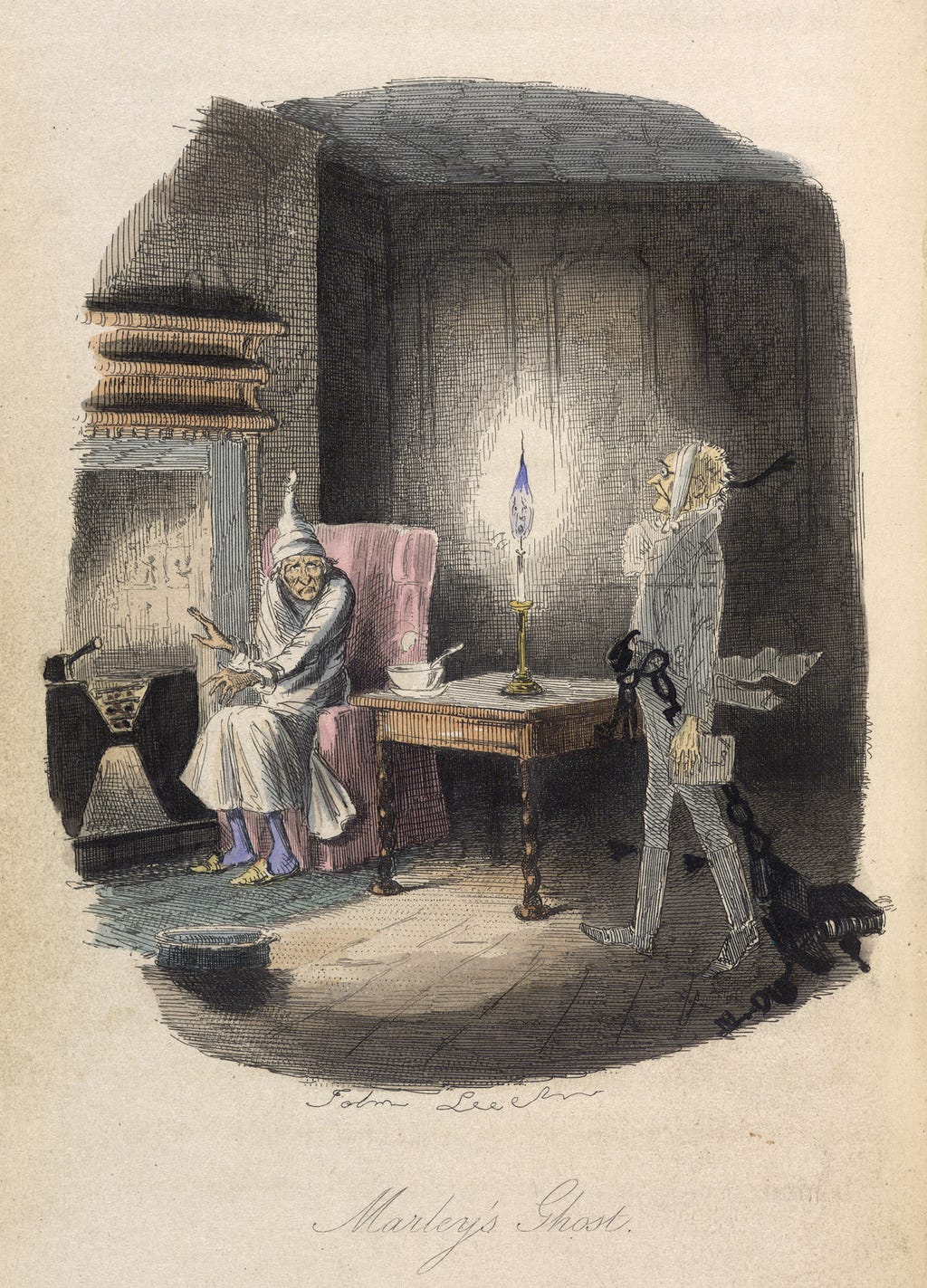
Christmas present, Dickens saw, always contains Christmas past (explaining why so many of its stories are inhabited by ghosts or children), and this gives rise to a moment of reckoning. In A Christmas Carol (1843), the accusation leveled at Scrooge is one of stinginess; the counting house turns men into creatures of rote, incapable of empathy or conviviality. Spiritedness is what matters, and even the poorest can revel in festivity. So on his ghost-flights Scrooge encounters miners, lamplighters and lighthousemen, all “blithe and loud” as they dance round fires and tell tales to one another. It was this lost spirit of Christmas that interested Washington Irving, whose sketches of customs that were dying out in England had first inspired Dickens. Irving included among these a lament about the disappearance of the Lord of Misrule — a figure older than the Anatolian Saint Nicholas, older even than the Dutch Sinterklaas or Nordic bearded elfman — who was outlawed during the English Civil War, along with the Christmas holiday and its twelve day riot of feasting and carousing.

No doubt it was Irving that Angela Carter had in mind when she wrote “The Ghost Ships” (1993), a fable about relations between the puritan New World and the superstitious old one. Even in Boston Bay, where Christmas was prohibited, citizens were still vulnerable to the witching hour. Into this permeable moment slip three ghost ships. One decorated in apple, holly, ivy and mistletoe. One fronted by a boar’s head, belching “swans upon spits and roast geese dripping hot fat.” And one carrying mummers and masquers, “large as life and twice as unnatural” (men dressed as women, bells jingling at their ankles) — the revenants of once Merry England. All three ships come sailing by and all are sunk by the puritans’ “awesome piety.” But something in their meaning will not be denied. As the Lord of Misrule falls into the Atlantic, he hurls a contraband pudding onto the shore. The next morning its plump raisins have scattered into the shoes of every child rising to pray in the “shivering dark.”

As the Lord of Misrule falls into the Atlantic, he hurls a contraband pudding onto the shore.

Inevitably, the struggle between Christianity and a barely-suppressed paganism is at the heart of many Christmas tales. Among the wintry Russians, Tolstoy and Chekhov produced stories in which Christian goodness prevails. But in “The Night Before Christmas” (1832), Gogol, writing in the folk tradition passed down to him by his Ukrainian mother, tells a wild tale that begins in the witching hour (literally, with a witch on a broomstick), where the devil gets his due. Gogol’s magic is not Christian (miraculous and didactic), but that of a trickster who steals the moon and hides it in his pocket. As in Dickens, a man is flown about by a spirit, but for the purpose of mischief-making rather than moral instruction.

A century later, Nabokov wrote two stories typical of his canon in their cunning and tenderness, while at the same time pinning the essential elements of the Christmas genre. “Christmas” (1925) is about a father visiting his country manor after the death of a beloved son, whom he remembers netting butterflies. When he moves one of his son’s pupae into the heat of the house it emerges unexpectedly, a rebirth as fantastic as the Resurrection itself. This is fiction as consoling and full of powerful magic as any religion. It is written wittingly, inside, and out of, tradition — Christian, rather than Gogol’s paganism — and, like the smartest of these tales, knows its place, even as it tries to usurp it.

Three years later in “A Christmas Story,” Nabokov conducted the discussion of a story’s “place” out in the open, pondering the fate of the imagination under tyranny and reconsidering the debate about puritanism. Wondering how to write fiction in a manner acceptable to Soviet Russia’s cultural commissars, an old writer, a novice writer, and a critic all discuss how Christmas can be viable in times that insist only on the real. Finally, the old man comes up with a story in which well-fed Europeans are mesmerized by a shop-window Christmas tree stacked with ham and fruit, all the while ignoring a body slumped “in front of the window, on the frozen sidewalk — ”. The sentence needs no completion: the winning formula has been found (decadent foreigners blind to the suffering of the poor). As one might expect from Nabokov, it is a knowing piece — the old writer struggling to describe Christmas in the critically-approved language (the “insolent Christmas tree,” the “so-called ‘Christmas’ snow”), and the critic, who writes for a journal called Red Reality, praising the novice’s depiction of peasant lust, but dismissing his portrayal of an intellectual because “There is no real sense of his being doomed…”

In the second half of the twentieth century writers continued to take the Christmas story apart, alerting readers to its dialogism; sometimes, as in Dylan Thomas’s unruly tale, “A Child’s Christmas in Wales” (1955), even granting them a walk-on part. Here, a memoirist channelling “distant speaking…voices” conjures a reader who queries his fantastic account of a time long ago when there were “wolves in Wales…and we chased, with the jawbones of deacons, the English and the bears.” Paul Auster’s tale comes less directly and innocently out of a folk tradition, but seems the most consummate of Christmas stories in the way it assembles and disassembles itself. There are multiple narrators and a story within a story; there is the “business about the lost wallet and the blind woman and the Christmas dinner”; notes to the reader about trusting the storyteller (“he knew exactly what he was doing”); lessons in the suspension of disbelief and fictional ‘truth’; and discussion of the “out-and-out conundrum” of the unsentimental Christmas story. Finally, there is a polite reminder to pay the piper.

For Grace Paley and Alice Munro the mystery is no longer a matter of miracle or spirit but a modern question of identity and doubt.

Other writers have reformulated the Christmas story by putting a new spin on the old tale. For Grace Paley and Alice Munro the mystery is no longer a matter of miracle or spirit but a modern question of identity and doubt. They find fresh perspectives with young girls as protagonists who speak distinctively in the first-person, though without a hint of Thomas’s orotundity or Auster’s complicity. Their stories, echoing the Teaching of the old story, are about education.

In Paley’s “The Loudest Voice” (1959), Shirley Abramowitz, child of the noisy Brooklyn street, is chosen to read the text in her school’s Christmas play. But she and her friends are Jewish immigrants and their involvement in a Christian drama creates tensions in a community divided in its views on assimilation. “This is a holiday from pagan times also, candles, lights, even Hannukah,” her papa says, arguing for his daughter’s inclusion, “So we learn it’s not altogether Christmas.” When the play is over, the parents debate in Yiddish, Russian, Polish. Why had so few American kids gotten big parts? “They got very small voices,” Shirley’s mother points out, “why should they holler? Christmas…the whole piece of goods…they own it.”

Munro’s heroine is too young to become a waitress so she takes a job as a turkey-gutter. “Are you educated?” is the first question anyone asks her in “The Turkey Season” (1980), and an education is precisely what she gets observing relationships in this family firm. She learns whose power is ostensible and who really runs the place; about the skill involved in dissecting a carcass; how seriousness and curiosity can overcome disgust (“Have a look at the worms…Now put your hand in”); even that there are some mysteries, “voluptuous curiosities,” such as the sexuality of her supervisor, which will not yield to scrutiny.

This one has a curmudgeon to match Scrooge — not in asceticism (she orders far and wide on the Internet) but in her refusal to get into the Christmas spirit.

In the twenty-first century, there has been a revival of the Christmas story, with examples from Jeanette Winterson, Will Self, A. L. Kennedy and Jackie Kay. One of the most attuned to the times is Ali Smith’s pointedly titled, “Do You Call That a Christmas Present?” (2008). This one has a curmudgeon to match Scrooge — not in asceticism (she orders far and wide on the Internet) but in her refusal to get into the Christmas spirit. What this woman wants for Christmas are comforters: wine and cake, socks and scarves; what she gets is a block of ice, a skeletal tree with dirty roots, a mad girl standing outside in the snow, serenading her. At first she is appalled, but her lover’s enthrallment to the season is infectious. Despite her cynicism, when a girl dressed as a boy soars through the air at the pantomime, she finds her face “wet with tears.” Soon she is watching Christmas films and singing Christmas songs. “Have yourself a merry little Christmas,” she hums and, at last, she is.

The whole piece is traditional as can be, hitched to “The Twelve Days of Christmas.” By the eighth day, she is “telling stories of Christmas past,” ones spent with lovers and family, and ones alone. She thinks about the old, old story (“no room at the inn”) and other exiled, lonely people. On the eleventh, she goes night-walking, marvelling at the snow’s “constellations” and the glistening, lit-up windows; she is already regretting the passing of the shortest day. Finally, on the twelfth, she shows her true love how much she has learned, giving her a present of logs and matches. Together they set a fire that throws “companionable shadows,” and sing to one another of the partridge and the pear tree.

As Irving and Dickens showed in their early attempts to resurrect the spirit of Christmas, and as Smith sees so clearly today, there is real, assayable value in the old traditions and great enjoyment to be had from them. Even in our prickly individualism, hemmed in by consumer goods, there are moments when we can escape from safe, homogenized lives to experience the tingling pleasures of heat and cold, of icy days and starry nights. The Christmas story reveals these freely available good things in front of us as it binds us to custom and continuity, drawing us back. Amid plenty and diversity it acts cohesively, bathing us in Platonic firelight and seating us at an imaginary hearth with ancestors for whom storytelling “in the light and the dark” was the greatest delight.

PODCAST: Jason Diamond and Jen Vafids Dissect the 1998 Great Expectations Adaptation

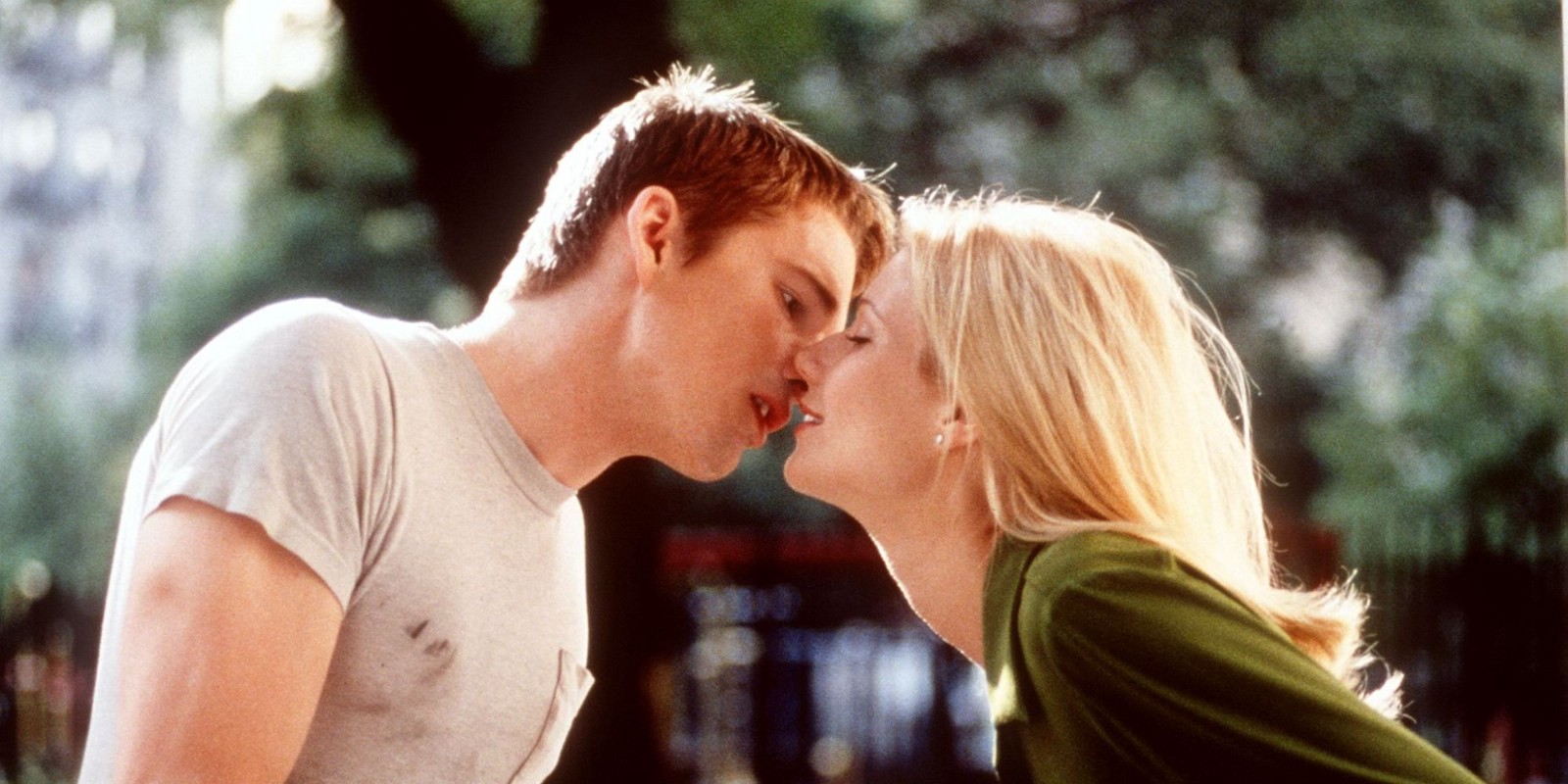
There are some films that are innovative and interesting takes on classic books, and then there is the 1998 adaptation of Great Expectations. Directed by and starring a bunch of people who won, or would go on to win Oscars, the movie is part of a trend in the 90s that attempted to take classic literature and give it a fresh and hip edge (think Clueless, Romeo + Juliet, Cruel Intentions), but as Jason Diamond and Jen Vafids discuss on this episode of Ryder + Flyte, the results are mixed at best.

Hole

by Jen Beagin

Excerpted from PRETEND I’M DEAD

He lived downtown, in a residential hotel called the Hawthorne, a six-story brick building sandwiched between a dry-cleaning plant and a Cambodian restaurant. When she arrived three Cambodian gang members were loitering in front of the restaurant. It was broad daylight and she felt overdressed in her black kimono shirt and slacks. She also felt whiter and richer than she was. The sixty bucks in her pocket felt like six hundred.

The lobby had the charm of a check-cashing kiosk. A security guard stood at the door and a pasty fat man sat in a booth behind thick, wavy bullet-proof glass. Mona slipped her ID through the slot.

“Who you here to see?”

She gave him Mr. Disgusting’s name.

“Really?” he asked, looking her up and down.

“Yeah, really,” she answered.

Mr. Disgusting came down a few minutes later, wearing gray postal-worker pants and a green t-shirt that said “Lowell Sucks.”

“You look nice,” she said.

“I scraped my face for you.” He took her hand and brought it to his bare cheek and then clumsily kissed the tip of her thumb. She blushed, glanced at the fat man behind the desk, who studied them with open disgust. “You get your ID back when you leave the building,” he said into his microphone.

They shared the elevator with a couple of crackheads she recognized from the neighborhood. Mr. Disgusting kept beaming at her as if he’d just won the lottery. For the first time in years, she felt beautiful, like a real prize. They got off on the third floor.

“It’s quiet right now, but this place is a total nuthouse,” he said.

“Doesn’t seem so bad,” she lied.

“Wait until dark,” he said, pulling out his keys.

His room smelled like coffee, cough drops, and Old Spice. All she saw was dirt at first, one of the main hazards of her occupation. She spotted grime on the windowsill and blinds, dust on the television screen, a streaked mirror over a yellowed porcelain sink. The fake Oriental rug needed vacuuming, along with the green corduroy easy chair he directed her to sit in.

Once seated, she switched off her dirt radar and took in the rest of the room. She’d expected something bare and cell-like, but the room was large, warm, and carefully decorated. He had good taste in lamps. Real paintings rather than prints hung on the walls; an Indian textile covered the double bed. He owned a cappuccino machine, an antique typewriter, a sturdy wooden desk, and a couple of bookcases filled with mostly existential and Russian novels, some textbooks, and what looked like an extensive collection of foreign dictionaries.

“Are you a linguist or something?” she asked.

“No, I just like dictionaries.” He sat directly across from her, on the edge of the bed, and crossed his legs. “I find them comforting, I guess. Most of these I found on the street.”

“You mean in the trash?”

He shrugged. “I’m a slut for garbage.”

“Your vocabulary must be pretty impressive,” she said. “Do you have a favorite word?”

He thought about it for a second. “I’ve always liked the word ‘cleave’ because it has two opposite meanings: to split or divide and to adhere or cling. Those two tendencies have been operating in me simultaneously for as long as I can remember. In fact, I can feel a battle raging right now.” He clutched his stomach theatrically.

She smiled. It was rare for her to find someone attractive physically and also to like what came out of their mouths.

“What’s your least favorite word?” he asked.

“Mucous,” she said.

He nodded and scratched his chin.

“I wasn’t born like this,” he said suddenly. “Moving into this hellhole did quite a number on me — you know, spiritually or whatever. I haven’t felt like myself in a long time.”

He’d lived there seven years. Before that, he owned a house in Lower Belvidere, near that guns and ammo joint. He’d had it all: a garage, a couple of cats, houseplants. She asked what happened.

“I was living in New York, trying to make it as an artist,” he said. “I had a couple shows, sold a few paintings, was on my way up. During the day I worked as a roofer in Queens.” He stopped, ran his fingers through his hair. “One night I was on my way home from a bar and I was shit-faced, literally stumbling down the sidewalk, and out of nowhere, two entire stories of scaffolding collapsed on top of me, pinning me to the concrete. A delivery guy found me three hours later. Broke my clavicle, left arm, four ribs, both my legs. Bruised my spleen. My fucking teeth were toast.

“After I got out of the hospital, I couldn’t exactly lump shingles as a roofer, so I crawled back to Lowell. Then I got this big settlement and was able to buy a run-down house, but one thing led to the other.” He pointed to his arm. “I pissed it away, made some bad decisions. I’ve been living in a state of slow panic ever since.”

“Sounds like you’re lucky to be alive.”

He shrugged. “Am I?”

She felt her scalp tingle. For as long as she could remember she’d had a death wish, which she pictured as a rope permanently tied around her ankle. The rope was often slack and inanimate, trailing along behind her or sitting in a loose pile at her feet, but occasionally it came alive with its own single-minded purpose, coiling itself tightly around her torso or neck, or tethering her to something dangerous, like a bridge or a moving vehicle.

Mr. Disgusting plucked a German pocket dictionary off the shelf and leafed through it. He was certainly a far cry from the last guy she dated, some edgeless dude from the next town over whose bookshelves had been lined with Cliffs Notes and whose heaviest cross to bear had been teenage acne.

“Do you know any German words, Mona?” he asked, startling her. It was only the second time he’d said her name.

“Only one,” she said. “But I don’t know how to pronounce it.”

“What’s it mean?”

“World-weariness.”

“Ah, weltschmerz,” he said, smiling. “You have that word written all over you.”

“Thanks.”

He was beaming at her again. Where had he come from? He was too open and unguarded to be a native New Englander. She asked him where he was born.

“Germany,” he said.

According to his adoption papers, his birth mother was a French teenage prostitute living in Berlin. An elderly American couple adopted him as a toddler and brought him to their dairy farm in New Hampshire.

“They would’ve been better off adopting a donkey,” he said. “My mother was a drunk and my father danced on my head every other day.”

He ran away with the circus when he was seventeen. Got a job shoveling animal shit and worked his way up to drug procurer. It wasn’t your ordinary circus, though. It had all the usual circusy stuff, but everyone was gay: the owner, all the performers and clowns, the entire crew. Even the elephants were gay.

“What about you?” she asked.

“Straight as an arrow,” he said. After a short silence he asked, “Why, are you?”

She made a so-so motion with her hand.

“Wishy-washy,” he said. “You really are from L.A.”

She laughed.

“Well, I’m glad we got our sexual orientation cleared up,” he said. “Listen, there’s something else I need to get out of the way. Our future together depends on your reaction to this.” He smiled nervously.

“Fire away.”

She was ninety percent certain he was about to tell her he was positive.

But he didn’t say anything, just continued smiling at her, his upper lip twitching with the effort. She smiled back.

“What is this — a smiling contest?” she asked.

“Sort of,” he said.

“You win,” she said.

“Take a good look,” he said.

“Yeah, I’m looking. I don’t see anything.”

He walked over to the sink and filled a glass with water, and then he removed his teeth and dropped them into the glass.

“I’ve read Plato, Euripides, and Socrates, but nothing could have prepared me for the Teeth Police,” he said.

He held up the glass. The teeth had settled into an uneven and disquieting smile. She felt a sudden rawness in her throat, as if she’d been screaming all night.

“They’re grotesque — don’t think I’m not aware of that. I call the top set the Cathedral of Notre Dame. Notice the massive dome and flying buttresses.”

She smiled. The lump in her throat had shrunk, allowing her to swallow.

“What I really need to do is have the roof cut out of the damn thing. There’s this weird suction thing going on whenever I wear it.”

“It cleaves to the roof of your mouth,” she managed, and held her hand up for a high five.

“Precisely,” he said, slapping her hand. “Very uncomfortable.”

He set the glass on the sink and sat on the bed again, gazing distractedly out the window. She realized he was giving her a chance to study his face. He looked better without the teeth-more relaxed, more like himself somehow.

“Well,” she said. “It’s not like I’ve never seen false teeth before.”

“Yeah, but have you been in love with someone who has them?”

She felt her eyes widen involuntarily. “Who says we’re in love?”

“I do,” he said.

For the first time since setting foot in the building, she felt a twinge of fear. She imagined him throwing her onto the bed, gagging her with one of his socks.

“I’m kidding,” he said.

“How old are you?” she asked, changing the subject.

“Forty-four,” he said.

“I might be too young for you,” she said. “I’m only twenty-three.”

“That isn’t too young for me,” he said seriously.

“Of course it isn’t,” she said, and laughed. “What I’m trying to say is that you might be too old for me.”

He frowned. “I had a feeling the dentures would be a deal breaker.”

“It’s not that,” she said quickly. Or was it? She imagined him sucking on her nipples like a newborn, and then waited for a wave of repulsion to wash over her. Instead, she felt oddly pacified and comforted by the image, as if she were the one being breast-fed. “I’m thirsty,” she said.

He made Mexican hot chocolate with a shot of espresso. They sat side by side on his bed, sipping in silence. She noticed a notebook lying on the bed and resisted the urge to pick it up. He saw her looking at it. “That’s the notebook I write snatches of poetry and ridiculous ideas in,” he said.

“Good to know.”

“Do you have anything embarrassing you want to show me? A bad tattoo, perhaps?”

“My parents gave me away to a practical stranger, so my fear of abandonment feels sort of like a tattoo,” she said. “On my brain.”

He smiled. “You visit them?”

“Dad, never. Mom, rarely.”

Rather than a photo, Mona kept a list of her mother’s phobias in her wallet. She was afraid of the usual stuff — death, beatings, rape, Satan — but these commonplace fears were complemented by generalized anxiety over robbers, Russians, mirrors, beards, blood, ruin, vomiting, being alone, and new ideas. She was also afraid of fear, the technical term for which was phobophobia, a word Mona liked to repeat to herself, like a hip-hop lyric. Whenever Mona longed for her, or felt like paying her a visit, she glanced at that list, and then thought of all the pills and what happened to her mother when she took too many, and the feeling usually passed.

“My parents are addicts,” she said and yawned. “But I shouldn’t talk — I’ve been on my share of drugs. Psychiatric.”

“Antipsychotics?”

She laughed. “Antidepressants.”

“No shame in that,” he said. “I’m on four-hundred grams of Mellaril. My doctor said I could develop something called rabbit syndrome, which is involuntary movements of the mouth.” He twitched his mouth like a rabbit, and she laughed.

“What’re you taking it for?” she asked.

“Opiate withdrawal,” he said. “But they usually give it to schizophrenics.”

She nodded, unsure of what to say. He grinned at her and suddenly lifted his T-shirt with both hands. On his chest, a large, intricate, black-and-gray tattoo of an old-fashioned wooden ship with five windblown sails. The Mayflower, maybe, minus the crew. Above the ship, under his collarbone, a banner read “Homeward Bound” in Gothic script.

“Wow,” she said.

“One of the many useless things I purchased with my insurance money,” he said.

“Well, this is kind of embarrassing,” she said, “but I have some pretty big muscles. My biceps and calves are totally jacked. When I wear a dress — which is never — I look and feel like a drag queen.”

“Let’s see,” he said.

She hesitated and then pushed up her sleeve and made a muscle.

“What are these?”

He was pointing to the scars on her upper arm. They were so old she didn’t even see them anymore, but she looked at them now. There were four in that spot, about two inches long each. The cutting had started her sophomore year, immediately following her first dose of rejection by a boy she’d met at a Circle Jerks show.

“Teenage angst,” she said.

“Ah.”

“Maybe that’s more embarrassing than the muscles.”

He made a sympathetic noise and traced one with his finger. Usually she flinched whenever someone touched her arm, but she liked the feel of his hand. She felt something shift inside her — a gentle leveling, as if she’d been slightly out of plumb her whole life without knowing it.

He squeezed her bicep. “Are you a gym rat, love?”

“God, no,” she laughed. “I vacuum. I’m a cleaning lady.”

He blinked at her. “What — like a janitor?”

“Residential.”

“So you clean… houses.”

“Two or three a day,” she said. “In Belvidere, mostly.”

“You clean for a bunch of rich turds,” he said, finally wrapping his head around it.

“Basically,” she said. “Why the surprise?”

“I just think you’re a little above that kind of thing. Seems like a waste.”

She shrugged. “I’ve always felt a weird affinity for monotony and repetition.”

In fact, vacuuming was among her favorite activities. On applications she listed it as one of her hobbies. Even as a child she preferred vacuuming over things like volleyball and doll play. Her classmates had been forced to learn the cello and violin, but her instrument, and strictly by choice, had been a Hoover Aero-Dyne Model 51.

As a teenager she developed a preference for vintage Eurekas. Now she owned four: models 2087, 1458, an Electrolux canister vacuum, and a bright-red, mint-condition Hot Shot 1423, which she christened Gertrude. She’d found Gertrude in a thrift store. Love at first sight.

“Anyway, I’d much rather push Gertrude around someone’s house than sit in a generic office all day. I’ve always felt very relaxed in other people’s homes, and I like the intimacy involved, even though it’s not shared — these people don’t know the first thing about me. But yes, the rich turds, as you call them, can be a bitch to work for — it’s true. I think many of them struggle with the, uh, intimacy.”

“Why — are you sleeping with them?”

“Of course not,” she laughed. “I never see them. Many of them I’ve never met in person. But I know as much as a lover might — more, maybe — and they seem to resent me for that.”

“Ah,” he said. “You’re a snoop.”

“I’m thorough,” she said. “And… observant. You learn a lot about a person by cleaning their house. What they eat, what they read on the toilet, what pills they swallow at night. What they hold on to, what they hide, what they throw away. I know about the booze, the porn, the stupid dildo under the bed. I know how empty their lives are.”

“How do you know they resent you? Do they leave turds in the toilet?”

“They leave notes,” she said. “To keep me in my place. Funny you mention toilets — yesterday a client left me a note that said, ‘Can you make sure to scrub under the toilet rim? I noticed some buildup.’ And I was like, Oh wait a minute, are you suggesting I clean toilets for a living? Because I’d totally forgotten — thanks.”

He scowled. “I’m glad I don’t have to work for assholes.”

“Why don’t you?” she asked.

He smiled and told her he made his living as a thief.

Awesome, she thought. Well, he lived in a hotel so he was definitely small-time. She pictured him running through the streets, snatching purses.

“You don’t take advantage of old ladies, do you?” she thought to ask.

“I do, in a way,” he said matter-of-factly. “I mean, sometimes I do.”

“Well, are you going to elaborate, or do I have to guess?”

“I work for a flower distributor,” he said. “I supply him with pilfered flowers.”

“You’re a flower thief?” Now it was her turn to be baffled.

“That’s right. It’s seasonal work.”

Well, it explained the dirt under his fingernails and the scratches on his hands and arms.

“It’s hard work,” he said. “There’s a lot of driving and sneaking around. And I have to work the graveyard shift, obviously.”

“What kind of flowers do you steal?”

“Hydrangeas, mostly. Blue hydrangeas.”

“You just wander into people’s yards?”

He nodded. “Just me and my clippers! I can wipe out a whole neighborhood in under an hour,” he said, clearly pleased with himself.

She thought of the hacked bushes she’d seen in the Stones’ yard last week. “I think I’m familiar with your work, actually,” she said. “So what do you steal in the winter?”

“Why not ask me in December?” He winked.

“How’s the pay?”

“The guy I work for is a friend of mine. He pays me under the table for the hydrangeas, but he also keeps me on the payroll so I get benefits. It’s like a real job. Anyway, don’t look so upset. It’s not like I’m stealing money. They grow back.”

Against her better judgment, which had left the room hours ago and was probably on its way to the airport, she hung around. They continued talking and swapping war stories, sitting side by side on the bed. By the time the streetlights came on, he took the liberty of leaning in for their first kiss. It was just as she’d imagined it all those months-dry, sweet, a little on the solemn side.

It was like dating a recent immigrant from a developing nation, or someone who’d just gotten out of jail. They went out for dinner and a movie, usually a weekly occurrence for her, but Disgusting’s first time in over a decade. The last movie he’d seen in the theater was The Deer Hunter. At the supermarket she steered him away from the no-frills section and introduced him to real maple syrup, fresh fruit, vegetables not in a can, and brand-name cigarettes. He showed his thanks by silently climbing the fire escape at dawn, after his flower deliveries, and decorating her apartment with stolen hydrangeas while she slept. Easily the most romantic thing anyone had done for her, ever.

Besides the flowers, his first significant gift was a series of drawings he found in the basement of a condemned house. There were seven in total, about five by seven inches each, loosely strung together in the upper-left corner with magenta acrylic yarn. They were crudely drawn in black and red crayon, seemingly by a child. She liked them instantly but was much more fascinated with the captions scrawled across the top of each one. The captions read:

There was a house

A little girl

Two dogs

One Fat Fuck

It was a nice skirt

Fat Fuck was found with no hands

Fat Fuck is dead

He thought the best place to display them was the bathroom. “It’ll give us something to contemplate on the can,” he said. “We can come up with Fat Fuck theories.”

They decided to hang them side by side above the towel rack, and she stood in the doorway, watching him tap nails into the wall. She’d never been in a relationship with someone who owned a hammer. He was wearing a pair of checkered boxers and his Jack Kerouac T-shirt, which had a picture of Kerouac’s mug on the front, along with the caption “Spontaneous Crap.” He’d made the shirt himself and usually wore it during the annual Kerouac Festival, when Kerouac’s annoying friends and fans descended upon Hole to pontificate about the Beat Generation. He called himself president of the I-Hate-Jack-Kerouac Fan Club.

His teeth, she noticed, were resting on top of the toilet tank. As usual, the sight of them produced a buzzing in her brain, like several voices talking over one another. She wanted to put them back in his mouth, or in a jar, the medicine cabinet, a drawer. They needed some kind of enclosure.

“Ever been with a fat guy?” he asked.

She told him yeah, she’d gone to the prom with a fatty named Marty, a funny and friendless guy she knew from art class. He’d been a couple years older than her and, at age seventeen, had already been to rehab twice. Since his license was suspended, his mother had driven them to the prom in her Oldsmobile, and they’d sat in the backseat as if it were a limo.

“Did you wear a dress?” he asked.

“I did,” she said. “It was black and made of Spanish lace. I found it in a thrift store. It came with a veil, but Sheila wouldn’t let me wear that. In fact, she insisted I wear this really gay red flower in my hair.”

“I bet you looked like a hot tamale,” he said.

“I’ve always wanted to be more Spanish,” she admitted.

“How Spanish are you?”

“A quarter.”

“How was it being with a fat guy?” he asked. “Were you on top?”

She rolled her eyes. “Never happened.”

“Did you get loaded?”

“We split half a gallon of chocolate milk on the way there. Then he had a panic attack, so I fed him some of my Klonopin.”

He scratched his beard. “We should start a band called Klonopin.”

She brushed by him and retrieved an old canning jar from under the bathroom sink. She filled it with water and then dropped the dentures into the jar and placed it on the counter, next to her toothbrush. When she looked at him she was startled to see tears in his eyes.

“What’s wrong?”

“Nothing,” he said.

“It’s just a jar.”

He shook his head. “You’re the first woman to touch my teeth without wincing.”

“I clean toilets for a living,” she reminded him. “It’s hard to make me queasy.”

“Makes me want to marry you.”

She laughed. He’d been saying that a lot lately.

If only their sex life were less difficult. He referred to his organ as either “a vestigial, functionless appendage” or “the saddest member of the family.” As for hers, he paid it a lot of attention and talked about it as if it were his new favorite painting — how young and fresh; what extraordinary color and composition. “You have the most beautiful pussy I’ve ever seen in person,” he marveled. “And I’ve seen dozens. You can’t imagine the shapes they come in.” Since he’d taken care to qualify the compliment with “in person” — obviously, he’d seen more beautiful pussies in print or on film — she thought it must be true, and it popped into her mind randomly and without warning, while cleaning out someone’s refrigerator or vacuuming under a bed.

He made love to her primarily with his hands and mouth — like a woman would, he said — and also with his voice. She wasn’t read to as a child, which he considered an outrage, and so, after sex — or sometimes before — he read to her from Kipling’s The Jungle Books (his choice), which suited his voice perfectly, because if wolves could talk they would sound just like him, and then short stories by Hemingway, whom he called Uncle Hem, and Flannery O’Connor and Chekhov and some other people she’d never heard of.

On Sundays they climbed the fire escapes of the abandoned mills downtown — their version of hiking — and rolled around on the rooftops. If the weather was nice they smoked cigarettes and took black-and-white photographs of each other with her old Nikon. After one such expedition near the end of August, they were walking back to her apartment when Disgusting veered toward a large pile of garbage someone had left on the street.

“Mind if I sift through this stuff ?” he asked.

She waited on a nearby stoop. She heard someone exit the building behind her and blindly scooted over to let the person pass.

“Mona,” a voice said.

It was Janine Stromboni, an old acquaintance from high school, one of the few girls Mona had liked, even though they’d had zero in common. Janine looked much the same: huge hair, liquid eyeliner, fake nails, tight jeans.

“Wow,” Mona said. “You live here?”

“Just moved in,” Janine said, and sat down. “You still smoke?”

Mona fished two out of her bag and lit them both before passing one to Janine. They chatted for a few minutes and then Mr. Disgusting waltzed up carrying a green vinyl ottoman.

“A footrest for my footsore princess,” he said and gallantly placed it at her feet.

She introduced Disgusting to Janine. To Mona’s relief, he looked good that day, like your average aging hipster. He had a tan, recently dyed black hair, and was sporting a Mexican cowboy mustache. His denim cutoffs were a little on the dirty side, but his shirt was clean, and Janine would never know the shoes he was wearing had been retrieved from a Dumpster.

Janine, however, looked plainly disgusted by Disgusting, and for a split second she saw him through Janine’s eyes: an old dude with dirty hair and no teeth, what Janine would refer to as a “total creature.”

Janine bolted right after the ciggie. The encounter permanently altered Mona’s perception of Disgusting, and from that day forward, depending on the light and her angle of perspective, he alternated between the two versions — aging hipster, total creature, aging hipster, total creature — like one of those postcards that morphs as you turn it in hand.

Her feelings for him, however, didn’t change. If anything, she grew more attached. Like cancer, he had a way of trivializing the other aspects of her life. Things that had previously seemed important were now pointless and absurd, her college career in particular. So, when the time came to register for the fall semester, she blew it off. Her major, studio art with a concentration in photography, seemed like a joke now, especially in busted and depressing-as-hell Hole. If she was going to study art, she reasoned, didn’t it make more sense to go to a real art school in a city that inspired her?

“Fuck art school altogether,” Disgusting said. They were in bed, wearing only their underwear and listening to his collection of psychedelic records, which he’d brought over to her apartment on their fourth date and to which they’d been dancing ever since. Dancing, Disgusting maintained, was the key to salvation.

“I can see going to college for math or science,” he said. “But art? Waste of time. All you really need is persistence and good taste, which you already have. The other junk you can pick up from books.” He smiled and slipped his hand into the front of her underpants. She was wearing one of her days-of-the-week underwear, the green nylon ones with yellow lace trim, the word “Wednesday” stitched across the front in black cursive. It was Friday.

“You smell different today.” He removed his hand and thoughtfully sniffed his fingers. “You smell like… hope.”

“What do I usually smell like — despair?”

“Like a river,” he said. “A little-known river in Latvia.”

She pulled at the waistband of his boxers, but he stopped her. “Let’s leave my genitals out of this.”

“Why?”

“Too sad and disappointing.”

“But I like your sad and disappointing genitals,” she assured him. “Besides, they wouldn’t be so sad if you weren’t so mean to them.”

He kissed her hand and placed it on his chest and she traced the words “Homeward Bound” with her finger. “Move in with me,” she heard herself say.

He was silent for a minute. “I’m pretty high maintenance right now.”

“I can handle it.”

He cleared his throat. “Let’s embrace our lone-wolf status. Few people have what we have, which is true and total freedom. No parents, siblings, spouses. No offspring. Nothing to tie us down. We can roam the earth and never feel guilty for leaving anyone behind, for not living up to someone else’s expectations.”

“Sounds lonely,” she said.

“Don’t think of loneliness as absence. If you pay attention, it has a presence you can feel in your body, like hunger. Let it keep you company.”

“That’s not the kind of company I want.”

He kissed her mouth. “We’re lucky we found each other,” he said. “Two orphans.”

She visited him in his room at the Hawthorne twice a week. Once, after a reading session, he excused himself to go to the bathroom, located down the hall, and while he was gone she heard someone tap on his door with what sounded like acrylic fingernails.

“It’s me,” a female voice sang out.

Mona opened the door to a shapely woman with a pretty face and a crazy look in her eye. She looked American-Indian — brown skin, tall nose, long black hair parted down the middle — and was wearing a red button-down blouse with open-toed stilettos half a size too small. She’d apparently forgotten to put pants on, but had had the presence of mind to wear underwear. Mona wondered whether she was a prostitute, insane, or both.

“Is he here?” the woman asked.

“He’s in the bathroom,” Mona said.

“Are you a cop?”

“No.” Mona snorted. “Why, do I look like a cop?”

“Sort of.”

“Well, I’m not,” Mona said.

“Just slumming then, I guess,” the woman said, but not unpleasantly.

She shrugged. You may have bigger tits than I do, she thought, but otherwise we’re not so different. We both have jobs that require us to work on our knees.

“Well, tell him I came by,” the woman said as she walked away.

When Mr. Disgusting came back he launched into a story about his near suicide in Oaxaca, where he’d planned to shoot himself in the head with a gun he’d purchased in Mexico City, but had been too distracted by the scorpion on his pillow —

“Do you have a date tonight?” she interrupted.

“What?”

“Some chick came by looking for you.”

“What’d she look like?”

“A pantless Pocahontas.”

“Roxy,” Disgusting said. “She’s a sweetheart. You’d really like her.”

“Is she your girlfriend or something?”

“God, no,” he said. “I look after her and a couple of her friends.”

There was a silence while she turned this over in her mind. “Are you telling me you’re a pimp?” she asked. “Because that would be worse than having no teeth. Much worse.”

“I prefer ‘Gangster of Love,’” he said, somewhat smugly.

“Terrific.”

“It’s not what you think,” he said. “Since I work nights, I let them use my bed, provided they change the sheets. I give them a clean, safe place to conduct business. I consider it an act of kindness.”

“What do they give in return?”

“Beer money, actually.” He raised his shoulders in a so-sue-me gesture.

“But you’re sober now,” she reminded him.

“I know,” he said. “Look, this isn’t Taxi Driver, okay? These girls aren’t twelve years old. I’m not the one turning them out. They’d be doing it anyway, only they’d be out God knows where, in the back of a van — ”

“Dating a pimp isn’t what I envisioned for myself at this point,” she interrupted. “At any point,” she corrected herself.

“All I ask is that you try not to judge me.”

She sat there for a minute, trying.

“You can leave if you want,” he said. “I’m not holding you hostage here. We could end this right now, in fact. But I don’t think we’re done with each other yet, do you?”

“No,” she said morosely.

“Look, I’ll start packing tomorrow,” he said. “Okay? I’ll move in next week.”

Two days later, in the middle of a Thursday night, he called and said he was having trouble reading the writing on the wall. She knew what he meant, and replied that she, too, couldn’t always see what was right in front of her. She needed some distance from it, space —

“No, Mona, there’s actual writing on the wall, but I can’t read it,” he interrupted. She heard panic in his voice. “It’s only there when I turn the lights off and I hold a flashlight to it.”

“What’s it look like?” she asked.

“Like a swarm of bees, scribble-scrabbling.”

“Scribble-scrabbling?”

“Yeah, like, protecting the queen,” he said.

“Are you on mushrooms?”

“It’s ballpoint ink, strangely enough,” he continued, ignoring her. “Red
ballpoint.”

“Well, is it cursive, or what?” she asked, at a loss.

“Yeah, only it’s swimming backwards. It’s indescribable, really. Could you come over? Just for five minutes? I’m freaking out.”

She sneaked into the back of his building, ran up the stairs, and let herself in with the key he’d given her. He was passed out on his back with his mouth ajar, naked except for a hideous turquoise Speedo, clutching a flashlight against his chest like a rosary. She looked at the walls: nothing there, of course.

She figured he took one Mellaril too many, but in his nightstand drawer she found a dirty set of works surrounded by dirty cotton, and her head started spinning. His arms were bruise-free, but his hands and feet were swollen and she saw the beginning of an abscess on his ankle. He must have been putting it in his legs or feet. Fuck!

His notebook was lying open on his pillow and she read the open page:

I have renewed my travel visa to my favorite island. Now I can come and go without being stopped by the border police and accused of trespassing. It is pathetic how much I’ve missed this island’s scenery, its exotic food, its flora and fauna. Tonight I am in my little plane, flying around the island’s perimeter. To amuse myself, I perform tricks: triple corkscrews and low, high-speed flybys — my version of a holding pattern. But I’m running out of gas. The engine keeps cutting in and out, making little gasping noises. I’ll probably crash any minute now.

She was offended that she didn’t see her name in his diary. She tried nudging him awake, but he was out cold. No point in hanging around. She didn’t want to leave, though, without him knowing she’d been there. Rather than write a note, she removed her left shoe and then her purple sock, and slipped the sock over his bare foot. He flinched but never opened his eyes.

Over a week passed. He didn’t call and wouldn’t answer his phone. She waited for her back to go out, which was usually how her despair chose to manifest itself, but instead she became suddenly and bizarrely noise sensitive. At the supermarket she was so overwhelmed by the noise she had to clamp her hands over her ears and hum to herself, sometimes abandoning her shopping cart. After an embarrassing incident at Rite Aid, wherein she asked a woman if there was any way the woman could quiet her baby, who wasn’t even crying, just cooing, she had the bright idea to purchase earplugs, and took to wearing them whenever she left her apartment.

At work she raided people’s refrigerators, often taking breaks in the middle of the day to eat and lounge around in their living rooms, reading magazines or watching television. When there was nothing to eat, she raided medicine cabinets. Xanax, Valium, Vicodin, Darvocet — only one or two of whatever was on the menu, enough to take the edge off and still be able to vacuum. She’d always had a snooping policy — No Letters, No Diaries — but when she was high and itchy she read people’s diaries and personal papers. She read them hungrily, even if they were boring. And they were almost always boring. Afterward, she felt nauseated and ashamed, as if she’d eaten an entire birthday cake and then masturbated on their bed.

It was while reading Brenda Hinton’s weight-loss diary — full of body measurements, scale readings, and daily calorie intakes — that she finally broke down. That is, she had a coughing attack, which triggered a gripping back spasm, the likes of which she’d never felt before. She fell to her knees and lowered herself the rest of the way to the floor, where she lay for twenty minutes or so, staring at a water stain on the ceiling while Brenda Hinton’s dog, a miniature schnauzer with an underbite, calmly licked her elbow. Eventually she reached for the phone and called Sheila in Florida.

“What’s the matter?” Sheila asked.

“Back,” she said. “Muscle spasm.”

“Yoga, honey,” Sheila said.

“The downward dog isn’t going to help right now.” The schnauzer seemed to roll his eyes at her. She decided she didn’t like dogs with bangs.

“I never hear from you. What’s going on?”

She spilled the beans: she’d fallen for an addict, someone she met at the needle exchange. They were in a relationship. Yes, a romantic one. He’d been sober for six months. Now he wasn’t. “Blah, blah,” she said. “You’ve seen the movie a million times.”

To her relief, Sheila didn’t offer any banal Freudian interpretations.

“Maybe now you’ve finally hit bottom,” Sheila sighed. “I know you won’t go to Al-Anon, but it’s time to get on your knees and start talking to your H.P.”

“What’s that again?”

“Higher Power, babe.”

“Right,” she said. “Small problem: I don’t believe in God. As you know.”

“What happened to Bob?”

Bob had been her nickname for God when she was a child. She’d talked to Bob like an invisible friend. She’d mentioned this to Sheila in passing once, years ago, and Sheila never forgot it.

“Bob’s dead,” Mona said. “Prostate cancer.”

“He’s not dead, sweetie,” Sheila said sadly. “But forget about Bob. Your
H.P. can be anyone. It can be John Belushi or Joan of Arc or Vincent van Gogh. In fact, Van Gogh might be perfect for you. He was tortured by his emotions, never received positive feedback, and died without selling a single painting. If his spirit is out there, it can relieve you of your suffering. So, start now. Get on your knees and ask Vincent for help.”

She took three days off work, two of which she spent resting her back. On the third day she hobbled to the Hawthorne and let herself into his room. He was in the same position as last time, lying diagonally on his bed and wearing only his underwear. His room was trashed: he’d stopped doing laundry, emptying ashtrays, taking out the garbage.

She waved her hand in front of his face, snapped her fingers. He opened his eyes momentarily and whispered, “I’m gonna put my boots on and make something happen.” Then he nodded out again. She envied the blankness on his face.

Her presence never fully registered with him and she sat in the corner for twenty minutes, feeling as invisible as a book louse. It was worse than the way she felt at work, passing in and out of rooms, a ghost carrying a cleaning bucket.

Again, she wanted to let him know she’d been there. She removed an earring and placed it on his nightstand, along with some items from the bottom of her purse — a broken pencil, a ticket stub to a Krzysztof Kieślowski film, several sticky pennies.

It became a kind of ritual. Over the next several weeks she visited his room and left behind little tokens of herself: his favorite pair of her underwear, a lock of her hair, a grocery receipt. When she was feeling bold, she tacked a picture of herself onto the wall near his bed. But now he was never there when she was. She figured he was out and about, making something happen somewhere. Still, leaving the items made her feel less adrift, less beside the point. In fact, she was amazed by how much a few minutes spent in his room — marking her territory, as it were — seemed to straighten her out.

One day he surprised her by being not only there, but awake and lucid. She hadn’t seen him in three weeks and was startled by the amount of weight he’d lost, particularly in his face — his eyes were what they called sunken — and by the fullness of his beard, which he tugged on now as he sat on the edge of his unmade bed.

“Are you here to deliver one of your voodoo objects?”

She shrugged, embarrassed. “I guess I’m worried you’ll forget me.”

He nodded thoughtfully, as if she’d just said something really interesting. She noticed the loaded syringe parked on his nightstand, waiting for takeoff. “Looks like I’m interrupting your routine,” she said.

“I can wait until you leave.”

“Pretend I’m not here,” she said and felt her chin tremble. She’d missed his voice, his anecdotes, his eyes on her.

“I have to hop around on one leg to find a vein these days. It’s humiliating enough without an audience.” Apparently the feeling wasn’t mutual; he didn’t miss her eyes on him, or anything else about her. In fact, he barely looked at her. She sat down in the armchair.

“Why’d you relapse? Is it because we’re moving in together? If it freaks you out that much, we don’t have to do it.”

He shook his head. “It’ll sound stupid to you.”

“Try me,” she said.

He pursed his lips, shook his head again.

“What’s with the sudden reticence?” she asked. “I thought you were the show-and-tell type.”

He crossed his legs, lit a cigarette, blew smoke toward the ceiling. If she were one of those willful, high-maintenance girls, she’d be throwing a tantrum right now — stomping her feet, interrogating him, demanding answers. But then, a high-maintenance girl never would have set foot in the building in the first place, wouldn’t even be seen in the neighborhood. “You know, you’re lucky I’m so easygoing,” she said, stupidly.

“It was free,” he said after a minute. “And it hadn’t been free in twenty years. It’s hard to say no when something is free, especially for someone like me.”

“That’s your excuse?”

“It’s really as simple as that,” he said. “It has nothing to do with you.”

“Is that all you have left?” she asked, nodding toward his nightstand.

“For now,” he said.

“If I buy some more, can we do it together?” she asked. “I have a wicked backache.”

He studied her face for several seconds, finally acknowledging her, but it was quickly followed by indifference and his gaze returned to the floor.

Since he’d apparently chosen drugs over her, even after everything she’d shared with him — her mattress, her secrets, her so-called beautiful whatsit — it seemed only fair that she know what she’d been up against. She pulled forty dollars from her wallet. “Is this enough?” she asked,
placing the money on the bed.

“Cut it out,” he said, rolling his eyes.

“I’m serious,” she said.

He picked up the syringe and held it in front of her face. “This is this,” he said emphatically. “It isn’t something else. This is this.”

She blinked at him. “Is that a line from a movie?”

He crossed his arms. “Maybe.”

“You’re being slightly grandiose,” she said. “You know that, right?”

“Yeah, well, you’re not taking this shit seriously enough,” he said.

Twenty minutes later, they were sitting on his bed and he was inserting his only clean needle-the loaded one on his nightstand-into her arm. “That syringe looks really… full,” she said, too late.

“Believe me, it’s barely anything,” he assured her.

The next thing she knew she was lying on the floor of a stuffy attic. The air smelled like pencil shavings. A fan, some high-powered industrial thing, was on full blast, making a loud whirring noise and blowing a thousand feathers around. It was like the Blizzard of ’78. Then the fan clicked off and she watched the feathers float down, in zigzaggy fashion. They landed on her face and neck and she expected them to be cold but they were as warm as tears, and that’s when she realized she was crying and that the feathers were inside her. So was the fan. The fan was her heart. A voice was telling her to breathe. She opened her mouth and felt feathers fly out. There was a rushing noise in her ears, a mounting pressure in her head, a gradual awareness that something was attached to her. A parasite. She was being licked, or sucked on, by a giant tongue, a wet muscle. The sucking sensation was painful and deeply familiar, but there was no comfort in the familiarity, only dread, panic. She felt herself moving, flailing, trying to get away from it.

When she opened her eyes she felt a presence next to her on the bed. An exhausted female presence. She gasped, turned over, and found Mr. Disgusting sitting on the edge of the bed, scribbling in his little notebook.

“Ah, you’re back,” he said. “You had me worried for a minute.”

She tasted blood in her mouth. “Did something… happen?”

He closed his notebook, placed his pencil behind his ear. His pupils were pinned. “I lost you for a few minutes.”

“I passed out?”

“I think you must be allergic to amphetamines.”

“What?”

“You have a cocaine allergy,” he said patiently, as if he were a doctor. “You’re probably allergic to Novocain, too. And caffeine, maybe. Does coffee make your heart race?”

“I thought we were doing… heroin.”

“I mix them together,” he said. “I mean, nothing major — just a little pinch. It was meant for me, not you, and I’d forgotten about it.”

“Where are my boots?” she asked.

“You looked like a half-dead fish lying on the pier, just before it gets clobbered.”

“So what,” she said. “Who gives a shit?”

“I do,” he said. “That’s why I took such careful notes. I knew you’d want to know exactly what happened.”

“So what if I died while you were taking notes? You’re obviously too wasted to take me to the hospital.”

“Since when do you care about dying? Besides, I knew you wouldn’t die die. I was keeping my finger on your pulse the whole time. Your heart stopped beating for about five seconds and then it normalized. Let me ask you something: did you see anything? A white light? A tunnel? Dead people?”

“I was inside a vagina,” she said. “A giant vagina, it felt like, but then I realized it was regular sized and I was just really small.”

He smiled and nodded, as if he’d been there with her. “Whose was it?”

“My mother’s, probably.” She shuddered and hugged herself. “Is it cold in here?”

“You have a really weird expression on your face,” he said.

“Do you realize how shitty it is to be born?”

He did some slow-motion blinking.

“It’s excruciating — physically, I mean. There must be some mechanism in the brain that doesn’t allow you to remember, because if you had to live consciously with that memory… well, you’d never stop screaming.”

“It’s called birth trauma,” he said, nodding. “But I doubt it compares to other kinds of trauma. You know, like slavery. Or torture.” He gave her a significant look, but she was too nauseated to respond. She got out of bed, hobbled down the hall to the bathroom, locked the door behind her. There it was, her stupid face in the mirror.

Where’s your lipstick? she heard Sheila’s voice say. You look like hell. Why don’t you get on your knees — right here, right now — and talk to your H.P.?

She was on her knees two minutes later, vomiting into the already — filthy toilet. Puking was easy, almost pleasurable — like sneezing. She flushed, examined the ring around the bowl, imagined herself dumping Comet into it, scrubbing with a brush, spraying the lid with Windex, wiping it clean with toilet paper, moving on to the rest of the toilet-the tank, the trunk, the floor around it —

Detach, she ordered herself. Observe. Observe the dirt.

Someday, hopefully, she’d be able to enter a bathroom, even on drugs, and not envision herself on her hands and knees, scrubbing the baseboards with a damp sponge —

And that’s when she noticed Mr. Disgusting’s handwriting right next to the light switch:

If we had beans,

we could make beans and rice,

if we had rice.

Back in his room, he was still in bed, propped up against the filthy wall with a belt around his arm. His body was slack, his eyes half open. She wondered if he’d had more dope all along, or if he’d gotten it from one of his neighbors while she was in the bathroom.

“Sometimes I wish I were made of clay,” he mumbled.

He was miles away now, in his little plane, she imagined, flying around his favorite island. She put her boots on and he opened his eyes and said, “No, no, no — stay.” He patted the space next to him on the bed. “I’ll read you a story. Chekhov. ‘The Lady with the Dog.’”

“I’m sick of stories.”

In fact she felt a little like Anna Sergeyevna right now, after she and Gurov have sex for the first time. Disgraced, fallen, disgusted with herself. Aware that her life is a joke. Anna gets all moody and dramatic, but Gurov doesn’t give a fuck, and just to make it clear how bored he is by her display, the watermelon is mentioned. There it is on the table. He slices off a piece and slowly eats it, and thirty minutes tick by in silence.

Mona laughed.

“What’s funny?”

“That’s who you remind me of,” she said. “Gurov and his watermelon. You don’t really care about me. I’m just your boring mistress.”

He rolled his eyes. “Aren’t you at least a little high?”

“I read your diary,” she said.

“Of course you did,” he said. “And?”

“I’m not your favorite island.”

“There are better places to be sober,” he said, as if continuing an old conversation. “In the next life I’ll have an Airstream next to the Rio Grande, a silver bullet with yellow curtains. I’ll wash my clothes in the river and hang them on a clothesline. I’ll have vegetables to tend, books to read, a hammock, a little dog named Chek-”

He nodded off, his mouth still twisted around the word. His voice, she noticed, had lost its teeth. She crept over him on the bed, carefully unbuttoned his pants, worried her hand into his boxers. What the fuck are you doing, she asked herself. He’s gone, you fool. It’s over.

Electric Literature’s Best Nonfiction Books of 2015

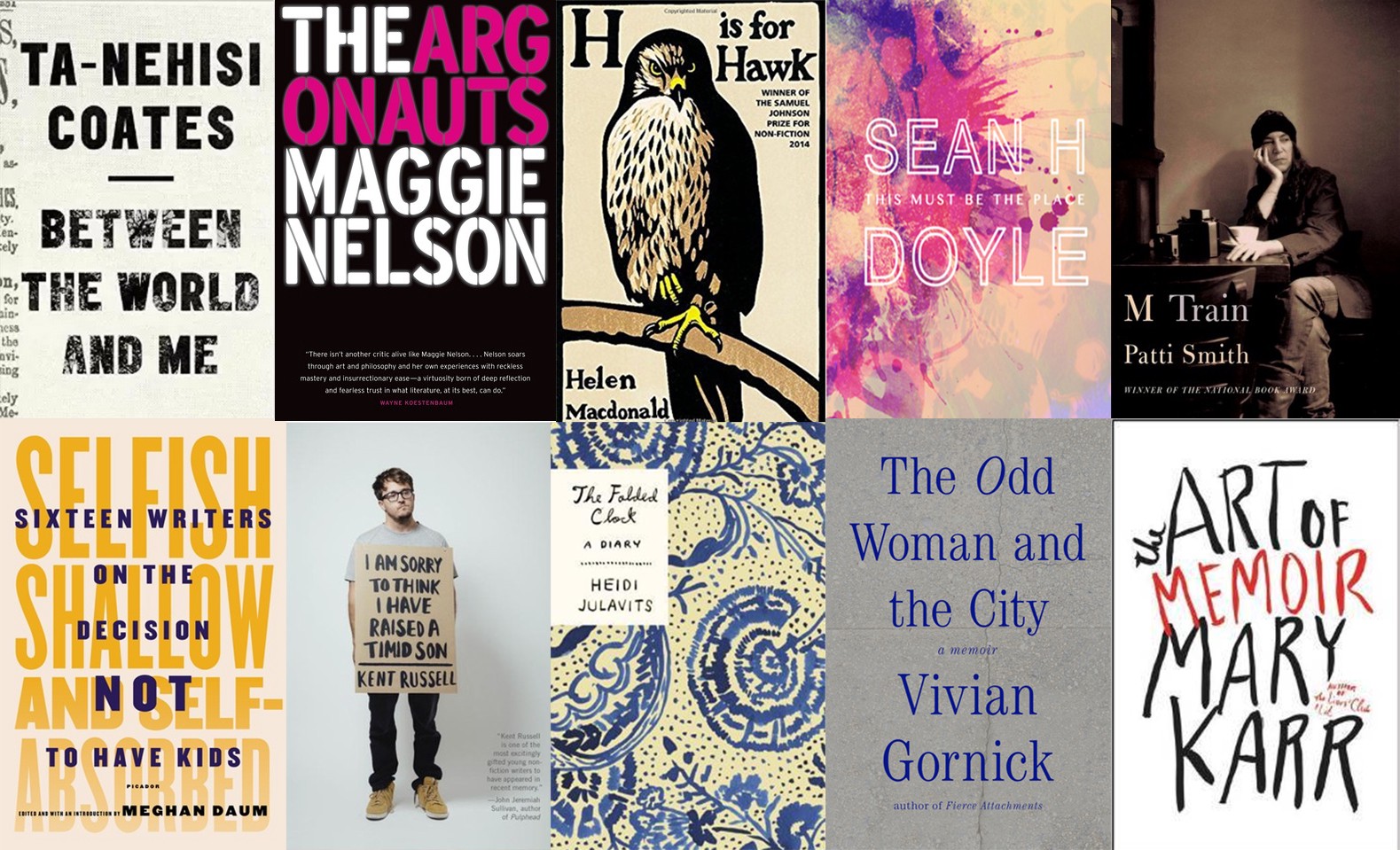
Each year, Electric Literature polls our staff and regular contributors to pick our favorite books of the year. The resulting list of nominated books was long and eclectic. We then collected the books that received the most nominations to make our final lists. Here is our list of the top ten nonfiction books of 2015 in no particular order. These books span forms and subject matter, covering issues of race, gender, nature, children, and the art of nonfiction writing itself.
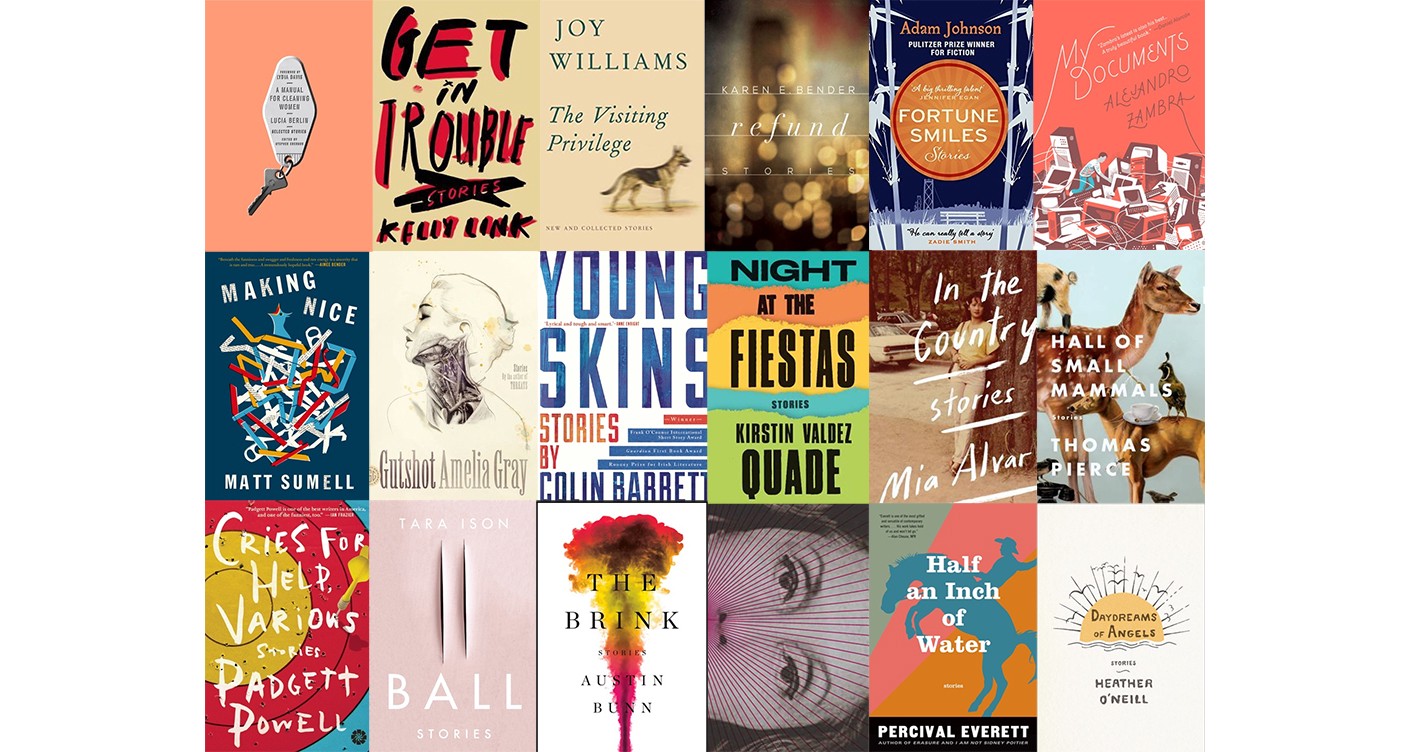
You can also read our list of the best short story collections of 2015. Best novels coming soon.

coates

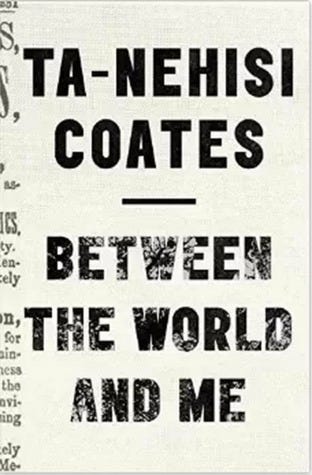
Between the World and Me by Ta-Nehisi Coates

It seems that no best-of book list this year is complete without Ta-Nehisi Coates’s Between the World and Me, and for good reason — the National Book Awards judges described it as “an essential text for any thinking American today.” However, Coates’s reflections on social and systemic racism aren’t just important lessons for today’s readers. The book is written as a letter to Coates’ son, intended to be an enduring and vital account of injustice in America that will influence and enlighten its readers for years to come.

– Benjamin Samuel, Editor-at-Large, electricliterature.com

argonauts

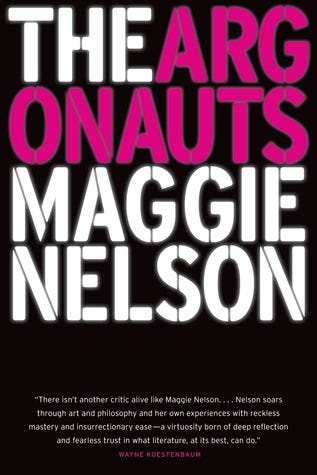
The Argonauts by Maggie Nelson

While Nelson continues to balance headier flights with bits in which she toes the brink of objecthood, The Argonauts locates its center not around thingness or the shadow of death or even in the limitations of language (though the text sheds light on each, while also digressing on the work of Eve Kosofsky Sedgwick, the lives of George and Mary Oppen, homonormativity, sobriety, and ‘performative intimacy’). The book is, at heart, about the ongoing creation of family. Standard fare? Complicating the situation of meat in The Argonauts, Dodge prefers to let body and mind exist outside the traditional male-female binary.

– Nathan Huffstutter from our review of The Argonauts

julavits

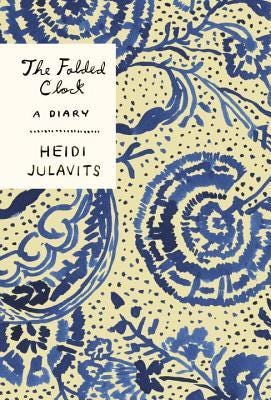
The Folded Clock by Heidi Julavits

We know Heidi Julavits as many things: novelist, essayist, sartorialist, experimentalist. With the publication of her latest book, we can now add that she is a diarist. The Folded Clock consists of diary-style entries, each beginning with the same constraint: ‘Today, I…’ True to diary form, the entries are records of daily events, but they are also meditations on loss, on memory and forgetting, on the passage of time. The Folded Clock is evidence of Julavits at her finest — an incisive and penetrating thinker, as exacting as she is forgiving in her observations about the self and the world.

– Elysha Chang from her introduction to our interview with Heidi Julavits

doyle

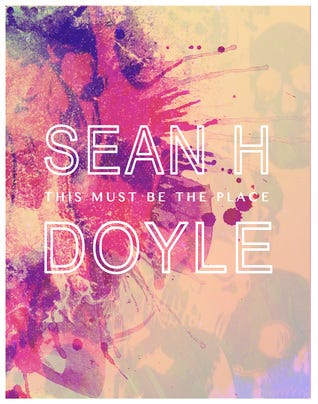
This Must Be the Place by Sean H. Doyle

Sean H. Doyle opens This Must Be the Place with a brief introduction: “These are my memories of the ghosts of myself. Be they real or not, they have made me, put me here, kept me alive and continue to do so.” In the following pages, we are taken on a wild journey via short but generous chapters that detail Doyle’s colorful life, with simple headers detailing place and date (e.g., “Outside the Marriott Hotel, Dubai, United Arab Emirates, July 1992” and “Dad’s Apartment, Sante Fe, December, 2005”). Doyle follows his memories back and forth through time, through loss and conflict and personal struggles, and leaves the reader transformed for having taken the ride along with him. Writer Jim Ruland gets it right in this description: “Sean H. Doyle is a punk rock sailor shaman with a message from way down below decks where the guys with horns and hooves go jet skiing on a lake of fire. This Must Be the Place is a ferocious testament to love and loss written with razor blades and backed with blood.”

– Catherine LaSota, Development Director, Electric Literature

m train

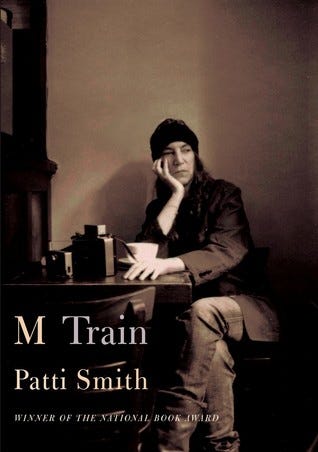
M Train by Patti Smith

Patti Smith follows up her National Book Award winning memoir Just Kids with another compelling and beautifully-written memoir about her life in New York and the arts. M. G. Lord in the New York Times Book Review called it “Rich, inventive . . . Where Just Kids charted Smith’s path from childhood to celebrity, M Train does not move in a simple arc from one destination to another. It meanders between her interior life and her life in the world, connecting dreams, reflections and memories.” Charles Finch, in the Chicago Tribune, said “It’s easy to see why so many readers say that M Train changed [their] lives. It’s every bit the book Just Kids is, full of the same lovely writing, resolute faith in the consolations of art, odd flashes of humor, rawness to memory and experience. It’s obvious why readers find a deep, deep correspondence to their own inner lives in her work.”
daum

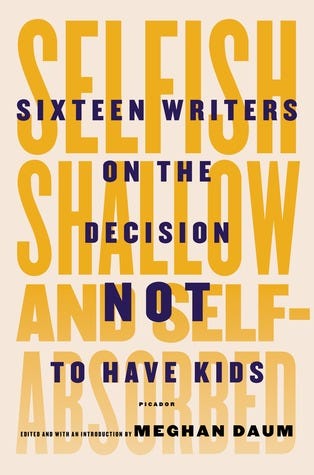
Selfish, Shallow, and Self-Absorbed by Meghan Daum

This anthology, edited by Meghan Daum, presents essays by a set of accomplished writers including Elliott Holt, Geoff Dyer, Paul Lisicky, Courtney Hodell, and Laura Kipnis, about their decisions not to have children. As Daum points out in her introduction, the sample taken here is necessarily skewed, given that all the contributors are writers, and the particular demands of being an artist might encourage a “child-free” life. However, the many personalities, circumstances, and compelling voices presented are impressively varied, and successfully complicate the false narratives and reductive judgements that many make of the “childless.” Selfish, Shallow, and Self-Absorbed is an essential read for those who are already parents as well as those who would be, won’t be or might be parents themselves.

– Halimah Marcus, Editorial Director, Electric Literature

russell

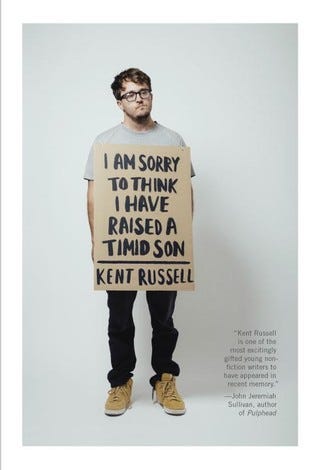
I Am Sorry to Think I Have Raised a Timid Son by Kent Russell

Kent Russell’s debut essay collection was called “a ludicrously smart, tragicomic man-on-the-edge memoir in essays” by Vanity Fair. The author Jim Shepard summed up the book this way: “For those of us who’ve been missing Hunter Thompson lately, good news: I Am Sorry to Think I Have Raised a Timid Son is as close as we’re going to get to his second coming when it comes to full-on gonzo passionate observation and self-loathing transmuted into social criticism. Its larger subject is perhaps the most toxic and entertaining of all of the can-do malevolences abroad in our land — American masculinity — but its more intimate and wrenching subject is that of one father and son, similarly self-sabotaging, masters of hurtful apathy, talkers who reject the talking cure, each shipwrecked with their shame.”

You can also read our interview with Kent Russell.

macdonald

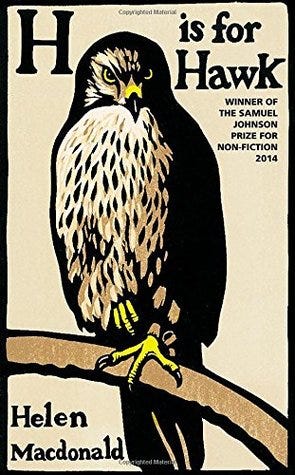
H Is for Hawk by Helen Macdonald

In her new book H Is for Hawk, Macdonald tells the story of the goshawk she acquires and trains to help her cope with the grief from her father’s death. It’s a hybrid of a book — a blend of nature writing and memoir, as well as a mini-biography of another hawk enthusiast, the fantasy writer T.H. White.

H is for Hawk won Britain’s Samuel Johnson Prize for nonfiction, and it’s now landed on bestseller lists in America. A dazzling writer, Macdonald has an almost incantatory power to evoke wonder. “My head jumps sideways,” she writes of the first time she sees her hawk. “She is a conjuring trick. A reptile. A fallen angel. A griffon from the pages of an illuminated bestiary.” The goshawk is a feral creature who leads Macdonald into the depths of her own inner wildness. Part of the drama of this story is to see how she pulls herself back from the brink once she’s become “more hawk than human.”

– Steve Paulson from the TTBOOK podcast interview with Helen Macdonald, reprinted here on Electric Literature

gornick

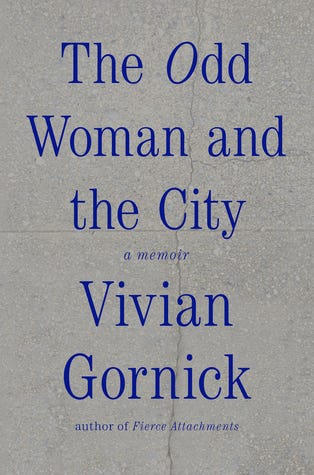
The Odd Woman and the City by Vivian Gornick

Vivian Gornick’s slim memoir, The Odd Woman and the City, is wonderfully unclassifiable. An ode to a city that’s been her home and muse for 79 years, Gornick’s New York — bursting with chance encounters, overheard dramas, lovers lost and found — is the book’s addictive pulse. On the subject of friendship, she is funny and moving and honest, tracing a long-term relationship with her friend Leonard and her twinned, contradictory impulses towards intimacy and isolation. “She is a cheerful destroyer of certainties,” says the New York Times, and it’s Gornick’s impulse to undo, to reframe, to think again, in impossibly lively prose, that makes The Odd Woman and the City such a pleasure.

– Julie Buntin

karr

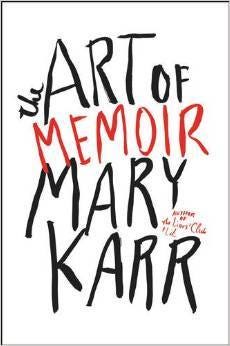
The Art of Memoir by Mary Karr

Distilling the wisdom she’s gleaned from writing her bestsellers The Liars’ Club, Cherry, and Lit, as well as the graduate course she teaches at Syracuse University, Mary Karr has written a long-awaited book on the craft of memoir-writing, and it doesn’t disappoint. The Art of Memoir engages the reader with lots of useful tips peppered with personal stories told in Karr’s trademark irreverent voice, giving you the feeling that you’ve got a good friend by your side cheering you on and willing to share the tales of her own struggles in this challenge called writing. In addition to being a memoirist, Karr is also an accomplished poet and essayist, and the writing lessons learned in The Art of Memoir can be applied to any number of literary forms.

– Catherine LaSota, Development Director, Electric Literature

Mark Twain’s Adventures of Huckleberry Finn Removed from School Curriculum

by Melissa Ragsdale

Electric Literature’s Editorial Director Halimah Marcus attended Friends’ Central High School and has written a response to this article that contains corrections.

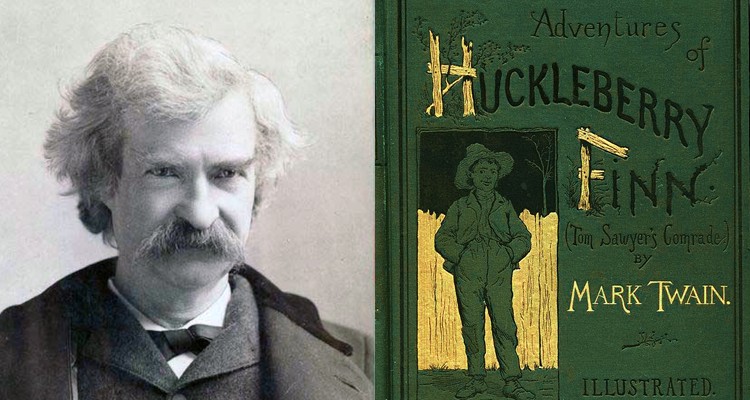
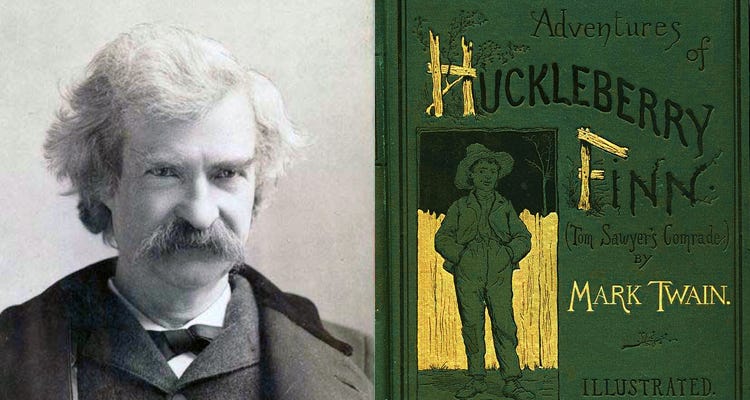
Friends’ Central School in Wynnewood, Pennsylvania has just pulled Mark Twain’s classic Adventures of Huckleberry Finn from its 11th-grade American Literature curriculum. A group of students reported they felt “uncomfortable” with the book’s use of the n-word, and in response, the school held a forum for students and faculty over the issue, ultimately deciding that the book will be replaced by the memoir Narrative of the Life of Frederick Douglass, an American Slave.

“We have all come to the conclusion that the community costs of reading this book in 11th grade outweigh the literary benefits,” Principal Art Hall wrote in a letter to parents of Friends’ Central students.

This is certainly not Huckleberry Finn’s only ban — in fact, it was first banned in 1885, just months after its release. According to the American Library Association, it was the fifth most challenged book in the 1990s, and the fourteenth most challenged in the 2000s.

This incessant banning of Huckleberry Finn paints an interesting portrait of how the American psyche has evolved. When it was first banned, censors protested its anti-slavery stance and the portrayal of a friendship between an escaped African-American slave and a white boy. Now, however, the tables have turned, and it is frequently under fire for its frequent use of the n-word.

The relationship between education and race is, understandably, an important and an often-disputed territory. For instance, this fall the children’s book A Fine Dessert by Emily Jenkins was criticized for its racially insensitive depiction of a smiling slave, sparking a debate over how slavery should be handled and discussed, particularly in children’s literature.

These two controversies ask similar questions about how to navigate race in education: Where is the line between comfort and ignorance?

Complicating Literature: An Interview With M. Bartley Seigel, Outgoing Editor of PANK

In the decade since its founding, PANK Magazine has become a mainstay of the literary magazine world, offering readers a regularly dizzying array of new literature from writers both emerging and established. Sometimes serious, sometimes risqué, but reliably disestablishment and carrying with it a cultish following, the magazine has enjoyed unusual success for a publication within its niche. The New York Times Magazine called PANK “a raft of experimental fiction and poetry.” Travis Kurowski, editor of Story Magazine and columnist for Poets & Writers, had this to say of PANK: “Like McSweeney’s was nearly 20 years ago (and The Paris Review 40 years before that), PANK has been one of those lit mags that seemed to represent the zeitgeist of a generation — -a literary turn towards diversity, queerness, raw authenticity. Just flip open an issue from years ago and you’ll see many who have since emerged as important voices: Lincoln Michel, Ashley Ford, Ocean Vuong. It’s hard to tell which publishers are driving movements and which are riding the wave, but PANK seemed to be driving.”

Last August, PANK’s editors M. Bartley Seigel and Roxane Gay announced over social media they were calling it quits by the end of the year. Despite the publication’s continued success, relative financial solvency, and virtual lack of scandal, they had had enough of literary magazine editing and had decided to move on with other aspects of their careers. Then, in November, they did something most unusual for a literary magazine; they sold PANK’s intellectual property. Much to the delight of the magazine’s fans, the brand will be living on under new management after Seigel and Gay depart.

I recently corresponded with M. Bartley Seigel, PANK’s founding editor, to discuss the magazine, where it came from, what it did, where it’s going next, and what he learned from a decade of working in the nation’s muddy literary trenches.

Lockwood: Can you tell me a little about the origins of PANK Magazine?

Seigel: In 2005, shortly after graduate school (I have an MFA in creative writing) I took a position at Michigan Technological University in Houghton, Michigan. The department chair at that time came to my office one day and asked if I wanted to take over a small budget line (like $500 a year) from a defunct in-house student literary magazine. I agreed to take it on only if there weren’t any strings attached, and as Michigan Tech is a STEM school that graduates mostly engineers, they couldn’t have cared less. I didn’t know squat about literary magazines at the time so in the beginning there was only ignorance, hubris, and luck. I pulled in a few favor submissions from writers I knew and put a call out in the classifieds section of Poets and Writers. I took 200 copies of that first print issue of PANK Magazine to the 2007 Association of Writers and Writing Programs Conference. It was in Atlanta, Georgia that year. I handed the issues out for free at the book fair and got a lot of stink eye from the swells. They all came running soon after.

Lockwood: What made you decide to finally sell it off?

Lit mags don’t sell, right? That’s not a thing? So when interested parties started coming forward with a willingness to buy, we were surprised to say the least.

Seigel: Roxane and I have been editing and publishing PANK for almost a decade. That’s a long time in the contemporary lit mag world. Little magazines are, for the most part, like mayflies. They come and go. We’re both in our 40s now, well into our careers with lots of irons in the fire, and lit mags are for a different kind of hustler. Neither of us feel that energy in the same way we did 10 years ago. So it came time to either hand it over to newer blood or consider closing it down. We assumed it would be the latter. We didn’t like the idea of just giving it to someone, this thing we had built up from scratch. Neither did we have any expectation that there was a market for the brand. Lit mags don’t sell, right? That’s not a thing? So when interested parties started coming forward with a willingness to buy, we were surprised to say the least. We’re not talking about a lot of money here, just to be clear, but enough for us to feel assured that whoever inherited the throne would conduct themselves in serious and professional manner. We needed someone to put their money where their mouth is, just for that assurance, or we would have simply walked away. There could have been other ways to get that job done, I’m sure, but it didn’t materialize.

Lockwood: So who is the new editor of PANK Magazine and what did they pay?

Seigel: John Gosslee of Fjords Review bought the house and the farm, but I’m not giving up a figure. We asked for just enough money so we could be relatively sure the buyer was serious about the brand–which John is, very­–but we didn’t ask so much that a young editor couldn’t afford to make a bid. Discounting most of what actually goes into running a successful literary magazine, PANK as it exists today represents a ten year, $100K investment. That’s simply what it takes to build a brand like PANK. An editor can either do that themselves, take their own gamble, see how it turns out, or they can buy in at a significant savings of both time and money and hit the ground running with a tried and tested product. In no other industry would we even have to discuss such things. Regardless, John chose the buy in method (he’s doing the ground up work elsewhere, too) and he’s going to crush it, in the best sense. Both Roxane and I are very excited for the future of the magazine and for literary magazines in general.

Lockwood: After ten years of running PANK Magazine, what impression of American literature are you walking away with?

But we’re a big country, right? Of course, if we shake the bush hard enough, all kinds of snakes are going to crawl out. Some bad, for sure, but mostly the really good kind.

Seigel: Well, it’s hard to think any one particular thing about 300+ million people and their literature. Overall, I ended my tenure at PANK in a very, positive place. American literature is robust, vibrant, and very much kicking and screaming. Reading and editing and publishing PANK only drove home for me that the foundational world of American letters, underpinning the big publishing houses, the major awards, the world of literary magazine and small and independent presses, is wide and deep and teeming with the most amazing publishers, editors, writers, writing, and readers. If I have a critique of American letters, it’s that the average American doesn’t read broadly enough, not enough work in translation, that we’re too isolated, too narrow in our reading habits, still too locked into boxes like the one built out of white male heteronormativity. I think that narrowness ultimately holds back both our culture and its literature. But we’re a big country, right? Of course, if we shake the bush hard enough, all kinds of snakes are going to crawl out. Some bad, for sure, but mostly the really good kind.

Lockwood: What are your thoughts about digital vs. print publishing?

Seigel: I had some opinions on digital vs. print publishing back in 2005, but not so much anymore. I just don’t care anymore. Except to say this, that publishing is publishing and literature is literature. We can scrawl literature on a cave wall, or scratch it onto goat skin parchment, or press it onto paper with a press, or code and electrify it, and I don’t think it ultimately matters one jot. The hand wringing over this issue increasingly strikes me as small minded and short sighted, yet another elevation of the infantile (another critique of American culture, if not letters). Stories (and I use this term very broadly) are alive, and like all living things, they evolve. Just as birds build nests and beavers build dams, humans build stories, and I see no end to that regardless of evolution, particularly as it pertains to conveyance. The medium being the message? Maybe in some limited academic sense, but that fixation has begun to smell awfully pedantic to my nose; like very warmed over cultural theory, good for a stoned dorm room rant, good for filling copy, but otherwise limited in its applications. The book is dead, long live the book, etc.

Lockwood: I agree with you about the hand wringing, but as a writer today, don’t you think your decisions concerning how you disseminate your work affect the audience that sees it?

Seigel: Of course, different mediums reach different audiences, different demographics, but at the end of the day that isn’t what’s important to me as a writer or editor. Delivery has always struck me as a slightly ancillary issue; necessary but secondary (except insofar as I’m concerned about issues of access). For me, the highest order concern has always been the story, which at the end of the process is either good or isn’t, either works or doesn’t. If the story (or poem, film, photograph, sculpture, dance, what have you) succeeds, then a medium and an audience will almost always materialize. Maybe a story works better in a photograph, another in a film, another on the stage, another on the page, another in verse, another in prose, another in song, another online, another in print. Getting too hung up on stage vs. page, online vs. print, etc., these concerns don’t answer the first and most important questions, the why and how of our creative impulse.

Lockwood: How important is having an audience? Many comedians will say that they couldn’t write jokes without the prospect of presenting them to an audience. Do you relate to this sentiment, this compulsion to bring something before other people, to connect, or teach, or inspire?

For a writer, publication and the audience it garners (or doesn’t) can be seen as a kind of user test and as such is part of the writing process.

Seigel: The whole purpose of a literary magazine is to bring new writing to new readers. From the writer’s end, this is critical. I was told two things as a beginning writer that always stuck with me. First, that you’re only a writer if you’re writing, if you’re currently in process. There are limitations to this logic, but I’ve always liked the way the sentiment privileges the process over the product, the journey over the destination. Second, that to write publicly, which is to say to publish, which is to say to have an audience, is the mark of the professional. Also limiting in its logic, no doubt, but it gets at the fundamental question regarding the sound of one hand clapping. There’s nothing wrong with being an amateur, but to call oneself a serious artist demands a consensus from others who consider you thus. Maybe all arts wouldn’t adhere to this in the same way, but creative writing certainly does. I’m not making an argument for the popular or crowd sourced, either, nor is my conception of audience strictly product-oriented (though units moved is important, too, who are we kidding?). For a writer, publication and the audience it garners (or doesn’t) can be seen as a kind of user test and as such is part of the writing process. Certainly this is true in comedy. The comic writes, then she goes to a club, performs, and the crowd either laughs or doesn’t, and revision and editing follow accordingly. This is no less so (or shouldn’t be) for the poet or the short story writer. What works? What makes sense? What sticks to the wall? What doesn’t? What will the reader tolerate? What won’t they? How do I better prod those edges? Workshops can accomplish this, too. The whole submission-rejection-acceptance-publication process certainly accomplishes this. Other things can accomplish this probably. In the end, I think about audience in terms of art that reaches outward into the world as much or more than inward into the artist, and the success of that reach is, to my mind, the success of the art.

Lockwood: What are some of the nuances of the writer/editor relationship as you have experienced it? What obligations exist on either side of that relationship?

Seigel: There are a lot of mutual responsibilities between writer and editor and publisher. Roxane and I came to understand early on that all parties in the publishing process are obligated to have done their homework, to bring their A games to the shared workbench, to approach each other and each other’s work with respect, patience, kindness, and a sense of shared purpose. Ego, delusions of grandeur, acrimony over who’s more important party, who’s more misunderstood, who’s more taken advantage of (the daily tempest in the teapot in lit mag circles) will kill a good poem or story (and a good working editorial relationship) from either end of the publishing spectrum. There’s a quote from writer Brian Oliu that I really think says it best. It goes something like, “write, and be a good literary citizen, submit your work, and be nice to people.” That’s the ethic that Roxane and I worked really hard to cultivate at PANK. I think we mostly achieved that goal, too, if I do say so myself.

Lockwood: Do you plan to work on the publishing side of literature in the future?

Seigel: Not for a while, I don’t think. Publishing and editing PANK Magazine was great and gratifying and rewarding, but it was also obsessive and consuming and exhausting. Through PANK Magazine I got to know so many wonderful people, work with so many amazing editors and writers and readers. Each and every staff member and intern that worked with me is like family to me, even the ones I never laid eyes on. Even though we barely see one another, Roxane has become like a blood sister to me; I’d kill for that woman. But the daily grind of running a lit mag requires a particular kind of energy and focus I just wasn’t feeling anymore. I can’t speak for Roxane on this count except to say she was feeling similar strains in her own ways. Regardless, she’s off to greatness. I’d like to focus on my own writing for a while. I’m sure we’ll both remain active in literature in various capacities. It’s our wheelhouse. I don’t know as either of us has another at this point.

Lockwood: Looking back at your time with PANK, what were you trying to accomplish with the magazine and did you succeed?

We weren’t seeing the kinds of diversity we wanted to see. Everybody took themselves, their work, and their Pushcart nominations way too seriously.

Seigel: When we started, we were dissatisfied with how one-note everything in the literary magazine world felt to us, notable exceptions excluded (I, personally, was really influenced by McSweeney’s, Tin House, N+1 and others when we started). Every magazine said (still says) the same thing, that they published the best and the newest, but mostly they published the same; the same kinds of poems and stories and essays; the same kinds of people; for the same kinds of audiences. Editors seemed afraid to take real chances, seemed deathly afraid of getting it wrong and looking foolish. We weren’t seeing the kinds of diversity we wanted to see. Everybody took themselves, their work, and their Pushcart nominations way too seriously. I remain bored by the pretensions of New York City, of MFA programs, of reductionist cultural poles in general, of pedigree, of entitlement. I was then bored with the then pervasive print-is-first-class, online-is-second-class binary that still held sway (still holds sway?). Our mission began and ended in the attempt to shake things up a little, to thumb our noses at the status quo. I would like to believe PANK Magazine helped to complicate literature in its own very small way.

Lockwood: What aspects of editing and publishing PANK did you least/most enjoy?

Seigel: The administration of a literary magazine was, for me, the worst thing. I’m a better poet than an accountant, publicist, or distributor, and that only in a limited capacity. Paperwork, forms, grants, contracts, barcodes, even buying stamps, a lit mag is a much bigger administrative undertaking than most people understand. People grouse about submission fees or certain editorial policies, but they seldom seem to have any real understanding of what it actually takes to survive and proliferate in that world. Their arguments are mostly myth and reaction or quasi-ethical grandstanding. Enjoy the view from your high ground, your royal highnesses. For the most part editors just let the noise be white, as it will, and get on with running the business of a literary magazine, understaffed, underfunded, misunderstood, but no less important, no less vital for the struggle. The reading, the acquisitions, the developmental and copy editing, the putting new writing out into the world, the helping new writers get started, the relationships, the thrill and joy of words, that work still fills my heart; I loved those parts; I’ll miss those parts.

Lockwood: How did you manage to stay afloat? Literary magazines are not notorious for financial stability.

And I’ll say this, being poor (in the lit mag sense) comes with certain freedoms and we profited immensely from being in nobody’s pocket.

Seigel: It still surprises me still whenever writers think lit mags are cheating them out of vast riches. The mincing around submission fees, as I mentioned before, or what have you. It’s such a hustle for so many editors. If you don’t have deep institutional pockets, or benefactors, or a writing conference or some other scheme to pull in money, it’s very difficult to make the books work out. Roxane and I did a good job, I think, of hustling. We managed to keep two very disinterested universities helping out, minimally, and in diminishing amounts every year (I had some strong allies at my own university). We worked sales and ad revenue and donations to the extent that our economy of scale allowed. Our staff was kept entirely voluntary (though those of us with academic jobs were compensated insofar as our literary endeavors constituted research or scholarship; and we were all compensated insofar as PANK’s reputation opened doors for us). We cut corners, scrimped, begged, borrowed, and stole. I’m a good working class kid that way. But we kept our editorial standards high. And I’ll say this, being poor (in the lit mag sense) comes with certain freedoms and we profited immensely from being in nobody’s pocket.

Lockwood: Any advice for the next generation of literary magazine editors?

Seigel: No. Literary magazines are in a vibrant and prolific place right now. Whatever it is that these editors and publishers are doing, they just need to keep doing it. I’m really excited for what’s in store at PANK Magazine and in the literary magazine world in the coming years. Good stuff is on the way, I can feel it in my bones. Get reading.

Electric Literature’s Best Short Story Collections of 2015

Each year, Electric Literature polls our staff and regular contributors to pick our favorite books of the year. For fairness sake, books by Electric Literature staff were disqualified (although we encourage you to check out Book Review editor of electricliterature.com Michael Seidlinger’s novel The Strangest and Editor-in-Chief of electricliterature.com Lincoln Michel’s story collection Upright Beasts.) Otherwise, there were no restrictions, and the resulting list of nominated books was long and eclectic. We then collected the books that received the most nominations to make our final lists.

Here is our list of the top 18 short story collections of 2015 in no particular order. These 18 dazzling collections span genres, styles, and countries. If you love short stories as much as we do, you’ll want to put these on your to-read list. (You can also check out our favorite story collections of 2014.)

Our lists of the best novels and nonfiction books will be published later this week.

berlin

A Manual for Cleaning Women by Lucia Berlin

The unfathomable uniqueness of Berlin’s style — her voice, in particular — is evident in the adjectives being thrown around. Recent pieces on Berlin and reviews of A Manual for Cleaning Women have described her work as joyful, careworn, dark, bright, funny, sad, vivid, droll, sincere, bawdy, offbeat, fierce, gritty, unfailingly feminine, wickedly wise, emotionally raw, and (my favorite) spiky. […] This was a brilliant woman. Her work transcends funny and shows us the absurd. She doesn’t let her characters hide behind artifice or sensationalism or substances, as much as they might like to. Reading these stories, you get the sense that this is what she wanted for herself: to let go of the bullshit. As a result, the transformation she provides is visceral and startling: We get the sense that Berlin, writing these stories, was often as surprised as you at where they wind up.

– Kelly Luce from our review of A Manual for Cleaning Women

link

Get in Trouble by Kelly Link

If I had the power to write fiction like one contemporary writer, I think I’d probably say Link. She has this uncanny ability to stretch a short story way past the boundaries of both length and possibility without ever crossing the line into fantasy. And no, I don’t mean that in a phantasmagoric, Borgesian kind of way (although you can also see his influence from time to time when reading Link); rather, Link’s work feels fully realized, emerging from her brain as truly and impossibly colored. She’s the sort of writer always able to surprise me, even though I’ve finished all of her other books, even her latest collection, Get in Trouble. Link’s writing has been compared to everything and everybody, from H.P. Lovecraft, to Buffy the Vampire Slayer and hardboiled noir writers, but stands out in its originality and idiosyncratic loveliness.

– Jason Diamond from his intro to our interview with Kelly Link

williams

The Visiting Privilege by Joy Williams

Joy Williams has long been one of America’s greatest living writers, and The Visiting Privilege might have been the best book of the year. Her sentences are as sharp and precise as scalpel incisions, and her ability to turn the real beautifully surreal is second to none. Ben Marcus, in the New York Times Book Review, called her work “one of the most fearless, abyss-embracing literary projects our literature has seen [with] the sort of helpless laughter that erupts when a profound moral project is conducted with such blinding literary craft.” If you have yet to read Williams’s work, there is no better place to start than this book, which collects stories from across her decades of ground-breaking work alongside several new stories.

– Lincoln Michel, Editor-in-Chief, electricliterature.com

lispector

The Complete Stories by Clarice Lispector

It would be enough to call Lispector an original, whose authority is embedded in her abiding strangeness. It’s a strangeness instantly recognizable for anyone who has thoughts rolling around in their head, that they didn’t prompt, and can’t quite account for. That’s the proof of Lispector’s greatness. She crafted stories out of what people can’t get used to, being born for no reason they know, inside a universe whose expansion they have no sensory evidence of, though astronomy and physics attests to it. As long as that feeling of unease lingers, these stories will remain primary, true.

– Kyle Coma-Thompson from our review of The Complete Stories

bender

Refund by Karen E. Bender

What is your life worth? What is any life worth? These are provocative questions that hover over Refund by Karen E. Bender–a Finalist for the National Book Award — a collection of stories that ultimately explores the emotional and economic devastation in the country since 9/11. In “Anything for Money” we see these questions examined through a most modern vehicle: a television game show. The wealthy producer of a show that watches people put themselves in awkward (and often debasing) situations for money finally learns the limits of what his great wealth can buy when his estranged granddaughter, who has recently and unexpectedly come to live with him, becomes in a need of a new heart.

– Dan Smetanka Executive Editor, Counterpoint Press, introducing “Anything for Money” from Refund in Electric Literature’s Recommended Reading no. 183

johnson

Fortune Smiles by Adam Johnson

As poignant as it is tonally diverse, Fortune Smiles — full of pedophiles, refugees, and digital ghosts — captures the contemporary “realistic” moment as well as any of our most earnest novels and stories, drone strikes and absurdity in all. Like his earlier Emporium and his Pulitzer-winning The Orphan Master’s Son, the stories in Fortune Smiles demand to be torn from the spine and passed lovingly and desperately to strangers. The National Book Awards didn’t screw this one up.

– Jake Zucker, Assistant Editor, Electric Literature’s Recommended Reading

sumell

Making Nice by Matt Sumell

“Assholery is similar to masonry, in that both are primarily concerned with putting up walls, shutting others out, hiding things, providing shelter to that which is vulnerable, and protecting that which we can’t bear to see exposed. […] Unlike masons, assholes like to destroy things. And when Matt Sumell punches holes in Alby’s walls, he reveals the troubled heart of a sensitive man. […] Every editor gets into the game to find powerful, original voices and catapult them into the world, but it rarely works out the way you imagine it will. With Sumell it has. Here’s a fierce talent whom the world will soon know.”

– Andy Hunter, Founder and Chairman of Electric Literature, introducing “Punching Jackie” from Making Nice in Electric Literature’s Recommended Reading no. 141

gray

Gutshot by Amelia Gray

Gray’s writing frequently leaves us mystified, unable to comprehend the scenes laid out before us with near-sociopathic detachment. In “House Heart,” one of the most twisted stories in Gutshot, a couple kidnap and imprison a young prostitute who “smelled like a bowl of sugar that had been sprayed with a disinfectant.” They bribe her to live within the arterial ventilation system of their house like a human hamster, engaging in a game they call “House Heart.” Aroused by her fear and the thought of her captivity, they make love as she crawls above them, pressed onto her stomach, dehumanized.

– Rosie Clarke from our review of Gutshot. You can also read our interview with Amelia Gray and an excerpt from Gutshot in Recommended Reading.

barrett

Young Skins by Colin Barrett

My town is nowhere you’ve been, but you know its ilk. A roundabout off a national road, an industrial estate, a five-screen Cineplex, a century of pubs packed inside the square mile of the town’s limits. The Atlantic is near; the gnarled jawbone of the coastline with its gull-infested promontories is near. Summer evenings, and in the manure-scented pastures of the satellite parishes the Zen bovines lift their heads to contemplate the V8 howls of the boy racers tearing through the back lanes.

So begins Colin Barrett’s mesmerizing debut collection of stories, Young Skins, released to near-universal critical acclaim and, in the months between its Irish and US publication, a raft of major literary awards. His brutal, linguistically stylish tales of Sisyphean young men, voluntarily trapped within the confines of the fictional west of Ireland town of Glanbeigh, have elicited high praise from Colum McCann, Anne Enright, Colm Toibin, Sam Lipsyte, and The New York Times.

– Dan Sheehan from our interview with Colin Barrett

quade

Night at the Fiestas by Kirstin Valdez Quade

Kirstin Valdez Quade’s Night at the Fiestas is an astounding debut, packed with unforgettable characters, vivid landscapes, heartbreak, and spiritual yearning. Writing for The New York Times, Kyle Minor captured the book’s power: “This is a variety of beauty too rare in contemporary literature, a synthesis of material and practice and time and courage and love that must have cost its writer dearly; it’s not easy to be so vulnerable so consistently. Quade attempts, page by page, to give up carefully held secrets, to hold them up to the light so we can get at the truth beneath, the existential truth. Perhaps this is as close as we can get to what is sacred in an age in which so many have otherwise rejected the idea of the sacred.” The National Book Foundation named Valdez Quade one of its 5 Under 35 for 2014.

– Dwyer Murphy, Interviews Editor, electricliterature.com

alvar

In the Country by Mia Alvar

Alvar was born in the Philippines and lived there until she was six, after which her family moved to Bahrain and eventually to New York. As a writer, she has the ability to capture that peculiar blend of excitement and pain that comes with uprooting oneself from a specific place or idea. Many of the stories in the book deal with literal border-crossings, but what binds the collection together more broadly is a sense of creative displacement. This is a book in which characters are addicted to dreaming, embellishing, or outright lying, and in one story a young woman even goes so far as to become that most heinous of fraudsters: a fiction writer. “I never could get used to the ‘withdrawal,’” the character admits. “The rude comedown from having lived so much inside a story it felt real.”

There’s a similar comedown to be experienced upon closing In The Country, a vivid debut that deserves to catch the interest of prize committees. I sat down with Alvar earlier this month to discuss it.

– Jonathan Lee from our interview with Mia Alvar

pierce

Hall of Small Mammals by Thomas Pierce

When I first encountered Thomas Pierce’s writing, it set off quiet and powerful earthquakes in my brain. His stories have the power to bring you immediately into their world, and then turn you upside down, sideways, and transformed. Reading his manuscript for the first time, I felt the tension and anticipation (and greediness) that an editor feels when they know… this is one I must publish. This is a voice that needs to be delighted in, needs to be heard.

Everyone who has read Hall of Small Mammals — the collection which includes this story — has confided in me that, of course, this story or that story was the best one, the stand-out of the collection. And it would always be a different story. Every story in this collection is someone’s favorite, including this one, “Videos of People Falling Down.” I hadn’t ever seen this reaction before, and it speaks to the incredible diversity and brilliance of Thomas’ writing. The striking thing to me was this sense of intense ownership and kinship readers felt with Thomas’ work. They came into his world and felt like it was their own.

– Laura Perciasepe, Editor, Riverhead Books, introducing “Videos of People Falling Down” from Hall of Small Mammals in Electric Literature’s Recommended Reading no. 138

Also read our interview with Thomas Pierce.

powell

Cries for Help, Various by Padgett Powell

Padgett Powell is one of the true originals of American fiction, and his weird and humorous writings constantly find new ways to shape fiction. His most recent novel, You and Me, was composed entirely of dialogue between two characters sitting on a porch, and the novel before that, The Interrogative Mood, was composed entirely of questions. His collection of forty-four short stories — “forty-four failed novels,” Powell has called them — is the prefect introduction to his linguistic dexterity and try-anything style.

– Lincoln Michel, Editor-in-Chief, electricliterature.com

You can read two short stories from Cries for Help, Various from Okey-Panky.

ison

Ball by Tara Ison

[Tara is] a cool cat: not show-offy, but patient, warm, funny, and supremely gifted. She was a great pleasure to have in class because she was spot-on, but not aggressive or ungraceful about it. She used her powers for good. […] “Ball,” as you are about to find out, is a truly outrageous story about contemporary relationships, sex, and dog ownership. It is about the way these things are very similar. And it is not breezy and light about sex and dog ownership, it is honest and tragicomic and astringent and provocative.

– Rick Moody, author of Hotels of North America introducing the title story of Ball in Electric Literature’s Recommended Reading no. 180

Also read our interview with Tara Ison.

bunn

The Brink by Austin Bunn

The Brink is the impressive debut book by playwright, screenwriter, and fiction writer Austin Bunn. Bunn’s stories traverse worlds from online gaming to end-time cults, sometimes dipping into the fantastical, but they all deal in characters who are on the edge of a precipice of some kind in their lives. In “The Ledge,” a ship has literally sailed to the end of the world, and the crew discovers what might lie beyond. As Bunn has stated, he is drawn to “stories about the resilience and transformations that happen at the moment when one way of life ends and another begins.”

– Catherine LaSota, Development Director, Electric Literature

zambra

My Documents by Alejandro Zambra

Zambra’s stories are disarmingly casual in their delivery. Similar to Chilean predecessor Roberto Bolaño, Zambra has enormous skill for conveying lush emotional landscapes with stripped and distant language. Zambra’s characters tend to be sensitive, brooding, and sharp witnesses, and they navigate the interior landscapes of their situations in ways that are fluid and impressionistic. […] My Documents consists of stories that hit the sweet spot between meandering and meticulous. In many stories, Zambra delays and complicates the slow-building tension — past opportunities for traditional endings — to arrive in uncharted territory.

– Nathan McNamara from our review of My Documents

everett

Half an Inch of Water by Percival Everett

Set in the contemporary American west and centered on husbandry, mystery, and racial politics (on, Everett says, “the West that exists”), Half an Inch of Water is a departure from Everett’s more conspicuously experimental work. Dry, sincere, quiet — the collection reminds us that these adjectives aren’t naughty words, and that Everett’s gifts are as limitless as the landscape about which he writes.

– Jake Zucker, Assistant Editor, Electric Literature’s Recommended Reading

o'neill, h

Daydreams of Angels by Heather O’Neill

The stories in O’Neill’s first story collection, Daydreams of Angels, are reminiscent of fairy tales and fables that marry the dark and the magical. The collection is full of rough characters and situations, but also shrouded with a kind of fantasy that can, like a child’s viewpoint, make difficult places easier to enter. The stories are funny and beautiful and the created worlds are endlessly fascinating.

– Diane Cook, author Man v. Nature, introducing “Swan Lake for Beginners” from Daydreams of Angels in Electric Literature’s Recommended Reading no. 176

Also read our interview with Heather O’Neill.

Metamorphosis Is the Most Permanent Characteristic of Life: An Interview With Leena Krohn

“Lucilia Illustris” is featured in Electric Literature’s Recommended Reading with an introduction from Jeff VanderMeer. Leena Krohn’s Collected Fiction is available from Cheeky Frawg Books.

Julia Johanne Tolo: A big portion of your stories and novels from your productive career is now being released together in your Collected Fiction. How do you think it affects the reader to have everything all together, as opposed to how Finnish readers received your work, by following your career over many years?

Leena Krohn: Jeff and Ann VanderMeer have done an enormous job in editing this opus. Leafing through it, I’ve wondered how, when, and why this L. Krohn has written so very many words. Who has the energy to read them all? I don’t think that I have many readers who have made the effort to read all my books from the past forty years. Of course, this kind of collection quickly gives potential readers an overall picture of a writer’s work, of what the focal point of the writer’s work is, and what the writer is aiming for, if perhaps not achieving.

JJT: This is the largest and most wide-ranging collection of your work published in English, and it will allow you to reach a large audience that you were unavailable to before. How do you think American and English readers will react to your stories? What differences, if any, do you perceive between Finnish and Nordic readers as opposed to American and English readers?

LK: When starting out as a writer, I never even dreamt that my books would one day be translated. Nowadays in Finland, many aspiring writers write in English in the hopes of gaining a wider readership. I don’t believe that a person can write well in a language they haven’t practiced since childhood. One also shouldn’t think about readers, but about what one has to say, if anything. If you don’t have anything to say, even the language of angels won’t help.

As a child and a youngster, I read a great deal of translated literature. English-language writers who were, and are, important to me include Edgar Lee Masters, Edgar Allan Poe, Emily Dickinson, and Thornton Wilder. Being a Finn has not prevented me from understanding and loving world literature. I doubt it would prevent English-speaking readers from finding what I have wanted to say, either. Good readers are the same everywhere. Of my books, Pereat Mundus was for the most part received poorly in Finland. Perhaps it will be easier for English-speaking readers to accept, we shall see.

JJT: I would argue that a lot of your writing explores the human mind and experience through fantastical storylines, and by exploring darker parts of our society: murder, crime, the grotesque, life and death. You also write compellingly about the natural world, and after reading your work, I am always left with the feeling that I have learned something profound about our world and how to live in it. I read that you “put your entire life philosophy” in your book Tainaron, would you care to explain and perhaps say something about how what this philosophy has meant to your writing?

In the afterword to Tainaron, I wrote that the closer one looks at insects, the more it seems that everything that happens in their world has an equivalent in the human world. There are parallel realities living on this star, and their inhabitants are ignorant of one another. Nevertheless, all living creatures are connected by numerous interdependencies. I don’t know that I have an actual philosophy. I am just shocked by the transience and beauty of human and other life. It is wounded by this shock that I write what I write.

JJT: You’ve explored many different genres, poetry, novels, short stories, essays, children’s literature and songs. I’m especially interested to hear how you would compare writing children’s literature to writing for adults?

LK: When writing for children, one writes for everyone who is immature, and adults, too, are immature, each in their own way. I still admire the same writers that I loved as a child: H. C. Andersen, Lewis Carroll and Kenneth Graham. Brevity, clarity and richness, which Andersen praised, are the highest virtues for any writer of prose.

However, when writing for children, one’s work must be even more brief, clear and rich. One must instil the young with joy and hope even when writing about difficult things. To do so is not to lie, but to speak the truest of truths, because without joy and hope, life cannot go on.

JJT: As Jeff VanderMeer writes in his introduction to “Lucilia Illustris,” you often write “mosaic” novels, brief pieces that can be read individually or as a whole. How did you arrive at this style and what do you enjoy about it?

KL: When I was sixteen, I read Harry Martinson’s novella Vägen till Klockrike (The Road), which is made up of chapters, each of which is like a short story. It was a long time before I understood just how powerfully this particular minor masterpiece influenced how I write. Thornton Wilder’s The Bridge of San Luis Rey and, much later, Sherwood Anderson’s Winesburg, Ohio charmed me with their kaleidoscopic nature. I think that the human brain weaves stories even when sleeping in order to stay healthy and functioning. I often write the stories or “acts” that make up my novels without deciding their order in advance. They become like a deck of cards that can be shuffled and arranged according to different criteria. This stage, in particular, gives me great satisfaction. Sometimes randomness produces the best result.

JJT: Why did you decide to make the narrator of “Lucilia Illustris” a forensic entomologist, as opposed to the many other parts of a forensic investigative team? I am also interested in the theme of metamorphosis and in investigating the natural world, in “Lucilia Illustris” and in much of your other work, both in the sense of what happens in the life of an insect, and in the more general term of transition between life and death. Would you care to comment?

My early interest in the life of ant hills and puddles of rainwater as well as in J. H. Fabre’s essays on insect life were some of the foundations of Tainaron. They also influenced the creation of the narrator of “Lucilia Illustris.” Baudalaire’s fierce poem “Une Charogne,” two lines of which I chose for “Lucilia”’s motto, has followed me, nearly torturing, since my early youth. A long time ago, I also read a very enlightening article in a science magazine about entomology as used in forensic investigation, which was of use when writing “Lucilia.” The story’s entomologist hears the voice of life and continuity even in the humming heat of decay. In her work, she has to think about the nature of time, about laws that hold true in both life and death. I think that metamorphosis is the strongest and most permanent characteristic of life. The imperative power of change, which cannot really be separated from time, gives birth to us and also murders us, taking us from one unknown to another unknown. We ourselves are the instruments and tools of this same power, because we cannot live without changing each other and our surroundings. The only thing we really own is our consciousness. It is the queen who alone directs everything that happens in the hive. When she is gone, we can ask where she went. We will hear no answer.

Translated by J. Robert Tupasela

***

Leena Krohn (born in 1947 in Helsinki) is a critically acclaimed Finnish author. Her large and varied body of work includes novels, short stories, children’s books, and essays. In her books she deals with topics that include the relationship between imagination and morality, the evolution of synthetic forms of life, and the future of our species.

Krohn has received several prizes for both adult and children’s fiction, including the Finlandia Prize for literature in 1992, the Pro Finlandia Medal of the Order of the Lion of Finland (1997; returned in protest for ethical reasons), and the Aleksis Kivi Fund Award for lifetime achievement in 2013. Her short novel Tainaron: Mail From Another City was nominated for a World Fantasy Award in 2005. Her books have been translated into English, German, Bulgarian, French, Estonian, Hungarian, Japanese, Korean, Latvian, Lithuanian, Norwegian, Polish, Russian, Swedish and Italian. Leena Krohn used digital tools in her literary work well before they became popular in mainstream literary circles.

The Maid’s Nose Was Snipped Off by a Blackbird — Read a New Story by Samuel Ligon

FICTION: Sing a Song of Sixpence, by Samuel Ligon

The maid’s nose was snipped off by a blackbird while she was hanging clothes in the garden. I didn’t see it, having just walked away from the window upstairs, but there were plenty of witnesses, and while one claimed her nose was pecked off, and another claimed it was snapped off, and the maid herself, before bleeding to death, said it had definitely been snipped off, the essence of the thing remained the same. My beautiful Tammy was attacked by a blackbird while hanging laundry in the garden. This was after the pie was opened, after the king had turned to the bottle, and the queen to one of her young lovers. It was a pattern with them, part of the reason for all the laundry — the king soiling his robes and pantaloons, the queen binging and purging and fornicating all over the castle. They were horrible people, the king and queen. What do you expect? Treat people like gods and they’ll behave like swine. But I’m talking about Tammy here, my one true love, disfigured and wailing out in the garden.

Had the physician been able to stop her bleeding, I’d have gone on loving Tammy, with or without a nose. Without eyes, I’d have loved her. Without ears or a chin, ankles or elbows, propped on a straw bed for three and ninety years, I’d have worshipped Tammy. Had an eagle swooped down and pecked off her buttocks, severing her legs and causing them to fall from her body, I’d have braved fire, eaten rocks, tamed demons for the love of Tammy’s torso. Had she but lived.

The king was in the counting house, counting out his money. Do you see what I’m saying about these people? The king had a separate building for his plunder, brick and stone, while the rest of us lived in mud-daubed hovels. He kept a flask in his robes filled with rye, and I’d hear him grunting and muttering drunkenly in the counting house as he slobbered over his gold.

The queen was in the parlor, eating bread and honey. She could never get enough, and after she ate, she purged, and after she purged, she’d slather one of her boys with lard or butter, or wrap him in a string of sausages for more binging. Sometimes she’d nip at a finger or toe, but she hadn’t started eating her lovers yet. Not in earnest. The way she examined their haunches, though, poking and prodding, you knew it was only a matter of time. This is what I mean about these people, why somebody had to stop them.

It took two years to train the birds. Tammy thought we should use poison, but I wanted drama, the bold statement. “Jackdaws, then,” she said. “Or ravens. The ghosts of the murdered dead to peck out their eyes.” But it was blackbirds I wanted, the sweetness of their song. I did what I did for love, for Tammy. I did what I did for hatred, too. I did what I did as the one grand gesture of my life.

“Poetry must have something in it barbaric, vast, and wild,” Tammy would say to me, quoting Diderot, as we lay on our bed of dung, happy in spite of our loathing for our lords and ladies. I’d quote Diderot right back to her: “Hang the last king by the guts of the last priest,” and we’d make wild pagan love until morning. Say what you will about bile and simmering rage, but our hatred for our betters bound us as much as anything. I loved Tammy for the murder in her heart as much as for her club foot or cleft palate. We were the ones who should have been royal — or so much more than royal — not a baker and scullery maid, but gods, wrathful and glorious, emerging from the sun dripping fire.

When the pie was opened, the birds began to sing, one tentative whistle and then another and then a keening chorus as they came to life inside the vented crust. The flurry that followed was the most startling thing I’ve ever witnessed, all my dreams of murder come to life on explosive black wings. I thought of Diderot’s words, “Only great passions can elevate the soul to great things.” I thought of Tammy in the garden, waiting for night, our furious love and hatred, our plotting and scheming, training those birds, and now the magic of their rising on wafts of steam, a flurry of feather and birdsong and gasps from the royal fuck-faces as the birds prepared to peck through their eyes and into their worm-infested brains. The glory of it all.

But those fucking birds. They flew straight up and out the windows.

After all that shrieking and flapping, the air fairly crackled. How horribly wrong it had all gone. Instead of a new life for Tammy and me, I would be led to the block for beheading, or more likely, I’d be disemboweled, then beheaded, and finally quartered, while Tammy would go on without me, quoting Diderot to somebody else.

The king hit his flask. “Nicely done,” he said to me. “Jim, is it?”

I looked up from the floor. “Bob,” I said.

“Bravo, Bob,” the king said, toasting me with his flask before taking another long pull.

“Wasn’t that a dainty dish,” the queen said, reaching for the pie pan and stuffing her gob with fistfuls of birdshit and crumbling crust.

“Come on, Elizabeth,” the king said. “We’re not supposed to eat that.”

“Of course we’re supposed to eat it,” the queen said.

“I’m going to the counting house,” the king said, but the queen ignored him. I walked to the window and saw my Tammy in the garden below. The queen filled her pie hole. Maybe we’d find another way to set ourselves free. Outside, the blackbirds wheeled against a perfect blue sky. One pulled away from the others and circled on extended wings, drifting slowly, silently, down, down, down.

Our Eternal Pursuit: Year of the Goose by Carly Hallman

We could all use a laugh right about now, a couple hundred pages in which to feel untroubled, buoyant. Maybe believe in the possibility of effervescence again.

Year of the Goose is the book that delivers laughs — irreverent, a little bit mean, morbid and happily cutting, before it slyly pulls the laughter out of our throats. Damn. A muffled sob before we know what’s come over us. But just as soon, another sensation: true levity. This absurdist satire is chameleonic. It goes deeper as it becomes lighter. By that I mean it transcends the bounds of its own genre and even its own ostensible aims. In the end it emerges into the transcendence of hope, which has an unmistakable sound. It’s the beating heart of humanity itself.

The novel begins silly, focused on the misdeeds of one Kelly Hui, 24, Audi-driving, Hermès-toting, junk-food-addled, supremely entitled daughter of the New China’s richest man, Papa Hui, founder and president of the Bashful Goose Snack Company (products include Watermelon Wigglers, copious snack cakes, Tangerine Treats). She can hardly believe she has to go to a business meeting — as the company’s Head of Corporate Social Responsibility, a position that unsurprisingly has never called upon her to actually do anything — in a provincial city that “doesn’t even have a California Pizza Kitchen.” In a corrupt giveback deal (there is no other kind in China’s Rising Dragon era of ecstatic capitalism) she promises her company’s funding for a new program to fight childhood obesity, Fat People Fat Camp. There is going to be no good end here, we can tell. It turns out far worse than that.

This no-gooder starts the novel’s pinball on its lickety-split trajectory, bells ringing and lights flashing, disappearing down one hole and popping out another. A silver streak, it enters one person’s story and then another. Hallman is a master plotter, and a master observer of contemporary foible. She touches on every stupid irony of the modern age, from political doublespeak to corporate management self-help to consumerism’s empty abundance and the search for meaning in a world where it is now found on a shelf, barcoded. She portrays a nation punch-drunk at capitalism’s open bar, as well as a country torn between an ancient belief system based in the supernatural and a headlong embrace of anything superficial, anything Western, and anything expensive (if that isn’t redundant). Along the ragged tear runs an infected scar of angry cynicism.

Humor is a bull’s-eye on the target of intelligent comprehension. It is also a form of poetry because its primary mechanism is compression. Satire is the way humor plays it both smart and dangerous. Jonathan Swift and his Modest Proposal; Alexander Pope and The Rape of the Lock; Benjamin Franklin, Mark Twain, Will Rogers: these and more used the sharpest blade, of wit, to cut directly to the bone of hypocrisy in their times. Ours is neither more nor less hypocritical, for along with death and taxes it remains the third certainty in life. Only the specificities of its manifestation change with the locale and the date (and the iPhone presents an especially attractive target).

Carly Hallman, an American who lives in Beijing, is hardly the first to satirize the modern Chinese brand of insincerity — Mo Yan and Yan Lianke are among the best known to Western readers, though a wide, vibrant literary subculture of mordant comedy persists in China against official efforts to suppress it — but she wields her own genius on the details of the genre. She knows from the inside her own sex’s peculiar weaknesses when it comes to vanity, for instance, not that the female has a lock on this; it’s so universal it afflicts whole landmasses, reference here an official proclamation on “our nation’s burgeoning vanity.” It is the most vain who blame vanity on others.

Speaking of vanity, once Hallman has Kelly lead the reader straight into the viper’s pit — her hair extensions come from a celebrity stylist who has built an empire by setting up an “organic” hair farm staffed by people he calls the Heads — the next arc of this circular journey runs through the cautionary tale of this amoral hair pusher. She pauses to detonate character and culture both in a sentence-length compression. It is in the “Birth of a Capitalist” chapter in the section titled “Memoirs of a Chinese Hair Tycoon” devoted to the personal history of Wang Xilai. As a tender youth, he saw his future in the alluring scissors of a barber.

I heard my grandmother, who’d followed us outside in her cloak, gasp, but all I saw was the metal point before me and the “important” man in front of that, royally irked but also clearly terrified that he might fall victim to one of those killer kids you read about in the papers — the ones who seem like sweet and studious angels until the day they snap and gouge their mothers’ eyes out with chopsticks after being told to eat one last piece of broccoli, or “accidentally” electrocute their father with a hairdryer while he’s in the bathtub after being ordered to spend less time watching anime and more time training to be an Olympic ping pong champ.

This leads to the kind of faux–official propaganda headline she writes so magnificently: “‘Local Boy Wields Scissors Atop Hair Salon, Attempts, Fails to Disrupt Socialist Society.’” Later, naturally, the hair mogul discovers he himself is going bald.

It is in the section devoted to Lulu, the head Head with the most lustrous hair of all, that matters become more serious. Hallman by no means abandons her strategy of lampooning the strike-worthy, but she is in addition a gifted fabulist, inventing transubstantiations that have the feel of Eastern creation mythology — the meaningful fables that inform a civilization’s very self-conception — sprinkled with glitter procured at today’s most au courant stores. A particularly beautiful example is an epiphany that arrives through the portal of Nirvana — the band, as well as man’s desperate search for the real thing. Now people start to appear, then disappear. Literally and figuratively.

“The moral is supposed to come at the end, but the problem with real life is that our stories don’t end. They go on and on.” Hallman foretells the way her novel will “end” — not really — while expertly landing a high-flying truth down the center of literature’s runway.The book’s final import may not be neatly packaged, and couldn’t be as deepy affecting if it were, but the links connecting its many characters are miraculously forged.

Lulu’s existential malaise (bereft of ambition to attain any position available to a young woman of her qualities, she has become the de rigueur mistress of a businessman with no interest in consummating their relationship, keeping her only to save face) is addressed by a turtle who is a reincarnated Tibetan Buddhist monk. His story pokes at the open wounds of China’s claim on Tibet and the greed-driven degradation of its land and people. He also, yes, delivers wisdom: “the pursuit of peace has always given rise to the most violent of struggles.”

Today’s One True Religion is based, as Hallman asserts, on the foundation “myth of the millionaire.” One theology is as good as another, Year of the Goose implies. Or as bad. Our cults are many, our eternal desire for meaningful happiness singular. And elusive. So little is as it seems. Lulu ponders this fact as its sadness permeates the novel’s ending, settling like a damp fog on every surface. As our proxy, she searches for happiness through chance, through magic and disaster. In the time called the After after The After, she may have found what she is looking for. Or maybe not. It is in that shifting place, which we might now call literary miracle, we find something that looks very much like an answer.