“No Offense” Reveals the Hidden Fees of Being Queer in a Straight World

On the dedication page of No Offense: A Memoir in Essays, Jackie Domenus writes, “To all the queer and trans folks who have bitten their tongues until they bled: this book is for you.” In this powerful and timely collection, Domenus defends and celebrates identity and love with an unflinching voice. The essays are both urgent and timeless, offering a compelling analysis of queer and trans identity at a time when the LGBTQ+ community is increasingly under attack. 

The opening essay, “Tom Boy,” explores the question of where identity comes from and how even when a person has the good fortune of having supportive parents, it is still a continuous and uphill battle to confront and resist the confining societal conventions around gender roles and the oppressive heteronormative views of love and partnership.

No Offense is a layered examination that instills hope by offering a bold, cathartic blend of personal essay and cultural critique laced with biting humor. By examining representations of and reactions to queer and trans people during pivotal moments, such as wedding planning, OBGYN appointments, and the Pulse Nightclub Massacre, Domenus reveals how language has the ability to  both harm and empower.

I spoke with Jackie Domenus over email and Zoom about transitions during times of transition and how prioritizing community can be a beacon in unsettling times.


Cassandra Lewis: I love the title, No Offense. Can you tell us what it’s in reference to?

Jackie Domenus: Most of the essays in the book have to do with uncomfortable comments, conversations, or questions I’ve faced that the other person didn’t recognize as microaggressive or homophobic. So the title is a play on the idea of saying “No offense but…” before saying something that is, in fact, offensive.

CL: In the moments of heightened vulnerability that you share throughout the book – going to the gynecologist’s office for the first time, wedding planning with your wife, responding to other people’s reactions to the Pulse Nightclub Massacre, there doesn’t seem to be anything “micro” about these tremendously offensive encounters. What prompted you to write this book?

JD: The funny thing is, those encounters were “micro” to the other person/people involved, and that’s exactly why I wrote the book. A nurse at a gynecologist office being shocked I’ve never had penetrative sex with a man, a seamstress assuming my soon-to-be wife and I are best friends as we’re standing next to each other in our literal wedding dresses, a politician saying “we reap what we sow” after forty-nine Latine LGBTQ+ people are murdered at Pulse—these were just little blips in these folks’ days, things they likely never thought about again. But for me, and for queer and trans people everywhere, these moments are consuming. They’re constant reminders that we’re not treated equally. While there’s obviously an apparent hatred for LGBTQ+ folks exasperated by the current political climate, there’s also this strange assumption that marriage equality magically fixed everything. I wanted to write essays that would call attention to the fact that it’s not fixed, that the “subtle” moments of hatred have not-so-subtle consequences, that there is still so much more work to do.

CL: One of the discoveries that resonated for me was your experience of feeling at home with the term “queer.” You wrote, “I was learning that LGBTQ+ people were a form on a clipboard, like the ones they give you at the doctor’s office, and cis-het people had the pen. They decided which boxes to check off, and you had better accept and fit into your box because if not, they’d be uncomfortable. What seemed to matter most was their comfort, not mine.” Would you talk more about that skewed power dynamic and the role of labels?

There’s this hidden fee at the end of the bill if you’re queer or trans, this notion that everyone feels like you owe them an explanation.

JD: Queer and trans people are the minority, and straight cis people are the majority, right? So, we’ve been conditioned to see “straight,” to see “cis,” as “the norm.” LGBTQ+ folks have always been less represented in the media, especially for kids growing up in the early aughts like me. It used to be even more dangerous for people to be visibly “out.” We’ve also now been declared the enemy by conservative politicians. There’s a power dynamic that has always been there, but that feels more prominent now, where if your sexuality or gender doesn’t fit neatly into a box that a straight cis person can understand, you’re dismissed, you’re an attention-seeking weirdo, or you’re the cause of society’s downfall. In my opinion, that reaction (and really the overall current political attitude toward LGBTQ+ people) is fear-based. People who are deeply unhappy with their own lives and terrified of what they might find if they think critically about their own sexuality or gender, don’t want to see queer and trans people happy or claiming an identity that’s not “traditional.” They’re threatened by it.

CL: Exactly. And now this extreme hostility is heightened on the national stage with another Trump presidency. How does this impact your forthcoming book?

JD: One of the strangest feelings that I have had post-election, that I guess I wasn’t really anticipating, is this very serious feeling of deja vu, or like we’re hitting restart, or whiplash, almost, because a lot of the essays in this book either took place during the first Trump presidency… Think about how much harm it’s causing when we are talking about not allowing a Representative to use the correct bathroom, and watching what it’s like for queer and trans people to literally watch their human rights be up for debate on a political stage.

CL: You wrote, “To be a queer person planning a wedding is to come out a million and one times, at least.” Can you expound more on what it’s like to have to defensively come out so many times especially when it interrupts what is for many others a time of happiness and celebration?

JD: I think of it as an extra fee or a hidden fee that comes with being queer and/or trans. When you pay a bill, you have the actual cost, which is overpriced and annoying—that’s the typical, every day bullshit all people have to deal with, regardless of sexuality or gender. But then there’s this hidden fee at the end of the bill if you’re queer or trans, this notion that everyone feels like you owe them an explanation. So, if you’re planning a wedding as a cis-het couple, you have to stress about money, dress fittings, the guest list, etc. But if you are planning a wedding as two femme presenting women, you have to deal with all of that PLUS coming out as queer over and over again because people will assume you’re just friends. If you are a straight cis guy going clothes shopping, you have to deal with inflated prices, finding the right size pants, waiting in line. But if you are a nonbinary person shopping in the men’s section, who uses the women’s restroom, you have to deal with all of that PLUS people demanding to know whether you were assigned male or female at birth. Unless you are surrounded only by other queer and trans people, it’s nearly impossible to just exist without explanation. So, moments of happiness and celebration always come at a cost, they always have a qualifier.

CL: It seems like part of the disconnect comes from some people not sharing the same experience of what’s at stake. You wrote about a text exchange with someone who didn’t understand, “how his presidency jeopardizes my entire existence.” How can we effectively communicate what’s at stake? 

JD: I am still searching for the answer to this. Unfortunately, I think that the current political climate has made people so incredibly divided and hostile that there’s no room for right wing folks to even make an attempt to understand LGBTQ+ people’s fear or pain without mocking it. Trump’s rhetoric over the last eight-plus years has managed to suck the empathy out of people. That text exchange occurred during the 2016 election, and still I have people in my life who claim to love me, but who support politicians who believe I shouldn’t be allowed to have control over my own body or raise kids. What they see as “at stake” is the economy or gas prices and for them, that trumps basic human rights for the people they “love.” I have yet to figure out how to effectively communicate this to a person who has lost all of their empathy. In many cases, I think they’re too far gone. So instead, it feels more important to connect with other marginalized groups, to bridge gaps and come together for common causes. I’d rather build and strengthen community with like-minded individuals who actually care about basic human rights at this point than try to convince someone not to vote for people who want me dead.

CL: As you wrote, it has never been easy to come out as queer. In the foreword, you mention, “the type of queer I was in 2014 when I began writing some of the essays in this book, is not the same queer I am today, in 2024.” Why is it important to acknowledge and examine these key moments of change in a person’s life within specific cultural and historical context even as our identities continue evolving?

JD: For me, it felt crucial to acknowledge this in the foreword because many of the essays in the book are based on instances that occurred when I was still a newly “out,” femme presenting, lesbian woman. The sort of homophobia I experienced then is very different from the kind I experience now, as a more masc presenting and gender nonconforming queer person. I think it’s equally important to examine the sexist microaggressions that occurred as a result of my partner and I both having long hair and “feminine” clothes, as it is to examine the transphobia that occurs now anytime I enter a public restroom. There is no universal queer or trans experience. We may all encounter similar circumstances, but our identities, as well as cultural and historical contexts, are constantly evolving. Acknowledging and analyzing that evolution is crucial to understanding ourselves and garnering understanding from others who are used to seeing things in the binary or in absolutes.

CL: How does this time of turmoil impact you in your current experience of identity, and as a queer writer about to transition into a published author? 

JD: In a way, it feels like a really shitty sequel. During Trump’s first presidential campaign, I was newly “out.” I was acclimating to an identity I had repressed for so long and learning how to live authentically as myself, at a time when he was inciting hate for my new-found community. Many of the essays in the book take place during that era. Of course, he ran again in 2020, but this go-round in 2024 feels like the real sequel, not just because it feels more feasible he could win, but because I’m once again in a moment where I’m embracing my authentic self as my identity has continued to evolve. This time, as I settle more comfortably into “they/them,” as I approach my one-year anniversary of top surgery, the right’s fear mongering and hatred have returned ten-fold.

Continuing to live authentically is now the fight.

There were moments during the 2016 election where I broke down and wished I wasn’t me so I wouldn’t have to endure such alienation, so I wouldn’t have to face conflict with “loved ones.” And though I know now that I’m not the problem, that they can’t make me hate myself, I do feel tired. I feel tired and sad that the country has witnessed Trump demonstrate his vitriol over and over again and half of the population still votes for him. For all of these reasons, it feels like a scary, yet completely necessary time to become a queer, published author. It’s dangerous to exist as an LGBTQ+ person right now and it’s dangerous to challenge “the norm,” which is why it’s also vital. 

It’s like a T-shirt that the Human Rights Campaign would make, but I keep saying, post-election, our existence at this point is resistance. Literally, right? Just sheerly existing in the world: having a life, having a family, going to work every day, waking up in the morning. Continuing to live authentically is now the fight. 

CL: Relating to another layer of transition and how community can be a beacon, I admire how your publisher, ELJ Editions, was able to persevere by quickly finding a new distributor after Small Press Distribution collapsed in 2024, leaving hundreds of independent presses in the lurch. I remember asking you about this at the time and you described how committed they are to their authors and how much you valued the sense of community. How did this experience form your impressions about the changing publishing landscape, our roles as writers, and the importance of prioritizing community?

JD: First of all, Ariana Den Bleyker, the founder and publisher of ELJ Editions, is one of the hardest working people I’ve ever encountered. When SPD shuttered unexpectedly, she made a commitment to the authors she had already signed through 2025 that ELJ would figure it out and that our books would be published. She kept us updated each step of the transition, she was transparent about decisions she was making for the press, she literally went into personal debt to make it work. Obviously, no one should be forced to go into debt to keep a press afloat, but witnessing all of this has really shaped my appreciation for small, independent presses in a publishing landscape where value is often placed solely on “The Big Five.” Small presses are publishing work that is just as worthy and important and beautiful, so it’s been really refreshing to see so many folks rally around them recently. 

As writers, I think our role is to contribute to the literary community by writing, but also by supporting one another. Buying each other’s books, sharing posts, donating to small presses—all of these seemingly small gestures ultimately keep the community thriving. I’m really enjoying connecting with folks in the literary community in order to promote No Offense, whether its reviewers, local bookstores, or asking other writers to participate in a reading/event. Working with a small press may not afford you a budget for a publicist or a cross-country book tour, but it allows you to form authentic and genuine connections with folks in the community who are usually more than willing to support however they can.

CL: What are you working on next?

JD: In the rare moments where I’ve been able to focus on generating new material instead of formulating a plan for launching No Offense, I’ve been writing toward the theme of “control.” Control has always been a major facet of my life whether it be pertaining to sexuality and gender, or mental illness, or grief. I’m always chasing control or it’s showing up in unexpected ways, so I want to dig into those moments and impulses and see what I can find buried beneath. My goal is to ultimately hold a magnifying glass to why “we,” as a society, crave control and further explore such implications on LGBTQ+ folks and other marginalized groups. Hopefully it will lend itself to a second essay collection!

7 Books About a Prophecy That Changes Everything

The urge to know the future is inborn, it seems; from infancy, we are comforted by the anticipated. Prophecy, defined simply as prediction, assumes many forms throughout literature. Divination—seeking to foretell what is coming through supernatural means—is core to the Yoruba traditional religion of Ifa, practiced in Nigeria and around the world. 

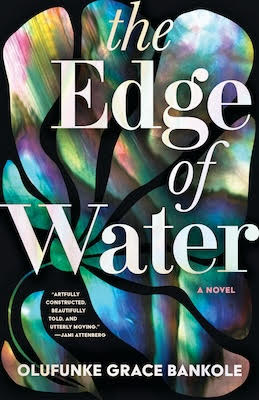
I discovered in the early research for my debut novel, The Edge of Water, that my paternal ancestors were Ifa practitioners, long before their introduction to foreign religions. Cowrie-shell divination introduces each chapter of the book as the all-seeing Yoruba Ifa priestess, Iyanifa, gives the reader a hint of what is to come in the life of Amina and her family in the lead-up to a devastating storm that strikes the city of New Orleans.

Similarly, the following books are all works of fiction in which a life-altering prophecy is featured. The prophetic emerges in several ways—through cultural expectation, divination, dreams, religious influence, and folkloric pronouncement. In some of these books, characters’ engagement with the prophetic provides a sense of comfort, clarity, and communal fulfillment, while in others, confusion and despair are the result. 

Death and the King’s Horseman by Wole Soyinka

In this Nobel Prize-winning play, the king of a Nigerian village has died and tradition decrees that his chief horseman, Elesin Oba, must thereby commit suicide and follow him into the afterworld. Failure to fulfill this is a curse for the village–life will not go well. A white colonial administrator attempts, however, to put a stop to the duty ritual by imprisoning the king’s horseman. What we then encounter is Soyinka’s stunning examination of the volatile and enduring tension between the Yoruba will to preserve a purposeful tenet of their indigenous culture and the audacity of Western colonialism to insist on knowing best. The reader is left reeling by the heartwrenching aftermath of the horseman’s inability to adhere to his spiritual duties.

Efuru by Flora Nwapa

Another classic of African literature, this piercing novel tells the story of newly-married Efuru who is struggling with fertility. With her father, she visits the dibia, the Igbo healer and diviner who mediates between the human and spiritual worlds. In sharp detail, the dibia outlines the sacrificial steps Efuru must take in order to ensure that by the following year’s Owu festival, she would be pregnant. Efuru heeds the dibia’s guidance, and when the Owu festival arrives, her in-laws are delighted, as they detect the scent of pregnancy on her being. Indeed, Efuru soon gives birth. But the joy of the prophecy’s manifestation is short-lived when the dibia–after predicting, without providing details, that there will be an issue with Efuru’s child–dies suddenly, along with his unspoken pronouncements over Efuru’s future and the reassurance his foreknowing had once provided.

The Girl with the Louding Voice by Abi Dare

The theme of childbirth is also present in this moving novel, in which the course of the main character’s, Adunni’s, life is irrevocably altered when she unknowingly partakes in the fulfillment of a curse that had been prophesied to her pregnant sister-wife, Khadija. Khadija’s lover, and the father of her unborn child, Bamidele, reveals to Adunni that in his family, a pregnant woman must be washed seven times in a river, or the woman and her unborn will die during childbirth. On a journey far from their shared home and husband, Adunni must help a laboring Khadija reach the river for a bath before the baby arrives. Adunni’s ability to assist Khadija in fulfilling the ritual has tremendous consequences for her own fragile future. Of note is that in this, as in other instances of a prophetic utterance, the precise source of the folkloric pronouncement is often unarticulated, but simply accepted as the collective what will be

Fortune’s Daughter by Alice Hoffman

The predictions of tea-leaf divination are at the center of this aching novel about loss and longing. The central characters, Rae and Lila are two women, two mothers, with similar life paths who nonetheless hold a disparate relationship to the tea-leaf fortune-telling that shapes their perspectives. When the paths of Rae and Lila intertwine, both arrive at a knowing whose silence has threatening implications. As readers, we are left grappling with the consequences of knowledge that is revealed and that which is withheld, and the impact of both on the scope of our choices. 

The Immortalists by Chloe Benjamin

If we are told the exact date of our death, would we live differently–make choices that honor, reject, or align with that foreknowing? A psychic tells four siblings, in their youth–Simon, Klara, Daniel, Varya–the exact day they will die. We then follow each of the four as their lives unfold. The Immortalists deftly probes, in part, how we consciously or subconsciously participate in the fulfillment of the words spoken about us, by examining the varied ways–quietly, despairing, lonely, hopeful–the siblings choose to live, based on the extent of their belief in the prophecy they were given. 

A Girl is a Body of Water by Jennifer Nansubuga Makumbi

In this poignant novel about the history, layers, and resistance of womanhood, we witness the coming-of-age of Kirabo, the teenage protagonist who until the novel begins had been raised by her grandmother, but now hungers to know her mother, and the origins of her own emerging wildness. In seeking out the counsel of Nsuuta, the village’s prescient witch, Kirabo encounters various shades of the prophetic–a foundational one being that many years before, when Kirabo had been brought to the care of her grandparents as an infant, Nsuuta had predicted that the day would arrive when indeed Kirabo would come to her, in search of her mother. From then on, Nsuuta would be a kind of guiding light and catalyst for Kirabo. And even more compelling than the bits Nsuuta offers about Kirabo’s mother is her outlining of how women have had to shapeshift to survive the patriarchy throughout time; notably, within the novel’s four-part structure, Kirabo follows a path of evolution into her own womanhood that ultimately fulfills Nsutta’s words. 

The End of Drum-Time by Hanna Pylväinen

Set in nineteenth-century Sweden, this lush historical novel–about the destructive consequences of settlers’ encroachment on the indigenous Sámi people of the Sápmi region–begins with prophetic dreaming. Reminiscent of a central theme in The Edge of Water, the book opens with the night-before dream of one of its characters, Lars Levi–a Lutheran minister. Attributing it to his family line, his standing as a vessel of God, and his home in the gray Scandinavian tundra, he believes in the power of dreams to foretell. On the morning that prominent reindeer herder and Sámi leader, Biettar Rasti, unexpectedly walks into church during Sunday service and kneels at the altar shaking, Lars Levi recalls an unsettling but forgotten dream from the previous night–perhaps it had been a portent for stubborn Biettar’s unlikely religious awakening. From this very incident–Biettar’s conversion–the families of the two men become inextricably joined in ways that have transformative, damaging consequences for all.

12 Poems and Short Stories by Black Writers to Read For Free Online

Every week, our weekly magazine The Commuter publishes a new work of flash fiction, poetry, and graphic narrative. For Black History Month, we’re looking to the archives for some of our favorite poetry and stories by Black writers, all available to read for free online. From Tara Campbell’s interactive flow chart of systemic injustice to Anya Pearson’s poems critiquing the hypocrisy of well-meaning white people, these works showcase the range and brilliance of Black storytelling.

“Mixed” by jessica Care moore

Excerpted from her poetry collection We Want Our Bodies Back, jessica Care moore taps into mythologies and ancestries in order to embrace her Blackness. Even as others’ attempt to dismiss her due to her mixedness, her pride in her identity is unflinching and inspiring: “I’m from an army of yellow/black princesses… even if the full-blood family don’t claim us.” The language in moore’s poetry is as evocative as it is precise.

“Caesara Pittman, or a Negress of God” by Maurice Carlos Ruffin

In “Caesara Pittman, or a Negress of God,” award-winning writer Maurice Carlos Ruffin effortlessly brings intimacy and heart to the cold, sterile setting of a courtroom. Even in the face of discrimination, titular character Miss Caesara Pittman acts with assurance and self-respect. Pulled from his collection The Ones Who Don’t Say They Love You, this short story provides an enticing glimpse into the liveliness of Ruffin’s writing.

“Miranda” by Tara Campbell

To express frustration at the repeated patterns of violence in the American justice system, Tara Campbell turned to form. This hybrid poem takes the shape of a dynamic flow chart; readers can interact and see how the underlying structures of racism affect the flow chart’s possible outcomes. As Campbell puts it, “although each individual in a system thinks they’re making their own choices, they’re only seeing a fraction of the whole, and the eventual outcomes won’t change until the underlying structures change.”

“I want to commercialize your pain” and “This is Portland Theatre” by Anya Pearson

Anya Pearson critiques the commercialization of trauma, racism, and the hypocrisy of well-meaning white people in these two poems. Her short lines force the reader to sit with any discomfort they may be experiencing and confront their own biases. “This is their favorite part. // Devouring blackness. // the closest they will come // to entering blackness.// But still safe enough away // to laugh at // to enjoy the spectacle they make // of our misery.”

“No Chocolate Ice Cream in Stars Hollow” and “For God So Loved the WAP” by Khalisa Rae

Pop culture takes center stage in these poems by Khalisa Rae. Through the lens of Gilmore Girls and Cardi B’s WAP, ft. Megan Thee Stallion, she interrogates white privilege, dating as a Black queer woman, and women’s desire: “What does it mean to push past the splintering / to reclaim the running water of pussy? / To say amen to the faucet spilling coins— / all the pennies you saved to toss and forget. / Now, she has reached a reservoir of fingers / gliding out and in. What is a woman unafraid?”

“On the album cover for Black Gold by Nina Simone” and “The Sound of Blue” by Akhim Alexis

Brooklyn Caribbean Lit Fest Elizabeth Nunez Award for Writers in the Caribbean winner Akhim Alexis writes with a delicacy that makes you listen. His poems “On the album cover for Black Gold by Nina Simone” and “The Sound of Blue” sing its readers toward new comforts, bringing us to pay closer attention to the smaller, precious details of the musical world.

“Descent” and “Forty-One” by Ajibola Tolase

In his Cave Canem Poetry Prize-winning debut collection, 2000 Blacks, Ajibola Tolase traces the lineage of migration from Nigeria and interrogates Black coming-of-age in a polarized America. These two poems from the collection stand out for their resplendent imagery. The urgent language invites the reader to be immersed in Tolase’s poetic realm.

“When Fire Owns the Air” by Tochukwu Okafor

“When Fire Owns the Air” begins with rumors swiftly spreading through a town, regarding a relationship between two men—Ikenna Anyanwu and Gbenga Afolabi—that the community strongly disapproves of. But as the prospect of violence inches closer, Tochukwu Okafor meets us with tender renderings of the men’s hopes and dreams. The best flash fiction pieces capture entire lifetimes in just a few scenes; in this deftly written story, Okafor accomplishes exactly that.

“Trebuchet” by Avitus B. Carle

This flash fiction begins with a warning from the narrator’s mother: “the reason why all the broken men live on the outskirts of town is for our protection.” Even so, the narrator goes to her grandpa’s cabin to play spies, which leads to a chilling confrontation. Avitus B. Carle demonstrates her mastery at crafting scenes full of tension in this story, just as she does in her flash collection These Worn Bodies. You’ll be on the edge of your seat from beginning to end.

“i must tell you” by Roya Marsh

Savings Time, the second collection by Roya Marsh, turns a resolute eye to Black joy and Black rage in equal parts. Her voice is perhaps at its most unflinching in the masterful “i must tell you,” in which Marsh draws similarities between herself and the late Freddie Gray. She demands for her readers to pay attention to racist atrocities rather than turn a blind eye in achingly honest lines: “i must tell you / how blessed we are / to be hashtagged / while breathing.”

“Baby Brother Shape-Up” and “Boardwalk Ambassadors” by Donna Weaver

Donna Weaver’s poems center tenderness — whether it’s a brother growing out his hair for his sister after she receives a cancer diagnosis or an older woman speculating on the joy of girls below her window on a summer afternoon. They brim with hope as she writes, “They hold hands like kindergartners, / pull each other across sidewalks like they’re going somewhere. / An alley behind Dollar General is more adventurous than the boardwalk. // They would find the oceanfront if they just held onto one another.”

“Redondo Beach, 1979” by Carolyn Ferrell

Shawn, the almost-14-year-old, queer narrator of “Redondo Beach, 1979,” is juggling a lot: divorcing parents, a newly-out father, schoolyard bullies. At the center of this narrative is a battle over hair. Shawn’s father believes it should be styled one way, Shawn’s mother another. It’s a rich, coming of age narrative: “Principal Halimah grabbed your arm on the way out: You only have to believe in yourself, she said. The rest will follow.”

Erin Steele Isn’t Trying to Look Good in Her Memoir

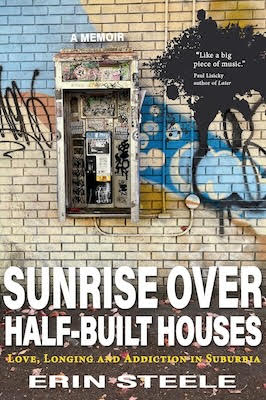
Erin Steele’s memoir, Sunrise Over Half-Built Houses: Love, Longing and Addiction in Suburbia, chronicles the life of an isolated, self-conscious Canadian teenager growing up in middle-class British Columbia to loving parents who are simultaneously present and absent. As young Erin grapples with finding connection and meaning within the suburban sprawl that eventually gives way to dark forest, we become witness to a young queer woman’s intense seeking. 

Grasping for anything that might satiate her need for authentic connection, she turns to a range of complicated relationships, drugs and alcohol to find respite from her own loneliness. From the emotional manipulation of a high school classmate so involved as to necessitate police involvement, to anguished nights of self-harm, to months of disappearance, Sunrise Over Half-Built Houses asks us to sit still, listen and feel.

Within the raw honesty of her story, we become inclined to turn the gaze towards ourselves. How do any of us make meaning from the anguished creature living just below the surface of our myriads of addictions? What is it that drives our desires and needs, particularly when we are not at our best? And how can we navigate the parts of ourselves we would prefer to keep hidden? Erin brings these questions and answers to light, not through any kind of telling, but through showing us exactly how it was for her during those long years when that Pacific Northwest rain fell and fell. 

It is the pervasiveness of Erin’s unrelenting search for meaning and, more specifically—a cohesive sense of self—that pulls the reader in and holds us there.


Charlie J. Stephens: Throughout the memoir, the reader is put in the position of not being able to turn away from the narrator’s reality, particularly in regards to risk-seeking behaviors. The narrator takes full responsibility for her decisions that I’m sure were difficult to face personally. The scene involving intense manipulation of a high school classmate is one that stands out. What are some of the ways you navigated those moments in writing and having the work published?

Erin Steele: Not to downplay all the self-reckoning that was required for me to put this book out into the world, but being real was simply more important than wanting to appear a certain way. We know flat characters in fiction, and memoir should be no different. Readers can feel when you’re holding back, so I resisted the temptation to scrub away what could make her (read: me) “look bad.” 

Besides, the sex, drugs and music make it an engaging read, but it was always intended to be deeper than that.

Had I not faced and taken responsibility for my decisions, I wouldn’t have the perspective that elevates the book above a salacious recounting. That higher perspective is critical, showing up first in lines and short paragraphs, then growing alongside the narrator to ultimately integrate with her current reality.

It’s why one of the opening epigraphs is: “You’re every age you’ve ever been and ever will be,” author unknown.

I wanted to convey how we can get these flashes of insight, even while barrelling downhill. And although these flashes may not change anything in the present, they do exist and attract more flashes.

CS: Those flashes of insight show up in each chapter, and the narrator’s very urgent need is at the center, whether it is for love, affection, or self medication. It is easy to label this as a memoir of addiction, which of course it is, but you are able to capture the living thing underneath addiction. What are your thoughts on how this connects to capitalism and other issues of Western society?

ES: Similar to the narrator herself, there’s an insatiable quality baked into Western capitalistic society. So while it’s totally human and even necessary to want and to need, there’s a lot of power, psychology and societal conditioning behind why one might “need” a drink or drugs or chips or cheese or a cold beer or a run or a HiiT class. 

An example is this: say you feel hungry. You may intellectually understand that lentils with spinach and tomatoes would best nurture your body, but you crave a Big Mac. Then you opt for that Big Mac in large part because it’s way more convenient and you’re exhausted and the dopamine receptors in your brain are obsessed with instant gratification.

There’s a lot of power, psychology and societal conditioning behind why one might ‘need’ a drink or drugs or chips or cheese or a run.

The reader experiences the narrator living out an intensely charged version of this—sacrificing basic needs like food, sleep and even her body in pursuit of what she believes will bring her fulfillment. 

Whereas many Eastern schools of thought encourage turning inward, Western capitalistic society has no qualms about dangling basically everything in front of our hungry eyes with promises of satiation. 

It’s a perpetual loop, and it is in this loop that the narrator is stuck. The romanticism, bright lights, feel-good drugs, sex and even music—it’s all outside her, and of course represents a firefly of happiness that cannot actually be grasped. 

Truthfully, that firefly is within each of us always, but that’s not something we’re conditioned to believe in here in the colonial West, so we have to just fumble towards it on our own. That fumbling is what Sunrise over Half-Built Houses is about. 

CS: A central struggle in this book is around connecting to your queerness in an environment where even basic self-acceptance was challenging. Can you speak to your current thoughts about the avenues available to isolated, queer youth in these times we find ourselves inhabiting?

ES: It is astounding to me that although my book takes place at the turn of the century, in some ways it feels as though we’ve gone backwards. That said, as horrifying as bigots on the internet can be, it’s also a place to find community. Pop culture today also embraces queer identity far better than it ever has.

There’s no one-size-fits-all solution to helping isolated youth, and society needs to shift far closer to inclusion. But these days, technology does allow people to find their people—or at least know they’re out there. 

I recently sang Mayonaise by The Smashing Pumpkins (which features prominently in Sunrise over Half-Built Houses) at a karaoke night frequented in large part by late-teen and twenty-something alternative queer kids. After the line: I just want to be me; when I can, I will—which so encapsulates my character’s drive—all the queer kids randomly erupted into cheers and applause. It felt like a full-circle moment. Our people are always out there, always. Sometimes you just have to hold on.

CS: Wow, I would have just been sitting there singing along and openly weeping: I don’t think karaoke nights get better than that! How beautiful to have everything come together in that way. Speaking of music, you’ve mentioned that the Joni Mitchell lyric some turn to Jesus, some turn to heroin was the seed for this memoir. Can you comment on how it conveys the theme of seeking connection and whether you believe this holds up (or not)?

ES: Those lyrics convey what I’ve come to believe is true and what the narrator experiences in Sunrise over Half-Built Houses: we as humans may turn to seemingly drastically different things, but there’s a shared pull toward comfort and connection.

If what you turn to happens to be deemed acceptable or even revered by society, you’re privileged. But if you turn to, say, heroin, you risk being branded as a ‘moral failure.’

If what you turn to happens to be deemed acceptable by society, you’re privileged. But if you turn to, say, heroin, you’re branded as a ‘moral failure.’

What this lyric really says to me, and what I truly believe, is that we understand each other so much better than we’re often willing to accept. 

Sometimes I force myself to dig down past my own disdain, and find kinship even with those whom I most disagree with. There is a simplicity in being alive and aware of it; the shared inevitability of death, the great equalizer. We all get scared and that fear manifests in so many messed up ways. In our society, it gets capitalized and politicized, then perpetuated. 

I wish we could shake off all the crap that polarizes us, because that’s not the stuff that really matters. I also know that it’s not that simple. I also believe that it can be.

CS: I believe it can be also. Also I’m interested in your critique of the term “moral failure.” It’s so punitive. I read more, and the original term was “moral distress” which has a much more compassionate connotation. It was coined by ethical philosopher Andrew Jameton in 1984 and gets at the anguish caused by knowing the right thing to do, but then there are institutional or societal barriers that get in the way. It acknowledges that our choices are not always completely our own, back to your criticism of capitalism. Relating to that, throughout the memoir, there is an underlying threat of the act of being “othered” whether it is based in queerness, community, or addiction.  Can you comment on how you’ve navigated “othering” within this book, as well as personally and politically? 

ES: I care deeply about people stuck in cycles of drug addiction and will endlessly advocate for progressive harm-reduction measures as we figure out how to nurture the thing that causes the behaviour of addiction, which is a reaction to pain. However, when we say “addicts,” it’s easy for people to turn their heads and imagine human beings as “others.”

Yet, we all understand comfort and connection, and the absence of it. Although I label Sunrise over Half-Built Houses as a “queer coming-of-age story” and an “addictions memoir,” what it’s really about is inclusion—the antidote to othering.

When we say ‘addicts,’ it’s easy for people to turn their heads and imagine human beings as ‘others.’

I once attended a protest/counter protest with two clear “sides.” Amidst a lot of yelling and dysregulation, I witnessed two people in opposition have a conversation. I couldn’t hear what they were saying, but they were taking turns speaking and really listening to each other. 

That’s more of what we need—hearing each other. Then, we inevitably correct the record where it needs correcting (and indeed, it needs a lot of correcting). This is where personal stories have an integral role. Although receptivity is needed, from everyone. 

CS: Memoirs provide such an intimate means to witness—and hear—each other. What are some of your favorite memoirs as of late?

ES: Some incredible memoirs I’ve read over the last few years include The Chronology of Water by Lidia Yuknavitch, Long Live the Tribe of Fatherless Girls by T Kira Madden and Later by Paul Lisicky. All three of these writers take the not-easy route of characterizing versions of themselves with blood and guts, intimately pulling readers into their respective worlds. As a reader, this is a distinction and not soon forgotten. It felt like Yuknavitch, in particular, broke the fourth wall in The Chronology of Water, which felt intimate, delightful and unique—particularly from a memoir.

I also adored It Chooses You by Miranda July and Birds Art Life by Kyo Maclear—both more avant-garde, both profound. 

CS: Do you have any new writing projects in the works?

ES: Yes, I’m officially on to my second book project! It’s still early days and materializing slowly, but I can tell you that it’s literary fiction, contemporary, with a subtle touch of magical realism. I’m aiming for this one to not take ten years like Sunrise Over Half-Built Houses!

I’m Terrified of Losing Memories of the People I Love

The List by Noreen Graf

We’re settling into the hot tub, me with my glass of wine, my 30-year-old daughter with some probiotic drink. She lives in my pool house with her husband whose birthday is today. He’s working late tonight as a server at the Coffee Zone, wearing an “it’s my birthday” sash to get better tips. I let them stay for free as long as they pay electrical, to make them accountable and curb their use of AC. All three of my daughters have moved back home for stints of time to reset and relaunch. This daughter is a struggling writer. These days, moving back in with parents is a thing. Not like in my day. When you left home, either booted out or running free, you stayed gone. Mom booted me. She’s been on my mind since last week when I stumbled upon her lifelong list of things that made her angry.

“Sometimes I worry you have Alzheimer’s,” says my daughter, yanking my brain back into the hot tub.

“Like when?”

“Just sometimes.”

I try to think of what I’ve done. Was it that she saw me playing Solitaire on my phone when she got home from work? How could she know I was at it all day? I haven’t played in years, but today I played while attending Zoom meetings with my audio and video off.  I’m a Rehabilitation Counseling professor at a public research university that sits along the border with Mexico. But seriously, two back-to-back faculty meetings and then a department meeting with the dean. It’s grueling. Most times I garden on Zoom, but it was raining this afternoon. 

My daughter glides her hands over the water, “It’s probably my anxiety about you getting older and dying.” 

“I’m aging at the same rate as everyone on Earth.”

I try to reassure her, but I’m not reassured. A few weeks ago, I told my sister I always feel like I’m ready to cry, and I can’t figure it out. Maybe it’s aging, or professor burnout, or the phenomenon of cyclical live-in children… or my wandering brain. I’m sure my students have wondered about my lucidity during lectures that sometimes stray down adjacent dead-end paths only to do an abrupt about-face with a familiar, “Where was I?” 

I assure myself they like these meanderings.

In front of the hot tub, Moby, my Great Dane, circles. Over the past eleven years, I’ve watched Moby’s face morph from a cool gray with a sharp white forehead stripe into an old dog face with racoon rings around his eyes, his stripe blurred by white hairs that cover all but glimpses of his original youth. But this isn’t about Moby.

Last week, my colleagues and I voted out our director. This was a personality thing more than a competence concern. We really didn’t have any power to enforce his removal; it’s the dean’s call but he allowed us the vote to assess faculty discontent. It also sent a message to the director, who resigned, effective immediately. So, for a day, we were unsteered. Paddles resting in a rowboat atop still water. I didn’t say it was calm water. Imagine waiting for a giant sea monster to spring up, mouth open, ready to gulp up the boat, the oars, and the disgruntled professors. Still water. The next day we had an interim director. Quiet chaos ensued, mostly in the form of gossip—and the kinds of meetings that might want to make a professor play video games all day.

I don’t think my mom ever got Alzheimer’s. Nothing to worry about.

In the hot tub, I tell my daughter, “I don’t think my mom ever got Alzheimer’s. Nothing to worry about.” Ultimately, I think parts of her brain slow-rotted a tad. I don’t tell my daughter this. On her deathbed six years ago, Mom got her four daughters confused. Not her four sons though; she recognized them until the very last.  

At work, the monster in the still water is that now everyone feels “unsafe.” The result of our mutiny. Unsafe is a trigger word these days, a popular and dramatic overstatement. What we feel is insecure. These are insecure times. Who could be next on the chopping block? What we feel is replaceable (easily). What we feel is unloved. 

Also last week, or maybe the week before—I have trouble with time—I was rushing through my home office, having lost my phone again, and I spotted a piece of paper folded in a decorative blue bowl on my very dusty bookshelf. I didn’t remember what the paper was. Why was it there? I stopped to pick it up. 

My chemistry professor ex-boyfriend says I’m a cat, even though I’m a dog person, because I’m always getting distracted and changing directions whenever something catches my eye. I’m headed to the car, I start weeding, that sort of thing.

Maybe I should tell my daughter I’m a cat. She’s sipping her probiotics and telling me about critique of her TV script from a screenwriting competition she entered and I can’t keep my head on what she’s saying. I’m proud of her, and her love of writing, of putting words to paper.

Anyway, last week I opened the mysterious paper from the blue bowl and immediately recognized Mom’s handwriting. At the top, a title is written: Anger. It’s underlined because I believe in her day, titles were always underlined.  If one of my students underlined the title of their APA-style paper, I would take off points. But maybe Mom was underlining for emphasis. 

My daughter is checking her phone to see if the script contest results have been posted. I’m always losing my phone and dear Alexa wants to charge me for the Find My Phone function, apparently I have only two more free calls to locate my phone. My daughter announces she is in the quarterfinals for her queer superhero movie script. 

“You go girl!” I tell her, but she’s texting with rapid-fire fingers.

Where was I? Oh right, the day I found the list in the blue bowl, I was chasing the sound of the ringer, because Alexa wasn’t charging yet. I was in a hurry. I can’t recall why. But, with my phone in my back pocket, I slowed to read the first statement on Mom’s Anger list. Unsupervised when with Carol and me killing her. I already knew this part of Mom’s story but was saddened nonetheless. 

Before Dad died of leukemia in 2006, Mom spent years writing the family history. They visited Germany so she could write Dad’s ancestral history, and then Ireland to write her own ancestors’ stories. And then came a third book about her more immediate relatives (we’re talking starting in the 1930s here), which included stories about her growing-up years.  She titled the book, What’s in your Genes? When mom mailed her spiral-bound books to me and my siblings, it was with an unspoken request to read her pages and pages of family history, adorned with black and white photos of some of the roughest, worn faces on earth (really, I’m related to them?). I certainly wasn’t interested, nor did I see the book’s relevance to my life. And I didn’t have the time for it, as I was trying for two academic publications a year with ever-diminishing enthusiasm.  

My relationship with Mom hadn’t been great. Maybe it was being kicked out the night of my graduation from high school and our two-year estrangement after, all because of what boiled down to my rejection of the Catholic church—her life blood. But even after our mending, in her presence, I was frequently seething under my silence. Not silence as in quiet. Silence as in not speaking my mind. The silence that comes just before the scary guy jumps out and makes you shriek, and then he stabs you to death with the Halloween soundtrack getting louder and louder. Maybe I felt unsafe? 

Mom died in 2019, just before COVID hit. But a couple of years before her death, when Mom was alone, I filled a wine ritual vacancy. Mom had called her sister nightly to share a glass of wine over the phone. When her sister died, I stepped in. Who else was going to listen to my stories of my three grown girls, dogs, and latest published academic articles and failed fiction? We talked about me for hours some nights. I would frequently clench and cringe at her opinionated responses, but then blather on and on.

I begrudgingly and dutifully (with a glass of wine in hand) read her book. Then one day, as I was reading page 33 of volume three—about Uncle Ed, Aunt Phyllis, Uncle Bern, Aunt Marg, and Aunt Lib who lived at 8136 S Peoria around 1939—and I read the line, “I murdered that beautiful child.”  

I read the line again. Who murdered what child?

The shock of that line was like opening a pantry and coming face-to-face with a rat eating the dog food. This is more than a metaphor, it’s a memory. What could I do? I screamed and closed the pantry, so it wouldn’t escape. But closing a door doesn’t make a problem disappear. It gives you time. But you can’t take time because you know you have to deal with the rat. You can’t stand the idea of the rat being in the pantry, so you face it. I called Mom..

“I was reading your family history and…” Really, I can’t remember how I put it to her, but I later came to think, her whole purpose in those years of research and writing about ancestors was so she could write that one line, to tell her abominable secret.  Here is an excerpt from page 33.  

When I was 4 or 5 years old, Mom, Dad, Uncle Ed’s daughter, Carol, and myself were visiting there. Carol and I were sent to Uncle Ed and Uncle Bern’s bedroom to take a nap. Carol was 2 or 3 years old, and beautiful, like a Dresden doll. I believe she had long, dark curly hair and milky white skin. Instead of napping we were playing. We must have been playing “doctor.” In my mind’s eye, I see myself giving her a teaspoon of medicine. It was in a dark bottle and on top of one of the dressers. Where did the spoon come from? The bottle contained “Oil of Wintergreen.” She died! I don’t remember what happened next. Did she die right there? Did she go to the hospital? Did the police come? Was I questioned?

She only learned what substance killed her cousin when Mom was in her seventies. As a child, she never heard a word about the dead girl. She was never included in a funeral, and no one mentioned the incident again. It was poofed away.  

I guess like our director has been poofed away, only he is still there as a faculty member, and I feel terribly sorry for him because I remember when I was poofed away—twenty years ago. Lesson to newbie professors: Do not have a public affair with your dean in the same year you are coming up for promotion and tenure. This was a tragic story, and I won’t bore you with the details. That dean resigned just before a vote of no confidence—there’s that voting against other faculty thing again. Obviously, I wasn’t tenured. Within a year, the dean and I married, only to divorce a year later, and then get new jobs in states far apart. I heard he remarried.

Lately, I keep driving by a sign in the yard of a neighbor a few blocks away from my home. It has just one word. Pray. And it lingers in my head.

The truth is I’m terrified of Alzheimer’s, of losing memories that shape my connections to the people I love. My irreverence lightens the weight of what time may take. But then again, I might just have the opposite of Alzheimer’s because I’ve been getting back memories of my childhood. I can’t recall any right now, but when I get them, I call my oldest sister—who recently tested negative for Alzheimer’s proteins. 

Tonight, in this hot tub, the dog still eyeing us, I tell my daughter this genetic factoid and she says, “It doesn’t mean you don’t have it.” I’m annoyed, I would never have said harsh things to my mother, even in her later-day times of confusion. 

Aside from Mom’s ancestral volumes, she was a voracious journal writer. A teenage bride—18 was common I guess back in the day (I should talk, my first marriage was at age 19)—Mom kept journaling through having eight babies, starting in 1956, through Dad getting shot as a police officer in the 1968 riots on the south side of Chicago, through the killings of the Kennedys and King, and through our wine phone arguments about the man whose name rhymes with Rump. But I don’t care about those political arguments now. What I care about are the volumes and volumes and volumes of her journals which were burned before read. Poof. They were gone. Like she was.

Mom was best at expressing anger when I was growing up. I didn’t see her sadness, and she was, as I am today, uncomfortable with touch or expressions of affection. When that wall began to crumble as she aged, I couldn’t handle it, because my wall remained intact. I became expert at changing the subject when she approached emotional expression, trying to tell me what good things I had added to her life. I imagine she wrote them down.

When Mom died, her bookshelves were lined with her journals, maybe sixty or seventy. These books were the only place she had been free to fully express her feelings. A few days after her death, my eldest sister randomly picked up one journal and read a page aloud. It was something that Sister 1 interpreted as negative and about her. Okay, it probably was negative, and about her. Sister 1 decided she didn’t want anyone in the family reading things she told Mom in confidence. “Okay,” I said, “you read first and redact anything about you that you don’t want anyone to see with a black sharpie.” So, then some other sibling, I don’t remember which, said something like, “But then (Sister 1) might read something about me I don’t want anyone to see.” 

All around the mulberry bush, the monkey chased the weasel. See, I told you, things are coming back from my childhood.

We all live the human tragedy. Every human.

As a grieving family, we decided Baby Brother 4, somewhere in his late forties, should take the journals and keep them safe and in a year, we could revisit this hot topic. I was hoping Sister 1, and everyone else would get to a place they just didn’t care who knew what about whom. We all live the human tragedy. Every human. They are the same tragedies, “there’s nothing new under the sun.” (Ecclesiastes 1:9). Old as the bible. See, I already know Sister 1’s husband is the scum of the earth, Brother 1’s second wife did a lap dance on some stranger at their wedding reception, and Sister 4 stole Brother 3’s girlfriend. We think Sister 3 set a fire. The thing is we all know, through our very efficient grapevine, most of the stuff we pretend not to know. And lots of stuff even Mom didn’t know. I think.

Sitting in the steamy water behind my house, the dog now stomping around in my tropicals, my daughter is agonizing about calling the doctor because it makes her anxious. “You should try not to worry so much,” I say to my daughter who has just told me about her stomach problems of the past week. I try to focus on her words and raise my body half out of the water by sitting on my heels. The hot tub is feeling hot, burning hot.

What I have of my mother’s words, besides the ancestral history volumes she wrote, is one sheet of paper titled ‘Anger.’

Burned. I think, burned. Two years (time flies) after Brother 4 was charged with the safekeeping of the journals, I asked about the journals and was told the books had been burned. I was told by Sister 1 and Brother 4 that everyone had agreed to this action. No, I said, I would never have agreed to it. When? No, I don’t have Alzheimer’s. If I were to somehow agree (and I didn’t), I would have insisted they be burned in a ceremonial way. I’m a counselor, or at least I used to be before I was a professor teaching counseling, and I know how to end things. I know, and teach, about closure, and there wasn’t any. 

Another poof goes the weasel! I feel unsafe, or did I say that word is an over-exaggeration? Why aren’t siblings 3, 5, 6, 7 and 8 outraged?

So, what I have of my mother’s words, besides the ancestral history volumes she wrote, is one sheet of paper titled “Anger.” I’m centering the text, so it becomes a poem. Poems are sublime. She meant it to be read. She wanted to be heard.

Anger

Unsupervised when with Carol and me killing her

Never talking to me about her death

My mother on the bathroom floor drunk? Hurt?

Parents fighting-fighting

Dad coming home drunk almost every day.

Dad leaving us at a cottage

Hating the holidays because I never knew when they would fight

I never remember being hugged as a child

I think my mother resented the way Dad spoiled me

I think my Dad may have spoiled me to get at Mom

So late for my music recital

So many times caught between them

Daughter getting pregnant before marriage

Husband not telling me about not getting the chief’s job

Husband quitting work

Moving to Indiana and leaving me in Illinois

Husband moving out of our bed and giving up sex

Husband drinking

My failure as a mother, person, wife

Never controlling my temper

My own list of angers, failures, disappointments isn’t long if I condense them into qualitative themes with multiple sub-themes—I also teach Qualitative Research. They have to do with my poor human and dog parenting, poor partnering, and poor performance. The overarching theme is poor choices. But my biggest anger is that Mom’s thoughts, for her whole life, were banished by her own children and burned.  

Moby barks to remind me of his presence, once again patiently sitting next to the hot tub. Such a loyal companion.

Not long before her death, Mom wrote down every item she owned of aesthetic, monetary, or nostalgic value on a slip of paper. With a girlfriend as her witness, one at a time, she pulled the slips out of a jar to randomly assign who of us kids would inherit each specific item. Her greatest fear was that the family could be torn apart by material things, and she wanted to avoid any post-mortem arguments. 

But the journals remained in her house after her death for us to deal with. Unnamed beneficiary.

My daughter is ready to get out of the hot tub. I’ve inattentively kept up with the conversation about the doctor and writing edits and promised to finish reading her script tomorrow. Lack of attentive parenting needs to go on my list, sub-theme of poor parenting. But who knew parenting would go on for so long—thirty years and counting. That I would never be able to put down the weight of it. She walks away dripping and wrapping the towel around her still young body, her young, semi-trained service dog, Maggie, bounding towards her. Moby waits for me.

I sink my body down until only my face is above water. I close my eyes and listen to the humming from the motor keeping the water warm; underwater it is akin to white noise. I relax and imagine swimming upward in deep cerulean water. Then I feel panic. The water goes black, and I break the surface with my flailing breaststroke. I’m out of breath and gulp in air. 

The thing at the top of my anger list is that I will never have the opportunity to read my mother’s uncensored thoughts. Or run my fingers across her practiced handwriting as I read her words. To push aside events of drama and trauma and hear her dreams and joys as well as disappointments and pain. 

I want to wrap this up and provide a tidy end, where I make peace and come to terms with aging and colleagues and children and siblings and losing my mother. And I could do this because I am trained in writing discussion and conclusions sections. I could force some kind of forgiveness message to complement being in a hot tub with a glass of cheap white wine over melting ice because I like it that way. And too bad if ice shouldn’t be in Chardonnay. Instead, I’ll follow Moby inside.  Maybe I’ll forget someday. 

Poof.

7 Stories About Women Coming of Age in Their 30s and 40s

Coming-of-age stories are typically defined as the transition from childhood to adulthood, which is why we most commonly imagine teens and young adults at their center. But growing out of our formative childhood patterns can happen at any age, and, for many of us, the most profound periods of transformation hit well into adulthood.

A woman’s thirties and forties can be particularly charged. According to many doctors, 35 is the age that women’s fertility begins to drop significantly, forcing us to contemplate what can feel like a life-changing decision for the first time, and one that may put us starkly at odds with societal expectations. Many 30+ women today find themselves in a life that looks very different from typical narratives of “successful” womanhood, resulting in a grating sense of failure and uncertainty. But while motherhood is a common avenue for transformation at this age, it’s important to remember that non-motherhood—the forced awakenings and hard earned growth that comes from sitting with the self—is, too. When we enter middle-age without the standard domestic trappings so commonly portrayed in the popular narratives of womanhood, a deeper understanding of the self awaits, along with a reorganizing of priorities, as we begin to set and trust who we are and what we want, cultural expectations aside.

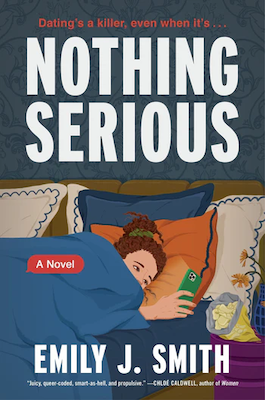
Edie, the main character in my debut novel, Nothing Serious, is a single, thirty-five year old woman reckoning with a life built on chasing the approval of men. Throughout her career—studying engineering, attending business school, working in tech—her instinct to fit in with the men around her has served as an asset, even cosplaying as confidence, but it has also left her hollow, unable to access genuine desire beyond the desire to please. The book is, at its core, a story of self-discovery, learning to untangle from a deep need to prove herself to others, to chase “success” on other people’s terms, to trust herself, instead, and in doing so redefine who she is and what it is she wants.

The list below celebrates women in their thirties and forties who, rather than conforming to the traditional paths of marriage and motherhood, embark on transformative journeys of self-discovery while choosing a life without children.

Grown Ups by Emma Jane Unsworth

Jenny McLaine is an anxious 35-year-old, eager to please and always over-analyzing. The first page starts with her agonizing over captioning the photo of her morning croissant (settling on “CROISSANT, WOO! #CROISSANT”). But Emma Jane Unsworth’s unwavering humor does not distract from the poignancy in this laugh-out-loud novel. Jenny’s journalism career is floundering, and her personal relationships begin to unravel after a breakup with her longtime boyfriend, Art. Prone to extreme self-criticism as a result of her mother’s judgmental eye, Jenny feels like a failure at the very point in her life when she imagined it would all be coming together. She takes solace in a parasocial relationship with an online influencer that only serves to heighten her insecurities and self-doubt. The book follow Jenny as she learns to face her issues-head on, build her sense of self, and define, then trust, her own version of success.  

Motherhood by Sheila Heti

Through philosophical contemplations  on identity and art, conversations with her partner and friends, musings on her personal and family history, and a technique involving The I Ching—asking questions and flipping coins—the narrator of Motherhood takes us on a cyclical journey through one of life’s most important decisions: whether or not to have a child.

Before I knew much about this book, I was afraid to pick it up, assuming from the title that it was yet another contemplation on motherhood ending with the woman choosing to have children. If you share this concern let me dispel your worries with a necessary spoiler: the narrator decides that having a child is ultimately not for her. There are no formal conclusions, only the making of an inevitable and highly personal decision that broadens our definition and considerations of motherhood and life itself in the painstaking process of choosing.

Lolly Willowes by Sylvia Townsend Warner

Lauren Willowes (affectionately Lolly, to her family) lives carefree in the English countryside until the death of her beloved father. Unmarried in her late-twenties, she is sent to live with her older brother and his family in London. There, she spends years helping him care for his children, fading into the background of their family, and yearning for the rural landscape of her childhood. Lolly is well into her forties when she decides—to the shock and disapproval of her family—to live on her own in a town she has only heard of (endearingly called Great Mop). The family warns her against such a rash decision, encouraging her to stay in London, but she insists. Thus ensues one of the most charming and classic romps of a woman carving out a life on her own. Once settled in Great Mop, she even encounters the devil, with whom she has apparently made a pact, in order to achieve her life of freedom, and happily embraces her role as Witch. Who among us has not longed to escape it all, buy a little cottage in the mountains, and build a life anew?

I’m a Fan by Sheena Patel

The unnamed narrator is in the midst of an impassioned, albeit doomed, affair with a man referred to only as “the man I want to be with.” That man happens to be partnered with a wealthy, glamorous woman we know only as ”the woman I’m obsessed with.” The narrator’s obsession exposes her own insecurities, imagining the woman—who we become intimate with by way of social media stalking—to be everything the narrator is not. At that same time, she is entranced by the man’s manipulative charm, though he is frequently distant and sometime harmful. In addition to revealing reflections on the self, these masterfully rendered obsessions are a tool to observe the way society elevates some and marginalizes others, specifically in terms of race, class, and wealth. We watch as the narrator falls deeper into self-destruction until her wreckage catalyzes an awareness of the patterns she’s stuck in and, importantly, the societal forces that make it so hard to escape. This book has a voice like no other, veering almost into poetry in its form, a stream-of-consciousness that’s somehow both chaotic and immaculate. 

Big Swiss by Jen Beagin

Greta, Big Swiss’s 45-year-old main character, resides in a run-down, unheated farmhouse, occasionally infested with bees, in the increasingly gentrifying town of Hudson in upstate New York. Greta does transcription work for money and while transcribing sessions for Om, Hudson’s premiere (and only) sex therapist, she becomes fascinated by one of his clients, Flavia, whom she affectionately calls “Big Swiss.” It’s all a fun and intriguing escape until she recognizes Bis Swiss’s voice at the dog park, and a real relationship between the two women begins. As their intimacy grows, however, Flavia reveals part of her past that Greta is already intimate with from transcribing her therapy sessions, leaving Greta in the duplicitous and deceiving position of hiding how much she really knows. As their relationship grows in this kooky, smart, and darkly hilarious tale, the tension increases, until Greta is forced to confront her own issues and actions. In doing so, she begins to see how her own trauma has shaped her life, bringing her closer to accountability and self-acceptance.  

I Love Dick by Chris Kraus

This book is the essential text for neurotic women—and I mean that as the highest compliment. Immediately, we’re thrown into the unconventional, brilliant setup of this epistolary novel. Chris, a 39-year-old filmmaker, and her husband, Sylvère, an academic, move to a small town in Texas, where they meet Dick, a professor, to whom they are instantly drawn. After meeting, the couple begins an elaborate series of letters to Dick, as a vehicle for their own contemplations on life and art and self. Through her infatuation, which grows over the course of the novel— first stimulating, then straining, her marriage—Chris confronts her internalized misogyny and the effects of the patriarchy on the way her art is perceived and on the way she perceives herself. Her infatuation with Dick, which appears self-destructive and uncontrolled, ultimately acts as the mechanism for her own self-actualization. Kraus uses her own abjection—a state often imposed on women, especially as they age—as clay to shape and transform, leading to both a personal metamorphosis and a masterful work of art. She doesn’t shy away from the reality of living in a “man’s world,” but she strides in with open arms, seeing it for what it is, then subverts it so profoundly. 

In so many of these stories, we see how, into middle age, we remain trapped in the assumptions that shaped us as children, and how the catalysts typically associated with youth, can, if we’re brave enough to surrender to them, transform us at any age. As Chris reflects in I Love Dick, “It was interesting…to plummet back into the psychosis of adolescence.”

The Woman Upstairs by Claire Messud

The Woman Upstairs is the quintessential novel of a single woman who feels, as she enters middle age, that her life has not gone as planned. Nora Eldridge is a 42-year old-artist by night, school teacher by day. The book opens with an unforgettable internal monologue of rage and regret about becoming what she calls the “woman upstairs”—the quiet, reliable helper for the people around her, fading into a background of mediocrity. But her life is disrupted by the arrival of a new student in her third-grade class, Reza Shahid, who she becomes enamored by, along with his glamorous parents. Reza’s mother is a successful artist who frequently invites Nora to work with her in her studio, where they form a tight artistic bond, and his father is an intellectual and charming Harvard professor. Her obsession with the Shahid family is all-consuming until cracks begin to form. When Nora discovers a devastating betrayal, her idolization of the family starts to crumble, leaving her not only with a clearer picture of the Shahids, but a clearer picture of herself, one that sets her on a path of change and resolve.

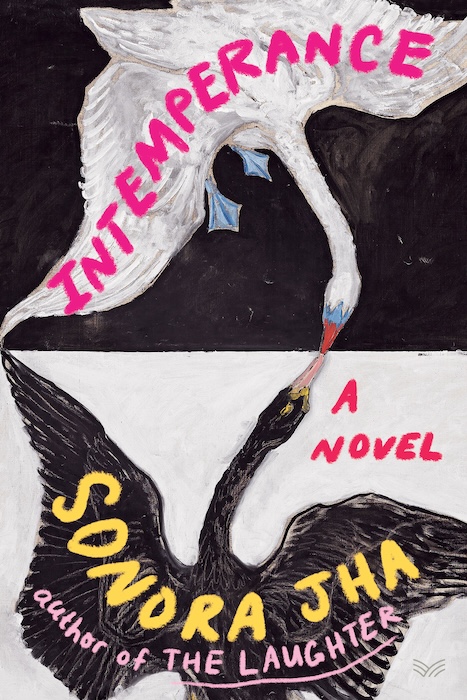
Exclusive Cover Reveal of “Intemperance” by Sonora Jha

Electric Literature is pleased to reveal the cover of Intemperance by Sonora Jha, which will be published by HarperVia on October 14th 2025. You can pre-order your copy here.

In this follow-up to the critically-acclaimed The Laughter—winner of the Washington State Book Award—a middle-aged woman starts a firestorm when she holds a contest, based on an ancient Indian ritual, in which men must compete to win her affections.

A woman who has left two husbands announces she will celebrate her 55th birthday by holding a swayamvar. Drawn from an ancient custom in her Indian culture, this is an event in which suitors line up to compete in a feat of wills and strength to win a beautiful princess’s hand in marriage. The woman, a renowned and respected intellectual in an American town who had once declared she was “past such petty matters as love,” knows she is now setting herself up for widespread societal ridicule, but her self-esteem and sexual libido are off the charts even as her body withers from disability, fading beauty, and her appetite for cake.

To her surprise, a cast of characters shows up to support her call—a wedding planner looking for the next enchanting thing, a disability rights activist making a documentary film, and even, begrudgingly, her own young adult son. The Men’s Rights Movement protests her project, angry at her objectification of men. She is waylaid by visitations from goddesses and princesses past, who either try to slap sense into her or cheer her on. She must also reckon with a brutal love story in her ancestry that was endangered by the caste system—a story that placed a generational curse on those in the family who show an intemperance of spirit. As her whole plan spirals into a spectacle, the woman embarks on a journey to decide what feat her suitor must perform to be worthy of her wrinkling hand. What feat will define a newer, better masculinity? What feat will it take for her to trust in the tenderness of love?

Intemperance is at once a satirical feminist folktale and a meditation on how we might reach past all sense and still find love.


Here is the cover, designed by Sarah Kellogg, with art by Hilma af Klint.

Author Sonora Jha: “I was delighted to receive four stunning cover options from my editor at Harper Via, Rakesh Satyal. I have worked with him and the design team at Harper Via for my previous novel, The Laughter, so I knew they would send me beauty, but four works of beauty? Agony. I narrowed it down to two images, both of which had swans, which immediately captivated me. Intemperance has multiple appearances of swans in the narrative—shape-shifting swans, angry swans, mythological swans, and even a flirty swan. It was hard to pick between the two final images, but I found myself returning to stare at this one, over and over. Ultimately, I asked myself, ‘Which one will you regret letting go?’ And this was the one. Every time I look at it, I fall more in love.

In the meeting of the swans, I see union and a separateness of identity. Here we have both intemperance and temperance. Darkness and light. One of the things the novel explores is the protagonist’s need for silence and solitude, and this cover speaks to the silence of a soaring bird yet also the muted, meditative flutter of its wings. The story is one of courtship and love, and of course, there’s the kiss of the swans at the beak, but I can’t tell you what the almost imperceptible touching of the tips of their wings does to me.
I hope to see the original painting by Hilma Af Klint someday. I feel incredibly fortunate to have on my book cover the work of this radical Swedish artist from more than a century ago. The candy-like colors and crayon-like scrawl of the letters overlay a contemporary irreverence and whimsy atop the timelessness of Af Klint’s painting. A part of the story in Intemperance is set in the same years as Hilma was painting these works of hers (although on different continents), and this gives me goosebumps. Swanbumps.”

Designer Sarah Kellogg: “As I was researching imagery for the cover of Intemperance, I struck gold when I came across a painting by the artist Hilma af Klint. The painting features two swans stretching their necks toward one another as if in defiance or fearlessness, or perhaps as an act of love. The separate worlds of the two swans meet in the middle, and their wings are outstretched with no lack of restraint for what lies ahead. The hand-drawn lettering on top of the artwork provides a more modern element to hint at the story’s setting in present-day Seattle. The crayon-like texture plays into the messy process of coming into oneself, regardless of outside opinions.”

Staring Into the Void of a Five-Dollar Egg White

The Human Condition as It Applies to the Long Island Suburbs

Every year, I grow more
tired of paying for things.
The albumen in my cocktail
adds five dollars - five dollars
for not even a full egg.
The math reminds me that I
could pay to walk inside
a historic fort in Augusta,
or stand outside it for free
and relive history as one
of the Wabanaki people.
Unfriendly neighbors
run deep through history.
I should not be surprised
by the raging woman
who tells me to go back
where I came from - all
because she doesn't like
seeing my parked car
from her window.
I wonder what view
she thinks I'm ruining;
perhaps it's the bird shit
on her garbage cans,
its milk-white marbling
reminiscent of a veil
of egg whites dropped in gin,
or perhaps it's the space
she needs to stare through
while she has the morning cigarette
that burns a small hole
in the atmosphere between us.

Observing the Void Ten Feet From a Swing Set

A small worm assaulted
by smaller ants, twists and flips.
I watch the violence and
consider my options.
Save the worm. Let the ants eat.
How do I pretend I can choose
- that the worm is good
- that the ants are good?
Only five minutes ago,
I discovered the common park bench
is an endangered species,
its habitat reduced to fringe
spaces of dedication
to late loved ones.
I wrestle with a side effect
of my imperfect faith
in destiny, my concern
that I can ruin
what is meant to be.
From this seat placed in memory
of a stranger's husband,
I thumb this fear like a coin:
I am not special (heads)
I am alone (tails)
I would hate to die (heads)
or to live forever (tails)
Each path goes nowhere.
And so, the worm goes
into the earth, riding
on the backs of its captors.
I wipe the crust
from my inner eye
and sit in the position
I imagine God assumes
when watching over
our breaking hearts.

The Sieve

A friend used to joke that we’re all just blood bags
trying to avoid sharp objects.
He’d say this wryly as he threw out perfect
yogurt cups with creased lids.
Eventually, everyone else’s sadness catches up with me,
and I am forced to admit
that even though I feed the birds, it is the squirrels
who know I fill the feeders.

7 Books Reflecting on The Internment of Japanese Americans During World War II

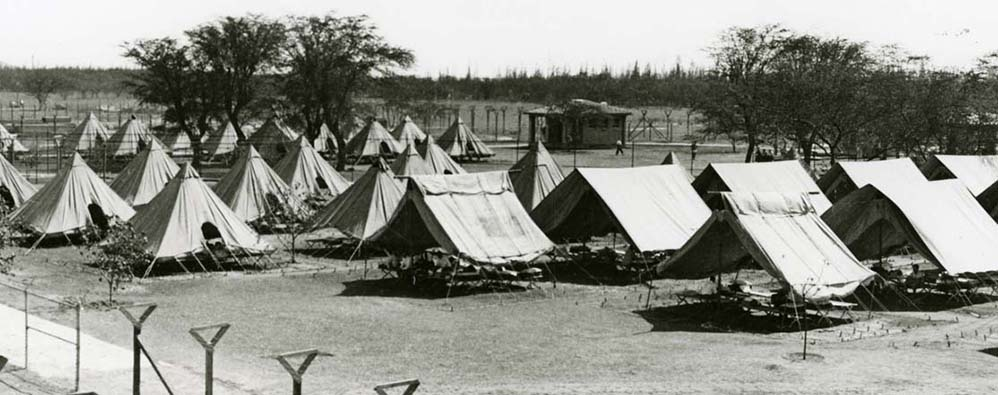
On February 19th, 1942, President Franklin D. Roosevelt signed Executive Order 9066, thus starting one of the most shameful periods in American history. The order forced the relocation of all individuals that posed a suspected “threat to national security” during World War II to internment camps, and in turn prompted the incarceration of hundreds of thousands of Japanese Americans across the country. Eighty years later, in 2022, President Joe Biden declared February 19th as the National Day of Remembrance of Japanese American Incarceration During World War II, to ensure that America both learns from, as well as never forgets, its past mistakes.

Today, with the current political climate leaving American immigrant rights more vulnerable than ever, it is crucial for us to reckon with the atrocities that the United States is capable of — especially in regards to oppressive practices that focus on immigration status, ancestry, race, and ethnicity. To remember those impacted by Executive Order 9066 and reflect on the struggles that were subsequently endured, I have compiled a list of books that depict the experiences of people directly impacted by the internment of Japanese Americans. From well-known classics such as John Okada’s No-No Boy, to lesser known, but just as essential reads such as Brynn Saito’s Under a Future Sky, here are seven books that present readers with nuanced, illuminating depictions of what it was like to live through this explicit, federally-imposed discrimination and internment.

Citizen 13660 by Miné Okubo

Miné Okubo was one of over one hundred thousand Japanese descendants in America that were forced into “protective custody” faced after the bombing of Pearl Harbor. This graphic memoir, both written and illustrated by Okubo, showcases the challenges that she and other Japanese Americans were confronted with. First published in 1946, this book is recognized as the first real look into what occurred in Japanese internment camps, and depicts Okubo’s experiences in relocation centers in California and Utah — specifically in the Tanforan Assembly Center, and the Topaz War Relocation Center. 

No-No Boy by John Okada

Taking place after Ichiro Yamada spends two years in a Japanese internment camp, and two more years in prison for refusing military service, No-No Boy depicts the struggles of Japanese Americans following this dark time in America’s history. Through what Ruth Ozeki calls an “obsessive, tormented” voice, author John Okada obfuscates the distance between the omniscient narrator and the voice of Ichiro. Okada’s one and only novel provides a sobering portrait of a no-no boy, and has since been recognized as one of literature’s most powerful testaments to the Asian American experience. 

The Afterlife is Letting Go by Brandon Shimoda

Written by PEN Open Book Award recipient Brandon Shimoda, this collection of essays reflects on the afterlife of the U.S. government’s forced mass incarceration of Japanese descendants during World War II. Pulling from personal and familial history, years of research, and visits to memorials and incarceration sites, Shimoda’s unsparing precision in The Afterlife is Letting Go showcases the infinite connections between the treatment of Japanese Americans, and of other forms of oppression enacted throughout the United States’ history.

Under a Future Sky by Brynn Saito

During World War II, Saito’s paternal grandparents were both forced into an internment camp in the Arizona desert — the place where, despite their struggles, brought them together and to eventually start a life together. In her poetry collection Under a Future Sky, Brynn Saito enacts a dialogue between the past and the present, communicating with family and friends as she honors the “riverstream of ancestors” that made her life possible. Through her lyrical, epistolary poems, Saito captures rage, confusion, and love in order to confront the hard truths of her family’s intergenerational trauma.

They Called Us Enemy by George Takei, Justin Eisinger, and Steven Scott

When George Takei was only four years old, soldiers knocked on his family home’s door, held the family at gunpoint, and ordered them to leave. Long before George Takei had become known for his role as Hikaru Suku in the Star Trek franchise, he and his parents were forced to move from their home and into concentration camps. They Called Us Enemy captures the beloved actor and queer rights advocate’s childhood experiences that followed Executive Order 9066. Written with co-authors Justin Eisinger and Steven Scott, and illustrated by artist Harmony Becker, this stunning graphic memoir considers what it means to be an American, and who gets to decide who is or isn’t.

Secret Harvests: A Hidden Story of Separation and the Resilience of a Family Farm by David Mas Masumoto

In his memoir Secret Harvests: A Hidden Story of Separation and the Resilience of a Family Farm, author David Mas Masumoto writes of his experience discovering a lost aunt who had been separated from his family for seventy years, when Japanese Americans across the United States were forced into internment camps in 1942. Haunted by the past and motivated to learn more about his family’s identity, Masumoto asks how both shame and resilience brought his family to continue living in America against all odds. Featured throughout the book are illustrations by Patricia Miye Wakida, helping to further historicize an under-documented period of American history.

When the Emperor Was Divine by Julie Otsuka

Through unsentimental prose and an unfaltering voice, Andrew Carnegie Medal for Excellence in Fiction winner Julie Otsuka depicts a Japanese family’s experience with internment during World War II in When the Emperor Was Divine. A mesmerizing, unsparing account of the terrors that thousands of Japanese Americans went through during a shameful time in American history, this debut novel is an early display of Otsuka’s ability to balance hard truths with beautiful language. Told from five different perspectives, When the Emperor Was Divine explores loyalty, identity, and oppression through measured delicacy and breathtaking restraint.

10 Books with Scorpio and Eighth House Energy

Say what you will about Scorpio people, but Scorpio themes make for heart-wrenching, compelling, juicy literature. Astrologer Chani Nicholas writes of “Scorpio’s underworld qualities, as well as its powers of regeneration.” Lately I’m fascinated by books featuring literal and psychological underworlds—which have captured the interest of readers and listeners for thousands of years, judging by the ancient Greek myth of Persephone and Hades, and the Mesopotamian myth of Inanna that preceded it. A person might become lost in an underworld, or else journey through one to discover something previously hidden about our own strength and resilience, and what we actually value.

Along with underworlds, Scorpio is associated with death and rebirth, something I took to heart while working on my poetry collection, Cosmic Tantrum: I spent years writing an initial version that I later threw away, starting over from scratch to make something that feels darker and more complex, more me. My birth chart shows four planets in my eighth house, which is ruled by Scorpio. The eighth house encompasses some of the thorniest and most intense aspects of life: death, yes, but also sexuality, transformation, taboos, the occult, other people’s money, and letting go of attachments. Having multiple planets in one house is called a stellium—or, as my tarot teacher and astrologer Jeff Hinshaw likes to say, a house party. I wanted my book to feel like that—like a cast of big personalities walking through a haunted house. And in this new form, it does: Big and Little Edie exchange psychic barbs in their crumbling Hamptons mansion, a “local beast” minds its own business while townsfolk enact a strongly worded letter, and an Eldest Daughter awakens from the sleepwalk of automatic compliance. 

Some of the books below percolated in the back of my mind while I wrote Cosmic Tantrum and some have come to me more recently. Each has inspired me with its willingness to plumb the depths of human experience, to sit companionably with mystery, and to find home and self-possession in and through the shadows. All of these qualities embody Scorpio energy, while the subjects and events of the books—taboos, inheritances, death, transformation—are aligned with the eighth house. Each book on the list feels kindred. I’m a Jill of all genres, so rather than narrow the list to just poetry, fiction, or nonfiction, this list is a mixer. A house party, if you will.

A/S/L by Jeanne Thornton 

For anyone who can remember when the internet was a still niche hideaway, a bodiless space, an actual alternate world, this novel will evoke a powerful nostalgia. Three queer teens—Abraxa, Sash, and Lilith—meet in a chat room in 1998 and collaborate on a mystical video game about an exiled sorceress. They have never seen each other. But in the anonymous spaces they frequent, they find transformative opportunities for self-invention that aren’t accessible in the physical world. And the game—the imaginary world as they create it—offers a kind of psychic refuge. Underworld journeys abound in these pages: digital caves and dungeons, dark-night-of-the-soul reckonings with the self, and, at one point, a very occult basement dwelling.

Bestiary by Donika Kelly

This gutting poetry collection takes the form of a medieval bestiary—a catalogue of real and mythical animals, each imparting a lesson or moral. It takes this form even as the form collapses, as it paradoxes, as it resists its own rules, the way the tools we create to survive an experience later hinder us once we’re safe and no longer need them. A protective shell we must break so we can grow. By observing and taking on the attributes of animals (“I thought myself lion and serpent,” “You have a howl for this dark well”), the speaker reckons with childhood sexual abuse and reclaims personal sovereignty, lust, joy, learning to live “in the full / throat of summer.”

Bianca by Eugenia Leigh

This poetry collection confronts an inheritance of violence and the underworld journey to break that cycle while “managing motherhood, marriage, and mental illness.” Bianca is the name Leigh gave her alter ego—“My fever, my havoc, my tilt”—while experiencing mania from not-yet-diagnosed Bipolar Disorder and C-PTSD. Leigh writes with warm, clear-eyed tenacity about the emotional and physical abuse she experienced as a child and its effects on her ability to forge a self, to muscle for herself a future in which she might continue to exist. New motherhood raises the stakes even higher and deepens her resolve: “I am not the thing / my child will have to survive.”

Bruja by Wendy C. Ortiz

Originally published in 2016 and being rereleased this year by Northwestern University Press, Bruja takes the form of a dreamoir, a narrative built through a chronological catalogue of the author’s dreams. Some names are redacted, and there’s no introduction to orient a reader into the dream world before it offers itself up to us, but what we’re given feels so intimate: a self making subconscious sense of itself. It feels taboo to be able to see that. Classic death/rebirth/milestone images, ancient archetypes, and fraught feelings appear in Ortiz’s dreams—mother, murder, pregnancy, weddings, guilt, panic, “a dark and frothy tidepool”—and the sense of narrative builds from witnessing how these symbols and events recur, changed, over time. Most of the dreams have their feet planted in the mundane—a trip to the supermarket, conversations with friends, typing on a keyboard with missing keys—while always feeling vaguely mystical, like when the Corona beer ordered from a dream Taco Bell costs an angel-number-y $8.88. 

Drawing Blood by Molly Crabapple

I turn to this book for a reread whenever I feel stalled out in my creative life. Crabapple’s story is one of constant reinvention and using unconventional means to obtain the results she desires. Needing subsistence money, art-supplies money, and time in which to create, a young Crabapple supplements her illustration income with odd jobs as a “professional naked girl,” posing nude for sketch artists and “guys with cameras,” and as a model for SuicideGirls: “When I thought of every proposition or threat that I got just walking down the street in my girl body, I decided I might as well get paid for the trouble.” One of my favorite moments is when Crabapple branches out into journalism and her editors are aghast at her willingness to scrap drafts and start over from scratch, the way one must with visual art: a “draft” dies but is resurrected with the next blank page.

Dreaming of You by Melissa Lozada-Oliva

This novel in verse hits so many eighth house marks. Death and rebirth are literal here, as the poet-protagonist conducts a séance to resurrect Selena Quintanilla, looks death in the face, and enjoys the drama of Spanish songs, where “Everything is / a stage, I guess, or the altar we die on.” In poems where a kidnapping is mistaken for a date, a shadow self floats over the speaker, the poet isn’t sure how to be a gracious host to Selena, and Yolanda explains being “weak / with want,” there’s a pervasive feeling of fearing what one desires, and desiring what one fears.

Evil Eye by Etaf Rum

In this novel, Yara, a young Palestinian American wife and mother, struggles to want the life she is living. Her grandmother, who reads Turkish coffee grounds, foresaw trouble the day Yara’s mother was to be married. Her mother believes the whole line is cursed. On paper, Yara meets the acceptable-life milestones: she has a career of her own, a breadwinner husband, two young daughters. But she despairs against patriarchal messages that her career—something that’s solely hers—is a frivolous distraction from complete devotion to her family and maintaining a perfect home. She receives these messages through subtle and not-so-subtle criticisms from extended family. Additionally, as she looks into her past for possible sources for her unhappiness, Yara confronts abuse in her childhood home in the U.S., and her mother’s suffering in her marriage, as well as her grandmother’s life in a refugee camp, one of the devastating impacts of the Israeli occupation of Palestine. What’s a curse and what’s inherited trauma? For Yara, the distinctions are blurred or unnecessary as she tries to break the cycle.

Judas Goat by Gabrielle Bates

I couldn’t make a Scorpio list without including Gabrielle Bates, who is a Scorpio, and whose debut poetry collection, Judas Goat, goes straight to the underworlds of sexuality, death, betrayal, and forced obedience, and asks, “Without violence, how do I understand my life as meaningful?” This book examines with a magnifying glass the casual cruelty of nature and human nature— a “Judas goat” is the goat trained to lead the sheep to slaughter—but it’s also a love story. It’s true that “what the self forms around / cannot be undone,” but how terrifying and how tender to open to the possibility of loving and being loved, and allowing yourself to be seen by another. 

Toska by Alina Pleskova

“At Riis / with you, tits out & facing heavenward, I regard my debts to our legion.” This chatty, melancholy, yearning poetry collection considers queerness, what is inherited from homelands, what we can’t take with us to “the other side of the veil,” passing around the same twenty dollars, and how Eros is not the only or most important desire, of all the ones that can sustain us. Toska is jaded about the long-term viability of the American experiment, and skeptical of borders in general, reminding us of what’s more handleable in front of our faces: the present moment, sensual pleasures, holding each other when and how we can.

Whip Smart by Melissa Febos

This memoir largely takes places in dungeons (not below a castle; this one is in a Midtown Manhattan office building) as Febos, new to New York City and open to unusual work to support herself in college, becomes a professional dominatrix. She takes on the job under the belief that she is a “cultural anthropologist,” observing and facilitating the transaction of other people’s vices, but she soon finds herself slogging through the underworld of addiction, not sure when or if she’ll find her exit. From addiction, and from the work, which loses its novelty and starts to feel cloying and claustrophobia-inducing. What I love about this memoir is Febos’s initial intense curiosity about this unfamiliar-to-her world, and the hard-won self-knowledge she obtains. Also: her lifelong obsession with secrets and being a secret-keeper—very writerly and very Scorpio, prizing mystery, that which is occulted from view.