There’s something particularly tantalizing about glimpsing into the world of the ultra-wealthy—the gleaming facades of their lives, their gilded social circles, and the dizzying power they wield. It’s a world of dazzling excess, but it’s also a world where darkness lurks just beneath the surface. Behind the perfectly curated appearances and million-dollar smiles lie secrets, rivalries, and desires that simmer and crackle like an unstable fault line, ready to erupt.
The obsession with the mega-rich isn’t new, but shows like Succession have sharpened our appetite for peeking behind the velvet curtain. Who really wins in a family bound by blood but driven by ruthless ambition? How far would someone go to protect their fortune—or claim it? Power, control, betrayal: these are the universal ingredients of great thrillers, but in the rarefied air of unimaginable wealth, they become something even darker and more dangerous. The rich, after all, are often as enigmatic as they are powerful—shielded by their privilege, yet exposed to the same human flaws as the rest of us.
When I was writing my novel, The Inheritance, I wanted to explore these very questions—how greed, ambition, and loyalty collide within families. The novel follows the Agarwals, who have gathered together on a private island off the west coast of Scotland ostensibly to celebrate their parents’ 40th wedding anniversary. But when a body is found, it becomes obvious that this reunion is about more than just celebrating family. The patriarch, Raj, is about to retire and sell the family business that he built from scratch. And on this trip, he’s due to announce how he plans to split the proceeds – three hundred million pounds – between his three adult children: the golden child Myra, the martyr son Aseem and the baby of the family, Aisha. All of them are vying for the largest share of the profits and all of them have hidden agendas and secrets they would die to protect. But only one of them is capable of murder…
The Inheritance tells the story of a close-knit but extremely dysfunctional family. Think Succession meets Agatha Christie’s Crooked House, but with a mega-rich Indian family. Who will survive this high-stakes reunion, and who will become a victim of their own greed?
In these 11 thrillers, you’ll find the themes of betrayal, secrecy, and ambition explored with razor-sharp intensity. Whether it’s the perfect family torn apart by scandal, a carefully maintained reputation in freefall, or power struggles that spiral out of control, these stories expose the shadows that haunt the wealthiest among us. The allure of money and power might seem irresistible, but as these novels—and The Inheritance—remind us, the lives of the mega-rich are often built on illusions that hide deep fractures. And in these thrillers, we get to indulge our schadenfreude as we watch those facades crumble.
Big Little Lies begins with a shocking death at an elementary school’s trivia night, rocking a community of affluent parents to their core. They want to know: Was this death an accident, or did something more sinister occur? In an idyllic setting of perfect families, perfect houses, and seemingly perfect lives, the truth is connected to three women whose picture perfect exteriors hide secrets and lies.
The Club is set at the much-anticipated launch party of The Home, a high-end members’ club for celebrities. Chaos ensues as away from the prying eyes of the media, the rich and famous let loose. The atmosphere drips with luxury and glamour, each guest bringing with them secrets, resentments, and hidden agendas. This is a thriller that’s as dark as it is gripping.
A poignant family drama with the pace of a thriller, Lockhart’s novel centers on the Sinclairs, a wealthy family with a perfect veneer, a family full of lies, tragedy, and guilt. The novel’s twisty narrative draws readers into a dark tale of privilege, loss, and betrayal, as the protagonist, Cadence, tries to piece together her fractured memories of the tragic accident that tore her family apart.
Two women, from vastly different backgrounds, find their lives entwined in this novel that delves into the world of luxury, deceit, and revenge. One is a grifter, and the other, a wealthy socialite. Throw in a plot abounding with secrets and you have a twisty thriller that explores the disparity between rich and poor, while building suspense around what happens when the two worlds collide.
Set against the backdrop of Nantucket’s elite, this thriller follows a wedding weekend that quickly takes a dark turn when a murder occurs. Hilderbrand’s exploration of secrets within a privileged family reveals the cracks in their seemingly flawless lives.
This psychological thriller tells the story of Amber Patterson, a woman who infiltrates the life of a wealthy couple with sinister intentions. She is determined to take the place of the perfect, seemingly untouchable wife, and the narrative unravels with shocking twists as Amber’s own secrets are revealed.
Paul Ross is a self-made lawyer who marries Merrill Darling, the daughter of a billionaire, and has gotten used to their lifestyle. But when a financial investigation threatens to bring down the family, Paul has to decide where his loyalties lie. As a former analyst at Goldman Sachs, Cristina Alger draws on her unique insider’s perspective to give us a glimpse into the highest echelons of New York society and the high stakes that often accompany a life of unimaginable wealth and success.
Set against the backdrop of New York City’s exclusive social scene, this novel follows the life of a young woman, Louise, who becomes obsessed with the glamorous and elusive Lavinia. As their friendship becomes more twisted, dark secrets come to light, revealing the cutthroat nature of the city’s elite.
A modern reimagining of Shakespeare’s King Lear, this novel takes place in the world of India’s ultra-wealthy. When an aging hotel tycoon attempts to split his company shares between his three adult daughters, his youngest refuses to play into his wishes, and a family-wide power struggle begins. Taneja’s exploration of family dynamics and the pursuit of power highlights the dangerous consequences of being born into privilege.
The powerful Wadia family controls New Delhi, but their future rests in the hands of three individuals: Sunny, the playboy heir to the family fortune; Ajay, a servant, who was born in poverty; and Neda, a journalist grappling with what is right. Set against the backdrop of India’s political and business elite, this novel paints a vivid picture of the excess, corruption and moral decay that often comes with immense wealth.
Even through the roar and effervescence of the 1920s, everyone in New York has heard of Benjamin and Helen Rask. Together, they have risen to the very top of a world of seemingly endless wealth. But at what cost have they acquired their immense fortune? In Trust, Diaz explores the life of a wealthy financier in the early 20th century, unravelling the complexities of his empire through multiple perspectives. The novel questions the nature of truth, wealth, and the lengths to which the ultra-rich will go to protect their legacies.
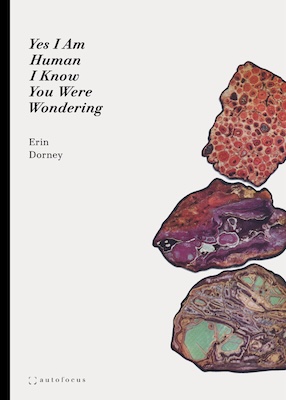
Literature often captures the moments between life’s major plot points—the quiet yet profound spaces where we question choices, find love, navigate loss, and search for meaning. The books featured here, published by small presses, are rich in their ability to reflect the textured understanding of both our individual and collective worlds.
From the wreckage of broken families and personal failures to the resilience found in unexpected friendships, healing, and self-discovery, these works carry threads of hope and humanity. They showcase the lyrical, the strange, and the deeply moving ways in which small press authors weave their narratives.
This list, while a mere glimpse of the incredible work produced by small presses, highlights the talent and diversity in today’s literary landscape. These 15 titles invite us to examine our world, our choices, and the stories that shape our lives, offering profound insights.
A paramedic loses her ability to compartmentalize after a terrible accident, while at the same time, her marriage is destabilized by an unplanned pregnancy; a recent college graduate swirls through unemployment and parties until what she assumes is just a temporary retail job upends her life; a deeply unqualified—but well dressed—office worker at a university allows her conventionally unattractive colleague to do her work, but at a cost. Set in the American Midwest, the characters in these stories are linked by the desire for something more than the lives they are currently living, even though they often engage in acts of self-sabotage. Juxtaposing dark humor and lyrical writing, Bell captures the strange but emotionally charged interactions we have with family, coworkers, strangers, and even ourselves to dazzling effect.
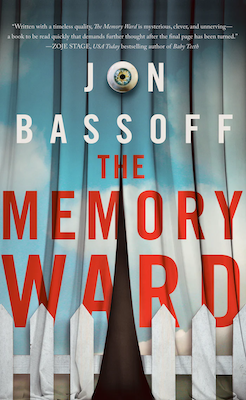
Daniel Losman is an American translator living in Copenhagen. While struggling with a difficult translation project, his neighbor dies. Through this tragedy, he meets a woman in his building and begins to develop romantic feelings for her.
At the same time, Losman is separated from the mother of his child. He comes across an advertisement for a study involving a new drug that helps people uncover traumatic memories from their past. Hoping it will help him, and worried that his son might have Tourette’s syndrome like he does, Losman signs up for the study.
As he delves deeper into the study and becomes more involved with the drug, Losman’s translation project continues to fall apart. His search for answers about his past and his desire to protect his son intertwine in a way that is both wild and emotional.
A woman takes a job at a camp for wealthy, wayward boys, who are doomed to repeat their mistakes; a bookstore employee is hired by two women to nanny their teenage daughter and the nanny and child acts as wild as the dogs they release from leashes in the neighborhood; a pastoral Californian commune descends into a suicide cult; and siblings escape to find their father in New York City. Steeped in the longing of paths not taken, and informed by a sometimes brutal sense of the road chosen, Stuber’s stories surface the undercurrent of restlessness—and recklessness—that roils under the veneer of mundanity. The eponymous sad grownups in this collection have not figured out what will make them happier, and Stuber lays their lives bare in raw detail.
A doll with crank-operated hair named Tressie Tessie haunts the stories in this collection. A photo of the doll hovers over the dollmaker’s son as he is dying and falling in love at the same time. Tressie Tessie is on the shelf at a sketchy hotel staffed by an adolescent who should be in school but is truant in order to financially provide for his deeply depressed mother. And when the corpse of Reecie, a beloved family man and race car driver, is paraded around the dirt racing track, the specter of the doll is there too. Across these stories, Troy follows families and individuals in central Missouri as they chose to stay, get out, or return. A compelling collection that echoes both the discordant and the deeply interconnected experiences of small town life in the Midwest.
Jin Lee is an emergency room doctor working during the Covid pandemic. His wife Amy is a novelist struggling with her second book. The Lees have suffered the worst pain of parenthood: the accidental death of their infant child. Their older daughter, ten-year-old Lucie, is also reckoning with heartbreak, and in an attempt to bring joy back into the family home, the family adopts a rabbit—and the process of caring for the animal helps them to heal. But when Amy’s estranged mother comes to live with the Lees after an accident, they are thrust back into disarray, even though Lucie finds a powerful connection with her grandmother. In The Burrow, Cheng peels through layer after layer of grief and regret until she uncovers the core of a family capable of deep forgiveness.
A group of queer moms who share the same sperm donor—nicknamed “Jake Gyllenhaal”—hold annual retreats across the country, where they experience a brush with both danger and celebrity; a newish grad, who really wants to do better in her life, tries to get it together for her partner and build a life in Arizona, only to be dumped anyway; a mom takes her kids on a road trip outside of D.C. during Covid and is forced to reckon with her parenting style. In these eight stories, Crotty takes a deep look at what women give, and what they give up. Each story is a world unto itself, but the collection as a whole is connected through the feeling of being misunderstood.
When Ayşegül Savaş had her first child, she was living in Paris. Her mother visits from Istanbul to help with the baby during a time when Savaş is struggling. In one compelling scene, Savaş shares photos of her home filled with pretty candles and bowls of fruit, even though inside she is melting just like the wax. This collection of short essays chronicles the juxtaposition of the joy of new life with the terror of parenting: when your body is not your own, when you are powerless to help your child, when your nipples are raw but the baby still needs to nurse. There is a frankness in The Wilderness that many readers will appreciate. The “wilderness”—in this instance, the unknown—is present and clear, even if the way out is not. A mesmerizing exploration of new motherhood.
A mother and daughter bond with their husband and father’s second wife; dead parents haunt their daughter’s bedroom door; and a young woman finds power in auto-eroticism. In these stories, Zambrano explores the deep complexity of family dynamics, the dual terror and joy of parenthood, and the particular place that women hold across social structures. Set mostly in India, the collection is linked by desire, heartbreak, and also defiance—the characters find agency even when the world around them tries to deny it. Zambrano is known as a flash fiction writer, but the few longer stories in this book have the same punch and resonance as the very short ones. Written with emotional clarity and an undercurrent of feminist rage, Ruined A Little When We Are Born is not to be missed.
Preteen Sissy is an outcast at her new school. Tormented by bullies, she fights back against one of the boys, and catches the attention of Tegan, a fellow student who glows with confidence. The two become fast, if complicated, friends, both struggling with strained relationships with their mothers. Sissy’s mother battles depression, leaving Sissy to fend for herself. Meanwhile, Tegan’s conflict with her mother is so intense that she stays with her older sister during the school week. Largely unsupervised, the adolescents are free to explore—and they are just starting to realize both the power their bodies have and the dangers that it exposes them to. A coming-of-age story both tender and sophisticated, Amphibian deftly captures the in-between of girlhood and womanhood.
Two math scholars struggle to keep their relationship intact as they navigate the turmoil of multiple cross-country moves, ultimately doomed by Agnes Callard’s idea that “true lovers” want love only out of their respective unhappiness. In the title story, Norbert Wiener’s notion of cybernetics shapes a series of infidelities. In another story, Nietzsche’s Zarathustra makes an appearance on a dating game show. Wahl uses philosophy as a launching point to explore dating, love, coupling, and breakups. Her canny ability to find the emotional core of romantic relationships makes this collection compelling, even for readers who have never picked up a volume of Wittgenstein. Wahl’s characters, often obsessed with their own intellect and degrees, are as fallible as anyone, making this collection both smart and inventive.
Set against the backdrop of the Spanish Civil War, which began in 1936 and ended in 1939, Isidro and Mariana are deeply involved the battle against fascism. Isidro has left his small Basque village to join the frontline as a fighter, and Mariana writes extensively against the government, fully aware that her work is putting her and her children in danger. When Isidro and Mariana cross paths, their brief but passionate encounter is emblematic of so many of the relationships in the book: often by chance, but deeply meaningful. Zabalbeascoa’s characters cannot foresee the tragic end to the war, but readers do, and this chilling knowledge adds to the tension in this compelling and hauntingly prescient novel.
West Virginia University Press: Softie: Stories by Megan Howell
A girl is obsessed by her older, predatory lover’s earlobes; a woman tries to convince the absent father of her child to leave the hotel where he is squatting; a teenager gives birth to a child who immediately devours her; a sister is killed by a neighbor’s husband hurtling a mini-fridge into the stairwell as the other sister looks on. In this collection, change is central, whether emotionally, bodily, or fantastically. Magical realism sits side-by-side with hyperrealism in these stories, and Megan Howell weaves in questions of race, class, and gender seamlessly with elements of transmogrification. Even when a caretaker absconds with her charge—once a middle-aged man, now small enough to be sucked up by a vacuum—it still feels relatable. Softie is beautifully infused with longing for connection and acceptance.
A composer tumbles down a steep set of stairs while on a trip in Venice with his wife, a collage artist. He physically survives, but becomes selectively mute. Back home in New York City, the authorities are not convinced the fall was an accident, and they have some questions for the wife. She also has questions—many questions—for her husband, which he either can’t or won’t answer. At the same time, she experiences a nearly manic productivity with her own work, and the canvases pile up. In this meditative novella, Deal weaves together fragments of memory, song lyrics, snippets from magazine articles, and philosophical ideas to build a line of inquiry about what it means to exist as an artist in the world—and how to continue on when a partnership has been shaken. Thoughtful and provocative.
In 1921, Harrell Hickman returns from World War I with shell-shock and an addiction to laudanum. With his parents dead and nothing to keep him in Baltimore, he makes his way west. The young, troubled man finds kindness among travelers, and especially from fellow veterans recovering from the horror of war. On the high plains, he finds support in the owner of a mercantile, and steady work at a sprawling ranch near the Wyoming border. As his distress, fueled by opioids, intensifies, Hickman can neither silence the voices in his head nor escape the way his experiences as a soldier have numbed him to violence. Told in tight, spare prose, The Deadening is a western that offers all the wide open spaces—and tragedies—that come with the genre.
E and M are two sentient stone gargoyles freed from the side of a church church. They are wandering the southwestern United States in search of water when they meet Rose and Dolores, two human climate refugees. The four form an unlikely group, making their way across the scorched desert on a journey to reach an elusive city, hoping for a safer home for them all. Even in this post-apocalyptic landscape, entrepreneurs and academics chase grant money and write reports to try to understand the alchemy that breathed consciousness into statues and animated trees. In this speculative cli-fi novel, Campbell creates a world that feels both fantastical and familiar in what is ultimately a cautionary tale of a warming and drought-stricken earth where its inhabitants are driven to violence in order to survive.
When Zora Neale Hurston died in January 1960, much of her belongings, including a trunk holding her papers, were burned. But in a series of fortuitous circumstances, a neighbor and friend salvaged some of Hurston’s papers, which were later turned over to the University of Florida in Gainesville.
Among Hurston’s salvaged papers were the pages of her fictional account ofThe Life of Herod the Great, which Hurston was writing to correct the long-held belief that Herod was a villain responsible for “the slaughter of the innocents.” Rather than the evil king portrayed in much of literature, Hurston wanted readers to “be better acquainted with the real, the historical Herod, instead of the deliberately folklore Herod” and learn the historical patterns that established the western world as we know it.
Using Hurston’s papers, including excerpts from her letters, editor and scholar Deborah Plant—who previously edited Hurston’s Barracoon: The Story of the Last Black Cargo—has brought this novel to life. I spoke with Plant about the editing process for a salvaged novel, working with partially destroyed text, and what a novel about the first-century BCE Judea teaches us about contemporary life.
Donna Hemans:The Life of Herod the Great has an interesting publication history, including being salvaged from a fire. Tell us about how it was salvaged?
Deborah Plant: Hurston was living in Fort Pierce, Florida, when she became ill, but before becoming ill, she was still writing her manuscript on Herod the Great. She was actively revising her drafts, submitting letters, and various drafts to potential publishers. She hadn’t been successful with getting any reception, but she kept refining the work nonetheless. And by 1959, when she had a stroke, she couldn’t continue the work with the manuscript.
She eventually passed and all the material that was in the home where she was living before she died was being taken out of the house because they were clearing it for the next tenant. And the protocol was that stuff which could be burned would be burned.
And part of what those who were clearing the house were burning were contents from a trunk, that she had kept her manuscripts in. And one of her friends, who was also a deputy sheriff, was driving by. He saw the fire and he immediately went to put the fire out, and managed to save some of the contents of the trunk. And so this is how we managed to still have Herod the Great.
DH: How did you become involved?
[One of her friends saw the fire and] managed to save some of the contents of the trunk. This is how we managed to have Herod the Great.
DB: Another friend of hers, Marjorie Silver, gathered those papers that were salvaged and deposited them with the University of Florida in Gainesville, Florida. It’s available to scholars to examine and I am one of those scholars who was able to do that and have the grace and the blessing of the Zora Neale Hurston Trust to go ahead and prepare the manuscript for publication.
DH: So the family blessed the publication itself?
DP: Oh yes. I wrote a proposal like you would do for any book, whether it’s the book you want to edit or book you want to write yourself. In this case, you write a proposal not only for the potential publisher, but also for the trust, because they have oversight of the personal material. And I wrote more than one. But eventually the trust appreciated the last proposal, and they felt it was a proposal that would do justice to Hurston’s work and they gave me permission to go ahead with it.
DH: What’s the editorial process like for bringing a posthumous work to print?
DP: With this manuscript there was so much involved because it was pulled from a fire. Also, it was a draft that came to us unfinished, and I put quotations around unfinished, because we really don’t know what else we lost. We could have lost a version that was completed.
In terms of what we did have, we had to figure out how to prepare it, especially when, in some cases—for instance, with the preface and the introduction—there were several versions because she revised it. The narrative itself was in different phases. Some of it was in typescript. Parts were in long hand. Pulling all of it together took a lot of consideration and time. With the manuscript being copied by someone other than myself, that proved to be problematic, because the copying was improper in many instances. I wound up making a lot of copies by using my iPhone, which happened be a good thing. The iPhone copies were in color and actually allowed for more of the text to be seen, particularly on those pages that were singed.
DH: How did you handle missing text?
DP: I didn’t want to guess what she was saying, and I wanted to have enough context to make the best choice based on what else she was saying. With the copies that were done in color, I could see more of a word, more of a sentence, than I was able to see when it was in black and white.
And then I did background reading to learn as much as I could about the history to understand what she was up to. That allowed me to see where she was going in the manuscript, and how the chapters were connected, particularly when not everything was in typescript. Knowing that background helped me to understand how she was organizing the chapters. Then there was the question of what to do about those instances where I could not discern what was written, typed or in longhand, because something was missing, or because of the singed pages. And there were a lot of singed pages, whether on the top, bottom or the sides of pages.
That meant making sure I knew the narrative flow, and seeing where it would more easily transition in terms of what needed to be excised, because some of that had to be done too. And then figuring out how to be the editor without interfering with the writer, especially when the writer is not here to talk to you about what she wants to keep. But being a Hurston scholar all my life, I felt she would agree with the edits that were made because I know her work so well.
DH: So you had to do a certain amount of research or reading the historical material itself on Herod. Would this have gone differently if the book had not been based on a character represented in history?
DP: Even with a fictional work, I can imagine where hers might go, because I know her other work. She maintains the same kind of principles, the same kind of ideals. She’s always about justice, creativity, autonomy, and freedom. These are just hallmarks of who she was and who her characters were. This is what informs Moses, Man of the Mountain. This is what informs when Janie will speak her truth, when she will strike out for her own independence. The works that Hurston has already given us, whether they are fictional or ethnographic, would inform how I would read a manuscript.
DH: How beneficial was Hurston’s own notes and papers to bringing the book to publication?
Zora Neale Hurston’s always about justice, creativity, autonomy, and freedom.
DP: The ending was not in the salvaged papers but her letters, where she wrote about Herod and the latter part of his life, were instrumental in my being able to give the manuscript an ending she intended for it to have.
DH: You were also involved with Barracoon and bringing that book to publication posthumously. Was the editorial process similar?
DP: No. Barracoon was not in a fire and that work was pretty much intact. It was not unfinished. She wrote to Charlotte Mason, who was her patron, and said, “I have finished the manuscript draft of Barracoon and it’s ready for your eyes.” She was even sending it out to potential publishers. That work was actually complete, although there were some aspects that I had to address when I prepared it for publication. For instance, it was still a draft. She had notes on the back of pages that she wanted to insert in the manuscript, and I had to make sure that it was included.
Here again that work also was in typescript, which meant that I had to create a digital file. I was sent a current version of her manuscript, which I basically couldn’t use because the person who typed it was correcting the original. Because I know Hurston’s genius as an anthropologist and ethnographer, I knew that she would want that manuscript to maintain its integrity in terms of the dialect.
DH: Hurston’s preface includes a portion of the ancient Greek philosopher Polybius’s lecture to his disciples: “History may be a lantern of understanding held up to the present and the future.” What does The Life of Herod The Great say of our current lives?
DP: In the introduction, Hurston says history repeats itself. She points out that what was really prominent in terms of the turmoil of that period was this whole energy of the West’s efforts to dominate the east. There is this similar tension in the 21st century. It is the same struggle. Hurston said we must study history to see what this eternal struggle teaches us.
The answer is not in electing a strongman to rule and dominate us. It hasn’t worked in the past. It will never work. There will always be more war. They don’t bring peace. They don’t bring security. They don’t bring anything except their egos and ambitions. These so-called strongmen not only see themselves as saviors of a particular group or nation against the enemy, but they will also dominate the people that they represent.
It’s a rich history for us to look into and to see the same things that were done in Herod’s day. As James Baldwin would say, “history is not the past. History is the present.” I say history doesn’t repeat itself, it just continues. The only way that we can address that is to have a conscious awareness about our history and a committed intention to intervene in that history by looking at what has been done and the consequences of that. And look to see where we can do something different to create the kind of world that we want.
DH: The book is a continuation of Moses, Man of the Mountain. Can you talk about Hurston’s interest in biblical figures?
DP: Her father was a minister and her mother was a Sunday school teacher. She was kind of enthralled with the whole ceremony of church and what she called the poetry of her father. He would have the congregation spellbound. Hurston was mystified by it all, but at the same time curious and wanting to know more.
She talked in Dust Tracks on the Road about when she was punished as a child. She had to stay inside in one of the rooms and the only thing in there to read was the Bible. She was impressed with a lot of these biblical figures. She is a cultural anthropologist trying to understand humanity. And one of the ways you understand humanity is that you understand the worldview of a particular people. You come to understand spiritual ideals and that which grounds them spiritually. Doing all of that work—collecting folklores, stories, sermons—was part of her interest in the Bible and how we interpret the Bible, and gave her the capacity to distinguish between myth, legend, folklore, and history.
DH: Was this the last of her unpublished work? Should we expect anything more?
DP: I don’t know. The thing about the trunk that had her papers is we don’t know what papers were in there and which ones weren’t. Hurston traveled a lot. She had to leave her belongings with friends and places where she was staying. So I can’t give you a definitive answer. This is the only one I know about right now.
It’s January 2021 and I’m waiting to miscarry but it just won’t start.
I’m early, nine weeks, and supposed to show up at the hospital for the D&C the next day. There’s no need to get the show started on my own; it will happen all at once, without my help. But still, I want a head start, some sign from my body that she’s in on this, too.
I know the drill because I’ve miscarried once before. I’ll be naked, drugged unconscious, then scraped and suctioned clean. Then I’ll wake up, and be watched until I’m allowed to go home.
But something on the print-out from my doctor’s office catches my eye. There’s a slot beneath my name that reads: DOCTOR. And then, beneath her name, another name—some other doctor I don’t know.
I pause. I know I should be grateful to have two doctors. My last miscarriage left no time for forms and rehearsals—it was just rivers of blood in a bathtub, smash cut to the ER. “Do you know why there’s a second doctor listed?” I ask the woman calling to confirm the appointment.
She says the doctor is another OB at the practice I just joined. Just there to assist. To assist. The phrase shouldn’t have bothered me but it does.
I know it’s a luxury to be told what’s about to happen to you. To be assured it’s terribly, boringly common and you’ll be fine. To be given forms seeking your consent. To be lightly reminded what to pack and what to leave behind.
What is it to me that my doctor has back-up? It’s just protocol, not a tag-team.
But the detail of the second doctor worked on me, dragging me somewhere I resisted. Because there was a reason it mattered. There was a reason I flinched at the thought of two people digging around inside me while I was out of my body.
The reason was that it had happened before.
2.
I was raped the first time in 2003, when I was twenty-three. It was stranger rape, as they say, to set it apart, shut the audience up: a man emerges from the dark and it’s terror, weapon, instructions, attack.
I was tired and drunk and before that thought I was having a pretty bad night.
He got me walking into my Brooklyn apartment building. I was tired and drunk and before that thought I was having a pretty bad night.The guy whose birthday I’d been out celebrating didn’t like me back, and I felt like a fool. And then I felt nothing except the compliance of shock: my rapist, from behind, pressing something into my right side. He told me what to do and I did it. I did it because I wanted to live—until later, when I wanted to die.
At the hospital, they cut off my underwear, swabbed and tweezed me because this was forensics, nothing personal. The definition of stranger rape, your vagina as random location. When you’re in the aftermath, it’s hard to conceive it’s all just beginning. After the hospital, some cop or another drove me to the station. It was light out by then and I was delirious from adrenaline. The male detectives took me alone into a room, then asked me if I made my rapist tea. If we’d watched TV afterwards. Since I’d been out drinking, they wanted to know how much I remembered leading up to the rape. They wanted to know if I was sure I hadn’t met my rapist out on the town. If I hadn’t just brought him home.
But it didn’t matter because that kit sang. His DNA was on file from a prior offense, and when they traced it to his doorstep, he told them what he must’ve thought might save him: that we knew each other, that it was consensual.
He had the name on my ID and told the detectives that’s what people called me; but it wasn’t; he flunked. But so did I, because I couldn’t ID him—because I had no idea who he was. So there we were: proven strangers. The Assistant DA said it was better this way. An easier job for her. And so I left my body and testified at the indictment, and over a year later she called saying there’d be no trial. I wouldn’t have to relive it. He took the plea and got ten years, served seven. I didn’t really know then how rare that was, that I was, legally speaking, lucky. But the problem was it happened again, a year later.
It was a Wednesday, the first day in December, 2004. Dark very early. A quiet day after the company holiday party. I left my neighborhood bar for a reading at a Lower East Side lounge named after a sex act. I was there with two men I met through work, both a decade older and writers like I wanted to be. One taught a fiction class I took. He was sober and rounding forty, wore leather and had guest starred on an iconic TV show. The other was an editor at a famous magazine. He bit his nails and didn’t like eye contact but did like Diet Coke and vodka; he was a ghostwriter, too, someone low-key and insidious, paid to sidle up next to you because you couldn’t tell your own story.
It must have been just after 9 o’clock. One moment I was saying hellos as the crowd ebbed around me and then it was morning, and I was naked in a place I’d never been. The night when I reached for it wasn’t there. In its place were singular flashes: a bathroom mirror; something in my mouth; someone on my body.
The editor was there next to me because apparently this was his apartment. I asked what happened and he told me a very short story. He said he and the teacher took turns with me in the bar’s bathroom. He said it wasn’t coordinated, that it just happened, like some bar fight I’d missed, like wild night, right?
Maybe it was because I’d been raped before & in such a network TV way that I just couldn’t immediately match this ludicrous story with its offense: that’s rape. Maybe it was just that I didn’t want to believe both of these men, who knew me, and knew I’d been raped, then raped me back to back, in alphabetical order, the way I’d see them listed years later in some anthology I’ll never read.
I was told there were no drugs in my system, at least not by the time I was checked.
I got out of there, then went through the old steps: the kit, Plan B, anti-virals. I was told there were no drugs in my system, at least not by the time I was checked. Something could have come and gone, but without proof, the onus was mine, the warm toxic brew was mine and I drank it with raging immunity.
“Do you get amorous when you drink?” The detective asked when I decided to make a report. He seemed to feel bad for me or maybe he was just annoyed. He asked did I have emails, voicemails, anything to prove, well, their intent to rape me?
Because when they’re not strangers, you knew them. And if you knew them, how could you not see this coming?
I thanked the detective, then quit my job and moved across the country.
3.
I started over in LA, in another field, the soothing baroque marsh of reality TV, where there was no understatement, no innuendo or room for second-guessing. On camera and on command, everyone shouted who they were and what they were about to do.
Six years later, I was living in New York again when the teacher sent me a friend request. I hit ignore. I hit what is wrong with you. I started a Google Alert for the other one and put it in a junk account.
I got married and changed my name. I avoided readings and stayed invisible. I hid behind my day job. I hid behind the story of the stranger rape, as if it were the only one, and in its long shadow my other shame grew.
And then it was the fall of 2017. My daughter had just started pre-school and I’d learned I was pregnant again.
I thought I was ten weeks along, but the sonogram had other news. The condolence was the first blow.
“I’m so sorry—“ the clinician scanned, sweeping. “I don’t see anything in here that looks like a 10 week-old…”
Inside me, the joystick turned, paused, took its time. I wanted it to be over but she just kept looking. I asked her to stop. I told her to stop. But she said no; she said she wasn’t done and I hated her for it.
The next morning, the doctor on call at my practice recommended I miscarry at home. I’d just started bleeding and could walk and talk so she seemed optimistic I’d be fine. Besides, she said, I didn’t want to risk scarring with a D&C.
The internet had prepared me for what sounded like the worst period of my life, but I didn’t expect to feel the deadlift of early labor. Dilation. Intent.
I could no longer sit up and was at the point where I wanted my mother.
At first it was slow and consistent, and then it was coming so fast I moved into the bathtub. Was this normal? I’d stopped asking my phone and by late afternoon I was fading and the place smelled like hazmat. My husband was watching our daughter and wanted me to eat something, but I could no longer sit up and was at the point where I wanted my mother.
We called the doctor again, this time on speaker. But I could only whisper so my husband took the phone and the doctor said to get me to the nearest hospital. My daughter set a Lego by my head as I bled all over the yoga pants my husband was trying to pull on me as the ambulance arrived.
The EMT said this happened to a friend of his. She went to bed with a fever and woke up in a blood-soaked mattress. I couldn’t nod but would’ve. Everywhere, all the time, women were waking up to small hells.
The next morning I was sitting in a hospital bed getting a bag of blood. The D&C had done its job. “Hemorrhaging from an incomplete spontaneous abortion,” the report would read Unfinished business could kill you.
I went back to work and cried in the bathroom just once. I’d dyed my hair the color of bright urine but my coworkers were kind. I laughed too hard at jokes then flinched when someone said a story or plot beat “wasn’t viable.” I went back to interviewing people but couldn’t make them cry, and this was reality TV so it was my job—mining soft spots for something to pitch, inviting people to relive their traumas, knowing all that mattered was that the dam of emotion
had burst on tape. If they cried, they’d deliver. They were bookable. They’d cracked and could crack again.
And then the Harvey Weinstein story broke, and rape was everywhere and so were the rapists. Named and unnamed. It was click after click of fresh horror. I’d been back to work a few weeks by then and was just starting to feel functional. I didn’t want to think about it but also couldn’t look away.
On the subway ride home, I stood and swayed, glued to my phone. A month ago I’d made the same commute holding the belly I was so certain was growing. It’d be months before I could stand to touch it again. Instead, I rode over the bridge, numbly tracking the day’s perps while The Boss from 1980 sang into my headphones on repeat:
Is a dream a lie if it don’t come true/Or is it something worse
My husband asked how I was doing with the headlines—and at first I didn’t get it. I was so attached to the story of the stranger rape that I’d trained myself not to identify with stories that fell outside its familiar, dramatic scope.
But the stories kept coming—from celebrities and acquaintances and everyday people, and I could finally accept that the second time was rape, and that maybe it had shattered me more. I could accept it, but what good was that? It still felt like losing the room — I was raped and then raped and then —
Vanessa Veselka writes in her novel, The Great Offshore Grounds:
“The word raped was too strong in the air for Livy’s comfort.
‘Lower your voice. It’s not everybody’s business,’ she said.
‘The hell it isn’t. They—’ Kirsten’s voice got louder. ‘They,” she waved her arm at the lunchtime rush, ‘get off too easily. It’s not your shame. It’s theirs. They’re the fucking rapists.’”
For the first time, I tried writing about them. I used numbers, not names. I wanted nothing from them and it wasn’t my business what they might regret or not.
Name them, others urged. Draw blood.
I was tired of blaming myself. I was tired of trying to bat away the maybe imperceptible but constant hum of shame that followed me. But their names were triggers and their names were inadequate. They weren’t on any shitty media men list I ever saw and their jobs were long gone. Their names were chicken scratch in a book no one had written, that no one would write, because there were simply too many of them to record.
For awhile I stopped trying to write about it. I tried other things. EMDR and EFT and soul retrieval and body work and past life regression and plain old talk therapy. But I’d never tried going back to the place where it happened, so that’s what I did.
It was a Friday in January and I was about to turn thirty-nine. We were leaving New York and my husband and I were on our last night out. It was warm so we decided to walk home across the Williamsburg Bridge, but instead I pulled him down and across Christie Street, right up to the entrance of the bar where it happened.
I knew the address by heart and had morbidly walked by it in daylight a few times in the fifteen years since.
They’d renamed it but this was the place. I knew the address by heart and had morbidly walked by it in daylight a few times in the fifteen years since.
We went inside and at once it was too much. I wanted to seem casual and tough but instead was full-body shaking. Somehow I’d expected it to be packed but no. It was dead. A greenroom for ghosts. My pulse ran untethered and my stomach hid in my womb. We went to the bar, where the young woman tending it took a veteran look at us and hung back just long enough before saying she made a great virgin hot toddy and would I care for one?
Yes, I said. But then I got up to find the bathroom. I wanted to see the place where it happened. So I wandered toward the back until I found it, but when I went in it felt off; something about the angles, or the mirrors. I asked the bartender if it had been changed at all, and she said yes; it had been moved and reconfigured.
She slid me the drink and asked if I was okay. But I was staring back toward the entrance, as if waiting for my younger self to walk through the door, oblivious to the men about to teach her what people meant when they said stranger rape wasn’t personal.
I heard my husband tell the bartender what amounted to: something bad happened here, and I saw the bartender nod. She took a breath and said, without prompting, that she worked with victims of sexual trauma; she knew things, too. She wasn’t my witness and I’d never see her again, but there was a recognition between us that buzzed like a cable no one bothered to bury.
We thanked her and left. The place wasn’t special; it was just another bar. The men who raped me weren’t unique. They were everywhere. Undercounted, overlooked, their names bled together and their names would not last.
4.
Your trauma comes back to you without your consent, a friend tells me.
Perhaps it’s 2009 and you don’t have health insurance so you’re on your way to a charity clinic that finds abnormal cells on your cervix; perhaps they send you to a Long Island gynecologist who treats this sort of thing for them. Perhaps he asks, mid-exam, if you can cast his son in something. And the son, who somehow also works there, pops in to say hi and they laugh. Perhaps you call the charity clinic to complain and they say you’re “not the first,” and do nothing, and life goes on.
Perhaps you’re pregnant again after your first miscarriage, and at the hospital during delivery a young man comes in the minute your husband and doula leave to get coffee. Perhaps he says he must check your progress seconds before he’s checking your progress, as you explain you’ve just been checked, that there is no fucking progress and besides, you only picked your practice because it’s three women. And then it’s over and he leaves, it’s just a job.
Perhaps while you’re delivering the same baby someone stands in the doorway and you don’t have your glasses on so you can’t see what’s happening but you feel the presence. You’re pushing but it feels so weird to have this person just standing there unannounced so you shout to come into the circle already. And she’s a young woman, and this could be her someday, and it’s fine, you just had to make it fine by inviting her.
5.
I try to focus on the cat calendar, and not the box of Kleenex sitting there like door number two.
It’s January 2021 again, my first ultrasound appointment. I try to focus on the cat calendar, and not the box of Kleenex sitting there like door number two. “Are you sure about the date of your last period?” the technician asks.
And I just know. It’s happening again.
I have to answer, except I can’t form words so I nod. She needs to know what to tell the doctor. But I jerk at the other suggestion—that maybe I’m someone who has no idea what’s taken place in her own body.
I’m measuring small, she says. Silence, clicking; silence, typing. She says she’s afraid it doesn’t look good but also doesn’t want to get things wrong.. I’ll have to come back in a week. I can’t imagine waiting that long, and hide my face as she removes the wand and the screen goes dead.
The next week I look away from the same screen as it confirms the diagnosis that never appears later in fine, ghostly print on the pregnancy test: spontaneous, abortion. It sounds almost beautiful, like an Olympic dismount backwards through time. No applause, just an ear tilted helplessly into the void.
The D&C by the two doctors is a success. I wake up in pain and start crying, and the man next to me is crying, too. We’re strangers and we’re wearing the same full-body bibs. The nurse who comes doesn’t speak, doesn’t have to. Everything has been thought of, everything scripted. She passes me Dilaudid and water and moves me along, and later I’ll get print-outs proving all of this happened, with witnesses to say so, and crackers, and juice. And then it’s time to go; someone wheels me out, talking softly about nothing, and we wait outside in the rain that’s finally come.
6.
I knew I was supposed to be able to breathe or imagine my way through it, but I couldn’t.
A year later I’m back, and in labor. It’s a Sunday night in October and I can’t believe it; I can’t stop smiling. They wanted to induce me last week but my baby’s signs were fine so I said no; they didn’t like that, but I said give me the weekend. And here I am—5 centimeters. The hospital is quiet or maybe everyone’s drugs have kicked in. I’ll never forget the screams down the hall during my first delivery nearly a decade ago, the fear I felt knowing my cervix was only halfway there. It’s okay to give yourself a humane birth, my doula told me at the time, and she was right. I took the drugs then and they were amazing, and I could take them now but I pause. Maybe I’m an idiot or maybe I’m brave, but I’m also just curious about this rite I’ve passed over numbly twice before. Labor to me was always a mythic assailant, with me always straining to get a look, to ask why are you hurting me so much? I knew I was supposed to be able to breathe or imagine my way through it, but I couldn’t, and took the pain personally. But something this time is different. My nurse is amazing and about to retire; she arranges things so I can crawl on the floor or the bed or whatever. My husband is here, and one of my dearest old friends is my doula. She locks eyes with me above her mask, and doesn’t tell me I can do this—she tells me I am. My contractions are shattering but they’re also my own. Each one is like lightning I’ve coaxed from the sky instead of the lab animal jolts I felt when I was induced. The doctor on call shows up when I’m 9 centimeters. We’re strangers but we know what to do. I get stuck at 9 and a half and she gets my permission to stretch my cervix the rest of the way. And then I’m 10, the most open I can possibly be, and now I’m the woman down the hall screaming, and then my baby is, too.
Horror isn’t just for Halloween. There’s a lot of frightful things about winter: the long nights, the cold weather, the sense of isolation that seems so frequent during this time of year. Things can seem a little bleak during winter—which is what makes the season perfect for scary stories.
These horror books span continents and centuries. But they all take place in the dead of winter, and the characters are often haunted by what’s lurking in the snow.
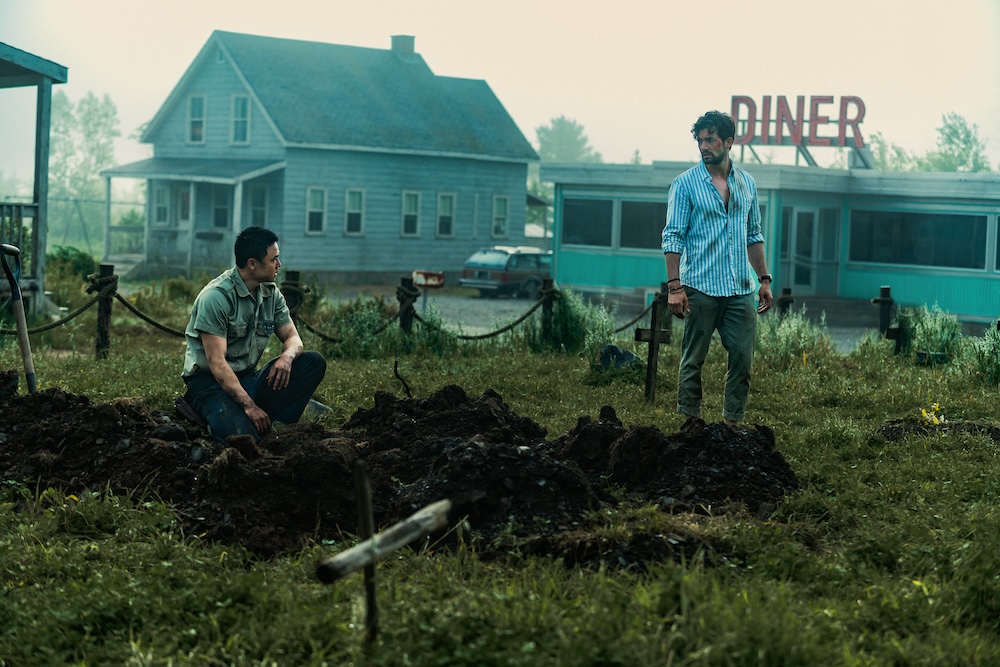
On a cold winter night, a woman joins her new boyfriend on a roadtrip to meet his parents, despite her doubts about their relationship. Things get more and more eerie as the two drive through the snow and arrive at his parents’ farmhouse, and the woman can’t escape her intuition that something is deeply wrong.
At under 250 pages, I’m Thinking of Ending Things is a short read with a twist that packs an ice-cold punch.
Jack is desperate for a change. So when he gets the opportunity to join a scientific expedition in the Arctic, he decides to leave his dreary London life behind and head north. It doesn’t take long for his luck to turn.
As Jack’s companions are forced to leave him one by one, Dark Matter’s creeping dread keeps you guessing: Is there a malevolent presence stalking Jack’s cabin, or is he losing his mind alone in the polar night?
Years after a group of friends commits a haunting act of violence, they’re hunted by a being hellbent on revenge. The Only Good Indians is filled with so many twists and dark reveals, it’s hard to say much without risking spoilers. But readers can expect a slow-burn supernatural slasher that’s filled with dread, graphic and gory imagery, and biting social commentary set in the snowy Northwest.
In a world ravaged by a deadly virus, three narratives play out: students at a prestigious academy survive a bus crash only to be stuck in a snow drift, a group of strangers is stranded in a cable car above a frozen mountain, and employees at a remote facility battle with power outages that threaten their safety. Filled with shocking reveals, this page-turner keeps you on the edge of your seat.
Thirteen years after his failed Arctic expedition, explorer William Day must return north to save a friend who’s gone missing. As he searches, he must face the trauma he’s tried to keep in the past. This novel is told in alternating timelines: one of William’s first exploration, and the other of his rescue mission.
Another story set in the Arctic, The Terror is a fictional tale with infamous real-life inspiration: the 1845 failed expedition of the HMS Erebus and HMS Terror. The ships become icebound when trying to navigate the Northwest Passage, leaving the crew stranded.
Tensions rise, the crew fights to survive, and it becomes clear that isolation and starvation aren’t the only dangers on the ice. Something monstrous is roaming the ice, preying on them.
After their flight is cancelled due to a blizzard, a group of strangers bands together to rent an SUV and brave the storm on the road. Things go awry almost immediately, and the group realizes this isn’t a normal snow storm. In the wind and cold, something is turning people into flesh-hungry monsters.
Felix and Faye expect to spend their days hiking during a romantic trip to the mountains to celebrate their engagement. That changes when a blizzard slams their cabin. As each night passes, the couple begins hearing footsteps, screams, and incoherent voices from the dark. Voices that Faye begins speaking back to in her sleep.
The Winter People is told in two entwined stories. The first of Sara, a grieving mother in 1908 who would do anything to see her dead daughter again. The second of Ruthie, a present-day teenager whose mom mysteriously vanishes one January night.
As Ruthie searches for her mother, she unearths long-buried secrets and begins wondering if there’s any truth to the rumors that the dead haunt the woods around their small town.
Hoping to mend his fraught relationships with his wife and young son, troubled Jack Torrance takes a job as the lone winter caretaker at a remote hotel in the Rocky Mountains. But as the snow piles higher, it becomes clear that the family isn’t alone in the Overlook Hotel—and that the other presences are loosening Jack’s grip on reality.
A must-read for any horror fan, The Shining is one of Stephen King’s most famous works.
Steven Duong’s debut collection, At the End of the World There Is a Pond, is born out of his obsession with the idea of containment, both of nature and as a second-generation Vietnamese American.
Bridging the esoteric and the intimate, his poetry grapples with questions of the self in the context of familial and literary ancestors. An Iowa Writers’ Workshop graduate, he negotiates ghosts, memories, fiction as meta-narrative in poetry, and the legacy of the Vietnam War for the Vietnamese diaspora in America.
Duong and I spoke on video chat, discussing his connections to the past—ancestral and personal—and how these connections play into his relationship to himself as a Vietnamese American writer and poet.
Sanchari Sur: We should talk about the title. You seem to be saying that at the end of the world, instead of quiet, there is going to be an excess of life. The way you write about water throughout the collection, there’s an excessive flow of water which tends to overflow without regards to boundaries. What is your connection to the imagery of water in your work?
Steven Duong: In something about the pond, there’s this sense of the pond in literature, maybe just in our contemporary consciousness, as being this inert, still, peaceful thing. So, at the end of the world there is stillness, life is gone, things are now inert, but I wanted to counteract that because ponds are such lively places beneath the surface. There is a line in “Novel”—the first in a series of sonnets: “an image in a pond/ made foreign by the mouth breaking its surface,” where I have the pond as this thing with a surface that can constantly be broken. And to enter the pond, you need to break that surface, disturb it, create those ripples. For me, the pond feels very connected to these other bodies of water throughout the collection.
I have this lifelong fascination, obsession, with fresh water aquarium fish. I kept them throughout my life. My dad and I had a fish tank growing up, and my brother had one as well. But there’s something about the way we try to contain these animals, removing them from their natural environment, something like a pond or a river or a lake, and transferring them to a place to be contained and observed. That human-imposed containment is what drives a lot of the poems.
In “Best-Case Scenario”—an after apocalypse scenario—underwater things are drowned and submerged, but there’s also color and a lot of life and a lot of movement in the absence of people. I see the end of the world as not the end of living things in community with one another. Maybe, the idea of the fish tank is to create this natural simulation of animals, or habitat, but so often, we end up having fish from Southeast Asia and Africa, and the African Great Lakes, all in the same aquarium. There’s a simulation of nature, but also of being forced into community with one another. I think that’s also kind of what diaspora is. Diaspora is, by nature, forced because of war, migration, displacement. That forcedness also brings everything together into the pond.
SS: Let’s talk about a different arc in your collection. One of the arcs was the “Novel” poems scattered throughout. They seem to be about a journey of a writer between irreconcilable things bubbling up. Can you speak to this meta-narrative about writing, and why instead of putting them together like your “Tattoo” poems, they are scattered?
SD: I went back and forth with both of those sets of sonnets. The way these ended up featuring in the book, they mirror these two different artistic practices that I have, which are, fiction writing or writing this novel, and the other is tattooing. It so happens that with each of those “Tattoo” poems, I wanted to speak to one particular experience or one tattoo session with a specific person. And these kind of happened in quick succession in the span of maybe a few months. Whereas, these “Novel” poems, I wrote the first one in the winter of 2018. The final “Novel” poem—“Novel (Not even in my dreams…)”—is the last one I wrote for this collection. I’ve been writing a novel this entire time and I’ve used the “Novel” poems as a way to speak to the process, the frustrations, the difficulties of fictionalizing a life, or creating a character that is not exactly distant from my own experiences and identities, but is distant enough that they can be separated by this veil of fiction. I think I needed that distance between the poems too. I wanted the sense that a novel is being written as the collection proceeds, like accruing.
Novel-writing is so different from writing a poetry collection. In writing a poetry collection, there is a sense of accumulation and accrual, but there’s so much curation. Like, you have written 100 poems and are trying to fit 40. Whereas with this novel, it feels like a document that’s accumulating ephemera and characters and ideas and dialogue. I wanted the fictional novel within the universe of the collection, like these sonnets, to feel like they’re growing. I am using the sonnet form as a hyper-concentrated box. And because the “Novel” poems are so hyper-concentrated, it’s like a box, making them suitable for this meta-fiction or meta-narrative.
SS: What is your personal relationship to tattoos and tattooing, and how does that reflect in your poems?
SD: My personal relationship with tattooing is kind of fraught. The first tattoo I received was on my eighteenth birthday. It was a contentious thing. With my family, there was this whole big fight, and I don’t want to get too deep into it, but it resulted in a lot of animosity and a sense of alienation with my family. Over time, that’s shifted and changed, but I guess my initial experience was this is such an individual expression of my creative desires and interests, and it was met with so much resistance and animosity from those close to me. As I have grown older, been tattooed more, and through my own tattoo practice, my relationship has changed. I’ve become a little bit less precious about them. I have worked with artists that I like. But as a practice that I engage in, I find it so rewarding. There are always those same kinds of questions that come up in every tattoo session with every new person, “What was your first tattoo? Is this your first time doing this? When was the last tattoo you received? What does it mean?” etc. I mean, those questions always arise, and then it always leads to these very interesting conversations when you’re sort of forced into intimate proximity with somebody. But people that are featured in these poems, some of them I know very well, and some of them were new friends. It allows you this intimacy in a really short amount of time, just because it’s such a physical practice. And it’s so much feedback. So, I am adjusting something so that this person is comfortable. So, adjusting the design and the actual line work, and the shading and the strokes, so that the person ends up with the representation that they’re pleased with. There’s so much give and take to it. In the same way with those “Novel” poems, where I wanted to capture something about novel writing in those poems in addition to their concerns with experience, identity, and how to lead a meaningful life as an artist or a writer, with the “Tattoo” poems, I wanted to capture that intimate experience with the person being tattooed.
SS: I want to talk about another theme in your work, that of addiction or pills, especially in your poems, the ghazal, “Ode to Future Hendrix in the Year of the Goat,” and “Oxycodone.” They talk about addiction as an act to escape in some contexts, and a lens through which to mediate the world in others. Can you speak to this theme?
SD: The experience of addiction and recovery are very individual, everyone has a different journey with addiction and recovery. But oftentimes, the recovery portion of it depends upon or requires community with other addicts, taking them with 12 step programs and other rehabilitative measures. But with these poems specifically, I wanted to speak to songs that feel like they are celebrating the experience of addiction. They’re taking the experience of drug use and substance use and creating a really pleasing image. An image that’s really beautiful and kind of scary and self-destructive. I mean, it’s an old trope, I guess, of the beautiful tortured artist. I was thinking of the song “Codeine Crazy” (by Future) with “Ode to Future Hendrix in the Year of the Goat.” It’s one of those songs that constantly lurches between this celebratory tone about wealth and drug use and sex. Then, in the space of like one or two lines, it lurches into this really dark and self-destructive and honestly quite tragic and insightful angle, and it becomes about addiction as opposed to being about drug use. And I kind of wanted to capture that here in poem alongside this image of the devil and hungry ghosts. I wanted to engage in the romanticization that these kinds of songs engage in while framing it as a blessing, or a prayer. This poem is about the art that comes out of addiction, and the “Oxycodone” poem is about the addiction experience itself. It’s more intimate, speaking directly to the drug. It is something Future does in their songs, personifying the drug. I wanted to write a poem of addiction that treats the drug almost in the way you treat a lover, or a long-time friend.
SS: In your poems, “Extinction Event #6 at the Shanghai Ocean Aquarium,” “Veneers” and “The Unnamed Ghost,” memory seems to play itself out primarily in terms of its transformative nature. However, there are fleeting instances of memory as they are encountered or reimagined by the speaker. There’s also an element of haunting that suffuses these moments in these poems. Can you speak to the function of haunting and memory in these works?
SD: My impulse to write about ghosts and hauntings probably has a lot to do with the religious practices in my family growing up. So, my folks are a variant of Buddhists, but there’s also this folk religion that we practice at home, sometimes referred to as ancestor worship. I hadn’t encountered that term until later in life after I had done ancestor worship for however long. But it’s this thing where you set out incense on the day of—let’s say—your grandfather’s death and for a moment while you are honoring this ghost with incense and fruit and offerings, you set the dinner table as if the whole ghost family is going to be dining there, wishing them well, and hoping that they’ll protect you. And then they vacate the seat, you take the seat, and you eat the offering. I hadn’t thought about it too deeply until later, after I’d stopped living at home. But I think I grew up thinking of ghosts and spirits as these entities that are loaded with significance for my family, but with me, there’s something casual about them. They visit on the same day every year, they have a routine, they sit down and eat. I didn’t know my ancestors but I wanted to engage with them on the page.
It’s a question for ethnic American writers or writers of diaspora, how do we honour and represent the stories of our ancestors? For me, there’s a big legacy of the Vietnam War, and migration and displacement that occurred during and after the war. Although it’s not explicit in a ton of the poems, I was interested in the ways that these spectral memories and ghosts can be present without necessarily taking over, like this Western idea of possession. It’s not like that, like they are there but they are—
SS: Copacetic.
SD: Yeah, exactly. I wanted that to be present in the poems. So, I am speaking about memory as if it was a ghost. It’s like giving form or giving shape to something very conceptual and abstract like its personality or personhood is one way to sort of make sense of it. It also ties into these ideas of containment, and how do we find forms for stories that we can’t tell otherwise?
I’ve been teaching poetry and fiction to undergraduates over the past couple of years, and I often talk about poems as ways to give shape to something that is formless, but just for a moment. You’re giving it enough shape to exist for the span of the poem, and then once the poem is done, the barriers break, and the formless thing becomes formless again.
SS: Another theme that stands out is that of reification or transformation in poems such as “Anatomy,” “Ordnance,” “The Failed Refugee,” among many others. Can you speak to the way the past functions for you as a poet and the way you write it into your poems?
SD: Growing up, the past was something very rigid. The way the Vietnamese diaspora in the States understands Vietnam after the war is, we had a country called Vietnam, and when Saigon fell and the northern communist regime took over, that was the day we lost our country. That’s the language they use, the language of loss of a country that we had and no longer have. It almost feels like the narrative of post-Civil War South. Like, this was a way of life and now it’s no longer there. So I grew up understanding that past, the Vietnamese past, as gone, and if you were to go to Vietnam, it’s a different place completely. Some of these poems that are set in Vietnam or engage with some of my travels in Vietnam, I began to realize the road between the past and the present is continuous. It’s not straight, but continuous, and that it didn’t stop existing when all these people left. There’s also a sense too while growing up, that we have to preserve our language. And I think that’s important to ensure that future generations in a diaspora have access to the culture of their home countries, etc. But there was a sense of, ‘we are the ones preserving it,’ when there’s an entire country that speaks the language.
But a big part of the way my poems in this collection deal with the past is that it once felt rigid but is now able to be transformed or revived into something new. In “The Poet,” I was thinking about this poem by the Vietnamese American poet, Hai-Dang Phan, one of my first poetry teachers. His book, Reenactments (2019), deals with the legacy of the Vietnam War and war re-enactments in ways to represent the history of conflict and war. Some of those poems deal with civil war re-enactments, but some of them also deal with Vietnam War re-enactments. The work of Diana Khoi Nguyen treats the past as not this inert thing but this malleable, living, evolving organism. Also, Toni Morrison and her representation of the past and different manifestations of the history of slavery and slave trade in the U.S. I feel it’s easy to sometimes view these histories as trapped in a museum or whatever. But I think it was important for me in my poems to write about the past as an alchemically unstable substance.
SS: I am curious about your poem, “The Black Speech,” which seems to be a critical renegotiation of Tolkien, where you seem to be reclaiming the seemingly racist legacy of the Lord of the Ring movies and his books with your own memories of The Hobbit, a gift from your Kung Fu teacher. Can you speak to your relationship with Tolkien in this poem?
SD: This poem begins with observation. I was in Thailand and I was traveling with a friend. We saw this guy with the script on the ring around his arm. It gave me a space to talk about Tolkien and my relationship with fantasy novels. I grew up on Tolkien, C.S. Lewis and Piers Anthony. Part of what drew me to fantasy as a kid was the fantastical breadth of culture. Part of getting older and re-reading some of these, and also understanding the contexts in which they were written, is also understanding that part of this narrative of Lord of the Rings is saving the West from destruction against the forces of evil in the East. It’s not subtle! [Laughs] So, part of it is engaging with the fact that these things that are beloved to me are steeped in a white supremacist, sometimes Christian, worldview. But also these things gave me permission to imagine other worlds. And seeing somebody create their own languages, there was something really free and beautiful in that creation.
I am currently sitting in the foyer of a hotel near the San Francisco airport. I’m hard at work writing my next book. I’m also, as the guy across from me notices just now, hard in that other sense of the word. I had hoped he’d notice. We’d been eyeing each other for a while. He’d gotten a drink at the nearby Starbucks and his imposing thighs, framed by delightfully short shorts, had first caught my attention, as had the white Nike Jordan essential tube socks that similarly hugged his well-sculpted calves. Novice that I am at cruising, I had worried the glances I kept catching from him were accidental. It’s why I’d moved my laptop off my lap and given him a better view of, well, my actual lap. And so, next time he looked toward me in a casual way that didn’t let the girl friends he was with notice his distraction, I found his gaze landing on my right hand, which rested (quite seductively, I assured myself) on my clearly aroused dick. I rubbed it a bit. He licked his lips. And then, as if following a tacit script we both knew by heart, he got up, excused himself, and headed toward the restrooms down the hall.
I didn’t—couldn’t, really—hesitate. And so, despite the fact that I’ve been struggling to crank out my desired daily word count this week, I pack up my laptop in a rush to catch up with him. Only, by the time I enter the hotel’s public restroom, he’s nowhere to be found. Damn, I think. I must have miscalculated his interest. Which is a pity because if his legs (and freshly shaved angular facial features) were any indication, he’d make for a delicious notch in my budding hook up history. And so I take my place in front of one of the urinals and make as good use of this writing break as I can. It’s then I see the door to one of the two stalls open; his smirk informs me he’s very pleased to see me, if slightly annoyed that someone else in the other stall will limit what we can get away with. Standing side by side in adjoining urinals, we eye each other’s cocks (he’s clean shaven all over, it turns out). Eventually he’s brave enough to reach his hand around and cop a feel—all before a slew of men walk in and break our makeshift intimacy. Outside the restroom he only spares himself enough time to tell me what was absolutely necessary. “Wait until I leave my friends. Then follow me upstairs: 4081.”
Research, I tell myself, often comes from the unlikeliest of places.
When I first started telling folks that my next project would be all about the transient intimacies we can build with strangers, about the way in which brief encounters could be sites of endless possibilities, winks and nudges and snickers ensued. Oh how interesting that research would be, I was told. Talk about fun field work, right? Friends enjoyed making me blush with such ribald ribbing. The truth was that at some point I would need to up my cruising game if I was to feel in any way prepared to engage intellectually with the ideas I was pursuing with this project. I’d need to put in hours in the field lest my musings on cruising feel more like a sterile book report than an embodied (and, yes, well-researched) meditation on the joys of this queer practice. How else would I find whether cruising, as writers as disparate as Leo Bersani, Garth Greenwell, Tim Dean, and Marcus McCann have expounded these past few decades, was (is!) a different way of looking, a queer mode of reading, an example of impersonal intimacies, proof of a new vision of sociability? Or, more to the point of this project of mine, how could I confirm if cruising was, indeed, a welcome template with which to reframe how we connect with strangers?
Following the instructions of the young hot boy in the Jordan socks I felt a novel thrill. I know, I know. “I’ve never done anything like this,” all but sounds like a pickup line. A classic, truly. But in this case, it was true. (Not that I told him so; few words were exchanged, in fact.) One of my boyfriends—the one who can successfully cruise a boy while out washing the car or on a 7-Eleven run—has long mocked me for my lack of experience in this matter. “It’s so easy,” he tells me often. “You just have to pay attention.” He was right, as it turns out. Following the many pieces of advice he’s given me over our many months together, I was able to connect with a guy in a public place with just eye contact and minimal body language and proceed to a second location with but a few words spoken in between. All I had to do was be open to what was around me. And to trust that I could make it happen, no matter how much of a novice I am in such situations. A novice in practice though definitely not in theory.
I first wrote about cruising in earnest for an undergraduate paper in an English class. Back in 2006 I was taking a course on gay literature and the syllabus included John Rechy’s 1977 novel, The Sexual Outlaw, whose subtitle doubles as an apt précis for its narrative project: “A Non-Fiction Account, with Commentaries, of Three Days and Nights in the Sexual Underground.” From its opening lines, which talk of “streets, parks, alleys, tunnels, garages, movie arcades, bathhouses, beaches, movie backrows, tree-sheltered avenues, late-night orgy rooms, dark yards,” and more, I was smitten. And intrigued. And mesmerized. And any number of other ways of describing what it feels like when a piece of writing cracks open the world for you. Rechy’s sexual underground was revelatory for a twenty-one-year-old college boy who was slowly trying to make sense of himself as an out gay man in a whole new country, and who understood that as mostly consisting of falling for boys who openly flirted with him and dreaming up future lives with them, in turn. Amid such sophomoric ideals about what gay life could offer, Rechy was a tempting proposition. After breaking up with my first ever college boyfriend I’d found a cute Aussie whose pop culture tastes neatly aligned with mine. And so, while I was reading about any and every filthy thing Rechy(’s protagonist) did in the streets of Los Angeles in the 1970s, I was blissfully living out a rather square (homo)sexual experience. I’d told myself Rechy’s “Jim” and his exploits on the page were an embalmed past I could never live out (hadn’t such cruising died out in the 80s and 90s with the closure of bathhouses, with endless park raids, and a health crisis that discouraged if not outright vilified such practices?), and so I approached The Sexual Outlaw as a kind of totemic text about an erotic fantasy as elusive and out of reach as any of the porn stories I used to read online in high school. When I first read it, I was bowled over. Never had a novel so turned me on while also intellectually stimulating me. I blushed at every other page, with shame, at times, but mostly out of a blissful kind of erotic and intellectual envy.
For cruising and hustling and scoring and “making it” in Rechy’s world wasn’t (solely) an excuse to drum up deliciously titillating scenes about fucking and fingering, about blow jobs and hand jobs, about orgies and one on one encounters. It was a cultural rallying cry. And, for a literary nerd with a penchant for queer theorization, the book proved to be a source of endless inspiration. Here was a way of apprehending so-called unsavory aspects of gay male culture in a productive way. Or so I told myself in the comfort of a classroom and the safety of a college discussion where I could entertain deliciously debaucherous scenarios that I didn’t dare live out in person. Out of fear, yes. And shame. And a distrust in my ability to dream up such possibilities. Rechy was the kind of gay man I aspired to be; his writing the kind I aspired to live in. In my twenties I could only think about cruising as an intellectual concept, one rife for interpretation and interpellation, one that served less as a guide for sexual pleasures out on the streets and more as a capable trope that helped me navigate what was happening on the sheets—on the pages, that is.
My brief fling with the flight attendant close to twenty years after reading about Rechy’s scandalous exploits felt like vindication. Sure, I’d been to bathhouses and to backrooms and secluded gay beaches and steamy dance floors. But this was novel. At last, and after years of thinking and writing about Rechy’s book, I had a cruising anecdote of my own—a textbook example of it, at that! All it required was a change in my own orientation toward the world. My boyfriend had insisted that all I had to do was pay attention. I had to be aware of my surroundings. Everywhere could be a cruising space if you were attentive enough. This is what Rechy teaches his readers. Not (solely) by showing us how public parks and restrooms (and alleyways and piers and the like) make fertile ground for sexual encounters but by embodying the openness required to invite and entice such interactions. That’s a lesson I’d learned from another book assigned to us in that gay lit class. William Beckwith, the protagonist of Alan Hollinghurst’s The Swimming Pool Library, doesn’t so much reveal London to be a vast endless space for “cottaging” (the Britishism for cruising) as much as he reveals himself as the kind of person that makes such a description of London feel self-evident. William scores aplenty everywhere he goes because he’s yet to meet a public space (or an attendant stranger) he couldn’t lustfully turn on.
Here lies the key to the cruiser: potential is everywhere if you so choose to seize it.
Cruising demands you reframe both how you gaze at the world but also how you invite the world’s gaze. William is able to cruise boys everywhere in London because there are no spaces where cruising is not the desired goal. Witness him describing the Tube: We’re told he found it “often sexy and strange, like a gigantic game of chance, in which one got jammed up against many queer kinds of person. Or it was a sort of Edward Burra scene, all hats and buttocks and seaside postcard lewdery. Whatever, one always had to try and see the potential in it.” Here lies the key to the cruiser: potential is everywhere if you so choose to seize it. Moreover, it requires understanding public spaces as rife for thoughts and actions that belong, we’re often told, in private. It’s why Hollinghurst cites Burra, whose early twentieth century portraits captured a lascivious vision of urban life wherein sensuality was always on display. Hollinghurst moves us to think of the London William observes as constantly being up for consumption, packaged for public viewing, postcards being the rare private correspondence that’s open to be read by anyone who chances upon it. William refuses to observe any distinction between different public or private spaces: “Consoling and yet absurd,” he muses later, “how the sexual imagination took such easy possession of the ungiving world.” Sex, in William and Hollinghurst’s worldview is—and could be had—everywhere. There is no fiction of such erotic intimacies as being corralled into the metaphorical “bedroom.”
Hollinghurst’s protagonist may well be a perfect embodiment, in all senses of the word, of the argument queer theorists Lauren Berlant and Michael Warner espouse in their famous 1998 essay, “Sex in Public.” Concerning themselves with how “heterosexual culture achieves much of its metacultural intelligibility through the ideologies and institutions of intimacy” (straight culture makes sex, for instance, something that only happens in the privacy of your own home between a socially sanctioned unit of two), their essay begins with a simple statement: “there is nothing more public than privacy.” In their North American context—and responding quite vociferously to the arguments put forth by conservatives like Jesse Helms—Berlant and Warner saw how intimacies have been continually privatized. The passing connections Hollinghurst’s William and Rechy’s Jim so relish are socially disdained, if not outright criminalized. Narratives of love and family end up indexing the only available forms with which we’re to be intimate with one another. Anything outside of that is marked, they argue, as other. As deviant. As criminal. But it’s in those “criminal intimacies” that Berlant and Warner see rife potential: “girlfriends, gal pals, fuckbuddies, tricks,” and the like are examples of close-knit relationships that are not easily legible within our socially sanctioned narratives (there are no “happily ever afters” in these stories, only, and even then just sporadically, “happy endings” at most). Queer culture, as they argue, “has learned not only how to sexualize these and other relations, but also to use them as a context for witnessing intense and personal affect while elaborating a public world of belonging and transformation. Making a queer world has required the development of kinds of intimacy that bear no necessary relation to domestic space, to kinship, to the couple form, to property, or to the nation.” Against the invective that the only kind of intimacy one should value is the one you nurture at home, in the bedroom, with one other person, Berlant and Warner reminded their readers that queer folks had been extolling the virtues of queer counterpublics and the tight-knit relations there created. In lesbian bars and gay tearooms, in cruising parks and public toilets, on piers and on the streets—even on phone sex lines and in soft-ball leagues!—there’s been no shortage of queer spaces where friendly, familial, erotic, and sexual relations have been championed. These are fleeting and fraught, mobile and transient as need be. But they are not for that any less important in helping to map out what, at times, feel like utopian visions of the kind of communities and relationships we could all be building.
William, who has but one close friend and barely puts any stock into his own familial relations, puts his energy in nurturing (however passing) intimacies with strangers. His London is rife with possibility precisely because he sees openings both literal and figurative wherever he goes. “There is always the question, which can only be answered by instinct,” William tells us, “of what to do about strangers. Leading my life the way I did, it was strangers who by their very strangeness quickened my pulse and made me feel I was alive—that and the irrational sense of absolute security that came from the conspiracy of sex with men I had never seen before and might never see again.” Those instincts, Will knows, are not infallible (a key scene in the novel occurs when, misjudging a possible score, he’s beaten to a pulp by a group of homophobic neo-Nazis). But those instincts nevertheless structure his view of the world. Cruising is, at its most utopian, an equalizing practice that squarely depends on expecting the best (the most, really!) from strangers. This is what Hollinghurst stresses all throughout The Swimming Pool Library: not for nothing does the inciting incident of the entire novel take place at a public restroom where William unexpectedly finds himself saving an older man’s life.
Cruising is, at its most utopian, an equalizing practice that depends on expecting the best from strangers.
Cruising has offered fertile ground for critics, thinkers, and scholars alike. As a practice long criminalized and often degraded from within and outside the community, cruising has, over the last few decades, emerged as a kind of utopian practice that requires us to dream up more generative modes of relating to the other, to the stranger. In Park Cruising, Marcus McCann notes that the “defining characteristic of cruising is its porousness. Cruisers show deliberate vulnerability toward strangers.” There’s no way to make yourself available to others if you’re closed off, something I’ve long been accused of being, or seeming (likely both). It’s why keying into such a mood comes with such difficulty for me. For McCann, such porousness opens up a different way of conceiving of our sociability: “I often think,” he writes, echoing the sentiment at the heart of Berlant and Warner’s work, “of the ways which non-monogamous and queer people build intimate relationships not just with one or two people but as a kind of fabric whose interwoven strands overlap.” The weaving metaphor is particularly helpful because it pushes back against the other image that’s often deployed when we think of our public interconnectedness with strangers: networking. McCann’s image is much more organic; it’s a more productive figure, too, with its own serviceable usefulness. But there’s also an expansiveness to it: you could make plenty of different things with any one fabric. Those queered intimate relationships can and could be endlessly refashioned, repurposed—recycled, even. McCann notes that we should see a phrase such as “the strangers in your life” not as an oxymoron but as a kind of koan. It’s an invitation to reassess why we so often feel compelled to revel in our estrangement from those we don’t (or will ourselves not to) know. There’s a tacit call toward empathy here, toward compassion. Filtered through lust, no doubt. But that makes the impulse no less ambitious. In his seminal treatise on cruising, Times Square Red, Times Square Blue, Samuel R. Delany helpfully teases out the tenets on which McCann’s work is founded on. Delany understands the distinct aspect of cruising, as “contact” rather than as “networking.” This is why cruising is a concept inextricably linked with urban planning for Delany. Cruising is a practice that flourishes most acutely in densely populated areas where public spaces allow for such encounters to happen. The cruiser is an attentive observer of the urban world. And a rather active member of it as well. He moves through spaces with wide-eyed conviction that what he’s looking for is out there, ready and willing to be enjoyed. What could we gain, then, by being open and opening ourselves up to strangersthis way?
What could we gain, then, by being open and opening ourselves up to strangers?
Such utopian considerations of cruising can leave one romanticizing the practice. Or a version of the practice. After all, nowadays, most queer folks encounter it mediated through screens where scrolling and filtering and blocking and ghosting have made it feel like an insidious way to know and covet others’ bodies. What’s lost in cruising for men on Grindr, say—or Sniffies, even—is the very contact with bodies Delany was so focused on. Such steamy tactility is lost when we’re reduced to squares on a screen, to headless torsos with a laundry list of wants and needs distilled on first look. This is perhaps why I reach back to the work of Rechy and Hollinghurst (and Jean Genet and Andre Gide, in turn) to better arm myself with how best to bring a cruising attitude into my everyday (and obviously my sex) life. There I find a call toward soaking up bodies and stares, gropes and glances, in ways that push back against the antiseptic way of approaching men with a neutered “Hey handsome” these apps so depend on and demand in turn. The very language of Rechy’s work, for instance, demands you relish the many encounters he chronicles; he pulls you closer (cruises you, say) into a world where bodies do plenty of communicating.
When we first read The Sexual Outlaw in class, we had long discussions about what Rechy and his fictionalized surrogate were seeking in their seemingly endless sexual conquests. What drove a hulking, muscled tan man in tight denim to scour the streets for one hook up after the other? Why did Rechy so chase after, on the streets and on the page, momentary connections that left him adrift, wondering out loud to his reader, whether any other kinds of bonds could be made between strangers in the night?
At every turn in The Sexual Outlaw, which notches hundreds of sexual encounters, Rechy seems to be running away from the possibility of being truly seen by another. “Jim” whisks himself away whenever he senses a closeness he wishes to expunge instead. For a character (and author) who so willingly gave his body away, those retreating gestures always struck me as indicative of something else; I even made the mistake of bringing it up once in class. “Don’t you think that Jim is just afraid of intimacy?” The thundering laughter that greeted my all too earnest inquiry haunts me to this day. So much so that the specifics of how our professor rerouted the conversation away from my question have melted away in the decades since. What was clear was that shame-filled mockery was the only way to neuter my insistence on Jim’s allergy toward intimate connections with his tricks.
Maybe what I was getting at was lost in translation, lost in the very language I am forced to use to make such questions legible. For Rechy’s various autobiographical avatars do seek out intimacy. Though not the kind we tend to value when we use such a word in everyday life. Jim shows no reticence to finding closeness in and with strangers. But it’s one devoid of the emotional vibrancy we call up when we think of intimacy within, say, a couple—married or otherwise. Perhaps my question, and the laughter it elicited in class, was indicative of the way this language fails us in understanding the myriad ways in which we can relate to strangers without falling back on known modes of relating to them. In Unlimited Intimacy, Tim Dean’s groundbreaking study on barebacking subcultures in the late 90s, he asks a better version of the question I was getting at in trying to figure out why Rechy’s Jim found closeness in distance throughout The Sexual Outlaw. It’s a question that pushes us to (re)imagine a different relationship with and to strangers. It invites us to relish the porousness with which we can approach and understand them. And more importantly, it asks us to rethink how and what we construe strangers to be. It’s a query that serves me, now, as the guiding principle of my cruising project, one that must be answered one score—one flight attendant with gorgeous calves—at a time:
“Why should strangers not be lovers and yet remain strangers?”
There’s something transformational that happens when you unwrap a story across a series of poems. Without the real estate of an entire novel, the plot clarifies into its purest and most necessary form, unspooling without a single wasted breath. Metaphors focus and expand. Pacing spirals in on itself. The poet takes new risks on every page, building a text that doesn’t so much tell a story as sing it.
We humans have been using poetry as a vehicle for plot for thousands of years—it’s one of poetry’s original functions, after all. Think Gilgamesh. Think Beowulfand the Odyssey. Personally, I was thinking hard about the Iliad when working on my own debut poetry collection, Helen of Troy, 1993, which reimagines the Homeric Helen as a dissatisfied homemaker in small-town Tennessee in the early nineties. Helen comes of age, marries the wrong man, births a child she is not ready to parent, and begins an affair that throws her whole life into chaos—all this in poems with settings ranging from the produce section of a Piggy Wiggly to a Chuck E. Cheese birthday party to the opening night of Jurassic Park in theaters.
When I made my great leap into reading and writing poetry many years ago, it seemed only natural that the books I gravitated toward were the ones that told a story. The ones with a narrative arc, I mean. The ones with developed characters and weighted conflict. The collections building entire worlds inside their pages—and doing so while refusing to sacrifice the exacting attention to word and line and stanza that marks the very best of all poetic possibility.
Here are nine poetry collections that build their own narrative worlds.
In the town of Oceana/Oxyana, West Virginia, opioid and heroin abuse has smothered everything in its path: lives, dreams, futures. Brewer uses a cast of characters to walk the reader through a community in crisis, addicts and their loved ones crying out inside a kind of living coffin nailed shut around them: “—Still fools? We? / Of course,” his characters roar into the winter night. Brewer is a West Virginia native, and his poems construct the breathing and dying Oxyana with a kind of tender authority that sweeps through halfway houses and hospitals and the dark rooms of the overdosed. His language is painterly, precise, frequently transcendent. An addict leaving a pain clinic proclaims, “though the door’s the same, / somehow the exit, like the worst wounds, is greater / than the entrance was. I throw it open for all to see / how daylight, so tall, has imagination. It has heart. It loves.” This book cradles Oxyana like a mother and like a house fire.
When the little clay bowl Velroy Coathty uses to keep pocket change on his desk turns out to be the Holy Grail, Velroy is forced to make a run for it to get the Grail out of Indian Country ahead of the supernatural forces in pursuit. Other characters with their own paranormal problems join the journey along the way, and like modern-day Knights of the Round Table, Velroy and his friends band together to traverse the plains and fields of Oklahoma in a Comanche quest for the Holy Grail that may be just as doomed as those that came before it. Sy Hoahwah tumbles the reader down his cascading lines of action and imagery, building a narrative rooted in place and yet gently unmoored from any one specific moment. As Luther Tahpony, a boy both dead and undead, explains: “Inside that floating coffin is a fine line between me and time / It’s overwhelming … blinding, / like looking straight into eternity’s headlight eyes.”
A pair of siblings living with their parents in a seaside tourist town must learn to fend for themselves when natural disaster strikes. Forced to leave the shore and all they’ve ever known, the siblings come to rest in the deep woods of a mountain, where danger still lurks all around them and the only sure thing is each other. Jenny Sadre-Orafai’s lovely, twisting book of prose poems treats the natural world as the ultimate hand of fate, both life-sustaining and life-erasing by unpredictable turns. “The ocean’s an animal head on a wall, and we can’t see the body. We think it must be inside the wall and that it walks out at night when we sleep. What’s a body really,” the siblings muse. Reading Sadre-Orafai’s prose poems is like peering into a room through a cracked door, discovering what’s inside only by what a single strip of light illuminates. We swim and hike and forage alongside our double-voiced narrator, living in their filtered memory as much as in the peril and beauty all around them.
French writer Arthur Rimbaud’s classic book-length poem A Season in Hell follows its narrator along a tortured journey through an underworld of unhappy love affairs and ruined dreams. Dustin Pearson’s narrator also descends, but in this collection, the narrator is searching through hell for his brother. “I tell myself / there’s not a world / without my brother in it. / I tell myself / I’d follow him anywhere / to keep the world / from ending,” the narrator says. The narrator and his brother enter hell together, but are almost immediately separated; to reunite, the narrator must embark on an allegorical odyssey of nightmares, burned by fire and frozen by ice, trekking ever onward through the landscape of hell toward a reunion of spirits beaten down and yet forged together by a shared past. Pearson’s imagery is inventive and unrelenting, and his poems locate themselves powerfully in the physical: “In Hell, all bodies are reduced. Flesh drops / from where it’s been burned, and where it lands, / separates.”
Jocelyn, Jodie, Jennifer, Jacqui, and Joelle—coming of age in 1990s working-class Ohio—are teenage girls in the truest sense: each an individual battering ram of dreams, lust, prayer, joy, ennui, compassion, and nastiness. “We’re foul with ambition and clunky in pumps. Joelle fronts cool, but we cook up hot with no warning, man crazy,” Jocelyn says. Rochelle Hurt keeps the camera pointed at her five subjects as they gossip and play-act adulthood, harming each other and, deeply vulnerable in every sense, being harmed by the boys and men around them. Hurt’s phrasing and pacing are explosive, dense, experimental. Being caught up in one of her poems feels like opening a shaken can of Coke and watching it fountain across the room. Comparing herself to her ’81 Chevy Celebrity, Jodie says, “Both sixteen, we twin dim heads and cloudy rear-views, / collect red wounds on our underbellies where the world eats through. / Why should a body be this badly made for carrying?” In The J Girls, the reader watches teenage girlhood come apart and tape itself back together.
A modern-day postapocalyptic Flood myth, Ceive repositions Noah’s Ark as a container ship stacked with refugees aiming for the newly temperate Greenland. The book follows Val, whose daughter vanished in the disaster, as she reluctantly takes a place aboard the CC Figaro to look after the child navigator Crispin. Under the control of a single family (Nolan, Nadia, and their three sons), the Figaro locks into a new social order as it chugs onward toward its destination. Fischer’s pacing slings the reader through stanzas and prose poems that twin a deep understanding of loss with the requirement of moving forward, of living in the fractured present, the uncertain future. “You speak a few dead / languages now, the one / of profit and loss, shock / and awe, vote and veto,” Val muses, thinking as she often does of the world destroyed by the disaster that landed her aboard the Figaro: “You miss bathrooms but you don’t miss / the Dyson Airblade. You miss ice.” What Val misses most of all is her daughter. But aboard this new Ark, there is no way to go back.
After the Tulsa Race Massacre of 1921, lovers Jim Waters and Beatrice Vernadene Chapel must part: he to seek a future away from home, she to navigate the perils of a Jim Crow culture without him. Through letters they write back and forth to each other across their separation, Jim and Beatrice question and yearn and hope and dream, holding each other across the miles that keep them apart. “tell me what / happens when your hope for me / sprawls big as south, / yet this kind of living make me / smaller than a few chickweed seeds?” Jim asks Beatrice. Smith’s characters pulse with life, flush with the careful sensory detail work that threads throughout South Flight. “Honey. I ain’t saying break / don’t hurt, but it a simple fact this world will beat you / down, black eyes like jet, stricken you blue,” Beatrice imagines Ida Cox telling her at her dressing table. An Oklahoma native, Smith peers into a time in American history with painful parallels to our current cultural moment, building both blues and love story along the way.
I stumbled upon this collection very recently, and I’m so glad I did—Troy, Unincorporated feels like it could be cousins with my own debut collection. Francesca Abbate brings Chaucer’s version of the tale of Troilus and Criseyde to modern rural Wisconsin in a series of dreamlike poems darting through language and consciousness. Troilus and Criseyde fall in love among the lakes and rains and birds of their small-town home, but any reader familiar with these classic characters knows that this young love can’t last. When Criseyde leaves town and falls in love with another, Troilus is utterly bereft, and there is nothing his friend Pandarus can do to save him from himself. “I am half-invincible, / half-destructible, half-mad: am, in fact, a divine half / and a half not,” the character Psyche sings in one poem; this book, too, exists in married halves. Abbate holds Greek myth in one hand and Chaucerian tradition in the other, weaving them together into something entirely fresh and original: “narrowing road, clearing, / the sun like the secret shining in the dark halves of all things.”
“Joshua ‘Josh’ Gibson is the greatest catcher to ever play the game of baseball,” Dorian Hairston writes in his author’s note. In a collection of persona poems that dive between complex interiority and the base-stealing drama of the diamond, Hairston brings Negro League baseball to life through Gibson and his contemporaries, holding the long shadow of American segregation and racism in constant focus. “uncle sam knocked / on my door drafting / some black shields / for his white sons / and I answered in my draws / slung my bat up over / my shoulder and point him / in the opposite direction,” Gibson reflects in one poem. Hairston gives narrative space to Gibson, his children, outfielder Hooks Tinker, journalist Chester Washington, and others, all these voices shaping the landscape of our national pastime in the 1930s and 40s. Hairston is a baseball player himself, and his love for and deep knowledge of the game shine out in his work: “I never seen something so smooth. / how Josh didn’t rock or sway back / before the pitch, he just waited there / in the box like a snake to strike.”
“The Florida panther (Puma concolor coryi), which once ranged throughout the southeastern United States, is now restricted to a small breeding population in southwest Florida south of the Caloosahatchee River. First listed as endangered in 1967 under the original Endangered Species Preservation Act of 1966 and subsequently receiving Federal protection under the passage of the Endangered Species Act of 1973, the Florida panther was and still remains one of the most critically imperiled large mammals in the world. Although males have been observed at various locations throughout the state, until recent years females apparently did not cross the Caloosahatchee River and no panther reproduction had been documented north of the river since 1973. In the mid-1990s the subspecies was near extinction with around 30 individuals remaining and severe genetic defects due to small population size.”
FROM: “Location and Extent of Unoccupied Panther (Puma concolor coryi) Habitat in Florida: Opportunities for Recovery”
BY: Robert A. Frakes and Marilyn L. Knight
PUBLISHED IN: Global Ecology and Conservation 26 (April 2021)
We are moving into your house, which you do not occupy now because you are dead. Mothers should not die. You were the universe for me, and then you were a planet and now I am supposed to believe that you do not exist.
I can’t talk about this with my children because I would be reminding them, or telling them for the first time, that I will die someday. Instead, I give them each a little plastic Florida panther figurine and a book about the beasts and tell them that we are moving to panther country. I show them pictures of the blonde beasts and their enormous paws, their white muzzle, black rimmed eyes. “There are only a hundred or two in the whole world,” I say, and my daughter nods gravely. She had gotten binoculars for her last birthday. This, age seven, would be her best year yet. My son looks worried. “Panthers are not dangerous?” I tell him that they stay away from people, that they roam the jungle and freshwater swamps looking for rabbits and armadillo to eat. “Don’t think of them as predators, think of them as magicians.” He is nine, which is old enough to understand a lot about the rules of the world, and to feel discomfort with the vast unknown.
My daughter, upon the news, begins a study of the Florida panther. She says, “The species used to live all over the southwestern United States and now there is only one population in southwestern Florida. In the 1970s there were only twenty breeding pairs, but now there are around two-hundred and thirty.” She is seven years old and she seems forty. She taught herself to read at five with the fervor of someone who needed to know the survival manual.
“That’s good,” I say. “They’re doing better.”
She says, “They sometimes kill and eat small alligators and panthers are the leading cause of death for white-tailed deer in the region.” She smiles wide at this because it means the cats are eating.
We are moving into your house because I can’t get a job. The last academic interview I had was in a desert city and I flew in with my suit skirt and my pressed shirt. For two days I told person after person how prepared I was, how ready to teach their students to write essays. I didn’t eat at meals because I was afraid of getting lettuce in my teeth and in the bathroom between talks and meetings I devoured granola bars and willed myself not to throw up. I tried to picture us there. To picture taking the wet, warm storm cloud of our family to that dry place. My husband was excited about it—he imagined desert wildflowers while I’m always simultaneously pulling away from and missing melaleuca, cypress, swamps. When the chair of the search committee called to say that they had chosen the other candidate I told her I understood but that I was now going to have to move into my dead mother’s house. She was silent on the end of the line. That fury is still a flavor I can recall immediately. It’s in my body somewhere, a stalactite in the cave, water beading off drop by drop, leaving the thinnest coat of mineral behind. Mineral that gathers and gathers and gathers until it becomes a dagger.
When I had a mother I wanted no mothering, I wanted to drift in total randomness through space and time as if I arrived here on the back of a comet.
I’m telling you all these things because you are not alive to see them. When I had a mother I wanted no mothering, I wanted to drift in total randomness through space and time as if I arrived here on the back of a comet. I wanted to be a particle or an atom in vastness. Too bad I was landbound, feet attached to the dumb earth, body full of needs. I worked on a fishing boat in Santa Barbara, served biscuits and gravy in Corvallis, and in Santa Rosa I bent staves of oak into barrels in which wine might age. I stayed as far from Florida as I could, because you were there and I was the not-you. Even when I had a family, we kept our distance. Then you got sick and we moved closer. Now you’re dead and we are moving to the very spot you left.
I sit on the small balcony of our Tampa apartment and drink a glass of water. It is hot and I have so much more packing ahead of me. The children have left their plastic panthers on the ground. I google the species. “Young males wander freely but females are reluctant to cross roads or the Caloosahatchee River, which makes them poor colonizers of new territory.”
For six weeks—or, a space of time as long as the universe?—I have been surrounded by objects that feel like they are trying to devour me. I am engulfed by things you paid for, things you took in. Strays. Every pen, every sock, every piece of paper documenting a doctor’s visit, an electric bill. Then I go home and am engulfed by our own menagerie: every piece of art created by one of my children at a gorgeous, singular moment in their lives. This gauntlet of art is one of the most excruciating parts of moving. How many must be recycled. Every time I think of their fat little hands, clutching a marker with intense focus, and here I am, eliminating that work from the world. Sending it to the mulcher. Motherhood is a train of monstrosity. We should be knighted for the things we are asked to kill. I am not in a ring with gold armor, a spear, and a lion. This is much harder: I am in a ring with my mother and a thousand versions of two tiny humans it is my job to love, and I must reduce the miracle down to something I can pack in a finite, practical number of cardboard boxes. The treasures are more dangerous than any wild beast: they eat their prey from the inside.
The boy is a minimalist. He wants puzzles solved, spaces clear, room only for books and important mementos. He keeps a marine protozoa, a white ghost of an ancient creature, suspended in acrylic. He keeps a toy Ferrari purchased in Italy. He keeps the knitted fox I made for him when he was tiny, little red pants, fishermen’s sweater. Maybe this is saved because I am nostalgic, or maybe he cares about it too. Attachment is a habit we practice, our species. To love things makes little practical sense for survival. We are weighed down. We are bound to places that sink or burn or get twisted into the sky by swirls of wind. He will float freely, sail above us in an airship while the rest of us stand with arms full of metal and wood and plastic and jewels.
My daughter collects teeth. She has her own, each wrapped in a piece of tissue paper and gathered in a ceramic bowl. You’d never know what they were. Trash, or part of an art project, a candy bowl belonging to a witch. If ever she is in a rock shop she buys the tooth of a shark, and she scans the path for them, as if animals are always losing these pearls. It is only one of the things she collects. She throws away nothing she makes so her closet is an archive of cut construction paper, attempts to draw mice in the manner taught to her by a substitute art teacher, evidence of the phase where she drew pictures of her family as figures with only a head and legs. She has nubs of chalk too small to hold. She has been alive for only seven years, seven rotations of the earth, and the contents of that life is all here, the small apartment bedroom a museum of this tiny existence.
Last night, while I tucked her into bed in her nearly bare room, she said to me, “I learned that if you encounter a panther you should make eye contact but not run, which triggers their chase instinct. Panthers usually avoid a confrontation.” I asked if it was like bears, where you put your jacket above your head to make yourself seem bigger. “The book didn’t say. It just said not to ever turn your back.”
“That’s good to know, sweetheart. Thank you for the excellent research.”
“It also said that panther kittens stay with their mom until they are two years old when they go off to hunt on their own. If I were a panther I would already be an adult.”
“Let’s stick together a little longer, okay? For me?”
I am sitting on a box in a living room I will not occupy much longer and I am holding the blue sweater of yours and I am asking for you, the ghost of you, who has not yet visited me, not in the wailing anguish or the bottomed-out sad or the bright peak of memory, to come now and advise about a pile of junk.
I am a cave of collected oddities, things gathered for someone I always thought I was running away from. I meant to leave you but all along I made choices based on your loves, your desires, your urgencies. Everywhere I went, you were an opposing force. What I didn’t know is that you were not against me, that opposite my floating ship, you were my anchor; opposite my suspension bridge, you were the bearing. Now it is time to merge, my life in your home, the saw palmetto, wax myrtle, and Spanish bayonet you planted. Paths through sand, alligators that will outlast us both.
We have woken on this day, and the magnolia tree outside the apartment has flower buds that look ready to break with blossom. Or maybe I am the one who is ready. We are moving out of this apartment where our family has lived for two years. We say that word “lived” like it’s a passive event, but what I mean is that we were sick here, feverish on the couch under a blanket; my husband and I had sex dozens of times in the bed that sits on the floor in the upstairs room; my daughter tucked stuffed animals in under a silk scarf she took from my sock drawer; my son stacked books on astrophysics under books on baking under novels about girls who can turn into dragons; we made and ate the meals that kept our bodies alive for some seven hundred days; we washed the same dishes in the same sink again and again. Is it reasonable for moving to prompt a sense of death? Or maybe it’s this: you came here, to this Tampa apartment. You slept in it. You washed your face here, dried your skin on the towels we still have, now boxed for transport. I can picture you here. Your existence, in this way, is continuous. You will never have been in our new life, but we will inhabit yours. Will I become you? Will your ghost turn the taps on in the middle of the night to torment us? Will you fill our shoes with shredded paper? Or maybe you will be a benign ghost and leave gifts of flower petals, the coffee maker already filled.
On moving day, on the drive south, the children fight about the lyrics to a song on the radio. I turn the song off, which makes them angry at me instead, which was the point. I would rather be the direct recipient of fury than to live in a fog of bickering. “Tell me something you’re excited for in the new house,” I say.
“A bigger room,” the boy says.
“Panthers, obviously,” the girl adds. “There is plenty of suitable habitat in Florida for the panther. The challenge is getting the females to move into new territory.”
The challenge is getting the females to move into new territory.
“Moving is hard,” my husband says. “Even for dads.”
She counters, “Male panthers wander over large areas but females stay close to their mother’s home range.”
I squeeze my eyes tight and then open them wide. I do not want to cry right now. “Having a bigger house will be good for us,” I say. My children are like goldfish that have been kept small by their bowl and now they need to grow, grow, grow. I have a second of panic that they will shoot upward so fast I won’t be able to look them in the eye anymore.
My husband says, “I’m excited to never write a rent check ever again.”
We pull up to the pinkish brown bungalow and I remember being a kid and seeing you out in the yard standing, just standing. It scared me because I did not know why you were so still. You were doing nothing useful, as far I could tell. Not trimming dead branches from the avocado tree, not weeding, not gathering the loose toys. Now I believe that you were hanging onto yourself like a person trying not to get blown off the top of a train. Responsibility must have been moving a hundred miles an hour beneath you. Dad had left. It was always me, needing tape to put up a picture of a horse torn from a calendar; me, needing to know if we were out of cinnamon; me, needing my hair brushed; me and me and me again. The house, too, was always hungry. New lightbulbs, a dripping shower, sticky spot on the kitchen floor, a front door that blew open, sprinkler head broken by winter snow. Your body was useful to us, the house and me, for so many things. I never wondered what you’d do with it otherwise.
We step out of the car, walk the concrete path to the front door, the four of us. The first time we will come here in this way. Home, even though it isn’t yet. I take the keys from my husband who had them because he was driving. It has to be me that lets us in. It has to be me that crosses the threshold first. Are you watching us? I wonder. Are you hovering above, overjoyed, or jealous? If you were alive you would have a jar of lemonade sweating on the table and a gift in the children’s room. Instead, the place will be empty. All sustenance and comfort ours to invent.
The door opens to the pale wood floors, a view of green, green, green yard through the sliders, which are open. And there, in the center of the room, lying on its side, is a cat. A big cat.
“Panther?” my daughter says. “Panther. Panther.” Her voice is shaking.
“Okay,” my husband says. My son is behind me, pulling me back out. The panther has a bird in her mouth. She looks at us but does not seem threatened. We all back away slowly.
Our eyes meet. Hers are a shade of yellow-black. She sees me, through me. Her body moves with breath and there is a low, nearly inaudible rumble. My voice knows it before I do. “Hi, Mom,” I say out loud. The boy pulls me harder. The girl raises her binoculars to her eyes. My husband looks at me and then at the cat. He tugs my hand but I do not follow him back out the front door. The children do. I step forward and kneel down. I put my hands to my heart. “I like your bird.” You curl your front paws. They are huge, and I can almost feel the weight of them draped over me. “We’re here to live in the house now,” I say to the animal, to you. “You can stay around if you want. You are part of why we’re here.”
My husband beckons. “Honey, sweetie. Please come out.” My son is crying. I remember that I am supposed to make eye contact and not back away.
Your muzzle is faintly bloody, I notice. There are feathers on the floor. You stretch and stand, drop your prey. My heart is beating so fast I can’t hear anything else. This is the day I get eaten by an endangered predator.
This is the day I lose my mind. But the cat gives me a look, long and sure, and then turns, her long gorgeous tail sweeping across the floor, and she walks out through the back door.
I hear my daughter in my head, “Male panthers wander over large areas but females stay close to their mother’s home range.”
A big cat walks away through the grass, which is long from a week of late afternoon rain. A woman stands in her mother’s empty house. A woman stands in her own house. The cat is a Florida panther. Or the panther is the woman’s mother. The bird is a pile of blood and feathers. Or the bird is an offering. The woman is the mother. She is in her mother’s home range. She is in her own home range. She is home.
DON’T MISS OUT
Sign up for our newsletter to get submission announcements and stay on top of our best work.
YOUR INBOX IS LIT
Enjoy strange, diverting work from The Commuter on Mondays, absorbing fiction from Recommended Reading on Wednesdays, and a roundup of our best work of the week on Fridays. Personalize your subscription preferences here.