The Most Anticipated Queer Books For Spring 2025

The day after the election, November 6, having spent the previous evening cooking and consuming a healthy meal of grass-fed beef and roasted green beans and quinoa as a form of self-care, I sat at the kitchen table eating every single piece of our leftover Halloween treats. KitKats whose wrappers were red as the electoral map. Bags of popcorn labeled, preposterously, Lesser Evil. Coconut-chocolate bars called Unreal. 

Around lunchtime, deep into this who-cares sugar binge, I opened my email and saw a new Substack post from Patrick Nathan, an excellent writer and an especially astute critic of all the ways—both explicitly and implicitly—our country has embraced authoritarianism. America, he writes in his newsletter, not as a country but as a mythology and set of unifying ideals, is dead. It’s clearer than ever, he says, that “there is no ‘we’ on a national level, and there won’t be anytime soon.”

And yet, writes Nathan, “if America is dead, our communities survive.” If our national politics has become little more than farcical theater, our towns and city councils and neighborhoods are where real change can be enacted. There, he says, we have a voice. And while Nathan’s talking mostly about local politics, I’d like to include you all, the readers of Electric Literature, as a community that can and must survive. Our books and our bookstores, our libraries, our writing groups, our literary magazines, our review columns, our interviews. Our stories. 

“Part of what’s intrigued me, over the years,” Nathan writes, “in thinking about social media, entertainment, and corporate influence, is how agency sits at the heart of it all.” There are so many forces working to pacify us, including the entertainment we often turn to; call me romantic (or delusional), but I refuse to believe that reading literature is one such force. I’m not so naive as to think that books are the way out of this or even through it, but I do think there is true power in sharing stories—not just those we’ve written but those bravely put to paper by others. 

“Eight years ago I despaired,” Nathan writes at the end of his newsletter. “I panicked. I grieved. I binged the news and waited for something to happen, for someone to stop it. This morning, I woke up ready to act. This isn’t to condemn or belittle grieving, nor panic nor despair. But I do hope, after you take the time you need, that you find it in your heart to shut off the stream, to go out into your community, to find out what people need, and to do whatever you can.”

I’m writing this little intro on November 7 with no idea of what’s to come. But what I do know is that what I can do right now, what I need to do, is share some of the stories that other brave, brilliant people have shared. 

How to Sleep at Night by Elizabeth Harris (Jan 7)

At the table one evening Ethan declares to his very liberal husband, Gabe, that he is planning to run for Congress…as a Republican. Just as his campaign is set to begin, Ethan’s sister Kate, a reporter at a top-tier newspaper who’s grown tired of covering America’s madcap political arena, comes back into contact with the ex-girlfriend who broke her heart. For years Elizabeth Harris has been one of the most vital journalists covering the publishing industry for the New York Times, and now we get to enjoy her engaging storytelling from the other side. 

Mothers and Sons by Adam Haslett (Jan 7)

Haslett follows his Pulitzer Prize finalist Imagine Me Gone with another largehearted family saga, this one centered on Peter, a gay immigration lawyer, and his estranged mother Anne, the founder of a feminist “intentional community.” Peter’s latest case involves a young queer Albanian seeking asylum and brings to the fore the source of his and Anne’s estrangement. 

The Three Lives of Cate Kay by Kate Fagan (Jan 7)

Fagan, the bestselling author of What Made Maddy Run and the equally heartrending memoir All the Colors Came Out, turns her prodigious talents to fiction with this epic and intimate saga of a famous writer whose identity has been kept hidden…until now. Evelyn Hugo vibes abound. 

The Unbecoming of Margaret Wolf by Isa Arsén (Jan 7)

In this intriguing debut, two Shakespearean actors enter a lavender-ish marriage of convenience—one of them is a gay man evading the House Un-American Activities Committee, the other a woman in the midst of a crack-up—a roleplaying arrangement made all the more complicated when they’re invited to participate in a makeshift Globe Theater in the middle of the New Mexican desert. 

Hello Stranger by Manuel Betancourt (Jan 14)

Betancourt has for many years now been one of the best cultural writers around; I’ll echo author and editor Matt Ortile, who calls Betancourt  “a dream critic—as in, a fabulous scholar of dreams, of the desirous imagination.” In The Male Gazed, Betancourt wove biography and pop culture to explore modern masculinity, and here he examines the agony and ecstasy of intimacy in the digital age. 

This Love by Lotte Jeffs (Jan 14)

A critic in the UK called Jeffs’s debut a kind of queer One Day, following university students Mae and Ari over the course of a decade, ten years of triumphs and turmoil and intimacies gained and lost. A book about the wondrous possibilities of queer family-making. 

The Loves of My Life: A Sex Memoir by Edmund White (Jan. 28)

No blurb I write could be a better sell for this book than its subtitle. Edmund White has been a candid pioneer of erotic writing for a long time and this autobiography not only distills the raw sagacity of his work but becomes a breathing, throbbing document of gay love throughout the past century. 

We Could Be Rats By Emily Austin (Jan 28)

With her highly venerated debut Everyone in this Room Will Someday Be Dead, Emily Austin emerged right away as a vibrantly unique storyteller, one capable of laying bare the delirium and delight of being a queer woman. Her books are often cheekily funny but never shy away from heavier things, especially the mental health struggles of neurodivergent people. She continues that work here, in a moving tale of two sisters desperate to (re)connect to each other and to the good parts of their shared childhood. 

(Bonus: I’ll be in conversation with Austin for this book’s launch on January 27th at Watchung Books in Montclair, NJ.)

Mutual Interest by Olivia Wolfgang-Smith (Feb 4)

Hernan Diaz’s Trust but make it gay? Narrated in the sly-eyed style of Plain Bad Heroines? I am absolutely buying what this book is selling, an epic and intimate tale of three secretly queer aspiring business titans who band together—and in the case of two of them, marry—to build an empire. 

Reading the Waves By Lidia Yuknavitch (Feb 4) 

A memoir by Lidia Yuknavitch is never just a memoir. In The Chronology of Water, the Poet Laureate of Misfits embraced corporeal nonlinearity as a truer form of autobiography. Here, she retells some of the most significant moments of her life not purely as fact but as passages of fiction, “a way to read my own past differently, using what I have learned from literature: how stories repeat and reverberate and release us from the tyranny of our mistakes, our traumas, and our confusions.” 

Song So Wild and Blue by Paul Lisicky (Feb 4)

In all but a few of her songs, Joni Mitchell employed alternate and abnormal guitar tunings, reportedly to assuage discomfort in her left hand as a result of childhood polio. I didn’t actually know this until I cracked open Paul Lisicky’s new memoir, which weaves Mitchell’s music through his own autobiography and vice versa. It explains why her songs feel at once otherworldly and intimately familiar, a slightly left-of-center lilt that Lisicky himself often taps into in his incantatory books. 

Loca by Alejandro Heredia (Feb 11)

Pitched as Pose by way of Junot Diaz, Heredia’s debut follows two Dominican best friends navigating New York City’s queer underbelly at the dawn of the new millennium, a time and place full of promise and pitfalls. Adam Haslett calls it a “remarkable” book that captures “the pain and power of friendship that extends across seas, and borders, and the struggle of working people to survive in America.”

Girl Falling by Hayley Scrivenor (Mar 11) 

Dirt Creek, Hayley Scrivenor’s 2022 debut, was a national bestseller but still criminally underdiscussed, a small-town mystery that’s sort of Mare of Eastown meets Sharp Objects. Her follow-up centers on an intense friendship and love triangle that ends in tragedy when a girl falls to her death. But was it an accident?

Stag Dance by Torrey Peters (Mar 11)

How does an author follow a blockbuster, game-changing debut novel like Detransition, Baby, a book the New York Times hailed as one of the best of the twenty-first century? Peters continues to fearlessly push the envelope in this genre-bending, darkly comic collection of novellas, including one about a cadre of cold and lonely lumberjacks who hold a makeshift fete during which any of them can attend and be courted as a woman, and another set in a speculative world in which bodies stop producing hormones, forcing everyone everywhere to choose their gender. 

Rehearsals for Dying by Ariel Gore (Mar 11)

“Imagine everything you can imagine,” Mary Oliver wrote, “then keep on going.” It’s a line that shows up in this book by writer and teacher Ariel Gore about her wife’s cancer diagnosis and what it means to be a queer caretaker in America’s labyrinthine medical system, a book that lays bare everything you might imagine about breast cancer and then keeps going. Because what else is there? “Breast cancer is no joke,” comedian Tig Notaro says in her blurb for the book, “but sometimes finding the humor shifts the story into something you can tell. Rehearsals for Dying will help many.”

Stop Me If You’ve Heard This One by Kristen Arnett (Mar 18)

Most likely Kristen Arnett needs no introduction to readers here but what she probably does need is a beer—probably several, and probably at some airport bar somewhere—so let’s all raise a glass to one of the wittiest, most warmhearted writers around and her new novel. Stop Me, her third, follows Cherry Hendricks, a clown down on her luck but high on balloon-animal helium and birthday-party laughter. Cherry’s still figuring things out when she meets Margot the Magnificent, an older magician who dazzles Cherry and offers to show her the ropes of their chosen professions. But like silks up the sleeve, questions of how to build an authentic life through performance never end. 

Cover Story by Celia Laskey (Mar 25)

Laskey’s previous two booksUnder the Rainbow and So Happy for You–brimmed with hilarity and heart, featuring witty, willful characters. Her sensibilities then are perfectly tailored for a contemporary romance, and this, her first foray into the genre, comes with an attention-snatching hook: a publicist doing PR for a high-profile actress very much in the closet must make sure the starlet’s sexuality stays hush-hush…all the while trying to keep from falling in love with her. 

Ecstasy by Alex Dimitrov (Apr 1)

Dimitrov’s previous volume of verse, 2021’s Love and Other Poems, was a fiercely poignant look at the ways in which solitude can be a shared experience. Expect no less from Ecstasy, a collection in part about how the memories of pleasure can be as immediate as the experiences themselves. 

Authority by Andrea Long Chu (Apr 8)

Prizes as big and important as the Pulitzer are often cause to argue over the value of arts and letters in American culture, as well as the individuals and institutions who get to say what that value is, but the committee’s 2023 selection in the criticism category provoked perhaps more debate than usual. Past winners like Emily Nussbaum, Hilton Als, and Wesley Morris haven’t just critiqued art, but changed the conversations about how art is created and consumed; indubitably added to that list is Andrea Long Chu, whose book and television reviews astutely examine some of the most fraught topics of our current cultural moment in often breathtaking ways. Authority, her first book since winning the award, explores the role of serious criticism in a world of unadulterated bullshit opinions. 

Flirting Lessons by Jasmine Guillory (Apr 8)

One of the biggest names in contemporary romance returns with a sweet and fizzy f/f pairing set in Napa Valley. Avery is a newly single event planner with limited dating experience but an interest in exploring her sexuality. Taylor is a classic rake, her insecurities masked by bravado, who offers to help Avery learn how to flirt. Guillory’s books always go down smooth but they never lack complexity. 
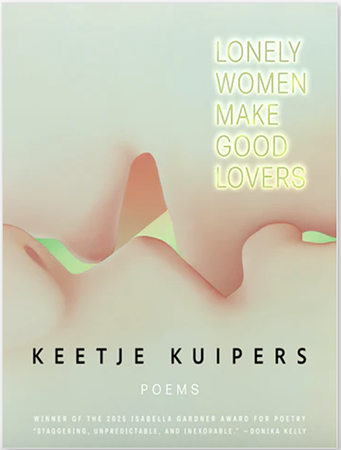
Lonely Women Make Good Lovers by Keetje Kuipers (Apr 8)

The latest collection from Poetry Northwest editor Keetje Kuipers embodies the erotic desolation of its title and is also so much more: a book about trying and failing to love men, a book about trying and sometimes failing to love herself, about how the present makes sense of the past, about motherhood and wifedom and all the quiet, surprising desires that resound throughout a full house. 

Open, Heaven by Seán Hewitt (Apr 15)

Irish poet Seán Hewitt makes his prose debut with a novel about a young man looking back two decades in his past at the year his life changed, when as a sixteen year old in a remote English village he met a boy like him, torn between the stability of home and the promise of elsewhere. Martyr! author Kaveh Akbar calls Open, Heaven a “searching novel orbiting pleasure, loss, and the ecstatic release of both; which is to say it’s a novel about time. Which is to say it’s a novel about us.” 

When the Harvest Comes by Denne Michele Norris (Apr 15)

On my best days, I’m a bit of a cynical grinch. But when I had the chance to read an early version of Denne Michele Norris’s debut novel I honestly felt my cold, cold heart grow several sizes with each turn of the page. Norris is, of course, the editor in chief of this very website, and has led Electric Lit splendidly into a new golden era, but she is also an immensely talented writer in her own right. Harvest follows Davis, a musician, who learns during his wedding ceremony that his estranged father, a venerated pastor, has been in a car accident. The complexity of the loss threatens to upend not only his fledgling marriage—to a white man—but his own sense of self, his dreams and desires. 

Separate Rooms by Pier Vittorio Tondelli (Apr 22)

Look, I’ll be honest: the pitch for this book came with the information that Luca Guadagnino is planning to adapt it to film and that Challengers actor Josh O’Connor is on board to play its protagonist, a young German musician who tries to distance himself from the impending death of his lover by traveling across Europe. Yet it’s also worth recognizing that Tondelli’s novel, originally published in 1989, is considered a classic of contemporary Italian literature, having arrived just two years before the author’s death due to AIDS. 

Awakened by A.E Osworth (Apr 29)

I’m almost tempted to say that the world is not ready for this novel but hot damn this is the novel we need right the hell now. One day, a gig-working loner in Brooklyn, Wilder, is struck suddenly with the mystical ability to understand and speak any and every language. Before they know it, a ragtag group of magically-inclined beings has come to claim Wilder as one of their own. To call Awakened the queer and trans answer to a certain fantasy series that shall not be named would be both a gross oversimplification and a disservice to the anarchic wonderland Osworth has conjured. It’s thrilling and riotous and magical af. 

The Lilac People by Milo Todd (Apr 29)

Whenever I put together this list, there’s inevitably that one work of historical fiction that almost threatens to become more relevant by the time it publishes, and Milo Todd’s elegiac debut—about a vibrant queer community in prewar Berlin pushed into survival mode—might be it. As a fan of Cabaret I was sold immediately on this tale of a trans man who finds love and solace in an underground club only to be forced into fleeing as the Nazis ascend to power. Not only is The Lilac People a moving story, it might also be a roadmap of how we move forward.

The Dad Rock That Made Me a Woman by Niko Stratis (May 5)

No joke: Wilco’s Sky Blue Sky, often cited as the quintessential “dad rock” record, is one of my desert island albums, a pleasurably frictionless blend of blues and alt-country centered on the difficulties of contentment (how queer!) So I was thrilled upon learning that one of the internet’s foremost commentators on the relationship between gender and music uses this much-maligned music label to explore questions of desire and transition. 

Are You Happy? by Lori Ostlund (May 5)

Ostlund rightfully garnered a lot of acclaim for her 2015 novel After the Parade but I first fell in love with her fiction with her 2009 collection The Bigness of the World. Happily, Ostlund, an astute chronicler of the queerness of mundanity and the mundanity of queerness, returns for her first book in ten years with a book of short stories full of “guns, god, and gays.”

The Emperor of Gladness by Ocean Vuong (May 13)

I remember cracking open Night Sky with Exit Wounds and secretly hoping Ocean Vuong would write a novel—not that every poet must turn to prose at some point!—and I remember getting to the end of On Earth We’re Briefly Gorgeous and hoping he’d write another. So I, for one, am glad for the existence of this follow-up, a heartwarming tale of friendship between a teen boy and the older woman who intervenes during his suicide attempt. 

Love in Exile by Shon Faye (May 13)

Believe me when I tell you I was wrecked before the end of this book’s prologue. Queer and trans people are taught that our desires are private, and if that’s true, Faye laments, then “we are culpable for our own feelings of lovelessness.” We are locked out of–exiled from–the traditional realms of happiness and comfort, left alone with our unworthiness. But of course this memoir-in-essays, from the author of The Trans Issue, argues the fairly obvious but no less revelatory point that we are indeed worthy of loving and being loved. 

A Sharp Endless Need by Marisa Crane (May 13)

Sometimes the universe sends you a book written by someone else that feels like it’s been written just for you. As a former basketball player myself, Crane’s follow-up to I Keep My Exoskeletons to Myself is an alley-oop from the literary gods: perfectly pitched and right when it’s needed most—at a time when the profile of women’s basketball is higher than ever. Full of beauty and brawn, the book centers on Mac, a straight-shooting, Iverson-worshipping basketball star going into her senior season of high school—a year that begins with the death of her father and the arrival of an alluring and talented new teammate. Fans of films like Personal Best and The Novice shouldn’t hesitate to jump into this story about the complicated give-and-take between queerness and ambition and how, for better or worse, the body always seems to keep the score. 

The Dry Season by Melissa Febos (June 3)

Melissa Febos is straight-up one of the most essential memoirists today, each of her books a deeply profound exploration of the mind and the body and the complex relationship between them. Whip Smart, her first, more than lived up to its title and delivered a dextrous, piercing meditation on addiction and the things we sometimes do to and with our bodies, while Girlhood–genuinely one of those books that would vastly improve the world if everyone were to read it–chronicles the physical and psychological harm done to our bodies from youth to adulthood. It’s a testament to Febos’s incredible skill that a book centered on celibacy features some of the most erotic writing she’s ever put to paper–and if you’ve read any of her work you know that’s saying a lot. Of course, Dry Season is not just about celibacy; it’s a treatise on listening to and trusting our corporeal instincts, on finding authentic forms of pleasure independent from hegemonic scripts. It’s a book that is itself a pleasure.
Everyone’s a Leaver in the End

“Joanna” by Molly Gott

I always got along with my girlfriends’ families, and for that, I had Florence to thank. She set a real precedent for me. The first time I went down to Georgia with her granddaughter—my girlfriend—Maxine, I didn’t know what to expect. Florence was an authentic Southern debutante, with a dining room wall covered in oil portraits of herself. To my surprise, she was very kind to me. And she did provide a warning. That first night, when Maxine went down to the basement to dig up an extra set of sheets, Florence stood in her enormous, brass-adorned kitchen and said, “She left home when she was sixteen, did she tell you that?”

“She did.”

“My oldest grandchild. She was impatient. Stubborn, too. Is she still that way?”

“She is.”

“That’s not a thing that changes in a person. Once a leaver—”

Maxine came bounding up the stairs then, with her Cheshire Cat smile, so I didn’t get to say what I believed, which was: On a long enough timeline, isn’t everyone a leaver?

With Maxine and me, it took another fifteen years, but it did eventually happen. She left me without warning, on a winter night, the week after New Year’s. It was like a country song about a man going out to buy cigarettes and never coming back. I mean: it was wholly unbelievable. I was sitting at our kitchen table, leafing through a seed catalog when she said she had to run out to the pet store for the dog’s new senior formula food. Thirty minutes later, she called from a payphone at the gas station two miles from our house.

“I don’t think I’m coming back,” she said.

“You cannot be serious,” I replied.

But she was serious, a rarity for her. We were living communally then, in the foothills of the Blue Ridge Mountains, and all our friends were really shocked. They said there was no way she meant it, she was having some kind of psychotic episode, she would surely be back. But I knew her, and I knew the voice she used when she’d made up her mind. She never came back. We never saw each other again. A month after she left, she sent me a list of belongings she wanted from the house—everything fit in two boxes, which I shipped to the Vermont address she provided.

Florence had been dead for a year, so I never did find out what she thought of Maxine leaving me like I was a housewife in curlers. I don’t think she would have said, I told you so. She was harsh, but not cruel. I liked to think she would have hit Maxine on the back of the head and said, What is your problem? That girl was the best thing that’s ever happened to you. I spent a lot of nights imagining that.

Many years later, I pulled off my wool socks in the locker room of the YMCA. It was quiet for a Saturday afternoon, just me and a young woman standing in front of the sauna, fidgeting with the temperature dial. Snow kept people away. I’d have an entire lap lane to myself, a relief. My daughter, Anya, had left for college on the West Coast and I was having a horrific time at work. I was in a period of feeling very sorry for myself, and that required space.

The young woman—she looked only a few years older than Anya—opened the wooden sauna door, stuck her head in, then turned up the dial even higher. Waiting for the temperature to climb, she turned to the room’s sole full-length mirror and put her hand to her neck, which was encircled in a green ring. This had happened to me before, when I wore cheap jewelry into the chlorine.

“Do you need some makeup remover, honey?” I asked, already fishing the plastic bottle and a cotton round out of my locker.

The young woman startled, just slightly, at the sound of my voice. It was always monastically quiet in there, and I had a feeling the snow falling outside further muffled any sound.

“Yes, thank you,” she said, and stretched out her hand. I rose from my bench, set the cotton round on her palm, and dribbled the makeup remover until it was soaked through.

“You might have to really work at it, but it will come off.”

“Alright.” She turned back to the mirror and began scrubbing at the green ring with fierce determination.

The pool, which I swam in three or four times a week, had a utilitarian beauty. The lifeguards kept it clean. The overheard lights were florescent, but the far wall was made of glass, overlooking a wide avenue. I adjusted my swim cap and lingered at the water’s edge. I’d missed a phone call from Anya that morning. Should I have waited by the phone instead of coming here? Should I have called Gloria (my ex and Anya’s mother) to make sure everything was alright? I knew that was silly. I couldn’t stop my life every time I missed a call, but I wasn’t used to her living so far away yet; the distance had made me illogical, uncertain of how to behave.

I dove into lap lane four—my favorite—and propelled myself toward and away from the glass wall again and again and again. I loved when my feet slapped the concrete for a turn. The water was cold enough to motivate.

The last time I saw Florence alive, we were down in Georgia to celebrate Christmas with Maxine’s family. I still found Christmas novel then and committed to it with the whole-hearted spirit only an outsider can have. I was baking sugar cookies in a checkered apron when Florence asked me to go out to the rose garden with her.

“It’s snowing,” I said.

“I have something I want to show you.”

Maxine looked up from her spot in the living room where she was fixing a shelf, caught my eye, and shrugged.

“Alright. Let me just take this apron off and put my coat on.”

In the rose garden, with the snow coming down, she said, “There’s nothing I need to show you. I need to ask you for a favor.”

“A favor?”

“I need you to drive me over to Dahlonega.”

“Why?”

“To see Jim.”

“Jim?” Jim was her ex-boyfriend from years earlier. I’d never even met him. Florence was engaged in romantic drama until the day she died, which Maxine and I agreed you had to respect.

“Yes, Jim.”

“I don’t think—well, I don’t think your family likes him very much.” “That’s why I’m asking you to take me.”

“It’s snowing.”

“And that’s the second reason why I’m asking you to take me. It’s not safe for me to drive in these conditions. You’re young. You’re from New York. You can drive in the snow.”

“I really can’t.”

“Sure you can.” She looked toward the house, then bent over one of the brittle rose bushes, beckoning dramatically in a performance of “showing” me something.

“We’ll tell them we’re out of bacon and have to run to the store.”

I sighed. “They can check the fridge and see there’s bacon. Let’s tell them we need more butter.”

The roads were worse than I’d anticipated. In Maxine’s truck, I drove ten miles below the speed limit, gripping the steering wheel, my whole body tense.

“You’re doing great,” Florence said the second time the tires skidded. “I really do appreciate it.” She pulled a gold tube of lipstick from her purse and began re-applying in the rearview mirror. “I would wait, but he’s leaving town tomorrow.”

“For how long?”

“Forever, maybe. He’s moving to the desert, where his son lives. He sold the house. He’s leaving tomorrow and he just told me yesterday. Can you believe that? Unbelievable. I have to go over there and let him know it’s unbelievable.”

The snow began to slow and finally we reached Jim’s house. It was bigger than I’d imagined from how Maxine talked about him, as if he was some kind of low life, a real scum of the earth man, but this was a respectable brick house, with pillars and manicured hedges out front.

Florence opened the door and then looked at me, expectantly. I didn’t know what to say. “Good luck,” I said. “I’ll wait here.”

She eased herself down from the truck and walked gingerly up the icy path to the house. Terror struck me. If she fell, how would I explain it to Maxine and her family? She looked tiny and shrunken. Finally, she made it to the door. She steadied herself, pulled her shoulders back, and knocked. Jim answered quickly. They did not embrace. She stepped inside. Immediately, he kneeled down with surprising grace and I saw he had a pair of slippers in his hands, which he set down before her. She placed her hand on his shoulder, slipped her shoes off, and put the slippers on in one swift motion. I imagined they’d done this thousands of times. He stood back up and closed the door.

I waited, trying to imagine what they were doing inside Jim’s house, but I couldn’t get any farther than an image of the two of them sitting at a white kitchen table. After thirty minutes, Florence emerged and shuffled her way back to the car. Again, I was terrified she would fall and again she didn’t. She seemed unchanged and completely composed, but when she lifted herself onto the passenger seat, I saw she was still wearing the slippers, which were now wet from the snow.

“Your shoes,” I said.

Florence looked down at her feet. “Oh!”

“Do you want to go back inside and get them?” I thought of her making her way across the icy path again. “Or I could do it?

“No,” she said, inserting her seatbelt into its buckle. “No, I do not.” I drew my breath to argue.

“We will stop at the store to get the butter though,” she said, leaving no room for discussion.

At the grocery store, I offered to run inside by myself, but Florence said, “No, I’ll come with you.”

I followed her to the dairy aisle. She somehow made the slippers look like real shoes.

“Which kind?” I asked in front of the butter case.

She pointed to a brand wrapped in gold foil.

On our way to the checkout line, in the soda aisle, she paused and straightened her back and said, “Do you think you and Maxine will ever have children?”

I did not. I didn’t want children then, and Maxine didn’t either. We were both thirty-four. For years, she’d been saying, in a dreamy way, that she was interested in fostering troubled teenagers—I would say we could talk about it when the time came, although it sounded like a nightmare to me, and I knew the time would never come. But I was flattered Florence would ask, standing under the florescent grocery store lighting, in her wet slippers, having just said goodbye to a man who, for all I knew, was the one true love of her life.

I was flattered Florence would ask, standing under the florescent grocery store lighting, in her wet slippers, having just said goodbye to a man who, for all I knew, was the one true love of her life.

“Yes,” I said. “Yes, I think we will.”

“Very good.”

I never did tell Maxine about my expedition with her grandmother that day. When we got back to the house, Maxine was under the massive Christmas tree, rigging up a complicated mechanism to ensure it would not topple over in the middle of the night, like it had in previous years. “Come join me!” she called when we opened the front door. Orchestral music played from the stereo. Florence excused herself to take a nap and I joined Maxine on the soft, lemon carpet, surrounded by boxes of ornaments. She paused her work, smiling at me with a screwdriver between her teeth until I laughed and she set it down. “I was starting to worry,” she said, taking my socked feet in her lap and squeezing them. “Thought about calling the grocery store.”

“The roads were icy.”

“But you handled them?”

“But I handled them.”

She stood up and began to hammer a metal hook into the wall behind the tree. “Thank you for taking her. You know how she can be when she sets her mind to something.”

When I got home from the pool, the red kitchen telephone was ringing off the hook. It was Anya, upset. Gloria was, evidently, having some kind of surgery. Did I know that? I didn’t. How couldn’t you know? she said, through tears. And it’s snowing there? She doesn’t have anyone to take her home from the hospital and it’s snowing!

I tried to calm her down, then called Gloria.

“Our daughter tells me you are having surgery and need someone to drive you home from the hospital.”

“I told her not to call you.”

Gloria refused to specify what kind of procedure she was having, and I refused to ask more than once. If she wanted to keep secrets, there was nothing I could do to stop her. I had learned that long ago and given up on the hope that I could somehow shake them loose from her.

Her procedure, whatever it was, was being performed in a hospital outside the city, which seemed bad to me. Why not one of the hundreds of hospitals here? It must have required one hell of a specialist. Or worse, she was cutting corners, going to someone who would do it for a discount. So like her, I thought, to endanger herself without considering the consequences for other people. It was easy for me to dip into that egoism, to believe I knew what was or was not like her.

Gloria said the surgery was scheduled for the end of the month. She would take a cab to the hospital by herself, and, if everything went well, spend only one night there. I could pick her up on Friday morning.

“I’ll be there,” I said.

“You don’t have to sound so smug about it.”

I was hurt, but she was probably right. I probably did sound smug.

I was having trouble filling my evenings during that period. No Anya to entertain. No one I was interested in thinking about. There was still an hour of daylight left and the snow was slowing. The landlord usually sent a service to salt the sidewalk in the morning, but I’d seen a shovel in the downstairs utility closet, and, after the conversation with Gloria, I couldn’t face being inside for the rest of the night.

I met Gloria ten years after Maxine left me, at a fundraiser for a community farm I did some pro bono accounting work for. This was the summer of 1988. The fundraiser was an elaborate dinner in the middle of one of their fallow fields. Halfway through the second course, an unexpected thunderstorm hit. We fled our tables and rushed into the barn to take cover. I leaned against the wall, watching the lighting and thinking about how, as a child, my mother would take me into our dank garage to watch summer storms with her. After an hour, the rain stopped. Everyone cheered. Then Gloria stood up on a bench to announce that the road into the farm was flooded. “But not to worry!” she said. “Be merry while we figure it out.” She was wearing a loose denim shirt, so I didn’t notice she was pregnant until later, when, after everyone else had left, in the loft above the barn, she offered me rum punch from a galvanized bucket. She gave me the chair while she sat on a small wooden bench.

“You’re going to let me drink alone?” I asked.

She let out her yelping laugh and pulled at the back of her denim shirt, so it was tight around her belly. “For three more months, anyway.” She lifted her hand to the bottom of the glass and tipped the rum into my mouth. Then she took my hand and pressed it against her stomach, while using her knee to open my legs.

Two months later, we moved into the apartment on East Third Street, where Gloria still lived, where she was sitting right now, looking down at the slush-filled street, angry that, despite everything, she still ended up with me driving her home from the hospital.

When Maxine and I were together, we never had any messages on our answering machine. Most of our friends lived nearby and walked over if they had anything to tell us. But one afternoon, right after my thirty-fifth birthday (I remember there was discarded silver wrapping paper in the corner), I came home from town to the machine lit up red. When I hit PLAY, Maxine’s mother’s voice filled the kitchen, a blinking telegram from another world. “I am calling because your grandmother is in the hospital with pneumonia. It’s nothing to worry about, but I knew if I didn’t tell you and you found out later, you’d use it as an excuse not to talk to us.”

I called the clinic, where Maxine was working a double-shift, and got one of the other nurses to put her on the phone.

On the drive down to Georgia, we fought. We could fight about anything. I actually liked fighting with Maxine. It was athletic. Her grandmother had been right; she was stubborn, but not in the way most people are. She was a flexible thinker with immutable conviction. This was inspiring and maddening, in mostly equal measure.

Florence’s situation worsened quickly. I didn’t realize that people die of pneumonia all the time and so was confused all week, always one step behind whatever Maxine was telling me. When it became obvious that Florence was not going to recover, Maxine convinced her mother to move Florence back to the house, so she could die in her own bed, surrounded by family. It seemed wrong for me to be in the room when she died, so I excused myself when it became clear it was about to happen. Maxine’s entire family was assembled, forming a ring around the bed.

They were quiet, painfully awkward, tense. From the hallway, I heard Maxine break the silence. “Does anyone have anything they want to say to Florence?”

I was stunned, again, by her good-and-direct-ness.

After the funeral, the family gathered at Maxine’s uncle’s house, a rambling ranch-style surrounded by thin pine trees, at the edge of a man-made lake. Buck was an enormous man with six black labs. The oldest one was also named Buck. No one seemed to think it was funny except me and Maxine.

It was a warm, wet spring evening. On the rickety wooden deck, the family started telling stories. Because I hadn’t heard the stories my entire life, I became the audience.

“Has she ever told you,” Buck began, handing me a bottle of beer, “about when Mama stole the guns back for me?”

“I don’t think she has,” I said.

“Maxine, what have you been telling her?” Buck took a swig from his bottle and leaned back, readying himself to tell. “My father was, by all accounts, including his own, a real piece of shit.” He looked at Maxine. “You’ve told her that?”

“She knows.”

“He was very unfaithful to my mother. When I was eight and Maxine’s mother was ten”—he pointed to Maxine’s mother, who was listening from her spot next to the hot tub—“he left her for his secretary. And then, six months later, he dropped dead on a tennis court on a hot July day. He’d already divorced my mother, left her nothing. He kicked her out of the house. She didn’t have a college degree—she’d dropped out of school to marry him—and was working at the market to support us. That apartment—I don’t like to think of it. She was a very hard worker. She went back to college in her forties—you know that?”

“It’s really impressive.”

“My father always promised me I would inherit his gun collection. His new wife said no. All the guns were locked in the basement of Daddy’s house, where we no longer lived. My mother gave that woman three chances. Every time, she said no. The guns belonged to her, she claimed. Maybe when she died, I could have them. One day, Mama picked me up from school. I don’t know where Maxine’s mother was that afternoon. She picked me up from school and there was a big, fluffy towel on the passenger seat, which she told me to hold.”

“At the barn,” Maxine’s mother broke in. “I was at the barn.”

“First, we stopped at the hardware store. Mama bought a hammer and a roll of duct tape. Then we drove over to Daddy’s house. Our old house. Mama told me to wait in the car. She went right up to the front door. There were rectangular windows on both sides. Mama duct-taped the towel to one of them. Then she used the hammer to break the glass. Once she removed the towel, she stuck her hand right through the broken window and unlocked the door, calm as could be. The new wife hadn’t even changed the code on the gun safe. Couple minutes later, she came back out to the car, carrying the guns. I’ve had them ever since. They’re in the basement right now. She was always calm under pressure. Graceful. That’s how I’ll always remember her.” Buck took a long swig of beer and several family members tutted in agreement.
“She forgot to pick me up,” Maxine’s mother said from her perch.

“What?”

“From the barn. She forgot to pick me up that day. I stayed at Helen’s house until eleven that night, when she finally remembered me.”

Buck’s face darkened. “That’s not the point.”

“It was the point to me.”

Tension rushed over the family, a wire pulled tight.

I excused myself and went inside to fish another beer from the cooler. I knew Maxine’s mother had a right to assert her version of the story. Still, I found myself siding with Buck. I was grateful to have witnessed his awe, and the way he seemed to believe it would keep him safe.

The thing was, I thought about leaving Maxine all the time. No, that’s not true. I couldn’t imagine the act of leaving. I saw us together, I saw us apart. What it took to get there—a black box. We had so much furniture! How could I leave? Where would I go? Some people make homes in other people. It makes leaving very difficult.

Afterwards, I thought of Maxine in Vermont, feeding a stove. Her practicality. The rigor she applied to daily life. My shock: in the end, her imagination eclipsed mine.

I bought ice packs. I made a list of Gloria’s favorite comfort foods. I called Anya and assured her everything would be alright. The snow stopped, then started again.

In those first weeks after Maxine left, our friends wanted to hold vigil with me. I swatted them away like flies and spent most of my time walking the dog. Trudging through the leafless forest, I realized: I’d expected Maxine and I to slowly unbraid ourselves from each other. I had witnessed that kind of divorce—it was rare, but it did happen. It seemed to involve a steady drip of pain, stares across a sturdy kitchen table, lots of heads in hands and chamomile tea. The couple dissolves. Two people emerge. A decade later, they embrace at a party and smile, sensibly, at everything that has passed between them. The other partygoers, witnesses now, think to themselves, those two—what a testament to the power of time, then take another hors d’ouevre.

That kind of divorce seemed to involve a steady drip of pain, stares across a sturdy kitchen table, lots of heads in hands and chamomile tea.

I wanted that kind of divorce. I didn’t get what I wanted, which is not the same as getting nothing, but it felt the same for a very long time. I stayed in Tennessee for another two years. I did not replace any of the belongings Maxine asked me to ship to Vermont. I learned to live without a blender. Friends came over and I had no wine glasses. A framed photograph of a Texan mesa hung above our bed and one night, it came crashing down on me, dragging the nail out of the wall with it. I never re-hung it—no hammer. Anyway, I left the photograph behind when I moved back to the city. To my friends in Tennessee, I described my move as temporary, even though I knew it wouldn’t be. I was never good with short stints. You meet people, you delight in encountering certain dogs on your walk to work, you learn which hardware store is better, which market sells fresh ramps every spring. You accumulate knowledge and then you’re supposed to throw it all away? I could never bring myself to do that. I’ve loved so many people who dreamed of escape (Maxine and Gloria being only two). When they asked, in their different ways, Don’t you want to run away? I answered truthfully: No.

The day before Gloria’s surgery, the woman with the green ring around her neck was in the locker room again.

“We’re on the same schedule,” I said.

“Must be.” She turned the sauna dial. “It’s so peaceful in here. I like to linger. I don’t know why it’s so peaceful.”

I too had not understood the peace for a long time. Then it dawned on me that the rules of the YMCA excised entire populations from the locker room. There were, of course, no men, but there were also no children and no young mothers. There was a separate locker room for kids, so ours was mostly the domain of women who hadn’t yet had children or who were past their childrearing years. There was the occasional off-duty mother, sneaking away, but it was infrequent. That locker room was full of women looking at their older and younger selves, and the effect of that was peaceful. I didn’t tell the young woman any of this. I closed my locker and left it for her as a thing to discover.

Sometimes, the end does not correspond to what came before it. Maxine loved me, wholly and devotedly, so I trusted she would leave me in the same way. Eventually I made new friends who’d never met her. I was careful not to tell these people how she’d left; it did not reflect who she was. She was not cowardly. She was not rash. She did not take pleasure in my pain. Yes, Maxine left me without warning on a cold, dark night that began a cold, dark stretch of my life. But she only did it once. She spent one day leaving me and thousands loving me. I did the simple math and knew which outweighed the other. I went on living.

Other times, there really is symmetry. After six years together, I left Gloria. Symmetry, but no balancing of the cosmic scales. I didn’t track down Maxine and tell her I finally understood what she’d done to me because I still didn’t understand. I moved across town, to a bigger, more sterile apartment and filled it with new furniture and small appliances, all wrapped up in their little cords. Anya was still my daughter. There was a period when I worried Gloria would try to say otherwise, but she never did. We split our time with her fifty-fifty. Now, when she came home from college, Anya could take the bus across town, but for years, we met on the second Sunday of every month, at 12pm sharp, in Lankletter Park, the midpoint between Gloria’s apartment and mine. I had a car and Gloria did not—she’d always refused to get one, saying her family had never needed one growing up, implying, I felt, that mine was wasteful for having one. I would have been happy to drop Anya off, but, no, Gloria said, that wasn’t right. It wasn’t fair. Eventually, I came come to resent it. Maybe it was about fairness, but I think she also wanted to keep me out her life. On the morning of her surgery, I hadn’t been inside that apartment for twelve years.

When I arrived at the hospital, Gloria was sitting in a wheelchair out front, dressed in plaid pajamas, a nurse watching over her. She had a bandage at the base of her throat. She nodded hello to me. I got out and watched as the nurse eased her out of the wheelchair and into the passenger seat. Then I reached across her, clicked the seatbelt into place, and closed the door. The nurse handed me a plastic bag. Inside, she explained, were Gloria’s drain care materials. She had two drains, one connected through a port under each armpit. We were supposed to empty them twice a day, measure and record the amount of fluid in the log they provided, and call the doctor if the amount dropped below 30 milliliters or the plastic tubing between Gloria’s armpits and the plastic bulb became irreparable clogged. If there was just a small clog, the nurse said, I would be able to fix it by applying lotion to my index and middle fingers, using one hand to hold the tubing, and the two fingers to work out the clot. Did I understand? Yes, I said, I understood. Then the nurse looked at me gravely and said, “She’ll be fine if she chooses to be.”

What was that supposed to mean?

The sky was approaching sunset by the time we finally got to East Third Street, after a stop at the pharmacy and the grocery store. I put the hazard lights on and went around to open the passenger-side door for Gloria. She grabbed my arm and forced herself to her feet. In the backseat were the paper sacks of groceries. There was no way she would be able to carry them inside.

“The groceries,” I said.

“I’ll see if Mr. Harris can bring them up for me.”

“Don’t bother Mr. Harris. I’ll just do it.”

“The car.”

“It’ll take five minutes.”

“They ticket more than they used to.”

“It’s fine.”

“They’re ninety bucks now.”

“I’ll roll the dice.”

She stood there for a moment, in the center of the salted sidewalk, formidable not despite her bandage and pajamas but because of them—she’d always been this way, whatever state she inhabited was the strongest state.

“Don’t bother Mr. Harris,” I repeated. “I can do it.”

I expected the apartment to be unchanged, but it wasn’t. Gone was the pleasant clutter. Gone was the Tiffany lamp on the small foyer table. Being inside seemed to weaken Gloria’s defenses.

“I’m going to lay down for a second,” she said, leaving me in the kitchen.

I unpacked the bags, put a bunch of bananas on the counter, a jar of peanut butter in the pantry, the icepacks in the freezer. I took the various orange bottles from the pharmacy bag and lined them up on the counter. There was a pad of paper and pencil near the phone and I grabbed them, copied down the names on each of the plastic bottles, and put the paper in my pocket.

The radiator clanged. The winter Anya was born, it clanged all January and February, like a body possessed. Then, the kitchen was wallpapered in a daisy print. The steam from the radiators molded the wallpaper, and I eventually removed it with a vinegar solution and razor, slicing the paper into strips and removing it like bark from a tree. Gloria painted the walls mauve. Now, they were soft yellow.

I toasted and buttered a piece of bread and brought it to Gloria, who was laying on top of the comforter, with the television on. She had a television! In the bedroom! This was shocking. It disturbed and depressed me. When we were together, Gloria never watched television. It would have been unthinkable. She didn’t brag about it, she just had so many other, more important things to do. This television was a violation. I thought of her as someone who lived outside culture, a quality that frustrated and enchanted me when we were together. Surely, Gloria didn’t watch the local news? She didn’t tune in to sitcoms? Had she and Anya been watching television in bed together, all these years? Wouldn’t I have known that?

“How are you feeling?” I asked, from the bedroom threshold.

“Bad, Joanna. I feel bad. Come in, it’s fine.”

I sat on the bed and handed her the toast.

She had the same headboard as when we’d lived here together. It was heavy walnut with laurel engraved in it, a twenty-first birthday gift from her mother. The bed was king-sized, too big for the tiny room. I’d always resented it, how there was nowhere else in the bedroom to go, how you had to shuffle around it, how it was the command center from which all business got done.

Gloria took a small bite of the toast, then set the plate on her bedside table. “I’m tired, and I think I need to sleep. You can go. I’ll be fine.”

“We have to empty your drains first.”

“Mira will be here in an hour. She just couldn’t get the day off work.”

“We should do it before I leave. Not worth risking infection.”

“She’ll be here.”

“What if she’s late?”

“I can do it myself.”

“You can’t raise your arms above your waist. Up,” I said. I said it how I used to say it to Anya when she was parked in front of the television and refused to brush her teeth.

In the bathroom, I set the fluid measuring cup on the sink’s ledge and the recording journal on the toilet seat.

“Should I stand in the shower?” Gloria asked. “In case it gushes?”

Nothing in the instructions mentioned gushing, but it was a small miracle she was letting me do this, so I said, “After you.”

She climbed into the tub and I climbed in after her. My socked foot skidded on the porcelain.

I unbuttoned her shirt, then eased each sleeve off her shoulders. She didn’t wince. There were two drains, one hanging on each side of her waist like little grenades. Under each of her armpits was a port where the tubing exited, terminating in the plastic bulbs. The tubing was taped to her sides. It all seemed very low-tech. Each bulb was about half full of a yellow and red liquid. It looked like all bodily fluids—snot, urine, blood—combined into one. I bent over and disconnected the left bulb, squeezed the liquid into the measuring cup, wrote down the amount on the log. The right bulb was clogged. A small clot of blood was stuck halfway down the tube, so the liquid was backed up.

“One second,” I said. I stepped out of the tub and retrieved a bottle of lotion from beneath the sink. Just like the nurse had told me, I used my index and ring fingers to work at the tube, easing the blockage down into the bulb. I was surprised when it finally worked. “It’s all good,” I heard myself say, as if I was some blissed out hippie.

Gloria laughed, in a not unkind way.

I helped her put her shirt back on and she climbed back into bed, closing her eyes in exhaustion. I pulled the comforter over her body and ran my hands over her legs, could feel her shinbones beneath the down feathers. She opened her eyes and looked up at me.

“I always thought you would die before me,” she said.

“I did too.”

“Most people probably thought that. Your family. Prone to early death. I found comfort in it after you left me, you know. I’d been afraid of finding you dead, and then I didn’t have to worry about it anymore.

“You should really try to eat the toast.” I picked up the plate.

She took it and set it back down. Behind us, the TV played the local news.

“I can’t believe you have a television in here,” I said.

“I’ve always liked falling asleep to the television.”

“Not when we were together.”

“I put it away before you came over for the first time to impress you.” She pointed to the closet. “It was in there, the whole time.”

I couldn’t believe it. “Why didn’t you just say you wanted to watch television?”

“I thought I could be a person who didn’t watch television with you. I was, I guess. I succeeded.”

“All that time, you were hiding it away?”

“Six years. Not so much time.” She straightened her back against the headboard. “I’m really getting tired, Joanna. You can leave.”

“You’re sure you have everything you need?”

“I’ll be fine.” She made a motion with her hand like she was shooing away a cat. “What are you going to do now?”

I had the whole evening ahead of me again. “Probably go for a swim.”

“Sounds nice. I should swim.” She closed her eyes.

I waited for her to fall asleep, then slipped out of the room, through the kitchen, and down the stairs. The sun was still out, and the snow had started back up. There was a ticket on my windshield. On the corner was a church with a stained glass window that hit the sky like a gong. When I stepped onto the sidewalk, I thought of Florence stepping into that cobwebbed basement, how she turned the dial on the safe’s combination lock, if she laughed at the absurdity of stealing from her own house. Did it feel like trespassing? Were the guns heavy? And when she flung the car door open, as I was doing now, did she get a robber’s rush, the drunken mix of shame and righteousness? I’d been wrong, and I was grateful for it. Be patient long enough, and everyone comes back.

8 Newsletters Demystifying the Publishing Industry 

The publishing industry can feel like an opaque, black box to aspiring authors, with countless gatekeepers—agents, editors, publicists, book buyers and more—shaping the process behind the scenes. Even established authors can find the sector confusing as they attempt to read the tea leaves behind changing advance sizes, varying levels of publicity support and shifting print run amounts.

Fortunately, there are now dozens of newsletters that aim to demystify the publishing business. I’ve been fortunate enough to have found many of them through my book recommendation newsletter, What To Read If, and now love seeing their names pop up in my email. (Given the state of my inbox, this is the ultimate compliment.)

From publishers and publicists to authors and reviewers, the eight newsletters below provide valuable insights and analysis to anyone looking to get smarter about—or to survive in—the publishing world.

Counter Craft by Lincoln Michel 

I first found Counter Craft when Lincoln Michel, author of The Body Scout, when he debunked viral claims that most books “only sell a dozen copies.” In the post, he broke down the surprisingly complex process of how book sales are tallied, delivering the explanation in a way that’s both accessible and funny. This newsletter is a combination of commentary on books, craft and the publishing sector. Think of it as a cross between an MFA and a publishing course. Paid subscribers ($40/annually or $5/monthly) receive exclusive posts and can join in the comments sections. 

Genre Grapevine by Jason Sanford 

Jason Sanford, author of Plague Birds and dozens of science fiction & fantasy stories, covers the genre in this newsletter. He provides monthly news and analysis of awards’ drama, ongoing issues at the Science Fiction and Fantasy Writers Association and broader publishing trends. Sanford also offers occasional stand-alone deep dive issues, such as a recent newsletter about allegations that a Nebula-Award winner had improperly submitted a story written by a white writer to a magazine for Black writers under his own byline. [Editor’s note: Sanford has since provided an update on the situation, which can be found here.] Even if you’re not a science fiction & fantasy reader or writer, you’ll still find Genre Grapevine a valuable resource.

The Not So Secret Agent by Sally Ekus

Current or aspiring cookbook writers will want to subscribe to The Not So Secret Agent, a newsletter from Sally Ekus, who runs the culinary and lifestyle division at The Jean V. Naggar Literary Agency. She provides insights into how cookbooks get made, including tips on writing proposals, finding for an agent, and the process of getting those mouth-watering food photos for recipe guides.

Paid subscribers ($80 annually or $8 monthly) receive early access to events.

Pine State Publicity by Cassie Mannes Murray

Cassie Mannes Murray describes herself as having “worked in almost every capacity” in publishing—as a lit mag editor, accountant, designer, agent, bookstagrammer, English teacher and more. Now, she channels those expertise into Pine State Publicity, a publicity agency that supports independent presses and authors. In her newsletter, she provides DIY publicity advice for authors looking to get their books in front of readers, examining what makes a companion essay shine, how to improve marketing copy, and insights into the (dreaded) author brand. Mannes Murray pushes authors to think about publicity not in terms of sales, instead her “goal for publicity is building-onwards (building a career, building a platform, building towards something larger for the author, community-building, building a bigger portfolio of work, something something something).”

Poe Can Save Your Life by Catherine Baab-Muguira

Catherine Baab-Muguira offers “gothic self-help for writers and other creators” in Poe Can Save Your Life, an extension of her book with the same name. Baab-Muguira writes in a frank and entertaining way about the challenges of being a writer in today’s media environment. Her newsletter features Q+A interviews with books authors about their publishing journey. I particularly appreciate Baab-Muguira’s honesty about money, sharing posts about making an estimated $6.86/hour on her book and earning out her advance. As she notes,” I share this information because to the extent I have an author brand, it’s in sharing this kind of information, and because oh God this is SUCH an opaque business…. All this makes it hard for authors to understand their sales and earnings in context. And it makes it hard for aspiring writers to understand what they’re getting into.”

Publishing Confidential by Kathleen Schmidt

During her more than two-decade career at editorial houses, Kathleen Schmidt worked in publicity and marketing, promoting books by writers like Jodi Picoult and even celebrities like Prince. Now, she’s sharing her takes on the best ways to market books, alongside in-depth analyses of the ever-evolving publishing landscape. Recent posts delve into TikTok’s publishing program, the future of book publicity and the role of Substack in marketing a book.

Free subscribers receive one post per week, while paid subscribers ($70 annually or $6 monthly) have access to additional posts and regular “Book Therapy” AMA sessions with Schmidt.

Romancing the Phone by Alyssa Morris 

Alyssa Morris’s Romancing the Phone, a newsletter focused on BookTok, the romance genre and where they intersect, is new but has already become a must-read for anyone interested in online reading culture. Morris, a former writer and marketing strategist at Amazon and Barnes and Noble, offers critical analyses of America’s most popular genre. She decodes why some books go viral on BookTok while others flop and investigates trends, such as the current surge in popularity of hockey and cowboy romances. Notably, Morris comes as an obsessive romance reader and brings that passion to her writing.
Paid subscribers ($50/annually or $5/monthly) receive exclusive posts linking to viral TikToks and trending books. For as long as BookTok drives titles to the top of bestseller lists, this one will be worth reading. 

SHuSH by Ken Whyte 

Ken Whyte launched Sutherland House, a Canadian nonfiction publisher, after tenures at Maclean’s, The National Post, and Saturday Night Magazine. Whyte is also the author of two nonfiction books, meaning he’s seen more angles of the book world than most, and his insights are shaped by his extensive experience across different corners of the industry. His deep dives include Taylor Swift’s foray into self-publishing and the transformation of Indigo, Canada’s leading book retailer.

Paid subscribers ($80/annually or $8/monthly) have access to the full archive, while free subscribers can read posts in the period before they go behind a paywall. 

7 Queer Books with Messy Endings

Queer characters deserve happy endings. And after everything we’ve been through—hiding our identities, hating ourselves, loving in secret, and living through stigma and fear—queer people deserve everything. We deserve the meet-cute, the toe-curling sex, and the over-the-top destination wedding. If I had my way, we would all have our student loans forgiven and become instant lottery winners when we turned thirty. 

Yet, we all know that life doesn’t work that way. Happy queer couples fall out of love and break up or divorce. Queer people are human, and all humans eventually die. Not to be a complete buzzkill, but I prefer such messy realism over fantasy. For one, I learn from messy queer characters and stories. I learn from these characters’ contradictions, blind spots, and how they navigate their shadow selves as they grow and develop. Only through personal transformation can queer people survive and eventually thrive toward liberation, and this path is often long and circuitous. While pat endings serve a dual purpose, providing both hope and escapism, they frequently do not do justice to queer stories, which are often complicated by childhood trauma, stigma, marginalization, and other complexities.  

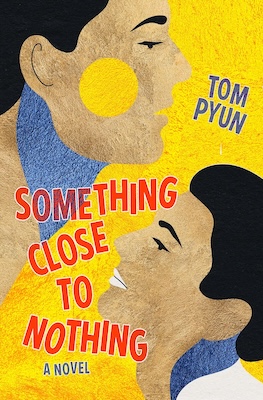
In my debut novel, Something Close to Nothing, the dual protagonists, a mid-thirties professional gay couple in San Francisco, appear to have it all: a loving relationship, high-paying careers, a baby on the way via a surrogate, and a single-family house in San Francisco. Yet, Wynn and Jared’s shadow selves, their arrogance, anger, selfishness, and inability to communicate with each other lead to the downfall of their relationship. While they develop and grow throughout the story, I didn’t necessarily feel either was “ready” for a happy ending. They had too much growing up to do. I played with the book’s ending over the years and considered a few storybook and even “neutral” scenarios for them, but eventually landed on a messy one (no spoilers!). I knew the ‘truest’ ending would leave the reader with the precise lesson I sought to convey. Moreover, I considered the many queer stories that had come before me and found that almost all of them featured messy protagonists with equally or even messier endings. Here are my favorites: 

Brokeback Mountain by E Annie Proux

I came for the gay cowboys and stayed for the crystalline prose in this classic novella. Two young, closeted Wyoming cowboys fall in love but can’t be together for obvious reasons. Proulx publicly stated that she wished she had never written the novel due to rabid fans chastising her for the tragic ending. But given the time and setting, could it have ended any other way? Harsh landscapes yield harsh outcomes. Proulx aptly demonstrates how homophobia and violence not only destroy love but also lives. What I found most heartbreaking was how Ennis’s fear of coming out may have saved his life but also made the reader question whether life was worth living without love. 

A Little Life by Hanya Yanigahara

The novel opens like modern-day fan fiction with four young men, recent college graduates with promising futures, living in a run-down apartment in New York City’s Soho neighborhood. Yet, the story turns very dark, zeroing in on Wilhelm’s harrowing story of childhood sexual abuse. In an interview, Yanigahara said she hoped to write a “protagonist who never gets better.” In this gripping novel, many well-intentioned, kind, and loving characters attempt to save Wilhelm from his pain. The story made me consider the friends and acquaintances who have been lost to suicide and whether there are some people we can’t help due to living with unceasing and unknowable amounts of psychic and physical pain. These ruminations and the consecutive nights I stayed up reading resulted in me coming down with pneumonia soon after finishing the 832-page novel.  

Bastard Out of Carolina by Dorothy Allison

The recent death of Allison has put a spotlight on her rich literary legacy. The novel, based on Allison’s fraught childhood, sheds light on child abuse and rape yet is ultimately about multi-generational poverty, addiction, and abuse. At the end of the story, the protagonist, Bone Boatwright, is physically safe yet fully aware of how her childhood and her mother’s abandonment have scarred her, jeopardizing her tenuous future. “What would I be like at fifteen, twenty, thirty? Would I be as strong as she had been, as hungry for love, as desperate, determined, and ashamed?” 

Memorial by Bryan Washington

In his lyrical novel, Washington’s dual protagonists, Benson and Mike, are a young gay male couple in Houston whose relationship is in a fragile state. When Mike’s father in Japan falls ill, he abruptly leaves their home in Houston to be by his side. Told in alternate voices, Washington aptly demonstrates how couples sometimes need to grow apart and evolve individually to come back together better and stronger, or not. Washington leaves the ending artfully ambiguous, yet we are left with the belief that whether Benson and Mike decide to reunite or go their separate ways, the kids will be all right.  

Edinburgh by Alexander Chee

Chee’s gut-churning debut explores childhood sexual abuse. A charismatic choir director grooms and molests a shy Korean-American boy named Fee and his choirboy friends. The years after, are mired in guilt and shame for never reporting what he observed and experienced. The novel turns dark when Fee switches roles—from the perpetrated to a perpetrator—exploring his shadow side and showing the reader that we cannot escape our pasts unless we face them head-on.   

All This Could Be Different by Sarah Thankham Matthews

In Matthews’ coming-of-age novel, Sneha, a recent college graduate, has moved to Milwaukee to begin her first grown-up job. In her own words, she is ready “to be a slut.” Complicating this sexual awakening is her keeping her sexuality a secret from her parents, who have recently returned to their native India. Instead of swapping and sharing sapphic beds, she falls hard for Marina. While the two do not end up together, Sarah’s friends are there to hold her, showing her love can come in many forms. 

My Government Means to Kill Me by Rasheed Newson 

In this ingeniously plotted fictional memoir, Trey is a queer Black teen from Indiana who has forsaken his trust fund to make his way in 1980s New York City. Newson takes us along Trey’s lively and naughty adventures, from bad jobs to frequent escapades to a Harlem gay bathhouse. Trey’s political awakening leads to activism at the start of the ACT UP movement. Newsom carefully threads a heartstopper of a finale, where Trey saves the life of one friend and ally at the expense of another, shedding new light on the adage of “the end justifying the means.”

We Were Teens Seeking the Attention of Men, and They Could Smell It on Us

M.A.S.H. by Sarah Gerard

When I was thirteen, I began flirting with a man who worked for my father. I also worked for my father, after school. His advertising agency was a mile from my bus stop. It was a mile further to my house, walking in the Florida heat or rain, elongated by the weight of my backpack and my day. The relative nearness yet remoteness of my destination compounded my teenage irritation at my father’s refusal to leave the office for five minutes and pick me up. So, I stopped halfway, to bother or help him. He paid me five dollars an hour to file, bring people coffee, and mostly sit around until he was ready to go home.

It was 1998. The office had computers with music and the internet on them, and graphic artists and other interesting people to talk to. In the office kitchen there was an early model Keurig machine, which I enjoyed sampling, because there were flavors, like vanilla and hazelnut and caramel. A poster of Jenny McCarthy in a bikini squirting mustard onto a hot dog hung outside the doorway.

There was also a photo of the agency’s receptionist in a stringy black bathing suit hanging in the lobby. She was nineteen and married to my dad’s business partner, Sean, who was in his late twenties and ran the sales department. Sean was tall, handsome, loud, and Italian. He and my dad had met a decade earlier when they were in the same pyramid scheme together. Sean had been in the Marines and already completed his term without seeing combat. My dad was impressed by his confidence. He could be very convincing on several levels. He was my dad’s agency’s first employee. My mother disliked him.

His wife greeted the agency’s visitors. She didn’t wear bras, and since it was the late 90s, she often wore butterfly shirts that tied in the back, and behind the neck, and swooped down low around her breasts. She and Sean divorced after a few years. I was told that she had problems.

Like Sean’s wife, John was also nineteen when I met him. I remember him being a high school dropout. He’d been hired into the phone room by Sean, who knew him on a personal level somehow. 

I can’t recall how it started with John. The sequence is murky. I can tell you that my favorite outfit was a navy blue skort-and-spaghetti-strap matching set with white Spice Girls platforms, out of the box on my first day of eighth grade. I can say that I saw John making eyes at a graphic designer whose name was Melissa, the name of popular girls. Melissa was pretty, about his age. She seemed to like his attention until she saw me seeing her liking it. As far as I know, they never dated, though John dated other women in the office. He wasn’t cute. He was just persistent.

At thirteen, I had a retainer in my mouth, there to close a seven-millimeter gap between my front teeth; part of that process also involved pulling my upper canine baby teeth, which still had not fallen out on their own, and which left holes that would not fill in for another two years. I had newly pierced ears and freckles. It was the year I got my period and a padded bra. It was also the year I French kissed for the first time, while shadowing a boy at the high school, one I had requested by name after meeting him dancing in The Nutcracker.

I might have known it was flirting. It’s possible I was oblivious. It’s possible I was hyperaware.

It’s possible John saw me spinning in circles on some chair or playing with X-Acto knives on the drafting table. He might have seen me sitting outside on the plaza’s sidewalk, building a house for ants out of sticks and leaves.

I might have known it was flirting. It’s possible I was oblivious. It’s possible I was hyperaware. It’s possible I initiated or that I was unaware of initiating. I might have liked it; I might have thought I should like it. I might have liked it and then not liked it anymore or only liked it in theory, but wanted to like it, or liked it when he wasn’t around. I might not have known how to act when I didn’t like it, because I thought that I should. All of the above. I was sensitive.


I was also lonely. An only child, on days when I’d elect to walk the mile further to my house, I’d let myself in and make a box of Pasta Roni, adding extra butter and cheese. I’d watch TRL and make music videos on my dad’s Sony camcorder. Listen to Mariah Carey and Green Day and the Indigo Girls and read the liner notes in their CDs. I’d log onto AOL on the guestroom computer to see if I had emails, which I didn’t, and lurk in chat rooms, maybe briefly chat with a stranger, then chicken out or grow bored and log off.

I’d get around to my homework before my parents came home, read books on wicca or novels about teenagers, and write poetry on the computer in my room, which didn’t have internet. I’d call my friends on the main house line, unaware that the phone in my room could link to another, different line, which only rang for me.

I’d open my seventh-grade yearbook to the H page, and gaze at my hopeless crush. I’d passed him a note the year prior when we sat at the same table in science class. The note had been folded to hide a message inside: If you like me, pass this note back. He didn’t.

My friend Meaghan had a boyfriend named Louie. She was thirteen, like me, and Louie was nineteen, like John, and supposedly her mother would let Louie spend the night. Meaghan had shown us a point-and-shoot snapshot of them asleep together in her bed, and though their faces were obscured, we had all seen it, and we’d also all met Louie once at a local carnival, so we knew for a fact he was real.

It was a different time. We’d play M.A.S.H. in our notebooks in the bus circle, in the halls, between classes, at our lunch tables, then again on the bus ride home. Mansion, apartment, shack, or house: the available dwellings for when we grew up, a distant prospect. The future was mapped out in who we would marry and how many children we’d have, how many pets and what kind, and what the pets’ and children’s names would be. Maybe what we’d do for a living to support all these creatures. 

We always left one field in each column for our friends to fill with absurd variables from their most perverse imaginings. You could easily end up marrying someone you found repulsive. That was part of the fun.


Possibly it started with John in a vacant wing of the office. At the time, my father’s company occupied five total units in a multipurpose plaza, which it shared with a psychic and a chiropractor. The sales and creative and operations departments of my father’s agency made up four of the connected units. The fifth was a conference room, usually empty, that was separated from the others by an outdoor walkway. Adjacent to the conference room, a mailroom housed boxes of mirror tags and other promotional materials for car dealerships. Sometimes my father would give me a list of campaign orders and ask me to pack and label them in this mailroom by myself.

The outdoor walkway was shaded by live oak trees, under which people often stood smoking. John was one of them. Everyone smoked. The gossipy bookkeeper, the sales guy who told me he’d cured his stomach cancer using only acupuncture, the lesbian graphic designer who’d let me ride in the bed of her pickup truck. The smokers would joke around with me as I crossed between the units; I was my father’s daughter, cute but ostensibly forever off-limits. I’d joke back, linger, snoop on the conversation, act like I was cool. By this time John had added little to my name. Little Sarah. Little Sarah Gerard. His New York accent, round eyes, and square, sloping teeth, kind of lopsided, smirking as he said it.

Then I’d proceed on to the mailroom, quiet and air-conditioned, where the lights were out. I would listen to the Buffy the Vampire Slayer and Clueless soundtracks on my portable Sony CD player while I packed boxes for my dad. Music blasting in my ears, I weighed bundles of mirror tags according to order quantities, then boxed and addressed them to car dealerships in other states.

There was a bathroom in that separate unit. Occasionally I’d be in it, and on the other side of the door, I could hear people entering the conference room for a meeting. John would be among them, and I’d flush, aware they could hear this, and when I exited to return to the mailroom, John would follow me with his eyes. And I’d follow him with mine.

Sometimes he’d be smoking out on the main sidewalk in front of the plaza, and I would see him through the windows in the mailroom. Or I would be sitting on the planters out front, staring at the parking lot and considering just walking home the single remaining mile, when John would come out for a smoke and find me there. Sometimes he’d offer to drive me home, or I’d ask him.

That second mile, back to my empty house. John and I talked in the car, air conditioning blasting, cooling the searing seatbelts. Five minutes. The agency, his colleagues, and my father shrinking behind us. It may have been on one of these drives, in that private window, that it occurred to him, or occurred to me, or to both of us, to exchange screen names in my circular driveway before I went inside.


Sometimes, with nothing left to do, unsuccessful at coaxing my dad or anyone else to drive me home, I would cross the side street to the plaza next-door. I liked to browse the consignment shop there, trying on fur coats and shoes, and buying experimental items from the dollar rack with the cash my dad had paid me. 

To get there, I’d walk the length of our plaza to the opposite end, past the men who stood smoking outside of the final unit which housed the sales pit. I’d venture over, feeling his eyes on my back as I crossed to the other parking lot.

Sometimes after leaving the consignment shop, I’d proceed to the liquor store to buy a bag of Funyuns and a can of Barq’s Cream Soda. I might see John or another of my father’s employees there, too, buying cigarettes or a snack, or a tiny bottle of something. We’d check out together and walk the length of the plaza back to the agency. 

Others would be gathered around the back door of the sales pit, and our groups would merge. We’d stand outside on the sidewalk, and the men would talk like I wasn’t there. Then they’d remember I was, and change the subject; or not change it, but wink at me as if to say, Keep this between us.

The sales pit was a sausage factory. The guys who worked there were all friends, and they were all getting rich. They drove luxury cars and wore Robert Graham shirts that made them look like peacocks. The word money was a form of praise: That’s money, baby! I knew they all went to Mons Venus, the all-nude strip club that didn’t serve liquor. They’d go clubbing in Ybor on the weekends, do drugs, and have group sex. I’d heard this once about John, Sean, and his wife, at least. I vaguely recall hearing my dad tell my mom about it. It made sense.

I can’t recall a woman being in the sales room unless she was passing through to exit out the side door, visiting from another department on business, or coming in from the outside, briefly: one of the sales guys’ girlfriends, exotic birds in bright miniskirts and heels, blonde highlights and gold catching sun. No women were employed on the sales floor—this only, as I recall, happened twice, later, and both of those women had been my childhood friends. They didn’t last long. 

Typically, the only women to be found in the sales pit were those posing on desktop backgrounds, or on posters alongside a framed picture of Sean smoking a cigar like Al Pacino from Scarface. I think there was a Scarface poster, too.


At some point John was fired, then rehired and promoted. He’d taken a kickback from one of his clients at a local dealership and pulled into the plaza one day in a new car. He was gone for some time, during which he opened a nightclub in St. Petersburg, then came begging Sean for his job back when the club shut down. My dad resisted and so did my uncle, who was by now also a business partner. Sean gave John his job back anyway.

It’s possible nothing began between John and me until then, when he asked for my help with market research. For some reason, this time around, John was not on the sales floor anymore but had been given a longer job title and his own office adjacent to my father’s. There was a window connecting their offices, with glass that slid to the side should you ever need to say anything through it. It never opened. My dad didn’t like John.

Is it scandalous or naïve to say that a teenage girl wields power over a man?

I remember sitting in John’s office on an ergonomic swivel chair. I’d been tasked with making calls. I had a list of names and numbers and would cold-call to ask these adult strangers prepared questions about their last car buying experience. I recorded their answers on a sheet of paper, and this information was supposedly used. Most of these calls were easy because people didn’t answer or hung up. Sometimes they wouldn’t, though, probably because I sounded like a child, and I would ask my little questions, and say thank you. Five minutes.

I’ve thought about one man for years. He must be dead now; he sounded very old then. He told me how lonely he was, or maybe I just gathered. We talked for thirty or more minutes. I recorded his answers about car-buying, but then he kept talking, asking me questions, telling me about himself, trapping me on the phone, not letting me say goodbye, not seeming to want to leave me. Unsure how to end things, I listened, and answered politely, and listened more. What was said in that half-hour has long since vanished from memory, but what’s stayed is the feeling of intensifying panic. Somehow the conversation ended. I wish I could remember how I did it, what my technique was.

John’s office was steps from the kitchen. I would make repeat trips past the Jenny McCarthy poster to the Keurig, stopping to say hi to my dad on the way back. I remember John leaving me alone in his office then coming back and working quietly across his desk, then rolling to use another surface, rifle through a file drawer, then roll back to me, close in my proximity. 

A break outside together. A cigarette in the shady area behind the office, against a wooden fence, in dead leaves. No one could see us standing there while he smoked, and I watched him. I’d tried my first cigarette at twelve, I probably told him, confirming his hunch that I broke rules. My friend had stolen it from a retirement home ashtray. She’d been smoking since she was seven, sneaking from her father’s packs. I remember her having colorful stories to explain her injuries. We climbed a tree to hide ourselves from view, and she pulled a lighter from her pocket. I hated the taste of the smoke and the feeling of it in my lungs. I didn’t smoke again until later. But I enjoyed the smell coming from John’s mouth, and the motion of a cigarette rising to his lips.

Is it scandalous or naïve to say that a teenage girl wields power over a man? That I honed it to get cigarettes and later weed and alcohol, that my friends used men for the same purpose? That I used John, and that at times, I let him use me, too? 


Soon I was fourteen, in high school. I had a crush on a boy on my school bus, in my same grade. He smoked and would buy his Marlboro Reds from the newsstand by our bus stop. I’d follow him there. The man who owned the newsstand had grey hair down to his shoulders and was shy. He asked me my name. His was Elliott, which made me think of Elliott Smith, my new favorite singer-songwriter. Elliott and I would talk about music and magazines. I remember thinking he was cute, and knowing he thought I was cute too. He would sell me my first pack of cigarettes. He might also be dead now. When I search his name and the newsstand, I find him telling the local news that he knew the woman who was murdered and set on fire in the plaza’s dumpster.

By fourteen, I’d felt the influence of other men, older and not, strangers and not, trusted and not, transgressing and testing and teasing. I’d made choices to seek their attention, and it worked. It blindsided, flattered, scared, confused, excited, and hurt me. I’m not remarkable.

I learned that I could use my body to gain access. I learned that my body could be accessed for gain. I hadn’t yet learned its worth, or my value. Or unlearned the story of my body holding value for the purpose of exchange. I thought only of the possible cost if I used it the wrong way: Don’t tell your dad.

Two of my friends were young mothers. One of them would discover her baby had autism and place her for adoption while we were still in ninth grade. The other, that same year, stumbled pregnant down the stairs in Building 7, and the panic of our classmates catching her before she hit the ground sent ripples through the school. 

He was twenty or twenty-one and had started calling me Trouble.

John could smell it on me, on all of us. He was twenty or twenty-one and had started calling me Trouble. My friends would sometimes take the bus home with me. We’d get off at my bus stop and walk toward my house, stopping at the plaza, hoping for a ride, cigarettes, alcohol, or weed from John or another guy. John wasn’t special. He was just the only one of those guys who put his hands on me. That’s why he gets a story. 


It was on one of these walks toward the office that my friend and I spotted a bright blue car painted with white flames. We stopped to watch it pass. One of us pointed at it. It turned around and passed us again, going the other direction. Then turned down the next block, ahead of us, and waited. 

We approached. A man in his twenties was driving. He rolled down the window, revealing close-cut blond hair. I was wearing the navy spaghetti strap tank top that I’d once paired with the skort, but skorts weren’t cool anymore, so I was wearing it with tiny shorts and blue Velcro cutout sneakers I’d bought at Hot Topic.

We talked to him. What matters is we continued walking, unimpressed. He wasn’t unattractive. I couldn’t say what it was, a feeling. We were halfway down the next block when he called us back, but only my friend returned, while I waited.

She came back upset, and he drove away. We were across the street from the elementary school, still three or four blocks from my dad’s office, just on the other side of a gated complex and the plaza with the consignment shop and the liquor store. He had shown her his dick, she told me.

Initially, I thought this was funny. I did. I laughed. I thought she would laugh too. I’d forgotten she was upset, though she was right in front of me. 

She didn’t laugh. We walked on to the office, and I wondered why she was treating this like a big deal. Guys show everyone their dicks, don’t they? Isn’t this a good thing? Or at least comical? I thought my father would think it was funny too, the way he thought how the sales guys acted was funny.

I remember us telling my dad, and me laughing, and the sinking realization that he was not laughing with me—he was instead picking up the phone.

We were escorted home. That evening, a female officer came to our house. She showed me a binder of grey photocopied mugshots in plastic sleeves, with numbers underneath them. She pointed to a page of faces and asked me if I recognized anyone on it. This one, I said.


Come fifteen, braces, glasses, and acne. My adult teeth grew in. I cut my hair short and regretted it, gained ten pounds when I quit ballet, became bulimic, lost the weight, lied to my dad when he asked me why there were vomit splatters on the tile beside the toilet. I lost my virginity to a boy whose nickname derived from attempting to spell his other nickname in pee on the sidewalk, and not having enough pee to finish the job. My mother put me on the pill. I joined the high school choir.

I turned a pair of old jeans into a purse and went from dreaming of a career in opera to one in fashion, a designer or photographer. Then a musician like Conor Oberst. I liked talking to this new guy at the office, a sensitive aging New Wave rocker who clued me into the Cocteau Twins and Catherine Wheel. 

I’d ride around in my friends’ cars and the backs of pickups, take the public bus for hours north and south, sometimes hitchhike, go to punk shows, loiter at the mall movie theater, shoplift from Target, smoke Marlborough Lights I bought at the newsstand, drink Smirnoff Ice. It was a different time. I’d do whatever it took to get out, whatever that meant. I was throwing myself at experience. 


I was chatting on AIM. My screen name was Sarbab because Sarbabe was taken, and I had not yet changed it to BadGnrtion, and then afterward, TheMelancholies. It must have been the weekend, early evening, the sky dark. John was on and messaged me, or I did it first, and he responded.

I asked him to pick me up. It’s not that I wanted him to, or that I wanted to hang out with him specifically; it’s that I wanted something, anything, to happen. I wanted to know what the limit was, and I was afraid of finding out. I told him to bring beer.

I say this like I’m sure how it happened, but I’m not sure. I’ve written this scene a handful of times, and it happens a different way each time. I asked him to buy me beer and realized only after he arrived that he expected us to drink it together. I had thought, stupidly, that he would just give it to me. Sometimes he brings a six-pack, sometimes a whole case. Today he brings a case. I’m sure they were brown bottles, and that they were warm.

Here’s what is certain. He pulls into my driveway. He keeps the headlights on. No. They might be turned off. I tell my parents I am going out with a friend, then John and I go to Indian Rocks Beach, the closest to my house. The beer rides by my feet, then we carry it onto the sand.

We sit on two plastic lounge chairs with wide horizontal slats, white, just beyond the lights of the condos. We look around to make sure we aren’t seen. We try to make conversation, but it’s awkward because we have nothing in common, and I’m smarter than he is, and I don’t want to be there. I didn’t know we’d go to the beach together. Or I suggested it but didn’t know it would feel like this. I imagined it feeling more exciting. I don’t like the taste of the cheap beer, which fizzes and makes me burp. I’m bored.

We drink. I feel sleepy from the alcohol, though I’ve only had one bottle. It’s too dark to see the horizon. The waves rush the shore and atomize. I’m cold. At some point we start kissing, not because we feel moved to do it, but because that was the tacit agreement once John’s car left my street. 

Do I need to tell you that he unzips me? How his hand is clammy? How my body does not respond?

How, in my memory, this feeling is linked to the year I met him, when a friend of my friend’s older brother climbed into a waterbed next to us, and told me, It’s alright, it’s okay, while my friend slept? How I woke her up and she yelled at him to leave, like she knew exactly what he was doing there?

John and I didn’t become friends. We didn’t become lovers. We didn’t become equals. We didn’t start hanging out. He wasn’t my boyfriend. He wasn’t a boy I was talking to. He wasn’t my colleague. He didn’t love me. Didn’t long for me. Or think about me. Ask about me. He wasn’t an authority, or caretaker, or partner, or adult.


This memory is clear and specific. We were at a birthday party at John’s girlfriend’s house, the one they shared. People from the office were there. I remember learning about the party, and that he had a girlfriend, and wondering what she looked like. It wasn’t a feeling of jealousy, but something different, something I still can’t name, more akin to morbid curiosity. 

We were at the house they rented together—I remember being impressed by this, that he lived with someone, and that they had their own house—packed into their sunny kitchen in the afternoon, most people drunk but my parents and I sober. 

John was telling my parents that his girlfriend worked in the Charlotte Russe at the mall, a store where I had shopped and shoplifted. He called her the “clothes lady,” and I cringed at this ham-fisted nickname. We were standing in a conversational square with my parents.

Then John steps in closer, and my parents move away like water flowing down another celebratory groove, into another pool. John leans into me. How many times a day do you think I fuck her? he says. 

Meaning his girlfriend. He wants me to look at his girlfriend and imagine him fucking her on the table where, right now, in this very moment, she is serving herself tropical punch, beautiful and blonde and grown.

Nine times a day, he tells me. I fuck her nine times a day.

What did I say to this? Nothing. I was mute at the feeling of my stomach catching fire in my parents’ presence. The flush in my cheeks. The suggestion that he might have wished for her to be me or was glad that she wasn’t me, but that he wanted me to wish I were her because she was the one who fucked him.


Soon after, he was driving me home, but he didn’t drive me home. I climbed into his car, parked facing the main road. To the left was my house. He exited the plaza’s parking lot, pulled up to the corner, and turned right.

He took me past the place where the man had shown his dick to my friend. 

A few blocks further, across from the elementary school, he pressed into a shady neighborhood with green lawns and no sidewalks. I asked where we were going. He might have said we were going for a walk. 

We arrived at a park. I recognized it because my summer camp used to come here to look for fiddler crabs. 

The day was hot and humid. I wore a knee-length jean skirt and a button-up collared shirt, tight under my arms. I was carrying the purse I’d made out of jeans.

A boardwalk led us through mangrove thickets to a stilted gazebo looking out over an inlet. I stood at the wooden banister. The water was murky. Flying insects landed on the surface and shadows moved underneath.

I’ve written this scene a handful of times over the years. I feel like I’ve been writing it forever. I’ve written about this park in other stories without telling this part. I’ve written it as fiction. In the real story, John comes up behind me. He presses himself against me, bending me at the waist, over the water. I feel the sun on the back of my hair. I am confused, unsure if he is holding me affectionately, because his grip is rough. 

He tells me to lean back into him. Press my ass into him, he says, and grind against him

I attempt to do this without knowing why, what the purpose is, absent of the expectant signals like kissing, fondling, heavy breathing, that I think are supposed to precede sex. I notice the absence of any shape of an erection through the layers of thick fabric between us.

A couple interrupts John and me just as he’s trying to move me onto his lap. We play it off, say hello. Like it’s a normal day, and we’re a normal couple. We leave.


I want to say this next time was the last time I saw him, but it wasn’t. He continued working at my father’s company until it closed in 2008. He dated another woman who worked there, one closer to his age, who dumped him and then endured months of sustained harassment: flowers on her desk in the mornings, rumors circulating throughout the office, people asking her why she wouldn’t give John another chance. Her brother worked in the sales pit. There was no HR department. Or my dad was the HR department, and it was a different time, and there were other things happening within the company, which took precedence.

I could have but didn’t want to get John fired. I was afraid to get him fired, afraid of that responsibility, naïve to the impossibility of such an outcome, to the truth that it wouldn’t have been my fault if he were fired. He was very good at fucking himself. 

Others might have thought it was my fault, though, if John had been fired. Or known. About us. It’s possible I didn’t want to tell my father that I’d been lying about whether something was going on between John and me, like he had asked me. I thought I would be in trouble. I’m still unsure what I should have said was going on. I never confessed to anything, not until just a few years ago.

John was driving me home. It was 2003. I was a senior in high school, and I was wearing a knee-length khaki skirt and a seafoam green button-up elbow-length shirt. He drove a sports car, of course. I think it was white with black leather, but in my memory, it merges with the car with flames.

I want to say that the air conditioner was blasting. But it was near the end of the school year, so it would’ve been very hot out; the air wouldn’t have gotten cold in the five minutes it took for him to arrive at my house. We must have been sweating. As I write this, yes, I can feel my shirt tight against my skin.

I was tense. I didn’t want John to drive me home—I wanted my father, but John offered, and I wanted to be alone inside my house, not stuck at the office for hours. We pulled into the circular driveway. He said something about coming inside with me, but I said no, that I had homework. He got out of the car anyway. 

He followed me to the front door. It occurs to me now that my shirt was burgundy. Looking down at my keys, poised to turn the lock, the door cracking open, that’s what I see. Dark red.

He follows me in. I remind him that I have homework, but he says he’ll just come in for a minute. He shuts the door. He steps toward me, and I step away. He shoves me up against the wall in the entryway and tries to kiss me, his hand searching for the space under my skirt, but unable to find it. The fabric is too long and stiff.

I fight against him, as he insists. I shove him away from me. He says something like, Come on. I shove him to the door. This is what I want to think happened. That I was decisive. Somehow, I get him to leave. Somehow, I lock the door after him. I wish I remembered my technique. I watch him through the sheers as he turns away, despondent. 

In my memory, this image merges with another. Another man in the circular driveway, a man very much like John, but not John. A boyfriend from that summer. Soon after I made John leave, this man held me down in his bed and had sex with me. I shoved him off, too, kicked him. 

The next time I saw that man, he was standing in my parents’ foyer. He insulted my outfit. Asked me why I always made myself look like shit. I told him he should leave. Just like John, he walked to his car. Climbed inside. Drove away.


In 2017, I searched John’s name. I sometimes did, over the years. He was married with stepchildren. His wife owned a yoga studio in Tampa. Together, a few years earlier, they’d run some kind of telemarketing or direct sales phone scam, evidence of which has since disappeared from the internet. Finding this, I thought: Figures he wouldn’t do something honest. I thought that he didn’t age well. His eyes got buggier. I wonder if he’s having sex with his wife’s teenage daughter. Should I tell his wife what we did? She accepted my follow request. I wonder if she’s reformed since they were scam artists. 

I wondered if I’d made this all up in my head. I wondered, What does consent mean? Did I invite his attention? Yes. Did I know enough to do that? 

His wife is a lot older than he is. 

Should I send his wife an anonymous letter? Should I take a yoga class at her studio? I bet he works at a Verizon store now. Or on a car lot. Or delivers Jimmy Johns. 

I bet he hasn’t read a book in ten years. I bet he never thinks about the coworker he sexually harassed. I bet he never thinks about me. 

Is he going bald? I wonder if this is still his home address. I wonder if he fucked any of my friends. 

My friend’s sister worked at my father’s office for a period, in sales. I was told she did a lot of coke. I was told she had issues. 

Then her sister, my friend, worked in the office too. She later told me John had forced her to give him a hand job on their lunch break.

I also thought: Here’s someone I know from the literary world on his wife’s Instagram. 

He looks happy standing in front of this tree. 

Why does he deserve to find love? 


I search for him again in 2024. Two years ago, he was indicted in an SEC lawsuit for embezzling hundreds of thousands of dollars from a “digital media and content technology company,” as the temporary co-CEO. His name is all over the internet. He funneled a large part of the money through his own competitor company, which he’d lied about not being affiliated with. 

A letter from the chairman of the board warned that John had “manipulated and lied” to the company to steal this money. His wife helped him embezzle another $250,000 through her own job at iHeartRadio. 

A Change.org petition by the shareholders alleged that John’s “disingenuous conduct has apparently resulted in a halt on all trading of the Company’s stock.” 

There is an entire sub-Reddit dedicated to the SEC investigation and lawsuit, and a Twitter hashtag, populated by the company’s stockholders, hosts frequent Live discussions about how to recoup lost money.


Around this time, I also find John’s Blogspot. It is named after him, with the phrase “words of the day” in the title. He hasn’t updated it since 2014. His posts were no more than a few lines, full of misspellings, with pithy or philosophical themes. “A contained thought is a seedling of tomorrows reality,” says one. “Negative or Positive, it is going to grow. Depending on the amount of water and sunlight you choose to provide to it, will only then determan what tomorrow will bring.” 

Another one says, “Forgiveness is the most powerful weapon against our enemies.” There are quotation marks around this, but he doesn’t credit the line to anyone.

The third-to-last post shows John standing in front of a small single-engine airplane, smiling in black sweats. “We all have had things in our lives that we enjoyed doing and then stopped for what ever reason,” the post says. John advises you to think of one of those things you used to love doing and start doing it again. 

John’s last post says only, “The only difference between tragedy and laughter is time.”

8 Craft Books to Inspire Your New Year’s Writing Resolutions

Many New Year’s Resolutions are health-centric—a promise to eat healthier, exercise more, or finally quit smoking. But for writers, caring for your creativity is just as central to your wellbeing.

To give you some extra motivation, we’ve rounded up books on writing that are filled with new ways of approaching the craft and practical advice from well-known authors. Whether you’re looking to start a new writing practice or finally get to work on the novel idea you’ve been chewing on for the past few months, these books will give you the inspiration you need to begin.

On Writing: A Memoir of the Craft by Stephen King

With more than 70 books under his belt, Stephen King is a pop culture icon. On Writing is a memoir of his writing career, beginning with his childhood in Maine, where he would submit short stories to science fiction and horror magazines; to publishing his first novel, Carrie; to surviving a car accident that nearly killed him.

But On Writing is also filled with straightforward, actionable advice for writers. (For example: “The road to hell is paved with adverbs.”) You don’t need to be a horror fan to find inspiration.

Bird by Bird: Some Instructions on Writing and Life by Anne Lamott

Anne Lamott ends her introduction of Bird by Bird by saying, “As of today, here is almost every single thing I know about writing.” And that’s just what the book is. Lamott fills the pages with tips on creating characters, the benefits of short writing exercises, guidance on how to craft dialog that sounds natural, and inspiration to help you just get words to paper without being bogged down by perfectionism. It’s heartfelt, funny, and wide-ranging.

1000 Words: A Writer’s Guide to Staying Creative, Focused, and Productive All Year Round by Jami Attenberg

In 2018, author Jami Attenberg and her friend came up with a challenge: to write 1,000 words every day for two weeks. In the years since, this challenge became a literary movement, with more than 30,000 participants (and counting!) writing in unison for two weeks of the year. 1000 Words is a collection of Attenberg’s new and previously published affirmations and motivations to writers. And nestled between Attenberg’s pages are letters of advice from more than 50 writers, including Roxane Gay, Celeste Ng, and Maris Kreizman.

Writing Past Dark: Envy, Fear, Distraction, and Other Dilemmas in the Writer’s Life by Bonnie Friedman

Yes, writing can bring joy. But it can also bring guilt, jealousy, fear, and a slew of other anxiety-inducing emotions. This book is a much-needed pep talk to writers facing common emotional blockers like procrastination and imposter syndrome. Pull it down from your bookshelf whenever self-doubt creeps in.

Big Magic: Creative Living Without Fear by Elizabeth Gilbert

Elizabeth Gilbert’s book isn’t focused on the craft of writing. Rather, it’s a how-to guide to embracing all forms of creativity in your life. With a playful but direct attitude, Gilbert argues that you can live your best creative life not through quitting your job and applying to an MFA program, but through little actions you take every day.

Story Genius: How to Use Brain Science to Go Beyond Outlining and Write a Riveting Novel by Lisa Cron

Author Lisa Cron dismisses the longstanding writing dichotomy of “pantsers” and “planners.” Instead, she proposes that writing requires tapping into the science of how our brain works—and how it craves stories. Her book Story Genius argues that no matter how great your idea or how flowery your prose, your writing will get nowhere if you don’t have a solid understanding of what a reader’s brain responds to. 

The Forest for the Trees: An Editor’s Advice to Writers by Betsy Lerner

Written from an editor’s perspective, The Forest for the Trees isn’t an instructional on writing. It’s instead part pep-talk for writers standing in their own way of starting or finishing their work, part runthrough of how the publishing industry works. It’s an empathetic, informative, and essential guide.

13 Ways of Looking at the Novel by Jane Smiley

But what, exactly, makes a novel? Pulitzer Prize winner Jane Smiley sets out to answer this with an in-depth look at the history and mechanics of novels. She does this by diving deep into famous works, from classics like Harper Lee’s To Kill a Mockingbird to more modern tales such as Ian McEwan’s Atonement. After looking at what makes each novel a success, Smiley uses the second half of the book to give tips on writing your own.

Electric Literature’s Most Popular Articles of 2024

Never far from the pulse, a quick glance over Electric Lit’s most popular articles from this year will tell you a lot about what preoccupies our collective consciousness. Our most popular reading list features crime novels, suggesting a heightened level of intrigue when it comes to all things dubious.

The most popular essay reconsiders “Barbie”, and “Poor Things”, and whether or not these films are the beacons of progressive ideals they purport to be. And the most popular author interview features Percival Everett on James, his National Book Award winning novel that reimagines Mark Twain’s Huck Finn, told from Jim’s perspective. I think this says a lot about what’s keeping our readers up at night, what has their curiosity piqued.

We’re thinking deeper, looking beneath the surface, reading between the lines, and actively facing who we are, who we’ve been, and who we will soon become. We’re on the precipice of another exciting year in books, and surely an eventful year in culture. For now, enjoy this quick jaunt down memory lane at the most popular articles published by EL this year.—Denne Michele Norris, Editor-in-Chief


Here are the most popular posts of the year by category, starting with the most read:

Reading Lists

7 of the Funniest Crime Novels Ever Written by Jamie Harrison

These off-kilter books by writers with a killer sense of humor take murder plots to hilarious, absurd ends.

“And what is funny, anyway? Wanting to kill someone can be funny, at least in hindsight, and writing is all about hindsight made real. The ritual humiliation of the hero is funny, whether you’re watching Peter Wimsey suffer for love of Harriet Vane or watching the truth dawn on a Lawrence Block protagonist.”

7 Very Short Books That You Can Read in One Sitting by Michael Jeffrey Lee

Often, the shortest works of fiction have the most emotional punch packed into their sparse pages. Michael Jeffrey Lee recommends his favorite slim collections of short-short stories.

“I gave these books my full attention, savored every word.  

I came to view them as heroic—especially in a world filled with baggy prose.    

They got in, they got out, they were precise and concise. 

They were diamonds, or daggers, or single burning rays of sunlight—whatever metaphor you like.”

9 Literary Mysteries With a Big Winter Mood by Ceillie Clark-Keane

These novels embrace the cold, offering readers the perfect blend of atmospheric storytelling and suspenseful escapism. Whether it’s the frosty landscapes or snow-covered campuses, these stories wrap you in their wintry embrace:

“I have a certain type of book that epitomizes a winter read to me. A dense but approachable text that promises not only to challenge me, but to last for a while. A quiet but urgent literary mystery that makes me want to read carefully and pick the book up again and again. A slow, steady pace with a historical timeline that begs to be read closely over long afternoon stretches, with time and attention, when the only thing to do is stay inside.”

14 Literary Podcasts For Every Type of Reader by Willem Marx

EL Contributing Editor Willem Marx gives us a rundown of the rapidly expanding world of book podcasts, with shows that range from behind-the-scenes publishing gossip to interviews with contemporary luminaries of the poetry world. 

“Sometimes it’s not about catching up on the newest news or the hottest debut, sometimes it’s about taking a bath with a cup of tea on a Sunday morning and listening to famous writers laugh about their MFA students while going nuts about their favorite short story writers.”

7 Novels About Women Over 60 Who Defy Societal Expectations by Andrea Carlisle

Too often, older women are overlooked and left out of literature, but Andrea Carlisle isn’t willing to let them slip out of frame. She recommends a diverse and inspiring litany of novels that include women protagonists over the age of 60 without flattening or stereotyping them.

“A character’s past may be interesting or helpful in our understanding, but I think it’s important to show how an older woman deals with what’s right in front of her. In this way, we can deepen our understanding of what it means to live a long time.”

Personal Narrative Essays

I Loved “Barbie” and “Poor Things” but Neither Film Is a Feminist Masterpiece by Jun Chou

Poor Things and Barbie got plenty of Oscar buzz (or should we say Oscar snubs?). The films were lauded for their feminist themes, but Jun Chou points out that analysis only skims the surface — and frankly the portrayals are kind of corporate. Both films feature cartoonish depictions of villainous men and neither grapple with the insidious, but often subtle, ways in which the patriarchy oppresses women. 

“I want a Poor Things where Bella discovers the horrors and joys of menstruation for the first time! I want a Barbie where two Barbies kiss! Namely, I want films that paint the whole messy mural of feminine spectra. To settle for anything less would be a disservice to whichever plastic dream—or real—world we exist in.”

We All Want to Live in the Golden Girls House—Don’t We? by Corina Zappia

After her father died, Corina Zappia stayed with her mother and sister. It was easy for her to conjure negative stereotypes of aging, single women during that time, but one show brought her relief: The Golden Girls. Blanche, Rose, Dorothy and Sophia’s antics become a comfort and a vision for how fulfilling her life, as a childless woman in her 40s, is and will continue to be. 

The Golden Girls has been telling aging single women what the rest of the world never has: that our lives are just as interesting and worthwhile without a man in the picture, that as women we’re capable of providing as much if not  more comfort and assistance to each other in our golden years than a partner ever could.” 

This Year, Ask Yourself What Kind of Writer You Want to Be by Jami Attenberg

Novelist Jami Attenberg, of 1,000 Words of Summer fame, penned this January essay about the joins of starting — and sticking — to a new project. It coincided with the publication of her craft book 1000 Words: A Writer’s Guide to Staying Creative, Focused, and Productive All Year Round — which is essential reading for any writer who needs a little motivation to keep cranking out words. 

“You may be starting a new project, too. Now might be a good time to ask yourself why you want to write it, and what kind of writer you want to be.”

Autistic Literature Will Flourish When We Stop Insisting That Writers Qualify Their Autism by Rafael Frumkin

While on tour for the release of his short story collection, Bugsy and Other Stories, Rafael Frumkin felt he often had to qualify his autism, in order for readers to accept that he could write autistic characters. In this essay, he considers a world where authors can write about a  character’s nuanced experience of autism  — without getting called out for not perfectly reflecting every person’s unique reality.   

“It might be liberatory for both writer and reader if the reader could treat books as singular reports on singular experiences, could actually adopt a sense of curiosity about how a narrative diverges from a certain subjecthood’s commonly held criteria instead of demanding an impossible “authenticity” that may not exist in the first place. Wouldn’t it be a relief if we could all take off our lab coats and read stories without worrying whether the author meets a specific set of diagnostic criteria?”

All Academia Is Dark Academia by M. L. Rio

Worship of an institution, a strict set of rules, praise for working oneself to the point of harm—am I describing Catholicism or academia? M. L. Rio writes about how—because of the constraints of late-stage capitalism—academia resembles something awfully similar to the Catholic Church. It’s dark, or darkly humorous.

“Like the church, academia demands—and rewards—uncompromising devotion and unquestioning acceptance. In church and on campus, you don’t contest your higher power. God brooks no challenges to his wisdom, and academic administrations project the same infallibility, even when their practices are both illogical and morally bankrupt.”

Interviews 

In “James,” Percival Everett Does More than Reimagine “Huck Finn” by Bareerah Ghani

Percival Everett’s National Book Award-winning James retells Mark Twain’s Huck Finn from Jim, or James’, perspective. In Everett’s telling, James wields language as a weapon, whether he’s arguing with white philosophers or code-switching to protect himself from racist white people. Bareerah Ghani and Everett talking about freedom, anger and the power of language.

“I think almost all writers of color, all the people who create art while oppressed experience and survive the world because of irony. It’s not unique to me certainly, it’s just how we have to move forward. If we were completely earnest about everything, we would never see tomorrow. Why would we bother?”

Sarah Manguso Says Wifehood, Not Motherhood, is What Really Fucks Women by Marisa Wright

In a political climate where conservatives have become obsessed with forcing women to become mothers, it’s easy to read birthing and rearing children as another tool of the patriarchy. Sarah Manguso’s Liars interrogates the idea that motherhood is bound to cis, hetrosexual marriage. 

“Traditional marriage is a patriarchal tool used to control and dehumanize women. Motherhood, on the other hand, doesn’t need patriarchy, which is why conservatives so doggedly work to convince us that it’s trivial and that mothers shouldn’t need any resources, beyond our own bodies, to survive it.”

Julia Phillips’s New Novel is Inspired by a Fairytale About a Girl Who Falls in Love with a Bear by Morgan Leigh Davies

Like the best fairytales, Julia Phillips’s Bear uses the surreal to grapple with real world challenges that are difficult to parse. Yes, one sister starts a relationship with a bear in this novel. But the family is also navigating the disconnection and financial strain that came with the Covid-19 pandemic. The bear becomes a symbol in this book for the limitations one sister feels due to these external, very real circumstances.

“It lets them say, I get to be wild, I get to be free and the externalized animal is just a way for me to access the internalized animal and a way for me to leave the world that I’ve found so constraining and so stifling and see what else is out there.”

Alvina Chamberland Takes a Scalpel to Straight Men’s Secret Attraction to Trans Women by Shze-Hui Tjoa

Alvina Chamberland’s ephemeral, stream-of-consciousness novel Love the World or Get Killed Trying examines what it’s like for a transwoman to move through the world. It’s a shockingly tender and vulnerable book. Interviewer Shze-Hui Tjoa talks with Chamberland about desire, fetishization, and why the world needs books like this. 

“I need it to be out there in the world, a novel written by a trans woman that dares to be literary and poetic and abstract and realist and non-linear and dreamy. A novel which politically confronts straight men’s behavior towards us and demands change, and personally exposes both the universal and specific experiences that have shaped my life—my hope is that this vulnerability can connect and build bridges between people with very different structural positions.”

Mosab Abu Toha’s Poetry Is a Heart-wrenching Account of Everyday Life in Gaza, and Here Is What He Wants You to Know by Bareerah Ghani

In the midst of Israel’s ongoing occupation and genocide in Gaza, poet Mosab Abu Toha sat down with Bareerah Ghani to talk about the family members he’s lost, the violence Palestians face, and the importance of holding on to memories. Abu Toha’s second collection Forest of Noise, frequently lingers on photos and features epistolary poems where the speaker longs to preserve the everyday amidst the chaos and violence of genocide. 

“I, as an individual, could be anyone who has been killed, has been wounded. I’m a father. I could be in the place of parents who lost their children and their whole family. I could be the father who was killed with his own children, his parents and his extended family. I could be any one of these people.”

The Misfits 

(Articles That Didn’t Fit Into Any Other Categories)

Predicting the 2024 Pulitzer Prize for Fiction by Bradley Sides

Bradley Sides shares his picks for the 2024 Pulitzer Prize. Like Oscar or Grammy predictions, this list is good fun and it shines a light on some of the amazing books published this past year. Sides may not have correctly guessed the winner (Night Watch, by Jayne Anne Phillips) or the finalists (Same Bed Different Dreams, by Ed Park and Wednesday’s Child, by Yiyun Li), but he did pick books that could have been contenders and are worth adding to your to-be-read pile. 

“Even if predicting the Pulitzer is difficult, it is good fun to try. No matter what book wins, the announcement of the Pulitzer will bring attention to books, and I’m all about celebrating books. I think pretty much all of us here are.”

Help Us Choose the Saddest Book of All Time

Executive Editor Halimah Marcus was inspired to launch this vote by Harlan Lev’s DJ set of the same name. EL’s readers chose from contenders as varied as The Notebook, On Earth We’re Briefly Gorgeous and Normal People to pick the saddest book in a March Madness (or March Sadness, as we called it) style bracket. I won’t spoil the winner, but all the books on this list are reliable for sparking a good cry.

“These are the books that have broken our hearts in the best and worst ways, the ones that will compel any reader to go on a long, long walk while playing the same depressing songs on loop and contemplating the tragedy of life.”

The International Indie Publishing Houses Shaking Up the Book World by Willem Marx

Willem Marx rounds up international indie presses that are taking bold risks on new authors, crowdfunding publications and otherwise innovating in contemporary literature. Marx recommends a few books from each of these presses so that readers can pick up new titles and expound their collections. 

“In the vast, wild territory of the written word, publishing houses step in, identify individual authors, bundle them into categories and groups that often cut across easy identifiers, and make a public statement about what’s worth reading. Each press presents an opinion on what contemporary literature is, or should be. Every publication (ideally) moves the dial—sometimes a smidgen, sometimes a whole degree or two—making space for new voices and perspectives, drawing attention to ideas, and re-forming the literary maps of readers.”

23 Indie Presses to Support After the Close of Small Press Distribution by Vivienne Germain & Willem Marx

When Small Press Distribution (SPD) closed in March of this year, it was a massive blow to the independent publishing community. More than 385 indie publishers relied on SPD to get their books into the hands of readers. These 23 presses could use your support year round—not just when there’s a crisis. 

“Most small presses make little profit. They’re primarily motivated by their love for books and the literary community: filling gaps in the market, bucking trends, broadening the sphere of voices that get read, handling authors’ work with great care, and propelling innovation and diversity in literature.”

Your Horoscope for the Year of the Dragon by Aaron Hwang

The Chinese Zodiac author Aaron Hwang predicts new beginnings for writers under the Year of the Wood Dragon. This essay offers hope for new projects and underscores the importance of imagination and beginnings in the New Year. 

“Dreams loom large under the Dragon, and our visions for ‘what might be’ take hold of us. Our imagined worlds become more vital, more urgent perhaps even than reality. Art takes on a life of its own that can energize or overwhelm.”

Guides 

The Best Books of the Season According to Indie Booksellers by Jo Lou

Here at Electric Lit, we stan booksellers. Every season, Deputy Editor Jo Lou asks indie booksellers across the country about their favorite new and upcoming titles. Their suggestions often include a mix of the hottest books and coolest hidden gems of the year. 

“To sort through this glorious deluge [of new releases], we asked our trusted friends with the most impeccable literary taste for their recommendations for the buzziest new books, the ones they’re most excited for and can’t stop talking about.”

75 Books By Women of Color to Read in 2024 by R. O. Kwon

R. O. Kwon has been compiling these anticipatory reading lists each year in a tradition that now runs eight years strong. Her efforts to make authors of color more visible have moved the needle in an industry that can, at times, feel overwhelmingly white.

“I maintain the hope that, one day, American letters will be so inclusive that a piece like this will no longer be useful. But for now, here are some 2024 books I’m excited to read.”

42 Queer Books You Need to Read in 2024 by Michelle Hart

Michelle Hart’s column centers and uplifts queer stories at a time when LGBT authors face mounting censorship. This year, for the first time, she split the article into two parts, released in January and June, to capture the full spectrum of queer voices publishing daring new work.

“While we’re thrown a couple bones every now and then, given some gestures at progressive appeasement, our stories are still routinely passed over. Queer culture—our fashion, our humor, our art—has always moved everyone forward, toward a better, freer, more-fun world; we are and have been the tide that lifts, so our stories deserve not only to be included but centered.”

15 Small Press Books You Should Be Reading This Season by Wendy J. Fox

I frequently find that the books being released by small presses are more likely to make daring choices and commit to them completely. 2024 has been filled with economic challenges for these tiny workhorses of the publishing industry, so what better way is there to financially support your favorite indie press than by buying one of these recommended titles?

“Small presses expand the bounds of literature to create a diverse and more inclusive landscape that reminds us that even when it feels like things are falling apart, there is always room for hope.”

20 Novels In Translation You Need to Read this Winter and Spring by JR Ramakrishnan

Writer and translator J.R. Ramakrishnan invites you to step beyond the confines of the Anglophone literary world. These newly translated books offer a rich tapestry of diverse stories from across the globe: 

“Translated literature is no longer the forgotten, othered cousin of the Anglo-American literary scene. At Electric Literature, we have long been enamored by international frontiers, the global writers who write in their native (or acquired) tongues, and the translators who coax each word into English.”

Humor 

Honest Blurbs of Classic Books by Jo Lou

If you’ve ever browsed through a bookstore and thought, “I wish these blurbs actually prepared me for this reading experience,” then this satirical guide from EL’s Deputy Editor Jo Lou is for you.

From the Book Waiting to Be Read on Your Bedside Table by Sue D. Gelber

Sometimes that to-be-read pile feels a bit more like a stockpile of matches on a dating app than something that is surmountable. We get it. You buy a book and then it sits on a bookshelf or a nightstand for months before you crack open the spin. In this humor piece by Sue D. Gelber a neglected book pines for its reader. 

“I know you like to see what else is out there. I’ve watched you scroll through BookTok. I saw you updating your profile on Goodreads. We both know you aren’t “currently reading” 103 titles but hey, everyone’s playing the same game, right?”

Lies Writers Tell Themselves Before 10 A.M. Bingo by Susan Perabo & R.L. Maizes

Pull out this Bingo card and count the ways you’ve put off writing. This handy sheet will help you track all the ways you’ve been procrastinating this week or even this month. Featuring handy excuses like “I’ll just watch one episode, then I’ll write” and “I’ll outline today and write tomorrow,” this Bingo sheet will make you laugh and hopefully motivate you to actually pick up a pen. We promise, you’re actually “the greatest writer in the world.”

How To Take an Author Photo by R.L. Maizes & Ali Solomon

Author photos are basically their own genre, replete with their own tropes. R.L. Maizes and Ali Solomon break down the most common poses from the James Dean (exactly like it sounds: leather jacket and a cigarette) to the Talk Show Host (hand under your chin, listening intently… to what? This is a photo). 

“Push your hair behind your ear with one finger while considering what it would be like to have a job that’s actually useful, like firefighter, or accountant, or… hair clip.”

A Facebook Announcement From Your Author Friend Who Has Some News by Jeff Bender

Sharing news as a writer can be tricky. You want to celebrate your achievements while balancing humility and vague-posting because let’s face it the story/poem/essay you’ve had accepted won’t be out for months.

“You might say it’s a pretty big deal to have journeyed this far. Not all writers vault the moon, you know. I had one unfortunate author-friend (let’s call her Sandra) who would post her news merely once or twice, and with a simple thank-you to whoever was involved. At one point she was even “humbled.” But, sadly, she never made it over the moon. You can imagine where Sandra is today. (Dead, probably. I don’t know. She isn’t posting, which is the same as being dead.)”

The Most Anticipated Literary Adaptations Coming to TV and Film in 2025

It seems the films that withstand the test of time best are those that use well-written books as their source material. From classics like The Godfather, Fight Club, and Jaws, to pop culture phenomenons like the Marvel Cinematic Universe and The Hunger Games series, it’s always thrilling to see these stories take on new lives of their own with each and every iteration. In 2024 we saw the book world take over Hollywood once again with American Fiction—based on contemporary classic Erasure, by Percival Everett—winning the Oscar for Best Adapted Screenplay, and with fellow page-to-screen films like It Ends With Us, Dune, and now Wicked completely dominating popular culture.

Beloved books like Animal Farm, Klara and the Sun, and Frankenstein are just some of the books slated to receive screen adaptations in the coming year. Add them to your list and decide for yourself the answer to one of culture’s most hotly contested questions: which version was better, the book or the movie?

Mickey7 by Edward Ashton

In Edward Ashton’s Mickey7, space colonist Mickey Barnes is an Expendable—meaning he is a disposable employee, sent on fatal missions that will likely end in death. But each time he dies, a new body is regenerated with most of his memories intact. While on a mission to colonize Niflheim, misplaced assumptions lead to the accidental creation of two Mickeys at once. The novel’s film adaptation, Mickey17, is scheduled for a theatrical release by Warner Bros. Pictures on April 18. The science fiction black comedy was produced, written, and directed by Parasite-director Bong Joon-ho, and stars Robert Pattinson, Naomi Ackie, Steven Yeun, Toni Collette, and Mark Ruffalo.

Klara and the Sun by Kazuo Ishiguro

Longlisted for the Booker Prize and the Carnegie Medal in Fiction, Kazuo Ishiguro’s Klara and the Sun follows the solar-powered Klara, an Artificial Friend that carefully watches over Josie, a sickly child that chooses her to be her companion. Directed by Taika Waititi, and starring Jenna Ortega, Amy Adams, Mia Tharia, and Aran Murphy, this devastating sci-fi novel’s adaptation gives fans much to be excited about. The film is slated for a 2025 release.

Animal Farm by George Orwell

George Orwell’s satirical allegorical classic novella follows a group of farm animals as they rebel against their farmers, in hopes of creating a society where all animals are equal. But of course, “some animals are more equal than others.” The film adaptation is set to be released on July 11, with Andy Serkis as its director.

Bonjour Tristesse by Françoise Sagan

The sensational French novel-turned contemporary classic follows self-absorbed Cécile, a seventeen-year-old girl who joins her widower father for a free-spirited two months just outside of Paris. While entangling herself in a blossoming relationship, Cécile teams up with her new lover to keep her father from his mistress. This sprawling and understated novel receives its second film adaptation, set for a theatrical release in summer 2025. The film stars Chloë Seveigny, Claes Bang, Lily McInerny, and Nailia Harzoune, and is Too Much and Not the Mood-writer Durga Chew-Bose’s directorial debut.

Frankenstein by Mary Shelley

Mary Shelley’s English Gothic classic is set to receive its latest adaptation in the coming year. Directed by Oscar-winning Guillermo Del Toro, and with rising stars Oscar Isaac, Jacob Elordi, and Mia Goth, the film brings a fresh take to the timeless tale: while striving to bring life back from the dead, Victor Frankenstein creates a horrifying creature in the process.

Washington Black by Esi Edugyan

Esi Eugyan’s Man Booker Prize finalist Washington Black follows eleven-year-old Washington “Wash” Black, an enslaved boy on a Barbados sugar plantation, when he is chosen to be the servant for his enslaver’s brother—who turns out to be an abolitionist. Tom Ellis and Sterling K. Brown (who just made waves in fellow page-to-screen adaptation American Fiction) are set to feature in the exciting TV mini-series adaptation. The series is set to release on Hulu in 2025.

The Running Man by Stephen King

Stephen King’s 1982 thriller is set in a dystopian 2025, where the United States’ economy is in shambles. The nail-biting novel follows Ben Richards, who participates in a reality show where contestants must evade a team of hitmen in order to win money. The film adaptation, produced and directed by Edgar Wright, and starring Glen Powell, Katy O’Brian, Daniel Ezra, and Michael Cera, is expected to bring a frightening new way to look at the year 2025. The film is scheduled for a November 21 release with Paramount Pictures.

Bridget Jones: Mad About the Boy by Helen Fielding

A national bestseller and the third chapter in the Bridget Jones series, Mad About the Boy follows Bridget Jones as she confronts single-parenthood and the dating scene four years after the death of her husband. Now, the dating scene is much different—sexting, social media, and online dating are the new norm, and Jones’s new endeavors prove both hilarious and endearing. The film adaptation is scheduled to be released on Peacock on February 13, with Renée Zellweger reprising her role as Bridget Jones.

The Amateur by Robert Littell

This spy thriller classic follows Charlie Heller, a quiet man who works as a cryptographer for the CIA, who seeks to find who murdered his fiancée when the Agency decides against looking into her case. This slick, edge-of-your-seat mystery is bound to make for a stunning film adaptation full of suspense, and is set to star Oscar-winning actor Rami Malek and Emmy-winning actress Rachel Brosnahan. The film is scheduled for an April 11th release through 20th-Century Studios.

The Electric State by Simon Stålenhag

In this 2018 graphic novel by Simon Stålenhag, a teenaged girl and her toy robot travel west, embarking on a cross-country mission that reveals a society disparaged by high-tech and virtual-reality systems. The dystopian science fiction tale is to be adapted into a Netflix film, set to be released on March 14th, 2025. The film will be directed by the Russo brothers—known for cultural juggernauts Avengers: Endgame and Avengers: Infinity War—and features a star-studded cast, including Millie Bobby Brown, Chris Pratt, Ke Huy Quan, and Anthony Mackie. Fans of this unsettling, electrifying tale have much to look forward to in the new year.

Recommended Reading’s Most Popular Stories of 2024

It’s been a crazy year. It feels like the world has turned upside down, right side up, and sideways…and as we compiled 2024’s most read issues from Recommended Reading, it became clear that you felt like that too. Of all 53 stories we published, these five have one thing in common—instability. They are stories about a world in flux. Sometimes that world is small, the size of one man’s ego as in the year’s most read piece, an excerpt from Jo Hamya’s novel about a father suddenly realizing his daughter knows far more about him than he thought.

At other times it’s enormous—the flicker of a lightbulb is enough for the protagonist of Kaveh Akbar’s Martyr! to sell all his shit, buy a camel, and start over. Radical changes can be a sign of confidence, but they can also be a sign of desperation and fragility as we see in Elif Batuman’s “The Board,” a Kafka-eyed view of the modern real estate market. 

In another top read by Brian Evenson, life itself becomes unstable when a man’s mother insists that the childhood he remembers didn’t really happen. At that point, reality begins to flicker and horror ensues.

As Recommended Reading closes out the year with an astounding 658 published issues, including 2024 contributions from the likes of Marie Helene Bertino, Sarah LaBrie, Laura van den Berg, K-Ming Chang, Ryan Chapman, Djuna Barnes, Juliet Escoria, and Lorrie Moore, it’s a good time to remember that all these stories are free and accessible to everyone. But the behind-the-scenes work isn’t free. Please consider making a donation to our year-end fundraising campaign. We need your support as Recommended Reading embarks on its 14th year of publication.

– Willem Marx
Contributing Editor


The list starts with the most-read, continuing in descending order.

Her Father’s Sex Life Is the Star of the Show” by Jo Hamya, recommended by David Nicholls

This excerpt from Jo Hamya’s The Hypocrite—which has landed on many of 2024’s most notable “best of” book lists—is Recommended Reading’s most read story of the year! Recommender David Nicholls describes tearing through it with “shoulders clenched” and it is indeed a nailbiter about love, sex, and the theatrical tragedy of family relationships. This excerpt follows a famous, self-satisfied author as he attends the opening of his daughter’s play—a performance which he quickly realizes—centers on his own sexual exploits. Slowly, it dawns on the man that his daughter “is aware of the possibility of his body existing unclothed, and that she has found it to be a problem in the world.” Moreover, “Sophia is aware he has a cock.” 

The Bedtime Story That Keeps Him Awake” by Brian Evenson, recommended by Eric LaRocca

“Good Night, Sleep Tight” is the titular, skin-crawling story from Brian Evenson’s latest collection. In it, a young father reflects on his mother’s disconcerting habit of scaring him as a child. Once in a while, without warning, she would tell him a terrifying story after dark. To this day, he can’t sleep in total darkness…and to this day she denies telling the stories. His nightmarish memories become more than an exercise in uncovering childhood trauma—although the man insists that “It hadn’t damaged him, he wasn’t traumatized, he didn’t need a therapist, he was ok, he was normal, he was”—when his mother requests that he, his wife, and his young son come to stay the night. As recommender Eric LaRocca puts it, the story’s disconcerting resonance comes from a penetrating question at its very heart: “Can we trust our loved ones? Moreover, should we trust our loved ones?”

My Son’s Love Life Is None of My Business, Except It Is” by Yukiko Tominaga, recommended by Weike Wang

Teenagedom is the period when children break out of their family’s protective shell—as the fifteen year old boy in this story tells his mother, “My life is happening as we speak. It’s here and now. And it’s all mine.” Yukiko Tominaga’s gorgeous (and gorgeously titled) debut novel, See: Loss. See Also: Love, is about all that and more. Following a single, immigrant mother, it brings an enormous amount of heart and honesty to the complex relationship she has with her son in crushingly expensive San Francisco. As recommender Weike Wang puts it, “the most beautiful thing about this book, and this particular story, is how surrounded by love she nonetheless is. Her son loves her. Her housemates, neighbors, friends. They share in her woes and her joys. They keep her close to the pulse of life and, from a place of enormous care, remind her of universal truths: ‘Kyoko, you know, dead people don’t get hurt. Only alive ones do.’”

Not All of His Problems Are a Performance” by Kaveh Akbar, recommended by Karen Russell

Provoking a deluge of acclaim, poet Kaveh Akbar’s National Book Award Finalist debut novel, Martyr!, follows Cyrus Shams, a recovering addict, an unpublished poet, a young man haunted by death, God, and the meaning (or meaninglessness) of life. Of the novel, recommender Karen Russel writes “Akbar’s work already means so much to so many of us, and now he’s written one of the best novels I’ve ever read…From the lightning bolt surprise of its title to its expansive, transcendent final pages, Akbar remakes the form with a playfulness and a seriousness that feel inextricable.” This excerpt begins with Cyrus receiving a dubious sign from God and ends in a hospital exam room years later as he tests the social skills of fledgling doctors by acting out the pain of others. Russel captures the book best when she says, “Lifeward is where Martyr! leads us.”

The Board” by Elif Batuman, recommended by Alina Ştefănescu

Who better to celebrate the hundredth anniversary of Franz Kafka’s death than Elif Batuman? “The Board,” included in the Kafka-anniversary celebrating anthology A Cage Went in Search of a Bird, takes an unmistakably Kafkaesque bureaucratic hellscape and twists it into a modern story about setting down roots (or not-setting-down-roots…) in an overpriced city. It’s a story about the “forever renter,” shrub-like real estate agents, and opaque, stuffy, possibly insane coop-boards. The brilliant feat, as Alina Ştefănescu describes it, is in Batuman’s “capacity to contemporize the distancing syntax that Kafka employed to estrange humans from their own claims and statements of fact” and create a “wobbling world” in which prime real estate is six or seven stories down an iron ladder. 

Can You Guess the Book Titles from These Emojis?

Put your book smarts to use in this fun quiz, devised by the Electric Literature team. We’re challenging you to guess the book titles based on emojis! From classic novels to contemporary bestsellers, these emoji will give you a hint, but can you crack the code? If you’re stumped, don’t worry, scroll on to the very bottom for the answer key.

Answer key:

  1. Black Beauty by Anna Sewell
  2. The Joy Luck Club by Amy Tan
  3. Conversations With Friends by Sally Rooney
  4. The Cat in the Hat by Dr. Seuss
  5. To Kill a Mockingbird by Harper Lee
  6. A Farewell to Arms by Ernest Hemingway
  7. The Color Purple by Alice Walker
  8. In Cold Blood by Truman Capote
  9. James and the Giant Peach by Roald Dahl
  10. Life of Pi by Yann Martel
  11. The Handmaid’s Tale by Margaret Atwood
  12. A Tree Grows in Brooklyn by Betty Smith
  13. The Year of Magical Thinking by Joan Didion
  14. The Wheel of Time by Robert Jordan
  15. Sex and Rage by Eve Babitz
  16. Infinite Jest by David Foster Wallace
  17. Bluebeard by Charles Perrault
  18. My Brilliant Friend by Elena Ferrante
  19. The House on Mango Street by Sandra Cisneros
  20. In the Time of the Butterflies by Julia Alvarez
  21. The No. 1 Ladies’s Detective Agency by Alexander McCall Smith
  22. The Mouse Trap by Agatha Christie
  23. The Masque of the Red Death by Edgar Allan Poe
  24. The Haunting of Hill House by Shirley Jackson
  25. Angels and Demons by Dan Brown