Online

by Joanna Walsh

My husband met some women online and I found out.

His women were young, witty, and charming, and they had good jobs — at least I ignored the women he had met online who were not young, witty, and charming, and who did not have good jobs — and so I fell more in love with my husband, reflected as he was, in the words of these universally young, witty, and charming women.

I had neglected my husband.

Now I wanted him back.

So I tried to be as witty and charming as the women my husband had met online.

I tried to take an interest.

At breakfast, I said to him, “How is your breakfast?”

He said to me, “Fine, thanks.”

I said to him, “What do you like for breakfast?”

(Having lived with him for a number of years, I already know what my husband likes for breakfast, and this is where the women online have the advantage of me: they do not yet know what my husband likes for breakfast and so they can ask him what he likes for breakfast and, in that way, begin a conversation.)

He did not answer my question.

So I tried to take an interest in what my husband was doing. I asked him, “What are you going to do today?”

He said, “I will strip old paint from the shed.”

(I already knew he planned to do this. But, again, that is where the women online have the advantage.)

I said, “That’s nice. Have a good strip.”

He did not respond to my jokey sexual innuendo.

Instead, my husband went outside to strip paint from the shed.

When he had gone I thought:

His women are the sum of all their qualities, not several but complete, massive, many-breasted, many-legged, multifaceted, and I participate in these women. Some of his women have been chosen because they are a bit like me, some because they are unlike. He likes them. And he likes me. He likes me for being both unlike but like them. He likes them for being both like and unlike me. If I met them, I know I would like them, most of them, as we are all a little alike. Or at least I would not dislike them for being like, but unlike, me, and for him liking them not better but — although, and because, they are different — exactly the same amount as he likes me. We are all trapped behind the same glass. He can make us spin for his amusement and turn us to view any side. He is greater than the sum of our parts, though each part of them competes with me: their qualifications, and their legs, and their hairdos, and their cup sizes. And I compete with them, and some of my parts even outshine some of theirs, which are occasionally mediocre. But I cannot outshine them when they are added together.

After some time I went outside into the garden where my husband was stripping paint from the shed, and said,

“Why didn’t you tell me about the women online?” And he said, “I did, when you asked me,” and I said, “Why did you lie about how long you’d been talking to them?” and he said, “I didn’t.” And I said, “I saw your emails and it’s been going on for months. And I don’t care what you’ve done,” I said, “I just don’t want you to lie to me about it,” and he said, “I can’t take this from you again. You have to let it go. You fucked someone. All I did was send a few messages. You have to let it go.”

And I said, “I didn’t lie about that. You lied about it. Just tell me you lied about it and I’ll let it go.”

And he said,

“No.”

In the evenings, my husband listens to old vinyl. My husband says to his women, “I like old vinyl,” and so they listen to some old vinyl for him.

“You remind me of Debbie Harry,” he tells one of his women, “and you look like Belinda Carlisle. You make me think of Debbi Peterson (from The Bangles), and you look like Dale Bozzio.” My husband has a line and he follows it.

The line is flat. It is a line of enclosed screaming women. They are stretched into an eternity of dental floss you could wrap round the world a thousand times. It’s not their breasts I can’t cope with, nor their qualifications. It’s not their Debbie Harry legs, their Dale Bozzio voices, it’s the way they multiply, each by each other, exponentially: it’s the digits.

My husband is a god, many headed.

Because he has multiple women, he may have multiple aspects.

I want the same thing.

So I have practiced myself by writing to him, although we live together.

I have somehow assembled some words that, when seen through a glass screen, might look something like it could begin to be somebody. Now that I can read over what I might be, I think I know which parts are me and which belong to my husband’s other women. I have become, perhaps, almost one complete person who could, perhaps, have a conversation.

And if I were to use these words to write to my husband while he, simultaneously, communicated with his other women, or while I communicated with other men, would the words we said to each other lose meaning, or would this render what he says to them just more of what he says to me, and what I say to them just more of what I say to him?

Are there only two sides of the glass to be on? And if I were able to skip over to the other side, would the view back look like old vinyl, his women, their voices trapped on a flat plane, damaged, heard underwater?

I think all this while standing in the doorway of our house, looking out into the garden at my husband stripping paint from the shed.

I say to him, “Are you having a good strip?”

And he ignores my lame joke, so I say,

“How’s it going?”

And he says, “Fine.”

And I say, “Can I get you a coffee?”

And he says, “Yes.

Thanks.”

For more, read Electric Literature’s interview with Joanna Walsh.
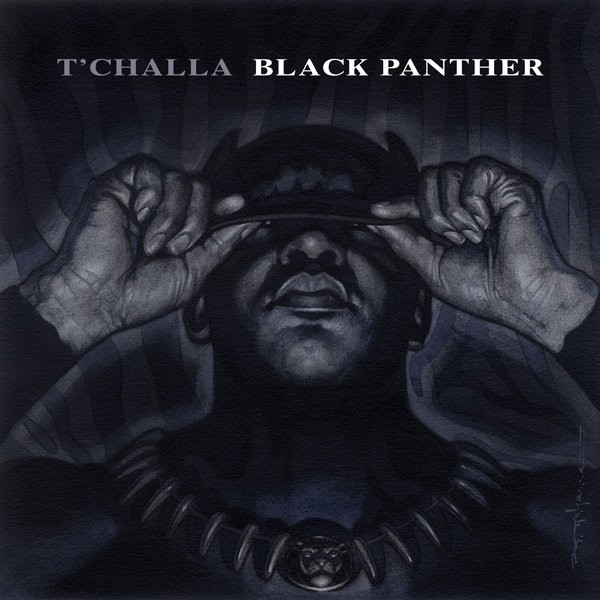
Ta-Nehisi Coates to Write for Marvel’s Black Panther Comics

Ta-Nehisi Coates, National Book Award Nominee and a national correspondent for The Atlantic, will be writing a new Black Panther series. Coates’ love for comic books is well documented, in April he talked to Vulture about the resurgence in superhero comics and adaptations this past decade, saying: “There were a lot of great stories being told during the ’80s, and those people who were reading them are of an age now where they can make this vision.” Coates also explained why he thinks superheros and comics go so well together, and why he prefers reading comics to watching movies: “Superheroes are best imagined in comic books. The union between the written word, the image, and then what your imagination has to do to connect those allows for so much. I always feel like when I see movies, I’m a little let down by the [digital] animation. I want to hear the voice in my head, you know?”

The Black Panther first appeared in Fantastic Four issue 52, in 1966, a few months before the founding of the Black Panther Party. The character is the king of the fictional African country Wakanda, a highly technologically advanced nation. Black Panther mostly relies on his intellect and very high end weaponry, but also has some mystical powers.

Coates’ yearlong storyline will be drawn by Brian Stelfreeze and is titled “The Nation Under Our Feet.” It is inspired by the 2003 book by Steven Hanh. In Coates’ story, a superhuman terrorist group called the People attack Wakanda, and the story follows the Black Panther dealing with the uprising caused by the People’s efforts. According to Comic Book Resources, Coates cites Jonathan Hickman’s “Secret Wars” as an inspiration for his story.

You could say Black Panther is having a moment these days, making its big screen debut on May 6, 2016 in “Captain America, Civil War” and getting a standalone pic in 2018. Axel Alonso, the editor in chief of Marvel explains how the company values and promotes diversity in their super heroes and says of “The Nation Under Our Feet”: “It’s going to be a story that repositions Black Panther in the minds of readers. It really moves him forward.”

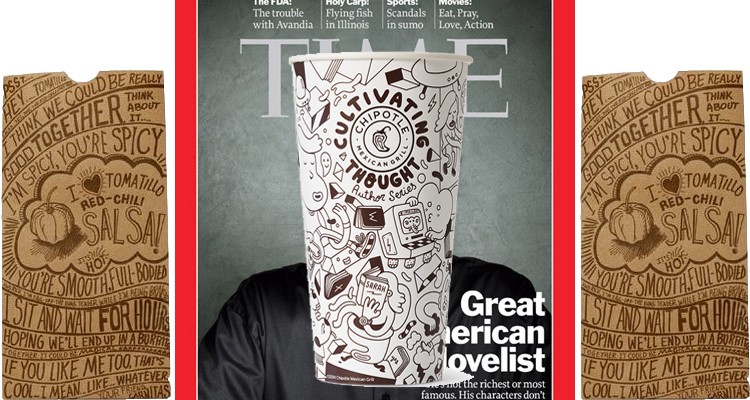
Jonathan Franzen Is Coming to a Burrito Bag Near You

Jonathan Safran Foer once had a dream to expand the literary palate of fast food enthusiasts and ever since authors have been lining up to do this allegedly well-paid gig.

This fall, Foer and Chipotle recruited Jonathan Franzen to write one of their illustrated essays that will be adorning their paper bags and cups. Franzen explains why he decided to sign on: “Honestly, Chipotle store credit was a decisive factor. Chipotle is my go-to fast food restaurant. I also admire its wish to be a good corporate citizen.” Now we know where to track him down with our questions about the symbolism in Purity.

Franzen’s featured “Two Minute Driving Lesson” has illustrations by Adam Hayes and takes a more or less obvious stab at restaurants and costumers who, unlike Chipotle, choose non-recyclable cups and packaging. Our world is based on short sight, Franzen claims, as he goes on to suggest that this is why Americans throw away sixty thousand paper cups every two minutes, simultaneously making the present easy and the future dark and complicated.

Other titles in this batch of essays include M.T. Anderson’s “Two-Minute Romance” and Laura Hillenbrand’s “Two-Minute Ode to Chocolate.” The other writers contributing this time around are Mary Roach, Laura Esquivel, Lois Lowry, Tom Perrotta, Sue Monk Kidd, Anthony Doerr and Stephen J. Dubner. All of the stories are available online here.

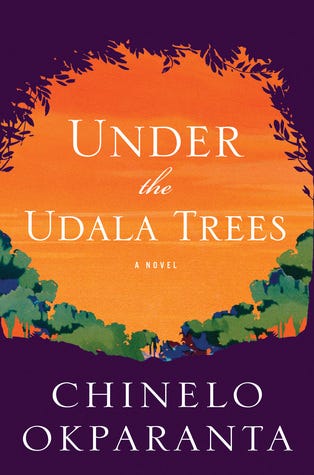
Queerness, Womanity and Hope: A Conversation with Chinelo Okparanta, Author of Under the Udala Trees

Under The Udala Tree

Battles, personal and political, fill the pages of Chinelo Okparanta’s debut novel, Under the Udala Trees (Houghton Mifflin Harcourt 2015). In the late 1960s during the Biafra War in Nigeria, Ijeoma, a young Igbo girl falls in love with an ethnic Hausa orphan, Amina. Okparanta, whose accolades include a 2014 O. Henry Prize, offers a vivid portrait of blossoming queer love and all its attendant beauty and wretchedness, alongside the country’s coming of age as a nation. The novel reaches to the present and into the complications and hopes of contemporary queer life in Nigeria.

J.R. Ramakrishnan: In the first pages of Under the Udala Trees, you plunge us into the Biafran War — and a life-altering moment for Ijeoma, the novel’s protagonist. I think I am correct in believing that you are a generation removed from the conflict and am interested in the choice of historical setting. How has the war’s shadow shaped you as a writer, and more generally, what are its effect on your generation? Did you consider a contemporary setting for the book at all?

Many people seem intent on erasing the not-so-glamorous aspects of our history. But there are many of us Nigerians still living with the memories of the war.

Chinelo Okparanta: When the novel (in its present reincarnation) was born in my mind, this war period was its natural beginning. At its inception this was the story of a young girl, sent away during the war, after having lost her father. This aspect of the character having lost her father in the war was inspired by my mother’s life. In addition to hearing about the death of her father, I grew up hearing stories of the young men she knew who went to fight for Biafra and never returned. I heard about the food scarcity, about the way people ran and hid inside the bunkers during the bombing raids. I heard about the kwashiorkor children and about the corpses littering the roads. Nigerians don’t like so much to talk about the war, especially not these days, with the “Africa Rising” narrative. Many people seem intent on erasing the not-so-glamorous aspects of our history. But there are many of us Nigerians still living with the memories of the war. I’d like to think that as more time passes, and as the wounds become less raw and gaping, more stories will be told.

JRR: While the war rages around her, Ijeoma has to grapple with the dangers of her emerging sexuality and love for Amina. I was especially struck by how you invoke both Christian scriptures and Igbo folk tales to weave together the complexities of Ijeoma’s predicament. Would you talk a little bit about these currents and their impact on the shaping of the novel?

CO: I grew up on Igbo folktales. And, like many Nigerians, I grew up in a very religious atmosphere: I was raised as a Jehovah’s Witness, which meant that I attended Bible studies three to four times a week. Those two aspects of my life came together naturally when writing the novel. There’s a proverb by Chinua Achebe that goes, “Among the Igbo the art of conversation is regarded very highly, and proverbs are the palm-oil with which words are eaten.” I would say that these days, for many Nigerians, Bible verses have replaced our traditional proverbs. These days, Bible verses are often the palm-oil with which words are eaten. But for Ijeoma, I think the Bible stories and verses were in some ways an extension of the folktales. For her, it was a sort of juggling act: using elements of the folktale (and storytelling elements, in general) to try to understand the Bible.

JRR: I really appreciate your Chinua Achebe tribute, particularly the lines: “His name was something like water, something like air — an ongoing and essential part of my existence, though often taken for granted.” Achebe is just one of the very many enchanting storytellers that Nigeria has given the world. Do you feel that you are writing as part of this established canon? What effect, if any, do you feel this has when you approach the page?

I don’t feel that I am writing as part of an established Nigerian canon. I’m simply writing…

CO: It is true that, like Achebe, I am the product of the Igbo oral storytelling tradition; this tradition has perhaps had the strongest influence on my work. It is also true that I write a lot about Nigerians. But no, I don’t feel that I am writing as part of an established Nigerian canon. I’m simply writing: Writing from a place of emotional truth. Writing about things that move me. I think it would be a mistake for any writer to write with the intention of entering a particular canon, or with the intention of being part of any trend. By the time the work is done, the trend might have moved on; the canon might have been redefined and re-set. Canons often change. That being said, if, in my lifetime, I were to accidentally find myself in any canon of great writers, I would be super excited. I would gather my mother and siblings and all my BFFs, and we would do the dance of joy around the kitchen table!

JRR: In Under the Udala, Ugochi, Ijeoma’s roommate says, “Everyone knows the story of Okonkwo.” This seems to be true — Things Fall Apart is so very much a cherished part of many lit syllabi. Okonkwo’s story is deeply centered on masculinity, and his show of it to his community. It seems too that much of Udala (and the stories of your debut Happiness, Like Water) are about the feminine, and its workings, values, and value within the characters’ prevailing societies. Would you discuss this? Perhaps in the context of the book’s evocative title?

CO: That’s a nice thought — the idea that Under the Udala Trees might be in some ways the feminine counterpart to Things Fall Apart. It would make for an interesting study! Where the title is concerned, the udala fruit was one of my favorite fruits growing up, so it made its way naturally into my writing. The fruit itself is thought to symbolize female fertility, so, in that way, it was also relevant to the themes of my novel, as the novel seeks to interrogate prescriptive notions of femininity.

Men tell women how to be. Women tell other women how to be.

Udala fruit aside, it seems to me that in too many societies, people are obsessed with telling women how to be women. Men tell women how to be. Women tell other women how to be. Womanity is often being defined in relation to men or in relation to other women or in relation to children. I wanted to write this novel about a woman who goes on a personal journey at the end of which she comes to terms with herself and with her own personal beliefs; a novel about a woman who succeeds in defining herself outside of those restrictive societal constructs.

JRR: Without giving away too much, I’ll say I was relieved by Ijeoma’s eventual fate. I imagine you must get a lot of emails about your work from the global Nigerian LGBTQ community. Are you hopeful for a more peaceful and open life for queer communities in Nigeria?

I do hope that there comes a time when Nigerians finally accept that homosexuality is in fact a natural part of our society just as it is with all other societies.

CO: Actually, there are parts of Nigeria (Hausaland) in which members of the queer community exist relatively conspicuously and fairly peacefully. This is not the norm for all of Nigeria, but nevertheless, these ‘yan daudu (i.e. men who “present” as women, or in the least, as a cross between masculinity and femininity) enjoy relative freedom. Even so, they still fall victim to homophobia. And, they are still looked upon as aberrations. The general attitude of Nigerians toward the ‘yan daudu is one of reluctant tolerance — the notion that they are not a naturally existing part of Nigerian culture. These ‘yan daudu are expected to marry women and have children, contrary to what they might really want. So, in the end, theirs is a false sort of freedom. I do hope that there comes a time when Nigerians finally accept that homosexuality is in fact a natural part of our society just as it is with all other societies.

JRR: You don’t shy away from the difficult in your fiction. How has your work been received by your family and community in Nigeria?

CO: I have received some interesting messages via social media. Messages that seemed half-joking, but also half-serious, along the lines of: “If you do that Gloria and Nnenna thing in Nigeria, we will kill you.” I was upset at the time, but nowadays I just think to myself, “Well, they haven’t killed you yet!” Anyway, my mom and siblings and friends have all read my work. I have the support of the people who count.

JRR: I read and contemplated the last line of your acknowledgement quite a bit: “Last but not least, God and the Universe, for conspiring together to make this book the assured expectation of things hoped for, and the evident demonstration of realities, though not beheld.” Would you meditate further on this?

CO: The novel was a difficult book to write. On the surface, it seems a rather simple book, but it’s astonishing how much effort goes into chiseling down words and ensuring they are unpretentious, unaffected, honest, and true to themselves. I’m naturally a “simple” writer. But even for me, this was work.

Also, the novel came at a difficult time in my life. Between the weird, threatening messages from random people who thought I should not be writing about homosexuality, and general difficulties in figuring out this whole writing business, it’s a surprise to me that I was even able to write the book. Basically, that aspect of the acknowledgment is simply a sigh of relief. Relief that I had set out to write a meaningful novel, and I had succeeded in doing just that. Relief that I set out to create a fictional storyline that would embody some sort of hope for those who found themselves in the same situation as my protagonist. I hope I have succeeded in doing that.

The Doomed and Beautiful Reach: On Prose and Music

Interviewers often ask me how being a musician influences my writing, and I always grasp for an answer that fits a few dozen words, and I always fail to find one. That failure, though, it makes me smile. That doomed reach is at the heart of why I started studying music in the first place, and what led me back to writing.

At age 20 I was at a liberal arts college in western Massachusetts, trying to cobble myself together in the midst of an ongoing breakup. A melancholy haze walked with me everywhere I went — one of those elongated emotions we don’t quite have a word for in English but the Brazilians would call saudade. Rainy days felt like home.

I already knew I was a writer. Since high school, prose had been my primary artistic language. Sitting at the keyboard, staring down the empty screen brought none of the anxiety I heard others talking about. It was exciting, a new world to be explored. The blank page was where I could untangle outer dramas and inner turmoil and re-imagine the world or the day into something that made sense.

But suddenly words weren’t cutting it. They just sat there on the screen, refusing to dance or hint at deeper truths. The blankness wasn’t intimidating; it just didn’t matter. The saudade cloud persisted — it was remarkably steadfast for all its ethereal gloominess — and at a certain moment, during one of those rainy days that felt like home, I realized that words weren’t cutting it because what I felt was beyond language.

But suddenly words weren’t cutting it. They just sat there on the screen, refusing to dance or hint at deeper truths.

Rather than painful, the knowledge was freeing. Words hadn’t lost their meaning; I was trying to stretch them to encompass something they couldn’t. I’d come to the edge of language and, like Wile E. Coyote, careened off without even realizing it. But instead of plummeting once I realized I was a hundred miles up and helpless, I found music, and it kept me afloat.

Years later, living in Brooklyn, I was trying, (and failing), to write or compose my way out of my night job as a 911 paramedic. Emergency medicine had been a perfect in-between job as I found my artistic footing: it got me out in the world, elbow deep in the mire of human conflict and tragedy; plus, it paid the bills and afforded me time to create. But six years in, dragging the same drunks back and forth to the hospital day in and day out was starting to take its toll. I’d composed soundtracks for puppeteers, independent filmmakers, and choreographers — gratifying collaborations, but what I was building had no sustainable future.

Meanwhile, I’d finally focused all my scattered writing energy into novels (poems and screenplays languishing on my hard drive; they languish still.) I was working a midnight shift at the top of the Bronx and during the two-hour train ride from Brooklyn, I’d put on my headphones and let the music untangle whatever plot point I was working through.

There’s a moment in “Paranoid Android,” the second track on Radiohead’s game-changing 1997 album OK Computer, where everything suddenly slows down. It’s a wild ride leading up to the calm — a bassline’s uneven steps over jangly acoustic guitars amidst sudden explosions of electric thrash — and it all intensifies, the scream of guitars rising to feverpitch alongside Thom Yorke’s haunting incoherent wail. And then the whole frantic, delicious mess lands on a long note and a quiet, mournful dirge picks up beneath it, harmonizing choral chants beneath a gentle strum. Yorke is pleading with someone to come away and hold him, an angel? From a great height? Who can tell? Who cares? The music builds entire cities of grief and beauty around the words, obliterating their meaning as the chorus picks up his plea and Yorke’s voice grows raspy, urgent: “God loves his children, God loves his children, yeah…” And then, with just a burst of strumming to warn us, the whole world explodes again, that jangling riff from the beginning escalating into chaos as guitars scream toward the conclusion.

Meanwhile the 4 train trundled along beneath the city toward the Bronx. Meanwhile the characters I was trying to make sense of danced and battled in time to all that glory. I asked myself: could words do that? Can the culmination of a story generate that same terrible love and haunting beauty that Paranoid Android achieves? I thought about the sorrow of Miles’s trumpet, those notes that fall somewhere in between, the intimacy of that shy howl as it gathers strength. I thought about the urgency of Jimi’s guitar on “All Along the Watchtower,” notes almost tripping over each other in their splattering desperation to burst out into the world — a music that could never be captured by notes on partiture, let alone prose.

Can the culmination of a story generate that same terrible love and haunting beauty that Paranoid Android achieves?

Some sentences do sing. Toni Morrison, Jesmyn Ward, Kiese Laymon, just to name a few, have all put words together in a way that demands rhythm and melody in their reading. “Like the rappers of his youth, (Ta-Nehisi) Coates writes downhill,” Vinson Cunningham recently wrote, “rolling toward punch lines…Each the kind of line one designs to shut down the cipher.” James Baldwin, who changes my life every time I read and reread him, once wrote that he doesn’t compare himself to other writers: “I think I really helplessly model myself on jazz musicians and try to write the way they sound…I am aiming at what Henry James called ‘perception at the pitch of passion.’” The word that jumps out here is aiming. There’s a humbleness to that: we set our sights, but it’s more about where we aim than whether we hit.

Besides other rock and underground electronic influences like the Pixies and Aphex Twin, OK Computer was inspired by Miles Davis’ Bitches Brew. Here’s Radiohead guitarist Jonny Greenwood: “My brother [Radiohead bassist Colin Greenwood] says it’s about ambition over ability. We bring in our favorite jazz albums, and say: We want to do this. And we enjoy the sound of our failing!”

It is indeed a joyful kind of failure, something like coming up for air. Art is translation: we etch rugged, imperfect creatures from our lived experiences. The translator knows she’ll never quite capture the exact sentiment of the original language; she tries anyway. “I take this tragicomical situation for granted,” poet and translator Dan Bellm wrote about the impossibility of translation, “and work from there…any act of human understanding, after all — thinking, speaking, hearing, reading, imagining — is an act of interpretation. Which is to say, translation. So get over it.”

Art is translation: we etch rugged, imperfect creatures from our lived experiences.

I began to take aim at the vast, impossible magic of music when I wrote. I know I’ll never hit it. The journey opens up new doors, impossible and magic doors that I never would’ve found if I hadn’t hurled towards an impossible, magic goal, allowed myself to fail and then got over it, and tried again.

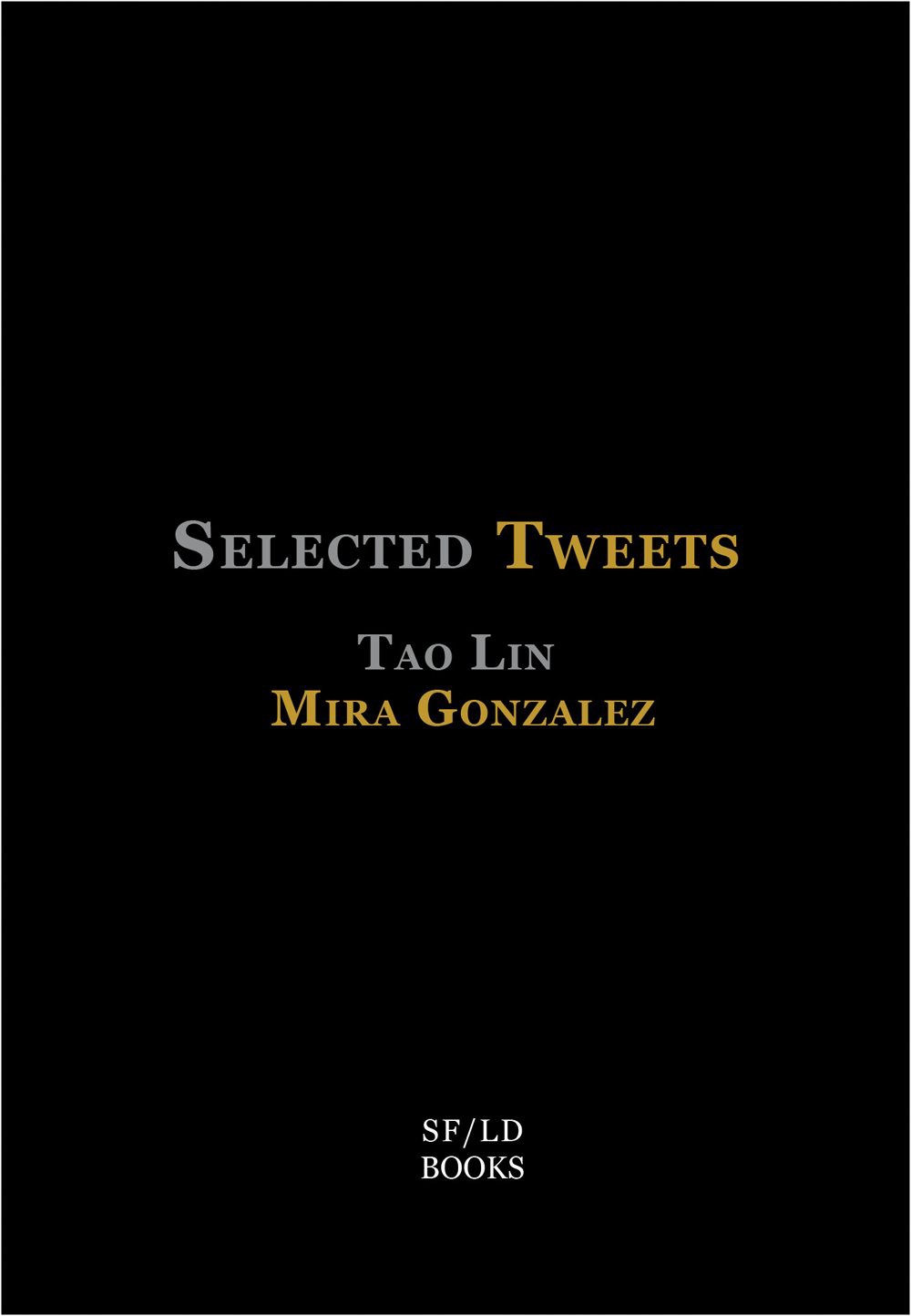
SEPTEMBER MIXTAPE by Mira Gonzalez & Tao Lin

Songs We Found by Putting Our iTunes on Shuffle

MIRA: We brainstormed ideas for this mixtape via email by sending a few potential ideas back and forth. Our ideas included: “songs we associate with certain drugs or drug experiences,” “songs we listened to in middle school or high school,” “songs we cant listen to anymore because they remind us of romantic relationships gone wrong,” “songs we listen to while writing,” “songs we associate with specific tweets in the twitter book,” “specific experiences related to tweets in the book, or something,” “songs with the word ‘drug’ or ‘drugs’ in the title,” “songs with suicide in the title,” and “songs we find by putting our itunes on shuffle.” We chose “songs we found by putting our itunes on shuffle.” Here is the result:

TAO:

  1. frankie cosmos — “correctly demo”

This song is 42 seconds. The lyrics are “I don’t want to learn how to love you. I want you to learn how to love me correctly, without a game, I forget how to play. I want to strip you of your power and show you the way. Want to get coffee with me?” (Punctuation by me.)

  1. frankie cosmos — “be normal frankie”

This song is 1 minute 39 seconds. Just went to Frankie Cosmos’s bandcamp to see how many albums are available. 49 albums, and I think they have 1 more album besides on the bandcamp so 50. I have 10 of them. I have 126 Frankie Cosmos songs. My most listened-to Frankie Cosmos song is “I Do Too” from “Zentropy.” I like Frankie Cosmos. I like all the bands/songs on this list. My computer has mostly only music I like on it because I got it around 2 years ago and it had zero songs when I got it and I lost all my previous songs on my previous computers.

  1. Hop Along, Queen Ansleis — “Laments Of A Mattress”

This band changed their name to just Hop Along at some point. Their first CD which this is from was called “Freshman Year” because Frances Quinlain the singer was going to make an album each year of college I think I read in an interview, but this ended up being the only album she made in college and her (and Hop Along’s) next full-length album, “Get Disowned”, didn’t come out until 7 years later. My most listened-to Hop Along song is an acoustic version of “The Coney Island Song” that can be downloaded here. I like Hop Along.

  1. Pulley — “Scab”

This song is 57 seconds. I started listening to Pulley, which Wikipedia describes as playing “straightforward, hard-edged melodic punk rock,” in high school because they have the same drummer as Strung Out and he was one of my favorite drummers. My most listened-to Pulley song is “Hold On.” I like Pulley. Pulley’s singer had an 11-year career as a relief pitcher in Major League Baseball. According to Wikipedia the singer, Scott Randinsky, “is arguably one of the most accomplished Jewish pitchers in major league history.”

  1. Julia Holter — “Sea Calls Me Home”

This is from Julia Holter’s live record. My all time most listened to song, on this computer at least, is “In The Same Room” by Julia Holter; I listened to it on repeat a lot while writing my last novel. My second most listened to song is “Kids of the K-Hole” by NOFX but I think I left it on repeat with the sound off for a long time by accident because I don’t remember listening to it 10341x, though I like it and have listened to it many times.

  1. Modest Mouse — “Edit the Sad Parts”

I associate this song with creative writing classes because of the title. The title seems unusual and sometimes funny to me — sometimes funny in a way that I think impedes my enjoyment of the song, which sounds emotional and earnest to me. Around 2010 I had a playlist that had four Modest Mouse songs and I listened to it on repeat while editing my second novel. The four Modest Mouse songs on it were “Custom Concern,” “Talking Shit About a Pretty Sunset,” “Make Everybody Happy / Mechanical Birds,” and “3rd Planet.” Modest Mouse’s singer/guitarist, Isaac Brock, seems kind of mysterious to me.

  1. Juliana Hatfield — “Sex & Drugs”

I don’t know much about Juliana Hatfield. Around a year ago, she tweeted a picture of my story-collection Bed and I think some of my other books. After that I downloaded some of her songs and enjoyed them. The “Sex & Drugs” I have is from “There’s Always Another Girl demos.” The only lyrics to this demo, which is 46 seconds, are “sex and drugs.” I like the dual vocals. Juliana Hatfield was born in 1967 and follows one person on Twitter. OnDecember 15, 2015, she tweeted “i dreamed of popcorn kernels the size of cabbages.” On April 29, 2015 she tweeted “i tell my plants things i wouldn’t ever tell anyone else.” On September 10, 2015 she tweeted “chronically inflamed.” I like her tweets. She has been tweeting self-portraits and is selling some on eBay. Here is “self-portrait experiment number 257.”

  1. Juliana Hatfield — “Change the World”

I have 4647 songs on my iTunes and only 6 Juliana Hatfield songs. That shuffle chose 2 in a row seems low probability. I just googled “probability itunes shuffle” and the titles of the first four results are “Why iTunes Shuffle Isn’t Random (and How to Fix It)”, “How do I avoid repetition of songs in shuffle m… | Apple Support .”, “Why isn’t “shuffle” random? | Apple Support Communities,” and “Is iTunes’ Shuffle Mode Truly Random? — iPhone/iPod.” The lyrics to this song include “I was gonna change the world / But I’m not gonna change the world / I was gonna change my ways / But I have not changed.” It’s the first song off her 11th studio album, “There’s Always Another Girl,” released in 2011 when she was 44.

MIRA:

  1. Vanessa Carlton — “A Thousand Miles”

I tell people I love Vanessa Carlton but actually I think this is the only song I know by her. Recently I was doing a DJ set at the Ace Hotel in Downtown Los Angeles and I played this song twice in a row because I like it so much and then the staff at The Ace got mad at me. I was afraid I wouldn’t get paid but I did get paid.

  1. Taylor Swift — “Better Than Revenge”

This is a song on the album Speak Now, which is my favorite Taylor Swift album. It came out after Fearless, which was the album that contained some of her first hits, such as “Love Story.” She wrote Speak Now entirely on her own, which seems like a very risky and respectable move for a teenage pop star on the rise. Although, despite being very catchy, I’ve always found this particular song to have an extremely bad message for young women. It’s about getting revenge on the girl her boyfriend left her for and it features lyrics such as ‘She’s not a saint and she’s not what you think, she’s an actress. She’s better known for the things that she does on the mattress.’ and ‘No amount of vintage dresses gives you dignity.’

  1. Bikini Kill — “I Like Fucking”

This song came on shuffle on my ex-boyfriend’s iPod while I was losing my virginity.

  1. The Mountain Goats — “This Year”

I considered The Mountain Goats to be my favorite band of from ages 16–19. I still like them a lot. In one of my first conversations with Tao I recommended a Mountain Goats song to him and he said that he felt ‘unexamined aversion’ to them. I’ve seen The Mountain Goats live twice and John Darnielle solo once.

  1. Hop Along — “Some Grace”

I like the band Hop Along but I’ve only ever listened to the album Get Disowned. For more detailed information on Hop Along, see Tao’s half of this playlist.

  1. Nobuo Uematsu — “Hurry! Faster!”

This song is from the soundtrack for the video game Final Fantasy VII, which I recommend highly. I never beat this game because my hand eye coordination is not great. I did watch my brother beat it though. I have an action figure of the main character, Cloud Strife, who is a blonde guy that holds a really enormous sword.

  1. The Postal Service — “Nothing Better”

I discovered The Postal Service really late in life. I think most people liked The Postal Service in like, middle school. I discovered them in 2013 when I was 19 and had just moved to New York. I listened to their album Give Up repeatedly while I took the subway to my first and second job. I was an intern for a major publishing house during the day, and a receptionist at a post-production sound studio at night. I worked 12 hours per day and when I wasn’t working I was probably doing cocaine in my boyfriend’s fucked up studio apartment in East Harlem. I was tired all the time. This album reminds me so much of that time that it’s hard for me to listen to it. I only listen to it when I want to feel extremely emotional.

  1. Why? — “The Vowels Pt. 2″

This song is from the album Alopecia, which I listened to every day in my car when I was driving to class during of my sophomore year of college. My college had a hellish parking lot where you had to wait like, an hour for someone to pull out of a spot before you could get one. So, as you can imagine, I had a lot of time to listen to this album on repeat. I dropped out of college a few months into my sophomore year. I still listen to songs from this album often, but never the entire album beginning to end.

  1. Britney Spears — “(I Can’t Get No) Satisfaction”

This is a cover of the 1965 Rolling Stones hit song. It’s on the album Oops!… I Did It Again, which is the first album I ever bought. I was a big Britney Spears fan as a child, which I briefly tried to hide from my extremely ‘alternative’ mother and former punk musician step-dad, who obviously do not approve of pop music. I wasn’t great at hiding it though, and I ended up begging them to take me to Tower Records so I could buy her album. I still remember my mother lovingly saying to me ‘I approve of your interest in ANY kind of music’ after I expressed shame for liking Britney.

***

— Tao Lin is the author of the novels Taipei (2013), Richard Yates (2010), Eeeee Eee Eeee (2007) and other books.

–Mira Gonzalez [b. 1992] is a writer from Los Angeles, California. She is the author of two books.

“Cities are not all identical, you have to find the one that fits” — A New Short Story from Ioanna…

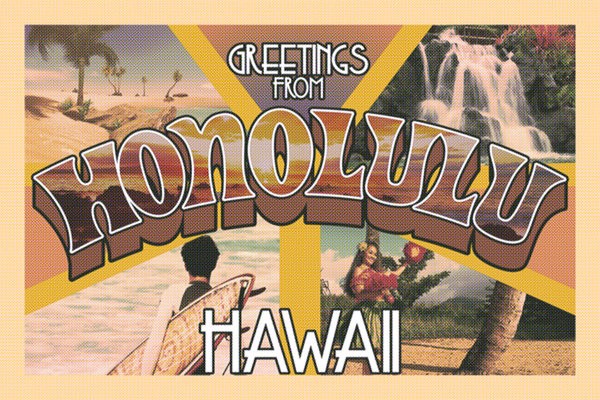
FICTION: The Winner by Ioanna Mavrou

Uncle Carl calls and I don’t know what to say about why I haven’t been to see him in almost a month even though I’m not busy. He’s got all the time in the world to notice as he sits in the hospital garden with the arts and crafts crowd all day, waiting for his head to heal. I tell him I’ll go by and see him soon, I lie that I’ve been working like crazy.

He says, food here sucks, bring me some chicken katsu from Zippy’s.

Everyone else is in the 21st century with their twitters and their blogs and I deliver newspapers for a living. I have to be at the printers in Kapolei every morning at five-thirty, so I set my alarm to the Pixies’ “Bone Machine,” the only song that gets me up without making me grumpy.

Honolulu is the kind of city that when you feel down you also feel like an asshole. As if you owe it to the city to be happy. Like, what the fuck is wrong with you if you can’t be content among fucking palm trees and sunsets and beaches? Do you know that you can’t take a bad picture in Hawaii? I dare you to take any crappy old camera, point at anything and see where that gets you. Paradise will seep in like a tropical version of sepia and color everything. So don’t even try it.

I have been ticked off for months, even before Uncle Carl fought with his girlfriend — who is definitely not my auntie — and then had a stroke at my cousin’s potluck. I couldn’t even tell you the source of my discontent. I have been miserable at Ala Moana, I have been moaning at Sandy’s, I even made my friends abandon me at Haleiwa last week and had to catch the bus all the way back to town depressing the hell out of anyone stupid enough to talk to me.

Don’t get me wrong. Honolulu is a great city if you know where to go, full of adventure and backroom poker games. I once got high at a party in Kaneohe with an assistant DA but that’s all I’m saying on the matter. I hate the people who bitch and moan that Honolulu is boring as hell and that it’s not a real city and then they go spend every single vacation in Vegas. You talk to them about London, or Paris, or New York and they look at you with their mouths hanging open. I told this guy once about a Monet at the Honolulu Academy of Arts and he looked at me as if I was speaking in tongues. I don’t have any patience for people, which is why I prefer to throw newspapers on lanais at the crack of dawn rather than work in an office.

My mom complains about how I can do more.

We sent you to school on the mainland, she says, we’re still paying your student loans, why don’t you do something?

I tell her, the economy is bad, there are no jobs, nobody is hiring right now. I make enough to get by.

But she doesn’t listen.

Why you came back for, she says. You should have stayed in New York. You better than this.

I get up at five and turn the coffee maker on and eat an old manapua from the fridge and enjoy the quiet. I loved the action in New York, but I like how in five minutes when I walk outside in my slippers and shorts there will only be a few sleepy souls in the streets and I’ll drive with my windows down and the air on my face that smells of flowers. Cities are not all identical, you have to find the one that fits. You can’t just look at skyscrapers and think it’s all the same.

When I get in the car the first song that comes on is The Ramones’ cover of “I Don’t Want to Grow Up,” and there’s a contest open for callers to name the original artist. I make a pact with myself as I dial the number that if I get through and win it’ll be a sign.

It’s Tom Waits, I tell the radio guy who answers the phone. I win the contest, a CD or something else I don’t need, and I abandon my paper route midway and hop on the highway.

Zippy’s is still closed, I tell Uncle Carl who is already up and sitting with a cup of coffee in his room. But I got you the paper.

Who is this guy? my uncle says, and points at a picture of the President.

Hey, which is your favorite Tom Waits song? I ask to change the subject.

I don’t know, “Big in Japan.” Uncle Carl shrugs. “Swordfishtrombone”? There are so many. How’s school, he says, when did you get back? Are you pau already?

The last few years are all jumbled up in his mind.

Seriously, who is this guy? He’s staring at the front page again.

It’s the President, I tell him. He’s local. And now he is running the country.

Quit kidding. Uncle Carl laughs. There’s no way.

And that’s part of what’s been bothering me all along. If he can be a winner, so can any of us. But you can’t win if you stay. You can’t rule the world from a crappy apartment in Makiki. And your mom won’t leave you alone because “You too went Punahou for school.” So your life has to be more than this.

Will you stay for Tai Chi? Uncle Carl says. And then you can tell me more jokes, just like old times.

He gets up and puts the newspaper under the pitcher of water on the bedside table. A ring forms, creating ink waves.

Then we walk outside and it’s another perfect Honolulu morning.

Out of the Dark: A Manual for Cleaning Women by Lucia Berlin

by Kelly Luce

I was on a midnight walk on the deserted University of the South campus in late July; the only light for miles came from the blue moon. My friend and I turned a corner and heard — what? A man. He was singing, bellowing, somewhere on his vast, unlit lawn. In the middle of the road, we froze and listened. The cicadas paused. The sound was bare, complex, and thrilling. Because it was unexpected, because it was beautiful, it stopped us in our tracks. Whether the guy was practicing for church choir or just clearing out cobwebs, I don’t know. But I do remember feeling like the universe had it wrong — us, struck dumb in the road, bathed in light, the singer in the dark.

But I was going to tell you about Lucia Berlin. I was going to tell you about her new collected stories, A Manual for Cleaning Women. This author, this book, came to me like the unseen man singing his heart out to god knows who or what. It was surprising, absolutely alluring. Startling. Weirdly holy. And I’m not the only one. The book is getting lots of press — as it should. But why now? That’s the question I’ve been asking myself; Lucia Berlin has been publishing astonishingly good stories since the 60s. Suddenly it feels like we want to claim her, but who is she?

Lucia Berlin wrote largely from life, which, over 68 years, included enough heartache, adventure, physical pain, and joy for a number of lifetimes. The 43 stories that comprise A Manual range from tiny, flash-like pieces (“Macadam,” “My Jockey”) to longer, more traditional narratives. Characters recur; the widow who has an affair with a diver in “Toda Luna, Todo Año” returns to the same beach later with her younger sister.

The unfathomable uniqueness of Berlin’s style — her voice, in particular — is evident in the adjectives being thrown around. Recent pieces on Berlin and reviews of A Manual for Cleaning Women have described her work as joyful, careworn, dark, bright, funny, sad, vivid, droll, sincere, bawdy, offbeat, fierce, gritty, unfailingly feminine, wickedly wise, emotionally raw, and (my favorite) spiky.

And as we fumble with adjectives for an author who’s unlike anyone else, so too do we fumble with comparisons. The inevitable Carver, Chekov, Richard Yates come to mind. Grace Paley, if they’re looking for a woman. Lorrie Moore. Yes, Lucia Berlin is female and writes with dry wit, but where Moore is self-consciously clever, Berlin is a bit more understated. She is not concerned with punch lines. She has a Dybekian obsession with grace in tough places that is anything but clever, or — god forbid — quirky. When I read these stories, I was reminded of Joy Williams and Barry Hannah, but even more so, of authors like Beth Nugent, Stephanie Vaughn, Amanda Davis — three more tragically underappreciated women whose short stories were spiky before it was cool. But Lucia Berlin isn’t truly similar to anything I’ve read before.

“You will listen to me if I have to force you, her stories growl,” wrote Ruth Franklin in the New York Times book review. I disagree. For one thing, if this were true, we’d have all heard of Lucia Berlin long ago. Her work would be taught. The truth is, there is nothing solicitous or menacing about Lucia Berlin’s writing. What’s there is life, and not always the pretty parts; what’s there is blue collar work, abortion clinics, emergency rooms, winos, bus stops, detox wards, dysfunctional family gatherings, suicides, widows, underwater sex, a man who makes his granddaughter pull out all his teeth. There is no growling, either as defensive posture or threat; instead, what we get is the wryness that comes from humility, from a simultaneous love for, and disgust at, oneself. Berlin’s was an intellect constantly juggling all of this, and it seems she could process this cognitive chaos through writing. Granted, not every story in the collection is a masterpiece. A few do end abruptly, leaving the reader feeling unfulfilled. Some stories become melodramatic or contain twists and turns that feel forced. But that’s a small handful out of forty-three. And even in that handful are moments of linguistic delight, phrases so finely turned you copy them into a notebook.

But really, who knows why Berlin wasn’t more popular in her lifetime. Maybe it has to do with her gender. Maybe it’s because she was a woman writing largely about women, from the perspective of women, and also about real sadness — not cute pat-her-on-the-head romantic problems and family matters. The women in her stories work jobs that roughen the hands and tax the knees; they work jobs that cause a lifetime of lower back pain. Who wants to read about that? And, to make matters worse, she was funny. “I clean their coke mirror with Windex,” the narrator deadpans in the title story. But women aren’t supposed to be funny! They’re allowed to be quirky. They can be Lucille Ball. Now, a woman delivering stinging observational humor — that’s threatening. There’s your growl.

This was a brilliant woman. Her work transcends funny and shows us the absurd. She doesn’t let her characters hide behind artifice or sensationalism or substances, as much as they might like to. Reading these stories, you get the sense that this is what she wanted for herself: to let go of the bullshit. As a result, the transformation she provides is visceral and startling: We get the sense that Berlin, writing these stories, was often as surprised as you at where they wind up. In the space of a page and a half, an injured jockey in the ER morphs from man to Aztec god to fairy tale prince to human infant to colt — perhaps the horse he fell from that led to his presence in the ER in the first place. It’s a seemingly effortless shift that happens with the speed and subconscious chaos of poetry. And yet we are grounded in reality — buttons, laces, manure and sweat, a gurney, an X-ray order — the entire time. One foot in an ER room we can smell, one in the placeless swirl of consciousness. Everything is imbued with a visceral sense of caring.

Ultimately, it’s her care that wins us over. It’s the reason why we read. It’s why we sing in the dark and why we stop to listen. Regardless of why Lucia Berlin has been overlooked all these years, we can rest knowing that the mistake has been corrected.

A Manual for Cleaning Women: Selected Stories

by Lucia Berlin

Powells.com

Three Times I Wish I Had Happn: A Bookworm’s Guide to Dating in NYC

by Laura Crawson

SPONSORED CONTENT PRESENTED BY HAPPN

I moved to New York after graduating college for a number of reasons, but perhaps the most exciting prospect of all was constant access to people who loved what I loved: books. Of course there are bookworms in every corner of the globe, but I was starry-eyed about finally living in a city known for countless fiction and poetry readings, a thriving publishing world, and a seemingly unlimited supply of attractive, bookish potential suitors.

During my new life in New York, I’ve spent an exorbitant amount of time kicking myself for missed connections. If only I’d known a solution existed: Happn, an app that’s taken off in cities as far-flung as Paris and Berlin and Buenos Aires.

While other dating apps present faces of strangers I usually have nothing in common with, Happn promises an almost unfathomably ideal alternative: people I’ve already crossed paths with, popping up on my screen. If only I’d thought to download it sooner!

Three times I wish I had Happn:

1.

I spotted a tall, blonde, broad-shouldered dreamboat on the Chipotle line. We both ordered bulging burritos in to-go bags and then, to my surprise and glee, ended up sitting across from each other on the subway home. I attempted to make eye contact, but Dreamboat put on a pair of reading glasses and dipped his head down to read the side of his takeout bag. Looking down at my own, I realized it showcased short prose by George Saunders. The last sentence read: “Hope that, in future, all is well, everyone eats free, no one must work, all just sit around feeling love for one another.” I snuck another glance at Dreamboat, wishing I could muster the courage to ask him if his bag featured Saunders, too.

When the train doors pinged open at 59th Street, Dreamboat rose to leave. Right before he stepped off, he glanced over at me. I held his gaze, and then he was gone.

2.

I don’t look forward to rush hour on the local 1 train; I don’t find cozying up to strangers appealing. Being short, I normally end up tucked under someone’s smelly armpit. However, my luck soon changed when I found myself mere millimeters from a well-sculpted bicep tattooed with the sharply sad line: “Isn’t it pretty to think so?”

I took a deep breath, caught the man’s eye, and said, “Good decision with the Hemingway.”

He chuckled. “Thanks for noticing! Not enough people know where it’s from.”

I didn’t know how to respond. (Let’s continue this chat when I’m not wedged underneath aforementioned bicep? What’s your number? Marry me?)

We launched into an awkward silence until he sighed (perhaps with longing?) and wove gracefully through the throng and out the train doors, disappearing into the world aboveground.

3.

On my commute one day, I noticed that there were only three people reading physical books. Most commuters were occupied by their iPods, heads bopping to private soundtracks. More often than not, that observation saddened me. I was reading Aimee Bender’s short story collection, The Girl in the Flammable Skirt, for the second time; the second person was a woman rapturously reading Fifty Shades of Grey; the third was a man reading Saul Bellow’s The Adventures of Augie March. The book somehow looked small and delicate in his large, callused hands. I wanted to tell the man that he was reading one of my favorite books of all time. I wanted to ask what page he was on, if he’d been introduced to Thea’s eagle yet.

Maybe he was also a fan of Aimee Bender.

I considered imitating the character in Bender’s story, “Call My Name,” by following the man off the train and inserting myself into his life — but I didn’t, of course.

What if he was the bookworm who got away?

As I climbed the stairs out of the subway, I couldn’t help but lament my inability to initiate meaningful conversation with attractive, cultured strangers. New York throbbed with potential for serendipity, for happenstance, but no one knew how to take advantage of these opportunities. No one knew how to approach the objects of their desire. By using Happn, we’re finally awarded a second chance.

Happn is available on iPhone, Android and Windows phone.

How Do You Know When Your Book Is Finished?: The Blunt Instrument on How to Begin and When to End

The Blunt Instrument is a monthly advice column for writers. If you need tough advice for a writing problem, send your question to blunt@electricliterature.com.

This month, she answers related questions from two writers wondering how you know when to stop working on a book.

Dear Blunt Instrument,

Lately I’ve been pondering how authors can know when their books are finished, and I mean both finished as in complete and/or finished as in it’s time to abandon the project (I’m >4.5 years into writing a novel and although I completely believe in it, have been totally baffled by it for a while now). In both instances, when is it time to stop?

Thanks,

-matt

m,

These are two different questions, but the answer to “how do you know” in both scenarios is the same: You don’t!

The way you (and many others) have framed the question suggests that doneness is a property inherent to the manuscript itself — a secret truth hidden inside the manuscript and waiting to be revealed to you. This is the wrong way to think about it. It’s not something you passively wait to discover. Calling a manuscript done is a decision you need to make.

But let’s speak specifically to the first part of your question — how do you know when your book is ready for wide readership? This may sound unromantic, but in the real world, a book is finished when someone wants to publish it. I’ve heard authors say things like, “The book is done when you keep removing and reinstating the same comma,” but for some authors, that stage never arrives. Robert Lowell was famous for endlessly revising even published poems, to the point that Elizabeth Bishop wrote, in the elegy “North Haven”: “You can’t derange, or rearrange, / your poems again. (But the sparrows can their song.) / The words won’t change again. Sad friend, you cannot change.” For other writers, that stage arrives too soon; they start screwing around with commas and other micro-level details before addressing bigger problems like structural concerns or the general “So what?” factor: Why should anyone care?

So I don’t think there’s some universal sign you can rely on to know it’s done. You just have to decide This is truly as good as I am able or willing to make this book, and then hope a publisher agrees that’s good enough.

So I don’t think there’s some universal sign you can rely on to know it’s done. You just have to decide This is truly as good as I am able or willing to make this book, and then hope a publisher agrees that’s good enough.

Now the second part: How do you know when it’s time to abandon a manuscript? I’d advise you to never, or almost never, abandon anything completely. There is almost always some worthwhile nugget (a darling), if not much more, that you can save. In the liner notes–like author’s statement at the back of Familiar, novelist J. Robert Lennon explains how he started writing the opening chapters shortly after 9/11, wanting to capture the feeling of a “subtly altered world.” He abandoned the book after 40 pages, deciding he “didn’t have the chops” to accomplish what he wanted to do. Years later, after writing and publishing several other novels, he decided to revisit those pages, “to see if I could gather some momentum this time.” He completed a draft, but his wife (Rhian Ellis, also a writer) deemed it unfinished. He got the book right on his third draft, when he decided it was really about parenthood (“the transformations our personalities undergo in response to the utter impossibility of doing the right thing day in and day out for eighteen years and more”) and not 9/11 at all.

If you get to the point where you can’t make a book any better, but no one wants to publish it, set it aside and start something else. In two years or five or ten, you might be a better writer, and you might find you are willing and able to make it better. You can take only what you want or need from the original drafts, and leave the rest.

Dear Elisa,

I wonder if you could say more about beginning and ending writing tasks. How do you know when a book is finished? I’m particularly interested in poetry here, since it’s hard to know when to stop revising a novel, but it’s especially hard to know when to stop adding poems to a manuscript — especially if the poetry volume is not a “project” book (I dislike that vocabulary but I’ll use it here for the sake of economy).

And then — how do you know when something has begun? Any telltale signs for when the idea you’re playing around with genuinely becomes A Book You Are Writing or Piece You Are Writing? This question is especially tough when I have ideas during the writing of something else.

Sincerely,

In My End Is My Beginning

IMEIMB,

My answer above applies to your question as well, but I’d like to say little more about the poetry question specifically. I know what you mean by a “project book,” but I’d argue that even if you’re not writing a “project book,” your manuscript needs to have some kind of cohesion, be it stylistic or thematic or (ideally) both. Otherwise it will feel like a thrown together collection of “all the poems I’ve written since my last book” or, in the case of a first book, “all the poems I’ve written ever.”

The good news is, if your poems are somewhat conscribed by time — meaning they were all written during a specific period, like between 2011 and 2013 — some of this cohering takes care of itself, since writers tend to obsess over the same themes for a while. But part of your job when organizing a manuscript is heightening those themes through arrangement and what you include and exclude. So, stop adding poems when they no longer have particular connections or resonance with the other poems in the book.

The second part of your question is a little more complicated. I do think there’s a “sign” you’re working on something that’s worthwhile (to you) — it’s when you enter into a “flow state” while you’re writing. Flow, a concept first outlined by psychologist Mihaly Csikszentmihalyi, occurs when you’re so immersed in a task (“a feeling of energized focus”) that you lose all sense of time. Many people see flow states as the key to happiness, since you’re completely in the present moment with no troubling memories of past pain and failures or worry about the future, no awareness of your impending death and so on. Anyway, it’s kind of a gift when you’re that excited about a project — instead of forcing yourself to write, you’ll want to work on it all the time. Of course, realistically you’re not going to be able to complete a whole book in a flow state. Some stages of the writing and revising are going to be a slog. (Not to mention the trying-to-get-it-published part.)

Ideas can function as procrastination — thinking about a new book, which is all open sky and gleaming potential, is a way of avoiding the harder work of completing the book you’ve already started.

Case in point: I know a writer who constantly has ideas for new books and projects, and always while he is already working on other things. Ideas can function as procrastination — thinking about a new book, which is all open sky and gleaming potential, is a way of avoiding the harder work of completing the book you’ve already started. Still, you can start (or as you put it, “play around with”) all the books you want if that makes you happy — the real question in, which books should you keep working on?

And this brings me back to the distinction between decisions and signs: Don’t wait for a sign that you’re working on the right book, decide what book you want to write to completion. Conviction is what’s going to get you through the hard parts.

The Blunt Instrument