The Swedish Academy is set to announce the winner of the 2015 Nobel Prize in Literature on Thursday, October 8, at 1pm local time in Stockholm. This year there were 198 nominations, including 36 authors who have never been nominated before. The members of the Nobel Committee for Literature have been studying the works of five authors, a list they whittled down from the 198 nominations.
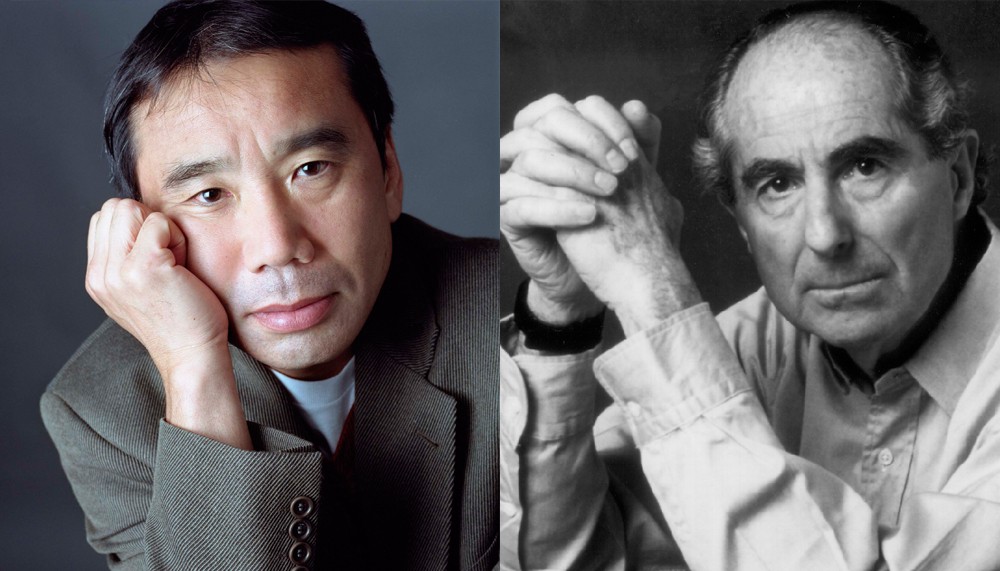
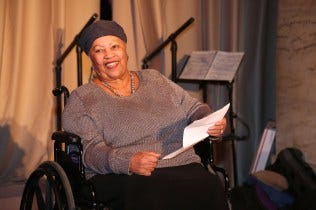
The favorites to take the prize, according to betting firm Ladbrokes, are Belarusian Svetlana Aleksijevitj, Japanese Haruki Murakami, Kenyan Ngugi wa Thiong’o, Norwegian Jon Fosse, and Americans Joyce Carol Oates and Philip Roth. Another of this years betting favorites is Korean poet Ko Un, whose odds have shifted from 50/1 to 14/1. The 112th Laureate will join the ranks of Toni Morrison, Gabriel García Márquez, Tomas Tranströmer, and Derek Walcott. Although the prize is considered a great honor and comes with the generous sum of 8 million Swedish Kronor ($971 970), the list of literary greats snubbed by the Swedish Academy is as impressive as the list of the prize recipients.
Among the qualified nominators for the prize are members of the Swedish Academy, professors of linguistics or literature at universities and university colleges, and previous Nobel Laureates in Literature.
The 2015 Nobel season began on Monday with the winner in medicine, and continues today with the Nobel Prize in Physics. On Wednesday the winner in chemistry will be revealed, followed by the literature winner on Thursday, and lastly, on Friday the Nobel Peace Prize winner will be announced.
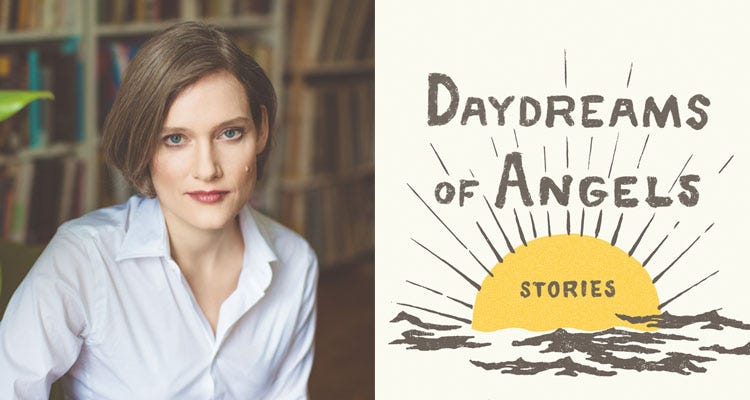
“Swan Lake for Beginners” by Heather O’Neill is featured this week in Electric Literature’s Recommended Reading with an introduction from Diane Cooke. O’Neill’s new collection,Daydreams of Angels,is available in the US October 6th, 2015 from Farrar, Strauss, and Giroux.
Melissa Ragsdale: “Swan Lake for Beginners” and the many different Nureyev experiments ask the question, what creates an artist? With every variable the scientists manipulate, each generation of clones’ relationship to dance changes, and though they can recreate Nureyev’s body and mind, the scientists are ultimately unable to recreate his talent and passion. This evokes a debate that pertains to all artistic pursuits (including writing): the debate over whether success is the result of innate talent, or a result of hard work. And there’s another question there, about the role inspiration has to play in creating art. In your own experience, how do these apply to your life as a writer? How do you value them, on a more abstract level?
HO: This is a question that I’ve grappled with. I think that there is obviously a thing called talent. But that isn’t the only thing that makes an artist. There’s an illusion that art is easy.
There’s a sort of mad devotion that’s involved in becoming an artist. Artists make great sacrifices to do what they do. You can’t teach someone to be obsessive and passionate and consumed by their art. This is an absurd desire that has to come from within the artist.
It’s an act of resistance. You have to want to create something new. I think there’s something wild about that decision to live your life outside the box. It’s wonderful. That’s why we like artists’ biographies. It’s lovely to trace that original spark. We like to examine the artist as child — singing on a street corner in Paris, stuck in a workhouse, sitting in the back of a Chevrolet — and figure out when and where this child formed the determination to be great.
It’s always a mystery. The scientists in my story are looking for that moment and trying to recreate it.
MR: A follow up question, if it applies: do you see this story as having any kind of lesson or moral?
HO: It’s that there is a possibility that an artist may come from anywhere. I’ve always loved artists that appear out of nowhere, from unexpected circumstances, without anyone prompting them or encouraging them to take that path in life. We need artists coming from all sorts of backgrounds and classes — that’s how we understand the breadth of the human condition and all walks of life. So if there’s a moral, it’s that we have to look for and support and encourage artists who are coming out of odd backgrounds.
MR: Why did you choose Rudolf Nureyev as the vehicle of this story?
HO: I grew up in the 1980s. We all walked around as though we were ballet dancers, wearing leg warmers and our sweaters over one shoulder. I begged my dad to sign me up for jazz ballet classes above the grocery store. I’ve always adored the ballet. “The Dance of The Four Little Swans” in Swan Lake was a huge influence of me as a writer. I wanted to write in a way that was precise, repetitive, naïve, youthful, practically naked.
Nureyev was my favorite dancer of all. I was always obsessed with Nureyev. I remember him being on The Muppet Show as a kid. He was such a superstar then. And he always seemed cheeky and disdainful and arrogant. As a child you are always getting scolded for being openly miserable. Here was a man who was allowed to be dour and pissed off even though he was invited to be on such prestigious shows as The Muppet Show.
I loved his temperament. So part of the idea of choosing Nureyev as the figure to be cloned was that it was really funny to imagine a town that was filled with Nureyevs, all complaining about things and being vain and contrary and beautiful.
And then I chose him because he had the most wonderful and difficult biography. He was somebody who grew up under enormous hardship and had to struggle to be able to dance to be free. So it would be difficult for the scientists to discover how to recreate this tortured drive.
MR: Project Siberia takes place in such a curious setting: a French-Canadian town posing as a Siberian Russian town during the Cold War. What drew you to this particular cultural intersection?
HO: That was in part for humorous effect too. The landscape of Northern Quebec is a lot like that of Siberia. I liked the idea of the experiment being in my home province.
Each of the stories has a Montreal aspect or link. It’s a running theme. It’s because I spent my childhood in Montreal. And I think that every child — well, in a way every reader — when they are reading a text, supplies their own set of references. The meaning of any text will change given where it is read and according to the specific cultural references and beliefs or the reader. The attempt to find meaning in life is always going to be filtered by the cultural biases that we are seeing them through. So it was to make my authorship and the context and time that I was retelling these tales explicit.
I also liked the idea of a little kid from a working class Quebecois background finally reaching glory through the very refined art of ballet. Sort of mirrors the original Nureyev’s ascendance. And my own, really.
MR: In Daydreams of Angels, you use concoctions of fun/bizarre details to pull on real and serious threads of investigation. How do you balance the peculiar with the realistic?
HO: You don’t want everything to be randomly quirky and absurd. It’s more interesting if there is something real about the setting and the situations and the characters. And then the peculiar elements act as a sort of metaphor to highlight an existential question or conundrum that one of the characters is grappling with. Each story has to adhere to some magical laws. The worlds in the book applies the Laws of Physics of a seven-year-old girl. It was a world in which things that children believe to be real are actually real. Their dolls actually do get heart sick with grief when they are left alone.
***
Heather O’Neill’s first novel, Lullabies for Little Criminals, earned accolades around the world, including being named winner of Canada Reads 2007 and the Hugh MacLennan Prize for Fiction, and being a finalist for the Governor General’s Award for Fiction and the Orange Prize. Her second novel The Girl Who Was Saturday Night was a finalist for the 2014 Scotiabank Giller Prize. She is a regular contributor to CBC Books, CBC Radio, National Public Radio, The New York Times Magazine, The Gazette (Montreal) and The Walrus. She was born in Montreal, where she currently lives.
James Sie is a busy man. When he’s not writing, he’s acting and voicing characters in several popular cartoons and video games. His debut novel, Still Life Las Vegas(St. Martin’s Press, 2015), is a love letter to the mythical city in the desert. Sie’s work is interspersed with striking illustrations by Sungyoon Choi. In Still Life, Walter, 17, searches for the mother who abandoned him. Las Vegas provides a theatrical backdrop; Walter’s discoveries lead him to acceptance of himself, but also of the stories that his father told him so that they might survive. Details of deep human connection set this coming-of-age novel apart from others like it; Sie’s wit and wordplay also make it a treat for the ear.
I connected with James Sie recently over email to talk visions of Liberace, Lucy Liu’s accordion, and the mythical inspiration for his Las Vegas opus.
Heather Scott Partington: In Still Life Las Vegas, you write about tragedy without the story becoming tragic. How did the idea for this story come to you? Did you start with the accident that becomes a touchstone, or did you conceive of the novel some other way?
James Sie: First off, I’m glad you didn’t think it was tragic! Reading over it now, I do see that many dark circumstances befall my characters, but I honestly never thought of it a dark piece. It’s just kind of the way I see life.
Running, Vegas, accordion. It all unspooled from there.
I remember conceiving of the story through action: a woman, running away. Why was she running away? I had no idea. Then, I visited Las Vegas for the first time and thought that it would be a most interesting place to be running to. Then, I found out Lucy Liu played the accordion as a child, and the image of a little Chinese girl with a red accordion made things very interesting to me. Running, Vegas, accordion. It all unspooled from there.
HSP: This is a novel that blends many things: pop culture, art, mythology, and the relationship of fathers with their sons. Was there something from your own life as a parent or as a son that you felt it was important to include in Owen and Walter’s relationship?
JS: It’s funny — my father is almost the exact opposite of the father in the novel. My dad is sharp, decisive and almost maniacally positive, while Owen is fuzzy, plagued with self-doubt and mostly prone. So I didn’t look to him for example! I do think that when I began the book, I was a new father myself, and the instinct to protect your child at all costs, and the cost of not protecting your child, was always in the forefront of my mind. I have to say, I probably relate a little more to Emily as a parent than Owen — I am the one with the lists, the endless lists.
HSP: Liberace is also important to the story. I love that you included such an icon of Vegas opulence and, in a way, Vegas history. Talk to me about how that (and Emily’s vision of him) came to you.
JS: Liberace’s huge in my book! My first draft was actually titled “Liberace Under Venetian Skies.” I’ve made him the deity of Las Vegas, representing all the promise, and artifice, that Vegas has to offer. When I first visited the Liberace Museum (sadly, now defunct) I was struck by how emblematic a presence he was, back in his prime. He wasn’t the mincing punchline that many people think of today, but a much warmer presence. To Emily, he embodied both the hope of the past and a way out in the future. Because he was so much larger than life, it was easy for him to become the magical totem of the book.
HSP: Through Owen you are able to include a lot of Greek mythology. This gives some nice weight to the struggles of Walter to understand both himself and his place in his family. How does this connect to his understanding of his family’s mythology?
Because all family history is about storytelling.
JS: In a way, Still Life Las Vegas is all about family myths, our own origin stories, the stories that explain how we got to where we are. Because all family history is about storytelling. One of the big joys of writing the book was doing all the research into Greek mythology — not only the classic myths, like Orestes and Odysseus and Orpheus (I seemed to have covered all the mythological O’s!), but those from the more ancient, arcane religions in Greece. I loved layering these myths with family stories and even invented mythology to create a prism through which these characters view their past. Facts are their own kind of myths. And in order for Walter to break free from the past, he has to come to terms with that.
HSP: Still Life is filled with striking graphic art. Did you have a concept of how you wanted these pages before you found Sungyoon Choi, or was the artwork a collaboration that happened after she joined you to work on the novel?
JS: I had a clear idea of how I wanted the pages to look — the number of panels, where the captions would go, what the central images were — during my first drafts. I had pretty detailed scripts for those sections. But I realized early on that in order for me to sell this somewhat unique hybrid of prose/graphic novel, I had to have some finished samples to submit. I just happened to read a great graphic memoir called American Widow by Alissa Torres, and I was struck by the illustrations. On a whim, I emailed the illustrator, Sungyoon Choi, to see if she would be interested in working with me on the novel, and enclosed fifty pages. To my utter shock, she said yes. Sungyoon stuck with me for the years it took to find an agent, illustrating two complete graphic novel sections on spec. I might still be waiting around for an agent without those sections. And of course she instantly made my ideas better and more beautiful. It was a wonderful collaboration.
HSP: Vegas provides a rich backdrop and the opportunity to describe a cadre of colorful tourists and employees. Who was your favorite? What made it into the book that might surprise readers?
JS: Well, of course, I have to say that my personal favorite characters among the denizens of my Las Vegas is the brother/sister team of Greek living statue performers, Chrystostom and Acacia. The idea is that they are so exquisitely trained, they can change positions without anyone ever seeing them move; I’ve had fantasies about being able to do this. To have such control over your body… She is a diva and immensely fun to write for, and he is the beautiful, sexy avatar of every unrequited crush I’ve ever had.
I think the most surprising characters for the readers would be Little Bang and Big Bang, the flamboyant vandals of the Liberace Museum. They come out of nowhere, like they’ve stepped out of an Elmore Leonard heist, just as things are at their darkest, and take the book in a whole new direction.
HSP: Vegas is a place that’s false, but in a theatrical way — like what the tourists see is a staged environment created to keep them happy and not let them think too much about the real world. How did this factor into your story? Did it give you any particular opportunities or challenges?
Las Vegas is the ultimate city of reinvention. It creates its own myths fresh, daily.
JS: Las Vegas is the ultimate city of reinvention. It creates its own myths fresh, daily. When I visit Las Vegas, I am struck but how it appropriates every important cultural icon in the world for merciless exploitation — and yet, those icons still retain a bit of their potency. To be aware of the artifice and still find the true magic behind it, that’s the Las Vegas I wanted my characters to discover.
At the same time, I liked the opportunity to display what life is like beyond the Strip, where the only neon you see is in the distance: “Lady Luck turning it’s back to us.” That tension between the shiny, aspirational city we usually think of, and the grime of day-to-day behind it all was a great thing to play with.
HSP: I always like to ask this — a lot of people ask writers about their writing process, but I’m interested in your reading process, too. What did you read that influenced (or inspired) Still Life? What are you reading now?
JS: Like two sets of grandparents, my book found its roots in two genres. On the graphic novel side, I am beholden to Neil Gaiman, whose Sandman series serves up modern mythology of dizzying invention and soul-satisfying complexity (his examples of graphic novel scripts also helped me format a template for my own communication with the artist); and Alison Bechdel, who, in her memoir Fun Home, showed me just how emotionally complex and resonant a comic can be. On the prose side, John Irving’s The World According to Garp, a touchstone book for me, contains all the emotional darkness and wonder I strive for (plus amazing storytelling); and Margaret Atwood (Cat’s Eye, The Handmaid’s Tale) always dazzles in her writing — so poetic but so visceral at the same time; never an extraneous word.
What am I reading now? I’m a third of the way through The Paper Man by Gallagher Lawson — a strange, wonderful story about a man who is made of paper living in a fictitious quasi-European town where mermaid corpses are found on the streets and women smell of mushroom broth. It’s right up my alley. And I’ve just finished the graphic book called Here by Richard McGuire. It’s almost wordless, and it focuses your attention on one corner of a room from the beginning of time to the future — simultaneously. It’s pretty amazing.
HSP: What’s next for James Sie?
JS: I’m still doing a bit of touring for the book, and then I’m reworking an adaptation I did of A Wrinkle in Time for a production at Lifeline Theatre in 2016. After that,I hope to be settling down with a pack of Los Angeles coyotes and awaiting inspiration.
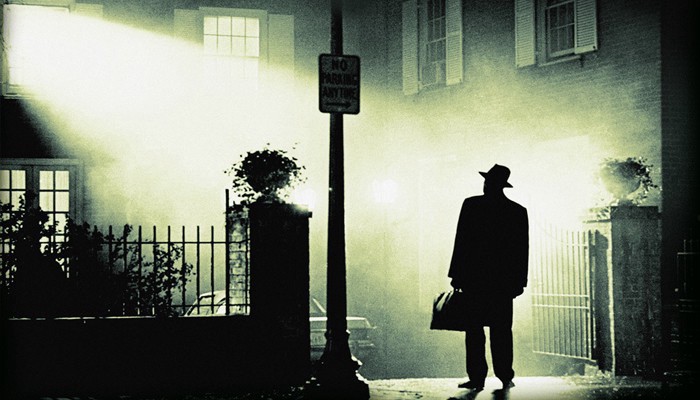
I don’t know what my parents were thinking — somehow, for some reason, they let me watch The Exorcist when I was eight years old. When the movie first came out in 1973, there were stories about audience members fainting, puking, and fleeing the theater, but apparently my parents saw no problem with their prepubescent son taking a peek. We were all in the basement one night, channel-surfing, and there it was on TV. My parents put down the remote and for the rest of my childhood I failed to get a decent night’s sleep.
Needless to say, I grew up in a liberal household. Just like Chris MacNeil, the mother in The Exorcist, my mother was an actress. She was from a well-to-do Jewish family of doctors, lawyers, actors, and activists. My father, on the other hand, was the first member of his family to go to college. Determined to overcome his blue-collar background, he worked in an emergency room to pay his way through school. He studied literature, then went on to a doctoral program in music. He wrote his thesis on 17th century French Baroque opera, but at some point he gave up on the PhD. As he explained it, he got into advertising instead because “that’s where the money was,” but at home, his love for books and music endured.
Our living room was set up like this: all along the walls were shelves packed with books and CD’s; a pair of towering speakers, the size and shape of doors, stood at the far end. Bright golden wires snaked out the backs of the speakers and slithered under the carpet, leading to a wooden cabinet full of top-of-the-line audio equipment, blinking black boxes encased like relics behind the glass. Next to the cabinet sat a leather recliner — the old man’s throne. He’d sit there every evening, reading a thick hardcover and sipping a screwdriver while the sounds of the Classical, Baroque, and Romantic masters blasted through the house in high-definition. Every once in a while he’d set down his book, take off his reading glasses, and close his eyes, just listening.
It was dangerous to interrupt him, but not for the reasons you’re thinking. He wouldn’t get angry or tell me to get lost; he’d quiz me. “Who’s the composer, Ad?” he’d ask. I’d listen to the music for a while, then venture a guess. If the music was joyous: Mozart; if it was angry: Beethoven; regal: Hayden. If I heard an organ: Bach; a harpsichord: Corelli; a lone violin blazing up and down the scales: Vivaldi. If I guessed right, the old man would beam with pleasure and mess up my hair.
Conversations at dinner consisted mostly of lectures — music, literature, art, history, science. The old man knew everything. He even looked like a professor, stout and paunchy, with a huge, round head, and a thick multi-colored beard. He’d drone on and on about Winston Churchill or the big bang while both our eyes slowly glazed over, his from the screwdrivers, mine from boredom.
My father also had something in common with Chris MacNeil — he was an atheist. According to him, the universe was a well-ordered place, full of ugliness as well as sublime beauty, but knowable, adherent to certain rules. There was no god, no afterlife, no ghosts. I tried to keep this in mind when we finally retired for the night, but while the old man slept, comfortable and content with his understanding of the world, I was wide-awake in bed, absolutely certain I was about to be possessed by a demon.
My dreams were haunted by images from the movie. I’d see Linda Blair’s twisted, gnarled face and wake up in a sweat, unable to move, unable to sleep. A few times I was sure I felt my bed shake, just as Regan’s bed shook, and flee the room to go sleep on the living room couch. Some mornings my parents found me asleep on the floor of their bedroom. One morning I was missing completely, and after scouring the entire house they eventually found me crammed under my bed, fast asleep.
Why couldn’t I just understand, as my father understood, that it wasn’t real? That it was all in my head? I couldn’t shake the feeling that there was something real at the heart of my fear.
According to Carl Jung, dreams have a compensatory function. Recurring nightmares are the mind’s way of dealing with past trauma through repeated exposure. Clearly, I’d been traumatized by The Exorcist and was now reliving it night after night to diminish my fear. But Jesus, how long does that take? Why couldn’t I just understand, as my father understood, that it wasn’t real? That it was all in my head? I couldn’t shake the feeling that there was something real at the heart of my fear.
It probably didn’t help that one of the movie’s taglines was “Based on a true story.”
CHRIS:
Now, I want you to tell me you know for a fact that there’s nothing wrong with my daughter, except in her mind. You tell me for a fact that an exorcism wouldn’t do any good. You tell me that.
I went to college in Boston to study music, and continued living there after graduation. When I wasn’t practicing or in rehearsal, I’d go on long walks, listening to music on my headphones. One fall day I was walking around the Back Bay, the red, orange, and yellow leaves coloring the trees and crunching under my feet, when my mother called.
“Is everything okay?” I asked.
“Everything’s fine. We’re all fine,” she said, but I could tell from the sound of her voice that it wasn’t true.
“I just had a talk with your father,” she said.
My father had made a confession to her that day. He’d been getting the shakes — withdrawal symptoms from all the drinking. It was especially bad in the mornings, so he’d been sneaking sips from the bottle at work.
“He’s drinking at work?” I asked.
“Just a little. To stave off the withdrawal.”
“So, he’s an alcoholic.”
“He says not to worry, that he’s got it under control. He just wanted to let me know.”
The wind picked up and sent the fiery leaves swirling around me, and I felt the vertigo of revelation. I knew the real reason she’d called me. The old man and I were close. After a few years of estrangement, we’d recently rekindled our relationship. Unlike my brother, I’d come to share his love of books and music, and we’d bonded over these things in long talks and email exchanges. He loved to say how similar we were, how he was just like me when he was my age.
For most people, the old man was impossible to talk to. He believed he was smarter than everyone else, and was too proud and too stubborn to take anyone’s advice. Even now, finally admitting that he had a problem, he still insisted that he “had it under control.”
Even now, finally admitting that he had a problem, he still insisted that he “had it under control.”
My mother’s thinking was that if he were to listen to anyone, he would listen to me.
“Want me to call him?” I asked.
“Would you?”
After pacing aimlessly for a while, gathering my thoughts, I called the old man at work. I asked him about what I’d heard, and he admitted everything. He didn’t sound the least bit worried or ashamed. He voice was calm and reassuring.
“I appreciate your concern, Ad, but don’t worry. You’ve got your own life to worry about. You’re young. This is one of the best times of your life. Enjoy it. Don’t worry about me. I can take care of myself.”
In 2000 a new version of The Exorcist was released in the theaters, with never-before-seen footage and added special effects. I went, partly out of curiosity, partly to test myself. It had been a while since I’d last seen it, and I wasn’t sure how it would affect me, how much power it still had. My heart raced as I entered the theater and pounded as the lights went down. As the film began I felt the usual shivers and pangs of dread, but as it progressed my terror subsided. Something wasn’t right. In this new version, a few ghostly images had been added — flashes of the demon Pazuzu appearing in the dark corners of the house. They were unseen by the characters, solely for the audience’s benefit. To me, these flashes ruined the movie, and as the lights came up and I made my way out of the theater, I realized why.
Those images tell us right from the start what’s going on. If Chris MacNeil had known right away that a demon was the culprit and an exorcism the solution, it would have been like any other shitty, predictable Hollywood horror flick. But The Exorcist is different, because the emotional core of the story, the source of all that dread and terror and fear, is doubt.
But The Exorcist is different, because the emotional core of the story, the source of all that dread and terror and fear, is doubt.
No one believes that Regan’s troubles are supernatural; they are certain they are either physiological or psychological, but they can’t seem to pinpoint the cause. The root of Chris’s suffering is her helplessness in an absence of answers. Even Father Karras, her savior, doubts until the very end. Only during the climactic exorcism scene, when he sees Regan levitate above the bed, does he finally believe. Doubt is the demon that is vanquished in that moment. Until then, you could say that The Exorcist really isn’t a horror movie at all. At its heart, The Exorcist is a movie about illness.
My father confessed his problem to his partners at the ad agency. They suggested that he go to rehab, and of course the old man refused. He was the creative director and the sole copywriter; the agency needed him to function, but the old man didn’t budge. He assured them that he “had it under control.” But he didn’t, and the agency soon closed its doors.
Then the old man was at home, without a job, with nothing to do but drink. We fought and begged him to get help, only to be told, again and again, that he had it under control, while all the signs suggested otherwise.
For the MacNeils, the trouble began with booms and crashes in the attic. For my mother, the booms and crashes issued from the living room. The old man had fallen, she told me, resulting in a gash on his head. Then he fell again and broke his finger. One day he decided to clean his motorcycle. When my mother finally heard his cries for help, she ran outside to find him on the ground, pinned beneath the bike. She had to call the police to come lift it off. I decided it was time to come home.
The old man’s transformation seemed both gradual and sudden. His diet shrunk, his vodka intake increased. Walking became difficult, then dangerous. He continued to pass out mid-stride, suddenly turning white and collapsing. As he staggered from the couch to the kitchen, holding onto walls and bookcases for support, my mother followed behind him in a panic, carrying a chair to catch him in, asking again and again if he was all right. Eventually he stopped walking, for the most part. He spent most of the day in his throne, only now the stereo was silent. His eyes, instead of focusing on a book, wandered around the room in a daze.
No more screwdrivers, just straight vodka from two-liter plastic bottles stored in the freezer. They were empty in a day or two, and diligently replaced by my mother. “Why?” my brother and I asked. “Why in the hell do you buy it for him?”
“Why?” my brother and I asked. “Why in the hell do you buy it for him?”
Her answer was simple, and sounded well-rehearsed: she had no choice. If the old man tried to drive to the store himself, he’d kill somebody. If she hid the car keys, he’d have a seizure, and possibly die.
Before performing an exorcism, it must be determined by a qualified priest whether or not the possession is authentic. There are a few ways to do this. A victim speaking fluently in a language he or she has never studied, for example, serves as proof that an outside spirit is at work, as opposed to a disorder of the mind.
One evening, as my mother and I were serving ourselves dinner, the old man staggered into the kitchen. In a stained, wrinkled T-shirt and sweatpants, his hair plastered to his head with sweat, every part of his body swollen and mottled, he looked about eighty years old, though he was only fifty-eight. Wearing that dazed, content look on his face, he opened the freezer and refilled his glass, then slowly shuffled back to his throne.
I had to do something, but there was a question standing in the way. Was it was a conscious act, destroying himself like this, or was he powerless against the booze? If he was powerless, that meant we could help him. We could call an ambulance, get him to a hospital, check him into rehab. But what if he didn’t want our help? What if he wanted to die? I couldn’t tell if he was the victim or the perpetrator.
I put down my plate and followed him into the living room. He was on the couch, staring into space. There was no music playing, no open book in his lap, just the glass of vodka cradled in his hands. I pulled up an ottoman and sat across from him.
“Dad.”
His eyes floated around the room before landing in my direction. My mother quietly snuck into the room and sat silently in the corner.
“Dad,” I said. “Do you know how fucked up you are?”
His lips moved silently for a while before he managed a reply.
“Don’t… talk to me,” he said. He took the newspaper off the table and unfolded it.
“You’ll die if you keep this up, you know that?”
“Don’t talk to me.”
But I did talk to him. I talked to him at length, in great detail, telling him exactly what I thought. I yanked the newspaper from his hands and yelled in his face. I threatened to call the cops, to have him committed against his will. I told him that he was a sick, selfish, crazy bastard for doing this to himself and making us watch, for making my mother take care of him, for making her clean up his cuts and bruises and follow him around the house with chairs, making her go out and buy booze for him, even, hoping and praying that he’d stay put, that he wouldn’t walk around and pass out and crack his head open, wondering if she’d come home to find her husband lying facedown in a puddle of blood.
“That’s enough,” my mother said.
The old man was silent, his face blank. Locked in a dark room a million miles away. I gave up.
“Fine,” I said, turning to head out of the room. “Drink yourself to death if you want. I don’t give a fuck.”
CHRIS:
You show me Regan’s double, same face, same voice, everything, and I’d know it wasn’t Regan. I’d know in my gut. And I’m telling you that thing upstairs isn’t my daughter.
The old man moved from the couch in the living room to the couch in the den. Instead of reading or listening to music, he watched TV. He watched cooking shows, mostly, which was strange considering he never ate a thing except vodka. The room smelled like sweat and piss. He began wearing diapers, which my mother bought, and changed.
Illness is ugly. I learned that, watching my father deteriorate. Not just the bodily functions, although that was a big part of it. The real ugliness was the deterioration of his person. The things that came out of his mouth.
The real ugliness was the deterioration of his person. The things that came out of his mouth.
One day I went in to check on him, and he was watching a documentary about the Apollo 11 moon landing.
“You probably don’t remember,” he said. “You were just a baby.”
“I wasn’t born yet, Dad. I was born in ‘83.”
His eyes wandered around the room for a while, doing the math.
“So… you were just a baby.”
In horror movies the monster chases you, and you run. In The Exorcist the monster is just down the hall. It can’t chase you, because it’s strapped to the bed. You don’t run from it, you live with it. You walk down the hall and check on it.
“Did you know that your mother climbed Mt. Everest?”
“I think you were dreaming, Dad.”
“Nope. I heard it. They said it on TV.”
He once read for hours every day. He could rattle off the dates of every battle in WWII. He could explain quantum physics and general relativity. He could identify any piece of music after hearing the first three seconds. My father knew everything, and that thing in the other room was not my father.
One day the old man couldn’t stand up anymore. It scared him, and he finally agreed to go to the hospital. My mother called an ambulance and two paramedics came to the house. They moved the coffee table aside, brought in a stretcher and struggled to lift his massive, swollen body onto it. My mother and I followed them to the hospital, checked him into the ER, and waited.
A couple hours later the doctor brought us back to his room. Parting the curtain, we were shocked by what we saw. Under the blinding fluorescent lights, we could see for the first time how yellow his skin had become, how swollen his stomach and limbs.
“This is the final stages of alcoholism,” the doctor told us. What that meant, my mother explained on the car ride home, was that there was nothing they could do. Nothing but keep the old man comfortable, and wait.
After a week in intensive care, we brought him home. A hospital bed was set up in the den, facing the TV. We were given his medications, with instructions: benzodiazepines at regular intervals, and morphine for when it got really bad. Both were in liquid form, because his throat was too badly swollen for solids. He couldn’t eat, and was too drugged to speak. He slept, mostly, the TV remaining on at all times, to keep him company. Sometimes he coughed or moaned in pain. Sometimes he whimpered. Tears as thick as corn syrup rolled down his cheeks. A nurse came in the morning to clean him and check his condition. My mother and I watched, and waited.
Late one night I heard the old man groaning. My mother had already gone to bed, so I went in to check on him. In the dark room lit only by the blue flickers of the TV, the old man was struggling with the sheets, writhing in pain. I took the unopened glass bottle off the tray.
“Dad, are you in pain?”
He groaned.
“Do you want some morphine? I can give you some morphine if you want. Tell me what you want.”
“Morphine,” he whispered.
I unscrewed the bottle, measured out the dose with the dropper and put it in his mouth. He clenched it in his teeth and sucked it fiercely. I yanked the dropper away.
“Did you get it?” I asked.
“No,” he said.
I held the dropper up to the light of the TV. It was empty.
“You got it. You’ll feel better soon.”
“No I didn’t!”
His voice was suddenly clear, filled with a newfound strength that sickened me. I examined the tiny bottle, still full of purple liquid. The old man was in pain. We were all in pain. What was the point of letting it go on?
I’m still not sure why I didn’t do it. Maybe I decided it was wrong, or that it wasn’t my job, but more likely it was out of anger. It was that eagerness in his voice, reminding me that he wasn’t sick, was not a helpless victim. He was an addict. There was no evil spirit at work, just him. He did this to himself. To all of us.
KARRAS:
Why her? Why this girl?
MERRIN:
I think the point is to make us despair. To see ourselves as… animal and ugly. To make us reject the possibility that God could love us.
It wasn’t long before we went in to check on him and found a corpse in the bed. One look and it was clear that my father was gone. It was over, and I felt relief. Maybe that seems like a strange or horrible thing to admit, but it’s the truth. We knew there was no hope. There was nothing for us to do but watch and wait. It felt endless, all that watching and waiting, living day after day with that thing in the house, that sickness, that smell, that pain, that ugliness festering just down the hall, in that room I was afraid to enter. My worst childhood nightmares had quite literally come true, and now it was finally over. How could I feel anything but relief?
It’s been almost ten years since my father died. I try to remember him when he was well. I think about all his lectures about art and literature and history and science. I think about all those talks we had about books and music, how we used to sit together and listen to his favorite composers while he tried to convey to me the beauty of their work. I think about my first year of college, when my anxiety worsened and I began having panic attacks, how he reassured me. He told me that he had the same problem, that he’d had it his whole life, that it was one of the reasons he drank. He said it would always be with me, but I’d learn to cope, just as he had. He said life would be hard sometimes, but it would be okay because there is so much beauty in the world, in books, in music, in art, so many beautiful things to experience in life that make it all worth it.
I think about those words, and how little they meant in the end. How all the beauty in the world couldn’t compare to the bottle.
I still have nightmares, but they’re not about Linda Blair anymore, they’re about my father. The dream is always the same: he didn’t die; he recovered, but now he’s started drinking again.
Some say it’s a disease, just like any other disease. Others say it’s not a disease at all, because human beings have free will. Alcoholics have the power to choose to drink or not to drink, whereas true victims of disease have no choice in the matter. Some have compromised and called it “a disease of the will.”
A disease of the will — I find that label the most unsettling of all. We like to think of ourselves as separate from our illness. We like to blame an outside source, whether it’s evil spirits or microbes, anything foreign, anything outside ourselves. We love to pinpoint the cause, to point to that tumor, that gene, that trauma, and say, Aha! There’s your problem! It’s comforting, because it reminds us that we are not our illness. Its ugliness is not our ugliness. We have free will, but our bodies have wills of their own, and though your body will decay, as long as you retain your will, you will retain your humanity, your soul, that part of you that might still be loved.
But to think that even that can be infected, and changed, and taken away — that’s the thought that keeps me up at night.
Margaret Atwood’s new novel, The Heart Goes Last, is set in a frighteningly possible future just over the edge of our own horizons. It features Stan and Charmaine, married and living in their car after a financial crisis so dire that it has torn whole cities apart, complete with downed power lines, depleted water supplies, and chaotic streets. The couple is afraid to venture out of their car at night for fear of being attacked and don’t leave it empty, as it might be stolen or vandalized. Their marriage survives on hasty, uncomfortable backseat sex and Charmaine’s work as a bartender in a surviving pub that caters mostly to the clients of the two prostitutes who’ve set up shop there.
It is at Charmaine’s job — hers, not his, a fact that Stan is acutely aware of — that she sees a commercial on television that seems to be speaking right at her: “Tired of living in your car?” it begins. Ed, the besuited talking head, is the founder of a new kind of city and advertises its comforts: neat little houses, king size beds, curtains, clean streets. “At the Positron Project in the town of Consilience… we offer not only full employment but also protection from the dangerous elements that afflict so many at this time. Work with like-minded others! Help solve the nation’s problems of joblessness and crime while solving your own! Accentuate the positive!” Striking a balance between practical and self-help, Charmaine is convinced, and she and a more dubious Stan apply to join, even though the two prostitutes at her bar don’t believe that anything could be so good. They believe there’s a catch. And, indeed, there is.
Stan and Charmaine ride a bus to the newly founded city where they are taken on a daylong tour of the place after which they have to decide whether to join or not. During the tour, men and women are separated at some parts, and as the novel alternates between Stan and Charmaine’s points-of-view, it is Stan we see during much of the tour, as he is the more skeptical of the two. He listens as Ed, the founder of the town, explains the model of the city: “CONSILIENCE = CONS + RESILIENCE. DO TIME NOW, BUY TIME FOR OUR FUTURE!” Ed admits that “the powers that be” have considered the model of Consilience/Positron to be an “infringement of individual liberties, an attempt at total social control, an insult to the human spirit.” Indeed, signing up is not like joining a gym; once you go in, you can’t come out. Ed’s reverse psychology is powerful, though — if he readily confesses to the criticism, it can’t be true, can it?
Ed begins to explain the dire situation of criminality in the country, using a PowerPoint presentation — all the more reason to see this world as close to ours — with graphs that prove his point, which is that prisons can be made to be useful. Rather than having convicts doing pointless jobs that often don’t contribute much, they could be working construction, cleaning, medical, agricultural jobs and more. And thus, the model of Positron was born, the brainchild of Ed and the silent woman who sits beside him. Her presence in this scene is foreboding, though it is only later that a reader will make this connection.
So what exactly is it that allows for the town of Consilience to be so perfect, so beautifully decorated and neat, so The Truman Show-, The Stepford Wives-, Pleasantville-, ‘50s-esque? The Consilience/Positron model is a switcheroo between prison and a life of comfort. Every person accepted to and entered into the city’s system spends one month in his or her luxurious family home or comfortable singleton apartment, where they have colored lockers. At the end of each month the residents put their personal effects into their own locker. Then they ride their scooters (the town is big on scooters — cars are for officials and high powered people only) to Positron, the prison, and voluntarily check themselves in. Men and women are divided into separate sections, where their jobs are helpful to the community. They grow food, take care of livestock, fold laundry, and are encouraged to take up healthy activities during their free time, such as yoga or knitting. During the month they are in prison, their alternates ride their own scooters to the house or apartment, unlock their own locker, and settle in for their month of living the luxurious and comfortable life. Alternates are never supposed to meet.
The system is seemingly perfect. Six months out of a year, you get to have a perfectly comfortable life. The other six months are still comfortable; Positron isn’t the kind of prison where stabbings occur, gang fights break out, and fear-mongering guards loom over every activity. No, it is a clean facility, with jobs aplenty, and the worst thing about it is that maybe it gets a little boring. But who isn’t bored half their life anyway? What could be so bad? This is where Atwood’s brilliance shines: she has us this close to being convinced to join ourselves.
Time is glossed over in the novel, and there is a feeling of urgency as Atwood sets up Stan and Charmaine into their steady life in Consilience/Positron, as if she’s just waiting to get to the good stuff, to the more powerful and painful moments. But when the curtain veiling the dramatic scenes to come finally drops, it feels, at first, like a cop-out. We find out that Charmaine has been cheating on Stan with a man who calls himself Max (she calls herself Jasmine). Max is Stan’s alternate, and his wife is Charmaine’s. A character cheating being used as a turning point is such an obvious narrative choice that it feels cliched. Skilled storyteller that Atwood is, however, she complicates matters very quickly, because Charmaine’s affair pales in comparison to the morally questionable job she holds at Positron as Chief Medications Administrator. In this position (more powerful than Stan’s, just as outside in the real world) she organizes shelves and makes sure everything is in its place, but her main responsibility is euthanizing former actual convicts, a role in which she sees herself as a benevolent angel of death.
Meanwhile, Stan begins to fantasize about Jasmine, whose note he finds under the fridge and which was meant to be for Max. When he eventually decides to wait at the house for her, certain she will tear his clothes off and schtup him silly since he’s created an erotic creature in his mind, he finds that there is no Jasmine. There is only Max’s wife, Jocelyn. Ed’s right hand woman. Stan sees her as being “on the short side, with straight hair down to her shoulders. Dark eyebrows. A heavy mouth, no lipstick. Black jeans and T-shirt. She looks like a dyke martial arts expert.” It is this woman, whose “sick fantasies” Stan has to enact (and which involves them schtupping each other silly, even though it’s not exactly what he imagined it would be like) who is the only true rebel of the flawed, dictatorial, and financially greedy Consilience. It is she who attempts to bring about a socially moral outcome. And it is she whom we, the readers, are programmed early on to hate.
From this point on, the novel becomes stranger, creepier, more disturbing, and as such more wonderful. Jocelyn uses Stan, keeps him out of Positron while making sure that Charmaine remains inside, but is deprived of her top level position as a kindly killer. Things begin to change in Positron as suddenly there are no real convicts to put to sleep anymore. What does a prison that euthanizes criminal elements do when it has no one left to kill? It begins to find the insurrection among its own people, of course.
Positron, central though it is to the novel and bizarre as it may be as a model for a perfect society, is not the creepiest thing about the whole enterprise. That honor lies in a warehouse where Ed has been developing a line of customizable sexbots. Even worse, he has developed a medical brainwashing technique that creates love and lust in a person’s brain by imprinting onto the first pair of eyes it sees (rather like ducklings, except not in the motherhood kind of way). One notorious example is femme fatale Victoria (one of the prostitutes from Charmaine’s bar) who falls for a blue knitted teddy bear instead of the man who had purchased her. She is considered a botched attempt, an accident. This makes her the perfect vehicle, however, to help Jocelyn, Stan, Charmaine, and the rest of Consilience, since she is unable to be seduced by anyone and has every reason to be furious, since she was the first to undergo this medical procedure which has rendered her a freak to most of society.
A citizen of the contemporary world, Atwood’s The Heart Goes Last is a riveting addition to her oeuvre in which she explores the idea of a powerful system and its discontents.
We’ve asked some of our favorite international authors to write about literary communities and cultures around the globe. We’re bringing you their essays in a new ten-part series: The Writing Life Around the World. The sixth installment is by the Sri Lankan-born author Ru Freeman.
When I was a child, there was nothing much to do in my house in Colombo but write. Reading was desired, of course, but books were hard to come by, and that meant several things: my two older brothers and I read with great appetite, we fought over books, we memorized what we saw in black and white, and we dreamed of caravans, midnight feasts, puddings, and snow, things we had never experienced in our own lives. We begged for books from our friends at school, from neighbors our own age and much older. Books were passed around and packed away quickly into school bags as though they might be confiscated. They were brought out and read with deep pleasure. They were traded for favors of all kinds. The brother closest in age to me and I often exacted payment in pages of a book. The book you borrowed has only 253 pages, one of us might say, so you can only read 253 pages of the book I borrowed. And so we had to also turn into book thieves, risking fisticuffs in order to get at the final pages of the others’ book.
But writing. That was different. That could be done without servility, or becoming emotionally indentured to ones siblings. What I couldn’t memorize in its entirety, I wrote down in notebooks. Hooloovoo, a hyper-intelligent shade of the color blue, I took from Douglas Adams, as a child.
But why take all this quite so badly? I would not, had I world and time To wait for reason, rhythm, rhyme, To reassert themselves, but sadly, The time is not remote when I Will not be here to wait. That’s why.
I wrote down in more elaborate script as a teenager in the back page of a notebook that I kept for gems like that one from Vikram Seth. This habit of being able to recognize the unique voice of writers I had no idea I would ever meet in person was one I could not shake. I recall noting — even as I speed-read the passages and questions on my ACT in Literature — the particular sentence that described our human fear of insects. I don’t remember the precise words, but the line noted that insects were the embodiment of our deepest human fears: the insides on the out, all spikes and gesturing, and the power of a determined collective. I left enough time at the end of the examination to jot down the two sentences on the back of a bus ticket in writing that mimicked, due to the constraints of space, the footprints of ants.
Much later, applying to colleges, when asked to write about a book that transformed my life, I reach back in time to another set of quotes that had made it into my notebook. They did not come from the great Russians I had by now read, nor from the English poetry and literature I had studied in my Advanced Level classes, nor from the Greeks whom I’d also read, but from William Peter Blatty’s The Exorcist. The two quotes, about good and evil, and about hope, defined a world view for me, one that continues to resonate in the way I live my life now. I wrote then, as a nineteen year old, about the place of things in a universe that had its own wisdom and reason. More than that, I wrote, quoting Blatty, that sobriety was vital in times of despair as well as in times of hope. I used his words without ever having seen the revenge exacted by a Fall on a Spring, or the Spring on Fall. It was the poetry and musicality of the words that gripped me. Those words made sense.
* * *
…there was a dictionary in the house to which my brothers and I were directed. We cursed and swore (in our elegant tongues), but we reached for it anyway.
There’s a particularity to the way language is acquired by a non native-speaker such as myself, and how it is manipulated. My English texts in Sri Lanka were full of the rudiments of basic English which were required for the entire school population, but at home I was immersed in a version so elevated from that kind of ordinary usage that there was little to do but learn how to become conversant in it. My parents spoke that way, as did my brothers, and therefore so did I. There was no value placed on knowing the latest information on pop stars, though a working knowledge of politics was expected within the family. We did not own a functional pair of scissors, band-aids (sticking plasters) were bought one at a time and only when required, and shopping in general was undertaken for only the most necessary items, but there was a dictionary in the house to which my brothers and I were directed. We cursed and swore (in our elegant tongues), but we reached for it anyway.
This was our underlying message: what we needed to know could be found in books, and if we failed to find our answers there, we would at least have acquired the language with which to ask for help from smart adults. And since this acquisition was so varied, our sense of its usage was correspondingly without limits; there was an internal rhythm to our understanding of the English language that did not seek to obey any single aesthetic, but instead let our intuitive sense of the world unfold on the page however we wished.
* * *
During those years, Sri Lanka had no tradition of public readings of work in English, though those who wrote in Sinhala and Tamil had their own, multitudinous audiences. As such, we, along with our peers, performed for private audiences in full length theater productions or during examinations where we declaimed the words of others rather than our own. Pulsing beneath what was taking place among those like me who wrote in English, was an entirely different scene: one where Sri Lankan writers saw their own work performed on stage. For those who wrote in English, publication translated into collections of poetry rather than prose, though there were always exceptions, and that work was assigned for study in university. It was, in other words, a more cerebral activity, rather than one that included the out-loud utterance.
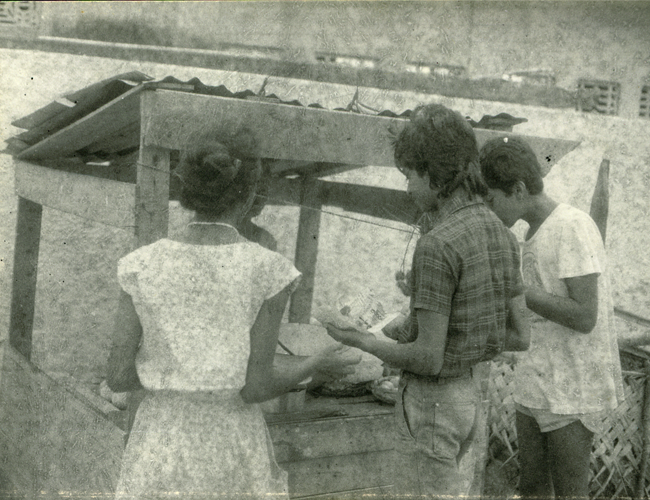
It has been fascinating to discover, then, the more recent establishment of festivals of literature in Sri Lanka and, more importantly, readings of new work, as well as the local publication of fiction in English. The Galle Literary Festival is known beyond Sri Lanka’s shores and has had its share of critics for its lack of inclusion of literature in translation, but it is a festival that has brought international writers to Sri Lanka. More than that, though, are the smaller local festivals that have taken on the matter of engaging with literature in a way that continues a cultural tradition of respect for language and books. Of these, Annasi & Kadala Gotu (which translates into pineapple and hand-held cones of roasted nuts), is perhaps the most interesting. It spanned just one day, but included panels of people discussing literature and the creative process in all three languages, Sinhala, Tamil, and English. Its very name is an acknowledgement of a particularly local love for nutritious, delicious, and completely addictive street food, and an attempt to demystify literature and the literary culture.
It stood to reason, then, that the organizers of that festival were intrigued to hear of an endeavor that I have been pursuing along with my brother, Malinda Seneviratne (also a writer, journalist, poet, and winner of both the Gratiaen Prize for Literature in Translation in 2013, and the Gratiaen Prize for Poetry in 2015, established by Michael Ondaatje), the establishment of an international festival of literature in translation, which we called IF/LIT. Earlier this year, in the wee hours of a morning, I skyped in from the U.S. on an afternoon gathering in Colombo. Assembled there was my brother, two young men who were active in the local literary scene, Rick Simonson from Elliott Bay Book Company who was in Sri Lanka after speaking at the Jaipur Literary Festival (JLF), visiting my father, and a group of Sri Lankans, all women, who had been brought together by a former school-friend of mine. The most interesting thing about this group was that none of the Sri Lankans (other than my brother) were writers, but they were all extremely well-read, continuing into this present day our tendency to place great value on the worth of books. Further, all of the women were in positions of power, most of them heads of private corporations from hotels and tourism to exports and finance, and all of them active patrons of the arts. Even more importantly, they were committed to sharing their love of learning of the world through its literature with as wide an audience as was possible, and willing to volunteer their time to make that possible.
What were they doing immersed in books? Simply this: they loved literature.
I don’t know if that drive to invest so personally in literature is unique to Sri Lanka, but I can say unequivocally that it is rare here in the U.S. where I live now. I was somewhat transfixed by that conversation, by the energy in that beautifully appointed room, by the intense practicality regarding the logistics of putting such a festival together, which at no point diminished the bright enthusiasm for and embrace of the festival itself, an ambiance that harkened back to those Blatty quotes I’d jotted down. This summer when I was in Sri Lanka I met with the young organizer of Annasi & Kadala Gotu. He made an appointment with me, sat bolt upright in a chair, asked questions and took notes. He made suggestions informed by considerations that I had not stopped to think about, and explained which people could take on which tasks in putting a festival of this magnitude, our IF/LIT, together. The person who began the festival he had just completed was an airline pilot, a non-writer. He himself was a computer programmer. His friends who would handle publicity and tickets and every other conceivable detail that goes into producing a festival were mostly engineers and accountants. What were they doing immersed in books? Simply this: they loved literature. They loved literature because they had been taught, as we had been taught, about the significance of the imagination, and of the way our minds expanded through the simple act of inhabiting other people’s reality.
* * *
He had lost none of that particularly subtle language of regard, a lexicon that is a blend of a quintessentially Sri Lankan character gilding this foreign tongue.
During a recent visit that took place in the wake of JLF, at which I’d spoken with him, I attended a book launch for Romesh Gunasekara (Noontide Toll and others). The event took place at Barefoot, a favorite haunt of expatriates and well-shod Sri Lankans, and the whole evening had an elegance that was unusual in my experience; readings in America, with the notable exception of Seattle, seem largely unpredictable. This launch took place in the open-air courtyard, with tables decorated with lamps and flowers, a porch provided the stage-setting for the reading, and books were bought and signed before a word was read. The whole event concluded with hors-d’oeuvres and red and white wine served by wait-staff. An airy reverence hung over the assembled. Most significantly, I noted the way in which the London-based author of the hour spent time with the guests who were almost all known in some fashion to him or to his family. He chatted a little to Shyam Selvadurai and me, both of whom he knew well, but I noticed the care he took to pull up a chair and sit with my father, himself a poet and reviewer. I listened as they reminisced about various Sri Lankan writers, their own families, and conversed about books read and those yet to be written. They were of a different time, there was mutual respect, but my father was the older man and Romesh had lost none of the reverence reserved for those who served not only as friends but as teachers, whether or not they stood in front of chalkboard in classrooms. He had lost none of that particularly subtle language of regard, a lexicon that is a blend of a quintessentially Sri Lankan character gilding this foreign tongue.
* * *
…we were in agreement: our country, despite all that had ravaged it, still pulsed with that same yearning for the benediction of books that we had once experienced…
Many months later I heard Romesh’s voice again. He was back in London, and I was back in the United States, and we were connected on air on a BBC program, being interviewed by Rana Mitter. It was a program devoted to a conversation with writer Tony Harrison, the 2015 winner of the David Cohen Prize for a body of work. On a program devoted to an artist who welcomed political debate on topics ranging from the Persian Gulf to Bosnia, Mitter felt it would be interesting to have two writers from Sri Lanka, a country of much turbulence, and recent peace, to speak about our experience writing of it. Over the course of the program, I listened to Romesh’s soothing inflections, and to my own much less mellow delivery. We were of different generations, a world apart, speaking about our nation of origin. We left it off air, discussing IF/LIT, and the importance of literature. We were not that different. We had read different books, growing up, and our phrasing was correspondingly divergent, but we were in agreement: our country, despite all that had ravaged it, still pulsed with that same yearning for the benediction of books that we had once experienced, and we, having been blessed by that culture, saw with intimate clarity the importance of continuing to participate in the vitality of a well-read citizenry. I took off my headphones and headed to Miami where I was due to speak the next day. I took my country and my countrymen with me, that unique communality that we bring to our embrace of the written word, the way in which poetry and stories are so universally regarded as being essential to human life.
About the Author
Ru Freeman’s creative and political writing has appeared internationally. She is the author of the novels A Disobedient Girl (Atria/Simon & Schuster, 2009) and On Sal Mal Lane (Graywolf, 2013), a New York Times Notable, and Editor’s Choice Book. Both novels have been translated into several languages including Italian, French, Hebrew, and Chinese. She is the editor of the ground-breaking anthology, Extraordinary Rendition: American Writers on Palestine (2015). She blogs for the Huffington Post on literature and politics, is a contributing editorial board member of the Asian American Literary Review, and has been a fellow of the Bread Loaf Writers’ Conference, Yaddo, Hedgebrook, and the Virginia Center for the Creative Arts. She is the 2014 winner of the Sister Mariella Gable Award for Fiction, and the Janet Heidinger Kafka Prize for Fiction by an American Woman.
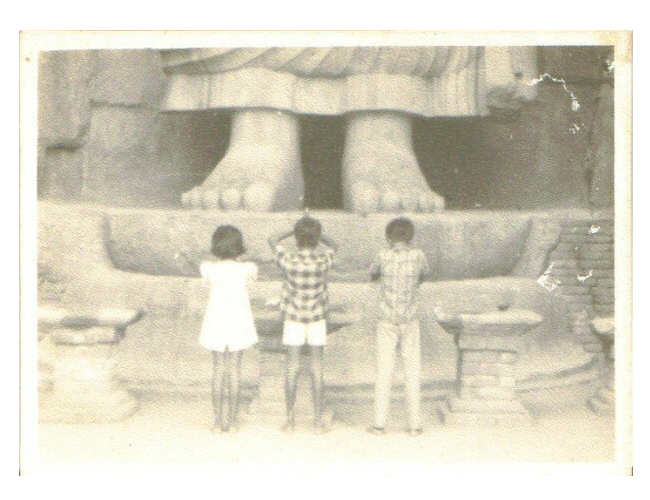
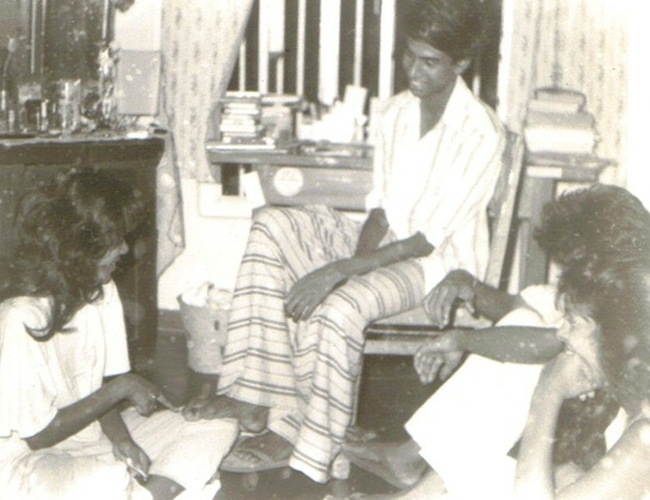
The photographs accompanying this piece were provided by Ru Freeman and may be found, with captions, at her website.
The Writing Life Around the World is supported by a grant from the Council of Literary Magazines and Presses and the New York State Council on the Arts.
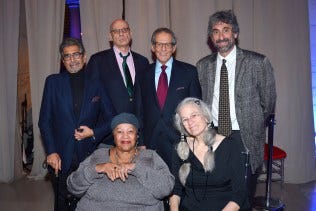
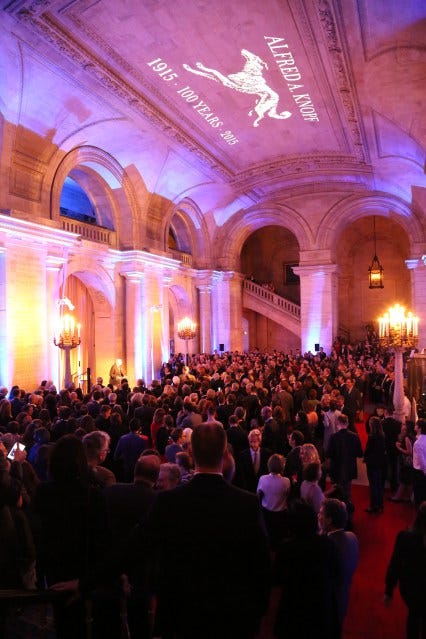
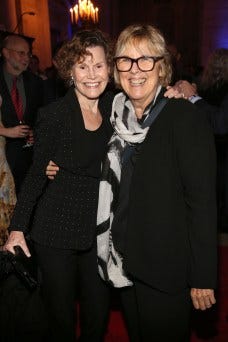
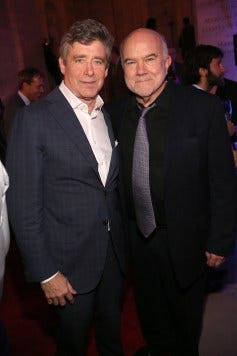
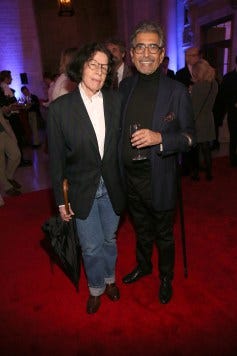
On the first evening of October, the majestic Astor Hall at the New York Public Library filled with hundreds of literary luminaries to celebrate the 100th anniversary of publishing juggernaut Alfred A. Knopf. A jazz band played as guests mingled over drinks and hors d’oeuvres with a veritable who’s who of Knopf authors past and present, from Jim Shepard and Jenny Offill to Robert Caro and Toni Morrison.
Halfway through the night, Knopf Editor in Chief Sonny Mehta said some words to the crowd, followed by a few Knopf authors taking the mic. Mehta praised the Knopf team and supporters, stating, “At Knopf, we strive to acquire good books, and to publish them well. It sounds easy — I only wish it were. And yet over the past century our editors have curated and shaped a remarkable list. They, with their colleagues in production, and art, and publicity, marketing and in sales have helped this imprint to endure and to succeed. They are and have always been a disturbingly dedicated group.” Mehta also made sure to thank booksellers, librarians, and colleagues in the media for their work in championing books. “But most importantly,” said Mehta, “I must thank our authors — your work is the bedrock of Knopf — it always has been, and it always will be, and we are proud to be your publisher.”
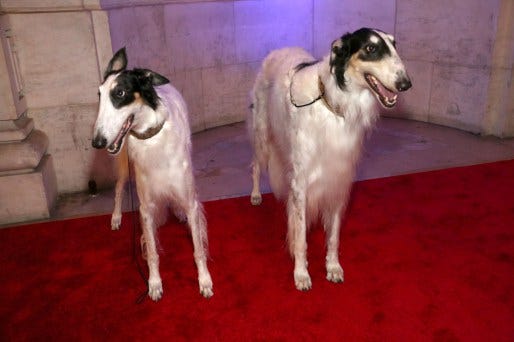
Indeed, it was a night to celebrate Knopf authors, all of whom were in good spirits. James Ellroy, author of The Black Dahlia, The Big Nowhere, and L.A Confidential,began his remarks at the microphone with a howl, in honor of the Borzoi dog breed that is the iconic logo of Knopf. I asked Ellroy what he thought of the live Borzoi dogs that were stationed at the entrance to the library that evening, greeting guests. Ellroy admitted, good-naturedly, “They’re good looking animals, but I’m more a pit bull man.”
During a break in the scheduled speakers, I chatted with two-time Booker prize winner Peter Carey, who sang the praises of Sonny Mehta. “I met him in Sydney when he was wearing a caftan…He’s a remarkable man, and everybody says, what will happen when Sonny’s not there anymore? Because he’s courageous, he’s cool, he’s got taste, he’s a friend, he’s wonderful to have lunch with, he’s a good man with a pencil to annoy me.” It was clear that Carey appreciated the long and intimate relationships that Mehta keeps with his authors. “If Sonny leaves,” said Carey, “the world will end!”
A highlight of the night was a special a capella performance by singer, performer, and Just Kids author Patti Smith, who proceeded her song with the following humble comments: “I’m the new girl in town. In 1967, I was in St. Marks Bookstore with Robert Mapplethorpe, and I opened a copy of Deleuze’s essays, and I pointed to the Borzoi and said to Robert, ‘Some day that dog will be mine.’ It took about 44 years, but I’m so proud. The long road was so worth it…the whole Knopf team, they’ve just been awesome.”
The crowd lingered well into the evening, enjoying a final cocktail well past the scheduled end time for the event, and well after the Borzoi greeters had left for the night. Toni Morrison echoed the sentiments of many in attendance, calling Knopf, “the world’s best publishing house” and saying, “It’s been a great ride, and there is more to come.”
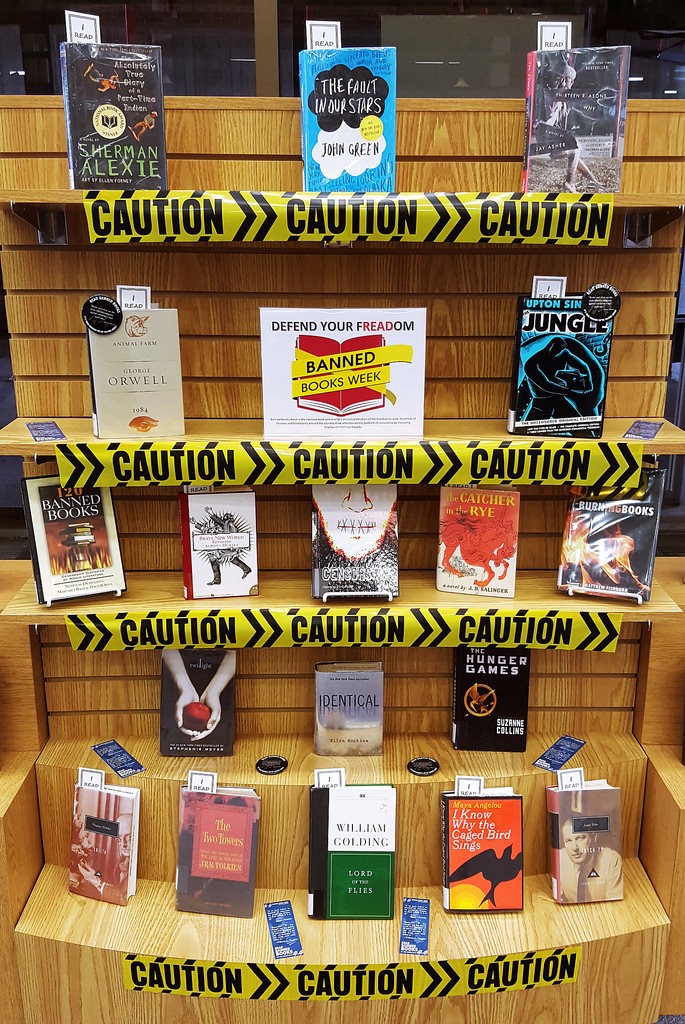
So it’s Banned Books Week, and I feel like I have heard more about banned books in the last three months than I have in the last ten years, which seems counterintuitive when you think about how time is supposed to be related to progress. In 2015, you’d think that banning books would be an adorable piece of nostalgia, entombed in cautionary tales about towns that don’t allow dancing, but alas, there is still a town in Kentucky that doesn’t allow dancing, and books are still being banned. Just this summer, Some Girls Are by Courtney Summers was banned at West Ashley High School in Charleston after one, yes one, mother penned a letter to the principle deeming it “smut.” And just within the last few weeks, New Zealand has banned Into the River by Ted Dawe on the grounds of “offensive language” and “gratuitous sexual imagery.” You know, things that are otherwise unavailable to kids who ever leave the house. Over the course of the last decade, a decade in which fame and fortune is found as a result of a sex tape — a universally available, downloadable sex tape — more than 5,000 books were challenged. There were 311 challenges reported to the Office of Intellectual Freedom in 2014 alone. In the same world where Kim Kardashian’s fully naked body is as easily accessed as the weather, the wisdom and words of prolific and important writers like Sherman Alexie, Toni Morrison, and Stephen Chobsky are being ripped from the hands of children.
In the same world where Kim Kardashian’s fully naked body is as easily accessed as the weather, the wisdom and words of prolific and important writers like Sherman Alexie, Toni Morrison, and Stephen Chobsky are being ripped from the hands of children.
Let me just state for the record that I do not have children. I, however, do write books, arguably provocative books, for young adults. I do this, and write articles like these, because I was once young and curious about and voraciously entertained by the salacious underbelly of adulthood that inevitably seeped up into my adolescence whether I was ready for it or not. Melanie MacDonald’s main argument for why Some Girls Are is not a valid summer reading choice is because it is “smut,” as if the word itself is synonymous with “dangerous.” For the record, it’s not. Smut’s actual definition is “a small flake of soot or other dirt.” That’s it. That’s what it actually means. It’s just a little bit of soot or dirt. The term that’s come to describe work that provokes outrage, ignites campaigns for its extermination — is actually, etymologically, something that never hurt anyone; something necessary, something inevitable, and something that kids are told to put their shiny screens down to play in. Dirt, as well as being innocuous, is also an unavoidable part of life on a planet covered in it. It’s natural; it happens, and really, is almost so on the nose as a metaphor that I feel puerile extrapolating it. By banning “smut” this women is saying that we should ban dirt, rather than take the time to teach children not to be scared of it, and thus how to deal with it by say, handing them a broom and a rag. Do I need to take this all the way by pointing out that banning dirt would be impossible and ridiculous? Good, I didn’t think so. Dirt, a.k.a. the unpleasant mess that existence makes, is inescapable, normal, and something that everyone will have to deal with eventually. Smut = dirt = shit happens = important things for kids to learn.
New Zealand didn’t use this exact word when banning Dawe’s book, but the idea that “offensive language” and “gratuitous sexual content” would be grounds for banning a book is equally as moronic when you break down the meanings of those words too. “Offense” is defined as either “a breach of a law or rule; an illegal act” — last time I checked, cursing wasn’t against the law, so not that one — or “annoyance or resentment brought about by a perceived insult to or disregard for oneself or one’s standards or principles” — so, that one. Okay, let’s break that down. A book has been banned because someone has been “annoyed” by someone else’s “perceived disregard for [their] standards or principles.” By this standard, slow walkers, Anne Hathaway, rap songs with children’s choirs in the background, inspirational quotes, adult women obsessed with pink, vaguely racist memes, and hashtags like #helikeditsoheputaringonit #immarryingmybestfriend! are all banned.
All you have to do is perceive insult to one’s standards or principles, and ban! Man, if only I’d known this rule sooner! Bye-bye duckface selfies and bread baskets served with cold butter — see ya never!
Second, Melanie Macdonald hadn’t even finished the book before she started her smear campaign! By page 74 of this award-winning novel, MacDonald had claimed that she “objected to the book’s depiction of underage alcohol and drug use, sexual assault, a lecherous male teacher, ‘body shaming about the size of the lead character’s breasts, and then a sexual reference so explicit that [she] will not reference it here.’”
At page 74, she’s seen about a corner of the author’s full painting. That’s like saying you hate a whole country when you haven’t even made it out of the airport.
The most serious item in her laundry list is her casual objection to the depiction of sexual assault. This is one of the matters of controversy in Dawe’s book too, and to me, this is where the idea of banning books crosses over from dumb to dangerous. What MacDonald fails to understand is that by depicting sexual assault at all, Summers and Dawe are taking a stand against it.
What MacDonald fails to understand is that by depicting sexual assault at all, Summers and Dawe are taking a stand against it.
We are so deeply drowning in our rape culture at this point that simply talking about it is a heroic act and should be applauded and lauded as positive for both young girls and boys. The worst and most dangerous part of the culture surrounding sexual assault (especially the high school brand) is the shame associated with it and that people are encouraged not to talk about it. Authors need to depict it, kids need to see it in pop culture, in books they read, in movies they watch to know that this happens and it is not your fault; you’re not alone. By introducing books and guided, educated conversation about sexual abuse into schools, kids learn that their teachers and parents are not afraid to talk about it — so they shouldn’t be, either.
She also objects to the depiction of “underage drinking, body shaming, lecherous teachers, and the sexual reference so explicit” she wouldn’t even dare grasp her pearls and utter such devilry (for the record, said devilry is a blow job). New Zealand had similar problems with “offensive language” in regards to topics like racism and bullying. This particular string of objections brings me to the idea of safety. Because isn’t that the big thing, parents? Safety? Isn’t that what parents ultimately want for children? I’m going to let all you parents in on a little secret: a book is the absolute safest place your child can wrestle with these topics.
You can ban all the books you want, put your parental controls on the cable and the Internet, keep your children ignorant of society’s evils, but you cannot stop these things from existing. You can try to stop your kids from hearing about these things, seeing these things, but you can’t stop them from existing, and realistically, you probably can’t really stop your child from seeing or hearing about them either. Even if your child knows better, has a stiff moral code, would never, could never, there will always be kids who drink, teachers who cross the line, assholes who will slut-shame and body shame and race shame your daughters and sons, and there will always be, and I’m gonna utter it, blowjobs. And of all the ways that your child could first encounter these things, of all the ways they could go about satiating their curiosity about these things, which despite your moral opposition to them, I promise you, they do have — isn’t a book your most appealing option? When asked about his book being banned, Dawe said, “There comes a stage in the life of a child where they make the transition to adulthood, they have to walk free of their family, have to walk into spaces which may be dangerous.”
A YA book is the first place a child can really be independent; it’s a place where they might see and hear about things that might scare them, but luckily for parents, it’s a place where a child literally cannot get hurt.
Summers’ book was replaced on the West Ashley reading list by A Tree Grows in Brooklyn, which is a gloriously wonderful book, and everyone should read it — but it was written in 1943 about a girl growing up in an immigrant community in the midst of the industrial revolution and World War I. This is a worthwhile book in many ways that still has much to teach us today, but there are a lot of things that kids today will face that are dealt with nowhere in this, I reiterate again, wonderful book. There is not only room, but a necessity for both books in today’s classrooms.
The final pillar of my opinion editorial here is that teenagers should be encouraged to read almost regardless of subject, particularly about matters and people they won’t ever encounter or don’t encounter in their daily lives. West Ashley said that what drove them to choose Summers’ book in the first place was its entertainment value and readability, and I applaud them for putting value in entertaining their students. Entertainment is a powerful tool, and can be used to education’s advantage. An institution dedicated to teaching should encourage kids to be curious, to find relatable characters, as well as ones with whom they have nothing in common, and will most likely never meet in real life. Through a book, a teenager who’s never left their mostly white high school in their mostly Christian town has the opportunity to meet a diverse group of people suffering from and reveling in experiences he or she might never have access to. That in itself is an education. In a Tumblr post responding to the ban, Summers said:
…gritty, realistic YA novels offer a safe space for teen readers to process what is happening in the world around them, even if they never directly experience what they’re reading about. This, in turn, creates a space for teens and the adults in their lives to discuss these topics. Fiction also helps us to consider lives outside of our own, which in turn makes us more empathetic toward others.
No novelist intends to write a How-To book — they write books to be windows; windows out which parents and teachers should look with their students and ask, What do you think? How does this make you feel?What is your opinion? How would you handle something like this? Insisting that books must teach is a red herring. Because all books, no matter the subject, do. Every book has something to say about someone else’s experience that we did not know before, and that in and of itself, is educational. If a book scares you, if a character’s experience in it makes you uncomfortable — all the more reason why it’s important to read.
So in conclusion, banning books is dumb and dangerous, as proved by the pure lexicon of its troubadours. I’d like to wrap up with a call to the kids out there to take a stand against banned books — read a book this week that someone told you not to! When you read it, think about why they didn’t want you to, what in it scared them, and what that means to you, going forward in a world where you know this scary thing exists. The adults in your life just want to keep you safe from harm, so look both ways when you cross the street, always wear a helmet when you ride your bike, and don’t be afraid to read dangerously, because it’s literally the safest thing you can do.
DON’T MISS OUT
Sign up for our newsletter to get submission announcements and stay on top of our best work.
YOUR INBOX IS LIT
Enjoy absorbing fiction from Recommended Reading on Mondays, strange, diverting work from The Commuter on Wednesdays, and a roundup of our best work of the week on Fridays. Personalize your subscription preferences here.