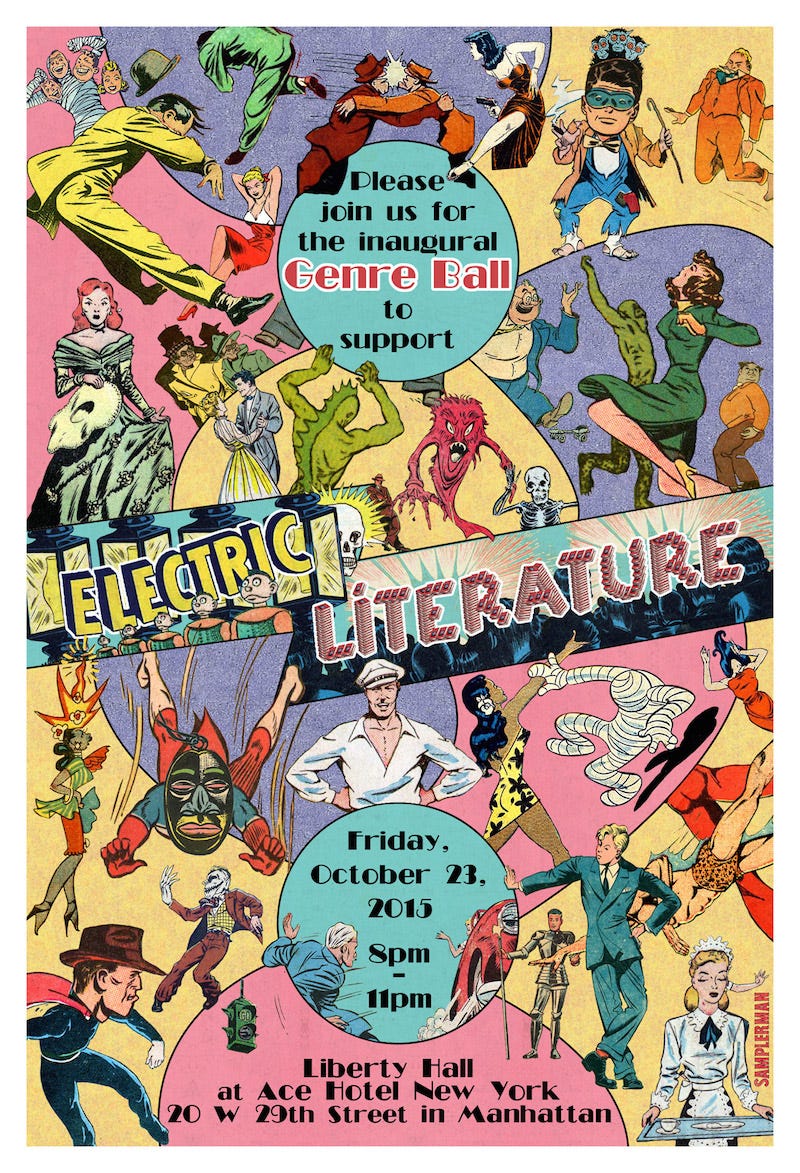
The Electric Literature Genre Ball is less than a month away! Watch Lev Grossman, a Genre Ball host and author of The Magicians Trilogy, transform into a zombie with make-up by Nadxi Nieto. At the Genre Ball, zombify your costume at our #andzombies face painting booth, sponsored by Quirk Books, and tweet your photo to win a prize!
The ball will be held on October 23, 2015, in Liberty Hall at Ace Hotel New York, from 8–11pm. Get your ticket before they sell out! All proceeds benefit Electric Literature, a 501c3 nonprofit. More information and tickets to the ball can be found here.
It all began with a very young scientist named Vladimir Latska, who lived and worked in Moscow. He had graduated from university in 1949 when he was eleven years old, and for a time he was often seen on television and heard on the radio, babbling prettily about cells and biology. He had big blue eyes and he would tilt his chin up to the heavens when he lectured, as if to accentuate his concern with lofty spiritual matters. His hair stuck straight up in the air, which was all the rage among young geniuses at the time, and he wore the same shabby suit covered in soup stains for three years straight, as he was too profound to bother changing his clothes. He waved his hands excitedly when he spoke. It was as if he was a conductor and the world was his orchestra, and he was trying to get it to perform a magnificent concerto. He almost danced when he spoke about science, lecturing at times on his tippy-toes. It made him beloved by audiences even when, at times, they didn’t understand a word he was saying. They would line up after his lectures on genetics to have an opportunity to pinch his cheeks.
After several years in the laboratory, he went to the government and announced that he had discovered a way to clone animals. To prove it, he had with him a cage filled with white kittens that he declared were identical and were all named Boris. The kittens were all curled up together, like a pile of snowballs that had been patted together by small mittened hands in preparation for a war. Latska quoted dozens of poems, explaining the wonders of cloning and the beauty of multiplicity. Of course no one believed him, and they weren’t sure why they had arranged to have a meeting with this teenager. The officials held up the kittens and claimed they saw subtle differences. Latska offered to take them to his laboratory outside the city, where he had thousands of additional cloned Borises running around on his property. They laughed because there didn’t seem to be a point in having three thousand kittens named Boris, and what with the Soviet Union being what it was in 1955, they were very busy.
Never living up to his early potential, Latska began to be seen more as a flamboyant entertainer than anything else. The world had all but forgotten him when, years later, in 1961, Rudolf Nureyev, the country’s most exciting young dancer, ran screaming to the police at an airport in Paris, demanding to stay. Nureyev defected, much to the government’s and the Soviet people’s dismay. It was considered so damaging to Soviet propaganda that it was kept out of the national press, and the government tried to pretend Nureyev had never existed. “Rudolf who?” was the official party line. The rest of the world, however, went batshit crazy, in a manner of speaking, for Nureyev, celebrating his every movement, putting him on the cover of magazines and catapulting him to fame. That was when Vladimir Latska chose to return, approaching the government this time with a proposal that they found intriguing. Latska claimed that through cloning, he could deliver back to Russia a new and improved Nureyev.
The government decided to give Latska a chance. They gave him a vial of blood that a nurse had collected from Nureyev during a routine checkup, and almost unlimited resources for the project. Ordered to keep the operation absolutely top secret, Latska and his men, a group of unemployed scientists and unlicensed doctors from the countryside outside Moscow, got into planes and headed to a small town in northern Quebec called Pas-Grand-Chose. In addition to being a desirable location because of its isolation, its proximity to tundra, and the fact that it had not had a tourist in a hundred years, the town was also singled out because of its high unemployment rate. It had been the country’s largest manufacturer of bloomers, and when they went out of style after 1941, the citizens of the town found themselves in dire straits. The area had the broken, random look of a train set that a child had abandoned years before. The Canadian government turned a blind eye as the town welcomed the project with open arms, hastily constructing a makeshift enclosure around Pas-Grand-Chose in preparation for the arrival of the covert scientists.
Banned from most universities, Latska’s team of misfit scientists was also wildly enthusiastic about the idea of regular work. Vladimir Latska believed that the only worthwhile scientists were the mad ones. Other scientists asked too many questions about the implications of their research, never taking the irrational leaps of faith necessary for true discovery. Latska believed that the Nureyev Experiment was really a magnificent project, certain to be a shoo-in for the Nobel Prize and to reestablish his credibility. Latska put an ad in the newspaper looking for homes for his three thousand kittens named Boris. He took only one Boris with him though, that being all he really needed. Perhaps he should have taken it as a sign that we only really need one of a good thing.
There was a parade in Pas-Grand-Chose for all the mad scientists when they got off the plane. They were a curious sight with their hair sticking straight up in the air, their bottle-cap glasses and their briefcases that had smoke coming out of them. They had cardboard boxes filled with beakers and Dungeons & Dragons sets. None of them had girlfriends.
With a bunch of Nureyevs, the Soviet government would be able to open shows every night in every major city in the world. They could even have two or three of them touring together so that they wouldn’t get tired. They could do three-month engagements, and if one broke an ankle or had a nervous breakdown, it wouldn’t be a problem in the least. They had put a spacecraft on the moon, and now this! Nureyev would be sorry that he had thought himself unique. He was replaceable. It was the Soviet Union that was unique.
There were twelve Nureyevs cloned in 1961. The scientists and indeed the whole town were reverent of the handsome little Nureyev boys. Everyone was in awe of the fact that these children were actually the greatest dancer of the twentieth century. The boys walked around town in fancy little suits, carrying red balloons, and everyone kissed them and told them how wonderful they were.
The scientists were determined to give the Nureyevs happy childhoods. Whereas the real Nureyev had only been able to join a professional dance school when he was seventeen, these Nureyevs had dance classes starting when they were five years old. They would learn both Russian from the scientists and French, which was the language of ballet, from the inhabitants. They wouldn’t have a father who would be away at the front for most of their childhoods and who hated their dancing. They wouldn’t have to wear the same shabby velvet coat for a decade, go hungry on a regular basis and live during a devastating war. This way, the carefree clones would be even greater dancers than the actual Nureyev had ever been. The scientists shivered with joy when they imagined the results.
These first Nureyevs were raised in happy, middle-class, two-parent families who adored them and showered them with praise. They were given puppies, had fairy tales read to them and were given holidays on the banks of the Saint-Laurent River. They went to puppet shows. An effort was made to paint everything pink and blue and green.
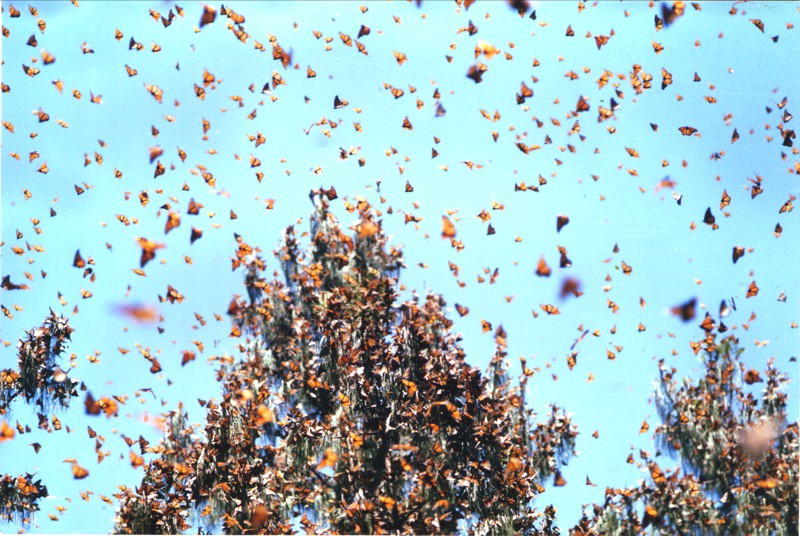
Cartons of butterflies were brought in from Brazil and were let loose in the town square. It looked as though someone had opened a window while a nerd was working on her stamp collection and the wind had lifted them all up in the air. The children ran around with their arms stretched out in joy. The butterflies died of shock and fell to the ground hours later, but they were quickly swept up by groundskeepers. The townspeople made the boys crowns of dandelions and daffodils to wear on their heads, telling them that everything was always going to be all right.
However, to the scientists’ dismay, when this generation of Nureyevs became teenagers, they had very little interest in dance. They were sensible and well balanced, and so they wanted more reliable careers, ones that promised economic security. They wanted to become political attachés and commodity traders.
Those who could dance did so with proficiency but had no edge. No one would be throwing underwear at them, let’s put it that way.
One of the boys was given a biography of Nureyev to read. A scientist thought he would be inspired by the glory and fame that Nureyev had achieved. Instead, the young clone was horrified. He shared the book with the other clones, who were equally shocked. All they took away from the biography was how rude and irritable the dancer had been, how miserable and conceited, and how difficult and unpredictable life as an artist was. They slammed the book shut, like a folk dancer pounding his foot on the floor to announce the end of an act.
With the next generation of Nureyevs, the scientists decided they’d try a less hands-on approach. They hired local childless women to raise the Nureyevs. The scientists allowed them to be raised unsupervised, in order that they might have normal childhoods.
But it was found that the mothers had too much influence on the Nureyevs. One of the mothers spent all her time watching medical dramas on television. This boy grew up wanting to be a surgeon. He wore a white bathrobe around the neighborhood, carrying a clipboard and insisting on checking other children’s pulses. Another mother was very good at making cupcakes. To the scientists’ consternation, her little Nureyev announced that he was going to open his own bakery and name it Jeannette’s Delight, in honor of his mother.
Then, rather disturbingly, one of the clones opted for a career playing the accordion. The scientists tried to account for this abnormality. After questioning his mother, they found that she had sung a Parisian ditty about the Avenue des Champs-Élysées to him when he was a little boy. Now he wore a black beret, smoked all the time and had changed his name to Pierre Gaston. His cigarette smoke wavered above his head like a French philosopher’s thought bubbles. The shock of this forced the scientists to reexamine their methods altogether.
When the Russian government read Pierre Gaston’s self-published volume of poetry, called A Lonely Winter on the Seine, they withdrew significant funding.
Exasperated, the scientists decided to make one group of young clones dance like Nureyev by force. These young boys had to endure eight hours of training a day. The dance instructors humiliated and hit the boys when they messed up their steps. The callous teachers threatened to murder their dogs if they didn’t execute their pirouettes perfectly. They wouldn’t let them eat unless they managed a grand jeté. Half-starved Nureyevs would crouch in the corner, massaging their aching legs and whimpering unhappily. So joyless was this group that they barely resembled boys anymore.
This was indeed a dark period. They practiced so much that they didn’t even have a chance to change out of their leotards. You would see a sixteen-year-old Nureyev, in a black leotard with little red sequins and boots, standing outside for but a moment, trying to figure out who he really was. His sequins glimmered like a distant galaxy whose constellations were emitting their tragic messages in Morse code.
Nonetheless, the scientists achieved some surprising successes with this group at first. As a whole, this generation was composed of remarkably skilled dancers. But by the age of seventeen, when they should have been ready for an adoring public, they hated dancing with a fervor. So repelled were they by the thought of spending their lives on stage, they began to sabotage their dancing careers. They were known to jump off the roofs of two-story houses. This wouldn’t kill them, but it was almost certain to break both their ankles. They threw themselves out of cars. One ate hamburgers all day, and he became so fat that he couldn’t jump at all anymore. One would close his eyes when passing ponds, so that he didn’t have to look at swans reaching about gracefully with their necks. He ended up falling in and drowning.
It is almost impossible to believe that these dark events took place. It is hard to get anyone to admit to having taken part in these Nureyev years. Participants explain how their own jobs and livelihoods were on the line. The events scarred everyone, especially Latska, who was known for wanting to bring whimsy back to science. This project was turning into something ugly.
The government threatened to withdraw funding anytime one of these generations of Nureyevs didn’t work out. The project was diverting money from Olympic teams, the circus and outer space. It was with some level of desperation that Project Siberia was launched.
Project Siberia generated the most press in relation to what The Globe and Mail referred to as “the Nureyev Debacle.” It is always brought up in documentaries about the subject as evidence of the insanity of the project as a whole. There was, however, a very clear method behind the madness. The scientists were, in essence, looking for the missing link that would turn Nureyev the man into Nureyev the dancer. They weren’t quite sure what they were leaving out, so they decided to omit nothing whatsoever. A large-scale effort was put into place to more accurately simulate the conditions and main events of Nureyev’s actual childhood. Nureyev was famously born on the Trans-Siberian train near Irkutsk, Siberia, and he often cited that as being the most romantic event of his life and symbolic of everything that followed. He had been raised in the town of Ufa, south of the Ural Mountains. The scientists tried to make the part of the town where the clones were cloistered resemble the time and place where Nureyev had come into this world, opened his eyes and decided who he was going to be.
The Nureyevs were told that their country was engaged in a great war and that all the men were at the front fighting. The scientists had citizens walk around with crutches and with their heads bandaged in order to appear as if they had recently returned from the front. Everyone wore sheepskin hats and leather boots. Citizens were supposed to dress up as soldiers. It didn’t seem to particularly matter what war they were supposed to be taking part in. Teenagers opted to wear red military band jackets with gold buttons and piping, looking more like members of Sgt. Pepper’s Lonely Hearts Club Band than soldiers. It became trendy for girls to wear grey caps resembling those worn by Confederate soldiers in the American Civil War.
In order to re-create the harsh poverty in which Nureyev had been raised, the boys were only allowed to eat gruel. They couldn’t find the recipe in The Joy of Cooking, but one of the town’s cooks improvised with some watered down Quaker Oats. Under strict instructions from the top, the groundskeepers air-conditioned the Nureyevs’ bedrooms all the time. In summer, the foster parents were told to keep the lights on in their rooms while they slept — in order to re-create the white nights in Russia, when the sun never sets. All the little Nureyevs had dark rings under their eyes from trying to get some sleep under eight lamps with one hundred–watt bulbs glowing around their beds.
They weren’t allowed to go to church and they had to tear the story of Noah and his ark out of their French textbooks. Their reading primer was called See Citizen Spot Run. All Monopoly boards were burned. They were given classes in Marxism and told to hate the bourgeoisie. When they asked who the bourgeoisie were, they were told they were property owners. One group of Nureyevs smashed the window of a hardware store with rocks, thinking that the owner was an Enemy of the People.
They walked home in their oversized men’s boots and scratchy cable turtleneck sweaters. They curled up on their hay-filled mattresses, kissed their pet rock good night and then went to sleep. They fantasized about one day washing their hair with shampoo. They were a cantankerous group of little boys.
Indeed the citizens of Pas-Grand-Chose began to complain as loudly as the Nureyevs about some of the implementations of Project Siberia. All the inhabitants of the town were having their comforts curtailed, which was natural given the fact that they were supposed to be living in Ufa in the 1940s. The post office was shut down, as there was to be no communication with the outside world. Some of the town children wept bitterly. One girl had a subscription to Canadian Geographic, which she would never be able to get. Another boy was awaiting a shipment of sea monkeys that he had sent away for.
A row of new buildings was shoddily constructed. They had roofs that made them look like soft ice cream cones, like those of the Kremlin. This part of town became affectionately known as Little Moscow. This area became the closest thing that Pas-Grand-Chose had to a red-light district. Villagers, including the Nureyevs, would buy modern Western music in some of the shops in Little Moscow. The shop owners served hot dogs inside to regular citizens under the table, although they were supposed to be only serving borscht. Citizens squeezed in there to watch Eddie Murphy films and drink Coca-Cola at an underground theatre. They watched Rocky IV, in which Rocky defeats the Russian. They didn’t know which side to root for. They didn’t know what side they were on. The citizens didn’t even know where exactly they were.
Speaking today with some of the town’s residents about the past, however, you will note a marked nostalgia for life in the make-believe Soviet Union. Indeed, some aspects of life in Project Siberia seem quite lovely. There was a snow machine blowing snow year-round, and it was apparently wonderful to lie out on a beach towel on warm summer nights and watch the flakes falling like blossoms off a cherry tree. A reindeer would sometimes stroll by, the antlers on its head looking like the arms of a skinny diva, supplicating the heavens.
Almost every resident you speak to will mention the wolves. A scientist had read that Nureyev’s mother had to trudge for miles through the snow to bring back potatoes and she was surrounded by wolves one terrifying night. A group of three hundred large grey wolves was rounded up from rural Quebec and set loose in the town in the middle of the night. They lurked around town, behind trash cans and telephone booths. The villagers were all terrified of the wolves and regularly petitioned for their removal, but the Nureyevs seemed to take to the animals. One witness described seeing an eight-year-old Nureyev walking the most terrifying-looking wolf down the street on a leash, calling her Susie. The skinny wolf had a rib cage that resembled a xylophone.
The Nureyevs left out bowls of Kibbles ’n Bits for the wolves. They tried to teach them to sit. None of the other children were allowed near the wolves. Their mothers put little cans of pepper spray in their lunch boxes, in case they encountered a wolf on their way home from school.
Then, in a move that seems strange even in light of all the other extraordinary occurrences, the scientists decided they couldn’t re-create a distinctly Siberian awakening without a Siberian tiger. It took quite a bit of paperwork to have one of these endangered tigers delivered. They wrote a three hundred–page grant proposal detailing their need for the animal. Nobody in Moscow wanted to read the ridiculously long proposal, so they put a tiger on a plane and sent it over. The townspeople had to build a cage that seemed to be the size of a castle just to be able to contain the measurements of the beast that was coming.
There was great excitement the day the tiger arrived. For some reason everyone thought that the Nureyevs would finally feel the grandeur of their original’s past and begin performing. Everybody cited the day when the tiger came as being a happy one. The cage was taken off the plane, loaded onto a truck and driven through town to where they had built the makeshift zoo. Everyone who lived there had come outside onto the street to watch the procession. The children had written signs on pieces of paper that said the French version of things like “Go Tiger Go!” and “Welcome Home!” It was as if the tiger were a victorious football team returning home.
The hype surrounding the arrival of the Siberian tiger was almost religious. Everything else about Siberia seemed to entail some sort of deprivation. In this case, they would be granted something amazing. They were entitled to this tiger. It was their birthright.
Whenever a young Nureyev was feeling low or uncooperative, the school psychiatrist would send him home with a note saying that he should spend thirty minutes with the tiger. The Nureyevs would whisper things to the tiger through the bars of the cage. Or they would go and sit on one of the little chairs positioned in front of the tiger’s cage and cry in frustration. The bright-orange tiger looked like it had been covered in gasoline and set on fire, always in flames.
The Siberian tiger seemed to always be escaping. One witness saw a dozen young Nureyevs running down the street, being chased by the tiger. They were all laughing hysterically and clapping their hands and leaping off the ground, almost making sautés.
“They all had a dark, wicked little streak,” the witness said. “They were always plotting to let the tiger escape.”
This statement reveals the growing strain that the citizens were feeling toward the clones. How much of a burden it was to live in a place filled with so many Nureyevs began to be apparent to everyone. Many of the clones didn’t work. Some living off disability checks they’d received after a class lawsuit was launched against the Russian government by the generation of Rudolf Nureyevs who had been forced at gunpoint to dance. Although they didn’t share the real Nureyev’s desire to dance, they did seem to share his temperamental and tempestuous nature.
Since there was no work for them in the town, many of the Nureyevs turned to crime and the jails were filled with them. There was some confusion over the matter of sentencing them, for identifying them in a lineup proved hopeless. They were forced for a while to carry passports and papers everywhere. This seemed to fit in with the aesthetic of Pas-Grand-Chose. But once again, they were indignant, and they all flushed their papers down the toilet.
After a while, the police tried their best to simply ignore the Nureyevs and their antics. It simply wasn’t worth the hassle. So the Nureyevs basically got away with all manner of things and terrible behaviour. Sometimes they acted like children provoking their parents, trying to see how far they could go. They would walk into a store, take a bottle of vodka off the shelf, hold it up to the clerk and say something like, “Mind if I take this? No, I didn’t think so,” and then walk out the door, laughing. One got on a bus, and when the conductor asked him to pay the fare, he simply told him to bugger off.
There was graffiti all over the town, which the Nureyevs had written. They would walk their wolves off the leash, although this was clearly against the law. They all seemed to engage in all manner of inappropriate conduct and public displays of indecency.
You can still see the graffiti today: “Even the birds are free.” “Will we be charged to take a shit next?” “I am not what I could have been.” “Are you going to measure how much my shit weighs, Mister Scientist?” “BEWARE OF FREE WILL!”
The little girls in Pas-Grand-Chose proved to be terrible dance partners for the Nureyevs. The Nureyevs would insult their dance steps, yelling that, furthermore, the local girls were too fat to hold up in the air. They had no intention of lifting peasants up toward the heavens. The little girls spun awkwardly above their heads as though they were satellites that had fallen out of orbit. The boys decided that they were going to go on strike from dancing until suitable partners were found. Female dancers were brought in from Montreal to be their partners. The scientists looked for older partners because the real Nureyev’s favorite had been Margot Fonteyn, who was nineteen years his senior. A whole airplane filled with retired ballerinas arrived and settled in Little Moscow. They were underweight, self-centered and chain smokers.
They hung around drinking coffee and complaining about their arthritis. Their skin seemed as thin as rolling paper. Applying layers and layers of pancake makeup and staring into a hand mirror, they’d say, “What happened to me?” One read detective novels. One would not stop talking about her recent divorce and how if she hadn’t had such a lousy alimony check, she wouldn’t be here. They loved gossiping about one another. There wasn’t a lot of chemistry between these dancers and the young Nureyevs.
In life, Nureyev, with his mop of blond hair, his steely blue eyes and pouty lips, was considered quite magnificent-looking, but in this town he wasn’t considered beautiful at all. Beauty is supposed to be rare and unequalled. For them, looking like Nureyev was commonplace.
The Nureyevs didn’t enjoy one another’s company much either. There’s nothing worse when you’re experiencing self-loathing than looking around and literally seeing yourself sitting at the other end of the bar. They were only able to feel like individuals when they were somewhere alone with the doors closed. Whereas the original Rudolf Nureyev had an amour fou with the dancer Erik Bruhn, the clones all remained single.
The project was not abandoned because of the unhappy Nureyevs crowding the streets and bars. Oddly enough, the project was abandoned because of a little Québécois boy named Michel who lived in the town. He was the son of one of the caretakers at the zoo. He and his father had previously lived in a tiny town where virtually everyone was employed by the local underwear factory. Michel had never seen ballet before he had arrived.
Michel had dark hair and brown eyes and a welcoming, sweet face. He was an ordinary boy. He collected hockey cards, he had a German shepherd named Samuel and his mother had died of cancer.
Shortly after his arrival, Michel was walking down the street when he saw a Nureyev who was dancing Swan Lake in the middle of the road. He had on an Adidas headband that he had Krazy Glued some seagull feathers onto. He was inebriated and was dancing in a farcical manner. Some of the workers and a couple of scientists were shaking their heads sadly at the spectacle. But Michel, on the other hand, stood transfixed. He thought it was the most beautiful thing he had ever seen.
Afterwards, Michel often expressed his interest in learning dance, but he was never given any classes. Nobody bothered to encourage any of the other children in the town to dance. What would be the point? The trainers didn’t want to waste time on children with regular physiques. Michel learned all his dance moves from television. He was able to exactly re-create the audition scene in Flashdance, which he’d seen at a secret viewing. Michel went on to master routines from Star Search and Dr Pepper commercials.
Michel’s dancing began to be a common sight in the town. His neighbors found themselves dragging over milk crates to sit on in his yard and watching him dance for hours. Word would spread down the street that Michel was performing and the other children would stop their games of kickball and come to watch. Mothers would stop hanging up their laundry and old men stopped playing cards. There was something new about his dancing. Something that nobody had been able to imagine before. It opened up their minds in a way that only art can.
His father made a contraband videotape of Michel dancing and they sent it to the National Ballet School in Toronto. After Michel got accepted, his father quit his job. They piled all their things into the back of his truck, and they rattled off into a future that was completely unknown and bewildering to them. And it was as much to their surprise as it was to anyone’s that there was glory on the road ahead for them.
When Michel was interviewed later on television, he was asked the unanswerable questions people always ask artists: How does it feel to be you? When did you realize that you were you? How is it that you do what you do? What makes an artist an artist?
Only individuals, all on their own, can decide to dedicate their lives to expression. Art comes from some mysterious place that cannot be located by science. Scientists could make a human, but they could not make an artist. The scientists themselves decided to end their project.
After the project was abandoned, the town suffered a major recession. Almost every citizen had worked for the Nureyev project at some point in their lives. Many of the residents left, having to sign strict confidentiality agreements before departing. The Nureyevs, en masse, wanted to get as far away from the town as possible. Their visa applications, however, continued to be rejected.
The Nureyevs were always trying to disguise themselves as travelling salesmen and get aboard charter planes that were departing from Little Moscow. They would try and get neighboring farm girls to fall in love with them to help them escape. One Nureyev dressed up as a woman and tried to escape past customs that way. At night you could always hear voices coming out of the sewers, because they were always down there, trying to find a path out of the town. If you were leaving the town, you would have to pop the hood of your car to prove that there wasn’t a Nureyev hiding in there. One was even found crouched in a box of leaf-shaped bottles of maple syrup that was being exported to the United States. That’s something that they had in common with the original Nureyev: the desire to defect from a place that suffocated them and impeded their civil liberties.
When the Berlin Wall fell, the Nureyevs were finally permitted to leave, and leave they did, moving to all sorts of places. They never went public with their stories, however. They were actually terrified of anyone finding out that they were genetically identical to Rudolf Nureyev, as they would be subjected to relentless experiments by Western scientists this time. And quite frankly, they were exhausted of the constant scrutiny and limelight they had experienced in Pas-Grand-Chose. They led simple lives, trying not to draw any attention to themselves.
Their childhoods had been public. There were rooms filled with file cabinets detailing every aspect of their lives: how many times they had peed, their caloric intake, their nightmares, the crayon drawings they had made in elementary school. If there was anything at all that you needed to know about the Nureyevs, it was right there. But they argued that no one knew them. They wanted privacy and a sense of solitude where they could figure out who exactly they wanted to be. When the original Nureyev passed away, they watched the five-minute segment on the news, impressed by the accomplishments of that extraordinary man who thought that real life only happened when he was dancing, but then they turned off the television, knowing he was a stranger to them.
If you ever see anyone on a subway who looks incredibly like Rudolf Nureyev, you’re probably actually looking at one of his clones, but just don’t say so to his face.
As for Latska, he still lives in Pas-Grand-Chose. Lately he has been working on something on a much smaller scale: making phosphorescent snails. He can be spotted at sunset, wearing a long sort of kimono that goes down to his feet, wandering around in a melancholic trance. He will ignore you when you call out to him, as he has become a recluse, like his clones, eschewing the public gaze. As the sun goes down in Pas-Grand-Chose, the lights of all the snails begin to glow. They are like the lights on top of taxicabs stuck in traffic in Times Square. They are like the little TVs lit up at night in the hospital rooms of terminal patients. They are like the Indiglo of watches being checked in a movie theatre during a really long film. You feel as though you are standing in the Milky Way and you could scoop up the stars with a butterfly net. It is so utterly charming and wonderful that you will never feel quite the same after looking at it. Does it have any great goal? No, it is a strange miracle. It is art for art’s sake. It proves that the universe is full of surprises.
And as for the Siberian tiger, it is known to creep up fire escapes, slip into bedroom windows and crawl into the single beds of children. Snuggling up to the youngsters under their blankets, with its mouth next to their ears, it tells them not to be afraid of their revolutionary dreams. It lets the children know that it has their backs.
Authors Ta-Nehisi Coates and Ben Lerner were among the 24 recipients of grants from the John D. and Catherine T. MacArthur Foundation this year. The grants, commonly known as “genius grants,” are awarded to Americans who “show exceptional merit and promise for continued and enhanced creative work.” The grant comes with a huge no-strings-attached stipend of $625,000.
The foundation’s managing director told the New York Times: “We take ‘no strings’ quite seriously. They don’t have to report to us. They can use the funds in any way they see fit.”
Ta-Nehisi Coates, a longtime journalist and blogger at The Atlantic, became a best seller this year with Between the World and Me, a non-fiction book about race in America framed as a letter to his son. Poet and fiction writer Ben Lerner has received widespread acclaim for his two recent autofiction novels Leaving the Atocha Station and 10:04.
Other writers who received the award this year were Lin-Manuel Miranda, who wrote the hit play Hamilton, and poet Ellen Bryant Voigt.
Past literary winners include David Foster Wallace (97), Thomas Pynchon (88), Octavia Butler (95), Cormac McCarthy (81), and Susan Sontag (90).
The Sierra Nevada snowpack — a critical source of water for the state of California — is at its lowest point in 500 years. California gets most of its precipitation in winter. Come spring, snow stored in the mountains melts and runs as river, supplying the state with water. So in this, the fourth year of drought, many in the region hope that in winter, the El Niño will bring moisture to replenish the mountain reserves of snow. But even precipitation may not bring relief.
In the meantime, California continues to implement water-saving measures. The detail of regulation is sobering. Homeowners may be fined for applying water to hard surfaces like driveways and sidewalks, and at restaurants, servers may only bring water to those diners who ask for it.
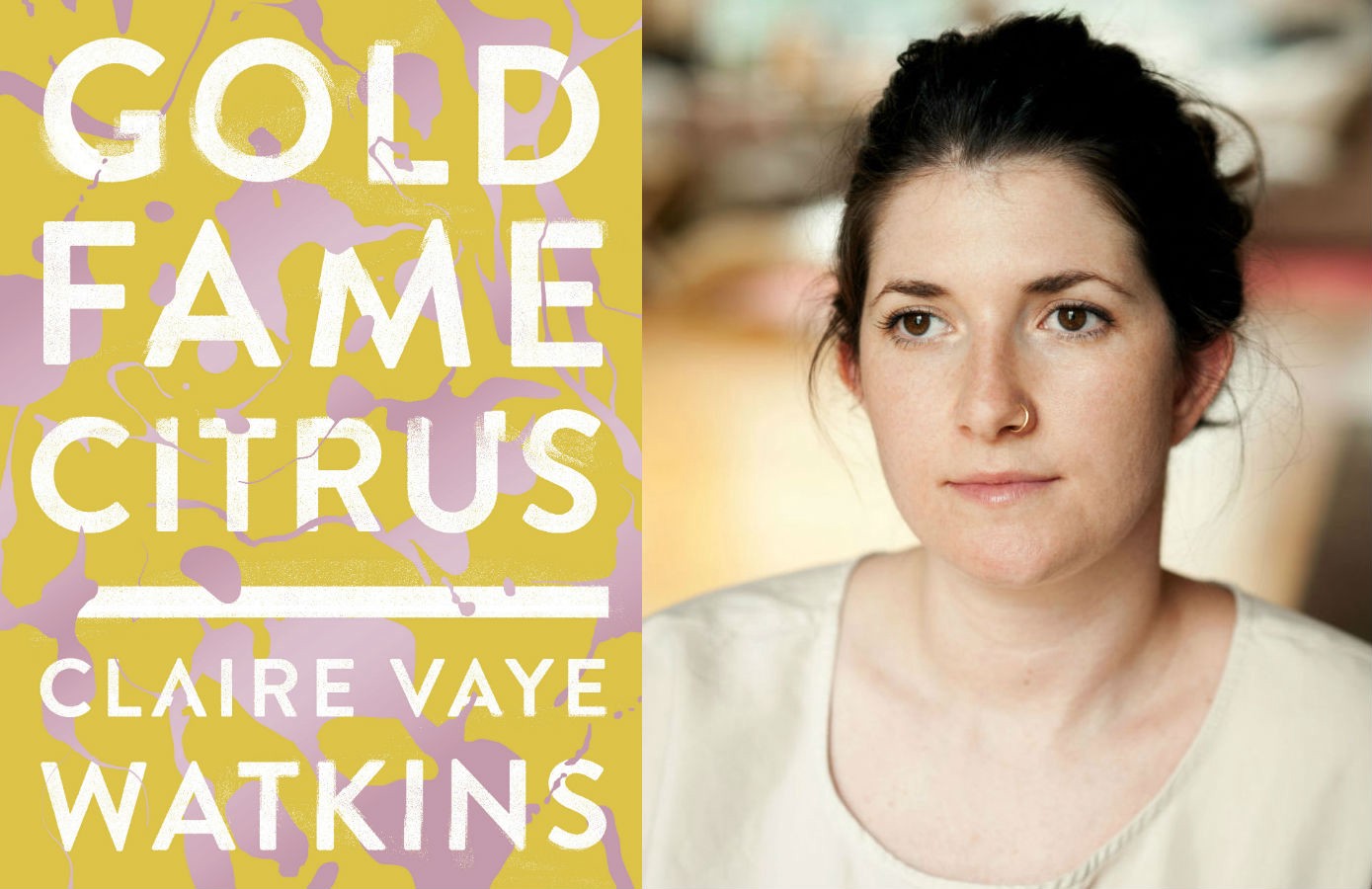
Claire Vaye Watkins’ first novel, Gold Fame Citrus (Riverhead Books 2015), imagines an American future in which drought, horrifically severe, grips the west. Most citizens are confined to camps, and those who live free struggle to find water and fresh food. As a massive sand dune encroaches upon the land, Luz and Ray flee with their adopted — abducted? — daughter. They encounter a charismatic cult leader, Levi, who is — thrillingly — not as he appears. In contending with the menace of a natural world gone dry, Luz, Ray, and Levi grapple, too, with the private threats of desire and heartbreak.
Drought interests Watkins, she says, because it is “a collision of geologic time with human time.” The human mind struggles to imagine the scale of earthly machination which brings about environmental change — engaging in this imaginative work, Watkins says, lets her test the limits of what her mind can conjure.
For her short-story collection Battleborn, Watkins has been a National Book Foundation 5 Under 35 honoree, and winner of the Story Prize and the New York Public Library’s Young Lions Fiction Award, among other awards. She is a Guggenheim Fellow and a faculty member at the Helen Zell Writers’ Program at the University of Michigan. With her husband, Derek Palacio, she founded and directs the Mojave School, a free writing workshop for rural Nevada teens.
Over the phone, Watkins and I chatted about wilderness and pioneers, what it is like to teach writing at Princeton and at the Mojave School, and how, growing up in the desert, she believed torrential rain was, purely, a metaphor.
Megha Majumdar: The book takes great pleasure in being inventive. Reading it, I felt its joy in the wealth of what you can have if you are inventive. This becomes true both in the form of writing (so you create a catalog of animals living in a dune sea) and in the lives of the characters (so they make shoes for a toddler from tape and corkboard). What were your goals for these layers of inventiveness?
Claire Vaye Watkins: Wow, that’s a great question. As I was approaching the idea of writing a novel, I felt intimidated by the thought that I’d have to commit, with a capital C, to a certain style and certain characters. It was a bummer. I felt like a schoolmarm in my head: No, no! You’re writing a novel now. Playtime is over. I didn’t want playtime to be over.
At first the book was about a young couple who were trying to figure out their feelings for each other. They lived near a park in Ohio. I think the subject matter had to do with my claustrophobia, stylistically speaking.
Once I went into wilder territory, I knew the book would rely on a showy imagination. The speculative aspect made room for me to be more experimental. Then I thought, Why not write a field guide to animals?Why not write a chapter as notes from a psychiatry appointment? Once I gave in to that experiment and play, that’s when the book really got cooking.
MM: The story frequently references Sacajawea and John Muir. Is there a tradition of exploration and wilderness writing in which you see this book participating?
CVW: Your question touches on how the book, while pretending to be about the future, is actually about the past. Its gaze is over the shoulder, particularly as it applies to the identity of people living in the American West.
You know, if I could only write the equivalent of Ken Burns documentaries or Planet Earth shows about the West, I’d be happy. But those research interests of mine don’t exactly jibe with what fiction does best, which is people.
So I’m interested in grand movements of history, but I’m also curious about its mysterious, popular figures like Muir or Sacajawea. In the process of research, you realise that when John Wesley Powell was travelling down the Colorado River, he had one arm. Or, Sacajawea had a newborn baby when she was on the Oregon Trail. I want to capture those human glimmers.
MM: Can you tell me more about how this book is not looking forward so much as looking back?
CVW: Though it is set in a misty future time, the book’s real interest is in the stories that have been told about the American West that have brought us to this period of crisis.
Drought is fascinating to me because it’s a collision of human time with geologic time.
Drought is fascinating to me because it’s a collision of human time with geologic time. We’re saying, There’s always been water here! But geologic time knows: not so. Or we’re saying, This aquifer will sustain us for fifteen years, and geologic time tells us, That’s nothing. I think a reason why I’m preoccupied with those two modes is that we can’t actually think in geologic time. That’s probably why we’re not very good at doing something about global warming — we can’t conceive of that scale. If you think about how nuclear fuel rods will be dangerous for longer than we’ve had language, that’s hard to wrap our heads around. I like that feeling of struggling to imagine something. I like to have my imagination tested, pushed to its limits, and to wallow in that limit.
And I find the failings of imagination interesting. We can see those failings in hindsight. We know now that it was a very bad idea to encourage farmers to grow cotton in the American West. And that all the rainwater in Los Angeles goes right out into the ocean — hello? Horrible idea, in retrospect. But that was impossible to imagine at the time when we were making aqueduct systems or when the Mormons were irrigating the fields. So I like those paradigm shifts of the imagination.
MM: In this grappling with scale, did your work begin by looking at these environmental crises and working downwards, landing them in the characters’ lives? Or are these people you’ve had in mind for a while who you thought would be fully realized in the scenario of drought?
CVW: The motion in my mind looks a little bit like a zig-zag between the macro and the micro. I get very excited by attention to scale — that’s why I love nature documentaries. You see this camel walking along a dune, then you zoom out and realize the shadow is fifty feet long and the dunes are hundreds of miles wide. The shorthand we have for that feeling is, I think, the dizziness of the natural sublime.
I love that feeling, and I want to create that in my readers. Then I also zoom in on the person who is getting all sandy — what would that feel like? What’d it be like to have sex or go to the bathroom, or try to raise a kid, when you’re living by this sand dune?
When I spend a bit of time in that, I’ll come zooming back out, eager to discuss the history of the region, or the formation of a rock which influenced the natural history of a place.
The thing I’m interested in is movement. Wallace Stegner, I think, said that movement is the central motif of the American West. This is not a new characterization. There’ve been robust civilizations in the West for thousands of years before Europeans arrived — being ever on the move, though, what do such shallow roots do to your identity?
MM: Can you tell me about your relationship to wilderness, whether mediated through art or not?
CVW: Now that I’m an adult, living in a small city in Michigan, I have a much more conventional relationship with wilderness. On the weekend, I go on a hike. But when I was growing up — in Pahrump, Nevada — I lived it. I didn’t know there was such a thing as wilderness. I thought that was the world. It was a very particular wilderness, the Mojave desert. I remember thinking that leaves changing color in autumn — turning orange and yellow and red — was figurative. I did not think it actually happened in certain regions of the country. When I read about torrential rain, I thought that was a metaphor.
It was important for me to see the desert through the eyes of people for whom leaves changed colors.
As I got older and moved away, the freshness and mystery of the desert, which had been naturalized for me, got defamiliarized and explained to me by culture. People said, The desert is scary or mystical or mysterious and I thought, I guess it is! If I had never left the desert, I never would have started writing about it. It was important for me to see the desert through the eyes of people for whom leaves changed colors.
I was born in the Owens Valley. Owens Lake was the lake which was drained to fill the Los Angeles aqueduct system. In the movie Chinatown, when the farmers were bombing the aqueducts, that was the Owens Valley. The California Water Wars of the early 20th century were a bedtime story in my family. So later when I read Cadillac Desert, I thought, Oh, that was real! I thought it was a fairy tale or something.
That’s another example of how this book looks to the past. This book is more about the Water Wars in California and the internment of Japanese people than it is about futuristic Mojaves or any of that other silly stuff that I made up.
MM: Many of your readers will be familiar with the water crisis in the West, at least from the news. What were the constraints and possibilities of writing in a space exceeding fact but alarmingly close to it?
CVW: That was one of the more destabilizing parts of writing this book. Believe it or not, when I started writing this book five years ago, on the rare instance when I would summon up the courage to admit that I was writing a book on drought in the American Southwest, most people were puzzled. There was no flash of recognition. No remark that it was topical or timely. They would reply, Yeah, it is kind of hot there.
I would try to invent something… Then I’d come across the fact that a version of this had actually happened, or that there was a plan for it.
I noticed a strange pattern in my research. I would try to invent something — some coping mechanism that our culture might have to deal with drought, or some strategy the government might employ to relocate people. I would go very big — grandiose, high sci-fi, wacky, almost satirical proportions. So I’d think: What if big funnels were put up to the sky to catch rain? What if a piece of glacier in Alaska was broken off, put in a boat and brought down? Then I’d come across the fact that a version of this had actually happened, or that there was a plan for it.
I was being presented with the limits of my imagination every day. Everything crazy and berserk that I could imagine had already happened. There was a piece of legislation that said, Yes, it’d be all right if we took glaciers down from Alaska. I was ping-ponging back and forth between imagination, play, and bureaucratic information.
So the book started out in the aesthetic mode of fantasy or sci-fi, and got tugged into a more realistic vein. There’s nothing more sci-fi than the story of the relocation of the Japanese to internment camps. I can think of few things more bizarre than that we did that to humans.
MM: When did you learn about that? How did it stay with you?
CVW: While I was writing this book, for years I struggled to have a model in my head of what the relocation process looked like for all these people who were living in the southwest. I was calling it a refugee crisis. I read about refugee camps all over the world, and about migration patterns, and nothing resonated with me. I finally gave up on it. I thought, Well, I hope no one notices that that part of the book sucks!
Then, to finish the book, my husband and I went to Lone Pine for a month. We would hike up in the mountains early in the morning, and come back to write in the afternoon, into the evening. One day I got blisters and couldn’t go hiking. So we went to Manzanar, one of the camps where Japanese Americans were confined. It’s now a national park and a museum. I’m a historical site interpretation junkie, you know, and Manzanar was one of the most powerful museum experiences I’ve ever had. In the gift shop, I bought Julie Otsuka’s book, Buddha in the Attic, and that turned on a light for me. I began thinking about how to capture the bizarre, other-worldly aspect of the relocation.
MM: It sounds like you did a massive amount of research. What is one striking thing you’ve read that didn’t find itself reflected in the book?
CVW: I read a lot about how water works in the Middle East, and water rights in the West. There were also a ton of conspiracy theories — this is one of my favorite genres of storytelling. I would love it if the whole book had this feeling of listening to a conspiracy theory, where you’re going back and forth between I believe this and No, that’s crazy! But… the fact that it is crazy is evidence that it is really happening. So conspiracy theory has this wonderful, cyclical quality that I’ve always wanted to replicate.
MM: I think I see that in the creation of the community moving ahead of the dune sea, particularly the character of Levi. Levi is an interesting figure — he finds water and fruit in the drought, enabling a community to stay one step ahead of disaster. In a way, he is a pioneer. In Levi and in the references to Sacajawea, the book shows an interest in pioneer figures. Where does that interest come from?
CVW: I said that one of the book’s secret topics is the past. The other one is faith. Me, I don’t have a disposition that has much room for magical thinking or faith, but I’ve always been envious of believers. I’ve been chasing a feeling of surrender that happens, I imagine, when you find a belief system.
I don’t think Luz has felt that surrender, either. I think she’d be very envious of Levi, who is the absolute personification of intuition and faith. He encourages her to think that she is good at a certain kind of living, and I think that would be very intoxicating.
In my research, I found very little about what Sacajawea thought of Lewis and Clark’s crazy expedition. Well, she didn’t have the choice of thinking about it. She was purchased for the occasion. I imagine her watching them and wanting to feel that fervor of belief.
In John Muir we see this faith. He strikes me as someone who had a voracious capacity for faith in the restorative powers of the natural world. And when I walk in the woods, that’s what I’m looking for. Most of the time, I don’t find it. So I go to my computer and try to create it.
MM: I want to ask you about making the beautiful sentences that fill the book. Here’s one: “Levi walked slowly, his hands clasped together at his navel, the tips of his index fingers pressed together in a steeple.” Tell me about the work of making that image.
CVW: I read a book about dowsing, and I was practicing it in my yard. There are a few different ways in which you can hold your hand while dowsing. So, I had to decide, what would Levi do with his hands? Then I went out in the yard and did that. I went back to the desk and did that. And I recalled the children’s rhyme, “Here’s the church, here’s the steeple,” for which you do a similar shape with your hands.
I tried a few other words, like “obelisk,” but when I came across “steeple” via that old rhyme, I thought, There’s the faith, the religious context. So there was the concern with, first, making the reader see what I was seeing, and then, the thematic resonance.
But probably, the very first thing that happened was that I liked the sound of it. There’s a sensory, tactile aspect to it. I do a lot of reading out loud, and when I find the right line, there’s a little zing!
I was at a reading in Oregon about a month ago, and I read a description, from the first chapter, of a coyote carcass drying in the ravine. The phrase I use for it is, “going wicker.” Another writer at the reading said that the phrase made the whole image worth it, and I was so glad.
…you have that flash of recognition, that pleasure, when you read a satisfying sentence.
I remember driving down the highway, being stuck in traffic, and seeing a deer carcass in a stage of decay I’d never seen before. It wasn’t bloody or pulpy, nor was it bones. It was shaggy, almost like wood. I looked at it for a couple minutes. I thought, What is the word for it? It’s like wicker furniture. So, for a while, the line was, “the carcass, which was like a piece of wicker” or something. Eventually, I grew to trust that there is an intuitive quality to this image, so that you can say, this carcass is “going wicker.” And you have that flash of recognition, that pleasure, when you read a satisfying sentence.
MM: Let me switch gears and ask you about teaching writing. You have been teaching full-time for four years, and you are about to start a new job in the Helen Zell Writers’ Program at the University of Michigan. You also — with your husband — founded the Mojave School, a writing workshop for teens in rural Nevada, where you teach every year. How do you find thatteaching at these universities, and at the Mojave School, is different?
CVW: It’s good for my teaching to go back to Pahrump. I realise that as a college professor, so much of my pedagogy relies on my students giving a shit about what I think of them, which my Mojave School students do not. They’re sweet, but they do their own thing. They don’t care if I like them. It’s not like, Will you write me a letter of recommendation?
As a professor, my rhetorical stance would be, I have something in my pocket, can you guess what it is?I have a reading for this story, can you guess what it is? And my Mojave School students are like, I don’t care what’s in your pocket. While my Princeton students are like, I want you to think I’m smart, so I’ll engage with this. I’ll play the game.
I had the idea for the Mojave School for a while, but I didn’t do it for a long time, because I felt the politics of it were dicey. I was this educated outsider, and I was going to come back for a week and tell them how to write. It made me equivocate with the parents and teachers. I’d say, Just so you know, I’m not trying to be micro-imperialist. And they would look at me, puzzled, like, I don’t give a shit about that.I have to worry about how I’m going to get a ride tomorrow, so that’s what I’d like you to focus on, rather than the socio-political implications of giving me a ride. So it’s a grounding experience.
MM: When I taught a workshop in rural Uganda I had similar questions, and like you, I realized that the students and other teachers were thinking about whether we had enough pencils, and whether we could get everyone from the surrounding villages to come to the schoolhouse on time. Very practical questions.
CVW: Right, and I think it’s good for someone like me. I make my living in academia, and it’s wonderful to be in that area of pragmatism.
I’ve also been reminded how frank people from this community are. I might say, “This community is underserved.” And they’d say, “What do you mean — poor?”
MM: How do you think writing intervenes in the lives of the young people you teach at the Mojave School?
CVW: I hope it does. I hope it does.
For a long while I had an impression that we only care about certain types of stories — affluent white men stories.
I was fairly far along in my education before I saw any people who looked like me in fiction — people who were from a place like Pahrump, who were poor. For a long while I had an impression that we only care about certain types of stories — affluent white men stories. Kids get those messages that our culture sends, so I hope my students get a corrective from being with us for a week. But really, I do that workshop for me. I want to be in my home again, participating in this community. I don’t want to leave that place behind, in no small part because it’s very artistically fruitful for me. It’s the place where stories come from.
And then — I’m talking to you from the porch of my large home in Ann Arbor, Michigan. I have survivor’s guilt from moving from one class into another. So I wanted to do something about the guilt and helplessness I felt about the fact that I was teaching at places where kids like me would never set foot. I’ve taught at Princeton, and other well-regarded workshops for high school students that cost a couple thousand dollars to attend, and I’ve always had this voice in my head that says: People like you aren’t allowed here.
MM: We do hear so much about how it’s discouraging for kids to not see people like them reflected in writing. I grew up in India, where I read American and British books about people nothing like me. The paraphernalia of their lives was so unfamiliar. And it seems to me that there’s something beautiful, too, about confronting difference so early, about having to imagine a world bigger than you. How would you reconcile those two functions in writing?
You’re hitting upon an uncomfortable truth — to be marginalized is probably good for your fiction.
CVW: You’re hitting upon an uncomfortable truth — to be marginalized is probably good for your fiction. So you’re a kid growing up in India, and you’re being asked to inhabit the mind of George Orwell. And that’s good for the artist. That’s our bread and butter — imagining the complex and inscrutable inner lives of other people. But if you’re a young British schoolboy and you’re inhabiting Orwell, you’re not traveling as far. You’re not getting as much practice.
This kind of explains the connection between pain and art, which is that pain makes you vulnerable and forces you to think uncomfortable thoughts, and that’s good for you as an artist. It doesn’t change the fact that it really fucking hurts.
Some of my writer friends say that women are better at writing across gender and ethnicity. While I don’t know if that’s true, I can imagine that it might be, because women who live in a patriarchy are asked every day to think in the perspective of men.
My husband and I were watching the NCAA basketball tournament. (I love college basketball.) So we were watching ESPN and this Old Spice commercial comes on. In it, a woman is a robot who is programmed to say yes to the man. My husband turned to me and he said, “What is it like for you to watch these sporting events and then watch a commercial that is really clearly not for you, that is offensive and hurtful?” And I laughed and said, “That’s all commercials. Even the ones that are meant for me are offensive.”
MM: What imprint has your own MFA experience left in your life?
CVW: In discussing MFAs, abstract ideas are tossed around — community; diversity, ideally; inclusivity. But those ideas have very much not been abstractions for me.
I’ve married a person I met in my MFA. My best friends, I found in my MFA.
You know, I barely got through undergrad. I had no money, and if it had not been for the funding structure of my MFA, I never would have gone to grad school. So the program lets into these rooms people who are otherwise excluded.
These days, wanting to make art can be a dirty secret. It can be shameful. A graduate program legitimizes it. I tell my students, Tell your parents that getting into a top-fifteen MFA program is harder than getting into Harvard Medical School. At Thanksgiving, when they’re wondering what you’re doing with your life, tell them that.
So the money and the academic context carves out a space for making art in our culture.
The idea of MFAs encouraging homogenization in writing is silly. Look back at Best American Short Stories 1965 — it’s not exactly a cornucopia of diverse voices. What are we trying to protect here?
My kids will be home in ten minutes so I listen to Cheap Trick and falling over the couch like Bun E Carlos before
he stopped smoking it’s a tattle tale kind of world and that’s why I tell on myself I ate the cookies
beat the dog burned down the basement had sex three times in front of an open fridge
it’s that kind of day and the school bus will stop in front of the front door of my mind
and then I’ll have to welcome them with Rice Krispie Treats and tables for homework and house work
and Bun E Carlos will disappear into the ether but he’ll always be right under the rug and my fingertips
I don’t know what to say anymore except that solitude is a nasty business but the best business
and that is why I fail at everything I do except running around the house naked slamming into walls
the way those monkeys slam face first into their glass cages at The National Zoo
when they want to go home I want to go home out there somewhere into the middle of nowhere
where where is as obtuse as here and no one in their right mind would ever want you to want me,
the way monkeys do.
•
Angel of the Electricity
The Eversource guy is outside in his neon yellow vest so the cars don’t hit him and he goes flying
all over South Street into a million parts he’s got one positive wire hooked up to a manhole cover
and the negative wire attached to the fender of his truck I have no idea about
what he’s writing on his clipboard but the power has not gone out all winter so he’s an angel
of the electricity I want to run outside and rub my balloons on his neon yellow then stick them to my head
to heat up the 30 degree day the truth is most times when guys are outside in white trucks you have no idea what they are doing
maybe wasting time that’s the creepy side of me the other side of me is standing up right now
at my dining room table with the wandering Jew and it’s so warm in my heart I can feel all my wires
sizzling and crackling like they want to burn down the whole damn house.
•
The Mediterranean Sea
My publisher wrote to me, Dean Young just bought your book. I felt important. Then my kid spilled a glass of water across the floor and it was The Mediterranean Sea so I picked up my sponge and could have gone one of two ways with it: thrown it at her head or jumped on the purple vessel with my paddles knowing I had to row pretty damn fast, the vessel taking on water. I jumped on. It’s important to teach your children how to be good people. My problem is that I don’t know how to do that. Either way I’m not the greatest father because there is always the third option, get a paper towel and clean up the mess that I never seem to get to. I always turn everything into the Mediterranean Sea. The phone bill. The cooking of asparagus and avocados. Changing the windshield wiper fluid in my car so the windows get clean in winter when I drive behind semis and cry my eyes out for no reason. Better to turn things into waves and salt water and feel good about Dean Young washing his hands in my ocean that spills out the front door dancing with angel fish and blue fish and octopi so incandescent they turn pink in the night.
“We are now at a low tide in the powers of travel writing,” Grame Wood lamented in Foreign Affairs in 2010 in an essay morosely titled, “Travel Writing Is Dead.” “Where travelers once brought back invaluable stolen glances at places that the rest of us could only guess about, the new breed combines the worst of the traveler and the worst of the homebody,” Wood writes. “The writer goes overseas but brings back news about a tedious inner crisis, leaving undisturbed any insights about the places visited.”
2015 might be, finally, the turning of the tides, if it will allow itself to be led by the gravity of J. M. Ledgard’s Terra Firma Triptych, a three-part essay cycle penned and published as part of FSG’s Digital Originals series. Altogether, the book is a mere 40 pages long — the length of a few long commutes, if you’re casually reading on your phone, or on a lazy afternoon, but Ledgard is no homebody, no casual observer, no armchair traveler: A Scot from the Shetland Islands, Ledgard served as a longtime foreign correspondent for The Economist, with much of his time dedicated to Africa. As the author of 2011’s masterful novel Submergence, and 2006’s award-winning Giraffe, Ledgard makes his first foray into essay collections, but by no means his first stab at nonfiction, with Terra Firma Triptych.
The three panels comprising Triptych are “Terra Firma,” “The Connectome,” and “Red Liners.” While the essays are seemingly unconnected other than sharing the continent of Africa as a backdrop, the first of the collection, “Terra Firma,” is a gut-punch account of a trip through South Sudan, where the language spoken is violence and the earth seems to crumble to dust beneath Ledgard’s feet:
I had a feeling of being in a still point in a storm, the building sites and tunnels only increasing, perforating the earth, and unseen data blooming and going faster and faster until pooling and coagulating upon a device. At some point even the spot on which I stood would be tagged, but at that moment it was very quiet. The sound of my boots scuffing on the dirt was enormous. I coughed and it was like an interruption. I saw the curvature of the earth with the exactness of an etching by Hollar and I had a feeling of belonging to something massive and drifting. I think I saw my own transience more plainly there than at any of the treacherous moments in my life. How should I stand on the orb? How should I tread it? How many breaths should I take upon it before I stopped, and when I was expired and decomposed, what small shape of me would be left in the air? I thought it would have been a tender place, but it was harsh and it was gone in an instant. I saw an ostrich in the distance, moving away at great speed, its neck and head still and legs pumping, just as you imagine yourself sprinting in dreams.
In the second essay, “The Connectome,” Ledgard visits Rwanda, where he has the “queer feeling” of “being haunted by the future” while visiting a stretch of valley set to be transformed into a massive airport.
It was not good, neither was it awful. It was like a motor that turns over and catches and noise and fumes come and there is something lost for something gained. It was perhaps always meant to be, it was simple mathematics, this many humans need this many things, one connection begets another, and we move, we move, we are like sharks in this respect, we can no more stop ourselves than can a thresher shark or a mako shark lay its head down on the sea bottom and sleep, if we stop moving we asphyxiate, and so it was inevitable and right that Rwanda would want to make those connections, and that its citizens would want to board airplanes and receive and send goods. Rwanda was late, Africa was late, that was all.
The final panel, “Red Liners,” then, is the odd duck of the collection. While Ledgard’s first two essays could perhaps be united in their lyrical environmentalist or humanitarian concerns, “Red Liners” reads almost like a literary sales pitch for Ledgard’s Red Line cargo drone initiative, which he directs out of the Swiss Federal Institute of Technology in Lausanne. Illustrated with futuristic renderings of droneports and droneways (if you will), Ledgard lays out a vision of Africa serviced by drones that go, “uncomplaining and methodically like a pack animal along paths that wind up through wooded hills, cresting at a remote village, and then winding down the other side.” It’s a jarring, technical contrast to Ledgard’s mastery over depictions of landscape and the people and animals of Africa, who he describes with such lyricism and poetry that it’s hard to challenge comparisons to other geniuses of the prose form: Calvino, Coetzee. “Red Liner” is, rather, almost an act of journalism, studded with the occasional footnote, sprinkled with statistics; a return to an essay in its more rigid form.
But this from a man who told the New Yorker that, “While great journalism speaks essentially to the moment, literature has the long reach.” Even “Red Liners” is not without its more cosmic moments:
Cargo drones will fly routes that are geofenced in the sky at about the height of the Eiffel Tower. I choose this monument deliberately because it escapes gravity in a more breathtaking fashion than I think any other building on earth. It is arched on the ground and touches the sky at its narrowest point. It is the supreme surviving example of Victorian steampunk, and it is possible to imagine Red Liners passing over the top of it, silent in their sun power and sometimes hidden and emerging through the mist and in ribs here and there. The tonnage of the tower in any case is not weighed only in iron but in swagger that we are duty-bound within the limits of our science and technology now to imitate.
Ledgard’s is quite the dream — one he rather unconvincingly argues isn’t techno-utopianism, but this may be excused as a moment of allowed personal enthusiasm, for Ledgard’s travels aren’t a metaphor for his own transformation. Unlike authors of personal crisis who Wood blames for killing the travelogue, that most ancient of literary forms, Ledgard has returned to form as an observer, a set of eyes watching, retaining, reporting. “Life there was harsh, like a fairy tale,” Ledgard says, without judgment, without grief, but thoughtfully, intentionally. Taken as a whole, Terra Firma Triptych is a hybrid of journalism of the moment and something new, something transformative, something sui generis, even — travel writing not looking at the self, but out, at the long reach of a future haunting us all.
To purchase Terra Firma Triptych, visit the FSG Originals website.
But Colbert and Letterman aren’t “writers,” per se, and it’s slightly surreal that this ends up being the obvious point that needs to be reemphasized. (When Salman Rushdie was recently describing how he ended up getting to the point of writing a song for U2 to Jimmy Fallon, Jimmy Fallon said, “That’s so deep, man.” Thanks, Jimmy.) But in lieu of the (perhaps particularly American? (Despite publishing statistics?) Partially Italian?A little bit Brazilian?) anxiety that looks at the world and comes to the conclusion that — as Lee Siegel did — the news has overtaken literature (which I’ve written about previously) or that Joyce would be working at Google were he alive today (let alone the now years-old, multi-tentacled fretting that’s marked Tim Parks’s writing about writing (though my inner editor is tempted to dismiss this as being my version of something like this), it’s worth considering two things — what it means to be a “broadcaster,” and what writers have done in considering what it means to be a broadcaster, and how — in articulating what it means to be a broadcaster today (think of this twinned with this) — we can appreciate what it means to be a writer today (and vice versa.) In “Host,” David Foster Wallace described a man whose eyes off-air “are usually flat and unhappy” and “alight … with passionate conviction” once they return to broadcast, and how — once on air — we’re dealing with an emotional landscape that trades in “anger, outrage, indignation, fear, despair, disgust, contempt, and a certain kind of apocalyptic glee” created by a man who “has one on-air job, and that is to be stimulating.”
In “E Unibus Pluram,” he writes about how “the result is that a majority of fiction writers, born watchers, tend to dislike being objects of people’s attention”; that — “if we want to know what American normality is, we can watch television”; and that — unfortunately — “we receive unconscious reinforcement of the deep thesis that the most significant quality of truly alive persons is watchableness, and that genuine human worth is not just identical with but rooted in the phenomenon of watching.”
In “My Appearance,” David Letterman is invoked as a force of nature, whereas — per the narrator in the story — “The man has freckles. He used to be a local weatherman. He’s witty. So am I.”
Now what do those three pieces tell us? (That we should read more Barthelme, for one? Or take a tour through David Carr’s archives? (And why did he have to go?)) And what has changed since DFW articulated some of what he articulated? Well — for one — Tahrir Square arrived like the imagistic inverse of a monk burning outside the Pentagon during the Vietnam War and spread hope with quick, quick dispatch across the globe. American satire moved to punch a hole in the political class and the political class tried to re-appropriate satire’s voice (which means that the next logical step is probably something like this.) Roxane Gay arrived. Ta-Nehisi Coates arrived. Twitter went from being a curiosity to a way to be a little bit faster than traditional news wires to a way to organize protests and demonstrations (Occupy Wall Street, Gezi, Hong Kong, Black Lives Matter, Bring Back Our Girls, Je Suis Charlie, et al.) to a way for others to become famous in those contexts to a way to relentlessly harass women for years to a way to humiliate lives because of a single bad joke to ways to transmit and care for refugees fleeing across multiple countries, fleeing fast and far from Bashar al-Assad, Daesch, and others burning a whole country to the ground. (Small wonder that the NSA sees the potential of such power in aspiring to have a handle on such an excess of digital information.)
The capacity and breadth of broadcasting has expanded, but broadcasting itself — as an idea — still feels remarkably capable of being shrunk to size and dismissed. Everyone may talk about Mr. Robot, The Wire, Downton Abbey or whatever with cyclic regularity, but the fact remains that the United States publishes a lot of new books every year — I’ve seen numbers that put it anywhere between 300,000 and a million. And now that cord cutters are the dominant norm, I’d argue that there’s a window of opportunity for people to define television to themselves in a way that you wouldn’t expect — beyond the kind of articulations made at the MacTaggart Lectures — given that television’s continual presence is so good at keeping someone on the judgmental back foot. (Look at this interview between Jon Stewart and Craig Ferguson in 2005, for instance. They could have been saying the same thing today, but the process of ‘feeding the beast’ keeps our understanding of being a broadcaster fluid.)
And writers are still writing, one going so far as to spend a month ensconced at The Seattle Public Library. “Within the first hour,” Gabriella Denise Frank wrote over at The Rumpus, “I realized that I would have to push myself in order to work under the eyes of the same strangers I hoped to inspire. I would have to endure people reading my unformed thoughts before I deleted and rewrote them again, sensing the cast of their unspoken scrutiny.”
And the fact that this balance between our expectation of writers and broadcasters fluctuates so — think of the historical dimension, too, where audiences grew silent because of the expectations partly put upon them by Haydn, Rossini, Beethoven, and others — means that this is not necessarily a particularly intransigent problem. It’s not even an intransigent problem now, globally, as — if you want to look past the experiential level in Paris — you can look at this paper from Gisèle Sapiro, which argues fairly well against the notion of the ‘death’ of French literature as seen from an American perspective. (French literature is alive and well and out there. We’re just not translating it well enough. Or even look to Héctor Hoyos’s Beyond Bolaño to get a sense of how the ‘global Latin American Novel’ is moving in a global context.) But I think that all this talk partly comes down to the way in which we define our space to ourselves in this country — from notions of rewilding to urban studies to the developmental impacts of technology on children, Michel De Certeau, and beyond. When I first flew up from London to Glasgow in February of this year, I couldn’t get over the fact that it only took about an hour. It’s the length of a flight from Boston to New York, or — if the pilot’s pushing it a little bit — DC. And I was going over an entire country, filled with cities I already knew a fair amount about. And yet — for all the ways in which we choose how to engage in our space — think of post-sex selfies, midnight shift photos sent Instagram’s way, radios left on at the beach, the hovering question as to whether or not Arcade Fire or St. Vincent sufficiently described a certain shade of technological anxiety the way Neil Portman described ‘Amusing Ourselves To Death’ — Montana still remains Montana. You can drive through New Hampshire in pursuit of Presidential candidates and still be stunned at the landscape you see. You can log off the internet for a day, come back on at the end of it, and be absolutely bewildered at the turn everything seems to have taken.
All this activity may leave writers feeling like their work lacks sufficient dexterity, or that they somehow aren’t adapting well enough to the technology of the moment, that they have to pull off big circus-sized ‘tricks,’ or that — like Wallace — the natural appreciation of a certain lack of attention puts them at a storytelling disadvantage of sorts — a disadvantage that people like Colbert and others can capitalize upon — but it shouldn’t. Just because what you write in a notebook isn’t the literal size of the space around you — be it the Grand Canyon, the Mississippi River, the streets of San Francisco or the tattooed greenery of the Pacific Northwest — just because writing isn’t an actual car stereo blaring down a highway, a Mardi Gras parade filling the French Quarter, or the Chicago River turning green as can be come St. Patrick’s Day doesn’t mean that what you write isn’t capable of filling that space, of meeting that space in its own particular method, its own particular way, and its own particular time.
I sometimes hear publishing new writers talked about as if it were an occult art. Tea leaves consulted. Sand art made. A voice in the dark. But it’s not that hard to find very good new writers. You just have to listen to people. There are agents who seem to constantly have good new voices, magazines which have a record of publishing them, cities where they seem to develop and read in public, and, of course, teachers and writing programs around which they seem to cluster. Just as tornadoes hit the plains and avalanches happen in winter, spend enough time in these spaces and soon enough something miraculous will walk into view.
Spend enough time in these spaces and soon enough something miraculous will walk into view.
The exciting thing about these stakeouts is you never know exactly what shape the writer will come in. It might be someone like Claire Vaye Watkins, who walked up to the Granta booth in the basement of the Chicago Hilton during AWP in 2008, looking like a goth girl with a hangover, standing next to Christopher Coake, saying nothing, while Chris is saying, trust me, man, just trust me, ask her to do something. And then a week later she unreels the most gorgeous essay about growing up in the west and having to dream up her family, much as the west is dreamed up, because her father had died before she was born and all she had left of him was the media coverage that had burst into view when he renounced The Family, of which he was a member. Claire’s first novel is coming out next week, Gold Fame Citrus, and every bit of its terrifying genius, its lyrically specific grasp of the West — how it is a place built on a mirage of water — can be found in that tiny little 600 word piece she wrote for Granta on a whim because a guy standing on the other side of a table said have a whack at it.
That’s all editors do sometimes. Read the slush. Tell the ones we meet to try. Listen to a writer’s supporters. So when Nathan Englander says, I have this student named Phil Klay, he’s the real deal, I listen, and when Lan Samantha Chang nudged me after a visit to Iowa and mentioned the writer who’d just given me stories — Chinelo Okparanta — I made sure to read them on the flight back to New York. Somewhere over Pennsylvania my hands started to sweat: here was a real talent. Someone who knew how often the press of love had to find small spaces. Her stories were patient and wise, as if they were written by a woman in her 80s who had condensed all her experience into 12 key narratives. Chinelo’s first novel is also out right now, and it’s the kind of book that should have come with a cold compress kit. It’s sad and sensual and full of heat.
Somewhere over Pennsylvania my hands started to sweat: here was a real talent.
But if there were one source of high pressure in the past decade, a real Tornado alley, it would have to be Hunter College, which Peter Carey and Colum McCann have taken from a school people worked hard to get into and did well with, to one of the most important weather systems in the country. The list of exciting writers who have come out of that program since they took over is comically long, from Maria Venegas to Vanessa Manko and Samantha Kristia Smith, Alex Gilvarry and Bill Cheng, Jason Porter, the aforementioned Phil Klay, Tennessee Jones, Scott Cheshire, Lauren Holmes, Jeffrey Rotter. On and on it goes. When I worked at Granta and came back to the city I’d go to an event and there they’d all be, like some sort of strange motorcycle gang, moving as a pack, listening keenly to whomever it was reading, and then wondering where to go to next on their choppers.
Great storytellers. That’s what seems to unite the writers who emerged from that program, and I can see why. Peter and Colum have huge, forceful, sometimes overwhelming personalities, but also the spooky ability to disappear in their own books, to narrate with observational intelligence rather than the self. McCann runs a clinic in this erasure in his new story collection, “Thirteen Ways of Looking.” It seems to be the ethos of that school. So when Colum started mentioning a writer to me in 2008 or 2009 named Fatin Abbas, speaking with his body he was so excited — that’s the tell — saying she was going to be big, but she’d take time, I set a timer in my head and kept asking. Every six, nine months, I’d talk to Colum and then, eventually, Fatin herself, who showed up at a few Granta events, but would disappear for months if not years to work on her novel.
One of the strange things one experiences as an editor is the stop-gap impression of books being written. How a face or email address or thought of a person will bloom into view and then disappear, all while this immense amount of effort and lifting is being done in the dark, alone. I thought in fact with Fatin the trail had actually gone cold, but suddenly she wrote back quickly last fall, sent some pages. Two chapters in fact. Those first few moments of reading a writer’s work you’ve been chasing are so electrifying. You don’t read slowly, or at least I don’t: I read paragraphs at a time after the first one starts off well. There’s a kind of dilation of the pupil. With this big eye I read very quickly and as more and more pitfalls are avoided, and the prose takes on that forceful inevitable quality, I read even faster, I’m racing to the end. Only to begin again, read slowly, find out if in fact I was just tricked.
Those first few moments of reading a writer’s work you’ve been chasing are so electrifying.
With Fatin, there was no trick, just an extraordinary stillness and poise. There was a scene: we were in a small village town in Sudan that had been raided by rebels on and off over the previous weeks. There was a house boy, a documentary filmmaker, and several other people, all of whom are brought together by the appearance of a dead body one day, so charred and burned it is hard to ascertain its identity and more keenly, as a result, where it should be buried. Fatin, who had seemed so shy in person and on email, was not at all shy on the page. She moves swiftly in and out of four or five different characters points of view like it was nothing, like it was what she was for. It reminded me instantly of the narrative poise of Chimamanda Adichie in “Half of a Yellow Sun,” the way her steady hand with interior lives allows her to take a big wide angle shot of her country with the whole tale.
There is around 18,000 words of Fatin Abbas’ manuscript in the first issue of Freeman’s. The only longer piece is Lydia Davis’ 24,000 word essay about learning Norwegian without a dictionary by reading Dag Solstad’s notoriously difficult Telemark novel. It is one of the first issue’s main pillars. It’s there because it’s great, but it’s also there because I feel like literary journals exist for these discoveries. It’s what keeps them alive and more importantly, it’s what unites them with their readers, who come to our pages looking for something. Even if it’s not the writer being introduced that a reader finds, the vibration of discovery — and here I will sound oeiji board-ish — rubs off on everything around it. It’s the sound any good editor is listening for when they’re sitting there in the dark, watching for movement in the bushes.
Though it seems we’ve had a storm of Sherlock Holmes pastiches in the post-Cumberbatch world, the fact is that the literary tradition of writing your own novel or short story set in the universe of 221B Baker Street has been happening for decades, if not nearly a century. From Neil Gaiman to Lyndsay Faye to Michael Chabon to Anthony Horowitz to Star Trek II director, Nicholas Meyer, plenty of people you’ve heard of and love have adventured into this rich fictional universe.
And now, add a NBA Hall-of-Famer onto that list, because Kareem Abdul-Jabbar has also busted into the world of Holmes. But wait! His book is not about the Holmes you might be thinking of! Sherlock’s older brother Mycroft Holmes is the title and the subject of Abdul-Jabbar’s novel, and the story is something of a prequel to the canonical Doyle tales loved by so many. I got the chance recently to correspond with this legend about his new novel. Here, Kareem Abdul-Jabbar describes his collaborative process with co-writer Anna Waterhouse, his passion for history, and how this Holmes might have a connection to…Marlon Brando?
Ryan Britt: I’ve read you’ve always been a huge fan of the Sir Arthur Conan Doyle Sherlock Holmes stories. It’s even in your bio for this book that you incorporated a kind of Holmesian method of deduction into your early strategies for playing in the NBA. How did all that enthusiasm for these stories lead you to this novel? What’s the leap between fan of these stories and novelist?
Kareem Abdul-Jabbar: My manager, Deborah Morales, has been hearing about Mycroft Holmes for so long that she finally said “You have to do it.” Anna Waterhouse, my co-writer, worked with me on my award-winning documentary, “On the Shoulders of Giants,” and I knew we could work well together. Her background is screenwriting, so I knew both the dialogue and the setting would be right. I had a story in mind: we fleshed it out, and that was that. The leap between fan and novelist is a whole lot more work.
My manager, Deborah Morales, has been hearing about Mycroft Holmes for so long that she finally said “You have to do it.”
Britt: The historical detail in this book is extraordinary. Short of time-travel, can you describe your research process?
Abdul-Jabbar: I’m passionate about history. I’m particularly fond of the Victorian era, because it was a time when one superpower (Britannia) ruled the waves — and therefore the world. We wanted to be sure that readers felt, heard and even smelled what it was like to live back then. But we also wanted to make sure those descriptions never interfered with plot. That was a tightrope walk, frankly. We left more out than we put in. So I’d say we had a good two months of intense research before we even began the prologue. Most was just hitting the books, but more than some was serendipity. One fact would lead to another that was just as necessary, only later on in the novel. Thankfully, we stayed organized.
Britt: Now, as the title clearly gives away, this novel centers on Mycroft Holmes — the brother of Sherlock — as a young man. But Mycroft is in or mentioned in four of the original stories. We know he’s supposed to be just as smart as Sherlock, if not smarter, but other details are scarce. Did you feel as though you were inventing your own character here?
Abdul-Jabbar: We don’t feel we invented him, no. Because of my respect for ACD, we made a conscious effort to make him plausibly Doyle’s Mycroft Holmes as a very young man. In other words, we took all the written characteristics (or what little there is) into consideration, and we posited the rest. It’s been interesting to hear the results from those who’ve read the book. A few (thankfully, very few so far) think he is “nothing like” Mycroft would have been at that age, while most readers, including devotees of ACD, have been quite kind and even complimentary about what we’ve done with “their” Mycroft Holmes.
Because of my respect for ACD, we made a conscious effort to make him plausibly Doyle’s Mycroft Holmes as a very young man.
Britt: Right for the start Mycroft’s athleticism and physical prowess are on display. Did you feel like you got to write a sort of buffer, more badass Sherlock Holmes?
Abdul-Jabbar: No, I think Robert Downey Jr. has cornered the market on that. More seriously, though, Mycroft is not “Detective Number Two.” He’s not “the game’s afoot!” Junior. He’s an entirely different character with different motivations. While Sherlock has to wait until a crime happens, and then go after the bad guy(s), Mycroft is much more interested in preventing larger-scale crimes before they happen. He’s already more of a Machiavelli, and will become even more so, if we’re given the chance to keep writing about him.
As for buff and badass: because Doyle depicts Mycroft, in his mid-forties, as overweight and sedentary, we wanted to see if we could get to him before life (tragedies and gravity) had their way. In other words, there’s young Marlon Brando and there’s old Marlon Brando. We thought to write about young Marlon Brando.
Britt: The character of Cyrus Douglas seems to be of your own creation. Did you consciously create him as a kind of Watson-analog?
Abdul-Jabbar: Anna and I knew that Mycroft would need a confidante. But we didn’t want him to be just a guy who asks the questions so that the plot can be explained to the audience. We wanted someone who was fully his own man. So we made him older than Mycroft (Douglas is 40, Holmes is 23) and black, specifically because Mycroft Holmes has been rather sheltered and has never lived anywhere but England. We wanted to match him up with someone worldly, and with a whole different set of experiences. We also wanted a character who could be the moral center. Cyrus Douglas fit the bill.
Britt: Mycroft being in love is central to this novel. This seems like a tricky move in writing about the traditionally cold and intellectual Holmes boys. Without ruining anything for those who haven’t read it; how does Mycroft being in love with Georgiana impact this calculating, logical, reasoning machine?
Abdul-Jabbar: It impacts him in the way that it would impact anyone experiencing his first big love. It messes with the synapses. The brain takes a back seat to the emotions. Otherwise known as a blind spot.
It impacts him in the way that it would impact anyone experiencing his first big love…The brain takes a back seat to the emotions.
Britt:There’s been countless film and television versions of these adventures, but not a lot where the ethnicity of Sherlock Holmes or his friends has been changed from the source material. (Lucy Liu’s Watson on Elementary is an obvious exception.) However, there are of course, black versions of Holmes and Watson in other media; the graphic novel Watson & Holmesby Karl Bollers and Rick Leonardi is a good example. If something like Watson & Holmes were adapted to film or TV would you want to play someone? Maybe Mycroft?
Abdul-Jabbar: I would never turn down a part that sounds like fun, and of course that sounds like fun. But I’m a purist, in that I do think the middle-aged Mycroft Holmes should bear at least a passing resemblance to the way Arthur Conan-Doyle described him. And that wouldn’t be me.
Sign up for our newsletter to get submission announcements and stay on top of our best work.
YOUR INBOX IS LIT
Enjoy absorbing fiction from Recommended Reading on Mondays, strange, diverting work from The Commuter on Wednesdays, and a roundup of our best work of the week on Fridays. Personalize your subscription preferences here.