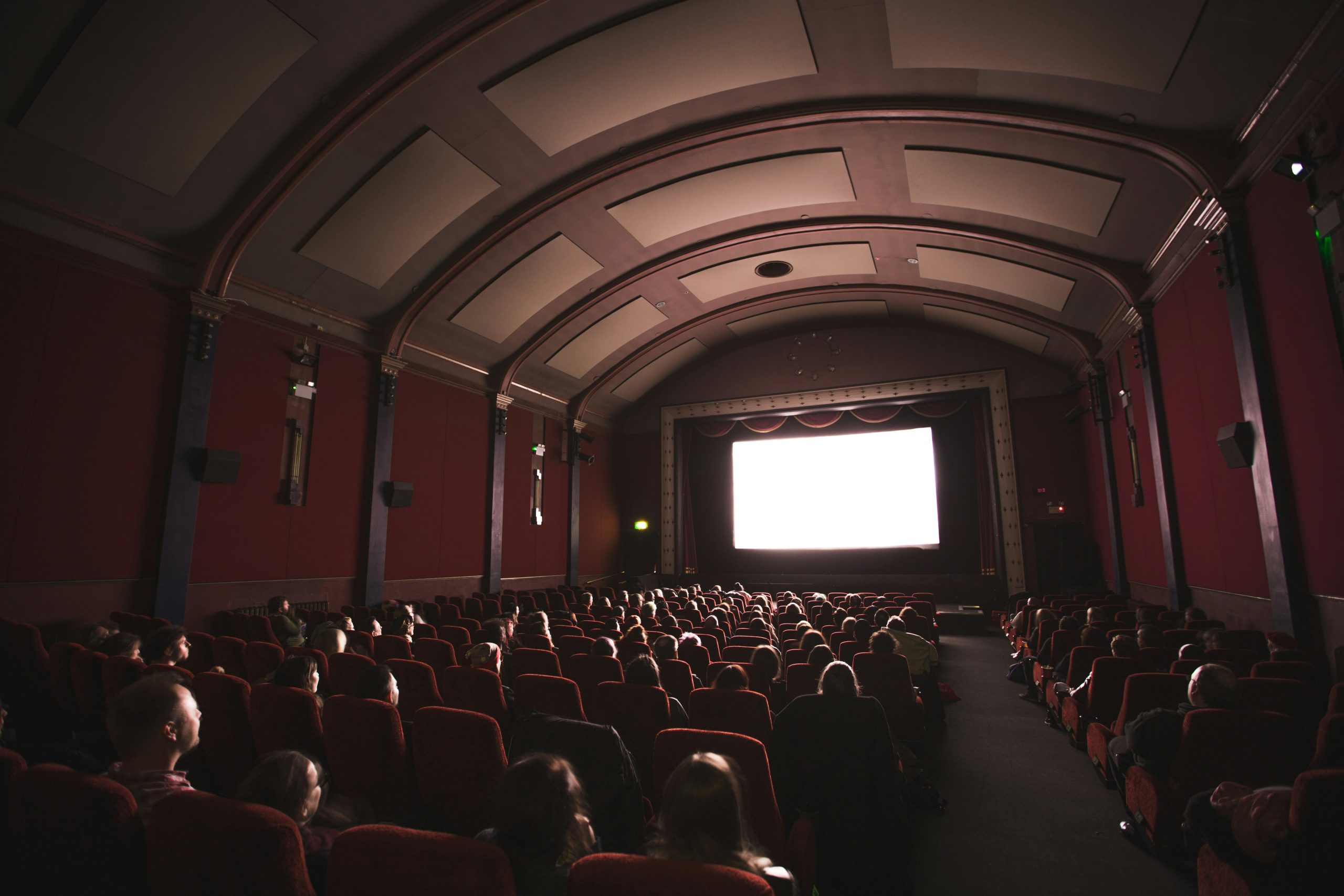
For avid readers, literary adaptations can be a source of both excitement and contention. Will the visual language of the film match the landscape in your head? Can the director capture that elusive magic of the prose? Translate the descriptive worldbuilding? In 2025, our literary adaptations list was one of the most popular articles of the year, and with a combination of enthralling stories and talented casts, it’s easy to see why! Readers turned to their big (and small) screens to see Bong Joon Ho’s Mickey 17, Guillermo del Toro’s Frankenstein, and Edgar Wright’s The Running Man.
This year, we’ve got an all-new lineup of adaptations in the pipeline, from Emerald Fennell’s pop-emblazened reimagining of Wuthering Heights to Christopher Nolan’s star-studded rendition of The Odyssey. It’s clear that readers hold the film counterparts of such beloved titles to a high standard, especially with respect to textual accuracy and casting choices. Emerald Fennell has already received backlash for neglecting Brontë’s nuanced exploration of both race and class by casting a white actor as Heathcliff. Nolan has also met with criticism for his film’s lack of Mediterranean actors and the decision to opt for huge Hollywood stars as a box office draw.
Regardless of whether these stories are making it to theaters or debuting as a limited series on streaming, one thing is for sure: When it comes to the stories we hold closest, readers look for nothing short of excellence. As the year progresses, we’ll find out if these adaptations break our hearts, or rise to the challenges of their source material.
Emily Henry—foremost expert of the beach read—combines love, travel, and crossed wires in People We Meet on Vacation. The book follows long-time friends Poppy and Alex, whose budding attraction is derailed when their yearly vacation goes awry, and a misunderstanding leads to a rift between them. The film adaptation, directed by Brett Haley and starring Emily Bader, Tom Blyth, and Lukas Gage, debuted on Netflix on January 9th.
There are few books with literary reputations that rival Emily Brontë’s Wuthering Heights. Coincidentally, Saltburn director Emerald Fennell has a reputation of her own, and she’s putting it all on the table with a new, controversial adaptation of the classic story. Following the gothic love affair between Heathcliff and Catherine Earnshaw on the Yorkshire moors, Fennell’s rendition promises erotic tension, vibrant aesthetics, and an all new album from Charli XCX as the accompanying score. Starring Margot Robbie and Jacob Elordi, the film is set to debut in theaters on February 13, 2026.
Andy Weir’s Project Hail Mary follows school teacher and biologist Ryland Grace, who wakes up on the Hail Mary spaceship with no memory of how he arrived there. When an alien microbe is discovered as the cause of the sun’s rapid dimming, researchers—and the reluctant Ryland—must race for a solution. The film is co-directed by Phil Lord and Christopher Miller, scheduled for release on March 20th, 2026, and, most importantly, stars Ryan Gosling.
John Steinbeck’s imaginative retelling of the Cain and Abel story is getting a limited series—and we can’t wait to see it. Taking place in Central California’s Salinas Valley, East of Eden is a story of family, betrayal, and contradiction. Directed by Zoe Kazan—whose legendary grandfather Elia Kazan directed the 1955 adaptation starring James Dean—the series will span seven episodes, and will star Florence Pugh, Mike Faist, and Christopher Abbott, among others. Although an exact release date isn’t known, viewers can anticipate seeing the show on Netflix sometime between February and April.
Leonie Swann’s Three Bags Full—originally published in 2005—is finally getting a screen adaptation in the form of Kyle Balda’s The Sheep Detectives. The story, told from the sheep’s perspective, begins with the flock returning from a day out in the pasture to find that their shepherd has been murdered. Without the advantage of language, the sheep must use unconventional strategies to piece together details from human conversations in order to find the murderer. This wooly romp is set to debut in theaters on May 8th, 2026, and will star Hugh Jackman and Emma Thompson, with voice appearances from Julia Louis-Dreyfus, Bryan Cranston, Chris O’Dowd, and more!
In 2026, Christopher Nolan is taking on Homer’s formidable epic poem. The story—familiar to high school students and literary scholars alike—follows Odysseus, king and hero of the Trojan War, as he encounters mythical monsters, goddesses, and serendipitous foils on his perilous journey home. Nolan is reaching new heights with both the film’s budget and its cast of performers that includes Matt Damon, Anne Hathaway, Tom Holland, Zendaya, Charlize Theron, Robert Pattinson, Lupita Nyong’o, and more. The film will debut in US theaters on July 17th, 2026.
Peter Heller’s The Dog Stars is a particularly resonant tale for our current world. In the aftermath of a decimating pandemic, pilot Hig lives in an airplane hangar with his dog and one human companion, a brusque former marine. After months of solitude, an unexpected sign of life sparks renewed hope and sets off a search for the source. This story of resilience and resourcefulness will be directed by Ridley Scott, and is set to star Jacob Elordi, Josh Brolin, and Margaret Qualley, with a release date of August 28th, 2026.
I’ve always been particularly intrigued by adaptations of Jane Austen novels. Austen’s prose is ornate and evocative, and it can be a fascinating challenge to render for a contemporary cast and audience. Sense and Sensibility, Austen’s first novel, follows three sisters of little fortune, Elinor, Marianne, and Margaret, as they struggle to make advantageous (and romantically appealing) marital alliances. This newest adaptation—set to release in the US on September 11th, 2026—is directed by Georgia Oakley, and will star Daisy Edgar-Jones, Esmé Creed-Miles, and Frank Dillane, among others.
For her newest directorial venture, Greta Gerwig is taking on a beloved classic: The Chronicles of Narnia. Although it’s the sixth published book in the series, The Magician’s Nephew takes place at the story’s outset. The tale interweaves an origin narrative for the kingdom—offering context for beloved characters from The Lion, the Witch and the Wardrobe—with the story of two English children who time travel to the mythical kingdom. The film is set to star Emma Mackey, Carey Mulligan, and Daniel Craig, and will be released on Netflix on November 26, 2026.
Last year, I was given a deeply nostalgic gift: Illumicrate’s beautiful exclusive editions of Trudi Canavan’s Black Magician Trilogy—a series that had been one of my favorites in my late teens—complete with embossed hardback covers and Diana Dworak’s new endpaper artwork. Reading this series again prompted me to log back into FanFiction.net, a website where I was once a frequent reader and contributor, for the first time in over a decade. I clicked on a BMT fanfic that sounded interesting and curled up with a cup of tea in cozy delight.
As I read, something about the prose felt strangely familiar. By chapter two, I was laughing out loud. I was reading my own fic, written when I was sixteen. Eighteen years on, it was still online, having accrued a respectable number of favorites on its (somewhat melodramatic) fourteen-thousand-word story. It felt like a full circle moment, as if I had unexpectedly met an old friend. But it was also bittersweet, because somewhere between earning three degrees in English literature—then becoming a lecturer and publishing my first academic book—the teenager who had glued herself to a desktop computer after school to write fiction for pleasure had disappeared. And yet, I wouldn’t be here today without her.
Long before I learned what close reading meant, or encountered intimidating phrases like intertextuality, narrative theory, or hermeneutics, I was already practicing them—just in a very different classroom. My training ground was not a school or library, but LiveJournal communitiesupdated at 2 a.m., FictionAlley.org profiles with glittering pixel art, and the niche depths of Archive Of Our Own where writers of all ages performed feats of narrative ambition that my own undergraduate students today rarely have the chance to attempt. Fanfiction was where I first learned to read attentively, write un-self-consciously, and to take seriously the complex relationship between text and reader, author and interpreter, canon and “fanon.” I was conducting close linguistic analysis simply to capture the cadence of a particular character: After all, you didn’t want to get comments from invested readers complaining “this is too OOT” (Out Of Character). I would rearrange the narrative structure of my own fics because I had loved the pacing of someone else’s. I would self-edit to feedback from readers according to what was landing well. All of it felt like play. But it was also an education. When I later sat in university lectures learning about focalization, diegesis, and narrative tension, I felt a quiet recognition. I had been doing this sort of work for years; I simply had not known its name.
My training ground was not a school or library, but LiveJournal communities.
When I stepped into academia, I quickly learned how little respect this world earned. That I read and wrote fanfiction was something to hide. As a university student, I assiduously worked through my reading lists, genuinely enjoying some of the set texts (the high fantasy fan in me raced through The Iliad, and Shakespeare’s comedies were never a chore)—but I wasn’t about to tell my Latin-speaking, private-school-educated, white middle-class peers that I already knew what a good paragraph looked like because I’d spent the better part of high school writing and reviewing fanfic. Being a multi-ethnic, international school kid from Turkey with an inexplicably American accent was already plenty to explain. So, bit by bit, I got caught up in what I “had to” read and know, leaving behind the secret joy of dishing out novel-length stories for a bunch of strangers on the internet.
Fanfiction is still dismissed as unserious: a guilty pleasure at best, juvenile at worst. The judgement mirrors the way mass-market paperbacks sold in supermarkets rarely make it onto university reading lists. Even now, as a lecturer, mentioning fanfiction in academic spaces tends to prompt a slightly embarrassed laugh. “It’s a fun thing,” colleagues admit: “at least it gets young people reading.” The implication lurks beneath the surface: Fanfiction may train enthusiasm, but not skill; passion, but not literary discernment. The literary academe’s dismissal of fan-created writing is not only unimaginative, it reveals how our structures of publication, distribution, and intellectual property are entirely geared towards enshrining fiction as, above all, a product. In doing so, it doubles down on the idea that textual creativity is the domain of the lone genius who must either create an entirely original “product,” or not at all.
Fanfiction as a creative practice already assumes what any literary scholarship worth its salt must acknowledge: Narrative is a social act. It is created under, and carries the traces of, our shared experiences at any given time. When a book or television show handles trauma carelessly, or reduces female characters to plot devices, or implies queer desire only to shy away from it, fandom responds by reshaping the story. Where traditional creative writing workshops rely on clear hierarchies, genre coherence, and marketable-length works, fanfiction communities tend to play with these. There is no single authority whose judgement is final. Instead, there are beta readers, commenters, moderators, and co-authors, all contributing in different ways. Beta reading in fandom can be astonishingly rigorous; people donate hours to improving a story simply because they care about it. Many of us lecturers are hard-pressed to dedicate the same kind of time when reading and annotating a student essay, simply because we often have hundreds to handle. Studying and teaching literature can, ironically, turn out vastly less personal than soliciting feedback on your fic from thousands of strangers online.
My formative experiences of writing were not neatly composed essays for school, but long, messy, derivative stories typed late into the night on Windows XP. I was not trying to produce something original and marketable. I was trying to understand what made my favorite characters tick; what would happen if a storyline veered in a different direction; how a minor event might develop if given more attention. To write good fanfiction, one must read with a kind of mild obsession that no teacher could have forced out of me. Yes, I admit, sometimes it was a touch lust-fueled (finding older, complex characters more interesting than teenage boys comes with the territory of being an only child adultified before her time). But it was also about the lack of pressure. You don’t have to be a professional in fanfic. You don’t even have to be a native speaker of the language you write in.
Fanfiction is still dismissed as unserious: a guilty pleasure at best, juvenile at worst.
This sort of writing encourages you to let go of what kills creativity: the need to get things “perfect.” There is a romantic myth that writing ought to be slow, painful and refined through lengthy bouts of solitary suffering. But fandom simply does not work like that. People draft huge chapters overnight, update long-running epics weekly, and experiment with new ideas. There is no pressure to be definitive, only the excitement of the story and the knowledge that readers are waiting. By the time I sat my first timed essay or faced my first academic deadline, I already knew how to write quickly and consistently without being too precious about it. The instinct to keep going, to produce imperfect work regularly, was built during those late-night writing sessions when the only reward was the joy of seeing a deluge of comments on your latest upload. This is a far cry from what I still encounter in academia: People terrified of putting a foot wrong, paralyzed by the blank page.
It’s worth asking why academia has been so reluctant to acknowledge the pedagogical value of fanfiction. The overarching reason goes back to what much does: the global economic system we are in. Fanfiction has an uneasy relationship with the concept of authorship, ownership, and monetization. Literary studies geared towards the imperatives of capitalist market values deem originality and solitary creative labors of utmost importance. It wants one name behind the product: a single mastermind who can be paraded out for book tours, signings, and conventions. This is imperative for securing intellectual property, and ensuring that everyone involved—editors, publishers, distributors—get their cut from any reuse.
Fanfiction undermines this at every point. It is derivative by design and collaborative in practice. It thrives outside commercial structures and pays no regard to copyright as a measure of legitimacy. It undermines the assumption that originality is the highest literary virtue. It isn’t driven by racking up institutional accolades, as real names are never used. It not only suggests that writing can be meaningful even when it builds directly on existing material, but it often reveals a hidden truth: No writer is an island. Storytelling is a communal, not an individual, act, even if we put one author’s name on it. Any author is inspired by countless others, and stands on the shoulders of their own favorites.
Storytelling, in other words, is an impulse, not a project. In The Dawn of Everything: A New History of Humanity, David Graeber and David Wengrow show that for tens of thousands of years, human beings created stories not for ownership, but as communal, improvisational acts. Whether oral, gestural, or written, they were passed around for pleasure and leisure. Storytelling thrived long before private ownership or the notion of literary “products.” The instinct that drove me to write fanfic as a teenager was part of this older, collective history of narrative. Fandom’s sprawling, unpaid, co-created archives are not an aberration but a digital-age continuation of something very human and very ancient.
This sort of writing encourages you to let go of what kills creativity: the need to get things ‘perfect.’
That fanfiction today proliferates without monetary compensation shows how recently we accepted the idea that creativity must be validated and enshrined through its market reception. Fandom quietly refuses all of that, and in doing so, it reveals how arbitrary those rules really are. If readers and writers can co-create meaning, what becomes of the author’s authority? If more readers resonate with a pseudonymous fic by someone with a day job instead of with a celebrity author, what becomes of the publishing world’s profit imperatives? If students learn to become good readers via fic, what of the academe’s claim to arbitrate literary value? Dismissing it altogether is easier than grappling with these large aesthetic and political questions.
Whatever the answers, fanfiction won’t go away, because it represents a radical space of literacy. It is accessible to people who might never have seen themselves as writers. It welcomes teenagers producing multi-chapter works, ESL writers experimenting bravely in another language, queer writers reshaping narrative worlds that have excluded them, neurodivergent writers finding safety in anonymity where formal classrooms failed them. There are no fees, no prerequisites, no admissions processes; you don’t know an author’s race, income or gender. It is a comparatively level playing field that reminds us we are driven to creative labor because we are human, whether or not financial compensation enters the picture.
Fandom taught me to pay attention, to question the politics of authorship, and to dare venture into the heavily classed and raced sphere of literary criticism without imposter syndrome. It gave me a version of literary culture that was unafraid of passion and unembarrassed about the pleasures of the imagination. And despite the distance between my current job title and that sixteen-year-old me hunched over a keyboard late at night, I am certain that everything I value about literature began in those early, communal, online spaces. Rediscovering my own fics reminded me that the most meaningful literary communities are still the ones built outside institutions: messy, irreverent, unprofitable, and utterly alive.
I’m writing this on the last day of 2025, knowing it won’t run until early 2026—and it’s the weird limbo time, where everything is “Best of” looking backwards or predictions of what 2026 might bring, looking forward.
If the books on this list are any indication, novellas are having a bit of a moment, collections of short stories just keep getting better, and hybrid memoir needs a new name (anyone have an idea?) because it feels like it’s a genre completely unto its own rather than a mashup. What emerges as a theme is secrets: long-buried or exposed, obscured or open. Amnesia makes a man forget the secrets he is keeping from his wife; a war-time wife takes on boarders without telling her husband, reveling in the community and freedom; a morgue worker in Maoist China has a secret pet. We all know that secrets have a way, like water, of finding cracks to seep through. This is the case for many of the books below. No matter what we try to hide, information comes out.
In 2026, I have my own small-press published book coming out, and it has been a reminder of how many generous readers, writers, and editors work in this industry. Now more than ever, it feels vital to support the work of independent presses who operate in a media landscape driven by ideas and inquiry, rather than units sold.
If your New Year’s resolution is to read more books, the below is a great starting point.
A young woman plays French horn in the community college band, second chair to her abusive boyfriend; a machinist at the oat factory always has an open door for punk and jam-band loving twenty-somethings; a seven-year-old boy scrapes his hand against a family-friend’s lead painted siding. In More Hell, al-Sirgany does more than offer a tour of the Midwest: He makes the region real. These stories take place on dirt roads and in houses with rattling screen doors, in bars and apartments surrounded by farmland. Even if one is not from the rural nor the Midwest, these stories carry a sense of a homeplace, with all of the complications that come along with it. Compelling and written with both a twist-the-knife pain and compress-the-wound empathy.
In this collection of short stories, Sara Jaffe quietly but powerfully explores music, longing, families, disasters. A mother brings her baby into a bar in the middle of the day to have seltzer and French fries and a brief respite from the isolation of motherhood; a young man is rejected from a college but moves to the town anyway, where he tries to connect with the music scene while figuring out what shape his life is going to take; a writer is assigned to write for a gallery and is relieved when it doesn’t work out. Her stories have range, but often come back to a pivotal moment. Hurricane Envy does what the best do, which is to leave readers satisfied with each story while still wanting more. Read one of the stories in Recommended Reading!
Against the backdrop of the Cuban Missile Crisis of 1962, elite diver and marine archeologist Marta Khoury is in Cairnroch, an isolated island in the frigid east coast of Scotland. While she is immensely suited to explore the wreckage of a Victorian-era ship captained by one of the island’s own, Marta also has a connection to the island and a tragic death that occurred on its shores. The Salvage strikes a balance between the specifics of Marta’s profession and the sometimes petty dramas of the island’s residents, while also exploring both her own personal stakes in salvaging items from the wreck and her certainty that she’s seen a shadowy figure lurking around the ship on her dives. The Salvage is an adventurous book with emotional resonance.
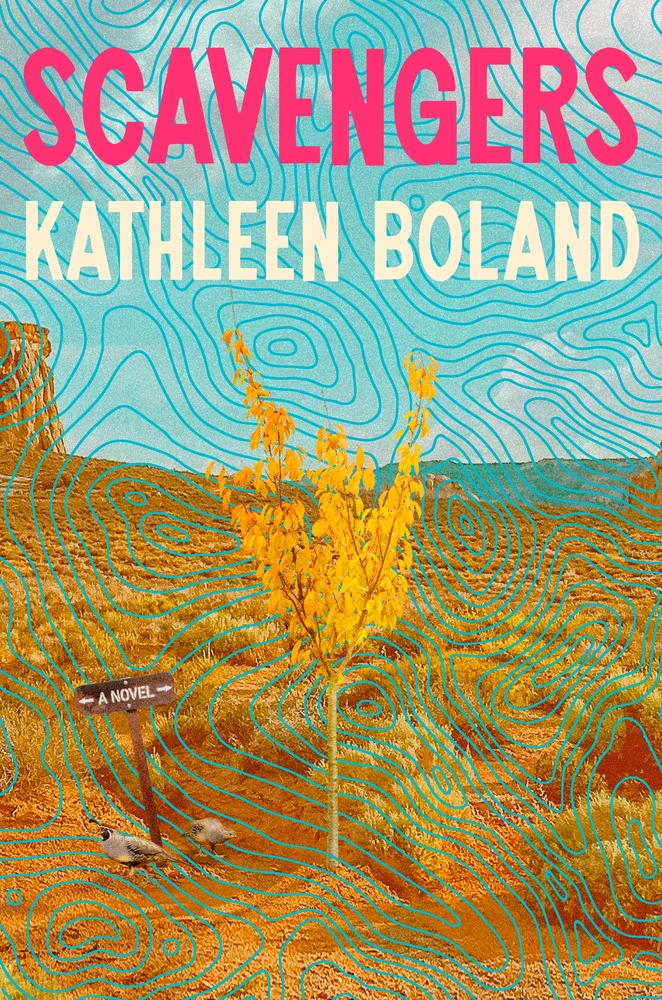
In this collection of stories and a novella, Michael Keefe takes readers through the cracked dry landscape of the American West and Southwest, riding in pickup trucks and station wagons in search of family, belonging, and answers. In one story, a family leaves their patriarch after a vacation gone wrong. In another, a man returns to his family home with a nagging suspicion his father was involved in a farm worker’s death, and his attempt to unearth old family secrets uncovers something new about himself—and a revelation about his father. The men of Keefe’s stories don’t always find what they are searching for, but they take the reader along for a glorious ride.
Tapping into a deep fear for writers, aspiring-author P.J. Larkin is convinced editor George Dunn has stolen the novel she submitted to him and takes to social media to call him out. Soon, Dunn is snagged in what looks like a scandal, and Larkin and her manuscript are a hot commodity—but she’s beginning to face her own controversy around the content. A Complete Fiction captures the contemporary anxiety of what is private and what is public through a narrative that has its finger on the pulse of social media’s amplifying power. While this novel is asking big questions about cancel culture, appropriation of stories, and what it means to make art in the internet age, it’s also very funny. Maizes gives us a book that is compulsively readable.
Outside of the beachy resorts and tourist luaus, Hawaiian natives like Tita are living their actual lives, not vacation: there are bills to pay, abusive boyfriends, handsy bosses, uncles who beat a niece for kissing another girl. There are also cold beers overlooking Kona, drives along rocky lava-paved roads, poi made from scratch. In this collection of flash and short fictions, Llanes Brownlee writes with precision and deft contrast: the taste of salt could be from shear off of the sea, or from blood. The narrative has nuance, but also punch. Tita is in many ways more than just one person, and has more than just one story. Bitter Over Sweet is an excellent entry from a new voice in fiction.
After a long stint in the Army and a tour in Desert Storm, Moses Kincaid, of the Wisconsin Ho-Chunk tribe, becomes a bounty hunter based out of Kansas City who has found himself chasing a wanted man through Oklahoma. It’s not just the cops who want Eric Drumgoole, it’s also the members of a notorious motorcycle gang. When a diner waitress offers to help him, the two quickly become more than friends. Yet, Kincaid is in a rough trade, and he and the people around him are snared in violence. Coydog follows Kindcaid as he tries to do his job, which fundamentally means operating in a gray area. He’s as tough as they come, but his hypervigilance also belies the trauma of his past. Tromblay’s novel is just as heavy on plot as it is on the heart.
Joe Marzino, a well-known television actor, awakes in the hospital with no memory. Out jogging, he was knocked unconscious by a bicyclist. As he’s filled in about the details of the accident—and the life he was living—nothing sparks recognition. Yet, as Joe is discharged, with physically nothing wrong other than a nasty ankle sprain, amnesia has given him no context to know the family that surrounds him. With no reason to suspect anything other than what he is told, he plays the part of the loving husband and father. Yet, as fragments of memory return and living his day-to-day surfaces the man he was before the accident, the very obvious before and after of a penultimate life event takes on an ever deeper meaning. Lynne Sharon Schwartz brings her mastery of characterization to this new novel and offers a moving story of new beginnings.
Informed by the author’s own recovery from a traumatic brain injury, Fit Into Me is a hybrid memoir with a novel tucked into its center. The speaker swims, the speaker does voice therapy, the speaker writes, the speaker recovers. It’s meta-memoir, auto-fictional, and packed with literary allusions (many explained in footnotes). The structure—both fragmented and coherent, like a mosaic or a quilt—mirrors Gaudry’s own intellectual state. There are touchstones in this book that lovers of literature will relate to, like the pure joy of discovering wonderful sentences and challenging ideas while reading, and Gaudry offers many of her own. Fit Into Me ultimately emerges as less of an experiment in form and more of an inevitable outcome. Brilliantly nuanced and forcefully written.
In this memoir, the inciting action is trying to confirm the authenticity of a photo where Svoboda’s mother-in-law, the trailblazing journalist Pat Lochridge, is pointing at Hitler’s ashes. Yet, the book is more than verifying one historical artifact. Svoboda and her husband, despite excavating their basement files, can’t find the original image, and alongside the story of the photograph is the story of how Lochridge ended up becoming part of Svoboda’s family. The book threads the mythology of Lochridge, the backdrops of war, and the writing work they share as a profession, with Svoboda’s own professional and personal history. There is a gentle distance between the women—not as rivalries, and nothing as boring as in-law conflict—but a nuance of generations and circumstances. The memoir is meticulously researched and thoughtful when looking at the past. This is Svoboda at the height of her power as a writer.
In 1966, during the Cultural Revolution in China, Qing Yuan works alongside his colleagues, others who have been conscripted as workers in a morgue. The delivery of dead bodies is constant, and the men become numb to violence. The work is gruesome, but they are fed, housed, and spared the so-called reeducation camps. Yet, when a badly beaten body, labeled #19, crosses Quin Yuan’s table and no one comes to claim her, he is thrust into a search to understand who she was. Searching for information about #19 defies the Mao regime, and it is in this defiance that Qing Yuan finds moments of joy and connection. The Morgue Keeper is a compelling story of compassion and quiet resistance.
Teenagers fantasize about moving into a neighborhood house while coyotes terrorize the surrounding area; a young man working at a rental car call center to provide for his young child gets fired; a woman goes through a year of managing a break-up. In this collection, Woods deeply explores loss and what it means in the moment and its immediate aftermath, the personally-specific ways we imbue meaning to the everyday as we search for answers, and how grief shapes the future. Magical realism and fluidity of form make the collection all the more poignant. The Great Grown-Up Game of Make Believe is one of those rare debut story collections that grabs the reader by the throat and does not let go.
Before he is shipped off to WWII, Audrey and Ben marry in a rush. She works a wartime job cataloging film in Washington D.C. and is called toward being a visual artist. He is a surgeon in the Navy living in his childhood home after the passing of his mother, and Audrey joins him there before his deployment, surrounded by the belongings of a dead woman and a man she hardly knows. While Ben is deployed, Audrey takes in two boarders—Lucille, pregnant and hiding it, and Daniel, who she feels drawn to—both of whom change her life in different ways. This is a novel split into befores and afters, with a deception at its center. Hutton writes deftly about how secrets find a way out into the light, with both relief and consequences jumbling together.
In these stories set across Texas, Missouri, Minnesota, and an unnamed city in the South, a young Black couple looks for the owner of a run-over cat in a white neighborhood; a woman chooses to marry a man she finds boring in order to avoid drama, only to have trouble stirred up years later; and in the title novella, Cynthia (Martha’s daughter) works through her complicated relationship to her mother with an overbearing co-worker in tow. While often somewhat situationally absurd, Hayne’s pinpointed prose keeps readers completely in the moment. A stunning, accomplished collection perfect for fans of Haynes or readers new to his oeuvre.
In 1989, as Joan Cavanaugh is dying from cancer at only forty-eight, she begins to recount and take stock of her life. At the center of her story is a secret she is determined to take to her grave: Twenty-five years earlier, she had an affair, and when it ended, she returned to her husband and three young daughters pregnant. Another twenty-five years later, though Joan has long been gone, a chance encounter and modern twist—the genetic test—exposes her. The House of Cavanaugh takes a fresh look at the age-old family concern of paternity, including tackling how families have been upended by easy-to-access DNA kits. Dugan turns the premise into an explosive and satisfying novel.
Editor’s note: This essay deals with topics of childhood sexual assault, rape, and incest.
“Hush” by Torie Rose Wiley
The Armless Maiden, or in some retellings, The Maiden Without Hands, is an ancient folktale that has been passed down throughout different cultures and generations. In the older versions, a young girl lives alone with her brother, until one day, he tries to marry her. The girl refuses, and the brother severs both of her arms as punishment. He kicks the girl out of their home, forcing her to live amongst the animals in the forest. Without her arms, the girl is unable to pick fruit from the trees to feed herself. She cannot climb. She cannot touch. She is unable to bathe, to hold herself when her body shivers, to make something with her hands.
In later versions, the incest is eliminated from the story. Instead, the girl’s brother or father removes her arms in a desperate act to save themselves from the Devil. In later versions, they take her hands, not her arms. In even later versions, they ask the girl if they can cut off her hands, and she agrees.
Everytime my cousin, F, molests me, our family is close by, often in the same room. The first time, he and I are both sitting in the backseat of my father’s car. K, my sister, is in the front, and my dad is driving us all home from a haunted house. He laughs as he pushes and rubs his hands against my arms, my ribs, my thighs. Do you know what pressure points are, he asks as he presses a finger into the divet of my shoulder, sending a rush of pain throughout my body. He keeps touching, pushing harder against my skin, like he’s trying to peel me open and consume what’s inside. My dad right there, my sister right there. They don’t say anything as F shoves his hands and face into my lap. I’m so cold, you need to help warm me up, he says. I am ten.
Another time, K and F’s younger brother are laying in the same bed as us watching a movie. F drags his hand against my inner thigh under the blanket. Yet another time, F’s mom pulls him into her room, screaming at him after she catches him picking open the lock to her bathroom door while I’m inside.
Each time, I tell myself he will realize he is hurting me and stop on his own. I tell myself I’m being dramatic, like when I tell my mom my feet are going to fall off from walking so much at the zoo. He hasn’t raped me, wouldn’t rape me, I think. Rape only happens in dark alleys with strangers. God will make sure he stops before it ever gets to that. I attend catechism school once a week. My cousin is an altar boy. We have to be safe, being so close to God. Someone will save me.
He rapes me on Thanksgiving, two years after it all started. I am twelve. Our entire family is a floor above us as he first plunges his hand into the slushy, stained beer cooler, then into the part of me that only I had ever touched. I feel the heat of my mother and grandmother’s laughter and hear the clink of knives to plates as he plucks me from my body, leaving me to rot.
After, as we sit around the table with our family, I feel the sour, acidic breath of death pushing against my face. I feel the lack of distance. The awareness that he will never stop. The old, animal parts of me that know how to spot a predator tell me that next time, he will eat me.
When asked if there are any shared beliefs throughout cultures, an anthropology professor I take a course with in college replies, adamantly, that there are no universal truths. There is no consistent way of being human that permeates all communities and bloodlines. However, he adds, the taboos of cannibalism and incest are the closest we get.
The word incest derives from the Latin words for not—in and chaste—castus. The word denotes impurity. To be associated with incest is to be cut off or severed from wholeness.
Dissolved boundaries. Sisters as wives. Cousins as rapists. The people who made you are the same ones to take you apart.
I tell Mom a few weeks after my cousin rapes me, just before Christmas.
Some people were put on this earth to follow, others to lead—I was put here to lead. My grandmother often repeats when asked about her domineering nature.
I feel the heat of my mother and grandmother’s laughter and hear the clink of knives to plates as he plucks me from my body, leaving me to rot.
When she was born, rape was not considered a federal crime. Rape by a husband was considered a happenstance part of marriage—a husband’s right to claim as he pleased. A woman or girl had to prove she actively resisted in order for a jury of white men to call it rape. Within the Catholic Church, my teenage grandmother is taught that any birth control method is immoral. Divorce is immoral. Women are expected to uphold a pure, modest image—no matter what.
But as a kid, I don’t know my grandmother as this woman. I know her as the woman who dances with me to All I Want For Christmas Is You in the middle of summer because it is my favorite song.
By day as a city councilwoman, unbeknownst to kid-me, my grandmother bobs and weaves her way through town regulations, tax laws, and men with armpit stains in their suits. By night, she makes me easy-mac while we watch reruns of Franklin in our matching saddlebag-red leather recliners. I am her youngest granddaughter, and I own my role. I study how me in tutus and sequins and lipstick and pink make her eyes lighten. How she tells Mom I will absolutely not be wearing pants to kindergarten.
Anytime she takes me out to eat, someone knows her and comes up to the table to talk to her. Mom, father, both aunts, uncles—likely others who I am not even aware of—all gain full-time, secure jobs at public schools or departments via the good word of my grandmother. She keeps everyone in line. One time, she screamed at Mom for twenty minutes because there was a dryer sheet underneath a chair in our living room. I swear, I didn’t even see it until I laid down on the fuzzy green carpet and went looking for it. Nothing gets past her. Our family has an image to uphold.
When I’m born, rape is defined in the same way it was when my grandmother and mother were born. Carnal knowledge of a female, forcibly and against her will. Carnal knowledge. As if a body is a tempting fruit full of forbidden truths. As if one can get to the core of a person by forcing teeth though skin.
Between my birth and my rape, we get two dogs: a black and white, ornery collie mix named Susie, and an ever-hungry black lab named Macie. I watch SpongeBob and The Amanda Show withmy older sisters. Mom tries to get me to wear eye patches to correct my lazy eye, but I insist on peeling it off as soon as she looks away. I write my first book: a stapled, paper booklet about fire-breathing cats and dogs. CPS comes—I find out as an adult it’s because my sister, K, told her high school guidance counselor that Mom took two Jell-O shots before driving with my sister, me, and a few of our friends in the backseat. I tell CPS I only see Mom drink every once in a while and hope they don’t find her wine bottles hidden in the Purina dog kibble bag.
My nose bleeds. My skin blotches red, something I later learn is called eczema. Mom slathers me with cold lotion twice a day to try and make the itch go away. I pick—scabs, nails, hair, eyes, nose, teeth, lips, throat, feet, hands, elbows, knees, thighs—anywhere I can get a nail under. I don’t understand why having scabs is “bad” until years later when I go to shave for the first time and realize I can’t pull the razor up any part of my leg without ripping one open.
My older sister, K, fights back whenever Mom calls us stupid or pinches our skin until it bruises. To kid-me, K is some fearless gladiator going up against a lion, and I am some cheering bystander hoping the lion doesn’t come my way. When Mom gets mad, she bares teeth. We are no longer her children, we are idiot, lazy, selfish, worthless, bitch.
Although K’s boldness invigorates me, I also hear the way she cries after each fight is done. After the CPS worker leaves, and Mom and K finish fighting, I tap on K’s door to see if she wants to play Xbox with me. I didn’t know he would report it, she confesses to me in broken sobs. I would never have said anything if I’d known he’d report it. I bring Mom a Sugar Daddy lollipop, her favorite, to help her calm down. I think of the time she told me to tell her if she ever started acting like her Mom, my grandmother, because she never wants to put my sisters and me through what she went through. I was too afraid to tell her she was too late.
Besides Mom, my grandma has two other daughters, both of whom have several children. I spend every holiday, birthday, vacation, graduation, Communion, Super Bowl with my maternal grandmother, aunts, uncles, and cousins. My cousins are there the first time my feet feel the ocean. My uncle pulls splinters from my fingers so gently it never hurts. When she invites me over around Halloween, my aunt makes sure to hide any skeletons because she knows even the cute Hallmark ones make me cry.
When my grandmother is pregnant, her fetus’s ovaries hold all the eggs it will ever have. I think of Mom and I, my sisters, my aunts, my cousins. All there. Growing between her leaves.
Mom, can we talk? I say from the kitchen doorway. I had been laying on the couch, turning ornaments over between trembling fingers, waiting for the sound of cups and plates hitting cupboard shelves to indicate Mom was almost done with the dishes.
She pauses at the sound of my words. We didn’t ever talk in my family. When I first went through puberty a few years before, she came home one day to me crying on the bathroom floor, howling about how there had been blood in my underwear, and how I was dying. There were no conversations, no sex talk, only a book on puberty left on my bed the next day. I learned I had something called a vagina when the book told me I did.
I’ll be there in a minute, she eventually replies. My face remains stoic, not wanting to give anything away, despite the growing hum in my bones. I walk the creaky hallway down to Mom’s bedroom. A painting I made in preschool hangs up on the wall above her nightstand: a bouquet made up of my tiny preschool hands and feet. I choose to tell Mom here, rather than in my room across the hall, because something about telling her underneath my mermaid princess canopy feels worse.
It was like I was about to tell her I had murdered somebody. Like I was about to murder my entire family in a matter of words. Will she yell at me for not telling her sooner? Will she believe me? What if she believes me but does nothing about it? Mom raised me to understand that the same hands who cut the crust off your peanut butter and jelly sandwiches and place it on your favorite Zoo Pals plate can also drag you across the hardwood floor like a piece of luggage. How do I tell the first person to ever hurt my body that I need her to stop someone else from hurting my body?
I need to tell you something. I speak between shortening breaths. Please don’t be mad. Her face sharpens. I suck in my last breath of air before forcing my tongue to speak for what feels like the first and final time.
For the last two years, F has been touching me.
She freezes.
Touching you how? Where?
He once—one time helifted my shirt and put his hands and mouth on my chest and he, he—my carefully planned details boil over into babbling sobs. My body had condensed two years of terror into clear words. Now all the words it had swallowed to keep me safe were pouring out as wet noise.
She stands up and grabs her phone.
What are you doing? I manage to squeak out. I can feel the rope of my secret slipping through my fingers, ripping skin as it pulls.
Calling my sister. F’s mom.
Any initial relief that had started blooming quickly becomes a numbing panic. Snot sticks to the back of my throat, making my voice sound sticky. No, no, please don’t. Please don’t call her. Please—I can’t. I don’t want her to know. She can’t know. My body springs up, blood coursing with adrenaline, terrified. I wonder if F’s dad owns a gun.
A high school boy lifting up the shirt of a twelve year old girl—I’m calling her. She walks into her attached bathroom and shuts the door.
My body heaves. I crumble onto my mom’s floor, into the stained, vomit-green dog bed beside her nightstand. What if they don’t believe me? Why did I need to tell her? What if they kill me?
Before telling her, I could picture my family reacting however I wanted. I imagined my grandma calling me, sobbing, telling me she was so sorry. I let myself dream of my uncles and aunts driving right over to hug me and take me for ice cream or movies or whatever else a raped child needs. Now, there is no pretending.
They know.
I think of the violent military videos showing people melting into pieces that F would often make me watch because he thought they were funny. I think of the way he and his dad often bought collectible weapons—grenades, swords, rifles, knives, tasers—and kept them in the basement beside F’s room. I should have just let him keep raping me.
He said it only happened once. Mom speaks as she walks back into the room. She was probably only gone for minutes, but to me, every second of her not running up and holding me and telling me she still loved me was too long.
We stare into each other. Her, looking to see if I’m worth losing her family over. Me, looking to her to tell me I am.
Finally, she exhales. What do you need?
Courtrooms flash before my eyes. Police. Scary, adult words like testimony and witness and evidence. It would be my word against his. He was tall, blonde-haired with light eyes. I was lanky, and the Clearasilthat was supposed to help with my acne had just turned the hair around my face an acidic yellow. His parents built him a basketball court in their backyard, while my parents had just spent the last year getting divorced. And really, I didn’t want to see how many people sat on his side over mine. I couldn’t handle any more hurt.
I don’t ever want to see him again. I eventually speak.
Then you never will.
After the Armless Maiden is left to die in the woods by her brother, a prince eventually finds her and brings her back to his kingdom. He falls in love with the armless girl after seeing how persistent and strong she is. They marry and have a baby. Years pass. One day while the prince is away, the girl’s brother hears of her new life. Livid, he sends a letter to the king and queen pretending to be the prince. He tricks them into believing the prince is horrified at the ugliness of their baby and wants the girl banished back to the forest, where she belongs. The king and queen reluctantly obey what they think are their son’s wishes, abandoning the armless girl in the woods with her baby strapped to her back.
So much can be stolen.
When my grandmother learns that my cousin sexually abused me, she tells Mom that he and I should sit down and talk it out. Mom refuses, but she continues making me see my grandmother.
It would be my word against his. He was tall, blonde-haired with light eyes.
You have to be understanding, Torie. She’s his grandmother, too. She wants to see you. It’ll just be you, her, and your other cousins. F won’t be there, Mom argues one morning after my grandmother asks to take my other cousins and me to lunch. She doesn’t want to pick sides, I’m told, whenever I ask Mom why grandma always brings us leftover cake from his house. If she doesn’t want to pick sides, why does she always go to his house first on holidays? Why doesn’t he get leftover cake?
My aunts don’t want to pick sides, either. Or my uncles. I see a few of them for a couple of short visits after I tell Mom, and then I never see them again, except for the Facebook photos showing everyone huddled around F for Christmas each year after.
No one ever asks me what happened. As a child, and now, I want them to know what happened.
Toward the end of lunch, my other cousins both go use the bathroom before we leave. My grandmother and I sit alone for the first time since I told Mom about the abuse.
So tell me how you’ve been. Your mom has you doing therapy?
I go once a week. I answer as I pick the ends off my French fries and start a pile next to my chicken nuggets for all the pieces that are too crunchy.
Good. Good. She wipes her mouth with her napkin and leans back in her chair. F has been seeing a therapist, too.
That’s good, I—
—hush, here come your cousins.
I take my cue and swallow the questions my body ached to ask. Why don’t you ask me about what he did? Why didn’t you call me the night you found out? What do I need? Why do you care more about him than me? How can you still stomach seeing him? How could you see every speck of dust Mom missed and not once see what he was doing to me? How—
Hush.
This is how the months following my disclosure go. Slivers of moments where my body pauses for a sip of air before swallowing more and more and more and more and more words. I feel something kicking inside me, needing to come out, and I keep telling it we need to wait for the right time.
How did therapy go? Mom asks every week while she drives me home. Good, I always reply, not sure how to tell her that talking to a stranger for an hour a week isn’t really helping. I ask the therapist questions like, do you think I’ll end up hurting people like my cousin? while opening another one of the Dove chocolates from her candy bowl.
At school, no one knows.
Just after my birthday, I dislocate my kneecap. It’s before homeroom, and my friends and I are all talking at the back of the class when my best friend kicks my leg out from under me. I think she underestimates how hard her kick is, or overestimates how sturdy my leg is. Either way, there is now a divot where my kneecap used to be, and an orchestra of pain rips at my leg. I scream so loud, one boy brings me a brownie the next day because he says the noises that came out of my mouth gave him nightmares.
Between the screams and convulsions running up and down my leg, I worry for my friend. What will happen to her if they find out she kicked me? I had seen the pale look on her face before Mr. M rushed her and everyone else out of the classroom so the paramedics could come. I know she didn’t mean to hurt me. So when the paramedics, the principal, and Mom ask me what happened, I tell them I had just slipped on a book bag and fell the wrong way.
Did I lie to protect my friend because that’s just what kids do for their friends? Or did I do it because the rape led me to believe that my friend would leave me if I was honest about how she had hurt me? Or maybe because Mom raised me to think I need to comfort someone after they hurt me. I no longer have my family to look toward when I wonder who I will become, where I come from, who I am. Which parts of me are mine?
Sometimes when I get home from school, I find a book on my bed from Mom that somehow deals with rape or sexual abuse. Once, I call a friend to read her a scene from The Lovely Bones—one of the books Mom leaves me.
Don’t read that—Mom scolds after she must have heard me reading through my bedroom door and opened it sharply. Don’t read those to your friends.
At parties, Mom asks me if it’s okay to tell her friend, or in some cases, a stranger, about F molesting me. It usually happens after someone asks Mom how her family is doing.
Can I tell them? she asks as the adults around us all stare at me.
Yeah, sure, I respond each time. You took her family away from her, you owe her this, some voice in the back of my mind tells me. I guess she doesn’t want to lie, which part of me appreciates, but I can’t understand why she is allowed to talk about my abuse whenever she wants, but when I try to, it’s never the right time.
The worst, for me, happens at the beach less than a year after I tell Mom. It’s August, and Mom has recently married my stepdad. For their honeymoon, they take my younger stepsister, N, and me to the beach for a week. K is at home watching our pets. I’m thirteen.
N and I are sitting next to each other in beach chairs, feet sunk in the warm sand, when she taps my shoulder to have me take out my headphones.
Did you hear any of what they said? N asks. Our parents had just left for a walk down the shore.
No, what?
She hesitates.
Your grandmother took K to lunch. She invited your aunt without telling her. My jaw cinches. They both tried to convince K to make you see F. They said you probably asked him to do it, that you wanted the attention.
I watch as a dad bobs his baby up and down through waves along the shoreline a little ahead of us. I can’t stop the words from running out of me.
What did K say?
No one wants to pick sides. I can’t trust that my sister will defend me anymore. I can’t trust anyone.
She left the restaurant after telling them to go fuck themselves, N replies.
Oh.
I wish I could say my sister’s words rang strong in my ears, but I was more focused on blaming myself for her being in a situation where she even had to defend me in the first place. My needing to tell Mom that I was being abused caused my sister to face yet another fight—is how I saw it then. She shouldn’t protect me anymore. Nobody should protect me. I don’t want anyone else to hurt.
When K got home, N continues, your cousin, F, sent her an email telling her she should kill herself.
I’m thirteen when I’m convinced that my words are only good for hurting the people I have left.
Sometime years later, while Mom pours herself another glass of wine at our kitchen table, she starts talking about my grandmother. I think her grandfather, your great great grandfather, may have raped her when she was younger. She never told me he did—but there was a weird feeling I would get when he was around her, when she would talk about him. She lived with him for most of her childhood. She says it with a casual sort of ease. My stomach hardens.
She continues as she takes another bite of her food, there was something always off with her. She was never a mother to me. When I was four—just four years old, a baby—she let me walk around the neighborhood with our cat on a leash. One day, a stray dog came up and attacked us. I didn’t know what to do, so I just held on to the cat for dear life as we both screamed. I don’t remember all of it, but I remember dragging the cat home after it was dead. No one was watching me. Her voice breaks as she takes another sip of wine. I stare down, having heard her tell this story many times before, still having no sense of what to say. You should be grateful to have a mom like me.
I try to understand what all of it means, if anything. Why the possibility of my grandmother having also been molested only makes me feel worse. How I hate the thought of my mother walking along that street alone. How I’m anything but grateful. How I’m terrified of what I come from, of who I will become.
I can’t trust that my sister will defend me anymore. I can’t trust anyone.
I wish I could give back my blood and start over as someone who didn’t inherit such violence. I wish I could go back and save my grandmother and mother from all that pain. But whenever I get close to some sense of clarity through the fog, I always end up instead at the same question, the one that unravels me all over again—why didn’t they save me?
I later confirm with census records that yes, my grandmother did live in a home with her grandfather for several years. I also found that her grandmother alternated between living in that house and a room in a mental asylum for three decades.
Mom tells me that most, if not all, of our Irish-Catholic ancestors were poor. The women in my family had many children during the decades prior to birth control, and many more in the decades since. One gives birth to 16 children, only eight of whom survive past four.
Another works 16-hour days twisting buttons onto pocketbooks she will never afford at a since-abandoned factory in our hometown.
Several attempt suicide.
It’s like they each were the heir to some thick, aching hunger.
Maybe he did. Maybe it’s enough to know that it could’ve happened, that my grandmother and great great grandmother and every grandmother before them could have been raped and stayed silent because somewhere along the way, someone convinced them that that’s the only way to heal. Maybe it’s enough that the stories of their lives died with them, leaving anyone to fill in gaps as they see fit.
We stop talking to my grandmother and the rest of my extended family after getting home from the beach.
Before the beach, I write 10-page book reports when the teacher only requires one. My friends and I tell each other our biggest secrets, like how we once ate paper, or how we once cut our own hair, or that time we flushed a lollipop stick down the toilet at a hotel and it flooded an entire hallway. Teachers toss paper balls at us to get us to stop talking in class. Once while jumping on the trampoline in my backyard, I tell a joke so good, my friend pees herself from laughing. And instead of crying or gagging or trying to pretend it’s not her pee that’s pooling into the center of the trampoline, we jump even harder. Before, words are my rhythm, my power, my love.
After the beach, words are hard, wretched things. How’s your grandma been? my dentist asks after she tells me to rinse and spit, and I scrounge up and mash the words together to lie: she’s okay. A friend comes up to me in the library at school and says, your cousin, A, just told everyone at lunch that you’re an asshole, and I whip the words, oh, weird, I’m not sure why he said that, until they collapse out of my mouth. When my aunt comes up to me at a science fair in front of all my friends with a big smile on her face and asks, how ya been? I drag the words, I’ve been good, it’s nice to see you! by the scalp until they get in line and sound convincing. After, words scatter when they hear me calling.
Years pass, I don’t write, or read, and sometimes when people touch me, I don’t feel it.
Years pass, I convince myself everything is over, it’s done, then Mom is diagnosed with early-stage breast cancer, and a few days later, we receive a letter from my grandmother saying: my prayers have been answered. Like Mom being alive and well is the only reason our family is broken.
I wish I could go back and save my grandmother and mother from all that pain.
Years pass, then my boyfriend joins our high school crew team, and my cousin, F, is a coach. We argue after he tells me he only talked to F because he was being polite, and he asks if I was sure I didn’t want my cousin to abuse me, and I don’t break up with him on the spot. In fact, I date him for another few years.
Years pass, I’m in highschool when I hear someone on the news say Christine Blasey Ford only accused Brett Kavanaugh of rape because she wants the attention, and I hear my stepfather say the same thing about another woman who accused an actor of rape, and I tell him, you know when you say that, you’re talking about me, right? and he says, of course I’m not talking about you, this has nothing to do with you, and he has this solid look on his face that tells me he really doesn’t see how this has everything to do with me.
Years pass, then F sends me twenty-two Facebook messages in a row saying he did it because he was curious/spoiled/rotten, saying he wakes up once a week with nightmares, saying it must be worse for me, saying it’s up to us to fix our family, saying he will kill himself if I want him to, saying punish me and not my family, saying it will only be too late once grandma is dead, and I’m sitting in my high school English class wondering if I should answer him or scream or call Mom or run to the bathroom and slap my face with sink water until I stop crying, or swallow it.
I stay in class and swallow it.
Years pass, then I go home and tell Mom he messaged me today, and she won’t stop chopping that onion she was chopping, and I tell myself she must not have heard the break in my voice.
Years pass and years pass and years pass, and suddenly I am twenty years old, my grandmother is dead, and I am forced to reckon with the fact that I cannot outrun what I come from.
My eyes pick through the list of names in my grandmother’s obituary until they find mine among the pile of estranged relatives. The deepest parts of me buckle. My lungs squeeze and stretch, squeeeeze and stretch, until I hack up globs of sticky, fat mucus. My body tries to evacuate from me, or me from it. We’re past this, stop crying, I tell myself as I go to the bathroom to flush down the chunky soup of snot and spit. Even though I have not seen or spoken to the matrilineal side of my family in eight years, my name is still there—next to the cousin who raped me.
It’s the smell of incense. The high ceiling of a Catholic Church. Ice against skin. Cracks in a leather couch. Normal, everyday things that once held no power, now are artifacts for my rape. Echoes from a past life. I see his name next to mine, and my twenty-year-old body feels the same way it did when it was twelve. Past and present fold into one beneath my skin.
I convinced myself that my grandmother would eventually send me a letter saying something to the effect of: I’m so sorry. I wasn’t there for you when you needed me. I love you. She must realize she’s wrong one day—right? As people called out Harvey Weinstein and R. Kelly and Bill Cosby and Brock Turner and Jeffrey Epstein and Larry Nassar throughout the Me Too movement, I waited for my letter to come. I thought, it would be so much easier now, she has to do it. I pictured her watching the news, reading the newspapers, perhaps checking out a memoir or two from the library. She’d listen to all those stories, really listen, and realize, like I had, that my cousin was the wrong one, not me. She’d realize how much damage she caused by silencing me, by minimizing me, by blaming me. She’d set things right before she went, give me what I needed to heal, tell me I can shout my truth from her rooftop if I wanted to. Deathbed confessions and all that.
But now—she’s dead. I can no longer hang on to the caricature of her in my head. Even in the face of death, there is no letter. No wordcrumbs for me to use to convince myself that my life of lying and suppressing is enough to keep me full. My grandmother dies content enough in her erasure of me that she didn’t feel any need to try and repair it.
I do not know how she dies, and I still do not talk to anyone who would know.
She tells me I know what he did, and I’m the only witness I’ll ever need.
For the first time, I picture my future, Me in ten, twenty, fifty years, and I know that I could die still waiting for someone to come and make me whole. I see her. I see myself. She’s spent her life lying and pretending to protect other’s peace at the expense of her own. She doesn’t write. There is a hollowness that grows in her every time she talks to someone, a great, big rot that tells her she’ll do nothing but disgust them if she gets too close. I see it radiating from within her. So much can be stolen.
Then, she cups my face in her hands, smiling, keeping me there, safe. Breathing. Sitting there, my head between her hard, wrinkled palms that shine from my tears, she tells me none of this was ever my fault. She tells me I know what he did, and I’m the only witness I’ll ever need. She tells me she’s sorry my grandmother and mother hurt me in so many moments where they could’ve helped me grow. She tells me she’s sorry they’re too hurt to love me the way I need. She tells me I am capable of living my whole life without ever remembering who I am, just as they are. Or, she tells me, I can reclaim my truth. I can live the life we deserve.
To heal, she tells me, I need to understand where I come from, so I better understand where I can go. I need to name all that was taken from me, so I can know all that will never be.
In the forest, the Armless Maiden is devastated. When no one can see her, she weeps. With her baby strapped to her back, she worries about how she will feed either of them. What type of life will they live in the wilderness? While kneeling down to drink from a nearby river, the baby kicks, and the girl stumbles, causing the baby to fall into the water. The girl dives in after her baby, and, without thinking, she reaches out to find him, to bring him back to her. She is surprised when two long, strong, arms emerge from her shoulders and catch her baby with ease. How did her arms come back? A river spirit? A God? The Maiden does not know the answers to all her questions, but as she cradles her baby, she knows she has everything she will ever need. No one can take this from her. She is whole.
In the months after my grandmother’s death, I let myself live. I make something with my hands. I start writing my truth.
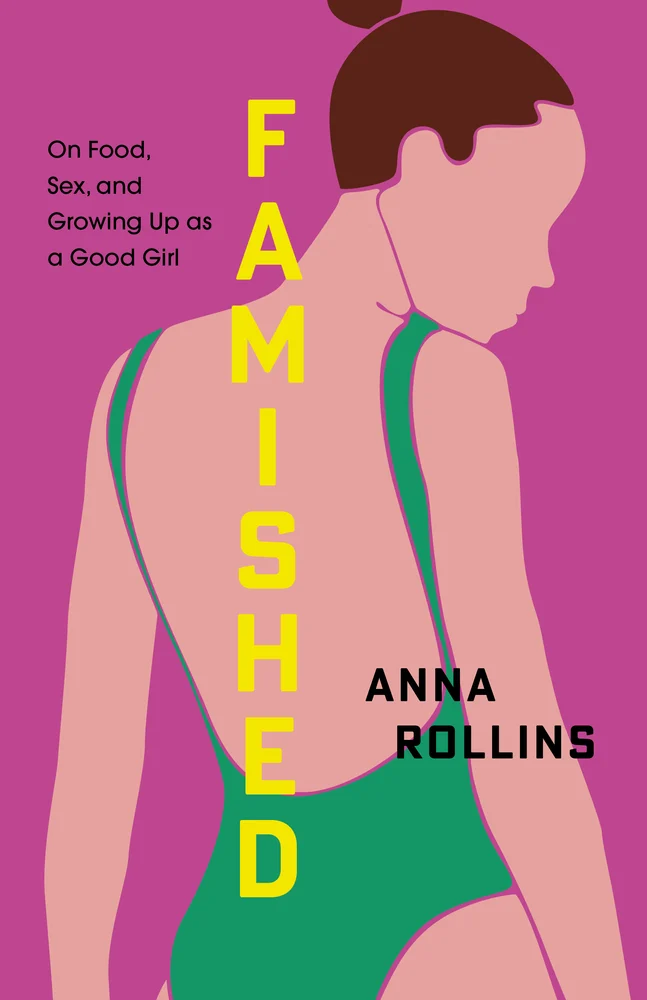
In the opening of Anna Rollins’ debut memoir, Famished: On Food, Sex, and Growing Up a Good Girl, Rollins is in the ICU with a sick child, but all she can think about is how she’s going to work off the pasta she’d eaten the night before. At the time, Rollins “knew it was a coping mechanism . . . what you’ve done your whole life to distract yourself from anything that feels out of control or scary,” as she told me, but conversely, she felt guilt: for being a working mom, for putting her son in daycare. At that moment it became clear to Rollins, who told me, “There’s so much bound up in this [disordered eating] and I want to be able to move on.”
Growing up Southern Baptist in small town Appalachia, Rollins learned early that a woman’s main role was controlling her body. Part of this was millennial diet culture, which encouraged calorie counting and constant exercise, but part of it was the evangelical purity culture she was exposed to in church and at school, which taught that women don’t feel the same sexual desire as men, making them the “gatekeepers” of morality. Purity culture has always been part of society, but it reached a fever pitch during Rollins’ youth in the 1990s and 2000s, due to the rising influence of organizations like the Institute of Basic Life Principles and Focus on the Family. In Famished, Rollins illustrates how these teachings influence everything from sexual agency to a woman’s ability to recognize when she is being preyed upon.
Rollins and I spoke about the far-reaching implications of these teachings, including how purity culture impacts women’s sexuality, the racialization of fatphobia during Reconstruction, and why the most powerful critiques of fundamentalism often come from those who grew up within it.
Deirdre Sugiuchi: I’m Gen X, I grew up evangelical, and while reading Famished, it was fascinating to see millennial diet culture and millennial evangelism colliding, and how the consequences were even worse for you than for Gen X.
Anna Rollins: I’m a huge fan of Sophie Gilbert’s Girl on Girl, and she talks about how, in the nineties, the reaction to the AIDS crisis was this huge fear of sex. People swung one of two ways—it led to hookup culture, but then it also led to purity culture.
At the same time, the surgeon general declared this war on obesity. So, there’s all this stuff going on politically that’s influencing how we feel about bodies and appetites, and there are extreme reactions on both sides. And then you’re growing up, trying to figure out how to become a woman in the middle of that.
DS:The book is addressing women raised in evangelical culture, but how do you think this mindset impacts women in America?
AR: We see it in our lack of social safety nets for women, like with paid family leave. The reason we don’t have it is because of [fundamentalist] scripts about traditional womanhood and motherhood—how you are subordinate to a man and you should rely on that person—that is why we won’t fund this thing that would help so many people. It leaves people in such precarious states. Even if you’re not in purity culture, you’re being affected by it—things are not happening politically because of that belief system.
I’m interested in conversations where we can show up with authenticity.
There’s this idea in purity culture that if you are good, if you dress modestly, and you don’t hang out in the wrong spaces, you won’t be taken advantage of in any way. And if something does happen to you somehow, you must have done something wrong. It’s your fault. It’s never the perpetrator. It’s the victim.
That affects the larger culture too, in the way that we see certain people believed and other people not believed. So even though it may seem like it’s just happening in this insular space, it’s affecting all of our lives through policy.
DS: You interrogate the misogynistic mindset of the church, albeit gently, throughout the book. You give these instances of how the church, and also society, wants women to stay small, by encouraging them to tamp down their sex drives, making sure they don’t lead men into sin, or by staying physically small or physically quiet. And again, as someone who grew up in this culture, this is all so familiar. How do you think women in the church will respond? What type of conversations would you hope that this would spark?
AR: I grew up in fundamentalism, and it was extreme black and white thinking. We were supposed to have thought purity. We were all supposed to be the same. I’m interrogating these limiting scripts that require sameness. I’m hoping that we can talk about new ways forward for women that aren’t just extreme.
I had the hardest time expressing myself for the longest time because I always felt like there was some judge looking at my opinions, waiting to come down on me. In writing this, I realized, Oh, I can show up imperfectly in the world. I can change my mind. I don’t have to live under this belief that there’s always this ever watchful presence ready to pounce on any wrong move that I make. And I certainly learned that in the church, but I also see that in the larger culture too.
I think social media does a lot of that—we’re monitoring people’s beliefs and their purity of beliefs, and we don’t give much forgiveness for people whenever they stray or make a misstatement. I’m interested in conversations where we can show up with authenticity.But also imperfectly so we can have more agency.
DS: Even though I grew up in the faith, I never understood the tie between purity culture and penis-themed party favors for bachelorette parties until I read your book.
AR: Growing up, I remember hearing pastors talk about how women were less visual creatures than men. And because of that we didn’t want sex as much. “Men really want it. They’re a bunch of animals, but you all are closer to angelic beings, so you all need to keep them in line.”
You’re almost praised for not acknowledging what your body needs.
This was told as both a compliment, like you have the moral high ground, but it’s also an insult, because sex is power.
Growing up I went to a private Christian school. I really didn’t have friends who weren’t Christian until I got to college. [My Christian friends and I] were all saving ourselves for marriage, whether everyone was or not—that was what we all said. But we also wanted to prove that we weren’t prudes, like, “We have this power too.”
All the bachelorette parties I went to with girls who grew up in evangelical culture, the trend was penis everything. We ordered a mold to bake a penis cake and we had penis confetti and pin the penis on the guy without a shirt on. It was stupid, but it was also just this assertion of saying “Yeah, we’ve got something too.”
I didn’t realize how weird evangelical purity culture bachelorette parties are until I invited some of my friends who weren’t in that culture to my bachelorette party.
DS: Can you discuss how the hyperfocus on purity has lifelong impacts on women’s sexuality?
AR: Many women suffer from vaginismus, which is sexual dysfunction. You have involuntary contractions of the pelvic floor, and it makes penetrative sex either impossible or incredibly painful. I struggled with it when I got married. I’d saved myself until marriage, and I had no clue what was going on. I’d been taught nothing about my body. I just assumed I was a total failure. I went to a doctor at one point and they dismissed me. Then finally I got some help and it got better, but it took an excruciatingly long time.
I did research on the condition, and women in religious cultures suffer from this double the number of women outside of those culture—one in four women.
You’ve been taught your whole life [sex] is bad. Control yourself and control these others. And then your body just learns, this is what we’re supposed to do.
I can’t stay silent—this was my only way forward.
You’re almost praised for not acknowledging what your body needs. This is seen with the Protestant work ethic too—the more compulsive you are, the more you push past your physical limits, transcend your physical constraints—that is what is good. The body is bad. Having needs is bad.
The political party that aligns itself with Christianity, so many of their positions demonizes people who have needs. I don’t think it’s something that people are consciously aware of, but I think it’s rooted in this idea that good people transcend their bodies. Good people work hard and good people control themselves. It’s all connected.
DS: I really enjoyed the research you shared illustrating how fatphobia was racialized during Reconstruction.
AR: Thin bodies weren’t always the ideal beauty type [until] right around Reconstruction. It was a way for white, Victorian women to distinguish themselves, a way of asserting whiteness. And that has become the standard—this childlike, frail, prepubescent woman.
DS: You discuss how white supremacist patriarchy made white women smaller, but also gave white women power. I’ve read one book you mentioned, The Wisdom of Your Body by Hillary McBride.
AR: Also Fearing the Black Body by Sabrina Strings. Unshrinking by Kate Manne is excellent—she’s a philosopher and she unpacks fatphobia, where it came from, how it influences our policies. Anti-fat bias is the one bias that’s grown rather than shrunk.
I don’t know who said this, but when women’s rights shrink, women’s bodies shrink. I think it’s interesting that the backlash to body positivity is #skinnytok.
DS: Famished questions a lot of the tenets of fundamentalist culture. Can you talk about why there’s a need to have this conversation?
AR: I’m still a Christian, and I’m still in church. There’s a lot that I think is beautiful in the church . . . but I also can’t stay silent about the things that are harming people and are honestly against what Christianity has to say. I really do think that what I’m saying is not extreme or the minority opinion even in the church. More people need to speak out. I can’t stay silent—this was my only way forward. I think that Christianity has a lot of beauty—it has a lot to offer our culture and I don’t want to reject it. But so much that’s done in the name of Christianity really hurts people. It’s really ugly and it’s really anti-Christian. And if we don’t talk about that, it’s hurting the people that Jesus called upon us to help the most.
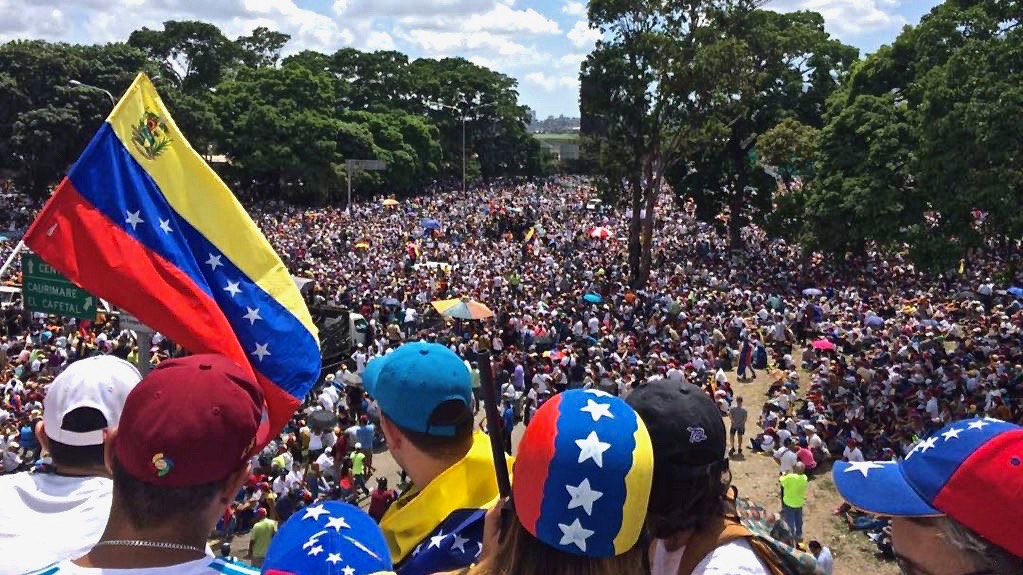
Growing up in Caracas in the ‘90s, I remember seeing a series of posters advertising Venezuela’s most important tourist destinations, such as El Salto Ángel, Canaima National Park, and the Los Roques archipelago. The caption “Venezuela, el secreto mejor guardado del Caribe”—“the best kept secret of the Caribbean”—was written beneath each picture. The message was clear: Despite its breathtaking and diverse landscapes, our country wasn’t as well known or appreciated as other Caribbean destinations. Somehow, we were invisible. Undiscovered.
Perhaps the same holds true for Venezuelan literature today. Although Venezuela was once one of the biggest publishing hubs in Latin America, ours remains one of the least-recognized voices within the region’s rich literary tradition. The reasons for this invisibility are difficult to pinpoint, but they may stem from our country’s long-standing role as an international importer. With oil exports as its main source of income, Venezuela positioned itself as an avid consumer of foreign goods and culture.
In a famous interview, Venezuelan playwright and journalist José Ignacio Cabrujas argued that our internationally oriented tastes made us into global citizens avant la lettre, as we experienced the world’s diversity as if it were our own. However, Cabrujas overlooked the downside: our tendency to neglect our own cultural production. In a sense, Chavismo emerged as a response to this phenomenon—a tragic and catastrophic response.
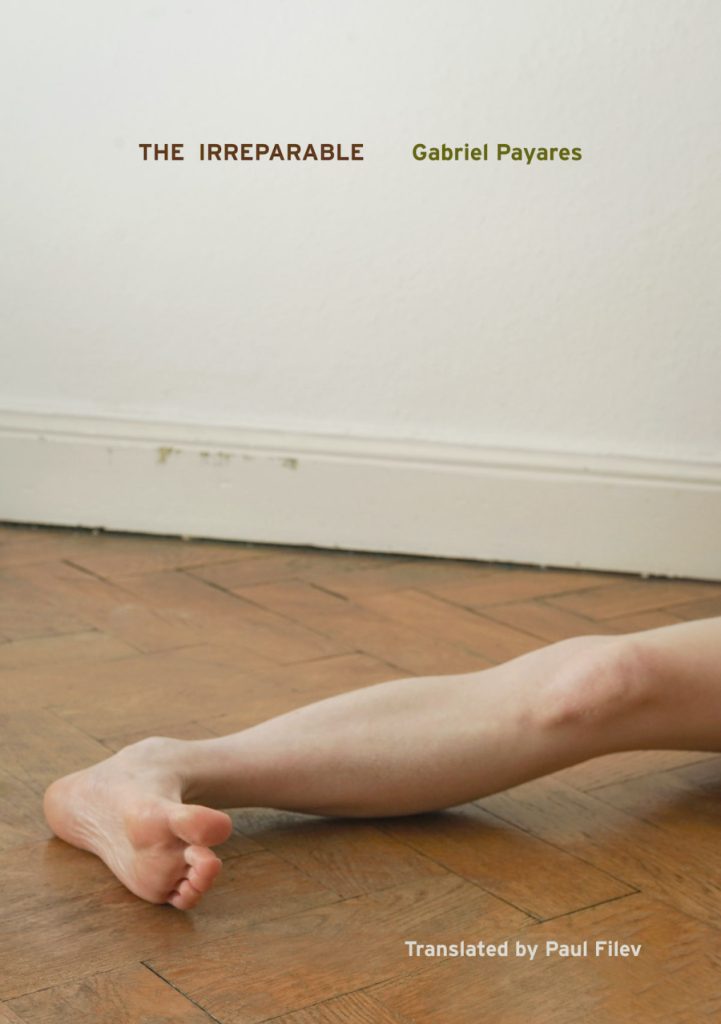
Now, with more than eight million people—out of a population of roughly thirty million—having fled the country, including many of our writers, we Venezuelans are finally looking inward, albeit from abroad. Most of the short stories that make up The Irreparable, which has just been translated into English for the first time, were written during my first years in Buenos Aires. The following reading list features nine Venezuelan books from the diaspora that are available in English. Each book is devoted to what Honoré de Balzac once called “the intimate history of nations.”
—This list was translated from Spanish to English by Paul Filev
This novel, which won the prestigious Herralde Prize in 2006, before its author permanently left Venezuela for Mexico, explores the metaphor linking an ailing individual with the moral and social decay of the country. Two narratives intertwine within its pages: One follows Javier Miranda, a doctor whose father is suddenly diagnosed with terminal cancer, forcing Miranda to deal with his own profession from the patient’s perspective; the other centers on Ernesto Durán, a local incarnation of Molière’s imaginary invalid, who is tormented by the persistent feeling of being gravely ill. In retrospect, The Sickness can be read as a literary premonition of the long, painful decay of Chavismo—a process that began, ironically, around 2013, with Comandante Hugo Chávez’s own illness and death.
A natural disaster ravages Portugal, destroying the city of Lisbon, and signaling that humanity has entered a dangerous and challenging era. While the world confronts its seemingly imminent doom, Venezuela remains trapped in an endless cycle of poverty, corruption, social unrest, and brutal military repression. Against this backdrop—of a dystopian Portugal and a tragically realistic Venezuela—a literature teacher struggles with his crumbling marriage and an ever-deepening sense of futility. His only hope lies in guiding his young students towards beauty, meaning, and transcendence. Paradoxically, the Portuguese literary tradition becomes his greatest ally in this endeavor. This tradition is embodied by Mr. Moreira, an elderly Portuguese immigrant who fled Salazar’s regime in the mid-20th century and settled in Caracas. Written in Spain, where Eduardo Sánchez Rugeles has lived since 2007, this novel is a meditation on loss, melancholy, and hope.
“Write with strength and clarity / now that no one will read you,” Venezuelan poet Eleonora Requena commands herself in this book of poetry written in Argentina. Her verses—presented in both Spanish and English in this edition, thanks to the work of American-Venezuelan translator Guillermo Parra—grapple with the overwhelming silence that sometimes accompanies emigrant poets to their new homes. For whom shall I write now? Who will read me? What possibility is there for literary dialogue? These are the underlying questions in Requena’s book, to which she seeks answers in Venezuelan and global literary traditions: Alejandro Oliveros, Reinaldo Arenas, and Cesare Pavese respond to her call. The result is an intense and moving collection of short poems from the Venezuelan diaspora.
Alejandra Banca is the youngest author in this reading list. She moved to Spain in 2016 and wrote and published her first short story collection there. From Savagery portrays the feeling of dissatisfaction and bleak prospects faced by Venezuela’s youth. Her characters are trapped in a double bind: poverty and chaos in Venezuela, and false promises of opportunity elsewhere. Written mostly in the first person, this vibrant and ferocious collection of stories explores the tension between what is gained and lost through emigration; precarious work, prostitution, and marginality are juxtaposed with hope, sexual freedom, and the opportunity to honor their painful obligations towards those left behind.
In a very well-known poem by Venezuelan author Eugenio Montejo, the poet dreams of folding the world map like a piece of paper, to bring Iceland and Venezuela together and allow palm trees to spread across Nordic fjords. Decades later, poet, teacher and translator Gina Saraceni makes a similar gesture in her fifth poetry collection, in which the Caribbean and Adriatic Seas converge around the image of her aging parents. A descendant of Italian immigrants to Venezuela—now once again living in Europe—Saraceni’s work remains faithful to Venezuela’s diverse cultural identity, weaving together two traditions in her verses. Venezuelan poet Margara Russotto and European poets Amos Oz and Eugenio Montale find their place in Adriatic. Language, memory, longing, and the role poetry plays in the poet’s life emerge as central themes in this luminous book, written from Saraceni’s new home in Colombia.
Based in New York City since 2011, Venezuelan writer and anthropologist Keila Vall de la Ville explores a universal truth in her first novel: that travel allows for the discovery of unsuspected parts of oneself. She takes this idea to an extreme with Julia, a tenacious mountain climber who journeys across three different continents, pursuing not only mountain summits, but also her own personal transformation. Ultimately, Julia seeks self-acceptance, serenity, and clarity enough to break free from the toxic patterns of her relationships. Within the context of this reading list, however, Keila’s novel offers an entirely different perspective on foreignness: the world becomes the stage for a personal adventure and provides the protagonist with refuge from her family and its burdensome dynamics. An undertone of profound, almost mystical optimism runs through Julia’s realization that “Everything is always beginning.”
Since leaving Venezuela, poet, essayist, and translator Adalber Salas Hernández has lived in the United States, Spain, and now Mexico. His experience abroad may explain why themes of exile, loss, and migration recur throughout his work, and make The Science of Departure a natural exploration for him. Composed of raw, sometimes cacophonous verses, the book attempts to map the transience of human existence from antiquity to present-day Venezuela. The title is a nod to Russian poet Osip Mandelstam—a symbol of artistic resistance to totalitarianism who died in a Soviet gulag—while various poems invoke other persecuted figures, including Federico García Lorca. The book also pays homage to Roman citizens who perished in Pompeii, and even to Salas’ own late father. As the poet writes, “distance is measured not in meters but in vanishings.”
In 2007, Argentine custom officials in Buenos Aires confiscated a briefcase containing nearly $800,000 in undeclared cash belonging to Venezuelan businessman Guido Antonini Wilson. When questioned, Antonini Wilson admitted that the money, drawn from Venezuelan state oil revenues, was intended to finance Argentine President Cristina Fernández de Kirchner’s campaign. The incident quickly became one of the most scandalous international corruption cases linked to Hugo Chávez’s government. Inspired by this real-life story, Juan Carlos Méndez Guédez—a prominent Venezuelan writer who has lived in Spain since the 1990s—wrote a novel blending elements of an international political thriller and a detective story. Briefcases from Caracas serves as evidence of his sharp narrative instincts and provides a meticulous portrayal of Venezuela’s moral decay during the oil prices boom of the early years of Chavismo.
Igor Barreto is the only author on this list that still lives in Venezuela. Nevertheless, his powerful poetry deserves a place in any exploration of contemporary Venezuelan literature. This is particularly evident in this book, in which the poet ponders the essence of exile through a blend of verse and prose. Barreto considers exile’s ties to landscapes and places, to what has vanished and survives only in memory, and to the idea that exile is not limited to physical distance from home. It also encompasses those who feel estranged within their own country, a condition often described as “inner exile” or “insile.” For Barreto, exile is ultimately a spiritual category. His “insile” unfolds in Venezuela’s inland plains, a place that nineteenth-century Venezuelan poet Enriqueta Arvelo Larriva once described as being “blind”—that is, barren, desolate—in her correspondence. Hence the title of the book. Barreto reflects on poetry, painting, and humanity’s alienation from nature, while striving to understand “ . . . the nature of exile, / a river of nothing.”
From ride-hailing to door-to-door delivery apps, labor platforms have created a shining new way for millions across the globe to make a living, offering flexibility, autonomy, and low-entry barriers. These forms of gig work have experienced rapid growth while raising questions around worker protections, job security, loneliness, and the role of technology.
Gig work can be understood as a significant shift away from a standard form of employment, while also being lonelier, riskier, and oftentimes more dangerous—but while the platform economy has only recently taken off, gig work itself isn’t new. The novels below grapple with various forms of gig work across time, spanning from a novel as old as 1890 to 2025’s Booker winning Flesh. These novels give a prismatic view into the everyday lives of gig workers. The authors on this list raise existential, psychological questions, while often staying cool and detached.
Writing about the economics of work is an entangled affair. These books show us the varied relationships people have with money, who gets to make it, and at what cost to themselves.
When Margo discovers she’s pregnant with her English professor’s child, she finds herself needing to drop out of college to bring up the child by herself. Her professor refuses to acknowledge the baby, leaving her with only a small adjustment amount and an NDA. This is when she decides to open an OnlyFans account—it makes sense domestically, logistically, and financially. She works her own hours while making a healthy sum that helps her finance her and her child’s life. Told in a funny, light tone, Margo’s life and pathos come out beautifully in Thorpe’s pen. She is interested in how money works and how the moneyed class behaves with their access to it. Margo is often left in precarious situations, but Thorpe asks more of her character, making her strong and inviolable.
Hungerby Knut Hamsun (1890, translated by George Egerton)
A story from another century about a freelance writer between projects, Hunger brought literary fame to Norwegian writer Knut Hamsun who would go on to win the Nobel in 1920. Written in a stream of consciousness style, Hunger is a wild, manic read that takes us deep into the psychology of the protagonist. He is without money, living from assignment to assignment, and yet lends money to those in need, going hungry himself. He is creative and talented but oftentimes his ideas don’t materialize, leaving him with existential angst. He walks through the city of Oslo in harsh winters, with nothing but a few scraps of clothes on him, a pencil his closest companion. When an editor greenlights an idea or he gets paid for an article, the protagonist is overpowered by delusions of grandeur. On other occasions, hungry, in need of money or shelter, he physically chases after strangers he encounters on the street. Through all of this, he remains in conversation with god, believing that he has been chosen to go through these turmoils.
“There is nothing more personal than doing your job.” This mantra guides the unnamed protagonist of Temporary, who is currently between 23 temp gigs while chasing the ultimate dream of a steady, permanent job. She trusts the temp agency to “knead my résumé into a series of paychecks that constitute a life.” She delivers mail, shines shoes at Grand Central, does high-level window cleaning, stands in place of mannequins in stores, and fills in for the Chairman of the Board of a corporation. In the hands of a lesser writer, these exaggerated, absurdist scenarios might fall flat. But Leichter’s deadpan delivery seethes and stings. Temporary questions the way we work now and how a certain sense of depravity in work has been normalized. Is it even possible to stop working?
The protagonist is Edie, a Black woman in her 20s holding an admin job in a publishing firm. She is poorly paid, watches porn at work, and sleeps with coworkers. She shares her roach infested Bushwick apartment and gets into a relationship with an older, white, married man, Eric, who is in an open relationship. Frustrated with her living condition, Edie writes to her 23-year-old landlord who sells tea on Instagram: “We are all trying to eat.” When Edie loses her job, she starts working for a food delivery startup and finally, unable to afford city rent, moves in with Eric and his family in their suburban house. The novel tells the story about the grind young women have to go through to survive a low-paying job in a city like New York through the lens of race, class, and art, making it a poignant pick that remains fresh.
Ride-share driver Damani is Tamil, queer, and straining to make ends meet in an unnamed North American city. She drives by protests of all kinds throughout the day (and night), unable to attend them, feeling smaller all the same. She endures low wages, lack of inspiration, and endless tiredness in Priya Guns’ debut novel, inspired by Scorsese’s Taxi Driver. Rent is always due and electricity bill hardly ever paid on time as Damani drives through these travails aiming to secure more tips, more five-star ratings, more cash. The grind is relentless. For Damani, driving this ride-share, inviting people into a hyper-personal space, and having to deal with passengers is a way of getting a full serving of life experience. That’s when she meets Joelene, an encounter that changes things for good. Your Driver Is Waiting tackles racism, classism, work, and life beyond it—all while satirizing the everyday trials and tribulations that come with her daily work.
Convenience Store Woman was celebrated Japanese writer Sayaka Murata’s first novel to be translated to English. A strange 36-year-old woman, Keiko Furukura, works a rather strange job as a convenience store worker in Japan. She is alienated from the world, friendless and uninterested in dating or having sex. Murata herself worked at a convenience store for nearly eighteen years and brings a matter-of-fact, blithe straightforwardness to her fiction. Refreshing in its insight into work, femininity, and the everyday rigmarole, and told in an elegant, terse, deadpan delivery, the novel perfectly captures the brokenness of convenience store jobs and the way they make or break their workers’ psyche. Keiko eats at the store, wears a uniform, talks in clipped responses, and conducts herself according to the guidelines laid out in the store’s manual. “This is the only way I can be a normal person,” she thinks. This should tell us enough about the place of work in her life and how it shapes her.
Istavan, Flesh’s shy, reticent protagonist, moves through life in search of nothing much. He’s introverted but never not working, often in conversations with others, but never speaks much himself. Instead of looking for his next assignment, work finds him and delivers him to the next stage in life. Through a series of jobs starting from a drug delivery agent to a war soldier to a pub bouncer to a driver to a business owner and back to being a pub bouncer again, Istavan’s life is shown through vignettes of various jobs he holds in different stages of life and how it impacts him. No matter what the life situation, he is forever that lonesome outsider trying to make ends meet. Szalay’s portrait of Istavan’s rags-to-riches life is singular in the way it is told. Szalay often skips the more intense parts of Istavan’s experiences, leaving them to the reader’s imagination. The resultant book is racy, remote, and roiling, capturing the way work dominates the lives of those of us who have nothing to lose because we come from nothing.
“Go West, young man!”—a phrase that looms large in the United States’s history of westward expansion. It’s a history dominated by the displacement of Indigenous peoples, the exploitation and destruction of land, and a drive to claim more, more, always more: more resources, more gold, and more land, but also more control of the stories we tell. Kathleen Boland’s debut novel Scavengers is a funny, sharp joyride that plays within the tropes of the stereotypical Western in order to hold up a mirror to both characters and readers and ask them: Are you so sure about that?
The novel follows buttoned-up Bea, who has just been fired from her job as a junior weather analyst on a commodities trading desk, as she escapes to Salt Lake City. That’s where her mother Christy, who has been “going with the flow” for most of her life, has been living (in an apartment Bea pays for) and, unbeknownst to Bea, participating in an online forum dedicated to a $1 million treasure hunt. Christy is pretty sure she’s close to finding the treasure, and as the hunt comes to a head and takes Bea and Christy to the small town of Mercy, the two find themselves deep in the wilderness, confronting the harshness and beauty of the landscape, and of the choices they’ve made to lead them to this point.
Scavengers has all of the elements you could hope for from a mother-daughter take on the Western adventure: It’s full of vibrant and eccentric characters, madcap hijinks, sizzling suspense, and laugh-out-loud humor. But dig a little deeper and it is, above all else, a deeply thoughtful meditation on the stories we tell ourselves and each other, about the things we value, and about our place in the vast, mysterious, and capricious world we live in. What happens, Scavengers asks, when we start to push at the edges of the stories we’ve always believed? What happens when we’re forced to consider that another story might have been happening this whole time? What sort of reinvention might we experience if we let go of what we thought we knew?
I had the pleasure to talk to Kathleen over Zoom about the West, reinvention, what wilderness is and what it means to us, and how we are always rewriting our stories.
Mary Pappalardo: One thing I loved about this book is that it is unequivocally a story about adventure and more than that, a “go West” adventure that follows two women. This is a genre historically dominated by male perspectives, so I’m curious how you see this book fitting into the history and lineage of that genre?
Kathleen Boland: I think one of the major impetuses for me to write the book, actually, was that—in terms of Utah in particular—I was reading so much incredible nonfiction and poetry about the state, but in terms of fiction, it was kind of just Edward Abbey. I think there’s a lot more to say about it. I was a young woman going to southern Utah and having all these adventures and falling in love with this landscape. And I wanted to know more about what other women thought and felt when they went to this place. I couldn’t find that really, in fiction in particular, so I decided to try to write it myself. I think also—especially in terms of a mother and daughter going West—there’s something to be said about the reinvention . . . that all Westerns kind of stand on. Reinvention happens all the time in terms of being a daughter and in terms of being a mother, and that’s also something I wanted to explore with Bea and Christy. Putting them in this landscape, taking them out of the Northeast and into the desert, it kind of felt like a how else are you going to really stare at yourselves and figure it out kind of thing.
MP: Could you say more about what made you want to write about mothers and daughters? What is so rich about that kind of a relationship that you were drawn to?
Reinvention happens all the time in terms of being a daughter and in terms of being a mother.
KB: As I was going through my twenties I had this experience, which hopefully is common . . . you start realizing that your parents are people too, and they’re not just Mom and Dad, but they have had full lives and full experiences before you were ever born. They have their foibles and idiosyncrasies. I think it’s a process of maturity. Suddenly you’re like, Wow, my mom/my dad is this full person and makes mistakes and wrong choices just as much as I do. And how that impacts not just your view of them, but your relationship with them . . . that was something I was exploring when I first started writing this book. And then I became a mother while editing this book, and that really informed a lot of the backward glance and editing in terms of Christy and how you view your child as they get older. Putting them out in Utah, I think for me, Christy typifies this personality of the adventurer and the explorer. Whereas Bea is very committed to a much more square, stayed, stereotypical life. So what would happen if she is forced to reinvent herself because of her own mistakes? And then they have to go out together. And doing that all in Utah made sense to me because Utah is a fascinating, weird place, but it’s a place where people have always gone seeking for things.
MP: You seem to have a real relationship with that landscape. Could you talk about your relationship to southern Utah, and the West in general?
KB: Like Bea and Christy, I grew up in suburban Connecticut. I left and moved to Colorado after college. Around the same time, my parents, who also grew up in suburban Connecticut, moved to Utah. I would go visit them in Utah, and then I would go and solo hike and backpack around the Escalante Grand Staircase area. That was very formative for me because it was so unlike where I grew up. It was so open and wild and full of possibility, and I was completely enamored in the very stereotypical American West grand heritage. I just wanted to learn everything about this place. As I kept reading and going back there, I wanted to know more and more. I started realizing how weird Utah is. Other places get a lot of attention for being weird (Florida, for instance), but I think there’s a lot to be said for Utah. I think it’s a strange, wonderful place. It’s also a place that has a deep and fraught relationship with wilderness. I just could keep going back there and keep writing about it. You know, I’ve gotten the advice of write about your obsessions, and it was an obsession of mine.
MP: How do you feel about publishing this at a time when we’re seeing attempts to control land enacted as literal policy at local, state, and federal levels? When you started this book, did you think you would be writing a novel that intersects with the political as much as it does?
KB: Utah is really an epicenter for a lot of these conversations about national lands, wilderness, and what does “wild lands” even mean. Interestingly, when I was out there in the 2010s, locally there was a lot going on, especially with the Grand Staircase Escalante area. People were upset about government overreach. They were upset about the designation of it as a national monument. And now you have full senators and the Secretary of the Interior thinking these same things. I think the politics of the place were always of the mind.
Before I got my MFA, I worked on a commodities trading desk, a lot like Bea did. And while I was doing that work, I was always thinking about land use, about extractive industry. That’s what all of my research was about: The impact these things have on these lands and what that can mean. But at the end of the day, any attempts to control the land are just hubris. We can permanently change the land, absolutely. But can you control it? I don’t think so. I think that’s another reason why I talk so much about the weather in the novel, because I see it as on par with trying to control the weather. We can pretend that we do, but at the end of the day, there’s nothing humans can do about the weather. They can change it and influence it—right, climate change—but they can’t predict what will happen. And I am reminded over and over again, whenever I go out into the wilderness, that you can sit in your air conditioned home, have everything climate controlled, have all the food you want. But then if you go out there and you leave that behind, you are very quickly reminded that you are an animal in the world. There’s a lot more going on and forces that you’ll never be able to control once you leave that behind. So, I think the politics were always there. We’re obviously in a time where these things are now of a power and a scale that I don’t think I could have ever anticipated. But these debates were happening back when I was alone hiking through the slot canyons, so I was always thinking about them.
MP: These ideas of wilderness remind me of some of my favorite formal elements of the book: the interludes peppered throughout the novel that drape geological time or non-human perspectives over the narrative that propels the novel. Why did you include those?
KB: A big part is . . . What does it mean to value the land? Who gets to decide what’s valuable?Christy believes the land is only valuable to her to go find this treasure. Bea works on a commodities desk where everything she does is about estimating, projecting, and determining what the land gives in terms of value. Any time I’ve gone out to these spaces in southern Utah, I am immediately reminded that there are so many other ways to live and so many other perspectives in and from these places. I wanted to be sure that throughout this mother-daughter romp, [I showed that] there are real people and beings who live there, and that the desert isn’t the middle of nowhere, it’s not a wasteland. There’s so much life, and life is not only human life, right? I wanted to remind the reader of this and to have that perspective, because at the end of the book, every character is reminded that there is so much going on in this place that has nothing to do with them, has no care for them, and they could only hope extends mercy. There’s so much weirdness and wonderfulness about this part of the country that many people don’t realize or don’t think about or underestimate. And I wanted to do them justice.
MP: You open the book with this meditation on bullshit. You write, “Look, people make shit up all the time. We’re all a bunch of filthy liars. We can lie about everything and we do.” What might authenticity mean in the context of this book, of literature in general, and maybe even just in the cultural moment that this is being published?
KB: I first started writing this book in 2016 and things were definitely changing, but maybe not on the level that they are now. I started the book there as a nod to: It’s fiction. All of this is made up. It was also a nod towards my feelings about the financial industry. Having worked in it . . . there’s so much bullshit that goes on in finance, and a lot of it is wrapped up in jargon and real material power, of course, but it’s still bullshit. It is a real job, what Bea did, to be a weather analyst for a commodities desk. And people are putting sometimes millions of dollars on the line by trying to guess what the weather’s going to be like in a couple of years, which is comedically insane. And that’s something I was thinking about, Do people really realize just how wild and bullshit these things are?
What does it mean to value the land? Who gets to decide what’s valuable?
I was also interested in poking holes in a lot of the presumptions I had about the West when I first went out there, and about what success means. You have Bea on one hand who thinks a way that, for me in suburban Connecticut, a lot of people I knew and even I adhered to. Where this is what success looks like and it’s the only way to do life. And then you have Christy who’s like, Well that’s bullshit. But is her way the right way too?
And then lastly, like I mentioned, the bullshit about the West, the bullshit about places like southern Utah, again, like “middle of nowhere,” or “the desert is a wasteland,” or “nothing lives there or grows there, it’s only good for coal and oil extraction.” These are all bullshit things that we create narratives from and then big decisions. I was always motivated by being like, Are you sure? Is that real?
MP: Can you talk a little about online message boards and the culture of forums that is so essential to this book? This felt like an earlier internet culture that you tapped into. What about that felt right for this?
KB: It’s a part of the internet that I don’t think fully exists anymore. One, it was me riffing off the inspiration of the Forrest Fenn treasure hunt; I knew that there’s this dedicated online community about it. But what I loved is that it was a way to show how many people there are all over the place hoping and wanting the same things. And no matter what, human nature is to find your fellow weirdos, in any way possible. I also wanted to have an homage to all these various forums that I discovered when I was in my late teens and early twenties. But also—and this was true with the Forrest Fenn treasure, three people died looking for that treasure, which is wild and tragic—how you can have an unearned confidence to go out into these places to look for these things. It goes back to what we were talking about before: When you leave “civilization,” or the “creature comforts” of organized society and go into these places, you are quickly reminded that you are depending on a lot of things for a lot of conveniences that do not exist in those areas. So, I wanted to be sure to underline that.
If you refuse to revise, you’re refusing to write.
It goes back to reinvention, the persona you can bring to an earlier internet where you could just be a username on a forum, you could inhabit any persona you want. I think there’s a lot of ego and persona in this forum [in the book], and then as those people become actual lived characters, you start realizing, oh, how far can that reinvention actually go?How much of it is actually bullshit and lies versus actual knowledge?
MP: This started back in your MFA days, and I was curious what the process of revision was like, both turning an MFA thesis into a book, but also what was that exploration process like turning that first version into the final book?
KB: We’ve been talking about reinvention and let me tell you, this book has been reinvented dozens and dozens of times. My thesis was . . . I wouldn’t even say it’s an early draft of this. I would say it’s a distant cousin. I first queried this book when I thought it was done about three years ago. And multiple agents were very generous with their time, but they were all like, The ending sucks. And that was hard to hear, but I kind of gave myself a three-strike rule: When three different people were like, ahhh, but your ending, I had to kind of sit with it, and I completely changed the last 40-50 pages. I just trashed the whole ending and rewrote it. What I learned over the course of that is that, I don’t think you have to kill your darlings. A lot of things that we’ve talked about today are my darlings. But I do think, for me, radical reinvention has to always be on the table. You can keep the characters, you can keep the setting, you can keep your obsessions, but at the end of the day I had to be telling someone a story. And most of the time it was myself. It wasn’t just me putting words on a page for the sake of words on the page. It was, Okay, how do you tell yourself a story that makes sense? And then what does that mean for someone else? I think that was learning how to write a novel and not just a novel-shaped pile of words. So constant reinvention and just a total and complete embrace of revision. Because writers would always [say] the real writing is revision. And it’s unfortunately very true. You have to keep editing yourself and you have to keep revising yourself. And if you refuse to revise, you’re refusing to write.
MP: Reinvention and revision . . .
KB: They’re both painful, necessary, and unavoidable.
I found out my mother was a slut from my best friend, at a bar with my secret Greek boyfriend who was possibly a homosexual and his uptight brother who pretended to know nothing of our affair. I was high on myself that evening. It was a buzz I got rarely, the way somebody who hardly ever drinks gets plowed after one sip. At eighteen, I had progressed from being a girl who never attracted much attention, to a woman who never attracted much attention—so this kind of evening, featuring me as the heroine of an illicit liaison, flanked by single, sexless friends who suspected but could not confirm my “other life,” made me feel like a tingly imposter with all eyes upon me.
I was dancing, I remember that. My best friend, Sera, and my lover, Alex, were dancing with me—not with each other, or alone, but each trying to be my partner. Sera was fiercely jealous of Alex, not because she was either attracted to him or because she didn’t like him, but simply because he claimed my attention, and she was not accustomed to having to compete. She was used to being the flower around which all the bees buzzed; used to feeling magnanimous for allowing me to be the Queen Bee fed of her charm, wit, and loyalties on a priority basis, while others had to work hard. Alex’s older brother, Yannis, was hot for Sera, but this was of little consequence since he was a prematurely balding, stoop-spined twenty-two-year-old, who worked at their father’s diner fifty hours per week, lived above the store, and had skin the color of flour-coated dough. If you yelled to him, “Hey, dude, where’d you put the beer?” he would reply in a Spock-like voice, “I believe it is in the vehicle.” He was weird, and while marginally sexy in a dark, mortician kind of way, definitely not Sera’s type.
Sera and I were fond of bars. Though I was not prone to getting drunk on my own sexual power (even the phrase seems absurd), I was quite known for getting inebriated on just about anything else. We’d had fake IDs since age sixteen, but we’d started drinking when we were twelve, stealing from my mother’s bottles and picking up an extra pack of Benson & Hedges when she sent us to the store to buy hers. We were not “fast girls”—Sera was a virgin, and Alex was my first lover—but like many young women who came of age in the mid-1980s, we were heavily into partying, dancing, dressing to the nines even to sit around at McDonald’s or study hall, and doing “everything but” with guys we picked up at parties, since dating per se (the way Sera’s mother described it at least) did not much exist among our crowd. You made out once, and then you either automatically became boyfriend-girlfriend (which did not necessarily involve dates), or you carefully ignored each other for the remainder of your teenaged life.
“I’ll stop the world and melt with you,” Sera sang, shimmying her shoulders on the dance floor. Alex had told me once that he could tell she’d be good in bed because of the way she moved her shoulders when she danced. She was uninhibited, he said; he could tell. Since I was the first girl he’d ever slept with, I was unsure what made him such the connoisseur but felt both oddly proud of Sera and flattered that he might be trying to make me jealous. “There’s nothing you and I won’t do!” She pointed at me and threw her arm around me—this song was laden with significance for us as it had played constantly in the discos during our senior trip to the Bahamas a few months prior. But my time in the Bahamas had been spent stealing away from my friends to sneak to Alex’s room—he had even sprung for a single so we could be alone—and that Sera didn’t know it made me feel treasonous to both of them, no longer giddy with my wriggling, sex-kitten abandon. So, I stiffened, drew my arm away.
I don’t remember the name of the bar. There were so many in those days. I don’t remember what Sera and I were talking about, or how talking was even possible in the midst of her singing and competing with Alex for my dancing attentions (funny since I was not a very good dancer; inhibited, I guess you could say), but somehow we got from point A to point B. Point A being that Sera suspected I was “totally in love with” Alex—something in her tone made me bristle as if wrongly accused—and point B being that she did not want to see me make the same mistakes my mother had. “I don’t want to see you turn into your mother,” was what she said, by which I thought she meant divorced. I figured she did not want me to marry Alex because she feared he would divorce me due to his family’s disapproval. Though I’d never discussed this worry with Sera, I assumed that, as usual, she had read my mind. “Oh, we’re just fooling around,” I laughed, trying to sound worldly and laissez-faire to put her off. But Sera’s pointed face puckered like I was something she had bitten into that had gone bad. “Emily,” she said, somber amid the music, “that’s exactly what I mean.”
My mother was popular. She had me when she was twenty, so when I was ten years old and she was thirty, she still had girlfriends—all single or divorced—who came over and smoked Benson & Hedges at our kitchen table, wearing silk blouses that revealed tan décolletage. They had bouncy, feathered hair like Charlie’s Angels, long fingernails, numerous shiny gold chains, and sometimes three rings on one finger. My mother got us a discount on our rent from Tony Guidubaldi, our middle-aged, married landlord, who also had a plumbing business and more money than most of the men in the neighborhood, even the mobsters. She knew all the bartenders; she never had to pay for drinks, her friends teased. I was proud of my mother. My father had been a heroin addict and car thief. I had a dim memory of watching him shoot up, but my mother said he never did that in front of me and that I must be imagining it based on something I saw in a movie. Mom kicked him out when I was three, and she heard he went to jail shortly afterward. Neither of us ever saw him again. My mother was like the women on the popular 1970s sitcoms: Rhoda, Alice, One Day at a Time. Divorced, independent, spunky. She made Sera’s parents, who were only a decade older than Mom, seem about a hundred years old.
Mom was initially upset about Sera, who, when we first met at ten, was bookish and fat. While we spent most of our time in my bedroom playing elaborate imaginary games that involved things like Charlie’s Angels living behind my wall and Marie Osmond secretly being my mother, Mom surveyed with anxiety out the picture window of our ground-floor apartment all the cool girls of the neighborhood, smoking their Newports and wearing their Italian jackets with red stars around their last names, emblazoned on the back. These girls, some only a couple years older than I, looked like mini versions of my mother’s friends, and Mom ached for me to be one of them so I could have a good life. She encouraged me to dump Sera, saying I would look fat and nerdy by association (though I was a stick and didn’t read much), but it was no use. I loved Sera with an intensity to which both my mother and I were unaccustomed—with the intensity Sera would later inspire in all our high school friends once she was no longer fat or buck-toothed or frizzy-haired, although still bookish, which had somehow become acceptable and even made her look a little like a rebel.
Sera’s family had bookshelves with The Brothers Karamazov and The House of Mirth shoved alongside photo books of Paris with titillating titles like Love on the Left Bank. Mom kept her Jackie Collins and Harold Robbins novels in a messy pile on her dresser and lent them to her friends when she was finished and never asked for them back. Sera’s parents were fat and unpopular, too, but nicer to kids than any of the popular people I knew. They ate ice cream: there were always eight kinds in the house. Mom never had anything in our fridge except her unsweetened sun tea, which guests weren’t allowed to touch. When Sera slept over, her parents didn’t understand to feed her before she came (it must have been inconceivable to her father, the cook, that his bella figlia mia, Serafina, would not be greeted at the door with a meatball or a cannoli), so we had to order pizza, if Mom could afford it that week.
Mom stopped going out when she got breast cancer my sophomore year. And although by then she had come to like Sera well enough, remarking constantly on how thin and cute she had become (as though she had not seen her in four years, instead of almost every day), once she got sick she began disliking Sera for a different reason. Now Sera was too popular—dragging me to parties every weekend, when Mom could see full well, judging by the fact that the phone rarely rang for me unless it was Sera, that I was invited by virtue of our friendship and not on my own merit. Having a daughter in high social demand loses a significant amount of cachet when you are dropping weight and in pain and have lost one of your breasts. When you are sick, you want your children to be hopeless nerds who have nothing better to do than sit at home with you. Mom was jealous, though when I told Sera’s mother that in passing, she winced like I’d smacked myself in the face and said, “Mothers shouldn’t be jealous of their children’s lives,” as though Mom wasn’t ill and deserving of any special consideration. As though she’d been wanting to say something like that for a long time—even when Mom had firm, perky boobs. After that, I didn’t like Sera’s parents as well anymore.
My mother assumed Alex was my boyfriend because he took me to fancy places for dinner, like Oprah Winfrey’s new restaurant, The Eccentric, and I never had to bring any money. No variation of my “we’re just friends” speech could convince her. I’d been waiting tables at Alex’s family’s diner since January, and several times Mom had come in and run into his parents. Each time my heart throbbed with horror that she might insinuate something about “our lovesick kids,” accompanied by a lewd wink or some other horrible sign. Then Alex’s father would fire me, and I wasn’t entirely certain that if I didn’t see Alex at work every day, our relationship would long survive. (We were both beginning classes at UIC in less than a month, but all Alex’s Greek friends would be there, too, opting to stay close to their clan. I obsessed: what excuse would we make to even associate?) But each time Mom dropped by, she was quiet, almost unrecognizably demure. I’d taken my job to supplement her losses when she started taking so much time off work. Maybe she felt shamed, like Alex’s parents were giving her charity. Mom was on disability now; I made more money at the diner than she did off her checks.
I fell in love with Alex right away. I’d noticed him even before, in the halls at school, but he hung out with the Greek people speaking Greek and didn’t listen to the Violent Femmes or wear black vintage clothing or swallow speed between classes and drink beer out of McDonald’s Coke cups. The Greeks were as foreign to us as the Amish—though once I knew them, I realized they only listened to dance music instead of alternative, wore shiny, tight clothing Sera’s crowd considered tacky, and drank mixed drinks at sponsored Greek dances without needing fake IDs. Alex had no qualms about his Americanized Italian girl employee hanging around his Greek friends, but we had to hide our romance in case they told his father. We never held hands in public or made out by our lockers like some couples. To compensate for the lack of visible drama, I wrote him long, moony letters in class declaring my undying devotion and calling us “star-crossed lovers the world aims to keep apart.” When he visited Greece after graduation, I sent him a bottle of Chicago rain, and later, my dishwater-brown ponytail wrapped in a blue ribbon when I got my hair bobbed to surprise him. Alex acted pleased by my new hairdo, but Yannis said the ponytail was creepy like Fatal Attraction and had scared his aunts, who apparently had no qualms about opening their seventeen-year-old nephew’s mail.
This had been going on for six months.
You may be wondering what kind of a person Sera was, that she would tell me, her best friend, that my cancer-ridden mother was a slut. You may be assuming that she said it in anger, out of jealousy that she did not have a boyfriend, that she was still a virgin, that I was leaving her behind. And on some level, I guess all of these deductions would be true. But on a more primal level, Sera’s motivation had little to do with guys or even teen-chick competition. She purposely upset me so that she could comfort me. She did it because that was what she knew how to do—was what she did—and, in retrospect, was why so many people loved her. She was the one who would point out that your boyfriend was probably cheating on you and then take your phone calls four times a night and listen to you cry without ever tiring of your idiocy. She would play matchmaker between stocky, desperate girls and their hot, football-player crushes, and when things went wrong and the girls got burned, Sera would pick up the pieces. Sera would disguise her voice and call your mother pretending to be a proper adult for whose child you babysat, in an earnest attempt to enable you to go out on Saturday night, and then when the plot was ultimately foiled, she would scheme with you about how to break out of your house and concur that your mother was a bitch prison warden. She would get you high and then nurse you through a bad trip. Sera was everybody’s mother, but a Mephistopheles of a mother, honing in on and somehow catering to your darker side and secret fears or desires.
You may be wondering what kind of a person Sera was, that she would tell me, her best friend, that my cancer-ridden mother was a slut.
Oh, don’t think we weren’t on to her. Behind her back—and to her face—we all agreed she was manipulative, controlling. But teenagers are notoriously bad listeners, fickle hearted, and by and large fairly stupid about the workings of the human mind, or even about how to forge a school absence note that actually looked and read like it was penned by a fifty-year-old. She was a rare commodity we could not do without, and we did not, really, mind the dramas she stirred up. We liked to be the center of attention, and Sera could make you feel like you were the center of her world—even if it turned out you were one of ten people to call her that night, and you noticed that she rarely called you. Soon she would be majoring in psychology, but she had been our shrink for years, and much later, in therapy myself, I would see that, like all great analysts, she had a certain ruthless immunity to other people’s pain, just as a seasoned surgeon fails to gag when slicing through flesh and yellowed, bulbous fat to the blood and guts beneath. She was fascinated by being needed—by other people’s capacity for need. That was her fix, her need, and while I had not really considered the implications of my failing to confide in her about Alex—when being confided in was her prime vocation—I knew that my need for her was crucial to our relationship. She was the rescuer, and I often needed saving: from my mother’s stronger will; from the advances of scary asshole boys; from term papers on books I didn’t really grasp; from my future without direction. And now from the jaws of my mother’s looming death, which truly was inevitable, we all saw. Sera and I had been friends for eight years, and like a married couple, we had our patterns. She would slice open my skin and fat and stir around my guts, and then she would stitch me back together. And I didn’t mind, really. My mother had never been that interested in what went on under my skin—nobody had, even Alex. Her efforts made me feel loved.
“Before my dad opened the restaurant, when he was still tending bar at Cagney’s, he said your mother slept with every regular at the bar and used to hit on him all the time. She had no pride, he said. She’d go with married guys just for buying her a drink. I don’t want to see you like that with Alex, just because he has money, just because he’s all Oh-I’ll-Take-You-To-My-Condo-In-Athens or whatever. He’ll never admit he’s even dating you—he’s totally going to marry some tacky Greek bitch with big hair—if he’s even straight! Can’t you see he’s just using you?”
And I could. I could. I could have fallen right into her waiting arms.
But here is what happened instead: I became hysterical.
In the middle of the dance floor, while the Violent Femmes intoned, “One, one, one ’cause you left me,” I felt my face crumple into a grimace and whines well up between my throat glands. This is what I saw: my father, in a dark corner of the bedroom I would later know only as Mom’s, a strap around his arm, tapping, tapping. Then, the arm flying back, strap flailing, as he smacked my mother’s face. Some memories are fake: I know. I’ve had flashbacks of various grisly accidents I could never have experienced without being killed: cars plummeting off cliffs and the feeling of free-falling, the claustrophobia of chaos in a burning plane. Other memories verge on dream, like lying in my twin bed at night listening to the radio for so long that the Top 40 station turned into the religious station, muffled voices from my mother’s room, the sound of something pounding the wall rhythmically, the squeaking of an angry bed . . . I knew.
Once, I’d even intruded. Once, when I was old enough to know what sex was but young enough to still think it could not apply to my mother—once, knowing Sera got to sleep with her parents when she had a bad dream—I stirred in bed, plotting, gathering nerve, then scuttled across the dark kitchen, conscious of the fact that roaches scurried out of my way, still frightened of me after all the years we’d lived side by side. I had a nightmare, I would say to my mother, and wait for her to invite me into her wide, white-sheeted bed, rumpled with the smooth cool skin of her. I had the nightmare all planned just in case she asked: Satan lived behind my wall and I was going to have to marry him. But outside her door, I hesitated; I was aware of hunger scraping my stomach, but there was no food in the apartment. I had to pee, but I rarely used the bathroom at night because I didn’t like the sight of bugs scurrying when I turned on the light and shocked them. “Mom,” I whispered. “Mommy.”
An arm on my shoulder. I whirled around, terrified, as though one of the roaches had grown to monster size—I yelped. But it was only Tony Guidubaldi, in my mother’s striped terry cloth robe, his hand circling my shoulder blade like a broken wing he hoped he could repair. “Whatsa matter, babe?” he asked. “You have a bad dream? You lookin’ for your ma?” But I burst away and ran the few steps back to my room, hopping into my sweat-sticky bed, listening to the caller on the radio say, I was saved seven years ago but my son . . . I waited for my mother to come and find out what was wrong—she must have heard me in the hall—but she never arrived. In the morning, Tony Guidubaldi was gone, and after that Mom started letting me spend weekends with Sera. Her parents took us on long drives to the Michigan Dunes, cruising in their green Nova for quaint coffee shops in Cherry Valley, where one could obtain the world’s best apple pie. Years later, I said to my mother, “When you were dating Tony Guidubaldi,” and she said, “Don’t be crazy. We never dated—he’s married. We were just good friends.”
There are some memories that come from a kind of archetype of human suffering: the fear of falling; the hopelessness of trapped limbs thrashing everywhere in a dark, confined space; the itching sting of fire. I went through a stage where I loved all the made-for-TV junkie movies, imagining each addict was my father, and maybe, maybe I have transposed his image, his strap, his slap, on a picture I saw long ago: just actors playing a part. Not my father. Not my mother’s face. There are memories that do not belong to us, no matter how real they seem. But for a week, Tony Guidubaldi’s watch sat on my mother’s bureau, and the following weekend, it just disappeared. There are memories that will always be ours, no matter how hard we will them to go away.
Sera had chased me to the bathroom, where I was leaning, weeping over a sink like I might throw up. “Emmy,” she pleaded, “it’s no big deal. So what about your mom? She’s not like that anymore, and you’re not her—for God’s sake, you’re a virgin—”
“I’ve been screwing Alex for half a year!” I screamed. “We go at it everywhere—parking lots at night, the bathroom at work the minute Yannis goes on an errand, the elevator at UIC after orientation. You have no idea—you don’t know anything about me!”
“Oh, you’re lying just to piss me off,” she said rationally. “You’d never do that; you’re totally scared of guys. Besides, we made a pact. You swore.”
“Duh,” I said. “I fucking lied.”
Even after she’d torn out of the bathroom, I lingered, sniveling and dwelling on my misery. I was just like my mother, who was dying alone at thirty-nine, jobless in a roach-infested apartment we could only afford because she’d boned the landlord for years, along with every other neighborhood asshole. None of them came around now. None of them would probably even show up at her wake, though maybe I’d get it for free if she’d fucked any of the Rizzis who owned the funeral parlor. I would spend my college years letting Alex buy me things, shaking my shoulders on dance floors trying to be somebody else while poor Yannis jerked off nights thinking about my tits, and then Alex would marry some Greek girl just like Sera predicted, or maybe he’d come out of the closet someday, but still I’d be kicked to the side of the road as an obstruction to his Athenian pursuit of tight boy ass. I was the world’s biggest loser; I would believe anything; the first time I made a move without Sera and look what I did. I was a slut, and my mother was worse than a slut. My mother was already dead.
Back near the bar, Sera and Alex were arguing. I approached them warily, like a tired mother having to break up the public spats of her annoying children one time too many. Alex grabbed my arm when he saw me. He was a lanky, ethereal boy with fine features, too much fashion sense about women’s clothing, and a soft, sweet voice; I had never seen him angry before. “How could you tell her about us?” he hissed in my face. “She’s the biggest gossip in the whole school. We might as well go have sex in front of my dad!”
Sera pushed his chest. “Who do you think you are, Conan the Barbarian? Let go of her!”
“Mind your own business,” Alex whined like a baby. “Don’t you think you’ve done enough?”
She rolled her eyes. “Don’t be a dork. I’m not going to tell anyone. I’m just mad that Emily broke our pact, so now you guys are going to have to make it up to me somehow.”
“Like how?” I said. I knew she was up to something, but I wanted it to be over quickly so I could go home. Alex had the car. I had no money, as usual.
“Well, we were supposed to lose our virginity at the same time,” Sera said. Then, with a flourish in Alex’s direction, “We vowed ages ago. But now I’m going to have to wait till I get to Madison, because there’s nobody here in Chicago I want to sleep with. I’ll have to start college a bitter virgin.” She laughed—suddenly, she did not sound bitter. “The sooner I get laid, the less likely I am to be angry that Emily is so selfish. Then I’d have a secret to keep, too.”
“So go screw Yannis then,” I said irritably. “He’s totally in lust with you.”
“Eeew,” Sera said flatly. “I think not. Alex here got all the charm in the family. Alex, by the way, are you gay?”
“Huh?” Alex said.
“Bi, then?”
“Why are you asking me that?”
“It’s scary out there. I wouldn’t want my best friend Emily to get AIDS. If you’re bi, I hope you use protection.”
Alex stared at me desperately as if for help. My arm felt bruised; I looked away. I wondered if my mother had fallen asleep on the couch watching TV as usual. I wondered what kind of girl goes out partying, losing her panties in the parking lot of her high school while her bald, breastless mother falls asleep to The Tonight Show.
“You are really cute,” Sera said to Alex. I noticed then that she had never become truly pretty—that despite her new, nice figure and smooth hair and post-braces teeth, her face was somehow already old, lacked the dewy innocence of youth. We all worshipped her for being smarter and braver than the rest of us, but guys feared her for that, too. Brains don’t go far toward getting guys in high school. Sera had never had a boyfriend—never even seemed to fool around with anyone we knew all that well. Our guy friends asked her advice about their naive, girlie-girl girlfriends while Sera collected dust like a spinster aunt. She must have hated us all: normal girls deemed stupid enough to date by the wannabe studs who were intimidated by her mind. Maybe she had a right.
Our guy friends asked her advice about their naive, girlie-girl girlfriends while Sera collected dust like a spinster aunt.
“Emily and I always share everything,” she sing-songed. My eyes bugged. I glanced at Alex, but as I’d failed to come to his rescue a moment before, he refused to meet my eyes now. “I don’t like to feel left out.”
“Come on,” Alex laughed. “You’re never left out of anything. You know everything about everyone. What do you care what Emily does with a guy like me? I thought I was, like, totally beneath you.”
“Well, if Emily thinks you’re so great, maybe I should reconsider. She’s a very smart girl, you know.”
Alex didn’t even turn in my direction at this compliment—if that was what it was. His body leaned in closer to Sera, and I thought then: he is either totally not gay, or he is way smarter than I thought. Brighter than I was, apparently. Alex’s laugh was suddenly throaty; I turned away, speechless. Maybe Sera would not really go through with it—maybe she was only trying to show me what a dog Alex was—how he’d jump at the chance to put his dick in any hole, even right in front of me. I was convinced. How could I let her know? How could I beg her, right in front of him, not to take it too far?
“So if you and Emily share something, and it’s both of your secret, then you’d keep it together and not tell anybody else, right?” His eyes were seductive—never, even in the moments before climaxing, did he look at me that way. Even under the stars, on the beach in Freeport where I lost my virginity, his eyes had been confused, ambivalent, worried. I remembered how the first time we’d tried to put a condom on his half-mast penis, it kept popping off and flying around the room, and how we chased it, naked at the shabby Tip Top Motel on Lincoln, time and time again, until his erection was lost and the condom was dry, so we just watched videos for a couple of hours and then went home. I did not know that boy could become this man. Always, I had imagined us as partners in crime: children throwing rocks at old ladies’ windows, wild but harmless. I couldn’t pretend I hadn’t known Sera capable of treachery, but Alex . . . Maybe this was why Sera would win—would always win. I did not understand people; I looked at surfaces; I believed what I wanted to believe: in a grown-up mother who would invite me into her safe bed, in Charlie’s Angels protecting me from behind my wall. Sera believed in turning human need to her advantage. And need would always win out.
I walked out of the bar.
Yannis was leaning against the brick wall of the building, smoking a cigarette. I had never seen him smoke. His dark eyes were in the shadow of the neon sign; he looked like a Gothic vampire, or a detective in a 1940s film. His gaze flicked lazily over me, then back toward the distance, as though he were trying to figure out where he was supposed to be instead of here.
“Do you have any money for a cab?” I asked him.
He shrugged. “I’ll take you.”
“What about Alex and Sera?”
“Alex has money for a cab. You don’t. Either way, my family pays for the cab. So I’ll take you.”
I followed him to the car. But once inside, he drove toward the diner, and I was confused. Yannis lived above the diner, and Alex and his parents lived in the building next door. I’d crashed at Yannis’s on numerous occasions, on the couch, when it was really late or I was too drunk to go home. But it was only midnight, and all the drama had sobered me. I said, “I don’t think Alex expects me to come back here or anything. I was planning to just go home.”
“It’s easier this way,” he said. “We’ll take you back in the morning.”
I didn’t know what to do. I felt dangerously near crying again, but Yannis was not the sort of person one easily cried around—it was obvious he would think me frivolous and immature, and he might even mock me. I chewed on the inside of my mouth and ventured, “Um, Alex and I kind of had an argument.”
“Yeah, I know. My brother’s a spoiled asshole.”
I gulped.
He took me to his apartment. I was not so clueless as to fail to consider that he might be trying to get me into bed on the strength of my anger at his brother. But he just handed me a glass of water and left me in the living room, heading to his own bedroom without any attempt at friendly conversation, which was typical. Normally, Alex smuggled me over some blankets and a pillow when I stayed the night, but Yannis hadn’t offered. The couch was covered in plastic and would be uncomfortable without a sheet over it—I curled up on the floor with a sofa pillow and a stiff afghan. Horizontal, my drunkenness returned; the room spun a little. Maybe I was just plowed, and that was why I had reacted so strongly to Sera’s comments about Mom. After all, she wasn’t saying anything I didn’t already know on some level. Maybe I was even drunk enough to have misinterpreted what was going on between Sera and Alex: maybe they were only fucking with me. Maybe Alex would turn up later and spoon me in his arms and say he and Sera had taken separate cabs. Maybe Sera would call my house in the morning and, in her Noël Coward accent, accuse, “Can’t you take a bloody joke?”
I couldn’t take a joke. That had always been a shortcoming of mine. This reassured me as I lulled into a hazy, drunken sleep.
In truth, I must have passed out. I only came to when he tried to enter me. Then my body screamed awake, squirming, jerking in protest, but Yannis’s heavy arms, hot from contact and rage and want, bore down upon my bones. He used one hand to guide his rigid penis in, the other arm bent across my chest and bearing all his weight so I gasped for air, my arms flailing like dying snakes, unable to strike. His knees ground into my thighs, holding them apart. Once he was up me, he pushed himself onto both arms, grappling with me briefly as I struck at him, but soon my wrists were in his hands, gripped tight and pushed into the plush carpeting while he pumped into me and I shrieked, then begged, then finally murmured listlessly, “Stop, no.” He, too, had been drinking, so his act was perhaps neither as satisfying nor as quick as he’d intended. Near the end he started muttering frantically, “Shit, shit, come on!” By the time he climaxed, I was sobbing in pain.
The spasms of the climax seemed to reassure him. “I’ll stand up to my father,” he groaned into my neck as they shook him. “Forget about Alex, he’s a pussy. I have more money than he does, anyway. Ahhh, you feel so warm.”
I did not bolt for the door when he let go of my wrists, when he rolled off my throbbing legs. My skirt and tights were around my ankles in an indecipherable tangle, my shirt pushed up to my chin, breasts hanging out of my bra so the wires stabbed my tender skin. Semen leaked onto the afghan his mother had made. The clock on the side table indicated that almost four hours had transpired since we’d arrived here, and I’d first passed out. Had he slept, too, or spent that time watching me, fantasizing, planning?
Yannis fell asleep on the floor, clutching me. It surprised me, more than anything, that he had not invited me to his bed, so clear was it that this rape had, in his mind, heralded our new romantic relationship. He and Sera and Alex had played a hand of cards, and with a quick reshuffling I was now his. I wept silently while my body went numb and slick under his sweating arm. I did not move until daylight made my nudity unbearable, and I scurried to the bathroom to wash up and rearrange my clothes.
When I reentered the room, Yannis was sitting up. He offered me orange juice, and I took it and drank it without speaking. While he drove me home, he was silent as usual, but before I got out of the car he said, “We’ll go to a movie and dinner on Friday. Alex and Sera can accompany us if you like. Think of a restaurant you want to try . . . but none of that raw fish or Ethiopian mush you girls like.”
I did not slam the door.
Approaching my front door under Yannis’s gaze, if I thought anything it was, I always knew this would happen. Not him, not last night’s exact scenario, but that prickly sensation on the back of my neck when I found myself in a parking lot alone after dark, or in the deserted restroom of an office building, or when a strange man walked behind me on the street. My fear was the ancient archetype for all women: the knowledge, intrinsic in our flesh, that we can be violated at any time. Now it had happened. It did not occur to me, not once, to call the police—to tell anyone at all. While it would be wrong to say I felt anything resembling relief, it might be accurate to say that, finally, I could stop waiting.
From now on my life would exist, like my mother’s, on the other side.
In the living room, Mom was still asleep under our own afghan, which was light and worn from years and store-bought. The TV was off. I sat down at her feet; her toenails were painted seashell pink, but the polish was peeling, her nails growing out. She had several purple splotches on her legs—she bruised easily now. Her head was wrapped in the turban she wore at home; she did not take it off except to shower. Although I was her daughter, and we had lived in this house alone together forever, we were not symbiotic enough that she was comfortable showing me her bald head. Whenever I saw it by accident, I felt a queasy horror akin to remembering my father shooting up or seeing Tony Guidubaldi’s bare feet in our roach-infested hall that by rights belonged to him.
I touched my mother’s leg, and she opened her eyes and looked at me, but not with any joy at seeing my face, or worry at the expression of pain I wore. Her eyes had gone blank a long time ago. Or maybe I didn’t wear any expression of pain, anyway. Maybe my eyes were blank, too. Then, abruptly, below her dead eyes, she smiled.
And suddenly, I could not imagine why I had been so angry at Sera for what she’d said about my mother’s past. The clarity of that fury drained from me, and I couldn’t remember what was so bad—so inexcusably shameful—about being the neighborhood slut, anyway. With an intensity so rough it doubled me over, I missed the long-past squeaking of my mother’s bed, the muffled, complicit adult laughter that excluded me, that rhythmic pounding on the wall our bedrooms shared—the lullaby of my youth. I longed for those days when my mother was still invincible, when I was proud of her for not being like me, but like those brazen girls on the corner who owned our small world. I wanted more than anything to escape the brutal, glaring truths of adulthood: that I’d never liked those girls, with their gang member boyfriends. That had we grown up together, my mother and I would not have been friends. That my mother never knew me; Sera was the one who understood. That they had both betrayed me. The fact that I’d betrayed them, too, with my secrets, my desertion, didn’t help. I was alone. Mothers die. College, with neither my best friend nor my first love, loomed.
“Did Sera call?” I asked, though it was only eight in the morning. Before Mom could answer, I blurted, “You know what? I don’t think we should answer the phone today. Let’s just spend some time together, you and me. Let’s not talk to anyone else.”
“But what if your boyfriend calls, hon?” Mom said groggily. “It’s Saturday. Isn’t he gonna want to take you out?” She closed her eyes. I wanted to shout: Don’t!
There is still one secret Sera never learned. One summer afternoon when we were eleven, on the hottest day of the year, I chose to accompany Mom on the bus to pick out linoleum rather than go with Sera’s family to the beach. I told Sera’s parents that Mom was dragging me against my will, but the truth was, I wouldn’t have traded that day for all the cool breezes along Lake Michigan—that I wouldn’t trade it now for all the romance of the Aegean Sea. I went because Mom invited me. She so rarely invited me. I wore my best, sparkling white jean shorts, like on a date. Sera would have thought I was nuts, but when Mom took me to lunch afterward, I was too excited to eat, full on nothing but the anticipation of our every happiness.
DON’T MISS OUT
Sign up for our newsletter to get submission announcements and stay on top of our best work.
YOUR INBOX IS LIT
Enjoy strange, diverting work from The Commuter on Mondays, absorbing fiction from Recommended Reading on Wednesdays, and a roundup of our best work of the week on Fridays. Personalize your subscription preferences here.