As the saying goes, the opposite of love isn’t hate—it’s indifference. And it’s not uncommon to sometimes hate the ones we love the most.
One of the hallmarks of a good thriller is when the reader is made to doubt a character’s true intentions. Is he really a devoted friend? Or does he have an ulterior motive? Does she really care about her and have her best interests at heart, or is she manipulating her to get what she really wants?
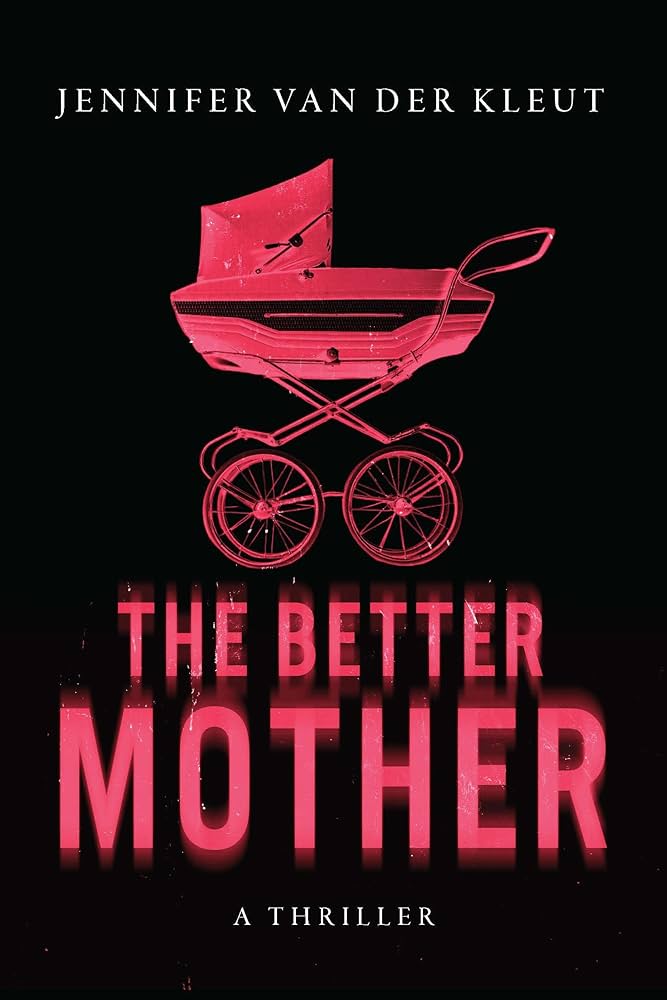
In my debut thriller novel, The Better Mother, Savannah discovers she’s pregnant after a short and casual fling with the handsome Max, whom she met at a bar. But several weeks later, when she gets back in touch to tell him, she learns he has reunited with his ex, the rich and beautiful Madison. Though it would be perfectly normal for Madison to be upset and jealous that another woman is having her partner’s baby, Madison says she understands—they were broken up at the time, after all—and that she just wants to help support the two as they form a friendly co-parenting relationship. But is Madison really just trying to get close to Savannah and her baby so she can pull off her own sinister plan?
In these eight thriller novels, friendships are questioned and pushed to their limits. Even if you’ve been friends for decades, can you ever really know someone’s true intentions? At the end of the day, aren’t we all just looking out for number one—ourselves?
Anna grew up without ever having a real friend after a tragic incident in her childhood left her scarred emotionally and at odds with her parents. So when she finally spreads her wings and heads to art school in New York City, it’s no wonder she falls for the first girl that shows her any attention—the mysterious and alluring Willow. It’s obvious Willow is favored as the program’s darling, the one who will undoubtedly succeed in her artist career. Her talent, and her beauty, earn her attention everywhere she goes. The two girls form a tight-knit, codependent best friendship, but Willow can be selfish, manipulative, and cruel. When Anna decides that Willow needs to be reminded why she should cherish their friendship instead of take it for granted, things get deadly—and it all goes down in Manhattan on the pivotal date of September 11th, 2001. This read is dark and unputdownable, with a reveal at the end you’ll never see coming.
Once a prominent chef, Lee now finds herself living on the streets after the Covid pandemic shut down her successful restaurant. Each night, she parks her car in a wealthy, oceanfront neighborhood and sleeps clutching her belongings, with all the doors locked. One morning, she witnesses the beautiful and privileged Hazel trying to drown herself in the ocean and saves her. At first, Hazel is furious that Lee foiled her suicide attempt, but soon, the two become fast friends. Lee depends on Hazel for companionship and the basic human comforts she can’t afford that Hazel takes for granted. For Hazel, Lee becomes a true friend she confides a secret to—her husband is abusive. She envies Lee’s freedom. It’s not long before Lee sees Hazel as the cash cow that can help her get back on her feet, and Hazel sees her new friend as her ticket to freedom. What happens when Hazel decides to put Lee’s life on the line to get what she wants, and Lee goes along with it for a promised payday?
Successful TV news journalist Anna Andrews fought hard to get where she is. From a modest upbringing, Anna was mostly raised by her mother, the neighborhood maid, when her abusive father checked out. Anna was shy and awkward as a teen until the most popular girl at school, Rachel Hopkins, adopted her into her twisted little friend circle. Anna was captivated by her confidence, allure, and expensive clothes. In the present, things start to unravel when a dead body is found in the woods of her small hometown and Anna is sent to cover the story. But the body turns out to be Rachel’s—and the killer may be targeting all members of that former high school friend circle, one by one. Could Anna be one of the next victims? Or is she the killer? Or is the killer her ex-husband, whom Rachel introduced her to all those years ago? In this book, all characters are suspects, and all narrators are unreliable.
Alix Summer is the creator of a popular podcast that highlights powerful women, but after many episodes, she feels the show has run its course. She is desperately trying to think of the topic for her next show when she meets Josie at a pub. They’re both celebrating their 45th birthday, and it turns out they were even born in the same hospital, making them “birthday twins.” Josie suggests an intriguing idea for Alix’s next podcast—her. She’s had a difficult life, but claims she’s on the precipice of reinvention and invites Alix to chronicle the journey. Josie becomes obsessed with Alix’s seemingly perfect life. Though Alix is wary, she can’t help but think the frightening story Josie weaves will make for excellent podcast material. But as Alix digs deeper into Josie’s past, she starts to question the truth of everything Josie has told her and begins to suspect that Josie targeted her out of jealousy. How far will Josie go to reinvent herself and make Alix, the object of her obsession, her best friend?
New motherhood, and all the insecurities that come with it, can make for gripping thriller fodder. In this novel, Daphne and Laurel—two mothers who meet by chance at a parenting class and both have daughters named Chloe—seem fated to become best friends and support each other through the emotional minefield that is postpartum life. But their friendship soon moves into dysfunctional territory. Laurel starts dressing like Daphne, telling others Daphne’s stories as if they’re her own. Meanwhile, Daphne starts to think that masquerading as Laurel could be her answer to escaping her husband, whom she is afraid thinks she’s an unfit mother and might try to take her daughter away. Posing as Laurel, Daphne takes a job in an eerie, atmospheric mansion archiving materials for an aging author—and she starts to learn that nothing is as it seems.
Kristen has been helping her best friend Emily keep the secret of what happened on their backpacking trip in Cambodia years ago buried deep, just like the body of the male traveler Emily killed. She said it was in self-defense after he attacked her when they were alone, and Kristen believed her and helped her hide the evidence. But years later, they’re on another backpacking trip in Chile when it’s Kristen who kills a male backpacker, also claiming self-defense. Emily pays her back by helping her cover it up. Now, each friend has dirt on the other, and they are bound to each other by these secrets, begging the eerie question—when is “best friends forever” a deadly concept?
Lucy was trying to escape an abusive partner when she fled the city for a small cabin in Woodstock, New York. Having been isolated for so long, she is thrilled when neighbors John and Vera take a liking to her, and the three become instant best friends. She soon discovers this is because John and Vera have been shunned by the neighborhood thanks to accusations against John. The couple finally confesses that they want to fake John’s death and leave to start over fresh with clean reputations (and, as an added bonus, the value of John’s original artwork will soar). Afraid she is losing the only friends she can really count on, Lucy reluctantly agrees to help them fake John’s death—but things go horribly awry when John ends up dead for real. Who is manipulating whom?
This book tells the ultimate tale of two “frenemies.” White author June Heyward has always been jealous of Asian author Athena Liu. They have both published books, but June’s sales barely stay above water, while Athena’s soar to amazing heights. Is it because Athena is a marginalized writer of color, as June suspects? Though they’ve never been close, they’ve known each other since they were in the same writing program back at school and catch up every once in a while. When Athena dies in a tragic accident right after showing June her latest manuscript, which no one else has yet seen, June realizes this could be her chance to pass it off as her own. Before long, she is the next big thing in the publishing world, all thanks to the fruits of her theft. But what happens when some people start to suspect the truth? And could Athena’s ghost really be haunting her from the afterworld, having seen what she did?
I first read Jenny Offil’s Dept. of Speculation when it was published in 2014. Reading it again after the birth of my first child, nearly a decade later, I was newly struck by her concept of the art monster: “My plan was to never get married. I was going to be an art monster instead. Women almost never become art monsters because art monsters only concern themselves with art, never mundane things. Nabokov didn’t even fold his umbrella. Véra licked his stamps for him.”
Offil’s protagonist goes on to become not only a wife but a mother. But her concept of the art monster provoked questions, inside the novel and out, of what is required to dedicate oneself to art. Parenthood, especially the role of the mother and/or primary caretaker, has long been popularly understood as antithetical to art-making. English art critic Cyril Connolly’s damning quote, “There is no more somber enemy of good art than the pram in the hall,” has held sway over the minds and career prospects of artist-parents for nearly 100 years (though of course the attitude he was describing was centuries old). Moms are boring, the culture seems to agree, mothering is a niche subject, and anyway, aren’t you too busy raising kids to make art?
What, I wondered, did all this portend for me, as an artist-now-mother? I say “wondered,” but I’m understating it by a mile. I became obsessed with how caring for a baby was changing my entire sense of self, while trying to figure out how to reshape my arts practice (which had previously involved performing live onstage 25 weekends a year) into this new role and schedule.
Happily, I am far from the only person asking these questions, as is made clear by a recent shower of books exploring the tensions, possibilities, and challenges of the dual roles of the artist/mother. Ranging widely across genres (memoirs, novels, personal essays, landscape surveys, and biographies), the works below re-examine and resist conventional motherhood narratives, while never shying away from complexity and difficulty.
In this slim, powerfully argued book, British art critic Hettie Judah makes a well-researched case that barriers to participation for artist-parents are systemic, not personal. Focusing on visual arts, Judah analyzes the challenges artist mothers face, from career-limiting assumptions to a lack of childcare provisions at residencies and exhibition openings that conflict with bedtime. She shares interventions and provocations, such as Berlin’s gallerie asterisk* which allows any artist who gives birth or cares for children to apply for an exhibition (even retroactively) to fill in the blank space on their resume. Judah is adamant and convincing that the current state of affairs is a dual injury: to artist mothers who need to be able to participate in the art world, and to an art world that, by excluding them, is inherently lacking and incomplete.
In this essay collection, award-winning poet Camille T. Dungy is refreshingly direct in confronting the economic realities of parenthood, particularly as a non-tenured professor whose work requires travel multiple times a month. As she flies back and forth across the country with her baby daughter, Dungy offers a nuanced exploration of the ways their Blackness is perceived. In her essay “Inherent Risk, or What I know about investment,” Dungy uses collage-like juxtaposition to contrast her personal dilemmas, trade-offs, and choices, with historical inserts about property and land-use in the Bay Area (her home at the time of writing), creating a complex look at concepts of value and worth. While the book is suffused with love for her daughter, Dungy is clear-eyed about the impossibility of “having it all” as a mother and author, at least under current societal conditions, writing, “I can count seven women writers who told me that having a family cost them at least one book because of the ways they had to reorganize their lives to accommodate having children.”
This lyric essay, composed in fragments and elegantly translated from Spanish by Christina MacSweeney, follows the author from pregnancy through early motherhood in Mexico City. Interrupted by literal earthquakes and the profound disruption of becoming a parent, Barrera attempts to write her contracted book but instead writes this one, a book that travels through her experiences and reflections of the stages of pregnancy, her own relationship with her painter mother, cultural stigma around breastfeeding in public, other artists’ perspective on motherhood, and the unfolding wonder and exhaustion of her new baby. Overhearing a man at a bookstore wondering why motherhood has become a popular topic in literature, she asserts “there will be more of us. Many more. In my opinion, there will never be enough of us.”
Like Barrera, Leslie Jamison’s memoir is composed of fragments (“splinters of prose”). While her separation, divorce, and subsequent romantic encounters are major storylines, for me this book was most magnetic in the many sections offering an under-the-microscope look at the kaleidoscopic swirl of emotions generated by caring for a baby while attempting to continue your art practice. She writes, she teaches, she goes on book tour, she wonders at her baby and despairs at how her focus has been shattered. A professor, Jamison describes a photo of a party she held at her house for her students, with her eleven-month-old baby in a bouncer, “and I do look like both a mother and a teacher. But I never felt doubled. I felt more like half a mother and half a teacher, constantly reaching for each identity as if it were a dangling toy—mother, teacher, mother, teacher—until the elastic tether of the other self snapped me away again.”
Playwright and poet Sarah Ruhl didn’t have time to write this book, as the title, introduction, and every essay makes clear. These micro-essays are sometimes as short as one paragraph, often barely two pages. (The shortest: “#60. Is there an objective standard of taste? No.”) Even in the author’s introduction to the book, interruptions from her children catch her mid-sentence, perfectly setting the reader up for the brief snatches of thought and theory that follow.
“In any case, please forgive the shortness of these essays; do imagine the silences that came between—the bodily fluids, the tears, the various shades of—
In the middle of that sentence my son came in and sat at my elbow and said tenderly, ‘Mom, can I poop here?’”
The short form may be the native genre of writing for parents of young children, and Ruhl’s book surprises and delights with its brief but keenly observed insights into everything from aspects of playwriting to heart-twisting conversations with her young children.
“I have been called monstrous. In my own mythology, I am like Medusa, Lady Blood, La Llorona [but]…What is monstrous is behind the mirror, the people holding it up, the mirror itself tainted with blood and violence.” In these brief, impressionistic essays, poet Leslie Contreras Schwartz explores intricacies and overlaps between motherhood, abusive relationships, friendship, becoming a writer, intergenerational trauma, medicalized racism, and post-partum depression. While unflinching in her presentation of personal and institutional violence, this book offers far more than a story of survival. It’s an assertion of narrative control: In keeping an awareness of her own past while raising her children, Contreras Schwartz argues that to tell a story is to inscribe the future: “Though my mind wants to shift between stories that exist in me, they are stories that I can’t let be passed on.”
Kate Briggs’s novel, The Long Form, opens with Helen, a translator, navigating the “co-project” of caring for her baby. With its patient attention to the minutiae of playmats, of watching a baby’s eyes open and close as they drift off, Briggs’ prose reproduces for the reader the way the gravitational pull of caring for a new baby bends time into new shapes. Helen is a translator, and, as she tends to her infant, turns words over and over and inside out. The outside world intrudes into Helen’s intimate, domestic setting when a copy of Henry Fielding’s The History of Tom Jones arrives. As Helen shifts her attention between the baby and the novel—which itself begins with a baby’s arrival—Briggs uses this juxtaposition to explore how the “long form” of literature and the specific novel Tom Jones illuminate the inherently experimental nature of forming a relationship (or executing a “co-project”) with a brand-new human.
Julie Phillips takes a biographic approach to exploring the tensions and possibilities that present themselves to the artist-mother, while interweaving her active thinking and theory-making. With a focus on now-cannonical British and North American visual artists and writers from the 20th century such as Alice Neel, Doris Lessing, and Audre Lorde, Phillips probes their lives and work to examine how they carved a way to make their art despite (often formidable) social and cultural obstacles. But this is no look-at-how-good-we-have-it-by-comparison argument; this is a smart and ambitious book, looking at structures and psychologies that are very much alive today. Phillips never underestimates the challenge and complexity of what she dubs “the Mind-Baby Problem,” offering in the acknowledgements that “I think everyone who tries to shift the motherhood discussion discovers how much that thing weighs and ends up moving it about two inches.” In its keen attention to how motherhood shaped these artists’ work and vice versa, I think this book moved it at least three.
While Catherine Ricketts’s book also structures itself around profiles of artist-parents, she interweaves memoir of her own experience of adjusting to motherhood. Though Ricketts discusses established writers and artists such Joan Didion, Toni Morrison, Madeleine L’Engle, and Ruth Asawa, I was particularly compelled by her interviews with mid-career living artists, many of whom have received acclaim, but none of whom are at the retrospective-at-the-MoMA stage. In conversation with Lauren Gloans, half of the folk music duo Loland Hum, Ricketts learns how, after the birth of their baby, the couple re-envisioned their approach to performance to de-emphasize their exhausting touring schedule. In these and other interviews, Ricketts is able to highlight the real and highly varied approaches that contemporary, working artists are applying in order to engage in both childcare and art-making. But this book doesn’t offer any easy answers. “First off,” artist LaToya Hobbs advises her, “don’t try to model your practice around what you see other people doing. Be OK with your journey, and give yourself time and grace.”
Clocking in at over 280 alphabetically organized pages, this wide-ranging, international, and wonderfully intersectional book takes an encyclopedic approach to cataloguing work and thought around artist motherhood via black-and-white print entries as well as gorgeous, full-color spreads. With entries ranging from “decolonizing the womb” to “drag mothering values,” and from “shit mom” to “trad wife,” Mothering Myths contains essays, excerpts and quotations from contributors including Alexis Pauline Gumbs, Angela Davis, Camille Henrot, bell hooks, Silvia Federici, Maggie Nelson, Linda Nochlin, Sheila Heti, Taka Taka, and many, many, many others. This is not a book to sit down and read cover-to-cover, but to dip into during moments of curiosity, despair, and delight. Is this the be-all, end-all of art mom books? I asked myself, before realizing, No, even better—it’s launching an amazing new chapter.
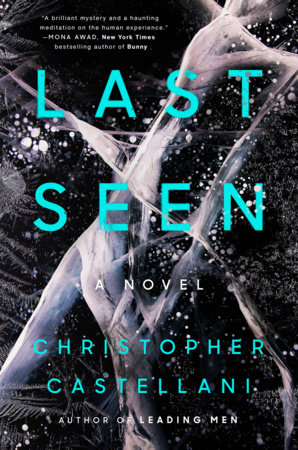
For decades, in a series of unsettling cases that have fascinated people around the country for their eerie similarities, young men who fit a certain “all-American” profile have been found dead in frozen bodies of water. White, college-aged, traditionally attractive, and presumably cishet, they tend to be good at school and sports and are often last seen out drinking before their disappearances. Their physical resemblance to one another is also uncanny. “We could have been cousins, if not brothers,” says Caleb Aldrich, one of four such boys who form a chorus of beyond-the-grave narrators in Christopher Castellani’s latest novel Last Seen, which draws its inspiration from these real-life cases.
Other details that the real cases have in common—a smiley face graffito is usually painted nearby, the guys are discovered with their arms crossed over their chests, as if hugging themselves warm—led two retired detectives to posit the “Smiley Face Theory,” that a shadowy network of serial killers is targeting young men of this description nationwide. Castellani finds this theory, which has been widely debunked, decidedly unconvincing, but remains intrigued by the question of what, if anything, connects all these deaths.
In Last Seen, he investigates by plunging us deep into the consciousnesses of Caleb, Leo, Steven, and Matthew, four young men who are able to talk to each other, and others like them, in death. They hunt for patterns, posture, tell self-serving stories to one another and themselves, and look for evidence that they are being adequately mourned by the single loved one each can still see. They struggle to work out what, if anything, their brief lives meant. Time in the book moves as it does in Castellani’s imagined afterlife: meaningful memories are captured in bright bursts of lucid narrative, mixed with murky, half-remembered fragments; past, present, and future are all constantly colliding. What emerges is a detailed topography of the boys’ obsessions, a result of the pressures to perform certain kinds of masculinity colliding with their even deeper desires to love and be loved.
Castellani and I met over Zoom to discuss the dangers of patriarchy and love, the allure of age gap relationships like the ones lost to his generation of gay men as a result of the AIDS crisis, and our fundamental unknowability to our beloveds and ourselves. Electric Lit readers in the Providence and Boston areas are invited to join us as we continue the conversation in person at An Unlikely Story on Friday, February 20, 2026.
Preety Sidhu: In some ways, this book is a big tonal shift from your previous novel Leading Men, yet about half of that book takes place fifty years after the protagonist’s death as a friend honors his memory. Last Seen is also about four young men, watching from beyond the grave to see how their loved ones do and do not mourn them. Can you speak to your career-spanning interest in love that, specifically, transcends death? Why is it important how the people we love most remember us after we’re gone?
Christopher Castellani: I’ve always been drawn to retrospective narration because it allows a character to assess the whole breadth of their life. Looking back adds weight to the story. In some ways that’s good, and it can be overwhelming to the writer to have to deal with an entire life. To me, that’s what makes it most interesting, for people to evaluate what their lives meant to them and to the people who love them and who they love and who they hurt and who they want to do right by. It has always felt more compelling, narratively, than the decisions we make in the moment, where the reader doesn’t know what the aftershocks are.
Doing it from beyond the grave gives it even more weight, because all your choices are now over. In this book, they do try to make choices after death. They have some degree of power, but that is fairly limited and ineffectual. You don’t know how long your life is going to be, so you don’t know what you’re going to leave to people in terms of their feelings and the unfinished business that you had.
PS: These guys are obsessing over whether the actions of the people they love most are sufficiently distraught. The actions of the living, the way their lives have been changed by the dead or by the sudden deaths—why the fascination with that particular measure of a life?
CC: It’s about who’s telling the story. Who knows these people best? Do the guys know themselves best? Or do the people they consider their most beloved, or the most intense relationship that they had? The answer is neither. Nobody knows themselves and nobody knows each other, and nobody is reliable in what they say about themselves or each other. The answer to how do you define or know a person is: you can’t.
I kept feeling these guys were lying to me as they were telling me their stories, and lying to themselves. The people they left behind construct them into something they wanted or needed them to be. The boys, now that they’re gone, have no way to counter that. That has always been my obsession: how we construct ourselves, how others construct us, and how both are incomplete.
PS: The power of love is tethering people to each other across death, and even that’s not enough.
That has always been my obsession: how we construct ourselves, how others construct us, and how both are incomplete.
CC: Exactly, and love obscures things. Love transforms things and creates things that aren’t even there. That’s both a cynical and a romantic view. Both sides in this book, the living and the dead, are guilty of doing both. I chose one person that the dead could look in on and interact with—with whom they had the most intense love relationship—because love both blurs and shapes the way that we see each other, and our relationships. We see it through that particular lens.
While I don’t have some grand theory about it, I—maybe childishly or romantically—believe that love is the thing that breaks through whatever dividing line there is between this life and the next. I have a line about how the dead are busy, the dead are doing their thing and not really thinking about us. But there are times when we feel deeply connected, or our love for someone that we miss is so powerful that it has the effect of summoning them. I wanted to dramatize that. I’m almost embarrassed to say that because it is so borderline cheesy, but I do on some level believe that.
PS: You open the book with an epigraph from Anne Carson about the dead walking behind us, which ends with: “they are victims of love, many of them.” What does the phrase “victims of love” mean to you, and how were you thinking about it as you wrote Last Seen?
CC: That poem completely unlocked this book. It wasn’t that I wrote the book, then went searching for an epigraph. It was with me from the beginning. I love Anne Carson, she’s a genius.
I was exploring how deeply feeling people—when one of those emotions is love—can’t help but be victimized. It is more powerful than almost any other force. You can’t help but be under its thumb, serving love more than love is serving you. That’s what I was getting at with all the characters, in various ways. They’re still under love’s thumb, even in the afterlife. They’re never free, even after they’re gone. That’s how powerful love is for these four guys.
PS: How did you first encounter the unsolved deaths this novel is based on?
CC: There was a case in Boston in 2017 of a young man named Michael Kelleher. He was missing for weeks, then ultimately found. I was drawn to the mystery of this disappearance. In one of the comments, somebody said, “this seems like a Smiley Face thing.” I was like, “what’s that?” I went down the rabbit hole.
It’s completely absurd to think that over the past thirty years there’s been this network of people preying on these guys. I’m more interested in why we think that these guys are somehow endangered. What about our psyche, particularly the American psyche, gets more excited that it’s these types of guys who are being preyed upon or vulnerable? Obviously, we think about this type of person, in our American mindset, as leaders of America. Golden boys. The future. There’s something particularly upsetting or fascinating to people, and also probably thrilling in a schadenfreude way, to seeing these strong, healthy, attractive men being taken down.
PS: What’s your “theory” on how they are connected as victims?
CC: In that very way of being the “golden boy”: that identity, that pressure, that set of expectations to be a certain way. They do have a kinship with each other—young, ostensibly straight American men. Patriarchy has a lot of terms they may or may not have signed up for, but are born into. Most of them, not to generalize, perpetuate them, and fall easily into that role without questioning it. But I wanted to give these guys the dignity of an inner life, to treat them as three-dimensional people. Especially now, we have put all these guys into a box: this is who and what they are. I wanted to explore what made them and connected them psychically. That’s why I have them able to communicate only with each other in this afterlife. Not because they’re all victims of the Smiley Face Killer, but because they’re all victims, in some way, of patriarchy. And of love.
PS: The real serial killers.
CC: Right, the real killers are patriarchy and love! Spoiler alert.
PS: Each of the dead young men can look in on the person they love most who’s still alive. In all four cases, the relationships are intergenerational. What drew you to writing about age gap relationships?
CC: I did not set out to write about age gap relationships. It weirdly just happened, it was subconscious. I did want to write about different types of love, both romantic and family relationships. I realized halfway through writing that all these relationships did have that commonality. The book doesn’t have some grand theory about age gaps in general. It’s only interested in each particular relationship.
Throughout history, there have been famous age gap relationships between men. When I was growing up, that was completely cut off.
The one between James and Caleb—a young gay man who is attracted almost exclusively to older men—is a dynamic that comes up a lot in the gay male community. It’s interesting in the age of social media and hookup apps, because when I was growing up I never remotely thought of a person older than 25 as an option. Not because of attraction, but because they were usually dying or dead or diseased. That was the mentality, that anyone over a certain age was a victim of AIDS, or potentially that. Throughout history, there have been famous age gap relationships between men, both mentor and romantic relationships. When I was growing up, that was completely cut off. Now we’re seeing so many of these relationships, that are interesting for what attracts both sides. Other than the basic sexual chemistry, what do they get from each other? What do they need from each other? That was the thing I was exploring with James and Caleb, through the lens of Derrick, who is a survivor of that AIDS era.
I also wanted to show the connection between these young men disappearing and the young men who were disappearing all through the AIDS crisis. I wanted to draw some link between those two kinds of disappearances of young, usually attractive, often-but-of-course-not-always white, men. These are who became the face of the AIDS epidemic: young, pretty, white men. Not that they were remotely the only people affected.
PS: Matthew is obsessed with his college girlfriend Tessa—some might even say stalking her—but the person is able to see after death is his mother. What did you want to explore in the contrast between this obsessive love for a partner and the more enduring bond between mother and son?
CC: The relationship between mothers and sons has been my most consistent writing obsession. He’s half Italian, I’m full Italian. I was thinking of the really strong relationships between mothers and sons in Italian families. This mother is not Italian, but she’s in this Italian world of deeply passionate love among family members.
She’s relatively cold, she’s almost like a “stage mother.” There’s the trope of mothers that have this kind of romance with their sons, like the “hockey mom,” the “soccer mom,” the “swim mom.” They’re with their son almost like their partner. There’s this pride and a weird almost sexual vibe that I’ve always found interesting. I wanted to explore that. She’s never had a love relationship with her own husband. Her most “romantic” relationship, in a way, is with her son, which is why the enduring image she wants to have of him is with his head held high and his fists raised—the strong, all-American scholar-athlete, the perfect son. That myth-making between mother and son is what I was interested in, from her side.
From him, it’s recognition. He’s always wanted her to be a more nurturing mother, not putting him on a pedestal. To see him as more flawed, human, vulnerable. By dying, he’s achieved that, and wants to know that she sees him. He’s so upset when she walks by his picture and doesn’t notice him anymore. Because he also has this stalker, “extra” tendency, he almost wants his mom to stalk him. That’s the way he understands love, that kind of obsessiveness. Because she doesn’t have that for him, he keeps trying to “win” her, even from the afterlife.
PS: For Caleb and Steven, the people they love most, James and Monica, are older and married. What were you hoping to explore with these two affairs?
CC: I think of James and Caleb as a legitimate love affair. James is trapped in his bisexual identity, not able to have that fully recognized and integrated into his life. I wanted to explore that trap, closeted life. It’s narratively interesting to have a character who is leading a secret life—the stories he tells himself to justify his behavior. Using love as a pretext for dishonest, bad behavior. He’s cruising, he’s lying to his wife, but with Caleb he’s in love.
What is love if not seeing the messiness?
With Monica and Steven, from her side, I think of her as a trifler, a destructive force who doesn’t understand the extent of her own power and privilege. She procures him, basically prostitutes him for herself. While she had tender and certainly sexual feelings for him, I do not think of that as a love relationship.
He does love her, and sees her as a more wounded person than she sees herself. He wanted to be Arthur [her husband], because as a young, white American man, he felt like he should take over the world and saw Arthur as someone who had. He felt he should be in that position. All that was entangled in that obsession.
PS: How much is it about love enabling bad behavior versus expressions of love being impeded by unfair societal restrictions?
CC: I wonder whether the excuse for bad behavior is intrinsic to the love itself, part of the thrill. You can’t discount the thrill that James, Caleb, Steven, Monica, and to some extent Matthew feel. The charge, the illicitness that goes into these relationships is what makes them so exciting. Like a lot of people in the queer community say, once we get too mainstream, it’s not fun to be gay anymore. You almost need the constraints, the negative societal forces, to convince yourself and each other that you really do love each other, because you’re working against all those forces.
I don’t think that makes it any less legitimate. It’s just part of the unique “love package” every relationship has. Some relationships don’t have that, but they’re all legitimate relationships in terms of the emotion and passion.
They have different calibrations of things like, “how much of this is transactional?” and “obsession?” and “egocentric?” and “fulfilling a need from childhood trauma?” That is wrapped up in all of the relationships. No relationship is free of those. We all have things that draw us to each other in love, that could be considered negative or not healthy. All successful relationships have these dynamics that might be technically considered unhealthy but work for that relationship. We’re all victims of love in a relationship that is sustained and passionate.
PS: In describing his affair with James, Caleb says, “Seeing is a weird word to describe what we were doing, but it was also the perfect word.” Obviously, “seeing” is important in Last Seen. The sections have headings like “Crime Seen,” “First Seen,” “Last Seen,” and “Love Seen.” Why is “seeing” such an important theme?
CC: Seeing goes through every single relationship. What is love if not seeing the messiness? You see them in all their messiness and they see you in all your messiness, and you still stick with each other. That’s not a groundbreaking way to think about love, but to me it’s the most true.
It also means a recognition: even if I see all your messiness, there’s other messiness I will never see. You have your own life and parts of your life I don’t see, and I accept that too. Everything you’ve seen, you accept, but you also accept there’s a lot you won’t see. That’s part of the love.
The night before we met with Babette, Sarah and I had almost canceled the interview due to stress. At the time, our daughter, Sophie, was just three months old and refused to take the bottle. Sarah had had no trouble breastfeeding her, but Sophie rebuffed the synthetic nipples, despite the many sizes and flows we’d ordered. Our night nurse had been no help, and Babette sensed our distress. When we told her about the cause, she responded, very plainly, that it was a phase that would soon pass; she asked us if she could give it a try (she was older than every other nanny we’d interviewed and seemed wise for it). Sarah handed Sophie over to Babette, and she cradled Sophie in her lap. She dragged the bottle’s nipple across Sophie’s lip and lifted it away, almost teasingly. After about thirty seconds Sophie latched. Sarah and I sat in the chairs opposite our baby in disbelief. Babette left and we offered her the job the next day.
It took Babette time to get used to the sprawl of our Tribeca loft. I’d also been surprised by the space when I moved in (Sarah owned it). The high ceilings, the industrial-grade kitchen, and the twice-a-week cleaner. Sarah was adopted—one of six siblings—and her family money was old, from cardboard manufacturing. She’d been the only child to be involved with the business, pioneering a sustainability packaging program and founding the family’s philanthropic organization, where I worked as communications director. I’d never dated someone so wealthy before, and I often resented how unconcerned she was with the finances. I’d grown up solidly middle class in Baltimore—my dad waited tables at a high-end steak house, and my mom worked as a public school administrator. Even then, I’d been considered wealthy by some.
There came a point in my relationship with Sarah when I had to accept that I too was rich. After all, the money might become mine at some point, albeit partially. I’d felt like a fraud proposing to her, and then signing the prenup. The pageantry of my kneeling before her family’s standing. Accepting that this rarefied life was mine, and that, really, I didn’t have to work for anyone else ever again, was unsettling at first. I felt an acute guilt bearing my mom’s passive-aggressive comments. And oddly, this was the moment when Moses, Sarah’s gray tabby cat (to whom I was deeply allergic yet had built a painstaking immunity over the course of a year) attacked my feet. Whenever I left the bathroom after a shower, he’d hiss and pounce on my bare toes. As if he’d sniffed out an old fear of mine. As a kid, I’d had dreams about small creatures—opossums, squirrels, and beavers—assailing my toes. I was convinced Moses had penetrated my psychology, pegged me as an intruder. This was a lifestyle he too enjoyed, and he was protecting it. He ate from an automatic feeder that was double the price of my espresso machine.
When Moses took immediately to Babette, it felt like a betrayal in both directions. Since I’m also employed by Sarah’s family, Babette and I shared a strange kind of kinship. Both on the payroll. Both enjoyed benefits. Both had to be wary of occasional reprimand. Babette also had a cousin in Baltimore, so she knew where I was from. And she’d been surprised that I knew anything about where she was from—Guyana—and that I loved West Indian food. It wasn’t long before she insisted on teaching me how to make roti. Sometimes she stayed late and we cooked together. Roti had become a staple of our kitchen and Sophie’s favorite food.
The best part of my day was Sophie running to the door when I came home from work. “Daddyyyyyyyyyyyyy,” she said, clobbering my knees. Babette had put Sophie’s golden hair up in two violet butterfly clips. She looked older.
Babette came over with a small snack bowl in hand; she’d been slow to rise from the couch. She wore an Atlantic City T-shirt. “This girl is getting so smart, I tell you.”
As I hoisted Sophie up, she promptly squeezed my nose.
“How was your day, Jordan?” Babette asked.
Jordan isn’t my name. I stood bouncing Sophie for a moment and looked at Babette, waiting for her to realize. I thought maybe even Sophie would. “Good,” I said. “I was eager to get home to this little stinker.”
The moment to correct her about my name quickly passed.
“You need a ride tonight?” Babette asked.
On Tuesday nights, I played in a pickup basketball game with friends at a high school in Sunnyside, Queens, where I used to live. She lived close to the neighborhood.
A moment later, the front door opened. Sarah came in from work. She moved cautiously, and I wondered if this was because we’d just found out she was pregnant again. (We hadn’t told anyone.)
“Mommmmmy.” Sophie shimmied down and ran to the door.
“Hi, Sarah,” Babette said, yawning.
“Hello, everyone,” Sarah said. She slipped off her shoes and took Sophie into her arms. She leaned over, and I kissed her cheek, tasting the sweat from her Orangetheory class.
I watched Babette again to see if she might realize, having now said Sarah’s name, that she’d mistaken mine. But she walked into the living room to pick up stray toys from the floor. She tossed Sophie’s alligator into the large patterned basket in a tall arc.
“Maybe you should let me in your basketball game,” she said to me.
Her own laughter had a way of crowding out mine, especially in response to her own jokes. It was a laughter that seemed too harsh for her. I remembered basketball practices when I’d have to switch to guard taller players in the post, hearing them yell to the gym, I’ve got a mouse in the house.
“My mom used to come and watch me play,” I said. “I could use a fan in the stands.”
I went to the bedroom to grab my gym bag. Before we left the apartment, Babette reached down to line Sarah’s shoes up with the rest of her heels by the door. Moses walked over and brushed his body against Babette’s arm as she did.
In her car, an air freshener dangled from the rearview next to some Diwali beads.
“How’s the family?” I asked.
Babette bumped the steering wheel with the butt of her hand. “My granddaughter got another ticket. And she didn’t show up to the hearing last time. Now I have to take her in. A pain, I tell you.”
She had two teenage granddaughters, one about to graduate high school.
“Girls are sweet when they’re young,” she continued. “Then they grow up and you wish you had boys. But then you remember that boys become men and you’re glad again that you had girls.” She laughed to herself. She wore her glasses when she drove and sat up close to the wheel.
“You never wanted a son?” I asked.
“My daughter was plenty for me.” She smiled to herself. “I know Sarah is pregnant.”
I turned and eyed her. “How?”
“A mother just knows,” she said. “You want a boy? Momma’s gonna need an heir.” She cackled.
We crossed the Fifty-Ninth Street Bridge, which was lovely in the evening, offering a dusk-gilded view of the city. As we got deeper into the backstreets of Queens, a calm came over me, the residential blocks reminding me of neighborhoods in Baltimore—Pigtown and Butchers Hill—the Formstone fronts and the large swaths of sky rising above the roofs. It was like being dropped off for practice again.
Babette sighed before speaking. “My husband had his hours cut at work. I’m so grateful I have you all. He is too. I don’t think I tell you enough.”
Her husband worked as a janitor at a yeshiva in Queens. Babette had said that the Jews paid him well.
“I’m so sorry, Babette,” I said. “I remember how hard it was on my mom when my dad had his hours cut when I was in high school. Will your husband look for another job? Or part-time work?”
“He’s hoping it’s just temporary, a few weeks. But he’s definitely open to other things.”
I told her I would ask around in the meantime. Before I got out of the car, she patted me twice on the forearm. “Good luck on the court!”
Later in the week, we assembled Sophie’s dinner as a family. Sophie sat on the lip of the counter, schooching her butt on the marble.
“Iwanroti,” she said.
“We can’t eat roti every day, sweetie,” Sarah said.
“Why?” Sophie frowned.
“Because we need variety in our diets.” Sarah chopped broccoli florets with a large knife. Her blond hair draped her face just below her chin. She looked beautiful, if a little severe, after a long day. “It’s more of a snack, not real food.”
“It’s real food, sweetie.” I pinched Sophie’s knee. I could feel Sarah’s blue eyes resting on me. “It’s just the more you eat something, the more likely it is that you’ll turn into it!” I pinched harder, and she leaned over giggling.
As Sophie sat with her dinner, Sarah and I drank Malbec on the couch, her glass filled with a demure new pregnancy splash. Before long, Sophie grew restless again. We told her to sit in her tiny chair until she was done, which she rarely did, even with Cocomelon on the TV. Instead, she spread out on the couch behind the table. With her butt angled high in the air, she planted her cheek on the cushion and watched.
“It’s almost bath time, stinky butt,” I said.
When she didn’t respond I crept over to her and stared at eye level. “What are you doing lying down like this?”
“Resting my ear,” she said. “Like Babette.”
Sarah set her glass down; we stared at each other for a moment.
“What, honey?” Sarah asked.
I tilted my head at her. “What do you mean?”
“Resting my ear like Babette does,” she repeated. After a minute, she grew bored by our questions and flipped over onto her back. I nuzzled my head into her stomach, and she laughed uncontrollably. We continued playing as Sarah cleared Sophie’s plate and went to start the bath.
When Sophie was down for bed, Sarah and I spoke quietly in the kitchen.
“What do you think Sophie meant earlier?” Sarah asked.
I lacked a sound explanation. But then I remembered. “Babette called me Jordan the other day.”
She looked confused. “What do you mean?”
“Like it was my name. I thought she was making a basketball joke since it was Tuesday, but I think she just forgot.”
“Stockton I can see, but Jordan, babe?” She grinned. “Did you say something?”
I shook my head. Moses sat upright in the corner and stared, which he did constantly, to unnerving effect. “I waited too long and then it felt awkward.”
“And how does it feel now?”
Sarah was quick, and her playful rebukes always made me laugh. She poured me more wine.
“I bet it was the name of the guy she used to work for,” I said. “She’s old. She’s bound to slip up.”
“Resting her ear,” Sarah spoke to herself. “It must be something Babette said. Bizarre.”
At work several days later, I received a video clip from Sarah out of the blue. I assumed, at first, that it was her trying to be sexy in the way she’d started lately; a brief striptease or view of her bare thighs below the table. Her confidence was intoxicating. These clips had a way of landing at the most inopportune times of the day, which only added to their power. But this one wasn’t sexual. Only when I started playing it did I see Moses in the frame. His triad nose darted at the camera, and I realized it was the view from his feeder. It had a camera and came with an app, too, but we’d never reviewed any footage or cued up the live feed; I’d forgotten about the capability. Then I saw Babette and Sophie in the background. Babette was seated on the couch, and Sophie was on the floor playing with her stuffed alligator. The view was partially grainy, and it glitched every few seconds. I felt like a depraved voyeur as I watched, yet I couldn’t stop. Gradually, Babette began to lean. She caught herself once and sat upright before slouching over again. My heart sank to watch Sophie on the floor, playing alone. Soon enough, behind her, Babette was completely horizontal. I rewound and watched it again. I realized then that the clip’s sound was off, but I couldn’t bear to add any more information to what I saw. Sophie dropped her alligator and rose from the floor. When she leaned over the couch, Babette startled and sat up. They appeared to talk for a minute, and then Babette hugged Sophie. And then it was done.
I felt like a depraved voyeur as I watched, yet I couldn’t stop.
That night, Sarah and I divided the evening routine. I read Sophie her favorite book about a penguin’s first day of school, imagining what it would be like once Sophie started preschool next year, when Babette would have to watch two kids.
When I came out, Sarah nodded at me, holding up a bottle of white. Her face shone with snail mucin.
I nodded, and she came over to join me on the couch. “I’m shocked,” she said.
“I can tell.”
“You’re not?”
“I am.”
“Well your energy is off,” she said.
“It’s just that . . . I felt uncomfortable watching the video.”
“No shit—We agree on that.”
I pressed my lips against the glass. “Isn’t it illegal to spy on someone?”
“Please. We’re all spied on, all the time. It’s practically nationally sanctioned,” she said. “You do understand what it is you saw? Sophie was playing alone while Babette was passed out beside her.”
“I know.”
“I thought you’d be a tad more worried by it. There’s no way we’re continuing to pay someone who literally sleeps on the job. How’s she going to watch two?”
“It’s dangerous to extrapolate,” I said. I thought about Babette’s husband looking for work. “Maybe this only happened a few times.” I worried this was tacit encouragement for further espionage.
“Once is enough.” Sarah sat back. “Once is unacceptable.”
Moses leapt onto the couch and curled up in her lap.
“We can’t be rash.” I bounced my foot. “Babette is a huge part of Sophie’s life—our life.”
“She’s an employee, babe. We pay her to do a job, an extremely important one at that. It’s clear that Sophie has seen her do this before, enough to repeat Babette’s excuse.”
Sarah brought her fingers to her lips. I rubbed her shoulder, feeling more of my own tension. “I know, it’s not right. But just think for a second—they’re safe inside the apartment. The place is still babyproofed.”
Sarah shrugged out from under my hand; Moses seemed to balk too. “What if Sophie was choking? I can’t believe I’m having to convince you.”
“Imagine it was an afternoon when Sophie was with your mom, and she happened to nod off briefly on the couch? Babette woke right up when Sophie came over.”
“My mom’s not a narcoleptic.”
“Babette is family,” I said.
Sarah looked surprised. “I know this sounds cold, but let’s be honest: the whole nanny as part of the family thing is the bullshit we tell ourselves to feel better. Sophie is family. We should’ve known this with Babette’s age.”
Sarah had picked up enough speed to bypass my hesitation.
“So, what do you think we should do?” I asked. “We can’t just cut her loose. That’s ruthless.”
“Why do you keep thinking of this from her perspective?”
“I’m thinking about this from Sophie’s perspective. It’s a lot to ask of her to get used to another nanny.”
“You need to consider us—which will be the four of us soon. We’re your family.”
After lunch the next day, I sat in a meeting that ran for over two hours, glad to focus on something that wasn’t Babette’s narcolepsy. But when I returned to my office, I found another email from Sarah. No subject line. I opened it and saw two clips, both of which were dated earlier in the day. Too big to text, it read above the first. Volume up, below the second. I felt trapped by Sarah’s insistence.
I’d have better luck asking the cat for more money.
The first clip opened with Babette, again, stretched out on the couch. My stomach tightened and I closed the clip. The other clip showed Babette and Grace, a nanny in our building who watched a boy Sophie’s age. They had playdates frequently. The four of them sat in the living room; I turned up the volume. Sophie was singing “Following the Leader,” ignoring Mikey, the little boy. When this stopped, they played with magnet tiles on the floor, and I could hear the stray clacking plastic. Then I heard the adult voices. Grace was younger than Babette, strident as she spoke. You need to ask them for a raise, she said. These people are rich, it’s nothing to them. Don’t let them take advantage of you. Grace went on to tell Babette how she had demanded more money at her last year-end review. She told Babette that, honestly, she needed to talk to me. Babette’s laughter was startling. Please, she said. You know that man is scared for his life in here. He’s a punk. I’d have better luck asking the cat for more money.
I tensed. My legs locked up. I looked over my shoulder like I was the one being watched. I played the clip once more to hear her self-satisfied laughter, to see her frail old body jiggle. Then I slammed the laptop shut.
When I got home that night, Moses’s feeder had been moved to the other side of the room, positioned with a clearer view of the couch.
“Hey, Jordan,” Babette said.
I dropped my bag to the floor; I mustered a hey.
Sarah glared at me before she spoke. “Did you just call him Jordan, Babette?”
Babette turned back and forth between us, as if she thought we were playing a joke on her. Sophie colored furiously at the table as the three of us stood in silence. Then Babette’s face opened up; she palmed her mouth and her eyes dilated. “I’m so sorry.”
I feigned a smile without speaking, then nodded.
“Gosh—I’m embarrassed.”
“What you guys talkinabout?” Sophie perked up. This was something she’d started asking lately, whenever adults spoke in nontoddler-inflected voices.
Sarah stroked Sophie’s hair and said it was nothing. Moses’s head reared up from the couch.
Babette came over to me. “Jordan was my old boss. I worked for them for so many years.”
Then she reached out for a hug, her body soft against mine.
“I hope you’re not offended. I must be getting old!”
Sarah leaned her head, pretending to doze off behind her.
“It happens,” I said.
After Babette packed up to leave, I walked her to the door. She spoke before I could. “Did you hear back?”
I was confused. “About what?”
“The job for my husband?”
I couldn’t believe her gall. “I’ve only started asking about it. I need more time.”
“I really appreciate what you’re doing for us, so thank you.”
“Listen,” I started. “Sarah and I are hoping to talk to you on Friday. Just for a few minutes after work?”
“Of course,” she said. Her face stiffened for a moment as she pulled out her glasses from her bag. “I’m really sorry I called you Jordan,” she said. I could see under the light that her lenses were slicked with grime.
The next evening, Sarah skipped Sophie’s bath and got her down early. I waited for her in the living room with a glass of seltzer, avoiding alcohol’s dulling effect. Sarah poured herself a sip of the Orvieto we’d brought back from Umbria the previous summer.
“You still in a mood?” she asked.
“Just thinking about Babette.”
“I feel like maybe I was a little rash before,” she said. “I was getting sentimental thinking about how sweet she was with Sophie as a newborn. The way she was with her bottle. We were lucky to find her when we did.”
I was surprised by her soft turn. “I know,” I said. “But I was thinking about what you said about the family before.”
“Oh?” Moses sat still beside her feet. “So you think she’s got to go?”
I stopped short of an about-face. “The prospect of hiring someone new is daunting. I’ve been torn,” I said. “But clearly now Babette’s naps are a pattern.”
“I knew the nannies talked behind our backs, but that clip was excessive.”
I nodded in agreement. “And look,” I said, pointing to a small stain on the carpet. “Babette used to clean stuff like this. She’s letting a lot slip.”
Sarah pursed her lips at me. “My mom offered to help us out if we needed it. She thinks we should let her go too.”
Tired of water, I got up to pour myself wine. “So, how do we do this? We’re supposed to tell Babette we’ve been surveilling her?”
“In the state of New York, it’s entirely legal to have a camera installed on your property for protection.”
I pictured Sarah, hunched over her laptop, devouring the stipulations of law.
“Sophie brought it to our attention, anyway,” she said. “We don’t have a nanny cam, technically. We’ve never monitored Babette before. It’s only by chance that we found this out.”
“I suppose we’re simply confirming something that Sophie told us,” I said. The wine caused a band of heat to form in the middle of my face. “I already told Babette we needed to speak to her on Friday.”
Sarah set her glass down and inched closer to me. “Wow, babe,” she said. Her energy shifted suddenly. She looked at her phone and clicked something closed before tossing it onto the couch. Then she shooed Moses away with her foot.
She mounted me. I stared at her mouth. She kissed me hard and bit my lip. Gripping my throat, she rose over me. We had fucked in the living room after finding out she was pregnant again, which before then we hadn’t done in months. As she started sucking my neck, I noticed the glossy white cat feeder in the corner of the room, with its tiny light on.
When Friday arrived, I felt nervous. I’d never fired anyone; we had scripted talking points.
Sophie buried her face in her alligator stuffie in the living room. “My love, what are you doing?” I asked her.
“She’s been silly all day, this one. I tell you.” Babette wore her burgundy Juicy hoodie with rhinestones, the one her husband had gotten her last Christmas. She sat in the chair beside me.
Sarah hovered in the kitchen, making herself tea.
“So, what did you guys get up to today?” she asked. She eyed me as she dipped her tea bag.
“Aw, we had a lot of fun, huh, Soph?” Babette pitched her head as she spoke. “We drew. We played restaurant. We went to the playground with Grace and Mikey.”
Sarah sat in one of the chairs facing us.
“Sophie climbed the big ladder all by herself. Even Mikey’s still too scared!” Babette chuckled.
Sophie looked up. “He’s scared.” She bared her tiny teeth at me.
“Thanks for making some time to talk with us,” I said. “Firstly, we want to thank you for how wonderful you’ve been with Sophie. I don’t think we tell you that enough. From the first time we met you, you never stopped teaching us how to be parents.”
Sarah widened her eyes at me. Babette mumbled some appreciation; her hands lay cupped in her lap.
“And we know just how exhausting the work can be,” Sarah interjected.
I stared back at her. “We’ve been thinking a lot about Sophie and how the next few years will play out, preparing to start pre-school, deciding what her schedule will be like.”
Babette nodded along.
“A lot is changing,” I said. “And we feel like we too need to make a change.”
I could only look at Babette for another second. Instead, I focused on a new, small stain on the Moroccan rug. A dry discoloration camouflaged by the spiral pattern near her feet.
“What you guys talkinabout?” Sophie had clued in to the room’s changing tenor. Her face was blank, innocent.
Sarah got up and grabbed Sophie to sit on her lap.
“Our childcare needs have evolved, Babette,” I continued. “And we’re really sorry, but we’re going to have to let you go.”
She looked down, hanging her head. Then she looked over at Sophie. “What?” she said finally. “I’m shocked. I didn’t think it was this—I thought I was getting a raise!”
“We’re giving you a month’s severance, and we’ll write a good review for you on the Tribeca Nannies site. You’ll find another family to work with,” I assured her.
“It’s not even been three years.” Babette’s eyes filled with tears. “You said how much finding someone for the long term was important to you all when I first interviewed. Someone to grow with Sophie. I was so sure I would be with you all for ten years at least. I love Sophie so much. I can’t bear to think about leaving her.”
Babette looked for Sophie again, but she was resting against Sarah’s shoulder. Sarah kissed the top of Sophie’s head.
“I know this is hard,” I said. “It’s been such a tough decision for us too.”
“Tell me—why are you firing me? What have I done? I’ve only ever been good to you.”
Babette’s voice grew loud. Moses darted across the carpet, startling me.
“Sophie needs more active engagement, someone who’s able to scrabble around on the floor with her.”
“But you knew that wasn’t me when you hired me. And I do play with her, entertain her, all the time. I never mislead you.”
I lowered my voice a bit. “Sophie said you were sleeping during the day.”
“What?” Babette looked indignant. “I only ever rest my head when she naps. I never sleep!” She paused momentarily and raised her fist to her mouth. “I thought you were decent people. But I’m a fool.”
I stood up and glanced at the cat feeder. Moses feasted from it now. “Babette, you don’t even clean anymore,” I said. “We come home to dirty dishes.”
“Now you’re really lying,” Babette yelled.
“Look.” I pointed at the stains on the rug. “Why are there stains?” I was angry now. “That’s unacceptable.”
Sophie started to cry, sniffling. She covered her face. Sarah rose and took Sophie down the hall to her room.
“This isn’t you,” Babette said quietly. “She’s putting you up to it.”
“It is me, Babette,” I said. “I’m firing you.”
She started to weep. I sat with her for a minute as she gathered herself, then led her to the door. Her sobs echoed in the empty hall as I shut the door behind her.
On Monday morning, when I left the bathroom after showering, Moses loped down the hallway and clawed my toes. I splayed myself against the wall, failing to deter him by flicking water from my feet. I ran away and finally closed him off from my room to get dressed for work.
“Are you starting to feel relieved?” Sarah asked when I came into the kitchen. “I’m proud when I think about how you handled it. We did the right thing, babe.” She pinched some sea salt onto my overnight oats and fed me the first bite. “I’ve already found a woman I love,” she said. “Early education degree. Young. Vibrant. Well slept.”
Sarah’s mom was heading into town soon to help for a bit. I wished my mom could do the same, and I realized then that Babette would never drive me to basketball again. In truth, I was wary of another nanny—the way a new person in the house inevitably reveals and refracts new aspects of yourself.
“She’s coming on Wednesday to meet us,” Sarah said. She came close to me. “Today’s going to be a good day,” she said. “I can feel it.”
After a strategy meeting later that day, I returned to my office to find an email from Sarah. The subject line: XoX. I turned away from the screen, incredulous. The sole relief of the last days was not having to confront another one of these videos; it was gratuitous at this point. I almost didn’t open it. But when I looked again, I saw that the clip was dark—nighttime—and the view of our living room was dim. After I pressed play, it took a minute to distinguish the large form on the couch as two people. I watched the bright points of my eyes peering back at me. Sarah and I were having sex.
I got up to close my office door. When I came back to resume the clip, Sarah moved slowly on top of me as I reached into her hair. My face flushed before my computer screen to witness it; I’d never seen myself in this way, in the motion of fucking. The clip was just over twelve minutes. I scrolled ahead, impatient, our positions staggering and changing. Toward the end, Sarah had come to sit behind me. She held a hand roughly over my mouth as she reached around. My lips now were dry while I watched her stroking me, watched her muffling my moans as she finished me off. The clip stopped abruptly. I sat back in my chair and stared at the final frame. I remembered this moment, just before I’d gone to the kitchen to get a towel. Right before I’d crouched down on my bare knees and tried to scrub clean the stain I’d left on the rug.
Time is such a slippery thing! How do we count it? By books read, conversations had, people loved, or lost? As we approach the Lunar New Year, I am struck by the many ways different cultures mark the passage of time. For my Korean family, the Lunar New Year held the anticipation and gifts of Christmas, the feasting of Thanksgiving, and was always accompanied by storytelling for the beginning of a new animal year.
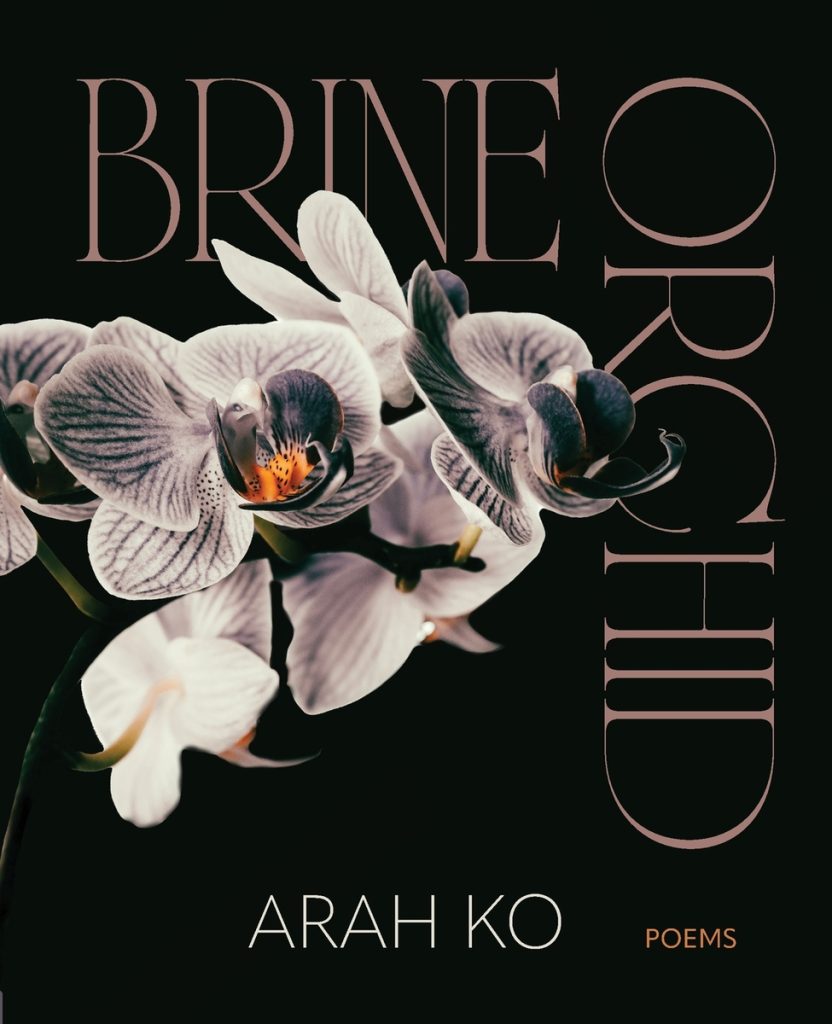
In writing my debut poetry collection Brine Orchid, I kept thinking about how the stories we tell each other, and ourselves, shape our experiences of the world around us, and even our own identities. In my poems, myths intertwined with family legends, immigration records echoed Bible stories, and fairytales from both Asian and North American experience tangled into a way of understanding my own multicultural identity. One of my favorite stories was of the Great Race and the Chinese Zodiac—I loved the idea that we each have an animal counterpart whose action parallel our own character and destiny. The myth of the Great Race is one way of keeping time: Since the Han dynasty, months and years were split into 12-part cycles with accompanying animals, stories, lucky numbers, favored flowers, and more. According to legend, the Jade Emperor called the animals to a race that included crossing a vast river, and the animals were given their place in the zodiac based on the order they completed the race—an unexpected sequence impacted by their dispositions, choices, strengths, and methods for crossing the river. Many were intertwined with one another—the snake wrapped around the horse to be carried to the finish line, the rat rode on the kind oxen’s back across the river, the goat, monkey, and rooster worked together to cross the water on a raft—and some believe we carry these relationships with us into our own lives.
As the Year of the Snake wanes and the Year of the Horse waxes, celebrate this Lunar New Year by connecting with a new book of poetry, perhaps based on your or a loved one’s zodiac animal. What qualities, energies, and luck do we hope for, look toward, and carry with us into the future? Which animal are you, and how might its strengths and weaknesses map onto the music of poetry? Find out!
As the famed winner of the Chinese Zodiac Race, the Rat—and the people born in its years—are believed to overcome all odds to achieve their goals. Like this zodiac sign, Let the Moon Wobble breaks rules of form, denies borders, enjambs lines, and overcomes distances with creativity, resourcefulness, and wit. When faced with impossible or uncomfortable questions, the poet says, “I lie / like I always do.” The ungovernable beauty of this collection is messy, wild, joyful, grieving, and triumphant.
Known for persistence verging on stubbornness, reliability, industriousness, and unpretentious practicality, people born in the Year of the Ox are believed to be both gentle and capable. Embodying this zodiac, I Always Carry My Bones is diligent in its many “carryings”—of heritage, body, archive, evidence, anger, and hope. There is a determination throughout the collection to honor culture and survival. “You are not alone” the poems repeat, both fiercely and kindly. “Your migration: / to protect our story; an evolution to that which they cannot devour.” With an oxen’s profound strength, this collection perseveres, illuminates, and persists.
The zodiac Tiger sign is not only an emblem of strength, courage, work ethic, and luck—it is also known to exorcize evil. Best Barbarian rages, sings, and writhes against the violences of racism and colonialism with the Tiger’s ferocity, power, and leadership. “How else shall I carry the abyss /Between us other than as fire” these poems demand. With an anger at injustice that roars and a terrifying beauty, Best Barbarian and the Tiger both shine brightly in the darkest places.
Witty, sensitive, ingenious, and adaptive, people born in the Year of the Rabbit balance sincerity and anxiety with genuineness. Maybe the Body, too, is rich with the urgency and stress that come from earnestly loving others and knowing they can be lost. Rabbits are considered marked by longevity and prosperousness, but books like this ask—is it luck, or is it actually skill and vigilance that create our fortune? Only a poetry collection as clever as this one, deftly turning over and over many different kinds of love, can match a sign that is, at once, gentle, and elegant and shrewd and warning: “When I feed the animals / the rabbit stands up /so straight she falls over. / This is the part I want / you to know. We are / that kind of animal.”
Inventive, playful, and richly mythological, Leaving Biddle City embraces the Dragon zodiac’s paradoxes. With one foot in Michigan and the other in the Philippines, these poems manage to be both confident and tentative as they navigate multicultural identity: “I forget sometimes that we are ancient and holy.” Circling and repeating language and form, the dragon coils on itself, questioning reason, memory, and the impossibility of identity and new beginnings. Goal-oriented and romantic, people born in the Year of the Dragon are the rarest zodiac sign, and it is fitting to match the sign with the keenest sense of self and identity with a book that is “[a]lways moving. Always starting over.”
If you were born in the Year of the Snake, you might have the serpent’s sensitivity, wisdom, passion, and suspicious nature. In the zodiac myth, the snake springs ahead of the horse in the race, defying expected order through cleverness and surprise. Self-Mythology is a miracle, both sensitive and sensual, whether depicting medical trauma, a family origin story, or an intimate encounter, these poems do so with delicate lyric and restless form. From abecedarian to erasure to ghazal, the poems are intimate, beautiful, and hungry. As Keramati writes: “Oh, there is more of me on / the inside. Oh, it is eating me alive.”
People born in the Year of the Horse are known for their confidence, initiative, and enthusiasm that can rush into impatience. Only a poetry collection like The Sky Was Once a Dark Blanket can reach the horses’ exuberant momentum and boundless energy. With sharp humor, solemn remembrance, vivid imagery, and shining ethnomusicology, these poems illuminate: “How do I start a story I never lived? / I think I remember stories because they are violent. / Or because there is music.” These poems write and rewrite, trace and retrace our world with dancing light and vivid music.
With insight, care, ingenuity, and love, this poetry collection does what people born in the Year of the Goat do so well with their creativity, compassion, artistic spirit, and desire for everyone to get along. The Lengest Neoi recognizes obstacles to harmony and the pains of racism, disconnection, and diaspora, while drawing us closer together. This is a book that navigates the granular details that make us up—tattoos, teeth, hair, names—with creative form, high emotional intelligence, and deep compassion. These poems invite us into the intimacies of navigating multicultural experience, whether puzzling through migrations in a crossword puzzle poem or turning over and over the translations of a name. People from this year might not feel lucky, but they make others lucky by proximity, and Choi’s book does this too, with capaciousness and generosity.
In my opinion, people born in the Year of the Monkey need to be celebrated more, and so does Museum of Small Bones. With clever eyes, excellent memories, and dexterous strategy, people born in this year catch things no one else does, and this poetry collection rewards careful reading. Alight with transparent objects—glass marbles, glimmering goldfish, unwinding silk—these poems are more than they seem, gleaming with mystery, beauty, sensitivity, and a curiosity and intelligence characteristic of the zodiac’s Monkey. Nonaka’s keen eye traces the relationships between objects and people, managing to sensitively navigate nuances in both Japanese and American culture. “I dreamed of a power // to make small, imperceptible things / perceptible,” the poet explains. You will be rewarded for looking more than once!
If you were born in the Year of the Rooster, you might be the one to call out things for what they are. This is exactly what Consider the Rooster does so remarkably—with wonder, surprise, intensity, condemnation, and heart. This is among the largest poetry books on my shelf! Its poems shift and shimmer in fragmented forms across pages, at once loud, funny, dark, and dazzlingly queer. This book wields poetry to sound the alarms on injustice, celebrate the more-than-human world, and shine light into liminal spaces. As Bendorf puts it in his coy, courageous way: “I offer you my bright dumb / hopes for democracy. May your vote always / be counted.”
Folks born in the Year of the Dog are devoted, straightforward, and full of passion—and so is murmurations. Like a full-chested song, this debut poetry collection shimmers with exuberance, tinged with the worshipful quality of a hymn. As an addict himself, the poet imagines a world in which Amy Winehouse had recovered her addiction and survived, weaving fragments from her stepwork journal with energetic lyric poems on faith, loss, and hope: “how do i make room / for all this grief? . . . or is it grief / that needs to / make room for me?” Perhaps the most notable of the Dog’s characteristics is loyalty, and these poems pledge loyalty to living, to sobriety, to an undying love for Amy Winehouse, with an energy and lyricism that is unforgettable.
Sincere, community-oriented, and determined, Portrait of the Artist as a Brown Man celebrates Mexican American experience, sings with surrealism, and refuses to rush at anyone’s pace but its own. The zodiac Boar is an emblem of wealth, honesty, and practicality. Just as Diaz’s collection reflects the poet’s own principles and identity through image and grounded poetic forms, Boars are down-to-earth, diligent, substantial, and trustworthy omens of good fortune. This book of odes “abandons the hierarchies” of language, culture, and even animal races.
As someone who has been married for twenty years, I have heard Valentine’s Day dismissed as “a day for amateurs.” And yet for people actively dating or searching for love, it still carries undeniable allure. Long before it became about roses and prix fixe menus, Valentine’s Day was shaped by a legend of devotion and defiance tied to a saint who honored love against social constraint.
The lived experience of wanting, however, is far messier, more revealing, and more instructive than any single night can capture. When I was a magazine editor-in-chief in the 1990s and early aughts, publicly dispensing dating advice as the “Dating Diva” in talk shows and columns, I was also privately navigating my own search for love. I consumed advice books like The Rules and listened to psychics, tarot card readers, and therapists while internalizing cultural tenets about how love was supposed to unfold. My path was circuitous, but eventually and against all odds, I found my “one.”
The following reading list includes books I wish I had access to during that time. Their circumstances vary, but together, they offer a realistic counterpoint to Valentine’s Day myths, and a clearer understanding of what it really meant to search for love. These authors tell deeply personal stories in compelling prose and, in some cases, weave in research or cultural critique. They explore the emotional labor behind first swipes and cultural expectations, the intentional pauses in pursuit, and the hard-won reinventions that follow devastating disappointment. And most of them add in a much-needed dose of humor, because if you can’t laugh about the travails of love, then what are you doing? Most importantly, they remind us that the pursuit of connection should always lead us back to ourselves.
A psychic once told me during my search, “Your love is in you.” The line stayed with me long after I found myself, and love.
In Everything I Know About Love, British journalist and podcaster Dolly Alderton chronicles the chaotic early years of dating, friendship, disordered eating, partying, and growing up, using sharp humor and emotional candor to capture what it feels like to want love before knowing how to ask for it. Structured as a collage of personal essays, text messages, lists (“The Most Annoying Things People Say”), recipes (“The Seducer’s Sole Meunière”), and “Bad Date Diaries,” the memoir mirrors the messiness of real life and romantic longing. Alderton moves swiftly through breakups, nights out, getting drunk, getting dumped, and intense female friendships, tracing how romantic pursuit often runs parallel to the deeper work of self-definition. Therapy eventually helps her leave behind destructive patterns as she approaches thirty, but the book resists a tidy redemption arc. More than a dating memoir, this is a coming-of-age story that argues that friendship and self-knowledge gained from heartbreak can be just as formative and sustaining as romantic love.
In Quirkyalone, Sasha Cagen challenges a dating culture that treats singlehood as a problem to be solved. After years of navigating a romantic landscape that made her feel single life was a waiting room for love, Cagen began questioning whether romantic partnership was the only measure of fulfillment. Rejecting rules-driven romance and the pressure to pair off, she proposes treating singlehood as a creatively generative state. A “quirkyalone,” she explains, is someone who enjoys being single without rejecting the possibility of partnership. Blending personal reflection with interviews, graphics, pop culture references like Will & Grace and Sex and the City, and profiles of quirkyalones throughout history such as Queen Elizabeth I, Nina Simone, and Gloria Steinem, the book reframes single life as a meaningful chapter rather than a holding pattern. By introducing concepts like “quirkytogether” and “quirkyslut,” Quirkyalone expands the vocabulary around intimacy, sex, and independence and invites readers to cultivate fulfillment now.
Amanda McCracken’s memoir examines what happens when romantic fixation replaces intimacy and wanting takes on a life of its own. Writing from the perspective of a journalist and late-in-life virgin, McCracken explores limerence, an obsessive rumination on idealized partners, through personal narrative and research. Drawing from her widely read New York Times essays “Is It a Crush or Have You Fallen Into Limerence?” and “Does My Virginity Have a Shelf Life?” and her experiences with emotionally unavailable “anchor men,” she interrogates the idea of longing as a replacement for real emotional intimacy. The memoir blends storytelling with psychological insight, revealing how fantasy can eclipse presence and real connection. McCracken ultimately reframes longing as something that must be disentangled from inherited scripts and childhood hero fantasies about romance. Rather than offering a quick fix, she traces how this shift reshapes her behavior, expectations, and emotional availability. Learning to imagine love differently allows her to move beyond fixation and into genuine intimacy, ultimately leading to marriage and a relationship grounded in reality.
Sari Botton’s memoir-in-essays speaks directly to her experience of reevaluating love, ambition, desire, and reinvention later in life, when familiar romantic narratives no longer fit. The memoir moves between youthful missteps made to fit in with mean girls, misguided efforts to please men, fraught friendships, and professional dissatisfaction, alongside a present-day reckoning with who she has become. Botton writes with humor and clarity about bad therapists, “Mr. Wrongs,” and the exhaustion of contorting herself to meet expectations that were never really hers. As old identities fall away, she explores how desire shifts with age and self-acceptance. Grounded in feminist reflection and emotional honesty, the book offers a reassuring perspective, showing that intimacy and fulfillment can emerge from inhabiting one’s authentic self, flaws and all, with patience and self-awareness. Once Botton reaches that realization, she ultimately finds the intimacy she was seeking in a satisfying relationship and marriage.
In Group, Christie Tate turns to an unexpected structure to confront her struggles with intimacy: group therapy. After years of emotional avoidance and unsatisfying relationships, Tate tells her therapist, “I suck at relationships and I’ll die alone.” His response is blunt. In group, he tells her, all her secrets will come out. What follows is a memoir that unfolds through therapy sessions and increasingly uncomfortable “prescriptions,” ranging from calling a group member to ask for affirmation to more extreme real-world challenges: telling the man she desires that she is a “cocktease,” celebrating her anger after she leaves the therapist a furious voicemail, and inviting a man over solely to kiss for five minutes. Over time, the group becomes a kind of chorus, offering reflection, resistance, and accountability as Tate learns to sit with discomfort and pain rather than flee it. That work eventually carries into her romantic life, where she builds the secure relationship and marriage she once believed was impossible.
In The Dry Season, Melissa Febos begins with a radical question: What happens when we stop pursuing romance altogether? After a toxic relationship with a woman she calls “The Maelstrom,” Febos commits to a year of celibacy, not as punishment or deprivation, but as a deliberate act of reclamation. Moving between lived experience and reflection, Febos examines how desire, validation, and attachment have shaped her sense of self. When a spiritual advisor tells her she is a “user” of people, Febos confronts shame directly, writing, “The trick of shame is that it only becomes visible once you set it down.” Drawing on religious communities and feminist foremothers, she situates her personal divestment within a lineage of women who pursued autonomy and purpose outside romantic frameworks. By the end, Febos emerges ready to receive love, no longer defined by longing or seduction, but by presence and intention.
Nothing Personal by Nancy Jo Sales details her midlife immersion into app-based dating culture, blending memoir, reportage, and cultural critique. As she navigates the then new app Tinder, and situationships with men much younger than her at age 49, Sales situates her experiences within a broader examination of how technology reshapes intimacy, often to women’s detriment. In between personal encounters and interviews with app users, app company executives and experts, she exposes the emotional toll of endless choice driven by impersonal algorithms. Sales reveals her addiction to the apps and her endless search for mind-blowing sex, coupled with her sharp observations on dick pics, sexting, and the commodification of desire, while becoming a leading critic of the industry through her journalism at Vanity Fair and her HBO documentary “Swiped.” Rather than offering easy solutions, Nothing Personal asks what intimacy means when connection is mediated by screens, and how self-worth can possibly survive in a culture designed to keep us swiping.
This memoir opens with journalist Janet Mock preparing to tell her boyfriend her most closely held secret: that she is transgender. This is a moment that frames the memoir’s exploration of intimacy, vulnerability, and self-reclamation. Mock weaves personal narrative with social and cultural analysis, examining how race, gender, class, and desire intersect in her life as a trans woman of color. As she traces her path toward womanhood, including the physical transition, first with hormones, later through surgery in Thailand, Mock speaks about dating and romance and sex within a larger reckoning with identity, safety, and belonging. She writes how personal relationships are shaped by expectations, particularly around disclosure and risk, including moments when Mock recognizes how beauty can function as a form of social advantage, and how she uses hers to fit in where other trans people are unable to. Dating is addressed not just as a personal challenge, but as a political and emotional negotiation shaped by economic and societal constraints. Redefining Realness shows how claiming the right to define oneself reshapes not only how we love (and Mock does get her happy ending), but also, how we survive.
Nichole Perkins explores desire with humor and a bit of hubris, writing from the perspective of a Southern Black woman navigating sex, longing and power on her own terms. Told as a memoir-in-essays, the book moves between personal experience and pop culture touchstones from Prince and Janet Jackson’s power anthem Control to Niles Crane and his love for Daphne on Frasier. Perkins writes openly about crushes, fantasy, sex, and pleasure without apology, including the ways dominance and submission shape her relationships. She resists packaging her experiences into lessons, allowing longing for love to remain unresolved across essays that cover sexuality, religion, family, mental health, body image, and how misogyny and cultural myths shape how Black women’s desire for love and connection is policed and fetishized. Even the dripping peach on the cover signals what the book insists on naming: sex, pleasure, and the right to claim them for herself.
Vi Khi Nào and Lily Hoàng’s collaborative text Timber & Lụa is a trilingual collection of ten short stories, each presented in Vietnamese, English, and a sui generis hybrid of the two, Vietlish. The book is structured to make its multilingualism legible and accessible: English is presented on the verso side, Vietnamese on the recto, while Vietlish sections are paired with an index of translated terms facing each page of narrative. The book’s glossary functions not unlike the Folger editions’ expansions of Shakespeare’s anachronistic language, providing guidance without foreclosing an experimental playfulness. Readers are free to move between versions—or remain with just one—and much pleasure of the text can be found in noticing which phrases are retained and which are transformed in the Vietlish.
With Nào and Hoàng’s signature styles of experimentation blending together, the resulting text is a cross narrative exploration of linguistic points that extract worlds populated by squids who are stars, Judith Butler-quoting sex robots, esophagus-swimming minnows, and lachyrimal episodes between cross-species lovers that threaten to last for millions of years. Interwoven in these plot points, which contort linearity until it’s an unrecognizable secret, is a surreal world not wholly unlike material reality: These characters still need to eat, make love, give birth, even as they morph into posthuman entities that defy easy taxonomy. These plot points invigorate the imagination as they shift quickly from one episode to the next. One moment we’re glimpsing an argument between lovers, and the next our narrator is contemplating the implications of growing a banana penis in her womb.
Timber & Lụa is a bridge between languages that generously holds the reader even as it destabilizes concrete presuppositions of separate cultures, which mirrors the ways in which the authors’ distinctive voices coalesce into a winking singularity of narrative finesse and postmodern exploration. The resulting text expands the boundaries of what is possible both narratively and linguistically. This collection elevates translation from a this-or-that dichotomy into a space of an intermingling, cross-pollinating and continent-traversing ellipse (or ellipses . . . ) that evokes notes of Samuel Beckett’s self-translation and a rich tradition of Viet texts.
Nào and Hoàng offered some of their time and thoughts on the nature of a collaborative text, obsession, and the complexities of working together in translation.
Rory Strong: Writing is often seen as an individualistic pursuit of the self—the myth of the “solitary genius” is still a dominant (often masculinized) paradigm of the Serious Author. As collaborators, how do you feel your influences blend together to form something that is neither wholly Vi Khi Nào nor Lily Hoàng but a “secret third thing” (as the meme goes) that muddies the mythology of a singular voice and instead opts for the genesis of a narrative that expands possibility via the creation of a third, collaborative voice that contains both fractions of self and a unified whole?
Vi Khi Nào: While I am uncertain if my collaboration with Lily is the “secret third thing” in question, the concept evokes Margery Wolf’s A Thrice Told Tale: Feminism, Postmodernism, and Ethnographic Responsibility. This work employs a similar tripartite structure to ours—hers being fictional, ethnographic, and article-based renderings of a single event from her Taiwanese research—to give birth to a feminist anthropological response to postmodernist critiques. We, however, craft our feminist response by refracting a single story through a triad of linguistic prisms: Vietnamese, English, and Vietlish.
RS: While the postmodern voices in Timber & Lụa differ greatly from each other and from Wolf’s model, we have, as you noted, forged a singular “third thing”—a unique feminist dimension emerged from the fusion of self, language, typography, and a fraction of that coalesced sum became Timber & Lụa.
Lily Hoàng: In my teaching, I actively work against the myth of the suffering genius writer. Last year, I taught a collaboration workshop for the first time, and as my students collaborated on the first day of class, the room erupted with laughter. Afterwards, my students reported that they never knew writing could bring them so much joy. Did they create the highest art? Probably not, but they had fun. Similarly, I have never laughed so much while writing as I did collaborating with Vi. I, too, had not realized that writing could make me feel joy. In particular because Vi and I collaborated in real time, I had the opportunity to watch her brain work in response to mine—and let me tell you: Vi has an incredible brain!
Collaboration forces our writing into unexpected territory. It requires both collaborators to be extremely flexible and lithe. When Vi and I first began collaborating, we worked in English only. Those stories were okay, but something really transcendent occurred when we added Vietnamese into the mix. When we began generating our collaborative stories in Vietlish, a powerful new thing popped into being. It was instantly right, like a big bold epiphany, and it was only possible because we were collaborating. Whereas individually, Vi and I had used Vietnamese words in our writing (and Vi, of course, also translates), I wouldn’t have had the audacity to try to use more than a smattering of Vietnamese words across an entire book. Somehow, together, Vietlish was simply the correct language, and it wouldn’t have been possible for me to even think up, had I been writing on my own.
RS: Were there any unique challenges or unexpected discoveries that emerged in the process of exploring these linguistic traditions?
VKN: Translation is an immensely time-consuming process. Given the experimental nature of both the original text and our approach, there was a point where a single Vietnamese sentence took us an hour to translate. What I truly admired about working with Lily was her commitment to precision, no matter how long it took. Also, the process revealed a deeper layer to her identity beyond that of a writer; beneath her literary composition lies a whole ecosystem of sorrow, heartache, death, and hiếu thảo (filial piety) that informs and underpins her work and her profound love for Vietnamese language and culture.
RS: In Timber & Lụa, the pieces are initially presented with a hybrid of English and Vietnamese sharing the page and a translation guide on the recto side. Later, stories are printed fully in English (verso) and fully in Vietnamese (recto), but I was really struck by the experience of reading the Vietlish pages. What influenced your decision to make this a linguistically hybrid work?
VKN: Prior to adopting the tripartite model, I was finishing writing a Vietlish poetry manuscript titled: Reverse Abyss. This project, which employs mathematical equations and Vietnamese diction to capture the period before my second open-heart surgery, inspired me to suggest to Lily that we organically shift to the tripartite model. A few months ago, while discussing our collaboration, my sister Uyên introduced me to the work of Tree Vo, a queer Vietnamese Instagram influencer and comedian. She is a master of storytelling using the informal genre of “Vietlish.” She’s part of a growing group of creators in this experimental “lexical” space. I find this tongue-and-cheek “genre” to be uniquely accessible, relatable, and emotionally powerful.
Last year, I taught a collaboration workshop and the room erupted with laughter. My students reported that they never knew writing could bring them so much joy.
LH: When Vi and I first started collaborating, we wrote in English only. And it was OK. Whereas Vi had a lot of experience collaborating, I hadn’t. I’d published two books that look like collaborations, but that’s just the surface of things: For Unfinished, I asked fifteen or so writers for stories that they started but couldn’t finish, things in their “Unfinished” files, and I finished the stories for them; and in The Mute Kids, I asked 140+ writers for a sentence or stanza of their work, and I used those words as the basis for a piece of flash. In both these books, I did collaborate with other writers, but ultimately, the end result was something I made. I just used their words as source material. So when I started writing with Vi, my concept of collaborative writing was skewed. I was used to a kind of collaboration that wasn’t actually collaboration, by which I mean, I had a difficult time acclimating to legit collaboration.
A few years later, we tried again. Coming off a Vietnamese lesson (my amazing grad student Gin To was teaching me how to read and write in Viet), I talked to Vi about a few punny words, and we just started generating a story with both languages. And it was magical. It was like something just clicked into place and we found the correct method to collaborate and make art together.
RS: Regarding the nitty-gritty of writing in collaboration, could you share a little bit on what your process was like? For example, would one of you begin with a story idea and then share it with the other, or was it a more granular, sentence-by-sentence collaboration along the lines of perhaps an exquisite corpse-like process? Or something else entirely?
VKN: Our collaboration began with a structured, turn-by-turn approach, where we would alternate sentences—sentence-by-sentence as you say—to build a story. As the projects evolved—particularly our narrative set in the mid-27th century—our process became more fluid and organic, with each of us writing in a more integrated fashion.
We watched each other, constantly, and we wrote one sentence at a time, switching back and forth.
While we met frequently during the Covid-19 pandemic, our sessions have since become less regular due to increasing professional commitments. Our collaboration was nearly over when the true burden of the Vietnamese translation became apparent. The workload felt intensely one-sided. When we first began the project, Lily informed me that she could barely read, write, or speak the language and was only learning it incrementally on Duolingo. In contrast, I have a stronger foundation from voraciously reading Vietnamese literature. To compensate for the imbalance, Lily proposed using reserved funds from her professorship to hire professional translators from the U.S. and Vietnam. This solution, however, introduced new problems, primarily the bureaucratic red tape involved in paying them.
LH:Timber & Lụa was written on Zoom and Google docs. We watched each other, constantly, and we wrote one sentence at a time, switching back and forth. We didn’t start by talking through a story. We just wrote.
RS: Sometimes as a reader, I pick up on what I perceive as the obsessions of the author. This book seems to have obsessions, or at least fascinations, with food, transhuman identities, and relationships (to name a few). Do you feel you each have obsessions as a writer? And if so, how do the obsessions of two artists meet—what do they say to each other?
VKN: My obsession, it seems, is that I produce books too frequently, which is counterproductive and is at odds with a publishing culture that prefers a slower, more measured pace of output. When two artists meet they say: “Chữ tài liền với chữ tai một vần” (Talent and misfortune share the same rhyme).
Vi and I both think in books.
LH: Oh yeah, Vi and I both have our own obsessions as writers, and I think a close reader can catch the difference. In particular, Vi has a very specific diction and I have a very specific syntax. There are words that find themselves in many Vi Khi Nào books, and they exist in this one, too. Similarly, I am obsessed with punctuation, and you can find that in this book, too. Of course, because we both know each other’s particularities, I think there are instances where we will adopt and adapt from each other, and that’s fun to watch and catch!
RS: In the acknowledgments, you thank your “new BFFs,” Google Translate and ChatGPT. The use of AI is contentious in the writing world. Could you speak to your process of incorporating these new technologies in your work?
LH: Vi and I used Google Translate and Chat GPT as the ground floor for our translations. We typed a sentence into each and put them side-by-side, more as a way to conceptualize the grammar of the sentence in Vietnamese, and from there, we wrote our own translation.
I know ChatGPT is contentious, and I’m sure most translators would gasp at our process, but Vietnamese is a complicated language, and only one of us (Vi) has any actual instruction in it. I can say, also, that although we used ChatGPT, by the time we finished translating any single sentence, there was little to no resemblance between what Chat offered and the final translation.
RS: You also mention that some of these pieces were previously published in Denver Quarterly and Puerto del Sol. When you began this project, did you plan on writing a full length collection together?
LH: Vi and I both think in books. Even from the very beginning, we understood that our collaborative efforts would accumulate into a book. There were certainly times along the way that I know I doubted if we could pull it all together as a book, but that is perhaps one of the blessings of writing with another person, especially a person with as much drive, determination, and iron work ethic as Vi Khi Nào.
RS: What would you say to writers who are just setting out or considering working in collaboration?
LH: For years, Vi and I wrote for at least an hour a day, seven days a week. After a while, we had to make it two hours a day, seven days a week. Before collaborating with Vi, I was a pretty flakey person, but working with Vi, I learned to show up, to not make excuses, and to not be late! Before collaborating with Vi, I only wrote during the summer months, when I was free from the burden of teaching. But writing with Vi meant a whole different style of writing for me, one that was foreign and exciting and quite frankly a little scary. But, in the end, we have this amazing book, and I feel such gratitude for Vi and the art we made together.
One of the most common symptoms of an oncoming grand mal seizure is the sense that it has happened before. Déjà vu, like an epileptic seizure, begins as a disturbance running through the temporal lobe of the brain. The sensation of déjà vu, in itself, can be a small seizure. It is possible to have seizures like this—absence seizures, very small seizures, seizures when sleeping—for years without realizing they took place.
The criteria for diagnosing epilepsy is simple: The patient has had two or more seizures, and these seizures have no other known cause. “Have you ever been unable to remember what you were thinking? Have you spaced out, or had a blank period of memory? Did this happen in your childhood? When? How often?” a neurologist might ask.
It is like being called upon as a witness to an event that occurred years earlier, one you can’t remember happening, and about which no one will tell you the date or any particulars. You must swear both to how you felt and how you looked from the outside, on some long-ago, unremarkable night, when you may have left your body.
The year I started writing poetry was also the year I had the worst migraines of my life. I was nineteen, in my second year of college, and enrolled in a workshop for the first time. The genre seemed true to my experience of being alive: images flashing over broken lines, rhythm and meter giving the illusion of familiarity, of a connection or meaning just outside of sense.
It was dark by the time I got back to my dorm after my last class each week. A migraine would begin throbbing on my walk home. By the time I reached my room, I had trouble seeing. I collapsed on the cold concrete floor of the suite’s bathroom and vomited on and off all night. Most of this I can’t remember well, but I had always thought that was simply the nature of the mind: to block out memories of pain so we can keep living.
I had always thought that was simply the nature of the mind: to block out memories of pain so we can keep living.
I thought of these periods as a caesura—the break within a line, a pause between ideas, a moment of breath that gives meaning to what falls around it. Caesura comes from the Latin to cut, though parenthetically, the Oxford English Dictionary notes that “(Some writers appear to have erroneously associated it with cease).” Cease, seize. Seizure, caesura. These are words I want to use, when trying to describe the blank spaces within a line, a night, a life.
The triggers for an epileptic episode, like those for migraine, include loud noises, bright lights, hormonal changes, periods of intense stress. One can be mistaken for the other. A migraine can move so variously, through the brain, the inner ear, the sinuses, the spine, the stomach, the gut. It can be dull or sharp, sudden or take days. It can begin with a spasm firing in the neck, a partial or complete loss of vision, a pulsing ache of blood and nerves in one eye.
“But was there ever a blank space within the sensation of pain?” The doctor looks at you, like you might know the answer. “Did you move your limbs without knowledge or effort? Would you describe your actions during any of these periods as involuntary?”
The primary definition of seizure is in the sense of possession: a sudden and forcible taking hold. Its etymology runs back through the romance languages to Frankish Latin. At the end of the entry, the Oxford English Dictionary hypothesizes its ultimate origin is the Germanic satjan (to place), the root of the verb set.
To set is related to, but more complex than, to sit. It isn’t simply a matter of having an object, like lay is to lie. Set can be transitive or intransitive, reflexive or figurative. Set can refer exclusively to a rabbit in one sense, to a hen in another, or, most often, to the sun. You can be set upon by plagues, set in motion, set a table, set up a scene, set down a law. Setting is definite, though not permanent. What sets can also rise.
It is like seizure in that way—what is seized can be released or reclaimed. Though not necessarily permanent, each can repeat infinitely. The sun sets and sets and sets. The body seizes and seizes and is seized.
On Friday nights in college, after my migraines, I went to parties. Everything then was some degree of a rave, all the house parties, the fraternities, the bars. The terrible pounding of dubstep making it all feel like one long version of the same song. A strobe light flashed somewhere, always, and some guy grabbed you from behind.
When it did happen, the seizure felt incredibly familiar.
Once, a tall, sweaty brick of a frat brother took my glasses off my face, and I had to leap at him, in the strobe light, clawing to locate where he held them in the air, then stretched the temples to fit over his huge, laughing face.
Wouldn’t it have happened then? A seizure I mean. It seems, looking back, so perfectly primed: the flashing lights, the strong emotion, the fatigue. Was it happening, that year, on the nights I had migraines? How can I know what went on in my body in the moments I can’t remember?
When it did happen, the seizure felt incredibly familiar. I was sitting at the dining room table of my childhood home, eating dinner with my parents, my husband next to me.
I lurched forward and thought I would be sick. My parents’ dog started barking, and I felt like I was remembering something, as if I were midway through a book I had just picked up again, or a dream I was trying to reenter. I could almost place it. Then I lost consciousness.
When I came to, I heard a loud, mechanical noise, like a revving engine. I wasn’t aware that any time had passed. I couldn’t see, though I sensed that my eyes were open. I felt hot waves of fury, like I was fighting with someone, though I couldn’t remember whom, or about what.
I saw my mother’s face, then my husband’s face, then my father’s. They were all standing over me. I was still in my chair, though I’d slid down, my head tipped over the backrest, face lifted to the ceiling.
Someone should turn off that machine, I thought, as the sound kept pounding in my ears. I tried to lift myself up, but my hands were too weak to grasp the edge of the seat. There were small points of blood on my palms, where my nails had pierced the skin.
In the emergency room, my husband described what had happened, since I couldn’t. It was strange to hear about myself like this, like a person who wasn’t there.
“She jerked backwards all of a sudden. She got so stiff, and the chair almost fell over. Her head tilted back all the way on her neck, and her hands clenched into fists, shaking really hard at her sides. It was maybe a minute, maybe longer, until she started coming to.”
I learned from the ER doctor that the anger I felt as I regained consciousness was a common neurological symptom. Patients often report strong, random surges of emotion—panic, laughter, tears, ecstasy—as part, sometimes the only part, of a seizure. The machine I heard was an auditory feature, a sound only the person having the seizure can hear.
“Did you convulse in your sleep as a baby? Did you have learning disabilities? Did you seem absent as a child?” A neurologist, a month later, interrogated me as if I had been an observer, and not the child in question.
He asked about the déjà vu I’d described to the emergency room doctor. “What image did you see?”
I said it hadn’t been an image, but a feeling, as if I were about to understand a connection or remember a dream.
“That’s not déjà vu,” he said. “My patients with déjà vu, it’s like they look at the television and think of a glass of water. Like, aha!” He snapped. “A totally random association. And then they have a seizure.”
The neurologist’s disbelief made me hopeful. “Does this mean there’s a chance I didn’t actually have one?”
“Oh no,” he said, looking back at his notes. “You almost certainly have epilepsy. You’re just not very accurate in describing things.”
Poetry accounts for pauses in a way that prose refuses to. This was one of the reasons I loved it: how I could mark the breath of a caesura on the page, how I could scan syllables for emphasis and note line breaks with slash marks, stanza breaks with double slashes.
Poetry accounts for pauses in a way that prose refuses to.
When I teach poetry now, I show my students a line and cover the one below it. What would it mean if you only had access to the first? For example, if I began:
I had a seizure, though perhaps not
It would cast doubt on the fact of the seizure, pausing your reading before you reach the rest of the sentence. Each line is, for a moment, true, even if the next complicates or negates it.
I had a seizure, though perhaps not
my first.
The line break allows for a brief deception, an omission, a doubling in meaning. Enjambment is, in some ways, a trick. But it is also powerful to hold two truths together at once—each line on its own, and what they become together.
Sometimes, prose writers in my class will ask how to use this idea in their work. I want to say that every lesson is applicable, that learning about poetry makes you a better writer of any genre. But caesura and enjambment simply don’t transfer. Maybe, I said once, you could imagine enjambment on a larger scale. Tell a story in parts, perhaps out of order. Let each piece you add change and complicate what came before it.
About a month before my seizure, my husband and I had been in Europe. We each had archives to visit for our dissertation research, but we also went sightseeing, walked for hours, ate late into the evenings, had drinks on patios, befriended strangers.
On a sweltering afternoon in Rome, I started feeling a little strange. I stared down at my pasta, unable to eat. The feeling didn’t abate that night, or the following day, when we travelled to the south of England. The temperature turned cool and crisp. The owner of our bed and breakfast was delightfully eccentric, walking barefoot with us to the grocery store and singing opera in the yard. My husband and I traipsed through gardens, and I spent hours in library special collections. Every afternoon, I was so exhausted, I slept until dinner. I drank cup after cup of tea, and my stomach lurched unsteadily.
We dropped our rental car at Gatwick Airport, before spending a final few days in London. While my husband sat with our luggage at the ground transit Costa Coffee, I restocked a few toiletries at Boots. I considered, as I picked up a box of tampons, whether my period might be late. I saw, at the very bottom of the display, a pregnancy test for only £3.99 and decided it couldn’t hurt to take it.
The one I’d chosen was so basic, its instructions so vague, that as I stood in the airport bathroom stall watching my phone timer, I was holding up the wrong side of the plastic test strip for results. Puzzled, after three minutes, that not even a control line had appeared, I turned the test in my hand. On the other side, I found two bold, fully formed blue stripes. I stared at them, then at the instructions. I stared at the dark, floor-length door of the stall, unable to believe I could be—I was—pregnant. I rushed back to Boots to buy a nicer, name-brand test.
The same teenage cashier rang me up both times. “I hope it’s the result you wanted?” she asked shyly, handing me another pregnancy test. I told her, laughing, that I thought it was.
I reached out to my gynecologist, who suggested taking an antihistamine for the nausea, which I later realized was mostly for sedative purposes. I learned, after the seizure, that antihistamines can be a trigger for epilepsy patients; the second neurologist I saw believed this was certainly to blame. But what, I wondered, of the countless times I’d taken allergy medications in the past? My GP speculated that pregnancy alone may have caused enough stress to lower my seizure threshold.
I kept asking what the seizure meant for our baby, but no one was sure. This was not the doctors’ primary concern. I needed to get more tests. I was only seven weeks pregnant, and an obstetrician hadn’t even confirmed viability.
My crisis in poetry came in graduate school, as my poems grew longer and longer. I didn’t want to omit anything. Still, I felt that what I was writing was poetry—poetry had been the shape my life had taken. My stories so seldom came to a climax.
The difference between poetry and prose can be, at times, difficult to define. One professor told me a poem is circular, the final line recalling each of the preceding lines and changing them. A simple test, he said, was when you finish reading a poem, you want to go back to the beginning and read it again. Prose, by contrast, takes you somewhere new and leaves you there.
I loved this idea, though I found it difficult to apply. After finishing a novel, for instance, I often reopened it and read again from the first page. I realized, eventually, that I wanted poetry and prose to do different things for me. I wrote poetry to replicate the way my life felt. I needed prose to help me understand it.
Seizure and caesura have no common etymology, nor do seize and cease. The constellation of words I wanted to use to describe what happened were related only by sound, that ghost of one thing in another that creates meaning in poetry, but elsewhere, creates no viable connection, much less a conclusion.
As an EEG technician glued electrodes to my head, he told me about how, when his wife was first pregnant, they’d balanced a spoon on her belly to see whether it was a boy or girl. He said this casually, as if this were a test I’d be familiar with. I acted like it was, though later I wished I’d asked more questions.
He finished putting on the last of the electrodes and turned off the lights. When the spoon fell—how it fell was what mattered, though I couldn’t tell from his description why—he felt the urge to weep, an urge he said never left him. “I knew we were having a baby girl, and it changed something in me,” he said, and I could hear from his voice that he was crying again, as he stood at a monitor behind me in the dark room, recording the electrical activity of my brain.
I wrote poetry to replicate the way my life felt. I needed prose to help me understand it.
“You should relax,” he added. “Your High-Betas look like the waves of a very anxious person. But I’m not seeing seizures so far.” He asked me what had happened, that I was having this test now. He asked what the seizure had felt like, and if I was in pain.
“It felt like nothing,” I told him, “with terrible pain on either side.”
He said that sounded right. He told me about his wife’s pregnancy, which had also been very difficult, medically. He talked about his infant daughter. I thought about caesuras, and seizing, and ceasing, and cutting. Cut scene, the seizure has ended. Caesura, we’ve reached the other side of the line. Cease, start again. I thought about electricity, and a spoon falling slowly, and I felt like I was about to understand something important.
I didn’t know I’d fallen asleep until the lights came back on. I felt panic rising at the sensation that I’d lost some amount of time during the scan. “Don’t worry,” he said. “You were just asleep. Your waves were like—” he moved his hand through the air, as if tracing a gently sloping line I could not see.
A woman who has her first seizure at thirty may not have a second. Each six-month period without one is a milestone, the passage of which lowers the probability of another happening. Nineteen months, a neurologist predicted, was when my next seizure would take place. But this was only a statistical likelihood, and it would change if I’d had seizures in the past, which I couldn’t confirm. I needed to pay attention, the doctors said, to the onset of any symptoms, particularly déjà vu.
Two nights after the first seizure, my husband and I stood in my parents’ street at dusk. We were going to start the drive back to Los Angeles in the morning. My husband said something, but I didn’t quite hear him. I was looking at the hellebores in my childhood garden, shining softly through the dark. I had the sense I recognized them, like the faces of people I’d known years before. I swayed and my husband caught my arm. It was only a slight pause in my steps, a momentary cessation of thought, a familiar longing. I couldn’t have said whether anything had happened in that small, almost unnoticeable gap between looking at the flowers, and looking at the flowers again.
Like many of you, I wake up each morning with the feeling that they’re coming for us. But then I think, they have always come for the queers. And we have always, throughout human history, stood watch all night over the fire. We have always taken care of each other, and we will keep on doing it.
I’ve been joking lately that I’m just going to get gayer. I’m going to make up new pronouns. I’m going to keep going out, dancing with my friends—which we call Church—and I’ll go on gay marrying my loved ones as an ordained minister with the highest of internet credentials, and I’ll watch Queer Ultimatum if I have to and Heated Rivalry because I want to, and I will honor the memories of our BIPOC queer and trans ancestors. I will fight for trans youth, and I will keep writing and sharing our stories no matter how much they try to silence or censor us.
Electric Lit’s Most Anticipated Queer Books List was launched by Michelle Hart, who centered and uplifted LGBTQ+ writers and the queer stories that “deserve not only to be included but centered” in literary discourse. Michelle tells us, “Let these new books be a reminder: Even in the face of despair and erasure, we’re still here—reading, writing, and refusing to disappear.”
It’s an honor to continue the work Michelle started in 2022. She reminds me—these books remind me—that queer is the future: It has always been the future. We keep the fires lit ‘till morning.
This groundbreaking handbook, written by a genderqueer doula and accredited menopause coach, offers tools, insights, and solidarity for queer individuals going through menopause. Author Lasara Firefox Allen foregrounds perspectives that have been sidelined and systemically erased in mainstream medical care. They identify resources that are both genderqueer and binary-gender-oriented, integrate quotes from real people they have surveyed, and include an appendix for health practitioners. Firefox Allen centers queer experience, affirming care, and community support, moving beyond heteronormative conceptions of menopause to empower, relieve, and demystify.
In this gothic novel dedicated to Faliveno’s parents, a woman fleeing her own life escapes New York for her family’s cabin in rural Wisconsin, leaving behind a boyfriend, an apartment in Brooklyn, and a job as an editor. After almost a year of sobriety, Sam, grappling with her family’s history with alcoholism—and her mother’s disappearance into the nearby woods—begins to drink again. The book is full of shadows and longing, a prolonged sense of uncertainty about where the danger lies. There are poison plants, conversations with a doe, and flirtations with a cute local named Gina. Faliveno’s crisp prose evokes an ambiguous haunting that will be instantly familiar to anyone who has been through it: “It’s like I’m turning into something else . . . like something is opening up, or making its way out.” This “butch Black Swan” captivated Austin Carter at Pocket Books Shop, the queer-feminist indie bookstore owned by three best friends (with a new second Lancaster, PA location!)
Two Women Living Together is not a queer book—technically. Kim Hana and Hwang Sunwoo use the language “cohabitants” to define their relationship, and the best-selling Korean memoir clearly casts the two as women who value their independence. After turning forty and being confronted by the loneliness of living alone, the two move in together. Still, there is undeniable intimacy in these pages: their four beloved cats, shared playlists and guilty pleasures, the little noticings of habits. During a hospital stay, Hana stays by Sunwoo’s side. One section is titled: “If We Broke Up.” In switchback chapters, Hana and Sunwoo create a new domestic sphere that is undefined by patriarchy and social expectation. Sly, subtly subversive, a wonderful companion, Two Women Living Together is anything but straight.
For seven days, across seven chapters, Dell Danvers live-streams her life for the internet, eating hotter and hotter peppers for cash donations. This self-exploitation might sound all too familiar, and at best, Dell is “a morally gray heroine” who would undoubtedly be played by Natasha Lyonne. (Even Torenberg admits she probably wouldn’t like her protagonist in real life!) Nevertheless, like her followers on Live Cast, we readers are eager to know if Dell will do it: will she eat the ghost pepper. Like Dell, we anxiously count every coin that passes through her hands—we’ve seen her paycheck ($0) and her apartment (formerly a closet, no bathroom); most of all, Dell has allowed us a glimpse into her pain, how she is grieving for her comatose sister and reaching for the impossible. Funny, chatty, weird, and at times unexpectedly poignant. You can devour Just Watch Me in one gulp, but, like a habanero, it’ll be sitting with you for hours.
“Stories are there to change what is into what if,” Winterson tells us. This is feminist manifesto, literary criticism, personal narrative, oral storytelling—a book that refuses to be categorized, much like its author. Fans of Winterson know she grew up as a lesbian adopted by ultra-religious Evangelical parents: That is, she was told one story about who she was, and the only way she could be saved was to go out into the world and tell another. Many others. Calling on One Thousand and One Nights’ Shahrazad, who tempts and tricks her would-be executioner, the Sultan Shahryar, Winterson tells us tales to keep us on the hook, all while confronting issues like capitalism and consumerism, climate change, and “everything-bagel liberalism.” In One Aladdin Two Lamps, Winterson reminds us that stories are a way to reshape our world, by which she means: our future.
Yah Yah Scholfield’s simmering debut is arriving hot off the heels of her selection for The Best American Short Stories 2025. The book follows Jude, who flees her childhood home and abusive mother, finding solace in a house whose dark history is immediately familiar to her. Developing a solidarity with the spirits of the house, Jude becomes a healer, although the darkness of her past continues to lurk in the shadows. When a mysterious, alluring woman arrives at the house, Jude must come to terms with her desire, demons, and the legacy of violence within herself and the walls of the house.
The incomparable Catherine Lacey calls Murder Bimbo “Gone Girl for the Luigi Mangioni era.” A sex worker is recruited to become an assassin at the hands of the US government—and on page one, she’s running for her life. We are seduced by this unreliable queer narrator, caught up in her ex and writing late-night emails about justice and a man named Meat Neck! Propulsive, electric, Murder Bimbo conceals and reveals and conceals again, as any disruptive queer act must. The political assassination at the heart of the book is eerily resonant, though the novel was written before Charlie Kirk was killed. Rebecca Novack, who has a master’s degree in theological studies from Harvard divinity school, plays with our readerly expectations about motive, audience, authorship, and the genre of true crime.
Last Seen, a speculative literary thriller, follows four young men—Caleb, Steven, Matthew, and Leo—each of whom disappeared between 2007 and 2020, and whose bodies were later found in icy rivers across the United States. The book alludes to the true-crime theory proposed by retired NYPD detectives, suggesting the series of deaths might be linked murders rather than accidental drownings. Many people are convinced the boys are victims of the Smiley Face Killers, an insidious group targeting white, college-aged men who have been drinking. Castellani’s writing tenderly captures the voice of the four boys, and all they’ve lost, as they watch over their loved ones in death: “I am one of those boys they keep finding in the river . . . Caleb Aldrich who was too beautiful to live.” An exploration of grief, masculinity, and homecoming, Victor LaValle calls it “a ghost story, an elegy, a love letter to young men who go missing without a trace.”
What’s more queer than following a group of friends to five parties over twenty years? In this tragicomedy full of wit, wisdom, and sizzling dialogue, Ginder shows us how tender and complicated chosen family can be. Six friends try to find each other as they drift apart. Pick the hard adult thing: unrequited love, bad taste in men, job loss, infidelity, binges, unrealized potential. “While this is a distinctly millennial set of characters, their stories of heartache and searching is a universal one,” says Claire Benedict of Bear Pond Books, Montpelier, VT. Ginder’s fourth book, follows Honestly, We Meant Well and The People We Hate at the Wedding, which was adapted into a major motion picture starring Allison Janney and Kristen Bell. Reading it, one realizes that nostalgia is a decidedly queer emotion. At heart, it’s about the little fights between friends that become great distances to travel, and the ways we find our way back to one another.
It’s 1970s San Francisco, and nineteen-year-old Celia Dent demands her freedom from her domineering husband. After Vivienne Bianco is murdered at the phone company where Celia works “the elephant graveyard of jobs,” she begins to seek “revolutionary changes . . . violent changes, even.” Celia buys a knife, she fires a gun, she seeks real love. “We can take forever to arrive at the most obvious truths about ourselves, because the will to conform is mighty in us, and the fear of somebody find out we’re not normal is a mighty fear.” This dark, unconventional comedy is quirky, surprising, and sharp!
In her introduction to this new edition of Ladies Almanack, Sarah Schulman tells us, “No one loves the lesbians as much as a lesbian in love.” The Ladies Almanack proves that lesbians have always been sly, pissed off, underpaid, but also funny and innovative. The work is a roman à clef about the vibrant lesbian expatriate community in 1920s Paris, focusing on Natalie Clifford Barney’s salon. The mock almanac celebrates and only thinly veils the real people at the heart of the work, including Thelma Wood, Djuna Barnes’s impossible, often drunk, charismatic lover (who apparently also seduced Edna St. Vincent Millay). This is all at once high queer court, social satire, love letter, and flirty literary gossip written in a pastiche of Restoration literature that asserts, “We don’t feel about men the way they feel about themselves.” Reissued by Dalkey Archive Press nearly a hundred years after it was re-written, the work now comes complete with Elizabethan-style woodcut illustrations. Shoshana Bockol at The Head & The Hand bookstore in Philly put this one at the top of her list. She says, “This is the one I’m most excited for!”
Night Night Fawn is undoubtedly the Marxist, trans, comedic dystopia we need in 2026. Initially conceived as nonfiction, Jordy Rosenberg’s second novel subverts form to become an inherently transgressive unauthorized fictional “memoir” that reads as hysterical manifesto. Barbara Rosenberg, a character modeled loosely on Rosenberg’s own mother, is a terminally ill Jewish “yenta.” High on opioids, looking back at her origins in post-war New York—where she grew up with aspirations to be a wealthy Jew—Barbara wonders where she went wrong with her estranged trans son and her ex best friend. As Barbara takes an “unrepentant account of all her failures,” she seeks to understand how her child ended up becoming her greatest fear—queer, unrecognizable, anti-capitalist, manly. As with Rosenberg’s first book Confessions of the Fox, the prose crackles.
I’ve been eagerly awaiting this title since I heard T Kira Madden read from her manuscript at the Disquiet International Literary Program in Lisbon. The book opens with Kira’s letter to the reader, explaining that this revenge story is fiction but also revealing just how much she had to live through. Whidbey, in many ways, is unfinished business for Madden, who wrote about her assailant in “Feels of Love” in the memoir Long Live the Tribe of Fatherless Girls. Her debut novel begins on a boat to an island: A woman running from the man who abused her as a child, a chance meeting with a stranger who promises to kill him—and then, days later, the murder. But in Madden’s hands, this is so much more than a noir story. The sentences are exquisite. The novel gives voice to survivors of sexual abuse and rape, claiming power not only from assailants, but from a broken justice system and the media. Madden, unflinching as ever, even drops us into the perspective of the mother of the convicted sex offender.
From the Lambda Literary Award finalist comes the sequel to A Gentleman’s Gentleman, named one of The New York Times’ 100 Best Books of 2025. It’s 1820s London, and the cunning Verbena Montrose at the heart of this queer Regency romance tricks her newly rich best friend Etienne into marrying her. This is a comedy of errors full of yearning and hijinks and genderfluid lovers. You can expect scheming, gossip, a lavender wedding, genderplay, and even a cameo by Lord Byron. Just in time to pre-order from BookWoman for Valentine’s Day, you fans of trans historical romances!
This lesbian gothic horror set in 1928 at the “pash” Briarley School for Girls is set in the long boarding-school tradition of young people being forced to rely on no one but themselves. The rules are different, the food is terrible, the mood is always brooding. Everybody is always watching, but nobody sees the two girls kissing on the grounds. Emily Locke, who is “not good at discerning the contours of what to be afraid of” is in her final year when her best friend falls mysteriously to her death. Violet, a cunning beauty envied by students and teachers alike, is the first to die, but certainly not the last. This lesbian phantasmagoria has everything: silk gloves, sour milk, clandestine visits to mystics, potentially evil yet sexy French teachers. It brings to mind Meg Wolitzer’s Belzhar, Tana French’s The Secret Place, and even the salty teen-girl quips of Christine Schutt’s All Souls. This one was a favorite of Emerson at The Head & Hand bookstore.
Described by Sarah Gailey as “Moby Dickmeets Treasure Planet by way of Fleabag,” Hell’s Heart is a sapphic journey through the depths of space and human desire. Earth is abandoned and its remaining inhabitants have taken to the stars, where they survive by harvesting spermaceti, a hallucinogenic fuel produced by massive whale-like creatures. Society has deteriorated into a desolate landscape of corporate accumulation and morally bankrupt religious institutions. With no other options, the narrator—called “I”—joins a voyage hunting for spermaceti, and quickly becomes infatuated with the ship’s female captain, “A.” As the hunt progresses and the captain’s delusions mount, the narrator’s grasp on reality and her sense of self is thrown into question.
In this much anticipated novel, nearly two decades after he published his first, Wayne Koestenbaum performs for us the inexhaustible gaze of the lover. “All I ever wanted,” our speaker says of the rabbi, “was to be smothered by his nakedness, to be walled off from the world by the sheer interfering magnitude of his flesh . . . between my body and the rest of existence.” This is a gay, gay book, often told in poetic, staccato chapters, with some sentences going on for pages. One conversation about “the best dermatologist” gets interrupted by “quaint” fellatio and an allusion to Odysseus, ending many lines later in a recommendation to go to Charlottesville. Fans of Garth Greenwell will delight in Koestenbaum’s demonstration of the sublime against corporeal obsession, play, need, humiliation, grief, desire, camp, refusal to engage in any heteronormative norms.
From the incomparable New Directions comes a gorgeous work of collective witness set against an urban landscape. Giada Scodellaro, whose debut Some of Them Will Carry Me was listed by The New Yorker as one of its best books in 2022, archives Black women’s experiences in this poet’s novel. Scodellaro writes, “The community is made up of predominantly black people . . . it’s a place we’ve created for ourselves, okay? Or a place we were forced into and have reimagined.” Conjuring the spirit of Gloria Naylor’s The Women of Brewster Place, Jeanette Winterson’s Written on the Body, and Virginia Woolf’s The Waves,Ruins, Child weaves folklore, botany and the body—always the body. One chapter is entitled “groin,” another, “sole of the foot.” Ruins, Child is a surrealist, cinematic telling with an eye towards the future.
Set in the 20th century during the Japanese occupation of Korea, this multi-generational, historical novel follows a family of women with astonishing gifts: one who disappears and returns a tigress, one who can force a liar to speak the truth, one who can see into dreams. The work centers on Young-ja, who infuses food with her emotions, and ultimately uses that power to resist colonialism. In 1931, after Japanese soldiers crush her family’s defiance against the Empire, Young-Ja is taken by a Korean resistance fighter to Manchuria, where she joins a clandestine world of teahouse spies. Han’s writing is lush and moving, and the work is both inventive and deeply researched—sometimes reading as fable, other times as historical account or ancestral narrative. Kirkus describes this stunning debut as “a revelatory work of harrowing fiction . . . [that] validates the hidden powers of ‘powerless’ women.”
Jennifer Acker’s Surrender is a tale of reinvention, baby goats, and grown up teenage love. After decades of city life, 47-year-old Lucy returns to her childhood home in rural Massachusetts to take over her father’s farm. Almost immediately, challenges arise: Lucy’s lack of experience is compounded by loss and the worsening health of her husband. Lucy finds a light at the end of the tunnel in the form of Sandy, her childhood companion-turned-more-than-a-friend, but Sandy’s presence at the farm also draws the attention of her employers, a solar energy company. Exploring grief, desire, and the second adolescence of middle age, Surrender is a must-read of 2026.
Two years after the fact, Bea is still reeling from the death of her twin sister, Audrey. Where Bea is brusque, driven, and deeply lonely, Audrey was bright and extroverted, and her absence has become a ruling force. Now living in Brooklyn, Bea throws herself into an old dream she shared with Audrey: to start a dog kennel. When old friendships rekindle, desires spark, and the lingering weight of Audrey’s death threatens to sink Bea’s budding dream, she must come to terms not only with the loss, but with the secrets it has brought to the surface.
It’s easy to see why the short story is Emma Copley Eisenberg’s first love, even as Fat Swim follows the author’s wildly successful debut novel and memoir. Eisenberg treats her characters with such tenderness, whether it’s young Alice at the pool (or grown-up Alice at camp), or Jules, the trans assistant to the famous elderly gay writer, or Mama, trying hard to migrate to her queer child’s elastic definition of love. Or, for that matter, any minor character that, in Eisenberg’s loving gaze, is celebrated in all their fulness. The collection resists the erasure of fat bodies in American letters, mostly by giving us all too rare portraits of pleasure and desire. Grace Paley is in these pages, as is summer, and ice cream, and Ray’s Birthday Bar, and refusing to be defined in binary terms.
When I Grow Up I Aspire to Be Nothing Like My Father
Click to enlarge
Highland
Click to enlarge
DON’T MISS OUT
Sign up for our newsletter to get submission announcements and stay on top of our best work.
YOUR INBOX IS LIT
Enjoy strange, diverting work from The Commuter on Mondays, absorbing fiction from Recommended Reading on Wednesdays, and a roundup of our best work of the week on Fridays. Personalize your subscription preferences here.