The Book of Eve, by C. R. Chatem-Johnson, Blumen Press
Review-essay by A. Treadham
Chatem-Johnson’s latest marathon-in-disguise-as-a-novel has arrived and none a moment too soon. The Book of Eve is timely and gripping, if also disgusting in the best possible way. Let me explain.
As its title implies, the novel tells the story of Eve from the beginning: nude and innocent, frolicking with Adam in the woods—for this is Chatem-Johnson’s Garden, rendered lush and sunlit in her vivid prose. It’s intriguing to follow Chatem-Johnson’s investigations of an essentially pre-pubescent Adam and Eve. They are chaste and amiable cousins until the very cusp of puberty, when Adam genially teases Eve for the coils of hair spreading between her thighs, even as he boasts of his own.
In a state of distress, Eve runs into the trees, encountering the snake. Not the prelapsarian monster of temptation. Rather, a small green garter, mute and indifferent. Eve allows the snake’s presence to comfort her. The snake does not fear Eve, but neither does it menace her, and in contemplating the snake, Eve develops consciousness. So the encounter with the snake is developmental. Here I note the key difference between King James and Chatem-Johnson. Eve is not seduced. She is neither victim nor victor. She, sitting naked, tears streaming down her face, is a thinker. A philosopher.
As she considers the garden, Eve notices a small red scabby fruit hanging from a tree. She observes other animals eating these fruits—squirrels for instance, for this is a North American new world. She has lost sight of the snake but it has awakened in her the powers of contemplation. She tastes the fruit, its sweetness. And so she brings it to Adam and impresses upon him her changed vision of the world.
To be safe from poison—for Adam is superstitious, if scientific—he will only taste the apple from her mouth. She chews for him. She presses her lips to his. To Adam, the apple and Eve taste impossibly good.
And so they discover each other, blah blah blah. It’s all quite erotic and banal; you’ll have to read for yourself.
It’s after an encounter among the trees, the fruit rotting now, the beasts crawling, that the story really takes root, and this reader was not expecting such a contemporary impulse. I have argued elsewhere that it is impossible to write an historical novel. We are always writing of our own time, however we may disguise it.
Here’s what shocked me. Although this story of the Garden (or rather, the woods) is in the air, the water, the culture, I had never stopped to consider the experience of a pregnant Eve. Without an elder woman to guide her, without books, without precedent—of course, Eve feels she must have done something wrong. She must deserve this punishment. And while The Book of Eve makes clear she has not sinned—she has merely fed Adam nourishment from her lips and dallied with him among the damp leaves—despite that, Eve suffers.
She loses the ability to eat. Her guts churn. Her limbs droop with fatigue. Adam believes she may be dying, and tries to force fruit between her lips, chewing it himself. She vomits. She weeps. Her body swells. He fears she may bear a contagion, and though it pains him, Adam shuns her.
Eve is alone. The snake comes to bear witness. It seems to mean something. But in truth, the snake merely wishes to sniff the puddle of vomit quivering in the dirt, the vile trail dripping from Eve’s mouth.
Adam blames the apple, though he is not ill from eating it. He blames the snake, the sky, the very dust. Adam does not want his only companion to suffer. And Eve is very young, the novel reveals. Through skillful use of scratched branches and observations of the cosmos, Adam estimates that Eve is twelve. Adam hovers at a distance, while Eve suffers and swells and cries for wretchedness. The seasons change and change again. The climax when it comes is troubled with blood and agony. Eve dies, leaving Adam alone in paradise. There is no sound but the howl of a child whose mother was unprepared for its arrival.
The rest of the story is that of Adam and the child and the cosmology they create from Eve’s ashes. The way the story gets told becomes the story itself, what the French call mise-en-abyme. Adam now recounts the story of Adam and Eve, as does the child, who blames the mother for being unable to survive giving birth. The story is told so many times, in so many ways, it begins to feel true. That woman, that original woman, stained. That mother, unsupported, lost, and of course, so deeply evil that her very name is the shuttering of light, the darkening of the world.
And so the original sin is revealed over the course of the novel to be a lie. And not just any lie: this fundamental sin, in Chattem-Johnson’s intricate, measured prose, is specifically a denial of the hardships of pregnancy and birth. Hardships so terrible that sin itself—the very concept, the theological fundament—must be invented to explain them. As Chattem-Johnson apparently has been working on the novel over the past nine years, it is disturbingly prescient.
But of course, as I have written elsewhere, much as historical fiction is really contemporary, so too the present endlessly retells the story of the past. The handwriting was already on the wall, waiting to be transcribed. And now, Reader, alone in the Woods, without compass or guide, here we are.
Retellings have experienced a remarkable renaissance in recent years. But instead of simply retrodding familiar ground, authors are increasingly reclaiming these stories to explore narratives that have either long been overlooked or deliberately obscured. In a time when myths and stories are being co-opted to reinforce dangerous rhetoric, retellings that challenge traditional interpretations and create space for historically silenced voices become not only invaluable but imperative.
In the realm of Greco-Roman mythology specifically, we’ve seen a meteoric rise in novels giving voices to the women cast to the sidelines of epic tales (Natalie Haynes’s A Thousand Shipsand Eilish Quin’s Medeaimmediately come to mind); and slowly but surely, we’re starting to see more books that finally give queer characters their rightful place at the center of the narrative, too.
I first learned about the sirens in high school when The Odysseywas assigned for an English class; like many authors before me, I found the side characters to be far more compelling than the poem’s main character Odysseus. How did his wife Penelope feel being left behind for two decades Why did Calypso fall in love with a man who supposedly spurned her advances over a period of seven years? And most importantly for my writing journey: who were the sirens?
Based on Ovid’s Metamorphosesinterpretation of the myth of Persephone, my debut novel Those Fatal Flowers picks up where Ovid left off–in the aftermath of Prosperpina’s abduction to the Underworld. My main character Thelia is heartbroken over the loss of her first love and the role she unwittingly played in Proserpina’s kidnapping, and the novel follows her and her sisters, the sirens, after they’re banished to the island of Scopuli for failing to find her. It weaves this lesser-known myth with the mystery of Roanoke Colony to explore themes of loss, love, and feminine rage, and the transformative power of each.
As readers continue to devour these novels,the appetite for queer retellings has only grown stronger. This reading list highlights books that breathe new life into old stories focusing on a queer lens. From reimagined epics to radical reimaginings of familiar fairy tales, these novels demonstrate how familiar tales can be transformed to explore gender, sexuality, and identity in powerful ways. Each book offers a unique perspective on love, power, and transformation–some more literally than others—while honoring the complex legacy of tales that have remained with us through the centuries.
Arguably the catalyst for the popularity of the retelling genre, this reimagining of The Iliadis beloved for a reason–it’s heartbreakingly beautiful. Although the romantic nature of Patroclus and Achilles’s relationship isn’t explicitly stated in the Homeric tradition, the question of whether the two were more than just friends confounded even Ancient Greek authors. Plato named it a model of romantic love, where Aeschines asserted there was no need to label their relationship as a romantic one.
In The Song of Achilles, Miller does away with the ambiguity. Told from Patroclus’s perspective, the novel follows him as he’s taken in by Peleus, the King of Phthia, where he grows close to his son Achilles. When Achilles requests that Peleus allow Patroculus to become his sworn companion, the two become inseparable–to the point where the gentle Patroclus eventually follows Achilles into war.
Gentlest of Wild Things is another story inspired by Greco-roman mythology, this one in the Young Adult space. This time, the myth of Eros and Psyche serves as the source of inspiration. The novel follows sixteen-year-old Eirene, whose town is controlled by one of Eros’s descendants, Leandros. When his wife dies suddenly, Leandros decides to marry Eirene’s sister, Phoebe. Determined to keep her sister safe, Eirene strikes a deal: if she can complete four elaborate tasks designed by Leandros, she’ll marry him instead. But as the tasks become more difficult, Eirene finds help from an unlikely source: Lamia, the daughter that Leandros keeps hidden away. Although not a strict retelling, this sapphic fantasytakes the familiar setting of Ancient Greece and uses it to explore themes of feminism and disability.
Shifting out of the realm of mythology and into folklore, Silver in the Wood is a loose retelling of the Green Man, an ancient figure from British folklore whose motif can be found in medieval church architecture. This lyrical novella follows Tobias, a man who has served as the Wild Man of Greenhollow for centuries. When Henry Silver, a folklore scholar and the new landlord of Greenhollow Hall, turns up at Tobias’s door, Tobias is forced to reckon with his past, and dark questions he’d rather leave unanswered.
In only a little over one hundred pages, Tesh creates an atmospheric world filled with magic that is both deeply emotional and startlingly beautiful.
Sutherland’s lush A Sweet Sting of Salt gives readers a sapphic retelling of selkie folklore. Selkies are creatures who can shapeshift between human and seal forms by either putting on or removing their seal skins. In the most common version of the story, a human man forces a selkie into marrying him by stealing and hiding her seal skin, thus preventing her from returning to the sea.
When a cry awakens Jean, the only midwife in her isolated seaside town, during the middle of a storm, she’s shocked to discover a mysterious woman in labor. After Jean’s neighbor Tobias comes to collect the woman, Muirin, and reveals her as his new wife, Jean finds herself drawn to a woman as mystifying as the sea itself. Set in 19th century Nova Scotia, Sutherland breathes both a new setting and new life into traditional selkie tales. More importantly, she gives Muirin and Jean the ending they deserve.
In the realm of fairy tales, Malice poses the question: what if Maleficent wasn’t actually the witch who cursed the princess, but Aurora’s love interest? Technically a sapphic retelling of Sleeping Beauty, Walter also pulls elements from both Cinderella and Beauty and the Beast to create a dark twist on classic fairy tales.
In Walter’s retelling, Princess Aurora is cursed to die on her twenty-first birthday unless she receives true love’s kiss, thanks to a spell placed upon her by Alyce’s ancestors. As Alyce learns more about herself and her dark magic, she discovers it might be possible to change the trajectory of her life while saving Aurora’s as well.
In the world of Bayron’s incredible debut, Cinderella has been dead for 200 years, and her legacy has had devastating consequences for the kingdom of Mersailles. Girls born in the dystopian city of Lille are raised knowing that they need to secure a husband at the royal ball, and those who fail for three consecutive years are forfeit.
This novel follows Sophia, a queer black girl, on the cusp of her first ball. Sophia has no interest in finding a husband because she’s in love with someone else–her best friend, Erin. When Sophia’s night at the ball goes horribly wrong, she finds herself running for her life and ends up in Cinderella’s tomb. There, she meets someone who shows her she has the power to remake her world. Cinderella is Dead gives us a new “Cinderella” for the modern age–one with the agency she deserves.
This retelling ofThe Little Mermaid is unlike any you’ve ever read. In this version, the mermaid doesn’t come ashore to marry the prince of her own volition like her Disney counterpart does, nor does she change back into seafoam like Hans Christian Andersen’s. After her daughters devour and destroy the kingdom, the mermaid finds herself on the run with a mysterious plague doctor who has a darkness of their own.
This horror novella stuns with its gory images, but also manages to tell a beautiful love story in a small amount of pages. The writing is stunning, and the ending will make you weep.
A retelling of Edgar Allen Poe’s The Fall of the House of Usher, this novel follows Alex Easton, a non-binary war veteran from the fictional country of Gallicia. After receiving news that their childhood friend (and perhaps one-time love interest) Madeline Usher is dying, Alex rushes to her ancestral home. But the House of Usher is a living nightmare: the grounds contain possessed wildlife, it’s surrounded by an eerie lake, and all around, a mysterious fungal growth abounds. With the help of a British mycologist and American doctor, Alex must unravel the house’s secrets before it destroys them all. This dark and atmospheric retelling is just as spooky as the original, although you might not be able to look at hares the same way after reading it.
When I first heard a Joni Mitchell song, it didn’t sound like any other music. It wasn’t only that the songs moved differently from chord to chord, or that the chords called attention to unexpected notes, or that their words mattered, calling up pictures. It was a sense that the songs were reaching at every turn, pushing up against limit. They were acts of discovery—and living documents of that process.
My book Song So Wild and Blue: A Life with the Music of Joni Mitchellchronicles how Joni’s music shapes my life and my art, from my beginnings as a songwriter to my work as a prose writer. She shows me that self-invention is never simple. She isn’t ever interested in defining and isolating her signature moves and getting better at them over time. Rather, she remakes herself as soon as things feel too fixed, as a way to keep curious, open, awake. The Joni of Blue might as well be a different person from the Joni of Court and Spark, even though the albums were released only two and a half years apart.
These ten novels and nonfiction books—I think of Song So Wild and Blue as a fellow traveler—explore the invention of self through music, each one making life out of bent notes, new chords, silences, broken strings. They might ask different questions from mine, but we’re all walking parallel roads.
Coming Through Slaughter re-assembles the life of Buddy Bolden, an early twentieth century New Orleans jazz musician, whose music went unrecorded. Over the course of the novel, Buddy’s fragmenting psyche is echoed by the form of the book, in abrupt tonal shifts, photographs, prose poems, and lists, unspooling any expectation of a straightforward narrative. In a late passage, the writer—a version of Michael Ondatjee—speaks directly about his connections to the wrenching emotional landscape of this world and the pressure points that compelled him to write the book. Coming Through Slaughter walks the thin line between self-creation and self-destruction, embodying jazz’s imperative towards improvisation and on-the-spotness.
Dawnie Walton’s The Final Revival of Opal and Nev accomplishes the nearly impossible: it evokes the adventures of a fictional 1970s Afropunk duo with such style, precision, and conviction that it’s tempting to look up their recordings and performances on Spotify and YouTube. It manages this feat through an invented oral history, a chorus of multiple voices: the manuscript’s editor, the musicians themselves, and their collaborators. Some speak at length. Some break in for a line or two. The story feels energized by the novel’s architecture, as though its liberation could have only come from trying out then rejecting established structures. The same might also be said of Opal herself, whose protest against a label mate’s racism makes it clear that the costs are higher for Black women musicians who dare to say no.
With magnetic directness, poet Lynn Melnick recalls waiting to be checked into rehab at fourteen, listening to Dolly Parton. “The multifaceted clarity of her voice,” she writes, “hooked me instantly. I needed to feel that euphoria in my body again.” In a book structured as a playlist, each chapter named after a Parton song, Melnick offers insight into the ongoing work of reclaiming herself after rape and abuse in childhood. She does more here than connect her personal story to Dolly Parton’s. Her book gives the reader the tools for making meaning of perilous times, as she lays out the impact of misogyny and violence on the culture at large, all the while honoring the singular voice that powers her resilience: “I felt desperate to lose myself in it, and to find myself there as well.”
Nobel Prize winner Kazuo Ishiguro had plans to be a singer-songwriter in his youth, studying the work of Joni Mitchell and Leonard Cohen, even sending demo tapes to record companies, but left music behind when he turned to writing. Music still influences his work, however, through its first-person intimacies and his desire to “approach meaning subtly, sometimes by nudging it into the spaces between lines.” Part novel, part story cycle, Nocturnes explores the rift between music’s optimistic reach and the practical. That perspective illuminates “Cellists,” the fifth and final story, in which a cellist takes lessons from an older woman who claims to be a famous virtuoso. Before long he finds out that this is a fiction: she refuses to compromise her genius by playing her instrument—in fact, she hasn’t played in years. This is a book finally about the cost of delusion when it comes to giving oneself over to a life in art.
Jessica Chiccehitto Hindman’s Sounds Like Titanic, a finalist for the 2019 National Book Critics Circle Award in Autobiography, chronicles her college years when she accepts a position as a violinist while struggling to pay tuition. The work is lucrative, but there is a catch: the mics are off when the ensemble performs for audiences, recorded music piped in through speakers. What are the consequences of participating in deceit? Dedicated to those with “average talents and above-average desires,” Sounds Like Titanic explores what it is to live in a consumer culture that prizes outsize dreams over the often mundane, grueling work of developing raw talent. Performance is the doorway through which it thinks about ambition, talent, gender, and competition.
Denise attends to her brother Nik with a combination of skepticism, puzzlement, wit, and warmth as he painstakingly documents what might have been his rock stardom: the bands he belonged to, the albums recorded, an invented autobiography. How do you endure middle age after you’ve been nearly famous, your major-label record deal implodes, and you’ve missed your moment? Dana Spiotta’s Stone Arabia, a Finalist for the 2011 National Book Critics Circle Award in Fiction, is a novel that dares to ask if art must be evaluated by the marketplace to have worth. What does it mean to create work that isn’t directed toward the cultural conversation of the moment—or even an audience, for that matter—but expects to be understood and appreciated in a more receptive time?
Hanif Abdurraqib’s essay collection They Can’t Kill Us Until They Kill Us chronicles what it is to be Black in 21st-century America through multiple frames, primarily music. Nina Simone, My Chemical Romance, Whitney Houston, Prince, The Weeknd, and Chance the Rapper are central figures—as is the concert venue. In one wrenching moment, Abdurraqib recalls seeing Bruce Springsteen in New Jersey a day after visiting Michael Brown’s grave. The only other Black people at the concert are ushers and vendors, which leads Abdurraqib to insight: “[The River] is an album about coming to terms with the fact that you are going to eventually die, written by someone who seemed to have an understanding of the fact that he was going to live for a long time.” Abdurraqib wonders how it would be to live in a country where no one is killed, and all its citizens, regardless of race, were entitled to the “promise of living.”
Richard Powers’s eighth novel dramatizes the story of a couple brought together in response to racism. David, a white German-Jewish physicist and Delia, a Black woman from Philadelphia, meet at Marian Anderson’s 1939 concert on the Lincoln Memorial steps after the DAR had stopped her from performing at Constitution Hall. In time, the couple’s two sons become classical musical prodigies, one a gifted singer, the other his piano accompanist, while their daughter distances herself from the family and joins the Black Panthers. A single question—“Where do we come from?”—yokes the book’s contrapuntal threads, time-traveling between past and future, as the family unravels. At one point, the pianist brother thinks, “Every sure thing was lost in the nightmare of growth.” And yet this book’s fascination with the possibility of self-invention exhilarates its symphonic form.
Karen Tongson queers her namesake in Why Karen Carpenter Matters, which is another way to say it’s a book of questions. Why does that singular voice, originally directed to conservative white listeners in the 1970s, have such meaning for brown, Black, and LGBTQ+ communities today? Why Karen Carpenter Matters not only considers The Carpenters’ history alongside Tongson’s migration from the Philippines to the sprawl of southern California. It shines a spotlight on the perfectionism that ultimately shaped Karen Carpenter’s sound and eventually brought her to harm. In this loving book, Karen’s significance to the writer is never easy, never without complexity: “Karen Carpenter is, at once, both my blessing and my burden.”
Anna Brundage, the 44-year old narrator of Stacey D’Erasmo’s Wonderland is an indie singer-songwriter who releases a comeback album after believing her performing days were behind her. This is a novel about reinvention, second chances, and how an artist navigates a niche position over the long run, especially when it comes to money, romance, rootlessness, and a life on the road. Moving between multiple points in time, Wonderland’s sentences about the power of music are electric: “The record sounded like a dress falling off a bare shoulder and a girl falling down a well.” And: “I was reaching for a train as it disappeared…Now I’m trying to go back to a place I’ve never been.”
In Christine Murphy’s debut novel, Notes on Surviving the Fire, Ph.D. student Sarah Common is struggling to complete her thesis and survive the last year of her academic program with few resources. In fact, Sarah has little support across all areas of her life. Her academic advisor doesn’t care and is possibly plagiarizing her students. The Title IX office has simply filed away Sarah’s rape accusation and the police barely investigated the allegations. She’s struggling to complete her thesis and survive with very little money in a city that’s choked by smoke from the Southern California forest fires.
Amid all Sarah’s struggles, her only friend dies. To Sarah, Nathan’s death is suspicious but it is logged as another drug overdose in a university community where overdoses are increasingly common. While Sarah has her suspicions about who may have wanted Nathan dead and begins to look for evidence, the police aren’t interested in pursuing this angle. And Sarah has to ask herself whether her studies of Buddhist traditions support her desire for vengeance and revenge.
I spoke with Christine Murphy about sexual violence, vengeance, escaping to a nunnery to write, and Buddhism.
Donna Hemans: You have quite an interesting background, including spending a year in a Buddhist nunnery in the Himalayas and a Ph.D. in Religious Studies. How did you come to write fiction?
Christine Murphy: I am a curious person, and I pursue that curiosity. The Ph.D. in Buddhist studies largely came about after the year in the nunnery. After the year in the nunnery, I wanted to learn more. The nunnery actually came about because I wanted to take time to work on a novel. I had taught English for two years in Japan, and had saved quite a bit of money, and with that money, I backpacked across the African continent for a year, and then I did a Master’s degree, and I still had some money saved over from my Japan years. I was chatting with somebody, saying how I really wanted to take some time away outside of academia. She knew of this Buddhist nunnery in the Himalayas where you could essentially concoct your own private retreat. So I reached out to them, and I expressly said, “I really would be coming to work on a novel as opposed to being a Buddhist practitioner. Is that okay?” And they were very welcoming and receptive.
DH: Now that is a really good story about creating your own retreats. Most of us do a week here, a weekend there at a hotel. But this is quite a different story.
CM: Yeah. I straight up ran away to the Himalayas and the nunnery to work on a book. A lot of people think, Oh, wow, you must have been such a devout practitioner. No.
My plan A was always to be a novelist. But I was raised by farmers and am a very practical person. So I jumped straight to plan B, which was to build a career that would allow me to write novels because, you know, nobody gets paid for novel writing. So my plan B was to be a happy little professor somewhere with my summers off to work on books. Hilariously, my plan B absolutely did not work. There are no tenure track jobs, and so my life advice is, probably don’t pursue plan B. I mean, give plan A a chance, like a solid chance, and then go to plan B.
DH: So where did the idea for this particular book come from?
When it comes to sexual violence, you can have the most heinous allegations against you and really have very little effect on your career.
CM: I was raped by a colleague during my first year of my Ph.D. I had literally just come out of a year in a Buddhist nunnery, and I had been thinking quite a bit about the core tenets within Buddhist traditions. One of the core ones that’s so well known in the West is this idea of non-violence. But Westerners don’t really understand Buddhism very well. Actually within the Vajrayana tradition, violence is quite common. The question is the motivation behind the violence. Sometimes, if the motivation is, shall we say pure, which in the Buddhist context we would refer to as “advancing their path to enlightenment,” then the violence could be perceived as a positive thing. Buddhism does not advocate for violence certainly, but what I mean is Buddhism, particularly by Westerners, is interpreted as a non-violent religion, and that’s just actually inaccurate when you look at the tradition, when you read the text. And there are multiple examples, and I put one in the book, the very sort of famous story of Buddha on the boat where making a choice to harm one person to benefit many others, is, in fact, considered a spiritually evolved choice. Now granted it’s not a coincidence that in that narrative, it is the Buddha and enlightened being making that choice. It’s not a regular person, and the idea being only a Buddha could make a decision like that.
But I was looking at this in the context of sexual violence, which is so ubiquitous. It’s commonplace. It’s totally devastating, and very little is done about it. And I was thinking, wouldn’t it be interesting to have a character grapple with this question of when you have senseless violence, like rape, would the greater good be to just remove them from society.
DH: So I want to shift a little bit to what the book has to say about violence against women and the difficulty of getting help. So, where is the safety net?
CM: I don’t think there is one. For example, in this country, Donald Trump has over 20 credible allegations of sexual assault against him, and he was elected president, which means tens of millions of Americans either didn’t care about the sexual assault allegations, didn’t believe them, or thought they were great and want to see that in a leader. I don’t know the motivation of the people behind that particular political affiliation. Matt Gaetz was being run as another forerunner of our political system. He dropped out at the last minute, but he had allegations of sex trafficking and rape of a minor against him. It kind of boggles the mind that, when it comes to sexual violence, you can have the most heinous allegations against you and really have very little effect on your career.
DH:And so how does Sarah’s studies help her to survive all of this—the rape, the death of her friend, her academic situation? How does her study of Buddhism help her?
CM: I think it gave her something to focus on. One of the themes I wanted to play with was this idea of finding yourself, trying to build a life in a world that becomes your known. So Sarah is not born to an academic family. She’s not born to the Southern California culture. It’s very clear that she is an outsider throughout the book. At the same point, she has been in that world a long time and so there is a degree of comfort in doing what you have been doing for a long time. And it’s clear that it is not a good fit for her. And so I think for Sarah, as for many people, it is important when you have trauma, which psychiatrists define as overwhelm, to find a lifeline, find a guiding light, which often is nothing more than just familiarity. Habits that you know, that you’re comfortable with, are really critical as a way to keep you afloat as you work to build yourself back together.
DH: Throughout the book, smoke and ash from the wildfires in California is present. And the title refers to surviving a fire. Tell me about the title and the influence of the seemingly endless wildfires. Is this also a nod to climate change and just how we need to take care of the environment?
CM: The book really is about juxtaposition. So sometimes that is looking at hypocrisy and contradiction, but other times it’s just the uncomfortable juxtaposition of two seemingly disparate scenarios that we have to accept or live with at the same time. Southern California is very beautiful. It’s sort of this romanticized, idealized place. When a lot of people think about America, they think about Hollywood. They think of glamor and ritz. And I found it very interesting to play with that. At the same time, there are terrible wildfires that now ravage the state of California pretty much year round. When I was there, the wildfire season kind of stopped being a season. The reality is, it just happens year round.
I really enjoyed playing with the dichotomy of being in America’s Riviera with human-caused disasters that are inescapable. Air pollution is considered the great equalizer, because, unlike water pollution, noise pollution, overpopulation, you can’t actually buy your way out of it because it affects you. It’s such an inequitable society, which Southern California is, which higher education is, which gender and sexual violence absolutely is the product of and perpetuates. Air pollution, like wildfires, is one of the few equalizers.
DH: How did you come to the title?
CM: The title was such it was a lot of work. The working title of the book originally was Carpet Bomb. And I had never heard that phrase until back in 2016 during the Republican primaries. It was Ted Cruz who used the phrase “carpet bomb” in reference to a question about what his policy in the Middle East would be, and he essentially said on stage, in order to win votes, that he thought the best approach would be to carpet bomb the Middle East. I thought that was the most horrifying thing I had ever heard in my life. I was shocked and appalled that anyone would say that publicly on camera.
A few years later, a friend of mine made the comment that “carpet bomb” is actually a specific term that references one of the internationally forbidden behaviors of a government that is considered a war crime. He actually referenced a genocidal activity in his campaign for presidency. And so as I was tinkering with this book, I thought, Gosh, what’s a really disgusting title I could come up with? Because I’m really dealing with some gross things. We’re looking at climate change. We’re looking at sexual violence. We’re looking at the knowledge of evil. We’re looking at systems of oppression. And the word that popped to my mind was “carpet bomb.” Also, I knew I had a very angry protagonist, and I think Sarah has her moments where she wants to carpet bomb everyone around her. So I quite like that term. But it’s not the most marketable. And so my editors and I spent about a year coming up with other titles, and we settled on Notes on Surviving the Fire.
DH: So except for Nathan, Sarah really has no friends and no family to speak of, and she seems really lonely. Is there a kind of loneliness in surviving a violent act?
If we have this violent criminal and the system designed to stop his violence does not work, would the responsible thing to do is remove him from society?
CM: Oh, I think so. One of the greatest challenges of experiencing violence in particular, or great loss or grief, is this idea that your world is forever changed. It may even feel like it’s over and yet the world of everyone around you not only continues, but is largely completely unaffected. There is great loneliness in that. And I think one of the things that survivors learn is how to sort of navigate this duality where your world was completely different but the world around you isn’t.
DH: The epigraph reads, “After it happened, a woman told me it doesn’t have to fuck you over. Her name is Betty. We are all Betty. This is for us.” I’m interested in the things we carry, the things that can indeed be our undoing. Sarah carried her rape and violation and university’s apathy. It weighed her down. Even Nathan she discovers carried a weight he didn’t talk about. Does vengeance help?
CM: We all carry things, and we never know what others are carrying, and so much of our life is to unpack what in fact we ourselves are carrying—the assumptions, the biases, the expectations, the inherited grief, trauma, perceptions of the world that we come into through culture, through family, through lived experience. Violence, I don’t feel is helpful. Vengeance I feel is an emotionally charged impulse that lacks reason because in my mind, vengeance is the desire to undo the past. It is to break even. The goal there is not to hurt the other person. The goal is to erase your own hurt. But it doesn’t help in my experience. And when we look at the state of the world, we see that vengeance is not an effective way to get better. And so part of the question I was tinkering with, with Sarah’s desire to kill her rapist, was would it make her feel better? Would it help her psychologically? As I was working on the book, I really wasn’t sure.
My second question was the question of moral balance. If we have this violent criminal who gets away with violence, and the system designed to stop his violence does not work, if you take someone who is able to stop his violence—albeit doing it through violence herself—would the socially responsible thing to do is remove him from society? That was the second question, stripped of all emotion, almost more of a mathematical equation. And the third question, though, was kind of going back to the question of would it help? Rape prevention narratives are quite common. I think they’re meant to be very titillating, and they presume quite a few things. And the biggest presumption is that if somebody hurts you or harms you and you hurt or harm them, then you are yourself no longer hurt. And that’s not a rational statement. It’s an emotional one. And I think if you look at the state of the world, I would just say vengeance doesn’t work. I understand where the impulse comes from. I think it’s very human. I don’t think it’s effective to get better on a personal or social level.
An excerpt from What You Make of Me by Sophie Madeline Dess
In two weeks they’ll be killing my brother and so I’m writing. I shouldn’t be. My brother would agree with me. Writing is not my art.
I am a painter, though I don’t expect you to have heard of me. If you saw me at a café you would not know me. You’d have no questions for me. Soft pop would be thumping and you’d be into it, and I’d only be another person sitting there plain‑faced with blueberry eyes, my hair dyed some variation of oat or vanilla, shirt and pants bleeding together in one wheaty monochrome.
If I were to look at you as you stood there ordering, I’d wonder all the questions one asks when faced with a stranger, like who you sleep with, and how, and what you think of before bed, and what it would be like to press my nose into your scalp. But neither of us is at the café. I am here working, writing. My first solo show is coming up at a small gallery called Withheld. The Withheld people recently called me to say they were going to send their assistant up to my apartment to look at all my work, so that she might write some flap copy. Fine. But then I heard that this flap copy was supposed to describe exactly what my paintings “do” and what they “mean.” These explanations were to be printed on a single sheet of paper. This sheet of paper—trifolded—would be called the “catalog.” And this little catalog would be printed a hundred times over and would sit stacked on a plastic tray at the front of the gallery, available to gallery‑goers upon entry or exit.
For days they’ve been sending her to my door, the assistant. For days she’s been knocking at noon and for days I have denied her entry. (Under any other circumstances I’d have allowed her in. She is chatty and structurally perfect. Her face in particular, because of its modernity and slight resemblance to a kitchen, has an industrial beauty. Vast cheeks. Boxy nose.) If she came in now she’d see me naked, perched here on my small metal stool. I’ve just opened the window. A gently polluted breeze is sifting off the sidewalk and I’m spreading my legs, letting the air come up cool through my crotch and hot out my mouth. I make it work like an organ sweep, a little urban exorcism. The only stimulants in this whole space are my paintings, placed like mistakes along my wall.
All the paintings are of my brother. You would not recognize him in them. In real life my brother has a straight line down his nose, caramel hair that waves upward, and eyes that are a very difficult blue like there’s black beneath them. But in the paintings you won’t find him like this. I’ve given him new shapes. You might mistake his cheek for an elephant tusk. His mouth for a small vat of blood. His nose the cracked edge of a tile.
What I mean to say is, Withheld will not be trifolding me and my dying brother into that little catalog. I’ll do it myself. All this time I’ve been sitting up here feeling dramatic, feeling nothing, thinking: That lucky boy gets to drop off and I’m stuck here clinging. Now, however, I’m starting to feel the holy series of convictions one must always feel when setting out on something new: This is the best idea I’ve ever had; this is the only idea I’ve ever had; this is the only idea anyone has ever had. I’m aware these convictions sound less exciting when written. That’s always the way with language, an insufficient medium. I try not to use or consume it. It’s not that I haven’t read, it’s that I’m an adolescent reader. I read too selfishly. I pick up books trying to figure out more about myself—as my brother, Demetri, has advised. The issue is that the reading turns me into other people whom I soon after abandon. And this reminds me that for the most part the self is only something that continually takes up, plays with, and then abandons other selves. I don’t need to be reminded of this. And, anyway, words should be spoken, not written. Like how they used to do it—a return to the glory days of oral! As I am now understanding, the worst thing about writing is that it takes time. Therefore writers must believe in old‑fashioned things like focus. I have no faith in this. My faith is in the image, in instantaneity, in the ability to see and say it all at once.
In a sense Demetri’s faith was also in the image. He worked in documentaries. His most recent piece, unfortunately, is a film (or documentary, even though it contains no official documents, it only wants to constitute a document in itself, which I refuse to concede that it does), a film about us, mostly about me, but not too much on this because it embarrasses me, and I will only say that when I found out he made it, at first I really thought: good. That’s fine. At least it’s off his chest. In fact I was surprised he got it done. Because often my brother was the victim (Is the victim? What’s the tense for the dying?) of what he only semi‑ironically called his spiritual quests. The specifics of these quests are irrelevant, just know he was one of those people whose life centered around moral questions like am I wrong, did I do wrong, how can I amend?
Demetri would sit naked in the East Tenth Street bathhouses and think about these questions. He’d sweat them out. He’d run to the bodega for a bag of Smartfood and a tub of mouthwash and come back empty‑handed, the questions having distracted him. He believed that the only way to get at them was to privately and deliberately dedicate his life to them. His making the film—the documentary—was a way to come to some answers. Still, I found out he made it and thought: No one will care. No one will watch it. I forgave him. I went to his sickbed, looked into his sunken, radiating face and I said: “This is pretty good revenge for my having oppressed you, Demetri. And so I forgive you.” But it’s true I’m having a bit of trouble forgiving myself.
Nati and I were on the phone recently, and with her typical coldness she said I was the one who killed Demetri. “You’re the reason he’ll die.” Not that you care about her yet, but I’d like you to know that that’s the kind of person we’re dealing with. Alas.
They’ll really kill him now (though they like to say they’re letting him go, releasing him—which is to say, restricting him from air and feed). It’s happening in two weeks at 3:00 p.m. By some accounts—those of certain doctors or philosophers—he is already dead. He has what is called a depressed consciousness. A tumor is sitting squat on his meninges. And now his brain stem has turned inward, become a stubborn child with its arms crossed, refusing to liaison properly between the spinal cord and cerebrum.
Still, as he dies his pride only seems to grow. I go to his little sickroom to visit him. He’s arranged it so that the Replacements and Pharoah Sanders are playing through his speakers on rotation. He is lying in bed, silent. His face stares up at nothing and is dry, glowing. His smile—which I’m always reminded is not actually a smile, only an involuntary twitch of the zygomaticus minor—has been suggesting all these very bad jokes which are all really true. I wish I could think of one now. I’ll have my own when I die. I know this because the nurse told me, with her scrub authority, that death is always attended by bad jokes and basic truths, unlike life where everyone’s hilarious and lying all the time. She was serious.
I know this because the nurse told me, with her scrub authority, that death is always attended by bad jokes and basic truths, unlike life where everyone’s hilarious and lying all the time.
Anyway, he is there, and soon the doctors will enter his room, and they will call me, and I will stay here, writing.
One last thought about writing. I’m thinking: If I were to tell you I was painting your portrait so that I’d capture everything you are and everything you’ve ever been—just by looking at you for hours at a time—you would be excited, you would be eager to see where I took it. But if I were to tell you I was writing the story of your life, using hard facts and descriptions, you might feel trapped. You might feel a more literal transcription of your life would have nothing to do with what is real to you. It would not capture the unknowable bits of you (the way a painting could). That’s all I mean, that writing—with all its specifics—has a harder time with the real. This consistent loss of faith in reality becomes (for me) a problem that extends beyond language. For instance, my suspicion of my own life is deepest when I think I might be feeling something “real,” like when I think I might be in love, or when I think I’ve at last succeeded, or even when I think I might’ve failed but in a rich way—any time when I know some deep sense of meaning should be tunneling into the soul somewhere, but is not. I lose faith. Anyway . . .
Demetri’s film about us: I haven’t seen it and don’t plan to. I didn’t ask him for details about it. I didn’t ask if there were close‑ups of my eyes or my teeth. If everyone was going to see the way they’re gnarled into my gums and come out in this stacked and slanted kind of way. I didn’t ask for a plot summary (of my own life!) or for structural details. I can guess at the outline. Demetri will start when we are children.
He was obsessed with youth, and with posterity. In fact before he really began dying he convinced me to donate a painting of mine to our high school. This was after I started making a bit of money. I’d sold a couple pieces at auction. I’d been written about and reviewed (I’d been called a “force” but it was still “unclear” if I was worth being reckoned with; I’d been called “powerful” but they didn’t know if the watercolor of me being railed from behind was “liberative” for women or if it only “reaffirmed submission”). A donation at that point, three years ago, would be a small asset for the school district. “Donate them an old one, a good one,” Demetri instructed me. He was so insistent, I came to understand, because he wanted the chance to go speak to the school—in Longhead, Long Island, a tiny town you don’t know and don’t want to—he wanted to go back there and lecture. By then that was what he did for me. He’d come up with things to say about my work, to flick it spinning into the world and give it direction. We wouldn’t consult about what he wrote. He wouldn’t ask me if he got my work “right” and I wouldn’t ask him to be sure to include this or that. We never discussed whether his written copy or my actual art was what got me into certain shows, galleries, homes.
The school was happy to have him visit. They were excited about his return. There’s even a recording of the talk he gave. I often find myself pulling up the video and watching him. The way he stands recklessly tall at the little podium. I watch his face twitch around before the young crowd settles. He does not know what to say to teenagers. He’s prepared a speech, but at the last moment he has scrapped it. Now he stands there and clears his throat until it sores. He tells the room full of pubescents that in order to calm down he’s going to imagine them naked. He blushes and rapidly takes this back. And then says it again. He asks how many of them have any grandparents left. He says he is there to discuss a trip to the Virgin Islands and then asks how many people have been to an island or know of a virgin. He cannot settle down.
“Ava and I were taken to a Virgin Island, once. It was our first flight,” he finally begins. “I was nine. Ava was eight. On the plane we were sitting twenty rows away from our father. Because we were loud, in the way that tragedies can make you really rambunctious.” He coughs. “On the plane”—he tilts forward, toward the mic—“I grew bored. I began taking hold of little threads of Ava’s hair and gnashing them between my teeth,” he tells them. “When she felt the tug she turned, saw a chunk of her hair in my mouth, my eyes wide. We both burst out. Ava had a way of shrieking when she laughed, she kind of threw her head back and bore all her teeth. Back then her canines were just coming in, breaking out through the pulp, which made her look ferocious. So we really just sat there and shrieked, smacked each other, leapt up in our seats.” He explains to the children that I fell in love on this trip. “When the flight attendant came to quiet us, Ava told him she thought he was beautiful, and that he had beautiful eyes. She thought it was good form to let a person know.” Here Demetri stalls. The light thins his body and for a moment he stands there shrinking.
In his speech Demetri skips over much of the vacation. He picks things up at the end. But the trip itself was an eternity.
We landed on the island and were shepherded into a van that would immediately take us to the hotel, as if to look or go elsewhere were criminal. In the van Demetri and my father sat across from me, arm to arm. The van went over a bump; everyone was for a moment lifted out of their seats, except for our father, who did not lift. I watched his profile—his nose a blade slicing through the blur of trees. Our father reminded us where we were and asked if we remembered anything about colonialism. Demetri did.
At the hotel our father spoke with the suited and sweating men behind the desk. Demetri and I left him. We stood out on the lobby’s balcony and looked into the ocean. We’d been promised clear ocean water, but all we saw was black, with bursts of bright navy far out where the sun hit. “You’re mad,” Demetri said to me, “because the water’s not see-through, and because you were in love with the flight attendant, and he didn’t love you back.”
I considered this. “You’re mad,” I said. “About?”
“Excretions.” We’d heard the term on the plane, from two vagina doctors on holiday.
Demetri turned to me: “You are largely vaginal.”
“You are a vagina.”
We heard a woman come out onto the balcony and stand behind us. She asked if we were admiring the view.
“No,” Demetri said. He looked at me—we conspired not to turn toward her. “I wouldn’t say that we’re admiring the view.”
The woman laughed. She seemed impressed with her own laughter, with her very ability to laugh, especially with children. “Not admiring the view? What are you doing then?”
Demetri considered this. “Observing it,” he said. “That’s hilarious,” the woman said. When I turned toward her, she smiled. Her teeth were pulled tight together, so bright that they seemed to make noise. She edged toward us.
“Are you two here alone? No parents?” she asked. We felt her smile continue behind our backs. I began to answer, but Demetri spoke first.
“Just our father is here,” he said. I didn’t think he was going to say it. “Because our mother is in the ocean. She ran in last year.”
The woman was not sure now. We waited for her. She looked at me. We’d seen this look before, from all the town mothers. The pity and distaste whenever Demetri and I were frank about death—their concern over whether or not to believe us, their wondering if we had not inherited the melodrama, or if indifference was its alternative form. The woman paused. “Honey”—she looked down toward me—“is that true?”
I looked at Demetri, who kept himself busy by pretending to notice something in the trees.
“No,” I said. I tried to take up Demetri’s method: “Our mother did not run. She walked into it very slowly.” This was true. Our mother was an actress. She had started off in Shakespeare and ended up in commercials. On the night of her death she took the tripod out onto the porch and recorded herself walking into the Sound—a recording that Demetri did not watch but that he often watched me watch, until it was taken from me. Anyway, this trip was our time to recalibrate, as we heard it described. It was our reintroduction to the water. It was important to start where the water was clear, where you could see all the way through to the bottom—except that we could not.
On the porch Demetri and I had the sudden urge to get rid of this woman. “Ava,” he shouted, and pointed toward a nearby branch. A thick green fluid was developing at the end of a leaf. I didn’t know what he was going to say but I primed myself for action. Before we could perform, our father stepped outside. A room key in his breast pocket.
“Okay,” he said to us.
The woman smiled and took a step back. “Sorry,” our father said.
Since she possessed an extreme, conventional beauty I watched to see how he looked at her but there was nothing in his face.
She suggested he really need not apologize and stepped toward him, offering him her hand. “Édith,” she said, “I’m the resident artist here. I paint portraits of families on the beach, usually at sunrise and sunset, if you are ever interested.” She pointed out a small bungalow to the right of the greeting center. “That’s my studio. If you three would like a quick tour . . .” She looked at Demetri and me. It was clear that she expected our excitement. We stayed quiet. She looked again at our father.
“It’s nice to meet you,” he said.
“It’s nice to meet you,” I echoed. Demetri reached out and hooked his arms around our father’s legs. “It’s nice to meet you,” he said, echoing us.
Édith smiled halfway, like she’d made a mistake that eluded her.
Demetri and I left our father, who took our bags. Alone, we made our way to the pool: it was unguarded, empty. We stripped to our underwear and got in. Demetri was desperate to conduct the laugh test. “It’s because,” he told me, bobbing, “when you laugh your muscles relax and you breathe out really hard and you can’t swim anymore.” He was clumsy in the water. His wet hair in a jagged rim around his head like an inverted crown. “And so you drown and die,” he explained.
“So test it,” I said.
He dunked his head into the water and then sprang up high, his eyes crossed, and shouted, “FUCK your DICK.” He yelled it as he leapt, his arms straight by his sides. “ANAL.”
I nearly burst. I bared my teeth and kicked out into the water, springing away. I managed to scream his name. I was still laughing as I sank. Demetri watched as water began to funnel through my mouth. I thrust my neck back for air and looked at the sky, a bruised, mean blue with small scraps of cloud. I called his name again. He didn’t come for me, but I didn’t drown. Soon we collected ourselves. We climbed out and sat on the ledge with our legs still in the water. For a number of minutes we stayed silent.
He didn’t come for me, but I didn’t drown.
“Do my eyes look like yours right now?” I asked, turning to him. His eyes were wide open.
“I don’t know, how do mine look?”
“Blue,” I said, “but with sun stuck in the blue.” I looked closer into his color. “A sticky blue.”
He put his head closer to mine—focusing on my left eye, then my right. “No, I don’t think so.”
I told him his breath smelled like clay—which it did, and which it does still. Even now his sickroom has the stench of sediment.
Soon we heard footsteps behind us, and when we turned we recognized Édith—she had taken off her hat. I remember her auburn hair matched her reddish eyes exactly, but only because I felt Demetri notice this beside me. He had stopped breathing.
“Are you two hollering?” Édith asked us, her hands laced together and pressed against her stomach.
“You paint portraits,” I said to her, standing up. Demetri followed. “So do I.”
Édith smiled with the same sympathy as before. We wanted to tell her not to. “I do, yes. And that’s very nice,” Édith said, nodding and smiling anyway. “It’s always good to paint. To have a variety of hobbies, especially at such a young age.” She nodded and nodded. Even back then I must’ve thought some variation of, This person only drinks wine.
Demetri and I stood together, looking very portraitable, we must’ve thought. We waited for Édith’s offer to paint us right then. Instead she stood in silence. My hair was wet. I felt it sticking to my neck, in plaits over my shoulders. I knew my stomach was out, hard and bloated. I felt my legs glued together. I waited for Édith. Édith said nothing.
“You have a good dress on,” I said to her.
Édith looked down at her dress. It was white linen, with a tan belt tight around her ribs. “Thank you.” She smiled.
Together Demetri and I waited, again, for our invitation to be painted. But Édith only stared, as if requesting that we go on speaking. Just when I had come up with something, Demetri bolted—for such a small body his wet feet slapped heavy against the cement. I waited a minute to try to let Édith talk to me some more. She failed. I ran back to the bungalow.
Demetri had not yet gone in. He was there standing by the door, his finger to his lips. “Shh,” he said. “He’s sleeping.” He meant our father. “He’s going to sleep all day.”
We sat on the ground outside the door. The stone’s grain sharpened into my ankles. Demetri let insects crawl onto his finger, then shepherded them onto his palm—ants, small spiders. “COLONIZE ME,” he yelled at them.
The sun was still high. It had taken on a sourness. Demetri kept spitting. Sitting there doing nothing we began to sweat.
“Okay,” I said, standing.
“We need hard hats,” Demetri said as we marched down to the beach, making our way by what Demetri thought an adult might call a charmingly ramshackle footpath. “We can melt these rocks.”
I told him we needed to go missing.
“That would be relaxing.” He asked me if I had known our father would be sleeping the whole time.
I said no. Our father slept all day at home, too, but we thought it was because our house was dark, exhausting. The island, however, was not. As we walked, I felt my face burning. I scratched my skin like this would scrape off the heat. We continued in silence until the branches cleared and the first hint of water was visible. We heard lapping before we saw the waves, at which point I screamed Demetri’s name and raced toward the shore, running all the way to the edge. There, I looked out. The water at last was clear and bright, pulled tight under the sun. I turned to find Demetri, who had stopped between the bushes and the shoreline, and waved at him to come. He didn’t move. I called him over twice more and assured him you could see all the way down through the water, into the sand. When he still didn’t come, I turned back toward him.
We stood watching the waves. I started telling Demetri how it smelled like salt and moss and water, and he told me I was wrong and that those were just objects and not scents, which were different categories of thought, even though he knew objects could have scents, but back then he was stuck in the habit of trying to give order to things because he thought it might give him power, and thought without power was useless. And just as he was asking me to describe the scent of salt—just to see if I could—we caught sight of Édith. She was standing farther down the beach, with her dress bellying out behind her, painting a family posed before the sunset.
I turned to Demetri and braced myself. “Do you think I’m beautiful?” I asked him.
He pretended not to hear me. “Where?”
“Do you think that I am beautiful?”
“I don’t know what you mean,” he said.
I told him never mind. We looked again toward the water.
“No,” he answered. “Okay.”
“When you laugh, maybe,” he said. So I laughed.
“No, not then, either.” I laughed harder. “Sorry,” he said.
I looked down the beach, toward Édith.
This is where, in his speech, Demetri picks it up: “Ava thought it was good form not just to tell a person they were beautiful but to do something about it. And so on our second morning on the island, before the sun was even up, I pretended to be sleeping when I heard her leave our room. She was gone for maybe an hour or two. When she came back I kept my eyes closed. I didn’t want to know. But soon she was standing over me and letting liquid drip off her body and onto my arm. She whispered my name.” He whispers his own name into the mic. “So this is it, I lay there thinking. Ava and I were always waiting for ‘the bad thing,’ the bad thing that would end all other bad things, and I thought, This is going to be the bad thing. Ava whispered to me she was going to turn on the lamp. She did. I looked at her. In the lamplight I thought someone had torn her open. She was covered in blues and pinks and reds. It looked like one giant organ had exploded—like she was turned inside out, dying.” Here Demetri pauses for dramatic effect, and then:
“‘I ruined them,’ Ava explained to me there in our room.
“‘Your clothes?’ I asked her.
“She didn’t answer.
“‘What did you ruin?’”
Demetri tells his audience that I had entered Édith’s studio by the window and had not only ruined her paintings but left her with one of my own, a portrait of a man whom no one else would recognize, but who Demetri and I knew as the flight attendant, painted in my clumsy green strokes overlaid with a loose, watery white, whose sheeny effect was ruined when the paints mixed, as I did not give the green its time to dry.
Back then the trouble we got into was constant, and as such irrelevant to us, and so when we were kicked out of the hotel—off the island, effectively—the only thing that mattered was that the hotel manager, after informing us of our forced departure, did not suggest that I throw out my work. He looked me in the eye as he returned it to me. “And I assume you want this back,” he had said. I nodded yes and took it from him. Again he looked at me with a sense of solemnity, as if we had agreed on something and that that something was to do with the rest of my life. I carried the portrait with me through the airport. It was something sacred and dangerous—I would not let it go. It was too large to take onto the plane. They were going to make us check it. Our father wanted to throw it out. I refused. “Leave it here,” he warned me. I didn’t listen. He walked away from us after yelling obscenities at the airport floor. That was the only moment of brief rupture (and it wasn’t necessarily between us, but within him). Otherwise he frightened everyone by staying extraordinarily calm.
“This is the portrait we’ll be donating,” Demetri tells the auditorium. From the audience there is a chorus of ohs. “And the point is”—he finds refuge in this phrase—“the point is Ava had told Édith that she, Ava, was also a painter. And Édith had said it was always good to have a hobby. But! When someone calls what is necessary for you a hobby—as if it is a trivial reprieve, you know, a rest, a break from an arduous life and not the arduous life itself—they are trying to control you. Remember that worse than an inability to fulfill a desire is to have no real desire at all. There are people like this in the world. They will confuse you. They will want to control you. Refuse to be controlled.”
I groan every time. You righteous fuck, I want to say to him. These kids are already refusing control. The nature of the child is refusal. Although, maybe, who knows. Maybe they are at the age when the mind gets co‑opted. They are in that season of damage when curiosity gets frosted over by the cool of disinterest. If that’s the case, Demetri’s body here is convincing. It is enough to keep them present. His right hand is on the podium, his left arm is up in the air, fingers stretched wide. He leans from side to side in a rare shamanic death dance. His hair’s thinning. The tumor was formed by then and it makes him giddy, and the students like his energy. He’s having fun. He’s riding out the perimeter of existence.
I wonder if the young audience could tell he was dying. I’d say that maybe after Demetri stepped down from the podium, they ceased to think of him at all—that he came and spoke and was forgotten—but this would be impossible. You had to think things about him, even if only out of combativeness, because you knew he was standing there impressed by you in some way. His impressions of others were varied and inaccurate, and immovable once formed. Sometimes you could see yourself crystallizing on his face. I bet at least a few of the students thought: This random man who smacks of decay is going to remember me. He better take this vision of me with him down to death, so at least when I arrive, a part of me is there already.
To give others the impression that they are unforgettable—that is grace. Sometimes my brother had it.
Filmmakers, actors, singers, models, and screenwriters are in the business of making reality seem a bit more polished, a bit more cinematic and beautiful, than it really is. The fact that, behind the scenes, they’re just as flawed as the rest of us (if not more so! The artistic temperament is a very real thing) makes any story about how the sausage gets made into something that’s, at the very least, distracting.
At their best, backstage tales illuminate both artists and audience, explaining how work comes together and what about that work and the people who made it keeps us transfixed.
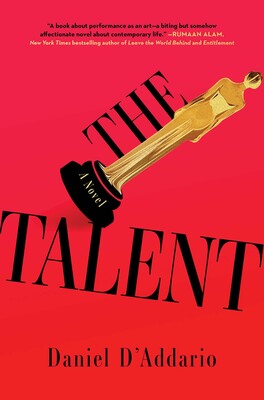
One of my goals for my new novel, The Talent, was to have readers feel as if they were really there as awards season runs on. In my professional life, I cover Hollywood, including the Oscar race, as a journalist; this fictional awards pageant draws on what I’ve witnessed in my line of work, but is fueled, too, by the passion and drama that accompanies show people wherever they go. These books do a similar thing — shedding light on what kind of temperament it takes to make art, and what pressures artists face as they try to express something genuine.
Cline’s short story collection ranges widely in subject matter, while keeping, throughout, her cool-to-the-touch approach to human relations and her tendency to center somewhat off-kilter female characters. But it’s “The Nanny” that lands like a bomb right in the middle of the book. The story features a woman enduring a tabloid scandal, one who’d been employed as a babysitter for the family of a famous actor who finds herself enmeshed in his marriage during a long film shoot, and then must live in the aftermath. This author tends to write characters who drift through life; adding the tractor beam-like charisma of a celebrity into the mix is an ingenious destabilizing element.
As the editor who made Vanity Fair into a veritable bible of politics and movie stars, Tina Brown ran culture in the 1980s and 1990s. And her retrospective diary about the business of liaising with celebrities of all stripes is as delicious a reading experience as one could hope for. Her dishy recollections about her ongoing flirtation with Warren Beatty — with her motive being to get him to agree to sit for a cover story, and with his intriguingly unknowable — is, alone, worth the price.
This forthcoming novel takes the art and alchemy of acting seriously. Kitamura’s protagonist, an actress rehearsing for a demanding role in a play, finds herself drawn into what seems like a fantasy version of her own life, one that demands she start performing in her off hours as well. What does it mean to live theatrically, and what lines must an artist draw between her work and her life? Kitamura doesn’t find an answer, but the question intrigues.
With his wife, Joan Didion, Dunne had a lucrative sideline as a screenwriter. But as this nonfiction account of a long attempt to bring one project to completion shows, the money may not have been worth the hassle. In granular detail, Dunne anatomizes the process by which a planned movie about a real-life journalist who died tragically became the fun, sunny Michelle Pfeiffer romantic comedy “Up Close and Personal.” Dunne’s headache makes for readers’ pleasure: This is a dishy, fun analysis of just how many competing pressures screenwriters for big studios face if they try to make anything without a classic Hollywood ending.
The greatest Hollywood biography of recent years tracks one prolific director through a long and varied career. Mike Nichols rose to prominence as a filmmaker with Who’s Afraid of Virginia Woolf? and The Graduate and went on to make Working Girl, Closer, and Charlie Wilson’s War. Intriguingly, he lacked a fundamental signature or style. He was competent and engaged enough to allow his career to go on, and he spent his life wearing a wig and false eyebrows (a side effect from a childhood medical treatment), which left him fundamentally relating to outsider characters, whether they were a young college alum driftless in Southern California or a Staten Island secretary looking for more. Harris marshals a fantastic set of interviewees to make Nichols’s life and work into a narrative that, itself, might make a great film.
Almodóvar is one of the defining directors of world cinema, and his collection of personal writing represents as close as he will come to writing his autobiography. The particular preoccupations and obsessions that run through his work, from the life of his mother to religious faith to passion and sexuality (represented in one instance in a parable-like tale about a vampire in a Catholic monastery), are drawn out here; one story even represents the genesis of the idea for Almodóvar’s great film of piety and revenge, Bad Education.
Tracey is a dance prodigy, a girl whose feet seem to move in perfect rhythm no matter what song is playing. But it’s our narrator, a relatively talentless dancer, who ends up in the heart of the entertainment industry, working as a personal assistant for a pop star named Aimee. (Take a dash of Kylie, a big scoop of Madonna, and maybe some Mariah, mix it all together…) “Swing Time” is shaggy and loose, and perhaps not Smith’s very strongest novel, but its depiction of celebrity vanity — culminating in an act of selfishness cloaked as benevolence during one of Aimee’s trips to West Africa — is written with a sharpened pen.
Moore’s memoir is likely the most accomplished in a while — thanks in part to New Yorker writer Ariel Levy’s work on the manuscript, but also to Moore’s willingness to dive deep into her work and life and reflect on what it all meant. For much of her career, Moore was treated more as object than as artist (a state of affairs that has happily concluded with the release of The Substance, a film that makes explicit comment on the way our culture chews up actresses). After walking away from the spotlight, Moore found herself the subject of tabloid scrutiny once again during her marriage to and divorce from Ashton Kutcher. Her reflections on the experience, on the trauma and addiction that haunted her early career, and on what movie stardom meant to her make for a moving, haunting read.
Gaitskill’s masterpiece toggles between a grim and unhappy present and a glimmering past, as protagonist Alison reflects on her dazzling, avaricious former life as a top model. The fashion world is drawn with stiletto precision as a collection of users, jerks, and worse, with Alison herself queen of the ego monsters. The whole story is told with the bleak moral clarity of a Grimm Brothers fairy tale, with Alison’s redemption coming through her reflection on her friendship with the pure-hearted Veronica, a person who has given her life over to her appreciation of beauty. There can, of course, be no art without an audience, something the disdainful Alison, years after her beauty has faded, realizes too late.
On the dedication page of No Offense: A Memoir in Essays, Jackie Domenus writes, “To all the queer and trans folks who have bitten their tongues until they bled: this book is for you.” In this powerful and timely collection, Domenus defends and celebrates identity and love with an unflinching voice. The essays are both urgent and timeless, offering a compelling analysis of queer and trans identity at a time when the LGBTQ+ community is increasingly under attack.
The opening essay, “Tom Boy,” explores the question of where identity comes from and how even when a person has the good fortune of having supportive parents, it is still a continuous and uphill battle to confront and resist the confining societal conventions around gender roles and the oppressive heteronormative views of love and partnership.
No Offense is a layered examination that instills hope by offering a bold, cathartic blend of personal essay and cultural critique laced with biting humor. By examining representations of and reactions to queer and trans people during pivotal moments, such as wedding planning, OBGYN appointments, and the Pulse Nightclub Massacre, Domenus reveals how language has the ability to both harm and empower.
I spoke with Jackie Domenus over email and Zoom about transitions during times of transition and how prioritizing community can be a beacon in unsettling times.
Cassandra Lewis: I love the title, No Offense. Can you tell us what it’s in reference to?
Jackie Domenus: Most of the essays in the book have to do with uncomfortable comments, conversations, or questions I’ve faced that the other person didn’t recognize as microaggressive or homophobic. So the title is a play on the idea of saying “No offense but…” before saying something that is, in fact, offensive.
CL: In the moments of heightened vulnerability that you share throughout the book – going to the gynecologist’s office for the first time, wedding planning with your wife, responding to other people’s reactions to the Pulse Nightclub Massacre, there doesn’t seem to be anything “micro” about these tremendously offensive encounters. What prompted you to write this book?
JD: The funny thing is, those encounters were “micro” to the other person/people involved, and that’s exactly why I wrote the book. A nurse at a gynecologist office being shocked I’ve never had penetrative sex with a man, a seamstress assuming my soon-to-be wife and I are best friends as we’re standing next to each other in our literal wedding dresses, a politician saying “we reap what we sow” after forty-nine Latine LGBTQ+ people are murdered at Pulse—these were just little blips in these folks’ days, things they likely never thought about again. But for me, and for queer and trans people everywhere, these moments are consuming. They’re constant reminders that we’re not treated equally. While there’s obviously an apparent hatred for LGBTQ+ folks exasperated by the current political climate, there’s also this strange assumption that marriage equality magically fixed everything. I wanted to write essays that would call attention to the fact that it’s not fixed, that the “subtle” moments of hatred have not-so-subtle consequences, that there is still so much more work to do.
CL: One of the discoveries that resonated for me was your experience of feeling at home with the term “queer.” You wrote, “I was learning that LGBTQ+ people were a form on a clipboard, like the ones they give you at the doctor’s office, and cis-het people had the pen. They decided which boxes to check off, and you had better accept and fit into your box because if not, they’d be uncomfortable. What seemed to matter most was their comfort, not mine.” Would you talk more about that skewed power dynamic and the role of labels?
There’s this hidden fee at the end of the bill if you’re queer or trans, this notion that everyone feels like you owe them an explanation.
JD: Queer and trans people are the minority, and straight cis people are the majority, right? So, we’ve been conditioned to see “straight,” to see “cis,” as “the norm.” LGBTQ+ folks have always been less represented in the media, especially for kids growing up in the early aughts like me. It used to be even more dangerous for people to be visibly “out.” We’ve also now been declared the enemy by conservative politicians. There’s a power dynamic that has always been there, but that feels more prominent now, where if your sexuality or gender doesn’t fit neatly into a box that a straight cis person can understand, you’re dismissed, you’re an attention-seeking weirdo, or you’re the cause of society’s downfall. In my opinion, that reaction (and really the overall current political attitude toward LGBTQ+ people) is fear-based. People who are deeply unhappy with their own lives and terrified of what they might find if they think critically about their own sexuality or gender, don’t want to see queer and trans people happy or claiming an identity that’s not “traditional.” They’re threatened by it.
CL: Exactly. And now this extreme hostility is heightened on the national stage with another Trump presidency. How does this impact your forthcoming book?
JD: One of the strangest feelings that I have had post-election, that I guess I wasn’t really anticipating, is this very serious feeling of deja vu, or like we’re hitting restart, or whiplash, almost, because a lot of the essays in this book either took place during the first Trump presidency… Think about how much harm it’s causing when we are talking about not allowing a Representative to use the correct bathroom, and watching what it’s like for queer and trans people to literally watch their human rights be up for debate on a political stage.
CL: You wrote, “To be a queer person planning a wedding is to come out a million and one times, at least.” Can you expound more on what it’s like to have to defensively come out so many times especially when it interrupts what is for many others a time of happiness and celebration?
JD: I think of it as an extra fee or a hidden fee that comes with being queer and/or trans. When you pay a bill, you have the actual cost, which is overpriced and annoying—that’s the typical, every day bullshit all people have to deal with, regardless of sexuality or gender. But then there’s this hidden fee at the end of the bill if you’re queer or trans, this notion that everyone feels like you owe them an explanation. So, if you’re planning a wedding as a cis-het couple, you have to stress about money, dress fittings, the guest list, etc. But if you are planning a wedding as two femme presenting women, you have to deal with all of that PLUS coming out as queer over and over again because people will assume you’re just friends. If you are a straight cis guy going clothes shopping, you have to deal with inflated prices, finding the right size pants, waiting in line. But if you are a nonbinary person shopping in the men’s section, who uses the women’s restroom, you have to deal with all of that PLUS people demanding to know whether you were assigned male or female at birth. Unless you are surrounded only by other queer and trans people, it’s nearly impossible to just exist without explanation. So, moments of happiness and celebration always come at a cost, they always have a qualifier.
CL: It seems like part of the disconnect comes from some people not sharing the same experience of what’s at stake. You wrote about a text exchange with someone who didn’t understand, “how his presidency jeopardizes my entire existence.” How can we effectively communicate what’s at stake?
JD: I am still searching for the answer to this. Unfortunately, I think that the current political climate has made people so incredibly divided and hostile that there’s no room for right wing folks to even make an attempt to understand LGBTQ+ people’s fear or pain without mocking it. Trump’s rhetoric over the last eight-plus years has managed to suck the empathy out of people. That text exchange occurred during the 2016 election, and still I have people in my life who claim to love me, but who support politicians who believe I shouldn’t be allowed to have control over my own body or raise kids. What they see as “at stake” is the economy or gas prices and for them, that trumps basic human rights for the people they “love.” I have yet to figure out how to effectively communicate this to a person who has lost all of their empathy. In many cases, I think they’re too far gone. So instead, it feels more important to connect with other marginalized groups, to bridge gaps and come together for common causes. I’d rather build and strengthen community with like-minded individuals who actually care about basic human rights at this point than try to convince someone not to vote for people who want me dead.
CL: As you wrote, it has never been easy to come out as queer. In the foreword, you mention, “the type of queer I was in 2014 when I began writing some of the essays in this book, is not the same queer I am today, in 2024.” Why is it important to acknowledge and examine these key moments of change in a person’s life within specific cultural and historical context even as our identities continue evolving?
JD: For me, it felt crucial to acknowledge this in the foreword because many of the essays in the book are based on instances that occurred when I was still a newly “out,” femme presenting, lesbian woman. The sort of homophobia I experienced then is very different from the kind I experience now, as a more masc presenting and gender nonconforming queer person. I think it’s equally important to examine the sexist microaggressions that occurred as a result of my partner and I both having long hair and “feminine” clothes, as it is to examine the transphobia that occurs now anytime I enter a public restroom. There is no universal queer or trans experience. We may all encounter similar circumstances, but our identities, as well as cultural and historical contexts, are constantly evolving. Acknowledging and analyzing that evolution is crucial to understanding ourselves and garnering understanding from others who are used to seeing things in the binary or in absolutes.
CL: How does this time of turmoil impact you in your current experience of identity, and as a queer writer about to transition into a published author?
JD: In a way, it feels like a really shitty sequel. During Trump’s first presidential campaign, I was newly “out.” I was acclimating to an identity I had repressed for so long and learning how to live authentically as myself, at a time when he was inciting hate for my new-found community. Many of the essays in the book take place during that era. Of course, he ran again in 2020, but this go-round in 2024 feels like the real sequel, not just because it feels more feasible he could win, but because I’m once again in a moment where I’m embracing my authentic self as my identity has continued to evolve. This time, as I settle more comfortably into “they/them,” as I approach my one-year anniversary of top surgery, the right’s fear mongering and hatred have returned ten-fold.
Continuing to live authentically is now the fight.
There were moments during the 2016 election where I broke down and wished I wasn’t me so I wouldn’t have to endure such alienation, so I wouldn’t have to face conflict with “loved ones.” And though I know now that I’m not the problem, that they can’t make me hate myself, I do feel tired. I feel tired and sad that the country has witnessed Trump demonstrate his vitriol over and over again and half of the population still votes for him. For all of these reasons, it feels like a scary, yet completely necessary time to become a queer, published author. It’s dangerous to exist as an LGBTQ+ person right now and it’s dangerous to challenge “the norm,” which is why it’s also vital.
It’s like a T-shirt that the Human Rights Campaign would make, but I keep saying, post-election, our existence at this point is resistance. Literally, right? Just sheerly existing in the world: having a life, having a family, going to work every day, waking up in the morning. Continuing to live authentically is now the fight.
CL: Relating to another layer of transition and how community can be a beacon, I admire how your publisher, ELJ Editions, was able to persevere by quickly finding a new distributor after Small Press Distribution collapsed in 2024, leaving hundreds of independent presses in the lurch. I remember asking you about this at the time and you described how committed they are to their authors and how much you valued the sense of community. How did this experience form your impressions about the changing publishing landscape, our roles as writers, and the importance of prioritizing community?
JD: First of all, Ariana Den Bleyker, the founder and publisher of ELJ Editions, is one of the hardest working people I’ve ever encountered. When SPD shuttered unexpectedly, she made a commitment to the authors she had already signed through 2025 that ELJ would figure it out and that our books would be published. She kept us updated each step of the transition, she was transparent about decisions she was making for the press, she literally went into personal debt to make it work. Obviously, no one should be forced to go into debt to keep a press afloat, but witnessing all of this has really shaped my appreciation for small, independent presses in a publishing landscape where value is often placed solely on “The Big Five.” Small presses are publishing work that is just as worthy and important and beautiful, so it’s been really refreshing to see so many folks rally around them recently.
As writers, I think our role is to contribute to the literary community by writing, but also by supporting one another. Buying each other’s books, sharing posts, donating to small presses—all of these seemingly small gestures ultimately keep the community thriving. I’m really enjoying connecting with folks in the literary community in order to promote No Offense, whether its reviewers, local bookstores, or asking other writers to participate in a reading/event. Working with a small press may not afford you a budget for a publicist or a cross-country book tour, but it allows you to form authentic and genuine connections with folks in the community who are usually more than willing to support however they can.
CL: What are you working on next?
JD: In the rare moments where I’ve been able to focus on generating new material instead of formulating a plan for launching No Offense, I’ve been writing toward the theme of “control.” Control has always been a major facet of my life whether it be pertaining to sexuality and gender, or mental illness, or grief. I’m always chasing control or it’s showing up in unexpected ways, so I want to dig into those moments and impulses and see what I can find buried beneath. My goal is to ultimately hold a magnifying glass to why “we,” as a society, crave control and further explore such implications on LGBTQ+ folks and other marginalized groups. Hopefully it will lend itself to a second essay collection!
The urge to know the future is inborn, it seems; from infancy, we are comforted by the anticipated. Prophecy, defined simply as prediction, assumes many forms throughout literature. Divination—seeking to foretell what is coming through supernatural means—is core to the Yoruba traditional religion of Ifa, practiced in Nigeria and around the world.
I discovered in the early research for my debut novel, The Edge of Water, that my paternal ancestors were Ifa practitioners, long before their introduction to foreign religions. Cowrie-shell divination introduces each chapter of the book as the all-seeing Yoruba Ifa priestess, Iyanifa, gives the reader a hint of what is to come in the life of Amina and her family in the lead-up to a devastating storm that strikes the city of New Orleans.
Similarly, the following books are all works of fiction in which a life-altering prophecy is featured. The prophetic emerges in several ways—through cultural expectation, divination, dreams, religious influence, and folkloric pronouncement. In some of these books, characters’ engagement with the prophetic provides a sense of comfort, clarity, and communal fulfillment, while in others, confusion and despair are the result.
In this Nobel Prize-winning play, the king of a Nigerian village has died and tradition decrees that his chief horseman, Elesin Oba, must thereby commit suicide and follow him into the afterworld. Failure to fulfill this is a curse for the village–life will not go well. A white colonial administrator attempts, however, to put a stop to the duty ritual by imprisoning the king’s horseman. What we then encounter is Soyinka’s stunning examination of the volatile and enduring tension between the Yoruba will to preserve a purposeful tenet of their indigenous culture and the audacity of Western colonialism to insist on knowing best. The reader is left reeling by the heartwrenching aftermath of the horseman’s inability to adhere to his spiritual duties.
Another classic of African literature, this piercing novel tells the story of newly-married Efuru who is struggling with fertility. With her father, she visits the dibia, the Igbo healer and diviner who mediates between the human and spiritual worlds. In sharp detail, the dibia outlines the sacrificial steps Efuru must take in order to ensure that by the following year’s Owu festival, she would be pregnant. Efuru heeds the dibia’s guidance, and when the Owu festival arrives, her in-laws are delighted, as they detect the scent of pregnancy on her being. Indeed, Efuru soon gives birth. But the joy of the prophecy’s manifestation is short-lived when the dibia–after predicting, without providing details, that there will be an issue with Efuru’s child–dies suddenly, along with his unspoken pronouncements over Efuru’s future and the reassurance his foreknowing had once provided.
The theme of childbirth is also present in this moving novel, in which the course of the main character’s, Adunni’s, life is irrevocably altered when she unknowingly partakes in the fulfillment of a curse that had been prophesied to her pregnant sister-wife, Khadija. Khadija’s lover, and the father of her unborn child, Bamidele, reveals to Adunni that in his family, a pregnant woman must be washed seven times in a river, or the woman and her unborn will die during childbirth. On a journey far from their shared home and husband, Adunni must help a laboring Khadija reach the river for a bath before the baby arrives. Adunni’s ability to assist Khadija in fulfilling the ritual has tremendous consequences for her own fragile future. Of note is that in this, as in other instances of a prophetic utterance, the precise source of the folkloric pronouncement is often unarticulated, but simply accepted as the collective what will be.
The predictions of tea-leaf divination are at the center of this aching novel about loss and longing. The central characters, Rae and Lila are two women, two mothers, with similar life paths who nonetheless hold a disparate relationship to the tea-leaf fortune-telling that shapes their perspectives. When the paths of Rae and Lila intertwine, both arrive at a knowing whose silence has threatening implications. As readers, we are left grappling with the consequences of knowledge that is revealed and that which is withheld, and the impact of both on the scope of our choices.
If we are told the exact date of our death, would we live differently–make choices that honor, reject, or align with that foreknowing? A psychic tells four siblings, in their youth–Simon, Klara, Daniel, Varya–the exact day they will die. We then follow each of the four as their lives unfold. The Immortalists deftly probes, in part, how we consciously or subconsciously participate in the fulfillment of the words spoken about us, by examining the varied ways–quietly, despairing, lonely, hopeful–the siblings choose to live, based on the extent of their belief in the prophecy they were given.
In this poignant novel about the history, layers, and resistance of womanhood, we witness the coming-of-age of Kirabo, the teenage protagonist who until the novel begins had been raised by her grandmother, but now hungers to know her mother, and the origins of her own emerging wildness. In seeking out the counsel of Nsuuta, the village’s prescient witch, Kirabo encounters various shades of the prophetic–a foundational one being that many years before, when Kirabo had been brought to the care of her grandparents as an infant, Nsuuta had predicted that the day would arrive when indeed Kirabo would come to her, in search of her mother. From then on, Nsuuta would be a kind of guiding light and catalyst for Kirabo. And even more compelling than the bits Nsuuta offers about Kirabo’s mother is her outlining of how women have had to shapeshift to survive the patriarchy throughout time; notably, within the novel’s four-part structure, Kirabo follows a path of evolution into her own womanhood that ultimately fulfills Nsutta’s words.
Set in nineteenth-century Sweden, this lush historical novel–about the destructive consequences of settlers’ encroachment on the indigenous Sámi people of the Sápmi region–begins with prophetic dreaming. Reminiscent of a central theme in The Edge of Water, the book opens with the night-before dream of one of its characters, Lars Levi–a Lutheran minister. Attributing it to his family line, his standing as a vessel of God, and his home in the gray Scandinavian tundra, he believes in the power of dreams to foretell. On the morning that prominent reindeer herder and Sámi leader, Biettar Rasti, unexpectedly walks into church during Sunday service and kneels at the altar shaking, Lars Levi recalls an unsettling but forgotten dream from the previous night–perhaps it had been a portent for stubborn Biettar’s unlikely religious awakening. From this very incident–Biettar’s conversion–the families of the two men become inextricably joined in ways that have transformative, damaging consequences for all.
Every week, our weekly magazine The Commuter publishes a new work of flash fiction, poetry, and graphic narrative. For Black History Month, we’re looking to the archives for some of our favorite poetry and stories by Black writers, all available to read for free online. From Tara Campbell’s interactive flow chart of systemic injustice to Anya Pearson’s poems critiquing the hypocrisy of well-meaning white people, these works showcase the range and brilliance of Black storytelling.
Excerpted from her poetry collection We Want Our Bodies Back, jessica Care moore taps into mythologies and ancestries in order to embrace her Blackness. Even as others’ attempt to dismiss her due to her mixedness, her pride in her identity is unflinching and inspiring: “I’m from an army of yellow/black princesses… even if the full-blood family don’t claim us.” The language in moore’s poetry is as evocative as it is precise.
In “Caesara Pittman, or a Negress of God,” award-winning writer Maurice Carlos Ruffin effortlessly brings intimacy and heart to the cold, sterile setting of a courtroom. Even in the face of discrimination, titular character Miss Caesara Pittman acts with assurance and self-respect. Pulled from his collection The Ones Who Don’t Say They Love You, this short story provides an enticing glimpse into the liveliness of Ruffin’s writing.
To express frustration at the repeated patterns of violence in the American justice system, Tara Campbell turned to form. This hybrid poem takes the shape of a dynamic flow chart; readers can interact and see how the underlying structures of racism affect the flow chart’s possible outcomes. As Campbell puts it, “although each individual in a system thinks they’re making their own choices, they’re only seeing a fraction of the whole, and the eventual outcomes won’t change until the underlying structures change.”
Anya Pearson critiques the commercialization of trauma, racism, and the hypocrisy of well-meaning white people in these two poems. Her short lines force the reader to sit with any discomfort they may be experiencing and confront their own biases. “This is their favorite part. // Devouring blackness. // the closest they will come // to entering blackness.// But still safe enough away // to laugh at // to enjoy the spectacle they make // of our misery.”
Pop culture takes center stage in these poems by Khalisa Rae. Through the lens of Gilmore Girls and Cardi B’s WAP, ft. Megan Thee Stallion, she interrogates white privilege, dating as a Black queer woman, and women’s desire: “What does it mean to push past the splintering / to reclaim the running water of pussy? / To say amen to the faucet spilling coins— / all the pennies you saved to toss and forget. / Now, she has reached a reservoir of fingers / gliding out and in. What is a woman unafraid?”
Brooklyn Caribbean Lit Fest Elizabeth Nunez Award for Writers in the Caribbean winner Akhim Alexis writes with a delicacy that makes you listen. His poems “On the album cover for Black Gold by Nina Simone” and “The Sound of Blue” sing its readers toward new comforts, bringing us to pay closer attention to the smaller, precious details of the musical world.
In his Cave Canem Poetry Prize-winning debut collection, 2000 Blacks, Ajibola Tolase traces the lineage of migration from Nigeria and interrogates Black coming-of-age in a polarized America. These two poems from the collection stand out for their resplendent imagery. The urgent language invites the reader to be immersed in Tolase’s poetic realm.
“When Fire Owns the Air” begins with rumors swiftly spreading through a town, regarding a relationship between two men—Ikenna Anyanwu and Gbenga Afolabi—that the community strongly disapproves of. But as the prospect of violence inches closer, Tochukwu Okafor meets us with tender renderings of the men’s hopes and dreams. The best flash fiction pieces capture entire lifetimes in just a few scenes; in this deftly written story, Okafor accomplishes exactly that.
This flash fiction begins with a warning from the narrator’s mother: “the reason why all the broken men live on the outskirts of town is for our protection.” Even so, the narrator goes to her grandpa’s cabin to play spies, which leads to a chilling confrontation. Avitus B. Carle demonstrates her mastery at crafting scenes full of tension in this story, just as she does in her flash collection These Worn Bodies. You’ll be on the edge of your seat from beginning to end.
Savings Time, the second collection by Roya Marsh, turns a resolute eye to Black joy and Black rage in equal parts. Her voice is perhaps at its most unflinching in the masterful “i must tell you,” in which Marsh draws similarities between herself and the late Freddie Gray. She demands for her readers to pay attention to racist atrocities rather than turn a blind eye in achingly honest lines: “i must tell you / how blessed we are / to be hashtagged / while breathing.”
Donna Weaver’s poems center tenderness — whether it’s a brother growing out his hair for his sister after she receives a cancer diagnosis or an older woman speculating on the joy of girls below her window on a summer afternoon. They brim with hope as she writes, “They hold hands like kindergartners, / pull each other across sidewalks like they’re going somewhere. / An alley behind Dollar General is more adventurous than the boardwalk. // They would find the oceanfront if they just held onto one another.”
Shawn, the almost-14-year-old, queer narrator of “Redondo Beach, 1979,” is juggling a lot: divorcing parents, a newly-out father, schoolyard bullies. At the center of this narrative is a battle over hair. Shawn’s father believes it should be styled one way, Shawn’s mother another. It’s a rich, coming of age narrative: “Principal Halimah grabbed your arm on the way out: You only have to believe in yourself, she said. The rest will follow.”
Erin Steele’s memoir, Sunrise Over Half-Built Houses: Love, Longing and Addiction in Suburbia, chronicles the life of an isolated, self-conscious Canadian teenager growing up in middle-class British Columbia to loving parents who are simultaneously present and absent. As young Erin grapples with finding connection and meaning within the suburban sprawl that eventually gives way to dark forest, we become witness to a young queer woman’s intense seeking.
Grasping for anything that might satiate her need for authentic connection, she turns to a range of complicated relationships, drugs and alcohol to find respite from her own loneliness. From the emotional manipulation of a high school classmate so involved as to necessitate police involvement, to anguished nights of self-harm, to months of disappearance, Sunrise Over Half-Built Houses asks us to sit still, listen and feel.
Within the raw honesty of her story, we become inclined to turn the gaze towards ourselves. How do any of us make meaning from the anguished creature living just below the surface of our myriads of addictions? What is it that drives our desires and needs, particularly when we are not at our best? And how can we navigate the parts of ourselves we would prefer to keep hidden? Erin brings these questions and answers to light, not through any kind of telling, but through showing us exactly how it was for her during those long years when that Pacific Northwest rain fell and fell.
It is the pervasiveness of Erin’s unrelenting search for meaning and, more specifically—a cohesive sense of self—that pulls the reader in and holds us there.
Charlie J. Stephens: Throughout the memoir, the reader is put in the position of not being able to turn away from the narrator’s reality, particularly in regards to risk-seeking behaviors. The narrator takes full responsibility for her decisions that I’m sure were difficult to face personally. The scene involving intense manipulation of a high school classmate is one that stands out. What are some of the ways you navigated those moments in writing and having the work published?
Erin Steele: Not to downplay all the self-reckoning that was required for me to put this book out into the world, but being real was simply more important than wanting to appear a certain way. We know flat characters in fiction, and memoir should be no different. Readers can feel when you’re holding back, so I resisted the temptation to scrub away what could make her (read: me) “look bad.”
Besides, the sex, drugs and music make it an engaging read, but it was always intended to be deeper than that.
Had I not faced and taken responsibility for my decisions, I wouldn’t have the perspective that elevates the book above a salacious recounting. That higher perspective is critical, showing up first in lines and short paragraphs, then growing alongside the narrator to ultimately integrate with her current reality.
It’s why one of the opening epigraphs is: “You’re every age you’ve ever been and ever will be,” author unknown.
I wanted to convey how we can get these flashes of insight, even while barrelling downhill. And although these flashes may not change anything in the present, they do exist and attract more flashes.
CS: Those flashes of insight show up in each chapter, and the narrator’s very urgent need is at the center, whether it is for love, affection, or self medication. It is easy to label this as a memoir of addiction, which of course it is, but you are able to capture the living thing underneath addiction. What are your thoughts on how this connects to capitalism and other issues of Western society?
ES: Similar to the narrator herself, there’s an insatiable quality baked into Western capitalistic society. So while it’s totally human and even necessary to want and to need, there’s a lot of power, psychology and societal conditioning behind why one might “need” a drink or drugs or chips or cheese or a cold beer or a run or a HiiT class.
An example is this: say you feel hungry. You may intellectually understand that lentils with spinach and tomatoes would best nurture your body, but you crave a Big Mac. Then you opt for that Big Mac in large part because it’s way more convenient and you’re exhausted and the dopamine receptors in your brain are obsessed with instant gratification.
There’s a lot of power, psychology and societal conditioning behind why one might ‘need’ a drink or drugs or chips or cheese or a run.
The reader experiences the narrator living out an intensely charged version of this—sacrificing basic needs like food, sleep and even her body in pursuit of what she believes will bring her fulfillment.
Whereas many Eastern schools of thought encourage turning inward, Western capitalistic society has no qualms about dangling basically everything in front of our hungry eyes with promises of satiation.
It’s a perpetual loop, and it is in this loop that the narrator is stuck. The romanticism, bright lights, feel-good drugs, sex and even music—it’s all outside her, and of course represents a firefly of happiness that cannot actually be grasped.
Truthfully, that firefly is within each of us always, but that’s not something we’re conditioned to believe in here in the colonial West, so we have to just fumble towards it on our own. That fumbling is what Sunrise over Half-Built Houses is about.
CS: A central struggle in this book is around connecting to your queerness in an environment where even basic self-acceptance was challenging. Can you speak to your current thoughts about the avenues available to isolated, queer youth in these times we find ourselves inhabiting?
ES: It is astounding to me that although my book takes place at the turn of the century, in some ways it feels as though we’ve gone backwards. That said, as horrifying as bigots on the internet can be, it’s also a place to find community. Pop culture today also embraces queer identity far better than it ever has.
There’s no one-size-fits-all solution to helping isolated youth, and society needs to shift far closer to inclusion. But these days, technology does allow people to find their people—or at least know they’re out there.
I recently sang Mayonaise by The Smashing Pumpkins (which features prominently in Sunrise over Half-Built Houses) at a karaoke night frequented in large part by late-teen and twenty-something alternative queer kids. After the line: I just want to be me; when I can, I will—which so encapsulates my character’s drive—all the queer kids randomly erupted into cheers and applause. It felt like a full-circle moment. Our people are always out there, always. Sometimes you just have to hold on.
CS: Wow, I would have just been sitting there singing along and openly weeping: I don’t think karaoke nights get better than that! How beautiful to have everything come together in that way. Speaking of music, you’ve mentioned that the Joni Mitchell lyric some turn to Jesus, some turn to heroin was the seed for this memoir. Can you comment on how it conveys the theme of seeking connection and whether you believe this holds up (or not)?
ES: Those lyrics convey what I’ve come to believe is true and what the narrator experiences in Sunrise over Half-Built Houses: we as humans may turn to seemingly drastically different things, but there’s a shared pull toward comfort and connection.
If what you turn to happens to be deemed acceptable or even revered by society, you’re privileged. But if you turn to, say, heroin, you risk being branded as a ‘moral failure.’
If what you turn to happens to be deemed acceptable by society, you’re privileged. But if you turn to, say, heroin, you’re branded as a ‘moral failure.’
What this lyric really says to me, and what I truly believe, is that we understand each other so much better than we’re often willing to accept.
Sometimes I force myself to dig down past my own disdain, and find kinship even with those whom I most disagree with. There is a simplicity in being alive and aware of it; the shared inevitability of death, the great equalizer. We all get scared and that fear manifests in so many messed up ways. In our society, it gets capitalized and politicized, then perpetuated.
I wish we could shake off all the crap that polarizes us, because that’s not the stuff that really matters. I also know that it’s not that simple. I also believe that it can be.
CS: I believe it can be also. Also I’m interested in your critique of the term “moral failure.” It’s so punitive. I read more, and the original term was “moral distress” which has a much more compassionate connotation. It was coined by ethical philosopher Andrew Jameton in 1984 and gets at the anguish caused by knowing the right thing to do, but then there are institutional or societal barriers that get in the way. It acknowledges that our choices are not always completely our own, back to your criticism of capitalism. Relating to that, throughout the memoir, there is an underlying threat of the act of being “othered” whether it is based in queerness, community, or addiction. Can you comment on how you’ve navigated “othering” within this book, as well as personally and politically?
ES: I care deeply about people stuck in cycles of drug addiction and will endlessly advocate for progressive harm-reduction measures as we figure out how to nurture the thing that causes the behaviour of addiction, which is a reaction to pain. However, when we say “addicts,” it’s easy for people to turn their heads and imagine human beings as “others.”
Yet, we all understand comfort and connection, and the absence of it. Although I label Sunrise over Half-Built Houses as a “queer coming-of-age story” and an “addictions memoir,” what it’s really about is inclusion—the antidote to othering.
When we say ‘addicts,’ it’s easy for people to turn their heads and imagine human beings as ‘others.’
I once attended a protest/counter protest with two clear “sides.” Amidst a lot of yelling and dysregulation, I witnessed two people in opposition have a conversation. I couldn’t hear what they were saying, but they were taking turns speaking and really listening to each other.
That’s more of what we need—hearing each other. Then, we inevitably correct the record where it needs correcting (and indeed, it needs a lot of correcting). This is where personal stories have an integral role. Although receptivity is needed, from everyone.
CS: Memoirs provide such an intimate means to witness—and hear—each other. What are some of your favorite memoirs as of late?
ES: Some incredible memoirs I’ve read over the last few years include The Chronology of Water by Lidia Yuknavitch, Long Live the Tribe of Fatherless Girls by T Kira Madden and Later by Paul Lisicky. All three of these writers take the not-easy route of characterizing versions of themselves with blood and guts, intimately pulling readers into their respective worlds. As a reader, this is a distinction and not soon forgotten. It felt like Yuknavitch, in particular, broke the fourth wall in The Chronology of Water, which felt intimate, delightful and unique—particularly from a memoir.
I also adored It Chooses You by Miranda July and Birds Art Life by Kyo Maclear—both more avant-garde, both profound.
CS: Do you have any new writing projects in the works?
ES: Yes, I’m officially on to my second book project! It’s still early days and materializing slowly, but I can tell you that it’s literary fiction, contemporary, with a subtle touch of magical realism. I’m aiming for this one to not take ten years like Sunrise Over Half-Built Houses!
DON’T MISS OUT
Sign up for our newsletter to get submission announcements and stay on top of our best work.
YOUR INBOX IS LIT
Enjoy absorbing fiction from Recommended Reading on Mondays, strange, diverting work from The Commuter on Wednesdays, and a roundup of our best work of the week on Fridays. Personalize your subscription preferences here.