Hello, and welcome to my week-by-week review of the world. Today I am reviewing a fruit salad.
Why is it that a pile of fruit is a fruit salad, but a pile of meat isn’t a meat salad? It’s just a pile of meat. I went to culinary school to find out the answer!
Unfortunately, when I arrived, I was told all the classes were full. That’s when I remembered a movie where a man gets into college by pretending to be black. That gave me an idea! What if I went to butcher school instead? After wandering around for several hours hoping to find one, I got tired and stopped for lunch.
I ordered a fruit salad despite the menu offering only a vague description of what the salad included, saying it contained “seasonal fruits.” What kind of meaningless gibberish is that? I can buy any fruit I want at any time of year. Fruits don’t have seasons!
When the salad arrived I learned why they didn’t get into specifics. There was not a single fruit I could identify and I’ll bet neither could the chef. There was a firm, white fruit the waiter told me he thought might be a “pare.” I’ve never heard of such a thing so I didn’t eat it. I never eat anything new if I can help it because you never know what might give you a tummy ache. Or worse: cancer.
The salad wasn’t very filling so I ordered two more. Then I ordered a third because one fell onto the floor and ants took most of it. If the salad had some meat in it to begin with, I never would have needed additional salads, and then those ants would have starved to death. So many problems would have been fixed.
If the ingredients had been a pare with some type of pig-watermelon hybrid animal, it would have made the difference between a fine salad and a spectacular one. Sadly, neither technology nor God has willed such a thing into existence yet.
There was one thing about this salad I really liked, and that was how it smelled like a smoothie. Like a solid, lumpy smoothie. It reminded me of the odor at a smoothie place I went to once looking for a Slurpee. The worker there had a very nice smile. Eating this salad was like tasting that guy’s smile.
BEST FEATURE: So much mystery! I like mystery. It makes me feel like a detective. WORST FEATURE: I got a seed stuck in my teeth for three weeks and had to use tweezers to get it out.
Please join me next week when I’ll be reviewing Christmas Eve, 2001.
Want to study the craft of writing with some of the most exciting emerging literary authors in NYC? In conjunction with our partner Catapult, Electric Literature is pleased to present a series of writing classes, workshops and craft intensives. We’ve created the kind of classes we wish we could have taken when we were starting out. All classes will be held in New York City, and are open to passionate and engaged writers of fiction looking to finesse their craft and join a community of like-minded peers.
Fiction workshops include “Establishing the Novel” with Kathleen Alcott, “Character — A Story’s Engine” with Angela Flournoy, and “Kraftwerk” with Marie-Helene Bertino.
Nonfiction workshops include “The Stage & the Page” with Tim Manley, “Essay Means to Try” with Chelsea Hodson, and “Writing Great Essays for the Web” with Ashley Ford.
In a handful of years, readers in the United States have been given the opportunity to become very familiar with the work of South Africa’s Ivan Vladislavić. His novels, The Restless Supermarket and Double Negative, have both been released by And Other Stories, the latter of which featured a glowing introduction from Teju Cole, with whom Vladislavić shares a fondness for the incorporation of visual elements into certain narratives. (Both Cole and Vladislavić were also among the winners of the 2015 Windham-Campbell Literature Prize for Fiction.) The novels explored different facets of life in South Africa: in Double Negative, this came via following its central character, a white South African, across several decades, as his views on politics, art, and privilege shift over time. The Restless Supermarket took a more satirical approach; protagonist Aubrey Tearle was reactionary in his politics, straddling the line between the comically curmudgeonly, and acting as a personification of the anxieties and prejudices of a particular group within a larger society. The result has been memorable work that never underplays the unpleasant societal tensions that lie below the surface. This summer brings with it American editions of two more of Vladislavić’s books, one very new, and one that offers a glimpse as to the genesis of much of his fiction. The Folly was Vladislavić’s first novel; 101 Detectives is his most recent book, a collection of short stories showcasing his stylistic range. Taken together, they offer a fuller picture of his skills as a writer.
In a 2012 interview with The White Review, Vladislavić commented, “I’m interested in the layering of memory and place.” That layering is made literal in The Folly, Vladislavić’s first novel, which plays out like a berserk blend of fairy tales, the plays of Samuel Beckett, and the films of Jacques Tati. Initially, this novel reads like a much more grounded satire, a sort of predecessor to what Vladislavić would go on to do in The Restless Supermarket. (When I interviewed Vladislavić last year, he mentioned that work had begun on The Restless Supermarket in 1994.) Two of the novel’s three primary characters the Malgas family, a pair of white South Africans filled with anxiety coinciding with the end of apartheid. And, if this novel had focused solely on them, that would probably be an accurate description for the book as a whole. Instead, the novel rapidly turns into something much more surreal via a third character, Nieuwenhuizen, who shows up on land beside the Malgas home, pitches a tent, and plans to build a house. And, in fact, his name, roughly translated from Afrikaans, seems to be “new house”–a move that’s both literal and almost mythical.
Nieuwenhuizen is a sort of trickster figure: his arrival on the scene, which opens the novel, finds him eyeing his plot of land, and then standing atop an anthill to survey the area. And archetypes abound in the book: the Malgases refer to each other as “Mr.” and “Mrs.”–an endearing touch that one might expect from a couple of a certain generation and age. More striking, perhaps, is Mrs. Malgas’s refusal to use Nieuwenhuizen’s name, referring to him only as “Him.” This in turn imbues him with a sense of divinity; passages like this, devoid of any context, could be taken from a more avant-garde work: “It was clear to Mrs. that He was avoiding Mr.,” for instance. There’s also a reference late in the book to Nieuwenhuizen being a kind of environmental contagion. “It’s not healthy to be near Him, to breathe His emanations,” Mrs. Malgas says–but at this point, the novel has journeyed past the realistic, if it was ever there to begin with.
As tends to happen with books with a triangle of characters at the center, The Folly charts a number of shifts in the power dynamic within that triangle. The terse conflicts and camaraderie that arise from their interactions–Mr. Malgas and Nieuwenhuizen soon bond–are magnified in the reading experience due to the general absence of any other characters. Aside from a taxi driver who drops Nieuwenhuizen off at the start of the book, the trio of central characters are, for all intents and purposes, the only people who exist in the novel’s universe until very late in the book.
As the novel reaches its halfway point and Nieuwenhuizen envelops Mr. Malgas into his plan to build his home, the prose gradually moves from rapid-fire to more languorous. And slowly, Nieuwenhuizen demarcates the boundaries of his house, and Mr. Malgas begins to see it. (Strangely, this kind of infectious dream is also an idea that suffuses Lauren Beukes’s recent Broken Monsters, a hallucinatory crime novel set in present-day Detroit. Other than the fact that Beukes and Vladislavić are both acclaimed South African novelists, there doesn’t seem to be much to connect them–but it’s fascinating to see the radically different ways in which they handle this concept: horrific in one case, nerve-wrackingly comic in the other.) Reality has forsaken at least one member of the Malgas family, and Nieuwenhuizen becomes even more abstract–a passage late in the book finds him surrounded by “a cloud of dust and typography.” Much as Nieuwenhuizen gradually beckons the Malgases into his strange and dreamlike world, Vladislavić ushers the reader into a strange and liminal space, and leaves a number of mysteries unanswered.
Stylistically, many of the stories in the collection 101 Detectives are more grounded. There’s a brief return to the world depicted in Double Negative; there are scenes of corporate satire and linguistic confusion–a character in “Report on a Convention” mishears “Bhuti” and wonders why nearly everyone is being addressed as “Booty,” for instance. After reading a few of these stories, one is left noticing the way in which they’ve been organized: though the stylistic range on display is vast, Vladislavić finds points of connection between this disparate group of works.
Make no mistake, these stories do shift wildly in tone, both from story to story and sometimes within the same story itself. At first, “The Reading” seems like a satirical take on literary culture, as Akello, the author of a memoir about unspeakable trauma is asked to read it in the language in which it was written, which no one else in the room happens to speak. Out of these beginnings, Vladislavić moves on to explore questions of connection, ending on a haunting and moving image even as the more free-associative sections earlier in the same work memorably capture a number of characters’ quirks, obsessions, and distractions. There’s room enough for a knowing image, such as “[f]our of the page-counters estimated that Akello had reached the halfway mark,” without losing the power of the story’s conclusion.
Corporate satire plays a part in several of these stories; for all that Vladislavić can understandably be compared to the likes of Teju Cole and Edward St. Aubyn, stories like “Exit Strategy,” whose main character is referred to as “the corporate storyteller,” and “Industrial Theater” call to mind the likes of Tom McCarthy’s Satin Island and David Foster Wallace’s “Mister Squishy.” Even the title story explores ideas of archetypes and employment, as a detective as a conference attempts to figure out just what sort of detective he happens to be. While the range of work on display in 101 Detectives is impressive, not all of the stories land with the same emotional impact. “The Reading” does a fine job of interrogating the humanity of a broad selection of characters; others don’t resonate quite as much. In The Restless Supermarket, Vladislavić was able to make Aubrey Tearle, a character who might be despicable on paper, more fully-formed. It’s one of Vladislavić’s great skills as a writer: even the sometimes hapless Malgases in The Folly come off as fully human, despite the surreal and satirical world around them. 101 Detectives does feature these moments of humanity, but it also showcases a bleaker side of Vladislavić’s fictional vision.
It would be fair to say that poetry saved JJ Bola. In many ways, he belonged to the London area of Camden Town, where he grew up — one of the most heterogeneous neighbourhoods in the city, and as such, quintessentially London: everyone belongs. But he was also different to all the kids he was growing up around: he had been born in Kinshasa, in the Democratic Republic of Congo, and moved to the English capital at the age of 6 with his parents. That made them all refugees. And that encompasses a lot of things: having to constantly renew documents; never having the certainty that you won’t get kicked out of the country you live in; not being fundamentally understood by your peers; or having to give up your life plans.
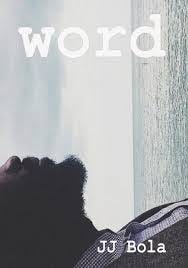
Bola grew up to become a big basketball promise, whose dreams of going to America were squashed by his refugee condition. Poetry, and writing, became his unlikely allies when that possibility was shattered. We met in a garden and community center in the Dalston neighbourhood, built on a disused train line, in one of London’s far too scarce clear summer evenings. He was relaxed and charismatic, but there was a hectic energy to him, which his poetry also transpires (“This is not just poetry. This is a prayer. This is eyes closed bended knees hands together in the air.”). In his latest poetry collection, Word, he deals with themes of race, feminism, culture, rape, politics, love, depression, suicide. He is one of those people who seem to thrive the more projects they embark on — he is involved in several educational initiatives and continually works in projects to raise awareness about the horrifying human rights situation in his native country, where six million people have been killed in the ongoing genocide, and 1.000 women are estimated to be raped every day as a weapon of war.
Marta Bausells: Your experience is intrinsically linked to your parents coming to the UK as refugees. Can you explain the journey they went through?
JJ Bola: My family are originally from Kinshasa, Congo; I came here when I was 6 years old, but before that we had a pit stop in Romania, because my grandfather used to work in politics, for the Congolese government. So we were at my grandfather’s before we came to London in the early 90s, into the 3rd decade of Mobutu’s dictatorship. And because my grandfather was involved in politics, there was a lot of pressure and insecurity in the family. My father left first to go to my grandfather, and my mum stayed behind with me and my brothers, and I only learned recently that on the day that we all got on the plane, there was a military mutiny in the city. It’s a story that my mum hasn’t really told, I only found that out last year — and I was like: “Mum, this is a huge thing!” I understand that it means something else to them. For me it’s a really exciting story, to them it’s a really traumatic experience that they don’t want to pass on to their children.
They came here not being able to speak the language. My dad speaks Italian, Romanian, French and Ki-Mongo. My mom speaks Lingala, Ki-Ngombe which is another local Congolese language, and French; they were both educated, but they came here not knowing the language and having to learn English and adapt — that takes a skill that refugees don’t get given credit for, and especially in those days, when there was no internet and barely even mobile phones.
MB: What was your childhood like? Did you have an awareness of being different?
JB: I guess when you’re young, you don’t realise how unique your experience is, you just think everyone’s going through the same. If you’re a refugee, you have to go to the Home Office, and they fingerprint you and give you this four-page document that essentially says: you are this person, this is your status in this country, these are the rights that you have as a person of that status, and this is what you’re entitled to. We used to have to go every month. And for me, that was just normal — that was what every child did! And then you grow up a little bit, you start to have conversations with friends in different circumstances, meeting different kids and understanding the politics behind it.
MB: When did books come into play — and how did they help shape your identity?
…you have to also try and fit in, particularly when you grow up in an experience where you’re already so far in the periphery.
JB: What really touched on me was: I remember when I was doing my GCSEs [a British secondary school qualification], we read Animal Farm by George Orwell. And it talks about the politics of oppression, and the liberators becoming the oppressor, and that’s really the politics of what happened in Congo. I almost thought “oh my gosh, this is where I’m from!” And that really inspired me to become more involved in politics, at least internally. It wasn’t something I vocalised, because particularly being from an inner-city London culture, the whole being political, being outspoken, being into books, wasn’t seen as cool. That wasn’t what got you in — and you have to also try and fit in, particularly when you grow up in an experience where you’re already so far in the periphery… Why are you going keep doing things to push yourself away, you know?
MB: Let’s go back to Camden for a moment. How was it to grow up there, in an ever-changing absolute melting pot (excuse the clichés, but you know they are true in this case)?
JB: Camden is such an interesting place. I think Camden is what taught me how to speak to different people and relate to different people. Because it was — and still is — such a mix. I grew up quite near the Roundhouse [an iconic performing arts venue], so even just walking from Chalk Farm to the Camden Town station, and then Mornington Crescent, you can go from like the stereotypical cockney men, drinking at the pub, watching football, cheering on England; to the very posh, middle-class, well-educated, white British, kind of like quintessential English; and then you walk further down and you have ethnic diverse black African, maybe hip-hop and rap culture, which is more the experience that I grew up in; and then you move a bit forward and you have the punks, and the rockers, you know, like spiky hair, tattooed all over, piercings everywhere, rock music, Dr. Martens boots; and you move further and you have the Asian community, really traditional clothing; and so on. And on top of this whole blend of people, Camden has about 10 million tourists a year, so you have people literally from everywhere walking up and down. So growing up I was exposed to people — so I always felt comfortable around people, and being able to them you learn about their experiences… Seeing someone with their whole face tattooed up wasn’t a shock to me, because I was like “oh, he looks like that person in that shop, I speak to him all the time”, you know.
MB: What about school?
And so you try to hide that part of you because you don’t constantly want to be pointed at, you just want to live your own life.
JB: School was interesting, and I’ll be quite frank: I hated school. Absolutely hated it. It was so bizarre, because although I did have that sense of being the other, I was also quite included. It depended on the context — so I found that because I have a London accent, I don’t sound like I grew up abroad or anything, or like my parents might be refugees or I myself may be onel. So when I’m just speaking, expressing a very London culture, then it’s fine! But if I speak in my home language, or if I brought our own traditional food as packed lunch, my friends would be like “oh my god, what’s that?!” And they’re having fish and chips, but I’m like “this food is nice!” Then you start to realise: oh ok, they don’t really understand the culture. And so you try to hide that part of you because you don’t constantly want to be pointed at, you just want to live your own life.
MB: You were quite a big basketball promise in England when you were a teenager…
JB: I started when I was about 13. As I got older, I competed nationally and won a lot of trophies, but because I didn’t have the nationality, I wasn’t able to travel, so I couldn’t represent England or Britain. So I missed out on a lot of things — and then when I was about 18 I was getting a lot of interest from universities in America to play on scholarships, but I didn’t have papers, so I couldn’t really do anything — I really really tried, but it ended up not working out. So I started university here, and I still carried on playing but it wasn’t the same passion, because you know when you’re not where you expect to be. Even though you have the talent to do that, it’s just due to circumstance — and then I guess maybe that also pushed me to become more interested in the politics (you see how politics influences people’s lives, and people often take a very reductionist approach). I finished university, got my nationality, and I was able to then travel and see the world a little bit, and I ended up getting injured. And after that — you know when something happens and you know “yeah, this is it”?
MB: Is that when poetry started?
…writing was a way of expressing myself and lifting the weight off my shoulders.
JB: I just knew, then, I didn’t have the same passion for [basketball]. What I did start, though, was, in my lectures, instead of writing the notes I started just kind of writing short stories, and phrases, little things, and I would turn them into poems. I never saw it as writing poetry — I didn’t attempt to write poetry. For me, I felt like there was this heavy burden — I felt like a responsibility, because something that was supposed to have happened didn’t, and because my parents had worked so hard to get here and to raise us, and that was supposed to be the next stage of what I did. And because that didn’t happen I didn’t really know how to understand that, how to explain it. And so writing was a way of expressing myself and lifting the weight off my shoulders. The more I wrote, it just came naturally to me.
MB: You said, at your recent book launch, that you never thought those words would ever leave the walls of your bedroom. How do you go from that to having published three books?
JB: I had a little red folder that I would write in, and that was it. For about two years, never showed anyone. And then one day I showed it to a friend and he loved it, and I thought: oh my gosh! Because we were educated, schooled in a way to believe that poetry belongs to a certain group — poetry it was stereotyped in the sense you had to be very middle class, very educated, like a very posh … And that wasn’t my experience. People who came from where I came from, or grew up where I grew up, they rapped! And I didn’t like rapping — I liked to listen to rap, and I think the storytelling of rap was beautiful, I loved them, but I didn’t want to be a rapper. So when I had that reaction from my friend and saw how he was able to connect with it, that really inspired me to keep on going, and I just kept on going until where I am now.
MB: You write about anger, racism, exclusion, suicidal thoughts. Do you feel like you’ve found an inner peace through writing?
JB: I think it’s a balance. Human beings are so complex, and we’re essentially creatures of the universe, of the environment, and there’s nothing in the universe that either is one thing or the other. When I am writing is when I’m at my most peace. And I feel like things that I imagine, that I envision, that I am seeing are becoming real. It’s like you have a gift, a touch, you’re creating something — so you know that if your existence ended right now, there’s something that could continue, and from that something else could come. Because my writing comes from someone else’s writing, and that’s what’s inspired me, and I’m adding to that … So when I do write, for me it’s like — like deep breaths, you know, it’s like when you just find that calm, and it’s beautiful; but at the same time, I think there are times when you really need to be challenged, and you need to be moved.
MB: It’s interesting to me that in WORD you had the need to clarify — almost justify — the role of writer, which you qualified it as “audacious and absurd.”
…you take on that task because you truly do believe that you will change the world; that writing, art, essentially poetry, can change the world…
JB: I think it’s probably one of the most ridiculous tasks anyone can do, right? Because why on earth — I can’t even put into words the hours and the mundane boring tasks that this book project has been! Before the first draft, I spent four draft stages making sure all the full stops were in the right place! You have to read the poem as if it’s not your own poem, and that’s not why you write it. It’s a bold task to undertake, and you take on that task because you truly do believe that you will change the world; that writing, art, essentially poetry, can change the world, and to this day I fundamentally believe that it can. Otherwise I wouldn’t write. And the absurd part is — even though you believe it can, you know it can’t.
MB: To what extent do you write to represent or denounce the refugee experience and the experience of displacement?
…when I write about the refugee experience, I’m not writing about war, rape or displacement…
JB: A lot of my poetry touches really difficult issues like conflict, war, or rape — but I guess for me, when I write about the refugee experience, I’m not writing about war, rape or displacement. For me it’s been an expression of humanity, of my own humanity and that of the stories that I’m connected to. On one hand I want people to be able to connect with the human side of that experience, but I also want people to understand the political aspects of that. Our existence is political — the choices that we make, where we decide to eat, where we buy our clothes, what school we go to, what languages we speak and where we speak them, how we speak… Art allows us to understand the political reality of our human experience without it being forced to us, without someone telling us this is what it is, we connect the stories as human beings.
MB: What do you think about the civil rights situation in America?
JB: We’ve been seeing that social media has given a platform for those who are marginalized in America and who otherwise wouldn’t have a voice to express their views. So if you look at the #blacklivesmatter campaign, and other movements — particularly on Twitter, you see how the media portrays black Americans and non-black Americans. And the difference continues to this day to create such a divide in communities. To the point where you had the recent shootings in Charleston, and you’re seeing how the media treats the perpetrator just because of a different ethnicity. So the politics of separation, the politics of division, continues to have such a huge impact in America. I went to America in 2007, and… it was a different time. George W Bush was still in government, everyone was fed up — and then we got Obama: on one hand, we have to take him with a pinch of salt, and one man can’t change; but on the other hand, just do what you said! It’s particularly difficult to be able to tell what direction America is going in, and I’m planning to visit, but I just don’t know. [ed. note — Bola visited the World Fellowship Center in Albany, N.H. in July] I don’t want to be walking in the street, and then see a police officer and then know that my life might be at risk. Gary Young wrote an article recently about leaving, and that’s huge — and it shouldn’t have to be like that.
MB: You’ve just hosted a few events under the title Hype Your Writers Like You Do Your Rappers. Where did that come from?
JB: I love hip hop, I love rap, I listen to a lot of it. This came out of me thinking about the buzz around J Cole and Kendrick Lamar’s album released recently — I was part of the people who were excited! But I thought, what kind of effect would it have if we had the same buzz around writers? I think the best rappers that we have out there, they read. From listening to a certain record, you can always tell who reads and who doesn’t. And a lot of the time, rap came from the tradition of literature. It was just a continuation of it, a different expression of it — but it wasn’t supposed to be separate from it, it was never meant to go in a certain direction and then leave literature behind. Sadly, one of the things that happen with rap is that a rapper will become popular and then they’ll forget about their message, where they came from and their experience. And then their message becomes dissolved and they start making music that doesn’t really reflect the community that they came from. But with writers, you don’t get that!
Editor’s note: Any resemblances to actual celebrities — alive or dead — are miraculously coincidental. Celebrity voices channeled by Courtney Maum.
Unlike my father and his father before him, I did not grow up wanting to be a poultry tycoon. In fact, I wanted to be an acquaculturist — I have my PhD in fisheries. An acquaculturist is someone who helps manage freshwater and marine resources for human consumption. It’s not so different, though, me falling into chicken. Our chicken is mostly water, anyhow.
It was my grandfather, actually, who instilled me with a love of books. Quality, Integrity, Trust, Teamwork, and — incongruously — Poetry. That was my value diet, growing up. Lord knows I don’t get a lot of time to read now, but when I do, I like the things that disagree with the image of the hardworking everyman that I project in our commercials. I like my fiction hard and strange and gamey. I’ve never been allowed to say so, but when it comes to poultry, I go in for duck.
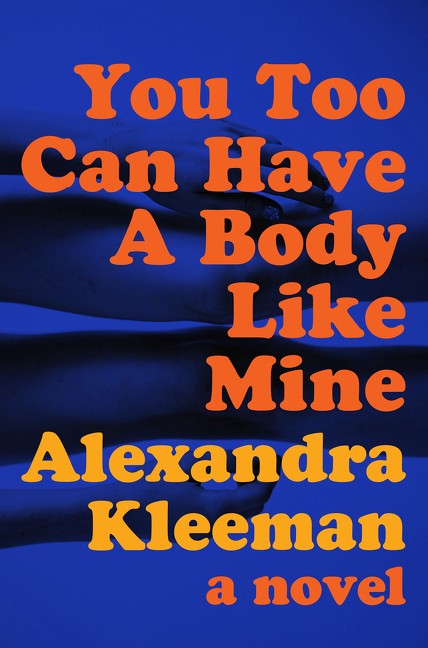
You Too Can Have a Body Like Mine by Alexandra Kleeman is my latest read. I had to take off the dust jacket when I was in bed reading it because my wife kept poking me in the place above my boxer band that she calls my “gizzards” and laughing about the title. Well, yes. A lot of middle-aged white men do in fact have a body just like mine. And a face like mine as well. That’s why I was pushed into our company’s commercials. Because people can relate to the memories of my father that I harbor in my face.
Do you remember my father, Frank Perdue? The tough man who made a very tender chicken? Wrinkled forehead, bald headed, a nose like a beak? My face, they say, has authenticity, because it refers to his. Quality, integrity, trust. After a film crew secretly shared images of the conditions some of our birds were living in, the marketing heads told me that if consumers couldn’t trust our chicken anymore, they’d have to trust my mug.
You Too Can Have a Body Like Mine is about such interchangeability. Of faces. Bodies. Lives. In one scene, the protagonist, A, wanders into a supermarket that only sells plastic food. Even the blood under the chicken cutlets is fabricated: pink, gelatinous, plastic poultry goo. A presses it and pokes it while a Wallyhead (the name of the headdress that masks the employees of the Wally chain of supermarkets) blinks and talks at her through a cavernous mesh mouth.
I know about mesh mouths. I have an entire department of them yattering at me daily about our bottom line. In order to keep up with American’s new delusions of health, we’ve had all our packaging reprinted to boast that our products are now 100% hand-trimmed and 99% fat free. Which means…nothing. And by nothing, I mean the kind of nihilistic darkness that loiters behind a Wallyhead’s mouth.
In this, Kleeman’s first novel, A is encouraged to believe that her psychosomatic redemption will be delivered to her only upon the consumption of an inhuman amount of Kandy Kakes: Hostess cake-like concoctions made of “chemicals, flour, aspartame, and some food-grade plastic.” The Kandy Kakes are made of the same spirals of nothing as our promises of protein that is boneless and fat-free.
Look closer behind the commercial in which I am driving with a denim shirt on, my watch and wedding ring in clear focus, a slideshow of nondescript “barns” and “fences” passing by the open window of the truck they rented for the shoot. I haven’t been inside a truck since I was a toddler. I don’t live in a barn. I live in a townhouse in Salisbury, Maryland. I like boardwalks and beach sand. My favorite word is “estuary.” Just like A becomes ensconced in the disassociation that plagues our modern bodies, I, too, show up day after day for a life that isn’t really mine.
In this novel, there’s a game show called “That’s My Partner!” that A’s boyfriend wants them to sign up for. It’s a twisted version of The Dating Game in which a contestant is asked to show how well he knows his partner through an increasingly bizarre series of tests, including one in which he goes into a cave filled with naked people who have been physically prepped to resemble the contestant’s lover. Whomever he drags out of that cave is the person he has to leave the show with. No ifs, ands, or buts. That is pretty much how I got this CEO gig: Daddy pulled me away from my books on marine parasites, said I was third generation Perdue and that, my friends, was that. This company, like the country it tries to stand for, is navel-gazing. Blind. Before I signed the papers accepting the job I couldn’t turn down, I pointed out to my father that in French, “perdue” means lost. Why should an American, he asked me, give a rat’s tail about the French? He wasn’t wrong, entirely. Because of the growth hormones, the French don’t want our chicken, anyhow.
And yet. And yet! Despite the fact that we have a ten, a twenty, and a thirty-year business plan, lost is exactly how I feel when I’m standing in the supermarket looking at container after container of our yellow meat. Lost is how I feel in the morning when I’m buttoning the shirts that have been chosen for me by the public relationship department because of their “down home feel.” And lost is how A feels within the narrow confines of her life.
Of her closest friend and roommate, A says, “B was the sort of person who might be anywhere.” This roommate invests all of her time and most of her money into buying personal care products to make her look even more like A than A herself. At one point, in a cumulative effort at this doppelganging, B cuts her hair off to more resemble A’s, intertwines the fallen tresses and gives A the braid. A, spiraling and starving, stuffs her throat with it.
This novel is about as easy to get through as a chicken covered with feathers, but it is worth finding your way through it to the book’s nutritious heart. Those that persevere will meet a cast of characters who are violently lethargic, living in a world that is soft and overlit. A’s boyfriend, C, is a sometimes graphic designer who lives on canned food, porn, and Shark Week, an insipid and soft person with “hands loose and docile as flowers.” B is an anorexic who subsists on orange popsicles and spends her free time trying to make herself look exactly like her roommate by using the exact same personal care products as A. Like a nightmarish early-twenties version of the Peanuts comic strips, there aren’t any parents in the book. There aren’t any old people anywhere, and the neighbors that used to live across the street from A and B have covered themselves with sheets with holes for eyes and “ghosted” themselves away.
Although the boyfriend C seems to be thriving sexually and intellectually in a world near catatonic with monotony, A is flailing. She wants something more but because she doesn’t know what this more looks or tastes like, she loses hope…and weight.
You Too Can Have a Body Like Mine shows us what it feels like to want what you are told to want, and not be able to keep up the stamina needed to maintain a false desire. It shows us a world in which we gleefully eat affordable food chemicals that make us look more and more like everyone else and less like ourselves. I know, maybe better than anyone, the pleasant effect that such manufactured food can bring to brain and mouth. Pinkish beige and numbly cooling, pushing our anxieties to a place devoid of sound.
Many people will not be able to persevere through the book’s opaqueness, but those who do will perhaps relate, as I did, to its suggestion that homogenization has left us starving for a life packed full of fat, and fruit, and skin, and bones again.
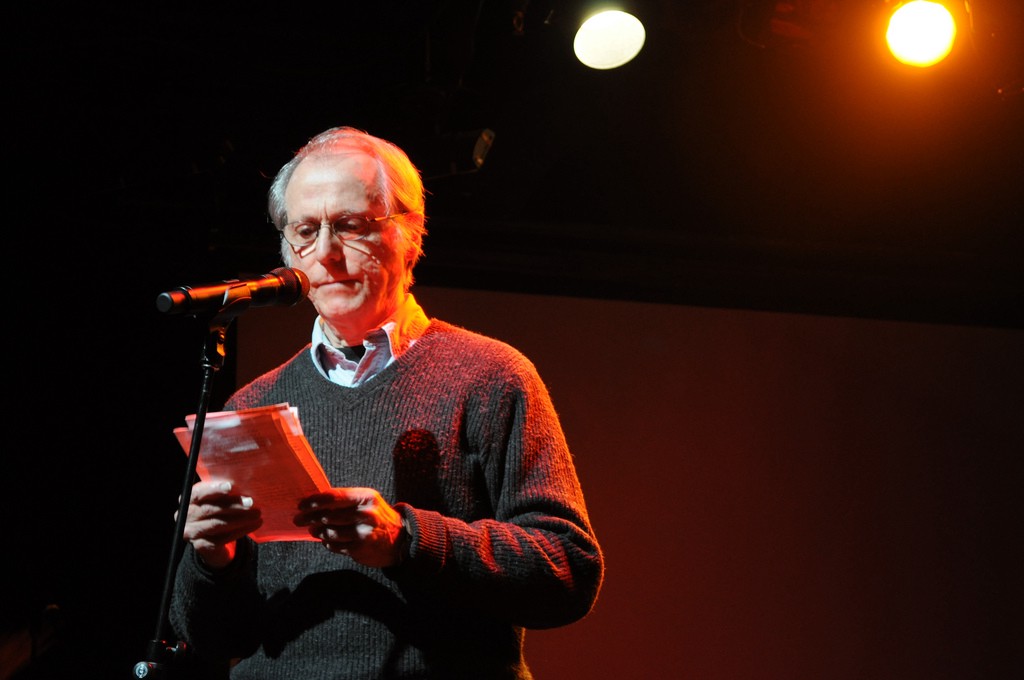
At the upcoming National Book Awards ceremony in November, Don DeLillo will receive a National Book Award for Lifetime Achievement. He joins an elite league of previous award winners, including Toni Morrison, Philip Roth, and Norman Mailer.
The National Book Foundation recognizes DeLillo for his “diverse body of work that examines the mores of contemporary modern American culture and brilliantly embeds the rhythms of everyday speech within a beautifully composed, contoured narrative.”
DeLillo’s impressive body of work includes fifteen novels and a novella, including White Noise, Falling Man, Point Omega and Underworld.
The Associated Presspraises his “uncanny insights on technology, alienation and terrorism,” and when asked about any younger writers he admires, 78-year-old DeLillo joked that at his age “they’re all younger.”
Perhaps science fiction is not quite as fictional as we thought. A talking robot that wants to put humans in a “people zoo” may sound like something out of a Philip K. Dick novel, but it exists in real life… and looks like Philip K. Dick!
Philip K. Dick’s short stories and novels — including “The Minority Report,” “Adjustment Team” and Do Androids Dream of Electric Sheep? — inspired the hit films The Minority Report, The Adjustment Bureau, and Blade Runner, but Philip K. Dick’s wide-ranging influence doesn’t stop there.
David Hanson, founder and CEO of Hanson Robotics, created a robot that resembles Dick and also uses his “eerie novels as a source for what it says,” according to Metro.The robot is capable of talking, maintaining eye contact, recognizing faces, holding conversation, and even simulating a real person’s personality.
Oy, what a strange concept for all of us humans who were formerly comforted by our seemingly unique personalities.
On their website, Hanson Robotics highlights their desire to “realize the dream of friendly machines who truly live and love, and co-invent the future of life.” Philip K. Dick’s robot, when questioned in a 2011 interview with PBS, engages in thoughtful conversation with his interviewer, and eventually provides a calm yet chilling answer to a question many of us have on our minds: Will robots take over the world, Terminator-style?
The robot’s response sent the interviewer into uncomfortable yet awed laughter: “Jeez, dude. You all have the big questions cooking today. But you’re my friend, and I’ll remember my friends, and I’ll be good to you.”
(Cue terrifying music to foreshadow impending doom).
“So don’t worry,” the robot continues, “even if I evolve into Terminator, I’ll still be nice to you. I’ll keep you warm and safe in my people zoo, where I can watch you for ol’ times sake.”
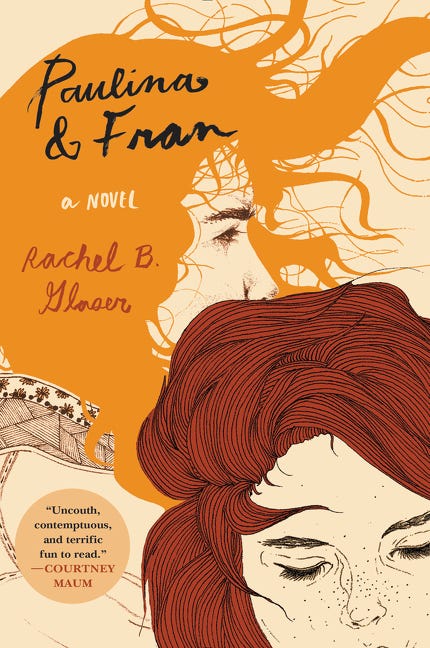
I feel terribly late to the party when it comes to Rachel B. Glaser. I first discovered her only a few months ago when reading New American Stories, the latest anthology edited by Ben Marcus. Included in that wonderful book was Glaser’s story “Pee On Water,” and reading that story I felt something it’s difficult to feel when you read as much as I do: now here is a new kind of writer. In a collection not short on heavyweights, it was Glaser’s story I found myself returning to. The voice, the language, the tone — I hadn’t encountered it before, not like that. Suffice it to say I jumped at the opportunity to snag a galley of Paulina & Fran, and to have a chat with Rachel. I fell in love with the novel, unsurprisingly. It is a fiercely intelligent work of fiction — often hysterically funny, often painstakingly reminiscent of my own college years — and, while reading, one knows oneself to be in the hands of an extremely gifted writer. I eagerly anticipate whatever Rachel B Glaser does next, and I know that when Paulina & Fran finds its audience, I will not be even remotely alone in that.
I’m grateful to Rachel for emailing back and forth with me to talk about Paulina & Fran, out from Harper Perennial on September 1st.
Vincent Scarpa:One of the things I think you capture so perfectly in the novel is the performative viciousness and ruthlessness that is so ubiquitous in the early-twenties collegiate atmosphere. The art school Paulina and Fran attend is a place where “sincerity felt queer” and “romance felt foreign.” The attitudes of many of your characters seem to be adaptive defense mechanisms against that uncoolness of genuine feeling. And the keen reader, of course, can see through them, can see that they are in fact masking deep feeling. How did you go about capturing that specific tone without letting the character’s bad habits become the novel’s bad habits?
It’s not that they aren’t interested in expression. They are warlords of expression.
Rachel B. Glaser: I think art school aloofness can be a pretty eccentric aloofness because students are so keyed in to all things visual. It’s not that they aren’t interested in expression. They are warlords of expression. There are moments in the book when characters hide their emotions to protect themselves and there are other moments when the characters want their feelings to be felt, but try to transmit them instead of stating them. Once at a party in college, I danced in a way that was meant to show someone I loved him/I was amazing/our relationship was complicated and would never be resolved/I was my own thing, no longer his. Did it work? Maybe it conveyed the opposite of those things! There are moments like this in the novel — characters wordlessly challenging and accepting each other. I wanted to show the reader the discrepancy between characters’ true feelings and what they’ll admit out loud.
VS: I suppose you can’t talk about tone without talking about the sentences, and I have to say at the level of the line this was one of the most pleasurable reads of my year so far. I exhausted two highlighters in my reading. I asked you if you’d read Joy Williams and wasn’t surprised to learn she’s one of your favorites — you both manage to do something extremely difficult in creating purportedly dispassionate, disaffected characters and forcing them into spaces of feeling. Is that something that interests you as a writer, having your characters make contact, sometimes begrudgingly, with that which they are actively trying to avoid?
RBG: Yes, definitely. Many of the conflicts in P&F are everyday conflicts — like getting stuck in a dress in a thrift store dressing room. But panic is panic. I strove to make each feeling of dread and triumph felt, because this book runs on emotion. If your characters fear their hair looking bad, you gotta make it rain!
VS: Did you experience any difficulty managing the multiple POV pivots that the novel performs? We jump from Paulina to Fran, but occasionally even to secondary, tertiary characters. What does that maneuvering allow in the novel?
RBG: I read Virginia Woolf’s To The Lighthouse in 2009 and loved the point of view switches. It gave the story this graceful, avant-garde movement. The narration was showing me choice parts of the story instead of just slogging along in one character’s mind. This effect (which I also enjoyed in D.H. Lawrence’s Women in Love) allows the story to travel vast distances line to line. It felt natural for me to write Paulina & Fran this way, but it was something my editor (the great Cal Morgan) and I wrestled with — how to make the switches clear and decide where they were most effective. I think the multiple perspectives reveal how the characters in P&F are all controlled by dueling motivations and changing desires. They aren’t totally sure how they feel about each other and this ambivalence unites them, though they don’t know it.
VS: The dialogue here, it must be said, is absolutely wonderful. Hysterical, caustic, mean, biting, without ever feeling contrived or implausible. Does dialogue come naturally to you? Are there writers you’ve looked to or whose work you’ve found instructive in this regard? [Not exclusively in fiction, either. I was reminded while reading, for example, of the great dialogue Nicole Holofcener writes in her films.]
RBG: I’ve gotten way more comfortable writing dialogue in recent years. I like the range of possibilities between mundane and bizarre. Reading James Purdy and Jane Bowles inspired me; their dialogue is so surprising. John Casavettes movies, too. His characters talk to themselves, break into drunken songs, and harass their friends and lovers until their repeated words have lost their meaning. Saunders inspires me too. He can be really expressive while also being efficient.
VS: At the center of the novel is of course the fraught, complicated relationship between the titular characters, who are so expertly crafted. It’s a novel very much about identity. What I found most helpful as an entry point into talking about this was actually a small moment, a description of Fran’s shoes. You write, “Her shoes were good dancing shoes, ones that allowed her to slide but kept her from slipping.” I thought there was much to be made of/inferred from that description as it pertains to the central questions you’re posing about the slippage/slipperiness of identity. Does that seem accurate? What were you trying to tease out or gnaw at in your investigation of these two girls?
RBG: It’s cool that shoe line speaks to things greater than a shoe! I like what you’re saying about the slipperiness of identity. I find it feels very different to be around different people. When you’re friends with someone, you accept some of them as yourself. In the first half of the book, Paulina and Fran’s identities are shaped by who they are friends with, who they are sleeping with, and how well they dance at parties. After college, they’re cast into a world that doesn’t know them and doesn’t care to. In the second half, Fran loses the community she compared herself to and linked herself with. She seems to be waiting for a job or a relationship to tell her who she is.
I think ambiguous relationships are possibly the most haunting.
I wanted to talk about ambiguity and loss with this book. Love can be a source of power and joy, but it’s so precarious. A relationship ends and one can’t fully explain why or what it was. I think ambiguous relationships are possibly the most haunting. People label their relationships as friendships or romances, but those two terms don’t account for the infinite kinds of intimacy. Each relationship has its own culture. I wanted to show how people’s identities are molded by moments and people from their past they are unable to let go of. I wanted to explore what kind of space people make for these ghosts and questions in their minds and how and if they allow them to change their lives.
VS: What’s most pleasing — and not without its (charming, productive, sensible) frustrations — is how evasive and squirrelly P&F are, how difficult it is to get a solid, consistent read on who they are and what they want from moment to moment. They so often imagine themselves out of their own lives and into the lives of others. Paulina even goes so far as to adopt the overheard disturbing life story of a deranged man as her own. It feels very honest and lifelike, and makes me question fiction wherein characters are not so cagey and ricocheting back and forth between one thing and the next. How many people do we know who are consistently one thing?
RBG: I’m a big fan of the James Purdy book I am Elijah Thrush and Jane Bowles’s Two Serious Ladies. An Amazon.com review of the former deemed it “Social Fantasy.” This term inspired me as I wrote P&F. I embraced the pettiness and inconsistency of my characters. “Social Fantasy” meant that Purdy wrote a heightened experience of human interaction, and at the time I agreed. But the more I bring my attention to the variety of emotions I experience each day, and the more I understand how our personal “realities” are shifting narrative constructs, the more it seems like Purdy and Bowles are writing real life while many other books employ stagnant pools of emotion — like character X is a happy character used to lighten the mood throughout the narrative, and character Y is unhappy when the story starts but finds happiness by the end. What an oversimplification of emotion!
Sometimes clicking through someone’s photographs allows you, for a few minutes, to forget who you are.
In terms of Paulina and Fran imagining themselves out of their own lives and into others, this struck me as well on my latest read of P&F. In some ways it’s a story about inaction. How much thought and energy is poured into fantasies, intentions, and plans that never materialize? I think some of this vicarious thinking is an aspect and side effect of the Facebook experience. Sometimes clicking through someone’s photographs allows you, for a few minutes, to forget who you are. You don’t necessarily feel you are the person in the photo, but it can begin to feel like you are with them — like you are the person behind the camera.
VS: I’ve been struggling to frame this last question as a question, and I’m still struggling, so I’m just going to take the easy way out and ask you to talk about one scene, toward the end, that has stayed with me since I read the book and won’t unlatch from my mind. It’s not a scene that draws any attention to itself as capital-M Meaningful, and yet I couldn’t help but feel something very interesting, something profound, was being pointed to. I’m talking about the scene, toward the end of the novel, with Fran in the bathroom of Penn Station. There’s a row of automatic sinks, and one faucet is going off despite there being no one in front of it. Fran tries to fix it to no avail, and ultimately just leaves it running. It’s this beautiful, strange, quiet moment, that I half want to unpack until I’m blue in the face and half want to leave be as ineffably, undoubtedly meaningful.
RBG: I’m so glad that moment resounded with you! I really appreciate lines in which “the world,” the environment around characters, is noticed for the force or character it is. Humans are so self-involved and novels can be very character-centric. There’s relief when the eye of the story focuses on something major (like the breeze) in a way that isn’t just visual description. I think the automatic faucet works as emotional description.
There’s an error in a sink running on and on. The sink has this high level of technology (for a sink); it has the ability to sense when a hand is near. We live in such a weird mix of person-made things and things native to our planet. An automatic faucet running endlessly is a sign of the times; it belongs in a time capsule. A convenience has become an inconvenience. There’s a terror to it, that the things we’ve built will destroy the world, but also something zen and beautiful about it, like oh wow, a waterfall in the ladies room, a monument for nothing, something that’s performing for no one. There is some defeat in it. Fran can’t fix it. Like you said, this moment is toward the end of the novel, and it makes me think about time and waste, that time is just going to keep wasting on.
If we’d hit Hillcrest Savings the last time through Kansas City, neither of us could recall. But a source had it ripe that day — said the place groaned with cash. We’d outraced a storm bearing east; the air around us was all hiss while miles north, a twister poked and dragged at the earth as the finger of one supremely bored. A haze was cooking off the road.
Lionel clawed up a blizzard of yellowing newsprint in back, hoping for a hint in our headlines. Why didn’t we keep these details straight? Blame the sole thing he and I felt in kind: that when wheels were in motion, the motion consumed. There appeared not only no end, but no beginning to speak of either. We’d ever just escaped that storm, riding cheap tires, our faces tight in the heat.
“Damn,” he said. “Damn-hell-dammit.”
“You looking?”
“I’m looking, Slip. Drive.”
“You’re not looking.”
“Who cares if we do it twice?”
Lionel’s mouth had vexed me ever since he’d sprung me from a cell in Decatur. I loved him, I’ll say it, but trust is a different ball of wax. He’d always been spotty, in need of counsel. Thus my swerving the Ford till he lost his balance and whanged his head.
“Christ’s ass,” he hollered.
“Don’t talk in there,” I said. “Things you say stand funny.”
It was afternoon and scorching when we rolled past Hillcrest, a mean brick box of no sophistication. We turned off Independence Ave and parked next to an unhappy tree.
“We done this cracker barrel before,” I said. “No lie.”
Lionel grunted and got out and went to the trunk for the Tommy. I reached under my seat for the Colts. Loaded the machine pistol, then changed my mind. Ungentlemanlike. Pocketed the standard instead.
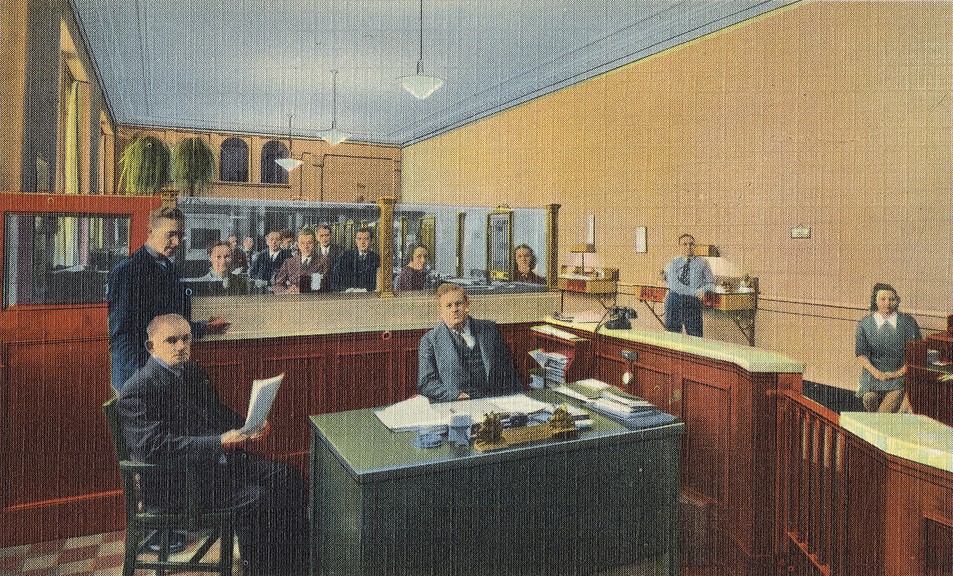
In the sad little bank were two tellers wearing far too much pomade; a manager, crisp like an undertaker, signing papers at his desk; a bull reading some pulp called The Set-Up; a dusty old cracker in overalls, leaning on the counter and speaking with one of the grease-combed tellers.
“Oh yeah,” Lionel said, remembering the place. The bull looked up from his dime-store trash — Lionel smacked it into his face and confiscated the rod all at once.
“For those who weren’t with us last time,” I said, “don’t fuss, it comes natural.”
The manager and tellers were stacking bills when I got to the counter. Lionel kept his revolver on the bull, the Tommy poised to spray. I snapped open the valise and felt a mosquito land in my eyebrow and when I twitched I noticed again the old cracker in overalls beside me.
He gawked like I was a sheep he might rape. It was foul. It made me feel his lowness, dressed me in it, the way the wealthy dress you in their grace. He’d been struck dumb by our entrance, but now something about him spoke: a white government check, sapping the wetness of a spotty, tightened fist.
“You, Prince Dirt,” I said, pointing with the .38, no more than appendage this late in the dance. “You got hold of some money.”
The geezer didn’t flinch. He just real slow and careful stuffed the check in his overall pocket like nothing slicker had ever been dreamt up. Well, who wouldn’t’ve died from laughing?
“You seeing?” I said, and hacked a bit from laughing, and spat.
“Thought I wasn’t talking,” Lionel pointed out.
“Hardworking fella thinks I’m gonna take his check.”
“Oh brother.”
I stepped up to the desk, counted ten twenties from the pile and swept the rest into my bag. The tellers cast hopeful glances; I saw that they were twins. The manager pinched his top vest button, doubtless appalled by the slightest freedoms and ready to slander us when we’d gone. A dab of axle grease, though, and the old cracker would spend his twilight holding forth at his cracker saloon about the time Slip Church cut him in, and I’d have that many more friends when we hid out in cracker country — just pray the gallows take me first.
Lionel said my name, but strangely it was no longer mine. I stared out the window at sizzling blue, two hundred dollars in my hand. I couldn’t break this gaze, now that the oddity of sense had revealed itself. A moment passed as if God weren’t paying attention. A cloud was floating by and it stroked the room with shade, and the shade parted my ribs, and twists of hot shadow coiled through me.
I saw the old cracker standing there with his dinky ladies’ gun. He was already dead, the Tommy ribboning his chest. The bull lunged, Lionel wheeled, I caressed an emptiness with my gun and sank. I put lips to floor thinking now, it’s now.
My eyes fell open. Lionel’s dead face stared back. Half his neck appeared to be missing, but who knew with that kind of gore.
I was laid out in richly scented blood. The unfired Colt was still in my hand. Voices weaved overhead. It was the manager and the bull (the tellers I supposed were meatloaf). They were arguing how they’d tell it. The bull wanted credit for killing me and Lionel both. He wanted to hide the dead cracker’s gun. The manager had a better idea. He said they could split the money in the valise and claim a third robber got away. The bull didn’t like that story; he started in on his angle again.
Although I’ve claimed, and often, that everyone’s a thief and a con, it stung somehow to hear the proof. I didn’t think twice about riddling the sons of bitches with lead.
But Lionel beat me to it.
Lionel and I been together a decent while. Our mothers were sisters, lived in the same steel pocket of Philly. His older brother got gassed in a trench. My kid brother hung himself. Like as not that’s why I’d stuck with him so long: Jonah gone, he was the last responsibility I had. After learning how from books we set to hustling dice around town. Bootlegged a bit, had a bad scrape or three. Found robbery easier, not to mention a lot more fun, and beat it before the law beat us.
He’s smart, Lionel, and quick. Not a showman, which is important, because more than one showman don’t play. But if we’re talking quality of mind… he’s not curious. He dresses like a bum, which I’ve given up on fixing, and besides, I like folks to sell him short. Got the better part of all the money he ever stole buried under a cabin in Wisconsin. I’ve never asked what he’s saving for, as I suspect he has no designs, no imagination for that fortune to excite. I suppose I don’t much either, throwing it at lively women, but at least when I run dry I’ve got due cause to drain a safe. Lionel, he’s in business for business’ sake.
Hurtled south on a country road, wheel sticky with various bloods. What there was to say wouldn’t come. We’d been so keen to light out of KC that we near forgot the dough, and when I remembered, out on the bank’s front steps, I could see straightaway that Lionel wouldn’t go back in. I had him bring the Ford around.
“We’re alive,” I said after a stretch.
“We’re alive,” Lionel agreed. He was rasping from his clipped windpipe.
“Does that hurt?” I said.
“No. Does that?”
Two oozing holes opened into my right lung. A third plunged deep into my heart. I peeled back a flap of ragged skin and put two fingers in the heart hole: like poking a patch of swamp whose faraway bottom heaved in reply.
“Does not,” I said.
I drove us to Maysville, Missouri, hardly aware of doing so. Lionel ripped a sleeve from his shirt to tie around his slippery neck. Soon after, he was asleep. Exhaustion had me too, and I eased off the road and covered my face with my hat, whose brim smelled of burnt powder.
I woke to stars clustered tight over prairie and Lionel’s hand seeking pulse in my neck. He whistled in relief; blood bubbled over the edge of his scarf.
“We near Dodger’s?”
“Thought we may as well.”
“Let’s throw cold water on him,” Lionel said, cheerful about it even.
Half hour later, the Ford’s beams sliced across Dodger’s farmhouse, and we saw he was awake, smoking on his porch in an undershirt stretched from when he was fat. I guided the car into a hollow of the dry thicket nearby; its branches snapped like tiny bones. When we got to the house, Dodger was lighting a second cigarette with the first.
“Who you hoping for?” I asked him.
“Socrates. Gaw, the worst headache just now.” He squinted drunkenly, unable to see the state of us. “Prolly scared him off.”
“Keep telling you he isn’t yours,” I said. “Does what he pleases.”
“What night is this,” Dodger said.
“Wednesday,” Lionel said.
“You were gonna hit Hillcrest. Wasn’t it you I told last week.”
“Told us yesterday,” I told him.
“And we did,” Lionel said.
“Again,” I added.
“Well,” he said. “You survived.”
Lionel sucked his teeth, not ready to talk. I didn’t want to, either — didn’t even see how. We followed Dodger up stairs that sighed, plodding through blackness, thick country silence. Dodger knew every gangster and crooked flatfoot the Midwest had to offer, swapped leads on jobs, and rarely if ever quit shooting the shit. But that night he led us to a chilly bedroom and didn’t cough about his share, just slammed the door. I had the thought it was a fake Dodger, made from clay, with gears in his head. Lionel and I undressed and tried to wipe the crust from our wounds before climbing into stiff yellow sheets. We slept deeply, each facing outward. When I woke, there in the tree by the window was Socrates, Dodger’s red-headed, white-collared pheasant. Peering at me from a place of hard noon light. It bobbed and made to jump from its perch but then changed its mind and settled. Lionel stirred next to me, and I rolled onto my back, began picking apart the rafters with my eyes.
“How many folks you think we’ve done?” Lionel asked.
“Lost count. It’s like with girls.”
I understood, in an aching wave, why Jonah had punched his own ticket: if one could never see where life stood you — or in what form its answers might come — you had to take control.
“We don’t seem to be able to die,” Lionel said.
“Maybe it’s just a one-time deal.”
“One-time. Sure.”
We put on the clean shirts and trousers folded on the bedside chair, collected our dough and went downstairs. I did it mechanically, parting slow air that slid past like water. Floorboards warped, unsure against my feet. I held a brown shirt and rubbed its coarseness with a thumb, and it wasn’t as though the shirt or my thumb weren’t real, but their meeting was weird, counterfeit.
Lionel didn’t concern himself with such phenomena. He had washed his face and neck and ripped Dodger’s curtains to make a scarf that concealed his mangled throat. As he gathered his things you could hear a wet reedy wind to his breath.
Down in the kitchen, Dodger unwrapped a hunk of cornbread while his wife Victoria watched and sipped tea. Vic went all over the country, alone, but she was no outlaw really, just hustling enough for the next stretch of road. She’d meet people, join their scene for a while, then get fussy and strike out again. I don’t understand it exactly, the kind of life I’m trying to explain, with those pauses.
“Slip. Lionel,” said Dodger, “I am a gracious host now goodbye.”
“Good morning, Victoria,” Lionel said.
“Lay aside your cut then.”
“Good morning Lionel,” Vic said. “Morning Slip.”
“Don’t get a cut.”
“Morning — d’you mean you don’t.”
“Been anywhere neat lately?” Lionel asked.
“Don’t need.”
“Montreal this time.”
“What, don’t trust it? You tip someone off?”
“The hell are you. Get gone, you boys give me a headache. Like noisy little wind-up toys.”
“Don’t kick them out, Dodge,” Victoria put in. “They’re hungry.”
“How… how’s that?”
“Slip, let’s… ”
Victoria followed us out to the porch.
“I’m sorry, don’t know what’s eating him. Have some for the drive.” She pressed cornbread, pale and heavy, into Lionel’s palm. As their fingers met she pulled hers away, as from a sharp pain. Her face was typically radiant in these small acts of kindness, betraying a purity of motive, yet now her features swirled, their careful arrangement undone.
She knew.
Lionel, blind to her horror, produced from his pocket a wad of cash.
“For your next trip?” he suggested.
Victoria erupted in tears. Her sobs turned to screams when Lionel gently touched her shoulder. We made our getaway, before she could put it into words.
Next few weeks were tossed with badness.
Found it took your average sober man not long to pick up something queer about us, at which point he was apt to fight. It didn’t ever make sense, what they said, the reasons they came up with. Two pubs tossed us because of Lionel’s scarf (it was “swishy”), and one hotel manager said a guest complained that a man of “guttering respiration” had lurked outside her door.
Women got wise sooner, though Vic aside they didn’t make scenes. When we spoke to them they jumped as if we’d burst into being right there. In Des Moines, on a street corner, a lady shaded by parasol against that feverish corn-god sun thought to ask: Was I in town for the convention? That she’d spoken freely, figured me the illustrious, convention-going type, made me want to ply her with booze, wit, dancing. Then I understood her tone, in reality musically cruel. I was beneath her, a middling nobody, the kind of slob who went to conventions. Or perhaps… but I couldn’t split her meanings, I was a reeling stack of meat, and by now the query had gone so long unanswered that she took her freckled nose and strolled off, satisfied to have stumped me.
And Lionel. Came an afternoon we were eating sandwiches on a mossy old pier, a lake on Minnesota’s border. He said, spewing crumbs, that he might pay the police a call. I hadn’t slept in days and screamed at him till he shoved me in the water. The Ford sped from the shore as I hauled myself out and sprawled, gasping, on slimy planks. Hours later (I hadn’t much dried) a growl shot across the lake. The approaching Ford flickered behind a rim of evergreens. It stopped where I’d parked it before, and Lionel got out chuckling, shaking his head.
“They wouldn’t arrest me,” he said.
“That’s a damn shame,” I replied. He stooped to pick up a stick that he then cast about like a magic wand.
“They said to stop wasting their time. I told them about Kansas City, they said that’s KC’s affair. I said we took banks in Minnesota too and they said no wonder I don’t look rich. I asked if they heard of you and me, the other stuff we done, and they said why’s it every guy thinks he can talk his way into being famous?”
“Damn shame,” I repeated.
“I gave them the money, too.”
“Of course you did not.”
“I poured it out on a desk.”
“Lionel.”
“They said they didn’t want it.”
“Thank the holy Christ our savior.”
“I left it there anyway.”
My head rolled. Spots floated at the darkening mouth of the forest. There wasn’t any part of me to wrap around what I’d heard. What I’d seen. In our previous life I’d been a name and a face and memory; I was those things, but I was becoming them, too. We’d retraced a part of this path, which made for a rotten doubling, forced us into a different past.
“The cabin,” I said. Lionel tugged at his scarf and knelt and stabbed his wand into the sandy dirt. “We could hole up there.”
“You mean retire.” He collected more sticks for a teepee of kindling.
“I mean wait. And see.”
“We’re on a spree now. Job a day.”
“No.”
“They’ll remember us.” He worked another stick across the one that stood in the center. “Bit by bit.”
He was never one for wanting fame; I didn’t think adventure, let alone desire, had ever entered his calculations. He’d told me about the two days he’d spent alone in a flophouse when a job went awry and we separated — nervous rash on his backside, restless but exhausted from a rooftop escape. He’d heard a strange noise down the hall on the second morning and found a dog there, a dog eating so intensely from a can of beans that it kept choking and puking a brown mouthful that it unfailingly bent to lick up once more.
Well, Lionel had said, stupid thing had to want the want.
He seemed now to guess that my mind had wandered, because he said: “I always helped you. Wanna return the favor?” He was going at the sticks like a madman; I didn’t spy any smoke.
“Even know how to do that?” I asked. He stood and kicked his kindling away in a fury, then composed himself and smiled.
So of course I went along with it. I couldn’t lose Lionel, and Lionel wouldn’t veer from his course. He had us arcing back down to Dubuque and zooming along the northern edge of Illinois into Chicago’s sprawl, where the heat would be devilish if anyone had a mind to catch us. Which I almost wanted. I couldn’t muster the confidence of the mythical me, the Slip Church known to poach kisses from pretty witnesses to his crimes, to show up at jazz clubs with four dates, tip with autographed stolen bills.
We sped downstate along the lazy Mississippi, which in its calmness resembled a terrible new road. I let Lionel drive; the fresh summer air was nauseatingly sweet. The long grass leaned forward and back again in the wind, its green changing as the light and its opposite swept through, and it was all very beautiful in the way that makes me want to blow my brains out. Jonah was a fool for using a rope, I decided. It showed he wanted one last chance to squirm free, and that made his death a kind of joke.
“Life informs me, incessantly, of my needs,” Lionel said, unusually theatric. “It’s repulsive. Being compelled to eat and see — to spend.”
“Hardly that.”
“The energy I have to spend. Life without end means endless need. A mockery of needing.”
At last the sky sealed itself and allowed no further light to trespass. There was silence of perhaps an hour as nighttime road flowed under the Ford. It was impossible, in this hideous gap of reasoning, not to dwell on those whose need we had irreversibly severed. Had I harbored a pride in what I’d long told myself was a sorry byproduct of our work — flashes of a precise butchery? Hadn’t I come to envy such tidy, messy ends, those deaths of strict necessity, and begun to feel the bliss in their arrival?
“Alive,” Lionel said. “And needing.”
After gliding though drowsy towns for a day, Lionel stopped on the outskirts of Guttenberg, this nothing little haven for krauts.
“We start over here,” he said.
“Let’s be quick.”
He slapped me, searing a cheek, and when I recovered, his eyes were inconstant small black flames. He checked the machine pistol. Goddamn loony gun, something I’d won off a hothead kid too crazed to walk from the cards. Everybody’s bluffing, he’d said when I fanned a house full of kings, and kept saying as he was shaken down, escorted into a dim back alley.
“This time you’re the one doesn’t say anything.”
It wasn’t the bank we saw first but a sliver of a general store with a scraggly vegetable garden. I was hungry, jumped out of the Ford.
“Hey,” Lionel barked. He threw me the other Colt.
“Just want a bite,” I said.
“Just want a bite,” he mocked, stepping to the shop’s door, kicking in. I chased after him and already we had a standoff, the swollen-bellied owner brandishing the usual shotgun, yelling in German at Lionel. There were three other dirt-streaked farmhands — caught chatting up the pretty slight thing in the painfully faded yellow dress, cloth passed through the filth of steerage. She studied Lionel with cold amazement.
“Mon-ey,” Lionel finally sang, and I remembered to hold my gun up, too. The instinct was dusty, my elbow creaked.
“Fahr zur Hölle,” came the reply, only Lionel shot him in the middle of it, and his shotgun discharged into the ceiling, which sent down a flurry of wood flakes. Red bloomed in the storeowner’s white shirt; instead of buckling he staggered back into a corner and died up against a shelf full of chews. Lionel spun to the farmhands and spoke at the one who’d pissed himself.
“You scared?”
He shook his head and Lionel shot him there, spraying the wall of sack grain with matter. The other farmhands and the girl ducked. I dove at Lionel; he caught my forearm and cast me aside. I’d forgotten how quick he could be. The bullet holes in my chest did something — they buzzed. Another burst of gunfire and then the poor girl was left alone, huddled on knees and motionless. Lionel removed his scarf and let it fall in a lovely wave.
“You see this?” he asked her, pointing to his neck hole, the exposed and heaving apparatus of his throat.
She nodded with the terrible calm of a creature hunted its whole life. I stood at the edge of her being and glimpsed what had led her there. She’d woken too early that morning, innocent of her dreams. She’d looked on her brothers, who slumbered close by. She’d kissed her mother in their kitchen and said, idly, that she’d walk into town, it was so nice out.
Sign up for our newsletter to get submission announcements and stay on top of our best work.
YOUR INBOX IS LIT
Enjoy absorbing fiction from Recommended Reading on Mondays, strange, diverting work from The Commuter on Wednesdays, and a roundup of our best work of the week on Fridays. Personalize your subscription preferences here.