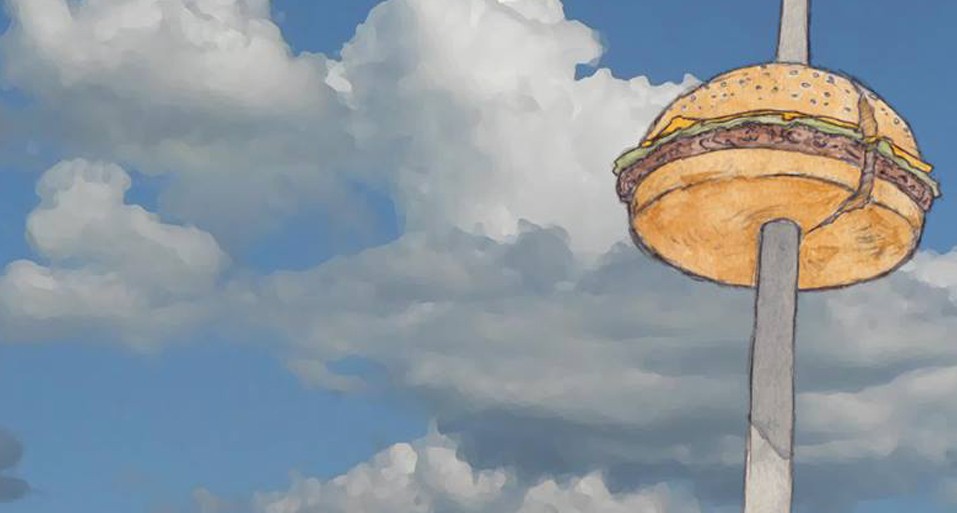
In an interview with Freerange Nonfiction, Seth Fried said he considered himself a fabulist. He went on to say, “I like the idea that stories are supposed to have meaning or raise important questions. Fables are great for that.” Matt Rowan is another author who fits into this category. His sophomore collection Big Venerable is a compact lexicon of moral imperatives. They shed light on the human condition and remind us that it’s okay to be a little strange. In seven stories, the collection spans the rise and fall of a unique fast food chain, a man’s struggle to make a dinner reservation, a father’s search for his missing son, a baker as he fights for love, the improbability of a man overcoming a bureaucratic wholesaler, a woman who is taken from her family by an organization that is dedicated to putting “everything into its rightful place” and a group of woodsmen on a filming expedition through an artificial forest. Each story stands on its own as uniquely funny and insightful, but the connective tissue that brings them together is their form and style, which is Rowan’s take on a new-age fable.
For instance, in the title story, we are thrown into a world that is divided by revolution. Central to this backdrop is a big-box store called Big Venerable that acts as neutral ground. The narrative starts broadly, layering the inner-workings of the store and how it fits into the surrounding conflict. Then, as it develops, the narrative focuses on a man who is fired for cutting in line at the register. The incident is a misunderstanding, but it’s the first injustice in a succession of injustices that lead to an explosive climax (literally), when the protagonist drives a truck filled with barrels of combustible liquid into the front of the store. It’s a veritable Grapes of Wrath but with less heartbreak and more humor, and instead of big banks, it’s Big Venerable that steps in as the bureaucratic antagonist. Rowan is commenting on the problems with consumerism and how it places more emphasis on money than humanity, but he also humanizes the machine. He places it in an environment that exposes its ethos as self-destructive and manipulative, which are two traits that are uniquely human.
These broader strokes are what make Rowan’s stories specific to the fable form, but unlike more traditional fables, his stories don’t skimp on character development. In the story “The Bureau Of Everything Fitting Into its Rightful Place”, we follow Myrna as she is abducted from her family and held in a camp designated for people and objects that don’t yet have a rightful place. The story starts with a rally that Myrna skips. She says, “I was confident that all we needed to do was ignore the process altogether. I could live and function in the world in one sense, but remain totally apart from this.” As she says this, we understand that it is impossible, but nevertheless, we want to hope that it is. The story that unfolds is teeth-gnashingly suspenseful and devastatingly real, but the momentum is driven by Myrna’s unrelenting perseverance and willingness to sacrifice her own wants and needs for those of her family and the people around her.
And while “The Bureau Of Everything…” may seem like a devastating romp through hell, it’s true charm and the charm of this whole collection is Rowan’s ability to balance sincerity with humor. In an interview that Joy Williams did with the Paris Review, she said: “We must reflect the sprawl and smallness of America, its greedy optimism and dangerous sentimentality… We might have something then, worthy, necessary; a real literature instead of the Botox escapist lit told in the shiny prolix comedic style that has come to define us.” I love this statement. I walk around thinking about it all the time and what it means. I want to believe that there is a threshold that rubs right up against the prolix prose that she’s talking about, but still reflects the optimism and sentimentality that she says is so important: being sincere but not sentimental, while still keeping a since of humor that doesn’t ignore the real problems, big and small, that everyone faces everyday. This is no easy task, and it’s hard to say whether any author has hit that high mark. What is so fun about reading Big Venerable is that you can see Rowan reaching for it, and he manages to come pretty close.
In his attempt, he creates wonder similar to Ben Loory or Amelia Gray. He manages elements of sci-fi and spec-lit similar to Mathew Derby or Ben Marcus. And at times, his comedic prose is like that of Sam Lipsyte or Gary Shteyngart. If you’re a fan of any of these authors, I suggest picking up a copy of Big Venerable. I know, I’ll be picking it up again and again.
You probably know Victor Hugo as the celebrated author of Les Misérables and The Hunchback of Notre Dame, but did you also know he allegedly used nudity as a way to keep procrastination at bay? Or that his mistress of 50 years became his secretary? Peep Journl’s infographic for more interesting facts about the eccentric author.
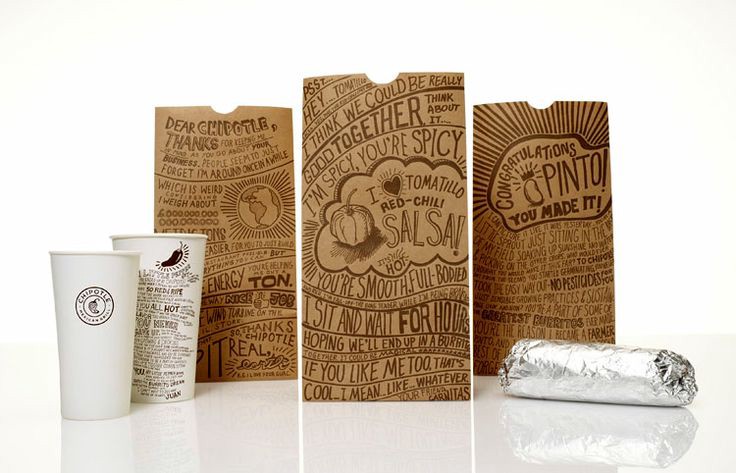
The contest asks for middle and high school student writers to “submit a short, original (and amazing) essay about a time when food created a memory.” (Presumably that memory shouldn’t be about the time your stomach got upset after eating imitation Mexican food.) The contest has a 17,000 character limit and runs until May 31st, and afterwards 10 winners will be picked to be featured on Chipotle packaging and be awarded $20,000 in college scholarships. So, that’s pretty awesome!
Jonathan Safran Foer (Everything Is Illuminated) and Laura Esquivel (Like Water for Chocolate) will judge.
Contest ends on May 31st, so get cracking on those essays and submit them here.
Hello, and welcome to my week-by-week review of everything in the world. Today I am reviewing a pencil I found.
I always try to look down when walking because I don’t want to accidentally make eye contact with a scary person, and I also want to find things. If I have to look up, I try to still feel around a lot with my feet a lot as I walk to make sure I’m not missing anything.
Yesterday I found half a pencil. It was the rear half but still had the tip. Pencils are like puzzles that way; the front and back remain the same and only the middle disappears.
I wondered about this pencil’s past. What lines had it drawn? Did it write a love letter? Did it draw a snowman? There was no way for me to know, so I consulted a psychic. Unfortunately, the psychic said he only knows about people. So I took advantage to ask about the current status of my deceased wife and the psychic said, “I thought you wanted to know about the pencil.” He got me there.
Although I didn’t know what the pencil’s past was, I knew I was in control of its future. So I sat down and tried to write a beautiful work of literature with it. When that didn’t work, I decided to copy a beautiful work of literature. Even though I knew plagiarism to be wrong, I wanted this pencil to have a good rest of its life.
As I neared chapter three, I noticed some bite marks on the pencil. I consulted with a dentist to see if she could match the bite marks to any of her patient’s records. She told me to get out of her office.
After several dentists said the same thing (I bet that first dentist called ahead to warn the others), I bit into the pencil to see if maybe the bite marks matched my own. There was a chance this pencil was one I had unknowingly lost. The results were inconclusive. I’ve never found such a mysterious pencil before, and I’ve found a lot of pencils.
Anyway, the pencil’s all gone now. Except for the eraser.
BEST FEATURE: Makes for a decent weapon if nothing else is available. WORST FEATURE: When I tried to erase what I had written, it just left pink smudge marks all over my paper which only emphasized my mistakes.
Please join me next week when I’ll be reviewing Omaha.
A fearless ex-con and writer of 18 published books, Les Edgerton has seen the elephant, friends, and he’s not going to varnish it for our sakes.
Court Merrigan: You say you’re holding out for a deal from Big Publishing. But you’ve already published eighteen books. What gives?
Les Edgerton: It’s the only real way to get work in front of people, other than a few thousand at the most. I’ve had legacy deals before and there’s no comparison. Look, the only books legitimate reviewers will look at for the most part are from the big presses. The NY Times isn’t going to look at books from Exciting Books, Ltd., no matter what the quality might be. Barnes & Noble and the other national brick-and-mortar stores aren’t going to carry books by Midnight Nifty Noir Books, no matter how good they are. Just ain’t gonna happen.
My desire right now was heightened via a discussion Joe Lansdale and I had recently where he told me flat-out (after reading my books) that I was “underpublished.” I’ve known that for a long time, but just never pushed that hard to get ’em there.
CM:Is that why you really want a big publisher to buy your memoir, then? To reach as many folks as possible?
LE: That’s a big part of it. It’s also a case of reaching the right readers. For example, the reviewers for the respected publications such as the NY Times, Paris Review, Washington Post, et al.
That’s the area I think independent publishers should band together and go after. Convincing those publications to review books by their quality, not by their publisher. What might help change is if the independent publishers and writers began to make their voices heard by the Times, Post, et al. If, along with the Amazon and Goodreads reviews, folks took it upon themselves to send a letter or an email to those publications that — hey, this is a book you should look at — I’ll bet that after they got even a few hundred of such letters their ears may perk up. A kind of grass-roots campaign focused like this I think might prove effective. If, say, some of the better indies included a brief note on the back page, urging readers who liked the book to write to these folks and urge them to consider reviewing them and provide their email and snail mail addresses to make it easy to do so, I wonder if they would begin to make a difference? I think they would. However, a big part of the problem is the lack of mass market distribution. It’s hard to blame a reviewer who knows that no matter what she says, people are going to find it difficult to get a copy of the book in a bookstore.
There’s another advantage to being published by a traditional press that very few talk about or even acknowledge, and that’s the fact that your chances are good that your work will be soundly and professionally edited. And even traditional publishing isn’t what it used to be with editing, by and large.
And there are still agents around who do serious editing. I had a personal experience to such a throw-back agent with my friend Janet Reid. A few years ago, she graciously provided me fantastic notes on my novel, The Bitch. Her edits completely transformed it and she wasn’t even my agent — just my friend.
Here’s what used to happen in publishing: I sent a novel in to my old agent Jimmy Vines that he loved. I’d rewritten it — by “rewrite” I mean a total, page one to The End that changed entire sections — eight times. In my mind, it was finished. Perfect. Well, ol’ Jimmy had me rewrite it for him… six more times. The editor who signed me for RH, Scott Moyers, then had me do six more rewrites.
All that said, I still have hope. It’s why I’m holding out my memoir for one of the big boys. I’ve also got an ace in my sleeve. The president of HBO read it a few years ago and wanted it instantly for his network for a movie. He called it “a Permanent Midnight but with balls.”
CM: So why write crime fiction? I take it you don’t don’t agree with those who say the genre is a touch limiting?
It’s just… writing. I really don’t pay attention to genre.
LE: I wasn’t aware it was limiting. It’s just… writing. I really don’t pay attention to genre. I agree with Nabokov who only recognized two genres — good writing and bad writing. Plus, I don’t just write crime novels. I write mainstream fiction, coming-of-age novels, existential and philosophical novels, YA’s, all kinds of stuff. Not to mention books on baseball, humor and black humor, craft books, etc.
I’ve always tried to follow one precept: I write the book I wish someone else had written but hadn’t… so I have to write it to get to read it.
CM: You know whereof you speak when it comes to crime. You did hard time as a young man. Care to tell us about it?
LE: Sure, Court. I did a couple of years on a 2–5 bit at Pendleton in Indiana. When I was incarcerated there, then-President Johnson commissioned a national panel to study prisons to determine which were the worst. A bunch of us were in the day room watching the only TV in the place when Johnson broke into the program and announced that his study had determined, categorically, that Pendleton was “the single worst prison in the U.S.” We all began cheering and hooting wildly, as if our team had just won the Super Bowl.
I went through eight riots during my years there, not counting the one that had happened the day before I arrived, even though I paid for the consequences of that one, also. The inmates had burned everything combustible, including all the mattresses, pillows, and blankets. The superintendant was pissed and he told the inmates that since they’d burned everything they’d have to live without it. He wouldn’t issue mattresses, pillows, any of that stuff. I woke up in the morning with my toes turned blue underneath the snow that came in the windows during the night.
A bunch of guys came down with pneumonia and several died. Don’t know how many. In the movies, they show prisons with all these great communication systems — somebody farts in the cell house two cellblocks over and in six minutes, everyone knows it — but in a real prison, somebody can die in the tier above you and you might not know it for a couple of months.
CM: How did your prison time affect you? What do you know that we who’ve never been inside don’t?
LE: What straights don’t know about the joint would fill a bunch of books. In fact, if folks watched that silly MSNBC program where they go inside joints, they’d think most guys inside were either weight-lifters or psychos. The weight-lifting part always cracks me up. Criminals are basically… lazy. It’s one of the reason we rob places. We don’t want a 9–5. We don’t even want to fetch our own beers while watching the tube. As for pressing iron, way too much work.
Getting busted now and then is the price you pay for a kind of freedom insurance salesmen will never experience.
Mostly, it was just boring as hell. I saw a lot of bad, bad shit, but I saw a lot of bad shit on the bricks. It was just the price you said for being an outlaw. Getting busted now and then is the price you pay for a kind of freedom insurance salesmen will never experience.
I will say the food truly sucks and you’ve got to be “on” all the time and can’t ever relax. You never ever know when the guy you’re just sitting there rapping with, decides to go all medieval.
CM: How did you cope with the boredom? Did they have a library or something?
LE: Yeah, Pendleton’s “library” consisted of about 20 copies of Zane Grey novels and maybe a dozen other books which were a snooze and intended for a third-grade level. When I go down to visit as I used to do a couple of times a year, I take a bunch of my novels I’ve already read and donate them.
As to coping with boredom, I ran a few games to keep semi-busy. Had an on-going crap game, had a loan business, did a lot of drugs and moved some drugs. Even with that though, there was a lot of time just sitting around the cell, naming your toes and teaching your trouser worm tricks… I wrote a lot, as well. Problem is, when I left they confiscated all my notebooks so I’m missing a few novels I wrote.
CM: So you wouldn’t say you were “reformed” by your incarceration?
LE: Well, I never had a “coming to Jesus” moment and still haven’t. I didn’t actually stop doing criminal acts when I got out. I just stopped getting caught.
That’s fairly easy to do. The only way I got caught before was because my rappies got caught and snitched me out. So, I just worked by myself. I can say that now as the statute of limitations has run out on most of the stuff I did.
Plus, when I was in, it was when they still believed in rehabilitation. I learned a great trade — cutting hair — and when I got out, I literally had dozens and dozens of job offers. The first week on the bricks I took home $500. That was good money in 1968. Very few of us who’d been through barber school went back.
CM: How much of your prison experience has made it into your fiction?
LE: Not as much as people think. It was only two years of my life. I always kind of looked down at those people who do something like spend a couple of years in the service and some war and that becomes their entire life — all they write about or think about.
In the memoir I’m trying to market, I left out a ton of things about say my Navy years and a ton of stuff about my hairstyling years and so on. I tell a few highlights, but left most of that stuff out. My childhood was a gas, too. For instance, I’d been bartending and waiting tables in my grandmother’s bar since I was eight, and on my 12th birthday she figured I was old enough to work as a dispatcher for her cab company, so I did. During the first two hours of that gig, I watched one cabbie shoot another cabbie in the throat and kill him — blood all over all of us.
And that wasn’t even the biggest thing to happen that summer.
CM: Eighteen published books over twenty years. Which do you like the best? Is it the best one?
It’s a truly scary place and it required more courage for me to go there than I’ve ever had to draw upon in any of the knife or gun fights I’ve been in…
LE:The Rapist was the most courageous book I’ve ever written. It represents the best advice I’ve ever gotten from anyone. My first mentor, Elaine Hemley, told me the very best writers reach way down deep inside to that dark place we all have but most of us studiously try to avoid exposing — both from others and from ourselves. That’s the place where truth resides and most writers are unable to go there. It’s a truly scary place and it required more courage for me to go there than I’ve ever had to draw upon in any of the knife or gun fights I’ve been in and I’ve been in more than one.
I’m not a rapist by any stretch of the imagination. I’m capable of a lot of sins and crimes and have committed quite a few but that’s just not in my makeup. But I can understand such a person.
I set out to do what Charles Bukowski did in his short story, “Fiend”, which is told from a child molester’s POV, albeit in the third person. What he did in that story was to achieve the very pinnacle of what it means to be a great writer in my view. To show that even the most depraved person on earth still retains a faint spark of humanity. This is what great writing is all about: “Martin’s eyes looked into her eyes and it was a communication between two hells — one hers, the other his.”
And this is what I set out to attempt in The Rapist. And, I wanted to beat Bukowski. So I cast mine in first-person.
I win.
CM: You’re 72 now. Recently, Cynthia Ozick said that young writers ought to wait their turn, as today’s old writers once did: “Aspiration is not the same as ambition. Ambition forgets mortality; old writers never do. Ambition wants a career; aspiration wants a room of one’s own. Ambition feeds on public attention; aspiration is impervious to crowds. Old writers in their youth understood themselves to be apprentices to masters superior in seasoned experience, and were ready to wait their turn in the hierarchy of recognition. In their lone and hardened way of sticking-to-it, they were unwaveringly industrious; networking, the term and the scheme, was unknown to them.” As an “old” writer yourself, does this strike you as hifalutin bullshit, or do you think the young folks ought to politely wait their turn — especially for you?
LE: Cynthia Ozick is a great writer but I suspect she’s had it pretty cushy most of her life. So, I take what she might say with a grain of salt. I disagree that younger writers should “wait their turn.” That’s bullshit. I do think they need to learn to be good writers before they gain success and that’s something different. That takes time in most cases but some learn how quicker than others.
That said, I do think writers would be better off (and there’d be fewer of them) if they had to go through what we once did to get published. My first novel went through 86 rejections before it got accepted. That was pre-internet — you had to snail mail everything and pay postage both ways. I was going to quit on that novel and the 87th house happened to take. It was taken by the University of North Texas Press (which shows where I was at in the submission game as I began alphabetically) and UNT Press had never before published fiction. Nowadays, writers shoot off half dozen or dozen email submission at no cost and without much effort.
CM: You published your first book in 1995, so you’ve no doubt seen a lot of writers snag big publishing deals, some at quite young ages. How do you handle the inevitable feeling of “Why the hell is it happening to them, instead of ME?”
LE: The first book I sent out got published. I should have been published years before that, but I didn’t have a clue how to get about it. Later on, when my second book came out, a collection of stories titled Monday’s Meal, one of the stories included in it I’d written when I was 12 and one when I was 10. Didn’t change a word of either. So, I’d written publishable work as a young kid, but just didn’t know how one got their stuff published. This was before I was even much aware there were things called agents.
Later I signed with Jimmy Vines and then wrote a crime novel and Jimmy took it to auction. Came down to two publishers — St. Martin’s and Random House. SM offered me $50,000 and RH $45,000. I went with Random House. I was on my way. I was one of those “young writers.” I quit cutting hair and became a full-time writer.
Wrong move. Three weeks later, Bertlesmann bought Random House and my book got jettisoned.
Jimmy told me to brush it off. That he’d get my next novel sold for a bunch of money and then we’d resell the R.H. novel for six figures this time. That would have been great except Jimmy got drummed out of the SAR and I was left high and dry.
Most of his writers quickly found other homes. I didn’t. I didn’t know how to do that. I went along agentless for some time and sold some other work, but not with big deals. I should have gone after a top, top agent and I could have then, but I didn’t know who the top agents were and I didn’t know how to glom onto one. Today, inside knowledge like this is all over the place. Back then, it wasn’t. Especially not to a guy living in the Great Flyover who didn’t hang out with other writers at all. I just stayed in my room and wrote.
They like to be known as the person who “discovered” the rising genius, but it doesn’t carry the same cachet for them to be known as the person who published the same guy’s second or third work.
It’s so little about the quality of the work. It’s mostly about a few key individuals in publishing who control the industry. When Jimmy took that novel out to market and the subsequent auction, he felt he had to tell everyone it was my “first” novel. Well, that was a lie. It was my second novel and my first novel and my first story collection were already out, but he didn’t dare tell publishers that. They froth at the mouth to publish a “first novel” but not a writer’s second novel. They like to be known as the person who “discovered” the rising genius, but it doesn’t carry the same cachet for them to be known as the person who published the same guy’s second or third work. Very little of the decisions made are based on actual quality. There are a hundred writers working today that I’m very familiar with their work and it’s as good if not better than most of the so-called bestsellers. You, yourself, Court, are a prime example. A mutual friend of ours — Neil Smith — is another one. I could easily name a hundred apt examples.
This is going to raise all kinds of trolls, I can guarantee you. People who will get pissed and call me everything in the book. No prob. It’s also going to irritate others who won’t respond publicly but when I see ’em at Bouchercon aren’t gonna buy me a drink. Whatever… I’m just tired of all this false hope that’s always paraded on the Internet by the chattering classes. Most of it ain’t reality.
Here’s what I know for a fact. That the editor of a major thriller imprint was told by his boss that if he signed a book that didn’t net a minimum of $50,000 he’d be fired. A net profit. By the chief editor of a major imprint. Not that he’d get his expense account limit lowered or he’d lose the corner office. Fired. I won’t say who it is, but this isn’t a guy who cares about quality, at least not in my opinion.
I’m not implying that the writers who get the big deals these days are hacks. Many of them are immensely talented. But, for every one who cops a great deal there are twenty others who are just as talented and oftentimes, more so. If a writer thinks it’s about the quality of the work and that life is fair, then the best place for that person is teaching grade school where they still tell kids that crap and the little saps believe ‘em.
CM: I have a second-grader, Les, that I think I’ll keep in the dark a little longer. Maybe until middle school? Thanks, Les.
LE: Thank you, Court. You ask good, tough questions and it’s rewarding when I encounter an interviewer like yourself. It’s what you get when the interviewer is a terrific writer himself.
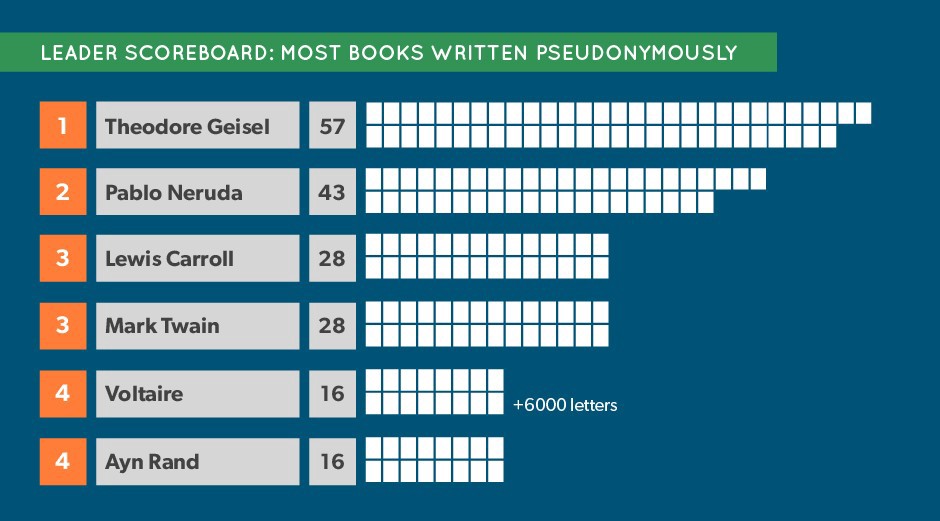
Pseudonyms, pen names, and noms de plume have been used by writers for many different reasons in many different eras. Everyone from Charlotte Bronte and George Orwell to Stephen King and J.K. Rowling have used pen names for all or part of their careers. This infographic from printerinks takes a closer look at literary pen names through history.
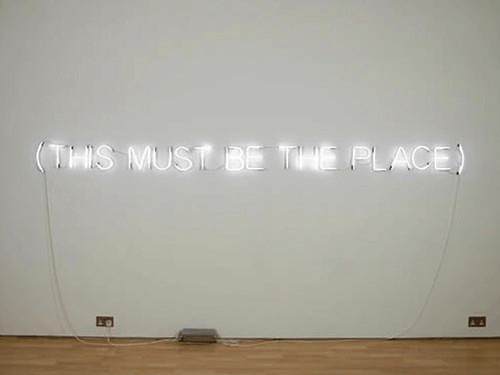
Unlike a lot of writers, I constantly have music playing while I work. Maybe it’s different for me because I am pulling things out of the rusty and disorganized file cabinets in my memories and the music helps jar things loose? I just cannot seem to work in silence at all, I go a little mad. That being the case, when constructing THIS MUST BE THE PLACE, music was muy importante to me. So often a song would shuffle up from my library and trigger a series of blurry and diseased photos that went from static to ethereal and then I did what I could to transcribe those events. I made an album to go along with the book, trying to take emotions and feelings and ideas from the words I couldn’t corral and turn them into a “read-along” thing, which you can snatch up for free over here.
1] “TV Eye,” The Stooges: Not sure why anyone would ever start off a mixtape without that song being the lead shot across the bow. It has everything in it and more. This song has saved my life many times over.
2] “Lexicon Devil,” The Germs: Darby Crash was dead before I knew who he was. My punk rock friends were always talking about him like they knew him. After seeing him in “The Decline of Western Civilization,” I felt like I knew him, too. Gimme gimme your hands.
3] “Generation Landslide,” Alice Cooper: BILLION DOLLAR BABIES is one of the greatest rock and motherfucking roll albums ever made. Alice Cooper, in his younger and less Republican days, was America in the flesh, confused and alienated and with a lot on his mind.
4] “Attitude,” The Misfits: The first time I lived on my own and had an answering machine, this is what I put on it. The first time my grandmother called and left me a message, she called me a “hooligan,” and told me nobody would ever want to marry a hooligan and raise a family with them. She was right.
5] “Orion,” Metallica: Why? Cliff Fucking Burton, that’s why. Try not to get lost in this with headphones on and try to find your way home.
6] “King Medicine,” Jets to Brazil: The first time I heard this song it was three in the morning and I was trying to come down from a bad day of doing drugs and by the time the song got to the chorus I was already crying. “Letting the light out, through your arm” is one of those lines I wish I had written.
7] “Light Me [Live],” Rocket From the Crypt: One of the greatest moments I have ever witnessed at a show was RFTC destroying a place in Phoenix called The Library within a minute of starting their set. The bouncers rushed them when they got off the stage to play in front of a concrete barricade and then the house sound guy cut them off, but they kept fucking playing. Fan for life.
8] “The Geometry Of Business,” Oxbow: This song is how I wish my sentences and words came across — melodic, but menacing and dangerous at the same time. I listened to Oxbow a lot while constructing TMBTP, and there is always something so freeing and feral in their work that speaks to my blood.
9] “Walkin’ By Myself,” Scream: When I was homeless I use to march all over Phoenix in the night because the day was full of a scorching sun that wanted me dead. Obviously, I spent most of my marching time with this song in my head.
10] “Nine,” Swiz: The first time I head Swiz I had no idea who they were or what they were called because they were on a tape the guy singing for the band I was in had given me and he didn’t annotate anything. All I knew was that they fucking rocked and spoke to me, this song in particular. The lyrics made me think of my relationship with my father and how fractured everything between us had become.
11] “A Piece of the Sky,” Swans: A newer thing unlike so many other things. So much of the book was written late at night while listening to Michael Gira’s voice that I thanked him in the acknowledgements. This song in particular means a lot to me. It’s like being born over and over again. Best with the lights off and headphones on. And loud as fuck.
— Sean H Doylelives in Brooklyn, NY. He works hard every day to be a better person and is learning how to love himself more. His book, This Must Be the Place, was published by CCM Press in May 2015. For more information on Sean and his work visit his website at www.seanhdoyle.com
In a windowless office in a remote part of town, the newly employed Josephine inputs an endless string of numbers into something known only as The Database.
One of our favorite authors, Helen Phillips, has a new book coming out this fall from Henry Holt. The Beautiful Bureaucrat will be out in August and was described by Ursula K. Le Guin as being “told with the light touch of a Calvino and the warm heart of a Saramago.” Check out the dreamy animated book trailer above, and read her story “The Knowers” in Recommended Reading.
“What if a girl grew up like a boy, with marriage an abstract, someday thought, a thing to think about when she became an adult, a thing she could do, or not do, depending?”
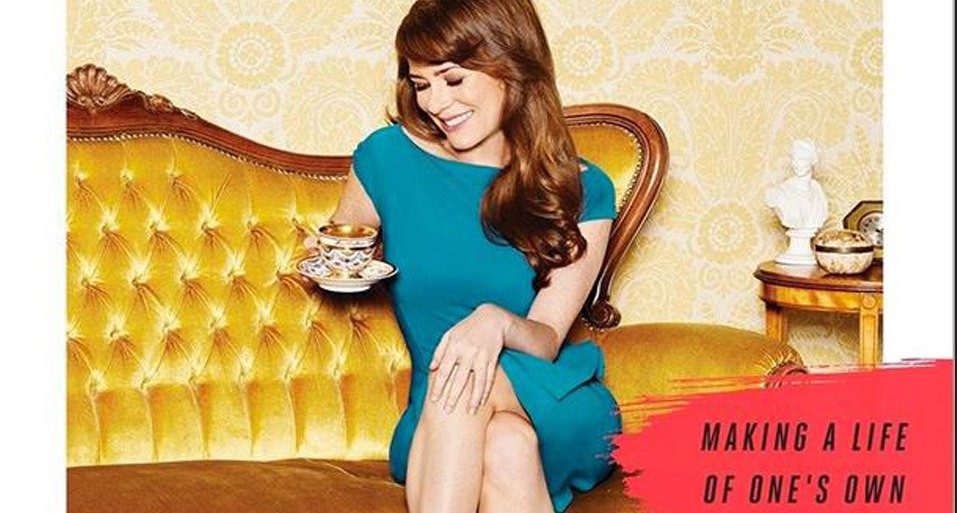
Kate Bolick’s memoir, Spinster, is an answer to her own question: how can a woman make a life of her own in 2015, when — as Bolick claims — our paths are still charted by the question of, “Whom to marry, and when it will happen?” As a successful freelance writer, contributor to The Atlantic, and former executive editor of Domino magazine, Bolick sets herself up as the example of how to live a solitary life — especially impressive, perhaps, because most of that living occurs in the mightily expensive New York City. Yet a book on singleness has never been more relevant, according to Spinster’s statistics: in 2013, more than 105 million people over the age of eighteen were never married, divorced, or widowed — and 53 percent of that population were women.
Spinster is based on an article Bolick originally wrote for the Atlantic in 2011, “All the Single Ladies.” The memoir, as it exists now, is an expanded exploration structured around five women “awakeners” who have inspired and shaped Bolick’s lifestyle. The awakeners are alike in that they are all early-twentieth-century writers as well as, to varying degrees, spinsters themselves: Edna Millay, Maeve Brennan, Neith Boyce, Edith Wharton, and Charlotte Perkins Gilman. By regarding the five together as a group, Bolick “began the very long process of re-creating our conversations — not with other, real, live women, who could only ever be gross approximations of the mother I missed, but real, dead women, whom I could sidle up to shyly and get to know slowly through the works they left behind and those written about them.” The awakeners allow Bolick to come to terms with her un-marital bliss, even when she passes the get-hitched “deadline” of her dreaded thirtieth birthday.
“I started jokingly referring to my job as my ‘husband’ (as in, my source of economic stability), an ‘antidepressant’ (it was so demanding, I didn’t have time for melancholy), and a full-time ‘vacation’ (even with the long hours, it was far easier than writing freelance), all rolled into one.”
Single life is shown to be appealing for the reasons you’d expect: peace, quiet, and not having to look great all the time for a partner. After ending a long-term cohabitation at 29, Bolick reverts to living solo in New York City:
“My first night there I stayed out at a party until four o’clock in the morning, and when I got off the 6 train at Twenty-eighth Street an eerily empty yet still-open McDonald’s beckoned like an electric mirage. Back on the sidewalk I threw away the bag, peeled off the warm paper wrapping, and bit into the most delicious Bic Mac I’d ever eaten. I chomped and strolled as slowly as I could, prolonging the delectable realization that waiting for me at home was nothing but an empty bed in which I’d crawl naked and drunk and stinking of fast food, disgusting nobody but myself.”
But can we all be so lucky? Bolick’s memoir flaunts her ability to pick and choose: early in life, she is complimented on her “nice figure,” later admitting that, with “braces and breasts” a girl becomes “if not one of the pretty ones, attractive. To boys, I mean.” Bolick’s memoir consequently turns into a kind of log of lovers and all the male romantic interests are the same bland brand of sweet-sexy-romantic, as well as, Bolick insinuates, marriage material. “Each time, I thought sex couldn’t get any better, that I couldn’t learn anything new, and then someone would come along,” she writes of her seven sexual awakenings by the time she’s thirty. Bolick goes as far to complain that her sociability is her Achilles’ heel; at one point she instates a three-week period of self-imposed isolation to concentrate on writing, but caves after two weeks. She could be married, Bolick seems to insist on stressing, but she’s chosen not to, and is better for it! It’s in these moments that her writing becomes unpleasantly defensive:
“Married women, especially those with children, tended to assume a superior stance, as if their insights into people and relationships came preapproved, even though single women drew from a larger store of experiences and had often seen more of the larger world, from which the wisdom I wanted to discover is derived.”
Spinster could also be read as the literary biography of Bolick’s five awakeners. With the lesser-known women, such as Neith and Maeve, Bolick’s insight into their early feminist careers is new and enlightening. However, with Edna, Edith, and Charlotte, the biographies seem surface-level, like thematic scaffolding for the structure of the memoir.
Even despite Bolick’s dismissal, there seems ample evidence that women can live happy, fulfilled lives alongside their significant others. If it weren’t for the forceful insistence on spinsterhood as a superior lifestyle, Bolick’s memoir could have been a deeper, more investigative look at the conditions in which women in the 20th and 21st centuries have pursued careers in writing.
Still, Bolick’s concluding remarks are confusing and hypocritical, self-consciously doubling-back on the preceding nine chapters. The tone itself is sophomoric, like the final lines of a student’s paper: “While researching this book taught me the true value of the spinster, writing it made me see the question I’d long posed to myself — whether to be married or to be single — is a false binary.”
Time and progress will not treat Bolick’s thesis kindly. Already Spinster as a feminist text is out of date; and as literary biography, it is lacking. Only as the memoir of a writer’s career does Spinster seem to have lasting value; and it is Bolick’s success, rather than her serial dating, that feels like the point. Being single isn’t just pizza in bed and weekend flings; it’s also making rent on one’s own, it’s being lonely, sometimes. This is far from a revelation; in fact, Spinster might merely offer the proof that you can do this too — if you want.
Sign up for our newsletter to get submission announcements and stay on top of our best work.
YOUR INBOX IS LIT
Enjoy strange, diverting work from The Commuter on Mondays, absorbing fiction from Recommended Reading on Wednesdays, and a roundup of our best work of the week on Fridays. Personalize your subscription preferences here.