by Mapes Thorson, recommended by Electric Literature
Normally Darren isn’t allowed in the house, but my parents are gone for the weekend. I make sure he takes off his shoes. Where’s the bathroom, he asks. I show him where it is and he hands me the battleaxe. Wipe it down, he says. I nod and take the weapon back to the kitchen. Using a dishrag I remove all the moisture from the metal, careful to get the melted snow pooling in the recessed Celtic etchings. Darren shows up as I’m finishing and inspects my work, nodding his approval. I give him my seat and he dabs at the wet places I missed while I grab two Mountain Dews from the fridge.
It would be hard to be a sniper during a snowstorm, I say.
Not really, Darren says, and then proceeds to give me this whole spiel about next-gen scopes and how, if anything, whiteout conditions give the sniper an advantage because it makes his position harder to pinpoint.
Yeah I know all that, I say. I was joking, I say.
Yeah I know you were joking, Darren says.
The phone rings and I answer it in the other room. It’s Zulkoski, my cool friend. It’s time, he says. I hope you know what I’m talking about, he says. I don’t, but it sounds big. He asks if I can bring an extra sled and I tell him of course. When the call ends I’m so excited I dance a little. I swing an imaginary broadsword at a nearby ficus plant. I go straight to the utility room and consider my loadout; scarf or facemask, mittens or gloves. Or none of it. Don’t bundle up. Cold doesn’t affect me.
The roads in Darren’s housing development are worse than anticipated. Most have not been plowed. Some have been plowed, but not well. A few have been half-plowed to unexpected dead ends. I check the clock on the dashboard and do silent math to adjust my schedule. Darren notices and asks about my plans for the rest of the afternoon. Nothing, I say. Homework all afternoon, I say. My parents are forcing me, I say. Darren makes a jerk-off motion. He brags that his grandmother never forces him to do his homework. He tells me he’d like to see her try, then he pantomimes violent sex.
At last we arrive at our destination, a lone split-level in a cul-de-sac of two-story homes that never fails to remind me how poor Darren is compared to everyone else. The garage door is still missing from when it was stolen last month. A tarp billows in its place. There is no car in the driveway, which means Darren’s grandmother isn’t home from work yet. Darren points this out and then asks if I want to come inside and watch porn. Nope, I say. I keep the engine running. I drum my hands on the steering wheel.
Darren double-checks the zippers on his duffle bag. He fumbles with his seatbelt. He buttons his jacket. He finds his keys. He reaches into the backseat to retrieve the battleaxe and almost decapitates me lifting it forward over my headrest. Sorry, he says. Thanks for the ride, he says. I’ll have grandma drop me off at your house after dinner, he says. Then he steps out of the car.
Whoa hold on, I say. Maybe not tonight, I say. Tonight is maybe not so good, I say.
Darren freezes. He sets his duffle bag on the curb and his axe on the duffle bag. He pivots to face me. A defiant scoff hangs on his mouth. Why not, he asks. Where are you going, he asks. What are those sleds for, he asks, pointing to the sleds, thrusting his head forward to emphasize his indignation.
None of your business, I say. I need to leave right now, I say. Going sledding, I say.
Darren’s face unclenches. Shotgun, he shouts, moving as if to come with me.
I yank the car into drive and peel out.
I don’t like ditching Darren, but I don’t want to hurt his feelings. Darren is ugly. He’s a pervert. He has little eyes and his lips are scarred from a repaired cleft and his body has a weird shape like a Tyrannosaurus rex.
I stop at the end of the cul-de-sac, lean over, and pull the passenger door all the way shut. The side mirror realigns and I see Darren sprinting down the street trying to catch up. He slips on a patch of ice and eats shit in a snowbank.
Zulkoski lives in the woods and it’s hard to see his house from the road and I almost miss the turn. This is my first time here. I idle just past the mailbox and unbuckle my seatbelt and jockey my posture to get a better view. Most of the architecture is obscured by trees, but the parts that aren’t hint at a mansion beyond huge. I coax my mother’s station wagon forward up the winding driveway and park along the shoulder. I hike the rest of the way to Zulkoski’s pulling my two sleds. I pass at least twenty cars. I’m late.
I reach what I think is the front door and as I’m searching for a doorbell it opens. It’s Zulkoski’s older brother, Adam Zulkoski. He’s facing the other way saying something to a girl I can’t see but can hear laughing. Adam Zulkoski is laughing too. So I start laughing, which I hope communicates a sort of general I’m fun attitude and also hey there is someone at the front door in case you opened it by mistake or something.
Around back, Adam Zulkoski says. I do a quick lean in to see who he’s talking to, but don’t lean far enough and when I lean back Adam Zulkoski is looking at me like I’m some kind of smiling dumbfuck. Backyard, he says. Backyard, he says again.
In the backyard no one is sledding. Zulkoski is driving his father’s snowmobile in fast circles. Erin Kirchner is sitting behind him, sharing the saddle, seatbelting his stomach with her arms. Everyone else is standing around drinking Natural Ice beneath a pair of heat lamps. Zulkoski’s parents are nowhere.
I score a few acknowledging glances as I approach the crowd and dislodge a beer from the snow. Scott Schaefer shoots me an upward nod of solidarity even though I am positive Scott Schaefer doesn’t know who I am. I nod back and take a sip. The beer tastes triumphant. This is the best party I’ve ever been to.
I start walking towards Scott Schaefer’s conversation, but Zulkoski’s best friend Trent yells my name and waves me to his group instead. Trent is making a bizarre production of my arrival, checking either side of me, back and forth, with an exaggerated look of confusion on his face like maybe he thinks I’m hiding someone or something behind me. So where’s the other one, he asks.
I point back in the direction of the beer, where I left the second sled I was told to bring. Don’t worry, I say. I brought an extra, I say. That one with the stickers is mine, I say. This makes Trent lose his shit laughing. The others too. I smile and give them a lovable shrug. That’s my sled, I say.
Trent catches his breath and holds up a hand like he’s about to speak, but before he’s able to verbalize anything someone else calls my name and I turn.
It’s Zulkoski. He’s spotted me from his snowmobile and is flipping me off. Bend over, he shouts. Fuck you, I shout back, reenacting our inside joke from Earth Science last semester. Zulkoski smiles and makes a gesture like he’s eating someone out and then says something I can’t hear that makes Erin laugh. He cranes his neck and twists his head and winks at her. I brought an extra sled, I shout. Zulkoski shifts his attention back toward me. Sure, he shouts. Then he drives into a dog that he doesn’t see.
The yelp gets everyone’s attention.
Zulkoski kills the snowmobile’s engine and swivels to survey the vehicle, frantic. He doesn’t know what he hit. The animal’s hind legs are smeared along the tread, but most of the dog is caught in the undercarriage. Erin notices a piece of tail on her shoulder and screams. You hit a dog, someone shouts.
Zulkoski’s face flushes. What dog, he asks. Whose dog, he asks. What did I hit, he asks. Erin starts sobbing. Zulkoski looks like he’s about to cry too. He is taking big breaths.
The sliding door on the deck opens and we all turn toward the noise. It’s Adam Zulkoski. He walks out to the railing nearest us hefting an acoustic guitar to his shoulder like a yakuza brandishing a samurai sword. His eyes move from the chunks of dog to the snowmobile to Zulkoski. His open mouth poses a silent What The Fuck. Your brother hit a dog, someone shouts.
Adam Zulkoski tenses his grip on the neck of the guitar. Okay, he says. I’ll go get a shovel, he says. Come on Oscar, he says. A yellow lab joins him on the deck and follows him off along the side of the house. The sight of a living dog inspires me to chug the rest of my beer and open another.
Across the yard, a shaken Zulkoski dismounts the snowmobile, followed immediately by Erin, who then dashes, raw-faced, to her now also sobbing girlfriends. The rest of us move closer and form a cautious ring around the vehicle, just outside the spray of blood.
The dog’s head is half-buried upside down in the snow. Its lower jaw extends at an angle like an open stapler. Part of an ear is missing. There are bald patches in its fur. It is ugly, dirty, malnourished, an outdoor dog that has been lost or abandoned. There is no collar, but who knows; a cheap one could be shredded somewhere in the machinery. The goriest places remind me of last year’s Black Friday: Darren and I buying turkeys for cheap, lining them up in my backyard and taking the battleaxe to them.
Phil from World History moves closer, squatting near the sections of dog that are most intact. He prods the largest with his beer can. This isn’t a dog, Phil says. it’s a coyote, he says. My aunts keep coyotes on their farm, he says. You only hit a coyote, he says.
Zulkoski’s yellow lab brushes past my left leg and pads over to where Phil is crouched. It sniffs the dead animal. Phil goes to pull the dog away, but before he can it dances out of his reach and sinks its teeth into the coyote’s shoulder. It whips the carcass back and forth a few times then clenches into a tug of war with the vehicle’s undercarriage. Hey Oscar save some for the rest of us, someone shouts.
A tendon snaps and Oscar tumbles backward with most of a foreleg still in his mouth. He shakes his head and delivers the mangled limb to Phil, then he rolls over and exposes his belly.
Zulkoski laughs.
Phil laughs.
Everyone laughs, even Erin and the girls. And I’m laughing with them, but I’m also staring at the dead coyote and I’m thinking how much it looks like a dog.
Over the course of the next hour the party vibe rekindles. A few of us even suggest sledding, but nobody else seems interested. It’s getting too dark is the excuse. Trent has a brilliant idea that involves the roadside flares he keeps in his trunk. The other guests aren’t into it. Neither is Zulkoski, who has just spent the last hour cleaning coyote gore off the snowmobile with his brother. His mittens are caked with scabs of fur. Jesus Christ I am ready to get drunk, he says.
We all move to the basement and switch to liquor and decide to play charades because Zulkoski’s family has a version called Movie Charades that uses an interactive DVD. Zulkoski goes first since he’s played before. The rest of us face the other way while the television gives him his word. When the DVD announces Lights Camera Action, we all turn back.
Zulkoski is shuffling in place, hugging himself, puffing out his cheeks. Behind him, the television shows a black Cadillac rolling to a stop in front of a wheat field. A supertitle tells us it’s a scene from The Godfather. A Mediterranean variant of the Jeopardy theme plays instead of the scene’s original audio. A flashing timer counts down in the lower-right corner.
A car, someone shouts. Marlon Brando, someone shouts. The Godfather, someone shouts. Marlon Brando, someone shouts again.
Zulkoski tightens his expression and flares his eyes and shakes his head No. The Jeopardy music speeds up. The timer turns red. Clemenza leaves the car. Rocco raises his gun to shoot Paulie. The screen shakes with earthquake sound effects as the final seconds strobe away.
Cannoli, I shout.
Zulkoski exhales a burst of air and points at me. Yes, he shouts. The DVD’s narrator yells Cut and the word cannoli appears in the livery of an Italian flag.
The game awards Zulkoski 10 points for successfully acting out cannoli and awards me 15 points for guessing it. It’s my turn now. Scott Schaefer takes my Tom Collins and then he and everyone else turn their backs. The DVD gives me three different charade options: Claymore, Freedom, and Primae Noctis. The movie is Braveheart. I choose Primae Noctis because it’s worth the most points. The DVD starts a black and white countdown like an old projector. At two, the narrator calls Lights Camera Action.
I purse my lips. I frown. I point to an invisible Scottish bride. I try to look as much like nobility as possible. I scowl.
Braveheart, someone shouts.
I scowl harder. I point again to the invisible bride, this time directing her to stand in front of me. I hold out my hand and tell her to kiss it. I draw my sword to keep the groom at bay and with my free hand I bend the bride over. I start making love to her from behind, doggy-style. Every man dies but not every man truly lives, says a Scottish voice from the DVD. I continue pumping in rhythm with the bagpiped Jeopardy music until my time runs out and Primae Noctis appears in bold white letters over a flaming Union Jack. Jus primae noctis, I say, bracing to catch my breath. The right of English nobility to sleep with brides on their wedding nights, I say.
The room is silent. I feel a rush like I’ve just dropped something fragile. Zulkoski stares past me while Trent whispers something in his ear and every part of Trent’s body communicates such an intense I Told You So that I can’t help but look away. So I guess I’ll go next, says Scott Schaefer.
Some of the girls stifle laughter into their hands — not the sort of restraint meant to spare someone’s feelings; it’s the mean kind, the kind that demonstrates a shared desire to keep whatever joke hidden from me for as long as possible.
I reclaim my drink and stumble across the room to the nearest place furthest from the television, which is a papasan chair facing the sliding glass doors along the basement’s back wall.
Looking outside at my own stupid reflection, imminent thoughts of Darren put a tremble in my lower lip; I think about the childhood speech impediment that made Darren say his R’s like W’s and how all through seventh grade Bradley Neukirch would invite Darren to sit with him at lunch and trick Darren into talking, get him to embarrass himself in front of the rest of the table, get him to go on and on about elves and mutant powers and that kind of thing. I think about the four square game when Darren refused to go to the back of the line after being unfairly called Out so Bradley Neukirch started chanting Dawwen’s out, and he got everyone waiting in line to chant it, and the chant spread to the basketball courts, and it spread to the soccer field, and everyone was chanting Dawwen’s out; the teachers didn’t know what was going on, and neither did most of the students, but we all knew Darren — he said R’s like W’s and he always cried when he got mad.
A motion lamp activates somewhere along the side of the house, jerking my attention. I lean forward under the glare of the interior lights and press my face against the patio glass, straining to get an angle on whoever made the lamp turn on. My breath fogs my line of sight. I’m not seeing anybody.
I settle back into the papasan and raise my Tom Collins for another sip, but then realize my drink is just ice and Movie Charades is too loud and also people have begun guessing my name in response to whatever is being acted out behind me.
Upstairs, Phil from World History is busy arranging open beers in concentric circles on the dining room table. He looks excited when he notices me standing there. He tells me he’s rescued the fallen soldiers from this afternoon, gesturing to the thing he’s been working on. It’s all for Liquid Courage, he explains, a drinking game that he invented. We’re gonna play it later, he says. It’s kinda like strip poker, he says. It involves stripping, he says.
Your aunts have pet coyotes, I say.
Phil laughs and has me follow him into the kitchen. He opens the freezer and takes out a gallon of milk. He puts the milk in the sink to thaw. Yeah, he says. They’re lesbians, he says. My aunts are lesbians, he says. He turns toward me and holds out his hands making fists like he’s gripping the handlebars of an invisible bike. He knocks his fists together, which makes a sort-of clapping noise. Lesbians, he says again. He laughs.
The motion lights turned on but I couldn’t see who was out there, I say.
Uh oh, Phil says. He passes me the handle of whiskey.
Outside feels less cold than expected. I edge along the house’s exterior wall, hunching over, careful not to destroy footprints. The moon is worthless for tracking. It’s impossible to see any gradation in the snow. I bring my eyes within a few inches of the ground and squint to calibrate some measure of dynamic contrast range, but everything is still too flat and lights from the house are distracting my night vision — one basement window in particular, going from dark to light to dark to light.
I stoop closer to investigate.
It’s Adam Zulkoski’s bedroom. He and a topless girl are fighting over a light switch. She turns the lights off. He turns them back on. She turns them off. He turns them back on and then tries to squeeze her chest.
The topless girl shrugs out of his reach. She abandons the switch and retreats further into the room, closer to the bed, closer to the window I’m watching from. She shimmies out of her jeans, bending to help her legs free, and her tits are just hanging there, quivering, like water balloons ready to be tied.
Adam Zulkoski sidles up to assist with the remaining underwear, but the topless girl meets his advance and guides him to the mattress instead. She works his pants to his ankles all slow and smiling as if prelude to a blowjob or handjob, but then instead of removing the pants she re-fastens the belt to bind his legs. She whispers something that scandalizes Adam Zulkoski, then she punches his inner thigh and ballet twirls back to the light switch. The room goes dark. Then almost immediately the lights come back on, except now the topless girl is squinting in my direction and covering herself.
My spider-sense kicks in and gets me away from the window before she screams.
She’s reacting to the sudden movement, I tell myself. If she could see it was me, she would have screamed sooner. She’s just reacting to movement; she hasn’t seen my face, it’s too dark recognize what I’m wearing. I could be anyone out here.
A motion detector clicks somewhere close by and floodlights ignite the back patio. I adjust course and sprint for the woods. I’m deep in the trees when I hear the rattling bounce back of a door being rage opened to the limit of its hinges. How much time has passed, I try to guesstimate — enough time for pants, but maybe not gloves and a coat. Best-case scenario he’s still barefoot. I move further into the woods.
The new plan is make a wide circle back to the car, but when I reach the driveway there is no driveway. Zulkoski’s house is on my right instead of my left. The crest of the sledding hill is on my left instead of a hundred or so yards the opposite direction of where I should be. I’m all turned around. It’s dark and I’m freezing. There’s a full moon and a dog is howling. I’m halfway up a hill overlooking Zulkoski’s house. And it’s not a dog howling; it is a person howling — a person pretending to be a wolf. Darren, I say. I keep my voice quiet in case I’m wrong. Darren, I say again. I clean the tears off my cheeks. I lick the snot mustache forming on my upper lip. A swirly wind stirs up some loose powder. And then I see him.
Darren is there, twenty feet ahead in the margin of the sled path, standing just in front of the tree line. He has his battleaxe. He’s holding it high above his head like a barbarian or something, trying to look cool. He adjusts his stance and howls.
I point at Darren. I see you, I say.
Darren howls again, but this time his voice cracks and he sounds worse than a fucking retard. I see you, retard, I say, still pointing.
Darren points back at me. He gives me a thumbs down. He lowers his axe and starts spinning in circles while loosening his grip along the length of its handle like an Olympic hammer thrower but with zero athletic ability. After a dozen or so turns he lets go. The weapon silhouettes as it sails through the moonlight away from him, away from me, and up the hill to where it lands a good fifteen feet from either of us. Balls, Darren shouts, racing after the axe, trying to beat me to it, but Darren is dizzy and I’m faster. I’m faster and now Darren is lying on his back beneath me and I’m standing over him with his axe in my hands. I’m faster, I say. My heart is pumping, pounding blood, pounding in my eardrums.
I’m faster, I say again.
Darren looks up at me, smiles at me with his ugly cleft lip. He’s having trouble breathing. Not really, he says. I let you win, he says. If anything we’re equal, he says. Or I’m more like the agility specialist and you’re maybe more strength focused, he says. Plus you saw me coming, he says. You’re lucky the house was locked, he says. Next time I’ll ambush you, he says. You’ll see, he says. Next time, he says. Then he winks at me, which, when Darren does it, is more like both eyes close but one closes tighter.
Darren repositions his hands palm-down in the snow to push himself upright, but I put a foot on his chest and press him back to the ground. I tighten my hold on the haft of the axe and guide its head downward toward Darren’s left shoulder — closer and closer until the edge of its blade almost touches where his arm joins his body. I let it hover there like I’m lining up my shot.
Darren un-crosses his eyes and shifts focus to the distance exposed by the gap in my stance, as if he sees something behind me, as if oh shit there’s someone sneaking up behind me. Adam Zulkoski. I try to turn. Darren shoves my foot out from under me and I face plant instead. By the time I realize I’m down, I’m already up again, scrambling, desperate to explain myself to whoever it is Darren saw. There’s nobody.
See, Darren says. Agility, he says. Let’s mosey, he says. I’m late as fuck to this thing, he says.
Blood is smeared on my hands and I can see more blood in the snow where I fell. But I don’t feel it, whatever part of me is bleeding. I’m numb, light-headed. I make eye contact with Darren and rake my bloody fingers across my face like I’m applying war paint.
Darren gives me a look that is equal parts satisfied tormentor and excited toddler. He shows me he has the battleaxe, holds it out to me like, you want it, come get it, then he takes off running as if this was some sort of game. I stop chasing when I reach the trees and lose sight of him. I’m not giving you a ride home, I shout. This is your fault, I shout. I’m not giving you a ride home, I shout again.
Darren responds with a distant, sustained howl.
I respond to Darren’s howl with my own louder, more sustained howl.
Darren howls back, less confident than before. When he finishes, I howl again, take howling to the next level with a much louder, way more sustained howl. Darren howls back a goading, gay-sounding caricature of me howling. I interrupt him with a deafening, nearly perpetual howl, and, as soon as it’s over, I inhale and howl again, and again, chaining together howls, one after another. When I hear Darren’s howls trying to compete with mine, I howl harder, burn all remaining fuel, consume my strength, siphon my soul, howl to the point of vomiting.
A sudden, third voice rises above both of us.
I stop howling. So does Darren. It’s Adam Zulkoski, shouting like he’s trying to get someone’s attention, but I can’t see him; he must be near Darren. More shouting, and now he’s saying something. The words are too distant to hear, a pattern of incomplete sounds that resemble a single, angry question being repeated. Darren howls, but is cut off. More shouting. Screaming. Frantic apologies. More screaming. And I’m gone, running down the hill in great leaping strides.
The air in Zulkoski’s basement has that coating of morning wetness. I unravel myself from the papasan chair and try to stand without losing my balance. I’m the only person down here, unless everyone is hiding. All the couches are empty. The lights are on.
Upstairs there is still no sign of other life and too many cabinets in the kitchen so I use a dirty cup for water. There’s the residue taste of licorice, but it fades with each refill until it’s gone. I trace a dick into some spilled macaroni-and-cheese cheese powder, but otherwise just stand there drinking water until the morning sun crests the hill and enters the room. The bottles for Liquid Courage are still set up in patterns on the dining room table. The sunlight moves across them like a song in Fantasia.
At some point clouds shift. The room goes cold. I acknowledge that I’m wearing someone else’s shirt, and I’ve been cleaned. Whatever lingering desire I have to see the others awake leaves me. It’s time to go home. I finish my water and gather my coat and exit through the basement, which turns out to be a good thing because my sleds are out back and I might have forgotten them otherwise.
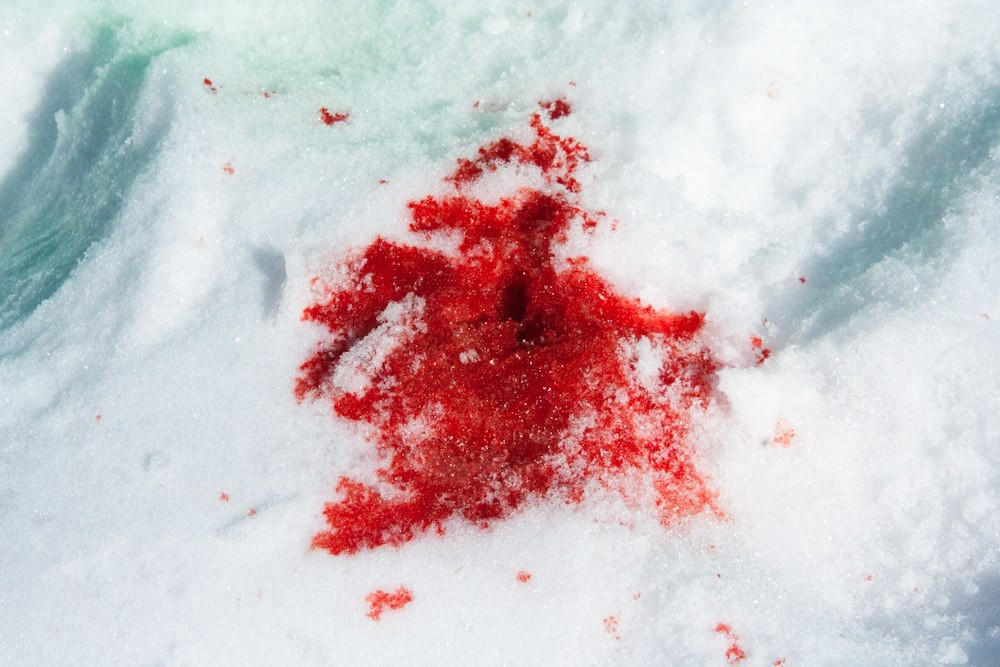
As I leave I pass the gore stain where the snowmobile accident occurred. I don’t have to remind myself it was just a coyote. I’m feeling zero emotional attachment to this stain right now. I squat next to it, study the grittiest splotches, locate the mixed-in animal remains and imagine undead versions of their owner.
A separate area of my brain skips back to the other day, back to before Zulkoski calls and invites me to the sledding party, back to when it’s just me and Darren taking turns chopping at saplings on my family’s acreage and I’m telling Darren how I wish the Earth was Middle-earth and how I would probably be an elf.
Darren chops a sapling and then looks at me like I’m seriously stupid. He rattles off a list of my traits. He explains how my traits are not elven traits. According to Darren, I’d be lucky to be Engwar — i.e. Man. An elf, he says. I don’t think so, he says. I’m cold let’s go inside, he says.
This is happening right as it’s my turn to chop of course, which is typical Darren autism. The gall of it, actually. I’m feeling a ton of hate in this moment, violent hate. I can’t tell if it’s real or if I’m revising the realness in hindsight or what, but the combined insult of being lectured by Darren and then losing my turn with the axe makes me so mad, so incredibly mad.
I hawk up some hangover bile and spit it on the coyote stain.
Darren is a forever-alone virgin. He doesn’t have elven traits, or life goals, or empathy. He’s a pathetic subhuman, a changeling who has sort-of learned how to mimic human form but won’t ever fully learn because of a learning disability. I gaze deep into the rust-colored snow, unblinking until the rust color distorts to a shiny purple at which point I let my eyes relax. I exhale. I tell myself pity is probably the most elven emotion, and pity is what I feel for Darren.
A gust of snow freckles the coyote stain and lifts my attention to the vast, unspoiled whiteness of the landscape beyond, where I’m about to ponder impermanence and my own mortality in the larger scheme of things, but then I see the true location of the coyote’s dismemberment is actually a dozen or so yards farther out. I’m not sure what I’ve been staring at for the past few minutes. It doesn’t matter. It’s snowing now and I don’t have the energy to walk out to the real stain of discolored snow where the snowmobile accident occurred, which from this distance looks smaller than I remember it being. I grab my leash of sleds and pull them the opposite direction, towards the front of Zulkoski’s house where all the cars from yesterday are still parked in the driveway.