A Brighter Mirror, an interview with Colm Tóibín, author and Chairman of the PEN World Voices…

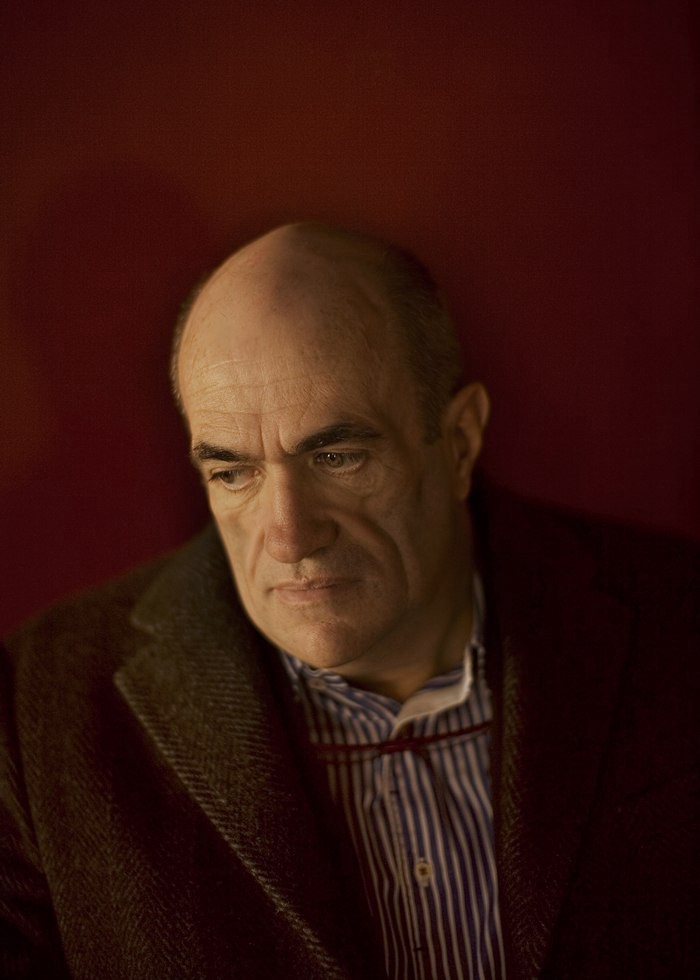
Colm Tóibín is an Irish novelist, short story writer, essayist, playwright, journalist, critic and poet whose work — as well as twice being shortlisted for the Man Booker Prize — has received the IMPAC Literary Award, the Costa Novel Award, the Los Angeles Times Novel of the Year Award, and the Irish PEN Award for contribution to Irish literature. His elegantly written, humane novels, which include The Blackwater Lightship, The Master, Brooklyn, and 2014’s Nora Webster, deal with Irish society, homosexual identity, the yearning for home, and the painful silences that can descend like an obscuring fog over families. Over the course of a career spanning a quarter of a century, Tóibín has been a staunch advocate for free expression and gay rights and has this year taken over the role of Chairman of the PEN World Voices Festival of International Literature. (The festival runs in New York from May 4–10.) From his office in Columbia University, where he is currently serving as the Irene and Sidney B. Silverman Professor of the Humanities, Tóibín spoke to me by phone about his hopes for the upcoming festival, Ireland’s referendum on gay marriage, the perils of taking a play to Broadway, and his fascination with Elizabeth Bishop.

Dan Sheehan: What does PEN, as an organization, mean to you as a writer? What made you decide to take on this public facing, ambassadorial role as Chairman of the World Voices Festival?

Colm Tóibín: PEN is an essential element in our culture. Anyone who has ever been brought up under censorship understands that it’s almost a barometer of the level of freedom in a society — what happens to books, what happens to writers, what happens to the written word. And what’s strange is that it isn’t merely books which are political, or that are directly political, that dictators and others who would want to control our lives worry about. They also worry about literature. It’s bad enough that a writer who would wish to express unpopular opinions or voice combative responses to government policy would be repressed, but that writers who would simply dream — who would write poetry or novels which ostensibly have nothing to do with politics… There are countries where that kind of work is simply unavailable. It’s a serious matter. It’s not a life and death matter in and of itself, but oddly enough in the places where it occurs you often find that other freedoms are restricted as well. PEN’s mission is not only to draw attention to this but to change it, to attempt to change the entire culture of restriction evident in so many places around the world. So for anyone who is a writer, for any one who is a reader, these are pressing and serious issues.

DS: One thing which struck me, in my brief time working with PEN, was that a great majority of the imprisoned recipients of the Freedom to Write Award [given annually to a writer who has fought courageously, in the face of adversity, for the right to freedom of expression], 36 out of 39 in fact, have been subsequently released. These figures must be quite heartening.

CT: They are, and while we are involved to an extent in defending free expression, the main focus of the World Voices Festival is to celebrate and honor the written word, so it’s a different mission, to some extent, to the daily business of putting pressure on governments and drawing attention to victims. Our work in the festival is a mirror of that, but it’s a brighter mirror. It seeks to introduce readers to work that might not automatically seem to be the most popular. It’s not a festival that tries to bring all the best selling writers in America together for one event. That would be fine, but it’s not our mission.

DS: For your first year as Festival Chairman, you’re presiding over a new curatorial approach, focusing specifically on the contemporary literary cultures across the African continent and its diaspora. Could you tell us a little bit more this?

…there will be enough new books and new writers whom you haven’t heard of to nourish you for a long time.

CT: Well Jakab Orsós is the director, so the day-to-day programming is his business, and he has come up with this absolutely marvelous program. What I always say is that if you come to this festival, it might keep you reading for a year. In other words there will be enough new books and new writers whom you haven’t heard of to nourish you for a long time. The priority for us this year is to focus it. If you just say “well, we’re bringing in all these writers from different places, and we hope you enjoy it,” that’s one thing, but it’s harder to put something like that together than it is to zero in on one particular region, in this case Africa. In a way it’s easier to capture someone’s imagination by putting this kind of focused program together. But it doesn’t mean of course that the festival is only about Africa. For example I think one of the biggest events is going to be Richard Flanagan in conversation with Claire Messud. Richard is not African, he’s from Tasmania, but I think that event, because he’s not somebody who has done a lot of readings in New York, and because he recently won the Booker Prize, is likely to draw a big audience.

DS: I wanted to ask you a bit about one event in particular: ‘Queer Features’ [a conversation with prominent African writers which will survey the landscape of African Gay Rights movements]. As somebody who has written beautifully about gay relationships and identities in your fiction, what does an event like this, at a high profile festival like this, mean to you?

We have some very interesting and intense writing by gay people which has arisen from repression, from their efforts to imagine a world outside of the one in which they’re living.

CT: It means a great deal to me. I think anyone who has been brought up gay in a country which doesn’t recognise gay rights, as I was, understands that it is something, much like the treatment of the written word we spoke about earlier, which almost becomes a barometer for other freedoms. If you want to repress gay people, you usually want to do quite a number of other things too. But of course, out of that can come all sorts of strangeness. And if you look at the novels written by gay people over the last twenty or thirty years, you realize that literature comes from strange places. You can set up a writing school and bring in a host of talented people, but you won’t automatically get the best books from that. Often literature grows in very barren places. It often comes from the ways in which the dreaming life or the imaginative life is suppressed, or the essential elements in our being are suppressed. Out of that pressure, a certain tone in literature can come. We have some very interesting and intense writing by gay people which has arisen from repression, from their efforts to imagine a world outside of the one in which they’re living.

DS: Did you find that to be the case for yourself in your own early writing?

CT: I think the best description of this comes from the American poet Adrienne Rich, who talked about the idea of looking in the mirror as a gay person and finding no one there. Of there being no images available of other gay people. You were almost alone. In other words, Jewish people or Irish people or Palestinian people or Native American people can actually understand their own oppression because it’s a history that’s passed on from generation to generation. But gay people, they’re alone. So the effort to find images that match your experience is often very difficult. Yet out of that exploration can come something very interesting. It is, if you’re a writer, almost nourishing, although I wouldn’t wish it on anybody. But it’s not necessarily all damaging. Though it is a particularly pressing issue in some African countries at the moment.

DS: Along the same lines, it’s been quite heartening to see the immensely positive response, especially among younger demographics, to the upcoming gay marriage referendum in Ireland. You’ve talked about the historical lack of positive images of gay identity for young people to turn to in Ireland. Is there a sea change happening at the moment?

CT: Well, It’s really quite difficult to interpret these opinion polls. The suggestion is that the referendum will be passed, but we have had opinion poles leading up to referenda in previous years which have turned out to be misleading. So we just don’t know. What’s interesting of course is that it’s quite difficult to oppose this referendum openly. Some people are doing that, but they’re not many, and that’s good in the sense that there is an overwhelming public support at the moment for the referendum. What people will do in the privacy of the ballot box is a different matter. It may end up being fine, but it’s worrying still. I think everyone is concerned about it.

DS: Absolutely. We’ve seen before the kind of disproportionate influence organizations like The Iona Institute [a socially conservative Catholic advocacy group based in Ireland] can have.

CT: Yes, but that’s democracy in the sense that you have to have an argument, you can’t just have everyone singing from the same hymn sheet. They turned out to be the opposition because the Catholic Church is in hiding. They [the clergy] have their heads firmly planted in the sand, so you have to have some group that’s willing to make the argument against gay marriage in order for there to be some sort of debate.

DS: A persistent, and oft-discussed, theme in your work is the longing for home. Can you talk a little bit about that?

One of them is that people miss home and then make a new home and then aren’t sure what home is anymore.

CT: Well, it’s one of those things that is a feature of the history of Ireland. Over the last one hundred and fifty years a great number of people have emigrated from the country and that’s an experience that comes in all sorts of shapes. One of them is that people miss home and then make a new home and then aren’t sure what home is anymore. It becomes quite a complicated thing that maybe only a novelist can handle. I feel it every time I arrive at JFK to go to Dublin and I start seeing Irish people wandering around the airport. “How do you know they’re Irish?” I don’t know, I just know that they are (laughs). Then there’s that sense of being home on the plane. It’s a very funny feeling. I’m not sure how long exactly it lasts but for me it’s palpable, it’s worth dramatizing.

DS: I’ve often wondered that myself, is it the kind of thing that ever really goes away? You’ve travelled extensively and you’ve taught all over the US, is that feeling something you take with you or is it a fixed idea of home that waits for you at the airport?

CT: It’s not fixed, so you can never tell what you’re going to feel like. Sometimes it’s amazing being away, and then other times you think, “I’d love to be in Dublin on a Saturday morning.” That feeling of getting up and buying the papers, finding somewhere to have your breakfast and meeting somebody. That lovely relaxed Dublin. No subways.

DS: Can I ask you now about your most recent book, On Elizabeth Bishop? What influence has her writing had on your own?

CT: She writes a lot about home, which is a difficult and gnarled sort of problem for her. She was from Nova Scotia — which of course is Northern and maritime, like the landscape of Wexford [ed. — where Tóibín grew up] — but she travelled a lot and lived in Florida and Brazil, so she was always caught between two or three things. She wrote very slowly, it took her ages to do anything, and she was a perfectionist. She also had a sort of a melancholy austerity in her tone. So all of that began to interest me, and it has interested me for a long time. Then when Princeton asked me what author I might like to write a book about I think they thought I might want to write about Joyce or Yeats, someone Irish you know, but I said I’d like to write about Elizabeth Bishop and they said that was cool, that they would commission that. Oddly enough it was quite a pleasure to write. I enjoyed those days, when I got to work on my Bishop Book. It’s not like it was ever going to be made into a movie or become a best seller, so it turned out to be a lovely sort of private work.

DS: You could take the commercial concerns out of the equation and just enjoy it for what it was.

CT: Exactly.

DS: Although, having said that, Bishop was a pretty interesting character. I think I would watch a movie about her life.

CT: You would watch a movie about her life, but trying to get anyone to invest in that movie would be something else entirely.

DS: And you’ve had some experience recently with work that has been artistically very well received but which also proved to be a difficult commercial sell. Could you tell us a bit about the experience of bringing The Testament of Mary [Tóibín’s monologue play which later became a novella] to Broadway.

CT: Well it didn’t really work there, but it is doing very well in Spain at the moment. It’s been running for a long time, since last July actually, and it’s going to go on running and move down into South America. The play has opened in all sorts of funny places since it closed on Broadway. The Broadway episode was strange, you know, it was up and then it was down, but that particular production went on to London where it was very successful.

DS: Going back to Elizabeth Bishop and her perfectionist streak, the time she took to get things just right, you started your most recent novel, Nora Webster, in 2000, is that right?

CT: (laughs) I did. I mean, I didn’t work on it every day but I thought about it every day. I would write some of it every year and then in the last few years I decided I had better finish it.

DS: Was it a case of the book coming together big by bit until you hit a sweet spot?

CT: It was a case of not being able to work out how to structure it. I put in the bits I knew, and then I had all of those and I realized that I had better concentrate on the bits I still had to work out. I thought that if I couldn’t figure out a structure for it at that point I would just do a chronological structure, scenes occurring in ordered time, to see if that might work, so that’s what I did.

FICTION: Amazing by Erin Fitzgerald

Your story takes place in a recent but extinct era, in which people’s lives aren’t complicated by handheld telecommunication or in­-depth classification of mental health issues.

There are two characters in your story who do not conform to the others’ standards. Thanks to the lack of handheld telecommunication and mental health support services, these characters are easy for the others to identify and shun.

Your story is set in Mayberry. It’s set in Gowanus. It’s set in Croatia. It’s set in Hogsmeade, which you have made a point of calling something else. Your story’s key scenes are in a town square. There are also scenes at a dive bar, and in a farmer’s field where the height of the corn hides the action from supporting characters. This is where some of the fucking happens. The rest happens on a beat­-up mattress in a dingy apartment. All of the fucking is unhappy fucking. Your story also has scenes at a church. No one is bored at the church, except for the two shunned characters.

Your story’s language is rich in a style that is illuminating or florid, depending on how you tip it in the light. Your story has sentences that look like run­-on sentences but aren’t, and sentences that don’t look like run­-on sentences but are. Your story has one phrase in a foreign language that is moderately easy to Google. It has Roman numerals, from I to XIV.

Your story has direct references to alcohol, probably rye, maybe bourbon, but no amaretto. Your story has indirect references to meth, molly, LSD, or heroin. It has no references to acetaminophen, lisinopril, paroxetine, or bisacodyl. Your story has no guns because those affect tension and pacing. It has a broken bottle and a filthy steak knife.

Your story is told in present tense until the first supernatural or magical element appears. Then it needed to be edited into past tense, and that brought a fog of knowing weariness to all of its characters.

Your story had angels who made clever observations, but had no wings. Your story’s ghosts ice skated, they walked down halls, they wept. All without sound, because they never spoke to you.

There was an eleven year old girl in your story. She did not learn anything about herself until an adult did not meet her expectations. That was when you realized why your story had a cornfield, a church, a broken bottle, an angel, a ghost, and rye.

It took longer for you to make the connection than it should have. But that realization will happen more quickly for the next story. You know it will, and so does everyone who reads it.

Sunday Sundries: Literary Links from Around the Web (May 3rd)

Looking for some Sunday reading? Here are some literary links from around the web that you might have missed:

David Abrams and Viet Thanh Nguyen on the lost art of the comic war novel

Ryan Britt lists some science fiction detectives

Couple sues after their photo is used on cover of erotic Patriots NFL novel

Hillary Kelly wants to bring back the serialized novel

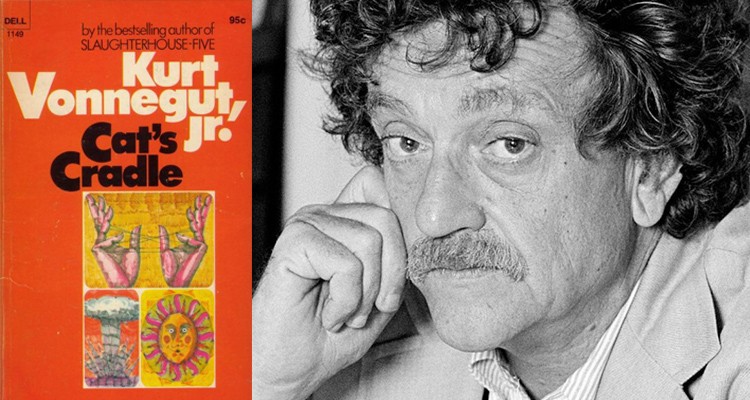
Cat’s Cradle by Kurt Vonnegut is being made into a TV show

“What about all the giants in personal memory that you want to keep buried?” — interview with Kazuo Ishiguro

Art Spiegelman’s brilliant Maus gets banned in Russia

Some interesting facts about Catch-22

Lewis Carroll and the secret history of Wonderland

Kurt Vonnegut’s Cat’s Cradle to Be Adapted for TV

Cat’s Cradle, one of Kurt Vonnegut’s most beloved novels, may soon be coming to the small screen. According to The Hollywood Reporter, IM Global Television has optioned the novel to be executive produced by Brad Yonover and Sandi Love of Elkins Entertainment. No word yet on what actors or directors might get involved.

Published in 1963, Cat’s Cradle was Vonnegut’s fourth novel and also one of his favorites. As The A.V. Club points out, Cat’s Cradle and Slaughterhouse-Five were the only works that Vonnegut himself gave an A-plus rating to:

TED WILSON REVIEWS THE WORLD: THE DORCHESTER LIBRARY

★★★★☆

Hello, and welcome to my week-by-week review of everything in the world. Today I am reviewing The Dorchester Library.

Because my cell phone doesn’t get the internet, and my home computer is an electric typewriter, I have to go to the library to do my web-surfing. But the internet isn’t the only reason I go to the library. Yes, their computer gets all the websites — and according to the sign that asks patrons to please stop visiting adult websites, it gets those too — but the Dorchester Library is so much more.

It’s a great place to make friends. You’d think making friends at the library would be tough, because talking isn’t allowed, but a lot can be said with the eyes. In fact, some of my best conversations have been strictly via eye contact. I have friends I’ve met at the library who I’ve never spoken to with my mouth. I even undressed someone with my eyes once. It was consensual.

Some people make it very clear they don’t want new friends at the library. Instead, they want to keep their face buried in a book to escape to whatever world they’re reading about. That’s fine by me. I never try to pressure anyone into friendship. Not since the time I pressured someone into a friendship and it turned out we didn’t make good friends and then I had to admit my mistake.

There is a good selection of books in which to bury one’s face. And if the book you’re looking for isn’t at the library, they’ll order it for you. If they can’t order it for you, the book might not exist, or you might not be at the library. Check the sign first to make sure it’s the library you’re entering. You might be at the post office. There’s a lot of overlap with their customer base and it’s easy to confuse the two.

If books aren’t your thing, the library has a lot of DVDs of movies that used to be books. I don’t have a DVD player so I’ve never gone into the DVD room, but it looks nice. The crowd in that part of the library is a lot younger than me.

One great thing is the public servants (librarians) who will do whatever you ask if it is library related and legal. It’s like having your own butler if you lived in a house full of books. The only librarian who won’t do what you ask is Margo. She only does what she wants.

BEST FEATURE: Great spot to nap! I fell asleep there once and no one disturbed me.

WORST FEATURE: Unfortunately I slept for two days. I missed an appointment and several meals. When I awoke my wallet and shoes were gone.

Please join me next week when I’ll be reviewing a jar of mayonnaise.

A Cautionary Tale for Writers Submitting Essays to Try and Win this Maine Inn by the Current Owner

After twenty-two years, the current owner–and former winner–of the Center Lovell Inn in the “Lake District” of southwest Maine has decided to retire and is opening the contest back up to “fulfill someone else’s dream.”

The rules? Simply pay a $125 entry fee and write 200 words on “why you would like to own and operate a country inn.”

“You have to do it,” my mother chirped on the phone. “Because you’re a writer, and this might be your only chance to own property, maybe.” I pretended to hesitate. But honestly, I had been hoping to get out of the city for a while. So I looked up the specifics: all they wanted was a brief essay, and the winner would swiftly inherent the rustic little bed-and-breakfast in Maine among the lakes and lobsters. My mother even offered to pay the application fee, but I told her I was sure I could afford it. After checking the amount on the website I called her back and said, “Okay, we’ll call it a birthday present.”

I think I wrote about the vitality of the rural outpost in the creation of countless great literary works, perhaps I promised to foster the same space in their building, promised inspiration. It’s hard to remember, exactly, because none of it came from a true place, not then. But two months later I got a call from the owner; the news was congratulations, but the voice was wary. The property would pass to me at the end of the week, and they would have to e-mail all the documents, because they were vacating that night. They asked how I’d heard about the contest, and I told them my mother had shared it with me. They replied, “Alright, but what is your mother really trying to tell you?” There was what sounded like a hiss and the line went dead. I was a little thrown, but packed regardless.

The long drive up through the pines was serene, and the Inn itself was lovely, white; three stories with a wrap-around porch. The door was swung open when I arrived, and the keys had been tossed on the counter of the eat-in kitchen. I had zero cell reception on the property, but that problem would soon seem miniscule. Miniscule, that is, when compared to the snake ghosts.

I spent most of that first day cleaning. The previous owner had left quick, it seemed; there were still canned goods in the pantry, a few hangers in the upstairs hall closet, and a landline phone on a remaining night stand in the master bedroom. A layer of dust coated all the floors, but slithering lines interrupted the integrity of this layer. It seemed as if someone had dragged a bunch of appliances in a leaving ballet, either that or they had attempted to sweep with a broom handle instead a broom.

That night it was quiet. No crickets.

On the second day the movers arrived with the furniture my mother was sending along from her great aunt’s old house. It matched the surroundings perfectly. The movers didn’t talk much, but they got the bed set up and I made it, and dozed off early.

The third day I walked the property. Meh.

I should say now that I’ve never been afraid of snakes. As a kid I’d visit my grandparents in a cozy apartment in a Maryland high-rise, and my grandfather kept a family of boa constrictors. I had no problem holding the little-to-big boas, and loved them, to the point where when a baby escaped into the air ducts of the building I was just excited to see where it would re-emerge.

But snake ghosts are a different story. Snake ghosts are a whole different story, because snake ghosts can spell.

On the third night I woke to the sound of their writhing. I shuffled to the window, and sure enough, the lawn was alive in the moonlight. Near-translucent snake ghosts blanketed every inch. They shifted en mass to spell out “soon.” Then, the lawn was still.

What happened in the daytime was somehow not important anymore.

The fourth night, I forced myself asleep with whiskey and had a nightmare that I was writing a book called “The Texas Maine-Saw Massacre;” a terrible title for my fear. My eyes opened and I rolled onto my side to see the snake ghosts entering under the raised window. They filled my bed and enveloped every inch of me, pushing my head to the ceiling, where still more snake ghosts wrote with their roiling bodies: “we’ll take it from here.” Seconds later I was alone.

Yesterday I stood around and wished that things would appear in front of my face.

Last night I woke to a hundred snake ghosts in the corner. They’d banded together to form a standing humanoid figure, an undulating mummy. Somehow, I wasn’t afraid. The mummy opened its mouth and pointed at the landline phone on the dresser. The landline phone rang. I answered and it was my mother. I may have asked “Why?” “Oh Honey,” she may have replied, “I think you didn’t understand. I just wanted to push you to achieve something, to give your writing value. I didn’t really think you’d win, of course. I thought it would help you find some inspiration. And didn’t it?” I can’t remember if it was me, or a rogue snake ghost, who hung up the phone.

So, today inspiration found me. Found me at the small kitchen table when, as I sipped a bad coffee, snake ghost after snake ghost slid up, and, undaunted by sunlight, entered my eyes and mouth and took over my body.

And now we’re one, together in our Inn at the End. Everything is spelled out inside, and words flood the pages in front of us.

The title said caution, but this is actually a clarification. Your essay will not win you this Inn. Your essay will allow you to join our residency. We seek all those addicted to ghosts, all those who wonder what they even are, if not possessed. We’ll read your work and we’ll know you belong. Please limit your essay to 200 words and include a self-addressed, stamped envelope.

Submit. And as you do, ask yourself, “What form will mine take?”

Stephen King Wins Edgar Award for Best Novel for Mr. Mercedes

America’s master of horror, Stephen King, was awarded an Edgar for best novel last night from the Mystery Writers of America. Mr. Mercedes, described on King’s website as his first “hard-boiled detective tale,” took the honor over books by Ian Rankin, Karin Slaughter, and others.

Here are all of the finalists with the winners in bold:

Best Novel

This Dark Road to Mercy by Wiley Cash (HarperCollins Publishers — William Morrow)
Wolf by Mo Hayder (Grove/Atlantic — Atlantic Monthly Press)
Mr. Mercedes by Stephen King (Simon & Schuster — Scribner)
The Final Silence by Stuart Neville (Soho Press)
Saints of the Shadow Bible by Ian Rankin (Hachette Book Group — Little, Brown)
Coptown by Karin Slaughter (Penguin Randomhouse — Delacorte Press)

Best First Novel

Dry Bones in the Valley by Tom Bouman (W.W. Norton)
Invisible City by Julia Dahl (Minotaur Books)
The Life We Bury by Allen Eskens (Prometheus Books — Seventh Street Books)
Bad Country by C.B. McKenzie (Minotaur Books — A Thomas Dunne Book)
Shovel Ready by Adam Sternbergh (Crown Publishers)
Murder at the Brightwell by Ashley Weaver (Minotaur Books — A Thomas Dunne Book)

Best Paperback Original

The Secret History of Las Vegas by Chris Abani (Penguin Randomhouse — Penguin Books)
Stay With Me by Alison Gaylin (HarperCollins Publishers — William Morrow)
The Barkeep by William Lashner (Amazon Publishing — Thomas and Mercer)
The Day She Died by Catriona McPherson (Llewellyn Worldwide — Midnight Ink)
The Gone Dead Train by Lisa Turner (HarperCollins Publishers — William Morrow)
World of Trouble by Ben H. Winters (Quirk Books)

Best Fact Crime

Kitty Genovese: The Murder, the Bystanders, the Crime that Changed America
by Kevin Cook (W.W. Norton)
The Savage Harvest: A Tale of Cannibals, Colonialism, and Michael Rockefeller’s Tragic Quest for Primitive Art by Carl Hoffman (HarperCollins Publishers — William Morrow)
The Other Side: A Memoir by Lacy M. Johnson (Tin House Books)
Tinseltown: Murder, Morphine, and Madness at the Dawn of Hollywood
by William Mann (HarperCollins Publishers — Harper)
The Mad Sculptor: The Maniac, the Model, and the Murder that Shook the Nation
by Harold Schechter (Amazon Publishing — New Harvest)

Best Critical/Biographical

The Figure of the Detective: A Literary History and Analysis
by Charles Brownson (McFarland & Company)
James Ellroy: A Companion to the Mystery Fiction
by Jim Mancall (McFarland)
Kiss the Blood Off My Hands: Classic Film Noir by Robert Miklitsch (University of Illinois Press)
Judges & Justice & Lawyers & Law: Exploring the Legal Dimensions of Fiction and Film
by Francis M. Nevins (Perfect Crime Books)
Poe-Land: The Hallowed Haunts of Edgar Allan Poe
by J.W. Ocker (W.W. Norton — Countryman Press)

Best Short Story

“The Snow Angel” — Ellery Queen Mystery Magazine by Doug Allyn (Dell Magazines)
“200 Feet” — Strand Magazine by John Floyd (The Strand)
“What Do You Do?” — Rogues by Gillian Flynn
(Penguin Randomhouse Publishing –Bantam Books)
“Red Eye” — Faceoff by Dennis Lehane vs. Michael Connelly (Simon & Schuster)
“Teddy” — Ellery Queen Mystery Magazine by Brian Tobin (Dell Magazines)

Best Juvenile

Absolutely Truly by Heather Vogel Frederick (Simon & Schuster Books for Young Readers)
Space Case by Stuart Gibbs (Simon & Schuster Books for Young Readers)
Greenglass House by Kate Milford
(Clarion Books — Houghton Mifflin Harcourt Books for Young Readers)
Nick and Tesla’s Super-Cyborg Gadget Glove by “Science Bob” Pflugfelder
and Steve Hockensmith (Quirk Books)
Saving Kabul Corner by N.H. Senzai (Simon & Schuster — Paula Wiseman Books)
Eddie Red, Undercover: Mystery on Museum Mile by Marcia Wells
(Houghton Mifflin Harcourt Books for Young Readers)

Young Adult

The Doubt Factory by Paolo Bacigalupi (Little, Brown Books for Young Readers)
Nearly Gone by Elle Cosimano (Penguin Young Readers Group — Kathy Dawson Books)
Fake ID by Lamar Giles (HarperCollins Children’s Books — Amistad)
The Art of Secrets by James Klise (Algonquin Young Readers)
The Prince of Venice Beach by Blake Nelson (Little, Brown Books for Young Readers)

TV Episode Teleplay

“The Empty Hearse” — Sherlock, Teleplay by Mark Gatiss (Hartswood Films/Masterpiece)
“Unfinished Business” — Blue Bloods, Teleplay by Siobhan Byrne O’Connor (CBS)
“Episode 1″ — Happy Valley, Teleplay by Sally Wainwright (Netflix)
“Dream Baby Dream” — The Killing, Teleplay by Sean Whitesell (Netflix)
“Episode 6″ — The Game, Teleplay by Toby Whithouse (BBC America)

Robert L. Fish Memorial

“Getaway Girl” — Ellery Queen Mystery Magazine by Zoë Z. Dean (Dell Magazines)

Mary Higgins Clark

A Dark and Twisted Tide by Sharon Bolton (Minotaur Books)
The Stranger You Know by Jane Casey (Minotaur Books)
Invisible City by Julia Dahl (Minotaur Books)
Summer of the Dead by Julia Keller (Minotaur Books)
The Black Hour by Lori Rader-Day (Prometheus Books — Seventh Street Books)

Grand Master

Lois Duncan
James Ellroy

Raven Awards

Ruth & Jon Jordan, Crimespree Magazine
Kathryn Kennison, Magna Cum Murder

Ellery Queen Award

Charles Ardai, Editor & Founder, Hard Case Crime

Long Live the New Flesh: Consumed by David Cronenberg

In an interview conducted by Chris Rodley nearly 20 years ago, David Cronenberg said, “Part of my cinematic voyage has been to try and discover the connection between the physical and the spiritual: what we are physically; what is the essence of life and experience.” And then later, “So to whatever degree we center our reality — and our understanding of our reality — in our bodies, we are surrendering that sense of reality to our bodies’ ephemerality.”

The reality of the body has long been a focal point in Cronenberg’s lengthy and rewarding career as one of film’s perennial outsiders. From sexually transmitted diseases to augmented reality, body modifications to sexual fetishes, nothing has ever been off-limits. And although his subject matter is often extreme, it’s never extreme for the sake of being extreme. In other words, Cronenberg has always been a filmmaker with a particular vision for how technology comes into contact with, and subsequently impacts, our understanding of reality.

Cronenberg, who is now in his early 70s, has made his novel debut. Since 1999’s eXistenZ, Cronenberg has largely worked with scripts produced by other writers, the lone exception being Cosmopolis in 2012, itself adapted from Don DeLillo’s novel of the same name. Although this development certainly hasn’t affected the quality of his output, Cronenberg’s films remain expertly constructed and thoughtfully considered; it’s difficult not to wish the man would continue developing new “Cronenbergian” ideas in script form.

Such wishful thinking has been mercifully answered in Consumed. The novel centers Nathan and Naomi, a couple who are as connected as they are disconnected, occasionally taking time from the jet-setting schedules to hole up in expensive hotel rooms, surf the Net together, talk shop, and have sex. Their relationship is symbiotic, one feeding off the other: she is a journalist who chronicles lurid subject matter; he is a photographer of the controversial and the grotesque. Both are obsessed with digging deeper. Likewise, they share similar drives and appetites. In fact, the plot doesn’t really get moving until Nathan contracts an obscure STD known as Roiphe’s disease and gives it to Naomi. From there, through a series of rather ingenious plot developments, Nathan and Naomi’s professional lives and personal entanglements become even more complex, until it seems that they center on an infamous crime, the murder and partial cannibalization of philosopher and Marxist Célestine Arosteguy.

To say much more would ruin the element of unpredictability that lends Consumed much of its allure. Although meticulous arranged, Cronenberg takes his time weaving together the various narrative threads, and the pacing is sometimes sluggish as a direct result. But there is more than enough conceptual meat to drive the story forward. For instance, 3-D printing, experimental surgeries, compulsive self-mutilation, the aggressively secretive politics of North Korea — all of these things figure heavily into Cronenberg’s representation of a world made small by the Internet.

Nathan and Naomi’s sleek world of MacBook Pros, Calvin Kleins, and Nikon cameras, as well as the novel’s thriller-like structure and globe-trotting locales, occasionally calls to mind William Gibson’s Blue Ant trilogy. Gibson, of course, is another science-fiction visionary whose output has irreparably changed the way the technological world is represented in prose. With Consumed, Cronenberg has created an accomplished, weighty novel that deserves to be held in the same esteem as Gibson’s classics. If Cronenberg’s vision has always been about exploring the essence of life and experience in all its grossness, its horrifically slick packaging and sinister underlying realities, then Consumed is yet another worthy addition to an already legendary body of work.

Consumed

by David Cronenberg

Powells.com

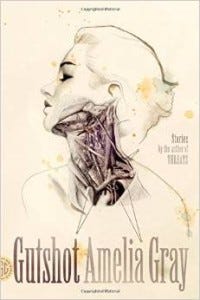
Unsettling Things, an interview with Amelia Gray, author of Gutshot

Gutshot

Alice Munro says that a story is not a road to follow, but more like a house to explore, with corridors to wander and windows to look out of. If this is the case, the reader who enters the stories in Amelia Gray’s latest collection Gutshot (out now from FSG) is sure to come away thinking no one builds houses quite like hers. They are houses in which all manner of foreign and unsettling things are happening, inhabited by characters that feel artfully bent away from the ordinary and yet wholly recognizable. The houses are sturdy, except when Gray wants you to hear the foundation creaking. They feel safe, until she wants to remind you that no house ever is.

And when Amelia Gray builds a house, she more than satisfies Munro’s wish that the house be “built out of its own necessity, not just to shelter or beguile you.”

Vincent Scarpa: Why not begin with beginnings? One of the things I admire so much about your stories are the unforgettable and distinctly Amelia Gray ways we enter them. I can’t think of another writer whose stories invite the reader in quite like yours, be it by way of introducing a distillation of the story’s strange or otherworldly conceit — I’m thinking here of a story like “A Contest,” which begins, “The gods decided that, once a year, they would have a weeklong contest and allow the one person who felt the most grief over the loss of a loved one to have that loved one return,” — or a deceivingly simple opening line that gives no hint of the deep strangeness we’re about to encounter, as in “House Heart,” one of the highlights of the collection and one of its most disturbing and unsettling stories, which begins, simply, “The home remains.” I’d love to hear you talk about opening sentences: what you see as their possibilities or responsibilities, and how they open up the drafting process for you in writing.

Amelia Gray: Lately I like a straightforward opening line. When I was first thinking about “A Contest,” I was feeling overwhelmed with death and I thought to myself, What if there was a point to grief like this? What if there was some kind of contest? And then it was a matter of figuring out the best and most efficient way to say that in a way that conveyed the information in kind of an invisible way. It got me thinking about the gods, maybe three or four guys, no more than would fit into a helicopter. I just double checked my first draft of “House Heart” and it has that first line still. I don’t always start with a first line set like that. “House Proud” at the end of the collection went through many different iterations and actually took its first paragraph from a standalone piece I’d written at a different time.

VS: The stories in Gutshot that are operating in otherworldly ways never fall back on the innovativeness or unique strangeness of their premises. They don’t rest on the laurels of their own cleverness. I think of a writer like Aimee Bender — and there are plenty of Aimee Bender stories I truly love, to be sure — but for me she sometimes get trapped under the weight of her conceits. When working with these kinds of stories, how does one — how do you — go about catapulting them past their shiny mechanics, imbuing them with a deeply-felt sense of humanness? How do you bend them into something beyond inventiveness?

AG: Ah, it doesn’t always work for me either. Sometimes a story is just larger or smaller than what I’d like it to be. Lately I’ve been thinking about this. I love writing fiction on assignment and with a prompt in mind, a series of constraints, but it sometimes doesn’t go well when I’m told I need to make a certain word count. I’ll write a story about haunted tree stumps all day long but when you say it has to be five thousand words, the character is going to change from what might be its ideal form.

VS: I’m wondering how you feel about your work being characterized as “eccentric.” It’s not inaccurate, I suppose, but it feels incomplete. It feels reductive. It doesn’t account for what you manage to do so beautifully with what is familiar, what we might think of as banal. There are no shortage of stories about falling-apart relationships, but your couple in “These Are The Fables” is so precisely rendered and nuanced, their present circumstances so weighted, the dialogue so masterful and hysterical and upsetting, that no sane reader would come away from that story thinking they’d read just another falling-apart relationship story. And that isn’t eccentricity, it’s a keen insight into the human condition. It’s your finger on the pulse of fragility. I don’t know, maybe I’m just defending you against a term — employed in praise, no less! — that doesn’t bother you in the slightest.

AG: When I think of “eccentric” I picture myself forty years in the future draped in purple velvet and carrying a parasol, which seems right. Surrounded by cats. I’ve been very grateful and happy to do interviews around Gutshot, but talking about the book this week has been a bit like spending life with a hand-mirror. But to your larger point, I don’t mind “strange” or “eccentric” or similar. I used to dislike “clever” or “ambitious” because I found it a little patronizing, but mostly I just don’t read reviews very much because I find they get into my head. I feel like I’ve been lucky to have some very thoughtful reviews for Gutshot, and even when the reviewer is squeamish, they’ve dug deeper, like they’re the ones with the hand-mirror or maybe the parasol.

VS: I want to ask you about structure. The stories in Gutshot are organized into five discrete parts, and I’m curious how much of that organization was present in your original manuscript and how much was the product of editorial work. The groupings feel extremely purposeful, meaning-making. There’s a ringing, a resonance, a note being sustained through each section that I probably couldn’t name or nominate but felt was undeniably at work, and I found this a really instructive way to experience the collection as a whole.

AG: I wrote the collection over the course of six years and through that time, I found myself naturally interested in different things. For a while I wanted to collect a group of stories based on logical fallacies, which never worked out really, and then I wanted to write a collection where each story responded to kind of a philosophical posit, and then later I was writing fables, and love stories. Some of it was mixed into other bits and none of it was very purposeful, but when I had finished the collection I printed it all out and physically moved stories around in my bedroom until I found that five parts emerged. It came out of feeling personally overwhelmed by 38 short stories and wanting to group into portions of resonance. So I’m glad to hear it rang true with you.

VS: One of those unanswerable, useless questions I often hear posed from a well-meaning audience member at a reading is, “Where do you come up with your ideas?” And yet it’s also a perfectly legitimate and understandable reaction, when reading the stories in Gutshot, to wonder how you’ve landed where you have. You read a story like “House Heart” and think, How the fuck did this come to be? So, in lieu of asking how you come up with your ideas, what I’ll ask instead is this: How do you decide which ideas are worth following and which aren’t? Do you do much story-abandoning?

AG: Yes, I do abandon a lot of stories! Sometimes they are written and they become abandoned, or sometimes I think only of the idea and move on. Last night, I was picturing two people giving a third person increasingly bad romantic advice at a bar, and then wondering if it wouldn’t be better for the dramatics of the story if these people were simply living their own bad love advice rather than presenting it to someone else — for example, a man gives a woman the flu so he can be the one to nurse her back to health. There’s something pretty good there but it’s not quite a strong enough concept. So I’ll keep thinking about it, and maybe I’ll try writing it in a couple weeks if it’s still bouncing around up there.

VS: Who are the writers whose work interests and engages you? Are there any books or stories or poems or essays you return to over and over?

AG: I was just re-reading Shirley Jackson. Nabokov, James Joyce, Vanessa Place, Joyce Carol Oates. I want to re-read Anna Karenina and The Inferno. I have a big list of things I need to read and think about. It’s so good and exciting to be a member of a living community like the writing world but it means a lot of reading! I’m envious of the average New Yorker’s commute.

VS: What are you working on now?

AG: I’m working on a novel right now, about pride and art and loss and stubborn love. It’s a historical fiction and I’ve been working on it for three years.