After twenty-two years, the current owner–and former winner–of the Center Lovell Inn in the “Lake District” of southwest Maine has decided to retire and is opening the contest back up to “fulfill someone else’s dream.”
“You have to do it,” my mother chirped on the phone. “Because you’re a writer, and this might be your only chance to own property, maybe.” I pretended to hesitate. But honestly, I had been hoping to get out of the city for a while. So I looked up the specifics: all they wanted was a brief essay, and the winner would swiftly inherent the rustic little bed-and-breakfast in Maine among the lakes and lobsters. My mother even offered to pay the application fee, but I told her I was sure I could afford it. After checking the amount on the website I called her back and said, “Okay, we’ll call it a birthday present.”
I think I wrote about the vitality of the rural outpost in the creation of countless great literary works, perhaps I promised to foster the same space in their building, promised inspiration. It’s hard to remember, exactly, because none of it came from a true place, not then. But two months later I got a call from the owner; the news was congratulations, but the voice was wary. The property would pass to me at the end of the week, and they would have to e-mail all the documents, because they were vacating that night. They asked how I’d heard about the contest, and I told them my mother had shared it with me. They replied, “Alright, but what is your mother really trying to tell you?” There was what sounded like a hiss and the line went dead. I was a little thrown, but packed regardless.
The long drive up through the pines was serene, and the Inn itself was lovely, white; three stories with a wrap-around porch. The door was swung open when I arrived, and the keys had been tossed on the counter of the eat-in kitchen. I had zero cell reception on the property, but that problem would soon seem miniscule. Miniscule, that is, when compared to the snake ghosts.
I spent most of that first day cleaning. The previous owner had left quick, it seemed; there were still canned goods in the pantry, a few hangers in the upstairs hall closet, and a landline phone on a remaining night stand in the master bedroom. A layer of dust coated all the floors, but slithering lines interrupted the integrity of this layer. It seemed as if someone had dragged a bunch of appliances in a leaving ballet, either that or they had attempted to sweep with a broom handle instead a broom.
That night it was quiet. No crickets.
On the second day the movers arrived with the furniture my mother was sending along from her great aunt’s old house. It matched the surroundings perfectly. The movers didn’t talk much, but they got the bed set up and I made it, and dozed off early.
The third day I walked the property. Meh.
I should say now that I’ve never been afraid of snakes. As a kid I’d visit my grandparents in a cozy apartment in a Maryland high-rise, and my grandfather kept a family of boa constrictors. I had no problem holding the little-to-big boas, and loved them, to the point where when a baby escaped into the air ducts of the building I was just excited to see where it would re-emerge.
But snake ghosts are a different story. Snake ghosts are a whole different story, because snake ghosts can spell.
On the third night I woke to the sound of their writhing. I shuffled to the window, and sure enough, the lawn was alive in the moonlight. Near-translucent snake ghosts blanketed every inch. They shifted en mass to spell out “soon.” Then, the lawn was still.
What happened in the daytime was somehow not important anymore.
The fourth night, I forced myself asleep with whiskey and had a nightmare that I was writing a book called “The Texas Maine-Saw Massacre;” a terrible title for my fear. My eyes opened and I rolled onto my side to see the snake ghosts entering under the raised window. They filled my bed and enveloped every inch of me, pushing my head to the ceiling, where still more snake ghosts wrote with their roiling bodies: “we’ll take it from here.” Seconds later I was alone.
Yesterday I stood around and wished that things would appear in front of my face.
Last night I woke to a hundred snake ghosts in the corner. They’d banded together to form a standing humanoid figure, an undulating mummy. Somehow, I wasn’t afraid. The mummy opened its mouth and pointed at the landline phone on the dresser. The landline phone rang. I answered and it was my mother. I may have asked “Why?” “Oh Honey,” she may have replied, “I think you didn’t understand. I just wanted to push you to achieve something, to give your writing value. I didn’t really think you’d win, of course. I thought it would help you find some inspiration. And didn’t it?” I can’t remember if it was me, or a rogue snake ghost, who hung up the phone.
So, today inspiration found me. Found me at the small kitchen table when, as I sipped a bad coffee, snake ghost after snake ghost slid up, and, undaunted by sunlight, entered my eyes and mouth and took over my body.
And now we’re one, together in our Inn at the End. Everything is spelled out inside, and words flood the pages in front of us.
The title said caution, but this is actually a clarification. Your essay will not win you this Inn. Your essay will allow you to join our residency. We seek all those addicted to ghosts, all those who wonder what they even are, if not possessed. We’ll read your work and we’ll know you belong. Please limit your essay to 200 words and include a self-addressed, stamped envelope.
Submit. And as you do, ask yourself, “What form will mine take?”
America’s master of horror, Stephen King, was awarded an Edgar for best novel last night from the Mystery Writers of America. Mr. Mercedes, described on King’s website as his first “hard-boiled detective tale,” took the honor over books by Ian Rankin, Karin Slaughter, and others.
Here are all of the finalists with the winners in bold:
Best Novel
This Dark Road to Mercy by Wiley Cash (HarperCollins Publishers — William Morrow) Wolf by Mo Hayder (Grove/Atlantic — Atlantic Monthly Press) Mr. Mercedes by Stephen King (Simon & Schuster — Scribner) The Final Silence by Stuart Neville (Soho Press) Saints of the Shadow Bible by Ian Rankin (Hachette Book Group — Little, Brown) Coptown by Karin Slaughter (Penguin Randomhouse — Delacorte Press)
Best First Novel
Dry Bones in the Valley by Tom Bouman (W.W. Norton) Invisible City by Julia Dahl (Minotaur Books) The Life We Bury by Allen Eskens (Prometheus Books — Seventh Street Books) Bad Country by C.B. McKenzie (Minotaur Books — A Thomas Dunne Book) Shovel Ready by Adam Sternbergh (Crown Publishers) Murder at the Brightwell by Ashley Weaver (Minotaur Books — A Thomas Dunne Book)
Best Paperback Original
The Secret History of Las Vegas by Chris Abani (Penguin Randomhouse — Penguin Books) Stay With Me by Alison Gaylin (HarperCollins Publishers — William Morrow) The Barkeep by William Lashner (Amazon Publishing — Thomas and Mercer) The Day She Died by Catriona McPherson (Llewellyn Worldwide — Midnight Ink) The Gone Dead Train by Lisa Turner (HarperCollins Publishers — William Morrow) World of Trouble by Ben H. Winters (Quirk Books)
Best Fact Crime
Kitty Genovese: The Murder, the Bystanders, the Crime that Changed America by Kevin Cook (W.W. Norton) The Savage Harvest: A Tale of Cannibals, Colonialism, and Michael Rockefeller’s Tragic Quest for Primitive Art by Carl Hoffman (HarperCollins Publishers — William Morrow) The Other Side: A Memoir by Lacy M. Johnson (Tin House Books) Tinseltown: Murder, Morphine, and Madness at the Dawn of Hollywood by William Mann (HarperCollins Publishers — Harper) The Mad Sculptor: The Maniac, the Model, and the Murder that Shook the Nation by Harold Schechter (Amazon Publishing — New Harvest)
Best Critical/Biographical
The Figure of the Detective: A Literary History and Analysis by Charles Brownson (McFarland & Company) James Ellroy: A Companion to the Mystery Fiction by Jim Mancall (McFarland) Kiss the Blood Off My Hands: Classic Film Noir by Robert Miklitsch (University of Illinois Press) Judges & Justice & Lawyers & Law: Exploring the Legal Dimensions of Fiction and Film by Francis M. Nevins (Perfect Crime Books) Poe-Land: The Hallowed Haunts of Edgar Allan Poe by J.W. Ocker (W.W. Norton — Countryman Press)
Best Short Story
“The Snow Angel” — Ellery Queen Mystery Magazine by Doug Allyn (Dell Magazines) “200 Feet” — Strand Magazine by John Floyd (The Strand) “What Do You Do?” — Rogues by Gillian Flynn (Penguin Randomhouse Publishing –Bantam Books) “Red Eye” — Faceoff by Dennis Lehane vs. Michael Connelly (Simon & Schuster) “Teddy” — Ellery Queen Mystery Magazine by Brian Tobin (Dell Magazines)
Best Juvenile
Absolutely Truly by Heather Vogel Frederick (Simon & Schuster Books for Young Readers) Space Case by Stuart Gibbs (Simon & Schuster Books for Young Readers) Greenglass House by Kate Milford (Clarion Books — Houghton Mifflin Harcourt Books for Young Readers) Nick and Tesla’s Super-Cyborg Gadget Glove by “Science Bob” Pflugfelder and Steve Hockensmith (Quirk Books) Saving Kabul Corner by N.H. Senzai (Simon & Schuster — Paula Wiseman Books) Eddie Red, Undercover: Mystery on Museum Mile by Marcia Wells (Houghton Mifflin Harcourt Books for Young Readers)
Young Adult
The Doubt Factory by Paolo Bacigalupi (Little, Brown Books for Young Readers) Nearly Gone by Elle Cosimano (Penguin Young Readers Group — Kathy Dawson Books) Fake ID by Lamar Giles (HarperCollins Children’s Books — Amistad) The Art of Secrets by James Klise (Algonquin Young Readers) The Prince of Venice Beach by Blake Nelson (Little, Brown Books for Young Readers)
TV Episode Teleplay
“The Empty Hearse” — Sherlock, Teleplay by Mark Gatiss (Hartswood Films/Masterpiece) “Unfinished Business” — Blue Bloods, Teleplay by Siobhan Byrne O’Connor (CBS) “Episode 1″ — Happy Valley, Teleplay by Sally Wainwright (Netflix) “Dream Baby Dream” — The Killing, Teleplay by Sean Whitesell (Netflix) “Episode 6″ — The Game, Teleplay by Toby Whithouse (BBC America)
Robert L. Fish Memorial
“Getaway Girl” — Ellery Queen Mystery Magazine by Zoë Z. Dean (Dell Magazines)
Mary Higgins Clark
A Dark and Twisted Tide by Sharon Bolton (Minotaur Books) The Stranger You Know by Jane Casey (Minotaur Books) Invisible City by Julia Dahl (Minotaur Books) Summer of the Dead by Julia Keller (Minotaur Books) The Black Hour by Lori Rader-Day (Prometheus Books — Seventh Street Books)
Grand Master
Lois Duncan James Ellroy
Raven Awards
Ruth & Jon Jordan, Crimespree Magazine Kathryn Kennison, Magna Cum Murder
In an interview conducted by Chris Rodley nearly 20 years ago, David Cronenberg said, “Part of my cinematic voyage has been to try and discover the connection between the physical and the spiritual: what we are physically; what is the essence of life and experience.” And then later, “So to whatever degree we center our reality — and our understanding of our reality — in our bodies, we are surrendering that sense of reality to our bodies’ ephemerality.”
The reality of the body has long been a focal point in Cronenberg’s lengthy and rewarding career as one of film’s perennial outsiders. From sexually transmitted diseases to augmented reality, body modifications to sexual fetishes, nothing has ever been off-limits. And although his subject matter is often extreme, it’s never extreme for the sake of being extreme. In other words, Cronenberg has always been a filmmaker with a particular vision for how technology comes into contact with, and subsequently impacts, our understanding of reality.
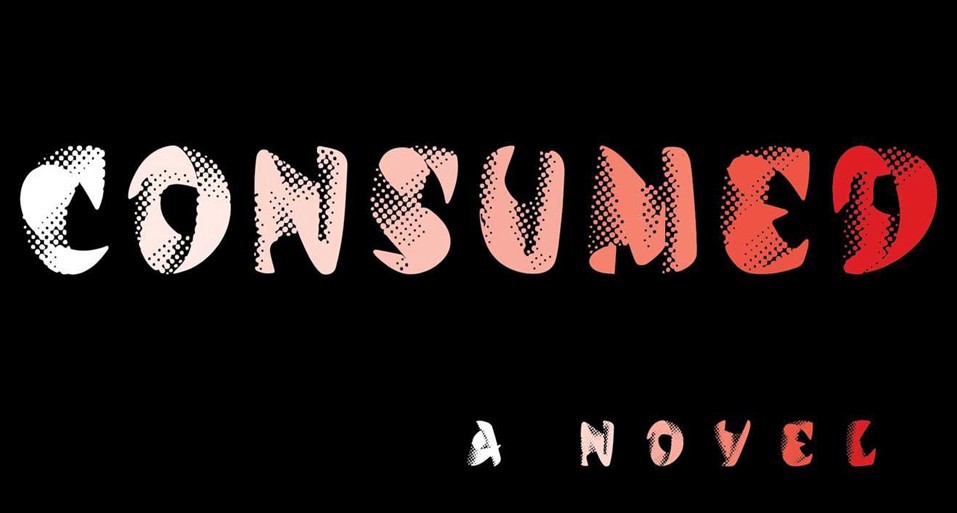
Cronenberg, who is now in his early 70s, has made his novel debut. Since 1999’s eXistenZ, Cronenberg has largely worked with scripts produced by other writers, the lone exception being Cosmopolis in 2012, itself adapted from Don DeLillo’s novel of the same name. Although this development certainly hasn’t affected the quality of his output, Cronenberg’s films remain expertly constructed and thoughtfully considered; it’s difficult not to wish the man would continue developing new “Cronenbergian” ideas in script form.
Such wishful thinking has been mercifully answered in Consumed. The novel centers Nathan and Naomi, a couple who are as connected as they are disconnected, occasionally taking time from the jet-setting schedules to hole up in expensive hotel rooms, surf the Net together, talk shop, and have sex. Their relationship is symbiotic, one feeding off the other: she is a journalist who chronicles lurid subject matter; he is a photographer of the controversial and the grotesque. Both are obsessed with digging deeper. Likewise, they share similar drives and appetites. In fact, the plot doesn’t really get moving until Nathan contracts an obscure STD known as Roiphe’s disease and gives it to Naomi. From there, through a series of rather ingenious plot developments, Nathan and Naomi’s professional lives and personal entanglements become even more complex, until it seems that they center on an infamous crime, the murder and partial cannibalization of philosopher and Marxist Célestine Arosteguy.
To say much more would ruin the element of unpredictability that lends Consumed much of its allure. Although meticulous arranged, Cronenberg takes his time weaving together the various narrative threads, and the pacing is sometimes sluggish as a direct result. But there is more than enough conceptual meat to drive the story forward. For instance, 3-D printing, experimental surgeries, compulsive self-mutilation, the aggressively secretive politics of North Korea — all of these things figure heavily into Cronenberg’s representation of a world made small by the Internet.
Nathan and Naomi’s sleek world of MacBook Pros, Calvin Kleins, and Nikon cameras, as well as the novel’s thriller-like structure and globe-trotting locales, occasionally calls to mind William Gibson’s Blue Ant trilogy. Gibson, of course, is another science-fiction visionary whose output has irreparably changed the way the technological world is represented in prose. With Consumed, Cronenberg has created an accomplished, weighty novel that deserves to be held in the same esteem as Gibson’s classics. If Cronenberg’s vision has always been about exploring the essence of life and experience in all its grossness, its horrifically slick packaging and sinister underlying realities, then Consumed is yet another worthy addition to an already legendary body of work.
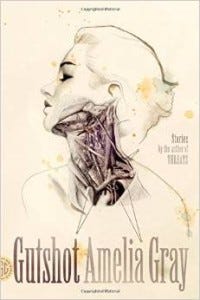
Alice Munro says that a story is not a road to follow, but more like a house to explore, with corridors to wander and windows to look out of. If this is the case, the reader who enters the stories in Amelia Gray’s latest collection Gutshot (out now from FSG) is sure to come away thinking no one builds houses quite like hers. They are houses in which all manner of foreign and unsettling things are happening, inhabited by characters that feel artfully bent away from the ordinary and yet wholly recognizable. The houses are sturdy, except when Gray wants you to hear the foundation creaking. They feel safe, until she wants to remind you that no house ever is.
And when Amelia Gray builds a house, she more than satisfies Munro’s wish that the house be “built out of its own necessity, not just to shelter or beguile you.”
Vincent Scarpa: Why not begin with beginnings? One of the things I admire so much about your stories are the unforgettable and distinctly Amelia Gray ways we enter them. I can’t think of another writer whose stories invite the reader in quite like yours, be it by way of introducing a distillation of the story’s strange or otherworldly conceit — I’m thinking here of a story like “A Contest,”which begins, “The gods decided that, once a year, they would have a weeklong contest and allow the one person who felt the most grief over the loss of a loved one to have that loved one return,” — or a deceivingly simple opening line that gives no hint of the deep strangeness we’re about to encounter, as in “House Heart,”one of the highlights of the collection and one of its most disturbing and unsettling stories, which begins, simply, “The home remains.”I’d love to hear you talk about opening sentences: what you see as their possibilities or responsibilities, and how they open up the drafting process for you in writing.
Amelia Gray: Lately I like a straightforward opening line. When I was first thinking about “A Contest,” I was feeling overwhelmed with death and I thought to myself, What if there was a point to grief like this? What if there was some kind of contest? And then it was a matter of figuring out the best and most efficient way to say that in a way that conveyed the information in kind of an invisible way. It got me thinking about the gods, maybe three or four guys, no more than would fit into a helicopter. I just double checked my first draft of “House Heart” and it has that first line still. I don’t always start with a first line set like that. “House Proud” at the end of the collection went through many different iterations and actually took its first paragraph from a standalone piece I’d written at a different time.
VS: The stories in Gutshot that are operating in otherworldly ways never fall back on the innovativeness or unique strangeness of their premises. They don’t rest on the laurels of their own cleverness. I think of a writer like Aimee Bender — and there are plenty of Aimee Bender stories I truly love, to be sure — but for me she sometimes get trapped under the weight of her conceits. When working with these kinds of stories, how does one — how do you — go about catapulting them past their shiny mechanics, imbuing them with a deeply-felt sense of humanness? How do you bend them into something beyond inventiveness?
AG: Ah, it doesn’t always work for me either. Sometimes a story is just larger or smaller than what I’d like it to be. Lately I’ve been thinking about this. I love writing fiction on assignment and with a prompt in mind, a series of constraints, but it sometimes doesn’t go well when I’m told I need to make a certain word count. I’ll write a story about haunted tree stumps all day long but when you say it has to be five thousand words, the character is going to change from what might be its ideal form.
VS: I’m wondering how you feel about your work being characterized as “eccentric.”It’s not inaccurate, I suppose, but it feels incomplete. It feels reductive. It doesn’t account for what you manage to do so beautifully with what is familiar, what we might think of as banal. There are no shortage of stories about falling-apart relationships, but your couple in “These Are The Fables”is so precisely rendered and nuanced, their present circumstances so weighted, the dialogue so masterful and hysterical and upsetting, that no sane reader would come away from that story thinking they’d read just another falling-apart relationship story. And that isn’t eccentricity, it’s a keen insight into the human condition. It’s your finger on the pulse of fragility. I don’t know, maybe I’m just defending you against a term — employed in praise, no less! — that doesn’t bother you in the slightest.
AG: When I think of “eccentric” I picture myself forty years in the future draped in purple velvet and carrying a parasol, which seems right. Surrounded by cats. I’ve been very grateful and happy to do interviews around Gutshot, but talking about the book this week has been a bit like spending life with a hand-mirror. But to your larger point, I don’t mind “strange” or “eccentric” or similar. I used to dislike “clever” or “ambitious” because I found it a little patronizing, but mostly I just don’t read reviews very much because I find they get into my head. I feel like I’ve been lucky to have some very thoughtful reviews for Gutshot, and even when the reviewer is squeamish, they’ve dug deeper, like they’re the ones with the hand-mirror or maybe the parasol.
VS: I want to ask you about structure. The stories in Gutshot are organized into five discrete parts, and I’m curious how much of that organization was present in your original manuscript and how much was the product of editorial work. The groupings feel extremely purposeful, meaning-making. There’s a ringing, a resonance, a note being sustained through each section that I probably couldn’t name or nominate but felt was undeniably at work, and I found this a really instructive way to experience the collection as a whole.
AG: I wrote the collection over the course of six years and through that time, I found myself naturally interested in different things. For a while I wanted to collect a group of stories based on logical fallacies, which never worked out really, and then I wanted to write a collection where each story responded to kind of a philosophical posit, and then later I was writing fables, and love stories. Some of it was mixed into other bits and none of it was very purposeful, but when I had finished the collection I printed it all out and physically moved stories around in my bedroom until I found that five parts emerged. It came out of feeling personally overwhelmed by 38 short stories and wanting to group into portions of resonance. So I’m glad to hear it rang true with you.
VS: One of those unanswerable, useless questions I often hear posed from a well-meaning audience member at a reading is, “Where do you come up with your ideas?”And yet it’s also a perfectly legitimate and understandable reaction, when reading the stories in Gutshot, to wonder how you’ve landed where you have. You read a story like “House Heart”and think, How the fuck did this come to be? So, in lieu of asking how you come up with your ideas, what I’ll ask instead is this: How do you decide which ideas are worth following and which aren’t? Do you do much story-abandoning?
AG: Yes, I do abandon a lot of stories! Sometimes they are written and they become abandoned, or sometimes I think only of the idea and move on. Last night, I was picturing two people giving a third person increasingly bad romantic advice at a bar, and then wondering if it wouldn’t be better for the dramatics of the story if these people were simply living their own bad love advice rather than presenting it to someone else — for example, a man gives a woman the flu so he can be the one to nurse her back to health. There’s something pretty good there but it’s not quite a strong enough concept. So I’ll keep thinking about it, and maybe I’ll try writing it in a couple weeks if it’s still bouncing around up there.
VS: Who are the writers whose work interests and engages you? Are there any books or stories or poems or essays you return to over and over?
AG: I was just re-reading Shirley Jackson. Nabokov, James Joyce, Vanessa Place, Joyce Carol Oates. I want to re-read Anna Karenina and The Inferno. I have a big list of things I need to read and think about. It’s so good and exciting to be a member of a living community like the writing world but it means a lot of reading! I’m envious of the average New Yorker’s commute.
VS: What are you working on now?
AG: I’m working on a novel right now, about pride and art and loss and stubborn love. It’s a historical fiction and I’ve been working on it for three years.
At the time of this writing, I have 1760 followers on Twitter. The other day, as I sat in a grayscale cube on the sixth floor of an office building somewhere in Manhattan, it occurred to me that I keep a close eye on my follower count, closer than the number of people who’ve shared my latest essay. iPhone notifications are usually reliable, but sometimes they fail and I don’t know when a new Twitter user has decided to follow me, so I check the count. Often. A few times a day. And, in this same cube where I’m forced to use a PC, and not the elegant, beloved Apple computers I adore, I also realized that I’ve used this follower count, this lone metric, as a key performance indicator of my readership.
Numbers matter to the gatekeepers of the literary world. You don’t get book deals and exciting writing opportunities without a following of readers behind you. Or at least that’s what I’m told. I don’t know if this is true. Despite my paltry follower count — not even at 2000 yet — I’ve done well for myself. Achieved a modicum of micro-following and minuscule readership commensurate with an Internet writer. It makes sense that I keep a close eye on my follower count since Twitter has provided me the platform required to share my work, build the aforementioned readership, and meet other writers and creatives.
I once tweeted to a fellow writer that Twitter was far more invaluable to my writing career than relocating to Brooklyn. After writing this, I held my phone and stared at the tweet in my app, and I felt a little ridiculous. Twitter was a useful tool, yes — a necessary platform, maybe — but “invaluable” seemed a stretch. It implied, to me, that I’ve spent inordinate amounts of time on Twitter, and was perhaps invested in the lives and words of people who, for the most part, I haven’t met in real life and may never get to meet offline. I felt guilty. I felt ashamed.
I’ve been online since 1998, which is not to say I grew up with the Internet. I am a member of the last generation who will remember life pre-cyberspace, and with this comes that nagging, lingering guilt born out of the zeitgeist’s perception of Internet users, once upon a time. Sweaty, pale, obese men hunched over keyboards in their dank basements, looking for a connection through the wires, so to speak. Hanging out in chatrooms and message boards all night long. Connecting with people in ways that belied their seemingly anti-social lives offline. Though we’ve moved on from chatrooms and message boards, that desire to communicate, to connect, remain. Now, these same people who mocked the early adopters have dating website profiles, and blogs, and social media accounts. Connection is a human need, and the Internet helps temper another element of the human condition: loneliness.
Twitter, and the Internet in general, wasn’t created with writers in mind — interesting, since if anyone is sweaty and pale in a dank basement, pecking away at a keyboard in the middle of the night it is writers. But the medium was made for us accidentally. Its brevity forces us to choose our words carefully, a skill we should acquire online or off. Twitter gives voice to writers who would otherwise wilt and slink away to a corner if faced with a large social setting, like myself. Never mind the geographical distance between users — Twitter’s very design lends itself to small messages. Condensed snark and sarcasm and wit. Those who struggle with the idea of mingling at a party can become interesting with 140 characters. I’m speaking about myself here. My social anxiety stems from a lack of self-esteem and self-worth, from a place where I view myself as someone who might not be worth your time.
It’s not that I can’t get along with people. I can muster up small talk, painful as it might be, or, alternatively, ask questions so the other person can speak while I fall into the comfortable “listener” role. I can glad-hand, pat backs, smile for smiling’s sake. I can be a social zombie acting upon cues; television and my family raised me well. Connection, however, has always been my problem. Sometimes, I have to remind myself that I’m a writer. Which means, I need to do the work.
***
I often think about my favorite writers, my literary heroes, and what their feelings would be on Twitter, and social media at large, if they were alive today. Octavia Butler was a known hermit, mostly by choice, but I wonder if the physical distance the Internet affords — miles and countries and oceans between her and other users — would’ve allowed her to engage people via social media in ways she could not, or simply would not, do in real life.
In reading Conversations with Octavia Butler, I realized that yes, she was a gifted writer and yes, she sometimes gave canned responses to interviewers, but her ideas on literature, specifically science fiction and its intersection with race and gender, inspired so many writers, myself included, to consider the connection of art and politics, of art and the environment, of art and the future of our society, our very humanity. Indeed, writers take to social media, to Twitter, and give rise to these ideas and connections, finding other people with whom to converse and debate in the process, still — I long to hear Octavia Butler’s voice in 140 characters. Literary Twitter could use her voice.
Butler was, if nothing else, a pragmatist, a grounded dreamer, and a free thinker with the mind of a researcher. “First forget inspiration,” she wrote in “Furor Scribendi,” included in her only collection Bloodchild and Other Stories. “Habit is more dependable. Habit will sustain you whether you’re inspired or not. Habit will help you finish and polish your stories. Inspiration won’t. Habit is persistence in practice.” To Butler, the work mattered above all us: the act of sitting down and writing, or sitting down and failing to write; it didn’t matter, so long as the attempt was made. These are reminders Literary Twitter needs to hear from time to time.
Although the common belief of social media is that these various mediums give voice to the voiceless, the more accurate belief, specific to Literary Twitter, is that these sites give voice to the internal monologue, to our deeper insecurities. Reading Literary Twitter is to witness brief, terse glimpses into the writerly psyche, and how insecure and unsure and thin-skinned we tend to be. As writers, we want to be validated. We want to matter. The published stories and poems and essays, the books we sell, the magazines we edit: all this output, this paper expelled out to the world, the screens we invade with our narratives, it all matters to us. But does it matter to everyone else?
Writers are supposed to reach, to extend, out to the world. We earn readers; they do not cater to us, and they need not care about our insecurities. They do not care about our MFAs, or our lack of MFAs, or whether MFAs are aiding or crippling modern literature. They do not care about degrees. Readers do not care about the elements of craft. What is often discussed within Literary Twitter are the wants and machinations of writers, and not the desires of the readers who, presumably, do not wish to write, and haven’t written much outside of emails since college, and are happy with their non-writer lives, but are avid readers hungry for new books, new voices, for connection.
Creative writing, for lack of a better phrase, is not glamorous. It is not partially defined by technology, such as photography, no matter how many times we tout writing apps like Scrivener, or the usefulness of Google Drive to the revision process. You sit your ass down and you write. Writing, in other words, isn’t sexy work to conduct in the middle of a selfie (no matter how hard we try via Photo Booth on our MacBooks). But it is work nonetheless, so we often tweet about it: how many words we’ve written today, how many chapters left to revise, how many rejections pile up in our inboxes. Understand: knowing that you’re not crazy, that there are thousands of other people who also obsess with words, and their placement on the page, and their expression of one’s imagination and ideas, is priceless.
As is the exchange of books. Twitter is a literary marketplace; less a storefront — no matter how many direct messages I receive from writers with links to their Amazon pages — and more of an intangible library. You can’t give me a physical book through Twitter, but you can tell me about a book you’re reading, written by an author dead for almost a decade now, and you can take a picture of the book, and I can see the photo, and look up the author and, by coincidence, listen to a report about the author on NPR, a report unrelated to the book you’re reading, and I can feel, as I often do when it comes to books, that the stars are aligned. I buy the book. I read it. I tweet about it as I’m reading it. You and I have conversations about the book, about the writer. I am now a fan of the author, of the book, and with this one connection, I find that I have other common interests with you: music, movies, maybe even career goals. Over time, we become friends. Actual, offline friends. We meet each other’s significant others. We start literary projects together. We launch a reading series in Brooklyn. We inspire each other to do the work.
While readers may not care that two writers meet on Twitter, and become friends offline, this connection — that it occurred at all — is for the greater good of literature. Disregard the aforementioned bickering over MFAs, and you’ll find writers, networked and mobilized, attempting to advance change in an industry that has, for far too long, pushed particular writers out to the margins.
Black writers, relegated to the “African American” section of bookstores, somewhere in the back, sans a handful of us who do not threaten the status quo, find each other on Twitter; fantasy, sci-fi, and other so-called “genre” writers, long ignored by (but often pilfered from) more “literary” authors, find each other on Twitter; women writers find each on Twitter, and demand that reviewers critique books without mentioning the woman writer’s beauty or motherhood, that editors be accountable for the overwhelming amount of men published in magazines, to say nothing of the mastheads full of men who read men and write about men, with the occasional woman character used as plot devices and sexual props.
If Literary Twitter has done nothing else, if there is no other value to the medium to writers and editors and publishers, it has fostered difficult conversations publicly, across the different, once segmented, even segregated, literary landscape. Literary Twitter still devolves into pettiness about who follows who, and who publishes who, and which writers have verified Twitter accounts, and which ones get to be the beautiful ones huddled together within perceived cliques and inner circles, but this is expected, and not at all shocking.
Writers are petty. The many artifices we use to hide that pettiness falters when we need validation, and feel as if we aren’t receiving it. For my part, I try to remain above the fray. I log onto Twitter most days to tweet about books, my work, iPhones, the latest album I discovered on Spotify, and random inanity complete with ridiculous images found online. Unfortunately, I get caught up and even that’s okay. I’ll entertain the discussion about the worth of an MFA, and I’ll even get into a multi-tweet rant about the competitive nature of writers, about how I’ve gotten jealous of the opportunities my writer friends have earned. That’s okay because at some point, I have to log off, leave it all behind, and resume the work. I have 1,812 followers, and pages to write before I sleep.
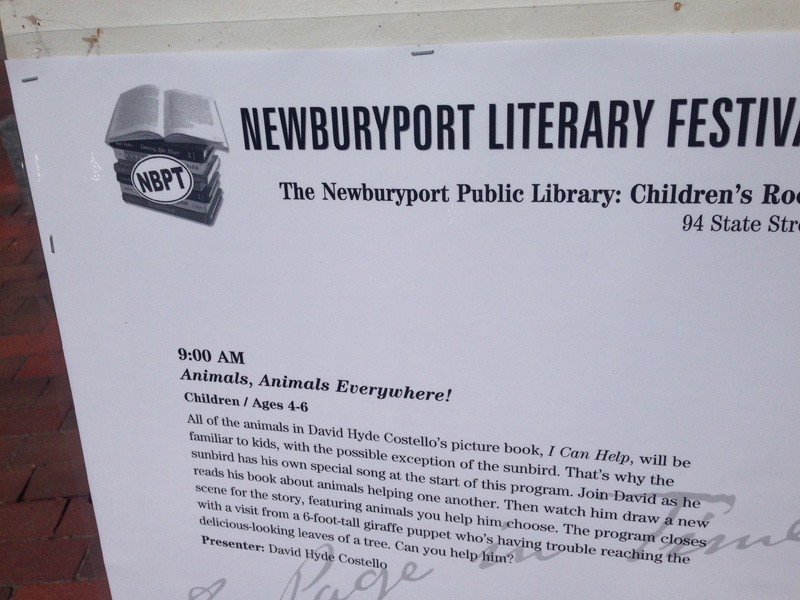
Newburyport is one of the smallest cities in Massachusetts, the original home of the Coast Guard, features a boardwalk and sidewalks I dub “wobbly brickwork Americana,” has plaques commemorating visits from George Washington and Daniel Webster, is very close to where I currently live, and — on April 25th — it played host to the 10th annual Newburyport Literary Festival.
Events at the festival in previous years had seen Robert Pinsky do poetry with a backing jazz band, Andre Dubus III read from the pew of a giant church, and Junot Diaz hold a barnburner of a Q+A after reading off his iPhone where — when asked by an elderly white woman how he felt about being figuratively awarded by this “ruling class culture” — responded by emphasizing the general fluidity of things (that being given this chance didn’t equate into a permanent condition of being), and saying that he wrote for librarians, Dominicans, and lit wonks. Also that even though he’s been put into hyper-circulation, the way in which writers and people of color are given opportunities in this country meant — in his mind — he’d be crazy not to take his moment.
This morning — that is, April 25th, 2015, Year of Our Lord Shatner in Miss Congeniality — I caught Said Sayrafiezadeh at the Greek Church Nicholson Hall, where he read an excerpt from his memoir (When Skateboards Will Be Free) that focused on his reaction as a child to his mother in New York City following Cesar Chavez’s call to boycott lettuce and grapes. He also read an excerpt from his collection of short stories, Brief Encounters With The Enemy, where at one point early on in the story — the entirety of which you can read here — he described the streetlights in the city getting dimmer each day. As an image, it worked where it was in relation to the rest of the paragraph, as if the metropolis was entering a period where it became an old, snow-filled television whose figurative reception more or less benefited from equally figurative slaps upside its figurative head. (I’ve been thinking about Joe Biden recently. Pardon me.) But, during the Q and A, Sayrafiezadeh mentioned that he edited heavily what he read out loud, and — while flipping through the story later — I was struck by the decisions he’d made, the sheer volume of what he’d omitted (whole paragraphs, sometimes pages (for instance, we never met Frankie, nor heard the more explicit bits of the E.T. letter; he had flashed us a text filled with X’d off paragraphs and arrows), and by the fact that he’d actually gone and named a character “Ned Frost.”
Flipping through Kate Bolick’s Spinster (borne of the article “All The Single Ladies”) at the top of the stairs of a bookstore called Jabberwocky, I realized that Bolick was something of a “local,” had grown up in Newburyport, and that she would be reading right across the way at The Newburyport Art Association. Would I ask her about her assessment of how well people were “holding on to that in you which is independent and self-sufficient whether you’re single or couple”? Would I ask her about how she viewed recent trends in data? Edna St. Vincent Millay?
I did not go. I didn’t even attend the reading. After making note of post-it notes left by an author who had done some signings (“To Marissa and John,” read one; another: “FOR THE CAPTAIN”), I went for a walk. Placards stood outside various event venues. Outside of Central Congregational Church Social Hall, I noticed that Erica Funkhouser, Robert W. Crawford, Robert Cording, Paul Mariani, Michael Casey, and Hugh Martin would be giving readings throughout the day. Funkhouser is capable of throwing out great lines like –
Today no nomenclature ruptures the composure of a chalk-blue haze pausing, even dawdling, now and then trembling over what I’m going to call fresh water.
— but it also put me in mind of an event I’d spotted on the schedule the night before, two poets who edit Light, (Kevin Durkin and Melissa Balmain, whose mission is to “restore humor, clarity, and pleasure to the reading of poems,” so I sent them an e-mail asking them what constituted some of the funniest poetry to them today and received this by way of reply:
Water Pressure
By Julie Kane My neighbor can’t water his lawn when I shower,
by Anne F. Garréta, recommended by Deep Vellum Publishing
Translated by Emma Ramadan
I never alluded to what I had so indistinctly perceived in my sleep, and neither did A***. There were always inexplicable silences between us, a sort of prudishness or reserve that kept us from broaching certain intimate subjects. We kept the evidence hidden away, even avoiding the use of expressions that seemed improper, excessive, or bizarre. A*** would never show any immoderate affection, and I was constantly forcing myself not to criticize the escapades I witnessed. Once, only once, I was weak enough to reveal my jealousy, which had been gnawing away at me. In the same vein, A*** only once slipped in showing tenderness toward me, using words and gestures that we had never before allowed ourselves to use.
This single jealous episode took place in the dressing room of the Eden where, one night, I came upon A*** in the company of a man I had seen fairly often in the wings the previous week, whom I suspected to be A***’s latest lover. Normally I pretended not to give a damn about the goings-on of A***’s libido; the number and nature of A***’s escapades were none of my business. What right did I have to be jealous, since there was nothing between us other than platonic affection? But that night I could not bear to see this lugubrious cretin, in the seat that I habitually occupied, engaged with A*** in the sort of conversation I had thought was reserved for me alone. This substitution outraged me: the idea that in my absence someone could take my place, could be the object of identical attentions. I was willing to admit that I was not everything for A***, but I refused to accept that what I was, achieved through a hard-fought struggle, could be taken over by someone else, and apparently by anyone at all. The sole merit of the lover in question was his idiocy: his inane conversation was doubtless a nice break from the thornier discussions A*** and I typically had. A*** thought he had a beautiful face, entrancing eyes, and good fashion sense. I was shocked by A***’s poor taste, by the appreciation of such an individual: an Adonis from a centerfold with a stupidly handsome face.
I had judged him, a priori, as moronic, and I realized, triumph and despair mixing indissolubly, that it was true, indeed in every way. I was revolted by this pretty boy’s attitude, by his dumbfounded acceptance and regurgitation of all conventional hogwash. With the aplomb bestowed on him by age and rank, Monsieur would uphold unconscionable vulgarities, which, moreover, he revered — a proselyte! When I arrived, the conversation was revolving around the countries of North Africa, which he had glimpsed during a recent trip to a resort. He passed briskly from the picturesque story of his trip to general commentary on the countries and the samples of the population that one could encounter in France, “in our country,” as he articulated so well. I reveled in ridiculing a rival in front of A*** and put on a show of systematic perversity. The discussion quickly turned sour: when one realizes that one is being unreasonable, it is precisely then that one employs even more uncouth and violent arguments. The offspring of the 16th arrondissement do not like to be refuted, much less mocked; they never think it beneath them to resort to insults, no matter how low. I left, slamming the door behind me, not without having hurled out an extremely spiteful compliment on the quality and distinction of A***’s lover, whom I referred to with a far more offensive noun.
I was in a very bad mood when I arrived at the Apocryphe, and the music I selected was proof. I exuded my resentment through the loudspeakers, which calmed me down a bit. On the floor that night were some showbiz caryatids, those people that one sees on the covers of popular magazines. They did me the honor of a hello, expecting that I would carry out some of their desiderata: “Could you maybe play X’s latest record…? He’s here tonight, it would be an immmmense pleasure for him,” or else: “When are you going to play some reggae?” It made me snicker that these dignitaries, flush with their new, modern-day power, solicited favors from the feeble authority conferred on me by my position behind the turntables. What an enormous privilege it was in their eyes that they should notice me! In granting me the favor of acknowledging my presence, of pouring onto me a minuscule portion of the celebrity they oozed and tried to pawn off as glory, they tried cheaply to coax my kindness. I made them feel the vanity of their approach, and unless they were willing to own up to the humiliation of failure, they had no choice but to laugh at my sneering. And that night in particular they were made to feel the grace of my cynicism, the bursts of my impertinent irony.
Common mortals have other ways of expressing their desires. A club does not get filled every night with only the chic clientele. Because there are a paltry number of remarkable characters — and they are remarkable only because their number is paltry — a mass of individuals of lower distinction are allowed into this sanctuary, a privilege through which they are made to feel honored. They would come to the Apocryphe, attracted by the club’s reputation (they don’t accept just anybody — you, me, any old person), hoping to rub shoulders with some celebrities.
That night I realized something: they pronounce their desiderata, demanding (without really caring) some record, in order to prove that they have a right to be in this milieu where the arbitrary reigns. It’s their sole ontological proof, their sole cogito, their foundation and justification. I want, therefore I am; I need, I breathe. I spend money, they must grant my desire, considering my demands in light of the value that I offer. I pay to exist; the tribute, delivered in kind or in cash, buys the recognition of my right.
My strategy was to inspire incertitude; I derived pleasure in imbuing these souls with doubt by not playing into their pathetic ruses. Che vuoi? I was leading them to the brink of an essential anxiety. My reply was always “maybe.” It was a dangerous game that exposed me to the disapproval, disrespect, or insidious resentment of the people to whom I denied the assurance of being a subject. Each night I would have to confront this great panic of individual desires that were in reality desires for individuation, for furious revindication. Sometimes I would try — utterly in vain but with a perverse pleasure — to make them understand that the sum of individual desires does not add up to the happiness of all. That when it comes to the music in a club the law of the majority is ineffectual; that neither democracy nor aristocracy, nor even oligarchy, is a possible regime for a coherent musical set. I would argue that a good DJ is one who, rather than simply responding to repetitive wishes that are consciously formulaic and elementary (such and such a record, such and such a song), subconsciously manages to fulfill an unknown desire by creating a unity out of something superior to adding up so many records, so many requests. To appease is not the same as to fulfill.
Each night I made such observations that I would occasionally articulate to myself when pedantic disquisition and contempt started to mutually reinforce each other. I had come to the end of this chapter of my De natura rerum noctis dedicated to the essence of the position of the DJ when I noticed A*** standing near the bar, no longer accompanied by that new moronic lover, being served a glass of champagne by the barman.
It was late, the Eden had already been closed for some time, and I worried that A***’s arrival at the Apocryphe after our altercation meant trouble. I didn’t know if I was supposed to leave my booth and go meet A*** or if I was supposed to wait for A*** to approach me. Fortunately, we both had the same reflex, and met halfway between the bar and the booth. There was no visible trace of what had happened a few hours before. A*** was drunk, which almost never happened, and from within that drunkenness asked me to dance. People didn’t dance as a couple anymore in those days except during retro sequences when the DJ would revive old dance forms such as the bop, tango, or waltz. And that was absolutely what A*** desired: a waltz, nothing less. I was enticed by this extravagance, and besides, why not? At this late hour, only a small number of people remained on the floor. A waltz would serve as a charming exit, and, irresistibly outmoded, could assume the parodic allure that excuses all improprieties. So from the bottom of the crate I took out an LP of Viennese waltzes that I cued with no transition, following some nondescript funk track. Abandoning the turntables, and without any snarky retort this time, I went to dance this waltz.
A***, though drunk, was dancing divinely. A classic routine demonstrates one’s sensibility just as much as the unruly improvisations of today’s dance steps. While dancing these waltzes — for we danced many in succession — I had the impression that never until this day had I reveled in such a carefree lightness of being. There was no longer anybody but us on the dance floor; no doubt our perfect execution of the steps had intimidated all the amateurs. A*** had a naïve and clichéd fondness for the antiquated world of the aristocracy, an admiration for the bygone, the retro, the image of luxury that Hollywood associates with times past.
A***’s drunkenness, at once dissipated and concentrated by the dance, kept us moving. When the Apocryphe closed, we hurried to the Kormoran. Ruggero had a bottle of whiskey brought to my table that he insisted on offering me for the New Year, and as a thank you for the cigars I had brought him back from Germany. And so I too started to drink. A*** and I talked for a long time about everything under the sun. We were drunk, A*** more so than me. There was a warmth, a hint of complicity between us, which soothed the constant tension of our unfinished business. And this happy understanding, permitted by our drunkenness, was further reinforced by the illusory intensity of perception brought on by the alcohol. Leaning toward me and speaking with more abandon than usual, A*** suddenly murmured the following question: “And if we make love, will you still love me after?” Abruptly, I caught a glimpse of what I had given up hoping for, without ever having written it off. It was finally being offered to me, in a whisper and under the extraordinary guise of a fiction, all that we had envisioned and elaborated, that which ultimately gave meaning to all of our stratagems. A*** repeated the query, making it sound like a supplication. I leaned toward A***, not knowing how to respond to the anxiety I sensed in the question.
My only answer was to wrest A*** from the chair and to take us out of this place. Once outside and without having discussed it at all, we hailed a taxi and A*** told the driver the address. Without saying a word, we took the elevator. The fear that I had forgotten suddenly returned and took me by the heart, the fear of flesh that accompanies those first adolescent excitements, an anxiety we attempt to combat too quickly with cynicism. I thought I was going to faint, standing there at last on the threshold of what I had so passionately desired.
I staggered as A*** moved to kiss me; I didn’t know what to do except let it happen. The temporal order of events, even the simple spatial points of reference, all disappeared without my realizing it; everything is blurred in my memory. I have in my mouth, still, the taste of skin, of the sweat on that skin; against my hands, the tactile impression of skin and the shape of that flesh. In a sprawling obscurity — either I closed my eyes or my gaze was struck with a temporary blindness — some vaguely outlined visions, and, in my ear, the echo of soft rustlings, of words barely articulated.
I don’t know how to recount precisely what happened, or how to describe or even attest to what I did, what was done to me. And the effect of the alcohol has nothing to do with this eradication; it’s impossible to recapture the feeling of abandon through words. Crotches crossed and sexes mixed, I no longer knew how to distinguish anything. In this confusion we slept.
When I awoke from the incredible sleep that follows the appeasement of the flesh, I saw A***, watching me and smoking a cigarette. The memories I have of my life at that time are all of this order. Dissolved are the restless nights, the clammy visions of crowds of bodies mangled and shredded by the spurts of light that cut through shadow. Crystallized at the bottom of my memory remains the recollection of these sleeps and these wakings where one floats between the resurgence of desire and the memory of its satisfaction. Never until then had I longed to see A*** dance on stage. When A*** danced in the Apocryphe, I didn’t have to share the pleasure I took in watching: I was allowed to imagine that the dance was dedicated entirely to me, without the crowd being there to prove me wrong. Watching this body moving uninhibited, this body that wasn’t mine in any way, I reveled in the uniqueness and the exclusivity of my gaze.
However, not long after that first night, I decided to go and watch the show put on at the Eden. From my place in the audience, I watched A*** perform one of the club’s best numbers. I can only describe it as a syncopated progression of movements, the ecstatic miming of a song written in English entitled — I learned later — “Sphinx.” I was struck by the lyrics, at least by the ones I could grasp in the moment. I came back to this song so many times, keeping it as an emblem, the enigmatic prophecy of all that ever came to pass between A*** and me. I was struck that night by certain lines, which I deciphered or guessed from watching their silent pronunciation on A***’s lips. Erratic blocks of words, fragments that resounded in me even more violently because they were incomplete, that I grasped only insofar as they seemed to articulate something of my relationship to this strange figure I had only recently succeeded in conquering.
Later I translated the exact words of the song and watched as their meaning, which I had imperfectly intuited that night, unfolded. I transcribe the essential lines here:
I can’t stand the pain
and I keep looking for all the faces I had
before the world began.
I’ve only known desire and my poor soul will burn into eternal fire.
And I can’t even cry,
a sphinx can never cry.
I wish that I could be
a silent sphinx eternally.
I don’t want any past
only want things which cannot last.
Phony words of love
or painful truth, I’ve heard it all before.
A conversation piece,
a woman or a priest, it’s all a point of view.
The vision comes back to me instantly: A*** crossing the stage in the feline roving of the choreography, embodying an enigmatic, silent figure twisting to the extreme limit of dislocation in miraculous movements that were syncopated but not staccato. Even as this body fades away, a spectral figure remains, immobile; the stage is populated with incarnations, sudden gestures, hieratic poses set in a relentless progression. There was something cat-like or divine in this body that, moved by some sly, sensual pleasure, was embodying in nonchalant strides a languid damnation, an immemorial fatality made into movement.
When I entered the dressing room, I found A*** immobile as if in prayer or confession, legs bent, forearms fixed on a high bar stool supporting A***’s entire body weight. Hands dangling, wrists slack, gaze abandoned and lost in the emptiness, then focusing on me as I entered and following me to where I sat down opposite. It was like the disdainful pose of the sphinx (or the image I had of it then), the same sharp aesthetic. I thought this to myself and, laughing, affectionately let slip, “my sphinx” — as if I had said “my love.” We remained face-to-face, our bodies as if petrified. A terror silted up in my throat; the desire I had felt welling up in me at the sight of those distant movements on the stage had been suspended. I could do nothing but adore. Those eyes, so black, fixed on me, subjected me to an unbearable torture.
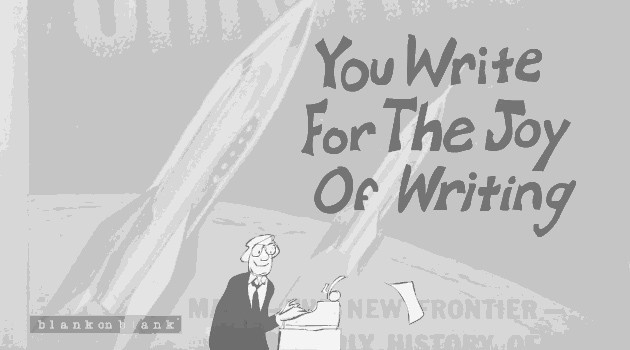
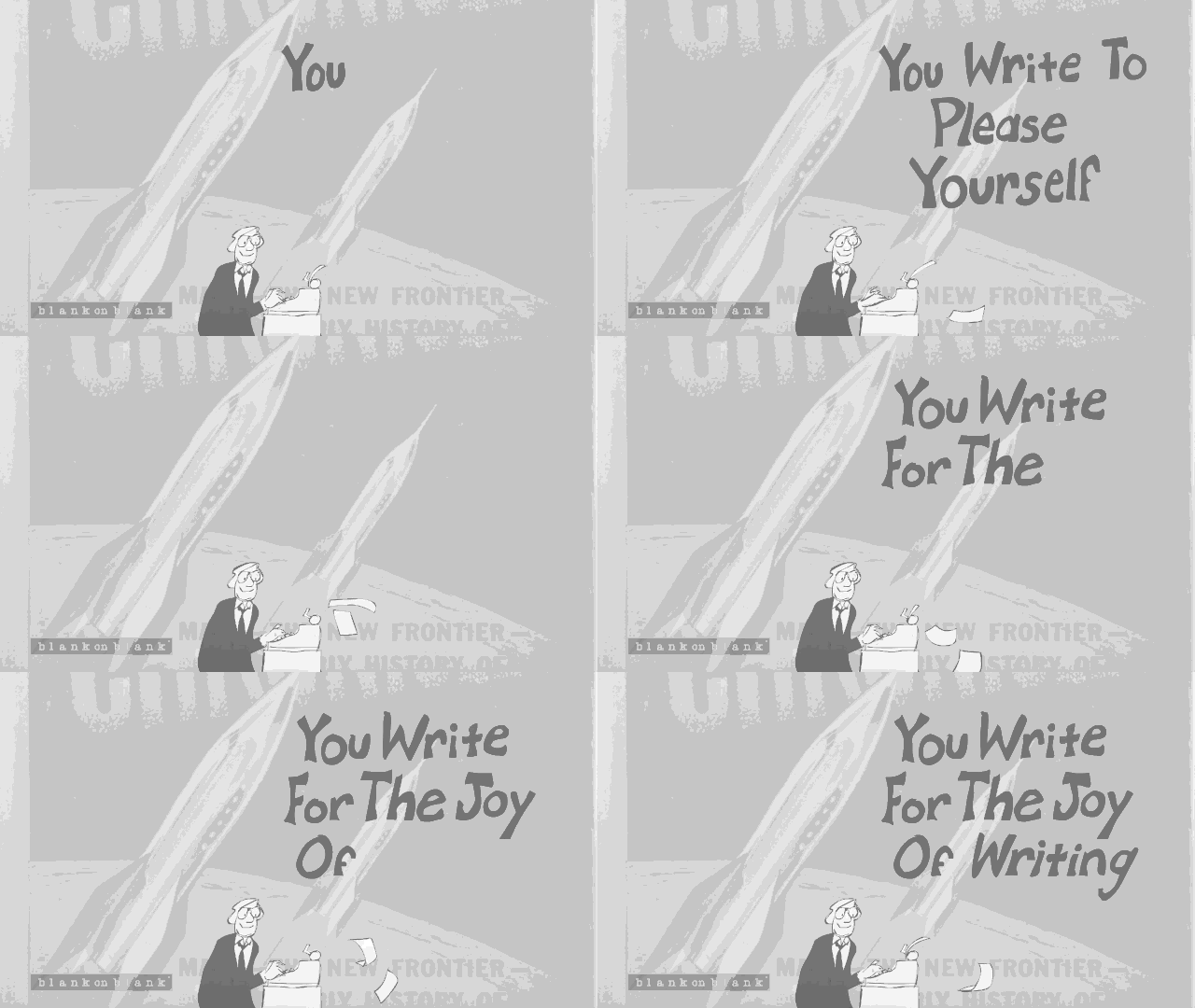
Ray Bradbury, beloved author of Fahrenheit 451 and The Martian Chronicles, is the latest subject in Blank-on-Blank’s series of animated interview. Recorded in 1972 by Lisa Potts and Chadd Coates, the interview features Bradbury discussing his fear of driving, friendship, writing advice, and the joy he gets from his craft. Here’s a few choices quotes:
Realism:
I don’t like realism because we already know the real facts about life, most of the real facts. I’m not interested in repeating what we already know. We know about sex, about violence, about murder, about war, all these things…We need interpreters, we need poets, we need philosophers, we need theologians who take the same basic facts and work with them and help us make due with those facts. Facts alone are not enough.
Writing:
You write to please yourself. You write for the joy of writing. Then your public reads you and it begins to gather around your selling a potato peeler in an alley, you know. The enthusiasm, the joy itself draws me. So that means every day of my life I’ve written. When the joy stops, I’ll stop writing.
Friendship:
Friendship is an island that you retreat to and you all fall on the floor and laugh at all the other ninnies that don’t have enough brains to have your good taste, right?
Watch the video above or head to Blank-on-Blank for a transcript.
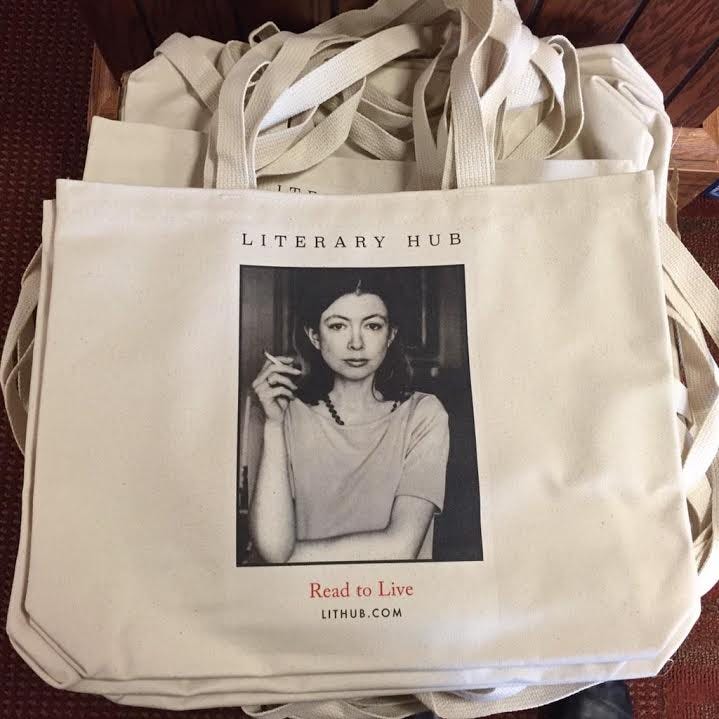
From fashion ads to tote bags, Joan Didion seems to be everywhere these days. Last night in Manhattan’s Edison Ballroom, members of the publishing world gathered to honor Didion at the annual Authors Guild dinner. The dinner was hosted by One Story Editor-in-Chief Hannah Tinti, and included readingsinspired by Didion’s iconic essay “Why I Write” from authors Alexander Chee, Delia Ephron, and Kathryn Harrison
Attendees were encouraged to discuss their favorite Joan Didion quotes — here’s one: “We tell ourselves stories in order to live” — and the evening benefited The Authors Guild Foundation and The Authors League Fund. Among the guests were NBC anchor Tom Brokaw, Grove Atlantic publisher Morgan Entrekin, and literary agent Lynn Nesbit.
Although the honoree couldn’t attend herself, she was there in tote bag form courtesy of the newly launched Literary Hub.
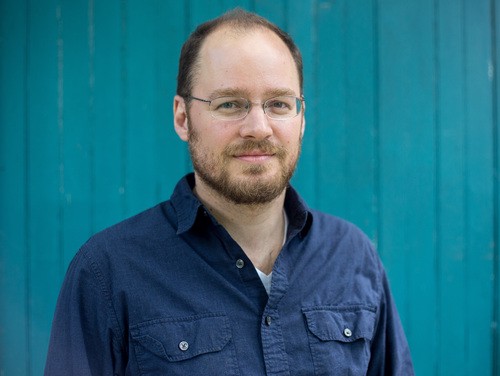
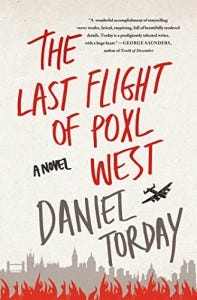
The title character in Daniel Torday’s new novel — The Last Flight of Poxl West — is a consummate storyteller. We meet Poxl West with a swift strike of charisma. He’s a former RAF pilot, a war hero, a best-selling memoirist, beloved uncle of Eli, art enthusiast…and not all that he seems. Torday is a consummate storyteller, too, though one of more integrity and honesty than Poxl. I sat down with him to hear some of his great stories and ideas over email. His novel is a moving inquiry into the limitations and possibilities of stories, how they have the power to shape, crush, reinvent us. In conversation, he is an endless fountain of pertinent quotations and insights, but perhaps the best insights he delivered were the ones that were all his own.
Early in the book, during a heated conversation with his girlfriend, Poxl feels he has maybe dawned on a working definition of love: “to disagree but to stay around and find out why, so it is no longer a disagreement.” This is perhaps also a reason for reading, for sitting with a novel until its conclusion. The Last Flight of Poxl West is an argument I wasn’t able to leave until the final page, and perhaps one I still haven’t left.
Hilary Leichter: The idea of muscle-memory is a recurring theme in your book: muscle-memory in learning how to play an instrument, in learning how to love, in our reactions and actions and our very human mistakes. Is there a kind of muscle-memory that goes along with writing a novel?
Daniel Torday: In moments of retrospection after a book comes out, probably it can’t hurt to acknowledge one’s mentors. So the oddly proper-nouny answer to this question is: George Saunders. I left a good job at Esquire Magazine to head up to the Syracuse MFA program, where I hoped to sit at George’s foot. He gives a lot of revelatory thought to process: just thinking deliberately about how we go about a fiction — what the regimen looks like of getting from not-writing to writing. It’s not mysterious, or precious — often it’s just finding the time, making the time when there is none, to work the sentences over and over and over until they all relate to each other. Flannery O’Connor has this great thing where she says something like “art is reason in making” — I think about that all the time. I take it to mean something like, a story or novel becomes artful, attains to a work of art, when every sentence, every move, style, is guided by the same central intelligence. Has its own DNA. That’s not something you achieve through your conscious mind. It’s a big-time subconscious-mind activity, and I think about that idea of muscle memory as another way of saying: find a way to let your subconscious mind, which is smarter and wiser, do as much of the work as possible. All of it, even.
HL: I love the idea of a book having its own DNA. If you could get it into a lab for analysis — I’m picturing bookish mad scientists armed with microscopes, getting paper cuts, etc. — what would the genome for POXL WEST look like?
DT: I love that idea of a book’s DNA, too! I stole it from Conrad, who says something like, “a work that aspires, however humbly, to the condition of art, must carry its own justification in every line.” I’ve always taken that to mean something like, a complete book has DNA that runs through every sentence. So I guess if they brought the POXL bloodwork into the lab they’d be surprised to find two interdependent organisms: Eli, who narrates from the present, and Poxl, who narrates through his memoir. But they’d also find that their DNA was closer to identical than they suspected. For me any first-person narrative that’s not told in the present tense derives its power, meaning, from this kind of coy fact of retrospection: what’s the chronological distance from the events to the moment of telling? Why is the narrator telling us now — what’s the occasion of the telling? And to return to Conrad, it’s in the sentences that we find that depth. As fiction writers, we’re always working at that perfect little long-evolved technology, the sentence.
HL: A book with two strands of DNA, like a chimera of sorts! There is an incredible momentum derived from the friction between Eli’s narration and Poxl’s narration, and from the alignment of their stories. How did your book split into these two distinct voices? Did it always exist in that form, or did it break by necessity, perhaps to provide occasion for the telling of the story? Was one voice easier to write than the other?
DT: The development of the two narrative strands here was odd and organic and jaunty, but in some crazy way natural. For years I had Poxl’s memoir, with a brief introduction from another young nephew-figure for Poxl. But it never really worked. At some point very late in the game I tried a short-story version of Eli’s narrative — and only after letting it sit for a year did I try to combine them. I was deeply skeptical that it would work. But I showed it to some of my most trusted readers — Rebecca Curtis, who has got to be working at a higher level than virtually any short story writer out there; Adam Levin, who always gives it to me straight — and they were surprisingly positive about it. And I’m not sure one voice was easier than the other. They each presented their own challenges — Poxl’s in all the homework it took to get there, Eli’s in just really wanting to get down the layers of that retrospective voice. What was harder was just getting the balance between the two in quantity and pace. By chance there’s actually just a lot more of Poxl than there is of Eli, though in some ways the story Eli is telling is the larger story of the novel itself. That was where Adam and Becky and a couple other late readers were so helpful — just in calling balls and strikes on whether the balance between the two worked.
HL: It seems that to properly imagine these events, specifically the events of Poxl’s World War II memoir, Skylock, you’ve had to do an incredible amount of research. Can you talk a bit about your process? Where did you start?
DT: Philip Roth has this great thing where he says the way to handle research is to not do it at all — at least in a first draft. When you’re getting the draft down, you just go. I mean, even if you knew not one thing of 1940’s London, you could start narrating, “As Preston Liverfootington walked down the, uh, cobbled (?) streets, he planned to spend his…uh…not-dollars…on a Pimm’s cup.” It’s awful, I know, but I mean only to say it’s not that you can’t get the prose down. That you can always do. Reading back that actually sounds like a not-bad start to a Barthelme story, a story with different aesthetic goals and told in a different context — you just have a lot of work to do, and some choices to make. So for me it was about getting drafts down where what mattered was Poxl’s emotional life — and then to go back in and expand. The things that helped most later were three-fold: the first was just going to retrace Poxl’s steps in Europe. I remember one early trip to Prague I just made a ton of notes about what I saw, and then on my next trip there, I checked what I’d written in Poxl’s voice against it. I was shocked by how little I had to change. Weirdly in a novel, it’s way more about not getting things wrong than it is about getting things ostentatiously right. That might matter in a nonfiction, but not so much in a novel. It can get showy.
The two main book sources for me were self-published memoirs, and really minute specific military histories. The former helped in getting so much of the dailiness down on the page — the details of what life looked like. The latter were great in being able to understand a day or two, a single air raid like the one I picked over Hamburg, so I could feel what it would have been for Poxl day-to-day. Oh, and one of the most helpful books was just a collection of New Yorker Talk of the Town pieces, written throughout the Blitz, by their main London reporter at the time. Her name was Mollie Panter-Downes, and she was a terrific observer. Her details, the way she presented them in real time, were just so precise and vivid.
HL: The phrase “What you know, you know” pops up again and again in these pages. It’s feels like a way for these characters to explain themselves, forgive themselves, explicate their individual stories. It started to read like a broken refrain, an apology, or even a mantra. Maybe it stuck out because I have Colson Whitehead’s brilliant essay about “You do you” on the brain, where he delves into the idea of a word William Safire coined: the tautophrase. Haters gonna hate. It is what it is. What you know, you know: is this a good philosophy when writing fact or fiction, or something in between? Is it a kind of way of understanding the idea of truth in writing?
DT: Well this is a complicated one — that line, “What you know you know,” is Iago speaking, after his awful business of putting honey in Othello’s ear is over. The next thing he says is, “From this time forth I never will speak a word.” I haven’t read that Colson essay (though I love his work and now want to immediately!) but I love that: tautophrase. I guess in a way it is at the heart of the stories both Poxl and Eli are telling: they’re stories of trauma, of the way memory and need can skew events over time. In my mind both of these characters just have this kind of eternal ache over the events they’re recalling, and some part of them has to narrate, but some other part wishes they could just let the past be. And in a way it really is central to the idea of “narration” itself — not simply listing facts, events, but making causal connections. E.M. Forster says “the king died, the queen died” isn’t a narrative; “the kind died, the queen died of grief” is. So on some level that question of causation is what burdens Poxl most, in a complicated way. Iago, too. But Poxl’s hitting on that phrase of Iago’s and sticking with it surely has something to do with a conflict between narrating, or maybe being prompted to narrate, or simply staying mute. Narrative, or just making a list of events. And so isn’t narrative in a way the very move past tautology, its opposite? To imagine events have caused each other, and make meaning of it.
HL: Poxl has this beautiful education in the arts that happens very naturally over the course of the narrative. His mother introduces him to painting early in the book. His first love, Francoise, introduces him to music and her mandolin. And then he climbs into a cave in the English countryside to read Shakespeare, almost as if you have to go spelunking for the written word. Where do you go looking (or spelunking) for inspiration, for art? Is an education in the arts a kind of travelogue, by necessity?
DT: That’s a really beautiful and generous read of Poxl’s growth over his memoir, Hilary. Thank you for it. I hadn’t thought about it in those terms, exactly, but it sounds just right hearing it. In a way if there’s a central conflict in the novel, it’s just that: Poxl’s desire to have his life be about all those loves — of art, of books, of music, of the lovers he lost — but the trauma of war pushed him instead into all these flights. In a quieter way, Eli, too, who might have liked to have studied art history, but ended up a historian. But I’d also just say that I’m always thinking of the other arts as such a useful analog to writing. I was talking the other day to a student of mine who also happens to teach the viola da gamba at Juilliard (I have some insanely talented interesting students), and found myself saying that music is the least representative art — its own, non-verbal, non-visual, non-narrative art. And she looked at me kind of askance. And I realized: I don’t think that at all! This might sound like lunacy or sophistry, but I like reading about physics, what I can understand of it (which isn’t all that much). But somehow string theory can give us this whole new view on music: if the physical world itself is at root not solid, but a vibration like a string, then isn’t music the world trying to speak itself back to itself? And isn’t there a similar vibration in the best prose or poetry? Makes me think of this line from Stanley Kunitz I love that I’m sure I’ll bungle but it goes something like, “I want to write a line so clear you can see the world through it.”
HL: Wow, that’s an amazing quote about sentences, and about writing in general. So much of storytelling hinges on these vibrations, where the “world speaks itself back to itself.” The prose in your novel is at once urgent and luxurious, which I think adds up to equal something akin to nostalgia. Just a few questions ago, you called the sentence a “perfect little long-evolved technology.” What are your personal criteria for a beautiful sentences? How do you know when a sentence you’ve written is giving off just the right vibration?
DT: You’re so kind! I never know if the sentences are doing just what I want, but I know I ultimately care about the sentence above all else. In some real literal way it’s the only tool at the writer’s disposal. Sometimes I think the perfect modern sentence is all about cutting past the quick — cutting almost to the point of incomprehensibility, or even a good bit past it. There’s a way that a sentence that risks almost not even making sense on its own invites the reader to have to fill in the gaps. It becomes an invitation rather than a foreboding. Or to stick with the initial metaphor, to staunch the bleeding after breaching the quick.
I’m a huge fan of Isaac Babel and the writers I think of as being somehow directly influenced by him — Leonard Michaels, Tobias Wolff, Amy Hempel, Denis Johnson, Saunders — and he was the great 20th century influence on cutting the line as bare as it can get. My process is pretty direct: in draft, I let myself go as freely as possible. But then on two or three or sixty-eight final rounds, I just go through with a pen and cut literally every word I’m able to while maintaining comprehensibility. I have a weird little rule, for example, where I’m not allowed to keep the words “that” or “and,” which often bloat my early-draft sentences. Lots of ands can help me get through a page, but the reader sure doesn’t need to know. Stuff like that — arbitrary, but little tricks to rub the strings down until they’re shining like new, ready to buzz.
HL: Eli’s passionate defense and promotion of Poxl’s memoir is one of the most touching parts of your novel. I was reminded of that possessive and exuberant way I often feel after discovering a new favorite book, or musician, or television show. There’s a frenetic desire to at once talk about the art in question with everyone and anyone who will listen, and a counter-desire to keep and save it all for myself. Have you ever felt this way about a writer or a book?
DT: All the time! It’s what I read for. I think that for a minute in my 20’s I might have wanted to be a critic, and being an undergraduate led me to have a kind of critical facility that could at times hinder the creative impulse. I mean, I know when something’s not working, but as a novelist it’s important not to mistake some aspect of a book not working as the whole thing being in trouble. The novelist’s job is to write until she encounters problems — real, seemingly insoluble problems — and then to figure out how to surmount them. That’s when the reader stands up and applauds — “Wow, I didn’t think she’d be able to hit that mogul and still keep on her skis, but phew! She landed with utter grace.”
Using cinema as an analog to writing can be insidious, but the first artist who comes to mind with this question for me is Wes Anderson. I suppose if you really start to try to push on a film like Moonrise Kingdom or The Grand Budapest Hotel you could come up with all kinds of criticism. Maybe you’d even have a point. But I find watching them to be an experience of almost unadulterated joy, and I don’t want the sophistry of criticism. I just want to be able to feel that joy. They’re perfect little hermetic objects, like Joseph Cornell boxes or Barry Hannah stories. With Anderson, my feeling is, if I can walk out of the theater for two days feeling everything I see is somehow purple, and my whole visual palette has changed, and inexplicably there’s an emotional element to that visual experience, why do I need to question it? I feel the same when I read, say, a Harold Brodkey story, or one by Karen Russell, or a Henry Green novel, or Fitzgerald, Roth, Bellow, Edward P. Jones, Nabokov, Deborah Eisenberg…the list could go on forever.
HL: Very early in the novel, Poxl recounts a story about helping his neighbors manage their father’s estate. He tells a mesmerized Eli about discovering a bookcase full of this man’s books, and each book is stuffed with a hundred dollar bill, his life’s savings invested in literature. They open the books and hundred dollar bills are fluttering to the floor. There is something comedic about this sequence — “There’s always money in the banana stand,” a la Arrested Development — but it was also one of the most moving images I’ve read in recent memory. It has a childlike magic to it, and an overwhelming sadness, or wonder, or maybe both? Can you talk a bit about how you came upon this story, which comes to feel central to the novel in so many ways? Are your books secretly stuffed with money, Dan? And what is the strangest thing you’ve ever found inside a book, aside from the content of the book itself?
DT: This was a weird one. The anecdote that set it off was one that my great aunt in Boston, my grandmother’s sister, told once. I’d spent so much time using my father’s East European family as models for this book, I consciously thought at some point, What stories am I neglecting on my mother’s side? And I remembered this story my aunt Ces had told. I was worried it would feel too shopworn, so I asked around about it, and no one else in the family seemed to remember it. Her neighbor wasn’t a writer, but apparently had just always used $20 bills as bookmarks, and after she died, her kids found thousands of dollars in her books. That’s the kind of story that when you’re a writer, once you hear it, I think you have no choice but to store it in some subconscious file for later use. (It’s also maybe an inversion of that epic scene in Gatsby when Owl Eyes is so amazed that Gatsby’s books are real, not just spines with no books).
As for me, I mostly just find coffee stains in my books. Though I can’t help but think here of that moment in one of my favorite novels, Marilynne Robinson’s Housekeeping, when Ruth and her sister find their grandfather’s pressed flowers filling the pages of his encyclopedia. Those dried flowers are almost secular relics — no, they are relics — the closest Ruth comes to physically touching her grandfather, who has died tragically before she was born, in the whole book. Isn’t that just a perfect little metaphor? Our memories pressed so cleanly between the pages of a book they can let us physically touch the remnants of our dead. Sounds a little like the whole gambit, doesn’t it?
DON’T MISS OUT
Sign up for our newsletter to get submission announcements and stay on top of our best work.
YOUR INBOX IS LIT
Enjoy strange, diverting work from The Commuter on Mondays, absorbing fiction from Recommended Reading on Wednesdays, and a roundup of our best work of the week on Fridays. Personalize your subscription preferences here.










 I never alluded to what I had so indistinctly perceived in my sleep, and neither did A***. There were always inexplicable silences between us, a sort of prudishness or reserve that kept us from broaching certain intimate subjects. We kept the evidence hidden away, even avoiding the use of expressions that seemed improper, excessive, or bizarre. A*** would never show any immoderate affection, and I was constantly forcing myself not to criticize the escapades I witnessed. Once, only once, I was weak enough to reveal my jealousy, which had been gnawing away at me. In the same vein, A*** only once slipped in showing tenderness toward me, using words and gestures that we had never before allowed ourselves to use.