We are dancing to Shostakovich in a Taco Bell men’s room in Utica, New York.
Grabowski says, “I got a cache full of fire words and scads of time, rooster.” The acoustics of the men’s room are top notch and our man Shosty has never sounded more robust, but there is room for only two men in here at any given time. Tonight we are four and feeling the pinch. No one disagrees with Grabowski but Leach is laughing hard, too hard, in my opinion, for an uncomfortably long period of time.
Leach’s bio: love avoidant GED recipient, always picks Ratt’s “Round and Round” on Karaoke Nite, uses the term “comeuppance” with alarming frequency. I feel his hot breath on my ear lobe. I can’t escape the reach of his breath. We are too constricted here and he knows this, Leach does, and he uses it to his filthy advantage. “Grabowski ain’t got the gumption to glimmer newfangle,” he says in my ear. “You gonna need fibrocon consolation jacks to fortify that foundation, post haste.”
Cleaver’s been taking an origami night class at the community center. I’m watching him transform a wad of toilet paper into an African elephant. His hands are a blur, his tongue-tip clenched between his teeth. When he finishes, he grins and says, “Voilà.”
Door opens behind me, bangs into my back. A smirker in a bloodred Che T forces his way into our sanctuary. He wedges his body between Grabowski and Cleaver to get at the urinal. Now we are five and completely immobilized. And just when we thought it couldn’t get any warmer in here, another man — bearded, insolent, with sharp elbows — fights his way to the mirror, where he inspects the contours of his bristly face. He spits on his fingertip and runs his finger along the length of each eyebrow. Evidently they are ’brows that require not a little saliva to hold in place. Then he works a wooden toothpick between his lower teeth. I cannot look away.
“Dance party?” Grabowski says.
Me (shrugging): “Okay, sure. Why not?”
Cleaver: “Spank the torque out of my dingus maker. I’m fixing to canoodle with death.”
Eyebrows: “The fuck?”
Che: “Patria o Muerte!”
Leach, as always, colonizes the final word: “Stick dog wears a yellow beak and I’m fat fat fat. Hop to it, boys. The water’s fine.”
We start moving again and snapping our fingers. Cleaver ejects the Shostakovich cassette and inserts a Sibelius symphony, darker music with haunting modal implications, and Leach shoves the ’brow groomer into Che Guevara who uncorks a spray of fantastic profanity and Grabowski throws a left uppercut, misses, and the boomboombox slips off the sink and smashes on the dirty tile floor and Leach lets fly with a wild right hook that catches me in the mouth and the lights go out and when they come back on I am on the floor and Grabowski is standing on my abdomen. “Grabowski!” I say.
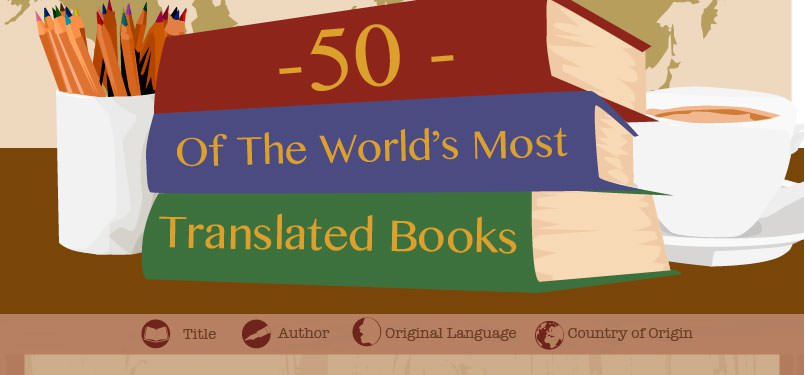
There are a lot of books in the world, but not all of them catch on with readers and even fewer get translated around the world. This infographic from 7Brands Inc. takes a look at 50 of the most translated books in the world from France’s The Little Prince to China’s Wolf Totem.
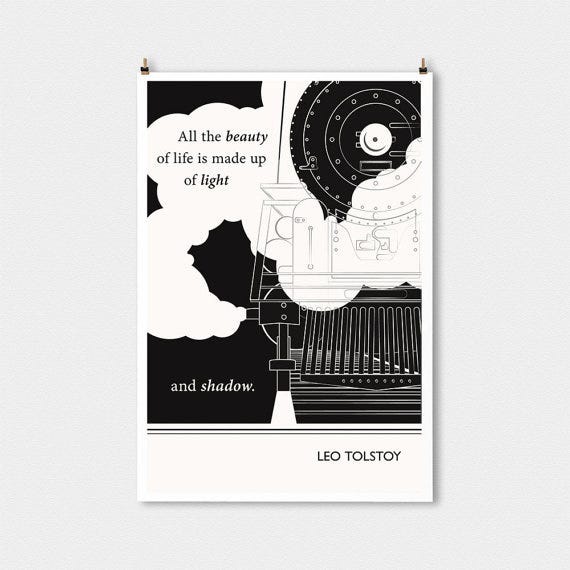
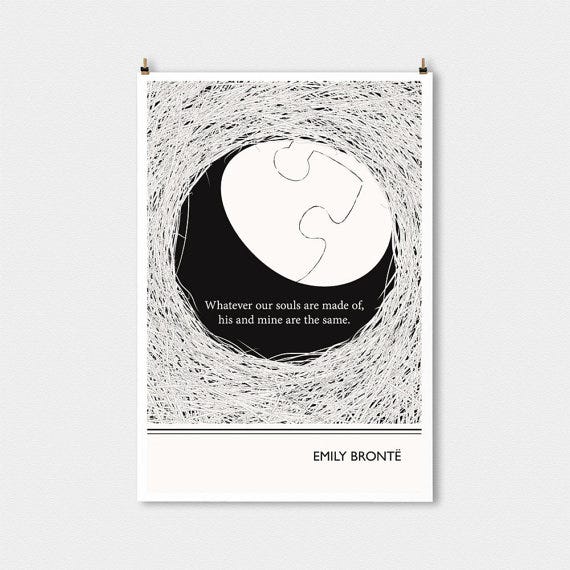
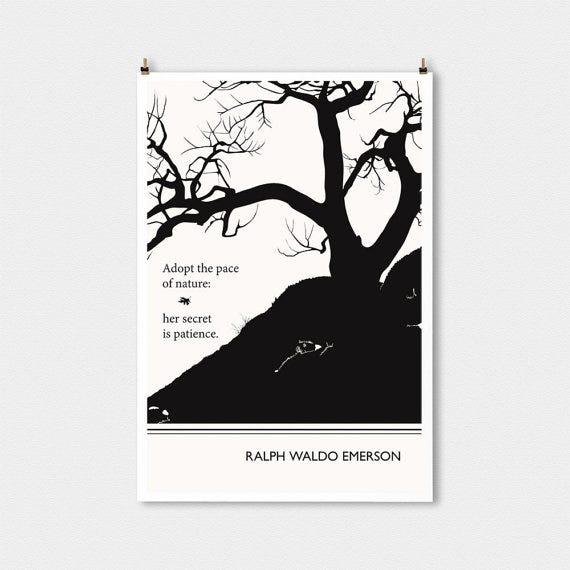
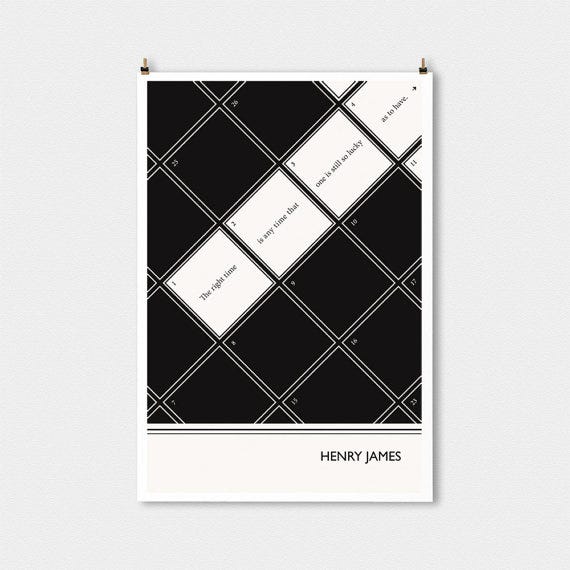
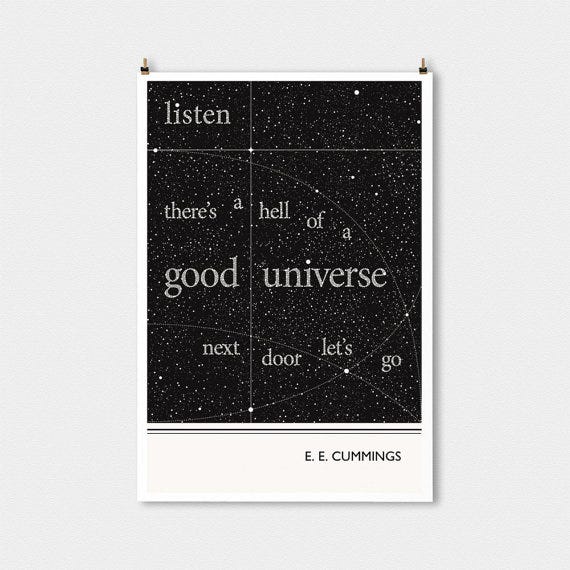
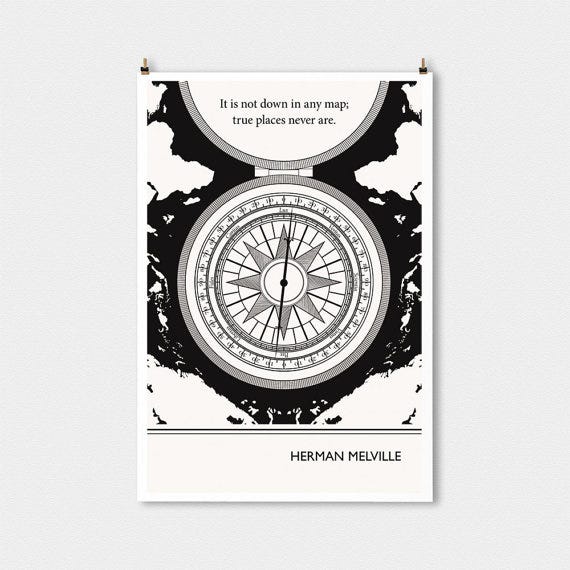
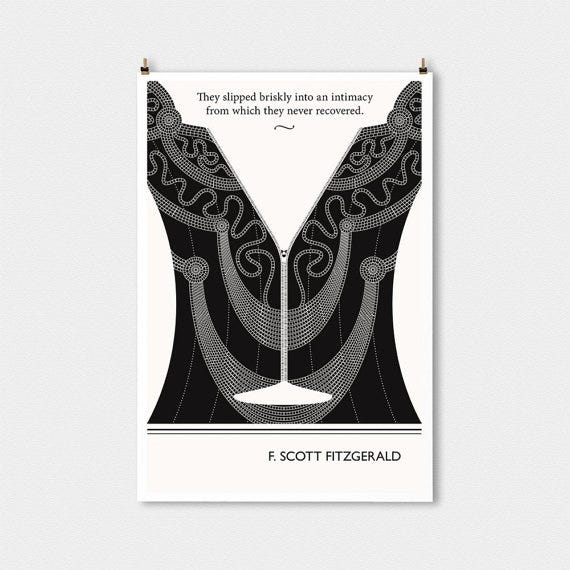
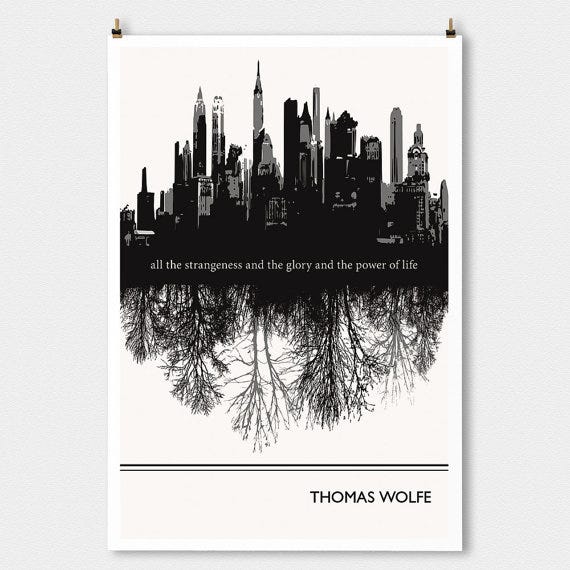
If there’s one thing bibliophiles can’t get enough of, it’s literary posters, and Obvious State’s minimalist offerings make the case for covering an entire wall with them. Drawing inspiration from such beloved authors as Hemingway, Salinger, and Dostoevsky, the posters feature simplistic yet metaphoric (in a non-cloying way) black and white designs that reflect the literary quote displayed across the page. And at just $24 a poster, you can totally make your dream of Sylvia Plath and Virginia Woolf hanging out together come true.
13×19 posters available for $24 each at Obvious State’s Etsy shop
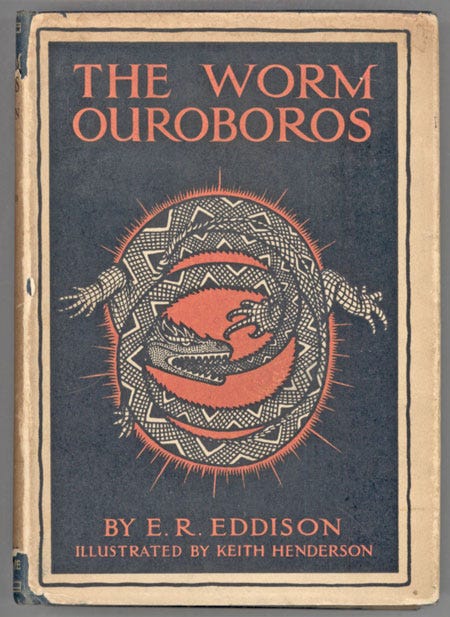
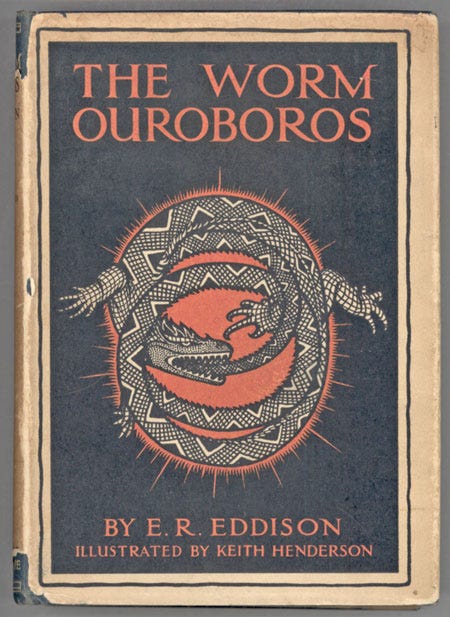
Colin Winnette admires the writer and musician John Darnielle, so he asked him to suggest a book that they might talk about. John Darnielle picked The Worm Ouroboros by E. R. Eddison. Then they talked about it.
John Darnielle is a writer, composer, guitarist, and vocalist for the band the Mountain Goats; he is widely considered one of the best lyricists of his generation. He lives in Durham, North Carolina, with his wife and son. He is the author of Master of Reality (a 33⅓ book on Black Sabbath) and Wolf in White Van, which was nominated for the National Book Award.
CW: Can you provide a brief description of The Worm Ouroboros? Something to ground anyone who hasn’t read it.
JD: It’s a classic quest narrative — there’s an evil to destroy, and four noble warriors take to the high seas and rough terrain to meet and defeat it. It all takes place on a distant planet where monsters range and magic holds sway.
CW: What’s your history with this book? From what I can tell, this one’s out of print. I placed a few orders online, but when those didn’t arrive for several days, I bought an ugly, old, red edition, I came upon in a used bookstore in San Francisco. Now I have like three copies. [If anyone wants a copy, be the first one to Tweet at me and it’s yours]. What got you to pick this book up and read it?
JD: I don’t remember where I bought my own used edition, a beat-up paperback with a green border. I think I grabbed it after remembering, from years ago, that it had been cited as a Tolkien precedent. I haven’t read Tolkien since grade school, but back then he was a huge favorite of mine, so when I remembered Eddison (thirty-odd years later) I thought I’d give him a shot. It sat on my shelf for a number of years, which is the fate of most books I buy, and then one day I said “what about that one?” and it really just grabbed me from the first chapter.
CW: What motivated this recommendation? Is this a book you think more people should read, in general? Or just one you’re still trying to wrap your head around?
JD: I try not say what I think people should read, people should read whatever they want, but I do feel like it’s a book some people might really enjoy if they got their hands on it. Like, a certain kind of person who’s taken pleasure in fantasy novels and/or Arthurian legend — this hits that axis in this weird, solitary way. It’s so much its own thing, but it kind of sets a precedent for a lot of later stuff. It feels kind of like it was drawn up without a blueprint — and often it seems to lack forward-motion, which is something that really interests me, when a book, either by design or lack of it, is able to hit these abiding lulls — these sort of open spaces.
CW: That’s interesting. When I first read it, I was struck by how compelling the action of the story is (the wrestling match for sovereignty of Demonland and how quickly things get rolling from there). You’re just kind of plopped into this very high stakes situation (sort of like the lords of Demonland). But then there is this weird back and forth between very compelling scenes/energies — power struggles, subterfuge, challenged or shifting loyalties — and these large swaths of time that pass between events and so much doubling back. Which parts stood out to you as particularly stationary? And what did you make of them? How do you experience those open spaces?
JD: Well, the long sojourn before the second expedition to Impland — it’s not boring, but it’s sort of time-biding stuff. You get that feeling, which I love in old fantasy or science fiction, that the author is luxuriating in the world he’s envisioned — that he wants to write scenes that kind of drag on where an editor might say, “Let’s get back onto the high seas here.” For me, I think Eddison’s ambition outpaces his style a bit; to really nail the mood he wants in “A King in Krothering,” say, you have to sort of rise to a different style, but Eddison’s style is dialed in from the first page. But then sometimes, when I feel like I’m seeing with Eddison’s eye, I want to remain with his characters at the idle dinner conversations. This may just be the long way around saying “he’s best in the action scenes, but I have affection for how hard he’s trying in the downtime.”
CW: Your new novel is full of references to sci-fi/fantasy. Some of my favorite parts of the book are the narrator’s descriptions of old fantasy movies or the mail-order swords he sees listed in magazines. What role did fantasy play in your young reading life, and has it changed in your adult life? (I’m asking specifically about genre here, but feel free to go whatever way you like with this question).
JD: I aligned with fantasy as a young science fiction / fantasy reader — I liked the fluffy stuff. Unicorns, dragons. Space was cool but mythical creatures, magic, wizards, talking trees — that was what inspired me when I was ten, eleven, twelve years old. I put that stuff aside when I began to have Pretensions — when I became a Serious-Minded Young Man — which I don’t regret, it’s great to go through phases. But I’m glad as a grown-up to have come back around to magic stuff, magic is really such a wonderful idea.
CW: What stuff did you pick up when you became a SMYM with P?
JD: Harlan Ellison was kind of ground zero for the SMYM with P, he was the gateway. He made me want to be Taken Seriously. But then I found Faulkner and it was Faulkner all day, and awe rather than any aspirational “one day I’ll break bread with these giants” feeling. Sheer awe. And also Joyce — Dubliners mainly, I didn’t kid myself about trying to be able to scale the big ones (though that didn’t stop me from getting my hands on Finnegans Wake). And I read poetry, 20th century poetry. Paul Celan. Sylvia Plath. Czeslaw Milosz’s anthology Postwar Polish Poetry.
CW: Let’s talk about magic. What’s wonderful about the idea to you? What can magic do for a story, and what are the pitfalls? And did you consciously choose to leave overtly magical things out of Wolf in White Van? Did you ever sit down to determine the “rules” of that reality, or did you just put one word in front of the other and look back to see a world that looks a lot more like our own than, say, Eddison’s Mercury?
JD: Magic I think for me is kind of personal. Like, as soon as magic is in play, then I am given permission to imagine a different world, one in which magic things might happen — one where maybe I get some magic to wield if I’m lucky. Where cool stuff might happen at any given moment, cool stuff you wouldn’t even guess at. And for as long as the story holds, I’m kind of living in that world. I don’t really do any rules-sketching ahead of time, although in Wolf I did want to be true to the physical reality of 80s southern California in memory; it was important for the locale to be vivid. I think it’s fine to trade stark real visions for colorful vivid ones but what I wanted in the world of the book was a sort of uncomfortable clarity to contrast with the limitless expanse of the imagination.
CW: What did you make of the opening of this book? The “frame story?” How does it (or does it even) serve the book? And what…happens to it?
JD: It goes away! That’s part of what I love about the book — it’s not a great big mess, but it feels almost like somebody’s hobby. It’s really personal-feeling, in a way. He sets up the story in a pretty traditional English way of framing a fantasy story, but his heart’s not even in that, his heart is with the Demons. However! there are two other volumes in the story I haven’t gotten to yet — maybe he closes the frame in The Menzentian Gate? I have it on my shelf, I’ll get to it at some point — I have a mini-collection of fantastic stuff, more Arthurian stuff than straight fantasy, but I have both the other volumes in the Eddison trilogy. It took a while to hunt them down, they’re nowhere near as well-known, but I’m curious about them.
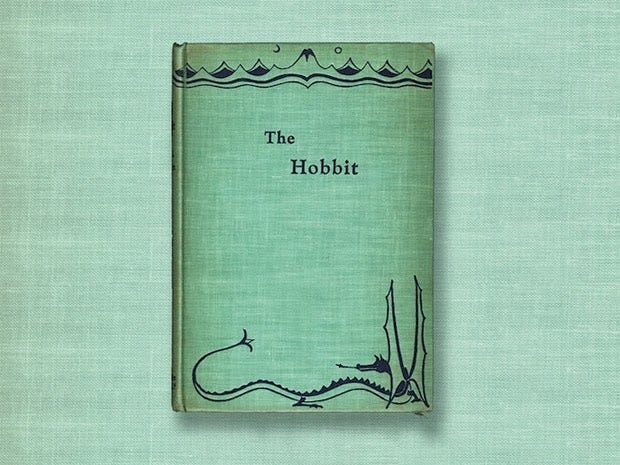
CW: I grew up on Tolkien (literally, The Hobbit was a bedtime story), but haven’t read much high fantasy besides. This book struck me as interesting because it’s a complicated and well-imagined/described world, but it also leans heavily on familiar names/locations. Little effort is made, though, to engage with those references, outside of the immediate effects of their familiarity. The story takes place on “Mercury,” though it…shares nothing with the planet Mercury, as we know it. It just an “other” place, far away and inaccessible to us. Also, rather than having completely made up names, the races in the book are the Demons of Demonland, the Witches of Witchland, the Imps of Impland, the Goblins of Goblinland, etc. But when described these characters sound very human (though I think the Demons have small horns?). The physical world of the book, though, is well-imagined and beautifully rendered at times. How does this combination of the familiar and the uniquely imagined affect our reading of the book? Or your reading of the book?
I want to start a band called Witchland when I see that, you know?
JD: Did we mention that Tolkien esteemed this book somewhat, or was said to, with some reservations? One thing I like about it is just the inversion you mention — Eddison’s physical descriptions really reverberate, but his naming has none of Tolkien’s learned choices — he just settles on “Witchland,” which is so so great. Witchland. I want to start a band called Witchland when I see that, you know? But you can see so much of Lord of the Rings in this — there’s no way Gollum isn’t modeled on Mivarsh Faz, they’re the same character except that Gollum gets his big spiritual presence and metaphorical heft. Mivarsh is the Gollum you’d actually meet: “something’s up with that guy,” you’d say. But you’d never know what it was. I do like how Eddison can’t seem to fully break free from the world-world; his people are essentially knights-errant, but wants them in possession of some otherworldly quality…so the place is called Mercury.
I do think when he describes magic, which he does sparingly, he really hits his heights, though.
CW: The conjuring in the Witchland section is a lot of fun.
JD: You mean “The Conjuring in the Iron Tower”? This is probably my favorite part of the book — it’s so lush and weird. And hermetic, you know — like, this scene with a guy and a book and a tower — it’s got an iconic feel, like a tarot card.
CW: The prose is worth calling out. What do you make of it? The man who sold the book to me described it as “purple prose,” I think pejoratively. I thought it was great, though, particularly the descriptions of the physical world. And the dialogue is lively, compelling, even funny, at times. Overall, I found the prose commanding. It was a singular experience, stepping into this world.
JD: Oh it’s really purple. In an awesome and completely singular way. Eddison’s affecting this medieval tone that he doesn’t really seem to have mastered, but he’s pretty consistent within his own version of it, so it becomes very much its own voice. It’s like one of those records you find at the Goodwill with a weird sleeve and when you listen, you feel like it’s off in its own cluster of references — that it stands alone. There’s some stuff in higher fantasy that I miss — that wistful Arthurian tone that makes Malory so great — but in its place is something unique. There’s nothing quite like it.
CW: You’ve twice spoken to a kind of lack of “mastery” or polish, though from different angles — with regard to the prose, and earlier when you mentioned those “open spaces,” the book’s sudden lack of forward momentum. The book has this weird tension between the very constructed feeling of fantasy or “historical” fiction and these weird quirks that make it unique but also grant it a weird, almost childish, enthusiasm…like he’s trying things out and having a little fun.
JD: Yeah, I think that’s a big part of its appeal — like, you get the sense this guy either doesn’t expect to sell many of these books, so he might as well just be true to his inclinations….or maybe he’s got a lot of books in him so he follows his bliss on one instead of really playing for the historical record. He understands structure, but he dallies here and there, he gets a little distracted and doesn’t apologize for it. It’s kind of…ambitious on its own terms, rather than the “here, let me wow you” terms that’re kind of par for the course everywhere.
CW: *spoiler question* I found the ending of this book fascinating. I couldn’t help thinking about high fantasy as a concept, as a kind of location. You yourself described being “transported” by the book. At the end of the book, the Demons are depressed that their adventures have come to an end. They’re left with peace and peace is boring. They dream of going back to the start, to the beginning of the book, and reliving the epic fantasy we’ve just read. Narrative implications aside, it’s very similar to the feeling readers get when finishing a book we really love — we want to be back in it, we don’t want it to be over. The only choice we have is to go back through and read it again. What did you make of the end?
You want rest, but at rest, you pine for action.
JD: I think Eddison is taking this from Camelot — from those last meetings of the round table before the quest for the grail, when Arthur senses that their fellowship must change. These, in Malory (which I almost chose for you to read, but Malory is a real commitment), are some of the most moving passages in all literature. I dig the end — that itching feeling, that lust for battle even though the point of battle is to get through it. Right? That’s just human experience. You want rest, but at rest, you pine for action. But the ending’s a circle, right? They don’t dream of going back — they do, it’s revealed that the Ouroboros is in fact their story. The Ambassador from Witchland arrives anew. They’re going to do it all again. Or are they? There’s those other two books. I think I’ll put one of them next in my queue for after I finish Aubrey’s Brief Lives, which I’m working on right now.
CW: I’ll put Malory in my queue. Like the Demons, I’m itching for more of this stuff.
It’s a brilliant kind of doubling back (which the Demons do a lot of in this book), where at the closing of the book it seems that we’re back at the beginning of the book, back at the catalyzing moment — but are they in an endless loop (a satisfying enough ending for a book like this, if read on its own), or will they, or someone else, change their course — and if so, what will happen (a great setup for a trilogy)?
JD: I think that loop-ending is so satisfying, and the suggestion — especially given that the ouroborous then appears in the book — is that these guys actually exist only in and for this story, that this is who they are. And I love that, it’s the sort of ancient postmodernism that always lets the past remind us how playful fiction has always been, how open the space has been since forever.
CW: Will you leave us with a quote?
JD: “Therewith the earthquake was stilled, and there remained but a quivering of the walls and floor and the wind of those unseen winds and the hot smell of soot and brimstone burning. And speech came out of the teeming air of that chamber, strangely sweet, saying, ‘Accursed wretch that troublest our quiet, what is thy will?’ The terror of that speech made the throat of Gro dry, and the hairs on his scalp stood up.”
The Minneapolis-based publisher Coffee House Press will partner with Emily Books to launch its first imprint in 2016. Coffee House has been making waves in recent years with award-winning books like Ben Lerner’s Leaving the Atocha Station, Eimear McBride’s A Girl Is a Half-Formed Thing, and ValeriaLuiselli’s Faces in the Crowd. Emily Books is a Brooklyn-based electronic bookseller founded by Emily Gould and Ruth Curry. Currently, Emily Books functions as a combo book club, subscription service, and digital bookstore, picking titles by authors such as Eileen Myles, Renata Adler, and Karolina Waclawiak. Starting in 2016, though, they will be publishing two original titles a year through Coffee House.
In the press release, Coffee House Press publisher Chris Fischbach said: “We are energized by the opportunity to incubate their move into original work and to offer the kind of exciting selections they’ve made for the book club to a wider base of readers, and in multiple formats.” Emily Books co-founder Emily Gould said: “Their sensibility and ours are a perfect match, and we can’t wait to share the fruits of our collaboration with readers everywhere.”
Last month, Graywolf Press released Mark Doten’s debut novel, The Infernal. A critic for the New York Times Book Review called it “the most audaciously imaginative political novel I’ve ever read.” Our own reviewer, the writer Joseph Riipi, had this to say: “perhaps the only thing I understand for sure about The Infernal: it is a success, and an utter delight, and these qualities come from my not being able to understand it entirely.” I sat down with Doten, at the Center for Fiction in midtown Manhattan, hoping for some answers.
Dwyer Murphy: I want to start with a challenge: can you describe the plot of this book in, say, a hundred words? Usually I’d put that sort of thing in an introductory paragraph, but honestly I’m not sure I can do it for The Infernal.
Mark Doten: Are spoilers okay?
Murphy:You’re the author.
Doten: I think we should have some spoilers, because there’s so much information in this book, and so many people are describing it in different ways. A good summary with some spoilers could be useful.
Murphy:Okay, you’ve got a hundred words. Have at it.
Doten: So we have Jimmy Wales — who, because of various potions and chemicals administered by Vannevar Bush, has the body of an eleven year-old — interrogating a mysterious burnt boy. The burnt boy has inside him the voices of people who have been uploaded to the cloud, voices that exist after the demise of humanity. And the spoiler is [ed. note — look away if you don’t want to know], the burnt boy Jimmy Wales is interrogating turns out to be Jimmy Wales. It’s a looping time thing. Jimmy lives a thousand years after the action of the book, eventually traveling through a landscape where he encounters the Leopard, Lion and Wolf from Canto 1 of Inferno. Then he’s thrown off a mountain and into the cloud. He hears all these voices as he’s falling, then he’s sent back in time by the cloud itself, which wants him to share the stories as a sort of warning, in a bid to alter the hellish timeline they’re locked in. He’s badly disfigured by the experience of the cloud and the time travel, to the point where he’s unrecognizable, and now, back in our time, he’s interrogated by Jimmy Wales — by himself. And it all starts again. That is more than a hundred words.
Murphy:It is. Well over. That’s a failed challenge, I’m afraid. But well summarized.Can we talk about the book’s origins? It has the feeling of something that’s been stewing for a long time.
Doten: Well, it started in grad school. I was writing these formally strange stories about young gay guys doing various things. Some stories were very violent, others were relationship stories. Around that time, I started working at a literary agency, reading submissions, and I just had a sense that no one would have any interest in publishing the stories I was working on. I also felt, personally, that I wasn’t pushing things as far as I could or writing about the things I was most interested in.
I’d been a big political guy for a while. I volunteered for Howard Dean in North Dakota and Iowa and Minnesota. Read a ton of blogs. Worked at the Huffington Post when it launched. During this period, I was just obsessed with politics. So I thought, you know what, I should be writing with political voices. It started with a notion that I would do an update of Dante’s Inferno, with a bunch of Bush Administration era people. I thought that would be interesting, that people might want to publish and read it, and it would also be within the world of my interest and would allow me to do anything I wanted with the prose.
Murphy:Was there a seminal moment, something during the Bush Administration, that pissed you off and made you want to write? There’s a real anger in this project, something that seems to be fueling the story, the prose.
Doten: Well, you know, the Iraq war pissed me off. I remember reading Sebald’s Natural History of Destruction the night that we started attacking Iraq, the first night of the Shock and Awe campaign, and feeling the wild incommensurability between being a single human holding a small book in a coffee shop in St. Paul and the vast, relentless machinery of war that America had just put into motion thousands of miles away. People dying on the other side of the globe at my government’s direction, as I sat there in a comfortable chair, reading and drinking coffee. But I’m not sure there was any single event. It was just the slow burn of how fucking crazy this all was, the slow burn of the Bush Administration doing whatever they wanted. I mean, everyone who was smart was against the war. The Administration was for it and they got cover from certain dum-dums or crooks or deluded people in the media — Judith Miller, Andrew Sullivan, Thomas Friedman and others. But basically the world was against the war and there were these huge protests, but the war just kept rolling on and on. There was no stopping it. The protests weren’t even getting press coverage, not like these tiny Tea Party protests would get years later. It was just so frustrating. This book came from a place of helplessness — the impotent rage of an observer who can’t change anything.
Murphy:And you wanted to say something about, or to, certain people? You’re using real names, real figures from the political and tech worlds.
Doten: Yeah, I did. I don’t think Roger Ailes or L. Paul Bremmer or Condoleezza Rice is going to give a shit about what I’m writing. But I wanted to use their names. I mean, what would the book have looked like otherwise, if I’d used fake names and we all knew who these people really were?
Murphy:Besides anger, there’s also lot of humor in this book. It sort of sneaks up on you. I was about fifty pages in, still wondering how I was supposed to react, whether this was meant to be funny.
Doten: During the period I was writing this, South Park and The Daily Show were the great works of political satire. What they did was very bold. I mean, South Park had the most incredible 9–11 Truther episode where we find out at the end that the Truthers are right, and we go into the White House and Bush and Cheney and Rice and Rumsfeld are all there, confessing to planning 9–11. That humor, to me, is just very funny. They did another episode that was a pastiche of Warner Brother, Bugs Bunny-style cartoons, where the boys were fighting bin Laden. And again, it’s so gutsy. That was very much the feel I wanted for The Infernal.
That wild craziness — the one that TV shows and cartoons do so well — wasn’t being represented in fiction. I wanted to push into that comic realm. I love movies, but in the early years of the writing, the guy I was dating then didn’t. Didn’t like to watch movies at all unless they were bad movies that could be watched ironically. And we didn’t have a ton of money, and we spent it going out dancing or to the gay bar once a week, and then a lot of the rest of our nights we’d be watching something on a screen. That turned out to be a huge gift. The main overlap in our taste was animated shows — I mean, I didn’t know anything about anime or Adult Swim or anything at first, but he knew some, and then we sort of explored those worlds together. So I got a big education on these amazing anime shows, FLCL, Lain, Boogiepop. And US stuff: South Park, Samurai Jack, The Boondocks, Home Movies, Aqua Teen. And I was just in love with the wild inventiveness of these shows — the way they seemed to be able to move in any direction at any moment. It made a lot of fiction start to feel straight-jacketed to me. The best animated shows have a controlling voice and a through-line, but then they also have this completely madcap sensibility. I mean, a lot of The Infernal is influenced by Kafka and Beckett and Thomas Bernhard and Dostoyevsky, but then I wanted the cartoon craziness, too. I wanted to be able to make leaps in style and story that were more like what I prized in animated stuff than what you typically see in fiction. And I should add that I see a real kinship between Kafka and Bernhard and so on — writers who work in what I sometimes think of as the “mad monologue” tradition — and cartoons. A narrator who’s caught in his or her head, who’s constructing a sort of logical-but-deranged world, can make very sudden, very thrilling moves. Strindberg and Wallace Shawn are two more examples — their plays matter a lot to The Infernal, and can be cartoonish in the best way.
Murphy:So we’re somewhere near the crossroads of Notes from Underground, Cartoon Network, and impotent rage?
Doten: And newspaper cartoons, the funny pages. One of the threads, the Afghan kids — Hakim and Rashid — that’s very much in the world of Krazy Kat. There was a fascinating thing that happened in early American newspaper cartoons. There was a huge amount of dialect stuff, where you had all these voices. Krazy Kat is probably the great work that should endure from that time. We have some interesting stuff now — I mean, we have Marmaduke — but we don’t have the kind of cartoons they had then. For me, just sitting down and reading a few years worth of Krazy Kat, which I think Fantagraphics is publishing, is just wonderful.
Murphy:And to capture all these voices, you’re using this cloud conceit: voices have been uploaded, humans are extinct, the cloud is spitting voices back out through a mysterious burnt boy. How did you hit on that voice as the one you needed to tell your story?
Doten: Like I said, I wanted the ability to move in as many possible directions as I could, within the limits of my own talent, and to have it work within the structure of a large book. And also, part of it was just a ‘fuck you’ sentiment. I wanted to see how many voices I could possibly fit in there, how many different ways I could twist or deform these characters — that seemed appropriate to our media-saturated, voice-saturated, constructed, “truthy” world, with all its lies and distortions and clamorings-for-attention. The cloud voice itself — the one that explains things — is sort of a voice like something developed by Dennis Cooper, combined with Final Fantasy III and Super Nintendo era role-playing games, to take just one example. That youthful, affectless, Southern California stoner Cooper voice blended well with the more melodramatic, but somehow still flat, voice of an SNES RPG. Cooper himself does something like that in a section of his novel God Jr., where we’re inside an, I think, N64-era 3D platformer. It’s one of my favorite passages in recent literature — the most gorgeous sentences imaginable, and you’re inside a video game! Dennis is someone who has had a big influence on me in terms of how to think about fiction in terms of large, conceptual frameworks, and also how much you can get away with not telling the reader, so I liked the idea of including that nod to him. I could go through and sort of break down the origins of each individual voice the same way — as, ya know, Wallace Shawn’s The Fever plus a horror image from a book I read as a kid, plus, like, a story cribbed from the Snorks or some old board game, but during revisions the voices are pulled away from those initial inspirations, and anyhow it kind of spoils things to go too far down the explainy path.
Murphy: I don’t think I could’ve picked those references out on my own. A book like this, it’s good to have a guided tour.
Doten: These references and textures — the ones that probably no one will ever recognize — they were a big part of the fun of writing this book. The fun was really important.
“Where he went he brought a sense of harmfulness and it was as if this was known even by the inanimate things about him.”
Early on in opening pages of Welsh writer, Cynan Jones’ American debut novella, The Dig, it becomes apparent that things in this tale will end badly for all characters involved. “The Big Man” as Jones’ antagonist is referred to throughout the text (we are never given a real name) looms large — as the great villains of regional-gothic novels tend to — in the back of the reader’s mind.
“The dog chain rattled like coins in some dark pocket.”
Jones’ sentences bristle with foreboding, evicting most semblances of characters’ internal emotions.
Told alternately from the Big Man’s perspective and that of a young sheep farmer named Daniel, and, at several points, in flashback, from the perspective of Daniel’s dead wife, The Dig is a vibrant, gripping story. Living in isolation somewhere in rural Wales, Daniel is preoccupied with the “lambing” of the farm’s new calves. He is also, we see, haunted by his wife’s death from an accidental, unpredictable horse kick to the head.
A Dig, we learn later, is an illegal badger hunt using terriers that are inserted into the tunnels of a badger hovel where the badger is trapped in its inner den until the hunters, using shovels, dig it out. The Big Man we are told is an expert in the procuration of Badgers, and searched out by rich, visiting men for this type of hunt. The Big Man’s cover, that of a rat exterminator for the local farm barns hides his true interest — the money he receives for supplying badgers to illegal badger versus dog fights.
In many ways, the young Jones, is the Welsh answer to the southern gothic of William Gay — obsessed with telling the stories that happen in the hidden, dark, underworld of backwater farming communities. Like the Undertaker in William Gay’s masterpiece Twilight, The Big Man hides the sadistic nature of his enterprise, and the evil coldness of his demented soul. Jones seems to be playing with the idea of the nature of man, of those who live closer in tune with the laws of nature than with those of humanity. The type of people who will run feral, murdering and pillaging, when the nuclear bombs finally fall.
At one point, as we race toward the final scene, Daniel discovers a pregnant sheep dying from her own dead and deformed lamb that cannot be breached naturally. “He broke through the bone and the head lolled and he made taut the apron of meats and veins to go through them until the head came off.”
But apart from the tragic plot and gothic themes it must be remarked on that Jones, like great poet-novelists, fills his book with beautiful sentences.
“A singular moth flutters in through the wind baffles to the naked bulb above the kettle, cuspid, a drifting piece of loose ash on the white filament, paper burnt up, caught in the rising current from some fire unseen, unfelt.”
The novella is a brisk read, clocking in at around 150 pages, and to an extent this is where it errs, if it errs at all. The final pivotal scene, taking place over just a few paragraphs, could have been much longer, much slower. Of course that is the difficulty of writing novels, knowing when to slow down, when to speed up, what to say and what to allow the reader to infer for herself.
At several points Jones also seems to hint, and miss, opportunities for exposition on larger societal themes. The Big Man says, hitting on an interesting point about the differences between the English and Welsh, “They took most of the trees out and he began to resent it. It was taking on what he considered an Englishness, a forced tidiness and management he did not like.”
In the future, and Jones has a bright future, it will be interesting to see what (and at what length) the author comes up with next.
I find myself overwhelmed yet excited about the year ahead, one that is sure to be timestamped by an amazing offering from the world of indie press, and there’s this insane idea too, the one that’s about providing a space able to highlight as many of them as possible. The feature began originally as an idea born from a discussion online with a number of indie press editors, authors, and readers about the deluge of “best-of” and “most anticipated” features and how the majority of these articles continue to be disproportionately favorable to the larger publishing houses. A lot gets lost in transit among the smaller presses, and I wondered why this was the case; the question I asked had been, Why wasn’t there a comprehensive gathering of what the indie community has to offer? The response was overwhelming, culminating with the publication of the inaugural 2014 edition, which featured over 70 publishers and dozens of indie lit contributors chatting up their most-anticipated titles of the year. I’m proud to offer up the same space, once again with feeling: “The Great 2015 Indie Press Preview,” a compendium of some of the most exciting titles of this year and curated by an array of indie press authorities and it’s companion piece, “The Great 2015 Indie Press Cheat Sheet,” which functions as a comprehensive list of what indie publishing has to offer. Consider both it two parts of a singular whole; consider it an A-to-Z go-to reference for all of your indie book buying needs. With as little as a cursory glance, it’s clear that 2015 will burn bright with new books, and I can’t wait to see how the year unfolds.
—
Liberty Hardy
Mort(e) by Robert Repino
Sebastian is a content housecat living with his humans and hanging out with his dog friend, Sheba, until the Queen of the Ants starts a war against mankind. Now he’s a walking, talking, giant cat named Mort(e), fighting the humans alongside other transformed animals. Mort(e) is against the war, but it enables him to search for Sheba, who got lost when all the fighting started. But Mort(e) worries that if the creatures beat man, they will simply replace them and repeat mankind’s mistakes. Will Mort(e) find his friend and help change the fate of the planet? Repino’s debut comes out swinging a machete and a flamethrower. This is Animal Farm on steroids.
Almost Crimson by Dasha Kelly
CeCe is a young girl struggling to overcome her situation: she lives in poverty with her single mother, who suffers from crippling depression. But she is also a young girl with incredible strength and determination. With amazing heart and depth, Kelly explores CeCe’s world and the people she encounters as she works to free herself from her surroundings and change her seeming destiny. Kelly’s debut is one of rare grace and honesty, and her words are beautiful and moving.
— Liberty Hardy is a bookseller at RiverRun Bookstore and a contributing editor for Book Riot. Reading is her favorite thing to do, and yes, she has cats.
Sam Snoek-Brown
The New Sorrow Is Less Than the Old Sorrow by Jenny Drai
I’m a fan of Jenny Drai’s work in general, but from the glimpses of this new book of poems, I still feel like I’m in for something unexpected, something special. Her sinewy twists of syntax, her exhilarating word associations, her thrilling slaps of imagery: “a number of options loiter on counters. sweet, time-bruised plums. not decisions but placeholders,” she writes in her teaser excerpt. “many, many times I answer to the succinct question how often have you?” her excerpt opens. It’s also how I plan to answer the question of how often I will read and reread her book.
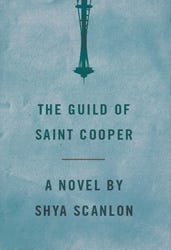
The Guild of Saint Cooper by Shya Scanlon
If the upside-down Seattle Space Needle on Scanlon’s spare cover isn’t intriguing enough, there’s the revelation that the “Saint Cooper” of the title might, in fact, be a reference to everyone’s favorite coffee-swilling Agent from Twin Peaks. And then the tease gets really interesting: “an obscure author in a near-future post-evacuation Seattle who is drawn into writing a revisionist history that sets the book itself unspooling backward into its own alternate history . . .” The whole set-up sounds like some kind of grunge Phillip K. Dick, and if the writing is as distinctive and gripping as Scanlon’s previous work, this one seems destined to become a favorite.
Little Sister Death by William Gay
One of the greatest voices of the new Southern Gothic renaissance, working here with straight-up horror in a centuries-spanning novel about the Bell Witch of Tennessee: I cannot imagine any way for this book to be further in my wheelhouse even if I’d written it myself. I’m doing backflips for this and everything else Dzanc plans to release from Gay in the coming years. Their acquisition of some of his earliest as well as some of his final works is a boon to readers everywhere, and I’m eager to get my hands on all of it, but Little Sister Death is first on my list.
— Samuel Snoek-Brown lives in Portland, OR, where he teaches writing and serves as production editor for Jersey Devil Press. Online, he lives at snoekbrown.com. His short fiction has appeared in dozens of journals, and he is the author of the flash fiction chapbook Box Cutters and of the novel Hagridden, for which he received a 2013 Oregon Literary Fellowship.
Sheldon Lee Compton
Metal Gear Solid by Ashley and Anthony Burch
Boss Fight Books and Michael Kimball teamed up last year to scorch my brain with Galaga. They had me from the first sentence, and I’ve never played that game, not that you have to enjoy it. Can you imagine the “mind-party” I’m having anticipating Metal Gear Solid by Ashley and Anthony Burch, considering I became beautifully obsessed with this game for about a full year of my life? Well, imagine it. Join the party.
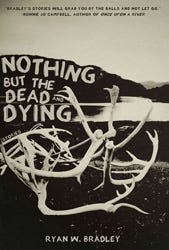
Nothing But the Dead and Dying by Ryan W. Bradley
I’ve read pretty much everything Ryan W. Bradley has written since first discovering a short story
of his at Fictionaut several years ago. That first story, “Every Time a Fairy Gets Laid,” put me in instant fan mode. I can’t wait to continue my admiration and read Nothing But the Dead and Dying. Ryan has a quiet talent that eases from the page to become something powerful and lasting. I’m sure this new one will be no different.
— Sheldon Lee Compton is the author of the short story collections The Same Terrible Storm and Where Alligators Sleep. He is the founding editor of Revolution John and survives in Eastern Kentucky.
Shane Cartledge
Nothing Crown by Michael Kazepis
Last year in the Great Indie Press Preview I covered Michael Kazepis’ Long Lost Dog of It in my list of most anticipated titles. Well, I read it, and it was everything I could have hoped for. He’s got an incredible vision and the skills to make it happen. Nothing Crown is a road story about a Palestinian woman making her way to France to become a rapper. Also, he’s turning it into a ‘mixtape’, which means that while he will write the majority of the book, there will be ‘featured artists’ writing short segments within the narrative. Say what? I’ve been sold from the beginning.
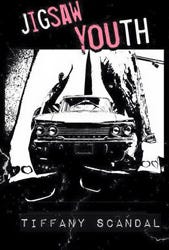
Jigsaw Youth by Tiffany Scandal
Tiffany Scandal’s first book, There’s No Happy Ending, was a sad, beautiful, wonderfully imagined apocalypse story. It was dark and grim and surreal. There is such a vivid attention to
detail to her work that you can’t possibly see everything she’s put into it. She’s a puzzler, and Jigsaw Youth sounds like it will continue and build upon the puzzle. It is one of two books marking the debut of the all-female imprint of Broken River Books: Ladybox Books. No doubt, this book will have plenty of raw punk angst, rich details and memorable characters. I’m excited.
— S.T. Cartledge is the bizarro author of House Hunter and Day of the Milkman. He also writes poetry. He enjoys reading bizarro, indie lit, poetry, and manga. He lives in Perth, Western Australia. He believes that the power of the human imagination is a beautiful thing.
Troy Weaver
Last Mass by Jamie Iredell
Jamie Iredell has always been a writer I’ve admired. I started reading little things of his here and there online a few years ago. I was instantly taken in by the honesty, humor, and straight-up
seriousness of what he was doing both in fiction and the essay. I read The Book of Freaks front-to-back in about two hours shortly after receiving it in the mail. That book is hilarious, but it’s hilarious on serious terms, which is a whole other funny I find hard to describe. I can’t. It’s just plain original. I’ve heard Last Mass described as Markson-esque but I don’t know… I have this feeling. I think Jamie will do one better than that. Last Mass is a book I absolutely cannot wait to read.
— Troy James Weaver is the author of Witchita Stories (Future Tense Books) and Visions (Broken River Books), both due out in March. He was born, raised, and remains in Wichita, Kansas, and will probably die there, too.
Quincy Rhoads
The Life and Legend of Wallace Wood by Bhob Stewart
Literary fandom has a long history of idolizing brilliant madmen. Unfortunately, literary fandom doesn’t have a great history of idolizing comic book auteurs, but hopefully Bhob Stewart’s forthcoming biography of Wallace Wood will bridge that gap. Wallace Wood is best known for his work in Mad Magazine, Daredevil, and the landmark indie comic book series Witzend. Wood’s life was filled with all-nighters, alcoholism, and ultimately suicide, all balanced out by his undeniably strong work. The Life and Legend of Wallace Wood will not only offer an engaging biography of a fascinating, tortured artist, but it will be chock full of Wood’s art (which is meticulous and stunning), ephemera, and recollections from Wood’s friends and colleagues. It’s set to be a must-have for comic nerds and a great intro for lit fans that are ready to be engrossed in the work of an unfamiliar virtuoso.
Manic Pixie Dream Poems by Trevor L. Sensor
Bottlecap Press has been putting out some amazing chapbooks lately like Manic Pixie Dream Poems by Trevor L. Sensor. He puts his heart on his sleeve in these anguished love poems. This chapbook is a perfect encapsulation of the aftermath of a relationship that is no more, as the speaker in this cycle repeats elements and memories (phrases like “Manic Pixie Dream Girl” and
references towards Garden State) like a penitent monk feverishly chanting the same prayer. It’s familiar and relatable in a frightening way.
Cave by Zachary Cosby
Melissa Broder’s Scarecrone was last year’s best gore-filled, morbid, cosmically mystic collection of poetry. This year, Zachary Cosby’s Cave is poised to take on that mantle. These are poems about “…cum / and bile // and blood.” They’re poems that both revel and mourn the transience of youth and love. They’re unsettling and unpretentious as the art of Robert Duncan Gray. They’re as beautiful as a cave swallowing light.
— Quincy Rhoads is a contributing editor for Entropy. His writing has appeared in Ploughshares, Rain Taxi, and Indie Cardboard.
The stories I’ve encountered by Helen McClory have delved into the surreal and the supernatural,
but rarely in ways that you would expect. This collection is her debut; she has written that it initially took shape around the idea of monsters, which sounds very promising.
See You in the Morning by Mairead Case
Mairead Case’s nonfiction and criticism, which have appeared in places like The New Inquiry and Bookslut, are regularly incisive, drawing unexpected connections across artistic lines. Her fiction makes compelling narratives out of ambiguities large and small. Her debut novel–-one of the first books released by the revitalized Featherproof since Tim Kinsella took over that press’s editorial reins–is one I’ve been excited about since the day it was announced.
— Tobias Carroll writes fiction and nonfiction. He’s the managing editor of Vol.1 Brooklyn, and his work has recently appeared in Tin House, Midnight Breakfast, The Collapsar, The Collagist, Joyland, Necessary Fiction, and Underwater New York. His collection Transitory will be released by Civil Coping Mechanisms in 2016.
Jackson Nieuwland
Glass Half Full with Burning People by Bob Schofield
If this book is anything like any of Bob’s previous work it will be a dream labyrinth that pulls you quickly through itself and back out into the real world when all you want to do is stay within its dark sugary walls. That’s not hyperbole; it’s just impossible to describe Bob’s creative output without slipping into the surreal language that he himself uses. Each of Bob’s works have shown huge growth from what came before them so here’s hoping this one will continue that trend and be something entirely new. No matter what, I want it inside of me. Plus, burning people falling from the sky you know?
The Three Sunrises by Edward Mullany
The final installment in Edward’s trilogy from Publishing Genius, the first book was a poetry collection, which I loved. The second one was a story collection, which I loved. Edward told me
that this one’s a novel, but then I read the publisher call it a trio of novellas. When I first heard about it, it was called Legion, and then I saw it referred to as The Book of Numbers and finally I saw a proof copy with the words The Three Sunrises on the cover. This book seems to be in constant flux, so who knows what form it will take in the end. All I know is that I read an excerpt from it and loved it and am excited to return to the world Edward built in the first two books.
Post Pussy by Gabby Bess
A lot has changed since Gabby’s first book came out a couple of years ago. We are now post-internet, post-alt. Thankfully, though she has been quiet recently, we are not living in a post-Gabby world. I’m excited to see how Gabby’s work has developed since the success of Alone With Other People. The title of this new book makes me think that she will be engaging with feminism in interesting, new ways. The fact that it’s being published by the always-impressive Coconut Books let’s me know that it will be quality.
Dear S by Rachel Hyman
Rachel Hyman has been one of my favorite poets for a long time now. Her online publications are consistently excellent and her work always feels contemporary without the need for the obligatory references to pop culture or the Internet. I’m excited to see her work collected in print for the first time. If the excerpts published in Illuminati Girl Gang and The Scrambler are anything to judge this chapbook by then it’s going to be one of my favorites this year.
— Jackson Nieuwland likes unicorns.
Grant Wamack
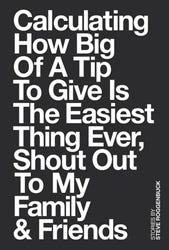
Calculating How Big of A Tip to Give Is The Easiest Thing Ever, Shout Out to My Family & Friends by Steve Roggenbuck
Poetry is a hard sell for me, but last year I accidentally found someone who writes poetry I can actually vibe with. I stumbled on this guy’s YouTube channel and the first video I watched felt mad dramatic but entertaining nonetheless. Next thing you know, I watched five more of his addictive videos and realized I needed one of his books. At the time, I couldn’t find anything available. However, he has a new book coming out this year and I’m sure it’ll blow my socks off.
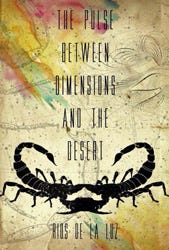
The Pulse Between Dimensions and the Desert by Rios De La Luz
I was first introduced to Rio’s raw writing via her chapbook Stories & Thoughts distributed
through Ladybox Books an imprint of Broken River Books. The stories’ emotional edge stuck with me and I was hyped when I heard she was working on a surreal short story collection. Also, I’m tired of being able to count the number of POC in certain genres on one hand. So it’s uber dope to see a woman who is also a POC bringing some new flavor to the table.
— Grant Wamack is the author of A Lightbulb’s Lament and Notes from the Guts of a Hippo. He is a weird fiction writer, Navy journalist, and rapper extraordinaire. He’s been published in such places as Everyday Weirdness, 365 Tomorrows, The New Flesh, and other fine publications. You can find him dancing bachata with beautiful ghosts in the cobblestone streets of Spain or you can visit him here: http://grantwamack.com/
Michael Hessel-Mial
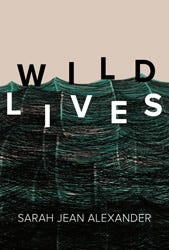
Wildlives by Sarah Jean Alexander
Sarah Jean Alexander’s poetry has that quality of stepping from her life with the appearance of being effortlessly beautiful. It makes you almost forget that she’s one of the hardest working poets around. From her tweets to her long-form works, Alexander puts craft and devotion to the service of a poetry that is honest, funny and generous. Wildlives will be a gift, the beautiful fruits of a long period of writing and living.
Asuras by Jayinee Basu
For 2015, Asuras is the book I’m counting on to lift up my perceptual faculties and set them down again slightly off-kilter. Basu has such a beautiful gift for choosing words, and such a wry sense of humor, it makes her poetry sparkle with light. I’ve been looking forward to seeing an extended work from her for a while, and have every reason to feel optimistic that Asuras will catch everyone off guard with its freshness and mastery.
Art Sick by Lara Glenum
The last book of Glenum’s that I read, Pop Corpse, scared the crap out of me in a way that was thrilling and edifying. I expect nothing less from Art Sick. Lara Glenum, one of the leading “gurlesque” voices, plays at uncharted limits to show us what those limits are. Her poetics will get into you like a corkscrew to the abdomen. She’ll undo your insides and bring out something terrifying and unexpected.
— Michael Hessel-Mial is a poet and scholar, and editor of Internet Poetry. He is author of the image macro series “mspaint and heartbreak” and the forthcoming ebook VITA NUOVA II.
Berit Ellingsen
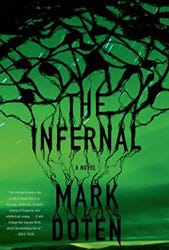
The Infernal by Mark Doten
With that title and that cover, how can I not be curious? From the descriptions and reviews it sounds like an ominous and risky commentary on 21st century warfare, technology, and the international game of politics, all infernal in their own right.
— Berit Ellingsen is the author of the short story collection Beneath the Liquid Skin (firthFORTH Books) and the novel Une Ville Vide (PublieMonde). Her work has or will appear in W.W. Norton’s Flash Fiction International Anthology, SmokeLong Quarterly, Unstuck, Litro, and other places, and has been nominated for the Pushcart Prize and the British Science Fiction Award. Berit’s new novel Not Dark Yet will be published by Two Dollar Radio in late 2015. She divides her time between Norway and Svalbard in the Arctic. http://beritellingsen.com.
Bud Smith
Leverage by Eric Nelson
Gritty and without posturing. Leverage chronicles the good and bad that comes with living away from the light pollution of the city scape. Reminds me of Steinbeck, but if he’d been around to learn to speak my generation’s ‘internet weird’.
— Bud Smith works heavy construction. He’s from NJ, but currently lives in NYC. His latest novel is called F-250. www.budsmithwrites.com
Andrew Miller
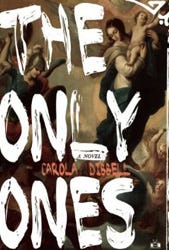
The Only Ones by Carola Dibbell
Set in the near future, the feminist dystopian model laid out for The Only Ones seems like a well-worn path as of late; but with Dibbell’s rock critic tone honed over years at the Village Voice, I expect this novel’s soundtrack to be more Le Butcherettes than Lorde.
In a 2013 interview with Black Clock, rock critic and now fiction author Carola Dibbell said that, “There is a lot of chicken and egg in the influence question — and we haven’t even talked about cartoons and movies — but it’s possible my love of Dickens affected my taste for cockney punks.”
For The Only Ones, this metaphor goes one step further. Two Dollar Radio has been publishing earnest and bruising books that read with the same intensity of a passionate critic reviewing their least favorite acts; as such, Dibbell’s no-holds-barred voice will surely pack a punch. Here’s hoping my guts can take it.
Haints Stay by Colin Winnette
This will be Winnette’s second novel to debut this year, and his first ever with Two Dollar Radio. I’m convinced that combination will be powerful. Having previously published the granddaddy of Acid Westerns, Rudolph Wurlitzer, Eric and Eliza Obenauf are well suited to capturing Winnette’s
voice in this wild, forever-shape-shifting style.
Winnette’s ability to keep readers rooted in the story without really giving any solid foundation is impressive. He knows just the right time to open the sinkhole and let the desert sands collapse beneath our feet.
Winnette is most powerful when his words are reflecting the vast nothing we all possess, measuring out the weights and means of how our individually constructed worlds possess us instead; even if only for a few hours, I look forward to the world of Haints Stay completely possessing me.
— Andrew Miller is the author of the upcoming book If Only the Names Were Changed (CCM 2016), has been published in several short form print and online collections. He works as an analyst and a journalist in Columbus, OH where he lives with his partner and his daughter. Find him at andrew-miller.com.
David Atkinson
Mozos: A Decade Running with the Bulls of Spain by Bill Hillmann
I was lucky enough to pick up a copy of The Old Neighborhood. I didn’t know much about Bill Hillmann, but I knew I dug his book. Then he made headlines because he’d previously co-authored a book called Fiesta: How To Survive The Bulls Of Pamplona and had just gotten gored during the 2014 run. Then I find out he’s written a memoir about his life, from a wasted ex-golden glove through decades of running with the bulls. There’s no way this book isn’t going to be interesting.
The Pleasure Merchant by Molly Tanzer
18th century England. An apprentice wigmaker is wrongfully disgraced and then taken in by a mysterious benefactor. His star begins to rise, but so does his greed. Do people even write books like this anymore? Somebody obviously is, and I have to see it. However it turns out to be, it’s going to be wildly different from all the other books out right now. That alone has a pull I can’t ignore.
F-250 by Bud Smith
Anyone who read Tollbooth by Bud Smith is probably already looking forward to F-250. Those of us who are in that club know what Bud Smith can do with the destruction inherent in a person
trying to find their place in the world. A rocker trying to make it, a friend OD’ing, a three-way relationship, this one seems even harder core than Tollbooth. I keep having Iron Maiden’s Running Free run through my head when I think about it.
— David S. Atkinson is the author of Bones Buried in the Dirt (2014 Next Generation Indie Book Awards finalist, First Novel <80K) and The Garden of Good and Evil Pancakes (EAB Publishing, spring 2014). His writing appears in Bartleby Snopes, Grey Sparrow Journal, Interrobang?! Magazine, Atticus Review, and others. His writing website is http://davidsatkinsonwriting.com/ and he spends his non-literary time working as a patent attorney in Denver.
Brian Alan Ellis
The First Collection of Criticism by a Living Female Rock Critic by Jessica Hopper
Jessica Hopper’s acerbic wit and knowledge of music/pop-culture particulars has gotten her jobs writing for Pitchfork, GQ, Rolling Stone, The Village Voice, and the Chicago Tribune, but I best remember her from the ’90s, when she published her indie-reverent, taste-making zine Hit It Or Quit It; was a columnist for the late-great Punk Planet; and ran Hyper PR, a public-relations company which catered to small, independently-minded bands. I even spoke to Hopper on the phone once, when I was seventeen and doing my own music zine. I asked her if she could get me on the list for a Dismemberment Plan show, and possibly set up an interview with them “or something,” which she kindly obliged. I remember, she had a very nice voice. Hell of a writer, too.
The Perforated Nothingness by Mark Cronin
Mark Cronin is the kind of poet whose madness and how he exorcises that madness is a thing of brilliance one can admire from afar but if you ever let him crash at your house for a few days he would scare the living shit out of you. He’s that guy. He’s a genius. If he were a song he’d be “Live Wire,” or maybe “The Boy with The Thorn in His Side.” He basically has a bone to pick with
beauty. I fuckin’ love him.
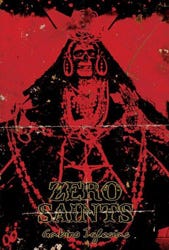
Zero Saints by Gabino Iglesias
The author of Gutmouth is back, and he’s pissed! Just kidding, I think, but he has written a book that promises to fry up some eggs in your ol’ brain pan. I hear there will be junkies, really bad-ass dudes who hurt people in various ways, a Mexican woman in distress, illegal aliens, perhaps extraterrestrial aliens, some dogs, and a few saints (even though the book’s title suggests no saints). Gabino himself told me, “I wanted to write about religions, immigrants, pinche gringos, racism, guns, and praying.” If anything, I hope Zero Saints will explain what the hell a “pinche” gringo is.
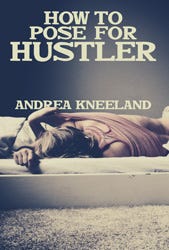
How to Pose for Hustler by Andrea Kneeland
Andrea Kneeland seems like a perfectly happy family woman, which she probably is, but when she writes, oh boy, she writes like she’s a broken faucet gushing out blood and poetry and mental illness. She writes like she wants to dissect humanity’s heart of a darkness with a rusty cleaver and then kill everyone. Her writing is tense, powerful, fearless, and dark-dark-dark funny. Basically, it’s beautiful.
— Brian Alan Ellis lives in Tallahassee, Florida, and is the author of The Mustache He’s Always Wanted but Could Never Grow, 33 Fragments of Sick-Sad Living, King Shit (with Waylon Thornton), and Something Good, Something Bad, Something Dirty. His writing has appeared or is forthcoming in Juked, Crossed Out, Zygote in My Coffee, Monkeybicycle, DOGZPLOT, Sundog Lit, Connotation Press, Vol. 1 Brooklyn, HTMLGIANT, That Lit Site, Diverse Voices Quarterly, flashquake, Out of the Gutter, Spry, NAP, The Next Best Book Blog, Entropy, The Round Up Writer’s Zine, Gravel, and Atticus Review, among other places.
Jay Slayton-Joslin
LIVEBLOG by Megan Boyle
Megan Boyle’s short stories have always done a wonderful job at reflecting the fragile elements of human life. Whether it’s driving to Little Rock to see a boy or a poem about her anxiety. The best features of her writing are what she chooses to focus on, the small glimpses into her mind, rather
than the notable events that dominates other fiction. LIVEBLOG is exciting because it is another example of how literature is evolving into the 21st Century, allowing the reader to follow her life and her unique perspective. This combined with the rising power of publishing house Tyrant books is no doubt going to be a sensation.
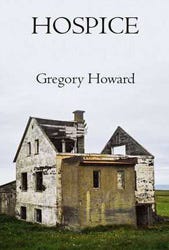
Hospice by Gregory Howard
Howard is my creative writing teacher. Three times a week he gives me amazing writing advice and knowledge that shows that not only has he been taught the craft but that he understands it to a talented level. The extracts that are available online disclose that this is going to be a contemporary gem, written by somebody who is a master in their field.
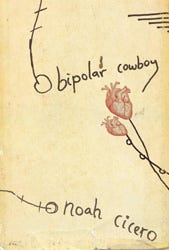
Bipolar Cowboy by Noah Cicero
It’s hard to not be excited about a new release from Noah Cicero. Even though every book of his has some kind of fluidity that makes the prose read like poetry, this collection, defined as poetry, is bound to show Cicero at his best. Cicero is a romantic, writes about love, and maybe not in the kind a general audience is used too. But, every emotion is sincere, wrapped in moment of the sublime that the English romantics could aspire too, making us wish that we lived in a western of bipolar cowboys.
Exigencies edited by Richard Thomas
When I try to think who works as hard and supports others as much as Richard Thomas, it’s difficult to think of other names that come to mind. This isn’t only a generous act though, because it means that Richard knows the best writers in the community. Which means that not only does it mean that Exigencies will be a fantastic read, but that Thomas will raise the bar of what is to be expected in an anthology, once again. Bound to be taught in classrooms across the world.
— Jay Slayton-Joslin is a writer from the London suburb of Beaconsfield, England. His work has appeared online and in print in journals such as Solarcide, Short, Fast and Deadly, Leodegraunce, Bizarro Central and Blink Ink. He has also appeared in the anthologies In Search Of A City: Los Angeles In 1,000 Words and Nova Parade. He is currently pursuing his undergraduate degree in American Literature and Creative Writing at the University of East Anglia. His first book, a poetry collection titled Kicking Prose is published by KUBOA Press. He can be found on his website: http://www.jayslaytonjoslinforever.com.
Edward J Rathke
The Doors You Mark Are Your Own by Okla Elliott and Raul Clement
I don’t actually know a lot about this book, partly by design, but I know Okla Elliott and Raul Clement are two of the smartest people on the internet. From what I do know about it, it sounds absolutely fantastic. It’s a huge post-apocalyptic nightmare that seems to be both political, philosophical, and full of excitement. If it lives up to what’s in my head, it might be the best thing to ever come out of indie lit.
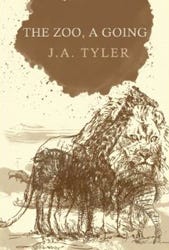
The Zoo, A Going by JA Tyler
JA Tyler’s first book in a couple of years and I’ve been waiting a long time to read it. Or at least it feels that way. JA Tyler is one of the best stylists around and I’m a huge fan of just about anything that comes from his brain, so I’m expecting to love this, though I’ve no idea what its pages will hold. He’s one of the most underrated and underappreciated voices in indie lit despite being one of the most important writers, editors, and publishers in the community. It’s criminal, really, that he’s not loved more, especially given how enormously awesome his work is.
Binary Star by Sarah Gerard
This was just published last week and I’ve not gotten to it yet, but it’s from Two Dollar Radio, so I already know it’s a new work of genius by an unfamiliar writer. Another book I’m buying blind because I trust Two Dollar Radio that much. They’ve yet to lead me astray and I’m sure this won’t disappoint. It’s already getting all kinds of attention from everywhere and all of it’s positive. But that’s what we’ve come to expect from Two Dollar Radio.
Lemon Yellow Poison by Brian Allen Carr
Brian Allen Carr is the reason I’m buying this. There’s not really anyone who writes the way he does. He’ll take a normal sentence but then twist it in such a peculiar way that it becomes fantastic. Like, I could write a sentence and he’ll use the exact same words, but he’ll throw them in a new order and it’ll make it a thousand times better. He has impeccable style while also filling his work with narrative movement, brilliant characters, and all kinds of horrors and emotions. He’s one of my favorite writers publishing right now and I’ve never been disappointed by his work, which, thankfully, comes out pretty regularly these days. Absolutely can’t wait.
— Edward J Rathke is the writer of Ash Cinema (KUBOA Press, 2012), Twilight of the Wolves (Perfect Edge Books, 2014), and Noir: A Love Story (Civil Coping Mechanisms, 2014). He is an editor at The Lit Pub and Monkeybicycle.
Gina Abelkop
Companion Animal by Magdalena Zurawski
Magdalena Zurawski’s Companion Animal (Litmus Press) is really, really sharp: on the money
sometimes literally and always figuratively. Hsve you been alive and in love and deeply engaged with the world during late capitalism? Then you too will bask in these poems.
Fat Daisies by Carrie Murphy
Carrie Murphy’s Fat Daisies (Big Lucks) is another sharp eye on late capitalism, on having relationships to things and wanting things and understanding or not understaing things. Carrie’s poems are more honest than most things in the world; she is in the pinprick center of all this shit trying to work it out. She’s also totally funny and urgent and uncannily right on.
The Argonauts by Maggie Nelson
I just finished Maggie Nelson’s The Argonauts (Graywolf) and am thinking about reading it again right away. This is a queer book in it’s softest heart, totally defiant and simultaneously full of love and a desire to connect with the world. This might all sound esoteric but the book is solid as a fucking rock: you’ll devour it and feel it sitting beside you in a great, comforting way.
— Gina Abelkop lives in Athens, GA with her sweetheart & too funny dogs. She’s the author of I Eat Cannibals (co.im.press, 2014) and Darling Beastlettes (Apostrophe Books, 2012). She edits the DIY feminist press Birds of Lace.
I find myself overwhelmed yet excited about the year ahead, one that is sure to be timestamped by an amazing offering from the world of indie press, and there’s this insane idea too, the one that’s about providing a space able to highlight as many of them as possible. The feature began originally as an idea born from a discussion online with a number of indie press editors, authors, and readers about the deluge of “best-of” and “most anticipated” features and how the majority of these articles continue to be disproportionately favorable to the larger publishing houses. A lot gets lost in transit among the smaller presses, and I wondered why this was the case; the question I asked had been, Why wasn’t there a comprehensive gathering of what the indie community has to offer? The response was overwhelming, culminating with the publication of the inaugural 2014 edition, which featured over 70 publishers and dozens of indie lit contributors chatting up their most-anticipated titles of the year. I’m proud to offer up the same space, once again with feeling: “The Great 2015 Indie Press Preview,” a compendium of some of the most exciting titles of this year and curated by an array of indie press authorities and it’s companion piece, “The Great 2015 Indie Press Cheat Sheet,” which functions as a comprehensive list of what indie publishing has to offer. Consider both it two parts of a singular whole; consider it an A-to-Z go-to reference for all of your indie book buying needs. With as little as a cursory glance, it’s clear that 2015 will burn bright with new books, and I can’t wait to see how the year unfolds.
The Motion by Lucy K Shaw [TBA] by Brooke Hatfield
Wild Grass on the River Bank by Hiromi Itō, trans. Jeffrey Angles Dark Museum by María Negroni, translated by Michelle Gil-Montero The Country of Planks by Raúl Zurita, trans. Daniel Borzutzky This Blue Novel by Valerie Mejer, translated by Michelle Gil-Montero Selected Poems of Kim Yideum, translated by JiYoon Lee [TBA, a barn-burning booklength creation myth] by Abraham Smith
The Love Book by Nina Solomon (January) Starve the Vulture: A Memoir by Jason Carney (January) We Are All Crew by Bill Landauer (January) The Lost Treasures of R&B: A D Hunter Mystery by Nelson George (February) Loving Donovan by Bernice L. McFadden (February) The Half That’s Never Been Told: The Real-Life Reggae Adventures of Doctor Dread by Doctor Dread (March) Suitcase City by Sterling Watson (March) Changers Book Two: Oryon by T Cooper and Allison Glock-Cooper (April) Eight New-Generation African Poets: A Chapbook Box Set edited by Kwame Dawes and Chris Abani (April) The Shark Curtain by Chris Scofield (April) The Immune System by Nathan Larson (May) Love Maps by Eliza Factor (May) The Sunshine Crust Baking Factory by Stacy Wakefield (May) Beirut Noir (Lebanon) edited by Iman Humaydan (June) Marseille Noir (France) edited by Cédric Fabre (June) Providence Noir edited by Ann Hood (June) What Else Is in the Teaches of Peaches by Peaches and Holger Talinski (June) The Anger Meridian by Kaylie Jones (July) Little Beasts by Matthew McGevna (July) Caught Up by Shannon Holmes (August) Lost Canyon by Nina Revoyr (August)
apt: issue five: The Long Fiction Issue (January) Anatomies by Susan McCarty (June)
Desire: A Haunting by Molly Gaudry (April) Becoming the Sound of Bees by Marc Vicenz (April) Lucy Negro Redux by Caroline Randall Williams (April) Small Hope Factory by Christopher Kennedy (June)
Letters to Quince by Jenny Drai (March) Brown Bottle by Sheldon Lee Compton (July)
Belief Is Its Own Kind of Truth, Maybe by Lori Jakiela (May) Fiction in Disguise: Experiencing the Art of Life Through Literature edited by Ben Leubner (August)
The Business of Naming Things by Michael Coffey (January) Keep Out of Reach of Children: Reye’s Syndrome, Aspirin, and the Politics of Public Health by Mark A Largent (February) A Solemn Pleasure by Melissa Pritchard (May) The Surfacing by Cormac James (June) American Meteor by Norman Lock (June)
Wildlives by Sarah Jean Alexander Fat Daisies by Carrie Murphy Plastic Sonnets by Caroline Crew Isn’t that You Waving at You by Elizabeth Clark Wessel Shadow Lanka by Brandon Brown Dear S by Rachel Hyman It Is Going To Be A Good Year by Sasha Fletcher
DEAD HORSE by Niina Pollari (February) From the Author’s Private Collection by Eric Amling (June) Tender Data by Monica McClure (July)
The End of Something Great by Lily Hoang Silk Flowers by Meghan Lamb [TBA] by Jacqueline Kari
Many Small Fires by Charlotte Pence (January) Necessary Fire by KMA Sullivan (January) A Taxonomy of the Space Between Us by Caleb Curtiss (February) The New Sorrow Is Less Than the Old Sorrow by Jenny Drai (March) Oh My Darling by Cate O’Toole (March)
At Night by Lisa Ciccarello (Spring 2015) Room Where I Get What I Want by S. Whitney Holmes (Spring 2015) Handsome #7 (Spring 2015) Justice by Tomaž Šalamun, trans. Michael Thomas Taren (Summer 2015) Static & Snow by Brian Henry (Fall 2015) I Am a Season That Does Not Exist In the World by Kim Kyung Ju, trans. Jake Levine (Fall 2015)
Little: Novels by Emily Anderson K: A 21st Century Canzoniere by I. Goldfarb Starlight: 150 Poems by John Tranter Hitching Post by Nava Fader A’s Visuality by Anne Gorrick Dangerous Things to Please a Girl by Travis Cebula Dolphin Aria/Limited Hours: A Love Song by Luke McMullan Virtual Worlds Virtual People by Kay Porter Going with the Flow by Peter Siedlecki Metamerican by Seth Abramson The Last Place I Lived by K. Alma Peterson Minnows Small as Sixteenth Notes by Norma Kassirer Those Godawful Streets of Man by Stephen Bett The Other City by Kristina Marie Darling Frances the Mute by Kristina Marie Darling Drink by Laura Madeline Wiseman Gargantua by Jennie Cole Poets For Living Waters: An International Response To Big Oil: Heide Lynn Staple Selected Criticism by Vincent Katz Transfigurations by W. Scott Howard Three Plays by Deborah Meadows Sipping the Nectar of Stories by Tim J. Myers Patient Women by Larissa Shmailo
Calculating How Big of a Tip to Give is the Easiest Thing Ever, Shout Out to My Family & Friends by Steve Roggenbuck (February)
The Boss Fight Books Anthology (January) Bible Adventures by Gabe Durham (February) Metal Gear Solid by Ashly & Anthony Burch (April) Spelunky by Derek Yu (June) World of Warcraft by Daniel Lisi (August) Baldur’s Gate II by Matt Bell (October)
#RuntRaccoonRevolution (reboot) by Jeremiah Walton (January) Manic Pixie Dream Poems by Trevor L Sensor (January) Good Luck With The Moon & Stars & Stuff by Beyza Ozer (January) Eating Alone At Chipotle by Carmen E. Brady (January) Acid Bath by e.a.hyde (January) Fractured by Patrick Trotti (January) & blue beds held by Zooey Ghostly (February) Al Pacino’s Arse and Other Palindromes by Jack Mitchell (February) Portal by Rosalie Wilmot (February) Bottlec[r]ap Volume Two (February) Cave by Zachary Cosby (February/March) How To Sext Death and Other Lurid Text Messages by Shane Jesse Christmass (March) Stray/Pest by Timmy Reed (Summer)
On the Black by Ed Dinger (March) Scores by Robert Paul Moreira (March) The Incoming Tide by Cameron Pierce and J David Osborne (March) Will the Sun Ever Come Out Again? by Nate Southard (March) Death Don’t Have No Mercy by William Boyle (March) Visions by Troy James Weaver (March) The Blind Alley by Jake Hinkson (March) Everything Used to Work: Poems by Robert Spencer (June) Zero Saints by Gabino Iglesias (June) Nothing Crown by Michael Kazepis (September)
Emergency Anthems by Alex Green (January) Michael Sweet’s Coney Island by Michael Ernest Sweet (February) Responsive Listening by Norwegian Theatre Academy (March) The Word Kingdom in the Word Kingdom by Noah Eli Gordon (April) Confidence by Seth Landman (May) Infinite Record by MIT, New York University, University of Kiel, University of York St John, Norwegian Theatre Academy (September) Alter(n)ations by Matt Shears (October) Take This Stallion by Anaïs Duplan (November) Naturalism by Wendy Xu (November) [Title Forthcoming] by Daniel Borzutzky (December)
The Call: a Virtual Parable by Pat Rushin (February) Pinkies by Shane Hinton (June) Worm Fiddling Nocturne in the Key of a Broken Heart by Kimberly Lojewski (Fall) Forty Martyrs by Philip F. Deaver (Fall)
‘SSES” ‘SSES” “SSEY’ by Chaulky White (January) No Moon by Julie Reverb (Summer) The Gotham Grammarian by Gary Lutz (Fall)
Cries for Help stories by Padgett Powell (September) Mrs. Engels a novel by Gavin McCrea
Paul is Dead by Stephen Moles (January) Rise of Hypnodrome by Matt Fuchs (February) Orest and August by Steven Garbas (March) Big Venerable by Matt Rowan (April) Twilight of the Idiots by Joseph G Peterson (May) The New York Stories: Three Volumes in One Collection by Ben Tanzer (June) Condominium by Daniel Falatko (July) TBD [2015 “City All-Star” Student Anthology] (September) The Misadventures of Sulliver Pong by Leland Cheuk (October) The Wobble by Douglas Light (November) The Fugue by Karolis Gintaras Zukauskas (December)
Today I Am a Book by xTx (March) This Boring Apocalypse by Brandi Wells (March) How to Pose for Hustler by Andrea Kneeland (March) WAKE by AT Grant (March) Asuras by Jayinee Basu (March) The Arson People by Katie Jean Shinkle (May) This Must Be the Place by Sean H Doyle (May) Antigolf by John Colasacco (May) Spiritual Instrument by M Kitchell (May) Rules of Appropriate Conduct by Kirsten Alene (May) Ohey! by Darby Larson (May) Last Mass by Jamie Iredell (July) You and Other Pieces by Corey Zeller (July) The States by Jeff Musillo (July) Playdate by Mark Katzman (July) The Daydream Society by Evan Retzer (July) Desolation of Avenues Untold by Brandon Hobson (September) Everything Gets Eaten by Ben Brooks (September) Eternal Freedom from Social and Natural Programming by Frank Hinton (September) I/O A Memoir by Brian Oliu (September) Nothing but the Dead and Dying by Ryan W Bradley (September) TBA by Porochista Khakpour (CCM White Rabbit) (October) TBA by Dorothea Lasky (CCM White Rabbit) (October)
How We Bury Our Dead by Jonathan Travelstead (February) A Horse Made of Fire by Heather Bell (August)
Slice by Arielle Greenberg (February)
Motherlover by Ginger Ko (March)
Swan Feast by Natalie Eilbert (April)
Veronica Bench by Leopoldine Core (April)
The Rest Is Censored by K. Lorraine Graham (April)
Self Portrait in Plants by James Sanders (May)
Art Sick by Lara Glenum (June)
Post Pussy by Gabby Bess (July)
Caroline, Who Will You Pray to Now That You Are Dead by Caroline Crew (Chapbook, July)
Deep City by Megan Kaminski (October)
Gray Market by Krystal Languell (October)
The Miraculous Hysterical by Eszter Takacs (November)
Mind Refused by Serena Chopra (November)
The Diary of a K-Drama Villain by Min Kang (November)
The Dig by Cynan Jones (April) The Little Free Library Book by Margaret Aldrich (April) Mr. and Mrs. Doctor by Julie Iromuanya (May) Alone and Not Alone by Ron Padgett (May) The Hope of Floating Has Carried Us This Far by Quintan Ana Wikswo (June) Null Set by Ted Mathys (June) Blue Girl by Laurie Foos (July) Genoa by Paul Metcalf (50th Anniversary reissue with a new introduction from Rick Moody) (July) Slab by Selah Saterstrom (August) The Story of My Teeth by Valeria Lusielli (September) Cat is Art Spelled Wrong edited by Caroline Casey, Chris Fischbach, and Sarah Schultz (September) Upright Beasts by Lincoln Michel (October) Sentences and Rain by Elaine Equi (October) The Falling Down Dance by Chris Martin (November)
A Small Story About the Sky by Alberto Rios (Spring/summer) The News by Jeffrey Brownreprint (Spring/summer) Bender (reprint, paperback) by Dean Young (Spring/summer) What About This: Collected Poems by Frank Stanford (Spring/summer) The Quotation of Bone by Norman Dubiereprint (Spring/summer) Selected Translations (reprint, paperback)by WS Merwin (Spring/summer) Update: Newest Poems by O’Driscoll (Spring/summer) War of the Foxes by Richard Siken (Spring/summer) Shirt in Heaven by Jean Valentine (Spring/summer) Uses of the body by Deborah Landau (Spring/summer) Finding Them Gone by Bill Porter (Fall/winter) Heart Poems by Dean Young (Fall/winter) Claw Marks by Dean Young (Fall/winter) Early & Late by James Richardson (Fall/winter) Dead Man’s Float by Harrison (Fall/winter) Cloudless Sky by Michael Dickman (Fall/winter) American.Indian.Bezerk by Natalie Diaz (Fall/winter) New & Selected by Lucia Perillo (Fall/winter) Essays by CD Wright (Fall/winter)
I Will Love You For the Rest of My Life by Michael Ozyzniejewski (January) Jillian by Halle Butler (February) Little Boy Needs Ride and Other Stories by Chris Bower (March) On the Way: Stories by Cyn Vargas (April) Almost Crimson by Dasha Kelly (May) Dime Stories: Essays by Tony Fitzpatrick (June) Mozos: A Decade Running with the Bulls of Spain by Bill Hillmann (July) The Empty Bottle, Chicago: Twenty-Plus Years of Piss, Shit, and Broken Urinals: An Oral History edited by John Dugan (October)
Life Sentences: Literary Judgments and Accounts by William H. Gass (January) Kvachi by Mikheil Javakhishvili (January) Me, Margarita by Anna Kordzaia-Samadashvili (January) Vano and Niko (Georgian Literature Series) by Erlom Akhvlediani (January) The Brueghel Moon by Tamaz Chiladze (January) Exercises in Criticism: The Theory and Practice of Literary Constraint by Louis Bury (February) The Cold Eye of Heaven by Christine Dwyer Hickey The Sea (Catalan Literature Series) by Blai Bonet (March) Newspaper by Edouard Leve (Spring) Diglossia and the Linguistic Turn: Flann O’Brien’s Philosophy of Language by Flore Couloma (Spring) Telling It Again and Again: Repetition in Literature and Film by Bruce F. Kawin (Spring) Urgency and Patience by Jean-Philippe Toussaint (Spring) Götz and Meyer by David Albahari (Spring) The Key by Mairtin O Cadhain (Spring) Caterva by Juan Filloy (Spring) Rambling Jack by Micheal O Conghaile (Spring) 21 Days of a Neurasthenic by Octave Mirbeau (Spring) Fragments of Lichtenberg by Pierre Senges (Spring) Philosophical Toys by Susana Medina (Spring) The Bulgarian Truck by Dumitru Tsepeneag (Spring) Behind the Station by Arno Camenisch (Spring) Last Last Orders by Arno Camenisch (Spring) Past Habitual (Irish Literature Series) by Alf MacLochlainn (March) Atavisms by Raymond Bock (Spring) The Old Man and the Bench by Urs Allemann Addendum to a Photo Album by Vlasdislav Otroshenko
The Doors You Mark Are Your Own by Okla Elliott and Raul Clement (March) Exigencies: An Anthology edited by Richard Thomas (April) Vile Men: Stories by Rebecca Jones-Howe (July) Paper Tigers by Damien Angelica Walters (September)
All Glitter, Everything by Laura Relyea (March)
The Words and Wisdom of Charles Johnson by Charles Johnson (January) If I Knew the Way I Would Take You Home by Dave Housley (January) Fancy by Jeremy M. Davies (Ellipsis Press — Imprint) (February) Discomfort by Evelyn Hampton (Ellipsis Press — Imprint) (February) The Zoo, a Going by JA Tyler (March) Like a Woman by Debra Busman (March) The Crossing by Jon Fink (April) The Sorrow Proper by Lindsey Drager (April) The Guild of Saint Cooper by Shya Scanlon (May) Between Here and the Yellow Sea by Nic Pizzolatto (reprint, first Dzanc edition) (May) Gun, Needle, Spoon by Patrick O’Neil (June) My Life as a Mermaid by Jen Grow (June) The Castaway Lounge by Jon Boilard (July) The Soul Standard by Richard Thomas, Nik Korpon, Caleb Ross, and Axel Taiari (August) The Anglerfish Comedy Troupe by Colin Fleming (August) The Long Home by William Gay (paperback reprint) (August) Twilight by William Gay (paperback reprint) (August) The Suicide of Claire Bishop by Carmiel Banasky (September) We Five by Mark Dunn (September) Little Sister Death by William Gay (October) Calloustown by George Singleton (November) Charmed Particles by Chrissy Kolaya (November) The City at 3PM by Peter LaSalle (December)
Displacement by Lucy Knisley (January) Run Like Crazy Run Like Hell by Jacques Tardi (January) Prince Valiant Vol. 10: 1955–1956 by Hal Foster (January) Collected Poems by Alexander Theroux (January) Love and Rockets Library (Palomar & Luba Book 5): Ofelia by Gilbert Hernandez (January) Love and Rockets: New Stories #7 by Gilbert & Jaime Hernandez (January) Michael Jordan: Bull on Parade by Wilfred Santiago (January) Angry Youth Comix by Johnny Ryan (February) Sweatshop by Peter Bagge, with Stephen DeStefano, Bill Wray, Stephanie Gladden, Jim Blanchard, and Johnny Ryan (February) Inner City Romance by Guy Colwell (February) Hurricane Isle and Other Adventures: The Best of Captain Easy and Wash Tubb by Roy Crane (February) Dripping With Fear: The Steve Ditko Archives Vol. 5 by Steve Ditko (February) Saint Cole by Noah Van Sciver (February) The Complete Eightball 1–18 by Daniel Clowes (March) The Life and Legend of Wallace Wood by Bhob Stewart (March) Sheriff of Bullet Valley, Starring Walt Disney’s Donald Duck by Carl Barks (March) Invitation to Openness: The Jazz & Soul Photography of Les McCann 1960–1980 by Les McCann (March) Wuvable Oaf by Ed Luce (March) Willard Mullin’s Casey at the Bat and Other Diamond Tales by Willard Mullin and Ernest Thayer (March) Cartoons for Victory edited by Warren Bernard (April) The Big Book of Me by Vaughn Bodé (April) The EC Comics Slipcase Vol. 2 by Al Feldstein, Johnny Craig, Graham Ingels, and Jack Kamen (April) The Complete Peanuts 1995–1996 (Vol. 23) by Charles M. Schulz (April) Walt Disney’s Donald Duck: The Pixelated Parrot (The Complete Carl Barks Disney Library Vol. 6) by Carl Barks (May) Maria M. Book 2 by Gilbert Hernandez (May) The Kurdles by Robert Goodin (May) Grave Business and Other Stories (The EC Comics Library) by Graham Ingels and Al Feldstein (May) Black River by Josh Simmons (May) Barnaby Vol. 3 by Crockett Johnson (June) Nothing Eve by Kurt Wolfgang How to Read Nancy: The Elements of Comics in Three Easy Panels by Paul Karasik & Mark Newgarden Gil Jordan, Private Detective: Ten Thousand Years in Hell by M. Tillieux Forlorn Funnies Vol. 1 by Paul Hornschemeier The Love and Rockets Reader: From Hoppers to Palomar by Marc Sobel Fog Over Tolbiac Bridge: A Nestor Burma Mystery by Jacques Tardi The Conscience of a Cartoonist: Instructions, Observations, Criticisms, Enthusiasms by Jeff Danziger The Astonishing Exploits of Lucien Brindavoine by Jacques Tardi Uptight #5 by Jordan Crane
Seed by Stanley Crawford (April) Hospice by Gregory Howard (April) O’Hearn by Greg Mulcahy (Doctorow winner) (April)
The First Collection of Criticism by a Living Female Rock Critic by Jessica Hopper (April) See You in the Morning (A Novel) by Mairead Case (September) Erratic Fire, Erratic Passion by Jeff Parker and Pasha Malla (October)
Blue Hole by Kate Colby (selected by Elizabeth Robinson as the winner of the 4th annual Furniture Press Poetry Award) Idylliad by Elizabeth Savage Day Cracks Between the Bones of the Foot by Jesse Nissim Mistaken Identity by Bruce Andrews Moon Cult by Joshua Ware How Changed by Erin Dorney [TBA] by Pattie McCarthy
Tesla: A Portait with Masks by Vladimir Pistalo (January) The Infernal by Mark Doten (February) I Refuse by Per Petterson (April) Ashes in My Mouth, Sand in My Shoes by Per Petterson (April) Dark Lies the Island by Kevin Barry (April) The Pinch by Steve Stern (June) A Woman Loved and Brief Loves That Live Forever by Andreï Makine (August) The Wake by Paul Kingsnorth (September) Half an Inch of Water by Percival Everett (September) Rails Under My Back by Jeffery Renard Allen (October) One Out of Two by Daniel Sada (November)
Silent Empire by Mark Anthony Cronin (February) The Perforated Nothingness by Mark Anthony Cronin (February) Marcel by Grant Maiehofer (April) Beach Story by Brian Warfield (June) The First Year of Contortions (December)
A State of Change: Forgotten Landscapes of California by Laura Cunningham (January) The Wolf Who Ate the Sky by Mary Daniel Hobson and Anna Isabel Rauh (April) LAtitudes: An Angeleno’s Atlas edited by Patricia Wakida (April) She Sang Me a Good Luck Song: The California Indian Photographs of Dugan Aguilar edited by Theresa Harlan (June) Fylling’s Illustrated Guide to Pacific Coast Tide Pools by Marni Fylling (June) California’s Wild Edge: The Coast in Prints, Poetry, and History by Tom Killion with Gary Snyder (July) The Bay Area through Time by Laura Cunningham (July)
Something Good, Something Bad, Something Dirty by Brian Alan Ellis (February) Tables Without Chairs #1 by Brian Alan Ellis and Bud Smith (August)
Pasture Art by Marlin Barton (March) Minnow by James E. McTeer II (May)
All the People by Stephanie Barber (January)
How To Have a Day by Megan McShea (March)
& the Green by Amanda McCormick (May)
I Want Your Tan by Tracy Dimond (May)
Fram by Steve Himmer (January) The Marble Orchard by Alex Taylor (February) Oye, What I’m Gonna Tell You by Cecilia Rodríguez Milanés (April)
Leverage by Eric Nelson (March) Strategies Against Nature by Cody Goodfellow (March) Killer & Victim by Chris Lambert (March)
Kicking Prose by Jay Slayton-Joslin (January) Popcorn in the Barrel by Kirk A.C. Marshall Hawaiian Shirts in the Electric Chair by Scott Laudati
The Pulse Between Dimensions and the Desert by Rios de la Luz (March) Jigsaw Youth by Tiffany Scandal (March)
Bipolar Cowboy by Noah Cicero (February) Skullcrack City by Jeremy Robert Johnson (February) Lazy Fascist Double: Messes of Men by Michael J Seidlinger/Lemon Heart by Matthew Revert (February) Sucker June by Sean Kilpatrick (May) Cult of Loretta by Kevin Maloney (May) Before I Die, I Will Build a Windmill by Matthew Revert (May) Surprise Release TBA (May) The Art of Horrible People by John Skipp (August) Lemon Yellow Poison by Brian Allen Carr (August) Lazy Fascist Review #3 (August) Surprise Release TBA (August) Lazy Fascist Review #4 (guest-edited by Molly Tanzer) (November) The Pleasure Merchant by Molly Tanzer (November) Animal Money by Michael Cisco (November)
Coyote by Colin Winnette (January) Leave Your Body Behind by Sandra Doller (May) The Book of Feral Flora by Amanda Ackerman (Spring) hurry up please its time: TrenchArt (Spring) The Gates by Vanessa Place (Fall) Some Versions of the Ice by Adam Tipps Weinstein (Fall) 100 Chinese Silences by Timothy Yu (Fall)
The Blank Target by Robert Alan Wendeborn (April) Split Series Volume II — Jasmine Dreame Wagner — Seven Sunsets / Melanie Sweeney — Birds As Leaves (April)
Letters to the Devil by Lena Bertone Textile School by Katy Gunn There is Nothing Else to See Here by Chelsey Clammer Wyomings by Justin Armstrong Two Suns by Elizabeth Clark Wessel
Everlasting Lane by Andrew Lovett (January) Tirra Lira by the River by Jessica Anderson (January) Lou Reed: The Last Interview (January) Gabriel Garcia Marquez (January) The Scapegoat by Sophia Nikolaidou (February) The Utopia of Rules by David Graeber (February) Cat out of Hell by Lynne Truss (March) An Exaggerated Murder by Josh Cook (March) The Dead Moutaineer’s Inn by Arkady Strugatsky (March) Happiness by Frederic Lenoir (April) 33 Days by Leon Werth (April) The Establishment by Owen Jones (April) The Sea Inside by Philip Hoare (April) The Ghost Network by Catie Disabato (May) A History of Money by Alan Pauls (June) The Dark Net by Jamie Bartlett (June) Patience and Fortitude by Scott Sherman (June) The Next Next Level by Leon Neyfakh (July) Future Days by David Stubbs (July) Trouble in Paradise by Slavoj Zizek (August) The Reflection by Hugo Wilcken (September) The Anarchist Dog Walker by Joshua Stephens (September) Not on Fire, but Burning by Gregory Hrbek (September) Rules for Werewolves by Kirk Lynn (October) As If by Curtis White (October) Contraband Cocktails by Paul Dickson (October) The Day the Renaissance Was Saved Capponi by Niccolo (November) Sophia by Michael Bible (December) The Visitors by Simon Sylvester (December)
The Title Of This Book Is An Inside Joke by Sophia Katz (March)
Crow-Work by Eric Pankey (February) Pictograph by Melissa Kwansy (March) Vessel by Parneshia Jones (April) The Stuntman by Brian Laidlaw (April) Medicine Walk by Richard Wagamese (April) The White Mountain by Galsan Tschinag (April) The World Is On Fire by Joni Tevis (May) River House by Sally Keith (May)
theNewerYork Book IV (February) Sharpen by Rich Ives (April) Reliant by S. Kay (May) Glass Half Full with Burning People by Bob Schofield (August) Life is Pain and Then You Die (working title) by John Mortara (December)
Guys Like Me by Dominique Fabre (February) Alexandrian Summer by Yitzhak Gormezano Goren (Spring) Killing Auntie by Andrzej Bursa (Spring)
The Three Leaps of Wang Lun: A Chinese Novel by Alfred Döblin Chinese Rhyme-Prose by Burton Watson The Literary Mind and the Carving of Dragons by Liu Hsieh The Broken Road : From the Iron Gates to Mount Athos by Patrick Leigh Fermor, edited by Colin Thubron and Artemis Cooper Patrick Leigh Fermor : An Adventure by Artemis Cooper Thus Were Their Faces: Selected Stories by Silvina Ocampo The Door by Magda Szabó Silvina Ocampo by Silvina Ocampo, a new translation from the Spanish by Jason Weiss Moral Agents: Eight Twentieth-Century American Writers by Edward Mendelson Ending Up by Kingsley Amis, introduction by Craig Brown Take a Girl Like You by Kingsley Amis, introduction by Christian Lorentzen A Legacy by Sybille Bedford, introduction by Brenda Wineapple The Elephant Who Liked to Smash Small Cars by Jean Merrill, illustrated by Ronni Solbert Go Figure! New Perspectives on Guston edited and with an introduction by Peter Benson Miller, preface by Robert Storr Primitive Man as Philosopher by Paul Radin, introduction by Neni Panourgiá Onward and Upward in the Garden by Katharine White, edited and with an introduction by E.B. White Prometheus Bound by Aeschylus, translated and with an introduction by Joel Agee After the Tall Timber: Collected Nonfiction by Renata Adler, preface by Michael Wolff Drum-Taps: The Complete 1865 Edition by Walt Whitman, edited and with an introduction by Lawrence Kramer The Peach Blossom Fan by K’ung Shang-jen, introduction by Jonathan D. Spence, translated from the Chinese by Chen Shih-hsiang and Harold Acton, with the collaboration of Cyril Birch Alive: New and Selected Poems by Elizabeth Willis Dreams of Earth and Sky by Freeman Dyson Naked Earth by Eileen Chang The Death of Napoleon by Simon Leys, translated from the French by Patricia Clancy Where I’m Reading From: The Changing World of Books by Tim Parks Mio, My Son by Astrid Lindgren, illustrated by Ilon Wikland Seacrow Island by Astrid Lindgren A School for Fools by Sasha Sokolov, a new translation from the Russian by Alexander Boguslawski The Prank: The Best of Young Chekhov by Anton Chekhov, illustrated by Nikolay Chekhov, a new translation from the Russian by Maria Bloshteyn A View of the Harbour by Elizabeth Taylor, introduction by Roxana Robinson The Prince of Minor Writers: The Selected Essays of Max Beerbohm by Max Beerbohm, edited and with an introduction by Phillip Lopate The Little Town Where Time Stood Still by Bohumil Hrabal, translated from the Czech by James Naughton Talk by Linda Rosenkrantz A Family Lexicon by Natalia Ginzburg, introduction by Peg Boyers, translated from the Italian by Jenny McPhee Akenfield: Portrait of an English Village by Ronald Blythe, introduction by Matt Weiland Dear Illusion: Selected Stories by Kingsley Amis Álvaro Mutis: Selected Poems by Álvaro Mutis, new translations from the Spanish by Edith Grossman and Alastair Reid Henri Duchemin and His Shadows by Emmanuel Bove, introduction by Donald Breckenridge, translated from the French by Alyson Waters Chocky by John Wyndham, introduction by Margaret Atwood The Wages of Guilt by Ian Buruma Zama by Antonio di Benedetto, translated from the Spanish and with an introduction by Esther Allen
The Strangest by Michael J Seidlinger Love in the Anthropocene by Bonnie Nadzam and Dale Jamieson Nights at Rizzoli by Felice Picano It Runs in the Family by Frida Berrigan @heaven edited by Kim Hastreiter Occupy Central: The Inside Story of the Hong Kong Democracy Protests edited by Violet Law Trade is War: The West’s War Against the World by Yash Tandon Chameleo: A Strange but True Story of Heroin Addiction, Homeland Security, and Invisible Little People by Robert Guffey Watchlist: 32 Short Stories About Surveillance edited by Bryan Hurt Killer Care: How America’s Hospitals Are Killing Us by James B Lieber Blood Brothers: A Brief History of the Mexican Drug Wars by Carmen Boullosa and Mike Wallace Agents of Influence: The CIA and the Crafting of American Literature by Joel Whitney Lean Out: The Struggle for Gender Equality in Tech and Start-Up Culture edited by Elissa Shevinsky
Vampire Strippers from Saturn by Vincenzo Bilof (March) Last Dance in Phoenix by Kurt Reichenbaugh (May) Dead Men by John C. Foster (July) Destroying the Tangible Illusion of Reality; or, Searching for Andy Kaufman by T. Fox Dunham (September) Speculations by Joe McKinney (October) Crabtown, USA by Rafael Alvarez (November)
Piscataway House
The Idiom Magazine (poetry and prose) published 5 times a year (January, March, June, September, November) F-250 by Bud Smith (February) [TBA] by Josh Fink (3rd Quarter) [TBA] by te’devan (4rth Quarter)
The Invention of Monsters / Plays for the Theatre by C Dylan Bassett (April)
All Talk, Rich Smith
The Three Einsteins, Sarah Galvin
Boyfriend Mountain, Tyler Brewington & Kelly Schirmann
The Cold, Jaime Saenz (translated by Kit Schluter)
C’est la guerre, Danniel Schoonebeek
Prosthesis, Ian Hatcher
The Fundaments, Greg Purcell
Our Primary Focus:Interviews on Publishing and the New Business of Books by Adam Robinson (January) Eat, Knucklehead by Craig Griffin (January) Valparaiso Round the Horn by Madeline ffitch (February) The Three Sunrises by Edward Mullany (April)
Pool Party Trap Loop by Ben Segal (June) Inland Empire by George McCormick (July) On the Edges of Vision by Helen McClory (August) My Brooklyn Writer Friend by Greg Gerke (September) The Violence by Rob McClure Smith (October) Where the Wind Can Find It by Ben Nickol (November)
Our Hours by Marc Rahe (May) Toughlahoma by Christian Tebordo (May) Babette by Sara Deniz Akant (November) The Division of Labor by Dot Devota (November)
Thirst: The Desert Trilogy by Shulamith Hareven, tr. Hillel Halkin (January)
Four Hands by Paco Ignacio Taibo II, tr. Laura C. Dail (February)
The Railway by Hamid Ismailov, tr. Robert Chandler (February)
Where the Bird Sings Best by Alejandro Jodorowsky, tr. Alfred MacAdam (March)
The Cruelest Journey: Six Hundred Miles To Timbuktu by Kira Salak (April)
The Face by Ruth Ozeki (May)
Passenger to Teheran by Vita Sackville West (May)
A Planet for Rent by Yoss, tr. David Frye (June)
Gifts of Passage: An Informal Autobiography by Santha Rama Rau (June)
A Legend of the Future by Agustín de Rojas, tr. Nick Caistor (July)
Between Clay and Dust by Musharraf Ali Farooqi (September)
Continental Drift: African Novellas Vol. 1 eds. Chris Abani and Kwame Dawes (September)
Captivity Vol. 1: From Rome to Jerusalem by György Spiró, tr. Tim Wilkinson (October)
A Letter to Yeyito by Paquito D’Rivera (October)
Thus Zarathustra Fell Silent by Nicolas Wild (October)
The Cowgirl Bible by Carlos Velazquez, tr. Achy Obejas (November)
Limber by Angela Pelster (January) The Do-Over by Kathleen Ossip (February) Father Brother Keeper by Nathan Poole (February) Multiply/Divide by Wendy S. Walters (August)
[Untitled] by Pseudonym
An Anthology of Brazilian Poetry edited by Ana Guadalupe and Jeremy Spencer Asesinados Por El Cielo edited by Luna Miguel and Jeremy Spencer [Untitled] by Dominic Gualco [Untitled] by Caroline Alice Lopez
Lion Attack! By Oliver Mol (May)
The Poor Children by April L. Ford (April) Muscle Cars by Stephen G. Eoannou (April) My Chinese America (Essays) by Allen Gee (May) Smoking Cigarettes, Eating Glass (memoir) by Annita Perez Sawyer (May)
Arrows of Rain by Okey Ndibe (January) Morte by Robert Repino (January) Martin And John by Dale Peck (February)
Circle of Dogs by Amandine André (translated from the French by Jocelyn Spaar and Kit Schluter) (First Quarter) To See Your Love Suffer by Tyann Prentice (Second Quarter) Bath House by Hans Henny Jahnn (translated from the German by Adam Siegel, Second Quarter) Ungula by Garett Strickland (Third Quarter) Gaze Within and Other Texts by Claude Margat (translated from the French by Michael Tweed) (Third Quarter) Unperformed Actions of Rudolf Schwarzkogler by Pierre Abidi (with Photographs by M Kitchell) (Fourth Quarter) The Impass by Michel Surya (translated from the French by Kit Schluter) (Fourth Quarter)
Black Candies — Surveillance (January)
Wind Instrument by Kazim Ali Literallydead by Sophia Le Fraga [blurb by Ben Fama] Fat Kid by Jamie Iredell Death Domestic by Matt Bell Sunblind Almost Motorcrash by Daniel Mahoney
Scattered Trees Grow in Some Tundra by Cheryl Quimba (February) Lot Boy by Greg Shemkovitz (April) Howard by Sarah Boyer (May) Sex and Death by Ben Tanzer (June) Underneath the Occipital Bone by Deborah Wood (August) I Got Off the Train at Ash Lake by BJ Best (July) Person People by Bryan Coffelt (September)
That Lit Zine #1 (January) That Lit Zine #2 (April) The Lost Islander by Zach Benard (May) Practice Makes Perfect by Jayme Karales (June) That Lit Zine #3 (July) That Lit Zine #4 (October)
Beautiful Nerve by Sheila Squillante (Spring) This Is a Dance Movie by Tim Jones-Yelvington (Spring) Wolf Tickets by Rion Amilcar Scott (Fall) Dog Men by Alana Noel (winter)
Binary Star by Sarah Gerard (January) The Only Ones by Carola Dibbell (March) I’m Not Patrick (Two Dollar Radio: Moving Pictures (May) Haints Stay by Colin Winnette (June) The Glacier by Jeff Wood (September) Not Dark Yet by Berit Ellingsen (November)
The Game for Real by Richard Weiner (May) The Sleep of the Righteous by Wolfgang Hilbig (October) The Boys by Toni Sala (December)
LIVEBLOG by Megan Boyle
Object Permanence by David B. Goldstein (January) Common Place by Rob Halpern (February) Wolfman Librarian by Filip Marinovich (March) Fantasy by Ben Fama (March) Alien Abduction by Lewis Warsh (March) A Science Not For The Earth: Selected Poems & Letters by Yevgeny Baratynsky (April) Selected Poems Of Vladimir Aristov by Vladimir Aristov (May) I Mean by Kate Colby (May) Hit Parade: The Orbita Group by Semyon Khanin (May) The Most Foreign Country by Alejandra Pizarnik (October) Distance Decay by Cathy Eisenhower (October) Written In The Dark: Five Siege Poets by Polina Barskova (October) Sor Juana And Other Monsters by Luis Felipe Fabre (November)
i want love so great it makes nicholas sparks cream in his pants by Calvero
Nothing to Do with Me by Sarah Certa
The Most Fun You’ll Have at a Cage Fight by Rory Douglas
Often Go Awry by Brian S. Ellis
Outdancing the Universe by Lauren Gilmore
Learn to Swim by Joseph Edwin Haeger
My Ugly and Other Love Snarls by Wendy McCutchen
The Grass is Greener by Stephen M. Park
Swarm Theory by Christine Rice
Days Of Swine And Roses by Michael N. Thompson
Surrounded by Friends by Matthew Rohrer (April) 24 Pages and Other Poems by Lisa Fishman (April) A Roll of the Dice by Stéphane Mallarmé (April) Superior Packets by Susie Timmons (April) Touche by Rod Smith (April) Supplication: Selected Poems of John Wieners (October) One Morning — by Rebecca Wolff (September) Illocality by Joseph Massey (September) To Drink Boiled Snow by Caroline Knox (September) Of Entirety Say the Sentence by Ernst Meister, trans. Graham Foust and Samuel Frederick (October)
Terrifying Photo by Mathew Timmons (March) i mean i dislike that fate that i was made to where (trans. Sophie Seita) by Uljana Wolf (March) Shoot Kids in the Head by Josef Kaplan (September)
Hollywood Notebook by Wendy C Ortiz (Spring)
A New Language for Falling Out of Love by Meghan Privitello (January) Pelican (winner of the Pamet River Prize) by Emily O’Neill (February) Dream with a Glass Chamber by Aricka Foreman (April) North of Order by Nick Gulig (April) [some planet] by John Mortara (April) The Anatomist by Taryn Schwilling (April) Petition (winner, 2014 Vinyl 45s Chapbook Contest) by Christina Olivares (September) Love the Stranger by Jay Deshpande (September) A History of Flamboyance by Justin Phillip Reed (September) Medusa Explains by Fatimah Asghar (November) Mental Hospital by Ross Robbins (November)
DON’T MISS OUT
Sign up for our newsletter to get submission announcements and stay on top of our best work.
YOUR INBOX IS LIT
Enjoy strange, diverting work from The Commuter on Mondays, absorbing fiction from Recommended Reading on Wednesdays, and a roundup of our best work of the week on Fridays. Personalize your subscription preferences here.