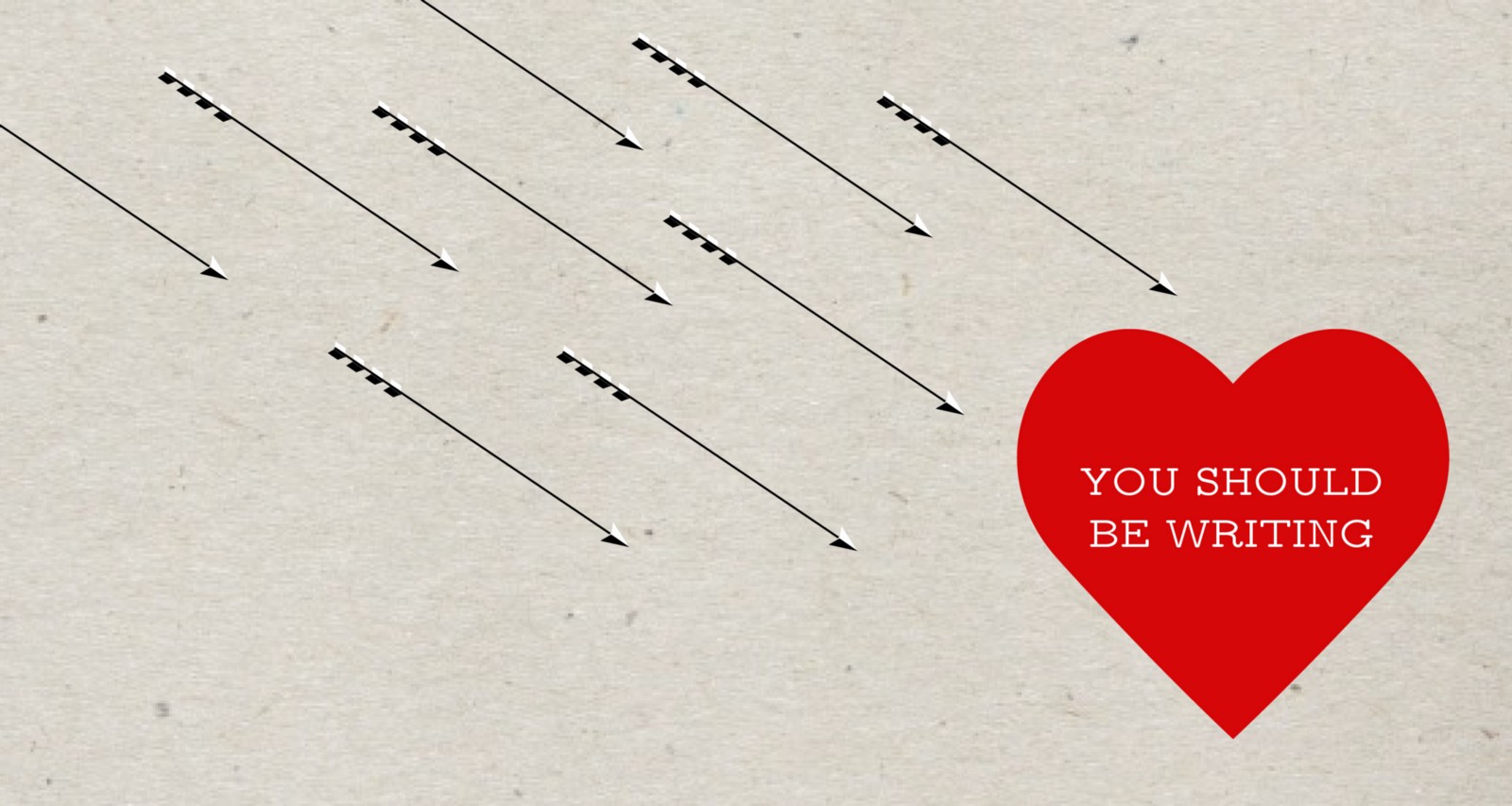
Writers, this Valentine’s Day remember to show your neglected writing a little love. It misses you.
Add your own on Twitter with the hashtag #WritingValentines
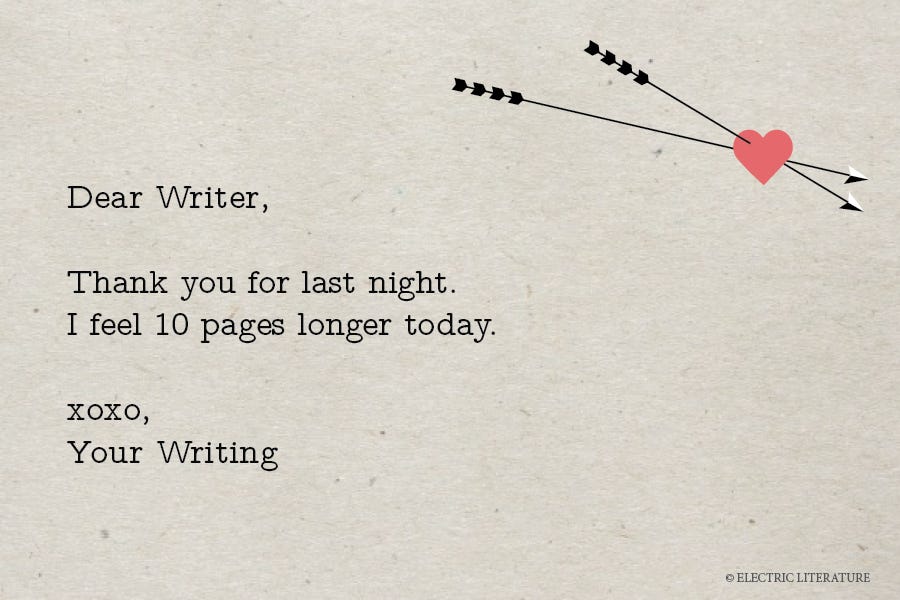
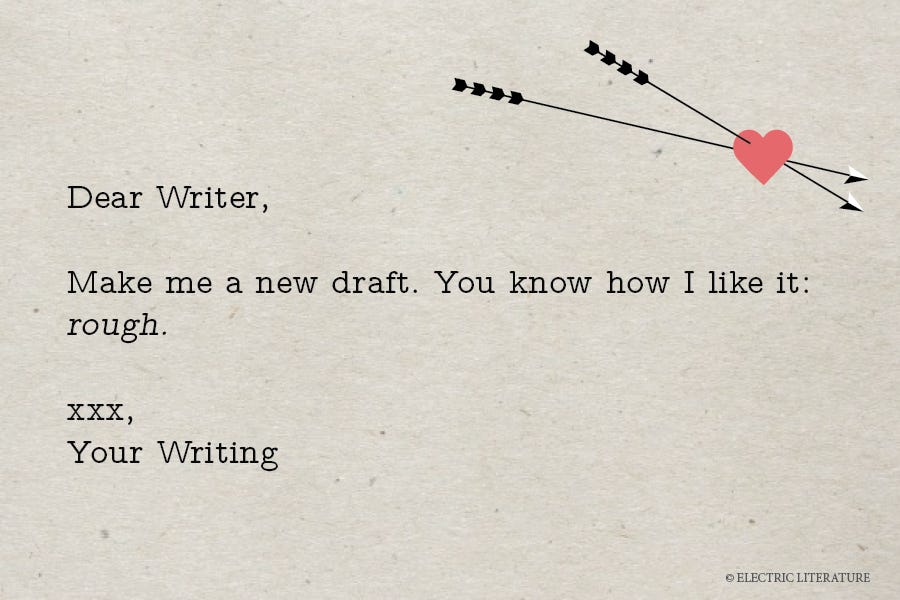
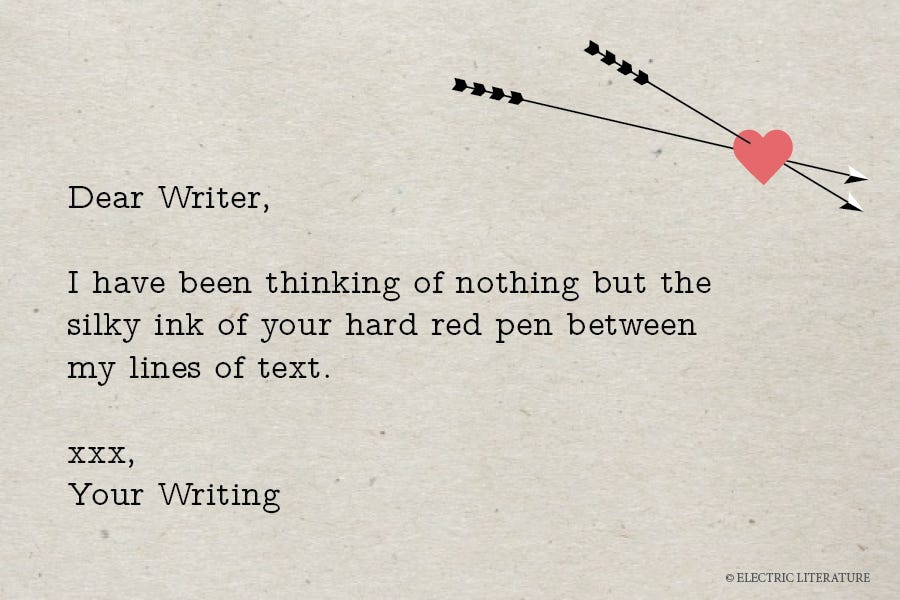
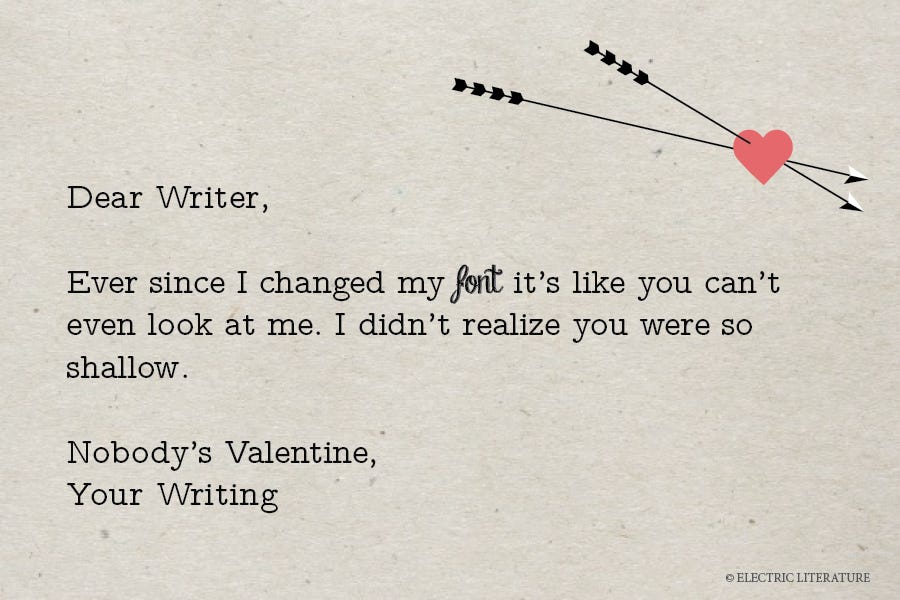
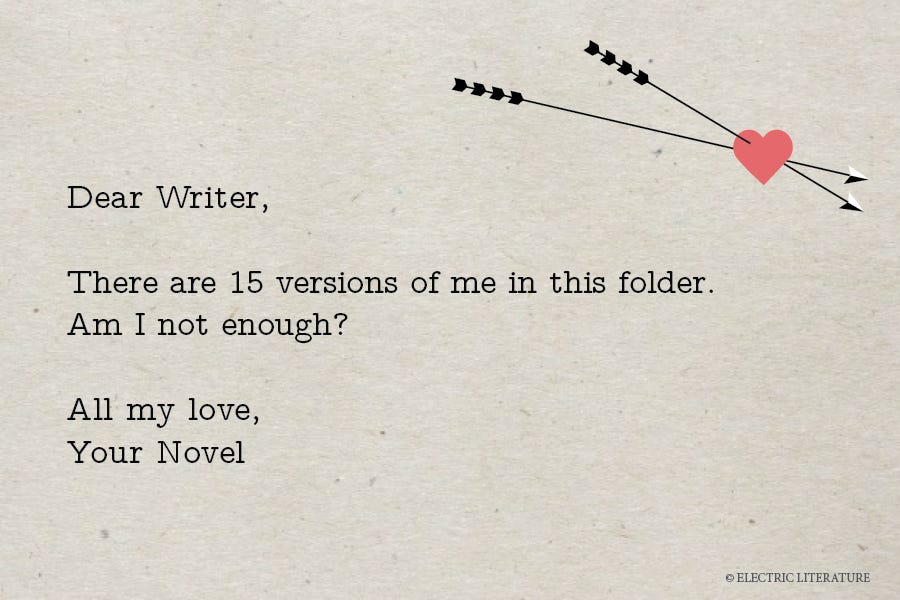
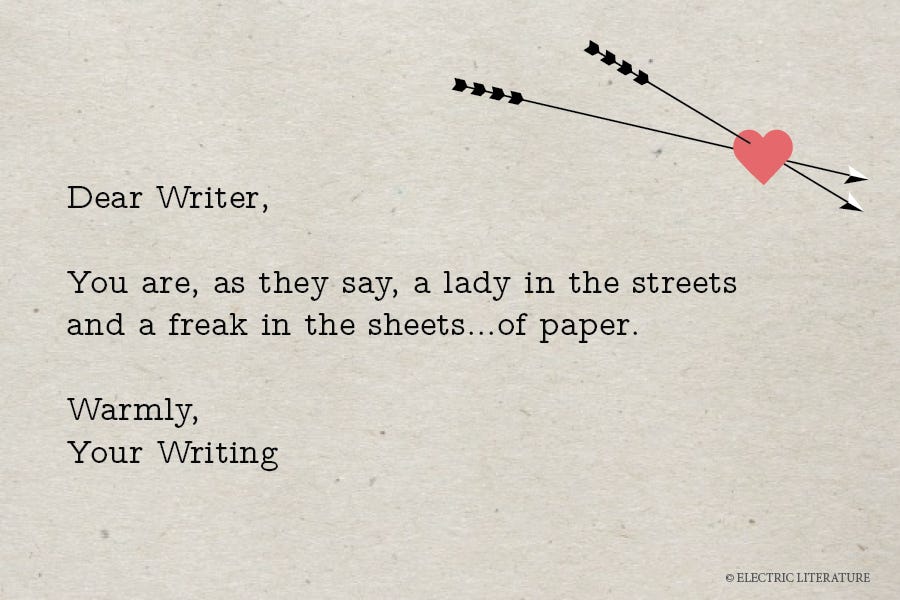
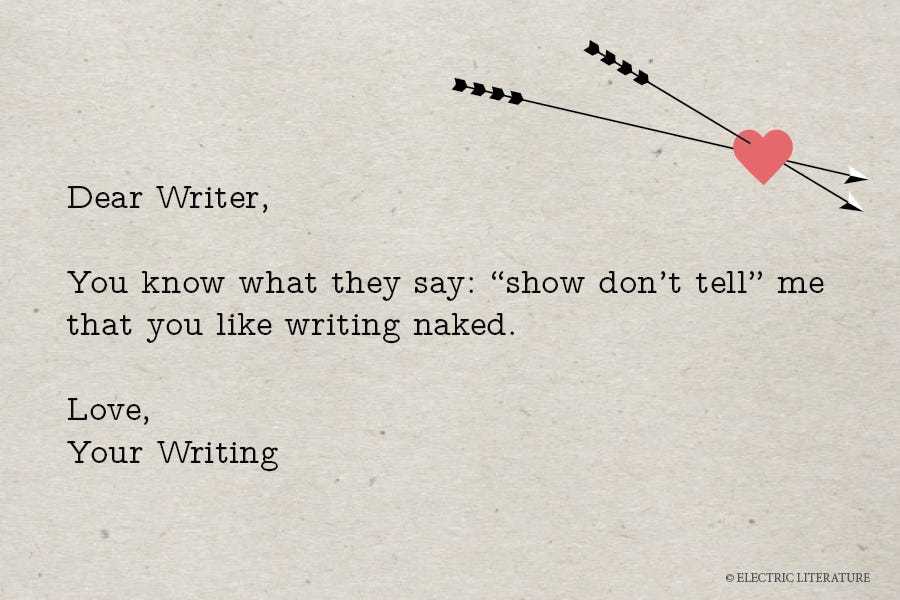
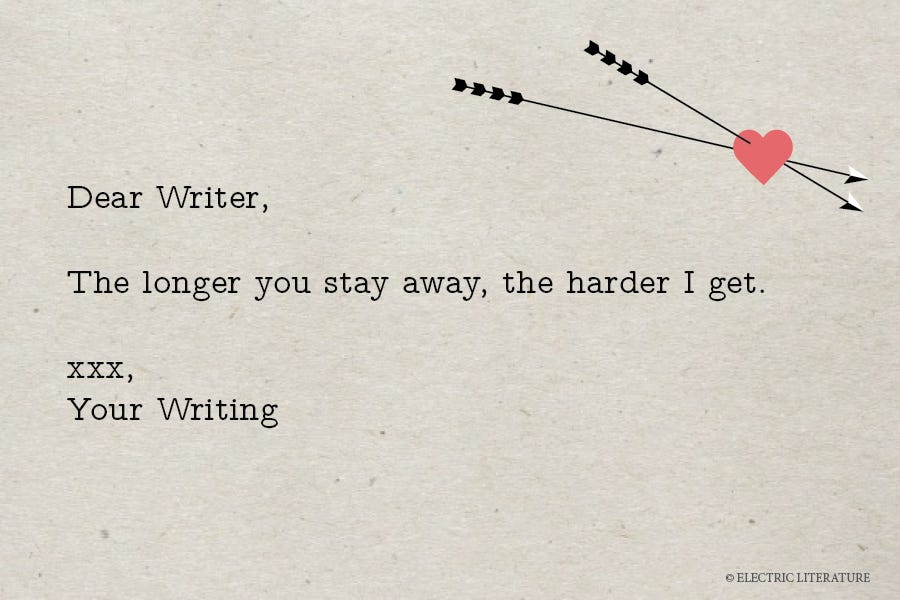
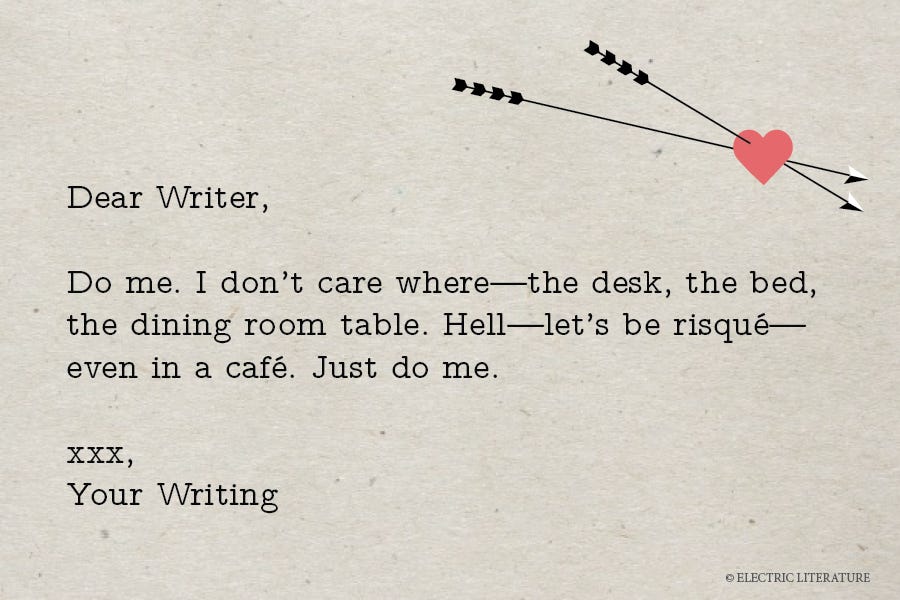
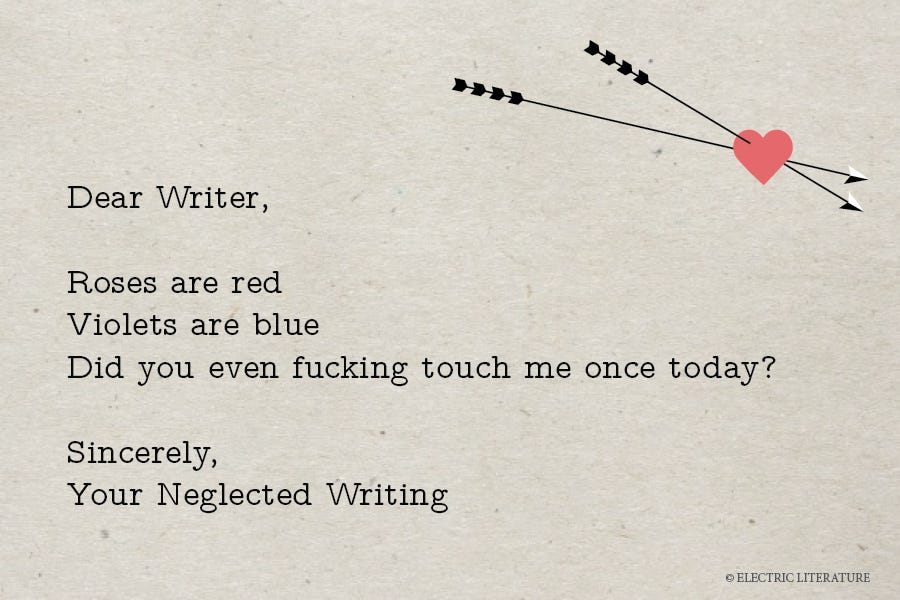
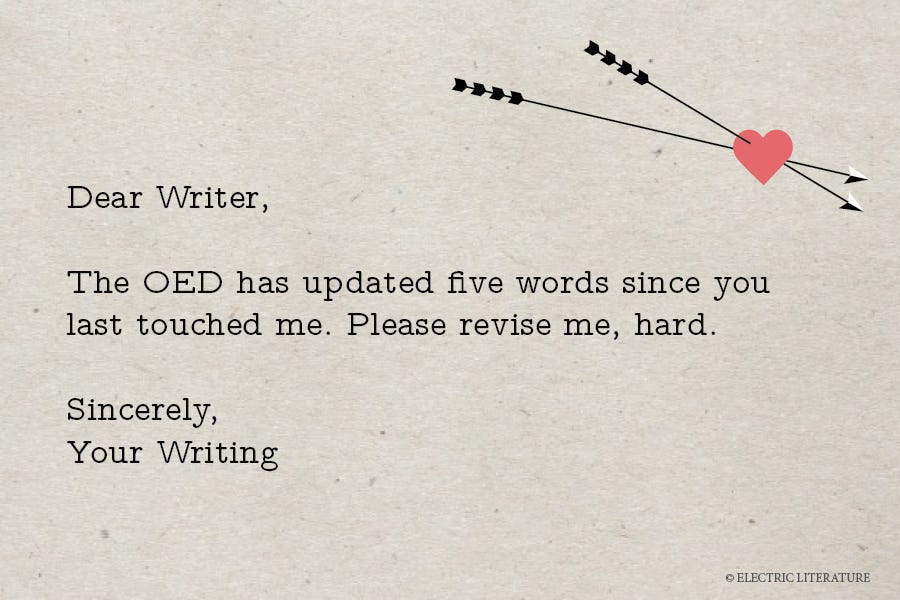



Writers, this Valentine’s Day remember to show your neglected writing a little love. It misses you.
Add your own on Twitter with the hashtag #WritingValentines
Colin Winnette admires the writer Alissa Nutting, so he asked her to suggest a book that they might talk about. She picked Sara or the Existence of Fire by Sara Woods. Then they talked about it.
Alissa Nutting is the author of the short story collection Unclean Jobs for Women and Girls and, more recently, the novel Tampa. She was the winner of the Starcherone Prize for Innovative Fiction in 2011. She teaches at John Carroll University.
Colin Winnette: Can you give a brief (3-sentence or less) description to ground any readers who haven’t read or heard of Sara or the Existence of Fire yet?
Alissa Nutting: That’s actually more daunting than it seems — one of the things about this book that I love the most is its breadth…if you think of Fairy Tales having, say, a runway, the kind that planes would take off from, and Childhood having another runway, and maybe Mystery and Disappointment and Wonder and Dogs and Cookies and Worms and Parties and Haunting…I could go on. Flights depart and arrive throughout the book. One description would be that the book’s a sort of biopic of the main character Sara, whom we first encounter in childhood. In some ways the form of the book is set up like a documentary or a docudrama, with a running narrative that cuts to other characters for interviews and alternate perspectives.
CW: That’s a great introduction. The book isn’t linear, but each moment seems proximally connected to some shared organic center. There’s a strange logic to the book, that’s constantly being undone and built anew, reset. With everything coming and going in this way, how does Woods keep us from feeling lost or discouraged? If you’re going to spend all day in an airport, you might find a private(-ish) place to sit, or wander in loops all day — some way of making this enormous and disorienting place your own. Where did you build your home in Sara or The Existence of Fire?
AN: For me it was directly within the character of Sara, who tinges sadness with the most incredible humor…the poignancy is wrenching. So many lines in the book are one-liners and quotables, or just make you grab your chest. Like, “A dog can be heartbroken.” The first time I read that line I gripped my chest and nodded for about ten minutes. That happened all throughout. It’s a very validating book. An empathetic one. I think the episodic nature of the book is part of what’s so smart and comforting about the narrative…there’s the connective thread of that character. No matter what happens in the episode, Sara’s always still talked about or referenced in some way.
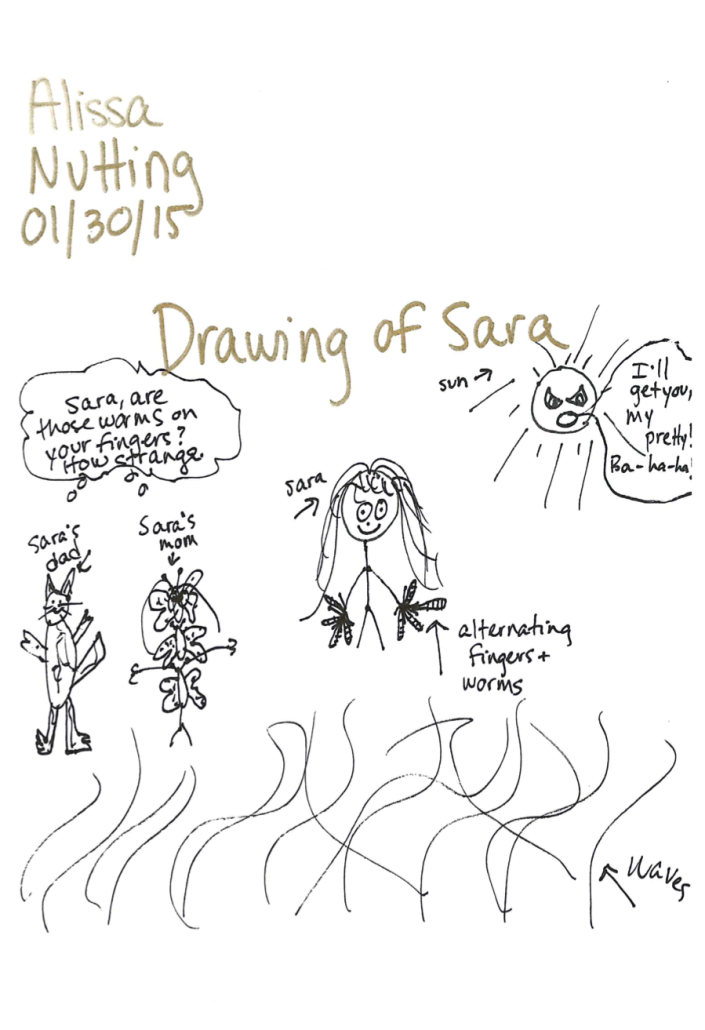
CW: Would you draw a picture of Sara for me?
AN: Okay. I’m teaching an undergraduate graphic novels literature course this semester, so I read the class pgs. 1–12 of the book and asked them all to draw a picture of Sara, too. (Those can be viewed here). My drawing is the one with my name, ha.
CW: Where did you find this book?
AN: I read [Sara Woods’] amazing book Wolf Doctors on the also amazing Artifice Books, and was very much all: MORE WOLVES!!! MORE POETRY!!! MORE SARA!!! This new book fulfilled all three of those requirements.
CW: Where did you find Wolf Doctors?
AN: In a word, narcissism. Poetry is one of the many pills in my anti-depressant arsenal. It just helps me cope. I feel like it’s bizarrely healthy, how these emotions and things are right there, and there’s enough space for those words to actually linger and grow and be showcased. It’s very religious for me, so I don’t read it daily, the way you wouldn’t want to do a sweat lodge retreat or something daily…you’d just get spent. Poetry spends me. In a good way. If I were a therapist I’d say I tend to write fiction because I don’t want to feel vulnerable. If I were a poetry critic I’d say I write fiction because my poetry is terrible. Anyway, I’d heard about the buzz for Wolf Doctors and had wanted to read it for a while, but as is my habit with poetry books I waited until I got sad to order it. It’s beautiful, and honest about the world in a way that isn’t restrained. It helped me. Beauty and honesty usually do.
CW: The book somehow felt both delicate and aggressive. There are obviously threats, fires, wolves, knives, etc. — but when I say aggressive, I’m thinking of the metaphors. Woods is constantly throwing down these gauntlets, “Sara’s father was a wolf,” “Sara was in a room full of hammers,” “Sara had an ocean inside her ears that wouldn’t go away.” These are the opening lines of just a few sections, and the poem spills out from each proclamation. Did it feel aggressive to you, or did you experience these opening moments differently?
AN: I felt both mesmerized, because of the magic of the events if they’re read literally and the images they trigger, and also very vulnerable. The text is very frank about how the danger and pain of life, and it’s coupled with these gorgeous, creepy descriptions (like a mother made of moths) that also really brought forward great positives about existence for me, like interest and curiosity. So for me it was a sort of comfort…this acknowledgment that the world can be so harsh and overwhelming, but that the silver linings are also quite real.
CW: When you think of the book, without picking it up to confirm, is there an image that comes immediately to mind? If it’s the moth mother, what does she look like? Gray and dusty? Backlit and white?
AN: Mothmother (I like it as one word) to me is a swarm of moths shaped somewhat like a roving droopy breast. The sound the swarm makes is the white noise sound of a sleep machine. But if there’s one image, without picking the book up, it’s probably an animation that is in the book yet isn’t, a composite aftermath of images and feelings: first the character of Sara standing on the beach as a young girl, then the image refreshes and the top half of her body is a wolf, then the image refreshes and she’s particles of sand, sort of like a swarm of moths I suppose (tinier, more particle-y) blowing away while a wolf sleeps in the distance on a beach towel, then the image refreshes and the sunset begins to shake out of place and we realize the sunset was actually a painting made of sand.
CW: Assuming the bit about the airport was metaphorical, where did you “set” this book? The beach? As you’re reading, do you place these characters anywhere in the world you know, or do you constantly readjust to keep up with the shifting world of the book?
AN: That’s a good question — I suppose because of the beach references parts of the book felt coastal, but because of wolves I also thought fairy-tale forest. Not in the sense of make-believe, but in the true fairy-tale sense: that life is filled with splendor and horror both; neither is available for individual purchase. The book kept reinforcing that to me in such a genius way.
CW: What feeling do you most associate with this book?
AN: The strongest feeling I associate is endurance…this capacity that tends to turn on hopeful lamps inside me, that things continue, for us and with us and after us, no matter our pain. And with all its unexpected hilarity about truly heavy subject matter, the feeling that sits with me after is that I will reach for this book a lot throughout my life when I need that empathetic lift without the sugar coating…I’ll reread it a great deal. When I was reading it I felt the discomfort more acutely — the discomfort of this book can be fast-acting, like a microwave, while the hope within the text is more of a crock pot. By the end of the book you do have a fully prepared, family-sized serving of hope — a particular flavor that is seasoned by unflinching veracity. Delicious.
CW: Would you leave us with a short passage from the book? And would you be willing to record yourself reading that passage?
AN: I recorded this for you today.
Author photo courtesy of Aaron Mayes
SONGS FOR GIRLS WHO ARE ALSO CATS
“Songs for Girls Who Are Also Cats” is the soundtrack to my life, but it’s also inspired by all the amazing women I’ve had the opportunity to work with this past year on my performance project Hello Selfie. Hello Selfie is about women, the gaze, and the ways in which women’s bodies and emotions are commodified and objectified in our society. I was particularly inspired by the recent Hello Kitty fiasco, in which hello kitty’s identity as a girl and cat threw everyone into a state of confusion and terror. I think being a girl is about constantly evoking that state.
This is for: Augusta Gail, Aurora Pringle, Christiana Laine, Anna Dewey Greer, Lauren Eggert-Crowe, Jessie Askinazi, Jessica Nicole Collins, Tina Stormberg, Peggy Noland, Labanna Babalon, Kelani Nichole, Emily Raw, Monica McClure, Jennifer Tamayo, Monica Mirabelle, Leah Schrager, Leah Aron, Jenny Zhang, Andrea Crespo, Elizabeth Mputu, Grace Miceli, Laura Marie Marciano, Genevieve Belleavau, Elena Kanagy-Loux.
1. Lady Gaga — Boys, Boys, Boys
Gaga likes boys as much as I do.
2. Taylor Swift — Wildest Dreams
I like how she wants this boy to remember her in her dress, and how she plans to haunt his dreams forever like a banshee.
3. Lana Del Rey — Once Upon a Dream
Leave it to Lana to take my favorite Disney song, about my favorite princess — the one who just sleeps all day — and make it as melancholic as the fairy tale really is.
4. Chorus of Stray Cats in My Yard
My former neighbor was an alcoholic who rode a motorcycle and yelled at the bushes and sometimes at me but she also had a big heart and would feed these stray cats in the alley who were always fucking and reproducing. Sometimes when I would go outside all I would hear was this chorus of meows from scrappy kittens. They kept reproducing until the city came and took them away.
5. Le Tigre — Much Finer
This song is about being a feminist and being depressed.
6. The Donnas — Forty Boys in Forty Nights
Eating junk food, doing a new boy every night — The Donnas should be called The Buddhas.
7. The Lunachicks — Spork
I like this song because it’s about an instrument that is not a fork or a spoon, just like hello kitty is not a girl or a cat.
8. Beyonce — Why Don’t You Love Me?
I love all of her outfits in this music video, and her mascara tears. Rolling around in curlers, performing sadness.
9. Cibo Matto — Know Your Chicken
Girl cats know their chicken.
10. Tori Amos — Bachelorette
You live alone now and you cry sometimes. You’re a car girl, you’re a star girl, he’s at the door. There’s a window.
***
— Kate Durbin is a Los Angeles-based artist and writer, whose books include E! Entertainment and The Ravenous Audience. Her most recent performance is Hello Selfie, performed first for LA’s Perform Chinatown, then in collaboration with Transfer Gallery in NYC.
— Photo by Jessie Askinazi
A dime-store teddy bear and box of chocolates doesn’t cut it these days (no, not even ironically). And although the perfect literary Valentine might be rewriting your favorite novel and casting you and your beloved as the main characters, and then having it specially printed and bound (in the sweatshirt you were wearing when the two of you first met, obviously), overworked and underpaid literary types sometimes just do not have the time. As always, Electric Literature is here to help you out. Here are 12 gifts for the lovable literary humans in your life.

For the Struggling Writer Lover
Write Like A Motherfucker mugs from The Rumpus

For the Poetic Lover
Love Poems by Pablo Neruda from New Directions

For the Misanthropic Lover
“Hell Is Other People” — Jean Paul Sartre hand-printed poster from TheAffair
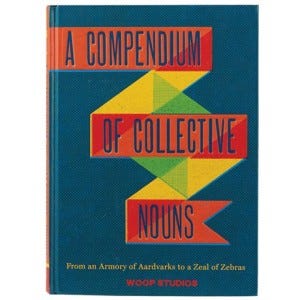
For the Lover Who Is Bored of Being Basic and Using “We”
Compendium of Collective Nouns from WOOP Studios
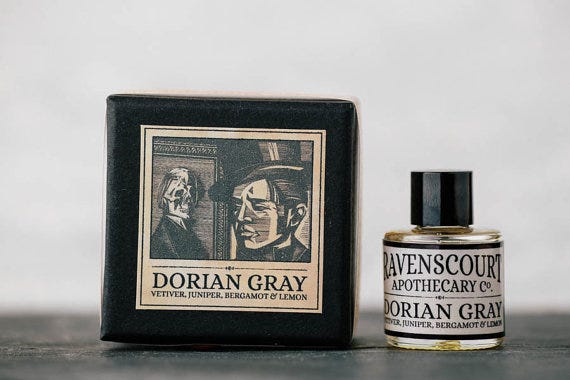
For the Well-Read and Well-Groomed Lover
“Dorian Gray” cologne from RavensCtApothecary

For the Lover with an Exposed Neck
Charcoal Library Due Date Scarf from Cyberoptix
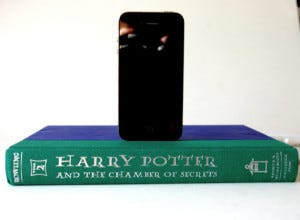
For the Lover Whose Phone Keeps Dying (Unlike Your Love)
Harry Potter book iPod charger from RichNeeleyDesigns
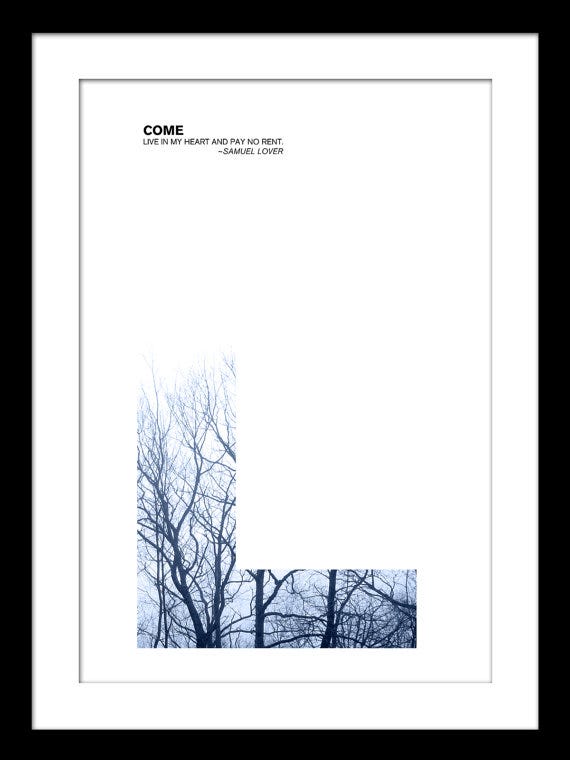
For the Poor Writer Lover
“Come live in my heart and pay no rent” — Samuel Lover quote poster from EscapeModulePrints
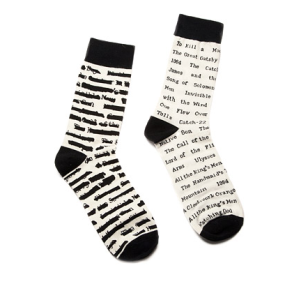
For the Lover Who Does It With Socks On
Banned Books socks from Uncommon Goods
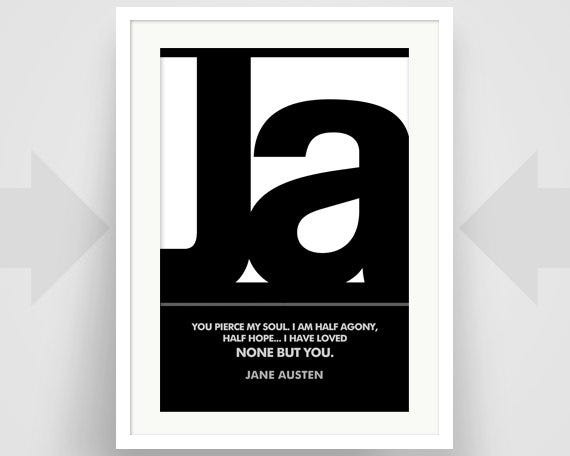
For the Romance Book Lover
“You pierce my soul. I am half agony, half hope I have loved none but you” — Jane Austen quote poster from EscapeModulePrints
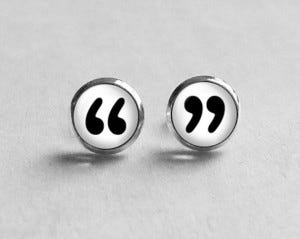
For the Lover that Abuses Air Quotes
Quotation Mark earrings from petiteVanilla

For the Couple Weary of the Valentine’s Day Industrial Complex
Ministry of Love George Orwell poster from TheAffair
I’m not sure exactly when the current wave of apocalyptic literature began or if it’s ever stopped or if there’s even the possibility that it will lessen or plateau before this planet reaches its end, but I haven’t read anything that tackles the anxiety of oblivion better Diane Cook’s Man V. Nature.
To be clear, Cook’s debut collection isn’t exactly apocalypse literature in the same category as the recent wave of world-ending books. Those stories tend to feature a recent environmental or political calamity — the coasts are flooded or the whole country is bombed out and bleak. Survivors are hunting deer, welling for water and staring into black nights, remembering the dead. They’re wandering, like in Cormac McCarthy’s The Road, in search of necessities and a will to live. And yet they still have the same relationship woes and dysfunctional families they’ve always had — Apocalypse Survivors: They’re Just Like Us!
At their worst, these stories can be either deeply moralizing (Left Behind, I’m looking at you) or just pure destruction porn, an outlet for our deepest anxieties about global warming or the human tendency toward war. This isn’t to say that these sorts of books aren’t often insightful, brilliant or at the very least entertaining, but they tend to fare better when they focus on how we survive after the dust settles than the oblivion itself. Emily St. John Mandel’s recent novel, Station Eleven, is a perfect example of this, focusing on the needs that lie just beyond basic survival — the love and stories chief among them. In The Road Cormac McCarthy uses a hellish landscape as a kind of neutral background so we can see the life of his characters in high relief. Yet the frames of these stories, an aggressive flu epidemic and a total nuclear annihilation, still read like possible ends to some of today’s headlines or thirty other books you’ve read. The tropes of the apocalypse are hard to escape. There may be more than one way for the world to end, but it tends to somehow feel the same.
The literature of the apocalypse can offer so much more than sheer anxiety fulfillment. At its best, these sort of books can let the reader grapple with the intangibility of total oblivion. Man V. Nature passes up the stock set pieces and gnaws on that thematic bone. The world doesn’t end so much as people’s worlds end — their senses of safety, their long-held narratives, their relationships and ideals.
Often these ends come at the hands of a shadow-y force, a system that is just beyond the comprehension of the people it controls. Something like a government, but not quite. Something like nature, but not quite.
In Moving On, a woman who has been recently widowed is taken from her home and forced into a prison-like women’s shelter. Heartbroken but timidly optimistic, she’s encouraged to demolish the memory of her late husband and take homemaking classes before a new man shows up to select her like a pound puppy. Cook creates a surreal but painfully honest world. She’s not trying to create a possible dystopia; instead she dramatizes the private catastrophe of losing love and the impossibility of escaping memory, despite what others insists.
Moving On is also one of the stories in the collection interested in womanhood and manhood. Here, a single woman is seen as just a husband-less wife, a poisonous societal pressure that the real world is still far from shaking. In another story, Marrying Up, there’s an unspecified violent uprising surrounding the apartment where the narrative unfolds, but it’s the interior of the home that is really terrifying. After two sweet but unimposing husbands are destroyed by the mob, a woman marries her Hulk-like neighbor purely for his size and brute protection. “Making love felt like getting run over. I was pancaked like in cartoons.” But eventually it is her own need to be protected that destroys her; after she gives birth to a monster child and her husband becomes increasingly violent. Gentleness no longer has a place in the world.
Cook is a pro at using the bizarre, sometimes even fable-like set ups to upend our most essential fears. Somebody’s Baby, a twenty-page stunner, unraveled the particular terrors of parenthood and expectant parenthood with a plot that was both utterly strange and completely familiar. Almost every time a newborn is brought home in this neighborhood a silent man stands in the yard, sometimes for months, waiting for the right moment to rush in and steal it. Of all the neighborhood’s mothers, only one is appalled by this tradition and after two of her babies are stolen she hunts him down and discovers all the stolen children who have grown ambivalent about their former families. It’s a beautiful distillation of the way parental fear changes shape: it starts as a terror of losing this vulnerable, tiny thing to some sudden death, then morphs into the worry that your child will become a stranger to you — someone you no longer recognize or someone who no longer recognizes you.
A handful of the stories wrestle with the antidote to annihilation — sex. In It’s Coming some mysterious, minotaur-like monster is rampaging an office building, eating workers by the handful. Two co-workers, inexplicably turned on by their final moments on earth, begin groping each other as they run from the beast, eventually fucking themselves into doom. In another, Meteorologist Dave Santana, a woman is driven witless over the one man she can’t seem to sexually conquer: Meteorologist Dave Santana. It was also the funniest story in the book and had one of the truest endings, one with a perfectly deft revelation that elevates the farce with wisdom.
When Cook does venture into a more traditional apocalyptic setting she does so with Barthelme-level absurdity, as in The Way the End of Days Should Be. A man is living luxuriously in the aftermath of massive natural disaster; he has plenty of food, a secure home, good wine, even scotch though he stays sober. Lonely, he eventually takes in a man who arrives at his door, starving and weather-beaten. A dilapidated home across the street, packed with survivors and low on supplies, has made him wary of outsiders, but he needs the company to survive and his particular distortions of this need propels the story.
In the final story, The Not Needed Forrest, “the State” determines that some ten-year-old boys are simply unnecessary, takes them from their families and throws them down a chute. Most perish in an incinerator, but “fourteen boys, naked and shimmering with mud” escape through some accidental portal that deposits them in a forrest. They find a camp and rejoice in their newfound freedom, living as violently and noisily as they want. “We’re boys. We’ll stun a bird and twist its neck, and we’re on to the next thing…We collect bird eggs, and we eat the mom.”
Winter arrives. The food runs out and starvation sets in. When one of the boys dies in an accident, the rest hesitate, then cook him. Eventually they start killing each other for food based on a lottery system, turning from tender to murderous in a span of two pages. Though the original enemy seems to be the cruelty of winter, by the end of the story the match has turned from Boy V Nature to Boy V Boy. Human cruelty is the greater threat.
Because our eventual ends are an essential human preoccupation, apocalypse literature has never been and will never be a trend. It’s always being written. We’re endlessly interested in the worst-case scenario, not just for the whole world, but for our personal worlds. A near-death experience can be the moment of redemption and rebirth that a life has been waiting for. Apocalypse books can have a similar function — to reveal what is essential about humanity after the worst, reminding the reader of what is most valuable in the world. But I prefer Cook’s approach, extracting and distorting a sense of oblivion without using environmental calamity or a surreal police state as scaffolding. Unfortunately we’re getting plenty of that in the news.
Enjoy a look at Man V. Nature: click here for issue 125 of Electric Literature’s Recommended Reading, as recommended by Terry Karten, Executive Editor, HarperCollins Publishers

by Diane Cook

Gary Shteyngart’s near-future comedy, Super Sad True Love Story, may be coming to a TV screen near you. Hollywood Reporter reports that the novel’s rights were picked up comedian Ben Stiller and independent studio Media Rights Capital, the latter of which produced House of Cards:
Super Sad True Love Story is a one-hour dramedy set in the near-future that explores the unlikely relationship between a bookish man stuck in a tech-obsessed society and a complex, materialistic young Korean-American woman. While navigating this romance he must also contend with mounting demands from his charismatic boss, who is himself being pressured by the domineering American government.
The script will be co-written by Stiller and Karl Gajdusek. There is no network attached, but apparently Media Rights Capital tends to start making their series before a network is on board. More info as it comes.
Eli was only ten years old when Greg Roebuck, the boy’s hardworking father, found the family dog struck dead by a car.
The dog’s name was Hermit. He had been the perfect companion for Greg’s lonely son. Frost stitched the body to the side of the road. Greg pried it free, the wind stinging his eyes. He carried the body back to the house.
He went to wash his hands in the sink, thinking only of his son. He dreaded Eli’s reaction. The boy had already lost his mother. And now this. What sort of unmoored life would Eli live if his childhood proved only a steady parade of loss?
When Eli arrived from school, Greg met him on the dirt road that led to the house. The fields were heavy and frozen and stank of manure. Greg, tongue-tied, motioned grimly: Follow me. The boy tensed. It began to snow. They entered the house together. Eli did not drop his rucksack to the ground or remove his coat.
In the kitchen, Greg mumbled an apology. He had covered Hermit’s body with an old blue quilt, and he whipped it aside now as though unveiling a prize. You asshole, Greg chided himself. Slowly, now. Slowly!
He had rested the dog on the table, and he chided himself for that, too, given his son’s already timid appetite.
Greg could not bring himself to look Eli in the face; he heard only the great intake of breath, the fumbling of his boy’s fingers over Hermit’s body, and then a series of brief, staccato questions delivered almost professionally: When? Where? Who did this? How long was he there? Did it hurt him? Is he gone forever? Can we save him? Why is there so little blood? This doesn’t even really look like Hermit, does it?
The questions droned on, weird and touching, and Greg offered few answers. He reached out like a blind man and randomly patted his son’s shoulders, wondering if this offered any comfort at all or if it only registered faintly to the boy, like raindrops, maybe, or like tears.
Greg had felt similarly useless when Agnes left. Like Hermit, she was gone, both disappearances untimely and permanent.
The boy was crying now, his questions finished for the time being, his little heart accepting in throbbing registers the fullness of its wreckage.
“Whatever you want for dinner tonight,” Greg said. “Muffins. Candies. Root beer.”
Eli could not respond, could only turn and run from the room, to his bedroom, to his bed. Greg heard the small mattress receive him with a groan. Uncertain of what to say or how to proceed, Greg went to the door and listened to Eli’s earnest, desperate prayers.
“God,” the boy pleaded, “I’ll do anything. Please bring Hermit back. This is a dream. Say it’s a bad dream. Wake me up, God. Wake me up. Wake me up! Please, God, wake me up.”
Greg stood quietly in the hallway, rooted to the floor by the deep strands of his son’s woe; he was strengthened somehow by the purity of these strands, their unfathomable depth and beauty. How pierced the earth was, too, how altered. Around their tiny woodland home, the air seemed to shimmer and thicken. The new world, Greg saw, was a place of great love and great loss.
Eli whispered himself into a fitful sleep and later, much later, emerged. Greg had removed the dog’s carcass to the woodpile outside. He sat now with the newspaper on his lap, the newly washed surface of the kitchen table gleaming like the belly of a fish.
“I want to bury him,” Eli said.
“It’s done,” Greg lied, wanting to save the boy the pain of the activity, the horrible labor involved. “He’s already buried.”
Eli began to cry. “Then we’ll dig him up. I want to see him again. I want to clip some of his fur. I want to bury him. Me.”
He sobbed, utterly broken.
It was not uncommon for Greg to scold himself for being a poor father, but now, too, he was a liar.
“Eli. Don’t fret. He’s there. He’s right there. I just thought — well, it doesn’t matter what I thought. Anyway. If you want to bury him, then that’s what we’ll do.”
Relief crossed the boy’s face, a look that was so close to joy that Greg felt unburdened. Yes, he thought. This is a good activity for a boy and a dad to do together. Bury the family dog. And tomorrow — a Saturday, the only day this week that Greg didn’t work — we’ll go to town together to choose a new dog.
And they did.
The new dog had no name for nearly a full week, but then, out of the blue, Eli began calling her Mother.
Greg disliked the dog. He had disliked Hermit, too, in the beginning. He didn’t like dogs, generally speaking. He liked animals with a purpose: horses, cows, pigs; animals to pull, milk, eat. He had brought Hermit home not long after Agnes’s departure, at the suggestion of a friend, to make their motherless, wifeless household appear less lonely. It was a strategy that had, to Greg’s relief, worked. Eli became happier, dedicating himself again to his schoolwork, so long as the dog remained by his side, Hermit’s tail slapping out a friendly beat on the battered wood floor. Eli’s grades improved, his friendships improved, his relationship with his father improved. And, either out of a feeling of gratefulness or just because Hermit was such a good-hearted dog, Greg, too, began to love the animal. Not the way he loved Eli. But just enough. The three of them made a respectable family.
But the new dog was strange. She was a mutt, part Welsh terrier, part some-other-breed-he-couldn’t-remember, a breed that, the breeder told him, had delicate bones. She was shaggy like a terrier, with a terrier’s round wet nose, a nose that shocked Greg when she pressed it like a soggy sponge into his hand or bare leg, a thankfully infrequent behavior. But he definitely did think of the word delicate when he saw her — she was delicate, not doglike at all but graceful, careful, like a long-limbed bird. Hermit had been overeager, sliding across the floorboards when Eli came home, racing frantically and clumsily around corners, but the new dog literally stepped, that cold black nose in the air, like some well-trained Spanish show horse, from one corner of the house to another, lifting each foot off the floor with a gait suitable for dressage, as though disgusted by Greg’s housekeeping. When she wasn’t traipsing about the house like an elegant snob, she sat dolefully in the corner, staring out the window, or she turned those black shining eyes on Greg. Regarding him, she seemed unimpressed.
Mother enjoyed Eli and she abbreviated the boy’s grief, but, compared with Hermit, she was measured and fussy. She would sit with Eli at the couch, for example, but she would not approach the boy if he sat in his father’s recliner. Or she would greet Eli at the back door when he returned from school, the door facing the woods, but never the front door, facing the road. The boy changed his habits to suit her, but Greg was annoyed. He wanted to return the dog and find a more affectionate one, although he could never bring himself to suggest this to his son. Eli already loved her, and Greg begrudgingly tried to accept this love. But she reminded him of something, or someone, although he couldn’t quite think of what or who it was, not until Eli called her Mother.
It was true. Eli’s mother. The damn dog reminded him of Agnes.
Despite the wild red rage that flamed in him when he connected dog with woman, Greg could not bring himself, despite the years of rejection and regret, to hate the dog fully. Not yet. Eli loved her. Eli was quick to forgive her quirks, and the dog, in turn, became almost, if not quite, affectionate with him. It was not unlike the odd mother-and-son relationship that Greg had witnessed when Eli was little. It had been a relationship that comforted him as well as frightened him, with its easy floating intimacy, its foreign, accepting quiet. Greg’s own mother had been effusive, tender to the point of discomfort. Not so with Agnes. She had been attentive but distant, kind but aloof. In some moments he found her to be the best sort of mother possible, a mother who never raised her voice in anger or sighed in annoyance, but in other moments he found it bizarre — disturbing, even — that she sometimes did not notice Eli at all. There was, for example, the incident with the wood chipper, when Eli had shoved his little fist into its maw, curious. It was off, thank God, but Greg, pulling weeds from the flower bed, had launched to his feet with an angry shout, warning the toddler never to approach the machine again, all while Agnes stared vacantly into the trees, her face as black and unreadable as a crow’s. Later, Greg had asked her how she had not noticed. She had been standing with Eli, practically on top of him. How had she not seen what he was about to do, what he did? What if the wood chipper had been on? What if Eli had managed, being a smart boy, to turn it on right at that very instant?
Agnes had turned toward him, her face still empty. “There are people who worry. There are people who don’t.”
A little worry, Greg argued, was a good thing where a child was concerned. A boy as smart as Eli, as smart and as fragile, well, to go through parenthood with blinders on was unacceptable. Absolutely unacceptable.
Agnes had smiled at him, and the smile reduced him, as always it did, to an insignificant, paltry thing: a man, a husband, a father — the ridiculous sex. As he spoke, his anger and worry waned.
What right did he have to tell a woman how to be? Wasn’t Eli growing up to be a marvelous boy, a truly kind and rational and generous child, a child rumored by other parents and the schoolhouse to be, in fact, brilliant? Men had no rights in these matters, and Greg was ashamed. After all, he was not in the house daylong, as she was. She knew Eli best. And he supposed, as many men supposed, that she loved her child more than he did. He backed off. His wife expressed no gratitude and no annoyance with him either way. If anything, she seemed simply bored with the whole affair.
And that was how Mother behaved, too. Bored. Not angry or tense, not furtive or sad. Just bored. At night, Greg passed by his son’s room, saying hello and good night on his way to work; he held down the night shift at a filthy pub, a job that was easy and decent despite the long, late hours. Usually Eli would already be asleep, one hand clutching the fur on Mother’s back. Mother, however, never slept. She lay very still, statuesque, but Greg had not once seen the dog’s eyes close. She didn’t even bother to raise her head to study Greg — she merely combed him over with her eyes, judgeless but uninviting. God, the boredom!
And, like Agnes, the dog simply lay there, visibly but joylessly caring for his son. Greg wondered if she would suddenly up and disappear, just mysteriously vanish. He considered purchasing another dog straightaway, to soften the blow of such a departure. Or he could put the dog down now and save them all from an even bigger misery down the road.
Most days, Greg found additional work mending fences or loading hay or repairing downed power lines, and he would sleep only two or three hours before rising and heading out to work again, his brain sloshing in his skull like a bowl of cold soup. It was dangerous to work in such a twilight state, especially driving testy machinery or climbing the bald telephone poles, but others did the work drunk or just plain boggled with stupidity. Greg was sure-footed, small but coordinated, his hands as deft as a raccoon’s, and he performed as well on no sleep as other workers did on a full night’s rest. He took whatever job was offered to him: He was saving for his son’s schooling. Eli deserved all he could provide. Greg had little else to give the boy if he died, other than the furniture and his good rifle, so he worked and saved.
When he left in the morning, he would knock on the door to his son’s room and say, “Leaving now. Go to school. Feed the dog.”
The boy never needed to be told these things, but Greg liked to have a reason to look in on him, his yellow tufts of hair poking up from the blankets, the room awash with the sweet smells of his boyhood, smells of salty earth and maple syrup and warm, fetid sleep. Rarely, the boy stirred, but sometimes he lifted his head from the blankets just long enough to say, without opening his eyes, “Goodbye, Daddy,” and Greg’s heart filled and spilled over. He loved his son. He was not, he knew, the world’s best father. But, goddamn it, he did love his son.
One morning, on the way to scale poles just outside Wallace, Idaho, Greg poked his head into his son’s room and saw that he slept alone. He said goodbye and gave the boy a kiss on the forehead. Eli grumbled something and turned over, taking with him most of the blankets and a corner of the fitted sheet. Greg stood and gazed for a moment, embraced by the old, sleepy sensation of love. Then he went into the kitchen to retrieve his thermos of coffee and his lunch: some salami, a hard knob of cheese, and a round rock of a plum, dried to a small black husk. The same food sat in another satchel in the fridge, ready for Eli to ferry to school. Greg went to the front door and pulled on his work boots and began to tie the laces. He was energized and hopeful despite his short night of sleep. As he finished tying his right boot, Greg heard a soft snuffling noise. He raised his eyes to find Mother staring at him, her nose wet from the water dish, or maybe from drinking out of the toilet, something Hermit had loved to do, although Mother likely believed herself too good for such a lowbrow habit.
Greg smiled at the dog and patted his leg. “Here, girl. Here, Mother.”
Mother did not so much glare at him as raise her eyebrows with incredulity.
“Come here,” he said softly. “Come here, Agnes.”
The dog moved forward hesitantly.
Greg opened the palm of his hand.
“Agnes,” he said. “I thought so.”
Mother peered at the palm of his hand with a regal expression, as though staring down into a pit of snakes. She did not move closer.
Greg wanted to cradle the dog for a moment. Not in any weird, sexual way, he told himself. Just to feel her warmth, anything’s warmth, curled against him. Mother yipped in protest as he grabbed her collar and pulled her to his chest.
“Stay,” he said. “Stay. Mother. Agnes. Stay put.”
She squirmed against him and he held her there harder. Her breath came in a labored wheeze. Stop, he told himself. Stop it, or you’ll choke her to death. He couldn’t stop. He crushed her to him with more force, his own breath coming in urgent, clumsy gulps.
A horn sounded. The truck bound for Wallace. Greg released the dog and stood. Mother scampered, whimpering, away from him, and Greg thought, Good. He felt enormous, powerful, post-coital. And also: delusional, concerned, filled with an ominous regret. Had he hurt her? He saw her curl into a ball near her food dish, her indifferent face clearly expressing, You cannot reach me. Ever. You’ll never reach me. The expression meant she was okay, okay enough for him to be annoyed again, to want to give her a solid crippling kick, but he hurried from the house instead, shutting the door firmly behind him.
When Greg returned later, drained and irritated, he found Eli on the couch with the dog, looking over his arithmetic lesson.
A bright boy, brighter than Greg had ever been. Very much like Agnes. He could be an engineer, even a doctor. The dog, he noticed, leaned over the book, too, as though reading along.
“She’s smart,” Eli laughed. “Look how smart she is.”
“Oh, I have no doubt,” Greg said. He sat down to unlace his boots and noticed the dog peek at him warily — just for a moment — and was pleased when she quickly looked away. So. He had affected her. He felt satisfied. He rubbed at one of his sore shoulders and sat there on the old bench, leaning against the wall, listening to the heavy panting of the heating register.
“You know, son,” he said. “I’ve been meaning to ask you.”
“Hmm?” Eli said, half listening.
“I’ve been meaning to ask you about this dog here.”
“Mother,” Eli said. He didn’t look up from his work, only turned his pencil over and erased what must have been a wrong answer.
“This dog here of yours. Meaning to ask how you came up with the name you did. It’s a queer name for a dog. Especially for a dog that’s not, you know, a mother.”
Eli stared into his book. A moment’s silence passed.
“It’s just,” Greg continued, tugging at a callus on his palm, “I’m curious. Why Mother? Why not Angela or Katie or Mutt or Aloysius? Good gravy, why not Spot or Fuzzy or any other normal dog name? Why Mother?”
“You don’t like the name,” Eli said, and looked up at him, his eyes filling with tears.
“Well,” Greg said, “I didn’t say that. Don’t go crying on me, son, you’re nearly full-grown. Let’s not have tears here, now. You know I hate that. Tears are the tools of manipulation. I’ve always said it.”
“You hate the name,” Eli repeated.
“Tell me how come.”
“Because — ” he began. Then stopped, shook his head as though freeing water from his ears, and began again. “Because the man — her first owner — called her a first-rate bitch. He pointed at her and said, ‘She’s a first-rate bitch.’ And you said, ‘We’ll take her, then,’ even though I wanted a different one. I wanted the one who wouldn’t drink his mom’s milk, who had to be fed from the bottle. But you didn’t want him. And also,” and he looked up at Greg’s face again, brave the way only children can be, and said accusatorily, “and you called Mother a damn bitch once. I heard you.”
“I did not. I never said such a thing to your mother. Not once. Not ever.”
“Not to her. You said it about her. After she left. You said, ‘If I could get my hands around that damn bitch’s neck, I’d kill her.’ That’s what you said to Uncle Frome. And Uncle Frome said, ‘Now, now, that’s no way to speak.’ And you said, ‘That damn bitch. I’ll kill her! I’ll kill her for what she did!’”
The boy finished his exclamation and then buried his face into his dog’s body, the bravery stripped from his face, his deepest secrets dredged and discovered.
Greg, too, felt ruined. He wanted to put his arms around his son, console him and explain why, why, he’d said such horrible things, but the dog had risen and stood between them, and Greg worried that if he came too close to her, he would take her up in his arms and swing her sideways against the wall and smash her head open, spatter her brains against the wainscoting.
So instead he said, “I was angry. Very angry with her. For what she did. For leaving us. For leaving you. I was angry because it wasn’t fair to you, Eli, what she did.”
“She loved me,” Eli said, crying freely now. The dog went closer to him and nosed the boy in the arm, as though to say, Yes, as though to say, Hate your father, as I do. “She loved me; I know it.”
That may be so, Greg thought, she loved you, but she didn’t love you enough. That was the thing. Anyone could love. Anyone could say they loved their husband or child or wife or dog. They could be out in public and behave with perfect respectability, so that people would say, as was often said of his wife, What a wonderful person. What a wonderful mother. What a wonderful, calm, loving woman. Anyone could perform such an act. But to actually love, to love enough to commit to unhappiness, that was real love. When his wife would say to him, I wish we could travel, Greg; I wish we could go dancing; I wish we could drink beer until we black out and then do nothing tomorrow but vomit and fuck and then drink some more, Greg would frown. Yes, he wanted those things. They sounded like good fun. But they had a child now, he would say, a responsibility, and they owed it to Eli to be constant, reliable parents. Agnes would listen raptly with what Greg assumed was the pure, quiet understanding of love but with what he realized now was sheer bafflement at the depth of his own affection.
“It’s so easy for you,” she’d told him once, “to love and not grow bitter. It’s hard for me, Greg. I’m just not good at it. The more I love, the more bitter I become.”
“But you do love Eli?” Greg had pressed, worried.
“Oh, yes. I love him. Of course I do.”
And Greg’s worry had immediately deflated; he had decided that she was simply tired.
So many mothers were. So very tired. So very fed up with the young children they watched day in and day out. He understood it all in a way that most husbands did not. She would say that to him, even — You’re very understanding, Greg — but she would say it with a sorrowful tone, as though she wished he would beat her, or tongue-lash her, or choke her during sex, as she had once read about in a dirty book she’d found at a friend’s house. When she’d told him of the latter discovery, Greg had ignored it. He had not taken her seriously when she’d mentioned the choking, had not accepted the tacit invitation suggested there, but maybe he should have taken it very seriously indeed. Maybe a little roughhousing would have gone a long way.
“Did it matter, though? No. Probably not. In the end, she didn’t love them enough. She didn’t love Greg and she didn’t love Eli. Not enough. That was what had really shocked him. That her love for Greg had an ending point was not surprising. Such was the way with wives and husbands. But the love for her own son? A mother’s love was supposed to be unfathomable, like an ocean without a floor — reaching, spiraling into nowhere, into infinity — but her love had stopped before it even began.
What if she had seen Eli in the aftermath, when he had screamed and sobbed for her return, when he had been unable to sleep at night because he ached to hear her voice, ached to embrace her soft body in its worn nightgown and darned socks? When he had asked his father, over and over: Will she return? When? Where is she? Did she send a letter? Did she phone yet? If she had seen these things, heard these things, Greg wondered, would she have returned? Or would it have only made her more cocksure that her abandonment had been the right idea all along?
The right idea, Greg surmised. Yes, doubtlessly. She was always cocksure. She would not return. The more they wanted her to return, the less likely the possibility.
“So why,” Greg said to the dog now, who sat nosing his son’s weeping, supine form on the rotting couch, “why are you here now?”
The dog ignored him, as did the boy. Greg rose and took his son up into his arms and carried him to bed. The boy hadn’t eaten dinner, but he was clearly spent from his refreshed woe. Greg was almost grateful when Mother entered. She moved into the room’s farthest corner and sat on her haunches, raising her long chin high. She waited patiently for Greg to leave. When he did, he heard her trot across the floor and climb onto the bed, too. No doubt she felt safest with the boy. That made sense. Greg wanted to take a club to her head.
Greg went to the kitchen to eat leftover bread and gravy, which he reheated on the stove. He sat at the little table in the kitchen — more of a stool than a table, really — and noisily sopped up the food with a spoon. Then he sat there for a good several minutes, thinking of little and enjoying the silence. He considered rising and taking up the papers in the living room, but the idea of moving even one inch exhausted him, and so he merely tucked his chin down and fell asleep there, sitting up, as he did sometimes, his plate so clean before him that his last thought was that he could go swimming in it and how refreshing it would be to swim into the milk-white ceramic, like pushing through the supple, supportive fabric of the moon.
And then, with a sharp cry, he awoke. The room had darkened, the single bulb had burned out over his head, but the moonlight pushed through the window, illuminating the kitchen in a deathly bluish gray. Perhaps because of his earlier reverie, Greg worried for a moment that the world had flooded, that they were underwater. But as quickly as this notion appeared, it dissolved. Greg then noticed the black form of an animal in the doorway, an animal that gazed at him with wet, affectionate eyes. Mother.
“Why are you looking at me like that?” he asked her.
She floated to him, stood at his feet.
“Don’t look at me like that,” Greg warned her.
Her eyes never left his.
He stood, his knees wobbling, remembering how Agnes would come to him every now and again, with this same wet, desperate look, this same longing for love. How grateful he would be in those moments, how immediately forgiving of all of her prior coldness and cruelty, and he would lift her and take her with him into the bedroom and strip her down and be with her, inside her, around her, and she on top of him and beneath him, and then in front of him, like a dog.
That was the worst thought, when it came to him, like a dog. The animal gazed up at him with that same question in its eyes. It mocked his loneliness.
“Leave me be.”
He scooted the dog out of the way with his foot.
He made sure to lock the bedroom door behind him.
That was the thing he remembered later: that he had locked the door, that he had checked the lock, made sure it was fast. So how was it that he awoke, hours later, the dog sitting right beside him on the bed, staring down into his face with a terrible silent urgency, an expression that immediately panicked and excited him?
He trembled as he rose and pulled on his robe. He lifted the animal into his arms and felt her go gratefully slack. What he wanted to do, what he wished more than anything to do, was lie down with her, wrap his arms around her, burrow his head into her stinking dog flesh, and weep. Instead, he went outdoors, marching for the woods, stopping once before the rusted spade, awkwardly packaging Mother beneath one arm so that he could take up the spade in his free hand. He continued this way, through the sparse snow, for several minutes. It was as if she knew what he would do. She remained where he set her down, waiting. The earth was cold, difficult to puncture, but he strained and heaved, more convinced with each thrust. It was better this way. Better for them all. She would be gone, and he would sleep, and, later, he and Eli would drive to town for a new dog. There would be some sort of necessary lie about the dog’s disappearance (carried off by raccoons or coyotes, he thought, stolen by some stranger driving a beige truck, merely gone, just gone, something the boy already knew all about).
This last thought occurred to him as he began to shovel dirt over the dog’s head. Mother shook the dirt off and looked up at him from the recesses of the deep hole. He shoveled more dirt down onto her. He was crying now, telling himself, No, no, don’t do this. Even if she is the ghost, even if she is. He stopped digging, thinking of Eli. He could not bury Mother alive, after all.
How Greg sobbed then. How lost he was! All of his life had tunneled toward this one dark hole in the woods. If he buried this dog, he would never rise from it. It would be the final descent of his soul. The dog gazed up at him calmly.
“You damn-it-all heartless bitch,” Greg said, and wormed onto his belly, reaching for the animal.
How far down had he dug this hole? He was amazed at its depth. It seemed implausible that he could have dug down this far in such a short amount of time, straight through the frozen earth. He could not reach the dog. His fingers scrabbled at her ears. “Up on your hind legs, damn you,” he said, but the dog lay down on the dirt with her head on her paws.
“Tomorrow, then,” he said. He was bone-weary. He had never felt so tired. He rose, groaning, and made for the house.
Tomorrow, Greg decided numbly as he walked, he would form a phony search party with his son, and they would come across the hole together, and he would make a big show of returning to the house for a ladder, and Eli would regard him as a hero, and all would be well.
And, he resolved: Mother would live with them again, unmolested this time. Greg slouched back toward the house, dragging the spade behind him. His shoulders and spine throbbed. He would treat her right, better than ever, and maybe the ghost would recede and the animal would come forth, or some such bullshit. Greg didn’t know. But he wouldn’t harm another hair on her head, not when Eli’s feelings were at stake. He went to bed feeling a bit of hope, and also a bit of gratitude that Mother was nowhere near the house. For the first time since her arrival, he slept dreamlessly.
The next morning began as Greg had expected: Eli rising, Eli calling for Mother, Eli arriving at his bedside, tearstained, to beg for his help in finding her.
“Sure, buddy,” Greg said, and nearly screamed as he sat up, the soreness in his back splitting open like the maw of a volcano. “Sure. Let’s go a-lookin’.”
They pulled on their coats and boots and went outside. Greg noticed the tracks in the earth from where he had plodded, to and fro, the night before, and he watched his son’s face for any sign of recognition, but Eli looked only side to side, every now and again throwing back his head and baying, “Mother! Moooooother!” It was a heartbreaking caterwaul, and Greg knew Mother was not the sort of dog to bark in response. She would remain silent in that deep hole, waiting for them. Always, it seemed, she was waiting.
Eli reached the hole first and stood at its lip for a moment, looking back at his father in delight and then saying very loudly, “Wow!”
So he’s found her, Greg thought, and heaved a sigh of acceptance.
Then, to Greg’s shock and alarm, Eli picked up a giant rock and hurled it as hard as he could into the darkness. Greg cried out, “Don’t,” baffled that his son would attack his dog in such violent fashion, but when he arrived at the mouth of the hole he saw that there was no dog visible. There was nothing visible at all. No dirt floor, even. Nothing but an endless blackness. The hole receded into the earth and kept receding, down and down, like a well that had been opened and abandoned.
“This can’t be right,” he mumbled.
Eli hoisted a fallen tree branch and flung it like a javelin into the hole. They listened to the dull thud of its impact on the dirt walls, waiting for some sound of a watery or rocky bottom, but there was nothing, just eventual silence. Greg backed away from the hole and urged his son to do the same.
“But,” Eli said, rising hesitantly from an uprooted tree stump that he was attempting to roll toward the opening, “this will be so great.”
Greg looked around him: Perhaps he was at the wrong hole — but how could that be? He knew these woods so well. He had followed his well-worn pathway here; he could still make out his fresher tracks from the night before; everything — everything — suggested that he had been here only a few hours prior, that he had dug this bottomless pit himself.
“Eli,” he said. “Move away. Move back now. Come here.”
The boy sobered, his grin fading. A sound issued from the hole — a long, womanly wail.
Part animal, surely, but also human.
What pain it bellowed! What heartache!
“Mother,” Eli cried. He fell to his knees, crawling to the opening, peering into the face of its irretrievable, unfathomable blackness. “Mommy!”
Greg lunged. There was nothing left in him but love for his son, nothing but horror at the potential loss of him.
He grabbed the boy’s collar.
He pulled.
Looking for some interesting reading to get you through hump day? Here are some literary links from around the web to check out:
Critics panned Edgar Allan Poe, but his strange voice has endured
How the FBI monitored African American writers for decades
Are these the most beautiful sentences in British literature?
The NY Times debates if book reviewing is a public service or an art
Margaret Atwood talks about gender and politics to military cadets
New Republic wonders if it is still possible to survive as an artist in America
The Millions merges book covers with photography
The story behind the sudden Wheel of Time TV pilot
Lastly, we have some updates to the Harper Lee controversy
Sarah Gerard’s new novel Binary Star is an intense story about a young astronomy student struggling with anorexia and her relationship with a long-distance, alcoholic boyfriend. Together, the destructive couple takes a road trip around the United States and experiments with veganarchism. As she starves and purges, he consumes. The prose reflects the characters’ behavior. Sparse and lean, Gerard’s writing hurtles forward with a momentum that seems bent on burning up, much like the stars her protagonist studies. It’s a novel that takes risks, both in style and subject matter. Women are told that writing about eating disorders is cliché, or that if they write about their bodies or their own narcissism they won’t be taken seriously. Sarah Gerard refuses to let those experiences be devalued and instead puts them at the center of a serious literary work.
Gerard previously published a chapbook, Things I Told My Mother, as well as numerous essays and short stories, but Binary Star is her first novel. I spoke with her at Housing Works Bookstore Café.
Kristen Felicetti: Binary Star started as a memoir, and then you decided to make it a novel. Why a novel?
Sarah Gerard: If I had written it as a memoir, I would have had to be very careful. Because both of the characters are very sick people, I would have had to be very careful about how I treated them and who might feel exposed by this story. I didn’t want to have to worry about that. I wanted instead to put the story entirely inside the protagonist’s point of view and allow her to say whatever she wanted about the things she was struggling with. In that regard, it’s completely fictional, because everything is being filtered through the very skewed point of view of this protagonist. And it’s clear that sometimes the way she perceives things is not totally factual, or is not objectively accurate.
I think people have done really creative things with memoir — Lidia Yuknavitch is a very poetic memoirist, Maggie Nelson has done a lot with the essay form and memoir, and of course, Kate Zambreno. But I am a fiction writer and I wanted to give myself complete liberty.
KF: In Things I Told My Mother, you said that your best writing begins from a place that frightens you. I think that’s probably a pretty common place for many writers and artists. From the start, what frightened you about writing Binary Star?
SG: There have been lots of books about women with eating disorders and I wanted to challenge myself to write about it in a new way. I wanted it to not just be a sappy story about a girl who thinks she’s ugly, because it’s so much more than that. I kind of wanted to explode that form and speak to my own history with this, and give myself credit for having suffered in a way that is genuine and vital. I also wanted to remove blame from the victim — that being the protagonist, or being myself — and sort of exteriorize it and look at what might have contributed to the sickness in the first place, what sort of cultural triggers there might have been, and to see how those play out in her immediate surroundings.
KF: The style of the book is really distinctive and different from the style of your other writing. Was it immediately a conscious choice to write it that way or was that just how the story demanded to be written?
SG: I just kept hearing the opening lines repeating in my head, and they had a certain velocity that I thought was really exciting and attractive. I’m not even sure what it means to be traditional anymore, because everybody writes in their own voice and in a style that is appropriate for that piece of writing. This was the character’s voice and I wanted to give her a voice that was her own. I think I was sort of tired of trying to write in a way that would be widely acceptable. Like ‘this is how you’re supposed to write’. And ‘where would you shelve this in a bookstore?’ — that was not even a concern I wanted to acknowledge. I knew that the feeling when I began to write Binary Star was one that could carry me through an entire book. That’s what mattered to me.
KF: Did you think about the voice a lot? Did you read aloud to yourself? Did you move around while you wrote it?
SG: I always read aloud to myself, especially when I’m editing. When I was writing the book, I found myself physically exhausted by the end of day. It’s a physically tense book; I would find that my body was actually tense while I was writing. I didn’t get up and move around very much, but I think you can feel it. I think you can feel the urge to move when you’re reading it. That’s what I wanted: the feeling of pacing.
KF: There’s an ambiguity about who is saying what in the book. But did you have, with each line, an idea of who is speaking or who is being addressed?
SG: Sometimes, but sometimes not. In the prologue, there’s one point where he or she says, “You don’t even know me.” And the very next line is, “You don’t even know me.” It sounds like an argument, but I’m not really sure who says it first. And it doesn’t really matter. I think in a lot of ways they’re the same person, but they’re also opposites of each other. They could also both be her — the protagonist.
KF: You had a successful Kickstarter campaign to support your book tour. It’s nice how the tour will echo the book itself. Part of Binary Star involves a couple driving around the country, and your tour will be you and your husband traveling around the country. Is there something about traveling/moving that inspires you or intrigues you? Is there something that interests you about making similar movements as your book?
SG: I’ve done this drive before. Maybe not exactly, like I haven’t stopped in each of the places we’re stopping; for example, I’ve never been to Missoula, Montana before. The road trip in the book is roughly one that I took with a boyfriend in college, so I’ve been to a lot of these places and I’m pretty excited to see them again. It’s been many years since I was in Portland and I really love Portland. I haven’t driven down the California coast in a long time, so I’m excited to do that. I’d like to stop in Big Sur. I haven’t been to Ojai since I was 15. In that way, it’s pretty exciting to see how places have changed, or how my memory serves me, because memory is so imperfect.
But of course travel is really important to all writers. It’s pretty boring just to stay in New York all the time. I was actually telling my father today that I’m excited not to see concrete everywhere I look anymore. After awhile New York looks the same, everywhere you go looks the same, and that’s not very inspiring. I’ll also be journaling and blogging the whole time. My husband’s a filmmaker, so he’ll be shooting video. Gathering a lot of raw material is pretty important, even if we’re not sure what we’ll do with it yet. We’ll do something. We always do.
KF: You’ve been conducting on-camera interviews with people who have struggled with food and will be doing more interviews around the country when you tour. Can you talk more about this project? What is the goal of these interviews?
SG: I’m writing an essay about the process of conducting the interviews and about the interviews, themselves. I’m also doing a lot of research about eating disorders in the animal kingdom and trying to find the similarities. Again, to remove individual blame from people struggling with eating disorders. There’s a lot of ridicule in our culture of people with eating disorders. Not just eating disorders, but mental health in general, I think, is probably the last frontier of empathy in our culture. I’m not a journalist, I’m not a scientist, and I’m not a health care worker, but I am somebody who has been through this before and I’m also a writer. I think with that I can probably do something useful.
I think it will be impossible to do the interviews in every city, but I would like to talk to at least a few people while we’re traveling.
KF: In the acknowledgements, your book ends with the note, “And to all who have struggled and continue to struggle with food: keep fighting. There is a world for you.” And in your Kickstarter video, you talk about wanting to help others who’ve struggled with anorexia. Binary Star is a novel with literary ambitions, but I feel that’s not the only goal. It seems you also want to connect to other people who’ve had the same struggles, or show them that that experience is not one to be devalued. Do you feel that artists have any kind of social responsibility? Is that something that’s important to you? Or do you consciously try to address that in your work?
SG: I think people always expect artists to have a larger understanding of the issues they write about. People have looked to writers and artists forever and asked them to be cultural commentators or political commentators, which can be very scary because I can only speak to my own perspective, and I’m figuring this out along with everybody else. I’m not even sure I’m the best person to talk about it, whatever it is, but I’m someone who can and does. I think if nothing else, being outspoken about something like eating disorders can be significant all by itself. I don’t have a solution necessarily, but I do think that having a conversation about it is probably the first step. Sharing an experience is probably the first step. And I like to think I’ve learned something since I began to recover from my anorexia about what it takes to be healthy again.
My eating disorder is no longer the most important thing in my life. I’ve come to a place where I care about being alive for at least one more day and also being a positive force in the world. An eating disorder, or any kind of addiction, is an incredibly selfish disease and one that affects a whole community of people. It’s never something that someone suffers with alone. My addiction affected my parents. It cost them thousands and thousands of dollars to put me through rehab and to fly to Buffalo to save me after I injured myself horribly jumping from a moving freight train. It affected my boyfriend at the time, who was struggling with his own addiction. It hurt all of the friends I alienated. The people I knew in rehab and the people I knew afterward, it affected them, too. Countless, countless people. The students who were in my class when I was student teaching, who I’m sure knew that I was going through something awful. My mentor at the high school where I was teaching, who found me in the supply closet crying into a tissue, who had invested so many hours in my training and was relying on me daily. I then had to abandon my post to go recover in a different state. I dropped out of school. I was just not responsible for anyone or anything. I realize that now. Not that I regret anything, because I’ve learned so much from that experience, but I sincerely wish I hadn’t hurt so many people with my disease. I think only in that way is it an individual responsibility. It’s not my fault that I was anorexic, but it was my responsibility to do something about it.
KF: Along those lines, in another interview you talked about how you want this tour to partially be a conversation about problems in our culture. What are some subjects you hope to talk about when you meet with readers? I know it’s a vast topic, but what are some of the ideas you’ve been forming about how we talk about women’s bodies, about food, about Americans’ values, and Americans’ approach to food?
SG: I think the way that we talk about food is pretty unhealthy. I don’t even know where to begin. Just walk around a grocery store and see how things are marketed. Start there. We have all kinds of hidden ingredients in our food. Things that are addictive and that these companies know full well are poisonous. Companies just lie and lie about what they’re selling to people and what it should mean to them emotionally, and how it should be integrated into our lives. I can’t believe that Lunchables even exist, with the way that they’re designed, down to their ingredients and the shapes of the meat slices, and the arrangement of the different elements. They’re marketed to families, particularly low-income families, and made of complete crap — white flour, salt and sugar, that’s it. And they’re marketed to people who systemically don’t have the time or money to make healthier choices for their children, and who, in that way, are fully taken advantage of. This is how processed food perpetuates socioeconomic and racial inequality in our country. And that’s just the beginning, because as children grow up, they learn to associate these foods with happy memories — in the lunchroom with their friends, for example — on top of which, these foods are designed to produce chemically pleasurable feelings, when there is really nothing nutritious about them. In fact, they’re terribly unhealthy, and have been linked to rising rates of cancer, diabetes, heart disease, and obesity.
KF: What about women’s bodies? Women, or maybe just everyone, are affected by certain things, like dieting or image, and sometimes that’s a conflict, especially if you perceive yourself as a smart woman or a feminist. Have you struggled with that thought process?
SG: Like, “How should I look today?” What do you mean?
KF: Like: I don’t like that this kind of stuff even concerns me, or that I spend time thinking about it. I want to be an artist. I want to be an intellectual.
SG: No, I hate it, I hate it. I don’t think about that stuff very much anymore, on purpose.
KF: Of course. Or even if it’s not about you, for somebody else, to make it more removed.
SG: I find that the way I look at other women is sometimes insidiously judgmental, but I think I’ve practiced excommunicating those ideas. Because what is beauty, anyway? I’ve decided not to treat myself that way. To speak for myself, I don’t have a mirror in my house. I don’t have a scale in my house. I don’t shave my legs very often. I don’t shave my armpits, it’s been years since I’ve shaved my armpits. I don’t wear make-up. I know that’s a pretty privileged position, because I’m white and petite, and have some degree of what could be considered attractiveness, so I can get away with that and not think of it very much. But I consider it, in my own life, considering my own history, a rather rebellious lifestyle. This is not to say that women who choose to shave their armpits, or who care about fashion — I actually think fashion is very interesting — or who enjoy wearing makeup shouldn’t do that. It has everything to do with what makes women feel confident as individuals, but by their own personal standards. That is, without male intervention. With that said, I do think we need to totally revolutionize the way we talk about women’s bodies. There are certain magazines that I propose we boycott for exactly that reason and plenty of T.V. shows that I wish weren’t on the air because they really do violence. We can do violence with our ideas, and with our words, and with our images, and we do, every day. I would like to encourage women everywhere to shut their eyes to those things and think about what they would like to do with their lives. And what kind of force they’d like to be in the world. Because we have the power to do that, if we can focus our thinking, collectively.
KF: You seem like a pretty well-read person from other interviews, and you used to be a bookseller at McNally Jackson. What books were an inspirational point for Binary Star?
SG: Well, the epigraph to Binary Star is Raoul Vaneigem’s The Revolution of Everyday Life. I think when people think of the Situationists, they always go to Guy Debord, but they should really be going to Raoul Vaneigem, because his work is a call to action, and especially a call to art making, and included in that is love making. I prefer him. I think a lot of his ideas found their way into Binary Star, intentionally or not.
I brought Wim Wenders’s book Once along with me, but there’s another book of photographs by Tarkovsky, called Instant Light, that I came across around the same time as Once. Those were pretty inspirational, too. I like to think of the road trip in Binary Star in a sort of photographic way, like snapshots that they took on the road. Tarkovsky’s Polaroids are very intimate, some are intimate portraits of his family. There’s a sort of blurriness and a dual tonality, of greens and purples.
Clarice Lispector is always an inspiration to me. I was reading The Hour of the Star when I wrote Binary Star, but actually my favorite book of hers is The Passion According to G.H. That has been much more influential to my writing than The Hour of the Star.
KF: Do you have set reading habits? Or a way that you approach reading? And a second part to the question — what are you reading now and what do you plan to bring on tour?
SG: Oh! I haven’t decided what I’m bringing on tour yet. I just finished Luke B. Goebel’s book Fourteen Stories, None Of Them Are Yours. And just now, I picked up a copy of Ethan Frome that I found sitting on the table. I included it on a list of my ten favorite novels under 150 pages recently, but it’s been a few years since I’ve read it. So I’m reading it again. Next, it’s Men Explain Things to Me. I’m making it a point to read essay collections by women this year.
My reading habits are pretty rigid. I read for about an hour and a half in the morning, or maybe two hours, before I go to work. I get up around 7 and then I read. Of course I read every time I’m on the train, or waiting somewhere. I don’t have a very long commute anymore, but I used to read for an hour on the train when I was going to work at McNally Jackson.
The things I’m reading usually depend on what I’m studying at the time, for whatever thing it is that I’m writing. So I read a lot of books about animals this past year. Before I leave for the tour, I’d like to give myself a little more freedom to read literary fiction, because I was reading non-fiction for a long time and I need to just relax. I always have a stack of things to get around to: A Girl is a Half-Formed Thing is next in my stack. I just bought Danielle Dutton’s novel S P R A W L. I encouraged my dad to buy Nell Zink’s novel The Wallcreeper earlier today. I reviewed it for the LA Review of Books along with Elisabeth Sheffield’s book Helen Keller Really Lived, because they’re very similar in the way that they talk about women’s bodies and motherhood narratives and marriage. They’re both pretty radical novels. I read a lot of women writers, not intentionally, but it’s a point of pride, I think. I’ll read four women in a row, and then realize that I’ve read four in a row, and think, Gosh, should I read a man next? And, Nah, it’s okay.
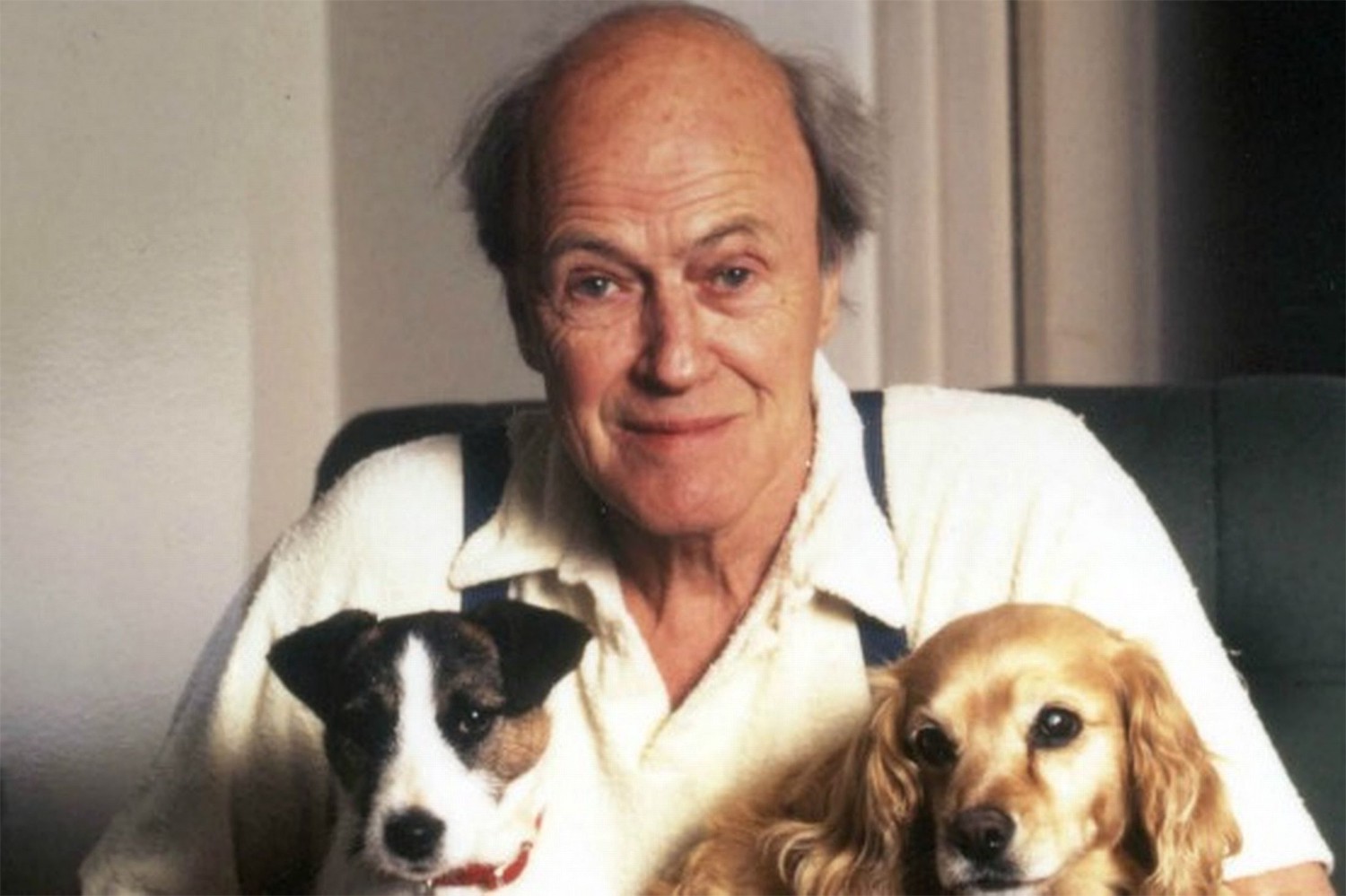
Roald Dahl is one of the world’s most celebrated children’s book writers and the author of such books as Charlie and the Chocolate Factory, The BFG, Matilda, and James and the Giant Peach. In 1962, he tragically lost his oldest daughter, Olivia, to the measles. The measles vaccine came out a year later in 1963. Measles and vaccinations are back in the news now that a new outbreak, originating in Disneyland, has started and the unscientific anti-vaxxer movement has grown. In 1988, Dahl wrote a moving letter about losing his daughter and the need for vaccinations.
Olivia, my eldest daughter, caught measles when she was seven years old. As the illness took its usual course I can remember reading to her often in bed and not feeling particularly alarmed about it. Then one morning, when she was well on the road to recovery, I was sitting on her bed showing her how to fashion little animals out of coloured pipe-cleaners, and when it came to her turn to make one herself, I noticed that her fingers and her mind were not working together and she couldn’t do anything.
“Are you feeling all right?” I asked her.
“I feel all sleepy,” she said.
In an hour, she was unconscious. In twelve hours she was dead.
The measles had turned into a terrible thing called measles encephalitis and there was nothing the doctors could do to save her. That was twenty-four years ago in 1962, but even now, if a child with measles happens to develop the same deadly reaction from measles as Olivia did, there would still be nothing the doctors could do to help her.
On the other hand, there is today something that parents can do to make sure that this sort of tragedy does not happen to a child of theirs. They can insist that their child is immunised against measles. I was unable to do that for Olivia in 1962 because in those days a reliable measles vaccine had not been discovered. Today a good and safe vaccine is available to every family and all you have to do is to ask your doctor to administer it.
It is not yet generally accepted that measles can be a dangerous illness. Believe me, it is. In my opinion parents who now refuse to have their children immunised are putting the lives of those children at risk. In America, where measles immunisation is compulsory, measles like smallpox, has been virtually wiped out.
Here in Britain, because so many parents refuse, either out of obstinacy or ignorance or fear, to allow their children to be immunised, we still have a hundred thousand cases of measles every year. Out of those, more than 10,000 will suffer side effects of one kind or another. At least 10,000 will develop ear or chest infections. About 20 will die.
LET THAT SINK IN.
Every year around 20 children will die in Britain from measles.
So what about the risks that your children will run from being immunised?
They are almost non-existent. Listen to this. In a district of around 300,000 people, there will be only one child every 250 years who will develop serious side effects from measles immunisation! That is about a million to one chance. I should think there would be more chance of your child choking to death on a chocolate bar than of becoming seriously ill from a measles immunisation.
So what on earth are you worrying about? It really is almost a crime to allow your child to go unimmunised.
The ideal time to have it done is at 13 months, but it is never too late. All school-children who have not yet had a measles immunisation should beg their parents to arrange for them to have one as soon as possible.
Incidentally, I dedicated two of my books to Olivia, the first was ‘James and the Giant Peach’. That was when she was still alive. The second was ‘The BFG’, dedicated to her memory after she had died from measles. You will see her name at the beginning of each of these books. And I know how happy she would be if only she could know that her death had helped to save a good deal of illness and death among other children.
 Thank You!