Baby Names



Click to enlarge and scroll
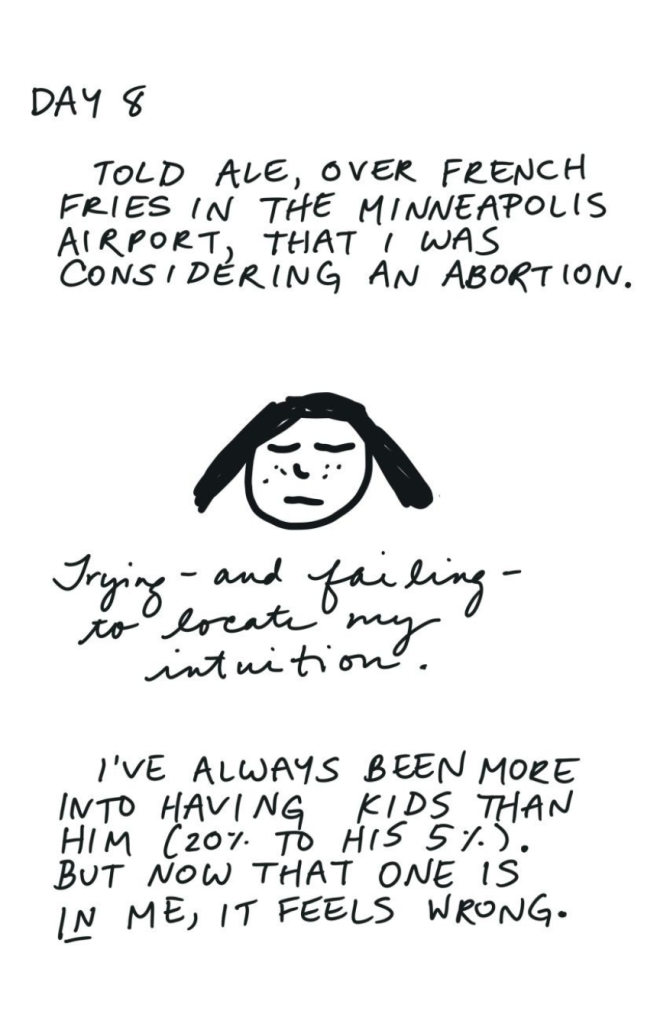
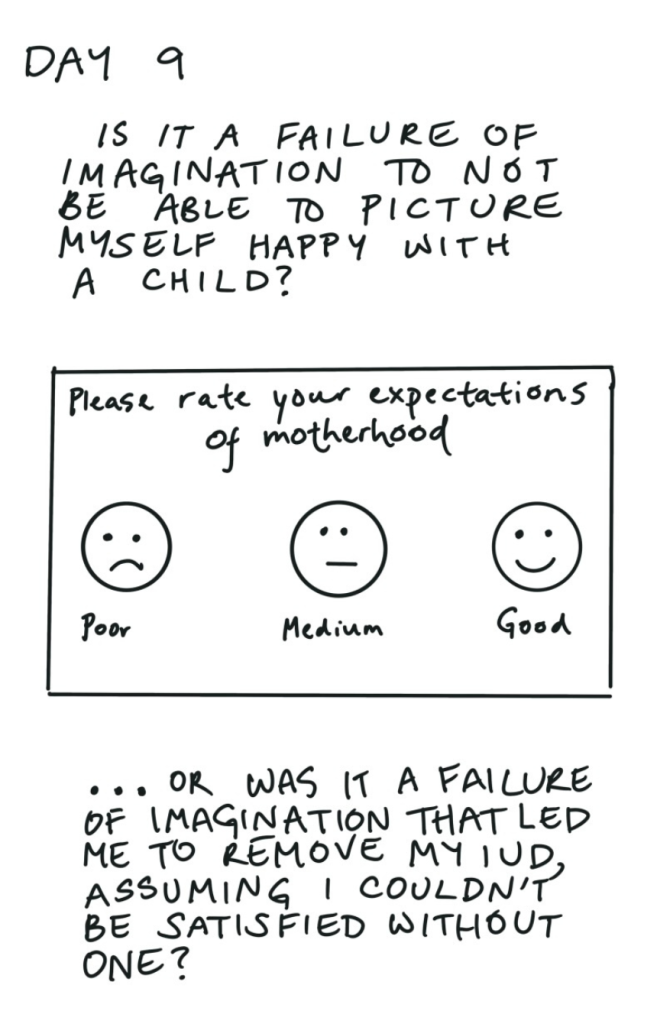
Please Rate Your Expectations of Motherhood: A Pregnancy Diary
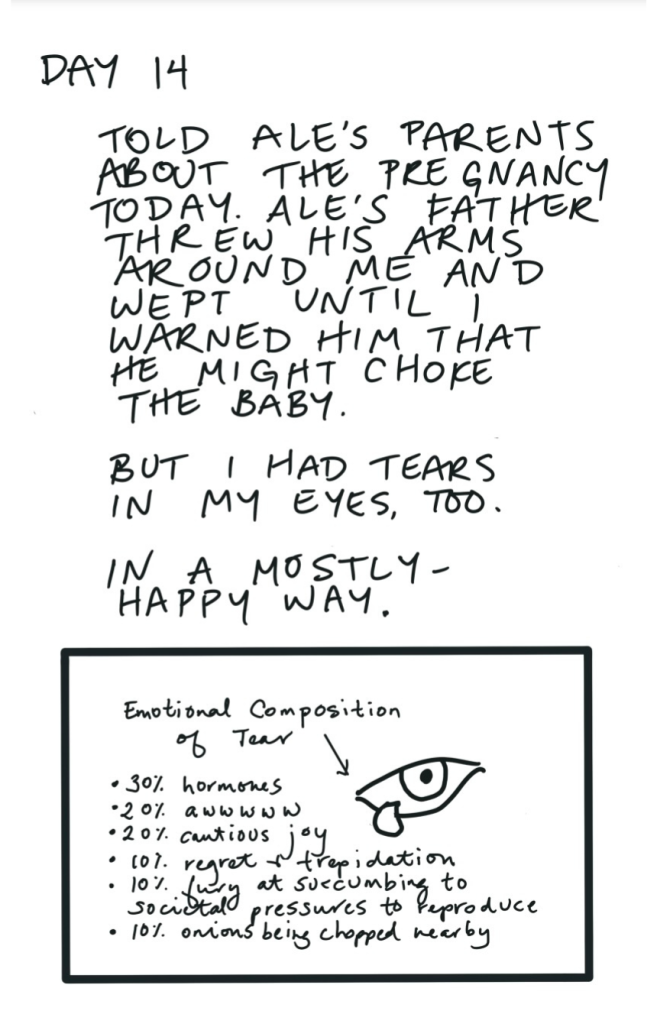
Click to enlarge and scroll



Click to enlarge and scroll
Click to enlarge and scroll
It may come as no surprise that we absolutely love a good short story. When you sit down with an all-consuming piece of writing, whirl through it from beginning to end in one sitting, and come out the other side transformed in only a few pages—that experience is something like magic.
Another experience that’s something like magic? Discovering a new writer you can’t wait to follow throughout their career. Combine both of those feelings, and you get this year’s best short story collections: every—yes, every—short story collection on our top five list this year was a debut, as were several of our honorable mentions. How lucky for all of us, because it means talented, exciting writers are entering the scene, and we can look forward to following them throughout the years. These books are master classes in the art of the short story, full of unputdownable writing that you won’t easily forget. We hope you love them as much as we did.
The books included on this list were chosen by a vote from the EL community. Here are Electric Lit’s Top 5 short story collections of 2024, followed by the best short story collections of the year.
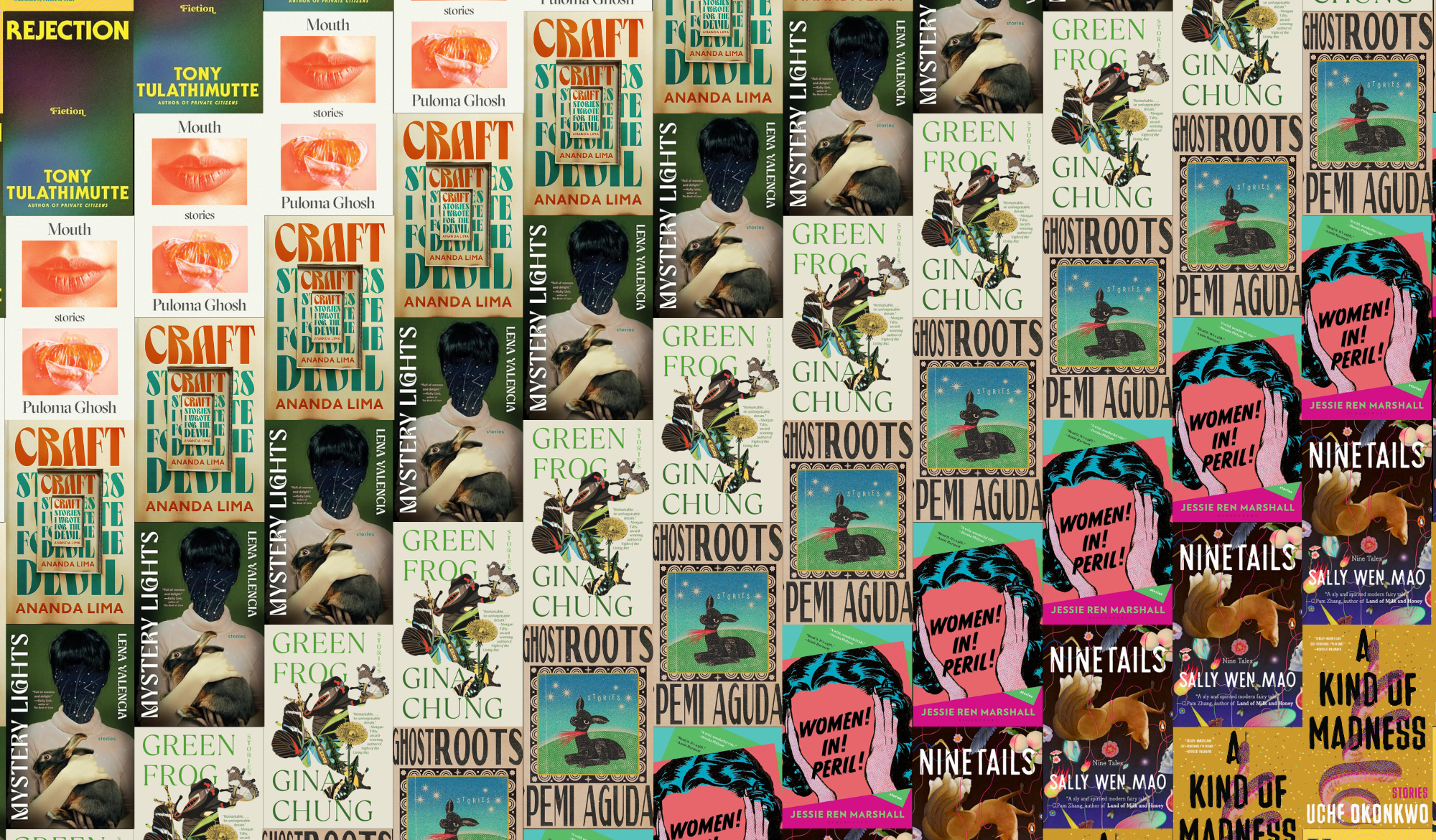
This masterfully inventive collection weaves literary fiction, Korean folklore, and science fiction elements into deeply revelatory narratives that reframe how readers contemplate the human condition. Through explorations of Korean American womanhood, transformation, fate, and legacy, Gina Chung proves in this debut her mastery over thoughtful precision. Equal parts entertaining and emotionally riveting, these stories will stay with you long after you’ve read them. Find “Presence,” one of the brilliant stories from the collection, published in Recommended Reading.
In the first story of Ghostroots, a woman wonders if she’s destined to perpetuate the same evils as her deceased grandmother, with whom she shares an uncanny resemblance. Setting the rest of the collection in motion, Aguda’s stories ask: are we fated to the violence passed down from our ancestors? Or is freedom from our generational ties possible? Through elegant prose that threads together the strange, the supernatural, and the ordinary, each story finds new ways to haunt you long after you’ve read them.
Through explorations of the supernatural and the mundane, Lena Valencia’s debut collection wrestles with the unsettling horrors of womanhood. As haunting as they are enlightening, these stories interrogate deception, self-deception, and existential dread against the backdrop of the Southwestern desert. Valencia’s tales exhibit subversion at its finest. Find our interview with the One Story managing editor about her collection here, as well as a story from the collection published in Recommended Reading.
This electrifying collection of interconnected stories opens on a young Brazilian writer who meets and sleeps with the Devil at a Halloween party. After their encounter, the writer keeps in touch with the Devil and writes him a series of haunted stories—the very same stories that make up the remaining pages of Craft. When unfolded, the layers of this frame narrative form an innovative, eclectic patchwork. Lima’s prose is at once claustrophobic and yet startlingly intimate, marking her impressive fiction debut.
Traversing through stories both speculative and realistic, Marshall’s debut collection interrogates queerness, Asian and Asian American identity, and womanhood through the lives of twelve women. Packed with wry humor and sharp social commentary, Marshall’s stories prove ferocious. Check out our interview with the author, where she discusses defying societal norms through Women! In! Peril!
This daring debut book ventures to lift the folds of reality and probe the depths of the surreal, the menacing, and the absurd. The understated precision of Zach Williams’ prose allows these stories to exist in a captivating liminal realm, hovering between a dream and a nightmare.
This collection of six longer stories examines themes of taboo, neurodiversity, and sexuality with a vibrant pen. Frumkin’s ability to stare directly at the strange and the subversive creates a whirlwind, mesmerizing reading journey into these surreal new worlds.
This genre-defying kaleidoscope of a book follows best friends Val and Tal—and the women that orbit around them—following a rattling incident at a Halloween party. Haroutunian’s witty, pulsating prose draws the reader into this beautifully rendered world.
Joy Williams probes the depths of the surreal and the fleeting in this collection of ninety-nine bite-sized stories. Her fiction moves in associative, ungovernable leaps between topics as disparate as religion, psychoanalysis, art, and literature. Williams draws from her background as the daughter of a minister to craft the overarching narrative that corrals these fragments: the tale of Azrael, an angel who is ambivalent about his job collecting souls. Her prose is sparse, clear-eyed, and sharply observant, inviting the reader to immerse themselves in her fantastical micro-worlds.
Ranjan Adiga constructs unique narratives centered around the Nepali diaspora and characters who struggle toward upward mobility. Adiga blurs the line of the traditional immigrant narrative, questioning assumptions around race, class, and gender. His tightly focused style and expert plotting make each short story a treat to receive, even when immersed in uncomfortable themes.
The stories in Annell López’s debut collection offer a rare sensitivity. While confronting the hard truths of Dominican immigrant life in Ironbound, Newark, López’s prose is simultaneously delicate and methodical. Through seventeen stories, López’s honesty inspires resilience in an unforgiving world.
Okonkwo’s debut book showcases some of the best qualities of short fiction: immersive world-building, taut suspense, and endings that leave you questioning. Her stories pay close attention to the concerns of relationships of women and girls in modern-day Nigeria. The sparse but unflinching prose bears witness to Okonkwo’s masterful blending of African and western literary sensibilities. Her stories are tense from beginning to end, full of turmoil, and always deeply human.
Republished in 2024 by Deep Vellum, Kurdistan +100: Stories from a Future State imagines a freer future for Kurds, one that sees independence as a possibility by 2046 — a century after Kurds last had independence through the Kurdish Republic of Mahabad. Exploring subjects such as eco-activism, drone warfare, and retroactive social justice, this anthology of stories writes against the boundaries of what’s possible.
In her debut collection, Puloma Ghosh blurs the line between the real and the absurd to explore our most fanged and aching desires. Through contemplations on sexuality, the body, isolation, and longing, Ghosh’s stories blend genre and literary fiction in eleven eerie, yet elegant stories.
Diane Oliver, the author of Neighbors and Other Stories, died in 1966 at the age of 22. With the posthumous release of her collection, these stories explore race and racism in the mid twentieth century. Intimate, precise, and chilling, her stories prove timeless.
Sally Wen Mao’s fierce collection reimagines the nine-tailed fox spirit of Asian folklore. With vibrant, lyrical prose, Ninetails inspires hope as its characters search for truth and belonging in a world so determined to be difficult.
Since Lahiri’s 2015 commitment to only writing in Italian, her short fiction has taken on a fresh, clear-eyed mode when translated into English. This collection is no different, circling its lens around Italian characters—often interlopers or migrants—who observe the world from a cool distance. These vignettes drip with delicacy and tension, an impressive display of Lahiri’s signature style.
In her debut collection, Amy Stuber writes toward hope in a world intent on taking it away. Confronting American consumerism, narrow versions of acceptability, and the worsening climate crisis, Stuber’s writing exhibits sensitivity, urgency, and care. With stories full of clarity and hilarity, the stories in Sad Grownups showcase the true strength of the short story form.
Edited by Michelle Tea, Sluts: Anthology is a multi-authored collection celebrating queer pleasure and connection. The anthology explores what it means to be sexually promiscuous in contemporary American culture, with cathartic entries from writers Gabrielle Korn, Jeremy Atherton Lin, Brontez Purnell, and many more.
These striking, spunky, unforgettable short stories center around women and girls on the cusp of change, often just an arm’s reach away from some kind of freedom. Megan Howell has an unrelenting voice and constructs taut narratives that wind both reader and characters into a spiral of worry. Her debut collection is sure to both dazzle and haunt.
The reissue of this little-known classic by J. California Cooper has been eagerly anticipated by her devotees since her passing in 2014. Cooper’s prose stylings are most often compared to other authors from the Black literary folk tradition like Zora Neale Hurston, but the tender closeness of her narration is uniquely Cooper. These five “long-short stories,” as Cooper calls them, pay intimate attention to the concerns of Black women in rural areas, especially their familial, romantic, and community ties.
The queen of short horror returns with her third story collection to be translated into English, giving us a return to her usual ghostly themes but with plenty of new tricks up her sleeve. Here, Enríquez shows off her knack for rendering body horror, her affinity for neo-noir aesthetics, and her empathy for the tragedies of the mundane.
This slick, stylish debut traces a thread from El Salvador to the United States, interrogating the familial and migratory challenges of Salvadoran diaspora members. Reyes’s observant eye is piercing and unrelenting as he unfolds these poignant, sobering stories.
The protagonists of these stories are frequently spiraling out of control or breaking their own hearts, and always rendered in vibrant technicolor. John Salter has mastered the art of giving the reader just enough information and then upending his own carefully constructed world with a devastating revelation. The resulting collection has a fitful, roiling momentum that does not let up until the final page. Salter has a knack for realistic dialogue and a sharp eye for the tragedies of the everyday.
These fascinating, technology-soaked stories take readers to outer space, unrecognizable futures, and brand-new realms. Chung excavates the loneliness and grief at the heart of each imagined utopia with her singular narrative voice and astounding imagination.
Heartbreak is a teacher, a moment that offers possibility for attunement—to pay attention with kindness and care—a chance to feel not just what we want, but what is here. As Stanley Kunitz writes in The Testing Tree,
“the heart breaks and breaks
and lives by breaking.
It is necessary to go
through dark and deeper dark
and not to turn.”
Attuning to heartbreak, staying with it in this way—not turning from it—has helped evolve my writing practice into a space to witness and tell about the astonishing texture of aliveness.
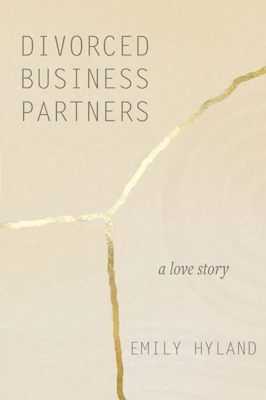
My poetry collection, Divorced Business Partners: A Love Story was born out of my divorce, when I wound up on a grief retreat deep in the heart of New Mexico. In the high desert, I learned the power of telling my story in order to begin to clear it from my somatic realm, to heal, to learn, and to move forward. What started all those years ago as angry villainizing from the vantage of a self-ascribed victim has evolved into a more hopeful, honest, reflection, more compassionate both to my ex and myself. The book, full of heartache, at its center, is a love story, with all the complexities innate to such a tale.
Building relationship with grief is a gift—that an aching heart is a portal into deeper intimacy with the wonder of being. As Francis Weller quotes Terry Tempest Williams in The Wild Edge of Sorrow, “Grief dares us to love once more.”
It’s my honor to share with you collections of poetry that feel like companions, written by poets who do the good work of meeting what arises—each touches the simple truths of life, death, and love—and all—through our sharing, as Ram Dass offers, “are just walking each other home” poem by poem.
In Stag’s Leap, the speaker’s husband has left their long marriage, and she explores the situation through her keen perspective In Known to Be Left, Olds offers:
“…I am so ashamed
before my friends—to be known to be left
by the one who supposedly knew me best”
This collection is relatable in the way thatmuch of the learning and realizations happen for the speaker in the real time of her story unfolding. Old’s book is study in the craft of writing, but also the craft of living.
Heartbreak is so much more than a broken heart, it’s also a breaking open to wonder. Oliver’s steady witnessing welcomes us into the depths of the world’s open-hearted wisdom, as in The Deer, where she writes,
“This is the earnest work. Each of us is given
only so many mornings to do it –
to look around and love
the oily fur of our lives.”
She distills concepts like awe and astonishment into salient moments for us to consider and also to remember the vast beauty of life beyond the hurt and pain that so often find their way to us.
In this book, Ross Gay brings to life a heart that breaks in awe of the present moment. The opening poem, to the fig tree on 9th and christian, sets a tone of joyful optimism—a bunch of strangers inadvertently converge to eat figs under an old woman’s tree. Here, even though everyone is busy with the business and grief of their own lives, they stand together in community “gleefully eating out of each other’s hands…strangers maybe / never again.” Heartbreak needs to remember the possibilities of delight and joy, and Gay reminds us of such possibility in his remarkable work.
I don’t know how to pick just one set of lines that conveys the overarching sense of vibrancy and appreciation for life in this vital collection wherein Doty writes through the heartbreak of losing his partner, Wally, to AIDS. Doty writes,
“…love, I know, it ends,
you don’t have to remind me,
though it seems a field
of endless jade.”
As he contemplates grief through his poems, heartbreak holds space for feeling into itself—not to wallow—but to feel it as true, as what is happening now, and to brighten into an amplified sense of appreciating the complexity and joy of this existence. I feel this sense of convergence hold so true in Two Ruined Boats. Doty writes,
“…myself, my lover,
twin points we thought fixed
coming all undone, though in a flaring spring sun
the world’s a single dazzled silver.”
The whole scope of Doty’s work—from this book to his newest memoir What is the Grass? Walt Whitman in My Life—is an ongoing meditation on what it means to be in this human incarnation.
On my bookcase, Doty’s Atlantis stands in kinship with Marie Howe’s What the Living Do, on the top shelf. Marie Howe is remarkable in her deft ability to develop emotional texture through simplicity. She brings us into the moment and offers it as it is. In A Certain Light, the speaker and her brother’s partner sit with her brother in hospice as he lapses in and out of wakefulness, and she narrates a scene of exquisite heartache:
“…a kind of paradise, he finally opened his eyes wide
and the room filled with a certain light we thought we’d never see again.
Look at you two, he said. And we did.
And Joe said, Look at you.
And John said, How do I look?
And Joe said, Handsome.”
Love pours from this moment, and the intimacy here between love and grief is real. We cannot meet love without knowing the pain that comes when we lose someone we love, and Howe takes us through this journey over and over again in her work.
Ocean Vuong’s Time is a Mother offers another look at the experience of loss. Vuong meets grief as a son processing the death of his mother. His perception is sharpened by what has come to pass, and he shares what he witnesses with tenderness and candor. In Amazon History of a Former Nail Salon Worker, he chronicles the list of items ordered over the last year of his mother’s life. On this list, we move from the workings of life, with items like “Seafoam handheld mirror,” to “Chemo-Glam cotton headscarf, sunrise pink,” then onto “Eternity Aluminum Urn, Dove and Rose engraved, small.” The items mount with emotional weight quickly, expectedly—yet unexpectedly. Like the air fryer that showed up two days after my own mom died of breast cancer—Vuong allows the pain each object holds to speak for itself.

Beware, this anthology has some unhappy reviews online by folks expecting saccharine in a compilation of poems about partnership and marriage. Though, anyone in any long term relationship will appreciate that lack of sentimentality in exchange for the complex texture of truth:
“You must know that I do not love and that I love you,
because everything alive has its two sides;
a word is one wing of the silence,
fire has its cold half.
Heartache and love—complementary sides of the same center.”
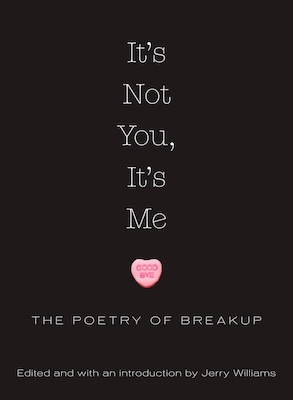
Another more contemporary anthology, this group of poems encapsulates some common threads of the very specific type of heartbreak that comes when a relationship ends. Jerry Williams gathers a range of voices to offer solace and perspective for readers who need the company of other broken hearts in the midst of their own. In poems like, Divorced Fathers and Pizza Crusts, by Mark Halliday, we meet the divorced dad, on his night with his young son, sitting in the pizza shop, surrounded by a very metaphorical pile of crusts, while his kid plays with a friend. As we sit with and witness the speaker, we come to meet all his layers of heartbreak. It’s Not You; It’s Me is full of relatable, human moments to offer companionship for us all.
In whatever way you’re coming to know your broken heart, I hope you’re encouraged to dive into this selection, and in doing so, find solace and company with fellow open and aching hearts along the way.
This has not just been an excellent year for poetry, it’s also been a tremendously important one. As governments, AI, and social media algorithms seek to suppress our voices, we need poets now more than ever—whether they’re writing rallying cries that empower us to resist or quietly reminding us of our shared humanity. This year, Palestinian and Palestinian diaspora writers have been at the forefront of this effort, publishing essential work in the midst of an ongoing genocide and reminding us of the power that poetry can wield in the face of oppression. We cannot afford to take their immensely important work for granted. The poets on this list have given us a gift, something deeply human and connective in an increasingly automated and separated world. We are infinitely lucky to have them writing in the world today.
The books included on this list were chosen by a vote from the EL community. Here are Electric Lit’s Top 5 poetry collections of 2024, followed by the best poetry collections of the year.
Danez Smith’s galvanizing new collection reckons with police brutality, racism, and Covid-19 in a divided country. A series of anti poetica and ars america poems reveal Smith’s disillusionment with the neoliberal literary scene and its acceptance of apolitical stasis. Their urgent, fierce voice cements Danez Smith as a poet of vital importance for the present moment.
Carson characterizes her latest volume of poetry as “wrong” because the pieces are unlinked. Ranging in subjects from Roget’s Thesaurus to meditations on a woman swimming in a lake, these twenty-five prose poems feel as though they intentionally capture the way the human mind moves from thought to thought, skipping from one to another with little connective tissue at times. Featured alongside the poems are drawings by Carson herself. The effect is a collection fully immersed in the lyric tradition, earning it a place on the the National Book Award shortlist.
Root Fractures, Diana Khoi Nguyen’s much anticipated sophomore collection, examines how families respond to tragedy. How they pick up the fractured pieces, if you will. Khoi Nguyen turns a loving, yet critical eye toward her mother’s life in the aftermath of the Fall of Saigon, her father’s experiences as an immigrant in America, and the aftermath of her brother’s suicide. These poems examine how trauma takes root over generations, providing a fresh perspective on diaspora, identity, and loss.
This harrowing collection highlights the importance of bearing poetic witness in times of violence and oppression. In fall 2023, Mosab Abu Toha was living in Gaza with his family, constructing Palestine’s first English-language library, when the current iteration of the Israeli occupation began, destroying his library and putting their lives in danger. In the aftermath, amid detention by Israeli forces and evacuation to refugee camps, Toha scribbled poems wherever he could, the poems that would eventually make up Forest of Noise. He uses stark diction, a compassionate tone, and an unshrinking documentary eye to construct this haunting book.
Hala Alyan’s fifth collection of poetry is a blistering, prescient, and formally innovative ode to the landscapes she has loved, from Palestine to Lebanon to the United States. Her stunning “interactive fiction” poems each offer three parallel narratives ballooning from a single beginning and ending line, inviting the reader to generatively reconstruct the poem alongside the writer. Thus, Alyan foregrounds collaboration, recreation, and survival even in the face of unspeakable violence. Her poems are at once technically precise and politically resonant, bringing to mind the unbreaking strength of Palestinian resistance.
In his third poetry collection, Geoffrey Brock posits a unique take on the “after” poem, those lyrics written in response to works by other poets and artists. Some of those poems are after poems in the traditional sense, while others are written in the aftermath of the death of his father, the poet Van K. Brock. As a result, the collection ponders what one writer, whether they be actual father-and-son or more of a poetic mentor, inherits from another.
This unassuming little book hides poems of deep imagination and off-kilter innovation. Hernandez constructs surrealist prose poems in the vein of authors like Baudelaire and Simic, yet makes them his own with a whimsical flair. He flexes his literary muscles in confessional linear verse, too, particularly in the standout narrative poem addressed to his father. The collection shows off the wide variety of modes in which this talented, imaginative, and wholly unique poet can sing.
Oliver Baez Bendorf troubles the boundaries: of countries, of genders, of time periods. His poems contemplate both the threat of ecological collapse and the often-erotic beauty of nature. Often, gender concerns interrupt and interact with environmentalist commentary as Bendorf positions his transgender identity as “a way of arranging the / world through change.” Even the shape of the physical book—landscape orientation with wide margins—acts both to safeguard the formal integrity of Bendorf’s poems and to emphasize the importance of Earth’s landscapes. The wide range of forms in this collection, including prose poems, sestinas, and speculative ekphrasis, cement Bendorf’s status as one of the most interesting poets working today.
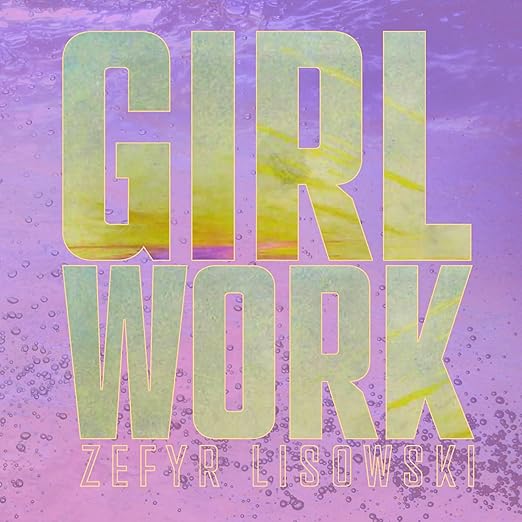
Winner of the Noemi Press 2022 Book Award in Poetry, Girl Work dissects the demands of capitalism, the fallibility of memory, and the “hunger of being a dead girl in a sea of / dead girls.” Zefyr Lisowski draws on myriad life experiences—a brief stint in sex work, childhood as a queer person in the South, the death of her father, her love of horror movies—to create a deeply confessional meditation on beauty and labor. The specter of past sexual violence haunts every page, especially the visual poems, wherein overlapping prose blocks depict a mind crowded by intrusive memories. Lisowski achieves feats of form, prosody, and hybridity in this ambitious, tightly constructed collection.

Summer Farah’s debut is a pleasant surprise, a veritable Russian nesting doll of a collection. Though set in the video-game realm of Hyrule from The Legend of Zelda, the book contains a second setting: Palestine, haunted by the Israeli occupation. Her dense blocks of prose portal and warp, drifting musically between Farah’s preoccupations. Cycles of life and death, like a video game character regenerating, guide the book along its breakneck pace.
This Lambda Literary Award-winning poet returns audaciously with a collection that tests the limits of meter, line, and language itself. Slipping in and out of lovers’ beds and mothers’ homes, Dawn Lundy Martin reclaims her body and her selfhood from a society always poised to strip her of power. The perfectly wrought micro-poems, careful prosody, and resolute diction of this collection cement Martin’s reputation as a poet with a remarkable eye and ear.
Winner of the 2023 Gaudy Boy Poetry Book Prize, Interrogation Records turns an docupoetic eye to the Indonesian mass killings of 1965. Jeddie Sophronius takes an archivist’s posture as they sift through historical documents, many of which are collaged and interpolated in their poems. At the same time, Sophronius’s Chinese-Indonesian heritage—similar to many of the 1965 victims’ backgrounds—gives the poems an extra layer of empathy. Their unflinching, immediate poetic voice offers an alternative to the silence that has previously clouded this tragic event. Now more than ever, voices like Sophronius’s are vital tools against censorship and persecution.
Li-Young Lee’s fifth poetry collection, and the first published in more than a decade, oscillates between the divine and the mundane. The collection has similar themes — family, exile the immigrant experience — to Lee’s other books, but the imagery is fresh and poignant. These poems are an act of love, written by someone enchanted by the world.
In the follow-up to her Pulitzer prize winning frank: sonnets, Diane Seuss takes on the subject of poetry itself. Namely, her journey from erstwhile student to virtuoustic poet, capable of jumping from ballad to fugue to other more archaic forms. Her characteristic, at times self-deprecating, humor breathes life into a collection that tries to tackle the question of what poetry means — not only to Seuss, but to society as a whole — today. It’s no wonder the book made the shortlist for the National Book Award in poetry.
In Song of My Softening Omotara James spotlights bodies other writers shy away from — those that are fat, female, Black, and queer. The collection is split into two sections “The Sacrifice,” and “The Feast,” but each one contains a kind of celebration of the self and all its forms. She instructs readers to love their bodies, while also acknowledging the limits others may put on us as a result of our physical appearance.
Idra Novey’s Soon and Wholly juxtaposes two Americas: the rural world of Novey’s Appalachian childhood and the city streets where she’s raising her own family. In doing so, she weaves together the shared concerns of rural and urban Americans, two groups often cast in opposition to one another. Novey’s gaze isn’t limited to the mountains, plains, and coast of America, however. They traverse continents, dipping into both the wilderness of her own childhood and lingering on a woman housesitting in central Chile during wildfire season. These poems grasp the urgency and complexity of our time.
In this striking debut, Sarah Ghazal Ali uses the Qur’an and the Bible to explore the intersections of faith, family and womanhood. One central question of the collection is naming. Ghazal Ali writes on the origins of her name in one sequence and draws on the Ghazal, a poetic form with which she shares a name. The result is a collection deeply concerned with faith, identity, matrilineage, and how one identity can cause friction with or even splinter another.
Winner of the Yale Younger Poet Series, Cindy Juyoung Ok considers how the language of institutions — prisons, psychiatric hospitals, hospice wards — constrains the identities of those inside. Her poems bring to the fore narratives of mental illness, abuse, and death with an arid kind of humor, inviting readers to consider how the absurdity of our present moment manifests in everything from the climate crisis to the institutionalization of teenagers. These poems demand tenderness in troubling times.
This ekphrastic collection turns its eye toward the works and writings of painter Agnes Martin. In her research-laden poems, Victoria Chang considers Martin’s abstractions alongside topics like feminism, depression, spectacle and grief. The poems appear alongside collages of images and early drafts, giving the book a palimpsest quality and offering insight into the poet and painter’s process.
This unforgettable collection provokes from its very title: the ellipsis represents an unfinished thought, a loss for words, a life extinguished, erased. Joudah sustains the tension of the collection by reminding us always of the impossibly high stakes, the lives lost every day in his native Palestine. He employs a measured tone and lyric precision that cut to the heart of the tragedy, allowing the poems to speak on both the personal and the academic level. The collection leaves the reader with re-fortified belief in the cause of Palestinian resistance and with gratitude to be living at the same time as such a monumental talent.
If you want to see a Jewish girl baptize herself all day, every day, you need only go back to the summer of 2009. With a time machine, a photo lost to the internet, a Daft Punk record.
I have little certainty about the past, except that it was hot. This was, above all else, the primordial quality of a Nordelta summer. The heat and the kids on the street, burning the asphalt of our dystopian suburb every Saturday morning, generating the je ne sais quoi that belongs only to January and only to gated communities. Like Darwinian monkeys, Nordelta boys played on their bikes and gave out first kisses, while Nordelta girls stole cigarettes and partied, devoted to their death-drive, until Pitu fell into a coma and they calmed down a bit and stopped buying drugs. In the afternoon, the sun came down on El Norte, and my peers slept the least deserved siestas in the world before going out. The streets were calmer then, and the asphalt hurt less.
As for me, if I ever did make it out, I almost never saw anybody, and I was always bathing, all the time. Out on Nordelta’s streets, I could feel the earth settling on my heels and in a spot behind my elbows, sand getting into my teeth whenever I bit my tongue and inside my panties when I walked slowly, so that arriving home at the end of the day, I had an absurd need to get the dirt off me.
I am not asleep

          I am not asleep

I am not asleep
The words that I spoke in the bath only became spiritual with time, made mystical by the bored insistence of custom. A prayer, a sacrament. I sang it with my eyes closed, always to the same tune, the same chords, the same minimalist, contentless repetition that gave some meaning to being fourteen and always so sleepy, with so little motivation to go out.
          I am not asleep

I am not asleep

   I

          am not asleep.
Then I put the stopper in the drain and I waited, watching my feet. An act of contemplation: how pointy, how round. I noted how poorly painted my nails were and the strangeness of my clumsy stomach, always moving in different ways, following the anxiety of my breath. I liked to wash the depths of my body, to rinse my hands over and over, to try to outdo my last bath and see how unpolluted I could really become.
Sometimes I applied conditioner and closed my eyes, or threw in one of those bath bombs that Dad had brought back from the US, watching the wasteland of water and detergent as it started to resemble a pre-Raphaelite painting. The one in which Ophelia dies, the one Mom had put up on the fridge in May that looked like a Complot clothing ad. Then I’d submerge myself completely and let the water seep into all the electric tubes of my brain. I liked the weird, salty feeling that the chemicals gave to the water, my temples hardened by the artificial smell. And above all, the water. I counted on my fingers, reciting: I am not asleep. I am not asleep. I am not asleep. I came up to breathe and then did it again. Reborn every time, pure and child-like, bright, anew.
This was before Mateo left, and before Jeremías developed a long and painful Messiah complex. I was, of the Goldsteins, the first to be obsessed with the crucifix and its sacraments, hardly conscious that this was a betrayal of my people.
Back then, Angélica and I were obsessed with this Daft Punk record, Discovery. Mateo called it electronic garbage, but he didn’t know much about anything anyway. All he did was go for runs in the evenings at dangerous speeds, then attach himself to the TV in the living room and watch hours of TNT specials. Stupefied by action movies from the eighties, we spent that summer in a limbo of vintage American laziness, searching for authors who didn’t belong to us, but who also didn’t belong to anyone else. We collected our foreign books, and then Angélica and I—and only sometimes Mateo—shared the stories we were reading, pointing out our underlined sentences and pretending we understood what was going on in Raymond Carver or in English translations of Ruben Darío.
After Angélica left, I would lower the blinds and go to the kitchen, where our security systems were. Through the hidden camera I watched her, on the almost-blue screen, passing over the burning asphalt with her little black shoes and that long tracksuit with the three lines. I watched her light a cigarette and put it out instantly. Two puffs, that’s all Angélica ever smoked before she’d start to feel ashamed of the toxic fumes or run into a friend of her mother’s. By then I’d have already turned down the lights and hidden myself in the bathroom to submerge myself again.
I am not asleep

          I am not asleep

I am not asleep
My hair was like silk back then, it was always perfect. Angélica kept saying that it looked like the Olaplex vomit of an angel. She wasn’t wrong—there was something about my baptized head that approached divinity. I’ve never seen a Jewish girl with such virtuous, straight hair as I had at fourteen. For an imperceptible moment, I was the envy of all the Nordelta girls—though this, too, would soon disappear.
Inside the house and without Angie we burned things. Summer break always invited pyromania. Jeremías burned Dad’s books and Mateo his old toy cars. Afterwards, Mateo would stare, dazed, at the same point for hours, or lock himself in his room with enormous history books that he’d taken from the school library. The only excursion that Mateo ever made, once per week, more or less, was to go looking for ethyl alcohol at the pharmacy or a new aluminum trash can so that he could continue burning everything he set his eyes on.
For days, no one would leave the living room. And when we did, when we had the courage to find ourselves out in El Norte with a number of interchangeable friends, Mateo came back drunk, and Jeremías didn’t come back at all, at least for a couple of days. Jeremías, I think, had started to do drugs. Mateo never would have done something like that. Drugs are for idiots, he’d say, and that’s not me.
The pool is there for no reason, Mom would often complain, protesting Mateo’s hangover and Jeremías’s dry, red eyes. No one so much as splashed, nor took any sun. You’re not really one to talk, we’d respond. Our mother, Natalia, hardly ever made an appearance. Sometimes in the morning we’d glimpse her running out to work, or to her new boyfriend’s; then came the empty hours she left behind, our gigantic living room, the delivered food still in the freezer. Her schedule was drawn on millimeter graph paper, always busy, and in those dead spaces, the house was ours, a liberated terrain. Dad was traveling, always. It wasn’t like this before. But 2009 was the summer everyone began to disappear.
Without the sensation of movement but with its insistent necessity, on the day when the temperature reached its highest point, I went for a walk alone down the little street leading out of the Oshiros’ neighborhood. I’d ended up spending two or three days at Angélica’s because Jeremías had decided to drop off the map, Mateo was drunk, and Natalia was with I-don’t-know-who. We’d been listening to the same record for twelve hours, Angie and I. Along the way, we’d invented a story to go along with Discovery, and every time we put the record on, the story became more complex, covering new matrices, renovated with a freshness only she and I understood. It was about a girl who was Japanese, like Angélica, and Jewish, like me, who was saving the world from some kind of artificial intelligence apocalypse. She took vitamins and Peruvian maca powder, she was a black belt in tae kwon do, and she bathed six times per day. Basically, she was us. Or a projection of us. While we listened, I would kneel down and draw her story out like a comic book while Angélica recited its dialogues to me from above. We painted the girl with deep colors and put glitter on her body. At some point during those days, between the fourth and fifth tracks of that record, I felt something like the loneliness being scrubbed out from inside me.
Later we would draw ourselves, too. Angélica, gazing intensely to the south, shoulders broad, with her I-don’t-care-about-anything face on, but looking just as scared as everyone else. Me with my awkward arms, my nose of troublesome dimensions, and my crooked feet that still today don’t know how to dance. When I left Las Glorietas, the neighborhood of that weekend, I had under my unshaved armpit a portfolio filled with improbable colors and stories in which I still find no narrative coherence today.
At some point during those days, between the fourth and fifth tracks of that record, I felt something like the loneliness being scrubbed out from inside me.
I went home, walking down the middle of the road, even though it hurt my feet to do so. The sidewalk, Angelica told me, is for tourists. The locals walk in the street, and if we get honked at, it’s just some furious neighbor, with whom our mothers could deal with at the end of the day, in private. I already knew this, but I was reconfirming it now with my circular journey back home, bordering the richest row of houses, the ones in La Isla (pas-de-France, as Mom said in her good French accent), while I let the sun burn my skin, always so white, so completely clean. I remember coming back sunburnt, that Jeremías was home for the first time in several days, and that I didn’t want to go out anymore. I remember that was also the afternoon I met Agustín.
Agustín was a tennis coach. He came from the sprawl of the south conurbano, the surrounding areas of the city beyond the gate, and he was twenty-three. I remember his age because of a little rule we had invented, having to do with men and democracy. Throughout that summer break, Angélica and I had been developing a series of ideas about what was and was not okay to do with boys, and which boys specifically. This was an important one: if a man had been born and lived in a period of sustained democracy, beginning in 1983, then the lion’s share of romantic acts were allowed. This created a cushion for us of approximately a decade. We could tell each other anything about the things we did with men born during this time. The conservative girls at school didn’t subscribe to the same rule, but their opinions didn’t matter, not during summer break. A boy born during the dictatorship is a broken boy, said Angelica. And I didn’t really believe her—democracy wasn’t that big of a deal, but hooking up with older men wasn’t great either. When Agustín told me his age, I made some rapid calculations and was marvelously surprised: born in ’86, approximately. He passed with flying colors.
The day that we crossed paths for the second time—he with a beard that looked like four days’ growth, but which in reality was the fullest he could ever get—Agustín repeated an almost formal invitation to drink whiskey with him, after his classes, at the edge of a park. He seemed old but sophisticated, because he drank whiskey, drove his own car, and often bragged, though with dubious insistence, about how much he loved his work; there were so many old ladies he could rip off. He talked about these housewives a lot, these ladies of the house, the ones with sagging jowls, who looked like lizards and whose kids had already gone to live in Buenos Aires. Profiting from their leisure was Agustín’s principal work, and there was something admirable about this, like he was getting one over on someone. In the end, though, it was the ladies who allowed him to work, who made it possible for him to be an activist for the Workers Party and continue his philosophy studies.
For people like Agustín, coming into El Norte was like entering a new country. To get inside, he had to show an ID and undergo inspection; he had to open the trunk of his car, show his invitation from the Tennis Club, flash a pleading smile. A handsome boy from Lanús, he was exotic to my eyes and, more than anything, seemed experienced, alive. Whenever we passed Nordelta’s beautiful houses, he looked a little stupefied. This would last a couple of seconds, and then he would go back to speaking really fast and criticizing the whistling way we had of pronouncing our s’s, or our annoying tendency, according to him, of opening up certain vowels too much. But he couldn’t really get it right. He didn’t understand that the sound wasn’t quite so nasal.
Agustín didn’t know much about a lot of things, but he spoke of politics with fervor. He said that the revolution would come to pass and that everything was really a trick of capitalism. The word propaganda slipped off his tongue every other sentence. He used it rapidly, without thinking, the way people had been using US dollars for the last few years. In retrospect, maybe I was bathing so much because of the taste this kind of revolution left me with after our talks—cheap, juvenile, papier mâché. In any case, I believed everything he said. He made me take my mom’s old edition of 1984, steal Brave New World from Jeremías, buy The Communist Manifesto. He got me to try weed and the slow songs of Lisandro Aristimuño, and, for a moment, when he told me about his first history professor and his dead dog, I thought that something in him loved or could possibly come to love me.
Democracy or no democracy, if I had told Angélica that I’d decided to fuck a tennis coach from the south she probably would have stopped talking to me for a couple of days. I don’t know what it was about sex that produced this effect, but everything felt a little like a bitter sickness, yet desirable—contradictory. It was like menstruating—a sign of growth, a tacit race between the girls at school, but once you won you felt lamentable, a pain, a particular stab in the gut. If you won, you lost. If you lost, you lost. The difference was that menstruation was inevitable, and sexuality wasn’t, so it left you with a strange sensation of responsibility between your throat and your vagina, as if you’d done something wrong. The other difference was that with sex, there was only blood the first time.
We saw each other for a good part of the summer. I liked him. His eyes were light, and he belonged to the subtly intellectual class for which ostentation is a sign of vulgarity and rock bands are the first line of ideology. He had an enormous chest that felt like the field where we made out on the weekends. He was too stupid, I realized over time, and tender, like a scripted boyfriend. At one point I tried to give him Daft Punk records, to show him my contraband comics and European mangas, but he said no—he was a little bit of a Peronist, too. He didn’t like imports.
Menstruation was inevitable, and sexuality wasn’t, so it left you with a strange sensation of responsibility between your throat and your vagina, as if you’d done something wrong.
Agustín and I saw each other once a week, on Sundays, and afterwards I bathed three times and immediately threw the clothes in which I’d fucked him into the washing machine, sure that there was evidence of my wrongdoing in the pink panties and undone straps. A couple of times I burned the white t-shirts with grass stains on the shoulders, taking one of Mateo’s stolen lighters. I also covered my body in moisturizer and sunblock, in order to smell like something else, and waited on the floor in my room for it to dry, between twenty-five minutes and half an hour. No one ever suspected a thing.
One weekend, Jeremías, Mateo, and I went to the beach at Punta del Este. By the time we came back, Agustín had disappeared, his conurbano charm with him. It was a shame, because until then I’d thought that summer loves could only end with romantic goodbyes, with a promise that wouldn’t be kept but sounded pretty when you shouted it at each other anyway. Agustín simply left, a ghost. He abandoned the tennis courts, his students with their gigantic, wrinkled necks, the oil stain that his car left behind sometimes. The day I boarded the plane for Punta with my brothers, I’d been thinking about a little mark that I’d left on his neck the night before, and I asked myself if it would stay there, like an unavoidable testimony to the fact that this—we —had existed. I hoped so. No one, I thought, should have the right to see me naked, body unfurled, without leaving so much as an IOU.
Come to the park tonight, by the golf course. I’ll meet you there, okay?
This had been the prelude to us doing it the first time, after three weeks of sustained kisses and drinking Jameson on fake grass. He showed up in his work uniform, as he almost always did, a black spot below the knee and a white t-shirt with the letters RF between his nipples. I hadn’t fixed myself up, but I didn’t look bad, either. I had on the most perfect shorts in the world, the kind that made you sigh briefly for your conscience and your self-esteem, an Arsenal jersey that my brother had brought back from the last game, and clean black sneakers, the name of some band just barely sketched on them with whiteout.
We spoke for hours about things that at the time felt deep, real, and that now dissolve into a torrent of posturing that can’t be justified merely by the fact that we were so young. He told me many things about his life, explained his latent ideology again, and it was then that I started to understand the curious way he used the word truth. He also talked funny, said things like ranchear instead of hang out, and sometimes, when he wanted to imitate the Nordelta kids who were my age, he said man, in English, but pronounced it men, as if he weren’t referring to a single man but a series of men, anonymous and schizophrenic in the universe of conversation.
I’m going to show you something that’s going to change your life. It is the best—seriously—in the history of Argentinian music.
Men, I’d realized by then, had an obsession for didacticism. Agustín knew with complete certainty the best record of every period, the best moment of each album. Mateo was the same with the history of Europe, Jeremías with classical composers and modernist books. All men were always waiting to teach you something.
What is it?
It’s called “Cantata de puentes amarillos.” You should really listen to the whole record, but this is the best song.
Why?
It tells a story.
I asked him what story, and he didn’t know what to say. But he grabbed me firmly by the hair and shoved his mouth against mine. It was cold, and smelled like he had been working all afternoon, a blend that only red clay dust and sweated-through sunblock can generate. He opened his jaw wide and kissed me exclusively with his tongue. The lyrics—I was listening to them—didn’t make any sense. Spinetta sang, with a very sharp voice, insipid aphorisms like las almas repudian todo encierro, mañana es mejor, and todo camino puede andar—souls repudiate all enclosure, tomorrow is better, every path can be walked. I asked myself what in the world he was talking about. Luis Alberto, or simply El Flaco, as Agustín called Spinetta, had always seemed like a pretty confused guy to me. The only line that really stuck with me, but also made me afraid, was Los hombres te miran te quieren tomar. Men watch you, they want to take you. My body spun around in angles I didn’t understand, almost jumping. It was hot, and the guitar was piercing, and I was sad because I couldn’t figure out what made this rock star so special.
Here and there during that makeout session Agustín would pause for a breath and touch my ears. With his hands on my face, he breathed, very heavily, without kissing me, as I assume he’d seen in some ad for a novel or a rom-com. It was intense, Agustín with El Flaco’s repetitive guitar. The kind of boy I’d laugh at if we were to speak today. Whose face full of tenderness would cause me rage or abdominal pain. He took a few seconds, as though wanting to consume me, make me part of his own shaking body, and, although it didn’t work, although I was simply thinking about how little sense it made to say Yo te amo tanto que no puedo despertarme sin amar, he took my neck between his strong fingers and resumed our activity, the almost sportsmanlike romanticism that it was to kiss, hidden inside a golf cart.
Let’s go somewhere else, Nina.
Where do you want to go? We can’t go to my place.
Back over there. Between the forest and where the forests begin.
He passed his fingers cautiously over the waist of my jeans, without opening them all the way. No one has to know, I thought. Not even Angélica, no one except for me. If no one knew, it would basically be as though nothing had happened. Nor would I have to feel ashamed. But if I didn’t do it, I’d always have this curiosity stuck in my head, a curiosity that had originated the first time I watched porn, reluctant but fascinated, my uncomprehending face glued to the screen.
Okay.
I think that until I turned eighteen, I didn’t know what it meant to have an orgasm, and this was certainly not something I was going to learn with Agustín. He was simply too romantic; he made gestures of loving grandeur, he pulled my hair as though we were in a physical fight, and he was the only one who finished. The same song was playing on repeat in the background, and he took my pants off quickly, without giving me a chance to wonder what it was I could possibly be so excited about. Turn around, he said. I did what he told me. The first time didn’t hurt, though I’d always been told to prepare for discomfort, that it would be an intense and hard experience that you must go through with someone you loved. I didn’t love Agustín, but fuck it. It felt good. Even with the cheap whiskey and the smell of sunblock and the fallen summer leaves of that fateful summer in Nordelta. El Flaco’s voice slipped into extinction and said, each time more softly, mañana, mañana, mañana. Then, only then, for a moment, I felt something that resembled satisfaction, an asymptotic approach towards complete release.
For seven years I would lie about everything that happened in January 2009. I would say nothing of Agustín, nor of being fourteen, nor of the golf course or the three morning-after pills that I took two days later, stolen from the pharmacy, just in case. I would say nothing about the diarrhea that they gave me, nor the infertility I imagined while I bathed on repeat, nor would I talk about the back pain, the guilt, or the pleasure. For a long time, I made up stories, changed names, altered dates maniacally and secretly. The only certainty that I had was the sharp guilt that enjoying it had given me, and a white sports bra covered in blood and dirt, the Abercrombie logo now stained with wax.
The next morning I woke up definitively without love. I am not asleep. I bathed for six straight hours, changing the water once in a while and using almost all of my bath bombs. I thought that I should have felt different, that something about passing into maturity should have hit me all at once, making me grow thirteen centimeters all of a sudden. But no. Like the first time I had menstruated, it just hurt, and I felt a little upset. I didn’t feel less pure than before, perhaps a little emptier. But Agustín was hot, and I wanted to see him again. When he sent me a text message four days later, I spent two and a half hours thinking up the perfect response.
I listened to the whole record. You were right. How are you?
In the context of publishing, the term “cozy” can be a bit hard to pin down, though it’s gained momentum in numerous genres, including mysteries and fantasy.
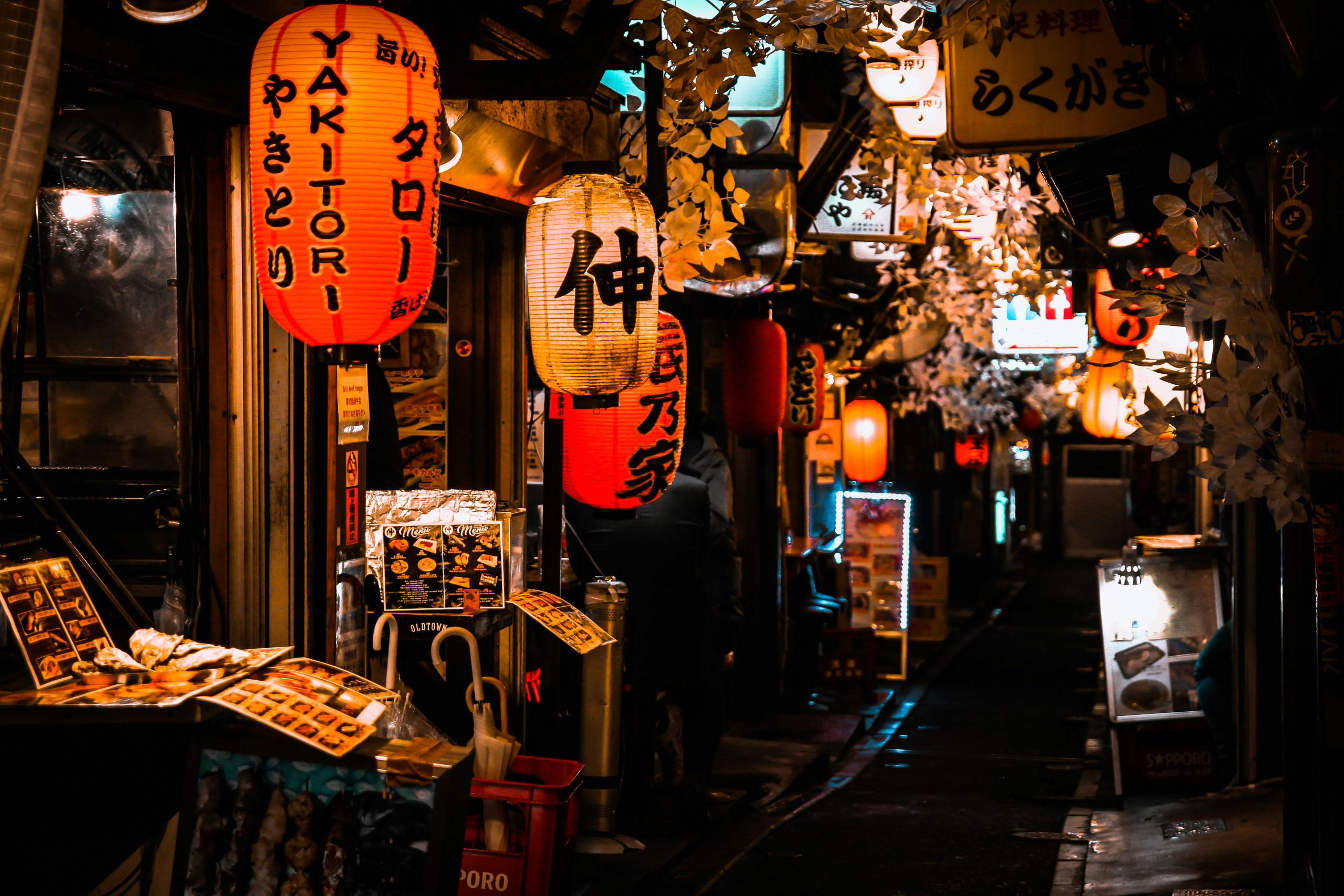
Cozy novels are typically low-stakes, but that doesn’t mean they’re not free from conflict, emotion, and heavy ideas. Instead, think of a cozy read as a respite from this increasingly stressful world—and the below Japanese books are just that. These pages are filled with steaming bowls of ramen, stories on connection and community, and lots (like, lots) of fluffy cats to solicit warm and fuzzy feelings.
Somewhere in Kyoto, between a confusing intersection of streets and down a shabby alley, lies the Nakagyō Kokoro Clinic for the Soul. The space is small, the staff minimal, and those who find themselves checking in leave with a peculiar prescription: a cat.
We’ll Prescribe You a Cat is a charming collection of stories about the clinic’s patients: a young businessman whose corporate job drives him to despair, a middle-age father who feels like an outsider, and a perfectionist who sees flaws everywhere but within herself, to name a few. And though their tales largely stand alone, more and more is revealed about the mysterious clinic with each successive story.
This tender novel is partially told from the POV of Nana, a sassy white and tabby cat who’s adopted from the streets by Saturo, a young business man. But when Saturo decides he can no longer care for Nana, the two travel across Japan to visit Saturo’s old friends and find his beloved cat a new home.
The Traveling Cat Chronicles’ power is in the warmth it maintains while addressing themes of grief and loss. You’ll find yourself chuckling at Nana’s internal dialog—and wiping away tears as you learn more about Saturo’s story.
There’s nothing remarkable about the unmarked building that holds the Kamogawa Diner, but the restaurant serves its customers more than a menu of mouthwatering dishes. It’s also the home of the Kamogawa Detective Agency, run by a police detective-turned-chef and his daughter.
Instead of murders, thievery, and other traditional whodunits, these detectives focus on meal-related mysteries. Specifically, they help recreate long-lost recipes for their clients, such as recreating udon for a widower that tastes just how his wife used to make it. More food mysteries are solved in the sequel, The Restaurant of Lost Recipes.
At a pet shop in Tokyo, customers can rent out one of seven very special cats for three days. Despite the short timeframe, each character in The Blanket Cats’ seven stories finds themself enchanted—sometimes literally—by their time spent with a rental cat. However, the felines’ visits rarely go as expected.
Think about a conversation you regret. If you could go back and say what you truly meant, would you? In Before the Coffee Gets Cold, patrons of a cozy garden-level coffee shop get the chance to return to the past—if only briefly—to have conversations with loved ones now gone.
This is the first in a series of novels including Before Your Memory Fades, Before We Say Goodbye, and Before We Forget Kindness, which all follow different stories of Cafe Funiculi Funicula’s time-traveling customers.
When her brother dies in an accident, Kotoko discovers the Chibineko Kitchen. But it’s no ordinary cafe by the sea—the kitchen specializes in remembrance meals that allow you to commune with loved ones lost.
While Kotoko’s story is the center of The Curious Kitten at the Chibineko Kitchen, other tales of loss and closure are highlighted as well, including that of a widower, a boy who lost a schoolmate, and the cafe’s sole employee.
After being blindsided by a breakup, Takako quits her job and falls into a depression. She sleeps all day, doesn’t feel close to anyone in Tokyo, and lacks the energy to do much of anything.
Everything changes when she moves into a small room above her uncle’s used bookshop. As Takako spends her days working among the piles of books, she becomes a voracious reader, befriends people in her neighborhood, and grows closer to the uncle she hasn’t seen since childhood in this charming book about finding belonging in what can be a lonely world.
A dreamlike coffee truck staffed by talking cats is the centerpiece of this cozy Japanese novel. Its customers find it by happenstance, each facing hardships, each unsure of the future, and each connected to one another.
Through its unique combination of surreal cat waiters, celestial treats described with vivid imagery, and deep-diving astrology readings, the magical Full Moon Coffee Shop helps each wayward character look back to their past in order to move forward. And readers just might get some insight into themselves, too.
Any reader knows the library is a place for discovery. But in this novel, patrons are inspired by a librarian’s offbeat recommendations in ways they never anticipated.
The book opens with an unhappy retail assistant who, when looking for how-to guides on computer software, finds satisfaction in a long-forgotten children’s story. In another story, a gardening book about worms comforts an antisocial businessman who dreams of owning an antique shop.
Four stories of a neighborhood’s cats and the women who care for them make up She and Her Cat. In one story, a woman finds an orphaned kitten abandoned in the rain. In another, an artist begins feeding a stray cans of tuna. As the women and cats grow closer in each narrative, they find solace from the world in one another.
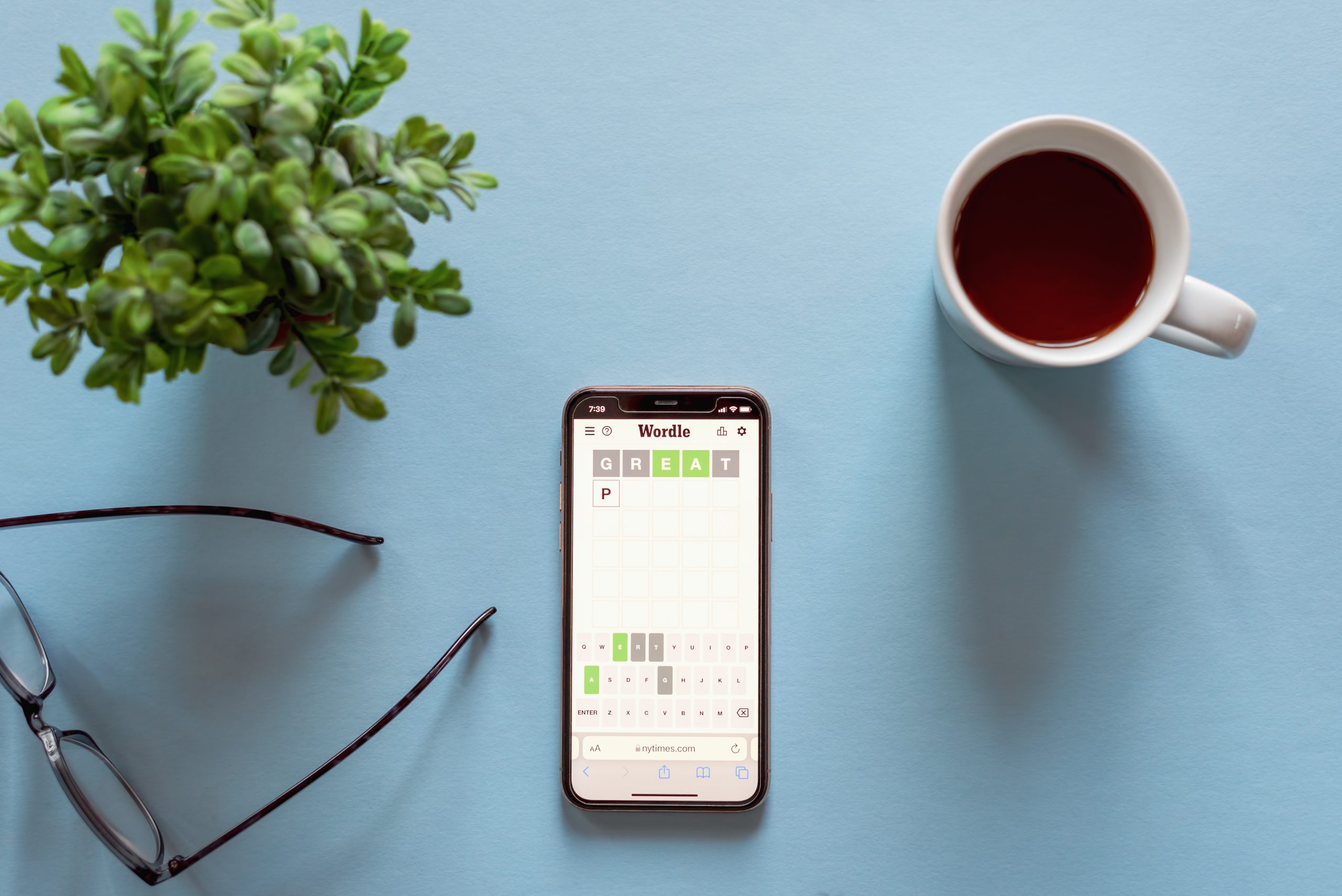
My Dearest Wordle,
It’s been an amazing three years and I’m sorry to have to do this, but I think our relationship has run its course.
The fireworks in the beginning were explosive. I couldn’t get enough of you. Like a besotted word nerd, I looked forward to our daily dates on the subway, at Starbucks, in the loo, and in bed at night. You are wonderful. Smart, funny, entertaining – even educational. You should know you did nothing wrong. It’s not you, it’s me. I have the attention span of a Gen Z-er mindlessly scrolling through TikTok. And when Spelling Bee and Sudoku winked at me, how could I resist?
This letter may not come as a surprise. I’m sure you’ve noticed our skipped lunch dates and lapsed streaks these last few weeks. I even tried playing your “hard” version hoping it would revive my waning passion, but I’m afraid I found it more annoying than arousing.
I’m sure you’ve noticed our skipped lunch dates and lapsed streaks these last few weeks.
When our meetings dwindled from daily to once a week, then down to once a month, and then to nothing, I knew our love affair was over. And no, it had nothing to do with my husband. He and I have an open relationship. He spends way more time with the New York Times Crossword than with me and will happily while away a lazy Saturday afternoon just staring into those big beautiful squares. My trysts with you, however, only average about three minutes. And while this is absolutely not the reason we’re over – I appreciate quality over quantity – I’d be lying if I said I wasn’t longing for more.
You must also remember we agreed to keep things casual. You are loved by millions yet I never let jealousy get the better of me. Being greeted every morning to my friends bragging about their time with you, posting their winning scores on Facebook and gushing all over you until I wanted to gag wasn’t easy, but I hung in there.
I stuck by you through thick and thin, even when you sold out to that mercenary behemoth of a newspaper that didn’t keep track of our scores just to rope us into buying a subscription. I get it. You were number one and that stuff goes to your head. And who couldn’t use the money? Sure, I was heartbroken over the betrayal and felt manipulated when I caved and bought a subscription to keep our relationship alive, but I forgave you anyway. I would’ve done anything for you. You were my drug of choice. I craved you more than Scrabble, and you know how I feel about Scrabble.
I craved you more than Scrabble, and you know how I feel about Scrabble.
I’m sure you’ll have no problem finding someone else. Everyone loves you. And let’s face it, most long relationships fizzle eventually. C’est la vie. But I have absolutely no regrets. I’ve learned a lot from our time together – like every five-letter word in the English language, or how to use “rainy” and “house” as starting words so you have all the vowels. And I’ll never forget our good times. Getting your answer in two tries (one doesn’t count, it’s just luck), beating my friends and making them as jealous as a gang of mean girls crushing on a hot quarterback with a perfect LSAT score, was one of the best feelings in the world. I’ll cherish it forever.
I wish you the best of luck and hope we can still be friends. An occasional breakfast or lunch would be nice. You should meet Spelling Bee and Sudoku sometime. They’re a lot of fun, and they last a lot longer.
Gnashing of grills in Atlanta
Renting of garments in Nawlins
When the news hits Phoenix
They’ll lose a week
Telling the birds and the bees

You just wait till the storm hits the Windy City
Lake Michigan’s gonna heave & ho when she hears
I’m not coming home

I hope folks dress with a toddler’s grace & a teenager’s tact
A mess of people in clashing shades of black
In fits when paint got on their good shoes
Five summers back

Staring at sunsets from aisle seats
Wondering why you’d even wear black
For a soul with a kookaburra’s laugh

I hope my funeral’s a fucking mess.
I hope they forget to book a venue, a hearse
The mortician is new, anxious, and nauseous

I hope it’s a shitshow.
I hope my pallbearers call out sick

Trip over thin air
Fresh sod
No, dash my ashes down the aisle
Take a deep breath, take a piece of me home with you

I hope the eulogy is wandering, confusing, abrupt
I hope the speakers are ineloquent and selfish
I hope it’s noisy and messy and fidgety and awful to sit through.

I hope my funeral’s a fucking mess.
I hope my funeral is packed with people unpracticed at grieving.
Not like our big siblings, the quilt sewers.
I hope my loved ones are downright clumsy mourners.

I hope they don’t struggle to figure out what music to put on.
  Bill Withers. I’m putting it in print here, now. Lean On Me, by Bill Withers.
But, I hope they know enough to dance.

By god, I hope they know enough to put on some Whitney & dance.

To get sunflowers
  & rice — you’ll feed everybody, right?
  The whole affair better smell like garlic
                                    & ginger
                                            & chlorophyll
        or I’m dragging my ass back.
You better keep each other fed, at least.
Native publishers are critical in preserving and amplifying Indigenous perspectives. While narratives about Indigenous peoples often focus on the devastating impacts of colonization—death, disease, grief, and addiction—these publishing programs create space for the full spectrum of the Native experience, including our distinct humor, joy, and triumphs.
I’m the director of California Indian Publishing at Heyday, an independent nonprofit based in Berkeley. Founded in 1974, we have a long history of publishing Native literature, hosting cultural events, and doing outreach in the community. We’ve published everything from beautifully illustrated children’s books to cookbooks on Indigenous foodways, to important historical memoirs. I am the editor for our quarterly magazine, News from Native California, devoted to the vibrant cultures, arts, languages, histories, social justice movements, and stories of California’s diverse Indian peoples. This magazine has a little bit of everything—news stories, essays, interviews, poetry, and artwork. It can even be a little gossipy for those in-the-know about California tribal communities.
The following list showcases publishers who get it right, allowing Indigenous writers to tell our stories in our own voices:

Ten years ago, the Pechanga Band of Luiseño Indians founded Great Oak Press to amplify and center Native voices and to grow and preserve Indigenous culture and knowledge. The tribally owned publisher mainly publishes academic titles, but they also print books for children and teens.
Abalone Mountain Press is a Diné woman-owned publishing house, operating on the traditional lands of the Akimel O’odham. They’re a indigiqueer, trans, non-binary, Black Indigenous, and feminist-friendly press with a goal of being a space where Native voices can flourish authentically and unapologetically.. Their books cover a wide range of genres including poetry, fiction, and nonfiction.
At 60 years old, Malki Museum is the oldest nonprofit museum founded by Native Americans on a California Indian reservation. Their books focus on the First People of Californiaand vary from academic works to guides on the best local hiking trails and usages of local plants.

Orca Book Publishers is an independently-owned Canadian publisher of popular and acclaimed children’s books. They publish more than 80 books a year for all ages and in multiple Indigenous languages including Anishinaabemowin, Diné, Inuktituk, and Plains Cree.

Native Northwest is a Canadian organization that sells everything from stationery and housewares to children’s books and clothing. Based in Vancouver, their mission statement places emphasis on authenticity and respect and they source all their art, merchandise, and literature from Native artists.

One of the oldest publishers on this list, Kamehameha Publishing amplifies Hawaiian voices, focusing on ʻŌlelo Hawaiʻi (Hawaiian language), ʻike Hawaiʻi (Hawaiian knowledge), and kuanaʻike Hawaiʻi (Hawaiian perspectives). Since 1888, they’ve provided engaging educational content across print and digital media, ranging from archival recovery to contemporary voices.

Located in Syilx territory on the Penticton Indian Reserve in British Columbia, Theytus Books is the oldest Indigenous publishing house in Canada. First Nations-owned and operated, Theytus supports Indigenous authors, illustrators, and artists. Their name, which means “preserving for the sake of handing down” in Salish, symbolizes the documentation of Indigenous life using literature.

Founded by Teddy Anderson (Yeíl S’aghi), an adopted member of the Carcross Tagish First Nations, Medicine Wheel Publishing specializes in books that provide a moral and cultural education, partnering with Indigenous authors and elders to ensure accuracy and respect. Their Orange Shirt Society campaign raises awareness of the lasting impact of Indian Residential Schools on generations of Native peoples. Their award-winning books are published in bookstores across Canada and the U.S. and they’ve gifted over 15,000 books to Indigenous schools and communities.

Based in Iqaluit, Nunavut, Inhabit Media is an Inuit-owned company with the goal of preserving and promoting the stories, knowledge, and talent of the Inuit. Since 2006, they’ve encouraged both Inuit and non-Inuit residents to share their stories and oral histories, with a focus on traditional knowledge and language preservation. Most books are available in English as well Inuktitut or Inuinnaqtun, bringing stories to readers in both the North and the South.

Founded in 1993 by Anishinaabe writer Kateri Akiwenzie-Damm, Kegedonce Press has been publishing Indigenous Canadian literature for over 30 years. Based in Neyaashiinigmiing, Ontario, they’ve published books by some of the most acclaimed contemporary Native writers including Kateri Akiwenzie-Damm, Cherie Dimaline, and Richard Van Camp. Their aim is to support Indigenous professionals in all stages of book production, including illustration, design, editing, and printing.
Community-owned Native Voices Books, along with their imprint 7th Generation, offers fiction and nonfiction for children and young adults. Their works showcase the diversity of Native American Nations on Turtle Island and emphasize healthy sustainable living. The press has been located on The Farm, an intentional community, in Summertown, Tennessee since 1978.
I’ve dated my fair share of drummers. Same goes for guitarists, lead singers. There are songs out there that were written about me. Maybe you’ve heard one. Maybe you liked it.
I liked it too, once. But here’s the thing: I’ve also been a drummer, a guitarist, a lead singer. So why did I long to be someone else’s muse? Why did I invest time, desire, and displacement of my own creative goals to be the object of someone else’s?
The truth is that this is how many of us – many young women, not exclusively but especially – have been taught to be loved: as an object. We are trained to be observed, to be described, to be “captured” by the artist’s brushstroke or the author’s pen. We’re told, explicitly and tacitly, that this is our highest calling. And we’re expected to be grateful.
This is how many of us have been taught to be loved: as an object.
This idea was top-of-mind when I read Vincenzo Barney’s recent piece in Vanity Fair about Cormac McCarthy’s lifelong relationship with a “secret muse” that began when she was sixteen and he was forty-two. Augusta Britt, whom the article exhaustively touts as the titular “muse,” describes her experience:
“And I remember thinking to myself that being such a lover of books, I was surprised it didn’t feel romantic to be written about. I felt kind of violated. All these painful experiences regurgitated and rearranged into fiction. I didn’t know how to talk to Cormac about it because Cormac was the most important person in my life. I wondered, Is that all I was to him, a trainwreck to write about?”
Augusta Britt is a tremendously accomplished, intelligent, and demonstrably independent person who knows her way around horses and guns in a way that Cormac McCarthy never did. Her language reveals someone who’s perspicacious and original. And yet, both McCarthy and his nascent biographer seem keen on reducing Britt to the role of muse.
In the days since the Vanity Fair essay was published, it’s been rightfully, extensively lambasted. Much has been said about the age differential between McCarthy and Britt (definitely illegal and unambiguously pedophilic), and about the abysmal prose (eye-roll-triggering gems include “reading the blue ink meant for her blue eyes”), but I’d like to focus on something else. I’d like to talk about the idea of the muse.
The word “muse” appears no fewer than thirteen times in the essay, fourteen if you count the title. Its usage is not only borderline incessant but unnervingly lofty, and absolutely aligned with the hegemonic use of the term. The tone is one of awe, of reverence for someone (something) not quite human. I recognize the timbre: a compliment to one’s intelligence, humor, or ability as icing on the cake of “feminine aura.” But both icing and cake, of course, are meant to be consumed.
Under the pretense of flattery, designating someone a muse is insidiously derogatory, even denigrating. Even McCarthy seems to have understood the danger of this dynamic; during research for Blood Meridian, he wrote to Britt: “You are becoming something of an abstraction and I don’t think that’s so good. Need flesh and blood. Touch and feel. Actually, you’re something of an abstraction anyway. I have trouble coming to grips with the reality of you.” In further correspondence, McCarthy shares “sexy dreams” in which Britt is literally (and literarily) reduced to a [manic pixie] dream girl, a figment of the author’s fantasy.
Idolatry and debasement are two sides of the same coin. Whether the locus is a pedestal or a prison, both are forms of objectification, the reduction of the human to the non-human, the physical to the abstract. The very notion of the muse is dehumanizing. So why do we safeguard – even celebrate – this particular strain of artistic fetishization?
McCarthy and his nascent biographer seem keen on reducing Britt to the role of muse.
The answer is as simple as it is with most acts of violation: power.
Interestingly, the term muse was originally rife with power. Early usage of the term is in the realm of “protector of the arts.” That’s pretty badass – I’d love to be known as a protector of the arts. But by the 1800s, muse had taken on its more contemporary instantiation: that of a person, usually a young woman, whose function is to inspire the creative work of a typically older male.
Now, let me note: I don’t love making things about gender. This was about gender long before I came on the scene; and art, in this case, unfortunately very much imitates life. As reported by the International Labour Organization, women globally perform more than three times as much uncompensated care work as men. This invisible labor of care – of housekeeping and child-rearing but also of attention, of sex, of ego-stroking, of being quiet and holding still – is a calling card of the muse. The role requires one to decenter the self, to function in the orbit of another person’s gravity.
Another calling card of the muse is expendability. Like all not-quite-humans, they’re easily killed off. Characters inspired by Augusta Britt, for example, have a body count of at least nine. Not to be overly dramatic, but these are serial killer numbers.
Considering the deterioration of the muse from protector to pet, one is put in mind of other uses of art and language to reduce power. Think of the Old Testament angels, flaming-sword-wielding beings reduced in oil paintings to mini-winged infants. Or – far more recently and harrowingly – formidable two-spirit Taíno warriors reduced to effete savages in the writings of European colonizers who were daunted by concepts of gender considerably more nuanced than their own.
Whether the site of colonization is a land, a people, or a body, the project is exploitation. And the modus operandi of colonizers – and of proponents of the muse – is to take something they desire but don’t understand, something of which (or whom) they’re afraid, and to generate an artificial hierarchy that reduces it, even if (especially if) it’s innately greater.
For those who see everything outside of themselves as expendable for their art, anyone and anything that isn’t the artist can be reduced to a muse, from young women to nature itself. This tendency is apparent in the Vanity Fair essay too – the writer exhibits a near constant proclivity toward self-centering. Barney (and other users of the muse) tend to write as though a thing were one’s experience of the thing. He at one point compares the spectacular phenomenon of a rainbow to “the execution line on a document” and refers to “the menacing 116-degree sun.” Now, as a writer, I’m all for figurative language but, at the risk of being a bit granular, the sun is not 116 degrees. The sun is approximately twenty-seven million degrees Fahrenheit. And at the risk of being a bit broad, writers with an intrinsically colonial mentality write as though the world – and everything in it – belongs to them.
Language matters. Writing has the power to reduce and erase just as surely as it has the capacity to empower. There’s a significant difference between navigating real-life inspiration with dignity, courage, and care versus raiding the lives of others for sport.
Writing has the power to reduce and erase just as surely as it has the capacity to empower.
I’ve been guilty of the latter on both sides. As a muse, I’ve relished the attention, the view from the pedestal. As a writer, I’ve at times exploited others like I was doing them a favor. Now, I’m working on resisting the writer’s oft-fetishized solipsism in favor of invitation, collaboration, and consent.
At a recent event at Beacon Hill Bookstore in Boston, a very kind attendee asked about the origin of the title of my first book, Stories No One Hopes Are About Them. I was delighted to be honest: at one point, as a musician, I’d had enough with being a muse – with the entire premise – and was working on an album titled Songs No One Hopes Are About Them. In an act of self-reappropriation, I pivoted the title toward fiction. I aimed to write about people who transition from the object of others’ realities to the subjects of their own. I wanted to write about power. I wanted to write about degradation and agency. I wanted to write about the latent strength of muses, and the privileged myopia of those who keep them. I wanted to write with hope.
Here, I want to acknowledge myself (a human) addressing you, reader (also a human).
To anyone who may currently be a muse: Your value is not predicated on anyone else. Only when we acknowledge one another as others – as humans, as artists, as persons with autonomy and creative force – will we do our best work.
To anyone who sees themself in the story of Augusta Britt: your story being told on your terms matters.
And to everyone: You’re not an object. You’re not an idea. And you’re definitely no one’s goddamn muse.
 Thank You!