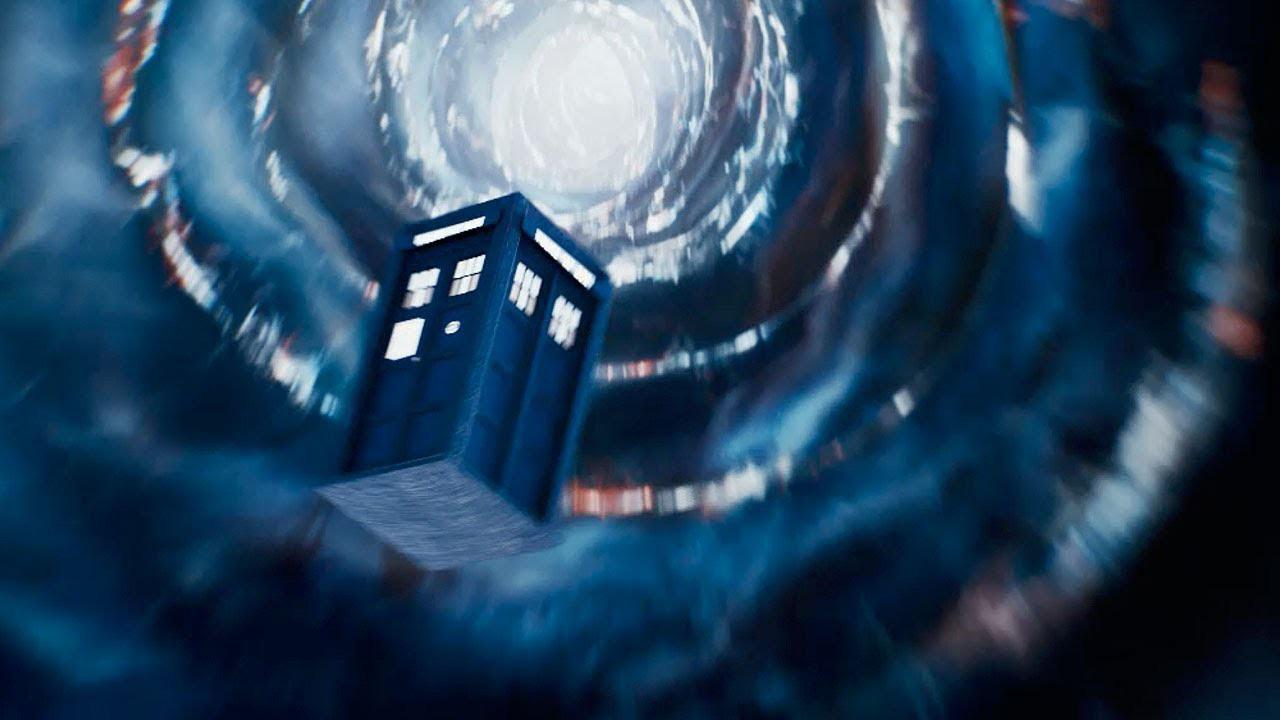
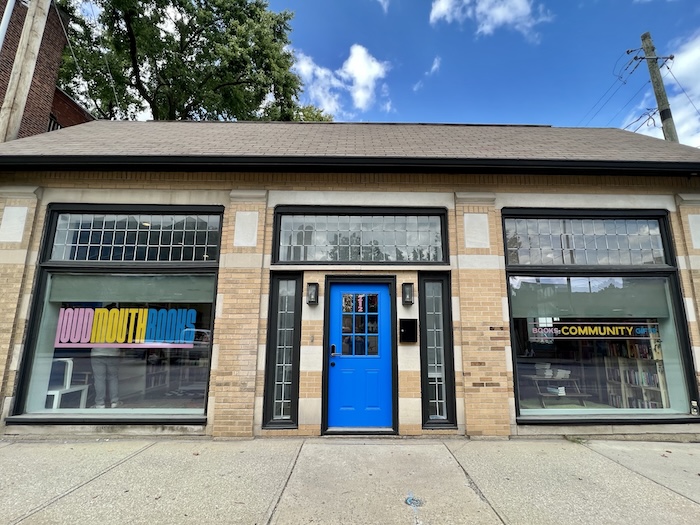
From Star Trek to Dr. Who, our culture is rife with stories of time machines: contraptions capable of bouncing between eras, immersing us in how people lived way-back-when, and what the future might look like.
Short story collections can be time machines, too. Without knobs or flux capacitors, they can zip us to pre-history, then the far future and back again. Authors can stretch and squish time like putty, helping readers to face hidden possibilities: How might our world be otherwise? What alternate paths might we have taken, and what are their dangers and opportunities?
Octavia Butler, in her 2000 Essence essay “A Few Rules for Predicting the Future,” explains that her fiction about the future is informed by the past, “filled with repeating cycles of strength and weakness, wisdom and stupidity, empire and ashes. To study history is to study humanity. And to try to foretell the future without studying history is like trying to learn to read without bothering to learn the alphabet.” When authors nudge us out of our own time period, they challenge our assumptions: about progress, permanence, legacy, even humanity. They ask: what are we here for in these brief lives? Big stuff for short stories.
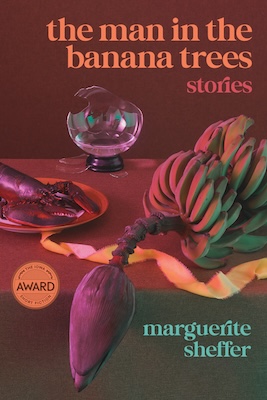
Yet short fiction is as close as I’ve come to my own personal time machine. In my collection, The Man in the Banana Trees, I write about 1493 and 2073 in the same story, from the perspective of the famous Unicorn Tapestries. Another story has a ghostly narrator, able from her unique perspective to overlay the past version of her beloved artist colony with its current reality as a corporate retreat.
Similarly, these eight authors explore the past to interrogate our present and future. Within the same collections, they soar forward and backward to different eras, transporting us out of the comfortable and familiar. They distort time, stretch time, collapse time, and cycle through it like a deft dancer, revealing patterns and causes and questions and possibilities.
Tender highlights characters on the margins of history and the future, giving them voice and magic. Monsters, servants, reluctant cyborgs and determined artists live through time periods that could seem apocalyptic. One standout story “Ogres of East Africa,” is a “false text” taking the form of a compendium of ogres “catalogued by Alibhai M. Moosajee of Mombasa, February 1907.” The story emerges in the margins of this text, in notes that Alibhai writes about his domineering “employer” and his subversive “informant,” Mary. Along the way the reader learns that the employer is an outsider, presumably white, who complains of the African environment, while Mary is a knowledgeable local who shares the stories of the ogres. As the story continues, the margins literally expand, growing longer than the entries in the catalogue. In the margins, Alibhai begins to fall in love with Mary, and documents the plan the two share to use their knowledge of ogres to subvert their racist employer, lead him into danger, and escape to join the ogres themselves. As Alibhai notes in the last marginal entry: “There will be no end to this catalogue. The ogres are everywhere.”
E. Lily Yu’s stunning speculative collection goes from fables about insect societies in small pre-industrial villages (“The Cartographer Wasps and the Anarchist Bees”), to a cyberpunk telling of the Orpheus and Eurydice myth (“Music for the Underworld”) and near-farcical futures where a lavish wedding takes place against a backdrop of unfettered income inequality and climate disaster (“Green Glass: A Love Story”). Yu writes deftly about politics, power, and fragile hope. No matter what time period a story is set in, tender characters are threatened by brutal forces. There’s a timelessness to the stories, suggesting that we have been here before, we’re repeating the same mistakes, trying desperately to break out of the cycles. “Three Variations on a Theme of Imperial Attire,” makes this cyclical retelling explicit: revising the folktale of “The Emperor’s New Clothes” in repeated iterations:”unnecessarily grim, you say? Unrealistic? Scenes this bloody no longer occur in the civilized world…There’s nothing for it but to try again.”
Ken Liu’s marvelous ThePaper Menagerie includes unlinked stories from across the past and into the future. Technology and fable flow into each other. Many stories deal with relationships between parents and children, or between generations. In “All The Flavors: A Tale of Guan Yu, The Chinese God of War, In America” a young girl in 1870s Idaho meets a Chinese-American storyteller who might be a god. “A Brief History of the Trans-Pacific Tunnel” imagines the construction of an undersea tunnel connecting Japan to the Western United States, as well as the abuses of the workers who dug the tunnel, and the burden of their buried stories. In “Good Hunting” a Chinese man and fox-spirit (hulijing)navigate colonial Hong Kong, combining supernatural abilities with industrial age technology to “hunt” those who oppress and threaten them:“She darted the streets of Hong Kong, free, feral, a hulijing built for this new age…I imagined her running along the tracks of the funicular railway, a tireless engine racing up, and up, toward the top of Victoria Peak, toward a future as full of magic as the past.”
Ruben Reyes Jr.’s debut collection There is a Rio Grande in Heaven uses elastic time to tell surreal and speculative stories about the lives of first- and second-generation Central American immigrants to the US. In “The Salvadorian Slice of Mars,” near-future climate disaster has turned the tables on the 2020s power dynamics of borders: Central American nations control access to Mars, while American citizens are restricted and policed. Throughout the collection, short vignettes all titled “An Alternate History of El Salvador or Perhaps the World” play with time, memory and possibility. In the first one, Columbus’ ships never land: “There is no war, no aftermath, no nation. No blood or sweat or singed skin in the dirt.” Memory, amnesia, and history are recurring themes. In “The Myth of the Self-Made Man,” Victor, a historian in the year 2175, sifts through documents in the National Archives looking for the secrets of a cyborg servant marketed by a “Hispanic business mogul” as part of the American dream. As Victor digs deeper “every hour spent in the archive brings [him] a step closer to unearthing the truth of his ancestor’s anger: where it came from, whether it was justified, and how knowing his own history might empower him to reshape his future.” But, as this collection shows, time is full of forking paths, each leading to alternate possibilities: “the past is an ever-growing cavern, and even a lifetime of spelunking won’t reveal it all.”
Kij Johnson’s At the Mouth of the River of Bees showcases unlinked stories with humor and heart. Many are speculative, and in Johnson’s case that means both Kitsune (fox) fantasies set in Heian-era Japan, and post-Earth far-future science fiction.
She takes on the voice of a seemingly 18th-century male author, in the style of Jonathan Swift or Laurence Stern’s Tristram Shandy: ostentatious and obtuse, in a story titled “My Wife Reincarnated as a Solitaire—Exposition on the Flaws in My Wife’s Character—The Nature of the Bird—The Possible Causes—Her Final Disposition.” The reader joyfully gets to piece together the real story of what has happened to the narrator’s wife, behind his ostentatious and obtuse ramblings. And right next to that is a dystopian future story about an “Empire Ship” and its inhabitants, opening with the lines: “We tell these tales, we who lived on the Ship. We do this so that our home planets and our time on the Ship will not be forgotten—so that we will not be forgotten.” It’s hard to imagine stories more disparate in setting and tone, and their boldness is exaggerated by reading them back-to-back.
Two favorites of mine include stories that explicitly play with the concept of time: “The Horse Raiders,” set on a planet on which rotates so slowly that nomadic people cross the landscape while staying in the same dusky time of day, avoiding the too-hot sunlight, and “Names for Water” in which a engineering student is receiving phone calls from the future.
Though the stories in this masterful collection couldn’t be more varied, there’s a sense that the wise and troubled characters are engaged in a single conversation across eras—a reminder of the vast power of a short story collection. In 1667 we meet an aging John Milton collaborating with an actual angel to weave a rebellious thread into his Paradise Lost. That story, “Killer of Kings,” interweaves Milton’s boyhood with his old age. Time is slippery within the story as it is in the collection as a whole. In nine dense stories, Sachdeva tackles a near-future in which aliens are replacing humans’ hands, and the lives of Nigerian schoolgirls after being kidnapped by Boko Haram. Fabulism and fairy-tale logic show up in unexpected ways. As AM New York said about the collection, these stories “seem to float in time, untethered by commercial or cultural touchstones, making them feel eternal.”
The 2023 Locus Award Winner for Best Collection, Miller’s Boys, Beasts and Men challenges notions of masculinity and monstrosity. Often both horrifying and heartfelt, some stories depict a post-climate collapse future. One standout story is “The Heat of Us: Notes Toward an Oral History,” a speculative work of historical fiction that literally re-writes the narrative to include more voices. Through various fictional perspectives, the cause of the fire at the Stonewall Uprising is revealed to be multipsionics, or collective psychic energy, of the shared anger, resistance, and joy of the queer patrons. As one character explains:
“‘I think it’s happened lots of times, except we’re reading history the wrong way. We read it the way The Man wrote it, and when he was writing it, I bet he didn’t know what to do with multipsionics. But I’ve studied this shit. The Warsaw Ghetto Uprising happened on Passover, after all, and the Haitian Revolution began with a spontaneous uprising at a vodoun religious ceremony. When people come together to celebrate, that’s when they’re unstoppable.’”
The Caprices is less speculative than many of the time-traveling collections in this list, but no less inventive in how it bends and distorts time to enliven history. The majority of Murray’s stories are set during World War II in the Pacific. The final story, “Position,” propels the reader through centuries on Guam as famous historical incidents and figures flit by. Starting in 1521 when “Magellan sights the islands,” the story hop-skips to Amelia Earhart landing on Saipan: “Aviator. Wife. Writer. Woman. Does she also need to be a spy?” Murray accelerates and decelerates story-time: centuries fly by in a single sentence, before we lurch to a halt and a single, horrific scene is lingered on for pages. Murray manipulates time to illustrate war’s impacts on a place and its people. By the time the Enola Gay enters the pictures, readers are catapulting towards an ending that leaves me breathless, and has haunted me the fifteen years since I first read the story, an ending full of possibility and yearning.
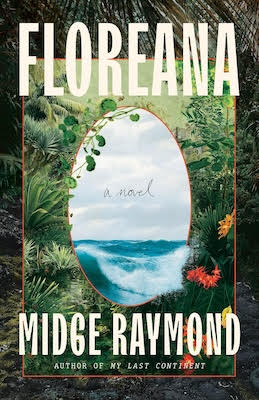
When I traveled to the Galápagos Islands, I went for the wildlife—specifically, for the penguins. At the time, the only human I’d associated with the islands was Charles Darwin. Then I learned about “The Galápagos Affair”—the bizarre human history of Floreana Island that gave new meaning to phrase survival of the fittest.
What happened was this: In 1929, two German lovers left their spouses in Berlin and started a new life on Floreana. They were joined on the island three years later by the Wittmers, another German couple, and their teenage child. The two families lived independently and harmoniously—until the arrival soon thereafter of a woman calling herself the Baroness, along with her two German lovers.
Due to the Baroness’s mercenary habits, chaos ensued, and by 1934 the Baroness and one of her lovers had disappeared, and two of the German men were dead. To this day, the Baroness and her lover have never been seen again—and the other two deaths remain shrouded in mystery.
I’d never written a novel inspired by historical events, but I felt this mystery needed to be solved—and the only way to do this would be through a work of fiction. As I wrote Floreana, I found it both challenging and encouraging to have very little source material, with little reliable evidence and no living humans from that time period to shed light on what happened. This gave me the freedom to imagine what might have happened and to create my own version of events, based on what I learned about the settlers and their lives in the Galápagos.
Likewise, the novels below are based on real murders, and, as fiction allows us to do, the books go beyond the tragic events to explore issues that often don’t make it into the news headlines: deeper insights into the lives of the victims, the survivors, and even the perpetrators. Whether historical or contemporary, these novels offer glimpses into true crimes by going beyond the incidents themselves and into the imaginations of their authors.
This novel, which recalls Ted Bundy’s horrific murders without ever naming him, opens with the killings at a Florida sorority house in 1978 and is told from the points of view of a surviving sorority president and the friend of a victim from the other side of the country. As the sorority president connects with the Seattle victim’s friend, the two seek answers and justice. Readers familiar with Bundy’s infamy will appreciate that this chilling story focuses on the victims and survivors, the bright young women who persevere—not on the unnamed “Defendant,” as he is called in the novel.
First published in France as Chanson douce, Moroccan-born French author Leïla Slimani’s novel is both haunting and harrowing. Set in Paris, the novel evokes the real-life case of the New York Krim family, whose children were murdered by their nanny, who afterward attempted suicide. Translated from the French by Sam Taylor, the stark, austere prose makes Slimani’s novel all the more gripping—and unsettling—from the very first page.
Laurie Notaro’s novel about Winnie Ruth Judd, known as “the Trunk Murderess,” opens on Judd trying to retrieve her oozing trunks from LA’s Union Station, where she abandons them as station porters discover they contain human remains. With empathy, meticulously researched context, and exquisite detail, Notaro’s novel reveals how Judd—a slight twenty-six-year-old who was a minister’s daughter and a doctor’s wife—reached the point at which she murdered her two closest friends.
Lionel Shriver’s epistolary novel is about a marriage, a family, a troubled child—and the horrific, Columbine-like murders he commits at his school. Winner of the 2005 Orange Prize, the novel takes a daringly close look at parenthood and family, with insight into the world of a mother reviled for her role in the tragedy. In her signature unflinching style, Shriver has created a compelling and wholly unique novel; while the crime that inspired the book may be familiar, the novel’s insights and twists are truly surprising.
In this historical novel, Margaret Atwood resurrects a crime that took place in 1843—the murders of Thomas Kinnear and his housekeeper, Nancy Montgomery, by two other employees, Grace Marks and James McDermott. After the murders, McDermott was hanged, and Marks was sentenced to life in prison. Atwood’s novel picks up here; in Alias Grace, Grace is released from prison to work in the prison governor’s home, and psychiatrist Simon Jordan begins meeting with her in an attempt to understand who she is, what led to the murders, and what her role in the crime really was.
Set in the 1960s in Marin County, The Girls follows Evie Boyd as she enters a Charles Manson–like cult of (mostly) young women who are as lost as she is. Told from the perspective of an older, wiser Evie looking back on the summer when she was fourteen, The Girls reveals the angst and isolation that leads her into the dark and troubling world of sex, drugs and, eventually, murder. With strong parallels to the Sharon Tate murders, this novel is about secrets, family, and coming to terms with one’s past.
In Cold Blood is among the most well-known “nonfiction novels,” and while this work of literary journalism tells a true story, its publication in 1966 makes it among the first of its kind in the genre. The book portrays the 1959 murders of Herb, Bonnie, Nancy, and Kenyon Clutter at their farm in Holcomb, Kansas, by recent parolees Richard Hickock and Perry Smith, with all the tension, details, and context of a novel, and the book is both a murder mystery and courtroom drama.
Belgian detective Hercule Poirot leads this cast of international characters who are not what they seem. Without revealing too much for (the few) readers who may not be familiar with this novel, the killer’s motive was inspired by the kidnapping and murder of Charles Lindbergh’s son in 1932. Christie included details of the real-life case, in which the Lindberghs’ child was kidnapped for ransom but murdered despite the family having paid—as well as details from her own journeys on the Orient Express, including one on which the train was delayed by weather—and the result is a classic, suspenseful locked-room mystery.
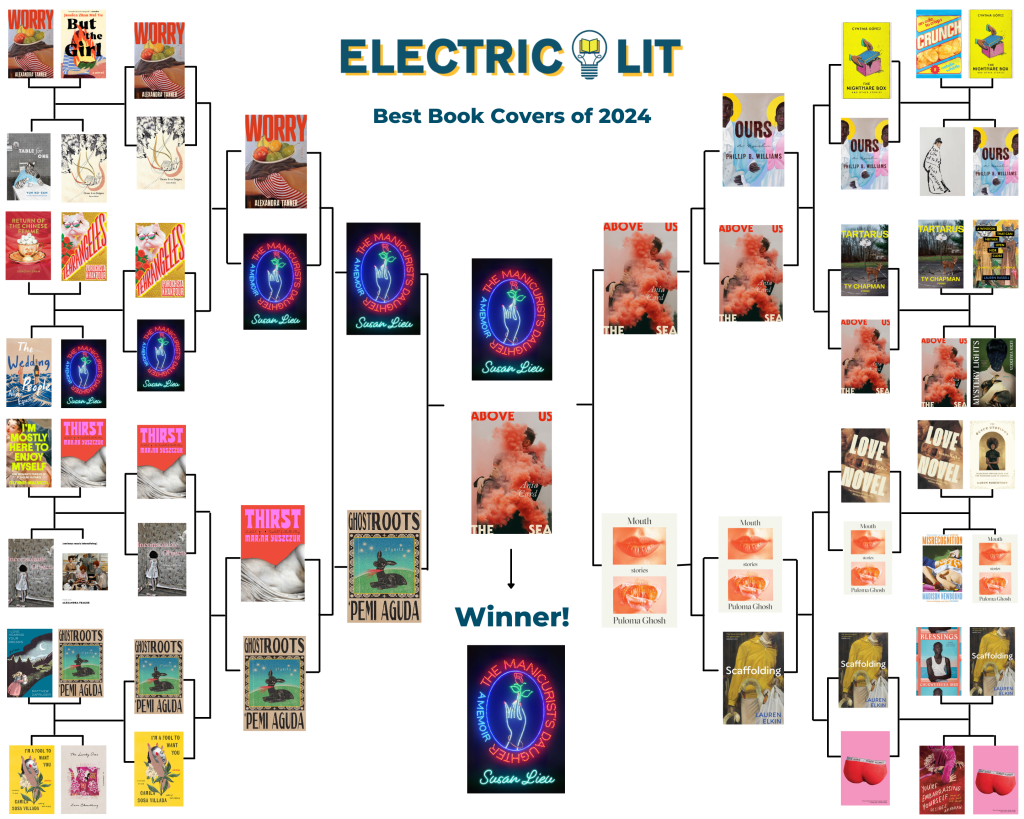
December marks the start of the holiday season and the return of one of our favorite year-end traditions: the annual best book cover tournament. Now in its fourth year, this contest is our way of recognizing and celebrating the talented designers behind the books. After all, the cover is the very first thing you see when you walk into a bookstore. These designs are more than just attractive; they help tell the story before the first page is even turned.
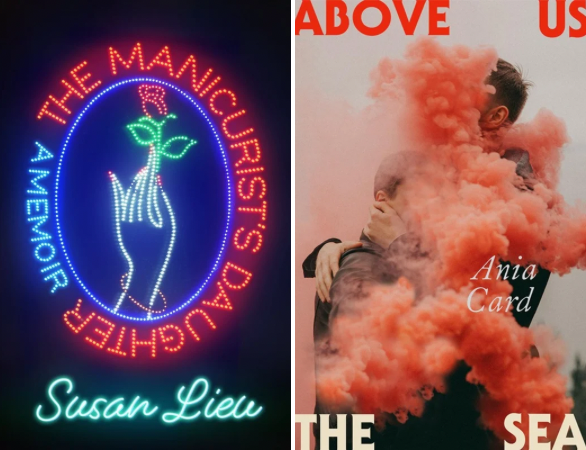
The contest unfolded through multiple rounds of voting on Instagram and X, with some unexpected twists along the way. Staff favorites like Crunch, Inconsolable Objects, and Mystery Lights were eliminated early on, while another staff favorite, Mouth, almost made it to the finals. The final two covers stood out for their originality and distinctiveness. One perfectly embodied the book’s title with innovative neon lettering, while the other intrigued with a pink mist enveloping the characters in a shroud of mystery, desire, and tragedy, every glance capturing a different mood and emotion.
Above Us The Sea by Ania Card (design by Emma Ewbank) versus Mouthby Puloma Ghosh (design by Adriana Tonello, photograph by Suzanne Saroff).
The Manicurist’s Daughter by Susan Lieu (design by Julianna Lee) versus Ghostroots by Pemi Aguda (design by Sarahmay Wilkinson, art by Day Brierre).
From the Final Four, now we’re down to two crowd favorites:
The winner of Electric Lit’s 2024 Book Cover Tournament: The Manicurist’s Daughter by Susan Lieu, design by Julianna Lee.
Click to enlarge
We spoke to Julianna Lee, the designer of The Manicurist’s Daughter, about creating the book cover.
Electric Lit: Tell us about your design process for this book cover and what you wanted to convey through the artwork
Julianna Lee: My parents immigrated from Korea in the ’70s and owned a wholesale store in the Garment District of New York City, so this book deeply resonated with me. It also helped that I have manicurists in the family. I wanted to capture the entrepreneurial spirit of immigrants, who were denied access to white collar jobs in America, so built their own way of income. I also wanted to transform everyday, “ugly” iconography into something beautiful—since the beauty myth is a prevalent theme throughout the book.
EL: Did you have any interesting false starts or rejected drafts you can share with us or tell us about?
I wanted to transform everyday, ‘ugly’ iconography into something beautiful.
JL: The neon sign was the first idea that came into my head. I experimented with other concepts, like strip mall buildings, makeup drips, and mirrors featuring marble busts, but none of them captured the same magic as the neon sign. However this comp didn’t even make it past the first round. Instead, I was asked to revise another comp featuring raining nail polish drips, however I didn’t think it communicated the subject matter well enough. Since I came to this project as a freelancer, I was not privy to the jacket meeting conversations. I was only informed that my ideas were all killed. Six months later, I was pleasantly surprised when the creative director reached out to me to let me know that Susan Lieu, the author, saw my nail salon sign comp and thought it was perfect. It was always my favorite too.
EL: What’s your favorite book cover of 2024, besides your own?
JL: There were so many brilliant covers in this competition, so I’m truly honored that I made it this far. Rather than picking one cover for 2024, I want to use this opportunity to give a shout out to all those talented book cover designers that don’t get enough attention for their work that they deserve. Sometimes the assignments are too commercial or genre to be appreciated, but I know all dedication and thoughtfulness that goes into each one. I see you!
Writing fiction itself might be (and often is) considered an act of translation: from experience to language, from emotion to logic, from chaos to legibility. Perhaps it is a mere coincidence, or a stroke of good luck, then that these three fall debut novelists selected for our craft series each have backgrounds in literary translation. However, I believe it’s more likely due to probability—the probability that an interest in language’s borders and bridges leads to an investment in the art of translating not only between cultures but translating what it means to be human and ephemeral, then transforming this into something that sounds like a story.
Each of the three novels by our interviewed authors this fall revolve around desiderum, nostalgia, and characters who are reaching for the past at the same time as they reach for a future. They inevitably become caught, paralyzed, between the two. Although it’s not only time which these characters become trapped within but place as well: from a dorm in Vermont to a Skype scene of Brazil; from contemporary Brooklyn bars to a masked ball in 1930s Shanghai; and from Buenos Aires to Paris, Brussels, Tokyo, and the end of the world. These novels all cleverly and masterfully use craft to play with the faulty dimensions of geographic, linguistic, and temporal boundaries as somehow the circumferences of each slowly fade away.
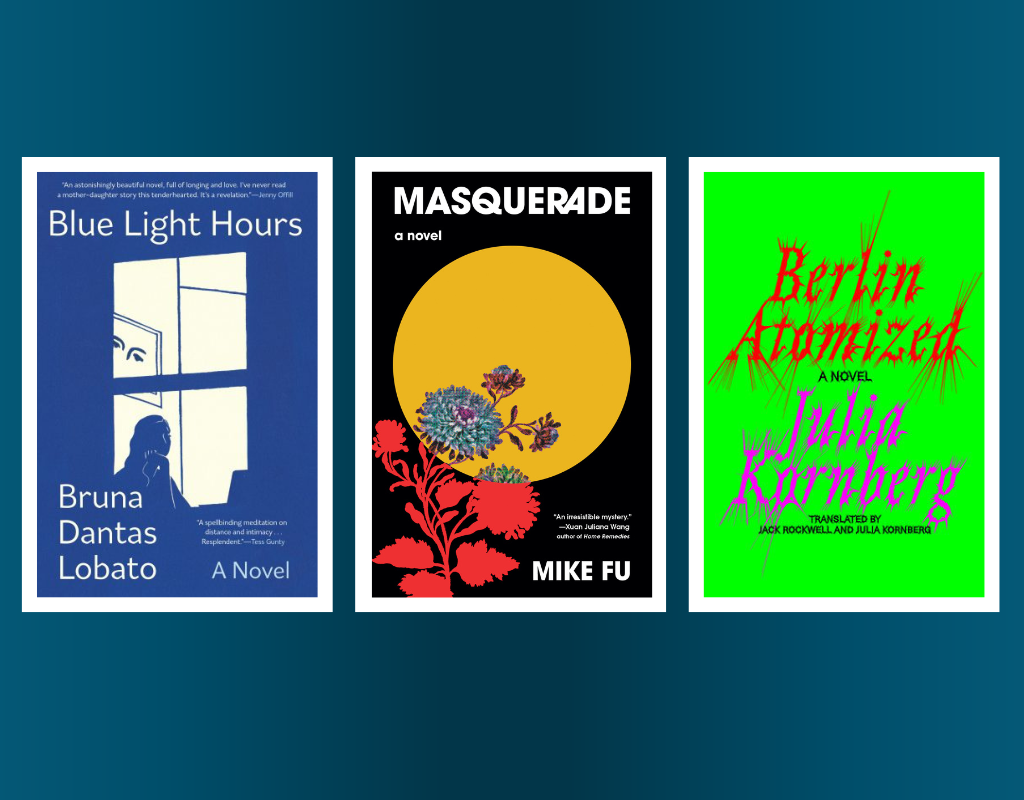
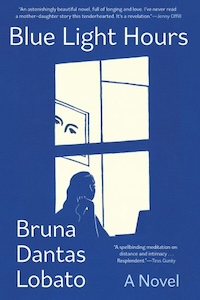
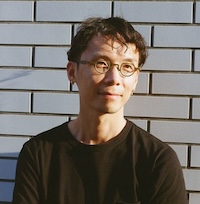
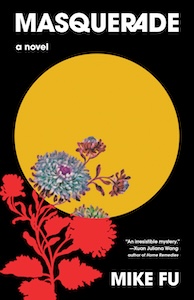
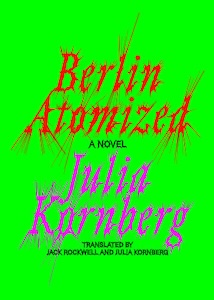
At last, our craft interview features the following writers who have published their debut novels in the U.S. this fall: Bruna Dantas Lobato, the author of Blue Light Hours; Mike Fu, the author of Masquerade; and Julia Kornberg, the author of Berlin Atomized. Lobato, Fu, and Kornberg spoke with me about the genesis of their projects, the excruciating infatuation stage of the first draft, and how their backgrounds of translating infused their experiences of writing their own novel.
Kyla D. Walker: Which came to you first for Blue Light Hours—the idea or the characters/voice?
Bruna Dantas Lobato: My two protagonists first came to me when I was a senior in college. I was homesick and struggling to keep in touch with my own mom in Brazil. I pictured this mother trying to catch a glimpse of her daughter’s life in the U.S. through Skype and the daughter tilting her computer screen to show her mother the view outside her window. Something about the glare of the window on the screen captured how little the mother knew about her daughter’s new life for me, how this mother would never be able to scratch its surface from where she was sitting. I could see them and hear them very clearly, and I kept writing about them, though I’d only realize this could maybe be a book a few years later, once I found a shape for their stories.
KW: Blue Light Hours has a stunning minimalistic tone and is written in gorgeous, spare prose with evocative emotions spilling across what remains unsaid between mother and daughter. What was it like writing the dialogue and the conversations between these two characters? Was it difficult to capture that yearning essence and absence on the page?
BDL: Thank you so much. I would often get a line of dialogue stuck in my head, then I’d pull at it until I got to the next line, then the next. It sometimes took me months to figure out how the conversation was meant to be structured or what it wanted to be about, but then when I got there the meaning didn’t always need to be spelled out. Their yearning was already there, soaking the language, and if I announced it too much, I only risked diffusing it. One of the main failings of video calls as a mode of connection for my characters is how everything needs to be said out loud, how the only way to keep each other company is through language, when in real life they could just spend time together without relaying it. They could sit in silence, chop vegetables, watch a movie. No amount of language can replace that.
KW: What was your favorite part of the writing process for this novel? How long did it take from start to finish?
BDL: It took me seven years to get to a finished draft, partly because it was so difficult to invent a form to contain this kind of immigrant story where the protagonist doesn’t just move forward in one direction, toward a new life of Americanness, but that also gestures back, toward home, toward her everchanging relationship to her own people. This was the hardest and also the most rewarding part of the process for me, rethinking the rules of craft that didn’t serve the story I was trying to tell. I spent a lot of those years wondering, What if my characters’ concerns aren’t obstacles meant to be overcome? What if their grief doesn’t reach a climax but accumulates instead? What if their pain can’t reach an end but is continuous? Is there room for a story like that, is there even a way to tell it as a novel?
KW: How has your background of being a literary translator affected your approach to writing fiction and this novel specifically?
BDL: It’s made me more confident as a writer, pushed me to think about narrative possibilities beyond American conventions, emboldened me to take risks. I’ve tried my hand at so many different voices, styles, genres, and modes of being through translation over the years. I love that I get to be a different kind of writer from time to time, that I get to spend time with another writer’s concerns. And then when I’d go back to my own novel, I’d feel like it was a place where I could ask the questions I hadn’t been able to explore anywhere else, a place to ask the questions that maybe only I could ask.
Kyla D. Walker: Did you write the novel with an outline or ending in mind?
Mike Fu: I had a vague sense of the major beats of the novel and some of the character dynamics, but didn’t work with anything as substantive as an outline. Both the beginning and end were a struggle in many ways; it took me multiple tries to figure out how to frame a story of this length. Even now, I’m not quite sure I stuck the landing—I certainly learned a lot, though.
As excruciating as the writing process itself was at times, it was equally pleasurable when the characters began to take on a life of their own. There were rare occasions when I could dive back in and coast on the dramatic momentum that had already formed on the page. It felt like a direct pipeline into my subconscious, and to see these wispy notions and images gradually cohere into something more solid was thrilling.
KW: Masquerade plays with time in its form and also speaks on the idea of experiencing time differently late at night. What was it like capturing this motion and mood on the page?
MF: There is often a sense of artifice in the nocturnal world that becomes most conspicuous in the early morning hours—doubly enhanced by solitude and sobriety, I’d say. I’m not much of a night owl these days, to tell the truth. But in writing this novel, I tapped into all these memories of wandering around the city at some ungodly hour. Everything seems so unnervingly still late at night; it’s like moving through a simulation.
You might stumble into the same atmosphere when you have to get up before sunrise, for an early morning flight, let’s say. The magic of long-haul international travel is something that still amazes me. We’ve been conditioned to think of it mostly as a wretched experience. But there’s something fantastic and surreal about the way time flows when you’re crossing all these invisible and arbitrary markers in the sky, over the ocean, en route to a destination thousands of miles away.
KW: What did revision look like?
MF: Revision was a hefty, exhausting, but ultimately exhilarating project. I only did one full sweep completely on my own, just a few months after completing my first draft, before starting to query agents. In retrospect, I wish I’d gotten more feedback and thought more seriously about a major structural overhaul at that early stage.
Luckily, I was able to connect with Heather Carr, my agent, who understood intuitively what I was trying to achieve, despite the messy sprawl of my manuscript. I should mention that the title of the novel, the content of the book-within-a-book, and some other narrative elements were of a completely different nature when I was querying.
Heather and I spent around ten months editing, going through four substantially different drafts that each had its own beginning and ending. I felt emboldened to dramatically shift the shape of the novel through our dialogue, and actually rewrote the characters and plot arc of the book-within-a-book several times. The bulk of Masquerade remained the same once I started working with Tin House, but my editor Elizabeth DeMeo helped me finesse the beats within and the conclusions of certain chapters. She also had an amazing eye and ear for picking up on specific words or locutions that I overused and helped me tighten up the whole manuscript.
It’s such an intensely intimate experience to collaborate with others on a project of this length, in terms of both word count and duration of time spent on it. I felt immensely privileged to have the likes of Heather and Elizabeth, among others, devoting generous amounts of time and energy to carefully reading (and prodding at) a world that had remained purely a solipsist affair until then.
KW: How has your background of being a literary translator affected your approach to writing fiction and this novel specifically?
I vacillated somewhat on how much to incorporate translation as part of the protagonist’s experience of the events in the novel, and ultimately dispensed with it, or reduced it to a minor plot point. In the few excerpts of the book-within-a-book that I share in Masquerade, I did try to parrot a certain kind of diction commonly seen in English translations of early 20th century Chinese literature. Yu Dafu’s Nights of Spring Fever, translated by Tang Sheng, Gladys Yang, and others—a story collection I read and loved long ago—was one inspiration. And certainly there were quite a few parts of this book-within-a-book where I thought carefully about how a character, scene, or line of dialogue might have been conveyed in Chinese, or expressly used a Chinese idiom that I glossed or “translated” into English.
I find it incredibly freeing to write in English. It’s my native language, though not my first, and the only one in which I feel confident in molding and manipulating sentences to this degree. Chinese is that much more laborious, and I am not at all as fluent or literate as I’d like to be. For me, translation is just a matter of being meticulous: shaving off a word here and there, reordering a set of clauses, deciding when it’s necessary to move toward less literal interpretations. And knowing how to ask for help, or where to look for help.
I lose that degree of meticulousness when writing my own in English, at least in the first draft. I just want to get it out, the basic shape of it. Thank God for editors!
Kyla D. Walker: What was the genesis/inspiration for Berlin Atomized?
Julia Kornberg: Initially, I conceived Berlin in the winter of 2016–2017, which was the South American summer. I was twenty years old at the time, was living in Buenos Aires, and I went on a backpacking trip that lasted for around two months. Maybe inspired by the displacement of traveling so precariously (couch surfing et al), I started to create short stories about a declassé family scattered all over the world, barely connected through time and space. I met a young man in Jerusalem on New Year’s Eve who had a very interesting life story, and he became a model for Mateo, whose chapter I wrote first. Then I started working backwards from there and integrating some of the places I visited and people I was meeting to the stories. By around March 2017 I had completed the collection, and I submitted it to a short story award. The judges were very graceful to give it an honorable mention, but they also remarked on the fact that it was more a novel than a collection of short stories. From there, I started polishing the book to turn it into a proper novel, making the “stories” into interlinked chapters, and that’s what eventually became Berlin.
Something else that I think loomed at the horizon in Berlin, even though it hadn’t happened at the time, was my parents’ nasty divorce. In retrospect, I wrote a novel about a dismembering family and how their children strive to stay close to each other, which is sadly what happened upon my return to Argentina, in 2017: my father left my very urban family and moved to a gated community in the countryside, starting a new life with a new family and sort of disappearing from ours. So, I think there was a darkness starting to appear in family ties that I also took as an initial inspiration to Berlin, even though the Goldsteins’ experience is very, very different from mine.
KW: Did you write the novel with a general outline or specific ending in mind?
JK: Usually when I write a long project, I only have a very faint idea of what the ending should look like. I knew that I wanted history to get grimmer and the Goldsteins’ lives less sheltered and isolated, and I knew I wanted their family to become more dismembered as time went on, but that was as far as I went. Then, as I wrote it, I was able to figure out more and more details—I usually have to actually put pen to paper in order to get a better idea of who these characters are and where they are going. If I make a scaffold of the novel, unless it’s a very loose one, I usually end up discarding it.
KW: What was your favorite part of the writing process for Berlin Atomized? And how long did it take from start to finish?
JK: In a very specific way, writing a novel is like falling in love—everything you do or say, everything you see and the people you meet brings you back to your crush or, in the case of Berlin and other novels I’ve written, to what you’re writing. That’s a thrilling thing to feel—you’re like a sponge taking everything in, metabolizing it into your literature. Then, once you sober up, you have to start correcting, editing, and changing what your idiotic past self has done into something that makes sense.
I would say that the infatuation period for Berlin, the original writing of the text, lasted about four months in 2016–17. Then I revised it once or twice over the years, until it came out in 2021. There were two other revisions for the translation, maybe three, until 2023. So, to be perfectly honest, I don’t know if the novel will ever be finished, or if I’ll keep revising, adding, and subtracting minor details until the end of time.
KW: How has your background of being a literary translator affected your approach to writing fiction and this novel specifically?
JK: I am not a literary translator at all, except for the casual essay translation here and there, but I have studied translation and work on it for my dissertation, so I’m fairly close to it conceptually and I have seen some of my favorite writers exercise it. That gave me and my translator Jack tremendous freedom—we know what some of the main problems of translation are, what people look for in a translation, how people have historically approached it, and we were able to work around it freely, feeling very little constraints. We don’t have a “sacred” vision of the original or of what translation should be, and the fact that I was involved in it and able to approve the changes or creative jumps in translation allowed for it to be a pretty heretic translation. It was a very playful, very fun process, perhaps also fueled by the fact that we are friends.
An excerpt from Dogs and Wolves by Hervé Le Corre, translated by Howard Curtis
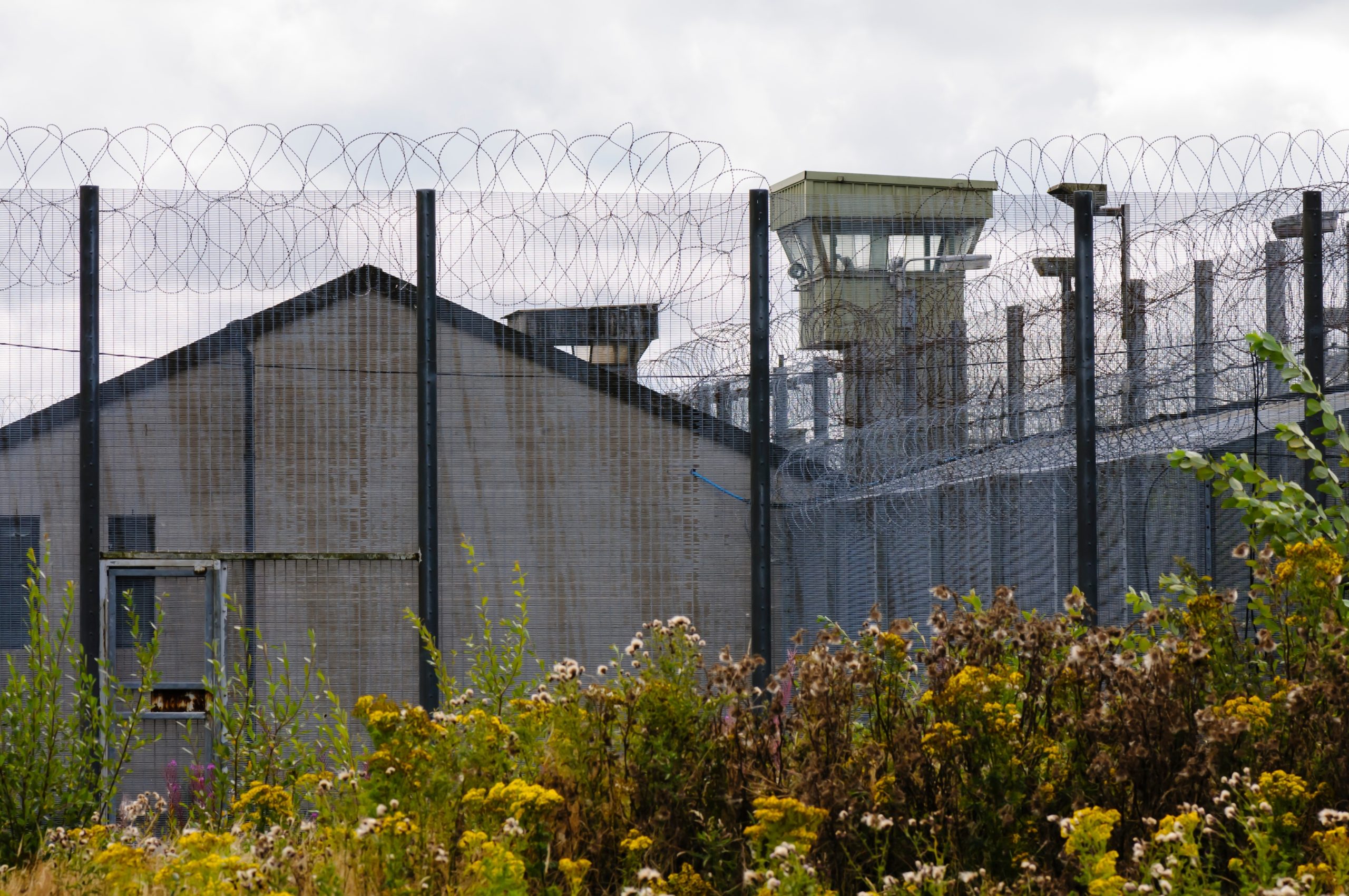
They’d released him an hour earlier than planned and since it was raining, he’d had to wait under a kind of bus shelter erected at the intersection, with the entrance of the prison behind him and the only landscape a cornfield on the other side of the road and the parking lot with its gates and its metal detectors and the comings and goings of the visitors, women, children, old people, mixed with the muffled slamming of car doors. He’d leaned out and seen the high walls that ran for nearly four hundred yards, and it had sent a nasty shiver down his spine and he’d sat down on the wooden bench set deep inside the shelter, so that he should see as little as possible, even though all these years he’d dreamed of surveying the whole of the horizon without the slightest obstacle. He had put his big overnight bag down at his feet. It was lumpy and bulging and weighed as much as a dead donkey because of the books he’d sent for during his imprisonment and which he’d been determined to take with him just as he would have taken loyal, loving pets.
He had time to smoke three cigarettes, listening to the rain abate and move away southward with a dull rumble as if a storm was coming. Suddenly, the clouds parted and the light appeared, throwing a glow like fake jewelry over the whole scene, alive with the sucking of tires on wet asphalt. He blinked in the blinding light and gazed at those glittering expanses with the awe of a child looking at a Christmas tree.
When he saw the car slow down and drive into the parking lot and slow down even more, he looked at his watch. He’d already been waiting more than an hour and he hadn’t felt the minutes pass. Time was like water that slipped through your hands and disappeared, unlike in prison, where every quarter of an hour stuck to your skin, sweaty and stifling and unhealthy. He watched the little red Renault come back out of the parking lot and stop. It was driven by a woman whose features he could barely make out behind the reflections on the windshield. He didn’t need her to flash her headlights to know that she’d come for him. He waved at her and stood up as the car crossed the street and pulled up in front of him.
He leaned down at the same time as the window was lowered and said “Hello” to a pair of very light blue or gray eyes. Very light. All he could see in the shade of the car’s interior was that washed-out phosphorescence. She smiled and leaned toward him. She wasn’t yet thirty.
“How are you?”
“Better now.”
With a broad gesture, he indicated the sky, the trees massed in the distance, lining the road, the dried-up fields. The light, and the heat beating down again. He opened the back door of the car and dropped his bag on the seat. He sat down next to the woman and held out his hand but she moved closer and pecked him on both cheeks. He loved the coolness of her lips on his skin. Something went through him, something rapid but deep, awakening tiny, buried pathways, hidden branches. It was almost painful. An oppressive sense of fulfillment.
“Isn’t Fabien here?”
The woman put her sunglasses back on and started the car.
“I’m Jessica.”
“Oh, I’m sorry. Franck.”
“I know.”
“Fabien told me a lot about you in his letters, I . . .”
He fell silent. Better that way. He’d have to get used to it again. Having normal conversations with people. Taking care what you said. Not like with the cops, or the other convicts, no. Just so as not to hurt people, not to rub them up the wrong way.
“Fabien’s been in Spain for three weeks. He couldn’t put it off, it was urgent. I’ll tell you about it. He may be away for two or three more weeks, you never know with him.”
“What’s he doing in Spain?”
“Business. I’ll tell you later. Otherwise he’d have come himself, you can be sure of that. You’re his little brother, that’s what he always says: ‘My little brother.’”
She switched on the car radio, a station that played French singers, and she hummed along to their sentimental songs as if she was the only one in the car. As soon as they were on the highway, going in the direction of Bordeaux, she switched off the air conditioning and the radio and lowered her window and warm air came into the car with a violent, deafening rush. She didn’t say anything for a while. Franck was expecting questions about the slammer, what a shithole it was, he was ready to tell her the bare minimum because you never tell the whole truth about what happens in prison. About what you had to see and go through in there. He would have liked her to talk to him, because that would have given him a good reason to turn and look at her without having to ogle her out of the corner of his eye as he was doing now.
She was wearing a man’s shirt with the sleeves rolled up over her forearms. It was too big for her and reached down to the tops of her thighs, over a pair of shorts cut out of old jeans. Her legs were tanned, the skin glistened, and he told himself she must have put on a moisturizing cream and that if she hadn’t been Fabien’s wife he would have put his hand on that softness, even if it meant getting a slap. He constructed a whole porn script in his mind, a script so realistic, with the woman sitting just an inch or two from him, that it made his jeans feel too tight and he had to change position several times to relieve the pressure on his groin.
“You want to stop? There’s a service station over there.”
He gave a start because part of him took this for an invitation to prolong the fantasy that held him captive. A bumpy path, the shade of a tree, the girl shifting to the back seat, panties coming down, a hand moving up.
“Yeah, I’d like that.”
His voice hoarse, filled with embarrassment. He cleared his throat, mouth dry.
She put the turn signal on, a half-smile on her pretty mouth. Ironic or mocking. Or simply calm, relaxed. He didn’t know. He hadn’t thought about women’s smiles for a long time. The meanings they imply, the misinterpretations they give rise to.
“I need a coffee and a smoke,” she said.
She pushed her dark glasses back over her hair to look for a parking spot, squinting, bent forward slightly. She parked the car near a picnic table where a couple and three children were sitting in front of cardboard plates that the mother was filling with tomato salad while the father fiddled with his cell phone. The table was cluttered with sachets and bags, cans of soda, packages wrapped in aluminum foil, and the children were throwing their hands into this chaos to grab pieces of bread or paper cups that they held out to their mother for her to give them a drink.
Franck watched the man, who was indifferent to all this bustle, starting to talk on the phone then moving away to continue his conversation, and all you could see was his back, his bent neck, shrugging his shoulders from time to time, his free hand beating the air in front of him.
“Shall we go? Is this bringing back memories?”
Yes, vaguely, the road leading to vacations in Spain when he was nine or ten, when everything was still going well, before the shipwreck, the sandwiches he feasted on, bought in stores along the highway and quickly devoured standing by the car because his father didn’t like to stop, the games he and Fabien played on their consoles in the back seat. His big brother Fabien. Four years older. Who taught him all the tricks, always patient. And who later would take the blame whenever they did anything stupid. The blame and the blows. And the tears, too, which he wiped away with the back of his hand, panting, without a word, his father above him, yelling, fist raised. Fabien muttering insults at night in their room, buried beneath the sheets, cursing their father in a low voice, vowing to exact a terrible revenge one day.
The two brothers had never fought. Had hardly ever quarreled. They needed to support each other, the way you cling to someone or something in the current of a river gone crazy or in a wind that uproots trees. There weren’t many brothers like them in the world. That was what they’d told each other once on one of those endless nights. Screams, groans, obscene insults. Mom.
And there had been that day, the day it had happened, about four in the afternoon. Fabien running across the supermarket parking lot without turning, the bag full of money, Franck bouncing off the hood of a passing car, leg broken, the security guards lying on top of him.
He hadn’t talked despite all the pressure from the cops, all their blackmail, the advice he’d gotten from the court-appointed lawyer.
He hadn’t talked despite all the pressure from the cops, all their blackmail, the advice he’d gotten from the court-appointed lawyer.
He had a clean record. The gun was a fake gun, a copy of a Sig-Sauer, a starting pistol. But the bookkeeper, a father of three, had been left a tetraplegic after his fall down the stairs. The case had gone to court in the Gironde. Six years with no remission.
He hadn’t talked.
He got out of the car without saying anything in reply, and immediately the slamming of car doors, the calls, the coming and going of people, all that casualness of bare legs and short sleeves and dark glasses dazzled him and he lowered his head beneath the bright, harsh light the sun cast over it all.
Jessica was walking ahead without bothering about him, the strap of her bag pulling on the collar of her shirt and baring a shoulder with no bra strap over it. Franck caught up with her so as not to have the curves of her ass in front of his eyes, curves emphasized by her shorts, the line of her neck emerging from the askew collar, that nakedness that the clothes revealed or implied. They entered the vast hall, drowned in the noise of the customers and the muzak, freezing cold because of the air conditioning, and they staggered in the direction of the toilets through the groups massed in front of the coffee machines and the people standing around, waiting for someone, gazing at the road map of the region on the wall, or else busy on their phones.
Franck shut himself in a cubicle with a damp floor where the toilet bowl was still full of urine and toilet paper, and his excitement receded, faced with this filth saturated by the smell of rim blocks. He peed, quickly buttoned himself again, relieved, calm almost, then watched the toilet bowl clean itself in the din of the flush, his mind empty, no longer knowing where he was or why he was there. At the washstands, there were guys washing their hands, sprinkling water on their faces, looking at themselves in the mirror without seeing themselves or maybe without recognizing themselves. Some seemed in a daze after hours on the road, others rolled their shoulders like toughs. The noise of the hand driers was deafening and the swing door squeaked every time someone came in or went out. Franck rinsed his lowered eyes in the lukewarm water, refusing to see anything around him, scared by all this noise, then he left the place without turning back because that smell of men, that lack of privacy reminded him of prison, but without the raised voices and the shuffle of feet, the guys who made out like they didn’t give a fuck about anything.
He went to the freezer aisles and started looking at the sandwiches in their triangular packaging, and he salivated at the sight of the sliced white bread and the garnish and his stomach felt hollow and there was a painful lump in his throat because what he saw was worth more than any cooked meal, any pastry filled with cream or fruit. He made his choice, took a bottle of water, then went to pay for everything, trying to spot Jessica in the crowd. He looked in his wallet for the right change but couldn’t find the coins he needed and the cashier waited, looking away, stiff on her seat, sighing with impatience, and he felt stupid and clumsy, the way he had as a child, when he took out a ten-euro bill and the girl stuffed it in her cash drawer and without a word gave him his change with the same almost abrupt gesture. He saw Jessica through the glass doors in front of the entrance, smoking in the sun, a paper coffee cup in her hand.
“Where did you get to?”
“I was buying something.”
He showed her his sandwiches and unwrapped one and ate it in three mouthfuls. He pushed it all down with a gulp of cold water, and one of his back teeth rang with pain. Jessica looked at her watch and said it was time they left, they still had a way to go, and she walked away in the direction of the car, not bothering about him, as if she were alone. He followed her at a distance, finishing his snack, hardly chewing it, happy to stuff his mouth with it then swallow it down with the help of a little water. It was a greedy pleasure, the pleasure of a little boy fond of his food, a kind of animal satisfaction that quietly brought him back to this side of the world, to the blinding light flooding everything, the noise of the voices and the bustle of crowds of human beings rushing about in all directions, like flies on a windowpane, unable to understand that they can’t get through it. He couldn’t find words for the invisible walls of that prison. He only felt his own freedom lift his shoulders and soften his back, relieving it at last of the weight of those looks like bags filled with knives, and it seemed to him that he was walking with a lightness, a grace, maybe, that he had never felt, like a dancer pacing this overheated blacktop after a star with a stunning ass. He finished eating by the car while she smoked another cigarette. She didn’t say anything to him as she leaned on the car door, apparently engrossed by the sight of a group of fairly elderly tourists getting off a huge red bus, wearing caps and Bermuda shorts and brand-new sneakers, attempting a few stretching exercises as they walked stiffly toward the toilets and the shops.
In a corner of his field of vision he saw Jessica’s legs moving as she maneuvered the car back onto the highway, moving her legs up and down on the pedals like scissors, and the desire to slip his hand into the gap between those legs, or even to place his fingers on that brown skin, took hold of him again and forced him to keep his arms folded, and he tried to concentrate on the landscape or the traffic, eyeing the big sedans, the powerful 4×4s overtaking them at ninety miles an hour, or turning to look at the caravans and trailer homes dragging along at sixty and cursing them under his breath. As for her, she said nothing. Her face was suddenly impassive, inscrutable, with bitter lines at the corners of her lips, and behind the dark glasses her eyes were fixed straight ahead, unblinking, as if she were a disturbing figure in a wax museum. She might have been asleep, hypnotized by the ribbon of asphalt unreeling before them, the intermittent whiteness of the barricade tapes.
He wondered for a moment what he could have said or done for her to withdraw into that hostile silence, then he started daydreaming as he looked out at the landscape, imagining himself living in that brick farmhouse he glimpsed below the highway, or in that other one on a hillside, picturing himself walking at dawn amid the vines or in the grass wet with dew beside a deserted road. He began to dream of winter in that drab, dry, yellow landscape, without relief or depth because the shade had fled, never to be seen again. He sat down in a deep armchair, in front of a wood fire, a book on his knees while the icy blue light of a dying day faded beyond the window panes. He walked on frost-hardened earth early in the morning. This was the kind of image he had projected for himself in prison, lying on his cot and seeing the first light of dawn through the skylight. To watch the sun rise. To witness that miracle every day without any barrier—any wall, any window—between yourself and the silent clamor of everything emerging from the darkness.
Then she turned to him and threw a glance behind her. “Can you pass me my smokes? They’re in my bag.”
It was as if she’d suddenly came back to life. Her fingers were moving on the wheel, her lips half open as if she was starting to breathe again. He gave her a cigarette.
“Help yourself, if you want one.”
She lowered the window a little on her side, and he did the same, and they smoked in the whoosh of the hot air rushing in on them. Franck took the opportunity to speak, thinking that whatever he said would be drowned out in that vast tremor anyway.
“What kind of business is Fabien doing in Spain? He didn’t say anything about it in his last letter.”
“It was decided on quickly, last week. You know how he is, you’re his brother. He can be quite secretive, not always easy to deal with. One evening, he told me he was leaving the next morning to meet some guys in Valencia. And since he wanted to take advantage he told me he’d stay for at least three weeks because he has friends down there. That was all he’d tell me, there wasn’t even any point in arguing. He wanted to do something with that dough of yours that’s been lying around all this time. It was a suggestion from Serge, a Gypsy who’s a good friend of my father’s. That’s all he told me. I think right now, he’s probably sweet-talking girls on the beach, I’m not worried about him.”
“He just thought about using that money after five years? It’s about time. What’s he been doing all these years?”
“Odd jobs here and there. He used to help out this scrap metal merchant, the Gypsy I mentioned, then he found a job in Langon, night watchman in a logistics depot, they call it. Three nights a week, for crap pay. Anyway, right now, you can’t find anything. He’s a cook by trade, but he can’t stand the bosses anymore, and he’s not interested in lousy pay at the end of the month for long hours.”
They hadn’t had time to count it. There had been at least fifty or sixty thousand euros in cash in the attaché case. Monday’s takings. Monday was a quiet day, and the courier came alone in an unmarked car. Franck had learned that over time, during the ten months he’d spent moving pallets around on his cart and making friends with a security guard named Amine, a huge black guy who swore he’d pull the job one Saturday night with pals of his. Franck had let him talk while they smoked a joint one evening after the depot closed. Other times, too, Amine had given him all the details and even suggested they should pull the job together. He’d shake his head after every drag as if the dope was blurring his neurons or his sight, then he would breathe out everything his lungs had been unable to absorb and close his eyes and laugh silently. Franck would merely smile and nod in agreement while Amine put together his plans, shaking and stamping like a sportsman just before the start of a race or coming on to the pitch. Franck didn’t trust him, that genial, talkative guy and his pre-rolled joints filled to the brim with hash he claimed came straight from Sierra Leone.
After leaving the highway at Langon, they drove along a country road that cut through a gloomy forest of pines whose dirty green tops glistened in the sun. At times, there were bare stretches of sand, blackish as if charred and overrun here and there by gray-green gorse. The heat was more intense here, dry and dusty, and an acrid smell of burned earth and resin infiltrated the car. Franck wondered how it was possible to live here, far from everything, and he took fright at this desert bristling with black trunks from which there occasionally emerged a round, dense thicket of tightly packed oaks, survivors on a battlefield planted with halberds.
He yearned for a town, its noise, its crowds, its girls especially, in summer skirts and tops loose over their breasts, he would have looked at all of them, peered at them, an unashamed voyeur, caressing and feeling that warm skin, that round softness with his eyes, not knowing how he would resist the desire to touch them in reality, to lift their skirts and slip his fingers between their thighs and stick in his tongue and the rest. The times he had jerked off on his stinking mattress, tormented by these images and the fantasies he fabricated, the cell suddenly invaded by holograms in flowery skirts pushing back the mass of their hair as they all know how to do with that quick, supple gesture. The times, shaken by the spasms of his wretched orgasm, he had sighed into the hollow of a warm, tanned shoulder only to find himself blowing with his mouth open into the questionable material of his pillow.
The times, shaken by the spasms of his wretched orgasm, he had sighed into the hollow of a warm, tanned shoulder only to find himself blowing with his mouth open into the questionable material of his pillow.
Jessica turned abruptly onto a dusty path, its ruts filled with pebbles and broken tiles, which led first past a thicket of oaks then past a parched meadow strewn with the wrecks of cars and rusty trailers and agricultural equipment—an ancient tractor, its faded hood baking in the heat with sad red patches, a harrow, its long tines overrun with bindweed—in the middle of which wild grass and yellow acacias thrived. There were tires, some burst, some piled up in the middle of the brambles. The sky was as white and blinding as molten metal, crushing these heaps of scrap iron.
When the car drew up in front of the house, something emerged from around a corner of the wall. It took Franck a second to realize that it was a dog. A dog such as he’d never seen, not even in movies or videos. Black, its coat smooth, its body bulging with muscles, its square head crowned by ears cut into points like two spearheads. Simply standing on its four legs, it pressed its muzzle against the half-lowered car window and Franck could hear its breathing and the deep growling that rolled in its mouth through bared chops and see up close its eyes fixed on him, protuberant, set in whitish circles where madness gleamed. It didn’t move, content to stare at him. It was waiting, quivering with an anger that ran beneath its skin like a fierce charge of electricity.
“Don’t open,” Jessica said. “Roll the window up. I’ll deal with him.”
She went around the car and grabbed the dog by the collar and pulled it toward her with some effort, yelling, “Quiet now, Goliath!” and hitting it on the head with the flat of her hand. When she let go of it after a while, the animal sat down, its big head at the level of Jessica’s stomach, looking up at her, ears lowered, blinking as if it was afraid of her.
“You can come out, he won’t hurt you. He’s always like that with people he doesn’t know.”
Franck tore himself from the car as if from an oven and sweat ran down his back and he mopped it with the material of his shirt. Jessica ordered the dog to lie down under an old bench next to the front door of the house and the animal obeyed but kept its head up and its eyes on Franck.
“When he’s gotten used to you, you’ll see, he’s quite docile. And besides, he’s a good guard dog. We’re safe with him here.”
She went inside and Franck followed her, making sure the dog wasn’t moving. His heavy bag was pulling on his arm and beating against his leg, giving him the lopsided, uncertain walk of someone who’s disabled.
“I’m here!” Jessica called out.
She had stopped at the foot of a staircase and was listening out. The chatter of a TV could be heard from somewhere in the house but nobody replied, nobody seemed to be there.
“What are those jerks doing?”
She waited a few more seconds then shrugged.
“Never mind. You’ll see them later. Come with me. We’ll go this way.”
She opened the door to the kitchen. The room was dark, the shutters half closed. The table hadn’t been cleared after lunch, the sink was full of dirty plates and greasy dishes, and the counter was cluttered with cans, empty sachets, and wine and beer bottles.
“Don’t mind the mess. My mom isn’t having a good day. I’ll see to it later.”
She took two beers from the refrigerator, piled up some plates that had been left on the table, and placed the cans on a corner of the oilcloth. With a sigh, she sat all the way back on a chair, stretched her legs, slipped her sandals from her feet, and wriggled her toes as she opened her can.
“Shit, it’s hot,” she said. “Don’t just stand there like that, sit down. Cheers.”
Franck sat down on the other side of the table. He could see nothing now but her tanned shoulders, the neckline of her shirt, the damp shadow between her breasts, glistening with sweat. She drank a long gulp then rolled the aluminum can over the insides of her thighs, slowly, closing her eyes. He drank, too, taking great swigs of the ice-cold beer, and felt the chill of it descend into his stomach and spread throughout his body, and gradually the oppression of the heat gave way to a bitter lucidity he couldn’t quite figure out. He no longer knew what he was doing here, in the chaos of this grimy kitchen, within reach of the perfect body of this girl lying back, abandoned, on her chair and cooling her thighs with a beer can. Amid the sickly-sweet odors of the filth surrounding them, he thought he could perceive also Jessica’s intimate scent, the perfume of her skin, the aromas of her secret folds.
In almost five years, how many times, driven almost crazy by that desperate desire, had he dreamed of a woman’s body so close, so available? He watched her as she lit a cigarette and blew the smoke out in front of her, staring vaguely at the window above the sink overflowing with dishes. She might have been alone, holding her beer between her outstretched legs, her eyes closed now, smoking slowly and flicking the ash onto the floor. He didn’t dare move, suddenly dreading to attract her attention, like a little boy who keeps quiet after a harsh reprimand. Then something moved to the right of his field of vision and he gave a start. There in the doorway stood a little girl, watching him gravely, questioning him with her dark eyes, a plastic racket in her hand.
Franck said hello in a low voice, trying to smile at her, but the girl didn’t react. Her face remained impassive, eyes still wide open with curiosity or perhaps anxiety, and it occurred to Franck that he didn’t know how to behave with children, how to talk to them or how to smile at them—but was he any better at dealing with adults, or people in general?
Jessica’s voice drew him back from these questions that had no answers. “Rachel, sweetie, aren’t you with Grandma?”
The little girl shook her head, then started twisting her black hair around her finger, one foot behind her, rocking on the tips of her toes as if she didn’t dare come into the room. Jessica threw her cigarette butt into her beer can then held out her arms to the little girl, who ran toward her and threw herself between her legs and huddled against her belly. From there, she continued to stare at Franck. Jessica stroked her forehead and kissed her hair, whispering to her that she was hot and that she should have washed herself, but the little girl seemed not to hear her, just kept examining the man who was looking at her from the other side of the table, embarrassed by his own forced smile.
“Do you want a drink?”
Rachel moved away from her mother’s knees and opened the refrigerator and took out a big bottle of soda, then stood with this burden in the middle of the room, looking around for a usable glass. Reluctantly, Jessica stood up with a sigh and opened a cupboard that was too high for the little girl and took down a glass and looked at it in the light from the window.
“Here you are, Missy. This one’s clean.”
Rachel put her glass down on a corner of the table and filled it and drank slowly, turned toward the window. When she had finished, she put the bottle back in the fridge, then went and rinsed her glass at the sink, standing on tiptoe to reach the faucet, and put the glass on the drain board in the middle of what was already there. Then she picked up her racket and left the room without saying a word. The door creaked slightly as it closed.
Jessica had sat down again and lit another cigarette. She sighed some more, blowing the smoke out through her nose.
“She always has to have clean things. She never eats from someone else’s plate, not even mine, not even to have a taste, or with a fork that’s been used to serve. She always looks through glasses to make sure they’re clean. And then she has to put everything away, all the time. You should see her room! I don’t know where she gets all these habits from. I didn’t bring her up like that, like a princess, I mean. And her dad wasn’t the delicate kind. As far as I’m concerned, it’s good to be clean, I mean I don’t like living in a pigsty. But you’re not going to catch a fucking disease because you drink out of someone else’s glass, especially if they’re family, are you?”
She turned to Franck. She was puffing nervously on her cigarette, waving her hands in front of her.
“How old is she?”
“Eight. She’ll be nine in September.”
“She seems quiet. She’s like you.”
Jessica giggled. “She’s like me because she’s quiet? I don’t know who she gets that from either. We’re the nervous kind in this family . . . Well, maybe from her grandfather. He hasn’t always been like that, but he’s quieted down a lot now.” She stubbed out her cigarette in a plate. “Well, it’s been best for everyone.”
She got to her feet. She seemed impatient all of a sudden.
“Come on, let me show you where you’ll be staying.”
Franck followed her outside. Once again, she walked a few yards in front, without waiting for him. Inside a roughly built old shed, he saw a trailer raised up on cinder blocks, with a satellite dish on top. Jessica went inside and he hurried to join her there. She was leaning against the little stainless-steel sink and in the light coming in through the open Plexiglass windows at a low angle, all he could see were her legs and the gleam of her eyes, which made him think of those lagoons you see in photographs, more luminous than the sky. He put his bag down on a bench seat and watched her open the closets, run the water, show him where the clean sheets were, explaining that there was a little bathroom on the first floor of the house that he could use. Beneath that low ceiling, her muted voice came to him as if she had spoken in his ear and it seemed to him that this confined space was pushing them into an intimacy that almost embarrassed him. At any moment, he expected to see her undress, like someone making themselves comfortable at home, maybe keeping on only her panties, and come and go barefoot across the linoleum floor, putting away his things, then press herself against him and stick her tongue in his mouth and eagerly unbutton his jeans.
When she left the trailer, telling him to take his time and join them later behind the house because that was where her parents were—those two idiots must be having a nap, even though they were supposed to be keeping an eye on Rachel from the side of the pool—he felt relieved and hurried to stick his head under the faucet in the sink and splash water on his face. The water was warm at first then grew colder as it ran, so he drank it in great gulps until he couldn’t breathe.
He put away his few clothes in the chests, taking care to keep them well folded, then put his toiletries in the little cabinet. He stood for a moment looking at his toothbrush and his disposable razor, which he’d placed on the plastic shelf, and the bar of soap on the edge of the tiny washstand and the towel hanging from a chrome bar, like so many tangible signs of peace and freedom. Already, the silence, disturbed only by a purring in the distance, probably a tractor, was welcoming him into a kind of bubble that gradually adjusted itself to him like a new garment that becomes comfortable as soon as you put it on. He no longer had to watch his back in the mirror, dreading to see some randy bigshot or some crazy guy who might be hiding a knife in his towel loom up behind him. He no longer had to wait or to hurry through the enforced closeness, the touches, the nudges, the constant challenge of those bodies that were either threatening or tense with fear.
He left the toilet and felt a kind of well-being in his chest. The trailer was small, with a low ceiling. It looked like a doll’s house with that miniature washstand, that two-ring portable stove that would just about do for making tea on a campsite, but he felt the same tranquility as he had in his boyhood room, so long ago, once he had shut the door and left behind him, depending on the evening, his father’s cries of rage or else the yelling and slamming of doors or else his mother’s sobs as she sat on the steps in front of the door. He and his brother would wait for everything to quiet down, listening out for murmurs and groans in a tomblike silence, to come into the other’s room and slip into his bed and plot escapes, acts of revenge, scenarios of another life, far from here, far from everything.
He lay down on the bed, surrounded by the smell of clean sheets, and closed his eyes, thinking of Fabien and how they would party when he got back, before getting out of here and really starting to live. And then because this dump, with that monstrous dog, that girl who looked really hot, and that almost mute little girl, struck him as weird and dicey. Something in the air, like a lingering odor, the trace of an old stench that sometimes stopped you from breathing deeply. Nothing to do with prison. He couldn’t have said truly what he was feeling.
But here, in this hovel, he felt a little at home, alone, really alone, and very calm.
In literature, the many forms of sister relationships have provided a vast ocean for authors to explore. Sisterhood produces both love and admiration, and jealousy and competition—feelings that are intrinsic to familial bonds. There’s an intimacy to sisterhood—when you grow up sharing a room or confessing your deepest secrets, so much common space, mentally and physically, fosters connections deeper than most friendships. Sisterhood follows you home; it’s a more monumental task to step away from a sister than a friend, and that creates an inevitable tension—whether it’s a fight over a borrowed shirt or a question of morals, a sense of duty to the greater family plays a role in maintaining the peace.
The sisters in my debut novel,Running Out of Air, were once an inseparable mountaineering duo. After Evelyn has an affair with Sophie’s husband, a seemingly uncrossable chasm forms between them. It takes a monumental opportunity—an invitation to summit a previously-unclimbed 8000-meter peak—to bring them physically close again. But forgiveness isn’t easy, even between sisters; perhaps pain is even greater when caused by a sibling.
In writing Running Out of Air, I understood that my fascination went beyond the mere portrayal of a troubled sister relationship—I was curious about the limits of forgiveness, how to apologize for causing devastation, and how two people with the same upbringing and passions can live drastically different lives.
Sisterhood toes an intriguing line between familial obligation and built-in friendship—but unlike a friendship, you don’t play an active role in cultivating a sister. These nine books ask their own questions about sisterhood, depict the many kinds of conflict that arise between siblings, and reflect the compassion extended by family, even in extreme circumstances.
There is no shortage of sisters in Ann Napolitano’s Hello Beautiful. Four of them, to be exact: Julia, Sylvie, Cecelia, and Emeline. The Padavano sisters welcome William Waters, Julia’s college boyfriend, into their family, providing to him for the first time a sense of stability and familial love. But Julia views William as a project, a canvas upon which to paint the perfect husband, and his eventual struggle with his mental health tears their marriage apart.
Instead, it is Sylvie who forms a relationship with William, a romance that will leave lasting ramifications on the family for generations to come. A homage to Little Women, Hello Beautiful explores themes of honesty, ambition, and grief. Though the focus remains on the complicated dynamics between William, Julia, and Sylvie, each Padavano sister has their own arc.
It doesn’t get much more difficult than the relationship described in the title of My Sister, The Serial Killer by Oyinkan Braithwaite. Antisocial but efficient Korede works as a nurse and is used to covering for her beautiful, self-absorbed younger sister, Ayoola, who has a habit of murdering her boyfriends. When Ayoola begins courting a doctor at Korede’s hospital, who she herself is in love with, Korede questions how far she can go to protect her sibling. Braithwaite explores the competition and jealousy that arise between sisters—Korede can’t help coming to Ayoola’s rescue, even when she’s fighting deep resentment. Dark, tense, and morbidly funny, this fast-paced thriller set in Nigeria depicts just how far the bonds of sisterhood will stretch.
Written like a fairytale but set in our world, Bear by Julia Phillips is the story of two sisters, Sam and Elena, and the titular bear that haunts their Washington island home. Sam and Elena work low-paying jobs to support their dying mother, a life which they both dream of leaving when their mother passes. A bear turning up in their backyard is all the sign Sam needs to leave the island for good. But Elena, usually rational, is enthralled by the bear and divulges her encounters with it to Sam like a girl in love, despite the frequent warnings from a state wildlife official that approaching the bear is dangerous.
The bear’s presence stokes the central conflict between the sisters—Sam’s insistence that it’s time to look for a new home, and Elena’s joy in finding small magic in their mundane, difficult lives—and causes their close relationship to unravel. The novel draws the reader, spellbound, into its shocking conclusion.
Desiree and Stella, twin sisters,grow up to live very different lives. Both escape their small southern town of Mallard, but only Stella decides to pass as white and tells no one about her past, not even her husband. Years later, Desiree returns to Mallard with her daughter after leaving her abusive husband. Both sisters’ journeys ask the same question: is it possible to truly leave the past behind?
Desiree never stops searching for Stella, but Stella is desperate to maintain her carefully-constructed front. Spanning several decades, and following both the twins and their children, The Vanishing Half by Brit Bennet incorporates themes from racism to motherhood to identity, with the complicated bond between two estranged sisters at its core.
Miranda and Lucia, the Chinese-American sisters at the heart of Everything Here is Beautiful, have strikingly different personalities. Miranda is older and more controlled; Lucia is wild and headstrong, brilliant at her best but affected by chronic mental illness. Miranda longs to help her younger sister, but Lucia resists treatment, insisting that she isn’t sick; this is simply her reality. The question of family loyalty arises when Miranda moves to Switzerland with her husband, and Lucia to Ecuador, putting both physical and emotional distance between them. How much must Miranda sacrifice to protect Lucia?
Covering many years and told through alternating perspectives, including both sisters and Lucia’s partners, Mira T. Lee draws a fully-realized portrait of the sweeping effects of mental illness, both on the afflicted person and their loved ones.
Laurie Frankel’s fourth novel features two of my favorite things: sister stories and environmentalism. One Two Three is set in the town of Bourne, where contaminated water has left an aftermath of health issues and developmental disorders throughout the population. Though the threat of future chemical pollution unites triplet sisters Mab, Monday, and Mirabel, they have different ambitions and ways of navigating the world—not to mention that they’re sixteen, an age rife for disagreements. Told through all three sisters’ points of view, this novel tackles themes from environmental justice to disability representation to first crushes, with the intricate nature of sisterhood at its very center.
In another novel that combines ecology and sisterhood, Charlotte McConaghy’s Once There Were Wolves takes us to Scotland with twin sisters Inti and Aggie. Inti is there to lead a team of biologists in reintroducing gray wolves to the Highlands, and also hopes to help her sister heal from the events that caused them to leave Alaska. Inti must contend with resistance from the locals, especially the farmers, who fear the wolves will decimate their livestock. Violence is a central player in this novel, both from people toward animals and between people themselves. Aggie’s pain, which Inti experiences through her mirror-touch synesthesia, is a constant hum in the background, complicating the sisters’ bond and playing into the story’s climax in unexpected ways.
Part wilderness thriller, part sibling drama, Getaway by Zoje Stage explores the damaged relationship between sisters Imogen and Beck as they tackle a week-long, no-phones backpacking trip through the Grand Canyon with a friend, Tilda. Past tensions lead to arguments between both the sisters and Tilda, muddying what is supposed to be a healing vacation, a chance to discuss an event that caused a rift in their friendships. More than their relationships are at stake when they discover an unsettling, potentially dangerous man hiding out in the canyon. A suspenseful survivalist drama unfolds, combining a stunning setting with nail-biting tension.
The relationship between sisters Sally and Kathy is complicated for one major reason: Kathy is dead. Notes on Your Sudden Disappearance follows Sally, the younger sister, after a car accident takes Kathy’s life but leaves Sally and Kathy’s boyfriend, Billy, alive. A coming-of-age story that spans Sally’s teenage years to young adulthood, and tracks both how she is shaped by Kathy’s absence and her growing connection with Billy, the only person who seems to understand her pain. Losing Kathy affects every part of Sally’s life, though she retains her unique sense of humor while navigating her trauma. Alison Espach paints a vivid image of one family’s journey through grief, of love in unexpected places, and the impact of losing a sibling.
Growing up, book banning and burning held a strange place in my consciousness. They were part of a distant reality: a relic of the past to learn about in textbooks and a horror of alternate realities depicted in novels. Yet I also felt a powerful aversion to harming books in even the most insignificant ways. No writing in the margins or dog earring pages for me. In retrospect, I believe some corner of my mind picked up on the fact that it’s dangerous and unwise to treat books, even the awful ones, carelessly. If I had articulated it, I might have said that treating a book like trash has ripple effects that can lead to treating ideas, or even people, the same way.
That personal taboo feels uncomfortably prescient today. In one of the darker twists of our century, book banning has come back with a vengeance. In Florida, which PEN America has described as the epicenter of book banning in the US, almost a thousand books have been challenged and banned. All the bannings in Wisconsin, Iowa, and Texas combined—the three “runner up” states—don’t come close to Florida numbers. County by Florida county, school boards and private citizens have been empowered to remove the stories they don’t like from public circulation. Predictably, this has an outsized impact on vulnerable populations with narratives about race, sex, and gender being pulled from the shelves. There are schools where The Autobiography of Malcolm X and Letter from Birmingham Jail have been removed from the shelves. But it doesn’t stop there. Efforts have been made to ban Harry Potter and the Sorcerers Stone in Palm Beach County; Seminole County has banned Fight Club by Chuck Palahniuk; and Escambia County has pulled Merriam-Webster’s Dictionary for Students and The Guinness Book of World Records from the shelves. Clearly things are out of control.
Over the past year, Banned Books USA has stepped into this frenzied environment with a mission to make sure that no Florida resident is prevented from reading the books they want to read. Conceived and supported by Paul English and Joyce Linehan, in partnership with Bookshop.org and Electric Literature, Banned Books USA made over 900 banned and challenged titles available to all Florida residents. Anyone living in Florida could order a banned book for the cost of shipping via the Banned Books USA website, and as a result, nearly 1000 books were mailed to individuals from Pensacola to Key West.
Alongside this individual effort, Banned Books USA made targeted donations to sixteen Florida organizations that each chose up to 100 books from Banned Books USA’s list of titles. Gainesville’s Pride Community Center of North Central Florida received books for their LGBTQ+ community library; Read Aloud Florida received books to give away at their children’s storytelling series; and Leer para Crecer received books for their cross-cultural reading initiative, “Fiesta del Libro.” These are just a few of the groups that support Florida’s most vulnerable communities. Altogether, Banned Books USA donated 2,362 books, sponsored 14 events, and impacted the lives of thousands of Florida residents. Covering all of Banned Books USA’s giving, this is a list of the top 13 most requested titles.
The story of the Gay Pride Flag begins in 1978 when Harvey Milk, then an elected politician in San Francisco, asked his friend Gilbert Baker to create a flag to represent the gay community. This is a gorgeously illustrated celebration of the resulting creation, the rainbow flag, and the ongoing legacy of Milk and Baker’s vision of an inclusive, rainbow coalition. While Pride is the first book to make this story accessible to young readers, the beautiful, rainbow-infused palette will appeal to all readers.
A reimagining of Anne Frank’s diary in the form of a graphic novel (a-la Maus), Ari Folman quotes Frank’s diary entries and then dramatizes them into scenes of the life that Frank describes living. She’s skiing in the alps with her family. She’s celebrating Hanukkah and Christmas with the nonchalance that characterized non-practicing, integrated Jewish households of the time. And she’s walking down streets festooned with photorealistic black and red swastikas. This adaptation shows reverence for the original while making Anne Frank’s story accessible to a new generation of readers.
Beloved by Toni Morrison (Banned in the Escambia County School District)
Some book bannings are so ludicrous one almost wants to laugh. Almost. Beloved won the 1988 Pulitzer Prize, was a National Book Award Finalist, and topped the New York Times list of best American fiction published between 1981 and 2006…and Toni Morrison won the 1993 Nobel Prize in Literature. Set in 1873 Ohio, Beloved is the story of Sethe, a formerly enslaved woman, laboring to build a life atop the traumas of her past. She has a home, a teenage daughter, work on a plantation, yet memories of the horror she escaped and the sacrifices she made to do so torment her. It’s a book about history and violence, love and cruelty, human nature, and the country we live in. Just imagine banning one of the undisputed great works of American literature. It’s already been done.
The ABCs of Black History is a poet’s introduction to Black history for children. More than its educational value (kids are going to learn about W.E.B Du Bois and Aretha Franklin) the book is an embracing call to young readers that they’re part of a community that cares about that. After all, the book begins, “A is for Anthem, a banner of song/that wraps us in hope, lets us know we belong.”
Before it was a book, The 1619 Project was a new way of viewing American history spearheaded by Hannah-Jones that evolved into a series of journalistic essays in the New York Times. Its radical proposition is to reconsider when the United States as we know it was founded. What if it wasn’t the signing of the Declaration of Independence or the Constitutional Conventions but rather a long overlooked event that happened a century and a half earlier when the first African slaves were brought to North America. As such, The 1619 Project asks us to consider that the United States was not founded on laws but on the slavery that preceded those laws.
The Hill We Climb has a special, distinguished place in American literary history. It was written by America’s first Youth Poet Laureate on the express invitation of First Lady Jill Biden and recited at President Joe Biden’s 2020 inauguration. It’s a work of unity, resilience, and bravery. Gorman uplifts, preaches, and declares. She writes “The new dawn blooms as we free it. For there is always light. If only we’re brave enough to see it. If only we’re brave enough to be it.” She quotes the Bible and the runaway Broadway hit Hamilton. Gorman speaks of a “we” that, if the poem’s banning is anything to go on, is still waiting to be born.
A graphic memoir (as in, Gender Queer takes the graphic novel form and adapts it to the genre of memoir), this is a coming-of-age story that follows Kobabe on their journey through the perplexities of sex and gender towards the realization of being nonbinary. It has also been America’s most challenged book for three years running according to the American Library Association.
And Tango Makes Three by Peter Parnell and Justin Richardson (Banned in the Escambia County School District)
The story of a penguin family that is made up of two male adults and their child, And Tango Makes Three is also the extraordinary story of how a book that introduces children to the modern reality of mixed and diverse families became a flash-point in national debates about civil rights, education, and inclusivity. Like Gender Queer, And Tango Makes Three has the dubious distinction of being one of the top 5 or 10 most challenged books of the past two decades. Challenges are nothing new for this book.
A hugely popular (think thirteen-million-copies-sold popular) fantasy series about a nineteen year old girl named Feyre who enters a magical faerie realm rife with conflict, these books have been banned across the country with at least one school district, ominously, using an AI-software to determine the fate of A Court of Thorns and Roses.
To Kill a Mockingbird by Harper Lee (Banned in the Palm Beach County School District)
There aren’t many books that are more famous or celebrated than To Kill a Mockingbird. Generations of students have been raised on the Pulitzer Prize winning story of Atticus Finch defending the wrongfully accused Tom Robinson in a corrupt Alabama court. Even more have watched the Academy Award winning film with Gregory Peck’s portrayal of Atticus Finch being declared the greatest movie hero of the twentieth century. What do all these plaudits mean? Well, besides being on the money in my humble opinion, they show how deeply engrained this novel is in the cultural history of our country. It’s a touchstone. Yet, since its publication, To Kill a Mockingbird has been challenged on the basis of the harsh light it casts on everything from a discriminatory judicial system to a racist public. But its those facts that make To Kill a Mockingbird a necessary pill to swallow.
All Are Welcomeby Alexandra Penfold (Banned in the Florida School for the Deaf & the Blind)
This is a poetic children’s book about a school without bullying or prejudice, where everyone is welcome and included regardless of what they wear, where they come from, or who they are. Different cultures are celebrated, respected, and give rise to friendships rather than animosity. Personally, the warmth of its colors and the over-layed, collage-y feel of the illustrations make me think of Ezra Jack Keats’ and Snowy Day!
Comic book illustrations meet the ins and outs of gender identity in this guide to the language, the experiences, and the obstacles that accompany being queer, gender nonconforming, and trans. In essence, A Quick & Easy Guide to Queer & Trans Identities is exactly what it says it is: it’s an educational book that uses form, style, and graphic design to make learning fun.
A fantasy about love, the meaning of life, and, above all, remembering and forgetting, The Invisible Life of Addie Larue follows an immortal French woman who’s been blessed and cursed by a deal with the devil. Addie will live forever, but no one will ever remember so much as her name. And that’s how life goes for the first 300-odd years until she meets someone who remembers her. Why is it banned? The book’s characters are diverse, there are queer relationships, and it features the devil. Apparently that’s enough for Clay County.
For queer people, LGBT-owned bookstores function as more than just a space to buy books, they’re informal meeting places, resources hubs, and safe spaces. This is especially true in rural or politically conservative areas where being gay, trans, or non-gender conforming comes with a risk.
I’m lucky enough to have found solace and companionship in the haven of a queer bookshop: Still North Books & Bar in Hanover, New Hampshire. This woman-owned, queer-powered bookstore-café simultaneously functioned as my day job, community gathering hub, and artistic outlet when I needed those things most. Having a workplace where I knew sharing my pronouns and freely embracing my gender presentation would be safe was so valuable to me, and I made lifelong friends there. Queer-owned bookstores around the country offer a similar solace to their staff and patrons every day. The twelve businesses on this list represent just some of the fabulous queer-owned bookstores that are working hard to protect free speech and provide a refuge for LGBT patrons.
Tucked into the beautiful Pioneer Valley of western Massachusetts, this lesbian bookstore is strongly committed to sapphic authors, leftist action, and community care networks. Bookends boasts plentiful author events, a convenient “Lesbian A-Z” bookshelf, and seriously irresistible merchandise printed with store slogans.
This historical institution holds the title of the oldest and largest independent bookstore in St. Louis and has been proudly queer-owned since its founding in 1969. Left Bank offers a vast selection of themed book clubs to connect queer Missourans, including Gay Men’s Reading Group, Well-Read Black Girls, and Read the Resistance. The store also operates a 501c arm, The Left Bank Books Foundation, to promote literacy in the city and beyond. Browsers can expect to find a thoughtfully curated selection of diverse, justice-focused titles– and might even get to pet Orleans, the resident bookstore cat.
The Ripped Bodice, the United States’ first dedicated romance bookstore, has been the subject of much buzz lately as romance novels gain a powerful foothold in the cultural conversation. The proudly woman- and queer-owned business has been thriving so much that it opened a second location in 2023, now supplying both coasts with love stories of all kinds. The Ripped Bodice also has adorable original merchandise that embraces pink and girly aesthetics.
This self-proclaimed “anarchist community bookstore” has embraced a radical ethos and structure since its founding in 2008 as a queer feminist worker-owned collective. Their team strives to promote uniquely offbeat, local, and indie authors. In the wake of Hurricane Helene’s devastation in the western North Carolina area, Firestorm has contributed heavily to mutual aid disaster relief efforts, particularly by running a distribution hub for essential supplies. The store currently remains open in a limited capacity as the community recovers.
In keeping with the tradition of authors owning indie bookstores, Loudmouth was founded in 2023 by Leah Johnson, the Stonewall Honor Book-winning author of You Should See Me in a Crown. As its name suggests, Loudmouth aims to defend free speech and combat book bans targeted at BIPOC and queer authors. The growing schedule of community events includes a romance novel book club, a monthly Sapphic Social, and frequent book signings with local Indiana authors.
The Nonbinarian Book Bike, a mutual aid initiative founded in 2022, aspires to provide equitable access to queer stories for readers of all ages throughout Brooklyn. The newly opened brick-and-mortar storefront sells both new and used books written exclusively by queer authors, as well as providing free community resources. This trans-owned, volunteer-supported effort highlights the power of community-led initiatives to create unique queer sanctuaries.
A pillar of the Austin literary scene, Bookwoman was founded to increase access to queer and feminist literature in Texas nearly fifty years ago. The store’s mission has expanded to emphasize justice for all marginalized groups, featuring shelves full of intersectional titles and an entire section dedicated to disability activism. The busy event calendar boasts book groups, monthly open mics, and events with touring authors—all hosted with Covid-conscious procedures.
The ground floor of indie publisher Tin House harbors this magical little bookstore, painstakingly curated by queer writer Melissa L. Amstutz. Fiction, poetry, and nonfiction are for sale alongside vinyl records, plants, and knickknacks, with a focus on both hidden gems and buzzy current titles. Their gorgeous upstairs space hosts regular book clubs and readings with Tin House authors.
As the only LGBT bookstore in North Florida, Common Ground fills a myriad of community needs. They stock banned, feminist, and queer books with a special focus on local authors. They host events like book clubs, clothing swaps, and movie nights to create a safe haven for local LGBT individuals. Last year, Common Ground even created a free, donation-based Gender Affirming Closet where anyone can access clothing, accessories, and toiletries. They act as a beacon of hope and a cherished space in an increasingly polarized state.
Taking its name and its ethos from Virginia Woolf, this queer and trans-owned independent bookstore makes activism a priority. The store supports the nonprofit effort Wisconsin Books to Prisoners, fundraising to increase literature access in prisons, fighting censorship, and embodying an abolitionist spirit. A Room of One’s Own also makes time to center local LGBT creatives with its monthly queer & trans open mic. The owners are even opening a new space next door—the Reading Room—as a cozy spot for events and casual gatherings alike.
Unabridged is a Chicago institution that has provided browsers with both queer literature and a safe community gathering place for over forty years. Owned by a team of true book lovers, the store emphasizes its personal recommendations, knowledgeable staff, and wide selection of fiction and poetry by LGBT authors.
This haven for bookworms stocks new and used books in just about every genre imaginable on its floor-to-ceiling shelves, as well as zines and journals. Eclectic paintings by local artists adorn the store, and many of them are for sale. The friendly booksellers are great at recommending their favorite queer books in hyper-specific genre niches.
Originating five years ago as a traveling pop-up bookshop, All She Wrote now has a sunny new brick-and-mortar space of its own in Somerville. The cozy bookstore bills itself as proudly queer, feminist, and intersectional, and it even hosts joint book clubs with Boston’s newly opened Dani’s Queer Bar. Customers love All She Wrote for its friendly staff, diverse book selection, and excellent personalized book recommendations.
Now the truth of the matter—and one has no eye for that in times of great peril, and only by a great effort even in times when danger is threatening—is that in reality the burrow does provide a considerable degree of security, but by no means enough, for is one ever free from anxieties inside it? -Franz Kafka, “The Burrow” Translated by Willa and Edwin Muir
There is no news in fear
but in the end it’s fear
that drowns you.
-Anne Sexton, “Imitations of Drowning”
At a small party two summers ago, I found myself sharing a deeply personal story to a group of near strangers. Someone mentioned Kathryn Schulz’s New Yorker article about the killer earthquake and tsunami slated to destroy the West Coast, and I relayed how, after the piece came out eight years earlier, I’d been terrified of spending the night in a tsunami inundation zone, but rather than let Schulz’s article dissuade me from attending a wedding to which I’d RSVPed (because surely that would have been crazy), instead, I studied evacuation routes and potential wave size. I examined maps showing the time it took for the ocean to retract, rise, and come to shore. Then I chose which of my two children I would pick up and carry in the minutes before the tsunami made landfall and which child I would abandon.
“I decided to leave the baby,” I said to a circle of startled faces. I forced a laugh. “She was only four months old, so it’s not like she’d even know what was happening.”
In the tidal waters of Washington and Oregon are rooted ghost forests; near-spectral remains of an ancient coastline that dissolved when a 9.0 earthquake hit the area over three-hundred years ago. At high tide, you might not see the stumps, but then the moon’s weight tugs the water back, and there they are, rising out of the muck.
When I disclosed my decision to leave the baby, I was only sharing an edge of the story, as if we were all in a boat just inches above a waterlogged forest, and I was pointing out the glint of the sun on the waves. Distraction only works internally for so long though, and while the others might have been focused on the sparkling sunlight, my mind had already wandered to what lay below the dappled surface, to the person I’d been when I swam those waters and how the decision to abandon my child was the thing that finally set me free.
A few weeks after the party, I came across a posthumously published Kafka story about a paranoid rodent who obsessively digs and maintains his underground burrow against bloodthirsty intruders. The story, clocking in at thirty pages, is perseverating and claustrophobic, even for Kafka. As the burrow grows from a few simple tunnels into a complicated labyrinth, the animal is unwilling to stop working to make himself safer—his nightmare of attack alternately comforting and harmful.
Only in the face of actual catastrophe, when safety is no longer possible, can anxiety finally be sated.
Most scholars think the story is unfinished because it ends in the middle of a sentence and because when the rodent hears what he eventually believes are the unmistakable sounds of a predator digging nearby, it doesn’t run for safety or attempt to mount an attack. Instead, it sits still, eats a snack, and daydreams about possible outcomes. In effect, it opts to do nothing but wait and see. To me, the ending feels complete. Anxiety exists as the hungry precursor to possible disaster, feeding on details and portents, always seeking to remind us of the unattainable nature of safety. Only in the face of actual catastrophe, when safety is no longer possible, can anxiety finally be sated.
I grew up on an island between Seattle and Tacoma where I played at a park built over silos that once contained nuclear-tipped missiles aimed at the Soviet Union. Much like Kafka’s rodent, I spent my youth in a state of constant mental preparedness. In the early 90s, I assumed the strike would come from Russia, but the nations I feared shifted with the news cycle, and my worries, similarly, evolved. Night after night I’d lie in bed, reading with a flashlight under the covers, wondering if the attack had begun and the very air I was breathing had already started to poison me.
After 9/11—during which time I lived in a dorm four blocks from the World Trade Center—the country was briefly terrorized by envelopes of anthrax sent through the mail. Between the recent attacks and the anthrax, I felt vindicated. It’s like when a hypochondriac gets a cancer diagnosis or Kafka’s burrowing rodent finally hears the enemy lurking just underfoot—see, I knew I wasn’t making a big deal out of nothing. Confident my childhood nightmares were coming true, I carefully followed news of the anthrax poisonings, while selfishly hoping I’d receive the toxin next. “I just want to get it over with,” I told my roommates, “Before there’s a critical mass and they run out of drugs to treat it.” There I was, almost two decades before the advent of COVID-19, and already I was worried about the scarcity of proper medical resources. Needless to say, I never did receive an envelope containing anthrax, George Bush Jr. started another war, and I grew up.
Ten years later, I was both a newlywed and an expectant mother. My husband and I had moved to a satellite city of Seoul near his father and extended family, where we’d both found jobs teaching in the public school system. Towards the end of my duties and seven-months pregnant, an air-raid siren went off followed by a crackly news report over the intercom. I didn’t know enough Korean to understand what was happening, but behind the announcer’s voice, I heard the distinct hum of low-flying planes. My students leapt under their desks, and I followed suit. Kim Jong-Il, had died the previous winter, and now it appeared his son was finally following through with the threats that issued reliably from the North.
As I hunched around my pregnant belly, I wondered if my husband was under his desk too, across the river in the little school where he taught. Maybe this is how we would die, the two of us and our unborn child—scant nobodies amongst the loss of millions. That was when I noticed my students were laughing and talking, pushing each other. One by one, they came out from under their desks even though the panicked announcement was still blaring.
“What’s happening?” I called.
The girl closest to me answered. “They do this every year.”
“This is a drill?”
She nodded. “Just practice.”
I’d read that some mothers who don’t feel an immediate connection take it to be a personal failing.
The baby was born in the middle of August via an emergency C-section while I was unconscious. When I woke up, I knew immediately I was not a natural mother—the kind who, upon holding her child for the first time, understands she’s never known true love before that moment. I’d read that some mothers who don’t feel an immediate connection take it to be a personal failing, that amidst the haze and exhaustion, the distance can become unbearable. So I tried not to panic, and when I gazed upon my infant daughter, I focused on letting the newness of her be enough. I certainly wished her no ill will, but I was desperately counting on her good traits to emerge and eventually harden my watery love into something more significant.
When she was four weeks old, we left Korea and moved to a tiny apartment in Seattle. I took seriously my role as expert Pacific Northwesterner, introducing my Brooklyn-raised husband to the normalcy of non-stop drizzle, the infamously cold reception newcomers often receive (coyly called the “Seattle Freeze”), and earthquake preparedness.
“The ground is shaking!” I’d yell, and if he didn’t move, I’d yell it again, watching as it clicked, and he dramatically lunged under the dining table. My husband believed we were playing a game—albeit a strange one, not unlike foreplay. The drills reminded him that life wasn’t to be taken for granted, that we were in possession of living bodies, and so he always emerged from between the table legs grinning, showing pleasure at the mere fact of taking breath.
Returning to the Pacific Northwest had caused earthquakes to metastasize in my mind from casual concern to ever-present threat. It didn’t help that my personal sphere had recently expanded to include two new people whose very presence eroded my ability to assume security. When it was just me, death seemed frightening but perhaps not the worst outcome as long as it was swift, but here was my hapless Brooklynite husband, my soft-skulled infant stranger—two beings for whom I was now responsible. That they might suffer because of my negligence to sufficiently prepare ate at me.
My preparation was similarly ever-present. Unemployed and depressed, I researched what to put into an earthquake kit, spent hours scrolling through message boards before selecting the most shelf-stable granola bars, the best first-aid supplies, one of those straws that turns contaminated water potable. Our kit quickly grew from a backpack to a backpack plus a large duffle bag. It contained everything I thought we might need. Diapers and flip flops, vitamins for the days of sodden and malnourished wasting, a kitchen knife too dull to properly cut tomatoes but which could certainly be used to stab an assailant when society fell and we were forced to travel, filthy and broken along the horrific new coastline in search of resources.
Six months after we moved back to the U.S., my husband lost his job. We struggled with Medicaid, with parenting, with insufficient sleep, and through it all, the rain kept falling. Soon, it felt like moving to Seattle had been a colossal mistake; we were foolish to have tried to put down roots in this muddy and unstable ground. Perhaps we should go back to Korea where we might live under the unlikely threat of a North Korean attack, but at least we’d be gainfully employed. But we were too poor to move again, and besides, we’d been homesick for the U.S. when we were away. No—we would stay the course in Seattle, stick it out for another year, then plan our escape.
But before twelve months were out, I got a day job, and my husband got a night job. He enrolled in graduate school. There were sunny days. Our baby’s skull plates fused, and she learned to walk. I began to know her—to love her in earnest and without question. Eventually, we moved out of our tiny apartment and into a magnificent turn-of-the-century building on Capitol Hill. The tides, I thought, were turning.
Despite being a one-bedroom, our new apartment was palatial. It had gorgeously high ceilings and crown molding, and it was only two blocks from the school where I now taught. Best of all, it was significantly cheaper than every other rental on the market. But there were downsides: our daughter had to sleep in a walk-in closet, the windows were so thin it was impossible to stay warm enough in the winter or cool enough in the summer, and every so often, pieces of brick and marble façade came loose and fell to the sidewalk below. It goes without saying that the building had never been retrofitted for earthquakes, something Seattle had been pushing more urgently in recent years.
It didn’t help that the school I worked at took earthquakes very seriously. Every year, they committed to a lengthy simulation during which students had to shelter in place while roving faculty pretended to shut off the gas supply and pry open elevator doors. I was assigned to Search and Rescue and was outfitted with a backpack that contained a walkie-talkie, duct tape, a crowbar, and a body bag. My task was to check every classroom, closet, and stairwell, then radio back to Incident Command if I discovered a child tagged with an index card detailing injuries. In those moments, it was all too easy to imagine my own child in their place, to see her lying prone on the floor, not marked by an index card but by an actual injury, a crushed leg or splintered jawbone.
I started running drills with my toddler, showing her how to climb beneath her bed and close her eyes tight.
At home, I started running drills with my toddler, showing her how to climb beneath her bed and close her eyes tight. I asked my husband to anchor our heavy furniture to the walls. I checked and rechecked our emergency kit, discarding expired food and adding a tent and sleeping bags, sharpening the knife. Every night, I ran through what might happen the moment the earthquake hit. In the worst-case scenario, we’d be alive but trapped within earshot of each other. I imagined hearing my daughter’s cries but being unable to rescue her, imagined hours stretching to days, her cries growing weaker until I knew she was dead.In one scenario—the only one that gave me hope—my daughter would survive , but I’d be trapped beneath debris from the upper floors and unable to move. Nevertheless, following the sound of my voice, my nimble girl would crawl to me through tunnels in our newly pancaked apartment, and I’d sustain her, feeding her with my own blood. She could suckle this way, her little vampire mouth taking what it needed until I could give no more. Then, when I was dead, she’d be strong enough to leave me, escaping alive into the ruined dawn.
I’m not being hyperbolic, not exaggerating my worries for comedic effect or shock value. These are things I actively considered, night after night after night. Many new parents are frightened by the sheer depths of their own protective instinct when they discover they have flash-fantasies of their children’s gory deaths. It’s why we move so quickly as we pull our children from sources of open flame, muscley-looking dogs, busy streets. But somewhere in my brain, this instinct got stuck and widened like the banks of an unruly river. Running through dire earthquake scenarios created a kind of spirograph in my grey matter; the darkest lines were the most well-travelled, etched in deep enough to form grooved paths I tumbled into so often I hardly realized when I was inside them again.
Two years later our building was still standing, I learned I was pregnant again, and we enrolled our daughter in preschool. In addition to the rolls of paper towels, printer cartridges, and Expo markers we had to buy for communal classroom use, we were also instructed to prepare a personal earthquake kit for our daughter. Inside needed to be several days-worth of non-perishable food, water, a small toy to keep her distracted, and a note from us. The note, we were told, should be reassuring. I concocted a hundred different horrifying scenarios all entailing my daughter, huddled and bloody, gleaning what solace she could from my words as the city crumbled and life as she knew it was over.
I put in a little joke. I implored our daughter to be kind to those around her who might be afraid or maybe hurt. I ended by flat-out lying that her father and I were safe. If there was ever an earthquake significant enough for her to open my note, I knew my husband and I would be—if not dead—then horribly maimed. I knew this because my daughter’s school was a fifteen-minute walk from both our apartment and my job. If one of us couldn’t reach her after an earthquake, it was because we never would.
Shortly after I dropped her off at preschool for the first time, our OBGYN called to tell me my recent scans indicated I had a condition in which the placenta grows over the mouth of the cervix instead of at the top of the uterus. I was told to come in for an emergency appointment as soon as possible.
“As your baby gets bigger,” the doctor told me a day later, “There’s a risk the placenta will tear without warning.”
“What happens then?”
“You’ll hemorrhage at an unbelievably fast rate.”
“How fast are we talking?”
“You could bleed out in five minutes. That almost never happens, but it’s likely the baby will need to be delivered early to avoid rupturing your placenta.”
“How early?”
“If you make it past thirty weeks, we’ll plan for a delivery a couple of weeks before your due date.”
“And if my placenta rips before that? How many weeks is considered viable for a fetus?” What I was really asking was the limitation of my maternal authority—how old the fetus could be before I lost the ability to advocate that she not be resuscitated.
“At twenty-five weeks, it’s our policy to do everything in our power to save the baby.”
My loss of control was complete—there was nothing I could do to keep the baby safe or to let her go if she came dangerously early. I did not manage myself well. I screamed at my husband, blamed him for how sad I felt, and every night, he seemed to stay at work longer and longer. I yelled at our daughter. Inside my uterus, a new child was growing, and the temporary organ I’d created to sustain her threatened to kill us both. Now it was all I could do to think of earthquakes, to attempt to latch onto the old familiar fear as the new one threatened to drown me. I was the rodent in the burrow, but instead of fortifying my walls and digging new escape routes, I was lost, tunneling in concentric circles downward.
One Saturday, when my husband was working a double to try to earn a little money before the baby came, it was just me and my daughter alone in our huge apartment. I’d been trying to keep her busy with coloring books while I attempted to take a nap, but she’d grown bored.
“Mama,” she said, “let’s do an earthquake drill.”
I wanted to explain that no amount of planning could save her from the ways I’d already harmed her.
I couldn’t bear to look at her in that moment—to see all my anxieties scratched into her like a network of scars. I wanted to explain that no amount of planning could save her from the ways I’d already harmed her, but what I said was, “OK.” Then, I stood in the doorway of the walk-in closet and halfheartedly called out, “Earthquake,” watching as my clever child hid under her bed and shielded her eyes from flying glass.
“You come under here too, Mama,” she said, but I shook my head.
“I’ll be alright,” I lied.
I stopped reading and instead binged old TV shows at night while my daughter slept. The days came and went, and my placenta got its act together. It climbed the side of my uterus like a lazy slug until, just a few weeks before my due date, I was officially in the clear. The baby was born in April. She was perfect and strong. She napped well and ate ferociously, but her entrance into our family marked a powerful desire for my own exit from it.
Given my family history and the general state of my mental health, I’d known I was at high risk for postpartum depression again, but the insidious nature of how it manifested this time was crushing. I became the infatuated mother I’d never been, but only for this second child—my love, it seemed, had just enough room for one, and it was precisely my intense and obliviating connection to the new baby that drove me to the precipice.
Betrayed by my mind and body, my intuition told me it was my younger daughter who’d always been there, that the older was an unwanted interloper—a person I had to squint at to even recognize. I was devastated, left sobbing in the bathroom, questioning the last three and a half years of motherhood, questioning my own humanity. I didn’t even know this baby yet, and already she’d eclipsed everything else in my world. Still, my love for her was the most unshakeable thing in my life, and so I clung to it despite the destruction it wrought.
During my maternity leave, cobbled together from FMLA and unused sick days, I cried and watched TV and didn’t sleep. My fears about hemorrhaging and a baby damaged by early eviction from my womb were entirely replaced by the belief that I’d made a horrible mistake; women like me were never supposed to become parents. My guilt drove an overwhelming desire to leave and never return. Better the children grow up away from my malignant presence than with such a mother. My husband pushed me to go to therapy, but I was unable to begin the legwork. Instead, I spent hours on the Internet reading posts by people who were traumatized when their mothers abandoned them, and just as many about people who wished their mothers had done the right thing and left.
There’s a lesser-known Hans Christian Andersen tale called, “Story of a Mother” about a woman who tries to rescue her son after Death has stolen him and planted him in a garden. By the time she reaches the boy, she’s sung herself hoarse, pricked her chest with thorns, given away both her eyes, and agreed to have her hair shorn, but before she can take her child, Death stops her. He returns her eyes then shows her two visions in a well. In one, an anonymous boy is cherished and joyful, his life a good one. In the other, he lives a miserable existence full of poverty and distress. Death tells the mother she can choose to take her son home, but she must first understand that his fate will be one of the two she has seen. Unable to risk the chance that her beloved son might lead a sorrowful life, she begs Death to ignore her earlier demands, asking him instead to take the boy onward.
In those early days after my baby was born, it seemed my children would be doomed to live out the fates in Death’s well. If I stayed, my younger daughter would be happy, showered with love and affection while her sister withered, lonely in a corner. If I left, both girls might be damaged, but I felt certain the older one would still bear the brunt of it—she would be, after all, the one who could remember life before her mother had turned strange and run away. She might blame herself, or she might blame her sister for being born in the first place. If I could take out my own eyes and crawl into Death’s garden to spare my children, I would, but I was caught in a trap of my own making.
I worked against every fiber of my being not to preference the baby. I let her cry while I attended to the needs of my preschooler first. I bought a face-paint kit and transformed my older daughter into a tiger, a dragon, a field of flowers. At night, though, when she was finally asleep, I looked upon her with shame. My efforts had been too paltry—thin and easy to see through. Surely she knew, deep down, that I was an imposter.
I was deep in the middle of figuring out how to house a preschooler and a newborn baby inside an Airstream.
Trying to take my mind off my inexcusable failings, I threw myself into planning for a wedding we were to attend in a couple of months. It was going to be held in a kitschy trailer park half a mile from the ocean, where all the guests were expected to spend the night in a cluster of vintage travel trailers. It would’ve been a charming idea if I didn’t feel like I was disintegrating as a person. As it was, I was deep in the middle of figuring out how to house a preschooler and a newborn baby inside an Airstream, where to purchase wedding outfits for our family of four, making sure I had enough diapers and absorbent breast pads to last through what was bound to be an exhausting weekend.
Help came in the form of friends who owned a beach cabin just a few blocks from the venue and only yards from the Pacific. They offered to let us stay with them, and they also volunteered to watch the baby, freeing myself, my husband, and our older daughter to enjoy the evening’s festivities. It felt like a godsend—there we’d be, away from our regular routines, celebrating our friends, and best of all, we’d be a family of three again. The bride and groom had asked my daughter to walk their mothers down the aisle, and I leaned into the honor, using the impending occasion to reinforce how special and loved she was, telling her how wonderful it would be to see her in the ceremony. Soon, I’d built a great deal of fragile optimism around the event, hoping it would allow me to recognize my daughter for the first time in months.
A couple of weeks before the wedding, my world was forever altered when I found Kathryn Schulz’s article “The Really Big One” in The New Yorker. Schulz’s writing was detailed and terrifying, and reading it was like welcoming a chaotic old friend back into your life—the kind whose existence puts into perspective how insignificant your own failures are.
The shaking from the Cascadia quake will set off landslides throughout the region—up to thirty thousand of them in Seattle alone, the city’s emergency-management office estimates. It will also induce a process called liquefaction, whereby seemingly solid ground starts behaving like a liquid, to the detriment of anything on top of it. Fifteen per cent of Seattle is built on liquefiable land, including seventeen day-care centers and the homes of some thirty-four thousand five hundred people.
Schulz didn’t just poke into my existing fears, she knifed right through them and kept going, much of her article focusing on a twin horror: the cataclysmic tsunami that would sweep over the region once the shaking subsided. The waves, Schulz explains, would be the real killers, and depending on the depth of the earthquake, they’d wipe all the low-lying coastal towns off the map, the damage remaking the entire landscape between the Pacific Ocean and the Cascade Mountain Range.
After reading, a great quiet settled over me as though I were already immersed in the ocean, as though my only options were to keep holding my breath or to open my mouth and let the water come rushing in. Everything I’d been numbed to over the past year when I fought a losing battle against my own mind split open into technicolor.
It wasn’t as if my concerns about my ability to parent completely disappeared in the face of this new and seemingly unquenchable fear—the process of coming back to myself would take years—but at the time, it was a massive reprieve. Suddenly, I could see there were bigger things to worry about than my own parenting—things that would destroy life as we knew it. And best of all, these things weren’t just in my head. Here were experts openly panicking, telling me I wasn’t ready for what was coming, and there I was, swallowing every single word.
I’d been two weeks late in discovering Schulz’s article, but in those two weeks, enough frightened readers had written to The New Yorker that Schulz also penned a follow-up piece with practical advice. I read the two articles within minutes of each other. In the second, Schulz writes:
If you are an out-of-towner planning to spend the night in the tsunami zone: don’t. Of the almost thirteen thousand people expected to die in the Cascadia event, one thousand will perish in the earthquake. The others will be killed by the tsunami—and they amount to nearly one in five people who are in the zone when the water arrives.
In preparation for the wedding, I found and examined FEMA maps and evacuation routes. The experts Schulz interviewed believed we’d have roughly fifteen minutes to escape, so I calculated how long it would take every citizen in the area plus another thousand or so vacationers to drive those routes should roads still be viable in the panicked moments post-earthquake as the waves built. Then, I calculated how quickly we could run to higher ground when the roads inevitably became clogged.
Both my husband and I are reformed smokers. Neither of us played sports with any success or regularity in our youth or since then, so our ability to literally run for our lives was iffy. And this wasn’t even counting the children. Still, our kids were small; their weight wouldn’t be an imposition in our adrenalin-fueled dash to higher ground, would it? That’s when I remembered that the baby wouldn’t be with us for most of the night. In the event of a tsunami, it would take us precious minutes to reach her, minutes we wouldn’t have if we had any hope of saving either girl.
My baby had magically transformed from a force capable of consuming me, and back into a human baby.
The decision to leave her behind arrived with absolute clarity, no hand-wringing or second thoughts. It was as easy as giving away my eyes to secure a meeting with Death. In the split second it took to think about it, my baby had magically transformed from a force capable of consuming me, and back into a human baby. My older daughter, meanwhile, reverted to a person I’d known for years, a person I’d once held and marveled over, someone whose personality was curious and gentle and stubborn, and there was not a single particle of me that would ever consider leaving her if there was the possibility, no matter how slim, that I could still save her. My husband could come with us if he wanted, but I was going to pick up my older daughter and run. The choice was no choice at all. The baby, I’d leave to the sea.
When he got home, I made my husband read the articles. I showed him the maps and the escape routes. He did not act like I’d lost my mind; he just met me where I was, perhaps realizing I was returning to myself after a long absence. He agreed to the plan, promised to stick with me so the two of us could pass our older daughter back and forth when we got tired. I’ve since asked him if he was only trying to ease my fears, but he always says he wasn’t, telling me, “It just made the most sense at the time.”
The following weekend, we packed up the kids and drove to the wedding, passing signs denoting evacuation routes I’d already committed to memory. The night of the ceremony, we left our baby with our friends, and walked, as a family of three, onward. My husband and I watched our daughter escort the soon-to-be mothers-in-law down the aisle. We watched the kiss and took part in the dancing, and through it all, the ground did not open to swallow us whole. The ocean did not wash away the land and all of us who happened to be upon it, and I did not have to find out if, in that horrible moment between life and death, I really would’ve gone through with the plan, though I believe I would have. The worst had already happened: I’d lost my first daughter, not to an earthquake but within myself. Deciding to forfeit her sister was a price I was willing to pay. If I were Kafka’s rodent, I would’ve had two daughters. One, I’d have taken in my mouth and carried away, the other, I’d have left in her earthen bed, slumbering and unaware, a small sacrifice.
In her first article, Schulz uses a metaphor of two hands—one edging under the other—to illustrate how the big one will come in the form of a massive release of mounting tectonic pressure. She says that when the obstruction preventing one plate from moving under another finally breaks,
…The northwest edge of the continent, from California to Canada and the continental shelf to the Cascades, will drop by as much as six feet and rebound thirty to a hundred feet to the west—losing, within minutes, all the elevation and compression it has gained over centuries.
The path through motherhood, for me, has been something like this. I have not slipped into the role easily, and sometimes, I still get stuck, causing tremors as I try to keep moving forward. I’ve gotten used to these disruptions, though, and I’m better able to warn my family. Take cover, I might instruct, I’m not stable—the ground beneath me is shaking.
My children spent a combined eight years in school before we moved away from Seattle to settle in Ann Arbor. That’s eight different emergency-kit notes they never had to open. When the kits came home every June, we created a holiday to mark the occasion. My older daughter called it “Nocturnal Night,” and in addition to playing boardgames and watching movies and staying up as late as they wanted, Nocturnal Night was also when the kids were allowed to consume their shelf-stable emergency snacks—a binge of squeeze pouches and protein bars and dried fruit. Before the festivities began, though, before I washed lunch boxes and shook sand from tiny backpacks, I always retrieved the notes I’d written—one to each girl. These we would not feast upon. These I cast, unopened, into the recycling bin. The act of reading them, just like the act of writing them, felt like bad luck.
I like to think I’ve grown since the day I read Schulz’s article. I like to think I’ve overcome a lot of what made me fallible as a person and especially as a mother, but I feel I owe my children one last emergency-kit note, not in the event of a killer earthquake but in the event they should ever read this essay.
Girls,
I hope I will have loved you hard enough for this essay to be irrelevant in the way you look back on your childhoods and our time together, and still, I won’t lie and say I regret the choice I believed I was prepared to make, monstrous as it was. Up until that point, I’d been swimming in murky waters, scraping against barnacled stumps, my eyes burning from the brine—and I’m grateful that when I finally surfaced, there was something I could grab onto. If I’d never read that article, I likely would’ve abandoned you to your fates long before now, causing seismic waves of another kind because I would have believed I was the thing that would ultimately destroy you.
If I thought it would do any good, I’d make you promise never to spend the night in a tsunami inundation zone again, especially not along the Cascadia Fault Line, but your lives are your own, and my hang-ups don’t have to become yours. And if either of you ever decides to get married or host some silly girls’ weekend in a travel trailer at the edge of the Pacific, I’ll swallow my fear to be there by your side if you’ll still have me. And if, in that distant future, we should ever find ourselves in the exact situation I feared when you were young, and the ocean pulls back leaving a stretch of uncovered shoreline and the deadly waves rise before us, I promise I’ll grab your hands tightly in my own, and in that moment, the three of us can decide whether to run or whether to face the wave together.
DON’T MISS OUT
Sign up for our newsletter to get submission announcements and stay on top of our best work.
YOUR INBOX IS LIT
Enjoy strange, diverting work from The Commuter on Mondays, absorbing fiction from Recommended Reading on Wednesdays, and a roundup of our best work of the week on Fridays. Personalize your subscription preferences here.