A Map of Raymond Chandler’s Fictional LA in Real-Life LA

CHANDLER_COVER_large

Raymond Chandler fans, rejoice! Kim Cooper, a writer/historian and one of LA’s brightest torchbearers, has collaborated with Herb Lester Associates in the UK to create a comprehensive map of rare points of interest from Raymond Chandler’s work in present-day LA. From Malibu to Pasadena, iconic spots dot the landscape, and while Cooper has been leading literature, architecture, and history tours like “Raymond Chandler’s Los Angeles” and “The Birth of Noir” for her company Esotouric, this map is the culmination of that information and much more.

Take, for instance, that Cooper found The Treloar Building (actually the Oviatt Building) from The Lady in the Lake must have been named for Al Treloar, whom Cooper says was “the world’s champion body builder who was the Athletic Director at the Los Angeles Athletic Club, half a block from the Oviatt.” She also found a connection between Chandler and the Great Eleven cult and its ties to the Dabney Oil Syndicate, a story that’s almost too absurd to be true if it hadn’t have happened in Southern California. The latter tidbit of research Cooper actually turned into a novel of her own in the classical Chandler style.

With LA’s penchant for tearing down our own landmarks, a few of the listed spots don’t exist anymore, and you’d never know they were ever there or mattered if Cooper hadn’t unearthed their origins.

“I was thrilled to be able to confirm the actual location of Victor’s, the bar where Marlowe and Terry Lennox grow close over gimlets in The Long Goodbye. Unfortunately, it’s been demolished, but at least we can point fans to a little patch of sidewalk where they can close their eyes and raise a virtual toast.” If you look at Cooper’s website, you can find archival photos of the long-gone locations to fill in for the real thing, but other points of interest on the map have just been hiding in plain sight with a new name.

“The map also points readers to one of the most beautiful, and off-the-radar, historic interiors in Los Angeles: the almost-untouched lobby of the 1896 Van Nuys Hotel, now called the Barclay. A room in the hotel is where Chandler sets the icepick murder in The Little Sister.”

Even if you don’t ever get to LA physically, the map lays out enough textual and visual information to imagine it fully, through Cooper’s arduous research and Paul Roger’s mapmaking skills. For the handful of Angelenos who’ve embraced the city’s history — and who’ve often reveled in it with distaste for the contemporary decayed landscape — viewing LA through Chandler’s lens is the preferable vantage point, something with more truth than the history books.

“He was a wonderful stylist, but an even better historian. Every time a Southland politician goes down in flames, or a developer gets a sweetheart deal, or a story in the news just doesn’t quite add up, I can feel Chandler’s hand on the page. He watched this town grow from a sleepy backwater into a metropolis, and the systems, schemes, and characters he chronicled are still here, still playing out those bitter riffs that Marlowe couldn’t stomach.”

You can purchase the map from the Herb Lester Associates website here.

chandler map

In the Dark and the Gloom: Alvin Schwartz’s Scary Stories to Tell in the Dark

by Matt Bell

scary stories skull thing

First published in 1981, Alvin Schwartz’s Scary Stories to Tell in the Dark and its two sequels have become a famed rite of passage for many young readers. Skillfully adapted from folklore and urban legends, the stories are gory, disgusting, psychologically complex, and frequently violent, with just enough humor to keep you turning the pages even after you knew reading just one more meant a nightmare or sleeplessness. As skillful as Schwartz’s writing is, the books were also famous for Stephen Gammell’s haunting illustrations which accompanied each story. Together, the writer and the artist created one of the most enduring and memorable works of children’s literature published in our lifetime.

Anne Valente and I first met in the MFA program at Bowling Green State University. While there, we discovered our mutual admiration of the Scary Stories to Tell in the Dark books, which were foundational reading experiences for both of us, certainly influencing the writers we’d become. Here, we offer readings of some of our favorite tales from the series, unpacking not just what moved us and scared us as children, but what continues to provoke and maybe terrify even now.

Scary Stories to Tell in the Dark

A New Horse (Scary Stories to Tell in the Dark):

MB: One of the first things that strikes me now about most of Schwartz’s stories is how short they are: “A New Horse” is less than two pages, and that’s fairly typical of many of the stories in the collection. Schwartz’s stories have been cut all the way down to the bare essentials, and it creates some additional weirdness, some blankness behind the details that begs the reader to fill in what is not revealed, similar to the kinds of flatness and abstraction you’d find in a fairy tale. In “A New Horse,” two farmhands share a room, with one of the farmhands sleeping terribly. Eventually he confesses that “an awful thing happens every night,” saying that “a witch turns me into a horse and rides me all over the countryside.” The farmhands switch beds, and sure enough that night the witch — “an old woman who lived nearby” — enters the room, paralyzes him with “some strange words,” and then slips a bridle over his face, turning him into a horse then riding him cross country to “a house where a party was going on,” with “a lot of music and dancing.” Schwartz writes: “They were having a big time inside.” The story goes on to explain the farmhand’s escape, and his revenge — he returns himself to human form, then goes into the house and bridles the witch, turning her into a horse before having horseshoes nailed to her feet at the local blacksmith — but despite the vengeful ending it’s the farmhand’s undetailed journey into the house I’m most curious about. What kind of gathering was this, that the witch needed to arrive riding a man-turned-horse? “They were having a big time inside”: How disturbing is that single sentence description of the goings-on? And who are these people? I think immediately of the “grave and dark-clad company” of Hawthorne’s “Young Goodman Brown,” perhaps now having taken their party inside. And for a brief moment our young farmhand is in there among them, in a space that in my imagination is not merely the inside of a house, but some more terrifying and changeable space, like the upper rooms in Brian Evenson’s “Two Brothers,” like the expanding interior landscape of Mark Z. Danielewski’s House of Leaves. The end of the story is intensely satisfying — as revenge almost always is, at least on the page — but I do not want to be at the end of the story. I want to be several paragraphs back, back inside that house, walking alongside the farmhand with the bridle in his hand, hunting witches throughout the “big time” happening in every room.
Room For One More (Scary Stories to Tell in the Dark):

The brevity that you mention is something I noticed immediately upon rereading these stories — as a child they seemed expansive and neverending, almost nightmarish in the inability to escape from thinking about them.

AV: The brevity that you mention is something I noticed immediately upon rereading these stories — as a child they seemed expansive and neverending, almost nightmarish in the inability to escape from thinking about them. The lack of revelation in the “big time” of “A New Horse” happens again a few pages later in “Room for One More,” another story that’s only a page long where a man visiting Philadelphia on a business trip wakes in the night and sees a hearse out his window, and the driver calls to him, “There is room for one more.” The next day on his way back from his business meeting, an elevator opens and the driver of the hearse is waiting inside among a crowd of people. The driver tells him again that there is room for one more and when the man declines, the elevator closes and then plummets, killing everyone on board. In this brief story, the minimalism of the language creates questions and also space for the reader’s imagination. When the man first awakes in the night, Schwartz writes, “In the moonlight, he saw a long, black hearse filled with people.” The hearse is clearly described, but what of the people? Are they ghostly? Do they look alive? Are they the same people who appear the next day in the elevator — along with the driver of the hearse, the only person identified — a space Schwartz describes only as “very crowded”? These people are given a voice in the last lines of the story, their “shrieking and screaming” apparent as the elevator falls down the shaft, but never faces. Their absence haunts what’s on the page.

The Appointment, scary stories

The Appointment (Scary Stories 3):

MB: These are good examples of one of the things that it can take time to learn as a writer: Just because a reader asks questions doesn’t mean the reader would be more satisfied if the answers were on the page somewhere. What creates part of the effect you’re describing is how wherever the logic of a story isn’t explicitly revealed by the teller, it has to occur in the reader. In a similar vein, “The Appointment” tells of a sixteen-year-old boy who sees Death beckoning to him from the main street of his town. He rushes home to his grandfather, begging to take the grandfather’s truck to flee into the city, where he believes Death won’t be able to find him. But when the grandfather later runs into Death later in the day, he chastises Death, saying “Why did you frighten my grandson that way? He is only sixteen. He is too young to die.” Death apologizes, saying he hadn’t meant to scare the boy. He was simply taken by surprise: “You see,” Death says, “I have an appointment with this afternoon — in the city.” It’s a very simple story, barely a half-page long — it’s a struggle to summarize it without just repeating it — and in his notes Schwartz acknowledges that the story has several famous variants. When I was just starting to write seriously, around nineteen or twenty, an older writer introduced me to W. Somerset Maugham’s work, including his “The Appointment in Samarra,” which John O’Hara used as the epigraph of his novelof the same name. Reading Maugham’s version of this story years after last reading the version in the Scary Stories books — and maybe hundreds of years after the tale first appeared in oral form in Asia — I experienced a kind of double chill: First the elegant reversal in the story itself — we relished our protagonist’s escape from Death, but now we find that his efforts has only sealed his doom, a twist that is also a sudden denial of free will, of control over our destiny — then the déjà vu of the retelling itself, of reencountering a story that you have forgotten but whose beats are now delivered again in nearly precisely the same way, to the same powerful effect: In the years since you last heard this tale, each new telling asks, did you start to imagine again that you actually have free will? That there’s anything you can do to forestall the hour of your death?

Oh Susanna, horror

Oh, Susannah (More Scary Stories to Tell in the Dark):

AV: One of the things that makes these stories even more frightening is Stephen Gammell’s illustrations, black-and-white sketches that are so surreal and haunting. The image accompanying “The Appointment” — a grim reaper pointing to a truck floating in the sky — isn’t dissimilar to the image that appears with “Oh, Susannah,” one that actually gave me nightmares last night after digging back into these books. Here, the image is of a rocking chairing float in the sky, above which a monster’s face emerges from the clouds. The image isn’t that closely related to the story, which follows a university student returning to the apartment she shares with a friend and finding all of the lights out. She leaves the lights off, assuming her roommate is asleep, but as she tries to fall asleep she hears someone humming the tune to “Oh, Susannah.” She tells her roommate to be quiet and drifts off to sleep, and in the night reawakens to hear the same tune being hummed. She shouts at her roommate to stop and receives no answer, and after drifting back to sleep she awakes in the morning to find her roommate decapitated. The image isn’t a match for this story but enhances its nightmarish quality, occupying the facing page. As with “The Appointment,” this story ends with the narrator thinking she has free will but doesn’t. She simply goes back to sleep, whispering to herself that she’s having a nightmare and that when she wakes everything will be alright, but as readers we know this isn’t true.

Something Was Wrong (More Scary Stories):

MB: In “Something was Wrong,” we have the opposite situation: Here our protagonist awakes in a strange place, unable to understand what’s happened to him. John Sullivan is dead but doesn’t know it, and so as the story opens he’s in a sort of fugue, wandering the streets: “He could not explain what he was doing there, or how he got there, or where he had been earlier. He didn’t even know what time it was.” A series of brief interactions with others fails to answer John’s questions — a woman screams and runs away, a few undetailed strangers “[flatten] themselves against a building, or [run] across the street to stay out of his way,” a taxi driver speeds off after a single look — but maybe a smart reader guesses even before John calls his house to find out that his wife is not home, that she has gone to his funeral, taking place that very moment. It’s a very simple story, but when I read it as a devoutly Catholic child, I think it might have spoken to my fears that after death I would not go to heaven, or in this case even to hell, instead ending up only in some limbo or purgatory served on earth. What could be worse? As a more secular adult — who, as he reads these stories, has to continually remind himself that he does not believe in ghosts — I’m now struck mostly by the ending, how the tale finishes not with resolution but with a punchline: John has learned he’s dead, and we’re supposed to be either caught by surprise or else delighted that we figured it out before he did. But really, John’s story has just begun: Yes, John’s dead, but what’s next? That’s the most interesting part of the story, and it’s left entirely up to the reader.

Yes, John’s dead, but what’s next?

The Babysitter (Scary Stories to Tell in the Dark):

AV: That kind of open ending differs from some of the closed endings of Schwartz’s tales, like “The Babysitter.” In this well-known story, a babysitter for three children keeps getting phone calls that grow more menacing as the night wears on. Every half hour, a man whispers a countdown to the babysitter on the other end of the line. After the fourth call, the babysitter calls an operator who traces the fifth call. Just as the operator tells the babysitter that the call is coming from upstairs, a door opens at the top of the stairwell and a man emerges with a knife. The ending is closed: the police arrive, and the main is arrested. But questions still linger for the reader, the opening up of the possibility that this kind of thing can even happen. If I try to think about why this story was so terrifying to me as a child, especially since I only babysat a few times in teenhood, it’s the notion of seemingly safe borders being permeated: the domestic setting of a house, the surety of locked doors. Like many other urban legends, this story also features a man preying upon a young woman, not unlike Arnold Friend in Joyce Carol Oates’s “Where Are You Going, Where Have You Been?” where an older man tracks a teenage girl, and where a locked screen door becomes a thin boundary between safety and danger. That story leaves the reader with an open ending, whereas here, the babysitter is resourceful enough to call the operator and the police arrive. But the terror of this occurrence lingers beyond the final lines, that there was a man upstairs the entire time the babysitter watched these children.

thebride

The Bride (More Scary Stories to Tell in the Dark):

MB: It’s coming from inside the house! That’s become such a horror movie trope, and probably every generation will have their version of it. (That said, “The text message is coming from inside the house” is somehow not very scary.) I like the connection you made between “Where Are You Going, Where Have You Been?” and urban legends: Like you, many of the ones I remember are cautionary in nature, about the danger of crossing different thresholds. I grew up in a house surrounded by woods, and I frequently spent the days playing in them happily with my brother. But at night the woods were a completely different thing: I used to try to see how far I could walk out into them without getting scared and having to run back to the house, and it was never as far as I wanted it to be, even though I knew there wasn’t anything to be afraid of — nothing except that the backyard of our house was manicured and fenced and lit and safe, and the world beyond it was none of those things. In “The Bride,” Schwartz gives us another rare story with nothing supernatural in play: A minister’s daughter gets married, and after the celebration there is “music and dancing and contests and games, even old children’s games.” This is the trick of the story, I think: It creates tension not through the supernatural but by twisting the everyday. The wedding party begins to play hide-and-seek, and the bride hides in the attic, inside “her grandfather’s trunk,” her preacher father’s father’s trunk. The lid falls upon her, knocking her unconscious and then locking her inside. (And why was the chest unlocked when she found it? And why was it stored empty in the attic? What did it used to contain, before it contained the bride?) The wedding party searches for her, but her screams can not be heard from inside the trunk and eventually she dies. And this too was a childhood fear I remember all too well: That I would walk into the woods and at last go so far past my fear I might not be able to make it back home. That I would close my eyes and count to a hundred at the start of a game of hide-and-seek and when I opened them I would never find my brother, or else when it was my turn to hide I would not be found either. I remember the creeping terror that comes from choosing a particular good hiding spot: As the seekers expand their search, the sound of their hunting quiets, their movement perhaps now somewhere beyond the limits of your hearing. And how long do you wait? How long can you stand to be alone, in a place where no one who cares about you knows where you? At what point does that game stop being fun? The minutes were so much longer when we were kids. Inside them it could become horrible to be alone and lost even in a hidey-hole of your own making, even for the length of a single game.

A Ghost in the Mirror (More Scary Stories to Tell in the Dark):

AV: The focus on games — hide-and-seek, and the point at which fun turns to horror — is at play in “A Ghost in the Mirror” too, along with the same terror that something as familiar as your backyard can quickly become defamiliarized and dangerous. Less story and more instruction manual, this tale begins, “This is a scary game that young people sometimes play,” even though it’s anything but a game: the story outlines the history of Bloody Mary and how to conjure her in a bathroom mirror. Schwartz discusses the possible origins of the Bloody Mary legend, from the ghost of Mary Worth who was allegedly hanged in the Salem Witch Trials to La Llorona, a “weeping woman who wanders the streets of cities and towns from Texas to California and throughout Mexico, looking for her lost child.” Much like other urban legends, the terror of this tale is the permeability of borders, only this time a lack of definition between a ghostly world and our own. As Schwartz mentions in the instructions to conjuring Bloody Mary, “If [the ghost] is angry enough, they say, it will try to shatter the mirror and come right into the room.” What is more terrifying to a kid than the notion that a ghost can break through a mirror and enter one’s house and world? As a child, after reading this tale and after seeing Candyman and after witnessing a group of girls try to conjure Bloody Mary in my elementary school bathroom, I removed the mirror from my bedroom in fourth grade (it didn’t return until I was well into high school). Schwartz writes that the conjurer “can always turn on the lights and send the ghost back to where it came from.” But who can be sure? A border has been crossed. A border as mundane yet entirely frightening as a bathroom mirror.

Haunted House art

The Haunted House (Scary Stories to Tell in the Dark):

MB: What I want to know now is: Where did you keep your mirror in the decade it wasn’t on your wall? I gave myself a good chill at the thought of the mirror under your bed, face up and reflecting the dark beneath, half-loaded with one or two namings of Bloody Mary, just waiting for you or someone else to slip up just one more time. Do you know that there are Youtube clips of teenagers playing Bloody Mary? Testing the thresholds of reality, Millennial-style. “The Haunted House” is a story that taps the same anxious vein, about a preacher who spends the night sitting up and reading his bible in a house “in his settlement” that has been “haunted for about ten years.” (The “settlement” is such a telling detail: These are old stories, taking place in more dangerous days.) In one of those serendipitous moments where the page layout amplifies the story, we’re told that when the preacher finally sees “the haunt” (not a ghost, but a haunts!) that it “looked like a young woman.” And then, in my edition at least, you turn to the page to find one of Gammell’s most terrifying illustrations, perhaps the one I remember most vividly across all the years between readings of these books. “It look liked a young woman,” Schwartz writes, but this young woman has no eyeballs, just “a sort of blue light way back in her eye sockets,” and “no nose to her face.” Her hair is “torn and mangled,” and “the flesh was dropping off her face so he could see the bones and part of her teeth.” It’s one of the most literal illustrations in the books, and one I will never not have lurking somewhere in among my synapses, waiting to be triggered again. Reading the story again, I’m also once more struck by how skillfully Schwartz sometimes turns a phrase. When the haunt starts speaking — and how much better of a noun is “the haunt” instead of “the ghost”? — it sounds “like her voice was coming and going with the wind blowing it.” That’s vague in a really spectacular way, a kind of description that requires a little work from the reader. And horror is all about getting the reader to imagine something worse than anything you might put directly on the page: What exactly does it sound like when a voice is “coming and going with the wind blowing it”? And why does it get more disturbing the more precisely I try to imagine it?

The Trouble (Scary Stories 3):

AV: That phrase was the one that stood out to me most in the story as well too, and I appreciate that subtle attention to language in Schwartz’s stories (and that image has also stayed lodged in my brain for more than twenty years now). “The Trouble” is equally interesting on a language level, but written with a heightened attention to precision rather than leaving much to the reader’s imagination due to its structure as a daily log of paranormal activity. One of the longest stories in the collection (seven pages!), this tale recounts a strange month in the Lombardo household where caps explode from bottles, record players fly through the air and crash to the floor, and in the most delicious of details, “a bookcase filled with encyclopedias fell over and wedged itself between a radiator and a wall.” The family hires Detective Briggs, a “practical man” who calls upon “an engineer, a chemist, a physicist, and others,” to help find a logical explanation for this trouble. Scientific hypotheses follow, including the possibility that vibrations from radio waves or underground water are causing objects in the house to move. The tension in this tale comes from the conflict between knowing and not knowing, and between reason and what can’t be explained by logic. Try as they might, Detective Briggs and his team of scientists can’t fully explain what is happening to the Lombardos. Schwartz writes, “Then what was causing the trouble? None of the experts knew.” This breakdown of authority’s ability to explain is never answered with reason and leaves more questions — for the reader and for the Lombardo family — than answers.

The Dream (Scary Stories 3):

As a reader, I can’t see any escape from the room, and so even after Lucy Morgan escapes perhaps I am still there.

MB: I love “The Trouble” too, and I think there’s something really interesting about how despite its extended length we still end up at a place of not-knowing. Another that resists easy explanation is “The Dream,” about an artist named Lucy Morgan — there’s something so certain about being offered her first name and last name, so solid and reassuring — who has a dream about a “woman with a pale face and black eyes and long black hair” who comes into her room at night to warn her that the house she’s sleeping in is “an evil place.” This story is also accompanied by one of Gammell’s oddest drawings, of the pale-faced woman: her mouth a wide straight line that somehow still seems to be smiling, her small black eyes, her long hair falling over what appears to be a naked but featureless body, without breasts, without a navel, with no distinguishing marks of any kind. Down in the lower left of the page, we see the fingers of one hand, gripping a featureless white object, a wall or a divider or else the frame of Lucy Morgan’s bed, the dream-bed or else the one she finds herself in a few days later, when she escapes to another town, renting a room she realized she’s seen in her dream, “with the same carpet that looked like trapdoors and the same windows fastened with big nails.” It’s a room with two fake escapes — trapdoors that are just carpet, windows that can’t be opened — and then the door opens, revealing “the woman with the pale face and the black eyes and the long black hair,” the woman’s name not a name like Lucy Morgan but instead just this long phrasal noun that carries with it everything you can ever know about her. In the last sentence of the tale, Lucy Morgan flees — but how, with the fake trapdoors and the fastened windows and the woman standing in the doorway? As a reader, I can’t see any escape from the room, and so even after Lucy Morgan escapes perhaps I am still there.

The Red Spot (Scary Stories 3):

The Red Spot, horror fiction

AV: That sense of nightmare — of dreamscape, of lack of escape — seems crucial to these stories, and maybe even to why we’re still talking about them today, over thirty years since the first of the series was published. Sitting down to read these now, I’m still there, still in elementary school and still under the covers with a flashlight. In the same section as “The Dream” — fittingly entitled Five Nightmares — is another Schwartz tale that stayed with me. There’s nothing supernatural about “The Red Spot” and it ends with a clear explanation, but the accompanying illustration is what continues to haunt me. The story is about a woman who wakes to find a red spot on her cheek. The story is only half a page long but across that page the spot grows into a boil and keeps getting bigger. At the end of the story the boil bursts while the woman is in the bathtub, releasing a “swarm of tiny spiders from the eggs their mother had laid in her cheek.” The ending is cut and dry. The story is horrific in a gross way but doesn’t require much imagination from the reader. But it’s the illustration that still gets me. Much like the close-up of the woman in “The Dream,” this story’s black-and-white sketch is of a woman open-mouthed in horror as a dripping splotch of blood and small spiders spreads across her face. The woman is ghostly. As with all of Gammell’s illustrations — and all of Schwartz’s tales — reality bends and shapeshifts just beyond recognition. The scaffolding falls away. Something surreal and haunting takes its place.

This story shares what all of Schwartz’s stories share, whether they’re supernatural or reality-based, whether they move toward closed or open endings: all of these stories create a deeply unsettling mood and tone, and all of them push our understanding of the world further off kilter. I hope to create a similar sense of not-knowing in my fiction now, some sense of wide-open possibility in the language that leaves room for the reader’s imagination, and some sense that the world is filled with strange and mysterious things that can be discovered by nothing more than an active sense of curiosity, a willingness to believe.

In the decades since their publication, the Scary Stories to Tell in the Dark books have been among the American Library Association’s most challenged books, with would-be censors decrying the violence in the stories and in the illustrations. In 2011, publisher HarperCollins “celebrated” the 30th anniversary of the series by replacing Stephen Gammell’s strikingly nightmarish art with much tamer, more clearly representational art by Brett Helquist. It’s one of the more obvious examples of a publisher not understanding what made a book special in the first, revising a wildly successful property into a less risky and less unique product. In our hearts, the original versions of the books will always be the only acceptable choice, and we hope new readers will seek out old copies in libraries and used bookstores, on the shelves of older siblings and friends, and surely, by now, on the shelves of their parents, who might still be able to tell you exactly what page certain illustrations are waiting on, the images and the words they accompany surely no less terrifying now than they were three decades ago.

author7

Anne Valente is the author of the short story collection By Light We Knew Our Names, recently released from Dzanc Books. Her fiction appears or is forthcoming in One Story, Ninth Letter, Hayden’s Ferry Review and The Normal School, and her essays appear in The Believer and The Washington Post.

J.K. Rowling to pen screenplays for Harry Potter prequel trilogy

by Ben Apatoff

Fantastic_beasts

J.K. Rowling, the little-known author of the Harry Potter series, is set to write the screenplay for Fantastic Beasts and Where to Find Them, her 2001 spinoff book about the magical creatures in the Potter universe. The book, credited to fictional author “Newt Scamander,” will be adapted into a trilogy for Warner Bros., scheduled for release in 2016, 2018 and 2020.

This marks the screenwriting debut for Rowling, who has overseen eight Harry Potter film adaptations. The author had been dropping hints on her Twitter page in the days leading up to the announcement, but an October 15 statement from Warner Bros. CEO Kevin Tsujihara made the rumors official.

Announcing her continued creative partnership with the film company in a press release, Rowling noted, “Although it will be set in the worldwide community of witches and wizards where I was so happy for seventeen years, Fantastic Beasts and Where to Find Them is neither a prequel nor a sequel to the Harry Potter series, but an extension of the wizarding world…The laws and customs of the hidden magical society will be familiar to anyone who has read the Harry Potter books or seen the films, but Newt’s story will start in New York, seventy years before Harry’s gets underway.”

Fwooper

Fantastic Beast and Where to Find Them is Harry’s book-within-a-book textbook from Harry Potter and the Sorcerer’s Stone, supposedly Scamander’s account of the magical creatures encountered in the series. The film will likely not feature Harry Potter star Daniel Radcliffe, but David Yates, who helmed the last four Harry Potter films, is set to return as director.

McSweeney’s to officially become a nonprofit

Mcsweeney's logo

After 16 years, San Francisco-based publishing house McSweeney’s is officially becoming a nonprofit, the independent media company announced Thursday, October 16. The Dave Eggers-founded business, which has published works by Jonathan Lethem, Nick Hornby, Lydia Davis, Michael Chabon, David Foster Wallace and more, will apply for nonprofit status next month and is already accepted tax-deductable donations.

A statement on the McSweeney’s web site reads, “We believe that becoming a nonprofit will allow McSweeney’s to sustain itself for many years to come, with the help of an expanded community of donors, writers, and readers. We want to continue to pursue a wide range of ambitious projects — projects that take risks, that support ideas beyond the mainstream marketplace, and that nurture emerging work. A nonprofit structure, with a board and members supporting our efforts alongside our staff and writers, will allow us to put new resources behind all our undertakings, and explore a number of exciting projects that, until now, were out of reach.”

“We’ve always been a hand-to-mouth operation, and every year it gets just a little harder to be an independent publisher,” Eggers told the San Francisco Chronicle. “An independent literary title that might have sold 10,000 copies 10 years ago might sell 6,000 now, for example.”

Since its formation in 1998, McSweeney’s has launched a variety of critically acclaimed magazines, web sites, literary journals, novels, children’s books and criticism, gaining popularity for their high profile contributors and quirky, off-center material. The publishing house will apply for nonprofit status within the next month in hopes of becoming a 501(c)(3) organization within a year, following the example of nonprofit publishers like Graywolf and Copper Canyon.

VIDEO: How Literature Can Improve Your Life

If you read Electric Literature, then you probably do not need to be convinced that reading is great. However, if you have a relative or acquaintance who asks you, “What’s the point of reading literature?” you can direct them to the above video from The School of Life. The neatly animated video points out four major reasons to read literature:

#1: It saves us time (by giving us access to events, emotions, and situations that would take forever to experience in real life)

#2: It makes us nicer (by letting us experience different people’s points of view and increasingly our empathy)

#3: It’s a cure for loneliness (since we learn that other people share our own feelings and ideas)

#4: It prepares us for failure (by letting us see characters struggle, fail, and succeed)

After they watch the video, recommend them your favorite book!

(hat tip Lifehacker)

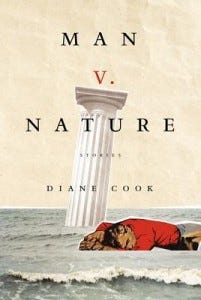
“It’s Us V. Us”: An Interview with Diane Cook, author of Man V. Nature

Diane cook collection

I had the chance to talk to my friend Diane Cook about her debut collection, Man V. Nature. Her stories are broadcasts from a world at once tender and terrifying. Each one grapples with questions of survival and how to be human in a universe turned upside down. Her book is like a memory from a place you’re almost certain you’ve never visited.

We chatted over email about Leelee Sobieski, writing prompts, and the psychological violence of endings.

Hilary Leichter: Your book has quiet apocalypses and crowded apocalypses. In stories like “It’s Coming,” or “A Wanted Man,” the reader is swept forward on a wave of ensemble choreography, a mass of humanity tumbling forward. The crowds feel like big, wonderful characters themselves. How do you keep track of an unruly mob on the page?

Diane Cook: I love to write a crowd. I like it best when it kind of throbs and swells like one organism. Because crowds are kind of this other life form. Or they’re a new form of us. There is a scene from the story “It’s Coming” where the main characters head to the roof of a building to escape a threat. From the roof they see the rest of the city running to escape that threat too. I imagined and wrote it be cinematic, sweeping, the crowd compelled and relentless, a bit like water flowing. I was probably thinking a little about that scene from The Last Unicorn where all the unicorns are released from the sea after The Red Bull is defeated. And I would have been thinking about mass movements or migrations. Herds of wildebeests across the Serengeti. Those helicopter shots (or I guess drones these days) showing just immense landscapes teeming with movement. Even real images or imagined ones of human mass movements, migrations, forced marches. These are images or feelings I return to often. Mass movement across land is an image and idea I think about often.

HL: Why write about the end of the world?

DC: The end of the world is just one kind of end and any kind of end tells us about ourselves. I’ve been thinking a lot about Deep Impact lately. I love Deep Impact because not everyone is saved. And when not everyone is saved, people’s decisions matter more. I like to watch the scene where everyone is fleeing, and then when the impact occurs. The scene where the parents give the baby to the daughter, and force her to flee without them. It’s Leelee Sobieski. I don’t know anything about acting but I think she’s amazing in this moment. Her confusion dawning to understanding then dissolving into a new kind of confusion is really devastating. I just made myself cry picturing it. I don’t revel in people’s misery, but there is this thing about the dawning moment, when a person realizes what is happening. I think we have that dawning with everything even — and maybe especially — small things. A moment we realize what is happening to us, what is pushing upon us, what this thing is, what is ending. I like to have some disasters, apocalypes or smaller personal disasters in my stories, but not really the heroics. I want to highlight and explore these moments of dawning.

HL: In “It’s Coming,” a group of executives are chased by an unknown beast — or is it a beast? We never quite see around the corner and catch a glimpse of what, exactly, they’re running from. There’s a similarly veiled evil in “Marrying Up,” festering just outside the narrator’s house. These feel like violent secrets the book is keeping from us. Like these are kinds of calamities that our pre-apocalypse brains don’t yet have the language to hear or see. Do you have names and faces for all of the unnamed beasts and monsters in your book, written down in some scary folder? Will they come up in your fiction again?

DC: I like that you imagine a compendium of monsters. I should write one, but I’m sure one exists by someone very creative who can draw. I like when things aren’t named. I had one reader ask if the threat in “It’s Coming” could be specific, something like a gunman. But then you’ve got a story about a gunman and then what? Then everything is done for the reader. Maybe you wonder, Why is the gunman doing this? But, I’m not often interested in why evil is done. I’m interested in what people decide in the face of evil. Or in the face of anything. I like when things go unnamed because I think a reader is better at filling in those blanks than I can be sometimes. I could have been very specific about certain stories, about certain threats in the stories. I certainly had images in mind, and had imagined a whole world I could have described. But when people read a story they introduce themselves to slightly new and different characters and worlds than I made. They’re bringing their own take on everything I’ve put before them.

HL: That reminds me of The Texas Chain Saw Massacre. There is a lot of imagined violence in that film. People see it, and afterwards, they swear that they are watching extreme gore. For many scenes in the film, it’s only a series of images that suggest gore, rather than gory images. I like the way you’re applying this idea to language, that the right words and sentences can create something terrifying in absentia.

DC: I certainly know where the monsters are in these stories, but a reader is going to have a much more interesting sense of that than I do, or at least a more personal one. The stories are for them to interact with and fill in with their own selves and imaginations. I think that’s what stories are best for. Maybe they’re like coloring books. Perfect form for what they are but the reader is needed to give it something more. And no two readers will color it the same.

HL: I want to hear more about the visible violence in your book. It’s gut-punch good. How do you write scenes with literal punches to guts? And still manage to somehow make those punches feel tender?

DC: The violence in the stories often comes from a deep and unanswered need, not out of a desire to harm. So many of the characters want to connect with others. The situations feel extreme though, and so perhaps their contact with people must have an extreme nature. But the need and the yearning is still felt. I think of a character like Gabby from “Girl on Girl” who is young and in turmoil and doesn’t have an expression for her needs and desires and so they come out in violence.

HL: Gabby’s violence is like a note left in a locker, or an ignored invitation to a sleepover. There is so much need there.

DC: And like Gary in “The Way the End of Days Should Be” who you sense is holding all the world’s loneliness in him but also happens to be the unofficial bodyguard for the solitary narrator. His violence is reluctant and his need to connect is bubbling.

HL: For every unnamed danger in your book, there are dangers that are fatally familiar. In “It’s Coming,” the refrain of “We are executives” felt like an echo of the financial crisis. For me, they might as well have been chanting “Too big to fail.” Do you start your stories somewhere nestled in reality, and then work your way towards the fantastic? Or do you write yourself a yellow brick road from Oz, home to Kansas?

DC: I guess in a way I do write myself back closer to a world the reader knows. I try to trim out really excessive things, the things that might allow the world building to take over from the fact that this is a story about people and a moment in their lives. In early stages, I overwrite the world so that I can understand it and then in revision I try to rein it in. The world can get cluttered. You don’t want to notice too much when you’re reading.

At least for this book, I tended to give myself rules or scenarios just so I could start. For “It’s Coming,” I was reading The Bloody Chamber. I was at a residency. I had time to play. I thought, I want to write a story that is full or gore and the word prick. Of course no story ends up only embodying the vague ideas you had when you started. The story holds so much more to it than starter rules or desires for it. But, as you may have noticed, there is a lot of gore in it. And the word prick. Twice. Which I think counts as a lot in a brief literary short story.

HL: It counts as a whole lot. I think this is one of the greatest writing constraints of all time.

DC: It was a fun constraint, that’s for sure. As for how the story shapes itself and why, I know I’m nodding to many familiar things, but I’m not doing that on purpose. I’m letting the story and my imagination take me somewhere, at least when I’m generating it. In the same way you couldn’t help but imagine “Too Big to Fail,” there were things I couldn’t help but imagine. But I didn’t want the story to be about any of that. I just wanted the story to be about threat, both familiar and strange. Anticipated but not believed in and not taken seriously, until it’s too late. And that can be a lot of things.

HL: In “Somebody’s Baby,” an anonymous man steals infants from the women who live on what seems to be an otherwise quiet, suburban street. I was struck by this killer question you ask in the story: “If you could suddenly get back everything you’d already said goodbye to, would you want it?” It feels like a fourth wall teardown, a challenge to the reader, a prompt for remaking the world, our individual worlds, or even a writing prompt. It’s a kind of fearsome nostalgia. Characters in your book lose their friends, their coworkers, their babies, their husbands, their fortunes, their families. In the world of your book, is nostalgia a dangerous thing? What’s the remedy?

DC: That would be a fun (or not fun) prompt: Write something you’ve lost back into your life.

Nostalgia is always a little dangerous, no? I mean, I guess it has to do with your temperament and relationship to it. But as you yearn and pine and think in the past, what are you really hoping for? What was? That thing forever? Endings can be psychologically violent. At the very least they send us into a bewildered state. Something of what we knew is over and now ahead is an unknown. We’re rarely ready for it. I think the characters in the book often instigate their own traumatic endings. Their worlds barrel on, but it is so hard to let go. I think the stories have something to say about the characters, newly bewildered, but also about those barreling worlds.

HL: Your book has men stranded in boats. Stranded in floating houses. Stranded in forests, on the rooftops of office buildings. I very much want to ask you the classic, stranded-on-a-desert island question: What book would you want to be stuck reading? But also, what book would you want to be stuck writing?

DC: There are a lot of books I return to again and again. Walden is one, and many other nature writing texts. Volumes of poetry. But if I were stuck I think I’d want a story to get lost in. Possibility rather than philosophy. Maybe a collected stories from Flannery O’Conner or Alice Munro or Steven Milhauser or Cheever. But doesn’t that feel a little like cheating?

HL: A little, but it’s a good cheat.

DC: I felt like I could read Dept. of Speculation a hundred more times. That book meant the most to me this year.

HL: I loved that book. I dog-eared that book like nobody’s business.

DC: It was so good. If it were the only book I had, I could get wrapped up in the story, but, if the story started to get tired I could read each little vignette like its own small book. That feels like a nice challenge. And if I were stranded on a desert island I think I’d want some other challenge to distract me from the challenge of plain old survival. As for a book to be stuck writing, I would never want to be stuck writing a book.

HL: There are so many babies in your book. There are so many possibilities of babies, and absences of babies. And then there’s a really huge baby in “Marrying Up,” so huge and strong and terrific. Is there something about writing about the end of the world that requires a nod to life’s beginnings? Are babies and apocalypses literary soul mates?

DC: I think every bigger ending in the book nods at a smaller, more personal one. Or some moment when your world and priorities get blown up and change, and when the ways you would have behaved earlier in your life must be interrogated. The baby stories have undercurrents of a new sense of responsibility. The mothers have to think about their children first, but they themselves are also in a kind of danger or under a kind of pressure or maybe just new and naive about it all. I’m curious about how extreme situations change us, or don’t. I think the babies in the stories — or the idea of the babies — put pressure on their mothers. It’s what those mothers do under that pressure that I’m interested in.

HL: I love that your narrators push back against the extreme parameters of your stories. They don’t always sit still and accept the rules you’ve created. They don’t want to move on from their marriages, or give up their children, or invite hoards of strangers into their homes, and yet, you’re telling them they must. They’re rebellious, and they don’t want to behave. I’m thinking of Stan and Susan in “It’s Coming,” having sex in the halls of their office, in front of all of their colleagues, while being chased to their deaths.

DC: I love Stan and Susan. They are two of my favorite characters. They do what they want in the story, but I understand that they haven’t always.

HL: They hold fast to the things that make them human, despite circumstances, and that’s a really beautiful kind of stubbornness.

DC: I think a lot of the characters feel put upon. Perhaps the rules of their worlds put pressure on them. The must make concessions to these rules and aren’t very happy about it because it doesn’t feel quite natural to them. They can’t adapt even though others have. The rules are the burden or some expectation from the big or small society surrounding the characters. I like that you call it a beautiful stubbornness, because I think the characters each question it at some point. Why can’t they be like everyone else? Even as they are pushing against it, even as they are feeling like they’re right. Honestly, I never considered they would go gracefully along with these worlds. I don’t know what the story would be if so. If I remember correctly, an earlier version of “The Mast Year,” had Jane trying to be much more game, and maybe even flattered by it all.

HL: Jane is experiencing an incredible winning streak in the “The Mast Year,” and everyone in her community (in the world?) comes to break off a piece for themselves. By the second page of the story, it feels like people are literally popping out of the woodwork to bask in her good fortune.

DC: Yes, it’s incredibly overwhelming and invasive. As I kept working on the story the pressure of the outside grew more intense and wild. And so, whatever good nature she might have had in earlier drafts dissipated. Almost as though the longer the story existed and got tinkered with the more tired she got, and the façade dropped and she was allowed to just be herself and to admit what a burden this all was. She tries to please but it is more muted and whatever she offers to others is really in service of getting them to leave. Meaning, it’s self-serving. Don’t we go along with things — often — because it is easier to, and the burden will feel lighter and shorter if we adapt to the things that feel heavy?

HL: Absolutely. It’s always harder to be Stan and Susan.

DC: Poor Stan and Susan. I really have so much affection for them.

HL: One of your stories has a major twist ending. To me, it felt perfectly executed. It vibrates. Can you talk a little bit about the experience of writing a spoiler-worthy moment?

DC: Ha, no because that would spoil it!

HL: Don’t spoil it!

DC: I’ll just say that some ingenious notes from excellent readers caused a light to go off in my head. Like I stripped a layer of sand and there was a a full and perfect stegosaurus skeleton or whatever. The story led me in a direction and then let me discover this new cool thing there. The story kind of made it. I really love that about writing. At least, writing when you’re open to surprises. I was especially heartened that this really important surprise came about in revision. Revision is hard for me. I mean, it’s a struggle whereas the initial writing is pure joy. I used to worry about the stories losing an electric or inspired feeling because I’m being so thoughtful about everything. I don’t think they do, but it’s a worry when you’re fine tooth combing everything. But in revising this book I’ve had a lot of electric and surprising moments. So it makes me happy that I had energy behind the stories through the whole process.

HL: The competitive, “versus” structure of your title sets up each of these stories as potential face-offs, or cage-matches. We have bouts between neighboring houses, high school girls, and abandoned boys in a forest. There are almost never any winners. Is the end of the world a fight to the finish? Fill in the blank: Diane Cook V. _____.

DC: Going back to Deep Impact (my sincerest apologies) —

HL: Never apologize for Deep Impact.

DC: — I think the sacrifices the characters make for others and their loved ones are moving. But we do get it immediately. Téa Leoni gives up her helicopter spot because she needs to heal with her dad. The parents are giving their children a chance at a life they’ve already lived. All around them are people angrily honking, yelling, fighting. But we don’t get those stories. I always felt those people (in any kind of disaster movie) are portrayed in a negative light, like, Look how selfish and self-serving. We’re not supposed to be interested in those stories. But I am. Those people are also trying to save something they think is important: whether that is their family, loved ones, or their own life. Maybe we are turned off because they’re doing it without grace. But, I think they’re the most like us; they’re not the stars and they’re not the sacrificing heroes. And I’m interested in that. There is a line in the story “The Not-Needed Forest” that to me says a lot about the spirit with which some of the characters in the book approach whatever their end is. Survivors always say yes. Meaning, that survival of anything comes down to decisions and willingness. I don’t know about a fight, but I think we make these small decisions everyday. We’re trying. But in a life without large scale conflict, or some extreme foe, if we fight anyone it’s often ourselves or the ones we love, in a way that breaks us up, invites tiny ends to life as we knew it. It’s Us V. Us.

***

Electric Literature published Diane Cook’s story “Man V. Nature” last week on our weekly fiction site, Recommended Reading. Read it here.

Wants

by Grace Paley, recommended by Dani Shapiro

I saw my ex-husband in the street. I was sitting on the steps of the new library.

Hello, my life, I said. We had once been married for twenty-seven years, so I felt justified.

He said, What? What life? No life of mine.

I said, O.K. I don’t argue when there’s real disagreement. I got up and went into the library to see how much I owed them.

The librarian said $32 even and you’ve owed it for eighteen years. I didn’t deny anything. Because I don’t understand how time passes. I have had those books. I have often thought of them. The library is only two blocks away.

My ex-husband followed me to the Books Returned desk. He interrupted the librarian, who had more to tell. In many ways, he said, as I look back, I attribute the dissolution of our marriage to the fact that you never invited the Bertrams to dinner.

That’s possible, I said. But really, if you remember: first, my father was sick that Friday, then the children were born, then I had those Tuesday-night meetings, then the war began. Then we didn’t seem to know them any more. But you’re right. I should have had them to dinner.

I gave the librarian a check for $32. Immediately she trusted me, put my past behind her, wiped the record clean, which is just what most other municipal and/or state bureaucracies will not do.

I checked out the two Edith Wharton books I had just returned because I’d read them so long ago and they are more apropos now than ever. They were The House of Mirth and The Children, which is about how life in the United States in New York changed in twenty-seven years fifty years ago.

A nice thing I do remember is breakfast, my ex-husband said. I was surprised. All we ever had was coffee. Then I remembered there was a hole in the back of the kitchen closet which opened into the apartment next door. There, they always ate sugar-cured smoked bacon. It gave us a very grand feeling about breakfast, but we never got stuffed and sluggish.

That was when we were poor, I said.

When were we ever rich? he asked.

Oh, as time went on, as our responsibilities increased, we didn’t go in need. You took adequate financial care, I reminded him. The children went to camp four weeks a year and in decent ponchos with sleeping bags and boots, just like everyone else. They looked very nice. Our place was warm in winter, and we had nice red pillows and things.

I wanted a sailboat, he said. But you didn’t want anything.

Don’t be bitter, I said. It’s never too late.

No, he said with a great deal of bitterness. I may get a sailboat. As a matter of fact I have money down on an eighteen-foot two-rigger. I’m doing well this year and can look forward to better. But as for you, it’s too late. You’ll always want nothing.

He had had a habit throughout the twenty-seven years of making a narrow remark which, like a plumber’s snake, could work its way through the ear down the throat, half-way to my heart. He would then disappear, leaving me choking with equipment. What I mean is, I sat down on the library steps and he went away.

I looked through The House of Mirth, but lost interest. I felt extremely accused. Now, it’s true, I’m short of requests and absolute requirements. But I do want something.

I want, for instance, to be a different person. I want to be the woman who brings these two books back in two weeks. I want to be the effective citizen who changes the school system and addresses the Board of Estimate on the troubles of this dear urban center.

I had promised my children to end the war before they grew up.

I wanted to have been married forever to one person, my ex-husband or my present one. Either has enough character for a whole life, which as it turns out is really not such a long time. You couldn’t exhaust either man’s qualities or get under the rock of his reasons in one short life.

Just this morning I looked out the window to watch the street for a while and saw that the little sycamores the city had dreamily planted a couple of years before the kids were born had come that day to the prime of their lives.

Well! I decided to bring those two books back to the library. Which proves that when a person or an event comes along to jolt or appraise me I can take some appropriate action, although I am better known for my hospitable remarks.

Richard Flanagan Is the Winner of the 2014 Man Booker Prize

Despite grumblings and fears about the Man Booker Prize opening the gates to Americans, the prize stayed in the Commonwealth. Australian author Richard Flanagan won for his historical novel The Narrow Road to the Deep North. Here is the description from the US publisher, Knopf:

August, 1943. In the despair of a Japanese POW camp on the Thai-Burma Death Railway, Australian surgeon Dorrigo Evans is haunted by his affair with his uncle’s young wife two years earlier. His life is a daily struggle to save the men under his command from starvation, from cholera, from pitiless beatings. Until he receives a letter that will change him forever.

Moving deftly from the POW camp to contemporary Australia, from the experiences of Dorrigo and his comrades to those of the Japanese guards, this savagely beautiful novel tells a story of love, death, and family, exploring the many forms of good and evil, war and truth, guilt and transcendence, as one man comes of age, prospers, only to discover all that he has lost.

The shortlisted books were

  • To Rise Again at a Decent Hour by Joshua Ferris
  • The Narrow Road to the Deep North by Richard Flanagan
  • We Are All Completely Beside Ourselves by Karen Joy Fowler
  • J by Howard Jacobson
  • The Lives of Others by Neel Mukherjee
  • How to Be Both by Ali Smith

Come Here Often? Kate Christensen on Her Favorite Bar in Portland, Maine

Come Here Often

The following is an excerpt from Come Here Often? 53 Writers Raise a Glass to Their Favorite Bar, a new anthology from our partner Black Balloon. In this essay, author Kate Christensen writes about Sonny’s, “the writers’ bar of Portland, Maine.”

There are few things more cheering than walking into a familiar bar to meet a good friend. Nothing (except maybe a good chicken soup) has ever been more effective at warming both bones and cockles of the heart, at banishing the deep chill and the early dark of winter, than that anticipation of a few rounds of drinks, a good conversation, warmth and conviviality.

During the twenty years I lived in New York City, I had a handful of favorite bars, among which were a hipster bar (Pete’s Candy Store), a hotel bar (Bemelmans), a secret bar (Angel Share), a neighborhood hangout (Irene’s), and a faraway bar (Ruby’s at Coney Island). Like most people I knew, I felt passionate about and possessive of and proud of knowing these places.

I felt the same about my friends in New York, who were just as carefully selected and highly cherished. Instead of a group of them, I had individual close friends. I preferred to see them all alone, on “dates,” so we could hunker down face to face and really talk.

So, for many years, drinking in bars was a nighttime, one-on-one thing for me, in a favorite place with a favorite person.

So, for many years, drinking in bars was a nighttime, one-on-one thing for me, in a favorite place with a favorite person.

Then, in November 2011, I moved to Portland, Maine with my boyfriend of almost three years, on a sort of wild but solid hunch that it was the right place for us. The year before, we’d been using his family’s farmhouse in the White Mountains as a home base for our frequent travels and had often flown in and out of Portland’s little jetport. We found ourselves falling in love with the old brick buildings in the small downtown; the seagull-bustling wharf; the long gorgeous views over Casco Bay on the East End; and the tree-lined streets of the West End.

So it came to pass that, on an updraft of optimism and faith, we bought a 19th-century brick house in the West End. We moved in as soon as the deed was in our hands, having never spent a night in that town before, knowing no one. On our first night in our old, drafty “new” house, we ate Vietnamese delivery amid stacks of unpacked boxes, sleet beating at the windows.

That first winter, we spent a lot of time alone together in a bar around the corner from us called Local 188. It’s big and airy but cozy, full of couches and comfortable tables, with an open kitchen in the back and a full menu. It was comforting to have other people around us, thronging the couches and tables, greeting one another, but we had yet to find a tribe of our own, or even a friend. Luckily, we love each other’s company, because that’s all we had for months.

When spring came, I signed up for twice-weekly Pilates classes and started volunteering at a women’s soup kitchen. Brendan started going off to write at a café, and every morning, we walked our dog on the trails along Casco Bay, on the East End. We were working hard, writing, keeping our heads down, our noses clean and to the grindstone, elbows to the wheel, etc. All of that was well and good, but every night, it was just the two of us. We kept up frequent correspondences with our old friends, all of whom lived elsewhere, while making a new life for ourselves. But we still had no friends in town.

Finally, in early May, our friend Jami, a Brooklyn novelist who was temporarily homeless, came to live with us for a few weeks. She took stock of our sorry lack of a social life and intervened.

“You need friends,” she said. “I’ll introduce you to my writer friend Ron and his girlfriend, Lisa.”

I’ve always been slightly leery of other writers, as well as friends of friends. I’m afraid they’ll be competitive and/or standoffish, and that I won’t like them as much as I should. But I couldn’t afford to be leery of meeting anyone right now. In fact, I leapt at Jami’s offer like a hungry dog catching a thrown tidbit.

The next night, while Brendan was out of town, Jami and I met Ron and Lisa at Local 188. I liked them instantly. Ron was a novelist and Lisa worked in local politics; they both grew up in a small town north of Portland called Waterville. They were friendly, charming, low-key, smart, and (it must be said) extremely good-looking. The four of us chattered the night away.

Happy as I was to meet them, they were Jami’s friends, not mine. And then, after Jami went back to Brooklyn, Brendan and I spent most of the summer in the White Mountains, writing in his family’s farmhouse, while contractors banged and sanded away in our Portland house.

So that might have been that. But in September, when we were back in town, we got an email from Ron, inviting us to come and meet some of Portland’s other writers at a bar called Sonny’s. Improbably, this was to take place on a Wednesday at the astonishingly early hour of 5:00 pm.

When I lived in New York, I rarely met anyone for a drink earlier than 7:30 (except, of course, for brunch dates.) Dinnertime was generally around 10, so to me, 5 was arguably still lunchtime.

Nonetheless, we accepted Ron’s invitation with gladness in our hearts.

When Wednesday came around, I closed my laptop at 4:30 and walked downtown to Brendan’s café and picked him up from “work.” We walked together around the corner to Sonny’s, which is housed in the former Portland Savings Bank, a high-ceilinged antebellum building on Exchange Street in the Old Port, tucked into a corner of Tommy’s Pocket Park, a tiny European-feeling square where street musicians congregate on benches under the old trees.

It was still light out. Tree leaves rustled in an ocean-scented wind. Seagulls shrieked on updrafts above mansard roofs. The brick of downtown glowed in the sunlight. It felt far too early, too nice out, to duck into a dark bar.

Then we caught sight of Ron with some other people at a big table in the plate glass window in the front. He saw us, too, and waved. In we went, feeling half shy.

We entered through red velvet curtains into a foyer that wouldn’t have been out of place in a Victorian bordello, which I mean in a good way: brocade fainting couch, low-hanging fringed lamps. When the new owner, Jay Villani (who also, coincidentally, owns Local 188), bought the

place in 2000, he took great pains to preserve the old details — exposed brick, vaulted ceilings, tile floors, stained glass windows. The booths and tables were clearly designed to blend in and look as if they’d been there forever. There’s an old bank-vault door high over the bar.

The menu features two of my favorite things, a tamale of the day and an intriguing assortment of original tequila cocktails. The tamales are very good and wholly authentic and only $5 each. For my new favorite cocktail, the Jaycito, house- infused chile tequila (the bar wizard, Christina Klein, also infuses vodka and gin) is shaken with cilantro-infused simple syrup and fresh lime juice, then finished with seltzer. I never order anything besides these two items, even though both the food menu, which is South American- and Mexican-inflected, and the drink menu, which features many great-looking cocktails as well as new world wines and craft beers, are extensive and imaginative. Why branch out when you hit on the perfect thing?

Why branch out when you hit on the perfect thing?

The same goes for a bar. The same goes for friends.

That first Sonny’s night, in addition to Ron, there were Monica and Jessica, both novelists, and Bill and Chris, who run Longfellow, the local indie bookstore, all of whom live in Portland, as well as an old friend of Ron’s from Waterville. We sat around that table until after 8:30. (We would come to appreciate that in Portland, this is late, just as we’d come to appreciate getting home by 9:00 after a big night out on the town.)

Throughout the fall and following winter, Wednesday night at Sonny’s turned into a semi- regular thing. More writers and their spouses were folded in. One night, so many of us showed up that we took over the long table in the back room.

Two years later, Sonny’s nights have become a social regularity. The point is not to get drunk. We all generally have two or maybe even three drinks over the course of an evening, enough to relax us but not enough to send us off our rockers. We’re a warm, convivial, cheery bunch. We laugh a lot and have much to discuss. And this is Maine: We create zero psychodrama — no contentious spats or pissing contests, no factions, backbiting, or bitchiness. We talk shop, commiserate over hardships and setbacks and struggles, congratulate one another on books begun, finished, published, or good reviews, prizes won, and plum assignments.

The thing about Sonny’s itself, and our group of friends in Portland, is that we didn’t choose them. They happened to us, just as we happened to them. But we couldn’t have chosen a better bar or better people. Sometimes life is just lucky.

Our meetings have expanded to cocktail parties at our various houses, smaller dinner parties, individual friendships, and — gasp — occasional meetings at other bars in town. But Sonny’s is still the writers’ bar of Portland, Maine. And it’s always a Sonny’s night in my mind when we all get together, wherever we are.

***

Looking for a bookish and boozy night out in New York this week? Join our partner Black Balloon Publishing as they celebrate the launch of the new anthology, Come Here Often? 53 Writers Raise a Glass to Their Favorite Bar. Tuesday 10/14 from 6:30–9:30pm at Union Pool in Brooklyn. Editor Sean Manning and contributors Elissa Schappell, Mike Albo, and Scott Raab will read their essays. Bring your friends….

INFOGRAPHIC: Yoga for Writers

Yoga for Writers is available as a poster in our EL store.

Paper cuts, carpal tunnel, compound hangovers, and the mind-numbing effects of a friend’s experimental poetry reading are just some of the occupational hazards that any writer must face. Now we can add “sitting” to that list of potential health risks. Yes: “butt-in-chair,” one of the hallmarks of any writing guide, could actually kill writers.

Ever considerate of the perils of the literary life, Electric Lit has created an infographic of yoga poses for writers that’ll help you avoid those hazards while you hide from distracting student emails.

Yoga poster

Text by Benjamin Samuel, Lincoln Michel, and Nadxieli Nieto. Design by Nadxieli Nieto