REVIEW: How to Catch a Coyote by Christy Crutchfield

From the Encyclopedia of Coyotes: They are nothing like Wile E.

Christy Crutchfield’s How to Catch a Coyote is about a family caught in its own trap. So many hurtful things are said and so many assumptions are made that there’s really no way out without a break. Daniel struggles to make sense of his parents’ breakup, of his sister’s accusations of an incestuous relationship with her father, and of his father’s propensity for trapping the wild dogs. Crutchfield’s novel uses time shifts as a device to reveal secrets and alternate points of view, giving the reader insight into both the turmoil of the family and its aftereffects.

Family members in Coyote each struggle with their roles and whether or not they have done right by each other. Daniel is the baby, the one the family tries to shield from harm. After one particularly terrible night with his wife, Daniel’s father takes him to McDonald’s, and wonders about the character of his son. “A thing has to bend not to break,” his father observes —

and he doesn’t know why he wasn’t terrified back then that the giant metal coil would snap and send the cage tumbling, daughter and all. It’s good — today — that his son is afraid of everything…

Hill, Daniel’s father, thinks in terms of trapping. It’s an idea that Crutchfield comes back to repeatedly; however, the repetition of this idea works because it is Hill’s vocabulary for understanding the world. It functions a metaphor, but not a heavy handed one. Much of the novel deals specifically with Hill’s angst about capturing coyotes and Daniel’s obsessions with them. The coyotes are a manifestation of Daniel’s fears (when he hears them in the night and imagines them coming for him) as well as a way for him to help understand his father.

Truth is a central issue in the novel. We learn early on that there has been an accusation of incest by Dakota, Hill’s daughter. Crutchfield methodically undermines each character’s reliability so that the truth seems out of the reader’s grasp. The work is stronger for it, as conviction would seem to act against the nature of these accusations. The undermining begins with Hill describing Daniel: “Who knows what Daniel knows? He’s not that observant, not the brightest kid. It’s everything to love and hate about him.” In this family, nobody can be entirely believable. Even Hill’s assessment of Daniel as “not that observant” is belied by Daniel’s obsessions and fears. Daniel just doesn’t communicate his understanding of the truth to those around him, so Hill can easily dismiss him.

In the chapters that focus on Hill’s wife, Maryanne, a woman whose actions are mostly reactionary attempts to salvage what she can of her family, we learn that Daniel becomes the family’s one hope: “You may have failed with your husband,” Maryanne tells herself. “You may have failed with your daughter. But this one, you got right.” There is the sense that her steady job and the establishment of routine for her son can save at least Daniel from the wreckage.

Dinner at the table will get your boy a scholarship, will keep him out of trouble. He is still salvageable. He is still grateful.

But remember, it’s not about children-as-do-overs, no matter how true this feels.

But, like her husband’s assessment of Daniel as lacking discernment, Maryanne’s idealistic hope that she can save him also reveals the family’s lack of understanding of each other. In Daniel’s chapters, we see not only his struggle to respond to what his family has told him he is for his whole life, but also his struggle to define for himself, who he is and what he thinks about his own path moving forward.

Dakota, Daniel’s older sister and the catalyst for their parents’ separation, is the wild card. Unapologetic and bold, she wields accusations in a manner that makes us question her motives. But Crutchfield shows the same depth of character in her portrayal of Dakota, as Dakota clearly speaks out of pain. Daniel’s reactions to her are most profound, probably because she does not allow him to hide.

“This, dear brother, is what incest breeds.”

But if spreading the gene pool is best, why does everyone say you are attracted to people who look like you?

One of the best qualities of Crutchfield’s novel is how the stories changes in time and perspective allow for ideas to surface repeatedly, often with a subtle shift. Dakota makes Daniel promise he will only be attracted to someone who looks different than him — a clear reference to the accusation — but in Daniel’s attempts to understand her, he admits a kind of comfort with the familiar.

This idea of repetition, or layering, also serves to strengthen Crutchfield’s choices about playing with form. Some of her chapters are writing samples of her characters, including the opening “How to Write a Family History,” which is Daniel’s attempt at a family timeline. In “A List of Fears,” we see Hill’s concerns about his family through an ordered list with titles like

5) IF EVERYTHING IS RUINED, IT’S A FATHER’S FAULT

Details like this become more than aphorisms when they show up later in the story, as with Hill’s list of questions:

Is it always the father’s fault?

Is breaking a leg the only way to keep a dog from running away?

Is it considered abuse to set something free?

Is it only the father’s fault?

Is he even allowed to ask that question?

Is he allowed to ask the next question?

And, Jesus, does it make a difference?

Crutchfield manages to take our attention away from the “did he or didn’t he” storyline and to draw our attention to another one: What becomes of this broken family? And what of Daniel, the “little gentleman?” How can one possibly live up to that kind of pressure?

Chapters in How to Catch a Coyote read as discrete short stories, though its cohesiveness ensures that they work as a whole. Crutchfield’s ordering of these stories intensifies the impact of the information revealed and seeing these characters at vastly different time periods means we are able to check our own assumptions about their futures against what really happens. How to Catch a Coyote is good work, especially when it is pushing against the reader’s expectation of having the answers. This is a book that haunts the reader, much like the coyotes do for Daniel.

Click here to be redirected to Publishing Genius, where you may purchase How to Catch a Coyote.

You Are a Young Writer

You are a young writer about to graduate with an undergraduate degree. You enjoy writing, you enjoy reading, and you even enjoy not yet knowing the Who or the When or the Where of What’s Next.

One afternoon while talking with a professor, friend, or mentor about your excitement about not knowing What’s Next, you for the first time hear about MFA.

MFA sounds like everything you never thought could ever happen in the same place happening in the same place.

I’ll put you two in touch, says your professor, friend, or mentor.

You get a drink with MFA.

MFA says, Time to Write, Writers to Study Under and With, Many Ways of Thinking and Feeling and Making with Craft, Deadlines and Discipline, Writer Friends You’ll Have for Life.

MFA is dreamy, and the more MFA talks the dreamier MFA becomes, but there’s a practical you inside you that you have lately been encouraged to develop, and somewhat against your will, this you prompts you to ask, And then?

And then you write or you don’t, says MFA. Or you both.

You finish your beer thoughtfully.

Someone asks MFA if MFA wants to play darts. MFA does.

You start to ask a question, but MFA says, I’m terminal.

You apply to a number of MFAs.

You are rejected by a number of MFAs, and waitlisted by one, and offered partial aid by another, and by another you are offered a full tuition fellowship in exchange for teaching and hot damn does this offer has you feeling on top of things you didn’t know had tops to feel on top of. You move to the state the school is in. Classes start: you read recklessly and you write ravenously, you write in forms and in modes that are new to you, and you’re astonished, and you for the first time teach, you’re a student with students, and you make friends with your fellow writers, friends from the East Coast and the West Coast and the Southwest and the South and the Midwest, you’re from the Midwest, with your Midwestern friends you disagree on what constitutes the Midwest, and with everyone else you altogether disagree on what constitutes writing and poetry and story and essay and art, and constitution, and you attend and give readings, and you work for a literary magazine, and on funding you travel to conferences, and you play pool and darts and poker and you drink beers and boozes and smoke cigarettes and cigars and you do some drugs maybe and you love, you love hard, you love the friends you share so much with, and yes, you make some rather wretched mistakes, some shameful blunders, and maybe there’s some rivalry and jealousy but you stay away from the circles of spite, the circles that spin on the talk that sinks community, and instead you write, and in your last year you write a book.

You are a young writer about to graduate with a graduate degree.

You say to MFA, And now?

MFA is busy with someone else who is buying MFA a drink.

You wait. The place gets crowded. It gets a little late.

You begin to say something to MFA but MFA says, I AM TERMINAL, and you begin to respond but MFA says, TERMINAL, and you stop.

MFA bar-whispers, WRITE.

You submit your book to contests, presses, and agents. You read and submit to literary magazines, where you find a lot of work you really love.

You wait to hear back about your book.

It’s not a very good book, you think, but you’re sure you’ll be someday glad you wrote it, you hope, possibly.

Your significant other gets a good job at a small university in a small town somewhere far away from where you both grew up. You move with your significant other. You liked teaching when you were with MFA, so you adjunct, you adjunct at more than one university for less money and benefits than when you were teaching with MFA.

You’re not as good at teaching as you remember.

You get a beer with Adjuncting.

Adjuncting says, If you look for reasons to be bitter, you’ll find them wherever you look. Don’t look.

Your book is rejected.

It’s not a very good book, you say to Adjuncting. But I’m glad I wrote it.

Adjuncting gets drunk.

Adjuncting says, Look for reasons to be bitter! Find them everywhere! I can’t pay this tab!

Things get lousy with your significant other.

Some of the pieces you send to literary magazines get accepted. These pieces are very different from the pieces in your rejected book.

You take pedagogy workshops at one of the universities you’re teaching at and you get better at teaching.

You wonder what What’s Next is doing.

You wonder what it would be like to have a salary.

You wonder what it would be like to live where you’ve always wanted to live.

Your little brother, who has a salary and lives in Chicago, takes his girlfriend on a trip to Hawaii. You used to fart on your little brother’s head.

You are active in the communities of the universities you teach at. You show up and you volunteer and you participate, and you mean it.

You teach Creative Writing classes and with every one get better at teaching.

You apply for full-time visiting and tenure track positions. You don’t have a book. You don’t get close to getting interviews.

You visit your MFA writer friends. One friend is adjuncting in the town in which you got your MFA, and one is a copyeditor in Chicago and is getting married, and one runs a Trader Joe’s in Santa Fe and is having a baby, and one works for a non-profit in DC that promotes healthcare through the arts, and one is getting a PhD in Literature and Creative Writing.

“I’ll put you two in touch,” says this friend.

You get a scotch with PhD.

PhD says, Time to Write, which might mean even more to you now, and Writers to Study Under and With, which if that means less you might try something else, and Deadlines and Discipline, helpful, very helpful, and Writer Friends, beyond value, and a Better Chance at a Full-Time Teaching Position, Probably.

You ask, And then?

You get the job or you don’t, says PhD. Not both.

You start to say something but PhD says, with air quotes, MFA is “terminal.”

You finish your scotch thoughtfully.

And maybe you apply.

And maybe you’re offered a full tuition teaching fellowship, and you accept, and you move away from your significant other to the city PhD is in, and you read recklessly and you write ravenously, and you love hard, and whether or not you feel like a young writer you spur, joke, and bite yourself into making the most of the many things that PhD puts before you, meaning, yes, the literature and theory and professionalization courses you maybe never took with MFA, but even more than that, your work, and one morning it comes to you that PhD isn’t MFA on Steroids or MFA on Crack or MFA on top of your significant other that time you walked into the bedroom after coming home from a canceled flight, no, it’s none of those things but it is heavier, or older, or denser, and maybe you can lift it over the circles of spite and carry it through to the end of the first year, where with the help of the summer, you finish a new book.

And maybe at PhD you feel on top of things you didn’t think you’d ever feel on top of again, meaning, your work.

And maybe at PhD you feel as if you’re standing at some dark bleak bridge, emptying your messenger bag into the mouth of a troll.

And maybe at PhD you feel like a clown whose every footstep is a fart on your own head.

And maybe at PhD you try to get ahold of What’s Next, but What’s Next is busy, and a new professor, friend, or mentor says, I’ll put you two in touch, and it happens, you get a coffee in a crowded coffee shop with What’s Next, but What’s Next won’t look at you, What’s Next just stares over your shoulder, and you yell, Do I get my PhD and get a position somewhere or do I get my PhD and never get a position anywhere and get some other job somewhere or does a position open at one of the schools I adjuncted at and I get it and then it ends and it’s back to what I just said or do I get a book published and if I get a book published do I need my PhD!

No one in the coffee shop reacts to your yelling. Not even you.

You feel done, but you know you aren’t.

What’s Next? says What’s Next, not looking at you.

You drink your coffee. You don’t know.

You say, You don’t know.

What’s Next says, You are a young writer. Write.

Selected Shorts Reveals Details for 2015 Stella Kupferberg Memorial Short Story Prize

Weekly public radio show Selected Shorts has announced the details for the 2015 Stella Kupferberg Memorial Short Story Prize, which will be judged by Swamplandia! author Karen Russell. The winning writer will see their work performed live at Symphony Space on Wednesday, June 10, 2015 and will be published right here on Electric Literature!

The winner will also receive $1000 and free admission to a 10-week course with the Gotham Writers’ Workshop.

Entries should be 750 words or less and are due by midnight EST on March 15, 2015. See all the details at the Gotham Writers’ web site.

Selected Shorts

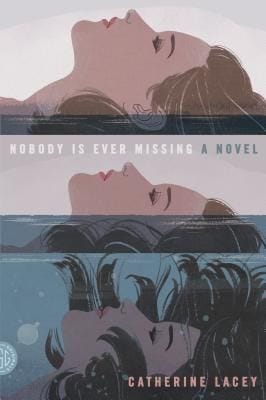
INTERVIEW: Catherine Lacey, author of Nobody Is Ever Missing

Nobody is Ever Missing cover

Catherine Lacey’s debut novel, Nobody Is Ever Missing (FSG Originals), was released this summer to wide acclaim. It’s a difficult book to describe. A young woman named Elyria leaves New York and her husband to hitchhike around New Zealand. She doesn’t have much of a plan and seems an unlikely candidate for epiphany. Her thoughts run dark. Lacey’s sentences are long and spiraling and you often emerge from them with the feeling that that you’ve somehow been cut to the quick. None of this makes for easy summary or appraisal. But Nobody Is Ever Missing isn’t necessarily the kind of book you want to tell all your friends about, anyway. It’s the kind of book that makes you wonder whether the whole business of having friends and family and husbands and jobs is really worthwhile, whether you might not be better off just buying a plane ticket and vanishing into a new life, at least for a little while.

I met Lacey in early September at a bar in Brooklyn. Her publicity obligations for the book were mostly fulfilled and she looked relaxed. She had just returned from a cruise, during which, she told me proudly, she had managed to obtain a staff badge granting her certain privileges and listing her job title as Just Cruisin’. We spoke over the course of an afternoon about dark comedy, the power of disappearing, religion in the South, and why women authors are so often confused for their characters.

Dwyer Murphy: In Nobody Is Ever Missing, your narrator, Elyria, has an especially distinct, morbid voice. I’m curious how it first came to you. Was there a passage or a scene where you really found out who she was, what she sounded like?

Catherine Lacey: For a while, she wasn’t giving me much, but then I started working on a passage where she’s narrating a letter to her husband, and I understood how she saw the world, her matrix of darkness. Once I had that, I could write any scene from her perspective. I could walk her into this bar right now and have her order a drink. It was like that game, Connect Four. I’d drop in the chip and it might bounce around a little, but there was only once place it was going. Her gravity was just there.

DM: We’re talking about Elyria as such a dark person–and she is–but it’s a funny book. Where do you think the humor comes from here?

CL: I find it funny to see a person stuck. It’s almost like physical comedy, with Charlie Chaplin and his cane, and you laugh because he can’t stop dropping his cane. Elyria can’t meet somebody and not think about that person’s impending death. She can’t escape her own hopelessness. Some people find that deeply unfunny. One of the first interviews I did, the interviewer took issue with a line on the galley about the book being a “pitch-black comedy.” She insisted it was not a comedy. People seem pretty split. For me, it’s funny. Elyria’s on the run from her life, she’s alone, she’s thinking too much about death–it’s a perpetual cane drop.

DM: You wrote a piece for Buzzfeed Books where you try to delineate which parts of Elyria come from you and which don’t–you talk about making up a Venn diagram even. Has that been a nagging issue, people assuming she’s just straight you?

CL: I know it’s a natural thing to wonder about when you’re reading a book–how much of this character is the author–but I think that women are asked that kind of question more often than men are. As a culture, we don’t have many ideas of what a young woman can be. We have a big range for men. We have a hundred years of archetypes and stories and mythologies. (That’s part of why I think women could more easily write from a male perspective than men could write from a female perspective–growing up, we’ve just been fed so many male narratives, that perspective becomes a part of us.) But for a young woman, we have this small range–she can be a mother or not-a-mother or a slut, and that’s about it. Good, bad or barren, basically.

So people see Elyria, and she’s not really any of those things, and they think she must be personal. She must be me. I think our culture gives a little more credit to men’s ability to be completely generative. I think there’s an assumption that women are always grappling with themselves, making art about how hard it is to be them, to be a certain woman.

DM: I’ve come across a lot of people debating whether this is a feminist book, whether it supports feminist ideas, whether Elyria is herself a feminist. I wonder if you have an opinion on that, or whether you resent even having the debate?

CL: I don’t resent it. It’s an interesting question. There’s no standard definition of what counts as feminist book or character or plot line. If this were 1914, it would probably be a feminist book, because back then it was more radical for a woman to leave her husband and go off somewhere to be alone. But now, Elyria’s just a human being who leaves a relationship. Her being a woman is not a huge part of the story, and the faults in her relationship aren’t a matter of her husband being a chauvinist asshole. There was a line in Dwight Garner’s review about the “Smart Women Adrift Genre,” that a protagonist from a Joan Didion or Renata Adler novel could eat Elyria like an oyster. I thought that was just perfect. They really would, like an oyster.

DM: In that review, Garner seems to see Nobody as being about a distinct kind of ennui you experience in your late twenties, but I’ve heard other people, like Sasha Frere-Jones, say that Elyria could just as easily be middle-aged. Do you think that the ennui Elyria’s feeling is specific to an age or a period of life?

CL: Probably I don’t get to decide, but I like to think her unrest is broader. We have an idea that this kind of ennui–feeling adrift and confused about what you should be doing with yourself and with your life–only happens when you’re in your twenties, but I think that probably we continue to have those moments forever. Probably it comes back to you every few years, like a fugue, and you wonder all over again whether you made the right decisions, did the right things.

DM: Did you look to any particular books when you were figuring out how to write a novel about disappearing from a marriage? When Elyria first gets to New Zealand, I kept thinking about Rabbit Angstrom driving away from Mount Judge.

CL: Well, you brought up Updike and now I’m going to go on a rant. I’ve tried, but I just can’t get past the fact that Updike and dudes like Updike saw the world in such a dickish way. I know they’re a product of their times, and I know that some people can read them and overlook the fact that there are so few complicated women in their books and strong homophobic overtones and just blatantly racist shit, but I don’t want to overlook it. I want to read authors who could see that stuff for what it was–fucked up. I want to read authors who see people more fully and completely and with more empathy. Updike’s a brilliant writer–on the sentence and plot level, you can’t argue with him–but lots of people can write good sentences while also appreciating a full range of humanity. Good sentences and plots don’t do it for me if I feel like the writer can’t see beyond his own current cultural situation. I have the same problem with Roth, even though I respect him on so many other levels. But I don’t think he has ever had an evolved enough perspective on the world he wrote about. Saul Bellow’s another. I know he was great, but I’m just not going to do it anymore, because he couldn’t see past his own masculine privileges, and that just doesn’t do it for me.

DM: I feel like everyone needs a list of great writers–alive or dead–that they’re willing to fight if given the chance. You’ve got to just make that promise to yourself.

CL: There are definitely some writers I would call on their shit if it came to that. A lot of the “Super Important Male Novelists of a Certain Age” never used their privileges and talents for much more than making a long argument for their privileges and talents. I find that tremendously boring. Especially if they were writing through the mid twentieth century and couldn’t manage to further empathy for women’s, LGBT or civil rights, at all, not even with one character. What rock were they living under? You know who I’m talking about. Or, I guess it could be debated who belongs on that list, but oh man is it a list.

DM: Do you think you’re starting to develop an author persona through these events, these interviews? You always seem pretty pugnacious, ready to brawl, ready to be rude. I say that as a good thing.

CL: I guess that persona starts to shape itself. But I think that’s just how I am. I’m a liberal from the Bible Belt. I don’t have a problem being controversial.

DM: I don’t want to blur the lines between you and Elyria–we already talked about that–but the urge to disappear from a relationship and from a life is one of Nobody’s central preoccupations. Is that an urge that grips you?

CL: I do feel it. There’s a power in disappearing. You can reinvent yourself when no one knows your history. But my urge isn’t quite the same as Elyria’s. She wants to disappear and not tell anyone. I like to travel alone and not answer emails or make phone calls for days on end, but I like coming home too.

DM: You went on a long trip to New Zealand before you wrote the book. What was your mindset there? Were you just wandering? Or were you doing the Kerouac thing, doggedly collecting material for a road-trip novel?

CL: I went because I wanted to study permaculture and bio-dynamics. I was done with graduate school and unsure what I was supposed to do next and I hate the winter, so I wanted to go to another hemisphere, to some place where I could hitchhike between farms and always be near a coast. New Zealand was really the only place that fit the bill. I was barely writing when I was there. I was working on farms and reading books and hitchhiking all the time. I wrote maybe a single story, five hundred words. It ended up being the original seed for Elyria, but I didn’t think it was a novel at all.

DM: What was it about hitchhiking that called to you?

CL: I didn’t have that much money and I don’t like driving. It seemed like an easy and interesting way to learn about people. And also it just freaked me out and made me uncomfortable, and I thought that kind of stress would be good for me.

DM: Any hitchhiking tips, now that you’ve made it through to the other side?

If you’re a woman and you can somehow team up with a non-intimidating man, make a duo. If you’re a woman alone, Mom-aged women will pick you up and tell you not to hitchhike, that you’re going to get killed by some crazy man. Then a man will pick you up and the thought will cross your mind that he might be that crazy man, even if he seems nice. If you’re a guy alone, people will be afraid of you. But if you look like a couple, people will think it’s sweet, and they’ll also think that you must be okay, since you’re together. Also, a hitchhiking partner helps it be less boring.

DM: For the last few years, while you were writing Nobody, you’ve been a co-owner and co-operator of a B&B in downtown Brooklyn, called 3B. That’s just crazy to me. I’m not sure I have a question about that. It just seems crazy.

CL: It is crazy! I never would have done it on my own. It was a group idea. I was just back from New Zealand, and I was trying to decide if I should stay in New York or not. In the meantime I found this sublet, and the people there were about to start a B&B. They seemed like great people, and I had nothing to do, so I stayed and helped start it. I’ve been there about four-and-a-half years now–I’m actually moving out this week–but that schedule and safety helped me write the novel. I’m a really solitary creature. It was good for me to challenge that a little bit, to learn how to live with people, to build and run a business with six others.

DM: You’re from Mississippi, and you recently wrote a piece for Guernica where you delved into some issues about the contemporary South–religion, LGBT hypocrisy, manners getting in the way of progress–and I wondered, reading your novel, where you think you fit in the Southern literary tradition.

CL: I think anybody who grew up in the South and writes, even if they’re not writing about the region, becomes a Southern writer. Their perspective has been shaped by having to react in a high-intensity environment with an even more radical history. There’s racism, xenophobia, poverty, chauvinism, the religion thing, and LGBT rights these days. Maybe that’s part of why I feel like I need to be a little rude, because I grew up in this culture of pushing everything under the rug and polite-ing around issues that too many people have shitty, reprehensible, ignorant ideas about. It’s part of the reason why progress doesn’t happen anywhere, not just in the South. People don’t say what they really think and what they really feel. They’re too polite or afraid. I always felt like a bit of a weirdo in the South. I haven’t written much set there, but in a lot of ways, Nobody is a Southern novel. It’s about a woman in a rural setting feeling alone and wondering what this life is, what it’s about.

DM: Your writing–fiction and non-fiction–ventures into some emotionally vulnerable territory: Nobody seems to touch a raw nerve with a lot of readers, you wrote for The Atlantic about donating your eggs, a short story of yours that was featured on this site stirs up some uncomfortable body image issues–and I wonder if there’s a piece that you remember as the hardest to write, or the hardest to see published?

CL: Most people think the egg donation article must have been really difficult for me, but it wasn’t. That was just an experience I had. I can take care of myself and write about my experiences. But the Guernica piece, which was about the South and all these issues that I think are so important–that nearly gave me an ulcer. I was writing about a political situation that affects my friends and family. I was pretty much attacking the church I grew up in. It was crucial to me that I wrote that thing as perfectly as I could. It was hard writing about it and hard seeing it published, but once it was out there, I felt good about it. I want to continue working on pieces like that but I have to work up the nerve.

DM: I take it you were raised in a very religious environment?

CL: I grew up in the Methodist Church. It’s not like I was snake handling and speaking in tongues–they were just down the street–but I still take issue with a lot of the inherited ideology. I took that whole world to heart at a young age, and became pretty devout. I wanted to bring people to heaven. I had a more conservative view than even my parents did. The Bible freaked me out at a deep level. I think when you teach children about hell at a young age and they’re listening and reading the Bible and thinking about it, it can get extreme and a little crazy. But so much of it feels so true, and the main thrust of the Gospel is so beautiful, and there’s so much to admire about Jesus’ teachings. It’s easy to be swept up in that and take in all the garbage that got in there along the way.

DM: Do you remember a moment when you started to break away from the faith?

CL: I was going to a lot of church as kid. (No offense to the any church people, although I doubt they’re reading Electric Literature, a well-known heathen site.) As I got to be a teenager, I started seeing all these things you don’t see as a kid, like you can’t be openly gay and be clergy. You can come to church, but you can’t be clergy because they think that part of you is fucked up. To me, that is sick and fearful and anti-human. The rejection of all non-heterosexual identities is just one of the easiest issues to point to, but there are other internal conflicts in the church and in the Bible. The more I saw those the less excited I was about orienting my whole life around a document and an institution that out of sync with me.

DM: Is that religious feeling still a part of you?

CL: I don’t consider myself a Christian anymore. I don’t go to church except for weddings and funerals. I can’t stand passive Christianity. If you just call yourself a Christian, but you’re not grappling with the conflicts, then you’re not doing Christianity or anyone else a favor. You’re just vaguely participating. You’re voting without looking at the ballot.

People who grow up without religion don’t necessarily feel the need to have one as adults or even participate in debates about religion. But I am drawn back into the conversation because it’s such a deep part of my childhood and my family. And I lost this dominant worldview–that I was going to heaven and everyone was coming with me so long as I could get them to accept Jesus as their personal Lord and Savior. I really believed that. I knew Santa was a hoax pretty young but the afterlife, the virgin birth, the death-cheating, gravity-defying Jesus — he was like the original superhero. And people look down on Scientology.

DM: You’re describing a pretty intense faith and a pretty intense abandonment of that faith. Do you feel like you’re still prone to extreme attitudes, beliefs?

CL: I probably am. Writing becomes the new religion, I guess. And reading, learning. Not being passive.

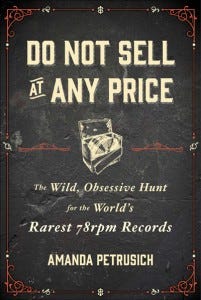
Amanda Petrusich goes record-hunting in Do Not Sell At Any Price

Do Not Sell At Any Price: The Wild, Obsessive Hunt for the World’s Rarest 78rpm Records

Amanda Petrusich is the author of Do Not Sell At Any Price: The Wild, Obsessive Hunt for the World’s Rarest 78rpm Records, an exploration of the secretive, insular, almost exclusively male world of 78rpm collectors. Petrusich gains entry and forges connections through the sheer force of her own fandom — after years as a critic, she rediscovers her youthful ardor for music, and takes to 78 culture with keen understanding and almost frightening enthusiasm. By the time Petrusich, an anxious, claustrophobic, decidedly non-water-loving Brooklynite, is scuba-diving the Mississippi for the lost “race records” of the Paramount label, the author’s dedication to 78 culture, and the longing for ritual and rarity it represents, is undeniable.

I interviewed Amanda by phone and email (because she’s a fast-talker, and I’m a slow-typer) to talk music writing, emotional listening, and the fetishistic aspects of collecting.

Jessica Roake: You write about the gender generalizations that you’d already had to overcome as a music critic [for Pitchfork, The Oxford American, Spin, and The New York Times, among others] — like the idiotic notion that you’d simply be “incapable of comprehending how guitars work” because of the “constant tears” you experience as a woman listening to music. Did those seem especially precarious in the world of 78s, which is at once so male, but also filled with music that is so explicitly emotional?

Amanda Petrusich: I firmly believe there’s no right way to listen to music. But I fretted a lot that I was doing something wrong — that my way of listening was somehow unsophisticated or naïve. I had to let go of that and grant validity to my own emotional responses to the music, because with so much of this music that’s the point, that’s the best thing these songs can do for us. This music is so emotionally rich — and often so strange and wild sounding — that something felt off, to me, about approaching it exclusively from a scholarly place. I don’t mean to discount scholarship — which is essential, important work, and enriches the listening experience in countless ways — just that I think both approaches are valid and even necessary, and I worried that one was maybe getting overlooked or undervalued.

JR: I really admired how you stuck to your convictions and continued to argue for the importance of the emotional listening experience over the ordering/contextualizing that many of the men in the 78 culture were more engaged with. Do you think that helped you better communicate with them?

AP: I knew I couldn’t outsmart them, but that we could reach some kind of communion as fans of this music. Some of the aggressive contextualizing [they do] is a way of mediating the very intense emotional responses to the music. So yeah, we sometimes connected through my willingness to say, “I don’t know the serial number, but I’m crying.” You know, “This song wants make me wanna die; let’s talk about that,” which is something they might not talk about with each other.

It’s occurred to me in the last couple weeks, talking about this book and a couple long magazines pieces I’ve written this year, that I can be a really emotional reporter! I’ll “why?” something to death, until both myself and my subject are in a fairly raw place. I’m not sure how good or sustainable that is long-term, but I’m supremely interested in all the base human emotions — fear, loneliness, love, lust, ecstasy, whatever — at the heart of nearly everything we do. I am always trying to get closer to that impulse, the ur-impulse, because I think it unlocks everything else. But I’m also a giant fucking goofball. And with this music, especially, there was no critical distance for me. I think I was often able to relate to other collectors as a fan. Fandom can be such a unifying force.

JR: You have a tremendous ability to evoke and articulate these unfamiliar, sometimes literally one-of-a-kind, uncanny pieces of music for the reader — your description, for instance, of Geeshie Wiley’s “Last Kind Words Blues” make both your experience of listening to the song, and the song itself, utterly bewitching. How do you approach writing about a particular piece of music?

AP: It changes depending on what I’m working on, but the thing I don’t do, or at least not at first, is worry too much about contextualizing music in a particular way. I can take an ethnomusicological approach, I can read the music, but my sense is that most people are not looking for that dissection. Most people are trying to get at that mysterious alchemy; what happens when you’re presented with a piece of music that makes you fall apart. I try to have a pure — for lack of a better word — communion with a song, to listen to it exclusively on its own terms. Then I do the uncomfortable, sometimes boring work of dissecting my own personal reaction: what does this song make me feel? For me, the emotional response of those songs is what I’m trying to write through, and it requires a lot of awkward self-analysis. Then it’s about finding the tiny little moments — I’m always looking for little ways to unravel a performance, whether it’s a breath, a slipped rhythm, a particular lyric, a pause. Sometimes one moment can unlock everything else. Then, I do all the other, easier work: learning everything I can about when and where and how a song was made.

JR: Did historical context particularly enrich any records for you?

AP: The record I keep bring up that sort of changed the trajectory of my life is the Geeshie Wiley. She became this cipher; I could project whatever I wanted onto her and onto it. Then, a few months before the book came out, all this information came out about Geeshie Wiley and Elvie Thomas in this great article by John Jeremiah Sullivan — maybe she and Elvie had a relationship, maybe Geeshie Wiley stabbed her husband, the story’s incredible — and having read that story and having read more about her life, yeah, absolutely, I do hear new things when I listen to the song now. But I also appreciate that I had that first opportunity to hear it.

JR: Throughout the book, you make a concerted effort to avoid nostalgia — what’s the danger in nostalgia?

AP: Nostalgia invites a certain kind of blindness. You’re not taking the art on its own terms. There’s a knee-jerk reverence, sometimes, for objects from another era: we’re so charmed and enchanted that they’ve survived at all, and the presumption is that they’re incredible, everything used to be incredible. People fall into that when they talk about music made before 1930, and you know, a lot of that music is garbage. It’s kind of easy to fall into the spooky, mystical thing when the arm drops on an old 78 and you get caught up in the romance in it, because we’re starved for it, and I get it, because I’ve certainly been guilty of it. But I didn’t want to get so romanced by the format that I lost my ability to listen critically. I was worried about falling into the endless font of nostalgia. Ultimately, the art deserves more than that, you know? I didn’t want to default to reverence.

JR: The nostalgia is often coupled with a certain fetishization of rarity — Nathan Salzburg speaks about finding an Earl Johnson record that he doesn’t like as much as other Earl Johnsons in his collection, but that’s much rarer, and thus, much more valuable. He feels uncomfortable with how he unconsciously “treasures” the rare record more — do you think all collectors are conscious of this fetishizing?

AP: Nathan Salzburg is such a thoughtful listener and consumer; he’s also probably fairly anomalous as far as self-awareness goes, at least in this particular crowd. But, you know, rarity is very seductive, in one’s romantic life, in one’s musical life, and I felt that too — the feeling of being privy to something limited is intoxicating. Particularly in this cultural moment, in which everyone has access to everything. I don’t think that’s necessarily an odious impulse, to value something because it’s rare, but it does remove the emotional quotient that became so important to me — it’s a way of distancing yourself from music, which is exactly what I wanted to avoid doing. A lot of the time, the collectors didn’t realize that there was any object fetishization. It takes a lot of work to parse your own response. You know, having the only recorded copy of a song in 2014 does give you some authority, and it feels good.

JR: How much of the 78 culture is about control?

AP: When you own the only known copy of a record in the world, there’s certainly come control in that — you control access to it. You control its story, in a way. Certainly in the canon of pre-war blues music, we’ve accepted a narrative as objective and true that was in fact written by idiosyncratic tastes. This small group of weird, outsider 78 collectors had a more inadvertent influence on the canon in that the records that they liked and hunted down and preserved became, by default, the story of those genres. The more obscure and weird it was in 1929, the more prized it became in 1959. If you ask people [about blues of that era], they talk about Robert Johnson — they don’t say Lonnie Johnson or Barbecue John, who were really popular commercial artists at the time — because this small group of collectors chose the weird guy who made these haunting songs, and that became the story of pre-war blues music. This is especially true with country blues music. The records that collectors liked ended up being the examples that endured. I don’t think I understood the extent of that influence until I started reporting the book.

JR: You write late in the book that you felt “suddenly and fiercely protective of a subculture I had no real claim to.” I really felt you’d staked your claim — why didn’t you?

AP: Longform narrative journalists — even journalists working in the Plimpton-esque, immersion model — always have to reckon with this feeling, I think. You feel a little like you parachuted in and are just standing around awaiting pickup. You get so deep into a story, but eventually — if you want to keep paying your rent — you have to move onto the next story, right? I also felt like such a novice — I hadn’t been collecting for that long, I didn’t have the kinds of records these guys have, I didn’t know as much as they did. 78 collecting is a pastime that values all those things: time, investment, knowledge.

JR: Did the process of writing this change the way you experience and write about music?

AP: I went into this project wanting it to change my listening habits; my listening habits had become pretty grim. I’d been working as a music critic for almost a decade, and I’d become sort of emotionally immune to everything. You know, I’d lost the ability to just let art do its thing on me — to listen without considering the cultural currency of a certain performer, or whatever other contextual detail would end up coloring the experience. In a way, it allowed me to regress as a listener. Now, I’m more likely to hear things the way I did when I was a teenager and everything was new.

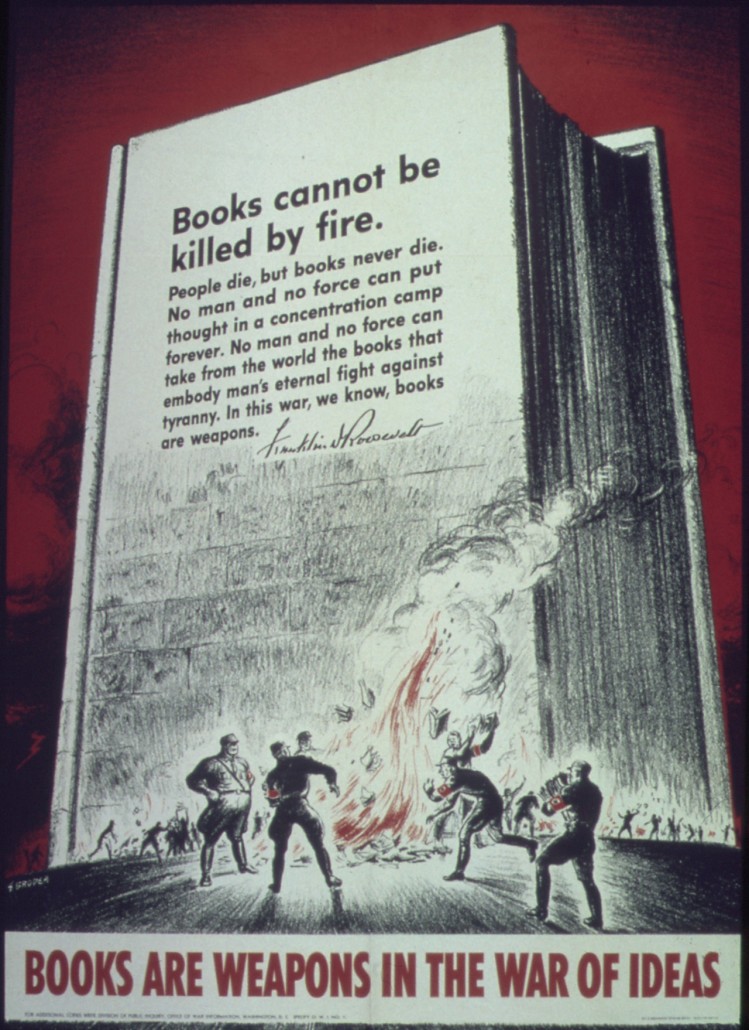
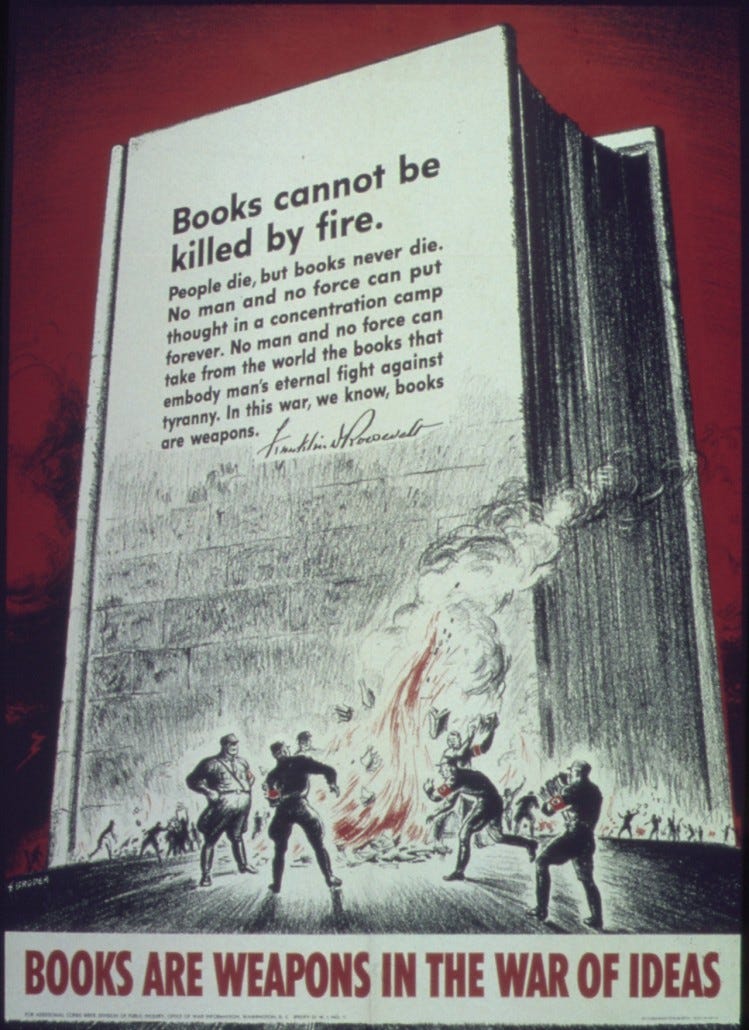
Books are weapons in the war of ideas

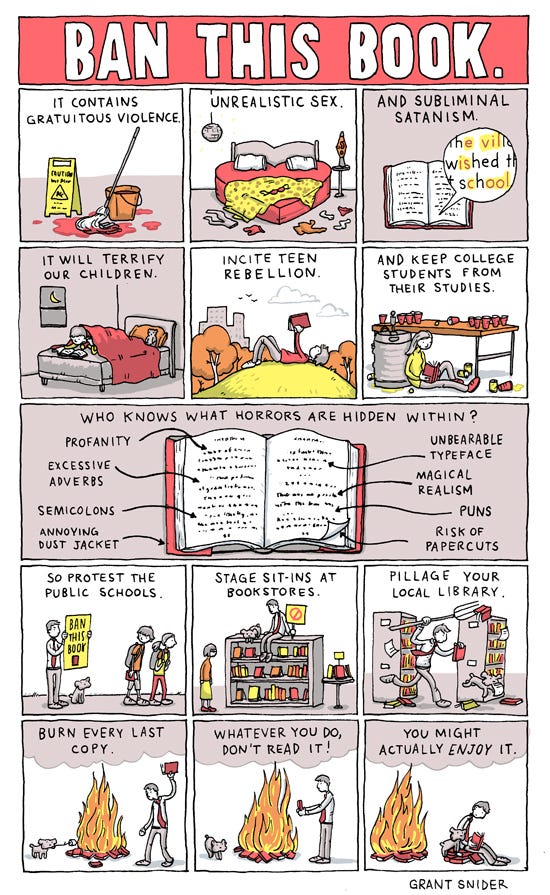
This week is Banned Books Week, a celebration of freedom and a reminder that censorship is always around the corner. This WWII-era poster includes a great quote by FDR about the importance of books in the fight against tyranny.

book burning

“Books cannot be killed by fire. People die, but books never die. No man and no force can put thought in a concentration camp forever. No man and no force can take from the world the books that embody man’s eternal fight against tyranny. In this war, we know, books are weapons.”

-Franklin D. Roosevelt

(h/t boiledleather)

The Wallcreeper (Excerpt)

by Nell Zink, recommended by Dorothy, a publishing project

Elvis said he wanted to go dancing, which would involve staying out very late. Going dancing was his reason for being, and he wanted to share it with me. I wasn’t sure I could get that past Stephen, but I agreed to try. Stephen said, “That sounds like a date.”

“It totally is a date. Obviously this guy wants in my pants. But I mean, when’s the last time you went dancing? For me I think it was my sophomore year. And I wouldn’t know where to go. He’s a nice guy. I’m sure you know him. The guy with the beard at the gas station. He’s totally harmless. He’s a disciple of Slavoj Žižek.”

Stephen snapped the International Herald Tribune tight to turn the page. “That is the tiredest line in Christendom,” he said.

“I know. It’s not his fault he’s a tragic figure. It’s never a tragic figure’s fault. That’s what makes them tragic. But he says he knows this really fun place to go dancing, not a disco but, like, a bar where they play all kind of ‘mixed music.’”

“Do you need a chaperone?”

“Would you please?” I said. I couldn’t really say no. We picked Elvis up at his place. I had never been there. It was farther out of town, up at the edge of the woods. An old house. He came out as soon as the car pulled up. The street obviously didn’t get much traffic late at night. Elvis directed us to the most pitiful bar I ever saw. Young men unlikely to be in the possession of Swiss passports danced with eyes half-closed, snapping their fingers, while women in various states of disrepair jockeyed into their axes of attention. Lumpy, lantern-jawed, pockmarked, bucktoothed, short, tall, or simply drunken women, here to pick up devil-may-care subaltern gigolos for a night of horror.

I saw Elvis through new eyes. “You are so much beautiful,” he would often say charmingly as he worshipped at the altar of my body. Looking around, I could only think that a bar where I am the best-looking woman by a factor of ten is not a bar where I want to be, and that beauty is apparently relative. I felt both better- and worse-looking than before. Better because I was suddenly reminded that the world is not all college girls and secretaries and trophy wives, and worse because everything in the whole universe is contagious if you look at it long enough. Just opening your eyes puts you in front of a mirror, psychologically speaking. Garbage in, garbage out. Or rather, garbage goes in, but you never get rid of it. It just lies there turning to dust and slowly wafting a thin layer of grime on to every other object in your brain. Scraping the gunk off is not only a major challenge, but the chief burden of human existence. That’s why I keep things so clean. Otherwise I would see little flecks of Rudolf-shit everywhere I looked, from Fragonard to the Duino Elegies.

“I am not staying here,” Stephen said. “Do you want to stay?”

Elvis asked if he knew another place. Our next stop was called Mancuso’s Loft. It was running drum ’n’ bass. The proprietor waved us in. Here I saw Stephen through new eyes. Then I ran to the ladies’ room and stuffed my ears with toilet paper. Stephen led me to the floor and yelled, “I’m going to dance a little bit!” He then proceeded to dance as if he had never seen me, or any other human being, before in his life. Cranes came to mind.

Touching my elbow, Elvis remarked, “This club is so much beautiful,” and headed for the bar. Elvis was right. In Mancuso’s Loft, I felt below average-looking and quite conspicuously ill-dressed. My pants revealed nothing whatever. My shoes were comfy. My shirt had long sleeves so thick I was soon terribly hot.

“I like your husband,” Elvis said. I said that was not really his assigned task. “No, he has something. Un certain je ne sais quoi. You know what I need? A girlfriend. By myself, I am never getting into this place. You think they let me in? A brown man alone, with a beard? Ha!”

“You’re not brown! You’re lily-white anywhere but Denmark!”

“Many times, I am standing in the queue outside clubs like this. And all the time, I think I am living in Berne. But I am not living in Berne. I am living in the Berne that reveals itself to me, okay, a white ‘Yugo’ if you please but with no connections, with nothing. A cashier in the petrol station, with nothing to his account but a few women. Yes, I say it openly. I have nothing to offer this town but my body. My body to strike the keys of the cash register, my body to find other bodies and search for warmth. My body is my capital. You, this beautiful woman, are my social capital. And then I was taking you, you particularly, to this horrible bar. I see now it is so very horrible, this bar.”

“Elvis, calm down,” I said. “You’re a model of successful integration. You even speak Berndeutsch, and you’ve only been here eleven years!”

“Are they speaking Berndeutsch in this club? No, they speak French!” I didn’t know how he had decided on that one, because I could barely hear even him, much less other people. “I speak the language of the gas station! I have shamed myself. I hoped to leverage one woman to meet another. Not to earn a woman with the honest work and the natural beauty of my body! This crazy Swiss language has made me a capitalist of women! And what is my wages? I insult you, the most beautiful woman in Switzerland. This town has made of me a body without a brain. I will leave this place and go to Geneva,” he concluded, taking both my hands.

“Don’t do that,” I said.

“No, I won’t if you don’t permit it!” he cried ecstatically, throwing his arms around me.

Stephen drifted over, bouncing on the tips of his toes, and beckoned to me. “You need ketamine?” he whispered.

“Umm, no?” I said.

“I got three,” he said. “I think I might stay here. You want the car keys? I’ll take a taxi.”

“Don’t give Elvis any drugs.”

“I don’t take drugs,” Elvis volunteered. He had never been in a band, so he could hear much better than we could. Stephen and I were always stage-whispering about people sitting near us in cafés and drawing stares.

“That’s dandy,” I said. I pocketed the keys and took Elvis’s hand. “Let’s blow this joint. That okay with you?”

Stephen mouthed the word, “Arrivederci.”

We arrived at the wind-struck farmhouse where Elvis lived with (judging from angle of the stairs) a herd of chamois and mounted to the third floor hand in hand. After a warm and harmonious session of sixty-nine (Elvis was not too tall) to the sounds of Montenegrin folk rock (East Elysium — my favorite song was “Wings [Who You Are?]”), he said, “I want to buttfuck you.”

“What is it with guys?” I said. “You’re all obsessed.”

“I never mentioned it before!”

“So where did you get the idea? From bad porn with stock footage from the sixties? From daring postmodern novels like Lady Chatterley’s Lover?”

“From doing it.”

“FYI, it’s no fun, so forget it.”

“Just forget it?”

“Forget it.”

Elvis said mournfully, “If you loved me, you wouldn’t care that it’s ‘no fun.’ That’s the difference between our thing and a real love.”

“Wait a second,” I said. “I don’t mean to sound like a crank, but are you saying that what makes our relationship valuable is my willingness to suffer for you? Are you aware that I’ve never suffered for you for even, like, one second? That’s what makes our relationship so optimal, in my opinion.”

“You must have done buttfucking to know that it’s ‘no fun.’ So you suffered for someone else, right?”

“So now you want to move up in the world?”

“I’m in love with you. I want a sign that I mean so much to you.”

“You asked me if I’d move to Geneva with you, and I said no. You accepted that right away.”

“I can’t ask so much of you. That’s too much.”

“Are you aware that if you gave me a choice, like if I actually had two options in life, anal sex and moving to Geneva — ”

“You would move to Geneva?” He threw his arms around me again, quivering with spontaneous joy.

“You’re not understanding me,” I said, pushing pillows in the corner so I could sit up. “There’s suffering, and then there’s boring stuff, and then there’s stuff that’s just plain stupid. I’ve done my share of suffering for Stephen. And other guys. Like crucifixion, I mean that level of suffering. Like St. Laurence. ‘Turn me over! I’m done on this side!’ I don’t see what that has to do with having a good relationship. It should be about getting through difficult stuff together. Difficult stuff the world throws at you, not difficult stuff you do to each other. The difference right now between me and St. Laurence is, he didn’t have the option of taking his hand off the hot stove.”

“You are fierce,” he replied, pulling the blanket up around his naked body to hide it. “I am never asking another woman for buttfucking.”

“Are you bisexual?”

He frowned. “I am polymorphous pervert! Where I find love!”

I shifted back into neutral and once again accepted the need for negative capability in this world. We had loving, beautiful sex just as soon as we could get ourselves to stop talking — loving and beautiful in the expressionist, pathetic-fallacy sense in which you might say a meadow was loving and beautiful even if it was full of hamsters ready to kill each other on sight, but only when they’re awake. I mean, you just ignore the hamsters and look at the big picture.

The next day, around six p.m. after he woke up, Stephen said, “Let’s make a baby.”

“I feel like Saint Laurence on the gridiron,” I said.

“No, you’re mixed up. Miscarriage is nothing compared to childbirth. You got off easy. You’re like Saint Laurence saying he doesn’t want to go to Italy in July. I’m asking you right now to risk your life and health for my reproductive success. I feed, you breed. Come on!”

“Sounds tempting,” I said. “If I could lay eggs and you agreed to sit on them, I might even do it.”

“Can we fake it?” he said. “Are you fertile?”

“Not exactly.”

“Then meet the father of your triplets!”

“You’re totally insane,” I said approvingly. Stephen was actually sort of interesting when his mind opened the iron gates a crack and let the light out.

“The central ruling principle of my life,” Stephen explained in a grandfatherly way, “is ‘Let’s Not And Say We Did.’ Most people don’t give a fuck what you’ve done and not done. If I put a picture of you and a baby on my desk, I can get promoted. All anybody wants to know is little sketchy bits of information, strictly censored, and that’s enough. It’s more than enough. Did you ever sit down and actually make a list of what you know about, like, Togo? ‘Is in Africa.’ That would be the grand total of your knowledge. But when people say the word ‘Togo’ you let it pass, the same way you let hundreds of people pass you on the street and in the halls every day. And every one of them is as big as Togo, inside.”

“That’s pure bathos, and I know nothing about Togo,” I said. “But somebody like, say, Omar’s wife, I don’t know her either, but what with my life wisdom and mirror neurons and all that, I figure I have a pretty good sense of what she’s about. But only because I’ve met her. I mean, if I said, ‘Togo is charming,’ you’d get the idea that you liked it until further notice, but if then I said, ‘Togo brags about doing those impossible word puzzle things in the Atlantic and dropping out of Harvard med to get a doctorate in nutrition,’ you’d think, who is it trying to impress? But you haven’t even begun to talk about its secret sorrows or whatever.”

“You can bet your buttons Togo has secret sorrows,” Stephen said. “If anybody knew what they were, the world would be filled with raw, bowel-torn howling. That’s Stanislaw Lem. I was going to say, I didn’t love you when I married you. It was like, ‘Let’s Not And Say We Did.’ But now I feel like Apu in The World of Apu, except instead of being faithful to me and dying in childbirth like you’re supposed to, you’re fucking this Arab guy. So tell me, Tiff, what is going on?”

“He’s Montenegrin!”

“Montenegrin my ass! He’s Syrian if he’s a day! ‘Elvis’! It’s like a Filipino telemarketer calling himself Aragorn!”

I pouted.

“Ever try to make a list of everything you know about Elvis?”

“What would be the point? I was just trying to have some exciting sex.”

“Could you not try?”

I was silent.

“Could you love me a little?”

“Actually I do love you. Elvis told me. It’s breaking his heart.”

On Monday morning I bought the International Herald Tribune and some milk and said, “Elvis, I need to talk to you.” For the first time I noticed that he was reading Hürriyet. Over coffee at my place, he explained that his family had left Montenegro some generations before. But their women preserved the legendary beauty and kindness of the people of Montenegro, once immortalized so memorably by Cervantes in his lady of Ulcinj (D’ulcinea), and their men weren’t bad either. He showed me his Turkish passport. His name really was Elvis.

“Tiffany, my love,” he said. “What does it matter where I am from? You are an American! You know better than any shit European that we are all equal children of God!”

The next Saturday we went birding to an ugly artificial lake and Stephen asked me to talk about myself. “Let’s see,” I said, “being little sucked, but it had its advantages. Sledding is a lot more exciting before you turn ten. Of course I couldn’t really swim until I was eleven.”

“And then?”

“Well, my parents weren’t real particular about their choice of a boarding school, so I went to basically a home for wayward girls. I didn’t learn a whole lot. Like, our chemistry teacher was the choir director’s wife. I used to play around in the lab on weekends. I used to dump all the mercury on the counter and play with it.”

“Yeah?”

“I was supposed to go to Bryn Mawr after my junior year, but it was too much money, so I took a scholarship to Agnes Scott.”

He shuddered appreciatively.

“Then I moved to Philly and got a job, and then I met you.”

“Short life.”

“Well, life is short.”

“My child bride.”

“Hey, it’s not that bad! I had a thing with the riding coach at school, and in Philly I OD’d on heroin and they called me crusty mattress-back!”

“What?”

“I’m kidding. That was somebody else. This girl name of, um, Cindy — ”

“You just made her up.”

“Okay, her name was Candy. I’m serious. Candy Hart. It sounds like a transvestite from Andy Warhol’s factory, so probably she made it up. She said she was from Blue Bell, so probably she was from Lancaster, and she said she was fourteen, so probably she was seventeen. I’ve never met anybody I can be entirely sure I’ve actually met.”

We saw bearded reedlings and a ruff. We would have seen more, but there were dog walkers there scaring everything off.

We went on a birding vacation to the lagoons of Bardawil. All the men I saw there reminded me of Elvis.

When I got back I demanded answers. He cradled his coffee in his hands and said, “Now I am telling you the truth. I am a Syrian Jew. My grandfather converted to Catholicism in 1948, but he took a Druze name by mistake and was not trusted by the Forces Libanaises, so then — ”

“Just shut up,” I said. “I think you’re cute. That’s your nationality. Cute.”

On the phone my sister said, “Tiff, you have got to get a life. You think I have time to have sex? Guess again! I spend so much money on outfits for work I had to get another job!”
I said to Stephen at dinner that maybe we should try again to have a child. Our marriage had begun in the most daunting way imaginable. We had barely known each other, and then we had those accidents and that jarring disconnect between causes (empty-headed young people liking each other, wallcreepers) and effects (pain, death).

He objected. He said, “I’m sure there are couples that are fated to be together, like they meet each other in kindergarten and date on and off for twenty years, and finally they give up because they realize they’ve gotten so far down their common road that there’s nobody else in the entire universe they can talk to, because they have a private language and everything like that. Do you really think that applies to us? What do we have in common? We don’t even have Rudi anymore.”

“A baby would be something in common.”

“That’s it. Have kids and turn so weird from the stress that nobody else ever understands another word we say. A couple that’s completely wrapped up in each other can get through anything, because they don’t have a choice. Right now we have the option of floating through life without being chained to anybody, but instead we pile on a ton of bricks and go whomp down to the ground.”

“Are we ever going to both want a baby at the same time?”

“I hope not!” Stephen said. “I want to float through life. I like being with you, and I don’t want to be chained to anybody. I mean, when you got pregnant, I could deal, but if you’re not pregnant, I can also deal.”

“That’s a relief. I was afraid if I didn’t have kids soon, you’d make me get a job.”

He paused and looked at me fixedly for a good ten seconds. “I’m starting to catch on to you,” he said. “You were born wasted. You live in a naturally occurring k-hole.”

“I do my best.”

“Here’s the deal. I need your baby for my life list. It’s one of the ten thousand things I need to do before I die, along with climbing Mt. Everest and seeing the pink and white terraces of Rotomahana. The baby is the ultimate mega-tick.”

“Like a moa,” I suggested.

“Exactly. There will never be another one like it, and there was never one like it ever, so actually it’s a moa that arose from spontaneous generation. A quantum moa.”

“Babies are totally quantum,” I said. “That’s why it feels so weird when they die. You feel like it had its whole entire life taken away and all the lights went out at once, like it got raptured out of its first tooth and high school graduation in the same moment.”

We munched on food for a bit.

I said, “Stephen, may I ask you something? When we had anal sex that one time, was that for your life list?”

“Yeah.”

“It wasn’t on my list.”

“I’m sorry. I figured human beings are curious. I try not to avert my eyes when life throws new experiences my way. But I guess nobody ever asked me to stick the pelagics up my ass.”