An Interactive Literary Genre Map

Penguin’s Book Country has created a pretty neat interactive genre map that you can explore here. The map is aimed at authors using Penguin’s Book Country publishing platform:

Editors, booksellers, and readers describe books by their literary categories, or genres. It’s how books are placed in stores and sold online. It’s how readers discover your book. As a writer, knowing your book’s category is essential to finding an audience. It’s like the country filled with people who love to read what you write. A country filled with writers just like you.

Click on a genre land and the site gives you an overview of the genre and lists classic works. In addition, some genres like Fantasy and Science Fiction are given a host of subgenres like “Weird Fiction” and “Cyberpunk.” The fact that the map is aimed at current self-publishing authors explains why YA is it’s own continent while genres like Gothic fiction don’t exist.

You can explore the whole map here.

Social Contracts and “the Cult of Likability”

by Nathan Pensky

There is a common complaint among book critics that takes aim at readers who judge a narrative to be poor, because they “didn’t like” one of the characters. A middle-schooler is forced to read “To Kill A Mockingbird” and says the book is no good, because “Scout is a brat.” A high-schooler has to read “Romeo and Juliet” and calls the play dumb, because “Mercutio is conceited.” These complaints make their way to the Internet, and critics swoon with disgust.

Claire Messud’s response during a 2013 interview offered such critics a sort of rallying cry. The interviewer asks Messud if she would want to be friends with the main character of her novel “The Woman Upstairs,” and Messud responds:

For heaven’s sake, what kind of question is that? Would you want to be friends with Humbert Humbert? Would you want to be friends with Mickey Sabbath? Saleem Sinai? Hamlet? Krapp? Oedipus? Oscar Wao? Antigone? Raskolnikov? Any of the characters in The Corrections? Any of the characters in Infinite Jest? Any of the characters in anything Pynchon has ever written? Or Martin Amis? Or Orhan Pamuk? Or Alice Munro, for that matter? If you’re reading to find friends, you’re in deep trouble. We read to find life, in all its possibilities. The relevant question isn’t “is this a potential friend for me?” but “is this character alive?”

No word on whether the interviewer ever recovered.

YA writer Frank Portman recently dubbed those cursed readers, the Cult of Likability. The Cult is as old as misreading itself, though no doubt more visible with the advent of the Internet.

But the argument, or should I say the loudness of the argument, against the Cult of Likability has always seemed strange to me. The argument is so obvious it hardly needs mentioning. A novel is not a scrapbook of cuddly personalities. Okay, point taken. Why get so bent out of shape about something so self-evident?

I agree with Emily Gould, when she said that “readers who find characters’ ‘likability’ to be a book’s paramount virtue inevitably fail to seem very likable themselves.” But I’d add that the writers and critics who rail against those readers are, themselves, at least as bad.

Zoe Heller, in the second half of this NY Times piece, comes closest to the truth.

When the novelist Claire Messud rebuked a reporter earlier this year, for asking if Messud would want to “be friends with” the protagonist of “The Woman Upstairs,” her latest book, I was among those who applauded. It’s always cheering to have someone stand up for the not-nice in literature. Messud’s citation of various mad, murderous or otherwise unpleasant literary characters who have managed, despite their moral handicaps, to enthrall readers, was apt and enjoyably furious.

I grew a little uneasy, though, when in subsequent Internet discussions a consensus seemed to emerge that caring at all about “likability” was an embarrassing solecism, committed only by low-rent writers and hopelessly naïve readers. This struck me — and strikes me still — as faux-highbrow nonsense.

If anything, Heller doesn’t go far enough in calling out these critics’ snobbishness. “Likability” isn’t merely a bad criterion to judge characters by. It’s a totally meaningless cultural term, the blankness of which shows itself most readily in protests against the Cult.
The reason “likability” smacks in the face of cultural critics is that “likability” is essentially a political, or social, distinction, a code word for in-groups. And being socially constructed, “likability” must refer to a given society of “those liked” who determine the rules of the club. Most arguments either for or against “likability” fall apart, because the term is too conditionally defined to serve either as a useful critical tool, or as a subject of criticism itself.
In a round-up by the New Yorker on the subject, Jonathan Franzen states succinctly “I hate likability.” Franzen compares likable characters with public officials chosen by voters based on their all-American good-natured attitude. Americans wanted to “have a beer with George Bush,” and thus they gave rise to eight years of his hateful Presidency.

The Franzen response is instructive. It shows that what Franzen means when he says he “hates likability” is that he, personally, hates certain behavior. “Likability,” to him, means “enjoying a pleasant feeling of trust and camaraderie independent of any other consideration.” But if you were to ask American voters who actually cared about issues, then Bush’s aw-shucks affability would have seemed, and in fact did seem for a great many people, very unlikable. Likability, then, is a measure of certain coded behavior. The question of “Would I have a beer with this candidate?” only matters to people who like beer.

Following Franzen’s metaphor to its conclusion, all Presidents would be subject to the same criticism. They became well-liked and were voted in. His illustration demonstrates that “likability” isn’t a qualitative attribute so much as a cultural agreement between certain players. “Like” is a transitive verb; one must like…something. And it’s a person’s reaction to that something, and how that reaction agrees or doesn’t agree with others in a community concerning that something, that defines whether or not a person is “likable.”

Citing “likability” as the sole virtue by which every literary character should be judged is, of course, ridiculous. And yet, in the same way that Franzen didn’t see that his definition of “likability” was dependent on social cues, critics of the Cult don’t seem to see the distinctly politic flavor of their positions. What I think such writers and critics really want isn’t for readers to stop caring about likability, but for them to like the right things.

One imagines the Cult of Likability best represented by a white, Suburban YA reader who is forced to read “Pride and Prejudice” for high school. But a member of the Cult could just as easily be a gay teenager living in a state where Marriage Equality laws haven’t been passed, who finds Elizabeth Bennett’s obsession with finding a husband, not merely shallow in the sense that the book’s satire is meant to convey, but utterly disorienting. Obviously the Suburbanite is wrong. But does that make the gay teenager just as wrong? Does the vitriol against the Cult of Likability work equally well for either example?

Accusations about writing unlikable characters have been lobbed at women authors much more frequently than male writers. The gender politics of the debate are impossible to ignore. Roxane Gay sums up that phenomena in her Buzzfeed essay “Not Here To Make Friends.” Gay argues powerfully that “unlikable” female characters are necessary to upset the patriarchy. But Gay’s essay also acknowledges that her definition of “unlikable” reflects “likability” in another sense.

What is “unlikable” for those who would rather be pretty and nice and make friends with other pretty, nice people becomes “likable” for those who, like Gay herself, would value self-affirmation above blending into the crowd. It isn’t just citing “likability” as an attribute to be undermined. It’s also making a value judgment about those for whom “likability” serves as a criterion for acceptance. Gay admits that she herself employs a similar criterion of likability for her own group, and draws attention to the fact that, as “likability” acts as a criterion dependent upon the group one is supposed to be blending with, it becomes a rather slippery tool to judge the critical analysis of a faceless, amorphous reader.

Why is likability even a question? Why are we so concerned with, whether in fact or fiction, someone is likable? Unlikable is a fluid designation that can be applied to any character who doesn’t behave in a way the reader finds palatable… That the question of likability even exists in literary conversations is odd. It implies we are engaging in a courtship. When characters are unlikable, they don’t meet our mutable, varying standards. Certainly, we can find kinship in fiction, but literary merit shouldn’t be dictated by whether or not we want to be friends or lovers with those about whom we read.

It’s no accident that the Cult seems to reveal itself clearest in Franzen’s and Gay’s thoughts, where those writers make explicit connection between “likability” and politics. But there’s a right and a wrong way to engage in talk concerning people who hold with different political, or social, views. Most critics don’t even consider that, even if they’re right, they might still be acting like snobs. Snobbery, after all, doesn’t happen when people are wrong. It’s being right in the wrong way.

Most protests against the Cult reinforce critical exclusivity. The way is narrow. Only the elect shall pass. For such prescriptivist critics, any art that employs representational aesthetics requires a sort of cultural agreement between artist and reader, a hard-won code. This cultural agreement is needed even if art means to undermine preconceived notions; one can’t undermine a notion that doesn’t yet exist. And with that received knowledge comes all sorts of attending emotions and ideas. It’s important to feel and think the right thing.

And that’s all proper and fine. Same as it ever was. It’s the flavor of this talk that irks, not the content. Critics of the Cult are right. But they rarely mention that great characters are neither “likable” nor “unlikable,” that “unlikability” functions according to the same coded rules as the dreaded “likability,” that if the temptation arises to use either adjective in describing a character, a better one would probably be “flat.”

REVIEW: Triangle by Hisaki Matsuura

Many great novels present extreme situations that confront a character with challenging questions. Hisaki Matsuura’s Triangle is ambitious enough of a novel to present situations too extreme for a character to endure and leave these questions to the reader.

Shun Otsuki is a recovered heroin addict described by more than one of the novel’s supporting characters–possibly facetiously–as an “intellectual.” Before he is convinced by his acquaintance Sugimoto to assist the mysterious Mr. Koyama with the production of a graphic experimental film, his day-to-day interests seem to extend no further than walking alone through Tokyo and lamenting his casual partner Hiroko’s inability to satisfy his sexual needs. Gradually, through Otsuki’s eyes, the reader observes the patterns of a world that is impersonal and uncompromising to the point of what appears to be sadism on the part of an unseen higher power.

As soon as Otsuki receives the slightest indication that he might be the target of conspiring malignant forces–his garden is deliberately vandalized–the reader is indoctrinated into Otsuki’s worldview, one dominated by narcissistic fears that extend to misanthropy:

Since my morning glories were ripped from their vines, that fear–the stifling fear that had plagued my junk withdrawal–had come back to stay twenty-four hours a day. It was a constant reminder that something that was not me could invade my body anytime, anywhere. Suddenly, the wall I’d built between myself and the world was punctured with holes, battered until thin, until it no longer served any real purpose, allowing evil spirits to come and go as they pleased, eating away at my insides.

Otsuki protects himself until he isolates himself for fear of becoming infected by a dark power beyond his own that will force him to succumb again to base impulses. This self-protection removes him from the rest of the world, leaving him antagonistic toward and suspicious of every external influence.

As the events the novel describes become more and more horrific, Otsuki becomes less and less able to decide whether he is the source of the horror himself or the horror has been imposed on him by the evil whims of others or the imperfect laws of nature. This conflict between the self and the external world is the subject of the novel. The reader never realizes whether Otsuki, still haunted by the demons that drove him to drug addiction in the first place, is hallucinating a world that is designed to hasten his destruction, or he has been targeted by criminals with twisted motives, or he is living in a world that is governed by abject disharmony.

Otsuki’s primary antagonist is Mr. Koyama, an elderly calligrapher who is either uncommonly wise or uncommonly arrogant. Koyama offers numerous high-flown monologues concerning the power of calligraphy to organize reality along distinct lines. He articulates repeatedly that human behavior and thought, like the mechanisms of language, adhere to predetermined rules that deny free will. The novel escalates in a way that forces Otsuki to confront the possibility that all of his actions are decided by a grand scheme that resembles the system of written language, and that humans can manipulate each other so that their behaviors perform certain functions like written characters.

The system according to which the novel and Otsuki’s world and experience are organized is represented by the symbol tomoe, an ideogram with a three-point spiral shape that represents harmony and stability in the universe. Koyama’s project from the beginning, it turns out, has been to describe the symbol sakasatomoe, or “fake tomoe,” a spiral that turns to the right instead of the left, like a three-point Nazi swastika. As Koyama describes the world that turns with the sakasatomoe, it is a perfect analog to Otsuki’s world:

Yes, sakasatomoe, you could call it that. A tomoe that keeps spiralling to the right. Normally, no such thing should exist. A circle that puts a crack in the order of this world and reverses time. A fake tomoe. If the tomoe spiral is the protector of good and stability in this world, the sakasatomoe is the bearer of evil and misfortunes, It completely defies providence. It is contradiction itself. The embodiment of impossibility. A monster.

After taking right turns throughout the novel (figuratively and literally) either on a whim or in pursuit of another guiding agent, Otsuki is destroyed by the notion that he is a servant of the sakasatomoe, and that his thoughts, his actions, and his experience will always force him to move and feel further out of step with nature’s proper patterns. Unfortunately, this notion does not answer the question of whether the sakasatomoe lives inside or around Otsuki, and after reading Triangle, the reader must as herself: do we suffer because our world is chaotic and cruel, or because we are chaotic and cruel ourselves?

Triangle

by Hisaki Matsuura

Powells.com

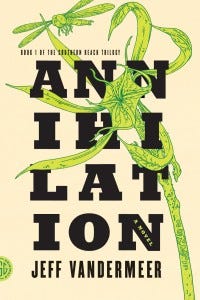
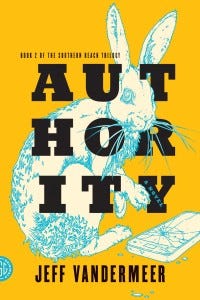
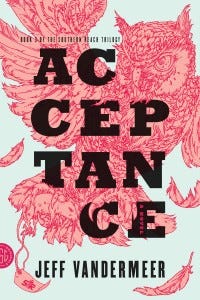
INTERVIEW: Jeff VanderMeer, author of the Southern Reach trilogy

by Matthew Rossi

annihilation vandermeer

Known as much for his work as an editor and literary critic as for his fiction, Jeff VanderMeer has long been a champion of the New Weird movement and of breaking through the invisible borders between literature and genre. His most recent series, The Southern Reach Trilogy, explores the environmental and cultural consequences of a biocatastrophe in a place called Area X. The series is at turns a terrifying, hilarious, and philosophically profound look into the failure of people and institutions to respond to enormous tragedies. The final installment, Acceptance, was released by FSG on Saturday.

Matthew Rossi: The Southern Reach trilogy is the second of your trilogies I’ve had the pleasure of reading (the first being the Ambergris trilogy; full disclosure, I’m a fan). Reading the Southern Reach trilogy, I’m consistently struck by the way in which location becomes a living — often hostile — presence in your work. Certainly this is true of Area X, but the inscrutability of the Southern Reach building, the groupthink of its employees also sets up a kind of hostile, self-driven setting. What role did the setting play in conceiving of this trilogy? Do you think of it as a character, in the sense that it has mind and agency?

Jeff VanderMeer: There are a few different answers to that question. One concerns the real world as we know it. Our environment contains much that’s invisible to our senses that permeates the landscape — that actually permeates us as well. Microbial life, parasites, creatures in symbiosis, things that live in the air. Plants, too, are communicating one to another and insects through pheromones. There are latticeworks and cathedrals of conversation that we’re unable to “hear.” We have fairly primitive sensory data coming in on all of this, and this means we misunderstand our environment from the moment we’re born. If we sometimes feel a prickle on the edge of our senses it may be that some part of our reptile brain is experiencing a ghost of an echo of the complexity that truly surrounds us. So, that’s one answer.

Another answer is that landscape in fiction always comes to us through the character viewpoints. One person has heard gunfire so much it doesn’t really register in the same way that someone living by a highway doesn’t register the sounds of traffic at night. While another person does. Two people walk through a pristine wilderness. One notices the biting gnats and the mud and the ache in their knee. The other notices the night heron high on a branch and the way the pine forest transitions to swamp and a particular type of dragonfly.

A third answer, specific to these novels, is that when dealing with an Unknown, it is possible it may already be acting through those invisible interstices that you cannot sense and if so, then perhaps the landscape’s already spying on you.

It is worth noting that the biologist in Annihilation doesn’t see the natural environment as threatening at all. The clearest sight is the kind that understands that even when we think we are removed from the natural world that in fact we never have been and never will. I’d also point you to this short piece by Steven Shaviro, which reflects very accurately my own thoughts about environment and our place in it: http://www.shaviro.com/Blog/?p=1253

authority Vandermeer

MR: You’ve talked in previous interviews about using the trilogy to create an expanding lens. Between Annihilation and Authority that’s evident when you move outward from Area X to look at its impact on the community surrounding it. Was there a concern that in returning to Area X in Acceptance you’d risk narrowing that lens again or else be forced into a position of offering up too many direct answers to the mysteries you’ve set up?

JV: It would have been very easy to write three Annihilations that each pushed forward the narrative to various answers, but not very interesting to write and to some extent cynical. I was more interested in giving readers something different with each novel, and a different “trilogy” overall, too. So I did have some concerns about returning to Area X if I couldn’t offer something different, but it seemed to me that the perspective taken allowed for a return that was a departure from what had gone before. I definitely wanted to get the ratio of remaining questions to answers given right. Too many direct answers would’ve undermined the inquiries at the heart of the novels. But too few would seem like a cheat. So there are some direct answers and some that readers have to piece together. I will say that most everything is in there, in Acceptance, even if some is hidden a little bit. What I have to accept is that some readers will find too many answers and some readers too few. But that kind of comes with the territory in this case. Given the series is also exploring the idea of subjectivity and competing ideologies or narratives, that’s probably appropriate.

MR: It seems that a lot of what drives that complexity of that shifting lens is the way in which perspective floats with increasing readiness from book to book. How did the choice to shift perspectives in this way come about?

JV: It was always implicit in the idea of a widening lens. I’ve never been a fan of repeating the same scenes from different character points of view, except in a very limited way, because I find that boring as a reader. But the idea of advancing the plot while also exploring how your perception of a person/character changes as a result of seeing them from a different vantage point appealed quite a bit. The trick was to ensure that the character arcs by the end of Acceptance were complete and satisfying. You don’t want things to just seem to drift off into the ether.

MR: I was fascinated by your use of second person to tell the Director’s chapters in Acceptance. It struck me as a risky move, but the payoff is extraordinary. Can you comment on this?

JV: I use second person when I want to get close-in on a character point of view and third or first person doesn’t seem adequate or offers challenges that seem insurmountable. But also in the director’s case she frames the narrative and somehow second person seemed to fit that. I think second person is really misunderstood, possibly because in bad examples the writer is saying continually “You this/you that.” Just like first person shouldn’t be all I-I-I, second person requires you to be kind of subsumed in such a way that the reader finds it invisible after a while. I’ve used it twice before, once in a short story and once in my novel Veniss Underground. It may throw some readers out of the story, but for the rest, the payoff, as you indicate, can be very satisfying. In a sense, you join the director on her own expedition through all of the obstacles in her way, you identify with her more than if I’d used third or first person. There’s also an ethereal quality to second person, when you use it correctly, that seemed to fit the situation.

acceptance jeff vandermeer

MR: To a great extent it seems that Acceptance is a book that deals with memory and regret, where the other books exist much more in the immediate moment of the plot. Does this stem from any particular philosophy or approach you were working with?

JV: I was working from the idea that Nothing Will Be the Same Ever Again. I’m not a fan of things returning to status quo when it’s clear they can’t — it’s a cheat on the part of the writer, it’s saying “I’m going to take you out to the edge of the cliff, and we’re going to jump off the cliff, but half-way down there’ll be a net and in the end everything will be as it was before.” That’s ludicrous. That’s not real life, either. We survive things. We surmount them. But we’re not the same as we were before, and thus the world isn’t the same either. This isn’t either depressing or upbeat — that’s just how things are, and documenting that can be by measures harrowing, beautiful, uplifting, horrifying, and transcendent. We try, we keep trying, we can’t go on. We go on.

MR: In the introduction to The Weird anthology, Ann VanderMeer and you observe that the weird often exists as a sensation within a narrative more than a specific genre of writing. Can you elaborate on this distinction?

JV: There’s a worldview that exists in the margins, one that partakes of the surreal and a bit of the realistic, one you might call Kafkaesque in one mode in which it is found. It’s at times a tad absurdist and finds the world darkly absurd and tragi-comic. That comes with a sense of strangeness — finds even in the mundane traces of the uncanny. Whether through the elaborate rituals we let govern our lives or the abstract concepts — like money — that come to rule us…the human world is deeply weird. Weird fiction often riffs off of this even if it shows the reader, overtly some supernatural monster or other oddity. It’s saying, in effect, “I’m documenting something that doesn’t exist but I’m also telling you the world around us is stranger than you think.” That’s why it can be a sensation within a narrative. It’s imbuing the text with a viewpoint, immersing the text in that viewpoint, not just overlaying the peculiar in a plotted sense. It’s all the way down into the substrate — the subtext. You can’t really fake it.

MR: It occurs to me that this must have been a fairly quick writing process. Was there an advantage to knowing they would have a rapid release? Did it allow you greater freedom to conceive of them as a single object?

JV: I still really see them as three novels and I’ve been perplexed by those who have suggested these are one novel that’s been cut up into pieces. I suppose that’s in part because, to me, the story arcs of the main characters in each are self-contained within each novel. I suppose you could argue that Control’s story arc continues into Acceptance, but I always saw it as his role and Ghost Bird’s being reversed. Once Acceptance starts, he’s almost Ghost Control, there’s such a reversal of the power balance between the two.

What gave me the greatest freedom is knowing they were coming out from FSG Originals and that Sean McDonald was my editor. I can’t lie here — there are other scenarios I can think of where there would have been pressure to be more conventional. But having the support I had, and the kind of support was critical to being able to relax into writing these novels the way I wanted to write them. Sean’s developmental edit notes were also crucial. I’ve never had a better editor. I also had more total hours to work on these novels than ever before — just in fewer days than most times before. So mostly I pulled out a whole bag of tricks to gain perspective, to get to the same point of objectivity as I would have if I could have put, say, Authority, in a drawer for a month and then pulled it out and looked at it with fresh eyes. And sometimes, too, I used the intensity of needing to finish a scene or section by a specific date — channeled it into the prose. I’ve been a writer for over 30 years now and thankfully I’ve got lots of ways of tricking my brain into getting what I need out of it.

I’ve been a writer for over 30 years now and thankfully I’ve got lots of ways of tricking my brain into getting what I need out of it.

MR: Would you approach another project this way?

JV: That’s hard to say, because the next two or three novels are stand-alone and they’re very different from the Southern Reach trilogy. The process has been different every time, because I don’t like to repeat myself and I don’t like getting locked into one way of doing things — I want to be able to have a process that’s malleable to the situation, to what’s best for a particular novel. One thing I know for sure: If I start a novel and it doesn’t feel like the first time, like I know nothing, even if I know quite a lot about writing now, then I am suspicious. When I sit down to write a novel and it feels too familiar, I’ll know I’m beginning to repeat myself, and I’ll know I’ve entered the inevitable decaying orbit. But it hasn’t happened yet.

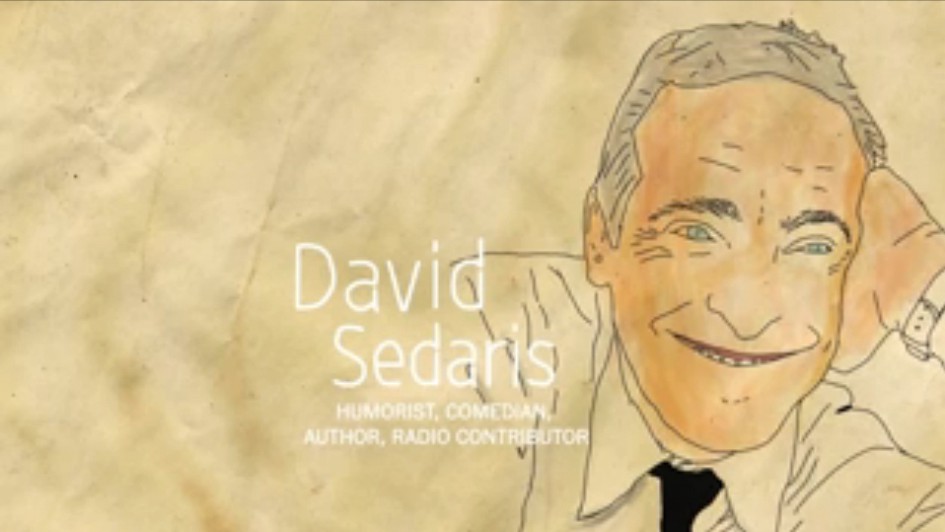
VIDEO: David Sedaris Gets Humbled on a Plane

by Ben Apatoff

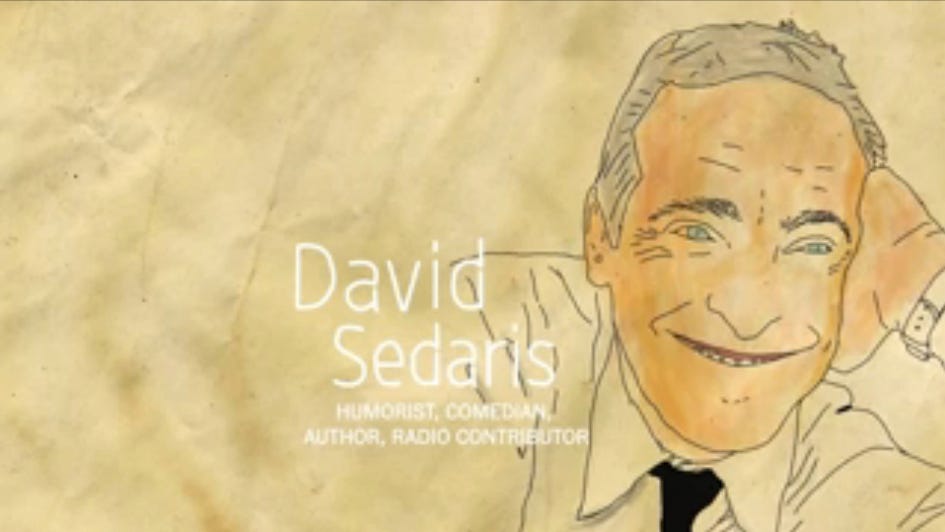
The Washington Post’s On Leadership video series has featured big names ranging from Iraqi women’s rights activist Suaad Allami to Starbucks CEO Howard Schultz, but for camera shy author David Sedaris, the series’ editors chose to animate the episode. Here the bestselling author and frequent New Yorker contributor recounts a plane ride experience to his boyfriend Hugh and receives a humbling lesson. As Sedaris notes:

“Someone said a while ago, you should always marry your conscience. And Hugh and I, my boyfriend, we’ve been together for 23 year years, so I didn’t marry my conscience, but I live with him. Hugh is a really decent person in ways that can be really, really irritating. I’m grateful for it though, because Hugh’s not the kind of person who would say ‘Oh, it’s OK to cheat’ or ‘Everybody steals a little something sometimes’ or ‘So what if you hurt that person’s feelings? They had it coming.’”

Tom Bissell on Trying to Edit William T. Vollmann

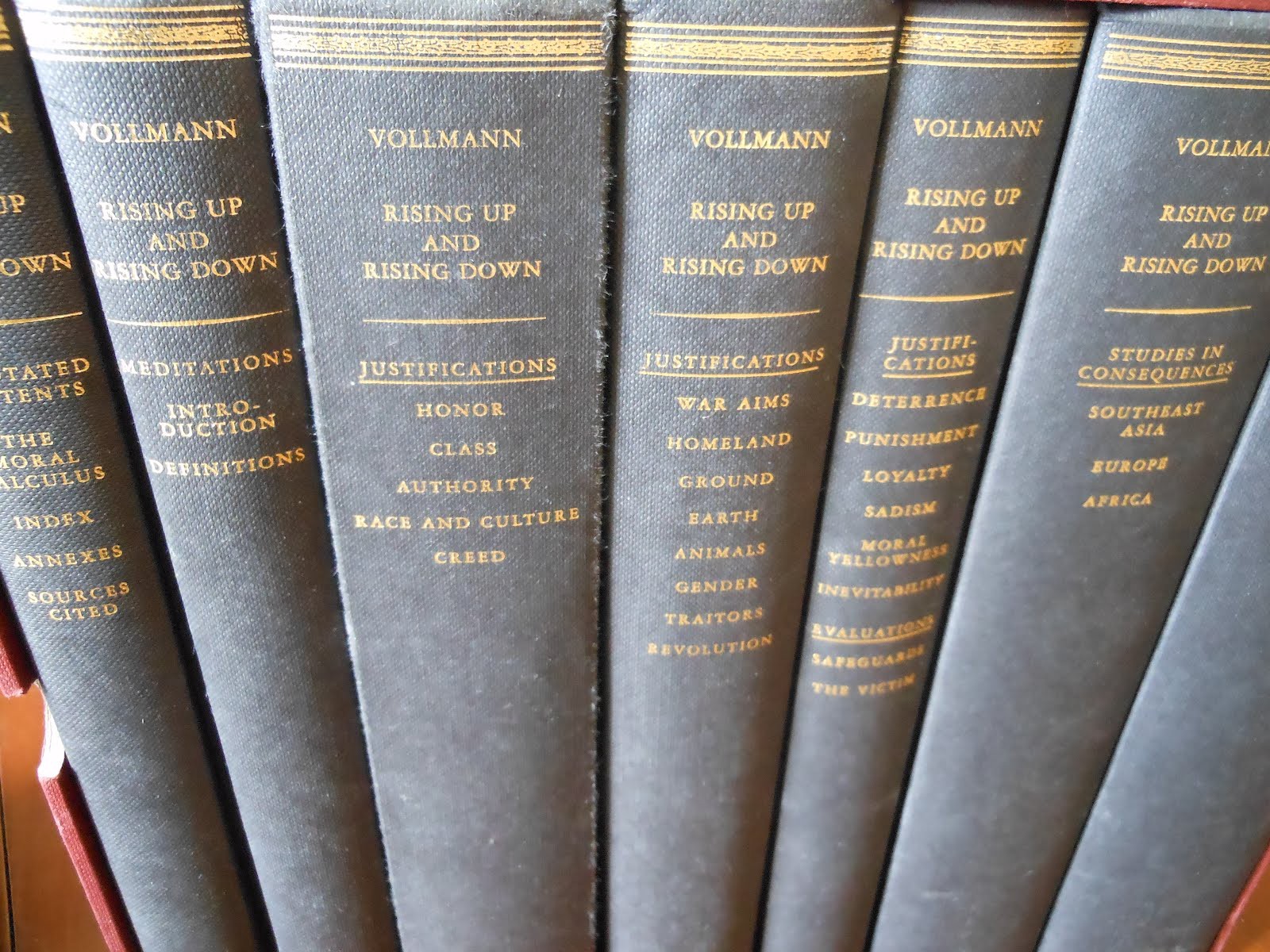
In the above video, author and editor Tom Bissell describes his failed attempts to edit William T. Vollmann’s epic work, Rising Up, Rising Down. Bissell wanted to cut 1,000 pages, but instead Vollmann had the work published in full as a beautiful seven-volume set from McSweeney’s.

Vollmann did later radically cut the book down in a single-volume abridged version for Ecco, saying the seven-volume work took “twenty-three years … The abridgment took me half an hour.”

Vollmann explained his decision to do an abridged version:

I did it for the money. In other words, I can’t pretend (although you may disagree) that a one-volume reduction is any improvement upon the full version. All the same, it’s not necessarily worse. For one thing, the possibility now exists that someone might read it.

(Video produced by the LA Review of Books.)

Alongside Napoleon: The Memoirs of Napoleon’s Own Valet

Louis Constant-Wairy

Louis Constant-Wairy

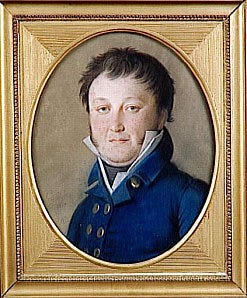
It was with surprise that I recently learned that there was such a thing as the memoirs of Louis Constant-Wairy, Napoleon’s valet, memoirs that begin right before the retreat from Russia, wherein the Kremlin explodes, crows fill a field over dead bodies, and horses push through rivers laced with ice and incur gashes upon their sides. Wounded soldiers at a waystation fleeing Moscow are described as being most troubled by the fact that “they had not been able, like the others, to light their camp-fires with the splendid furniture of the wealthy Muscovites,” and that this was “easy to see.”

As one would expect, though, it’s also a book of — how shall I put this? — somewhat devoted praise. No one cares as much as the Emperor. Oh, no. His carriage does not occasionally drive over wounded men, no; he looks after each man individually. “The Emperor was never upset, except at the sight of the suffering of others.” No one is cared about as much as the Emperor. Why else would soldiers cheer “Long Live The Emperor!” when Napoleon crosses an icy river on horseback in lieu of no readily built (let alone stable) bridge?

If only James Fenton were capable of time-travel and had moved straight from The Snap Revolution back to this; if only he had picked up a baffled W.G. Sebald puttering around in his Norfolk gardens in some sort of coughing Volvo and had started cordially interrogating the man about A Place in the Country tracing Napoleonism to Nazism while Sebald tried to figure out how to work the radio; if only they’d picked up Ryzard Kapuscinski, who would probably be expecting them, anyway; and if only they’d picked up Gabo, who would get into the car grumbling about some bastard still being alive. “Didn’t I kill him off in 1975?” And they’d drive through the French countryside, peering through the windows, flicking the occasional cigarette out onto the grass while waiting for — well, what, exactly?

A little later in the volume, Napoleon slanders Rome amongst company, calling it “a receptacle for the dregs of all nations … The women … are indolent, and show no zeal or activity for the ordinary business of life; in fact, theirs is the lazy effeminacy of Asia,” and it passes by without comment; then, Constant tells us, “after war, public buildings were what the Emperor most liked,” and as we quietly imagine the OKCupid profile (or 1970’s dating show, where “My turn-ons are war … and buildings” is delivered in an Andy Kaufman-styled voice), a letter from Napoleon speaks to how he wants “a little theatre, a small chapel, and, above all be very careful that there is no stagnant water about the place,” and — later still — he “began pulling [Constant’s] ears, which he always did when in a good humor.”

Which adds up to this (or so — right now — I think): it’s crazy that someone as obsessed with power as Lyndon Baines Johnson often reduced his narrative understanding of it to something as insultingly gnomic as “Power is where power goes,” and yet that’s what gets the oxygen. Not only is power is where power goes, but the oxygen of the story goes there, too, and that’s crazy. That’s absolutely crazy. And yet it keeps happening: it’s difficult not to look at Turkey and Erdogan, Putin and Russia, and what once was Ahmadinejad and Iran and become taken by the notion of how dexterity and the dexterity of grace fare beneath the hovering vacuum of power and the narratives seemingly store-housed by the person with that power. And it’s something that threatens to be a false dichotomy, sure — there will always be a Howard Zinn or a Studs Terkel or an Alan Lomax, sure — and “I saw history” biographies are useful, needed, and necessary. But it’s not enough. Dexterity must live. Grace must live. So we read about Napoleon, invent a car, and ask if anyone wants a ride.

SEPTEMBER MIX by Ana Carrete and Mike Bushnell

A MIXTAPE TO FALL IN LOVE TO

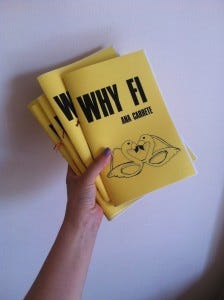
OH SO we don’t have WHY FI so this mixtape took us way longer than we thought it would. This is a rare collection of songs that we have attached memories to along the way. Some of them are more beautiful than others. Some are really dumb. We had to exclude some songs because they weren’t on Spotify or because they were censored. This list reminds me of some of the radio stations here in Austin. When trying to describe some radio stations while in the car, we used the same word to describe them: “eclectic”. We said it at the same time like they do in chick flicks where couples finish each other’s sentences and have the same reactions at the same time. Mike and I are living in a trill chick flick.

Hope you enjoy and actually listen to this mixtape. Thanks for your time. It’s good to make someone fall in love with you.

1. “Call Me Maybe” by Carley Rae Jepsen

MIKE: We listened to this song over and over again and danced to it with people we knew or were meeting for the first time — there are videos of this online. There is a picture of me doing a sneaky dance while Ana drank a beer, smiling. I believe I fell in love with Ana to this insane song.

ANA: I remember singing this song with Carolyn DeCarlo and Jackson Nieuwland. When I sang it I would look at you and relate to the song and felt dumb but okay cause we’d just met irl after four years of being online friends. “Where you think you’re going, baby?”

2. “The Beautiful People” by Marilyn Manson

MIKE: While attempting to woo Ana I tried to be cool and drink a lot. This backfired. We listened to ’90s songs including “The Beautiful People,” with beautiful people all night on my roof. Eventually I passed out hard. Literally. I fell asleep right where I sat and could not be moved until the next morning. Meanwhile Shaun Gannon took Ana to White Castle for the first time. I woke to the sun with no recollection of the night before. I was told they tried to wake me up many times. Def don’t remember that.

ANA: We listened to this song yesterday(?) while I made breakfast and you showered and maybe when we were at “Hot Topic” too. Dedicating this song to our friends. You look very handsome right now btw.

3. “Pu$$y” by Iggy Azalea

MIKE: I had never heard this song before Ana came to New York. We listened to it a number of times and I thought it was sexy. I would put it on to give a backdrop of sex when she was here, or later while Skyping I would send her the video. Embarrassed to admit that I thought it was a sneaky way of introducing sex into our conversations. Such a creep sometimes.

ANA: Sang this song and meant the lyrics and felt ridiculous. We drank and danced and I remember all our friends became addicted to this song.

4. “Rack City” by Tyga

MIKE: I think we made fun of this song. It is catchy and we probably listened to it 452 times over the first few months. Feel like we made fun of this song. I suggest making fun of this song by saying “hummus” instead of “Hunnids.”

ANA: Mike wrote a poem titled “oh so” and read it to me in his room before we had a reading at his rooftop and he quoted Tyga in it. He quoted “Make it Nasty” but we couldn’t find it on Spotify. They sound the same. We sang this with our friends and sang “hummus hummus” instead of “hunnids hunnids”.

5. UP! By LoveRance

ohsofront

NOTE: (Go buy OHSO)

ANA: I always thought that the censored radio version said “I beat the pizza up.”

MIKE: We made a song with Stephen Michael McDowell and peterBD called “I beat the pizza up.” This is another sexy song. It says “bouncing on a dick like a seesaw” and the chorus is “beat the pussy up.” Feel unsure of the value of these songs in a historical context, but they are very danceable and if you are courting, it can surface things that remain hidden when songs of a less sexual nature are playing.

6. “The Boy Is Mine” by Monica and Brandy

ANA: I just wanna let you know that he’s mine.

MIKE: I like this song in the mix because it signifies that Ana and I broke through courting and fell in love. I had never been happier (until I moved in with her) as I was when we first touched and talked and started dating. I felt like the luckiest man in the world, just like every other man that has fallen in love with the right heart/mind/body/head (she has the most perfect head).

7. “In The Beginning” by My Brightest Diamond

ANA: OH SO beautiful.

MIKE: I listen to a lot of female folk singers — listened to this song on the subway everyday and thought of Ana, and in the beginning of our love this song was 100 percent on point. Eventually I sent it to her and she listened to it and liked it, and I continued to listen to it and think our love was an earthquake and that the love of your life starts with an earthquake. Fuck you if you don’t believe that or try to deny it, you basic. Ana and I took a weird chance and waded through so much — this song will always take me back to before any of that, when we just wanted it and joined the unending hymn.

8. “Angels” by The xx

MIKE: Ana sent me this song and I was amazed that a song could describe exactly what I felt. I constantly was amazed Ana and I ended up together because I knew that everyone was in love with her, or at least I didn’t understand how they couldn’t be. She was an ideal to me, and she still is to this day. How are you not in love with her? You just haven’t spent enough time with her.

I used to loop this song and dance alone in my room thinking of her.

ANA: Mike sent me this song before the album came out and we fell in love with it so it is one of our songs. I pre-ordered this album so I could download this song and listen to it and would cry to this song frequently. Felt deeply moved and lucky to know what this band was talking about.

MIKE: Hahaha who knows who actually sent it to who

9. “Adorn” by Miguel

MIKE: We have the same name but his is in Spanish. I thought it meant something meaningful

ANA: Great timing to go get another beer.

MIKE: Ana went to get a beer.

But there was a time when Ana and I struggled to communicate and “Adorn” actually pushed us deeper in love and we became more open — it was a meaningful song we listened to about 400 times.

“Let my love adorn you”

Insanely meaningful to me for the rest of my life.

ANA: I’ve listened to this album thinking of you idk how many times ……

10. “3 Days” by Rhye

MIKE: This song reminds me of the first visit we had together when we had a very limited amount of time together — maybe a week. So it was like three days to sing this song, and when we sang it we said “bunny sheets” — Ana said that first — it was funny and I love her jokes.

I listened to it in transit to keep her close to my heart. (Via my ears).

ANA: “Got three days to feel each other.” We listened to this entire album a bunch and related to this song because this used to be long distance BUT NOT ANYMORE ✔✔✔

11. “American” by Lana Del Wine (sup Elaine)

ANA: You make me crazy you make me wild just like a baby you spin me round like a child

MIKE: Be young be dope be proud

12. “Acrobat” by Angel Olsen

MIKE: I sent this to Ana because she wrote a poem where she said she wanted to be my cat. It is too pretty. Angel knows how to write a love song that carries desire and long distance emotions. I would listen to it loud and dance around my room alone. Like kind of swaying and stepping around my room. Listen to the words closely here and be rewarded because the best poets writing today are female folk singers. Male folk singers try too hard. Fuck you Fleet Foxes.

13. “We Can’t Be Beat” by The Walkmen

ANA: Aren’t they male folk singers(?)

MIKE: When I was in high school I listened to the Walkmen a lot — one time — when visiting Ana — I played this song while in the shower and didn’t know the words but I was so happy I tried to sing along.

Nah, they’re pop or like, indie rock. You hear that electric groove?

ANA: He sang it and it was so sweet. I smiled a lot.

Nah, they’re male folk singers.

MIKE: You are always right.

Why Fi by Ana Carrete

14. “Open” by Rhye

ANA: YASSSSSSSSS.

MIKE: Still wish they weren’t male folk singers

ANA: I’m a fool for your love

MIKE: I am truly a fool for her thighs, sighs and belly. (Go buy Why-Fi).

15. “The World is Yours” by Nas

MIKE: In 2012 on New Year’s Eve (Ana’s birthday) we went to go see Nas at Radio City Music Hall — the show was amazing and we were front row in the balcony. I can still see the entire night. It taught me what love was.

They gave us horns and hats and honestly the world is ours — always — just wait — we are plotting a takeover. Stacking capital to eventually destroy the current literary conventions and replace them with something more enlightened.

ANA: Best birthday ever.

16. “Lights On” by FKA twigs

ANA: Is this the last song?

MIKE: No.

I sent this song to Ana three days ago. Tonight while making the playlist we danced for 20 minutes to this song.

ANA: We “danced,” lol.

MIKE: I suggest “dancing” to this song.

17. “Rollin” by Limp Bizkit

MIKE: Hey babe this is the last song.

ANA: Great transition.

MIKE: I made fun of Fred Durst while Ana put on her make up yesterday — she thought I was being harsh until I put on this song and she understood where my Fred Durst impression came from — it consists of two word phrases in a high pitched whiney bitch ass voice.

“Hey now”

“Do now”

ANA: Mike sings this song and says Fred sounds like an old man. He thinks he’s doing an accurate impression but tbh idk….lol. It’s pretty sweet though and he does sound like that in this song but not in all of them.

MIKE: It is so on point. Like 100% accurate. I just did it and it was perfect. Couldn’t tell the difference between me and the song.

ANA: Let’s go to sleep now.

MIKE: Okay I gotta send this out first.

ANA: Keep rollin

MIKE: Keep Rollin Rollin Rollin Rollin

***

— Mike Bushnell and Ana Carrete live in Austin, TX. Go buy their books: OH SO, Traumahawk, Baby Babe, etc. Google them. Follow them on twitter.

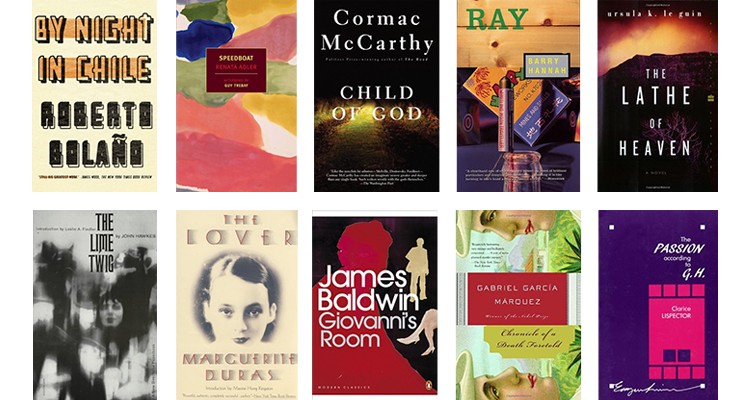
17 Brilliant Short Novels You Can Read in a Sitting

This week author Ian McEwan expressed his love of short novels, saying “very few [long] novels earn their length.” Certainly it seems like a novel has to be a minimum of 500 pages to win a major literary award these days, and many genre novels have ballooned to absurd sizes.

I love a good tome, but like McEwan many of my favorite novels are sharpened little gems. It’s immensely satisfying to finish a book in a single day, so in the spirit of celebrating quick reads here are some of my favorite short novels. I’ve tried to avoid the most obvious titles that are regularly assigned in school (The Stranger, Heart of Darkness, Mrs Dalloway, Of Mice and Men, Frankenstein, The Crying of Lot 49, etc.). Hopefully you’ll find some titles here you haven’t read before.

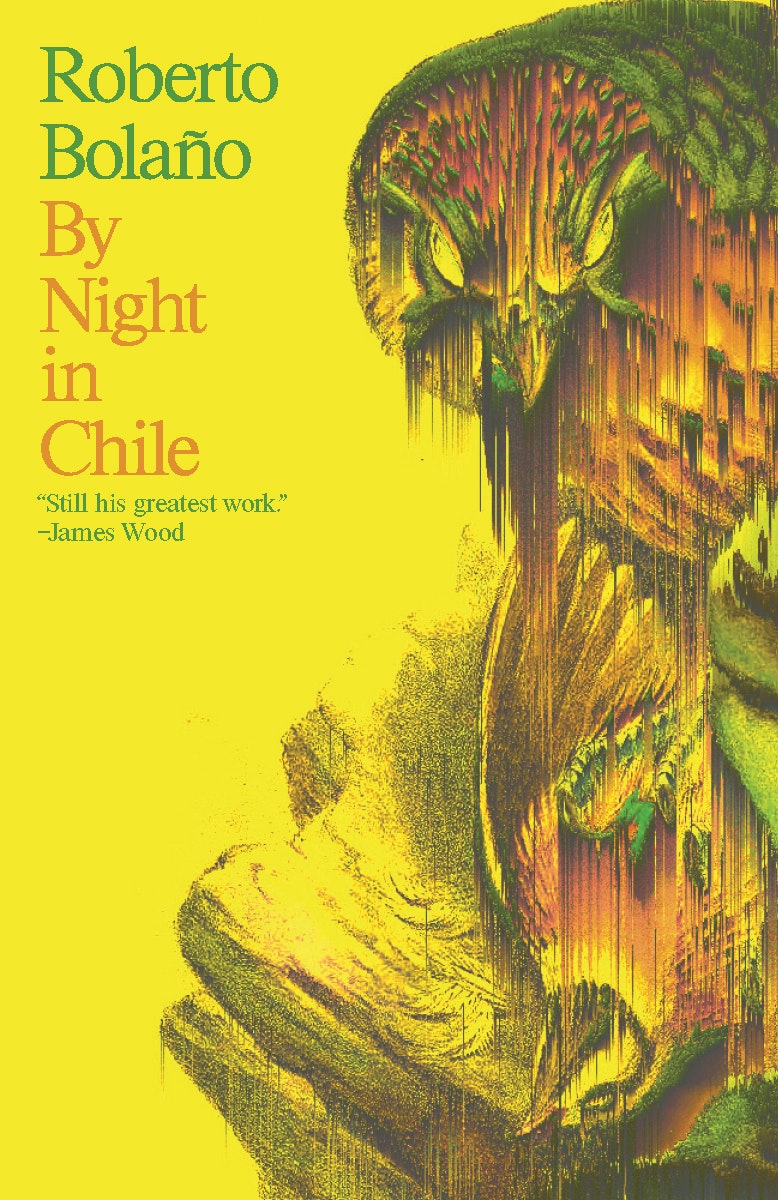
Image result for roberto bolano by night in chile

By Night in Chile by Roberto Bolaño

There’s a passage in Bolaño’s own great tome, 2666, attacking people who prefer “the perfect exercises of the great masters” to “the great, imperfect, torrential works, books that blaze paths into the unknown.” Admittedly, By Night in Chile is not quite on par with 2666, but it manages to be both a perfect exercise and a blazing path into the unknown.

Sleepless Nights

Sleepless Nights by Elizabeth Hardwick

A lyrical combination of memoir, fiction, hopes, dreams, and musings, Hardwick’s novel is as undefinable as it is brilliant.

Child of God by Cormac McCarthy

Child of God by Cormac McCarthy

Perhaps McCarthy’s second greatest novel, after the incomparable Blood Meridian, Child of God is an Appalachian nightmare written in gorgeously lush prose.

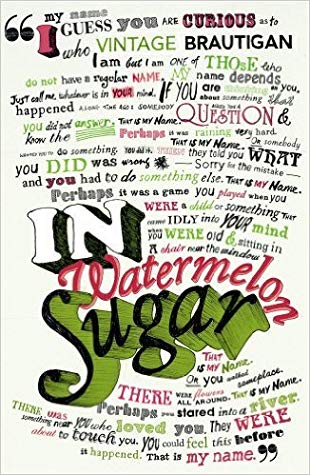
Image result for richard brautigan in watermelon sugar

In Watermelon Sugar by Richard Brautigan

Brautigan at his best and weirdest. This surreal novel is set in a commune named iDEATH where different colored watermelons provide building materials. A lot of modern indie fiction seems indebted to Brautigan’s unique combination of whimsy and sadness, but few if any match his power.

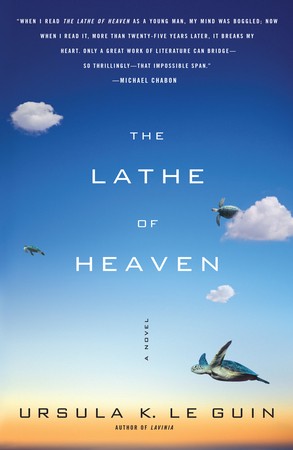
Image result for lathe of heaven ursula k le guin

The Lathe of Heaven by Ursula K. Le Guin

This is one of the weirdest science fiction books you’ll ever read. Le Guin channels Philip K. Dick to tell the story of a man who can change reality with his dreams. We recently published an interview between Le Guin and Michael Cunningham that included a deal on an ebook version of The Lathe of Heaven, so grab it cheap.

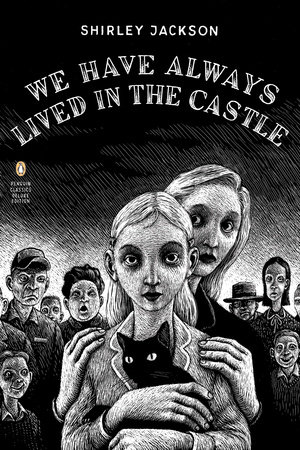
We Have Always Lived in the Castle by Shirley Jackson

We Have Always Lived in the Castle by Shirley Jackson

Of all the books I regularly recommend to people, Jackson’s masterpiece has the best track record. Every person I’ve recommended it to has adored it and recommended it to others. (I wrote a longer essay on the book for Flavorwire.)

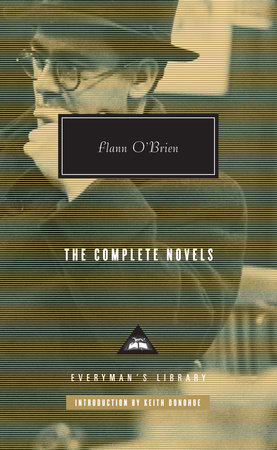
The Complete Novels of Flann O'Brien by Flann O'Brien

The Third Policeman by Flann O’Brien

One of the greatest novels of the 20th century, this underrated book is a wild roller coaster of dark comedy, surreal images, and just plain brilliant writing.

Jakob von Gunten

Jakob von Gunten by Robert Walser

Walser seems to be experience a well-deserved revival in recent years. If you haven’t read his joyous yet bizarre writings, Jakob von Gunten is the place to start.

Housekeeping

Housekeeping by Marilynne Robinson

Dreamy and completely beautiful, Robinson’s slim 1981 novel is frequently cited as one of the greatest American novels of the last 50 years. I agree.

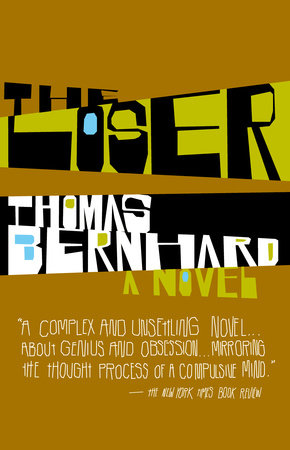
The Loser

The Loser by Thomas Bernhard

If you are like me, there’s nothing you love as much as a witty grump. Bernhard’s novels take the form of acerbic rants, and The Loser is among the best of them.

The Lover by Marguerite Duras

The Lover by Marguerite Duras

Perhaps a nice antidote to The Loser’s anger and bitterness, The Lover is a beautiful and life-affirming short novel.

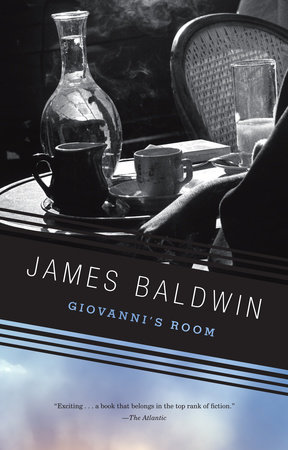
Giovanni's Room by James Baldwin

Giovanni’s Room by James Baldwin

James Baldwin’s second and perhaps best novel is a beautiful and moving story about a homosexual American man in Paris.

Image result for Clarice Lispector

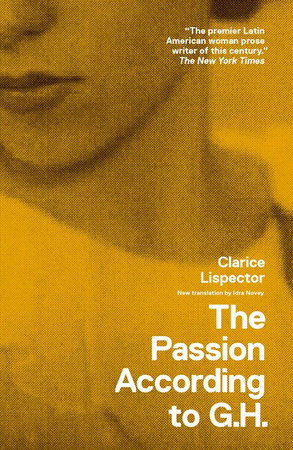
The Passion According to G.H. by Clarice Lispector, translated by Idra Novey

Most people seem to read Lispector’s — also very short — novel The Hour of the Star and call it a day. However, her other novels are even stronger. The Passion is an energetic yet philosophical short novel that everyone should read.

The Lime Twig by John Hawkes

The Lime Twig by John Hawkes

A dark nightmare in the form of a crime novel, Hawkes explores terror through innovative prose. I only just read The Lime Twig this week and already feel happy recommending it.

Barry Hannah

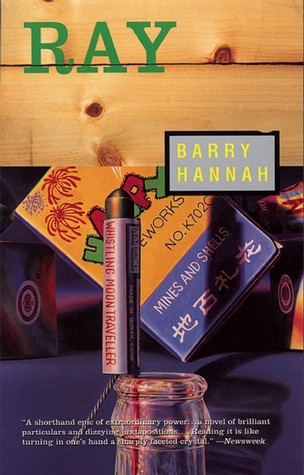
Ray by Barry Hannah

One of the greatest Southern American writers — which is saying something given that the region has given us O’Connor, Faulkner, Hurston, and more — Barry Hannah’s prose is acrobatic and addictive. Ray, his shortest novel, is a great starting place if you have never read him.

Speedboat by Renata Adler

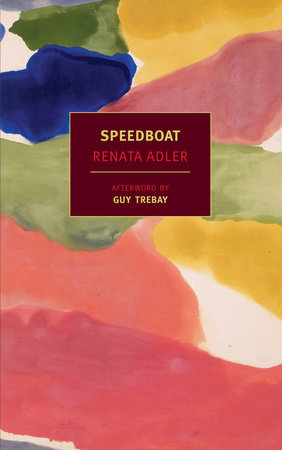
Speedboat by Renata Adler

Everyone in the literary world seemed to be reading Adler last year when NYRB reissued her two classic novels. And with good reason. Adler is a one-of-a-kind genius whose revival is more than earned.

Chronicle of a Death Foretold by Gabriel García Márquez

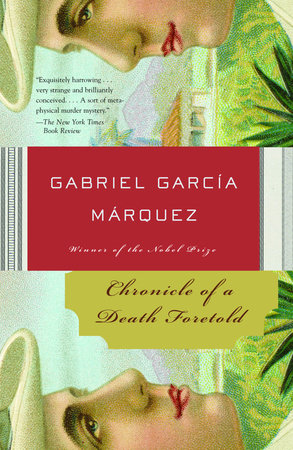
Chronicle of a Death Foretold by Gabriel García Márquez

This taut murder mystery doesn’t have many of the magical realism trappings of Márquez’s large tomes, but it is just as engrossing.

The Unbitten Elbow

“The Unbitten Elbow”
by Sigizmund Krzhizhanovsky, translated by Joanne Turnbull

This whole story would have remained hidden under the starched cuff and sleeve of a jacket, if not for the Weekly Review. The Weekly Review came up with a questionnaire (Your favorite writer? Your average weekly earnings? Your goal in life?) and sent it out to all subscribers. Among the thousands of completed forms (the Review had a huge circulation), the sorters found one, Form No. 11111, which, wander as it would from sorter to sorter, could not be sorted: On Form No. 11111, opposite “Average Earnings,” the respondent had written “0,” and opposite “Goal in Life,” in clear round letters, “To bite my elbow.”

The form was forwarded for clarification to the secretary; from the secretary it went before the round, black-rimmed spectacles of the editor. The editor jabbed his call button, a messenger scurried in then scurried out — and a minute later the form, folded in four, had slipped into the pocket of a reporter who had also received these verbal instructions: “Talk to him in a slightly playful tone and try to get to the bottom of this. What is it, a symbol or romantic irony? Well, anyway, you know what to do…”

The reporter assumed a knowing expression and promptly set off to the address written on the bottom of the form.

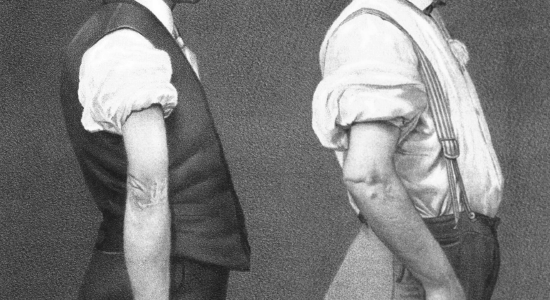
A tram took him as far as the last suburban stop; then the zigzags of a narrow staircase led him at length up to an attic; finally, he knocked on a door and waited for an answer. None came. Another knock, more waiting — and the reporter gave the door a push. It swung open and before his eyes there appeared a penurious room, walls crawling with bedbugs, a table, and a wooden stove bench. On the table lay an unfastened cuff; on the stove bench lay a man, his arm bared and his mouth edging past the crook of his elbow.

Buried in his task, the man had not heard the knocks on the door or the steps on the stairs; only the intruder’s loud voice made him raise his head. The reporter noticed several scratches and bite marks on No. 11111’s arm, a few inches from the sharp elbow now pointed at him. Unable to bear the sight of blood, he turned away saying, “You seem to be in earnest. That is, I mean to say, there’s no symbolism here, is there?”

“None.”

“And I suppose romantic irony has nothing to do with it either.”

“Pure anachronism,” the elbow-eater muttered, and again pressed his mouth to the scratches and scars.

“Stop! Please stop!” the reporter cried, shutting his eyes. “When I’ve gone, you can go right ahead. But for now won’t you allow your mouth to give me a short interview? Tell me, when did you begin…?” And his pencil began scratching in his notebook.

When he had finished, the reporter went out the door only to come straight back in.

“Now listen,” he said, “trying to bite your own elbow’s all very well, but you know it can’t be done. No one has ever succeeded; every attempt has ended in a fiasco. Have you thought about that, you strange man?”

In reply, two glazed eyes glowering beneath knitted brows and a curt “Lo posible es para los tontos.

The clapped-shut notebook sprang open.

“Forgive me, I’m not a linguist. Would you mind…” But No. 11111, evidently unable to bear the separation any longer, had already reapplied his mouth to his badly bitten arm. Tearing his eyes and whole body away, the reporter sprinted down the zigzag stairs, hailed a taxi, and raced back to the office. The next issue of the Weekly Review ran an item with the headline: LO POSIBLE ES PARA LOS TONTOS.

Adopting a slightly playful tone, the piece described a naïve crackpot whose naïveté bordered on… On what, the Review did not say, ending instead with the pithy dictum of a forgotten Portuguese philosopher, intended to chasten and check all the sociopathic dreamers and fanatics searching in our realistic and sober century for the impossible and impracticable. This mysterious dictum, which doubled as the headline, was followed by a brief “Sapienti sat.

Random readers of the Weekly Review expressed interest in this bizarre story, two or three magazines reprinted it — but it would soon have been forgotten in memories and archives if not for the attack on the Weekly Review by the weightier Monthly Review. The next issue of that organ ran this item: WITHOUT A LEG TO STAND ON. The caustic author quoted the Weekly Review then went on to explain that the Portuguese dictum was in fact a Spanish proverb meaning: “The attainable is for fools.” To this the author appended a terse “et insapienti sat,” and to that short “sat” a bracketed “sic.”

After that the Weekly Review had no choice but to point out — in a very long article in the very next issue, fighting “sat” with “sat” — that not everyone is blessed with a sense of irony: Deserving of our pity was not this naïve attempt to do the undoable (all genius, after all, is naïve), not this fanatic of his own elbow, but that mercenary hireling, that creature in blinkers from the Monthly Review who, because he dealt solely with letters, understood everything literally.

Naturally, the Monthly Review was not going to take that lying down. Nor would the Weekly Review let its rival have the last word. In the bitter debate that ensued, the elbow fanatic came across as a cretin and a genius by turns, as a candidate now for a free bed in an insane asylum, now for a fortieth seat in the Academy of Sciences.

As a result, several hundred thousand readers of both reviews learned of No. 11111 and his attitude toward his elbow, but this debate did not excite much interest among a broader audience, especially given other, more compelling events at the time: Two earthquakes and one chess match — every day two rather stupid fellows sat down to sixty-four squares (one looked like a butcher, the other like a clerk in a chic shop) and somehow fellows and squares became the focus of all intellectual interests, needs, and expectations. Meanwhile, in his small square room, not unlike a chessboard square, with his elbow pulled up to his teeth, No. 11111 waited, wooden and inert like a dead chessman, to be put in play.

The first person to make the elbow-eater a serious offer was the manager of a suburban circus in search of new acts to enliven the show. He was an enterprising sort, and an old issue of the Review that happened to catch his eye decided the elbow-eater’s immediate fate. The poor devil refused at first, but when the showman pointed out that this was the only way for him to live by his elbow, and that a living wage would allow him to refine his method and improve his technique, the downcast crackpot mumbled something like “uh-huh.”

This act — billed as ELBOW vs. MAN! WILL HE OR WON’T HE BITE IT ? THREE TWO-MINUTE ROUNDS. REFEREE BELKS — was the finale. It followed the Lady with the Python, the Roman Gladiators, and the Flying Leap from Under the Dome. It went like this: With the orchestra playing a march, the man would stride into the ring with one arm bared, his face rouged, and the scars around his funny bone carefully powdered white. The orchestra would stop playing — and the contest would begin; the man’s teeth would sink into his forearm and begin edging toward his elbow, inch by inch, closer and closer.

“Bluffer, you won’t bite it!”

“Look! Look! I think he bit it.”

“No, he didn’t. So near and yet…”

The champion’s neck, veins bulging, would continue to strain and stretch, his bloodshot eyes would bore into his elbow as blood dripped from his bites onto the sand; the spectators, armed with binoculars, would turn frantic, jumping out of their seats, stamping their feet, climbing over barriers, hooting, whistling, and screaming:

“Grab it with your teeth!”

“Go on, get that elbow!”

“Come on, elbow, come on! Don’t give in!”

“No fair! They’re in cahoots!”

After three rounds, the referee would declare the elbow the winner. And no one suspected — not the referee, not the impresario, not the departing crowd — that the man with his elbow bared would soon trade this circus stage for the world stage, that instead of a sandy circle some twenty yards in diameter, he would have at his feet the earth’s entire orbital plane.

It began like this: The fashionable speaker Eustace Kint, who rose to fame through the ears of elderly but wealthy ladies, was taken by friends after a birthday lunch — by chance, on a lark — to the circus. A professional philosopher, Kint caught the elbow-eater’s metaphysical meaning right off the bat. The very next morning he sat down to write an article on “The Principles of Unbitability.”

Kint, who only a few years before had trumped the tired motto “Back to Kant” with his new and now wildly popular “Forward to Kint,” wrote with elegant ease and rhetorical flourishes. (He once remarked, to thunderous applause, that “philosophers, when speaking to people about the world, see the world, but they do not see that their listeners, located in that same world, five steps away from them, are bored to tears.”) After a vivid description of the man-versus-elbow contest, Kint generalized the fact and, hypostatizing it, dubbed this act “metaphysics in action.”

The philosopher’s thinking went like this: Any concept (Begriff, in the language of the great German metaphysicians) comes lexically and logically from greifen (to grasp, grip, bite). But any Begriff, when thought through to the end, turns into a Grenzbegriff, or boundary concept, that eludes comprehension and cannot be grasped by the mind, just as one’s elbow cannot be grasped by one’s teeth. “Furthermore,” Kint’s article continued, “in objectifying the unbitable outside, we arrive at the idea of the transcendent: Kant understood this too, but he did not understand that the transcendent is also immanent (manus — ‘hand,’ hence, also ‘elbow’); the immanent-transcendent is always in the ‘here,’ extremely close to the comprehending and almost part of the apperceiving apparatus, just as one’s elbow is almost within reach of one’s grasping jaws. But the elbow is ‘so near and yet so far,’ and the ‘thing-in-itself’ is in every self, yet ungraspable. Here we have an impassable almost,” Kint concluded, “an ‘almost’ personified by the man in the sideshow trying very hard to bite his own elbow. Alas, each new round inevitably ends in victory for the elbow: The man is defeated — the transcendent triumphs. Again and again — to bellows and whistles from the boorish crowd — we are treated to a crude but vividly modeled version of the age-old gnoseological drama. Go one, go all, hurry to the tragic sideshow and consider this most remarkable phenomenon; for a few coins you can have what cost the flower of humanity their lives.”

Kint’s tiny black type proved stronger than the huge red letters on circus posters. Crowds flocked to see the dirt-cheap metaphysical wonder. The elbow-eater’s act had to be moved from its suburban tent to a theater in the center of the city, where No. 11111 also began performing at universities. Kintists took to quoting and discussing the ideas of their teacher, who now expanded his article into a book: Elbowism: Premises and Conclusions. In its first year, it went through forty-three editions.

The number of elbowists was mushrooming. True, skeptics and anti-elbowists had also cropped up; an elderly professor tried to prove the antisocial nature of the elbowist movement, a throwback, he claimed, to Stirnerism, which would logically lead to solipsism, that is, to a philosophical dead end.

The movement also had more serious detractors. As a columnist named Tnik, speaking at a conference on problems of elbowism, put it: Even if the elbow-eater should finally manage to bite his own elbow, what difference would that make?

Tnik was hissed and hustled off the podium before he could finish. The poor wretch did not ask for the floor again.

Then there were the copycats and wannabes. One such self-promoter announced in print that on such-and-such a date at such-and-such a time he had succeeded in biting his elbow. A Verification Commission was immediately dispatched and the imposter exposed. Dogged by contempt and outrage, he soon committed suicide.

This incident only increased the renown of No. 11111; students at the universities where he performed followed him around, especially the girls. One of the loveliest — with the sad, shy eyes of a gazelle — obtained a private meeting with him so as to offer up her half-bared arms: “If you must, bite mine: It’s easier.”

But her eyes met two turbid blots hiding beneath black brows. In reply she heard: “Do not gore what is not yours.”

Whereupon the gloomy fanatic of his own elbow turned away, giving the girl to understand that the audience was over.

Nevertheless, No. 11111 remained the rage. A well-known wag construed the number 11111 to mean “the one-and-only five times over.” Men’s clothing stores began selling jackets with detachable elbow patches. Now a man might try to bite his elbow whenever and wherever, without removing his jacket. Many elbowist converts gave up drinking and smoking. Fashionable ladies began wearing high-necked, long-sleeved dresses with round cutouts at the elbows; they decorated their funny bones with elegant red appliqués imitating fresh bites and scratches. A venerable Hebraist, who had spent forty years studying the veritable dimensions of Solomon’s temple, now rejected his former conclusions: He said that the length of sixty cubits stated in the Bible should be understood as a symbol of the sixtyfold incomprehensibility of what is hidden behind the veil. A member of parliament in search of popularity drafted a bill to abolish the metric system in favor of that ancient, elbow-conscious measure: The cubit. And although the bill was ultimately defeated, while still under review it provoked brawls in the press and the corridors of power, not to mention two duels.

Embraced by the masses, elbowism became vulgarized and lost the strict philosophical aspect that Eustace Kint had attempted to give it. Scandal sheets, misinterpreting elbowist teachings, took to promoting it with slogans like ELBOW YOUR WAY TO THE TOP and RELY ON YOUR ELBOWS AND YOUR ELBOWS ALONE.

Soon this new way of thinking had become so widespread that the State, which counted No. 11111 a citizen, decided to use the elbow-eater for its own fiscal purposes. The opportunity promptly arose. Certain sporting publications had already begun printing daily bulletins on the half inches and quarter inches still separating the elbow-eater’s teeth from his elbow. Now a semiofficial government newspaper followed suit, running its bulletins on the next-to-last page with the trotting-race results, soccer scores, and stock market reports. Some time later, this same semiofficial paper ran a piece by a famous academician, a proponent of neo-Lamarckism. Proceeding from the assumption that the organs of a living organism evolve by means of practice, he concluded that the elbow was, in theory, bitable. Given a gradual stretching of the neck’s transversely striate muscular matter, this authority wrote, a systematic twisting of the forearm, etc… But then the logically impeccable Kint struck back with a blow for unbitability. The argument that ensued recalled Spencer’s with the dead Kant. The time was now ripe: A bankers’ trust (everyone knew its shareholders included government bigwigs and the country’s richest capitalists) sent out fliers announcing a Grand BTE (Bite That Elbow) Lottery to be held every Sunday. The trust promised to pay every ticket holder 11,111 monetary units to one (one!) as soon as the elbow-eater’s elbow was bitten.

The lottery was launched with much fanfare — jazz bands and iridescent Chinese lanterns. The wheels of fortune began spinning. The ticket ladies — their white teeth grinning in welcome as their bare, red-flecked elbows dove down into glass globes full of tickets — toiled from midday to midnight.

But ticket sales were slow at first. The idea of unbitability was too firmly ingrained in people’s minds. The ancient Lamarckist called on Kint, but Kint continued to find fault.

“The Lord God himself,” he said, “cannot arrange things so that two and two do not equal four, so that a man can bite his own elbow, and thought can go beyond the bounds of the boundary concept.”

The number of so-called bitableists who supported the lottery was, compared to that of unbitableists, insignificant and shrinking every day; lottery bonds were tumbling, depreciating to almost nothing. The voices of Kint and company — demanding that the names of the masterminds behind this swindle be revealed, that the cabinet resign, that reforms be instituted — sounded louder and louder. But then one night, Kint’s apartment was searched. In his desk investigators found a fat stack of lottery tickets. The warrant for his arrest was instantly revoked, the discovery made public, and by next day the stock price for tickets had begun to climb.

An avalanche, they say, may begin like this: A raven, perched high on a mountain peak, beats its wing against the snow, a clump of which goes sliding down the slope, gathering more and more snow as it goes; rocks and earth go crashing after it — debris and more debris — until the avalanche, goring and gouging the mountainside, has engulfed and flattened everything in its path. So then, a raven first beats its wing against the snow then turns its hunched back on the consequences, pulls the scales over its eyes, and goes to sleep; the avalanche’s roar wakes the bird; it pulls the scales from its eyes, straightens its back, and beats the other wing against the snow. The bitableists took the place of the unbitableists, and the river of events reversed itself, flowing from mouth to source. Jackets with detachable elbow patches were now to be seen only in rag-and-bone shops. Meanwhile No. 11111, that lottery-ticket wonder, that living guarantee of capital investment, went on public view. Thousands of people filed past the glass cage in which he labored day and night over his elbow. This buoyed hopes and increased ticket sales. As did the semiofficial bulletins, now on the front page in large type; every time they shaved off another fraction of an inch, tens of thousands more tickets were snapped up.

The elbow-eater’s determination — inspiring a universal belief in the attainability of the unattainable and swelling the ranks of bitableists — rattled even the stock market. Briefly. One day the fractions of an inch separating mouth from elbow so diminished (triggering yet another surge in ticket sales) that at a secret government meeting the ministers began to fret: What if the impossible were to happen and the elbow were to be bitten? To redeem even a tenth of all the tickets at the advertised rate of 11,111 to one, the finance minister warned, would leave the treasury in tatters. The bank trust president put it this way: “A tooth in his elbow would be a knife in our throat, revolution in the streets. But short of a miracle, that won’t happen. Remain calm.”

And indeed, starting the next day the fractions of an inch began to increase. The elbow-eater seemed to be losing ground to his triumphant elbow. Then something unexpected happened: The elbow-eater’s mouth, like a leech that has sucked its fill, let go the bloodied arm, and for an entire week the man in the glass cage, his glazed eyes fixed on the ground, did not renew his struggle.

The metal turnstiles by the cage turned faster and faster, thousands of anxious eyes streamed past the dephenomenoned phenomenon, the grumbling grew louder every day. Ticket sales stopped. Fearing unrest, the government increased police squads tenfold, while the banker’s trust increased the return on subscription tickets.

Special keepers assigned to No. 11111 tried to sic him on his own elbow (the way tamers encourage reluctant lions with steel prods), but he only snarled and turned sullenly away from the food he had grown to hate. The stiller the man in the glass cage became, the greater the commotion around him. And no one knows where it might all have led, if not for this: One day before dawn, when the guards and keepers, despairing of ever Getting elbow and man to fight again, took their eyes off No. 11111, he suddenly fell on his enemy. Behind his glazed gaze, some sort of thought process had evidently occurred over the past week, prompting a change in tactics. Now the elbow-eater, attacking his elbow from the rear, rushed straight for it — through the flesh in the crook of his arm. Hacking through the layers with his hooklike jaw, forcing his face deeper and deeper into the blood, he had nearly reached the inside of his elbow. But before that bony junction, as we know, comes the confluence of three arteries: Brachialis, radialis, and ulnaris. From this severed arterial knot, blood now began to gush and fountain, leaving the elbow-eater limp and lifeless. His teeth — so near his goal — unclenched, his arm unbent, and his hand dropped to the floor, followed by his whole body.

The keepers heard the noise and raced to the cage only to find their charge sprawled in a spreading pool of blood, stone-dead.

Insofar as the earth and the rotary presses continued to turn on their axes, the story of the man who wanted to bite his elbow does not end here. The story, but not the fairy tale: Here the two — Fairy Tale and Story — part ways. The Story steps — not for the first time — over the body and goes on, but the Fairy Tale is a superstitious old woman and afraid of bad omens. Please don’t blame her, don’t take it amiss.