COMIC: The Entirety of Harry Potter in One Illustration

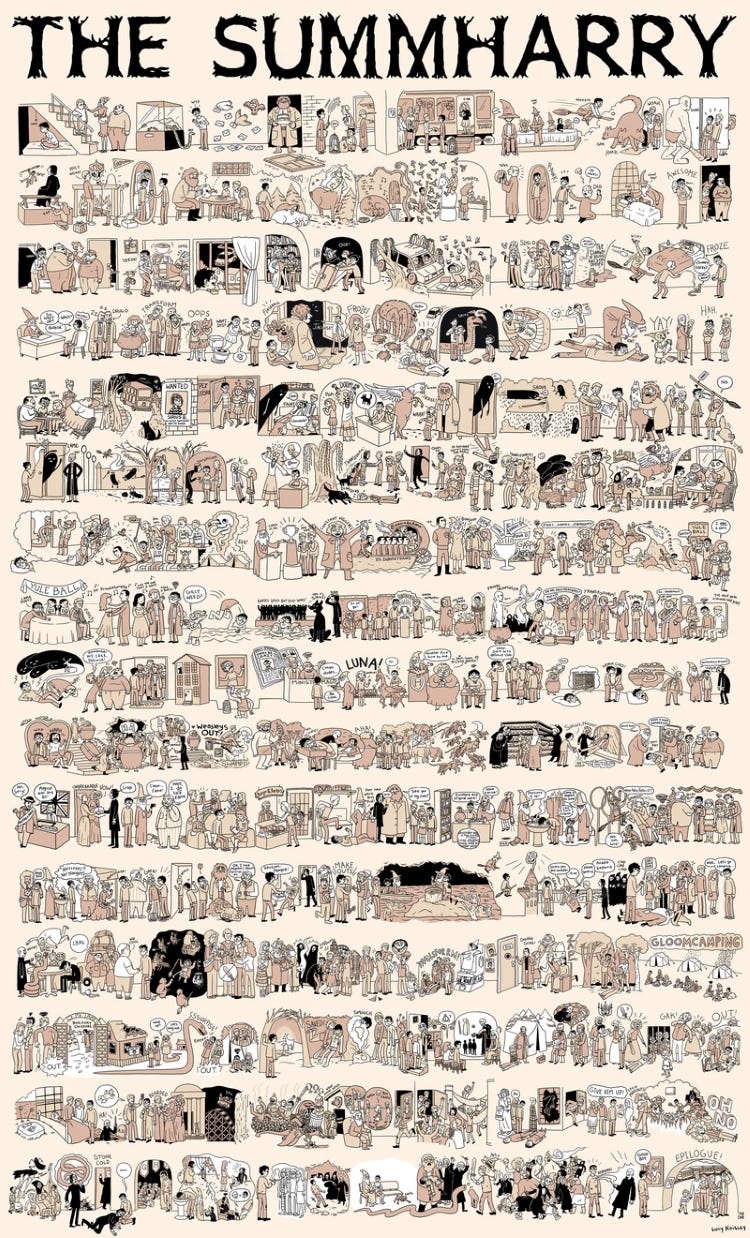
Harry Potter fans who want to relive the story without rereading the entire series should check out this gorgeous illustration by Lucy Knisley. Knisley places the entire story, from staircase to victory, into this beautiful comic.

Click here to see the whole thing giant size!

And check out the other awesome stuff in Knisley’s store.

Harry Potter comic

(h/t Laughing Squid)

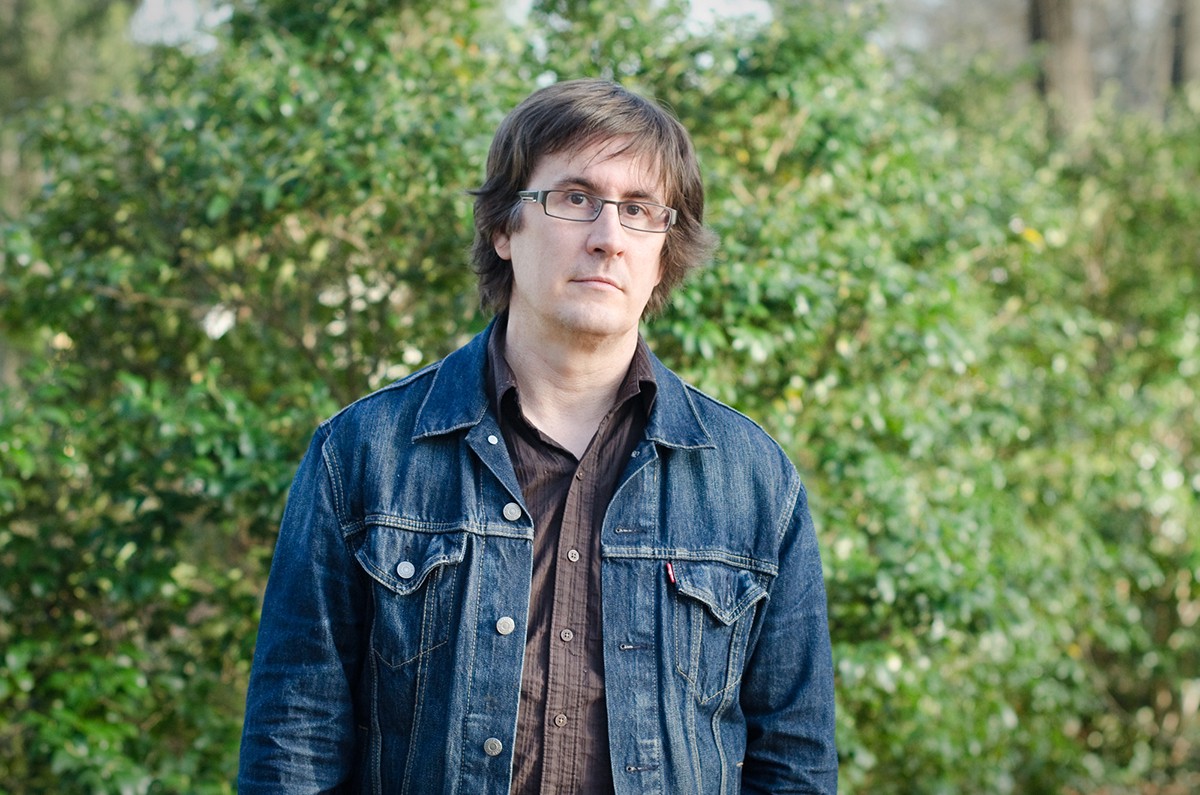
INTERVIEW: John Darnielle, author of Wolf in White Van

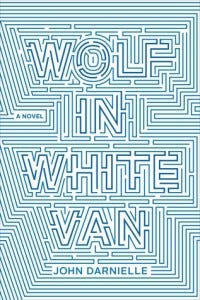
Wolf in the White Van

Nearly every song on John Darnielle’s fourteen albums with his band, The Mountain Goats, is under four minutes long. Many are far shorter. But their brevity never leaves anything to be desired: whether the track is riotous and punchy or hauntingly slow, the lyrics all unfold into extraordinary stories. It’s no surprise that there was a petition started in 2012 to name Darnielle the next United States Poet Laureate.

Darnielle has been one of my favorite storytellers for going on a decade now. His songs are lush with literary, biblical, and historical allusions and flung across both small town America and far-off locales. The characters are colorful and often profoundly damaged — many would make compelling protagonists if they had their own novels to star in. Take “Fall of the Star High School Running Back”: in 1 minute and 49 seconds, we learn of a star football player who suffers an injury that ruins his chances at a professional sports career, falls into drugs, mistakenly sells acid to an undercover cop, and gets tried as an adult. (Oh yeah, and there’s a Biggie reference snuck in there too.) Whole albums can be devoted to one story arc: Tallahassee is a spectacular, devastatingly beautiful record that tells of a wildly dysfunctional couple (a pair of recurring characters in The Mountain Goats’ discography) who move to Florida and deal with the bitter realities of a viciously co-dependent, crumbling marriage.

I was ecstatic when I heard that the prolific songwriter was writing his first full-length novel: Wolf in White Van. The narrator is Sean Phillips; deeply scarred from an accident that happened when he was a teenager, he lives a reclusive life. He supports himself through subscription sales to Trace Italian, an intricate, mail-order role player game that he created some years back. When two teenage players take the game too seriously, he’s forced to face the consequences from the fallout while the reader is slowly revealed Philips’ own disturbed past.

I talked to John Darnielle about writing Wolf in White Van, role-playing games, eating too much candy, and what he’s reading these days.

Spoiler alert: This interview reveals several important plot points in Wolf in White Van.

I’ve always been really into your lyrics, and your albums often tell these great, comprehensive stories. And I know you’ve written a 33 ⅓ book. How was your creative process different for writing your first full-length novel?

It’s completely different. A song, I don’t want to say there’s nothing to it…lyric and melody and prose are very different things. I don’t sit down on the floor with a notebook working on my novel. And that’s how I write songs, I write songs in front of the piano or the guitar and I ad lib them out loud and they come together between that and the notebook. Whereas writing prose is a matter of sitting in front of a keyboard — a manual typewriter or a computer — and typing and writing an outline. I would never outline a song. [Laughing] And I have very harsh judgment of someone who outlines a song lyric.

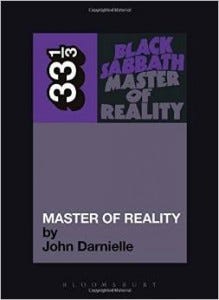
John Darnielle Masters of Reality

The last chapter of the book is the first I wrote, and I wrote it right after I turned in Master of Reality. And it was very different then. It went through a lot of changes over the years, because there wasn’t any game when I started writing it. It was comparable to a song in that I was ad-libbing: I was writing a story and things were happening and it started to circle toward what what felt like an obvious ending. And, well, that would be a short story and not a particularly good one. It would just be a short story where somebody seems to die at the end. I asked well, what else is in that story? And started to tease it out from there. I went the other direction.

I do throw away a lot of drafts for verses and stuff, but nothing compared to this. The original draft of this, there were multiple narrators, and every person was trying to piece the story together. And I did that for a year and a half or so and then I threw all that away. I mean, it’s around somewhere, I pitched it all and at that point, I had the characters developed in their own voices and I could filter them all through the main narrator. So it’s more expansive, and it’s just bigger.

So that big change came about a year and a half ago?

No, no, a year and a half into it. I guess I started writing…I don’t know when I turned in the 33 1/3. [Laughing] I don’t have a sense of years. I had enjoyed working on a bigger thing ’cause it’s sort of like touring. It tells its own story to you as you do it. And it’s kind of invisible to everyone else. You go through this process of understanding the work itself and what it is to you. So I wanted to start on something — I was sitting around the house and I wanted to tell a different story. I think I had just watched a documentary about some teens who shot themselves.

What was the most difficult part of writing this for you?

The thing is, it’s challenging but I don’t think of it as very difficult — in part because I’ve done manual labor. [Laughing] I enjoy it, so the harder it is, the better it is.I did run into some structure stuff where I would have to sit down with the various chapters and figure [it] out. There’s the present day…then it sort of drifts off like a continent becoming islands toward the end so that by the final chapter you’re not in the present day at all. I had to keep track of the sort of thing you draw diagrams for, but I’m really not good with diagrams. I don’t have a good sense of space.

So keeping track of that involved — once I had the whole manuscript printed out — sitting down on the floor with it, putting the chapters out like pieces of a puzzle. And at one point, there was a big liberating moment when I realized that Chapter 16 should be Chapter 2. Right? And it was before what you have in front of you, but once I did that it was like “Oh! Hold up! Now that’s a lot clearer.” So the hardest part was keeping the structure coherent. Here’s a story taking part in two different pasts, plus the present day — so sort of braiding them was the hard part.

I want to go back to the game for a bit. I can’t believe that Trace wasn’t in the book initially because as I was reading it, I immediately thought, “Trace sounds awesome.” I had never come across mail order games before. I didn’t even know that was a thing.

Yeah! Neither did I!

And I wanted to know if you played mail-order games growing up.

What happened was I started with this image of a kid having a day and then putting a gun in his mouth. I decided not to go forward from there, I decided to go backwards instead. I had to figure out — what does this person then do in his life if he’s alive? And my initial draft was very different. He was sort of a scarecrow figure. But I thought no, you know, you would live a quiet life and just be yourself. You wouldn’t seem that remarkable to yourself after a while. And that it would be kind of healthy and good and you’d sort of understand that was your path, whatever toll it took on your appearance, it was just your path.

In practical terms, you can get a job and so forth, but I think of this guy as being kind of outcast in a sense. And I asked what you could do for a living, and, you know, there’s all kinds of things you can do from home. I knew a lot of guys who made a decent living being distribution for records that didn’t actually sell in big numbers. But if you were the point of contact — if you were AX/TION in Massachusetts or AJAX in Chicago — you could actually get a pretty decent rent check together just brokering all these small releases to the people who wanted them around the world. There was a whole culture and I thought, well, I don’t wanna write about a guy who does music mail order.

But then I thought, what else could you do? I remember starting to ask around. I actually do [play] now, while I was still working on it — my wife and I, some friends of ours were into that. And my friend Clayton said “we have a weekly game,” so I now go into a table-top thing. We don’t do D&D, but games of that sort, where you’re improv-ing moves within an environment that’s known chiefly to the game master. But yeah, I thought it just seemed like a thing you might be able to do and I thought that I had seen ads for it. And it turned out, when I asked Jason, the guy I know who writes games now, he told me the name of a company, Flying Buffalo. And they do [write games], but it’s computer generated entirely. But the thing still is huge. The Trace game is this theory of assembly that happens at one point and then it just exists in cabinets, as opposed to these automatic moves.

I know computer games take the same amount of time to put together, probably even more time, but there was something about Trace that seemed so mystical and complicated. Which it is!

It’s the engagement. When you play a computer game, even if it’s in the first person, you are moving some other creature around. If you do this thing, you are making a bunch of “I” statements about what you’re doing. You’re kind of method acting. It’s kind of not surprising to me that a couple of players could get pretty engaged. And I would think, if I was the narrator, it’s kind of surprising more people don’t go off the rails. It’s a pretty involved thing to do.

So, you mentioned that you initially had that last chapter when he shoots himself first. And just reading the final draft, we know that he’s disfigured but we don’t really know how it happens until you reveal it very casually.

That’s what makes it hard to talk about. Like, when somebody interviews, there’s this fact that runs throughout the book and you’re supposed to be figuring it out but you can’t go like “well the thing that he does” [Laughing] You can’t do that.

We’re so sensitive to spoilers now, but I’ve never encountered one in a book like this, where I truly don’t want to reveal it because I just loved the way that you did reveal it. And I was wondering, was there a lot of rewriting so that it’s seamless and casual and you just drop it in. Did you have a more obvious way of revealing it at first? Were you just going to say it from the start?

So, it was a question that was hanging with me as I wrote the chapters. I said, well, at some point I should state it baldly, you know, what happened, and be done with it. And that’s when I spent half the day researching guns and what kind of gun you could do that with and survive.

Originally I had him shooting himself with a shotgun. Then I discovered that if it’s a shotgun, you don’t live. You would not live. I had to watch — I mean, I did not have to — but I found stuff of people who were being taken to emergency rooms and stuff. And I went oh, a Marlin 39A, it looks like he could…I mean, I would never under any circumstances turn one on myself or anyone else, but so it was that. You dance around how to reveal and I ended up writing that line, “when you shoot yourself in the face with a Marlin 39A,” was the first clause of it. I thought, that’s the only way to do that. Once you start talking about it, you start talking directly…and that’s how it came to pass as this. So yeah, for me, it was sort of like, doing all the research and saying well, you know, once we put it on the table, we should put it directly on the table.

That scene, followed by his dad telling him that he didn’t want him at his grandmother’s funeral sort of destroyed me.

Right, that’s one of my favorite scenes in the book.

I can imagine that must’ve been very difficult to write, but it was great.

Yeah, that was a heavy one. It was one of those things where, in its own sense, writing is a form of role play. I have never been disinvited to a funeral, it’s something I imagined. But if you’re living within the weave of the story well enough, then it gets pretty upsetting to think about these people who won’t be fixed.

I also wanted to talk a bit about the two sets of teenage male-female friendships. We have Sean and Kimmy back in the day when Sean was in high school, and Lance and Carrie, whose turn in the game obviously ends quite tragically. And I couldn’t help flashing back in my mind to Cathy and the singer in This Year, which I know is autobiographical. So what draws you to writing about adolescent friendships, both in your books and your music?

I think they were pretty defining for me. It’s plainly the case that I always, as a child, got along a lot better with girls and women in my life than I did with dudes. I was kind of afraid of dudes, I was a scrawny guy. Up until junior high, high school, all the readers I knew were girls. And that’s what I liked to do, was read books. I remember, a very, very fond memory I have — it was a defining month, or maybe three months, for me. I can’t put parameters on it. I was bullied badly in junior high, I didn’t want to hang out where there were people because it was risky. But it was a big junior high, outdoor campus, so I would go to the end of the field and sit at the bleachers and read my book. And there was one other person doing the same thing. It was a girl named Teresa Lee Yang and we didn’t really talk a lot. We talked a tiny bit about our books and then would sit and read silently for an hour. And it’s like, “well, I’ll see you tomorrow.” [Laughing] And it was a defining relationship for me, in a really quiet way. And it was 8th grade, I think, so the year just ended and it was the end of that. But yeah, those are the relationships that have defined me most, I think.

So what were you reading back then, on the bleachers? And what are you reading now?

Back then, I read science fiction. That was it. I was gonna be hardcore, I was gonna be a guy who went to conventions. I did go to one. This is the thing to understand about science fiction fandom back then: now that all takes place online, it is a massive, fairly well-coordinated fan experience. It’s big, the movies make millions upon millions of dollars. But to be a science fiction fan in the late seventies, early eighties, you used to belong in a really small club. It was a minor subsection of the publishing business. It did okay, but science fiction writers weren’t generally reviewed that much. Heinlein would get reviewed, but they weren’t as respected and it was a subculture. Where I would argue now that it’s pretty much the general culture.

Harlan Ellison was somebody I read constantly: I thought he was the greatest, I had a bunch of autographed books of his. And I liked Fritz Leiber. I liked a lot of horror, which you could not get your hands on. It was very hard to get a hold of stuff. The only specific horror zine I remember then was called Whispers and it was hard to get copies of Whispers. I had a couple. Writers like Robert Aickman, Dennis Etchison, who I think was doing novelizations of stuff — and all that stuff opens on to this whole universe of mid-20th century, post-Lovecraft, but it goes more interesting directions for me. August Derleth, Clark Ashton Smith, Arthur Machen, Dennis Wheatley: all these weird, very strange dudes — [Laughing] some of whom have very unsavory politics. When I would get that, it was my favorite stuff. I really loved it.

Now, I read mainly, you know, what you’d call literature. [Laughing] I like stuff that’s harder to read, is a general rule. William Gass is a big guy for me. And right now, I’m reading something that’s not difficult and super pleasant. It’s called Hilde, I saw it on the desk of Sean at Farroux Strauss and Giroux and I said “can I have that?” Nicole Griffith, Hilde: it takes place in 8th century England. It’s the kind of stuff I’ve really been enjoying the past couple of years. Like I read Thomas Malory’s Death of Arthur and I was like “You know what? It’s time for me to be reading Merlin stories.”

And which writers would you say influence your writing the most?

I think William Gass, but I don’t think I sound like him. The thing about William Gass is he’s one of those guys who, if you told me, “oh yeah, this sentence here took me 10 hours to write,” I would believe him. His most recent book, Middle C, is about a single sentence. That’s the subject of the book. About a guy who is writing a sentence. [Laughing] His previous book was about a guy who was writing a preface to a book. [Laughing] But Middle C is about a guy who’s writing a single sentence and trying to get it exactly right. And I don’t know it’s what I actually do, because what I do, I think, is a little more about the mood of a movement toward a moment. It’s what I do in these little darkly illuminated moments. But I think the guy I’m looking at all the time is William Gass. And Joan Didion. Those are both sentence fiends. To me, Joan Didion is not about her subject matter. She’s about the sentences. She’s about the clauses. She’s about the way that they run and stack up on top of each other to create an effect.

My last question is not a question, but I just wanted to tell you I really loved the description of Sean going and buying a ton of candy and you describe him as sounding “an octopus feeding underwater.” And as someone who goes and buys a lot of candy and goes and sits in front of the TV and eats it, that’s exactly what it sounds like.

[Laughing] Thank you very much.

I’ve been cracking up about that.

The thing is, I’m speaking from my experience there. I’m a giant candy fiend. I’ll eat all the candy. The other thing is, there a bunch of scenes in the book, and I wonder whether it’s all of the best ones, right? Where I’m going well, I can give him this trait of mine. You know, why not? And it’ll just be a different trait if it’s in a person who’s quite different.

If that one stands out, it’s it’s because I am a guy who, when we stop on tour at a gas station, people will see what I’m buying and be like “are you really…naw…c’mon” and I’ll be like “nah, it’s good. It’s delicious. It’s the Bubble Gum flavored Mike and Ikes. I gotta have ‘em.”

10 Books That Stayed With Me (That You Maybe Haven’t Read)

If you’ve logged into Facebook in the last few weeks, you’ve probably seen the “List 10 books that have stayed with you in some way” meme. It was so ubiquitous that Facebook took notice and decided to run the data to determine the most common books picked by English-language users. The top books weren’t very surprising:

  1. Harry Potter series — J.K. Rowling
  2. To Kill a Mockingbird — Harper Lee
  3. The Lord of the Rings — JRR Tolkien
  4. The Hobbit — JRR Tolkien
  5. Pride and Prejudice — Jane Austen
  6. The Holy Bible
  7. The Hitchhiker’s Guide to the Galaxy — Douglas Adams
  8. The Hunger Games Trilogy — Suzanne Collins
  9. The Catcher in the Rye — J.D. Salinger
  10. The Chronicles of Narnia — C.S. Lewis

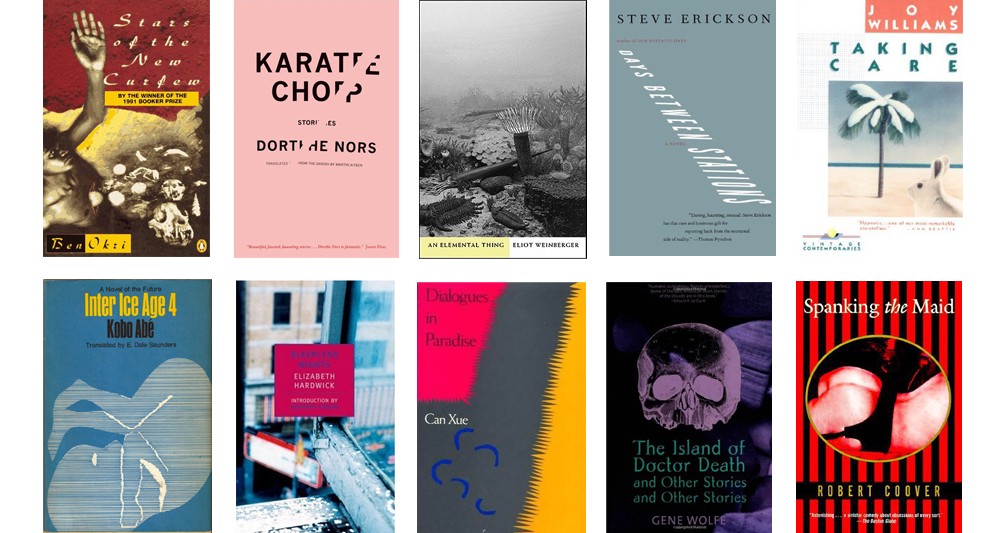
The Atlantic also posted a graph showing the different clusters of books that users tended to post. It’s always nice to see people celebrating books, but my favorite part of book lists is learning about books that I haven’t heard of before. So with that in mind, I thought I’d make a list of ten books that stayed with me that not that many people have read. These books all only have a few dozen to a few hundred ratings on Goodreads (for comparison’s sake, the most recent George Saunders collection has 24,000 ratings and the first Harry Potter book has several million.) Since you don’t need me to tell you that Franz Kafka, Flannery O’Connor, and Vladimir Nabokov are amazing, here are ten books I love that you may not have heard about before:

Ben Okri fiction

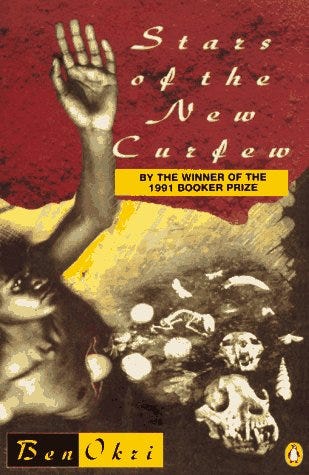
Stars of the New Curfew by Ben Okri

Ben Okri is a celebrated contemporary African author and a 1991 Man Booker Prize winner for his novel The Famished Road. However, Americans barely read any contemporary foreign literature — much less fabulist fiction writers from Nigeria — so Orki remains, sadly, under-read here. Stars of the New Curfew is a powerful story collection that mixes folklore and spirits with modern Nigerian life. At his best, Okri achieves the beautiful, eerie, and moving feeling dreams. I’ve always been drawn to authors who can take reality and twist it into new, unpredictable forms. Okri’s hallucinatory unreality is something that has always stuck with me. Most critics would likely label these stories magical realism — although Okri rejects the label as lazily used. Recommended for fans of Kafka, Murakami, or Marquez.

Karate Chop by Dorthe Nors

Karate Chop by Dorthe Nors

The most recent book on this list, Karate Chop came out this year as the first book from A Public Space’s new collaboration with Graywolf. This short collection — only about 100 pages — by the Danish Nors is filled with sharp little gems of fiction. The fifteen short stories are realist stories, but realist in the bent way of Diane Williams, Lish-edited Raymond Carver, or Amy Hempel. Nors keeps readers on their toes and isn’t afraid to be a bit nasty with her characters. Highly recommended for fans of very short, minimalist fiction. The epigraph to the book sets the tone:

I come from a home with cats and dogs, and those cats were so much on top you wouldn’t believe it. They beat up on the dogs morning, noon, and night. They got beaten up on so much, those dogs, that one year they’d saved up so much hatred they chased one of the neighbor’s cats into a tree with the idea of hanging around until it came down again, after which they ate it.

An Elemental Thing

An Elemental Thing by Eliot Weinberger

Although technically non-fiction, the pieces in An Elemental Thing read more like prose poems. Weinberger’s essays take a focal point — such as “The Wind,” “Tigers,” or “The Vortex” — then spiral out in a dazzling combination of myth, history, facts, and cognitive leaps. I’d never read essays like these before, and have been looking for more since. (Perhaps the short essays of Borges are similar.) The effect is like falling into a Wikipedia hole as rewritten by a poet. The second essay, “Changs,” is, well, literally a list of people named Chang from Chinese history. Here’s a quote from the first essay, “The Wind”:

Wind was the vengeance of unhappy ancestors. Wind came from the mouths of snakes, and shamans wore snakes to blow them to the other world; in China or in Mexico, the shaman was portrayed in its gaping jaws. WIND, the character, was constructed from the pictograph of a sail and the pictograph of a snake. WIND plus SICKNESS meant “insane.” WIND PURITY was sexual longing; HORSE WIND was a horse in heat; MALE WIND was sodomy. An anonymous woman in the 5th century sings:

Spring flowers so delightful,

Spring birdsongs so moving,

Spring wind so passionate,

It blows open my silk skirt.

Days Between Stations book

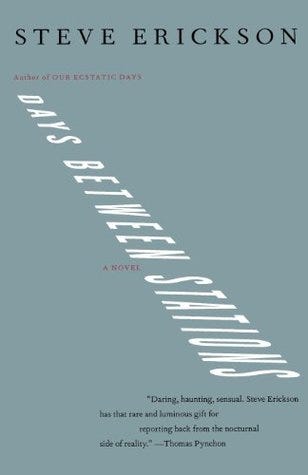
Days Between Stations by Steve Erickson

“When Lauren was a small girl, she would stand in the Kansan fields and call the cats. One by one they would come to her through the grass, across which lay the ice of the coming winter; and she could see them in the light of the moon.” — the opening lines of Days Between Stations

A lot of people know Erickson, but I often find that even people who have read and love him have never read his spectacular debut novel Days Between Stations. The easiest point of comparison is not fiction, but the films of David Lynch — although it predates Blue Velvet by a year. There is, for example, a hallucinatory jazz club called the Blue Isosceles owned by a man who wears an eye-patch and a blue trench coat. If you like dreamy, mythical novels you should give Erickson a try.

Taking Care by Joy Williams

Taking Care by Joy Williams

Like Steve Erickson, writers and readers know Joy Williams and yet not that many have read my favorite work by her. Taking Care is, for my tastes, one of the greatest American short story collections ever. In a recent Paris Review interview, Joy Williams was speaking about Don DeLillo and said, “His work can be a little cold perhaps. And what’s wrong with that? The cold can teach us many things.” That could apply to Taking Care. These stories can be dark, violent, and cold — but they can teach us many things.

Spanking the Maid

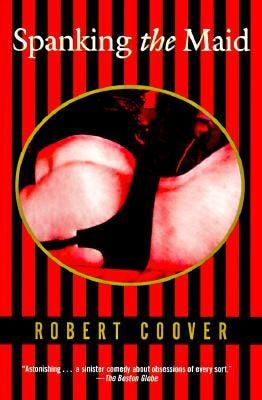
Spanking the Maid by Robert Coover

Spanking the Maid may not be Coover’s greatest book, and it certainly isn’t one of his most famous. It is, however, the one that has stayed with me the longest. This novel is one of the most impressive sustained riffs in literature. The book has only two characters (a maid and her boss) and two locations (a bedroom and a bathroom), and each chapter reaches an inevitable, titular conclusion. And yet the slim book is packed with ideas, and a great example of what a writer can do if they are audacious enough.

Gene Wolfe stories

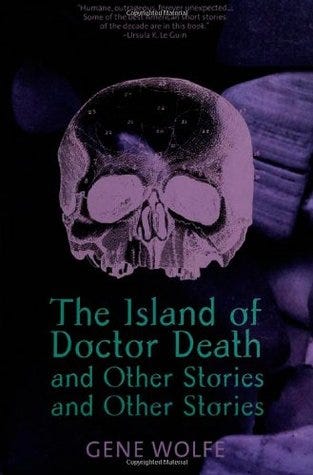
The Island of Dr. Death and Other Stories and Other Stories by Gene Wolfe

Gene Wolfe is a highly respected science fiction author — sometimes called the science fiction Nabokov — who has never quite crossed over to mainstream readers. If you haven’t read him yet, and the idea of SF stories with the dense, lyrical style of Nabokov appeals to you, then this is the collection to check out. The collection is very uneven, but it contains three of the greatest novellas I’ve read: “Tracking Song,” “The Death of Doctor Island,” and “Seven American Nights.”

Can Xue

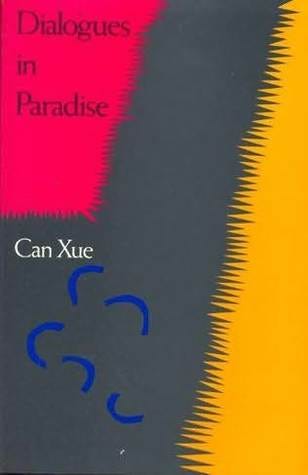
Dialogues in Paradise — Can Xue

In what is maybe a trend on this list, here is another collection of bizarre, surreal short stories. Can Xue is a contemporary Chinese author whose work would fit nicely between Franz Kafka and Bruno Schultz on a shelf. If you like weirdo, moving short stories as much as I do then you will want to read Can Xue.

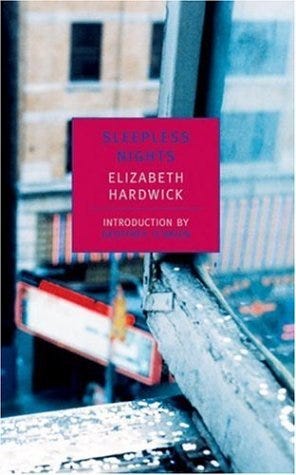
Sleepless Nights

Sleepless Nights by Elizabeth Hardwick

“Now, my novel begins. No, now I begin my novel — and yet I cannot decide whether to call myself I or she.”

I put Hardwick on my list of great short novels you can read in a day a couple weeks ago, and I’m going to recommend it again here. This is a completely unclassifiable book that blends fact and fiction, truth and lies, memory and invention, narrative and musings. I was assigned it in a class on books that cross the line between fiction and non-fiction. I haven’t read another book that is as successful at doing so since.

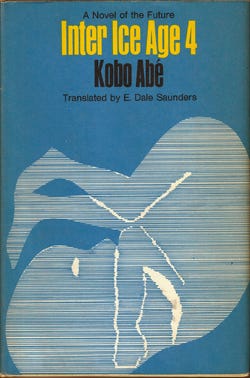
InterIceAge4

Inter Ice Age 4 by Kobo Abe

“The future is forever a projection of the present.”

Abe’s best book is his most famous: The Woman in the Dunes. Inter Ice Age 4 is nearly as stupendous, though, and not nearly as well known. If you love weird science fiction and can get your hands on a used copy, you will be in for a treat. The novel starts as a murder mystery that scientists attempt to solve by connecting the corpse to a supercomputer… and it only gets weirder from there.

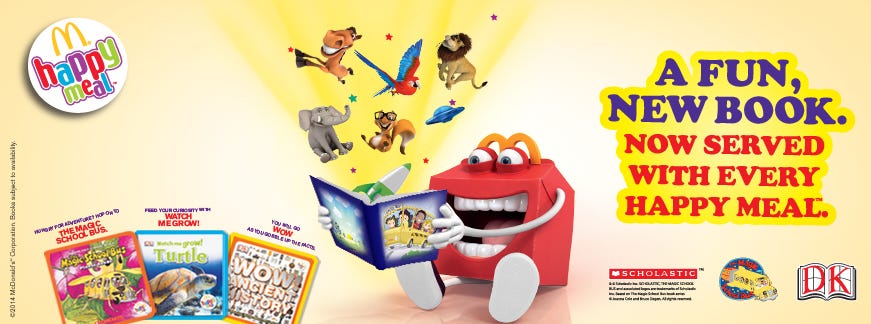
McDonald’s India Includes Books in Happy Meals Instead of Toys

McDonald's india books

DNA India reports that McDonald’s India is swapping toys for books in their Happy Meals. Vice President of Business Operations for McDonald’s India, Ranjit Paliath, said:

It is interesting to note that while in the UK the average number of books owned by a child under 6 years is 6 books, in India the figure is only 3 books for every 100 children! We aim to distribute about 1 million books during the programme with the goal of helping support parents efforts to inculcate the habit of reading among kids from a young age.

McDonald’s is partnering with Scholastic and DK publishers to provide children with educational books about such topics as space, animals, and the human body.

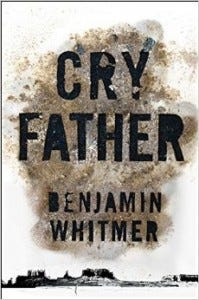
INTERVIEW: Benjamin Whitmer, author of Cry Father

Cry Father novel

To channel James Crumley: Benjamin Whitmer and I are drinking Mexican Cokes right out of the heart of a fine Saturday afternoon next to an unlit campfire at Vedauwoo in Wyoming’s Medicine Bow Forest. Talking about books, guns, and the general point of it all.

Court Merrigan: Your latest novel, Cry Father, comes out on 9/16. Why this book? Why this story?

Benjamin Whitmer: Part of it came from spending time in the San Luis Valley, down in southern Colorado. A buddy introduced me to the area, and you know, I’ve got a couple kids myself, I was thinking about what it meant to be a father. And so I took a drive through there with my ex-wife and kids and pretty quick came up with the ideas for the characters.

But also, I’m about ten years old at heart, and I wanted to write an outlaw novel. Butch Cassidy & the Sundance Kid, you know? About people heavily flawed and deeply disturbed. Those are the characters I like, but I wouldn’t recommend any of them as role models.

It’s funny, you know, people comment on what they see as the overt masculinity in my writing, and I have to tell you, the men in my books, they’re not paradigms of good masculine experience. I mean, which of these guys would you want to be like? How are they masculine, in any real sense of the word?

But you can’t write an outlaw book about bankers.

CM: How about a happy ending? Debts paid, victims rescued, wrongs righted?

BW: Nope. I don’t do redemption.

CM: I believe you, because Cry Father contains one of the most noirish line I’ve come across: “You don’t have to be particularly unhappy to shoot yourself. Your average life will do it.” That’s one of those lines that just has a ring to it beyond the particular plot point at which it occurs. Is that a credo, or just the words of a damaged character?

BW: I don’t know if it’s a credo, but it’s true to what I’ve seen. I’m hitting that middle-age period where everybody’s looking around at their life and going, “What the fuck have I got myself into? This is it?” Seems like everybody’s miserable for the life they didn’t live. The irony is that I’m probably the happiest person you’ll ever meet. My kids are beautiful and healthy, and it took me so long to get published, let alone for anybody to read anything I wrote, that all the rest is just gravy. It ain’t perfect, but what is?

CM: No cops in Cry Father. At all.

BW: Nope. Everyone is completely outside the law. They just don’t exist on that scope, where the police pay attention. Places like that are real in, say, unincorporated Adams County in Colorado, and the people live there are, too. I just took some of those folks and exaggerated them.

CM: Outlaw country.

BW: That’s it. Outlaw places and outlaw songs. That Billy Joe Shaver song that Waylon sang, “Ain’t No God in Mexico,” you know? That’s all about finding some place where there is no law, and the characters in Cry Father, they’re always looking for that place, beyond the law, whatever it costs them. And when they find that outlaw country, they don’t leave.

CM: How about the violence in Cry Father?

BW: Violence resolves nothing, not in my book. People say the violence is gratuitous, and I want to ask, what violence isn’t gratuitous? I mean, it’s not gratuitous to the novel. People will say, “the violence doesn’t serve any purpose, it isn’t doing anything.” No. It’s just not doing what you want it to do.

CM: In Cry Father, you write, “It’s almost impossible to measure the damage that damaged young men can do to themselves. Spending their nights drinking, doing whatever drugs they can afford, fumbling through the kind of endless and circular conversations only damaged young men can tolerate. Conversations full of self-pity and self-hatred they can only end by the sudden imposition of physical force.” The endlessly repeating nature of that sort of violence — because there are always more young men, everywhere, — is that what you mean by “violence not doing what you want it to?”

BW: Yep, that’s pretty much it. I had a lot of friends who lived that way, and I was one of the most pathetic. It ain’t real attractive, but that’s what a lot of us thought it meant to be a young man. Some of us lived through it, and some of us didn’t. I’m not a real religious guy, but there’s that old line, “there but for the grace of God go I.” Someday I’ll get that tattooed on my forehead to remind me how lucky I am.

CM: Alcohol and drugs figure heavily in Cry Father. But everyone’s using for a reason, and none of it’s fun. As Patterson Wells says of the men on the disaster-area crews: “The men I work with, they don’t grieve. They drink, then they erupt.” Would Cry Father be a totally different book if everyone were teetotalers, or would these damaged people find some other route to eruption? Games of horseshoes? Religious war?

BW: Man, I don’t even know what a teetotaler would look like. I mean, I know they exist, but I assume I’ve got a better chance of seeing a unicorn. Everybody’s got something to slow them down or speed them up, prescribed or otherwise. I’ve never met a true teetotaler in this country, and nobody looks like they’re having fun. Everybody I know is just trying to keep everything from falling apart. I don’t think my characters are that much different than anybody else in that regard.

CM: Your ambition. What are you after?

BW: I’m not real modest, but I have modest goals. I want to write a book better than the ones I’ve written. So next I want to write the best third novel I can. I know I’m not going to make a living at it. I’ll always have to have a day job. If I wrote the best country noir novel ever written, and I won’t, I’d still have to have a day job. So I just want to write better every time.

It’s just so incredibly arbitrary. You write the best book you can, and then, yeah, you try to sell it to a major publisher, as happened with Cry Father. That’s the market and I’m not trying to tear that down or anything. The folks at Simon & Schuster have been amazing, and my editor’s brilliant. Working with him has been one of the great highlights of my career. But you know, every book I’ve read the last six months has been from a small or even micropress. The big publishers have no kind of monopoly on quality, and there’s a lot better writers than me who haven’t been as lucky.

What I’d really like to do is get my kids through college, buy some cheap land in southern Colorado, and put a trailer on it. Then I’d be good.

CM: Guns. What’s your favorite, and why should everyone have a favorite?

BW: My current favorite is a Wiley Clapp Ruger GP100 .357. They had a run of only two thousand, I think, two or three years ago. It’s my pride and joy. It just has this incredible set up, a rear wide-notch Novak at the rear and a fiber-optic front sight. I had a trigger job done to it, and you can nail anything you point at.

People get all excited about guns. Every time I get into it online with someone, I keep finding how little people know about what they are livid about. Fact is, it doesn’t matter. They hate guns, reflexively. I don’t, reflexively.

I try not to get into the gun debates anymore, but watching what happened in Ferguson I’m a lot less scared of the guns my neighbor has than the guns the cops do. They’re armed and behaving like an occupying force, and I hope people don’t lose sight of that. One of my best friends, Paul Schenck, was killed last year in a village of 3000 in Ohio. By a SWAT team surrounding his house that included snipers, almost a hundred officers, and two armored vehicles.

Lately my thought on it is that I’ll support any and all gun laws, as long as they start with the police.

The Kids Are Alright: Survey Says Millennials Read More than Other Generations

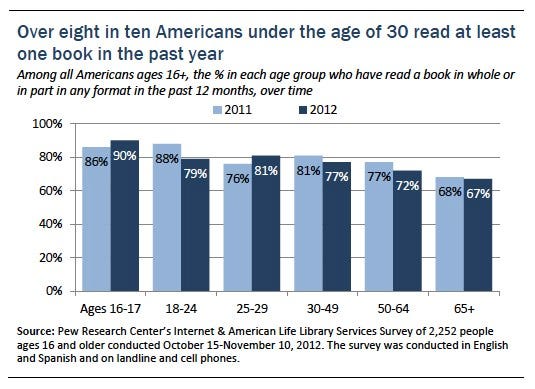
Sometime between taking Snapchats and not getting off your lawn, the youth learned how to read. According to a new Pew Survey, Millennials read more books than Americans over 30:

88% of Americans under 30 read a book in the past year, compared with 79% of those age 30 and older.

A previous Pew study had found similar results:

reading by generation

Of course, this may be because Americans under-30 are more likely to be in school and be required to read books. Still, it’s nice news for the literary world. The rest of the Pew survey looks at library usage and shows Millennials still value public libraries in the internet age.

The most surprising finding in the new Pew survey is that under-30 Americans are more likely to think “a lot of useful, important information that is not available on the internet” than older Americans (62% vs. 53%).

photograph via wikipedia

INFOGRAPHIC: How Long Does It Take to Read Popular Books?

Ever wondered how long it takes to read The Great Gatsby (2.62 hours) compared to Atlas Shrugged (31.22 hours)? If so, you’ll like this infographic by Personal Creations. It’s similar to an infographic that we made a few months ago comparing the word count of A Song of Ice and Fire to other novels. The times are based on a reading rate of 300 words per minute.

How Long Does it Take to Read

REVIEW: Fourteen Stories, None of Them Are Yours by Luke B. Goebel

“I feel the ink,” Luke B. Goebel writes toward the beginning of this terrific jalopy of a debut. He’s describing a medical procedure in the hospital; the ink is the dye IVed into him to uncover whatever’s wrong on his insides. It’s an apt analogy for what Goebel is doing throughout the entirety of the book. In Fourteen Stories, None of Them are Yours, the ink Goebel spills is diagnostic; lost loves and joys are his condition, language a way to self-medicate toward recovery.

We start with pain scales and flashbacks. First, the hospital bed, where our first person hero enjoys something like a deathbed catharsis, but in a scalpel-ly meticulous language to die for. He tells us of best lovers and best lost ones. We meet Catherine, the girlfriend, who left our hero for a European; Carl, the brother who passed away; the “old Indian Jew nut” teacher and proxy father figure who, in helping this narrator find a voice in his writing, guided him through his living.

There is little divide between life and writing for Goebel’s narrator. From the beginning of the book onward, ink, literally, is in his blood. But just as ink needs a page, Goebel’s heart needs a body to beat for. The book is most successful in the story-chapters that explore moments of remembered relationships.

We return again and again to Catherine, the lost love whose “name is like space and what there is unto itself that I saw out there.” Who is “a beauty full of brains and a good heart.” She leaves the narrator physically, for “a Spanish man named Manuelo who’d she met in Paris,” but by writing them he keeps the best moments alive. We see her losing half a tooth on their first date again. Naked in his bed again. Holding him again. When she leaves him again, we start over. We rewrite to relive.

Remembered alongside Catherine there is/was Carl, the older brother, whose early death is returned to over and over and leaves an absence as large as Catherine’s. Carl directs the narrator’s ink-filled heart to spew forth, even in reincarnating revisions:

…Neil Young was in the room over on the record wheel. (I hadn’t lost my brother, Carl, yet. Carl left us a few weeks ago. Over two months ago. (Over one year ago.) Carl is gone. Carl died in his bed. [Two years ago.] There isn’t any more Carl on this planet we are stuck to. Not here, in terms of a body, in terms of our living Carl. In terms of that Carl is my only brother. My older brother.

Life and nature work toward a balance; blood and ink, like water, take the shape of their container. Goebel’s heart takes us on manic trips through America with the heart-filling Jewely, a “part Husky (Dingo really)” companion. We go eagle feather-hunting for the old teacher in New York City: “My father (or not my father, but the great man I am speaking of as is he is my father).” And we take linguistic trips into the third person, even if not really: “It was time to play the cowboy. One got a ranch…One was he. (He was me, why pretend?) He (why say he again? I’ll tell you why: to give the “I” word a break.)”

His heart keeps pumping, the page keeps filling, we can’t stop reading. The book is above all new and unique. Goebel’s voice spills out as if he can’t control it, a kind of peyote trip on the page, but never does he cross the line in a way that leaves the reader feeling lost. For all the “crazy” (and actual peyote) in the book, you follow eagerly, hungrily, to find what’s next.

And that’s where the book’s few failures appear. The conflicting title of the book — “Fourteen stories, but a novel?” — betrays a kind of conflicting assemblage of the story-chapters. Three of these stick out as better suited to the former label than the latter. “Apache,” for instance, previously published in the Green Mountains Review, fits thematically in the book, but is outside the larger scope of the narrative heart (there is no Catherine, no Carl, no teacher, no Jewely). In this way, “Apache” feels more like a footnote to the larger novel, an aside that says, “Oh, since I’m telling you all this about writing, here’re some examples of other stories I wrote.”

Really, though, the pleasures of Fourteen Stories, None of Them Are Yours come so fast and frequent you’ll even overlook that there are, actually, only thirteen stories in the table of contents. That is, until the end, when our hero makes the point he’s been getting at all along: “Here’s the last story: Books are over. Don’t read a book, don’t read any book. Don’t read this book.” In other words, don’t read: write.

In other words, live.

Fourteen Stories, None of Them Are Yours

by Luke B. Goebel

Powells.com

“A Faded Sense” by Dina Nayeri

Recommended by Electric Literature

Original Fiction

Isaac sips scotch with slow winces and tells me you can use stomach fat to fill the hole left from excising a neck tumor. “That’s the simple part. I’d let a first year resident do it.” We sit at a table close to the door and every few minutes a chilly wind follows a customer into the bar. A dried-out lime wedge flung partway between us leaks a drop of gin onto the wood.

How much can a first year resident know? I used to tell my brother Kian that if you gave me five years with no distractions, I could do anything: surgery, rocket science, ice dancing. He sneered, a reaction I had counted on when I said it. “What happened to you?” he once asked me, all disdain and misplaced pity. He was a little drunk. “It’s like your arrogance and actual uselessness are wandering around in all that dark. When they finally bump into each other, you’ll probably commit suicide.”

He said that before Arash — of course. I’m supposed to do everyone the courtesy of forgetting. I only remember the one comment, and another, more recently, at Norooz dinner. Kian, after a few glasses: “You know why Sara dates so much? ’Cause when other people are alone, they get to be with a sane person.”

Since last summer, I go on dates for the stories, and to calm my panicky friends, but really just for the stories. I tell the men I’m divorced. The truth is that Arash died in a motorcycle accident on the NJ Turnpike the day after he told me he wanted to leave. He was rushing to a meeting with an author at Princeton when a rig in front of him had a blowout. He swerved to avoid the chunks of tire and hit something that sent him into the wheel of the truck. A witness said he flipped his bike four times. So, in a way, the awful conversation of the previous morning didn’t happen. He never stroked my chin with one hand, never massaged my palm and dropped his voice and said, “Sara joon, it’s perfectly possible for me to love you and to feel that our marriage isn’t working. Those two sentiments are possible for me.”

But, wherever Arash has gone, we both know that he did say those words, and so calling myself divorced seems more honest. I have a hundred ways of finding these men — through friends, online, in magazine articles about loss or illness or war. I ask them out, they always say yes, and we have a good time together. I found Isaac quoted in a piece on throat surgery.

The bartender plays strange music. After Laughter by Wendy René.

I rub my palms together, then against my bracelets. This morning I spent half an hour grinding my fingers into a bed of uncooked rice, turning the flesh into a tenderized ruin as I hunted for deeper sensation. Some days the numbness and false itching intensify and I have the urge to press sharp things into the pits of my cupped hands. To wrap my fingers around a cactus. To massage a bunch of pine needles. Once I joked that crucifixion might be pleasurable. Maman gasped. Kian laughed into his coffee mug. “Jesus, Sara. Stop making it a thing.”

Isaac has careful, elegant hands — they’re his livelihood.

Lately I’ve been pulling the bricks out of Arash’s office wall, one by one. It was a healing project at first — building a reading nook. But then I thought of our last trip together to the north of Iran, the watery rice fields and thick, wet mountainside foliage near the Caspian Sea. We spent a lot of time with our notebooks open in fish fry shacks, the ones set up on stilts just past the shore or on a pier. In the mornings we hunted stories that we offered to each other, like wedding sweets, over simple fish lunches seasoned by the salt in the open air. Dramatic sagas of love and sex made Arash laugh, so I investigated those while he did real work — interviewing ex-prisoners. All day long I spoke to fishermen’s wives who made up superstitions as they cooked. Wrinkled and bent, they delighted in pulling folksy gems out of the ether while the waves whooshed up and licked the windowsills of their fish shacks and the last filets went into the frying pan. A surprising lot of their wisdom had to do with stuffing things into cracks of walls for luck, for blessings, for warding off jinns. “For a passionate marriage, put jasmine and orange blossom in the wall every day.” “For the life to return to your poor hands, put chicken beaks and feet in the cracks.”

When I complained about my lot (his story was going to Harper’s and I was kicking it with grandmas), Arash said, Don’t judge the work you’re given, Sara joon. Just write the truth. Wishing back that moment, I change it so I don’t roll my eyes.

So now the office wall: it’s not some kind of magical thinking madness. I don’t have any delusions that he’ll come back hungry for material. I want to honor his cheesy Isfahani poet-boy philosophy. So I started typing up my callus hearted attempts at new love and stuffing them in the holes behind the bricks — for you, Arash joon. For a death filled with the truest stories. May you rest in eternal drama.

The best stories, Arash would say, aren’t complicated or grand. Forget about war and politics and death and suffering. Sure, those pay the bills, but for the good stuff, dig down to the bruised bones. The whine of sitting-room poetry, dusty drawings brushed with turmeric and crushed petals, two overplucked strings beside two broken ones. The last joyful noise in a crush of wailing.

I stare at my date, this good surgeon, his hopeful face, a little pocked and somehow reminiscent of an overdrawn cartoon mouse (I hate to mention Iranian noses), but eager, a kaleidoscope of expressions that make him beautiful. Who goes on a first date with hope anymore? How did he hang on to it after New York, after tumors and tsunamis and the Arab Spring… after cutting into his first corpse? Wounds are ugly. Doctors must crave to get away from them; Isaac probably doesn’t get that many nights off just to be drunk and happy.

“So then,” I say, hands gesturing, because isn’t it nice when you lose your own thread for a minute and peek at another part of the tapestry? “You put a slice of fat from the belly into the tumor hole.” Isaac nods and leans in. He seems a different kind of Iranian — rational and calm, and Jewish. I like it. “How do you know the tumor won’t grow back?” He shrugs playfully and touches the top of my hand. I let him. “Do you melt the fat first? And how much fat-slicing has a first year intern done already?” He laughs gently, privately, like he’s just seen a small sign on the table, a ladybug or some Persian script carved into the wood. I ask, “How big is the slice?”

What grotesque behavior — why do I always want to become these men? Why do I want to crawl not into their clothes, but into their skin?

And yet, slowly, his smile changes, it melts and drips past his lips and cheeks. The shy doctor is happy right now. I’ve made him happy with my silly questions. What I’m thinking is that I would’ve killed at his job — would’ve made a badass lady surgeon, the kind that makes jokes and strokes your nose as you’re slipping under.

Not that the written word is a thing to dabble in, or scoff at, or feel like you have to explain on blind dates. Truth and beauty, Arash would say. You and me, Sara joon, we’re in it for truth and beauty.

“I might go to Kabul,” I say, out of nowhere. “Next summer. Maybe to look for stories.” Then, because I feel like a fraud, aping my dead husband like a fake widow with no plan of her own, I add, “Not political stories like Arash wrote. I want to write about the hidden stuff. The stuff that gives people joy… Food, music, grandmothers.”

“What a cool life,” Isaac says. “Are you close to your grandmothers?” He doesn’t ask who Arash is.

Two hours into the blind date, I’m down to the ice in my third gin-and-tonic and trying to be purposeful about what I notice in Isaac’s face and mannerisms. He brags in an affected sort of way. Insecure asides like, “I’ve tended to lose interest every time the chase is over.” I’m tired. There’s no new story here. He fixes necks.

He says, “You know, a measure of beauty is the distance between the arch of the eyebrow and the brow bone. Yours is high, especially when you raise that one.”

“I’ll thank Uma the wax lady.” Why did I say that? Why do I ever say things?

Isaac’s lips curl in two places when he talks, a slow rolling like caterpillars waking. It’s strange and intensely sexy. He talks with (and about) his hands a lot. I would bet my meager fortune that he has moisturizer in his jacket pocket. I focus on the movement of his thumbs over mine. They’re very deliberate.

“Tell me about the scars,” Isaac says, out of nowhere.

It’s too late to hide them, and he’s still touching one of my fingers, so I tell him. I never have trouble sharing stories, even when I do have trouble, and then I tell them better. “People don’t usually notice,” I finish. I untangle my fingers from his and slip my hands down onto my lap. “They’re so faint now.”

He nods, “Scars are interesting. I have one on my jaw. See?” he lifts his chin.

I feel my charm draining. The bar smells strongly of grapefruit. “It’s time to go home,” I tell him. He pays for our drinks and says he’ll call. I pretend I don’t know that he’ll write in precisely four days, an email he’ll draft tonight and save. He seems incapable of writing two hours from now. Two hours from now, he’ll be carving up and negating all our best moments in his head — the truest ones that need no editing.

In the morning I call my brother, when I know he’ll be walking home from the gym, cheerful and not screening. I tell him about my night. He listens and listens, offering nothing. “Whatever feels right,” he says twice before I ask him what it is exactly that he’s judging about my story of Isaac the surgeon. He takes a moment. “I just think it’s lame and artificial to go out with people only because they’re Iranian.”

“I didn’t though,” I mutter. I want to add that this isn’t about Arash. It just comforts me to speak Persian. It makes me feel like I’m using my education — Persian is an advantage I should have been granted at birth, but instead won the hard way, a reward for study and hardship. Each syllable is savory and complex on the tongue, a new kind of nourishment, like morsels of food you’ve chopped and seasoned and cooked with your own hand, every spice and herb distinguishable to your palate. I want to tell Kian that speaking Farsi to men makes me feel something like love, and isn’t it a relief to feel love now and then? Love for the universe, for people as a whole rather than just one? Doesn’t it make the world open up, like a knife twisting open the hard shell of a chestnut? But I’m too embarrassed.

“Just go out on a real date,” he says. “Go out with a white lawyer.”

“I like the ones that can do something with their hands… a hard skill. I don’t know…” I stare at my own hands. Do I blame Kian for them? Yes, but…

“You mean, like you?” Ouch. He adds, in a kinder tone. “You’re being a snob.”

But once I restrung a rope of pearls in twenty minutes.

Once I pushed out a bead stuck in a toy train with a needle.

Once I fished an earring from behind the oven with a wire hanger.

When we were teenagers, on a summer trip to Tehran, Kian and I tried to restore a beat-up Toyota, not an unusual project in a country where everything is turning to junk, and I badly burned both my palms. It’s funny, a lifetime of mild punishment for a single bad instinct. Kian was fumbling over the engine — he’d taken a handful of lessons from a local mechanic. In the daytimes, if I was bored, I helped. The rod was missing, so he asked me to hold the hood open. When it got hot, I dropped it, then tripped trying to keep it from landing on his head. I fell onto my hands right on the scorching engine and, panicking, pressed down harder trying to lift myself. Kian wrapped my hands in a wet t-shirt; it stuck to my blisters when it was peeled back later at the hospital. The scars have diminished now — aside from the strange lines, the hardened, uneven skin — but for a month I lost all use and sensation in both my hands. During those weeks, I watched my mother wash basmati rice and bake cakes with her sisters, and for the first time I was jealous, terrified that I would never do anything so mundane. Now, it’s just a faded sense, like trying to appreciate silk through dish gloves, or the watery trickling music of a harp through a thick door. I’ve mostly forgotten it.

Kian is right. Since Arash asked for a divorce (and then died), I’ve only written a few stories — if you want to call that work.

I’m defeated, but I persist. “Can you be a snob against a white lawyer? How?”

“You’re a trade snob.” He laughs in that Kian way, eyes smiling (I know) as he climbs the dark staircase to his Lower East Side studio. I drop the argument. Before we hang up he says, his keys jingling in his door, “Just get your shit together, sis.”

Later I visit Maman’s cake shop on Bowery. I find her in the back, her hands positioned six inches apart on the plastic piping bag, fingers kneading, elbows locked at an angle, eyeglasses falling onto her nose. Her tiny body hovers over the modest cake like a craftsman over some enormous sculpture, squeezing out her rosettes with such care. When I tell her about my date, she says, “Is still so early.”

I get a break tonight. I’m hanging out with Andy, a gangly bass guitarist who tends bar on off nights. Often he shows up to wherever we’re going with cuts on his knuckles from broken glass, or drying scars slicing his unshaven chin. I don’t have to be smart for Andy. I don’t even have to get ready. I can just arrive at the bar wearing my day clothes, drink too much, eat fries, say stupid shit, and he’ll still fuck me with his eyes. He’s bought us tickets to a jazz band, a sit-down space with plastic wine glasses filled to the rim for five dollars.

Before we’ve exchanged three sentences, Andy kisses me on the steps leading down to the basement venue. It’s our first kiss. He’s standing on a step below me, his face close, so he just decides this is a good way to spend our time stuck in line. Other people linger above and below us on the steps, trapped there, watching us kiss. I imagine Isaac, his careful caterpillar lips, incapable of boldness. Somehow this knowledge thrills me; it electrifies Andy’s fingertips as they crawl down my spine.

I want to scratch my palms on his beard.

At the table, Andy sits on the couch side and pulls me beside him, roughly, by the elbow. He wraps me in both his arms like I’m his discarded coat, like he’s trying to fold me over. All through the set, he taps to the music on my thighs, on my belly, on my knees. Sometimes he tastes my earlobe when the beat is slow. Once in a while, his fingers follow the chords on my arms and legs; he slips his hand under my skirt and plucks the elastic of my underwear like strings, our own secret set. Even with my ignorance of jazz, I can feel that he’s following the song exactly. If I close my eyes, I have the strange experience of becoming the double bass.

When Andy likes a riff, he moans, “mmm hmmm,” as if co-signing every note. He applauds by clapping my thigh, then, as the music dies down, slides his free hand around my neck. The gesture feels like a violation, but I like it. The room is chilly and the bassist rests his hand on his instrument’s neck in exactly the same way.

A sudden, unwelcome memory of Arash’s hands on my cheeks rouses a wave of nausea to the spot Andy is gripping. I hurry to replace the image with Isaac’s tentative, precise fingers on mine, a thumb moving in circles, casually exploring my scars. Think of all that his fingers must know, given years of training: how to judge a shiver, a callous, a spot of heat. He is heightened in the same ways I’m dulled.

When the band takes a break, Andy stares into my eyes in an uncomfortable way, as if he thinks we’re in love. I glance around at the mostly college crowd. I want to chatter, to keep him from staring at me with all the expectation of a dim-witted child. “If there was a nuclear war, who do you think we’d need to rebuild the world?”

He squeezes my arms. He’s annoyed. “Artists,” he says without a thought.

“That’s dumb. I’m serious… who would be indispensable?”

He loosens his grip. “I am being serious. That’s my answer.”

“So you’re bleeding from an artery and you want a pianist or a cake designer or guy who makes bird sculptures? Come on, Andy.”

“Cake is food,” he says. “And I assume people still have souls?” His arms tense and I can feel him trying to decide whether to untangle from me. He doesn’t want to, but is insulted and thinks that he should, that another man would.

“Don’t be a priss, Andy. I’m too tired to deal with your shit.”

“My shit?” he says with mock indignation and pushes his hand roughly up my shirt. He pinches the flesh below my arm. “Can’t deal with my shit, says the lady.” He tickles me hard. “Well then… ”

I chug the rest of my wine and burp into my hand.

“Sexy,” he says — or something like that. Something that implies that I should want to be sexy for him. Men have all kinds of nerve. I am sleepy and content.

“Move over.” I force his arms back around my body so I can lie back against him. For the rest of the night, Andy’s hand is inside my shirt, tapping out the rhythm on the skin just below my breast, where I have a mole he seems to have discovered.

I only gained back about forty percent of the sensation in my hands, and even that took almost a year. This means that, even now, I find myself touching things without knowing. Sometimes I drop things, but not often. Most of what I’ve lost is fine touch: the detail on the face of a coin, the sensation of feathers, a kiss on the palm, the tickle of stubble. Some of these I was too young to know and so they’re lost from my collected experience. What should it feel like when I touch Andy’s face just after he’s shaved? And a day later? Often I press when I mean only to touch. I shake hands and pet animals too firmly. I check the water temperature in the shower with my wrists. But, as I grow older, fewer people notice. I’ve learned to temper my natural instincts to press and squeeze and scratch at my rough palms.

After the concert Andy holds my hand and we stand on the sidewalk near the Village Vanguard, checking our phones. Groups of tourists, NYU students, and music geeks hurry past us as we linger. I have an email from Isaac, sooner than I expected. He says last night was fun, asks me to dinner. “I knew he’d write,” I say out loud.

“You knew who’d write?” says Andy, glancing up from his phone.

“This doctor from last night.” Andy doesn’t drop my hand. Just smirks at me for a beat too long, trying to make me uncomfortable, then turns back to his phone. He has a specific way of holding my hand, gripping tightly, every square millimeter of skin compressed against skin. He never loosens up. Sometimes with our fingers interlaced, he rubs his palm in an aggressive circle against mine, or slips his thumb between our clutched hands and presses hard, drawing a long line. I told him about my accident the first day we met, when I was drinking alone at his bar shortly after Arash died. I’m not sure why I said it; maybe I knew there was nothing there.

What I never told him is this: Arash used to massage each of my palms with both thumbs — twenty minutes each. He would lock our intertwined fingers in place, using them as leverage as he worked his thumb hard across my lifeline.

At home I rub lotion onto my feet until I no longer feel the roughness in my heels, then I rub two more layers to cover the sixty percent. I fall asleep without brushing my teeth. I think about getting my shit together, what that would look like.

Isaac takes me to dinner at a bistro near NYU Medical Center, because he’s on call. His scrubs are in an overnight bag next to his chair. He can’t drink. But he orders white wine for me and we share mushroom pasta and roast chicken. He seems to have the instinct to care for people, which isn’t typical in men our age — by your mid-thirties, unless you have a family, you learn to care for yourself, to tune out all the other walking and talking receptacles of impulse and need.

Afterward, we walk to his apartment. He lingers on the steps to his walk-up and makes a show of checking his work phone, then inviting me upstairs as if the idea just occurred to him. “All clear,” he says, “I have no plans if you don’t.” Who makes plans after a dinner date? He suggests we make s’mores and tea, which is a sweet alternative to Andy’s Neanderthal ways, killing time in a box-office line.

Isaac has no kettle, surprising for an Iranian man (between us, Arash and I had three), so we watch the water boil in a pot, standing two feet from each other, arms crossed. Finally he takes my hand and pulls me closer, starts to kiss me. Everyone should have soft, rolling caterpillar lips like these — it should be the next step in human evolution. I articulate this in my mind hoping Arash can hear. Isaac turns off the water before it’s finished boiling. “I guess we’re not having tea,” I say.

He laughs. An easy, joyful laugh.

Stumbling through the apartment, he breaks my pearls. They scatter everywhere, a shower of bobbles that create a beautiful patter, like a hard rain or knuckles drumming on his hardwood floors. He stops, wanting to pick them up, but I lie and say they’re fake.

We make love in his tiny, brick-walled bedroom, where I discover he has habits I’ve never known. Maybe I haven’t been with enough men, or any good ones. He draws on my body with his fingers for a long time, objecting each time I move or speak. At first I feel strange, like I’m a collection of parts that he is examining. He caresses my cheeks with his face, though such plays at a deeper romance are hardly necessary at our age. He presses against me with his stomach, thighs, and chest, spreads my fingertips and kisses them. He brushes the pads of his fingers lightly against my stomach, then down toward my hipbone, and my own fingers seem to come alive. Isaac smiles as if he knew this strange connection between the nerves.

Later, when we are well into it, and he seems to have fallen on instinct, he grabs my wrist and pushes my hand down between us. Wrapping my fingers around himself as he slips halfway out, he whispers, “I want you to feel it with your hands.”

It seems cruel, now, after all that feigned romance.

I touch him, but all I feel is some wet heat, the faintest friction, and the familiar details of my own body against another. There’s no room between us to reposition my grip as he moves, but I want to try. Obviously there is something here that he wants me to experience. I wish so much to break through my own outer layer, to feel this moment gloveless, skinless — the way Isaac feels it. I close my eyes and struggle, trying to force my imagination to make up the difference. This isn’t the way I make love. It feels like a dissection. In the end, whatever mystical union I’m supposed to sense is covered in the same awful film that I’ve been unable to scrub away for two decades.

He isn’t stopping. His lips hover close to my ear and I fight the instinct to squeeze. For a moment I entertain it, this ugly impulse that overtakes me every time I come across something silky or textured or delicate — desperation to press. In my palm Isaac and I are nothing more than sterile objects, dead, like pieces of plastic sculpted to fit together.

Once I submerged my hands in a vat of Maman’s cake batter, kneading and praying to feel the goo between my fingers with the same intensity as I did when I thrust my hand in a vat of Vaseline at five years old.

Once I slapped Arash’s face on a dance floor, because I wanted to feel the sting on my fingers, that first layer of skin that I was missing.

Once I spent an hour with my fingers over a candle flame, hoping to burn away the invisible gloves.

Even now, I want to slap Isaac. My fingers itch for the contours of his face. Instead I shove him off and roll over, pulling the sheets toward me as I turn from his bewildered expression. I am helpless against the tears.

We end up having the tea, after all. Isaac doesn’t seem bothered. He wraps me in his plush white winter robe and we sit on the couch drinking Darjeeling with mint. He is the kind of man that drinks Darjeeling with mint after sex. This is a moment for a cigarette, bodies half hanging out of a window, a walnut cake and sweet tea with cardamom.

“Can I try something?” he asks, after two cups drunk in near silence.

“Hmm?” I say and rub my eyes. I’m ready to go home. “Sure.”

He slides toward me on the couch and takes my hand. He picks up one of my pearls from the coffee table, where we discarded the decimated string in the frenzy of an hour ago. “Grip this,” he says, and I do, though I’m dreading this exercise.

“How’s that feel?” he says.

I shrug. “It’s just a pearl.” I don’t tell him that I’ve done this a lot. I’ve clutched uncooked beans, buttons, pennies. Anything smaller than a bead disappears from my senses, as if dropped into a pit.

With his eyes fixed on my face, he must see my discomfort, the unshed tears, and yet he pries my hand open and places his thumb on the pearl. He rolls it back and forth across my palm, pressing down. “Now?”

I nod. Yes, now I know the pearl is there.

Isaac makes me close my eyes. He lets me hold my pearl in one hand, as if for comfort, as he tries different items on my other hand, different temperatures and textures and sizes — his keys, the head of a pen, an electric toothbrush, a still warm teabag, a jagged little African statue the size of a finger that sits on his bed stand. He asks me questions about them, becoming more and more intimate as he moves through the items. Sometimes he kisses my cheek. “Do you feel that, Sara joon?” I can’t identify most of them. I sense a change between us and I want to be alone.

If one day an apocalypse comes and I find myself in a ravaged world, my body will have many scars. Who will I need to survive?

When he’s finished, I drop my single pearl on the couch and step over the pieces of my ruined necklace, shiny pebbles digging into the soles of my feet in a pleasurable way. I dress as Isaac watches, sad but without objection. Before I leave, he wraps his arms around my waist and I touch his lips, trying to memorize them, the way they roll and move as if on their own. We don’t say many words.

I type up every detail of the sex with Isaac. I am truthful and thorough, describing every cold brush of a toe, every twitch, every misplaced whimper. A full account is what’s needed here. I staple the pages together, for Arash, and stuff them into a hole left by an excised brick. I pretend I’m filling a surgical hole with fat. Afterwards, I’m overcome with the joy of a finished job. Fuck you, Arash.
I call Maman and let her talk and talk. I don’t tell her about Isaac. When she asks if I ever went out with him again, I say, “It didn’t work out.” She doesn’t press on, but I add, “We didn’t connect… on books, or music, or in very many words.”

“That’s a shame,” she says, probably raising that one wayward eyebrow she has. “Those things are important.” Later, she sends me an email.

Sara joon,

It seems so much trying and hurting and, like scraping yourself too raw. Why you don’t manage your time and focus as wise as you used to do while you were growing up? I always have big visions for you and I keep believing them.

Time for grieving is over, I think.

Your hands are capable! And finding love, is not finished. Is amazing that even in any age there is somebody out there to love you. You just have to be doing your works and love comes along, out of wood boards.

Also, come for abandoned walnut cake. I save for you, minus one slice.

Love, Maman
I melt away the lump in my throat with a shot of whiskey, delete the message and go to sleep. I dream about the calloused grip on the neck of a double bass, the finer points of neck surgery, a necklace of real pearls.
It takes half a day for me to discover that my nose is chapped from Isaac’s beard. I put on a ratty t-shirt and dirty jeans to Andy’s place because his furniture smells like old towels. Actually, that’s not quite enough — his furniture smells like old towels straight out of a Chinatown fish locker. I take my willingness to go there as a sign that we’ve become friends, and that I will keep him for a while. Maybe he can replace Kian, who, on hearing about my idea to go to Kabul, said, “Jesus, get a job.”

His words didn’t sting; Kian is Kian. After my accident, he changed my bandages every day until we left Tehran. Then he never spoke about it again.

I have to take three trains, but Andy lets us eat cheeseburgers in his bed, and he makes us the kind of drinks that sell for sixteen dollars at his bar. Afterward, I just want to cuddle and sleep and watch an old movie and definitely not get inside the sheets. But Andy starts with the belt fiddling, and the ear tasting, and I have to constantly pat his hands away while making a show of being transported by kissing him — because he’s my friend and it’s cruel to kiss like you’re feeding the hungry.

After a few more tries to undo my belt, he takes my face in his enormous, warm hand and says, “Sara. Do you not want to see me again?”

He slides his hand to my neck, rubs his thumb in a circle just under my chin, a gesture that confuses my body somehow. “Stop it,” I say, pulling away. “We’re not going to end up together. You’re not any kind of ‘it’ for me. Do you understand that? I’m here because I want to be here.”

“That makes no sense,” he says. He touches my nostril, frowning at the chapped edges. He mutters, almost to himself. “You never make sense.”

I push him away from my frayed nose, but he returns to it, roughly. “We’re not forever,” I repeat, at the same time as he says, “Stop that.”

Then we’re both silent, both trying harder to be kind. He says, “So what?” He looks at my palm, rubbing the spaces between my fingers like a mother cleaning her baby’s feet. “One day I’ll tell my grandkids that a beautiful writer with fucked up hands used to let me kiss her and hold her and try to be her missing sense of touch.”

“Don’t say that shit.” I try to smile.

He gets his guitar, arranges some pillows under my head and behind his back. He sits on the opposite corner of the bed from me, leaning against the headboard, and starts to play. The bed is a cheap kind with springs that creak and respond to movement like dominoes. As Andy plucks the strings the bed moves in rhythm, the motion wavelike. I close my eyes, letting the vibrations of his cheap mattress lull and soothe me. He whispers, “If I can turn you on without touching you once, will you believe it’s totally unimportant? Compared to seeing, hearing… it’s a damn useless sense.” I laugh and throw a pillow at him. He keeps picking chords.

“Shut up, Andy,” I mumble. He moves on to a playful tune, then a slow surging melody, and I imagine that I’m in a lifeboat far out in the ocean, that I’m creating this music in my delirium, conjuring it to match the rolling of the waves.

Then I am inside the guitar, in the hollow body of it, a part of the music again.

I think of my graceless hands, Andy’s generous, musical ones, and Isaac’s gifted, delicate ones — all the many fires and pinpricks and stabs and caresses I’ve felt through other people’s efforts. Even after my hands calloused over. And then later my heart. Isn’t it a marvel how many of life’s sensations start far beyond the skin? I conjure all the palms that I’ve touched, the ones that have touched me, in my travels: withered or stained ones, strong or trembling ones, kind ones.

I’m almost asleep, my arm over my face, when I feel Andy’s breath. The music has stopped and he’s lying beside me, pumping a small white bottle. “Hold still,” he says, as he dabs lotion on my nose. I squirm. “Get that thing away from me.”

“Shut up and hold still,” he says. He dabs lotion around the chapped edges of my nose, then above my lips and on each spot that a day ago Isaac must have grazed.

“Want a cigarette?” I ask. I imagine Kabul again, traveling far away and finding stories, stringing them together like beads, like scattered pearls on a floor. This isn’t a moment for a cigarette, but we smoke anyway, and drink sweet tea, our bodies hanging out of his window. I take the time to remember Arash. I summon him to my heart again. “Andy?” I mumble.

“Hmm?” he says, resting his head on the windowsill.

“If there was nuclear war, who do you think we’d need to rebuild the world?”

What I want to know is, if the world ended, would we be able to rebuild without Arash? Without his stories? How can the world manage and continue on? I want Andy to tell me that what we would need is a team of low-wage laborers and some city planners, and a few engineers, carpenters, doctors, and architects. Arash can’t answer distress calls anymore. So we won’t need him, right?

Andy runs two fingers through my hair and works out a snag. Then he kisses my earlobe, takes a drag, and blows a long curl of smoke out into the empty street.

My cabdriver plays a CD of classical music. In a Russian accent, he tells me we’re listening to the first movement of Brahms’s first piano trio, written by a man who spent his life longing. The melody is hypnotic, and as I lean back and try to enter it, the driver points out details. Here you can hear the cellist breathe before he runs the bow — dead for three years and, just listen… one of his countless breaths, preserved forever. And here you can make out the slap of horsehair on string, left in the raw recording like a fishbone in a clean filet.

We listen for ten minutes and the driver relaxes as I’m drawn in. He claims to have spent time at the Paris conservatory. Fingers trained to play Rachmaninoff now turn the wheel toward my apartment on Essex Street. He seems perpetually delighted. Near the end, he offers to replay the part with the cellist’s faint breath…

He fumbles with the buttons on his external CD player, an old clunky thing.

In the backseat, I’m stricken. I remember the thing that drove Arash to dig for stories, the thing he searched for in his travels, in our travels — the whine of sitting-room poetry, two overplucked strings beside two broken ones, the last joyful noise in a crush of wailing. I can’t wait to get home. My fingers itch with a kind of purpose, for work, for solitude. Maybe it’s time to rouse my other senses. When I write about today for Arash’s wall, I will tell him about this middle-aged cab driver, with his uneven swirl of thinning blond hair, grinning as he turned back in his seat again and again. How he marveled, “You can hear the man’s breath.”