For Charles Dickens’ 200th birthday, I wrote a piece about the band Uriah Heep, the only decent rock band to ever name themselves after a Dickens character. Their first album also referenced the David Copperfield antagonist in its title, Very ‘eavy… Very ‘umble. It was panned in Rolling Stone with the hook “If this group makes it I’ll have to commit suicide.”
Reading up on Uriah Heep, I was reminded that I can’t stand literary elitism in music criticism. In literary criticism, fine. That’s what your English degree is for. But I don’t need to see anyone else fawn over the Decemberists for crooning about Myla Goldberg, and then dismiss Iron Maiden for being pompous. Clearly only the bands that we enjoy can really understand books, right? I’m sure that Colin Meloy is a smart guy and that he appreciates Bee Season. It’s just a matter of taste that I’d rather listen to Bruce Dickinson screaming about the albatross. But whatever your preference is, if you’re looking for a good audio book, it doesn’t get much better than these eleven.
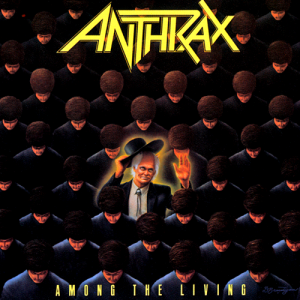
Anthrax are responsible for more Stephen King adaptations than Frank Darabont, but they never hit it better than on their tribute to Randall Flagg from The Stand. Anthrax fan Kevin Smith must have noticed the song’s cinematic qualities when he picked it to score the Clerks 2 trailer, one of the best of the past decade.
The title track from C.O.C.’s mid-’90s rager took its name from another brutal portrayal of the decrepit American South. Apparently, it left a huge impression on guitarist Pepper Keenan — he later named his daughter Flannery.
Any song from Seventh Son of a Seventh Son, a concept album based on Orson Scott Card’s fantasy novel, could have appeared on this list. But the most enduring is deservedly “The Clairvoyant,” driven by one of Steve Harris’ healthiest basslines. I’m thankful that Maiden, or anyone, is more inspired by Card’s books than by his stance on gay rights.
Easily the most faithful of any of these adaptations, Maiden picked out direct quotes from Coleridge and ended up with their longest song to date. We learned more from a 14-minute record than we ever learned in school.
What can I say? Maiden wrote many of the world’s best songs about books. This riveting study of Charge of the Light Brigade kicks just hard enough to edge out “Murders in the Rue Morgue,” “Brave New World” and “The Loneliness of the Long Distance Runner.”
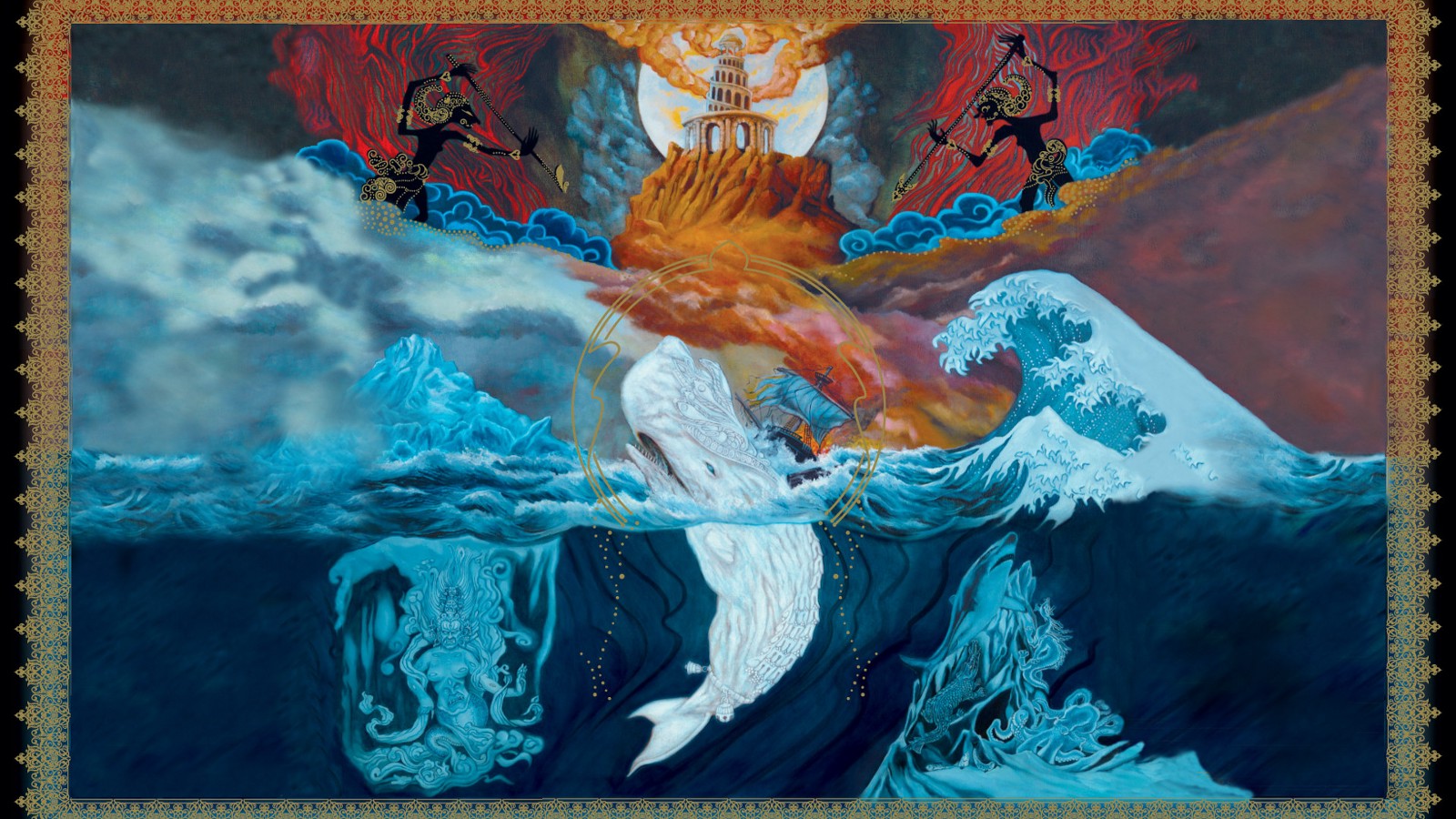
Mastodon’s breakthrough Leviathan tackled one of literature’s indisputable classics in themes, scope and cover art. I couldn’t tell you what “Split your lungs with blood and thunder when you see the white whale” means, but it has me convinced that Troy Sanders is Captain Ahab.
Anyone who mocks Metallica for misspelling the name of H.P. Lovecraft’s most infamous beast obviously hasn’t read the book — the name is not to be said or written out, lest we bring it closer. The band did get brave enough to quote the Necronomicon passage on “The Thing That Should Not Be,” a harrowing tribute to the same creature.
By their second album, the world’s most masculine band was already cribbing from the world’s most masculine author. Using basic language and weaving together a series of simple riffs, James Hetfieldway honored both Uncle Ernie’s depiction of the Spanish Civil War and his concise writing style.
Dave Barry once claimed to “play music as well as Metallica writes novels,” and he’s probably right. Still, there’s no disputing the storytelling and mood-setting capabilities behind “One,” a song that took its narration from Trumbo’s wretched hero.
Perhaps the greatest stunt that Rush ever pulled off was translating Ayn Rand into something that most headbangers could stomach. The fact that a composition as dizzying as “2112” is based on Anthem is proof that the best music is magic
Discard review books that were recently withdrawn from the collection at the Barstow School in Kansas City, Missouri.
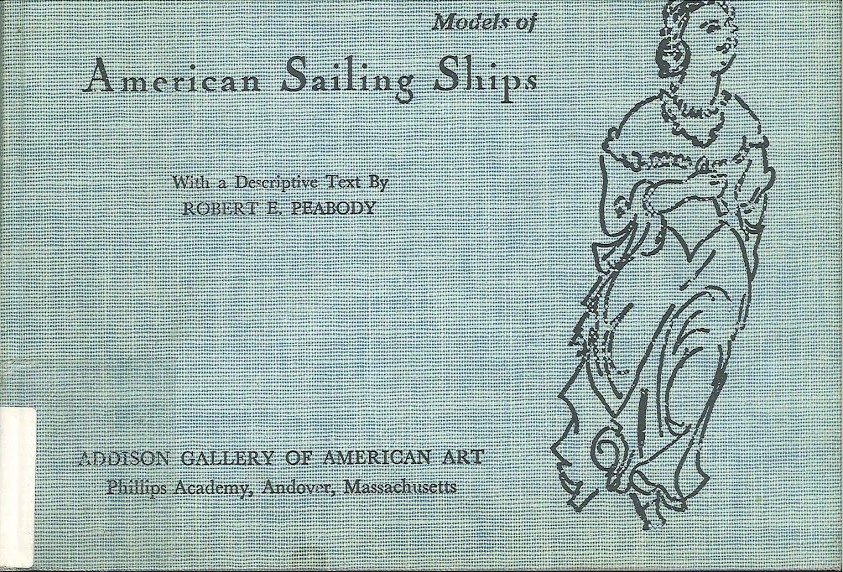
Models of American Sailing Ships: A Handbook of the Ship Model Collection In The Addison Gallery of American Art, with a descriptive text by Robert E. Peabody Addison Gallery of American Art, 1961 Dewey Number: 623.8 PEA Entered Barstow Library: Unknown
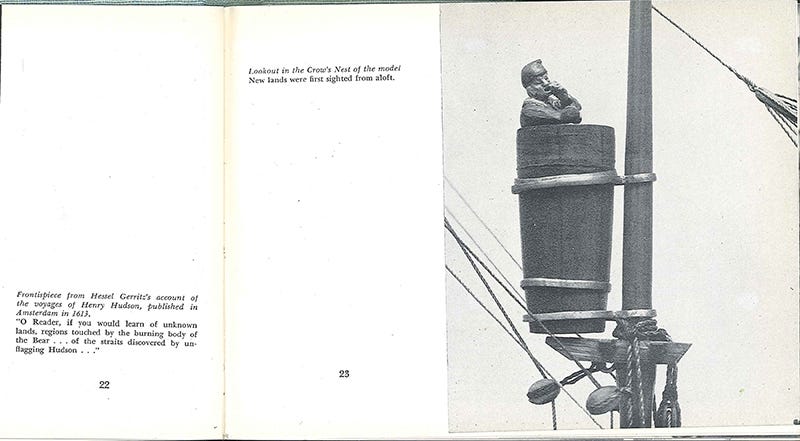
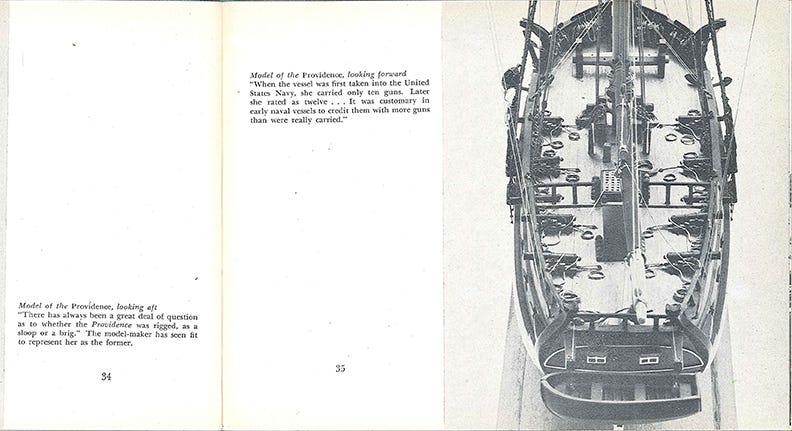
The Addison Gallery of American Art at the tweedy Phillips Academy possesses a rock-ribbed collection of art — think Audubon and Hopper, Homer and Pollock. However, down in the gallery’s basement perches a veritable flotilla of model ships. Not the Snap-Tite nor Revell’s of my youth, but bona-fide hand-crafted artisan models built at a scale of ¼ inch to one foot.
In the 1962 Models of American Sailing Ships, Robert E. Peabody relates the intriguing and somewhat drama-laden history of the models and their real-life counterparts. Philips treasurer and collection curator James C. Sawyer navigated a couple of dozen commissions through the peregrinations of the Depression. As Sawyer put it, “the Addison Gallery wishes to impress on the boys’ minds the beauty of the sailing ship and its contribution to the growth and prosperity of this country.”
Editor John Ratte claims in his preface that the “historical and didactic” value of the collection “cannot be contested,” that the models represent “the fashioning of personal vision” in an early culture where “practical purposes and austere beauty were often closely linked.” Ratte’s introduction contains several instances of such prep school puffery — beyond the very idea of an institution commissioning and displaying model ships during the Depression — lifelong friends from Yale and families paying the commission for models of ships either sailed or built by ancestors. The whole idea rightly smells like Captain Black Royal, smoked in a panelled room with velvety jackets and an Old Fashioned.
That said, the appearance of one Captain H. Percy Ashley helps keep the work from falling too far into the well of more-hobbies-of-the-Cabots-of Boston. From all accounts Captain Ashley was a persnickety cuss who was an international expert in shipbuilding of all kinds, especially ice yachts. Clearly he did know it all, growled about rich dudes and routinely clashed with Sawyer. “Captain Ashley refused to negotiate when his price for making the model of the Clermont was challenged, but he compensated for his high fee in his own characteristic way by making an additional model.”
Captain Ashley wasn’t done. Sawyer had the temerity to suggest that Ashley’s coppering job on America was “sloppy.” The nerve. The impertinent Captain immediately threatened to take his model back and return the funds. Captain Grumpy continued, “The America was heavily built and some authorities claim very hurriedly constructed, including deck fittings and painting. She was built to go to sea and stay to sea regardless of wind and weather. The original yacht was coppered hurriedly and the hull must be sheathed accordingly… Under no consideration will I consider making the changes you recommend.” Pen drop.
Unfortunately, the rest of the book reaches such levels of sheer bitchiness. Instead we get a short description of the ship, its historical importance, and plenty of pictures. We learn Columbus ran the Santa Maria into a reef off of Cuba; America won the first America’s Cup; the Flying Cloud was one of the fastest sailing ships ever known — making the trip from NYC to San Francisco in 89 days and eight hours; and that Captain Ashley’s Clermont pretty much dominates all the other models.
The mystery of how American Sailing Ships came to be in the bibliotek of a Midwestern independent school may never be found. However, I would like to see a conceptual sequel to the book that includes more literary and cinematic renderings: to wit Nellie,Arabella, Pequod, Penguin,HISPANIOLA, Fidéle, and Belafonte.
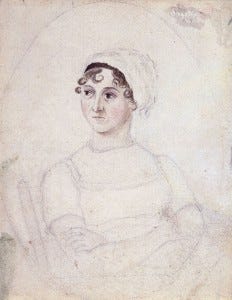
In the nearly 200 years since the beloved author’s death, readers have been unsure what Jane Austen actually looked like. The only portrait available was a watercolor by her sister Cassandra (left) that Austen’s niece claimed was “hideously unlike” the author.
Although one would hope the appearance of an author is irrelevant to enjoying their work, Jane Austen fans who’ve been curious about her appearance now have a life-size wax sculpture courtesy of the Jane Austen Centre. The sculpture is based on work done by FBI-trained forensic artist’ Melissa Dring. Dring used first hand accounts of Austen’s appearance of which there are several. The Guardian points out this passage from the memoir of her nephew, James Edward Austen-Leigh:
“Her figure was rather tall and slender, her step light and firm, and her whole appearance expressive of health and animation. In complexion she was a clear brunette with a rich colour; she had full round cheeks, with mouth and nose small and well-formed, bright hazel eyes, and brown hair forming natural curls close round her face.”
Dring used Cassandra’s watercolor and pencil portrait as a jumping off point, but noted that it makes Austen “look like she’s been sucking lemons.”
Here’s the full wax figure in authentic period clothes:
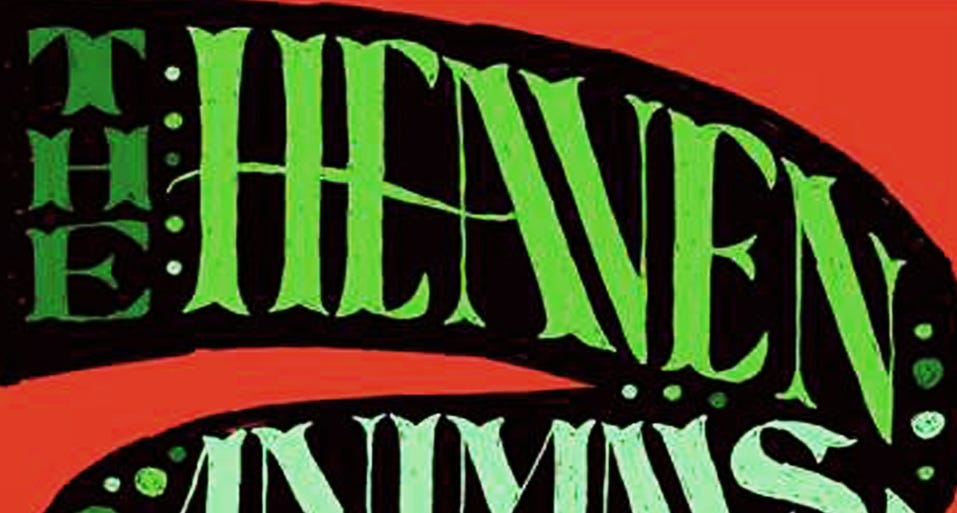
In the short stories that make up The Heaven of Animals, everything is about to end. Marriages are about to end. Love affairs are about to end. Lives — of children, husbands, animals — are about to end (or, in some cases, have already ended). Even the world itself seems on the verge of ending, whether that end takes the form of a rainstorm, or a swarm of bees, or even something far more sinister — perhaps “a cosmic collapse.”
This is David James Poissant’s first book, and if Brock Clarke predicts (in blurb form) that Poissant will become “his generation’s Richard Ford,” who am I to argue? Certainly the characters and milieu of The Heaven of Animals are Ford-esque: men and women, working dead end jobs, in (mostly) unromantic places like Tucson, and the I-10 through Texas, and unvarnished suburban landscapes, and the most impoverished stretches of the Gulf Coast. (One lucky character gets to spend his story in the Presidio of San Francisco, but he ends up naked and submerged in the bay, so what does that tell you about Poissant’s view of the “romantic”?)
These stories demonstrate patience in revealing their uniqueness.
Poissant slashes through the overhang of standard lit-mag tropes — broken marriages, siblings in conflict, love affairs — to emerge into spots of surprise. One pair of philanderers are revealed to be cousins who have been at it for nearly two decades; another man, negotiating a fraught relationship with his brother, winds up having a cleansing moment on a nude beach. In a way, the collection’s second story, “Amputee,” in which a divorced man encounters a young woman who wants to go swimming, teaches you how to read the whole book: What begins like Updike-lite makes a hard left into something stranger when the young woman reveals… well, just take another look at the title.
Then, there are the animals scattered throughout this book, sometimes as characters (e.g., a dog named James Dean), and sometimes as metaphors used by Poissant’s people to avoid discussing their lives directly (e.g., a grieving couple who encounter hippos who lick their deceased kin). In some ways, the talking wolf in “What the Wolf Wants” is the most direct character Poissant has constructed; many of the humans in The Heaven of Animals could learn from the wolf’s frankness.
Poissant specializes in portraits of people with paralysis
: men who find fulfillment from “a Whopper, a six-pack, and HBO,” and women who have settled into uninspiring lives. This paralysis makes them ill equipped to deal with the pain that colors their pasts. Here, Poissant’s writing sometimes feels a little overloaded; there are too many tragic back-stories (children have died in their sleep, spouses have careened into frozen ponds, deaf fathers have been murdered) and sometimes — as in “How to Help Your Husband Die” and “Me and James Dean” — the story’s main action derives blunt emotion from easy places (cancer and a dying dog, respectively).
Yet The Heaven of Animals avoids bleakness, no matter how sad its stories may be, and this is a real achievement. Sometimes Poissant lingers too long, searching for epiphany, but his overall project — trying to wring hope from despair — shows great compassion. “They’d pass through this,” Poissant writes of the characters in “Nudists” (maybe his best story). And many characters do manage to pass through the emotional violence of their lives. That Poissant navigates his own minor-key optimism without writing phony prose is a reminder that happiness and misery are equally uncomplicated emotions: The best writers find the rich places in between.
It seems impossible that you don’t know me. What I mean is that I know your work so well — intimate, is the only way I can describe my relationship to your stories — that I feel like I know you. I consider you a kindred spirit and a teacher. I’ve reread your stories so many times that I know I’ve learned more from them than I have in any writing class. I once spent an entire day deconstructing “Friend of My Youth,” diagramming its structure, its story within a story within a story, to try to understand how you pulled it off. When you won the Nobel Prize, I actually cried with joy. And all day, after the Nobel committee made the announcement, friends emailed and called and texted: “You must be so happy that Alice Munro won!” My adoration of you is so well documented that people were congratulating me on your win, as if you were a member of my family.
But I suppose what I’m saying is that you are a member of my family. My literary family. You are my literary mother. You’re the writer I’ve turned to when I needed the solace that only great literature can provide. (When my actual mother was dying, of cancer, it was your stories I read beside her bed. My mother loved your work, too, and near the end, I often read your stories aloud to her.) You’re the writer who taught me how to move around in time in stories — flashing forward and back. You’re the writer who showed me how much can fit into one short story; how a whole life can be compressed and still feel expansive and lived in on the page. You’re the writer who showed me how complex the architecture of a story can be, and how the motif of storytelling can recur again and again and still feel new. How women and their relationships — to their own desires, and with men, with other women, with friends, lovers, and mothers — can be infinitely compelling. How stories set in small town Ontario (and sometimes in Vancouver) can feel universal. You make it look so easy, with your mastery of suspense, your wry humor, your psychological precision, your brilliant endings. And your stories are full of letters, so it seems fitting that I am writing to you. You’ve said that you think of stories as houses, with various rooms. I’ve entered those rooms and come out dazed. I always go back in. Your stories stick with me; they resonate as if they were actual memories. I know that a minister never slid a hand down my underwear on a train, but I’ve lived inside “Wild Swans” so many times that I feel like it happened to me.
Oh, Alice. If we met, I feel certain we would be friends. That sounds silly, I know. Last summer, when Charles McGrath profiled you in the New York Times, the article included a slideshow of your house in Ontario. I studied the picture of your humble writing desk. It was not unlike what I had imagined. And yet, I felt strange looking at it. Part of me didn’t want to know where you work — I just want the stories to speak for themselves; part of me was devastated to know that you’re retiring, that you won’t be sitting in that chair to write any new stories.
You and I were in the same room once. Deborah Triesman interviewed you on stage at the New Yorker festival a few years ago. I was in the audience at the Directors’ Guild on 57th Street, and I even got up the nerve to ask a question during the Q&A. I asked about your titles; I wondered at what stage in your process you come up with them. We made eye contact. You looked at me as you answered my question. To be honest, I don’t remember what you said. I was too excited and nervous in your presence.
I have copies of all your books. Actually, I have multiple copies of most of them. Sometimes, while traveling, I have an urge to reread a particular story of yours and will go and buy the collection that contains it, even though I already have the same book at home. I always travel with at least one of your books because you are the writer I most like to reread. Your stories have kept me company in places all over the world. The collections I’ve returned to most areFriend of My Youth; Open Secrets; The Love of a Good Woman; Hateship, Friendship, Courtship, Loveship, Marriage; and Runaway.
I’m not in the habit of gushing. Friends rely on me for my critical eye, my cool intellect, not for my unbridled enthusiasm. I’m a reluctant user of exclamation points. But for years I’ve wanted to write to you, to say thank you. Thank you! Your stories, Alice, have meant so much to me. Cynthia Ozick once described you as “our Chekhov.” (I love Chekhov — I return to his work again and again, too.) When Ozick said “our,” I suppose she meant our era, our time. But I understand her impulse to use the possessive pronoun. Those of us who love your work do feel possessive of it. Your stories provide deeply private pleasures. You are our writer, part of our family. Now that you’ve won the Nobel, even more people have joined our ranks. And I’m glad to know that your work is finding new fans. But I also want you to know that some of us have loved you for a long time. Some of us are writing stories because of you.
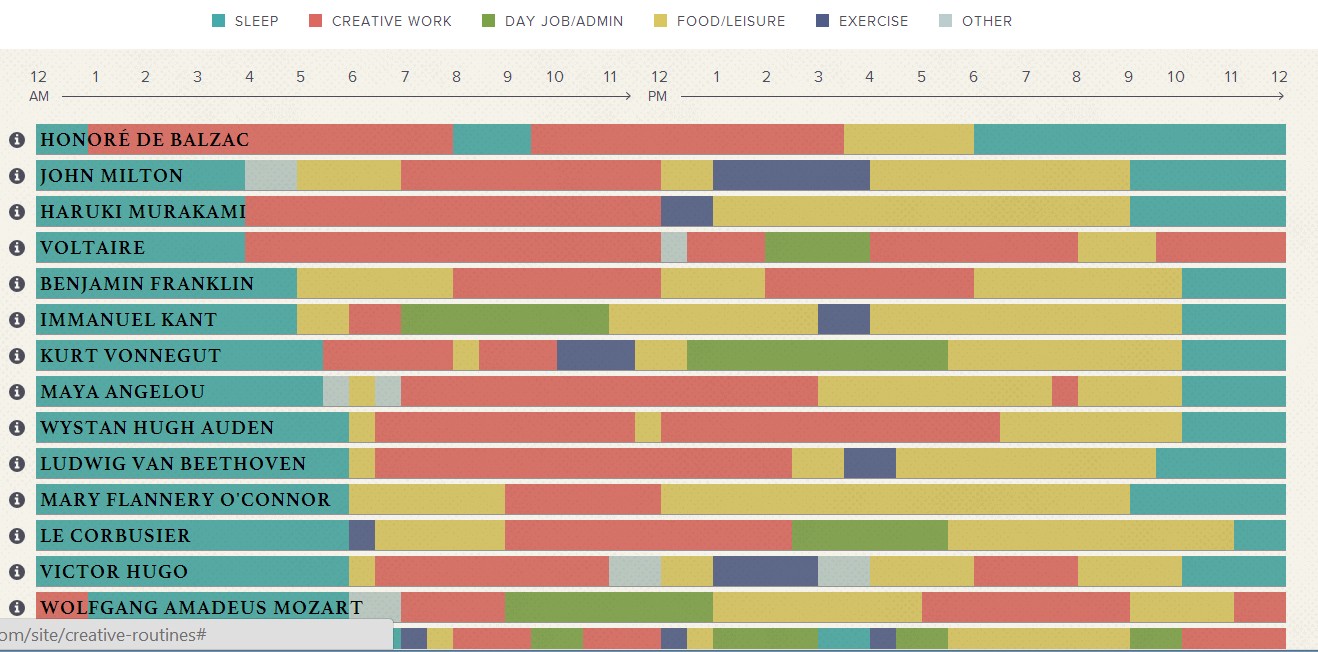
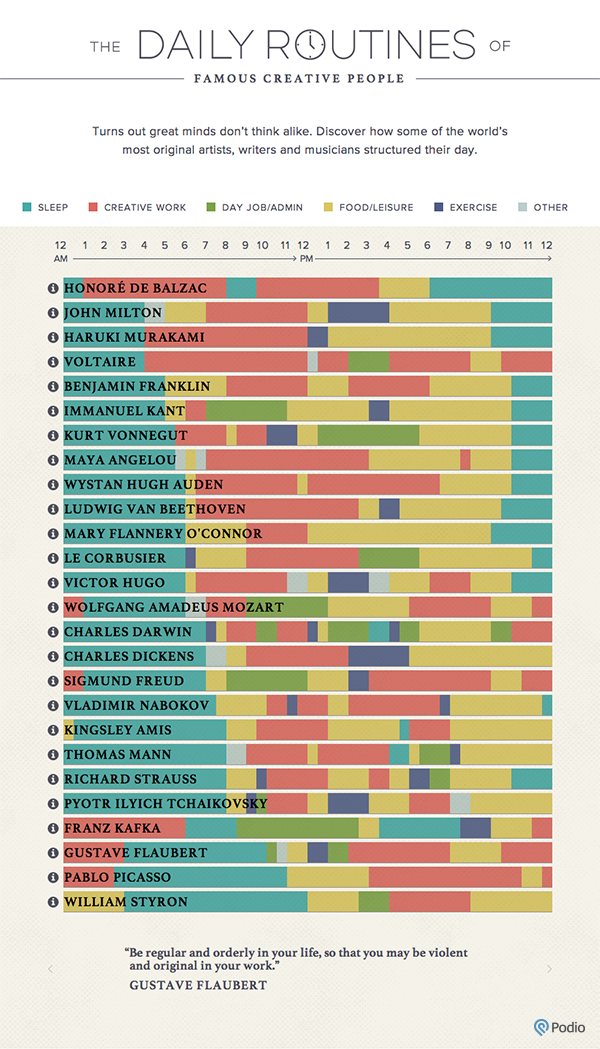
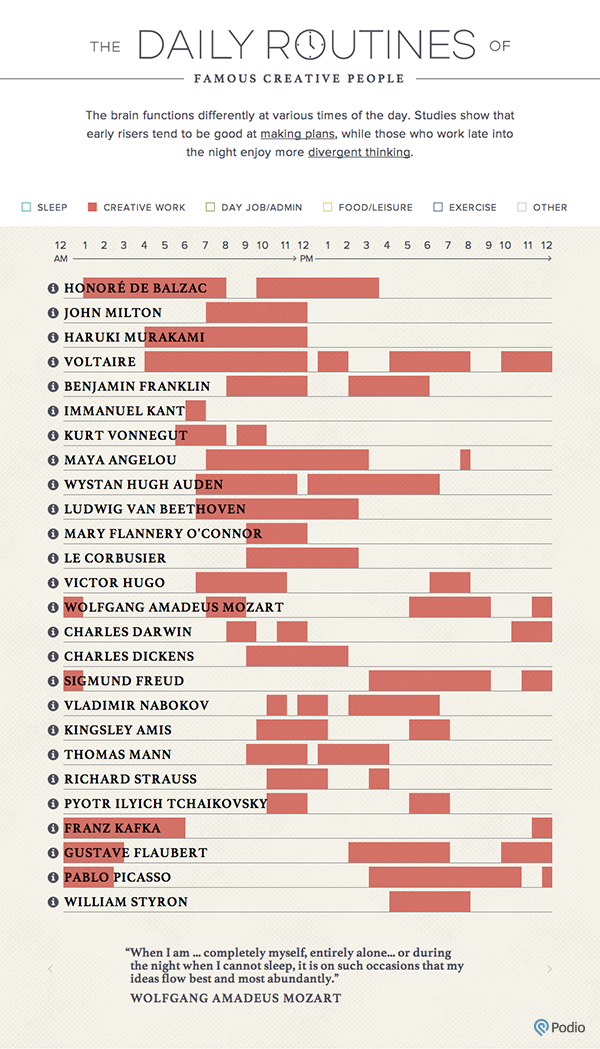
Here’s an interesting infographic from Podio, which, it should be pointed out, has a pretty embarrassing lack of women and POC. Flannery O’Connor and Maya Angelou are the only woman genius that made the cut? Barely anyone from outside Europe or USA?
Still, if you can get past that bias, it’s interesting to see how different famous (mostly white male) writers, artists, and thinkers broke down their daily routines.
Want to develop a better work routine? Discover how some of the world’s greatest minds organized their days. Click image to see the interactive version (via Podio).
Chicago’s literary scene dates back a bit. You might start with Upton Sinclair and his most famous work, The Jungle, which revealed the horror of the Chicago meat-packing industry. In it there’s a clear sense of the struggle between laborers and the owning-class. It also provides vivid description of the fetid conditions in which Americans’ meat was kept, which proved to be of far greater interest to the meat-and-book consuming public.
I’m sure in those days writers like Sinclair would give readings inside of the stockyards, between piles of animal protein. I don’t know this for a fact, though. I wasn’t there, and I’ve done very little research on the subject. But doesn’t it sound like what probably happened? I say yes, a definitive yes.
What I do know is, Chicago’s independent publishing community is as vibrant now as it has ever been, since the time of its humble, meat-surrounded origins. Take for example its many literary magazines. There is an abundance, a veritable surfeit, of said magazines being published right here, right now, right under the nose of the average person, both visitor and Chicagoan alike. Long removed from the stockyards (probably), events for these magazines are now hosted in local bars, coffee shops and independent bookstores. Publishing happens in people’s very own homes. Indie literature is as readily available and resurgent in the Windy City as microbrewed beer.
It’s my hope, in time, I’ll have a “CHICAGO DISPATCH” for the many deserving presses, reading series, publications, book sellers, coffee shops and bars there are to be found here in Chicago (plus maybe some mention of where you might go to get delicious Chicago-style pizza, which is indeed what all Chicago writers consume to become more literary, true fact). But I had to start somewhere, because otherwise this would be a very long post and you know how the internet hates those. I’ve probably written too much about the internet hating long posts and articles and so forth already. Let’s just get to the magazines, then.
Artifice Magazine — James Tadd Adcox and Rebekah Silverman brought this publication to life in 2009. Both have since departed but the magazine lives on as an imprint of Curbside Splendor Publishing and through the diligent efforts of its current Editor-in-Chief, Peter Jurmu.
James Tadd Adcox told me a little about the origins of the project. He and Silverman attended the Purdue University Creative Writing MFA together, working on the Sycamore Review there (Silverman served as Editor-in-Chief and Adcox served as its fiction editor).
Adcox joked that at one point, while working on the Sycamore Review, he decided stories that included dogs or cancer in their first pages would automatically be rejected. There was a kernal of truth to this notion: Adcox wasn’t interested in featuring realist fiction that was ubiquitous in most of the notable collegiate literary magazines. Instead, Adcox and Silverman saw an opening to publish first-rate surrealist and absurdist stories that seemed to have fewer places (at the time, at least) to be published. It was in the same spirit that Artifice was born, post-graduation from Purdue, in a restaurant in Chicago’s Wicker Park neighborhood, Penny’s Noodles (one of three restaurants Adcox recalled frequenting at the time).
Artifice, not limiting itself exclusively to an annual journal, is now also publishing books, with the collections of poets and writers like Daniela Ozlewska, Sara Woods (who previously published under the name Russ Woods) and Cassandra Troyan either currently available or forthcoming.
ACM: Another Chicago Magazine — Full disclosure, this past March I joined ACM’s staff as its fiction editor. And while it’s reasonable to say mentioning ACM on this list impugns my own character, I hope that you will look beyond all that to see the remarkable publication Another Chicago Magazine is. It has thrived for over 35 years as a mainstay of Chicago’s independent publishing community. And having showcased the work of folks like Charles Bukowski, a young David Sedaris, Brigit Pegeen Kelly, Steve Almond, Patrick Somerville, Samantha Irby, Amelia Gray, and on and on, ACM has undoubtedly earned its indie cred.
ACM began with Lee Webster and a collection of University of Illinois in Chicago graduates who founded it in 1977. Since then, it’s weathered plenty of changes to its staff, including Webster’s transference of power to Barry Silesky, who joined ACM in the eighties and took over entirely by the ’90s. Silesky ceded Editor-in-Chief duties to Jacob Knabb, who in turn has handed off responsibility for the magazine to Caroline Eick.
Working alongside me, as fiction editor, are more seasoned, better editors like the aforenamed Caroline Eick (managing), David Welch (poetry), Colleen O’Connor (non-fiction), Josalyn Knapic (assistant fiction), as well as a whole host of really fantastic readers and interns.
ACM is always looking to put together a magazine as diverse as the city it represents. And furthermore, there’s a concerted effort afoot to move well beyond its Chicago namesake, as Eick herself has now relocated to New York City. The hope is this, along with other changes, will expand ACM’s reach even further and bring it in contact with many new readers and contributors.
Skydeer Helpking — Sara Woods and Jeannette Gomes have collaborated on this project for just about a year now, which is especially interested in publishing female poets and / or queer poets and / or poets of color. As for their aesthetic sensibility, Sara Woods has said they’re especially interested in poetry and hybrid works that have lots of heart and engage with the surreal and dream logic.
The first issue featured poets like Sarah Jean Alexander, M. Kitchell, Matthew Maheny, Leif Haven, Simon Jacobs, Roberto Montes and many more. So many more.
And while half the tandem has relocated elsewhere (i.e., Woods is living in Portland, Oregon nowadays) the publication was founded and debuted in Chicago, and has the same taste for the unusual that is becoming increasingly embraced by other local writers and editors (as it seems to be nationwide, as well).
Also! Please note, they read all submissions blindly and only during the month of July, so get on that.
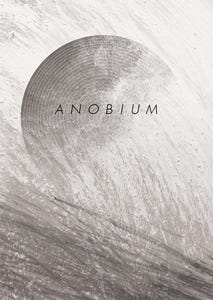
Anobium — Benjamin Van Loon likes weirdness, if I had to judge Anobium on one standalone feature. It’s much more than that, though. I don’t think I’m surprising you by stating the obvious here, but I’m stating it anyway. For instance, the publication takes its name from the Greek word for lifelessness. The publication was founded by Van Loon and “Mary J. Levine” in 2011, and it continues to be run and published in Chicago.
Anobium Vol. 1 (summer 2011) begins with a “Letter From the Editor” — Mary J. Levine — who is, in fact, not a real person (and this then seems like something a publication whose name literally translates to “lifeless” would do).
In her letter “Levine” explains, “I am an amalgamation of thought and knuckles and corporate policy.” And like so many corporate and governmental entities, she is free to take the blame, be Big Brother to the faceless many who are truly responsible. It seems a convenient setup, perhaps as ingenious as the works Anobium features. Though as always, I’ll let you be the judge.
Knee-Jerk Magazine — C. James Bye (Editor-in-Chief and Publisher), Jonathan Fullmer (Creative Consultant) and Stephen Tartaglione (Director of Content Strategy) are a trio of literary luminaries who spent many years together in Chicago publishing Knee-Jerk (although there’s been a bit of a dispersal of late — Bye now lives in Tennessee, and Tartaglione now lives in Ohio). They collectively founded Knee-Jerk (in Chicago) in 2009, and this July marks the five-year anniversary of their publication.
I was first personally acquainted with Knee-Jerk at a release party for their Offline Vol. 1 issue way back in early 2011. It featured rising (and established) Chicago literary stars like Lindsay Hunter, Jacob Knabb, Kathleen Rooney and Michael Czyzniejewski, to name a few. I was also in awe of the rapport Bye, Fullmer and Tartaglione visibly had — seeming both extremely funny and at ease while team hosting this event.
They also published THIS STORY, which I think everyone should read at least once.
Knee-Jerk has grown in recent years. According to Bye they now publish — alongside staples like fiction and nonfiction — art, Reviews of Things and interviews (provided people query before doing the interview). Bye was also particularly excited about Knee-Jerk’s recent 50th posting of Greg Fiering’s “Migraine Boy” comic strip. According to Bye, “[Fiering] has been inspiring me since I was in middle school.”
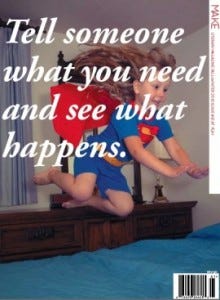
MAKE Magazine — MAKE has been around since 2004 doing all sorts of great things for literature in Chicago. It was founded by Ramsin Canon, Mike Zapata and Sarah Dodson, the latter of whom I turned to for a bit more information regarding all things MAKE.
For starters, Dodson offered a brief overview of what goes into the creation of an issue: “Each issue of MAKE follows a theme and is, more or less, equal parts fiction, poetry, nonfiction, visual art, reviews, interview, and translated work. The themes vary considerably issue to issue, allowing for a wider range of styles — from first-person narrative to visual poems.”
They’ve published a great litany of writers, many of whom are Chicago-based, though by no means is it exclusive in that way. Some examples of great stories, poems and nonfiction include work by James Tate, Adam Levin, Gina Frangello, and Alissa Nutting, among many others.
The layout of the publication is alone something to behold. Dodson said that a few years ago they upgraded MAKE’s paper stock and added color ink with the idea that “each issue is an art object, as well as a format to distribute art, and the design of each issue is as carefully considered as each poem or story.”
Their forthcoming fifteenth issue, “MISFITS,” will include pieces that didn’t quite fit with previous issues. It will also include more illustrations and what Dodson said is an “extra-rich ‘Intercambio’ section,” with works translated from Spanish to English. Among the publication’s editors are people living and working in Chicago, New York City, Los Angeles, Mexico City, and Chapel HIll, NC, contributing greatly to its cosmopolitan flare.
Poetry Magazine — The Poetry Foundation is literally an institution here in Chicago. It was founded in 2003 with their primary mission being: “To raise poetry to a more visible and influential position in American culture.” At the time of its founding, it was gifted a great bequest from Ruth Lilly to help fulfill that mission. They have a building! It’s located downtown.
Poetry Magazine, meanwhile, has been around much longer than the foundation, arguably a Highlander among other literary magazines that focus almost exclusively on poetry (as their name suggests). The publication was founded in 1912 by Harriet Monroe and has endured over the years as an offshoot of various publishers (for instance, preceding the Poetry Foundation was the Modern Poetry Association).
Fred Sasaki, Art Director for the magazine, was kind enough to answer a few of my questions about his personal experiences with Poetry and poetry in general, saying:
“Our work is more love than commitment, which I can best describe as kismet. I’ve been with the magazine 12 years and things still feel fresh. So much has changed while I’ve been with Poetry — since before the Lilly bequest, the Poetry Foundation, the building — and yet the job has in fact been everything I expected. Like a page from a fairy tale. But that’s because I found my rabbit hole. And I’d like to say the future of poetry is always brave and new.”
Polly Faust, Media Assistant for the Poetry Foundation, offered a quick rundown of what to expect from the magazine in the very near future: “Our next issue of the magazine, July/August, features works by Tony Fitzpatrick, whose final Chicago exhibition, Secret Birds will be in the Poetry Foundation Gallery Space from July 1- September 12.”
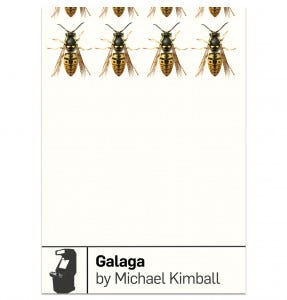
[Editors note: The following is the opening of Galaga by Michael Kimball, a book about the classic 1980s arcade game. Galaga can be purchased from Boss Fight Books.]
Galaga
Stage 1
Galaga (1981) was Alec Baldwin’s favorite arcade game and it might have saved his life. Apparently, in the 1980s Mr. Baldwin would play the game as a way to come down from his long nights of drinking and doing coke. In the morning, he would show up at a warehouse arcade in Los Angeles and wait for the owner of the place to open up for the day. He would play arcade games while other people were eating breakfast and going to work. According to Mr. Baldwin, playing video games “was the only way I could go ‘beta’ and go into that state I needed to be, where I could calm down and take my mind off everything.” The rush of playing video games became a substitute for the rush of drugs and alcohol. Playing Galaga and other arcade games for a couple of hours allowed him to wind down enough that he could go home and go to sleep.
Stage 2
Galaga is a coin-op arcade video game and a sequel to Galaxian (1979), itself an unofficial update of Space Invaders (1978). Galaga is a shooter, a fixed shooter, a spacy, a space shooter, a bug shooter, or a single-screen schmup (a.k.a. shoot-em-up). Galaga is also sometimes called a bug war, an exterminator, and a kind of insecticide.
Stage 3
Galaga was released in December of 1981 when I was 14 years old, but it probably didn’t reach Aladdin’s Castle arcade in the Lansing Mall until early 1982 when I was 15 years old. It was a difficult time in my life and going to the arcade any chance I got was a good excuse to get out of an abusive household. Galaga was my longest quarter and I could almost always set the daily high score in any arcade. Playing that video game gave me a way to space out and let me forget about the rest of my life. Galaga was my game and it might have saved my life too.
Stage 4
Many consider Galaga the first arcade game sequel. Ms. Pac-Man (1981) preceded Galaga, but it was originally a Pac-Man (1980) hack called Crazy Otto that Midway bought out while waiting for Namco to deliver Super Pac-Man (1982).
Stage 5
Side note: I’ve never actually seen or heard of Galaga being referred to as an exterminator, but I thought it was funny.
Stage 6
There are lots of playing tips later in this book, but here is a cheat sheet:
(1) Get double fighters.
(2) Don’t do anything stupid that destroys one of the double fighters.
(3) Stay out of the corners.
(4) Learn the entrance patterns for each stage.
(5) Clear out at least one side of the formation before the Galagans begin attacking.
(6) Focus on clearing stages rather than maxing out points.
(7) Max out the Challenging Stages.
Stage 7
Back in the 1980s, Galaga wasn’t the most popular arcade game or the one that made the most money, but it has endured for more than 30 years and continues to be played on many platforms. Galaga is an incredibly successful sequel. In my adopted hometown of Baltimore, Galaga can still be played in a pool hall, a pizzeria, a Laundromat, a hipster bar, and a crab shack. Those are just the places I know. I like to imagine secret Galaga machines tucked into strange establishments all over the city.
Stage 8
The blue, yellow, and red alien insects are bees. The white, orange, and blue ones are butterflies. Sometimes, the bees are referred to as hornets or wasps. In Japanese, the bees are “zako” and the butterflies are “goei.” Sometimes, the butterflies are referred to as moths. But one of the mysteries of Galaga is what the Boss Galagas are supposed to be. It has been suggested that they are birds and cicadas, but neither of these suggestions seems quite right. I checked with a cicada expert who said the Boss Galagas are definitely not cicadas. She didn’t think they were birds either. Another possibility is that the Boss Galagas are giant flies. An entomologist didn’t rule out that possibility.
Stage 9
There is a definition on Urban Dictionary that makes Galaga an adjective and defines it as “to do something really cool.” Here is a representative usage: “I rode my mountain bike over the continental divide and it was so Galaga.”
Stage 10
Galaga starts with some upbeat 1980s techno music and a single fighter travelling through deep space that is flecked with red, green, blue, yellow, purple, and orange stars that twinkle and scroll off the bottom of the screen. Player 1 is the single fighter at the bottom of the screen. The joystick stands between the first finger and thumb of the player’s left hand and the fire button rests under the first two fingers of the player’s right hand. Soon, swarms of alien insects swoop down in long looping columns from the top and the sides of the screen. At first, it’s unsettling the way the alien insects seem so ready to kamikaze the fighter, but they pull up before crashing into it and then curl back up into troop lines at the top of the screen. The alien insects settle into their attack formation: two rows of ten alien bees, two rows of eight alien butterflies, one row of four Boss Galagas. There is a brief pause and then the alien invaders start dive-bombing the fighter. It’s up to Player 1 to save this world.
Stage 11
When I started doing Galaga research, I was surprised by the extent of the game’s legacy. There are Galaga clothes, jewelry, and collectibles. There are Galaga tattoos, Galaga ringtones, and Galaga baked goods. There is Galaga art. Galaga continues to show up in songs, books, TV shows, and movies. Galaga is one of the most bootlegged video games in the history of video games and there are also a bunch of Galaga hacks, clones, and updates. I love Galaga, but I didn’t know that so many other people love Galaga too.
Stage 12
In a full formation, the first alien insect to attack is one of the bees, which jumps off the left side of the formation, curls around, and dive-bombs the fighter. Almost immediately after that, an alien butterfly jumps off the right side of the formation, fluttering and bobbing at the fighter from the opposite direction. Then one of the Boss Galagas backflips from the top row and somersaults down the screen. This is just the first of wave after wave of attacks.
Stage 13
Rule #34 states: If it exists, there is porn of it. After Googling “Galaga” and “porn,” I found a drawing of a naked Terezi, the blind troll from a comic called Homestuck, feeling up the Galaga fighter. I found a series of photos of porn star Jordan Capri getting naked in front of a Galaga machine. I found out that some people see the futuristic art on the side of a Galaga machine as two huge orange breasts with big red nipples. And I found a photo of a naked gamer girl with her knees up and her legs spread, while a Gameboy defends her vagina from three Galaga fighters that are photoshopped into the shot.
Stage 14
Eventually, some version of Galaga was released on nearly every gaming platform — including, alphabetically, Android, Atari 7800, Casio PV-2000, Dreamcast, Famicom, Fujitsu FM-7, Game Boy, Game Boy Advance, iPad, iPhone, MSX, Nintendo Entertainment System, Nintendo 3DS, Nintendo 64, Nintendo DS, Nintendo GameCube, PC, PlayStation, PlayStation 2, PlayStation 3, PlayStation Portable, Roku, Sega SG-1000, Sharp MZ, Sharp X1, TurboGrafx-16, Xbox, Xbox 360, Wii, and WiiU.
Stage 15
The Galagans attack in ones at first, but then in twos and threes, swarming down from both sides of the screen. They blanket the deep space with bullets as they criss-cross above the fighter, which Player 1 pushes left and right against the attacks. Eventually, the second Boss Galaga loops off the top of the formation and somersaults down the screen. Then, oddly, the Boss Galaga stops two-thirds of the way down the screen and releases a blue tractor beam to the sound of some twirly, hypnotic music.
Stage 16
After doing some pretty standard Google research on Galaga, I started to Google “Galaga” and anything I could think of — including “cake,” “candy,” “jewelry,” “rap lyrics,” “shoes,” etc. That’s how I found out, for instance, that you can buy a Galaga wine stopper, download a Galaga cursor, or buy a Galaga license plate frame.
Stage 17
One of the reasons I must have been drawn to Galaga was my recurring apocalyptic nightmares in which my school, my neighborhood, America, or the Earth is being invaded by Russians, monsters, or aliens. In these nightmares, I had to save whatever was under attack. On some level, Galaga was my nightmares transformed into an arcade game, but it was fun and I wasn’t as afraid to die. It only cost a quarter to fight the invading alien insects of Galaga. Who wouldn’t want to do that?
Stage 18
In almost any video game, a player’s instinct is to avoid being captured, but Player 1 moves the fighter into the blue tractor beam and watches it twirl up to the Boss Galaga. The captured fighter turns red and the Boss Galaga wheels around and tows it back up into the attack formation like a trailer on a hitch. Player 1 gets a new fighter from the fighter reserve and waits as an alien bee and then an alien butterfly loop down from different sides of the screen. Then a green Boss Galaga jumps off the right side of the formation with two alien butterfly escorts leading the way and the player’s captured fighter trailing it. Player 1 moves the fighter to the right side of the screen and waits for the attack group to line up vertically. A quick two shots take out the two alien butterflies. Another quick shot turns the Boss Galaga blue and then a fourth one destroys the Boss Galaga, rescuing the fighter.
Stage 19
There is a doctored photo of Lady Gaga wearing a black leather (or maybe vinyl) dress that has a blue Boss Galaga at the neckline (which almost looks like a huge piece of jewelry) and then the blue tractor beam descends the length of the dress. She looks like she’s arrived from the future wearing a dress from the past.
Stage 20
Galaga was created by Namco in Japan and released there as Gyaraga in September of 1981. Galaga was released by Namco’s North American distributor, Midway, in December of 1981, though it didn’t reach most arcades in the U.S. until early 1982. Galaga can be played in three different cabinet styles: (1) the standard upright version, (2) the mini-cabaret version, and (3) the cocktail-tabletop version. There was also a fourth type of Galaga machine, a portable mini-television version to be used when travelling, but I’ve never seen one of those. Please note: The pure and true and full Galaga experience can only be captured when playing the standard upright version. The other versions do not play as well.
Stage 21
The rescued fighter turns back to white and spins back toward the center of the screen where it lines up vertically and drops in next to the second fighter. They link up and there’s a little riff of celebratory music. The double fighters start firing away at the alien armada in the brief moments before they begin attacking again, clearing out the center of the attack formation. An alien bee jumps out wide and curls back toward the center of the screen while the double fighters slide over and quickly take it out. The same thing happens with an alien butterfly on the other side of the screen. Then one of the last two Boss Galagas does its backflip at the top of the formation and Player 1 lays down two pairs of bullets that destroy it at the top of the screen.
Stage 22
In 2009, Hallmark sold a miniature replica of the Galaga arcade cabinet as a Christmas tree ornament. It lights up and includes a sound chip that plays the game’s music. These four-inch ornaments have become collector’s items, often selling at many times their original price.
Stage 23
There is only one way to play most classic video games, but Galaga has options. With Galaga, the player had to choose between a single fighter or double fighters. At the time, it was the only game in which the player could turn a bad thing (a captured fighter) into a good thing (double fighters). Getting double fighters made me feel like I was in on a secret.
Stage 24
Before I started playing video games like Galaga, I played board games like Candy Land, Battleship, Life, Clue, Masterpiece, and Monopoly. I played card games like Crazy Eights, Rummy, and War. I played a lot of baseball, basketball, football, and kickball at school, in organized leagues, and in the neighborhood. At home, we often played tag, freeze tag, something we called Spud, and something else we called Gorilla, Gorilla. I always wanted to be playing some kind of game. The terrible stuff happened when I wasn’t playing games.
Stage 25
There are just a handful of Galagans left at the end of the wave and they attack together — an alien bee, an alien butterfly, and then the last Boss Galaga. Player 1 picks off the last Boss Galaga with two quick shots while another alien bee and another alien butterfly begin their attacks. Player 1 slides the fighter away from two bullets and away from the alien bee looping under it, then picks off one alien bee and then a second one. The two alien butterflies flutter through the bottom of the screen, but then don’t retake their positions in the formation. They continue attacking instead and the fighter sprays two sets of bullets on the right side of the screen and then the left side, taking out both alien butterflies.
Stage 26
The double fighters in Galaga were a huge shift in gameplay at the time. And double fighters are one of the biggest keys to playing Galaga at the highest levels. It’s easier to aim, easier to clear stages quickly (thereby limiting enemy attacks), and the player’s shooting statistics (which are displayed at the end of the game) are much improved. Double fighters are a bigger target, of course, but if the player uses them properly, there are considerably fewer instances where they are a target at all.
Stage 27
Besides playing games with other people, I played a lot of games by myself. I made up games to keep myself company. I always had a deck of cards and played different kinds of solitaire in front of the TV or on my bedspread. I made up different board games on colorful sheets of construction paper that I then taped together so I could play against different versions of myself. I played a baseball game that used nine baseball cards for each team, with batting orders and defensive placements, and little slips of paper that I pulled out of a baseball hat to determine each playing card’s at-bat. I loved playing these games by myself and, at the time, I couldn’t have imagined how playing video games by myself would be so much more fun than playing non-video games by myself.
Do not buy a car. Do not drive. Ignore advice to obtain an international driver’s license before your arrival. American cops do not know what an international driving license is. Or they pretend not to know and what they don’t know makes them angry. You do not want to face an angry American cop. Driving is a slippery slope. Driving is trouble. Driving is tickets. Driving is a cop asking you for your license and registration. Before you know it, you are standing before an elderly grim immigration judge.
Avoid parties organized by our people. Arguments and fights break out over politics, over politicians, over girls, over anything, over nothing. Drunken arguments. Especially after imbibing a cocktail of Hennessey and Irish Cream. Neighbors call the cops. Cops ask for identification. Remember you do not have one. I know we are a party-loving people, so if you think you can’t live without it, go to YouTube, there’s more entertainment on YouTube than you’ll find at any Nigerian party. Nobody was ever arrested for watching YouTube videos.
Avoid Rashonda and Shenika and her sisters. They once married and had kids or dated and had their hearts broken by our men. They are on a revenge mission. They’ll take out their hurt on you. They’ll promise they’ll marry you to help you get a Green Card. They will not. Ignore their avowed love for our local food. They’ll tell you they love eating spicy food. They’ll eat you dry, eat you out of the house, and dump you. Besides, they smoke weed. They’ll expect you to pay for their habit. Weed is expensive in America, unlike back home where you can get it for next to nothing.
Avoid Chucks. Is that even one of our names? Anyway, that is what he calls himself. Sounds like a made-up name, neither Chuck, which is American, nor Chuks, which is ours. His name is not the only dubious thing about him. He’ll tell you he is in the auto insurance business. This is a ruse. Actually, this is what he does: he buys cars, insures them heavily, looks for a lonely road, and drives them into a tree. After which, he claims the insurance money and throws a big party. Remember what I told you earlier about Nigerian parties. He recruits new drivers at these parties. He will tell you that there is no risk involved. He’ll assure you that all you have to do is wear your seat-belt and run into a tree. One of his drivers ran into a tree and broke a neck bone. He is still wearing a neck brace. Before Chucks became a car crasher, he drove around town in his beat-up Nissan looking for unsuspecting inexperienced drivers who’d run into him so he could collect. Avoid him. He has no honest bone in his body.
If you must travel, travel by Amtrak. Trains are safe, buses are not. I mean safe from raids by the INS. Here’s something that happened to someone I know. He boarded a Greyhound bus that was traveling from Chicago to upstate New York. At the Greyhound bus station in Chicago, there were boisterous kids. The boys were in jeans and t-shirts, but the girls were dressed the traditional Somali way. Colorful scarves and cotton patterned wraps. It was a night trip. A few hours after the bus pulled out of the station, the bus was pulled over into a gas station by a detachment from the INS. They went from seat to seat asking people, Where are you from? Do you have an ID? Identify yourself. Soon they got to the row of the Somali kids. Where are you from? From Chicago. I mean what country? America. Do you have ID? And the kids pulled out shiny U.S. passports. Avoid the bus. It is overcrowded, overheated, over-scrutinized, and accident prone. If you must travel, take the train.
If you must go to church — I suspect you will want to go to church, because you are a man with problems, and a man with problems needs prayer. Avoid the American churches, though: they do not shout in American churches and a person with problems needs to shout loud enough to reach the heavens.
American churches do not announce jobs. The pastors do not know the places that hire those without papers. The pastors do not order people to go on “seven days dry” nor “white fasting.” They do not play loud music; they do not dance energetically and frenetically. I hear the African-American churches in the South do. But those are in the Deep South.
And while on the subject of churches: the church is not an opportunity to meet girls. The girls in the churches, the immigrant girls, are in the same leaky boat as you. They do not have papers, they are illegal, they are searching for someone to marry them for a Green Card. They’ll not tell you this fact until you happen to mention it one day when you are both in bed and then they’ll hiss like an angry snake, Why did you not tell me all this? I wasted my time cooking for you. They will leave you on the bed half-naked as they march out with righteous indignation, giving your door such a loud bang on their way out that the door is left wondering what it did wrong.
People will urge you to go to school. They’ll tell you an American education is useful. That is not true. That is 80’s. You are here to hustle. If you must get any kind of qualification, get a nursing certification or qualification in some medical field. A sick man does not care about your accent. A helpless old lady needs strong arms, not great enunciation. There are many of those schools. Get into one and you’ll qualify in eighteen months. I’ll recommend the ones run by our people. They don’t ask too many questions and you can pay on the installment plan.
If you need an immigration lawyer, never hire a Nigerian or Ghanaian lawyer. Get a white lawyer, preferably a Jewish one. He will ask you no questions, so you will not tell him any lies. Masquerades do not fear each other — I need not say more. By now you must have realized that there are tribes in America. Remember when at the port of entry you went to the black man in the booth and he called you brother — a good white lawyer will argue your case before his white brothers. Be prepared to pay a bit more. Unlike the Ghanaian and Nigerian lawyers, they do not bifurcate their payments. The only payment plan they adhere to is immediate payment. You must give them a check before every meeting and before every court appearance and before the signing of any document. I can assure you they’ll deliver. They get the job done.
If you want to understand your new society better, you should go to a baseball game. Ignore invitations to play five-a-side soccer with fellow immigrants in that obscure park in the outskirts of town. If you really hope to become a part of society, on a Friday evening go to a nearby stadium and watch a baseball game. Sing “Take Me Out to the Ballgame” along with the crowd. Buy a beer and a hotdog, eat some cotton candy, try to catch the ball but do not try too hard, especially if there is a kid around you trying to catch the same ball. Do not try to understand the game. It is neither cricket nor soccer. Just sit, relax, watch the people, sip your beer, and pay a little attention to the game. The good thing is that you are not obligated to stay until the end. Leave when you become bored or tired, but you bet that you’ll learn a lot more about this society from sitting at that stadium with the smell of beer and nachos and screaming kids than you’ll learn in any other place. Go on the Internet. Read up what you can find on Shoeless Joe and Yogi Berra. Learn some Yogisms. I have never met an American who hated baseball. As tea is to the Englishman, so is baseball to the American. I’ll go as far as to recommend listening to baseball commentary on the radio. Play it loud and let your neighbors hear what you are listening to; it will calm them and put them at ease about you.
Avoid buying your groceries from the African store. Their stuff is overpriced and they’ll rip you off. Train your palate to adjust to American food. There are affordable alternatives in the grocery store if you know what to look for. Eat lots of kale and spinach and collards. Winters are long. Your body will miss all those tropical vitamins but the vegetables will help compensate. Do your own cooking, not only is it cheaper, it is healthier. As you’ll soon find out, burgers and fries will not do you much good. Your cholesterol level will rise, your blood pressure will hit the roof from all that salt and fat, you’ll sicken. You are not likely to have any health insurance, so eat healthy. Exercise moderately, but stock up on Theraflu and Vicks VapoRub in case you fall sick. The mosquitoes here do not carry malaria so you do not have much to worry about.
Dress well. Dress properly. Dress the way you wish to be addressed. Ignore that entire pants on the nape of the butt thing. Leave that to Lil Wayne and all those guys on rap videos and the guys in prison. I am not saying you should spend all your money on clothes. What I am saying is that you should spend a little money on the right kind of clothes. Dress preppy. These are not my words but sage advice someone gave me many years back. Chinos pants and button down shirts. It is in your own interest to dress this way. It is reassuring. It makes you less suspicious. If you don’t believe me, walk into your local Walgreens in sagging black jeans, a black hoodie, and sneakers and watch the security guy follow you all over the store. Go back the next time dressed preppy and watch him smile and greet you with a Hello buddy.
Since you’ll not be driving, I suggest you invest in a good winter coat. Do not stint on this. You can buy one on a layaway plan. London Fog is a good brand. You do not want to suffer from any cold-borne illness. They do to the black man what tropical illnesses do to the white man.
Riding the bus is a big hassle in winter. The schedules are crazy because the auto companies want every American to drive a car. What makes the buses worse are bus people. Your first thought will be that the buses are great. You’ll think the buses are clean. You’ll think the buses are not that bad. This is because you are still making the transition from the public buses back home. I remember them with their mobile pastors who pray for everyone in the bus and then pass little envelopes around for donations. With their medicine hawkers whose little pills cure TB and gonorrhea and chickenpox. And if you aren’t lucky, you can get your pocket picked while rushing to board or struggling to alight.
American buses do not have those. American buses are filled with crazies who may not bother to wash themselves or brush their teeth. They feel compunction to lean into your face and start a conversation with you. I am a user, you know. Not proud of it but not for nothing, you know, it is what it is. Buy an ipod and blast your music. Do not engage in conversation. Do not smile.
To join or not to join? Village associations, town associations, state associations, country associations, continent associations. They have them all here. They meet once a month or once every three months. They have different names but the same parole. You pay a membership fee. You pay a monthly contribution. Someone hosts the meetings. The host provides food and drinks. There is usually a Christmas party. In the event of a birth you get a cash gift. In the event of the death of a parent you get a cash gift. In the event of your own death they are responsible for flying your body back home for burial. Quite frankly, you’ll be better off with life insurance.
Take accent reduction classes. Many people will tell you they don’t know what this is, but I do. I took one and it did help me a lot here. When I speak, people can hardly differentiate between me and a native-born speaker. Not speaking the way Americans speak is like a dead man refusing to speak in the language of the dead. Don’t be deceived by all that false cooing by old ladies, Oh that’s a lovely accent, where are you from? Some lady once told me that when you speak with an accent people pay more attention to what you are saying. What she failed to add was that they also speak to you very slowly, having concluded that you are an idiot.
Buy a $1 lottery ticket every Friday. You are not likely to win but, hey, as they say here, You never know and You have to be in it to win it. Avoid the casinos. They have the saddest people in this country. Do not be deceived by their inviting names. I know a guy who started going to a casino out of loneliness. He couldn’t wait to get out of work and head up to play the slot machines and blackjack. He had not yet heard the expression, The house always wins. He would win a few dollars and put it back in. He was soon taking payday loans to gamble. He promised himself he was going to stop. One evening he drove straight home from work. The first time in many months. He made dinner, poured himself a drink, watched a little television and went to bed. He said at first he thought he was dreaming. He saw flashing lights, then dings, tings, and bings. He jumped out of bed, picked up his car keys and drove straight to the casino. He got money from the ATM and began to play. He lost everything. He lit a cigarette — back then the casinos still permitted smoking — he smoked the cigarette halfway and dropped it on the thick rug. He drove home. The next morning he turned on the TV hoping to see the news that the casino had burned down. No such luck. Once again the house had won.
I wish I could guide you through this maze of a country but, as you well know, I’ll soon be gone. Voluntary deportation, that is what I took instead of prison. Voluntary indeed, an oxymoron. But as they say here, It is what it is.
DON’T MISS OUT
Sign up for our newsletter to get submission announcements and stay on top of our best work.
YOUR INBOX IS LIT
Enjoy strange, diverting work from The Commuter on Mondays, absorbing fiction from Recommended Reading on Wednesdays, and a roundup of our best work of the week on Fridays. Personalize your subscription preferences here.