INTERVIEW: Patricia Lockwood, author of Motherland Fatherland Homelandsexuals

by Hilary Lawlor

Patricia Lockwood, poet, hilarious twitter wizard, and general destroyer of gender and sexuality stereotypes, recently stopped in to the Elliott Bay Book Company in Seattle to do a reading in support of her new book, Motherland Fatherland Homelandsexuals. I was lucky enough to get to talk to her on the phone beforehand and ask her a few pressing questions about her poetry, lifestyle, and predictions about future incarnations of tit pics for the good of the public.

Hilary Lawlor: As a bookseller, I often have to recommend “also-reads” to people looking for books by a certain author. Who would you want a bookseller to recommend alongside your work?

Patricia Lockwood: So, I’ll go with more modern people, because they don’t necessarily get as much play. Someone like the guys who run Octopus Books, the press that printed my first book, Zach Schomburg and Mathias Svalina, that would be good. Mark Leidner, I really love — I think if people are interested in what’s going on on Twitter, and how that can overlap with literature, Mark Leidner and someone like Melissa Broder, as well, would be excellent. Elisa Gabbert is another really good one.

81G4cW569TL._SL1500_

HL: I read recently that your father was a catholic priest — how do you think that affected your poetry?

PL: Well, a lot of religious language and a lot of liturgical language, I would say, was built into me from a pretty young age. Catholics don’t necessarily read the bible as much as other denominations do, but we had it in our house, so it’s very steeped in that language. But there was also something a little bit more subtle, which had to with authority: I think that when you see your father get up in the pulpit every Sunday and speak with this natural inborn authority, in this sort of declamatory language, it shows itself as a possibility to you, something that you can do. I felt, from pretty early on, that I had a natural sense of authority in my voice, this sort of natural sense of speaking from the mountaintop. I think that’s where this sense came from.

HL: In that same article, you said that you moved out of your parents’ house at 18 and referred to yourself as “18 and a poet” — if you could go back in time and give yourself any advice at that age, what would it be?

PL: Oh, lord. I would probably — this is more personal, but I would tell myself that it’s okay to stand up for yourself. I think a lot of good girls grow up just not really knowing they have that option, and I mean that in a wider sense, too. It’s okay to be assertive, it’s okay to feel like you can take up space in the world. I think a lot of people who’ve been raised to act well and be accommodating to people just don’t even know that that’s an option, or that it’s a desirable option. So, I think that’s the main thing I would say — I don’t know that I was timid, necessarily, but I felt more that I existed for other people. And you have that, too, when you have the sort of home that I grew up in, where it was a little bit more traditional gender roles and seeing your mom acting in a very accommodating way, and you grow thinking that that’s something that you’re going to do, too. I think that I would say that it doesn’t necessarily have to be that way.

HL: You also mention that you were self-taught, at least in terms of poetry and literature — what was that like?

PL: I think the nice thing about not going to college is that I never had certain books ruined for me. I think that can be a major side effect of people going through really, really intensive schooling, and that’s not necessarily something that has to happen. So, you know, when you’re about 18, 19, 20 years old, you read things in a very wide-ranging way. You’re not necessarily thinking about what you should be reading. You pick up books in a much more grazing and open sort of way, and I think that was good, because what happens instantly after that period for a lot of people is that they go to college, and then it’s more scholarly — you’re given a curriculum. So, I think that I was able to extend that sort of free-ranging period for longer, which was good. And it’s an interesting thing about being self-taught, too, that you can really just follow a thread of curiosity as far as it takes you. Other things aren’t bearing down on your time, so, you can really just follow these instincts. So, the sort of reading that you do is more like, instead of a straight line, it’s more like a tree, it branches outwards, things touch lightly off each other. So, I do think it’s a little bit different, but I wouldn’t presume to know what it’s like for people who do undergo more intensive intellectual programs. But, I think that’s what happened for me.

a_3x-vertical

HL: What do you make of your designation as a sort of poetic beacon for sexual equality? (laughter) I just mean that many of your poems seem to take today’s stereotypical depictions of gender and sexuality and sort of throttle them with humor. So, what do you make of that role?

PL: Well, it’s very interesting because I’ve been sort of surprised by some of the reaction to my second book, and I was thinking, you know, this didn’t happen with my first book at all. Then I went back and looked at my first book, and I realized there was no sex in my first book whatsoever. I think some of the responses I’ve received have been really enlightening in that regard, in that I’m seen in a much more gendered way. More specifically, like a young sexual poet, which is really funny to me, actually, because what I was doing in that book was following a theme. I think that it is humorous, but I think that it also has bite to it, and so you do sense among some readers a certain factor of intimidation, which is okay. But, it’s interesting, because when you’re writing on your own, you’re not necessarily thinking about how people are going to respond, so, when this one came out, I thought it was really interesting that I was cast that way, or that people would talk about my appearance in things like reviews and articles, because that had just never happened. And I was really surprised, and then I thought, “Oh, it’s because I’m writing about sex.” It just had not occurred to me that that would happen. It sort of caught me by surprise. I was interested in that, but, you know, it does make sense, and it makes sense more in light, too, of what I’m doing on Twitter, which is very much my natural way that I would joke with my friends. I’ve always been fairly inappropriate in my jokes, and I forget sometimes that I have this poetic persona, and in my own mind it’s like this towering column of seriousness, and then I’m like, wait a minute, you’re joking about, like, lucky charm sex online, so it makes total sense that people are going to look at you in a different light now.

HL: How did you become involved with the “weird Twitter” movement? Or is there some sort of taboo around it, like “the first rule of weird Twitter is you don’t talk about being part of weird twitter?”

PL: No, no, it’s nothing like that! People in it don’t really use that name, if you can even be in it. I’m already appropriating language that I don’t even really believe in. But what happened was, I joined up there with a few people I knew — my friend Greg Erskine was on there, people like ExtraNapkins, and they were sort of touching on these groups, and that was my entree. So, I just got on there, and I was tweeting in my normal voice, which turned out to be very congruent, or harmonious, with this kind of thing that they were doing .So, the first five or ten people that I followed were all these weirdos. It wasn’t like I was getting on there and following, you know, Barbara Walters — I don’t even know if Barbara Walters is on there. It wasn’t like I was following CNN to get news reports, it was just weirdos who were making jokes and doing this weird sort of literature. And it became more of a thing later, because a lot of those people are extremely funny, extremely literate, and then people were writing about them more, and sort of talking about them in terms of some broader coalition, which is not really how we thought of ourselves, and which made us laugh. We weren’t taking that sort of thing particularly seriously. But it really was just because my voice, I think, dovetailed well with those voices, and because my friends were on there, and then it was like, well, if I tweet these sorts of things, and they tweet these sorts of things, we start using common language or cross-pollinating each other, you have sort of a moment of group creativity.

HL: How do you feel about — so, there was that one AWFUL review of your book that everybody knows about. How do you feel about the connection made in that review of your poetry and your tweets?

PL: There does seem to be a conflation that I was not expecting. I think it is true that there’s a twitter persona I have that doesn’t necessarily, in my mind, have anything to do with the speaker of my poems. I was taken a little bit aback by that. I think it’s natural for people to do that, especially if they’re casting me in some sort of “social media phenomenon” role. Anyone who’s in that sort of position doesn’t think of herself that way. It sort of did take me aback.

Patricia-Lockwood

HL: If writing is your main profession, how do financial considerations affect your writing life? At least, prior to your recent published successes.

PL: Yeah, it’s probably bad that they don’t enter into it at all. I think a normal person, or the way normal people participate in the world is they get up in the morning and think, “If I’m going to survive in this world, I can either go to my job or not go to my job,” and for most people, that ends in them leaving their house and going to a physical job somewhere. I wake up in the morning and I just don’t make that consideration at all. I make the consideration about what I’m going to be writing that day. It’s something that ought to be entering in, and I understand that it’s a very unusual that it doesn’t for me. I think it’s interesting, too, because I think a lot of people would assume that I’m in some sort of financially privileged position, which is the opposite of true. If I don’t have enough to eat this week, for most people that would result in going out and getting a job, and I’m like, “I don’t have enough to eat this week, what am I going to be writing tomorrow? How can I work on this poem, how can I fit this into a manuscript I’m working on?” So, I’m not really sure how that works, if it’s some sort of absentminded professor syndrome, or just a person who otherwise should’ve become a nun, cloistered and fed by other people three times a day. I’m not really sure what it is.

HL: When did you know that you would be a poet and what spurred the decision to pursue, mainly, writing, every day, as your primary profession?

PL: I’m sure there’s a compulsive element to it for people like me, but it was just always what I was going to be doing. It was always more important than other things; other things would go by the wayside so that I could do that. When people ask me this question, I try to think back to the specific time that, you know, the clouds parted and the sunlight descended and I knew, but it was just always there. I loved to read books about kids who were writers, you know, back in the day, so that probably had much more of an influence than I thought. Books like L.M. Montgomery’s Emily of New Moon series, I think if you read books like that early enough, I think you can really get the sense that some people, even people who are kids, feel called to this, in the sense of it being a vocation, and it really naturalizes that for you, and it just makes the path seem like a very legitimate one.

HL: If Walt Whitman and Emily Dickinson are the mother and father of American tit pics, what do you think future poets will one day say you’re the mother or father of?

PL: Oh my god, we’re going to have something in the future that is so much more revealing than tit pics, and we don’t even know what it is yet. And THAT is what I’m going to be the dad and the mom of. But, again, we can’t even conceptualize it at this point, our heads couldn’t even hold it, it’s SO NUDE. We’re just going to have to wait, like, a hundred and fifty years and see what they come up with, and that will be seen as my lineage.

Electric Literature Seeks an Editorial Intern for the Fall Semester

Electric Literature internships introduce undergraduate and graduate students to digital publishing and the New York literary scene. Because we are a small, not-for-profit publisher, we provide unique opportunities for professional development and resume-building.

As an Electric Literature intern, you are encouraged to become involved in any aspect of our work that interests you. Sure, you’ll go to the post-office, but you’ll also do things like contribute to editorial decisions, interview authors, and attend cool literary events.

Responsibilities:

  • Code ePub and Kindle files (training will be provided)
  • Read submissions and participate in editorial discussions
  • Comb the web and social media for breaking literary news
  • Copy edit
  • Contribute content to electricliterature.com
  • Staff events

Skills:

  • Knowledge of WordPress, Tumblr, and social media platforms
  • Familiarity with HTML
  • Basic understanding of Photoshop and inDesign
  • Firm grasp of grammar and spelling

The ideal candidate:

  • Has an educational background in literature or creative writing
  • Participates in the contemporary literary scene
  • Regularly reads literary magazines and literary websites (including but not limited to Recommended Reading and electricliterature.com)
  • Believes strongly in the Electric Literature mission: To amplify the power of storytelling with digital innovation
  • Is hard working, pays great attention to detail, and can work independently
  • Writes clearly and with personality

This is an unpaid, part time internship (20 hours/week), with opportunities for hire. Candidates must be able to come to our downtown Brooklyn office at least 3 days/week. We are happy to work with universities and MFA programs to provide course credit. This 5 month internship runs from mid August to mid December.

To apply, please send a cover letter and resume to halimah [at] electricliterature.com by Monday, July 28.

Short Story Thursday Presents: Ocean Fiction (Part One)

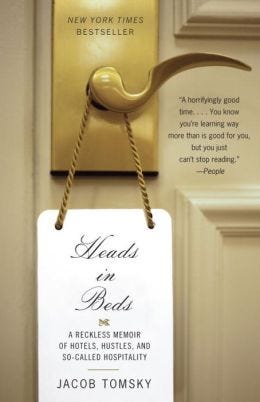
by Jacob Tomsky

heads in bed

Listen, you guys, my name is Jacob Tomsky and I wrote this decent-selling memoir for Penguin Random House about my life in the hotel business. But don’t even worry about that shit right now, like, at all. Because I am here to usher you, ever so gently, toward a non-profit organization I run called Short Story Thursdays. Okay the name is super clever because what happens is this: You get one classic short story every Thursday, emailed right to your inbox, all classic authors, vetted by history, with a supplementary introduction from my dumb ass, every week, no matter what, unless I die. The introductions are brief and the classic short story is, in fact, pasted into the email itself, with additional links to the PDF and word.doc if that’s how you prefer to swallow it.

This is a free service and I have been doing it for almost four years, every damn week, because I am crazy as fuck and I think it’s worthwhile to get a little classic short fiction in your life. Some people think they are too busy to read because they work crazy hard, or have multiple babies, or multiple drug problems. But I want to try and coerce people to read these, inject just a little more literature into their lives, weekly. The whole project is minimally invasive. Like a Q-tip.

Most of you, I am certain, have a healthy reading life. Because you are reading this here, on this wonderful website, with the word “literature” in the goddamn title. So you aren’t scared. And I love that.

Importantly, I want you all to know that I am going to be doing this here on Electric Literature every Thursday for four weeks. And I hope you like it, I really do. I feel extremely passionate about Short Story Thursdays.

In my life, SST is the thing that makes me happiest.

Any more questions about the origin or purpose of this organization can be answered in two ways.

1- This dope article I wrote about SST and why I started it: So You Hate Short Stories?

2- This single-take video where I am sitting in my own apartment and just scriptlessly bullshitting about SST: Video Introduction

But, when they asked me to roll up in here and run my mouth about this project I decided to kick it with a theme. Because themes make me hot.

Boats, you guys. The theme is boats.

I know what you’re thinking, “What, is this guy, like, twelve? He likes boats?”

I am not twelve. I am a fully grown adult idiot. Recently, for reasons I can’t define, I moved to Africa. For four months. And then, like any New Yorker would, I moved back to New York. But I was all, “I want to take a boat back! Like one of those freighter ships! With the cargo! I want to be human fucking cargo!”

And I actually did it: I booked passage on a transatlantic container ship. A ten-day voyage over the entire, big ass ocean. And I haven’t really talked about it that much, not because it was traumatic, even though it definitely was traumatic, but I hadn’t found the right venue.

So every Thursday for four weeks I’ll talk a little bit about my experience riding over the Atlantic, on a freighter, with just the crew. And I will be presenting classic short fiction which complements this four-part journey. Boat stories, you guys.

Let’s begin with how scared I was. Because I was scared as shit. There is no doctor on the freighter. You can die out there! You even have to sign a form that says, “I am aware that I could die out there!” If your appendix bursts in the middle of the ocean the crew will just roll you overboard and then pick through your luggage. If you get unending seasickness you can DIE because you can’t keep food or water down.

Wc_morrow_author

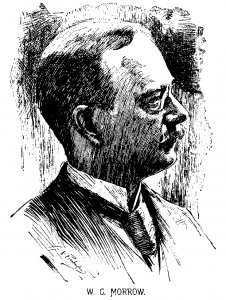
And there’s all the other terrors out there, floating, swimming, with teeth, and those’ll kill you too. So that’s what this week’s short story concerns. It’s from 1908 and it’s about honor. It’s about a man on a boat who fails to keep his end of the bargain. So they put him in a smaller boat, in the middle of the ocean, with one oar, and they tell him to fuck off.

And he does. Then, surrounded by sharks, he starts to think about honor. The author’s name is W. C. Morrow and the story is titled, “A Game of Honor.”

You see I had already told people I was going to do this, take a freighter home over the wide ocean. So I had to. Now I was in the cabin looking out as they stacked heavy containers loudly through the night. And at seven a.m. the next morning we were to point the front of the boat toward the center of nowhere and gun that fucker.

boat picture

Obviously, scared though I was, I didn’t die out there. Because I am writing this to you now. And I will be back next Thursday with another story about the ocean and a photo of me looking super scared, staring out my cabin’s window hole at the expanse of ocean. So I’ll be back next week, unless I die this week in Brooklyn, which could also happen. Mad sharks out in Brooklyn, too.

Wait, hell, before we read the wonderful selection, I would be sad at myself if I didn’t tell you how to join Short Story Thursdays proper. You email me. And that’s it. So you can do that anytime. Email me at shutyourlazymouthandread@shortstorythursdays.com and I will sign you up. And, if you really seem to like this, even while I am posting these dispatches on Electric Literature for a month, the other 4,000 SST members and I will simultaneously be reading non-boat-related classic fiction and talking shit every Thursday. So email me. Maybe. If you want.

Keep you hand on the tiller, fuckers. And I hope you like this story. Thanks so much for giving this a chance.

Love,

Jacob Tomsky

http://www.jacobtomsky.com

Short Story Thursday Presents…

“A Game of Honor” (1908) by W. C. Morrow

Four of the five men who sat around the card-table in the cabin of the “Merry Witch” regarded the fifth man with a steady, implacable look of scorn. The solitary one could not face that terrible glance. His head drooped, and his gaze rested upon some cards which he idly fumbled as he waited, numbed and listless, to hear his sentence.

The more masterful one of the four made a disdainful gesture towards the craven one, and thus addressed the others:

“Gentlemen, none of us can have forgotten the terms of our compact. It was agreed at the beginning of this expedition that only men of unflinching integrity should be permitted to participate in its known dangers and possible rewards. To find and secure the magnificent treasure which we are seeking with a sure prospect of discovering it, we must run the risk of encounters with savage Mexican soldiers and marines, and take all the other dangerous chances of which you are aware. As the charterer of this vessel and the leader of the expedition I have exercised extraordinary care in selecting my associates. We have been and still are equals, and my leadership as the outfitter of the expedition gives me no advantage in the sharing of the treasure. As such leader, however, I am in authority, and have employed, unsuspected by you, many devices to test the manhood of each of you. Were it not for the fact that I have exhausted all reasonable resources to this end, and have found all of you trustworthy except one, I would not now be disclosing the plan which I have been pursuing.”

The three others, who had been gazing at the crestfallen one, now stared at their leader with a startled interest.

“The final test of a man’s character,” calmly pursued the leader, “is the card-table. Whatever there may be in him of weakness, whether it be a mean avarice, cowardice, or a deceitful disposition, will there inevitably appear. If I were the president of a bank, the general of an army, or the leader of any other great enterprise I would make it a point to test the character of my subordinates in a series of games at cards, preferably played for money. It is the only sure test of character that the wisdom of the ages has been able to devise.”

He paused, and then turned his scornful glance upon the cringing man, who meanwhile had mustered courage to look up, and was employing his eyes as well as his ears to comprehend the strange philosophy of his judge. Terror and dismay were elements of the expression which curiously wrinkled his white face, as though he found himself standing before a court of inscrutable wisdom and relentless justice. But his glance fell instantly when it encountered that of his judge, and his weak lower lip hung trembling.

“We have all agreed,” impressively continued the leader, “that the one found guilty of deceiving or betraying the others to the very smallest extent should pay the penalty which we are all sworn to exact. A part of this agreement, as we all remember, is that the one found derelict shall be the first to insist on the visitation of the penalty, and that should he fail to do so — but I trust that it is unnecessary to mention the alternative.”

There was another pause, and the culprit sat still, hardly breathing, and permitting the cards to slip from his fingers to the floor.

“Mr. Rossiter,” said the leader, addressing the hapless man in a tone so hard and cold that it congealed the marrow which it pierced, “have you any suggestion to make?”

The doomed man made such a pitiful struggle for self-mastery as the gallows often reveals. If there was a momentary flash of hope based on a transient determination to plead, it faded instantly before the stern and implacable eyes that greeted him from all sides of the table. Certainly there was a fierce struggle under which his soul writhed, and which showed in a passing flush that crimsoned his face. That went by, and an acceptance of doom sat upon him. He raised his head and looked firmly at the leader, and as he did so his chest expanded and his shoulders squared bravely.

“Captain,” said he, with a very good voice, “whatever else I may be, I am not a coward. I have cheated. In doing so I have betrayed the confidence of all. I remember the terms of the compact. Will you kindly summon the skipper?”

Without any change of countenance, the leader complied.

“Mr. Rossiter,” he said to the skipper, “has a request to make of you, and whatever it may be I authorize you to comply with it.”

“I wish,” asked Mr. Rossiter of the skipper, “that you would lower a boat and put me aboard, and that you would furnish the boat with one oar and nothing else whatever.”

“Why,” exclaimed the skipper, aghast, looking in dismay from one to another of the men, “the man is insane! There is no land within five hundred miles. We are in the tropics, and a man couldn’t live four days without food or water, and the sea is alive with sharks. Why, this is suicide!”

The leader’s face darkened, but before he could speak Mr. Rossiter calmly remarked, —

“That is my own affair, sir;” and there was a fine ring in his voice.

* * * * *

The man in the boat, bareheaded and stripped nearly naked in the broiling sun, was thus addressing something which he saw close at hand in the water:

“Let me see. Yes, I think it is about four days now that we have travelled together, but I am not very positive about that. You see, if it hadn’t been for you I should have died of loneliness…. Say! aren’t you hungry, too? I was a few days ago, but I’m only thirsty now. You’ve got the advantage of me, because you don’t get thirsty. As for your being hungry — ha, ha, ha! Who ever heard of a shark that wasn’t always hungry? Oh, I know well enough what’s in your mind, companion mine, but there’s time enough for that. I hate to disturb the pleasant relation which exists between us at present. That is to say — now, here is a witticism — I prefer the outside relation to the inside intimacy. Ha, ha, ha! I knew you’d laugh at that, you sly old rogue! What a very sly, patient old shark you are! Don’t you know that if you didn’t have those clumsy fins, and that dreadfully homely mouth away down somewhere on the under side of your body, and eyes so grotesquely wide apart, and should go on land and match your wit against the various and amusing species of sharks which abound there, your patience in pursuing a manifest advantage would make you a millionaire in a year? Can you get that philosophy through your thick skull, my friend?

“There, there, there! Don’t turn over like that and make a fool of yourself by opening your pretty mouth and dazzling the midday sun with the gleam of your white belly. I’m not ready yet. God! how thirsty I am! Say, did you ever feel like that? Did you ever see blinding flashes that tear through your brain and turn the sun black?

“You haven’t answered my question yet. It’s a hypothetical question — yes, hypothetical. I’m sure that’s what I want to say. Hypo — hypothetical question. Question; yes, that’s right. Now, suppose you’d been a pretty wild young shark, and had kept your mother anxious and miserable, and had drifted into gambling and had gone pretty well to the dogs. Do sharks ever go to the dogs? Now, that’s a poser. Sharks; dogs. Oh, what a very ridiculously, sublimely amusing old shark! Dreadfully discreet you are. Never disclose your hand except on a showdown. What a glum old villain you are!

“Pretty well to the dogs, and then braced up and left home to make a man of yourself. Think of a shark making a man of himself! And then — easy there! Don’t get excited. I only staggered that time and didn’t quite go overboard. And don’t let my gesticulations excite you. Keep your mouth shut, my friend; you’re not pretty when you smile like that. As I was saying — oh!…

“How long was I that way, old fellow? Good thing for me that you don’t know how to climb into a boat when a fellow is that way. Were you ever that way, partner? Come on like this: Biff! Big blaze of red fire in your head. Then — then — well, after awhile you come out of it, with the queerest and crookedest of augers boring through your head, and a million tadpoles of white fire darting in every direction through the air. Don’t ever get that way, my friend, if you can possibly keep out of it. But then, you never get thirsty. Let me see. The sun was over there when the red fire struck, and it’s over here now. Shifted about thirty degrees. Then, I was that way about two hours.

“Where are those dogs? Do they come to you or do you go to them? That depends. Now, say you had some friends that wanted to do you a good turn; wanted to straighten you up and make a man of you. They had ascertained the exact situation of a wonderful treasure buried in an island of the Pacific. All right. They knew you had some of the qualities useful for such an expedition — reckless dare-devil, afraid of nothing — things like that. Understand, my friend? Well, all swore oaths as long as your leg — as long as your — oh, my! Think of a shark having a leg! Ha, ha, ha! Long as your leg! Oh, my! Pardon my levity, old man, but I must laugh. Ha, ha, ha! Oh, my!

“All of you swore — you and the other sharks. No lying; no deceit; no swindling. First shark that makes a slip is to call the skipper and be sent adrift with one oar and nothing else. And all, my friend, after you had pledged your honor to your mother, your God, yourself, and your friends, to be a true and honorable shark. It isn’t the hot sun broiling you and covering you with bursting blisters, and changing the marrow of your bones to melted iron and your blood to hissing lava — it isn’t the sun that hurts; and the hunger that gnaws your intestines to rags, and the thirst that changes your throat into a funnel of hot brass, and blinding bursts of red fire in your head, and lying dead in the waist of the boat while the sun steals thirty degrees of time out the sky, and a million fiery tadpoles darting through the air — none of them hurts so much as something infinitely deeper and more cruel, — your broken pledge of honor to your mother, your God, yourself, and your friends. That is what hurts, my friend.

“It is late, old man, to begin life all over again while you are in the article of death, and resolve to be good when it is no longer possible to be bad. But that is our affair, yours and mine; and just at this time we are not choosing to discuss the utility of goodness. But I don’t like that sneer in your glance. I have only one oar, and I will cheerfully break it over your wretched head if you come a yard nearer….

“Aha! Thought I was going over, eh? See; I can stand steady when I try. But I don’t like that sneer in your eyes. You don’t believe in the reformation of the dying, eh? You are a contemptible dog; a low, mean, outcast dog. You sneer at the declaration of a man that he can and will be honest at last and face his Maker humbly, but still as a man. Come, then, my friend, and let us see which of us two is the decent and honorable one. Stake your manhood against mine, and stake your life with your manhood. We’ll see which is the more honorable of the two; for I tell you now, Mr. Shark, that we are going to gamble for our lives and our honor.

“Come up closer and watch the throw. No? Afraid of the oar? You sneaking coward! You would be a decent shark at last did the oar but split your skull. See this visiting card, you villain? Look at it as I hold it up. There is printing on one side; that is my name; it is I. The other side is blank; that is you. Now, I am going to throw this into the water. If it falls name up, I win; if blank side up, you win. If I win, I eat you; if you win, you eat me. Is that a go?

“Hold on. You see, I can throw a card so as to bring uppermost either side I please. That wouldn’t be fair. For this, the last game of my life, is to be square. So I fold one end down on this side, and the other down on that side. When you throw a card folded like that no living shark, whether he have legs or only a tail, can know which side will fall uppermost. That is a square game, old man, and it will settle the little difference that has existed between you and me for four days past — a difference of ten or fifteen feet.

“Mind you, if I win, you are to come alongside the boat and I am to kill you and eat you. That may sustain my life until I am picked up. If you win, over I go and you eat me. Are you in the game? Well, here goes, then, for life or death…. Ah! you have won! And this is a game of honor!”

* * * * *

A black-smoking steamer was steadily approaching the drifting boat, for the lookout had reported the discovery, and the steamer was bearing down to lend succor. The captain, standing on the bridge, saw through his glass a wild and nearly naked man making the most extraordinary signs and gestures, staggering and lurching in imminent danger of falling overboard. When the ship had approached quite near the captain saw the man toss a card into the water, and then stand with an ominous rigidity, the meaning of which was unmistakable. He sounded a blast from the whistle, and the drifting man started violently and turned to see the steamer approaching, and observed hasty preparations for the lowering of a boat. The outcast stood immovable, watching the strange apparition, which seemed to have sprung out of the ocean.

The boat touched the water and shot lustily forward.

“Pull with all your might, lads, for the man is insane, and is preparing to leap overboard. A big shark is lying in wait for him, and the moment he touches the water he is gone.”

The men did pull with all their might and hallooed to the drifting one and warned him of the shark.

“Wait a minute,” they cried, “and we’ll take you on the ship!”

The purpose of the men seemed at last to have dawned upon the understanding of the outcast. He straightened himself as well as he could into a wretched semblance of dignity, and hoarsely replied, —

“No; I have played a game and lost; an honest man will pay a debt of honor.”

And with such a light in his eyes as comes only into those whose vision has penetrated the most wonderful of all mysteries, he leaped forth into the sea.

Recovery Period

Sight-wise, Greer had developed a high tolerance for disturbance. Buildings doubling, streetlights smearing into ribbons, cars in the fore twitching against cars in the back, one pigeon appearing as a flock — fine. She could walk. She could still collect the mail, pick up bagels, get about. She learned to sit in the front at the movies, blink longer, take breaks, take the bus. When the world shook and danced at her windows, and she didn’t feel much like dancing, she could pull the blinds, shut her eyes. And Lucien was beside her in the dark.

It began early in the morning after her thirty-fourth birthday, an occasion she commemorated with an all-night jigsaw puzzle. Greer settled the last piece into place and stood, bleary, ready for bed, and noticed, bleeding from the kitchen light and the microwave clock and the hallway lamp, luminous halos. She rubbed her eyes. Bright cores diffused into ghosts. Lucien stirred on the couch, where he’d been sleeping since midnight. “What is it?” he said.

The troubles with her eyes emerged slowly — a faint stretch at the edges of distant words, the occasional wiggle of movement she mistook for a bug. Her glasses lenses were weak, she assumed. Lack of sleep, she thought. The distortions came and went; she often convinced herself she was getting better. The body had a way of sorting itself out.

At times, though, even the television was too much. “Balls gone bad?” Lucien would say when Greer squinted at a commercial. Or, “Eyes going Greer?” Or, “Greery?”

“Very Greery,” she’d say, the screen glaring into a muddle. They would click the show off, push her glasses back and do things up close that didn’t require looking.

Greer had met Lucien on a blind date arranged by a mutual friend, a self-proclaimed matchmaker named George. Greer knew George through cooking club, and George knew Lucien from an addiction recovery support group. George said he had been jogging with his wife along the river when Lucien surfaced in his mind, and then Greer, one figure folding into another. “It was a moment of inspiration,” he told Greer on the phone.

Greer was skeptical. “You met this guy in rehab?”

“That was years ago. You won’t like him at first, so be prepared for that. But I think you’ll be great together. I see how people can fit. He is the trees and you are the forest. He is the spicy pepper and you are the milk. He’s a piece of smoking meat left to burn in a pot, and you’re like a wet towel, or a lid. But not in a bad way.”

Greer decided not to be offended. “Does he have any other issues I should know about?”

“He’s had to work through some things — haven’t we all,” George said, the last phrase like punctuation, “and he’s a good person. Great listener. Not bad looking. His parents are rich, but you can’t hold that against him. I know you’re not judgmental, or all that excitable — that’s why I thought of you. You’re an open spirit, even if it’s not easy to see at first. I already told him about how calm you were when Cynthia hacked her thumb cutting pineapple. How everyone was falling over themselves and you just wrapped her hand up in a kitchen towel, led her out to get stitches.”

Greer was flattered. She realized George thought of her as some kind of stoic, a protector. She’d never thought of herself that way, as the someone who was good for someone. She suddenly felt curious. Open.

Their first date had begun awkwardly. Lucien invited her to attend an art opening of a close friend, who turned out to be a distant acquaintance with a shaky grasp on Lucien’s name. The woman repeated it back to him with an ellipsis. “Why do I think your name is Mickey?” she said. Greer stuck out her hand but the woman was whisked away before she could introduce herself. Lucien smiled as though this was normal. Greer frowned. She’d been hoping for more evidence that he was an actual person.

They took a turn around the room, Greer following Lucien’s lead. He stood before each piece with his lips slightly pursed, head tilted, absorbed in silent concentration. When he was ready to move on, he nodded and glanced at Greer to confirm that she, too, was satisfied. The art was vulgar and dull, collages of dismembered body parts suspended in astro-photographs of the galaxy, driblets of red paint flecked across the surface. By the third piece, Greer was visualizing herself walking out of the gallery, the sweet joy of bursting from a crowd onto a nighttime street, alone. They moved away from the last piece on the wall and found themselves staring intently at an unplugged television on the ground in the corner. “Oh, wait,” Lucien said. “I don’t think that’s anything.”

They found a spot where they could talk without getting bumped. “What do you think?” Lucien said, tucking his already-tucked hair behind his ears then dropping his hands to his sides.

“Interesting,” Greer said.

“Isn’t it?” Lucien said. He nodded toward a bunch of cadaverous arms parading against the cosmos. “Because this is how it is.”

Greer raised her eyebrows. “How what is? Art?”

“No, everything. We’re down here,” Lucien shuffled his feet against the concrete floor, “but we’re really out there too, in all that chaos and space.” He spoke with his shoulders, his hands. “We’re so small, we can’t even comprehend the size of the universe, or the multi-verse, or the properties of the other dimensions. Life is an insanely miraculous miracle, in the scheme of things, but it’s also a nasty joke.”

Greer glanced around to see if anyone was listening. “Why?”

“Why?” he said, incredulous. “Because we’re just tiny little shits.”

Greer laughed uneasily. She didn’t like to think about outer space. It made her feel claustrophobic and trapped, but also like she could spin off the top of the earth and vanish behind the stars. And he was giving the artist too much credit. “It’s difficult to think about,” Greer said.

He sighed. “I just think it’s really weird.”

Greer’s date-night contacts were drying out. She thought she might tear up from the visual irritation and was horrified he’d mistake it for mutual awe. “I have to go to the bathroom,” she said, and reeled away.

She dabbed at the corners of her eyes with toilet paper and put her hair into a messy bun, which she thought made her less attractive. She needed a drink.

A teenager sitting behind a card table handed Greer two plastic cups of free wine. She watched Lucien through the crowd from the opposite side of the room. His gaze surveyed the figures, glancing off parts and faces. He shrugged off his jacket, held it in one hand, then put it back on. He stepped backwards and bumped into a young woman. Greer watched him stare after the girl mournfully. He was just a baby, this man. A bouncing ball with nowhere to rest.

Lucien spoke first when Greer returned. “No matter how this turns out I’m determined to spend time with you again, maybe a few more times, just to see.”

Greer nodded. Lucien’s eyes fell on the cups, and Greer realized she’d brought a sober person wine. She downed one glass, then the other.

On their next date they ate soup dumplings and a whole fried fish, elbow-to-elbow in a muggy Chinatown restaurant. They sat at a large communal table that a server cleaned with hot tea and a rag between diners. With the chatter and hustle, the bubbling fish tanks and fogged-up windows, Greer felt comfortable and enclosed and warm. No one at the table was paying attention to them. They probably looked like another boring, not-so-young couple.

They didn’t swap personal facts or background, which was fine with Greer. Lucien narrated the story of the graphic novel he’d been working on for five years. Greer recounted a fascinating radio program she’d heard about the virtues of bacteria. They each ate a fish eye and talked about that for a while. There was so much that Greer wanted to say, things she’d noticed and heard that she hadn’t known she wanted to share. Here they were, two people talking. “My friend said this soup will give a woman her period,” Lucien said, pointing to a photo of mushrooms and roots in broth on the menu.

Greer pointed to another picture of seafood in brown sauce. “My friend said this will give a man the craps.” She poked at grains of rice on her plate.

Lucien laughed. “You make jokes?”

“I guess.” She smiled. Lucien’s hair fell over his ears and a jolt rippled through Greer’s body. She felt giddy. She wanted to touch him. Their dishes were gone and she put her hand over his on the table. They looked at it, then at each other.
Outside the restaurant, two men in wilted suits on the sidewalk were shouting and throwing their arms, pushing each other in the chest. “Those guys are drunk,” Greer said and tugged Lucien’s hand to cross the street. A group of smokers outside a bar saw the men and edged away. One man grabbed the other’s collar, and then they were bent over, grappling. It’s all show, Greer thought, but Lucien was already jogging toward them. “Hey, hey, hey,” he yelled, like he was breaking up a scuffle between cats. He tried to dodge between them, pry them apart with his elbows, but they lashed out blindly: one guy shoved Lucien as the other reeled backwards and socked him in the gut. Lucien groaned and held his stomach, coughed. Oh god, Greer thought. It was all so quick and pathetic. The men broke apart and looked at Lucien doubled over. “Who the hell are you?” one said. “Get the fuck out of here.”

Lucien was angry, winded, his face red. He emitted a series of squeaks.

Greer grabbed his arm, held onto him ineffectually as he caught his breath. Lucien pointed towards one corner so they walked that way. Greer didn’t know what to say; her first impulse was to scold him. Some people feel like everything has to do with them.

“That was stupid,” Lucien said, shaking his head. “I really hope I don’t throw up.”

“Do you do that a lot? Jump into things?”

“It just happens. I should have let those guys burn out on their own.” He looked depressed.

Greer dismissed her urge to criticize. I’m an open spirit, she thought. “I don’t think it was stupid,” she said. “Look, they’re not even fighting anymore.”

Greer and Lucien turned around. It was true. The men were smoking cigarettes, looking at something on one of their phones and laughing.

“Huh,” Lucien said, straightening up. “So I guess that turned out okay.” He put his arm over Greer’s shoulders. They decided to walk in the general direction of Lucien’s apartment — nice night — and see how they felt when they got there.

Dry lightning cracked the distant sky one evening, over a year after their first date, the horizon flashing white, and Greer wondered, while soaping her single dinner plate, if Lucien had ended their relationship. She hadn’t heard from him in a week.

It wasn’t unusual for him to retreat for a few days, but he always made an effort to stay close. A message on her voicemail, a news article in her inbox. Once Greer came home to find him scrubbing her bathtub, half of the apartment cleaned. This time: nothing. She kept waiting for the reason they shouldn’t be together to present itself, but it never did. Maybe Lucien had discovered one. Greer loved Lucien and hated him in a similar proportion to the amount she loved and hated herself.

She recalled the last time she saw him — they had a spat and he’d been angry. He’d recently abandoned his graphic novel, started a new one, then gotten fed up with that one, too. He was tired of being tired all the time. He was sick of living in the city. He’d been upset about a lot of things, for reasons she didn’t understand, and he was offended by her efforts to improve his mood, which he communicated by turning abruptly silent, sullen. His brooding escalated the more she ignored his foul temper and remained nice. She thought they had a sort of understanding, largely founded on her patience with what she considered his erratic, overly-sensitive personality.

Her eyes had been bothering her, her head. She had a migraine and they were bickering about his friend Cole. She’d met a few of Lucien’s friends — an odd assortment of singles who didn’t know each other. Darla: a grim twenty-three year old bartender. Phillip, who had four cats and was pushing seventy. Greer asked Lucien where he’d met these people. “Around,” he’d say. “Why does that matter?”

Cole was different. He was Lucien’s age, a designer, smelled nice, and he knew about comics. After they bumped into him on the street, Greer had suggested that Lucien call Cole, have him and his wife over for dinner. She said he seemed like a good guy.

“I’m not close with him anymore,” Lucien said. “It would be weird.”

“But you have so much in common,” Greer pushed. Lucien told her to drop it. He was being unreasonable and couldn’t see it. “You’re hiding,” she said. “You don’t like reminders of a different life.”

“God, you’re horrible sometimes,” he said.

Greer watched him pace the floor and then pull on his coat from where she sat on the couch, but her glasses were off. She couldn’t see his expression. The migraine grated and clenched, and she almost said nothing because noise, even her own voice, pained her. “You’re leaving?” she whispered.

And Lucien must have nodded, because his form withdrew; Greer heard his coat zipper, and then the door snapping shut. She had not chased after him because she believed this to be indulgence, and it seemed healthy to resist.

But with a week gone by she missed Lucien, and it was silly to deny herself his company out of principle. She dried her hands, resolved to call him the next day when her phone rang. It was Lucien’s sister Maggie, whom Greer had never met.

After a moment’s hesitation, her words rushed together in a rehearsed string. She informed Greer that Lucien had shot himself in the basement of their parent’s summer home in Connecticut with one of his father’s hunting rifles.

“Are you saying he’s dead? Is that what you’re saying,” Greer said.

“I’m sorry — I’ve had to make so many calls. I don’t know what I’m saying. Lucien is dead. There, I said it.”

Arrangements were being made. Maggie asked who else needed to know, and Greer realized Maggie did not know who she was, that she’d been with Lucien — she was just dialing his recent calls. After she hung up Greer wished she’d asked when, what day, what time. How long had she been thinking of him alive when he wasn’t, when only he knew he wasn’t.

The next few weeks were abnormally warm, stalling the end of the season, until abruptly the temperature plummeted and a stretch of freezing rain bound the earth’s surface to the sky, one grey layer compressed beneath another. The trees, unable to prepare, suffered. Branches sagged under the weight of their leaves — still green and yellow — armored in ice. The inhuman sounds of tree limbs cracking, ice shifting, and the wind whipping the windows woke Greer in the night — she struggled to rest, stay warm. Her vision declined in the dark, the disturbances amplified by artificial light. She left home only when necessary. Distracted, she neglected to add her signature to the resident complaint regarding fallen boughs. It didn’t matter. Without her contribution, the city came and took them away.

Lucien’s exit from Greer’s apartment and then her life was incomprehensible; it disrupted the logic she’d once trusted — a grid had been twisted into additional dimensions. His death curled backwards over his entrance, so that when she reached for the beginning, or the middle, she always came up with the end.

Once when he was draped over her in bed, he had leaned forward with his eyes closed and accidentally kissed his own arm.

Once he walked into the room where she was reading and said with distress in his voice, “I wish I had a different brain.”

Once he took in a cat he found begging on the front stoop. The cat, which he named Andy, was a terror, a yowler, an obsessive licker, but Lucien loved him. Greer recalled the moment when he lifted the window screen to toss out stale bread for the birds and Andy leapt through the opening. He dropped from the bottom of the fire escape to the ground and bolted towards the street. Lucien screamed. The cat ducked his head, scurried to the curb and down into a storm drain, a sight that caused Lucien anguish for weeks.

These were just stories, now, that Greer alone could tell, and they all had the same ending — the man in them was dead.

As time passed, the more she wondered and the less she knew. In her dreams, Lucien was flattened and silent, like flowers pressed between the pages of a heavy book. In one dream he stood before her and offered a gift, a stack of letters, his face innocent and hopeful. But in Greer’s hands, the letters melted at the edges, forming a rubbery, impenetrable binding. By the time she got home, the gift had become a lifeless human hand she couldn’t hold or love or return to its owner, not knowing to whom it belonged. In all of this, Lucien was absent. He simply presented the puzzle and disappeared.

Eventually, Greer cobbled together a new sense of normalcy, a desire to pursue the future, to wake up. She repainted her apartment a cheerful peach, spent time at the park, took a trip to Atlantic City to play the slots. Her screwy vision went through a period of calm, which she mistook as improvement, because one morning it was worse than it had ever been.

Objects were moving out of focus, quivering back and forth to the exact beat of her pulse. Playground equipment wavered in synchrony with the skyscrapers in the distance, a nearby fence, and a panting beagle tied to the fence. Greer was conducting some strange quake of movement that only she could see. The pulse of her blood echoed in her vision.

Even under the covers, through her eyelids, she felt the room tipping in time with her heart. Fingers to wrist, she felt the pace of dizzy.

Greer went to the nearest optometrist, who flipped lenses, blew air, came in close with a light. Though Greer could read a magazine in the waiting room, an article about international hot sauces, during the examination the eye chart on the opposite wall was a furry, boundless blob. The optometrist sent Greer to an ophthalmologist. The ophthalmologist studied Greer for some time, then told her this was very bad, that her left eyeball was a cone, but Greer didn’t believe him. He pinned up a photo of her eye, taken from the side, enlarged and bulging and pointy. “Good lord,” he said. “See that? Now that’s a cone.”

He said, “Do you want to keep seeing tremors? Your eyes are defective. At this point, it’s a choice.” He taught her a multi-syllabic word, keratoconus, which she would use to describe her late-stage degenerative eye disease to her employer. A packet explained the high success rate of cornea transplants, especially on a healthy woman with no serious medical history, and encouraged her to go ahead and complete the ordeal with corrective vision surgery on the other eye.

Greer said, “Have you seen that old black and white film where the woman’s eye is sliced? Surrealistly? By a man? It’s really a cow’s eye I think, but there’s a razor.”

The ophthalmologist said, “No.”

She shuddered. “Whose eye will it be?”

“That’s up to God. You’re on a list.” He said, “You’ll need a few weeks off work, time at home to recover, and someone to pick you up after the procedures. Do you have a person?”

“Well,” Greer said. “No. But I’ll work it out.”

At home, the transplant packet flopped open on the counter, glossy and reassuring. The doctor had underlined in a block of text: “The corneal operation is considered to be the most successful of all organ transplant surgeries.” Greer sat by the window with a hand mirror, staring into her eyes. She read, “There is the possibility of loss of sight, loss of the entire eyeball, or possible loss of life, as with any operation.”

Loss of life, she thought. What a lovely way to say it.

A few days before her scheduled surgery, Greer received an anonymous postcard in the mail. The front said Hello from Hollywood in white block letters across a sun wearing sunglasses seated in a director’s chair. Hovering over the chair.

On the back, handwriting she didn’t recognize, mailed from a local PO Box, unsigned. It said: A friendly hello — are you well? I noticed your African violets are in poor shape. Greer flipped it over and back and that was still it. Hollywood? Violets? She thought, who has the energy to be so bizarre?

She waved to Mr. Kovalenko, the abrasive, chain-smoking Ukrainian man — the only neighbor she knew by name because he once helped hack her car from the snow-banked curb with his ice pick. He watched her from the stoop across the street, waved, his yellow dog pissing.

Inside, Greer found a stray thank you card and scribbled a lie: Greer’s life partner would like you to know that she and her plants are fine, but she is completely blind due to keratoconus and cannot read postcards. Stamp.

She organized her things, installed groceries, new rolls of toilet paper, and tended to her monthly bills and plants. She watered the leafy ones in hanging vases and the crowd of herbs and flowers on the windowsill.

Greer looked closely at the plants — one was newly flowered, violets, round purple petals on kneeling stems. Lucien had given the pot to her as seeds and dirt; she’d forgotten about it completely. She turned it, watered.

She went down to the street and squinted up at her kitchen window. At that angle, she could barely make out the windowsill and sprouts of green. No one could see her violets from the sidewalk.

Back inside, she could see many other windows looking into hers. She looked at all of them. She had two; they were several. She saw blinds and curtains in various failures of concealment, junk piled up, televisions flashing. Windows facing windows; pupils looking at pupils looking.

Open spirit. Tiny little shits. Hello from Hollywood.

Hello Hollywood, Greer thought, woozy. Her face felt as if it had been buzzed off pleasantly with a sander. The surgeon spoke like a wizard. She peeped from a hole in a stiff medical sheet covering her face, eyelids held back with a speculum. She’d been reduced to an eye, and the eyes would take their turns.

The procedure lasted maybe an hour but felt to Greer intensely timeless, like a morning dream where everyone is urgent and evil and no one can run fast enough. She didn’t feel anything, or experience it with nerves, but she saw the instruments descending, the top of her eye punctured and peeled away like a slivery pocket. And then she sort of stopped seeing, as if her brain sensed impending trauma and wisely shut things off. She retreated to a corner of her skull, like a wet animal cowering.

It was very strange, this sucking within. Maybe what it felt like was the beginning of dying, and this was important to Greer, that it was a beckoning, not a push.

George helped Greer to the door and handled her keys. George was recently divorced and rattled by it. Greer felt bad asking him for a favor, but he’d wanted to help, especially after what happened with Lucien. She tried to picture George holding her elbow. He had kissed her once many years ago but she had been in the middle of chewing.

She reached out blindly and touched his hair, “Longer?”

“Shorter,” he said. “How long do the patches stay on?”

“A day. Then I rest and heal and try not to look at the stitches.”

“Eye stitches. That’s disgusting,” he said and put a stack of mail in her hand. “Looks like someone you know sends their greetings from Lively Lake Tahoe Nevada. Do you want me to read this postcard to you?”

“Please don’t,” she said. “It can wait.”

George gone, Greer sat in what she assumed was darkness, identifying objects by touch. She patted the patches over her eyes, drank juice, listened to the radio. Took a painkiller and found her bed. She slept but had no way of knowing if it was enough. She didn’t feel any warm spots of sunlight. She remembered the artwork from that awful exhibit — illuminated limbs lost in the darkness of space. She recalled Lucien hunched over his sketchpad in the corner of the couch, his feet entwined with hers.

Her phone vibrated in the other room. It stopped and started again before she found it. “Hello?” she said. “Isn’t it late?”

“I have no idea.” His voice. “It’s Lucien.”

“Lucien?” she said. “My god.”

There was a ca-chunking sound, a crackle — chink-a-link. “Is this a joke?” Greer said. “What was that?”

“I’m calling from a payphone,” he said.

“A payphone?” It sounded like his voice — the throaty whisper when he was tired. “I didn’t even know payphones still worked. You put in a coin, a quarter?”

“Two,” he said. “Fifty cents just to start. I’ve already put in a dollar. This day is so fucked.”

Greer sat on the floor in something wet. “Day,” she said. “Day! What do you mean? You’ve been gone for almost a year — I went to your funeral. Your little brothers were hysterical. Your father came for your things. He took your guitar.”

“No,” he said. Whistling noises in the background. “That doesn’t seem right. Aren’t we talking right now?”

“Yes, but — ”

“It’s me.”

“Are you sure you’re alive?”

“Listen, I made some wrong turns and maybe a bad decision and I need help. It’s horrible out here. Cold. I lost my shirt.”

“Lucien,” Greer said, her voice a throb.

“Greer,” Lucien said. “Shit. Out of change.”

The line went dead.

She’d just had an operation; she was medicated. Her perceptions couldn’t be trusted, Greer decided. She slept again, dreamt of nothing, woke, peeled the patches away in late afternoon, and realized she’d waited half of an extra day. Blinking. The roots of her eyelashes raw. She saw the spotted bananas, slashes of sunlight across the floor, dirty streaks on the windows, a golden sheen in her hair, fine granules of salt and dust, the chipped rims of her bowls, her skin’s wrinkles, swipes of cloud.

She went to the window. Each tree had so many leaves and not one was pulsing or blurred or jumping. This is what was always here, she thought.

On a café patio she had coffee and read awnings: Discount Unmentionables, Arepa Kingdom, Sweet Virginia’s Pool Hall. Her newly transplanted eye could have belonged to anyone, but not anyone walking by. Something had happened to the owner of the eye. Something had gone wrong; plans had been ruined. The cornea had seen death descending once and would someday see it again. Greer looked through an optical layer that had witnessed an end she could not know. She read each letter on a sign across the street carefully, grateful, noticing an error for the first time. She read: P, a, y, c, h, e, k, A, d, v, a, n, c, e.

Greer had forgotten about the Lively Lake Tahoe Nevada postcard until one came from Cadillac Mountain Maine, Where Sunbeams First Light Up America, along with her returned thank you note — the PO Box did not exist. She turned over the Lake Tahoe postcard and read: I would like to engage with you. We both have time. Beneath a smiley face was a box, and a sketch of things in the box. Greer rested her eyes.

The sketch was of her kitchen window: the herbs in clay pots, the violets, the kitchen table, an empty bottle of wine she had left out for a few weeks, and then her, Greer, made of sticks and circles, looking into the fridge.

She switched off the lights and crawled to the bedroom, shifted the blinds a crack. There were twelve windows in the building across the street with a viable angle; she detected a flicker of movement on the fourth floor, second window to the left. Also on the third floor, middle.

The Cadillac Mountain card said: Lick your lips as you chop vegetables tonight, lovely lonely lady, and I’ll know it’s a sign.

A sign of what sort? What was this guy thinking? Her phone buzzed on the table.

“I need directions home,” Lucien said. “Quick.”

“I thought my mind made you up,” Greer said. “This morning I saw a little black bird on the curb and it looked at me and puffed up and flew off, and I felt it was you, your soul taking off to somewhere.”

“A little black bird?” he said. “Jesus Christ, Greer. I’m still here, soul intact. I changed my mind. I’m talking to you.”

“But where are you? Can you ask someone?”

“No. No one’s speaking to me. Everyone’s busy and wet. Made of change. And they’re far away, no matter how fast I run. It’s hard to explain. I’m at a payphone by Don Pedro’s restaurant on Seventh Avenue.”

“Don Pedro’s turned into Madeleine Bakery ages ago, and you know how to get here from there. Have you been sending me postcards?”

“What postcards?” he said. “Time.”

She rested her forehead against the table and envisioned herself walking home with Lucien. She had to get everything right; she told him the way.

Greer lost all sense of schedule and took to the couch. She brewed full pots of coffee at any hour and napped between novels. She kept bumping the bridge of her nose with her fingers, forgetting she no longer wore glasses, and it rained more than it didn’t. She stood at the window, studying the many eyes of the building across the street. She couldn’t imagine anyone wanting to observe her in a sweatshirt, bobbing a tea bag in hot water.

But another postcard came, this one from The Big Easy, penned by the mystery pen pal she assumed was a man. It would pleasure me greatly if you licked your lips, but I’d be happy to just watch you cook, it said.

I bet you would, Greer thought, tossing it aside. She had begun to form a profile of the man, teased it from the tight, blue script and his awkwardly forward tone. She imagined he was shy, slippered, myopic, older but not elderly, distrustful of strangers, sentimental, short, and plagued by a medical ailment, maybe scoliosis or a thyroid condition. Or a peculiar penis. Perhaps he was currently reclining with a broken leg in a cast, watching her through binoculars like a Hitchcock character, or he was lurking behind closed curtains, the victim of an incredible, conspicuous boil. She pictured him ordering groceries online, anxious when the time for delivery neared because he’d have to address another human, impassively listening to his mother on the phone, eating something straight from a tin standing up, talking to his TV as if it cared. At night, he would reassure himself that somewhere, someone was alive who would soon care for him, reproach himself for not seeking her out, then feel tired and forget about it.

Greer felt pity and then discomfort. This person was not unlike herself.

It wasn’t a bad idea, a home-cooked meal. For months she’d eaten without pleasure: take out, canned goods, bananas, toast. It might be to her benefit to take up cooking again.

The grocery store was crowded and smelled of synthetic citrus, but Greer enjoyed browsing each neatly-stocked aisle, reading labels, judging produce, admiring the whole, perfect fish settled on an incline of crushed ice. At home she took down the good pans and found a peppy station on the radio, lined up her stir-fry vegetables in an orderly row. As she chopped, using the bias method from cooking class, Greer felt planted, stable, moving in the same certain, incremental direction as everyone else. The hot oiled wok popped. She gleefully picked up speed with the last carrot, and realized she’d stuck her tongue through her lips — an old habit of concentration. The blinds were open; the lights were on. She spotted herself in the window’s reflection. Great, she thought, seeing her tongue. I’ve gone and communicated.

She leapt to the switch and threw off the lights — across the street: a swish of curtains on the fourth floor, second window from the left. Also, twitches on the third floor, middle.

Later, after cleaning up, her phone.

“You sent me the wrong way,” Lucien said. “Was it left at Fatso’s?”

“No,” Greer said. “Right. I told you right, then just walk east over the bridge.”

“Great,” he said. Whirring sounds, buzzing. “This is totally wrong. I’m in a field of mud and had to dig for a payphone; dogs chased me and took my shoes; there was a war, not between people really, but bloody. Do you know how disgusting monkfish are up close? And it stinks!”

“I don’t know how else to help you,” Greer cried. “Why can’t you just come home?”

“I think you sent me the wrong way.”

“Don’t blame me,” she said. “Like I wanted you out drifting across eternity, shirtless and running from dogs. Calling me until I’m old and dead, too. All I wanted was to stop looking. To hang out with you, and maybe have kids who weren’t funny looking, who could grow up to have jobs and not need drugs to fall asleep. To go on trips together and not fight. That was it!”

“Are you sure you’re not the one who’s dead?”

“Yes, I think so!” Greer shouted. “I’m pretty sure I’m not dead and you definitely are!”

“I’m scared, Greer.” Louder whirrs, sloshy pops.

“Come home,” she said. “Try.”

More cards and instructions flooded Greer’s mailbox, wedged into the side. She kept a stack on the counter and flipped through them like playing cards.

Open your mouth like I’ve placed the most delicious candy on your tongue.

Look outside as if you’re hoping to be rescued.

Discover your bellybutton.

Wear what you’d wear if I was rich, and dance.

Wear what you’d wear if you loved me but I deserted you, and mourn.

Jump-rope, jumping jacks, and push-ups, in that order.

She hadn’t exercised or used her body much since last spring. She called the gym to renew her membership. She gave a thumbs up to the building across the street.

The man became less selective with his American destination postcards. One seemed to be a reused appointment reminder from a veterinarian, the original address demolished with permanent marker.

Face away and sing: head, shoulders, knees, and toes.

Bake yourself a batch of muffins.

Lap at the glass like a salamander.

Wash the dishes in your brightest bikini.

She couldn’t tell if these requests excited him or if he was mocking her. Like teaching a dog a vulgar party trick it can’t understand, then laughing at it for trying. It was easier to sense a man out in person, but even then. Either he was a coward and so was she, or he was brave, and so was she. She couldn’t tell which was which anymore. She shoved the postcards in a drawer.

Greer took a bath with the lights off, thinking of Lucien. She pictured him spearing a dumpling with a chopstick, zipping his jeans, hopping and barefoot, and then floating through an empty vacuum of space, singing a lost song. She willed her phone to ring.

The next day she called George, told him about the postcards, the man across the street, but not about Lucien. “What do you think I should do?”

George was making noise, crunching something: ice. “Do you like this neighbor guy?”

“I don’t even have evidence that he’s a guy. I could be misinterpreting the whole thing. He’s very persistent.”

“How? He’s like a short-hand pen pal. You don’t ever see him. All you have to do is stop reading the postcards, problem solved.”

“It’s not that easy. I don’t think he’s just a pervert. He wants to help me.”

George coughed, continued crunching. “I’m just saying, it doesn’t seem healthy, or fair. It’s his choice that he hasn’t knocked on your door.”

“What if he’s bed-ridden?”

“That would be unfortunate, but irrelevant. You should get out more. Try engaging with a person with a face, someone you can be in the same room with.”

“Who did you have in mind?” she scoffed.

“Forget it,” George said. “You’re on your own.”

Greer came down with a cold before the last of her sick days from work were spent. She sneezed viciously and slathered Vicks on her neck. A flurry of postcards arrived:

Place a large pot over medium high heat and coat with olive oil.

Add carrots, potato, celery, onion, garlic, thyme, and bay leaf.

Pour in two quarts of chicken stock (homemade or store bought).

“What the hell?” Greer said. “Am I making soup?”

I care about you.

“I care about you,” Lucien said. “I miss your hand in my pocket, your ugly brown scarf, how the corners of your mouth turned down. It annoyed me then, but I miss it now.”

“I miss you too,” Greer said.

“But to be honest, things aren’t looking good. I’m in a bad way — straits are dire.”

“How dire?”

“It’s darker, losing color. I keep getting turned around and the mud is rising. The stars are closing in. I’m losing bone mass at an alarming rate and sometimes I can’t tell if I’m walking or being walked. I search for hours before finding any quarters to call, let alone a payphone.”

“Is it everything,” Greer’s eyes closed, “you thought it would be?”

“I can’t hear you.” Lucien said, voice trailing off. “Wait for me.”

“I have to go back to work soon. I have to make a living and do things, live.”

“I’ll call you back,” he said. “I made it here. I’ll make it back somehow — I swear.”

I care about you and your red, dry nose. I wish I knew more about you.

“They put me in a sort of dormitory, a prison,” Lucien said. “It’s my last call.”

“Is it awful?”

“It was okay before I got a roommate. I’ve never seen his face and when I tried to speak to him he started spinning. He eats pieces of his own skin.”

I want you to enjoy yourself. Take this coupon for a discounted massage. Ask for Brenda — she’s the best.

“He kept spinning and then I realized I was the one spinning, or we both were.”

I want to see you when you can see me, and see you seeing me see you.

“I’ve forgotten what I wanted.”

I’ll be there if you’ll be there tomorrow, on your building’s front stoop.

“I promise I’ll get out of here and meet you at your apartment,” Lucien said, “tomorrow.”

Greer called George. “I’m so tired.”

“Let’s get coffee tomorrow,” he said. “Get you out of there.”

Greer sat on her front stoop, walked around the block, sat again. Deafening thuds from the can factory, like a giant approaching. People, cars, dogs. Greer wasn’t sure who it would be coming to see her, or who she wanted it to be. With her bare eyes she could follow the cracks in the pavement, little weeds sprouting, the words “screw you” swiped through the dust on the back windows of a van. She could make out every detail before her, and yet she couldn’t see in advance what might happen before it did.

She put on her old glasses, distorting the vision of her corrected eyes, and a man rounded the corner at the end of the street. Panic clotted in her chest. Should she go upstairs? Should she lock herself in the bathroom? Would men call her phone and slip her messages under the door, and would she flush them down the toilet forever?

His strides quickened and she couldn’t tell who it was, couldn’t yet see. He blurred into the background like a photograph rubbed with sand, like the moment before a stranger’s face becomes familiar, or when a face, once dear, is forgotten.

A couple on the sidewalk parts to let the man pass. He walks with small, springy steps, his posture upright — she doesn’t know him, she is sure. A part of Greer’s life is over. Her heart is a door slamming shut. And yet the man is walking right to her, his pace slowing as he approaches, as though he knows it will be difficult for both of them, but they would do it, they would try to say, Hello.

The Eleven Best Metal Songs About Literature

For Charles Dickens’ 200th birthday, I wrote a piece about the band Uriah Heep, the only decent rock band to ever name themselves after a Dickens character. Their first album also referenced the David Copperfield antagonist in its title, Very ‘eavy… Very ‘umble. It was panned in Rolling Stone with the hook “If this group makes it I’ll have to commit suicide.”

Reading up on Uriah Heep, I was reminded that I can’t stand literary elitism in music criticism. In literary criticism, fine. That’s what your English degree is for. But I don’t need to see anyone else fawn over the Decemberists for crooning about Myla Goldberg, and then dismiss Iron Maiden for being pompous. Clearly only the bands that we enjoy can really understand books, right? I’m sure that Colin Meloy is a smart guy and that he appreciates Bee Season. It’s just a matter of taste that I’d rather listen to Bruce Dickinson screaming about the albatross. But whatever your preference is, if you’re looking for a good audio book, it doesn’t get much better than these eleven.

Antrax literary

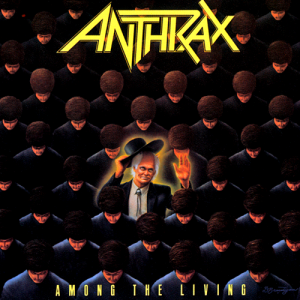
1. Anthrax, “Among the Living” (Stephen King’s The Stand)

Anthrax are responsible for more Stephen King adaptations than Frank Darabont, but they never hit it better than on their tribute to Randall Flagg from The Stand. Anthrax fan Kevin Smith must have noticed the song’s cinematic qualities when he picked it to score the Clerks 2 trailer, one of the best of the past decade.

2. Corrosion of Conformity, “Wiseblood” (Flannery O’Connor’s Wiseblood)

The title track from C.O.C.’s mid-’90s rager took its name from another brutal portrayal of the decrepit American South. Apparently, it left a huge impression on guitarist Pepper Keenan — he later named his daughter Flannery.

3. Iron Maiden, “The Clairvoyant” (Orson Scott Card’s Seventh Son)

Any song from Seventh Son of a Seventh Son, a concept album based on Orson Scott Card’s fantasy novel, could have appeared on this list. But the most enduring is deservedly “The Clairvoyant,” driven by one of Steve Harris’ healthiest basslines. I’m thankful that Maiden, or anyone, is more inspired by Card’s books than by his stance on gay rights.

4. Iron Maiden, “Rime of the Ancient Mariner” (Samuel Taylor Coleridge’s Rime of the Ancient Mariner)

Easily the most faithful of any of these adaptations, Maiden picked out direct quotes from Coleridge and ended up with their longest song to date. We learned more from a 14-minute record than we ever learned in school.

Iron Maiden the Trooper

5. Iron Maiden, “The Trooper” (Alfred, Lord Tennyson’s The Charge of the Light Brigade)

What can I say? Maiden wrote many of the world’s best songs about books. This riveting study of Charge of the Light Brigade kicks just hard enough to edge out “Murders in the Rue Morgue,” “Brave New World” and “The Loneliness of the Long Distance Runner.”

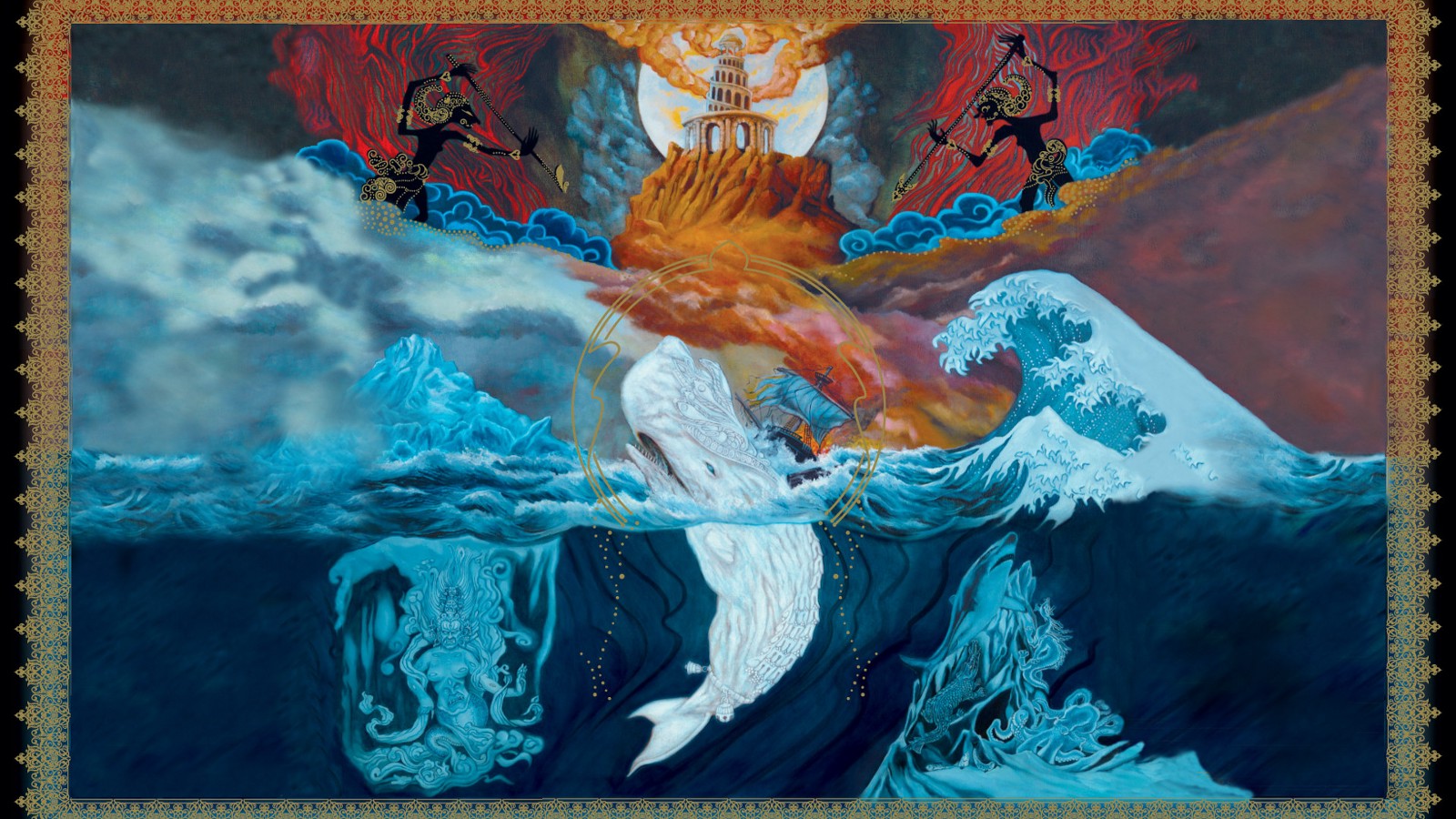
6. Mastodon, “Blood and Thunder” (Herman Melville’s Moby Dick)

Mastodon’s breakthrough Leviathan tackled one of literature’s indisputable classics in themes, scope and cover art. I couldn’t tell you what “Split your lungs with blood and thunder when you see the white whale” means, but it has me convinced that Troy Sanders is Captain Ahab.

7–8. Metallica, “Call of the Ktulu” and “The Thing That Should Not Be” (H. P. Lovecraft’s The Call of Cthulhu)

Anyone who mocks Metallica for misspelling the name of H.P. Lovecraft’s most infamous beast obviously hasn’t read the book — the name is not to be said or written out, lest we bring it closer. The band did get brave enough to quote the Necronomicon passage on “The Thing That Should Not Be,” a harrowing tribute to the same creature.

9. Metallica, “For Whom the Bell Tolls” (Ernest Hemingway’s For Whom the Bell Tolls)

By their second album, the world’s most masculine band was already cribbing from the world’s most masculine author. Using basic language and weaving together a series of simple riffs, James Hetfieldway honored both Uncle Ernie’s depiction of the Spanish Civil War and his concise writing style.

Metallica One

10. Metallica, “One” (Dalton Trumbo’s Johnny Got His Gun)

Dave Barry once claimed to “play music as well as Metallica writes novels,” and he’s probably right. Still, there’s no disputing the storytelling and mood-setting capabilities behind “One,” a song that took its narration from Trumbo’s wretched hero.

11. Rush, “2112” (Ayn Rand’s Anthem)

Perhaps the greatest stunt that Rush ever pulled off was translating Ayn Rand into something that most headbangers could stomach. The fact that a composition as dizzying as “2112” is based on Anthem is proof that the best music is magic

DISCARD PILE: Models of American Sailing Ships

Discard review books that were recently withdrawn from the collection at the Barstow School in Kansas City, Missouri.

Models of American Sailing Ships: A Handbook of the Ship Model Collection In The Addison Gallery of American Art, with a descriptive text by Robert E. Peabody
Addison Gallery of American Art, 1961
Dewey Number: 623.8 PEA
Entered Barstow Library: Unknown

The Addison Gallery of American Art at the tweedy Phillips Academy possesses a rock-ribbed collection of art — think Audubon and Hopper, Homer and Pollock. However, down in the gallery’s basement perches a veritable flotilla of model ships. Not the Snap-Tite nor Revell’s of my youth, but bona-fide hand-crafted artisan models built at a scale of ¼ inch to one foot.

In the 1962 Models of American Sailing Ships, Robert E. Peabody relates the intriguing and somewhat drama-laden history of the models and their real-life counterparts. Philips treasurer and collection curator James C. Sawyer navigated a couple of dozen commissions through the peregrinations of the Depression. As Sawyer put it, “the Addison Gallery wishes to impress on the boys’ minds the beauty of the sailing ship and its contribution to the growth and prosperity of this country.”

crow's nest

Editor John Ratte claims in his preface that the “historical and didactic” value of the collection “cannot be contested,” that the models represent “the fashioning of personal vision” in an early culture where “practical purposes and austere beauty were often closely linked.” Ratte’s introduction contains several instances of such prep school puffery — beyond the very idea of an institution commissioning and displaying model ships during the Depression — lifelong friends from Yale and families paying the commission for models of ships either sailed or built by ancestors. The whole idea rightly smells like Captain Black Royal, smoked in a panelled room with velvety jackets and an Old Fashioned.

That said, the appearance of one Captain H. Percy Ashley helps keep the work from falling too far into the well of more-hobbies-of-the-Cabots-of Boston. From all accounts Captain Ashley was a persnickety cuss who was an international expert in shipbuilding of all kinds, especially ice yachts. Clearly he did know it all, growled about rich dudes and routinely clashed with Sawyer. “Captain Ashley refused to negotiate when his price for making the model of the Clermont was challenged, but he compensated for his high fee in his own characteristic way by making an additional model.”

Captain Ashley wasn’t done. Sawyer had the temerity to suggest that Ashley’s coppering job on America was “sloppy.” The nerve. The impertinent Captain immediately threatened to take his model back and return the funds. Captain Grumpy continued, “The America was heavily built and some authorities claim very hurriedly constructed, including deck fittings and painting. She was built to go to sea and stay to sea regardless of wind and weather. The original yacht was coppered hurriedly and the hull must be sheathed accordingly… Under no consideration will I consider making the changes you recommend.” Pen drop.

Unfortunately, the rest of the book reaches such levels of sheer bitchiness. Instead we get a short description of the ship, its historical importance, and plenty of pictures. We learn Columbus ran the Santa Maria into a reef off of Cuba; America won the first America’s Cup; the Flying Cloud was one of the fastest sailing ships ever known — making the trip from NYC to San Francisco in 89 days and eight hours; and that Captain Ashley’s Clermont pretty much dominates all the other models.

The mystery of how American Sailing Ships came to be in the bibliotek of a Midwestern independent school may never be found. However, I would like to see a conceptual sequel to the book that includes more literary and cinematic renderings: to wit Nellie, Arabella, Pequod, Penguin, HISPANIOLA, Fidéle, and Belafonte.

boats and sails

What Jane Austen Looked Like According to Forensic Science

Jane Austen painting

In the nearly 200 years since the beloved author’s death, readers have been unsure what Jane Austen actually looked like. The only portrait available was a watercolor by her sister Cassandra (left) that Austen’s niece claimed was “hideously unlike” the author.

Although one would hope the appearance of an author is irrelevant to enjoying their work, Jane Austen fans who’ve been curious about her appearance now have a life-size wax sculpture courtesy of the Jane Austen Centre. The sculpture is based on work done by FBI-trained forensic artist’ Melissa Dring. Dring used first hand accounts of Austen’s appearance of which there are several. The Guardian points out this passage from the memoir of her nephew, James Edward Austen-Leigh:

“Her figure was rather tall and slender, her step light and firm, and her whole appearance expressive of health and animation. In complexion she was a clear brunette with a rich colour; she had full round cheeks, with mouth and nose small and well-formed, bright hazel eyes, and brown hair forming natural curls close round her face.”

Dring used Cassandra’s watercolor and pencil portrait as a jumping off point, but noted that it makes Austen “look like she’s been sucking lemons.”

Here’s the full wax figure in authentic period clothes:

Jane Austen

REVIEW: The Heaven of Animals by David James Poissant

by Benjamin Rybeck

In the short stories that make up The Heaven of Animals, everything is about to end. Marriages are about to end. Love affairs are about to end. Lives — of children, husbands, animals — are about to end (or, in some cases, have already ended). Even the world itself seems on the verge of ending, whether that end takes the form of a rainstorm, or a swarm of bees, or even something far more sinister — perhaps “a cosmic collapse.”

This is David James Poissant’s first book, and if Brock Clarke predicts (in blurb form) that Poissant will become “his generation’s Richard Ford,” who am I to argue? Certainly the characters and milieu of The Heaven of Animals are Ford-esque: men and women, working dead end jobs, in (mostly) unromantic places like Tucson, and the I-10 through Texas, and unvarnished suburban landscapes, and the most impoverished stretches of the Gulf Coast. (One lucky character gets to spend his story in the Presidio of San Francisco, but he ends up naked and submerged in the bay, so what does that tell you about Poissant’s view of the “romantic”?)

These stories demonstrate patience in revealing their uniqueness.

Poissant slashes through the overhang of standard lit-mag tropes — broken marriages, siblings in conflict, love affairs — to emerge into spots of surprise. One pair of philanderers are revealed to be cousins who have been at it for nearly two decades; another man, negotiating a fraught relationship with his brother, winds up having a cleansing moment on a nude beach. In a way, the collection’s second story, “Amputee,” in which a divorced man encounters a young woman who wants to go swimming, teaches you how to read the whole book: What begins like Updike-lite makes a hard left into something stranger when the young woman reveals… well, just take another look at the title.

Then, there are the animals scattered throughout this book, sometimes as characters (e.g., a dog named James Dean), and sometimes as metaphors used by Poissant’s people to avoid discussing their lives directly (e.g., a grieving couple who encounter hippos who lick their deceased kin). In some ways, the talking wolf in “What the Wolf Wants” is the most direct character Poissant has constructed; many of the humans in The Heaven of Animals could learn from the wolf’s frankness.

Poissant specializes in portraits of people with paralysis

: men who find fulfillment from “a Whopper, a six-pack, and HBO,” and women who have settled into uninspiring lives. This paralysis makes them ill equipped to deal with the pain that colors their pasts. Here, Poissant’s writing sometimes feels a little overloaded; there are too many tragic back-stories (children have died in their sleep, spouses have careened into frozen ponds, deaf fathers have been murdered) and sometimes — as in “How to Help Your Husband Die” and “Me and James Dean” — the story’s main action derives blunt emotion from easy places (cancer and a dying dog, respectively).

Yet The Heaven of Animals avoids bleakness, no matter how sad its stories may be, and this is a real achievement. Sometimes Poissant lingers too long, searching for epiphany, but his overall project — trying to wring hope from despair — shows great compassion. “They’d pass through this,” Poissant writes of the characters in “Nudists” (maybe his best story). And many characters do manage to pass through the emotional violence of their lives. That Poissant navigates his own minor-key optimism without writing phony prose is a reminder that happiness and misery are equally uncomplicated emotions: The best writers find the rich places in between.

The Heaven of Animals

by David James Poissant

Powells.com

An Open Letter to Alice Munro

by Elliott Holt

[Editor’s note: the following is reposted from Literary Mothers, a website devoted to short essays on female literary influence. Previous entries include Deb Olin Unferth on Gertrude Stein, Matt Bell on Christine Schutt, Alissa Nutting on Lynda Barry, and many more. ]

Dear Alice,

It seems impossible that you don’t know me. What I mean is that I know your work so well — intimate, is the only way I can describe my relationship to your stories — that I feel like I know you. I consider you a kindred spirit and a teacher. I’ve reread your stories so many times that I know I’ve learned more from them than I have in any writing class. I once spent an entire day deconstructing “Friend of My Youth,” diagramming its structure, its story within a story within a story, to try to understand how you pulled it off. When you won the Nobel Prize, I actually cried with joy. And all day, after the Nobel committee made the announcement, friends emailed and called and texted: “You must be so happy that Alice Munro won!” My adoration of you is so well documented that people were congratulating me on your win, as if you were a member of my family.

But I suppose what I’m saying is that you are a member of my family. My literary family. You are my literary mother. You’re the writer I’ve turned to when I needed the solace that only great literature can provide. (When my actual mother was dying, of cancer, it was your stories I read beside her bed. My mother loved your work, too, and near the end, I often read your stories aloud to her.) You’re the writer who taught me how to move around in time in stories — flashing forward and back. You’re the writer who showed me how much can fit into one short story; how a whole life can be compressed and still feel expansive and lived in on the page. You’re the writer who showed me how complex the architecture of a story can be, and how the motif of storytelling can recur again and again and still feel new. How women and their relationships — to their own desires, and with men, with other women, with friends, lovers, and mothers — can be infinitely compelling. How stories set in small town Ontario (and sometimes in Vancouver) can feel universal. You make it look so easy, with your mastery of suspense, your wry humor, your psychological precision, your brilliant endings. And your stories are full of letters, so it seems fitting that I am writing to you. You’ve said that you think of stories as houses, with various rooms. I’ve entered those rooms and come out dazed. I always go back in. Your stories stick with me; they resonate as if they were actual memories. I know that a minister never slid a hand down my underwear on a train, but I’ve lived inside “Wild Swans” so many times that I feel like it happened to me.

Oh, Alice. If we met, I feel certain we would be friends. That sounds silly, I know. Last summer, when Charles McGrath profiled you in the New York Times, the article included a slideshow of your house in Ontario. I studied the picture of your humble writing desk. It was not unlike what I had imagined. And yet, I felt strange looking at it. Part of me didn’t want to know where you work — I just want the stories to speak for themselves; part of me was devastated to know that you’re retiring, that you won’t be sitting in that chair to write any new stories.

You and I were in the same room once. Deborah Triesman interviewed you on stage at the New Yorker festival a few years ago. I was in the audience at the Directors’ Guild on 57th Street, and I even got up the nerve to ask a question during the Q&A. I asked about your titles; I wondered at what stage in your process you come up with them. We made eye contact. You looked at me as you answered my question. To be honest, I don’t remember what you said. I was too excited and nervous in your presence.

I have copies of all your books. Actually, I have multiple copies of most of them. Sometimes, while traveling, I have an urge to reread a particular story of yours and will go and buy the collection that contains it, even though I already have the same book at home. I always travel with at least one of your books because you are the writer I most like to reread. Your stories have kept me company in places all over the world. The collections I’ve returned to most areFriend of My Youth; Open Secrets; The Love of a Good Woman; Hateship, Friendship, Courtship, Loveship, Marriage; and Runaway.

I’m not in the habit of gushing. Friends rely on me for my critical eye, my cool intellect, not for my unbridled enthusiasm. I’m a reluctant user of exclamation points. But for years I’ve wanted to write to you, to say thank you. Thank you! Your stories, Alice, have meant so much to me. Cynthia Ozick once described you as “our Chekhov.” (I love Chekhov — I return to his work again and again, too.) When Ozick said “our,” I suppose she meant our era, our time. But I understand her impulse to use the possessive pronoun. Those of us who love your work do feel possessive of it. Your stories provide deeply private pleasures. You are our writer, part of our family. Now that you’ve won the Nobel, even more people have joined our ranks. And I’m glad to know that your work is finding new fans. But I also want you to know that some of us have loved you for a long time. Some of us are writing stories because of you.

Yours sincerely,

Elliott Holt