Here’s an interesting infographic from Podio, which, it should be pointed out, has a pretty embarrassing lack of women and POC. Flannery O’Connor and Maya Angelou are the only woman genius that made the cut? Barely anyone from outside Europe or USA?
Still, if you can get past that bias, it’s interesting to see how different famous (mostly white male) writers, artists, and thinkers broke down their daily routines.
Want to develop a better work routine? Discover how some of the world’s greatest minds organized their days. Click image to see the interactive version (via Podio).
Chicago’s literary scene dates back a bit. You might start with Upton Sinclair and his most famous work, The Jungle, which revealed the horror of the Chicago meat-packing industry. In it there’s a clear sense of the struggle between laborers and the owning-class. It also provides vivid description of the fetid conditions in which Americans’ meat was kept, which proved to be of far greater interest to the meat-and-book consuming public.
I’m sure in those days writers like Sinclair would give readings inside of the stockyards, between piles of animal protein. I don’t know this for a fact, though. I wasn’t there, and I’ve done very little research on the subject. But doesn’t it sound like what probably happened? I say yes, a definitive yes.
What I do know is, Chicago’s independent publishing community is as vibrant now as it has ever been, since the time of its humble, meat-surrounded origins. Take for example its many literary magazines. There is an abundance, a veritable surfeit, of said magazines being published right here, right now, right under the nose of the average person, both visitor and Chicagoan alike. Long removed from the stockyards (probably), events for these magazines are now hosted in local bars, coffee shops and independent bookstores. Publishing happens in people’s very own homes. Indie literature is as readily available and resurgent in the Windy City as microbrewed beer.
It’s my hope, in time, I’ll have a “CHICAGO DISPATCH” for the many deserving presses, reading series, publications, book sellers, coffee shops and bars there are to be found here in Chicago (plus maybe some mention of where you might go to get delicious Chicago-style pizza, which is indeed what all Chicago writers consume to become more literary, true fact). But I had to start somewhere, because otherwise this would be a very long post and you know how the internet hates those. I’ve probably written too much about the internet hating long posts and articles and so forth already. Let’s just get to the magazines, then.
Artifice Magazine — James Tadd Adcox and Rebekah Silverman brought this publication to life in 2009. Both have since departed but the magazine lives on as an imprint of Curbside Splendor Publishing and through the diligent efforts of its current Editor-in-Chief, Peter Jurmu.
James Tadd Adcox told me a little about the origins of the project. He and Silverman attended the Purdue University Creative Writing MFA together, working on the Sycamore Review there (Silverman served as Editor-in-Chief and Adcox served as its fiction editor).
Adcox joked that at one point, while working on the Sycamore Review, he decided stories that included dogs or cancer in their first pages would automatically be rejected. There was a kernal of truth to this notion: Adcox wasn’t interested in featuring realist fiction that was ubiquitous in most of the notable collegiate literary magazines. Instead, Adcox and Silverman saw an opening to publish first-rate surrealist and absurdist stories that seemed to have fewer places (at the time, at least) to be published. It was in the same spirit that Artifice was born, post-graduation from Purdue, in a restaurant in Chicago’s Wicker Park neighborhood, Penny’s Noodles (one of three restaurants Adcox recalled frequenting at the time).
Artifice, not limiting itself exclusively to an annual journal, is now also publishing books, with the collections of poets and writers like Daniela Ozlewska, Sara Woods (who previously published under the name Russ Woods) and Cassandra Troyan either currently available or forthcoming.
ACM: Another Chicago Magazine — Full disclosure, this past March I joined ACM’s staff as its fiction editor. And while it’s reasonable to say mentioning ACM on this list impugns my own character, I hope that you will look beyond all that to see the remarkable publication Another Chicago Magazine is. It has thrived for over 35 years as a mainstay of Chicago’s independent publishing community. And having showcased the work of folks like Charles Bukowski, a young David Sedaris, Brigit Pegeen Kelly, Steve Almond, Patrick Somerville, Samantha Irby, Amelia Gray, and on and on, ACM has undoubtedly earned its indie cred.
ACM began with Lee Webster and a collection of University of Illinois in Chicago graduates who founded it in 1977. Since then, it’s weathered plenty of changes to its staff, including Webster’s transference of power to Barry Silesky, who joined ACM in the eighties and took over entirely by the ’90s. Silesky ceded Editor-in-Chief duties to Jacob Knabb, who in turn has handed off responsibility for the magazine to Caroline Eick.
Working alongside me, as fiction editor, are more seasoned, better editors like the aforenamed Caroline Eick (managing), David Welch (poetry), Colleen O’Connor (non-fiction), Josalyn Knapic (assistant fiction), as well as a whole host of really fantastic readers and interns.
ACM is always looking to put together a magazine as diverse as the city it represents. And furthermore, there’s a concerted effort afoot to move well beyond its Chicago namesake, as Eick herself has now relocated to New York City. The hope is this, along with other changes, will expand ACM’s reach even further and bring it in contact with many new readers and contributors.
Skydeer Helpking — Sara Woods and Jeannette Gomes have collaborated on this project for just about a year now, which is especially interested in publishing female poets and / or queer poets and / or poets of color. As for their aesthetic sensibility, Sara Woods has said they’re especially interested in poetry and hybrid works that have lots of heart and engage with the surreal and dream logic.
The first issue featured poets like Sarah Jean Alexander, M. Kitchell, Matthew Maheny, Leif Haven, Simon Jacobs, Roberto Montes and many more. So many more.
And while half the tandem has relocated elsewhere (i.e., Woods is living in Portland, Oregon nowadays) the publication was founded and debuted in Chicago, and has the same taste for the unusual that is becoming increasingly embraced by other local writers and editors (as it seems to be nationwide, as well).
Also! Please note, they read all submissions blindly and only during the month of July, so get on that.
Anobium — Benjamin Van Loon likes weirdness, if I had to judge Anobium on one standalone feature. It’s much more than that, though. I don’t think I’m surprising you by stating the obvious here, but I’m stating it anyway. For instance, the publication takes its name from the Greek word for lifelessness. The publication was founded by Van Loon and “Mary J. Levine” in 2011, and it continues to be run and published in Chicago.
Anobium Vol. 1 (summer 2011) begins with a “Letter From the Editor” — Mary J. Levine — who is, in fact, not a real person (and this then seems like something a publication whose name literally translates to “lifeless” would do).
In her letter “Levine” explains, “I am an amalgamation of thought and knuckles and corporate policy.” And like so many corporate and governmental entities, she is free to take the blame, be Big Brother to the faceless many who are truly responsible. It seems a convenient setup, perhaps as ingenious as the works Anobium features. Though as always, I’ll let you be the judge.
Knee-Jerk Magazine — C. James Bye (Editor-in-Chief and Publisher), Jonathan Fullmer (Creative Consultant) and Stephen Tartaglione (Director of Content Strategy) are a trio of literary luminaries who spent many years together in Chicago publishing Knee-Jerk (although there’s been a bit of a dispersal of late — Bye now lives in Tennessee, and Tartaglione now lives in Ohio). They collectively founded Knee-Jerk (in Chicago) in 2009, and this July marks the five-year anniversary of their publication.
I was first personally acquainted with Knee-Jerk at a release party for their Offline Vol. 1 issue way back in early 2011. It featured rising (and established) Chicago literary stars like Lindsay Hunter, Jacob Knabb, Kathleen Rooney and Michael Czyzniejewski, to name a few. I was also in awe of the rapport Bye, Fullmer and Tartaglione visibly had — seeming both extremely funny and at ease while team hosting this event.
They also published THIS STORY, which I think everyone should read at least once.
Knee-Jerk has grown in recent years. According to Bye they now publish — alongside staples like fiction and nonfiction — art, Reviews of Things and interviews (provided people query before doing the interview). Bye was also particularly excited about Knee-Jerk’s recent 50th posting of Greg Fiering’s “Migraine Boy” comic strip. According to Bye, “[Fiering] has been inspiring me since I was in middle school.”
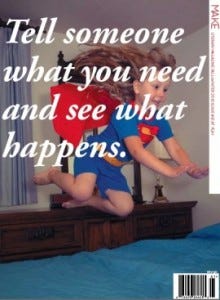
MAKE Magazine — MAKE has been around since 2004 doing all sorts of great things for literature in Chicago. It was founded by Ramsin Canon, Mike Zapata and Sarah Dodson, the latter of whom I turned to for a bit more information regarding all things MAKE.
For starters, Dodson offered a brief overview of what goes into the creation of an issue: “Each issue of MAKE follows a theme and is, more or less, equal parts fiction, poetry, nonfiction, visual art, reviews, interview, and translated work. The themes vary considerably issue to issue, allowing for a wider range of styles — from first-person narrative to visual poems.”
They’ve published a great litany of writers, many of whom are Chicago-based, though by no means is it exclusive in that way. Some examples of great stories, poems and nonfiction include work by James Tate, Adam Levin, Gina Frangello, and Alissa Nutting, among many others.
The layout of the publication is alone something to behold. Dodson said that a few years ago they upgraded MAKE’s paper stock and added color ink with the idea that “each issue is an art object, as well as a format to distribute art, and the design of each issue is as carefully considered as each poem or story.”
Their forthcoming fifteenth issue, “MISFITS,” will include pieces that didn’t quite fit with previous issues. It will also include more illustrations and what Dodson said is an “extra-rich ‘Intercambio’ section,” with works translated from Spanish to English. Among the publication’s editors are people living and working in Chicago, New York City, Los Angeles, Mexico City, and Chapel HIll, NC, contributing greatly to its cosmopolitan flare.
Poetry Magazine — The Poetry Foundation is literally an institution here in Chicago. It was founded in 2003 with their primary mission being: “To raise poetry to a more visible and influential position in American culture.” At the time of its founding, it was gifted a great bequest from Ruth Lilly to help fulfill that mission. They have a building! It’s located downtown.
Poetry Magazine, meanwhile, has been around much longer than the foundation, arguably a Highlander among other literary magazines that focus almost exclusively on poetry (as their name suggests). The publication was founded in 1912 by Harriet Monroe and has endured over the years as an offshoot of various publishers (for instance, preceding the Poetry Foundation was the Modern Poetry Association).
Fred Sasaki, Art Director for the magazine, was kind enough to answer a few of my questions about his personal experiences with Poetry and poetry in general, saying:
“Our work is more love than commitment, which I can best describe as kismet. I’ve been with the magazine 12 years and things still feel fresh. So much has changed while I’ve been with Poetry — since before the Lilly bequest, the Poetry Foundation, the building — and yet the job has in fact been everything I expected. Like a page from a fairy tale. But that’s because I found my rabbit hole. And I’d like to say the future of poetry is always brave and new.”
Polly Faust, Media Assistant for the Poetry Foundation, offered a quick rundown of what to expect from the magazine in the very near future: “Our next issue of the magazine, July/August, features works by Tony Fitzpatrick, whose final Chicago exhibition, Secret Birds will be in the Poetry Foundation Gallery Space from July 1- September 12.”
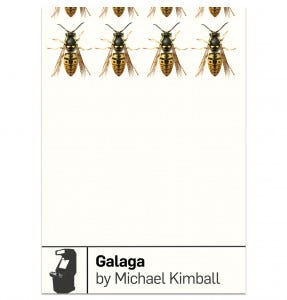
[Editors note: The following is the opening of Galaga by Michael Kimball, a book about the classic 1980s arcade game. Galaga can be purchased from Boss Fight Books.]
Galaga
Stage 1
Galaga (1981) was Alec Baldwin’s favorite arcade game and it might have saved his life. Apparently, in the 1980s Mr. Baldwin would play the game as a way to come down from his long nights of drinking and doing coke. In the morning, he would show up at a warehouse arcade in Los Angeles and wait for the owner of the place to open up for the day. He would play arcade games while other people were eating breakfast and going to work. According to Mr. Baldwin, playing video games “was the only way I could go ‘beta’ and go into that state I needed to be, where I could calm down and take my mind off everything.” The rush of playing video games became a substitute for the rush of drugs and alcohol. Playing Galaga and other arcade games for a couple of hours allowed him to wind down enough that he could go home and go to sleep.
Stage 2
Galaga is a coin-op arcade video game and a sequel to Galaxian (1979), itself an unofficial update of Space Invaders (1978). Galaga is a shooter, a fixed shooter, a spacy, a space shooter, a bug shooter, or a single-screen schmup (a.k.a. shoot-em-up). Galaga is also sometimes called a bug war, an exterminator, and a kind of insecticide.
Stage 3
Galaga was released in December of 1981 when I was 14 years old, but it probably didn’t reach Aladdin’s Castle arcade in the Lansing Mall until early 1982 when I was 15 years old. It was a difficult time in my life and going to the arcade any chance I got was a good excuse to get out of an abusive household. Galaga was my longest quarter and I could almost always set the daily high score in any arcade. Playing that video game gave me a way to space out and let me forget about the rest of my life. Galaga was my game and it might have saved my life too.
Stage 4
Many consider Galaga the first arcade game sequel. Ms. Pac-Man (1981) preceded Galaga, but it was originally a Pac-Man (1980) hack called Crazy Otto that Midway bought out while waiting for Namco to deliver Super Pac-Man (1982).
Stage 5
Side note: I’ve never actually seen or heard of Galaga being referred to as an exterminator, but I thought it was funny.
Stage 6
There are lots of playing tips later in this book, but here is a cheat sheet:
(1) Get double fighters.
(2) Don’t do anything stupid that destroys one of the double fighters.
(3) Stay out of the corners.
(4) Learn the entrance patterns for each stage.
(5) Clear out at least one side of the formation before the Galagans begin attacking.
(6) Focus on clearing stages rather than maxing out points.
(7) Max out the Challenging Stages.
Stage 7
Back in the 1980s, Galaga wasn’t the most popular arcade game or the one that made the most money, but it has endured for more than 30 years and continues to be played on many platforms. Galaga is an incredibly successful sequel. In my adopted hometown of Baltimore, Galaga can still be played in a pool hall, a pizzeria, a Laundromat, a hipster bar, and a crab shack. Those are just the places I know. I like to imagine secret Galaga machines tucked into strange establishments all over the city.
Stage 8
The blue, yellow, and red alien insects are bees. The white, orange, and blue ones are butterflies. Sometimes, the bees are referred to as hornets or wasps. In Japanese, the bees are “zako” and the butterflies are “goei.” Sometimes, the butterflies are referred to as moths. But one of the mysteries of Galaga is what the Boss Galagas are supposed to be. It has been suggested that they are birds and cicadas, but neither of these suggestions seems quite right. I checked with a cicada expert who said the Boss Galagas are definitely not cicadas. She didn’t think they were birds either. Another possibility is that the Boss Galagas are giant flies. An entomologist didn’t rule out that possibility.
Stage 9
There is a definition on Urban Dictionary that makes Galaga an adjective and defines it as “to do something really cool.” Here is a representative usage: “I rode my mountain bike over the continental divide and it was so Galaga.”
Stage 10
Galaga starts with some upbeat 1980s techno music and a single fighter travelling through deep space that is flecked with red, green, blue, yellow, purple, and orange stars that twinkle and scroll off the bottom of the screen. Player 1 is the single fighter at the bottom of the screen. The joystick stands between the first finger and thumb of the player’s left hand and the fire button rests under the first two fingers of the player’s right hand. Soon, swarms of alien insects swoop down in long looping columns from the top and the sides of the screen. At first, it’s unsettling the way the alien insects seem so ready to kamikaze the fighter, but they pull up before crashing into it and then curl back up into troop lines at the top of the screen. The alien insects settle into their attack formation: two rows of ten alien bees, two rows of eight alien butterflies, one row of four Boss Galagas. There is a brief pause and then the alien invaders start dive-bombing the fighter. It’s up to Player 1 to save this world.
Stage 11
When I started doing Galaga research, I was surprised by the extent of the game’s legacy. There are Galaga clothes, jewelry, and collectibles. There are Galaga tattoos, Galaga ringtones, and Galaga baked goods. There is Galaga art. Galaga continues to show up in songs, books, TV shows, and movies. Galaga is one of the most bootlegged video games in the history of video games and there are also a bunch of Galaga hacks, clones, and updates. I love Galaga, but I didn’t know that so many other people love Galaga too.
Stage 12
In a full formation, the first alien insect to attack is one of the bees, which jumps off the left side of the formation, curls around, and dive-bombs the fighter. Almost immediately after that, an alien butterfly jumps off the right side of the formation, fluttering and bobbing at the fighter from the opposite direction. Then one of the Boss Galagas backflips from the top row and somersaults down the screen. This is just the first of wave after wave of attacks.
Stage 13
Rule #34 states: If it exists, there is porn of it. After Googling “Galaga” and “porn,” I found a drawing of a naked Terezi, the blind troll from a comic called Homestuck, feeling up the Galaga fighter. I found a series of photos of porn star Jordan Capri getting naked in front of a Galaga machine. I found out that some people see the futuristic art on the side of a Galaga machine as two huge orange breasts with big red nipples. And I found a photo of a naked gamer girl with her knees up and her legs spread, while a Gameboy defends her vagina from three Galaga fighters that are photoshopped into the shot.
Stage 14
Eventually, some version of Galaga was released on nearly every gaming platform — including, alphabetically, Android, Atari 7800, Casio PV-2000, Dreamcast, Famicom, Fujitsu FM-7, Game Boy, Game Boy Advance, iPad, iPhone, MSX, Nintendo Entertainment System, Nintendo 3DS, Nintendo 64, Nintendo DS, Nintendo GameCube, PC, PlayStation, PlayStation 2, PlayStation 3, PlayStation Portable, Roku, Sega SG-1000, Sharp MZ, Sharp X1, TurboGrafx-16, Xbox, Xbox 360, Wii, and WiiU.
Stage 15
The Galagans attack in ones at first, but then in twos and threes, swarming down from both sides of the screen. They blanket the deep space with bullets as they criss-cross above the fighter, which Player 1 pushes left and right against the attacks. Eventually, the second Boss Galaga loops off the top of the formation and somersaults down the screen. Then, oddly, the Boss Galaga stops two-thirds of the way down the screen and releases a blue tractor beam to the sound of some twirly, hypnotic music.
Stage 16
After doing some pretty standard Google research on Galaga, I started to Google “Galaga” and anything I could think of — including “cake,” “candy,” “jewelry,” “rap lyrics,” “shoes,” etc. That’s how I found out, for instance, that you can buy a Galaga wine stopper, download a Galaga cursor, or buy a Galaga license plate frame.
Stage 17
One of the reasons I must have been drawn to Galaga was my recurring apocalyptic nightmares in which my school, my neighborhood, America, or the Earth is being invaded by Russians, monsters, or aliens. In these nightmares, I had to save whatever was under attack. On some level, Galaga was my nightmares transformed into an arcade game, but it was fun and I wasn’t as afraid to die. It only cost a quarter to fight the invading alien insects of Galaga. Who wouldn’t want to do that?
Stage 18
In almost any video game, a player’s instinct is to avoid being captured, but Player 1 moves the fighter into the blue tractor beam and watches it twirl up to the Boss Galaga. The captured fighter turns red and the Boss Galaga wheels around and tows it back up into the attack formation like a trailer on a hitch. Player 1 gets a new fighter from the fighter reserve and waits as an alien bee and then an alien butterfly loop down from different sides of the screen. Then a green Boss Galaga jumps off the right side of the formation with two alien butterfly escorts leading the way and the player’s captured fighter trailing it. Player 1 moves the fighter to the right side of the screen and waits for the attack group to line up vertically. A quick two shots take out the two alien butterflies. Another quick shot turns the Boss Galaga blue and then a fourth one destroys the Boss Galaga, rescuing the fighter.
Stage 19
There is a doctored photo of Lady Gaga wearing a black leather (or maybe vinyl) dress that has a blue Boss Galaga at the neckline (which almost looks like a huge piece of jewelry) and then the blue tractor beam descends the length of the dress. She looks like she’s arrived from the future wearing a dress from the past.
Stage 20
Galaga was created by Namco in Japan and released there as Gyaraga in September of 1981. Galaga was released by Namco’s North American distributor, Midway, in December of 1981, though it didn’t reach most arcades in the U.S. until early 1982. Galaga can be played in three different cabinet styles: (1) the standard upright version, (2) the mini-cabaret version, and (3) the cocktail-tabletop version. There was also a fourth type of Galaga machine, a portable mini-television version to be used when travelling, but I’ve never seen one of those. Please note: The pure and true and full Galaga experience can only be captured when playing the standard upright version. The other versions do not play as well.
Stage 21
The rescued fighter turns back to white and spins back toward the center of the screen where it lines up vertically and drops in next to the second fighter. They link up and there’s a little riff of celebratory music. The double fighters start firing away at the alien armada in the brief moments before they begin attacking again, clearing out the center of the attack formation. An alien bee jumps out wide and curls back toward the center of the screen while the double fighters slide over and quickly take it out. The same thing happens with an alien butterfly on the other side of the screen. Then one of the last two Boss Galagas does its backflip at the top of the formation and Player 1 lays down two pairs of bullets that destroy it at the top of the screen.
Stage 22
In 2009, Hallmark sold a miniature replica of the Galaga arcade cabinet as a Christmas tree ornament. It lights up and includes a sound chip that plays the game’s music. These four-inch ornaments have become collector’s items, often selling at many times their original price.
Stage 23
There is only one way to play most classic video games, but Galaga has options. With Galaga, the player had to choose between a single fighter or double fighters. At the time, it was the only game in which the player could turn a bad thing (a captured fighter) into a good thing (double fighters). Getting double fighters made me feel like I was in on a secret.
Stage 24
Before I started playing video games like Galaga, I played board games like Candy Land, Battleship, Life, Clue, Masterpiece, and Monopoly. I played card games like Crazy Eights, Rummy, and War. I played a lot of baseball, basketball, football, and kickball at school, in organized leagues, and in the neighborhood. At home, we often played tag, freeze tag, something we called Spud, and something else we called Gorilla, Gorilla. I always wanted to be playing some kind of game. The terrible stuff happened when I wasn’t playing games.
Stage 25
There are just a handful of Galagans left at the end of the wave and they attack together — an alien bee, an alien butterfly, and then the last Boss Galaga. Player 1 picks off the last Boss Galaga with two quick shots while another alien bee and another alien butterfly begin their attacks. Player 1 slides the fighter away from two bullets and away from the alien bee looping under it, then picks off one alien bee and then a second one. The two alien butterflies flutter through the bottom of the screen, but then don’t retake their positions in the formation. They continue attacking instead and the fighter sprays two sets of bullets on the right side of the screen and then the left side, taking out both alien butterflies.
Stage 26
The double fighters in Galaga were a huge shift in gameplay at the time. And double fighters are one of the biggest keys to playing Galaga at the highest levels. It’s easier to aim, easier to clear stages quickly (thereby limiting enemy attacks), and the player’s shooting statistics (which are displayed at the end of the game) are much improved. Double fighters are a bigger target, of course, but if the player uses them properly, there are considerably fewer instances where they are a target at all.
Stage 27
Besides playing games with other people, I played a lot of games by myself. I made up games to keep myself company. I always had a deck of cards and played different kinds of solitaire in front of the TV or on my bedspread. I made up different board games on colorful sheets of construction paper that I then taped together so I could play against different versions of myself. I played a baseball game that used nine baseball cards for each team, with batting orders and defensive placements, and little slips of paper that I pulled out of a baseball hat to determine each playing card’s at-bat. I loved playing these games by myself and, at the time, I couldn’t have imagined how playing video games by myself would be so much more fun than playing non-video games by myself.
Do not buy a car. Do not drive. Ignore advice to obtain an international driver’s license before your arrival. American cops do not know what an international driving license is. Or they pretend not to know and what they don’t know makes them angry. You do not want to face an angry American cop. Driving is a slippery slope. Driving is trouble. Driving is tickets. Driving is a cop asking you for your license and registration. Before you know it, you are standing before an elderly grim immigration judge.
Avoid parties organized by our people. Arguments and fights break out over politics, over politicians, over girls, over anything, over nothing. Drunken arguments. Especially after imbibing a cocktail of Hennessey and Irish Cream. Neighbors call the cops. Cops ask for identification. Remember you do not have one. I know we are a party-loving people, so if you think you can’t live without it, go to YouTube, there’s more entertainment on YouTube than you’ll find at any Nigerian party. Nobody was ever arrested for watching YouTube videos.
Avoid Rashonda and Shenika and her sisters. They once married and had kids or dated and had their hearts broken by our men. They are on a revenge mission. They’ll take out their hurt on you. They’ll promise they’ll marry you to help you get a Green Card. They will not. Ignore their avowed love for our local food. They’ll tell you they love eating spicy food. They’ll eat you dry, eat you out of the house, and dump you. Besides, they smoke weed. They’ll expect you to pay for their habit. Weed is expensive in America, unlike back home where you can get it for next to nothing.
Avoid Chucks. Is that even one of our names? Anyway, that is what he calls himself. Sounds like a made-up name, neither Chuck, which is American, nor Chuks, which is ours. His name is not the only dubious thing about him. He’ll tell you he is in the auto insurance business. This is a ruse. Actually, this is what he does: he buys cars, insures them heavily, looks for a lonely road, and drives them into a tree. After which, he claims the insurance money and throws a big party. Remember what I told you earlier about Nigerian parties. He recruits new drivers at these parties. He will tell you that there is no risk involved. He’ll assure you that all you have to do is wear your seat-belt and run into a tree. One of his drivers ran into a tree and broke a neck bone. He is still wearing a neck brace. Before Chucks became a car crasher, he drove around town in his beat-up Nissan looking for unsuspecting inexperienced drivers who’d run into him so he could collect. Avoid him. He has no honest bone in his body.
If you must travel, travel by Amtrak. Trains are safe, buses are not. I mean safe from raids by the INS. Here’s something that happened to someone I know. He boarded a Greyhound bus that was traveling from Chicago to upstate New York. At the Greyhound bus station in Chicago, there were boisterous kids. The boys were in jeans and t-shirts, but the girls were dressed the traditional Somali way. Colorful scarves and cotton patterned wraps. It was a night trip. A few hours after the bus pulled out of the station, the bus was pulled over into a gas station by a detachment from the INS. They went from seat to seat asking people, Where are you from? Do you have an ID? Identify yourself. Soon they got to the row of the Somali kids. Where are you from? From Chicago. I mean what country? America. Do you have ID? And the kids pulled out shiny U.S. passports. Avoid the bus. It is overcrowded, overheated, over-scrutinized, and accident prone. If you must travel, take the train.
If you must go to church — I suspect you will want to go to church, because you are a man with problems, and a man with problems needs prayer. Avoid the American churches, though: they do not shout in American churches and a person with problems needs to shout loud enough to reach the heavens.
American churches do not announce jobs. The pastors do not know the places that hire those without papers. The pastors do not order people to go on “seven days dry” nor “white fasting.” They do not play loud music; they do not dance energetically and frenetically. I hear the African-American churches in the South do. But those are in the Deep South.
And while on the subject of churches: the church is not an opportunity to meet girls. The girls in the churches, the immigrant girls, are in the same leaky boat as you. They do not have papers, they are illegal, they are searching for someone to marry them for a Green Card. They’ll not tell you this fact until you happen to mention it one day when you are both in bed and then they’ll hiss like an angry snake, Why did you not tell me all this? I wasted my time cooking for you. They will leave you on the bed half-naked as they march out with righteous indignation, giving your door such a loud bang on their way out that the door is left wondering what it did wrong.
People will urge you to go to school. They’ll tell you an American education is useful. That is not true. That is 80’s. You are here to hustle. If you must get any kind of qualification, get a nursing certification or qualification in some medical field. A sick man does not care about your accent. A helpless old lady needs strong arms, not great enunciation. There are many of those schools. Get into one and you’ll qualify in eighteen months. I’ll recommend the ones run by our people. They don’t ask too many questions and you can pay on the installment plan.
If you need an immigration lawyer, never hire a Nigerian or Ghanaian lawyer. Get a white lawyer, preferably a Jewish one. He will ask you no questions, so you will not tell him any lies. Masquerades do not fear each other — I need not say more. By now you must have realized that there are tribes in America. Remember when at the port of entry you went to the black man in the booth and he called you brother — a good white lawyer will argue your case before his white brothers. Be prepared to pay a bit more. Unlike the Ghanaian and Nigerian lawyers, they do not bifurcate their payments. The only payment plan they adhere to is immediate payment. You must give them a check before every meeting and before every court appearance and before the signing of any document. I can assure you they’ll deliver. They get the job done.
If you want to understand your new society better, you should go to a baseball game. Ignore invitations to play five-a-side soccer with fellow immigrants in that obscure park in the outskirts of town. If you really hope to become a part of society, on a Friday evening go to a nearby stadium and watch a baseball game. Sing “Take Me Out to the Ballgame” along with the crowd. Buy a beer and a hotdog, eat some cotton candy, try to catch the ball but do not try too hard, especially if there is a kid around you trying to catch the same ball. Do not try to understand the game. It is neither cricket nor soccer. Just sit, relax, watch the people, sip your beer, and pay a little attention to the game. The good thing is that you are not obligated to stay until the end. Leave when you become bored or tired, but you bet that you’ll learn a lot more about this society from sitting at that stadium with the smell of beer and nachos and screaming kids than you’ll learn in any other place. Go on the Internet. Read up what you can find on Shoeless Joe and Yogi Berra. Learn some Yogisms. I have never met an American who hated baseball. As tea is to the Englishman, so is baseball to the American. I’ll go as far as to recommend listening to baseball commentary on the radio. Play it loud and let your neighbors hear what you are listening to; it will calm them and put them at ease about you.
Avoid buying your groceries from the African store. Their stuff is overpriced and they’ll rip you off. Train your palate to adjust to American food. There are affordable alternatives in the grocery store if you know what to look for. Eat lots of kale and spinach and collards. Winters are long. Your body will miss all those tropical vitamins but the vegetables will help compensate. Do your own cooking, not only is it cheaper, it is healthier. As you’ll soon find out, burgers and fries will not do you much good. Your cholesterol level will rise, your blood pressure will hit the roof from all that salt and fat, you’ll sicken. You are not likely to have any health insurance, so eat healthy. Exercise moderately, but stock up on Theraflu and Vicks VapoRub in case you fall sick. The mosquitoes here do not carry malaria so you do not have much to worry about.
Dress well. Dress properly. Dress the way you wish to be addressed. Ignore that entire pants on the nape of the butt thing. Leave that to Lil Wayne and all those guys on rap videos and the guys in prison. I am not saying you should spend all your money on clothes. What I am saying is that you should spend a little money on the right kind of clothes. Dress preppy. These are not my words but sage advice someone gave me many years back. Chinos pants and button down shirts. It is in your own interest to dress this way. It is reassuring. It makes you less suspicious. If you don’t believe me, walk into your local Walgreens in sagging black jeans, a black hoodie, and sneakers and watch the security guy follow you all over the store. Go back the next time dressed preppy and watch him smile and greet you with a Hello buddy.
Since you’ll not be driving, I suggest you invest in a good winter coat. Do not stint on this. You can buy one on a layaway plan. London Fog is a good brand. You do not want to suffer from any cold-borne illness. They do to the black man what tropical illnesses do to the white man.
Riding the bus is a big hassle in winter. The schedules are crazy because the auto companies want every American to drive a car. What makes the buses worse are bus people. Your first thought will be that the buses are great. You’ll think the buses are clean. You’ll think the buses are not that bad. This is because you are still making the transition from the public buses back home. I remember them with their mobile pastors who pray for everyone in the bus and then pass little envelopes around for donations. With their medicine hawkers whose little pills cure TB and gonorrhea and chickenpox. And if you aren’t lucky, you can get your pocket picked while rushing to board or struggling to alight.
American buses do not have those. American buses are filled with crazies who may not bother to wash themselves or brush their teeth. They feel compunction to lean into your face and start a conversation with you. I am a user, you know. Not proud of it but not for nothing, you know, it is what it is. Buy an ipod and blast your music. Do not engage in conversation. Do not smile.
To join or not to join? Village associations, town associations, state associations, country associations, continent associations. They have them all here. They meet once a month or once every three months. They have different names but the same parole. You pay a membership fee. You pay a monthly contribution. Someone hosts the meetings. The host provides food and drinks. There is usually a Christmas party. In the event of a birth you get a cash gift. In the event of the death of a parent you get a cash gift. In the event of your own death they are responsible for flying your body back home for burial. Quite frankly, you’ll be better off with life insurance.
Take accent reduction classes. Many people will tell you they don’t know what this is, but I do. I took one and it did help me a lot here. When I speak, people can hardly differentiate between me and a native-born speaker. Not speaking the way Americans speak is like a dead man refusing to speak in the language of the dead. Don’t be deceived by all that false cooing by old ladies, Oh that’s a lovely accent, where are you from? Some lady once told me that when you speak with an accent people pay more attention to what you are saying. What she failed to add was that they also speak to you very slowly, having concluded that you are an idiot.
Buy a $1 lottery ticket every Friday. You are not likely to win but, hey, as they say here, You never know and You have to be in it to win it. Avoid the casinos. They have the saddest people in this country. Do not be deceived by their inviting names. I know a guy who started going to a casino out of loneliness. He couldn’t wait to get out of work and head up to play the slot machines and blackjack. He had not yet heard the expression, The house always wins. He would win a few dollars and put it back in. He was soon taking payday loans to gamble. He promised himself he was going to stop. One evening he drove straight home from work. The first time in many months. He made dinner, poured himself a drink, watched a little television and went to bed. He said at first he thought he was dreaming. He saw flashing lights, then dings, tings, and bings. He jumped out of bed, picked up his car keys and drove straight to the casino. He got money from the ATM and began to play. He lost everything. He lit a cigarette — back then the casinos still permitted smoking — he smoked the cigarette halfway and dropped it on the thick rug. He drove home. The next morning he turned on the TV hoping to see the news that the casino had burned down. No such luck. Once again the house had won.
I wish I could guide you through this maze of a country but, as you well know, I’ll soon be gone. Voluntary deportation, that is what I took instead of prison. Voluntary indeed, an oxymoron. But as they say here, It is what it is.
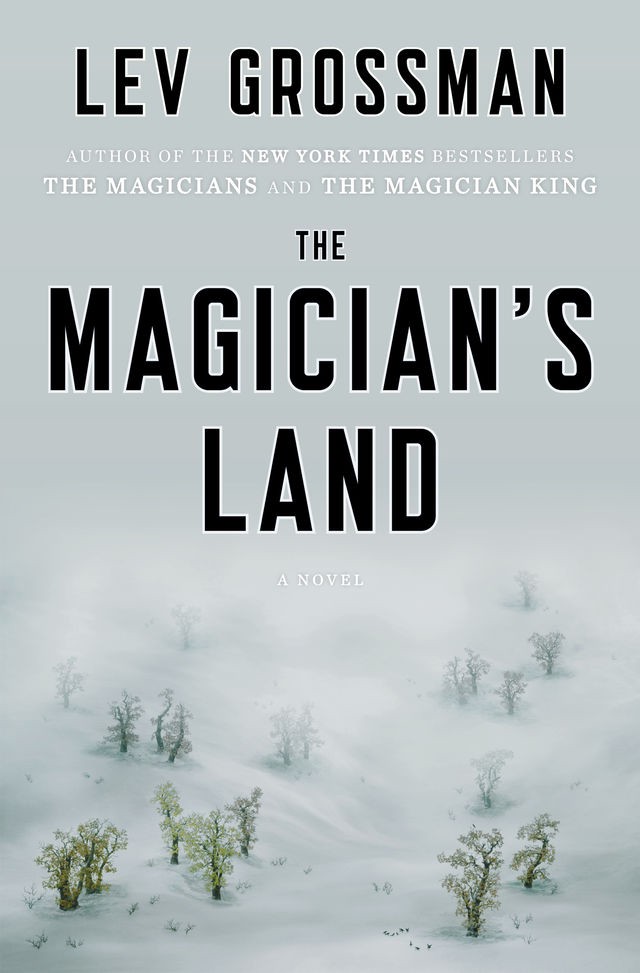
The tailer for the third installment of Lev Grossman fantastic Magicians trilogy is here, and it has a pretty literary star-studded cast: Neil Gaiman, Peter Straub, Terry Brooks, Rainbow Rowell, Gary Shteyngart, and more make appearances. The Magician’s Landwill be out this August. Check it out above.
If you’ve been dying to read a story about what happens to Harry and Ron’s hair when they reach mid-30s — sporting “threads of silver” and “thinning slightly” respectively — you are in luck!
J. K. Rowling has just published a new story on her Pottermore website that checks in on our heroes in their adult years. Titled “Dumbledore’s Army Reunites,” the piece is written in the form of a gossip column. The adult wizards are caught attending a Quidditch match by gossip columnist Rita Skeeter. It’s the first time that Rowling has written about the characters since the epilogue of the final novel. Ginny is a reporter, Hermione is a rising star in the Ministry of Magic, Neville may have a drinking problem, and Harry has a new scar indicating he is top-secret Auror agent.
The piece is up on Pottermore, but only available to subscribers and currently crashing under the weight of fan traffic currently. You might need to wait to find out if Ron has a video game addiction, how large Harry’s potbelly has gotten, or whether Hermione “can have it all” as both a witch and mom.
Rowling says she has “no plans” to write further mid-30s Potter stories.
To celebrate it’s 20th anniversary, Riverhead Books is giving away three Little Free Libraries stocked with Riverhead titles. If you have never seen them, Little Free Libraries are small public libraries operating on a “take a book, leave a book” model. There are thousands of them around the country, but if your community doesn’t have one yet you could win one from Riverhead.
Two of the Riverhead libraries are already heading to communities, but Riverhead is accepting entries for the third. Five finalists will be picked by a panel of Riverhead authors: Junot Diaz, Dan Pink, and Emma Straub. The public will vote to choose the final winner. The libraries are designed by Art Director Helen Yentus and team.
In the beginning, before the Word there were the words in the beginning, a seeding from which nothingness gains form.
Before the first sentence of her laser smart, affecting, confounding, recalcitrant, infuriating, relentlessly stylish debut novel, Nobody Is Ever Missing, Catherine Lacey presents the entirety of John Berryman’s “Dream Song 29.” Berryman’s career is frequently reduced to the shaping forces of two monumental events: the gunshot suicide of his father and the poet’s own suicidal leap. In the first stanza of “Dream Song 29,” Berryman’s alter ego, Henry, assesses the eternal wracking of that first death, an undoing that forever changed the poet’s name and possessed such gravity that no passage of time could ever budge its crushing weight.
Lacey’s novel, too,begins with an absence — without a word, the narrator, Elyria, drops out of her life in New York, abandoning her home, her math professor husband, and her steady job writing for a network soap opera in order to pursue an off-handed invitation from an older poet, Werner, who amid casual discussion had made the type of if you’re ever in my neck of the woods offer that is commonly extended when no one ever comes to that particular neck of the woods: in this case, a homestead in the middle of nowhere on the opposite side of the world.
New Zealand.
Before swapping one “New” for another, Elyria’s adult life was shaped by the loss of her adopted sister, Ruby, a promising math prodigy who leapt to her death in a campus courtyard. The professor was the last person to see Ruby alive — he and Elyria met and found connection through the bond of this negation.
During the opening sequences of the novel, Elyria appears much like one of the female narrators in Laura van den Berg’s short stories, the competent women of “We Are Calling To Offer You A Fabulous Life” or “Up High In The Air,” women who are compelled by an urgent need to shed the burdens and trappings of their dissatisfying lives. There is such a buildup, such a nasty crust formed of one faulty decision crystalized atop another, that the only way to stay whole is with a clean break from the past.
What is your greatest fear? a clinician asks Elyria amid a battery of questions.
I did everything wrong, she answers.
The italics are Lacey’s: Eschewing double-quotes, all of the novel’s spoken dialogue is formatted with italics, infusing conversed words with a sense of remoteness and otherness while emphasizing the indeterminate passage of time between the events and their narration. Elyria’s voice is delivered from a distance that ranges from a few seconds to a gap of several years. Can standards of time or a notional future exist in a state of emptiness? Reading Heidegger, I got lost in being and haven’t yet found my way to time, but in the world of Nobody Is Ever Missing the past seems measured more by resonance and magnitude than temporal distance. Elyria only looks back — never forward — and from the limited “now” of her vantage point everything else is “then.”
“Being alone was what I wanted; being alone was not what I wanted. I didn’t want to want anything; I wanted to want everything.”
If you believe that storytelling begins with a character who wants and needs something and must face obstacles in order to get it, Catherine Lacey means to defy your expectations.
“Every questioning is a seeking,” Heidegger wrote in Being and Time. “Every seeking takes its lead beforehand from what is sought.”Elyria doesn’t simply seek to discard the clinging matter of her life; she wants to lose herself without holding any corresponding motivation to find herself. Though disdaining the hollow person she’s become in married life, Elyria is also suspicious of her core, feeling that deep down she has “a wildebeest renting a room in her.” Hitchhiking toward Werner’s farm, she sometimes suppresses this wildebeest nature and sometimes lets it snort. In her prior life, Elyria had imagined resolving arguments with her husband by stabbing herself in the eyeball or detonating an explosive in his head: Only the flimsy line of inhibition separates the instinct to horrific violence and the thrust for blood.
In the third and final stanza of “Dream Song 29,” Henry feels so unmoored that the only way he knows for sure he hasn’t lost himself to the animal state of a compulsive killer is by making a mental tally of all those close to him; “nobody is ever missing”in this reckoning, and that tenuous accounting is the only assurance he’s maintained a grip.
Somewhere in Henry is John Berryman (born John Allyn Smith, Jr.): the thread of identity. Richard Wright explored the severance of this thread in The Outsider, during which a depressed postal worker is beset by debt problems, marriage problems, mistress problems, booze problems, a mass of problems begetting problems until a way out presents itself: a fatal subway crash and a mistake identifying him among the dead. Relieved of his burdensome identity, cutting all ties to his past, the postal worker walks away from his old life and into an unbound freedom within which nothing prevents him from committing murder after murder:
“He had acted, had shattered the dream that surrounded him, and now the world, including himself in it, had turned mockingly into a concrete, waking nightmare from which he could see no way of escaping. He had become what he had tried to destroy, had taken on the guise of the monster he had slain.”
As she thumbs rides across New Zealand, one friendly Kiwi after another warns Elyria of the risks of being raped and/or dismembered by some crazed man in a van.
Men in vans offer Elyria rides. She accepts. They tend to be agreeable sorts. Wanting nothing but the minimum from others, Elyria tends not to be an acute perceiver of character; rather than generating friction through interaction or conflict with offbeat locals, Lacey creates momentum through sheer prosodic dexterity:
“It became clear after some hours of waiting on the narrow, tree-lined road where the nurse had let me out that some places are not good places to be a person and not a car and that was where I was; occasional cars sped around the road bend and I ended up frightening the drivers the way that wild animals do when they stand stunned dumb in a road. The cars would slow or swerve or honk and I wished I could honk back — I know, I know — why am I here?
Using short chapters to stop for breath, Lacey stacks clause upon clause with unerring rhythm, one of those glorious gifts that not everyone’s been given and guided by that fabulous inner ear she teases out assonances and upends predictable constructions, modulating her phrases with repetitions, inversions, and tautly-strung wit, the novel propelled by sentences that wind their way inward before springing back out with renewed velocity.
Also similar to van den Berg — and underscored by the equations chalked by Elyria’s husband — Lacey writes characters who often function in accordance with physical principles, creating a world populated by conduits and catalysts and voids, with universal laws acting upon relationships, movement, and the order of things. Elyria appears as something loose and negatively charged, briefly connecting to anything positive in a superficial bond that quickly degrades under the stress of her malaise.
Reaching Werner’s farm, Elyria finally finds a sort of precarious balance. She entertains no intellectual, sexual, philosophical, or psychological interest in the older poet; his casual offer seeded her decision to leave and in his presence she achieves a sustainable form of stasis. Sustainable for her but not him. Elyria’s elemental sadness weighs so heavily that he finally asks her to “remove herself” from his presence.
And here, at the midpoint of the book, Elyria is set fully adrift. Her initial leaving at least offered the orientating points of departure and destination; once “removed” from Werner’s farm, she has nowhere to be and neither the desire nor the means to get there. She sleeps in parks and eats from trash cans, occasionally accepting a kindly-offered meal or a temporary shelter before shuddering loose and wandering again.
“I hiked up a path and into the woods, thinking about and almost having a real feeling — a feeling like, this is really sad, this is a sad place to be, a sad part of my life, maybe just a sad life. The woods were not particularly beautiful. I was not impressed by the trees.”
Offering a lay psychoanalysis of a fictional character is — at best — foolhardy, but as Elyria’s emptiness grows and acts upon itself she offers the reader an intensely-realized view of depression, where nothing positive seems possible and the defiance of help is an insidious, self-perpetuating aspect of the pathology: Were Elyria capable of accepting a helping hand to boost her toward a more satisfying way of being, she wouldn’t be stuck in such a hole in the first place.
The novel can feel like picking up a child when they’ve gone deliberately boneless, a passive disembodying through which they actively become heavier, their entire mass nothing but displaced resistance, and as they flop and sandbag you become increasing frustrated, muttering curses you swore you wouldn’t voice and laboring against that deadweight, forced into being someone you didn’t intend to be simply in order to move from Point A to Point B. In this manner, a smaller body is able to exert control over a larger one. This “child” metaphor is not a paternalistic infantilizing of either author or narrator; within the novel, the notion of “growing up” or existing as a grown-up is a recurring concern, and in-keeping with her character, Elyria at times idealizes, and at other times wishes to transcend, a child-like existence. Elyria was 22 when she married, with her husband a decade older and possessed of an array of independent life experiences she feels she lacked:
“What I meant was I knew I had to do something that I didn’t know how to do, which was leaving the adult way, the grown-up way, stating the problem, filling out the paperwork, doing all these adult things, but I knew that wasn’t the whole problem, that I didn’t just want a divorce from my husband, but a divorce from everything, to divorce my own history.”
Elyria’s inability to settle into the adult world is largely bred by her unwillingness to say what’s on her mind. In her interactions, what she wishes (or imagines) she had said and what she actually does say consistently diverge: steering mightily from conflict, Elyria is left further and further from herself, further and further from the words of hers that act upon the world, the words that define her to those in the world around her, leaving her stuck between the interior world of the unsaid and the exterior world of unmeant compromises and capitulations.
In an essay “Against Bless-Your-Heart Manners” published earlier this year at Guernica, Lacey wrote about the “paralyzing politeness”that affects residents of the South, with “the tradition of courtesy and avoidance at all costs” inhibiting the advance of social progress. While arguing for the need to forgo tidy niceties in favor of candid speech, the essay proper is paired with a sidebar of off-the-cuff footnotes, a reflexive, reflective id in which the author speaks far more freely than in the body of the text.
Some things are easier done than said.
While still at the farm, Elyria asks Werner why lambs give up so easily when it’s their time to be slaughtered: “They are not giving up, he said. They are just being polite.”
In Wright’s The Outsider, a woman who fell in love with the ex-postal worker ultimately leaps from an apartment window when she realizes she gave herself over to a man who contained such a terrifying void. Her name is Eva; his, Cross:
“She had fled from him forever; she had taken one swift look into the black depths of his heart, into the churning horror of his deeds and had been so revolted that she had chosen this way out, had slammed the door on her life.”
Because Elyria wants nothing, and nothing is capable of causing her to change, Lacey is forced to find new ways of saying the same thing over and over. From this absence she pulls at strand after strand of remarkable prose, but a time comes when matters grow more dire and emptiness threatens to collapse on itself and yet above it all Lacey continues to pull more colored streamers from her sleeve. Time may or may not be real, but pages are, and the more she pulls, the more those silks begin to seem purple and frayed: Through repetition and exposure, terrific artistry can take on the appearance of mere legerdemain.
Following the epigraph of “Dream Song 29,” Nobody Is Ever Missing begins with an immediate grabber of an opening line, the first of many: “There might be people in this world who can read minds against their will and if that kind of person exists I am pretty sure my husband is one of them.” This dynamic lead indicates a time when her husband suspected Elyria was about to leave; only thereafter, for the entirety of the book, neither she nor her husband suggest he had any sort of involuntary ESP, as both continually operate from the perspective that he was utterly blind-sided by her sudden disappearance.
Can an object define itself from a false beginning? Or does that untrue step cause a thing to forever lose its way?
Elyria’s narration proves unreliable both from the pitfalls of her memory and psyche as well as the inconsistency born of sentences that shimmer beautifully but often don’t sync with the internal logic of their fictional world. The novel’s principal flaw and principal concern are one and the same: the inability to remain grounded in what came prior.
Looked at from a certain angle, this may not be a flaw at all.
As a seed of disharmony in their relationship, on their honeymoon Elyria’s husband tells her that she has “two options” with regard to how she can engage with her feelings. Elyria seethes under this binary, determined to prove that a galaxy of options exists. As the novel progresses, as Elyria fully removes herself from the mores and memories of her past, the existing narrative is left with only two possibilities: she will, or she will not. The irony and tragedy is that whichever arc she pursues, both come full circle to an identical end.
Sign up for our newsletter to get submission announcements and stay on top of our best work.
YOUR INBOX IS LIT
Enjoy strange, diverting work from The Commuter on Mondays, absorbing fiction from Recommended Reading on Wednesdays, and a roundup of our best work of the week on Fridays. Personalize your subscription preferences here.