I’ve written before on some of the ways that interactive fiction, or choicefic, creates new possibilities for literary fiction. I touched on how the medium once dominated by the Choose Your Own Adventure children’s adventure series can be extended to serious writing — to explore themes of free will, to create intricate tapestries of plot lines, and to revolutionize character development.
For authors of choicefic, keeping track of the branching paths of a narrative can quickly become overwhelming. There are several software options to make the process more manageable, though most require varying degrees of coding skill. Inklewriter is among the most user-friendly and requires no coding at all. It’s also free and entirely web-based.
Most of these software packages, including Inklewriter, allow authors to go beyond the branching path structure that exists in book-form choicefic. They do this by using conditional logic.
Conditional logic makes it possible for a reader’s choice to have different results depending on the reader’s previous choices. When the protagonist asks her friend for help burying a body in the desert, the friend’s response could depend on whether the protagonist had been similarly helpful earlier in the tale. More subtle variations are possible too: perhaps the friend will help in either case but show her resentment with a few harsh words in one version.
But conditional logic also allows for the available options to vary depending on previous choices. For example, if the reader has the protagonist pick up a gun at one point in the narrative, he could have the option of using it later. Inklewriter provides an example of its conditional logic features with an interactive retelling of a Sherlock Holmes story.
Conditional logic can use counters to keep track of how many times the reader has chosen a particular type of option. Options can then be made available dependent upon these counts. For example, certain options could be designated (unbeknownst to the reader) as “aggressive.” At certain points in the story, the reader may be presented with more aggressive (perhaps violent) options if she had chosen a certain number of aggressive options previously. This could have interesting implications for character development; though some writers will chafe at the implicit quantification of character traits that is so familiar to RPG gamers.
Interactive fiction straddles two worlds–gaming and literature–and the use of conditional logic brings it closer to the former. But used artfully, it could become a powerful tool for authors of literary fiction.
Let’s coin a phrase: let’s name a certain kind of fiction that creeps and crawls and sometimes does backflips among its respected realistic brethren. Let’s call it domestic fabulism. Just the phrase is new, mind you (and it is; I Googled it); the genre itself has been in use for years.
But what is it? William H. Gass (not a fabulist but certainly an alchemist) claims,
“Readers begin by wanting to be anywhere but here, anywhere but Kansas,”
but in domestic fiction we find ourselves back in the noplacelikehome — and yet. It’s Kansas with a difference.
To explain further requires some exploration of the terms. Fabulism, often interchangeable with magical realism, I’d suggest incorporates fantastical elements within a realistic setting — distinguishing it from fantasy, in which an entirely created world (with constructed rules and systems) is born. These fantastical elements are often cribbed from myth, fairy tale or folk tale. Strange things happen and characters react by shrugging: animals talk, people fly, the dead get up and walk around. Time operates sideways, nature behaves mysteriously;
fabulism feels like the kind of dream in which you look down and realize reality has forgotten its pants.
And because of these things, fabulism tends toward the exotic, the historical, the once-upon-a-time, the far-flung. Saramago and Rushdie create worlds where the unthinkable has happened; Dinesen reports back from centuries and countries ago, from castles, counts and courtiers; Angela Carter gives us new-old fairy tales from long ago.
But domestic fabulism takes the elements of fabulism — the animals that talk, the weather that wills itself into being, the people who can fly — and pulls them in tight, bringing them home. Domestic fabulism uses elements like a magnifying glass, or rather, a funhouse mirror. It simultaneously distorts and reveals the true nature of the home, the family, the place of belonging or, in many cases, not belonging at all.
The definition of domestic fiction is interesting, is slippery: Google it and you get results like “women’s fiction,” or “sentimental fiction.’” One must accept, of course, that women are traditionally linked with hearth and home — if absent, that absence is also notable. However, these fictions are, like any insightful writing that involves family, usually anything but sentimental. A.M. Homes’ May We Be Forgiven, Paula Bomer’s Baby, or Yates’ Revolutionary Road all come to mind, not to mention most anything Jonathan Franzen — who I’m guessing would chafe at being called a sentimentalist — has written.
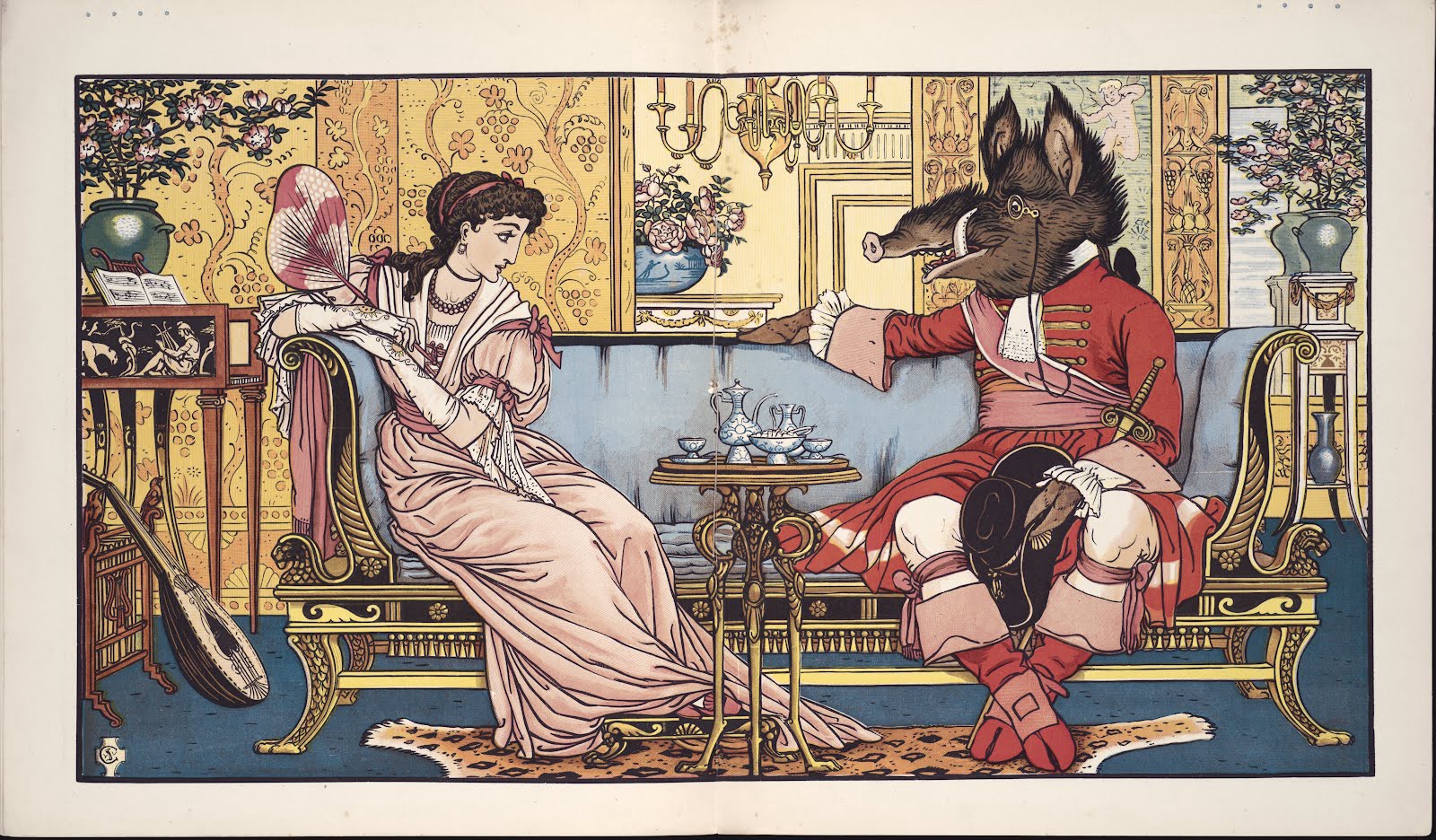
by Edmund Dulac
But of course the “sentimental” label springs from the source: the home. Because the home, that square roof and smoking chimney the hero returns to, is women’s to keep: the home is where the mother, sister, daughter, wife waits patiently in traditional literature. Women many hundreds of years ago told stories to each other: instruction, warning, entertainment — and mostly male scholars listened in, took those stories, transformed them — and created fairy tales. But of course the domestic is not some special place or province of the woman, not anymore, and certainly not in my definition. In Roald Dahl’s books, for example, while the stories are often about family, the children are the focus of the transformation, the domestic magic — in ways that often have nothing at all to do with mothers or sisters or wives, present or absent.
In short, I think of the domestic more as fiction about the family and the home, and how it shapes or transforms us.
This is not a new concept — it started with folk tales and later fairy tales themselves. And indeed, from the start, domestic fabulism vs. what I’ll call adventure fabulism were separated. Folk tales gave birth to domestic fabulism — they’re about the married couple, the peasants, the simple farmer. They often do not end happily, since they echo and foreshadow real life, and real life was nasty and brutish for medieval women and their families. Fairy tales, the precursor to adventure fabulism, were literary, were written, were about travel and kings and princesses and evil fairies, about far off lands, battles and trials and nearly always (but not guaranteed until Disney) contained a happy ending. Of these two, domestic fabulism is by far the more grim. Adventure fabulism may be deadly serious in subject matter, but it’s still escapist by way of abandoning the familiar landscape. In Oz, Dorothy may encounter doubles of her farmhand friends, but she doesn’t face the feelings she has, or doesn’t, for the rundown Kansas farmhouse and the dreary tornado-torn earth. She may learn valuable lessons, but from magicians! From witches! From lions and tin men and flying monkeys and the magic of Cinemascope!
There is horror and wonder, but it’s once upon a time — it’s not lurking on our doorstep. We can shut it out.
Domestic fabulism, on the other hand, is immersion, an exploration of self and situation — of the dread that lives and lurks at home, where we cannot escape it. It creates a double existence, an anxiety that ends, if it does, in a sort of forced catharsis — we must confront the thing that lives in our house, in our marriage, in our family, in our town — the succubus that sits on our throats when we dream. Domestic fabulism, it seems to me, is also on the rise. And that makes sense — that in an age beyond the age of exploration, in an age where the exotic has become the familiar — we might once again look to the fabulous in the small minutiae of our daily home lives. We live in an age of dread and anxiety — harm can come to us at any moment; we live in absolute awareness, where domestic stakes are higher than they’ve ever been. It’s a perfect time to turn ourselves inside out by turning the world around us outside in. As Jack Zipes says: “the very act of reading a fairy tale is an uncanny experience in that it separates the reader from the restrictions of reality from the onset and makes the repressed unfamiliar familiar once again.”
But how does domestic fabulism operate? How does it create this tension, this deeper exploration of the places and people we are from? Kate Bernheimer refers to something that Dryden called “the fairy way.” She adopts this phrase for her use and looks at it something like this:
“The fairy way is a non-representational way; it is a short cut between experience and knowledge.”
(Bernheimer makes the distinction between the fabulist and the fairy tale, and of course I agree, but I use her useful writing here on fairy tales since I think the fairy way is largely the fabulist way, or at least a stream running into the same river.) “In his books about the art form of fairy tales,” she continues, “my aesthetic and ethical guru Max Luthi extolls the virtues of fairy tales through the techniques by which a dynamic universe is constellated to such a heightened degree that all things inside of the story exist on a plane so grammatically balanced — so symmetrical, so mirror-like to itself — that its contents are sublimated into a vapor of bliss. From this sort of story no reader can escape unchanged back into the world outside of the story, which to the story — and thus to the reader — does not really exist. “
In other words, these stories leave us on the other side of the looking glass — only, in domestic fabulism, Alice never leaves that interior room, the mirror image of her own small universe. And neither do we — trapped, claustrophobic, we must live shoulder to shoulder with the uncanny. Kelly Link’s “Stone Animals” is a brilliant example of this sometimes miraculous, sometimes terrifying mirror world, as is Bruno Schultz’s The Street of Crocodiles. Blake Butler, in There is No Year, devotes an entire book to the idea of the uncanny copy family. And Kafka’s The Metamorphosis might be the most nightmarish example of all, with a narrator trapped in his home, reduced to beetle form and forced to relate to his family as an estranged, alienated stranger. Aliens among us, indeed.
Many domestic fabulists focus on the ironies and horrors of modern domestic life, conveyed flatly through the use of almost deadpan magic or bent reality — think Joy Williams’ “Congress,” where a lamp with deer feet takes on the job of closest kin, or Helen Oyeyemi’s Mr. Fox, where female characters spring off the page and, alarmingly, charmingly, into the middle of a marriage. Matt Bell’s Cataclysm Baby reflects the anxieties of modern childrearing through a series of moving stories about otherworldly children and parents. And George Saunders, who seems the king of domestic dystopic fabulism, gives us “Sea Oak,” which uses a rotting re-animated corpse to viscerally illustrate the sad breakdown of the American blue-collar home. Furthermore,
Can Xue seems to me in some ways one of the purest inheritors of the Bruno Schultz/Kafka surreal strain, where the uncanny vibrates like a plucked violin string with every story told, every relationship examined, every cat and married couple and home swimming in fantastic uncertainty.
Sometimes Kansas is just that — a city or a town, beyond the scope of just one family. Some domestic fabulists, like Louise Erdrich, Gabriel Garcia Marquez, Mo Yan, or Isabel Allende, hold the mirror up better when it’s large enough to reflect back a village. Sometimes the soul of a family is in the soil they stand upon.
Sometimes the domestic crosses rivers and continents with the diaspora, bringing home and family to new lands, redefining the terms. Some of the best new writers are working that angle, bending the immigrant family story through a fabulist lens, like Salvador Plascencia, Porochista Khakpour, and Junot Diaz. Even Karen Russell is writing the domestic fabulist immigrant story in her tale “Vampires in the Lemon Grove,” which despite its wild trappings is a story about a longing for family and for a real home.
And perhaps one of the most interesting things happening in domestic fiction is the subversion of that term “women’s fiction,” of that original domestic space. Joyelle McSweeney writes phantom babies and revolution babies and salamander babies, subverting expectations of motherhood. Aimee Bender takes that traditional women’s space, the kitchen, and endows it with power and danger, gives her book a narrator who tastes emotion in food. Molly Gaudry, in We Take Me Apart, plays with fairy tale tropes and stands them on their heads. Kate Bernheimer, the maven of the contemporary fairy tale, reexamines the role of women and their happy-ever-after expectations in her trilogy about the sisters Gold. Sarah Rose Etter’s twisted, surreal tales drop koalas from the sky like storms, but not for the sake of just weirding us out. Like all of these tales, they seek to tell us something about family — in Etter’s case, it’s often about daughters and fathers, flipping the filial sense and yet making it filigree beautiful.
More and more young authors seem to be using fabulism freely in their domestic fiction, probably in part due to the growing distaste for genre snobby and the blurring of firm genre lines.
Perhaps it also reflects the unease of our own unsolid times, surrounded as we are with unwelcome reminders of what we were and will someday be — like in one of Calvino’s Eusapia, where the city of the dead so exactly imitates the city of the living that the residents can no longer tell who is living, and who is dead.
Indeed, there’s no place like home, but these domestic fabulisms help us mirror home so carefully we’re sure to see and shudder at the slowly spreading cracks.
***
Where to Start: There are way too many books and stories to list here in full — including many of the examples I’ve given here — but these are a good starting point to get the flavor of the genre in its purest form.
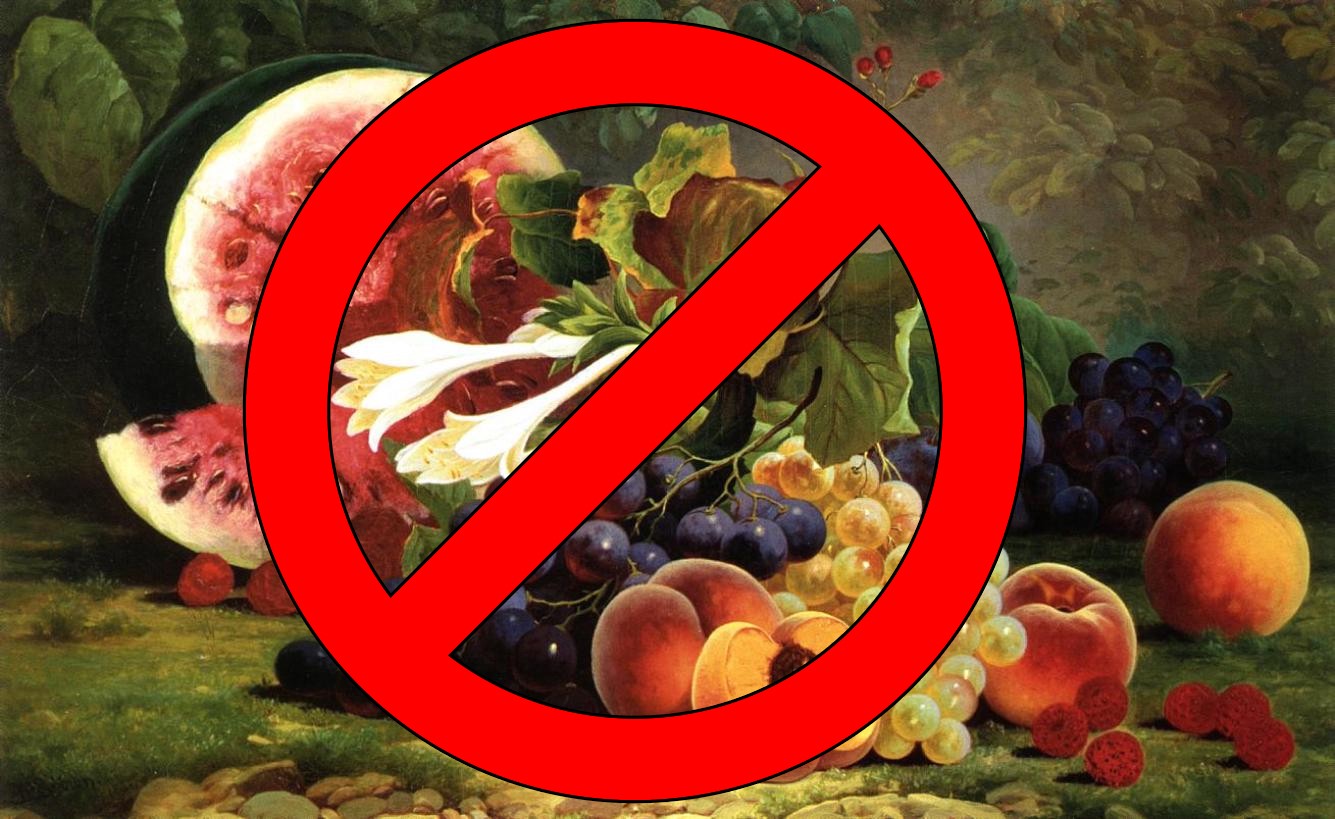
Where would poetry be without fruit? It would be, like Paradise, lost, but poetry has done fruit no favors in reverse. It’s summertime and I for one would like to eat a berry or a stone fruit without unwittingly referencing some mid-century verse*. The below fruits, alas, are all off the table:
*A disturbing number of these fruit poems appear in the A. Poulin, Jr. Contemporary American Poetry anthology, and as you can see, white male poets are the worst offenders.
Kunal Jasty and Max Larkin at Radio Open Source have uncovered an old David Foster Wallace interview from 1996, the year Infinite Jest came out and before he was the literary star he’d become. The interview was conducted by Chris Lydon for WBUR in Boston. He discusses why his generation feels lost, his hopes for his career, and his feelings of loneliness: “I think somehow the culture has taught us or we’ve allowed the culture to teach us that the point of living is to get as much as you can and experience as much pleasure as you can, and that the implicit promise is that will make you happy. I know that’s almost offensively simplistic, but the effects of it aren’t simplistic at all.”
Ever wondered how much money is spent on books in America every minute? Or how much more is spent on print books than ebooks every second?
If so, check out this real-time infographic that tracks the sale of books, ebooks, guns, donuts, and a lot more. Apparently over eighty-six thousand dollars are spent on printed books every three minutes (graph to the left), more than five times as much as is spent on ebooks. See the entire graphic here.
I steal home in the morning to find my younger brother on his knees. Pike’s fingers are jammed into something that looks like an engine. There’s newspaper covering the floor, and he wipes the grease off his hands before eyeballing me.
“Fuck you doing here?” he says. He’s got a plug in his mouth that makes his face look deformed. We possess a history, one where I used to lock him up inside things: old dryers, closets, the trunk of my car.
“Ya-know.”
“Help me with this.”
I grab one end of the machine — it’s heavy — and we put it on the coffee table. I look at my brother, and see a worm circling his eye, a tired old blackness, like he’s been up for days, and has yet to think of sleep. I guess we aren’t meant to talk about it. This happens around here. You run into some guy you used to play with as a kid and suddenly he’s thirty and he can’t string together more than two words in a row.
Pike walks to the front window, and yanks our mother’s yellowed lace curtains apart. Packed snow covers the road. There’s three feet of snow over everything, and seven-foot-high drifts piled up from the DPW plows. The town gets out here after a storm, but that takes half the day, and sometimes the plow gets stuck at the turn around, and they have to call in another truck with chains just to pull them back down the mountain. A full moon is still out and the stars remain close. Dawn edges over the tree line like poison gas, orange and seeping.
“Where’s mom?” I say.
“Fuck you think she is?”
Mom’s in her workroom, guiding a strip of black latex under the needle of her sewing machine. There’s a black Lycra full-head mask with a zipper for a mouth next to her on the table.
“Son,” she says.
I walked in on her once trying on a mask, checking its fit, and every so often that image cracks into my brain like a door swung wide open. This is what the Internet is capable of. The business started last year, when some Florida bondage swingers emailed her out of nowhere, having found mom’s seamstress blog. Could she work with leather? they wondered. How did she feel about dog collars? Seatless chaps?
Mom powers down her sewing.
“There must be something you can do,” she says. “But no. You never lay a hand. That’s the one thing.”
I say nothing.
“Did you talk with your brother?” mom says.
“Just now,” I say.
“You should talk with your brother.”
“I did,” I say. “I just told you I did.”
“You two don’t talk enough,” she says.
Pike knocks on the doorframe. Turns out the engine is a generator. He whirs his truck in reverse back up the drive, and we walk the generator through the mudroom door. I stand on the steps banging my gloves together until Pike asks if I need an engraved invitation.
We head to Trumbull’s. His house is a half-mile down, and sits back a quarter-mile into the woods. You drive past a dozen empty cages he keep the dogs in until mid-November, after which he boards them in an old chicken coop he’s got rigged for electric. Twice a year, the main fuse blows. Soon as one dog hears the truck they all start going, piling out the low rubber door — labs, spaniels, setters, mutts you couldn’t determine without a DNA swab — all howling and barking and yipping at the truck until Pike bangs open his door and they get a whiff of him. Then they’re quiet, leaping up onto my brother, tails wagging, tongues out — though quite a few bare their teeth at me, snarl, and growl. Their wet breath fogs the air. Their noses steam.
“Bunch a dummies,” Trumbull says. He’s got a blue thermal on. A red wool cap lays slanted and loose on his head. It looks like he’s wearing his dead wife’s house shoes, but the light’s bad. The old man goes to a pile of planks in the drive. They’re from his own barn, and I wonder if Trumbull has taken to prying off those he needs, or if he just walks around it, scavenging what the wind’s blown off. Bending over is a real production.
“Hey!” Pike shouts at a brown mutt set to squat near his tire.
We walk around the shit to bring the generator in. Pike primes it, yanks the cord, and puts a cage over it so the dogs won’t get burned. He goes in the main house to check the wood stove situation, and I’m alone. The coop is freezing, colder than outside even. There’s straw against the walls, and open carriers, and from out of one comes a whine I can hear over the generator. In the carrier curls a spaniel, and she’s got herself wrapped around three pups blue as ice, their eyelids frozen shut. When I stick my hand in for her to smell she snarls at me. By the door hangs a pair of fireman’s gloves, and I put those on over my own, even though it turns out for nothing. Once my hands are around her she stops moving, goes limp like a sleeping baby. She’s bled too much, and I can smell the rot. I grab her around the neck. There are things you feel like you should do as if someone were watching you, and then there is a thing like this, where you have to do it because you owe the world, and if you don’t do it some other judgment will come down upon you. And after it’s over you can’t speak of it, or that would mean to break the pact you’ve made.
I trek back the quarter-mile through the deep snow of the field to Trumbull’s door. Pike’s stacked the loose barn wood in a pile by the stove. The fire’s going, and I warm by it.
“Still down there at the school?” Trumbull asks.
I tell him sure, nights. I push a broom around. I wax some.
“That’s a good job,” he says, like there is such a thing.
He does have his wife’s shoes on. They’re green, and they’ve got little red dazzlers on them that are supposed to look like rubies, and — hell, maybe shine just like rubies would, I don’t know. Him and Pike drink from tin cups. Trumbull offers, but I see where the day would end up, and I don’t like the idea.
“I got work,” Pike says, and we go. A cloud mass has come through. It’s part two of the storm, and big, wet flakes arrive, pushed aside by the wiper blades. Back at the house, mom’s got her door shut, Pike’s long gone, and I can only stand five minutes of the television before I’m off too, back down the mountain to town.
She’s kept her word. All their stuff’s gone from the rental. Most of the drawers were hers, and the whole closet, and for the first time since I put the money down the place feels big, and not like it’s about to cinch up all around me, cutting off the air. There’s just some toys in his room, packed in a box labeled DISHWARE. The box sits half open in the middle of the floor, as if at any moment he’ll crawl over, and pull himself up by the flap, clutching everything out until it’s empty, and then turn the damn thing over on himself to sit in the dark the way he likes, not wanting to be found.
He gets HIDE, but not SEEK. If you flip the bathroom light on him while he’s laid down in the clawfoot, he’ll shout, “No! No! No!” until the light’s back off and the door’s shut tight. I wonder if people truly grow up, or if they just get bigger, and crazier, and what the difference is? There’s always one parent who gets most of the blame, and I guess I’ll be that. All I did was grab him, and he fell, but I can’t quite recall, and she says otherwise — like she’s a saint. My father hit me with a bat once. I still cranked up the morphine when it was time. I still buried him.
I drive to her work in the late afternoon. The snow keeps coming, but the good of it is done. Rain mixes in now. If I don’t hit the fluid, the windshield ices, and I can’t see across the road to where she glides behind the window, desk to copier, copier to desk. That guy Gene talks with her more than I’d like. I’ve made a silent bargain with her. She needs more than I can give, and I let her think that I don’t know this about her, and that I’m a fool. She’s happiest this way, believing she has secrets.
It’s a hundred percent night when Gene steps out, always the first to leave, I know. He sees my car in the gas station lot, and gets some kind of Friday courage going to cross the road my way. He’s under a black umbrella, a tine or two ripped through, and halfway to me when I roll down the window, and shout, “Go home, Gene. Get in your car, and go.” Gene does what he is told.
Normally, I’ll have a drink before I head to work, but today I make it so I don’t have time. The truth is I’m early. From my car, I watch the school lot being plowed. I drink coffee from a giant polyurethane cup. The storm’s moved east, and in its wake the temperature has gone up so that you might not need a hat. Whoever it is that forgets and leaves the field lights on has done it again. Through the rearview, I watch it gleam. There’s a thin layer of ice, and beneath that the heavier snow. All lit up, you could walk across the field, hike over the embankment, and go along the river’s edge to nowhere.
The plow has done enough. A dark blue van pulls into the lot, and sits idling twenty yards across from me. I see kids, of course, if they’re doing afterschool stuff, sports, plays, whatever strange programs they keep the good ones busy with until it’s time for home and dinner, but these don’t normally say hello, which is just as well, since I wouldn’t have any idea what to talk with them about. What these particular children don’t know frightens me. I’m scared for them, and their whole long lives. I prefer the unluckiest, those kids who get loaded onto smaller buses last, hydraulic-lifts set down, their aides like day-mothers locking wheels into place. An earlier shift means we sometimes cross paths. I know a few of the aides, they’re women I graduated with, and maybe it’s the hellos they offer that gets the kids to notice me, but I think it’s something else. The kids aren’t sweet, or child-like, really. Their bodies twist. They’re pale, and have no words. But they see me. They have eyes, some, and the ones who do moan and shriek as I come near, not because they’re worried, or afraid, but just to say hello, and to be looked at by me, and be spoken to. They sense we come from the same place down inside the world, is the thing, and that I know that, and that I know we’re all human, too, if that makes any sense, and despite everything.
If I go back to those meetings like she wants, I’ll hear talk of gratitude, and sooner or later some idiot will stand up, and jabber on about how he’s happy he’s got legs, because he saw a girl on the news without any, and he’ll say how grateful to God he feels being able to walk from his car to the church and back, and all of that. But that isn’t being grateful. It’s nothing to do with what you have or haven’t got. It’s what you are.
Because of those kids, I know what this van’s all about. The automatic door slides open. The boy’s in his chair behind the grate and roll bar. His head lolls with anticipation as the machine unfolds, and lowers him to ground. His father — I can just tell — comes around from the driver’s side, a tall, thin man whose hair is a premature gray. It’s just the two of them, and the father sets to work, toggling a knob so the lift sets the boy down even. There’s a problem though. The front gate of the boy’s rig won’t drawbridge, and he’s trapped for a moment on the platform. He looks caged. He starts to groan, and thrash his torso from side to side. The father puts a soft hand on him, and whispers, and just as suddenly as he began the boy goes quiet as the father bends down to check the gate.
As I walk by them, the father manuals a pin, and the boy wheels himself into the lot. He’s got the use of one finger taped to a joystick, I think, or he does it with the tube near his mouth. He can’t be more than eleven, which makes him a few grades shy of the kids at this school. I’ve never seen him before. The father stands up, and we look at one another through the security light. He’s got the kind, pinched eyes of a bookworm. His fleece looks pricey. I give the oversized key ring one big loop around my finger to let him know I belong.
“Hey,” I say softly.
“Hello,” he says back.
We’re good.
The boy’s doing loops in the still snowy lot, carving out infinity.
“All right, all right,” the father says. “Hold your horses. Wheel that bad boy over here.” He goes to the back of the van, and opens up the door there, and the last thing I see before I head into work is a long red metal box he’s setting to the ground, and the boy zipping over like he’s on a string.
Inside, I do the bathrooms first, because it’s best to get the bad news before the good. There is a projectile mess on the wall of the second floor boys’ room that I don’t investigate too closely, only plug my nose against, and hose down. The girls’ rooms are even worse, only more contained, and they use five times the amount of toilet paper as the boys. It is a normal night, like any other. I dump the trash into my cart. I sweep the classrooms. I mop the hallways extra careful because it’s the weekend, and I have to buff the wax. It’s the usual — the only difference being that when I leave and go home there won’t be anyone waiting. It will only be me, alone with my choices. They’re fewer now thanks to him, but no less difficult to make, although maybe that’s a lie. It’s always the same question, really. Always has been. The same question again and again and forever: this life right here, or another?
Head down, I buff the sixth grade wing, and make my way across the glass bridge to the seventh. The bridge is fifty feet long, suspended above a courtyard where the kids gather in the morning before school. Except for the floor, it is completely transparent, made out of several hundred square-foot windows. It’s wide enough for eight children to walk through shoulder to shoulder. It’s as tall as two men. On sunny days, light makes the bridge seem like a greenhouse, and it gives off a humid scent. I’ve watched rain so heavy it covered the glass like a clear blanket, and poured off the sides in great lariats to whip the asphalt below. Tonight, like most nights, the fluorescents are dimmed, and give off a buggy pulse. The air outside brings the last flutter of the last dying bit of snow. It is not much brighter here inside than in the dark out, and there is the feeling, as I raise my head from the machine, that there isn’t a difference between the two.
I look from the bridge to the still-lit field, and I see them. On top of the embankment, piled a story high with snow. I follow their tracks from the lot through the field, and I notice the rope beside the father. He’s wearing skis, and the boy’s chair is equipped the same too. I notice his wheels in a pile by the van, and look back to the embankment. The boy is in front, and the father directly behind, his hands gripped onto the sides of the chair. I can see the boy’s face screaming with excitement and want. The father is nervous, but smiling, a child himself now. I click off the buffer as if to wish them well. The father says a word, and then they rock once, twice, and on the third time they’re off, slow at first, but picking up speed as they go, faster and faster, and quickly now, all their weight with them as they zoom down the last of the embankment and enter the flat shining field, the pair of them shining too, father and son, together, and even faster now, faster and faster, as they race across the gleam.
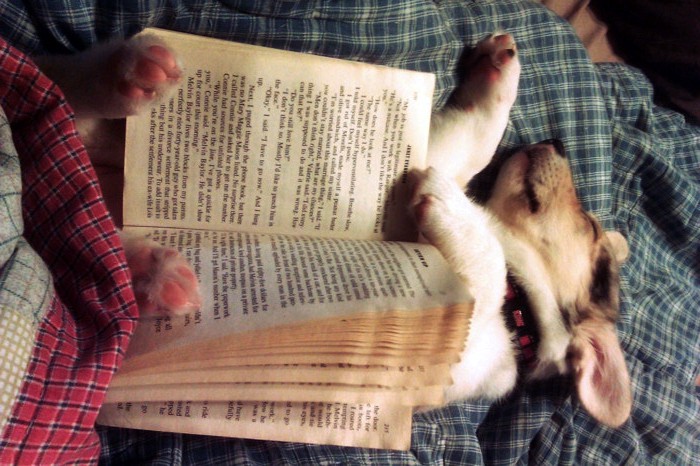
It already feels like the dog days of summer here in New York, which has gotten me thinking about great books about dogs. I’m going to skip the obvious titles like Old Yeller, The Hound of the Baskervilles, and The Call of the Wild, and instead list ten books you might not know about featuring man’s best friend. These books range from mysteries and memoirs to poetry collections and science fiction satires, but all feature some prominent pooches.
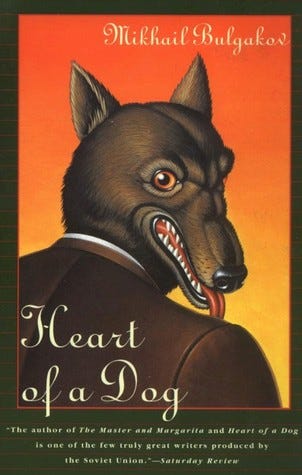
Bulgakov had a thing for humanoid pets. His most famous novel, The Master and Margarita, features a vodka-swilling demon cat named Behemoth. His great short novel Heart of a Dog, on the other hand, tells the tale of a dog named Sharik who becomes a nasty Soviet bureaucrat after a professor implants human testicles and a pituitary gland. A highly recommended biting (pun intended) satire.
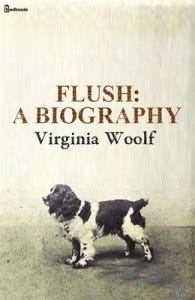
One of Woolf’s most overlooked books, this “biography” is a fictionalized account of poet Elizabeth Barrett Browning’s cocker spaniel Flush. It contains Woolf’s characteristic style, stream of consciousness writing, and social commentary — all from the perspective of a dog.
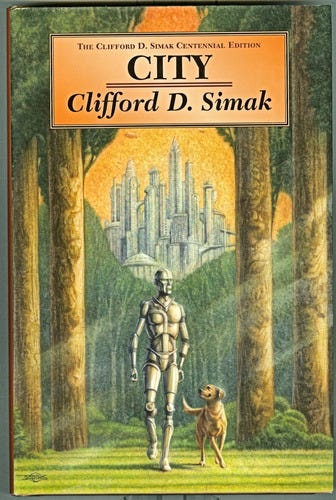
This 1952 science fiction novel is really a collection of interlinked short stories told from a future where man is extinct and the planet is run by dogs and robots. The dogs sit around and tell tales about the legendary and perhaps mythological creature known as “man.”
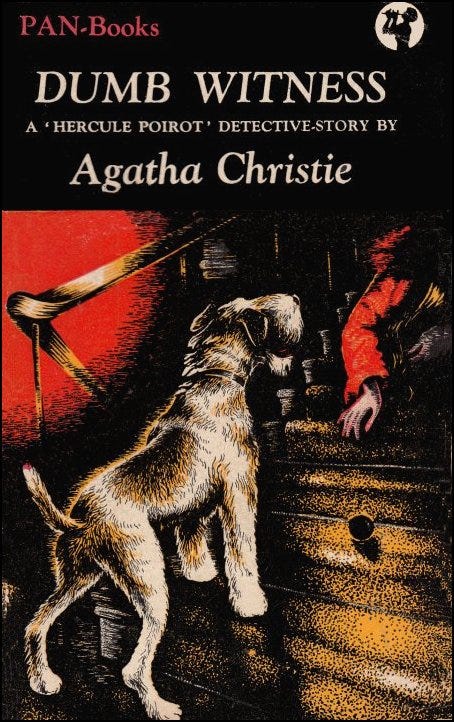
The titular dumb witness in this Agatha Christie mystery is a fox terrier named Bob. A wealthy spinster writes to the famous detective Hercule Poirot after she trips over Bob’s tennis ball. She believes she didn’t trip over her dog’s abandoned ball, but was actually the victim of attempted murder.
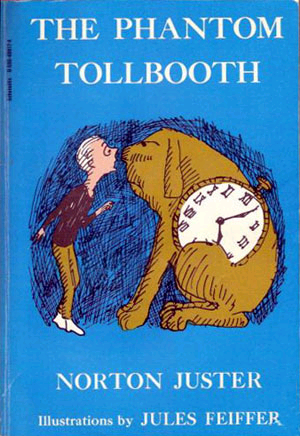
This beloved and pun-filled kids adventure book has a lot of wacky characters, but perhaps none is as memorable as Tock. Tock, a “watchdog” with an actual clock inside his body, accompanies the protagonist, Milo, on his adventures.
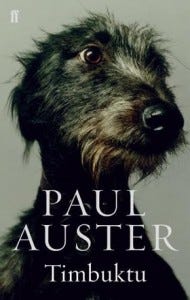
Auster’s moving 1999 novella is told from the point of view of a dog named Mr. Bones. Mr. Bones’s master is a dying homeless man — Willy G. Christmas — and the canine protagonist struggles to understand what is happening to his owner and human behavior in general.
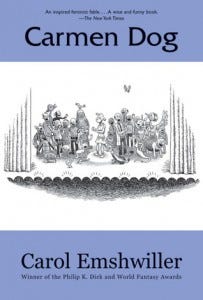
“The beast changes to a woman or the woman changes to a beast,” the doctor says. This is the first line of Emshwiller’s feminist SF satire about a future where the women of the world are turning into various animals while animals, such as the heroine Pooch, are turning humanoid. Carmen Dog (1988) was Emshwiller’s first novel, and was republished by Small Beer Press in 2004.
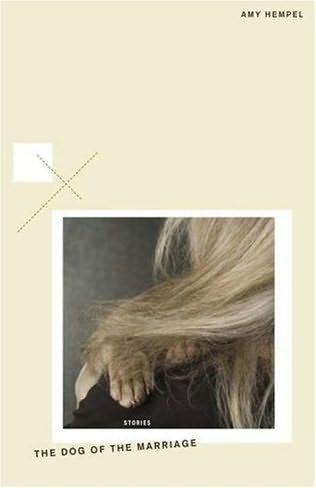
Amy Hempel is one of America’s sharpest sentence writers as well as a lover of dogs. While this story collection is not entirely centered on dogs, dogs do appear again and again, and one is central to the collection’s titular story.
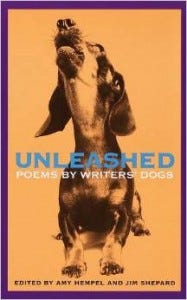
The title of this book is pretty self-explanatory: poems about dogs by famous writers. The collection has a pretty darn impressive list of names, and offers canine-centric poems from Lynda Barry, Denis Johnson, Anne Lamott, Rick Bass, Edward Albee, Lily Tuck, Mark Doty, and many more.
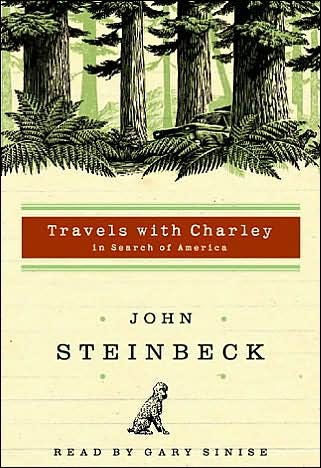
The only straight non-fiction book on this list, Steinbeck’s travelogue seems like a good place to end. The book recounts Steinbeck’s time traveling around the United States in 1960 with his French poodle, Charley.
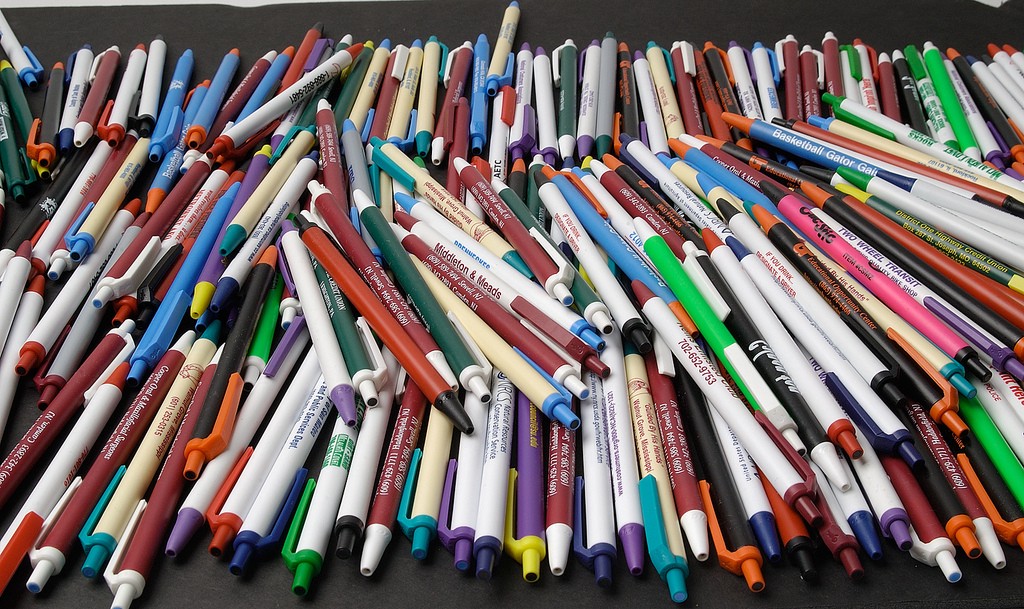
The website prompts visitors to draw the letters of the English alphabet in order to develop a “collective handwriting.” Basic demographics (age, industry, handedness, etc) are also collected, with over 427,000 characters aggregated and catalogued so far.
There’s certainly a difference between my handwriting and how I scratch out a letter on my iPhone, so the results seem a bit dubious at best. But there is still the promise to reveal how demographics letter differently. And as the inspiring website intro screen suggests, while our handwriting might be personal, maybe “U” and “I” aren’t so different after all. If you’re really interested in handwriting, read Philip Hensher’s The Disappearing Ink.
When I first visited, the most striking result I saw was that the “traffic” industry apparently made “X” as two outward-facing and disconnected curved lines, looking less like a letter and more like a parenthetical so long it had circumscribed the globe and returned to its starting point, i.e. )(. But now it’s averaged out and normalized. There is, however, no explanation as to whether traffic workers are smugglers, truck drivers, or bloggers.
So BIC’s experiment may not be revelatory. But it seems that isn’t the point. Unsurprisingly, it’s a marketing campaign to celebrate its new Cristal pen that doubles as a stylus. According to BIC, 100 billion Cristal pens have been produced. “In fact this is the best selling pen ever it can truly be called the universal pen. [SIC]” Hopefully they’ll be selling a version that doubles as a red pen.
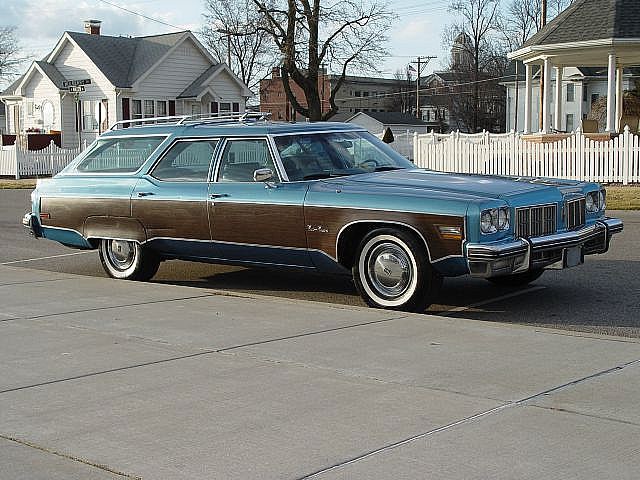
I first pulled up to New York in front of our little studio in a fancy building on Central Park West in “My Hoffman’s” grandfather’s old Oldsmobile. His Polish grandfather, Ja-Ju, owned a casket-making business in the working-class town of Lowell, MA. Ja-Ju used to carry around the long wooden boxes that housed the dead in the back of the car where our towers of cardboard IKEA boxes now peeked out of the back window.
This was the only car that would fit us and the collective detritus of our mutual dreams as we made the pilgrimage from small-town Massachusetts to these city lights.
“The Maurice” fluttered sagaciously in white lettering on the crisp green tartan of the banner in front of our new building, that stately ship. I was dubious. The halls inside were lined with images of boats and old sea-faring sailors, not unlike the crusty impressionistic reproductions in the gray-washed inn on the Cape where I’d summered. Augie, the long lumbering Eastern European doorman, greeted us with shallow-eyes and a thin-lipped smile as we rolled up W57th Street that afternoon, the fading summer light reflecting off the fake-grosgrain of the old blue Oldsmobile. He seemed to understand that we were fleeing from something. But what could he do? He’d seen it all before.
As it turned out, The Maurice as we would come to know it had housed a menagerie of public and private characters in the years that predated us. Our eccentricities were not unique and immediately lost their self-conscious texture amidst the locals who peopled the hallway’s faded paisley runners. “You should have seen Susan Sarandon running up and down these hallways in the 70’s,” Maria Rosa, our across-the-way neighbor told us early on one evening after we first moved in. “She was blowing coke in the stairwells. Limos used to line up in front of the building afterward just to take everyone to Studio 54.” Maria Rosa herself had the air of faded celebrity. She was small and trim and still quite handsome with a loud academic sounding Italian accent — a fact which bore heavily into the making of her character — and wore big black cat-eyed glasses and died her fine bowl cut an attractive platinum. She had lived across the hall since the era when her wealthy Argentinian diplomat husband had rescued her from an asylum behind the Iron Curtain and moved them state-side into a palatial spread on the park. Now, the apartment was rent controlled and Maria Rosa, still dressed to the 10’s, walked dogs to make ends meet. Her own dog, Bruno, only ate organic meat and rice dishes that she went to great lengths to freeze and prepare. I can’t remember if he was, for a while, a vegetarian as she and I were at the time. Maria Rosa had introduced herself to us early on as a surrealist-sex writer from the 80’s. She’d written a book called Narcissism and Death, illustrated by the prominent animal rights artist Sue Coe. I still keep a copy on my bookshelf. It is amongst my most prized possessions. “Look at these two,” Maria Rosa would sometimes affectionately call out to Augie about “My Hoffman” and I as we passed them in the foyer in the morning as Maria Rosa was on her way back from walking the dogs. “Aren’t they so handsome.” In those moments, broke and running down town to the second-order literary agency where I worked days while applying to school at night, I think I felt amongst the best I’d ever felt.
“My Hoffman” was a brilliant young actor I’d met growing up in small-town Massachusetts. He’d had a locker next to mine in which he housed illicit pin-ups of Madonna and Prince, and bumper stickers with the flags of all the countries he’d visited. I first saw them when I moved to town in the 7th grade. “Australia,” he said, pointing to his most recent acquisition. We’d grown up riding around dark country roads smoking cigarettes and taking his father’s new Jeep Cherokee into the city on weeknights to see the drag queen, Misery, spin on Lansdowne. One evening in my early youth I wore a thin strip of silver metallic elasticine wrapped around my body as we danced to J-Lo in the wake of our adolescent inhibitions. “Honey, I like your dress,” Misery called out to me in the crowd from the stage.
Years later “My Hoffman” gained entrance into the same prestigious New York acting school that Phillip Seymour Hoffman attended in his early twenties to pursue his proclivities on the stage in a place where his brilliance would be recognized and challenged. I remember My Hoffman calling me at Brown during the first few weeks of the semester to say that he’d done exactly what the late P.S.H. outlines about committing to a character. “They have us crawling around on the floor for hours and finding our tails, while our body makes the noise our body wants to make,” My Hoffman said. His own interest in experimenting with drugs emerged around the same time. His father was ill with cancer and he eventually left New York to pursue a career in the arts. There are many private stories of his dependency I could tell here. Waking up with unforeseen bedfellows staying over in the other bed in his dorm room when I visited, piles of CDs and telltale towels strewn about the bathroom, the lone visitor’s belt on the floor beside the bed. The week before we were to make the big move to New York, when he went missing in a suburb of Oklahoma City. His parents’ frantic calls to local emergency rooms and hospitals. The only way his parents and I could trace him was the video at the hotel bar that showed him leaving with a group of four guys he’d met at the bar. At 2 p.m. the next day the phone rang. He was somewhere on a couch in Oklahoma, where or why he couldn’t say, but he was trying to figure out how he’d gotten there, who these people were and, more importantly, how to get home. “But Ann, how will he ever recover if you leave him?” I remember his mother saying to me on the phone.
I would eventually leave this man that I loved several years and two moves later. I remember the night I moved out, standing in the doorway of my tiny utility studio on the Upper West Side, diligently trying to pry a beer from his hand before he passed out on the futon. I remember the next day after I’d left, feeling some small pang of self-righteousness. This disease was his, I thought. It was free to consume him. But I was free to free myself from that dread.
I have often looked back on that moment with pain, mixed-emotions and longing. In the wake of Phillip Seymour Hoffman’s passing, I was once again struck by a complicated guilt. Luckily I still have My Hoffman in my life, if at a distance — he is alive and well and thriving. But where was my place in the narrative of this life? Where is the place of collective responsibility? There is a complicated guilt that surrounds acts of witness. Is he in danger? Has he relapsed? How can we be sure?
In the opening scene of Doubt, Philip Seymour Hoffman, a slightly rotund new-age-ish priest reflecting on the uncertainty of the mid-1960’s, stands at the podium of a small Catholic parish in the Bronx and delivers the following arresting sermon:
What do you do when you’re not sure? That’s the topic of my sermon today. Last year, when President Kennedy was assassinated, who among us did not experience a most profound disorientation, despair? Which way? What now? What do I say to my kids? What do I tell myself? It was a time of people sitting together, bound together, by a common feeling of hopelessness. But think of that. Your bond with your fellow being was your despair. It was a public experience. It was awful. But we were in it together. How much worse is it then for the lone man, the lone woman, stricken by a private calamity? No one knows I’m sick. No one knows I’ve lost my last real friend. No one knows I’ve done something wrong. Imagine the isolation. You see the world as through a window: on one side of the glass, happy untroubled people and on the other side, you.
He goes on to tell a story of a sailor, the only survivor of a fire on a cargo ship who found a life boat, pitched a sail and “being of a nautical discipline, turned his eyes to the heavens and read the stars.” As the clouds rolled in “he could no longer see the stars […] As the days rolled on and the sailor wasted away he began to have doubts. Had he set his course right? Was he still going on towards his home, or was he horribly lost, and doomed to a terrible death? No way to know. The message of the constellations: had he imagined it because of his desperate circumstance, or had he seen truth once and now had to hold on to it without further reassurance?”
Watching this opening scene in the wake of Hoffman’s death, this speech takes on an eerie foreshadowing, imbued as it is now with a tragic, haunted new meaning.
“In doubt,” he reassures us, “we too are united.” There is a sense in these words that Hoffman was a man intimately acquainted with doubt, with the tribe of “private calamity.”
In Margaret Atwood’s haunting short, “Instructions for the Third Eye,” Atwood writes, “The eye is the organ of vision, and the third eye is no exception to that. Open it and it sees, close it and it doesn’t. Most people have a third eye but they don’t trust it. […] There are some who resent the third eye. They would have it removed. They feel it as a parasite, squatting in the center of the forehead, feeding on the brain.” As writers, as actors, as creators in the world, we feel some responsibility to develop that third-sightedness, to see less self-consciously, to invite in the kind of wide-eyed wonder that doesn’t shut the blinds on unspeakable actions, crippling uncertainty and ultimately unflinching self-doubt. Are those moments of earnest self-question, which for most of us take place in the privacy of the mind, not perhaps the most compelling emotions that unite us? Each of us has our own demons, those things which define, entrap and ultimately inspire us. It seems to me that to be touched by true genius, as Hoffman was, is also to be touched by a certain boldness. As Susan Sontag once said, “Illness is the night-side of life, a more onerous citizenship.” Perhaps, for the truly gifted, life is tinged with a desire to investigate that darkness, that night-side of life, in the full light of day.
Hoffman always seemed to me an actor — perhaps the actor — who willingly took on that kind of third-sightedness. He was the kind of truly talented chameleon who was so committed to his characters that he seemed to become them, often stealing scenes with a riveting kind of authenticity which he brought even to supporting roles in films such as The Talented Mr. Ripley or ensemble casts like Magnolia. “Creating anything,” Hoffman reflected in a 2008 New York Times article, “is hard. It’s a cliché thing to say, but every time you start a job, you just don’t know anything. I mean, I can break something down, but ultimately I don’t know anything when I start work on a new movie. You start stabbing out, and you make a mistake, and it’s not right, and then you try again and again. The key is you have to commit. And that’s hard because you have to find what it is you are committing to.”
In re-reading Hoffman’s 2008 interview with June Stein in BOMB on the eve of his passing, I found this passage compelling:
PSH: I think that as an actor, it’s all about the questions you ask yourself.
JS: What are some of the questions you ask yourself?
PSH: Probably all artists do this whether they’re conscious of it or not. You’re trying to ask the appropriate questions that can very well start with, why am I here? Who am I to this person? Long Day’s Journey into Night is always a good example. About Jamie Tyrone, the first question is: Why is he at the house? Why is he still coming to this summer home? Why does he want to hang out with his mom who always lets him down? Why doesn’t he just drink himself to death? Why doesn’t he just bunk up at some shitty place in Manhattan? Why does he want to hang out with his dad? It makes him miserable. Why is he here?
JS: Why is he there?
PSH: That’s a huge question. So that’s what you do as an actor. You start there.
In many ways these questions seem mundane when spoken out loud. If your character knows something is not good for him — is not serving him — why would he keep coming back? And yet these are universally the questions that define the private lives we all lead outside of whatever spotlight, however small or large, frames our lives. And perhaps, too, the ones that defined Hoffman’s own personal existence. Why did he return to a life of addiction? Here was a smart, intuitive actor who seemed to understand intimately that it was the actor’s job to somehow render these small uncertainties — these residual mental ticks which linger in the liminal drainpipe halfway between consciousness and oblivion — on the screen in a way that makes us see them for what they are, the quiet bedfellows of humility and humanity.
As Lynn Hirschberg reflects in her piece for the Times, “Caden Cotard [Hoffman’s character from Synecdoche] seems to echo many of Hoffman’s own internal debates and anxieties.” Hoffman himself reflected, “I took ‘Synecdoche’ on because I was turning 40, and I had two kids, and I was thinking about this stuff — death and loss — all the time. The workload was hard, but what made it really difficult was playing a character who is trying to incorporate the inevitable pull of death into his art. Somewhere, Philip Roth writes: ‘Old age isn’t a battle; old age is a massacre.’ And Charlie [Kaufman], like Roth, is quite aware of the fact that we’re all going to die.”
What always struck me as so perceptive about Hoffman’s performances was his ability to negotiate these small tics, these small realizations of death’s pull, into his art.
He seemed to love his characters, for all their foibles, to submit to them with both acceptance and dread. Hoffman himself said of filming Doubt, “The drama nerd comes out in me when I’m in a theater. When I saw ‘All My Sons,’ I was changed — permanently changed — by that experience. It was like a miracle to me. But that deep kind of love comes at a price: for me, acting is torturous, and it’s torturous because you know it’s a beautiful thing. I was young once, and I said, that’s beautiful and I want that. Wanting it is easy, but trying to be great — well, that’s absolutely torturous.”
Not having had the honor of knowing Hoffman beyond his performances, one question continues to wrack my consciousness these months since the eve of his passing. What is the role of collective grief in sermonizing about the various tribes of addiction? Hoffman’s own death already seems to be shrouded with a similarly collective ‘doubt’ about the cause of his death: was Hoffman’s overdose the act of “misadventure gone wrong?” In many ways, this is not our business to know. Nor does it change the finality of its sad consequence. We have lost one of the greatest actors of our time in the prime of his artistic career. Perhaps Steve Martin said it best, “If you missed him as Willy Loman, you missed a Willy Loman for all time.” As Hoffman was among my favorite actors and Death of A Salesman remains my favorite Miller play, I have the sad feeling this statement is undeniably true.
My mind, and possibly the mind of our collective conscious, had already been thrown into its own kind of empathic third sense since waking up on the morning of Hoffman’s death to the advent of Dylan Farrow’s Open Letter in the morning’s Times. Beyond the debates about Woody Allen’s reputation, what struck me as most salient in Farrow’s letter was its final rejoinder, which had a note of sermonizing that seemed to me to cast an eerie echo recalling Hoffman’s opening sermon: “What if it had been your child, Cate Blanchett? Louis CK? Alec Baldwin? What if it had been you, Emma Stone? Or you, Scarlett Johansson? You knew me when I was a little girl, Diane Keaton,” Farrow ends her letter, “have you forgotten me?” This struck me as an interesting question in the wake of Hoffman’s death that same evening, as it is that same doubt which Hoffman’s Father Flynn proclaims to unite us, under which Farrow’s story has unfairly suffered. “I want to say to you,” Hoffman says at the end of his opening sermon, “Doubt can be a bond as powerful and sustainable as certainty. When you are lost, you are not alone.”
Hoffman’s story of addiction, like Farrow’s as a survivor of abuse, reverberates within a deeper collective chord. How do we meet the day with empathic, creative and humane answers to these afflictions? Where does our collective grief rest? Having grown up with OCD, I belong to the tribe that panders to the currency of obsessions. Obsessions are illogical, and often the compulsions that we act out to assuage them don’t serve us. Why would a child sit on the floor of the bathroom religiously saying the Lord’s prayer for fear that the nightlight was too close to the wall and would burn the house down? Or why would she engage in strange rituals like finger counting, hand washing and checking? I remember once seeing a young boy on ER when the television show first aired in the early 90’s counting his fingers and hearing my mother say, “See, he looks crazy.” And thinking, she was right! So, why did I engage in these things if they did not serve me? Ultimately, as with all wars of the mind, addiction is not as much a neatly categorized problem with drugs as it is with brain chemistry, and the way one is thus able to navigate and cope in the world. But what strikes me more profoundly on a personal level is that, despite addiction and abuse’s victims, often these afflictions result in various privacies of the mind to which others, only a select few, are often privy. Often it is those who have observed abuse of any kind that remain its most solitary priests. They are the tribe of those who remain.
In fact, in many ways, the act of witness, of overseeing trauma, Hoffman says, played the central role in Doubt. We don’t ever actually witness his character, Father Flynn, molest the altar boy in question, and yet we sense that something is amiss. “We can never be sure,” June Stein reflects on the film in her 2008 interview with Hoffman, a statement which Hoffman himself understands as being the primary hinge in the play. “It’s more Sister Aloysius’s perception of what she sees…we were struggling with this scene yesterday,” Hoffman replies. “She [Meryl Streep’s character] says to me, “I saw you grab the boy’s arm, and the boy pulled away.” It’s so tricky because that’s really all it is. That moment is not about what she’s accusing me of. It’s about something else.”
That something else is a complicated emotion. The feeling that something is direly wrong, but you can’t put your finger on it.
As Dylan Farrow says, “Most found it easier to accept the ambiguity, to say, ‘who can say what happened,’ to pretend that nothing was wrong.” But ultimately that ambiguity, for those who surround the abuser, or (in Farrow’s case) the abused, can be crippling. In the final scene of Doubt, Sister Aloysius concludes that one pays a price for pursuing righteousness in the face of any addiction: “in pursuit of wrongdoing, one steps away from God.” And the movie ends not in the breakdown of Father Flynn but in her own — the witness’s own — breakdown and rabid self-questioning. “I have doubts… I have such doubts,” she says of her choice to reveal her suspicions about Father Flynn’s “infringements” and thus oust him from the priesthood. And herein lies the beauty of the film — we too are shrouded in doubt. Did he do it? Or was Father Flynn simply the scapegoat of bigotry and prejudice, the victim of wearing his nails too long?
I have the feeling that that’s what Philip Seymour Hoffman did for us. He brought us closer to the world as if through a window. He allowed us to see our tribe, in all its complicated glory.
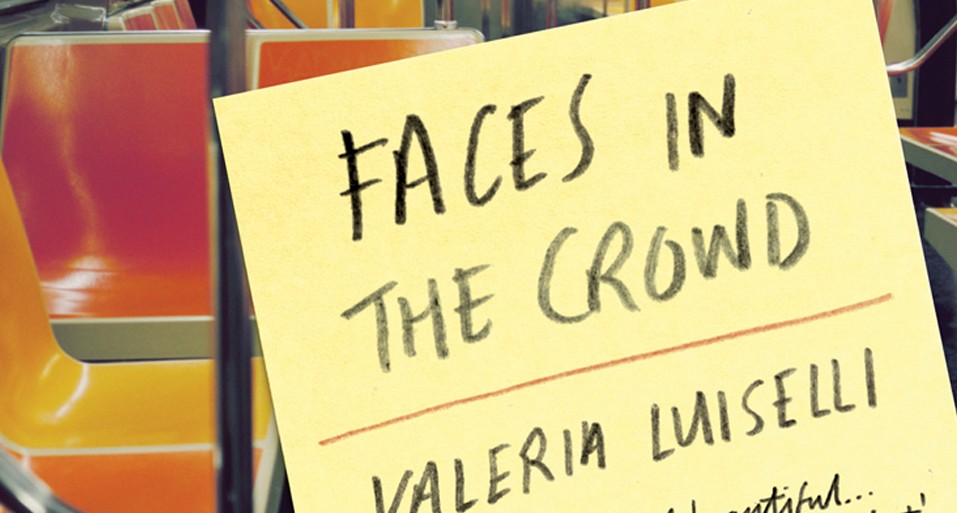
“Beware! If you play at ghosts, you become one,” warns the epigraph, attributed to the Kabbalah, that begins Valeria Luiselli’s novel Faces in the Crowd. A reader takes such a warning as a portent of otherworldly magic, or at least a transformative encounter with real death. What follows instead is a dense play of texts that interrupt and reflect each other, illuminating the empty spaces between them.
Faces in the Crowd is the story of a married woman with one child and pregnant with a second. She begins to novelize her younger life as a reader and translator for a publisher of forgotten foreign authors. In this fictionalization of her younger life, the narrator and protagonist of Faces in the Crowd becomes obsessed with a poet named Gilberto Owen, whose work she discovers and attempts to publish. As she immerses herself in her research and her imagination of Owen’s life and work, she gradually creates a fictional account of both in Owen’s voice. Halfway through Faces in the Crowd, this third fiction takes over the novel, and the original narrator and protagonist returns in the imagination of Owen.
In vignettes that succeed rapidly and move freely between the novel’s many spatial and temporal zones, the different first-person narrators ruminate through and around paradoxical notions of fiction, space and death. Their ruminations echo and respond to each other. Ghosts recur, but not quite as a conventional theme or symbol. Questions pertaining to who is alive and who is dead, what is real and what is imagined, and whether it is the real or the imagined that is alive or dead, are always present, and the answers are either absent or multiple and conflicting.
At the beginning of the novel, when the original narrator begins to fictionalize her past, she tells the reader “All that has survived from that period are the echoes of certain conversations, a handful of recurrent ideas, poems I liked and read over and over until I knew them by heart. Everything else is a later elaboration. It’s not possible for my memories of that life to have more substance. They are scaffolding, structures, empty houses.” There are clues here that suggest a larger design or project of the novel. Memory, either in a person’s mind or in print that documents the past, is incomplete. Remembrance or recreation in the present, of a dead person or a past self, involves a “later elaboration,” an imagination that collaborates with the memory to fill in the empty spaces there.
This collaboration, for Luiselli and for her characters, is the process that defines fiction writing. In another early fragment, the narrator admits “I know I need to generate a structure full of holes so that I can always find a place for myself on the page, inhabit it; I have to remember never to put in more than is necessary, never overlay, never furnish or adorn. Open doors, windows. Raise walls and demolish them.” Faces in the Crowd is a scaffolding that bounds the empty spaces into which the writer and the reader of the novel can insert their imagination. Be it a crawlspace in the apartment of one of the characters, or a void that separates two of the texts of which it is made, it is empty space that allows this novel to breathe with possibility, and that sustains the attention, if not the amazement, of the reader and the writer.
Toward the end of the novel, Owen becomes increasingly obsessed with the possibility of his disintegrating and becoming a ghost, and with the young Mexican woman who may be writing the novel in which he begins to imagine a novel about her. At this point, this woman who began the novel by writing about her past returns to the present, and by rules that continue to change, she plays a number of games of hide and seek with her son. Here, in these spaces between the vignettes that come at the end of Owen’s story, the narrator, the author, and the reader of the novel are all hiding, because it is here in these spaces that open at the end of the novel that the writing of fiction really begins.
Sign up for our newsletter to get submission announcements and stay on top of our best work.
YOUR INBOX IS LIT
Enjoy strange, diverting work from The Commuter on Mondays, absorbing fiction from Recommended Reading on Wednesdays, and a roundup of our best work of the week on Fridays. Personalize your subscription preferences here.