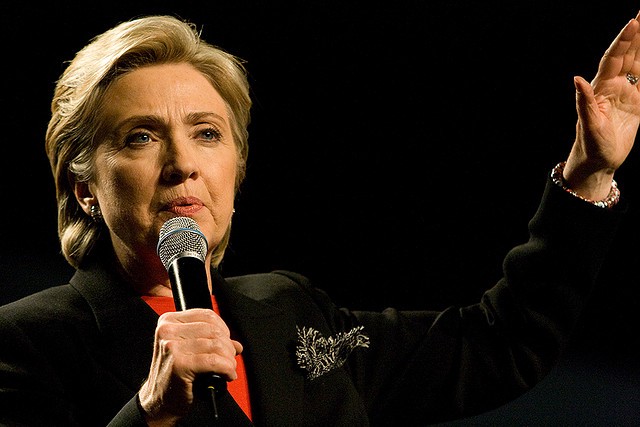
CELEBRITY BOOK REVIEW: Hillary Rodham Clinton on “The Possibilities” by Kaui Hart Hemming

Editor’s note: Any resemblances to actual celebrities — alive or dead — are miraculously coincidental. Celebrity voices channeled by Courtney Maum.

Hemmings

The Possibilities, Kaui Hart Hemming’s follow-up to her award winning, The Descendants, is a novel that deals in large part with the ramifications of having a child as a single woman in the world we know today. In the still frothing wake of the Supreme Court’s ruling in the Hobby Lobby case, the decision to have — or not to have — a child is a hard choice that is becoming even harder when a body like the Supreme Court decides that it’s no longer ours to make.

Sarah St. John is a single mother working as an infomercialist for the Breckenridge resort in Colorado when her only son, the 22-year-old Cully, dies in an avalanche. The rest of the novel is an unsentimental depiction of Sarah’s mourning period, a circuitous journey that peaks with discoveries (a mysterious three grand in cash in her son’s winter coat), halts with sorrow (Sarah can’t help from making dour comments when she returns to live TV), and upgrades with hope in the personage of Kit, a young woman who might, or might not have been her son’s secret girlfriend.

Already prone to cynicism, grief has numbed Sarah to a point where it’s difficult for her to feel compassion for other people, including her best friend Suzanne who is being divorced by a man she still loves. She’s having a hard time mustering up the patience and humor that enabled her to work and live in a resort town before Cully’s death. When the story opens, Sarah is relying on displacement and compartmentalization to see her through. “I pretend that I’m not from here,” is the first sentence in the book.

But the cracks are showing. Sarah’s becoming insensitive, even mean. Standing outside the parking lot of the Village Hotel where her son used to be a valet, (or rather, used to hate being a valet), she reflects, “Growing up I’d feel the same thing, an embarrassment to work in front of friends and peers. The worst job I had was fitting ski boots for girls who came here on spring break from places like Florida and Texas. They were always saying, “It hurts,” and I would say that it’s supposed to, making the boots tighter.”

The entire first chapter is laced with the bitter disappointment that so many of us feel now. The cauterizing sensation that this isn’t what we signed up for, isn’t how we want to live. The dumb rage that Sarah feels as she goes through the administrations of her daily life echo the throbbing ache in my head as I start yet another day, trying to find the energy to stay angry and engaged.

“I know a sense of consequence is essential to any job, but the conviction in the weight of my work, the search for import — it’s downright elusive,” writes Hemmings in chapter one. “Yesterday a man named Gary Duran beat his pregnant wife in their home in Dillon. She and her unborn child took the flight for Life helicopter to Denver. Everyone’s waiting to see if she and her baby make it, but we don’t report on things like that. Maybe if we did, I’d be okay. Maybe if we reported on the lack of low-income housing for people who work here but are forced to live elsewhere then maybe I could muster some motivation, or if we focused on tragedies that made me more aware of the world beyond this. But instead we talk about lift tickets, then share tips from Keepin’ It Real Estate and Savvy Skiing with Steve-O.”

I identify with the disgust here, the fatigue, the sense that Americans are keeping America down. The hypocrisy of it, the need to always be wearing this happy, winky face —

I’m sick of it, I’m done. You want to talk about my scrunchies? My pantsuits? About the length of my hair?

How ‘bout we talk about what it was like to be on the West Bank having pomegranate tea with Benjamin Netanyahu, strategizing how to bring about an end to the Gaza Conflict, and I’m testing solutions, and Mahmoud and Mohamed start laughing, and I’m like, what? And Mahmoud Abbas holds up a cellphone image of Honey Boo Boo in a tiara and says: “Hillary? Why are you even here?”

Let’s keep talking about disappointment. And disgust. Let’s tweet and subtweet and “like” and make donations, and let’s have nothing change. Let’s talk about what it’s like to have built my entire career around equal rights for women and to have universal health coverage fail again and again; talk about how I was hit with diarrhea when the news of the Sandy Hook broke out, how I sat in a stall with my guts clenched with horror for the mothers — for those mothers, for all mothers, for mothers just like me — but also with a current of excitement running through me because I knew that finally — finally! — things would really change, and how nothing has changed. Nothing has changed. Not a goddamn thing.

We aren’t moving forwards as a country now; we are spiraling backwards.

And after all of my hard work, my sacrifices, the things that my political efforts have done to my face — after all of this, to end up at a place where a right-wing hawker of sequin tongue depressors gets to make decisions about my daughter’s womb? It enrages me to the point of combustion. To the point of giving up.

Sarah St. John ends up coming to a détente with her friends, her life, her home, but The Possibilities is a work of fiction, while us readers are stuck in a place that is becoming more and more loaded to call home. The other day, a journalist friend of mine working on a project in Antarctica sent me a snapchat of a polar bear running in the wild. It made me think of a line in The Possibilities that I’d just read. I was in a G6 on the way to the Costco Headquarters in Issaquah to sign stock of my new book, but where I really wanted to be was back in New York looking at baby strollers with Chelsea. I don’t know. I was too tired and too jaded and too sad to type it out in reply to my friend’s video, but this is what it read: “Grainy ashes. We live. We disappear. Sometimes I feel so sorry for all of us.”

Imaginary Map of the City Where Every Movie Takes Place

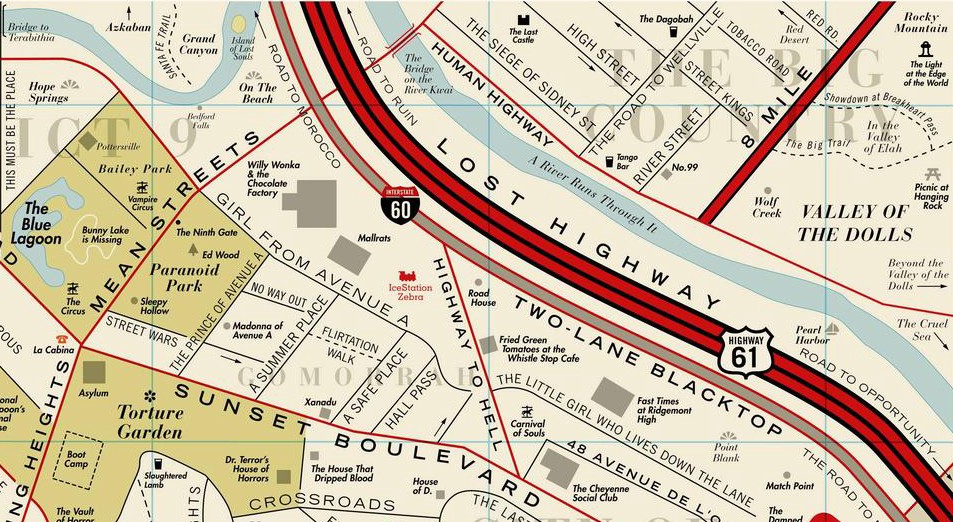
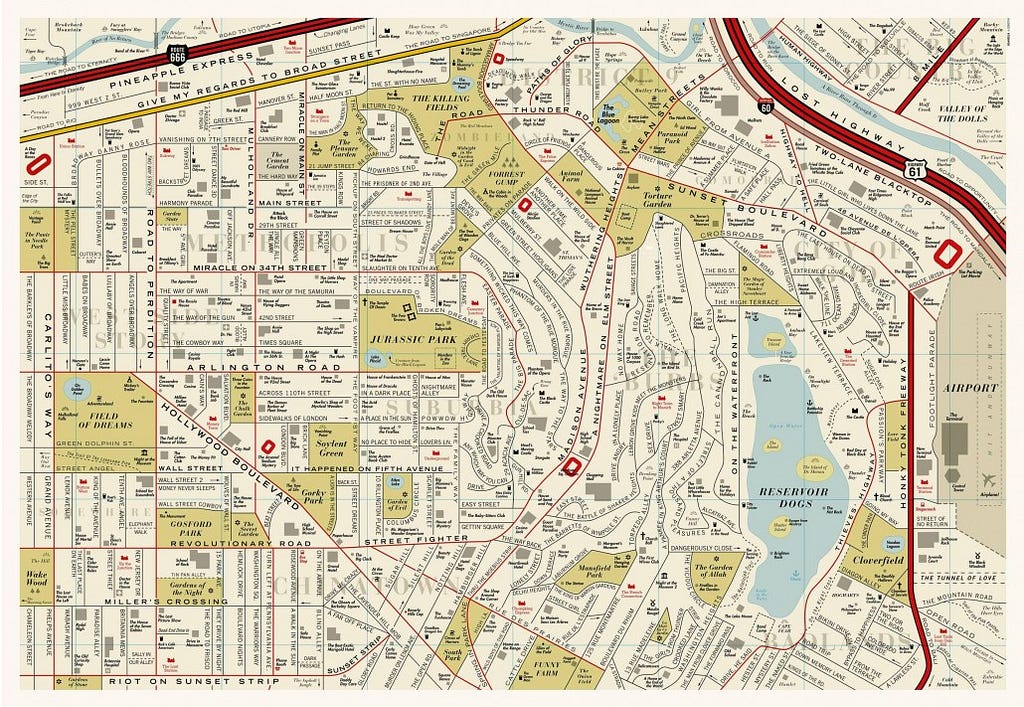
This map imagines a city where every movie takes place. Lost Highway is an actual highway, Airport is an airport and Reservoir Dogs is, well, a reservoir. You can purchase it as a poster from Dorothy. There is also a literary version you can see here.

Click here to view it in full size and explore! The detail is pretty astounding, with over 900 films represented.

movie map

Three Sisters

Let us take a look at this place. Marshlands. All the way to the horizon. The land drained, but nevertheless sinking. Sinking into nothing, nothing but itself. Frogs volleying noise in the grass, unseen. The hazy movement of mosquitoes low to the ground. On a lush blade of green a sleek cricket, blacker than night and — look closely — its antennae twitching. Just think: there must be more of those creatures, thousands, perhaps millions, clinging to the swamp grass as far as your eye can see.

Running through it all is the highway: black tarmac dumped on a man-made ridge. Power poles no longer vertical. Wires sagging. And a tarmac bridge, built without so much as a timber railing. Can you see the creek underneath? A seam of brown water between banks of mud. The mud pockmarked with crab holes and mangrove-ridden.

There is firmer land somewhere. Land where cattle stamp the soil with cloven hooves. Where horse hair is torn against barbed fences. Where colossal windmills slice the air. But that is not here.

Now, the terror of a road train — listen! Tearing at the asphalt, shaking its steel hinges, like a caged animal, angry only at itself. See how it passes in a tumult of wind. Even the murky water of the creek shudders. Then the swamp grass settles. The frogs resume their hollow sound-making. The cricket has gone.

Look around in the stillness abandoned by the truck’s passing. There is a cluster of weatherboard houses. Crouched past the bridge, in the clearing by the muddy creek. See the white one-room bungalow? With the peeling paint and the skeletons of fish hanging from the porch like a witchdoctor’s bunting? That is a museum.

On the walls inside you will find a collection of colorless photographs. Aerial surveys. A fishing boat in a vein of water, closed in by mangroves. A group of mustachioed men, holding onto the rails of a wooden jetty. Eyeing the camera as if it was an enemy. There is a creature from prehistory, all tendrils and feathery gills, hauled up on a chain next to them. And look: another picture. On the muddy bank, a sorry group of men, almost naked, forlorn as the forgotten.

So much for the museum. Do you see, on the other side of the highway, the white clapboard building? It is the roadhouse. The only one for miles around. There is the concrete driveway with oil stains, and the fuel pump, shaped like a teapot, in front. And out to the side, almost lost to the mangroves crawling up from the creek bed, the remnants of a playground. A swing, its tyre seat hanging low to the ground, where the mangroves, worming unseen, have pushed their stems through the mud.

Do you see the derelict cottage out back? Three sisters live there. Two of them run the roadhouse. Svetlana, the middle sister, waits tables and does the cooking. Oksana, the youngest, works the register and helps with the dishes. The sisters are pale-haired and towering. They wear white blouses, and black pants usually a little too short against their ankles. They keep themselves busy. When the place is empty of custom, Svetlana and Oksana clean the fans and filters above the vats of oil in the kitchen. Scrape the ice from the freezer room walls. Do the book-keeping on one of the diner tables.

Svetlana and Oksana are in the roadhouse now. Cleaning out the cupboards in the kitchen. Spraying for cockroaches. Setting fresh mousetraps. Putting the crockery back. Do you see them in there, under the fluorescent lights, on their knees on the worn linoleum?

And what about the third sister? Tatiana. The eldest. She keeps to the cottage for the most part, though some say they have seen her sitting by the mud and mangroves on the tyre swing in the bruised light of evening, when the crickets begin their chirruping. First one and then suddenly more, you know how it goes, until the air is thick with their din.

A veil, they say, always covers Tatiana’s face. Have you heard the rumours? Some say that she is the beautiful one. Her beauty deadly as a siren’s. Others that her skin is pocked like the creek mud. That the smell of the creek banks, when the moon sucks the tide away, comes from her mouth. That she summons the clouds of mosquitoes, which swarm up from the marsh when the earth darkens.

It is early afternoon, even though the moon, like a stone, is still visible in the blue sky. The roadhouse looks quiet, but do you see the sign hanging on the inside of the glass door? The place is open for business.
Enter another road train, rattling against its chains, crossing the tarmac bridge. This one slowing into the roadhouse driveway. It stops — do you hear with what relief? — by the diesel pump.

Out steps a man with long, uncombed dark hair. Grossly overweight. He strolls the stained concrete with a cigarette in his hand. Surveys the cages stacked on the trailers. Teeming with ugly feathers. Throaty noise. There is the reek of manure, overcoming the tidal odor of the swamp and the stink of fuel.

The truck driver squashes the cigarette underfoot on the concrete, slaps a mosquito that has landed on his hairy hand, and heads inside. There is the surprising sound of the bell as he pushes open the glass door. Like something remembered from childhood.

And there is Oksana, standing erect and solemn behind the counter with its cash register. You can take a look at her now. Taller than the truck driver. Pale-haired. Her color too wan and her skin too thick for men to believe she is beautiful.

The truck driver winks at Oksana as he passes by, brushing aside the plastic strips hanging in the doorway to the dining room. The ceiling rafters are swathed with a creeper, its foliage thinning, its trunk muscular. There are long windows, framed by curtains of moth-eaten red velveteen. And against the walls are half a dozen tables, draped with faded red gingham tablecloths.

The truck driver seats himself at a table by one of the windows, facing the swinging door to the kitchen. There is a fish tank on a stand against the wall there. A goldfish floats on its side in the cloudy water. Can you see it? Playing silently for time, then struggling? The truck driver cannot. Svetlana has already appeared through the swinging door. She stands in front of him, pen and notepad ready.

The truck driver looks up at her pale face. Eyelashes next to invisible. She is almost identical to her younger sister, though she might be taller. Do you agree that there is something clumsier about her?

The fat man’s face grows a smile. Svetlana returns the gaze, if not the smile. Seconds pass. The sisters are not known for their conversation. Their skills, people say, are still only rudimentary. The truck driver breaks the silence.

“You don’t remember me, do you, love?” He pauses. “Although I’m fatter. Why not say it? Nothing wrong with talking straight.” He looks at his stomach, covered by a flannel shirt, and pats the fabric there.

The odor of the truck driver’s body is mixing with the air. The reek of sweat. Old alcohol. Seeping from his organs, his skin, as if he was pickling himself. Can you smell it? It is hard to tell if Svetlana does. Standing there in her black pants and white blouse, frilled around the collar. Her hair sprayed into a bun.

The truck driver folds his hands over his swollen belly. Looks up at Svetlana again.

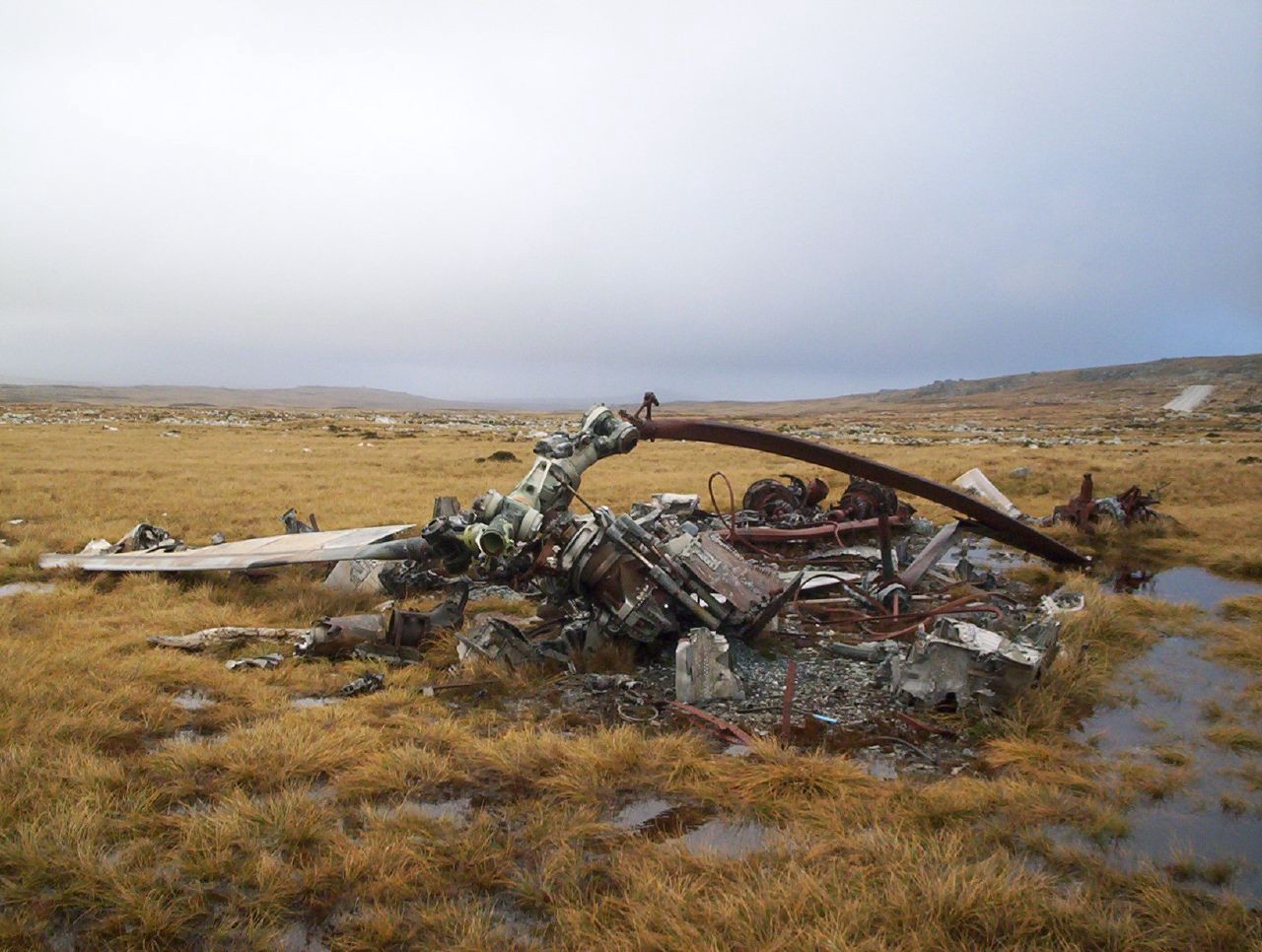
“My dad was always one for straight talking. There was this time when I was a boy. A helicopter crashed on the old farm. Squashed down onto the ground and burst into flames.” The truck driver presses his hands into the yielding flesh of his stomach and then lifts them. Spreads his fingers in the air. Returns his hands to his belly. Looks at them there. “Afterwards there were these black bodies, out in the paddock, in the long grass. Not that the cows cared.

Svetlana waits with her notepad and biro. There is a clock ticking. The white one on the wall above the door into the kitchen. The minute hand shudders every time the clock registers the passing of a second.

The fat man looks up at Svetlana again, slowly grinning. “Well, just before the helicopter came down, as we were watching its death spin from the back porch, Mum turned to Dad and said, ‘Do something!’ Dad said” — and here the truck driver puts on a mock-Italian accent and rhythmically waves his right hand — “‘Whadda you want me to do? Catch it?’”

The truck driver stops, his hand still in the air, smiling up at the tall, thick-skinned woman in front of him. Svetlana looks at him through her pale eyelashes, her pen and notepad poised at chest level. The fat man lowers his hand, smears his sleeve across his mouth. Wiping away the grin. Then he rests his heavy hands on the red-and-white tablecloth, fingers splayed. Begins to inspect them. The nails — perhaps you noticed earlier? — are long and dirty.

“Look, get me a steak, will you? You know how I like it.”

Svetlana brings the notepad and pen close to her face. She scrawls with her blue biro, then walks briskly to the swinging doors, disappearing into the kitchen.

A dry leaf from the vine that clings to the ceiling rafters drifts down to the truck driver’s table. Do you see how the creeper appears to be dying in places? Turning crisp and brown. The fat man flicks the curled leaf from the tablecloth onto the floor.

He looks out the long window framed by red velveteen. The swing is there, planted in the earth, just past the edge of the concrete. And the tangle of mangroves, hiding the brown line of the creek. Most of the water drawn out now by the weight of the moon. Can you see the crabs in the mud? Like the skeletons of dolls, crawling silently from grave to grave. And the hovering mosquitoes? The truck driver cannot. He looks up at the moon in the vast plain of the sky.

Into the dining room drifts the sound and smell of cooking steak. Then the fans above the hotplate in the kitchen are switched on. The fat man calls out.

“I’ll be right back, love.”

He manoeuvres himself out of his chair and through the plastic strips into the front room. Oksana is gone from behind the counter there. The bell rings as he opens the door and steps out onto the concrete driveway, suddenly bright. He shields his eyes and heads for the fuel pump and the truck.

The chickens sound dusty. Their throats. Claws. Wings. Feathers in the dark cages. Can you hear them? The truck driver hears nothing. He swings open the door of the cabin. Tucks his long greasy hair behind one ear and leans down to the polystyrene box he keeps on the floor to retrieve a tepid can of beer.

Look quickly: up there! A pelican flying across the highway. From the direction of the museum. Beating the air with its wings as if its soul was old and heavy. It flaps over the semitrailer, circles over the roadhouse. Floats down to rest, flapping and grabbing with its claws at the frame of the old swing. The bird clutches the rusted steel, fluffs its wings and sinks its gullet into the rancid feathers on its chest. Blinks its eyes, rimmed like targets.

From there, the pelican watches the truck driver. The fat man slams the door of his truck. Opens the can. After a sharp crack the tin makes another noise. Like the truck did — do you remember? A sound of release.

The truck driver makes his way back to the roadhouse. Pushes open the glass door, once again triggering that small bell. Thrusts aside the plastic strips to the dining room and sees, on the checked cloth of his table, a brown steak on a plate with a pile of yellow chips. All framed by the curtains of red velveteen, eaten by moths and silverfish over who knows how many years. How long do they say that the three sisters have been here?

The truck driver sits down on his chair. Svetlana is nowhere to be seen. He takes a drink of his beer and puts the can down. Picks up his knife and fork. Pulls his chair in. Starts sawing off a portion of the T-bone steak, brown juice and oil mixing on his plate.

Do you see that the fish in the glass tank has stopped moving? It floats now, waterlogged. Just below the surface. The truck driver, busy with his food, does not notice.
Enter an old white ute in the driveway of the roadhouse. Watch its slow approach through the windows of the dining room. The truck driver, chewing a piece of steak, watches it too. The ute comes to a stop just outside his window. In a spot near the swing, where the concrete of the roadhouse merges with the mud and the mangroves. And then, further below, the creek bed, crabs clawing their way out of muddy holes. The brown line of water. Soundless clouds of mosquitoes.

Can you see that the pelican, roosting on top of the abandoned swing, has turned its attention to the car? There is the squawk of the door, all stiff around its edges, and an old man emerges. Thin, with bandy legs. He leans on a cane. Closes the car door, which creaks, then bangs. Pats the dog tied by a rope on the ute’s tray. The old Labrador, fur like a doormat, thumps its tail.

The old man walks around to the roadhouse door. There is the tinkle of the bell, again like a reminder of something, and then he is inside. Oksana appears at the front counter — did you see her there just briefly? — but retreats as the old man heads towards the dining room. He pushes through the plastic strips with his cane. Walks past the truck driver and sits down at a table ahead of him. Notice how the old man is too polite to sit with his back to the other fellow? The truck driver, though, keeps busy with his steak.

The old man looks through the window between the tattered drapes to his dog outside. He notices the pelican, like a creature from another world, roosting on top of the derelict swing. Then Svetlana is there, pale and large, like the bird, standing at his other side. The old man looks up at her with watery eyes. Speaks softly.

“Oh, hello there, young lady. Steak and chips, please.”

Do you notice how his head rocks slightly? How he holds onto the walking stick, which he has laid on the gingham tablecloth in front of him, his hands mottled and jittery? Svetlana pays no heed to these signs of age. She scrawls on her notepad with her biro. Holding it close to her nose. Then she bustles off, bun firm on the top of her head. The hems of her black pants hectic around her ankles. She disappears through the swinging door. A leaf from the vine on the ceiling floats to the floor.

Now the truck driver, still chewing and holding his cutlery ready, regards the newcomer at the table ahead of him. The old man is watching his own fingers. Do you see how they look? Bony and unsettled, like crabs, on the wood of the cane. The fat man, swallowing his steak, decides to intervene.

“You’re English, then. Still got quite an accent.”

The old man looks up at the bloated face of the truck driver, framed in uncombed hair, and then down again at his fingers on the walking stick. The wood of the cane is old and dull.

“Yes, yes,” he says, “fair enough. Well, Welsh, actually, but yes, yes.”

Like the truck driver, the old man has yet to notice the fish tank on the nearby wall. The dead fish now belly-up against a corner. Do you see it there? Washed out and swollen. Pressed against the glass. As if something — the wind, a tide — had pushed it into that place.

The truck driver, without putting down his cutlery, wipes his mouth on his flannel sleeve. “My dad had an accent.”

The old man, quaint in his manners, dutifully looks up from his cane. He has a blanched face and moist eyes. The truck driver, knife and fork in hand, slowly grins at him. The same grin he gave Svetlana.

“One time, when I was a kid, a couple of Jehovah’s Witnesses came to the door. Two old birds. You know the type I mean. Dad was yelling at them, and the old birds looked all confused. They asked: ‘Why don’t we go out with our wives?’ Then Dad yelled louder” — and here the truck driver mocks an Italian accent again, performing flourishes with the knife in his right hand — “‘No, I said, Why don’ta you get on with your lives?’”

The old man looks down at his cane. Scrawny hands curled over the stick. There is the sound and smell of frying steak. The fans in the kitchen go back on. And can you hear the chips spitting in the oil?

The fat man’s smile fades. He lowers his knife and studies his plate. There is a little meat left, hard up against the pale curvature of the bone. The truck driver stabs a chip with the fork in his left hand and stuffs it into his mouth. Suddenly the old man speaks.

“Oh, my wife has been dead for years.”

Now the dog outside the roadhouse starts to bark. The noise grows. Becomes relentless as a machine. The truck driver and the old man look through their windows framed in that old red velveteen. Can you see what has happened? The Labrador has finally noticed the pelican. It reverses on the tray to get a better view of the bird over the roof of the ute. The rope tied to its neck stretches, grows taut. Do you see how the dog’s belly contracts with every noise? And do you hear how with each bark, austere as a gunshot, there is an echo? The noise ricocheting between the mangroves and the roadhouse wall. And listen: there is another noise. In the clamor, the chickens, hidden within the dark cages on the semitrailer, are beginning to stir.

The pelican stretches its neck, jowl emerging from the oily feathers on its sternum. It looks first to the mangroves. The pocked banks of the creek. The crabs slipping back into their lairs beneath the mud. The brown water from the tide — coming back in now, do you see it? — trickling in after them. Then the bird turns to regard the barking dog.

Inside the roadhouse Svetlana emerges from the swinging doors with another T-bone and a pile of fat chips. The old man turns away from the window. He makes room on his table. Lays the cane across his lap, still holding onto it. Svetlana places the dish on the checked tablecloth, along with cutlery wrapped in a paper napkin, skin-tight. She starts to move away, but the old man stops her.

“Could you cut the steak for me, please, young lady?”

The old man makes a tutting sound, looking down at the plate. Shaking his head. Svetlana unscrolls the knife and fork in a single movement. Lays the curled napkin on the table. Pulls the plate towards her and, hunched over her work, begins carving the steak. Rigorously skinning the meat from the bone, where there is still blood. Then dicing up the slab of cooked steak. The dog outside keeps barking.

Suddenly there is an alien noise. Inside the dining room. Can you hear it? Wheezing. No. Weeping. It is the old man. Head down to his chest. Look: his shoulders are shaking.

Svetlana abruptly stops cutting. Stands up from the plate. The cutlery still in her hands. A morsel of brown meat falls onto the worn carpet. Svetlana does not see it. Instead she sees, through the window between the ragged curtains, the barking dog on the back of the ute. And the pelican on the top of the swing. Do you see it there too? Its head high. Its gullet bulging. Its wings spread as if for flight. Dripping greasy feathers from their undersides.
Now it is evening. The sky bleeds all the way to the horizon. The frogs, lying in the marshlands, are sending their echoes. The crickets join in. See how the clouds of mosquitoes are beginning to rise as the earth turns to the night? To the never-ending blackness of the universe, where they say that everything — even all of this — began? And look: here come the starlings. One. Three. A dozen or more. Sweeping through the insects. Their noise shrill as panic. Their tiny hearts like ticking bombs.

The highway is black and silent. Beneath the bridge the creek is full, the water still as mud amid the mangroves. The museum is empty and dark. Across the tarmac road, the sign on the glass of the roadhouse door reads CLOSED.

But look! Tatiana is there on the tyre swing. Gently rocking. Her feet on the earth, among the shoots of the mangroves probing their way unseen through the mud. She wears black pants, like her sisters. But, as legend has it, her veil is on. There is no breeze to lift it. Can you see how impossible it is, in this shiftless place, to glimpse her face, to get a proper look?

Let us leave her. Look to the marshlands that open up just beyond the concrete driveway and the white roadhouse with its cottage out the back. A flock of ibises has appeared there in the swamp grass. Against the evening light. The silhouettes of their black heads like pickaxes.

JULY MIX by Aaron Burch

The BACKSWING G-Mix

In 2009, my now-stepdaughter made me a mix CD. “To help make you more street,” she said. She was 13. I was in Champaign, IL, having gone back to school for my MFA. A move that possibly made her worry about my street cred? Or, probably more likely, the move and MFA had nothing to do with said worry. Or, maybe most likely of all, she was 13 and wanted to show off and share music she was excited about and I asked her to make me a CD and she took that as a challenge. Whatever the impetus, I was about to get hooked up.

(A year or so later, after expressing my huge love for the mix, she made me a second CD, which I remember her claiming was “even more street,” but she may have set her own bar too high. The first CD, the below mix, may be too perfect to be topped.)

I remember living alone in Champaign, back in school at 30, drinking a lot and rocking the shit out of this CD. I remember starting a reading series, Stories & Beer, and using ~15 seconds of baseball-like “walk-up music” for each reader and going back to clips from songs on this mix a lot. I remember hearing that Chris Rock would listen to Method Man’s “Bring the Pain” before big standup concerts, to hype himself up, and thinking of “Roger That” and “Hustlin” as equally hype-generating. I remember, the next year, going on a reading tour with Amelia Gray and Lindsay Hunter and a lot of these songs acting like a kind of soundtrack through the southwest, to the extent of using “Roger That” and “Hustlin” as actual soundtrack for a tour recap movie I made.

So, other than this intro, I present the below playlist sans commentary. You don’t really need me to say anything about the songs individually. You don’t even really need to have read this intro at all. Just enjoy.

Like Snoop says, “for Kings only.”

2009

  1. I’m Going In, Drake feat. Lil Wayne & Young Jeezy
  2. Roger That, Young Money
  3. Overnight Celebrity, Twista
  4. Spit Your Game, Bone Thugs N Harmony (feat. Notorious BIG & Twista)
  5. I Can Transform You, Chris Brown feat. Lil Wayne & Swizz Beats
  6. Must Be the Ganja, Eminem
  7. Wasted, Gucci Mane feat. OJ da Juiceman
  8. Onto the Next One, Jay Z feat. Swizz Beats
  9. Drop the World, Lil Wayne feat. Eminem
  10. My Chick Bad, Ludacris feat. Nicki Minaj
  11. Baby, Justin Bieber feat. Ludacris
  12. So Lonely, feat. Twista feat. Mariah Carey
  13. I Wanna Rock (King’s G-Mix), Snoop feat. Jay Z
  14. Hustlin remix, Rick Ross feat. Jay Z & Young Jeezy
  15. Up Outta My Face, Mariah Carey feat Nicki Minaj
  16. Lollypop remix, Lil Wayne, Static Major, & Kanye West
  17. Every Girl in the World, Young Money

***

— Aaron Burch is the author of Backswing and the editor of Hobart. If street cred was money, he could buy at least a 2003 Toyota Corolla and a stack of chains. He lives in Ann Arbor.

Where Daring Meets Bullshit: Teenage Poetry and the Reading Series

I see humiliation as a key component of the writing life. Substitute humiliation for sentimentality in these passages and they remain true. In his essay “Writing Off the Subject” poet Richard Hugo quotes fiction writer Bill Kittredge as saying “if you are not risking sentimentality, you are not close to your inner self.” In “E Unibus Pluram: Television and U.S. Fiction,” David Foster Wallace says that the next generation of literary rebels might “risk accusations of sentimentality, melodrama.” In my fake writing and my real writing, if I don’t risk humiliation, I’m not risking enough. And I don’t mean humiliation via unkindness to self via oversharing, but the trying and failing sort. I even hope I publish something I will later regret. In fact, it’s highly likely that I already have.

panda bear dance

Hubert Vigilla

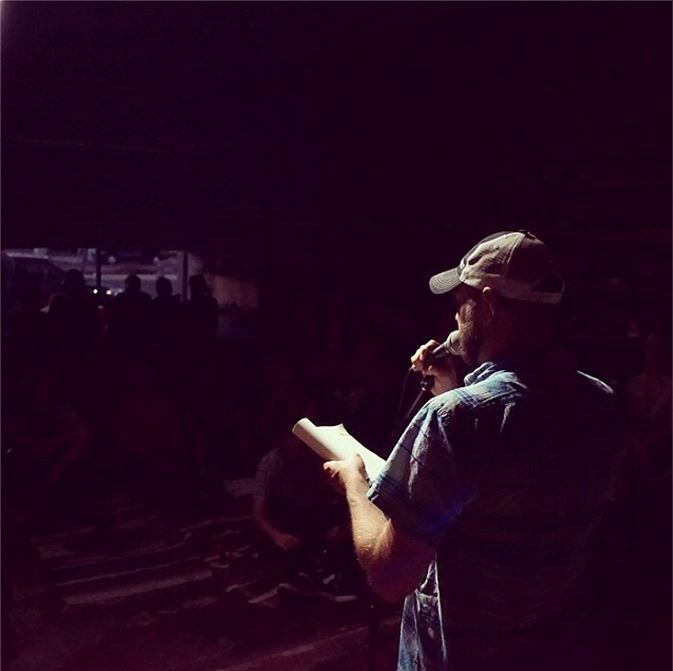
Every month in Crown Heights, I host what I like to call the “least cool reading series in New York.” My co-host plays “Bieber or Believer,” reading lyrics either sung by Bieber or about Jesus for prizes like books he has found on the street or shirts he used to wear. I bake cookies and wear costumes — vintage gowns or party dresses made of tulle. Our focus is on emerging writers, whatever “emerging” means (anywhere from no pubs to one book?), as perhaps we are emerging our entire lives. Our readers are in large part still developing their voices, still wondering whether they can call themselves writers, aren’t sure whether they’ll stick with it or why. My co-host and I consider ourselves emerging writers too. We are not preaching from a throne — we are standing on fake green grass covering the floor of the window display in a vintage clothing store. I nod to the courage it takes to share their unfinished work by sharing my most unfinished work.
Perhaps if we hadn’t relaunched during the week of Valentine’s, I wouldn’t have reached for my very *first* journal, a hardcover with a Matisse goldfish bowl on the cover. Perhaps I wouldn’t have read an entry “Is it or is it not?” on the topic of lurve, sweet lurve, or told everyone how on the night before Valentine’s Day in eighth grade, I broke into my boyfriend’s locker and wrote “I love you” in red electrical type, but the next morning I ran to school, broke in again and tore it out.

Sharing my middle and high school “poetry” at the series has become a tradition of sorts. I always try to make it through without laughing, but I never do. Like most of my “poems,” this one is untitled.

“What tender lips
And beauteous face
Sparkling eyes
Full of grace

But for me they are no more
Cut and dry (?)
We’ve shut the door

Hold me says body
Kiss me says touch
Tell me says hearing
That you miss me so much.”

Sometimes I wish the audience could see my typography:

“WELL, I DON’T DO DRUGS.
Dang. That’s right.
So how about this: it’s over!
What? Did I stutter?”

A reader once commended me on my bravery. “I don’t even share my poetry from three years ago,” he said into the microphone. Now I try to make it clear that this is not literature. I call it humiliation as comedy.

But in the here and now, in the world of my reading series on the Wednesday nights when I stand too close or too far away from the microphone because I have no fucking idea what I’m doing, I delight in sharing these words from a former self, a self that never ever thought she would reach an audience of twentysomethings in Brooklyn. I also hate myself, muttering “I can’t believe I’m sober,” before I read what 14-year-old me had to say about heartache, back when everything meant so much, when there was no perspective because there was no horizon. I liken my pre-performance self-hatred to seppuku — Japanese ritual suicide — when Samurai would stab themselves in the stomach to avoid falling into enemy hands. And if that is true, if I can exaggerate and appropriate to offer some semblance of just how uncomfortable the entire operation is, if I can admit that I don’t do this “lightly,” but that I’m “feeling the fear and doing it anyway,” if I can prop myself up on aphorisms and platitudes, I can escape the ego chasing me down the block, the voice threatening to throw my laptop out the window or hold a match to my manuscript. Because as much as everything matters, it also can’t matter that much. I want to live where irony meets kindness, where daring meets bullshit, where everything that failed meets the hope that something might not. I hope my readers do too.

INTERVIEW: Emily Gould, author of Friendship and founder of Emily Books.

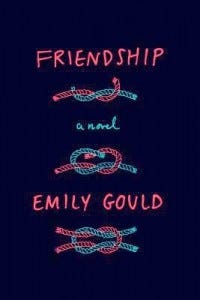
Emily Gould is the author of the essay collection And the Heart Says Whatever (Free Press, 2010) and the founder, with Ruth Curry, of the subscription based online bookstore Emily Books. Her debut novel Friendship (FSG, July 1) examines the relationship between longtime friends Amy and Bev, both thirty and trying to establish adult lives for themselves in New York City.

MD: Amy and Bev struggle in the novel with “making it” in New York, both emotionally and financially. How do these struggles define their relationship, and this novel?

EG: My book is about work and relationships because that’s the reality of my life. I’ve had a lot of shitty temp jobs.

The stark realism of shitty temp jobs is something I feel pretty confident about having captured in <em>Friendship</em>.

I also think money is a really good lens for getting right to the heart of someone’s personality, and the characters’ evolving relationships to money are really important to the structure of the book. For example, Amy starts out with a relationship to money where no amount of it would have ever been enough. She wants and needs an infinite amount of money because she’s capable of squandering anything that she’s given, whether that’s money, or opportunities, or someone’s trust or friendship. She’s just a sinkhole for other people’s money, trust, and goodwill. But it’s never enough. Nothing can ever fill her up.

Amy starts to change a little bit by the end of the book, but she didn’t quite change quickly enough. At one point in the book she assumes that if she just waits, adulthood will come for her, like a bus. But of course it’s not something that happens to you. It’s a series of decisions that you make, incremental, tiny, boring decisions that you make in your life day after day after day. That’s how you become an adult. It sounds awesome, right? But the reward is obviously that you get to have true freedom. But it is boring. You have to put your nose up against your worst qualities and stare deeply into them. It’s a lot like writing in that way.

Emily Gould friendship

MD: “Into the Woods” talks about the work of being a writer and your own financial situation after your first book sold. Why was this important for you to write about?

EG: A few years ago, I wrote on my blog that the advice “do what you love and the money will follow” is so idiotic. Sometimes it’s more interesting and better for you as a human being to do what you hate, or at least something that you aren’t totally crazy about. I became a better writer by working, and by having stuff required of me that’s not in my comfort zone — my comfort zone obviously being alone in my room with a computer. It has enabled me to write about aspects of life that would have been hard for me to just imagine.

The finances are important, too. If you want to spend enough time living in your brain and writing, actually doing the work of being a writer, it’s impossible to have any kind of high-paying fulltime job. I’m not counting teaching. Teaching is a hard, draining, low-paying job. The idea that that you will teach and still have enough of you left to also write books, and have a decent middle class lifestyle — this is becoming not sustainable for a lot of people.

I’m not trying to discourage anyone from writing. But what I am trying to discourage people from doing is Being A Writer, capital B, capital A, capital W, and just thinking that that’s going to be it. Working and then writing and then working and then writing is going to be what I do for the rest of my life, and I know that now. I don’t think I was stupid to not know that before. I think I was a little blinkered. If you want to be a self-supporting adult and also be a writer, you’re going to have to think hard about what your five-year plan is, and what your ten-year plan is. The reality is that sometimes you’re not going to be a writer. You’re going to be the sales director for a startup that makes magazine apps, which is what I’m doing right now.

Emily Books Emily Gould

MD: You also have a third job, running Emily Books. Why did you start the bookstore?

EG: My goal for the past few years has been to interpret this kind of shaky time in publishing where a lot of things are changing rapidly as an opportunity for positive change and innovation. A lot of publishing executives who have been in this business for 30 years really wish that we could build a time machine. That would be the innovation that they would be most interested in seeing — a time machine that took us back to the late 90s, or maybe earlier.

Publishing houses should be marshaling all of their resources to figure out ways to harness the startup energy that’s in NYC right now and use it on behalf of publishing.

There are really smart people who are working on the problem of how to get words in front of the people who want to read those words, but none of them are working at major publishing houses. That’s not as it should be.

This is part of the reason why we wanted to experiment with a different distribution model. I don’t think the subscription model is the one answer, but it’s something cool to experiment with. Not everyone has access to what we take for granted in New York, which are these amazing independent bookstores. I can go into either McNally Jackson or into Word in Brooklyn or Jersey City and there will be someone there who I know, and have had a relationship with for years and years, who can tell me exactly what I should be reading next. Emily Books subscribers in America don’t really live in big coastal cities, and I think they are attracted to subscribing because they have someone say every month, “This is the book you should be reading now.” That’s really valuable, and it’s kind of a luxury. It’s not something you can really get from an algorithm. There needs to be digital alternatives to hand selling, not to supplant hand selling, but to give people who don’t live in a community with an independent bookstore access to it.

MD: What’s on the horizon for Emily Books?

EG: Now that we’re almost in our third year we’re moving away from just being a book club and bookstore with a subscription model that sometimes inadvertently publishes books because it republishes books that have fallen out of print, toward eventually publishing original books. That will happen conservatively within the next two years. We’re taking the initial steps right now that will make it possible for us to not only edit and publish and distribute and market original titles, but also to sell and distribute print editions of every book that we sell, which is a huge financial undertaking. We’re just at the beginning of understanding how massive that will actually be.

Ruth and I would like for Emily Books to eventually be at least one of our full time jobs. It seems like a very lofty goal from where I’m sitting right now, but I think that we can do it. It does seem like a tilting at windmills things. In the past I had the thought that I would be a yoga teacher as my day job, and use my yoga teaching money to support my writing. This isn’t as stupid, but it’s still, “Oh I will use my money from independently publishing feminist books to support my writing.” I don’t know. We’ll see how that goes. We do have a built-in audience because we have a subscriber base, so it won’t be as hard as starting from scratch, so that’s good.

MD: Thus far, Emily Books sells only e-books. Your books are different from other e-books though because they don’t include Digital Rights Management. Why don’t you use DRM on your books?

EG:

I think DRM is a tool that Amazon uses to control the literary marketplace, and I don’t agree with the idea that piracy is even a real problem.

I think it’s a straw man. We’re aware of the extreme rarity of our DRM-free e-books actually being pirated.

Piracy has been trumped up to distract people from the real issue, which is all the ways that e-books are treated as not real books, or treated differently as other books. At Emily Books, we encourage people to share our books with their friends. We only allow a certain number of downloads, but if you want to share your e-book with a friend the way that you would obviously easily share a print book with a friend, there’s nothing wrong with that. People should feel free to do that. You shouldn’t be licensing a copy of a digital file when you buy a book. You should be buying a book. It should be yours. You should be able to own that book and do whatever you do with an ordinary book. The only reason that it’s not is that the marketplace has evolved in a strange, artificially curtailed way because of Amazon’s total dominance of the e-book market.

MD: Given your strong support of independent publishing, and your feelings about DRM, were you conflicted about publishing your novel with FSG, a large publishing house that requires DRM on all its e-books?

EG: A little bit. I did think about that. But I think that, for the moment at least, a publisher like FSG still brings a lot of advantages. I felt that my book would be published better: better cover, better distribution, better review coverage, better placement at stores, and on Amazon. They have a better relationship with Amazon than something like Melville House or Two Dollar Radio does. And I want people to read my book. I want people to buy it.

One of the reasons I initially shied away from making Emily Books into a publisher rather than a bookstore is because I realized I couldn’t offer a writer the stuff that I would want from a publisher. And it wouldn’t be fair to publish books until I knew that I could provide those things. That’s one of the reasons why our progress has been so slow. There are a lot of publishers that have the first and most important piece of being a publisher, which is that they have great taste and the books that they publish are quite good. But without all of that other infrastructure stuff, it’s not ideal for writers Being published but just barely, or being published badly — it’s not bad for your career, but it’s not what best for your career. At least as things stand right now. My ambition is to become a great independent publisher. There certainly are great independent publishers.

We’ve seen huge successes from places like Graywolf Press and Coffee House Press over the years, but you have to really work at the more unglamorous parts of being a publisher, which are marketing and sales and distribution. Those things are just as important as editorial.

Yikes. I can’t believe I’m saying that. But from my perspective as an author, I think that’s true. From my perspective as a publisher, I’m thinking, “Oh my god, no. What could be more important than editorial?” But you know, whether you are being published by a small or big press, basing your decision on the editor who’s acquiring your book or whether you think that your book is going to be acquired by someone who really gets you and gets the book — that should be secondary to every other concern that you have about how your book will be published. Because editors leave. Everyone leaves. Publishing houses are very fungible environments, especially right now.

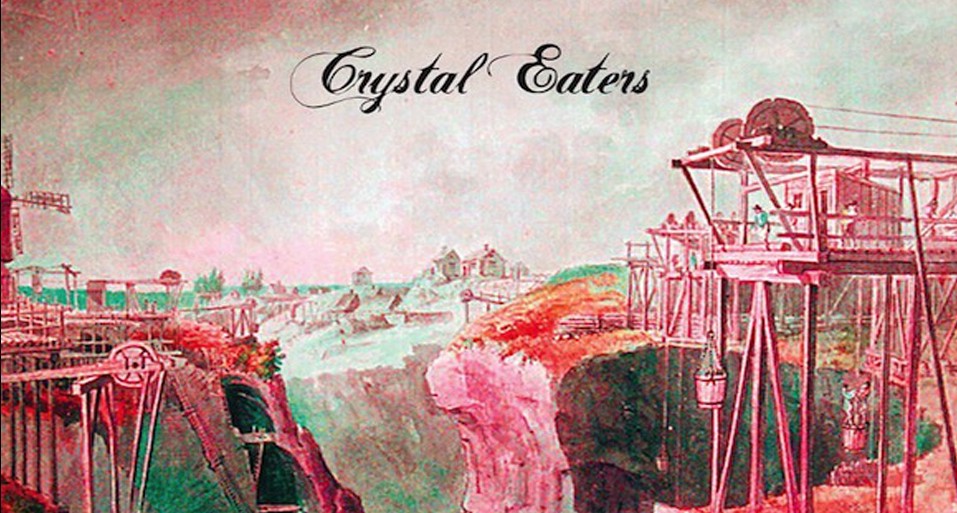
REVIEW: Crystal Eaters by Shane Jones

While Shane Jones doesn’t name the settings featured in his novels, when I read his work, I picture upstate New York, not far from Albany, where he’s always lived.

It’s a landscape of subtle, resigned beauty, marked by ancient mountains and forests that — in those rare moments when the clouds lift — glimmer in the gilded, northern light.

The area also tends to be economically depressed, dotted with towns whose main streets seem to have been forgotten in the rise of “the city” (aka New York City) that, with a few exceptions, dominates the political, financial, and social culture of the state. The characters in Jones’s stories do not suffer the hardscrabble existence of the frontier, but — like the villagers in Light Boxes, Jones’s first novel, who go to war against the evil month of February — possess a desperation characteristic of those fighting for survival, or at least meaning, which gives them an aura of sadness and heroism that Jones perfectly captures.

Which is not to say that Light Boxes and Daniel Fights a Hurricane (Jones’s second novel) have much in common beyond this sense of geography and heroism. Light Boxes is a shorter, “easier” read, a modern fable in which there’s little doubt who represents light and who represents evil; a book that, despite its sinister moments — the way February, embodied as a man or evil god, kidnaps or murders the town’s children — has a playful or almost child-like quality largely absent from Daniel. Despite possessing Jones’s trademark whimsy (notably in the form of “banana bombs” and “cookie pockets”), Daniel is more complicated and challenging to digest; with a narration that alternates between three perspectives and with dense prose, it’s morally ambiguous, befitting its description of the possible descent of its main character into madness (represented by the hurricane).

Crystal Eaters, Jones’s third, and latest, novel, combines the Manichean appeal of Light Boxes with the psychological insight of Daniel while introducing new themes — both playful and sinister — that showcase his increasing breadth as a writer. The book focuses on a family — a mother, a father, a son, and a daughter — that in some ways could be considered “typical” of many living in upstate New York, scraping by in a town with just two employers: a mining company that produces crystals (in Jones’s world, a natural resource, similar to oil or natural gas) and a jail that houses inmates, most of whom are from the city.

The city is not exactly the enemy here — it ultimately pays for the crystal it needs to fuel its rampant growth — yet by engaging it,

the townspeople have been forced into a Faustian bargain that doesn’t leave much room for long-term hope.

Mostly the city possesses an aloof disregard for the town and the traditions it threatens to swallow; like a monstrous amoeba, its new buildings can be seen erupting just over the edge of the horizon, oozing closer in the span of days or sometimes even hours, while its politicians appear to console the villagers with more empty promises. Here, Jones mostly uses the city for comic relief, effectively mocking its arrogance as he describes what it will bring to the village, specifically “modern living with god, carpeted cubicles, televisions, dishwashers, tooth x-rays, nuggets, yoga…cat-shaped headphones,” and so on.

More serious are the crystals, which come in many colors and serve different functions. They are not only a natural resource, but also an integral part of everyone’s body, so that newborns are understood to have a “crystal count” of 100, which gradually — or, in the case of accidents, abruptly — “goes to zero,” or a state of death. Any living thing, no matter how small, has a count; a dog has a count of 40, an ant 3, a flower 1, and the city is “infinite” while a village is “always falling”; the chapters in the book, appropriately enough, go backwards, as do the pages. A low crystal count can have dire consequences. When we meet the mother of the book, we learn that she’s dying from a terminal illness, and her count is already in the single digits. But without ever succumbing to the cheap sentimentality that so often plagues similar story lines,

Jones manages to capture the mother’s decline in ways that feel heartbreaking but original.

Death is a driving theme of the book, with the crystals ultimately representing that which we so often take for granted, namely the passage of time; in Crystal Eaters, Jones basically invents a language of death, which is no small feat.

Of the two children in the family, the son, now an adult, has landed in prison after forming a gang that experimented with “black crystal,” a very rare type that, when eaten, will induce hallucinations and, according to rumors, may increase a person’s count. In a series of flashbacks, Jones offers insight into what led the boy into such troubled waters, as he struggled to define himself against his overbearing mother and emotionally distant father; again, if the story feels somewhat hackneyed, the language Jones uses to describe it is so original that you can’t help but look at the situation with new eyes. Finally, there’s an adolescent daughter, a typically idealistic and, for this reason, probably the most loveable of the cast, who wants to help her dying mother by giving her some of this fabled black crystal. She’s the one who softens the father and makes him sympathetic when, at other moments — such as when he’s beating his son with a belt — he verges on the monstrous.

What’s important here is that all of the characters have flaws and strengths that make us want to know more about them

; we want to know where they’ve been and where they’re going, which despite the experimental trappings of Jones’ surreal prose is very conventional (and satisfying) storytelling.

It helps that Jones, in Crystal Eaters, returns to a more straightforward (third-person) narrative, alternating between plots involving the mother’s sickness, the father and daughter’s attempts to care for her, and the son’s time in jail (there are also some gang members who want to engineer a “reverse jail break” with the hope of rescuing him). Like Jones’s previous novels, his new work combines the hyper-surreal and hyper-realistic in scenes that perfectly integrate his lyrical but never-pretentious prose. Describing the death of a woman in a traffic accident, he writes, “The villagers stood around slack-jawed and terrified (that’s going to happen to me one day) and watched her expel colors.” Or the son’s memory of killing a bird as a child:

“He found a bird with a broken wing. He stepped on the broken wing with one foot, and stepped on the good wing with his other foot. He moved his toes away from the bird’s body until a bone cracked. … The bird exhaled her final crystal in a circle of knotted smoke.”

What’s new for Jones in Crystal Eaters is his very serious examination of acts of love and cruelty (both often incomprehensible) that seem to mark our lives, particularly where families are concerned (and especially when someone is dying). It’s a book about real people, in other words, and while anyone who’s enjoyed the whimsical or demented beauty of Jones’s previous work will find much to appreciate here, Crystal Eaters resonates with a kind of psychological truth that results in a very harrowing story. It’s his most “adult” book and, for that reason, his most heartbreaking.

Crystal Eaters

by Shane Jones

Powells.com

A Novel for Every Remaining World Cup Team

If you are like me, watching the World Cup has got you wanting to read more world literature. Here’s a novel for each remaining World Cup team.

Brazil's flah
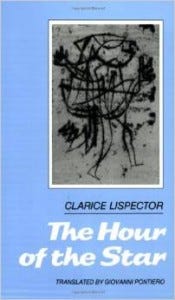
The Hour of the Star

The Hour of the Star by Clarice Lispector

Brazil say they play the beautiful game, and Lispector certainly writes gorgeous sentences. The Hour of the Star is a great short novel to introduce you to the marvel of Lispector.

flag of chile
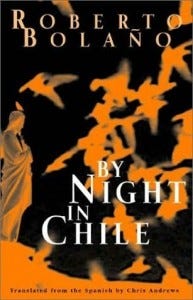
Roberto Bolano chile

By Night in Chile by Roberto Bolaño

Chile have been one of the most exciting and passionate teams this World Cup. Bolaño may be the obvious pick, but few authors from any country write with as much excitement and passion.

Colombia flag
Chronicle Marquez

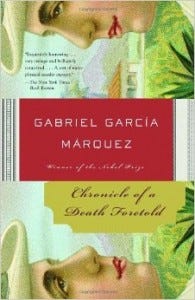
Chronicle of a Death Foretold by Gabriel García Márquez

Colombia has looked great this World Cup, but historically they have never made far in the tournament. This is only the second time they’ve reached the round of 16, and they’ve never gone further. Will that change this time? Not if my pick, an underrated short novel by the late great Márquez, is an omen.

Uruguay world cup
The Book of Embraces

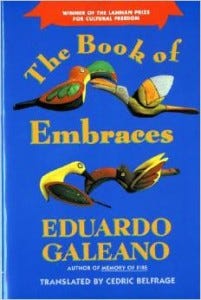
The Book of Embraces by Eduardo Galeano

Galeano’s books tend to be unclassifiable mixes of literature, poetry, history, and memory. However, his prose is always fierce and the Uruguay team could use some of that after their most famous player slash vampire was suspended for literally biting an opponent (for the third time!).

flag
The Lover by Duras

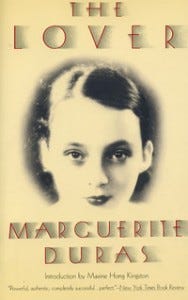
The Lover by Marguerite Duras

This French team has a lot of talent to choose from, and French literature has a gigantic arsenal of amazing writers. Duras may not be as famous as Proust or Flaubert, but she is well worth your time.

Nigeria flag
Ben Okri

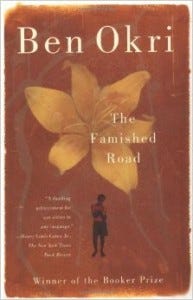
The Famished Road by Ben Okri

It is something of a surprise that Nigeria made it out of group, and Ben Okri, one of the world’s great magical realists, will definitely surprise you in this Man Booker Prize winning novel.

Germany

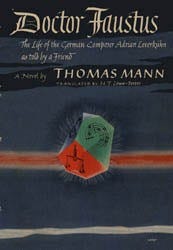
Doctor Faustus by Thomas Mann

Germany’s team is so stocked with talented it seems they made a pact with the devil. So here’s Thomas Mann’s take on the infamous story of Faust and his deal with the devil.

algeriaflag
astragal

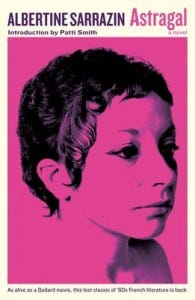
Astragal by Albertine Sarrazin

A gritty, semi-autobiographical novel by an author who passed away at only 29.

Netherlands flag
Max Havelaar

Max Havelaar: Or the Coffee Auctions of the Dutch Trading Company by Multatuli

Famous soccer players often go by one name, so here’s a classic Dutch novel by Multatuli (pen name of Eduard Douwes Dekker).

mexicoflag
Carlos Fuentes

The Death of Artemio Cruz by Carlos Fuentes

A classic from the Latin American Boom for a team that’s looking to make noise this Cup.

Costa Rican flag
Yolanda book

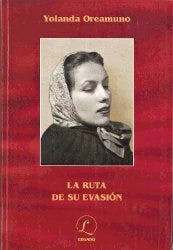
La Ruta de su Evasión by Yolanda Oreamuno

Sadly not available in English, Spanish speakers can check out this classic of Costa Rican literature.

Greece
Why_I_Killed-front

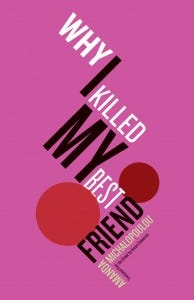
Why I Killed My Best Friend by Amanda Michalopoulou

Greek literature stretches back to the dawn of Western civilization, but this Greek team is thinking about the future after advancing out of group. So here’s a recent novel published in English just this year.

Argentina flag
Cortazar

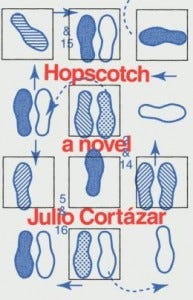
Hopscotch by Julio Cortázar

Cortázar is every bit the magician with words that Messi is with a soccer ball. Essential reading.

swissflag
jkg

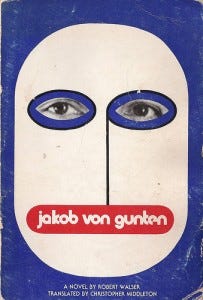
Jakob Von Gunten by Robert Walser

If you haven’t read Walser before, you are in for a treat. A contemporary of Kafka, Walser is almost as weird but in a completely different way.

Belgium
misfortunates

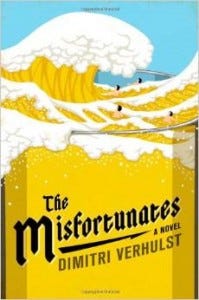
The Misfortunates by Dimitri Verhulst

While the Red Devils certainly aren’t misfortunate with their exciting young team, The Misforunates is a great recent novel from Belgium that was made into a movie in 2009.

America!
Wise Blood

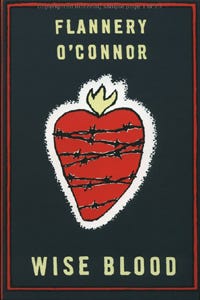
Wise Blood by Flannery O’Connor

The Americans play a bloody, ugly, yet somehow effective game, so how about pairing them with the master of Southern Gothic, Flannery O’Connor?

Now get reading before Brazil-Chile starts!

Cover photo by Julien

Field Notes from a Fulbright Scholar: In Kahnawà:ke Territory

Since I arrived in Montréal, I’ve been doing research for a novel called Yet Wilderness Grew in My Heart, a book set in 1757 during the French and Indian War. In a nutshell, it explores the panoply of cultures that clashed and combined in northeastern North America, giving birth to the bustling, cosmopolitan region we take for granted today. After months of work, I’ve found the picture to be even more complex than I suspected, involving dozens of native peoples, English, French, and Dutch colonists, as well as a flood of enslaved Africans and indentured servants from Scotland, Ireland, and Germany. Of all these groups, however, it’s been especially thought-provoking to study the Mohawk people, the eastern member of the Iroquois Confederacy, an alliance of six indigenous nations that originated in New York’s Mohawk Valley, the corridor where I-90 runs now.

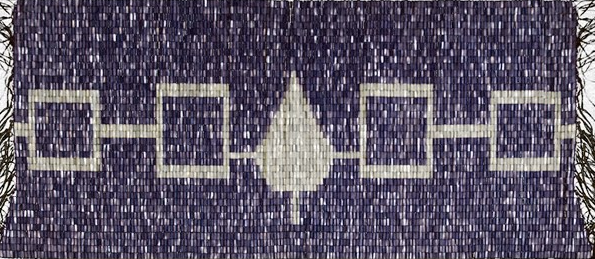
To learn more about the Mohawks, I take a bus across the Saint Lawrence River every Tuesday to visit the reservation of Kahnawà:ke, a community of 8,000 Mohawks located across the water from Montréal. Composed of two-lane roads lined by modest houses and stores, Kahnawà:ke appears like most small towns until you notice that the stop signs feature the Mohawk word for stop: “testan.” After another moment of looking, you’ll notice many houses and cars fly a distinct purple flag. Featuring a white pine tree flanked by two rectangles to either side, this is the flag of the Iroquois Confederacy, which still unites the modern communities of the Iroquois, found predominantly in New York, Québec, and Ontario.

Near the town center of Kahnawà:ke, you’ll find one of the epicenters of traditional Mo-hawk culture: Kanien’kehá:ka Onkwawén:na Raotitióhkwa Language and Cultural Center. This is where I spend my day, researching in the library and asking the patient staff countless questions. When I first arrived here, I was craving nuts-and-bolts information about Mohawks during the colonial era to make my novel more concrete and historically accurate. I wanted to know: What did they eat? Wear? What did their houses look like? And though I’ve learned a good deal about these things, something else became clear as well: the misalignment between native history and the depiction of native history by contemporary media.

wampum

The “Hiawatha Belt” of wampum is the inspiration for the Iroquois Confederacy flag.

During the flood of Westerns that typified the early and mid 20th century, native people almost always played the villains — bloodthirsty barbarians who terrorized innocent white settlers. It’s a relief that this stereotype has fallen by the wayside in recent decades; however, that doesn’t mean natives are always rendered with the complexity they deserve. Many films and novels continue to paint historical natives as noble savages, simplistic people who were doomed to extinction by “progress”: the advanced technologies and societies brought by Euro-American colonists. Essentially, natives are misrepresented as childlike innocents, and it’s due to this “purity” that they are victimized by the complicated and corrupt world of modern “civilization,” a world beyond their understanding.

This romantic but extremely patronizing view was popularized by James Fenimore Cooper in the 19th century with his Leatherstocking novels (the most famous being The Last of the Mohicans). Yet nearly two centuries later, contemporary films espouse the same gauzy mix of idealization and condescension, notable examples being Dances with Wolves and Disney’s recent relaunch of The Lone Ranger (a complicated mess of a movie you can read more about here and here). In the form of what anthropologist Renato Rosaldo calls “imperialist nostalgia,” these films elegize traditional native societies as the relics of humanity’s quaint and primitive past, rather than treating native societies as the true equal of European ones.

The history of the Mohawks and their allies in the Iroquois Confederacy runs completely counter to this harmful depiction. Rather than being guileless primitives, the Mohawks proved to be very shrewd at negotiating the political order created by European imperialism. Trapped be-tween French Canada and the American colonies, the Mohawks found themselves in a dire situation in the 1600s. However, their highly developed government and its strategic approach to diplomacy allowed them to turn this position to their advantage. As tensions between French and English colonists grew, the Mohawks played these rival empires against one another, savvily creating the political agency they needed to protect their people.

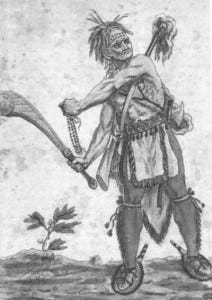
18th Century Illustration of an Iroquois Warrior

18th Century Illustration of an Iroquois Warrior

Everyone knew that whatever empire the Iroquois Confederacy allied with would certainly win if war broke out between France and England in North America. Since the Mohawks held a strong voice in the council procedures of the Confederacy government, this meant that both France and England were continuously courting their favor. However, rather than accepting offers of alliance out of hand, the Mohawks used their position to negotiate. When sending diplomats to the French, they subtly (and sometimes blatantly) insinuated they might ally with Eng-land if treated poorly. When sending diplomats to the English, they suggested the opposite. In the end, the Confederacy would decide to remain neutral in 1701 at a meeting called the “Great Peace of Montréal.” This decision actually resulted in preferential treatment from both empires in the form of trade relationships, as well as promises not to interfere with Confederacy business. It was an insightful foreign policy strategy that kept the Mohawks and their allies in a place of power for over a century after their first contact with Europeans in the early 1600’s. It was only the outbreak of the French and Indian War in 1753 that finally upset the balance they engineered.

This is just one of many stories that gives the lie to current day fictionalizations that depict natives as Edenic people suddenly pushed to extinction by the arrival of European civilizations outside their comprehension. Native people had a sophisticated web of cultures and governments before Europeans arrived. And after Europeans arrived, they were highly capable of adapting to the circumstances brought by each new century. To leave these things out of our film and fiction only creates plots where native people are denied narrative agency. Despite the many hardships inflicted on them, indigenous nations were never simply victims.

From the privileged standpoint of a white American, it’s not my place to speak for native people like the Mohawks. But I do hope new representations of the past both by natives and non-natives will allow us to revaluate our shared history, replacing two-dimensional characters with ones that are at once more accurate, more interesting, and more complex. As all writers know, it’s never too late to reinvent our stories.