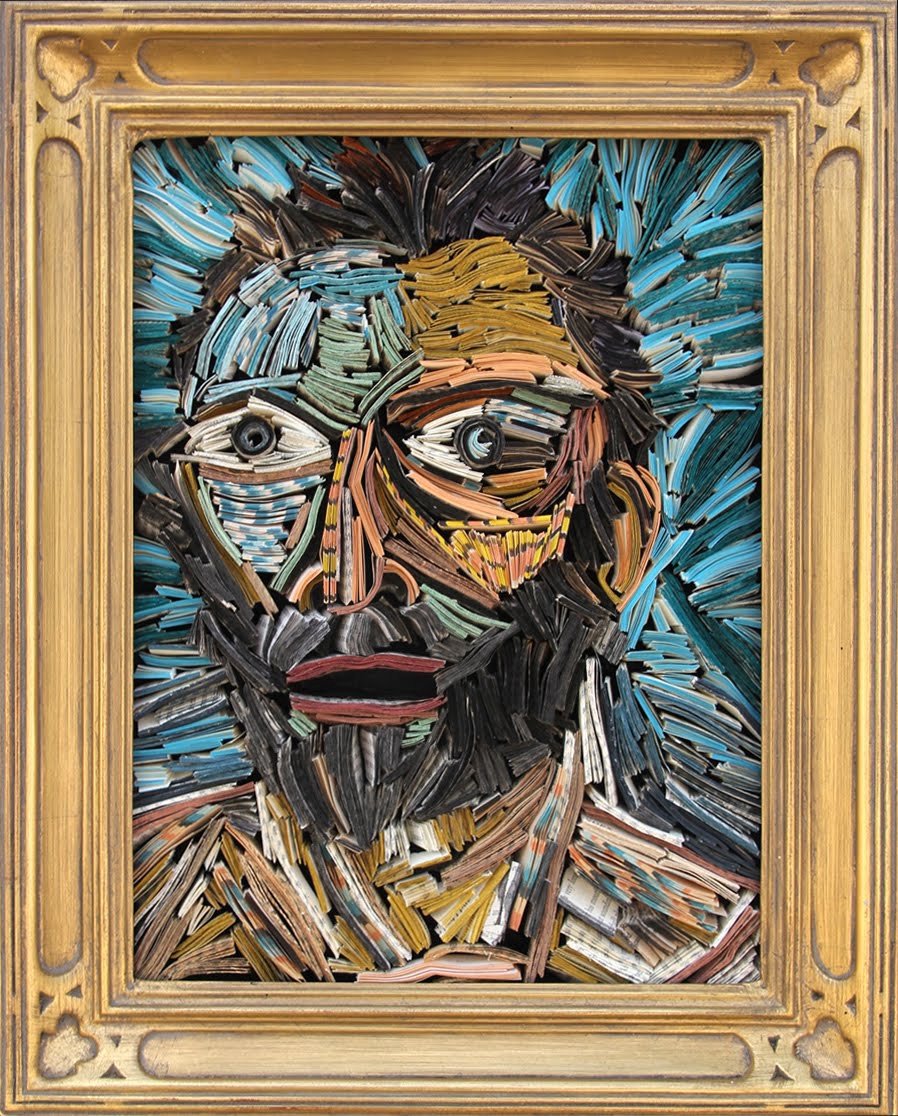
Lovers of print books love to talk about the shortcomings of eBooks. Print books, they say, have a comforting weight, they smell nice, and, really, what else are you going to put on your bookshelf? Some artists have taken the idea of books-as-decoration to a beautiful new level — although they’ve destroyed those books in the process (hopefully there’s a digital edition safe on someone’s server).
In honor of the recent return of Scotland’s beloved and elusive book sculptor, whose allegedly final anonymous sculpture was discovered in late 2011, here’s a gallery of artwork created from books:
This slideshow requires JavaScript.
— Benjamin Samuel is the Co-Editor of Electric Literature. He was briefly a book street artist when a teacher told him that doodling in the margins of his textbook was “destruction of property.” Find him on Twitter.
Over at The Awl, Noah Davis just wrote a hell of a piece about the status of freelance writing and — oh, that age-old question — whether or not writers should be paid. As a writer myself, I’ve always sided with Harlan Ellison on the subject, but Davis offers a far more nuanced take on what producers and consumers can and should expect from the (online, mostly) marketplace. Among the more noteworthy revelations:
that it’s nearly impossible for paid online content to recoup the expense of production
the number of hits needed to offset payment of writers, editors, and staff is a little staggering
pointing to Condé Nast’s new move to the WTC in particular, that it’s a little silly for industry big wigs to claim empty pockets, not without first scaling down.
It’s damn shocking and impressive that Davis put this thing together in only twenty hours. (The Awl paid him $250 total at what he reveals is $12.50/hour… I did my math right, right?) Then again, maybe that’s why he’s so successful.
*** –Jake Zucker is the Editorial Assistant for Electric Literature’s Recommended Reading, and wears sunglasses on the net.
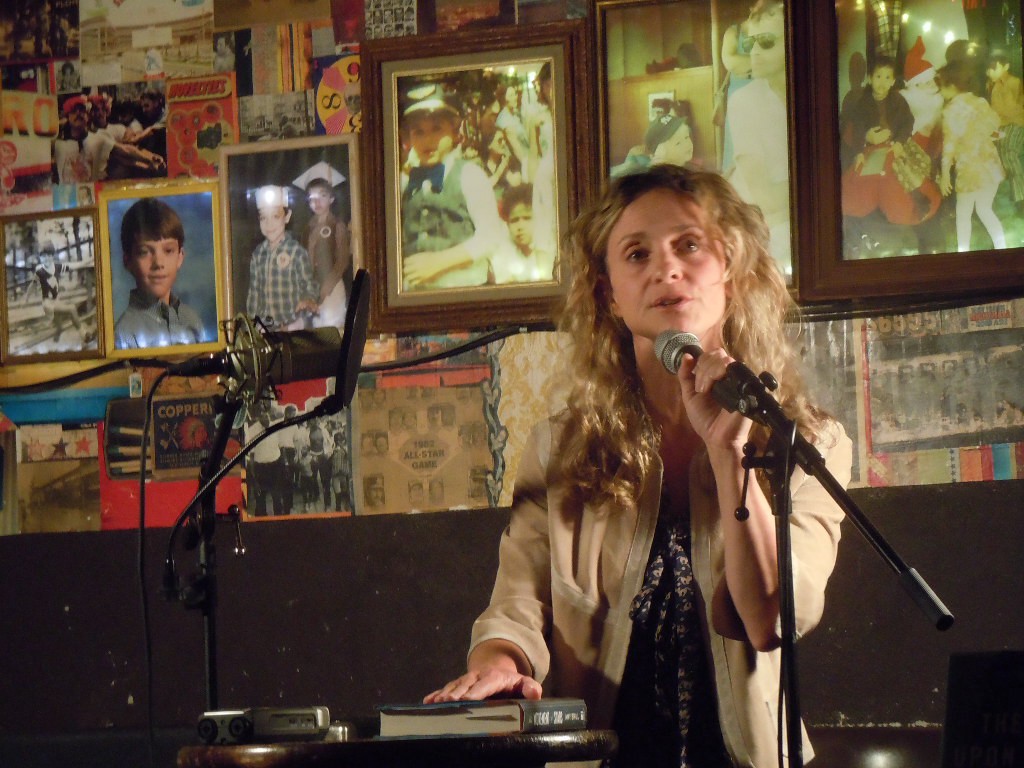
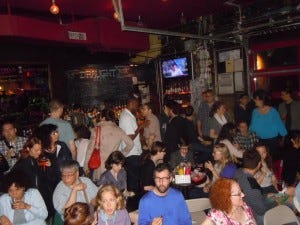
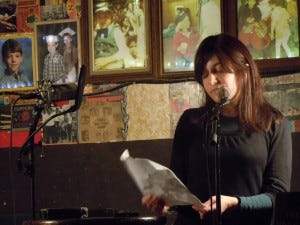
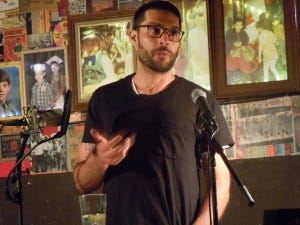
Last Friday, Bushwick got just a little more hip thanks to the H.I.P. reading series that brought together great writers, great magazines, and a great crowd for a veritable literary circus. If you haven’t heard of or been to a literary circus before, that’s because this was the world’s first (unverified, but, come on). There was a clown at the door to greet guests as they entered the Paper Box’s main stage (now circus tent) and a popcorn machine — there was also free pizza, but that disappeared before I arrived (the next time a literary circus comes to town, do not be late). Stonecutter Journal set up a tattoo booth and inked guests with literary themed portraits, Slice Magazineoffered carnival games, and Gigantic Magazine sold vials of snake oil. Oh, and there were also excellent readings by authors Ayad Akhtar, Jason Porter, and Téa Obreht, who was dressed as a lion tamer.
But the show stealer was a death-defying poetry reading by aerialist Seanna Sharpe. As a shirtless man beat a steady rhythm on a drum, Sharpe, her hair in curlers, climbed up a pair of curtains and began a series of contortionist stunts 15 ft from the ground. Hanging upside down, she removed her curlers, which turned out to be poems rolled up into little scrolls, and began her reading.
Certainly a first for poetry. Certainly a first for Bushwick. And hopefully not the last amazing performance from H.I.P. *** — Benjamin Samuel is the co-editor of Electric Literature. He promises that he is totally not afraid of clowns. Find him on Twitter.
IT’S BEDTIME IN THEIR APARTMENT BY THE OCEAN. She’s lying next to him. He’s reading the newspaper and they’re eating oranges in bed. As he pulls his orange apart, little pieces of it fall down onto his chest.
“Things are falling from my orange,” he says.
“What did you say?” she says.
He doesn’t answer though, just continues to read. He likes to read.
“These are good oranges,” she says. She is in a saucy mood tonight and so does not care if he’s preoccupied. She bought the oranges and she is peeling them and eating their fertile guts. “They’re juicy. It is also much cheaper to buy them from the farmer’s market than from the grocery store.”
“What?” he says.
“Nothing. I was just talking about the oranges.”
He looks right at her and does away with the newspaper and the orange. They are giggle-pusses on the bed now. He digs his fingers into the pockets above her hips. They roll around and roll around until it turns into something else and their clothes are off and he’s inside of her and it’s time to be animals again.
They don’t have much for money, but they seem to be starting a life together. She’s never been pregnant. They are young and attractive. They come from good families. They have strong values, and their love is immortal.
Now, it is the next day. They’re having an argument, driving around the big city streets of Orange County. They have to find a new place to live because the lease is about up on their little apartment by the ocean and they can’t afford to renew. Living near the ocean is expensive, understand. It’s not an easy thing to sustain.
“But we can’t do anything right this minute,” she tells him. “The lease isn’t up till June.” She’s drinking coffee from a paper cup. He’s in the driver’s seat, as usual.
“Well, we have to do something. It’s the simple act of doing,” he says.
“Men always have to be doing. Doing, doing, doing.”
He scrunches his lips and doesn’t look at her. “We’re getting an idea of what things cost,” he says. “We’re doing something.”
Out the window, she sees palm trees fly by. Groomed, clipped, desert: reimagined, like something from a Hollywood film set. She doesn’t say anything else on the matter.
“Hey, you,” he says to her finally. “Look. We’re just driving around here. We’re doing something. It’s an adventure.” Then he shows her his teeth. It’s a petition for peace in this car, and anyway, they both like adventures.
“I guess,” she said. “We haven’t done that in a long time. Had an adventure.”
“We used to have them a lot more.”
“Yes. Yes, oh my god.”
Just then, there is the world’s most gigantic bird of prey, gliding down over the highway, landing in an adjacent field. There is only tumbleweed, bougainvilleas, and it. It has glorious tail feathers and is the color of wheat. It’s got something in its talons, something dead.
“It must be four feet tall!” she says, but he doesn’t say anything. He doesn’t care. He’s still staring at the bird while driving sixty on the highway.
“Do you know what kind of bird that is?” she says.
“No,” he says.
“But I thought you knew a lot about birds.”
“I usually do.”
Once a couple years back, they were having Chinese food at a restaurant in Santa Monica. The restaurant had a great red Buddha waterfall, and there she told him all about her insecurities. “I talk too much,” she said. “I am always blabbing on and on.”
He called it diarrhea of the mouth, but he also said, “It’s funny. It’s cute that you notice it and think about it,” and kissed her on the chin. On their way out of the restaurant, they both rubbed the Buddha’s big toe and then drove back to his father’s house where it was the night before Thanksgiving.
She is a fan of football and the Green Bay Packers, and he is a fan of baseball and the San Francisco Giants. The first year they fell in love, the Packers won the Super Bowl and the Giants won the World Series, and a sign like that, she thinks, from God, colors everything. There are all of these expectations now. Maybe it’s too good to be true. She likes sports, mostly because male camaraderie intrigues her. He’s good at sports. She likes men who are fast and good with their hands and comes from a rural upbringing in Wisconsin where these kinds of men are quite typical. She wants men with muscles that come naturally from doing a job, like playing sports or laying concrete or baling hay or swinging a sledge hammer. With any other kind of man, she’s learned, she feels unnatural.
Still though, she asks herself why he loves her. How can he? As if it is a choice, or as if it is just the sum of her physical and mental attributes, like it is a tally that adds up to love, and she wonders why there aren’t more negatives and why he is not so bothered by her, because sometimes, she feels very bothersome.
“Love is a box,” she says now, “only inside of it, there are more boxes. It is a mystery, you know?” She’s been going on a while.
“I wasn’t listening to you,” he says. “Sorry, what?”
They’ve passed out of one town and into another. Or, it seems they have entered something in between. Neither is exactly sure where they are, but suddenly the pavement of the street seems black and brand new, and the sky looks expensive, and on either side of them are hills and foliage licked over with color, like the desert has been washed away with money money money, and now they are in some other universe. High up in the hills, they see the great spires of post-colonial mansions, white castles of happiness with ebullient red doors. They can see just enough of them to know that they exist, just enough to feel uneasy with the hairs standing up on their arms and the backs of their necks.
“I was talking about love like it is a box,” she says.
“A love box?” He raises his heavy, straight eyebrows, and she knows what he’s thinking: to pull over and have sex with her right here and now in this paradise world. Instead, they drive on a little while longer. He turns unusually quiet.
“Do you know where we are?” she says.
“I’m trying to figure that out,” he says.
“You’re always so good at directions.”
“That’s why this is annoying me.”
“It’s beautiful here. Look how beautiful. Are we lost?”
“No.”
“Who lives here?”
“Old money lives here.”
“Old money?” she says. “What does that mean?”
“You know what it means. It’s families that have had money so long it’s not even money anymore. It just is. That’s old money.”
He doesn’t glance at her as he talks. It’s frustrating, because she doesn’t understand old money. Where she is from, nobody has that kind of money. She was the richest of all her friends growing up, and even her family used hand-me-downs and shopped at the discount stores for Christmas decorations. This concept of money — who had it or who had more of it, even if somebody was dirt-fucking-poor — didn’t register at all.
His family has money. She’s gleaned as much. His family lives in Los Angeles where his dad owns the construction company he and all his brothers work for. It’s a very successful company. But like the houses they build, this money seems to have four walls and a roof, and it’s not mysterious at all. Either way, in California, the world just spins opposite of anything she’s used to. People are prettier and have more money, but she wonders if they’re happy. Happiness means something else here, she’s learning. It’s scary.
“This is another planet,” she says. “Can we leave now?”
“Sure,” he says, and keeps driving.
Then he has some news.
“I’ve decided not to go back to work for my father,” he says.
“What?” she says.
“We’re not moving back to L.A., at least not any time soon.”
“What are you talking about?”
“This has been a big decision for me,” he says and tightens his grip on the steering wheel. “I think it’s right. We’ll stay here and we’ll be okay.”
He continues not looking at her, saying it all like he’s been holding back for quite some time, like it’s taken him a while to come clean. At first, she is not sure what to say. She sits quietly in the passenger seat with her hand on the handle of the car door, ready to pull it and jump out and roll around like a meat sack on the highway. Of course, she would never do this, and it’s only an impression. But she thinks about it anyway. She is not a daring person and is, in fact, often afraid, though always on the move, because sometimes it’s the staying in one place that can get you.
She had originally moved out to Los Angeles under the pretense of broadening her worldview after college — to see Hollywood, meet a movie star, maybe fall in love with somebody rich. She worked for a caterer there, and when the owner retired, was offered a job bartending at a restaurant in Santa Monica. That’s where she met him under the soft glow of paper lanterns, drinking bubbly wine on a busy Friday night, and very soon after, they fell in love. After a few months, they had become serious and decided to move south to Orange County — temporarily, as he had found a two-year gig working on a new subdivision in Irvine, and she, presently unconcerned with roots, thought it might be nice to live near the ocean for a while.
But because of his father’s money and influence, comforts she had not experienced before, the two of them had always planned to move back to L.A. He would become a contractor like his older brother, work for his father, and they would get married and live fine canyon lives. That was the plan. There had never been any question about this before, and she hadn’t given it much thought because at the time, as long as she was with him, where they settled didn’t seem to matter.
But now, in the car, it matters. Suddenly, she becomes upset.
“I want us to have our own life,” he says. “Here.”
“Here?”
“Well, somewhere.”
“Why not L.A.?”
“Because. I have to do this on my own.”
“Do what?” she says. “I don’t understand.”
“Yes you do,” he says. That’s when he looks at her, to make it count.
“I do?”
“Yes, because we’re doing fine.”
“I know,” she says, “but your job.”
“I will find another job. You don’t have to worry about that.”
“I don’t?”
“No. I’m not going to fuck it up. Don’t you see?”
She is drawn to the deep, trustworthy sound of his voice and how familiar it is. She reaches over the console to hold his hand. He gives it easily, but it is hard and a little dry. “I see,” she says.
Relationships sometimes have themes. The theme to this one has always been driving. Especially in the beginning, when they first moved to the coast, they loved to take driving adventures — it’s one of the things that bonded them. Together, they are very fond of getting lost while driving in he car. Only it’s always been difficult for them — getting lost. He is canny with directions, and Southern California is simply too populated. Because back in Wisconsin, she knows, it is easy to get lost. All you have to do is get out of the city and into the county. Out in the county, roads disappear. They’re there and then they’re gone. But just like with everything else, California is different. On the coast of California, they are always stumbling back upon the five or the fifty-five, and even the longest, most tangled of roads seem to culminate in the form of great, big corporate strawberry farms or great, big corporate parks with shiny buildings that look like they’re made totally of glass. You go out thinking it’ll be a rush and an ocean breeze, but it is impossible.
They continue to drive. There are still all of the mansions and the hills and the expensive clouds, but now something has changed and the road seems to be older here. Tall, green weeds grow straight out of the concrete. They have these leaves that look like little hands and they’re waving all up and down the double-yellow line. Every once in a while, a car passes them going in the opposite direction, but no one seems to be driving in front or back of them.
“So, where are we?” she says.
“This seems to be going on longer than I thought,” he says.
“Maybe we should pull over.”
“A-ha,” he says finally. They find an intersection. They turn, and they are now in a city called Orange. They park.
Orange is the type of place they recognize. Its downtown is good-natured, doors open, doesn’t judge. There are old people holding hands, and there are children with faces like cherubic peach pies. There is a church on nearly every corner. The cars all stop at the crosswalks and wave pedestrians across. Nobody is in a hurry, but nobody is lazing about either. There aren’t any palm trees. There are maple trees and sycamores. There are valley oaks, blue oaks and black oaks, cottonwoods, aspen trees. She is so sick of palm trees, she thinks, that she could puke. She is so sick of parking lots and freeways and outdoor malls. She is so sick of the dry, flat expanse and how palm trees are just these stupid pillars, holding up the blanched, hot, stupid sky.
“I love it here. It makes me want to bake lemon bars,” she says as they walk down the sidewalk.
“It makes me want to coach Little League,” he says.
“I’ll bring the lemon bars to Little League.”
They find a nice Lutheran church. The doors are open, and inside the pews are empty and the entire place is empty. Everything is happy about this church, familiar even. The stained glass windows color the room with a kind of yellow warmth that can only mean God, and there are flowers everywhere, and up at the front there is this podium carved from wood and banners all filled with Bible verses she doesn’t remember but likes anyway.
They hold hands in the church, good and strong. She wonders what it would be like to have sex right now, in this church. The moment passes. It’s time to leave.
They stop in a real estate office on their way back to the car. It turns out that everything is in their price range, but nothing is available. They meet a young man named Brian who gives them his card. He likes the look of them and says he’ll keep an eye out for openings they can afford.
Driving away, she thinks about how much she would like to have children. She feels pregnant with Jesus, that’s how much she wants children. She likes being in her mid-twenties. She is old enough to feel this way, but she is not so old that she must rush or worry. And she likes Orange.
Even still, as she smoothes her hands down the front of her blouse, she feels the strangest sensation that something is waiting for her, something very bad, and she is worried.
About a year ago, they went to the wedding of a couple they’d known for quite some time. The ceremony was being held at the San Diego Zoo on a rainy day. So before getting dressed in their wedding clothes, they decided to go for a walk around the zoo, get soaked, and let their shoes squish in the puddles. It was a Friday. There were school fieldtrips everywhere, and the children and their teachers, unprepared, huddled beneath awnings and large golf umbrellas at the picnic tables, trying to watch the animals from afar. But there was something strange going on in the cages that day. The animals weren’t hiding from the rain like maybe they normally would and instead, seemed to be fueled by it, or driven mad. They yowled and scratched and paced. They roared. The children would point. “I didn’t think cats liked the rain,” she heard one little girl say to her teacher who just looked in disbelief.
The snow leopard in the zoo was especially memorable. She stood alone on her precipice, crying into the rain from inside the glass cages, making an unholy sound of sorrow. This great, magnificent creature cried the whole time they were there. With her fangs long and her blue eyes open, she stopped only once to flicker her pink tongue at the raindrops, and then she took a big breath and started again.
He told her that he’d read recently about a snow leopard that had died at this particular zoo. “A male,” he said. She didn’t say anything. He was always reading. A plaque said that this female snow leopard’s name was Alexa. Alexa and her mate, but her mate was dead, and his name was off the plaque. How did the mate go, she thought, and what was his name? Perhaps he died of sadness. Boxed in, tied down. Maybe he killed himself. Or maybe it was just disease. In any case, he was dead, and Alexa was alone. She watched Alexa the snow leopard cry until she could not take it anymore, thinking about how, in documentaries, she’d learned that snow leopards in the wild are solitary cats. The females hunt and live and raise their young alone, and they are strong and wise, and it is admirable, but in captivity, they are monogamous. They find love. She wondered briefly if maybe the behavior in the zoo that day had something to do with Alexa’s pain. Everybody knows that a snow leopard is magical. Maybe her tears had a special power that transmitted itself into the sky and turned into rain like in some kind of myth.
The zoo wedding was lovely, despite the weather. While the bride and groom got married beneath a great, big cartoonish umbrella, the guests sat in black-and-white-striped folding chairs with red tulle puffs tied to the backs, and there was a great vista in the distance, and through an archway of trees, you could see four or five giraffes loitering with their long necks pointed up into the air and fat, black tongues flapping at the raindrops. The animals that day were so spectacular they made the national news. A lot of scientists talked about it. “Twitterpation,” one of them said. The full moon, said another. But everyone forgot after a while, and then there was a new phenomenon, a new thing to read about in the morning paper. Either way, these things happened. They are real. This is what he told her the night of the wedding, as they were lying naked in the hotel bed post-sex, and she was combing her fingers through his chest hair and asking him to explain to her wild animals running around in their cages, acting like humans.
Now, as they drive away from Orange, he says, “I don’t want to leave this place. I’m worried that we’ll come back one day and it’ll all be gone.”
“Me, too,” she says. She thinks living in Orange would be just as fine as living near the ocean, or in the desert, or anywhere else for that matter. Just as fine.
They drive a little while longer. The radio is off and the car is quiet.
“I want to get lost,” he says. He takes a turn onto a road she does not recognize. “Let’s go on an adventure. What do we have to do today?”
“Nothing,” she says. She reaches across the console and puts her hand on his knee. She tests the waters. They are okay. The waters are good.
Where they’re driving, it’s beautiful, a major highway down the throat of two canyons. It’s late afternoon and so the sun is getting weaker in the sky. She sees signs everywhere. There are lots of cars around. She sees signs that tell them they’re going south, headed toward San Diego. She sees signs for the Marine Corps base. She knows there is a nuclear power plant, too, further down this way with two great, spherical containments that look like boobs. She hates to have it nearby. The base frightens her, too. Sometimes, helicopters come and land so close to the freeway that there’s a standstill due to dust. But for now, it’s just grass fields and canyons, more hills, power lines. It looks empty and endless, feral in its immensity, and she’s certain there must be army men rooting around in the greenery, playing war games.
“I kind of have to pee,” she says.
He turns off the highway and now they’re taking what seems to be a minor exit, but still, nothing in Southern California is ever small. Everything is big and giant and important.
“Do you know where this exit goes?” she says.
“No. That’s the point.”
“It’s impossible to get lost here,” she says. “Everything leads to something else. Nothing ever just ends and there is never just a mysterious fork in the road.”
“I know,” he says. “It’s a disappointment.”
They get off on the mystery exit, but even though she’s not sure where they are, everything still looks familiar, as she thought it would. Palm trees, canyons, wildflowers, all growing up and down everything like infectious diseases.
After a while, he tells her a joke he heard at work. It’s a dirty joke about a girl who has no arms or legs and gets abandoned on a beach towel next to the ocean.
“Oh my god,” she says. They have a good, long laugh from their bellies. “Seriously, pull over.”
They stop at this gas station without a name. The whole thing feels abandoned, but the glass door at the front is open and she can see a man at the counter, reading a magazine, smoking a cigarette. All around them, things do seem emptier than normal, but this usually just means they’ve gotten further away from the ocean.
They go to their different bathrooms. Alone, she looks at the brown door on the bathroom stall. The bathroom is dirty. There are black thumbprints on the walls, and there are pricker weeds growing up out of the floor, and she wonders what kind of place this is. She tries instead to think of their place, the apartment by the ocean where the orchid needs to be watered and the ceramic bowl of oranges refilled. She thinks of the glowing tennis courts outside, the pale curtains she sewed herself, and the ocean, too, and how she’s come so far, and now it is truly hers. She washes her hands in the bathroom sink. Then, in front of the mirror, she traces a finger across her collarbone and thinks of the church in Orange, how it was pretty there.
Outside of the gas station then, she has a strange interaction with a drunk person. This man is old enough that she feels sorry: sorry for his sorry state. He’s not too old, however, to be good-looking. He’s like a burnt up old cowboy. He’s wearing faded jeans and cowboy boots and his tee shirt is a discolored white with big, yellow pits. He’s wearing a cowboy hat, too. It’s all very authentic. He’s drinking from a paper bag and leaning against the building right next to the open glass door.
“Hello,” says the cowboy.
What worries her is that he wasn’t there before. Wherever he came from, it had to be inside the gas station, but he did not look like the man who had been smoking and reading the paper inside. He looked like a different man.
“I didn’t see you here before,” she says.
“I was out back, tying up my horse.”
She thinks this is wrong. She looks around and doesn’t see or hear any horse.
“Looking for your husband?” he says.
“Excuse me?” she says.
“Your husband. He went inside.”
She doesn’t give an answer. She just stares at him. His face is very brown underneath the brim of that hat.
“Rough terrain around here,” he says. “You don’t want to be going it alone.” Then he winks his papery eyelid at her. “Don’t fret,” says the old, drunk cowboy. “Don’t be worried, little lady. He’s coming right out.”
“I’m not worried,” she says. She goes to sit in the car and wait.
When he finally comes out and gets into the car, she says, “Don’t leave me alone like that again.”
“What do you mean?” he starts the car and then opens the bottle of iced tea he bought at the gas station. He also bought two oranges. They’re in her lap in a plastic bag.
“That man is strange.”
He looks over to the old drunk cowboy who is still leaning, looking off at something else.
“Huh. I didn’t see him before. He looks like a rancher.”
“A rancher? Oh, god. Let’s just go.”
“Did something happen?”
“Nothing happened. Just — strange men. That’s all.”
They drive away and she folds her arms together across her stomach. She sits like that for a while.
“What’s wrong?” he says finally.
“Where are we going?”
“Jesus Christ. When did this happen?”
“Do you know where we are?”
“Yes. Take it easy.”
There are signs everywhere. Signs telling them where they are, even in this unlucky desert country. There are signs for Carlsbad, San Diego. Even for like Palm Springs and certainly Los Angeles, there are signs. Everything is a controlled, perfect thing. She wonders where the sign is that tells her how to get all the way back to Wisconsin: wisconsin 2000 mi. She would not be surprised.
“This is stupid,” she says. “This whole drive is stupid. Let’s just go home.”
“What happened? Is this about L.A.?”
“No,” she says. “Let’s just go home.”
He shrugs his shoulders in this way that he does when she’s defied him, and he’s shutting her out because he doesn’t like it. They sit for a long time, driving, and sun is lower and lower and the day has almost washed out of the sky completely.
“Maybe we can go back to Orange,” she says, “and find a bar.” It feels wrong to her, trying to get lost when there are signs everywhere. “Let’s go to the zoo,” she says.
He turns the knob for the radio, but then turns it back. “God, no,” he says. “That place gives me the creeps.”
Soon, it is twilight. The sky is changing in funny, purple ways. They don’t go back to Orange and they don’t go home and they don’t go to the zoo. They drive for a while down a road off the mystery exit.
“Hey,” he says, trying to get her attention. “What’s going on?”
She doesn’t answer. She’s looking out the window. The signs, she notices, have stopped. “What happened to all the signs?” she says.
“What do you mean?”
“I mean, it’s just a bunch of empty roads, canyons everywhere and yellow flowers. There are no signs anywhere to tell us where we’re going. There are always signs. There’s nothing but goddam signs forever, and now there are no signs?”
“We’ve been driving a while,” he says. “We’ll find some signs.” He reaches over and squeezes her knee. It tickles, but she doesn’t move.
“The road is bumpy, too,” she says.
“Yeah, I noticed that.”
“It’s real bumpy out here, and no signs.”
“Just relax,” he says.
She grabs his hand and brings it to her mouth. She kisses the knuckles. She is thinking about the cowboy at the gas station. She’s known people with farms in the Midwest, and she’s met ranchers from Northern California and even Texas. She’s read Westerns, too, about true cowboys. They all had Colt Forty-Fours and, every once in a while, a touch of jaundice or thorns in their ankles. Growing up, she often dreamed of being rescued by a cowboy and then excising the thorn from his ankle.
But this cowboy, at the gas station, he was different. He said something she didn’t like. Something about rough terrain.
“Are you sure nothing happened with the rancher at the gas station?” He takes his hand away from her knee and puts it back on the wheel.
“I’m sure. Why?”
“You just seem weird.”
“It’s weird around here.”
So they start talking about maybe turning around.
“We haven’t seen any other cars in a while,” she says. “Plus, the canyons are changing. It’s getting flatter, with grass.”
“Maybe the grass is a good thing,” he says. Then he looks at the clock.
“It’s late,” she says.
“Getting there.”
But the point of going out and getting lost is, of course, to go out and get lost.
“I guess we’re lost,” she says.
“I guess we are.”
They look at each other, because they’re not sure what to do next. It’s getting darker now, and the darkness for her makes everything seem unpredictable.
After a while, he flips on the brights. “There’s something up there,” he says, squinting at the windshield. “About a mile up. Another gas station, maybe. We’ll check it out.” They keep driving. The landscape keeps changing: first grass, then fields of white flowers that look chilly with the moon.
“You saw a gas station?” she says.
“It looked like some sort of light, or a structure. I thought I saw a building. You didn’t see it?”
“There’s nothing here,” she says. “It’s just backcountry.”
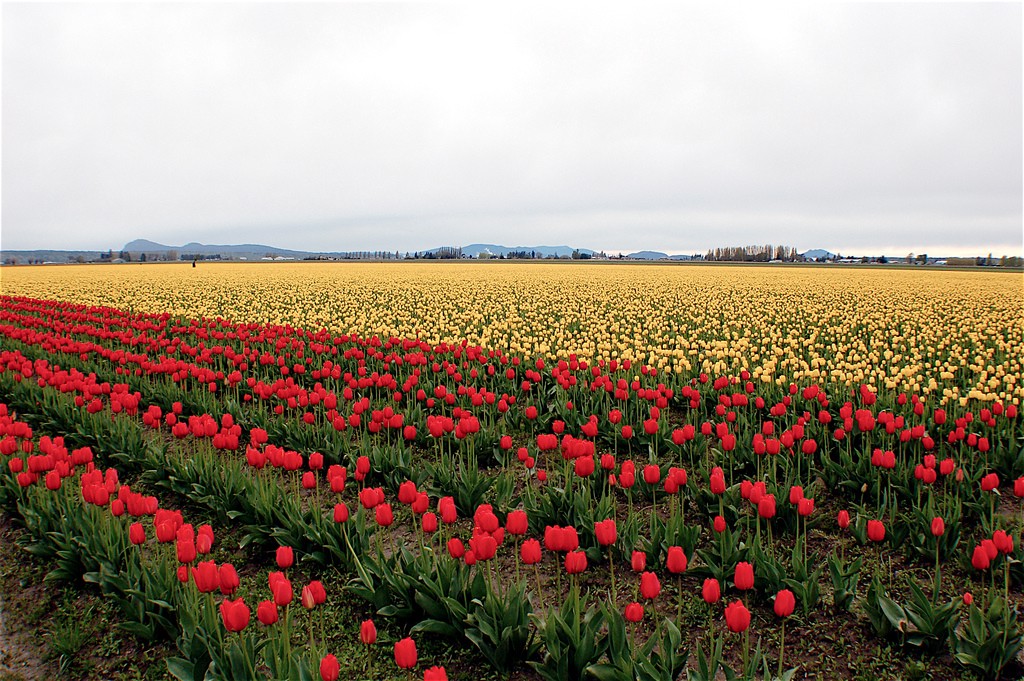
A little while later, driving on the same narrow road far away from the highway, they come upon a great field of tulips. It is on the right side of the road. On the left, there are the grass fields and some canyons, but the white flowers have faded away. The tulip field is huge and magnificent. The petals are visible in the moonlight. They’re all kinds of luscious colors.
“That’s amazing,” she says.
“I think I’ve read about this,” he says. “But maybe not. I can’t remember.”
“What?”
“How the tulips bloom here in spring. Although I feel like we’re too far from the ocean for that.”
“This is huge,” she says. “This must be some kind of tourist attraction.”
He pulls over to the side of the road then and puts the car in park.
“What are we doing?
“We’re going in.”
She is hesitant at first, but then it seems okay. “Should I bring these?” She holds up the bag of oranges.
“Sure,” he says. “Why not?”
They walk. There is no one around but them. There is a flat, grass lawn between the road and the tulips. On the sides of them: lawn, behind them: emptiness, before them: tulips. They’re holding hands.
She clears her throat when they get too close. There is a tall, barbed wire fence. The tulips are just on the other side. She can see them rustling in the breeze. It is gentle and the night is cool. The tulips, right here, way out there, so many of them, tulips moving and breathing like a single, spectacular organism in the world. They look hungry.
“What the hell?” he says. “You can’t see this fence from the road.”
“I don’t like it.”
“Let’s walk along it for a while. Maybe there will be an opening, or a gate.”
He squeezes her hand tighter as they start to walk along the fence, away from the car. She has the bag of oranges in her other hand. She’s worried by the fence, worried they’ll get caught trespassing, or murdered by alert dogs, but she follows him anyway.
When they finally find an opening in the fence they can’t see the car anymore. The opening is just a cut in the fence about five feet tall. Part of it’s been peeled back, and the metal curls and rusts. There’s just enough room for a human body to squeeze through. It looks like it’s been a long time since the cut was made, and like it was made from the other side.
“Just for a little while,” he says, looking at her, reassuring, and she sees that he can sense her concern. It’s so dark now, they’re lit only by the moon, which, on the tulips, casts a romantic glow. “We’ll just go in, walk around for a quick minute, and then we’ll leave. Okay?”
He goes first. After getting through, he holds out his hand to guide her. She steps into the tulips. They grow in rows that come up to her knees. Each row is made of many colors, and there seems to be no pattern or conceit. There are red tulips, bright pink, baby pink, orange, white, a deep, deep purple, yellow, a kind of melon color, fuchsia. The breeze is enough so that she can hear them all rustling up against each other and moving back and forth. She cannot see to the end of it either. Tulips to the horizon: wet, fat tulips. It is both terrifying and the most beautiful thing she’s ever seen.
They walk through the tulip grove until the fence is just a line in the distance. Little sprinklers go off all around them, and the water soaks through the bottoms of their pants, seeps into their shoes, and dampens their toes. There are thousands of stars in the sky.
The oranges dangle by her side, tapping her on her knees and calves. She stops being afraid then, hates that she was ever afraid, that she’s ever been angry or unhappy, or dissatisfied for even one moment in her life with him.
“Can we have the oranges now?” she says.
“Wait,” he says. He’s looking just ahead of them. There is fear in his voice. “Stop right now.”
She stops, holding the bag of oranges out in front. “What’s wrong?”
He shakes his head. He kneels down slowly, pushes his hands into the tulips, moving them aside. Down in the ground is something small, about the size of a grapefruit. It’s like some kind of alien, metal flower. It’s got little arms that reach out, all around. Really little arms, like cilia, but again, metal. She can see it barely in the moonlight but not enough. “What is that?” she gets down to be near to him. “A sprinkler?”
“No,” he says. “Get back.”
She stands up and doesn’t know what to do. “What is it?” she keeps saying. “What the fuck is that thing?”
He stands up slowly. He’s got his hands out in front of him like some sort of peace offering. She’s never seen him so scared in her life. “It’s a landmine,” he says.
“A landmine?”
“It is. I know it is.”
“How the hell — ”
“Stray mines. Or, maybe there’s a whole field of them here. Maybe the military base. I’m not sure.”
They stand for a minute in perfect silence.
Then he says, “Give me one of the oranges.”
She reaches into the back and hands him one of the two oranges. He stands up straight and looks way out into the distance of the tulip field. “Get down,” he says. He doesn’t yell it like in the movies. He merely says it, gently.
He pulls his arm back and then he throws the orange like a baseball, throws it as far as he possibly can, she can tell. He is good at sports. He is strong. They get down.
There’s a small boom. It makes her think of fireworks.
They’re crouching down in the tulips, him and her. The tulips brush her eyelashes and the tip of her nose, the live wet things. She shuts her eyes against them for only a moment. Alien, sick tulips! He holds her. There’s just a poof of smoke in the distance now and dust and dirt and petals in the air, pieces of the orange. It’s only a poof, and all at once the world is a very different place. He tucks her head down into his chest.
“Jesus Christ,” he says.
She doesn’t say anything.
He’s shaking his head. She can feel it. He’s working something out in his brain, about how he got them here, how he can get them out. He lets her go and stands up then, and she stands with him. Knee-high in the tulips, they look out, way out there to where the orange landed, maybe sixty yards away.
“Baby,” she says finally. “Where are we?”
He’s got her hand and holds it tight. Then he lets it go and puts his arms around her and holds her like that instead. “I don’t know,” he says as they look out at the tulips. “Just stand still.”
About the Author
Tarah Scalzo is a graduate of UC Irvine’s MFA program in fiction. Her stories can be found in the Santa Monica Review, Timber, and Roar Magazine. She is originally from Wisconsin.
The Lit List is a sometimes-weekly compendium of New York’s finest literary events and readings. All events are 100% free unless stated otherwise. Something you think we should know about? Email dish@electricliterature.com
Monday, June 17
Jami Attenberg and Francesca Segal will be at BookCourt tonight at 7 PM. Rumor says that this is the reading that trashes the back to make room for the new drinking/reading room the bookstore is planning to open.
If you’re in the city, you can catch Karen Shepard and Karen Russell at McNally Jackson to discuss Shepard’s new novel The Celestials. Our contribution to their Q&A: please discuss what it’s like to be named Karen. 7 PM.
Tuesday, June 18
At WORD in Greenpoint, it’s “International Crime Night” with Michael Reynolds (Europa Editions), Jason Pinter (Grove/Atlantic), and Dennis Johnson (Melville House). The Hamburglar may or may not appear with a manuscript of his memoir. 7 PM.
At the Strand, Leigh Newman, Moses Gates, Royal Young, Pamera Ryckman, and Sue Shapiro will let you in on the publishing world’s skeletons and secrets at 7 PM. (psst … the Strand asks you to buy a $15 gift card in exchange for the pleasure of your company.)
In a mystical, faraway place called the Upper East Side, gaggles of Manhattanites attend the Thalia Book Club at Symphony Space, and tonight they discuss Claire Messud’s The Woman Upstairs. Non-Symphonites need $25 to enter. 7:30 PM.
Wednesday, June 19
Beards, tattoos, piercings, and well-loved band t-shirts from the early ’80s at WORD, where Vol. 1 Brooklyn’s Jason Diamond hosts a conversation with Pulitzer Prize winner Lucian Perkins and musician-writer Alec Mackaye (person in this band, brother to this dude) about their book Hard Art, DC 1979, a chronicle about the rise and development of punk in DC in the early 80s. 7 PM.
Neil Gaiman hits the last stop of his book tour is tonight at Symphony Space, where he will read from his new novel The Ocean at the End of the Lane, which “captures the very essence of childhood fear and uncertainty.” Tickets $45. Unless you’re 30 & under, which will cost you $35.
Philipp Meyer is at Greenlight Bookstore tonight to present The Son, a “multi-generational epic set in Texas.” No word if the Judge makes a cameo appearance as a bartender, waiter, or bellboy in this novel. 7:30 PM.
Thursday, June 20
Questlove. Ben Greenman. powerHouse Arena. DUMBO. Nothing more needs to be said. (Questlove!). 7 PM.
Sunday, June 23
After a long, slow weekend, the New York literary world descends on the Community Bookstore in Park Slope for “Real and Critical: Bridging Narrative Nonfiction and Cultural Criticism.” This is the first event in a series that explores how writers use their personal narratives in a critical setting. Michelle Orange, Jacob Silverman, Porochista Khakpour, and Michael Robbins kick it off. 5PM.
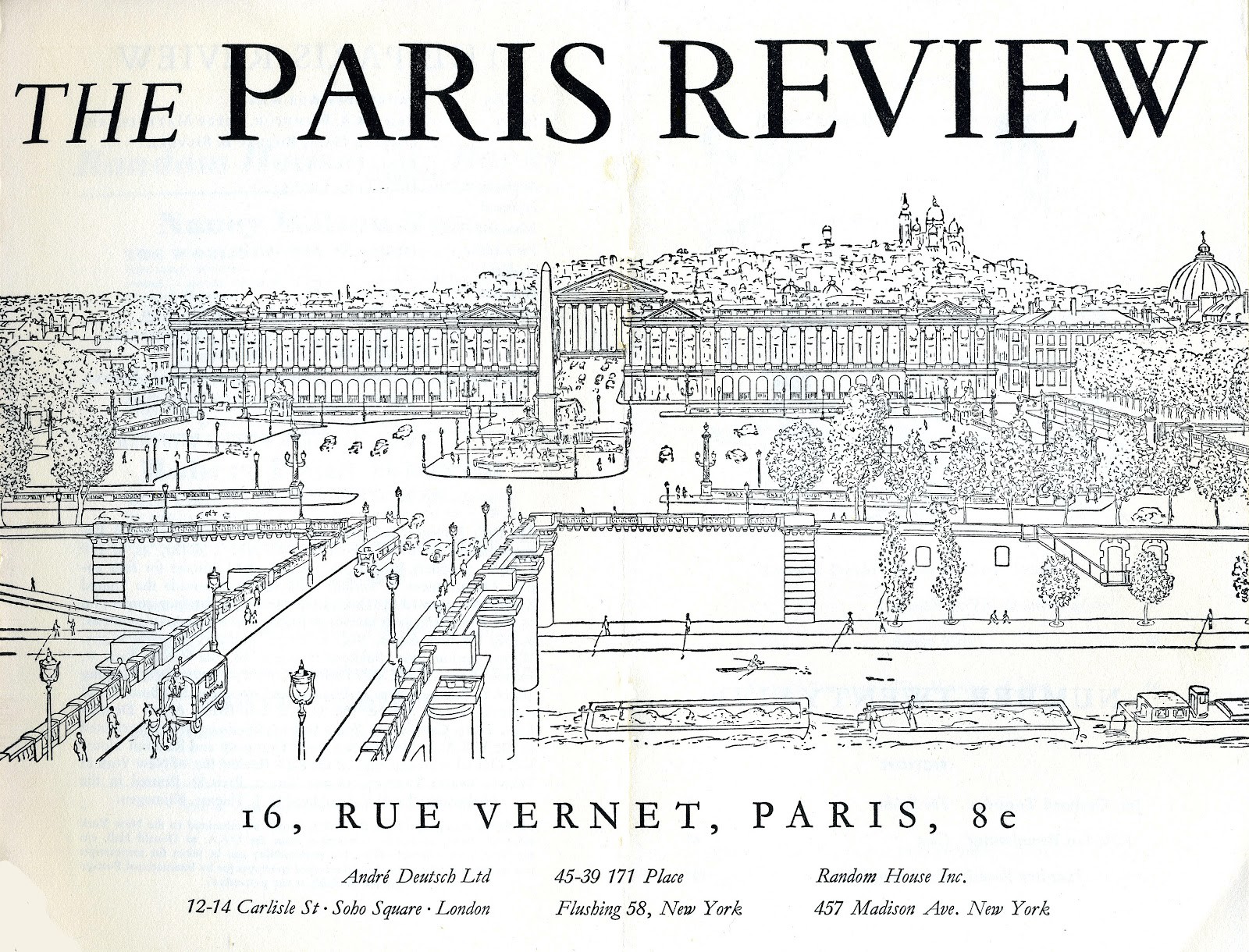
On Thursday night, The Paris Review hosted a launch party — its first in the magazine’s new 27th Street office — for its 205th issue. Attendees who braved the soggy weather found what is, likely, the office of their dreams: bookshelves full of back issues, framed Review advertisements and covers from decades past, and limitless alcohol.
This slideshow requires JavaScript.
As for the issue itself, the expectations couldn’t be higher. Said editor Lorin Stein: “We’ve been weak — weak is probably not the right word — on our Art of Biography interview series, but we have two here [one with Michael Holroyd and another with Hermione Lee].” The issue also boasts a third interview: The Art of Fiction with Imre Kertész, which Kertész promises will be his last interview. But it’s Patrizia Cavalli’s ten poems that seemed to excite Stein the most. “They’re love poems,” he said, “and there are never enough love poems.”
***
–Jake Zucker is the Editorial Assistant for Electric Literature’s Recommended Reading, and wears sunglasses on the net.
I got soaked en route to the Franklin Park Reading Series on Monday night, but this did not stop me and hundreds of others from packing into the main room to see and hear some serious literature. The series teamed up with Pen American Center to bring us tales of elemental families, pioneering astronomers, gossip radio shows, and the “historocity” of a little place called Brooklyn.
1. Curator and host Penina Roth doin’ her thang. 2. Matthew Aaron Goodman, who once used the same hair products as yours truly, telling us why the “Natural Museum of Historocity” has to move.
First up was Crown Heights local Matthew Aaron Goodman who, besides being a novelist, is also the “Director of the Natural ‘Historocity’ Museum.” Less a physical museum than a virtual record of oppressed peoples, Goodman read us his address to the directors of the museum upon his move (and the museum’s) to Santiago, Chile, for if America was “being who it was supposed to be, it would be thriving in our public schools.” Next, Goodman read a piece titled “Leaving Brooklyn,” which gave a biographical account of the narrator’s life in Brooklyn. “Dear Brooklyn, it was your Bed-Stuy before there were hipsters … This country, like every country, can be brought to its knees.” Goodman is probably someone you want to keep tabs on.
1. Paul Morris, PEN’s Director of Membership, Marketing, and Literary Awards, introducing his PEN gang. 2. Amy Brill: “Did you do your reading on the subject of gravity?”
Next up was Amy Brill, who brought her debut novel The Movement of Stars with her to the reading. Set in a Quaker community in 1840s Nantucket, amateur astronomer Hannah Goodman Price is looking to infiltrate the male-dominated astronomer world. Things get complicated when she must tutor a young Portuguese man named Isaac who is looking for “cosmic instruction.” Her attraction and world view complicate Price’s mission. Brill left us hanging when her excerpt threw Isaac’s future with Price into uncertainty.
1. Matt Bell, who might be one of the ten most metal people I know, reads from In the House: “For if mother was element, so was father, and so was ghost.”
After the break, Matt Bell kicked off his book tour in support of the massively titled In The House Upon the Dirt Between the Lake and the Woods. The novel’s world thematizes physical place between the four elements house, dirt, lake, and woods as an elaborately involved allegory of the complications between parent and child, parent and partner, individual and family in our world. Before we thought this was only intellectual exercise, Bell’s acoustically attuned prose made us feel the ideas behind his novel. “In hopes of catching my wife alone I began to take opportunities to exhaust the foundling, to chase him around the house and the yard behind, each time inventing some game for us to share.”
1. Edwidge Danticat: “Quick, he wanted to think of a story to tell him now, a story of dangerous mistakes made by both father and son.”
To end out the night, Edwidge Danticat graced the neighborhood with a preview of her forthcoming novel Claire of the Sea Light. Set in Haiti, the daughter of a fisherman goes missing, which incites (from the excerpt Danticat gave us) Max Jr. and Max Sr. to reflect on their origins and their futures. “But what do you do when your misguided child, in some stupid effort to distract you from who he really is, commits a violent act?” Max Jr. and Max Sr. converse over the gossipy radio show “Di Mwen,” which brings Danticat’s narrator to one of several hearts of this novel: “Maybe his generation was the problem. They’d built a society that was useless to their children. Still, these children seemed to lack the will to sacrifice and build their own.” Be on the look out for this one.
Next month, it’s the series’ annual “Travels and Journeys” night, and boasts Emily Raboteau (Searching for Zion), Elliott Holt (You Are One of Them), Royal Young (Fame Shark), Sarah Bruni (The Night Gwen Stacy Died), and Samuel Sattin (League of Somebodies). Miss it not.
**
— Ryan Chang is a person, and breathes during sleep. He tweets here and tumbles here.
A literary meta-thriller about murder, writers, and the art of stories
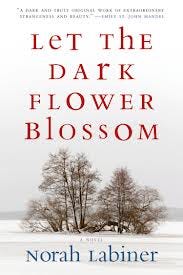
Norah Labiner’s Let the Dark Flower Blossom is the kind of book in which, early on, a character says that he has “never found any justice in poetry,” and the reader is meant to nod thoughtfully, not chuckle. This is a literary thriller about the process of writing, and, like that process, it consists of many good ideas, and some puzzling ones.
At its center, the novel is a mystery about a murdered writer, Roman Stone, and the two orphaned siblings, Sheldon and Eloise Schell, who were once his closest friends. But Labiner’s novel keeps growing bigger, gathering mysteries like a katamari ball gathers fences and, soon, houses: How did Sheldon and Eloise’s parents die (and why won’t anyone ever tell it straight)? Why is a writer named Salt coming to visit Sheldon? What does Sheldon hope to reveal by writing his own memoir, full of secrets? And what about Susu, the young woman in the hotel room who seems very interested in discussing the conventions of storytelling?
And, of course, the biggest mystery of all: Am I supposed to give a shit about this plot, or is this just another experimental novel designed to jerk me around — baiting me with these mysteries only to start in about the artifice of narrative, or whatever the hell people talk about when they’re smarter than I am?
Labiner plays the meta-fiction game well, if predictably. Sometimes she uses it to run defense (“Not all books are for all people,” Eloise remarks at one point). Other times, Labiner demonstrates a David Shields-worthy suspicion of plot-driven novels (“where one thing happens and then another and then a girl is naked”). In a revealing moment, we learn what kind of book Susu would be: “Not the sort that is easily understood or enjoyed. She was not a best-seller or a page-turner. No, rather, she was a great novel, a book whose greatness rests entirely in the willing reader’s heart.” In short, Susu would be LtDFB. Did I mention that Susu is the novel’s closest thing to a heroic character?
The plot is somewhat confusing, but that confusion is, for the most part, very fun — especially when rendered in Labiner’s exquisite prose. I’m always suspicious of beauty for its own sake; but here, the novel needs to be beautiful, or it all falls apart. Labiner excels at enumeration — accumulating an avalanche of detail instead of throwing one perfectly packed snowball.
The major characters are fascinating — especially Roman Stone, who is an idealized version of a genius writer (super-famous bad boy, wrote his first novel in 30 days when he was 20 years old), but when he speaks in flashback, he sometimes says things like, “You sentimental fucked up motherfucker” — an occasionally startling, and humanizing, lack of eloquence. I admired Labiner’s handling of Eloise, among the novel’s trickiest characters, but also one of the most human. Her relationship with her husband Louis, a lawyer who specializes in defending guilty clients through dubious means, is an interesting, though somewhat dead-ended, subplot.
This is a novel of fragments — just flipping through its pages gives the impression that the book was written by different writers, from Susu’s paragraph-less blocks of text, to Sheldon’s conventional formatting. Halfway through, LtDFB turns into a flood of short, numbered sections, some of them just one sentence long (à la Steve Erickson, or Maggie Nelson in Bluets). Here, the book occasionally becomes too vertiginous for its own good, spiraling from character to character like a version of Magnolia in which we keep forgetting who Tom Cruise is playing.
Eventually, the mysteries are revealed. There’s murder, and incest, and in a way, Labiner does the opposite of what I mentioned before: She baits me with a bunch of “intellectual” meta stuff about the artifice of fiction, and then gets all Gillian Flynn on my ass. I like that.
So, while Norah Labiner’s novel frustrates in the way this kind of book often frustrates — themes too explicit, narrative too fragmented, author too clever — it still possesses a genuine sense of drama and mystery. Unlike many writers of meta-fiction, Labiner rewards, not mocks, the reader’s investment in the plot and characters. This isn’t a perfect novel, but it is a genuine and, despite its experimental trappings, friendly book.
— Benjamin Rybeck’s reviews have also appeared in V Magazine. His fiction has received “special mention” and “notable reading” distinctions from The Pushcart Prize Anthology and The Best American Nonrequired Reading, respectively.
“THE GARDEN DIES WITH THE GARDENER” was what Owen had said, but when, years later, he died, she faced the garden with a will to keep it alive — as who would not? But the twins urged her to sell. They thought it would be wise to move out of the house (for too long too large) and into Wax Hill with its assisted-care conveniences and attached hospital: Wax Hill that short line to the furnace and the thoroughfare.
She had carried Owen’s chalky bones in a bag. She had tossed him into every part of the garden. How could she sell the house when from every window in the house — and there were lots of windows — she could see some part of him, Owen, her well-named spirit with meaty gardener’s hands and other contradictions. He liked the slow and melancholy; he listened to St. Matthew’s Passion long after Easter. But God? He didn’t believe. Young once, he saw himself alone when he was old with just a daughter. He left behind two, not of his own making but full of reverence for him, nonetheless.
He was a schoolteacher, and the luggage-colored oak leaves signaled his season, but it had come around so fast. He had had nuns for cousins — nuns! Sisters of Charity, how queer they seemed now; their menace, vanished. Mustachioed Agnes Gertrude and arthritic Mary Agnes, they had taught at the Mount for forty-odd years, wimpled and sudden, full of authority. She said, “I haven’t seen a nun in such a long, long time.”
The twins, on conference call, were hard to tell apart except when they laughed.
She didn’t have a lot to say and lapsed into what the weather was doing. Today snow, the second snowstorm of the New Year — and Owen once in it. She could see him, lopsided, downy, a scarf around his head. Blizzardy weather was wonderful to walk in.
“Oh, Mother,” from the twins when she cried. Overly dramatic, yes, she knew she was being, but she missed him. The wide road he had offered her each morning, saying, “What’s on your agenda?” Now the wide road had all the charm of a freeway.
“But take a walk,” the twins said, “if it’s snowing.”
Inward would be a nice word for what she was, self-absorbed would be more accurate.
“I know the country is at war,” she said; nevertheless, she missed him. “Besides, when I look at the larger world, I cry almost as much.”
But there was Owen, his voice, the sound of him in another room, off-key hummer, cracking nuts over the paper, singing or whistling a patter song. A Gilbert and Sullivan tune twiddled for days: “The lady novelist…I’m sure she’d not be missed.” Whatever he thought to play or heard was his favorite. “I’ve got a little list…I’m sure she’d not be missed.”
Some nights now she plunged into working, but vodka some mornings was preferred. She had to admit it — to herself but not to the twins.
She told them, “I have started a sestina.” She said she was inspired by Elizabeth Bishop’s “Sestina,” and she was using two of the same words. “The line, Time to plant tears, was what moved me.”
“Sestinas are difficult’” the twins said. Her educated daughters, they knew, they had tried.
“In high school, Mother. Remember Miss Byrd?”
“Oh, Miss Byrd!” and they had a rare good laugh, the three of them, she and the twins, remembering the ethereal Miss Byrd, giddy and overworked and walking into walls. The twins laughed about Miss Byrd getting lost in the mall on the Boston trip. The twins were laughing, and she was laughing a little, too, when the sight of the old dog asleep alarmed her. And on a sudden, in the whiplash moodiness of youth, she was mad at Owen. Damn him.
“There’s no pleasure to be had in discipline and restraint,” she said to the twins. “That’s what a fucking sestina is all about,” and so the pleasure of laughing was over.
“Why, Mother?” One voice.
The other said, “You’ve been drinking.”
She said, “I don’t have to defend myself.” Besides, she explained, the drinking was only a problem if she drove, “and I don’t.” She stayed at the table or slept in the big chair and no one need worry. She might die there — no mess.
“Mother!”
“All I am saying is you can’t have much of an accident if you sit somewhere with a drink.”
“You have to get up for the bottle.” Only Clarissa would say.
Here was the difference between her girls: one was meaner than the other.
“I bring the bottle to the table.”
“Great, Mother. That’s just great. Now do you see why we don’t want to call?”
“Then don’t. Leave me alone.” And she hung up the phone and almost kicked at the dog, but she refrained. The dog was her friend. Pink. “Poor, old Pink,” she said, “you scared the shit out of me,” and she leaned out to pat a shapeless pile of fuzz and spoke nonsense to it, Owen’s dog, Pink, adopted, a miniature mix of something abandoned and abused. Pink was hairless at the start.“ Look at you now, you little dust cloth, baby Pink, old sweetie. I wouldn’t hurt you. You’re my pal.”
“I’m on the move today,” she said to Pink, but the dog lay unperturbed, sure she would come back.
A snowstorm, a thaw, a brilliant sun, snow, freezing temperatures, snow, then better, warmer, promising weather arrived, and she looked back at Pink and then to the rake and the garden where the wet, mahogany islands of leaves, submerged for months in snow, now floated. All the snow pelted away by a rain the night before and only a mist this morning, something more than fog. She liked to work in it. She thought of Owen’s hair — water-beaded and in the sun brightly netted. She raked and thought if the twins could see. If they could live with the garden the way she did. Covered or uncovered, leafed or bare, the garden was restorative in any season. The persistent mist was turning into rain. March, late March. Somebody’s birthday — whose?
She abandoned Pink to the mud. She raked the beds; she swept the pavers. “Dirty girl!” she said when the dog wobbled toward her. Why had she even taken the poor mutt out? The dog trembled and squeaked.
The six words in her sestina are garden, widow, husband, dog, almanac, tears. “The envoy is an oncoming train.” She said, “Restrain the wild element of mourning and what you get is sentimentality.”
The twins, she should listen to them, sell, move, secure what there was to secure for them. Poor girls, in the disarray of single life, the yap, yap, yap of the dryer at the Laundromat beating up their tired clothes. Few single men where they lived, and the best of them gay.
The rain was cold, but she let herself get wet the way Owen did until she was soaked.
In the kitchen again she lit up the stove and watched the rain wash the garden into its outline. Green spikes stippled the beds she had raked, and the cropped crowns of established plants, the wheat-colored stalks of hydrangea, poked out polished in a design of circles mostly.
If her daughters could only see.
How is it possible that in caring for the garden she could miss summer? How is it possible, but she did.
Up at four and again at five, and at five-thirty up for good. Pink was awake; she heard him tick against the bare floor, circling the bed; she heard him yawn. “Good morning,” she said, and she went on talking to Pink as she carried the dog down the stairs and to the paper. “Because it’s too cold outside, isn’t it, Pinkie? I’m not going to do what I did yesterday. Too cold and wet this morning.” She saw forty-five on the thermometer. The radio said it was colder. Too cold. She got water, aspirin, more water. She put on deodorant, then went back to bed. For how long? Who cared? She was up again besides. She washed her hair and dried it in the heat of the open oven.
Once she had thought it would be hard to let go of life, but it will not be so hard.
She read; she wrote; she must have had lunch but she could not remember. The scenes that blew past came out in bands of color. The wispy complication of bare branches was added magic; the shadows were dark and sure. She put Owen in her poem, Owen or the shape of him, on the deck in his coat and pom-pomed hat, a passenger on a steamer, a blanket over his legs, heavy sweater, scarf — the pom-pomed hat. The garden beyond him she turned into straw.
Why did she lie to the twins? Why, when they called, did she say, “I am not drinking. I am working.” Why didn’t she tell them, “I’m doing both”?
The brief hello of summer and its long, long good-bye. Great piles of death she hauled to the woods to the dead pile. Farewell to the flowers of summer, to plume poppy and Vernonia. Turk’s-cap lilies, delicate as paper lanterns at the height of their glowing, good-bye.
“Anytime you care to look,” Owen said whenever he caught her watching his quick strip at the back door. She liked to look at his secreted machinery from behind when he bent over or stood one-legged getting out of his shorts. There it was, the long, dark purse of him asway. The head of his cock was the color of putty. Its expression was aloof most of the time, a self-satisfied indifference. When he was seated in some other ablution, the head of his cock was rosy and large and also arousing.
All she ever had to do was ask when what she liked to do most was look. Look!
“It’s yours,” he said, and with a flourish held out the bouquet of himself, “be my guest.”
Overnight, age seemed to happen to him, then a few years of ifs, poorer health, and medication.
“Don’t talk of moving just yet, please,” she told the twins. “Not tonight.”
Why, except for loneliness, did she answer the phone? (Owen at the long table, saying to the ringing phone, “Go away people. Leave us alone,” and people pretty much did.) To get off the phone she used the excuse of Pink somewhere sick. The odd thing was when she did hang up, she found Pink in the closet sick.
“Poor baby,” she said.
“Old age,” said the vet.
He gave Pink pills that worked to ward off motion sickness, which sometimes happened to old pets, despite their stationary lives. “He will sleep a little bit more.”
“A good night’s sleep,” she said. “Wouldn’t that be nice?”
They talked a little, she and the old vet, for he, too, was old.
They talked about Owen, or she did, and he asked, “Have you looked for any groups?” On the swizzling drive home in the rain, she cried, and she couldn’t see to drive and had to pull over. “Fucking old vet!” She put her face in her hands and cried. She petted Pink and cooed at him a little, saying, “We won’t go back there again, will we, Pinkie. No, no. But you feel better already, don’t you.” The little dog was a dust ball; just petting him made her feel awful. “Do I have to outlive everybody?”
“Yes, yes, yes, no,” she said. “The lily-of-the-valley is up.” She said, “Yes, it was two years ago today.”
“We wanted you to know, we’re thinking about you,” the twins said, and the girls called again later just to see how she was.
“How are you, Mommy?” they asked in maternal voices.
“The lily-of-the-valley is up,” she said.
May was his birthday month and hers, when she and Owen quietly celebrated with nothing more than mild surprise. He was given to saying, “I think I’m going to see another spring.” And he did — just.
Heart.
Of course, his heart, what else?
Now the oppressive immovable quality of objects wore her out.
“Mother!”
Whatever was not in front of her she meant to remember. His shapely head, his small red ear, his hair.
“You’ve been drinking. We can tell.”
“We knew you would.”
“So why act so surprised?” She hung up the phone and saw the fucking dog peeing on the floor in front of her. Little fucker!
They had not had enough time, she and Owen.
“I’m no such thing,” she said to the twins.
Another night, “I’m tired.”
Another, “I’m old is what it is.”
Owen had said that in the garden she would rediscover childhood, but those childhood experiences she remembered were mostly dreadful. She took her nose out of the flower, and her cousin, seeing her, laughed. “Your nose!” The red was hard to get off as were grass stains on her knees and elbows. Childhood in the garden. The garden was not genteel. The garden was full of thugs, and Owen had shown her some. The “Duchess of Albany” was not a thug, but a racer on a brittle stem, a Clematis with deep pink upside down bells, deceptively frail and well-bred, small, timorous bells. The “Duchess of Albany” was a favorite of hers: how could she sell the house to someone who might kill the Duchess in the earth-moving business of house improvement.
“The men came, yes,” she said to her daughters. But they have such big feet!“ she said. “They can’t help it, I know.”
“Mommy!” the twins said. “We’re only trying to help.”
So was she. Hadn’t she consented to the ugly tub? That ugly tub with the gruff bottom and the grips.
Her children have not visited in years.
“Oh, Mother,” they say, “what are you talking about?”
She took her own safety precautions and moved her bedroom, such as it was, downstairs to the sun porch. On the sun porch on the sofa she was not afraid to fall asleep.
What made Pink nest in corners? “What do you think is the matter?” she asked.
“Pink’s old, Mommy.”
“The dog’s ancient. Take him to the vet’s.”
“Oh, god,“ she said. Going to the old vet’s frightened her as much as it did the dog. “Oh, god,” she said. She felt so bogged down and muddled.
“You’re drunk is what you are.” From the meaner?
“Oh, god,” she said. “I don’t want to find a stiff dog under the desk. I don’t, I don’t, I don’t.” She cried and the twins consoled her.
“Mommy, why don’t you crawl into your cream puff and go to sleep for a while?”
“You and the dog have a snooze.”
She said, “I think I will.” She said, “Pink doesn’t realize I have mixed feelings about him.”
She had found him in an odd posture tipped against the shed. The hose was squiggled over half the garden, and elsewhere were two full buckets, a shovel, a rake. How she had wished, for his sake, Owen had put away the tools and coiled the hose and achieved a perfect death, although the twins yelled at her for saying such a thing.
But the morning after he died, the terrible morning after, repeats so many times a day: she woke up, dressed, walked downstairs, made her gritty breakfast drink, and took her tea outside. Then she saw it, the grain bin, where he kept his garden clothes and she fell to her knees and cried. Up to that moment, she had sipped at her tea and believed he was alive and already in the garden and muddy.
The permanence of his absence is a noise she hears when she listens to how quiet. How he did and he did and he did for her.
“Can I be of any help?” Always he asked this, “Do you want anything? Can I get you anything?”
She thought it was summer still if not spring, but the day’s evidence said it was fall. Again!
“When was the last time you were outside, Mommy?”
“I’m taking care of the garden.” She told them her nose was in it, brushing against the staining anthers, freakishly marked, a bald animal, she, a stiff, kinked dog, not unlike the dog she owned. Pink. Pink, what was the matter with that dog? After she got off the phone, she caught him in the act and pulled him away, made him stop, put him out of doors — like that — then wiped up after him. She brought Pink inside and carried Pink to his bed in the kitchen and talked to him. But even as she apologized for the chokehold, a part of her wished him dead and another part feared his dying, and she took Pink upstairs and bathed him in the new tub. His pink skin was so pink he looked scalded. He was thin; he shivered, though she was gentle and the water was warm. She dried him with her own soft towel and when he was dried and happy and at ease, she swaddled and rocked him. He was so pitifully thin. She put him in his cream puff and said, “I’m getting into mine.”
End
About the Author
Christine Schutt is the author of two collections of stories and three novels, the last of which, Prosperous Friends, was published in 2012. She has been a finalist for both a National Book Award (for the novel Florida) and Pulitzer Prize (for the novel All Souls) as well as a recipient of fellowships from the New York Foundation of the Arts and Guggenheim Foundations. She has twice won an O.Henry Prize for short fiction. Schutt lives and teaches in New York.
About the Guest Editor
Founded in 2000 by Diane Williams — NOON (a literary annual) — is dedicated to supporting important literary art. It has been critically acclaimed both in the U.S. and abroad. Its stories have been reprinted frequently and have won many prizes over the years, including an O.Henry Prize for “The Duchess of Albany” presented here. Two of its stories were selected for the 2014 Pushcart Prize edition. The current NOON was reviewed in TheLos Angeles Times this April by David Olin in an article entitled “The Discreet Charm of NOON.” He called it “…a compendium of unlikely pleasures: short prose and illustrations that challenge us to think about meaning and narrative….[I]t is elegantly designed and curated, a journal that wears its intentions on its sleeve. These are oblique stories, stories that exist in the interior, getting at the things we know but do not know we know.”
The Lit List is a sometimes-weekly compendium of New York’s finest literary events and readings. All events are 100% free unless stated otherwise. Something you think we should know about? Email dish@electricliterature.com
Monday, June 10
Tonight is a big night for literary events!
At Franklin Park in Crown Heights, Penina Roth & crew team up with PEN American Center to bring you Edwidge Danticat, Matt Bell, Amy Brill, and Matthew Aaron Goodman. $4 draft beers! Party! It starts at 8 PM.
For you Manhattanites who don’t want to cross the water, you can swing by McNally Jackson Books to see Elliott Holt and Marie-Helene Bertino talk about, uh, books, at the Literary BFFs series, hosted by Largehearted Boy’s David Gutowski. 7PM.
Or there’s “The Recital” at Housing Works, where Maris Kreizman is going to let a bunch of people talk about nature, sex, or both. 7 PM.
Tuesday, June 11
Catch some non-fiction action at 2A at the Big Umbrella Series, hosted by Emily Wunderlich. Toure, Brendan Jay Sullivan, and Terry Teachout are in tow. Toure wrote a book about Prince, and how he would die for Prince. I think we would all die for Toure dying for Prince. 8PM.
Wednesday, June 12
At WORD in Greenpoint, Gutowski’s other series, Largehearted Lit, will feature Alina Simone and Julia Sarkissian. At this series, there are always pastries. Pastries! 7PM.
At Congregation Beth Elohim, catch Claire Messud in conversation Michael Ravitch talk about (probably) readers shouldn’t want to be friends with most literary characters, and why this is a silly question to ask in an interview. $10 suggested donation, RSVP here.
Thursday, June 13
If you missed Matt Bell at Franklin Park on Monday, you can catch him at Park Slope’s Community Bookstore with Norman Lock. Bell’s new novel sounds pretty amazing, in both the acoustic and qualitative senses. You have probably seen it on your Facebook feed, but I am putting it in here for posterity. IN THE HOUSE UPON THE DIRT BETWEEN THE LAKE AND THE WOODS. Doesn’t that just sound super metal?
McNally Jackson Books is also hosting a crime fiction panel with publishing houses Melville House, Grove Atlantic, Akashic Books, and Europa Editions. 7PM. Bring a fedora.
Friday, June 14
The H.I.P. Reading Series happens tonight at 7PM at The Paper Box in Brooklyn. Some people named Tea Obreht, Jason Porter, and Ayad Akhtar are going to read things they wrote that a lot of people ended up liking. Slice Magazine, and Stonecutter, and Gigantic are also going to show a slideshow of their joint vacation to the Poconos. Facebook here.
Novelist Tom Drury will be at BookCourt in Cobble Hill at 7PM to read from his new novel Pacific. He’ll also answer some questions, breathe in and out, and stand on his legs. Co-presented by A Public Space.
Saturday, June 15
At KGB Bar, NY Tyrant/Tyrant Books throws a launch party for Ken Baumann’s novel Solip. Michael Kimball, Kendra Grant Malone, and Michael Savoca will be in tow. Last time I was there, the bartender was playing Thin Lizzy’s Jailbreak, and I embarrassed myself by playing air guitar to this song. 7 PM.
Sunday, June 16
The highest of high holy days for the literary universe — Bloomsday!! To celebrate, the Irish Arts Center and Symphony Space present you “Bloomsday on Broadway,” a marathon performed reading of Mr. Joyce’s little novel. Goes from 7PM to after midnight. Tickets are $25 for non-members. More info here.
Alternatively, if your’e strapped for cash, you might want to drink a lot of Guinness and try to read the “Scylla and Charybdis” episode to yourself and, by the time you’ve processed all that Guinness, re-enact the scene where Stephen Dedalus and Leopold Bloom pee in a garden. You might need a friend for this.
DON’T MISS OUT
Sign up for our newsletter to get submission announcements and stay on top of our best work.
YOUR INBOX IS LIT
Enjoy strange, diverting work from The Commuter on Mondays, absorbing fiction from Recommended Reading on Wednesdays, and a roundup of our best work of the week on Fridays. Personalize your subscription preferences here.