Clement Goldberg’s Debut Novel is Horny, Queer, and Very Revolutionary

In Clement Goldberg’s madcap and campy debut novel, cats, plants, alien intelligences, and a group of human misfits conspire to make us all freer and more joyfully connected. New Mistakes offers a hilarious, surreal, and sexy new vision of queer collectivity—one that involves the living earth and intelligences from beyond—while a cast of mundane and zany antagonists, ranging from a government intelligence agency to protestors against cat psychics to the plain old decentralized corporate defanging machine, works to shut it all down. 

It’s rare that I read a book that makes me laugh so hard and at the same time feel as though the horizon of queerness is just a little closer. The novel teems with wordplay and kinky sex, but harbors an undercurrent of social and ecological collapse. 

The work builds thematically and aesthetically on Goldberg’s body of film and animation work, which includes a lemur-based queer evolutionary/extinction mythology in Our Future Ends, stop-motion mushrooms who conspire to take over the earth in The Deer Inbetween, and a wild multi-director adaptation of Michelle Tea’s classic lesbian novel Valencia. 

New Mistakes is the first single-authored book from Michelle Tea’s Dopamine Press. It follows Dopamine’s first book, Sluts: Anthology, a multi-authored collection packed with queer writers celebrating pleasure, connection, and life. Michelle handed me a New Mistakes galley at a Dopamine Press reading, a few nights into my return to LA after two years on academic exile to Ohio. The combination of Sluts and New Mistakes offered me a space in which to land and from which to think—together, they announce Dopamine Press as a queer refuge, a cauldron of life-giving queer magic, and a preservation of the ways in which queer artmaking creates a web of influence where we all just keep giving birth to each other.  

As a queer writer who also channels earth voices in a campy way, and who is always on the hunt for fellow horny and funny queer utopians, I knew I had to talk to Goldberg. Luckily for me, they were already a fan of my book Sarahland, and we moved easily into creative interchange, swapping books and films and ideas—in the two months since Michelle gave me their novel, we’ve been talking. Here is a bit of our exchange.


Sam Cohen: I think we’ve both been compelled by the overlap in our work, so maybe we can start with that. I feel like we’re both giving voice to the earth in a campy way, and then also just, like, being funny and gay and referential and, even a little stupid sometimes.

Clement Goldberg: Yeah. I really like stuff that’s extremely dumb, but  so brilliant. I think it’s a very queer art that does that.

SC: The premise of New Mistakes is maybe that plants, cats, and aliens are at the fore of revolution via communicating to human misfits. It is really absurd and great and I’m curious where you started with the project, with that premise or somewhere else. What emerged and surprised you as you wrote?

CG: So much of the book came out of walking up the hill during the pandemic lockdown, in the neighborhood I live in. The plants here are very chatty, and the animals. Specifically, I was having a relationship with a particular tree, and then one day there was a cat who seemed lost and was asking for help. This other time I saw a giant light in the sky, and I thought, Oh! This is it! They’re here. This is the moment. I felt all of these chemicals in my body as I prepared. I was like, am I ready, or am I scared? Like, do I want to go with them? What’s gonna happen? And then I figured out it was a comet. 

So, all of that gestated, and was in the background of developing these human characters who foreground the narrative.

SC: So I think that we talked about—

CG: Is nature conspiring towards revolution? Is that the talk that’s in the air? 

I feel like some of the trees have had it. They’re thirsty. There’s a drought. The soil is falling off the hill. They keep building fences and developing over here, and the coyotes are like, why are we the bad guys? 

SC: I really love that your book allows plants to be pissed. I just like that you allow the non-human world to be, like—

CG: Annoyed with a leaf blower? 

SC: Yeah! Salty and bitchy some of the time. There’s trees with complex feelings and hedges with petty feelings and it’s just really great. I also wanted to say that I lived here, on the hill you live on, where New Mistakes is set, when I wrote Sarahland. “Becoming Trees” is set in my old backyard here. So I think there is a kind of magic in the flora and fauna on this hill that we’re both tapping into.

CG: I felt very connected to your book when I read it. And I read it while I was living here. So it felt folded into the writing.

SC: The chattiness is real.

CG: It’s a very chatty neighborhood. But you never saw a UFO-type orb or comet? Have you ever had any kind of experience like that where you’re like, oh my God, it’s happening, am I ready? 

SC: I think that I have not. I do think that when I first came to LA, that there was this really expansive sense of what is possible. I think people make fun of LA people for believing in astrology and—

CG: Astrology’s real.

SC: Yeah, I know, but astrology feels more real here. The possible is very expanded here, in terms of the social and being a city of dreams or whatever but also in terms of this very felt connection to the universe and the nonhuman world. But no. I haven’t had that with UFOs because I see all kinds of weird shit in the sky and it’s like, is it drones? Like, who knows what people are putting up there.

CG: Trash and leaving it up there. It’s rude. 

SC: On the note of expanding the possible, each of your character’s arcs opens up possibilities for existing in the world more freely and playfully, with more generosity and kindness. I’m wondering if that is something that you set out to do. 

Nature operates on desire. Horniness is what drives things to continue to sprout and flourish and connect and change form.

CG: When I set out writing, I thought the book was about people being suddenly set apart and how they were going to navigate that. And then I think once I got deeper in and I was thinking about the book being called New Mistakes, I realized that everybody at the top is coming from a place of making their old mistakes over and over again and each character is coming to a point where they’re ready to make new mistakes. Maybe they come to more liberatory, playful responses because the situation itself is sort of absurd.

SC: When I say that I mean you have a dyke in her sixties who gets to do drugs and party and have fun and have hot sex. You have a 25-year-old girl who is very aware of and in charge of her sexual power, and very pleasure-oriented. You have a failed academic who reroutes his life in order to sit in a roundabout chasing UFOs and everyone’s fine and together and connected. I think your characters are also just really kind to each other. I think it feels rare that fiction shows us a more playful, hot, loving, cool way to live. 

CG: I know a kind and generous queer world of artists. I adore a lot of the people around me and I’m inspired by those people. Maybe having a book that’s not talking about childhood or the birth family gave room to be more focused on what it has been like to be a queer person. I care about queer culture and representing the world I inhabit, but also at the same time, I was never a Julia, who’s the 25-year-old, but she just seemed like a really fun protagonist to give everybody an opportunity to inhabit. I liked the idea of Julia as the everyman.

SC: Why do you see her as the everyman?

CG:  I don’t think there is a universal person but, if there is, it’s some white man, you know? If we take that away and then we give everybody the opportunity to make Julia the everyman, it’s a fun new place to go, which feels different than what one would expect. It’s usually not a she, she’s usually not 25. I would want anybody with any identity and any location to be able to see the world through her eyes and have an experience within that container. And I just adore femmes and femme culture, and why not center a book with a fun person that you can move through the world with? 

SC: You have this great line spoken by Julia’s ex-girlfriend Reggie, who says that she “just wanted to get plowed in a sundress like everybody else.” I love that language, which makes everybody be wearing a sundress. It’s no weirder than the ways we’re supposed to understand masculine language as neutral, but just felt so fun and freeing. 

Okay I also want to ask you, on the theme of getting plowed in a sundress: This is one of the most unabashedly horny books in American letters. But it’s also very much a book about multi-species revolution and how to exist at the end of the world together. And I am just curious if you see a relationship between multi-species justice and being a horny slut. 

CG: I think that nature operates on desire. I think that horniness is what drives things to continue to sprout and flourish and connect and change form. Colonization has killed off the vibrancy of the planet, and it’s killed off cultures that regarded nature in high esteem and instead it holds up the human animal in a way that leads to this man-versus-nature idea. But so then I’m on nature’s team, I’m, like, a species traitor. I’m in cahoots with the animals and the plants, and then if there is some kind of extraterrestrial force that has some good ideas, I’m interested in hearing them. 

My time on this planet has basically been the arc of destruction and depletion of the natural world. You look at, like, the World Wildlife fund or these other data collecting things, and it’s like, I enter the story, and then everything goes downhill as far as how much of the natural world is left. Wildness has been killed off at every turn, so a lot of my work looks at wildness and wilderness and the non-human. And so maybe somehow horny sluts are therein. I think it’s queerness. 

I think a lot about extinction and the disappearance of things. And it’s just a really sad part of the story. And then I think horny sluts are, like, happy. So I think it is a way to be joyful and still look at the decline of the natural world. Maybe my last project had lemurs and this one has horny sluts. 

SC: Well, it has a lot of things. It has cat psychics and cats. A lot of cats. 

A really cool tree. A bitchy hedge. In addition to being very horny and very revolutionary, this book is very funny. And I have a question about that, which is: this novel doesn’t shy away from acknowledging the dystopia of environmental destruction and crumbling institutions, wealth, hierarchy, and governmental control. Yet it’s also very hilarious and fun. Do you have advice for accessing humor in these times or insight about how humor works in apocalyptic fiction?

CG:  I hesitate to call any of the projects that I’ve done apocalyptic. I just think it’s what’s happening. 

SC: Well, I would say we’re living in apocalyptic times. Societal collapse. Environmental collapse. I’m using apocalypse as a shorthand for that, not something imaginary or, like, biblical.

CG: I just feel really sad. I can’t even watch a happy nature documentary anymore. I feel devastated. And I don’t function well looking head on to, you know, a polar bear standing on, like, an ice cube because the whole glacier melted. These things make me want to curl up under my desk or my bed and never come out. I have found that being able to engage with these horrors—internalizing them, processing them—requires a sense of humor. Like, gallows humor. I think it’s a survival skill that I’ve gotten from people within queer community and a family that’s been through a genocide.

Gallows humor is a survival skill that I’ve gotten from people within queer community and a family that’s been through a genocide.

I think writing this book was really about creating something fun and, like, a place to go. I find I have a higher threshold for holding horrific things and circumstances if there’s some humor with the heaviness.

I feel like you do that in your work, too. I find your work very funny, and I feel like maybe there’s characters in pain or going through painful circumstances, but then you use humor to where it feels like a fun story and refuge. It feels almost candy-colored. There’s some kind of candy element to things that makes it so you can engage with heavier topics and emotional landscapes. 

SC: Your book has a lot of collaborative energy in it, including direct references to living queer artists. We see the ecosexuals, and I think it’s hard not to think about Catherine Opie when we read about the photographer/professor character. How did you decide to include real queer artists in your fiction?

CG: Queer culture is really important to me and I have this feeling of wanting to stockpile it. It’s an homage to all these people who, like, I’m here because they are here, and then there’s also people that were here that are no longer here. I carry all of these people with me. I don’t see myself as separate or able to exist and work not in relation.

I also just like stuff that rubs up against reality. I like a blend of fiction and the real world and I take a lot of inspiration from queer artists and then want to play with that and note it and let it be within the story. 

SC: I read this back to back with Miranda July’s All Fours, and it made me feel like we were entering an era of almost a new ethic of listening to desire or following the body. Both books made me feel like following desire was the way to move. Is that something you’re wanting to give? 

CG: As someone who is progressively becoming more embodied from a place of having been disembodied, I think it’s a good time, and I want to give people a good time. I feel like that’s been really hard and getting harder, and so maybe offering a rich, desirous, queer fun romp felt like something that was a gift to give. I wanted it to be a kind of a queer refuge and a very vibrant, good time. 

In a way, Michelle Tea commissioned the book. She loved the pilot I’d written and encouraged me to write it and said that she would help me get it published. We didn’t know then that she was starting a press. I love her work, and we’ve been long-time collaborators, and her work is really fun and funny and full of sex. A lot of the book was written to make Michelle Tea laugh. And since, in a way, she was the person that I was writing to, the book is a conversation I’m having with her, but one I wanted to share with everyone. 

I also feel excited about Dopamine Press and about the Sluts anthology being the first thing that hit the world from this place. I feel like that anthology is doing something really fun and important and collective and, like, cool for everyone. So maybe I would include Sluts in the pantheon of All Fours.

SC: I want to confirm that your book is a refuge and a gift. I know that you’re coming from a particular place of getting in your body, but I think, too, about all of the ways that the state and its institutions are constantly telling us not to be in our bodies, not to listen to our bodies, that our desires are bad and we have to shut them down, so it feels great that there is so much permission given to listen to the body in all of these works. 

I will also include Sluts in the pantheon in a personal way because I think that I am very much having a Sluts summer. I left this academic institution in Ohio and went immediately into the Sluts tour, and it felt so life-giving. 

I, too, would not have written that piece without Michelle’s invitation. I was so jazzed that Michelle Tea asked me to be in Sluts and I was really taken with the earliest description of the press, which was like unvarnished stories of queer lives. Then I was in Europe and my reasons for going there fell apart and I just ended up in Vienna having this wild affair with a past lover. There was a moment when I was riding on the back of this person’s bike where I was like, oh, this is the piece for the anthology.

It felt like we could have, like, this moment outside time, because of queerness and I thought, this is it, my story of unvarnished queer life. So Michelle Tea is definitely creating magic invitations that plant seeds for this very pleasureful work to be made. 

I wrote in my Sluts piece that riding on the back of the motorcycle was the meaning of life, and then when I was on the Sluts tour I was like, Oh, this is the meaning of life, too. Just, being able to be together as queer writers and readers, to make art and live to see that art birth other art. 

CG: Yeah, there’s no better feeling than being with queer artists and writers and making work and sharing work and experiencing work from each other. It’s really my favorite thing about existence. Most of my work is in service to that and in relation to it and in awe of it. 

As much as I pushed the project forward by myself, you reach a certain point in writing where other people are involved, and then it is a collaborative art form, you know? It returns to the collaborative queer realms of multispecies revolution and horny sluttery. 

I hope someone will give New Mistakes to Chappell Roan so that I can give back a gift to the summer spell that she offered to me and to so many of us.

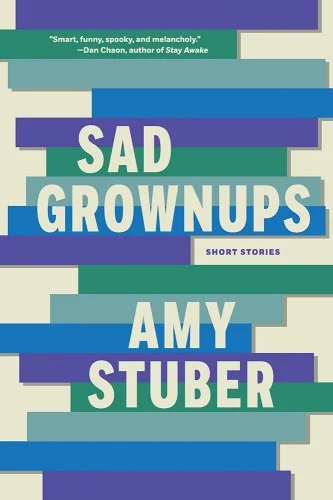
I Love Short Stories. Do I Have to Write a Novel?

In 1993, I published my first decent story in a literary journal and a few months later received a letter from an agent whose name I recognized. I’d written short stories in college classes, sent them off, and typically the only thing that came back was a rejection, housed in the self-addressed-stamped envelope I’d sent with the story, my own handwriting preparing me for the paper inside that said thanks, no or we liked this, but.

The agent letter was a surprise, and I was buoyed by it for days. The letter went something like this, “I enjoyed your short story. I’d be interested in seeing more of your work. Do you have a novel?” It felt great  to be approached. It was flattering. But the answer was no: I didn’t have a novel.

A few years later, I received another agent letter after another story publication. A few years after that, an email. The notes all said some version of “I liked your short story. But do you have a novel?”

I’d heard from my graduate school creative writing teachers, who taught us only to read and write short stories, that a fiction writer’s final form was novelist, or at least, they said, that was the publishing industry’s core belief. The books that sold well, the books editors at big publishing houses wanted to acquire, were novels. Collections could be published, sure, but they were afterthoughts or add-ons.

Whenever it came up, the “do you have a novel” question made me a little indignant. I thought it was like telling someone to use their eyes for eating. Novels use words and sentences, obviously, just like short stories, but they require a different skillset, as well as a lot of attributes, like patience and a good memory and discipline, that I—first as a 20-something who just wanted to write poem fragments on my forearms and listen to Pavement, and later as a parent, shellacked with two smallish kids and a full-time job—did not have. If I could write even a third of a short story over a few weeks, it felt like a win. 

The notes all said some version of “I liked your short story. But do you have a novel?”

When my kids were more self-sufficient and I found myself with actual pockets of time to write and submit, I started getting wildly, embarrassingly jealous of every Publisher’s Marketplace announcement I saw. More egalitarian and generous writers would Tweet about how “there’s enough success for everyone, there’s plenty to go around,” but I, then in my 40s, felt like maybe there wasn’t. Maybe short story writers, all of us vying to win the same few small-press collection contests that ran each year, were doomed to not have book deals. I decided to try to feel content about publishing individual stories in literary magazines and pushed aside the idea of a book. 

The next time an agent emailed me was 2020, and it was the same line as ever. “Do you have a novel?” No. “I really cannot sell a collection on its own.” Okay, I understand. “Do you plan to write a novel?” I guess. Maybe? 

I signed with the agent, which was a leap of faith more for her than for me. I started trying to expand a short story I’d published, to build it somehow into a novel. In most ways, it was like trying to make a bathmat work as a rug in a room the size of a ballroom. Still, I wrote early in the morning, on weekend days, while waiting for doctor’s appointments, on all-hands meetings. I remember even feeling a little bit hopeful, like, “Maybe I’m doing it, maybe I’m really writing a novel, finally,” like this magic land, unenterable for twenty plus years, was opening to me. 

In the end, my draft was more of a loose assemblage of stories. The plottier parts that lurched each chapter forward, the parts that made it a possible novel, weren’t working. When I expressed self-doubt to my agent, she asked me, more than once, if this was “the book [I wanted] to send into the world,” which felt pretty jagged. I remember thinking, Well, the book I want to send into the world is my short story collection. Maybe I even said it out loud. 

We went “on sub,” which is the silly sport-game-sounding name for flinging your book out to a selected group of editors, followed by the brutal process of checking email all the time, being mad at anyone who emails you who isn’t your agent, and (in my case) almost always getting bad news. We sent the book out to 18 editors, and over the course of a few months, we got many nice rejections, paragraph-length notes my agent told me were encouraging and that I should feel good about, and even one call with an editor who liked the book that ultimately resulted in months of ghosting and no book deal. 

The process was flattening. People wanted “propulsion,” and I was focused on sentences and moments. I liked the quiet pockets I was able to build into short stories but that felt harder to make work in a novel.  

In a stupid fit of “now what?” I frantically, in a few months, wrote a whole other novel. The agent hated it, which stung, but it was likely hate-worthy. 

I liked the quiet pockets I was able to build into short stories but that felt harder to make work in a novel.

How did I spend the pandemic? I speed-wrote two novels, only to realize I am not a novelist, or at least not yet, and market trends, traditional publishing’s seeming demands for books that rapid-cycled you from beginning to end in one sitting, weren’t going to make me one. 

In summer 2022, I parted ways amicably with my agent and returned to story writing. She told me if I started working on another novel project, she’d take a look. I didn’t fault her. Agents have been told collections don’t sell. So many of them have to deal with the industry realities of looking for plot-heavy books. This isn’t to say there aren’t brilliant and successful poetic, experimental, quiet novels – there obviously are. But if you’ve queried an agent lately, you know: propulsion and plot are king. 

I disassembled the second novel draft and built some short stories from the parts, then wrote some new stories, too. I understood stories and loved how within one I could focus intensely, think about every word, and I could experiment without worrying about staying on a path of forward momentum. I revamped my short story collection, sandwiched in some new stories, moved things around, took out the flash fiction. 

This, I thought, feels like the book I want to send out into the world. 

I submitted it to the same few indie presses and university contests where I’d sent earlier versions of a collection and had been rejected more than once. At this point, only a few of the stories were the same. What the hell, I thought. I was 54 and had gotten my first “but do you have a novel?” agent letter thirty years earlier. 

And then I waited. Items in my Submittable queue changed from Received to In Progress. 

In August, I moved my daughter into her first dorm room in a tall building, and I thought, simplistically probably, about how the dorm, each floor, with each room another person, style, story, was a collection, and how so many things in the world were more an assemblage of disparate parts than a mellifluous whole. My daughter, who is also a writer, said it didn’t make sense for people to be so weird about short stories. Why was publishing so opposed to short fiction, when the world seemed to want and love short-form everything else?

In September, a few weeks after leaving my daughter in New York, in my haze of sadness that was like an anvil hitting me repeatedly and saying you fucking fool why did you help make a person who is designed to leave you, I got an email from one of the small presses. I saw the re: ____ subject line, and I braced myself for the rejection those emails usually are. Instead, it was a nice editor I’d corresponded with a few years before, telling me they wanted to publish my collection.

I was so numbed by life that month, by all the accumulative sadnesses of being 50-something in a whirlpool of life change, that I wasn’t sure how to feel. But when I stood up from my computer to walk around the neighborhood and look at all the familiar things, so many of which had years of memories attached to them, each their own little story, I let myself feel happy. This wasn’t the novel. It wasn’t the Big 5. But it felt truer to the writer I wanted to be.

Small presses, less beholden to concerns over big sales, are able to publish collections and the kinds of books Big Publishing tells writers we shouldn’t bother making. For that, I’m grateful. 

As is true of so many writers I know, some of my favorite texts are short stories. Each time I come upon a new collection in the library or in a bookstore, I get excited about the hive of situations and characters I’m about to dive into and the room for experimentation. It feels like so much possibility. 

I remember hearing last year that a lot of traditionally published debut novels sell only in the hundreds of copies. The managing editor of the small press that accepted my collection told me something like, “During the life of the book, a good outcome would be selling 1000 copies.” A thousand sounded good. Better than the hundred of some novels. Big Fiction’s insistence on the novel as default is maybe a failure of marketing or the imagination about what a book can be and do. 

Small presses are able to publish the kinds of books Big Publishing tells writers we shouldn’t bother making.

I’m trying again to write something that approaches a novel, but this time I’m letting myself lean into my tendencies and reminding myself that a novel does not require a traditional narrative arc, nor a set number of scenes and beats. So I’m trying a “novel in stories,” and I’m not writing it with some big splashy publication in mind. I’m writing it when and how I want to write it. 

After an excerpt of the novel-in-stories project won an Honorable Mention in a contest, an agent I adore, a “dream agent,” messaged me and asked me if I had the full novel ready.  I don’t, at least not yet. But when I do, I hope I’m able to pull together a whole made of small slices of the world pulsing together, a collection in its own way, that champions the short form while also feeling like a whole. To the industry, maybe it will even be considered a novel. 

Is this just an essay about someone who wanted to and couldn’t sell a novel so now wants to champion the short story? Maybe a little. But, more, it’s about a circuitous path away from and back to the thing I actually enjoy writing, that the industry told me I shouldn’t do if I wanted to succeed. 

7 Fun Novels That Reimagine the Afterlife

The world has always been filled with mysteries. Where does the sun go at night? Why is there lightning during a storm? What happens when we die? The fun thing about humans is we can’t just let those mysteries go unsolved. The unknown is frightening, maybe even dangerous, and we live on a whole planet full of it. So we search for answers, and when we don’t know an answer, we have a habit of making one up. For millennia, we’ve been filling in the gaps in our knowledge with stories of gods and ghouls and the odd fairy thrown in for good measure. 

Eventually, science overtook mythology and answers shifted from fantastical beings with quick tempers to planetary rotation and electric charges. But one subject still remains wrapped in mystery and mystique: Death. 

Every culture in every era throughout history has had their own explanations for what happens after we die, and modern beliefs remain just as varied. But whether we have pearly gates or hungry worms to look forward to, the one certainty is we’ll all find out in the end. Until then, all we have are stories. 

When I wrote my debut novel, A Grim Reaper’s Guide to Catching a Killer, I think I was partly trying to answer the question for myself. But, as a neurotic millennial exploring the ultimate scary unknown, the only way I could even think to approach the subject was through humor. So the last great mystery, death, became a mundane office job. Hey, if death is the great equalizer then surely the second greatest involves cubicles and paperwork. 

Of course, for my protagonist, modern-day corporate grim reaper Kathy Valence, the mystery of death is old news at this point. The bigger mystery is why her most recent soul pickup, Conner, is missing. And when she eventually tracks him down, why he swears someone at her company, S.C.Y.T.H.E., killed him. 

Solving the mysteries of life against a backdrop of death, or in the face of other unknowns, is no easy feat. Thankfully for Kathy, she’s not the only one. Below are seven fun, innovative reads that really put some “life” into the afterlife. 

Soulless by Gail Carriger

Carriger’s steampunk take on the Victorian era is bursting at the seams with beings who could tell you a thing or two about death. In a world where vampires and werewolves are staples in polite society, protagonist Alexia Tarabotti finds herself lacking in the same supernatural spirit. Or, more specifically, lacking in a soul. This unusual affliction makes her an antidote for paranormal powers, which is a handy skill to have until it inadvertently leads to her very unceremoniously killing a vampire, which goes against all sense of propriety and etiquette. But someone or something else is harming high society vamps, on purpose no less, and Alexia teams up with a handsome werewolf government operative to solve the mystery of the disappearing immortals. This book is full of humor, intrigue, and Victorian manners, and introduces a one-of-a-kind world you’ll have to be unwillingly dragged out of.

The Screaming Staircase by Jonathon Stroud

Ghosts are not only real but deadly in this introduction to the Lockwood & Co series, which follows a trio of teen ghostbusters solving the mysteries of the dead to stay alive. This young adult novel follows Lucy Carlyle, a talented agent trained to fight against “The Problem,” an epidemic of ghosts appearing throughout England. Children and teens, being the only age groups actually able to see or otherwise sense ghosts, play an important role in keeping their communities safe, and the Psychic Detective Agency Lucy joins is set up for the same purpose, only this one is run by her young contemporary, the charismatic Antony Lockwood. Together with the brains of the operation, George, the team is charged with clearing the most haunted house in England, but there’s more to this haunting than ghouls. The world Stroud creates is so grounded in reality, and so intricately constructed, that you can’t help but expect to find a Visitor glowing in the streetlights outside your window. 

Dirk Gently’s Holistic Detective Agency by Douglas Adams 

If we were to play a game of “Spot the Difference” with this list, you wouldn’t be wrong for picking this option. Dirk Gently isn’t a paranormal mystery in the traditional sense. But then, if you’re familiar with the off-the-wall writing of Douglas Adams, I’m sure you know “traditional” isn’t an adjective you’d find in the same universe as most of his work. Dirk Gently is what the love child of Doctor Who and Monty Python would look like, only somehow more absurd. The plot can only properly be explained in the book itself, but suffice it to say there is murder, time travel, and a horse stuck in the bathroom. Everything is connected, but the how and the why of it can only be untangled by someone with a name like Dirk Gently. 

A Rip Through Time by Kelley Armstrong

It takes a pretty special detective to solve their own attempted murder—twice. After being strangled in an alleyway in modern-day Edinburgh, Scotland, Detective Mallory wakes up in the body of a Victorian maid who’d had the very same rope around her neck 150 years earlier. Now Mallory gets to put her 21st-century knowledge to the test and help her cute undertaker boss figure out who keeps trying to kill her across lifetimes. This book struck the perfect balance between pithy, macabre, and supernatural to keep me hooked (though it certainly didn’t hurt that I got to read it while traveling through Edinburgh myself, thankfully with no ropes involved).

The 7 1/2 Deaths of Evelyn Hardcastle by Stuart Turton

It’s one thing to be charged with solving a mystery as an amateur sleuth, but quite another when you wake up each morning as a different amateur sleuth, on a day that keeps repeating itself. For Turton’s protagonist, Aiden, this is really just the beginning of his problems. One thing he knows for certain is that Evelyn Hardcastle, daughter of the house he finds himself staying at, will be shot dead at the ball that night—and every night until he discovers her killer. But while a classic detective would interrogate the suspects, Aiden finds himself inhabiting their bodies each in turn, going through their motions on the day of the murder and putting the pieces together as he goes. This is such an inventive take on the genre and is executed to perfection.

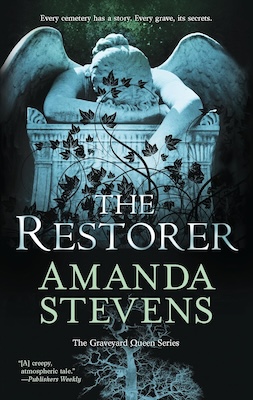
The Restorer by Amanda Stevens

Set against the lush backdrop of Charleston, South Carolina, Amelia Gray is a cemetery restorer who can see ghosts. This unwanted—and unfortunately un-returnable—gift comes in handy when a woman’s body turns up on her job site. Amelia’s knowledge of graves, and their residents, makes her an ideal consultant for the detective on the case. But communing with the dead could mean risking her life. I devoured this series like chips back when I first discovered it a decade ago, and sometimes I still find myself tempted to go back for another bite.

The Haunting of Maddy Clare by Simone St. James

Set in 1920s England, The Haunting of Maddy Clare follows impoverished young woman named Sarah Piper who takes a job assisting a ghost hunting team. Together they investigate a barn supposedly haunted by the ghost of a young girl who took her own life there. Unfortunately for Sarah, the ghost of Maddy Clare is not only real but she hates men, leaving Sarah to take on more than she bargained for. This is a rich story full of scares, mystery, and just the right amount of romance to help keep the nightmares at bay. 

Craig Willse Suspects All Of Us Are Seeking Ways To Avoid Reality

When people strive for a Dickie Greenleaf summer—whether wearing bowler shirts, behaving petulantly, or just generally being in Italy—I always want to ask, do they remember how that ended for him? 

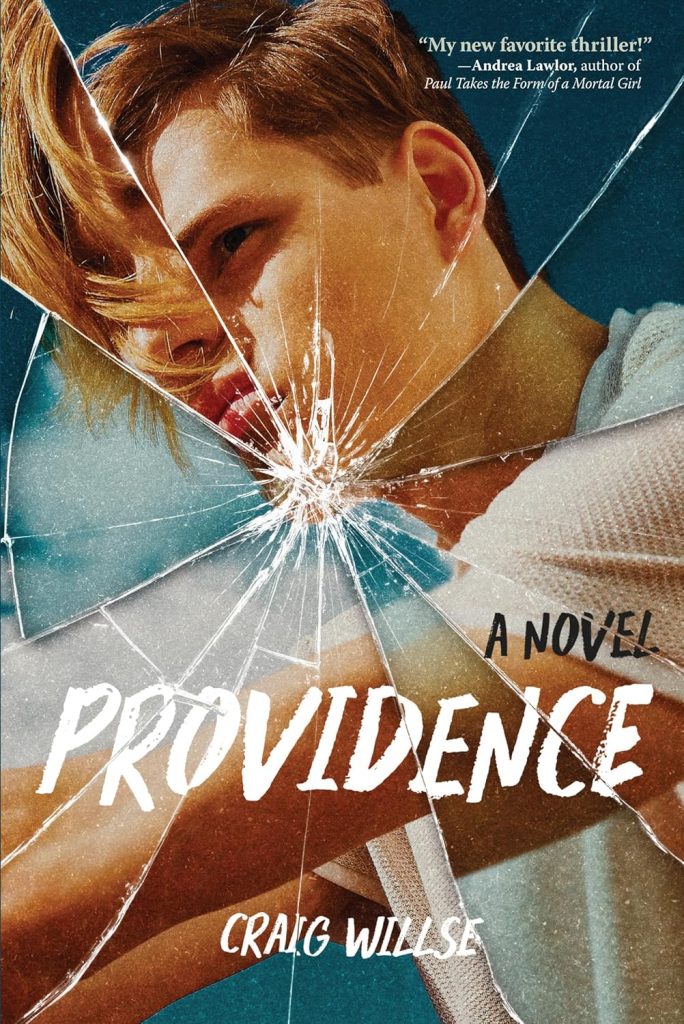
In Craig Willse’s debut novel, Providence, Dickie’s demise is part of the canon. The novel tells the story of Mark, a young professor at an elite college in a small town in Ohio. Mark exhumes a body of research on gay murderers in order to interpret cultural discourse around sexuality. When he takes a shine to one of his students, the precocious Tyler, he quickly unravels in Tyler’s world. Providence is a gripping page-turner, tracking a person’s descent through obsession, addiction, and the deception he long studied from a distance. This propulsive novel examines how a person can learn to negotiate the pressures of the world around him and how those maneuvers can lead him into his darkest hours. 

We met over Zoom to discuss his novel, The Talented Mr. Ripley, gay murderers, and the trauma plot.


Michael Colbert: The novel opens in Mark’s classroom with a discussion on The Talented Mr. Ripley. I’m such a Ripley head—I love the movie, book, all of it. Can you speak to the genesis of your interest in Mark’s research subject, cultural discourses on sexuality and crime?

Craig Willse: Yeah, that was actually a project I was working on in my early twenties and then put aside for two decades. When the story of Mark and Tyler came to me, the idea that Mark would be working on this project came soon after. There’s a scene when Mark is explaining his research to Tyler and tells him about Andrew Cunanan, who killed Gianni Versace. I grew up in Miami and was living there the summer Versace was murdered, and I was obsessed. I still have a box with all of the Miami Heralds during this massive manhunt. That kicked off for me this interest in how stories about gay murder get told and what they reflect about the period of time that that murder or crime takes place in.

Mark is parroting me in that conversation when he’s talking about the AIDS panic, immigrant panic, and the discourse about Cunanan’s illegible ethnicity—as if Cunanan was doing something wrong in not being able to be read clearly by people. That was the beginning of my interest in the topic, and then I spent a couple years doing research on murder. That’s also around the period of time when The Talented Mr. Ripley film came out. I didn’t read the novel until I was working on mine. It was obviously a real influence, not just on the story but how I was thinking about telling the story. It’s funny, when you sit down to write, there are things you know you’re going to do, and then there are all these influences that you’ve been carrying around. 

MC: How does Mark’s relationship to the work and the discourse surrounding it influence his understanding of himself? Why is Mark the person to be researching this?

I grew up in Miami and was living there the summer Versace was murdered, and I was obsessed.

CW: That’s a good question. One of the things that defines Mark is a feeling of himself as an outsider and of not belonging. He gives a guest lecture about his work, and he says that he was drawn to it because he’s reacting against a sort of happy, positive version of gay life that he’s seeing represented. He wanted to spend his time with the worst gays possible and reject this idea of “gay is good” or pressure to tell only positive stories about gay people. I think all of that is true, but I think beneath all of that is his own sense of himself as being out of place, maybe out of time, of not fitting in. He is drawn to people who embrace that. At the same time, he gravitates towards people who seem to have found their place in the world and feel quite comfortable in it, which is his interpretation of Tyler. Maybe those are two sides of the same thing—people who either fit in or don’t but one way or the other really feel like themselves. I think Mark really struggles to feel like himself, or to figure out who he is.

MC: I want to discuss the two sides of that discourse: the good gay couple and the “rapacious gay man preys on innocent child.” How were you interested in situating the novel inside of the larger narrative, especially where the predation narrative is gaining traction among certain circles?

CW: One of the things the book is trying to explore is the difference between power as it actually exists and operates in the world, and our feelings of being powerful or being powerless, and the ways those things do and don’t correspond with each other. I think there’s something missing sometimes from public discourse around sex and power. At a party, Safie—Mark’s best friend at work—says if there’s sex, there’s power. I think Mark feels very powerless, and he feels completely overpowered by his desire for Tyler. I think he knows this isn’t true at times, but he feels very much that he’s under Tyler’s control. Of course, he isn’t—Mark’s an adult; he’s making his own choices—but I think that feeling of being completely overwhelmed by desire—by something that feels unreachable, unattainable, and also incomprehensible—deepens his feeling of Tyler’s hold over him. 

I’m very concerned about the right wing, obviously, but I also have seen online so many young queer people reproducing the same discourse and the same interpretation of power and exploitation. The lack of awareness—that feeding this discourse is only going to hurt you—is really unsettling to me. I went to college in the 90s, and I was really influenced by 1980s and 1990s feminist writing and early queer studies around these questions of sex, porn, and power. Gayle Rubin has a really famous piece “Thinking Sex,” and she talks about the charmed circle. Behaviors can move in and out of the charmed circle of what’s acceptable. She looks at how some forms of monogamous gay sex can move into the charmed circle, but sex in the back alley stays out. That was very influential for me. When I see queer people enforcing the borders of the charmed circle and feeding these sex panics, it makes me very angry.

MC: Yeah, it’s coming from within and enforces a social conservativism.

CW: We bring really messy, conflicted selves into sex. That’s always true, and I think some of this discourse is rooted in a fantasy of sex with no conflict, with no friction, with no bad communication, with only transparency of desire on both sides. That’s a great idea, and I don’t think it exists in reality, so I don’t think we’re actually serving ourselves when we’re propping up that fantasy. I think we can have better, more fulfilling, and safer sexual experiences when we’re honest, actually, about the impossibility of ever fully being able to know, articulate, and actualize ourselves to ourselves. That’s what’s happening for Mark in this book, and so I think that’s what I’m nervous about with this flattened discourse about power, for the ways that it actually sets us up to not be able to care for ourselves in what are charged and confusing experiences and settings.

MC: The book also explores addiction—to substances, to social media, and to other people. How do they relate to each other through the novel?

CW: I had a whole academic career and spent years writing things where I was trying to convince people of what to think. With this book, I really wanted to raise questions, not give answers, and I wanted it to be a story that was engaging and moved quickly. 

We live in an unbearable world, and I think probably all of us are seeking ways to get out of reality.

In terms of addiction, I think the way those things cohere for me in the story has to do with Mark’s early family experiences and his older sister, Cassie, and her life of drug use as a teenager. Mark learned a certain way to be in that family system that had to do with not being the focus of his parents’ attention because of how much attention and energy Cassie took up. The story that gets told in Mark’s family is about Mark not needing help; we get one of Mark’s rare flashes of anger about the idea that a child wouldn’t want help from his parents. 

But of course, Mark also has gone on to build a life where he mostly doesn’t rely on other people, where he doesn’t believe people would choose him or want to help him. There’s a way that Mark has learned to be in the world that I think is one of the ripple effects of addiction, substance use, and the way it impacts groups and families in particular. Like Cassie, Mark, is seeking an escape from reality—through projection, and fantasy, and social media. For me, this is not a moral discourse. We live in an unbearable world, and I think probably all of us are seeking ways to get out of reality. I’ve tried in my own life to figure out ways to balance that. Certainly, characters in the book are not finding that balance. 

MC: There are these really propulsive sections in the novel where I felt Mark’s desire. He longs for connection—he looks for it in the synagogue and at school. Do you understand his loneliness as a feature of his character in any other ways?

CW: Mark is somebody who has both been isolated and felt outside his entire life, and then there’s also the specificity of this moment in his life. He’s gotten this academic job that he’s worked so hard for, and he is wrestling with the disappointment of what it actually looks like. He’s in a small town in Ohio and feeling the drudgery of what this job is day to day. The book is set very intentionally in this period of time after 2008, when universities took advantage of the recession to do everything they wanted to do in terms of slashing permanent tenure track jobs, increasing people’s workloads, freezing or cutting salaries. This thing that at some point in time had been a wonderful job had been chipped away. 

Although I want to say I did spend one year teaching in Ohio, and I actually really liked that job and made a lot of really good friends there. My experience of teaching in Ohio was more like Safie’s. I found a group of friends, and we figured out a way to be in this small, weird place together. There was something very bonding about being in the small town together, but Mark doesn’t have those. He already feels so alone and so isolated, so those circumstances that intensify it become pretty unbearable.

MC: We’ve talked about serial killers, obsession, loneliness, addiction, and also social conditions. This all makes me think of the famous trauma plot essay. How were thinking about the interaction between trauma, backstory, and broader social conditions? How do those things interact to exert pressure on a character?

CW: I’m not against happy endings, but I’m against a moral discourse that a happy ending is the best ending, or the kind of ending a writer should write, or a reader should want to read. I think the trauma plot discourse ends a conversation about desire before we can have it. I’m really interested in why we like and enjoy stories about horrible things happening to people. What is the pleasure that we get in reading about really painful, really horrifying things? I think that the trauma plot discourse falls into a moral discourse that suggests there’s something bad about the desire to read about traumatic events or to read something that has a traumatizing effect on the reader. 

When I read the initial trauma plot piece, I understood that the writer was drawing our attention to something that can feel really forced, where it’s like there’s one thing that happened to the character in the past, and then maybe two thirds of the way through the story that one thing is revealed, and it’s supposed to explain everything. That does not feel to me like how the world works. Even if in our own lives we have one particular traumatic event, how we experience that event is also embedded in our whole lives. 

Even if in our own lives we have one particular traumatic event, how we experience that event is also embedded in our whole lives.

In terms of crafting the story, that’s why I was trying to think about Mark’s family system, the stories his family told, and all the different ways he learned to be a person in that family system. I hope it doesn’t feel like it’s about one bad thing that happened to him in his childhood but more about the way he learned to be a person in relationship to his parents and his sister and the things he closed down, the possibilities for life that got shut down for him in those experiences. I hope that’s a little more nuanced and rich than what happens in a superhero movie where that one thing explains everything. 

Also, with some of the online discourse around the trauma plot essay, I wonder about being in a moment of what some scholars call multicultural neoliberalism, where publishing has expanded a little bit in terms of publishing work by authors of color and queer writers. I wonder sometimes about the relationship between some of that discourse and this moment. It feels to me a little bit like the message is, “you can publish your stories, but don’t bum us out,” like tell us a story of immigrant triumph or of gay resolution. I think there’s something there.

A Snowplow Parent Spinning Her Wheels on Summer Vacation

“Chincoteague” by Marian Crotty

Nora hated driving to begin with—especially highway driving, especially with a car full of teenagers—and that day it was raining. Not hard enough to delay the trip, just opaque gray skies and slick roads, a steady thrum of raindrops that made half the drivers slow down and the other half swerve impatiently. Already they’d passed two accidents. When she saw the first sign for the Chesapeake Bay Bridge, she turned off her daughter Chloe’s atmospheric house music and announced everyone would need to stop talking until they’d safely made it to the other side.

“Seriously?” Chloe said from the passenger seat. “Just pull over. I’ll drive.”

In the rearview mirror she could see her son and his ex-girlfriend Ruth smiling at each other. Around her he almost seemed like himself again, which was such a gift that Nora didn’t care what Chloe had to say about the unfairness of Ruth being here. While Evan was withdrawing from his friends and ignoring his homework, Chloe was away at college. She didn’t see him lose weight or quit the lacrosse team or become afraid of sleep. At night he would start out in his own bed but by morning she’d find him in the living room with the lights on, his laptop open, a message from Netflix asking if he was still watching, and he’d missed enough assignments that he might not graduate from high school in June. She and Brendan had been so worried he would hurt himself.

“Your life shouldn’t be this stressful,” Chloe said. “You should get medicated.”

Nora started to say something but let it go. Chloe had a point—Nora’s anxiety had skyrocketed lately—whose hadn’t?—but this particular swinging bridge with its narrow lanes, no shoulders, and low railings made the gray water below them feel menacing. A digital sign at the entrance warned of a wind advisory.

“Okay, honey,” she said. “Thanks for your feedback.”

On sunny days, the bay sparkled, but today the water was a dull gray line on the edge of her vision that almost blended into the sky. At the height of the bridge, the wind shook the car. Nora kept her eyes on the road, made herself breathe, and eventually they were on the other side. She had a cramp in her right thigh and took one of the first exits, pulling into the parking lot of a local park with a playground, athletic fields, and a couple of picnic tables.

“I need to stretch my legs,” she said. “Does anyone need the curtain?”

It was May 2020, and the curtain was a hot pink privacy tent she’d found on Amazon along with a camping toilet and set of disposable bags—their strategy for traveling responsibly during a pandemic. The curtain and the trip had been her husband’s idea, but at the last minute, he’d had to cover for another oncologist and so now she was stuck with the driving and the pee bags and Chloe’s bad attitude. She didn’t blame him, though, if she’d known she’d be doing this alone, she would not have agreed to the trip. Plus, it was cooler than she’d expected it would be on Memorial Day Weekend.

“No thanks,” Chloe said. “I’ll pee in the woods.”

Nora, Ruth, and Evan huddled under a picnic shelter while Chloe walked toward a patch of skinny trees, pushing back brambles and vines. A couple of months ago, after William and Mary closed, she asked if her “friend” Emily could live with them in DC, and Nora and Brendan said no: He was working with immunosuppressed patients and needed to be careful, their DC townhouse was tiny, and Evan was still in the midst of a very hard time.

“Isn’t everyone?” Chloe had said and accused them of discriminating against Emily who identified as nonbinary.

“Give me a break,” Nora had said, but Chloe remained unconvinced.

Now Emily, who didn’t get along with their parents, was living in a hotel in Williamsburg and working at Food Lion. Because of their exposure at the grocery store, Brendan and Nora had said Emily was welcome on this vacation but would need to stay outdoors.

“It’s completely hypocritical,” Chloe had said. “But I can’t say I’m surprised. When it comes to me and Evan, you’ve never been fair.”

Brendan assured Nora that Chloe was manipulating them, saying the thing she knew would get to them, but Nora was having trouble letting this remark go. Until recently, Evan had always been the easier, happier child, and maybe, her relief in having one carefree, amiable child had made Chloe think she loved him more.

When Chloe came back to the parking lot, Ruth walked toward the woods, and Nora waved Chloe over to the picnic shelter. Her intention was to call a truce, to tell her daughter how much she loved her, but when Chloe arrived scrolling on her phone, half-heartedly scowling up at Nora, she snapped, “Can you put the phone away? I want to talk to you and Evan.” Chloe gave her a look but dropped the phone into her raincoat pocket. “Jesus, are you okay?”

“Let’s have a good trip,” she said. “Dad can’t be here, and it’s raining, but we’re still very lucky. We’re healthy and together. We have enough money to rent a vacation home—”

“Got it, Mom,” Chloe said. “I’m totally spoiled and ungrateful. I know.”


The rental home was a small tan two-story house with aqua trim a few rows back from an inlet of water. It had a weathered roof, a screened-in porch, and a loose railing on the front steps. When they stepped inside, it was obvious the house was used only as a rental property. Dated or cheap furniture, plastic dishes and Formica countertops, a giant amateur painting of a mallard that hung over the mantel. The whole place smelled damp.

“Not great,” she said. “But it’s what was available.”

Her kids ignored her, but Ruth hung back.

“I think it’s okay,” she said. “It’s close to the national park, right? That’s what we came to see anyway.”

She had always liked Ruth who was skinny and freckled, self-possessed and kind. Before she’d ever met the girl, back when she couldn’t have been more than about ten, she sent Nora and the rest of the school’s board of directors a thank you note for expanding tuition remission to include the school’s support staff like her mother who was an office administrator in the lower school. I do not know what the future holds the note read but I have a feeling this school will change my life.

Ruth was a fellow cross-country runner a year behind Evan and they’d dated throughout his sophomore and junior year. They went to prom together, lifted weights together, did homework side by side at Nora’s dining-room table. They seemed so effortlessly happy that Nora would not have been surprised if they’d stayed together in college and eventually gotten married. When they’d suddenly broken up this past fall, Nora had felt heartbroken and confused. A few months later, when Evan told them his English teacher, Ms. Caldwell, had been abusing him, the breakup made sense: Ruth was one more thing that woman had stolen from her child.

Evan was the one who’d asked to bring Ruth on the trip, but when Ruth said no, Nora, unbeknownst to her son or husband, drove to her apartment complex in Bethesda and convinced her to go. She was, she knew, no better than those high-strung hated-by-everyone Hollywood parents who had been involved in the college admissions scandal, a so-called Snowplow Parent, but what were you supposed to do when your child was drowning and you saw one small way you might help?

Ruth answered the door with a confused and panicked look on her face that only got worse once Nora explained why she’d come.

“I don’t know Ms. King,” she’d said and stepped out onto the sidewalk. “I’m still not over him dumping me, and my parents are kind of strict about sleepovers with boys.”

Ruth sounded certain, but she was wearing a Georgetown Baseball T-shirt that had once belonged to Evan, and she took this to be a sign that Ruth still cared.

“He’s struggling,” Nora said. “I’m not sure how much he’s told you.”

Ruth shook her head. She knew she had to tread lightly. Evan would not be happy she was here at all, but if she told Ruth anything about Ms. Caldwell, he wouldn’t forgive her.

“Everything that happened this year has hit him really hard,” she said carefully. “I know it’s not fair to ask, but he could use a friend.”

Ruth squinted at her and what seemed to be a look of realization passed over her face.

“I’ll ask my parents,” she said finally. “I’ll let you know what they say.”

Nora shook her head. “Just tell Evan. I wasn’t here.”

She promised Ruth’s parents the room she shared with Evan would have two single beds, but when they all went upstairs to check out the house, they discovered the room only had a king.

“I thought—” Ruth said, looking at the bed.

Nora knelt down on the carpet to look under the mattress. “We’ll fix it. I’m sure they come apart. See? It’s two single beds hooked together.”

They got the beds separated but after searching all the closets in the house, they couldn’t find any sheets. She suggested they put in a Target order, but the closest store was an hour away.

It wasn’t until she asked if Chloe would share a bed with her brother that Chloe admitted she’d brought an extra set of sheets for the following night when she and Emily would sleep on an air mattress inside a tent.

“Chloe!”

“What? I don’t want to sleep on dirty sheets.”

For dinner they ate the baked ziti she prepped ahead of time, whole wheat focaccia from an artisanal bakery, a Greek salad with kalamata olives and peperoncinis. For dessert she set out a plate of lemon bars, peanut butter blossoms, and those chewy chocolate caramel cookies she usually only baked at Christmas.

“Happy vacation,” she said, clinking her wine glass with their water glasses, hoping the cheerfulness in her voice didn’t sound desperate.

For months Evan had barely seemed to function. He played video games for hours, showered only when she nagged him. A couple weeks ago they’d had a meeting with his advising team who warned his admission to Northeastern could be revoked if his spring semester grades didn’t improve, and he’d barely seemed to register the news. A year ago, they would have taken away his phone and his computer, made him sit with them each night to do his homework, but punishing him for being depressed felt cruel.

As soon as the call ended, she told Evan that if he ended up taking a year off or starting at a community college, this was okay, and he’d made a scoffing sound and slammed his belongings into his backpack.

“Expect more from me,” he shouted. “Stop staring at me all the time like you feel sorry for me.”

Nora didn’t want to stare at Evan, but she wasn’t sure how else she was supposed to know how he was doing. When Chloe was upset, she was loud and emotional, but Evan retreated and said nothing.

He might never have told them about Ms. Caldwell in the first place except he’d wanted to drop his journalism class, and they wouldn’t let him. She’d been Chloe’s adviser and favorite teacher, a pretty thirty-something who’d published two books of poetry and who was known for her no-nonsense attitude and challenging classes. They’d thought Evan wanted an easier teacher, and he said they didn’t understand.

“It’s not about the work,” he said. “It’s her. She’s terrorizing me.”

“What?” Nora asked. “What are you talking about?”

“She’s a horrible person,” Evan said. “You have no idea what she’s capable of.”

Brendan heard something that Nora didn’t and put his hand on Evan’s knee. “Did something happen?” he asked. “Did she hurt you?”

Eventually the story came out in bits and pieces. One afternoon, in the journalism lab, Ms. Caldwell had started touching his shoulders. When things got “out of hand,” Evan froze. He’d never had a crush on her, he told them, but he hadn’t said no. Soon they were meeting more often, and she was telling him she loved him, that she wanted to leave her husband. When he told her he couldn’t do it anymore—he was having panic attacks—she told him he didn’t have a choice. Every day, often multiple times each day, Nora fantasized about drowning the woman or throwing her in front of a train.

Every day, often multiple times each day, Nora fantasized about drowning the woman or throwing her in front of a train.

Ms. Caldwell had been put on unpaid leave immediately and soon fired. The headmaster had also sent an email to the school and alumni list explaining she’d been fired for having a sexual relationship with a student, and the story had been picked up by the local media. It was unlikely she’d teach again, but because Evan had been eighteen, the police wouldn’t press charges.

After dinner, Ruth and Evan volunteered to do the dishes. Chloe disappeared upstairs, and Nora went to the bedroom just off the kitchen and started to unpack. Behind the door she could still hear Ruth and Evan talking about their classmates and the weirdness of Zoom school, which Tupperware containers and bowls they’d brought from home and which belonged to the rental. Then she heard Evan say in a low voice, “I was stupid to break up with you. It’s honestly the biggest mistake of my life.”

The water went on and off. A dish clanked in the rack.

“I know,” Ruth said. “And if you break my heart again, I’m going to kick your ass.”


According to a couple online reviews, the wild ponies could be seen from overlook on the park’s Woodland Trail in the early mornings, and so Nora woke up before dawn to make four egg and cheese sandwiches and wrap them up in foil. She shuffled everyone out of the house just as the sun was rising, deep pinks and yellows backlighting the clouds.

“Gorgeous,” she said, her coffee kicking in, her mind relaxed now that she was driving on a two-lane road in a town where everyone crept forward at twenty miles per hour. “I’m so grateful for the sunrise and that all of you are here with me to see it.”

They crossed the salt marsh that separated the island where they were staying from the one that was home to the national park. She was thinking about how she used to make them all name something they were grateful for each night at the dinner table, how she used to be convinced this would help her privileged kids gain some perspective. She stopped herself from forcing them to do this ritual now, but Evan seemed to read her mind.

“I’m grateful my mom woke me up at the ass crack of dawn,” he said. “I’m grateful Chloe isn’t in charge of the music.”

“Ha ha,” Nora said sarcastically, though she was thrilled to hear him joking and happy she’d convinced Ruth to come. “Good one.”

The trail was a paved loop lined with dead white tree skeletons stripped of their leaves and bark. The air smelled of pine, and they could hear birdsong and the ocean’s waves in the distance. After about a half mile, they reached a wooden observation deck, where a gray-haired couple in Harley-Davidson windbreakers stared at their masked group skeptically. In the distance, four horses were visible, but even with binoculars, they were just blobs of color grazing. 

“I thought they’d be closer,” Nora said. “I can barely see them.”

Online there had been dozens of pictures of these squat wild ponies running on the beach, tails whipping in the wind, but these animals in the field were far away and practically motionless. They’d had a better look at the penned ponies they’d seen outside the hotels getting photographed and fed handfuls of corn by tourists.

The man raised his chin in her direction. “The big herd is on the other side of the island,” he said. “If you want to see more of them, you’ve got to go by boat.”

“Ah, okay,” Nora said. “Thanks.”

She had read a little bit about the island and the wild ponies but hadn’t done the usual legwork required to plan a good trip. Usually she ordered guidebooks, scoured online message boards for off-the-tourist-track beaches and restaurants, but in a normal year, they would go to France or Italy, Hawaii or Colorado. In the fifteen years they’d lived in DC, they’d never once vacationed in Maryland or Virginia, but they’d needed to go somewhere within driving distance and coming to the beach with the wild ponies she’d read about as a girl had felt romantic and freeing, an antidote to their months of constricted movements.

“Sorry I woke you up for this,” she said, once the couple was out of earshot. “I’ll see if I can book a boat ride for tomorrow.”

Evan shrugged. “It’s okay, Mom. Nobody cares about the ponies.”

They followed the paved road to a dirt trail packed with crushed oyster shells and eventually reached an inlet of blue water. Yesterday’s storm had passed, and the sun was out, but the air was still cool enough for a light jacket. They walked along the water’s edge, and when they saw a strange-looking metal structure on a wooden platform, Evan and Ruth ran ahead to investigate. Chloe looked at a flock of gulls with her binoculars, and Nora took out the trail map and pretended that she wasn’t watching Evan and Ruth, trying to figure out if they were falling back in love.

Chloe checked her phone and a look of anguish washed over her face. Nora suspected Emily had texted to say they couldn’t make it, but it turned out to be Chloe’s internship in Provincetown, which had been canceled.

“I should have known, but I was just hoping,” she said. “It was the last good thing that might happen for a while.”

The internship was at a writer’s retreat where she would have done twenty hours of janitorial work each week in exchange for free lectures and poetry workshops. She would have needed to get a job at a restaurant to pay for her food and housing, and the internship itself seemed to have little practical use, but Nora knew this wasn’t the point.

What Chloe wanted was a summer in a sunlit seaside town filled with rainbow flags and queer people. In high school, she had announced she was pansexual and spent most of her time hanging around with kids she knew from Pride Club, some of whom had serious mental health issues. Chloe had dated two people that they knew of—a nice enough girl named Alex who wore gold aviator glasses and took photography classes and a sweet but troubled trans guy named Conrad who had been hospitalized twice for self-harm. Nora was fine with Chloe’s sexuality—she’d always assumed she was queer; they’d picked this school because it was progressive—but she didn’t love the fact that several of her friends seemed to be in a constant state of emotional distress. They were in and out of mental health treatments, struggling in school, fighting with their seemingly supportive parents, and often their depression felt contagious. After Conrad’s first hospitalization, Chloe had become moody and fragile and had eventually started taking antidepressants. Nora was not proud to admit that when she’d first heard about Emily—a nonbinary kid at odds with their family—her first thought had been, “Jesus Christ, Chloe. Not again.”

“Who knows if it will even be an option next summer either,” Chloe said. “By then I’ll need a real internship.”

Nora thought Chloe was being dramatic: Everyone’s summer had been canceled—some people had lost jobs, watched relatives die. But Nora knew it wouldn’t be helpful to say so. Instead, she tried to, as her therapist had instructed, “reflect her child’s emotions.”

“You must be so disappointed,” she said, tentatively resting her arm across Chloe’s shoulder. “It was going to be such a good summer for you.”

“Yeah,” Chloe said. “It was.”

They drove to the ocean side of the island, which was windy but bright, and walked along the sand, collecting shells. When they passed a stoic young woman in a fur coat and hat, Evan and Ruth cracked each other up by referring to the woman as Melania. After a while, Chloe and Nora set out a beach blanket and watched the water, and Evan and Ruth ran with the tide, in and out, letting the cold water chase them.

“He’s so dumb. He acts like a little kid,” Chloe said, but her voice was affectionate. To Nora, Evan and Ruth looked like puppies, frolicking.

Back at the rental, she moved the sheets to the drier, set out the overpriced brie, crackers, candied pecans, and shortbread cookies she’d splurged on for the trip, and they took turns using the showers. Nora went last and let herself take a long bath. By the time she dried her hair and came downstairs, Emily had arrived and was with Chloe, masked, turning kabobs on the grill. Someone had set out placements and silverware on the glass patio table.

“This is great,” she said. “Thank you. I’m Nora by the way. It’s nice to meet you.”

Emily gave a little wave. “Emily. Thanks for having me. It’s nice to meet you, too.”

They had thick wavy brown hair cut into a shag and were wearing a cropped floral top with loose high-waisted jeans, hot pink eyeshadow at the corners of their eyes. Nora didn’t quite understand what it meant to be nonbinary if you went by a girl’s name and wore pink, but Emily seemed friendly and helpful, and she appreciated that they were wearing a mask.

“What can I do?”

“Nothing,” Chloe said. “You already prepped everything. Just relax.”

While Chloe went inside to make a salad, Nora sat at the table and asked how Emily had been holding up. They talked about Food Lion, where coworkers kept getting sick and customers no longer made small talk, the strangeness of being in Williamsburg without students or tourists or the colonial actors you used to see sometimes walking around. Their life sounded difficult, but she didn’t sense any of the resentment Chloe had about their current circumstances. Nora felt like an asshole for assuming Emily was depressed and a bigger asshole for having wanted to protect her daughter more than she’d wanted to help a young adult without a place to go.

“I can’t believe this is how college ends,” Emily said. “None of it feels real.”

“What’s next for you? Never mind. I’m sure that’s a horrible question.”

Emily shrugged. “It’s okay. I have some interviews. I actually got a job offer with Northrop Grumman, but I have to think about it.”

Nora tried to hide her disbelief, but when Emily saw it, they just laughed.

“I know. I never thought I’d work for a defense contractor either, but the money is good, and I have student loans. Plus, I can’t rely on my parents.”

She felt another surge of guilt. “Listen,” she said. “I’m sorry we couldn’t invite you to live with us. My husband works with cancer patients, and we already had four of us living in a townhouse, but I know you were in a bad spot, and I’m sorry.”

Emily looked a little perplexed. “Oh, I didn’t expect you to take me in.”

“If you get stuck, we’re here, though,” Nora said. “And congratulations. A steady job right now is no small thing.”

The temperature had dropped, and it felt almost too cold eat outside, maybe pointless anyway if Emily was making out with Chloe, but this was the agreement she and Brendan had made. The food was cold before they finished eating and to compensate, Nora offered them Pinot Noir—full glasses for Emily and Chloe and half glasses for Evan and Ruth.

“Why?” Evan said. “Yesterday you said no.”

“It’s chilly,” Nora said. “I thought the wine might help.”

After dinner, Chloe pointed out a firepit and woodpile Nora hadn’t noticed and asked if they could make a fire.

“Sure,” she said. “Why not?”

Emily and Chloe arranged the logs and fanned the flames with a cereal box while Ruth and Evan moved plastic lawn chairs around in a circle. The lawn was low and wet in some places but there was a dome of elevated sand around the firepit. Once the fire was going strong, Emily sat by Chloe and put a hand on her knee. Ruth and Evan asked Emily questions about college and the world “out there” that they largely hadn’t seen since March. They all talked about how boring it was to take classes online, how much they missed their friends, but the tone was upbeat, almost giddy. When Emily’s hand moved higher on Chloe’s leg, Nora announced that she was going to sleep and that since the lawn was so damp, Emily and Chloe should feel free to sleep on an air mattress on the screened-in porch instead of in the tent. This was a small gesture—the porch was old and they would still practically be outside—but Chloe seemed pleased.

Inside she found an extra comforter that she brought out to the porch and then poured herself another glass of wine and FaceTimed Brendan.

“Everybody’s happy,” she said. “Nobody’s arguing. You should have seen Ruth and Evan chasing each other around the beach. He actually seems like himself.”

Brendan smiled. His eyes were red, and he looked exhausted. “Good.”

She was proud of herself for smoothing things over with Emily and Chloe and for knowing somehow that what Evan had needed was connection. She started to tell him about visiting Ruth but stopped herself.

“Thank you,” she said instead. “I’m so glad you suggested this trip.”


Nora woke up to the sound of the screen door slamming and Chloe swearing. It was past seven, but a headache throbbed in her right eye socket. She had almost gone back to sleep when she heard voices in the kitchen. At first, she thought it was Chloe and Emily—hopefully masked, hopefully just using the bathroom—but then she heard Ruth’s voice.

“Do you think there’s any way Emily could take me to a pharmacy?” she whispered.

“The only one that’s opened on Sundays is thirty minutes away, but it’s kind of an emergency.”

Chloe said something Nora couldn’t hear, and she grabbed the glass beside the bed, swallowed the stale water, and put it against the door to amplify the sound. She wasn’t proud of herself, but she was the adult, and shouldn’t she know what was happening? There was a long enough pause that Nora thought she’d missed the answer, but then Ruth said, “Um . . . Plan B?”

Nora’s heart squeezed.

“I won’t tell my mom or anything,” Chloe said. “Don’t worry.”

Ruth laughed. “She gave me wine, and I’m pretty sure she had them put the twin beds together. I feel like she wanted us to hook up.”

Nora couldn’t breathe. This wasn’t true. How could Ruth believe this was true? What she had wanted was the sweet relationship she and Evan had before Ms. Caldwell had ruined his life. What she had wanted was the opposite of this.

“Wow.”

“If I tell you something, would you not tell Evan?”

“Okay?”

“She came to my house and kind of pressured me to come on this trip.”

“Jesus Christ.”

“It’s whatever,” Ruth said. “I’m not sorry about what happened. I’m the one who wanted to hook up. I just don’t think your mom will care about this.”

“She has no boundaries,” Chloe whispered. “She acts like our privileges make us weak, but it’s her. She can’t stop herself from micromanaging our lives.”

She can’t stop herself from micromanaging our lives.

They were both quiet for a moment and then Ruth said, “What happened with Emily?”

“I have no idea. I thought things were fine, but apparently I came on too strong.”

“That sucks.”

Nora thought of the perplexed look on Emily’s face when she’d mentioned their living situation and told herself not to overthink it—surely the breakup had nothing to do with her—but felt a twinge of guilt anyway.

“It does, but it’s also fine,” Chloe said. “We’re pretty different. It probably wasn’t going to work out anyway.”

Chloe sounded less upset than she would have expected, and Nora let herself zone out for a bit. She was thinking about the boat cruise she’d booked and now regretted, her headache, and also how much she needed to pee, when she heard Chloe confess that she’d texted Ms. Caldwell to tell her about her internship being canceled.

“I know I’m supposed to break off all contact, but I actually miss her,” Chloe said. “Do you think it would be awful if I met up with her?”

Nora’s blood pressure spiked so quickly that she felt dizzy, and it took all her restraint not to fling open the door and scream.

“I’m sorry,” Ruth said eventually “but I think it’s a bad idea. Evan is kind of traumatized. As far as I’m concerned, she’s a rapist.”

Chloe mumbled something she couldn’t hear and then apologized.

“You’re right,” she said. “I don’t know why I miss her so much.”

“You’re not, like, in love with her, are you?”

She couldn’t hear an answer, but Nora knew immediately that Ruth was right.

She waited as long as she could to leave the room and pee and then took a long hot shower. She made eggs and pancakes in almost total silence, but no one seemed to notice. When Chloe said she needed to drive to another town to get a phone charger for Ruth, she seemed poised for an argument, but Nora handed over the keys.

“Wow, okay,” Chloe said, staring at her. “Thanks.”

“Just go,” Nora said. “If you wait around, I’ll change my mind.”


The boat cruise was fifty-five dollars per person for a two-hour ride narrated by a heavyset retired naval officer named “Captain Jerry.” Out on the water, it was windy and cold. Every few minutes, the boat idled so that Captain Jerry could point to distant wildlife and deliver commentary filtered through a conservative lens. He was opposed to oversight by the Fish and Wildlife Commission and believed the volunteer fire department that owned the ponies on the Virginia side of the island should not have to pay taxes on the land they used. On the Maryland side of the island, the National Parks Service controlled the population with birth control darts, and Captain Jerry seemed opposed both to the birth control and the National Parks Service.

“Their story is that the horses came from settlers,” he said. “But the genetic tests they’ve run can tell you that doesn’t hold water.”

The story he preferred was a Spanish shipwreck that happened before the arrival of English settlers, the marooned horses fleeing to shore, somehow finding a way to survive.

Chloe, who was on the bench beside her, took pictures with her phone. Ruth and Evan sat on the other side of the aisle, huddled under a blanket borrowed from the tour company. When Captain Jerry began to talk about the social dynamics of the so-called harem bands of mares who “belong” to a single stallion, Ruth looked like she might throw up, but Nora knew she was probably just nauseated from the Plan B.

“Here we go!” Captain Jerry shouted. “This is Riptide’s band, and as you can see, he likes the blonds.”

He pointed to a chestnut-colored stallion in the distance, grazing in a field with several ponies with blond manes. According to Captain Jerry, these ponies had survived only because their bodies adapted over generations to the harsh conditions of their environment. They were squat and scruffy with bloated bellies and had thick stomachs and enlarged kidneys. When other breeds had been introduced to diversify the gene pool, they’d all died pretty quickly. It seemed to Nora that there was a lesson here about resilience and survival, but she couldn’t say what the lesson was.

As soon as they stepped off the boat, Nora handed her car keys to Chloe.

“My head hurts,” she said. “Just be careful.”

She cranked up the heat and watched the RV parks and vacation homes slide by. She was overwhelmed, tired, not sure what to think. Should she be happy Ruth had the maturity to get herself to a pharmacy or was this just what it felt like—another parenting failure, another lapse in judgment from one of her kids? She was furious with Chloe for contacting Ms. Caldwell but felt compassion for her, too. What had it felt like to discover her mentor, who she had apparently also loved, had come for her brother? Back when Chloe was in ninth grade, the Parents’ Association at her kids’ school had sponsored a lecture by a parenting expert who argued that their goal as parents should not be to prevent their children from failing but to raise self-sufficient kids. At the time, she’d laughed at the stories of parents cutting up steak for their twelve-year-olds and making their kids’ science fair projects. She was thinking about how sure she’d been that she was different, how little she’d known then about how high the stakes could feel, when she heard Chloe scream and felt the car lurch as she slammed on the brakes.

“Oh my God,” Chloe shrieked. “Jesus Christ.”

When Nora looked up, a pony stood feet in front of the SUV—brown and white spotted with a black mane. Up close, he looked wild and strange—a ragged coat, bumpy with mud and scars, a thick muscular body, a dark wet mouth chewing a long amber reed.

Chloe was shaking. “He ran into the road out of nowhere. I thought I was going to kill him.”

At the roundabout ahead of them, a police barricade blocked traffic, and Nora saw that it was not just this pony but a whole group that had made its way into town. Three ponies grazed in the grass by a Days Inn; another one had stopped in the middle of the road. A small group of people had gathered in the parking lot of the Days Inn to watch.

“Can we get out?” Evan asked.

Nora nodded. “Just not too close.”

When Chloe opened the door, the spotted pony darted across the road and pranced through the soggy grass in front of a pink cottage advertising vacation rentals. Ahead of them a police officer directed traffic. In the parking lot of the Days Inn, they watched the ponies shake flies and eat grass. Ruth took a video. People came out of hotel rooms, more cars stopped, and a crowd began to form. The mood in the air was one of wonder and excitement, though she was disappointed to hear that these were likely not really wild ponies but rather that some of the penned ponies on display for tourists had probably escaped.

When a little girl in pigtails walked right up to a pony, Nora expected a parent to stop her, but no one did. The girl, who looked about five or six, pet his tail and then reached up to touch his face, at which point, the pony flicked back his ears and shook his head.

A man called out, “You want to give him some space now,” but the girl stayed still. Nora’s heart lurched. The girl could be bit, kicked, trampled, but she just stood in the spooked horse’s path, unmoving.

“Lindy!” a woman yelled. “Move back.”

The woman had long damp hair and was wearing a tracksuit and Nike slides. She had a toddler on her hip that she handed to what looked like a stranger. She ran toward her daughter, but the pony reacted first, shaking his mane and throwing his feet in the air, just missing the girl’s head before he galloped off toward a patch of grass by the dumpsters. Her mother picked her up and the little girl threw her arms around her, sobbing. As her children wandered away, Nora watched the woman and her daughter. She could feel the girl’s weight and her grip, the woman’s heart and breath slowly resetting their pace.

7 Poetry Books for People Who Don’t Like Poetry

I don’t love fish. One thing this means is that people in my life who do love fish are constantly trying to introduce me to fish that I might like. The least fishy fish in the sea! Barely Fish™! This fish almost tastes like it grew up on land! They insist that I just haven’t found the right one and when I do my eyes will be opened and my life will be changed.

This is what I’m about to do to you with poetry.

Before my Great Poetry Awakening, I honestly didn’t think much about the genre.  I had a run of the mill appreciation for some of the classics that we read in school—I’m not a monster!—but for the most part I saw it as heavy, stuffy; overflowing with “doths” and “nays” and “shan’ts.”

Much like fish, I certainly saw how people could love it, I just didn’t think it was for me.

And then, thanks to the internet, I started coming across poems that really resonated with me. They made me feel less alone. They made me cry. Crazier still—they made me laugh. A lifelong writer, I had never dabbled in poetry, but one fateful day, while visiting my boyfriend’s family, I was taking a shower in his childhood home bathroom and suddenly a poem started writing itself in my head.

Fast forward about two years and that poem—called, “My Boyfriend is from Alabama,”—is included in my poetry book, A Bit Much. How’s that for a spoiler alert? At the time, I wasn’t even sure if what I had written was a poem, but I fell hard and fast for the style and soon began sharing my work on Instagram under the handle @maryoliversdrunkcousin. I realized quickly that poetry can be whatever we want to be, and that’s part of what makes it so special.

In A Bit Much, for example I use humor and absurdity to explore heavier topics. I title my pieces ridiculous things like, “Resurrectile Dysfunction” (about leaving my religion), and “Heck Yes I Have an MFA: Major Frickin’ Attitude” (about artistic gatekeeping), and “A Race Against the Guac” (about the societal pressures women face as they age). 

As it turns out, I wrote a book of poetry for people who don’t like poetry; myself included.

I’m by no means the first to break tradition or subvert expectations in this field. I credit many of the poets in the list below with showing me how to experiment with form, rewrite the rules, play with words and of course: reveal something true and meaningful to the reader.  You should give these books a shot, they just might (read: definitely will) surprise you.

God I Feel Modern Tonight: Poems from a Gal About Town by Catherine Cohen

Catherine Cohen has been called a voice of her generation and, hilariously, a Notes-App Laureate. In her debut book of poetry she takes her observational comedy skills and channels them into angsty, sexy, truly funny poems. Her work is self-indulgent without being self-serious and she masterfully finds a way to make millennial minutiae and mundanity take on deeper meaning. (I have officially used up all of my “m” words for the day.) Cohen’s poems are short and sweet and salty and you may find yourself reading the entire book in one go. 

Your Emergency Contact Has Experienced an Emergency by Chen Chen

If the incredible title of the book doesn’t make you fall in love right away, perhaps you’ll be wooed by the fact that Chen Chen’s poetry is often described as “anarchic.” What better type of poetry to dive into if you “don’t like poetry”?! That’s what I thought, Wiseguy! Okay, but seriously, in this, his second collection, Chen writes about how and who we call home—with punchy irreverence and vulnerable depth; candidly exploring his conflict with his parents about his sexuality. This is the perfect book to win yourself over on poetry and Chen Chen publishes new work constantly, which will come in handy once you finish this book and find yourself fully obsessed with his words.

I Hope This Finds You Well by Kate Baer

I’m furious I have to pick from Kate’s three existing books for this list, because they’re all fantastic. But for the sake of the task at hand (strong-arming you into giving poetry a shot), I Hope This Finds You Well is the perfect starter because it’s an entire book of erasure poetry. Don’t know what that is? It’s basically taking existing text and erasing large portions of it to reveal a new meaning with the remaining words. Baer does this masterfully by taking messages she received online from followers, fans, spammers, and haters and transforming their often-vitriolic intent into something new and beautiful. 

The Unfolding: An Invitation to Come Home to Yourself by Arielle Estoria

Estoria has the voice of an angel, and the words to match. A spoken-word poet, musician, and actor, she translates her vocal magic to the written word in this collection of poems, essays, and meditations. Her work has been described as a “lullaby” and you don’t have to even get 10 pages into this book to see how true that is. The Unfolding feels like a hug—walking you through Estoria’s own unfolding, and reminding the reader to be gentle with where they’ve been and proud of who they are becoming.

What to Miss When by Leigh Stein

Leigh is stupid smart. But somehow her book of poems is approachable, and also bingeable. Written during the COVID-19 pandemic, Stein makes wry and timely (yet timeless?!)  observations about everything from celebrity gossip to disassociation to wellness influencers to mortality. You never know what’s coming in these poems; one minute you’re sinking into your feelings, the next you’re surprise-laughing at the dark humor plot twist. Reading What to Miss When will remind you that when it comes to poetry, the only rule is there are no rules.

Peluda by Melissa Lozada-Oliva 

A book of poems all about the relationship between femininity and body hair? Sign me up When you realize that Peluda translates to “hairy beast,” you start to instinctively know what you’re in for in this unapologetic collection from award-winning slam poet Melissa Lozada-Oliva. With titles like, “I Shave My Sisters Back Before Prom,” And “Red/Lip/Must/Ache,” Peluda creatively, tenderly, and surprisingly explores body image, identity, and family. Bonus: the cover is incredible.

Lobster by Hollie McNish

It’s fitting to close with a book that is all about the things we love and the things we hate (and then love again). Lobster: And Other Things I’m Learning to Love is refreshing and honest and passionate; with pieces about learning to love her body, pleasure, and the word “moist.” McNish’s poems and prose have whimsy and conviction in equal measure and invite the reader to question the external influences that guide our choices…even the smallest ones. Lobster will remind you that love is a much more worthwhile use of our (limited) time than hate. In fact, it may have helped me change my mind about fish. (Maybe.)

Exclusive Cover Reveal of Sulaiman Addonia’s “The Seers”

Electric Literature is pleased to reveal the cover of The Seers by Sulaiman Addonia, which will be published by Coffee House Press on April 22, 2025. You can pre-order your copy here.

With echoes of Zora Neale-Hurston and Clarice Lispector, Sulaiman Addonia turns from the broader immigration narrative of land and nations to look closely at the erotic and intimate lives of asylum seekers.

In the squares of Bloomsbury, near an orphanage in Kilburn, a young Eritrean refugee named Hannah grapples with a disturbing sexual story in her mother’s diary. As Hannah moves through the UK asylum system haunted by this tale, language becomes a tool of survival and time becomes a placid lake in which the Home Office drowns her.

In a single, gripping, continuous paragraph, Sulaiman Addonia’s The Seers moves between past and present to paint a surreal and sensual portrait of one life among thousands. For Hannah, caught between worlds in the endless bureaucracy of immigration, the West is both savior and abuser, refuge from and original cause of harm, seeking always to shape her—but never succeeding in suppressing her voice.


Here is the cover, designed by Sarah Schulte, artwork by Malachi Lily.

Author Sulaiman Addonia: “For centuries, writers and artists have been encouraged to embrace subtlety. While this may have led to great art, it might also have limited creative expression. The Seers breaks away from this tradition, showcasing exuberance instead of restraint. So when Malachi Lily, the designer of the artwork, asked if I was comfortable with sex and sexuality being depicted on the cover, I immediately responded with a resounding yes.

I was overjoyed when I saw the cover, and even more pleasantly surprised when I was told that the Coffee House Press staff loved it. Throughout my career, I have always asked publishers for bold covers that convey the audacity and playfulness of my characters. This was the first time I felt my dream had come true.

I have been influenced by feminist artists who have sought to subvert the male gaze, particularly the surrealist artist Leonor Fini. Her paintings depict men embracing their feminine side and displaying their beauty. I am reminded of her work when I see Malachi Lily’s design, which shows a man defying stereotypes, freely expressing his desires, being vulnerable with his female partner, and opening his body to her hunger.”

Artist Malachi Lily: “I was enraptured by the story’s roiling container of a fuck, and I wanted to highlight Hannah topping her friend O.B.B. in the park. Hannah’s hand, firm-potent-hungry, exposes the vulnerable offering of O.B.B., who is bursting into a garden in her presence. This bursting is beautiful but painful as thorns and blooms weave through the skin. The flowers are roses (the national flower of England), gerberas (the national flower of Eritrea), and different species of nightshade flowers that are common in Eritrea. Flowers like the Devil’s Trumpet and Solanum incanum are very poisonous; they are beauty encapsulating death, and have some hallucinogenic properties and associations with witches.

I always do divination readings for my work, and I received cards emphasizing this story and cover’s relationship to fire. The story burns, eating itself from the inside out. While looking for reference images, I sought color palettes and value structures focused on heat, intensity, shadow, and light.

By choosing an intense color palette and contrast, as well as filling the image with floral information, I intentionally and playfully distorted and obscured the salacious activity/the submission/the ass splitting into a flower on this cover, drawing people in to want to know more…and ensuring this erotic masterpiece of a novel is not immediately banned.

I’ve been a mixed-media artist for a while. Yet, this piece catalyzed my relationship with charcoal and graphite into something more raw and physical, matching the visceral quality of the story. I used a sharp 7H pencil to carve into the paper, like etching, and the charcoal acted like ink over a linocut or woodblock print. I will be taking this carving technique forward into my work.”

Electric Literature’s Most-Read Articles Of All Time

Fifteen years ago, Electric Literature started as a print and digital quarterly journal during the glory days of the print magazine era. Our very first issue surpassed 10,000 copies in sales, we were stocked in newsstands and bookstores, and as an e-book. We were one of the first to publish literary fiction using an online platform, winning the 2011 National Book Foundation Prize for Innovations in Reading. In that decade and a half, we’ve published over 10,000 articles on our website, including fiction, poetry, cultural criticism, personal essays, literary news, reviews, reading lists, author interviews, flash prose, and graphic narratives. The work we’ve published is taught in schools across the world and have won prizes (Best American Series, the Pushcart Prize, Best Canadian Short Stories, The Best of the Small Presses, and the O. Henry Prize). In 2022, we were awarded the Whiting Foundation’s Digital Literary Magazine Prize. Call us overachievers. A lot has changed in 15 years, but the one constant is our dedication to publishing writing that is intelligent and unpretentious.

To celebrate 15 years of Electric Literature, we’re throwing a masquerade for you, our readers, in Brooklyn on October 18th. It’s not a birthday party without cake and we’ll have a photo booth, free books, free masks, complimentary drinks, and some of our favorite authors in attendance.

In honor of our achievements, we’re spotlighting our 15 most popular posts of all time. Whether it’s a first look or a second glance, dive into our most popular articles, starting with number 15:

31 Fairly Obscure Literary Monsters by JW McCormack

Peek between your fingers. Check underneath your bed. Open the closet doors and peer into the dark. This list examines the monsters of classic literature that don’t often make it to the forefront of our nightmares. From the featureless man in Poe’s “The Man of the Crowd” to Čapek’s aquatic newts in his political fantasy War with the Newts, these monsters are quieter on the literary landscape than the vampires and werewolves, but that makes them all the scarier when you find them lurking in the shadows.

“Sea Monsters” by Chloe Aridjis; introduction by Garth Greenwell

This Recommended Reading story is an excerpt from Sea Monsters by Chloe Aridjis, an adventurous and lyrical coming-of-age narrative about a teenage girl named Luisa, who’s run away with a boy she barely knows. She wants to track down a troupe of traveling dwarves who’ve escaped a Soviet circus while touring through Mexico. This surreal and strange novel will have you hooked from the very first page.

The True Story of the Real Lolita by Adrienne Celt

In an interview between authors Adrienne Celt and Sarah Weinman, they discuss Weinman’s book The Real Lolita, which details the true story of Sally Horner, the inspiration for Nabokov’s controversial Lolita. Weinman explains her interests in true crime and socio- and psychopathic tendencies. Why do people commit the monstrous crimes that they do? This fascinating and eye-opening conversation analyzes The Real Lolita, true crime, Nabokov, and the ways that real horrors can influence literature. 

We Deserve More Black Stories with Happy Endings by Exodus Oktavia Brownlow

Written by Black Mississippian, Exodus Oktavia Brownlow, this essay calls for happy Black endings in the face of a country and culture deadset on representing only Black trauma. To love, embrace, and celebrate one’s own Blackness is an act of rebellion. To find joy, to win, and to make it to the end alive, as a Black person, is to turn away from the cliché narrative that tells us there is no alternative to losing.

11 of the Best Love Letters in Literature, Both Fictional and Not by Dani Spencer

These love letters range from steamy to heart-wrenching, but what ties them all together are the throes of passion and longing. As Dani Spencer notes, love letters carry with them a vulnerability that makes a reader, who the words are not meant for, feel somewhat of an intruder on a private intimacy. But what more beautiful consumption is there than that of the love between two strangers?

The Great Silence by Ted Chiang; introduction by Karen Joy Fowler

In this short story, Ted Chiang addresses the Fermi paradox, which understands that humans being the only intelligent species in the universe is nearly impossible, but, despite our technological advances, we have heard from the universe only silence. Chiang’s story asks why our focus is not on earth and the creatures here who are able to communicate in our language. Told from the perspective of an endangered Puerto Rican parrot, the story proposes a refocusing of resources and attention to our earthly creatures, before we listen to the forests and hear only silence here too.

Everything You Wanted to Know about Book Sales (But Were Afraid to Ask) by Lincoln Michel

An informative article on the business of publishing—the how and why to book sales and the basics to understanding the publishing industry. Why is it considered such a taboo conversation? Competition? Too many options? Too much math? This guide explains the ins and outs of the literary market in an accessible format. Keep this one bookmarked if you’re an author in need of a quick reference!

The Book That Made Me a Feminist Was Written by an Abuser by Jessica Jernigan

This personal narrative essay asks how we reckon with the media that shaped us turning out to be created by an abuser. For Jernigan, this book is The Mists of Avalon, a foundational novel for her feminism in the face of a patriarchal system and one that influenced her scholarly and personal interests in religion, folklore, and spirituality. But in 2014, Marion Zimmer Bradley’s daughter reported that the author sexually abused her and other children. How, and should we, separate the art from the artist? How do we move forward from the creator’s betrayal while still holding on to what the art has done for us?

What I Don’t Tell My Students About “The Husband Stitch” by Jane Dykema

This essay about Carmen Maria Machado’s first story in her 2017 collection Her Body and Other Parties is not about the husband stitch, as the story’s title evokes, but “about believing and being believed.” Jane Dykema interrogates truth, [un]reliability, perception, and memory. She asks why women are so often not believed—a historically perpetuated skepticism—and what are the consequences of that disbelief?

Please Just Let Women Be Villains by Elyse Martin

This essay asks us why must we provide justification for the evil actions of our villainesses. In a culture where women are supposed to be our moral compasses and virtuous bodies, warm and ready to provide love and care, we simply cannot let them be evil. We must get their side of the story and context for their egregious behaviors. But are we actually stripping our villainesses of agency by tricking or manipulating them toward evil? Can we not just let our women be bad?

My Mom Doesn’t Recognize Me But Neither Do I by Wendy Wimmer; introduction by Kristen Arnett

This excerpt by Wendy Wimmer, from her 2022 collection Entry Level, follows Grace, who is caring for her aging mother who suffers from acute dementia. This story is an exploration of bodies—the frustrations with them, the ways they age, the ways they fail, the ways they take up space and then cease to. Funny and heartbreaking and smart, this is a story about tending to loss, grief, and the decade-long tensions of being a mother’s daughter.

In Where the Dead Sit Talking, a Native American Teen Searches for Home by Melissa Michal

In this interview about Indigenous identity, Melissa Michal talks with Brandon Hobson about his novel Where the Dead Sit Talking. The book follows a teenage Cherokee boy navigating the foster care system. The two Native writers discuss themes of displacement, of intergenerational trauma, the horrors of the foster care system, and the disconnect of cultural ancestry in the face of perceived necessary assimilation.

Why Are Men So Much Worse At Writing Sex Than Women? by Lisa Locascio Nighthawk

It’s a running joke in the literary world how historically bad cishet male authors are at writing women. But what about sex? Yep, they’re bad at writing that too. This essay explores the ways men have attempted to enter the erotic sphere and failed to create anything remotely intimate or sexy, and Nighthawk examines the deeper issues here. The lack of understanding of the female body, the aggressive language, the odd metaphors, as well as the overconfidence of the cishet man approaching sex scenes. Bad Sex Award goes to…?

7 Flash Fiction Stories That Are Worth (a Tiny Amount of) Your Time by Emmanuel Nataf

The key word here is brief. These seven flash fiction pieces are gut-punches—you’’ll laugh, you’ll cry, you’ll remember them far beyond the mere minutes it’ll take you to read them. This list exemplifies the many facets of a flash piece, depicting this seemingly constrictive form as expansive as longer prose forms.

Librarians Are Secretly the Funniest People Alive by Jo Lou

Our most popular article of all time quashes the stereotype of uptight librarians. From riffing on Old Spice ads at a Mormon University to hosting literary costume dance parties, here are seven videos (plus a bonus SNL skit) that prove librarians are funnier than the rest of us.

To Become a Hollywood Hero, Will Smith Could Never Misstep

I watched Bad Boys: Ride or Die on a long summer Sunday night in Malmö, Sweden, halfway between Midsommar and the Fourth of July. I was on vacation, visiting family and friends, but took advantage of a free night to see what summer blockbuster season felt like in another country. The theater was packed for the 9:00 PM showing. Packed and rowdy, truth be told, in a way that cut against every stereotype of self-conscious Nordic reserve. 

The family next to me were all blond. The teenage son wore Yeezy sneakers and shared a big bag of pick-a-mix gummy candies with his siblings. Black salt licorice and those chewy cola bottle things. Swedish classics. There were a few times when Will Smith yelled something to the effect of “oh hell naw!” The blond family couldn’t get enough, every time. Neither could I. It didn’t matter that we all knew that Will Smith would shout “oh hell naw!” at us, that we had purchased tickets with the specific anticipation of being “oh hell naw”-ed. It’s the kind of joke-adjacent outburst whose function is less to make audiences laugh than to welcome them into a knowing fraternity. We get it, Will. This Swedish teenager with a taste for gummy candies and controversial sneakers and me, a middle-aged White man from Montana. We both get it.

Will Smith knows that we want to hear him yell “oh hell naw.” He’s known it ever since he was an elementary schooler navigating the cultural distance between the Black neighborhood in West Philadelphia where he grew up and the majority White Catholic school where he spent his elementary years. He was a charismatic star in both spaces, capable of eliciting gales of laughter from kids and grown-ups alike, but not with the same material. As Smith relates in his 2021 autobiography Will, the jokes his buddies on the block loved were grounded in reality, with a sharp, satirical edge. The students and staff at Our Lady of Lourdes didn’t want reality, though. They wanted a show. Funny voices. Big movements. Smith doesn’t talk about shucking and jiving, but the insinuation is there. 

In 1993, bell hooks published Eating the Other: Desire and Resistance, a cautiously hopeful commentary on White commodification of Black Otherness. Its core assertion is that, while White fascination with Blackness has typically “occur[ed] in a matter that reinscribes and maintains the status quo,” the generation then coming of age in the nineties had an opportunity to break the long cycle of distanced White gawkery. Per hooks, young White America’s continued fascination with Blackness reveals a degree of longing, for both connection and liberatory pleasure. She argues that those impulses could, if harnessed appropriately, offer tools for solidarity and resistance to White supremacy and consumer culture. hooks doesn’t over-promise liberation for all, but she dares wonder out loud if my generation might finally chart a new course.

Will Smith knows that we want to hear him yell ‘oh hell naw.’

I was twelve when hooks wrote Eating the Other, which meant I was fully unaware that a venerable Black scholar looked at my nascent generation of White pop culture consumers with any degree of optimism. I had, at that point in my life, done very little to earn her esteem. Like so many other White children of liberal parents, I abhorred racism because my parents taught me to do so, but in the progressive, church-y White Montana communities in which I was raised, that mostly amounted to expressions of solidarity and sloganeering. My family attended anti-apartheid dinners and talked in hushed voices about our guilt for how the West was won. What more could we do? We were out in cowboy country. If the Civil Rights movement was alive anywhere, it wasn’t here. 

What I knew damn well, though, was that Will Smith was cool. He was cool and silly on The Fresh Prince of Bel-Air, where he wore loud shirts and performed exaggerated dance moves. He was cool in a distinctly different way, less goofy and more grown-up (which is to say, more frequently shirtless), on the big screen. I grew up in the golden era of Will Smith, ascendent. Like clockwork, every summer meant a new Smith-led blockbuster, which in turn meant that every teenager in Missoula made an annual pilgrimage  to cheer on our Hollywood hero/Black best friend at our aging box of a movie theater out by the K-Mart. 

We cheered Will Smith when he chased South Floridian drug dealers while his uptight White boss admonished him to play by the rules. We cheered at Independence Day when he punched an actual alien right in its face tentacles (“Welcome to Earth!” he shouted! Is there any cooler phrase to yell at an alien?). And we cheered somehow even more loudly when, in a whole different alien movie, he put on sunglasses and a sharp suit and reminded an identically dressed Tommy Lee Jones that the difference between them was that “he [Smith] makes this look good.” We’d cheer and then walk outside into the Montana dusk, huddling next to the payphone in our board shorts and oversized tees, waiting for our parents to pick us up. We weren’t stupid. We knew Will Smith wasn’t really our best friend. But we weren’t seeking a relationship. All we needed was ninety minutes of competently delivered wish fulfillment. The hands down coolest guy in the movie? The Black guy with the well-toned but still non-threatening abs and the PG-13 one-liners? He smiled at us.

We had no idea how hard Will Smith was working for our adulation. We didn’t know that, during his star-making career as a rapper, he made a distinct choice to abstain from curse words and to solely rap about safe-for-youth-group topics like girls (they’re nothing but trouble), parents (they don’t understand) and summertime (the absolute best, especially for unwinding). We didn’t know the fastidiousness with which he chose parts that would make him, a Black man, the biggest movie star in the world. He had to be tough but never scary. He almost always played cops and soldiers, but never in a stodgy uniform. He’d crack wise and drive his cars fast, but always stand up for the rule of law. He’d talk like how we imagined Black people talked (the birth of the distinctly Smithian “oh HELL naw”), but crucially he’d say it directly to us, the fraternity of the suddenly knowing, a megawatt movie star grin on his face.

There were always White people in Will Smith movies. Often, they’d be on his team– co-stars, allies, old friends. They were never cool, though. They were either too loud and corny, like his fighter pilot buddy in Independence Day, or too old and stodgy, like Jones, his Men in Black foil. White people would occasionally help Will Smith save the day, but usually only by doing something boring on a computer. The White sidekicks were never our favorite characters, but we needed them. Will Smith made the suit look good. Tommy Lee Jones didn’t. Which means that we, too, wouldn’t have made the suit look good, but that distinction didn’t matter. We didn’t have to like the sidekick. He could be a safe vessel for our own projected insecurities, because in the end what was most important was that he (and therefore we) still got to hang with the Black guy.

A decade after hooks’ hopeful treatise on how my generation of White progressive youth might break the cycle of non-liberatory consumption of Blackness, another essay, Bill Yousman’s essay, “Blackophilia and Blackphobia,” offered a sober but predictable analysis of how well we succeeded in practice. No, the revolution was never televised. Of course it wasn’t. In the decades during which I came of age, White Americans consumed increasing amounts of Black culture – on TV, in movies and especially in music, as hip hop became the dominant soundtrack to American teenage life. We were buying what was being sold to us, but we weren’t subverting anything in the process. 

We were buying what was being sold to us, but we weren’t subverting anything in the process.

Contrasting millennial consumption of Black art to the crowds that cheered for the racist minstrel shows of the Jim Crow era, Yousman argued that my teenage peers and I were still engaged in a performance, this one designed “to contain [our] fears and animosities toward Blacks through rituals not of ridicule, as in previous eras, but of adoration.” The same story, essentially, just updated for a new ear. Per Yousman, our consumption of a particular version of Blackness was still “a manifestation of White supremacy, albeit a White supremacy that is in crisis and disarray, rife with confusion and contradiction.”

The version of myself that cheered on Will Smith between mouthfuls of popcorn and fountain pop would have vehemently denied participating in a “manifestation of White supremacy,” but catch me at the right moment and I would have admitted confusion and contradiction. One of the many truisms in twenty-first century anti-racist discourse is that White people “love Black culture but not Black people.” It’s a statement that has always struck me as being both accurate and incomplete. White people tell ourselves we love Black people, but our general pattern of interaction reveals that our professed love isn’t strong enough for us to actually challenge America’s racial hierarchies. I’d offer, though, that refrain is incomplete without an addendum, one most famously repeated by Toni Morrison in a series of late-career interviews. Of course White people aren’t capable of loving Black people, Morrison argued, how could we if we hated ourselves so much.

I left Montana in 1999 for a liberal arts college in the Midwest, the kind of school that promised kids like me, children of hippie parents, a safe haven for our pristine political opinions and angst about the state of the world. Like a good liberal arts college snob, I didn’t get out to the multiplex all that frequently in those days. Instead I’d huddle with buddies in a dorm room around a cult VHS movie. Office Space, Mike Judge’s send-up of corporate America, was on heavy rotation. We loved the opening credits scene, where one of the uncool White office drones is stuck in traffic, aggressively rapping along to a hard-edged Geto Boys song before seeing an actual Black person, a genial man selling flowers in the median. The White rap fan immediately turns down his music and locks his door, his face temporarily flush with shame and fear. As soon as the flower vendor passes him by, the White man’s bravado returns. The White commuter and the Black rapper shout in unison again… “I’ve got this killer up inside of me…” 

We’d rewind that scene over and over, just losing it at that corny, overcompensating White guy on screen. What a geek, we’d assure ourselves, pleased once again that we got it. The joke only worked, though, if not for layers of shared recognition and truths unspoken. Ours was not a post-racial America. There was something about our position as White people in that non-post-racial America that still filled us with guilt and shame. We knew enough to not admit it out loud, but we still associated Black people, especially Black men, with danger and misanthropy. We didn’t have the language to wrestle with that, let alone any clue about how to subvert it, though, so all we had left were punchlines about aesthetics. Oh man, White people were sooooo lame. We were soooo uncool. We couldn’t dance. We couldn’t rap. We couldn’t punch the alien. But we could admit it, at least. That was the only subversion asked of us. We could nod knowingly at jokes about how we were a bunch of corny ass honkeys, how we didn’t have rhythm, how we couldn’t handle flavor in our food. And then we’d graduate and take our rightful places in socioeconomic pecking orders and the circles would remain unbroken. What were we if we weren’t cool? Smart, confident, worthy of positions of authority. 

In the decades after I graduated college, everything and nothing changed, many times over. Will Smith stopped being the coolest movie star on the planet. He traded his big, brash matinee idol roles for quieter, more self-consciously grown-up ones, just as I left aside the simultaneous stridency and frivolity of liberal arts college life for buzzword-filled nonprofit office jobs. Both of us became doting, uncool middle-aged dads. Some years, his movies would attract more attention and win awards, other years they wouldn’t. He rode the waves of fandom.

Meanwhile, my generation of progressive White people went through our own waves. We’d oscillate between fleeting moments of racial awareness and longer stretches of resigned myopia. We patted ourselves on the back for electing the first Black President and dutifully pursed our lips when yet another cop. We learned the rituals of periodic racial reckoning. Just as we once went to the multiplex for a Black friend who could assure us that he loved us, we were now just as eager to show that we could conspicuously consume Black art that told it like it is. By the time the summer of 2020 came around, we had learned to show off that we had read Between the World and Me and watched The 13th and that we still loved Kendrick and Beyonce but now because of their roles as truth tellers rather than party starters.

Ours was not a post-racial America.

In our better moments, some of that conspicuous reading and watching and listening may have brought some of us closer to bell hooks’ dream for us. Perhaps we were actually trying to connect, rather than just seek our own absolution through content. Perhaps we were interested in learning somebody else’s story rather than merely crafting a story about ourselves. Perhaps we dreamed more of collective liberation rather than the quickest path to make our own racialized discomfort disappear. 

What I do know is that, in aggregate, we’ve proven ourselves far more skilled at performing racial reckonings than making racial progress, that a year after the summer of 2020 there was a backlash and then a general weariness about all that “woke nonsense.” And then, in 2022, Will Smith – one of Hollywood’s most impeccable cultivators of public image – let his guard down for a minute. He slapped Chris Rock at the Oscars, right on our TV screens. It wasn’t the kind of thing that our Black best friend did. It was the kind of behavior that confirmed stereotypes, which is to say that it was the kind of behavior that White liberals didn’t like watching, lest it reveal we still held those stereotypes. It was a mess. 

Sometimes when you’re stuck, you move forward. Far more often, though, you slink backwards, into something more comfortable. Will Smith can never be young again. He will never be the coolest guy in Hollywood. He can never take away the slap. But he knows what his audience – or at least, his White audience – will always need from him. We want that smile. We want those one-liners. We want those fast cars, but only when they’re driven to protect us. We want the promise in the “oh hell nah.” 

When I sat down in that Swedish cineplex a month ago, I expected to be more interested in watching the Swedes experience Bad Boys than in the film itself. Who would win in the battle between Scandinavian silence and American spectacle? Either way, I assumed, a sight to behold.

But then Will Smith weaved his sports car through Miami traffic, parked on a dime and stepped out like he’d just tamed a bucking bronco. He tossed off a couple lines that weren’t technically “oh hell naw” but hit the same pleasure centers. And sure, he looked decades removed from his early twenties, and sure I had now published a whole book wrestling with my own Whiteness. I still laughed like a banshee. I still pumped my fist. And I still let myself daydream that I was the sidekick in the back seat, that I had personally arrived in the promised land, that racial reconciliation and reparations required nothing more than the contract in a movie idol’s wink at the camera.

 “You get it, right? You love me, your Black friend. Of course you do. That’s why you’re one of the good ones.”

8 Thrilling Books About Getting What You Want By Taking It

My career as a criminal didn’t last long. I’m not proud about it (that I was a criminal at all, not the brevity and ineptitude of my reign). 

But in high school, I stole CDs and records. That was my thing. Here’s what I would do:

I would take the meager bankroll I’d earned from summer jobs to the record store. I’d browse the dollar bins for used records and CDs until I found something halfway decent. Then I’d meander to the more expensive used shit, discreetly liberate disc or vinyl from sleeve, and stick it into the dollar packaging. This ruse worked longer than it should have, and I came away with some real gems, The Pharcyde’s Labcabincalifornia and a rare bootleg instrumental pressing of The Roots’ Illadelph Halflife, to name a couple.

In my adult years, memories of my criminal idiocy has lingered in my subconscious like a splinter, festering and oozing into my fiction. My debut novel, Static, centers on a young NYC band, a trio in the mold of The xx or Portishead, trying to make it amidst the anxiety of the digital age. Paul, the protagonist and producer/beatmaker of the crew, not only steals valuable records to pay off his debts, but he steals (some might say samples) the voices in his life to make the music he’s sure will save his soul. 

Perhaps it’s no surprise then, that a handful of my favorite books deal with stealing in some capacity, or at the very least, getting the things you want by taking them from others. Below are eight of them, all of which I wholeheartedly recommend.

Paradais by Fernanda Melchor; translated by Sophie Hughes

A novel of propulsive, sharp-edged anger from Mexican novelist, Fernanda Melchor, Paradais is told from the perspective of Polo, a teenage gardener for the wealthy gated community that gives the novel its name. Polo strikes up a co-dependent friendship with Franco, a spoiled, porn-addicted boy who lives in the community and obsesses about losing his virginity. In exchange for Polo’s companionship, and a reluctant ear for Franco’s violent, sexual fantasies centering on his neighbor, Señora Marián, Franco buys Polo booze, and eventually lures him into a demonic plot to take what he wants by violent force. I am in awe of the voice work and momentum of this novel and hardly a week goes by that I don’t think about it. Melchor’s novel trains an unflinching eye on the misogyny, violence, and precarity of her country’s social fabric. 

Black Wings Has My Angel by Elliott Chaze

No secret by now that NYRB does God’s work in reissuing lost classics and underappreciated works in translation. Without the press, Elliott Chaze’s hard-boiled crime noir, Black Wings Has My Angel, might have been lost to the smoking ashtray of history. Chaze’s novel follows escaped convict Tim Sunblade, who had been imprisoned for stealing cars. After a few months working on an oil rig, he settles into a Louisiana motel and hires a high-priced call girl, Virginia, a whip-smart femme fatale who quickly proves herself to be his match. As we hurtle toward the explosive conclusion, Tim and Virginia attract and repel each other like magnets of love/hate chaos, and enter a plot to rob an armored truck together. What happens when the person you want is wrong for you, and the things you want to take might kill you? Elliott Chaze knows.

Nobody Move by Denis Johnson

An overlooked page-turner in Denis Johnson’s catalogue, lost amidst the brilliance of Jesus’ Son and Train Dreams and Largesse of the Sea Maiden. Nobody Move is a slim, tightly-coiled heist noir, perhaps the wise-cracking grandchild of Black Wings Has My Angel. Jimmy Luntz is our knuckleheaded protagonist here, a gambling addict, inept criminal, and member of a zero-talent barbershop quartet. Luntz is in debt for a few large to Juarez, a violent gang leader who sends his hit man, Ernest “Gambol” Gambolini, out to bump him off. If that all sounds cartoonish, a sort of literary Dick Tracy comic, that’s because it is. And Johnson pulls it off, complete with all of the crime noir archetypes: the bummy loser with a good heart, the femme fatale, the ham-fisted thugs, the blue-streak dialogue, the bullets. In Johnson’s hands, this is more than a crime genre pastiche: it’s a loving ode to noir novels and a reminder of why we return to them time and time again.

Dilla Time by Dan Charnas

By now, sampling, the production technique at the heart of much hip hop and electronic music, is a widely-accepted, laudable artform. But this wasn’t always the case. In hip hop’s infancy, critics (often white), lamented sampling as lazy charlatanism at best, stealing at worst. But scores of producers—DJ Premier, Pete Rock, Havoc, and Q-Tip, to name a personal Mount Rushmore—have proven that sampling is a beautiful recontextualization of source material, an act of love and homage that yields something fresh and unexpected. 

To many, J Dilla is the Apex Sampler (his name pops up more than once in Static as the paragon of the craft). His MPC is in the Smithsonian. Dan Charnas’ meticulously researched, moving tribute to J Dilla, Dilla Time, is yet another brick in the monument to Dilla’s greatness. Dilla Time argues that with J Dilla’s off-kilter sampling techniques and ear for rhythm, he created a new musical time-feel, an accomplishment that places him on par with other musical pioneers like Louis Armstrong, Miles Davis, James Brown, and others. Whether or not you love hip hop more broadly, or J Dilla specifically, this book is more than a biography. It’s a touchstone.

Breaking & Entering by Joy Williams

It’s right there in the title. Breaking & Entering. Or so you would think. Ostensibly, this book is about a married pair of drifters—Liberty and Willie—who break into the unoccupied beach homes of wealthy families on the Gulf Coast of Florida to escape their meager lives and experience the finer things, their slice of the American Dream. They drink the owners’ booze, wear their clothes, sleep in their beds, and when danger starts to peek around the corner, they move on.

But like all of Joy Williams’ best work, the novel is difficult to categorize; masterfully off-kilter, unsettling, and beguiling, surreal surfaces hinting at a rotten, Lynchian core. Liberty and Willie have been lovers since they were teens, but as they drift around the palm-studded landscape, they begin to drift apart, and to this reader, the heart of the novel is loneliness and desolation. This is a novel about taking the life you wish you had and then realizing that it’s as cold as death without comfort and companionship. Or, as the softies among us (raises hand) might call it, love. 

Body High by Jon Lindsey

Gnarly cover. Great book. Like many of the iconic Vintage Contemporaries paperbacks that the cover art nods to, Jon Lindsey’s novel is off-beat, darkly funny, and by turns grimly difficult to stomach. Leland, a drug addicted burnout who has recently lost his mother to suicide, is our guide. His best friend, “FF” is a fellow addict and Lucha Libre wrestler. His aunt is 15-year-old Jolene, a fact which provides clues to Leland’s dark and rotted family tree. When Jolene, who also has a taste for drugs, experiences kidney failure, Leland hatches a plan to kidnap his own estranged daughter (you see, to finance his drug habit, Leland donates his sperm) to harvest the life-saving kidney. What ensues is a twisted odyssey through a sun-cracked Los Angeles that Lindsey clearly knows a thing or two about. Lindsey is a phenomenal writer who wraps all that trauma in a big, aching heart. Body High shows us what happens when taking the things you want unlocks parts of you that perhaps you wish you never knew were there. 

Teenager by Bud Smith

Teenager is much more than a road trip novel. In some ways, it’s the adolescent cousin of Breaking & Entering. Trade a married couple and beach home B&E for a pair of Bonnie and Clyde-esque teen lovers and a healthy dose of grand theft auto, and you’re in the right area code.

Seventeen-year-old Kody Rawlee Green and his girlfriend Tella Carticelli, who he calls Teal Cartwheels, are the stars of the show. Within the first few pages, Kody escapes from juvenile detention, murders Teal’s parents to save her from abuse, steals a car and peels off with the love of his life in the passenger seat. From there, we’re off on a surreal journey across America following two teens whose trauma has forced them to grow up much too fast.

Teenager is about what it means to be an adolescent in all of its aching, yearning, idiocy and explosiveness. It’s about what happens when your heart writes checks that your brain can’t cash. The voice is unexpected, funny, full of pathos in every sentence. If you’re looking for plausible plot and hyper-real characters, look elsewhere. But if you’re looking for the truth about what it means to be young and wild and free and in love? Look no further. 

Dirty Suburbia by Sara Hosey

This collection of ten stories from fellow Vine Leaves Press author Sara Hosey centers beautifully, relatably flawed characters. Young women who, through fits and starts and fuck-ups, seek to find their place in the world. There’s an awkward young academic who falls for a Henry David Thoreau impersonator. There’s a pair of tweens who, in a simulation of what they perceive as womanhood, tip a babysitting adventure over the line into an accidental kidnapping. In the title story, two women are in love with the same scuzzy video store clerk. When the protagonist, Sue, learns that her boyfriend, Matt, has been cheating, she plots to foil his plan to rob the video store where he works. In the process, she forms an unexpected bond with the woman who forms the third leg of the love triangle and embarks on a path to confront her own demons. It’s a vivid, original story, and I can see the short film in my head. Like many of the books on this list, the story reminds us that when we get what we want by taking it from others, we often get way more than we bargain for.