We hear an old song—the soundtrack to a first kiss, a piece from a funeral—and the past is suddenly alive again, as vivid as a spectre at the foot of our bed. It’s not surprising that we describe melodies as haunting. This is the magic of music.
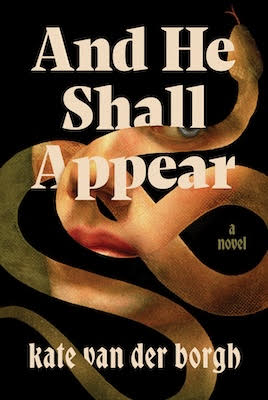
In my novel And He Shall Appear, I wanted to explore this haunting quality of music, its unbreakable connection to memory. As a young man struggling to settle into student life at Cambridge, my narrator is delighted to fall in with Bryn Cavendish: starry college socialite and amateur magician. But their friendship falls apart when he begins to fear that Bryn’s charms are literally supernatural. Music is the narrator’s key to an enchanting, esoteric Cambridge world. But, years after graduation, it also ties him to his past and the friend who dominated it. A friend who may still have a score to settle, despite the fact that he is long dead.
This spooky season, explore novels in which music is used to communicate indescribable emotions and inexplicable experiences.
In this ‘memoir’, a man recalls an unsettling friendship from his youth. And, from the first page, you know the story won’t be straightforward. Its narrator, Art Barbara, bears a striking resemblance to the author Paul Tremblay himself, not least in their shared love of punk band Hüsker Dü. And the friend Art has written about—a woman named Mercy—has made notes in the margins of this memoir, contesting Art’s view of what happened all those years ago. At the heart of the work is a question: in this toxic friendship, was Mercy an emotional vampire? Or something worse?
This is a story about yearning for lost youth and all the potential that came with it. And, by filling it with Art’s favourite bands—Talking Heads, Ramones, Dead Kennedys, Patti Smith—Tremblay manages to underscore all the fear and dread with an exquisitely painful nostalgia. Eerie, funny, and ultimately extremely moving, this for me is Tremblay at his best.
The first part of this novella is told by Charles ‘Tommy’ Tester, a street musician navigating the poverty and prejudice of a jazz age (and occult-tinged) Harlem. After a horrifying incident of police brutality, Tommy throws in his lot with Robert Sudyam: a wealthy white man who has asked Tommy to perform at a party, and who appears to be dabbling in cosmic magic. The second part of the story is told by Detective Malone who, suspicious of Sudyam’s activities, chases him down—and, in doing so, discovers that Tommy Tester has become Black Tom, a frightening figure who now wields monstrous power.
The story is a re-imagining of The Horror at Red Hook: one of H P Lovecraft’s best-known works, and one that sadly showcases his racism and xenophobia. Victor LaValle dedicates the story to Lovecraft ‘with all my conflicted feelings’, masterfully reworking original elements in a way that asks us to wonder what is more monstrous – the dark magic beyond our world or the senseless hatred of those upon it?
World War One is underway, and wounded nurse Laura Iven is at home recuperating when she receives word that her brother Freddie has died in combat. However, eerie signs and rumors suggest that he may have been lost to something altogether stranger—and Laura must return to the front line to discover the truth. Flashback to the previous year, and Freddie is trying to escape the battlefield alongside an enemy soldier. Both men are about to discover that the soldiers’ whispers about a mysterious hotel and its fiddle-playing proprietor are more than just superstitious stories.
Alternating between the two apocalyptic timelines, punctuated with quotes from the Book of Revelation, this is an interesting take on the old Devil-as-fiddler folktale. Against the hellscape of Passchendaele, painstakingly depicted, the trope is particularly poignant—unsurprisingly, the fiddler requires something of each soldier he helps, something to help him make his music. And what else can the devil do but fiddle when humanity has made its own hell?
As the son of celebrated musicians, Sandor Esterhazy is expected to enter Hungary’s Academy of Music and become a concert pianist like his father. The problem is, he has neither the inclination nor the talent. Terrified of disappointing his parents, Sandor calls on the devil for help, whose horrifying solution is to present Sandor with someone to take his place at the piano—someone who can’t possibly be human.
This reworking of the Faustian myth asks what it is that makes us who we are (Our dreams? Our ability to make art?) while exploring how we can gain humanity—or lose it altogether. Balancing chills with mystery and romance, Velentza manages to make us feel something for both main characters. For Sandor, pressured into living a life other people want him to live. And for his poor replacement, who loves and appreciates music more than his human counterparts ever could.
Deacon James is a troubled man. Daily, he navigates the prejudice of the Deep South in the 1940s. And now, a strange and unsettling song circles in his head. When he plays his saxophone, Deacon not only mesmerises his audience – he seems to call up strange and terrifying beings from other worlds. And when he meets a runaway girl who seems to share a similar power, their music becomes impossible to ignore.
It might seem weird to include this on the list, given the parallels with The Ballad of Black Tom. But, while both address the racism within Lovecraft’s work, the experience of reading these novellas couldn’t be more different. Khaw’s prose is known for being extremely ornate, packed with metaphor and linguistic flourishes. And this is interesting when applied to music, particularly the blues: “the music of the ache and the grind.” In the ordinary world, women “gossip in rich contraltos” while “the train shudders on, singing a hymn of disrepair”—so, imagine how baroque things get when the cosmic horror arrives. It might be too rich for some, but Khaw has earned an army of fans with their particular brand of dark poetry.
Oscar is a bright young man living in Cambridge and working in a care home. He lives a very different life to the students around him—that is, until he falls in love with Iris Bellwether and is drawn into a social circle governed by her eccentric and musical brother Eden. Inspired by the writings of an obscure German composer, organ scholar Eden asserts that his music can heal ailments as serious as broken bones—even cancer—which his sister believes is a worrying delusion. But what if Eden is right?
Like other campus novels, such as The Secret History, this is a tale of an outsider drawn into a secretive, intellectual circle with disastrous consequences. Its strength is how it explores our need for that treacherous thing, hope—and, perhaps, our desire to trust people like Eden, whose particular class carries powerful and potentially dangerous authority.
In this, the first ever estate-approved follow-up, we revisit Shirley Jackson’s iconic Hill House. (Difficult, then, to imagine this was anything other than the world’s most intimidating book to write.)
Struggling playwright Holly Sherwin is looking for a hideaway where she can develop her new work when she happens upon a crumbling mansion on the edge of town. She’s accompanied by her team: lead actress Amanda, sound engineer Stevie, and Holly’s girlfriend Nisa, who is composing and performing music for the play.
As in the original, there’s an emphasis on dark psychology—on paranoia and distrust, feelings of loneliness. For Holly, this manifests as jealousy of Nisa, whose beautiful voice and songs might well overshadow the play itself. Exploring ideas of creativity, adaptation, influence and ownership, the story invites us to wonder who exactly owns the art we produce and the tales we tell.
My girlfriend visits every October. She died a couple years ago. I want to break up with her but the sex is too good. She possesses my Magic Wand to make it vibrate faster, louder, harder. I come, screaming into a pillow as the overworked motor burns my clenched hands. She creams my tits with ectoplasm, which tastes like olive oil but is a more spiritual experience. I know olive oil—like, really good olive oil—is a spiritual experience, but this is different. Once, I made a salad dressing with her ectoplasm and I had to call out sick from work because I couldn’t stop masturbating. My clit was sore for a week.
My girlfriend exists without me, but also cannot exist without me. Ghosts haunt because they have someone to haunt. Ghosts fuck because they need a body to fuck.
In the park near my house, I stare at a frozen pizza that someone left on the ground. The soggy crust melts, disintegrating from the fall rains. The cheese and pepperoni vanish. The pizza takes a week to fully disappear. Is this a physical manifestation of grief? If this is grief then why am I so horny all the time?
I don’t tell my friends about fucking my girlfriend’s ghost. We’re at a bar when I feel a cold draft feather my neck, reach into my shirt and tweak my nipple. It’s her, I know it, so I excuse myself to the bar bathroom. I lather my pussy with spit and masturbate. I miss her, I want her, yes, I feel her on me, in me, possessing me to rub and rub faster, more furiously than I ever have in my pitiful, mortal life, and when I imagine eating a steak seared in her ectoplasm, oh god, yes, I scream and come.
“Everything okay?” my friends say when I return. They look worried.
“Oh, just polishing the silver!” I say, winking. My laughter scares them.
I go to a support group for queer women who have lost their partners. It’s held in an unheated Taekwondo studio and the only place I can’t conjure her. I feel hungover.
When it’s my turn, I say, “I feel like I black out in October. Like I’m possessed. When I’m not here, all I can think about is . . . fucking her.”
A cup slips out of one woman’s hand and coffee spills across the floor, steaming as we soak it up with paper towels. At the end of the meeting, children are thwacking wood boards with their foreheads in the parking lot. A goth dyke from the support group comes up to me, sits on the rear bumper of my car, and says that I have a good aura. Very robust. There’s a stud in her tongue and she has a dahlia tattooed on her neck. Her presence makes me feel frozen, uncomfortable, terrified by her, I’m not sure.
“I think about sex with my dead girlfriend too,” she says and then whispers, “All the time.”
She invites me to her apartment and we use a Ouija board to communicate with our girlfriends. We circle ourselves with red candles and sit inside a pentagram chalked on the wood floor. Our hands never touch, but we follow the planchette as it spells out F-R-E-E-M-E.
“What’s Freeme?” I say.
“I think they’re saying ‘free me.’”
“Oh,” I say.
She looks concerned and says, “If you knew your girlfriend wanted to be free, would you let her?”
I say I don’t know, but that’s a lie.
“How’d she die?” she says. “If you don’t mind me asking.”
“Tragically,” I say.
She holds my hand. It’s warm. It’s been so long since someone has held my hand like this.
My girlfriend’s name was Samantha, by the way. On the day after Halloween, at her grave, I leave a bouquet of dahlias—her favorite flowers. I cry for the first time since she died and count the days until next October.
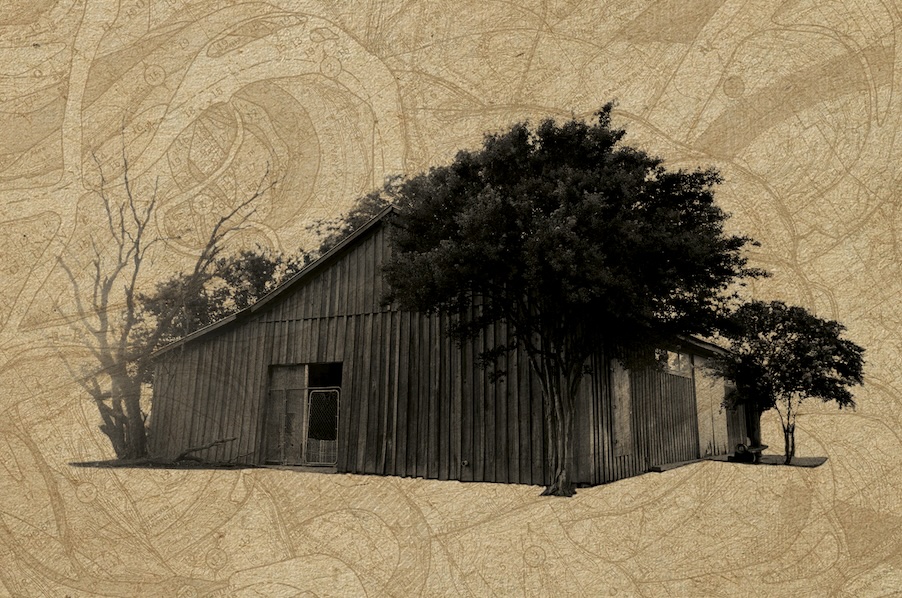
Even though Wright Thompson grew up in the Mississippi Delta, he was in college before he learned about Emmett Till, the 14-year-old child from Chicago who was tortured and murdered in the Mississippi Delta, and whose death helped ignite the civil rights movement. Due to subsequent, intentional erasure by the white community, Thompson himself didn’t know Till was murdered in a barn only 23 miles from his family farm until the pandemic. “I was working on a sports story and ended up on the phone with Patrick Weems, who runs the Emmett Till Interpretive Center. Then he said, have you ever been to the barn? And I said, what barn? And that’s how I got completely obsessed.”
To understand how he did not know about the most notorious civil rights murder in history, or that it occurred only 23 miles from where he grew up, Thompson set out to explore how local and national forces were involved in the cover-up. Gaining the trust of Emmett’s friends, family, and local community members, who continue Mamie Till Mobley’s mission to resolve that her son’s death would not be in vain, in The Barn: The Secret History of a Murder in Mississippi, Thompson explores what exactly happened the night that Emmett Till died, the history of the region, the forces that aligned to erase what happened, and the implications for all of us.
Deirdre Sugiuchi: Growing up, what did you learn about Mississippi history at Lee Academy? Can you talk about what Lee Academy was, in the context of Mississippi and education?
Wright Thompson: Lee Academy in Clarksdale was founded during Christmas between 1969 and 1970, when the US government finally forced Mississippi to integrate. In many ways, I feel the simplest way to describe the segregation academy system is, [that white community leaders] were trying to create and teach a new gospel. Also, that everything that happened before 1970, let’s don’t talk about it.
Our Mississippi history book didn’t have a word about Emmett Till, and the one they teach now has 117 words, in which it frames the entire thing based on how bad the actions of these people—of Milam and Bryant and everybody else—made the white citizens of Mississippi look, not that a child was tortured and murdered. Anything bad that you might hear about was the result of a few bad apples; most Mississippians were good people who loved their neighbors and are very glad that all the late unpleasantness is behind us.
DS: One of the things I have been really shocked to realize over the years is how much racialized violence occurred in Mississippi, and furthermore, how much was kept not just from us but from our parents. Can you talk about erasure and memory in the Mississippi Delta and in the context of this history?
WT: My mom was in Shelby during the Freedom Summer when there was that march, and didn’t know it happened until I told her. That’s how much things were kept quiet. [Now] she’s really politically active on Facebook in a way that worries me. And what she said to me, was that she swore after she learned the history of everything that was going on around her, she would never be silent.
One of the things I hope this book does is it attempts to start drawing concentric circles of blame. The divide they want to teach you at Lee Academy or Pillow Academy is there were good people and bad people. Sure, there were some good people and some bad people, but mostly, there were brave people and cowards, and almost everybody was a coward. They knew what was right and wrong, but the threat of violence and of ostracization and of financial ruin.
The entire Delta runs on credit. You remember—there were all charge accounts because there was no cash in the economy until November when all of the crops were sold and the money started flowing back through the system to pay all these bills off. Everything was credit. And any Black people or white people who wanted to oppose it were kept in place—they just cut your credit off.
There were a lot of people protecting their family above doing the right thing, but they knew. One of the things that has been intentionally hidden from the children of the Delta is that that was a choice that your ancestors made and they made the one that helped them, but they knew it was wrong.
DS:You read of course, Caste by Isabel Wilkerson, right? Or The Warmth of Other Suns? I felt, when I’m reading your book, the way I do when I read Wilkerson—of course, this is inevitable. Because people in the Delta (and America), they’ve just been playing these roles, and because we don’t talk about history, that’s why this keeps happening, right?
WT: The file folders in the Tallahatchie County Courthouse are empty. If you go to the Ole Miss Library and find the famous January 1956 issue of Look magazine—the Till story is torn out. It’s the same in Delta State, by the way. The erasure is intentional. When I first started doing the book, it was going to end after 1955. And then I met all of these people who are fighting the erasure, whether it’s Gloria Dickerson in Drew, or Patrick Weems in Sumner, Wheeler and Marvell Parker in Chicago.
While I was reporting the book, I got pulled into this circle of people who were doing this and just at some point pretty early on realized oh, this is not a history book. This is a current events book that is 1300 years long. It felt very present. Even the political rhetoric of the 1955 Mississippi gubernatorial campaign being so directly related to the killing of Emmett Till.
DS: Can you discuss?
WT: I mean that election was on a Tuesday, and he went to the store and whistled on a Wednesday— most people don’t realize that. I mean there is a direct line from August of 1955 to January the 6th. There is a direct line from Ross Barnett and James P. Coleman and Fielding Wright to Donald Trump and J. D. Vance.
DS: Or from James K. Vardaman to Donald Trump, right?
WT: James K. Vardaman and Bilbo. I was at Doe’s two weekends ago and the entire Percy family was there. People down here have been fighting Vardamans and Bilbos for generations. The political rhetoric is pretty startling. It just feels like a great big circle.
Every person of authority in my parents’ lives, and in your parents’ lives, told them a lie. And that lie has tremendous broad repercussions, but also tremendous personal ones for everybody, because everything your parents did to you flowed out of them using bullshit information that they were taught by someone else. That shit just perpetuates itself, and so you have blood, on blood, on blood, and it’s in the dirt. An excavation is required.
The books that really inspired me were Will D. Campbell’s Providence, or William Least Heat-Moon’s Prairy-Earth, or Absalom, Absalom! —the idea that American history is too big to hold in your hands. That’s why it’s so easy to manipulate by everybody who wants to use it for their own purposes. But if you could shrink it down, if you could shrink America down to 36 square miles, and tell the history of one square (mile) of dirt, and how it came to be, it wasn’t a couple of brothers who killed a child. It was one tribe of people ritually killing a child of another tribe of people to send a message. That is not murder. Any professor at West Point would tell you that is an act of war. And these fucking things are turning in circles because it’s deeply tribal, and it exists at a place beyond words, and it is all steeped in the dirt.
I feel the only way to really tell, was it Malcolm X said, “Everywhere south of Canada is the South?” I think what he really meant is everywhere south of Canada is Mississippi. And, if you can look at 36 square miles of Mississippi, then you can start to see the whole thing. I know that’s ambitious.
DS: No, I completely understand what you mean.
WT: We were part of the last of the old Delta, you know? There was no law when I was growing up.
DS: Oh, you mean criming while white? Is that what you’re talking about?
Until everybody can say this is what happened here, there is no future for the Delta.
WT: Just, when I was growing up, if you were drinking and driving, the cops would just follow you home and make sure you were safe.
DS:Yeah, criming while white. I went to the Delta a few weekends ago, to the memorial for Emmett Till. I brought a friend with me. She is Black. I was telling her about growing up white in Greenwood, and hanging out with my friends from Pillow, and how we did whatever we wanted, at least in regards to driving while drunk, or driving recklessly. But, if you were Black in Greenwood, it was a different thing.
WT: Well, those two places not only weren’t the same place. They had almost no relation with each other.
DS: Can you talk about that?
WT: It never occurred to me the energy it must have taken for me to live a nearly all-white life in a nearly all-Black place. And the fact that that couldn’t just happen didn’t occur to me until later—just the math, the law of large numbers, says that’s almost impossible.
It’s not surprising to me that our home has been such a fertile ground for the planting, nurturing, and growing of wild conspiracy theories, because the entire thing is based on an alternate view of reality, that if everyone agrees that they believe in it, then it becomes true. The thing about the Till murder—this is what the jury said happened; I’m not going to exaggerate, pump it up to make it funny or traumatic; this is literally the defense’s theory of the case that the jury believed — that the NAACP, in coordination with the Communist Party of Russia, had gotten a body from a Northern morgue. It was a 30-year-old man. They had thrown that body in the Tallahatchie River, hoping that it would be discovered and identified as Emmett Till.
DS: Yeah. When you are telling me that now, and even when I read it, and even, two weeks ago, when I went to the site in Money, thinking about it makes me so fucking sad every fucking time I hear it.
WT: It’s amazing how, even now, the history remains unknown. There’s an incredible amount of new information in this book, and it’s not because I’m Bob Woodward. It’s because there was so much erasure. It’s incredible how much remains unknown about one of the most famous murders in American history. And until everybody can say this is what happened here, there is no future for the Delta.
I struggle with this, because I’m still here in a way that you’re not. I have a much harder road to navigate. I’ve got land here that my daughters will own. In some ways, this book is an owner’s manual for them. I’m giving you this land, but I’m also telling you what happened here so that you can be a thoughtful owner of it. Because if the Delta is going to have any future at all, it is going to be in knowing and telling this story and every other story, and then saying, “Okay. We are one group of people who have been bound together by violence and by greed and by a lot of our own shit. But we’ve also been bound together by huge global commodity chains pressing down on everybody.”
To me, the essential soul of the Delta is in figuring out how to navigate those two opposing things. It’s not having one or the other— it’s always having both and trying to live in the contradiction of it. And so, anytime somebody tells me they love the Delta but they don’t want to hear this, I’m like, “You’re full of shit. You don’t actually love it, because you don’t actually live it. If you are not dealing with the complexity, you don’t live here.”
I dare you to read this book and then come talk to me.
We’re living in a never-before-seen age of prominent queer representation in our media…but that’s not to say that it’s perfect. We’re more likely than ever to come across queer characters in the pages of our books, but often those queer characters are depicted in a specific way: gentle, pretty, romantic but not particularly sexual, inherently non-threatening. Particularly in popular depictions of lesbians, you’re likely to see two sweet sapphic girls leaning in for that first kiss, focused on the other’s soft skin, her pretty hair.
There’s nothing wrong with those depictions, of course. But they’re just one slice of the weird and wild world of lesbianism, which makes it important to look beyond its scope. So when we started writing our new novel Feast While You Can, we knew who we wanted at the heart of our intoxicating, obsessive love story: a butch lesbian. We wanted her to be tough and smart and kind. We wanted her to be entirely uninterested in the male gaze. We wanted her to be subversive and playful with her gender. We wanted her to be toppy and cocksure and very aware of her own desires… which were not particularly soft. We wrote the butch lesbian heroine of our dreams, the kind of woman whom we love and see parts of ourselves in, and Jagvi Marino came strolling out of our heads and onto the page, boxy leather jacket, short mullet, hands in her pockets, all swagger.
We wanted, too, to write a heroine who could stand amongst our own private pantheon of butch heroines who paved the way for Jagvi. The following list is the best of the fictional best. (Shout out to Leslie Steinberg, Audre Lorde and Alison Bechdel, who wrote about their own butchness in trailblazing and revolutionary perfection… but they’re real people writing about themselves, so we’re leaving them off.) They see their own butchness and their own queerness in different ways, they fall in different places on the spectrum of being a queer woman, they live in different times and cultures and universes… but they have that masc edge, that knowing look, those competent hands and eager eyes which speak to butch.
Gideon, from the Locked Tomb series by Tamsyn Muir
The GOAT. No one can compete with Gideon Nav from her exuberant, untamed entrance into literally the very first sentence of Tamsyn Muir’s sci-fi series about necromancers in space. Gideon packs “her sword, her shoes, and her dirty magazines” and sets out to escape the dead planet upon which she has been trapped. A million skeleton hands reach out to claw her back. Pretty soon, you understand why.
Gideon Nav is the heroine that butches deserve. She shoulders her way through every crowd, wielding her quick and dangerous mind, a powerful sword, a pair of aviators and a dry roll of Kiwi wit lingering in her every drawl that makes it impossible not to love her. She is kind even when it gets her into trouble, and she has a terrible weakness for swooning women which, inevitably, gets her into even more trouble.
No spoilers, but at the end of the book Gideon does something awful and beautiful. It is a moment of triumph and sacrifice that you might spot, like us, seconds before it arrives, with just enough time to plead for it not to happen… before it does. Obviously, it is a moment of heroism. Gideon is a perfect and singular character in literature, but it is also wonderful to watch a butch lesbian claim a place among heroes.
The first things you see about Hero, even before you see her face, are her ruined hands. Her uncle Pol asks “how her injury was healing; if the surgery had been successful” and by the time we meet Hero, who seems at once damaged and dangerous, we’re already on tenterhooks. She has already taken on a dozen identities: a bisexual rich kid growing up in the Philippines, a doctor for a guerilla revolutionary group, an emigrant moving to live with her family in San Jose, California. She has just escaped a military prison which broke her hands and ruined her craft. Still: she knows how to wield them.
America Is Not the Heart is about family and trauma, food and culture. It immerses you, carefully and deliberately, in the Filipino community of the 1990s Bay Area. Everything about it is slow-burn, from the way Hero connects and forges new, obsessive ties with her family to an excruciating, perfect romance with Rosalyn, who works next door to the restaurant where Hero spends much of her time. The attraction between them, and particularly in Rosalyn’s stumbling, defiant but shy reactions to Hero—who, she announces, looks like the Purple Rose, the cold and antagonist anti-hero of the Japanese shōjo manga series Glass Mask—is full of all the thrilling pleasure of the best femme/butch romances.
Bravery is a common quality between the butches in these novels, and it’s Hero’s defining characteristic, her own stubborn inability to do anything but live up to her name. She stumbles, she misspeaks, she acts rashly and then far too slowly, she is sometimes unkind, but she never seems to let her chin fall.
The eponymous heroine of Nicola Griffith’s bewitching, intricate historical series would not describe herself as a lesbian. Firstly because she has a significant and compelling relationship with a man, her childhood best friend and eventual husband. Secondly because she is living in 12th century Britain, where the word ‘lesbian’ does not exist. But within Griffith’s assured recreation of 12th century politics, culture and relationships is the equally assured understanding that queer people have always existed. Hild might not have the word, but she does have relationships with women, and Griffith writes queer desire with her trademark precise, devastating accuracy: “Gwladus put the flat of her hand on the small of Hild’s back, as you would a person who was old or ill, and Hild’s mind went white.”
Hild is a fascinating rebuke to anachronism and patriarchy in the same easy blow. Griffith makes no attempt to modernize Hild, to transform her into a cool or feisty heroine flipping her hair and rebuking the norms of her time with hollow quips. She is also fascinated by what a woman could do in the early medieval period. The answer, for Hild, is a lot: she is a prophetess and a warrior, a leader and a mother. She is inherently political, operating with her far-sighted intelligence (which is better than magic), and deeply empathetic, invested in her family and her people.
Her butchness is hard to define. But there’s something about the way she puts on her armor, how relentlessly physical her body is. The ease with which she wields a sword. (Yes, there’s something about butches and swords: every butch deserves one.) The hesitation and then, slowly, the determination with which she can kill a man. Even the way her lover looks at her body: “Gwladus put her hand on Hild’s thigh and strokes as though Hild were a restive horse: gently, firmly. Down the big muscles, up the long tight muscle on the inside.” It’s also something about the way she looks after her people. Listen—in her own way, unspoken at the time, unmistakable in the read, she’s a king.
Like a fever dream of dyke power, in the opening pages of Melissa Lucashenko’s award-winning Too Much Lip, Bundjalung woman Kerry Salter roars back into her hometown on a stolen motorbike to talk to the crows, wrangle her family, say goodbye to her dying grandfather and then get the hell out of dodge. She marks herself out as someone to keep a close eye on; when her brother unexpectedly flings a beer at her, she catches it mid-air: “Triumphant, she straightened and casually knocked the bottle cap off on the table edge with an emphatic thump of her right fist. You’ll have to get up earlier in the morning than that to fuck with me, mate.”
After growing up in a traumatized family and a deeply racist hometown in Australia’s northeast, Kerry is marked by her keen intelligence and a deep defensive streak. The trauma of being an Aboriginal woman living in a colonized country rears over her like a wave—but Kerry refuses to be beaten. There is a moment incredible in its mundanity, in its tired exhaustion and near tenderness, when she thinks about “throwing herself into the swollen brown serpent of the river… It was the Elder. Let it decide whether she lived or died”. But in the end, “Kerry found she lacked the will to chuck herself away. Her legs were trembling and her heart hurt like a bitch, but she wasn’t quite defeated, not yet.”
A self-declared dyke, Kerry surprises her readers by having a romance with a man, but she doesn’t leave her butchness behind to do so. Her relationship with Steve, a white guy almost-crush from her old high school, is hesitant, push-and-pull, abruptly tender then combative. When she realizes she wants to be with him, despite the heterosexual relationship, it carries a queer pulse; in Luchashenko’s depiction of a mixed race relationship between a straight white guy and a queer Black woman, our understanding of this romance deepens and complicates itself as something that both is and isn’t, always, about power. “This one’s on my side, she thought, in astonishment.” Love as a battle cry.
It’s not a real spoiler to say Kerry fails to get out of dodge. She sinks into all the danger and promise of returning to her home, being on Country, totem animals showing up to make their mark and ancestral spirits leading her. She flames like a beacon: by the end of the novel, you’d follow her anywhere.
Spiky, selfish Isabel manages her family home in the rural 1960s Netherlands like her own tiny kingdom. She busies herself with her domestic duties, tending to the garden, supervising the servants, keeping constant stock of the silverware. For much of this work she wears an old pair of men’s trousers. When visiting town or her extended family she dresses up dutifully, strapping herself into dresses and painting herself with lipstick with the bitter obligation of a wild horse forced into a stable. But whenever she puts those work trousers back on, you feel something slotting into place. The first time she thinks of them consciously is when she wears them to shield off a man, the lecherous Johan, who put his hand on her bare thigh the night before. A moment later the trousers serve an entirely different purpose, when she is greeted by Eva, her reluctant house guest, who is knocked visibly off-kilter: “Confused a moment—eyes quick. Her gaze lingered somewhere at the height of Isabel’s waist.”
Amidst the intrigue and mystery of its addictive plot, The Safekeep is also a book about Isabel’s journey of discovering her inner masc. Isabel’s moves toward butch presentation are tentative; sometimes they falter, but their impact never fails to land, inspiring freedom and self-actualisation in Isabel and irresistible desire in Eva.
Toward the end of the novel Isabel goes through the baby butch rite of passage and chops off her own hair, cutting it off “in a fit in the night”. When she sees herself in the mirror it recalls Eva’s words about feeling “not especially pretty and not especially ugly,” instead something in between – perhaps handsome, perhaps simply removed from standards of feminine beauty. Perhaps Isabel puts it best herself: “she was not who she once was”. Her conservative uncle is unable to note the significance of the change, commenting on Isabel’s haircut as something odd and trivial, best left ignored. But Isabel feels that “this should be visible from a great distance.” And there in the great distance is Eva, her eyes wide open and ready to fix on Isabel. When she finally sees Isabel’s short haircut, she understands it instinctively. “It suits you,” she says, half-angry.
Sometimes, as a queer reader, you want to say to an author: You might or might not have known that you were writing a dyke, but I know. This is the overwhelming feeling that Yiyun Li’s short story “Kindness” imparts from the moment when its childless, single narrator notes that if she closes her eyes she can still feel Lieutenant Wei’s finger “under my chin, lifting my face to a spring night. ‘Tell me, how can we make you happy?’”
The very next sentence tells you that Lieutenant Wei is firmly out of reach: first off, dead; second off, a mother; third off, a wife. But the thick magic of Li’s prose is already carrying us back, further back, and the world the rest of the story inhabits is that of butch chivalry.
Our narrator comes from a poor family who live on the outskirts of Beijing, and spends a year in an army camp, where she falls under Lieutenant Wei’s command. The relationship is dictated by power. Lieutenant Wei is determined to make the narrator submit to the authoritarian atmosphere of the army; she corrects the narrator on her use of titles, chides her for her slovenliness, and berates her for her inability to take orders. But she is also deeply empathetic, concerned about the narrator’s lack of ties with home, determined to find a place for her, willing to forgive her transgressions, wanting only to reach out her hand and lead her out of that dark place of unhappiness which Lieutenant Wei, gifted a kinder life than the narrator, cannot understand except to reject.
There’s a moment in the middle of the story where Lieutenant Wei catches the narrator reading a forbidden D.H. Lawrence book. “‘What are you hiding from me?’ Lieutenant Wei asked in a low voice.” The following scene, in which the two characters carefully discuss the contents of the book and its import, is like a chess game. Every story in this collection is powerful, but this one, its opening, is also perfect. What are you hiding from me?
Mary McCarthy’s 1963 classic, which is mainly about the damage men do to women as told through the story of a group of 1933 Vassar graduates and their loves, holds a delicious surprise for any queer reader. At the very end of the novel, after 300+ pages of heterosexual misery, Elinor Eastlake—known as Lakey, a “taciturn brunette beauty” who spends most of the novel’s action mysterious and out of reach—returns. And she doesn’t come alone.
Back from Paris, Lakey brings a “titled friend… the Baroness d’Estienne”. A “short, stocky foreign woman”, the Baroness is unfriendly and uninterested in the other women. Then they “hear her call [Lakey] ‘Darling’ with a trilled r. It was Kay who caught on first. Lakey had become a Lesbian. This woman was her man.”
“This woman was her man”: has there ever been a sexier sentence, or one that speaks more to the subversive intersection of gender and desire at the heart of butch? “Maria is a bear,” Lakey tells her friends. “She growls at strangers.” Lakey and her Baroness plan to move somewhere rural and quiet, to her friends’ horror: Lakey is the “exquisite captive of a fierce robber woman, locked up in a Castle Perilous, and woe to the knight who came to release her from the enchantment.” When Lakey is forced to give a lift to one of the novel’s particularly evil male characters, one onlooker wonders aloud: “What do you bet he makes advances to her?”
“Let us hope he does,” another character answers dryly. “I understand the Baroness packs a pair of brass knuckles.”
Her brass knuckles, her short, stocky form, her disinterest in playing nice within the complex power dynamics of the Vassar crowd. You never see the Baroness from Lakey’s perspective, which means that her portrait is a homophobic, threatening one. But Lakey, alone amongst her poor heterosexual school friends, stands alone in a relationship of equality and trust, where the only power differences are cultivated for an additional thrill. The Baroness in all her butch glory is the secret savior of The Group. A happy ending is possible, if you’ve got a butch to look out for you.
We first meet Lacey Bond as a thirteen year old whose life is upended when her parents’ hippie daycare center is targeted by the burgeoning hysteria of the Satanic Panic. Lacey’s days become a slew of appointments with child psychologists, sleazy defense lawyers, and aggressive journalists; all made more torturous by the fact that Lacey is openly, undeniably queer. “I wore hiking boots to school, I had a sweatshirt sewn into my denim jacket, I knew how to tap for maple syrup… It had been apparent for a while now that I was a lesbian.” While Lacey’s parents are content to let Lacey be Lacey, musing that “love is fluid and can take the shape of any vessel”, Lacey’s confrontations with the state and legal apparatus persecuting her family are nowhere near as sanguine.
In perhaps the most affecting courtroom exchange in an increasingly cruel litany of courtroom exchanges, the prosecution argues that Lacey’s lesbianism makes her a sexual deviant, just like her Satanist parents. The defense argues that homosexuality is no longer considered a deviance; prosecution responds this is only true if Lacey wants to be a lesbian – if she doesn’t want to be, then she may be suffering from a (patently bullshit) disorder called “ego-dystonic homosexuality”. Before a hostile jury and leering audience, Lacey is forced to answer:
“Ms. Bond, is it your wish to be a… lesbian?” She uttered the word ‘lesbian’ like it was ‘shit-eater’ or ‘crack whore.’
“Yes,” I said.
“Just for the record, could you state that in a full sentence?”
“It is my wish to be a lesbian.”
“So even if it were possible, you wouldn’t choose to be heterosexual.”
I gritted my teeth. “I would not choose to be heterosexual.”
It is the most perfect depiction of bravery in the whole world. Lacey is so cornered, in that witness stand, so helpless and alone, this tiny teenage butch in her checkered shirts and scrappy haircut, surrounded by adults who have destroyed her life in the name of children’s protection. She’s forced to humiliate herself in front of everyone by declaring what they already know to be true: she’s a flaming butch and she likes it that way. But even in a moment of utter subjugation, Lacey doesn’t back down. She stands tough; she grits her teeth; she refuses to succumb to shame.
That grit is really the core of Lacey’s character, and everything she does next. Lacey is dealt shit hand after shit hand but she never loses her bedrock of tough, noble butch identity. You want simultaneously to gather her in for a cuddle and let her lift you overhead like a dumbbell.
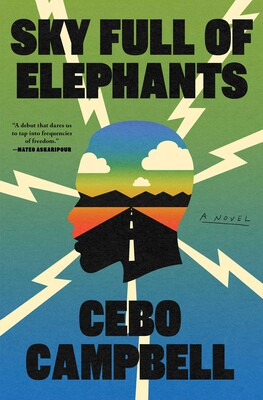
Cebo Campbell’s debut novel, Sky Full of Elephants, revolves around a shocking and audacious premise. “They killed themselves. All at once,” the novel begins, “they” meaning all the white people in the world, who end their lives by walking into the nearest bodies of water. In America, where the novel takes place, centuries of an established social order are suddenly upended, leaving Black people and other people of color the task of running the government, the economy, universities, and more — and giving them the opportunity to consider afresh what American society’s true values and priorities should be.
The novel follows Charlie Brunton, a man gifted with machines and computer programs, who suddenly finds himself teaching at Howard after decades spent in prison for a rape he didn’t commit. But even though the incarcerated have been liberated in this new world, Charlie doesn’t entirely trust his new life, and must come face to face with his past when his estranged daughter, Sydney, calls him out of the blue to come to her home in Wisconsin. Sydney, who’s grown up with her white mother and white stepfamily, is alone and traumatized in the wake of the event. Now, father and daughter must somehow find a way to relate to each other as they travel south to outside Mobile, where Sydney believes a colony of white people remains.
In our Zoom conversation, Campbell ruminated on the deep questions that his book asks, reflecting on the dearth of Black characters in classical genre storytelling, the influence of Toni Morrison on his writing, and the inspiration he drew from the history of Haiti in dreaming up this alternate universe.
Morgan Leigh Davies: I’m curious where the inspiration for the book came from, and if there were any touchstones, either for the writing or the concept, for you when you were setting out.
Cebo Campbell: There’s honestly so many things that have impacted this story and its points of origin. But I’ve been trying to consolidate it into one thing and when I do that, it’s the book Paradise, by Toni Morrison. There’s an opening line in that, and it reads, “They shoot the white girl first. With the rest they can take their time.” I remember reading that and being like, “Yo, what in the world is this book?” It was astonishing, it was such a gripping thing to draw me in. As I was writing this book, I would have these waking images in my mind of Toni Morrison going, “Cebo, don’t hold back. Write this book. Write this book.”
And honestly, I love movies, I love books, I just love storytelling, and there’s been so much that I’ve experienced without even thinking about it — enjoying a movie or a book, and I will suddenly realize that there’s no person of color in the book or in the film at all. And I’m like, wait a minute, how are we all cool with this? Not that that needs to be the case with everything, obviously, but particularly when you’re watching sci-fi — not even in Mordor? Not one? Come on, Middle Earth. I think in my mind, I could feel a gap that needed to be filled.
And frankly, I didn’t want to write the book like this. I wanted to actually write a comedy, or a love story or something. When I tried to imagine the characters I had in my mind, they were freer, funnier; they moved with a degree of audacity, not unlike you see in a John Hughes film. When I tried to write those type of characters, and I used the rules of the world as I understood it, they didn’t work. So I went, how do I fix that within me? And then the book became an exercise in processing traumas, I suppose.
MLD: How do the rules of narrative structure, as we think of it, change when you’ve remove the ruling class from the equation?
CC: There was a moment when I thought, “What would happen if there were no Black people?” And then I thought, Well, that happens all the time, so let me not do that. Let me try something else. I’ve been trying to understand the difference between culture as we understand it, and stereotypes. How do I define what Blackness is, if I can’t determine the difference between two? As I was analyzing this and thinking about it, I thought, Well, if I were to take a character in anything, and I were to replace that character with the viewpoint of a person of color, automatically, there are things that are presupposed that would be different.
I’ll give you a really simple example. Take a horror story, right? I want to see the new Alien: Romulus with Cailee Spaeny. We understand the reality of the film through her viewpoint, and she makes certain decisions and I can see her making those decisions. You put a Black woman in that — half of those decisions, she’s not making, right? Like, she’s not going down a dark alley. She’s not doing that. And I think that that begins to orient us to a sense of cultural understanding, which is a collective thing that we are all connected to somehow. And so I guess in the best way to answer that is, if I take this character, they’re going to bring with them a series of understandings, a series of viewpoints and traumas and triumphs, and if we are using that as our lens to understand the world that we’re viewing, or at least at snapshot of the world then those are the things that are different.
It’s hard to really nail it down. It’s hard to say X, Y and Z. It’s more like a feeling. Once you have that vantage point, it automatically changes the lens by which you understand that reality in that world. Even if you can’t name it, you feel it. I think for me, that was part of the challenge of the book, honestly, because this is somewhat new to me in the context of today. When I read something from Toni Morrison, from James Baldwin, I can understand the sixties, seventies, and eighties. We’re in the TikTok era. So how am I articulating that same vantage point today? For the most part, the book had to strip some of that stuff out in order for it to make sense.
MLD: The whole concept of community is the core of the soul of the book. How did you think about that idea?
CC: I had a thought early on: What if unity was a technology? What would that look like? And immediately I was like, Well, Black Twitter, obviously.
The change of the world is that the concept of whiteness is gone. Now what?
But if it were a form of actual technology, how would that work? It felt like it would be a collective understanding and a collective empathy, and then it would not just be for people who exist now, but it would also be collective and ancestral. That, to me, felt very profound, in part because, as a Black American, I don’t have that. When I go to my lineage, it stops in South Carolina. At best, you hear West Africa, maybe, but even then, tribally, you don’t have access to, like, what were the things that they ate? What were the customs? I don’t have any of it. And so I thought, if there was an internet that I could tap in and get all that information whenever I wanted, I thought that would be remarkable. It’s community and it’s unity, but it’s made into an accessible and tangible thing in the now, in the future and in the past, all at once.
MLD: What avenues open up when you’re writing speculative fiction to sort of talk about these ideas?
CC: To be honest, some of it I’m not even aware of until I come upon it. The change of the world is that the concept of whiteness is gone. Now what? As you begin to walk down the road, the characters begin to walk down the road. Certain things are being revealed that I didn’t anticipate. There’s a big scene in the airport. Everyone who’s read a book always brings up the airport scene because it’s core to that analysis. You arrive and you go, “Okay, how does the airport work now?” I wasn’t thinking that when I wrote the book, but I’m like, Okay, how many Black people are pilots? It’s only around 3%, so it’s not enough to man all these airplanes. Okay, well, who can repair an airplane if you need it? What is the airline going to be? Are they making money off of this? What’s happening?
So it sort of gave the world back to me, renewed, and I got to be analytical of it. I wasn’t going into it, I know that this is going to change. I would just suddenly kind of walk down the street with these characters and go, Well, that would be different, and that would be different, and that would be different. Now, what would that do? That revealed this negative space, which I hope is a lot of the conversation that comes through with the book. Once [the deaths] do happen, there is a vacancy. All of a sudden you go, Oh, wait, we don’t know how to do some of these things. I don’t know very many people of color are doing at volume some of the things that the dominating class is. In order to maintain the society, you have to know some of the stuff to be able to do some of these things.
I grew up in a small town. I didn’t know a single person that could build a solar panel or fly a plane. I knew people who could skin a buck, which is a great thing to be able to do. But the skills were not as broad and far-reaching. All of a sudden, it was like it’s a requisite to be able to be self-actualized fully, to immerse oneself in knowing as much as you can, and encouraging others to know as much as they can. In the event that you do need to run a whole country, that sort of sets up an expectation.
I just created the environment, and then as I walked through the environment, I was like, oh shit, I hadn’t thought about any of this stuff, and that was really, really illuminating, because I don’t think in my real life, if I had thought about much of that.
MLD: My gut reaction was, Capitalism would just continue to dominate! But a lot of what you’re talking about is logical. I felt like that challenge to the dominant expectation was really interesting and valuable as a reader.
CC: Capitalism was a big one. It became a question of, what’s valuable now, how does one orient around what value means? I always revert to my family. I have a big, big family of ten brothers and sisters. I think my mom had thirteen, and she had some that died when they were very young. The way that we lived was very different than when I got older, went to college and got a job. When I was a kid, my grandmother would kick us out of the house in the morning, would not make breakfast, would not make lunch, and we would just go figure it out. We had pecan trees, we had pear trees, we had plum trees, and we would just eat fruit, play football in the field, and then get into trouble, or go fishing and catch our own fish and then make it. In that world, the value was in something else.
I work right now in the luxury space. I work in luxury hotels, doing branding for luxury hotels, and what they sell at the most luxurious hotels in the world is time and nature. That’s it. They will sell you a beach that you can look at, or a spot in the mountains, and then they will say, We’ll take care of everything. So you have your time back. I think that in my mind, that’s where the value will be. It won’t be in the money, it’ll be in something else.
MLD: There’s an inherent contradiction that the concept of whiteness is gone, but it’s obviously not. People are really clinging to this idea that they sort of can be white. They’re attached to this identity that is gone and is harmful. But for Sydney, it is really complicated, because she’s grown up in a white family.
CC: Toni Morrison used to talk about the white gaze. With this book, I wanted to take the white gaze away. What you realize with Sydney is that it isn’t the gaze that looks in on her, it’s the gaze through which she looks out. If it was only this one lens versus the prismatic multitudes of vantage points that she should have that would most benefit her, it would be really tough for her.
I wanted to use the book as an opportunity to celebrate Haiti, and acknowledge that that little island transformed this entire continent as we know it.
Before the event happens, she’s been living in this space where she is a stepdaughter and has twin brothers. So the twin brothers become this homogenization of whiteness for her, and she always felt like she was on the outside of that. Never felt included. So there’s a great desire, and the desire remains. She’s desirous of something that she can’t achieve. We don’t know if it is identity relative to race, we don’t know if it’s identity relative to daughterhood. We don’t know if it’s identity relative to geography, because she’s only been in Wisconsin, she’s never been anywhere else. So she exists in the state of great, great desire. I think that that is, in a lot of ways, her identity, and in the story, she has to roll that back. Desire has to become an internal thing versus an external one.
And watching her parents walk into the water — super traumatic. I wrote that scene, and I was very afraid for anyone to look at it, because it was terrifying. I sent it off to a friend to read it, and what he said shocked me. He goes, “Yeah, sort of like when they strip slave families away from their families.” I was like, Oh, my God, that is traumatic. And then all of a sudden you go, Whoa. That experience the trauma of that — people do need to see that. I don’t think they realize what that would feel like, really, to have your whole family stripped away. So I kind of was like, Alright, I’m keeping it.
MLD: I wanted to ask about the significance of Mobile, and why you chose that location to create this utopian community in the later part of the book.
CC: I grew up very close to Mobile. We used to go there quite a lot, it was just very familiar to me. And the first time I ever read about Mobile in a book was actually in Toni Morrison. It was in The Bluest Eye. It was this beautiful line where she says, They come from Mobile, and she eventually says that, When they say it, it feels like you’ve been kissed. I thought, This is the most beautiful thing I’ve ever seen. I never thought of Mobile being that beautiful, but I’ll take it. It was really, it was profound.
When we think of ships coming in, we always think of them coming into the New Orleans port, but in reality, they were coming into the Mobile port. So you have this, this breathtaking victory over the French with Toussaint Louverture in Haiti, and then you get the Louisiana Purchase, which now allows America to become America. That is such an astonishing thing that doesn’t live in our history books. It’s not contextualized—Toissaint is the hero. You literally wouldn’t have California if it then didn’t happen. How is that not a way to uplift, to encourage, to remind us that the contribution of not just Black Americans, but Haitian American or Black Haitians was profound and transformative. That really interests me, let’s figure out what we can do with that. It felt like all of this stuff was concentrating into Mobile: you had Africatown, you had [the last slaving ship] Clotilda, you had the origin of Mardi Gras, all happening in this one place. It felt like a sort of gravitational force. You had Africatown, but you also had slavery, you know?
So I thought, this feels like an opportunity to tell that story, and because it’s so near to Haiti, and Haiti is the last vestige of our access to Africa. If you think of all the ships coming in, and everything that they left before they came to the mainland, the idea of spirituality in that context, like voodoo: that’s Yoruba, that’s from Africa. You think of the languages. You think of some of the ways that people exist culturally. It’s as if in Black America, Haiti isn’t a part of our reality. So we’re not going to Haiti hanging out on beaches. We’re not connecting to our culture through Haiti. And I just thought we should. I wanted to use the book as an opportunity to celebrate Haiti, to put it on a pedestal and acknowledge that that little island transformed this entire continent as we know it.
“Circles, Triangles, Squares” by Charlie Sorrenson
At some point in the conversation we had migrated to the kitchen floor, arranging our bodies into a loose, humanoid square: me leaning against the island, Lisa against the stove, MJ against the sink, and Farouk’s former roommate, a gym-bro law student whose name had escaped us, sitting with his arms looped around his knees. The party had dispersed in that specific after-midnight way. The smokers and their hangers-on were crammed onto Farouk’s balcony, gesticulating with wrists made elegant by their cigarettes. Three of our fellow first-year PhDs, new arrivals to California for whom the novelty of legal marijuana hadn’t yet worn off, sprawled like a colony of seals on the couch and surrounding floor. In the kitchen, the four of us passed around a bottle of cheap sake. The counters, rising steeply behind our heads, gave the impression that we had not just broken away from the party but sunk into some other, more private place, and the nature of our confessions, which had started as a meandering conversation and formalized into a sort of game, became correspondingly deeper. The alcohol, operating in its usual loosening way, had guided us to the same place it always does: sex. We had covered sexual fantasies, our best sexual experiences, the riskiest places we’d had sex. Now Lisa introduced a new question: What, she asked, was a sexual encounter we had never told anyone about?
Lisa was, as far as I knew, straight, but I hadn’t figured out whether her version of heterosexuality encompassed men who clocked in at five foot three. She’d been flirting with me the whole night, but then she flirted with everyone. Certainly I found her attractive: she was petite, curvy-to-fat, very feminine. Her fine, curly hair would have given her pale face a doll-like aspect had she not chopped most of it off and dyed it pink. She had a formidable sense of how to dress, how to execute those tricks of proportion and color that I myself, in my female days, had never mastered. Already, barely a week into our first quarter, she had established herself as the cohort’s resident archaeologist, there to unearth what each of us most sought to conceal. In these and other characteristics, she was disconcertingly similar to my last two exes. Coming into grad school, I had vowed to break my habit of dating charismatic cis women who wanted me to dominate them in the bedroom and submit to them everywhere else. And so, while I was drawn to Lisa, I tried to keep my distance. When she posed her latest question, a suitable anecdote rose immediately into my mind, involving a foursome I’d had with an old girlfriend and a friend-couple of ours. The story was titillating, funny, and revealed nothing about me.
Our storytelling had by now taken on a soothing rhythm. Farouk’s ex-roommate went first, as he had every time. He swigged from the bottle of sake—it had become something of a tradition for each new speaker to drink from it—and began to recount how, on a service trip with some fraternity brothers to Hungary, he’d been struck down by a cold and had to stay behind in their hostel in Budapest while the others went out clubbing. Shivering and miserable in bed, he decided to soak in the hot tub that the hostel had installed in lieu of the more sophisticated thermal pools elsewhere in the city. The tub’s sole occupant was a naked older Hungarian man, who insisted on sharing his bottle of plum brandy. Their blood flow accelerated by the heat, they quickly got drunk, and when the bottle was empty, the man’s hand settled on his crotch. The ex-roommate described sitting in silence, staring straight ahead as the man masturbated them both; the twin streams of semen expelled into the cloudy water; the sight of the man’s leathery shoulders, followed by his magnificent belly, breaching the surface as he rose from the tub, took his towel and the empty bottle, and walked away without a backward glance.
The ex-roommate ended his story by showing us the picture on his phone’s home screen, of a heavily made up, gym-toned white woman who he told us was his fiancée, before emptying his second coffee mug full of whiskey.
Now it was MJ’s turn. They were a stocky, butch, Filipino PhD two years ahead of me whose taciturnity had given them an almost mythical status in our program. I had sought them out during early orientation events, hoping to cultivate a friendship with the only other trans person in the fifty-person engineering department, but our conversations had been awkward and truncated. One of us had always found an excuse to leave.
So I was surprised when MJ began to tell us, softly but with increasing fluency, about a Craigslist advertisement they’d answered as a broke undergrad; how they had gone to a much older woman’s loft apartment in downtown St. Paul and tended to her as though she were their kitten: running an antique silver-backed hairbrush along her head and back while she purred; trickling warm, frothing milk into their palm and coaxing her to lap it up. MJ had planned to stay six hours but instead stayed six days, spending much of the time on the couch watching Friends as the woman sprawled across their lap, both of them drifting in and out of sleep, MJ unbearably hot from their charge’s body and the gas-powered fireplace yet unwilling to move, as a midwinter storm of historic proportions battered the loft’s enormous picture windows.
All evening, our stories had been growing in length and detail. But I sensed that, in answering Lisa’s latest question, we were moving even further from the rules that bound us to the everyday. This was the longest I’d ever heard MJ speak. They had done so in a sort of trance: leaning against the sink with the sake bottle pressed to their sternum, staring into it and swirling its contents as they spoke. Now they looked up, seeming to remember our presence, and said, It was the most intimate experience of my life.
Cute, Lisa said, and the flicker of a grimace passed over MJ’s face. So is that where you disappear to on the weekends, MJ, should I go looking for you at the local furries convention?
But Lisa’s bravado wavered in the face of MJ’s unblinking stare, and after a moment she conceded, saying, No, but seriously, do you still do that kind of thing?
I’ve tried, MJ said. I’ve tried with other partners, yeah. But they don’t want it in the same way. They don’t need me to do those things to them—or for them.
It’s like they’re humoring you, Lisa said, nodding.
Yes. When what I want . . . Anyway.
What you want, Lisa said, is someone who can abandon their entire sense of self.
MJ looked disconcerted. They muttered something inaudible, glared into the bottle of sake.
Right? Lisa prompted.
But MJ only shrugged and handed her the bottle.
I’ll be honest, you guys, Lisa said. I was planning to tell you about my one probably really shocking relationship, with this married man who was a gynecologist, and, you know, a sadist. Lots of shocking and kinky shit. But you’ve inspired me to be actually vulnerable.
And she went on to explain that she had always been a sexual child, she’d started touching herself in kindergarten. When she was nine, she discovered how to make herself come by putting a pillow or, even better, her favorite stuffed animal—a cat with a bell in its tail—between her legs. (Here Lisa got on her knees and grabbed the cropped faux-fur coat she’d taken off earlier. Wadding it between her thighs, she ground down on it, explaining how she’d screw her eyes shut and gyrate back and forth, as the bell in the cat’s tail emitted tiny, jerky tinkles.) Her favorite place to do it, she said, folding the coat primly and placing it under her ass, then settling back against the stove, was in her brother’s closet. No one thought to look for her there, and her brother—seven years her senior and an avid athlete—was rarely home. There was an appeal, she added, in the muskiness of the space itself, the dirty socks and underwear that formed a permanent groundcover, the chaos that had somehow evaded the order their mother imposed everywhere else.
One weekend, her parents went away and left her in the care of her brother, who shut Lisa in her room and threw a raucous party. Hours in, unnoticed by the drunken teens, Lisa snuck out of her room and slipped inside his closet. She’d begun to masturbate when the door burst open. Through the closet’s slatted folding doors, she watched as two dark forms fell onto the bed and progressed, with fumbling determination, towards sex. Neither party was experienced—in retrospect, she understood that she had been watching the loss of at least one, and possibly two, virginities—and the guy kept asking, Is that okay? Are you okay? Am I hurting you? Yet even as a nine-year-old, Lisa said, she could sense that what mattered most was his pleasure, this pursuit drove the entire endeavor, and she began to find his supposed concern irksome; the girl was clearly not enjoying it as he was, and increasingly Lisa wanted him to not only acknowledge the hurt he was causing, but to heighten it. She started imagining the names he might call her (limited in Lisa’s childish imagination), him biting down on the girl’s arm until she had no choice but to cry out in pain. Instead the sex was quick and vanilla, its outcome exactly as you might expect.
There was a movement to my right. Farouk’s ex-roommate was getting to his feet, unfurling from the knees-to-chest position he’d been holding for hours, and I saw that his frame, beneath the muscles, was relatively fine-boned. Before his gym-going days he must have been lanky, even a touch femme.
Realizing we were looking at him, and that Lisa had paused, he said, Yo, my bad, my bad. I was just looking for more booze.
Something had been tugging at me all night, a nagging sense of déjà vu. Watching the ex-roommate reach across the counter behind MJ’s head, baring a large underarm sweat stain, I finally understood who he reminded me of: Conrad. They didn’t resemble each other in body shape or disposition, but both carried themselves with a distinct self-consciousness. Both made me feel uneasy, like I was watching a bad stand-up set; both made me wonder if beneath this self was another, far more delicate one. When the ex-roommate held up a near-empty bottle of Casamigos and asked, Shots?, it was as though he had practiced the gesture in front of the mirror a hundred times. When he passed Solo cups around and told us to drink, his command bore an undertone of plea. And it was with a sense of humoring the whole routine that we threw our heads back, made the faces people always make, smacked our tongues.
Wow, Lisa said, I can’t believe I told you guys all that.
I tried to summon her investigatory spirit. You were masturbating, right? Did you . . . orgasm?
Obviously, Lisa said. I came at the same time he did. That became kind of a fixation for me later—my orgasm being, like, triggered by my partner’s—and I’m sure it came from that experience. Mostly, though, it set off years of me trying to recreate the scene as I actually wanted it to be played out. Anyways! Lisa slid the bottle across the linoleum, her knee twitching against mine. It’s your turn.
Part of me wanted to interrogate her further, make her shed an unwilling layer or two. But, to my surprise, what I wanted even more was to speak. The tequila’s warmth was spreading through my body, lifting a series of sluice gates as it went. My story of the foursome now seemed ridiculous and pat; thinking of it, I felt ashamed that I had considered offering up such a paltry piece of myself. Yet, as I took the bottle and tilted it to my lips, I wondered if I could tell the story of my night with Conrad—really tell it, exactly as it had happened, omitting nothing, laying bare parts of myself that no one, besides Conrad, had ever seen.
I caught Lisa’s eye just as the last drops of sake were sliding down my throat. Earlier, I had watched her watching the other storytellers, her lips parted, her eyes glazed by something more than alcohol. Now I saw in her expression a sort of defiance. Transfix me, it seemed to say. Make me look at you like that.
Fine, I thought, setting the empty bottle in the center of our circle. I would try. And, looking at each member of my audience in turn, I explained that all of this happened seven years ago, when I was visiting the German city of Heidelberg. I had just graduated college and was scheduled to start my first job, at an engineering firm in Sacramento, at the beginning of July. I was ready to earn a real paycheck, but didn’t want to stay an entry-level peon for long. I was planning to apply to a few master’s programs, including one at Heidelberg. I had a UK passport through my mum, which meant that—at the time, pre-Brexit—the program would be free. One of my best friends had been teaching English in Naples for the past year, and so, during my last month of freedom from the working world, I visited her and then made my way up the Italian coast, through Switzerland and up to Heidelberg. I planned to end the month in Frankfurt, where my mother’s sister lived with her German husband.
I met Conrad on my third day in Heidelberg. We had both signed up to do a walking tour of the historic downtown, which has the longest pedestrian street in Germany. It was a silly, touristic thing, a waste of twelve euros. But it ended at a bar where we each got a free beer, and Conrad and I, the only solo travelers, soon got talking. He was a tall, jumpy white guy, his frame a strange mix of muscular and delicate, around my age but appearing younger in part, I think, because he had masses of dark, curly hair but was cleanshaven. Like me, he had just graduated, and he told me he would soon be starting the job that, at his dad’s urging, he had gotten with the US army corps of engineers. Heidelberg was the last stop on his monthlong trip before he flew out of Frankfurt. He had been born on its now-defunct military base, and he wanted to see the place where he’d spent the first four years of his life.
We were both fatigued from travel, and lonely, and feeling even more so in that noisy bar surrounded by young Germans getting riotously drunk. These factors pushed us to drink more than we would have normally, launching us into that feverish state of intimacy that can overtake strangers meeting on foreign soil. Soon Conrad’s gestures lost their jittery edge. His hands moved fluently through the air as several weeks’ worth of untold stories tumbled from his lips. His chatter allowed me to luxuriate in my drunkenness while reflecting on his energy, which was softer than what I was used to. I felt no sexual need emanating from him, felt no corresponding response in myself. I found myself wondering if he was gay.
These factors pushed us to drink more than we would have normally, launching us into that feverish state of intimacy that can overtake strangers meeting on foreign soil.
At some point our guide approached and told us he was leaving. Most of the group, American families and elderly Germans, had already drifted off. I checked the time: almost three hours had passed.
Conrad and I decided to pick up some wine and find a place to sit along the river. After stopping at Aldi, we crossed the famed Old Bridge, weaving between tourists clumped insistently around the enormous statue of Minerva. On the other side of the river, we took a set of stairs down to a narrow dirt path that ran beside the Neckar. Uneven paving stones had been embedded into the dirt seemingly at random, and I remember tripping more than once—I was, by that point, drunk. We searched for a place to sit, but thick, trash-littered reedbeds blocked our access to the water on the left and a crumbling brick retaining wall hemmed us in on the right. Every now and then, the wall’s facade gave way to a shallow, recessed archway, and eventually we stopped in one of these, perching on the narrow ledge that ran along the bottom and sprawling our legs onto the path.
I unscrewed the top of the two-euro bottle of wine and took a swig. I held it out to Conrad, but he was busy rummaging in his bag and didn’t notice. After a moment, he pulled out a baggie with two mashed-looking joints.
I completely forgot about these, he said. My bunkmate in Berlin needed to get rid of them, he was flying back to Australia.
I don’t normally smoke, I said, as Conrad passed the lit joint to me. I don’t normally drink much, either, I continued, bringing the blunt to my lips and inhaling. I laughed, and smoke billowed from my lips. I’m usually such a good girl.
We passed the joint back and forth until we reached the filter. At some point, Conrad picked up the story he’d begun telling me at the bar, about his ex-fiancée. They’d met in high school, in a community north of Fayetteville where most families worked for the nearby military base. They started dating when he was a sophomore and she a senior, and both families had used this age gap as the excuse for their virulent opposition. In reality she was Guatemalan, and his parents were but two of the many white residents who equated the area’s economic downturn with the simultaneous influx of Mexican and Central American immigrants. Her parents, for their part, banned her from seeing Conrad after her mother discovered a used condom, mummified within a yard of toilet paper, at the bottom of the bathroom trash can. The resulting drama—years of tearful showdowns, interdictions and ultimatums, secret meetings, small-town espionage conducted by the church friends of both mothers—had swelled their love to Shakespearean proportions. He proposed to her the summer after his freshman year; they planned to tour Europe after he graduated, then begin saving for their wedding. They knew the names of their first three children—etc. (This was what Conrad said, with a flick of his bony wrist—ekcetera.) But, two weeks before the departure date, she informed him she’d met a guy in her Master’s program at NC State—had, in fact, been seeing him for quite some time. By then, it was too late to change any of their bookings, so they’d flown together from New York to Paris, planning to part ways after: she would go north, to Brussels, and he would travel south. They’d kept their booking for the first night, at a hostel in the 20th arrondissement, and when they arrived, tired and jetlagged, she had initiated sex.
She kept being like, Hurt me, Conrad said, punish me for what I’ve done to you. Pretend I’m not even here, pretend like you don’t care. Then she was like, use me like your little fuckdoll, which—I’d never heard her say anything like that, it was so disconcerting, like: where did you learn that? From the internet? From him? So—but—I couldn’t, I couldn’t do any of it, and after a while we stopped having sex, we just did the thing we usually did, which was her using her vibrator and me jacking off while we kissed.
Conrad sucked the burned-out nub of the filter, flicked it into the reeds.
And then what? I said.
And then nothing. We went to bed. At the metro station the next morning, we hugged like nothing had happened. I helped her get her suitcases onto the train. Conrad turned to me. I mean, it’s messed up, right? Not just the whole situation, but specifically, like, for the girl to expect the guy to do that kind of thing?
I felt dopey, sedated; I wanted to lay my head on his shoulder. Mmm, I said. I’ve always just thought that guys like taking control.
Yeah, but, what if the guy’s the one who wants to lie there and—Conrad seemed about to say something else, but after a moment’s hesitation he repeated: You know? Just lie there.
I’m only saying this because I’m high, I said, but I’d kind of assumed you were gay. There’s something about your energy, it’s . . . I always feel nervous around men, but I don’t feel that way around you. I’m not afraid you’ll do something I need to stop.
People always think I’m gay, Conrad said, gloomily. When I was in Berlin, men kept coming up to me, asking me where I was going, if they’d see me later in some club.
People think I’m gay, too, sometimes, I said. Actually just yesterday this girl at my hostel came up to me in the dining room? And she asked if she could eat breakfast with me. And I realized midway through that she was, you know . . . But it wasn’t—I mean, I wasn’t . . . Anyway, I’m pretty sure it’s the hair. I’ve had it short since I was fifteen.
It’s not just the hair, Conrad said.
I waited for him to elaborate, but he didn’t. My mouth had gone dry; I kept swallowing, to no effect. I resented myself for how high I had gotten, as I did every time I smoked.
I said, You know that thing you said? About the girl taking control? I think there’s a part of me that’s always kind of wanted to do that. Like, sometimes I just walk around fantasizing about slapping people’s faces. I’ll see some guy and think, He has such a slappable face.
Conrad turned to me, grinning. Do I have a slappable face?
My mouth mirrored his, bending so far upward that I touched my fingers to my lips to make sure they hadn’t ascended to a new position on my face.
All men have slappable faces, I said. It’s something about their jaws.
I reached out and grabbed his with my left hand. Although he had no obvious stubble, the skin of his jaw was rough, pebbled with tiny pimples I hadn’t noticed because they were the same color as his skin. I moved my thumb and fingers up to frame his mouth, pushing the tips of it inward, giving him a fish-mouth, which I could have made into a funny thing but didn’t. I hovered my right hand by his cheek, then brought it down in a light slap. Feeling instinctively that this wasn’t enough, I administered a series of quick slaps, each growing in intensity.
I was so focused on his cheek that the rest of his face had faded from my awareness, but when I leaned back I realized Conrad had closed his eyes.
Opening them, he said, I know you can hit harder than that.
I released his jaw.
That’s all you get, I said lightly.
I turned away. Awkwardness had come between us, we could both feel it. Conrad looked through his backpack until he found his phone. I pulled mine out, too, and checked it, even though I had an expensive roaming plan and had turned off my data.
Staring at his phone, Conrad said, For a long time, I thought I was maybe asexual. Because I’ve never really—enjoyed sex? But lately I’ve been wondering if that’s just because I’ve never really felt like myself in any sexual encounter. I’ve never really felt like I’m there. He turned to me, resting his phone on his knee. You know what I’m saying?
I clenched my teeth and tried to summon saliva onto my dry tongue. I was annoyed at both Conrad’s question and my unwillingness to answer it. For the first time in a while, I became aware of our surroundings. Although sunset, in the long hours of European summer, was still hours away, the sky’s edges had softened; even the clouds had lost their definition, flattening along the horizon. Near our feet, river foam clung to the reedbeds. Further out, a fleet of beginner sailboats floated listlessly on the windless Neckar. I took another swig of wine, letting it pool in my mouth. It was too sweet, too warm, and bile rose in my stomach. With effort, I swallowed.
I’ve had sex, I said. I’ve had lots of sex. And I enjoyed it, mostly.
Conrad was still looking at me, but I pretended to be absorbed by the view. It was from my peripheral vision that I watched him slip his phone into his backpack, crack each of his knuckles in turn, and stand up unsteadily. Well, I thought, that’s that, then.
Sure enough, there was a note of dismissal in his voice when he said that he was thinking of heading back to his hostel. But then he nudged my sandaled foot with his sneakered one and said, Do you want to come back for a—nightcap?
I tried to sound very casual as I said that I did. Together we walked, weaving slightly, about a mile along the river until we came to the closest tram stop. The tram was crowded with a mix of commuters and Friday-night revelers. There was one seat open and I made Conrad take it, feeling an unfamiliar giddiness that I would someday identify as butch, or maybe just masculine, euphoria. Conrad looped one arm around my thigh and rested his cheek against my hip. As we swayed with the motion of the tram, I felt my drunkenness recede. When Conrad looked up at me as we came to our stop, his gaze again contained a certain sharpness that I remembered from earlier, at the bar.
Still, this impression of sobriety must have been only partly true, given the gaps in my memory. I don’t remember the walk from the tram to Conrad’s hostel, but I vividly recall standing under the fluorescents in the corridor as he fumbled with the old-fashioned lock on his door. I remember thinking that I was standing at the threshold of something monumental, about to slip off my everyday self like a pair of dirty tennis shoes. It was this thought that spurred me, when Conrad opened the door and stood aside to let me pass, to lay my hand on the small of his back and apply gentle pressure. Even now I can feel his back muscles tense beneath my palms, then relax as, dutifully, he shuffled ahead of me into the darkness of his room.
Inside we talked, prevaricated. With Conrad I felt none of the usual boy-girl dance, no coaxing forward or pulling back. Yet the give and take must have happened in its own way, because my memory restores itself to linearity further on, with the image of me moving towards his narrow single bed in nothing but my underwear.
The bed was covered in a thin woolen coverlet the color of day-old piss. I looked down at it as, my back to Conrad, I removed my bra. I caught a movement in the corner of my eye and turned to find myself in a full-length mirror by the foot of the bed. The cheap glass warped my body, ballooning my thighs and breasts, rendering my calves and waist and neck spindly and frail. Conrad crossed the room, and I spun around, trying to jettison from my mind the rippled fun-house version of myself. I hadn’t realized how close he had gotten, and, as I turned, his hand grazed my left breast.
Don’t! I said, jerking back and almost falling onto the bed.
Conrad grabbed my arm to steady me, saying, Sorry, sorry.
The shock of that first touch had bypassed my brain’s usual mediating tactics, and I felt ashamed of my outsized reaction. To defy what I chose to interpret as my own prudishness, I shimmied off my panties and let them drop to the floor. They were mint-green, cotton, with TUESDAY curlicued across the butt. Conrad, after a moment’s hesitation, clambered out of his boxers and held them, bunched, in one hand.
I was thinking . . . he said.
What?
I was thinking it might be, I don’t know, kind of funny? If you tried these on?
Ha!
The sound that left my mouth didn’t even approximate a laugh. I felt horrifyingly sober, hemmed in by a room whose edges had suddenly come into focus. The domed light fixture, protruding breast-like from the ceiling, had seemed weak when we came in from outside; now it felt glaring. Staring down at the faux-wood linoleum that had been polished to a high gleam, I saw a dark, hulking shape that I realized was my reflection.
I mean, I guess, I said. If that’s what you want.
I just thought it might be kind of funny, Conrad said.
I scooped my panties off the floor. You’d have to do it too, though.
Conrad swallowed. Gross, he said.
I held out my underwear. Fair’s fair.
Conrad’s hand spasmed around the fabric of his boxers. He cleared his throat. Fine, he said. I guess.
The boxers were softer than I’d expected, made out of the same nylon-blend material as women’s underwear, only thicker. I fingered my flesh where it spilled over the top of the elastic waistband, then smoothed my hands over the fabric, thrilling at its encasement of my thighs.
I felt Conrad’s hands on my shoulders, and I let him wheel me around until we were both facing the mirror. The elation I’d felt vanished when I saw him behind me: my small stature and wide hips—I had, and still have, what women’s magazines call a pear-shaped figure—accentuated against Conrad’s long, lean body, which was almost a caricature of the triangle-torsoed icon on a bathroom door. He was reaching around my waist, stooping slightly. I closed my eyes, preparing for the moment when he leaned down and kissed my neck, cupped my breasts.
Instead, his hands brushed my hips. Opening my eyes, I saw them hovering at the waistband of the boxers. He was holding something in his hand: one of his white athletic socks, rolled into a ball. He started to insert it into the pouch at the front of the boxers, then paused.
Is this okay? he said. I just thought . . .
I nodded, hardly able to breathe.
His hands withdrew. I looked at the bulge at my crotch and felt a dizzying elation, which dissipated as my eyes traveled up to the twin bulges of my breasts. I had the sudden sense of my body—of both our bodies—as nothing but an array of protrusions and depressions, circles and triangles and squares. I longed to reach through the mirror and rearrange us both.
I had the sudden sense of my body—of both our bodies—as nothing but an array of protrusions and depressions, circles and triangles and squares.
My bra was still on the floor. I picked it up and turned to Conrad.
Look, if we’re both going to play dress-up . . .
Oh, I don’t know . . . Conrad said.
But when I held the bra out he looped his arms through it, then turned so I could fit it to him, loosening the shoulder straps and fastening the band circling his ribs on the widest setting. I told him to get on the bed and he did, rolling onto his back. As I climbed on top of him, the wool of the blanket lisping at my knees, his hands rose towards my waist. I pressed them down, pinning his wrists to the bed. Conrad made a soft, deep noise, drawn from the back of his throat by shock or pleasure or both. Placing my palms over the cups of the bra, I crumpled the fabric inward until I was kneading his chest.
God, I love your tits, I said, and Conrad moaned, pushing his chest up to meet my palms.
I told him to roll over, glancing down as I did so and seeing his dick outlined rigidly against the thin fabric of my underwear. The sight of it surprised me—I had forgotten, somehow, this basic fact of his anatomy—and made me thrill: it demonstrated, more starkly than his face ever could, the hold I had over him.
I’m going to fuck you up your ass now, you little sissy, I said.
Where did these words come from? I hadn’t watched all that much porn. Yet I intuited that we were racing towards the same goal, that of Conrad’s abjection. I knew the words I spoke to be the right words, and I spoke them roughly, and was rewarded, once again, by the arching of his body against my hands. I pulled the crotch of the underwear to one side, crumpling the brown letters—TUESDAY—that now felt jarringly banal. Finding the pucker of his anus, I probed it with my index finger. I had imagined the inside to be analogous to a vagina’s—slippery and smooth, an excess of indecency. But Conrad’s asshole was grainy and dry. It didn’t give easily, and, as my finger pressed deeper, my calm state was disrupted, for the first time, by the fear that my finger, when I pulled it out, would be covered in shit. I forced my finger further in and then pumped it in and out, trying to dislodge my queasiness through this act of brutality. But my paranoia only grew, and after a few more seconds of this I pulled out.
My finger looked exactly as it had before, but I couldn’t shake the feeling of having been contaminated. Beneath me, Conrad shifted inquisitively. I swung my legs off him and stood, hoping he wouldn’t notice my index finger pointing stupidly at the floor.
Um, I said. I have to pee?
Conrad turned to look at me, pulling his legs to his chest. The sight of his long limbs, curled fetally, was bizarre and somehow endearing.
Is everything okay? he said. I didn’t—do anything, did I?
God, of course not. I just—I really need to pee.
Oh, Conrad said, shifting onto his back and staring up at the ceiling. Okay.
The bathroom was a shared one down the hall. I took the key and slipped on Conrad’s large t-shirt, hurrying down the brightly lit corridor and praying I wouldn’t run into anyone. Inside I scrubbed my hands, then examined myself in the mirror, expecting to see some kind of change. But it my face staring back, determinedly the same.
When I reentered the room, I found Conrad in the same pose I had left him. He had unhooked the bra, but inertia or something else must have overtaken him, for it sat on his chest, shrunken in on itself. He had taken his dick out and was playing with it idly, switching it back and forth, letting it flop and then picking it up again. I used to play this game with boyfriends, delighting in the organ’s animal twitching, the way it swelled and hardened into something entirely new. But his motions weren’t having the same effect now, he remained half-erect. When he saw me, his hand paused.
Should I stop?
No.
I sat on the side of the bed. With my forefinger, I traced the grid-like grooves of his abs, the undersides of his pectorals. I tweaked his nipple. He gasped, and the hand around his shaft sped up. Then, out of nowhere, his hands fell to either side of him.
Whatever, he said, defiantly.
I paused with my fingers splayed on his chest. But he looked up at me with eyes that held some wild plea, so I said, Roll over.
I straddled his ass, pressing down on it with my groin. I thought I might try to finger him again, perhaps with two fingers, using the sunscreen I had spotted in his toiletries bag on top of the dresser. But in the next moment the idea of doing that, or anything at all, became impossible: all conviction seeped from my mind and left behind a shell that, as I watched, collapsed. My body, divorced from intention or directive, followed suit. I slumped on top of Conrad and lay there heavily.
I’m sorry, I said, and my cheeks burned as though what I was about to say really was true. I’ve gone soft.
Conrad mumbled something, but I couldn’t hear him through the pillow. After a moment I pushed his legs together and set mine on either side, locking my ankles over his. His arms were spread like goal posts and I laid my arms over them, curling my fingers into the spaces between his fingers. Again, the vague impulse to do something—to thrust the bulge of my sock-dick into his ass—came over me, then evaporated. I felt I could remain like that forever; and it’s true we laid there for a long time, neither of us moving, Conrad’s face pushed into the pillows so deep I wondered how he could breathe.
A clattering noise pulled my mind from that narrow bed, from Conrad’s body prone and hard beneath mine. Farouk’s ex-roommate was using the cabinet handles to lever himself to his feet, and he’d yanked one so hard that he almost upended a drawer full of silverware on MJ’s head.
You good? MJ said.
Yeah, yeah, yeah, he said, clinging to the countertop with one hand as, with the other, he pushed the drawer back in with exaggerated care. His face was white beneath its alcoholic flush. His red button-down was soaked through with sweat.
Lisa looked annoyed at the interruption. So? she said. What happened next?
Honestly, I said, casting an uneasy glance at the ex-roommate, nothing much. I think we fell asleep for a while, but then we got up and got dressed, and Conrad walked me back to the tram line.
That was it?
Yeah. We never talked again.
But you’ve looked them up? MJ asked.
I noticed the pronoun, although I don’t think Lisa did. Its implication made me annoyed, mostly at myself—because of course I had fantasized about the same outcome. I had looked up Conrad, along with any feminine iteration I could think of, many times, always without success. In retrospect, I wondered if Conrad had changed or obscured some part of his last name or hometown from me, the instinct to protect himself present even through the blur of alcohol and weed.
No, I said, shortly.
It kind of breaks your heart, doesn’t it? Lisa said. To think of both of you like that, your full selves just . . . unable to come out. For a moment she looked on the verge of crying, but then she gathered herself: I’m so glad, she continued, reaching out to touch my knee, that you chose not to hide yourself like that.
I looked down at her small, white hand and realized that I no longer found Lisa so compelling; perversely, this made me want to sleep with her more.
Two things happened then: the door to the balcony opened and the smokers flooded inside, and the ex-roommate lurched towards the sink, bent over it, and vomited.
MJ, Lisa, and I started to get up to help, but the smokers were faster. By the time we were on our feet, one guy had brought a cup of water to the ex-roommate and was coaxing him to drink. Like the ex-roommate, he wore a formal button-down and chinos; they must have come straight to the party from some professional event.
I told you, I’m fine, the ex-roommate said, almost knocking the cup out of his friend’s hand. But the friend was having none of it; propping the ex-roommate up, ignoring his belligerent claims to sobriety, he hustled him towards the door.
I hope he’s okay, I said, as we watched other partygoers trickle out the door behind them.
I’m just glad he didn’t vom on my coat, Lisa said, picking it up from the floor. I remembered her demonstration from earlier, the frantic churning of her hips against the faux fur. She looked at me, and I had the strange sensation that she’d just read my thoughts. So, she said. Do you still top? Or was that a one-time deal, the humiliation, the name-calling, all that?
It wasn’t a one-time deal, I said.
And that, MJ said, with an archness that surprised me, is my cue.
We watched them make their way through the dwindling crowd. I turned to the countertop and began stacking empty cups while Lisa checked her phone, both of us seized by a sudden shyness. Finally I said, You only live like ten minutes from me, right? I’d be happy to walk you home.
As we walked, rounding our shoulders against a December night that was unusually cold for Southern California, our talk reverted to the superficial: deadlines, problematic faculty members, OC beaches that we wouldn’t visit once in the next six years. But the conversation was stilted, each of us had to labor to keep it going. The things we had admitted, cocooned in that other realm, hovered in the air between us, and Lisa didn’t seem at ease until she could return to that confessional mode. She expressed her surprise at the ex-roommate’s drunkenness, cajoled me into speculating about the number of drinks he’d had, related yet another story—this one about the time she’d vomited while going down on a guy in a movie theater. She complained about MJ’s reticence, their inability to share fully of themself, then praised my openness.
I actually wanted to thank you, she said. That was honestly a really powerful story you shared tonight. But can I ask you something?
Aren’t you tired? I said.
Of what?
All this excavating.
Lisa laughed. It’s just that I keep wondering, she said. What impact did that night have on you? Like, what meaning did you make from it?
The truth is that my night with Conrad had no immediate impact on my life. If I thought of it in the years that followed, it was as one episode in a series of disquieting sexual encounters. Only years later, when I began probing my memories in the hopes of finding proof that I “deserved” to take testosterone, did I remember my night with Conrad and, as Lisa said, make meaning of it. Yet here she was, angling her head towards me as we walked, her eyes wide, admiring, and it came to me that I could make up any story I wanted, could craft my image into whatever shape I desired. In sharing one true part of myself, I had created the opportunity for other falsities.
And so, for the remainder of our walk, I told the story of the next six years as if it had taken six months, shuffling disparate events into logical order: a shadow-life in which I awoke the next morning feeling like I’d tapped into some true and vital part of myself. Revelations bursting one by one from the muck: first, that I wanted to be with other women; later, that I wanted not to act the man, but to be one; later still, that I was okay sleeping with men as long as I was one too. Across them all, that unmoving star in my personal firmament, sought out and consulted whenever I wavered: my night with Conrad.
When we reached the stairs of her apartment complex, Lisa paused with her hand on the railing. I have some whiskey in my room, she said. Want to come up for a nightcap?
I wondered if her evocation of that word—the same one Conrad used—was intentional.
And I did allow myself to imagine it. My hand curled around the whiteness of her throat. Me calling her a stupid whore, a dumb cumslut, a little fuckdoll. Her pain, our mutual pleasure, driven and directed by me. But who, in that moment, would be possessing who? I remembered the way she’d brought herself close to tears in Farouk’s kitchen. And I realized that whatever desire I’d felt for her had seeped away with my drunkenness. I didn’t want to be with someone who confused being truthful with being known. Who could hear of two strangers remaking the world together and feel only pity.
I’m actually pretty tired, I said. Maybe next time?
Oh, okay, Lisa said, in a voice almost childish in its hurt. Yeah, next time.
There would be no next time, of course. Lisa would never again seek me out, instead attaching herself to, then alienating, a string of people in the engineering department. A year later I would meet the person I’m with today—someone who I can surge forth with when I want and recede from when I need; who taught me not to dominate or submit but to do what is so much harder: trust. My ability to accept the nature of this give and take began, I think, on the night I stood at the foot of Lisa’s stairs and watched until she had disappeared around the corner of the building’s second-floor balcony. Yet I remember walking home through the deserted Irvine streets feeling less triumph than a nagging frustration. This was why I’d never told the story of Conrad to anyone, I realized, as I crossed from one yellow pool of lamplight into another: not because I was ashamed of what we had done, but because I was afraid I would fail to make my listeners feel the astonishment that I still feel, to this day, whenever I remember me in Conrad’s boxers, Conrad supine and beautiful in my bra. My imagination, and his imagination, carving away or supplying flesh for the other where that night there had been none. What act could be kinder? Than to see another as you can’t yet see yourself?
Perhaps no living Bangladeshi will ever forget the afternoon of August 5, 2024. How none of us had slept the previous night, our icons glowing like candles throughout a night vigil on social media. How morning crept in with the fear and determination of thousands of Bangladeshis striding from across the country toward the capital. Many, if not most, of these people knew they might not return from the ‘Long March to Dhaka’. For the second time in a month, the government shut off internet connections mid-morning, cutting off communication channels during the protests. The gunshots, the burnt corpses, the perseverance that prevailed, and then a media announcement that Army Chief General Waker-Uz-Zaman would address the nation in the afternoon. As we waited with bated breath, another announcement: After 15 years of uninterrupted rule at the cost of hundreds, if not thousands of lives, Prime Minister Sheikh Hasina had resigned and escaped from the country without so much as a word for Bangladesh. The shock, the awe, the jubilation as we ran out to the streets, waved our flags and blasted songs that for so long we hadn’t sung with much fervor. A bloody sun has risen in the East, we sang, an echo from 71’s Liberation War. A tide risen in the sea of people. Rokto laal, blood red, rokto laal.
This week, Bangladeshis the world over are reckoning with how we have now lived a month of our ‘second independence’. To understand why we’re calling it that, you’d have to train your gaze your back to another historic August—1947. In gaining independence from the British, the Indian subcontinent also gained among the messiest acts of cartography. The drawing of the Radcliffe Line divided the region into two countries: India for Hindus and Sikhs, Pakistan for Muslims. Nearly 14 million people became displaced during the Partition—the largest human migration in history—claiming between 1.5 to 2 million lives. Bangladesh’s birth was a result of the unrest festering between Pakistan’s two wings. West Pakistan enjoyed an upper hand in employment, military appointments, and political decisions. On February 21, 1952, the youth of East Bengal sacrificed their lives to win the right for Bangla, their mother tongue, to be recognized as a state language in Pakistan. By ‘71, tensions spilled over into all out civil war. The West Pakistan Army unleashed Operation Searchlight on the night of March 25, razing the East Pakistan city of Dhaka, setting institutions on fire, raping women, abducting and killing civilians. The 9 month-long Liberation War that followed claimed nearly 3 million lives. By the time East Pakistan became the independent country of Bangladesh on December 16, 1971, a vast body of literature and visual art was already depicting the lived experiences of the genocide.
This year’s anti-discrimination movement rose against a different regime than the common enemy of ‘71. What began in July as public university students’ demands for job quota reforms intensified into a bloodbath orchestrated by Sheikh Hasina’s government. Since becoming Prime Minister in 2009, she had stayed in power through swathes of corruption, tampered national elections, legalized muzzling of free speech, and the torture and enforced disappearance of anyone who spoke out against the government or Hasina’s family legacy.
Over 1,000 people were killed in July and August’s protests; over 11,000 were arrested. The Awami League government deployed armed police and border guards onto unarmed college and university students. The internet was shut down on July 18, and with the country plunged into virtual darkness, law enforcers began raiding homes, searching personal devices, abducting and torturing protestors so they would falsely confess to working with the opposition. People across the country vowed not to let July end until Sheikh Hasina resigned—their collective anger flowered into music, murals and graffiti that turned Dhaka and parts of other cities into open air memorials for the martyred. On July 26, with a thousands-strong mob advancing to the government’s gates, Sheikh Hasina resigned and fled Bangladesh.
If this country’s history projects any recurrent theme, it is one of dominance time and again being overthrown by protest, almost always propelled by its student population. Slogans, graffiti, music, visual art, and literature have fueled these revolutions in all their phases. No list is ever complete, and this one is especially limited, because some of the richest, most powerful explorations of Bangladeshi life exist either in the Bangla language or in circulation within South Asia. Still, the books in this list illustrate the spirit that has persisted through decades of dissent in the country, as well as the social and political forces that have by turns inspired, failed, and persecuted them.
Khwabnama by Akhtaruzzaman Elias, translated by Arunava Sinha
It doesn’t begin with Bangladesh—the much longer past of this region is deeply embedded with revolution. In his magnum opus, which many would call a Bengali parallel to A Hundred Years of Solitude, Bangladeshi author Elias opens up the landscape of pre-Partition Bengal. It is 1946. Bengal’s soil is marked by communal riots, famine, the peasant revolts of the Tebhaga Movement, and the formation of Pakistan through freedom from British colonial rule. The landless farmers and fishermen of Bengal are caught in the crosswires of this chaos, and it is their collective voices that drive this novel forward. Elias’s protagonist is the ghost of Tamiz’s father, sunk knee-deep into mud in an unnamed village. There, he guards the Khwabnama, the Book of Dreams. The book changes hands, moving from dreamers and poets to an opportunistic middle class. The novel’s roving, intricate structure and its use of magic realism thus map the region’s past onto its present, pressing forth an interpretation of rural, marginalized dreams and a critique of urbanization and ecological damage.
Life and Political Reality by Shahidul Zahir, translated by V Ramaswamy and Shahroza Nahrin
Life and Political Reality collects two of Zahir’s seminal novellas which examine the lived experiences and aftermath of the ‘71 war. The book begins with a phot—the sound of the character Abdul Mojid’s sandal straps snapping—and magnified through the sound are Mojid’s memories of how his family and neighborhood lived through the war, the gendered and sexual violence that occurred, and the hunting down of Hindu minorities by the Pakistan Army. Nature and space bear witness to these events—crows eat the enemy’s flesh, a Tulsi tree offers strength and protection from the army, and the elements of ash and clay shelter a woman from being attacked in her own home.
Tamima Anam is a Bangladeshi-born author based in the UK. In A Golden Age, her debut novel, the narrator Rehana Haque is a woman from West Bengal who marries a man from Dhaka. Becoming a widow at a young age puts her at the behest of his exploitative, wealthier relatives in West Pakistan. With her family canvas mirroring the skewed power dynamics crisscrossing two Bengals and East and West Pakistan, Rehana’s story becomes one of political awakening. Her 17-year-old daughter, Maya, begins writing for a newspaper covering the ‘71 Liberation War. Her 19-year-old son, Sohail, joins the guerilla troops to fight against the occupying West Pakistan forces.
The Good Muslimopens a decade after the War to explore its aftermath. A dictator is in power now, and Bangladesh is swept by efforts to rewrite history to sanitize the accounts of sexual assault and torture of women during the war. Many others, such as Rehana’s son Sohail, are leaning towards religious militancy as an emotional crutch amidst the chaos. Rehana’s daughter Maya foregrounds the second novel in this series, as she struggles to accept her brother’s turn to a radical practice of Islam. The Bones of Gracefollows the third generation of the Haque family. Zubaida is Maya’s adopted daughter, and she closes the series navigating between her roots in Bangladesh, where her parents’ memories of the Liberation War loom large, and her own ties to her immigrant experience in the US.
Zakaria is a Canada-based Pakistani writer who grew up listening to a very different version of the War. “I knew nothing about the people with whom Pakistan shared twenty-four years of history”, she writes. “I knew nothing about how they remembered the war and how it differed from how Pakistan remembered, and in many ways tried to forget, 1971.”
And so she set out to “learn and unlearn” the different versions of 1971 as it is portrayed and remembered in Bangladesh, Pakistan, and India—how for Bangladesh the war is a people’s movement that led to the blood-stained birth of a liberated country, how in Pakistan it is seen as a loss and a defeat to India, whose army helped Bangladesh in the fight against Pakistan, and how India too views it as a military victory to lord over Pakistan. Zakaria talks to students and teachers who engage with 1971 in classrooms across the two countries. She visits museums, reads into traces of the war in Bangladesh’s public spaces, and talks to historians and retired military officials who witnessed or have written about the war’s geopolitical legacy. She collects oral testimonies from civilians—Bangladeshis and Pakistanis who lost family to the war—and from the people, such as Biharis, who were caught in its in-between spaces, displaced, stuck in Bangladesh, persecuted there for their Pakistani ancestors’ support of the genocide.
One key witness to the military crackdown of March 25, 1971, was Archer K Blood, the US Consul General posted in Dhaka. From the roof of his official residence, Blood witnessed the West Pakistan Army use tracer bullets, machine guns, and tank guns—weapons supplied by the United States—to destroy the city, targeting students, Hindu minorities, and their allies. Blood and his consulate cabled detailed reports of the atrocities to the White House. But for President Nixon and Henry Kissinger, the Pakistan Army’s General Yahya Khan was a bridge to building covert ties with China, which could help them extract successfully from Vietnam while also scoring a point over the Chinese’ rivals in the Soviet Union.
Gary J. Bass is a professor of politics and international relations at the University of Princeton and a former reporter for The Economist. In The Blood Telegram, he uses witness interviews, White House tapes, and declassified US papers to recount how Nixon and Kissinger ignored Blood’s heated, persistent warnings of a “genocide” being carried out in East Pakistan. Bass reveals how the American statesmen chose not to hold back the US weapons being used by the Pakistan Army, and particularly the sexist, racist language Nixon and Kissinger used to discuss Indians and Bengalis. Blood offers his own version of the events from March 1970, when he arrived in Dhaka, to June 1971, when he was removed from his post, in his memoir, The Cruel Birth of Bangladesh.
The figures are contested—some sources say 100,000, and others say 400,000 women were raped by the West Pakistan Army and local men in 1971. After the war, the Bangladesh government titled these women as Birangonas, “war heroines”, setting up rehabilitation programs and welfare measures to ease them into the labor force. A Fulbright fellowship allowed the Texas-based poet Tarfia Faizullah to travel to Bangladesh, which her parents had once called home. Seam recounts her conversations with Birangonas in verse. The poems in this collection engage with the ethics of documenting trauma. Through scattered, fragmented retellings, the poems revisit scenes from before, during, and after the war as the women remember them, particularly the communities and family dynamics that were disrupted by how the war treated women.
A Professor of Political Anthropology at Durham University, Mookherjee offers a more research-driven account of how trauma survivors should be interviewed. In The Spectral Wound, she addresses how a culture of silence is presumed to exist around wartime rape narratives across history. But Bangladesh’s case was unprecedented: the experiences of Birangonas were widely depicted in state, literary, and visual media through the 1990s. Mookherjee sets these depictions alongside her conversations with women who survived sexual assault in the war; she talks to social workers and authorities who worked with these women, and dips into relevant government speeches and documents. Her research reveals how, by so widely portraying Birangona experiences in mainstream media, the initiatives also flattened the nuances of these women’s identities. They helped perpetuate a wound.
The Black Coat by Neamat Imam
One of the most mythologized and contested figures in Bangladeshi history is the recently ousted PM Sheikh Hasina’s father, Sheikh Mujibur Rahman, referred to with reverence as the Father of the Nation. With a natural charm for leadership and rhetoric, on March 7, 1971, he delivered a rousing, historic speech in Dhaka’s racecourse field, calling all East Pakistanis to revolt for national liberation. Mujib would spend the nine months of the Liberation War in exile before returning to Bangladesh, after its liberation, as the country’s first President. But as reporter Anthony Mascarenhas writes in Bangladesh: A Legacy of Blood, the cult of his personality would fail spectacularly against a greed for absolute power. The country suffered famine after he became President, a dangerous state of law and order prevailed under Mujib’s paramilitary forces, and multi-party democracy and freedom of press were dissolved. These chapters of his history would become forbidden knowledge for later generations of Bangladeshis, especially those born after his assassination in 1975 and others, like myself, who grew up during his daughter’s rule.
A novel seldom spoken about, let alone openly distributed in Bangladesh, Canadian-Bangladeshi author Neamat Imam’s The Black Coat depicts the first four years of post-Independence Bangladesh under Sheikh Mujib. His cheeky satire of a novel is narrated by the self-important voice of Khaleque Biswas. Once a wartime reporter and devout supporter of Mujib, Biswas’s character finds himself disenchanted with the Mujib cult, before he reverts to creating nationalist propaganda for him. His first-hand account satirizes how truth can be distorted in the hands of unchecked power
Babu Bangladesh! by Numair Atif Choudhury
Written over a period of 15 years, Choudhury’s epic novel opens onto Bangladesh in 2028. The voice of its narrator, a nameless ‘biographer’, then takes us back through the nation’s history as it swirled around the eponymous character of Babu. Babu was an advocate and a spirited environmentalist. A writer, politician, even something of a mystic. He was revered globally, and left a trail of essays, poems, and diary entries in his wake. He shared his birth year with Bangladesh, and in 2021, abruptly disappeared from the public stage. The biographer tells us that he has mysteriously received 147 pages on the story of Babu’s life—divided into sections titled Building, Tree, Snake, Island, and Bird. With each of these sections, Babu Bangladesh unfolds myths and histories surrounding the maze that is Bangladesh’s National Parliament (designed by Louise Kahn), the banyan tree under which the theatre of the Liberation War played out, the lives of snake-worshipping matriarchs in Nagaland, legends of the fish-people and sea creatures within the water that is Bangladesh’s life force, and the political currents that run through all these chapters of our past. Numair Atif Choudhury studied creative writing at Oberlin College and the University of East Anglia before getting his PhD from the University of Texas, Dallas. He passed away in an accident in 2018 shortly after completing this draft of his first novel.
Bangladesh: A Literary Journey Through 50 Short Stories edited by Rifat Munim
“In Bangladesh short fiction always leads the way when it is time to shake off the old norms, and embrace and create new ones,” Rifat Munim writes in his preface to this collection. A literary editor and translator based in Dhaka, with this debut anthology he is paying homage to the diversity of Bengali literature he grew up hearing and reading since he was a child. The book collects, in translation, a taste of realism, magic realism, and science fiction written in Bangla. It reveals the modernist, Marxist, and feminist strands of Bengali short fiction. Pairing these pieces with eminent and emerging Bengali translators such as Kaiser Haq, Arunava Sinha, Mahmud Rahman, Shabnam Nadiya, Noora Shamsi Bahar, and many others, it reaches from the 1950s to the 1990s to place popular writers like Humayun Ahmed, Imdadul Haq Milon, and Mashiul Alam alongside canonized voices of literary fiction such as Akhtaruzzaman Elias, Rizia Rahman, Shaheen Akhtar, and more. One theme that endures through this palette is the precociousness typical of the Bangladeshi nature—if, in one story, a character seeks to undo death using a pair of hands that repairs damaged objects, in another a flood of milk avenges the demise of an unlikely bond between a dog-mother and a human child.
Electric Literature turned 15 years old and to commemorate, we put a birthday hat on our patron saint Edgar Allan Poe and threw ourselves the campiest party we could imagine. On October 18th, our community of readers, writers, and staff gathered for the Masquerade of the Neon Death at Littlefield in Brooklyn to dance, party, and eat cake.
The Masquerade is more than just a celebration of books, it’s also our biggest fundraiser of the year. Sustaining a small independent nonprofit is no easy feat (in lit mag years, we’re a senior citizen). Everything we publish is free to read without paywalls. If you’ve loved reading our stories, essays, and book coverage, please consider making a donation, so we can thrive another 15 years (knock on wood!).
Here is a recap of our night of technicolored festivities, captured by our favorite photographer Jasmina Tomic.
In her speech, Executive Director Halimah Marcus noted how much the literary landscape has changed in 15 years: “Electric Literature was at the forefront of digital publishing as the first literary magazine to have an app, and one of the first to publish in every format. In 2012, we went all online: which back then was stigmatized. For years, literary awards would not consider online magazines. Now it’s the preferred form of publication for many writers, because it allows them to reach more readers.”
Editor-in-Chief Denne Michele Norris added that even in a time when there are fewer outlets for book coverage, Electric Literature is expanding.
We were getting a little teary-eyed….
There was not just one, but two birthday cakes because we’re extra like that.
Denne Michele Norris and Halimah Marcus moments after they blew out the candles.
The dancing began as guests hit the dancefloor for some high-kicks and sword-fights!
Top: DJ Sean Davis spinning tunes. Bottom: Littlefield’s stage technician Sean Mackillop looked very on-brand for a literary party with a Sally Rooney book and a bucket hat. Rumors are that he finished the entire novel in one night (and he was reading in the dark!). FSG, please give this man some merch!
Bottom right: Author Shayne Terry (check out her cover reveal) and literary agent Alison Lewis.
Sincere apologies to the unnamed guests whose identities are a mystery to us. If you’re in these photos and would like your name included, send us a DM (or an email if you’re old-school like that).
We reunited with old friends, made new ones, and left with our souls nourished by community.
The Electric Literature team: Halimah Marcus, former intern Vivienne Germaine, Denne Michele Norris, former intern Sophie Stein, Deputy editor Jo Lou, former interns Ruth Buchwald and Laura Schmitt, and Associate editor Katie Robinson.
Thank you to our amazing sponsors for helping us throw a fabulous birthday party! See you all next year!
If we’re lucky enough to reach old age, our lives will continue to surprise us—in ways that are as varied and utterly transformative as our youth. In speaking to friends and elders, I got to see the range of experiences that someone can have later in life, on their path to deeper self-discovery: uplifting, sad, adventurous, fraught, unexpected.
Over the course of the years I spent writing my first novel, some of my friends and loved ones were reaching advanced age with the question: what do I do now? That line informed How Does That Make You Feel, Magda Eklund?, the story of a New York psychiatrist who unexpectedly winds up on a road trip with her best friend’s urn..
I’m, of course, far from the first writer to be intrigued by the foibles of humanity, especially at an age where you think you have it all figured out—only to be humbled time and again. Whether it’s pursuing a giant, relentless marlin or embarking on a road trip with your ex-husband, here are a few favorites with senior protagonists on great adventures:
Lucy Barton, a writer, embarks on a road trip with her ex-husband, William, in the hope of understanding a family secret just revealed to him. Over the course of the journey, Strout beautifully depicts the peaks and valleys of a marriage, and the ways in which family— despite everything that can tear them apart—will endure.
Allan Karlsson couldn’t be less interested in the celebrations for his 100th birthday. He’s tired of the nursing home in which he’s taken residence, would prefer to have more freedom with which to drink vodka, and so he slips out the window and winds up on a rollicking adventure. Beyond what he sees, though, it becomes clear that Karlsson has lived many adventures before that— as a munitions expert, bearing witness to some of the biggest (literal) explosions in history.
An elderly woman living a solitary life in the woods is startled when, on a routine walk, she comes across a note explaining the presence of a dead body. The curious part? There is no body. The narrator becomes obsessed with unspooling the mystery, but in doing so, begins to lose her grip on reality. The explanations for this note and the subsequent discoveries could prove either innocent or deeply disturbing, the unreliable narrator pulling the reader further into the depths of her confusion.
Backman’s beloved first novel chronicles a crotchety old man whose life is rocked by the arrival of his new neighbors: a young couple and their two cheerful daughters. This comic romp is a heartwarming one, showing the value of friendship (however unexpectedly it arrives) and its ability to shift our perspective.
This classic novella chronicles an aging fisherman whose months-long streak of catching nothing has rendered him profoundly unlucky. When a giant marlin crosses his path, his obsession with catching—and then protecting—the fish reaches furious new heights.
McBride’s latest opens with an old church deacon who, unexpectedly and in plain view of a housing project, shoots a drug dealer. This surprising act of violence leads to a moving, heartfelt story about the interconnectedness between the characters, and, ultimately, the capacities of humanity and faith to change our lives.
Grace is a retired math teacher, whose life is rocked by a long-lost friend’s death, after which she is bequeathed their old house on a Mediterranean island. Puzzling over her friend’s death requires her to examine her own life, delving into the past and reimagining what her future could look like.
Naomi Cohn’s memoir focuses on her progressive vision loss and her embrace of braille as an act of reclaiming her love of reading and writing, along with an expanded sensory and sensual existence in the world. Intertwined with this focus are themes braided and bountiful, including a history of Louis Braille and his writing and reading system, a medical narrative of her declining eyesight, her academic parents’ intellectualism, and her love of nature, art, and drawing. Conveyed in short non-chronological essays organized as alphabetical encyclopedia entries, The Braille Encyclopedia: Brief Essays on Altered Sight is a poetically rich narrative, replete with abecedarian index, on releasing former dreams to immerse oneself into pleasurable new ones that become, as she writes, “my real work.”
Naomi Cohn and I lived next door to each other for more than 25 years in St. Paul, Minnesota, leading parallel lives as writers. We talked on the phone about her memoir’s abecedarian structure, how braille opened up a tactile world of sensory reading and writing, her wry sense of humor, and her adaptations to a world of altered sight.
Camille LeFevre: Naomi, in your book you note Rebecca Solnit’s The Encyclopedia of Trouble and Spaciousness as inspiration for The Braille Encyclopedia. Your childhood passion for The International Wildlife Encyclopedia also figures thematically throughout the essays. Why did the abecedarian approach serve you in crafting and organizing your book?
Naomi Cohn: I read Solnit’s book as I was starting to explore personal essay after years of focusing on poetry. The way she used alphabetical form made me think, this is a perfect way to organize my work. But I wondered how much I wanted to mimic a traditional encyclopedia, which can be dry, unemotional, and fact-y. And does everything in it have to be provable? Or claiming a stance of expertise? Meanwhile, the project morphed from an essay into prose poems and finally a memoir. Going the abecedarian route freed me from chronology, from single dramatic points in time, because that’s not my experience of going blind. I’ve spent 30 years tackling all of the topics in the memoir; the encyclopedia was a great scaffold in the early stages. But then I’d find the memoir was missing an emotional note or piece of crucial information; that the book needed more about my parents or Louis Braille, and new topics emerged in the magic space between that scaffold and what the book needed.
CL: Why the term “altered sight” and how does that resonate throughout the memoir for you?
When I began learning braille, I reclaimed my love of reading and a way of writing that isn’t digital.
NC: I choose that term for a practical reason. I wanted the title to be invitational. I have my own baggage about blindness and readers may bring their own baggage.I wanted a term less loaded than “blind,” and with more of a sense of possibility to it. One theme of the book is that I truly feel two things at once that are contradictory: my love of reading and writing, and coming to realize there are different ways of seeing. No one can see everything at once. Some see less well, which means other things come forward, which is also a metaphor for how we exist in the world. Having the capacity to read braille, to take in language through my hands, is expansive.It’s amazing, right? So, my narrative arc of being a sighted person to becoming legally blind in my 60s reflects both a terrible loss and an evolution into different ways of being, and is a way of living and inviting the reader into both those truths.
CL:A great example, in your book, is your “reading” of Vermeer’s painting “Woman in Blue Reading a Letter” as an abstraction of meaning and metaphor.
NC: Yes. When I could see, I could make out details. Being legally blind allowed me to focus on the abstraction I couldn’t see in my 20s. Moreover, a key focal point in the painting is a letter gripped in a woman’s hands as she reads it, but the viewer, even a fully sighted one, can’t read the letter. The image, then, to me is more about a sensual relationship with reading, which is how I experience my relationship with braille.
CL:Right, and your tactile descriptions of learning braille have me wondering how reading and writing have become more embodied for you than when you were sighted.
The dots under my fingers could be a book and a whole world.
NC: It’s a love affair. It’s all about touch. While I was losing my vision, I’d still read print but the eyestrain became self-injurious at a certain point. Then I got books on tape in specialized formats. Now there are all sorts of technologies for auditory and text-to-speech reading. But when I began learning braille, I reclaimed my love of reading and a way of writing that isn’t digital. Even though it was arduous at first. Such a puzzle. A mystery, that the dots under my fingers could be a book and a whole world. But each stage of difficulty, every stage of learning, brought me into an awareness of what’s so wonderful about reading and writing: They are actions we do with our bodies. I’m constantly aware of the magic of that. When I read braille, even if I’m scattered and worried about 10,000 things, I put my fingers on the page and I’m centered and grounded and brought back into my body.
CL: I’m constantly amazed, in real life and in your book, at your resilience; at your ability to transform life-changing challenges into new-life experiences.
I put my fingers on the page and I’m centered and grounded and brought back into my body.
NC: I can’t sit on a park bench and observe like I used to. I make visual mistakes, like saying hello to mailboxes and real-estate signs because they might be people. In my teaching with older adults and people with disabilities, I try to model imperfection, like typos. Some of my students mis-hear things in interesting ways. What I’m getting at is that one of disability’s gifts is creativity; disability requires creativity just to get through the day. Many things require a hack to figure out. Louis Braille inventing a tactile writing system is an amazing creative hack. So that’s baked into disability experience. If we’re lucky we develop that creativity muscle and don’t have to apply it only to making sure we have clean underwear, food, and shelter. My blindness is an asset; it’s made me more creative.The natural habit of adaptation is also a creative habit.
CL:Your memoir runs counter to expectations in many ways. In its form. In its can-do tone, but without toxic positivity. In the humor you discover in what sighted people may find harrowing situations. Woodshop classes for the blind! Who is Naomi as a character in your memoir?
NC: I love this question. Because as memoir, the book has an arc of overcoming and understanding. But the book’s non-traditional, quirky shape is deeply related to my life experiences. People read memoir because they’re curious about other people’s lives, or want to figure out their own life. My experience is not here to entertain a reader. Nor am I engaging in self-exploitation. I’m not the most touchy-feely person; nor do I melt down into puddles in the book. That is true to who I am, and it’s also a character choice. Sure, there are moments in my life when I’m a weeping creature with fangs. But that’s not where the book spends its time. The humor is baked in. It’s genuine to who I am. That’s also a classic way of moving through the world to set people at ease when you present a problem to them, such as a disability.
My blindness is an asset; it’s made me more creative.
CL: Naomi, as neighbors, we were both childless cat ladies. So why are there so many dogs, and no cats, in your memoir?
NC: I love cats and still dream about my cats who have passed on. But there’s a way in which the dog is a more enthusiastic and sensual experiencer of the world. And that’s part of what I hope comes across in the memoir: That I’m expanding my other senses while reclaiming my love of reading and writing. And braille is learning to lean into who I am today. I’m stereotyping dogs, but in general, a dog isn’t necessarily seeing that pile of poop but smelling it and wanting to roll around in it. Dogs are all about going with the senses you’ve got. And living in the now.
DON’T MISS OUT
Sign up for our newsletter to get submission announcements and stay on top of our best work.
YOUR INBOX IS LIT
Enjoy absorbing fiction from Recommended Reading on Mondays, strange, diverting work from The Commuter on Wednesdays, and a roundup of our best work of the week on Fridays. Personalize your subscription preferences here.