Interviews
The Deepest Readers Do Not Make the Best Detectives
Patrick Cottrell’s "Afternoon Hours of a Hermit" forges a literary universe of mirrors, doublings, and mystery
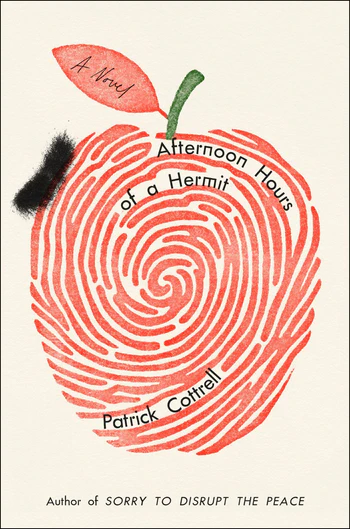
Patrick Cottrell’s second novel Afternoon Hours of a Hermit begins with a mysterious envelope delivered in the mail; inside is a childhood photograph of the narrator’s deceased brother, sent just as the fifth anniversary of his suicide approaches. It is the kind of inciting incident that carries all the scaffolding of a detective story—a mystery to be solved, a past event reopened under the promise of yielding not just new information but some deeper understanding. However, this is not your typical detective novel: Cottrell resists the genre’s usual pleasures of discovery and resolution; questions are left unanswered, and the truth is partial or ambiguous, if it’s uncovered at all.
The novel follows writer Dan Moran as he returns to his childhood home in the Midwest in search of answers about the circumstances of his brother’s life and suicide. His family is surprised to see him, even as they prepare a memorial for his brother—one that Dan was not invited to attend. Unfazed, or perhaps simply accustomed to his ostracism as a trans Asian adoptee, Dan forges ahead with his investigation. From the outset, it is clear that Dan is spectacularly ill-suited to the task—he misreads clues, follows dead ends, and cannot seem to stay on track. It is important to note that Dan doesn’t simply consider himself a detective, but rather a “metaphysical investigator,” a designation that shifts the terms of the inquiry from facts to interpretation. More than that, the term signals Cottrell’s larger project, which lies not necessarily in arriving at answers but in the act of reading deeply. In both Afternoon Hours of a Hermit and Cottrell’s first novel, Sorry to Disrupt the Peace, there’s a strong extra-literary dimension: Sorry to Disrupt the Peace is filled with direct quotations from well-known authors, and Afternoon Hours of a Hermit similarly weaves in references to writers like Thomas Bernhard and W.G. Sebald.
Moreover, Cottrell’s characters are marked with bibliophilic tendencies. At one point Dan thinks, “My constant curiosity got in the way of my suicide,” a line that reads as his own but is in fact a direct quotation from Bernhard’s The Loser. Dan doesn’t simply think about his life; he thinks through literature. It is no surprise that a reader like Dan would be drawn to detective work—they are engaged in similar pursuits, trying to locate truth, to distinguish between what one thinks and what one knows. In this way, Dan Moran’s investigation stages a kind of deep reading of his brother, yes, but also of himself, probing the gap between reality and how one is perceived. This foregrounds a central tension of the novel form—and of reading itself: the desire to enter another consciousness, and the impossibility of ever fully doing so. If Afternoon Hours of a Hermit reveals anything, it is that truly knowing another person is the greatest mystery of all.
Patrick and I spent a few weeks exchanging emails about detective stories, metafictional doubling, lessons drawn from Thomas Bernhard, and more.
Evander James Reyes: This novel leans into the detective/noir genre, but Dan Moran is—there’s no other way to say this—a terrible detective! What draws you to the detective story and how are you interested in playing with/against expectations?
Patrick Cottrell: The word that comes to mind for me is atmosphere. Rain, fog, cars. I grew up in Milwaukee and I don’t remember many sunny days. I wanted to conjure the mystery/noir atmosphere which means driving around at night, spying on people, questioning them, showing up at places you’re not supposed to, but I didn’t want to be beholden to managing all the plot conventions. The noir genre seems to be about justice so there’s some added propulsion on a narrative level, but that’s also where the humor comes in. Sometimes the most justice-inclined people are also the most delusional and the least self-aware. Dan Moran believes he is attempting to restore justice by writing his psychological thriller, but in reality, what is he doing?
Frustration and humor go hand in hand.
For me the ending was the most important part of the book and I really struggled with it for a long time. I had to do a major rewrite that involved deleting multiple chapters. When I landed on this ending, I felt a huge sense of relief because I believe it works. I don’t think it answers things in a tidy, traditional mystery sense, but I deeply believe in it on an emotional and gut level.
EJR: Did you have any detective stories in mind while you were drafting this book?
PC: I’m indebted to the blurbs in Olga Tokarczuk’s Drive Your Plow Over the Bones of the Dead. I hadn’t read it at the time, but I read the blurbs and something about them made me want to write the book they were describing: private, existential, a fairy tale, philosophical. I tried to imagine what that book could be. The blurbs were actually inspiring which is weird to say. Drive Your Plow is an off-kilter mystery.
Another detective influence is Bennett Sim’s story “The Postcard.” I love how he refuses to explain the circumstances of what his narrator is doing, the set-up is fairly vague and mysterious in a purposeful, ominous way. Of course, Kobo Abe was a master at refusing to explain things. It can be frustrating for the reader, but there’s something productive about the frustration. Marie NDiaye’s My Heart Hemmed In is not a traditional detective story, but the protagonist is trying to find out why she and her husband have been (seemingly overnight) shunned by their community. It’s a psychological horror novel. The protagonist sets off on an investigation of sorts through her city while her husband is bed-ridden with a festering wound. NDiaye’s imagination is boundless.
EJR: Dan Moran’s decisions often feel frustrating, even self-sabotaging, but they also seem to drive the novel forward. What do you think about frustration as an engine in the book?
PC: Frustration is always part of the mechanics of plot: someone wants something and they face obstacles or they get in their own way and this pushes the story forward. I’m never thinking about plot when I’m writing though. I am mostly thinking about humor, or whatever’s funny to me on the page (I honestly don’t know what’s funny to other people). Frustration and humor go hand in hand. If you’re not a particularly plot-driven writer, you have to find other ways and means to move the book forward. Claire-Louise Bennett is good at that. I always want to stay in her world even though she’s never beholden to plot. She conjures a particular mood or atmosphere via her sometimes-outlandish, embroidered sentences. Caren Beilin does this, too. Sometimes if I’m stuck, I go back to Amina Cain’s description of narrative: “[ . . . ] when objects and characters, and also landscapes, appear together, that is how narrative happens for me.” Amina Cain’s work is always a guiding light.
I see that my book is made up of other books and writers and it seems silly to ignore that fact or avoid it.
EJR: The title Afternoon Hours of a Hermit exists both as the book we’re reading and as a book the narrator abandoned writing—what drew you to this doubling?
PC: I think it was a self-serious conceit that’s supposed to be absurd and funny. The narrator seems to take writing seriously but at the same time erases and abandons what he’s doing, as you’ve rightly pointed out. I enjoy the game within the game, the little corners where you can play around to see what you can get away with. I love doubles, twins, doppelgängers, mirrors, etc. because I feel as if, when I was adopted, I myself was doubled in some way—when I was adopted, it’s almost as if there were two directions my life could have gone and it went one particular way, but then there’s the shadow of other possibilities. And transitioning, there’s another doubling, but not.
EJR: Another doubling: In Afternoon Hours, Dan Moran is the author of your first novel, Sorry to Disrupt the Peace. I find this ontological weirdness really intriguing! It creates a strange loop of interpretation—when I went back to Sorry to Disrupt the Peace, I could only read it through the Dan Moran of Afternoon Hours. The same text exists in two contexts at once. What kind of textual game are you playing with that move?!
PC: I love that! I think that’s really cool and funny. Yeah, it’s a weird meta-fictional game. I wanted to try to establish that the world of this book, Afternoon Hours, is not unfolding in the same world as the first book. When I first started writing this book, I had the idea that the narrator would transition in between books. I had never heard of anyone doing that or exploring that. But, I wanted to do that in an indirect way. So, is the Afternoon Hours narrator the same character in the first book, pre-transition, or a fictional invention of Dan Moran? Again, it’s a hall of mirrors. I like that the books can exist on two different planes of reality.
Someone asked if this is a sequel or if I simply rewrote my first book with a trans narrator. Absolutely not. But I understand why a person would ask that or think that, I really do: suicide, siblings, Korean adoptees, returning home, detectives, etc. Honestly, I think a lot of what I was thinking about with Dan Moran (as the author of Sorry to Disrupt the Peace) goes back to the fact that my former name will always be tethered to my first book. I wanted to reclaim it with a new name, in a sense.
I also want to put in a good word for McSweeney’s here. Perhaps some of the larger publishers can pulp backstock, reprint copies with a new name, and take the financial loss, but McSweeney’s is a small non-profit organization and they did the right thing and reprinted my book with my name on it. I’ve always felt deeply grateful for them, especially Amanda Uhle and Rita Bullwinkel, both amazing authors. They get it.
ER: What draws you to characters whose relationship to literature is so immersive?
PC: A novel can be a vehicle or container of influence, conversation, and perception. The novel as a form is so capacious. I mostly write to be in conversation with other writers, their traditions, techniques and so on. I spend more time reading than writing. Even though I love writing, I don’t do it every day, but I read every day (for work and for my own purposes). When I was in high school, I didn’t have many friends but I spent a lot of time reading and going to bookstores. Friday nights, two friends and I would go to Barnes and Noble or Half Price Books and browse and sit on the floor and read. So to answer your question, I guess I see that my book is made up of other books and writers and it seems silly to ignore that fact or avoid it. I feel hopeful that this acknowledgement adds depth to the narrative and some minor excitement. When I read Bolaño, I’m always excited to read the writers he mentions. I suppose these mentions of other writers also situate my book in the real world, half-in, half-out.
Writing doesn’t get easier; I think it gets harder because you expect it to get easier the more you do it, but it actually doesn’t.
ER: What is your relationship to Thomas Bernhard? I notice certain stylistic echoes—repetition, the constant returning to earlier thoughts and images, which take on different valences as the novel unfolds. At the same time, this novel doesn’t read to me as a strictly “Bernhardian” rant—how do you see your work in relation to his, and where do you feel it diverges?
PC: I’ve read some of the writers who mimic his voice on a syntactical level and I really enjoy those books. But . . . that’s not really what I’m trying to do at all. I think what Bernhard offers me (as a writer) is permission to sidestep descriptions of physical movement and descriptions of people’s physical appearances, which I’ve always had trouble with. A character can spend pages upon pages physically static but Bernhard creates a mood and atmosphere that’s addictive, so as a reader I don’t care if the character is moving through the world or not. My greatest affinity with him is a way of viewing the world. You understand that at their most basic, people can be incredibly grotesque, selfish, small-minded, and cruel. And the world continues to become more absurd by the day. And yet, there’s compassion in his books, they’re not heartless. To be Bernhardian, you have to have an eye (and ear) for absurdity. He is truly a very comic writer. His sense of humor holds up, it’s not dated at all. About divergence, that’s an interesting question. I might be more aligned with the detective/noir genre although The Lime Works could be considered a crime novel, I guess. I could talk about him a lot. Once you know his tricks and techniques, you can spot his influence everywhere.
EJR: It’s been about eight years since Sorry to Disrupt the Peace—how did writing Afternoon Hours feel different this time around?
PC: It took a lot longer. I’m older and slow. I felt blocked for a while because I needed things in my personal life to settle down. During that time, I would write little stories here and there and interview other writers. Writing doesn’t get easier; I think it gets harder because you expect it to get easier the more you do it, but it actually doesn’t, at least not for me. The only time I feel writing is relatively easy is when I’m working on a really short story, and that’s because my short stories are so short, they’re probably closer to prose poems.
This will sound weird but I felt at peace with taking a long time between books. I didn’t want to write a book just for the sake of writing it and trying to get it published. Not everything has to be published, not everything needs to turn into “a book.”
All of this is to say, I’m not a very strategic writer, I’m almost pure intuition. With my first book, I felt very anxious while writing. What felt different this time was a sense of enchantment. I wanted to be submerged in something weird and uncanny, and I felt that while writing this. I didn’t feel as anxious. Once I knew what I wanted to write about and the particular angle I wanted to explore, writing the book became challenging in a pleasurable way.