Interviews
This Novel’s Shifting Perspectives Examine Foster Care from All Sides
Rachel León’s “How We See the Gray” is a compassionate, nuanced look at those impacted by the foster care system
I drove a little over an hour past barns and water towers to Rockford, Illinois: home to Anderson Japanese Gardens, Pig Mind Brewing (best vegan food in the Midwest, according to the internet), and social worker/parent/editor/debut author Rachel León. I have long admired Rachel as my editor at Chicago Review of Books, and know her to be kind, intelligent, generous, and thorough. They have also worked in child welfare for almost two decades. So it came as no surprise to me that their Rockford-set novel about the foster care system, How We See the Gray, is a compassionate and nuanced portrayal of the people impacted by the system, its limitations, and its shortcomings. The story is also about second chances: who gets them, and who is wrongfully denied them.
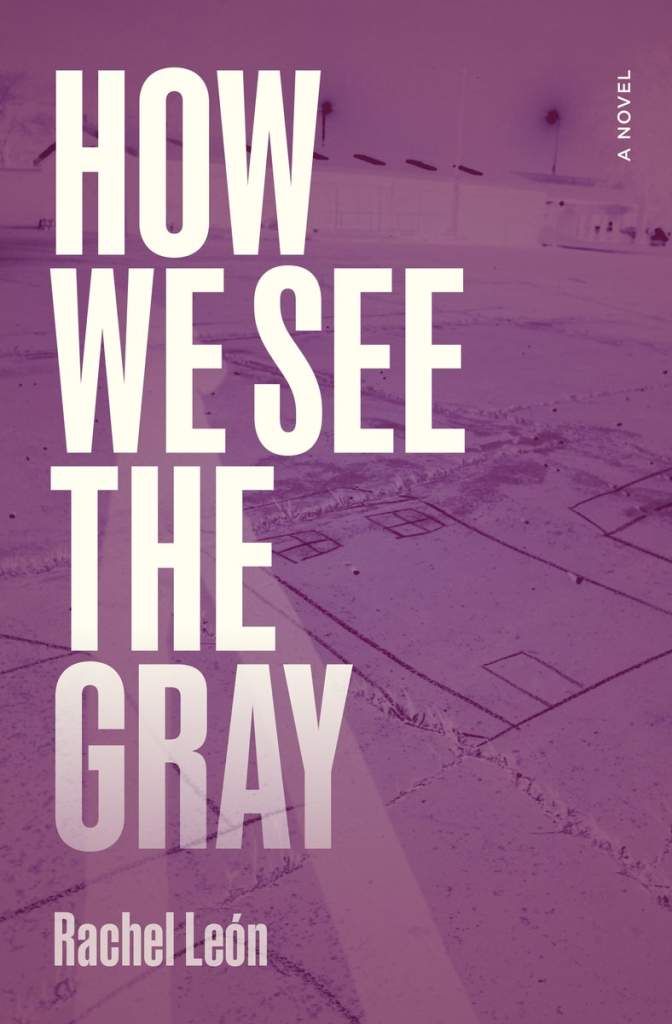
With sharp, funny, and heartbreaking prose, Rachel builds a cast of characters readers will root for. Their disappointments and dreams are deeply felt, and the stakes of their stories tangle. If a completely happy ending is impossible in this web of stories about the trauma of fractured families, How We See the Gray delivers the next best thing, or perhaps something even better: satisfying, realistic paths towards forgiveness, healing, and hope.
I was eager to speak with Rachel about the many perspectives, vibrant characters, and not-so-miserable city at the heart of the novel. I was terribly grateful she met me at Pig Mind Brewing (which I can confirm is incredible) to discuss their book, out May 15th from Northwestern University Press.
Jen St. Jude: Let’s start with Rockford! The city is so clearly a character in the story as well; it hums behind all of the action and dictates the landscape of these characters’ lives. Why did you set it here?
Rachel León: When I began writing fiction, I set everything I wrote elsewhere. While I was born and raised in Rockford, and still live here, for a long time, I felt shame about where I’m from. Historically, the narrative about my hometown hasn’t been good—we’ve made national lists for our high unemployment and crime rates (higher per capita than Chicago) and [are] on a “most miserable cities in the U.S.” list. When I was in high school, the goal was to get the hell out. And when that didn’t happen, I felt like a loser for a long time. So when I started writing, all my stories were set in other Midwestern cities I knew: Chicago, Madison, Milwaukee.
But this novel deals with the foster care system, which I’ve worked in on and off for a long time—I started way back in 2004. And the foster care system varies widely from state to state, even county to county. I’ve had a few Cook county cases and was surprised how differently things were handled—in the same state! Which is all to say, despite my wealth of child welfare experience, I knew I couldn’t set this story anywhere but Rockford. Originally, I wrote it without mentioning place. I had a writing mentor Karen E. Bender who read a draft and noted I was avoiding setting—at times the characters seemed to be floating in space. I wasn’t conscious of my shame about writing Rockford until it was pointed out.
I’m ruthless with my own work. It makes me happy to tear it to shreds.
So I tentatively added Rockford. Not much—and that was still too much for some agents, who wanted mention of my hometown taken out. They felt that this story needed to feel like it could happen anywhere for it to have universal appeal for readers. But ultimately, this story and these people are very specific to this place. The characters are shaped by this town too.
Megan Stielstra is the editor who acquired the novel for Northwestern’s University’s Curbstone imprint, where they focus on craft-forward writing that engages with social justice issues, and in our initial conversation, her only real note about what the novel needed was more Rockford. I was thrilled. It gave me permission to lean in, offer specificity of this place, and in the process, it actually helped me get over my shame and become proud of where I’m from.
JSJ: I was so impressed by the way you layered the story and developed so many arcs over the course of the book. With so many stories intertwining and threads to tie up, how did you think about plotting?
RL: Obsessively! I know it’s not cool to like plot in literary fiction, but I love it. While I’ve enjoyed many plotless novels, the books I love best have strong narrative arcs, so I wanted to offer that to my readers. But plot is hard! Not formulaic plot, but authentic, character driven plot.
I don’t like outlining, but I did a lot of it to map out each character’s story on its own, but also outlines where I’d put everyone’s story together to look at the overall arc. I was also looking at emotional beats and the emotional textures of each chapter. I wanted to follow heavier moments with lighter scenes, so I did emotional outlines too. I used notecards with different color markers for different characters and emotions and filled my walls. At one point I had one room full of the character outlines, and in another room the emotional beats. It was meticulous and a little mad scientist-y. But that’s how I discovered what was missing from the novel, which helped guide my many, many revisions.
JSJ: Speaking of revision, I’ve had the best time working with you at Chicago Review of Books, where you serve as Managing Director. So I wanted to ask, how do you think being an editor shapes your work as a writer?
RL: I must admit, I love editing more than I like writing. And that’s partially because I don’t consider myself a very good writer! My first drafts are truly embarrassing in their awfulness. It’s through the work of shaping and refining that I turn what I write into something (hopefully) worth reading. I do think I’m a pretty good editor. I can see possibilities in drafts—I typically have no shortage of ideas on how to sharpen a piece. I love editing other people’s work, but I’m also hyper aware that the piece is theirs and it’s my role to help them make it the best it can be while maintaining their voice and intent. Maybe it’s the social worker in me, but when I’m editing someone’s work, I’m very cognizant of their feelings and the trust they’re putting in me so I treat the work with care. But I’m ruthless with my own work. It makes me happy to tear it to shreds. I’m always eager to just get a draft done, so I can get to the fun part.
JSJ: One of the main characters is Meredith, a case worker who, after drinking too much to cope with the stress of the job, almost loses custody of her own son. Did you see her as a bridge, from those scrutinized by the system to those managing it?
RL: Absolutely. Meredith’s character was the genesis of the novel. Like Meredith, I was a single parent who drank to cope with the stress of working in foster care. And at that time, I felt like the line separating me from my clients was so thin—I was only on my side of that line because of my privilege and support systems. I empathized with my clients but also saw how close I was to them, divided by my skin color and education. And other privileges too: Most people see me as cis and hetero, and I present as non-disabled. This novel made me really interrogate my privileges and my own complicity in upholding systems of oppression. Of all the times I’ve let people make assumptions about my sexuality and gender identity because it seemed easier or safer—even when it also hurts. Which brings us back to shame . . . I have a lot of internalized shame for not being out in different spaces. But again, it’s a double edged sword—which goes back to safety and privilege. Even though Meredith is living paycheck to paycheck and lacks family support, she still has a lot of privilege. The same privileges I do.
JSJ: Another main character is Ebony, a lesbian teen in foster care. I loved her scenes; they felt so close to a teen’s voice, and though I was rooting for her, I understood why she made some self-punishing choices. What do you think she brings to the chorus of voices in these pages?
This novel made me really interrogate my privileges and my own complicity in upholding systems of oppression.
RL: I had a lot of fun writing Ebony’s character. She felt really important to the novel. I wrote a draft where she was the one telling the story, but realistically, she wouldn’t have access to most of the characters’ stories.
What I hope she brings to the chorus of voices is a vital perspective in foster care. I mean, if my goal was to offer the reader a bird’s-eye view of the system, it’d be weird to only have adult characters. The system is built for the protection of these kids. And yet because of confidentiality—which is obviously critical—youth in care are faceless and nameless in the media. I wanted to humanize someone impacted by the system, and show that these are real kids with real stories. And like any real person with a real story, there is a lot of complexity and contradictions.
JSJ: Speaking of the bird’s-eye-view, how did you decide on whose perspectives to include, and how to show different sides of the foster care system and these characters’ relationships to it? I’m assuming you wanted to show people who played different roles: worker, birth parents, foster parent, etc., yes?
RL: The novel began as a dual POV story about a caseworker and her former client. As I dug into revisions, I tried pretty much every possibility with POV—I tried it as a single perspective, I wrote it in first person, added some sections in second, tried varying degrees of closeness in third . . . And I played around with how many perspectives to include. At one point there were 13 perspectives. Ultimately, I settled on nine.
It was important to include a range of diverse voices not only because I think it matters, but also because it reflects the reality of my life. Of Rockford. Of the foster care system. The novel’s diversity is reflective of my world. I grew up on the West side of Rockford, in a diverse neighborhood. In the single block where I grew up were people of different races, ethnicities—plus, two gay couples. That’s how I think neighborhoods should be (and books!): with different people coexisting. I notice in novels by white authors that every character is white. It seems odd and makes me wonder if that’s how they experience the world. Because I’m very aware when I’m in all-white spaces. They don’t feel normal or comfortable to me. I’d rather be the only white person in a room, and have had that experience many, many times. I’m grateful for those experiences.
So yes, diversity was a must. I was concerned about writing about the perspective of people who are different than I am, but they deserved their place in the story. I read as many books as I could find about the topic—Paisley Rekdal’s Appropriate: A Provocation, David Mura’s A Stranger’s Journey: Race, Identity, and Narrative Craft in Writing, Toni Morrison’s Playing in the Dark: Whiteness and the Literary Imagination . . . I approached it with a great deal of caution and anxiety. I really wanted to get it right and knew I had limitations, as all writers do. So, I wrote and rewrote the book many times. I did a lot of research and hired sensitivity readers. Some of my research actually helped me realize one character in particular was closer to me than I’d initially thought: Writing Nel helped me understand my own gender identity.
I still have a lot of anxiety about whether or not I got it right and how readers will respond to it. But I know I approached it with a lot of caution, and hopefully, sensitivity.
JSJ: You mentioned nonfiction books, what about fiction? What works were How We See the Gray inspired by? With which books is it in conversation?
RL: I was inspired by Justin Torres’s We the Animals, which might be obvious with the “we,” and also ¡Yo! by Julia Alvarez. (One of the chapters in that novel is actually set in Rockford!) ¡Yo! is a fascinating character study of one woman writer through the perspectives of other people in her life: family, friends, a stalker . . . you get a shifting—yet more complete—portrait of this character through the different lenses. I wanted to also let shifting perspectives complicate what the reader thought they knew about certain characters. Gloria Naylor’s The Women of Brewster Place and Tommy Orange’s There There were two other touchstone novels for me.
As for which the book feels in conversation with, I like to think it talks to Kristin Arnett’s With Teeth, Jessamine Chan’s The School for Good Mothers, Catherine Hernandez’s Scarborough, and another novel Curbstone Books published called God Went Like That by Yxta Maya Murray.
JSJ: Another interesting voice in the story is the “We” POV, similar to one of the voices in We the Animals. When and why did this get added to the story?
RL: What’s funny is that I had the title even before a single “we” appeared on the page. The title just felt right.
For a long time the novel was written in third person, and a friend observed the narrator was super opinionated about the system, so much so that it was unclear whose opinion it was: the author’s or the narrator’s. She suggested I check out David Ambroz’s memoir, A Place Called Home, because it steps back and editorializes in the way she could tell I wanted to do. And after reading the book, I decided to lean into that. It was too hard for me to write about the foster care system without including commentary. Enter this chorus of opinionated caseworkers.
I see an interplay between both my roles: as a writer and social worker.
But I also wanted to show the limitations of narration. Foster care has influenced my writing even when I’m not writing about it, because as a case worker, I’m always collecting stories and looking for their limitations. One perspective stories are limited and fall short. It’s why I love multiple POV novels so much. My work in foster care has also been about shaping stories in a way that has a direct impact on my clients. The novel’s opening says it, but it’s true: This work revolves around stories. I see an interplay between both my roles: as a writer and social worker. I think I’m better at both jobs because of my work in the other. I believe being a writer makes me more empathetic in my day job.
JSJ: What I love so much about all of your characters is that they’re allowed to be flawed and human, and like you said, the line between the clients and the case workers is so thin.
RL: Right. The thing that I always go back to in my writing is the theme of mistakes, second chances, and trying to do better. I have perfectionist tendencies where I beat myself up over my mistakes, yet have no problem giving other people grace for theirs. But I believe most of us do the best we can in the moment. Second chances are an obsession in my work no matter what I’m writing about, especially because I think a lot about inherited trauma—substance abuse issues, mental health issues, and other very human struggles. These things also shaped the novel.
JSJ: Along those lines, the story made me think about support networks as a type of inherited wealth. Some people have folks they can call for support in their lower moments, and some don’t. It really matters, and that’s shown here with Meredith and many of the characters who are parents.
RL: It’s true. Community is something I hunger for and often realize I lack in my life, which is something that’s kept me working in foster care for so long. Because the job is so intense, you get very close to your coworkers. You can’t do it alone—I mean, you do most of the job alone, but there’s no way to do it without the support of your coworkers. Because of confidentiality, you can’t go around telling wild stories from your day—the dangerous situations you might find yourself in, the ridiculous things people say to you . . . But they’re too much to hold without processing. My coworkers and I have done a lot of trauma bonding and laughing—the kind of laughter that’s so intense it makes your stomach hurt. And we’ve cried together—there can be a lot of that too.
It’s the people that keep me doing this work—both the families I work for and the people I work with. Being part of a foster care team has been the strongest community I’ve ever been a part of. It’s found family—beautiful and messy. I can’t imagine launching this novel without the support of my coworkers. They’re really excited to see our work in the trenches portrayed in fiction—the incredible challenges and rewards this kind of work brings. I hope I make them proud.