Books & Culture
Revisiting “Silence of the Lambs” in the Age of Trans Backlash
Thomas Harris’s 1988 novel tried to paint an irredeemable villain. Instead, it captured something real about trans experience
Sometimes you are reading a book—not even one by a well-known transphobic children’s author—and are struck, halfway through or near the end, by a bit of transphobia. Sometimes it’s load-bearing: Both Helen Oyeyemi’s Boy, Snow, Bird and Lidia Yuknavitch’s The Book of Joan end with revelations that their villain characters are caricatures of trans masculinity (Oyeyemi’s, in particular, “resolves” this by having the primary characters agree to tell him he does not need to be trans anymore). Sometimes it’s more by omission than by the letter itself: In Yoko Tawada’s Scattered All Over the Earth, a non-medically transitioning woman named Akash is treated by every character as a man without correction or regard for her sense of self. Every time, it’s disappointing. Not only that the author would think that these ideas are okay, or that they would make it through the editorial process, but that they would be so under-discussed in the public acclaim these books receive.
It may seem silly, but I prefer to read books that are much more explicitly transphobic and a few decades old. You’d be forgiven for not knowing how broadly blasé people were even 10 years ago about transness. In 2014, Rush Limbaugh, never a paragon of wokeness, actually apologized to a trans caller to his show for using the slur “tranny.” Famously, when Christine Jorgensen returned from abroad with her gender newly affirmed, it was treated more with intrigue than with anger. “Ex-GI Becomes Blonde Beauty,” the papers reported in 1952.
Don’t get me wrong: Even with all the attacks against trans people now, it is better to be trans in America in 2026 than at almost any other time or place. But I do get a real enjoyment from, say, reading Gore Vidal’s Myra Breckinridge and seeing both how much and how little Vidal understands about trans women.
In this complicated space of retro transphobia, it’s hard to think of a book that has had a greater impact on the representation and public imagination of trans people than Thomas Harris’s 1988 novel The Silence of the Lambs. Most of you have probably seen the movie; maybe you’re even trans and you really adore it—the canon of trans villains provokes diverse and complex responses from their transsexual audiences. I am not one of the trans people who has an easy time watching the film adaptation of Lambs, though I acknowledge that it is in most respects a perfect film.
In case you don’t know, or have forgotten, Lambs is about a person the press call Buffalo Bill (“because he skins his humps,” girl detective Clarice Starling explains) who is killing women in order to make a suit out of their skin for himself. The novel was inspired by the press coverage of Ed Gein, a man who, in 1957, was found to have killed two women and robbed the graves of many more. Among the many handicrafts he made with these bodies were a “corset made from a female torso” and “masks made from the skin of female heads,” which, along with some leading questions by investigators, led to him being branded as gender-deviant. (This coverage also gave rise to Psycho and The Texas Chain Saw Massacre.) The film version of Lambs is generally regarded as pretty transphobic, and even prompted director Jonathan Demme to make Philadelphia as an apology to the queer community. (Which was of course unnecessary; Demme was still at queer net-zero in my books for directing Stop Making Sense.)
Both film and book go out of their way to clarify that Buffalo Bill (who I will henceforth call by their government name, Jame Gumb) is not a transsexual. In the novel, Clarice tells Hannibal Lecter (a cannibal and more acceptable monster) there is “no correlation I ever saw between transsexualism and violence.”
There is a long history of breaking trans people into categories that boil down to ‘real’ and ‘fake.’
“Billy’s not a real transsexual,” Lecter replies, “but he thinks he is” (emphasis mine). “He tries to be. He’s tried to be a lot of things, I expect.”
There is a long history of breaking trans people into categories that boil down to “real” and “fake.” Most famously, if you wanted to transition into a straight woman (“heterosexual transsexual” or HSTS) you were allowed to; if you wanted to become some kind of degenerate lesbian freak, you were an “autogynephile”—a man turned on by the idea of being a woman.
So how, in the imagination of Lambs and the late 1980s, are we to distinguish between these categories?
Lecter instructs Clarice to check the three extant gender clinics for people who have been rejected from transition. In particular, he suggests she look at a test called “House-Tree-Person,” in which a subject is asked to draw the titular trio. “Look for someone who didn’t draw the female figure first,” Lecter says. “Look for a house drawing without the rosy-future embellishments” like baby carriages and flowers and curtains. “You get two kinds of trees with real transsexuals: flowing, copious willows and castration themes . . . [but] Billy’s tree will be frightful.”
This is the sort of detail that is, understandably, missing from the Best Picture-winning film adaptation. But it’s what allows me to enjoy the book. Instead of distinguishing Jame as a fake, it exposes how absurd this entire taxonomic enterprise is.
Jame is “not a transsexual, he just thinks he is, and he’s puzzled and angry because [the gender clinic] won’t help him.” Early on, a doctor at Johns Hopkins says, “To even mention Buffalo Bill in the same breath with the problems we treat is ignorant and unfair and dangerous . . . it’s taken years . . . showing the public that transsexuals aren’t crazy, they aren’t perverts, they aren’t ‘queers,’ whatever that is . . . these are decent people with a real problem, a famously intransigent problem. They deserve help.”
The book does not want to be sympathetic to Jame, but it is so interested in spending time with her that, in contrast to the (excellently acted, very upsetting) performance in the film by Ted Levine, I can’t help but see myself in Jame (or “Mr. Gumb,” as the narration insists on calling her). Jame has gotten electrolysis, started HRT. As she goes about her day, she notes that her “hands and feet [are] a little stubbly,” but she decides that “they would do.” She loves her dog Precious, coos frequently that “Mommy’s going to be so beautiful.” The first time I read Lambs, I had just adopted a cat; I was eight months on hormones—just past the edge of the most uncomfortably in-between period—and I remember thinking: This is exactly how I talk to my beloved pet. I, too, move between attempts at eradicating all hair from my torso and legs and thinking, eh, what’s a little stubble? The narration calls this an “earnest inept attempt . . . or hateful mocking” of womanhood, but to me, for better and worse, it just looks like womanhood.
Like Jame, I have also been puzzled and angry that a gender clinic won’t help me.
What the book fails to ask or answer is what the difference is between being trans and merely thinking you are. What is the source of Jame’s apparent gender euphoria when she tries on her in-progress woman suit? Some post-Freudian obsession with her beauty queen mother, the book suggests, but we get no clearer answer than that.
Like Jame, I have also been puzzled and angry that a gender clinic won’t help me (and they didn’t even ask me to draw a tree!). I know from experience that insisting all the more that no, really, I am really trans, and I can tell you a thousand truths and lies that confirm that fact if you will just give me some fucking estrogen doesn’t work when the system really wants you to stay where you are. I haven’t killed anyone over it, but it is easier to understand, in the context of Harris trying, again and again, to assuage any concerns you might have about the nature of Jame’s identity, why Jame might have.
It is far more pleasant to have an understandable trans villain than the ones Oyeyemi or Yuknavitch gave us. Their books have little interest in the psychologies of their trans characters or the arbitrary systems that aim to define what makes someone a “true transsexual.” How delightful, in contrast, to see the absurd system break down in Harris’s Lambs. Because despite occasional claims to the contrary, the only people who care these days about distinctions between “real” and “fake” transsexuals tend to be other transsexuals—crabs kicking and screaming to stay at the top of our particular barrel. J.K. Rowling and Pamela Paul and Graham Linehan do not care how you embellish your tree or decorate the female figures you draw. They would rather I and all my friends and perhaps you, too, reading this be immiserated if not outright dead. They look at the taxonomic absurdity and decide we are all monsters. Reading Lambs, you could conclude something similar: that trans women are freaks who would kill and skin a woman if that was the only way to be one; but you can as easily—and more accurately, I think—look at it and ask: What is the rational response to an irrational stricture?
We see something of ourselves in these stories, even if they make us out to be monsters.
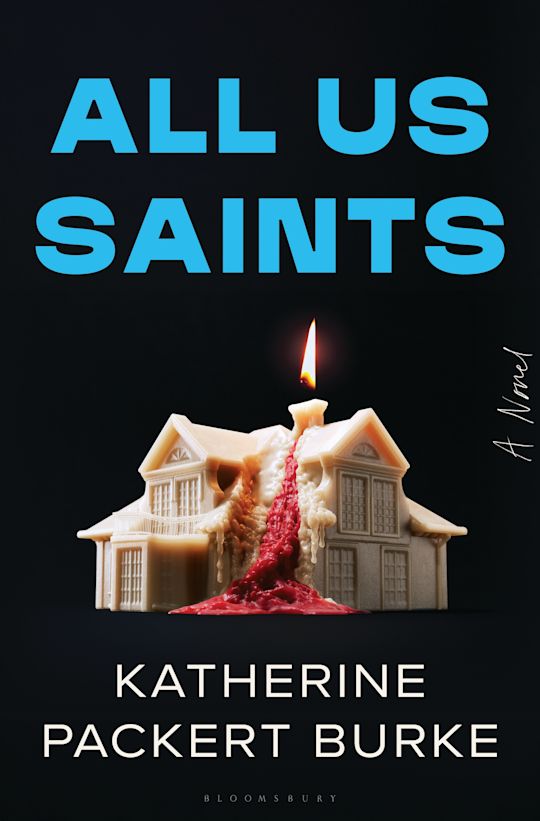
Taking after Lambs, this became one of the chief questions I asked while writing my own novel, All Us Saints—in which a closeted, abused trans girl sees, like Jame, no future for herself, and decides maybe it is better to kill and to die than to go on feeling the deep horror of living. She doesn’t die, and fails to kill her sister (taking out only her sister’s three best friends).
Early in the writing process, I went back to the accounts of Ed Gein to see how those initial murders were described; as with Gein’s murders, my trans murderer can only be understood by the sensationalist true crime media complex as a freak of nature. In Harold Schechter’s account of Gein’s killings, he writes that Gein’s “transvestism” was a consequence of an Oedipal obsession with his mother, leaving Gein wishing he had been “a woman instead of a man,” wondering “whether it would be possible to change his sex.” But as scholar K.E. Sullivan points out in the seminal essay “Ed Gein and the figure of the transgendered serial killer,” there is little evidence of this beyond words that police put into Gein’s mouth, asking “Would you ever put on a pair of women’s panties over your body and then put some of these vaginas over your penis?” To which Gein responded, “That could be.”
That could be. That’s more or less the basis for decades of transphobic slasher stories.
But having been, as Jame Gumb is, blocked from medical transition, and having lived, as Gein did, deep in repressive territory where if I hadn’t known a handful of trans people, I might not have understood I was one, the false story—the idea that Gein might have been someone like me—has always filled me with an indescribable melancholy. Every trans slasher movie—Lambs, Sleepaway Camp, Texas Chain Saw—has its trans defenders. I think this sort of melancholy is one of the reasons why. We see something of ourselves in these stories, even if they make us out to be monsters. To paraphrase Norman Bates, we all feel a little monstrous sometimes. It was this melancholy—this desire to look past the dominant narrative, not only of Gein’s gender identity but the killings themselves, and understand what it might be like to feel so confused and alone—that gave rise to my novel’s killer.
Unlike Harris’s depiction of Jame, I don’t try to quarrel about real or fake or identity at all; my trans killer doesn’t even know enough to call herself trans. But as with Jame, I wanted to take the abuses, the roadblocks, the violence that trans people face every day, and turn it back against the cisnormative nuclear family that is so often responsible for those horrors. I do not wring my hands, like the Johns Hopkins doctors of Lambs; instead I say, Okay. You’ve made us into monsters. Now what?