Interviews
Tracing the Connection Between Chronic Illness and Climate Change
In “Body Weather,” Lorraine Boissoneault maps her body’s systems onto weather patterns
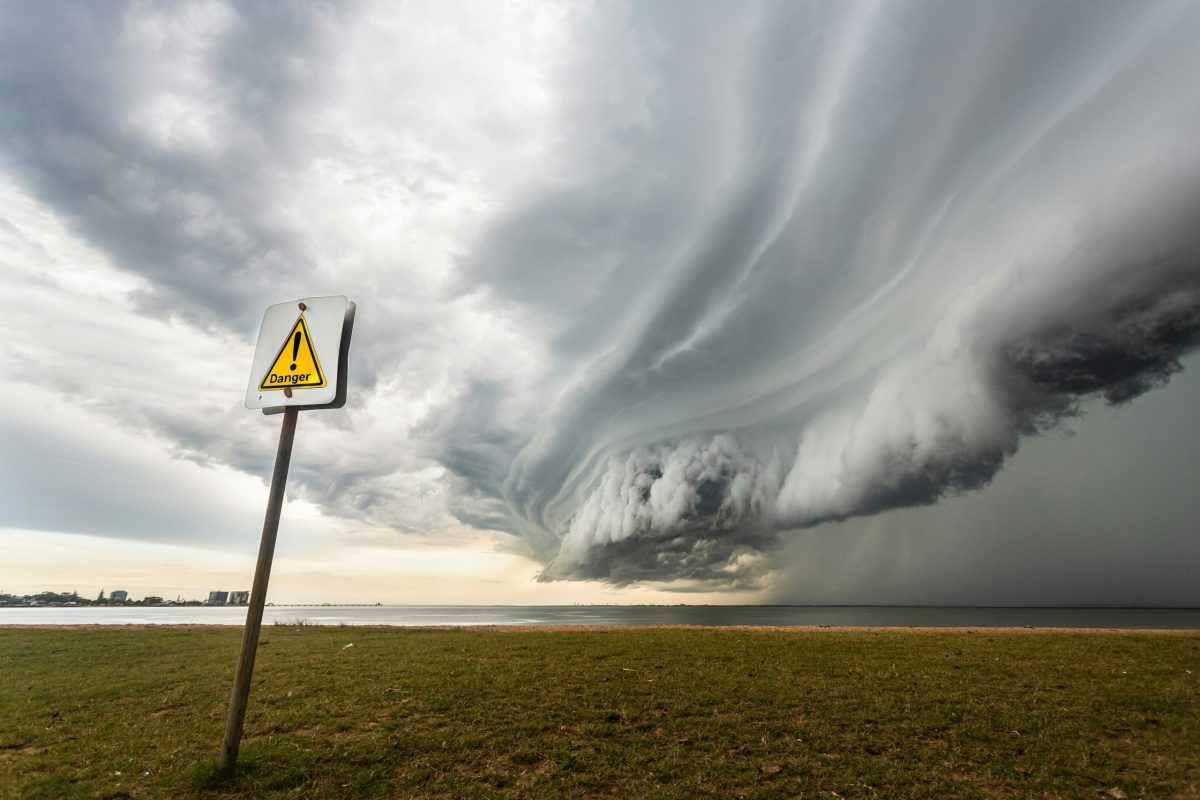
Lorraine Boissoneault spent her twenties and thirties getting sicker. Her thyroid dysregulated. Her heart became arrhythmic. Doctors told her to manage stress and lose weight, but the diagnoses kept coming—inflamed joints, then endometriosis—and the medical advice never changed. Meanwhile, Boissoneault was working as an editor for The Weather Channel, tracking hurricanes and atmospheric changes.
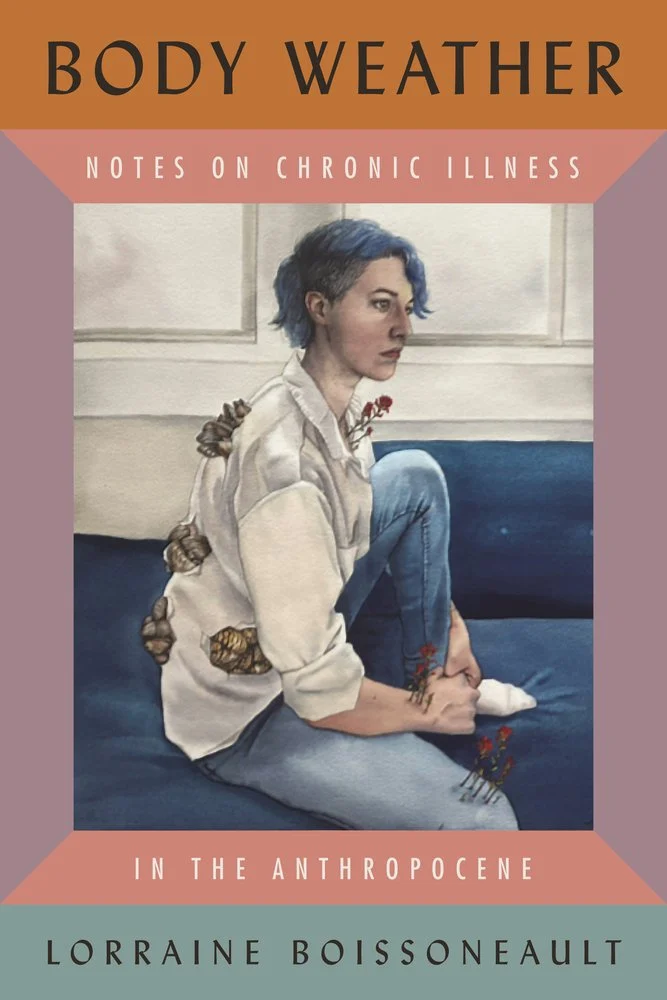
After being diagnosed with six autoimmune diseases, Boissoneault began mapping her body’s systems onto weather patterns—thyroid onto temperature regulation, heart onto storms, uterus to floods, guts to landslides, and joints to wildfire. In Body Weather: Notes on Chronic Illness in the Anthropocene, Boissoneault argues that chronic illness and climate chaos connect: Regulatory systems that once self-corrected are breaking down and warnings are dismissed. Those most affected are told we’re overreacting.
Since 2025, the Trump administration has terminated and frozen thousands of climate science and medical research grants, while gutting the Environmental Protection Agency. Meanwhile, chronic diseases are rising worldwide. People are getting sicker while the infrastructure meant to cure them is collapsing. Boissoneault’s book lands in that collision.
Boissoneault’s book gave me a way to talk about my own experience with illness. I was diagnosed with lymphoma at 29 and spent months convincing doctors that something was wrong before they found tumors the size of baseballs crushing my heart and lungs. I’m in remission now, but I still wake up checking what hurts, or wondering if today is the day something will appear on a scan. Body Weather gave me a way to talk about that: My body is weather I cannot predict. We spoke over Zoom in late March, a few weeks before her book’s release. She was smiling inside her home near Chicago on an unseasonably warm, sunny day—the type of stable weather, she told me, that her body responds to best.
Leslie Nguyen-Okwu: You’ve published in The New Yorker, Smithsonian, JSTOR Daily, and more—a lot of science and history journalism. When did you decide to turn inward and write about your own body instead of reporting on other people’s stories? I spent years as a foreign correspondent covering displacement and statelessness, and that pivot from external reporting to internal experience feels like crossing a different kind of border.
Lorraine Boissoneault: Yes, absolutely. I love that way of putting it. It is crossing a different border, and I was very resistant to crossing that border. When I started envisioning writing about health, I was interested in the question of autoimmune diseases and why women are so much more likely than men to develop them.
At a certain point, it started feeling very disingenuous not to disclose that I have, depending on how you’re counting, five or six autoimmune diseases, [and] that I have a personal stake in the issue. Even after I made that realization, it still took a little longer to feel comfortable sharing my experiences and writing about them.
I started with shorter things, essays like the one for The New Yorker, and I did a couple for Catapult to get a sense of, do I feel okay emotionally putting this information out in public? Because there’s a lot of stigma still around talking about illness, especially chronic illness. I wanted to see what the reaction would be. The reactions were overwhelmingly positive, and I felt pretty good about it.
One of the most challenging parts of being human is that we’re alone in our bodily experiences.
The other thing was, at the point when I started writing this book, I had been living with chronic illnesses for a decade. So it was not something new to me anymore. It’s not that all of my feelings were perfectly cemented, but I wasn’t so fresh to it that writing about the experiences would be retraumatizing. Whenever you’re crossing from being an outside observer to being the observer of your own experience, feeling in a place where you’re emotionally ready to do that—to me, that’s almost the first thing that needs to happen before you can start.
LNO: You’ve structured the book roughly around the stages of grief—denial, fear, anger, grief, and radical love—and mapped body systems onto weather patterns. When did you first recognize this connection between your body’s dysregulation and our climate systems breaking down? And what made you organize the book around the stages of grief?
LB: When I started thinking about what was happening at the same time around me in the world, that’s where the weather aspect came up. I was having these heart issues at the same time as I happened to be living through a lot of intense storms, tornadoes, hurricanes, and that’s an interesting coincidence. That was the first piece of putting the body and weather systems together. And from there, it was like, oh, that might be a useful organizing principle for writing about this.
As for the stages of grief, I realized that there was an emotional aspect to each of the sections in how I was thinking about my body and climate change and the weather. I hadn’t meant for it to be the stages of grief initially, but there was something about denial in the first part, and in my experience with first getting diagnosed with thyroid disease—it was real, and I also almost couldn’t believe it, I couldn’t absorb it. I’ve heard from other people with chronic illnesses and disabilities that that’s a common experience. You don’t know how to process it at first.
That immediately reminded me of the ways people talk about climate denialism and even how we go about our daily lives a little bit in denial of it, because for most of us, it’s hard to grapple with, to know what to do. And from there, it was easy to pull out the other emotions like anger and grief. I think it also helped with forward momentum, so it doesn’t feel like disparate essays but like an emotional journey.
LNO: Let’s talk about “body weather.” The phrase itself captures something that clinical language can’t. What does that term mean to you? How is it different from how doctors talk about chronic illness? When I was diagnosed with lymphoma at 29, my oncologist used words like “aggressive” and “dysregulated,” terms that sounded more like storm warnings than medical explanations.
LB: I love that reframing of medical language as weather warnings, that’s awesome. Body weather was a way to capture both the hugeness of what I was experiencing and what I felt like the world has been experiencing with climate change and the individual nature of it.
One of the most challenging parts of being human is that we’re alone in our bodily experiences. We can try to use language to convey what’s happening, and with medical technology, we have so many ways to see inside the body. But it’s like with the [1-to-10] pain scale: Everyone I know who has used it says it sucks. It doesn’t communicate very well what our physical experiences are like.
For me, body weather is finding nonmedical language to express what it’s like to be alive in this moment. And I don’t think it’s limited to chronic illness or disability. I think everyone has their own body weather. It’s a matter of paying attention to it. We live in a culture where we’re so often meant to be distanced from our bodily experience, separated from it, whether that’s because we have to push through work or childcare or illness because we don’t have good health insurance, or other different things. I want body weather to be a way to reintegrate with the way we experience the world outside of us, and the way we experience our bodies and our inner worlds.
LNO: You spent years being told your symptoms were psychosomatic while your body was genuinely breaking down. The book connects this medical gaslighting to climate denialism. When did you first see that parallel?
LB: What it came down to for me is recognizing power systems, because medical gaslighting is a lot about maintaining power for those who are at the top of the systems. This is not to say that all doctors are bad or nefarious or unwilling to see their patients, but a lot are. A lot do not take seriously the fact that patients are knowledge holders of their own bodies and experience.
Any time war is waged, that is always ecological damage as well as human damage.
I think it’s similar to climate denial. The science has been there for a long, long time that this was happening, and there were powerful forces in the oil and gas industry trying to sow doubt about that, because they have the power to do that. They have the money and the lobbying groups to go to the government in a way that individual citizens don’t. They want to keep that power. They want people to be in doubt, so that the large majority of the population that is not oil and gas executives won’t use our concerted energy to push back against this and demand change. And so far, it has worked.
I think a lot about how, in both the energy and environment sectors and the medical sector, systems of power are upholding structures that are damaging to the people underneath but beneficial to the people who are on top.
LNO: The final section includes essays on “Colonial Control” and “Our Disabled Ecologies.” You’re connecting chronic illness to larger systems of extraction and control. How did you make that connection feel concrete when you’re writing from lived experience rather than theory?
LB: One of the hardest parts of writing this book, apart from the emotional side of it, was recognizing that I have colonizer ancestry: French Canadian, German, a few other things. I am part of the story of the environment being ravaged for resources, and of other people being subjected to horrible displacement, to murder, to slavery. It was hard to figure out how to situate myself as experiencing the harms of the medical system and [also] wanting to highlight all of the ways that people who aren’t me, people who look different than me, have very different life stories than me, are harmed even more. The system is bad for pretty much everyone except the people who are at the very, very top. But it’s worse for a lot of people than it is for me, and that’s important. It’s not necessarily that I think those are my stories to tell, but I don’t want to ignore or downplay them either.
That’s the part of the book I’m honestly most nervous about. I don’t know how people will react. Some people might get angry. Some people might feel I’ve done it wrong. And I have to be okay with that. The writing process is a continuous process of changing and growth.
LNO: How do you make meaning from something that’s ongoing, that doesn’t have an endpoint or resolution? I’m writing a memoir about cancer, and I keep running into this problem—the experience won’t stay in the past tense.
LB: I love this writerly question, because I think it is something that anyone writing a memoir about ongoing issues, especially sickness, has to grapple with. I wish I had a better answer. When I wrote the first part of the book about my thyroid disease, there was nothing about me having hyperthyroidism—where your thyroid is overactive—because it hadn’t happened yet. Never in a million years did I think I could develop Hashimoto’s and Graves’ disease. I still don’t understand it. When it did happen, it was like, oh, I guess I have more to add to the story. It fit well with the Death Valley material I had been writing about already. It’s not that I wanted to have another thing go wrong, but for the sake of storytelling, it worked well.
But I also didn’t include anything about developing a vocal cord disorder because I didn’t know what to say about it. It was so fresh and raw when it happened. The disorder is called spasmodic dysphonia, and it’s rare. People generally haven’t heard of it. I didn’t know how to talk about it. I felt a little embarrassed.
In writing, because it’s a static thing—once a book is in the world, you have to decide where the narrative stops for your readers. That’s a personal decision. And making meaning out of your experiences, that’s also personal. I know a lot of people who completely reject any sort of meaning in their experience of chronic illness, because it’s suffering and it sucks. That’s totally fair. It is suffering and it sucks.
For me, it felt very psychologically healing, if not physically healing, to find a way for it to mean something. I still don’t exactly know what it means, but I think it gave me a different lens through which to view the world and the environment, and I’m grateful for that. I still wouldn’t choose to get sick. But I am grateful for that.
LNO: It’s empowering, I think, to tell your narrative in the way you want to tell it, especially if you haven’t been able to do that for whatever systemic reasons—the medical system, the racism of this country, or the immigration system. With that, your book doesn’t offer false comfort. It also ends with radical love rather than despair. And it publishes on Earth Day. That timing was intentional. What does it mean to you?
LB: I love Earth Day, so it’s an honor and exciting that my little book gets to be paired with this bigger connection to our planet. But to what you were saying—the moment that we’re in, where these crises are accelerating—it’s hard not to feel depressed sometimes, because we’re seeing such a wanton desire for destruction and harm, both in the U.S. and abroad.
Any time war is waged, that is ecological damage. That is always ecological damage as well as human damage. I think of the black acid rain falling in Iran because of the bombs on oil refineries. That’s terrible for the people. That’s terrible for the ecosystem. It’s almost always both things.
What gives me hope, and why I want the book to end with radical love and not doom and gloom, is that there are so many people resisting these destructive forces. I’m in Chicago, and there were ICE agents here last fall, and people were joining brigades and showing up for their neighbors. Community members standing up and saying, we don’t want this. That gives me so much hope.
Disability and illness will happen to everyone if you live long enough. That is as inevitable as death.
It’s easy to be despairing of the human race, but I think most people are doing their best on any given day and are deeply in opposition to the things that are happening, even if they don’t fully understand a lot of the connections between climate change and human health. I think we have to make the choice to turn away from despair, because that means giving in and becoming complacent with the terrible things that are happening.
LNO: What do you want readers who are living with chronic illness to take away from this book? What about readers who aren’t yet sick, but might be?
LB: For readers living with chronic illness or disability, I want them to feel less alone, because there were moments when I felt so alone in it. I want them to understand the frameworks of ableism that can make us feel terrible about our bodies, about what we can and can’t do. And to not be afraid of considering themselves disabled or thinking that they might never get better, because for a long time that tormented me—the idea that if I did all the things right, I wouldn’t be sick anymore.
Once I started developing a disability community, it was so much easier to accept that I have chronic illnesses. They’re not going away. I’m doing the best I can, but I don’t have to solve them. I don’t have to fix them. My life is just as valuable and worthy as anyone’s regardless of what I do in my day.
For people who aren’t sick yet, my number one message is that disability and illness will happen to everyone if you live long enough. That is as inevitable as death. Pretending otherwise is willful delusion. It’s not that you have to be thinking about it every minute of every day, but upholding ableist values and beliefs about what a good life is, what a good body is—I want people to start rethinking that, because you don’t know what’s gonna happen to you tomorrow, a week from now, three years from now. Nobody knows.
If we as a society are more willing to view all bodies, all people, all life experiences as equally valuable, dignified, worthy—I think we would save ourselves, individually, a lot of pain and suffering when bodily change comes for us.
My life is harder than it was before I got sick, and some days are definitely worse. But I have a good life. I try to emphasize this to everyone. I have a good life. I’m lucky in a lot of ways. I have health insurance and a partner who’s very loving and supportive and stable income, and all of those things make a huge difference in the experience of illness and disability. But getting sick, having a new disability, does not mean your life is over. It means learning a new way of living.