Lit Mags
This Cocky Stranger Is Offering to Kill for Me
An excerpt from WHIDBEY by T Kira Māhealani Madden, recommended by Nana Kwame Adjei-Brenyah
Introduction by Nana Kwame Adjei-Brenyah
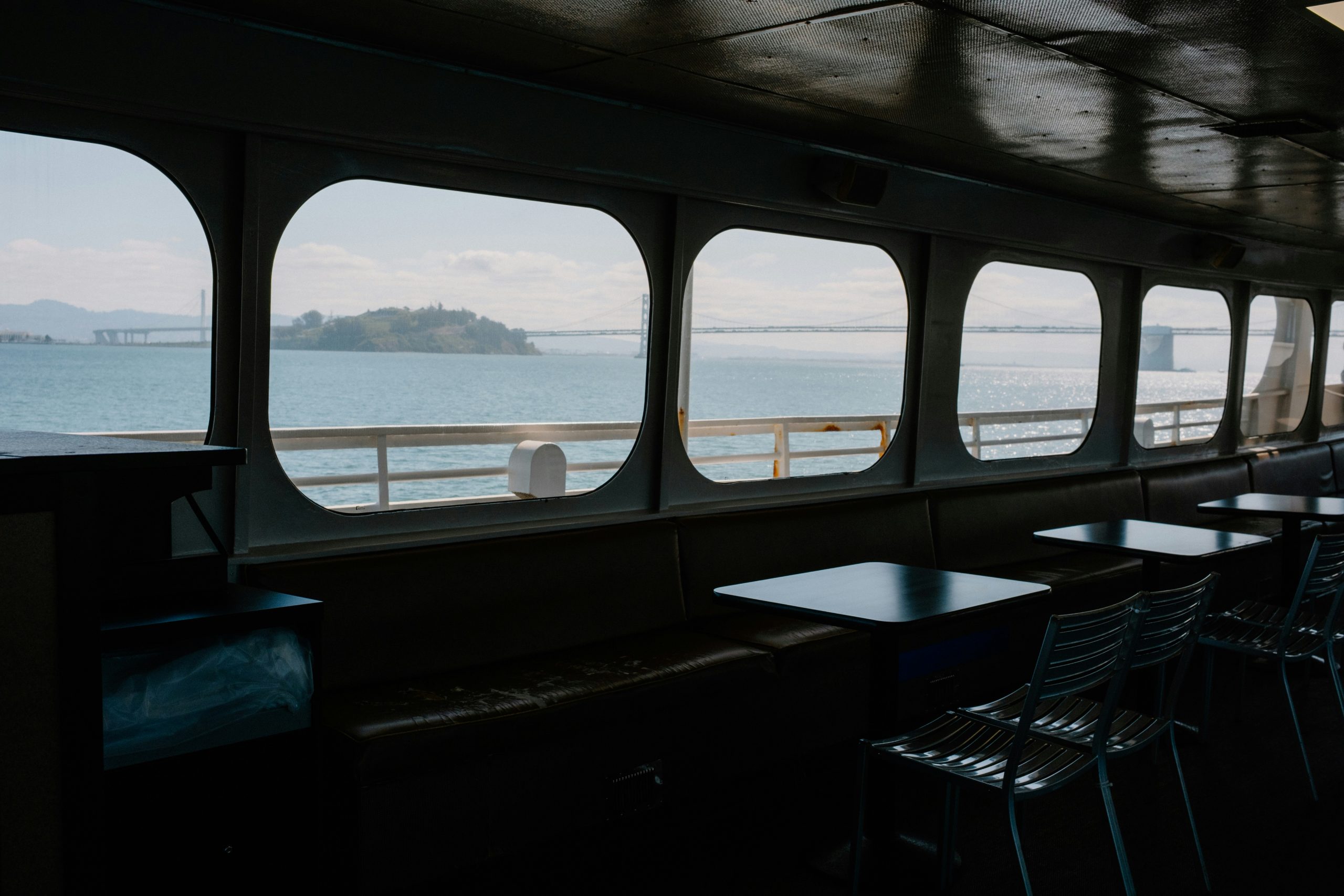
Whidbey begins with a leaving. Or an arrival. Both arrivals and leavings always hold pieces of the other. We are with Birdie, an adult survivor of sexual abuse and a lead voice in T Kira Māhealani Madden’s new novel, who is on a ferry to the titular island. And on that ferry a conversation occurs and we see her arrive into another part of herself.

From the first sentences of its unforgettable first chapter, you feel you are being mesmerized by Madden’s novel, enrolled in an almost terrifying, all-consuming kind of engagement. This is what happens to me when I am reading a master at work. Every word seems chiseled precisely, as if shaped and created specifically for this text, this moment, this arriving.
Whidbey asks many of the hardest questions a book can ask. It drops us down, right into the heart of lived traumas and those who do great harm. Part of Birdie’s arrival is shaped by a stranger, a man named Rich, who appeals to a part of her we sense does not usually get to rise to the surface, asking of Birdie’s abuser:
Does he deserve to die?
He doesn’t deserve to live.
That’s the same thing, Rich said.
I don’t think it is, actually.
Within just a few pages, Madden is asking us to consider on an existential level what it means to deserve a life. And these considerations are earned, they occur naturally, as a gentle thrill of fear pulses through these early pages.
Whidbey does what fiction is meant to do. Or at least, what I hope for it to do. It asks you to become the kind of person that does not run from life’s difficulties. It unapologetically dives into what we so often turn our eyes away from and I believe that it is not only a masterpiece, but a book that can and will change lives.
I read Madden’s new novel and felt honest awe: a raw and full-bodied understanding that this work, this book, was wrought from the hardest of suffering and, guided by Madden’s gifts of compassion, wit, and precision, became a story both engaging and beautiful. I think you should read it.
– Nana Kwame Adjei-Brenyah
Author of Chain-Gang All-Stars
This Cocky Stranger Is Offering to Kill for Me
T Kira Māhealani Madden
Share article
This article is free to read. So is every article Electric Literature publishes. No limits, no paywalls—now or ever. Support from readers like you makes that possible.
Electric Literature is proud to be a space where writers are always paid and reading is always free, and we plan to keep it that way.
Donate now to our spring fundraiser to help ensure the future of free, accessible literature for all.
—————
An excerpt from Whidbey by T Kira Māhealani Madden
I didn’t know anything about Whidbey Island when I chose it, only that it was far. Only that it would take a great deal of work to get there, and more work to be found. When I say I closed my eyes and pointed to a map, I really mean that. I did. Red votive candle dripping over foil in the center of our dining room table, my girlfriend, Trace, sitting across from me, a full moon over north Brooklyn. Safety, we repeated, a Trace manifestation, and I hovered my hand as if feeling for heat—but when we opened our eyes to Elko, Nevada, it wasn’t exactly far enough, so I moved my finger further west to Whidbey.
One month later Trace flew me to Seattle. We bought the one-way ferry ticket online, drove to the Mukilteo terminal. Then, there was my boat pulling in. Huge and white with a green lid over the top deck windows, a monstrous face to it, the gaping garage. Cars thumped from the ramp onto the ferry as I stepped on board, and it was dark in there, between all that machinery. I rolled my suitcase between cars and cinched my shoulders for better posture, wondering if any of the passengers were wondering about me. Who’s that girl with the practical green suitcase? the faces would ask. What about her?
When I had thoughts this self-dramatizing, which was often, I imagined being hurled down a flight of stairs right after thinking them. Sometimes, knocked out by a mail truck, envelopes bursting onto a wet street. On the boat I followed passengers, and one of them—a gaunt freckled woman smeared white with sunscreen—held a door for me at the side of the garage. Thanks, I said, and trailed her and the others up the damp stairwell, like I knew where we were all going. Rather than carrying my suitcase by the handle, I let it clack-clack on each step, the sound echoing awfully. A few of the people looked back at me, just to see who, I guess. I had to commit to the choice now. I clacked all the way up.
The second door brought us to a passenger seating area, and for a moment I was back in Penn Station. For a moment, I’d never left. A white sign read Upper Deck, and windows dotted the whole perimeter, casting a greenish pale light; tables, bolted between pleather booths, collected glossy half-finished puzzles. The room wafted fried fish and cleaning products, and doors led out to a deck. Out there, the day drizzled sloppily over the parking lot and water. Late May, first breezes of summer, but still a cold that crept up shrewd. People walked past me out onto the deck, no umbrellas or anything; they just stood beneath the rain, jackets darkening. They smiled, white caps melting on the mountains behind them, phones clamped onto sticks.
I found a seat inside at the rear of the boat, and with an uneasy quiet, the glass window vibrated, woke to movement. The shoreline of Washington, the trees, Trace waving from our rented Honda Civic, they all grew smaller.
Children chased each other down the aisle between the ferry’s benches. I flinched at their sounds, their little squawks and shrieks, thump of a tripped sneaker. One child aimed a toy slingshot, and powdery glittering balls arced through the air, fell slowly. Laughter, their mouths all laughing, before a man tiptoed beside them, arms up in a playful shield.
Then he sat across from me.
I’m Rich, he said, extending his hand. He gripped mine in that firm too firm single thrust this is a professional handshake way.
He was handsome, for a man, with black seal-like eyes and a tight stern forehead, hair blown back as if in motion. He carried a plastic drugstore bag lumpy with clothes, which he twisted, then let spin around his wrist. He looked around my age, mid-twenties, Middle Eastern—from where I couldn’t tell—and a bright rope of scar ran up his forearm and into his sleeve. I wondered if he was asked about that scar a lot, maybe the reveal was a benchmark in his romantic endeavors.
Finally, I said, I’m Birdie.
I’d introduced myself with pseudonyms off and on for most of my life, names I’d lifted from films, sometimes historical figures. When forced to sign Greenpeace clipboard petitions, I was Judy Barton. My coffee orders and library books belonged to Mary Ann Zielonko. Online, hotel bookings, mail: Wilma Dean Loomis or Jacy Farrow. It’s good, sometimes, to be another person, one therapist had said, long ago. The sound of my own, true name prickled, an ash in my mouth, and already I knew I was getting away with something. Birdie Chang, I told this man.
Rich was holding a paperback copy of Animorphs, a series I’d loved as a kid. On the cover, the boy in a brown jacket transformed into an eagle in vivid, holographic layers.
Haven’t seen one of those in years, I said, pointing.
He bent the book back and forth in his hands, testing its flexibility. It made no sound. One-dollar cart at Elliott Bay, Rich said. Collected these as a kid. Guess I wanted to take a trip back in time. And you know, the story really holds up. He slapped the book with the back of his hand. There’s some serious literary merit here, he said.
I hated men. More precisely, I hated how a man like Rich could carry a book like Animorphs on a boat, unashamed, gleeful. He could slap it. Some serious literary merit—he could say something like that, and it would be considered refreshing, sweet. What a confident man, my mother, Wendy, would say, not trying to prove a thing. Another woman might note his vulnerable masculinity, of course she would, he’d asked for it. But we were all trying, all the time, I reminded myself. That’s how we become the people we are, impressionistically, chiseling lumps of selfhood off the truer, moldering form. There was always the effort to prove, though only certain people got to do so with pleasure. I tried to reel empathy from any part of myself.
I hated how a man like Rich could carry a book like Animorphs on a boat, unashamed, gleeful. He could slap it.
I used to like that story, too, I said. Same generation, I guess.
It ends sad, he said.
It had to.
Rich spun the bag of clothes again. The plastic left pale ridges across his wrist. He said, what are you, twenty? Twenty-three?
Twenty-eight, I said.
No shit?
Asian genes.
Same, he said, tilting ear to shoulder.
I must have looked confused. I said nothing. There was nothing I could think of to say. Rich waited for me to go on, then smiled. He said: You Stanford sun-hat Asians always gonna forget brown Asians.
I rolled my suitcase directly in front of me, snapped the handle down. Then I wrapped my legs around the sides of it and squeezed, remembering the book that was inside.
You don’t know anything about me, I said.
I think you’re tired, this man said. Real tired.
I am tired.
What do you have going on on the rock?
The rock?
On Whidbey? he said.
Trace and I had rehearsed several potential responses: I was visiting family (boring, no follow-up questions). I was meeting with researchers to study moss and hydrology (for this I’d googled the absolute basics). Always I could default to I don’t speak English, the quickest way to be left alone, forgotten. But Rich was frank and direct and didn’t regard me with pity; no, he didn’t have that pitying scrunch between the eyebrows, the soft tone—it wasn’t there. He knew my real name, and speaking to him felt like a challenge, one I shamefully, senselessly, wanted to pass. So I told him the truth: I’m hiding from someone. From a lot of people.
Rich fanned the corner of the book with the tip of his thumb. Back and forth, tightly, like a deck of cards. He looked right at me, unmoved, elbows on his knees.
Someone, Rich said. He hurt you, or he wants to?
He already did, I said. He’s a pedophile.
Rich didn’t budge. His big seal eyes blinked sleepily. Trace would toss me off the boat if she knew I’d shared this much. My mother would say, You have got to be joking, maybe even get uncharacteristically violent. I knew better than to spill; I knew anyone could be a friend of Calvin’s, maybe someone he’d met inside, someone with my photo and information printed and folded in their wallet. But there were so many lessons I’d never learned in my life, so many mistakes I’d continued to make, and some thrill giving up and into that person.
So you’re hiding? he asked. Why now?
Now people know about it, I said. So he’s back.
I don’t know about it.
Other people know, I said, trust me.
I thought of the book. The photo on the cover. The New York Times Bestseller stickers glinting from her cheeks on the wall display at the airport. Trace had pulled my hand to keep walking. I was supposed to spend the summer on Whidbey to reset and recalibrate unplugged, to find that safety bubble, at last. These were other peoples’ words, but I knew how to use them.
What does this guy say he wants? Rich said.
He says all kinds of stuff. Says he wants to apologize.
Does he, apologize?
Depends.
On what?
On how you see it. How you think of apologies.
So what’s your issue? he asked.
A woman pushed inside from the deck, and the wind fluttered Rich’s hair before the door snapped closed. She was yelling into her phone to someone named Joey, and she said his name a lot: Joey, I said what I said. Listen, Joey, I’m not coming to Ballard, Joey, don’t be so stupid.
The issue, I said, is he finds me. He doesn’t go away. He’s out now, and he writes me—
Words aren’t violence, Rich said. He shook his head.
This is a violent person.
Well, Rich said. You say he’s a pedophile. Why would he care about you now?
I didn’t like somebody else talking about Calvin like he knew him, coolly calling him a pedophile. It was unnerving to hear it so casually with no bulk to it; his tone ground my deliberateness and my fear to dust, the life I’d lived leading to that word of who Calvin was, and the thorned acceptance of what that made me.
You don’t know what the fuck you’re talking about, I said. I looked him in the eyes.
Oh, there it is, Rich said. He smiled again. There, that’s where it lives.
I looked down at my fingers as if something were stuck there, something to be addressed. My fingertips, frayed from picking. Blood dried in horseshoes around the nail beds. I tried to focus it, the swell, the heat rising inside, a crimp in the gullet. Not the crying kind—but the other feeling. There it is. I looked back up at Rich.
It’s ’cause you’re too nice, Rich said. Guys fuck with girls like you because you let them.
I’d kill him, if I could, I said. I’d shoot him in the dick.
That’s how you’d do it?
The dick, then the head.
Nah, you wouldn’t, he said. Let me guess, you sleep with a gun, right? What kind?
I said nothing. Rich leaned closer. A focused crouch, hands ready, as if dribbling a ball.
Tell me. Smith and Wesson, 38 Special? You sleep with a big boyfriend, too?
I’m a dyke, actually.
Hey, girl, I’m cool with that, he said. Then, a thought behind his face. Slightest twitch at the corner of his mouth before he said it: You’d let him do it again, before shooting him. You don’t have that in you. Guarantee.
You’d let him do it again, before shooting him.
You have no idea, I said, and we sat there for a moment, the fluorescent ticking overhead. The boat slowed. I didn’t go to Stanford, I said.
The woman screamed at Joey some more from a nearby bench. She plugged one ear as she listened to what he had to say. I thought Joey had been a boy, but now it sounded as if he had been a lousy lover and owed her money. She hung up and threw the phone into her big purse, said, Unbelievable, to the rest of us.
Where’s the bad guy live? Rich said.
Florida.
Florida Man.
Don’t shit on Florida, that’s a boring thing to do, I said.
You still live there?
No.
Exactly. So where’s he in Florida?
Do you know what a pervert park is? I said, trying to prove a lax knowledge of my own life. That’s what they call them in Florida. Where he lives. It’s called Gateway to Grace.
I work East Coast a lot—cargo ships, cruise lines, Rich said. I’m down there next week, staying through summer. I got friends in Opa-locka.
What do you do, exactly?
Rich nodded his head like he was thinking. He said: Boats. Marina stuff.
He slapped the book down next to him, then buried his face in both hands, breathing in hard. He flicked the tip of his nose with a thumb. Sniffed. Outside the glass doors of the ferry, a little girl on the deck threw pieces of bread, or crackers, at some gulls that curved down to them. Behind her, the clouds parted a Magic 8 Ball blue.
Well, Rich said, looking up at me. He looked calm, almost sedated. You want me to kill him for you?
I glared at him. His stubble, his dry knuckles. I imagined him snapping off gloves, a dirtied spade, wiping prints from a revolver with a soft, meshy cloth. Then I imagined Calvin—bound and blood battered—screaming for his life in a ditch near the Everglades. A gator would finish him. It was all ridiculous.
I can do it for you, Rich said. It’d be my honor. Even the score in this small way. For the sun-hat nice girls.
He leaned back and crossed one foot over a knee. I crossed mine too. The children in the aisle were gathered by their parents. Backpacks and strollers. Arms flung around necks.
No one would ever connect us—who could connect us? I’d have no reason to kill this guy. But I could. Easy, without a hitch, trust me I could.
What are those people eating? I said. Rich looked outside, where I pointed. The birds multiplied and the little girl screamed. Orange life buoys clung to the deck gates, quivered brightly and weakly as the boat moved.
Probably chowder bowls, he said.
They love chowder here.
It’d be fun actually, Rich said. Taking your guy away.
I liked that he wouldn’t drop it. That he was asking something of me. A permission. He needed me to play along, to assuage some want. I knew what that looked like.
I told you, I was going to kill him, I said.
You don’t have it.
I can be scary, I said. Ask anyone who knows me.
I don’t know anyone who knows you. Then, after a pause, he said, You couldn’t scare anything.
I scare.
Scare me now, Rich said. Come on. Gimme your best. Scare me good.
I looked out the window to the water, the deep blue mat studded with white. An identical ferry passing by. Mount Rainier glowing like a postcard. I once went on a date with a woman who said she’d never get serious with someone who rolled a suitcase. That it was a lazy, humiliating thing to do—to not hold a suitcase by the handle, a proper handsome Samsonite from long ago, luggage with dignity. I didn’t know how to scare this man. I never would.
Are you lying? he said.
I’m not.
You seem like a liar. I just need his name. Gateway to Grace. Give the name. After this we never met. You’ll never hear from me again.
Give me your name, I said.
Rich Amani, he said. Do you trust that I’m a good person?
Absolutely not.
I respect that, he said. That’s fair.
Do you think I’m a good person? I asked. Out of the ferry’s loudspeaker, words clanged, indecipherable. The boat slowed even more. The island: closer.
Good and nice aren’t the same, he shrugged. Does he deserve to die?
He doesn’t deserve to live.
That’s the same thing, Rich said.
I don’t think it is, actually.
Say it, Rich said. Just say it out loud. It’s good for you.
Passengers opened the doors to exit. Cold air trailed through the room, and I pulled my jacket tighter to my chest. The ride was ending, a ramp ahead lowering to the boat, bridging to the rest of my life.
I said, Every day, when I wake up, it’s the first thing I wish for. Him gone.
Well, give the name, then. If you want me to.
I stared at Rich and he stared back. A dare with our eyes, who’d break first. That Disney villain scar, his twisting bag of clothes—I smiled, caught myself, straightened back up, serious now. Scary. Something mirrored between us, but he still didn’t think I could.
Calvin Boyer, I said, and Rich stood as soon as I said it.
Well, that was easy, he said. Birdie, good for you.
He slipped the book in his back pocket and walked away toward the deck.