Lit Mags
A Nigerian Man Wakes Up White and Voyages Into the Heart of Whiteness
An excerpt from WHYTEFACE by A. Igoni Barrett, recommended by Ethan Nosowsky
Introduction by Ethan Nosowsky
Almost exactly a decade ago, Graywolf published Blackass, an impish, painfully funny novel by the Nigerian writer A. Igoni Barrett, in which a young man named Furo Wariboko wakes up one morning to find that he has transformed into a white man. Except for his ass. His life changes as a result, and the novel, a rich portrait of Lagos, follows him as he finds a job, new friends, and a new name (Frank Whyte). Whyteface, while very much its own story, checks in on Furo/Frank four years later.
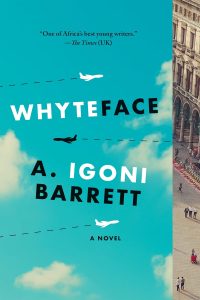
This excerpt from Whyteface starts with Frank heading off on his first-ever trip outside of Nigeria. He is embarking on a European vacation—a voyage into the heart of whiteness, you might say. He visits Amsterdam, Oslo, and Milan. Hijinks ensue. In Oslo, he intervenes when a charismatic Kenyan writer is the victim of a racist taxi driver. Frank becomes entranced by the writer, Binja, (and those who had the good fortune to encounter Binyavanga Wainaina at a reading might spot an inspiration here) who helps Frank see what it means to be African in a new way. In between these episodes is a series of interstitial chapters that tell the almost fabulistic story of the Wariboko clan, beginning in the 19th century, when Christianity begins to supplant indigenous Nigerian (before it was Nigeria) traditions and rituals.
Like Blackass, and like all great satires, Whyteface is a comic novel with moral purpose. Barrett ably extends and deepens the themes he began to explore in Blackass and, through this madcap vacation story, finds a way to discuss the inevitability of migration and the perverse way the “First World” views the rest of the world.
When we asked Igoni about how these books relate, he told us: “I think of this book as a last attempt at a first impression. For Blackass and Whyteface are in essence the same story, told from different angles.” Because Frank is now in a place where his skin does not seem to “stand out,” he is vexed to discover that “whiteness was the exclusion of everything but one, blackness the inclusion of everything but one.”
Enter Frank.
– Ethan Nosowsky
Editorial Director, Graywolf Press
A Nigerian Man Wakes Up White and Voyages Into the Heart of Whiteness
A. Igoni Barrett
Share article
An excerpt from Whyteface by A. Igoni Barrett
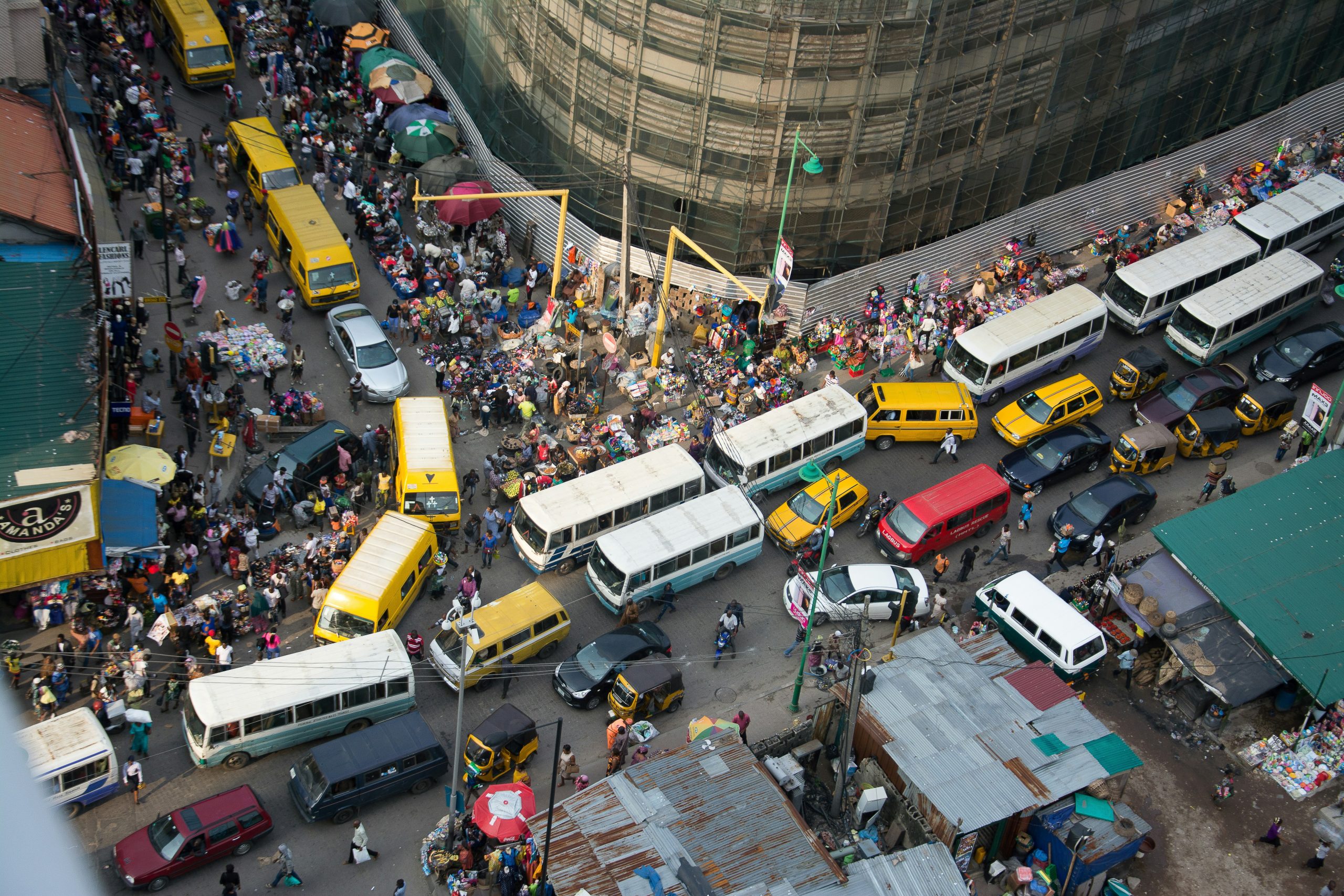
Four years after skipping town, Frank Whyte was back in Lagos traffic, from which none escapes once caught. It was another hot night in June, and he was slouched in the back seat, the oga’s corner, of an air-conditioned Cerato when the smash and grind of metal on metal flung him against the front headrest. His forehead burned from the impact and his ears rang from the blare of the traffic now pouring through the shattered rear window. Pebbles of glass glinted on the back seat. He bent down and gathered up his passport, airline ticket, and Airbnb reservation, which had all flown onto the floor. A flash of dizziness jarred his vision as he sat back up; he shot out his free hand to brace himself against the air. He touched his cheek and stared at his palm in the wash of headlights. Slick with sweat, his hand was white rather than bloody: He was unhurt and could still make his flight. This realization loosened the daze that had slowed time to the pace of a drop of sweat snailing down his temple. He shook his head clear, took a long breath, and held the grime of traffic fumes in his lungs for a few heartbeats before exhaling with a doleful sigh into the ceaseless clamor of car horns.
The Uber driver had likewise found his voice. He had thrown open his door and was cursing loudly over his shoulder as he fought with his seat belt, which had saved him from flying through the windshield. Frank leaned back and watched in sullen silence. The panic he felt after the crash had congealed in his throat into a bolus of frustration. He had witnessed too many hysterical motorists on these Lagos roads squabbling over whose evil driving had wrecked their cars. There would be no enjoyment in the roforofo fight for him, not while it threatened his capacity to make his flight. But it was too late, no time to intervene, for the driver had freed himself from his seat belt and leaped out of the car. In that instant of resigning himself to forces beyond his control, Frank made a mental note to discard his habitual reluctance to wearing a back-seat belt. From now on, he vowed, he would do as other big men never did, and would strap in even after he returned to the sanity of Abuja while being chauffeured around in the airbagged fortress of his Honda CR-V. His fate on these ruthless roads, like everybody else’s, was in the hands of unlicensed drivers and unregulated road contractors, the blood-and-flesh devils that no amount of beseeching prayer could guard against. He was lucky to have escaped.
In the four years since he’d abandoned Lagos, the city hadn’t bothered to change its ways. Its roads looked the same, slapdash and unrepaired; traffic congestion was worse; the motorists were even more impatient. Unforeseeable obstructions and trailer-choked bridges made commuting times across the megacity impossible to predict with any accuracy, no matter the Karen-voiced optimism of navigation apps. Frank could bear witness to a misplaced trust in algorithmic solutions to absurdist problems. Based on the Uber app’s estimate of a ninety-minute drive to the airport from his pickup point, he had checked out of his room in Eko Hotel at noon and gone down to the poolside for lunch (pounded yam and seafood okra soup, his last taste of Nigerian food for the next four weeks, he figured) and a bon voyage cocktail (a frozen margarita, the best he’d ever had) before requesting a ride around four o’clock . . . and yet here he was, stuck on the road three hours later. The estimated departure time of his KLM flight to Amsterdam was eleven, but, as his ticket stated, and his online searches had confirmed, he was expected to arrive at the airport three hours before boarding. This would be his first trip outside Nigeria, and he’d taken care to plan out every step from the moment he closed up his town house in Abuja and flew into Lagos for a night. But this city always had its own plans for the unwary.
Frank grabbed his laptop bag from the floor, stowed his travel papers in it, slung its strap across his chest, and rubbed his right hip pocket, where the weight of his smartphone snuggled like an extra limb. He eyed the car’s interior one final time to ensure he’d left nothing behind. Through the smashed window he could hear the Uber driver from where he stood in the busy road. The man’s voice surged with indignation, hammering away at the rightness of his position. Besides the driver’s adversary, other voices had joined in and were spewing opinions to the orchestral accompaniment of frenzied honking. As Frank had feared, no resolution was in sight. He would have to improvise a getaway. He reached for the door, his sweaty fingers scrabbling across the panel for the handle, and then waited for a smoke-puffing articulated truck—with van den Bosch.com stamped on its side—to thunder past before climbing out and approaching the huddled crowd around which traffic flowed like a dam in the road. He pushed through the crush of bodies, calling out with rising volume, “Excuse me . . . mister driver . . . hey you!” but he was drowned out by the fussing of hotheads and loudmouths. At last he seized the Uber driver’s shoulder from behind.
“Leave me abeg! What is it?” the man snapped at him, jerking himself free. Frank replied that he wanted to collect his suitcases from the boot, at which the driver growled with impatience, “Go and take them yourself.” Turning back to his opponent, a man wearing red suede loafers, he exclaimed: “See what you’ve caused abi! Because of your useless driving this poor man will miss his flight.” Frank opened his mouth to protest against this bad-luck prediction, but swallowed his words because the driver had resumed his yelling and wouldn’t hear him anyway. It was already apparent to onlookers that the driver, if he held fast to his righteous role as the victim and refused to be distracted by the other’s contortions of the truth, would eventually emerge triumphant. Only then would the pleading start, the wheedling over repair costs, the grudging acceptance of culpability. But first the underdog had to earn the crowd’s respect by crushing the confidence of the offender.
Frank had no time for this tiresome charade. It was nearly seven and he was still hours away from the airport, judging by all the taillights shimmering into the distance. His mistake was forgetting that Lagos traffic could make you late to your own funeral. This go-slow that now threatened to bury him was worse than he’d expected only because he hadn’t prepared himself for the worst. He shouldn’t have tempted fate with that poolside margarita, shouldn’t have mocked this vindictive city with premature toasts. Knowing Lagos as he did, he should have set off for the airport at least twelve hours before his flight. He was only now realizing why so many of the hotels he’d looked up near the airport were pricey yet basic, unsurprising when their income depended on location rather than comfort. They were a necessity for the seasoned Lagos flier, all those who recognized—unlike him, a would-be globetrotter—the only good choice between getting stuck in traffic and sharing lodgings with cockroaches. Frank hoped his ill-considered decision to spurn the tawdry hotels in Ikeja for a good night’s sleep in Victoria Island wouldn’t cost him his first real vacation, his maiden journey overseas.
The two drivers and their ring of onlookers were still tug-of-warring while Frank struggled with the crumpled boot of the Cerato sedan. The collision had knocked off its Kia emblem and damaged the lock—his yanking didn’t budge the lid. He was bent over at an awkward angle (rump cocked in the air and exposed to oncoming headlights, face level with the license plate, eyes squinting up at the broken lock) when he felt a presence beside him. He stood up straight and met the bold stare of a gaunt-faced man who was swaddled in a sun-faded anorak stinking of moonshine. “I go help you,” the man announced with a deferential nod, and then elbowed Frank aside. He grasped the lid by its edge, dug his yellow rain boots into the asphalt, and began straining upward, his muscles squirming and venomous sounds whooshing from his clamped lips. The car shuddered and creaked, and yet, to Frank’s horror, the lid wouldn’t budge. The man released his grip at last, shuffled backward, and cursed out, “Shege dan banza!” as he fly-kicked the boot. When he laid hands on the lid again it cracked open with a suck of rubber.
“Nagode aboki!” Frank sang out in joy, and the man reached into the boot, dragged out two suitcases, and spun around with a grin that filled his haggard cheeks. The larger Samsonite, despite its weight, hung with ease from his bunched fist.
“My okada dey back,” he said and set off at a pace that had Frank, his own hands empty, jogging to keep up.
Frank obeyed the okada rider’s instructions, happy to cede control, in this instance, to the strongman. The man was practiced at overloading his motorcycle, an essential skill for those occupying his particular niche in the metropolitan transport network: identifying and rescuing stranded air travelers and their baggage from congested roads. With Frank riding pillion and his smaller suitcase perched against the handlebars, the rider throttled his motorcycle into motion and chugged past the oblivious Uber driver, still shouting for his rights. The motorcycle wove through standstill traffic, and Frank’s discomfort from balancing his second suitcase across his thighs was assuaged by his relief at knowing only bad luck of a cruel and unusual nature, like a second collision in one night, would keep him from arriving at the airport in time. No one was that unlucky, not even him.
Sometimes his whiteness felt like a die that was still spinning. His luck could go any way, white or black, but until it chose a face he was very much in the game. He took comfort from the belief that if he was destined to catch his flight, he would do so, in spite of whatever potholes these Lagos roads threw at him. He sometimes forgot, especially in those extreme moments that tiptoed up from behind and dumped broken glass over one’s head, to accept blows of misfortune as a way of avoiding something worse. All he’d experienced in the last four years, ever since the dawn he arose to his new skin, had convinced him that the vagaries of existence are easier to accept if you believe in the prosecutorial fairness of fate. “Because fate never loses a case,” he said above the vroom of the bike’s engine, blinking as the motorway’s dust squalled into his face. His rainbooted savior shrugged in acceptance and sped on, never to know the meaning of his passenger’s seemingly grateful words.
One morning four years ago, a black man woke up white in Lagos in his childhood bedroom, fled his home and family, changed his name, swatted away the few helping hands that had reached for him, and then flew into the rich-man playpen of Abuja, the capitalistic capital where paupers aspire to be princes.
Furo Wariboko’s dreams had become Frank Whyte’s reality. Through hard work driven by imposter’s anxiety, Frank had attained the comfort and independence that had eluded Furo while he was job seeking in the wilderness of unemployment. The means to buy a four-bedroom town house, where he lived alone; the freedom to dig up its concrete driveway and turn the parched soil into a garden: Such were the perks of affluent reclusion. Every fancy that seemed unreachable from the fraught position of a thirty-three-year-old unemployed college graduate with no prospects in a country brimming with legions like him, he’d now achieved.
Abuja had been good to him in ways Lagos wasn’t to anyone. From the safety of his new home, he’d accepted that his former existence was like a foaming river the boater floats down once and relives only when he’s reflecting on his journey from the solidity of shore. Lagos drowns you in its excitements, the violent splashes of its masses against the rock face of bare survival. But Abuja, like a diplomatic friend and governmental benefactor, had shielded him from having to worry about the distant rumbles beyond its bounds. The serenity of his years in the cushioned seat of power, the palliative doses of time, had lulled him into emerging in search of adventure, a vacation even, in the wider world. Lagos was just a bend in the river on a summertime journey to the Abujas of Europe, the glittering capitals where he could hide in plain sight . . . but also see with his eyes, all these years after leaving his past behind, what it was the future promised to his present face.
Despite its lack of basic comforts and aesthetic pleasures, the thirty-seven-year-old Murtala Muhammed International Airport was no disappointment to its age-mate Frank. He was, after all, Lagos-raised: He knew how things worked. Or, more often, didn’t work. The departure terminal’s cooling system was out of service, but what did that matter to a Nigerian so long as there was power to run the computers and security scanners, the equipment that was essential to escaping the country’s heat? And so Frank Whyte, sweating like a drug mule, hauled his two suitcases through the pandemonium of swarming bodies in the airless hall and then queued up at the KLM desk along with a crowd of other headache-faced travelers.
International travel, he soon realized, had its own hoops that the local flier never had to jump through. He’d been standing in line for minutes before discerning, by watching other travelers—many of whom took instructions from the well-dressed touts who scurried about offering assistance with more eagerness than the airport staff—that he should have weighed his large suitcase before joining the check-in queue. Looking around to find that the row of people behind him was longer than the line ahead, he resolved to risk embarrassment rather than give up his spot in the queue. And so he spoke to the big-Afroed, bearded man behind him. “Excuse me, brother, I need to step out to do something quickly, but I’m coming back now-now. Abeg o, remember, I’m in front of you.” The man’s face creased in puzzlement at the white stranger’s Nigerian accent, but he nodded yes and said, “No wahala, you can go.”
The self-check scale was free as Frank approached. It was flanked on both sides by uniformed attendants with KLM pocket badges. The loose-shirted man on the left was slouched against the waist-high scale and looked sleepy with boredom, while his colleague to the right, a woman whose neatness and vigilant posture made it obvious that she would soon get promoted over the layabout beside her, clutched a wad of baggage stickers in one hand and a pen in the other. She had noticed Frank as he quit the queue and was facing him with an expectant look, but he gazed past her at the trio bearing down on the baggage scale from the other side of the concourse. Frank slowed his steps to let them reach first.
“Hurry up, sir,” the female attendant called out, her bronzy braids swinging as she gestured at Frank with the hand that held the stickers. “Our flight is on time today—”
Her attention shifted to the new arrivals, an elderly white woman shuffling between a younger black woman and a graying man who had the same glacial blue eyes and reddened nose as his mother. The older woman looked fatigued and limped with each step, as if from a cramped foot. She gripped the younger woman’s elbow for support and beamed at her when they reached the scale. Her son came forward with the lavender hard-shell suitcase he’d been wheeling along, raised it onto the metal floor of the scale, and then leaned over to squint at the digits on the display screen.
“Sixteen kilos,” the male attendant muttered to his colleague. He watched her scribble on a sticker and slap it onto the suitcase, after which he turned to the salt-and-pepper-haired man. “You can remove it o. Is this the only baggage you’re checking in?” At the affirmative response, he scanned the faces of the speaker, his mother, and the younger woman. “Granny is the only one flying?” he said, without noticing the shock that quivered the cheeks of the elderly woman at his words.
“My mother is the only one flying,” the man confirmed.
“All right, that’s the queue there,” said the attendant with a flippant wave of his hand, “but only ticket holders are allowed. You two can’t follow her.”
The man took a deep calming breath before speaking. “You may have noticed that my mother requires assistance,” he said in a measured tone. “I want my wife to support her while I’m handling the suitcase.”
The attendant hooked his thumbs into his loose waistband, his chest puffing out from the weight of his decision. “Okay,” he said. “You can follow mummy.” Pivoting to the wife with his lips pursed as if he were booing, he added: “This our sister will wait here for you.”
The couple exchanged looks, his embarrassed and hers exasperated. She remained silent as her husband said to the attendant: “We need two people. Or you could fetch us a wheelchair.”
“Are you not a man?” scoffed the attendant. “You can hold mummy with one hand and pull her baggage with the other hand nah!”
Frank was about to protest at the scruffy attendant’s rudeness, but he caught the icy look on the wife’s face. She whispered some calming words to her flustered mother-in-law and then spoke firmly to her husband. “Lieverd,” she said. “Ignore that fool. Just bring the suitcase. We’re all joining the queue.”
“I didn’t give you permission!” the male attendant exclaimed, and leaped away from the baggage scale to follow the departing family, but one look from his braided coworker stopped him as if he had turned to stone. “Let them go,” she hissed, and then turning to Frank, she said quickly, “Please come forward.” Frank placed his large suitcase on the scale and waited a beat before calling out the weight. When the female attendant bent down to scribble on the sticker, Frank stared at her surly colleague and spoke in a rough voice:
“Know your job, mister man, know your job.”
At this makeshift border into Europe, every green-passport holder seeking to pass was presumed guilty of their nation’s grim reputation.
“What I have done to this oyibo again?” complained the baffled attendant. Ignoring his colleague, who had raised a finger to her lips to shush him, he raked his eyes over Frank’s face, taking in his red hair and green eyes, the pinkness of his cheeks, features that seemed to annoy the dark-skinned attendant even more. “So you think you can talk to me anyhow, just because you’re white today?” he demanded, as if readying for a shouting match, but Frank had already whirled around and was marching back to his placeholder in the queue. From past experience, he knew not to quarrel with anyone who saw his skin rather than heard his voice, because anything he said would be used to prove the guilt written on his face.
After long minutes of watching one person after another fumble through their sheaf of documents at the check-in counter, Frank’s turn came to present his travel papers. He was determined to be that fabled one who shines both the front and back of their shoes, the type who makes a good impression not only as they arrive but also when they leave. He strode toward the check-in counter with a toothy smile, but the blue-uniformed woman was staring at her workstation screen and missed his ambassadorial approach. She thrust out her hand, palm up, without looking away from the screen, and his grin stiffened, began to crack; his heartbeat faltered as he handed over his passport and ticket. In the silence that marked her inspection of his passport’s first page, he finally understood how it felt for those Nigerians who went before him. Their nervousness was now his, passed on like a cold. He sensed what he had missed while he was awaiting his turn. At this makeshift border into Europe, every green-passport holder seeking to pass was presumed guilty of their nation’s grim reputation. But Frank’s conscience was as clear as a polished blood diamond: He was certain he had all the stamps necessary to prove his innocence. He was anxious only about his lack of faith in the impartial workings of human systems. Like anyone who has faced the repercussions of bureaucratic bungling, he could never trust his fate to the swipe of a functionary’s pen.
“Frank Whyte,” the woman spoke and looked at him.
“Yes madam,” he said, holding her gaze.
“What’s your final destination?”
“Amsterdam.”
“How long are you traveling for?”
“About four weeks.”
“Will you spend all that time in the Netherlands?”
“No madam, I’ll visit two other countries, Norway and Italy.”
“Do you own another passport?”
“No.”
She flicked through his passport pages, which were all blank except for the page bearing his multiple-entry Schengen visa. “Is this your first trip outside Nigeria?”
“Yes madam.”
“How come?”
Frank, startled, stared. “I don’t understand,” he stuttered at last.
She closed the passport and gave its owner her full attention. The puzzled crease between her tweezed eyebrows had softened her expression. “You must have family abroad. How come you’ve never traveled to see them?”
My family is none of your business, Frank thought with a pang of annoyance, but aloud he said, “No reason.” His tone was sharper than he’d intended. The woman looked back down at her screen, her face smoothing into a mask of officialdom. “Place your checked baggage on the marked spot,” she said. Frank winced inwardly and braced for any nastiness. So long as she did her duty without disfavor, he resolved he would have nothing more to say to her. Nor she to him, it turned out, not even when she bent over to tag his 19.86-kilogram suitcase, stuck the stub on his boarding pass, and handed that to him along with his passport. “Next passenger, please,” she called out as his suitcase slid away on the conveyor belt, his cue to leave. She hadn’t wished him a safe flight or told him where to go next, a dereliction of her role in customer care, but in the spirit of resigned victimhood that’s mistaken by some as stoic resilience, Frank turned away from the counter without a murmur of complaint. Crossing back to the female attendant who had weighed his suitcase (she was assisting a harried-looking lady who was repacking a Ghana-must-go sack overflowing with smoked bonga fish and green plantains), he held out his boarding pass and pleaded for directions. In any society where even road signs cannot be trusted, begging a favor works better than demanding a right, as Frank knew well.
The long walk to immigration security was strewn with people and baggage headed in the same direction. Frank threaded through the throng, passing the unhurried and infirm. There were elderly ladies shuffling along without their grown children as guiding hands. Young men in oversized blazers, their backpacks bursting with school textbooks. Sensuous women whose frightened eyes hid behind the coquettish flutter of hairbrush eyelashes, their sleek leggings and hand-me-down coats more suited to the wintry nightlife of European alleys. Wimpled nuns and dog-collared priests marching down paths opened for them by the god-fearing masses; safari-suited Pentecostal types advertising their denominations with lapel pins and button badges. The wheelchair-bound, slouched in psychological fatigue, their rigid faces holding no excitement for the pee-less journey ahead. An Edo chief in his scarlet satin robe, felt skullcap, coral-bead necklaces and matching bracelets, his only concession to bloodless color and current fashion being the off-white Yeezy sneakers peeking out from under the flapping hem of his gown. A tall burly man who strutted as if he was accustomed to being trailed by palace pages, he seemed out of place carrying his own carry-on bag. He flinched in surprise when Frank drew up alongside him, and then quickened his stride and stiffened his back, as if determined to stay ahead of the usurper. His sense of noblesse was obliged by the officer checking passports at the entrance to the immigration area, as the man unhooked the strap to access the VIP lane and waved the chief through with barely a glance at his passport. Frank waited while the officer grinned in response to the chief’s loud-voiced inquiries about his health, his parents’ and children’s health, his women’s health (both men chuckling at this question), before at last contributing to the health of his pickings by dipping his bejeweled hand into the front of his leather valise and handing over a fistful of cash. With a last backward glare at Frank, the chief went on his way, freeing the officer to return to the wall of disapproving faces at his duty post.
“Mister Whyte,” the officer drawled and looked up from Frank’s open passport. “Congrats on your tear-rubber Nigerian kpali. We go wash am o.”
“Ah-ah oga,” Frank retorted, keeping his tone light, “make I first baptize my passport nah. No worry, we go break kola next time I jam you.”
“See as oyibo wan use pidgin play me wayo!” the officer said with a throaty laugh, and then nodded at Frank to pass. “You’re a funny man sha. Have a safe journey.”
Onward to another queue, this time at border control to have his passport stamped and his biometrics captured. He passed without incident and had just joined the tail end of yet another queue—no surprise to him but tiring, all this queuing for simple tasks, with this last line snaking through a maze of retractable belt stanchions whose exit was at the security screening gate—when he heard a shout that made those ahead of him crane their necks.
“I am not removing my shoes!”
The man’s foreign-accented dissent had stymied all activity at the gate. His rowdy voice drowned out the explanations of the whispering clump of immigration officers who were flapping their arms trying to soothe him. But he kept refusing to remove his sandals to walk through the body scanner. There was no way he would do it here, he insisted, because nowhere else in the world, in all his time abroad, had he ever come across such a debasing demand.
“Only in Nigeria!” he kept repeating to buttress his steadfast standpoint.
Ahead of Frank was a young family with four boisterous children, two girls and two boys. Their mother looked weary from shepherding that merry bunch through the airport’s never-ending queues and checkpoints. Now and again their pack-mule father—clutching a thick bundle of Canadian and Nigerian passports as well as carrying two bulky backpacks, one on each shoulder, and standing guard over a colorful pile of kids’ suitcases—lent his gruff voice to his wife’s perfunctory efforts at shushing their offspring. Mostly he remained aloof, his gaze fixed on the commotion that made the children leap about for a better view.
The children’s frenzy seemed to grow along with the agitation in the sandaled man’s voice. When he began hurling profanities at this shitty country with no goddamned system that bloody works as it fucking should, the bright-eyed children squealed in chorus.
“I said I’m not removing my fucking sandals!”
“Hallelujah!” the children sang.
“Don’t tell me to calm down when your rules are a goddamned joke!”
“Hallelujah!”
“You want to arrest me? Bloody well try!”
“Hallelujah!”
“If you touch me I will sue you for every mother—”
“Hallelujah!” the children shrieked in harmony.
Frank chuckled at the children’s innocent mockery of a pontifical adult. But his mirth fizzled out as the protesting traveler was frogmarched away by the same knot of officers who had initially tried to pacify him. What a reason to miss your flight and waste everyone’s time, he thought to himself, feeling a stab of pity for the naive visitor. The poor fellow must have forgotten that rules and regulations, in his ancestral land, could be rubbished with impunity only by those sworn to protect them. The officers would ensure he was reminded. And he would also learn about those slapdash penalties that only applied to rank-and-file insurgents, never to violators in high and mighty places.
At the sandaled man’s removal, the millipede of travelers began crawling forward, eager to kick off their footwear and huddle through the X-ray machine, the last obstacle to flight and freedom. So it goes with revolutions: One man’s line in the sand is swept away by the shuffling masses. The administrative machinery was once again running as smoothly as it ever did, everyone cordoned into that barefooted moment that would only be remembered by a rebel who had paid the price for standing his ground.
The main difference between the security screening for overseas and domestic flights, Frank decided, was that the enforcers here had greater faith in illogical regulations. He had to take off his canvas sneakers, his elastic belt with a plastic clasp, his rubber Swatch, and even the keffiyeh scarf wrapped around his neck. He had forgotten he was wearing a scarf until a gloved officer shot out his forearm and aimed two fingers, like a handgun barrel, at his neck. Afterward, with his possessions gliding toward the mouth of the baggage scanner, he strode into the full-body scanner, his hands raised above his head as if he was praying to Mecca. On the other side he was patted down by the same rubber-gloved officer who had waved him through the scanner. The man finished his search by stroking the insides of his thighs and feeling the back of his knees like a practiced lover, after which Frank, free at last, nodded with relief at the man’s gesture of dismissal and bounded toward his belongings, which had emerged on the other side of the conveyor belt.
It would seem silly if he ever boasted about it, but he felt as proud as a redheaded lizard for bearing himself like a seasoned traveler. His first overseas trip was a dream come true, and he had thoroughly prepared to make sure it would be a success. He had bought his airline ticket online, researched and booked his accommodation on Airbnb, and applied for his Schengen visa without using a travel agent despite the horror stories his work colleagues had shared—to convince him otherwise—about getting rejected for the slightest errors. His first attempt had won him a two-year visa, and that triumph only spurred him to leave nothing else to chance, not even the most trivial details of his tri-nation tour. Thus he had selected his travel outfit after many hours of scrolling through listicles on lifestyle blogs, and had planned his packing down to the hundred-gram tube of Close-Up toothpaste. Given the effort he’d put in, it now pleased him like a teacher’s pass mark to have come so far without tripping over his laces. Strolling away from the security scanners with a self-satisfied glow, he was finally able to forgive himself for misjudging the Lagos go-slow that had almost ruined everything.
His Swatch showed he had two hours until takeoff. He walked toward his boarding gate, down a curving passageway lined with brightly lit shops that were flogging Africana to susceptible tourists. Carved walking sticks and horsetail fly whisks, sequined turbans and tie-dyed dashikis; cowrie-studded chokers and leather bracelets jostling in glass showcases with roasted groundnuts and unpeppered kilishi. He passed these overpriced mementos without hesitating. He had nobody to bear gifts to on this vacation, there was nothing to miss that wouldn’t be here when he returned. His greatest loyalty was to his own appetites, and so his footsteps faltered in front of a snack booth where a cluster of heavy-coated Nigerians awaited their turns to buy stewed snails and leaf wraps of steaming moin-moin, but he changed his mind about soiling his hands and instead wandered on to the bookshop ahead. It was empty except for a frail-looking man seated in the back. When Frank’s shadow darkened the doorway the bookseller looked up from the Bible splayed open on his cluttered desk. He bobbed his head at Frank, flashed his teeth in a forced smile, and then resumed mouthing scripture to himself.
That dependable bestseller for piss-poor vendors on Lagos roads, Rich Dad Poor Dad, seemed as popular with frequent fliers as it was with minibus commuters.
Frank stood outside and stared as if through a mist at an old friend. Arranged beside the religious pamphlets that were the bookshop’s mainstay, he made out the bold lettering of a familiar title. Nostalgia warmed his cheeks as he recognized several more musty-smelling buddies from a previous life. His first job had been as a marketer for a distributor of self-help books. Right here in Lagos, four years ago. His former employer was still in business. Wares he had once flogged up and down this paper-strewn city were still circulating. The textbook-like typography of The 7 Habits of Highly Effective People nestled beside the gold-themed dust jacket of The Rules of Wealth. Almost a century after its first publication, The Richest Man in Babylon was still evangelizing the seven cures for a lean purse. And that dependable bestseller for piss-poor vendors on Lagos roads, Rich Dad Poor Dad, seemed as popular with frequent fliers as it was with minibus commuters. How to Win Friends and Influence People, sitting here on the dusty shelf, had been his favorite book to paw through in the back seat of his official car to avoid listening to his headstrong driver, who never shut his mouth. He was surprised to see that 1001 Ways to Take Initiative at Work was selling well enough to make the window of this Christian bookshop. In spite of its boring title, it was the first book he’d ever sold, to a woman at the reception desk of an eighth-floor office in Gbagada, on his first day on the job. These memories gave his reflection a ghostly smile in the glass . . . but those were strange times, well before he knew who he was.
“Furo,” Frank sighed and rubbed the seat of his trousers with both hands, his smile fading like a whiteout. His old name had been reduced to a verbal tic these days, but it was still sometimes an invocation of his past. Nostalgia became his spell for spinning pain into pleasure, and mistakes into redemption. A path to self-forgiveness. His birth name held a sentimental value that his adopted name could not, and he was fine with that. For one couldn’t be frank with oneself all the time.
His reverie was broken by the scent of beer. Across from the bookshop stood a Heineken-branded bar whose automated doors had swished open to release the rapid-fire sounds of televised football commentary. Frank felt his body taking over, his mind trailing behind his feet. He snapped back to attention after he’d already slipped through the automatic sliding doors. The room was buzzing with travelers, some dining, some drinking, and a few huddled together puffing at cigarettes. There was enough time for a beer. He wove through the coffee tables to the neon-lit bar, only realizing after he’d settled onto a stool and placed his order that his high spirits had little to do with the promise of alcohol.
It was the draught escaping the open doors that had reeled him in. This was the first time he’d met a working air conditioner in the tin-roofed airport. Perhaps that was no sweat for departing travelers, whose minds would be fixated on milder climes ahead, but for the new arrivals—unwitting visitors and hopeful returnees—it was a sweltering embrace indeed. For Frank this newfound symptom of the national character was oppressive enough to make him squirm in his seat from regurgitated shame. That your parents had no interest in showing a welcoming face to the strangers at their door was a lesson no child forgets. The cool air of this foreign-owned lounge now made him see the steamy stretch of the airport for what it was: a barefaced admission of inhospitality.
Frank’s bottle of Star arrived along with a chilled mug and, as per his instructions, a POS machine. He was facing the waitress, waiting for her to hand back his debit card, when someone heaved onto the barstool beside him. He recognized the spicy cologne an instant before turning around to catch the scrutiny of the Edo chief he’d seen earlier in the airport concourse. The newcomer gave his order to the waitress in a haughty tone and then turned back to resume his candid inspection. Frank looked away, raised his mug to his mouth, and sniffed with pleasure as the cold lager sloshed down his throat, cooling him from the inside. He burped into his fist and wiped his lips with the same hand, all the while feeling the steady burn of his neighbor’s judgment. After spending these past years as a white man in a black country, a freak with a dollar sign branded onto his guilty skin, exposed to wonder, in visible to comprehension from even some with whom he spoke streetwise pidgin, Frank had learned to disregard the uncivil stares of all fools except for children, whom he forgave because they knew not what they did.
“So you like our beer,” said the chief. He was hunched forward, elbows resting on the laminate countertop and bone-white sneakers perched on the barstool rungs. His meaty knees swung open and closed beneath his cardinal’s vestment. Frank shrugged without speaking, and then raised his head to the football match on the wall-mounted screen above the bar. He had no interest in the game, but even less in his neighbor’s play for attention.
The chief spoke again. “What’s your flight?”
“Excuse me?”
“What—is—your—flight?” he repeated, emphasizing each word with exaggerated contortions of his mouth. Then he reverted to normal speech: “Where are you going?”
Frank took a swig of beer to douse his irritation. Ignoring a direct question would be ruder than he was ready to be just yet, and so he answered, “KLM to Amsterdam.”
“I know Holland, I like the Dutch,” the chief said in a conversational tone. “I like those whites that didn’t colonize Africa. Not like the British and French. The Portuguese are different o—we know them from before-before. They are old allies of my people, the Benin Empire. Our forefathers traded with your Dutch people too. I’ve visited your country before. I went there for a seminar some years back. About sex trafficking . . . it was in The Hague. Nice place. You people have good roads.”
He fell silent as the waitress approached with his Star and a mug on a tray. She placed the mug in front of him, uncapped the bottle on the tray, and leaned forward to pour out his beer, but the chief slapped away her hand and puckered his lips in disapproval. The young lady, looking embarrassed, exchanged glances with Frank, seeming to acknowledge their instinctual alliance in the presence of such imperious conduct. She’d been trained to allow that the customer is always right even when they’d wronged her, and so she apologized for her mistake, the sincerity in her voice reinforced by a deep curtsy. Frank watched her stride away, her figure grown somehow smaller despite her stiffened posture.
The chief’s conscience was impregnable. He had picked up his beer bottle and was drinking from the neck, his Adam’s apple hopping as he gulped. Setting down the bottle with a clack, he said to Frank, “It’s you Dutch that make Heineken beer, but I don’t like it at all, it’s too weak, too watery. Not like our own Star.”
Against his better judgment, Frank took the bait. “Actually,” he said, a smile stealing across his face, “the Dutch own Star.”
“Don’t say what you don’t know abeg!” the chief barked at him. “Star is brewed by Nigerian Breweries. See for yourself, they wrote it on the label.” He held out his bottle, his gold-ringed forefinger pointing out the proof.
Frank’s smile widened into cattiness; when he spoke his voice was a purr. “Oga . . . I know what I’m saying. Nigerian Breweries belongs to Heineken. That’s why they sell shine-shine bobo in this Heineken bar.” In the awkward silence that followed, Frank took a long drink to wash down his satisfaction. And then raising his empty glass in a mock salute, he said with finality: “Your favorite beer is actually Dutch.”
As the chief stood up from the stool, his brawler’s shoulders flexed underneath the shimmering satin of his scarlet robe. “You white people have no respect at all!” he said to Frank in a voice that quashed the background noises of the lounge and drew all eyes toward the pair. “You come here as guests but want to take everything. Even you sef, just imagine! That’s the same way you tried to overtake me in the airport. When I entered this bar and saw you, I said to myself let me give him another chance, maybe he’s learned some culture from us. But I just wasted my time for nothing!” Sucking his teeth with scorn, he bent over to grab his leather valise, his long gown straining across his rump and riding higher to show his thick ankles bursting the seams of his yeasty Yeezy shoes. By the time he straightened up, Frank’s head was turned around to the only sound in the lounge, the football match. He stared at the screen until the chief stomped away to an empty table in the far corner, beside the smoking cubicle.
“Leeches, all of you,” Frank muttered as the lounge resumed its chatter.
He’d grown accustomed to outlandish accusations from strangers. Over these past four years as the token white face in every gathering, he’d seen the bad and the ugly. These scattered incidents, whenever they occurred, didn’t worry him much, not when he had it so good otherwise. The chief’s conviction that he couldn’t be Nigerian was easy to excuse in one so blind to his own mirror. Less forgivable was the continued existence of such tin-pot overlords, all those emirs and obas littered across the land in their ten thousands, propped up by payouts from the national coffers, salaries received for doing nothing but planting their behinds on worm-eaten thrones while recounting halcyon tales of their forefathers’ mythmaking exploits before the coming of the white man’s guns.
Frank picked up his bottle and swigged from the neck, his face flushing in righteous anger. These fancy-shoe layabouts were a curse and a burden his country had been forced to carry for too long. Because, just like that waitress doing her job, all he’d ever wanted was to not be impeded by his own parents. Belittled for no reason by royal fathers, bypassed on the queue by blusterers with king-sized egos, yelled at with impunity by all sorts of poxy princes. It wasn’t too much to ask, Frank said to himself, his resentment flaring up at the recognition that this red-robed bully, this keeper of traditions whose evolution had been corrupted by an invasion of colonizers, was cut from the same cloth as his own Benin-born mother.
Four years after he last saw her face, Frank was still furious at his mother’s refusal to understand the path he’d taken. For walking out on him before he could run from her, on that unforgettable day when he opened a stranger’s door to see her maternal grief transmuted into ruthless mourning as she disowned what he’d become. And because he loved her as her firstborn child, he was also angry with himself for disappointing her yet again. First as a boy whose sister always got better grades in school, and then again as a man stuck in his mother’s house, unable to find a job for long wasted years. On the one hand, his mother’s rejection of his skin was no surprise to her son who knew her well. And yet it ravaged, it burned all it touched, his disappointment.
For what did it matter if he were black or white?
Granted, for most it did matter. But should it matter most?
It was still too soon to ask such questions, even four years after he’d first opened his eyes to them. He wasn’t at all certain he needed to know the answers. Because if he started asking, where would he stop? Wars had been fought and forgotten, trade agreements signed under palm trees and then brazenly broken by the victorious, borders drawn onto communal farmland and shared hunting grounds to split up families, local gods replaced by foreign gods incorporated, collaborationist chieftains imposed on the conquered in systems of indirect rule, entire civilizations flung into the pidgin soup of Indo-European tongues, and untold numbers of unknown ancestors uprooted to netherworlds across the Atlantic only to drift back on the airwaves as the spirits of jazz and samba . . . all of these memories throwing up questions more burning than black or white.
More and more often these days he ended up in this boggy spot where he questioned everything and found no answers. All he knew was that his feelings were his alone, beyond reproach, like anyone’s. Just like his job was his, and the privileges attached to it, a mortgaged town house in a gated neighborhood and a car he was proud to show off, savings in a trusted bank, in both naira and dollars, more money than his mother had gathered in all her years of civil servantry. Unlike his feelings, though, his needs seemed to have grown to embrace an entire country. He couldn’t deny he had gotten lucky overnight. He hadn’t sweet-talked anyone into investing in the afterlife by enriching the almighty through him, or conned the innocent by robbing one to pay another. Yet his route to comfort was not much different from those taken by the legions of yahoo boys and superstar men of god who struck it rich and were celebrated by their kinsfolk, no questions asked.
His lack of family had its benefits. He’d enjoyed his money more than most, having it all to himself. He no longer chose quantity over quality when he was buying meals, and the two-ply cotton shirts he wore to the office were bought in bulk from the Asokoro-based T. M. Lewin store that had, for three years running, on every May 6, emailed him 40 percent discount coupons along with formulaic birthday wishes. His everyday needs fulfilled, he now had the liberty of staring back at the unemployed masses still drowning in the morass from which he had escaped. His worries were no longer about what he could do for himself, but rather about what his country couldn’t do for him.
He needed a vacation. From all the gloom. For thirty long days of leisure in faraway lands, he would have little chance of encountering incessant problems in bars, airports, traffic jams, everywhere he looked. This was no country for the compassionate, the delicate, or the obedient. It smothers you before you can fight back. And if you thrive long enough to harden your shell, it slips under and smashes your conscience into shards. And yet those who’d fled its chokehold inevitably drift homeward, like sea-weary turtles flocking back to the nesting coast to die.
It was his mother he feared the most. More than his father’s wounded feelings and his baby sister’s unerring devotion, it was his mother’s disappointment he couldn’t bear to face. In his childhood she’d praised him to everyone as her “small husband”—the heir destined to kill her with happiness. Her second chance, after her spouse, to succeed in anything a man can do. It had always been his bullshit role to excel in the bullring, for mummy’s sake. If he were bold enough to sit across from her now, he would ask forgiveness for fleeing the nest, embracing his freedom, for seeking happiness in his own way rather than hers. He would tell his daddy and Tekena to not worry about him, that in the wilderness of dreams, he’d found himself. Sorry, but don’t worry was all he had for those tethering him to a shared history whose evolution had been corrupted, a past life that felt as far away as the nation one has disowned. Sorry, mummy, but don’t worry, daddy and Tekena—because he could never tell any of them how he really felt about returning to a home his abandonment had changed forever.
Frank finished his Star beer, hopped off the barstool, slung his laptop bag over his left shoulder, and headed for the door with his suitcase trundling behind and his face averted from the smoky corner where the red-robed chief sat like a specter. In his resolve to leave without looking back, he didn’t see the waitress who had served him waving goodbye.