Lit Mags
He’s Less Obnoxious as a Falcon Than a Monk
“Zulum” from INSHALLAH, MADONNA, INSHALLAH by Miljenko Jergović, co-translated and recommended by Ellen Elias-Bursać
Introduction by Ellen Elias-Bursać
Having left Sarajevo, Bosnia-Herzegovina in 1993, mid-war, Miljenko Jergović settled in Zagreb, Croatia, where he lives today. He is a prolific writer of the social and cultural history of Bosnia and Croatia, the history of his family, and the siege of Sarajevo. The fact that he has maintained a lively connection with Serbian writers and the Serbian literary scene has, at times, sparked controversy, as has Jergović’s portrayal of Sarajevo. Nevertheless he has one of the largest literary followings in the region.

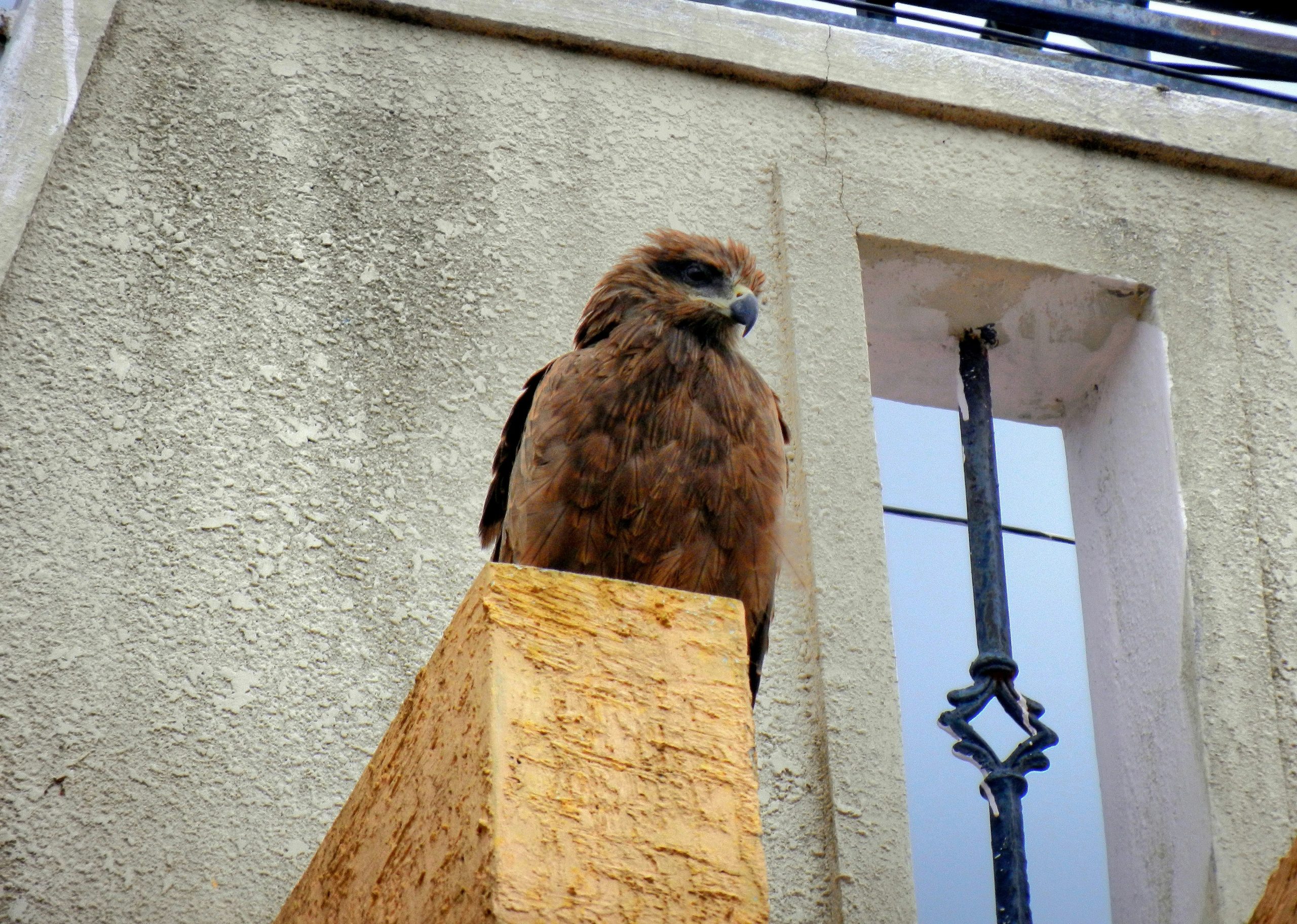
“Zulum” is one of 19 stories, or what Jergović calls prose remixes, in his eighth collection, Inshallah, Madonna, Inshallah—each inspired by a ballad or folk song. Sevdalinka ballads play a central role in the musical heritage of Bosnia and Herzegovina, and like all ballads, at their core sevdalinkas have a tale. Jergović introduces each story with a line from the song that inspired it. For “Zulum” he gives us: Djevojka sokolu zulum učinila, translated as: A maiden did a falcon harm. Accordingly, this is the story of a falcon, a maiden, a 15th century monastery, and a monk who, we’re told, is known for roaming the surrounding forests and conversing with wild animals. As the story unfurls, the monastery in question devolves into chaos over the presence of a Muslim woman inside its walls, a presence that is shortly followed by a monk who goes missing and a mysterious falcon that makes itself at home among the remaining monks.
The story is filtered through the voice of someone reading the monastery chronicle centuries later, replete with ink blots that may or may not intentionally obscure names and influence the narrative. The Catholic monasteries of Bosnia and Herzegovina served, for hundreds of years, as repositories of community memory. The monks recorded births, deaths, marriages, and notable events, and these chronicles have become a rich source for modern writers like Jergović of everyday life in the distant past.
After translating “Gurbet,” the first story in the collection, my co-translator Mirza Purić and I divided up the rest. Purić wrote the first draft of “Zulum.” Purić’s familiarity with Turkish, Arabic, and Persian, as well as his knowledge of Bosnian music, proved to be invaluable and was of special import in assembling a playlist of all 19 songs. Here is the song that inspired “Zulum.” My contribution was often my routines and practice from years of translating the literatures of Bosnia and Herzegovina, Croatia, and Serbia. Our liveliest discussion over his translation of “Zulum” was about how and where to switch between the past and present tenses in the narrative, as Slavic languages are far freer than English in switching between past and present voice. “Zulum” is a charming, and charmed, story, and both of us feel privileged to have been entrusted by Archipelago with bringing these tales to English.
– Ellen Elias-Bursać
Co-Translator of Inshallah, Madonna, Inshallah
He’s Less Obnoxious as a Falcon Than a Monk
Miljenko Jergović
Share article
“Zulum” by Miljenko Jergović, co-translated by Ellen Elias-Bursać and Mirza Purić
Djevojka sokolu zulum učinila / A maiden did a falcon harm
The word “zulum” means injustice and violence. The falcon, which was assailed by terror, its nest burnt, retaliates while keeping with its nature. There were, I believe, times when even birds were not animals.
Fra Jakov Durmo’s name was somehow always circumvented in the annals of the Kreševo monastery. Yet it couldn’t be said that he was never mentioned when he should have been, or, God forbid, that the honorable chroniclers falsified the lists of our brethren just to keep him off. No, they would write down Fra Jakov Durmo’s name just as they would any other, but then the inkwell just so happened to tip over, the monastery tomcat smelled bacon where there was none and blotted Fra Jakov’s name beyond repair, or mice gnawed at just those pages which described in detail what this friar had done during his years at Kreševo, the trouble he’d been in, and the miracles his kind soul should be remembered for.
Under each blot of ink on the loose leaves and volumes, on every spot where the writing has faded, where the paper has fallen apart or has been eaten away, under every paw print—Fra Jakov Durmo’s name is bound to be there.
It was early spring, the snow not yet wholly melted, when one Saturday at dusk someone banged on the monastery door. Fra Šiško was the swiftest afoot, as always, and opened it to a woman, corpulent, dressed alla Turca. Before he could even ask her what she wanted and what trouble had brought her to the servants of God at this ungodly hour, she was already halfway across the room by the hearth, then there she was perching on Fra Šiško’s three-legged stool, warming her palms, repeating: Woe is me, dear Allah, oh woe is me.
Fra Serafin and Fra Ilija froze where they stood, although their hands were almost in the fire. Fra Šiško went rigid, mouth agape, in the middle of the room, as if the Frenchman were here again to capture us on a daguerreotype. But this was no Frenchman, blast your eyes, this was a Turkish woman. A right and proper one, and she didn’t seem to be of sound mind.
It should be said that it was never clear whether Rejhana was truly mad or just relished the friars’ fear. But it’s true we talked more about her at the monastery than about the assassinations, impending wars, and empires crumbling around us.
Fra Jakov wasn’t there when she came, nor did anyone find this strange. Had he come home before the night turned pitch dark, that would’ve been strange, just as they’d have found it strange had he not slipped out at the very break of dawn. He was like that, and everyone was used to him as he was. The guardian had long since given up on him and stopped threatening to have him transferred. After all, where on the rump of the world could they possibly send him without making him even happier? Somebody once said the dimwit ought to be sent to Rome, as it would have been the worst possible punishment for him, because in Rome there is nothing but people and the odd pigeon. No wolves, bears, foxes, and, most importantly, no lynxes! In Rome, our Fra Durmo would have languished in solitude, or he’d have started to howl, growl, and roar to himself, as he’d have no one to talk with on an equal footing.
Why did they send him to us, moaned the late Fra Šimo. They didn’t, properly speaking, send him, they merely returned him, broken. He’d been a bright seminarist, they said, so instead of teaching him nothing but theology and the things that would be of use to a friar in this savage little land of ours, they sent him to study animals. As if he would hold mass for eagles and call upon rabbits to convert! And it all became mixed in his head, he over-studied both theology and zoology, and all that St. Francis had said about the brotherhood of all creation. Instead of caring for human souls, Fra Jakov set out to make a list of animal ones. There was no remedy for it. Especially after he ran into a lynx in the forests of Mt Igman.
When they finally collected themselves, they asked Rejhana why she had come and if she knew where she was. She said she was cursed, it had been three years and she could no longer cope because her youth was passing and so, by God, would the rest of her life if she let this go on. She said of course she knew where she was. As if you could arrive at a place such as this without knowing exactly where you’d been going.
Do you know, hanuma, asked Fra Serafin, what your people would do to us if they knew you were here? She snickered and said they would do a lot less than what had already been done to her.
Well, whatever has been done to you is hardly our fault, why are you inviting misfortune to our doorstep?
I’m not, by Allah, I’m not, I’ve come so you can save me.
How?
If I knew how, I’d save myself.
You’ll know. What if we don’t?
Then it’s all the same and there’s no help for anyone . . .
And so the tête-à-tête went on between the Franciscan brethren and the woman whom, it seemed, the devil himself had assembled from various body parts and set loose upon the world. She was as broad as a smallish moonshine still, and all the female hills and dales on her body were designed to insult the gaze of those who’d vowed to stay chaste and faithful until their final hour. She appeared at a moment when the talk of the land was that the Sublime Porte had let Bosnia go, and it was only a matter of time before the troops of the Viennese emperor forded the Sava and marched on Sarajevo. Never had there been more darkness and hatred in the eyes of the Turks, never did one have to be so careful not to cross their path. What could be worse than if they were to find, or smell, or sense that Rejhana was there?
No trace would have survived of the monastery, and the heads that would roll were no laughing matter either, so the brothers started anew, in even greater alarm: why are you here? do you know where you are? do you even fathom what will happen when word gets out? And she said the same thing over again, she’d been cursed, and she could not bear it anymore.
Close to midnight, Fra Jakov Durmo finally appeared. Covered in mud and scratches, his habit in tatters, a hatchet in one hand, a knife in the other. Had it been otherwise, they all would’ve been surprised. On one occasion he’d returned in the same state in which he’d left, and Fra Serafin, feigning concern, asked him, Are you getting married? No, why would I want to do that? he replied quite matter-of-factly. It was always better not to ask Fra Jakov anything, he was like a spider using the web of another spider to hunt.
Do you think he was surprised to see a woman, a Turkish woman at that, sitting by the fire in the middle of the monastery, warming her hands? Not only was he not surprised, he went straight to the hearth himself to get warm. He didn’t ask her anything, nor did he ask us what she was doing there. He sat by the fire for some ten minutes, then withdrew to his cell. To make up for the prayers he’d missed, as the late Fra Šimo would have said.
The brothers begged and pleaded, they promised to lift Rejhana’s curse and recommend her to the Lord God, if only she’d go out and sleep in the hay barn. She’d insisted on sleeping by the hearth, and gave in only after Fra Serafin told her that the uncles, as people called the brethren, could no longer be uncles if they spent the night under the same roof as a woman. They would lose their spiritual powers, and if that were to happen, Rejhana would have come in vain, they wouldn’t be able to break the spell.
When she finally left, Fra Šiško bolted the gate and said he wouldn’t open it for at least a month, even for the Emperor of Mexico. The brothers fell asleep in God’s peace, but had they known that what had already happened that night was nothing compared to what was to come, they wouldn’t have.
When Fra Jakov Durmo didn’t show up at chapel at dawn, nor later at breakfast, they first thought he’d gone out earlier than usual. But then, how could the gate still be bolted shut, just as Fra Šiško left it? It occurred to them that the brother might have been overcome in his sleep—surely he would’ve let them know if he’d been taken ill—so Fra Serafin and Fra Ilija ran to his cell.
It was past nine o’clock, the time when the fairest rays of sunshine flooded the eastern cells and aired all the trouble and malice out of them. The first thing they saw in Fra Jakov’s cell were his wooden nalin clogs. Fra Jakov would take off his hobnail boots and walk around the monastery in his nalins. He said he saw people do that in Padua. He may have, but nobody else did. There they were, the clogs, in front of his bed, just as he’d left them the night before. The bed was unmade, the rumples of the sleeper were visible, his habit where it ought to be, his hobnail boots on the window-sill, but Fra Jakov was nowhere to be seen.
In the middle of the bed stood a bird, a stately falcon, looking at them, trying to see what the brothers were doing there. Its gaze was like a human’s, yet slightly reproachful. As if to say—have you no shame, barging into somebody’s nest like this?
Will you look at the dolt, now he’s brought a bird to the monastery, grumbled Fra Serafin, and waved his arms to shoo the falcon away. The falcon did not respond, it only blinked, the way a man might blink at someone waving their hands in his face. The friar made to grab it by the neck, and the bird, instead of attacking, cocked its head, puzzled. As if to say—Lord have mercy, what have His servants been reduced to, grabbing honest folks by the neck. Fra Serafin balked. Go on, Ilija, you no-good oaf, do something! I can’t, my brother, don’t you see how it’s looking at us?
Both men left Fra Jakov’s cell, leaving the window open, so the bird could fly out if it so pleased.
The brothers acted as if everything was ordinary that day, as if nothing had disturbed their dreary monastic routine. They nourished their souls with the same prayers, reminding the Lord of this land which lay behind his back. Dinner was simmering, they were having cabbage and potatoes again, but also, thank God, a few grains of rice, to let everyone see how far to the East christened souls had set foot. As he did every day, Fra Ilija cleaned the pistol and the two great ugly muskets entrusted to him by Fra Grgo when he left for Padua three years before. Fra Šiško decanted wine from one barrel to another in the cellar, mumbling superstitious gibberish to stave off the vinegar. They pretended the falcon wasn’t there, and it strutted about like a higher-class hen, ventured into the kitchen, oversaw the lubricating of the guns, went to the chapel and stood long at the altar, staring at Jesus and Mary, sad as only those who do not see the same sight every day and appreciate the silent pain of it can be. From time to time he’d take flight and wing a few laps under the low ceilings, without colliding with a wall like the pigeons and sparrows that regularly strayed in. Then it would land and strut on, step by step, slowly and with the awareness that the world is small and our community of friars smaller yet.
At night it settled by the hearth, by Fra Šiško’s three-legged stool, and spread first one wing then the other, to warm itself better. The brothers were silent for a time, as if they were reticent to air monastery secrets before a stranger; they wouldn’t even exchange glances lest they recognize the confusion and restlessness in each other’s eyes or find occasion for an unseemly joke.
Where had hanuma Rejhana gone? Fra Serafin broke the silence. Oh, who knows, women will be women, someone sighed in answer. Is she still bewitched or has the spell worn off? Is that you asking in earnest, or just so? Just so, of course, why would I want to know, as long as she’s gone. Right you are, as long as she’s gone. What if she’d stayed? Nothing, just like now. Right, nothing. Not something, perish the thought. So what do we do now? Why ask me? Ask the person next to you. Jakov will know when he returns. If he does! Well, I’ll show him this time around, by Saint Elijah and this here cross, I’ll show him . . .
That night the brothers did not sleep, and Fra Jakov Durmo did not return. The falcon withdrew to Jakov’s cell and in all likelihood was the only one to get any sleep. It tucked its head between its wings, and made what seemed to be a huffing sound in its sleep.
The next day Fra Serafin convened the friars. They shut the door and both windows lest the bird come in. It is three days until the guardian returns from Požega, he started. He entrusted the monastery to me, to maintain order and guard the sanctity of God’s house. This will be easy so long as none of us lacks in good sense. Even if my precious moonshine still were kicked over three times, my hand would not reach for a pistol or a hanjar. This is why the guardian chose me. For my good sense . . .
Fra Serafin struggled with what he wanted to say, but none of them would help him. The brothers, withdrawn, as quiet as children in catechism class, were letting him be the first to say what made no sense at all. And he held back, broke out in a sweat, and finally went on: What happened here yesterday is best forgotten. In ancient Rome they’d say the Furies have arrived, in Greece they had a different word for it. I forget which. Children are taught not to open the door to strangers. I don’t blame Fra Šiško, we are all God’s children . . .
Fra Šiško sat up when his name was mentioned: So, now it’s all my fault. Fra Serafin looked at him imploringly, he’d have given anything for a good argument right now, but he’d give even more for someone else to say what had to be said.
Brothers, I believe Fra Jakov is here at the monastery; that it only seems to us that he is not, said Fra Serafin finally. His gaze glided from one friar to the next, eyes rising like stars at late dusk, and he saw agreement there. Am I right? he asked Fra Ilija who sat directly across from him. You are, said Ilija softly, and all nodded. If someone had seen them at that moment, he would’ve thought they were making fun of old grannies who sit and nod by the stove, looking forward to their last rites.
In the end everything turned out the way Fra Serafin wanted. When the guardian came back from his trip he wouldn’t hear anything that could lead him to believe Fra Serafin had lost his good sense, nor would the meeting in the library be used to dog Fra Serafin until his deathbed, turning into a tale that would be passed down for as long as Kreševo and its monastery stood. Something was and wasn’t said.
They were all aware that they were of the same mind. Fra Jakov Durmo had turned into a falcon.
At any rate, they were all aware that they were of the same mind. Fra Jakov Durmo had turned into a falcon.
How this had come to pass, whether the transformation was born of good or of evil, whether it happened because Fra Jakov conversed too much with animals or because someone had given him the evil eye, the brothers weren’t sure. The former would be better—at least it would mean he wouldn’t be spending so much time away from the monastery now, he’d be more dedicated to his spiritual commitments—but somehow the latter seemed more probable. If the latter was the case, then Rejhana might have had something to do with this. Who else, indeed?
Fra Serafin did not regret that Jakov had changed from one form to another, he wasn’t keen on animals, a neighbor’s cur bit him when he was a child, he still had the scar on his leg, so he couldn’t be pleased about a friar who communed only with animals. But there was something else that worried him sorely and darkened his normally bright disposition. However leery he was of charms, enchantments, and folk superstitions, he had seen with his own eyes people who stepped into magic traps; children gone blind though nothing was the matter with their eyes; women whose milk dried up when they saw a spider on the wall; priests struck down as they exorcized the devil from youths; and he knew a thing or two about specters. He used to laugh at the Turkish belief in the karakoncolos which roamed the countryside around Christmastime preying on people, drinking their blood, until some ten years before he’d traveled from Kiseljak just before Christmas Eve. Night caught up with him along the way because he’d been tossing the pot at a certain Gavro Stijepić’s house, whose wife had given birth to three sons at once. The boys had to be baptized, and Fra Serafin had downed a thimbleful afterward, just enough to make him afraid of getting on his horse; he went instead on foot, step by step alongside his bay. And so, in the dark of the moonless night, the creature pounced on him and clawed him all over. The skin on his face was shredded, it took time to heal, and his habit looked as if a company of Turks had been hacking at it with their scimitars.
This could only have been the karakoncolos. They all agreed, though they didn’t believe in tall tales. Except for Fra Jakov, who calmly declared that, in his opinion, Fra Serafin had been attacked by a lynx, because the animal was frightened by the smell of the rakija. Look at him now—if he still doesn’t believe it was the karakoncolos, he should look at what he’s turned into!
It was decided that the bird would be allowed to do as it pleased, as long as its behavior was becoming for a man. If it wanted to eat at the table, let it eat at the table like everyone else. If it wanted to attend mass, let it, and let it visit the chapel whenever it pleased. But it was not to receive Holy Communion. Because nobody could be certain that Fra Jakov’s soul was in the falcon, and lest it pluck the Eucharist with its beak, as the Body of Christ is not to be chewed and a beak is the same thing as teeth, concluded Fra Serafin.
The brothers grew accustomed to the bird that same day. There wasn’t much to adapt to anyway, because all the things Fra Jakov had done to bother them were gone. He no longer tracked in dirt when he returned from the woods, nor did he act superior as the one who left things unsaid. The bird was no mere animal getting in their way, tangling between their legs. They sensed a human soul in it, a soul wiser in every way since its move from one body to another. They’d been given a better brother, yet hadn’t lost the old one. This was a tangled matter, only Fra Ignacije, the famous logician from the lyceum in Visoko, would have been able to disentangle it, had he not died the year before.
They went off for their afternoon rest and contemplation feeling peace such as Fra Serafin hadn’t felt since the summer before he took the cloth, when he planted a plum orchard at Plehan with a young Fra Ilija and seven other young men by day, while by night they stargazed with Fra Julian. Fra Julian was over eighty and was still completing his magnum opus, a map of the sky over Bosnia. He started it a bit late, when he was already retired, and knew nothing about astronomy; he believed every land had a different arrangement of stars and that the sky above Florence couldn’t possibly be the same as the sky above Derventa. Nobody wanted to disabuse him of his notions, it is a shame and pity to stand between an old man and his sky, so they purchased him a new telescope. It arrived from Vienna a short while before Fra Serafin’s summer, and there was probably no greater marvel of technology in all of Bosnia at the time. Fra Julian was as happy as a child, he hopped around, spreading his celestial papers all over the desk. His happiness lasted for days. It seemed at one point that, little by little, the whole monastery of Plehan was leaving this poor chilled Earth behind and taking off for the stars. Every night he stared through the telescope, pencil in teeth, circling from one end of the sky to the other, supposedly to acquaint himself with the swathes of sky previously concealed from him by the Paduan contraption, the primitive old telescope he’d brought with him the last time he’d been sent on a trip.
Then something happened that changed the meaning and sense of Fra Julian’s story about the stars. One morning he set out across the green and stumbled over a plum sapling planted by the young men the day before. He jumped swiftly to his feet and changed direction, only to stumble over another sapling. Five or six more times he fell until someone ran over to help; the old man started wailing as if someone were flaying him alive. Out of his mouth came the crudest coachmen’s curses, ones that had never been heard, not even from the most ribald of the brothers. He wriggled himself loose, started running, and stumbled yet again over a sapling.
Poor Fra Julian couldn’t see. Who knows when this had started. He was almost completely blind, and he’d kept it a secret lest the monastery find that the sky map would never be finished. As long as the brothers thought he was working on it, he felt he was. He’d learnt to move by habit and inner eye, he knew every inch of the grounds, where every single thing stood. He had counted all his steps long ago, and in a world in which nothing changes for centuries, it took a new plum orchard to catch him off guard.
It was agreed that the mishap would be passed over in silence; they would encourage Fra Julian by sending him young seminarians every evening for stargazing lessons. He was overjoyed. God created the firmaments so man would have the occasion to lift up his gaze from time to time, so his head wouldn’t drop, his neck twist, with ants and bugs of all kinds crawling into his nostrils, he said during the first session. The young Serafin listened, and he thought there could be no greater truth than the truth as seen by the eyes of the blind.
He showed them everything to be seen in the sky, and asked: Lad, do tell. What does that star over yonder look like to you? And was amazed to hear yon star was like a drop frozen on a windowpane at night, because to him it had always been like the headwaters of Gospava stream, so tiny, one would never have thought so much radiance could emit from it, and who could imagine so much water pouring forth from the spring. During those long nocturnal sky-watching sessions there was never any awkwardness that might have invited derision about the fact that the old man could not actually see. If there was such a thing as inner peace, it was, for Fra Serafin, the peace of that summer when they planted plum saplings by day and by night learnt about stars from Fra Julian.
This is the peace he regained as he lay on his wooden bed, staring at the ceiling, listening to the falcon pegging down the hallway, to Fra Jakov Durmo tapping on the stone floor with his sharp talons.
If the story had come to its end that afternoon this would have been very good indeed; if it had, one name wouldn’t have been smudged in the annals of the Kreševo monastery. But the end is never where one wants it to be; the story goes on until whatever began it all has run its course.
After two ordinary days and two peaceful nights, on the third morning, the morning of the day when the guardian would return from Požega, somebody banged again at the monastery door. Fra Šiško, again, absent-mindedly hurried to open it, and there stood a man in rags, dirty, unshaven, in a sorry state. Who would you be? The friar was taken aback. What do you mean, who? Scowled the stranger. Ilija, brother, come have a look at this fellow, Fra Šiško was still dazed. Yes, I see him, how could I not. What do you want, my good man?
The man looked at them in disbelief, halfway between rage and apprehension, but he also felt a pang of suspicion that they might be poking fun. The two, however, had never been more serious. Brother, would you like some bread? asked Fra Ilija. No, I would not, but I would like to come in, said the man, and the two of them took a step back.
Fra Serafin did know, he’d immediately recognized Fra Jakov in this tatterdemalion. It’s not as if the friar could’ve changed so utterly in four days, and he’d never been the picture of tidiness and cleanliness, but the brothers believed so deeply that his soul had moved to the falcon that his face meant nothing to them. They should’ve been accustomed to him; this required the same effort of mind and soul as accepting that the man had become a bird.
If nothing else, their faith was honest and deep. The Holy Father himself would have wept if he could have seen them now, thought Fra Serafin later as his anger smoldered.
At first, Fra Jakov Durmo would not say where he’d been, but when they pressed him, reminded him that the monastery wasn’t his property and pointed out that he might find himself looking at the gates of Kreševo from the outside for the rest of his life, he admitted he’d gone with the woman.
I have sinned, he said, the worst possible sin.
You are lying again, you’re not one to be tempted by a woman, and she isn’t even right for your size, she’s three times your height and girth, said Fra Serafin. And then Jakov told them something that would’ve been entered into the annals and remained there if only there had been a decent harvest of wheat the next year to save the mice from having to eat paper the year after that.
This is how Fra Jakov talked of his absence, spoken in his own voice: Before dawn, when the clock was soon to strike four, I heard voices under my window. One was female and human, although it wasn’t saying human words, the other was the voice of a bird. They quarreled and quibbled like sisters-in-law before a wedding. You couldn’t make out what the argument was about but you got the feeling they’d been at this for a while, it wasn’t their first fight. It’s easy to spot. When people hate each other their whole lives, and God, kismet, or the fact that they’re cut from the same cloth won’t let them part even for a day, a higher order emerges in their hatred. They interrupt each other, yet always know whose turn it is to swear and rail; they scratch each other’s eyes out, but warn the other first; they fling tin plates and morning stars at each other, if they have a morning star handy, but in such a way that the other is just able to avoid being hurt. Similar order exists among animals. When a he-wolf pounces on a she-wolf to rip her throat out, or when a village dog lunges at the spine of an animal—one seeming sure to be killed—neither is hurt. They crouch at the ends of the den licking their wounds, but they are so close, their tails might touch and they know they wouldn’t have it any other way.
When people hate each other their whole lives, and God, kismet, or the fact that they’re cut from the same cloth won’t let them part even for a day, a higher order emerges in their hatred.
And so I listen to them, wide awake, the fog in my head clearing, as if I’d never been sleeping at all. And I think to myself, what is the matter with the woman, why doesn’t she speak human language? I know she isn’t mute, for if she were, even the bird would avoid her. Words probably fled her tongue after overlong conversation, so I get up for a glimpse, and what do I see? Under my window a woman, enough flesh on her to hew out a pair of mighty warriors, flailing her arms, flushed, about to burst, and a falcon flying around her, lunging at her face. It is a nice, plump bird, you can tell it has never lived in want. But still, some trouble has driven it to talk this way, this long, to the woman.
So I say to them, could you keep it down? The servants of God will be missing their sleep! Just to see if the woman has actually forgotten the language of humans and to pepper the argument with a little humor. And she lifts up her head, almost burns a hole in me with those eyes of hers, and swings, hitting the bird. The falcon hops back and falls silent, it understands that now is not its time.
Anyway, she tells me not to play the fool, we have sat by the hearth together, her name is Rejhana and she will not leave the monastery until we rid her of the bird’s curse. Why us, why not see a hodža? She says she’s been, and he told her there was nothing he could do, there was nothing in his books about bird curses and spells, but the friars might know, their books had all manner of idle talk in them. Will you look at the hodža! Not half crazy, is he! Got rid of the pesky woman, besmirched the cross.
She says, come on down, I’ll tell you what happened. I say, how am I supposed to come down at this hour, what will the uncles think? She says, come down before I make you ’cause if I do you ain’t gonna be climbing up no more. So down I come, what else can I do? From the window, yes, how else? Yes, I did forget my habit, but it’s not as if I would’ve needed it.
So there she is before me, taller than a stack of hay, the falcon next to her like a good-sized chicken, but as pretty as no human ever could be. And so they stand, and you, Jakov, go ahead and judge between them!
All right, I say, let’s hear it. But no lies, I don’t want your companion to claw my eyes out later. And, by God, did Rejhana talk.
When she turned fifteen she was the prettiest girl in the village, second to none in three neighboring villages. On all of Mt Bjelašnica, as far as the eye could see, among the clans of Brutus, Hrvat, and Krdžalija, there was no such beauty. All who saw her fought over her, men would run home to father sons, hoping someday she’d be their bride. Potatoes rotted in root cellars, cattle perished in barns, wolves broke into pens, but the men didn’t care. The festival of Rejhana’s beauty lasted a long night, and more sons were conceived on Bjelašnica that year than the previous and following years combined.
But as beauty and good sense do not go hand in hand, and girls at that age have no peace of mind, Rejhana was all a mad dash. She would run off from home, sleep in the snow, shelter in bear dens, run her hands through their bear fur and wreak havoc in their ursine dreams. She says she learnt what every bear on all of Mt Bjelašnica was dreaming, and that bears are as different from one another as humans are. Some sleep restfully, others wake at the first thaw, more tired than when they went to sleep. When she wasn’t with the bears, she’d chase rabbits or climb the highest cliff to see Stamboul from afar. She thought one could see the distances from such a height, and longed for a young muezzin to look toward Mt Bjelašnica from the highest minaret in Stamboul, see her, and fall in love. Or for the Sultan’s sons to cast a quick glance from the highest tower in the city, then come and whisk her away. This is what poor Rejhana believed was to happen.
Once she was climbing up a cliff and was about to hop from one rock to another; she reached for a crag when something snatched at her little finger. It snatched her finger, and bit the pinky right off. She saw the blood gush, and thought the princes and the young muezzins would never want her like this, and a great rage welled up inside her, the kind of rage that makes the human soul shrink into the smallest speck, into a dazzling ray of sunshine sharper than a scimitar.
Rejhana looked up to see who’d done this and spotted the falcon with three chicks. The she-falcon was away. As she glared at the falcon’s nest, it caught fire. The falcon flew around its young in circles, but there was no way to save them. They burnt in a terrible grief, the grief of offspring who believe the all-powerful parent has no wish to help. There is no difference in this regard between Jesus on the cross, the falcon chicks, and the tiniest of ants who know their father and their mother. You remain a child until you understand that your father is powerless. If you live to understand this, you are someone’s father yourself.
Rejhana doesn’t know how she knew the falcon had cursed her, but she knew it at once. She returned home and never again roamed the mountain, her finger healed and soon enough one could barely see it was missing, but from that day forward she began to lose her beauty. First she grew fatter, her breasts swelled up like those of the plumpest new mother, her hips broadened, and her voice coarsened. Her nose was like a sizeable potato, ears like a man’s, hair covered her body, and ultimately she grew a beard. She smelled like a bitch in heat, and her closest kin kept her at arm’s length.
Like a man who’d carried a sacrificial lamb on his shoulder for three days from one side of the mountain to the other and finally dropped it at the feet of the master of the house, so poor Rejhana sweated and stank.
Then, after all this happened, and after it became clear that the lowliest pauper in the realm wouldn’t take her, the falcon came for the first time to her house. It is then that the conversation, which had been going on for three years now, started; she hadn’t learnt bird-speech, but she did learn bird curses, quarrels, and imprecations.
And so it was that she came to the monastery at Kreševo so we could rid her of the curse, and beguile the falcon into forgiving her.
A tall order, I tell her, difficult even for the great Lord God, if you don’t believe He runs the world of animals by the same laws and customs He uses to run the world of men. I do believe that, says she. And I hold my tongue, what else can I do, it’s not mine to judge whether someone does or doesn’t believe, I must act as if everyone believes, and Rejhana will soon learn the reach of her faith, because one cannot fool God and his desperate children in times of distress, whether they fly, or only walk.
The falcon would stay at the monastery in my stead, everything would be as if I were here, my brothers wouldn’t notice the difference, and I should do what is good and just. And if it is just, and if hanuma Rejhana has faith, the falcon would halal her.
So Rejhana and I leave for Bjelašnica. I tell her to take me to the cliff where she set the falcon’s nest alight with her gaze. If she can’t remember which cliff it was, she should try to give more thought to this before we get there, for the whole effort is in vain if she takes me to a different cliff. She says she knows and has no need to think, because she could never mistake that cliff for another. How could she forget the place where she committed zulum against the falcon? Such things, if they don’t etch themselves on the mind, are remembered by the soul. Not many walk the Earth who have committed zulum and have forgotten where, against whom, and how. God has arranged things so that it will not be forgotten.
It took us two days to reach the foot of the cliff, and another to climb the face. There were no traces of a nest on the gray stone. I say, do you know what the nest was made of, how it was made? She says, I do, I’ve seen hundreds like it. Good, walk around, gather twigs, knead mud with your spit, and when you run out, the moisture from your armpits will do. I can’t be of help because the nest must smell of you and each twig must be brought by your hand.
By the time I’d smoked two pipes of tobacco, the nest was done. We came down the mountain faster than we’d climbed up, she left for her village, and here I am now before you, uncles, brothers. Do what you have to do, you may believe I’ve done a good deed and rid you of great distress, or that I’ve lost my wits. What you may not say, nor will any of you ever so much as murmur behind my back, is that I committed the sin of fornication. I already lied to you that I’d fornicated, but you didn’t believe me, though I’d rather you thought of me as a sinner than a fool.
As Fra Jakov Durmo wrapped up his confession, all eyes turned to Fra Serafin. As if to say, it is up to you to judge, before the guardian returns from his trip. And he stands there, silent, ten lives’ worth of bitterness welling inside him, and he doesn’t know which is worse—what he’s just heard, what is expected of him, or what might happen when the guardian returns.
Where is the wretched bird? Bring me the bird! he shouted, and the brothers scurried off through the monastery to find the falcon. Only Fra Jakov remained sitting. He smiled glumly, looking Fra Serafin straight in the eye. The falcon is gone, homeward bound. It has a place to mourn now.
Having said that, Fra Jakov began to weep. He buried his face in his palms, and his palms were as big as the biggest shovel, the kind heartless landlords give their underpaid servants. Meanwhile they’d be thinking themselves to be clean before God, they’d pay for every hundred shovelfuls with a crust of bread, as if God didn’t know and couldn’t see that a dozen normal human shovelfuls could fit into one of their shovels. This is how big Fra Jakov Durmo’s palms were. His tears ran down the gullies of his palm lines, rinsing the dust and mud. If there was, by any chance, an ant lodged there, it drowned in the friar’s tears.
The brothers couldn’t find the bird that had been there only a moment before, and Fra Serafin suddenly seemed to have forgotten what was on his mind, what had been discussed, and what he was to pass judgement on. He said the guardian must be welcomed back to a clean-swept and scrubbed monastery; that he left friars behind when he set out, he was not to find pigs in their place when he came back; Fra Serafin couldn’t allow any such thing, his honor was at stake, and so he sent the men to sweep and scrub.
Something is out of kilter in your mind. Or your soul. Or partway between. Something is awry for sure. You will go to your cell and rest until further notice. If the guardian asks, you will confirm. You can’t sleep at night, you hear voices where there are none, you’ve lost your appetite. This is what you shall do, God help you if you should do otherwise.
Fra Durmo lay down on his bed and there he stayed for three months, until the matter faded into the past.
They told the guardian some things, kept others to themselves, but what they did tell him was enough to wreak havoc in his mind. At first he thought something evil had transpired, which they were trying—but, why?—to conceal. Then they looked like children who’d spilled the milk and told their mother they’d drunk it. Finally, he summoned Fra Serafin to his cell and told him: this is your one and only chance! You may now tell me what manner of bird it is that went to Mass and visited the monastery with your permission. Was it a human bird, since you discoursed with it so nicely, and if so, why does Ilija refer to it as “the bird” when christened souls have their own names though they aren’t supposed to have wings? What did Šiško mean when he said it flew daintily, without brushing the walls with its wings? Tell me, were the lot of you guzzling rotgut and losing your mind for three days? Why did you have the place scrubbed? What filth are you hiding from me? Who did the Turks send to rob the monastery? I hear it was a hanuma. Or was it perhaps a bird? And why has only Jakov taken ill, while all the others talk gibberish, yet somehow they’re supposed to be sane? Go on, explain that! If you don’t, and I hear of it ever again, God help you, Serafin! Let it be as if nothing happened, because I will not suffer you to make a fool of me.
Fra Serafin kept silent and now and then he sighed. Every time he was about to speak, his thoughts would trip over a bit of nonsense, something he couldn’t say without first preparing the guardian, so he’d heave another sigh and start thinking of how to do this, but then these thoughts would lead to another bit of nonsense that could only produce yet another sigh. Nothing but sighful silence remained.
That silence was to be recounted and remembered for another hundred years, which is how long it took for the story to reach me, and for me to furtively write it down. Furtively, I say, because it had been told and passed on among friars as a joke at their own expense. Or as a joke about the olden days when friars were able to think that a human soul could move into a falcon, and when a falcon, a bird almost extinct in our parts now and wary of everything that walks on two legs, could peacefully strut through the hallways of a Franciscan monastery. I’ve not been able to think of the story of the wondrous life of Fra Jakov Durmo—the friar whose name is not to be mentioned—as a joke, nor can I laugh at Fra Serafin’s silence and sighs. So please forgive my lack of humor.
And let us move on to the end.
Nothing more was ever heard of Rejhana, and it is not known if the falcon ever forgave her and left her in peace, or if her beauty ever returned. She was never discussed again, not before the guardian nor before Fra Serafin. The brothers never mentioned her among themselves, although it is hard to believe a day ever went by without them thinking of her. Some wondered forever whether Fra Jakov had made fools of them, fabricated the whole story just to have an excuse for those few days of absence. They never stopped weighing, calculating, and examining what he’d told them, never ceased searching for explanations for the unusual events in books. Others couldn’t forgive him for dragging them into his animal world, if only for a day or two, leading them to see a human soul in a feathered creature.
After months of penitence, when he’d had to feign madness although he was sane and lie that he couldn’t get a moment’s sleep at night even though he slept like a Bjelašnica bear, Fra Jakov returned to the forest and its creatures. Again he took to leaving at dawn and returning long after nightfall, but he never told anyone about whom he met, what he saw, or what creature he discoursed with on any given day. And the brothers were not overly inquisitive. The only thing that could soften him and make him talk was when Fra Serafin asked if he’d perchance come upon a lynx. Fra Jakov Durmo would find his tongue and start at length about the great cat from his forests that had lived there long before the men of the three faiths bred to excess, and when they did, how the cat reproduced less and less, frightened by the humans, although it was stronger and more nimble, so now it was on its way out, and if the friars of Saint Francis didn’t help, the cat would be no more.
Thus Fra Jakov spoke about the last thing he wanted to talk about with humans. Fra Serafin just listened, nodding from time to time, gliding with his fingertip down the scar on his neck left by the karakoncolos, thinking of how weak his faith must be; after all these years, he’d like nothing better than to argue about whether he’d been attacked that drunken night by a lynx or by a specter from Turkish superstition. Fra Jakov believed one thing, the other friars believed another, and Fra Serafin was forever partway between. He would write about them in the annals, and feed Fra Jakov’s name to the mice, blotch it with ink, and coax the monastery tom into smudging it on the page with his wet paw. And the next chronicler would do the same, until Fra Jakov Durmo departed from this world, still in love with Rejhana’s unseen beauty.