Reading Lists
12 Books About Losing Perspective in Los Angeles
The LA novel understands that it’s selling the American Dream, only bigger
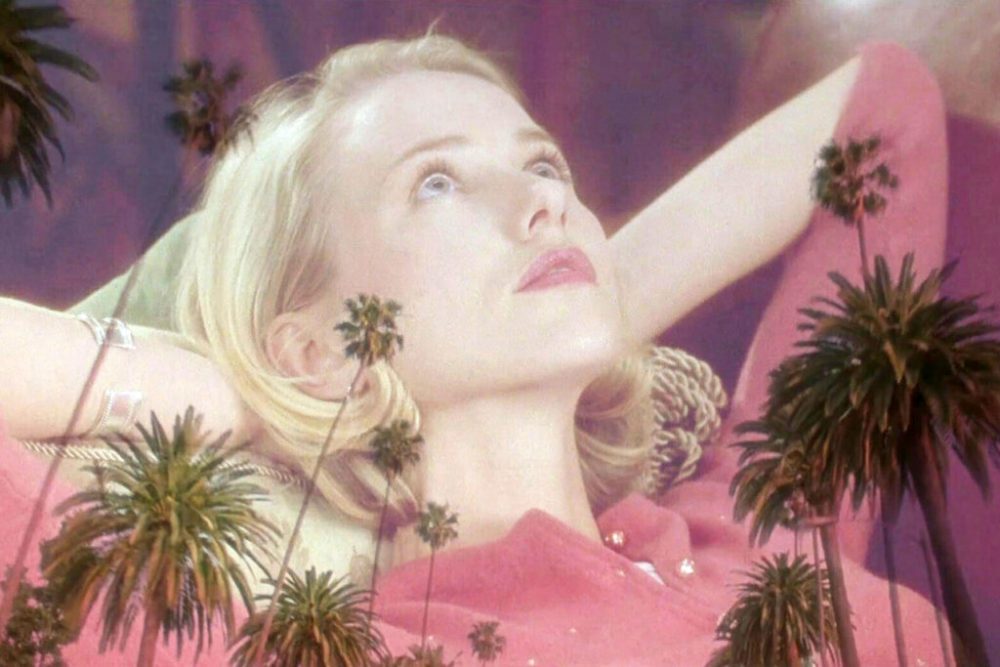
When writing about LA, people always assume you’re going to write about rich people at pools on the West Side. LA is not that. Los Angeles isn’t a stage set, and anyone who doesn’t know the difference hasn’t been in LA long enough or with enough hard-won intelligence. William Faulkner wrote, in Requiem for a Nun, that “The past is never dead. It’s not even past.” Los Angeles feels like that if that was about a city—LA is not even LA. Everything is still here, as a city it remains, but nothing holds still even while it’s happening, even once it’s over.
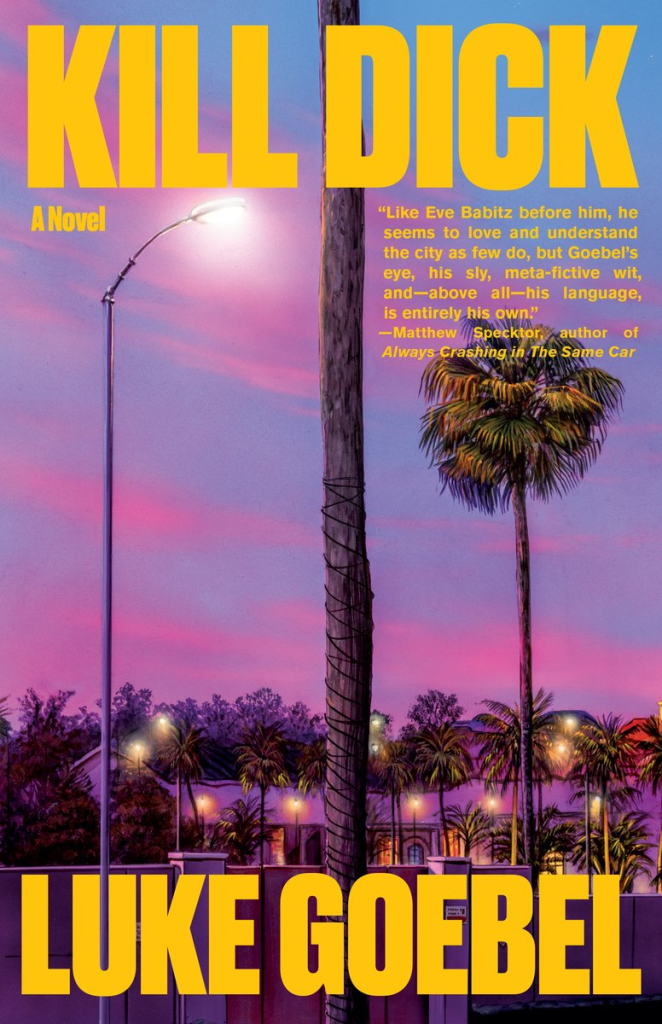
That said, you can also start writing from inside the illusion. My novel, Kill Dick begins poolside in Brentwood, before dropping fast and dark into the stratified streets of chaos where the poor and addicted are being hunted by a serial killer who is a stand-in for the worst actors on the stage of capitalism-run-riot today. While writing it I had to work to learn the town, as a screenwriter, as an author, as a transplant, as a visitor for the last decade. But the longer you stay, the more you lose your point of view. That’s LA. The LA novel is about losing point of view.
The best Los Angeles novels understand this. They drift. They double back. They sit in traffic. They ache, they lose their spirit, they try and try and try. Sometimes they succeed at making movies, money, and climbing the ranks of power only to find out how sad it feels. How fleeting the moment is when you look at your movie’s billboard for the Awards campaign. The city doesn’t run on proximity to power. It runs on complicity in losing it. At the end of the day—though there is no “end of the day” in LA—the LA novel understands that it’s selling the American Dream, only bigger. The American Dream is always about power, influence, and so the LA novel strives to make you believe that the mountains can be moved with just your mind. It’s all about the magic trick of point of view.
Play It As It Lays by Joan Didion
Didion strips Los Angeles down to its emotional bone in her second novel, and then saws into it with a scalpel of diamond sharp vacancy. Maria Wyeth moves through freeways, desert, and soundstages with a listlessness that feels like silence. The novel refuses conventional drama. Collapse is ambient. Everything is completed before the story begins. The cards were long ago played. LA doesn’t punish or reward—it simply absorbs. What remains is a portrait of disappearance, where identity sinks quietly away, without spectacle, until nothing is left to hold onto—the most terrifying part of one’s point of view is losing it.
Slow Days, Fast Company by Eve Babitz
Babitz doesn’t critique Los Angeles—she inhabits it completely. The insights in her stories move through sex, art, music, and social life with a precision that feels effortless but is anything but. Distinguishing her from other chroniclers of the city is her fluency in its codes: She understands access, timing, and presentation as forms of intelligence. Pleasure isn’t naïve here; it’s strategic. Beneath the surface—sunlit parties and beauty—there’s constant calibration, a sense that everything is being negotiated in real time. Babitz makes Los Angeles feel not just alive, but legible to those willing to pay attention. That’s a point of view worth selling. People now root for Babitz and against Didion. I love both. And root against anyone who pits women against each other.
The Pisces by Melissa Broder
The point of view here is so whacked-out and weird that the novel has to invent a merman just to make emotional reality manageable. Broder’s main character, a support-group-groupie strung out on love, drunk on affection, fantasy, and self-destruction, summons—or invents—a big sexy fish-man off Venice Beach to siren her away from her point-of-view-less life of bubblegum-chewing, ass-in-a-support-group-chair malaise. In LA, that almost scans as realism. The miracle of The Pisces is that its bizarre premise never feels like escape so much as recognition: Myth becomes the only language big enough for erotic despair. The fishy-man with the hot tail connects her back to something ancient, irrational, and primal. Myth, in this city, is often just the imagined meaning it takes to make something new out of yourself. Still, Abbot Kinney can only offer so much. In the end, you’re left with yourself. That’s the point of view we all want to escape. It stinks.
The Big Sleep by Raymond Chandler
Chandler constructs Los Angeles as a network of power, secrecy, and corruption. A wealthy family would rather tear the entire city apart than talk about its little secret. Two sociopathic daughters and a rich daddy can’t just hang, and say, “Hey, where’s the Irishman?” Through Chandler’s seminal PI, Philip Marlowe, LA becomes a system to be discovered, where clarity is impossible and everyone is compromised. The plot resists resolution. Resolution doesn’t exist. What remains is tone: controlled, observant, and aware that glamour and decay operate as the same structure—it’s all surfaces, and under those, desperate little people and desperate big people. But where’s the hope? Where’s the light? It’s called Sunshine Noir because even the sunshine is dark.
Ask the Dust by John Fante
Fante’s Los Angeles is fainter than the LA of Didion, Babitz, or Chandler. Arturo Bandini arrives with writerly ambition and encounters failure at every turn—the fun of the novel is his failures. The tale operates through contradiction—ego and insecurity, desire and resentment—the male pickle. The city amplifies everything and yet reduces him to nothing. What emerges is a portrait of aspiration without guarantee, where wanting something intensely only makes its absence more visible, its achievement more impossible. That’s the city, if there is an LA at all—aside from the infrastructure and the history of those who are generational and not on the West Side at the Jonathan Club.
Interior Chinatown by Charles Yu
Willis Wu is an Asian American actor of Taiwanese descent who wants to be a star. He moves through a Hollywood that has a point of view that doesn’t include him, except via typecasting and hierarchical denial. Interior Chinatown shows LA as a machine that assigns value, and Wu’s value is determined almost entirely through stereotypes and roles offering him limited visibility. One promotion in status might finally deliver personhood, that’s his fantasy—that’s the dream. Instead, Wu’s nightmare becomes his life sentence, and his identity becomes a joke sharp enough to pierce the Hollywood dream that’s always being blown, popped, and re-blown by someone else for him. The novel closes with an epilogue that questions if we ever stop acting out roles even when we’ve lost the big part and are trying to renew our conviction of becoming “real.” Can you have an authentic point of view once you’ve realized how points of view are bought and sold in a marketplace that undervalues you?
White Oleander by Janet Fitch
Fitch maps Los Angeles through the instability of Astrid, a teen who’s suddenly parentless in every practical sense when her mother goes to jail. She moves between foster homes and identities, adapting to survive each new environment. Beauty appears throughout the novel, but it offers no protection, like the relationship between mother and daughter that is both floral and poisonous. Still, flowers are pretty, right? Isn’t beauty a protection of its own? Isn’t beauty enough? LA sharpens some people and dulls others. In Fitch’s telling, LA becomes a sequence of tests, each one demanding a version of the self that may not survive the next transition.
Vineland by Thomas Pynchon
Pynchon’s California is less about Los Angeles specifically and more about the systems that produce it—surveillance, paranoia, the residue of failed counterculture. Set in the aftermath of the 1960s, Vineland tracks characters caught between rebellion and absorption, where resistance has already been commodified and folded back into the structure it tried to escape. What makes it feel like a great LA novel is its understanding of image as control: media, myth, and memory all functioning as tools of power. LA isn’t just a place—it’s the endpoint of a process, where everything radical eventually becomes aesthetic. Plus, the great scenes at Pepperdine.
Your House Will Pay by Steph Cha
Real violence, the kind that Your House WIll Pay is concerned with-–specifically the shooting of a Black teenager in the early 1990s (echoing the real-world killing of Latasha Harlins)—is different from the fictive unrest and ultraviolence essential to the LA novel. Different from the fun and games of Pynchon or the riot-as-trope of LA literature that stretches back even before the riots we all know off the top of our heads. YHWP is about how the past resurfaces as fever pitch. Underneath are years of violence that never leave, never go anywhere. This LA doesn’t disappear, it gets glossed over by soundbytes. Steph Cha understands the way people look at each other beyond what they say. There’s less performance here, and no escape hatch. This novel isn’t about LA erasing you through illusion or ambition, it’s about how LA uses sleight of hand in POV when it comes to race and inequality.
Colored Television by Danzy Senna
Senna’s book was heralded as one of the best of the year This is the tale of Jane Gibson, who’s living in borrowed luxury and trying to finish her second book (no easy task). She believes she’s finally found stability and success in a pivot to Hollywood, only to have the illusion fall apart in Hollywood’s fickle and fast rollercoaster ride from promised land to disappearing dream. The town rips her shit off hard. At one point, we talked about adapting Colored Television, and I failed to pursue hard enough—I’m still kicking myself.
The Sellout by Paul Beatty
A fearless satire that stretches reality to expose it, The Sellout is about an urban farmer from Dickens—a fictional town in the LA periphery—who finds himself standing trial before the Supreme Court after reinstating segregation and reluctantly accepting a man who insists on becoming his slave. Beatty pushes America’s racial logic past the point where it can recuse itself. This is what a novel can do and Hollywood mostly cannot: put the dominant point of view on trial, then let satire dismantle vision itself. A razor’s-edge performance, The Sellout shows Beatty can push the limits of identity, sociology, and racism to reveal that the POV running the social program can be hit hard by the power of literary satire.

Body High by Jon Lindsey
Body High is an oedipal wreck moving through addiction, grief, desire, and self-destruction, while performing a requiem for Leland’s dead mother. Leland is the narrator, a barely functioning drug addict trying to survive his mother’s death, while FF or Freedom Fighter, his best friend and Lucha Libre wrestler, drags him deeper into a city of pills, bodies, delusions, and need. In an attempt to help Leland’s 17-year-old aunt, or aunt-sister-cousin in the novel’s warped family math, they become grotesque tag-team protectors of a disappearing childhood. The novel doesn’t step back to analyze because it’s insanely propulsive and the characters are high as shit; it stays on the beat, tracking sensation as it happens, reality as it’s misperceived. The novel—like the city, like the dead mother’s apartment—burns. It shakes and takes its characters over the edge because there never was a stable point of view for this generation’s LA. It’s just Shakeytown shaking the kids loose.