Reading Lists
Brothers, for Better or Worse
These seven books explore the rivalries, resentments, and unexpected intimacies that shape the bonds between brothers
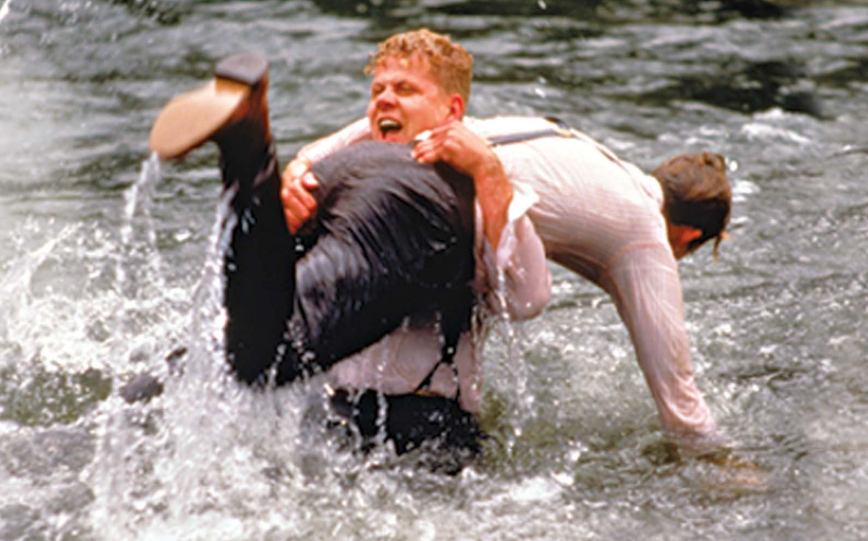
There was a proverb I came across once that’s stuck with me: “If brothers were such a good idea, God would have given himself one.” Harsh, but not untrue. At least as far back as Cain and Abel, the relationship between brothers has proved to be a complicated one, full of petty resentments, jealousies, and competition—but also the unique understanding that only brothers can have, like magnets with the same charge: alike, and therefore repulsed by each other.
If brotherhood can be a burden, it’s especially so for the younger brother. He comes into the world already being measured against the yardstick of his older brother’s accomplishments, often destined by birth order to live in the shadow of a favored firstborn. It leaves him with one of two options: to follow in his older brother’s footsteps without hope of living up to expectations, or to rebel, branching out on his own path to the inevitable disappointment of parents who wish he could be more like his brother.
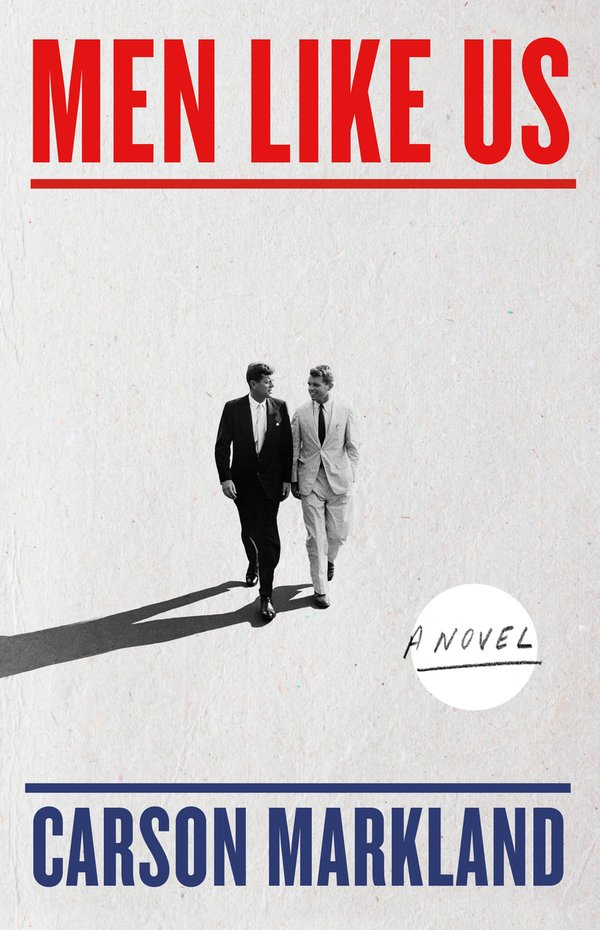
My novel Men Like Us explores this dynamic through the Kennedy family. Bobby Kennedy occupies the shaky ground of the younger brother, torn between the pressure to live up to his charming older brother Jack while at the same time trying to develop his own identity independent of his sibling. I wanted to explore what it felt like to be caught between two competing impulses, what it was like to be the “spare,” not the heir, and the expectations and challenges that might come with living your life in the wings instead of on center stage.
For all its faults, the bond between brothers, or any siblings, is the true cradle-to-grave relationship—just as important, in my opinion, as any of the more commonly depicted bonds in literature, between romantic partners or parents and children. Equal parts fraught and exhilarating, brotherhood is a relationship like no other, someone you don’t choose but have to travel alongside through life nonetheless. In the seven books below, we see a variety of brothers and permutations of this thorny relationship—some younger brothers who look up to the older, some who want nothing to do with them, all inextricably bonded to a person who understands them (or doesn’t) like no one else in the world.
Young Mungo by Douglas Stuart
Although ostensibly a queer Romeo and Juliet set in a Glasgow government housing scheme, Young Mungo is also a story about brothers. In Mungo’s world, Protestant and Catholic gangs are at war with each other. Though he has no taste for violence himself, Mungo’s older brother Hamish serves as the leader and general of one of the Protestant gangs. The two brothers are opposites: Mungo is sweet, emotionally perceptive, tender. By contrast, Hamish thinks with his fists, embodying the brash, violent masculinity their world demands for survival. Throughout the novel, Hamish tries to coach Mungo into being more like him, pulling Mungo deeper into gang politics even as Mungo is simultaneously falling for a Catholic boy who lives in the same housing scheme. By the end, the question isn’t whether Mungo will ever be able to follow in his brother’s footsteps, but exactly what it will cost him to do so.
Salvage the Bones by Jesmyn Ward
Salvage the Bones follows siblings Randall, Skeetah, Esch, and Junior as they prepare for Hurricane Katrina in their rural Mississippi town. Although the novel juggles multiple threads, including the coming storm and Esch’s unexpected pregnancy, one of the most compelling arcs for me centers on Skeetah—the second son—and his place within the family. While his older brother Randall is a talented basketball player whose skill offers a possible route out of their town, Skeetah devotes himself to a completely different path with the same intensity: pitbull fighting. With the two, Ward captures the subtle tension that can exist between younger and older brothers—less an outright, declared rivalry than an unspoken attempt by the younger brother to carve out a unique identity for himself. The result is an understated but no less powerful example of how birth order can shape the identities of brothers themselves.
Intermezzo by Sally Rooney
Following two brothers in the wake of their father’s death, Intermezzo maps the contentious relationship between younger brother Ivan and older brother Peter as they navigate their grief amidst a lifetime of accumulated misunderstandings. While many books explore the relationship between brothers in childhood, what appeals to me most about this novel is that it spotlights how the sibling relationship evolves—sometimes awkwardly—into adulthood, when the hierarchy established in childhood no longer fits. Peter remains convinced he knows what’s best for Ivan and what “normal” adult life should look like; Ivan resents Peter’s interference and judgement of him. Through Ivan, the book captures the growing pains of being the younger brother and the difficulty of trying to establish your own life while still being seen through the eyes of an older brother who’ll always see you as a child.
The Sisters Brothers by Patrick deWitt
This novel is perfect for anyone with a Western itch to scratch. Assassin brothers Eli and Charlie Sisters are sent by their boss to kill a prospector on his gold mining claim. Along the way, Eli (the younger of the two) begins to question his life as a hitman, a concern that his more aggressive, less introspective brother doesn’t share. The novel tracks their journey (and Eli’s growing doubts) through a series of absurd detours that give the story a picaresque, episodic feel from chapter to chapter. As with Intermezzo, the novel explores what happens when two brothers start to diverge—as well as the bonds between them that, try as they might, can never be severed completely.
We The Animals by Justin Torres
Told through a series of vignettes, We The Animals follows three brothers who form a “pack”—a bond that’s as intense as it is chaotic—as they come of age in upstate New York. The novel’s unnamed narrator is the youngest of the brothers, a position that leaves him both inside and outside the collective identity he shares with them. Written largely in the first-person plural, the book captures what it feels like to belong so completely to a sibling group that individual identity becomes difficult to separate from it. Yet as the narrator grows older, he starts to discover parts of himself that his brothers can’t share or understand, transforming the story into a powerful exploration of a familiar younger brother dilemma: how to remain connected to the people who shaped you while also becoming distinct from them.
East of Eden by John Steinbeck
Set in California’s Salinas Valley, East of Eden centers on the intertwined destinies of the Trask and Hamilton families across multiple generations. A reinterpretation of the story of Cain and Abel, the novel features multiple brother pairings: first Adam and Charles Trask, and later Adam’s twin sons, Aron and Cal. The novel repeatedly returns to the tensions that arise between brothers, particularly when one is cast as the favored son and the other is left to live in the shadow of comparison. Here, Steinbeck transforms one of literature’s oldest stories into a meditation on the burden of being the younger brother: inheriting a place in the family narrative you didn’t ask for and trying, against all odds, to write yourself out of it.
The Bee Sting by Paul Murray
The Bee Sting tells the story of the Barnes family, who are, like most families, a bit of a mess. Set in Ireland and rotating between the perspective of each family member (Dickie, Imelda, Cass, and PJ), the novel follows the Barnes’ as they fall apart both individually and collectively. One of the things I love most about this novel is that it inverts the expected older brother-younger brother dynamic. Dickie, the older brother, spends much of his early life in the shadow of his more charismatic, athletic younger brother, Frank. Even after Frank’s untimely death, his absence continues to define Dickie and the Barnes family at large, showing how deeply the relationship between brothers can shape how we understand ourselves down the length of our lives.