Lit Mags
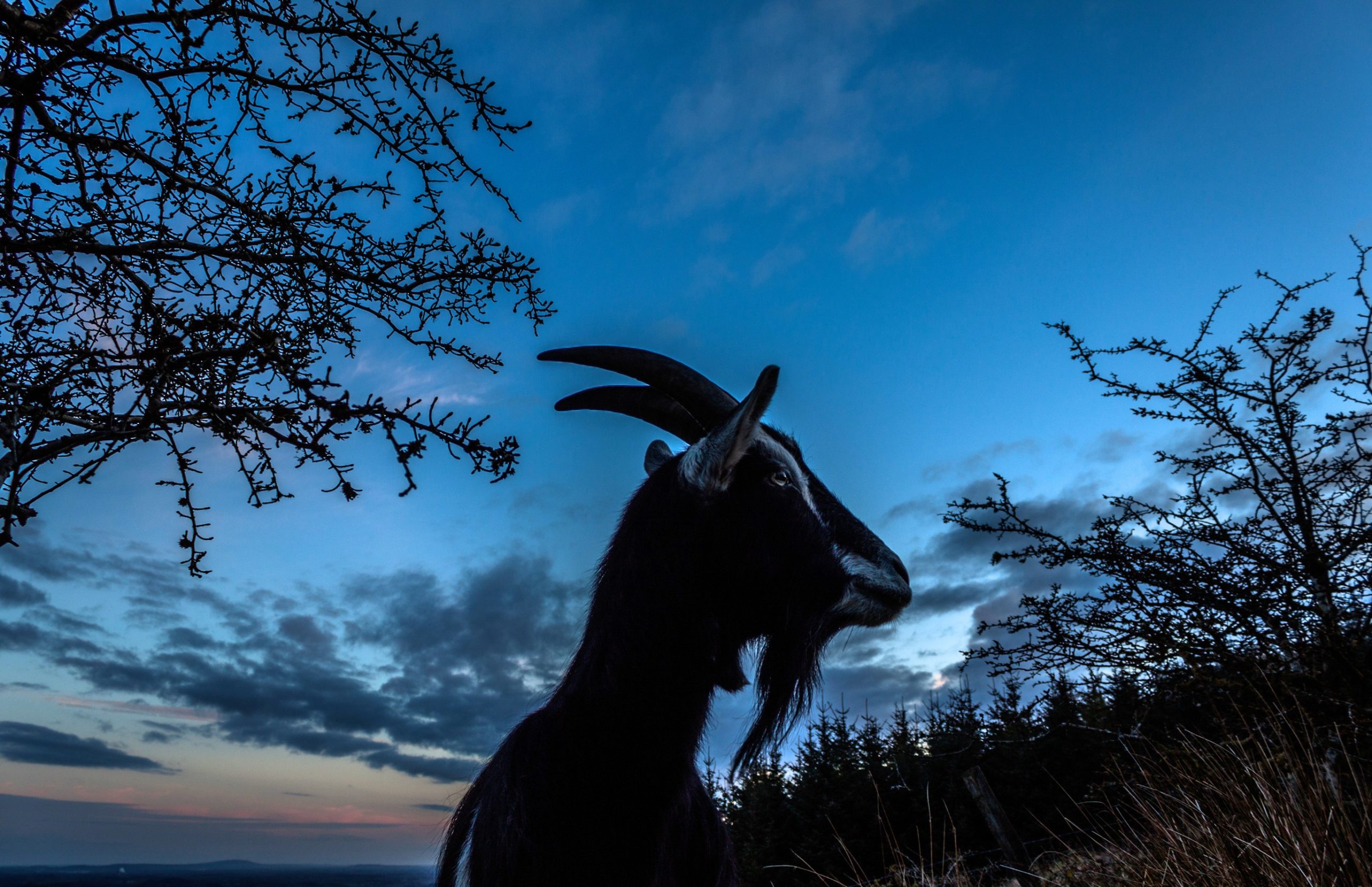
A Quiet Enchantment Invites the Universe Into a Goat Pen in Idaho
An excerpt from NIGHTJAR by Emily Ruskovich, recommended by Paula Hawkins
Introduction by Paula Hawkins
It feels rare in an age of information overload to come to a book cold, without any expectation. But that is how I first came to Emily Ruskovich’s writing. Reading the first few pages in a bookshop, captivated by her language—so lyrical and yet so precise—and by her remarkable evocation of place, I felt the singular thrill of discovery. I read the book, Idaho, over the next few days and have been pressing it into the hands of friends ever since.

I can think of few novels that have haunted me the way Ruskovich’s has, and so I was thrilled to be offered an early chance to read Nightjar, her new collection of stories, and even more delighted to discover that what I relished in Idaho is evident in these pages, too.
Here are five stories of enduring love—marital, parental, and fraternal—of the hurts and indignities of childhood, the wonder of the natural world, of seemingly harmless lies that grow and swell and threaten to overwhelm their tellers. Above all, Ruskovich seems to understand in a way few writers do how the shifting sands of memory shape the stories we tell about ourselves and determine the people we will become.
In a collection of provocative and playful tales, “Nightjar” is the strangest. A magical realist fable set on a remote farm, it tells the story of Tess, a lonely but resilient 12-year-old girl who stumbles upon a miraculous secret.
Left alone for the summer by her parents (who run a logging company), Tess fends for herself and her beloved four-year-old brother Rory. She feeds the chickens and tends the goats, and she desperately misses her older brother Avery, who has recently moved out to live with his girlfriend. Friendless and isolated, Tess’s secret discovery is transformative, giving her comfort and purpose.
I grew up a long way from the northwestern United States, described so vividly in Ruskovich’s writing, and yet these stories stirred in me a fierce nostalgia for my childhood, for the boredom of long, empty afternoons in a time before the internet and 24-hour television, and for the self-reliance and imagination those afternoons demanded.
In the kind of clear and distinctive prose that earned her the O. Henry Prize and the International Dublin Literary Award, Ruskovich reveals in these stories how all lives are, in their way, momentous, how miracles can happen in any life, even the quiet ones, the seemingly unremarkable ones lived by girls left all alone to care for little brothers and ill-tempered goats.
– Paula Hawkins
Author of The Blue Hour
A Quiet Enchantment Invites the Universe Into a Goat Pen in Idaho
Emily Ruskovich
Share article
An excerpt from Nightjar by Emily Ruskovich
Tess discovered the mystery one morning while doing her chores. She was twelve years old and in charge of the house while her parents were gone. She had just fed the chickens, and now she was in the pasture. The goats’ water was dirty, so she kicked over the bucket to fill it anew. After the dirty water had spilled out and washed away down the pasture slope, she saw something strange left behind on the ground. A wrinkled lump of what looked like mud but was not mud. Tess found a stick and used it to lift the thing up. It hung there like a scrap of black silk streaked with other dark colors, mostly blues and browns and greens.
She removed it from the end of the stick and held it in her hands. The thing was wet, but it wasn’t just wet, it was as though it were made of wetness and nothing else. It was not slimy, not muddy, not slippery. It did not collect any of the dust and pine cone petals from the ground. It was the smoothest thing she had ever touched in her life, so smooth and so thin she was not sure she could really feel it or if she only thought she could feel it because she was seeing it on her hands. Her hands were trembling beneath it, though not because they were cold, but because they were astonished.
“What is this?” she said loudly, almost angrily, though no one was there to hear her.
She needed a place to lay it down, somewhere smooth and clean where she could study it. The surface of a pale boulder, as broad as the hood of a car, rose up about a foot from the ground in the center of the pasture. She went over to the boulder and knelt and spread the thing out until it lay flat.
It was a perfect circle. At first, all that her eyes could make out was a murky darkness with a bright space in the center. But her eyes adjusted, and what she saw—it was like a picture. There were trees and clouds and sky, the way they look when you are lying on the ground and looking up.
A reflection.
She was looking at a reflection.
But this reflection was not reflecting what was right above it, for it did not show Tess her face even when she leaned right over it, and there were no trees out here in the middle of the pasture and no clouds overhead at all. She looked around, dazed. Over by the bucket, the nanny goats were all standing around flicking their tails and biting at one another, lazing in the morning shade of five ponderosa pines.
The same pines that she saw in the picture on the rock.
But how could this be?
She put her face very close to the dark circle. She looked over at the trees, then back at the circle again. Yes. She was seeing what the bucket had seen. A reflection of the sky and trees, not as they were currently but as they had been at some earlier point when the clouds were overhead.
At twelve years old, Tess had seen plenty of strange things on the mountain: weird fungi, crazy insects, deformed animals, wolverines, a blanket of avalanche lilies growing thickly over the ashes of what was clearly, her father told her later, an exploded meth lab. But this reflection, it was stranger than those things, stranger than anything she had ever seen or dreamed of. She had to show it to somebody right away in order to believe it, and at the same time she could not imagine sharing it with anyone. She wanted to keep it for herself.
Then she thought of her little brother, Rory, how, being four and so much a shadow of herself, he was no one and someone at once. She could show it to Rory. She looked over her shoulder, thinking he might be coming, but he wasn’t. She looked back at the thing on the rock.
But it had changed. The sunlight was drying it up.
“Oh—oh no!” She reached for the thing but her fingertips did not know what to do with it. The thing had hardened to the surface of the boulder. It was as if the picture had been absorbed into the stone.
She ran back up through the pasture, startling the nanny goats. She flew through the goat barn, out the door, and then down the hill to the house. She flung open the door and shouted for Rory.
There the two of them stood, side by side, looking down. Rory tilted his head slightly to display to Tess how carefully he was regarding the picture on the boulder.
Was it still beautiful? That was what Tess wanted to know. She couldn’t separate the picture on the rock from her memory of how it looked when she first saw it.
“It’s really good” was Rory’s assessment, after a long time looking.
“It is, isn’t it?” she whispered. She was relieved to hear that there was still some visible trace of the mysterious thing that she had seen.
Then he said, “Where did you get the paint?”
She looked at him sharply. “You think I painted this? Look at the trees in the picture,” she insisted. “Nobody can paint like this!”
“Can we go now, Tessy?”
“But does it really look like something a twelve-year-old could paint?”
“I don’t want to be in the pasture right now. Too many beetles out here.”
“Beetles, what are you talking about?”
“I don’t like beetles.”
“I don’t see a single beetle!”
“There’s one,” he said, and he pointed to the top of her pajama shirt. She looked down. Exactly in the place where her top button was missing, a giant long-horned beetle was clinging to the fuzz, antennae reaching for her throat.
“Agh!” she gasped, and flicked it off.
All the rest of that morning, she did not stray far from the reflection on the rock. She wandered around, searching for an explanation. She examined the bucket the picture had come from. It looked like an old milk pail. There was nothing special about it. It was made of some kind of metal.
She thought of calling her older brother, Avery, who lived with his girlfriend now, to ask him to look it up on his phone. But what would she have him type? And if his search produced anything, would she recognize from his words the thing she couldn’t describe?
She could not look it up herself because of where they lived, in a dead zone in the mountains, two decades behind the rest of the world. She was still getting by on a few precious TV channels, which she achieved by manipulating the rabbit ears duct-taped to the windowsill. They didn’t even have dial-up. Mostly, she and Rory survived on DVDs and radio. Everyone was rural around here, but none so rural as Tess and Rory. At school, boys liked to joke about the girls’ stripper names. A stripper name was your middle name plus the street where you lived. There was Suzanne Honeysuckle, Sasha Wellspring, Jordan Fox, Elizabeth Riverlane. And then there was Tess: Anne Forest Service Road 2550, out in the middle of nowhere, stripping for no one. This hilarious discovery earned her the briefly affectionate nickname Dirt Road, which had since lost all connection to her rural origins and had come to refer instead to the fine dark hairs above her lip, the dirt road across her face.
The name was not fair or accurate, for the hairs on her lip were barely visible, no more prominent than anyone else’s, but everyone pretended they were in order to justify the name, which existed more or less to justify the Nair strips. Where they all came from was beyond her. No one threw the Nair strips at her, no, because school was a “kind” place now, read any poster on the wall and you’d know that. Bullying, in any form, was not tolerated. But generosity? Concern? Thoughtfulness? By all means. So: Here, Tess, they’d say, some hair-removal strips to help you out in your time of need. You’re welcome.
She was given so many Nair strips from so many different people that, in an effort to reclaim her dignity, she decorated the door of her locker with the sticky pink strips. She peeled off the wrappers so that the wax was exposed to the air, and she taped the paper backing to the locker. She arranged the strips on her locker in the shape of a tall rose whose sticky wax petals collected all manner of dust and other people’s gum wrappers. She named the monstrosity “the Nair Flower.”
But no one really cared what Dirt Road did. She was nobody. She was Anne Forest Service Road 2550. Her heart was as remote as the place she came from. Nobody bothered to go there.
But now Dirt Road had seen something no one else had ever seen. Now she had a secret.
She filled up the goats’ bucket with fresh water from the hose. Rory came, too, and played on the stumps in the pasture until Panic Boy, the black wether, chased him off. Panic Boy was their only male goat and by far their worst. He was territorial about tree stumps. Rory had already suffered one concussion from a billy goat before, so Tess made Rory leave, not just for his own sake but for her own: The first concussion had happened on her watch, and her mother threatened that if it happened again she would tan her hide with a TV ban.
Eventually, the heat of the day forced Tess to drift away from the rock and get on with other things. There had been such intense feelings that morning that by the afternoon, she was relieved to find herself almost bored. She made lunch for Rory, then let him watch his DVD. She sat on the lawn and looked at Katrina’s bent-up bike. Tess barely knew Katrina but for some reason (she knew the reason), Tess had offered to fix the bike a week ago, on the last day of school, though she had never fixed anything in her life and the bike, having been run over by a car, was beyond fixing even by a professional. She had loved Katrina’s twin brother Hal since the fourth grade, feverishly and without reason. But if this was the best plan she had come up with in all that time—offering to fix his sister’s unfixable bike—well then, maybe she didn’t deserve him.
She tried to call her brother Avery, though not to tell him about the picture on the rock, nor about the bike and Hal, but to hear her brother’s voice and ask him if he was ever coming home.
Avery did not answer.
Evening came.
Tess took Rory with her to feed the animals that evening. He liked dipping his hands into the chicken feed and swishing his fingers around. Just outside the pasture, he threw a small rock at the snag to see if he could make the woodpecker fly out.
“He’s long gone, Rory,” called Tess, with a glance at the dead tree. “Just termites in there.”
They went into the pasture and wandered down to the boulder. They studied the strange image, but they did not say anything. The picture on the rock had faded and darkened, losing its color and definition, retaining only the impression of treetops and wisps of cloud. They looked at it for as long as it was interesting, which wasn’t long, and then they looked out at the mountains in the distance. This was the one place on the property where they could see over the top of the dense forest to the other side of the distant valley.
Rory said, “You want to tell me about the wolverines?”
“Nah,” she said, and smiled. “Thanks, though.”
Tess loved Rory more than anyone, but he didn’t seem to trust her or like her half the time.
Tess loved Rory more than anyone, but he didn’t seem to trust her or like her half the time. Their parents ran a logging outfit together, and so in the summer months they were always gone, leaving Tess to look after Rory. It was only the second week of June but already he was sick of her. All he saw when he looked at his sister was a person not their mom, a failed little person pretending to have power and getting paid for it. It was better when school was in, when she wasn’t a stand-in for their mom, when she was her own self, fresh and new and filled with ideas, made rare by the endless hours of a day apart.
So it was nice when he brought up the wolverines. It meant he wanted to please her. She was the only one in the family who had seen the wolverines out behind the chicken house in the snow, and he knew it made her feel special and important to be able to describe them. It meant he wanted her to put her arm around him. It meant he was willing to lighten the load, a little, of the unrequited love upon her shoulders. She kissed the top of his head. Then they went to the garden and snipped some mustard greens. They ate boiled hot dogs with their greens and then she read him picture books until he fell asleep. Then she covered him with cougar skin.
In all the strangeness of that day, Tess forgot to lock up the goats before she went to bed. She had never forgotten before. She didn’t remember until the next morning, when, on her way up to do her chores, she discovered to her horror that the goats were lying around in the shade by the bucket instead of in the shed where they belonged. All five were there, the four nannies and Panic Boy, but anything could have happened. The cougar could have come. It was a miracle she hadn’t. Everything was fine, but Tess felt shaken and guilty.
It was early enough and dark enough that the night birds were out, nightjars and yellow chats fluttering around in the early darkness, feasting on the spilled grain in the pasture or the insects that hovered above the goat droppings. Tess turned on the faucet outside the pasture fence and then she kinked the hose. She dragged it into the shed but the trough there was full, so she dragged it through the shed and down the slope of the pasture. At her approach, the night birds flew away and the goats lifted their heads, all but Panic Boy, who lay there dozing so deeply his legs were spasming in dream. The kinked hose was dripping water down her arm, but she knelt and patted each of the four nannies, and muttered how sorry she was to have put them in danger. Fine dust rose shimmering from their red hides as easy as forgiveness.
The goats had drunk the bucket down to half full in the night. Tess stood over the bucket a long time holding the kinked hose, expecting—what? She expected nothing. The water in the bucket was not dirty and did not need to be kicked over, but she kicked it over anyway, and this kick was an admission to herself that she did, in fact, expect something.
She studied the old water that trickled down over the thistles and pine cones. There was nothing strange left behind, no shimmering lump. She filled up the bucket with fresh cold water from the hose. She went over to look at the picture on the rock from yesterday. It was still there but made her feel nothing but a very old and manageable sadness. She could not linger long, for the hose was spraying water. She ran out of the pasture to turn it off.
But something was wrong with Panic Boy. He lay in the same place all morning, there by the bucket. She put her hand on his belly and pushed around, feeling for lumps, and lifted his eyelids to check his whites. Pried open his mouth and studied his strong pink tongue.
Rory was behind her, throwing sticks at the electric fence to see if he could get a spark.
“Knock that off, I have to listen,” she told him, and then put her ear to Panic Boy’s fur and listened to the bubbling of his three stomachs. All of this bothered him enough that he eventually got up and wandered away. He went slowly down the hill, and then he stopped and looked straight out at the forest with what seemed to her an eerie humanity, as if his sickness were merely the suffering of his first noble thought. She had never seen an animal look that way, gaze with a loneliness that seemed beyond itself. Until now, Panic Boy had been a moron. As a kid, he was a jumpy coward, and as an adult, a bully. He spent most of his time pouting in the shed and butting the nannies away from his stumps. His brother Kip, the goat who gave Rory the concussion, had been killed and processed into jerky. Rory and Tess had gnawed him down to gristle, and it was assumed, and without grief, that Panic Boy was next.
But looking at him now, Tess felt desperate at the thought. The memory of having eaten Kip was suddenly unbearable, it made her sick, she thought she might not ever be able to eat an animal again.
Many times throughout the day, she went up to check on Panic Boy. He lay gazing out at the mountains, doing nothing. She sat down on a tree stump to remove a rock from her mud boot, but her sitting on one of his stumps did not bother him as it would have on any other day.
It was unsettling, his indifference.
The stump meant nothing to him now.
The next morning, earlier than usual, Tess awakened from a dream she couldn’t remember and she rose with the sense that something was waiting. She crept down the narrow hallway. Rory was sleeping against their parents’ closed door, curled up on a pad meant for a dog. Often he got scared in the night, but their parents thought he was too old for stunts like this so they locked their door to keep him from climbing into bed with them. Tess was the one who put the old dog pad against their door, so he would have something soft to sleep on. She found the cougar skin on the couch and covered him up. Then she snuck out into the early morning in her pajamas and mud boots.
In the pasture, the shadows were long and deep. The sunlight fell in yellow splashes. Tess stood over the water bucket, staring down. She could faintly see her moving reflection in the water. She could faintly see the sky and the trees. She reached in and touched the surface of the water with her fingertip.
The surface wrinkled. It caught on her skin.
She pinched the surface of the water and lifted it up.
Hardly breathing, scared as if for her life, she stared at it. It hung there over her fingertips, shimmering with the colors of its held reflection. Like silk, but smoother, so unbelievably smooth it felt like nothing more than cool spring water pouring over her hands. What was this, what was this? It was as if a skin had formed on the top of the water, a skin of such loose and shining thinness that it couldn’t be perceived until it was touched, and once it was touched it felt like nothing more than water.
Tears were flowing down her cheeks and she had no idea why or when they began. Her heart was racing but her body did not tremble. Her body no longer felt beholden to her feelings; it existed only to deliver this shimmering thing to its stone.
She ran through the pasture, cradling it in her hands, and when she came to the boulder, she knelt in front of it. She didn’t know why she would do this again—choose to lose this thing by doing exactly what she’d done two days before—but she had to see. The thing in her hands was translucent; she could see dark colors but couldn’t make out a picture, not until she spread the reflection out on the rock.
There it was. A second dark circle. Not identical to the first, no—there were no clouds in this new reflection, and the branches of trees were caught mid-gust in a way that obscured the central space of sky. But otherwise, the image was the same.
This time, she did not look away. She stared and stared. She had never looked so deeply at anything in her life. She could have looked all day. She could have looked forever. There had never been so much to see as there was now. Five trees, a bit of sky, upon a rock.
She watched the picture sink into the stone. Only then did she look away.
She gasped. There was Panic Boy, standing close beside her. He was looking at her with such intensity she felt afraid that he was going to butt her away. How long had he been standing there like that? His pupils were large black rectangles, his irises amber. He stared at her with both blankness and recognition. She had never seen him blink before, but now she felt his stare was meant for her, his unblinking gaze a testament of feeling rather than a function of his eye.
“Panic Boy?” she whispered, as if she almost expected him to answer.
He stepped onto the boulder and lay down.
Morning after morning, it happened. Earlier and earlier she rose, and came out to pluck the skin from the surface of the water, to hold it shimmering in her hands, to spread the reflection out upon the boulder. She watched it become the stone. The stone became the memory of the water. The stone became the trees, the sky, the past itself.
Through all of this, through the ritual of Tess’s daily miracle, Panic Boy remained at her side. He followed her down from the shed to the bucket. He followed her from the bucket to the rock. Then he climbed onto the rock and he lay down on the reflections. There he remained for most of the day, not caring about the sun beating down on his hide. He would not eat the food she brought to him, would not drink the water she hauled over. He ate and drank only at night when she locked him in the shed.
A few days passed before she understood. The skin on the water had appeared to Tess every morning except that second morning, which was when she discovered that the goats had been left out all night. Any one of the goats might have been the one to drink the water, but it was Panic Boy whose tongue had lapped up the reflection. It had changed him, transformed him from a stump-obsessed bully into this somber creature, unearthly and serene.
They sat together on the boulder every morning. A couple of times she rested her hand on Panic Boy’s side, but both times she had the sense that she was trespassing. It made her feel strangely embarrassed, as if she had revealed to him how little she understood of what was going on. As if she were violating not his trust or rest, but his painstaking effort to uphold the truth of the reflections he lay upon.
July arrived. Tess’s existence sharpened but her daily life faded. Her life, and all the stuff in it, went on as usual but it did not add up to Tess’s life like it once had. There were still the occasional thoughts of school, and meals to prepare, and television to laugh at, and animals to love, and Rory to care for. But there was no longer the dread of summer ending, nor was there the ever-aching hope of Avery’s return, nor the nagging thoughts of other people’s thoughts.
What mattered now, what really mattered, what mattered more than anything, was a moment of time that passed inside a bucket of water in a goat pen in the mountains of Blanchard, Idaho, sometime between sunrise and 5 A.M.
What mattered more than anything was a moment of time that passed inside a bucket of water in a goat pen in the mountains of Blanchard, Idaho.
It mattered, what the bucket saw. It mattered whether the wind blew this direction or that at some time in the early morning when everyone was asleep. It mattered if there were some clouds or no clouds and what kinds of clouds they were. It mattered if a horde of gnats had chosen these treetops to haunt or if they hadn’t. It mattered if the rain blew sideways or fell straight down or not at all. Or if pollen sifted down in a haze that obscured ever so slightly the branches above. It mattered that on a Tuesday a pine cone petal fell. She found it lying dry upon the skin of water, and beside it she saw the reflection of it falling hours before. She could see the memory of its fall but also hold the pine cone petal in her hand, the only thing the reflection ever caught whose source was left behind for her to hold. And hold she did, close to her heart. She made it into a necklace with a piece of string and a dot of hot glue.
Every time she laid a reflection upon the boulder, she held her breath with anticipation—A reflection without a cloud in it! A reflection with two clouds! It never let her down, for no matter what was there, it was what had happened, it was what was already gone.
All night long she lived in anticipation of the picture to come, each image a slight variation of the same. Trees and sky; trees, clouds, and sky; trees and sun and clouds and sky.
But every now and then, the image on the rock surprised her with something new. It thrilled her to see in the reflection, one morning, a single strand of spiderweb. So clear she thought the web had fallen there upon the rock, over the picture. But no—not fallen web, but the memory of falling web.
Another day, captured in the reflection were enormous drops of rain flying at her from the rock, about to pierce the universe between the stone and her but stopped short by the forming of that skin hours before, the sealing off forever of the instant. To see, from the water’s perspective, rain about to strike—it was beautiful. It was like nothing else. In another picture, a grasshopper flew at the water, its wings spread open, a bright orange blur at the very center of the reflection. The grasshopper was larger than anything else because of its closeness to the water. There had been no grasshopper drowned in the bucket that morning; she went back to check. The skin had formed the moment before the insect landed, and so it had landed on the water’s skin and leapt away, out of the bucket, dry.
She loved the surprise of the grasshopper and the web and her pine cone petal necklace, but her heart did not privilege any of these things more than the pictures without them. There was something almost cold, mechanical, and unfamiliar to her about her love’s indiscriminate attention to each reflection. It was never a disappointment when two circles were identical or nearly so. She was no more thrilled by the web, or the grasshopper, or the rain, than she was by the absence of all these things. The trees and sky, the precious original, just as unlikely as them all.
Not even when the mouse came—not even then did she treasure a mouse’s reflection more than the others. There at the circumference, two mouse hands gripped the rim of the bucket. So tiny, and so shadowed, and so crowded there at the edge of what was visible that she could hardly make out what they were at first, those tiny mouse fingers holding on. And above them (or rather, below them), the nose and lit-up whiskers and beady eyes looking down into the water and up at her. Image after image of the miraculous—the things themselves miraculous, not just the skin that preserved them. Sometimes she had to shake her head to clear her thoughts, as if to remember what the miracle really was. Not that some mouse had come looking for a drink, no, how could that be any kind of miracle? It was that the moment continued to exist, there on the boulder, a lapse, a moment in time no other human eyes had ever seen.
Sometimes Tess stayed so long up at the rock with Panic Boy that she felt her mind fuzzing, as if it were a disturbed reflection of itself, and she made herself leave. Suddenly she was worried about Rory—how could she forget him again? Had she fed him? How late in the day was it? Once, she ran inside and found him in the living room still in his cut-off footsie pajamas though it was nearly eleven o’clock. He was sitting on a basketball, bouncing gently, and gnawing on a piece of jerky. She snatched it out of his hand and ignored his cry of rage. Then she went to her room, dug through her bottom drawer, and found a piece of Laffy Taffy hoarded since Easter. “Here,” she said. “Vegetarian jerky.”
He took it, silenced, in awe of the secrets his sister kept.
Then she went back up to her pasture.
Time passed in the world.
All moments went by somewhere, they were going by all the time, for that’s what a moment is, it is this instant and the next and a fragment of them both and the overlap of fragments, and forever. You can try to catch them, try to keep them. That’s what her brother Avery tried to do. He was always taking pictures, making movies. When Tess showed him the avalanche lilies on the old meth lab, it was like he couldn’t see them except through a camera lens, like they would disappear without a frame. He snapped pictures of them from every angle until every single bloom was dead to her. She couldn’t remember what was so amazing about a bunch of flowers and some burned trash.
After he got his driver’s license, Avery sometimes came to pick her up after school. He didn’t do it much anymore, but that first year he was away, he would come once, maybe twice a month. She would meet him in the school parking lot. He would hand her his phone as she crawled into the back seat. “Here,” he’d say, with a smile of generosity. Everything she had missed about his life was saved on his phone in an album titled “For Tess.”
It was incredible and awful the way time passed inside those pictures on her brother’s phone, Avery and his friends laughing, swimming at the lake. Several portraits of his girlfriend’s dog, Cecily. Though Tess wanted to look and look, she felt something expand between her brother and herself with every picture she swiped with her finger, until a dense space had pressed between the front seat and back, keeping them apart. In the car, then, she breathed the air that was like the overbreathed air in the deepest cave. She found that there was not more to say but less. Her eyes were too full, had seen too much, had not seen anything at all. In choosing what to capture for her he had excluded what she wanted most to see, which were the moments he would never think to capture. The moments that passed unchosen, unremarked. Her big brother picking at the carpet while he watched TV. Her big brother coming out of the bathroom having just popped a zit and gazing at her face with serene terror at whether she would acknowledge the blazing thing on his chin. Her big brother eating the crust of his sandwich.
Stupid stuff, all the stupid stuff, all the meaningless crap she missed so much, where had all of it gone?
One July day the boulder was covered by the reflections. It could hold no more. The stone’s gray surface was only visible in the small spaces between the circles. And so, the morning that followed, she was forced to lay the new reflection over an old one.
She chose to lay the new reflection over that very first one, which was by now the most faded. She was careful to make the circles overlap exactly, and failed only by a millimeter or so. The effect of this layering was to impose a depth upon that first circle that was greater than what seemed possible. Over those faint wisps of cloud there was now the same image but with no clouds and a flare of sunlight. The first image lent the second its clouds; the second lent the first the sun flare. But more stunning than the overlay of these nearly identical images was the impression of vast space between the two layers of reflections. This space was the depth of days having passed, which was something Tess couldn’t see but could feel. The days she had lived between that first circle and the new one—a dimension so thin as to be infinitely thin. It was impossible that there should be any impression of space at all, but there it was, and holding, of all things, the passage of Tess’s life.
Did the water choose which instant in time to capture? Or did the skin form on the water at the same time every morning regardless of what the picture would show? Tess had to know. Earlier and earlier she rose until she was rising in complete darkness. One morning she was too early. The skin had not yet formed. It was just after four o’clock.
She had let Panic Boy out, but none of the other goats. He stood a few feet away, watching her. She leaned over the bucket so that the reflection of her face would be caught. It did not matter how long she had to sit that way, she would not move until the sun was high in the sky and she was sure that her face had been captured. Then she would lay out upon the boulder her own amazed expression.
For a half hour, maybe more, Tess leaned over the bucket, her bare knees down on the hard ground. She remained there, aching, until she was sure that the sun was high enough that the skin must have formed on the water.
She reached in for her reflection. Her finger touched only water. The shock of this—she fell back as if struck.
Panic Boy leapt back, too. It was the quickest she had seen him move since that first day that he had changed. He ran at her with his head down like he intended to butt her to the ground. She rolled over and curled up into a ball to protect herself, but Panic Boy turned abruptly away. He went not to the rock but to the very edge of the pasture, and there he stood a long time.
So the skin would not form if it was watched. Okay—all right—but how could she have known, except by trying? She had learned her lesson, she would not try again, and there was no reason Panic Boy had to be so angry at her now. Who did he think he was punishing by avoiding the rock all the rest of that day? What did she care if he lay on it or not?
But she did care. It troubled her immensely to have the rock and goat apart. She felt she was being punished for her recklessness. He suffered, too, she could see it. He stood in the blazing sun all afternoon.
By four o’clock Tess had a fever. Her fever made her emotional, and she snuggled up close with Rory while he was watching his movie. He did not respond to her gentle touches, and the more she snuggled, the more frustrated he became until he turned the TV off, which he had never done once in his life.
“Let’s go outside,” he said.
“Where?”
“Up to the snag.”
She was shivering. “Okay.” She went into the bathroom to look for a thermometer but couldn’t find one. She did find a pill in a plastic bag in her mom’s cupboard. She decided that it was probably an ibuprofen and so she took it. Then they went outside to the dead tree.
Rory threw rocks at it, one after another, hitting the snag each time with a spray of bark. She was impressed—he was only four but he was pitching that rock at the snag with a lot of accuracy and force. She wondered if he had been practicing his aim during all those hours he spent alone, and suddenly she was awash with guilt. “I love you, Rory,” she said.
He did not say I love you, too.
She told him, “I’m sorry I’ve not been playing with you much.”
He threw another rock and this one struck the snag with a resonant thud. From out of the hole burst a bright, shimmering cloud of termites, their wings lit up in the sun. They made a snapping sound that was brash and beautiful to her ears and their beating wings reminded her of tinsel.
“Look!” she gasped.
“That’s not what I wanted you to see,” he said, unimpressed, and he threw one more rock.
Out sprang the woodpecker she had promised was long gone.