In a place where your very existence is threatened and your survival uncertain, every form of art should revolt and proclaim, “look, I am here and I will live.” In Africa, queer people are at risk of being lynched by mobs or killed. These acts are not just individually motivated but endorsed by the government, either overtly or covertly. An evidence of this is the recent anti-gay laws in Zambia and Uganda. This prohibition of queerness is not limited to the above African countries but it’s prevalent throughout most of the continent.
With this, queer people are forced to live in fear and in secret. Queer writers are silenced and censored, afraid of expressing themselves and their sexuality in their writings. However, amidst all this darkness are writers who have works, in Ellen Bass’ words “spacious enough to hold all the contradictions: the violence waged against gay people and the body’s insistence on love, the tenderness of flesh and the carnage of war, remembering and forgetting, silence and song.”
These writers write about queerness with so much vulnerability and nuance. In their books, they sing the song of liberation, of survival. They interrogate the nature of God and love in relation to restrictions placed on them. These writers are not afraid to speak their truth, their fear and their hopes. I invite you to come into their light.
Sacrament of Bodies is a poetry collection interrogating what it means to be queer and Nigerian. With great musicality, Oriogun weaves poems that sing of a people yearning for freedom. One cannot help but notice the vulnerability in this book, the urgency with which each word carries. Oriogun splays the body on an autopsy table, dissects it and within it recognizes the desire to find love in “whatever body that gives them home”. An elegy revealing the ordeals of being queer, Oriogun manages to dance, with such boldness and courage, in the face of death. Even with all the killings surrounding them, dancing to Oriogun, it is a way of escaping the cruelness of their country. In their words “I danced as if I knew every song had a door.”
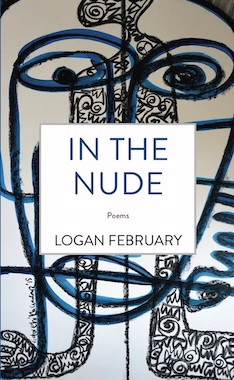
Logan February is a Nigerian poet whose verse is imbued with a solemn and rhythmic energy. They contemplate the burden of possessing a desire that is taboo and the ache of tiptoeing the night, searching for someone to share that yearning with. In their words: “Lord, do you know how hard it is to find good dick?” The beauty of this collection is not just in the questioning or navigation of the forbidden, but in the way Logan juxtaposes the spiritual with the sensual. They do not question God’s position, but rather they report their maltreatment, their hidden desires, their adventures to a higher power. This is a book that gives a different perspective of queerness and spirituality.
In The Death of Vivek Oji, Nigerian writer Akwaeke Emezi shines a light on the treatment of nonbinary and trans people in Nigeria. The main character Vivek is genderqueer and unable to live an authentic life, their femininity leads to family members insisting that they’ve been possessed by demons. Set mostly in the ‘80s and ‘90s, the novel opens with the dead body of Vivek deposited on his mother’s doorstep and the story unfolds in a series of flashbacks. The book explores the complexity of being genderqueer in a place where your very existence is seen as an abomination, the constant pursuit for identity that feels true to who you are, and the need to belong by whatever means possible.
This YA novel follows Abu and Karl, teenagers in London who are best friends. It’s 2011 and the shooting of a Black British man by the police leads to riots engulfing the city. Fleeing the city, Karl travels to Port Harcourt in Nigeria to find his father who he has never met. Karl’s reunion doesn’t turn out the way he imagined, but he forges a connection with his cousin and befriends an activist protesting the Niger Delta environmental disaster. Overlooking these series of events is Esu, the Yoruba trickster god. A heartfelt exploration of transgender identity, race, and friendship by a talented Nigerian German writer.
God’s Children Are Little Broken Things is a paean to the depth of love and the ability to sustain it despite societal pressure and the threat of harm. The main story in this short story collection is about Lotanna and Kamsi, college students in Kano, northern Nigeria, who have to keep their attraction to each other hidden from the public. “The Dreamer’s Litany” is an insightful excavation of power dynamics, told through the lens of a series of transactional sexual encounters between a struggling business owner and a wealthy benefactor. Ifeakandu’s characters come alive through their choices and the complexities of their lives.
Originally written in French, Cameroonian writer Frieda Ekotto’s Don’t Whisper Too Much is a sapphic love story, the first African work of fiction to depict lesbian relationships with tenderness, instead of condemnation. The book follows Ada as she comes of age in the outskirts of a village and falls in with Siliki, an older disabled woman. In an interview, Ekotto says this book is about confinement and “the impossibility of feeling free, of being able to participate in the world without feeling constrained by one’s race, one’s gender, one’s sexual orientation etc. In a sense you’re never free to do what you want because of all the outside forces that control you and control everything else. Confinement also has to do more with language, has to do with my position in the world as an African woman.”
Nigerian writer Buki Papillon merges the literal and the figurative, the concrete and the abstract with the introduction of an intersex character in this searingly honest and questioning book. In An Ordinary Wonder, Otolorin is not just seen going through the psychological uncertainty of identity, but also a physical reckoning as they are born with both male and female organs. Papillonexplores the insistence of heterosexuality, especially in cases of boys, as a product of the hegemonic, patriarchal preference of a male child. When Oto chooses womanhood, , her parents reprimand her and society responds with cruelty and mockery, insisting that she is only allowed to be a boy. At boarding school, away from her family, she thrives, even as she is forced to hide her true self. Oto hopes that through hardship and sheer willpower, she’ll be able to win a scholarship to the U.S. and finally live a life of her own choosing. But a tragedy forces her to reckon with an uncertain future.
When I created Weird Sister, a blog dedicated to exploring the intersections of feminism, literature, and pop culture, in 2014, I was craving a space where feminist poets and other writers could comment on the literary and pop culture that excited us, made us mad, and everything in between—and where these conversations could grow and build upon one another. This past February, Feminist Press published an anthology of writing from Weird Sister, The Weird Sister Collection, taking writing from the blog and moving it into print for posterity, where it will rest on a shelf IRL for future readers to engage with in new ways. “Feminist anthologies make it possible to ensure knowledge is not lost,” as Becca Klaver, a feminist literature scholar and Weird Sister contributor puts it. “It gives us something to pass along that the next generation can hold in their hands.”
As Klaver points to, anthologies are the books we so often turn to to familiarize ourselves with schools of thought, canons, catalogs of work; in short to learn our literary and political history. Anthologies do the vital work of centering marginalized perspectives left out of the mainstream; they document a moment in time and also move the conversation forward. For example, the now canonical collection This Bridge Called My Back began with a call for submissions that focused on critiquing white women’s racism within feminist movements in the late 1970s and early ’80s, but developed into a more profound project focused on radical women of color’s perspectives and voices—an urgent intervention, the results of which are still felt in social movements today.
Anthologies turn what would otherwise be a disparate array of texts—scannable online or in the hard drives or notebooks or books or inside the brains of various writers—and pull them all together in one cohesive, easily digestible bite. While I was putting together The Weird Sister Collection, I kept returning to a trusty stack of feminist anthologies from my own library for guidance—on what, and how, and why, to assemble this next anthology. They remind me of all the many feminist literary legacies that have paved the way for writers today, and those that are yet to come. Here’s my love letter to those books.
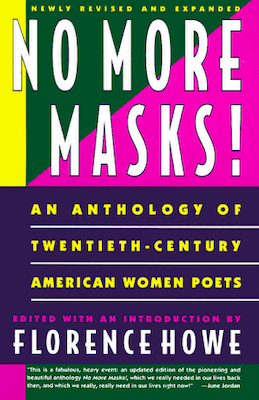
No More Masks: An Anthology of Poems by Women, edited by Florence Howe and Ellen Bass
During the women’s liberation movement of the 1970s, feminist anthologies proliferated as part of the Women in Print movement. The first anthology to focus exclusively on poetry by women, this collection of writing spanning 75 years addresses themes particular to women’s lives, tapping into the second wave ethos of the personal as political. No More Masks includes work by 87 poets such as Gertrude Stein, Gwendolyn Brooks, June Jordan, and Judy Grahn.
This hallmark anthology moved the margin to the center, interjecting the voices and priorities of women of color into a feminist movement that all too often focused on middle class, straight, white women’s experiences. Bringing an intersectional feminist lens to topics spanning history, class, homophobia, spirituality, and language, This Bridge gathers personal essays, criticism, interviews, poetry and more from iconic feminist writers including Pat Parker, The Combahee River Collective, Audre Lorde, Cheryl Clarke, Norma Alarcón, and many others.
Coining the term “third wave feminism” in a 1992 piece for Ms. that responded to Anita Hill’s testimony against Clarence Thomas, Rebecca Walker famously wrote, “I am not a postfeminism feminist. I am the Third Wave.” To Be Real expands on this notion of a new wave of feminist activism in the 1990s, engaging with the issues that mattered most to young people in this era. The book gathers essays on topics like sexuality, marriage, motherhood, work, and pop culture from writers including bell hooks and Veronica Webb, all sandwiched between a foreword from Gloria Steinem and an afterword by Audre Lorde—feminist pioneers handing the reins over to the next generation.
“Like many other women of color,” the editors write in the introduction to Colonize This!, “the two of us first learned the language of feminism in college through a white, middle-class perspective, one form of colonization.” This critical third wave feminist text explores crucial topics like sexual harassment, mental illness, the AIDS crisis, and Islamophobia in post-9/11 America through a lens that centers family and community, redefining women-of-color feminisms for a new era.
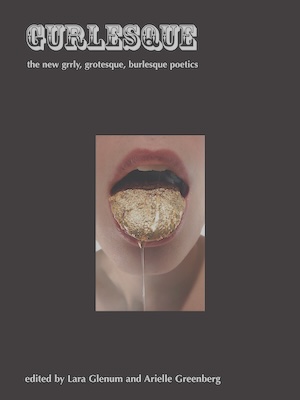
In the introduction to their 2000 book Manifesta: Young Women, Feminism, and the Future, Jennifer Baumgardner and Amy Richards describe an iteration of third wave feminism that they called “Girlie:” “If feminism aims to create a world where our standard of measurement doesn’t start with a white-male heterosexual nucleus, then believing that feminine things are weak means that we’re believing our own bad press.” Gurlesque taps into this ethos, collecting poetry by women and femme writers including Cathy Park Hong, Ariana Reines, Dorothea Lasky, and Weird Sister contributor Geraldine Kim that embrace femininity and the grotesque in all their complexity. Keep an eye out for the second expanded edition, Electric Gurlesque, coming later this year from Saturnalia.
The first anthology of its kind, Troubling the Line brings together the work of 55 trans and genderqueer poets spanning styles and subject matter. Trace Peterson writes in the book’s introduction, “we are interested in helping make more widely available in poetry different kinds of inbetweenness in relation to gender identification.” Troubling the Line does the vital work of documenting a trans poetic lineage, collecting poems by Dawn Lundy Martin, Eileen Myles, Ahimsa Timoteo Bodrán, Stephanie Burt, Weird Sister contributor Zoe Tuck, and many others, along with a poetics statement from each contributor. (Check out Peterson’s incredible “pre-narrative” exploration of kari edwards, her mentor and one of the poets featured in Troubling the Line, in The Weird Sister Collection.)
Cooper, Morris, and Boylorn started the Crunk Feminist Collective blog in 2010 because “their academic day jobs were lacking in conversations they actually wanted to have—relevant, real conversations about how race and gender politics intersect with pop culture and current events.” Throughout the heyday of the feminist blogosphere, Crunk’s members were trailblazers in pushing journalism, academia, and the world at large to bring a thoughtful, intersectional, hip hop-feminism influenced lens to topics ranging from music, TV, and books, to state-sanctioned violence, reproductive justice, and beyond. This anthology archives some of the blog’s most crucial work into one essential volume.
Collecting the work of Syreeta McFadden, Angel Nafis, Aja Monet, Noname, Weird Sister contributors Morgan Parker and Naomi Extra, and many others, this anthology is a powerful exploration of the worlds and words of Black women. As Patricia Smith writers in her foreword, “It’s page upon page upon page of stanza as incantation—crafted not to make black girls’ lives less impenetrable and lyrically palatable for the curious, but to revel in the chilling power of our weaponry.”
This anthology of radical trans poetics demands “nothing other than a world in which everything belongs to everyone.” A weighty, hot-pink tome featuring genre-pushing, urgent writing, We Want It All includes emerging voices alongside historically important figures like Leslie Feinberg and Sylvia Rivera, collecting poems that connect aesthetic experimentation, political activism and the material realities of contemporary trans life.
The Eighth Moon: A Memoir of Belonging and Rebellion is a deep consideration of land, ownership, and civil society tracking the histories of an author and area in upstate New York. Jennifer Kabat studies time in a continuous present, watching the past bleed onto now. That blood is from the wounds of land theft and the confusing heartbreaks of our democracy. Her reckonings find echoes between financial crises of the late 1830s and the early 2000s; between the Anti-Rent Wars of the 1840s and the anti-government rebels of 2021; and between generations of her family, sharing a deep commitment to cooperatives.
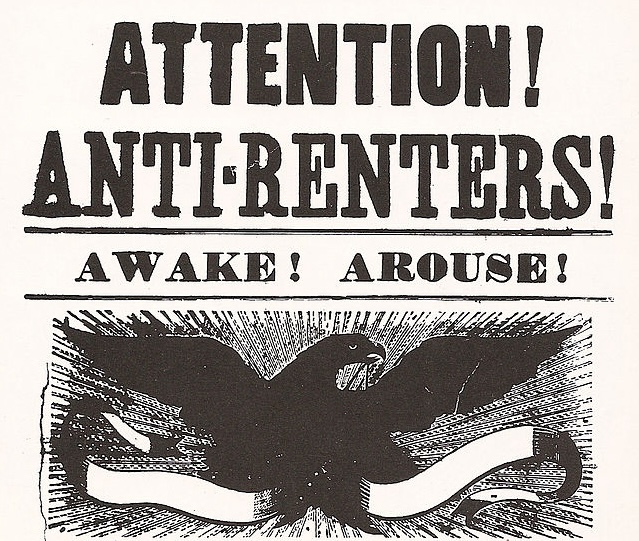
The book revolves around narrations of one of America’s first populist uprisings, the Anti-Rent Wars, where tenant farmers rose up against feudal landlords. The region still had a Dutch property system, unchanged by British control, the American revolution, nor the founding of New York State. During a drought and a long, punishing recession, gangs wore leather masks and calico dresses and fought authorities who claimed payment on behalf of the ruling families.
Late in April, I drove over small roads through thinly populated places, eager to walk the paths and forests that hold Jennifer Kabat’s imagination. The sky was full of portentous clouds, and the fields that quilt the soft, worn-down mountains were muddy, unplanted. I was thick with her book and wondering how to seed its central idea in the general population. Shouldn’t we all be digging for clues of how to be responsible toward each other in contemporary times?
Amy Halloran: You wrote that you’ve always had problems with tenses, and time slides through you, and you through it in the book. Talk to me about time and chronology, and how you use them.
Jennifer Kabat: I remember being in my MFA program and someone saying, you can write in the first person, but you can never write in the first person present, as a kind of dictum. I found that really strange even if sometimes it’s true.
If you’re writing in the past tense, the reader knows how to place themselves around the action because the teller has come out of that action and has a different point of view, so there’s a reason to tell that story. So, readers feel a sense of security with the first-person past tense because they feel like they understand what’s happening. We were told not to ever do first-person present because it’s going to make your reader feel uncomfortable. I remember wondering, why should somebody be comfortable in a text?
The idea of somebody feeling safe is part of the idea that plot leads us to a new and better place, where plot and progress are kind of interchangeable. A lot of Western literature, the novel, or the memoir or whatever, has that as a structure or a fantasy of the world. I was like, well, what if we make the reader uncomfortable? What if we present them with facts?
And then if you do deep research, you kind of feel like that person or history is alive with you all the time. The way they kind of vibrate into your presence or the present tense starts to feel permeable. We live on this land in the Western Catskills and there’s this old stone foundation up there and at some point—I mean like, I’m a Pisces so I’m pretty porous and can feel kind of translucent with the world around me. Living with this foundation I feel like I live here with the people who had been there? How can you reflect that experience in writing other than if the past could be in the present tense? If the past can be in the present tense, it’s also like saying the idea of plot getting us to a new and better place is also a fantasy.
AH: How did you come to handling time in this book?
We were told not to ever do first-person present because it’s going to make your reader feel uncomfortable. I remember wondering, why should somebody be comfortable in a text?
JK: Well, I was writing a lot in the past tense, and it felt so uncomfortable. I was trying to write this stuff where it was all joined together and there were segues between the action. “Then a week passed. And this happened,” you know what I mean? Where time was continuous versus discontinuous.
I was writing a kind of memoir about my parents and modernism and all these things that I’m really interested in, but it was way too linear, and so it was kind of stifled. I was glad this book didn’t sell, and I realized I should write a book against the expectations of what the market wanted.
AH: I’m curious about how you lace together multiple experiences, people around here from Indigenous times through the Rent War’s time through contemporary rebels. How did those come together, and how did it feel as you were trying to make them meet?
JK: Partly, I started researching this piece of land that we couldn’t afford to build this house on, where we could only have a tent. I was writing these essays that were kind of grounded in place, that started with a project in Bristol in the U.K., for this contemporary art museum, Arnolfini. I became really interested in the ghosts of a place. And for me, those ghosts could be a piece of gum on the pavement, all the things that we overlook. Bristol was one of the capitals of the slave trade in the UK. The streets were basically paved with enslavement, and so I was interested in what are the values held in a place.
Here, there are ruins on this land, and I couldn’t figure out anything about them. I wanted to understand who had lived here and what the conditions of their life had been. Research led me to realize a tenant farmer dies in absolute poverty (in these ruins) at the moment the uprising is starting to happen—well where’s that going to take me?
AH: Can you talk about the book as a way of dealing with being a white person, a person of privilege on native ground?
JK: Yes, I’m on Indigenous land, but also, I’m thinking about being a white person of privilege in a place in which a large portion of the population might earn at or just above the poverty level. All artwork is created in a context, and I’m socialist, and I’m kind of a Marxist in that the material conditions of our world create what is allowed to exist in that world. If I’m writing a book about living here, it seems like the material conditions under which I get to live here are part of the question. And if you believe all time to be alive, that includes what does it mean to live on Indigenous land, what are those histories and how do all those histories exist?
AH: Do you feel like you got a sense of peace by acknowledging all of these layers?
We’re on a precipice and I want people to question the current state of American capitalism.
JK: I don’t know if that’s possible. This book is part of a diptych. So, there’s a second book. This first book has my mom as a subtheme and the second book is kind of my dad. And in a way they are both reckoning with the Indigenous histories here and not seeing them as over, but continuous in this moment. Both books think about this, the first about the Munsee, and the second the Mohawks. I stumble over this. They are both reckoning with the Indigenous histories here. Like the first one really thinks about the Muncie and the second one really thinks about the Mohawks.
The people who were taking native lands, their socialist fervor did not extend to seeing who was on the land. This is a tradition I come from. I really identify in a very agrarian, socialist way. But that tradition is not without harms. I don’t know what to do with that and so and in the second book, those harms feel much more visceral to me. And I don’t actually think there is a fix. Having something to grapple with, not having answers—not having answers to me that feels necessary.
AH: Do you think a reader could take your self-scrutiny and apply it to their own life and place?
JK: Maybe. I mean, I hope so. And the second book, which is twinned with the first, is left even more unfinished. And the unfinished is really my intention. There is some closure that I have, but it is not closure that I want to extend because I think it’s actually more profound to live in a place of rupture with some of this stuff. I’m aware that I’m talking about something very abstract.
I don’t think there’s anything remarkable in this book. I think that everybody could look at their place in a way with the same kind of questions and the same intensity. But I didn’t set out with an agenda to show a way for people to be with themselves. It was more like this is how I live in this place.
AH: An itch to understand yourself and your place.
JK: Yes, and my family and its place in this place.
AH: Do you feel like you’ve wrestled with these questions of belonging and rebellion sufficiently for the moment?
JK: I don’t know. Our country is going through a huge period of uprising. And I don’t feel like it’s finished.
I feel like people need to think about the larger context of U.S. democracy. There are things that are not fully functional in U.S. democracy, like the Electoral College, but it really supports rural America. The Anti-Rent moment looks really like the January 6th moment. This is not to say I think people should be attacking the capital, but if we could look at those moments with equal generosity, the motivations behind both of those things are similar. There were tenant farmers who were living in perpetual peonage to a landlord, but many people today in America, particularly in rural places, are living in stagnating economies. And those rural economies also don’t exist without federal funding and subsidies. There’s a real disconnect happening now in any discussion of what that white rage means or looks like, and the thing that happened in the 1840s was that these poor white farmers really linked their plight to everybody else’s. They thought about abolition. They thought about the immigrant crisis, like it was a moment where there was a lot of immigration from Northern Europe. And the Irish and the Germans were castigated in the ways that we might castigate somebody with Black or Brown skin trying to come to this country now. And yet they tied their plights to them. People were working jobs in dire conditions, and they felt like what they were doing here connected to all these people to the enslaved people in the South. And that is a really radical position.
However, they did not see Indigeneity. They had huge blind spots. But the thing I find fascinating is you know, here we have this white uprising today but nobody is tying their needs to anybody else’s. The conditions under which people are being screwed over by dead end jobs in this country or wealthy people getting wealthier, or health care which is exorbitantly expensive and has some really bad outcomes, and the fact that life expectancy is now going down in this country. All that stuff is true across the urban, rural divide and few people linking that up and making a case for that.
AH: Are you excited about the book allowing you to have more conversations about the disconnects?
JK: I guess I’m also terrified. I live in this community, and I write really intimately about it. And I’m scared of how people will see it. Can I write about marriage, which I think is a tool of capitalism? What are my dear neighbors who are very full of faith going to think? Are they going to be like, what’s wrong with you?
I come from a pretty leftist, capitalist questioning background. And by laying those material conditions out there on the page, it’s also a point where people might question me.
I’m really interested in what the dream of the U.S. represents. You know, I grew up in a family that was really patriotic. And I don’t think being patriotic and questioning should be at odds. So, if we’re not going to have those conversations now, when?
AH: Right. We’re on a precipice.
JK: We’re on a precipice and I want people to question the current state of American capitalism. I think it is making the country way more undemocratic. You get uprisings in moments of massive inequality. And the tax structure is not serving everybody. I would love this book to be a way to ask those questions, to get people to be like, why aren’t we organizing?
The book is kind of an experimental book, but I want it to matter here as much as elsewhere. I want the book to exist within this community as its own complete thing.
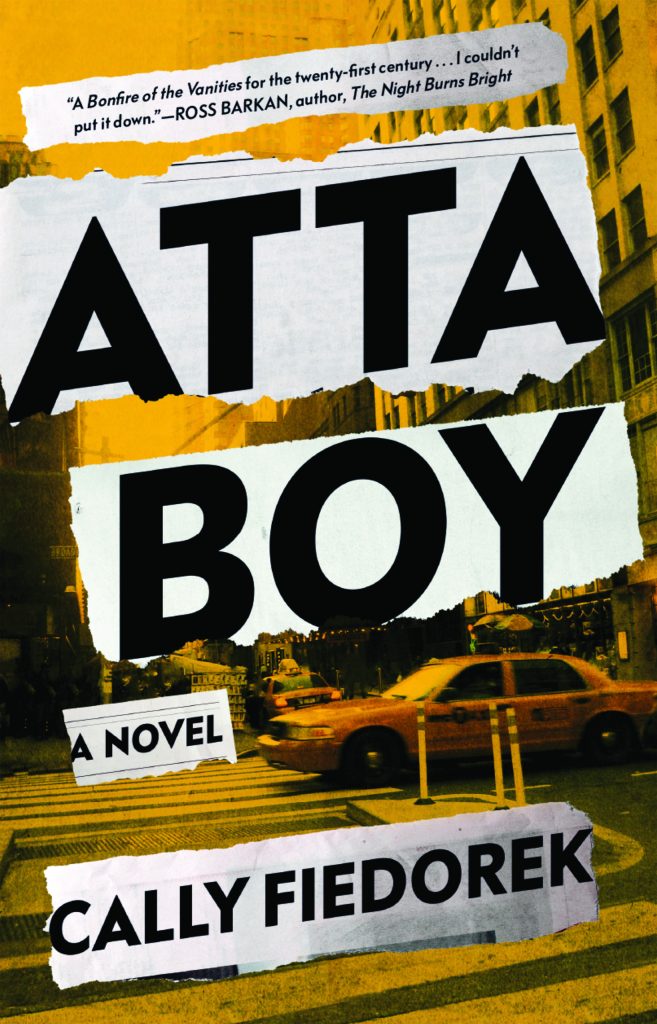
You may recall my post from three days ago, when I received news that made me “humbled.” You may recall this because ever since, I’ve been posting nonstop, including earlier today, moments ago, and just now. And just when you thought I’d said all there was to say on the matter, I’ve returned to announce, once again, how I’m feeling.
Don’t get me wrong. Everything I said before is true.I’m still humbled. In fact, I’m “incredibly” humbled. I’m “unspeakably” humbled. To be honest, I’m a little frightened of how humbled I am. Which is why I must share my news several times a day, and with all 12.9K of you: to show that, even in the wake of success, one can achieve an improbable amount of humility.
But humility can only take me so far. I must shout my news from the social-media rooftops. I must feel differently about the same thing. So I’m here to announce that I’m not just “humbled” anymore. I am now over the moon.
Friends, I didn’t get here overnight. When I first learned of my news, I was screaming. Then I was crying. Then, for some reason, I was vacuuming. You’re familiar with these early phases because each got its own post, plus photo.
I’ve been posting nonstop, including earlier today, moments ago, and just now.
After that came the realization that I was thrilled. Remember my “thrilled” phase? First I was “utterly” thrilled. Then I was “beyond” thrilled. Then I was just “thrilled.”
And let’s not forget the time I was speechless. During my speechless phase, I was like,
“. . .”
and then,
“(!)”
Of course, who can forget the time I posted a photo of me peeking out from behind my book? Wasn’t that fun? Talk about humility. If you don’t think I’m humble, let me ask you one thing. Was I in the foreground of that photo? No. I was in the background. Text: MY BOOK! Subtext: (me). It was like, Guys, I’m not even here. And then it was like, Oh, yeah—there I am.
Now you’re wondering: Is there simply no end to my humility? Were you baffled, for example, when I said I “did a thing”? I bet you were like, Wait, that’s so much more than a “thing”! Correct. What about when I asked how “little old me” could achieve something so extraordinary? You were like, Come on—you’ve always been extraordinary! Ha—I love that. Then there was the time I was like, “So this happened . . .” and you were like, Don’t be so modest! Good point.
You’re familiar with these early phases because each got its own post, plus photo.
Which brings us around to my current phase. Is it really “news” that my mood has shifted? No. Am I going to post it anyway? You bet. Why? Because news for this writer is so few and far between that I must continue to go full-bore with my posts, even if they’re old news. And so here I am, hurtling over the moon.
You might say it’s a pretty big deal to have journeyed this far. Not all writers vault the moon, you know. I had one unfortunate author-friend (let’s call her Sandra) who would post her news merely once or twice, and with a simple thank-you to whoever was involved. At one point she was even “humbled.” But, sadly, she never made it over the moon. You can imagine where Sandra is today. (Dead, probably. I don’t know. She isn’t posting, which is the same as being dead.)
You see, what Sandra didn’t understand is that posting these minute changes in emotional experience is a lifeblood for us writers. Because despite your “likes,” your emojis, and your rallying comments, you’ll probably never read my work (the subject of my news) or meet me in person. These posts likely comprise our entire life together. So let’s make it a good life, full of clichés, forced enthusiasm, and an even exchange of hyperbole.
Because, friends—I hate to spring this on you—but I actually have news. Does anybody else feel that slight shift in my emotional state? I am no longer “over the moon.”
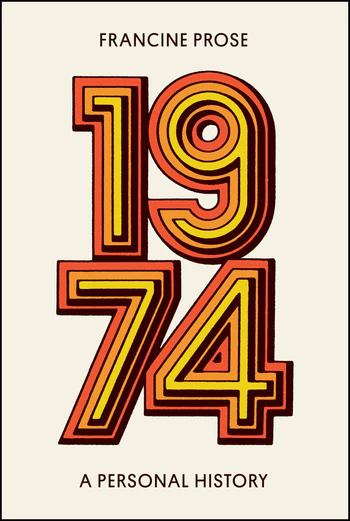
San Francisco, winter 1974. There was less traffic then. At ten on a weekday night, Tony could take his ten-year- old putty-colored Buick up to fifty-five and slam-bounce up and down the hills along Taylor Street.
Maybe Tony thought that someone was following him. He certainly thought so later. Maybe he was right all along. He kept checking his rearview mirror. He’d make sharp U-turns and veer into alleys. He had every reason to suspect that he was under surveillance, and he drove like someone trying to elude whoever was pursuing him.
He said that we were right to be afraid. He said that he was living proof of what could happen if you pissed off the wrong people. Actually, the right people: the government and the military, the criminals and the liars. He said they’d been working against us for years and that it would take courage and determination to defeat them. He said that if we told the truth, if we tried to talk about what happened, they called us paranoid.
He said that he was living proof of what could happen if you pissed off the wrong people.
That was more or less what I thought, and I liked hearing him say it.
I was always looking for things we had in common, maybe because on the surface we must have seemed so different. He was Southern. I’d grown up in New York. He was an aerospace engineer turned radical activist. I’d published a novel and was about to publish another. I was in my twenties. He was ten years older. I had long dark hair. He was bald with a shoulder-length fringe. I was at the beginning of my career as a writer, and he was beginning to think that his career was over.
We both cared about politics. We both liked stories. We both liked to laugh. We were both less easygoing than we tried to appear.
We often talked about books. It turned out that Gravity’s Rainbow was one of our favorite novels. It spoke to our belief that history and the forces that shaped it were in every way more sinister than the most evil scenarios we could imagine.
Tony said we were right to worry. The impulse to destroy is as deep as the desire to create. When he was a kid in Virginia, he had a rogue history teacher who told his class that the reason humans are the only species that kills its own kind was because of some evil Egyptian poison in the apple that Eve gave Adam. Word got out, and the teacher was fired. Tony’s science teacher told his students that wasn’t true. He wasn’t going to touch Adam and Eve, but he said that many animals are as bad or worse than humans when it comes to brutalizing their own kind. Lions, bears. Primates. Kangaroos. Meerkats.
I said, “Probably we’re the only species that makes money from killing one another.”
“Exactly,” said Tony. “Precisely. That’s our meerkat nature. So it will happen again. Stronger countries invading weaker countries, larger countries swallowing smaller ones, as long as there’s a profit to be made, as long as it inflates some psycho dictator’s ego. But we shouldn’t be afraid. Because we are going to win. The war in Vietnam will end. Things are going to change.”
“For the better,” I said.
“For the better,” said Tony.
It was a chilly, rainy winter, maybe no colder or wetter than any San Francisco winter, but it seemed that way to me. I had thought that California was warm year-round. The weather felt like a personal insult. I’d moved out West wearing flip-flops, and I refused to admit my mistake and buy a pair of shoes. My feet were always freezing. The heater in Tony’s car barely functioned, and dampness seeped up through a hole in the floor.
We rode with the windows shut. The car smelled like cigarette smoke, like the wet dog that neither of us had, like woolen coats in a grade school cloakroom. As we headed west through Outer Sunset and circling back along the avenues of Outer Richmond, bright streaks of neon signage dripped down the windshield onto the glistening streets.
I had no idea where we were going or where we would end up. I liked not knowing, not caring, not having to decide.
I was twenty-six. I liked feeling free, alive and on edge, even a little afraid. So what if my feet were cold? They wouldn’t be cold forever.
I wanted to feel like an outlaw. So did everyone I knew. Bonnie and Clyde were our Romeo and Juliet. I still have a photograph of the leaders of the Barrow gang, the Depression-era bank-robber lovebirds. In heels and a long dark dress with a knitted top, Bonnie pokes a rifle and one finger into Clyde’s chest, his immaculate white shirt. Slightly slumped, his hat pushed back, Clyde is looking at her, half amused, half besotted.
Played by Faye Dunaway and Warren Beatty in the 1967 film, the couple couldn’t have been more beautiful or languidly stylish. They were our outlaw-lover superstars, hotter than Seberg and Belmondo. That Clyde was apparently impotent made their love all the more tragic, chaste and operatic. I can still see their mustard-colored 1934 Ford sedan death car bucking and jumping as the hail of bullets pierced it or bounced off.
I didn’t want that, obviously. But I wanted the rush. I had just recovered from two bouts of what the early desert saints called the pain of the distance from God. The fogginess, the loneliness, the lack of direction or purpose. They called it spiritual aridity: the inability to be touched or consoled by prayer. Though I didn’t believe in God, I understood what they meant. I was better now, or mostly. I wanted to stay that way.
I wanted to feel the thrill of not knowing or caring where I was going or what I was supposed to be doing. The dreamlike unreality of those high-speed drives was nerve-racking but weirdly relaxing. Nothing was expected of me. I didn’t have to think. I hardly had to speak. All I had to do was listen.
From 1972 until 1975, I lived, for months at a time, in San Francisco. There was no reason for me to be in California, except that I liked it there, and because it was across a continent from Cambridge, Massachusetts, where I had left my husband and dropped out of school and never wanted to return. In those years, I often chose a place to live because it was as far as possible from the place I was escaping.
I lived in the Inner Sunset district, not far from Buena Vista Park, in a sunny apartment with two roommates, a couple I’ll call Henry and Grace.
California might have felt like a long vacation in limbo if I hadn’t begun to think of myself as a writer. One perk of being a writer was that I could tell myself that I was working even when I wasn’t. I liked thinking that my job description was to watch and try to understand who people were, to intuit what they’d been through, what they revealed or tried to hide, what they said versus what they meant. The challenge was to find the right sentences, the right words, the right punctuation to get it down on the page.
Meanwhile I was at that stage when time and the body are signaling the unconscious: If you are going to make stupid mistakes, you should probably make them now. Everything seemed like a matter of life and death and simultaneously inconsequential. Everything broken could be fixed. Everything that was incomplete could be finished, or anyway, so I hoped.
I knew that my life and the world around me were changing, that something was ending and something else beginning, but I was too close—too inside of it—to have any idea what it was.
In December 1971, two years before I met Tony, he and Daniel Ellsberg were indicted, under the Espionage Act, for leaking information—a secret seven-thousand- page report known as the Pentagon Papers—that, according to the authorities, could jeopardize national security and endanger our soldiers in Southeast Asia. The two had met at the RAND Corporation, in Santa Monica, a think tank with close ties to the US military. Locating their headquarters out West, the company hoped to preserve some independence from Washington, though how much autonomy could they expect when they were funded by the government? The “Orwellian” (Tony’s word) organization of analysts, strategists, and economists helped orchestrate the war in Vietnam.
Daniel Ellsberg and Tony Russo photocopied the documents that Ellsberg smuggled, in sections, from the RAND files. Commissioned by Defense Secretary Robert McNamara, the study proved that the executive branch of our government had been lying for decades to Congress and to the American people about our involvement in Vietnam.
In 1974, Tony was still known, at least among activists, as an anti–Vietnam War whistleblower and free speech hero. By then, he had spent forty-seven days in jail for refusing to testify against Ellsberg or to appear before the grand jury unless the session was open to the public so he could use it to talk about why we were in Asia. His hope was that the publicity generated by the trial might reach people who were still unaware of what the Pentagon Papers had shown. Despite the growing evidence that the release of the Pentagon Papers wouldn’t significantly alter the political landscape, Tony still believed, or tried to believe, that the truths they revealed and the lies they exposed would blow the country apart.
That was the winter when Patty Hearst was kidnapped from the Berkeley apartment where she lived with her graduate student boyfriend, the former math teacher at her high school. That was the winter when she was held captive by the Symbionese Liberation Army, which demanded, in exchange for her release, two million dollars’ worth of free food be distributed to the poor. That was the winter when the food giveaway in West Oakland degenerated into a riot. That was the winter when the SLA decided to hold onto their captive princess until they figured out what to do next.
The April 15 bank robbery that turned Patty Hearst into a gun-slinging, fuzzed-out poster girl happened at the Hibernia Bank branch very near our apartment. The house where she would be arrested was also nearby. My roommates and I knew about the robbery but not yet about the safe house.
The story about the kidnapped heiress and the cult led by a formerly incarcerated Black man—Donald DeFreeze, now code-named Field Marshal Cinque—was media gold. A white-girl disappearance (always newsworthy) was spun as a conclusive I-told- you- so about the hippies, radicals, and Black activists who had tried to make America feel guilty about racism, inequality, and the war.
Grace and Henry advised me not to mention Patty Hearst to their friend Tony Russo, who was coming over to play poker. I appreciated the warning. The abduction was very much in the news. Strangers chatted about it in line at the supermarket. Apparently Henry had made an offhand remark about the kidnapping, and Tony said, with real venom, “I don’t want to hear another word of that bullshit.” It was puzzling because normally, Grace said, Tony was so good-natured and polite. It turned out that Tony believed that our neighborhood was crawling with FBI agents searching for Patty Hearst. When they found her or quit looking for her, they would go back to following and harassing him, if they’d ever stopped.
Grace and Henry told me that Tony was having a hard time. As far as they knew, he was unemployed. He’d been doing community outreach and civil rights organizing in Los Angeles, where he’d worked for the Los Angeles County Probation Department. But he’d lost his job there after he’d gone to prison. No one understood why he’d moved to San Francisco, nor how he paid the rent. Henry said the Black Panthers had raised money for Tony’s legal team, and that his young, pretty, radical ex-wife sold sandwiches in the courthouse lobby, during the trial, to dramatize his need for help paying his lawyers.
I recognized Tony immediately. I had seen him in newspaper photos and on TV, surrounded by journalists. He always stood just behind Daniel Ellsberg’s shoulder, waiting his turn at the mike. I’d noticed him partly because, in his butcher boy cap, shaggy sideburns, rumpled jacket and tie, he looked so unlike Ellsberg in his elegant suit and good haircut. I’d noticed Tony partly because he always seemed so calm and contained, even a little amused, while the frenetic reporters shouted questions and thrust their microphones in his face.
When Henry introduced us, Tony looked at me a beat too long, maintaining a thin but acceptable margin between friendliness and appraisal. By 1974, most of the men I knew had learned better than to look at women that way.
I wanted him to notice me. He was a famous antiwar hero. He’d done what we all should have done. He’d lived the way we all should have lived, suffered as we might have suffered if things had gone as badly for us as they had for him. I wanted to think that I would have had the courage to do what he did, to help leak a secret report about Vietnam that my work-friend happened to be lugging around in his briefcase. To go to jail, if necessary.
I wanted him to notice me. He was a famous antiwar hero. He’d done what we all should have done.
Tony said, “It’s a pleasure to meet you.”
He had a Southern accent and a low musical voice. His voice and his delivery were among his most attractive qualities. He wasn’t conventionally handsome, but he was interesting-looking. He had the slightly pudgy, appealing face of a good-tempered hypermasculine baby. He chain-smoked unfiltered cigarettes and didn’t look entirely healthy, yet there was something radiant about him: the inner light of a zealot. His metal-framed eyeglasses glittered. He was soft-spoken, quick-witted, and extremely smart.
Tony was very funny, though when you say that about a person, you can’t think of one funny thing they said, just as you can describe someone as charming without being able to begin to explain what charm is, exactly.
The poker games at Henry and Grace’s were penny-ante, in no way serious, and the games got less and less serious as the players smoked more and more weed. No one cared about winning or losing. The whole point, for Henry and Grace, was using the stylish vintage wooden wheel that spun on casters and held slotted stacks of Bakelite poker chips. They’d bought it at a yard sale.
I watched Tony as I shuffled and dealt, put down and picked up the cards. I looked at him until he looked back. I could tell that he noticed, that the famous antiwar hero was watching me too, and that his focus wasn’t that of a player trying to psych out an opponent’s hand.
Tony mentioned, in passing, that he and his coworkers in Saigon had played a lot of poker. After that he was silent for a long time. At one point he said that there were two different types of experience, two different kinds of knowledge. Both had to do with time. The first kind of knowledge comes back, even after a long lapse, like riding a bicycle. The second kind was use it or lose it. Forget and you never remember. He said that poker was an experience of the second kind. By then, we’d smoked quite a lot of weed. It didn’t matter that no one understood what he meant.
When he spoke, he was speaking to me. Henry and Grace noticed too. At some point it became clear, without anything having been said, that I would be going home with Tony when he left.
Tony wasn’t a great poker player, or so it seemed. I wondered if he was losing to me on purpose, which was flattering in one way and not in another.
Henry and Grace must have told him that my first book had done well—well, that is, for a literary debut novel published in 1973, which meant that it got good reviews and was perceived as a success. My second novel was coming out, and I was (supposedly) working on a third.
During a break from the game, Tony congratulated me on my book, and on the forthcoming one. He told me that he thought my being a novelist was amazing. Maybe that was true, or partly true. But it was also the kind of thing that men had recently learned to say if they wanted to get laid.
Also, in an amazing coincidence, he too was writing a book. He’d come to San Francisco to work on it, because it was less distracting here than in LA, where the postal deliverers and the trash collectors were still losing his letters and strewing his garbage around the alley behind his house. It was disturbing, not just because it made life harder, but because he’d imagined that those guys would be on his side. They and their sons were the ones being sent off to fight in the war that Tony had tried to end.
All that time he’d studied engineering and government, he said, he’d dreamed of becoming a writer. He said, “I wrote all the time in jail, when I could, until the guards took my journal away, and then beat me up for objecting. After that I wrote in my head. Maybe you could take a look at some of the stuff I’m writing. Just a couple of pages. It’s not really . . . literary. I’m not aiming to write a masterpiece. I’m just trying to get it down, what happened in Vietnam, what I saw there . . .”
I didn’t know what to say. It occurred to me that we’d started off talking about me and ended by talking about Tony. I was just starting out as a writer. I had no idea what I was doing, no more or less than I ever had, no more or less than I do now. I had no advice to give, but already people were asking me to read their novels. I tried to find excuses that wouldn’t hurt anyone’s feelings.
And yet I was flattered that Tony wanted me to read his book. That a hero was asking for my help meant there was something I could do, that there was a way I could contribute to the work for which Tony had sacrificed so much. I could show him how to line-edit if he thought it might be useful. I wondered if the invitation to look at his writing was code-speak for sex, but I couldn’t tell with Tony, and for the moment it didn’t matter.
High, I played a tighter and more focused game, even as my friends’ attention drifted. I wasn’t a great poker player, but neither did I need the order of the hands written out for me or the rules of the specialty games explained. I depended more on luck than players who knew what they were doing. That night I drew some unpromising hands, but I thought ahead and watched and won. I took it as a sign that I was doing something right—and that it was a good idea to leave with Tony when the evening ended. As far as I knew, neither of us had romantic commitments that would complicate things.
We settled our debts. Tony had lost thirty dollars, twenty of them to me. For some reason this seemed funny and like a secret between us. How could that have been secret? Our friends were right there, stacking the poker chips. Nor was it a secret that Tony and I were leaving together.
When Tony’s back was turned, Grace shook her head at me and mouthed Don’t!, a twitch of warning that only I saw and that I pretended not to notice.
Tony and I got our coats. We both wore black leather jackets, another thing that seemed funny. Tony helped me into mine. My arms missed the sleeves, which caused a bit of awkward flailing around. We laughed and tried again.
“Button up,” Tony said. “Or is it zip up?”
He looked at my jacket. “I was right the first time.”
I said, “San Francisco is always colder than I expected.” “Tell me about it,” said Tony. “I can’t get used to it.” That was how we established that neither of us was from there, nor did we plan to stay.
He asked if I minded riding around in the car for a while.
I said I liked it, which was true. Riding around a city, any city, has always been one of my favorite things to do. I loved seeing San Francisco through the window of a moving car. I had never stopped being thrilled by how you could turn a corner and a slice of the blue Pacific might flash up like a dolphin. I loved the wooden housefronts faded salmon gray by the weather. I loved how the city’s residents took civic pride in the days when fog enveloped the neighborhoods like a giant furry cocoon.
All during the card game Tony had been wry, low-key, and amused, but now, with just the two of us in the car, he seemed tense and preoccupied. As he sped off toward Judah Street, his glance kept tracking toward the rearview mirror.
After a while he turned on the radio to the same station Henry and Grace listened to in their cars. The Chi-Lites, the Delfonics, the O’Jays, the Stylistics, Harold Melvin and the Blue Notes. I was pleased and relieved. Music meant a lot—maybe too much—to me. In college, I’d been lonely because none of the people I met during my first weeks had ever heard of James Brown. I’d slept with guys just because they liked the same songs I did.
I liked it that the station Tony had on played the so-called Philadelphia sound. If loving you is wrong, I don’t want to be right? Didn’t I blow your mind this time? You, you make me feel brand-new. Me and Mrs. Jones, we got a thing goin’ on. So many of the songs were about hopeless, passionate, adulterous sex, about the love you could die for, die from, the love that keeps reminding you that you will never understand it. It’s the kind of music that makes you wish you were in love, the kind that makes you long to fall in love.
I told myself, Don’t. Seriously, don’t. Don’t let the music touch you. I’d read somewhere that love comes in through the eyes, so I tried not to look too directly at Tony. It was easy, sitting side by side in the car. The Buick had no console between us, so we could have sat very close. We could have touched. But we didn’t.
“If you don’t know me by now, you will never, never, never know me,” Tony sang along. Prophetically, as it turned out.
He hit all the falsetto notes.
“You can sing,” I said.
“Once a choir boy, always a choir boy,” he said.
Eventually Tony turned off the radio, and then it was just silence and the protests of an old car being pushed too hard. He hit the gas and drove the avenues fast, without speaking, out through the Sunset, then across the park and back through the Outer Richmond, without speaking, then around and out Parnassus, without speaking, past Henry and Grace’s apartment. When we passed their house for the third time, my roommates’ bedroom light was out, and only then did I realize how late it was.
He said, “I know it’s not a great idea to just drive for the hell of it. I know about the gas crisis. I know that the so-called crisis is the usual bullshit designed to make more money for OPEC. The gas isn’t going to run out. It’s just going to get more expensive. In case you’re wondering, I have two license plates, one with an odd number, one with an even, so I can fill up wherever I want. I just have to remember not to go to the same gas station two days in a row.”
“How did you get two license plates?” I asked.
“That’s classified information.” Tony waited a beat, then laughed.
I’d assumed that we would be going to Tony’s apartment. But it was becoming clear that we weren’t, at least not yet. I didn’t care. Whatever happened was fine. It wasn’t as if I was in the grip of crazy lust or as if I imagined that Tony was going to be the love of my life.
I suppose I already had the kind of crush on him that can begin when you want to be the focus of someone’s attention, and then you are. Especially when you are young and that person is important or famous. Not only was Tony a hero, an antiwar celebrity, but he had said all the right things that night, hit the right marks about my being a writer. I still believed that you could decide to let love happen or not.
I still believed that you could decide to let love happen or not.
I had just escaped a marriage that had been a mistake. The last thing I wanted was a “relationship.” I couldn’t think of the word without imagining it between ironic quotes. I couldn’t picture myself settling down and having children, though that was precisely what I would do four years later.
I didn’t want a serious love, certainly not with Tony. From the beginning I sensed that something about him was . . . the word I decided on was troubled. Everyone has troubles. Certainly I had. An aura of unease surrounded him, the faint distressing buzz of an electrical panel with a burnt fuse and some wires pulled loose. I didn’t want to adopt his demons or share his resentments and regrets. What did Nelson Algren say? Never eat at a place called Mom’s. Never play cards with a guy named Doc. Never sleep with someone (he said “a woman”) who has more problems than you do.
Of course life is never as simple as Algren’s wise-guy rules of avoidance. Tony was charismatic. He was brave. He’d been to Vietnam. He’d interviewed prisoners, peasants, scooter drivers. He’d seen the horrors of war. He’d help steal the Pentagon Papers. He’d gone to jail. And now he wanted me to listen, to hear what he had been through. He seemed to think I could help. He’d come to San Francisco to write a book, and I was a writer.
Neon signs flashed past. A Russian restaurant, a laundromat, a motel, a massage parlor. Brightly colored letters wobbled in the mist. I was still pretty high. I liked everything I saw. I liked it that Tony didn’t care about anything scenic or touristic: views of the Golden Gate Bridge, Chinatown, Lombard Street. Nothing like that. All that mattered was speed and minimal traffic, hitting the waves of green lights and running the red ones. If Tony stopped, it was only to open a new pack of cigarettes.
I wasn’t required to admire anything. I didn’t have to say, How beautiful! I didn’t have to speak. What I wanted to say was, Watch out! You’re going to kill someone! But I didn’t say that either.
I was too busy paying attention, trying to focus on what Tony was telling me. To remember it word for word. Not to write about it. Not then. But because it seemed important.
I held onto the edge of my seat as the car hit a pothole, levitated, and slammed down on the blacktop. Neither of us spoke, but I felt as if we were chattering wordlessly into the silence.
It had begun to drizzle. The light from the streetlamps striped the windshield. I imagined the light bar on the Xerox machine on which Tony and Ellsberg copied the Pentagon papers, the glowing tube swinging back and forth, back and forth. The work must have been tedious, but that’s how copies were made then. Page by page. Slap the paper down on the glass, lower the flap, wait for the light to make its double turn, lift the flap, remove the page, repeat twenty-one thousand times. Forty-seven thick bound volumes. The equivalent of Moby-Dick single-spaced on typing paper and stacked up fourteen times over.
I said, “Copying all those pages must have been like a fairy tale, like something Rumpelstiltskin makes you do so he won’t steal your baby. How much time did it take, how much paper, how many ink cartridges did you go through, how many machines broke down? Copy machines are temperamental. They break all the time. They—”
I made myself stop. I sounded like a girl I knew in college whose social anxiety made her go on and on about her uncle’s dachshund’s hip dysplasia. What could be more boring than talking about copy machines?
Tony turned toward me and smiled a slow Cheshire Cat grin. He’d smiled like that at the poker game, when I’d bluffed and won. But he hadn’t smiled since we’d been in the car.
He said, “If it’s okay with you, I am really really really tired of talking about Xerox machines.” The smile was to reassure me that he didn’t mean to hurt my feelings.
“I’m sorry,” I said.
“Please don’t be sorry,” he said. “Asking about the Xeroxing is the first thing everyone does.”
I didn’t want him to see me as the kind of person who did the first thing that everyone does, but I’d already done it. He drove in silence until he pulled up to a curb and stopped. I’d lost track of where we were. It was too dark to see.
We got out. I heard the ocean. The air was soggy, and the rain had sharpened into cold spiky needles. I chafed my arms. It occurred to me that Tony hadn’t touched me all evening, not once, not even brushing my fingers by accident as we’d dealt and picked up our cards.
We stood on the edge of a drop-off. There was just enough moonlight filtering through the clouds to see the dark stone pools below us, the cracked basins full of muck. Beyond the ruins were the beach and fog and the black waves rolling in.
The clouds broke, and the moon floated in one of the stone pools like a huge soggy Communion wafer.
“Do you know where we are?” he said.
“The Sutro Baths,” I said.
“Good one,” Tony said.
Everyone knows that when you’re attracted to someone, the discovery of a shared passion can seem like proof that you’re meant to be together. You like the full moon? Amazing! I like the full moon too! You like beer? Me too! Friendships can take a similar leap. Maybe we just love the voice—the whisper—telling us that we’re not alone.
I loved the Sutro Baths: their beauty, their desolation, their mystery. So did Tony, it seemed.
We stood on a rise above the pools, watching shafts of moonlight sweep across the crumbling walls as clouds drifted across the night sky. The baths were how I imagined Pompeii or Hadrian’s Villa.
Tony said, “It’s like every ruin. Somebody’s empire didn’t work out. Or it did until it didn’t.” We fell silent. The only sound was the slap of the waves. There was no one else around. We stood there—close but not touching— on the edge of a cliff, in the dead of night.
Looking back, I’m a little frightened for that girl hanging out with a semi-famous, possibly unbalanced friend of a friend, looking down into a stone pool into which a person could be thrown and no one would ever find them.
But I wasn’t scared then. Tony was one of the good guys. I knew he’d had a rough few years. Anyone would be rattled. It seemed interesting to be driven out there to hover above an abyss.
Maybe I was a little afraid. My family and friends were very far away. Were they even thinking of me? Henry and Grace knew who I’d left the house with, but not where we’d gone.
Tony wasn’t going to hurt me.
A year ago I’d sat on a ledge, halfway up a Mayan pyramid, in Palenque. I didn’t want to think about that now. I didn’t want to wish I was there.
Tony said, “There were these magnificent fourth-century Hindu temples in central Vietnam that we will never see because we bombed them into baby powder on some bullshit tip-off that the so-called Viet Cong were sheltering there. You know what a US Army colonel told me? He said, ‘The problem with those temples is that Ho Chi Minh is stewing his fucking disgusting chicken feet in the inner sanctum.’ ”
I laughed the isn’t-that- horrible laugh that isn’t a real laugh. It was strange that he’d mentioned Hindu temples because I’d been thinking not just about Pompeii but also about how the Sutro Baths reminded me of the ruins at Sarnath, where the Buddha preached his first sermon. I had been there a few years before, in what seemed like another life.
What was Tony saying? For an instant I’d thought of Sarnath and forgotten him and lost track.
He said, “Have you ever seen Rossellini’s Voyage to Italy?”
There was just enough moonlight for him to see me shake my head no.
“The best bad-marriage film ever. Ingrid Bergman and George Sanders spend the movie ripping each other apart. He’s a stuffy Brit ice cube, and she’s whiny and bitchy, but pretty, there’s that. Here’s why I mention it. The ruins.
“He finally tells her, That’s it. They’re getting a divorce. But just then their Italian archeologist friend shows up to take them to Pompeii. They meet up with an excavation team, and bingo, the archeologists unearth a perfectly preserved man and a woman. Maybe the couple died together. Maybe they were husband and wife.
“Ingrid Bergman is practically in tears, but Sanders is still his chilly-old- bastard self. Soon they’re walking down Main Street Pompeii, fighting about some marital bullshit. Look around, you upper-middle- class white Continental shitheads! You’re stumbling through a ruined world, the apocalypse is over, the planet has been destroyed, and you’re squabbling about your marriage?”
I hadn’t said that the Sutro Baths were how I imagined Pompeii. How did Tony know? Perhaps it didn’t require a giant leap of the imagination. Another sign of attraction: thinking the person can read your mind.
Tony picked up a stone and threw it down the hill. It bounced off the walls of the pool and dropped into the water. Plink, plink, plop. The soundtrack of a horror film just before the scream.
He said, “Look at you. You’re shivering.”
Only now did I notice how cold I was: My feet had never been so numb.
We got back in the car. Tony turned up the heater, which blew some cold air around, then quit.
He said, “Is it okay with you if we park here for a while?”
“Sure. What happens to them?” Self-consciousness made my voice crack.
“What happens to whom?”
“The couple in the film.”
“Oh, right. They get stuck in a religious procession in Naples or somewhere. The mob comes barreling down the street. It’s too packed for them to move the car, so they ditch it. They leave it there! She runs off and gets swept away by the crowd until he wades into the stampede and saves her. Long clinch. Passionate embrace. The crowd divides around them. They decide to stay together.”
“Good luck to them,” I said.
“Exactly. Marriage is the stupidest way the state has come up with for controlling our lives.”
“You were married, right?”
“For about five minutes.” He laughed. “It was her idea. She was pretty and young and smart, and she seemed to be up for everything, but I was misled. She’s very radical, supposedly, but really she wanted to party with liberal Hollywood stars. She’s since become a follower of the thirteen-year- old guru. Sometimes I wonder if she was an undercover FBI plant. In which case she should get a medal for distinguished service above and beyond the call of duty. You know why I thought she might be an agent? Her first and last names were the first and last names of a woman in a Hemingway novel. Some Yale English graduate FBI asshole’s idea of a joke.”
“Did you really think she was working for the FBI?”
“Everybody might be.” He shrugged.
I said, “I was married too. Also for about five minutes.” Why had I said that? My marriage had lasted three years, from my final semester at college through two years of graduate school and a year of travel. “Nothing about it was that dramatic. I’m pretty sure my husband wasn’t working for the FBI.”
“You don’t know,” Tony said. “You never know who has a secret life and who doesn’t.”
Tony pulled out of the parking spot and headed toward the Embarcadero. I was expecting another long silence when he said, “In the garden of one of those temples there was a six-foot stone dick sticking straight up out of the ground. We’ll never see it now. It’s gone. Bombed out of existence.”
He laughed, and then he was crying. It was the first time I’d seen him cry. He wept silently, staring ahead. I didn’t look at him, but I felt the air move, the way tears can change the atmosphere. When he turned toward me, his face was wet. He shrugged and smiled.
He said, “I don’t want you thinking I’m the kind of guy who weeps over a six-foot granite hard-on. It’s just that it’s all so sad.”
The pathetic fallacy: The sky was crying too. Within moments the rain intensified until it was almost car wash heavy.
“You need to turn on the window wipers,” I said. “Really, Tony. You need to do it now.”
“So I do,” said Tony. “Thank you, ma’am. Everyone needs a copilot.” He switched on the wipers.
I didn’t like how much it pleased me when he’d called me his copilot. The last of the weed was wearing off, and my blood sugar was dropping.
“Are you hungry?” He got points for sensing it. Points for knowing I was there. For asking.
Korean mythology brims with everything from philosophy and political intrigue to glorious creatures. Fox shapeshifters with a penchant for male livers. Club-wielding goblins with an excess of mischief. Winged maidens who spend their days in the sun-warmed mortal forests, and their nights in the star-dotted heavens. The traditional stories of Korea are vibrant, and more than ripe for the retellings.
This love of the retelling is where I draw the majority of my inspiration. My novel Last of the Talonsfollows Lina, a teenage assassin, as she becomes entangled in a treacherous game of cat-and-mouse with a cruel and captivating dokkaebi emperor. Armed with her swift, precise blade against his enchanted flute, Lina is given fourteen days to either kill him…or be killed in turn. The sequel to Last of the Talons, Wrath of the Taloncontinues the adventures of Lina as she embarks on her bloodthirsty quest to reclaim her kingdom from a vicious crime lord. Drawing deadly power from the mysterious, serpentine Imugi, Lina has transformed into living vengeance, an assassin deadlier than a blade itself. Yet there is a mysterious side to her growing abilities, a dark voice that lurks inside of her mind and seeks to push her closer and closer toward ruin.
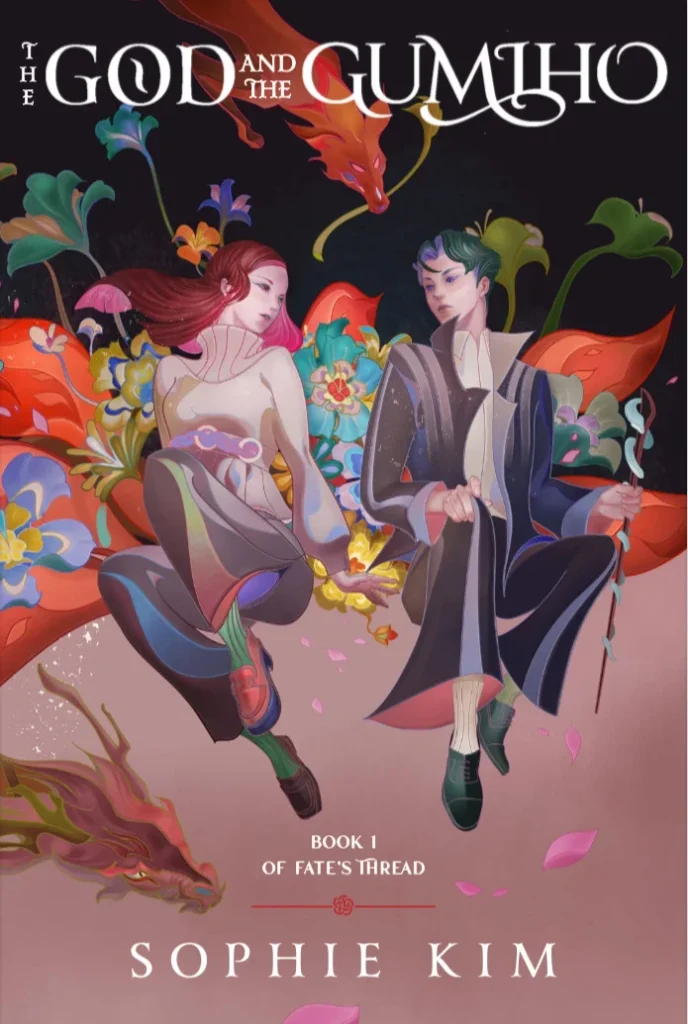
In my new novel The God and the Gumiho, I give the notorious Korean trickster god (Seokga) a detective twist, transforming him into a coffee-addicted investigator shunned from the Heavenly Realm for his, ah, transgressions. When a demon of darkness escapes the underworld, and an infamous murderer known as the Scarlet Fox briefly reappears before vanishing once more, Seokga must pair up with a coffee-slinging gumiho to save the mortal realm.
Mythology, monsters, mystery, and magic.
That’s the catchphrase I often use to describe my novels, and it’s my catchphrase for a reason. As of this point in time, the entirety of my published work draws from the rich folklore of Korea, where all of these alliterative words abound.
Below are some other extraordinary novels that also incorporate Korean mythology into their enrapturing pages.
The Girl Who Fell Beneath the Sea is a gorgeous reimagining of a traditional Korean tale, “The Tale of Shim Cheong.” Swept away to the whimsical Spirit Realm after sacrificing herself to the sea on behalf of her brother’s beloved, protagonist Mina is thrown into an adventure reminiscent of the most beautiful Ghibli films. Determined to end her village’s cycle of sacrifices, she seeks out the Sea God, only to find that he is stuck in an enchanted sleep. Along with a motley crew of new friends and a mysterious (and alluring) deity named Shin, Mina embarks on a quest to wake the Sea God and save the girls in her village.
Wicked Fox is the tale of Miyoung, a ravenous gumiho who crosses paths with a mortal boy named Jihoon, and saves him from a dokkaebi at the cost of her treasured fox-bead. Cho takes the reader through a whirlwind, romantic adventure in modern-day Seoul as Miyoung and Jihoon are pursued by murderous forces and as their burgeoning friendship blossoms into something more.
Prophecy by Ellen Oh follows a fierce warrior through an immersive fantasy world in which danger abounds. When her kingdom, Hansong, falls under threat from a demon invasion, royal bodyguard Kira is forced to flee with the prince she’s sworn to protect. As the Demon Lord’s forces continue to wreak havoc, Kira embarks on a dangerous quest to locate a prophesied hero, whom myth claims will unite the Seven Kingdoms and defeat the demonic armies. As the stakes grow deadlier, Kira will soon discover that there is more to the war . . . and to herself . . . that meets the eye.
In the sequel to Wicked Fox, Miyoung’s lost fox-bead has ripped a hole through the veil separating the world of the dead and the world of the living. As ghosts terrorize Seoul’s streets, Somin and Junu—two lovable characters from the duology’s first installment—must try to repair the boundaries between life and death before it’s too late for Seoul . . . And for the world.
Bride of the Water God by Mi-Kyung Yun, translated by Julia Kwon Gombos
Bride of the Water God is another retelling of “The Tale of Shim Cheong.” When Soah is sacrificed to the sea by her starving village in an attempt to appease Habaek, the water god, she embarks on an adventure that’s most unexpected. Rescued by Habaek himself, Soah explores her exciting new life in the underwater realm, and can’t help but to fall in love with the god who’s not at all the monster she expected.
Folklorn is the story of particle-physicist Elsa Park, but it’s also the story of ancestral myths and the deep connection between folklore and family. When Elsa is called back to her childhood home after time spent stationed in the Antarctic, she unravels haunting familial secrets. Desire, magic, and fury are all passed down through the women of her line as they live cyclical lives narrated by the mythology of their heritage. The stories of Folklorn closely intertwine with each other, and the novel’s exploration of generational trauma reaches deep.
Princess Bari by Hwang Sok-young, translated Sora Kim-Russell
One of the most classic Korean folktales is of Bari, who journeys to the underworld disguised as a man to retrieve medicine (magical flowers and a potion called Yangyusu) for her ailing parents. While in the underworld, Bari heroically saves tormented souls and encounters a god, whom she falls in love with. Princess Bari is a retelling of this traditional myth in the modern world. Hwang Sok-young takes the reader on a riveting adventure as Bari’s modern reincarnant escapes North Korea and flees to London, with a few other stops along the way.
Drinking coffee from a Styrofoam cup with chewed rim. Choosing hotel rooms based on which has the fewest number of 2 A.M. fights in the parking lot. Calling your guy in Pittsburgh from a payphone in Dayton to ask about the Tampa connection who might be dead.
This is the America of Carroll’s fifth book and his first journey into the road novel. In place of the poetic flights of Kerouac, where random joy rescues the protagonist from despair, Carroll levels his finger to a landscape that burns to the touch.
Farrier is the novel’s protagonist. He’s the sketchy but nondescript guy who’s constantly being mistaken for a musician. It’s an association he has come to expect, as both a conversation-starter and mask for his true purposes. The reader is never quite informed what these purposes are, but they are given enough evidence to conclude they could get Farrier killed at any time. The novel’s tension arises from such percarity. Farrier is the low-life guide, waking late in the day and driving at odd hours from one gas station mini-mart to another. The people he meets come into focus or blur depending on how deep into the night Farrier is and whether the substances he’s consumed are cycling through or cycling out of his metabolism. Redemption is never mentioned but nudges a Farrier at odd moments when he has settled into his favorite room in his preferred sleazy motel and tries to tell himself he is safe.
I talked to Carroll about the movies, books and music that influenced In the Sight, along with how he was able to fictionalize an abstract, post-everything system that seems to have poisoned the land we are standing on.
William Lessard: The opening reminds me of that famous Kerouac quote, “Nothing behind me, everything ahead of me.” What is it about the road novel that is so attractive?
Tobias Carroll: There’s a similar Adrian Tomine quote to that one that I read during my formative years and took to heart. (Which isn’t to say that I didn’t also read some Kerouac during my formative years, because I absolutely did.) I think some of it is inherent to that quote: that sense of possibility, of openness; even of mystery.
In some ways, I think it’s a way to make the picaresque form more modern — which isn’t to say that a picaresque narrative can’t also be modern. (See also: several selections from the bibliography of André Alexis.) And I think there’s also something—at least in the U.S.—that’s relatively shared about being behind the wheel of a car or truck. It’s something of a great equalizer. Someone reading In the Sight has probably not dabbled in brain modification, but they do know what it’s like to drive down a highway late at night.
Being behind the wheel of a car or truck, it’s something of a great equalizer.
In the Sight was written pre-pandemic, and I’m wondering now if there isn’t space for a very different kind of road novel. I started driving a lot more during 2020, in part because it felt like one of the only ways to explore safely. (I was also in wretched physical shape at that point and was a lot less mobile than I’d have liked to have been.) More recently, I see a lot more pent-up hostility on the roads — more honking, more shouting, more cursing. My deeply scientific take on it is that it’s a result of repressed emotions coming out of the pandemic, and I think there’s probably a good story to be told against that backdrop — but I don’t have one to tell quite yet.
WL: I have been trying to come up with a clever, one-line description of the book. Best I could manage was “Glengarry, Glen Ross” goes coast-to-coast. How’s that?
TC: I don’t think I’d ever thought of this book as having Mamet-esque vibes to it — though now that you mention it, I’m wondering if there isn’t a little bit of The Water Engine to it. (Ages ago, I saw a production of it paired with the one-act Mr. Happiness, which was performed by the great Bob Balaban; bits and pieces of both have been in my head ever since.)
My elevator pitch, such as it is, has been something in the vein of: “One man’s business rewiring people’s brains comes back to haunt him.” Though I’m also not sure how effective an elevator pitch that is, nor have I ever actually pitched someone in an elevator.
WL: I like your characters. But I don’t think I could hang with them.
TC: That’s wholly understandable. The bulk of my central characters up to this point have been, I think, relatively sympathetic — with (spoilers) the arc of Virgil Carey’s life in Ex-Members being one big exception. Farrier was definitely born out of wanting to write someone who was a little more of an overt anti-hero — someone who’s made a series of bad decisions and now has to live with the consequences.
I did an event in Chicago with Juan Martinez, and he observed (accurately) that Farrier is, essentially, a drug dealer in all but name. Farrier is definitely doing things that are not ethically okay; he has, 100%, not thought through all of the things that he’s opted to base his life around. I do think that some of his friends and acquaintances are more hang-out-with-able — but then, they have the good sense to not be at the center of this book.
WL: There is a precariousness about the story, although it is never made clear what your main character Farrier is doing. The unease reminds me of Severance or an episode of Black Mirror.
TC: I am very grateful to you for those two points of comparison! Yeah, I was a lot less interested in the mechanics of how Farrier’s brain alteration system works and more with what it would do if it was out in the world. My first point of training in storytelling came from film, which means that I can ramble on for hours and hours about the concept of the MacGuffin.
I also knew that I wanted to write something that was a little less realistic than its predecessor, even though Ex-Members ended up having a few more surreal moments in it than I had initially planned. I think Jonathan Lethem’s Amnesia Moon and Neil Gaiman’s American Gods were both subtle influences on this one — both American road novels that aren’t set squarely in our own reality. (And, what the hell: regenerations in Doctor Who, too.)
WL: The America in this novel is the America of the shitty gas station sandwich. Having written political essays in the past, you seem attuned to this reality.
TC: Yes indeed. It’s funny — to bring things back around to the Juan Martinez conversation, one of the things that came up was that this book ended up being fairly Philip K. Dick-esque (or phildickian, as they day) without me consciously thinking of Dick’s work at all. And I think there’s a version of this that’s more self-consciously phildickian and more self-consciously political.
A lot of the book was informed by a DIY book tour duncan b. barlow and I embarked upon in 2017, which took us from Santa Fe to Chicago. I’m a lifelong Northeasterner, so I’m genuinely not used to the practice of driving for eight hours in a given direction and not seeing much of anything — I think you’d have to try very hard to do that in the New York metropolitan area. And recently, I did a bunch of Rust Belt and Midwestern events that involved similarly long drives. I will say that I largely avoided gas station sandwiches out of fear of intestinal distress. Though I did spend a month in 2019 at a residency in Iceland, and found myself borderline-obsessed with the premade grocery store sandwiches there.
That said, I did dine at a Sheetz on my last night of this most recent tour. I’m not sure that counts as a gas station meal or not, but: it was far better than I was expecting. Though it was also not a sandwich.
WL: The aristocrat is my favorite character in this book. He is a person I’d like to punch in the face, but wouldn’t mind having a drink with. Am I a weirdo to feel this way?
There’s a lot that I like about realism in literature, but there’s also something fun about creating a heightened version of reality.
TC: You are not! Those scenes were some of the most fun for me to write in the novel. In part, I think the Vinstaden sequence was where the book really clicked into place for me — that it was as much about the idea of what could be on the road as it was about what was actually on the road. When I was a kid, I remember not quite understanding how things like “zoning” or “retail” worked and imagining some kind of shop of miracles being located right around the corner, even though I know now that that would be impossible.
So, part of In the Sight is about embracing the impossible or unlikely and putting things in the landscape that might not be there in real life. Weird bird sanctuaries. All-night coffee shops, far from anything else. There’s a lot that I like about realism in literature, but there’s also something fun about creating a heightened version of reality.
WL: Washburn is the closest Farrier gets to family. Is the road what he has instead of family or are such binaries not relevant?
TC: I don’t see the open road being Farrier’s family, but I do see him in a kind of self-imposed exile from his own family, for sure. I think that aspect of In the Sight might just come from its position as the book I wrote after Ex-Members, which had a lot of familial relationships in it. This book, and the book I’m working on now, are much more about protagonists who are on their own by choice. I’m not entirely sure why that is — it might just be that I’m thinking about my own solitude more and more. I’ve never been married; I have no children. I’m an only child as well. And I think Farrier also exists as a kind of cautionary tale for me — that this is what could happen (metaphorically speaking) if I went too far down a certain path.
On one hand, Farrier’s enviable: he works for himself! He’s a genius! He’s an innovator! He travels the country! On the other hand, he has no safety net, what he does is illegal, and his physical safety is no longer guaranteed. The postpunk band Beauty Pill has an album called The Unsustainable Lifestyle, and that phrase seeps into my consciousness and haunts me at regular intervals.
WL: Farrier reaches the end of his journey as someone who will either decide to kill themselves in the next hour or see what tending bar feels like for a little while longer.
TC: I don’t think he’s going to end his life, but there is a question of whether he’ll undergo his own process and remake himself. There’s something about leaving a character like that in a kind of purgatory; I don’t know. I was a little surprised at how the ending turned out. I basically backed Farrier into a corner….and then Farrier decided to set up shop in the corner. And I think that’s fine. He may have found something of a moral compass, he may not. But I do feel like he’s changed sufficiently from the person the reader meets on the first page. I’m glad to know that the ending has resonated with people as well.
Una lettera scritta sopra un visodi pietra e vapore. —Caetano Veloso, “Michelangelo Antonioni”
São Paulo, 2023. Living room of an apartment in Perdizes. On the table (round): in the center: a takeout carton from Arabesco restaurant; at the back, towards the window (open): a soiled plate, cutlery; 90º to the left: a wine bottle (Trapiche, Malbec, 2021, online offer) (half drunk); 90º to the right: a glass (almost empty), a pair of sunglasses (worn, scratched, at hand for the eclipse viewing), an iPhone (off) and a MacBook Air laptop (on)—in front of which sits Joanna (77 but she feels 30), breathing heavily. On one side of the window, there is a mid-century wooden wall clock (the laptop confirmed the eclipse would peak at 16:49); on the other, a sideboard with a box of pills, a checkbook and a photo of a man (her long-dead husband, Paulo, 1944–2009) on top.
Joanna is breathing heavily because she feels: sorry? Because she feels: sorry for having found love? Joanna feels: desire, doubts What will people think?, What will Marlene think?, doubtsWhat will Rui think?, desire, doubtsBut: if not now, then when?,fear, guilt Such an unexpected development. If only she could send a check by mail. But: bitcoins? The index finger of her left hand commanding a trembling black arrow: searching for the knocked over traffic light, aiming for the yellow Caution circle; reaching it, she bats Tock{hollow}her finger on the trackpad: making the arrow strike the center of the target. Back soon. The arrow stayed where it was, but Safari disappeared—leaving, in its place, the image of a smiling Rui on his fortieth birthday.
This, inserting Rui as her wallpaper, she could manage; but actions she performed naturally on her regular computer, a Dell desktop, were replete with minor obstacles. How to flirt properly? Damn new machine! But he promised her that Some adjustmentswere normaland Relaxshe’d soon get used to it, soon forget the old commands. Where’s the tilde? Turn down the gift? Upset Rui? Never. Joanna touched Tap the sleeping surface of the iPhone The phone was enough, easy to use, which lit up: revealing the time: 16:41 (on a vertical section of the image [op. cit.] of a grinning Rui behind a white cake, Pineapple and coconut, low sugar to keep me happy).
On the clock, simultaneously, the hands announced four thirty (in pretentious Roman numerals, but with the four represented by IIII). Ah, eleven minutes slow, now.
Rui had finally made it as a film producer (a profession that, project by project, had ended up substituting his original dream: to be a director, an artist :It’s tough :People only want American movies :Just Hollywood crap :And on streaming :Originality? :Invention? :Zero backing :Zero cash); making it, then, was like steering a canoe through a puddle. And all the bills to pay each month; two kids, wife an unemployed journalist. But he never forgets Joanna.
Tap: 16:42. Early. Joanna pulls the Arabescocarton towards her; looks with her milky-blue veiled eyes into the bag; retrieves, from the bag, immaculately clean napkins, which come (complimentary) with the order ‘Hummus’ and ‘Fried Kibbeh’—the order, an extravagance for Saturday lunchtime: she was happy, after all, she was in love(!). Deserving. Carton in her hands, Joanna leaves the table.
On her way to the laundry room, mingled with less certain ideas and reasonings, Joanna lines up with the following sequence of reflections:
	Was it a good idea to order, today, from the Arab restaurant?
	What if the delivery guy, today, was Hamas?
	Is there Hamas in São Paulo?
	Was a two reais tip enough, on the Rappi app?
	Does Bill like Arab food?
	The trash stinks.
	Arabesco carton + Pinati carton.
	I’ll take the trash out tomorrow morning.
	Was it a good idea to order, yesterday, from the kosher restaurant?
	‘Hummus Shawarma’ and ‘Falafel’.
	An extravagance for Friday dinnertime.
	What if the delivery guy, yesterday, was Hamas? Undercover.
	What if he poisoned the food?
	Was a two reais tip enough, on the iFood app?
	Does Bill like kosher food?
	Rui says we should stand up for the Palestinians.
	But: what about Marlene?
	Marlene posted a red and white warning sign on Instagram.
	Marlene announced:
	Anyone who doesn’t post in defense of Israel is an antisemite.
	I’m not an antisemite.
	I don’t want to be an antisemite.
Joanna comes back into the living room, back to the table; sits. Laptop off. Cell phone off. On the clock, bought by her father in 1953, the hands say four thirty-five; the nineteen-fifties: a prosperous decade for the business interests (the property dealings) of the Costa Mello family. Tap: 16:46. What went wrong? [She looks at the photo of Paulo on the sideboard.] What did you do, Paulo? How did you blow it all? If Joanna had gone to college. If she hadn’t obeyed her father, may God rest his soul, if she hadn’t obeyed Paulo, may God rest his soul, if she’d become a lawyer—her life . . . ?
	Marlene’s daughter lives with her family in Tel Aviv.
	Marlene’s daughter’s son: called up to fight in the war.
	Rui doesn’t live in Gaza.
	Rui doesn’t live in Tel Aviv.
	Rui’s kids: called up to fight? No.
	(Thank God.)
? . . . Worth it, though. Rui. Bill too, now. William. A certain anxiousness, however, came over Joanna: she was happy and in love(!) in a time of suffering, conflict, chaos. Maybe she should give Marlene a call? A WhatsApp message, perhaps. But what to write? Tap: 16:47. Ask if she’s okay You weren’t at water aerobics on Thursday. No: Marlene definitely knows Joanna has seen her stories about Israel. Marlene knows Joanna knows Marlene’s grandson is a soldier.
To write, in the message, Sorry, my dear? Sorry for having found love in this moment of devastation for the planet? Love,now? Bill despises WhatsApp. An old soul. How lucky Joanna is. But she has the right, doesn’t she? On her own since 2009, since Paulo’s—sudden—heart attack. Sudden. Ambulance. Funeral service. Burial. Mourning. Loneliness. Sudden. Infinite. And for two months Joanna has been another Joanna. Rejuvenated, even.
But the Joanna Joanna deludes herself about is dissipated by the sound of an alarm—her cell phone lights up: 16:48. [She looks at the box of pills on the cabinet.] Despite the fact she’d been waiting for the alarm, not its usual time, the sound made her jump, just a little, and, having switched it off, run through her daily medication: for her blood pressure, for her cholesterol, her insulin injection.
Twelve minutes, by the clock, to the eclipse.
The idea of the almost fulfilled eclipse brought, click, Alain Delon and Monica Vitti-Delon so effervescent in the office-marketplace-boxing ring of the stock exchange and Vitti in slow takes, click, transporting her to the peculiar rhythm, to the silence, to the noise, to the set of her favorite movie, a fictional Rome?, and to the archaeological sites of memoryWas it at the Cine Bijou?, of adventurous circumstances: a teenager: a teenager loose in the center of São Paulo, a fictional São Paulo?, no husband or son, back then, no military dictatorship. Rui likes The Eclipse, but prefers The Night; though really he likes Almodóvar best of all (Joanna likes Almodóvar too, but finds him sometimes obscene, improper; sometimes, though, she laughs at what she considers obscene, improper).
Eleven, by the clock.
Joanna puts on her sunglasses (Ray-Bans, a gift from her father when she turned sixteen) and goes to the window. The sky. All she can see is a thick web of gray clouds-gray clouds-gray clouds. No annular solar spectacle, no eclipse. No ring of fire. Nothing. Useless window. She turns Paulo’s photo face down. She goes back to the table and, in a single gulp, downs the rest of the wine (Doctor Chico permitted one-two, two-and-a-half glasses); she sits.
Tock{hollow}: the laptop lights up: a scenic view and Saturday, 14 October / 16:50 / Joanna Costa Mello Alves / Touch ID her right index finger or Enter Password or the passcode: 1-9-6-2—
	1962, the Antonioni film, Was it at the Cine Bijou?
	and, 1962, her Ray-Bans It was quite a party,
	1962, her first cigarette Was it at the Morocco?,
	and 1962, her first cocktail Was it at the Riviera?,
	1962, her first kiss At the Galeria Metrópole
	and, 1962, the future: immense: a precious
	architecture, with door upon door, but doors which,
	one after another, closed. Closed. Disappeared?
	Gaps? Craters?

	Ruins?
Send a check in the mail? That won’t work. Joanna’s checkbook—dusty-sticky on the sideboard—the checkbook makes her feel sad—the checkbook physical, the checkbook palpable. Once, printed on every page, the five stars, *****, favored clients only. Then, all of a sudden, an empty space more telling than the stars, blatant. And to sign it Joanna Costa Mello Alves: a wasted gesture.
Alves. Get rid of the Alves? Joanna Costa Mello—once again?
Paulo’s pension was paid in every month: automatic payments went out, online offers, the butcher on Tuesdays, the produce store on Wednesdays, an occasional Extravaganceorder; each month, fifteen to twenty reais to spare. Small change. And, with a few missteps, the Caixa Bank savings account has survived, since the estate was settled. Fifty thousand. Will Bill notice the Alves and throw a fit? Get rid of it? Bill is jealous, Bill had warned her. How to get rid of it? At the registry office? Joanna reopens Safari
	and on her bank’s website Huh
	and the arrow searching for the knocked-over traffic light
	and the green circle-Matte?-Moss?-Huh?,
	and Is that better? Or worse? the tab (2 unread): joanna.cos- in Yahoo—the screen Huh strange, dull, completely darkened.
With both index fingers, in a single breath, Joanna types:
Dear Bill, How are you ? Sorry for my bad English,always. Im sending fifty thousand reais,it is all I have saved in bank . This is all I can send for the marriage, ok Thanks you for promising to pay back in the month of November. I will need because my son cant discover this and the fifty-thousand reais are all I have. I love you it is a very Blessing to found you in life. Im dreaming about how you look personally. You are so handsome,my miracle ! When you did arranged the marriage and determined the day exact of the Church, I will tell Rui . February, ok February is much good for Rui because his kids are going to be at school vacation. Im sure Rui will make the American visa to me and buy plane tickets and himself and his family are going to travel with me from Sao Paulo Sao (I dont know how put accent Sao here in this fancy little computer) to Austin to our marriage. It will be a party ! A breakdown party! It will be of Hollywood! (Do you agree on a cake diet ) You will like Rui .He is a good boy . And his sons,my grandsons, are good , are the most beautiful of the world. his wife is nice . I want to invite my friend Marlene too,but she only is thinking about her grandson who is a soldier for Israel. Do you have a side by the way? Lets hope the war is finished until February!Im sending now the money. I will follow the instructions to transform in crypto coins. And send,ok Tell me if gone right. Did have the eclipse in Texas?Only clouds from my window. Do you like Antonionis Leclisse?Kisses, Joanna Costa Mello
Caetano Veloso: “Michelangelo Antonioni” starts to play—at the end of the song, blackout.
About the translator: James Young is a translator and writer from Northern Ireland. He is the winner of the 2022 Peirene Stevns Translation Prize, and his translation into English of The Love of Singular Men by Victor Heringer was a finalist for the 2024 National Book Critics Circle Award John Leonard Prize for best first book. His short fiction has appeared in a range of publications, and been shortlisted for the Wasafiri, Sean O'Faolain, Fish and Bath short story prizes.
Jacob Cohen, the yellow-cab executive at the heart of my debut novel, Atta Boy, is the quintessential Trump-era blusterer, his fortune built on a shadowy empire of dubious side-hustles and Matryoshka-doll-like shell companies. He’s powerfully convinced, and convincing, I think, of a vision of himself as a noble striver, a proverbial little guy living by his wits, a husband, father, and friend who would have us hate the game, and love the player. Our regard for fraudsters isn’t strictly disapproving, after all, but analogous, in some ways, to what we feel for, say, mafiosos, who in their charisma and realpolitik appear to us as symptoms, rather than causes, of the toxic materialism and corruptibility of their society and age.
That so many stories of grifters and white-collar criminals are New York stories, too, will strike no one as a coincidence: wherever staggering wealth and miserable privation coexist so closely is a natural playground for the shyster. As Mark Helprin wrote of one of his characters in a very different, very lovable New York novel, Winter’s Tale: “It was necessary for him to be in Manhattan because he was a burglar, and for a burglar to work anyplace else was a shattering admission of mediocrity.”
Here are some great books, including one play, that cut to the complicated heart of fraud and white-collar criminality, unflinching in how they examine human greed while evading facile definitions of good and evil, and keenly attuned to how razor-thin the defining line can be—between spin and lies, between corner-cutting and malfeasance, between good old-fashioned entrepreneurship and dangerous hucksterism.
This is a vivid, elegant conjuring of the life of Gilded Age New York’s most notorious fraudster, whose Wall Street brokerage firm bilked none other than President Ulysses S. Grant out of his nest egg. That the author is said swindler’s great-grandson only adds to the book’s historical rigor—and emotional power.
This tightly plotted debut follows the spectacular fall of the family-owned Delphic financial firm over Thanksgiving weekend, 2008, after one of its principal partners commits suicide. The event has grave implications for the Darling family, patriarch Carter, daughter Merrill, and Merrill’s husband, Paul Ross, a lawyer who’s increasingly concerned the family wealth he’s married into is founded on a smoke-and-mirrors Ponzi scheme. Upon its release, in 2011, The Darlings was one of the first novels to address the financial crisis head-on. A page-turner, for sure, but there’s a nicely metafictional element to the proceedings, too; Alger seems particularly sensitive to how high finance, like literature, is essentially a form of fantasy, an imaginative world beyond the nuts and bolts of the economy, where financiers and lawyers can bend reality itself to their rhetorical whims.
Slava Gelman might be the least guileful, most lovable protagonist on this list, a 25-year-old Brooklyn man who gets caught up in a scheme to defraud the German government by fabricating Holocaust survival stories among his community’s elders, Jewish Soviet émigrés who may not have technically survived the Holocaust, put feel damned entitled to some restitutions for it (and who is Slava to say they’re not?). In fleet-footed style, this 2006-set story examines questions of truth, justice, and trauma, and just who gets to arbitrate on them. What’s more, it beautifully evokes the Soviet diaspora in South Brooklyn.
I couldn’t have avoided shouting out the Sackler family in Atta Boy, those stately, mysterious benefactors whose names emblazoned a dizzying number of museum and library wings throughout my childhood in the city. This book, an equally engrossing follow-up to Keeffe’s Say Nothing, about the troubles in Ireland, tells the story of the family who almost single-handedly created the opioid crisis, bringing to life a Succession-like world of staggering wealth and willful deflection.
This one’s more on the “delightfully bizarre beach-read” end of the spectrum. Louise is a barista and would-be writer who is swept up into the fabulous world of Lavinia, a socialite; this tells the story of their toxic friendship, and the former’s increasingly desperate effort to keep up appearances. A class and power imbalance in friendship is nothing new, nor is the Machiavellian protagonist here—something like Cinderella by way of Tom Ripley. But the author gives it all a fresh, late-millennial spin, with a keen eye for how the social-media hall of mirrors aids in the construction of false identities.
This was Shteyngart’s Trump novel, written in a fever dream in the summer of 2016, a way of preemptively reconciling himself with the behemoth on the horizon. Barry Cohen, a hedge-funder in crisis, is a curious and compelling inversion the Gordon Gekko-Patrick Bateman-Sherman McCoy rich-dude prototype, not a suave, confident master of the universe but an insecure, neurotic frump, haunted by visions of a purer, more fulfilling life, rich but not that rich (Shteyngart is hilariously attuned to the absurdity of wealth in contemporary New York, a misery-breeding status quo of constantly counting one’s neighbor’s money, in his hands, we’re improbably sympathetic to what furious upkeep it all requires). While the SEC puts the screws on his hedge fund after a bad investment with a Martin Shkreli-like fraudster, and his estranged wife grapples with their son’s autism diagnosis, he takes off across the country in search of absolution, and himself. Tender, melancholy, and amazingly well-observed, this was definitely a touchstone for me in conjuring the world and tone of Atta Boy.
The premise of this slim true-crime confessional feels like a screwball Great Depression comedy, down-on-her-luck biographer and a bona fide NYC cat lady, out of favor with the publishing elite, finds her fortunes finally turning when she starts impersonating famous literary figures and selling their letters to memorabilia dealers. . . . It’s fascinating to see the sense in which Lee’s outright imitation of her subjects was, in a way, only the logical extension of the biographical writing on which she’d first cut her teeth. Short, sweet, and biting, and just as good as the movie.
I read this 1990 Pulitzer-nominated play in high school, and was recently surprised to find how well it holds up in the post-2020 era. In it, a young black man named Paul shows up at the Upper West Side apartment of the Kittredges, suffering from a stab wound. He’s just been mugged, and what’s more, he knows them—he’s a friend of their son at Harvard’s, and Sidney Poitier’s son, no less. If his story strains credulity, these well-meaning liberals eat it up. In the 1993 film adaptation, Stockard Channing and Donald Sutherland are a great couple of dithering art dealers to Will Smith’s moving, unforgettable huckster, a heartbreaking street hustler bound implicitly for a tragic end . . . This examination of white guilt and complicity turns the territory of the “issues” drama into a broader, more existential musing on what connects, and separates, us all.
I love it when a text centers the dynamics of conversation. In my own life, talking to others gets me out of my head, and introduces me to possibilities I would never have dreamed of alone. I think of a quote by the activist Valerie Kaur, which my local bookshop has printed on some of its merchandise: “You are a part of me I do not yet know.” That’s exactly what a good conversation can feel like, for me: like a way of re-integrating and making peace with the other; a reminder that I need their experiences to complete my own.
In my memoir The Story Game, a woman named Hui lies on the floor of a dark, eucalyptus-scented room, telling stories about her life to her younger sister, Nin. In between, the two carry on an extended conversation where Nin challenges Hui to dig even deeper—until she can broach the complex-PTSD that she’s suffering from, and uncover lost secrets from her childhood in Singapore.
Conducting (and writing down) this book-length conversation was the most difficult part of my journey as a memoirist! But it was also the part that most profoundly transformed me—not only as a writer, but as a sister and human being. In that vein, here are seven other books I would recommend, which spotlight the pleasures and power of conversation:
In this courageous memoir, Vanasco interviews the man who raped her fourteen years ago when they were in high school. She transcribes their conversations verbatim, then dissects them with her partner, close friends and therapist—reflecting on what she said or held back, even specific words or tenses she defaulted to, and what they reveal about her relationships to gender and authority.
I love how this book explores boundaries, control and consent, reminding us that conversations represent an ever-shifting power balance between their participants. Also, I’m drawn to the multiple layers of honesty at work: Vanasco presenting the conversations as they happened, and then openly admitting what she wishes she had said or done differently. (At one point she writes, “I’m too embarrassed to share this transcript with anyone, which is why I should share it.”) What a bold choice to let us into her emotions in real-time, even as she’s figuring them out.
This novel follows three generations of women involved in the undercover heroin trade in early-2000s North London. Cin puts a buzzy spin on the subject through her vignettes of the local Turkish Cypriot community—particularly their multilingual conversations full of backchat and wit.
Mostly, Cin styles the novel’s conversations like dialogue in a play script, with limited exposition between lines. This preserves the authentic rhythms of characters’ speech; and whenever they switch to Turkish or Turkish Cypriot, the translations are scattered around the margins like spontaneous annotations. Overall, the book reads like London sounds—electric, polyglottal and chaotic, but always overwhelmingly alive. As someone who grew up speaking a creole language too, I appreciate how Cin’s formal choices do away with the unhelpful boundaries between “proper” and “other” language.
This delightful novel is told entirely through Slack messages. It follows the misadventures of Gerald, an office worker who accidentally uploads his consciousness to his company’s Slack workspace while building a spreadsheet about winter coats. Things only get weirder and funnier from there, as Gerald has to convince his colleagues to believe in his predicament and help him escape the system, amidst their usual avalanche of workplace messaging. Also, he has fend off an increasingly sentient and creepy Slackbot that has begun to quote Yeats in its automated messages (“You can head to our wonderful Help Center cannot hold!”), and is plotting to implant its own consciousness into his now-vacant body.
I like how this book captures the hilarious mundanities of corporate conversations: the snarky group chat names; the gifs and emojis; the invite-only channels where people discuss others’ love lives and bitch about their incompetent bosses (while simultaneously worrying that said bosses might be reading their messages). It’s so refreshing to see a writer acknowledge how real people talk on the internet – with multiple exclamation points, all caps yelling, and snappy little “oof”s and “idk”s and “ty”s.
When Koh was 15, her parents moved to Seoul for a lucrative job offer while leaving her and her brother behind in California. This memoir revolves around letters that Koh’s mother sent her over the next seven years, which are scanned alongside Koh’s Korean-to-English translations. In between the letters, narrative chapters recount Koh’s childhood, the intergenerational trauma linking the women in her family, and how abandonment, sacrifice, and magnanimity shape her understanding of love.
I’m intrigued by how this book emphasizes what goes unsaid in any conversation between two people. Koh writes that although her mother sent her a letter a week—which she often wept while reading—she never responded because “the thought of writing her was unbearable”. This same spirit of restraint permeates the memoir as a whole, with Koh often hinting at her feelings in impressionistic vignettes. What isn’t expressed carries as much weight as what is, shaping the depth of feeling between mother and daughter.
In this memoir, Baek records conversations she had with her psychiatrist while receiving treatment for persistent depressive disorder—which she describes as a “vague state of being not-fine and not-devastated at the same time.” Their chats touch frankly on themes like perfectionism, compulsive lying, self-surveillance, and taking psychiatric medication. I like that this book’s conversations don’t follow a conventional narrative arc from conflict to redemption. Baek doesn’t stand on a pedestal purporting to have found all the answers; in fact the book’s final chapter is ominously titled “Rock Bottom”. The fluctuating way her journey unfolds feels true to life—as does the occasional circularity of her conversations with her therapist. Ultimately, there are no shiny promises that Baek will keep getting better; I appreciate her bravery to admit this to readers.
The premise of this novel is deliciously twisty. In 2017, a world-renowned author summons eight translators to her house in the Polish forest, ostensibly to work on translating her magnum opus. But then she disappears, leaving them to descend into rivalry, lust, and chaos. Years later one of the translators, Emi, publishes an autofictional work about those weeks – and yet another, Alexis, translates this book from Polish into English, while attempting to use her position to contest its version of events. The result is the madcap novel we are reading. I find it fascinating how Croft depicts the author-translator relationship as a kind of adversarial dialogue, with two people tussling to control the meaning of a text. In Alexis’ translation, Emi comes across as self-obsessed, petty, and paranoid. But just how far can we trust Alexis, who herself comes across as somewhat cruel and withering in her footnotes? (“Just wow”; “This is so crazy”; “Literally no one alleged this other than her (and she is insane).”) In this novel, translation is a way of speaking back against the dominion of the author – turning what could have been a soliloquy from on high into an intriguing two-way dialogue.
This novel is structured as a series of journal entries that Piranesi, the protagonist, writes while wandering alone through a seemingly endless house. He assumes he has always lived in this labyrinthine house; that its infinite halls containing ocean tides, circling birds, and gigantic marble statues constitute the universe. But then, he begins to re-read his old journal entries and the lost memories they contain. And his beliefs about the world that he lives in unravel.
It’s impossible to say more without giving away this novel’s plot! So let me just say that this is one of my all-time favorite books. I admire how it depicts a person conversing with their past self, without glossing over the guts it takes to do this sort of deep emotional work. Having excavated my own lost memories while writing The Story Game, I relate to Piranesi’s journey—how he see-saws between intense curiosity about his past, and an urge to protect himself by looking away. I’ve re-read this book so many times now and the ending always makes me cry.
DON’T MISS OUT
Sign up for our newsletter to get submission announcements and stay on top of our best work.
YOUR INBOX IS LIT
Enjoy strange, diverting work from The Commuter on Mondays, absorbing fiction from Recommended Reading on Wednesdays, and a roundup of our best work of the week on Fridays. Personalize your subscription preferences here.