This piece is published as the winner of the First Chapters Contest, hosted by Girls Write Now and Dutton, an imprint of Penguin Random House, for teen writers. The Dutton editors said of this piece, “We enjoyed the energy of the voice, the thrill of the action, and the strong character work on the page. We’re very intrigued to find out where this story and character are going next!” You can read the honorable mentions and learn more about the contest here.
—Vahni Kurra, Girls Write Now
Among The Rookies, Bargaining is Common
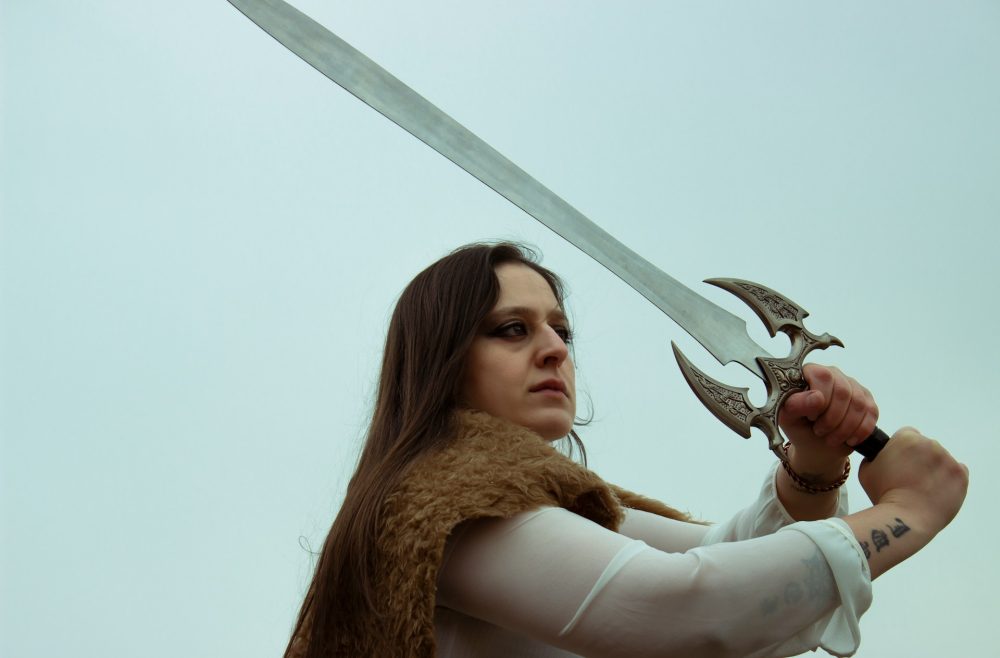
“Remnants” by Rhea Dhar
When I wake up, there’s a fuzzy little monster clinging to my ceiling, its stubby fangs dripping bloody saliva onto my pillow. A fat warm drop smacks my cheek, trickles down, and plunges off my chin. First thought: if I ignore it, surely it will go away eventually. But then, that would be a very pathetic and ironic last thought.
I sigh, roll over and grope around on the floor, shoving aside yesterday’s crumpled tunic and the overgrown vespermite carcass from the night’s hunt. My fingers loosely close around a cold metal hilt and I thrust the rapier upwards, vaguely in the monster’s direction. Through bleary eyes, I watch it squeal and scuttle. Its greasy tawny fur puffs out in tufty spikes. Great. Solismus counter attacks have historically been unsuccessful—their mouths are too small for most human limbs and their pupils are fixed on one spot their entire lives, confining their vision to a limited and useless field. But I also am operating on under four hours of sleep and wielding my worst weapon, so it’s completely possible I’ll be the first Remnant ever devoured by a household pest.
That’s actually an incredibly humiliating thought, so I jolt upright and rapidly jab the rapier at the solismus before it can launch itself off my ceiling. It takes a few tries, but I eventually skewer it straight through. Bits of blobby entrails and viscous black blood dribble down my blade, smattering my duvet. Guess today’s laundry day. I yank the sword out, leaving yet another splintery scar in the battered wood. I catch the solismus corpse. Breakfast.
I’m still in my hunting clothes from last night; leather tunic and pants, belt of daggers digging into my sore ribs.
I’m still in my hunting clothes from last night; leather tunic and pants, belt of daggers digging into my sore ribs. I drag a hand through my hair and lumber on out of my cabin. Don’t really have much time to get ready this morning. Perlan felt vengeful and scheduled my combat assessment despicably early. I probably should have taken the vespermite carcass and brought it to the trash heap, since my cabin is already painfully packed and I don’t need another trophy. Whatever.
It takes me two tries to get a fire started in the pit outside. Morning mountain air is dense and foggy, harshly cool as I breathe slowly and let my eyes adjust. I still can’t see more than twenty feet ahead of me, so, rest in peace me if any ranged monsters feel hungry. It’s unlikely that there are any here, though. Grim Gully is a funneled pass between two steep mountain faces, once a roaring river that ran dry. Six by six foot cabins for us rookies were built along the centerline. To get out, we have to clamber up the gnarled tree roots twisting down the sides, picking off the occasional solismus in the process. It’s a relatively safe place, well-lit and well-populated, which is enough to deter most monsters.
I’ll have to visit the armory before the assessment. Rapiers require more finesse and strategy than I’m cool with, given that my weapon of choice is a broadsword or mace. Really, I like anything heavy, anything that I can swing with all my weight and let the momentum take over. Also, a rapier is certainly not the ideal tool for cleaning carcasses. So hard to peel off the coat and scoop out the goopy insides. Within the baggy stomach, I find soggy green quills. Not entirely sure what the solismus’s last meal was, but it smells sharply acidic, and I question if it’s safe to eat.
But by the time I finish, I have a decently sized juicy hunk, tender to the touch. Good meat is hard to come by; I’d be hard pressed to give this up, even if it means risking potential poisoning. Grim Gully’s peppered with bright purple flowers that make fair emetics, anyway.
As the meat roasts, thick, tangy smoke wafting from the pit, I meet my first fellow early-riser. Azi’s a surprise, honestly. It usually takes a team of at least four Remnants to drag her from bed before eight. Yet here she is, shoving her feathery white hair out of her eyes and tugging on the gray tips. It’s all freshly dyed to commemorate her victories against two august beasts, abnormally large and vicious monsters with an especially strong taste for human blood. Most Remnants have only killed one of those, and I wouldn’t last a minute against one, so, yeah, even if she’s technically younger than me, she has my respect. She’s the youngest Remnant, actually, though I can’t stop thinking of her as a rookie.
“I’ll trade you half of that for a flashbang,” she says, staring blankly at my solimus meat. “A flashbang and a dagger. A flashbang and a poisoned dagger. A flashbang, a poisoned dagger, and trail mix.” She blinks. “A flashbang, a poisoned dagger, trail mix, and cozy socks.”
I dump a sand bucket on the pit, unsheathe a toothed knife of mine, and begin sawing through the meat. “I’m tempted to see how high you’ll go for it.”
Among the rookies, bargaining is common.
Among the rookies, bargaining is common. More so in specific cliques and circles, yes, but I’m familiar enough with the practice to know this deal is wildly unbalanced in my favor. If you sit by the trees on Grim Gully’s edge for long enough, you’re bound to bait a solismus or two. And it’s not like they’re hard to kill.
Most Remnants have enough pity—or, perhaps, kindness—to freely offer supplies. They’re not actively competing with one another to snag kills and ace assessments. They’ve all already dipped their hair in felled august beast blood, proven themselves powerful enough to survive on their own. They’re less prideful, in a sense, since they’re walking proof of their achievements and don’t need to boast for clout. Azi is obviously still adjusting to that mindset. I wonder if she ever will.
In any case, though I would have offered her some food without any exchanges involved, I’m not gonna give up this potential advantage. I spear her half and point the knife at her. “Deal.”
She slides off the cut and swings a burlap pouch to me. “Tell me there was more to last night’s haul than a solismus. Please, Kenna.”
“Actually, I caught that this morning.” I refrain from telling her it literally crawled into my cabin. “I got a vespermite yesterday, and an assist on a fairy.”
“Oh. Nice. Who led it?”
“Perlan. He’s also handling my assessment, so… any tips?” I doubt she knows anything more about the senior Remnants than I do. They practically raised the rookies themselves, and it’s definitely bizarre being evaluated by my longtime sibling figures.
There’s only thirty or so of us on the mountain. A small enough number that we’re close and familial, for the most part, but large enough that coteries tend to form. I don’t belong to any particular group myself—haven’t for a while, at least—but I do consider Azi a friend.
She shrugs. “He’s, um, unpredictable?”
“Okay, thanks.”
She squints at me.
“For letting me know?”
I never claimed she’s good at being a friend, but then, neither am I.
Azi and I part ways once the meat’s finished and Perlan meets me as I scramble out of the gully. I blow dusty dirt from my hands and flex my fingers. He bounds over, signature tome fastened to his utility belt and a spiked mace in his hands. The white bristles in his hair glow rosy gold in the rising sun as the soft light sweeps over the mountains.
“Ready?” he asks, offering up the mace.
I trade him the rapier. “Not in the slightest, no.”
“You’re not going to die.”
I tilt my head at that, calculating yet feigning carelessness. “I know.”
“Yeah, yeah, I know you know.”
If you know that I know, then why are you even…?
“Where are we going?” I ask instead of pressing the topic, which would predictably lead to more irritation than genuine answers.
“Salt plains,” he says, grinning. He is, I am sure, the only person who could utter those words without grimacing.
I’m familiar with Perlan. Accustomed to him, as he is, surely, to me. And that is why we barely speak to each other as we begin the short trek to the salt plains through the pine forest trail. Our interactions are brief and comfortable, mutually tolerable and never transactional. It’s not a relationship I put much thought into. For most rookies, the Remnant who initially chooses to mentor you sticks with you until you graduate into a Remnant yourself. In my unusual case, Valence got pretty far, but never finished training me.
In my unusual case, Valence got pretty far, but never finished training me.
So now I’m with Perlan, breaking into a brisk jog as we broach the tree line and reach a long stretch of cloudy pink sodium. It’s glossy and unblemished, an expansive mineral field, and its scientific existence is baffling. Rocky caverns glitter along the edges, and Perlan steers us in that direction. I’m glad—the salt plains unnerve me. They’re so exposed, and the harsh gusts make my eyes water. Each breath is stale and briny, leaves my lungs stinging and raw. The caverns, at least, are cooler, even if the salt stench persists.
Perlan leans against the wall outside one and nods. “I scoped it out this morning. You can handle it. Just get a clean kill, don’t worry too much about creativity or anything. Stay safe.”
And without any ceremony, I head in.
Immediately, before I can scan the terrain, I’m confronted with my target.
It’s a kerata. A hulking monster that stands on four legs, with shaggy, ashy brown fur and shiny antlers that extend from its head and twist all around its body, ending in deathly sharp points. Apparently, they like to stab people and suck up their blood with their steeply tapered proboscis. Thankfully, I’ve never witnessed that. I’ve fought them before with a group, and it’s usually gone smoothly.
There are two methods.
One: hit it deeply between the antlers in various places so that it bleeds out quickly.
Two: break the antlers, which leads to its swift death.
Method two is trickier; kerata are incredibly protective of their antlers—simultaneously their greatest weapon and most crippling weakness. I’m not looking to show off, so I go with method one and start simple.
I rush forward for a first blow, holding my mace low and steady. The gaps between the antlers are narrow and slanted. I try, rotating around the kerata in a zigzagging circle, to angle the mace through and jab the spiked tip into the soft vulnerable flesh. The kerata digs its hooves into the ground, wearing powdery grooves in the salt plain, and swings its head to face me. The long, jagged front antlers catch my shoulder guard mid-dodge.
I withdraw, yanking the mace back and shaking off a snagged tuft of fleecy fur. Shoulder guard’s got a lock tear, but it’ll hold. Yeah, I was that close, but I shove aside the disappointment immediately. Between the pronounced heft of the mace and my own lack of dexterity, method one is already looking less appealing.
I don’t see an ideal alternative, right now, so I keep up my unpredictable pace around the kerata, poised to dart if it charges. Perlan might mark it as wasted energy, but I’ve got good stamina and, well, if I’m not actively attacking it, it’s increasingly likely to go on the offensive. And I’m not one to parry with the extra challenge of maintaining safe distance, so I’ll stick to dodging and avoidance.
I detach the tome from my waist and jam the mace between my arm and body. My free hand dives into the pages, feels for the faint, whispery warmth, and tugs. I’m a weak caster, yeah, but I don’t need to mortally wound the kerata.
If possible, I’d really just like to blind it.
Light explodes from my hand in sputtering bursts of fiery gold. Heat shoots through my fingers with bone-splintering speed and I slam the tome shut, refix it to my belt, and get a solid grip on my mace.
For once, I just hope the casting hits somewhere in the vicinity of its eyes.
My aim is terrible, so, for once, I just hope the casting hits somewhere in the vicinity of its eyes.
The kerata screeches, high and keening, and I see sparks catch in its fur, burning out in dark scorched patches. They’ve got low internal body temperatures. No clue if that is why a fire didn’t start or if it’s my clumsy casting skills striking again, but there’s no time to wonder.
Its hooves grind the salt plain again, but this time, the front one is curled and raised. It stomps. The ground shudders under me, and I bolt leftwards, anticipating a charge.
I don’t get one, which might mean that the kerata, unlike me, is actually reading the terrain and has realized any force to the sodium bounders is liable to trigger a miniature avalanche. In terms of the assessment, that’s a failure for me on utilizing my environment, but when it comes to surviving this encounter? Better late than never, maybe.
Keratas aren’t fast—they won’t risk collisions that could break their antlers, after all—until you actually threaten their antlers. In which case, unless you have the speed to strike before they can retaliate, you’ve got to get creative. Method one was a failure, and I’m not well-suited for method two, but I can come up with a plan.
It’s not a straight trajectory between cardinal Point A and Point B. Unfolding before me, I see a looping dotted line of a path that ties itself into knots and shies away from dead ends within seconds of catastrophe, some sort of strategic mess that ends with me cutting up a kerata corpse and carving out the meat-heavy ribs.
There’s still a starting point, though, and from Point A, right and here now, edging dangerously close to a cluster of sharp-edged crystals, I ready my mace and pray all the following alphabetically-labeled steps play out smoothly.
I charge forward, mace extended, and duck low enough to maintain my balance as I shove a foot out and slide toward the kerata’s underbelly. An antler barb punctures my waterskin and I feel the cool dribble of pine juice down my leg. I get two things out of that: one, that I misjudged the distance between my lunge course and the slender, crystalline antlers that encage the kerata’s torso—evidently, I can’t visualize measurements to save my life—and, two, welp, probably shouldn’t cast again. I’m sure I could drag some light out of the tome without completely exhausting myself, especially since I’ve always suspected that steeping pine needles in sun-charged water, while it does create a sweet, vaguely carbonated drink, doesn’t actually replenish casting energy, as the Remnants claim.
It’s just another myth they swear by. Just another lie our parents told us. But there’s something comforting about those, I think, like, falsehoods that are meant to protect you. So we eat daisy cakes and chug pine juice, and, honestly, even if it’s all useless and rest and relaxation accomplishes the same goal, it’s a tradition at this point.
Regardless, I don’t think my faulty casting would help much right now. I spot an opening between the antlers and bash my mace, full force. There’s an initial squish as the spikes sink through the flesh and frothy blue blood bubbles out, and then more resistance as I dig into some muscle and meat. The mace hits something hard and impenetrable and I realize belatedly I’ve waited too long.
I yank it back and recoil, dropping to a swift roll and springing to my feet. Near the sodium crystals again, which is not a good place to be cornered. The kerata might surrender now, and chasing it down across the scorching salt plains would be both humiliating and wearisome.
It doesn’t thankfully, and it doesn’t attack either. Blood is gushing out now, creamy blue globs gliding all over the ground. It won’t die yet. I didn’t hit it in enough places. Just’ll pump out more and more foamy lifeblood with its seven hearts. It might stand here, wounded, unhealing, for weeks. That was a lucky blow, on my part. Deep enough to cause some real damage, but I got away in time to still be breathing.
I’ve taken excruciatingly long to kill this thing, but there’s not a scratch on me.
I’ve taken excruciatingly long to kill this thing, but there’s not a scratch on me, and that, well, that merits celebration. Not yet, though, since I could still mess up.
Valence taught me not to hope or fear, but to anticipate. Before she was even a Remnant, actually. I was ten. We’d gone to Briar Marsh because she wanted to test if the toxins from the roses also affected monsters—even before she formally abandoned combat for research, she was the most curious of any of us. I tagged along, wanting to assemble a multi-regional collection of pressed flowers. Those roses were disgusting, sickly pink and sallow yellow, dripping with sticky rash-inducing dew. They looked like they’d been dredged up from the depths of something’s internal organs. But I refused to make any exceptions, even for the ugliest of blooms.
Someone else came with us, too.
Valence scored a few kills that morning, mostly on fairies, which amazed me at the time. I fell right into the trap. They’re gold and shiny and vaguely humanoid, with lacy wings and high chittering voices that sound like they could speak our language. Somehow, it feels wrong to slaughter them, even when they blacken and their wings snarl with rot and they’re lobbing poison pellets at your face. So she taught me how to handle them properly, how to mentally classify them as the threats they were.
We both thought we wouldn’t fight anything worse than those. Certainly didn’t imagine we’d end up stumbling over magnolia roots on a hazily sunlit clifftop, me kneeled over one body, pressing unseeing eyes closed with blood-smudged thumbs. Her kneeled over a second body, hand plunged deep into the warm insides of a beast she’d somehow slain. I had watched her pool violet blood in her palm and run her fingers through her hair until the color was fully saturated.
Someday, I—
An antler skims my neck, a cool flush against my drumming pulse.
It was always going to miss. Or else Perlan would have intervened.
It was always going to miss. Or else Perlan would have intervened. He’s watching. He has to be. I scramble back, muscles once taut with concentration now loose and shaky and unfocused. I’m acutely aware, suddenly, of my hot, gasping breaths, the sweat soaking my back, and the uncomfortable friction of my hand against the mace handle. Exhaustion. Its first symptom is a wandering mind, after all, followed by discomfort, weariness, and occasionally death.
It typically leads to failure, as well.
On my feet again, I fling the mace at the kerata’s antlers. It reels back on its hindlegs, kicking wildly at air and breaching the relative silence with that awful mourning cry. After a heartbeat or two, fractures splinter through those steely gray antlers and the tips snap off. Glittering chunks crumble, hitting the ground in soft, shimmery explosions. There’s a cold, discordant chiming; somewhere between quiet clinking of broken icicles and the hollow whistling of a glass flute.
The kerata’s body falls with a dull, heavy thud.
Just like me, really, losing my mind just before the killing blow. I breathe first, in long, measured gulps of air, and then shake out my ruptured waterskin. It seems Azi truly did not know the details of the assessment. A flashbang and a poison dagger are both certifiably useless against a kerata and were, unfortunately, dead weight on my waist. I take out the pouch anyway and scoop a handful of nutty trail mix, slumping against a smooth sodium shard that protrudes maybe ten feet from the ground. I can see a flare of blazing blue sky from this position. The afternoon sun’s gotta be high and bright by now, so I suppose the walk home will be miserable. I passed the assessment, though, and nobody can deny that.
Darkness winnows the edges of my sight, a shadowy static settling in. Inhale. Hold. Exhale. Do not pass out.
I close my eyes. Just for a second. And when I hear the clattering of footsteps, I presume, obviously, that Perlan has come to deliver his evaluation.
The first episode of True Detective, when it appeared in 2014, presented what has become an iconic image of the female crime victim: the stripped, naked body of a white woman, her skin ghostly pale in death, hands bound, antlers sprouting from where her head should be. In the shot, she not only has no face but seems to have no head at all, reduced to her most fetishized parts. As the essayist Alice Bolin has noted, crime fiction as a genre is haunted by the specter of the Dead Girl. In the typical murder mystery, her inert body sets the plot in motion. She is the “victim,” her death the pretense for an intrepid sleuth’s quest for truth; a mystery set in place by one man is tidily solved by another. In these kinds of stories, Bolin writes, “the victim’s body is a neutral arena on which to work out male problems,” another site for the reinforcement of patriarchal norms.
All the novels on this list take a very different approach to writing crime. Drawing inspiration from real-life events, these authors write about complex, complicated men and women, some of them likable, some not. While the trope of the Dead Girl is active in many of these books, in others it is women themselves who are the perpetrators. Many of these books flip the script on the typical whodunnit, turning our attention from the perpetrator onto his victims, while others explode the conventions of the genre entirely, showing less interest in the crime itself than in its aftermath. A couple (be warned) even concern the unspeakable crime of a mother killing her own children.
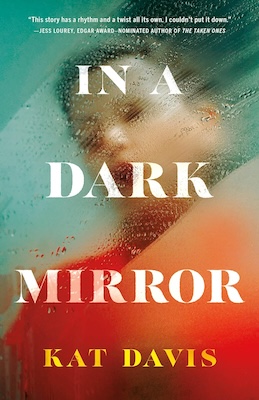
Inspired by real-life events, like my own debut,In a Dark Mirror, these novels also have an interesting relationship to the genre of true crime. In The Girls, Emma Cline writes from the perspective of one of the teenage groupies who participated in the Manson murders, which were themselves rendered famous in the true crime classic Helter Skelter. One of the narrators of Katie Gutierrez’s More Than You’ll Ever Know is a journalist trying to break into the true crime genre, and Rebecca Makkai’s I Have Some Questions for You features a Serial-like true crime podcast. In many others, the media response to a sensational case and the public’s fascination become elements of the plot. The books on this list seem almost hyper aware that, in writing enjoyable accounts of awful events inspired by real life, this sort of crime fiction walks a moral gray line. Accordingly, some authors embrace the page-turning aspects of the mystery genre, savoring each plot twist, while others take a more self-consciously literary approach. In spite of their diverse subjects, each of the books on this list is, as one reviewer puts it, “defiantly populated with living women.”
A thinly-veiled retelling of the Manson murders, The Girls is narrated by Evie, a precocious 14- year-old who, in the summer of 1969, befriends a group of girls she observes dumpster-diving in her suburban California neighborhood. The girls lead her to “the ranch,” where she meets Russell, a shadowy figure who seems to have outsized power over the group. Decades later, in middle-age, Evie reflects on the time she spent with the infamous cult and how she narrowly escaped being present on the night of the murders. Cline’s debut is a haunting and lyrical evocation of that liminal moment of adolescence when things can go very wrong.
Gutierrez took her inspiration for her debut novel from a news story about a man who led a double life for thirty years, married to two separate women, but she refreshes the trope by flipping the script. More Than You’ll Ever Know tells the story of Lore Rivera, who ends up married to two men, moving between one family in Laredo, Texas and another in Mexico City. Years later, Cassie Bowman, an aspiring true crime writer, sets out to investigate the circumstances that led to one of Lore’s husbands murdering the other. Set on both sides of the border, the novel moves between two characters and two timelines. Gutierrez gives us a satisfying murder mystery that is also a thoughtful meditation on the true crime genre.
Unlikesome of the books on this list, Toews novel has no surprise twists or sudden reveals. It is, almost entirely, a book about women talking—and it is riveting. The novel is based on the case of so-called “ghost rapes” among women in a Mennonite community in Bolivia, who woke up to find their bodies bruised, their sheets stained with blood and semen—and no memory of what had happened to them. At the beginning of Women Talking, the men responsible—who used horse tranquilizers to knock out their victims—are about to be released and to return to the community. Within the patriarchal structure of their traditional community, the women’s choices are limited: do they stay and forgive these men, stay and fight, or do they leave? The women themselves are illiterate and their conversation is recorded by a sympathetic young man who was spent some time outside of the colony. Toews’s examines the aftermath of sexual assault and questions of justice in an understated literary style that is also, at times, surprisingly funny.
Technically, Makkai’s latest is pure fiction, but I Have Some Questions for you clearly owes a debt to the true crime industry and is as pleasantly addictive and full of ‘90s nostalgia as the first season of the Serial podcast. The narrator Bodie Kane is herself a true-crime podcaster who returns to teach a short course at the boarding school she once attended. When one of Bodie’s students decides to investigate the murder of Bodie’s former roommate and Queen Bee Thalia Keith, whose dead body was discovered over two decades before in the swimming pool, both the case and Bodie’s memories crack wide open. Makkai’s novel is a pleasurable whodunnit, as well as an intelligent #MeToo novel that raises serious questions about our societal obsession with dead (white) girls.
One morning in 1965, Ruth Malone wakes up in her garden apartment in Queens to find that her two young children are missing. Based on the Alice Crimmins case, Little Deaths tells the story of how Ruth comes under suspicion for their murder. Flint paints a scalding portrait of the misogyny underlying everyone’s assumptions about Ruth—a single mother who works as a cocktail waitress and who smokes, drinks, and sleeps around. In the end, Ruth’s greatest crime is her failure to manifest her grief in a way that renders her comprehensible to the men—police officers, journalists, and members of the court—who sit in judgement over her.
This enigmatic French novel follows Maître Susane, a middle-aged lawyer who is hired to represent a woman accused of drowning her two children in the bath. Maître Susane is sure that she has encountered Gilles Principaux, the husband of the accused woman, before, but he shows no sign of recognizing her. NDiaye, who shares a writing credit on the screenplay of the 2022 film Saint Omer, has acknowledged that she drew inspiration for this novel from the case at the center of that film about a young Senegalese woman who drowns her baby on the beach. NDiaye’s surreal writing style ensures that there will be no easy answers to the questions the novel raises. This is a crime novel that thrillingly confounds the expectations of the genre.
Hurricane Season by Fernanda Melchor, translated by Sophie Hughes
Melchor, who worked for several years as a journalist in her home state of Veracruz, Mexico, based this dazzling novel on a local femicide. In Melchor’s hands, the murder of a transwoman known to the villagers as The Witch becomes an occasion for a Faulknerian tour de force that examines the role of poverty, machismo, and the drug wars in a fictional Mexican town. While Melchor writes from several points of view, she excels at channeling the toxic masculinity that drives so many of her characters’ worst actions.
Dean’s debut novel tells the story of Lex, a high-powered lawyer who as a teenager escaped from horrific abuse at the hands of her parents. After her mother dies in prison, Lex is appointed executor of the will, requiring her to get back in touch with her siblings and face the unresolved trauma of her childhood. Dean drew inspiration from real-life sources, including the Turpin family in California and their “house of horrors,” resetting the story in the U.K. While Lex initially seems like an unlikely success story, Girl A ultimately paints a haunting portrait of the long afterlife of trauma.
Kukafka cites Ted Bundy as inspiration, but the murderer in Notes on an Execution becomes a symbolic stand-in for all serial killers—a self-aggrandizing but ultimately mediocre man. Set in the hours leading up to Ansel Packer’s execution, the novel tells the story of Ansel’s life through the eyes of the women around him—including his mother, the sister of one of his victims, and the detective who tracks him down. Kukafka’s lyrical prose and smart framing elevate this Edgar Award-winning novel above the typical serial killer fare.
One night in 1978, two women are murdered and two others brutally attacked in their sorority house at Florida State University. Pamela Schumacher, best friend of one of the victims and an ambitious pre-law student, witnesses a man fleeing the scene, becoming the state’s only eyewitness. Bright Young Women is a page-turning reimagining of Ted Bundy’s last murder spree, written from the perspectives of two women, one who survives her encounter with the killer and one who doesn’t. Knoll both capitalizes on and interrogates the lasting public fascination with serial killers while turning the reader’s focus from the misogynistic killer onto the powerful, talented women that he targets.
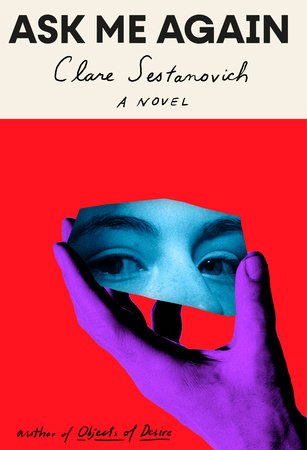
Throughout her body of work, Clare Sestanovich’s prose asks the kind of questions that make you lean back—pondering daily paradoxes you’d never quite considered before—while her characters make you lean forward onto the edge of your seat. They’re riddled with intricacy and detailed depictions of people you recognize but were never quite able to know. But especially in reading her first novel, Ask Me Again, Sestanovich manages to recreate this experience of rocking back and forth on a chair, page by page, wonderfully trying not to fall off.
As in her debut short story collection, Objects of Desire, Sestanovich continues to grapple with existential concepts of the world and of the self in this new novel. Her characters’ lives ask questions of materialism, spirituality, and creativity—how do these ideas rub against each other?—while also depicting a changing consciousness, the nature of growing up, and the torn fabric of friendship—how do these experiences intertwine with one another?
In Ask Me Again, Eva and Jamie meet as two curious teenagers, both waiting in one of New York City’s emergency rooms. Throughout the book, Sestanovich follows their lives which deviate into completely different worlds but cross again at unexpected moments. While Eva embarks on a path of good grades, a respectable resume, all-nighters, philosophy courses, first love in a library, and a unique friendship with a young politician in D.C., Jamie refutes expectations and wanders to find homes in meditation retreats, street tents, a church, a warehouse, a painter’s studio. Ultimately though, these two have more in common than one might think: they are both ceaslessly searching for a guide and for a right answer to the question of what it means to grow up.
Throughout the interview, Sestanovich and I discussed how her short stories impacted the writing of this novel and how the ecstasies of silence, weather of long-term friendships, Quaker meetings, and “the pursuit of capital T truth” all intersect and eventually come together in the end.
Kyla Walker: Each chapter title in Ask Me Again is posed in the form of a question, and the novel’s title nods to this theme as well. It feels like you may be proposing that one definition of a novel is that it’s a series of unanswerable questions. Do you agree with this idea? And do you think questions can act as a guide through life, or are useful to literature in a different way?
Clare Sestanovich: Asking unanswerable questions is certainly what writing a novel feels like. Curiosity is my most reliable guide—maybe my only reliable guide—when I sit down in front of a blank page: I write to find out what I think. If I’d done all the figuring out in advance, the story itself would feel airless, artificial. There’s no way to overcome artifice altogether in fiction, of course, but I think as readers we can always tell whether the intelligence behind a narrative is a know-it-all or whether the author, like you, is on the edge of their seat, desperate to find out what’s going to happen, and how, and why.
You know the kind of person who will stand behind you during a card game, peeking at your hand and making dramatic noises, as if they know exactly what your next move should be? No one wants to read a book by that guy. If you’ll bear with the extended metaphor: the author is the one who deals the cards, but for the game to have any fun in it—any life in it—she has to give herself over to chance and risk and unknowability.
KW:Eva felt very close to my heart and to the questions I’ve been asking about fairness, faith, and fate for years now. I loved how the different perspectives on materialism and spirituality were portrayed throughout the novel in a natural, subtle style without didacticism or bias towards one vs the other. Was this something you set out to do from the beginning? Or were you pleasantly surprised by modes of thought/consciousness you believed you didn’t inhabit prior to writing the novel?
Asking unanswerable questions is certainly what writing a novel feels like.
CS: I hope this is a book that gets people to think about beliefs—where they come from, how they change, what they feel like—which is very different from a book that gets people to believe anything in particular. Novels can do that of course—change people’s minds—but I think they do it best when they do it subtly, not strenuously. Another way of putting this is that Eva is not a paragon of virtue—nor is any other character in the book. None of them possess all the values or articulate all the opinions that I think readers ought to. Some of them have good ideas but bad personalities. Others have the right intentions but the wrong tools. Some seem deluded, others confused. Eva in particular is deeply, painfully ambivalent when it comes to deciding what she believes. I expect this will make her a sometimes frustrating character for readers for the same reason it makes her an ideal vessel for me as an author: her mind is always changing. I pay such close attention to these changes because I think they have something to tell us about how we become the people we want to be—or how we fail to. I can’t think of any more dramatic or important plot than that.
KW: I noticed a few similarities between Eva’s college experience in the novel and your wonderful short story “Annunciation”—especially a parallel between Eva’s best friend, Lorrie, and Iris’s best friend, Charlotte, in the way that they serve as guides or mentors to becoming a “real” adult. What are the dangers or advantages to having young guides at such an impressionable age for these characters?
CS: I’m glad you use the word “guide.” It’s an important one in the book, as readers will perhaps most clearly discover when they get to the very last page. But there are guides all throughout the book—people who tell you or show you how to live. Both Eva and Iris, the character in “Annunciation,” crave this sort of instruction. To be told, to be shown. Or they think they do. That’s a really interesting tension, to me. If you’re the kind of person who has a lot of big, unanswerable questions about the world—which, as we’ve discussed, is the kind of person this book is all about—then in some ways you have to believe that someone else has the answers. Life would be unknowable and intolerable otherwise. So you seek out a pastor or a politician or a teacher or just a friend with really strong opinions, and your own path through the world starts to feel ever so slightly easier because there’s someone right up ahead, telling you what music to listen to or which candidate to vote for or how to repent for your sins. But you’re only asking all your big questions because you’re very observant and very curious, and the more you watch and wonder, the less satisfying any one guide is going to seem. You’re following their path but you’re aware there’s a whole mountain to explore. Do you really want to be told exactly how to get to the top?
KW: Did you always envision Eva and Jamie’s story as a novel—especially one crossing years and taking up a larger time frame/more space than a short story does?
CS: I knew I wanted to try to describe the texture of intimacy across time—in particular, how it weathers change. Relationships we form in youth face especially inclement weather. We change so much and so fast! What are you supposed to think when your best friend drops out of college? What are you supposed to do when he finds God? It’s never as simple as wanting to go back to the way things were, because as much as we may wish for other people to remain static, predictable versions of themselves, we count on change within ourselves. Would any 22-year-old turn back the clock and be 16 again, with all the pain and powerlessness involved, for the sake of reclaiming an old friendship? In this sense, loss and remorse mix constantly with growth and hope. One of the common truisms you hear when you’re a young person is that you should “be true to yourself.” (It’s an especially common idea in the U.S., where the pursuit of authenticity has a practically religious fervor.) But being “true” to the force of change, both internal and external, can also involve, and sometime necessitate, real betrayal: of people you used to know and love, and even of the person you used to be.
KW: Eva’s yearning to be a correspondent seems to touch on this theme of the gap between the stories we are told and the stories we tell ourselves, and the importance for her about getting it right—getting to the essence of things, time, history, the present as much as we can. But how might Jamie conceive of this idea? And what might his trajectory say about how he feels towards “truth” by the end of the book?
Messy reality and pure truth don’t need to be perfectly reconciled.
CS: Ah, What Would Jamie Do? (Or think, or say, or feel?) A tantalizing question, and one that Eva spends a lot of time and energy trying to answer. From a certain simplified perspective, Jamie’s whole life seems to be devoted to the pursuit of capital T truth. He’s a high-school debate champ. He joins a political movement and then a church—both of which are driven by big ideas, essential values, unwavering principles. All this can give his life, or his lifestyle, a certain abstract quality. But from another vantage, he’s really all about action, not ideas. Why talk about truth when you could be handing out free Metro cards?
I don’t think Jamie ever resolves this binary, and that may be the most important lesson of his approach to truth. A kind of negative capability, in which messy reality and pure truth don’t need to be perfectly reconciled. “The gap” you describe, between stories and also, I would argue, between storytellers, is always the place where I try to challenge myself to go as a writer—the place of questions not answers, the place where meaning is created not calcified.
KW: Eva asks many questions but she also dispenses much wisdom. On page 204, she says: “‘You don’t have to be religious,’ she told Molly, ‘to wish you were a better version of yourself.’” Faith, or lack thereof, plays a huge role in this novel. How has religion shaped your way of thinking or style of writing, if at all?
CS: I’ve never had any sort of formal religion. (It’s funny, isn’t it, how we talk about “having” religion, as if you possess it. Or maybe as if you’re possessed by it?) But writing certainly has a devotional quality for me. It’s something I do every day, part dutiful ritual—I often have to make myself do it—and part authentic belief: I feel I’m generating, or maybe just channeling, real meaning in the process, though I couldn’t begin to tell you how. That combination of the mechanical and the ineffable can at times be a maddening, even seemingly oxymoronic, features of religion, but I also think it’s one of the most alluring. Faith, like art, really is a practice; you can’t avoid the practical. Repetition is not only required, it’s rewarded. You know exactly what you need to put in—work, prayer, a lot of hours—but you have truly no idea what you’re going to get out.
KW: The “silent party” that Eva attends in college is an amazing scene and a turning point for her. Admittedly, I’m curious—was this inspired by a real silent party you attended? And, more seriously, what can silence reveal about characters (and strangers) that language is unable to?
CS: I’ve never been to a silent party! But I’m glad you ask, because this actually relates in a surprising way to your previous question: silence and religion have been very intertwined in my life. I said I didn’t grow up with any sort of faith, but this isn’t quite right. I went to a Quaker school for nine years, and as you may know, in the Quaker religious service, called Meeting for Worship, you simply sit in silence—a silence that any member of the meeting is free to break by standing up and sharing a message with the group. It’s not quite a party, but it’s very beautiful—and often very profound. When we were in school, we considered the best meetings to be the ones in which the most people spoke—for the simple, secular reason that we were easily bored. And it’s true that the speaking was often what made the experience profound, but in retrospect, now that the substance of what people said has all but vanished from memory, it’s the silence itself that seems most memorable, most meaningful.
I’m especially fascinated by the way in which silence can become something we share. In everyday life, silence is often a deeply alienating experience. You know, the awkward pause that literalizes a disconnection between two people. But intentional, mutual silence feels like one of the purest states that people can inhabit together. We all know this: think about the special intimacy of the friend with whom you can sit in the car, not talking, and feel totally at ease. It’s a place of alignment and comfort, but also of thrilling possibility. You don’t need to say something, but you could say anything. Now multiply that feeling by five, ten, a hundred. That’s the ecstasy of a silent meeting or a silent party—or just a silent understanding.
I was writing this story about a man who invented elaborate lies to seduce each of his three roommates. To the first woman, he made a confession, walking on Fifth Avenue on their way back to the subway from his special gelato place, his private place he had not shared with anyone until that day, when he brought her. He told her he was a trust fund baby who rejected all the money from his coldhearted parents because it was important for him to prove to them and, most importantly, to himself that he could make it on his own. To the second roommate, he said, wiping his eyes, then hers after the two of them watched All about My Mother on Netflix, that he’d been abandoned by his drug-addicted mother, who in turn had been abandoned by her mother, in a tragic unbreakable cycle. Heartbroken since infancy, he said, irresistibly, he’d never been able to fully let himself trust anyone. To the third roommate, he whispered one evening over takeout, after the cat suddenly jumped on the piano keys, that his lineage was cursed and that the ghost of a distant relative’s lover haunted his inherited piano. Seeing her eyes widen, he put his chopsticks down and took her hand to his chest, asking her to feel his heartbeat.
My Saturday-morning writing group read a draft, but none of them saw the protagonist as a trickster. They believed his stories were true, at least within the text. When I got back to my apartment after meeting them, damp from the thin mixture of rain and snow that followed me across the Manhattan Bridge back to Brooklyn, I called my mother in Brazil:
“So I have this story I’m writing. A guy tells one of the girls he lives with that his parents are loaded.”
“Hm.”
“He tells his other roommate that he was abandoned by his mother.” I sat down on my gray Ikea couch. “And the third woman, about a ghost haunting him.”
“How many women are there?” my mother asked. “Why do they live with him?”
“Well, rent is expensive, etcetera. The usual reasons.” I balanced the phone between my shoulder and ear and removed my wet socks.
“Why live with strangers? Don’t they have families?”
“Mom.” I suddenly felt tired. “Come on.”
“OK, some guy lies to girls stupid enough to live with strange men they find on the internet. What’s new? Sharing an apartment with people you don’t know cannot end well.”
“Mom, if you met Marc, you’d love him. There’s nothing to worry about.” I held my glasses, still foggy, covered with tiny drops of water, and wiped each lens with the edge of my scarf. The world went blurry for those seconds and became clear again as I put my glasses back on. “But, yes, exactly: The stories my protagonist tells the women are made up.”
“Ué, of course, they are. I thought sharing a place was just for when you were going to college.”
The weak diffuse light entering my small living room made it look like it was late afternoon. But the alarm clock on our one exposed brick wall insisted there were two minutes to midday.
“Well, Mom. I don’t do it because I want to.”
“OK, OK. Do you have to live with this guy, though? I mean, have you seen the pictures he posts? The parties?”
“Pictures? Where?”
“I friended him, about a month ago.”
“Mom, you have to stop doing that.”
“What if he was a psycho? A Trump supporter?”
“Meu Deus. He’s not a Trump supporter! Plus, you know what the equivalent of a Trump supporter in Brazil is?”
“Oh, let’s not go there again. You left too long ago to know what it’s like: the corruption! The violence!”
I almost pointed out, again, that she was just repeating words from TV and social media clips verbatim. Or asked what she meant exactly, based on what, etc., again. But I knew it wouldn’t go anywhere, like the many other times we’d tried to talk about the situation in Brazil before. My mother, who was quiet now, must’ve felt the same way. I felt the browning edge of a leaf of my baby ficus plant on the coffee table. I drew a tiny spiral in the soil with my finger. It was dry. I walked to the sink, grabbed a half-filled glass of water, and poured it into the pot then went back to my story. “So my character, the guy sharing the apartment with the three women: People get confused thinking all his lies are true. They get tricked by him.”
“If these friends of yours visited here, they’d be like dodos, falling for any scheme that waltzed their way.” She perked up, her voice excited. “Oh, did you know someone called last week pretending to have kidnapped you?”
“Me?” I looked down at my bare feet on the worn wooden floor.
“Yes, they go, ‘We have your daughter,’ and put on some woman crying in the background: ‘Mom, Mom,’ etcetera.”
It was such a well-known cliché of a scheme, the “we have your child” call. But I found myself wanting something, some reaction from my mother. “What did you do?” I asked, trying to sound casual.
“I asked them, ‘Where did you find her, this daughter of mine? Tell her I sit here waiting for her. Every day, I wait and wait, but she never comes.’”
Birds chirped on my mother’s end of the line. Outside my apartment, the trees were dry naked twigs. I didn’t know if my mother had really said that to the scammers or just wanted to say it to me now.
“I don’t think anyone heard anything,” she continued. “It was such a ruckus, uma bagunça danada, the girl in the background with this loud fake weeping. You know the kind that is interested in declaring itself as weeping? Like you and your brother, when you were children. I told the guy, ‘Tell her to quit being so ungrateful and give her old mother a call.’”
“Mom, I call you all the time.”
“Yeah, yeah, but I thought that was what a mom type would do. I could’ve spelled it out for them: ‘You could not have kidnapped my daughter, for she has left us for America.’” She stirred a drink, the spoon hitting the edge of the cup, tiny clinks with each turn. “But then I would be asking them to kidnap one of us for real. They think you go to America and you’re loaded. Ha!” She paused for a sip.
“Weren’t you scared?” I wondered how she would have felt if the fake-kidnapping victim had been my brother, Miguel, instead of me, but I dropped the question as soon as it took form.
“Nah. Everyone was home. Your father was on the couch, your brother also, right next to Juliana. And you—well. All I had to do was count the people watching the soap opera, and I knew the guy was full of it. Anyway, I put him on speaker. Your brother was laughing. Then he got up with his phone and started recording the whole thing. The video is doing the rounds. Wanna hear it? Wait a second.” Before I could reply, she put the phone down and shouted after my brother in the background (“Ô, Miguel, help me out over here, come find the clip”), TV voices faintly accompanying hers. She came back to the line. “He’s in the shower. You can search the hashtag, something like #sequestra doretiazinha or #tiadosequestro. Oh, I don’t remember. Your brother will send it to you later. Anyway, why don’t you stop this roommate nonsense and come back to live with us?”
At least it wasn’t just me who saw through my character’s lies. But later I checked with two more of my friends. They both thought the stories the man told his roommates were true too. And my mother, the only person on my team, had not even read the story, written in English. In the end, I changed it to fit the prevalent reading. And I did that by changing nothing. No edits to the words printed on the hibiscus tea–stained manuscript. The change happened only in my mind. For a moment, I wished the change would have happened in the readers’ minds instead, but it seemed clear by now that I was only wishing for what I couldn’t have. So I decided that yes, now all the stories the guy told were true, including the ghost one, in fiction I’d initially thought was a little far-fetched but still realistic. And that was the end of the question, at least for now.
A few weeks later, my mother called me:
“You need to do something about this ghost.”
“Ghost?” I opened and closed the kitchen drawer where I usually left my keys. I was late to work.
“Yeah, ghost.”
“Mom, what are you talking about? We believe in ghosts now?”
Not on the table or the counter. Marc must have taken them by mistake, again.
“Whether you believe it or not doesn’t matter. It’s here, haunting me.”
I didn’t understand why she was suddenly talking about ghosts. Was she leading us into some sort of metaphor? I couldn’t see how to interpret it. The microwave blinked 8:13. I had a meeting. I had to get to work right away.
“What are you trying to say, Mom?” Maybe she really thought she had seen a ghost? Was that possible? “Are you feeling okay? Maybe put on Dad or Miguel?”
“I’m fine. And no, I can’t put them on. Your father is out, and your brother”—she sighed—“is traveling with Juliana again. They’re talking about having the wedding in Minas Gerais instead of here. Can you believe it? Those people of hers.” She sucked her teeth. “Well, even if he were here, you’d have to help me with this one. Not him.”
“Why?”
“Because this ghost is yours.”
“What do you mean ‘mine’? It’s not like I have a stash of ghosts to send out like postcards.” I sounded incredulous without meaning to. I didn’t know what to think. If I could only find my keys.
“I mean”—her voice wavered—“it’s you.”
I stopped looking for my keys. My mom sounded genuinely concerned. Something was truly bothering her. I worried about her more and more. Her getting older added another layer of complications to living so far away.
“But I’m here, Mom.” I tried to project something, reassurance maybe, like a parent hushing a child who had awakened from nightmares. I hoped she could really hear me. That I could make her feel better and make this scary ghost talk go away. And even without knowing the exact shape of my fear for her, I felt it, constricting my throat and stomach. I wondered what she looked like at that moment on the other side. I thought I could just hear her breathing, but I wasn’t sure. “I’m right here.”
“If I were going crazy,” she said slowly, as if trying to persuade a child of something she couldn’t quite understand, “I’d probably just see a regular ghost—say, your grandmother, or maybe a great-grandparent, or an old-fashioned count with an ill-timed real estate ambition. Something predictable like that. But it’s you. You are older, but it’s still you. I don’t have the imagination for this kind of nonsense.”
She had a point. She sounded like she was reasoning properly. Except for the whole ghost part. What was happening to her? Whatever it was, I wished it would disappear. That my mom would reveal it was all a misunderstanding or a joke. But she sounded so serious, so worried.
“But I’m alive,” I said gently, “talking to you right now.”
“You say”—she paused—“the ghost says she comes from the future.”
“The future?”
“When are you coming home, Filha?”
When I hung up the phone, I thought again about my plans to go somewhere else, anywhere, for my vacation this year. I imagined myself walking down the cobblestones in Lisbon, passing by graffitied walls in Berlin, parallel universes I would never access. I always ended up going back to Brazil. With my brother’s engagement and now my mom’s ghost thing, I let my tourist other selves disappear in a little puff of blue smoke. In the reality of my apartment, I saw my keys on the couch, glinting in the sunlight.
The plane landed in Brasília close to noon. I passed through the sliding glass doors, squinting at the blinding brightness that marked my visits. The light, permeating everything along with the dry heat, always made my first days back feel otherworldly. Far away, past the parking lots, lay the short patch of grass, the sparse savanna, the few short twisted trees of the Cerrado. The sky was everywhere, over and in between buildings, touching the red dirt on the horizon. I stood holding my hand like a visor. Arms embraced me: my mom and, when she finished with the first round, my dad.
The changes felt more dramatic with each visit, so striking to me, having missed the gradual recording of time on their faces, the invisible pace of the everyday.
When I first saw them, I was startled by my father’s sunken cheeks, his scalp almost naked, save a thin spread of bluish-gray hair. My mother’s papery skin, her softening neck. They were still in their midsixties but looked so much older than the image I carried with me in the US. The changes felt more dramatic with each visit, so striking to me, having missed the gradual recording of time on their faces, the invisible pace of the everyday. But this happened every time I came back, and I knew that within a few minutes, I would start to habituate to their present selves and not notice it anymore.
My mother also seemed shocked when she first looked at me. She kept mentioning how I looked so well, so young. That was not her style. She should have been asking me about the flight, complaining about Juliana’s parents, or frantically looking for her keys, always lost in her large handbag. I looked at my father quizzically. He replied with a small shrug.
But as we walked to the parking lot, still side hugging, she seemed to be getting back to normal, except for the occasional stare and a pause to kiss my right cheek again, as if to confirm I was really there. The car was at the very edge of the lot.
“Your brother took the other car to Minas Gerais,” my mother said, looking for her keys in her bag.
Minas Gerais was a full day’s drive away, and they were with Juliana’s family, which I knew bothered my mother. I was surprised to feel annoyed at that now. Maybe because I liked Juliana and wanted to defend her? No, not that. If were honest with myself, it was that, at least for that moment, I wanted me to be enough.
“Why didn’t he take this car? It’s only the two of them, no?”
“It’s not a problem. We don’t need it,” my father yelled from behind the car, where he was loading the luggage into the trunk.
“Careful, or he will donate it to the church,” I said.
None of us used to go to any church, but as a teenager, my brother announced out of the blue that he was joining a local evangelical youth group. He’d wanted to donate his car, an old Volkswagen Beetle, to them. Fortunately, he’d been a minor, and my parents would not let him. Now, more than a decade later, he’d graduated to convincing others to donate to the church instead. He was good at it, pleasant, relaxed, attentive. And he knew what people wanted to hear, whether it was about charity, “family values,” or the fear of the end of the world. I loved him and had always resented him a little, for being so likable. But now there was more; it wasn’t just about everyone liking him. They also believed him. I thought about my character in the story, his roommates in love with him. Did my brother really believe all he spouted?
“Don’t pick at your brother,” my mother said. “Here, hold this.” She handed me some of the contents of her bag to make the search easier: a few documents, a hairbrush, and the squashed chocolates she still carried in case my brother or I got hungry. “They are all coming for dinner in a few days—her parents too.”
That explained why my mother had called me a few weeks before the trip and asked me to bring a serving dish (instead of the usual perfume for her coworker’s cousin or electronics for the neighbor’s nephew’s girlfriend or whoever it was; I couldn’t keep track). Never mind that I grabbed her dish from the cheap seasonal items displayed by the entrance of Target. She would be proud of it and mention I brought it with me from the US. She had probably been thinking about this dinner for a while, at least since the call, and I was glad she had something to distract her from ghosts.
Across the parking lot, the airport looked small, flattened by all that sky. It had seemed tall up close, much more built up than it used to be when I first started traveling back from the US. Now the ceiling hovered far above, with enough room for three or four additional floors between it and the ground. Its recent renovation nodded to Brasília’s original architecture: a white curving concrete pillar here, a modernist sculpture there, the occasional wall covered with the colorful geometric tiles of Athos Bulcão. A natural growth of the original core of the city, futuristic for the 1960s, but fused with a more recent architectural sense of the future. More metal, more glass, more open space, more light. But to me, even this futuristic architecture was becoming a fossil of the recent past. Too ominous, large and corporate, and, paradoxically, too optimistic to have anything to do with the future.
My parents started arguing about my mother having misplaced the keys. And while they argued about that, they developed a secondary argument on what route to take back home.
I turned around and faced a gap in the chain-link fence around the parking lot, a section of three or four panels missing that had probably just rusted off, given how deteriorated the fence looked. I took a couple of steps forward, toward the horizon, then a few more until I was just past the gap. When I shifted my gaze, nothing changed in the landscape. Because there were no mountains, hills, or tall buildings, if I tried to get closer or look at things from another angle, my perspective always stayed the same. Just a flat line, just as far away. I felt again as I sometimes did when I returned home: as if I had entered a dream. I looked at my hands to remind myself of my physical form. There they were, still holding my mom’s things.
“Where are you going, menina? Come. I found the keys; now I have to look through that stuff”—she pointed to my hands—“to find the parking card.”
The last time I’d seen the house, it had been just a concrete skeleton; the structure had been there, but there had been no windows, doors, roof, or outer layers of smoothed concrete: a ruin in reverse. Now it was finally finished. And it was beautiful. I had expected it to be nice, but not this: a gorgeous modernist two-story house. It was hard to believe it was real, it was ours. Inside was a tall open square of air and light bracketed by plain bright white walls. The floor was covered by large smooth porcelain tiles, with the look of polished concrete but shinier, making them seem like water reflecting the windows. I wanted to touch its surfaces. The floor, the unadorned white walls. And the light everywhere. It came in through the windows, beams of sunlight, and it bounced, filling the house. Soft diffused light on the white sofa and our skin and hair. It was as if I were breathing it, that light. It was cool inside, no air-conditioning needed, despite the scorching afternoon. A solid concrete house. I was never comfortable in the wooden houses in the US, precarious and prone to burning. I understood then I’d been craving to live in concrete again. Within five minutes of being in my parents’ new house, I wanted it to be mine because I felt as if I belonged to it. I began fantasizing about one day saving enough to buy it from them and have them live in it. A gift for them and for me.
It was clear from her satisfaction in giving me the tour, the way her gaze followed its lines, the open space, that my mother loved it too, despite her belief that her brand-new house was haunted. My mother and I had the same taste in most things. We hated knickknacks and clutter. We liked the unapologetic angles and openness in modernist architecture and suffered from a nostalgia for its past imagination of the future.
We went to the guest room on the second floor and stepped out onto a balcony. I knew she was proud of the nice view of the lake over the other concrete houses in the neighborhood, and I praised it, which I could tell made her happy. But after a while, her face grew worried. She walked back into the room, and I followed her. Everything inside was temporarily dark as my eyes adjusted.
“This is my last house.” She fluffed the pillows on the double bed. “I am not going to let a ghost, especially a ghost of someone who’s not even dead, spoil it.”
She didn’t seem angry, but her expression was grave. It was as if she were warning me or the ghost, or both of us. I couldn’t tell, and maybe she couldn’t either. I wanted to comfort her but didn’t know what to say. As I was growing up, it had been common for my aunts and many people we knew to believe in all sorts of things—auras, crystals, past lives, and spirits. Not fanatically so, but on a just-in-case basis. My mom had always humored her sisters and her friends, but she’d never seemed truly interested herself. I wasn’t sure what was behind this ghost thing now, and I was scared for her, for where this was going. And for me. I needed her to be OK, as she had been just a few months before. I wasn’t quite ready to believe the gravity of what was happening. I was waiting to find some rational explanation for why she was talking about ghosts that didn’t involve her beginning to lose grasp of reality. Before I could say anything, she left me to go finish preparing dinner in the outside kitchen they’d built on the verandah.
At dinner, we sat out there, on that same verandah. A cricket was chirping in the dark backyard. My plate was set up for me already, the onioned beef, with tiny crunchy slivers of dried meat, yucca flour, rice, beans, and vinaigrette, pleasantly arranged. The smell, meat, butter, vinegar. It was as if a picture in a coffee table cookbook had fully come to life.
I stole a delicious bite of farofa soaked with vinaigrette, even though we were still waiting for my father, who was in the shower.
She updated me on the wedding plans. Yes, it would take place in Minas Gerais. But the date was not set, “and venues book up; things change.” She smiled. But at least they gave her the engagement party, which she would host here, in her new house. They would be discussing the wedding details when Miguel, Juliana, and her parents came for dinner in a couple of days. “I’ll make sure the dinner is good and the party is very chique. You never know. Maybe they’ll change their mind about having the wedding over there.”
I nodded, my mouth full, vinaigrette-soaked yucca still melting on my tongue.
“Can I make you anything else? You are so skinny. You look so skinny and so young.”
“Thanks?” I said, finishing my stolen bite.
“I guess I got used to looking at you older?”
“Huh? Oh, that.”
“Never mind. Maybe she’ll show up for you one day.”
“What does Dad say about all this?”
“Ask him later. He promised to be quick to shower. He got a new polo at Carrefour to wear at dinner with you. Now he’s taking forever, probably can’t help but steal some glances at the novela. Ô, velho,” she yelled out, “a menina ’tá com fome!”
We both giggled. In his old age, he had become addicted to the 9 P.M. soap operas (still referred to as the “8 P.M. novelas,” because of their original scheduling several decades ago). Though he never admitted it, saying he liked having them as a background to his naps. To be fair, at least 50 percent of the time, when I walked past him in front of the TV, he was sleeping. How I missed him, without always realizing it. And now he was so close to me for real. He would be down from his shower anytime now.
“Anyway, it’s very unfair,” my mother continued. “No parent is perfect. You will learn that, once you have your own . . .” She stopped herself and swallowed, her eyes traveling up and slightly to the right, as if she remembered something, something sad. “Anyway, we tried our best. I did everything for you two, but I wasn’t perfect. It’s the same for your father. But she only haunts me.”
Just then, there was a loud bang behind the kitchen counter. I jumped in my seat. The cricket stopped chirping.
My mother got up and ran to stand just behind the counter. “Shhhhhh, shhhhhhh, shhhhhhhh.” She waved her arms up and down. “Shhhhhhhh.”
She stopped for a second. I could hear the TV commercials (“After your novela, stay tuned for Big Brother Brasil”). The cricket had not returned yet. My dad stopped at the door, looking at my mom, waiting.
Another noise in the kitchen. This time my dad joined in, both going, “Shhhhhhhh, shhhhhhhhhhhhh,” flailing their arms like birds.
That was it, I thought, both parents had gone insane.
Something dark and furry ran out of the kitchen. They relaxed.
“What’s for dinner?” My father lifted the lid of a pot on the stove.
“What was that?” I asked.
“What? Oh, that was just the neighbor’s cat. It found a way to get out again.” My dad shrugged. “She said she’d take care of it. Yet here it is again.”
The cricket was chirping again.
“Don’t worry.” My mom brought me a glass of guava juice. “She likes to come during the day.”
“What kind of ghost is that?”
She raised her eyebrows, tilted her head to the side. “She says she misses the light.”
I shivered. Was there no light where she was coming from? I tried to tell myself again that there was no ghost, to convince myself the whole thing was nonsense, as I ran my hands over the goose bumps on my arms.
After breakfast the next day, I sat at the outdoor dining table, looking through the feedback I had received from the writing group on another of my stories. They asked for more details on the father character, who was not by any means my father. But my dad was gardening right in the yard, possibly making sure everything was in order for the dinner, at my mom’s request. So now I began to write about the father gardening without gloves, red dirt covering his hands, stuck under his fingernails. Yes, the dirty red hands suited the story. My dad lifted his hat and wiped his brow. It was a legionnaire hat I’d brought him from the US last time. I knew he hated sunscreen, which I made him wear when I was around. But most of the time, I wasn’t here. I’d thought he would find the hat cool. “Like an explorer in the desert,” he’d said when I’d given it to him. But it had been suspiciously clean until now, when he took it off, leaving red finger marks in the otherwise-pristine khaki fabric. He’d worn it today just for me. He looked at me and waved—a sweet, goofy smile. In the story, I made it a red baseball cap and made the father’s appearance menacing. The writing group had also said nothing much happened in the story. Which was true.
I needed to take a break.
I got a cup of coffee in the kitchen. My dad came in holding three yucca roots. “For lunch,” he said proudly.
“So, what’s with Mom and the ghost thing?”
He put the yuccas in the sink and looked at the garden. “You know, I—I mean, we, your mother included—are not the type to be talking about witches, ghosts, and fairies. You know that. She never brought up something like this before. Now, have I seen any ghosts? Ever? No. I don’t believe in ghosts. But I believe your mother. So that’s that.” He turned on the sink to wash his hands. “At the very least, it is true to her. And I respect that.”
“Easy for you to say.” I sipped my coffee. “It’s not your ghost.”
He put his arm around my shoulder. “I know. But be patient with her. The ghost has been hard on her lately.”
“But you don’t believe in ghosts.”
“I don’t know. You have always been too sure of things, how things are, how things work. Even more so since you left.”
“Because I don’t believe that I am a ghost?”
“No, not just that. What is happening there, what is happening here . . .”
“That man is the Devil, Dad. How can anyone in their right mind vote for him?”
“Yeah, he is far from our first choice. But the Workers’ Party has been a disgrace for this country.”
“Who said anything about the Workers’ Party? What about everyone else? You’re beginning to sound like Miguel.”
“See?” He tilted his head slightly as if pointing at me.
I took a deep breath and sat back down in front of my laptop. When my brother had first joined his church, my parents had been as unhappy as I was. It was the kind of church that constantly asked for money, despite the Audis and BMWs that always carried the pastors, CEO types who had found the Lord only after getting their MBAs overseas. Miguel was not stupid. It was baffling to us that he didn’t see this. And the church required his presence too much; once he joined, he was never home anymore. Instead, he went to services between five to seven times a week. But over the years, with me living overseas and him living right here with them, me combative and him always pleasant, he began gaining ground. Now I was the weird one in the family.
But over the years, with me living overseas and him living right here with them, me combative and him always pleasant, he began gaining ground.
Although my parents never joined the church, they no longer criticized it, not even the fact its high-ranking pastors were getting too cozy with politicians or running for office themselves, with the full and blind support of their congregations. The previous year when I was back here on vacation, I found their car, the nice one that my brother liked to borrow, with a campaign sticker for one of the deputados pushed by the church. His platform included a pledge to end “gender philosophy” and return to “family values.” The conversation had begun okay. They were just humoring my brother, they had said, then: “We don’t agree with the guy on everything, but he goes to your brother’s church. I mean, Miguel knows him. And that Workers’ Party . . .” It had ended with a big ugly fight close to the end of my last day. I knew that talking further now was useless.
“What’s Miguel’s take? I mean, what does he say about the ghost?” I asked my father now.
“He listens to her.” My father finished washing the dirt off the last yucca and left it to dry on the dish rack. “Tells her he knows what it’s like to know something is true, even when others might not believe you. Talks about faith. It works. Makes her feel better about the whole thing.”
Of course, Miguel went along with her, and, of course, they loved it. I almost said that out loud but kept it in. I knew it was no use.
“I don’t know, Filha.” My father placed a glass of water on the table next to me. “The older I get, the less sure I am of anything.” He kissed the top of my head and went inside.
I stayed in the same spot at the table outside, but after staring at the screen for a while, I stopped working on the father story. A light rain began, stirring up a smell of rain and earth, the red dirt where my father had been working turning a shade darker with each drop. I opened the roommate story. It was now a ghost story, I reminded myself. I typed “Ghost Story” at the top of the page and wondered where to start. Maybe trying to inhabit the ghost, to understand it better. This ghost, who hadn’t been there in the first place, who’d snuck in there without my knowing. In the story, the ghost had been stuck in a piano. I thought of its vaporous spirit, a vaguely human-shaped blue smoke, squeezing under the lid into the wooden case, undulating between the strings, silently running its steam fingers through the hammers, circling the inner walls of the case, so similar to the walls of its coffin, and curling itself, lying on the key bed, like a sleeping cat. Until someone came in to play a song, a tribute to the ghost’s former self, jolting it awake, beating at it with the hammers, making its smoky body dissipate and sink into the fibers of the wood, the ivory keys, until it merged with them. And the player’s fingers touched the ghost as they played the song. And it was so nice to feel touch again. And it was as if the ghost were playing the music too.
It wasn’t working. I swayed on my chair, pushed it back away from the table a few inches, and tried again. I closed my eyes and imagined myself as the ghost, not seeing it from the outside this time. I imagined looking down at my fingers. There were my mother’s white-tiled verandah floors through the faint blue smoke that was me. I brought my hands to my face, silently, I had no mouth. And my body was not constant; I had to think of its shape, its limits, or it would disappear. Grasping for the human form, I thought of the statues, Os Candangos, the two figures at Praça dos Três Poderes, and I was there. I was able to keep close to a human shape, as one of them. I was made of bronze and eight meters tall. But then the two spirits who lived there already asked without saying anything, as the hole in their heads was neither eye nor mouth, what I was doing there. Before I could reply, they continued, reminding me that the sculpture had been a gift to them, named after them, in exchange for their bodies, which remained to this day trapped in concrete at the base of a lecture hall, the education auditorium, at the then-new university and, unless I was planning to bring them back, could I, kindly, remove myself from their statues. I had to leave. So I went then to the only place I knew I could go: my parents’ house. I tried to find an outline for myself again and couldn’t. I was thinning out into nothing. Until my mom went to the bathroom to wash her hands and looked at herself in the mirror. And I felt a pull toward that shape, her face in the reflection, I fit myself into it, and the fit was right. I was so happy to have found an outline that I started to laugh. I lifted my hands to touch my face, an old woman’s face, and it felt so good to feel something with my fingers again. Right then, I looked up and saw my mother, her hands on her cheeks, screaming.
“A bunch of thieves in the government. And all these criminals, these marginais, vagabundos, killing and raping. The country has never been worse,” a man was yelling on TV.
I opened my eyes and closed my laptop, not having written a word.
“Back when the military was in power, no one would dare,” he continued.
“Well, I must say, here we agree,” a woman said. “Even if I, unlike Senhor Rodrigo here, think there were troubling incidents then, I keep thinking, what’s worse? Having a curfew and watching what you say on TV, or fearing for your life every time you step out of the house?”
“When they kill your son, this bunch of marginais, when they rape your daughter, I want to see if you come to me speaking of human rights. These Workers’ Party people, these red criminals, they only care about filling their coffers.”
I felt nauseated. I covered my ears with my hands and walked toward the TV room.
“Dad, can you please turn this down?” I asked. But I found him sleeping on the sofa. I turned the TV off.
Dinner was a test run for the next day, when my brother would arrive and Juliana’s family would join us. My mother was in a bad mood, stressed about impressing them. My dad, who was accustomed to her, stood up and grabbed his plate as soon as it was ready, claiming he couldn’t wait for her delicious cooking and was going now to watch his novela. Mom and I ate the bobó in silence. Although she had cooked it for my brother, it was also my favorite dish, and tonight’s bobó was especially good, the smell and taste of dendê infused in the yucca. But I didn’t say anything. I knew my mother was probably not yet satisfied with dinner and missed Miguel. I didn’t let myself admit it often, but I missed him too. The old Miguel, but even the new one, who was not so new anymore. I thought about his face as a child, the two of us racing and playing hide-and-seek at Praça dos Três Poderes, his round little kid cheeks, his mouth always open, following me around, asking, “Where are you going?” I missed him, even though I didn’t understand who he was becoming.
My mom was stabbing at her food aggressively. I didn’t want to fight. But it was getting to me.
“What’s bugging you, Mom?”
“What’s bugging me,” she repeated flatly.
“Yes, what’s bugging you?”
“Well, you.” She huffed. “I mean, she won’t give me a break.” The poor woman and her ghosts.
“What’s she saying now?” I put an arm around her.
“Even knowing about Miguel, she can’t give me a break.” She closed her eyes, ran her hand over her forehead.
“You mean the wedding? Mom, Juliana is great, who cares if the wedding is in Minas Gerais? I bet you your party will be better than the wedding, especially if you make this bobó.”
“No, it’s not that. I forget what I tell each of you.” She sighed. “They are planning to move away.”
“Move away? To Minas Gerais?” No wonder she was unhappy. “No. To Canada.”
My poor mother. It was probably hard on her when I moved. But Miguel leaving her . . . this would nearly kill her.
“Oh, Mom. I’m so sorry.”
She let go of my hand and stepped away. Her expression wasn’t sad anymore but angry again.
“And your ghost said I prefer your brother.” She looked at my face, searching for something. “The nerve of her, so ungrateful, after all that I have done for you.” She paused as if waiting for me to say something, then continued. “After you left me.” Her lips tightened. She looked toward the grass and the darkness, where the cricket chirped. “I have always treated you the same way.”
She wanted me to contradict the ghost, to assure her I thought the ghost was lying. And I almost gave her what she wanted, but my throat closed up, and the words pushing against it made me feel sick. I couldn’t do it. I felt it’d always been obvious to everyone that my mother preferred Miguel. But my mother had a delusion that no one noticed.
“And I think all her talk about the fires and the forest and the blue smoke is just a front.”
“What fires, Mom?”
“She talks about all that stuff, but I think she’s just angry because of the will.”
“What will?”
“She must be angry because I’m leaving the house to your brother.”
“What?”
“See?”
“See what? Why?”
“He was here when we built it, and he was going to be here. And we used to talk about his and Juliana’s children ruining the paint job with crayons. Where were you?” Her voice faltered, but she gained control of it again, hardening her face further. “Also because he would never come back to haunt me over material possessions.”
The thought of my mother’s love for Miguel’s unborn children made me remember her looking at him as a child. I wanted to go back in time and hold my child self, run my fingers through her hair. Love her. But the sadness of that thought and the fear of where it would take me made my limbs go limp as if I were losing my grip on my body, and I grabbed on to my anger instead. “Who says she’s haunting you because of that?”
“Well, you appeared the night after I signed the will.”
“After? You did this before she showed up? But then you can’t have changed the will because of her.”
“Why not?”
“Because the will came first.”
“Talk to me after a ghost comes to haunt you, from the future, from after you’re dead.”
“You’re dead?”
“Well, that’s not exactly a spoiler. The ghost is old herself. It is not like I’m going to be around forever.”
This was a thing my mother liked to bring up, not too often, but often enough so that it would be remembered. How I would realize things once she was gone, and by “realize,” she meant “regret.” I usually ignored her attempts to guilt me. But my mother looked so old right now. She would be gone one day, and I would have no one to come back to. And I would have chosen to spend all my time so far away.
I held her hand. “She told you that?”
“Yes.”
“Oh. I’m so sorry, Mom.” I hugged her. “Maybe she’s just sad. Maybe she has nowhere to go. Or maybe she just misses you.”
I thought about longing for my mom in the US and feeling her real self, not a disembodied voice on the phone, her body as I hugged her now. It was so easy and so hard to be with her. I had her with me now, and now was all I could be sure about. That terrified me.
“The thing that gets to me is that she is not angry when she says these things,” she said, letting herself lean into my embrace for a moment. “She says the house doesn’t matter. She says so many things we think matter don’t. She tells me she’s glad I am gone.”
I gasped. “Mom, that’s horrible. I would never say that.”
“No, she says it kindly. She says things are not easy for those who survived and that I did a fine job as a mother. That it’s okay to have some regrets. But that those who are still around have regrets of a magnitude we can’t yet comprehend.”
I held her hand, to comfort both of us. This ghost, I reminded myself, was nothing—could be nothing—but my mother’s imagination. Her guilt, maybe. I was worried. But worried about her, I told myself. And me living far away while this, whatever it was, was happening to her. How things would change over here, how she, an old woman seeing ghosts, would manage, now and in a few years. And my fear for her here mixed with my fear for myself in the US. I told myself to focus. This was not some postapocalyptic story. This was my mother.
But still, I asked, because I had to, “Did you actually change the will before the ghost appeared?”
She got up and took our plates to the sink, her lips tight, her nose raised in disgust. She grabbed a cloth hanging on the kitchen faucet and started wiping the counter. “This is my house. I do with it what I want.”
The ghost was right. It was not the house that mattered. But something else here did.
She kept wiping, looking down at the black counter. “You didn’t want anything to do with this place. What do you want a house for? You left us”—she paused for a few seconds and began wiping again—“first.”
The counter reflected part of her arm. The rest of her disappeared into the stone’s darkness, making it look like a phantom limb following her movements under the surface, my mother and her ghost, cleaning the counter from both sides.
I was about to cry, and I didn’t want her to see me this way. I went to the bathroom and cried quietly, hearing the muffled sounds from my dad’s dubbed American movie, and, in the moments when the movie went quieter, my mother clearing the kitchen. I removed my glasses, and I wiped my eyes, washed my face and hands in cold water. Then, for a second, I thought I felt her, the ghost. It was as if she were there with me. I looked up at the mirror and saw a blurry version of my face, our face, mine, my mother’s, the ghost’s. We were all so sad. I cupped my cheek with one hand and touched the mirror with the other, our eyes, out of focus, met. I wanted to take the ghost with me, for my mother’s sake and for the ghost’s, so that she had somewhere to go, where she was welcome. But I put my glasses back on, and she was gone. I ripped a piece of paper towel and wiped my fingerprints from the mirror. I decided, when I got back home, I was going to revise that story. Make a clear decision on the ghost: one way or another.
When I started writing my first book around ten years ago, I had very few role models for the type of queer, genre-bending writing I wanted to be doing. While I now know those books existed, at the time they weren’t talked about in my literary circles, where the minimalist realism of writers like Raymond Carver was seen as the highest possible literary achievement. As a result, I wrote How It Works Out with what feels like very few roadmaps, which, as a queer person, isn’t new to me. In some ways, How It Works Out’s unique concept—a queer relationship multiverse of the Everything Everywhere All at Once variety, in which a queer couple is reinvented across timelines and in wildly different realities—came out of that very lack of roadmap. As a young person with no queer elders in her life, I entered my first relationship with a woman without any idea what to expect. How It Works Out imagines strange and surreal outcomes to a queer relationship because I had no idea how to be in love, or what happened once you were. The main character bears my name and is reinvented, over and over, because I was trying to make sense of how I fit into the world.
One of the best parts of being queer is getting to throw out old narratives to come up with ones that feel better suited to us. And though navigating the world with a vague sense of our history and little intergenerational guidance can be bewildering, it also opens us up to invention—makes it necessary, even. In the years since I started writing How It Works Out, the literary landscape has changed drastically, and queer writers are finally getting credit for the bold and innovative ways in which we are shaping—and have always shaped—literature at large. Though there is still much room for improvement—with people of color, women, and especially trans people frequently excluded from mainstream queer representation—the number of queer writers skillfully breaking every rule of genre and form, and being given a platform to do so, feels unprecedented in my lifetime. The following seven books are a thrilling gateway into the world of queer genre-bending and formally innovative literature.
I love experimental books most when their reinvention of genre and form arises naturally from emotional truth. Hazel Jane Plante’s stunningly written novel Little Blue Encyclopedia (for Vivian) takes the shape of an encyclopedia about a fictional television show called Little Blue. By alternating between the rollercoaster narrative of Little Blue and memories of Vivian, with whom the main character watched the show before she died, Little Blue Encyclopedia (for Vivian) tells the story of an unforgettable friendship between two trans women, the main character’s unrequited romantic love for Vivian, and a grief as devastating and beautiful as Vivian herself.
In Blackouts, Justin Torres turns a true artifact—a medical textbook called Sex Variants: A Study of Homosexual Patterns—into a series of erasure poems through which readers can hear the voices, largely redacted from history itself, of the queer subjects of dehumanizing studies conducted in the early 20th century. Torres uses Sex Variants to tell the story of Juan, an elderly gay man dying in the desert, and the younger friend he calls nene, whom Juan met when nene was barely eighteen and the two were institutionalized for their homosexuality. As Juan slowly dies with nobody but nene at his side, the two revisit their lives, interweaving their stories with those of Sex Variants’ subjects and creators.
One of the most genre-defying memoirs in recent history, Machado’s In the Dream House uses the trope of the haunted house to make sense of the psychological and physical abuse she endured in her first relationship with a woman. Playing with the genres of folk tales, cultural criticism, historical nonfiction, choose-your-own-adventure books, among others, In the Dream House is an important deviation from the coming-out-as-salvation narrative, a humanizing reminder that queer relationships are just complex as straight ones, and are no less susceptible to domestic abuse. Revolutionary in form and content, In the Dream House is a must-read.
Written from the perspective of a queer, gender-fluid mountain lion, Open Throat reads like a prose poem bursting with the sort of narrative tension that can make readers rip through 160 pages in a single sitting. Slowly starving in the drought-devasted land under the Hollywood sign, Hoke’s mountain lion listens in on passersby, a collage of decontextualized dialogue that paints a telling portrait of “ellay”’s human inhabitants. When a climate catastrophe forces them into the city, Open Throat’s narrator experiences for themself the tenderness and brutalities inherent to the human world.
While volunteering in an archive, history-obsessed Mathilda discovers the photograph of the forgotten Black modernist poet Hermia Druitt, a lesser-known member of the queer and extravagant Bright Young Things. Her ensuing research spiral leads her to an eccentric arts residency in the European town of Dun, where Druitt once lived, and sets her on the trail of a secret society of West African, proto-communist, lotus-eating luxury worshippers. Blending documented and imagined histories, and writing their own historical book-within-a-book, von Reinhold writes a compelling historical mystery, a poignant investigation of race and gender identity, and a stunning work of aesthetic theory.
Anyone who reads Derek McCormack’s The Show that Smells won’t be surprised that it has gained a passionate cult following since it was published in 2008. Narrated by Derek McCormack, a reporter for Vampire Vogue, and set largely inside a mirror maze, The Show that Smells features Elsa Schiaparelli (a vampire designer vying for the soul of country legend Jimmie Rodgers), Coco Chanel (Schiaparelli’s rival, whose poisonous Chanel N°5 is her deadliest weapon), the Carter family (down-home singers by day, vampire killers by night), and a whole cast of country stars, monsters, and queers. An unhinged phantasmagoria of camp, The Show that Smells creates a form of its own, littering its own pages with typographical sequins, mystical mantras that cause characters to appear, and blood.
A beloved staple, Maggie Nelson’s The Argonauts tells the story of her relationship with Harry Dodge, a gender-fluid artist undergoing hormone therapy, as well as her own pregnancy and desire to build a family with Dodge. Blending memoir with theory, The Argonauts uses the works of Butler, Sedgwick, Barthes, Winnicott, among many others, to make sense of everything from gender, family structures, motherhood, identity politics, and anal eroticism. In addition to the central metaphor of The Argonauts—“Barthes describes how the subject who utters the phrase ‘I love you’ is like ‘the Argonaut renewing his ship during its voyage without changing its name.’”—the poetic precision with which Nelson writes this intellectually rigorous investigation of love puts The Argonauts in a league of its own.
Palestinian American writer and poet Hala Alyan’s latest poetry collection is an inventive play with language and form as she writes into grief, infertility and a familial legacy fraught with the trauma of displacement and exile. Hala is warm when our call first connects and I launch into a confession: I’m intimidated by poets. She laughs and I tell her, it’s true because there’s something so powerful about maneuvering language, making the words mean, at once, what you want them to mean and what the reader would want them to mean.
In The Moon That Turns You Back, Hala offers the reader more control with such meaning-making through interactive poems. In “Key”, she tells the reader, “Fill in the blank with a suitable word from the right” and proceeds to give us a table with incomplete sentences that we get to fill with the word that resonates with us, from a list that resonated with her. In verses broken by columns and line breaks, Hala captures splintered memories of displacement from homeland, family, and body. There is rage—“I don’t have time to write about the soul. There are bodies to count”—as the poems contend with what it means to be Palestinian, what it means to be a woman, a mother, and a daughter—sometimes, all at once.
“When my mother bought a patch of land & tried
to put my name on it they wouldn’t let me
because my name is my father’s name
because he was born in Palestine and so
impossible and so I am fated to love what won’t
have me you know the way our mothers did”
Hala has published four award-winning poetry collections (including The Twenty-Ninth Year) and received accolades for her novels, Salt Houses, and The Arsonists’ City. Hala tells me her writing practice is instinct-based. It is evident from the way she expertly finds her way within frameworks, both given and self-imposed. We talked about finding liberation in the constraints of structures, steadfastness in the face of erasure, the parallel between houses, bodies, and femininity, and much more.
Bareerah Ghani: I want to start with the imagery of house that you’ve used in conjunction with themes of grief, body, and matrilineality. In the opening poem, you say, “My favorite house is my mother. The heart muffled like a speaker.” Later, you write, “A good house can carry anguish and this is how I think of bodies now too.” To me, these lines are intertwined, highlighting the sacrifice and suffering inherent to womanhood and motherhood in cultures such as ours where women have historically been treated as inferior. Can you share what you were thinking and how you envision the house as body as mother?
Hala Alyan: These poems were written during a period of time marked by a lot of infertility for me, and also marked by losing my grandmother, who was one of the core figures of my life, and always will be.
I lost a matriarch while I was simultaneously grappling with what it meant to be in a body that did not always behave the way I wanted it to behave, and that ultimately was not able to be the house that I wanted it to be. I was grappling a lot with what it meant to carry and what it meant to house something at a time when I was also feeling like the connections and the roots that I had to these places that I loved, one of them being Lebanon and Beirut, where I spent a lot of time, were slowly being severed through the deaths of elders, but also through the circumstances of these countries and what was happening there. For me, there’s something in the container, and how a thing can carry and contain you.
There’s a lot of places that I don’t have access to anymore, that my family throughout our lineage no longer has access to. And I think of how the women in my family, in particular, have kind of had to be the carriers of those places and those rituals, traditions and those memories.
BG: I can’t help but see that your poems have containers.
Real active protest begins first in the mind, on an interior level. It begins with conversations we’re having with ourselves.
HA: You’re pointing out something really interesting. This is the first collection that I play with form and structure to this extent. The other collections, they’re structurally very basic like my poems are usually just prose poems. So a block of text or couplets. This is the first time that I was like, okay, I’m gonna play with this thing. And it actually felt very liberating to have constraints, which seems contradictory but there’s something safe about being like, you know, you’re gonna play with a form like ghazal. And the ghazal tells you where you’re gonna go, or maybe it doesn’t always tell you where you’re gonna go but it always tells you where you’re gonna end. So you can have this migratory movement through a poem where you travel all over and go to all these different places but you’re always gonna land in the same place. And there’s something about knowing you’re gonna land there, something about knowing the home of that word at the end of each stanza that I was finding very comforting at the time, which makes sense, because if it’s a chaotic time, finding structure wherever you can find, is gonna feel useful.
BG: I wanted to talk a little bit about the places where you mentioned your grandmother. It’s beautiful, but also so heartbreaking. In one place, you say, “It’s beautiful to speak for her; she’s dead.” In another spot, you write, “My chest rising to steal her dialect.” This got me thinking about matrilineal linearity and writing into a legacy. Can you talk about what legacy and inheritance means for you especially as a Palestinian right now?
HA: I think particularly within the Palestinian tradition there is so much around this idea of inheriting memory, and not forgetting, and that plays on the theme of, I will not leave. I will return, I will remain steadfast—the concept of Sumud, صمود, I’ll remain steadfast in this land, which for people in the diaspora translates to, I will remain steadfast in my connection to that land, I will remain steadfast in my reaffirmation of that identity, not forgetting what my lineage has gone through. The inheritance within that tradition has a lot to do with, again, being holders of memory. So there’s the people that are on the land, that are steadfastly holding onto the land and what’s left of it or what they have left of it. And for the rest of us, what we’ve inherited are the stories we’ve been told, and, to be frank, the traumas that people have experienced and that we’re all still sort of experiencing. There’s something in the idea of remaining rooted that feels very much like a Palestinian tradition.
In general, I think of lineage in that way—how do we not forget that which needs to not be forgotten? How do we not forget that which must remain remembered? And what do we do with memory which is one of those silk-like emotional fabrics that changes every time you touch it. And so every time you tell a story, that story shifts, and every time you return to something, it shifts, and what do I make with the memories that I’ve been told, that I didn’t even live through? How can I do right by them and respect them and inhabit them, but also recognize that I’m taking liberties? And that’s a big thing in writing—how do you kind of operate in both of those spaces at the same time? It’s not easy, but it’s not impossible.
BG: How do you contend with the erasure of Palestinian culture and identity as an American, living in a country that is supporting that erasure?
HA: It’s deeply painful. It’s very hard to exist within a system that is enacting and participating in this level of violence and systemic erasure, and that has engaged in it against indigenous communities to whom the land belongs, against Black people, queer and trans people. It’s too easy to look at the contributions of violence elsewhere but they begin here. They’re not just things happening on “foreign soil”. So for me, it isn’t just about Palestine. It is about contending with what it is to sort of exist within spaces. What does it mean when elected representatives no longer represent their constituents? What do we call when a system, a government, an entity, etc, no longer serves the interest of the citizens, no longer serves the values that it espouses? And then what do we do with the possibility that it never really has—how do we make sense of those things? Those are sort of the questions I’m interested in.
Of course, on a personal level, it’s horrific. I’ve been watching people that are my kin, that share my identity, be attacked on the ground and here, in different ways. Obviously, there’s no comparison to the ways people are being slaughtered in Gaza and the West Bank but I think there’s something to be said for students who were walking around wearing Keffiyeh and talking in Arabic and got shot. A boy was stabbed many dozens of times. What’s so wild about this moment that we’re living in is that the saturation point of horror has reached such a tipping point that, quite literally, people forget stories of things that have happened, that alone should have stopped everything.
As a person, in general, I’m more interested in asking questions. I feel that way as a therapist, as a writer, and certainly feel that way when I’m trying to engage with people who have been exposed to ideas that I think they should consider letting go of. In my experience, it’s more effective to just invite people to consider certain things. Like, here are some ideas. Here are some questions, invitation for all, myself included, to engage in them. And we’ll see if that shifts anything for people.
BG: Open up dialogue?
Art is not a replacement for policy change. Liberation and equal rights must exist for everybody, everywhere.
HA: Well, I don’t need to be part of that conversation. Because that kind of goes with this heroic archetype of, I need to go around changing people’s minds. I don’t need to do that. I think my task, other writers’ tasks, other people who are engaging in different kinds of thinking or creating, our task is just to be like, here’s a question. Here’s a possibility. Here’s an invitation to an imagined future. Real active protest begins first in the mind, on an interior level. It begins with conversations we’re having with ourselves.
BG: There is a recurring theme in this collection—of being denied love, being denied motherhood, safety, and homeland. And the poems sway in how the narrator can be at times resigned, accepting of how things are, have been in their lineage, and then at other times, you see the language is maneuvered in a way that it almost feels like the writer is speaking through gritted teeth. It’s remarkable. And those are the moments where the writer is really putting up a fight. Where do you draw the line between fight and surrender?
HA: I always think of that expression, Let go or be dragged. And I think there’s been a few inflection points in my life, one of them was getting sober, where I got to be up close and personal with this concept of surrender and what it really means. Ideally, we work through our lives towards a place where we can surrender quicker and quicker, and we can recognize quicker and quicker what calls for surrender and what calls for fights. I struggle with that all the time, in life and in writing. For me, the tension point comes with getting more adept at recognizing earlier and earlier where it is worth fighting and recognizing that surrender, a lot of times, requires more courage than fighting, because it usually means that you’re radically accepting something you really don’t want to accept, or you’re accepting something about yourself—for other people or the world—that you really don’t want to be the case.
I love that you caught that in my work because that’s just in general a tension point in my personhood. I’m somebody that enjoys fight, I mean, there are certain places and certain topics and areas in my life where I really get energized by showing up for a good argument, a good debate, I find it to be very life giving. But it does mean that I often find myself in situations where I’m like, I could have saved that energy, you know? I could have put it towards something that was of more value. And I’m trying to get better, as I get older, at recognizing earlier when those moments happen.
BG: In “Half-life In Exile”, you write, “Everybody loves the poem. It’s embroidered on a pillow in Milwaukee. It’s done nothing for Palestine.” How do you keep your relationship with writing in the current reality where it feels like writing as an act of resistance is falling short?
HA: I’ve been thinking about that a lot the last six months—this idea that art is not a replacement for policy change. Liberation and equal rights must exist for everybody, everywhere. Period. There cannot be exceptions when we say that, or else we don’t actually mean those values. Art is not gonna be a replacement for the idea that those who have the power to make those changes need to make those changes. Art is still crucial. Art has saved my life multiple times. Even more than that, it has saved my imagination, my hope, multiple times. Art allows us to replenish ourselves and fortify ourselves, because pleasure and beauty, and being moved, matters—they help us rest, take a beat and return to the things that matter to us. That’s why collective care is important. Art is part of that.
I belong to a family that’s been displaced multiple times over. I find home in that family, in my community, in making art and writing…
Also, art can be a place where you can sharpen your thinking both as the creator and as the person taking in the work. Writing about everything the last few months has helped me clarify how I think about things, how I feel about it. It’s helped me put language to it. It’s helped me take a beat, organize my cognitions. In the same way, when I read, it helps me be like, oh, yes, this is why this matters. I was reading something by Audre Lorde the other day where I had read the line before and when I read it now at a different age, in a different stage of my life, I was just like, yes, now I feel it in my bones. And so I think it also helps us build community. There’s this whole thing about how being an artist is a very solitary life, and I mean, sure, to an extent. But I never feel alone when I’m writing. If I’m writing fiction, I am surrounded by the characters that I’m interacting with. If I’m writing poetry, it’s the voices, the people, the memories. So for me, it’s a very cluttered process, not a lonely one at all.
BG: Displacement and exile haunt your work, your language. You begin a poem by asking, “Can I pull the land from me like a cork?” How does one wrestle with their sense of belonging when they’ve been exiled?
HA: If I had an answer I wouldn’t have to be writing all these goddamn poetry collections. To go back to this concept of Sumud, صمود, steadfastness. I think you find things to root yourself in. And you do that for as long as those things are aligned with your value system and serve that purpose. I think you can root yourself in a relationship, you can root yourself in a new city, in a craft, in your family. Some of those things won’t be forever, they will shift. Some of them will no longer resonate, but there will always be something to take that place. That’s something that brings me a lot of comfort, this idea that we’re not as alone as we think we are. There’s something in really asking myself, what are the places where I have felt at home? I belong to a family that’s been displaced multiple times over. I find home in that family, I find home in the family that I have sort of built over the last few years. I find home in my community. I find home in making art and writing, and also in reading other people’s work, and engaging with other peoples’ photography, film, ideas and music. That’s kind of what we meant when we said, don’t forget where we come from. Take it with you where you go—that’s been the assignment. And that’s what I think we’re seeing happen beautifully all over the world, right now.
When I first started what became my novel The Witches of Bellinas, there were no witches, no witchcraft at all. I had wanted to write about a beautiful village that seemed perfect but had hidden secrets after spending a summer in a beautiful, remote area near San Francisco that I later learned had a reputation for attracting cults, among other rumored strangeness. At some point while drafting, magic became the bridge in the narrative between the awe-inspiring beauty of the landscape and the secret, ugly acts committed by people.
Being a woman alone in an eerie place made me wonder not only why women would turn to magic, but why wouldn’t they? What happens when people claim the mantle of witch, and what happens when there are different ideas of what that means? What makes a witch? What is magic and what is simply (or rather, intricately, mind-bogglingly complexly) nature at work? These are all questions I wanted to explore in The Witches of Bellinas.
There’s that slogan you see on bumper stickers and T-shirts sometimes: “We’re the granddaughters of witches they didn’t burn.” As others have pointed out, that line sort of misses the point: Most people accused of witchcraft, across all genders, were not practicing witchcraft. They had slighted neighbor; they owned some land or livestock someone wanted; they had cured a patient the village doctor failed to. The books on this list are not just about being a witch—they’re about people who have been accused of being witches—and what that happens afterward. Who is considered a witch, and why, reveals more about those accusing than the accused, and these are books I turned to when trying to construct a community that might conspire to use magic, but that could also turn its use into a crime.
This novel perfectly illustrates what a woman living alone risks when she has agency, means, and a mind to follow her own path: In 17th-century Manningtree, an English town where men are scarce following a war, a strange man dressed in black arrives calling himself the Witchfinder General. Soon, witch trials are underway, and Rebecca West, the narrator, must navigate suspicion, accusations, and worse.
A mother offers her testimony after a neighbor accuses her of trying to enchant her with a potion in Germany in 1618. What is Katharina Kepler’s real crime? Is it the success of her children, especially that of her eldest son, Johannes Kepler, the famed mathematician? A gorgeous contemplation of science and superstition, and a stark reminder that it’s not only men who serve the patriarchy.
This multi-perspective novel unfolds in narratives from Zoe, a journalist investigating the murder of a curandera—aka a healer, or a witch—named Paloma in a small town in Mexico, and Feliciana, Paloma’s cousin. Paloma was a Muxe, born a boy and living as a woman. The safety of anyone living outside of the patriarchy’s norms is ultimately at the whim of whoever’s in charge.
Told from the perspective of one of literature’s oldest and most famous witches, Circe narrates her life story as an immortal sorceress: From growing up in the house of her father, the sun god and Titan, to life as an exile on the island where she’s been confined. A celebration of the magic in nature and in life as a solitary woman, we also get cameos by heavy-hitters from Greek mythology, including Circe’s setting the record straight on what happened when Odysseus invaded her island and why his men deserved to be transformed into pigs.
Hurricane Season by Fernanda Melchor, translated by Sophie Hughes
Dreamy, terrifying, and engrossing, Melchor, a former journalist, tells the story of a small, impoverished town in Mexico where The Witch has been murdered. Born a man, she was known for providing abortions to those in need. A brutal read that’s often compared to Roberto Bolaño’s 2666 for the depiction of violence and drugs, The Witch is a victim of a system that uses up everyone in town in different, tragic ways.
This is a memoir-history-anthropology hybrid that chronicles the author’s encounters, and participation in, with various covens and with witches across the United States. She pairs this first-person spiritual search with the history of witchcraft and what it means to be a witch and to practice witchcraft in the modern world.
The witch novel of all witch novels. Condé has taken the life of a real woman, accused of witchcraft during the Salem witch trials, and rendered her into a compassionate, fierce, magical woman who yearns for love and is in turn only returned hardship. Tituba narrates her life in beloved Barbados, how following the wrong man led her to become enslaved by Samuel Parris and taken to the Salem colony, and what she must do to return to her homeland.
Emma Copley Eisenberg’s novel Housemates begins with a heartbreaking address from The Housemate, a 70-year-old lesbian who grieves her beloved and who, like so many queers throughout history, has been erased from the public record of the person she built her life with. Through imaginative leaps, The Housemate follows Leah and Bernie, two twenty-something queers who embark on an artists’ extended road trip to capture Pennsylvania during a time of political and cultural discord. Bernie, an incarnation of Bernice Abbott, often unaware of her innate talents and blind spots, yet called to capture the world in large-format photography. Leah, an ambitious writer inspired by Elizabeth McCausland, yearns to really live, stop “scratching around,” and bucks against “editors who did not want truth that had been true a long time but had only wanted things that had recently become true.” The question, night after night on the road, of course, is will they or won’t they? And at the end of this endeavor, what will they mean to one another?
As a reader, I found myself rooting for these two young queers (much as The Housemate does) and often wanting to befriend them—by the end of the book, feeling as if I had. Overshadowing the adventure are some grim political realities, including the legacy of a post-Trump America and Daniel Dunn, Bernie’s former teacher and “one of many old art world men who’d finally gotten busted after years of impunity” and multiple Title IX complaints of sexual misconduct. The two friends face threats—real and perceived. Housemates is written in crisp lines and unfolding dialogue, and is reminiscent of Catherine Lacey’s Biography of X in its stark portraits of a divided America. We are reminded that there is something radical about two queer women taking to the road alone. The pair witness, as anyone in America must, instances of homophobia, fatphobia, racism, classism, misogyny, and manage somehow to end up at a rural gay bar named Rock Candy. At heart, Housemates is a joyous novel that bubbles with the effervescence of queer youth, celebrates the idiosyncratic and sometimes absurd queer culture of West Philadelphia, and chases down young love.
Emma Copley Eisenberg and I are friends in West Philadelphia, where we are members of The Claw, the salon for women, nonbinary and genderqueer writers. For this interview, we talked via Riverside and at Renata’s, a favorite West Philly establishment.
Annie Liontas: One of your characters, Bernie, practices large-format photography, a form painstakingly achieved over many hours, and which the artist cannot ever be really sure of until the image is developed. Is Housemates, in its own way, a large-format portrait of America?
Emma Copley Eisenberg: Damn. What an amazing way of seeing the book. I mean, yes? Yes. I did a ton of research into large format photography for the book, mostly shadowing a practicing female large format photographer named Jade Doskow but also reading essays and watching talks by accomplished large format photographers like Baldwin Lee, Stephen Shore and others. (I also spent a lot of fruitless hours watching videos of gear and home developing by longwinded photography bros). What kept coming up over and over again is surprise, that you don’t have control over all the elements of the photograph, because a large-format camera’s “eye” actually sees more and in more detail than the human eye can. I find this to be a really resonant metaphor for writing a novel. I tore this novel apart and put it back together so many times; the book readers will hold in their hands is different in every way than the novel I sold. America and what those years from 2018-2020 meant also kept changing as I wrote, years where things were starting to turn but we didn’t yet know how much worse everything would get. The novel knew more than I did, and could see more than I did.
AL: The novel always knows more than we do, doesn’t it?
Housemates, at its heart, is very much a celebration of queer relationships, women’s bodies, fatness, art–topics that, as your friend, I know you care deeply about. In your acknowledgments, you write that with this work you “celebrate and mourn the lives of the queer ancestors” who came before you. Why is it important, ultimately, that this story is told through the lens of Ann Baxter who is mourning an unnamed Housemate, who was never recognized as the widow of a lesbian partnership, and who tells us that Bernie and Leah helped her remember herself?
ECE: This would certainly be a simpler or easier book if I had just written about two young queers of today, staying close to them, in their POVs. But we can only write the novel we have to write.
Philly is a city that is not often seen in literary fiction, even though it is a major American city and fascinating to behold.
The spark for this novel came from reading about real large format American photographer Berenice Abbott and art critic Elizabeth McCausland, and a real road trip they took in 1935. Both left for that trip single and creatively adrift and came back very much together romantically and with a clear sense of the collaborative artistic work they wanted to do. I became obsessed with finding out what happened on that trip, not factually, but emotionally, novelistically—why did going out into rural America change their lives so much and staple them together? But the project they made together was suppressed and ruined, stripped of its queerness and political radical ideology and made into a kind of tourist guidebook (though it has been finally published in its original form) that made Abbott kind of famous but left McCausland behind. McCausland was fat and butch and just cut an odder and less socially acceptable figure at the time than Abbott, though Abbott too was clearly gay and unwilling to play the art world’s game.
But I knew I did not want to write a historical novel, even as I wanted to pay homage to Abbott and McCausland and resurrect their courage, their love, and the ways that their partnership transformed both of their lives. I wanted to write a novel about what it is to be a queer person now, an artist now, and a person who is looking for love and truth in America now, a place that is so fundamentally hostile to both queerness and artmaking, but a novel that still thought aloud on the page about time, about generational gaps, and about queer lineage, inheritance, and erasure. I played with a lot of different ways of creating a novel that had two layers, the then and the now, but in a moment of weird magic that has never become before or since, the first person voice of Ann Baxter who ultimately narrates Housemates just appeared to me and wanted to be heard. Who is this? I thought. I kept writing to find out.
AL: It’s easy to think that Bernie is the one gifted with sight. But it is Leah who has vision—who is the architect of this collaboration and who sees what Bernie might become. Leah has the foresight to get research funds, and then to imagine the scope of their project. Some critics in the fictive art world of Housemates suggest that without Leah’s “playful, elliptical, even strange voice” Bernie’s art would be “pretty pastoral images.” What does Leah see that Bernie doesn’t?
ECE: In this duo, Bernie is kind of the shinier, flashier one. She has the charisma that people respond to. She is one of those people who just has a kind of natural instinct for an art form, which some people call talent. Bernie is also emotionally submerged when we meet her, a stranger to herself, to her body and to her art (we later learn some reasons why) which makes her withholding and tough to love, a thing that hooks a lot of people. But if Bernie has sight, Leah has insight—a deep understanding of what the two of them are trying to do and the ability to articulate it. Leah also can see love and sex, is invested in care, intimacy, and togetherness in a way Bernie is afraid to be. Plus Leah can see the body; is profoundly struggling with her fat, beautiful body throughout the whole book, really grappling with it, touching it and feeding it and taking pleasure in its strength and trying to figure out why the world has such a problem with fat bodies. This impresses and activates Bernie. I got really excited to explore how what Bernie can see that Leah can’t bumps up against what Leah can see that Bernie can’t. I think maybe you’ve helped me identify that this is at the heart of this book and maybe every artistic collaboration? What do you think?
AL: Yes! Sight versus insight! That differentiation feels very important and true to them as individuals and practitioners, and, as you note, might be essential to artistic collaboration.
I love how you’re describing for us, as part of Leah’s insight, her interrogation of the world’s relationship to fatness, but most of all I love how you celebrate Leah—both her mind and her body. Throughout the novel, she grapples with her family’s expectations of thinness and weight, as well as the scrutiny placed on her by classmates and strangers. We’re told that “fatness changed her gender somehow, made her into not a girl to these boys, maybe not a human being…a strange feeling to know that there is no man in this world to whom your body is sacred.” What does it mean to you, as a writer advocating for a paradigmatic shift around fatphobia, to write a queer character seeking—and often embracing—embodiment?
It’s a particular fuckery to be a fat person in your thirties now and see the ways that the culture has both profoundly changed and not changed at all.
ECE: Arguably, I’ve been preparing my whole life to write the character of Leah, so it means a great, great, deal. She shares some of my biography, and I share some of her body. I share her fat folds and her big boobs and her deep grief about the ways her large body is not sacred and was not cherished she was a child. It’s a particular fuckery to be a fat person in your thirties now and see the ways that the culture has both profoundly changed (more than half of Americans are now considered fat, there exist books like Thick: And Other Essays,Fat Talk: Parenting in the Age of Diet Culture, and Unshrinking: How to Face Fatphobia) and not changed at all (all forms of bias in American life have gotten better in the last 10 years except for fatphobia which has gotten worse, there are so few positive or even neutral representations of fat bodies in literary fiction). It’s also a particular fuckery to be a fat queer person, and be in spaces of predominantly white, thin queers and just see how clueless and dismissive queer people are of fatness and disability liberation. So Leah is grappling with all these things and also just really trying to make sense of the way her body is loved, is joyful and sexy and attractive but at the same time reviled and discriminated against. The novel has a lot of constant discussion, back and forth between Leah and Bernie about the relationship between the mind and the body, and this is a discussion that was urgent and urgently unfolding for me in real time as I wrote this book over the course of about five years.
AL: Gorgeous answer! The novel is personal in other ways, too, and seeking to do advocacy in the world in the ways only good fiction can. In 2017, you filed a Title IX complaint against University of Virginia professor and award-winning writer John Casey. How did that inform your writing of Daniel Dunn in Housemates?
ECE: I did, it’s true. Google is free so I won’t rehash the whole thing here but that experience did inform the novel for sure. What I felt most haunted by was the idea that I was taught what good writing is by someone who did not see me as a full human being. If art is supposed to be a mirror of life, reflecting back true things that we wouldn’t be able to see without it, the influence of a toxic artistic mentor warps the mirror. I was interested in that. Can the mirror ever be unwarped? Can you ever trust your own eyes again? This is especially potent for Bernie in the novel because she is a photographer — mirrors and light and eyes are all she has. Daniel Dunn is her professor in college, and he nudges her away from being a graphic design major and toward being a fine art major, a thing that changes her life, and later in the novel he gives her a gift that changes both Bernie and Leah’s lives. Bernie and Daniel Dunn do feel a real kinship, I think, as they both come from working class white families in rural Pennsylvania. I wanted the relationship between Bernie and Daniel Dunn to be complicated in all the ways that real professor-student relationships are, with their mix of awe and resentment and careerism and ambivalence and vicarious living. Daniel Dunn isn’t sexual with Bernie, though he is with other students; Bernie is a lesbian, which protects her to some degree and lets him be more authentically vulnerable with her. But for people who have not learned how to love without harming, vulnerability isn’t always a good thing. The most painful thing that a boundary-crossing artistic mentor can do is not always sexual — the things they say about you and your work can stay with you for a lifetime.
AL: You write West Philadelphia with such precision, acknowledging racial and socioeconomic divisions, capturing versions of the city that once existed but no longer do, and making just a little fun of the West Philly queer scene (with a nod to Philly’s Lesbian Haunted House). What was important to you about getting Philly onto the page?
ECE: Philly is a city that is not often seen in literary fiction, even though it is a major American city and fascinating to behold. This is changing, with the publication of gorgeous novels like Marie-Helene Bertino’s Beautyland, Asali Solomon’s The Days of Afreketeand Disgruntled, Liz Moore’s Long Bright River, Michael Deagler’s Early Sobrieties, Sara Novic’s True Biz, and many more, though there is no novel before mine as far as I am aware that is about a queer West Philly group house (though I have heard that parts of Nell Zink’s Nicotine are based on West Philly).
Vulnerability isn’t always a good thing.
I think as we get older, we become more aware of the reasons why we write. In that old George Orwell essay, he says that one of the reasons some people write is “Historical impulse. Desire to see things as they are, to find out true facts and store them up for the use of posterity.” I think this is true of me, that in addition to things like having fun and aesthetic impulse for beauty and political purpose, I am drawn to render what is around me simply to say, this happened, this was here, and it mattered. Group houses exist everywhere that people paying rent exist, but there is a particular kind of queer group house—which can be a mix of white people and people of color but are usually white dominated, a salient thing in a neighborhood that is historically Black—that happens in West Philly that I lived through in my twenties that can become this really interesting pressure cooker of intimacy and queer intragroup political jockeying born of the shame of participating in gentrification in a way I just found fascinating and funny and tender and I didn’t see it depicted anywhere. But the more I wrote about the neighborhood, the more I realized it was also essential on a plot level. Both Leah and Bernie are feeling grumpy, disillusioned and burned out by the groupthink of their group house and queer West Philly, a significant part of the plot that helps propel them out the door and onto their road trip.
AL: What’s the best road trip you’ve ever taken? What were your must-haves and must-dos?
ECE: A little known fact about me is that after I left my job in southeastern West Virginia that I wrote about in The Third Rainbow Girl, I legit didn’t know where I wanted to live or what I wanted to do. So I took the money I had and drove about 10,000 miles over the course of about three months by myself. I slept a lot of those nights in the back of a little pickup truck. I basically did a huge oval across the country —west through the midwest and northwest then down the west coast and then back through the south and southeast. Some highlights: a fried chicken place in Kansas where they slather the chicken in honey, lightly stalking Annie Proulx at a cowboy bar in Wyoming, the Redwood Forest, The Grand Canyon in a whiteout snowstorm, a house show after a bookstore reading in Oxford, Mississippi. Must haves these days include: Dairy Queen blizzard with heath bar and cookie dough, a lot of audiobooks, and a car neck pillow because I’m old now.
Red Datsun 310 GX, driving around Danbury, Toto IV on the radio
Mustache, naturally perfect, in the style of Don Mattingly
New York Jets Garan, Inc. t-shirt, circa 1988
Butterscotch Krimpets, Tastykake
I could add to the list—his wide, scoundrel smile; the mix of patchouli, tobacco, and Brut on his skin—but it would go on forever. For now, these are the things I remember most about my father. It has been thirty years. This is how I keep him alive. I wonder if I will ever forget.
My best friend’s second child, M, is nearly two years old when I first meet him. Born during the COVID-19 pandemic, M makes a habit of stealing his father’s phone and pressing it too close to his face as we chatter back and forth, his gibberish no less real than anything I say in return. I met his older brother, FC, as a baby and again a few more times over the years. Uncky Dinny, he calls me, his voice high and lilting. As I sit in the living room of their West Coast home, I am immediately overcome by how precious these boys are. They’re a wonderful combination of their parents, two of my closest friends: Jack, who I met early in college and have loved every day since; and Ashley, who found me nervous and elated that first day of graduate school and helped me survive those wild years. The punch of their laughs fills the house. Later, the boys will be screaming, as children do, but for now they are light and bouncing and their energy is enough to power a city.
I’ve traveled here to see these boys but also to celebrate Jack, whose birthday is this week. A few months apart in age, we both wear gray in our temples and beards, constant reminders of time that has passed. Throughout the week of my visit, we talk about getting old(er). We reminisce about the wonderful horrible decisions we made in our twenties. We feel grateful to have survived, to be alive, we both say.
Late one night, stretched out across from Jack on the couch and sipping peppermint tea instead of bourbon, it strikes me that, with this birthday, Jack will be three years older than my father was when he died. I tick through the math in my mind. The boys are about the age my siblings were. My stomach drops at the thought. I can’t escape the intensity of the realization, the ease with which it carves through me. I tear up, explaining to Jack. We’ve cried together countless times before, a closeness of more than two decades shaped into something like soulmates, but this time feels different, in a way I don’t understand then. Slowly, though, I’m beginning to.
My father is tall, and so much taller in my mind. Thin, athletic. When he runs—his denim shorts cut off mid-thigh, striped socks pulled up to his calves—he’s all legs. I want to be just like him. I’ve always been short, and I wonder now what we would look like standing next to each other. Sometimes when I trim my beard, I leave my mustache long for a few moments, just to see. Sometimes I catch fragments of his smile in my own. There’s no sort of photograph to capture this, so I close my eyes and take a breath and hope it’s enough to leave an imprint.
The honeyed mint of my tea fills the living room, and Jack pours himself a bourbon after all, something to soothe what we’ve scratched open.
With this birthday, Jack will be three years older than my father was when he died.
Are you afraid? Jack asks. I mean, is that why you’re afraid to have kids?
I don’t want kids, I say, or repeat, since over the years, Jack has heard me say those words again and again—in college, before and after my first marriage, in both the dark and happy years that followed, and still after FC was born and I held him, my best friend’s child, in my arms, his little fingers wrapped around mine. I have the cats, I say, half-joking, and sip my tea.
Jack doesn’t accept this as an answer.
I don’t know, I say. I mean, of course I’m afraid.
He nods, and I think he understands more than I do. Of what, he asks. Do you know?
I wouldn’t know where to start, I say, as if in my mind the list is so long as to be insurmountable. And maybe that’s true, maybe that’s part of it, but in reality, I don’t know where to start. I have no fucking idea.
On October 22, 2020, I officially outlive my father. Fifty-one days later, I will turn forty, a milestone he never reached. Years ago, despite how morbid it felt, I’d figured out the exact day. It’s not a competition; I simply don’t want to die. Not at all, not ever, but somehow and absolutely specifically not before he did.
I mark the occasion by driving to a nearby grocery store and buying a box of Butterscotch Krimpets. I eat a two-pack in the parking lot and empty what I’ve been holding in all day. The artificial sweetness flushes my skin.
When my younger brother, Andrew, tells us they’re having a baby, I’m immediately overwhelmed with joy. For them, for our family, for our mother who finally gets to be a bubbe. I can’t imagine them as a father, but that will soon change. When the time comes, when their partner’s labor turns from hours to days, they’re by her side; when my nephew arrives—little CK—my brother sends us photo after photo, and in each, though I’d not expected to, I see our father reflected in them.
Finally, I say to anyone who will listen, finally I’m an uncle. My lifelong dream!
I’ve wanted to be an uncle for as long as I can remember, to carry on the tradition of my uncles—my father’s brothers, who were a constant support in my life both before and after my father was gone.
Uncle Danny.
Almost immediately, people ask if I wish it was me having a child. I can see their skepticism in my response, though I’m certain of my feelings. I’m happy to be an uncle. Just an uncle, someone repeats—editorializes—and I correct them. Not just. I’m happy.
But, in truth, I am jealous, in a way I’m embarrassed to admit. Maybe jealous is the wrong word. Sad? I don’t know. Maybe embarrassed is the wrong word, too. Terrified, perhaps. It’s the photos I can’t shake. His face, my father’s. My baby brother and their newborn and our father. They are together somehow, in a way I can’t grasp. For that—that connection across time and space and universes, without me—I am bereft.
When my younger brother, Andrew, tells us they’re having a baby, I’m immediately overwhelmed with joy.
People tell me I can’t control life or what happens. You never know, they say, and they mean well. Life, it’s true, is unexpected. But if I don’t have a child, if I keep that door closed, I can, at least, control that. I can control not bearing that responsibility. Not losing myself in fatherhood. Not leaving my child fatherless. Not everything that comes after, the way it threatens to erase all that came before. I can control at least that.
Andrew is five when our father dies; our sister, Denise, 18 months. Alongside our uncle (our father’s older brother), I tell my brother what has happened as they play in the den, a mix of sadness and an inability to understand washing over their face. They cry, and we take turns holding them. They ask questions, trying to make sense of things. I respond the best I can, and I know—even as a child myself—I can’t break down. I need to be strong, whatever that means. But I pretend I know.
Looking back, that moment feels like the last of my childhood. The last before I become a kind of makeshift, practicable parent. The early mornings and late nights. Diapers and crying and tantrums, lullabies and sharing my bed after nightmares. Within a few years, through high school, I’m working nearly full-time. I choose a college in Orlando, close to home. I bring my siblings—the kids, I call them—up on weekends. We visit Disney World and Universal Studios, pretending to be a British family on vacation; we eat dinners at theme parks and hibachi restaurants. I want to be a bastion of fun for them, their big brother as opposed to their father, but the lines frequently blur. I accompany my sister to her elementary school father-daughter dances. I teach them both how to drive. When I move away after college, I miss them constantly. I fly them up north; we gallivant around New York City. I visit them in South Florida often, despite my desire to escape the memories of a life there. I am not what they deserve, but I try my best.
They are adults now, the kids. I don’t feel responsible for them in the same ways anymore. I remind myself I’m not their father, and I love being their brother.
Yet, every now and then, when I think about fatherhood, I find myself back in that room. Eleven years old, my little brother in tears. Daddy died, I say. They don’t understand. Neither do I.
In the morning, Z wakes me at sunrise. She presses her face to my beard, the sound of her purrs a vibrating song filling the room. I scratch beneath her chin, and she collapses against my chest. Eventually, after demanding many pets, she drifts. Her little body rising and falling as I breathe, though I otherwise try not to move.
I know it’s not the same. I know. But most days it doesn’t matter. It’s more than enough, that love.
At his apartment in Brooklyn, Gregory, one of my closest friends, tells me about his stepson. He’s three years old, and squeezably adorable. A little monster, too.
One minute he’s yelling he hates me, Gregory says, and then we’re walking to school and he’s on my shoulders and he kisses my head and when he runs away from me to go inside he looks back and, dammit, I’m a mess!
He’s happy, I can tell, if exhausted. He loves his stepkids like they’re his own, even as they run him ragged. I’ve never seen him happier, though, and I know those kids are a big part of the reason why. I don’t know if he always wanted children, or if circumstances simply presented him with a life like this and he grabbed hold, held it tight. I wonder, as we share Chinese food in the kitchen, the floor peppered with toys and drawings, crayons loose on the tabletop, if I would’ve made the same choice.
Gregory was raised by a single mother, a fact we bonded over early in our friendship. It changes your perception of the world, especially during your teenage years. I know I viewed women differently than my male counterparts in high school, in ways that make me grateful, fortunate even, twisted as that may sound. But I know Gregory understands; we’ve shared the sentiment with each other more than once. I don’t know how that upbringing affects him as a father, but I’m certain it does. Because I know him and love him, and I see the joy he brings his family, it makes sense to me that he’s an amazing father. That he pours the whole of himself into it. I worry sometimes he gets lost in it, but he embraces it, lovingly and long-headed. And as we sit together at this table, the sugared saltiness of our meal filling the air, I’m certain of something else: that I would be lost, ever so lost, were I in it, too.
In my fiction, fathers are missing or dead, mostly dead. They die tragically, shockingly—one is attacked by a shark and killed right in front of his teenage son—leaving grief and trauma in their wake.
He loves his stepkids like they’re his own, even as they run him ragged.
I rarely, though, write about my father in nonfiction. His death is not spectacular; rather, it is slow and painful, cancer consuming his insides. I can’t imagine what it was like for him, wasting away, watching himself turn to skin and bone, a transformation that takes barely a year and ends a month shy of his fortieth birthday.
When I reconstruct my father, I ignore this version of him. It’s a luxury, having this distance. A box constructed long ago where this version of him can hide away. At peace, at rest.
Though nothing is truly hidden, I know. Not anymore. Because when I see these wonderful men in my life, so in love with their children, the box shakes, ready to burst. Ready to release what I’ve worked so hard to keep out of sight.
When I think about having a child of my own, the box tips over. All at once, I remember what it feels like to watch my father wither, to both understand and not. To know I am losing him. To hold his hand in hospice (a word I also didn’t understand), his fingers like icicles. To hear him say my name—Dan, he calls me, a name now only used by my brother—his voice barely able to catch.
I remember these things and more, but something else, something new, happens. When the box is open, and all of this is loose, suddenly I am him. I am my father, watching my son’s heart break. Wanting to live not for myself but for him, for them, and knowing I won’t. There is almost nothing left of me, and I know soon I’ll be gone. But the way he’s looking at me, I want to live forever, if only to end his pain. To keep him from knowing the grief I knew as a child, a grief he will soon carry with him, scars that will never heal.
This heartbreak, I understand as the child. And though I’ve long felt I’ve been some version of a father to my siblings, I’m not a father. These realities collide in me when I consider having a child. Being both a son and a father. I look at these men in my life, and I’m scared for them. It’s my baggage, not theirs, but I’m terrified nonetheless. I understand what I want to say to Jack, to answer his question. What I’m afraid of. I’ve long found it impossible to find the words. But suddenly, the box is open, and I am my father, or I fear I’m him, and what’s open cannot be closed.
I can’t be a father who leaves behind a child. I can’t be a son left behind. Around me, and through me, I’m beginning to understand fatherhood, and what it means, and how frightened of it I truly am. The box is open, and all of this is loose.
Andrew and their partner send us daily photos and videos of CK. These images are a happy place for me, each one filling me in a way I hadn’t thought possible. CK’s eyes, full and blue, are tidal waves of perfect.
In a recent video, CK jabbers as if in full conversation. My brother talks back, tickling his belly. They’re beaming. Dada, they’re certain he says, or something like it. I hear it, regardless, intangible as it feels.
I’m beginning to understand fatherhood, and what it means, and how frightened of it I truly am.
Over the years, the ways I reconstruct my father have changed. I’m reminded of him on so many occasions—even these decades later—and it surprises me sometimes. The smell of cigarettes, lingering on fabric. A Mets game on the radio. Cinnamon buns on an autumn Sunday morning. The sterile hollowness of hospital corridors. The taste of colonoscopy prep. Signs for Danbury, next exit. Turning forty. My closest friends becoming fathers. My little brother, bearded cheeks curved in a smile, eyes beaming at their firstborn son.
These reminders, they are gifts. The imprint, the echoes, of fatherhood. The depth of that love, that loss, across time and space and universes.
If the sea is the master metaphor for the depths of the individual and collective subconscious, the creatures within implicitly represent so much about our desires, fears, instincts, memory, and perceived connections to both the womb and the afterlife. What’s down there? seems to be a question we’ve always been asking. Look back to The Old Man and the Sea, back to Moby Dick, even all the way back to The Odyssey:the literary imagination has a way of colliding with aquatic life, both realistic and fantastical.
My debut novel, The Sturgeon’s Heart, is a contemporary monster story set along an inland sea–Lake Superior. Throughout the book, an ancient fish appears to serve as omen and guide. The spark for my novel began at a lake sturgeon conservation project along the Milwaukee River. Every summer for the past eight years, I’ve been able to brush the backs of newborn sturgeon with my fingers, monitoring their growth, maintaining equipment, and preparing their diet as they grow strong enough to be released each fall.In becoming a part of my personal mythology, this ancient fish ultimately powered my first book into being.
Truly, all writers have to be a little fishlike, sinking into emotional depths, breathing in fluid, subconscious waters while we evoke the reflections and reveries that become fiction. But some of us take that literally, letting a few full-sized creatures swim brazenly between the pages.
Consider these seven books that will reawaken your latent marine biology dreams.
Aquatic life highlighted: Gray reef sharks and other unnamed sharks
Off the coast of Kailua-Kona, Hawai’i, seven-year-old Noa falls overboard. When a large shark gingerly carries Noa back to his mother in its jaws, she senses something important shifting. The collapse of the sugar cane industry on the island brings financial hardship, but the family leans on Noa’s strange new abilities to provide. Jealousy among the siblings breeds competitiveness, and they grow up quickly and ambitiously, scattering to different states on the west coast. Tensions string tightly between Hawai’i and the mainland as each family member pursues a way to define themselves, never fully severed from the magnetic pull of the islands. Sacred energy vibrates through Kawai Strong Washburn’s jaw-dropping prose, via sharks, storms, and the soil of the islands themselves.
Aquatic life highlighted: Lungfish, green crabs, razor clams, lobster, and others
Tuck has barely enough money to feed her two-year-old daughter, Agnes, let alone herself, after her husband Paul’s opiate addiction has depleted their every resource. The family squats in a residence on an island off the coast of Maine, hopeful that they can remain undetected, but a fog of lies and hunger obscures Tuck’s capacity to challenge her erratic husband. As Paul tries to get clean, Tuck relies on the Atlantic Ocean and the island’s unforgiving shore to produce enough sustenance to keep Agnes and herself alive. Framed within the central symbol of the lungfish–an evolutionary master of protective adaptations–this book is both dreamlike and nightmarish. The dual question at the heart of the story is one so many of us have worried at–How can you believe an addict? / How can you accept that the hurt they’ve caused is real? Gilliss approaches the answers without forgiveness, but not without tenderness.
Aquatic life highlighted: Lumpsucker (specifically the titular fictional species)
In a near future where costly extinction credits must be spent by companies who eradicate a species, animal behaviorist Karin Resaint makes a discovery about the venomous lumpsucker that distinguishes it as the most intelligent fish on earth. When Mark Halyard, a disinterested executive from the extinction industry suddenly finds a very urgent reason to care about the fate of the fish, he and Resaint embark on a desperate mission to find any last vestige of the venomous lumpsucker population. Written with razor-sharp wit and dark mirth, Neal Beauman’s novel seethes with commentary about the impact of human industry on the natural world.
Mere weeks after their wedding, young couple Lewis and Wren have to contend with a life-changing diagnosis: Lewis has a mutation that will gradually turn him into a great white shark over about a year’s time. He will largely retain the mind of a human being, but physical transformations will make life on land progressively more difficult, in addition to increasing his newly developing primitive, violent impulses. In a race against time, Lewis and Wren work to make their lives, and their love, mean something. Emily Habeck takes a magical concept for kindling in this novel that burns with hypnotic energy and familiar truth. Life’s hardest roles are those of inevitability and release, and Habeck casts them brilliantly in this moonlight-drenched, ocean-wide love story.
Aquatic life highlighted: Sperm whale, giant squid
Carrying the weight of scuba gear and his own massive guilt about his father’s suicide by drowning, Jay Gardiner embarks beneath the waves of the Pacific in an attempt to recover his father’s remains. The dangerous dive becomes drastically increased when Jay encounters a giant squid near the dropoff. When a sperm whale arrives and swallows them both, Jay has an hour’s worth of oxygen to decide how to use his final moments–to escape the whale’s belly or, at the very least, make peace with himself. Science and poetry take turns shining through Daniel Kraus’ visceral writing, plunging readers into terrifying literal and metaphorical depths. The age-old battle between two titans of the ocean mirrors conflict between father and son, destined always to grapple for the understanding of the other.
Mourning both her late husband and her son, Erik, who disappeared at age 18, widow Tova Sullivan takes up a job at the Sowell Bay Aquarium to keep busy and cope. There, she forms a kind of friendship with a mischievous octopus named Marcellus. Through Marcellus’ point of view, we learn that his immense intelligence finely attunes him to the feelings and actions of his human caretakers. When Marcellus uncovers the truth about what happened to Erik, he desperately works to communicate it to Tova before his short life comes to an end. Remarkably Bright Creatures is a wonderfully cozy place for readers to land. It’s a love letter to the Pacific Northwest, the enigmatic octopus, and people with one simple desire: freedom from past wounds.
Aquatic life highlighted: Sea star, whale shark, crayfish, scallop, and others
Aimee Nezhukumatathil’s fourth poetry collection Oceanic is tenderly personal and intentionally global at the same time, unified by marine motifs that come in and out like tides throughout. Metaphors from the natural world serve revelations about identity, as in these lines from the opening poem, “Self-Portrait as Scallop”: I’d rather be set like a jewel in your nest / a sweet surprise after the sun dissolves / into the Pacific like a gold ghost / sugaring my coffee. By then I will have / opened up to you. Nezhukumatathil’s clear voice is the sea in which these poems scuttle and breathe. Oceanic is a perfect initial exposure before moving into her celebrated book of illustrated nature essays, World of Wonders: In Praise of Fireflies, Whale Sharks, and Other Astonishments.
DON’T MISS OUT
Sign up for our newsletter to get submission announcements and stay on top of our best work.
YOUR INBOX IS LIT
Enjoy strange, diverting work from The Commuter on Mondays, absorbing fiction from Recommended Reading on Wednesdays, and a roundup of our best work of the week on Fridays. Personalize your subscription preferences here.