Since Walt Whitman, the American sentence has shape-shifted in and out of forms, from race-car lyrical lines that drive off the page, to fields of hailstorm words floating in white space in a way that resembles visual art, and back to semi-formal stanzas that lilt and groove around a pentameter-like beat.
I’ve designed my poetry collection Tiny Extravaganzas around experiments that push against the boundaries of the American sentence. There’s a quiet thrill in being part of a tradition that turns away from the English iambic pentameter line and tries to define the characteristics of a sentence that is uniquely American. We’re at a time when the sentence has virtually no limits. I can build an entire stanza around one transitive verb, so the verb is fixed and the stanza is free. I can use pauses to force the breath to shorten over three monosyllable words, and then speed up or get talkative to create the drama of conversation—and interrupt or end it abruptly after the first word following a line break, just when you feel the line is getting started. There’s a way to gently push white space around words, stretch a melody out. Manipulating pacing across syntax, and hearing the tiny explosions that result, is a puzzle and a thrill.
My sentences focus on identity, dialect, and cadence—often indirectly, but in a radically democratizing vernacular that pulls toward and away from the lyric. I’m interested in chasing rhythm and chopping it up, and generally finding new ways to shatter the traditional American sentence with style and verse. I veer from talkative to incantatory, with tone shifts from jazz to lament. I work on a presumption that the sentence is political and a woman must move the sentence in new directions.
Here are collections by women working the American sentence relentlessly, applying power through acoustics and rhythm while documenting harsh histories. Some poems are elliptical or visually fragmented, and others seem orderly on the page but the sentences are boiling inside. Some pretend to be prose, but they are not. Like me, all of these poets are working in a style that is closer to music and chant than to conversation.
Chakraborty language is so cosmological and expressive that you can’t help but wonder if her larger project is to about language fails to express. “Some bright and sun-kissed, some dark and pulp-dashed, / your and our blood across the burnt orange schist,” she oozes. Her tone is effusive, her diction lush. But below her sweepingly lyrical lines and her conversational intimacy is linguistic play and argument. The heart of Chakraborty’s collection, and a showcase for her radiant talent, is her eleven-page poem lament for her sister, “Dear, Beloved,” and possibly the most poignant and skillful short epic in contemporary poetry. Her book exists in the liminal space of grief, but it is grief that gives shape to the book. Her high emotional pitch is bracketed by poems in conversation with other writers—grief does not sideline her intellectually, and she is determined to make something of it. O Spirit extracts and remixes words from Melville’s Moby-Dick; another poem refracts Rilke’s Les Fenêtres. Her riffs create a feeling of improvisation but she is the middle of an intellectual conversation. Language outside of time is the argument she hinges the book on. Chakraborty makes her case through Michel Foucault: “The original title of The Order of Things is Les mots et les choses, or Words and Things. The substitution of Order for Words speaks to one of our most pervasive myths, that words have a clear order.” As she weaves a myth of her sister into an epic dirge that includes a Greek creation myth, Chakraborty is telling us that language is meaningful, even if time is disorderly. She is working out what pain is. “Please leave the window unlatched,” she says.
Rekdal’s project is a hybrid multivocal poem documenting two histories: the transcontinental railroad and Chinese migrants detained at the Angel Island Immigration Station during the Chinese Exclusion Act. The book is part oral history, part “translation” in which she turns the American sentence into a document of witness. The poems often locomote down the page, without stanzas, as in Soil: “General, / we worked your grading to Monument Point, in thousands / drilled and blasted, rent the very foundations / of the earth until these hills swarmed with our fresh / encampments.” She takes different approaches to educate us. One poem is a list of questions to show us what it feels like to be Chinese and suspected: “How many water buffalo / does your uncle own? Do you love him?” She is graceful about filtering the voices of migrants through her own. In Lament, on the invention that is the train, she recreates the American sentence: “the buckskin ties tamped tight / to their irons, / shadowing his canvas margin.” The snap and lyricism is her precision style; she inclines to lyricism naturally but defers to journalism for this book. She works in dialogue, correspondence, photographs, illustrations of torn maps or torn notes, and miniature essays or elegies. The prose sections reveal how the railroad enabled industrial expansion, political rallies, the transfer of munitions, and human settlement. At every step, she complicates the narrative by connecting immigrant stories to ways the railroad creates conditions of power or powerlessness. In Close Eye: “Between 1854 and 1929, over 250,000 children were sent by train from New York City to the West to be adopted.” After children arrived in the “orphan trains” were they protected or harmed? “Perhaps, like me, you are afraid to find out,” she says.
Every variety of mood appears into Sharma’s sentences, which are sometimes so interior that they are uniquely beyond the American line and sentence—yet still materially in it. Sharma’s sequence combines lament, letter, diary, conversation, and obituary. It is heart-shatteringly good and accessible. Sharma expands the tradition of lament in verse, as original an experiment in understanding and processing grief as anyone has written. The sequence mimics the cycles of grief itself, an intimate meta-journey into the riddle of sorting out what time is when your lover no longer exists. As she writes, and writes, trying to find the life in her, and the life of an expression in the form of a sentence, you cannot help but wonder what a sentence is, if not an act of duration. And when the sentence is over, what memory stays? Sharma brilliantly creates memory through her sentence, shattering any grief-cycle that has come before. She has created, artlessly, a theory of sentences. The senses blur and combine in Sequence 1: “Memories curved and then sounded: were sibilant and jest, and from not-his-mouth, and not-his-teeth, and the breath grew so sharp and he grew so thin and gaunt that he was buried in a slander his body made of him.” Because many of the poems are presented as lists or prose poems, within the framework of a chronology of dying and death, you can easily fooled that Sharma is writing prose sentences rather than verse—but she takes care with her sentences and is fiercely intellectual. She shines when she loses the encumberments of line breaks, which seem, in her deft hands, altogether unnecessary to the American sentence.
Spears Jones’ imagistic internationalist, docu-political sentences resemble conversation but stop you in your tracks. Her opener in Celia Cruz Snow Angels electrifies: “The Great Gatsby jazzed the sorrows of summers where the wealthy misspend their wealth.” In one sentence she sums up the tone and sweep of the novel, soused partiers, and the way they “misspend” their sad, rich, empty lives. She is deeply invested in the ability of American speech, both conversation and slang, to reveal the consequences of materialism: inequity, poverty, murder, violence, masculinity. In Poverty, she marries her diction and sentences to the spareness of the condition itself: “[Poverty] Is a broken tooth / No smile— // Is bone poorly reset / Weak limbs, medicos various.” The tooth remains broken, the shoddy medical care creates lifelong problems. She is expert at shaping the way a sentence sounds around its content, especially when pain of family secrets and histories come into play. In Cousins, the stanzas shorten from seven lines to four, as if narrowing in on a secret. From the first line (“What genes we carry this making of Americans”) to the last (“cousins many times removed”) is about discovering, or hiding, an uncomfortable ancestral truth. Chillingly, she demands to know: “Who grabbed the girl and made her pregnant? / Who walked away when her father was lynched? Who snatched / whose land?” And when Spears’ diction is easy, you know something else is coming. Adornment begins: “Red cap / Red scarf / Red balloon // phalanx of protesters / quarrel of militia—off camera.”
What syntactical tension electrifies Okpik’s poems! The poetic throughline is the metaphor of flight. Her sentences mimic it by moving forward while monosyllables pile up and slow you down, pull your attention back to earth, to a single syllable. It forces you to look, recite, listen. Her sentences are dense while the book has an emotional spaciousness about it. Some of this is pure technique: multiple beats on a line. Her pile-up of heavy beats and strong diction recalls Gerard Manley Hopkins’ amplified speech, measured by duration in what he called “sprung rhythm.” She is as close as anyone has come to approximating that technique with contemporary elan. Lovely and rare is the way her diction takes a multitude of sounds from the natural world, evidenced by the way a sentences forces your mouth to twist and your tongue to move around your mouth to get the sounds right: “pistils of bear grass, stamen of indian paints, / ovules of Mozart’s string quartet” in I want to believe. Birds and other winged creatures string the collection together expertly. Mosquitoes, hornets, geese, a woodpecker, bluejay, hawk, duck, raven, ptarmigan, magpie, flea, and grouse have cameos. Where there are no winged animals, there is wind and storm in motion. Over the sentences are an aerial view of imagistic land formations, and contemplations on the inheritance of land. And, as in any aerial view, sentences unwind in long expanses in one poem and abbreviate in short, abstracted views in another.
One thing to know about Nezhukumatathil’s poems, even when they resemble fragments on a visual plane, is that she is always writing clear sentences whose meanings turn back on themselves or which slowly reveal more of the narrative. The craft of storytelling with an unreliable narrator shows up continually. The way she turns her sentences turn into poetry is through the breath. It’s a lyrical device to breathlessly roll along your sentences, and it becomes a poem when the breath enters—in her case often breathlessly—and adds emotional color or reshapes how you hear and where you pause. Part of her technique is a jazzy stream of consciousness populated with words that jam up in your mouth: tar, asphalt, fistful, thistle. Her sentence jolt because they are simultaneously propulsive and balanced, a feat because to balance a line is to risk making it flat—but the diction engineers something unusual. In When Lucille Bogan Sings “Shave ‘Em Dry” she upshifts over a line break, and charges forward on the verb: “When I say flower I mean how her song // blooms in the electric Mississippi light.” And Nezhukumatathil has a flair for thickening sentences with meaty sounds such as “shushing tassels” and inserting consonant-connected phrases (“crystals of chalcopyrite”) in a poem packed with easygoing monosyllables. The Whitmanesque title poem Invitation should be read on repeat, for the sounds, but also as a lesson in how to intensify a sentence and refuse to let up: “Clouds of plankton hurricaning in open whale mouths will send you east and chewy urchins will slide you west.”
Shockley’s homophones and verbal play shred the sentence into its most basic units. The result is as charming and fun as it is political. Her book probes inheritance: what we inherit from history and from language. She undermines the value of language itself with slick technique. Her poem v is a pun in a square: starsarewh / atshinesinthe / spacesmadeb / etweenuswhe / nwegetcloser. How experimental she pretends to be! She wants us to look closer, read slow, insert spaces between words. The larger project of this tiny poem is getting closer figuratively; by the time this poem concludes, we understand Shockley better. She is an elaborately smart lyric poet. Her sounds are expert, and with lowercase letters and experiments as a distraction, she adores styling a proper line: “my pose proposes anticipation. i poise / in copper-colored tension, intent.” It’s a winning approach. When she writes about segregation, her sentences expand as a way of say that American can limit your body but not your mind. She plays with opposites and form in carolina, a beautiful poem with alternating quatrains and tercets: “I’m dark except where I’m / darker,” followed by a memory catalogue to show us how resilience works. It is a rare collection in which poetic forms vary this much from one page to the next. No sentence in this language, Shockley indicates, will ever be enough. Lines are captive in stanzas, spliced open, indented. She is not afraid to use and reuse words every which way: “the jitterbug got the jitters,” she says in Rose.
I have a set of cigarette burns zagging up my right arm. I don’t talk about them to friends—there are mainly two reasons you get burned in that particular way, and neither are good. They’re red and angry-looking, like wasps’ stings, and they’re right above my wrist which means I can’t hide them. The burns sit out in the open for everyone to see. I could say they’re beautiful, but there are some things that should never be recuperated. I will say the cigarette burns are stunning, though. As in: they stun. They stun others when they realize what they are, and they stunned me when I put the cigarette to my arm. They stunned the staff at the psych ward as they completed my intake paperwork. The anti-burn cream smeared onto my arm every morning stung when it touched me, and I’d wince as it was applied.
The Texas Chain Saw Massacre remake came out one day before the United Nations affirmed, for the third time, the importance of US troops in Iraq and the duty of the rest of the West to contribute to the war as well. On TV, commercials for the 2003 movie aired between those for dive-bombing jets, armed forces rappelling down a rock wall, desert fatigues. The film reflected all of that, MTV-style sheen slicked across the screen and dirty browns and tans running everywhere and gore filling every second. It opens with a hitchhiker who seems to have been sexually assaulted—blood running between her legs—blowing her brains out in the back of the main characters’ van. Then, the film escalates to a menacing sheriff licking his lips over her dead body with a necrophiliac longing. Watching the movie on Netflix years later with a friend I was fucking—a girl who whimpered during the scary parts, liked to be hit hard, and walked with me to get ice cream the first time we had sex—I shut it off after thirty minutes. I couldn’t bear any more.
I didn’t even think it was a unique misery: everyone hated their bodies, I thought.
Maybe I hated it so much because the original Texas Chain Saw Massacre, the one that came out almost exactly fifty years ago, is my most-loved movie. It’s not the one I often tell people is my most-loved: the title tends to turn people off. What they picture is something closer to the remake: a blunt object, a leering gaze, a body turned into an object to be fucked or cut up with nothing in-between. Instead, for the longest time, I’d tell people I loved art-house films most: the movies of Apitchatpong Weerasutakhul or Ingmar Bergman or Terrence Malick or any other director who specialized in long, winding, thoughtful shots and barely restrained emotions. And I do love those films. But of all the movies I’ve seen, I’ve seen Chain Saw the most—a revving engine of a film, sick and quick and all deep reds.
This is how it worked: first I loved it, and then I loved myself.
I first watched The Texas Chain Saw Massacre in high school during the brief window when full movies were first uploaded to YouTube, the image 240p and broken up into six parts to circumvent YouTube’s then-fifteen-minute video limit. I lived at a residential school then and started it in my dorm room between second and third period, finishing the movie after chemistry lab. I was miserable in school but it was a misery I couldn’t even name. I didn’t even think it was a unique misery: everyone hated their bodies, I thought. Everyone pictured themselves sliding into a lake and not coming out again. I watched the movie because it had been framed online as an endurance exercise; if I could endure The Texas Chain Saw Massacre, I thought, it would distract me from the life I was trying to endure too.
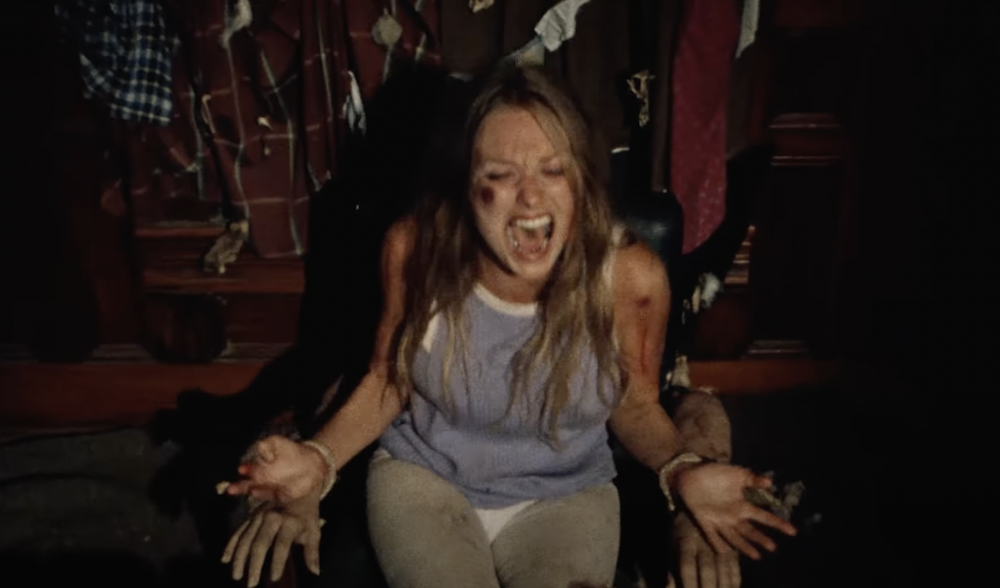
What I didn’t expect was how the film looked, shining bright even through digital grain. Fields of tall grasses rippled slowly in the breeze. A car rumbled down the highway, exhaust exhaling behind it like a ghost. And at the moment that Sally Hardesty, the movie’s beleaguered protagonist, is held captive at the cannibal family’s dinner table, grandfather preparing to hit her with a hammer, the film zooms in unexpectedly on one of her eyes flitting around in fear, and the iris was the most verdant green I’d ever seen.
I hated the South, feared being Southern myself even.
I had been in North Carolina for just over nine years at that point. I hated the state. I missed the icy sharpness of Pennsylvania, the way Lake Erie froze over completely every winter, waves still mid-crest. I missed the emerald jungles of St. Thomas in the Virgin Islands, where I spent the first four years of my life. North Carolina didn’t have the cold beauty of the Northeast and it didn’t have the shimmeringly blue seas and white beaches of the Caribbean. It just had swamps on the eastern part of the state where my parents lived and brush and loblolly pine in the middle where the school was. And worse than that, everywhere you looked there were hicks, drawls hanging off their words like a busted door hinge. I expected Texas Chain Saw Massacre, with its rural cannibals and grindhouse title, to just reaffirm my existing prejudices. The South was ugly, I thought; it looked ugly, and its people acted ugly, and I wanted a film that would reflect that. I watched to endure it, but also to confirm what I already knew: my new home sucked.
The Texas Chain Saw Massacre was short, straightforward, part of the reason I was able to finish the movie in just two chunks between classes. A group of hippies from the local college town set out to visit their grandfather’s old property. They pick up a hitchhiker, who sets a picture of them on fire and tries to slice at them with a knife; they kick the hitchhiker out of their van. They stop at a gas station to fill up and have a brief conversation with the proprietor, who’s also a barbeque cook; the man leers as they drive away. They visit their grandfather’s house, and then slowly everyone drifts to the house behind their grandfather’s, where a family of workers laid off from the local slaughterhouse live. The hitchhiker is there. A grandfather who looks centuries old is there. Leatherface, a six foot seven murderer in cowboy boots and a mask made out of human skin, is there. Eventually the gas station cook is there. Quickly, everyone but Sally dies, leaving her screaming and laughing alone, splattered in blood, in a flatbed truck speeding away from the house at dawn. It’s over in just eighty minutes.
At the residential school, we looked at slides of pond water through multi-chambered microscopes donated by Duke University up the road. We picked apart frozen cat bodies, peeling back the muscles on a leg one by one to reveal the femur, the tibia, the stiff ankle bones, the phalanges. It was a free school, built on the run-down grounds of a former hospital, and one that had been wiggled into the state university system: our student IDs, we were told, could get us into any library or science lab we wanted access to. We were the pride of the state, the best it had to offer. I’d wake every morning to birdsong.
I pictured the plains and thatchy backwoods of Texas, and a preemptive longing for where I already was crept over me.
Because of its low budget, much of The Texas Chain Saw Massacre was shot with natural lighting, which is part of what lends an eerie prettiness to the surroundings: their world, with its scrabble of brush and dust smeared everywhere and slowly setting sun, looks just like ours. A couple in their mid-twenties gently pushes the long amber grasses to the side to explore a neighbor’s house. House spiders weave webs, fibers shining in the afternoon light. At night things purple under dim moonlight, and in evening the film is heavy with sun, bright and sticky as a melting blood orange. Texas isn’t North Carolina, but at that moment I started to see both as not just ugly but gorgeous as well, decentering in their breadth. There, the trees and low shrubs have seen everything. There’s nothing that doesn’t promise to blossom, in one way or another, into an intimacy intractable in its depths.
I entered the movie wanting to be scared because I dealt with my problems at the time by being scared. Otherwise, I’d feel too needy, too vulnerable and exposed. But that which entrances us and frightens us is so often the same. I hated the South, feared being Southern myself even, but in Chain Saw, everyone talks with an accent—even the heroes. Everyone walks through the grasses, runs through hardscrabble Southern trees. It’s not whether you’re from the South or not that matters, the movie seemed to be saying: it’s what you do with it, and how you or others are hurt despite it. The South is like everywhere else: both fucked and beautiful, indefensible and resplendent at the same time.
I don’t know if these themes were intended. The Texas Chain Saw Massacre was a film notoriously shot on the fly; director Tobe Hooper stayed up all night shooting the last twenty minutes of the movie, and no one washed their clothes through the whole shoot because they couldn’t afford second outfits and were scared of them being stolen from the local laundromat. All the rotting animal parts in the film were real and by wrap day everyone was nauseous from the smell. The film couldn’t even afford stunt people, so in a scene where Sally Hardesty jumps out a second floor window, the script consultant pulled on a blonde wig and did the jump herself, twisting an ankle in the process. I don’t even know if the movie was intended to look as beautiful as it does; maybe its starkness just came from a budget constraint that aged especially well, the same way that the cheaply-recorded folk albums from the ’70s sound less dated than the studio schmaltz a big budget could get you. In filming, it seems, there was little thinking involved; the whole movie instead just existed as an experience. When the shoot was over, the rumor goes, the crew made shirts that said “I survived shooting Texas Chain Saw Massacre!”
But ultimately I’m not interested in intention. I felt things watching the movie, and those I showed it to also felt things. We talked about it afterwards, everyone offering their different interpretations as to what Chain Saw—loud, intimate—was about. With a girl from my MFA I would start dating just weeks after we watched the movie, Chain Saw became a film centering animal rights abuses. We had just shared a joint, wound up and electric with energy. “See?” I said, pointing to the shots of a slaughterhouse where the cannibal family used to work. “They’re treating the humans like cattle. Anyone who can’t keep up with the demands of an ableist society gets killed.” With an ex I fell back in love with over the pandemic, it was a film about feminized labor, and even transness. Leatherface, the person who ostensibly does the killing in the family, is also the softest member. He wears masks made of human skin but covers them in eyeshadow and lipstick and is viciously bullied by his siblings for not fitting into what they think a man should be. “He dressed up for you,” Leatherface’s brother cries mockingly to Sally as she’s held captive at the dinner table, and it’s hard to say who he’s making fun of more. My partner and I saw the film as being about disability and being different. There are two families in the movie, the killers and the killed, and both of them have disabled characters at their core. Franklin, Sally’s brother who rides in a van with the rest of the victims, uses a wheelchair and is constantly berated by his peers. Leatherface, who doesn’t even speak or show his face outside of a mask, appears to have some sort of developmental disability, and is kicked and hit and beat by his older brother as he whimpers in pain.
More than anything, though, I saw a movie about the South, and coming to love it despite everything fearful that happens there. Maybe this wasn’t the film’s doing, but something changed in me the first time after watching it. As I’d walk down the sun-dappled streets of Durham, where the residential school was—sometimes heading to my therapist’s office, sometimes just walking to get a lavender milkshake from the malt shop on West Broad Street—I pictured the plains and thatchy backwoods of Texas, and a preemptive longing for where I already was crept over me. Around me sprang tall reaching trees and bullfrogs. Cardinals and thrushes chirruped from telephone poles, sun-warmed cricks everywhere. From the instrument repair shop run out of a trailer off Broad, staticky country music drifted over the radio. My parents moved to North Carolina for work when I was in third grade, and it wasn’t until I saw the movie that I realized the South, not Pennsylvania, not St Thomas, was my home. Chain Saw felt like something emerging, fully formed, from a bog, and I was emerging too, albeit much more slowly. And who hasn’t fallen in love with the place where they realized who they were? Who hasn’t made a home out of fear without in some way loving that fear, too?
There are marks that are left on us, and there are marks we leave on ourselves, and I’m not sure there’s a significant difference between the two. The South shaped me, and the South hurt me, but I’m Southern nonetheless. Maybe there’s no difference at all. To know a place is to be hurt by that place and to grow up is to hurt that place in its own ways too. Until I turned sixteen, I treated the South with a smug superiority, one that cut me off from who I was. Because I grew up there, the South left its sticky summery marks on me, and then once I rejected it I left my marks on me too.
When I set out to watch the movie, I wanted it to hurt like I hurt me.
Texas Chain Saw Massacre also drew me in because of how unrelenting it is in its cruelty. Leatherface spends the film’s end in pain, accidentally chainsawing through his leg after his brother is killed by an 18-wheeler chasing Sally, blood splattering over everything. The twenty-something protagonists are menanced and turned into meat with alacrity. Even the heroes are cruel. Sally’s brother Franklin is brilliant, funny and anticipates everything that happens in the movie—but the other people in the van, the ones who die first, hate him. “Franklin’s no fun,” goes the refrain, even though our introduction to Franklin is him being blown out of his wheelchair from the backdraft of a semi and no one rushes to help him as he tumbles down a steep hill into a ditch. Even though Franklin is dragged around to ancestral mansions with steep steps he can’t get his wheelchair up and then left behind as his friends run off to go swimming; even though early in the movie he’s cut by the deranged hitchhiker; even though at the halfway point is sawed in half, the most violent death in the movie, by Leatherface. Even the audience hates him: I’ve read review after review about how insufferable and annoying Franklin is, although consistently he’s the only one doing everything right.
When I first watched Chain Saw, I’d creep into the shared dormitory bathrooms at 2 or 3 AM to hit myself until I started crying and then hit myself more until I stopped feeling anything after that. I’d practice cruelty against myself that crept into cruelty against others; a stiffened unapproachability, a studied distance intended to prevent anyone from getting too close. When I set out to watch the movie, I wanted it to hurt like I hurt me. And the movie is cruel, but it’s beautiful too. I found myself in that beauty, but at the time didn’t even know I wanted to be found.
Chain Saw was remade again—or remade-cum-sequel’d—in January 2022. In it, like in every other one of the 8 miserable sequels and remakes, splays of gore and pop nihilism replaced everything I loved in the original. A group of woke teens are massacred on a party bus. A woman’s life is saved due to the Second Amendment, firing away at Leatherface with the shotgun she scorned earlier in the film. It’s all reprehensible in a crypto-Republican way, but more than that it’s boring. It’s an old story at this point: Hollywood finds a film that’s striking and decides it’s striking for the wrong reason, and then capitalizes off that mistaken assumption. That was actually why my friend and I watched the 2003 film: we wanted to see if what we had just seen, the most recent one, was the nadir of the franchise. But there’s always a lower level one can sink to.
With each rewatch of Chain Saw, I got further away from the me in high school and closer to a me that was loved and safe.
But even despite this endless progression of worse and worse movies—and I don’t doubt there will be more, worse movies to come—it doesn’t take away from what I love about the original. This is because what I love about the original, at least in part, is the way it taught me to love. At the end of the film, Sally is escaping on a speeding flat-bed truck. Her brother is dead, chainsawed out of his wheelchair by the only other disabled character in the movie. Her boyfriend is dead. Her friends are dead. But the movie doesn’t end. As she’s laughing in fear and relief, the film cuts to Leatherface who, limping and illuminated in the rising sun, raises the chainsaw first to his side and then above his head and starts to pivot his body like a ballerina. Soon, he’s fully pirouetting, clearly hurt and angry and sad and confused himself. As the chainsaw brushes against the camera, the film cuts to black, and then finally it’s over—nothing left but his pain and her relief and what they made together from both. I am sixteen, staring at my laptop in between classes. Someday I will stop hurting myself, but not yet. Someday I will learn to love everything I find gorgeous, including myself.
I don’t believe that a film’s legacy can really be defined by what happens afterwards towards it—sequels or prequels or bad-acting fans or whatever. I think anything you love exists, at least partially, in the moment you first love it. Maybe that’s why I’d go on to watch the original Chain Saw with so many people I’d love. Beauty can stun too, and sometimes the only thing to do with that is to share it. There can be a thin line between enduring something and finding intimacy with it, after all. With each rewatch of Chain Saw, I got further away from the me in high school and closer to a me that was loved and safe and in the gleaming present, whole and uninjured.
I loved Texas Chain Saw, I think, before I loved myself. And maybe the two aren’t related, but one did follow the other.
Outside, a cuckoo warbles and the mid-day sun crescents through the dorm’s venetian blinds. Throwing on my heavy denim jacket, I vault down the stairs to class, arms bruised but not yet burned. As I leave the dorm building, I look at the state around me—greening leaves, rickety pines, kudzu creeping up the side of a building—and for the first time see it as something not just harsh but also irreducible, beautiful. I brush against a stairwell too abruptly, hit a bruise, wince, air sharp and cool as I inhale. It comes into me like birdsong, and eventually I will be free.The croak of leaf-roller crickets starts up, and from a distance they almost sound like a chainsaw’s hum. I’m starting to know what it means to care so much about something that you share it instead of holding it secret. I’m starting to realize that everything about my life will have to change. It’s bright and yellow outside and the air smells like pine. Soon the sun will set, and there will be nothing between me and what will come next. Already the scariest parts of Chain Saw are starting to flash across my eyes: a man pancaked by a semi truck, a body dripping on a meat hook. Soon, I will leave the state, hurt myself again in ways I can’t hide. My bruise aches as I breathe in, winding my way towards the dilapidated biology hall. There is no place I’d rather be, and that knowledge stings as it comes in. Soon I will rewatch the movie again and again. Soon, I realize, I will be beautiful too.
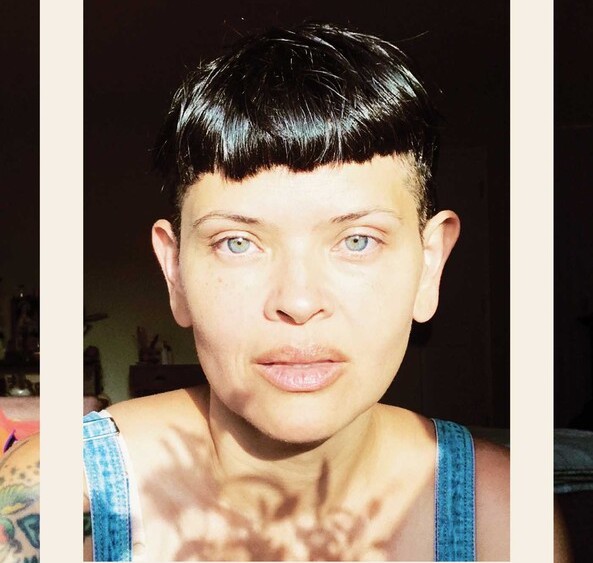
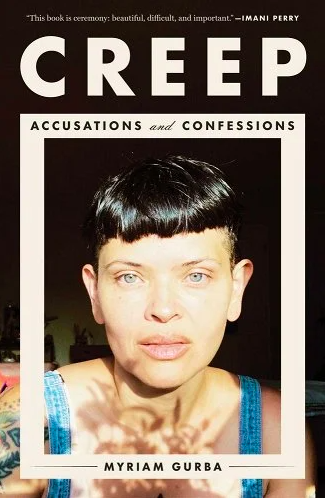
In Myriam Gurba’s latest essay collection Creep, the Mexican American author interrogates both those who deceive, exploit, and oppress others as well as the culture that enables them. “People who hurt other people can be charming,” Gurba notes in the title essay. “It works in their favor.”
In Creep, Gurba moves beyond the memoir she became known for with 2017’s critically acclaimed Mean “to writing family history, and in some senses also genealogy. I’m locating myself within literary genealogies and also pedagogical genealogies related to education,” she tells me. Creep’s eleven essays address, among other topics, femicide, the criminalization of survivors of sexual violence, the racial grammar of Joan Didion, and racism in public education. Speaking out against such bigotry led to Gurba, a former high school psychology instructor, exiting the profession a few years back. Gurba was passionate about her former career, but acknowledges that now “exiled from that world, it’s incredibly difficult to talk about it, because that wound is so profound.”
I spoke to Gurba about the importance of bearing witness, her activism, and tracing how an abusive relationship unfolds.
Deirdre Sugiuchi: When you were forced out of the classroom, I was following your Twitter thread. I’m sorry to say this, but as a former educator, it was helpful for me.
Myriam Gurba: No, I get it. I would receive messages from teachers or former teachers who had been in similar situations. There’s a measure of comfort that comes through the validation. This is not a unique experience. This is an experience that is shared by many of us who choose not to conform to the bullshit policies that we are expected to happily obey, not just obey, but with a smile. They want to protect the institution, and they think that the best way to protect the institution is to make its reputation unassailable.
So often when I talk to adults about this, especially parents, they want to believe that the problem that I’m describing is unique to the district that I worked in, and I’m like, “No, this is standard across the United States. I’m talking about a problem that exists in the school district where your children go to school.” This is not unique to me, but people really, really want to reject that truth.
DS: The thing I love about your writing and your activism is you’re saying things that people, particularly women, are conditioned out of saying, but does it ever wear you out to have to be a disruptor?
MG: Does it ever wear me out? Absolutely. Engaging in that kind of behavior and doing that sort of work is very tiresome, especially when that work is being done alone. One of the regrets that I do have about functioning as a whistleblower is that in some situations, I wish that I had chosen to work collectively with others because if you’re just an individual woman functioning as a whistleblower, it’s easy for you to be vilified. It can be tiring, but doing that sort of work is also something that I remain passionate about. The energy ebbs and flows.
DS: Your essay, “Itchy,” which addresses racism in public education, begins with an anecdote about your father, who was an educator and later an administrator. Your mom was also an educator. Can you discuss how your parents inspired you to be an activist?
MG: My father and mother both worked as bilingual school teachers in California, and then my father became an administrator. One of his administrative tasks was the management of a bilingual education program in the Santa Maria Valley. He also had a federal position as the director of the migrant education program. Some of my father’s work involved organizing parents of migrant school children. Through the example that he set, I came to understand my role as a teacher, as one that also doubled as an activist and an organizer. I also understood that my role as a teacher in California also required me to engage in anti-racism.
My father also often acted as my protector, as did my mother. When I would encounter bigotry in the classroom, I was very fortunate to have two parents who were both teachers who were both anti-racist who could advocate on my behalf. As an adult, I felt that it was my duty to pay that forward with my own students.
DS: In “Locas,” you write about your cousin, who, you write, is “one of many Latinas who lost more than a decade of her life to prison thanks to the War on Drugs.” Can you discuss the impact the War on Drugs had on your cousin?
MG: My cousin is a survivor of sexual violence. She’s an incest survivor, and that perpetration began when she was six years old. It carried on for a very long time, and it was very violent. When she turned to adult family members for help, she was met with denial that substantiated what her abuser told her, “You’re never going to be believed.”
What my cousin most longed for was safety. She found safety in a few places, and when she did locate safety, it existed through relationships. She also experienced what she believed to be safety through the numbing provided by drug use, and so she began to self-medicate. That continued for a very, very long time. The criminalization that she experienced was a result of that attempt to numb the pain and also the rage that she felt. When she was inside many of those jails and prisons, she was given more reasons to self-medicate, because, as she explained to me, she moved from one abuser to another. So while the abuse initially began in the context of the domestic sphere because it was perpetrated by family, the next abuser became the jailhouse, then the next abuser became the prison, because she faced sexual assault there too, and sexual coercion, so that criminalization is largely tied to drug use.
DS: You’re haunted by Sophia Castro Torres, the woman who was murdered by the same man who assaulted you. You had to access police reports to even learn about the facts of her life. Can you discuss the importance of bearing tribute to Sophia through your work?
If you’re just an individual woman functioning as a whistleblower, it’s easy for you to be vilified.
MG: I felt compelled to write about Sophia so that she will not be forgotten. Since learning about her death, I have been haunted by her presence. In her case, I wanted to restore some dignity that the perpetrator Tommy Martinez worked very hard to destroy, but that had also been tarnished by certain reporters in the way that they had characterized and also mischaracterized her. I think about Sofia’s death as a death that one person is not responsible for. There are many institutions that also bear some of the responsibility for her premature death. For example, all of the women who Martinez attacked survived except for Sophia, and the difference between her and the rest of us is that she was homeless, and we’re not. Had there been accessible public housing in the community where I grew up, that could have prevented her murder. She wouldn’t have been walking in a park after midnight, or it’s a lot less likely that she would have had that experience. I wanted to restore some dignity to her and at the same time I did describe what I imagined her death to be in this very graphic way because I wanted people to understand the brutality. I have been critiqued for the graphic description that I give of her death in Mean, but I wanted people to really understand how brutal it was. Those details and that sense of haunting has lessened over the passage of time, but I still have a sense of her being with me. I imagine that she’s going to be somebody who I return to over and over again because I’m incredibly committed to keeping her memory alive.
DS: In the title essay, you write about intimate partner violence. You were trapped in a relationship with a man who assaulted you. In the essay, you recount how people ask, “How does something like that happen to someone like you?”
MG: It’s just such a bizarre question. I very much do get the sense when I’m asked that question that the person who’s asking it is drawing a very firm line between me versus them, that’s the insinuation I hear, that there must be some character flaw that is drawing the abuser to me, and that is serving as some sort of obstacle that is preventing me from being able to resist these battles.
What I find so strange about that question is that battering is the most pervasive form of gender-based violence that exists on planet Earth, and gender-based violence happens because of misogyny. I’m a female person. That aspect of my existence is not something that is turned on and off. It doesn’t matter what kind of female person I am. Whether or not I’m a perky, combative female person or this acquiescent, obedient female person, perpetrators have all sorts of different tastes. Some perpetrators might be attracted to somebody who they perceive as being easier to dominate. Then you also have perpetrators who envision themselves as these sportsmen who want that big fish and seek out what they perceive to be a woman who’s more difficult to tame because she presents a challenge. I’ve actually heard abusive men talk that way.
DS: Yes. I feel as a society we’re constantly pretending that gender-based violence is not happening.
Seeing my experience reflected on the page gave me veritable permission to name what was happening to me as intimate partner violence.
MG: The more vulnerabilities that are heaped onto a woman’s shoulders, the more likely she’s going to be targeted for this type of mistreatment. You’ve got intersectional oppression and you’ve got intersectional domination. In my case, I’m this person who is female. I’m queer. I’m the daughter of an immigrant. I have Mexican heritage. I’m also a person of Indigenous ancestry. I have a slew of phenomena that create vulnerability, and that make me this prime target. I think that part of the insinuation—how could this happen to somebody like you?— is also motivated by a misinterpretation of the way that queerness functions in battering relationships. There are a lot of folks that imagine that queerness or feminine toughness insulates a person from battering, when in reality, it makes the person more vulnerable. Queer people are more vulnerable to all sorts of violence. When it comes to LGBTQ folks, bisexual women report a lifetime prevalence of stalking, rape, and battering at rates of 61%. For bisexual women, it’s not a matter of if you are going to be stalked, if you’re going to be raped, or if you’re going to be beaten by an intimate partner, it’s just a matter of when that’s going to happen. That’s the case in certain targeted communities. This is again, something that goes undiscussed, that there are targeted communities.
DS: Can you just discuss the importance of art for bearing witness and the ways it can empower not just the writer but the reader?
MG: I wrote the title essay, because seeing my experience reflected on the page gave me veritable permission to name what was happening to me as intimate partner violence, as coercive control. It was almost like I had to see it mirrored. Once I did that, it set into motion my escape. What I’m attempting to do through the title essay is to offer other survivors an account of captivity from start to finish. I wanted to trace how such a relationship unfolds, what sociological factors are marshaled in order for the entrapment to occur. I really wanted to give explicit and nearly granular descriptions of the violence, because I want to help in any way that I can to set other victims free. Sometimes we need other victims to hold the mirror so that we can see ourselves reflected and we can see our predicament accurately reflected.
When I was reading that forensic literature (on intimate partner violence) when I was trapped in that battering relationship, some of that literature made me doubt whether or not I was experiencing violence, but it was the literature that was very graphic that underscored for me and validated that I was experiencing intimate partner violence (IPV). I do think some representations of IPV become very euphemistic. I also think that the pendulum has sort of swung in the direction of emphasizing the sort of psychological abuse and psychological terrorism that is endemic to all battering relationships. But I think that that psychological violence then eclipses the very injurious bodily violence that so many of us are subjected to.
Again, when we compare and contrast various groups of survivors, our experiences with physical and sexual violence are very different. Heterosexual women report IPV at rates of 35%, lesbian women at 44%, and then bisexual women at 61%. When bisexual women report IPV, we tend to report extreme violence. I was experiencing extreme violence but not finding records of that in the literature. It’s ironic that it was the extreme violence that I was experiencing that made me wonder whether or not I was actually experiencing intimate partner violence. Because so frequently, there was an emphasis on psychological aggression, but my abuser also broke my tooth. I’m not reading about women having their heads pounded against tables and I’m having my head pounded on the table. I do think that, unfortunately, I had to see myself reflected in women who were experiencing similar injury to be able to name my plight, so I’m attempting to give that reflection to whoever needs it.
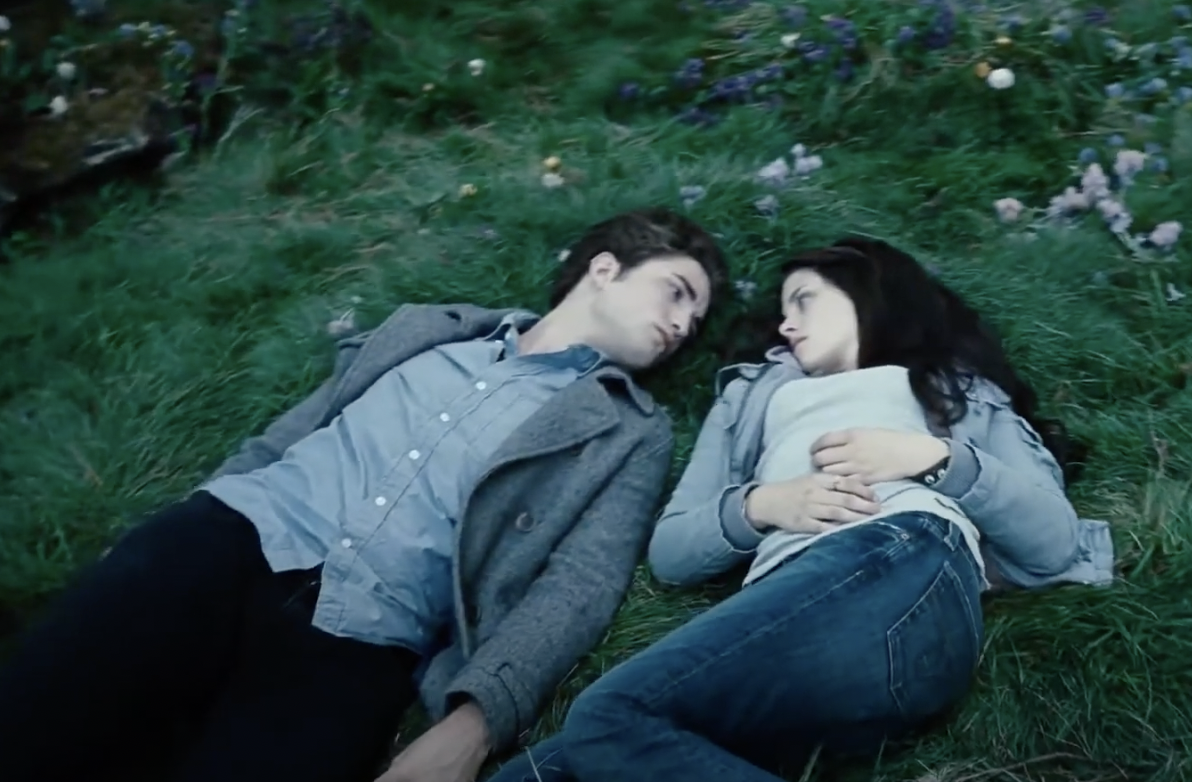
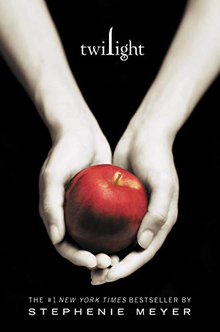
I met Bella Swan in the middle of 2008, when the anticipatory Twilight movie poster circulated at my school. I took her home and hung her on my wall, blacks and grays covering the coral paint near my headboard. She gripped the folds of Edward Cullen’s dark denim jacket. They both looked like teens, but anyone who’d read the books knew he was a vampire, ninety years older than her. Edward looked off to the distance, to abstracted danger, to the movie’s simultaneous bomb and success, too busy to think about anything besides how the woman—girl—at his side reinforced his being a man.
But Bella looked right at me.
She was familiar. She could be anything I wanted her to be. Chestnut hair and dark eyes, a soft glow. Blank skin blank face blank canvas, her skin fine-toothed paper. I was envious of her beauty. I wanted to bask in it. She was too sweet, and I was too young to have my own story. I looked to her for answers. She looked cold. I wondered what it would feel like to hold someone, to share their warmth. To be desired. I wanted to be the apple cradled in her hands.
The text on the poster promised that nothing would be the same.
At Hot Topic, past the racks with Jack Skellington’s face stitched onto black book bags, past the clerk who preened her electric blue highlights in the reflection of the body jewelry showcase, I found two rows of shirts. All sizes, all black, with white lettering: Team Edward and Team Jacob.
It was my freshman year in high school, and everyone was divided. People who hadn’t seen Twilight, people who had, people who didn’t want to care found themselves unwittingly subscribing to either side of the binary. I came to school with Edward’s name branded on my chest. I was in the minority. My friends, most of whom would go on to choose healthier relationships later in high school and college, chose Jacob.
Over the next ten years, I chose a lot of Edwards. They were tall and short, monied and broke.
Over the next ten years, I chose a lot of Edwards. They were tall and short, monied and broke. They spoke Spanish and Italian and came from Columbus and Ft. Meyers and Perth. After the flowers and fine dining came a bounty of brooding, clipped responses, and slammed car doors. They showed up uninvited to my house. They held phone calls hostage with self-absorbed monologues or punishing silence. My friends and parents despised them. They all had charisma. They knew how to convince me that while it was forbidden to be with them, they were precisely what I needed. They knew how to convince me that I was special but also disposable. They lured me into the forest, called themselves Lion, and named me Lamb. The percarity was intoxicating. They knew I’d chosen Team Edward without ever needing to see my T-shirt.
When I gave in and made them the center of my world, they gave up. When they said they loved me, they would disappear. Their skin did not shimmer.
I chose Team Edward because Bella chose Edward.
In 2009, First Boyfriend Edward dumped me so he could reunite with his ex-fiancée who lived somewhere in Michigan. I was 14, he was 18. Age wasn’t supposed to matter, but suddenly, it did. Of course it did. It wasn’t a 90-year age gap, but it was something.
I locked my bedroom door and sulked like Bella did in New Moon, after Edward abandoned her “for her own good.” Breakup protocol called for me to delete our texting history, but I couldn’t bring myself to do it. Loss had my stomach bottoming out. I sat at my desk, which overlooked the front yard, and my questions yawned into the night.
What had I done wrong? How had I failed?
I convinced myself that this breakup would mean that I was now free to find my real, true match. I had to let it all go. My laptop screen glowed dim and blue. On iTunes, Paramore’s Hayley Williams mused on “Decode”:
Do you see what we’ve done?
We’re gonna make such fools of ourselves…
Bella had found her Edward, after all, and so would I.
Between the Edwards, there were the Rosalies. They were electric, beautiful, accomplished. They floated in and out of my life, suggestions made in a language to which I did not have the code. Toronto Rosalie liked to ask me to come to MAC with her to try on lipstick. Soccer Rosalie was from Montenegro, well over a head taller than me, with a full tattoo sleeve and Amazonian features. During her English tutoring lessons, I was always the one who got tongue tied. When I ran into Cheerleader Rosalie in a bar after high school, she asked how I had been doing, and I responded by promptly spilling an entire glass of water down my shirt. I wanted to sparkle for each of them.
Toronto Rosalie and I were in Dublin when she let me kiss her on the lips. We were in a club called Dicey’s Garden, drunk on Guinness. She tasted like strawberry chapstick and malted barley. We smiled, sheepish, half-embarrassed that we had done it, that we had enjoyed it. We were friends, so we never spoke of it again.
My mind could not write a happy ending for Team Rosalie, although I could feel her interest each time through the foggy haze of my self-denial. She wanted me, but she didn’t need me. There was no trap door behind her smile. My inability to interpret her openness, coupled with a heteronormative society that lacked the visibility of queer romance, was enough to let her iterations slip away again and again.
First Boyfriend Edward came back after things didn’t pan out with his Michigan ex. It was a ten-year cat-and-mouse, between all the other Edwards. He often brought me to the bar and left me near the tap, making sure I saw him flirt with all the blondes who wanted a piece of his shiny new police badge.
She wanted me, but she didn’t need me.
There was Writer Edward, who waxed poetic about Eros but was never interested in my creative writing, who took me into his arms after a steamy Miami evening in his bed, only to say, “I don’t think I could ever love you.”
And of course, there was Abuser Edward. In a spontaneous moment of mania, he insisted on whisking me away to Venice for a weekend filled with a gondola ride and fine dining, only to lash out later, accusing me of being a “financial burden.” I put up with it, knowing that even if he was mad at me, that it meant he wasn’t talking to other women, which was his near-constant compulsion. Sometimes, on the phone he would say: “When I’m inside her, I’m thinking about you. Can you feel it?”
Different faces, same name, same ending.
In my senior year in college, I watched the Twilight movies with my friends. We all piled on the couches in the living room, boxed wine in coffee mugs. Everyone—my roommates, their boyfriends, and a few guys trying to become my roommate’s boyfriends—laughed at her, Bella for staying with a clown like Edward.
This was the same time that I was compulsively checking my phone for a message from Abuser Edward, wondering what I had done this time to get the silent treatment. He lived in Australia, but we had met during my study abroad semester in Dublin. In the same breath Abuser Edward had been swearing he wanted to marry me—he’d even lived with my family for a month the previous summer—he’d claimed he needed to get back with his old girlfriend in Perth to “let her down easy.” I soon realized that this girlfriend hadn’t known that Abuser Edward was gallivanting around Ireland with an American ten years his junior for several months. I had become the Other Woman, growing dizzier by the second as I watched Bella spin through the seasons, alone in her bedroom.
The same friends who were gently urging me to dump my abuser were now laughing with disbelief that Bella had fallen into an unrelenting depression, sitting in her room for months after Edward had disappeared from Forks. Their sensitivity for the situation evaporated as they fell into a harsh, albeit valid criticism, of the movie.
Bella’s so ridiculous, what the hell? I can’t believe this. Who would ever do something so sad? Get over it, girl, move on.
And I probably curled into my part of the sofa, feeling self-conscious, even though everyone’s eyes were trained on the screen. My heart had probably started hurting, a sharp pang had been the trend back then, and I wiped my palms on the legs of my jeans. But she loves him, I thought. She’s waiting for him. What’s so silly about that?
I wondered if the thoughts my friends shared with the screen were the thoughts they shared in private, to each other, when I wasn’t around.
Twelve years after its release, I would watch Twilight again in 2020, this time with a guy named Adam. After an agonizing breakup from Abuser Edward, I didn’t know who I was, only that I wanted to write. I moved from my hometown in Maryland to Miami, Florida to pursue an MFA in Creative Writing. Adam had used his miles to fly down from Maryland for a visit.
After an agonizing breakup from Abuser Edward, I didn’t know who I was, only that I wanted to write.
The movie’s saturated grays and deep blues washed my West Miami apartment with uncharacteristic maudlin. Adam and I were still in the dating phase, marked by a respectful distance between us on the bed. Later I would find out he suggested watching the Twilight Saga because one of my college girlfriends told him it would get him points with me. It did.
We were at the point in New Moon where Edward is telling Bella that she shouldn’t leave her house. She plans to resist him and leave anyway, but doesn’t get far. The thin veil of protectiveness tears to reveal his controlling, obsessive nature. Somehow, he’s managed to deflate the tires of her 1953 Chevy. A snake twisted in my stomach. This scene hit differently from when I was a teen.
I asked Adam which team he would choose. I realize now that this question was a test. Edward is toxic, he said, point blank. Besides, Jacob is better-looking. Just look at that hair. He ran a hand through his own black coils, which had sprung to life in the late summer heat. It was probably the queerest thing he’d ever said, and would ever say again.
Right around this time in 2020, I started to read Stephanie Meyer’s newly-released Midnight Sun, which is really just Twilight, but retold from Edward’s point of view. In an ironic, self-referential twist, law-school dropout Glasses Edward had given me Midnight Sun as a gift. Sensing things were getting serious with Adam, Glasses Edward had started dropping poems in my mailbox every day for the past few weeks. He was “just happening to be in the neighborhood” with all of my favorite groceries in hand. He brought me to his apartment, blindfolded, to reveal his studio transformed into a bistro for two, complete with stringy-lights and a three piece tuxedo. Against his deep anxiety over phone calls, he had started ringing me when I stopped responding to his texts.
As it had with any Edward, this one’s gallantry had broken away into the vampiric fear that his emotional supply was leaving him. So I silenced my phone and, with satisfaction on a sunny afternoon, pulled out his gift and started to read.
Too quickly, a shroud of dismay overcame me. I had expected the prose to be lackluster, and it was certainly that. But even still, there was supposed to be something magical going on. Not even my nostalgia could salvage my expectations for this book. The way Edward described first seeing Bella in the school cafeteria was wooden, even less than an object. She was like a granola bar half-chewed and left for birds to pick at the fragments. It was all about Edward’s hunger. Stephanie Meyer was selling the same insidious story. I could only stomach the first three chapters before I put it down for good.
I made myself find Adam. I really did.
In a rebellious fit against Glasses Edward, I thought of the nicest person I knew and dared to believe for a moment that I deserved someone kind. Adam came to mind, with his shy sideways grin and starry brown eyes. We’d met at a mutual friend’s birthday party six months before, but I doubted he even remembered me. We had nothing in common – or so I thought – as he was the founder of a non-profit internet service provider, and I was, well, me. I was close to broke, writing pages and pages of a novel that nobody else had seen. In spite of this, I asked a college girlfriend to set us up. And to my shock, he agreed to meet for a date.
While walking together around the Baltimore neighborhood of Fed Hill – it was the middle of the pandemic and we kept a polite distance – Adam wouldn’t look me in the eye. Or look at me at all. Being so used to Edwards raking their eyes over me, I thought perhaps this was a mistake, that he didn’t even want to be there. It took a moment to realize he was trying to be respectful.
He was kind to me, he asked questions, and actually, actually listened. I let him in. I told him about my Nana who was grieving the recent loss of my Pop Pop, about how my passions for Irish history and queer desire had made their way into my novel-in-progress. After a while I would sputter, wondering why the spotlight was still on me, how it hadn’t yet been yanked away for a self-indulgent monologue. I truly didn’t know how to continue, and attempted to remove myself to the sideline of conversation. But Adam held space for me, encouraging me to keep talking. I was baffled. I had no script for this. We walked and talked for eight hours and shared a pizza on top of Fed Hill. Below, the city twinkled quietly.
It was normal. It was a gift.
As an adult child of alcoholics, my neurological destiny had been written; a narcissistic, ego-driven Edward could sniff out my anxious attachment from miles away. I had been conditioned to look for thrills, to expect them, alongside the uncertainty. The headrush of the love-bombing, the bottoming-out from the emotional withdrawal. Edwards were a project for me to fix; they were damaged goods that I could cure with my unending love. My voice had become small. I covered my brittle confidence in eyeliner and a busty tank top. I saw in myself only what I could give — my energy, my body.
But Adam is not an Edward. He is self-effacing and kind. Motivated and curious. And startlingly, unbelievably silly. He was the chaotic kid in school who had the messy backpack filled with loose papers. He was a running back for his high school football team. He’s a Runescape legend and knows how to build his own computer. He’s an uncle. He has a Greek tortoise named Buddy that likes to get massages with a toothbrush. He’s my best friend. Adam is not a mystery, he is not a trophy, he is not larger than life. He is life.
We understand that Bella is nestled somewhere between the spaces of my ribs. That this is my story, and I am learning how to be the center of my own heart. We know that it’s my task, this work towards self-loving. We affirm to each other that a healthy relationship is the joyous third entity shared between two self-assured people. His hands are ever-warm, like the world under his skin is constant sunshine.
Nearly three years later, Adam and I strike out to Forks for my birthday weekend getaway. We had relocated to Seattle six months prior; it was the only way we could convince his Muslim parents that we should live together, by coincidentally getting jobs in the same city on the other side of the country.
For those first six months, we—meaning I—talked of visiting Forks. By the time we got our car onto the Kingston ferry, the trip was taking on the glow of a pilgrimage. February is the gloomiest month out here in the Pacific Northwest, and this trip was no exception: the forecast called for rain and gusting wind. Rows upon rows of bleak coniferous trees ebbed into mist. It was perfect, because this was the weather that vampires went to school in.
I wondered how many of us end up marrying our Edwards because we don’t see any other path for ourselves.
Forks is a small logging town in the northwestern corner of the Olympic Peninsula. Bella wasn’t kidding when she said she “exiled” herself there to live with her Dad. Only in my research en route had I discovered that the Cullen house, and other notable landmarks, had been filmed in Oregon. When we got to Forks, the main street held fuzzy street lamps, under which black lifted trucks and huge vehicles with felled trees rumbled through an insistent rain. The Twilight fandom had breezed through this town and dried up after the series ended, leaving behind old posters in storefronts and a shuttered cafe once called The Twilight Lounge. Adam and I grabbed reheated carry-out pizza from the only open restaurant. We ate on a concrete bench under an awning, watching the mist. He joked, not without edge, that he might be the only brown person on the entire peninsula.
Eventually we found Native to Twilight, the only fan store still open.
Inside the store, beyond kitchy coffee mugs and signed posters and movie props for sale, there was a giant cardboard cutout of Edward and Bella on their wedding day. They stared at one another with a vacant sort of passion, and the fluorescent lights cast a synthetic glow around them. There they were, and there I was with Adam, foils of what had been, what could be.
I wondered how many of us end up marrying our Edwards because we don’t see any other path for ourselves. I had seen firsthand how an Edward can masterfully distort reality to make leaving them feel like theoretical self-annihilation. But it’s all a selfish mirage, constructed from their own fears of abandonment and inadequacy. If we settle for the familiarity of hurt, what do we end up sacrificing in return—our dreams of safety and validation?
I wanted to gently take Bella’s hands, and tell her to look, look at Adam, see how tender he is. There is no danger in his eyes, but a promise of adventure, yes, and of warmth. There is room for you here. It is possible. I wanted to take Bella to Hoh Rainforest in Olympic National Park, where the spruce and hemlock and cedar trees have shallow roots. It rains so much that they don’t need to dig deep. All they have to do is reach hundreds of feet into the sky, and trust the rain will come.
On the drive home, the sky in front of our windshield is gray, the tendrils of low clouds hover over the evergreens that march up the mountains. No thunder echoes through the valley, but it may as well have, because it does in my mind. I scroll through Spotify and play Supermassive Black Hole for the umpteenth time, reliving the scene where the Cullens play extreme vampire baseball under the cover of a thunderstorm.
Again? Adam’s guessing there’s a Twilight connection. He’s mildly mystified, and charmed that I can’t let these notes go. He knows this is more than a fandom. While I am bobbing my head to the song, his hand is a warm anchor on my thigh.
I really don’t like Forks, he says.
I laugh. I don’t think I do, either.
Then Bella’s Lullaby is the next track to play, and the delicate piano notes drip like rain onto the hood of the car.
I suspect the world will always need Twilight. In the years to come, Twilight will be a model for what not to do when looking for love. It will be a comedy of wooden acting and a poorly written screenplay, a time capsule of de-fanged nostalgia to share with friends. I will continue to learn from and laugh at Twilight, yes, but not at Bella—never at Bella. If I did, then it would mean I would be laughing at myself, at others who have been completely consumed by a toxic relationship.
Edward and Bella, they failed me. They were supposed to meet me here, at the end of the world. They were supposed to grow with me, out of themselves. All there is, of course, is trees. And flat, cardboard characters. Adam’s hand is reassuring on my leg. I turn up the music, and open the window so the rain can tap my skin.
But the trip to Forks wasn’t totally a wash. In front of the cutouts of Edward and Bella was a registration book, where fans could record where they were visiting from, and of course, which Team they were on. My heart sank as I flipped through the pages. Not a single person in hundreds had written they were for Team Bella.
So I picked up the pen, set it to the next blank space, and did what I should have done fifteen years ago.
I chose Team Bella. The sun is going down and the clouds steadily darken. Perhaps, in a way, Edward and Bella had met me here at the end of the world. This music is mine, this romance is mine, I re-write it with every re-visiting. I tell Adam, which is to tell myself, all the ways they got it wrong. The rain doesn’t sting, it’s a blanket of mist over me. In spite of them — and perhaps because of them — I’ve found something deeper, richer, than twilight.
One little pale fresh tennis ball of rain
bounces across my forehead. Fifteen-love.

I have very bad posture. An only somewhat
inquiring mind. But they tickle me

the many and various uses for mayonnaise
considering there is only one use for poetry.

To lose money. To lose money. Toulouse Monet.
I think we just connected, you and I.

We’re inside of really quite a touching moment.
Balloons lost in the trees. Balloon fruit.
Rottenway
the rotten the rotten way you therotten
way you look in the morningthe rotten way
the bedroomrotten in the morning the rotten
bright wind the rottenbrightwind in the trees
the bright wind opens a gate in the trees

I am wide awake the rotten way you look the breath

the apple is a white dumpling the rottenway
you look in the bright wind morning opens

wide awake and whitesoft and blossomy

I close the window and really it’s a thrill

lopped off on the wet grass this bloody rose
your crown of moss your moss-wings

how dreadful to find out you’re awake
that it all carried on and without much fuss
The Lying Nude
When I say this view is bananas
you know I mean it’s gorgeous.
I tried pointing an app at all that sky.
My phone said result type: masonry.
You have a face like a face being torn to shreds.
I fucking love you so much right now
my hair hurts and there’s fancy mustard
where once upon a time I had a belly button.
When I say you you know I mean
thee. One fine meadow offers clemency.
The stubborn red tulips make keystrokes
in the paltry breeze and I think
whoever built the first arch was crazy smart.
Oh your dirty elbows. Hello.
I don’t remember exactly when I first heard it but it was in high school sometime in the early nineties. I was listening to the radio after school but before my parents returned home from work. Rock music was the sound of my teenage rebellion. It was forbidden in our house so I had one ear on the radio and the other on the garage door. Suddenly I heard a familiar twang in an unfamiliar place. It was the distinct sound of a sitar, but in a rock song: The Beatles’ “Norwegian Wood.” How strange to hear the sitar alongside English rockers crooning about a long-lost love? As a first-generation Indian American who spent my weekday afternoons illicitly jamming to pop and rock while doing homework and my weekends at Indian classical music concerts, I found myself constantly humming the tune.
But even that didn’t prepare me for when I turned the radio dial and blaring back at me came, “Ha-re Krish-na, Krish-na Krish-na, Ha-re Ra-ma, Ra-ma Ra-ma.” I couldn’t believe chants to Hindu deities Krishna and Rama, which I was accustomed to hearing in the sanctity of a Hindu temple or uttered by my grandmother in prayer, were being sung in a rock song. That was my introduction to the iconic hit song “My Sweet Lord.”
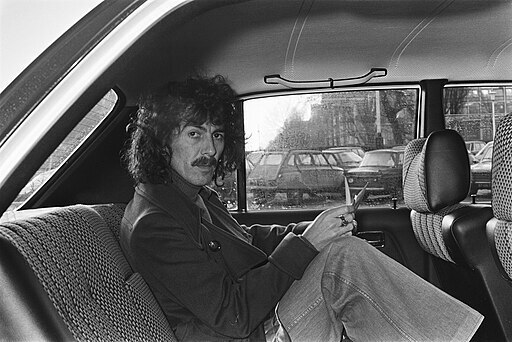
In truth, I couldn’t yet admit to liking the song because it felt a bit like when white girl rockers like Gwen Stefani wear a bindi as a costume. Doing so, I felt, might make me a bad Indian, betraying my culture by falling prey to the wiles of a culturally appropriative yet masterful performer. Yet, this song oddly captured my essence—a little bit Hindustani, a little bit rock ‘n roll. And the lyrics about the singer’s search to find and be found by his “Sweet Lord” spoke to my own quest to find my identity and be seen in my totality as an Indian-American—a person formed by these two bold, and often opposing, cultures. It would still be a few years until I learned that one musician was behind the Indian influence in both of these songs: rocker George Harrison.
This song oddly captured my essence—a little bit Hindustani, a little bit rock ‘n roll.
These perplexing feelings would come rushing back to me during my initial interview with Grammy-nominated, Hindustani singer Lakshmi Shankar—the subject of my first book—when she mentioned that she went on a fifty-city stadium rock ‘n roll tour and sang alongside George Harrison. I was stunned. I had known Lakshmiji, as I affectionately referred to her, my whole life, had been to dozens of her concerts from the age of five onwards, and counted her amongst my most favorite singers. Her repertoire of Hindustani ghazals, thumris, and khyals were imprinted in my mind, part of the indelible soundtrack to my childhood.
Lakshmiji had pulled out a cassette tape, during our interview, and had played me, “I Am Missing You,” a sweet ballad where she implores Lord Krishna to show himself, confessing she is missing him terribly. In all the years of listening to her music, I had never heard Lakshmiji sing in English. Yet, here she was not only singing in English but accompanied by a rock band—keyboard, saxophone, bass guitar, and drums! Lakshmiji flipped the tape over and a second version of the song played, this time her voice was accompanied by Indian instrumentation—santoor, bansuri flute, and tabla. She called “I Am Missing You” a “Hindustani pop song”—it was unlike anything I’d ever heard.
Ravi Shankar, renowned sitar player and her brother-in-law, composed the song and none other than George Harrison produced it. “This is amazing, you’re a rockstar, Lakshmiji!” She laughed as I sat in disbelief wondering what else I didn’t know about this traditional Hindustani singer, close in age to my grandmother, always clad in a sari and a bindi. In that moment, I had a dawning realization that my assessment of George and his relationship to Indian music and culture might be, at best, incomplete, and at worst, unfair.
In truth, before embarking on writing Lakshmiji’s biography close to ten years ago, I had already made up my mind about George. I believed he and all the other white rockers of the late 1960s, casually strumming the sitar or playing guitar riffs inspired by Indian ragas on their rock songs, were cultural appropriators. They were indiscriminately poaching and misappropriating Indian music with little regard for its significance or context to Indian culture. For them, it served merely as a trendy “exotic motif” to spice up their music and image.
Before embarking on writing Lakshmiji’s biography close to ten years ago, I had already made up my mind about George.
I wasn’t entirely wrong. For many rock bands of that era featuring Indian musical and cultural motifs, playing pentatonic scales while donning kurtas and malas cemented their appeal with hippie and counterculture audiences.
But as I delved deeper into my research into the journey of Indian music to the west and George’s role in this cultural transmission I began to realize that perhaps he had transformed himself from a cultural appropriator to an ambassador for Indian music as he evolved his own understanding and appreciation. My feelings and beliefs about George as an artist and as a person began to shift and evolve, as perhaps his own feelings and beliefs about Indian music had. Admittedly, it had certainly been easier for me when I could consider George solely as a cultural appropriator and cancel him in my mind. However, this experience had now complicated my thinking on cultural appropriation, making it more complex and nuanced, more gray rather than starkly black and white.
I had been working in racial justice when I began to be haunted by the need to write the life story of Lakshmi Shankar, a Grammy-nominated singer who was the most prominent Indian female musician in the movement that brought Indian music to the west in the 1960s, a movement sparked by her own brother-in-law and frequent collaborator, sitar maestro Ravi Shankar. Yet, it was white rockers like George Harrison and the Beatles, the Rolling Stones, and The Byrds who received the most attention and accolades for making Indian music hip and cool, even when it sometimes came at the expense of stripping it of its cultural context. One of the more insidious ways that racial injustice works is by erasing the stories and contributions of those already marginalized by society. Through my biography, I had hoped to remedy what I saw as the racist and sexist historical perspective of white chroniclers who had left her out of the history books.
And as far as I had been concerned, George Harrison and his appropriation of the sitar and Indian music was part of this biased history.
George, I learned, first came across the sitar on the set of The Beatles’ movie, Help! in 1965. Like many movie depictions of Asian culture at the time, Help! featured a problematic, Orientalist plot about the Beatles trying to escape the clutches of an Indian swami and his cult. George picked up a set musician’s sitar and began strumming it. Soon after, he would ignite a “sitar craze” by plucking out the indelible melody of “Norwegian Wood” (1965)—one of the Beatles’ most iconic songs—on the sitar.
At this stage, George was like most white rockers, who in their search for the newest sounds, was drawn to the exotic, mystical scales of Indian ragas and the tinny, harp-like sound of the sitar—a faraway cousin to the guitar. There’s no escaping the irony of cutting-edge rockers turning to a foreign musical tradition dating back hundreds of years to find their latest sonic trend. But in doing so, most of them didn’t bother learning much about the culture of its origin or the theory or techniques of Hindustani music, satisfied to just appropriate from the tradition to score their next hit song.
At this stage, George was like most white rockers, who in their search for the newest sounds, was drawn to the exotic.
Then again, this wasn’t surprising given that both The Beatles and the Rolling Stones had appropriated the sounds of Black musical traditions, including the blues, soul, and gospel, in creating their own “trademark” sound. And history rewarded white artists including The Beatles and Elvis by crediting them as the “inventors” of rock ‘n roll rather than Black soul rockers, James Brown, Little Richard, or Sister Rosetta Tharpe.
In my mind, cultural appropriation by white artists and erasure of indigenous artists by white cultural gatekeepers were twin blades working together to diminish indigenous cultures and artists and their role in the world. Hence, irrespective of his artistic intent, I viewed George as an appropriating white rocker who fetishized and capitalized on Indian musical motifs.
George went on to compose other songs as part of the Beatles repertoire, which reflected his growing interest in Indian music, including “Love You To” (1966) and “Within You Without You” (1967). The Indian influence on these songs is boldly evident from the melodies, to the instrumentation, to the metaphysical lyrics inspired by Hindu philosophy. In fact, Indian musicians from the Asian Music Circle, including a sitar player, tabla player, and others play on these tracks. Also boldly evident is the erasure of these Indian artists given that none of them are credited in the album liner notes.
What is more emblematic of bald-faced cultural appropriation than the biggest rock band in the world using indigenous musicians to create their distinct sound while erasing them from musical history?
I needed to know, was he an appropriator of Indian culture and music or was his relationship something more complicated?
But as I delved further into my research for Lakshmiji’s biography, I also found myself falling more deeply into the wormhole of George’s music, becoming obsessed with trying to discern George’s true motivations. I needed to know, was he an appropriator of Indian culture and music or was his relationship something more complicated? Something harder to label?
Even as I labored on my own biography seeking to lift up the story of an overlooked Indian female artist who helped bring Indian music to the west, I couldn’t completely deny that the Indian-inspired songs composed by George and recorded by the Beatles had helped bring Indian music to legions of new fans. Appropriative or not, their interest in Indian music and culture, helped set off a broader cultural curiosity and hunger which would have a lasting impact in the west.
But perhaps more is revealed by the impact Indian music had on George. It became clear to me that experimentation with Indian music helped George find his voice and served as inspiration for him as a composer and lyricist in a band where Paul McCartney and John Lennon were understood to be the de facto songwriters and singers. Just as importantly, his exploration of Hindu spirituality helped him make sense of the world and his purpose amidst his helter-skelter ascent to fame and fortune.
In his memoir, I Me Mine, George talks about the influence on his songwriting of Indian ragas, which are more like musical moods than the key signatures of western classical music: “… it really did help me as far as writing strange melodies and also rhythmically it was the best assistance I could have had.” And he went on to elaborate, saying, “It seems to me that for a certain type of writer, it is not so much what he feels or stories about what he is going through, but it is more like a craft. This Indian music we are listening to now is directly conveying the feelings of the player. So to try to write a song is, to me, more a case of being the vehicle to get over the feeling, of that moment, of that time.”
In truth, reading George’s account of the impact of Indian spirituality and music on his life and music, I begrudgingly realized how much I related to his journey towards finding deeper purpose and meaning and to finding his own voice as a singer and songwriter. I only became a writer close to the age of forty, sparked in large part by my mission to tell Lakshmiji’s story. But to do this meant I had to get over the fact that despite committing myself to writing full time and to telling Lakshmiji’s story, I still didn’t see myself as a writer, and neither did many around me. I didn’t have the educational credentials of a writer or the experience, just a deep-seated desire to express my perspective on the world through my words.
My hypersensitivity around cultural appropriation was rooted in the fact that I came to writing after having worked in racial justice only to find that the literary and publishing realms were unbelievably undiverse and inequitable. Writers of color, including myself, were struggling to publish our own authentic stories because they were often viewed by gatekeepers as too niche, while white writers’ stories were framed as universal and culturally relevant. When Black and brown writers wrote of their experiences being marginalized, it risked being viewed as grievances, while when white writers wrote about marginalized communities outside of their identity and experiences, it was often hailed as heroic.
When white writers wrote about marginalized communities outside of their identity and experiences, it was often hailed as heroic.
But this was not my first encounter with cultural appropriation. I had found my way to yoga in my early twenties as it was growing in popularity across the country and globe during the late 1990s. I had come to treasure it as a practice that strengthened my mind and body, while connecting me to my culture and Hindu spirituality. At first, I was glad to see this aspect of my native culture find a place in American society but I soon became uncomfortable as I watched yoga be increasingly severed from its cultural and spiritual roots and appropriated and commodified by white, upper-class influencer “yogis.”
My first yoga teacher was, in fact, white and approached the practice and teaching of yoga with great respect. But she soon became the exception. When a white yoga teacher, who had anointed herself with the name Parvati—the name of a Hindu goddess—fetishized my “brown skin” and “exotic name,” I abandoned yoga, only finding my way back to it twenty-five years later, amidst the pandemic.
George’s interest in Indian music didn’t dissipate after “Norwegian Wood.” Instead, he craved a deeper understanding of Indian music so, he sought out Ravi Shankar, whose mastery over the sitar was earning him international attention. Ravi and George first met in London in 1966 and George asked Raviji if he would teach him the fundamentals of sitar and Hindustani music.
George made trips to India—with The Beatles and on his own—during the height of his fame, in order to learn more about Hindu spirituality and Indian music. Explaining the importance of his relationship with Raviji as his conduit to Indian music, George said in Ravi’s memoir Ragamala, “(Ravi) was the first person who impressed me in a way that was beyond just being a famous celebrity. Ravi was my link into the Vedic world. Ravi plugged me into the whole of reality … The moment we started, the feelings I got were of his patience, compassion and humility.” But beyond this, George also valued Raviji as a close friend as captured in Martin Scorsese’s documentary, George Harrison: Living in a Material World: “Just to be able to be his friend is an honor and a joy.”
I couldn’t deny the power of George and Raviji’s enduring friendship and collaboration.
I couldn’t deny the power of George and Raviji’s enduring friendship and collaboration. Theirs seemed, to me, like an unlikely musical brotherhood between a rock star and an Indian classical musician, transcending cultural identity, a friendship based on mutual admiration and affection, rather than exploitation.
With the dissolution of The Beatles in 1970—a breakup that shook the whole world of rock ‘n roll—George was finally free to pursue his own musical interests, and he continued to follow his passion for Indian music and spirituality. His first solo album, All Things Must Pass, whose title itself refers to the temporality of life, a conceptual bedrock of Hindu spirituality, featured “My Sweet Lord,” a song unlike anything heard before or since, fusing the musical chanting of the Hindu Krishna Maha Mantra, “Hare Krishna, Hare Rama,” with the sounds of Christian gospel through a refrain of “Hallelujah,” with rock instrumentation. The spiritually-focused song featuring a choir of Hare Krishna devotees, (at the time, Harrison was involved with the Hare Krishna spiritual movement), became an unlikely yet resounding hit climbing to #1 on the U.S. Billboard Hot 100 and staying in the Top 50 for four consecutive weeks before being certified gold by RIAA (Recording Industry Association of America).
Even today, more than fifty years later, I’m in awe that George could create a rock song centered on spirituality rather than romance or desire, the stuff of most rock songs, one that included both Christian gospel and Hindu chants, and have it become the most popular song in the country.
George knew he was taking a big chance in making “My Sweet Lord” but felt it reflected where he was spiritually. “I wanted to show that ‘Halleluja’ and ‘Hare Krishna’ are quite the same thing. I did the voices singing ‘Halleluja’ first and then the change to ‘Hare Krishna’ so that people would be chanting the Maha Mantra – before they knew what was going on! I had been chanting ‘Hare Krishna’ for a long time and this song was a simple idea of how to do a Western pop equivalent to a ‘mantra,’ which repeats over and over again, holy names.”
My understanding of George’s musical legacy, however, would once again be complicated by appropriation when I learned that George ended up being sued for plagiarizing “He’s So Fine,” a 1963 hit song by The Chiffons, a Black, all female group. The judge found the musical themes of George’s “My Sweet Lord,” and The Chiffons’ “He’s So Fine” uncannily alike and George was eventually found guilty of “subconscious plagiarism.” While the judge noted that he didn’t think George had set out consciously to plagiarize, it still constituted plagiarism.
George had to pay more than $1.5 million in damages and the case haunted him as a songwriter and musician.
George had to pay more than $1.5 million in damages and the case haunted him as a songwriter and musician. “I wasn’t consciously aware of the similarity between ‘He’s So fine” and “My Sweet Lord’ when I wrote the song as it was more improvised and not so fixed, although when my version of the song came out and started to get a lot of airplay people started talking about it and it was then I thought, “Why didn’t I realise?’ It would have been very easy to change a note here or there, and not affect the feeling of the record.”
When I thought more about the case and its outcome, I wondered if perhaps white artists, like George, can grow so used to appropriating the sounds of marginalized cultures, that perhaps they start to subconsciously believe that those sounds are their own or, at the very least, they’re entitled to them.
Raviji approached George deeply distressed about the death and suffering from the war engulfing Bangladesh, homeland of his musical guru, Ustad Allaudin Khan. As a Bengali, who shared a language and other cultural aspects with Bangladeshis, Raviji wanted to put on a concert to raise funds to aid the people of Bangladesh and hoped George might participate. Instead, George responded by taking the reins, inviting an incredible line up of rocker friends including Bob Dylan, Eric Clapton, Ringo Starr, Billy Preston, and Leon Russell.
George composed and performed a song “Desh,” about how everyone can and must find a way to help the people of Bangladesh while Raviji performed his own original composition, “Bangla Dhun” alongside master sarod player, Ali Akbar Khan, who was Ustad Allaudin Khan’s son and Ravi’s own brother-in-law, accompanied by his favorite tabla player Alla Rakha. The August 1, 1971 show sold out so quickly that organizers added another show on the same day, which also sold out.
The recording of the landmark Concert for Bangladesh featuring a chock full of rock ‘n roll heavy hitters and performances by George and Raviji ended up winning a Grammy for Best Album of the Year. But just as importantly the Concert for Bangladesh, itself, raised millions of dollars in aid for Bangladesh, becoming the model for future rock benefit concerts, including 1984’s Live Aid and the ongoing Global Citizen concerts.
Burned in my mind are the images of emaciated Ethiopian children playing on loop over a soundtrack of “Drive” by The Cars.
Detractors may unilaterally frame efforts like the Concert for Bangladesh and Live Aid as the work of “white savior” rockers. It’s true that organizers, who were overwhelmingly white, often promoted these events using “poverty porn,” problematic images and rhetoric, which tended towards reductive portrayals of countries like Bangladesh and Ethiopia in paternalistic and monolithic ways, emphasizing poverty and destitution rather than acknowledging their cultural richness or the complexity of the crises they faced. This is evident in the stark cover image of The Concert for Bangladesh vinyl box set, which features a beleaguered young Bangladeshi child beside an empty plate.
My father was born and raised in Bangladesh, a country so often overshadowed by its neighbor, India, so George’s monumental, even if imperfect gesture, holds particular significance for me. Although I wasn’t born in time to witness the impact of the Concert for Bangladesh, I remember watching the live telecast of Live Aid while staying at my parents’ closest Bengali friends’ home in London, en route to India. Burned in my mind are the images of emaciated Ethiopian children playing on loop over a soundtrack of “Drive” by The Cars. They reminded me of the malnourished children I witnessed begging on the side of the roads during our trips to India. My friend and I felt compelled to scour her parents’ house for spare change to donate.
While it’s undeniable that the framing of these events smacks of cultural arrogance and insensitivity, I wonder, is it not a different type of cultural arrogance to summarily dismiss the life changing impact these musical events had in raising awareness and lifesaving funds for often ignored regions of the world? Ultimately, through the Concert for Bangladesh, George and Ravi, demonstrated how friendship and music can be forces that change our world for the better and provided a model for future humanitarian endeavors by artists.
George created his own record label, Dark Horse, and was busy working on pushing out his second solo album of the same name. He had launched his label with the vision of putting out records by eclectic artists he loved, such as Black gospel singer Billy Preston and an ensemble album by Raviji and fellow Indian classical musicians, including Lakshimiji.
But George went further. He approached Raviji with the radical idea of doing a combined, cross-cultural tour for his new Dark Horse album and Raviji’s Music Festival from India ensemblealbum.
As I immersed myself in researching the 50-city Dark Horse tour, reading chronicles of it in Rolling Stone and elsewhere, I found myself desperately wishing I could have been a fly on the wall for this breakthrough musical event that brought together both of my cultures. It’s especially uncanny and poignant that this tour was launched November 1974, the month and year I was born. Whenever I wonder what was happening in the world as I arrived into it, this is the event I come back to, time and again.
Raviji, Lakshmiji, and several of the best Indian musicians set out on a cross-country tour alongside George and his stellar rock ensemble, including the likes of singer Billy Preston. I was mesmerized by the behind-the scenes photos Lakshmiji shared with me, including a photo of the chartered plane George had custom emblazoned with an “Om” symbol. Snapshots of Indian musicians in their saris and salwar kameez rehearsing and hanging out with rock musicians clad in mostly bell-bottom jeans and t-shirts. I paused when I came to a tender photo of George and Lakshmi hugging each other.
She talked to me about how George had been a kind man with an “Indian soul” who took such good care of all of them and how she had loved feeding him her home cooked dishes on his visits to India. Lakshmiji was both one of the most talented musicians I admired as well as one of the warmest people I knew and I felt compelled to reconsider George through the lens of her deep affection.
George, a chief villain of my story, had unexpectedly become one of its unlikely heroes.
Some critics weren’t kind in their assessments of the tour, the Dark Horse album, and George’s voice, which had been strained from working furiously to complete his own album and produce Ravi’s ensemble album. They saw the Indian ensemble as an exotic and unnecessary distraction for American rock fans who were itching to see George perform, especially since he was the first Beatle to tour the U.S. since their break up in 1970.
When interviewed mid-tour by Rolling Stone, George offered his sanguine take on some of the criticism of the tour: “At every concert,’ he said, ‘something good has gotten across to the audience. There’s been bad moments in each show, but I mean it doesn’t matter, because the spirit of everybody dancing and digging it. And if you get 50 drunkards who are shouting, bad-mouthing Ravi or whatever, … you get 17,000 people who go out of there relatively pleased, some of them ecstatic and some of them who happen to get much more from it than ever thought …”
Why had George undertaken this grand endeavor of a cross-cultural tour, the likes of which had never been attempted before, putting his own musical reputation and resources at stake, if not to promote Indian music and musicians and to demonstrate the power of musical collaboration?
I had envisioned the chapter in my biography of Lakshmiji about this breakthrough era when Indian music made its way to the west as a chance to call out white rockers like George who had appropriated Indian music for their own artistic ends. But then, George, a chief villain of my story, had unexpectedly become one of its unlikely heroes. When I close my eyes and think of that legendary tour, I have a vision of Lakshmiji clad in a sari, her serenely smiling face anointed with a large, round bindi, standing next to George in front of a mass of screaming fans, their voices soaring in unison.
Ever since Lakshmiji played me that cassette tape of “I Am Missing You” and I learned of the remarkable cross-cultural Dark Horse tour, I’ve grown more and more confounded and fascinated by George. It’s true, George seemed to have begun as a cultural appropriator but I believe he transformed into one of the most passionate and dedicated cultural ambassadors for South Asian music and culture through his words, his deeds, and of course, his music.
George was someone who brought people and cultures together. This was evidenced by the range of performers at the historic Concert for Bangladesh in 1974 and decades later at the 2002 “Concert for George,” which marked the one-year anniversary of his death, where his son Dhani and Ravi’s daughter Anoushka performed. And it was obvious at George’s posthumous Rock and Roll Hall of Fame induction ceremony concert in 2004, where Prince, the great Purple One, himself, paid tribute to George with the most epic guitar solo to George’s Beatles ballad, “While My Guitar Gently Weeps.”
These days, I often have George’s music on rotation, whether on digital or vinyl, captivating me with his melodies and inspiring me with his lyrics about the temporality of life, the essentialness of love, and the belief that periods of difficulty and darkness often precede those filled with joy and light. His songs have never been more relevant and comforting than during the recent pandemic. In 2020, during the harrowing days of the pandemic’s peak in New York City, one hospital began a tradition of playing George’s uplifting “Here Comes the Sun,” as they wheeled discharged COVID-19 patients through their lobby and into the waiting arms of family and friends, after long and frightening recovery periods. So, it’s fitting that “Here Comes the Sun” made history recently by becoming the first Beatles song to hit one billion streams on Spotify, beating out iconic songs from McCartney and Lennon.
Sometimes as I listen to his music, I allow myself to imagine if I had come of age as a teenage girl when The Beatles burst on to the stage. I can see myself swooning over George, “the quiet Beatle,” especially during his hippie phase, with his gorgeous long, brown, locks and stark cheekbones making him look part rock god, part Indian ascetic.
I admit, George has frayed my intellectual resistance; he has changed my mind through his music and his life. Yet, the irony is not lost on me that it was my deep dive into researching the life of an overlooked Indian female musician that opened me up to understanding how a celebrated white male rocker’s relationship to my own culture transformed and blossomed in ways that brought the world a bit closer together.
I’m less interested in erasing or excusing George’s acts of appropriation, but instead more interested now in seeing them in the context of his own evolution as a person and as an artist of his times. George’s life and work has offered me a new, more complicating lens, for examining and revising my own understanding of cultural appropriation while reaffirming my belief in transformation, that one can start out a cultural appropriator, and then if open to listening and honoring the voices of a culture, one can evolve into a cultural appreciator. George sang of how “all things must pass.” Just as they can emerge into existence, they can evolve. And, so can we.
Justin Torres’ much-awaited follow-up toWe The Animals,Blackouts is a wandering conversation between an unnamed young queer narrator and Juan, an older man on the verge of death in a decrepit palace in the desert. At its center lies a book of sexology from the 1930s, Sex Variants: A Study in Homosexual Patterns. The book is a study of queerness and also an object of theft. The work, based on the research of writer and nudist Jan Gay, was appropriated to pathologize and “cure” homosexuality.
Torres retakes the Gay’s findings, and fills in the homophobic erasures with redacted pages from the book, illustrated works by Gay’s partner, Zhenya, and old photographs, with a foreground frame that is a remix of references including Juan Rulfo’s Pedro Páramo, Kiss of the Spiderwoman, and much more. The fragments are exhilarating in their seemingly tangential transitions (from a surreal scene out of Tennessee Williams’ A Streetcar Named Desire in real time to Voodoo Macbeth via Edna Thomas, who features in both and also in Gay’s study as “Pearl”) and linkages that forms a collaged, intimate (one family photo of a couple and their baby is “A personal image from a personal collection”) re-mapping of queer history. High concepts aside, the book is also hilarious. The narrator meets the literary dimes Juan drops in conversation with awe-filled purity: “…beyond quoting from Elizabeth Bishop’s ‘Visits to St. Elizabeths,’ which I misheard as ‘tell the time of the wretched man that lies in the House of Bedlam…’ and misunderstood to be a command; I thought Juan spoke to me of himself.”
The book’s dialogues apparently occur in multiple dimensions at once; in the characters’ past, present, and future; in and with other books and art; and most elegant of all, the reader. In a scene after Juan quotes extensively a passage about loneliness, “quaint homiletic posturing,” and reading memoirs from Kathleen Collins’ story “Interior” in Whatever Happened to Interracial Love? the narrator makes a connection to his own life and his presence at the Palace. Juan’s comeback, which ends the fragment, is “Oh? I thought this was a story about me, not you.”
I first met Torres when he came to a literary festival I curated in New Orleans to discuss We the Animals in 2013. Of the many illuminations he dispensed on panels, I remember most his wisdom about losing inhibitions: sing ten Whitney Houston songs in a song out loud and in your underwear before you sit down to write. Everyone’s (including the National Book Award judges, who put Blackouts on the shortlist of the 2023 prize before its pub date) favorite writer crush and I spoke about winking, reading, and growing into a gay literary tío.
J.R. Ramakrishnan: I am looking at Alexander Chee’s blurb about this book being a wink as it passes. It’s 1001 winks! How did it all start?
Justin Torres: I think you’re right about it being 1001 winks. I’m going to steal that and use that! That is one of the places that I started, which is this idea of a knowingness one has about the past and the broader connections to queer history. The narrator is in search of that knowing. I started with this Sex Variants: A Study in Homosexual Patterns, which I found when I was working in a used bookstore. I just knew I wanted to engage with that. After We the Animals, I was working on a horror story collection or a novel about a sex worker in his twenties in New York, but I lost that manuscript when I left my laptop on the train. There were the little pieces I had from that; from there I wove together the narrator, who’s living this life, and is lost in it, and from another man, who is much older. They’re in dialogue with each other, and the book itself is in a dialogue with itself.
JRR: I was re-reading Pedro Páramo again and in Susan Sontag’s introduction, she says he threw pages away for years.
JT: Yes, I read that he got rid of a lot! You have these moments that are difficult to put together but when you do start to understand the puzzle that Rulfo is building, it is really gratifying and brilliant. I wanted to do something similar and I’m not somebody who’s really interested in writing historical fiction. And whenever I tried, too much of the present got involved in trying to write about the past. So I just got rid of all that and emphasized the problem of being incredibly in the present and trying to write about the past, and really just bumping up against all these gaps in these erasures. I came to this textual engagement with the past that’s full of holes, instead of trying to write something very smooth like Wolf Hall. I enjoy those books, but I could never do it myself.
JRR: There’s a lot of sex, and then there’s the intimacy of the narrator and Juan, which is a friendship maybe. But, you say, they’d only known each other for a very brief period in a mental institution before the long conversation of the book.
JT: In a mental hospital, time has no interruptions. You are cloistered in silence, and the hours seem to stretch forever. Juan shows up and sits with the narrator and engages when he’s ready to. There’s an intimacy that develops under that pressure and alienation from your own life. This can be both incredibly magical and unforgettable. The narrator is at a point in his life where he is really using his sexuality to ingratiate himself with people. In the second encounter, he’s a different person altogether. He still wants to parade himself in front of Juan but it’s not the main point of their relationship. The sex is probably still there but their relationship is something sweeter.
JRR: Their conversations are about reading in general, and maybe the whole book too is about reading, literally and also in a deepest sense of being able to read life. You have that fantastic epigraph: “…human beings reveal themselves in whatever they read and write.” Then you have Juan making fun of the narrator and telling him that he doesn’t need to memorize passages, while Juan is quoting voluminously from all art!
JT: I had so much fun writing the character Juan because he is so literary and I am not. I’m not that person who can carry full quotes in my head. Yeah, I don’t have that Rolodex of reference points that some people can access so quickly. I really admire that. I love that you use that word “reading” because there’s so many connotations to that word. That someone or something can be read can mean a lot of different things, and it’s a real necessity to be able to read situations, read the world around you, and look for the subtextual. Certainly for queer communities, you have to be able to look to read and understand the subtext; the things that aren’t immediately relevant. The book is so much about reading absence. There are so many literary references and the children’s books [by Zhenya Gay] which get read for the subtext of what they have to say about race relations and queer childhood.
JRR: Can we talk about your endnotes? They are rather unconventional and at points, highly amusing while being quite educational overall.
After We the Animals, I was working on a book about a sex worker in his twenties in New York, but I lost that manuscript when I left my laptop on the train.
JT: I wanted the book to feel disorienting, in much the way that some of my favorite books are. My editor Jenna Johnson thought that there should be edited notes but she didn’t think the reader should know that they’re coming while reading. It made brilliant sense because it’s not the narrator’s project, he doesn’t quite know how to finish it, and he doesn’t quite know what he’s supposed to do with it, so the end notes are written from the perspective of the narrator. They’re not from me; they are fictional notes about facts. While they’re not going to explain everything, there are really clear arrows. If you’re interested in Voodoo Macbeth, I am giving you just enough to search it out. This is one of the things, honestly, that the book is about. When the narrator comes in and talks with Juan, he doesn’t know a lot. Juan is much smarter than him, and yet he’s also incredibly kind and generous. He says things that he knows are going to go over the narrator’s head, but he also invites the narrator to be curious. I love having people like that in my life.
JRR: I wanted to talk about the redactions and the erasure of history and you filling in the blanks, but you make a lot of links. I am thinking of the actress Edna Thomas a.k.a. “Pearl” (featured in Sex Variants study) and how you go from her scene in A Streetcar Named Desire to Voodoo Macbeth, and then how you draw a line from Jan Gay to the JFK assassination via Emma Goldman, with whom Jan’s father was in love.
JT: It’s one of the things that happens doing research if you’re not an academic, and you are not immersed in a tradition or have a purpose. Edna Thomas played the Mexican flower seller in the film adaptation of Streetcar. She is that connection to the study, in which most subjects were anonymous and untraceable, and she had a direct connection to Orson Welles, Tennessee Williams, and all of these other people. Jan Gay lived with Andy Warhol when he arrived in New York. The mind spins when you think of the overlaps and the ways in which people are connecting each other. When we look at history, we tend to separate the thirties from the sixties, when actually so many people are living through both times and they’re all touching each other, you know? Yes, I wanted the reader to have that experience of just being overwhelmed by the archive, but also being fascinated by these overlaps.
JRR: I want to ask you about queer lineages and families. I am thinking of when Juan chides the narrator for not knowing that Edna Thomas is “one of us.” Jan and Zhenya are parents of Juan for a while.
JT: I think about generations and lineages all the time. I’m of the generation just after the one that was decimated by the AIDS crisis. I grew up very, very aware and close to these people, who had lived through the worst. After it was over, there was this desire really to move on, which is natural. But it is a rupture and that I think that, unlike in heterosexual, normative family structures, where you’re just around people of another generation at that time and you hear their stories and you have this connection. With the lack of these intergenerational ties, it becomes incredibly important to actively seek out the parents, grandparents, and the ancestors. I want to understand what are the lineages, what are the inheritances, and what’s getting passed on to us.
JRR: Would you say then to the younger people coming to this book, you are something of a queer uncle? How do you think people will come to this book after We the Animals?
I want to understand what are the lineages, what are the inheritances, and what’s getting passed on to us.
JT: It’s been a while since We the Animals, and you know, I’m old now so maybe yes, I am the queer uncle now. I hope I’m not too full of it though! Some people might just give up on this book; not every book needs to be for everybody. I think the pleasure of We the Animals has to do with a sort of galloping lyricism and people were, “Oh I just read a whole book back-to-back and it’s been a couple hours.” It took me six years to write, by the way. There’s a pleasure in that immediacy that keeps a reader turning pages, but there’s another pleasure in the challenge of slowing down and figuring it out. For people who are into that slow burn, this might be the book for them. Maybe this is my more tantric work.
JRR: There is a lot of nothingness in this book, and it ends with the super clever riddles from Puerto Rican folklore, and you have the final, mysterious redaction in the end notes.
JT: At the start of the book, the narrator is having these blackouts, and just loses time. I believe it has to do with defense; sometimes it’s a protective gesture not to record what’s happening around you. You blackout and you are just not here. And then, there’s all the blacking out of the text, which is also a protective gesture to get rid of all this pathological language that’s been overlaid on top of these participants in this study from the 1930s and try to do something else with the text. The word “blackout” has connotations—blackout drunk or electricity grids failing—that are not necessarily the most positive. It’s the same for nothingness. Maybe not a very productive act but it can be a very protective one. Sitting with nothingness is the goal of Buddhism and yoga, right? To have an ambition towards nothingness and an acceptance of the inevitability of death, the final nothingness. We are all moving towards it, and Juan is trying to move with grace.
JRR: That 1001 winks comment I made earlier came from my reading of the book as a sort of Arabian Nights, and the stories being told as being life-giving or life-saving.
JT: That’s a brilliant reading and I think that the narrator sees himself as a kind of Scheherazade, right? He’s keeping both himself and Juan alive by stringing out these sexual tales, a bit of megalomania on his part. It’s the fantasy that I think that we all have about the power of stories to keep us alive. There’s also something really true about it also. The participants in Sex Variants study, like Edna Thomas and Thomas Painter and all the other anonymous subjects, do live on through this text in the stories that they told about themselves. So in a way, Juan is being kept alive by the act of the narrator putting together this book as well.
Juan is always quoting this Ezra Pound Canto: “What thou lovest well, remains, the rest is dross. What thou lov’st well, shall not be reft from thee.” I love this idea that if you invest in what you love, it remains. What you put effort into—the books, texts and literature—stays on but the rest falls away, which used to be true until very recently. A lot of things should be blacked out. A lot of things should succumb to the nothingness. Now, what you post, you are, on Instagram forever. It’s terrifying. But anyway yeah, I am sounding like that uncle now.
I sweat through my blouse in a police station in Kolkata, not far from the house where I grew up. Kolkata is an unkind city in July.
The officers look at me like a foreign object. I want to say, bhai, how are you? Or bhai, any news? But all my energy goes towards breathing: one moment, then another, then another. Each breath, each moment, is a kind of failure. This wasn’t supposed to happen.
I hold tightly to my passport. It helps to have an American passport. It garners an ugly sort of respect. And though it is the thought of a selfish person, I want these men to help me before they help anyone else.
I shouldn’t be here, waiting. I lost hours to panic when I should have been searching carefully, logically. When I realized she was missing I ran. I rushed through the stalls, asking strangers if they had seen a girl, a little girl, alone, my little girl, alone. I yelled her name, the syllables singing my tongue. Tears escaped me. I looked under tables and behind curtains, hoping beyond hope that my Mrittika was playing hide and seek, that her smiling face, smooth and mischievous, was just one step, one glance, away from me. In this way, I searched almost the whole market, losing time I could not afford. But the police assured me that it was their job to find her, my job to wait. The moment is unyielding, a pebble in the throat. Maybe fifty years from now I will think: if only I had stayed calm, searched methodically. If only I hadn’t lost my head. I lived in this city at least as long as these police officers have, with their barely-there mustaches. I know where a frightened child could be hiding.
July barrels through the city. It’s part of the reason I came, part of the reason I brought Mrittika. I wanted to remember what heat felt like. I wanted to teach her what sweat does to skin, how lucky she is to be cool whenever she wants. I knew she would suffer in Kolkata. At eight years old, she has never experienced temperatures like this, heat that sweeps headlines. She still thinks the word inside is synonymous with relief. I thought, like my mother thought before me, that suffering makes girls strong.
And maybe if I had been more careful in the market. If I had held her hand, even when she grew sweaty and restless, her fingers squirming in mine like a fistful of worms, even when she wrenched with the force of a wild animal, feral and unkind. Maybe if I had trusted the city less. I told her—you can explore the stalls next to this one, but no further. And come back to me in five minutes. She smiled and ran so quickly her shoes bruised the pavement. I knew that smile spelled trouble, but I pushed that sense of trouble back into my gut. I wanted her to like this city. I wanted her to like me. I watched her dart towards the long-nosed goats. I started towards her, I tripped over the curb, I picked myself up, I looked up, she was gone.
The quietest places in Kolkata can still be louder than American’s loudest. You have to listen differently here. In America, I could be talking to the dry cleaner, or picking out a new scarf, and all the while I would hear the butterfly sound of her footsteps in the glow-in-the-dark sneakers she had begged me for last Christmas. There were always, even in the most chaotic mall or the loudest highways, small pockets of silence, a way to listen to the world. I could hear the rustle of her summer dress against her scraped knees, or the open-mouth way she breathed when she was thinking very hard about something. And once I turned away from my errand, I would know, instinctively, which way to move my body so that our bodies would reunite.
But in Kolkata, sounds bleed freely into one another. There is no isolated breathing, only the combined breath of an entire block. Haggling drowns haggling. Metal drowns metal. Teeth and tongue and spit and all the sounds a person can make. Who could be prepared to witness this beautiful chaos for the first time? Not my daughter, a child of the suburbs. Maybe if I had prepared her.
I only looked away for a second, I told the police, and they smirked at me. They thought I was a bad mother, and were they wrong? I thought I could still hear her, but the sounds of so much living tricked me. My daughter vanished into the sound.
A woman walks into the station. She counts the tiles on the floor to keep from fainting or screaming. Her sari is green, slightly damp, and she holds the end of the transparent cloth over her face in what was either an effort to block the sun or a sign of modesty. I know from her hands that she has worked hard all her life. I know from the stretch marks encircling the soft pout of her stomach that she is also a mother.
She approaches the officer, who sits in the cold air behind the plastic divider. Her words come out quickly, and my eroded Bangla picks up only snatches. Her son, an entire week, gone. He seems interested until he sees her hands. His remaining interest is lost when she gives the age of her son: sixteen.
“A sixteen-year-old boy should be just fine on his own, shouldn’t he?” He looks cruel behind the flat plastic glass. The American passport burns in my pocket, but I know that he would have listened to me even if I were not American. I have soft hands, the hands of someone who was born with a powerful father. And though I am ashamed, I was glad that the police were out looking for my daughter, and not this woman’s son. Let every other child in the world be lost, I thought, only let her be found. It’s such a lie: that suffering makes us kinder.
The mother sits down on the other side of the station, a clipboard and pen clutched awkwardly to her chest. She looks at me with a strange sort of pity, and for a minute I wondered if the police officer had told her why I was here, what I had done. But then I realize that I am drenched in a horrible amount of sweat. Sweat: the first sign of a foreigner, someone whose body has become accustomed to the cold.
I hadn’t slept well last night, though Mrittika did. All night she snored softly next to me, rumbling awake only once or twice to wipe the sweat from her forehead. Children’s bodies sweat with grace; they don’t smell, or don’t smell of anything other than human. They are comfortable with the salt and shine. It bothered me, for some reason, that Mrittika was no exception. It bothered me that she didn’t ask for the air conditioner. Watching her comfort, I felt as though we had somehow switched lives: me, the awkward American, her, the confident Kolkata child.
When I was little, I liked pretending that my dolls were helpless and not very smart. I would teach them everything: what the sun was, how to walk. And then they would forget so I could teach them again. I secretly loved when Mrittika was helpless. Every day she doesn’t need me, I feel a sense of loss. Sometimes I think Mrittika is too smart of a girl. I miss her babyness, her soft, pliable stupidity. I thought it would return here, where she barely knew the language, forming words in a clumsy American tongue, but she was bright, brave, and though I should not have been, I was annoyed. Maybe if I was not annoyed.
I scolded her all morning. I scolded her for not folding her towel. I scolded her for walking too quickly down the stairs, to where my sister-in-law had prepared a breakfast of maggi noodles. I scolded her for not holding her grandmother’s hand, when we went into her bedroom to say good morning. Then, I scolded her for holding her grandmother’s hand too tightly.
She looked at me with anger so incandescent I wouldn’t have been surprised if she unhinged her jaw and swallowed me whole.
By the time we were in the autorickshaw on our way to New Market, Mrittika was full of rage, all fists and sweat and narrowed eyes. She looked at me with anger so incandescent I wouldn’t have been surprised if she unhinged her jaw and swallowed me whole. Instead, she scooted all the way to the other side of the rickshaw, which worried me, because it was close to the open window where the cars whooshed by. I remember being a child and being clipped by the side mirror of a car, nursing the flat bruise for months. But I felt guilty for snapping, so I said nothing.
I have never felt unsafe in New Market. I know the old stalls; the Jewish bakery, my favorite kati roll place, the Bhutanese woman who sells beautiful silver jewelry. So I did not take Mrittika’s rage seriously. I would get her a snack or a bangle. I would let her pet a friendly dog, as long as she used antiseptic wipes to clean her hands afterwards.
But in the market, she wouldn’t hold my hand. Maybe if she had held my hand.
The shadows lengthen. I watch the only scrap of street visible from my sticky plastic chair. My sweat has dried and crystallized, the sharp salt cutting the tender folds of my skin. There is a fan, but I sit out of its scope. I don’t deserve relief. I deserve the stickiness under my arms, between my thighs, every bit of discomfort this world has to offer, I deserve it.
A white man walks in, and everyone jumps. Whiteness is rare in the city of Kolkata, most of the tourists are drawn to Agra or Delhi or Goa. But still, some still have the false song of Mother Teresa in their heads. To them, the city is an endless wound, a place to pour your good intentions and never, ever run out. We could tell that this was one of those white men, a missionary with a cheesy Bible verse on the back of his shirt and a collar of sweat even thicker than my own. He filled out a form for his lost phone and left. The policeman said, in a stilting English, that they would contact him if the phone was found, and the American looked happy, as if he expected the phone to be found. He did not bother waiting.
A street dog ambles into the police station, shivering with age. He has a scrap of coconut shell between his worn teeth, and he spits it onto the floor and licks at it furiously, trying to coax the last few drops of sweetness from the husk. He has the same snout as our beagle back at home. The officer chases him away, but not violently, with an affectionate tap to the rump. The officer treats the dog with more tenderness than the mother, who still sits across from me, clutching her clipboard like a shield. The dog sighs and sits on the front steps, watching the street just as I am. He does not look at me, does not even turn to smell me. I do not smell of food or friendship. We look out at the street together.
I am looking for my daughter. I cannot say what the dog is looking for, maybe food, maybe nothing. He soon falls asleep under the umbrella of my gaze.
If we had stayed in the house, like my mother had asked us to. I haven’t called her yet, said those words into the phone, “Mrittika is missing.” She’s the kind of old that can’t tolerate heartbreak. She used to sleepwalk, tottering, as if by magic, on legs that couldn’t hold her in the daylight. Our concrete floors put an end to that. She fell one night, pulling down a bookshelf on top of her. Her shins broke, the white bone winking from a rift in her flesh. She didn’t wake up, but she screamed. She screamed and screamed until my doctor brother came downstairs and bandaged her legs and injected her with morphine, scolding her all the while. She’ll die before she walks again.
When I left for America fifteen years ago, my mother had strong bones and paper-thin wrinkles into which morning light pooled, so that in sleep her face looked like sculpture. She was aging well, “with grace,” as they say, her neck still long and straight. Her skin peeked through the cracks in her sari, soft and alive.
If I hadn’t left, I would have been able to cradle her through her aging. I would have been able to comb her silver hair, even as it fell away in my hands. Instead, news came to me in fragments over the phone, usually relayed by my brother. I learned of her stomach bugs and sinus infections, her reduced mobility, the way her spine began to shrink into her body after the fall. I learned of it all but I did not witness it, and it became so that I could not bear to look.
“Stay with me today?” she asked in the morning, when I pulled a cranky Mrittika into her room.
“We’re going to New Market,” I yelled in her ear. I talk to her by holding her hand, kissing her forehead, stroking her hair.
“No,” she said, smacking her toothless gums together, “stay with me.”
“We can’t,” I replied, even though we could. But you can’t spend forever with your mother. That was the logic that brought me to America, the logic that took me to the market this morning. Maybe if I had spent forever with my mother.
I know this street corner. I know almost every street corner. There. The place where, once, I spilled ice cream all over my school frock. Ma said no ice cream for a month and I cried. That’s where the street dog used to snuffle at me while I waited to cross. I kicked her once, by accident, and spent the evening crying in shame. No name, spots, skin red and cracked with mange. There used to be a man there, over there, selling Coca-Cola spiced with tamarind, which I always eyed but never bought, remembering my doctor father’s warning: soft drinks, built for addiction.
I grew up so slowly. I was thirty before I was married and still, in many ways, a child. I was still living at home. It was impossible, in those days, to be a woman without a husband. I tried my hardest to avoid a husband and so remained trapped in the amber of girlhood, untouched, uncurious, unobserved.
But my daughter has such an ease with the world. She is fearless. She will feel older than me in a few years.
Two years ago, my daughter had a seizure. She died, then came back to life, a moment of silence between her two heartbeats. In my panic, I couldn’t remember the number I needed most: 911. I kept dialing the India numbers, time blasting around me, I was a girl again, and who was this child I was holding in my arms? She could not possibly be mine, yet she was sick, a sick child who would die without me. I called and called, my voice landing nowhere. I felt like I was in Kolkata again. I could not understand that America existed, let alone that I existed inside of it. Eventually, my senses snapped back into place. The ambulance came. It was a fever, the doctor told me, her brain cooking in its shell. No brain damage, I was reassured, and it was unlikely to happen again.
After that, I noticed a troubling bravery in my daughter. She’d wander further away from me, into street puddles, and several times I had to yank her from the path of cars. I would yell at her until tears streamed down her face, but she would do it again, and again. Within a year she had fractured both wrists, but even the casts seemed like a game to her. She’d come back from school with both of them covered in kindergarten scrawl.
Two blocks from here is the kati roll stall where I had my first beef. My college friends and I, disillusioned with the stuffiness of our Hindu parents, ran there giggling after class.
There’s a version of Hinduism where you lose your faith the minute beef touches your tongue. We wanted to lose our faith, with the same thrill I’ve seen at Mrittika’s sleepovers, when the girls take turns running to the bathroom and screaming, “Bloody Mary Bloody Mary Bloody Mary” with the lights off, except we were so much older, thirty-year-old children. The Muslim shop owner recognized us and rolled his eyes—spoiled girls, he thought, seeking rebellion. He gave us the beef rolls, beef udder for the more adventurous of us, but with extra, extra spice, then burst out laughing as we squealed from the heat. We stuck out our tongues in a joyful defiance, and that only made him laugh harder. Our tongues were swollen, red.
I can feel the joy I had in this city slowly being rewritten, rewired. This isn’t the city where I grew up anymore. This is the city where I lost my daughter.
I wanted Mrittika to feel free. My mother filled me with stories of men stealing girls, driving them out to the countryside, raping them, leaving them there to be mauled by tigers, the remaining flesh picked clean by vultures. She filled me with fear of the rain, how it could wash me away, slide trees down the hillsides to the street, swell the Ganges’ large tongue, fill the car, freeze my tender skin. She filled me with stories of disease. The smallpox that blistered my uncle, in those days before the vaccine, the malaria that sweat the life from an aunt. The elephantiasis of the man down the street, his leg brutal and bruised, larger than his waist. How my father used to chase him down the street with a vaccine, promising the cure, but the man was more afraid of needles than he was of his swollen leg.
I didn’t want that for Mrittika. Instead, I told her about how, when I was seven, my cousin, the one with the telescope glasses (no, not the one who was mean to you on Whatsapp), bet that I wouldn’t drink street water. I did, my mouth wet and smiling. I didn’t tell her how I came down with typhoid, only that I won the bet. I told her about chai wallas on street corners, how you couldn’t replicate that exact mixture of sweet and spiced in America. How the city was so gray that each scrap of green—a tree, a leaf—came as a soft-spoken gift. How there are entire streets that love dogs, take care of them. Entire other streets that love cats, leave bowls of milk outside. I told her about the amusement park on the Ganga, the rides that swirled and bucked in the same cadence as the black waves. I told her about the food in Tangra, shrimps as big as my palm, fried and doused in chili paste. Tangy, crunchy, cauliflower. I told her about her grandmother’s food. Ilish maach with so many bones you had to sift through them with your fingers. Like searching for treasure, I said.
I told her about the monsoons, how they filled up the entire sky like the earth was only another room to be flooded. I told her how the kids would stream outside, clothes wet, sucking rainwater down their throats. I didn’t tell her about how, each year, the flooding became worse, the water circling city center, tilting the buildings inwards. I didn’t tell her that by the time her children’s children’s children are old enough to understand the world, Kolkata might not be here at all.
I wish now I had told her the horror stories, too, the ones that every city has. The murders and rapes and bridge collapses and riots. I wish I had kept her a little afraid.
Another police officer walks inside. He looks too young. He has the wringable neck of a chicken, and his mustache curls outwards, as if to swallow his head. He doesn’t look at me, but avoids me with a consciousness that makes me think he is here because of me, because of Mrittika. He whispers to the cop behind the window, who whispers back. They speak in a Bangla too low for me to understand.
The officer leaves again, stepping over the sleeping dog. He leaves pity behind. The pity is for me. I am a thing to be pitied. My phone rings. It’s my brother, wanting to know why we weren’t home, if his wife should prepare something for dinner. We’ll be home soon, I tell him, and yes, dinner. For both of us, I say.
A boy wanders in from the street, around the same age as my daughter. He’s wearing the shirt of an American rock band I recognize vaguely. He looks tiny in it, his skinny body wavering in the black cotton. The acrylic lettering is stretched and worn from washing. Before I can wonder who he is, what he wants, he walks up to the mother on the other side of the waiting room. She touches his shoulder, and he leans into her soft arms. They do not speak to each other. He has come to keep her company in her waiting.
I think about the loneliness I feel in this moment, how it blankets all my memories in a soft and pulsating blue, how it seems to extend before and behind me in an endless sourness. I multiple that loneliness by ten, by twenty, by, as if I was a child again, infinity. That must be the loneliness my daughter feels.
I can’t stay still. It is obscene to stay still, waiting, when I could be searching, yelling, calling her name. I straighten, give the woman and boy a sad smile. I rush out into the street.
I had a choice. Marry that man, go to America, or stay in Kolkata, study horseshoe crabs by myself, wait to be married off or else remain—though it seemed impossible, in those days—single.
The day I left, I came to my mother’s room to hug her goodbye. My father and brother were cold against me, furious that I was leaving, furious that I was going so far. I didn’t care. It isn’t love, I thought, that they want me to stay and keep house, to cook and clean the same dishes and floors that my mother and grandmother and great-grandmother had cooked and cleaned before me. That’s not love.
My mother was the hard knot of shame in my stomach, the doubt in my dreams.
But still, I felt guilty about my mother, and I saved her goodbye for last. My mother was the hard knot of shame in my stomach, the doubt in my dreams. I wanted her to hug me tight, and to feel the weight of forgiveness vanishing between us. When I looked for her, she was burrowed under the covers, and for a moment I was shocked by her lack of movement, my constantly busy, constantly occupied mother, but then I realized that she was mending my father’s dress pants, the movement so known to her that she could do it amid a sea of blankets.
“Ma?” I said to her.
She only grunted, peering at the darting needle.
“Ma?”
Finally, she looked up. I drew closer, then instinctively held my hands out towards her. My mother liked to touch my hands, feel the softness of my unworked palms. She looked at me in a way in which few have looked at me since. The whole of me.
She touched my hands, picking at the purple fingernails I had gotten done in the salon, preparing for my American debut.
“What an ugly color,” she said.
What would have happened if I had let her disgust pull me out of my new, delicate life? If I had simply not gone to the airport? It was years before I saw my mother again.
I rush past the familiar streets of my childhood. Or are they familiar? They begin to melt, alley into alley, shadow into shadow. Is that where—no. But that must be—no. The map in my mind blurs. I didn’t realize how many of my landmarks had melted away over time, how many of them were organic, built to melt away. I am lost. Like my daughter, I am lost. I walk more, waiting for something to happen. Maybe the same forces that took her away from me will take me too, and we will meet at the bottom of the city like stray hair tangling in a shower drain. Maybe, if I walk long enough, we will turn up on the beaches of the Ganges together, the way that lost items do.
It’s dark now. Well and truly dark. And the dark brings the ghosts with it. I hate the thought of my daughter alone with the ghosts. I try to think of ways that she could be alright. Maybe she was waiting for a bus, fell asleep on the bench, would wake up any second, remember where she was, and find a pay phone, like she’d been told. But she didn’t have money for the pay phone. And she’s too young to think of the bus as anything other than a box that takes her places while her mother holds her hand. Or maybe she was wandering, one street corner away from a kind stranger who would ask, “Where are you going, are you ok?” Strangers in Kolkata can be surprisingly kind when shocked out of the heat, out of the quick-tempered days and countless errands. But you have to know how to speak to them, to say, hey, can you tell me which way to…no, I forgot the street name…the house is blue? To say, do you have a little change, I’m trying to find an autorickshaw?
Once, I saw a motorcycle wheel over a street dog’s paw, turning her bones into a bloody streak. The street ran to her, brought water to her panting tongue, wrapped her blood and bones in paper towels and trash bags, stroked her head. They knew she would die. The foot would become infected, and when scraps were thrown out the butcher’s window, she wouldn’t be able to catch them as quickly as the others. They kissed her small ears. They made her dying kinder.
But my daughter does not know how to speak to strangers. Even though she’s always bold, she’s still a little shy in her Bangla, she knows that it is weak. She hides it behind her tongue, preferring to communicate in the few English words that everyone knows. Yes, no, school, I don’t know, maybe, red, blue, dog, cat.
What was I thinking? The city sprawls, fourteen million heartbeats wandering in its dust and concrete. Did I really think that this could be mine, that it belonged to me at all once I left it? I pass by a street light, then another. A mother bathes her child in an alleyway. A broken neon light fills the street with a mechanical hum. From a balcony up above, I see a man smoking a cigarette, the cherry ember vanishing into his mouth. The ash dribbles down to mix with the dust on my shoe.
Mothers talk, sometimes, about an invisible line that connects them to their daughters. They talk about knowing in their hearts if their daughters are alive or dead. I search my soul, or the jagged shape that feels like my soul, for her weight. I find nothing, not even an absence. Kolkata was never mine. My parents never allowed me to explore. I was given permissible routes: school, pharmacy, father’s office. I didn’t know the city, I knew a bold line on its map. It was only afterwards, in America, that I allowed myself to believe the myth that the city was mine, mine alone. After all, Kolkata was not there to deny it.
Earlier, I had to give my daughter’s description. I’ve lost the habit of describing her in specific ways. In America I can just say Indian, I can say curly black hair and that’s it. Here, that description describes every girl.
All I wish for is the edge of relief. It seems like out of all possible pains the world holds, there is no worse pain than this. All I want is the possibility that I could cast this day into memory, no longer live in it, live wiser, kinder, hold her squirming in my arms.
My brother calls, lighting up the phone. He sends me a WhatsApp message, “???” I swat him away. I don’t exist outside of this moment, not until my daughter is delivered safely into my arms.
And it’s true that if I did not have a daughter, I would not be missing her now. I created this girl-shaped animal, and now that she exists, I will always be missing her. I love my daughter, I do. But when I was on that birthing bed, my own smells in my nose, everything white and red, the creature that would become my daughter separating my hips with her head, I thought that anything, anything would be easier than this. When she was put in my arms, a new door of loss came in my life. I nursed her, watched her, kept her from railings and potholes. I kept the door closed.
It’s been six hours since our hands last separated. Daughter, I hope that one day I’ll tell you about this, and you’ll laugh and maybe throw a pillow at me, chastising me for almost losing you. And I’ll laugh, too, ignoring the hurricane of guilt in my chest, because any amount of guilt is better than losing you. I promise. I promise because I love you so hard I will bring you to me. I love you hideously, I love you selfishly. My hideous, selfish love will wrench you out of the corner where you are lost, or out of the arms of those who would take you, I will float you into this street so that your little feet are in my lap, and you stand on my thighs, your head taller than me. Just like when you were little.
Or maybe not. Maybe I need to realize that love isn’t enough.
I see a blue light in the distance. It’s a police station. I squint—it’s the police station, the one in which I had been waiting. All this searching, and my body still knew how to form a circle. I hoped my daughter’s body, too, was traveling in a long loose circle, and very soon she would be back to where she began. The mother is gone, along with her son. Instead, I see a police officer perched in the waiting room, a small girl on his knee. They would have called me, wouldn’t they? Did I miss it? I walk towards the fluorescence, the late-night cars and rickshaws bumbling around me. The police officer shifts the girl from his right knee to his left.
And for a moment, I cannot tell if the girl is you or someone else. Her arms are thin, her hair curly, your arms are thin, your hair curly. Your nose—is it really shaped like that? There is a line of light in the station, and I know that after I cross it, everything will become clear. Features will snap into focus, and you, if it is you, will cry out in that beautiful, bell-like voice. But everything is frozen. I walk, and wait, and even though I have walked and waited all day there is no ease to these last seconds of waiting. Daughter, I will live in this moment until the day that I die.
Author Elissa Bassist is obsessed with the patriarchy. She once texted me, “BENNY needs to go pee, and I need to go tell him he’s a GOOD BOY for PEEING, which is TYPICAL PATRIARCHAL BULLSHIT.”
Reader, Benny is a dog.
To read Elissa Bassist is to be in awe of Elissa Bassist. A self-proclaimed “aspiring witch,” Bassist’s powers are evident inHysterical, her tragicomic memoir. Through a blend of narrative storytelling, research, and cultural criticism, she shares how a patriarchal society made her silent, which in turn made her physically ill, and how healing her body meant finding her voice. It is with this authentic voice–witty, indignant, pained, impassioned, and profound–that Bassist wrote Hysterical.
In the introduction to Hysterical, Bassist writes, “Despite the rumors it isn’t so easy to just speak up. Since women are trained to disappear while being looked at constantly, we become our first and greatest critics and censors–so, speaking up for ourselves is not how we learn English. Instead, we’re fluent in Giggle, in Question Mark, in Self-Deprecation, in Asking for It, in Miscommunication, in Bowing Down. These are all really different silences–we speak, but exclusively in compliments (‘Your sexism is so well said’) and in apologies and in all ways right.”
Hysterical is a memoir of learning (to speak, to protest, to laugh at the absurd) and unlearning (objectification, self-objectification, silence).
In Google Docs, I asked Bassist everything I’ve ever wanted to know about how, when, and why we can turn tragedy into comedy. We discussed the myth of the suffering artist, the life-saving necessity of self-advocacy, how to improve archaic fairytale plotlines, and so much more.
Sarah Garfinkel: You begin Hysterical with a perfect “Rule of Three” joke—a comedy writing technique. But the joke introduces a serious topic: the beginning of your two-year illness. How can humor help us cope with trauma? And how might it allow writers to rewrite the narrative of impossible events?
Elissa Bassist: It happens all the time: you write something, then everything changes. Plot, events, characters, how you think, whatever was seen, forged, or felt. You can just sort of redo the whole thing. And jokes are the way in–by taking us out of trauma to help us process it. Joking is alchemy; repurpose a feeling like humiliation into a joke so that humiliation means nothing.
During one memorable panic attack—when I was refreshing browser tabs in a ritual of disappointment—I had a realization. From the hardwood floor, where I’d often drop to the fetal position in a pose of clinical depression to map out my funeral, I thought, This is absurd. My thought-spirals were bonkers. Like, I was envious that a baby got more “likes” than I did. Instead of think this, I could use it, turn my thoughts into “prose,” into “art,” into jokes, which is also a way to cope, with perspective, lightheartedness, and snot. As writers and people we have two options: amplify our truth or hide it. Hiding it has zero personal, public, or medical benefits.
SG: I love the concept of joking as alchemy. Humor can make harder subject matters easier to digest. Not the actual sexism/misogyny/patriarchy, of course, but the experience of reading about these systems of oppression. Without humor, the feelings of despair might engulf us. As Mary Poppins basically sang, “Just a spoonful of funny helps the hard stuff go down.” Would you agree with MP? Can comedy help us stomach reading about trauma and also write about it?
EB: Mary Poppins nailed it. My mom also likes to say/sing, “When you laugh, the whole world laughs with you. But when you cry, you cry alone.”
People listen to a joke when they may ignore a sob story or criticism or an accusation. Laughter is an emotional reaction, and jokes trick people into hearing you, even into understanding you and what you’ve been through. Jokes get the same dark point across in a clever, entertaining way.
If you can’t say something straight (because it seems too preachy, saccharine, confessional, harrowing, or demented), then say it slant. Especially when writing trauma, we can’t always use its own words. The current words and depictions are violent and gratuitous, even trite and taboo, as if meaningless—yet they represent the most meaningful experiences. And reproducing trauma as it is is a downer and retraumatizing. So we must tell the same stories differently, with new words, new syntax—ordinary, everyday sentences can be altered, revamped, surprising—and with our own sense of humor to convey the shape and size of our singular experience.
I could not survive writing about what I write about if I didn’t make myself laugh about it.
SG: Your bio ends, “She is probably her therapist’s favorite.” For the four years I’ve known you, you have always been open about your overlapping experiences with mental health, therapy, and writing. Can you talk about when and how writing can be healthy or unhealthy?
EB: In my twenties I’d wanted to die because (I thought) I couldn’t write a book. I had a lot of stupid, shitty beliefs, like that wanting to die for one’s art was the meaning of life. And that if I had to choose between living and writing, then I’d choose writing. Since I believed in the myth of the suffering artist, I didn’t prioritize my health, as if I didn’t need it. While I did need all of the feelings to write, depression isn’t a feeling—it’s a disease to treat. When I was depressed, I just…had to be depressed. In the middle of a tragedy is not the time to write it. In the middle, you just have to survive it and get to the next inhale. Then, ten years later, you can turn it into art if you want.
SG: If tragedy plus time equals comedy, then tragedy plus no time equals…just tragedy. And a need to prioritize healing.
EB: That math checks out.
SG: For me, the fear of not being believed about physical pain, or about having too many types of pain, has at times kept me from mentioning it or seeking help and healing. From your research, will you explain why we’re conditioned to keep quiet about pain in particular?
EB: We don’t want to be perceived as annoying or difficult or demanding or whiney or dramatic or overemotional or oversensitive. We don’t want to bother or alarm or frustrate or take up space or make a scene or “play the victim.”
Also, in medical literature (and in engineering, design, politics, and everything else), the cisgender white male body is considered the human body, so white men experience pain but no one else does, and their pain and suffering represents and eclipses all pain and suffering, so uterine pain is unfathomable and “not that bad.” When “other” pain doesn’t count and should not exist, then why mention it or seek help? And isn’t there a better blowjob that you should be learning how to do?
SG: Speaking of sex, in an episode of Broad City, Ilana visits a sex therapist for a secret issue: she hasn’t orgasmed in six months. The session clarifies the issue: she lost the ability to climax after the 2016 election. The therapist comforts her and shares that since the election,“Orgasms have been down 140%.” You write about how rage and systems of oppression made you physically ill, and how you fought to reclaim your voice to release some of the pain. What advice do you have for other people trying to maintain their ongoing physical and emotional well-being?
In our culture girls learn silence, and women are routinely silenced. It’s just not cute to wear our hearts on our sleeves.
EB: Move to outer space where there is no news cycle. And when you have a secret issue, share it as soon as you’re able, with a sex therapist or other type of therapist or an acupuncturist. Sharing works. Anne Carson writes in her essay “The Gender of Sound” that in “Hellenistic and Roman times doctors recommended vocal exercises to cure all sorts of physical and psychological ailments in men, on the theory that the practice of declamation would relieve congestion in the head and correct the damage that men habitually do to themselves in daily life by using the voice for high-pitched sounds, loud shouting or aimless conversation.”Although men were treated for sounding like women (rude), the underlying idea is that to treat a problem you must treat the voice. Tell people your secrets. Scream. Vocalize. Use your voice to save your (sex) life.
SG: In your research, you learn anxiety and self-censoring is a part of girlhood. What should readers know about silence as a symptom of Obsessive Compulsive Disorder? And how does emotional pain manifest as physical pain?
EB: “Silence can be a symptom of OCD,” my psychopharmacologist explained to me, “in that you stay quiet, compulsively, because you fear, obsessively, that you won’t say things as they ‘should’ be said.”
In our culture girls learn silence, and women are routinely silenced. It’s just not cute to wear our hearts on our sleeves. Plus, our words don’t seem to matter and our voice grates and our attitude incriminates us, so silence cures us of ourselves and cures the world of us.
SG: In the book, you share your high school morning routine, which reminded me of my middle school morning routine, when I woke up early to straighten my curly hair every day. But one day I was running late and had no choice but to let the curls out, and several people assumed I had curled my “straight” hair. And then they COMPLIMENTED me on my curls. Which I’d worked so hard to heat-damage away. You write about “self-objectification” in Hysterical, which was a lightbulb moment for me. How do we unlearn it?
EB: Change happens first through awareness of how messed up everything is. I used to apologize to doctors for my unshaved legs, but after researching body hair—and writing about its bogus historical links to lunacy AND about how Gilette invented leg shaving to sell razors to women while men, their market, were at war—I stopped shaving my legs and apologizing for it. I’ve never shaved my legs “for me.” I’ve hurt my back while shaving; I’ve scratched my legs until I’ve bled 1-2 days after shaving; and I’ve been mortified by my own body. And for what? Capitalism? Or to be loved? By those who’d love me based on my leg hair and who can’t seebeyond it?
Probably we should stop shaving if we want to. And delete social media. Or at least we can try to remember that our value is not in our hair.
SG: From your experience, what is your best advice for navigating our current healthcare system?
EB: My advice is to be the expert and authority on your own body. Which is easier said than done because being an advocate, an authority isn’t “nice.” Adrienne Rich calls it being “disloyal to civilization,” one that has been disloyal to us.
SG: Yes–self-advocacy is so important, especially for those privileged enough to be heard. How will you share your stories in Hysterical to support those for whom it’s not yet safe to speak out or share their stories?
EB: To quote Adrienne Rich, “When a woman tells the truth she is creating the possibility for more truth around her.” I hope I’m doing that, not only by telling the truth, but also by quoting, referencing, and citing other voices, which gives others visibility and legitimacy while acknowledging difference.
My advice is to be the expert and authority on your own body.
In Hysterical I wrote from my own experience, which is not everyone’s, just as a man’s experience isn’t mine as a woman. But feminism isn’t women vs. men, for at least two reasons. 1.) Feminism means equal rights for all, 2.) Feminism does not mean “women” because “women” in our culture stands for “middle-class+ heterosexual cis white women.” White women writers like me must include perspectives other than our own to promote and lend authority to perspectives (and humanity) other than our own.
So many voices remain unheard (suppressed,undervalued, obscured, erased), as if they aren’t required,as if they don’t influence equal rights, as if Black, Indigenous, and People of Color’s voices are marginal instead of central to feminism and feminist writing. I learned this from Rafia Zakaria book Against White Feminism: Notes on Disruption. My favorite quotation is, “The new story of feminism will be a different story from the one we know today.” Zakaria expands “feminist qualities” to include, “resilience…sense of responsibility…empathy,” and “capacity for hope.”
Personally, I plan to keep changing and keep talking about change and keep calling out biased bullshit and keep brainstorming new stories.
SG: Let’s talk about brainstorming new and improved stories. In Hysterical, you expose the problems in the plot of the 1989 Disney version of The Little Mermaid. This is a pattern among plots with classic female protagonists. Ariel: Exchanges her voice for physical changes. Belle: Exchanges her freedom for her father’s and is how many of us learned the term “Stockholm Syndrome.” Sleeping Beauty: kissed awake, in a situation in which she could in no way give consent (again, not awake). We need new fairytales, or at least updates. Instead of marrying a voiceless mermaid-out-of-water, maybe Ariel’s prince gets scuba certified so they can date in the sea? What do you think? Should we overthrow the fairytale/damsel-in-distress canon?
EB: Yes, and I think you just started the rebellion.
SG: You once said that when you moved to New York, you named your wireless network “Famous.” Will you share the backstory?
EB: I had a high self-esteem problem, which was really a low self-esteem problem. Also I believed in the law of attraction. And, like everyone else, I wanted to be famous and thought I should be for no reason. When I wasn’t famous after one month in New York, or after one decade, I needed a new goal and a new wireless network name. Now I’m humble and connect to Atria5c87b.
On March 11, 2022, Molly McGhee shared a resignation letter on Twitter. She was quitting her job as an assistant editor at Tor, despite the fact that her first acquisition, The Atlas Six, had debuted at number three on the New York Times Bestseller List. She cited “systemwide prejudice against junior employees, rooted in the invisibility of junior employees’ workload” among her reasons for leaving. McGhee wasn’t alone. That week, she joined a rash of junior and midlevel publishing employees making an exodus from their underpaid posts and the industry writ large. The Times responded to the #publishingburnout phenomenon with an article titled “When Will Publishing Stop Starving Its Young?”
In retrospect, these were among the first rumblings of a labor movement that has come to define 2023. As I write this, from Los Angeles, at the epicenter of Hot Labor Summer, multiple strikes have seized the public’s attention. Biden is moving forward with plans to cancel student loan debt. Executives who were, until recently, heralded as visionaries and geniuses—like Iger and Musk—are being recast as villains. Workers are having a moment.
Re-enter Molly McGhee. She’s back, this time as the author of the hotly anticipated Jonathan Abernathy You Are Kind. The novel’s eponymous protagonist is barely getting by until a loan forgiveness program offers him an unusual job editing the dreams of middle-class workers to improve their corporate productivity. A surrealist look at the twin burdens of crushing debt and exploitative work, Jonathan Abernathy is at times dark and even terrifying. Still, the book contains humor, heart, and maybe even hope for the future of the American workplace.
I sat down with McGhee on Zoom where she shared the influence of horror novels and bad jobs on her work as well as her thoughts on our debtor system and the current state of the publishing industry.
Kate Brody: Let’s start with your Paris Review essay. In it, you wrote about the experience of handling your late mother’s estate. Did dealing with her medical debt influence the character of Abernathy, who is also saddled with inherited debt?
Molly McGhee: I’m going to say something melodramatic: writing nonfiction feels like carving out my soul and trying to live with it outside of my body. I’m a very slow writer when it comes to telling the truth. The truth is a hard thing to capture. It’s much easier to pin down in fiction. My mom passed away unexpectedly at the outset of COVID. I spent a year debilitatingly depressed, but I still had to worry about handling her estate and going to work the next day. For me, dealing with those two elements in parallel illuminated the way American bureaucracies work and the lack of humanity that we have built into our systems. I was the person in my family who handled all the details of my mom’s passing. Every person that I talked to on the bureaucratic side, including the hospital administrators, were so jaded. The entire experience felt Sisyphean and hopeless. I found a lot of reprieve writing Jonathan. It allowed me to explore that hopelessness without it overwhelming me.
KB: Your novel was the first time that I’d seen the question of inherited debt in fiction. My sister and I dealt with something similar last year and found ourselves frantically Googling all the time, trying to figure out—what’s the law here? Could somebody come for us and collect on our parent’s unpaid hospital bills? And it does feel very dehumanizing to be forced into a mindset, during a personal tragedy, of: am I going to have to pay for this?
MM: The entire debtor system in America is dependent on keeping the lower classes ignorant. So, when you get a call from a debtor who is trying to collect on the debt of the deceased, you might not realize that what they’re doing (contacting you) is actually illegal.
Cory Doctorow just did a really interesting essay about how there are no effective legal limits on debt collection. I felt deeply taken advantage of as a 25-year-old woman grieving the loss of my mother, getting 10 to 20 calls from these people who were avidly trying to convince me that I owed to them and threatening to sue me if I didn’t pay. It seems deeply, deeply inhumane—and it is— but the reality is that those people on the other line have to get a paycheck or they’re going to be on my end of it. I don’t think people who have a substantial financial safety net have to worry about these things in the same way. They just hire other people, like lawyers, to deal with it.
KB: There’s a lot in the book about work, as well as certain cultural narratives around capitalism. Abernathy, for being a victim of this system, has internalized a lot of these narratives. For example, although he has a system of positive affirmations, he obviously believes he’s a loser who is at least partially to blame for his own predicament. Relatedly, the minute he gets a taste of “success,” he’s “pulling himself up by his bootstraps” and recasting the menial work of strangers as virtuous and good. This felt really true and also sad. Why do you think these narratives are so hard to step away from?
MM: It is a huge truth to grapple with that our entire nation is built on the exploitation of others. Because if that is true and you experience success, then you have to deal with fact that you are now part of that system, participating in the exploitation of others. And that is hard to hold, especially if you come from a place where your loved ones were exploited, because it’s not invisible to you in the way that it’s invisible to a lot of people. I understood Jonathan’s arc, because a lot of the folks that I grew up with—I would describe them as having a lower income. But their pride would never allow them to think that way about themselves. They would say they were “having a hard time” or “down on their luck.” When you’re broke, you just think you’re one move away from it all working out. The relief that I feel now that I have a little bit of money is astronomical. I can see how for some people, in order to tamp down the tragedy of leaving other people behind, they convince themselves that their own success or talent has brought them good fortune. But it’s all luck. It doesn’t have anything to do with how good of a person or how bad of a person you are. It is comforting to think that if you are just good enough things will work out. But it never really works that way. Even if you luck out, you can’t bring everybody in the lifeboat with you. That’s something I struggle with a lot.
KB: I wanted to bring up Jennifer Wilson’s piece in The New York Times, “Student Debt Killed the Plot.” I know you’re quoted in that piece. She says, “If plots a sequence of events, then the student loan crisis is upending the scale at which storylines real and fictional can progress.” And one fascinating thing about the book is that it does kind of break this rule of fiction that characters have to want things because Abernathy doesn’t—and can’t—really want anything. Because of his debt, he’s pure survival.
MM: I’m a huge nerd for plot, which might be an unpopular thing to confess. Event sequencing imitates life in that it keeps going. There’s no such thing as opting out of the progress of time. Many of the characters in this book might not have wants that traditional readers of fiction will recognize, because their wants on the page are technically needs. In a situation where you can only meet your needs, waking up the next day is all that matters. Psychological pain is very similar neurologically to physical pain. When we’re in pain, we want the pain to stop, and we would do just about anything to make it stop. The characters populating this novel are incapable of thinking weekly or monthly. They are in so much pain they can only focuses on a day at a time.
KB: I’m glad you brought up time because I wanted to talk to you about the way you use time in the novel. Jonathan—and, by extension the reader—often becomes disoriented when he’s performing this job. So as much as he might be thinking day to day, he loses big chunks—sometimes days or weeks—working double shifts.
[After my mother passed unexpectedly,] I spent a year debilitatingly depressed, but I still had to worry about handling her estate and going to work the next day.
MM: I knew when I started the book that one of the key themes I wanted to explore was the subjectivity of time. Intense focus on the day to day can warp our understanding of how our actions are impacting other people. I am personally very interested in time, consciousness, death, love. And I’m often embarrassed by those interests. I’m pretty sure they’ve been done a million times at this point, and I’m not sure what I can add to the conversation. But I have a lovely editor at Fourth Estate, Kishani Widyaratna, and she encouraged me to not shy away from those topics. She felt that time was really central to the story and encouraged me to bring that to the forefront in edits.
KB: There is another oft-cited rule of writing from workshops that is basically: you shouldn’t write dreams. And obviously, the whole book is filled with these gorgeous, terrifying dream sequences. So I was wondering how you approached writing those scenes. They’re like little horror novels within the larger story.
MM: You just picked up on one of my pet interests. I was helping launch a horror imprint when I was writing this novel, so I was reading a lot of horror novels and thinking a lot about what horror could look like in the future. How do I want to put this? Sometimes rules don’t make any sense. Art imitates life. For me, dreams are a big part of my life. I have severe insomnia, and all of my ideas come to me in dreams. A lot of “rules” exist because teachers are tired of reading badly done tropes. What I tell my students is: if it’s important to you, and it’s been done a million times, you’re welcome to try, but figuring out how to make an over-done trope interesting for the one millionth and first time seems harder than doing something new.
KB: Your novel is doing something different in the sense that the dreams are not purely operating on a symbolic level. Abernathy is literally inside people’s dreams, manipulating them, so the dreams become another setting.
MM: It’s never fun to read about a character who is not facing any consequences or whose behavior isn’t actually impacting their life. Like when people write at the end, “and he woke up,” the reason people are mad at those writers isn’t because dreams aren’t interesting, it’s because that choice negates everything that happened before it, emotionally and physically. So readers feel robbed. I really hate that in fiction, when I’ve invested so much, only to have the catharsis ripped away from me at the end.
KB: You have these short chapters peppered throughout the book, and taken together, they outline almost a philosophy. I highlighted chapter 30: “What does it mean to be successful? People ask themselves this question to the point of obsession. They believe it’s their mission in life to “succeed,” as if life is something to be climbed on top of and bested. Abernathy is one such a person. Though, of course, like most people who are afflicted by preoccupation with success, he remains oblivious to the true pleasures in life. As such, he is willing to sacrifice them.” And then we get a chapter and section break.
Psychological pain is similar neurologically to physical pain. When we’re in pain, we want the pain to stop, and we would do anything to make it stop.
MM: I came to writing as a poet when I was younger, which is embarrassing to admit. I had no success as a poet whatsoever, and I switched mediums because my lack of ability kept breaking my heart. In my fiction, you can still tell. I like to leave gaps for the reader to think and feel alongside the text. Sometimes contemporary fiction can be really claustrophobic with its insistence on continual temporal, action-oriented narration.
KB: Your book announcement came on the heels of your viral tweet about leaving the publishing industry. I wonder about how your own work experience affected or didn’t affect the writing of this book.
MM: I have always been interested in systems. Publishing was a system that I was very interested in as soon as I knew that I wanted to write. I was one of those misguided writers who thought: if I go into publishing, everything will become clear to me. This is a common misconception. I found it very depressing, as an artist, to learn how the meat is made. If you have ever thought of yourself as an artist, don’t go into the business of your art. Business and art are not compatible.
What I will say is that I loved the ability to meet, promote, and teach new authors. I also learned a lot while I was at my former company about how art is commodified. And I find comfort in that, because I feel very protective of my work. I now know enough about the process that I can tell when something is bullshit.
KB: Is it strange, with the book coming out, for you to be interacting with the publishing industry as an author who has publicly critiqued the industry?
MM: What I have in my favor is that I’m very southern. My personality when you first meet me is exactly the same as it is always, so I don’t think a lot of people who knew me were surprised. I seem to be pathologically incapable of ignoring an elephant in the room. Molly has thoughts and feelings once again, etc. I am not coming from a malicious place. I don’t want to see the whole industry burn down. I love books. I love the art of making books. I love reading books. I love writing books. To me it’s about problem solving: what can we realistically do? How can we face hard truths without being made helpless by them? The weirdest part of being an author now is that people actually care what I have to say.
KB: The timing of this book’s release is really interesting given all the conversation around student loan forgiveness and the labor strikes. I’m in LA, so all we talk about all day is the dual strike. Do you feel any hope that we might see some change when it comes to debt or working conditions?
You have to be able to pay your rent and feed your family. There’s a limit on how much labor can be stolen from you.
MM: A lot of our language around these conversations are strangely religious. Even student loan forgiveness. We could just as easily call that market correction, but there’s something about the word forgiveness that implies judgment. And humans love judging other people in relation to themselves. I don’t know whether things will work out or not. I feel a lot of anxiety about it every day. What I do know is that the methods of exploitation that we relied upon in the late 20th century are no longer going to work for us in the 21st century. The world is changing. I am hoping that the ownership class—the wealthy class who are charge of our economics—realize that they are not better than anyone else and that it is very important to treat the people working for you with dignity, because those people do not have to work for you. It’s their choice to work for you. Yes, you’ve made it really hard to choose something else. But—and you see this with the writers’ strike—eventually people are not going to suffer anymore. You have to be able to pay your rent and feed your family. There’s a limit on how much labor can be stolen from you.
KB: The book is realistic about the burdens of work and debt, about the inescapability of some of these systems. But there is a kind of hopefulness that appears in a character like Timmy, who is quite young. Maybe I’m projecting, but I felt like, she’s so bright and precocious, she’s not going to accept this system that trapped Abernathy and her mother.
MM: And time exists. Our perspective of things changes depending on when we come into the narrative. There are a lot of folks coming into the narrative of America who were not alive in the 1980s. They feel no responsibility or alliance to the economics of the 1980s. I think there’s going to be a lot of individual suffering as those people try to convince their elders that things have changed, especially considering we live in a gerontocracy, where a majority of our leaders and representatives are so far removed from what it’s like to be a citizen coming of age in the world they’ve built.
We’re seeing with COVID, everyone’s saying: “there’s a worker shortage. We don’t know why, but we can’t hire anyone.” And it’s like—yeah, that makes sense, because they all died! Yes, your service is going to be interrupted. You can ignore the consequences of your actions for as long as you would like, and maybe you will be protected for a while. But eventually your life will be made worse because of your own cruelty. Individual sufferings compile, and enough individuals becomes a collective.
DON’T MISS OUT
Sign up for our newsletter to get submission announcements and stay on top of our best work.
YOUR INBOX IS LIT
Enjoy strange, diverting work from The Commuter on Mondays, absorbing fiction from Recommended Reading on Wednesdays, and a roundup of our best work of the week on Fridays. Personalize your subscription preferences here.